Nut Chocolate Chunks
Course: ARC 381
Instructor: Andrew Bako
Date: Winter 2021
Location: Vaughn Road Academy, Toronto
Group Members: Zhelun Li, Zhicheng Wang
Role: responsible for Modeling and drawings (plan analysis, food study, the explaination diagrams, plans, sections, exploded)
Duration: 3 months
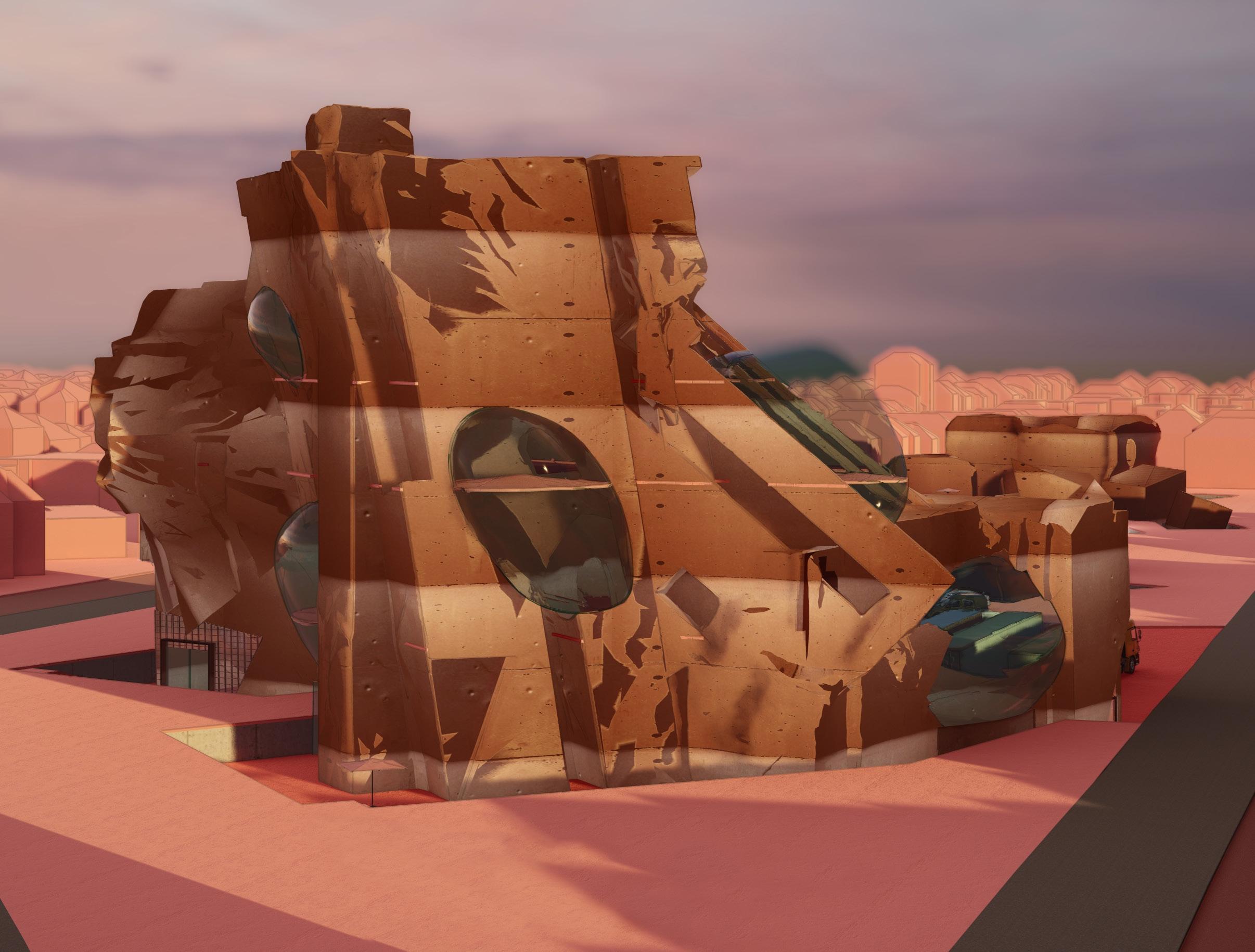
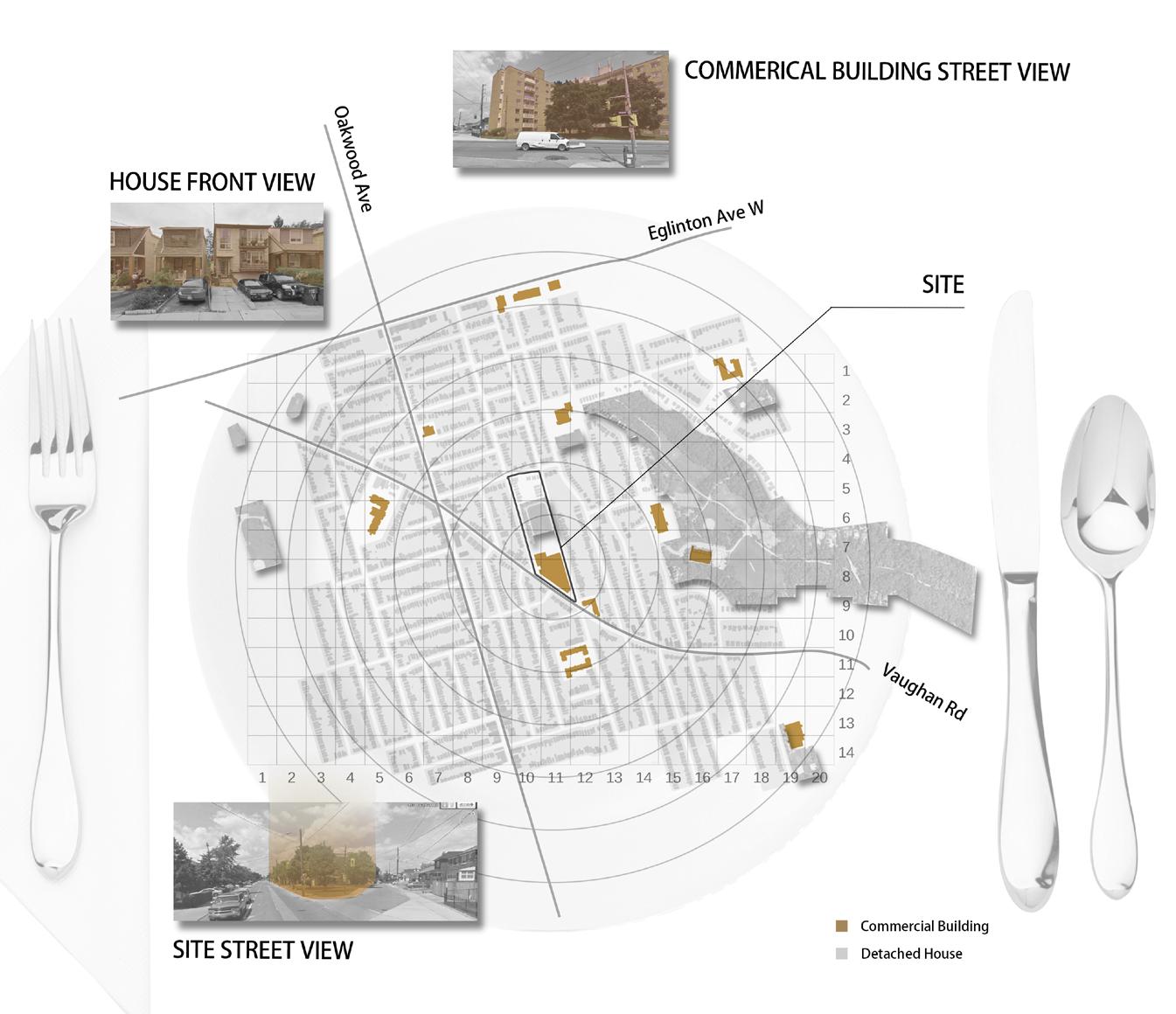
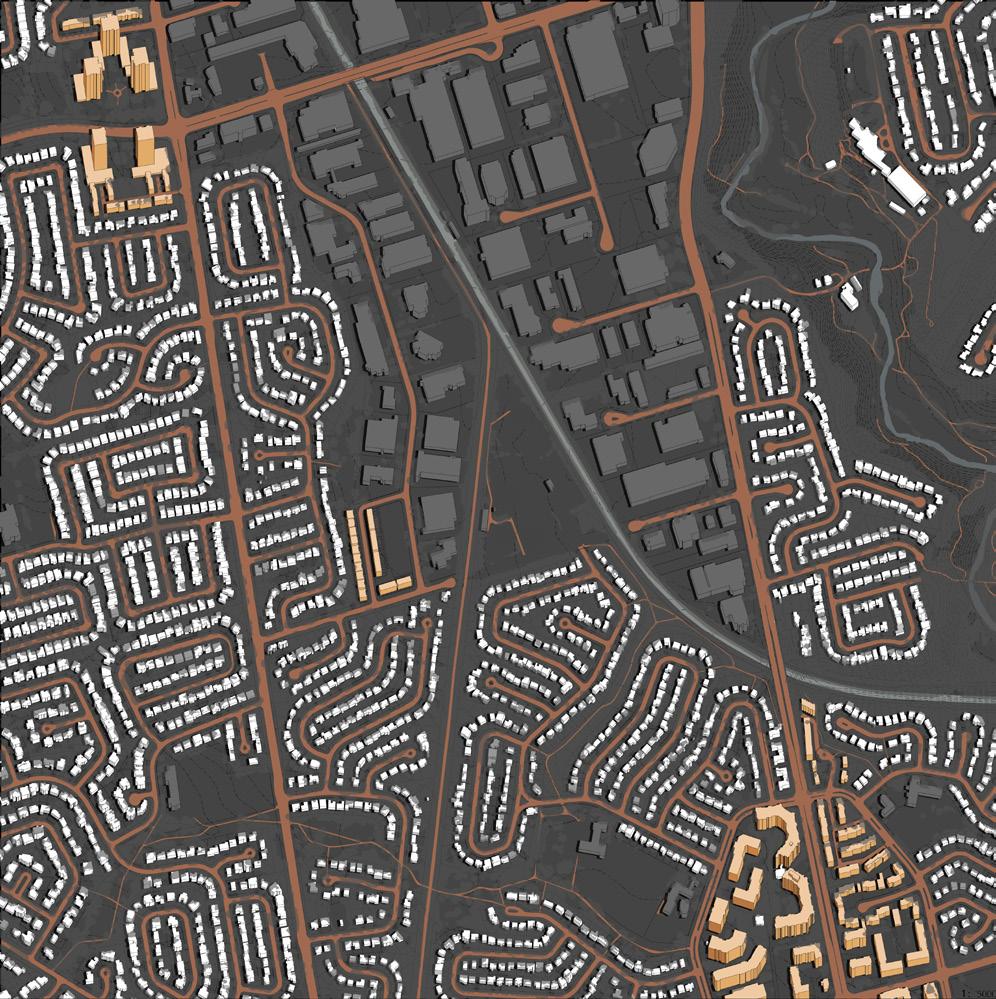
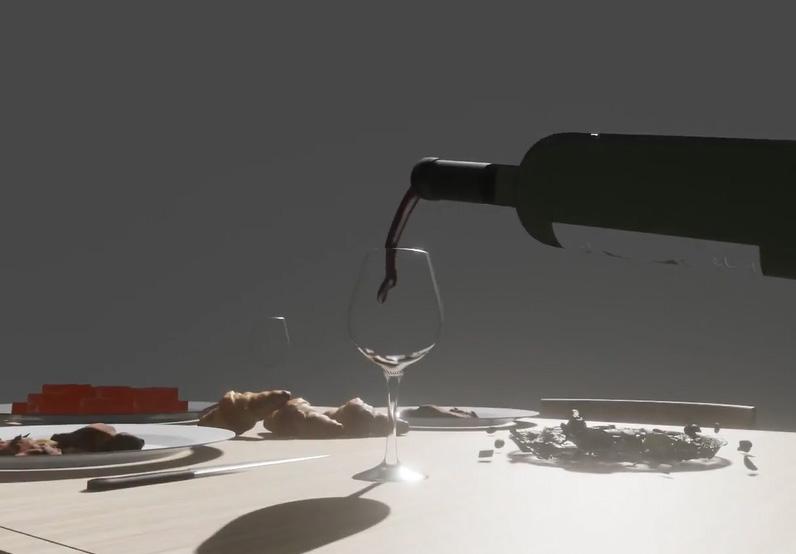
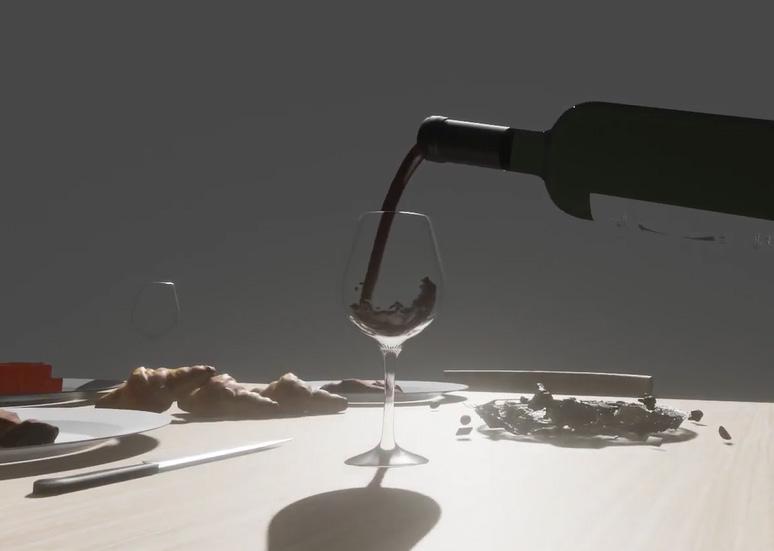
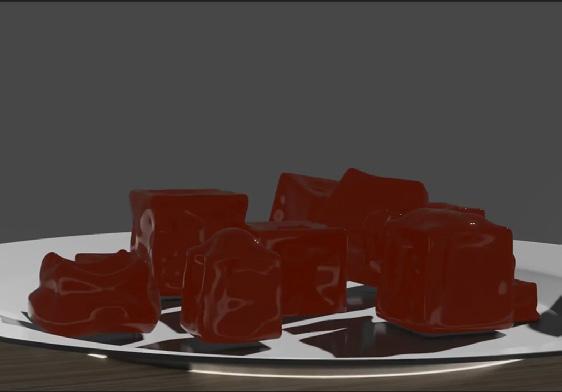
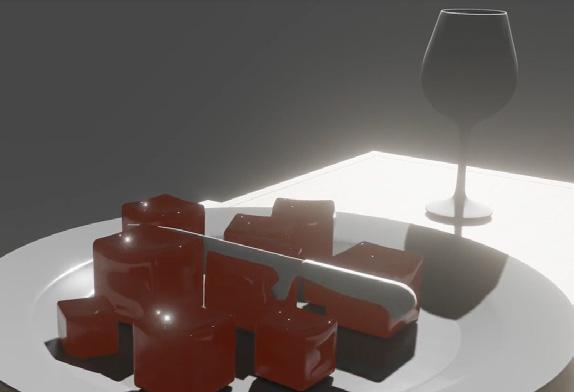
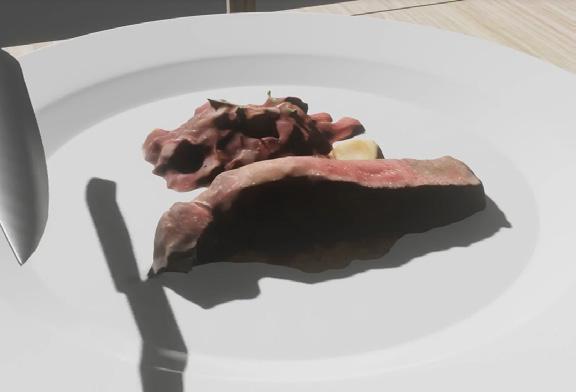
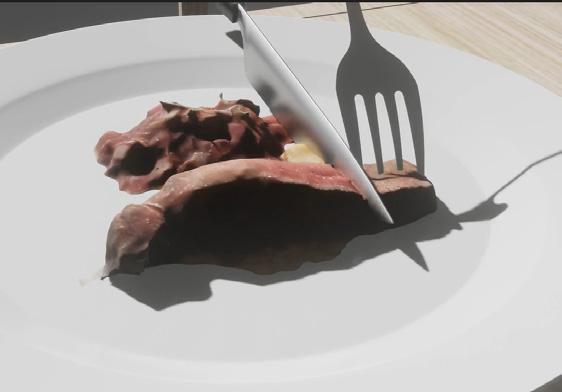
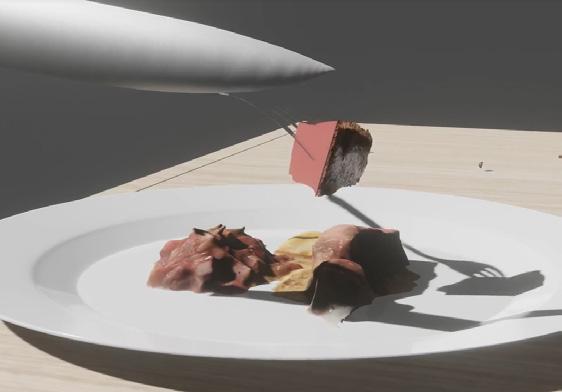
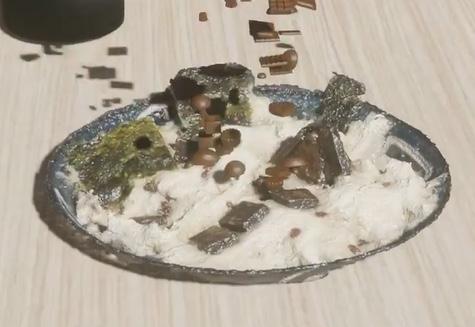
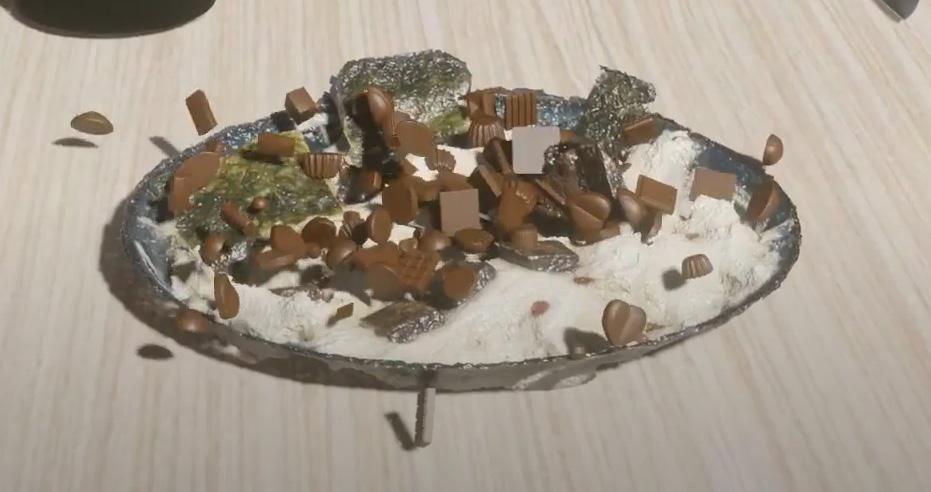
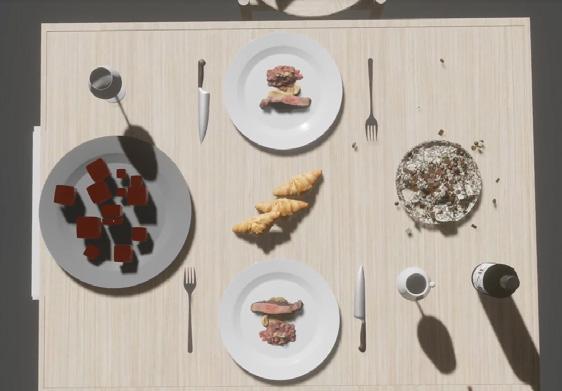
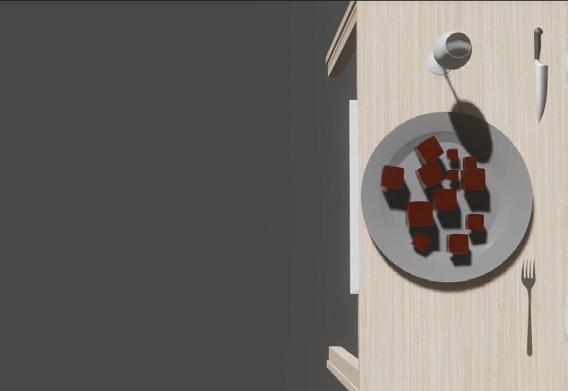
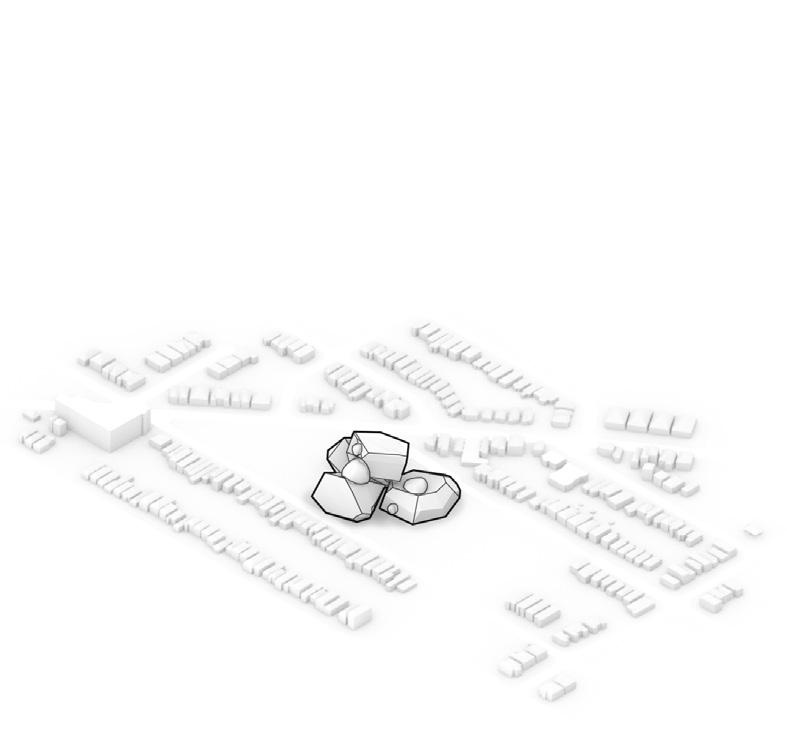
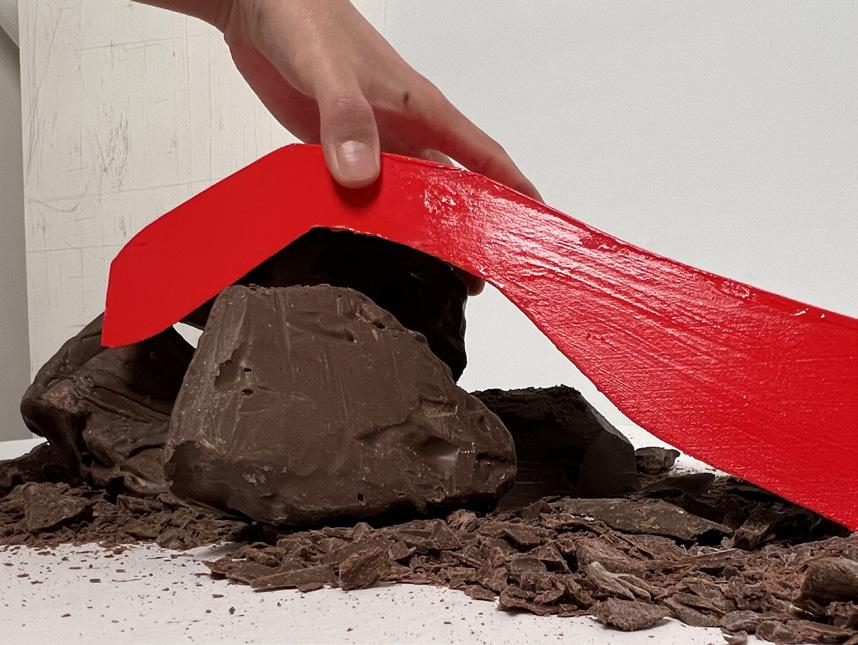
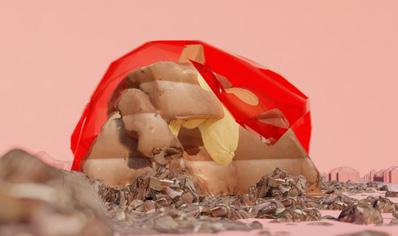
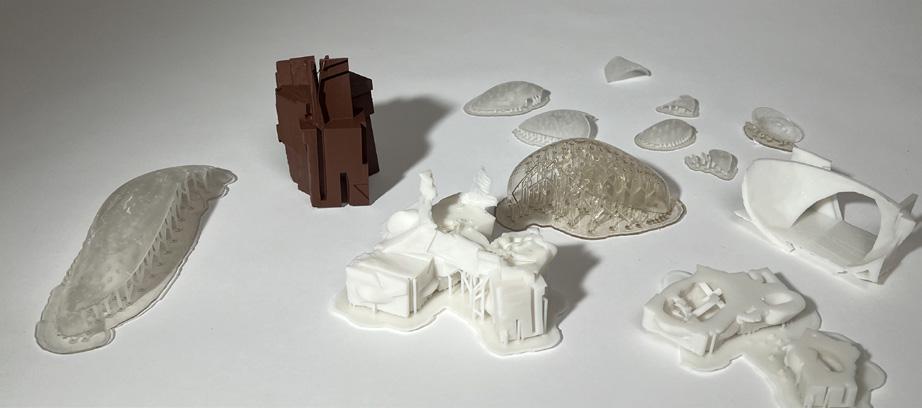
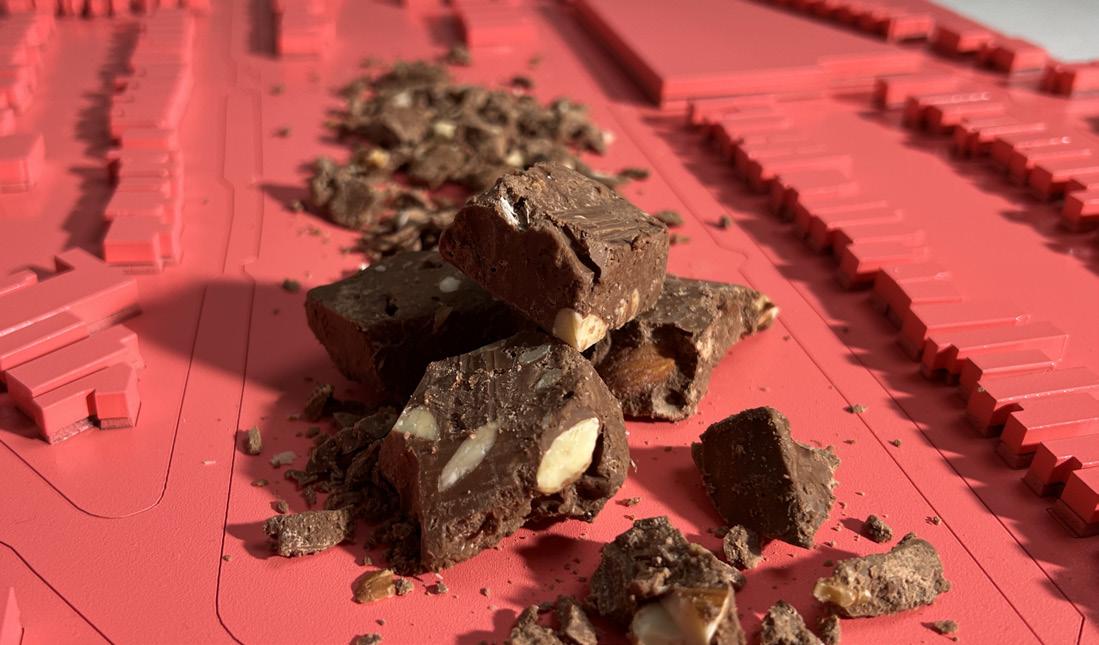
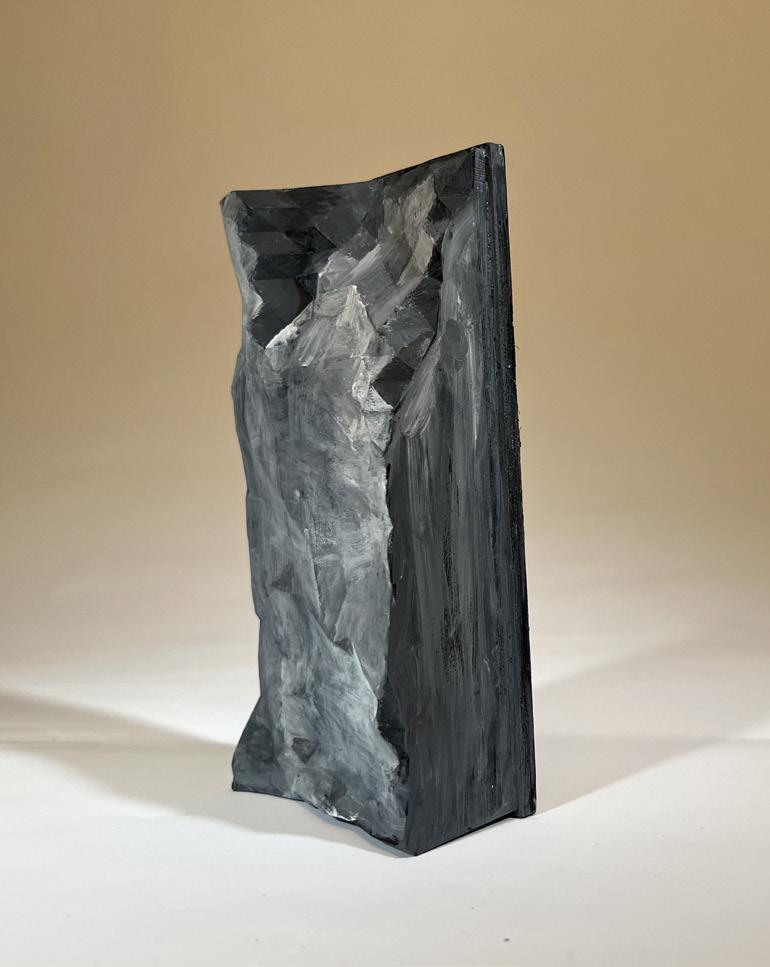
The site of the chocolate chunk is on the Toronto nowclosed Vaughn Road Academy, and according to site analysis, there are generally residential buildings around. The purpose of this project is to finally transform food into a complete architecture by studying the properties of different foods. After analyzing many different foods such as jelly, steak, and liquid red wine, and testing the buildings they can form, the project finally used nut chocolates as the final building form. At the same time, because it is in a residential area, the project changed the building into a residents activities center.

Plan Analysis
Food Study
Chocolate Chunk Diagram
0:12-0:18 Red wine is poured from the bottle into the glass
1:16-1:24 A steak cut open with a knife and spiked with a fork
-ed on a plate with marshmallows
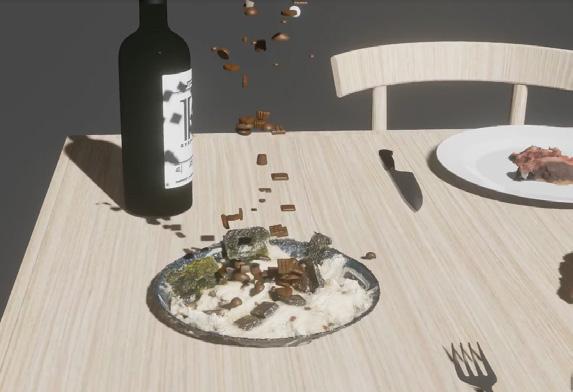
1:29-1:42 Chocolate chunks scatter-
1:50-2:05 Show the full table and sweep each food
0:32-0:50 The jelly fell off the plate and was cut with a knife
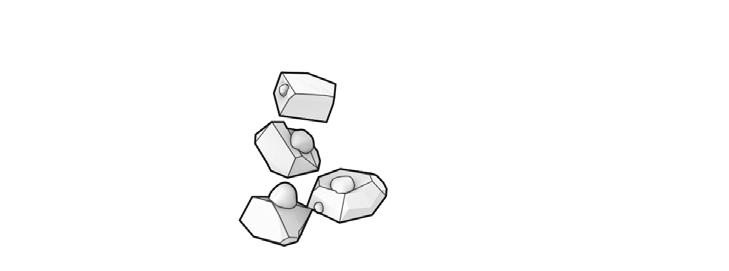
Nut chocolate chunks falling on a plate
Add nut chocolate Material Zoom in to show details inner nuts make up space sectional perspective
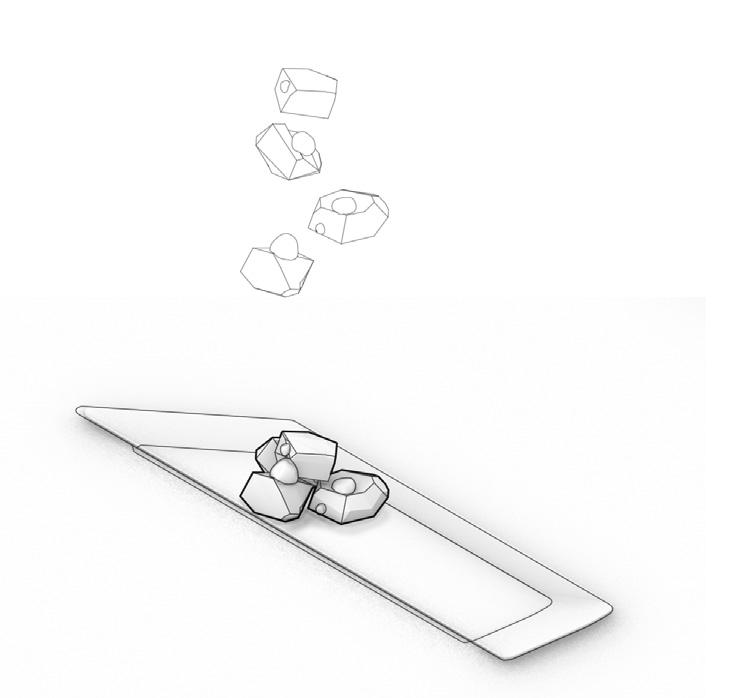
Nut chocolate chunks fall onto the plate and stack together to form a random shape
1 Nut Chocolate Chunks | Winter 2022 Course: ARC381
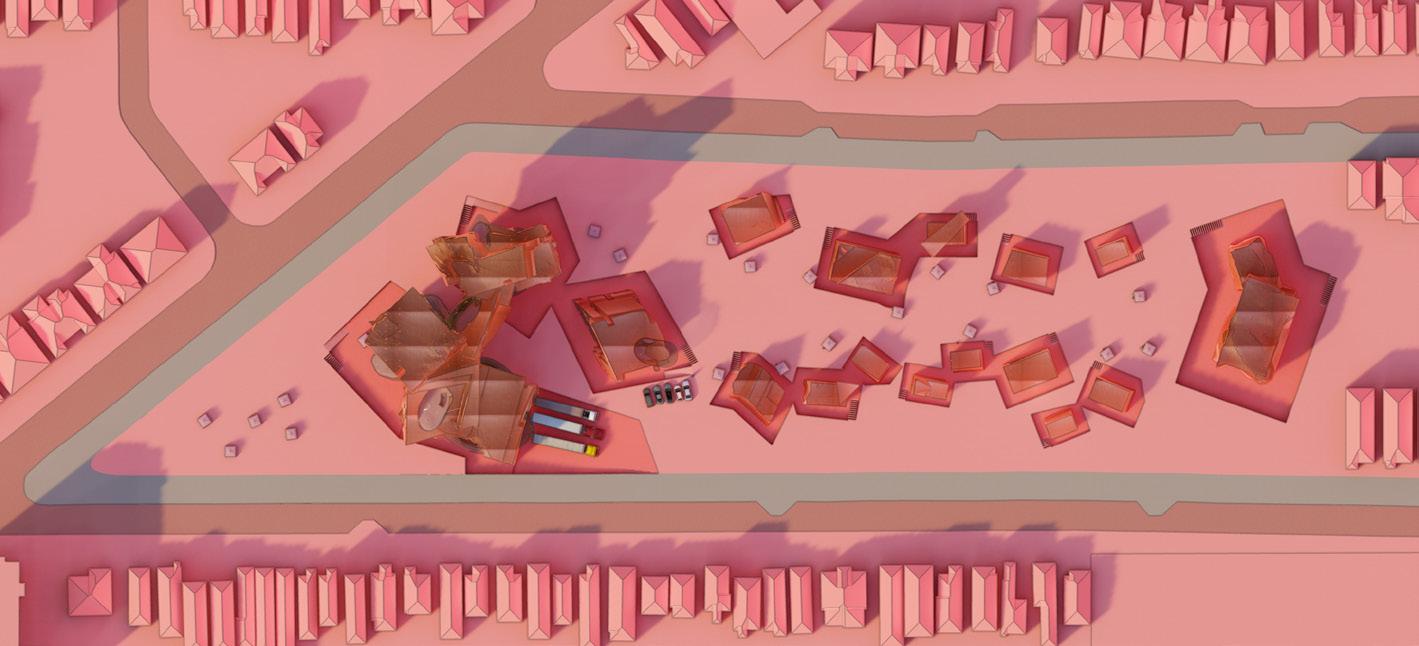
Put chocolate chunks in the site
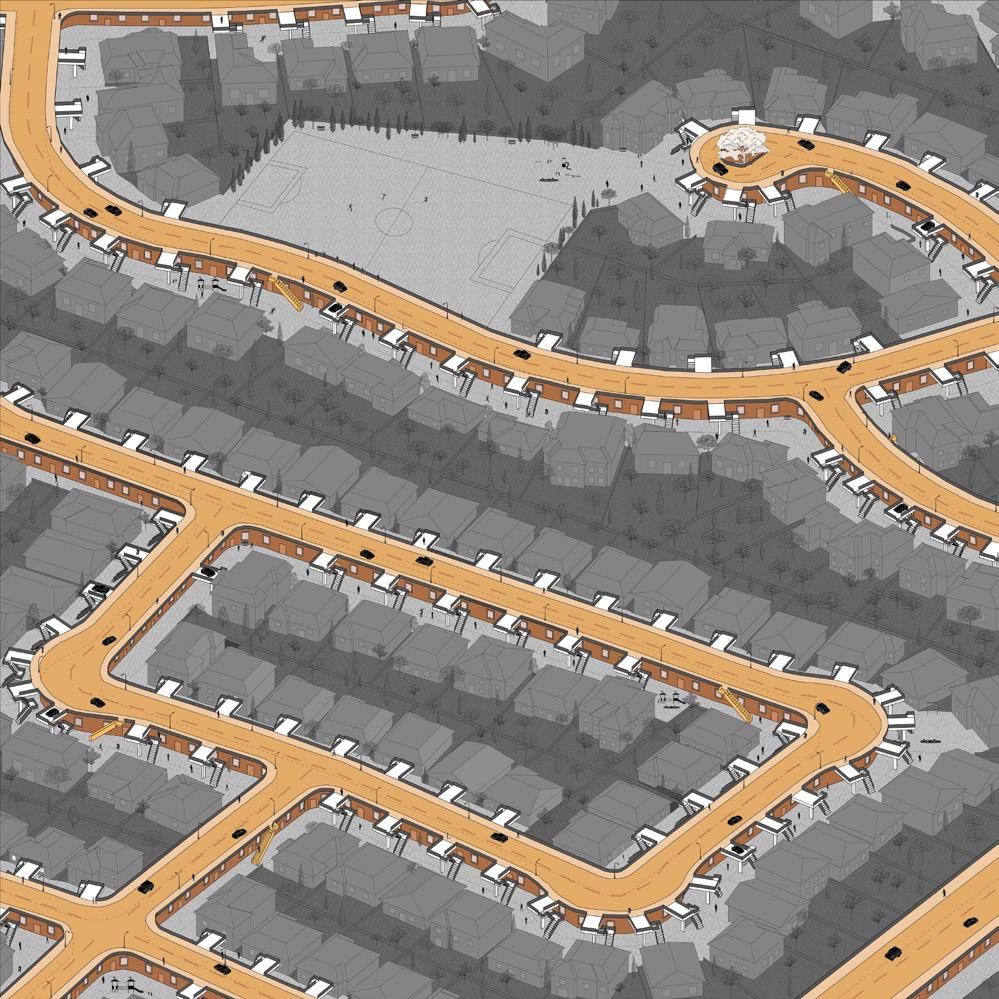
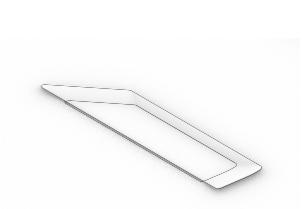
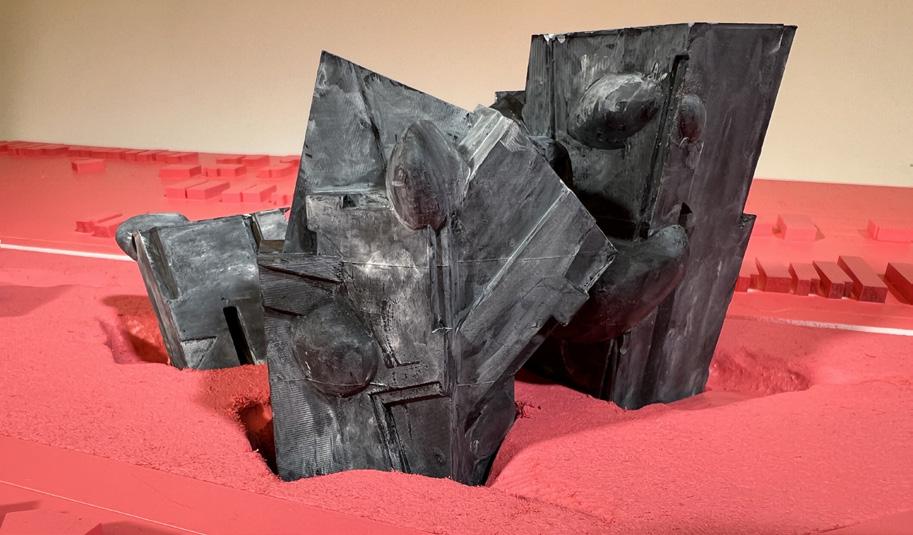
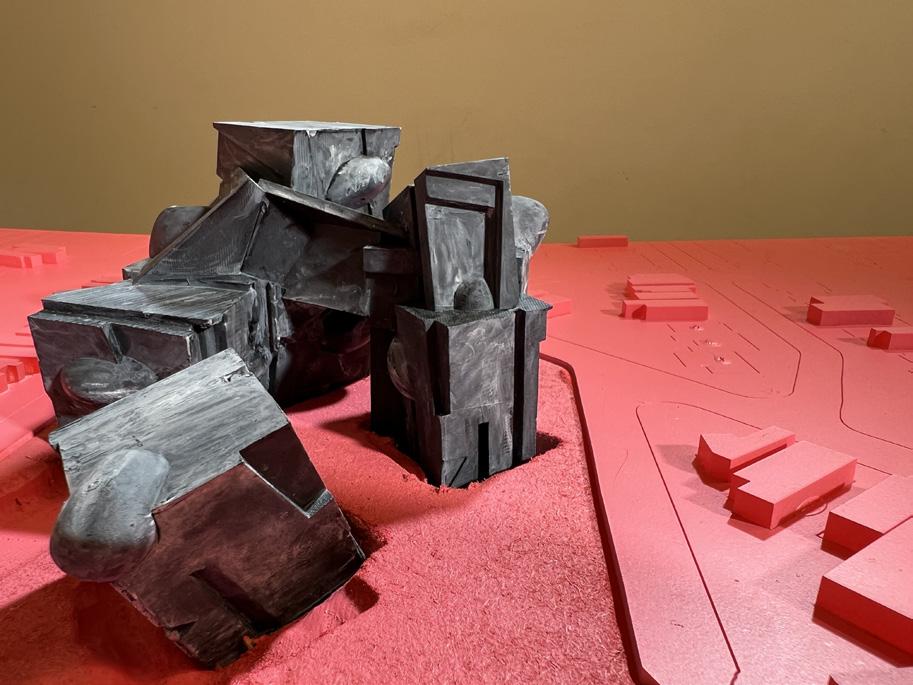
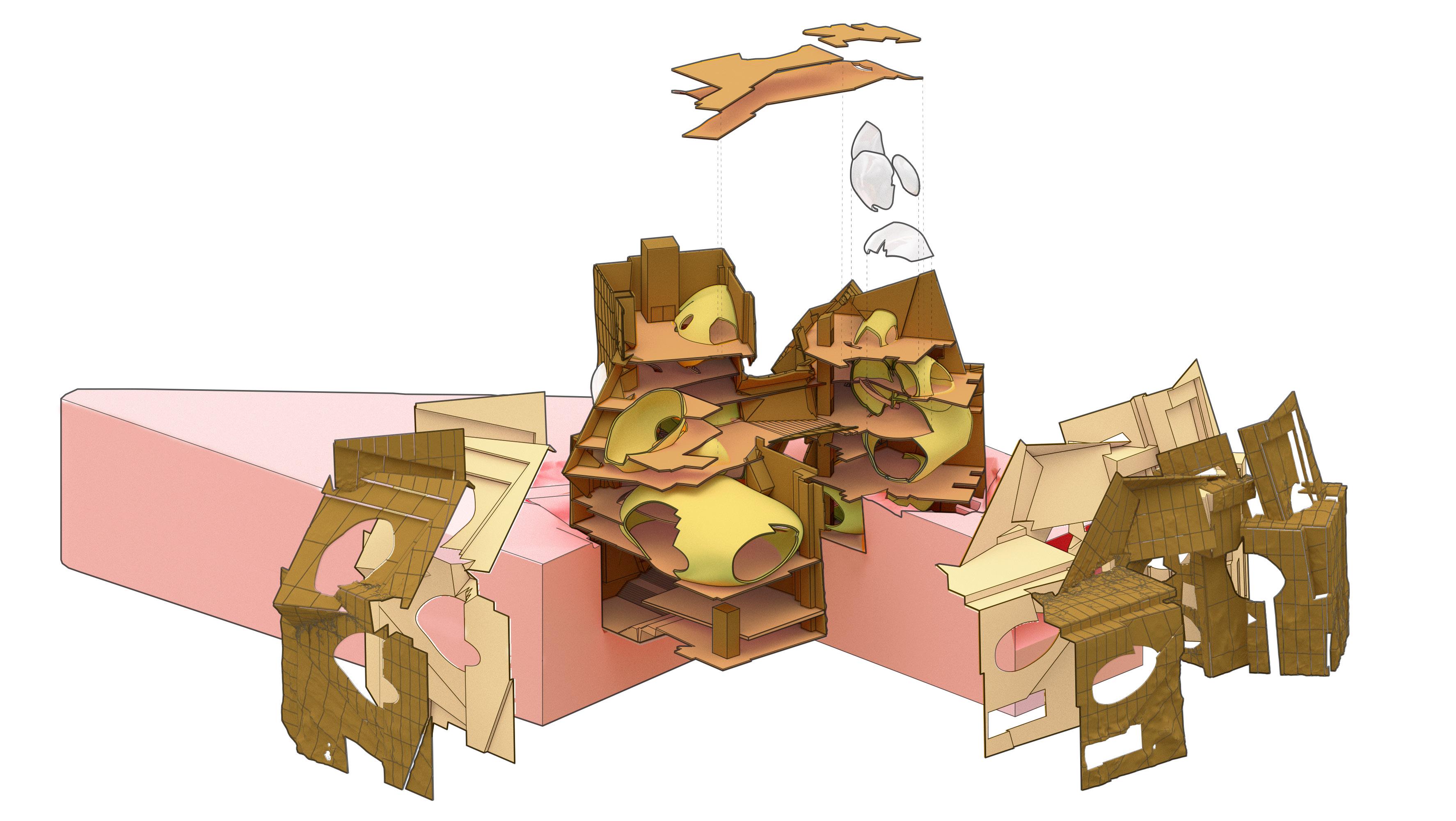
The design concept of the site is to create potholes formed after heavy objects hit the ground, so as to reflect the heavy feeling of the building. Since the project finally chose the chunk formed by the free fall of chocolate on the ground as the building, the design of the site in this way can reflect the visual effect caused by the free fall of chocolate as a building and hitting the ground.
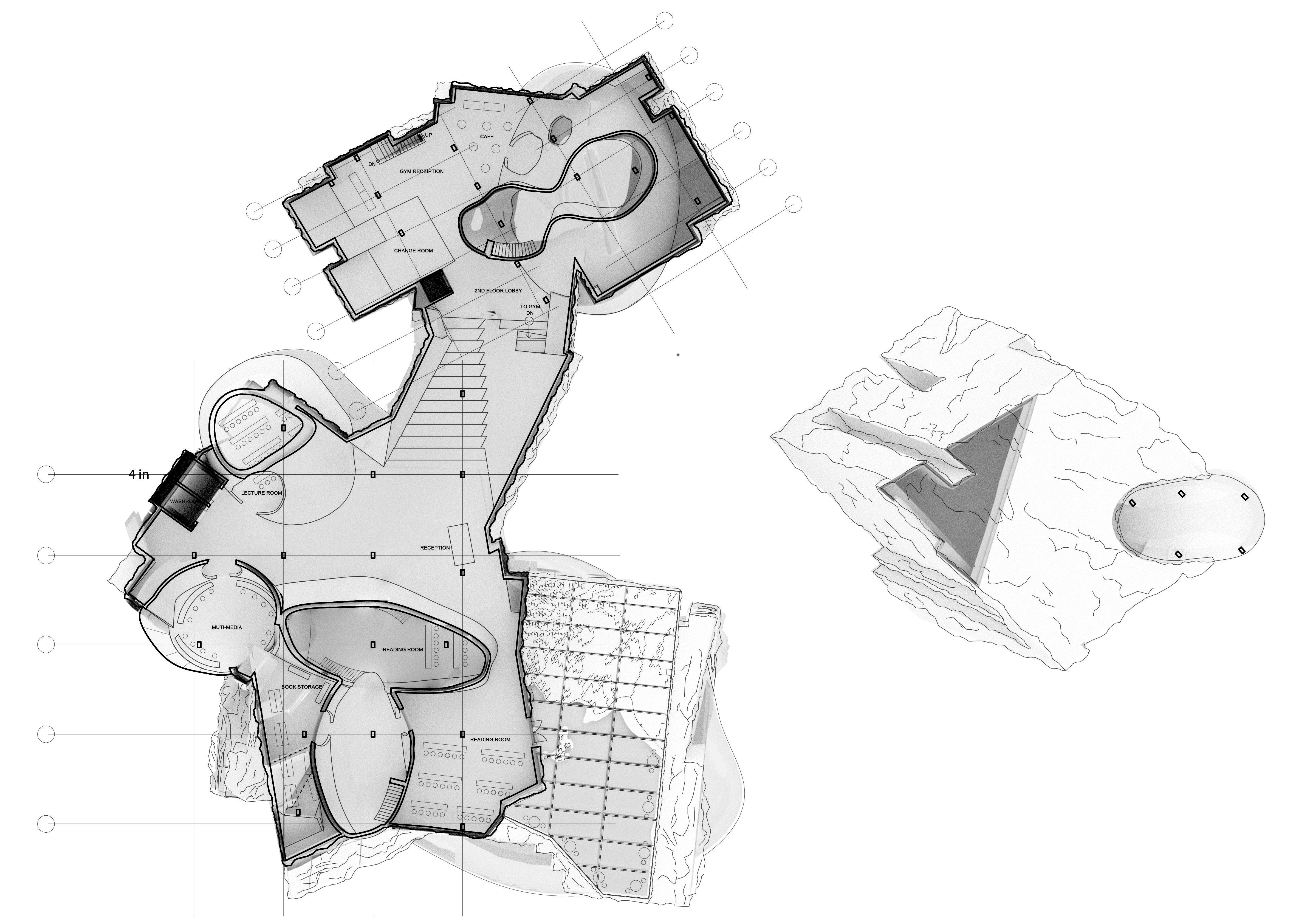
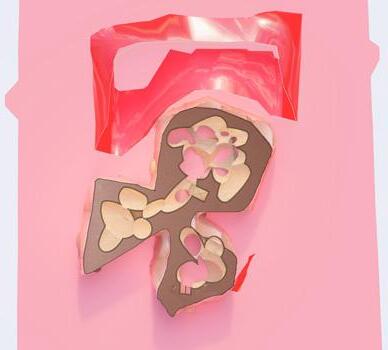
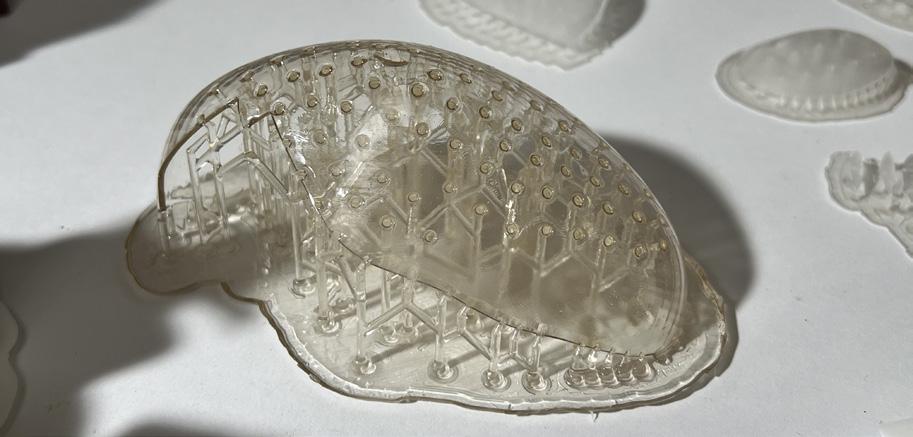
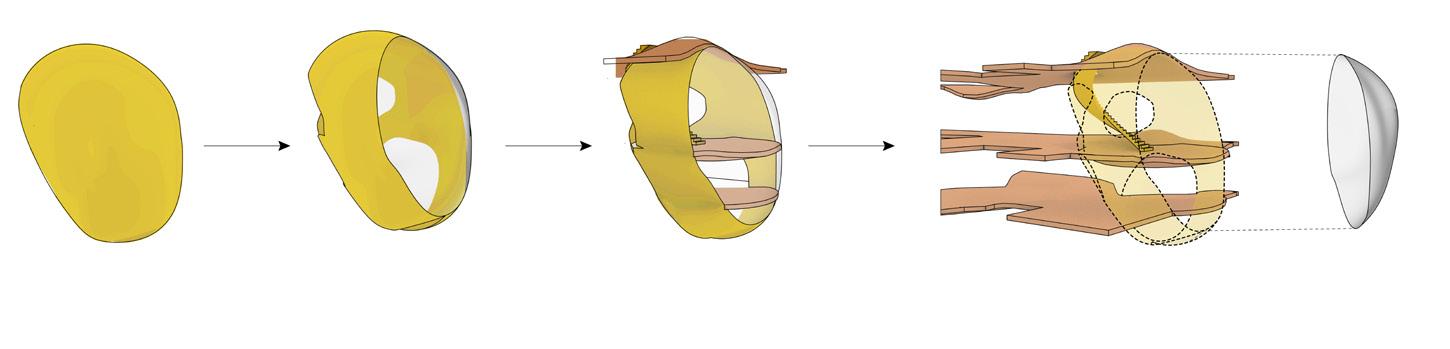
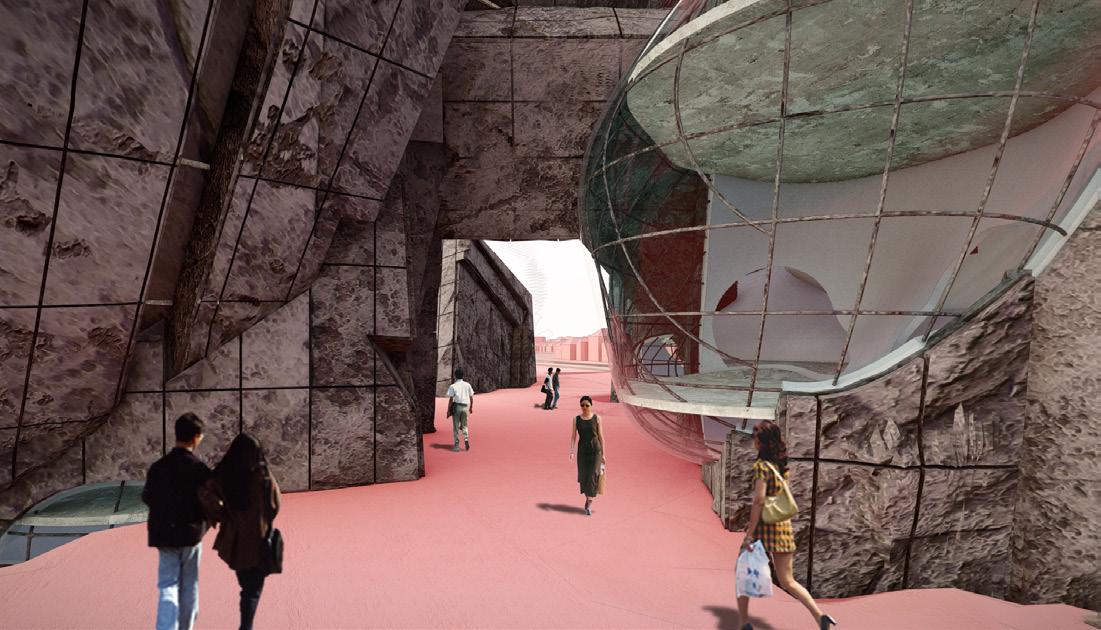
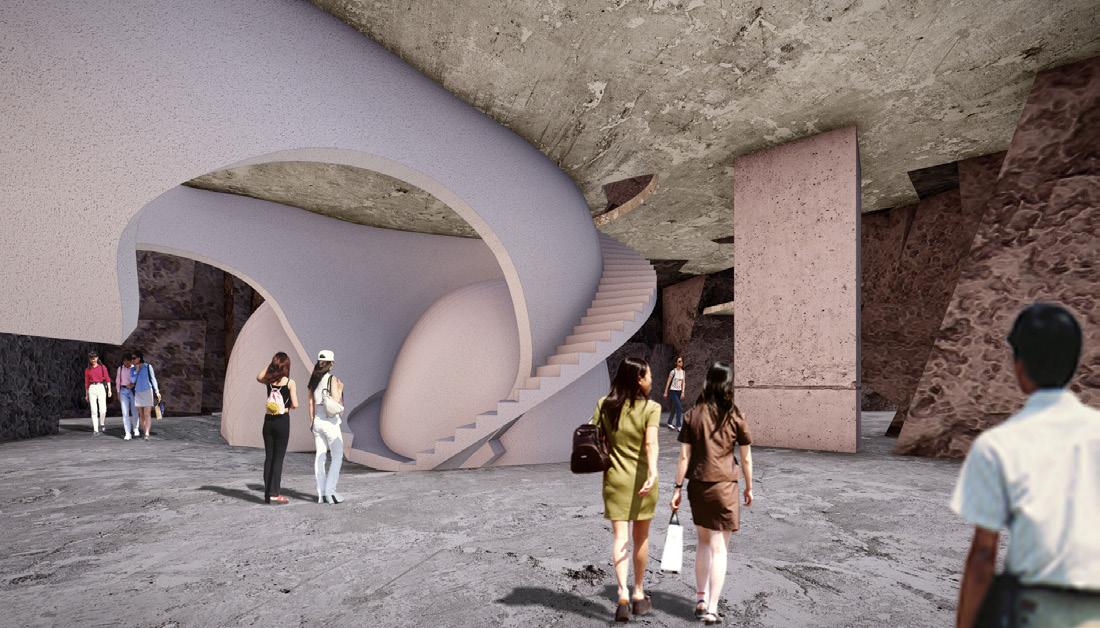
Plans show the spatial effect of the building interior. Because the relationship between nuts and chocolate is inclusion, chocolate integrates nuts into itself, so the chocolate building directly use nuts as the interior space, and explore the impact of an irregular space on the building.
Plan
Stage Two Site Plan
Model Photos
Model Photos
Nut Chocolate Chunks Test
Stage Two Perspective
2 Nut Chocolate Chunks | Winter 2022 Course: ARC381
Stage Two Plan
Space
Floor Plates Interior Space
Render
Nuts Make The
Windows and
Interior
Facade Panels Building Facade Entrence Final Model Exploded Diagram Outside Render Interior Render Nuts Windows Floor Plates Underground Elevator Elevator Interior Space Formed by Nuts Interior Circulation Interior Staggered Floor 3 Nut Chocolate Chunks | Winter 2022 Course: ARC381
Nuts Space formation Diagram
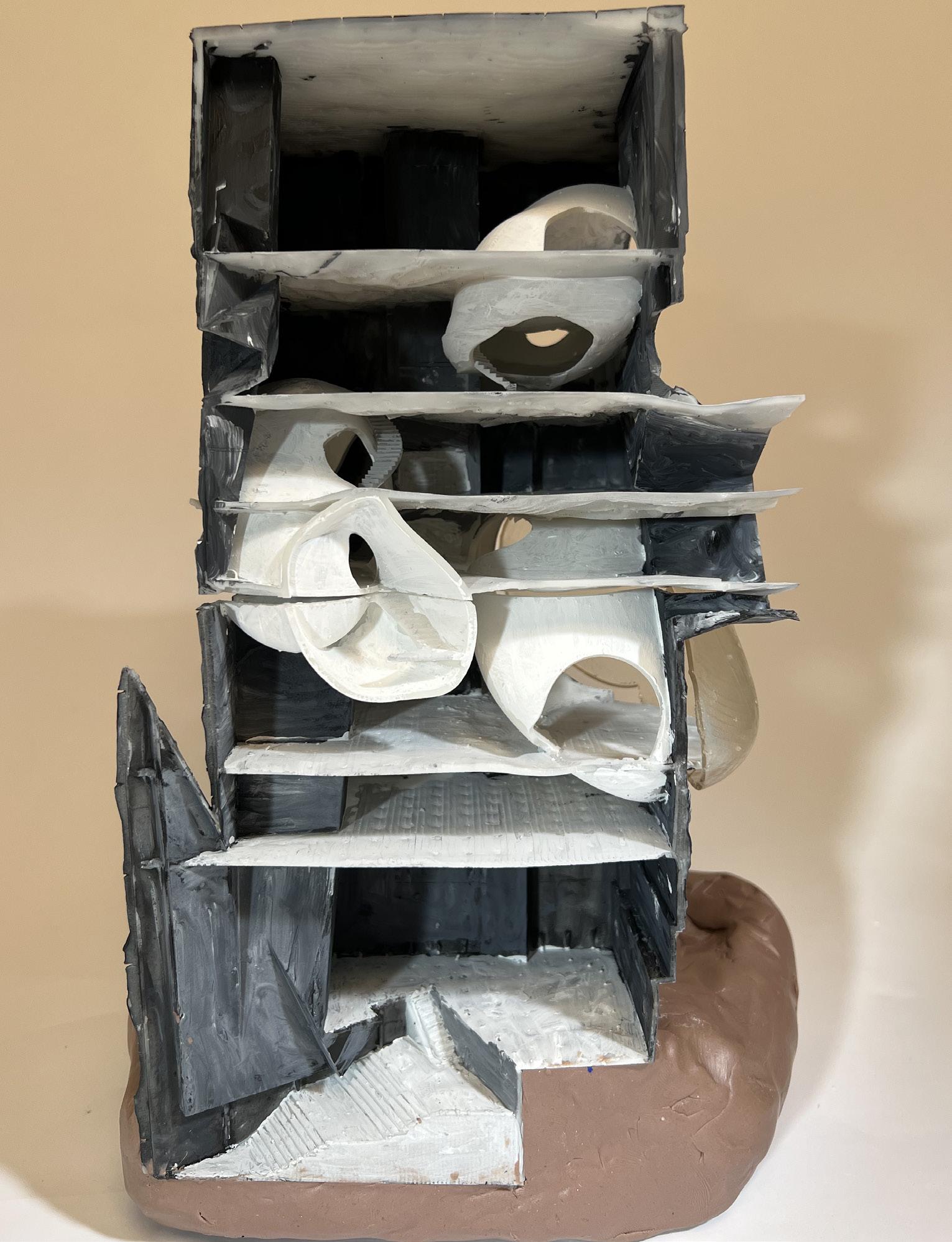
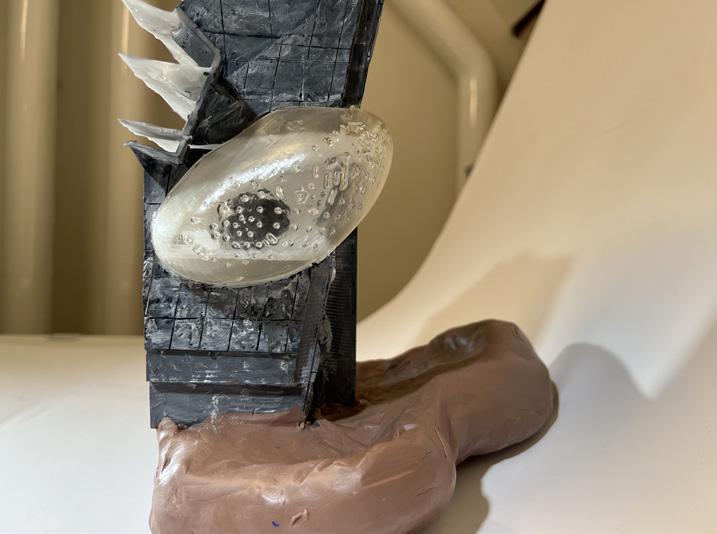
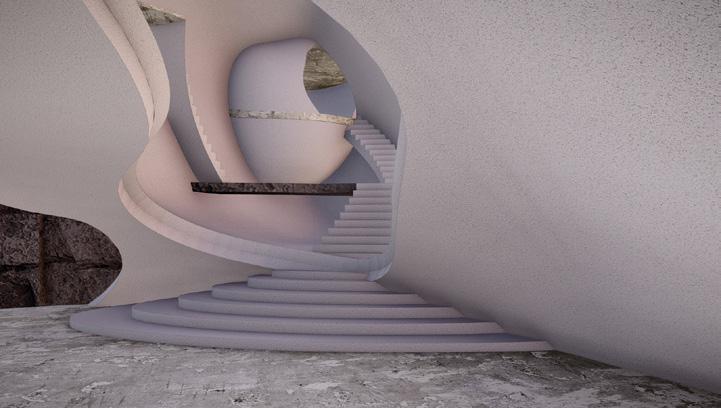
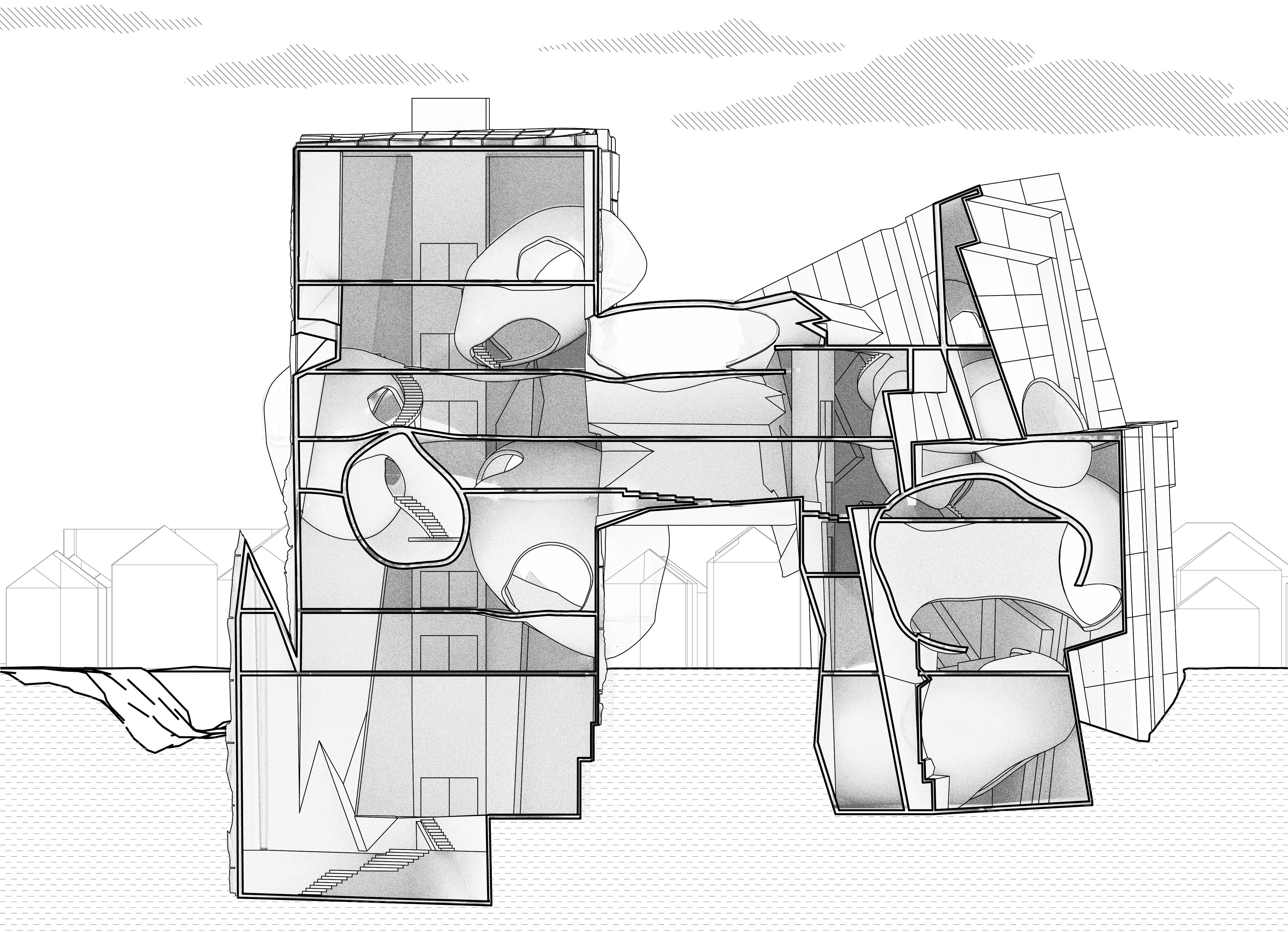
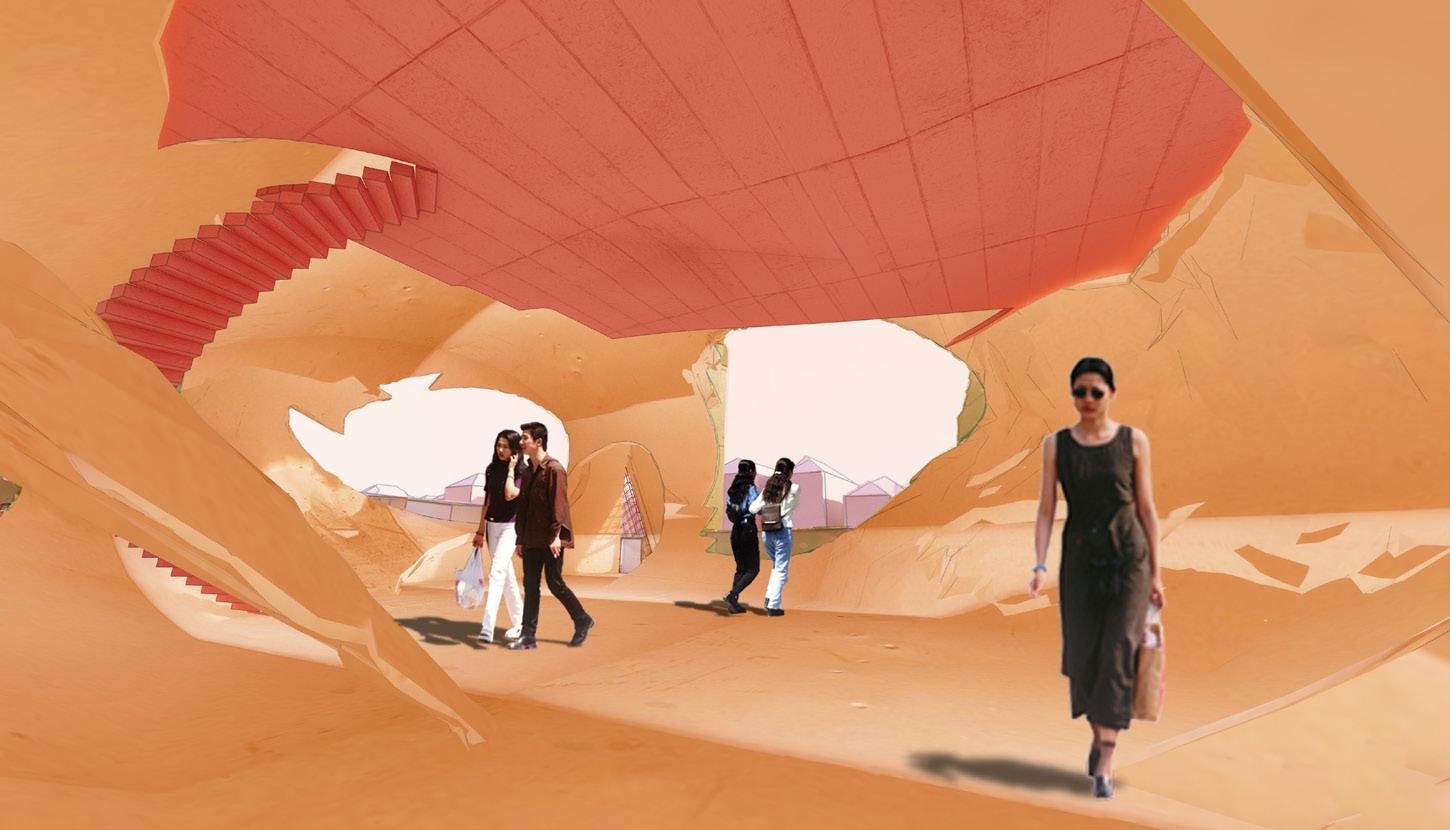
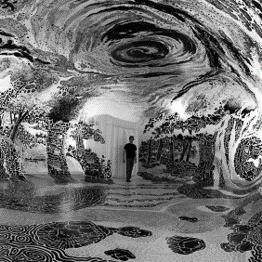
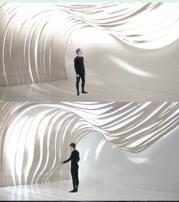
According to our further exploration, due to the irregular space caused by nuts, people cannot predict the space ahead in advance when experiencing the interior of the space, which gives people a great sense of freshness. At the same time, the interaction between nuts and the new spaces created make the interior of the whole building more vivid.
Final Model Section Model
4 Nut Chocolate Chunks | Winter 2022 Course: ARC381
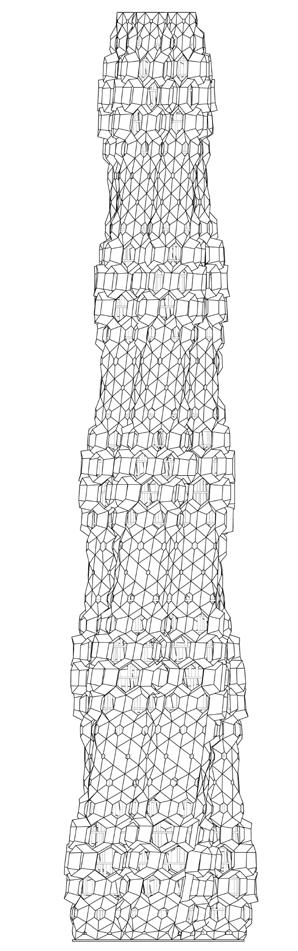
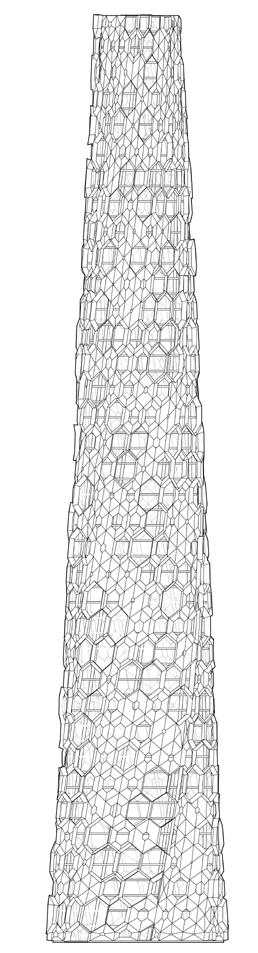
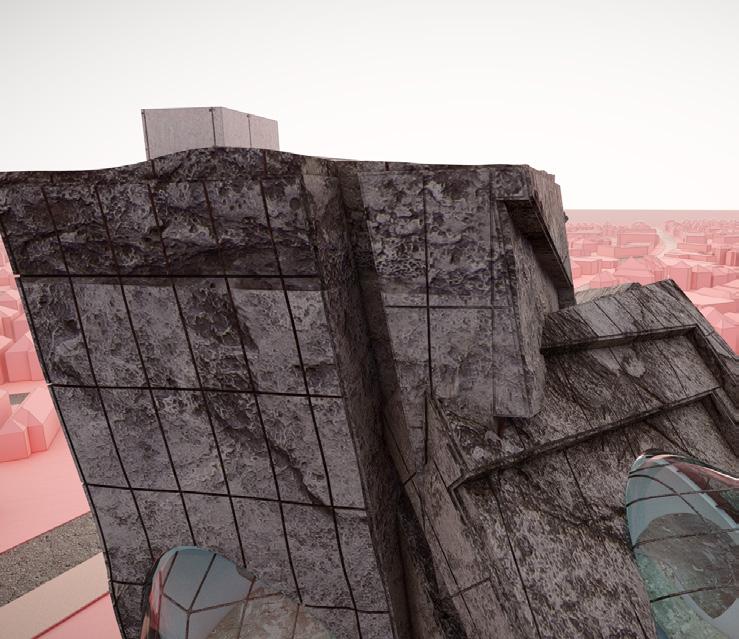
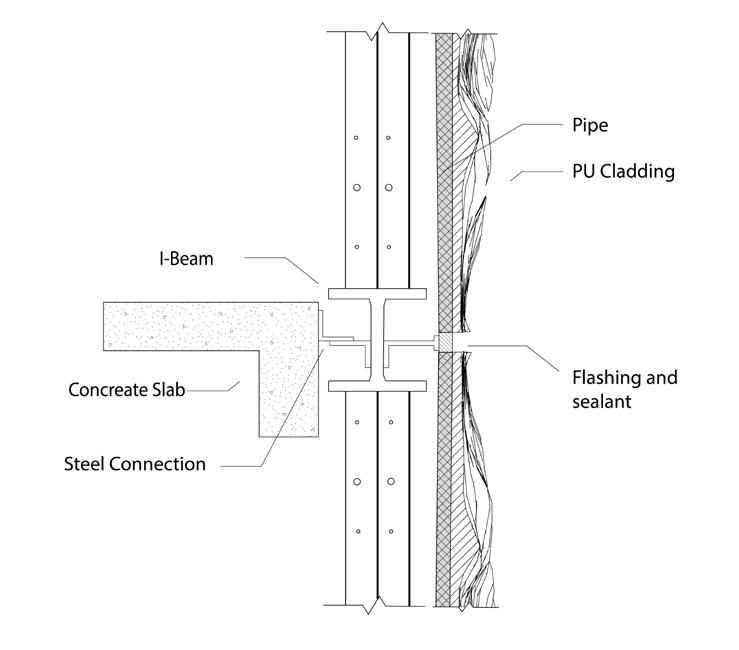
Facade Details

The Rotation Pavilion
Course: ARC 201
Instructor: Maria Denegri
Date: Winter 2021
Location: Trinity College Tennis Courts, Toronto
Type: Individual Project
Duration: 3 months
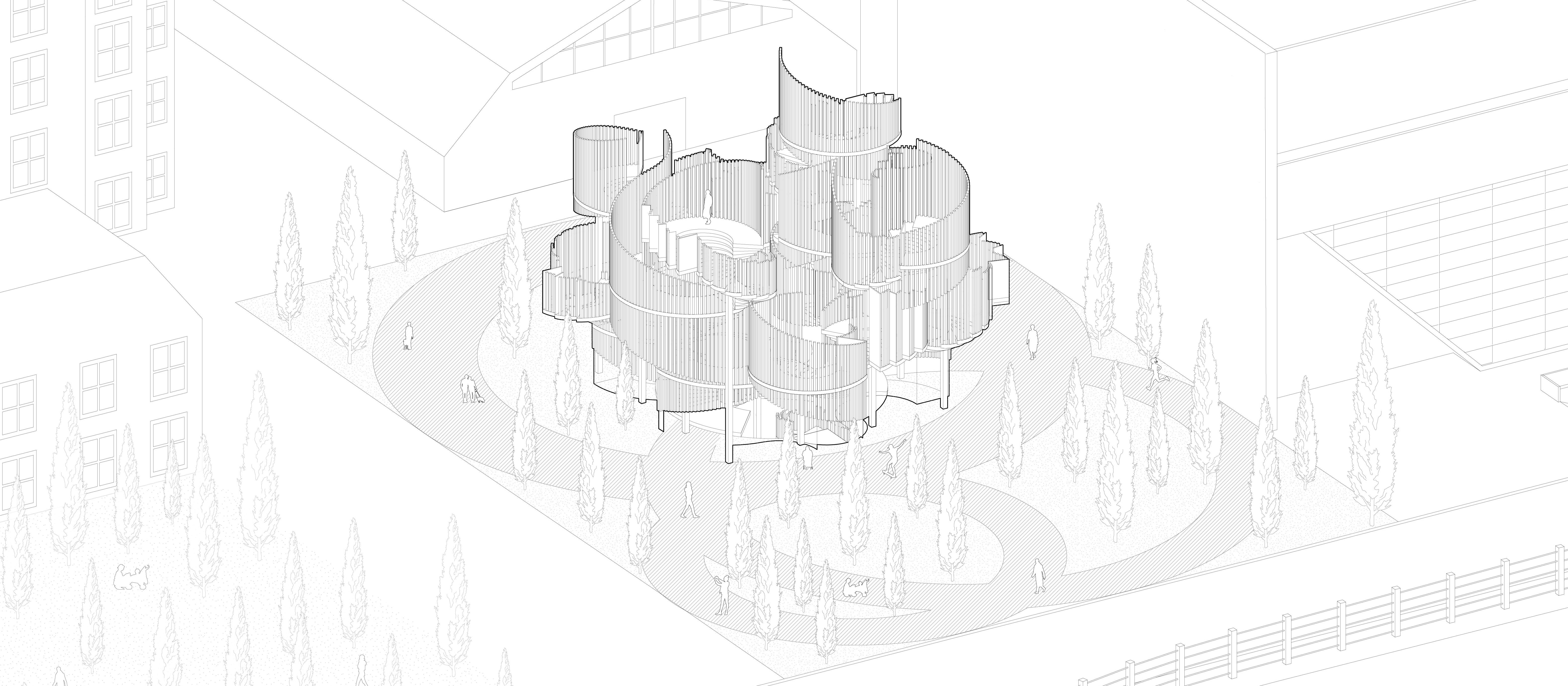
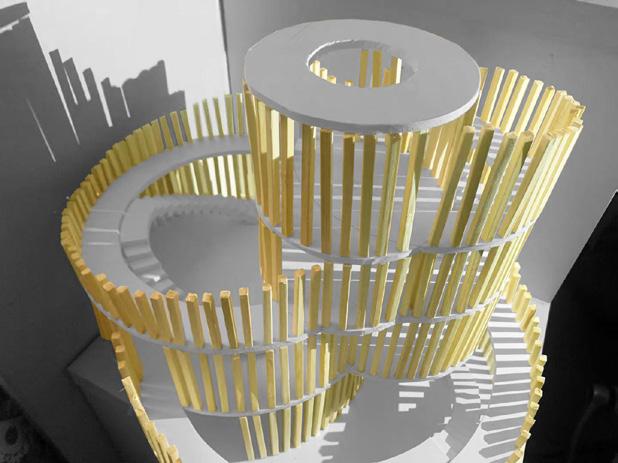
The Pavilion is located in the Trinity College Tennis Courts of the University of Toronto, and the purpose is to build a place that can provide students with study or leisure. The project builts the final pavilion in three stages with the theme of rotation. The vertical rotation was initially explored using columns as the wall, and then the horizontal rotation was explored in the second phase through the rotated plane. Combining the exploration of rotation within space in the first two stages forms the final stage. This project uses the technique of rotation not only to visually reflect the upward rotation, but also to give people a feeling of continuous rotation in the space.

Creat an half circle Turn a line into a plane Turn a line into a plane
Expand space for activity Rotating columns as walls Spiral staircases connect the floor to the wall 8 The Rotation Pavilion Winter 2021 | Course: ARC201
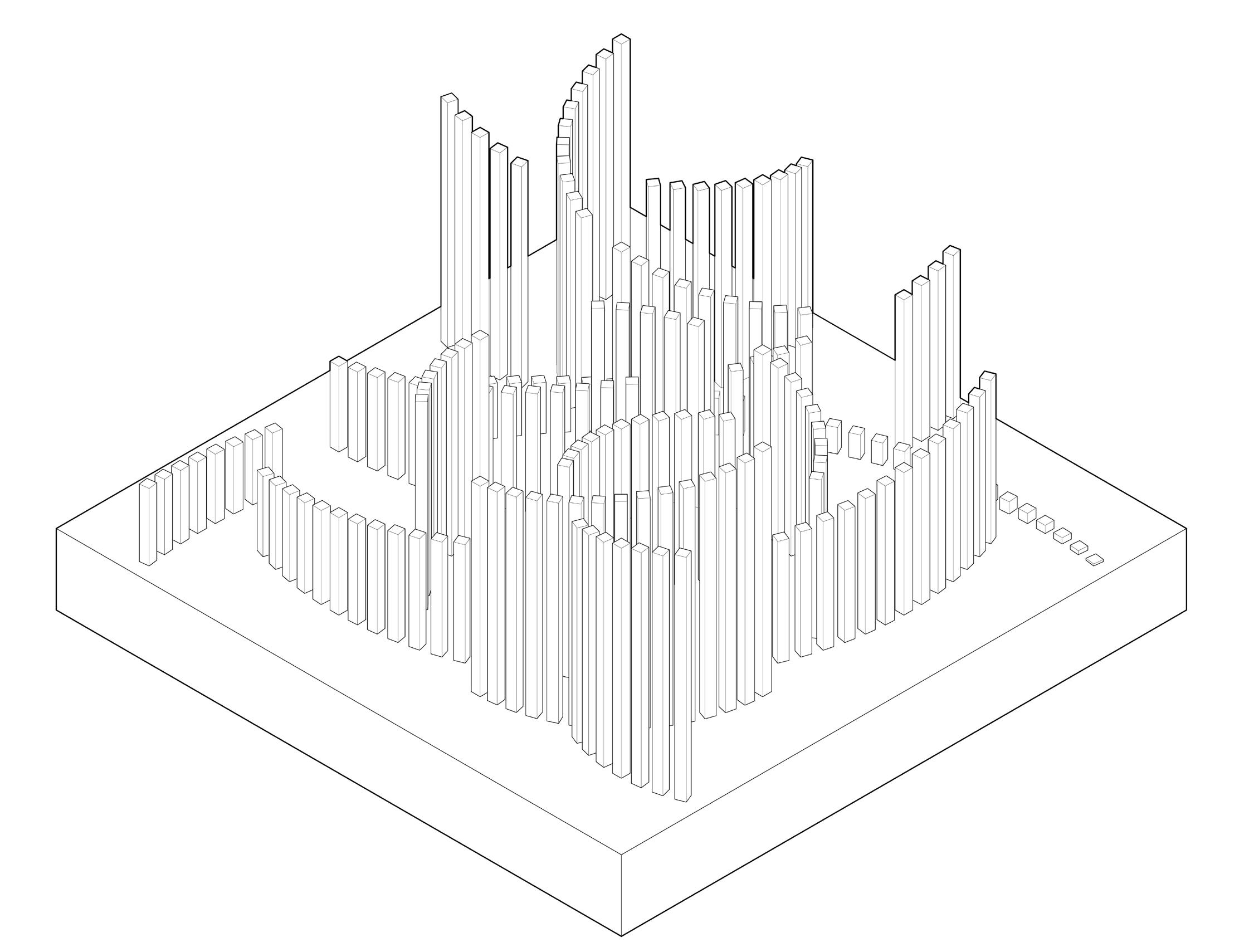
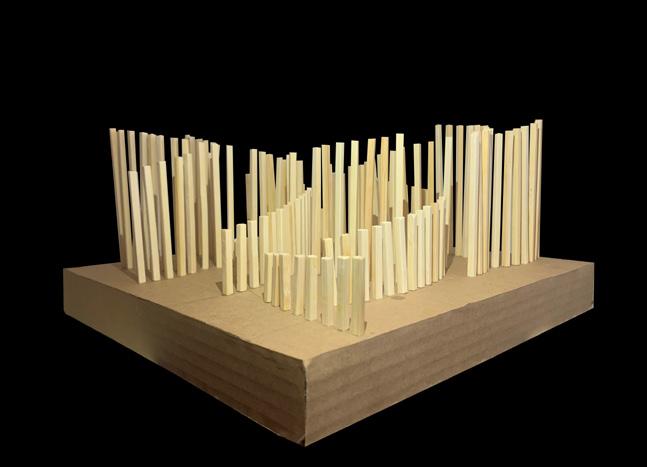
The first stage uses columns as the wall in order to push the rotation idea stronger. Let people perceive the rotation brought by the vertical direction in space.
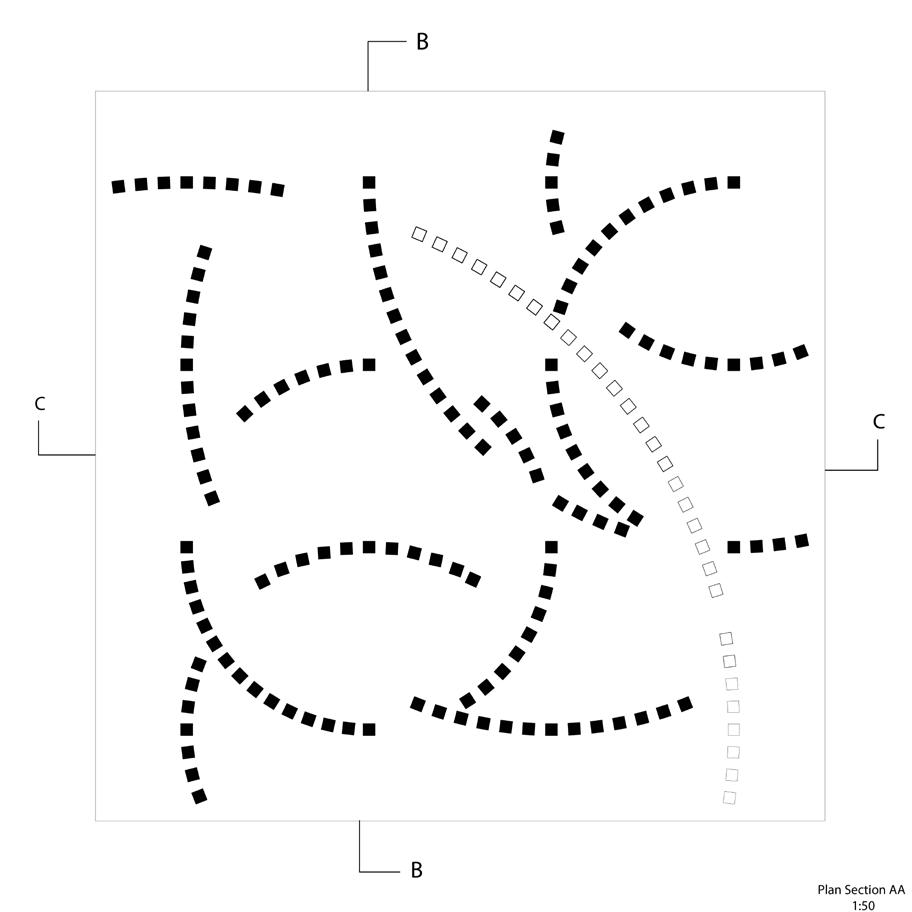
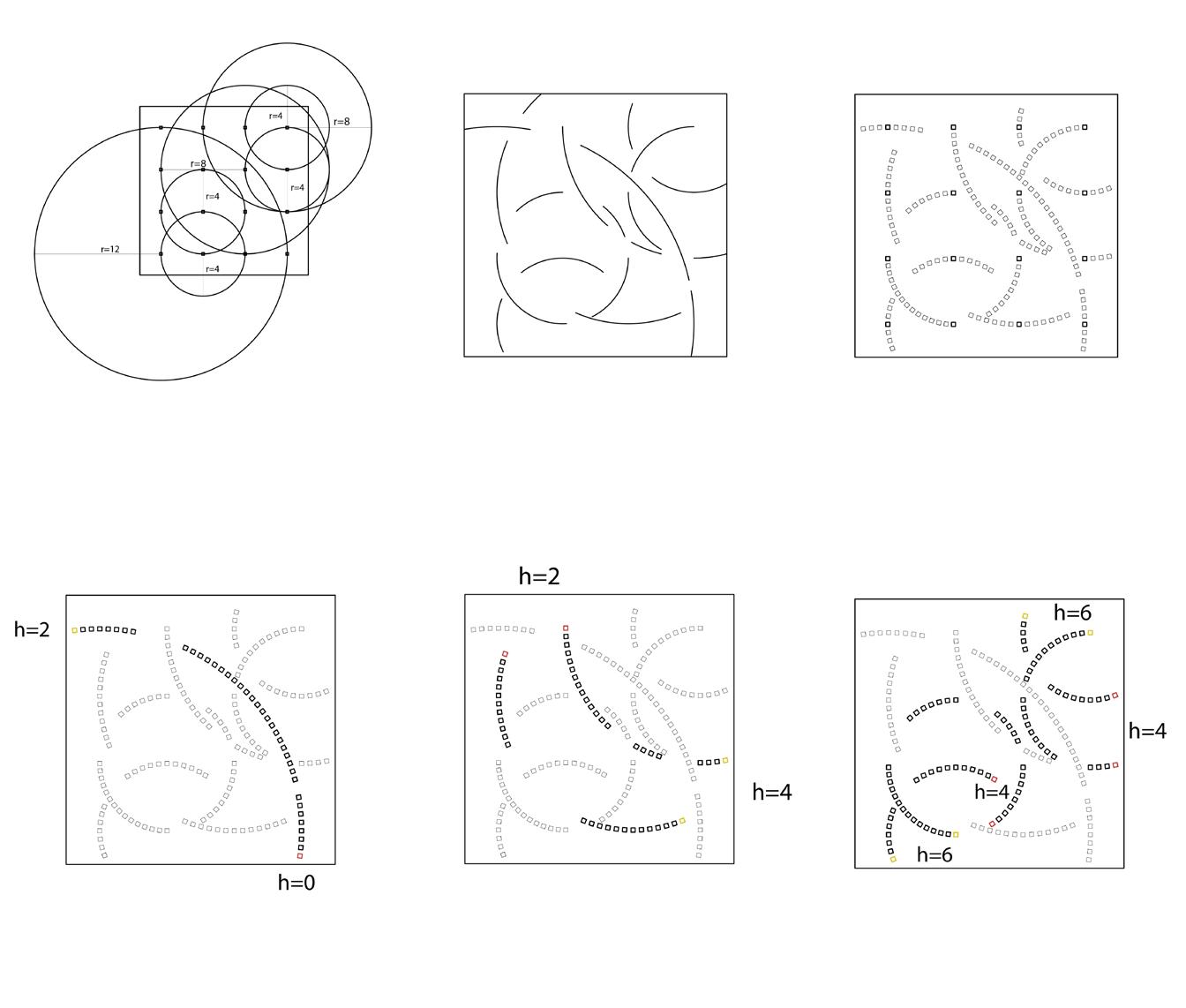
Seven circles with radii of 4, 8 and 12 respectively. Then remove part of lines to create circulation and replaced the lines by columns.
Change the columns height from 0 to 2, 2 to 4 and 4 to 6 in order to create the vertical rotation
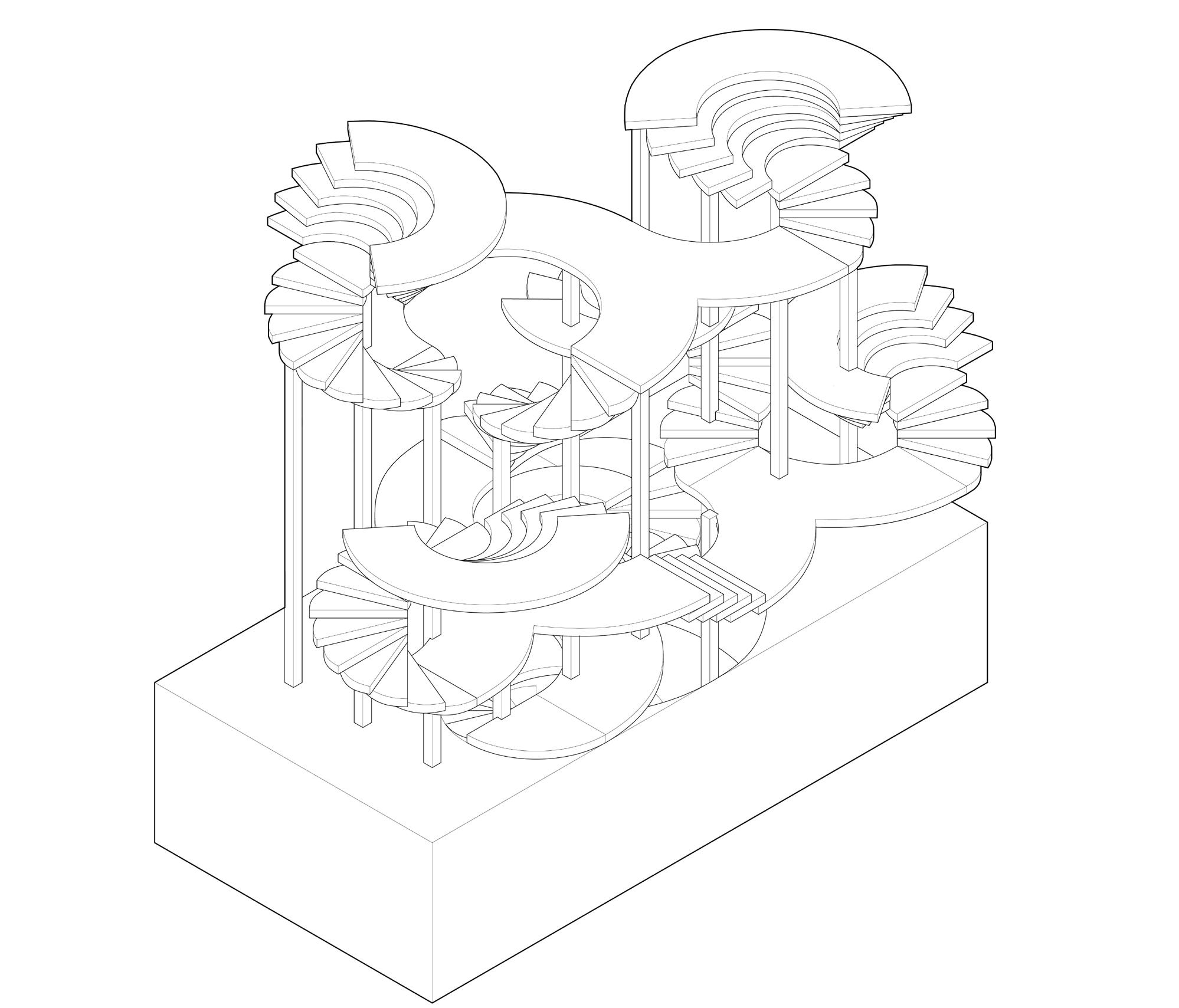
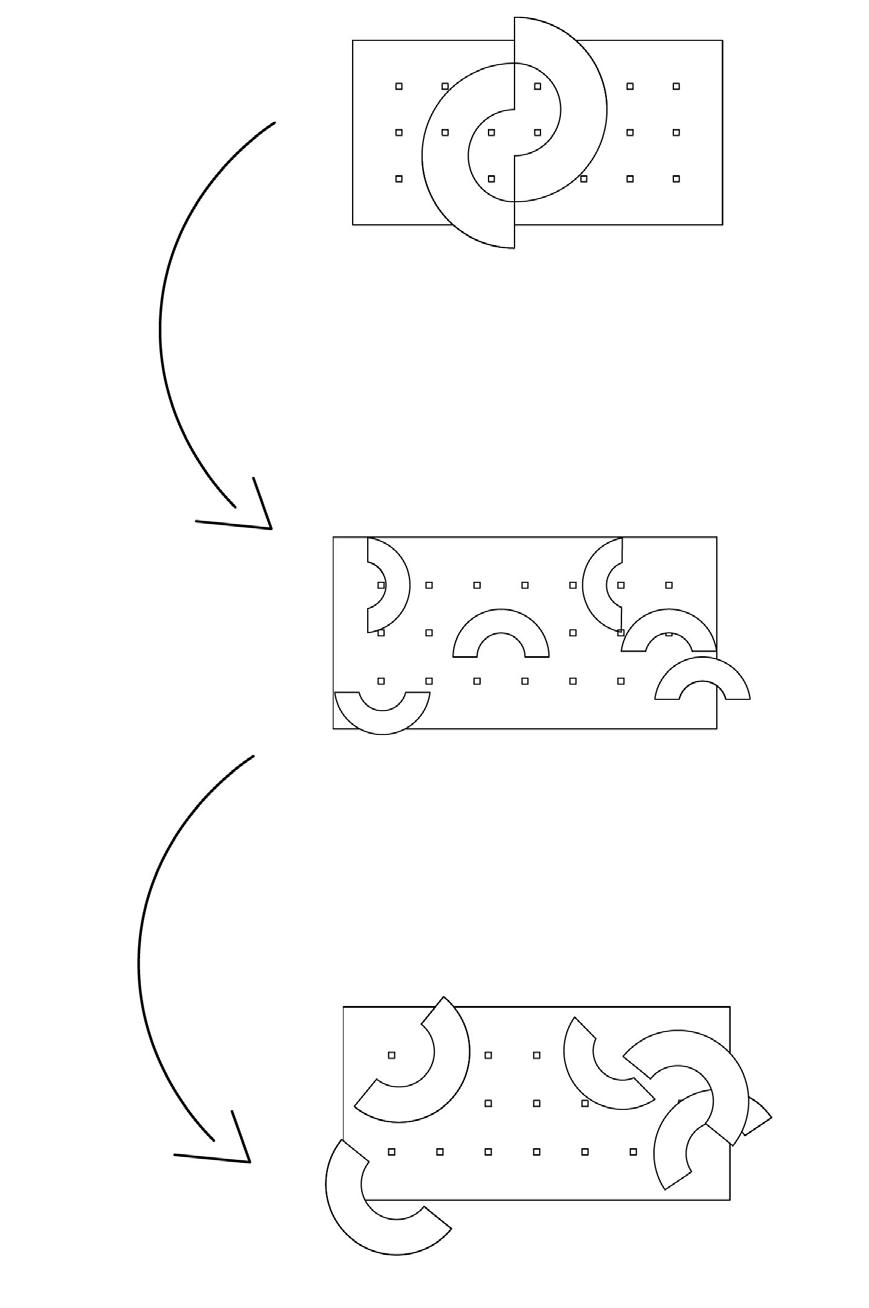
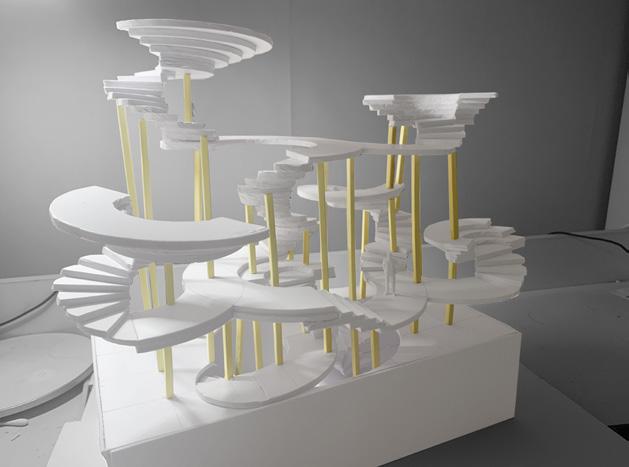
The second stage aims to bring the same basic architectural languages into horizontal spaces with only horizontal surfaces and a given base. Using offset technique to create horizontal circulation and connect with spiral staircases to give people the perception of rotate horizontally. Different rotation of semicircle from 180 degree to 90 degree
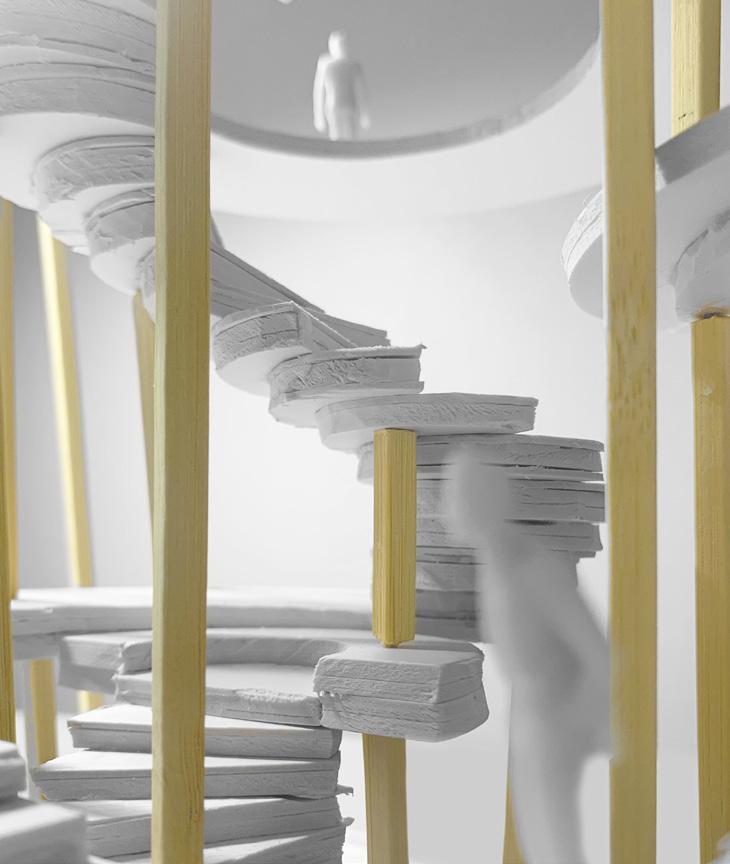
Model Photo
Rotate from 90 degree to 45 degree
Plan
Vertical Rotation Perspective
Diagram
Diagram
9 The Rotation Pavilion Winter 2021 | Course: ARC201
Horizental Rotation Perspective
Rotate the Semicircle with the smallest radius and fall on the pillar
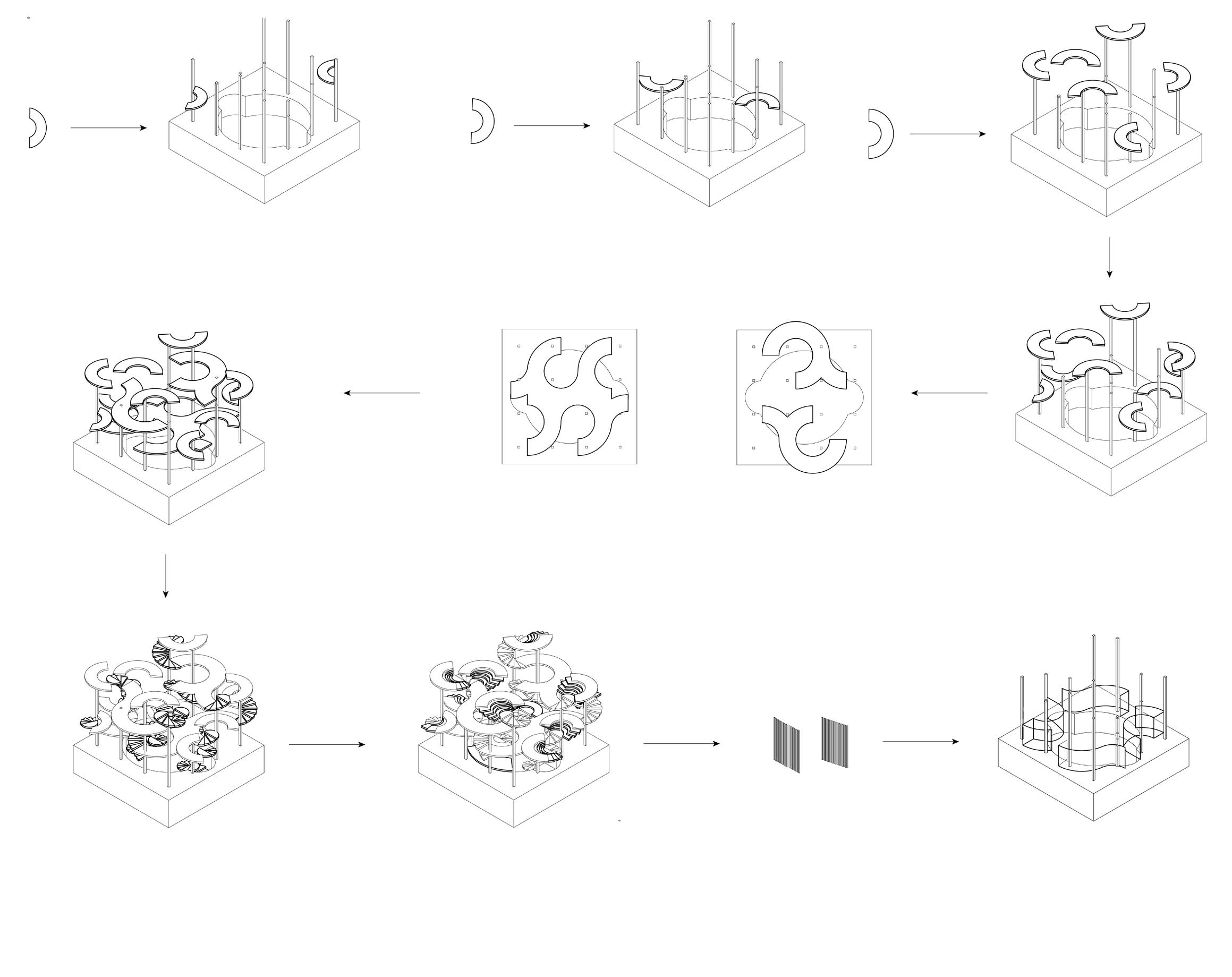
Repeat the previous stepwith the medium radius
Repeat the previous stepwith the largest radius
use semicircle to create aisle so that all semicircle can communicate with each other
Using rotational stairs to connect all semicircle
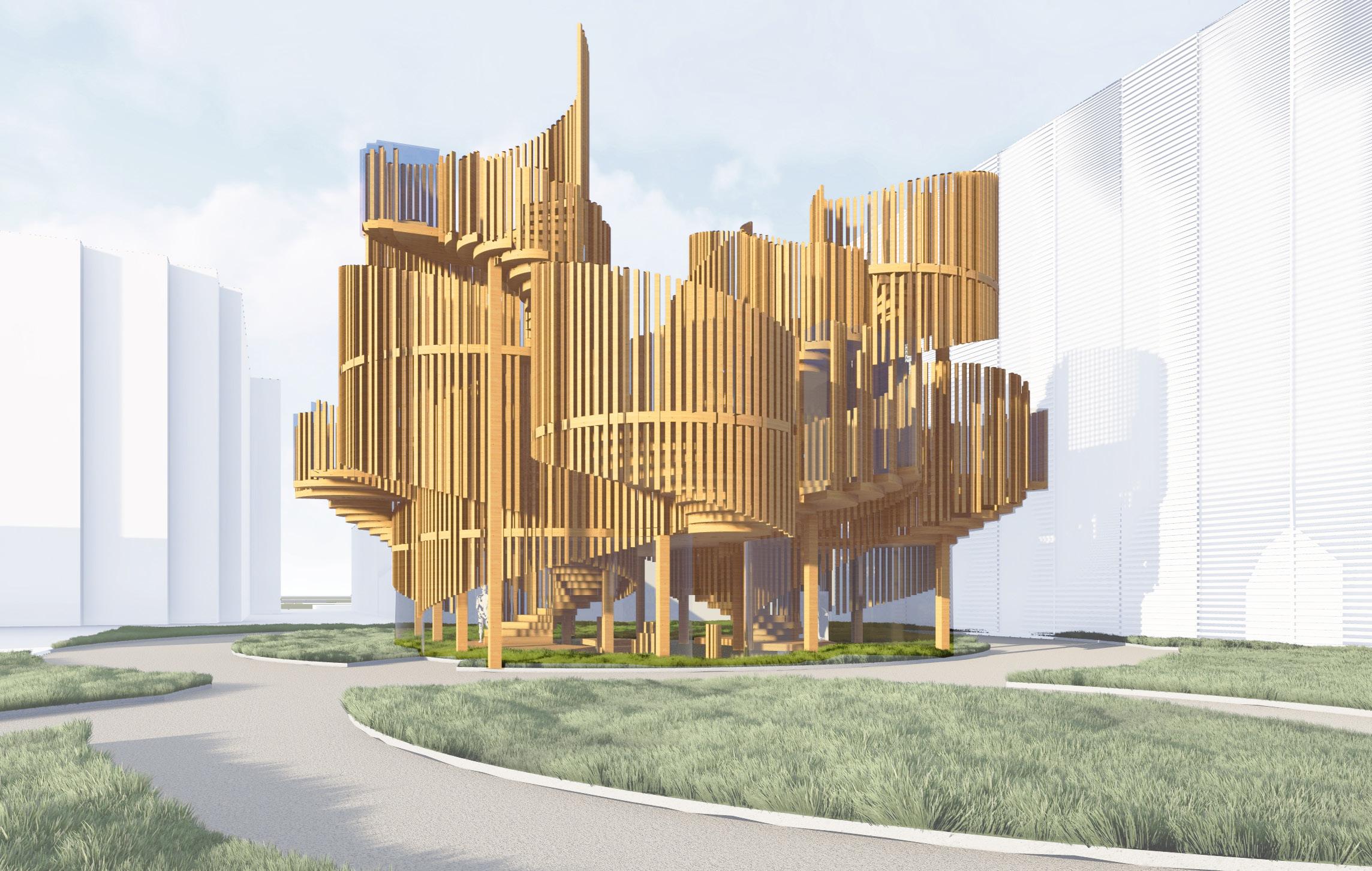
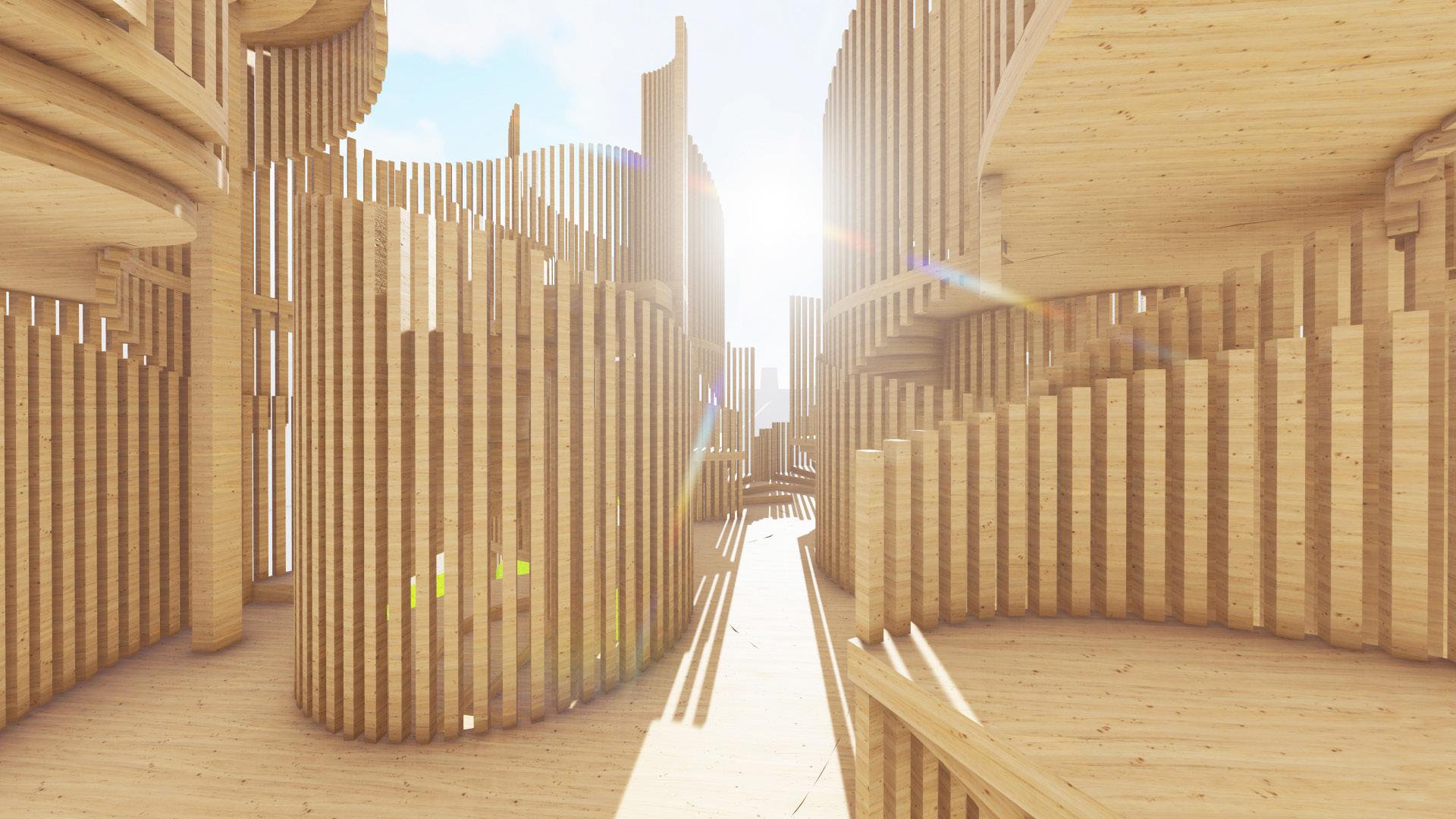
The final Rotational Pavilion is formed by combining the vertical and horizontal space rotations in the first two stages. In this pavilion, people can not only feel the rotation visually, but also feel the architectural language displayed in space by following the rotating floor after entering the pavilion
Perspective Render
Make a wall with two kinds of columns with each column rotated upwards by 0.25m and 0.5m respectively.
Turn the semicircle into the floors for circulation
Put them together
The first floor semiencloses the space with rotating glass
Plan with Landscape
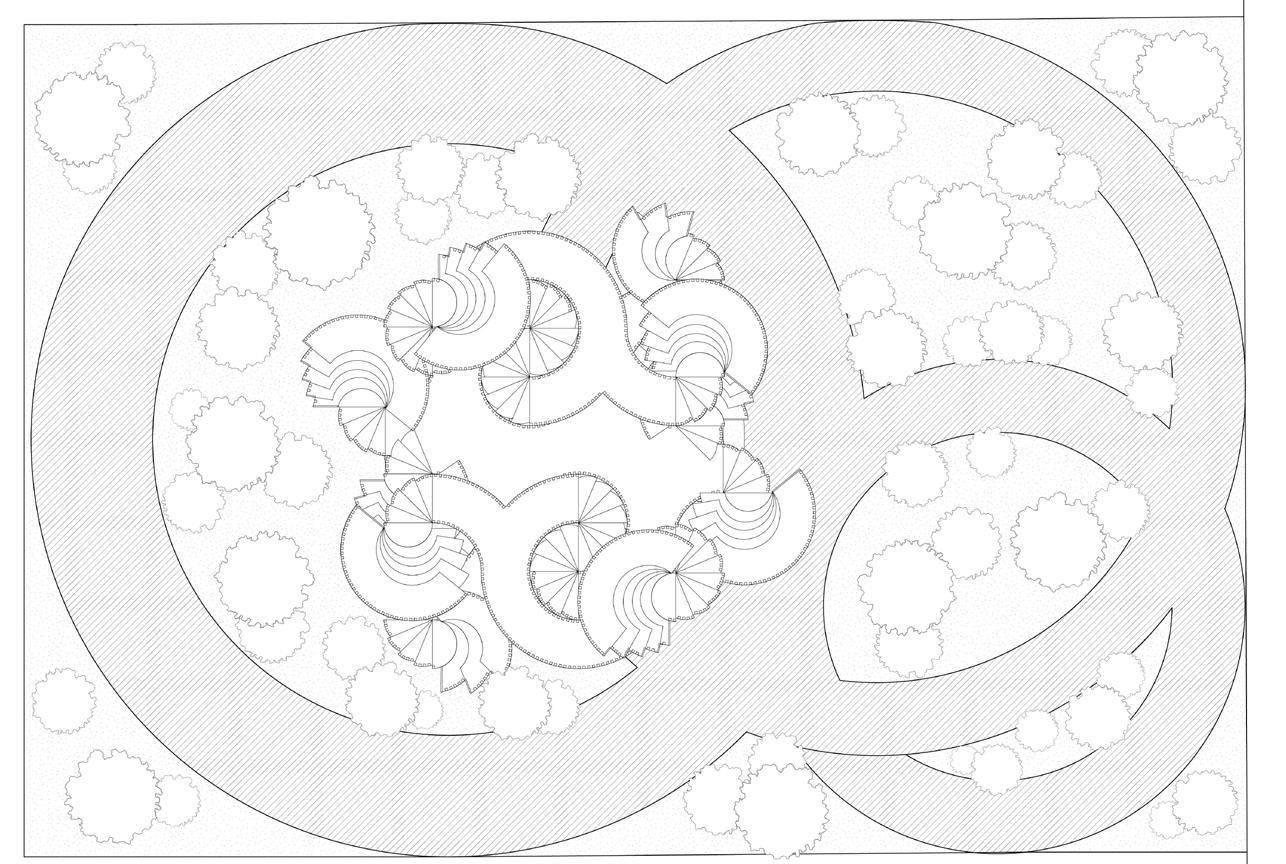
The Landscape around the building also refers to the architectural language of “rotation”, so that the pavilion can better integrate into the surrounding environment. The Landscape uses three circles with different diameters to interact with each other in order to form a connected path, so that people can not only experience the theme of the building inside the building, but also perceive the rotating relationship between the building and the surrounding environment outside.
Diagram
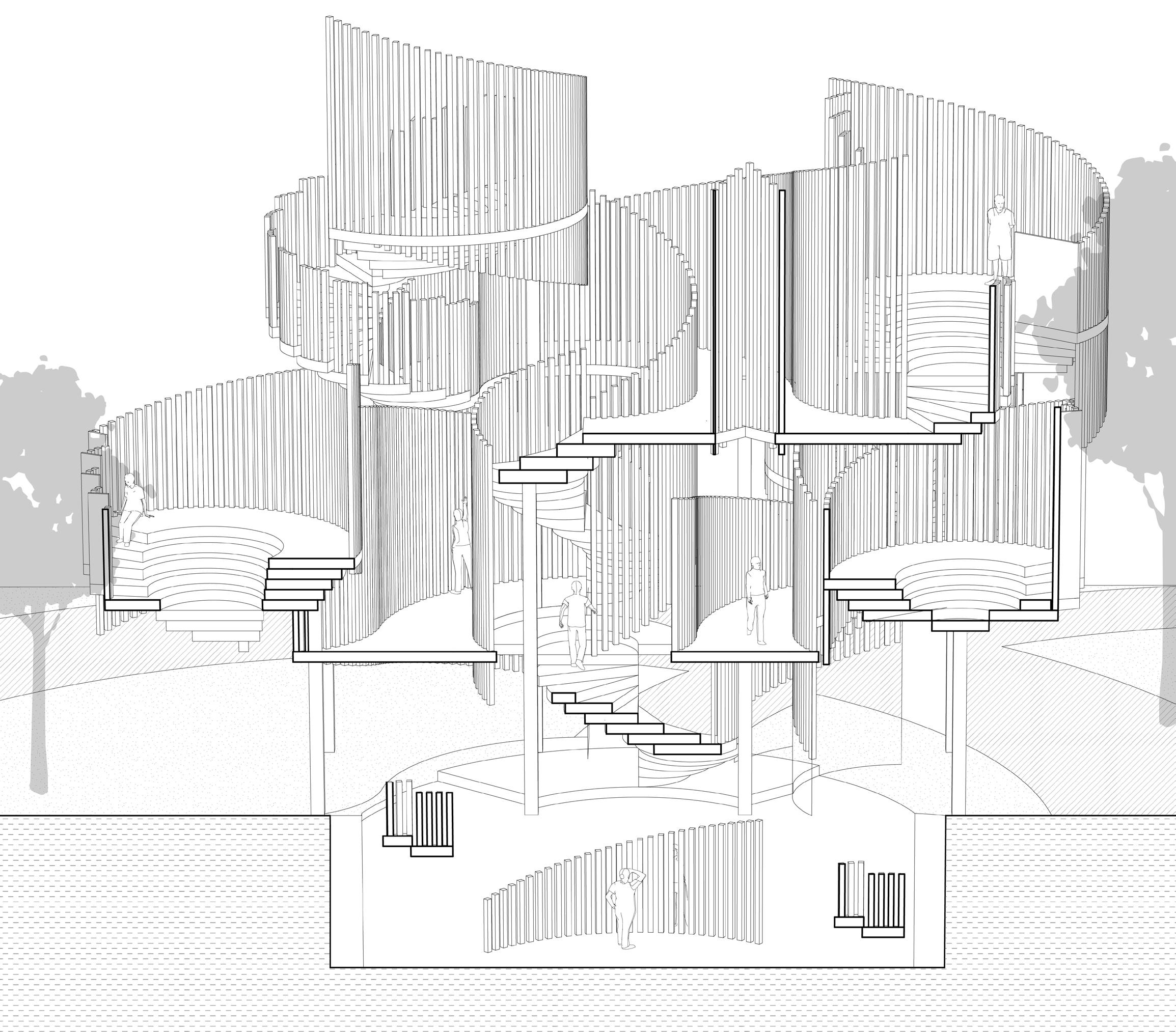
Sectional Perspection
10 The Rotation Pavilion Winter 2021 | Course: ARC201
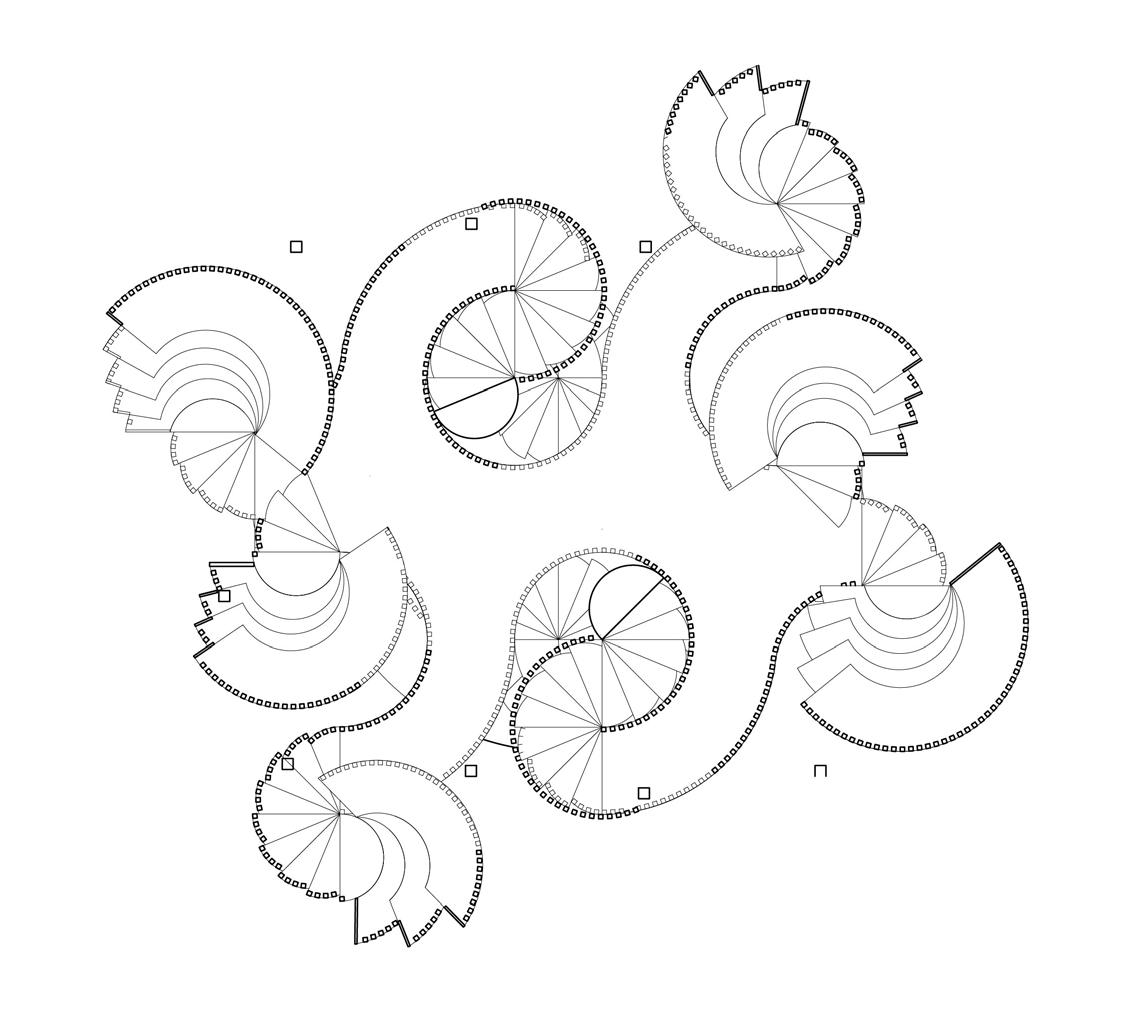
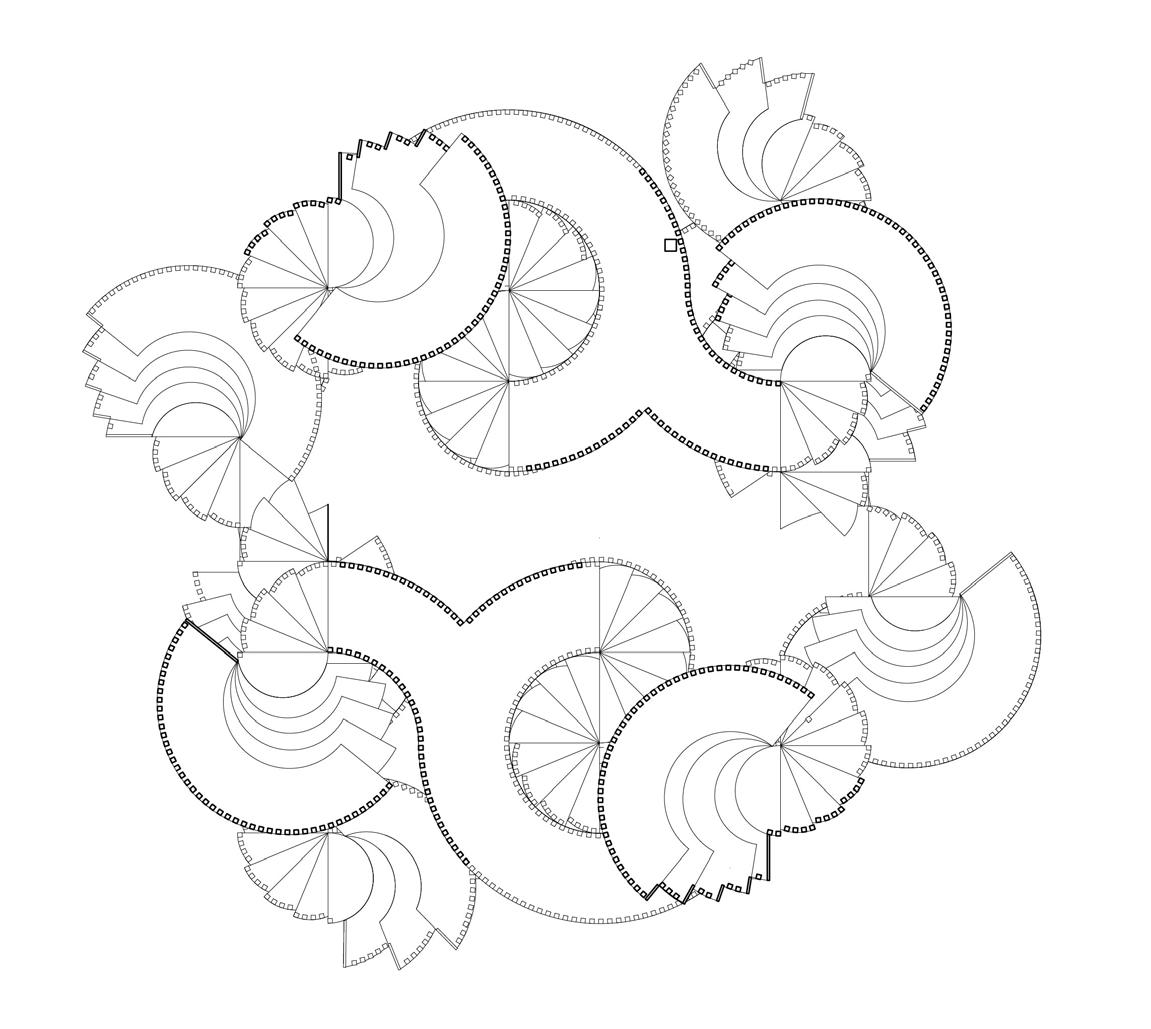
The plans illustrate how people will follow the rotate circulation to perceive the space. Meanwhile, the end of each passage is connected with a rotating staircase or a rotating platform to allow people to interact with the space coherently.
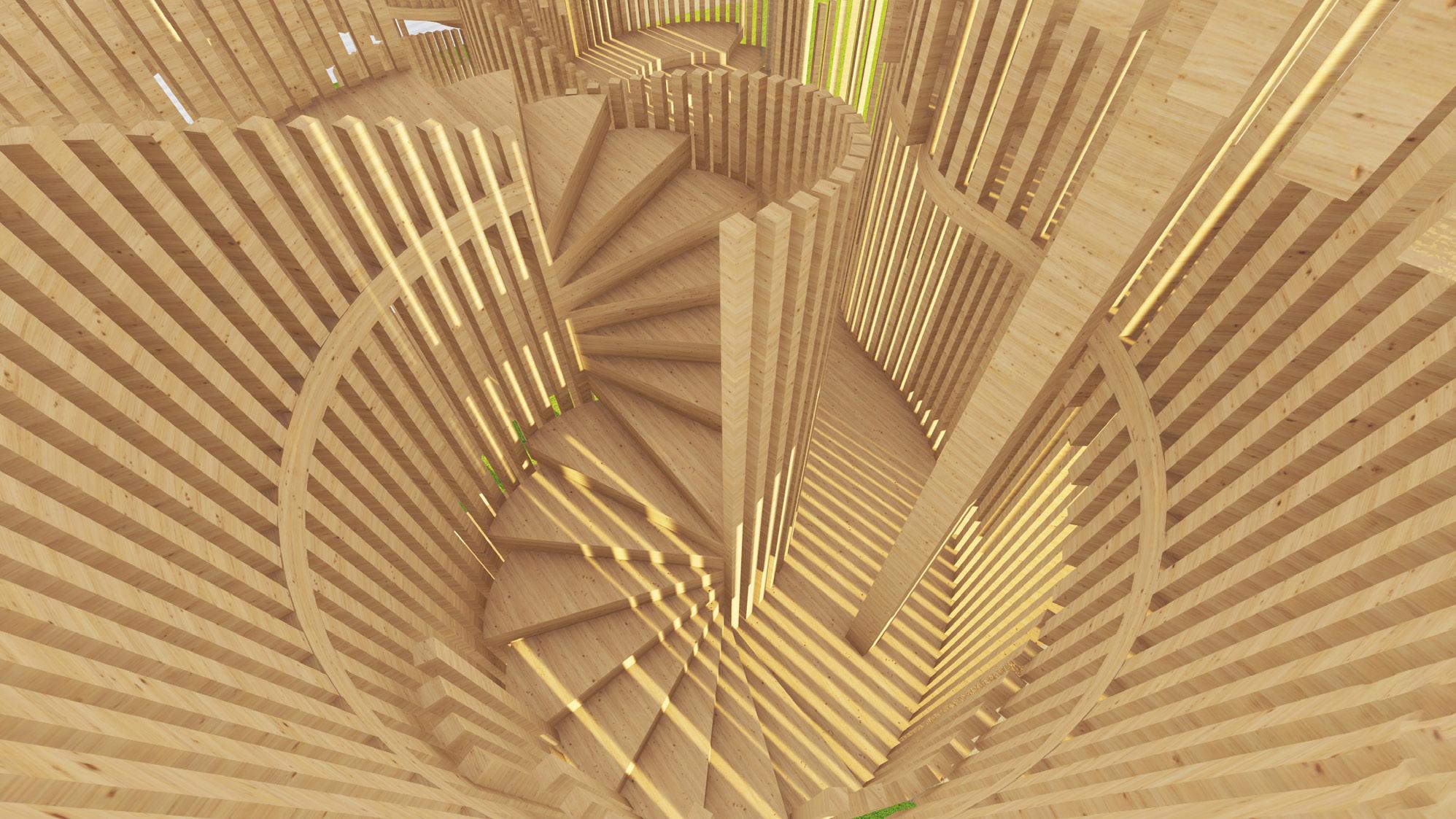
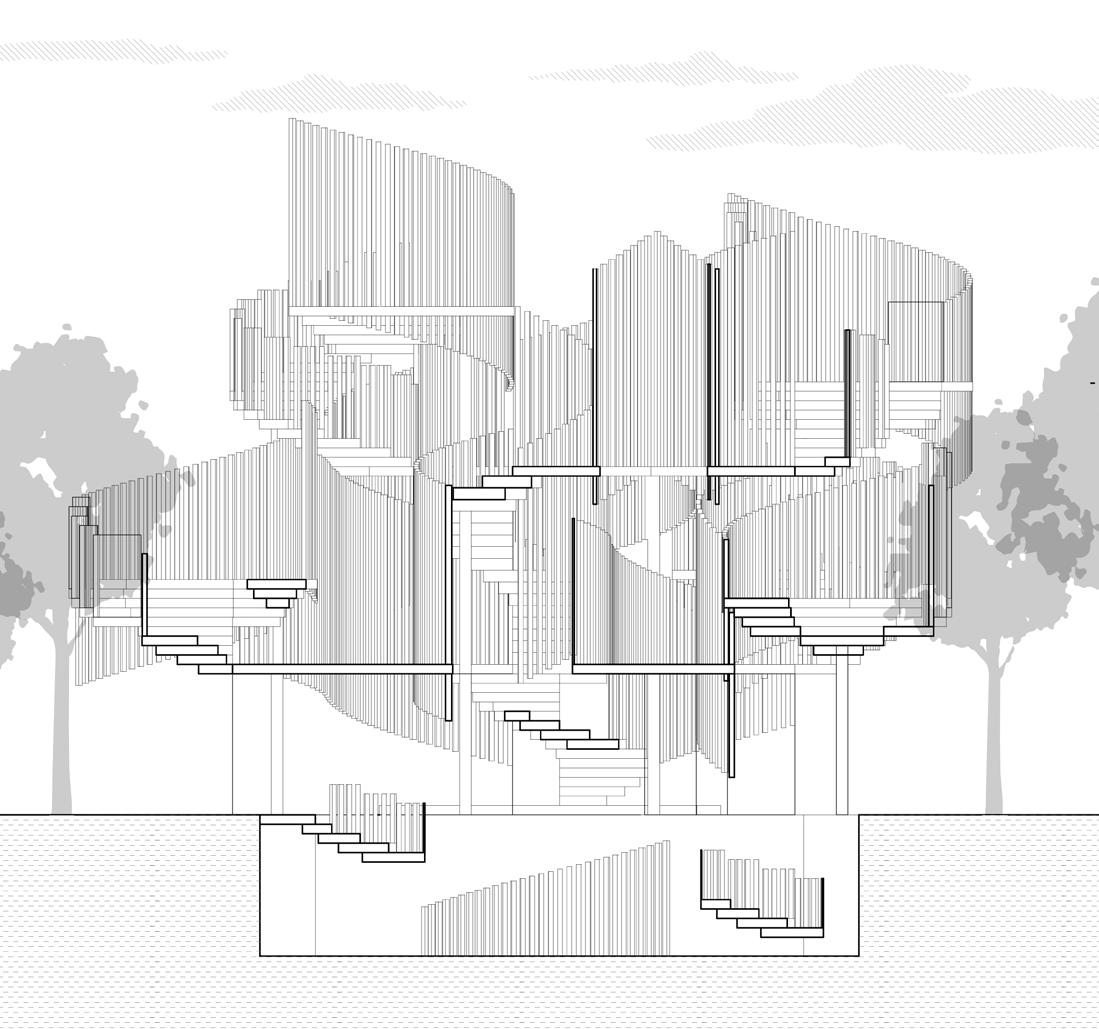
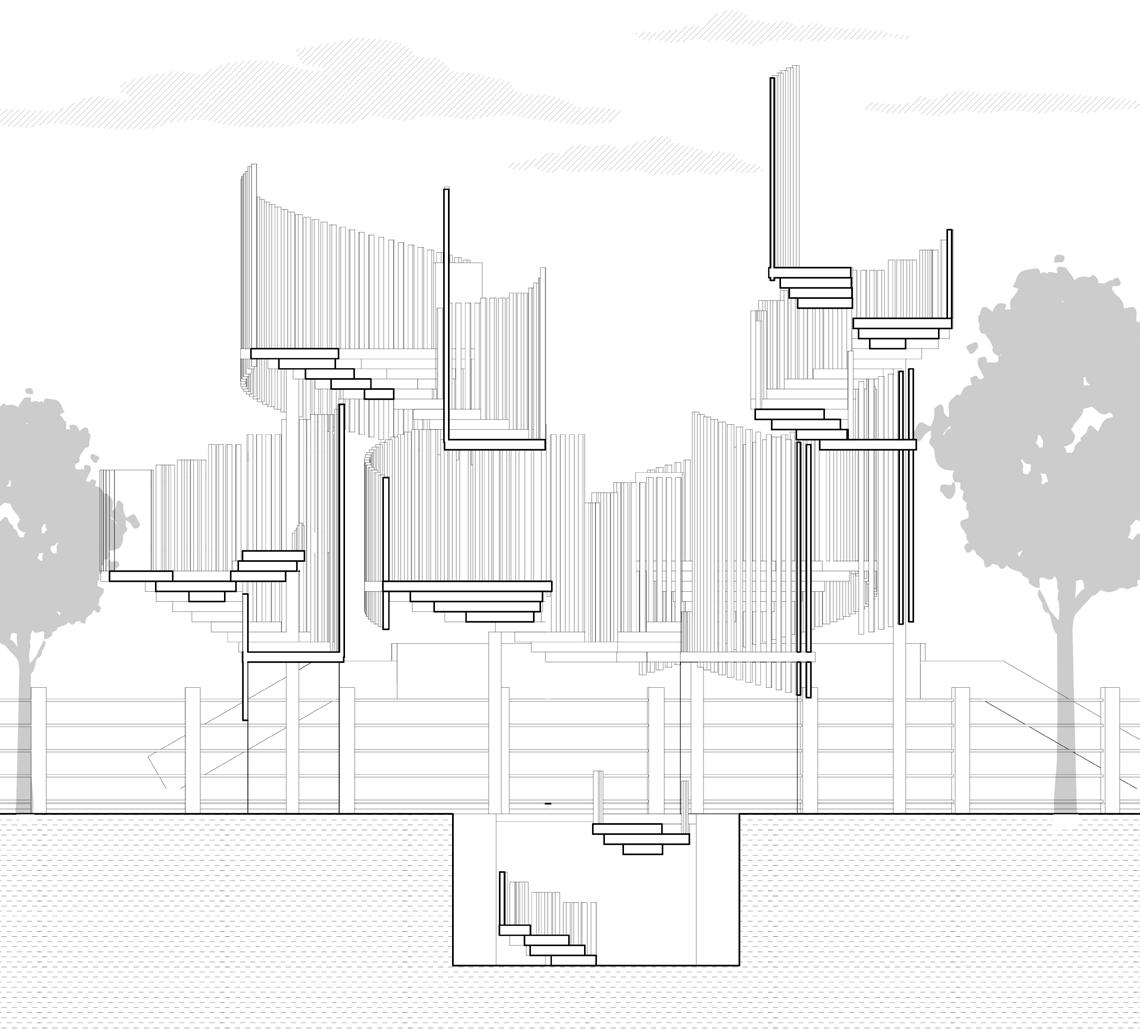
The purpose of the sections is to show the changes in the vertical space, so that people can more intuitively feel how to experience the rotating architectural language when using the pavilion space. at the same time. The rotating platform connected by each channel can also be regarded as a separate space, in this space, in addition to the wall, the floor is also undergoing a direct “rotation”
Second Floor Plan
section 1
Third Floor Plan
section 2
Interior Render
Vertical Model Photo Horizental Model Photo Rotate Pavillion Option
11 The Rotation Pavilion Winter 2021 | Course: ARC201
Interior Render
The Mechanism Monster
Course: ARC381
Instructor: Nicholas Steven Hoban
Date: Fall 2021
Location: Berlin Bunker
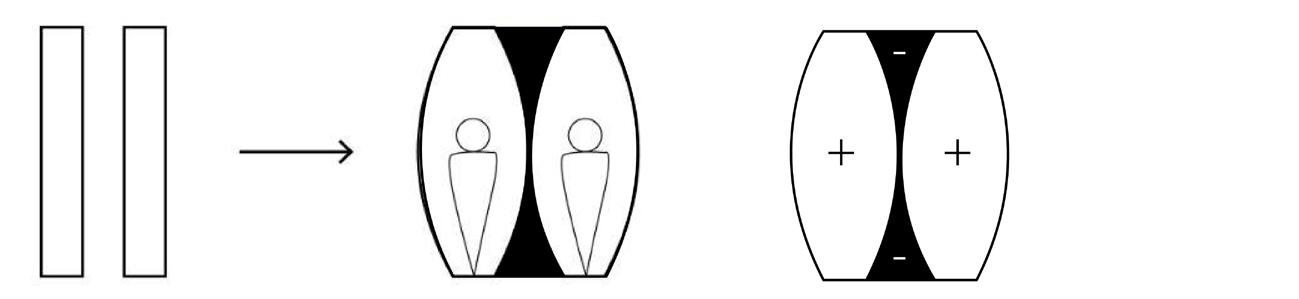
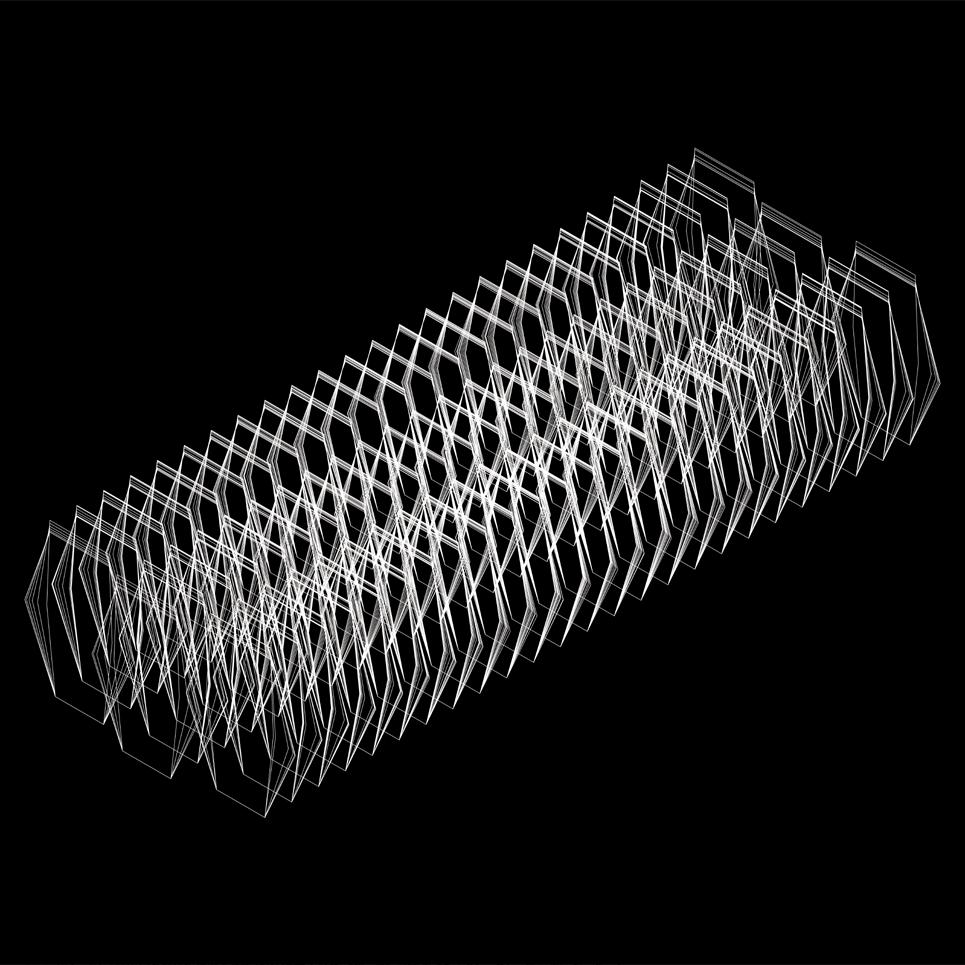
When people stand on it, the space expands
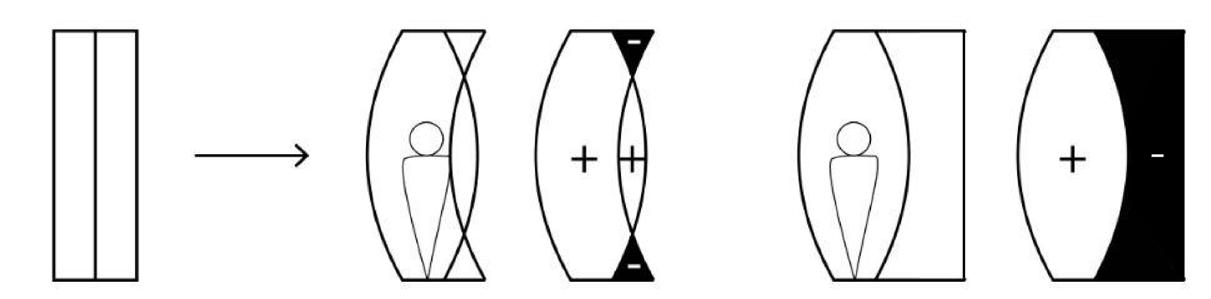
When standing in the left and right channels respectively, the space in the middle channel is completely squeezed
Group Member: Linyi Song
Role: responsible for Modeling, rendering and drawings (site plan, sketch, movement drawing)
Duration: 3 months
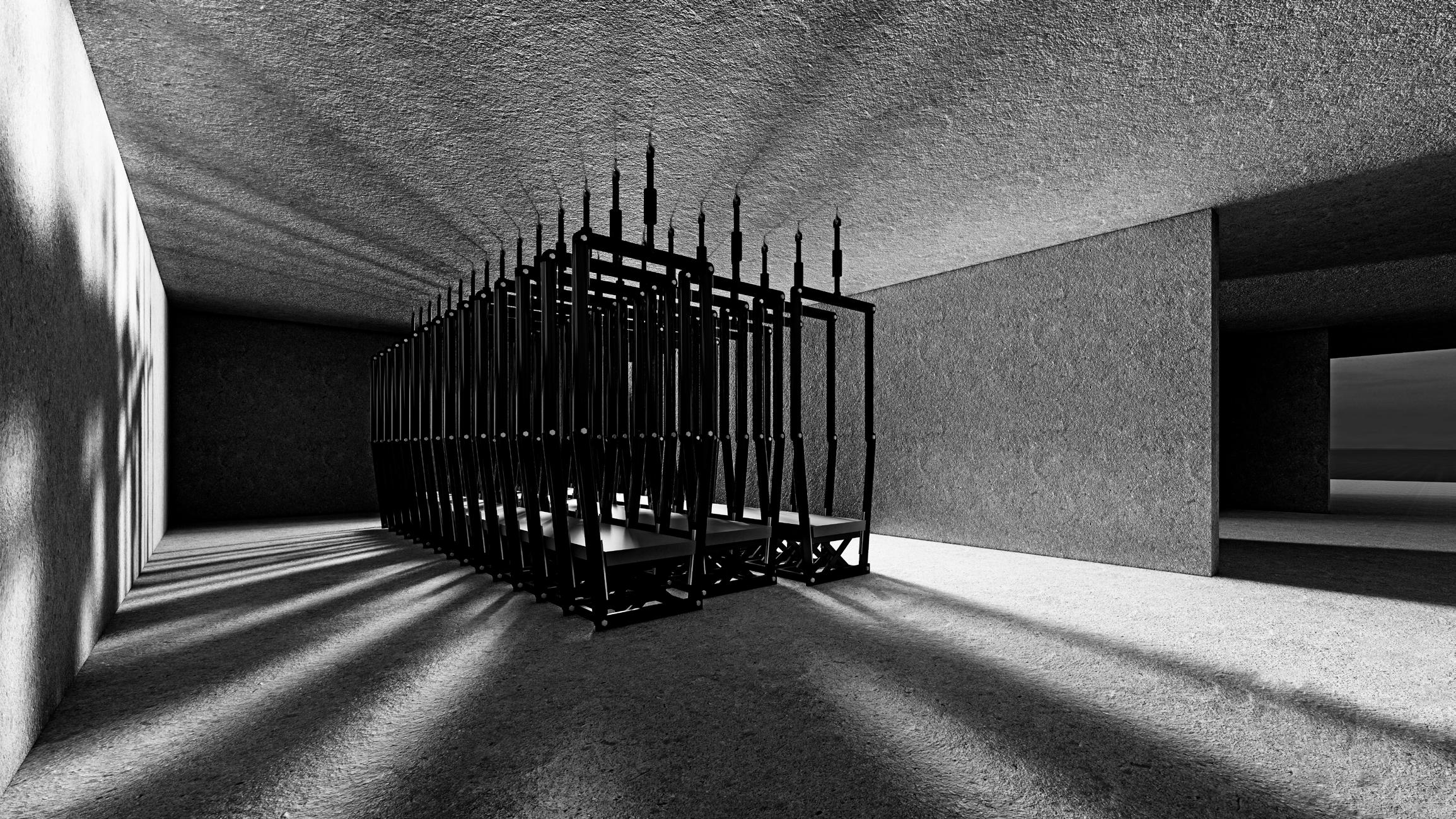
The project is located in the Berlin Bunker. The venue is now a brutalism-style art gallery, which is very in line with the overall wild style of the mechanism. The purpose of this project is to explore the increasingly alienated relationship between people under the development of technology.
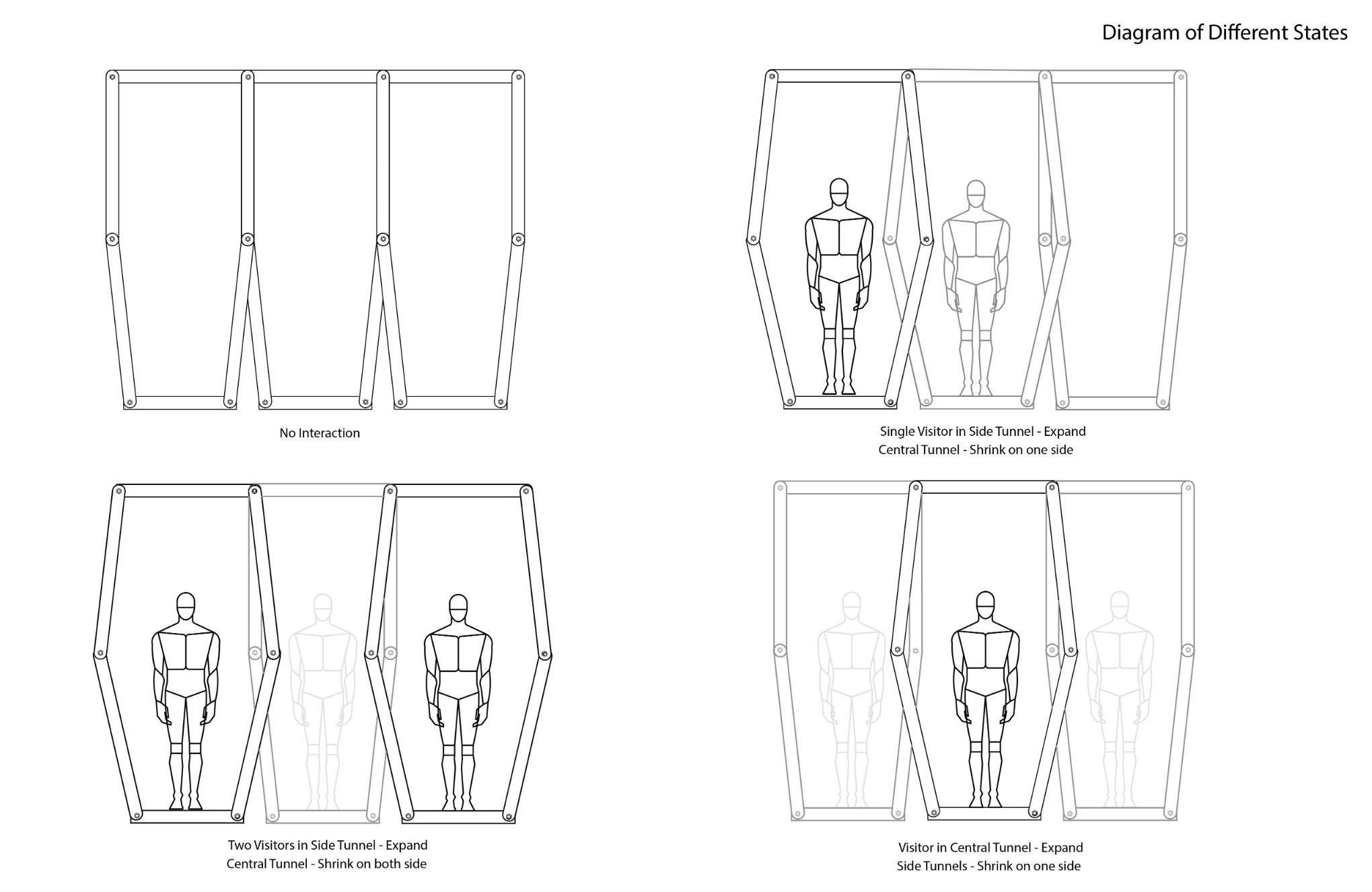
When two people use adjacent passages, the expansion of space by one in front of the other will form a new expansion space in the middle. For people in the aisle, whether the space in front of them expands depends on whether the people in the aisle next to them walk ahead
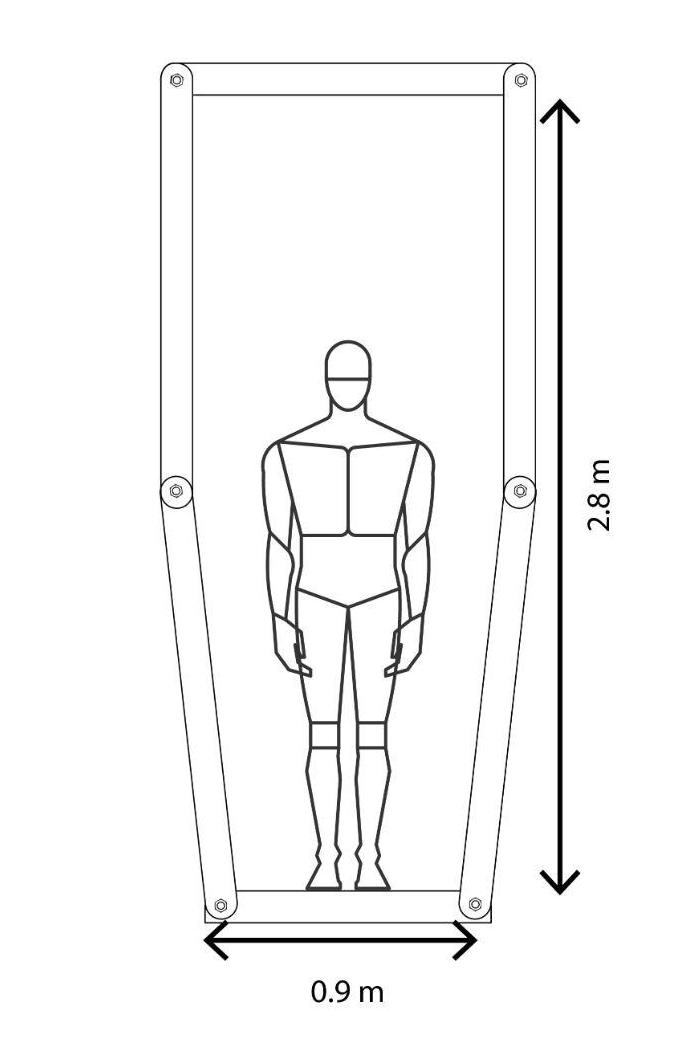
Diagram of Different Scene Display
Site Plan
No Interaction
Single Visitor in Side Tunnel - Expand Central Tunnel - Shrink on one side
When three people use the aisle, if the people on both sides walk in front, a completely squeezed space will be formed in the middle, and when the middle person walks in front, a squeezed space will be formed on both sides.
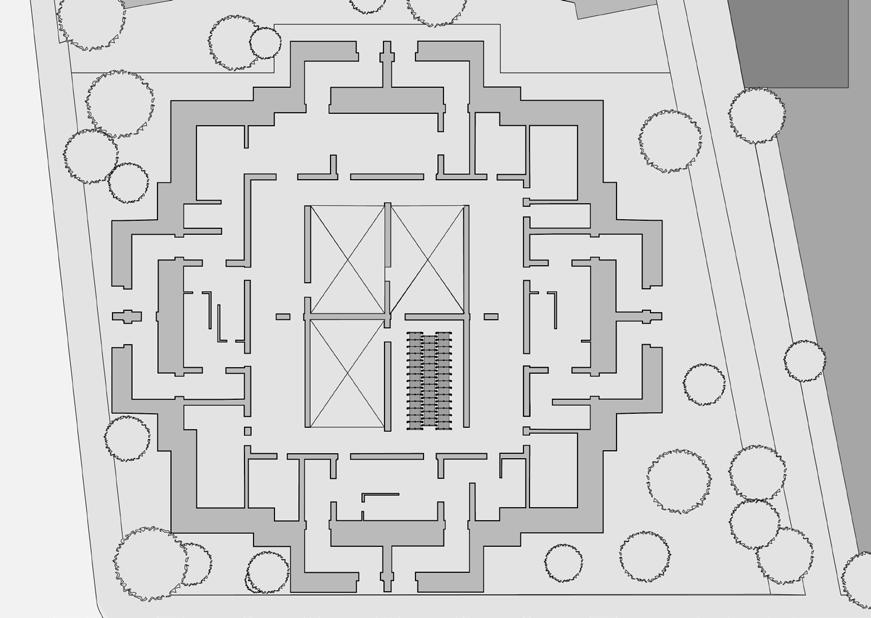
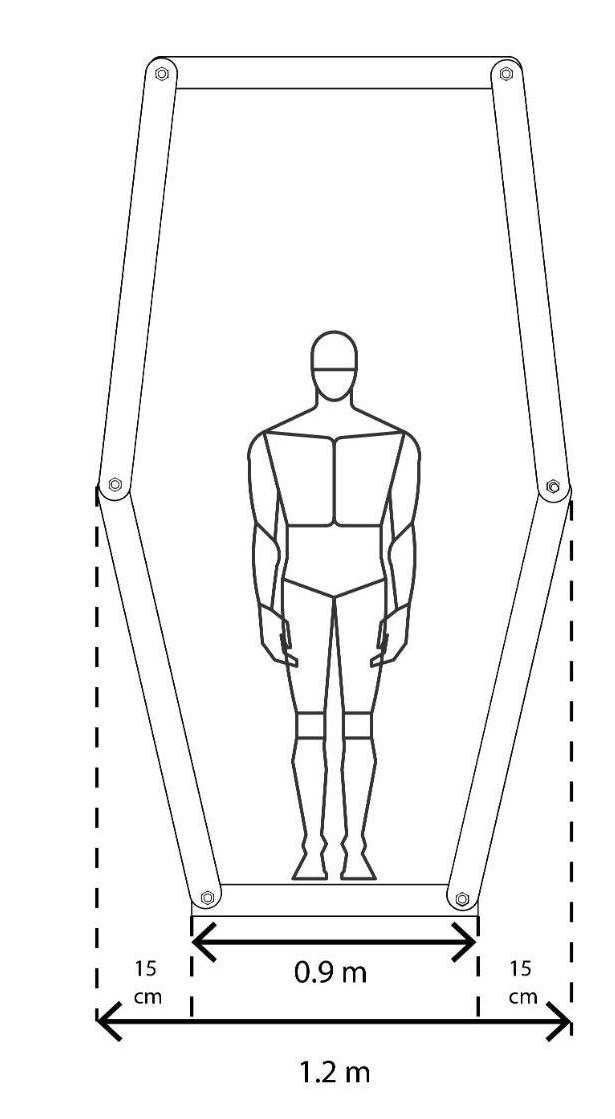
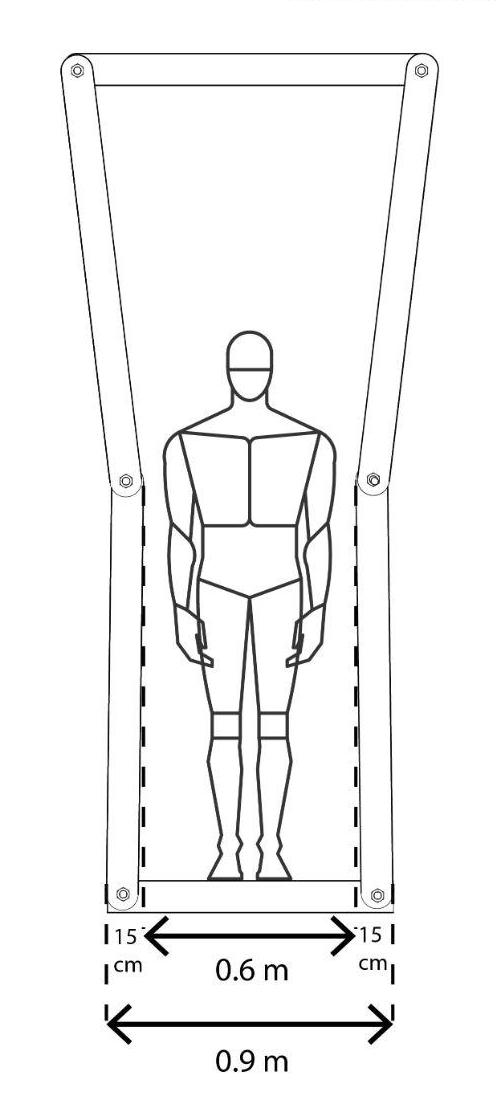
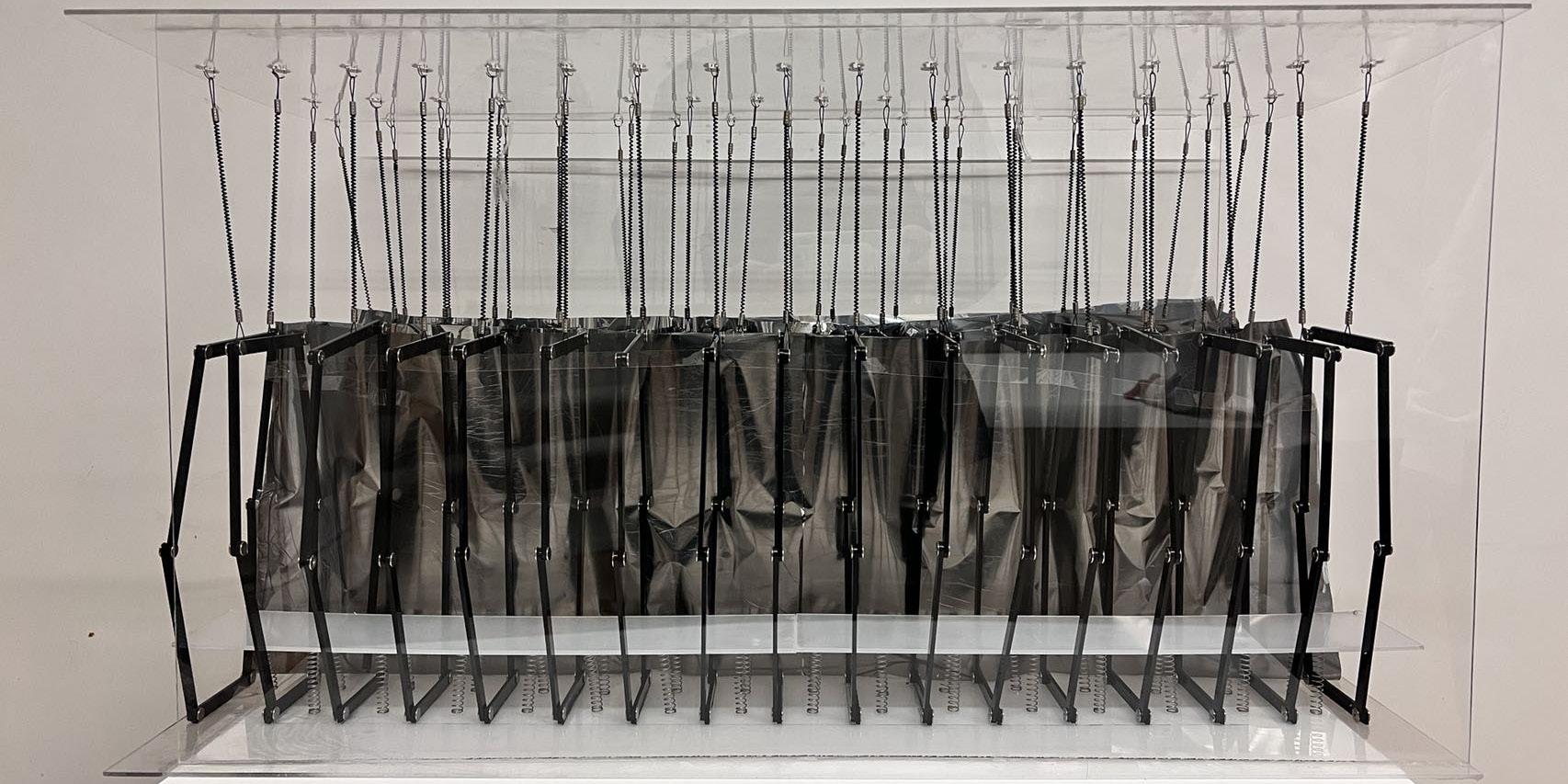
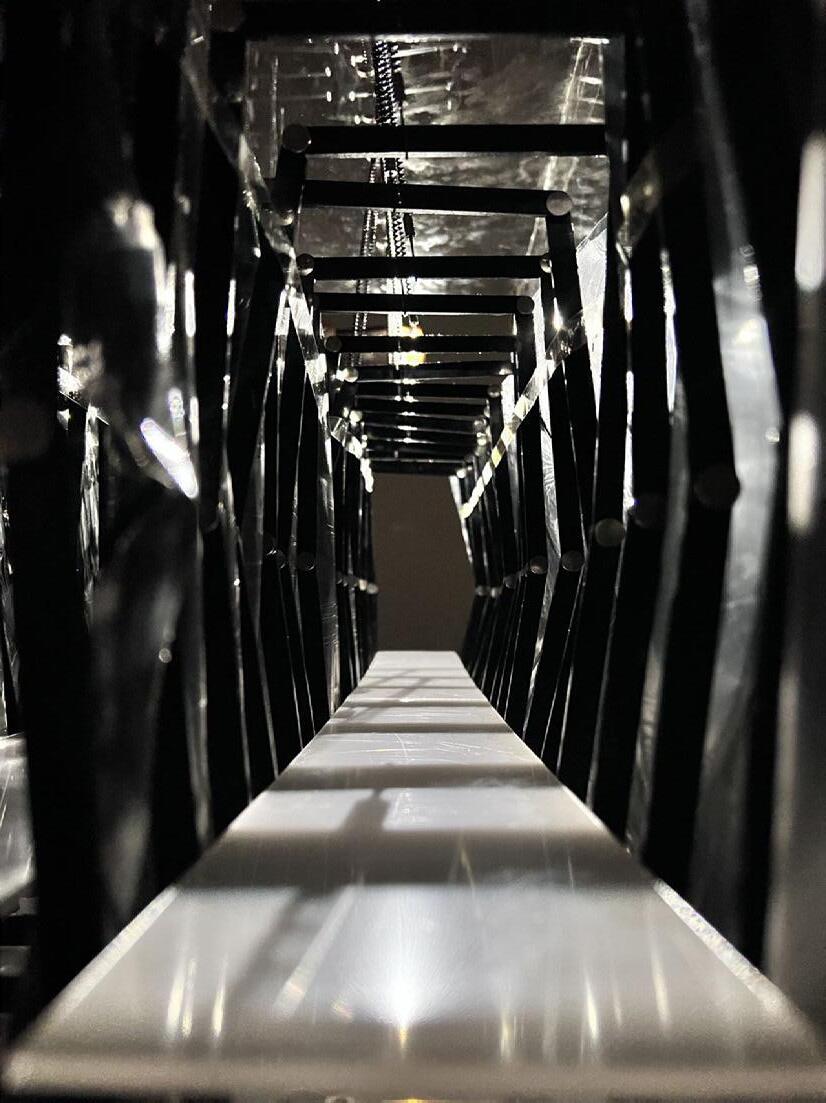
The project is placed in the right corner of the entire bunker space, because there are exits in the corner to connect the other two spaces, people can go out directly after experiencing the mechanism. The space where the device can stand is 2.8 meters high and 0.9 meters wide, the weight of the person presses down on the pedals and causes the supports on both sides to expand when someone stands on the device, The widest space for expansion is 1.2 meters. On the contrary, if someone passes through another passage at this time, the space they passe will shrink this tunnel space to a minimum of 0.6 meters. The diagram indicates how spaces going to change when multiple people use the mechanism. The first one shows that in the unused state, the mechanism will keep its basic form. And when two people use it, the right half of the space in front of the person in the middle channel will be squeezed because of the passing of the person walking in front of the side channel. When three people use the space, the space on the left and right sides of the people in the middle aisle will be squeezed by the people walking in front of the side aisle. On the contrary, if the person in the middle aisle walks ahead, the left half space or the right half space of the people in the two aisles will be squeezed respectively.
Space Diagram
Details Explaination
Two Visitors in Side Tunnel - Expand Central Tunnel - Shrink on both side Visitor in Central Tunnel - Expand Side Tunnels - Shrink on one side 12 The Mechanism Monster | Fall 2021 Course: ARC380
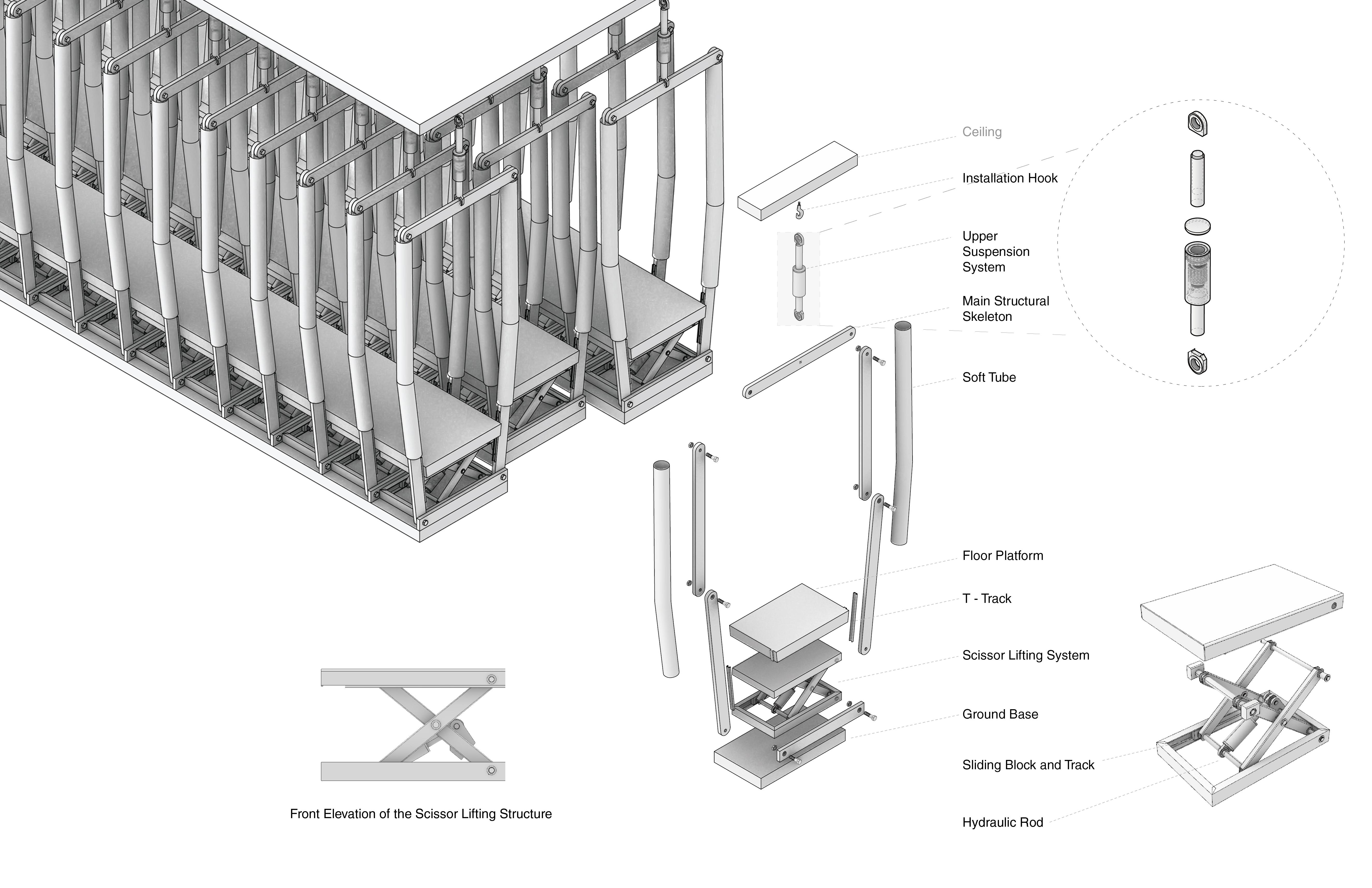
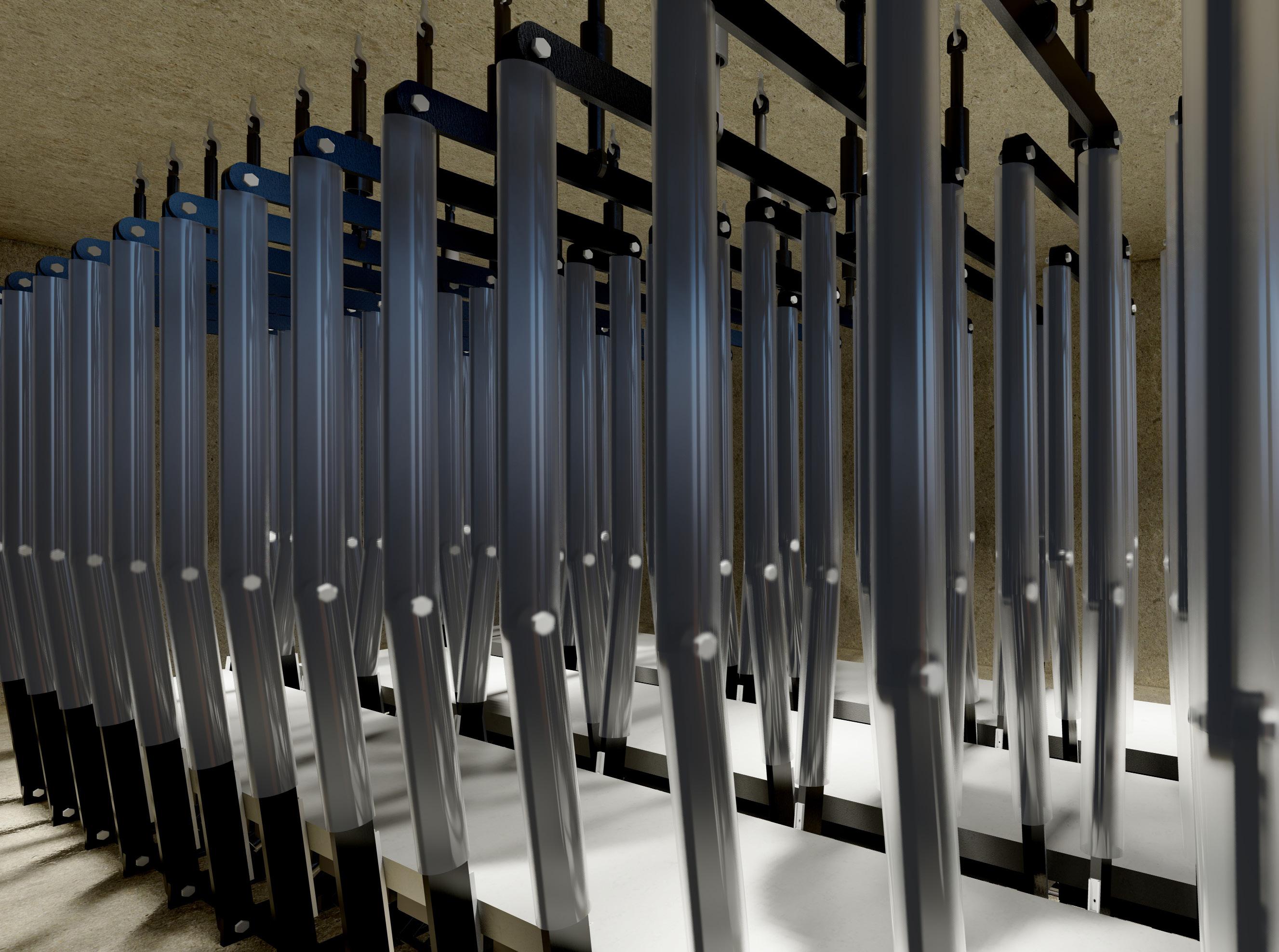
Each individual unit of Mechanism can be disassembled into pedals, structural skeleton and connecting parts. For pedals, the scissor lifting system connected under the floor platform will slide and press down due to weight pressure, and connected the ground baseas as a support. The side of the pedal is connected to the T-track, it can drive the T-track to slide when the pedal is pressed down. At this time, the support on the side will also be squeezed to both sides, so as to achieve space expansion. Structural skeleton is wrapped by soft tube to protect people. The connecting part is a spring device, and the spring can be adjusted according to the height of the roof. The spring will pull the mechanism normally when no one is using the mechanism, and when someone stand on the pedal, the spring will also be stretched when the structural skeleton is pushed down due to the weight of the person pressing the pedal. After people passing by, the structural skeleton can be changed to its original shape since the spring loses its downward pulling force. Finally, the entire mechanism was hung on the roof by the hook.
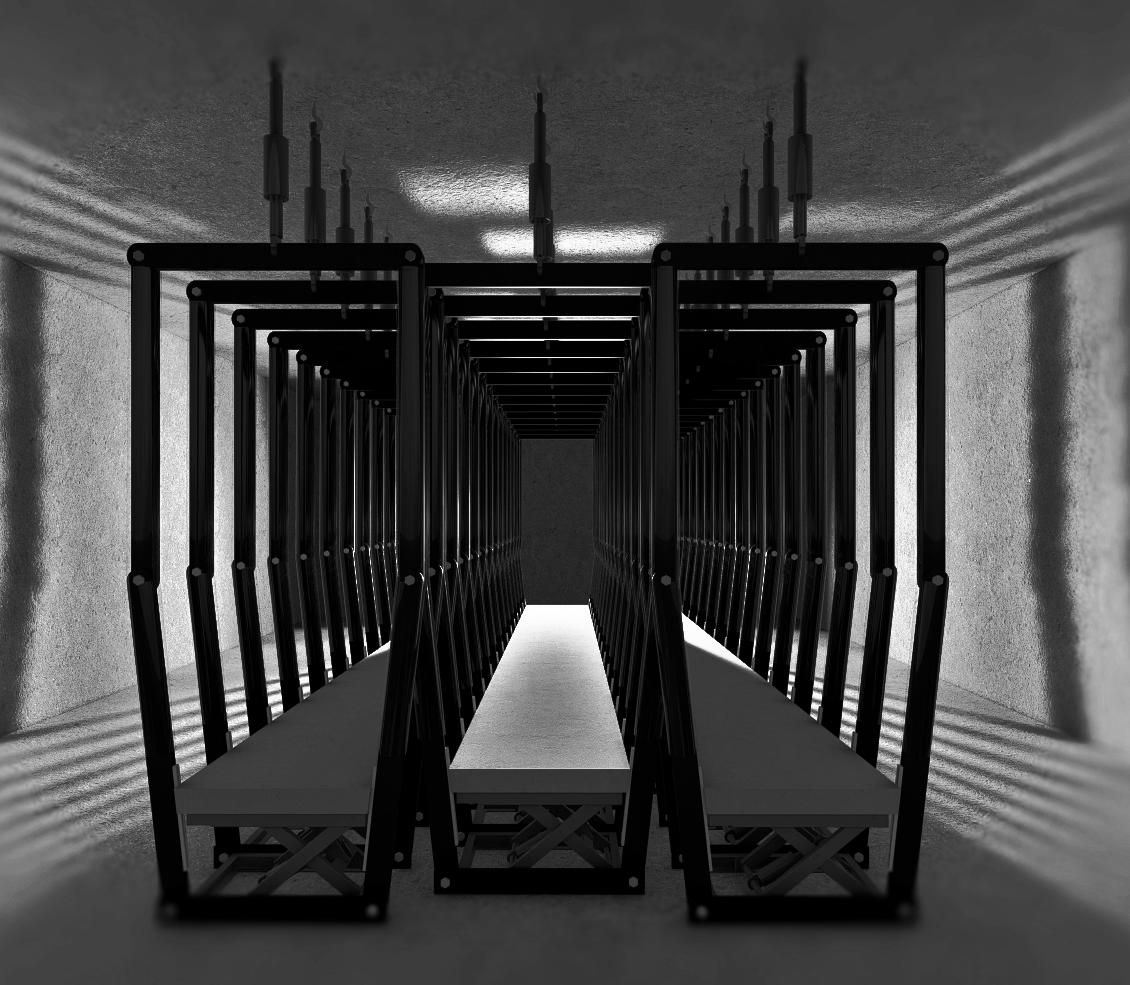
 Front Render
Exploded Diagram 13 The Mechanism Monster Fall 2021 Course: ARC380
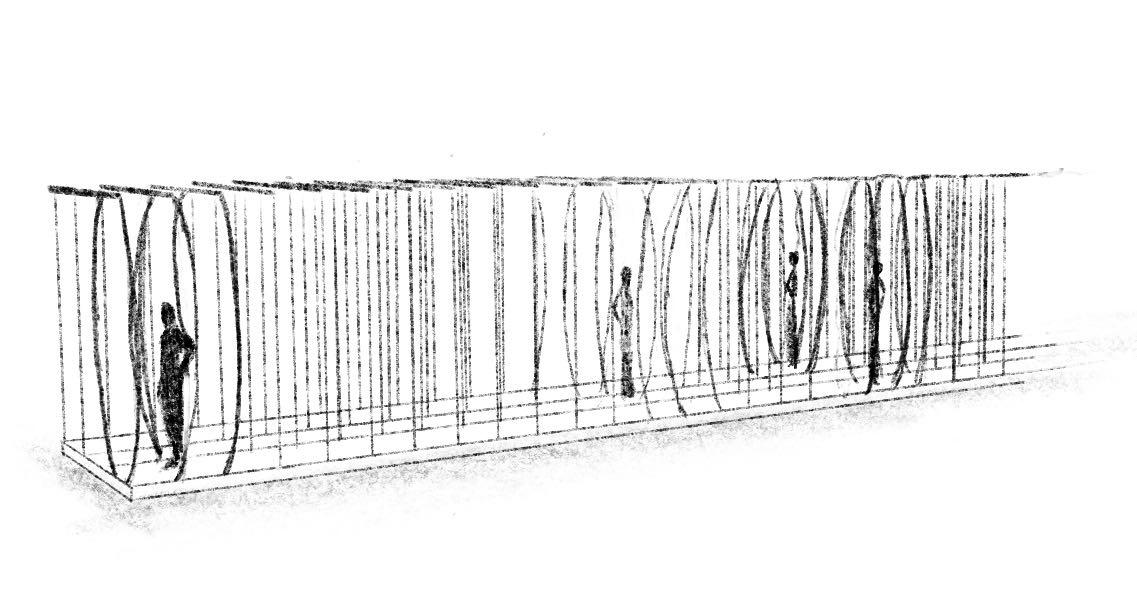
Sketch
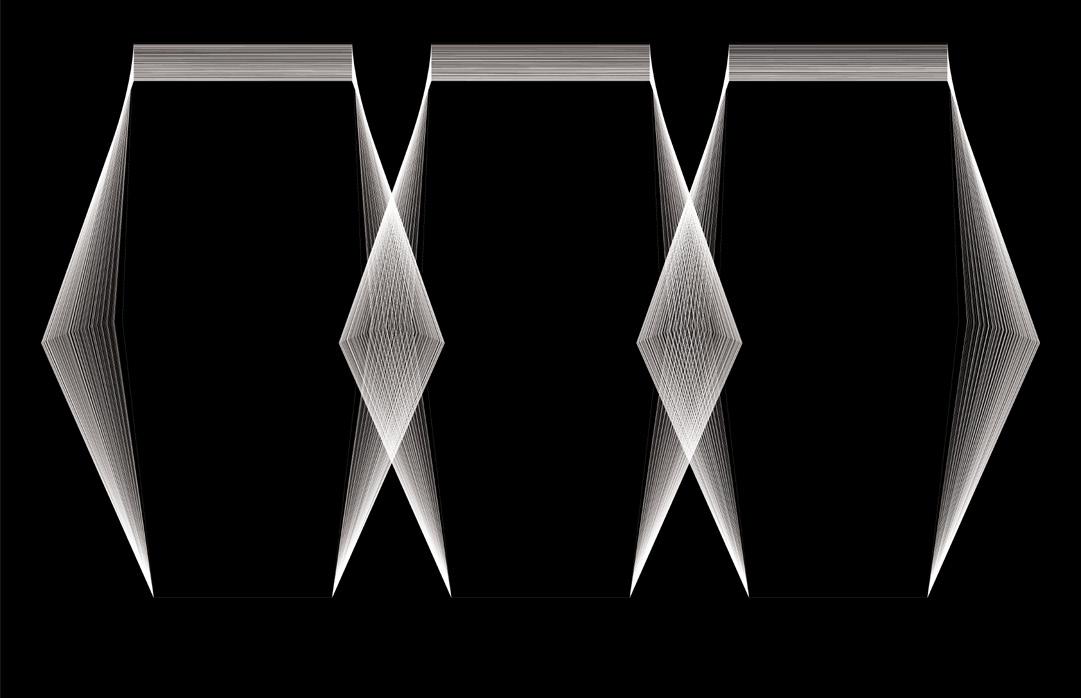
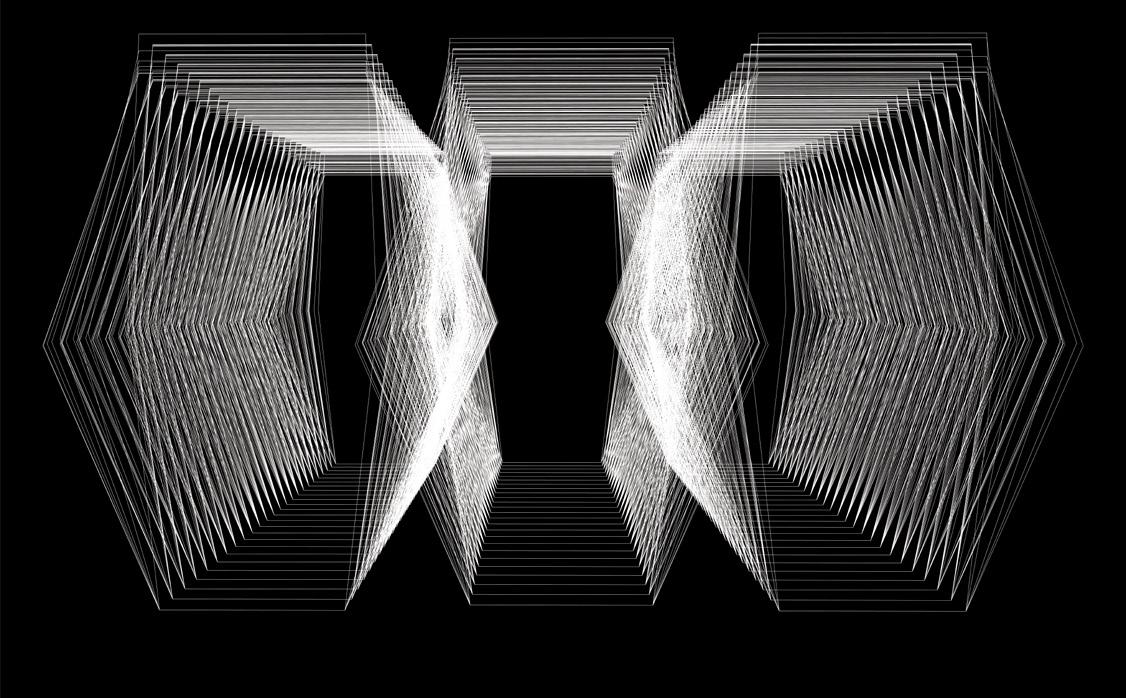
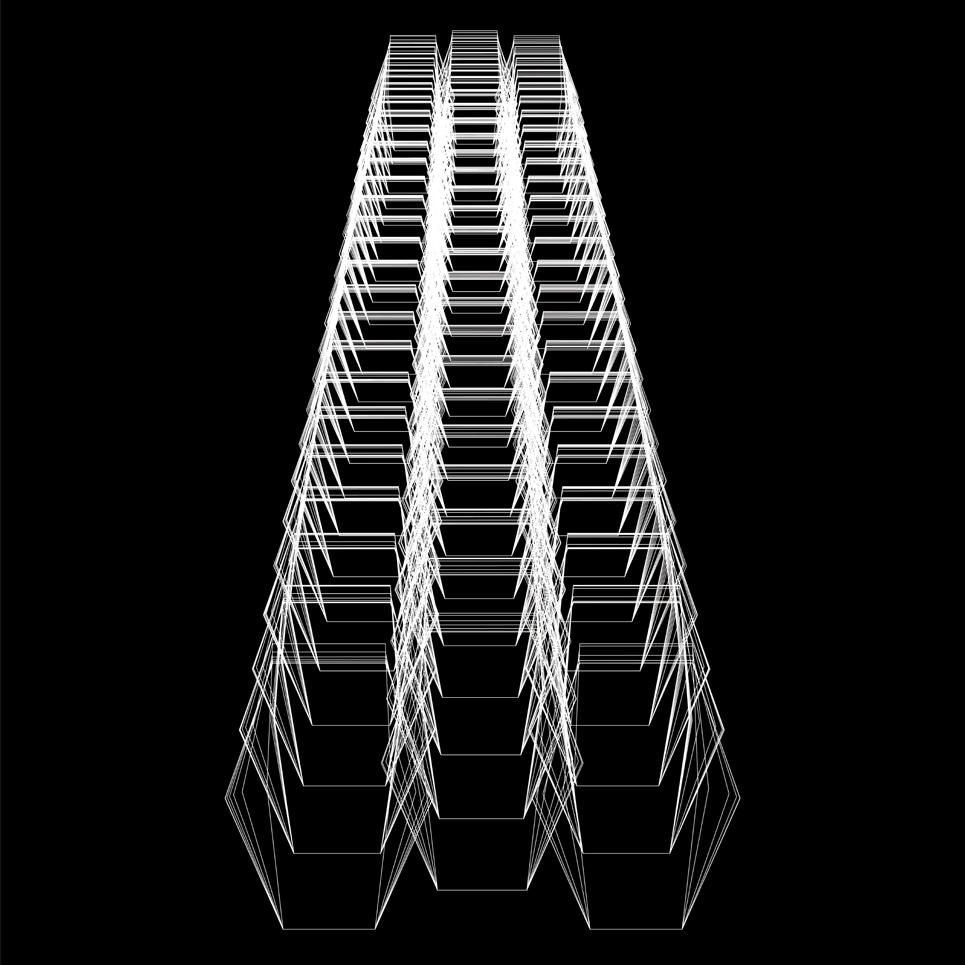

Therefore, this mechanism explores that with the continuous development of technology, even if the distance between people is very close, it seems that there is an invisible hand that pulls the distance between people.
Movement Drawing
Model Photo
Side Render 14 The Mechanism Monster Fall 2021 Course: ARC380
Model Photo
The Borders
Course: ARC465
Instructor: Anne-Marie Armstrong
Date: Fall 2022
Group Member: Xu Li, Yibo Wang, Hongxuan Wang
Role: border indexes, Swimming Pool Plan, disabled restrictions perspective
Duration: 3 months
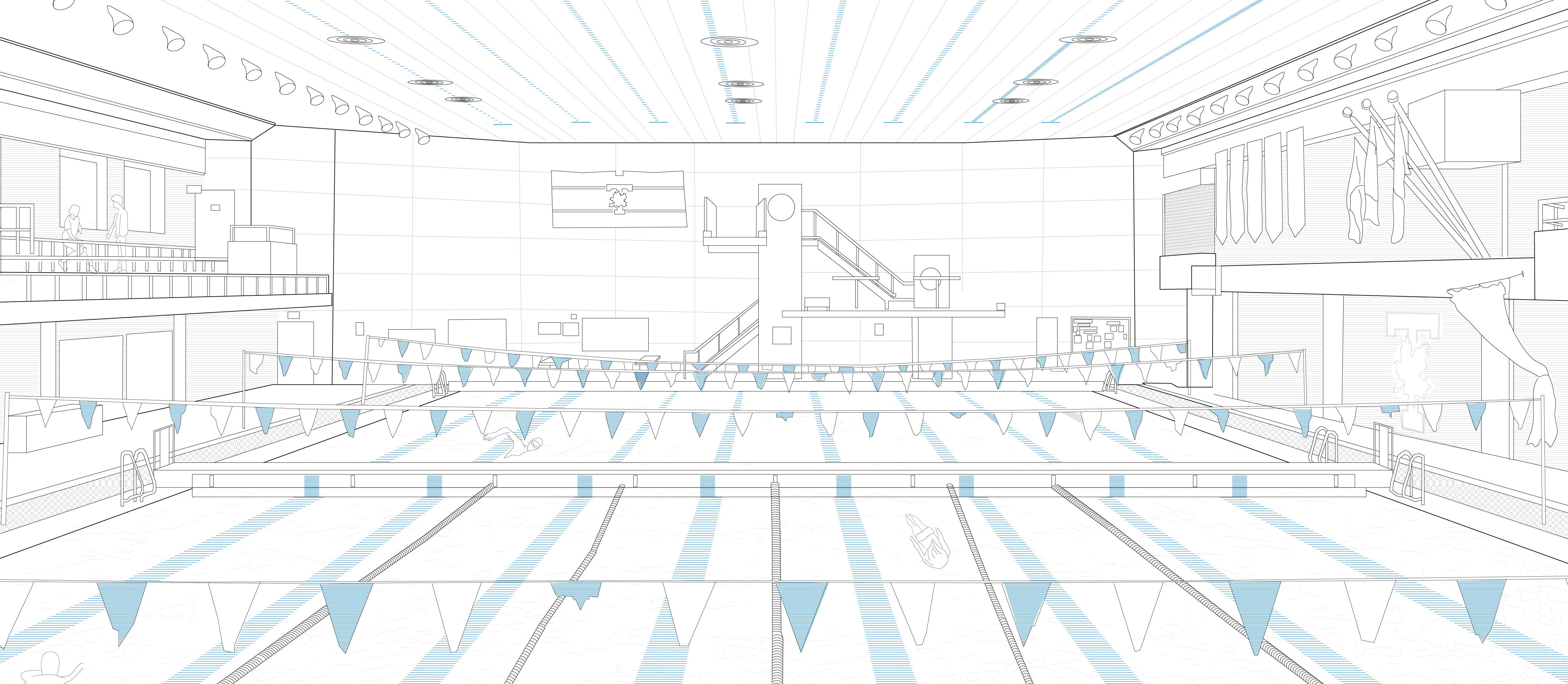
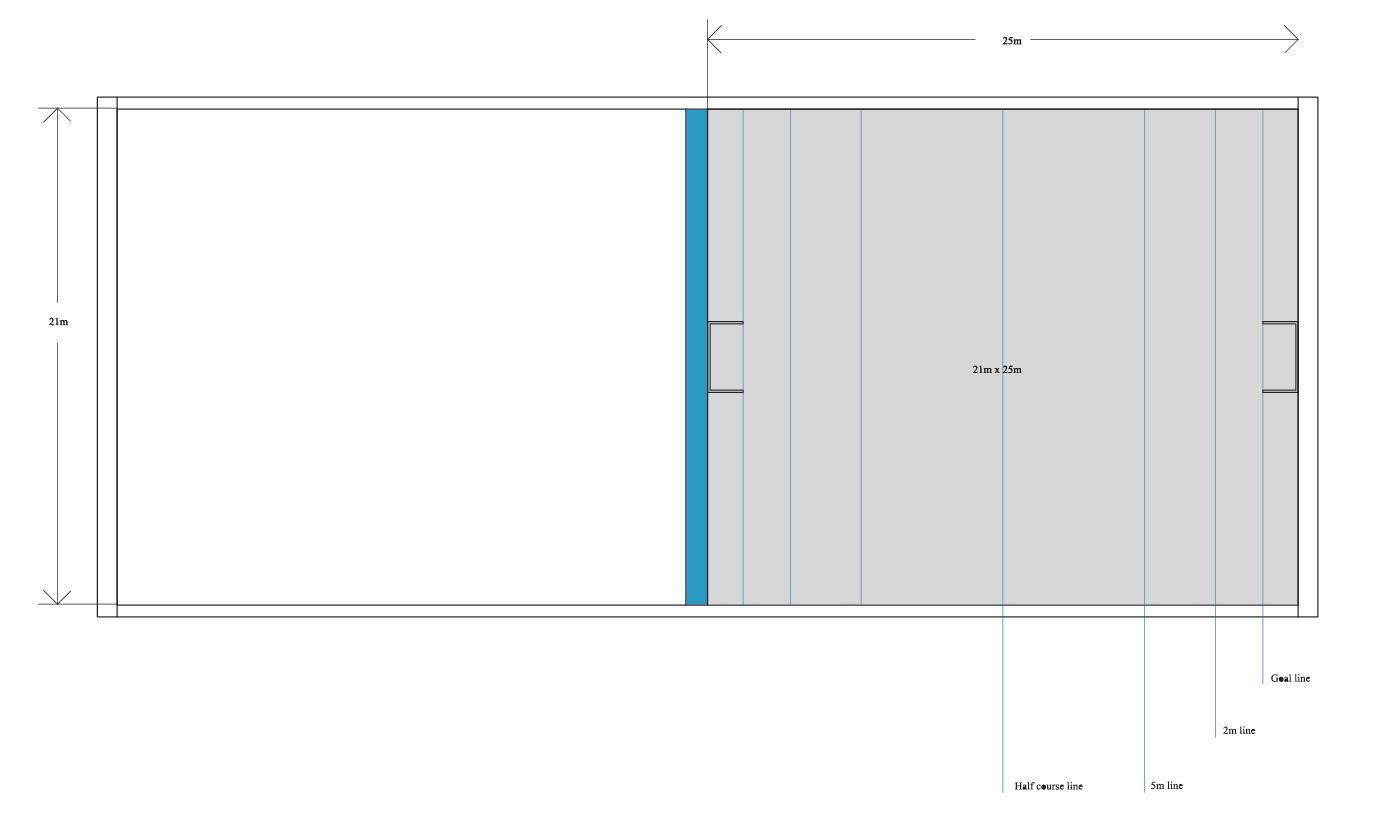
The purpose of this project is to think deeply about the relationship between architecture and border by exploring the border in architecture. We studied the swimming pool and the gymnasium which is a scale larger than it, and further found that the unconventional Border in the space has greatly restricted the space and the people in the space.
Border Index
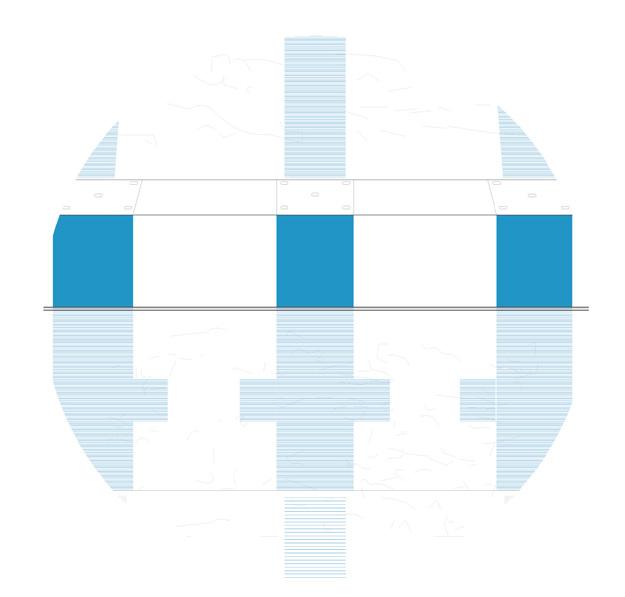
The cross figures on both sides of the bridge echoing the T figures underwater, and help the swimmers indicate their divided lanes without a physical hard boundary.
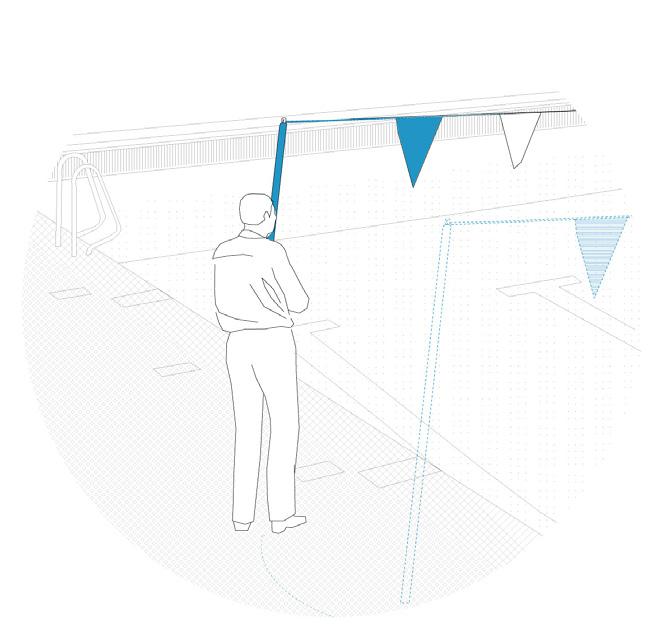
When flags plugged into different holes on the ground, it could represent a variety of meanings to the swimmers such as the position of the ending area.
Swimming Pool Sectional Perspective
Swimming Pool Perspective
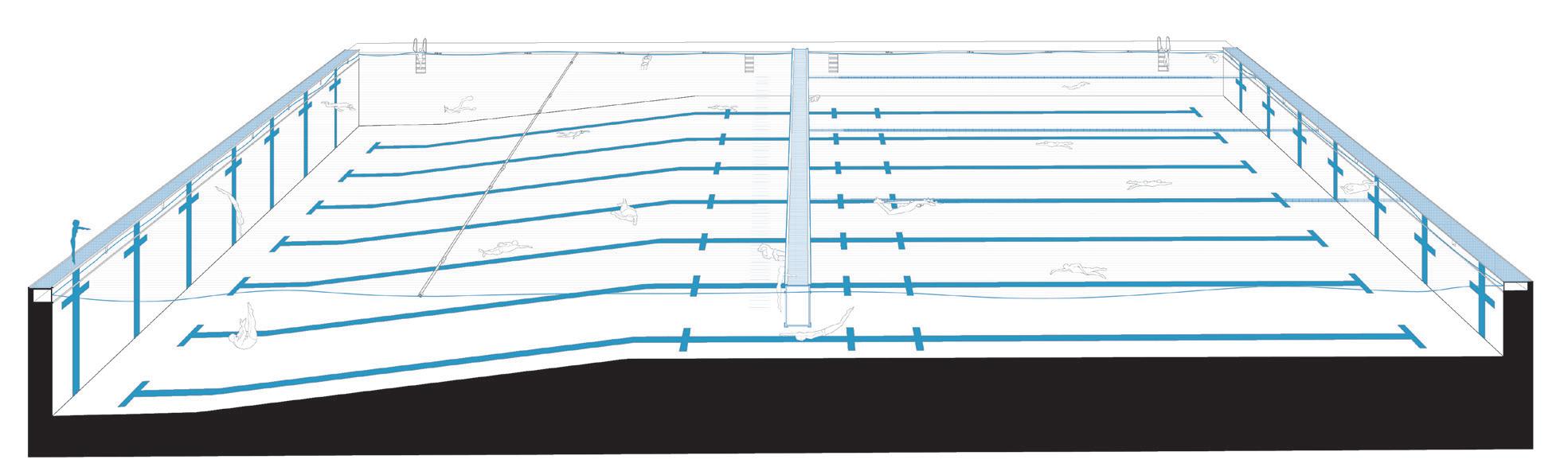
sectional perspective is provided to show the below water. It shows the signs changes in depth and different activities below water. The hollow space shown at cut surface at the bottom left, center, and right shows how water is going through the central bridge and inside the opposite walls of the pool via plastic lattices.
15 The Borders Fall 2022 | Course: ARC465
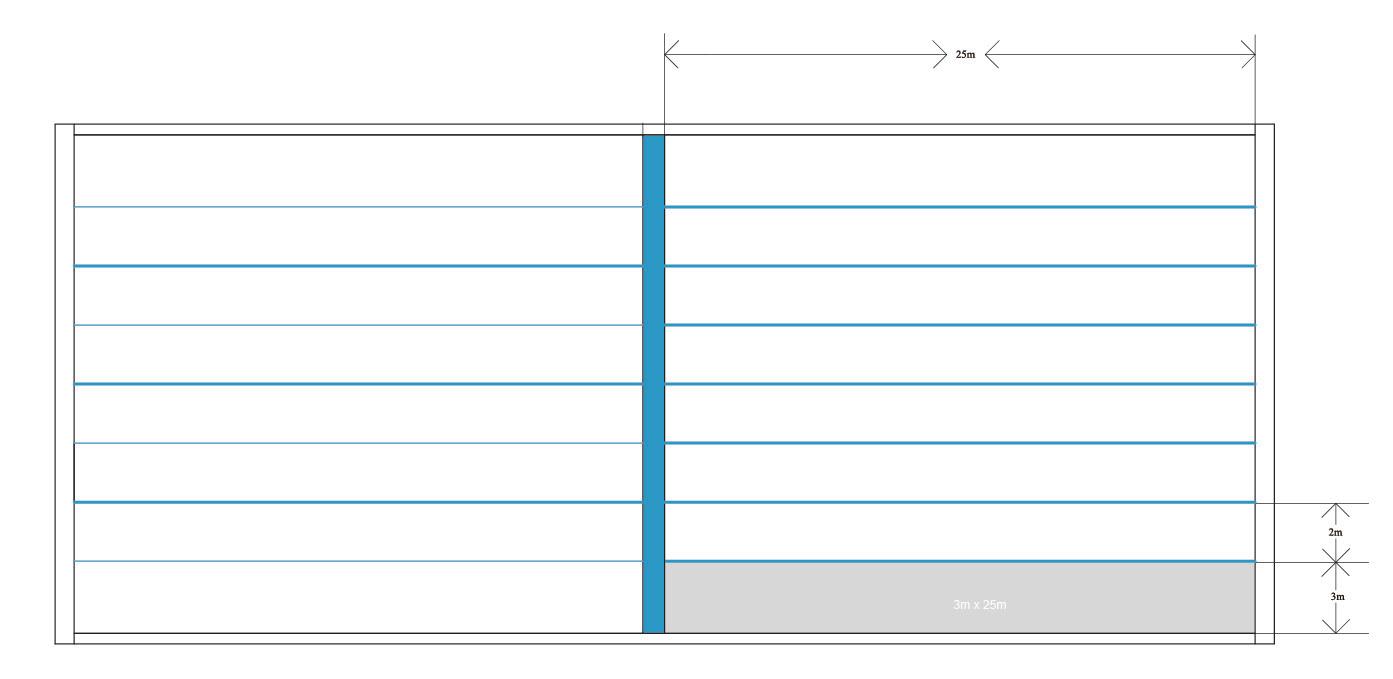
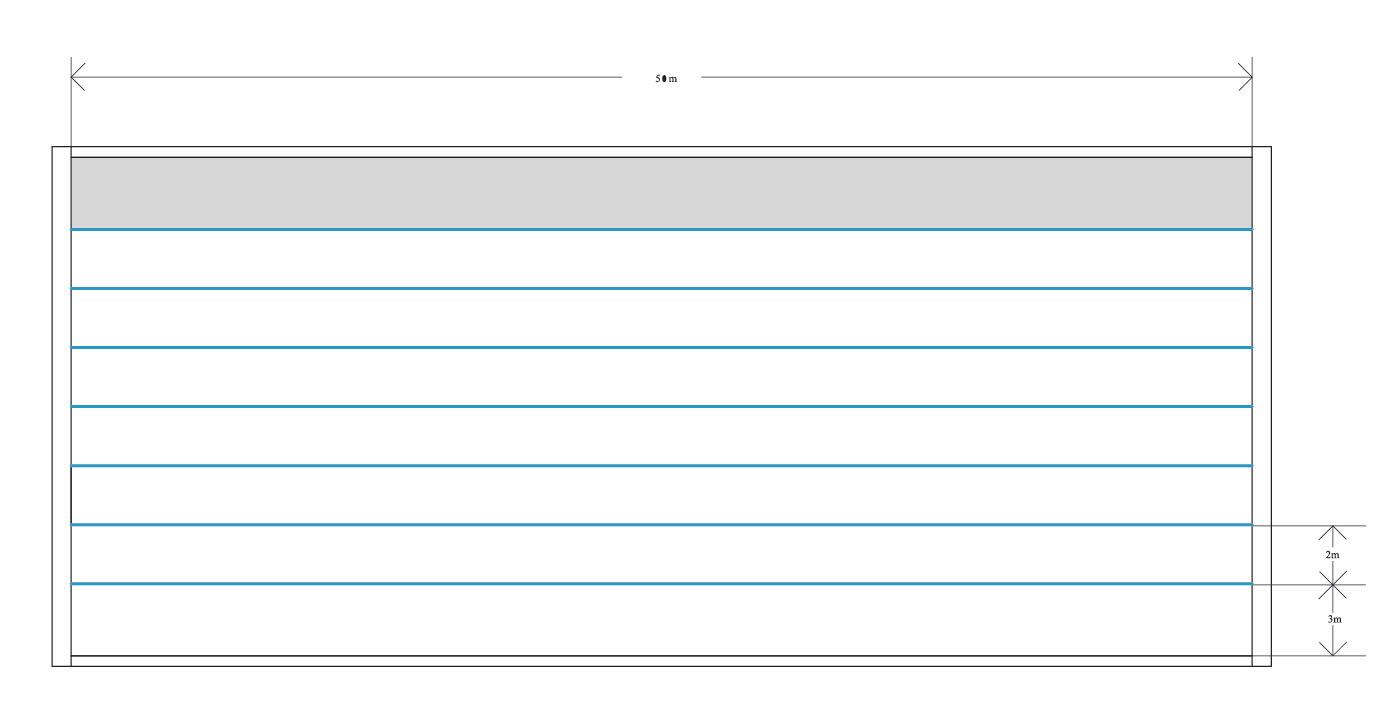
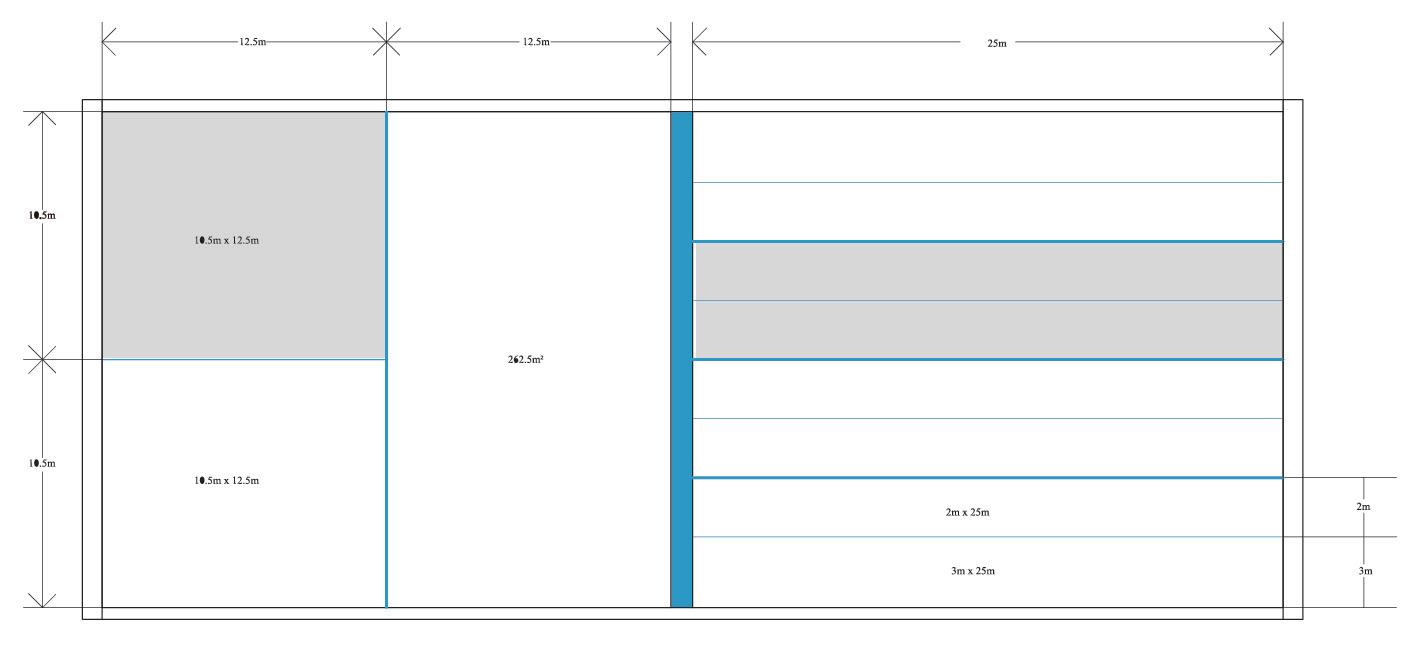
The four diagrams indicatefour divisions of the pool in different periods of a week.
Swimming Pool Plan with Peope’s Circulation
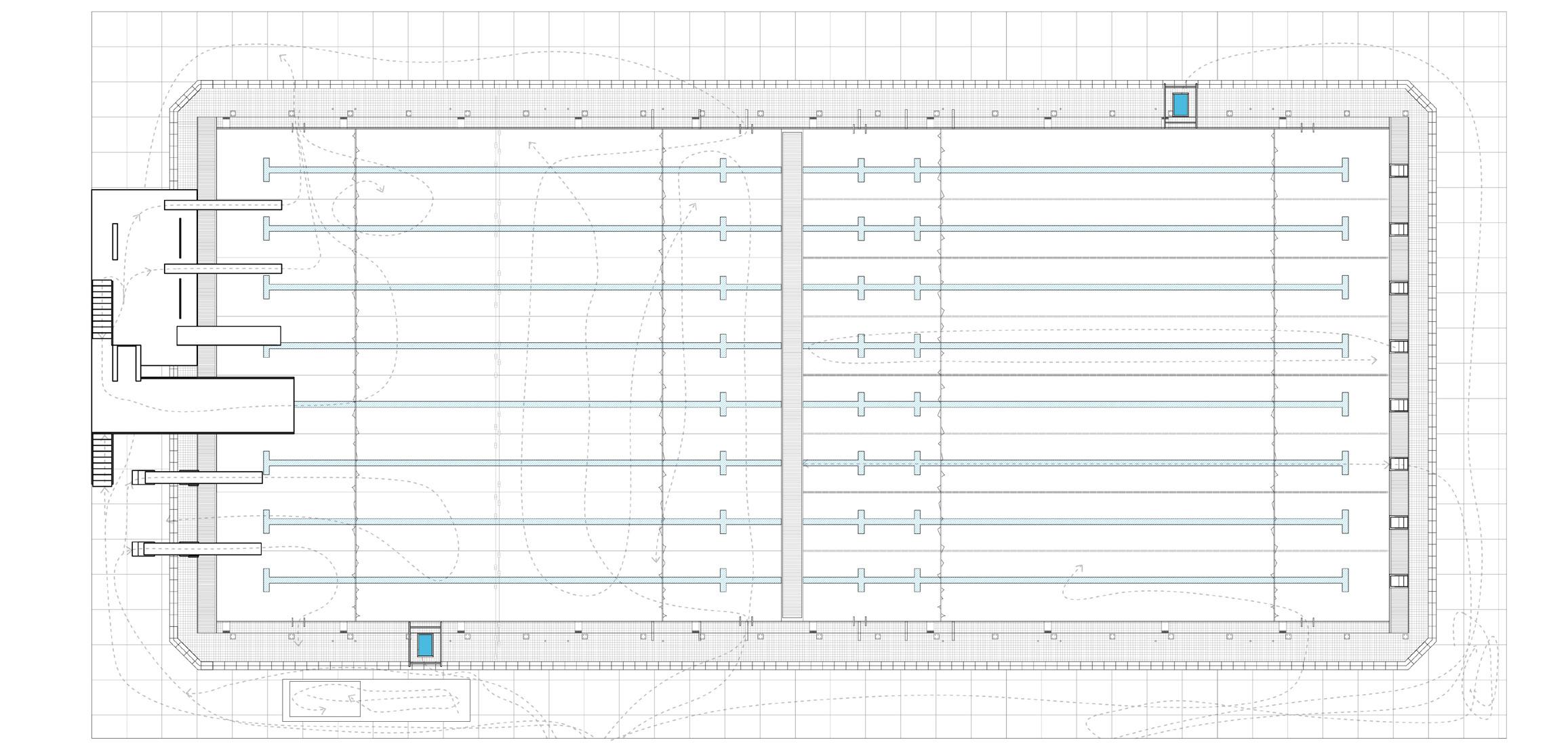
The plan indicate two typical types of unusual borders which are sign border and invisible border with movement lines of people effect by the borders.
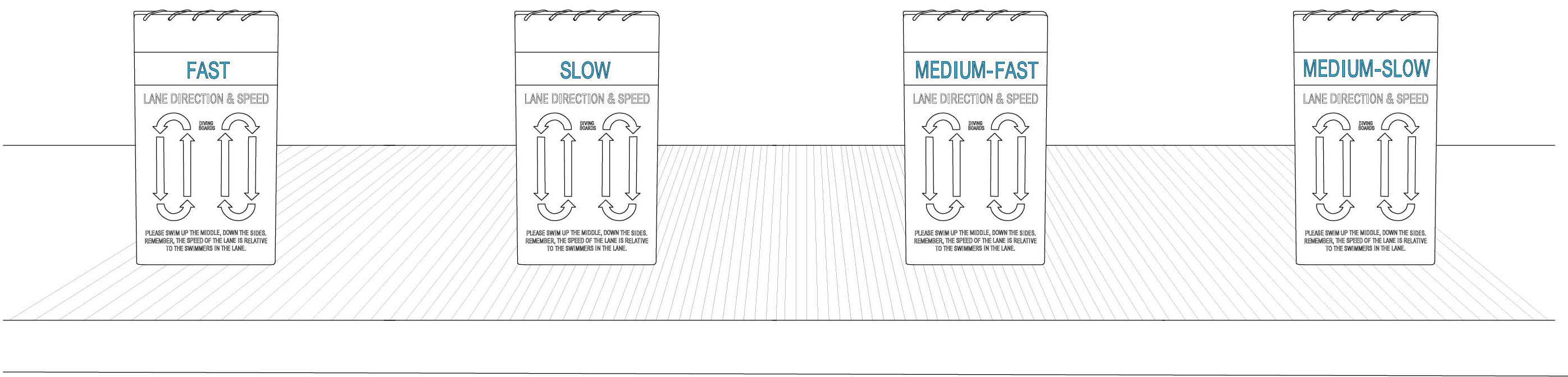
These four signs stand in the swimming area on the far right, respectively indicating the speed of different lanes and are arranged in order from fast, slow, medium fast and medium slow, so that people can find the swimming lane they want to go according to their own speed.
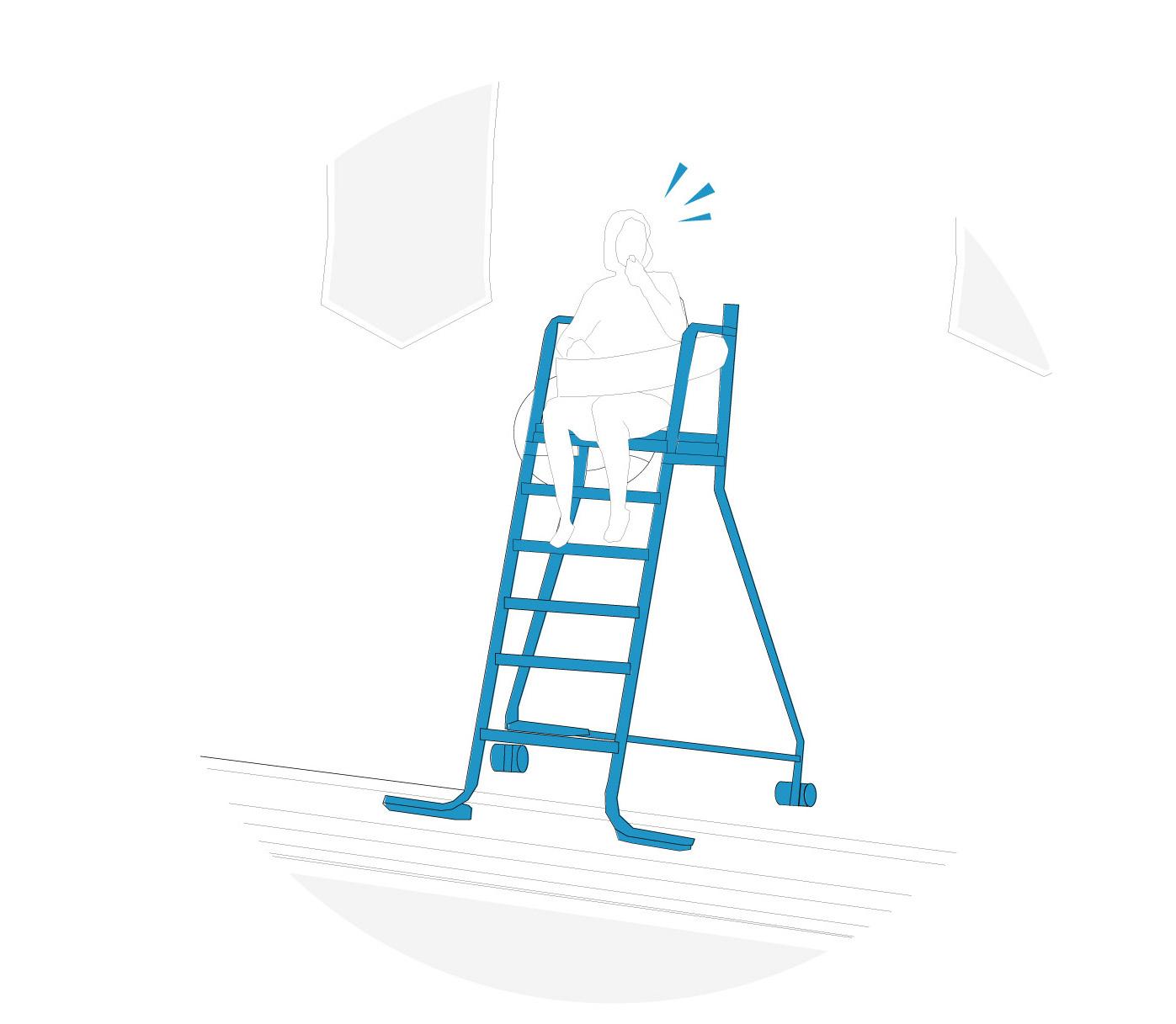
Lifeguard whistling and yelling at people who are crossing the boundaries in the pool. The position of a lifeguard itself, including the seating place, serves as the role of a indivisible borderline.
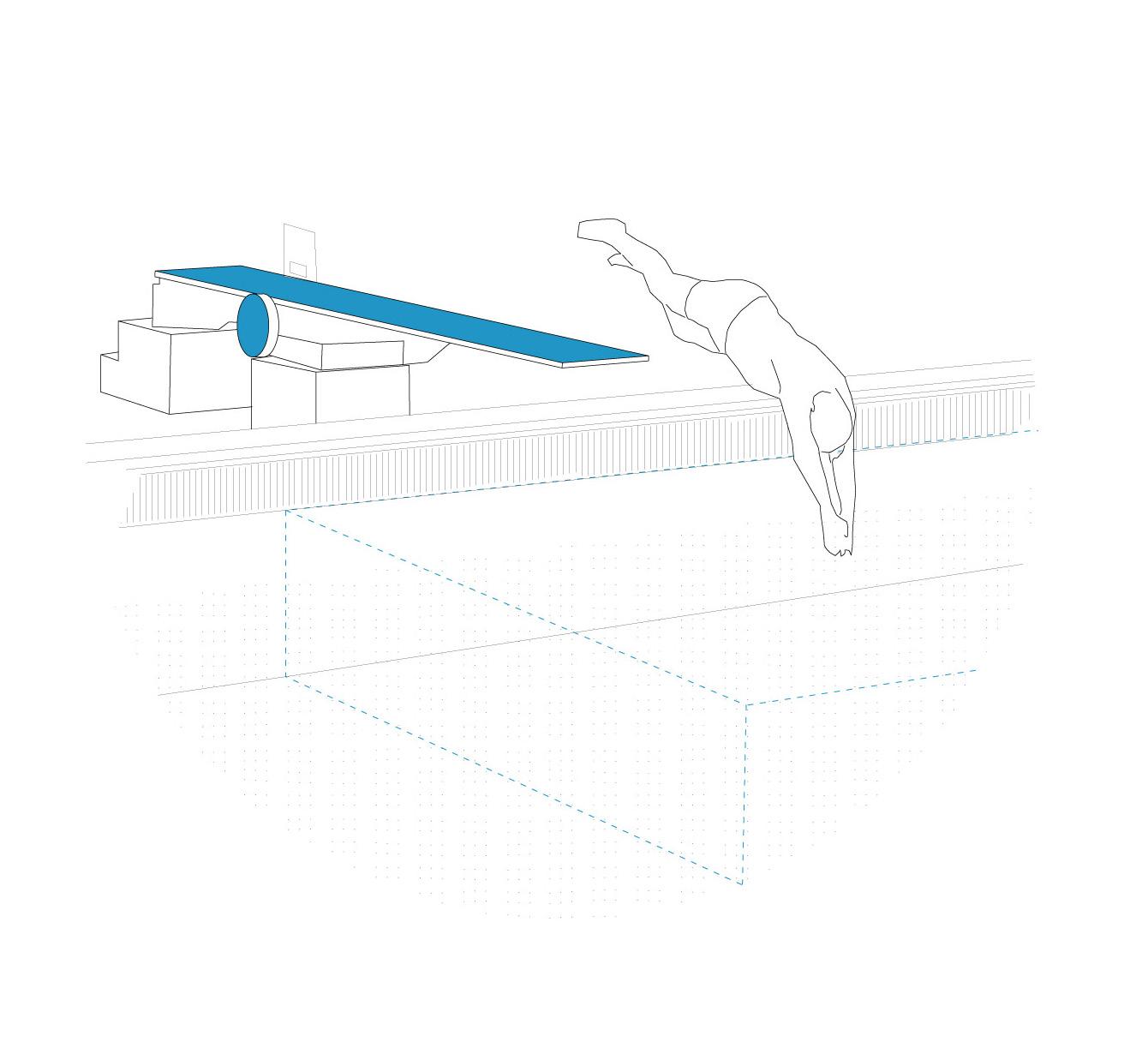
People jumping from the diving platform into the pool. The entire activity from its start till the end subconsciously creates an indivisible borderline in the surrounding swimmer’s mind.
There are two non-blocking borders in the swimming pool space, one is sign and the other is invisible border.
In one space, although the slogan does not directly prevent people from entering another area, due to its eye-catching and people’s general compliance with the rules, the slogan as a border restricts people’s use of part of the building space.
The other is the invisible border, such as security officers sitting on the shore to monitor people’s dangerous behavior at any time, and people who can’t swim will definitely enter deep water areas. Although there is no visual or physical obstruction, it still exists and prevents the movement of a group of people.
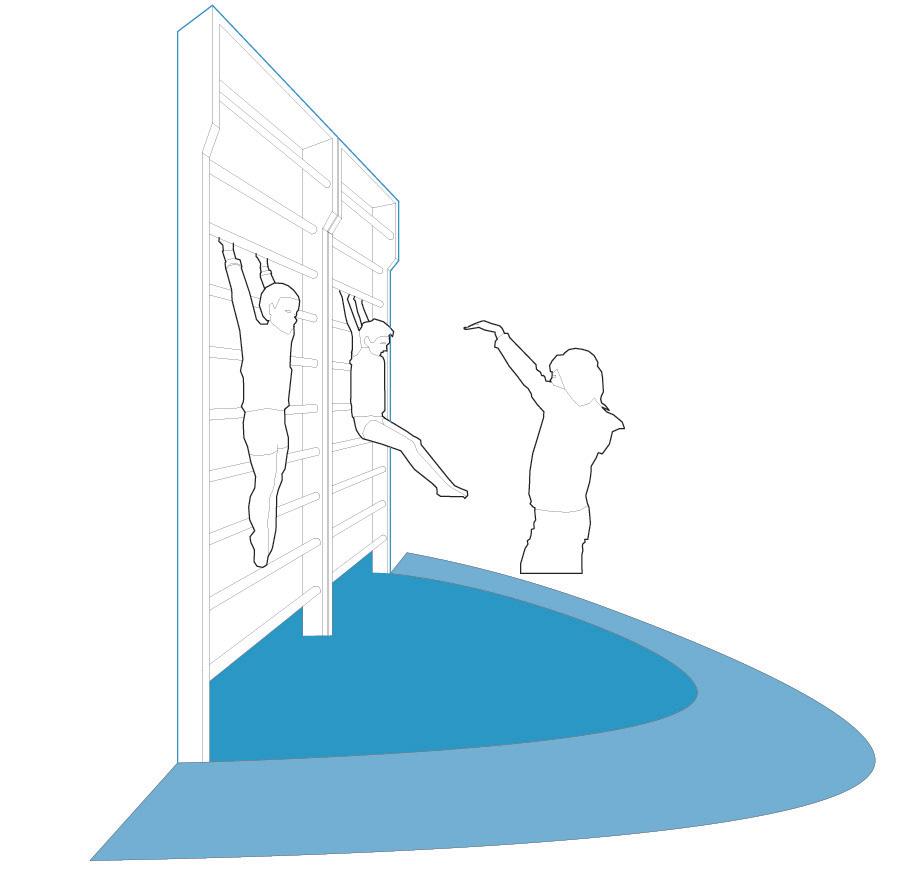
Training spaces form invisible boundaries when athletes take the gymnastics mat out or occupy the gymnastic wall-bars.
Border Changed by Time
Border Index
16 The Borders Fall 2022 | Course: ARC465
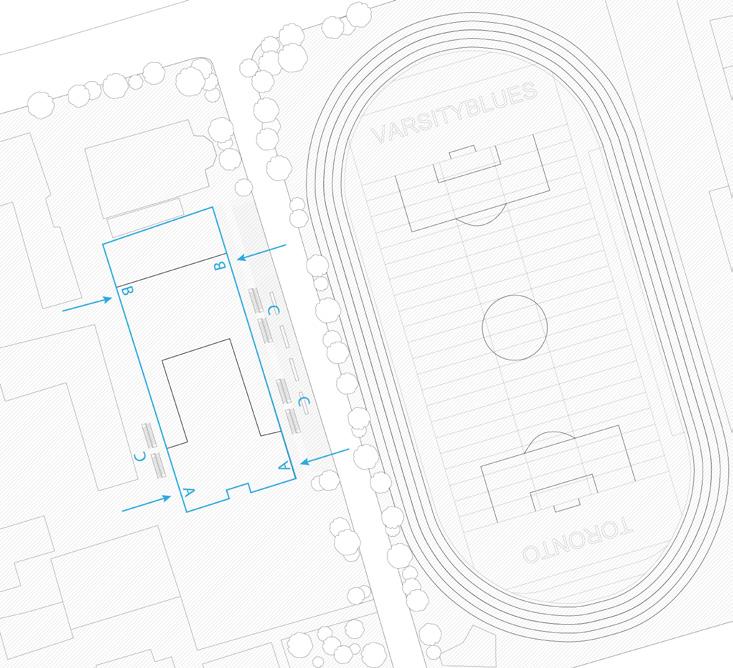
Site Plan
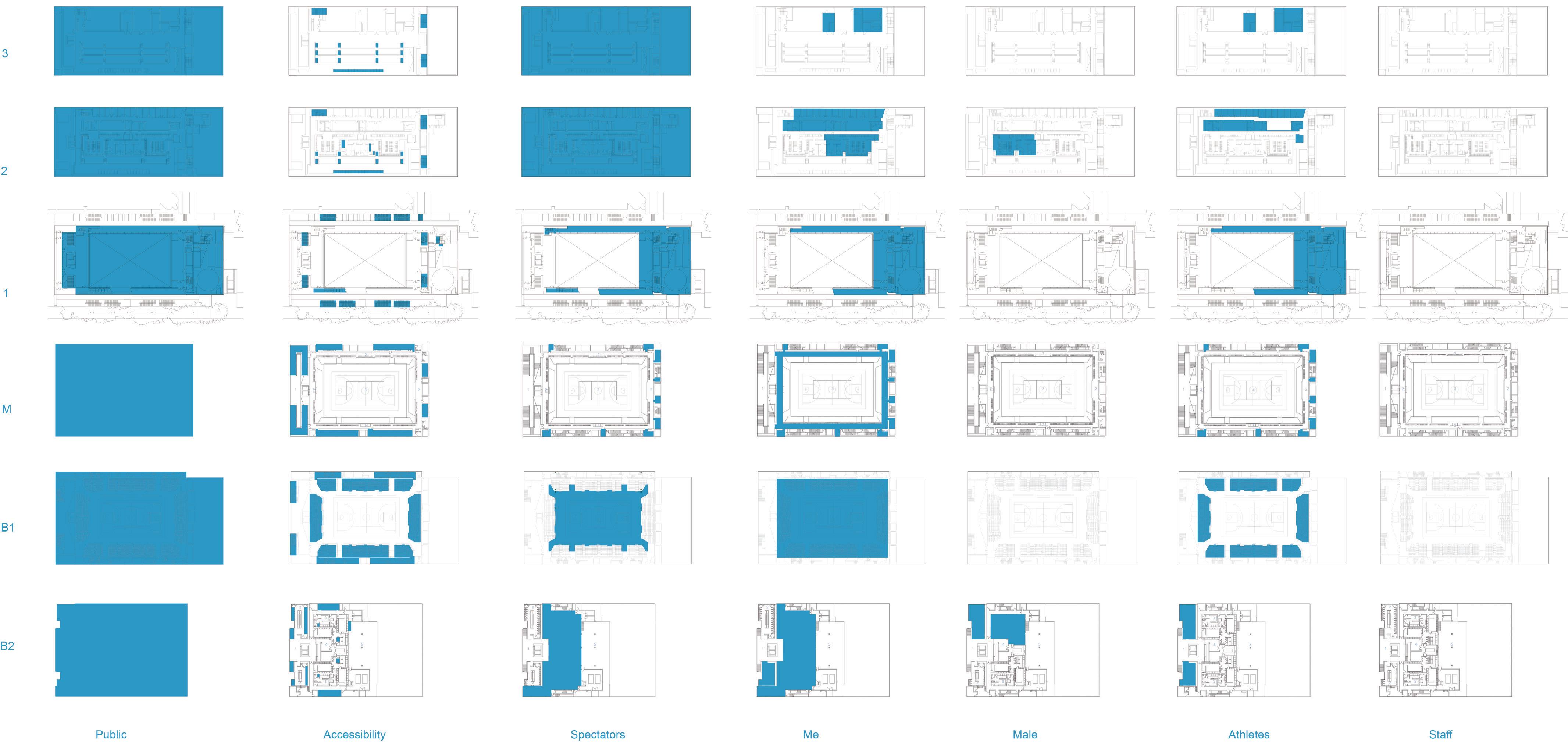
After entering a larger space, the form of the boundary also changes. The boundaries that exist at the Goldring Center at the University of Toronto are for different groups of people. We divided the crowd into seven categories: the public, the disabled, spectators, athletes, employees, men and women, and ourselves, and conducted an in-depth analysis of the restrictions on people in the Goldring Center for different groups of people, including the public, the disabled, employees, men and women, and ourselves.
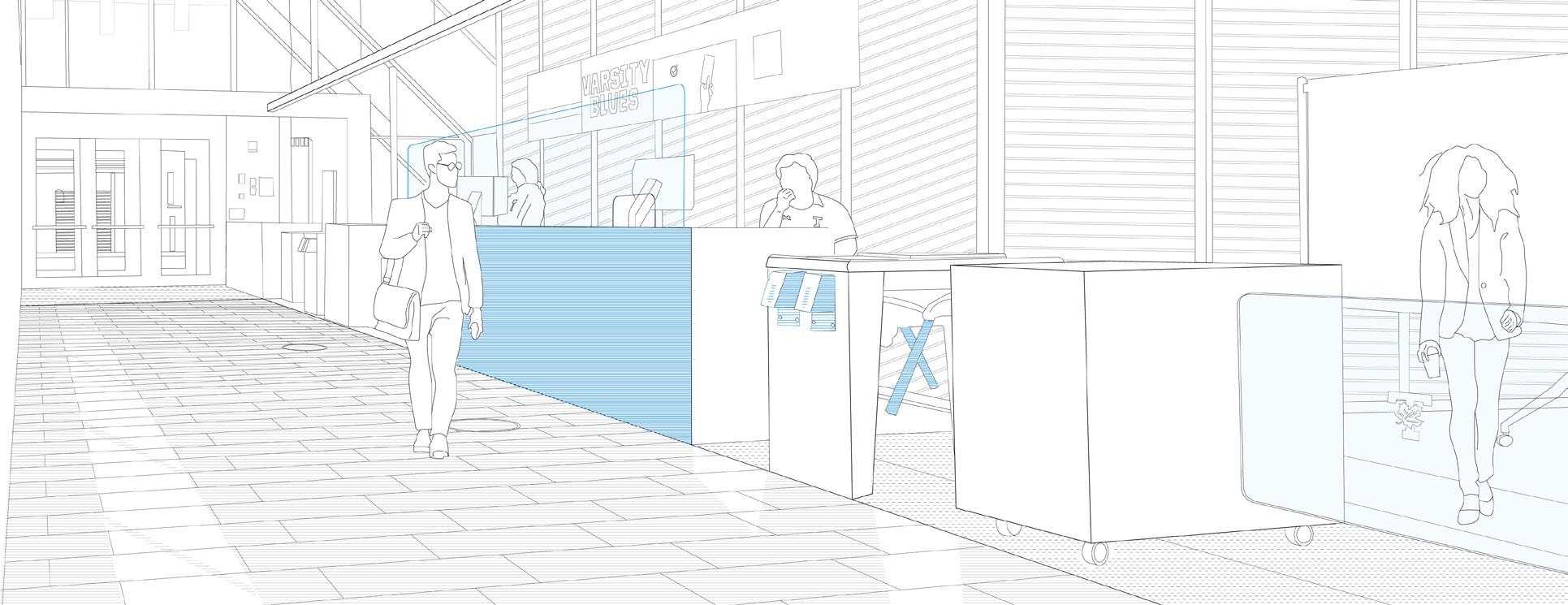
This is an area that is accessible to the general public, but due to guards and access control, other than University of Toronto students and employees are excluded here.
Restriction Diagram
17 The Borders Fall 2022 | Course: ARC465
Goldring Center Perspective
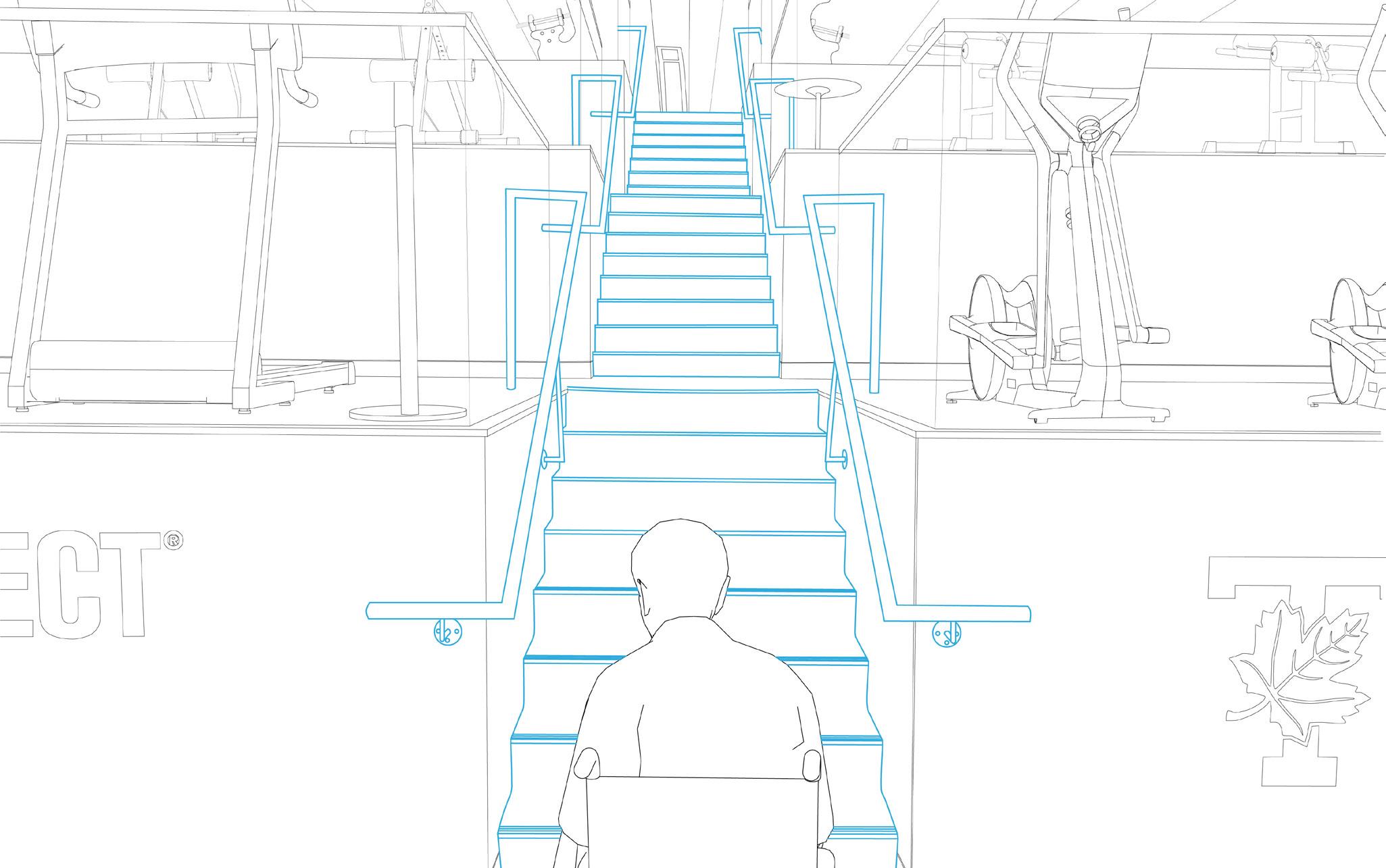
This is an open three-story sports space, but since the upward space must be accessed by stairs, the upper space is excluded from the disabled.
Our Restriction Perspective
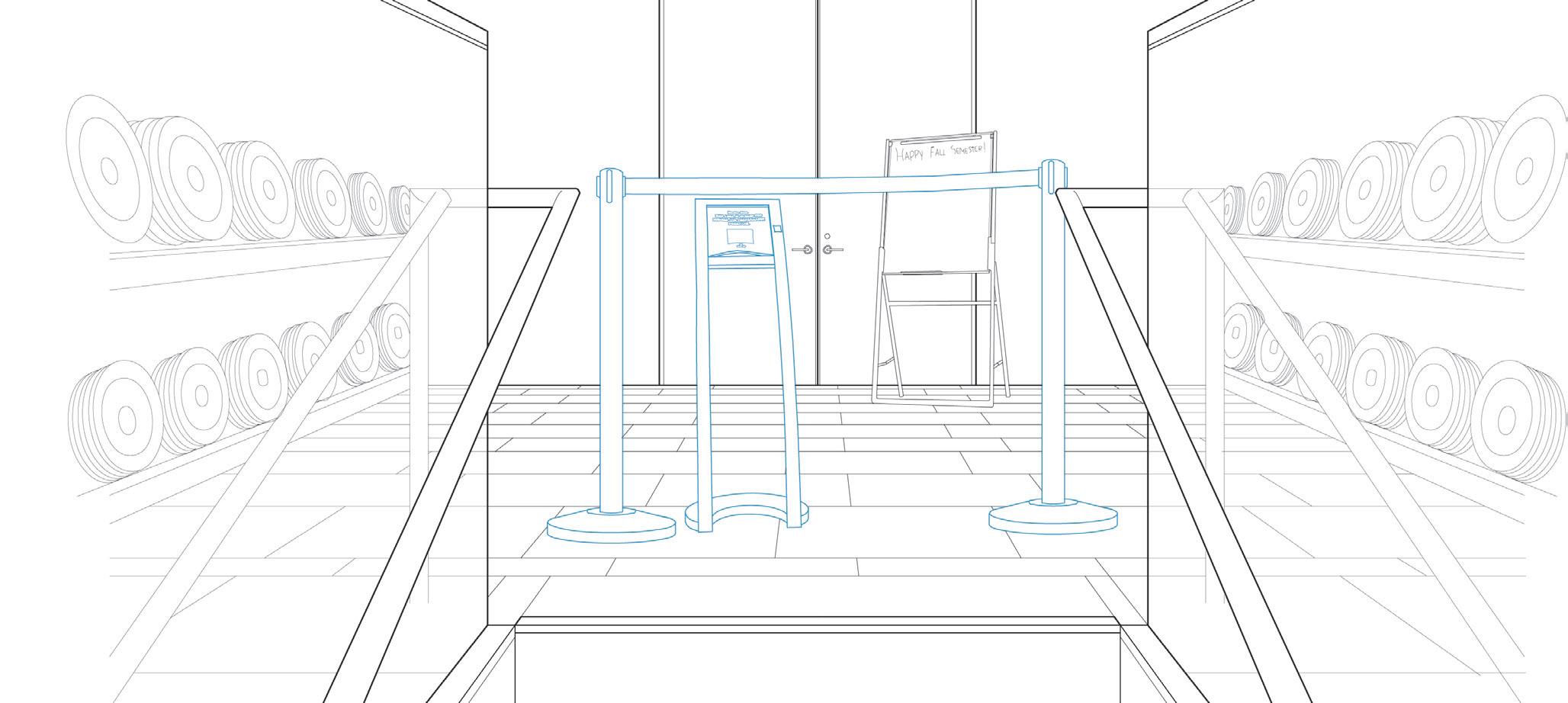
After going up to the uppermost space, since there are sometimes people attending classes here, there will be signs saying no entry during this time period, and there will be fences to exclude everyone except the students and teachers attending classes here.
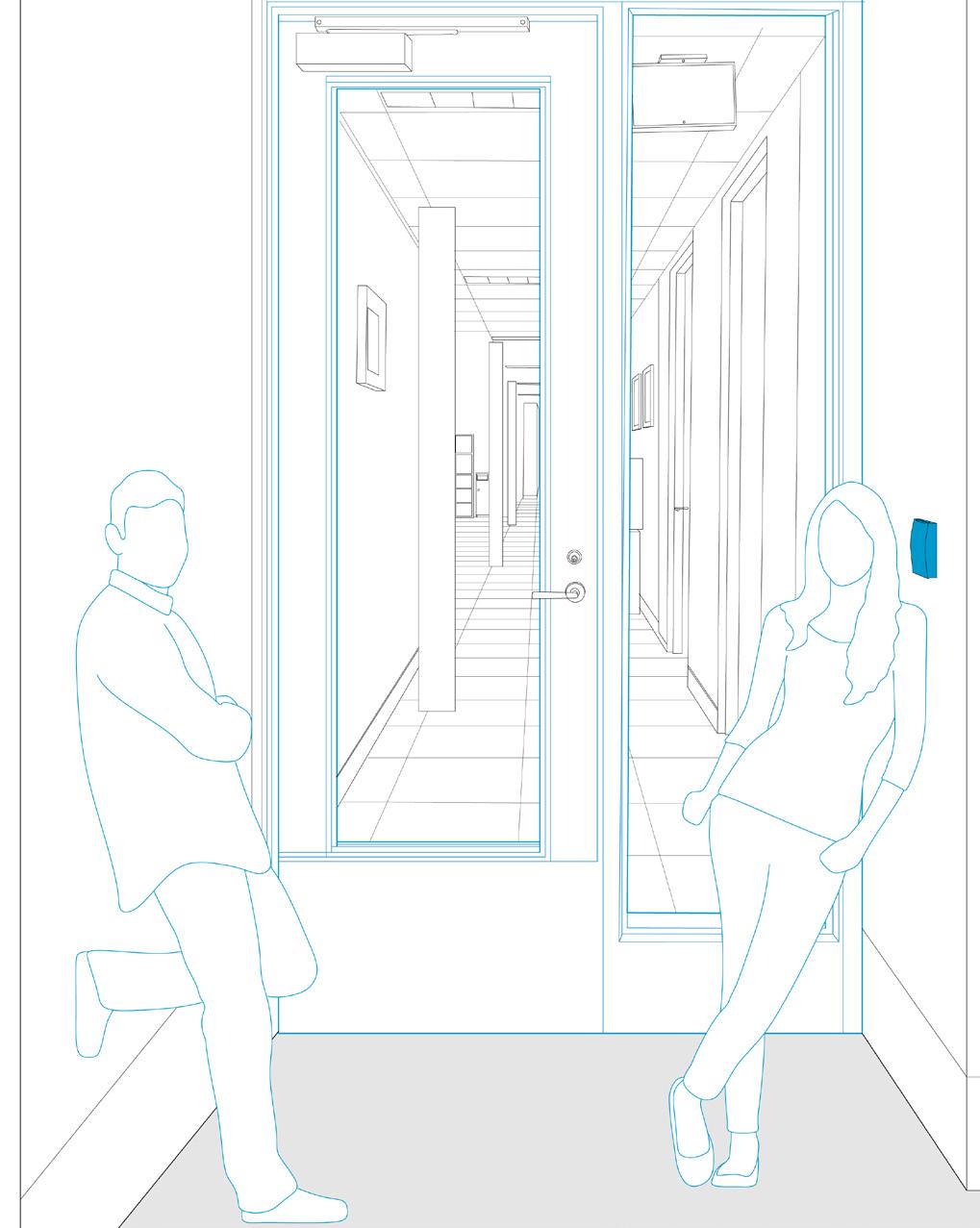
This is the gate of the employee’s office. Except for the employees who can use the access control card to enter the internal space, everyone else can only be isolated from the outside and cannot use the internal space.
Gender Restriction Perspective
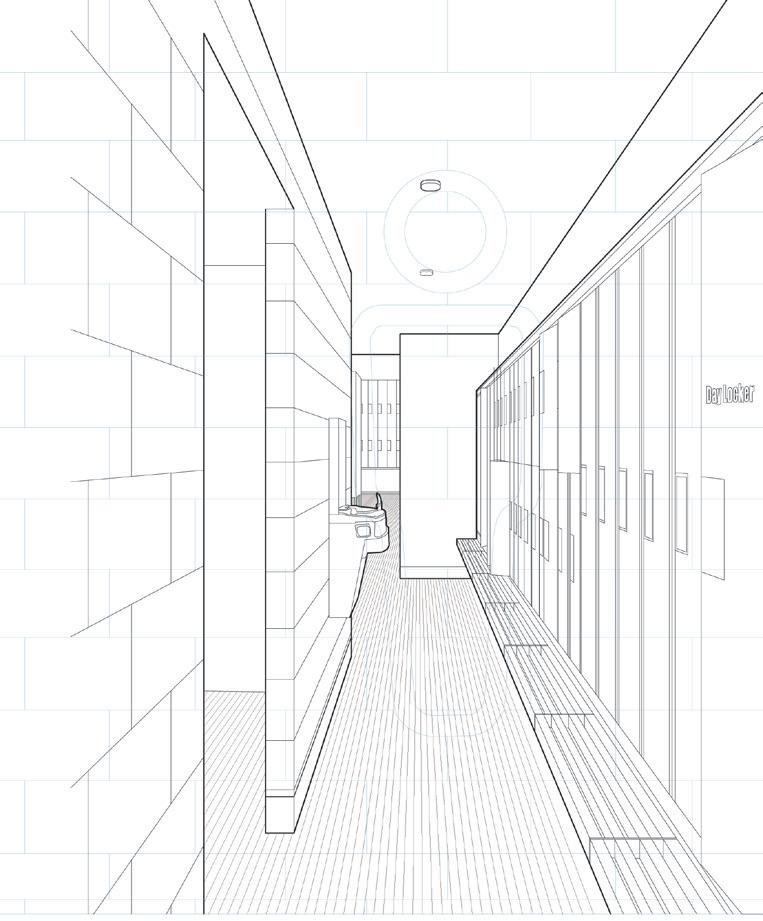
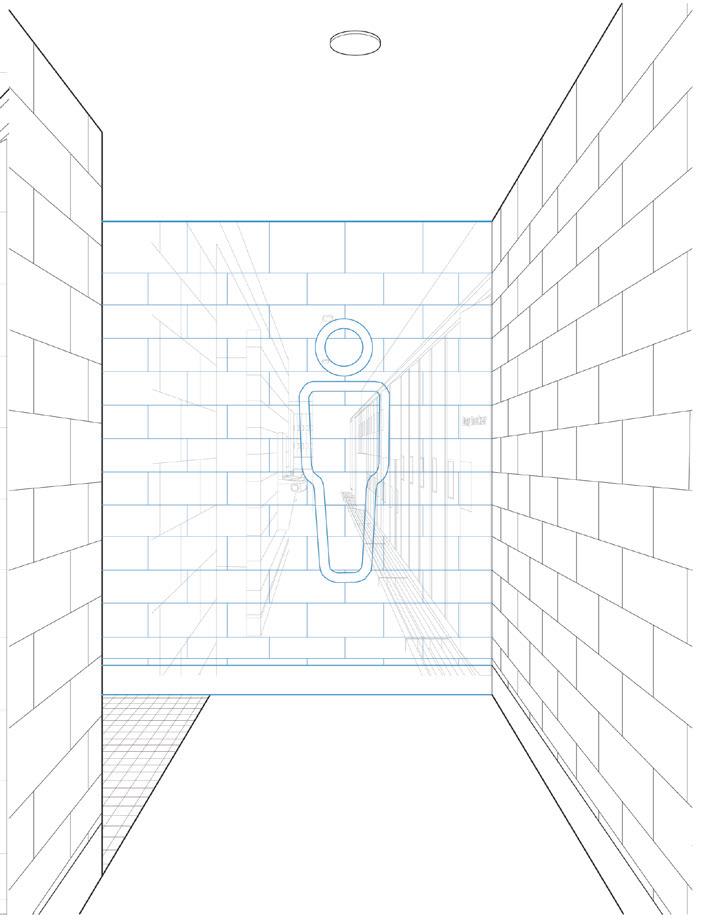
The men’s and women’s washrooms in the Goldring Center are shown here, from my perspective to see the women’s washroom and my imagination of another space due to the restrictions imposed on me by the men’s washroom. Men’s and women’s washrooms are separated and the two parties cannot use each other’s space is the limitation of gender in space for people.
Disabled Restrictions Perspective
Students Restriction Perspective 18 The Borders Fall 2022 | Course: ARC465
Emotional Museum
Course: Competition
Location: Riverdale Park East
Date: Fall 2021
Group Member: Keyao Liu, Hongxuan Wang
Role: Modeling and Drawing(site plan, explodede diagram, perspective)
Duration: 1 months
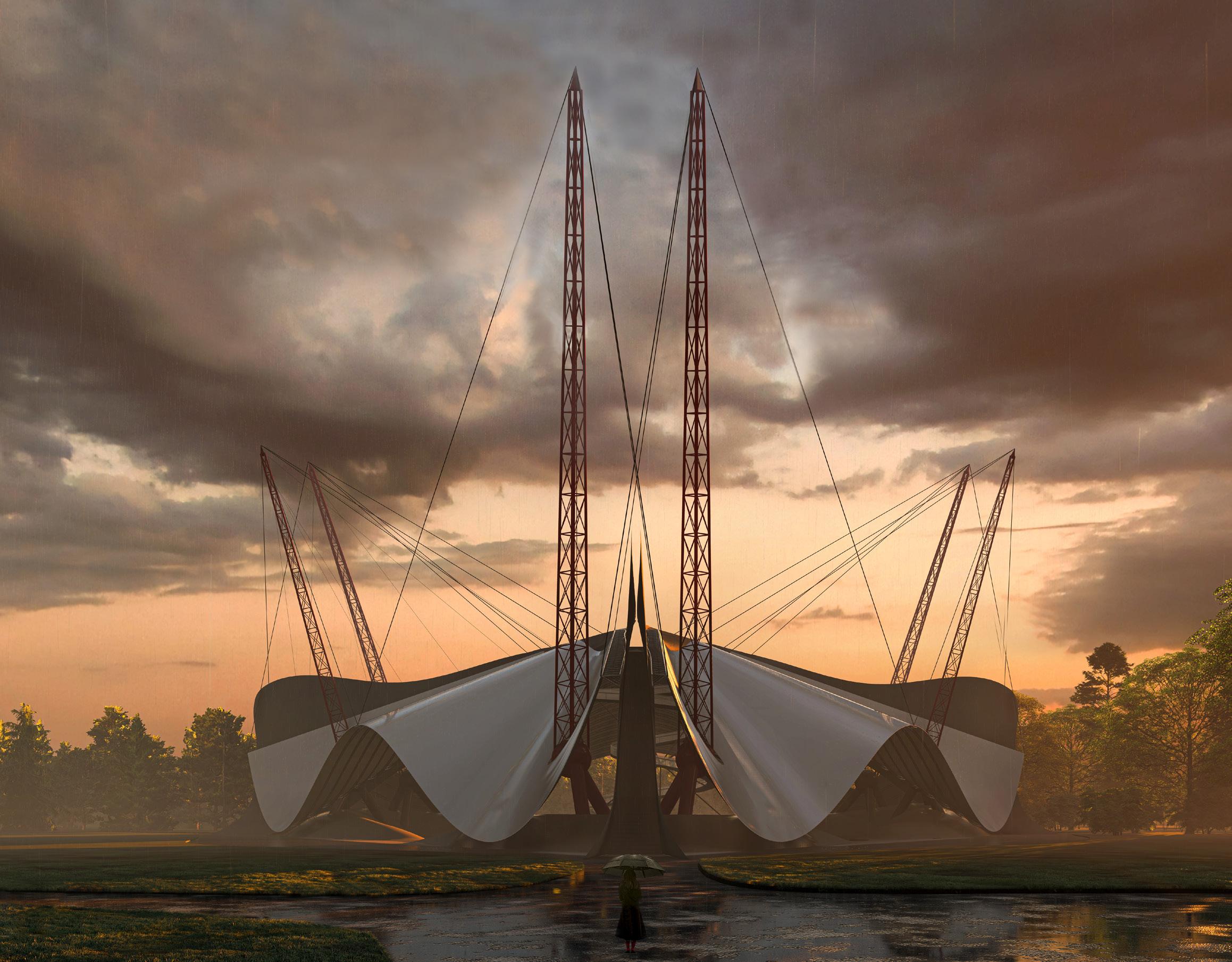
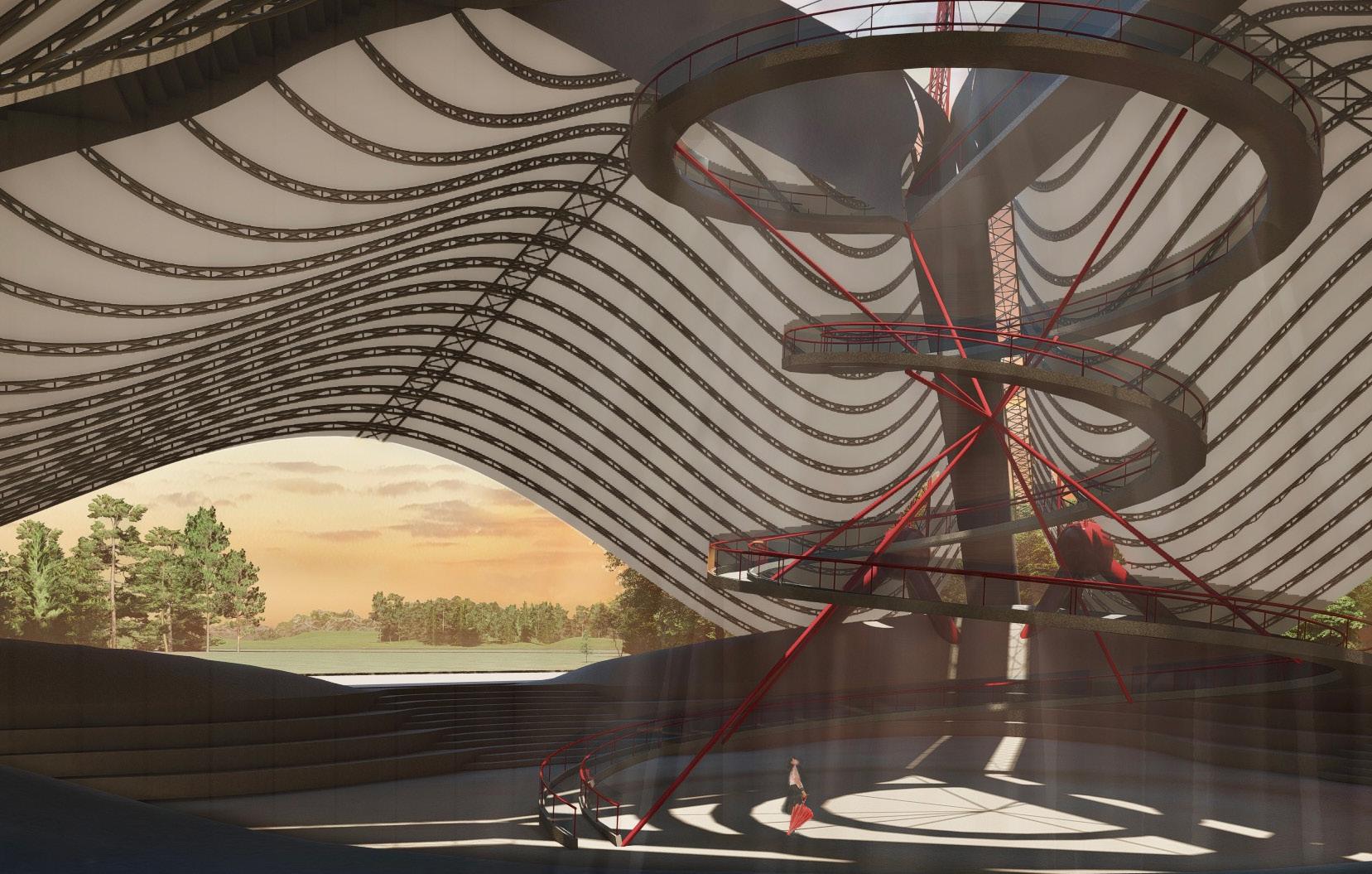
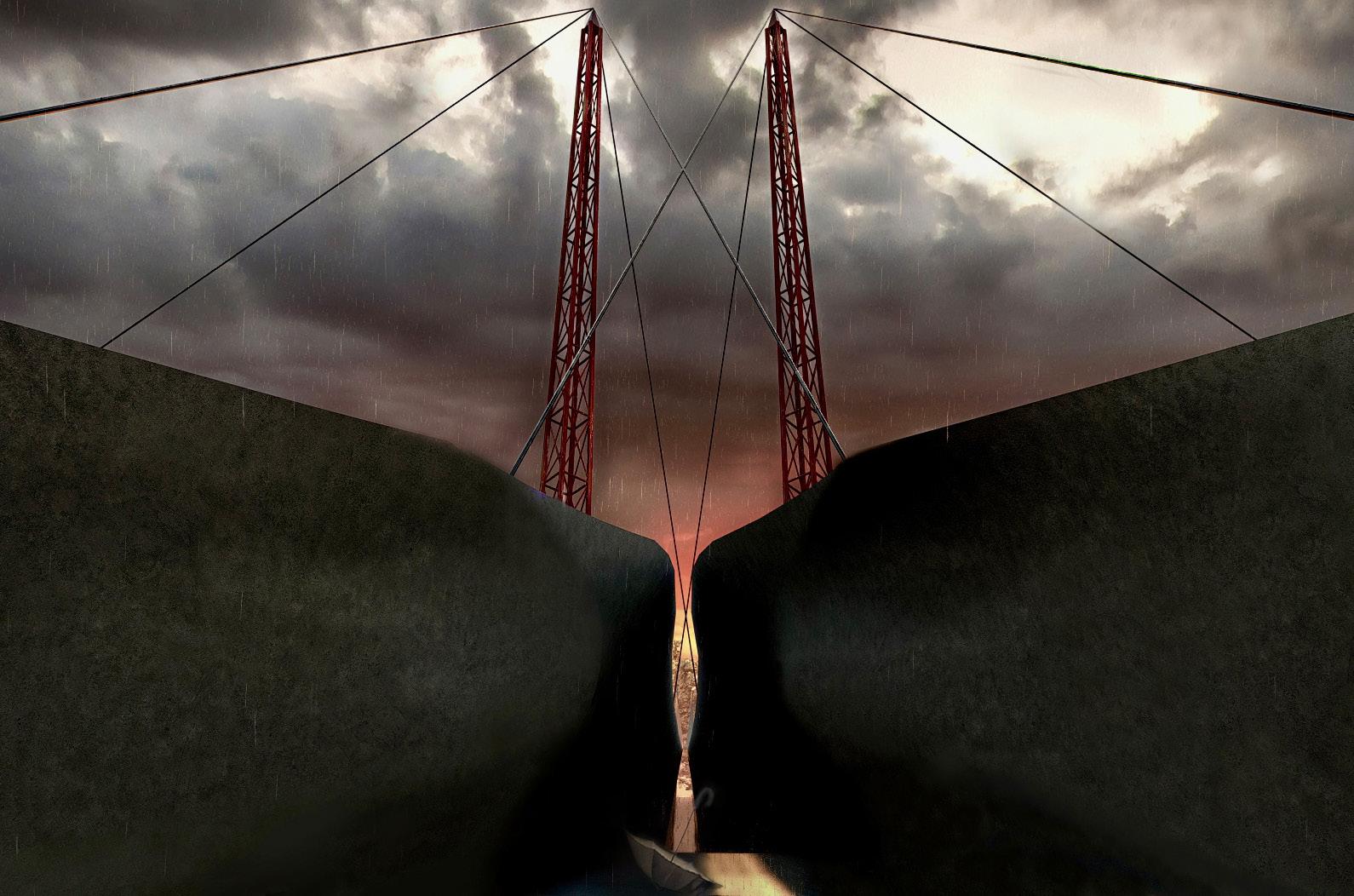
This project intends to create a museum of emotions to explore the subtle relationship between space, weather, and human emotions. In order to create different architectural spatial forms, the design allows the natural lighting inside the museum to change to respond the weather. This causes emotional changes to the people who are in the space.
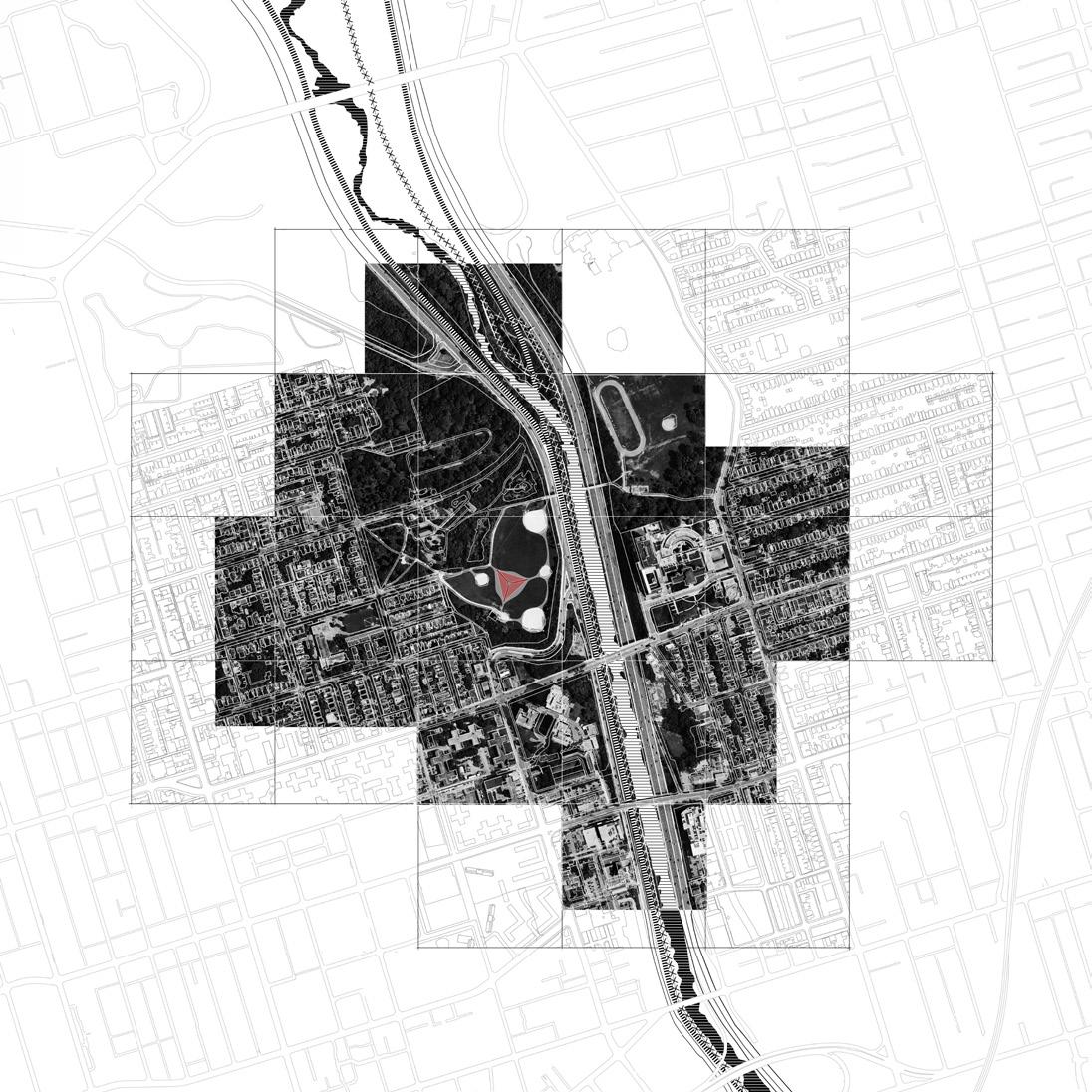
The museum is placed on a public baseball field surrounded by trees in Toronto's Riverdale Park East and adjacent to the Don River . The natural site setting brings a pleasant feeling. Conversely, a narrow, enclosed trail adjacent to the river creates an anxious mood. The museum’s design is inspired by these two contrasting spatial characteristics of the surrounding site. Both narrow and open spaces created in the museum allow the two distinct emotions perceived in the site’s natural environment and can be carried over into the museum.
Site Plan
 Sunken Open Space
19 Emotional Museum Fall 2022 | Course: Competition
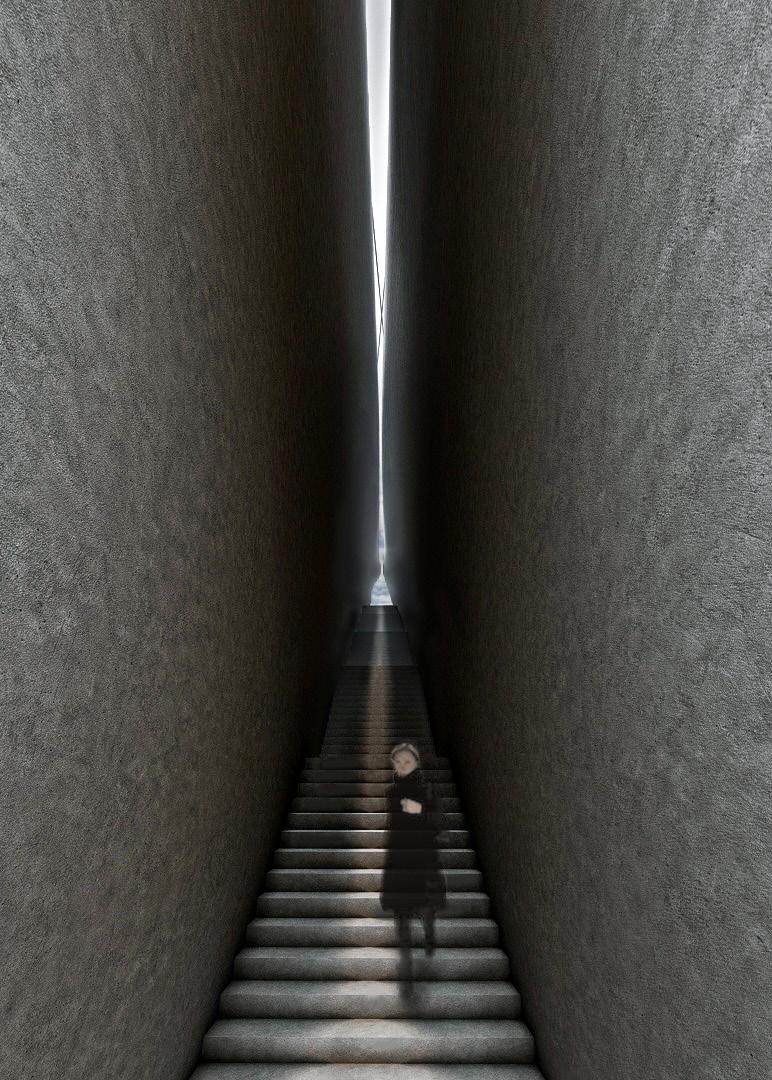
Narrow Stairs
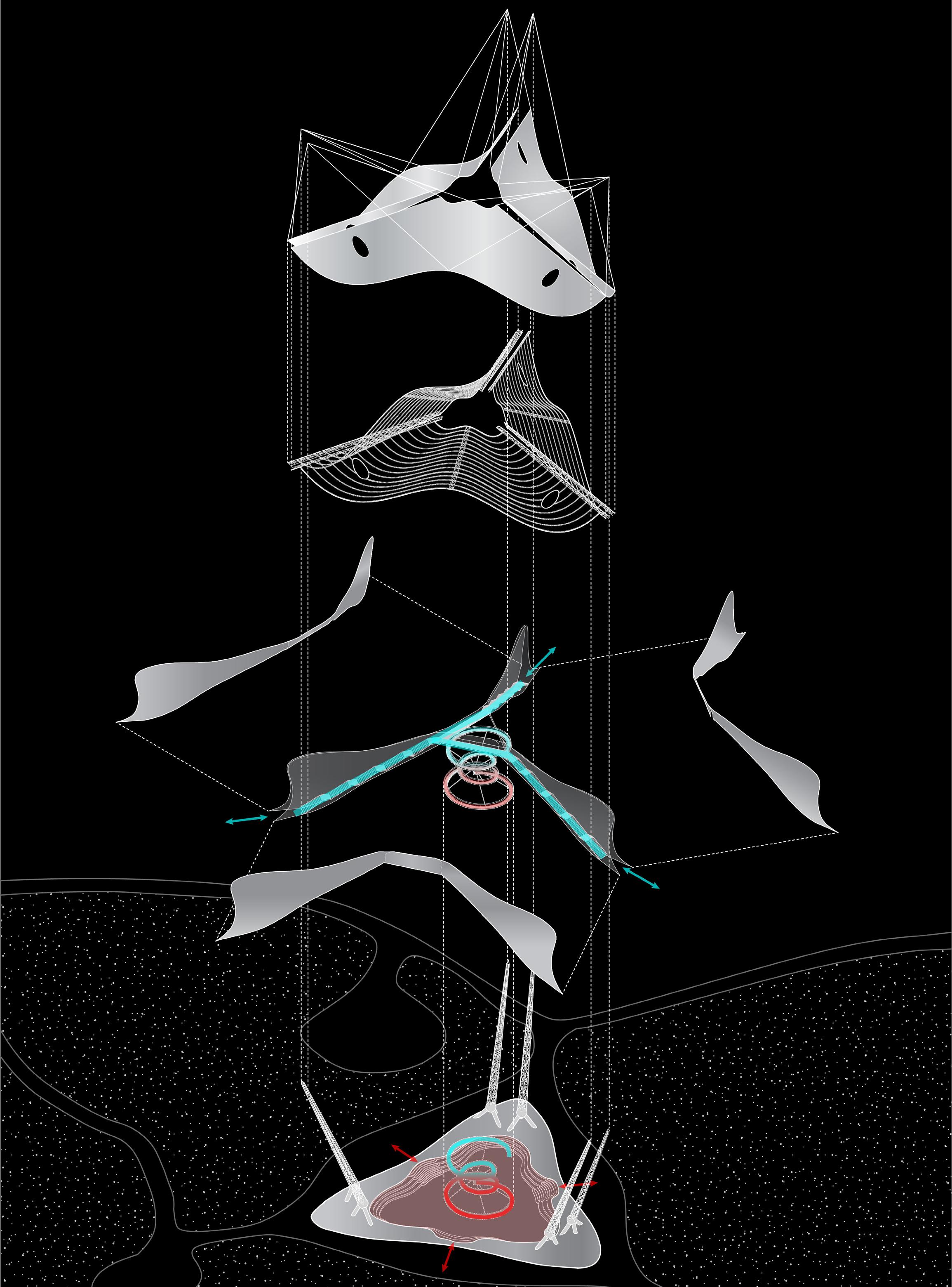
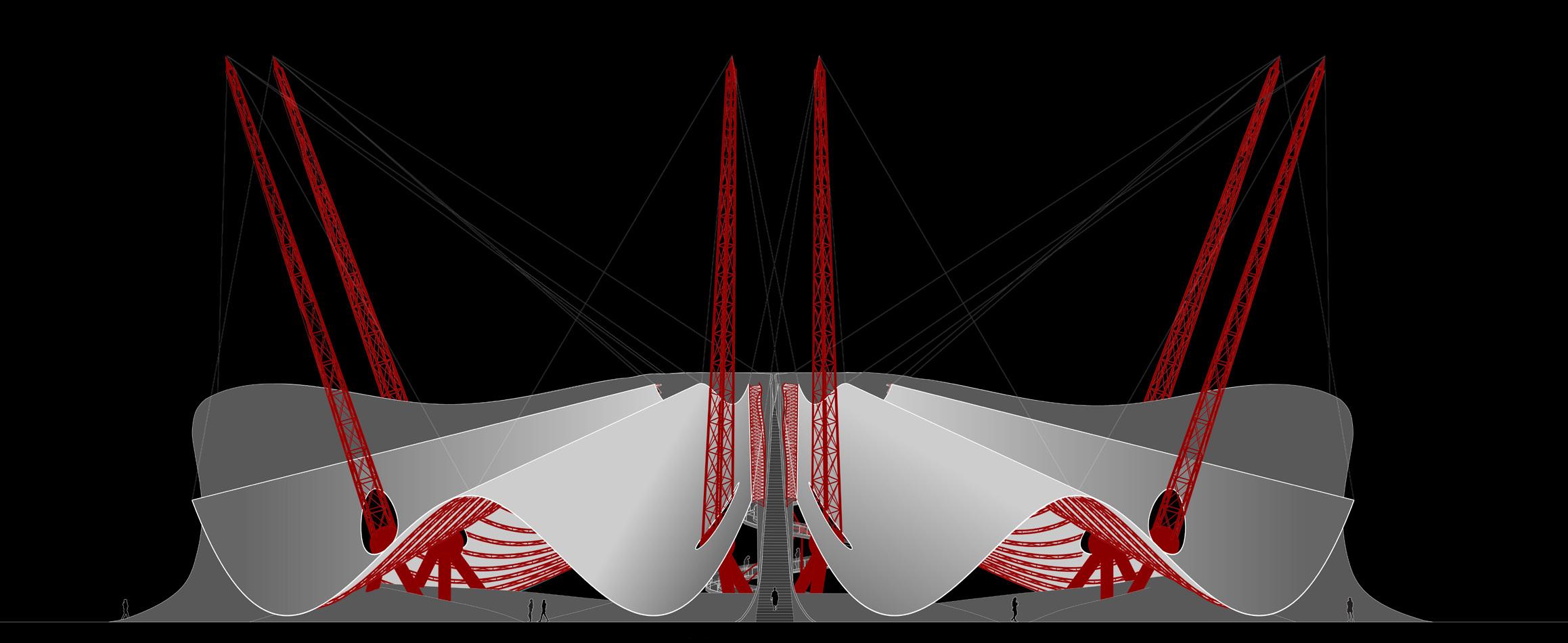
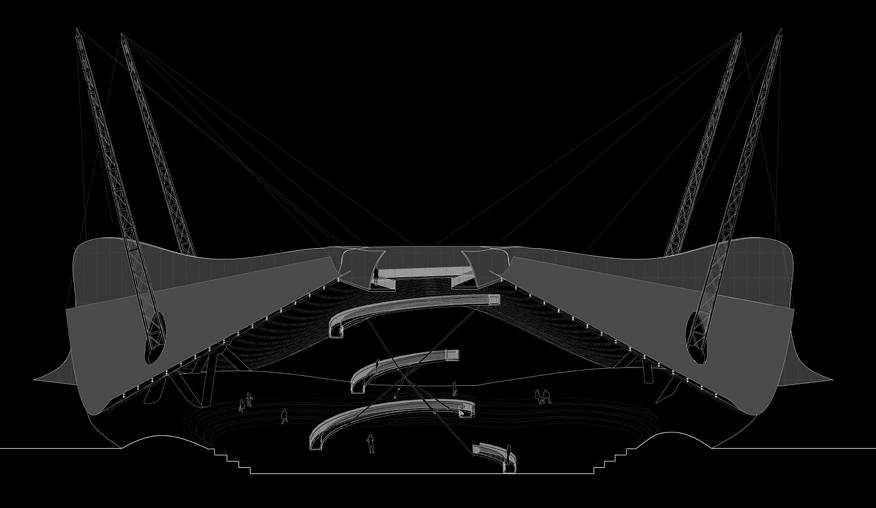
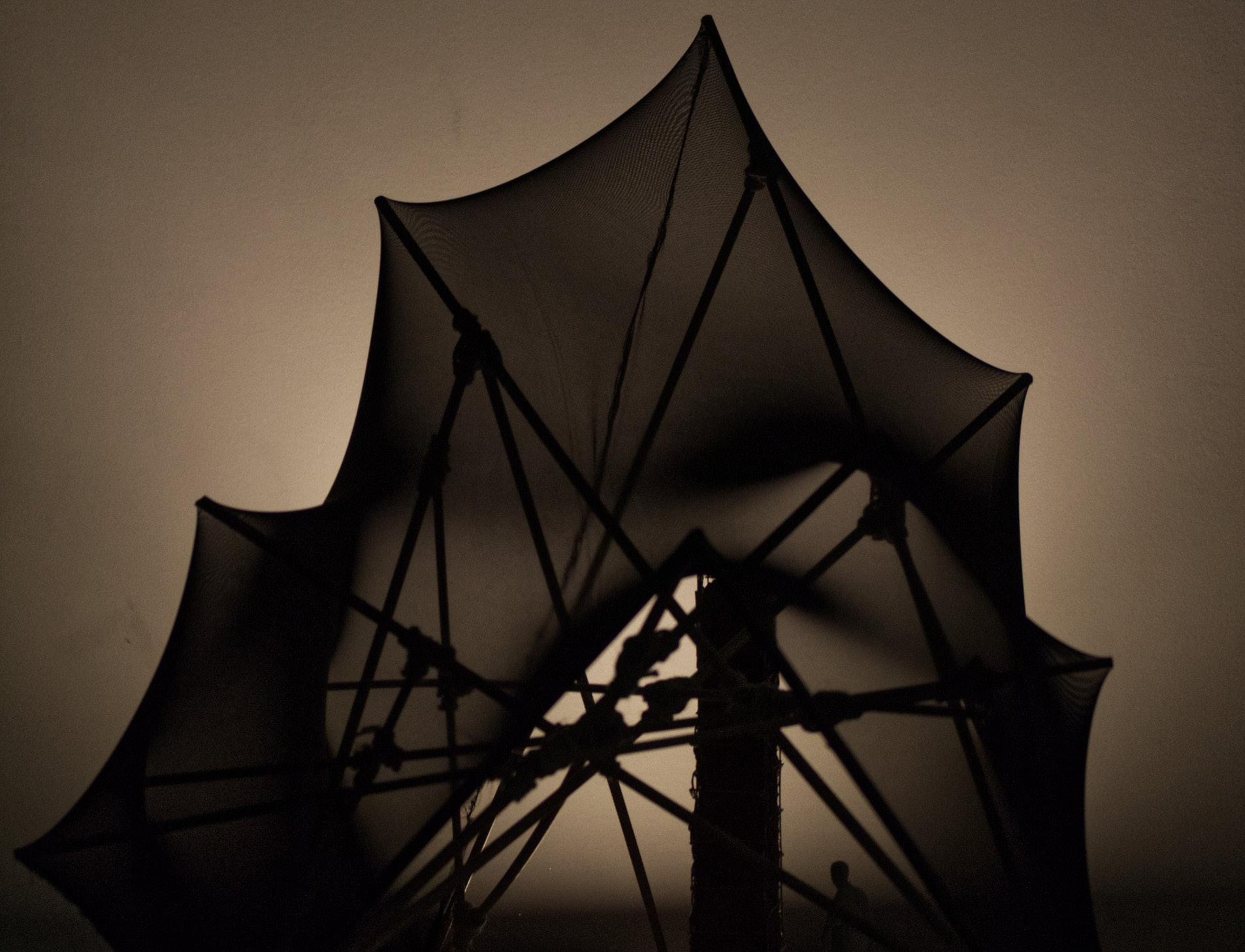
The structural inspiration of the project comes from the railroad and transmission towers located east of the site. The structure and materials of the museum indicate traces of the post-industrial era in the urban fabric of this buffer zone between downtown Toronto and the detached housing areas. Loads of the fabric transfer to the ground through cables and wires that connect to the six masts that penetrate the fabric. Six rows of trusses are stitched between the trusses under the fabric and concrete stairwells to hold them in place, and internal trusses support the large spans of the fabric.
Perspective
20 Emotional Museum Fall 2022 | Course: Competition Exploded Diagram
Section Narrow Stairs With Light
THE TOWER, TARPAULIN
Course: ARC1021
Date: Winter 2024
Group Member: Isaac Valle
Role: material test, model making, photography
Duration: 3 weeks
The adverse effect of rising land costs has affected and participated in the explicit gentrification of the Indigenous peoples specifically in Vancouver, where Anishinaabe artist, Rebecca Belmore expresses in her artwork, The Tower and Tarpaulin. Her art often symbolizes political, economic, and social issues facing Indigenous peoples in Canada. During her stay in Vancouver, she had witnessed an over-representation of Indigenous peoples on the street morphing shopping carts and blankets into the essentiality of everyday life.
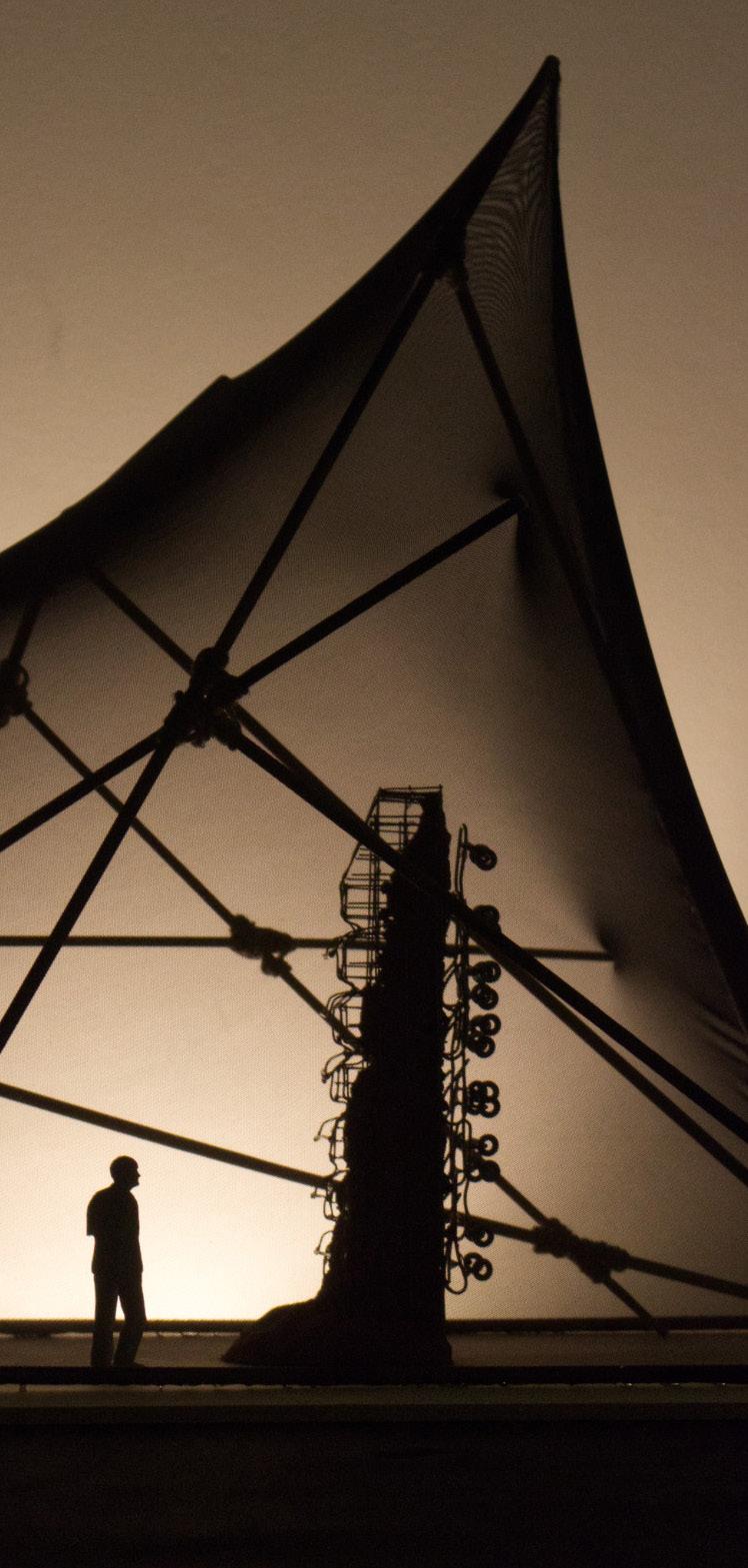
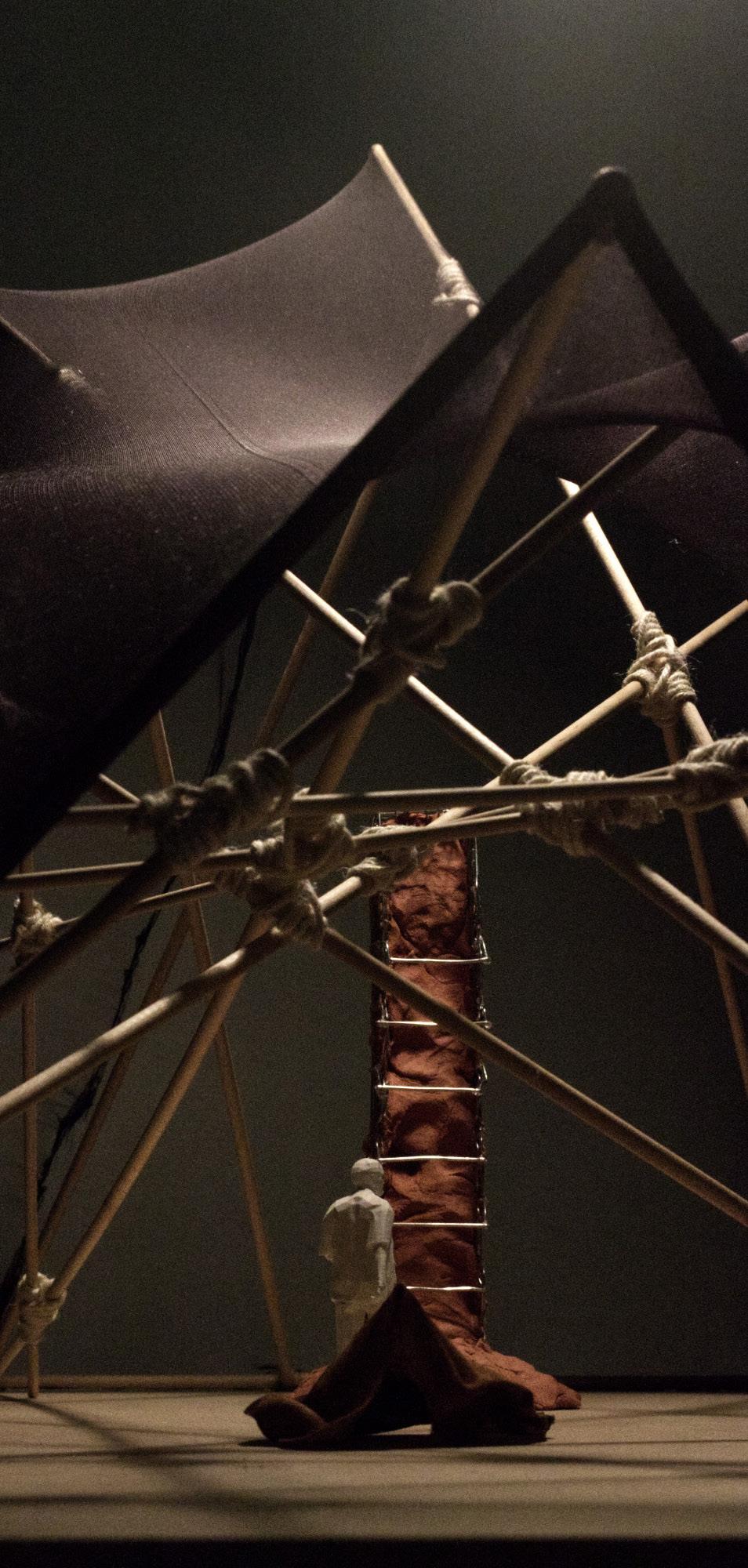
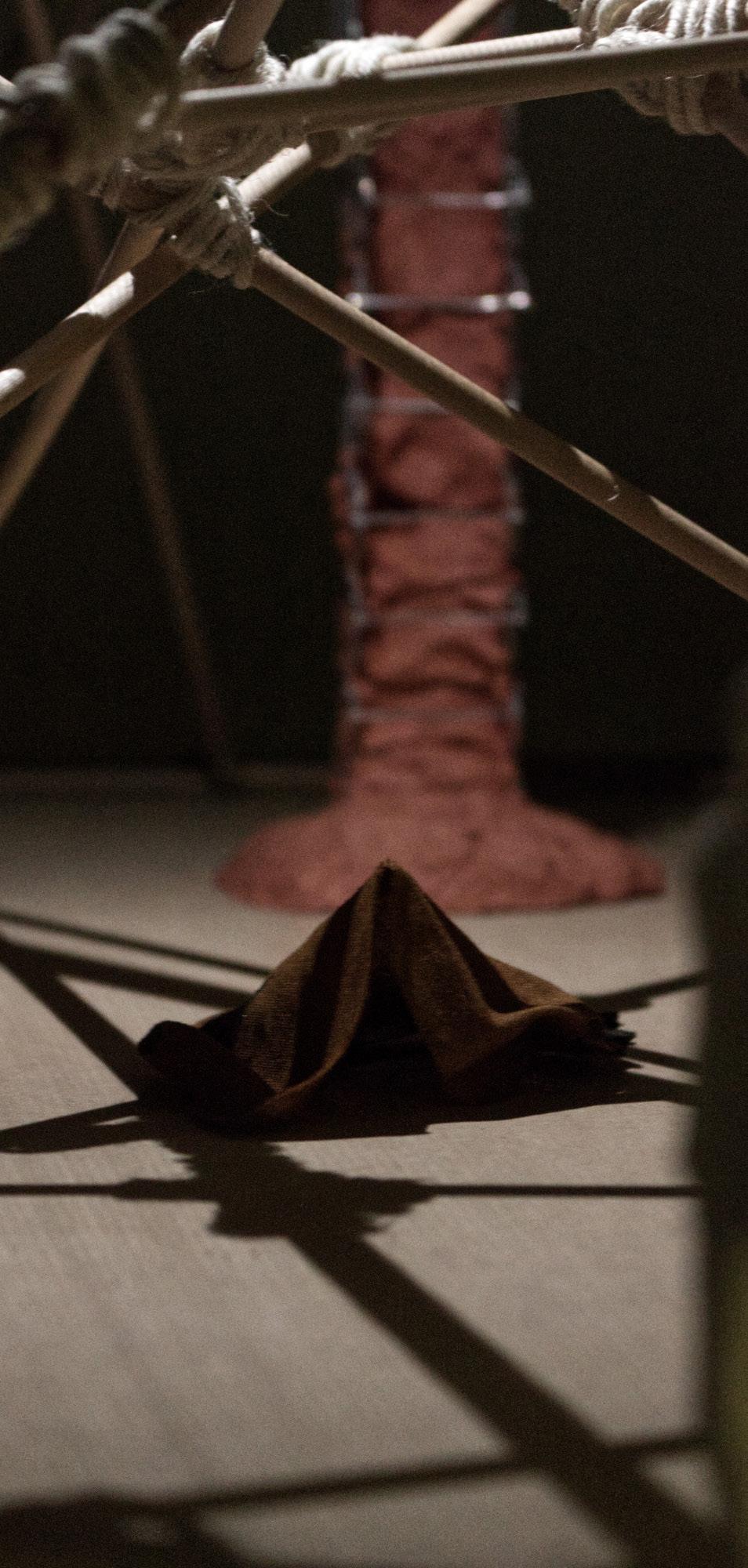
This architectural concept draws from socio-political and economic challenges, symbolizing the resilience of Indigenous peoples through its design. The use of wooden dowels represents nature's elements, juxtaposed against a synthetic membrane to signify struggle and perseverance. The design aims to evoke emotions through spatial manipulation, using the dowel's density and arrangement over a tarpaulin to create intimate or expansive interactions. This setting is designed to make guests feel small amidst the grand movements of horizontal and vertical elements, emphasizing resilience through physical, emotional, environmental, and intellectual engagement within the space and its art.
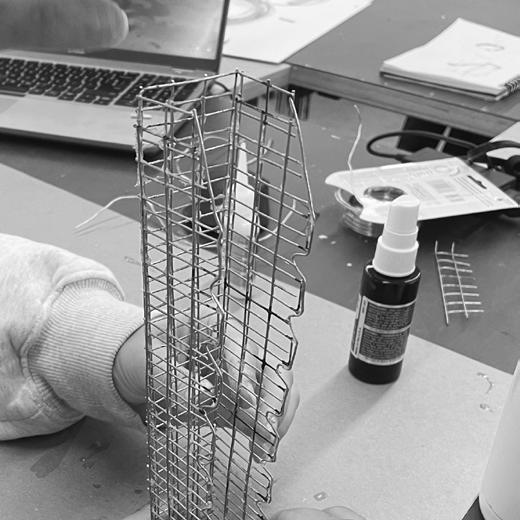
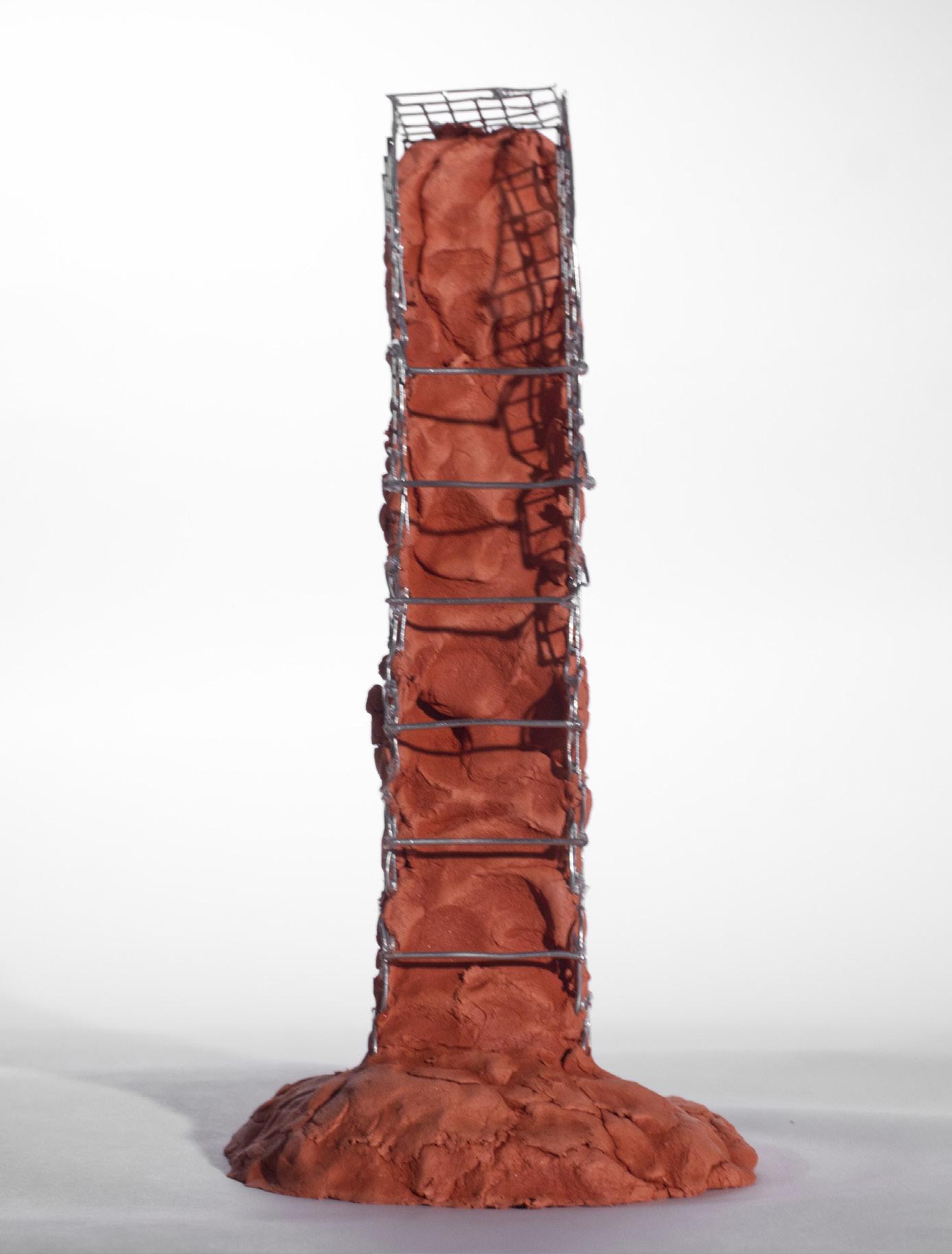
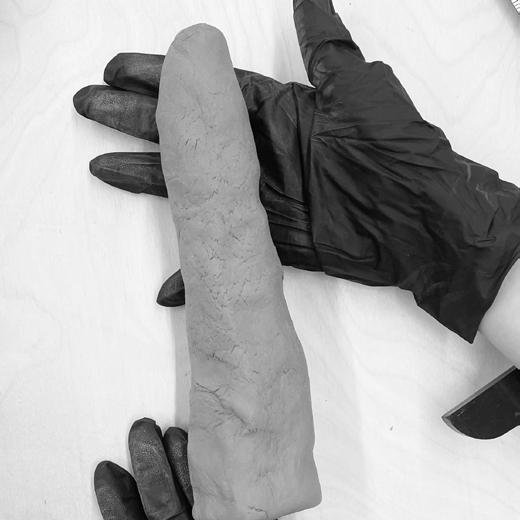
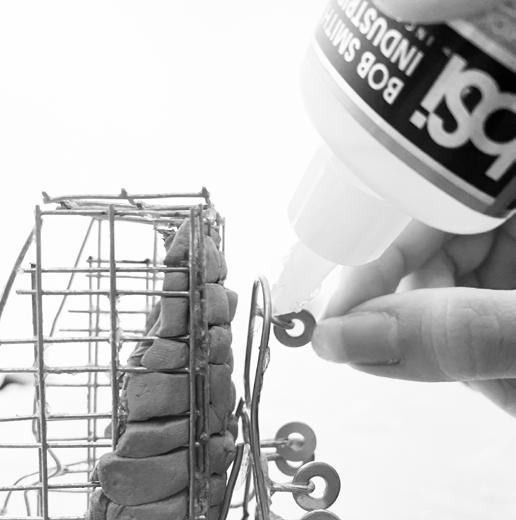
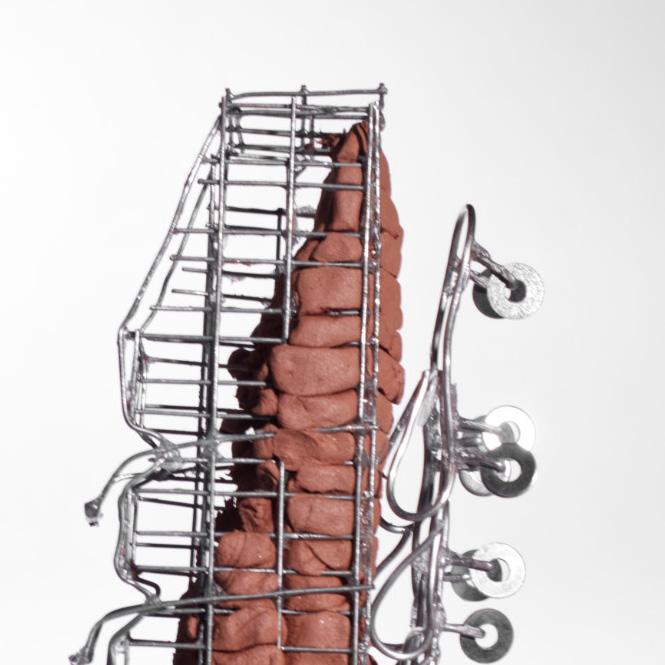
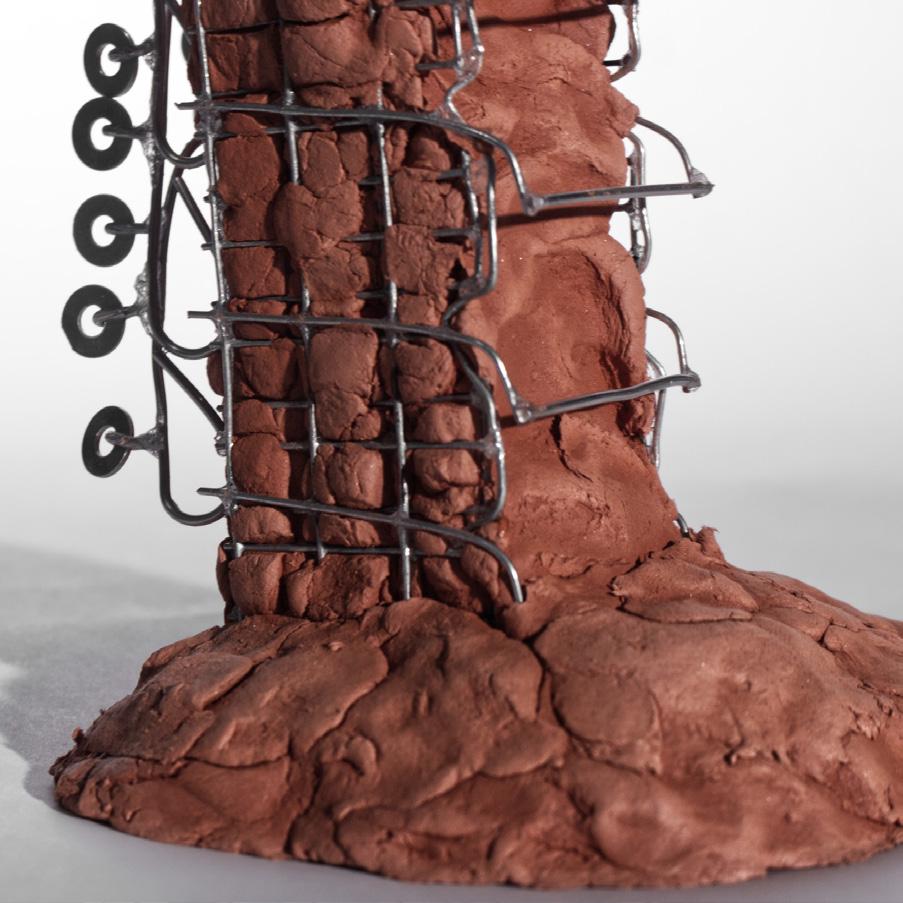
We first made the Tower from the artifacts exactly at the ratio of 1:20. We chose to use red clay as the "natural material" in the middle, and then used wire and iron rings to simulate the shopping cart and roller.
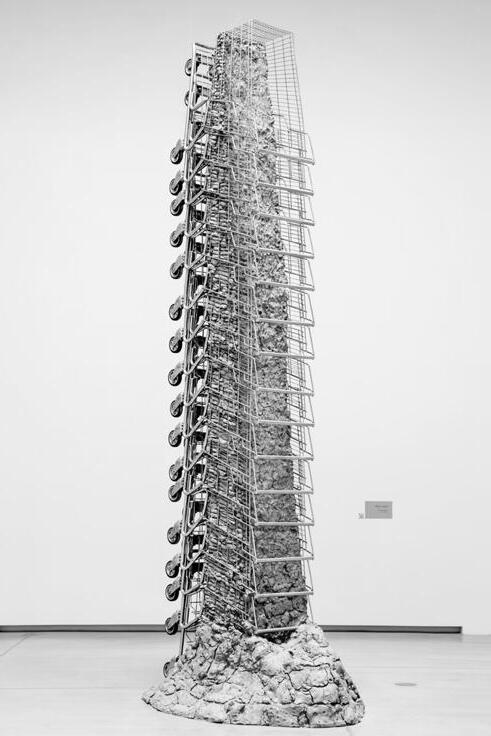
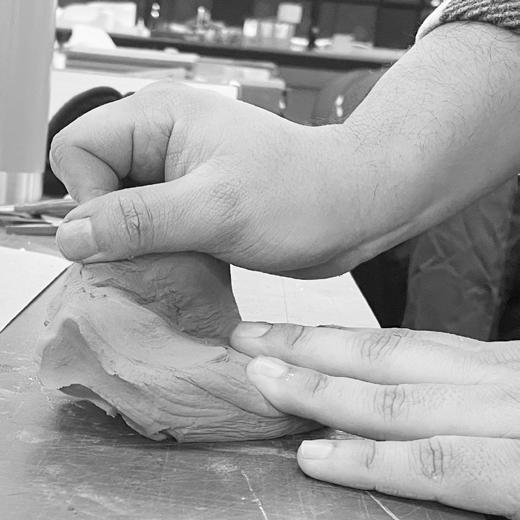
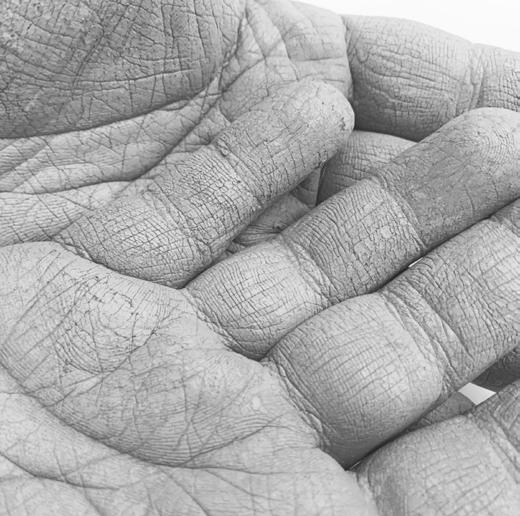
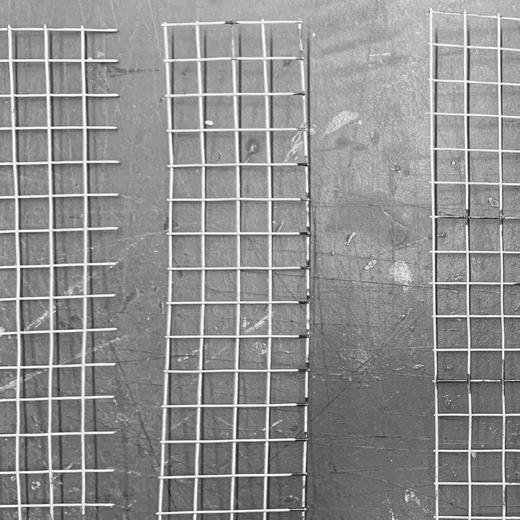
21 The Tower, Tarpaulin winter 2024 Course: ARC1021
Tower Artifact Model Photos
Tower Artifact Model Making Process
Tower Artifact Image
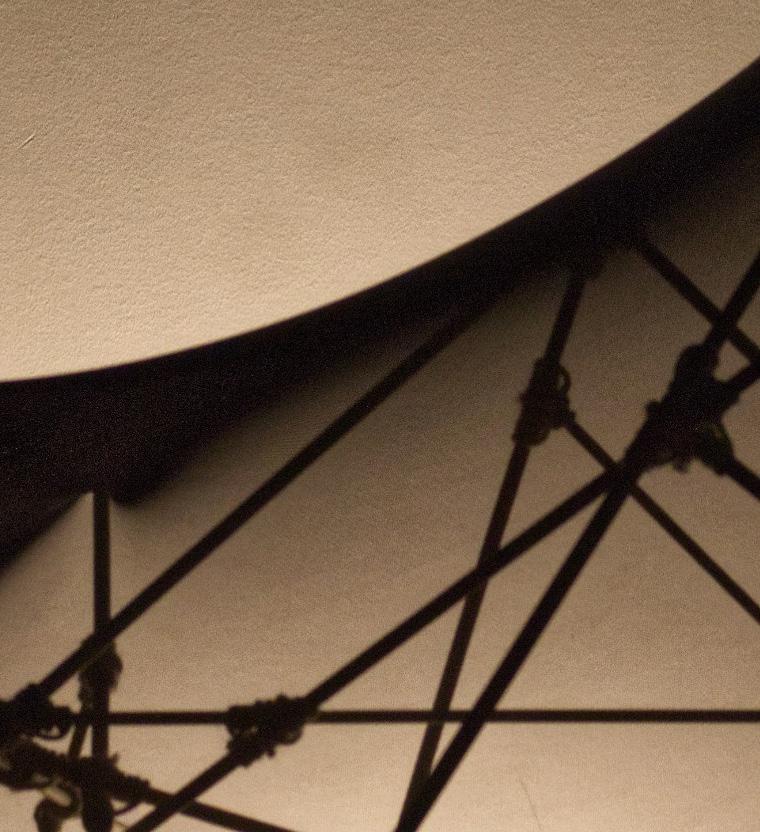
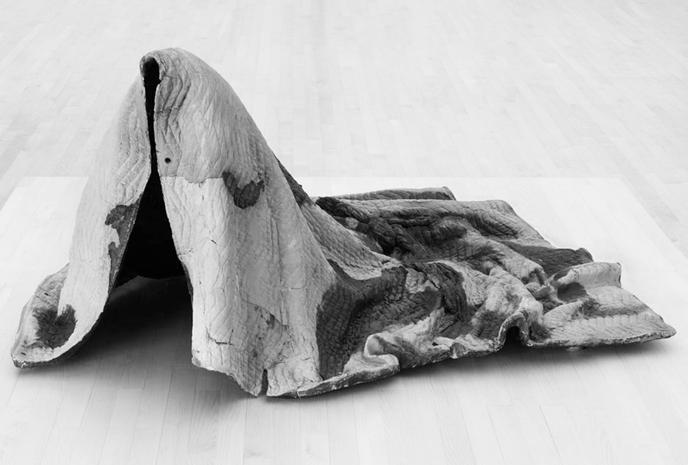
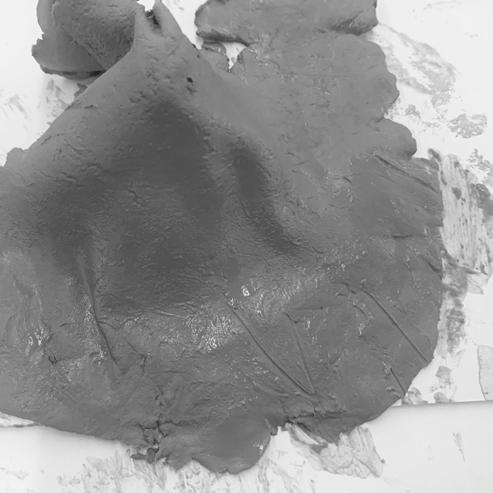
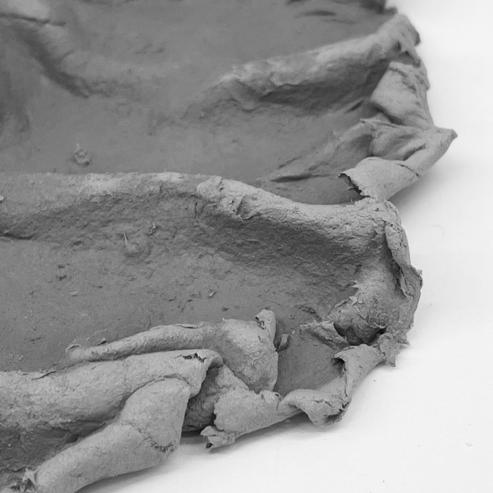
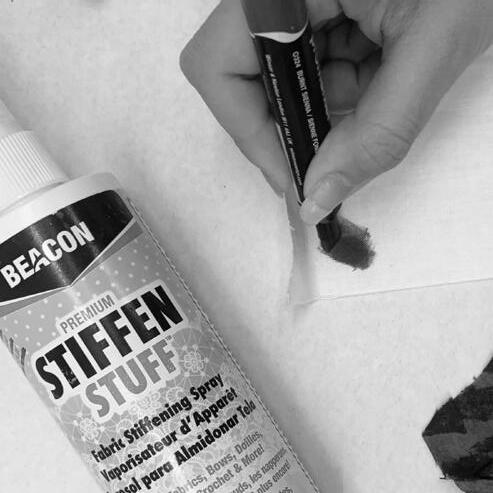
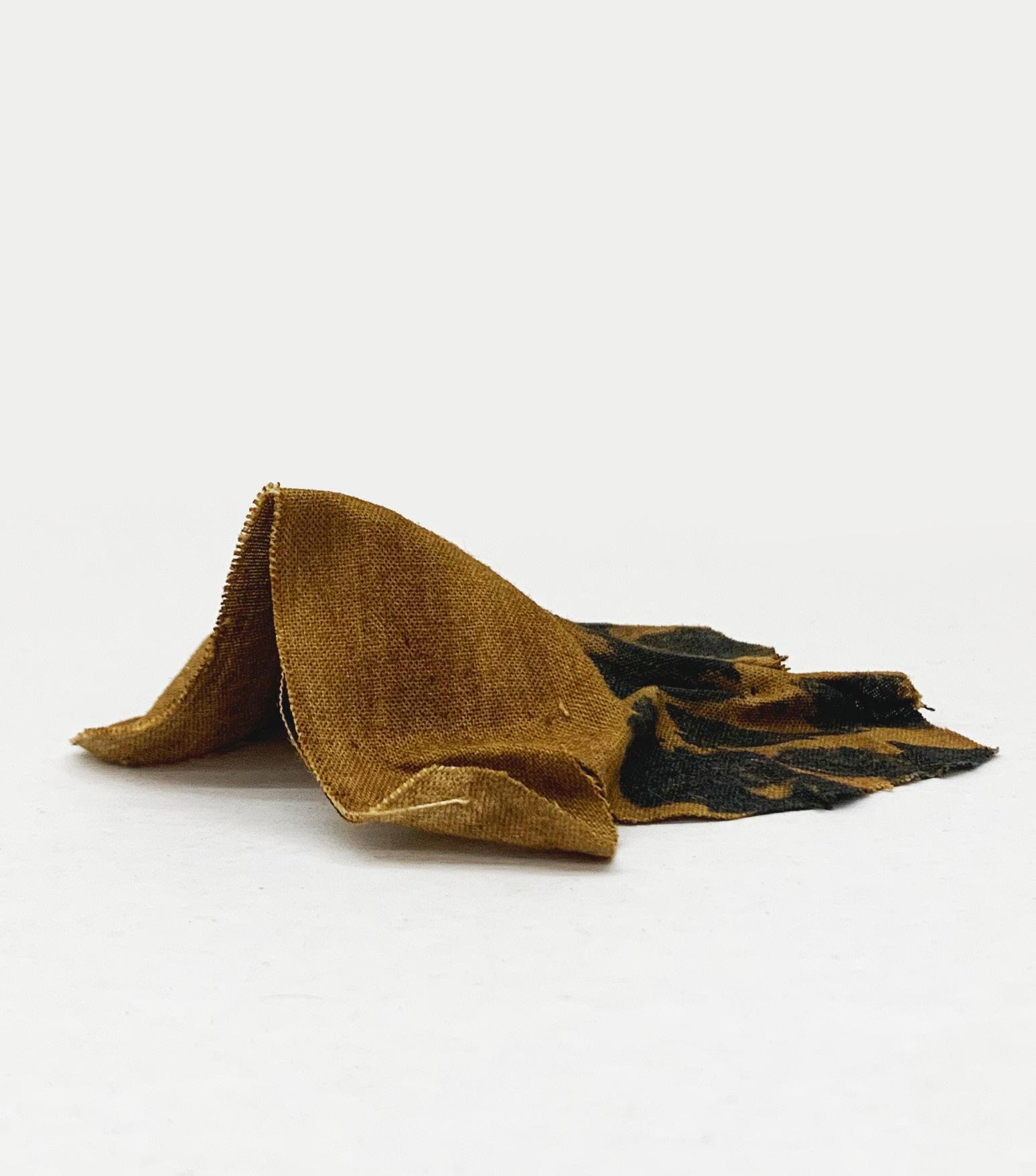
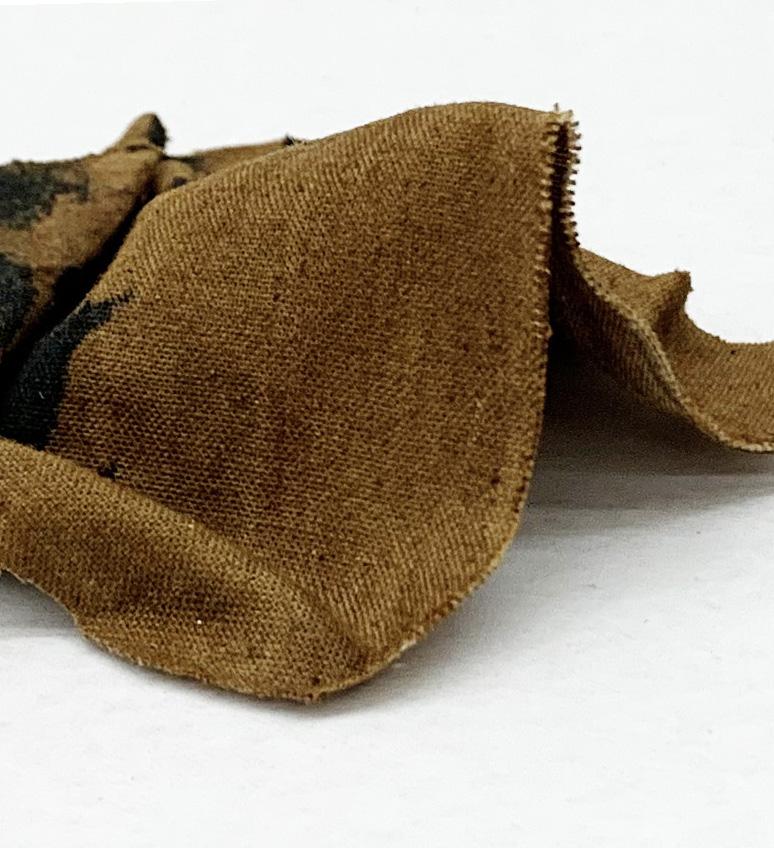
We tried to use red clay for Tarpaulin, but because of its bulky nature, it was difficult to make the same folds as the original. We ended up using the sewn canvas to make the Tarpaulin and using the crayons to restore the artifact's original colors. Finally, Stiffen Stuff is sprayed to hold the material in place.
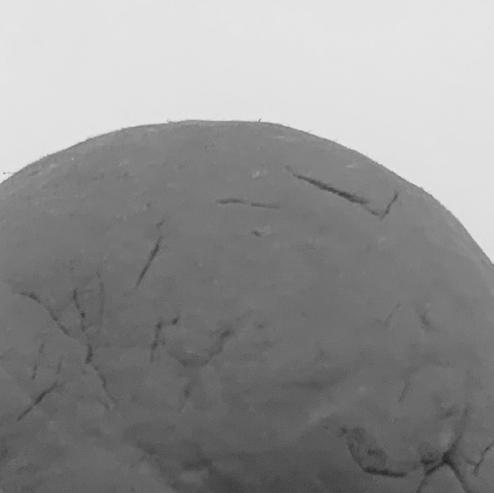
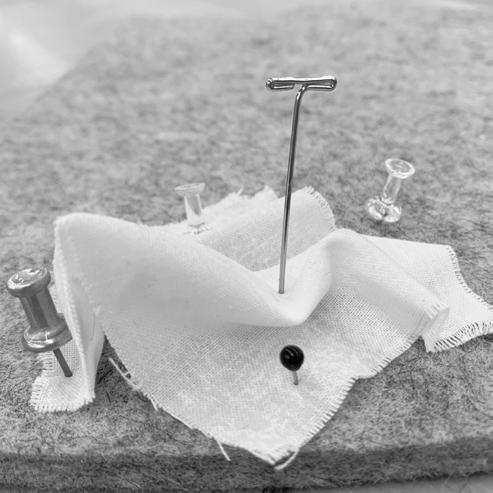

The elasticity of the first three test materials we used did not meet our expectations at all.
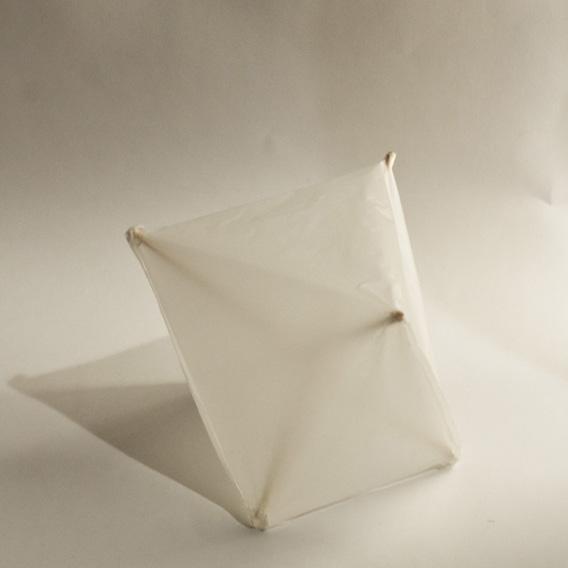
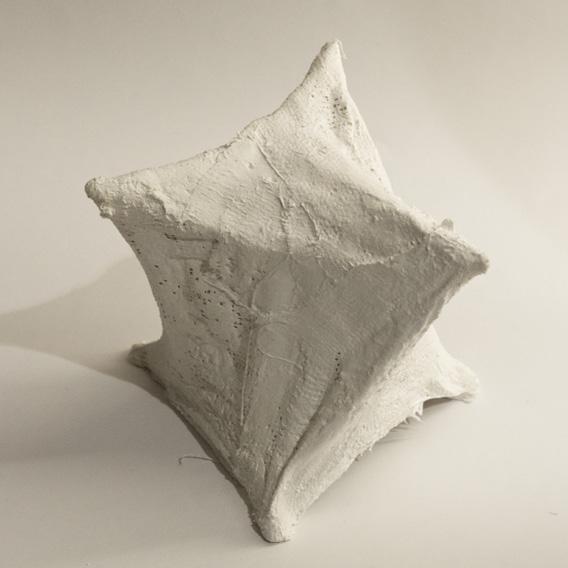
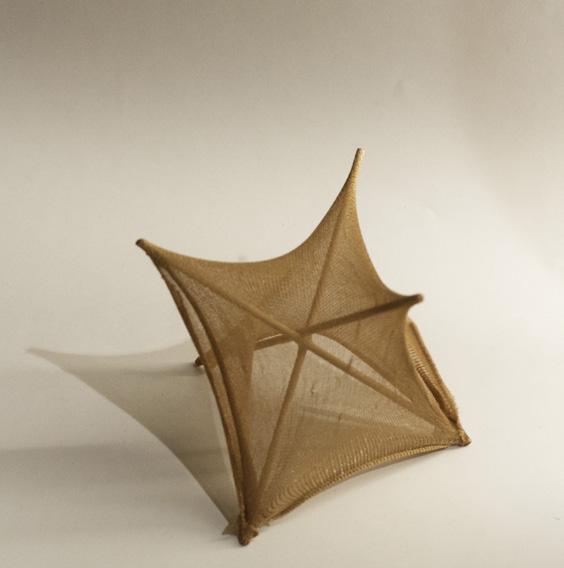
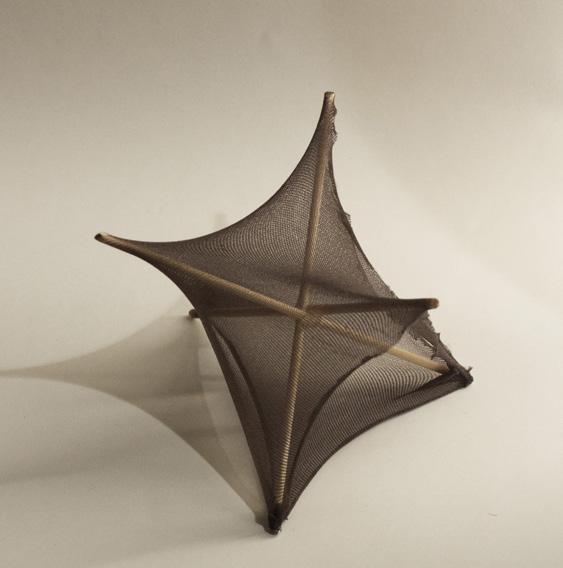
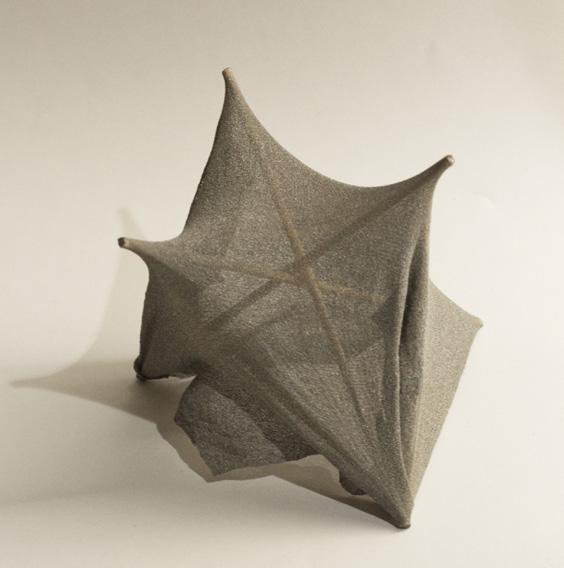
Pantyhose-dark shade Pantyhose-aersol sprayed
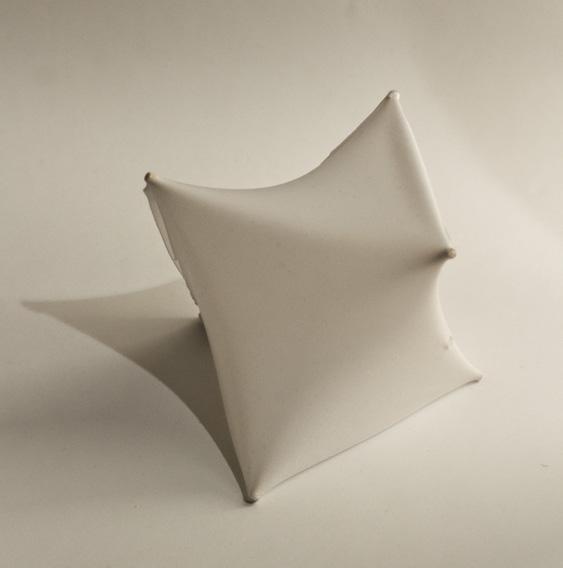
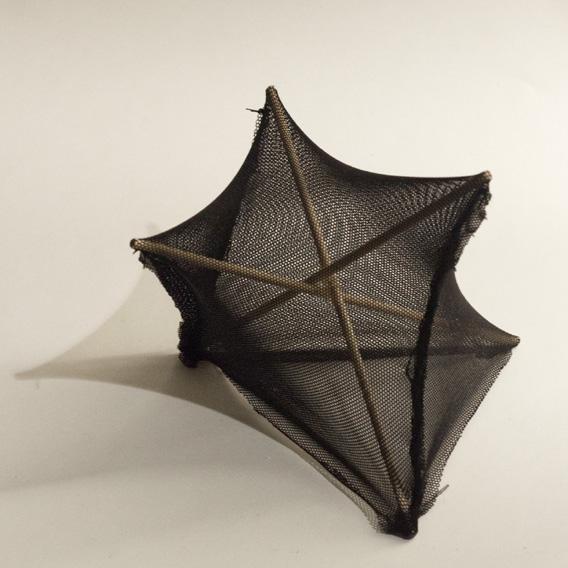
The elasticity of the second group of materials met expectations, but was eventually abandoned due to its easily torn nature.
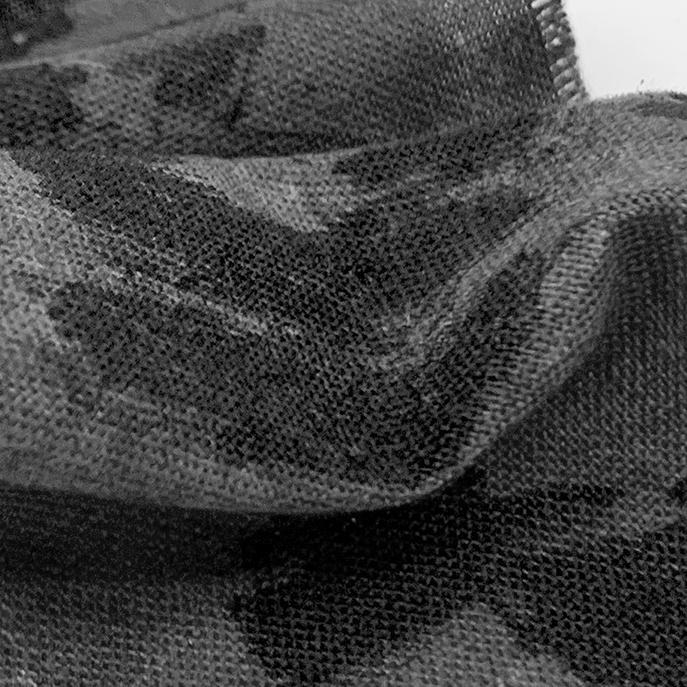
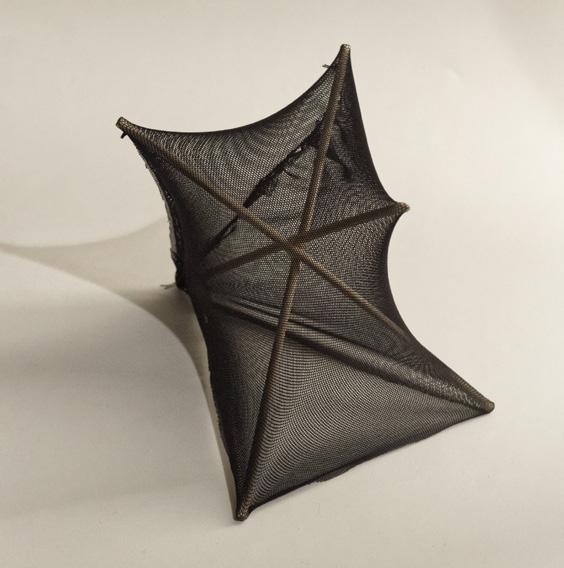
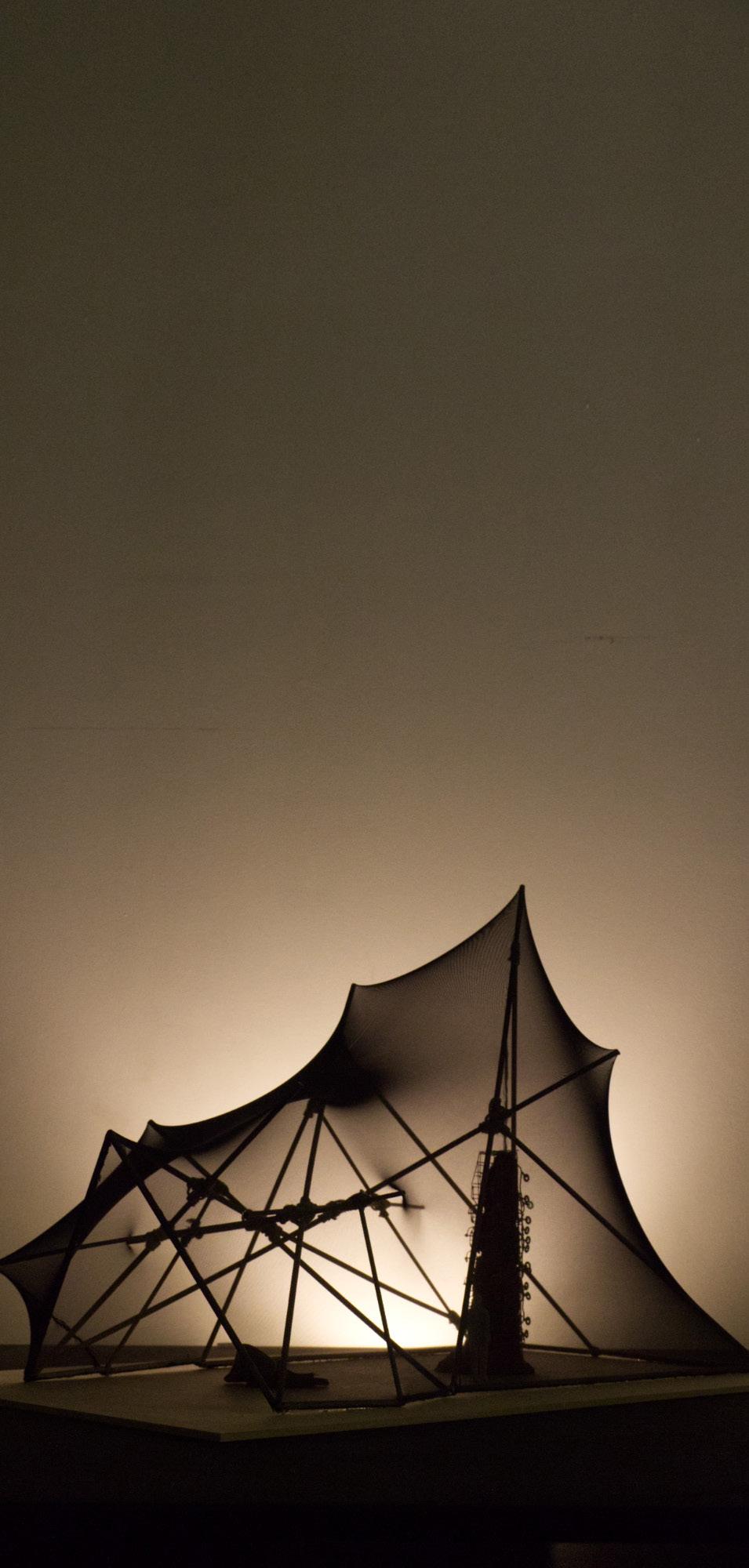
The elasticity of the third group of materials has fully met our expectations, and we chose the last micro mesh with the best effect as the material for our final model.
 Tarpaulin Artifact Image
Tarpaulin Artifact Model Making Process
Material Exploration
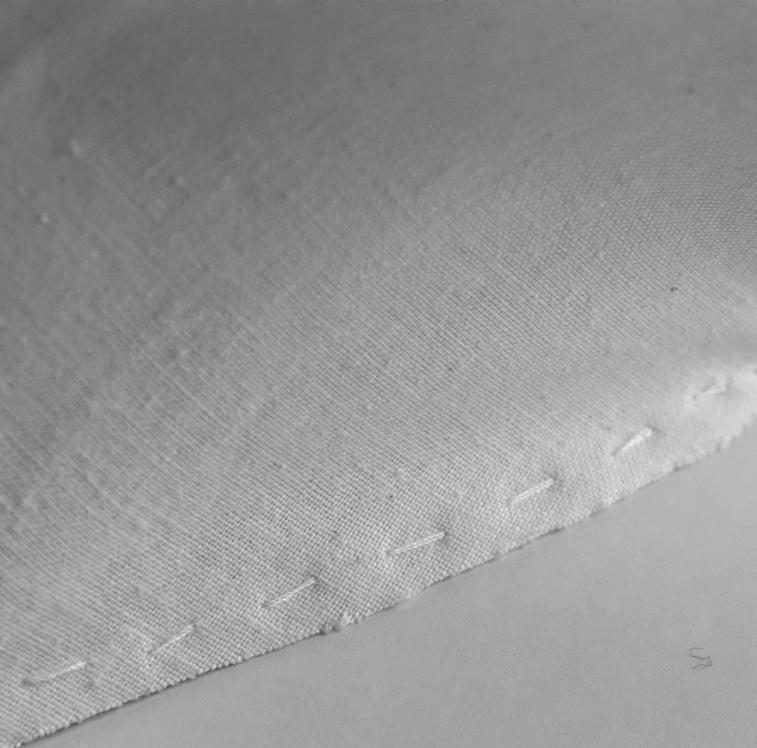
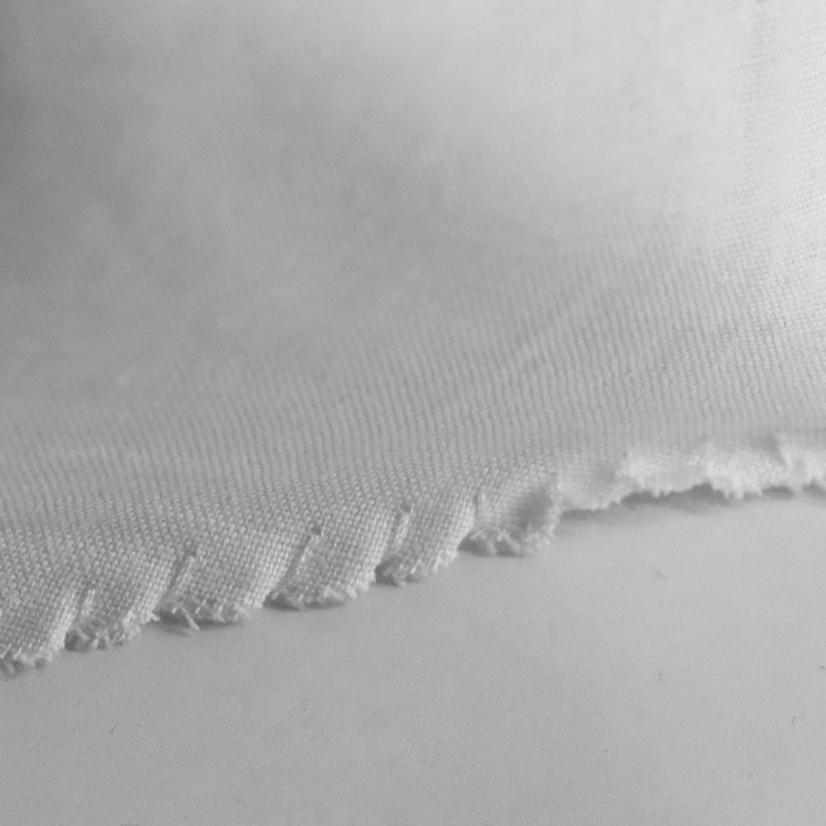
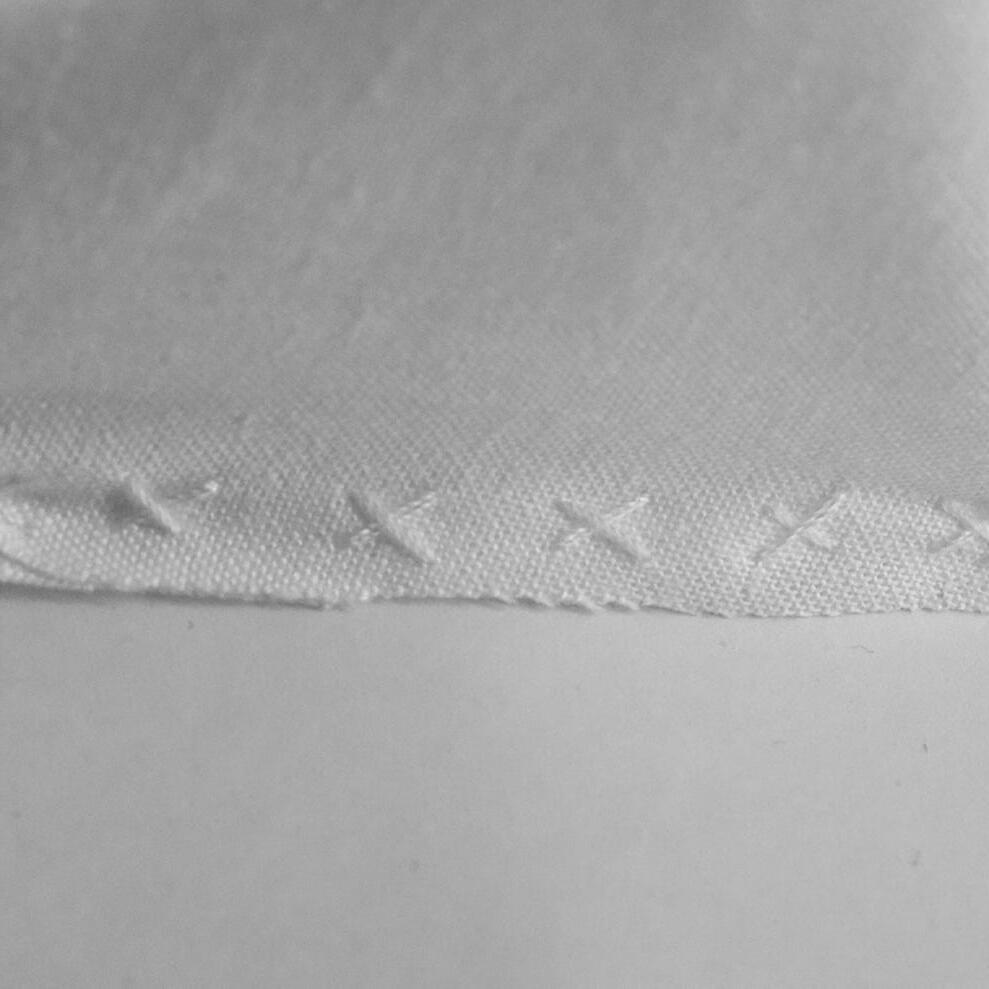
Sewing Hem Techniques
Tarpaulin Artifact Sketch Models
Tarpaulin Artifact Model Photos
Sewn Canvas
Pantyhose
Spandex 4-Way Stretch Nylon-small mesh 4-Way Stretch Nylon-micro mesh
Plastic Plaster Bands
Tarpaulin Artifact Image
Tarpaulin Artifact Model Making Process
Material Exploration
Sewing Hem Techniques
Tarpaulin Artifact Sketch Models
Tarpaulin Artifact Model Photos
Sewn Canvas
Pantyhose
Spandex 4-Way Stretch Nylon-small mesh 4-Way Stretch Nylon-micro mesh
Plastic Plaster Bands
22
23 The Tower, Tarpaulin | winter 2024 | Course: ARC1021
Final Model Photos