I’m drawn to architecture shaped by real human needs — the way people live, gather, and find meaning in everyday routines. My work often begins with an atmosphere or idea and moves toward the technical decisions that make it buildable. Having a background in both architecture and community planning shaped the way I see projects — from the scale of a neighborhood system down to the character of a single room. I’m interested in how light, material, and program support community and create spaces that feel grounded and intentional. I aim for design that is clear, careful, practical, and genuinely resonant.
Looking to contribute to large-scale, multidisciplinary teams where thoughtful design, performance, and precision come together.
Status: Authorized to work in the U.S. without sponsorship
EDUCATION
Aug 2022 - May 2025
Masters of Architecture
Iowa State University (ISU)
Relevant Coursework: Science & Technology in Architecture, Advanced Studios, Automated Facade Systems
Aug 2017 - May 2022
Bachelors of Science In Community and Regional Planning
Iowa State University (ISU)
Relevant Coursework: Intermediate Geographic Information Systems, Urban Design and Practice, Geographic Data Management and Planning Analysis.
RECOGNITION
Oct 2025
HOSPICE FOR TERMINALLY ILL
BUILDNER
TOP 40
EXPERIENCE
May 2022-Aug 2024
Architectural Intern, Concept Stuido
Banglore, India (Remote)
Supervisor : Shasi Kumar
Healthcare + Residential Projects
• Contributed to schematic design development for healthcare and mixed-use proposals.
• Produced Revit-based spatial layouts, massing studies, and facade systems aligned with project goals.
• Generated high-quality visualizations to support design reviews and client presentations.
• Participated in internal critiques on materials, lighting, and design direction.
• Provided model updates, iterative refinements, and drafting support across design phases.
• Strengthened studio visualization standards through consistent graphic output.
Tool : Revit I AutoCAD I V-Ray I Photoshop
Project Outcome
Two proposals advanced to the client presentation stage.
SELECTED PROJECTS
Oct 2025
Threaded Commons - Denver Affordable Housing
Buildner Competition | Individual
Mixed-use affordable housing proposal organized around community-building, shared resources, and adaptable spatial systems.
Tool : Revit I Twinmotion I Photoshop I Illustrator
Enso — Wellness Hotel, Matsue, Japan
Academic | Lead Designer
Instructors : Nakamura Kotaro, Rob Reinders
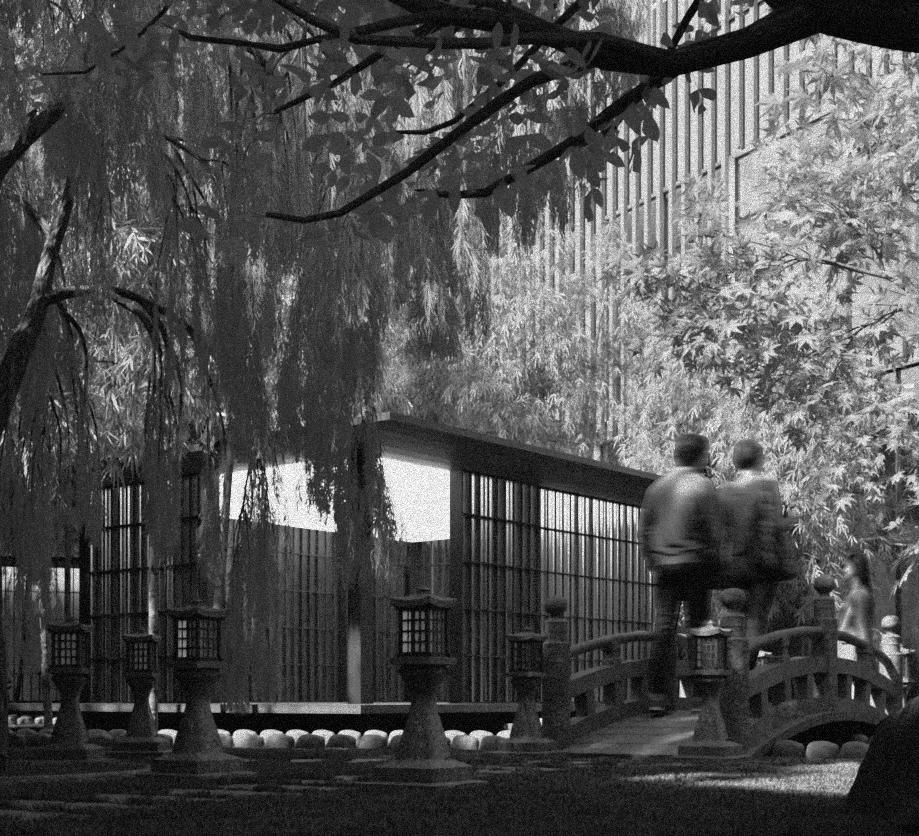
A hospitality project exploring balance through light, sequence, and material calmness. Designed around a central courtyard and tea-house pavilion.
Tool : Revit I Twinmotion I Photoshop I Illustrator
Aug - Dec 2023
Radiant Hub — Rural Civic Redevelopment, Iowa
Academic | Individual
Instructor : Nick Senski
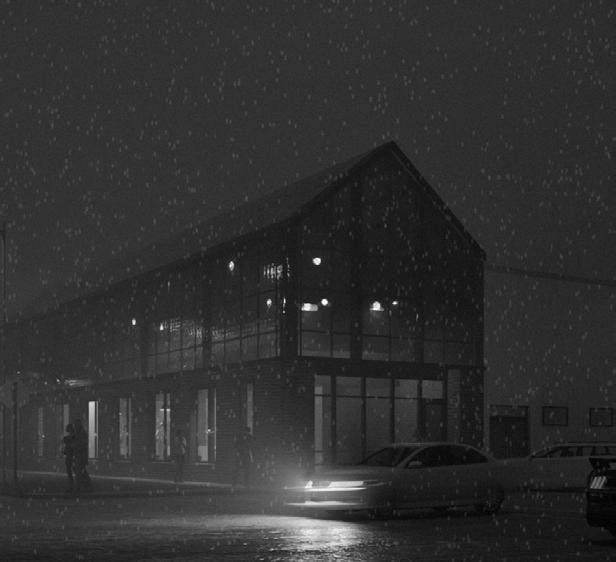
Adaptive reuse of a storm-damaged bank into a community hub. Integrates translucent additions with existing masonry to create a civic lantern.
Tool : Rhino I Twinmotion I Photoshop I Auto CAD
June 2024
Echoes of Stillness — Hospice Design
Buildner Competition | Individual
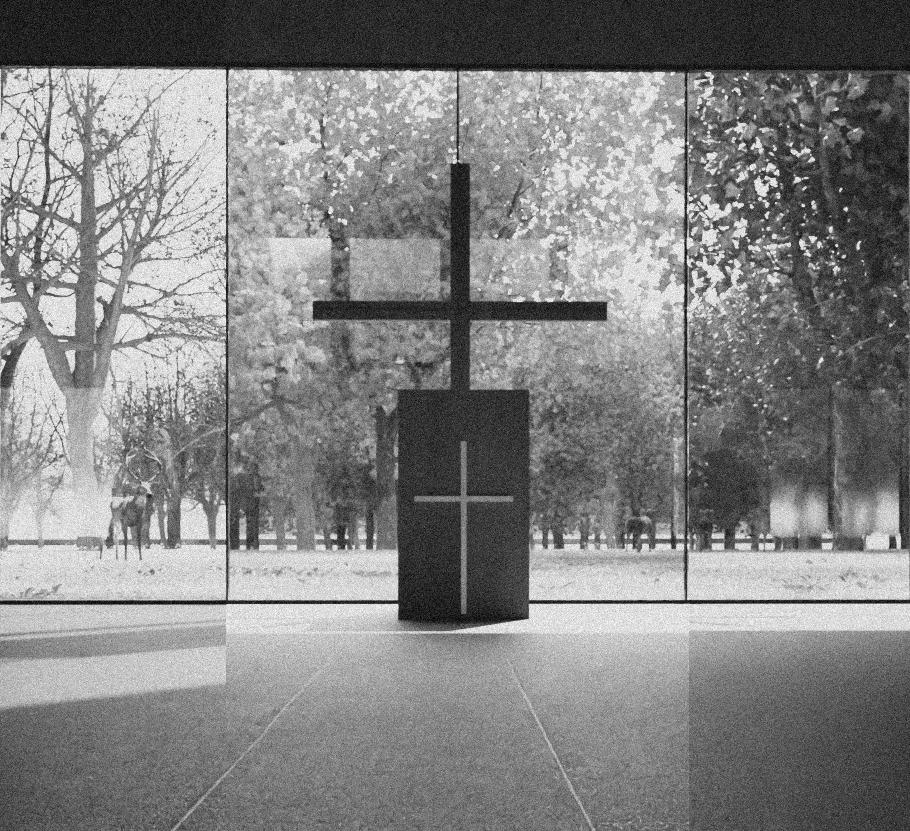
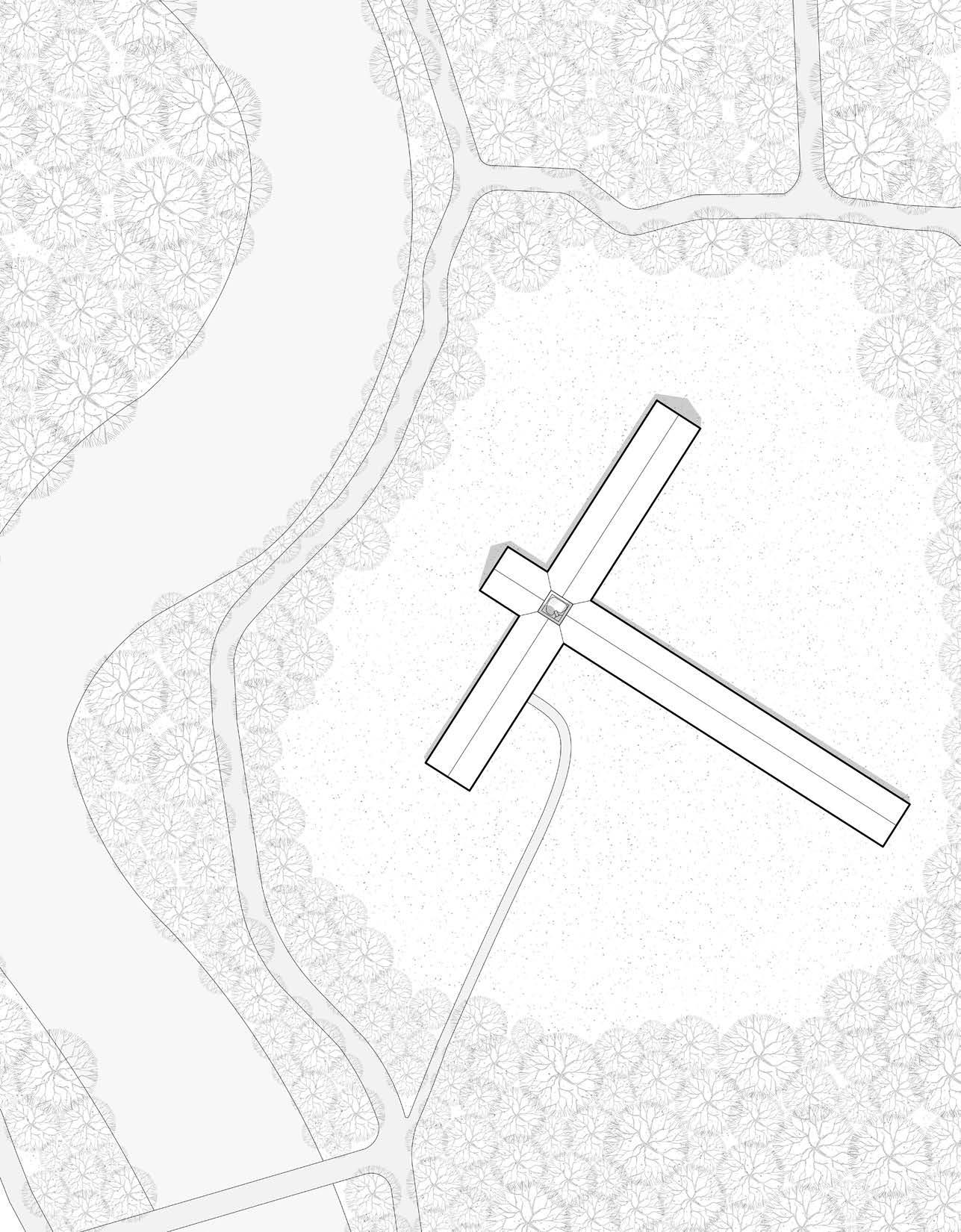
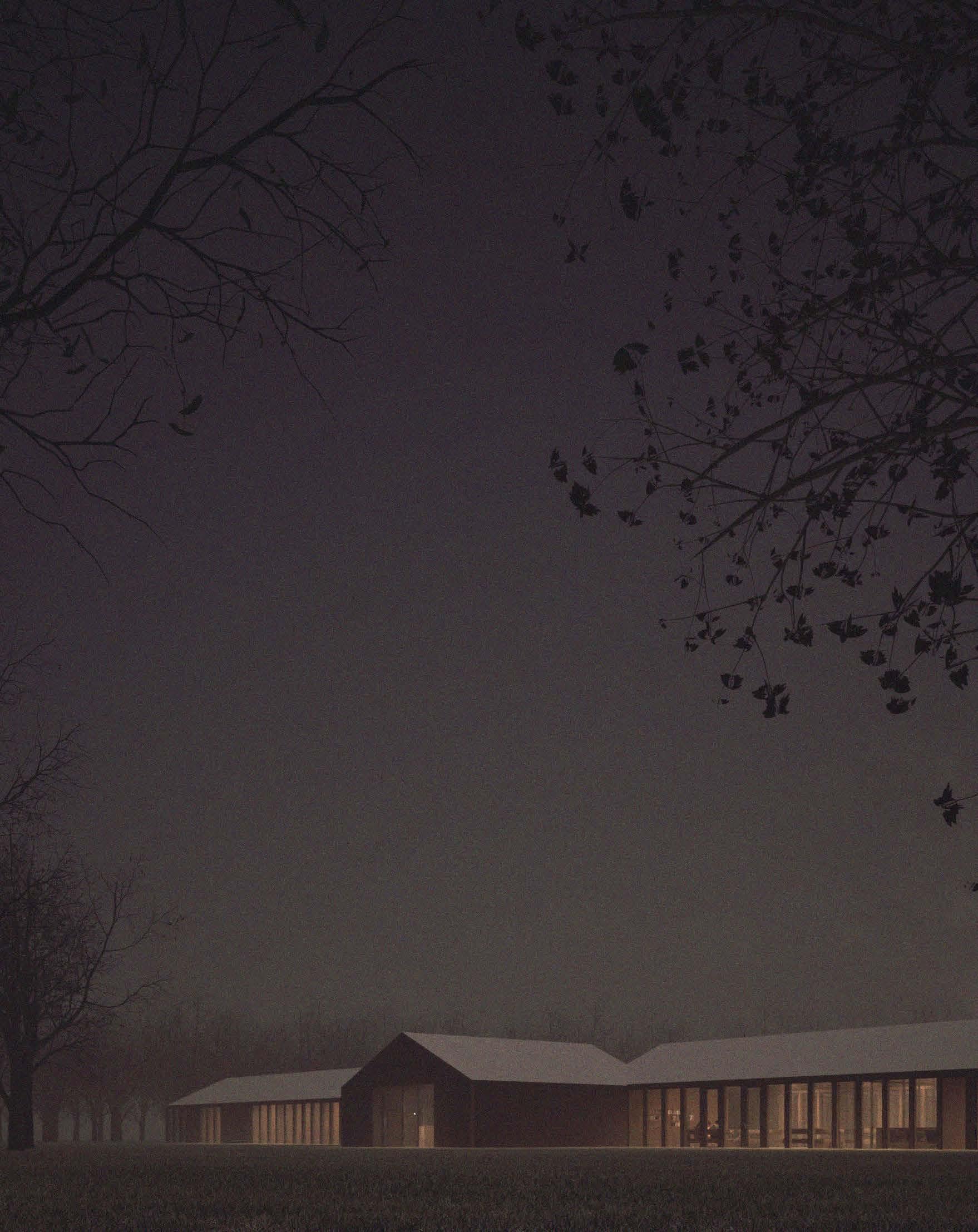
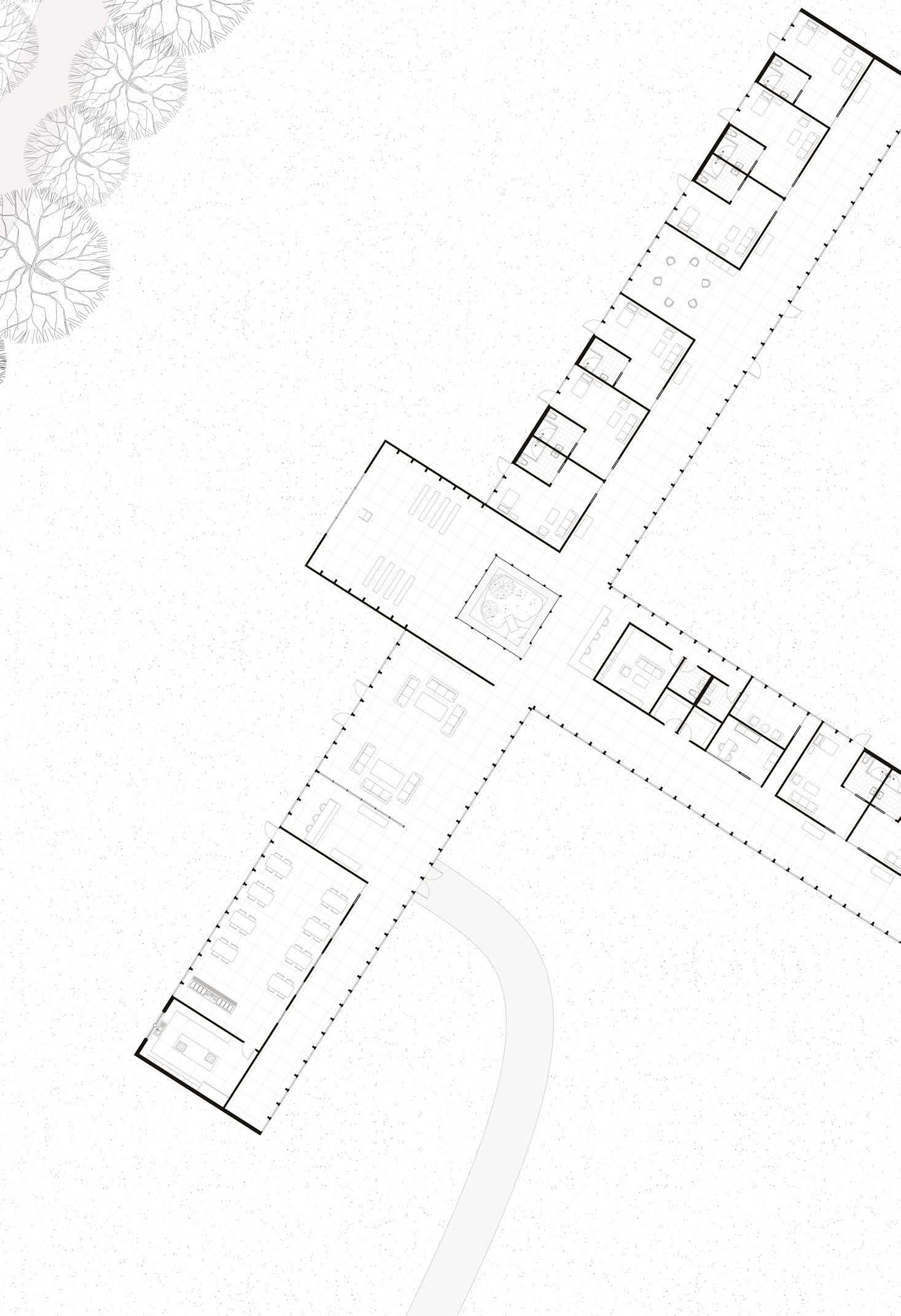
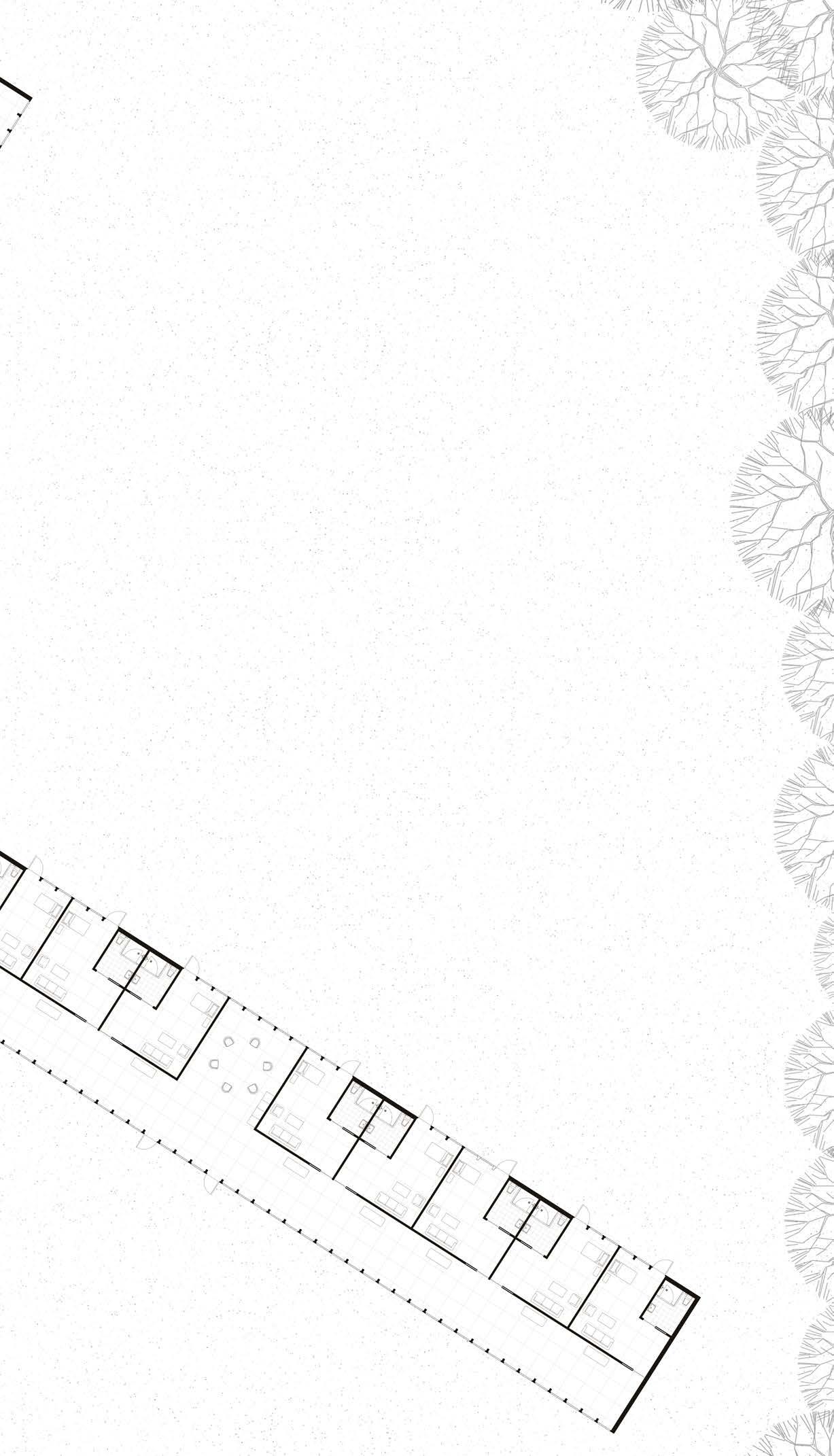
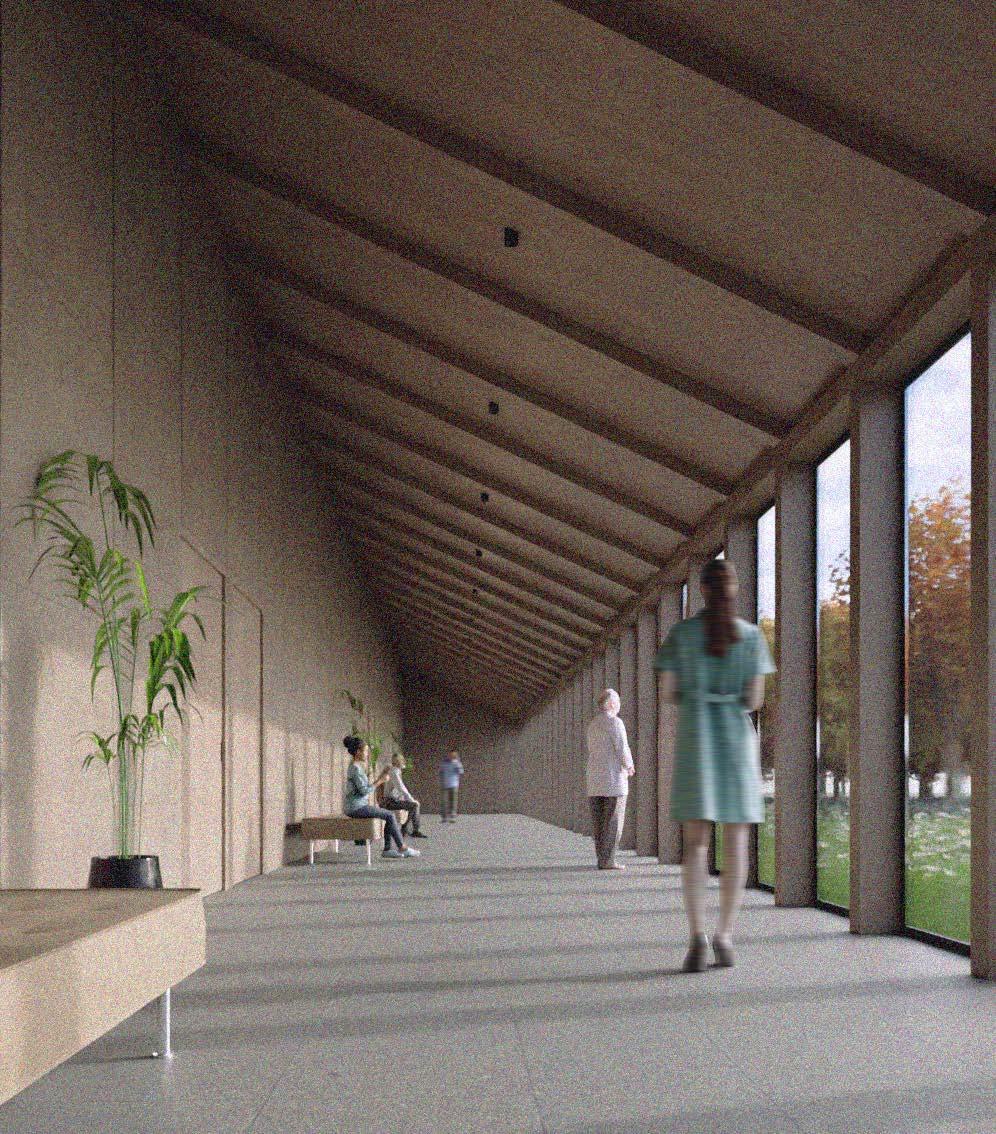
The top 40 shortlisted proposals envision a hospice focused on privacy, care, and emotional comfort through sensitivity to light and materials.
Tool : Revit I Twinmotion I Photoshop I Auto CAD
June 2024
Sasci Hospital — Post-Surgery Care
Projessional Project | Collabrator
The project converts an existing commercial building into a post-surgical care center, improving circulation, privacy, and exterior identity while retaining the original structure.
Tool : Revit I V-Ray I Photoshop I Auto CAD
Jan - May 2025
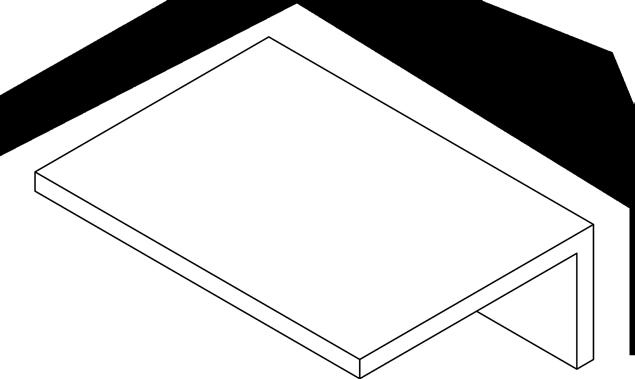
A Body of Choices — Exhibition Installation
Academic I Team Leader
Five-floor installation reinterpreting Robin Hood Gardens through models, spatial studies, and narrative drawings.
Certifications
Nov 2025
LEED Green Associate - In progress
Technical Skills
CAD & Graphic Softwares:
Rendering Softwares
TRAINING & WORKSHOPS
Bioclimatic Design Seminar — University of Pennsylvania (2025, Ongoing)
Parametric Design with Grasshopper — Bryan Garcia (2025)
Advanced Visualization Techniques — ISU (2024)
Lobitos for Care Design Workshop - ISU(2023)
SOFT SKILLS
Communication
Collaboration
Time Management
Critcal Thinking
Active Listener
Documentation Clarity
Iterative Design
RESEARCH INTERESTS
Sustainable architecture
High-Performance Buildings
Translucent Envelopes
Interactive Design
ACTIVITIES
Sketching
Character Study
Graphic Design
Traveling
REFERENCES
Andrew Gleeson
Associate Teaching Professor, ISU I agleeson@iastate.edu
Ayodele Iyanalu
Teaching Professor, ISU I aiyanalu@iastate.edu
Shashi Kumar
Concept Studio Supervisor I arshashi1981@gmail.com
01
02 AFFORDABLE HOUSING ENSO
HOUSING I CONTINUITY, TRUST, AND BELONGING
HOSPITALITY I SPACES OF STILLNESS AND BALANCE Sun Valley, Denver I Affordable Housing Competition I Summer 2025 Matsue, Japan I Hospitality Studio I Spring 2024
CIVIC I RESILIENCE AND COMMUNITY RENEWAL
Roland, Iowa I Civic Redevelopment Studio I Fall 2023
RADIANT HUB A BODY OF CHOICES PROFESSIONAL PRACTICE
MEMORY I TIME I ARCHITECTURE OF MEMORY
Ames, Iowa I Exhibition I Fall 2023
ECHOES OF STILLNESS
CARE I DIGNITY, MEMORY, AND QUIET STRENGTH
Ames, Iowa I Hospice Design Competition I Fall 2023
Care | Renewal I Comfort, and Quiet Healing
Banglore, India I Concept Studio
THREADED COMMONS
AFFORDABLE HOUSING
Competition Work Individual Project October 2025
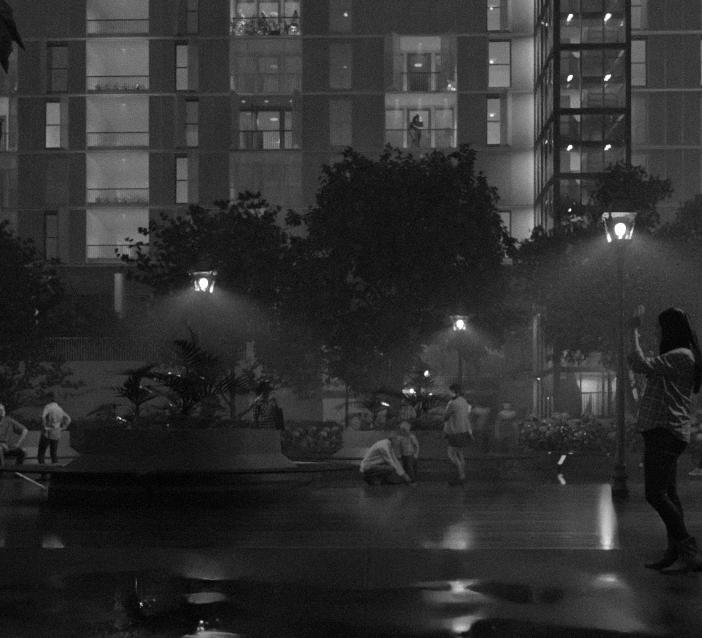
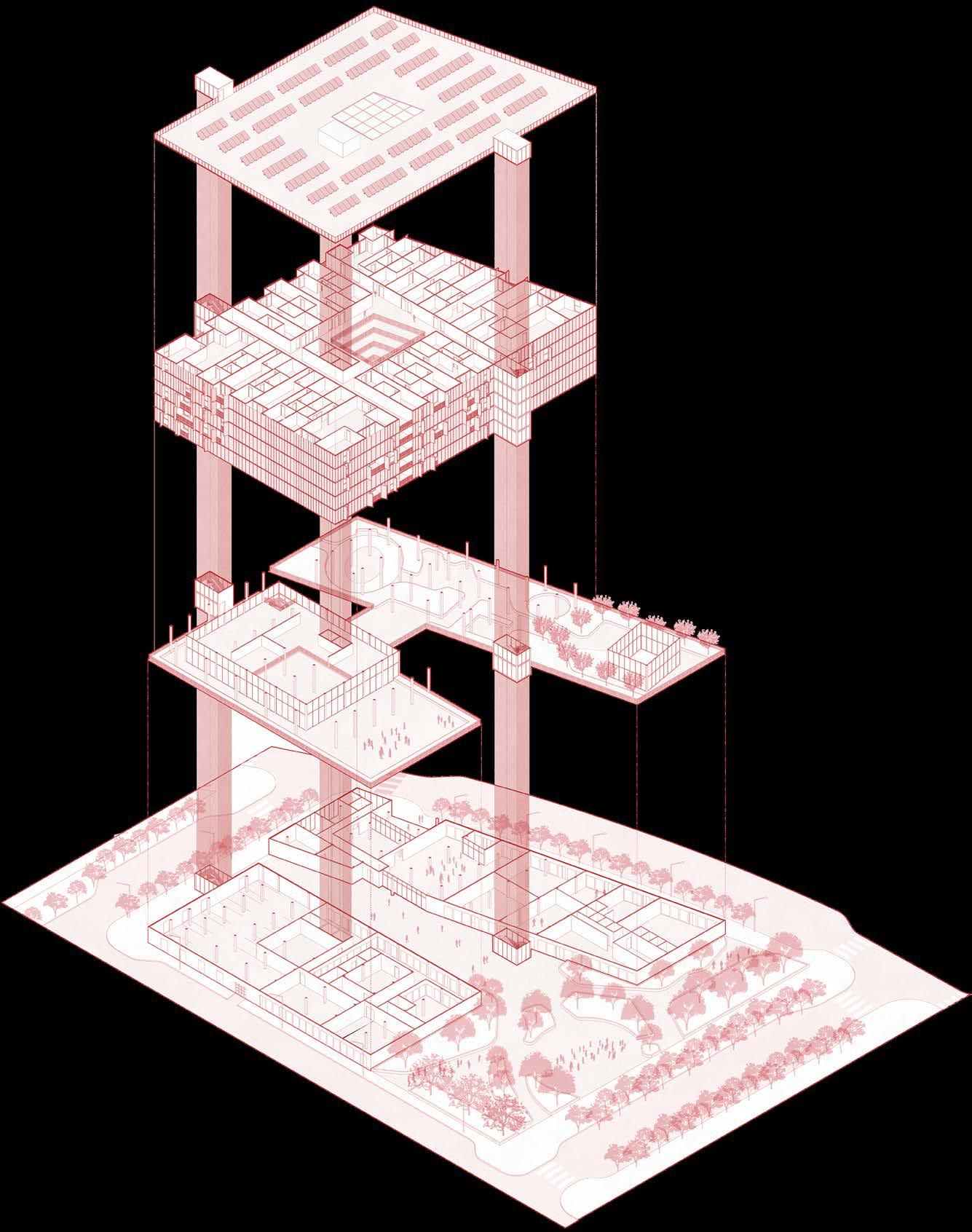
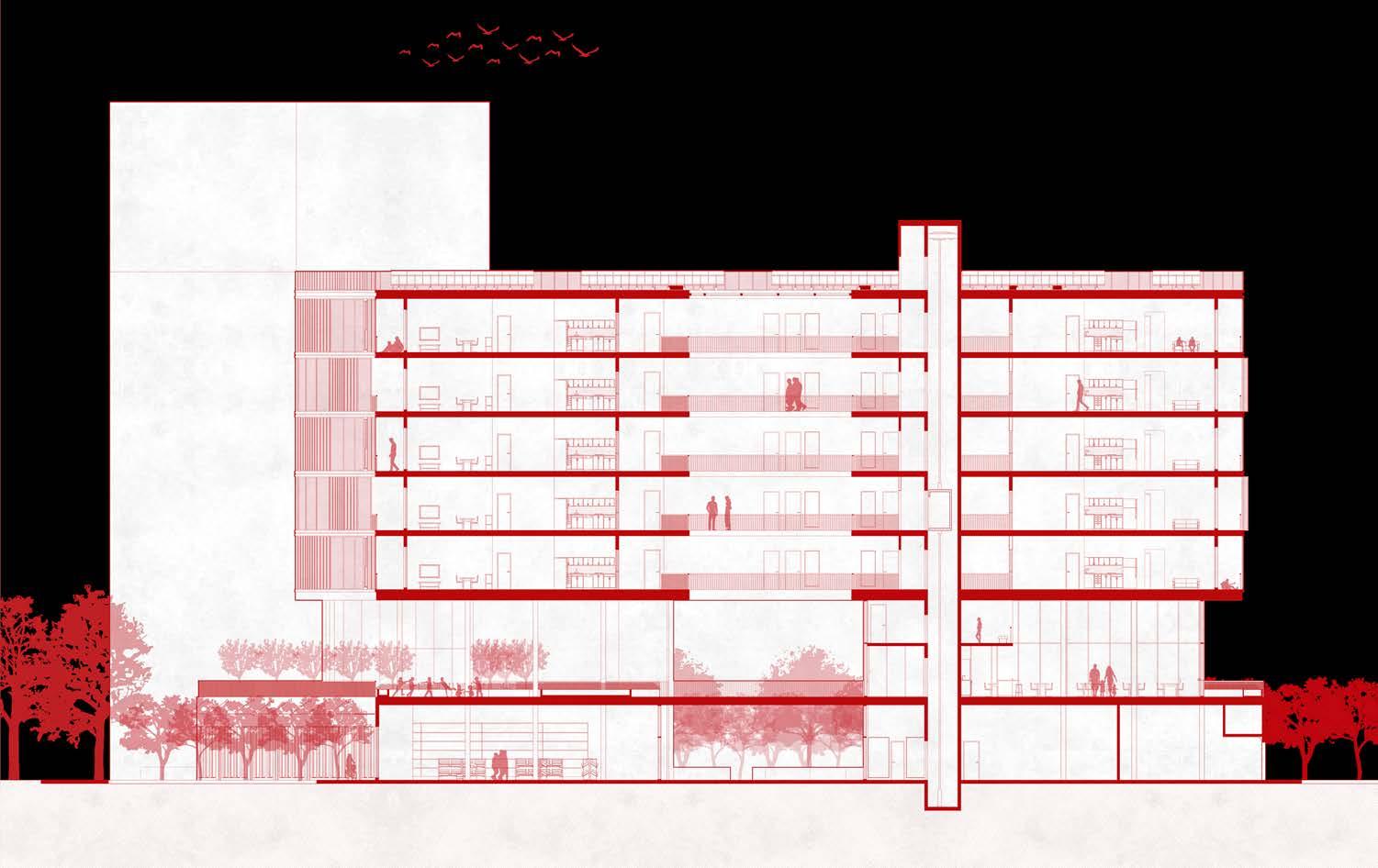
Affordability is often measured in numbers — cost, area, efficiency — but numbers can’t hold the meaning of home. In Sun Valley, Threaded Commons begins with people, not metrics. Here, affordability becomes time: the ability to stay, grow roots, and pass something on. It becomes trust: built in shared gardens, kitchens, and workshops where neighbors live together. And it becomes belonging: homes that open inward to community and outward to the city. What sustains it isn’t just concrete or structure, but time, trust, and a quiet sense of belonging.
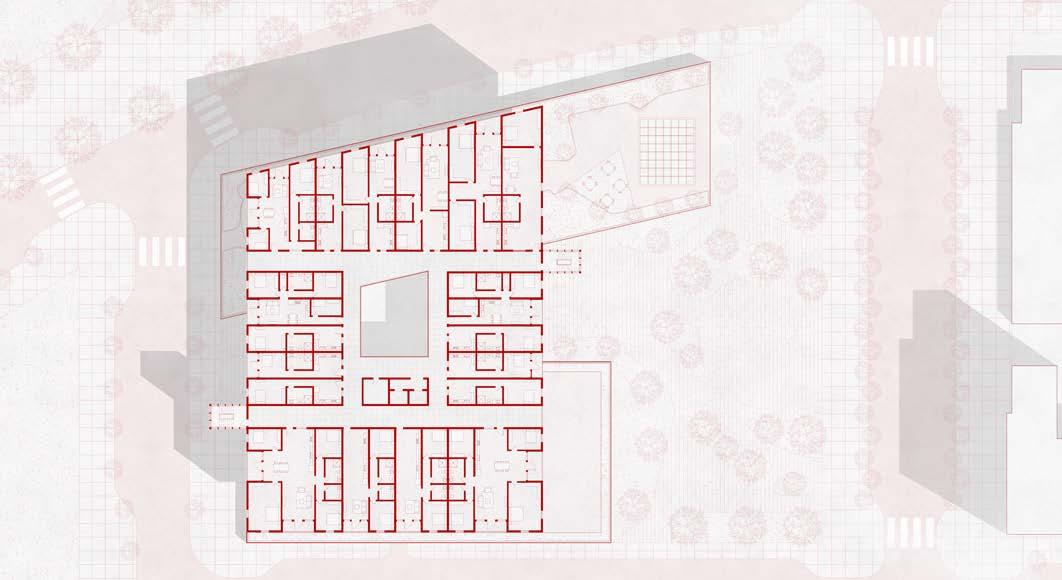
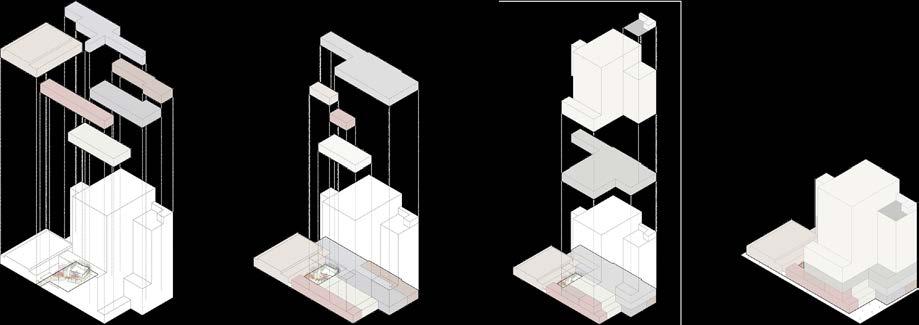
Upper levels hold the everyday housing units where privacy meets collective belonging, balancing the intimacy of home with a shared sense of life within the community.
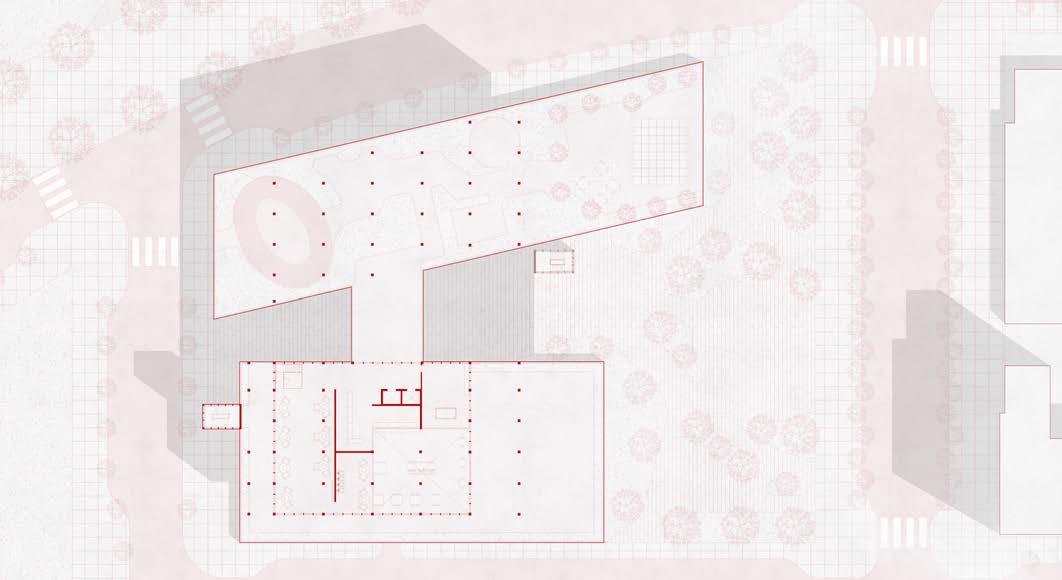
Levels 2 and 3 bring residents together through shared kitchens, lounges, and gardens, forming the heart of the building —a continuous fabric of daily life and community.
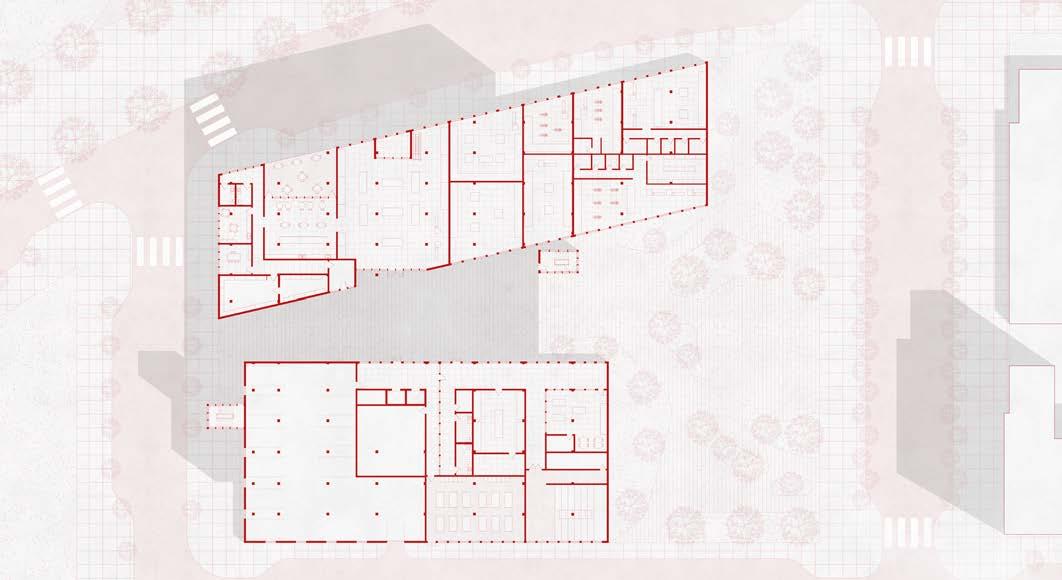
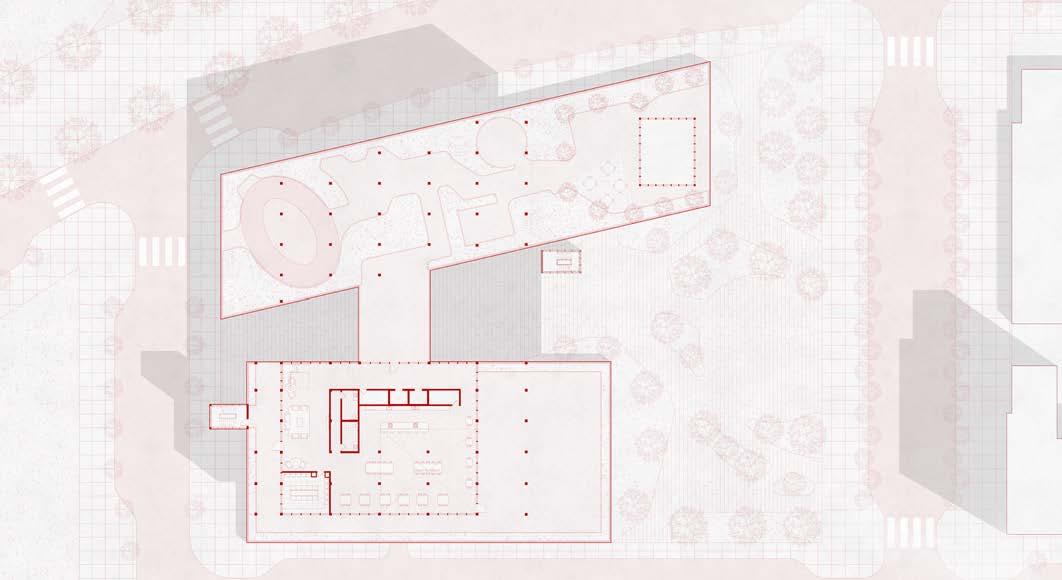
Ground-level spaces host shops, workshops, and open plazas that invite the city in — creating a civic threshold where public life meets home `keep.
LIVING FRAMEWORK
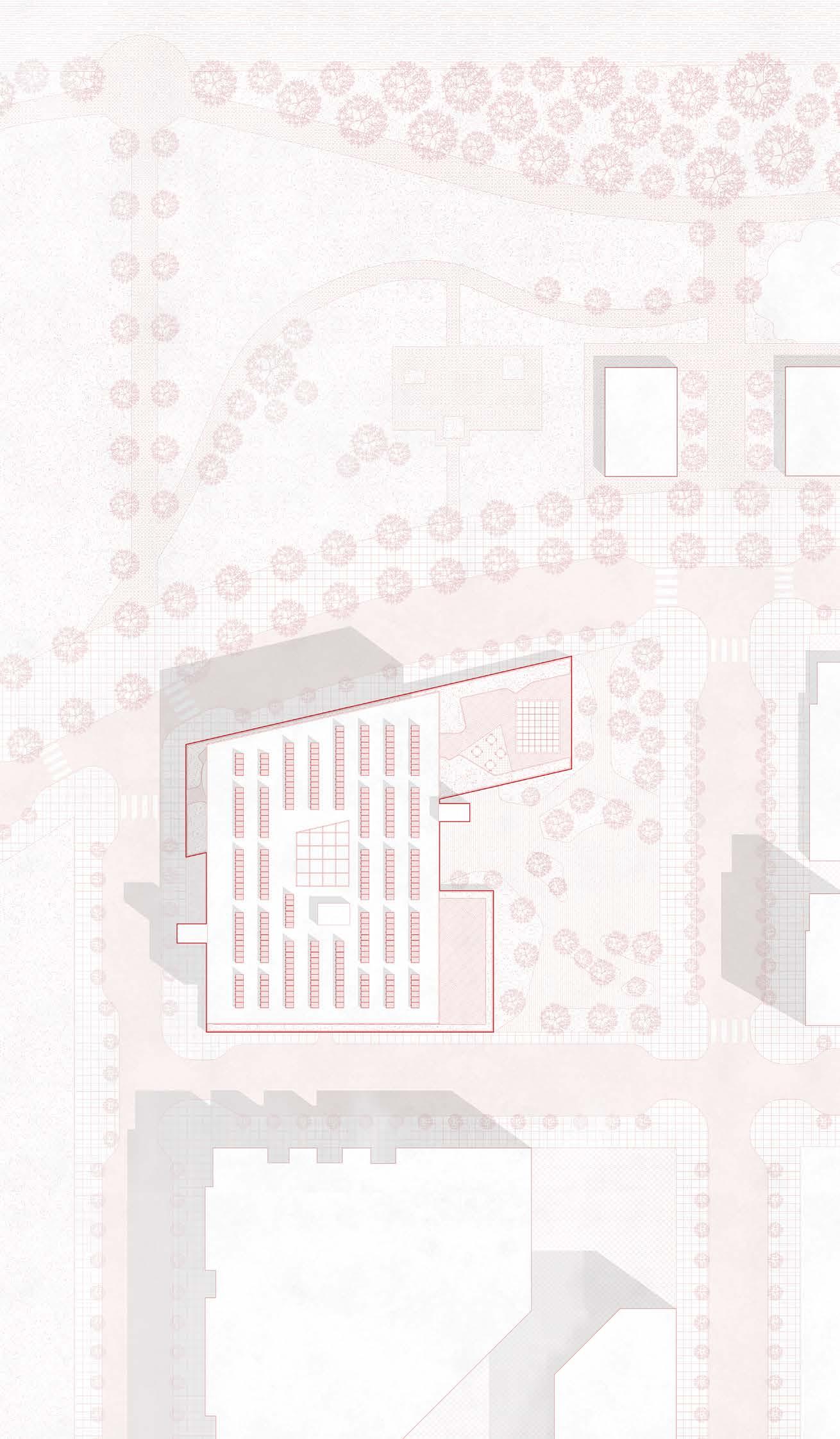
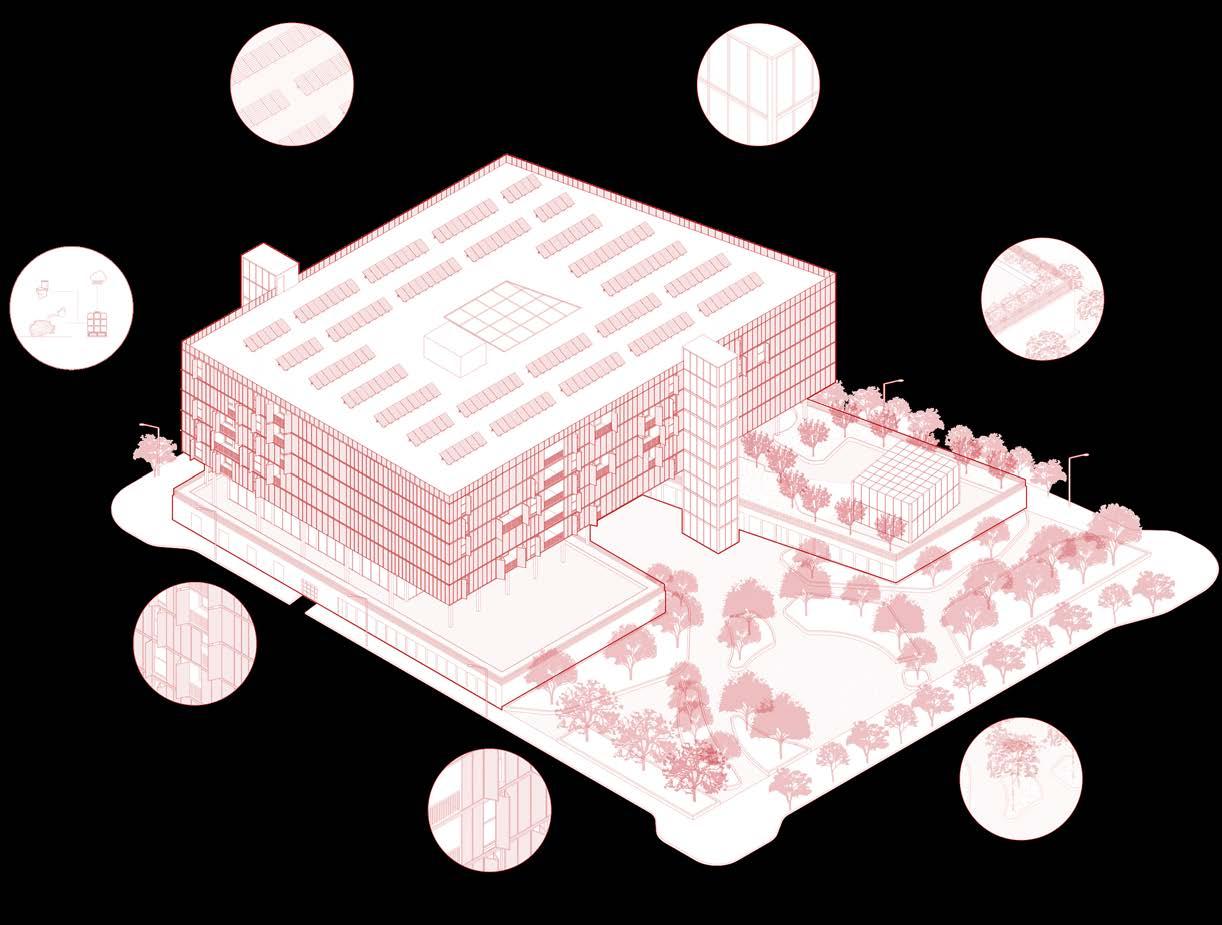
The building brings together a network of systems designed to support both the structure and the community that inhabits it. Solar panels and rainwater collection lessen dependence on municipal resources, while prefabricated elements make construction faster and less wasteful. Native plants help the site recover its ecological balance, softening the edges between built and natural ground. Together, these systems work quietly in the background—keeping the building resilient, efficient, and rooted in its environment.
FACADE & STRUCTURE
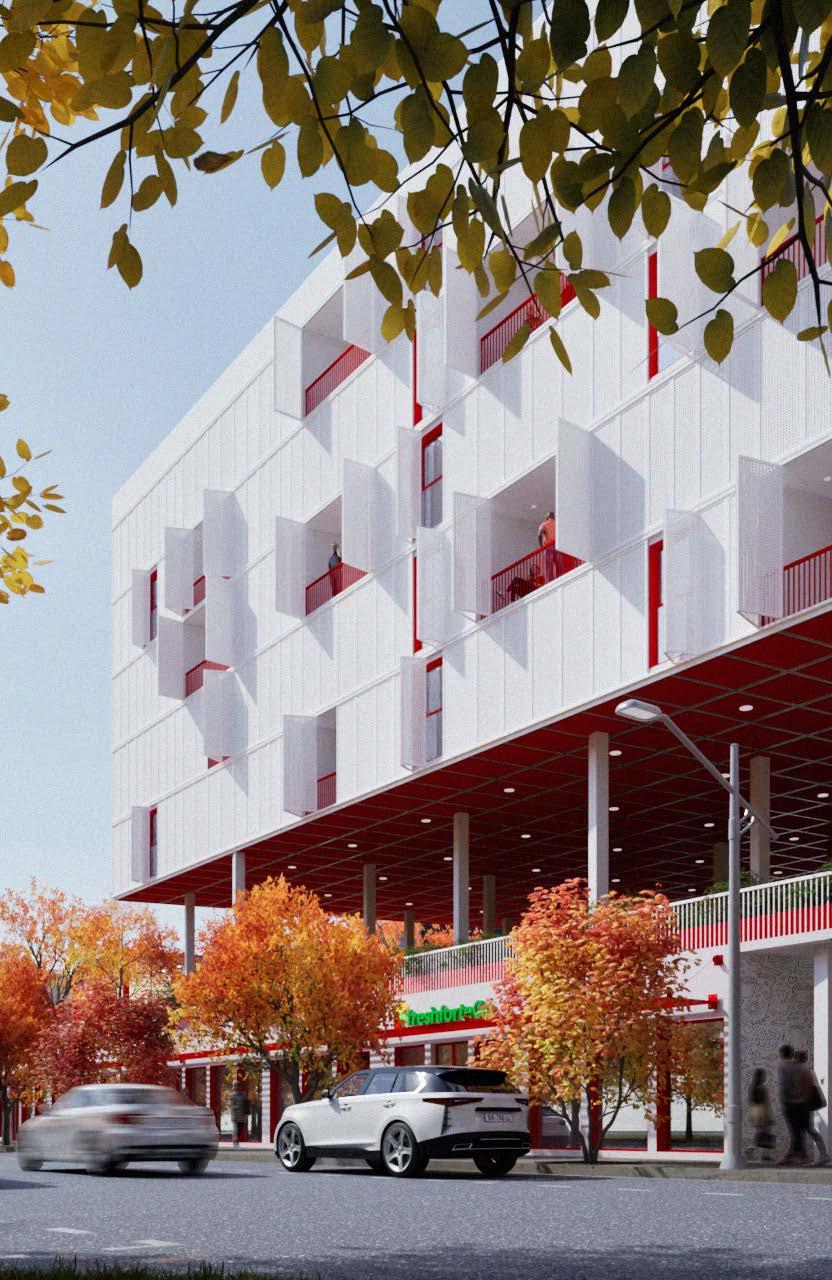
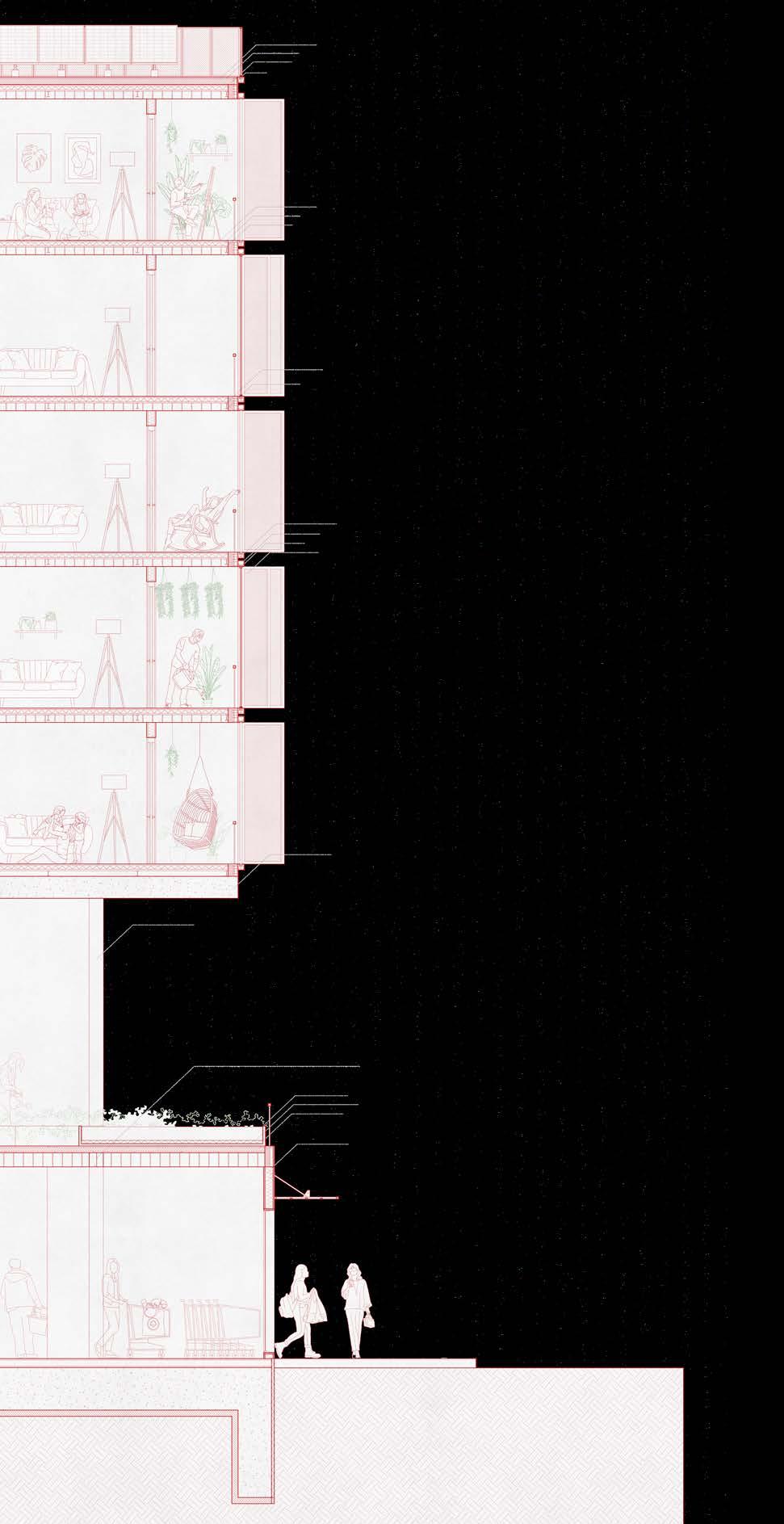
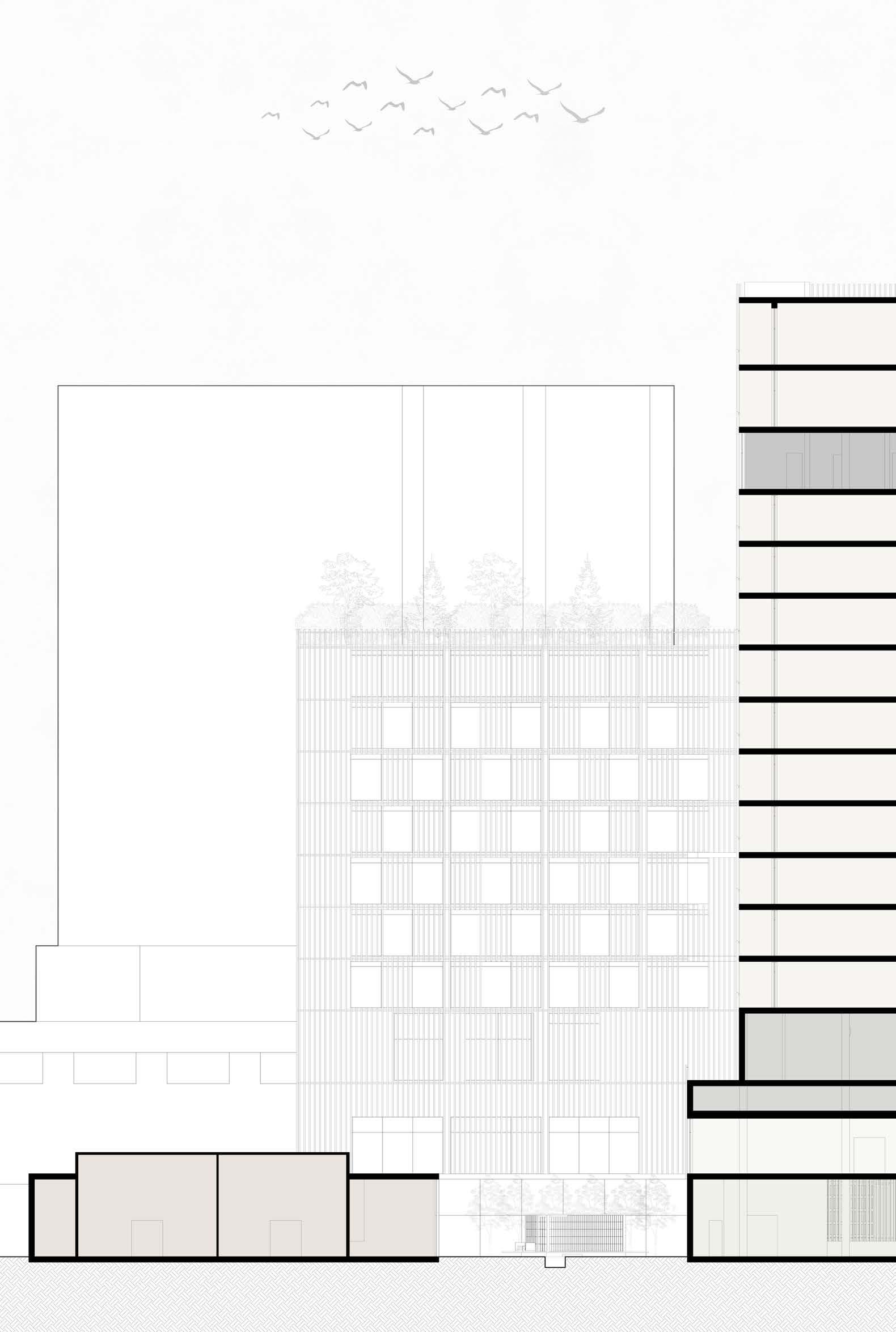
Each housing unit is situated on a post-tensioned concrete slab, supported by a simple structural frame. The facade features a perforated aluminum cladding system with standard C-channels, enabling the panels to fold out for shade and ventilation. This layered assembly helps manage Denver’s wide temperature swings—blocking harsh sun in summer while retaining warmth in winter—and softens street noise at the lower levels. Prefabricated elements reduce waste and simplify installation. Together, the structure and envelope form a durable, low-maintenance shell that supports everyday living with quiet practicality.
PLAZA
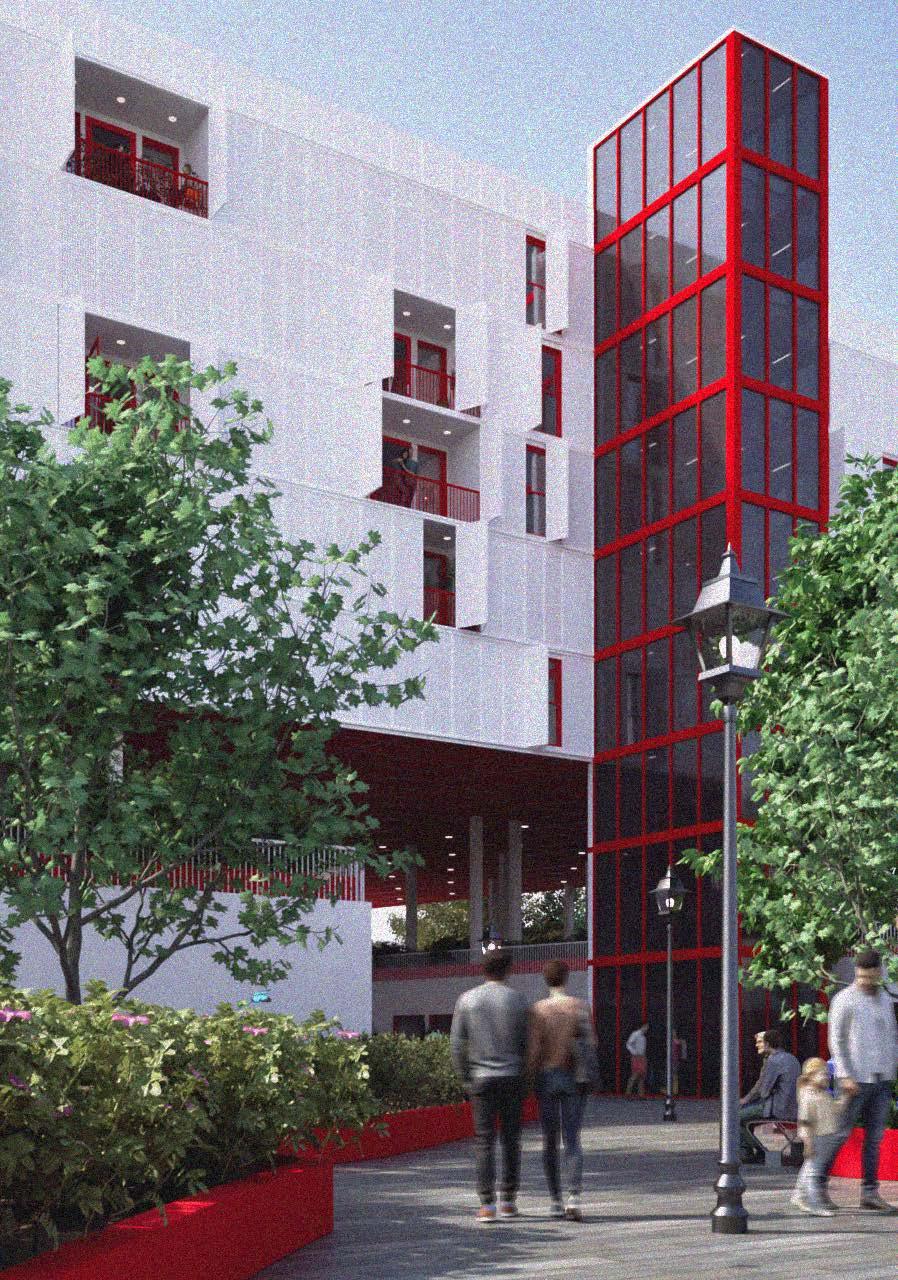
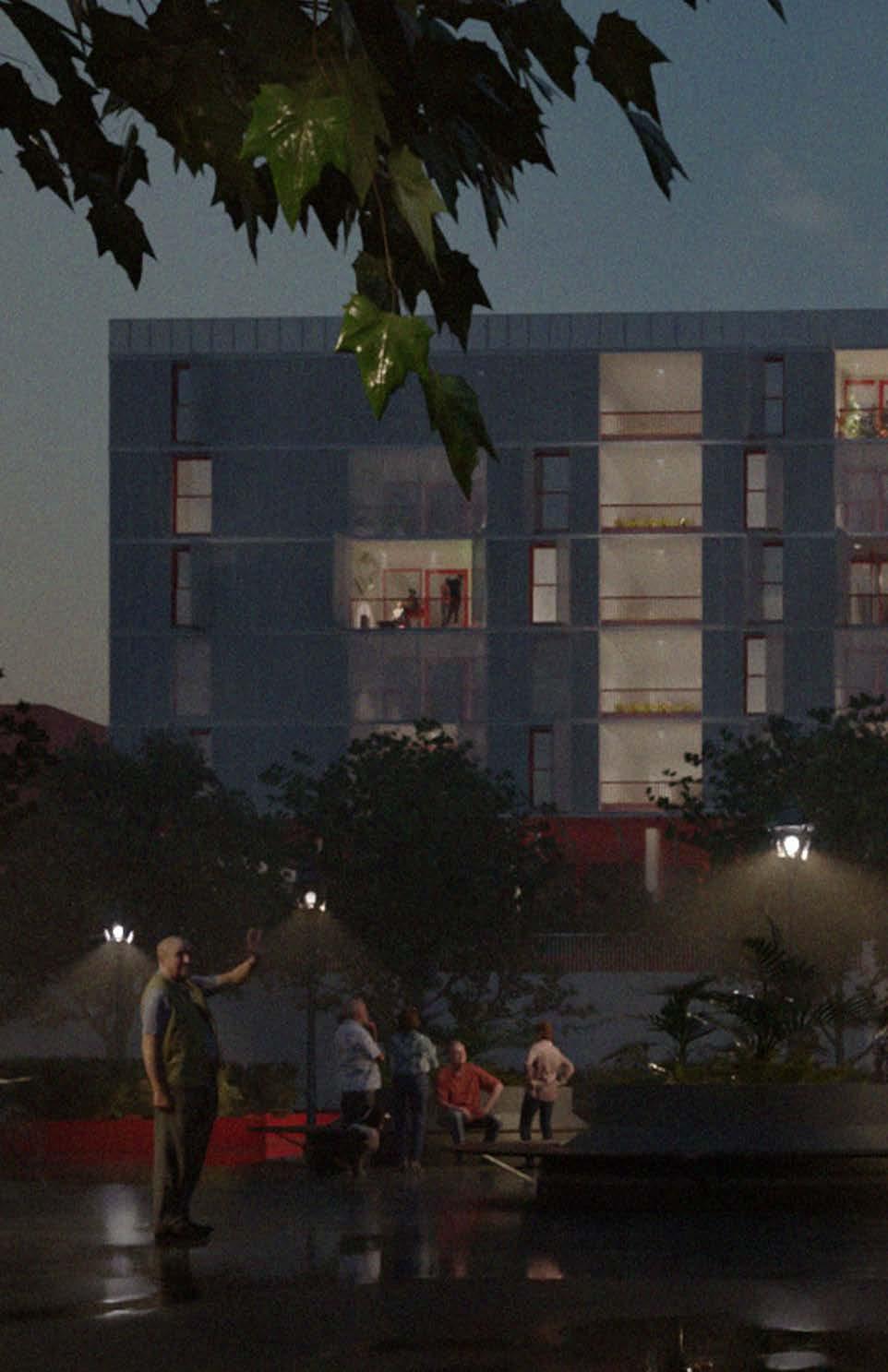
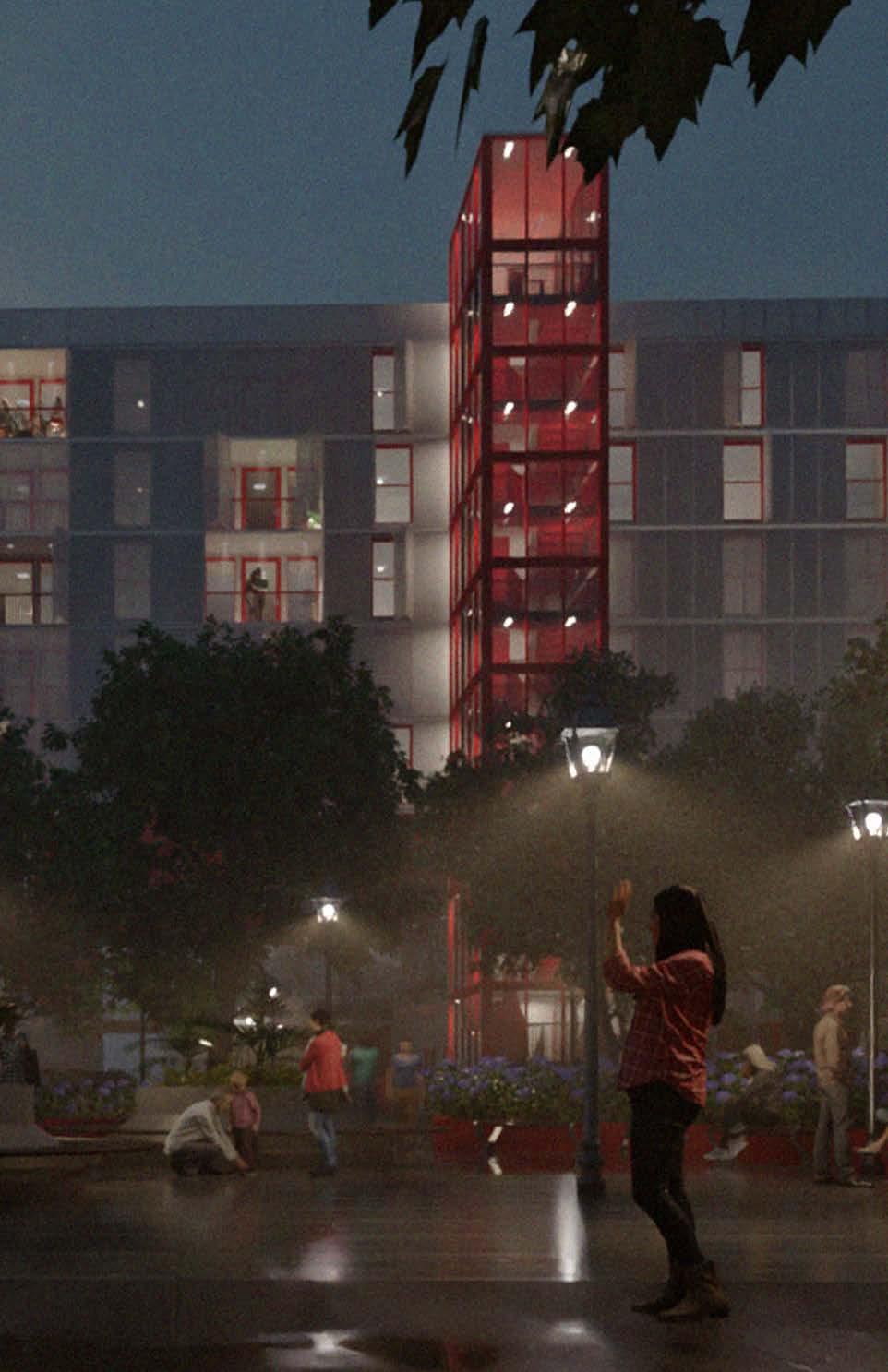
At the base of the building, the plaza opens to the city, serving as a shared space between residents and the neighborhood. The red vertical core marks the entrance and frames movement upward, while the landscape and seating invite pause and interaction. It’s an everyday gathering space—active, open, and central to the building’s life.
COMMUNAL TERRACE
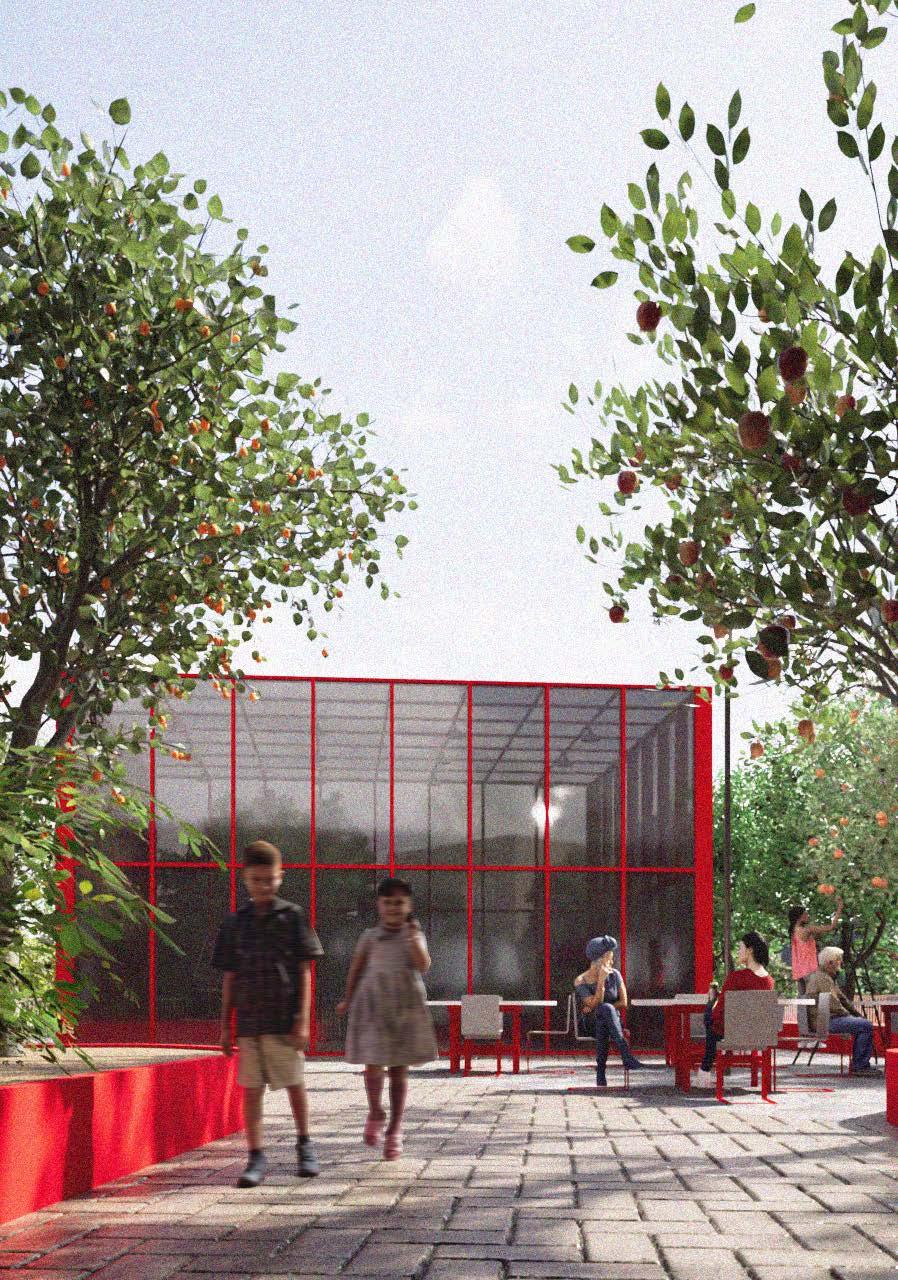
Between the housing above and the street below, the terrace offers a quiet pause within the building. The greenhouse, fruit trees, and seating areas bring daily rhythms of care and gathering into one space— where residents share work, harvest, and rest under open light.
COMMUNAL DINING HALL
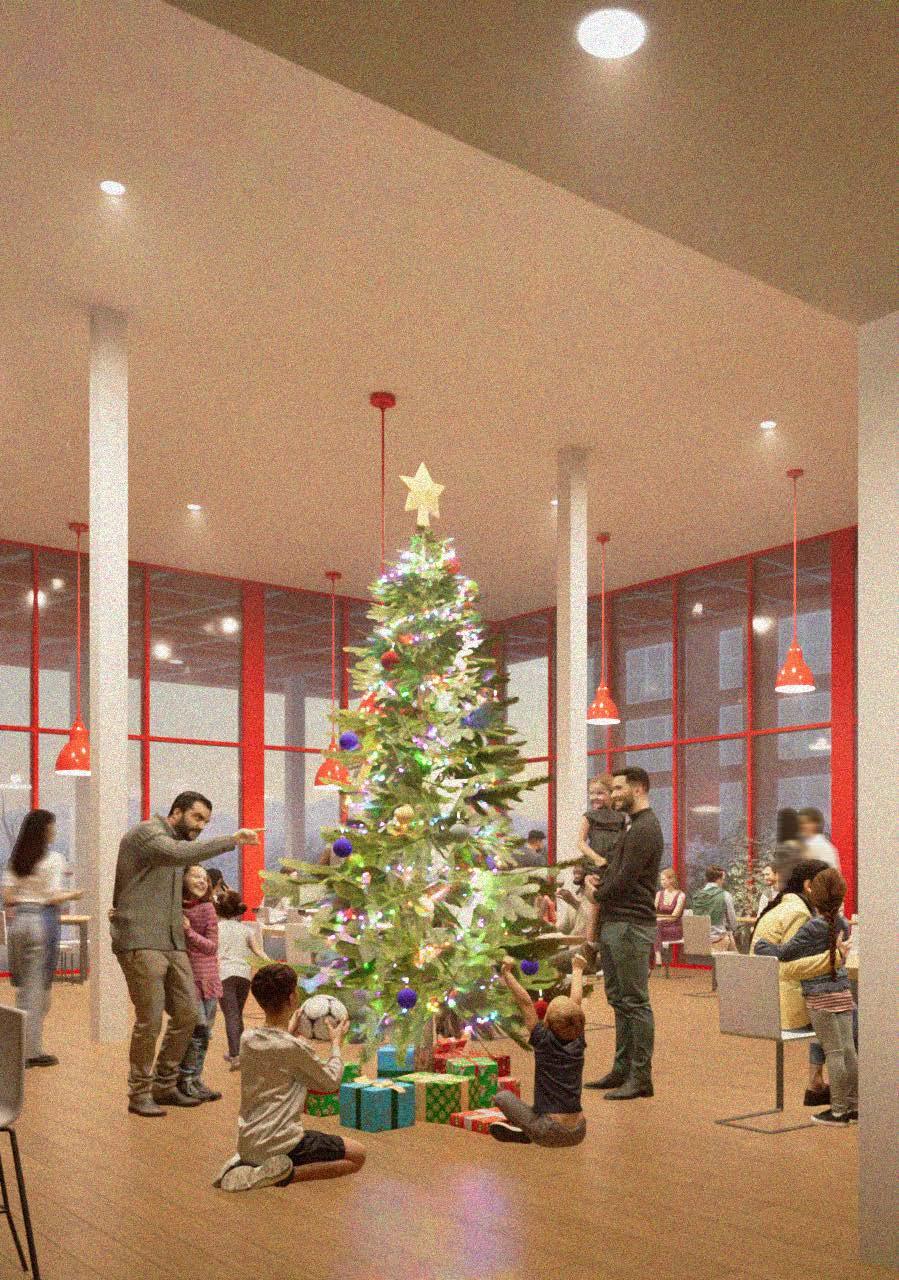
Framed by red columns and soft light, the dining hall becomes the heart of shared life within the building.
Here, residents gather for meals, celebrations, and moments that bridge generations. The open layout encourages connection—blurring the line between home and community. Warm materials and evening light give the space a sense of familiarity and belonging. A place where routine turns into ritual, and neighbors become family.
HOUSING UNIT
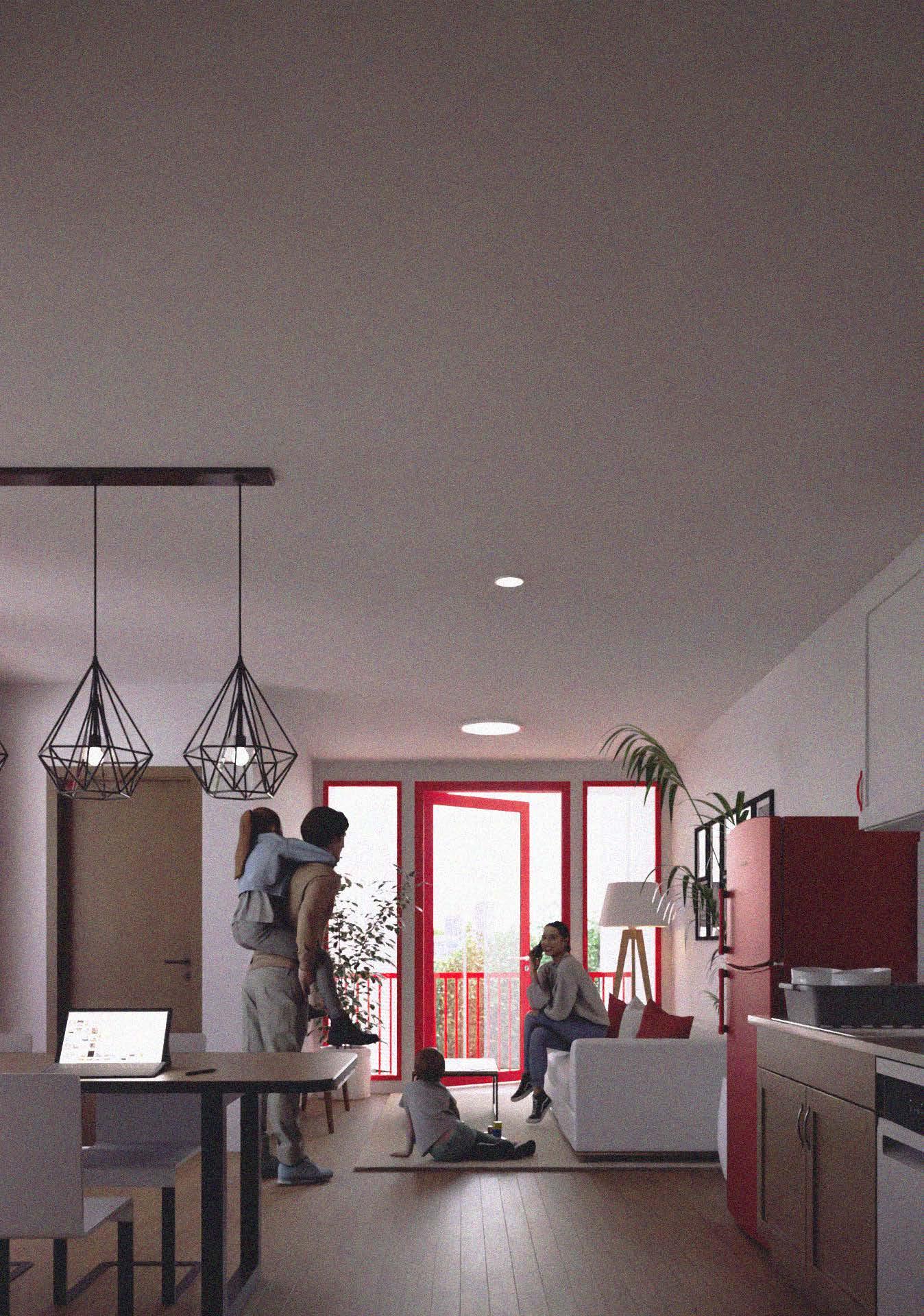
Designed with clarity and warmth, each home frames the everyday routines of its residents. Natural light and red accents create a sense of continuity with the building’s shared spaces. Compact layouts strike a balance between openness and privacy, enabling families to live comfortably within reach of the community. Simple materials allow the interiors to remain adaptable to individual expression and change over time. Together, these homes form the quiet foundation of a larger collective life.
ENSO HOTEL
Academic Work
Graduate
DSNS 546
Team
Project Instructor : Nakamura Kotaro, Rob Reinders
Spring 2025
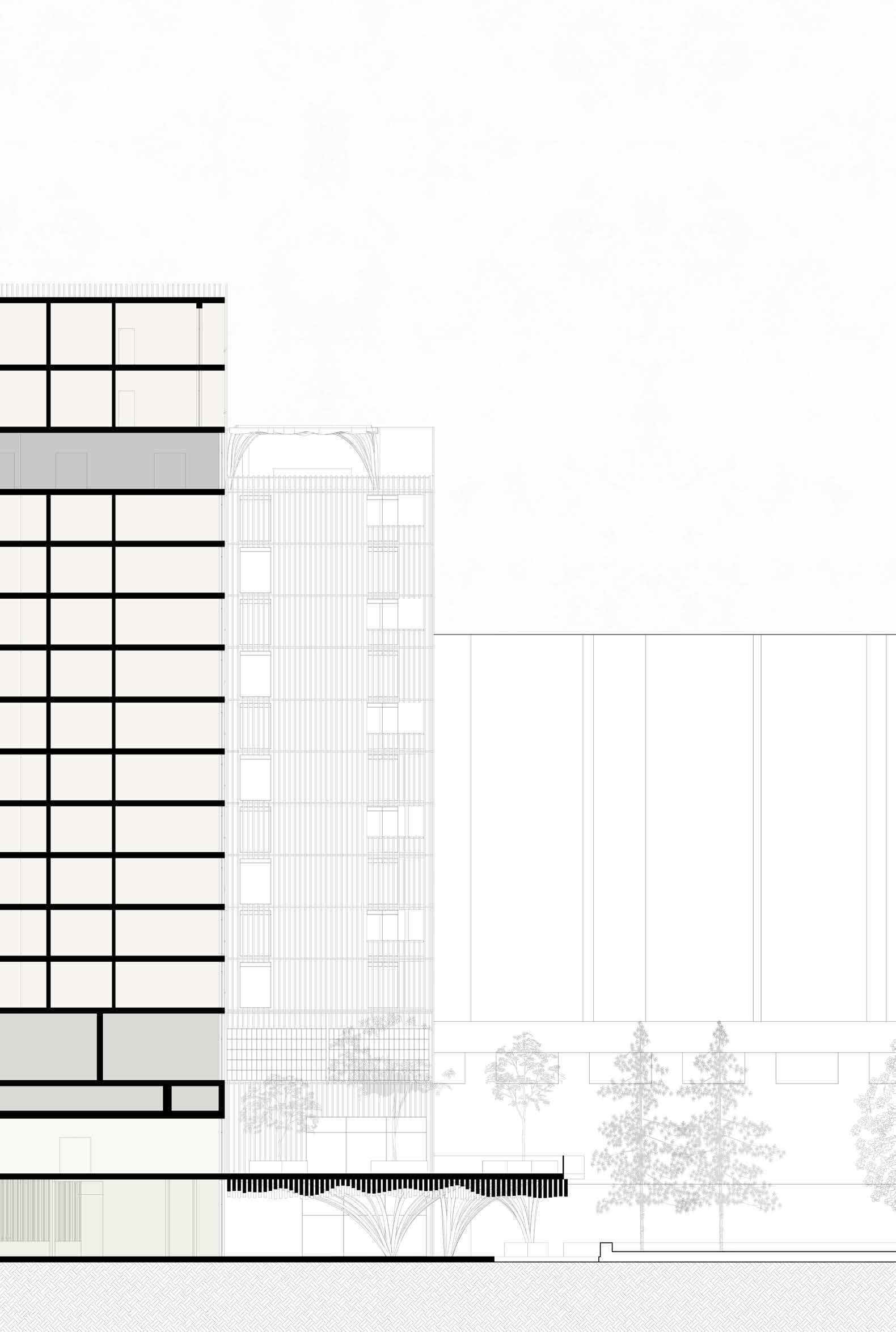
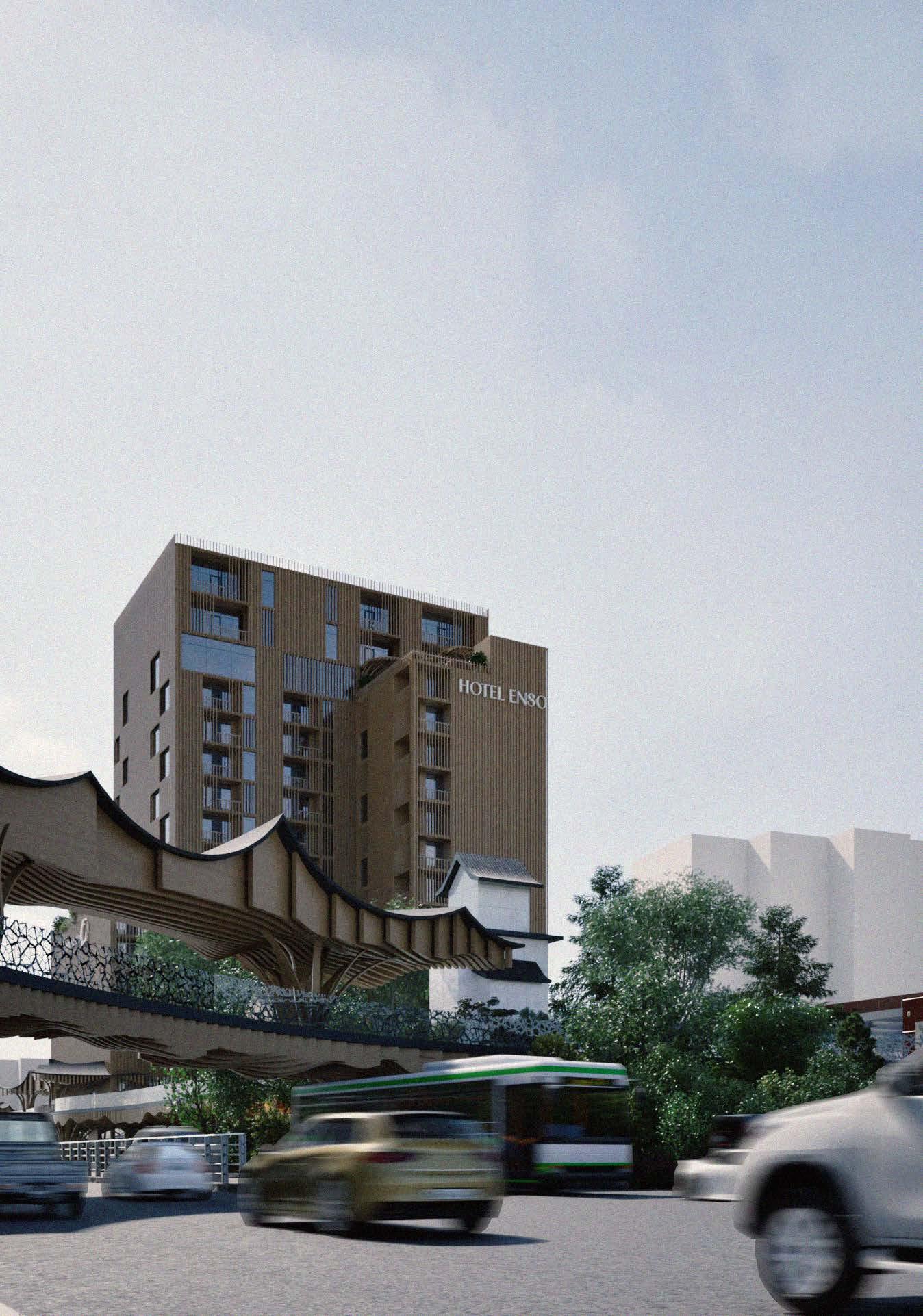
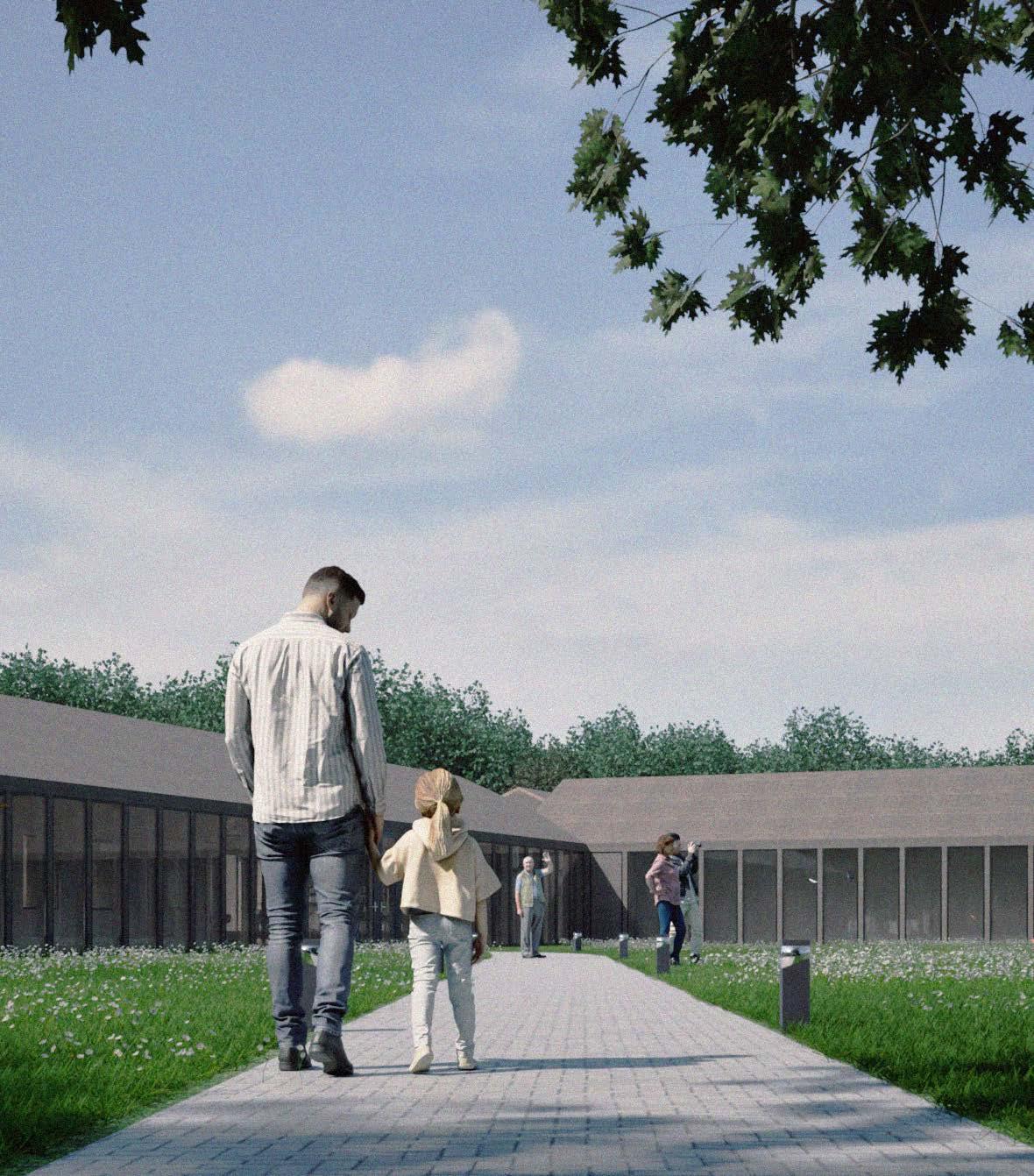
Located in Matsue, Japan, Enso draws from the Enso circle—a single brushstroke representing balance and completeness. The design follows this idea through a continuous loop of spaces centered on a tea house and courtyard. The rest of the program folds around this core, allowing guests to move through layers of light and shadow in a calm, uninterrupted sequence. Vertical fins shade the rooms and soften transitions between inside and out. The hotel offers a place for pause and reflection, where movement, light, and silence come together in balance.
Programatic Stack Diagram
STREET
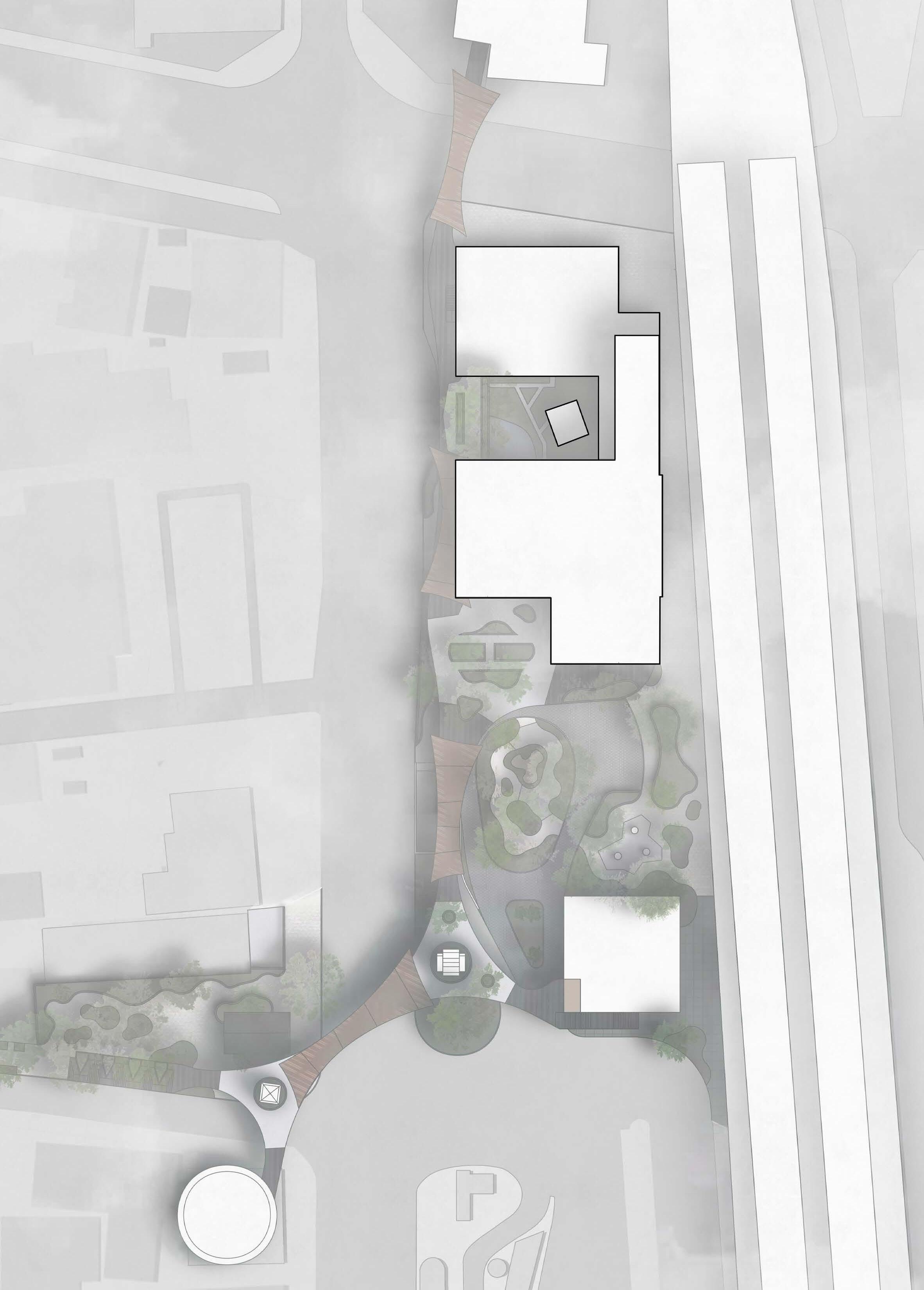
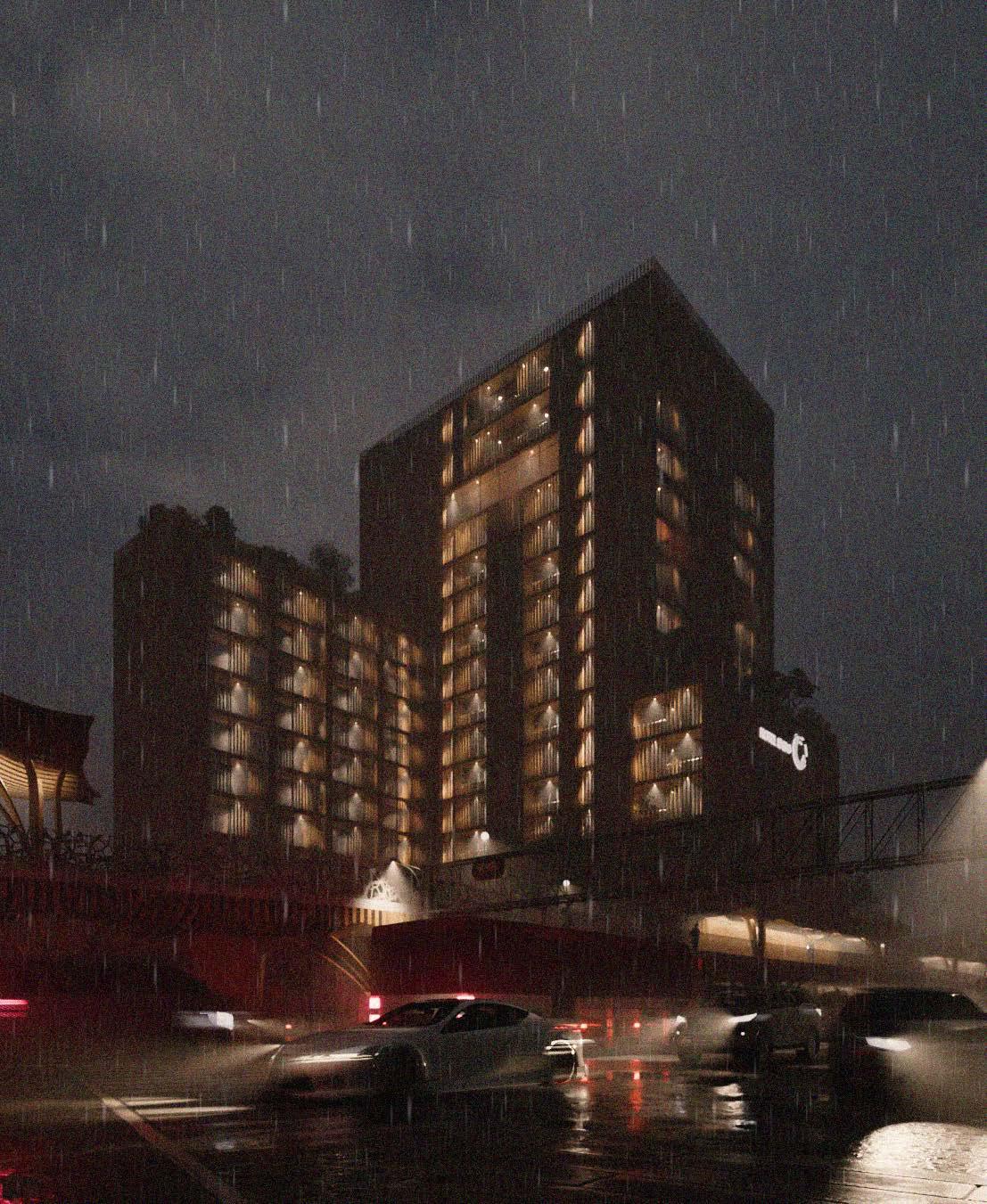
Seen from across the street, the hotel stands as a calm presence within the city. Vertical fins break down the scale of the facade and control the light throughout the day. The bridge extends from the base, linking the building to the street and guiding visitors toward the entry. The image captures the contrast between the movement of the road and the stillness of the structure behind it.
BRIDGE PASSAGE
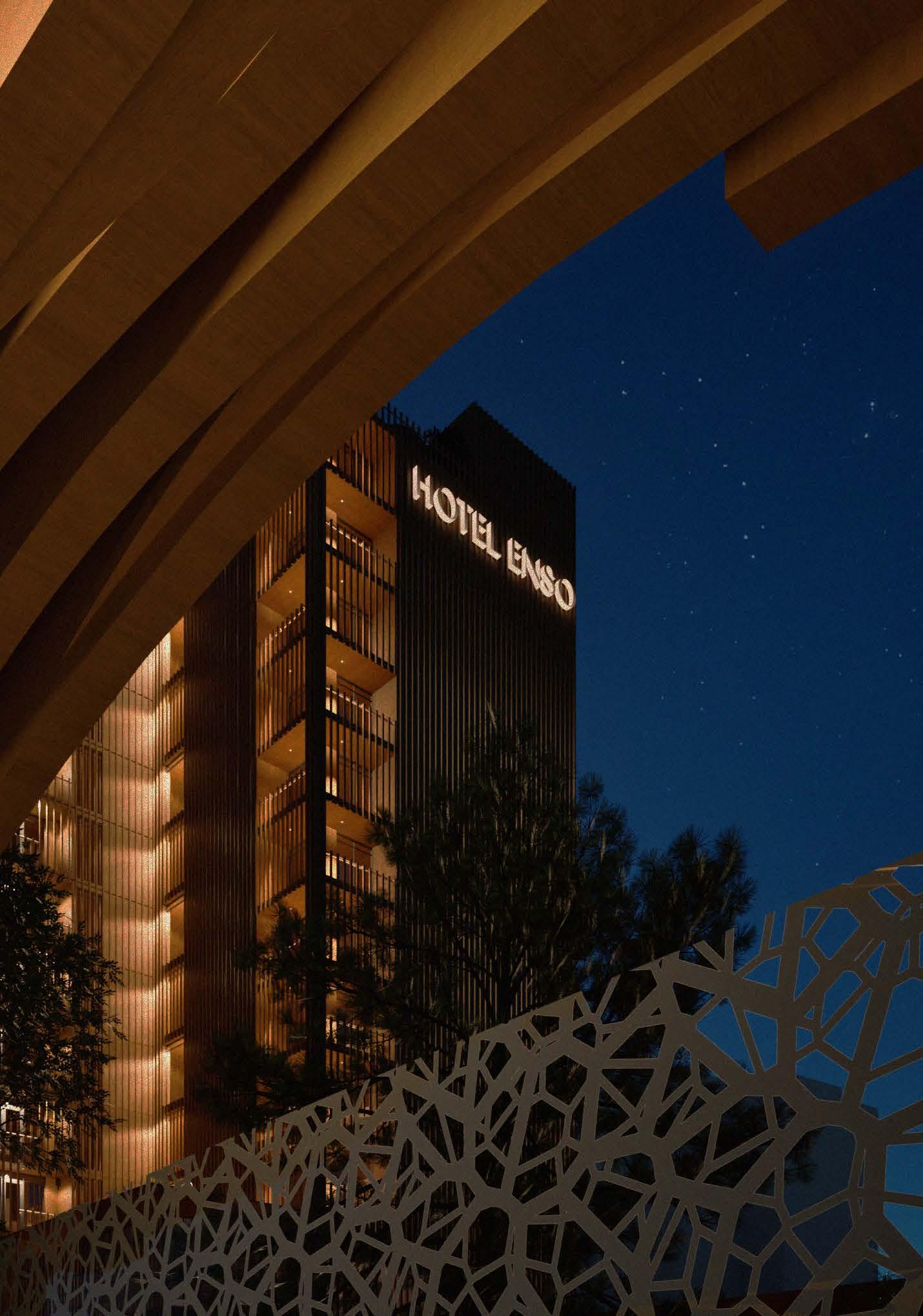
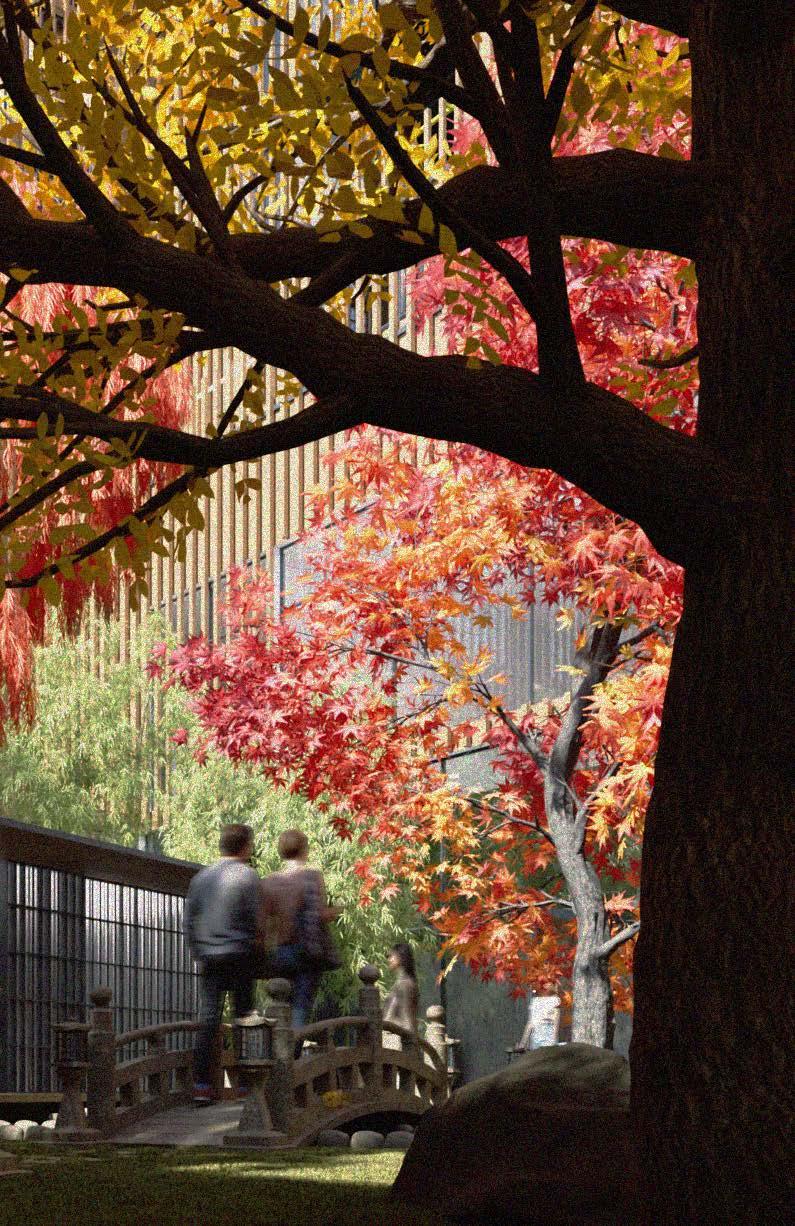
From the bridge, the hotel stands quietly against the night sky. Light from the rooms filters through the vertical fins, giving the facade a soft, even glow. The patterned screen frames the view, connecting the bridge to the building and tying both parts together in one composition
CENTERED STILLNESS
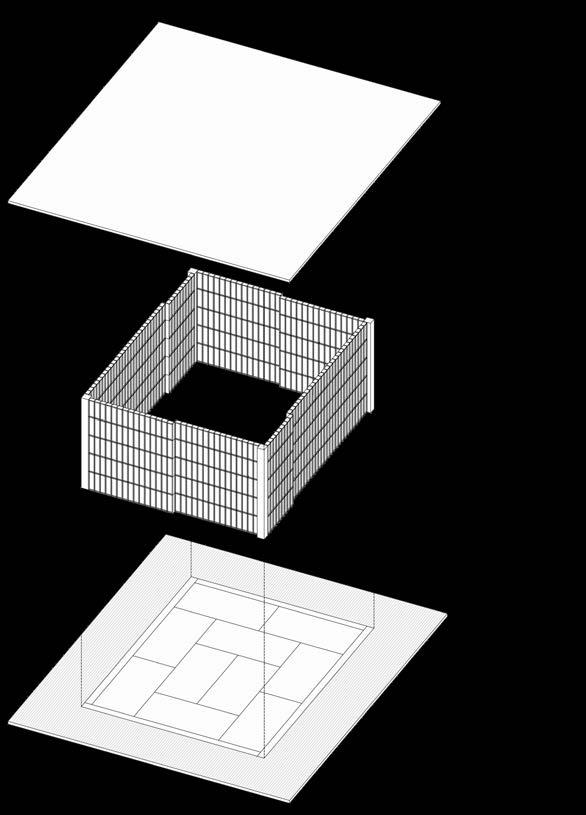
The tea house forms the heart of the hotel, designed as a quiet space for reflection. The diagram breaks down six main layers: the roof defines the enclosure and gathers light; the aluminum frame provides structure and precision; frosted glass sliding panels filter daylight and adjust openness; tatami mats bring warmth and texture to the floor; the raised wood platform sets a clear boundary for the ceremony; and the surrounding pool and walkway connect the space to the courtyard. Each element contributes to a calm and balanced atmosphere, where light, material, and movement come together in stillness.
LOBBY CORRIDOR
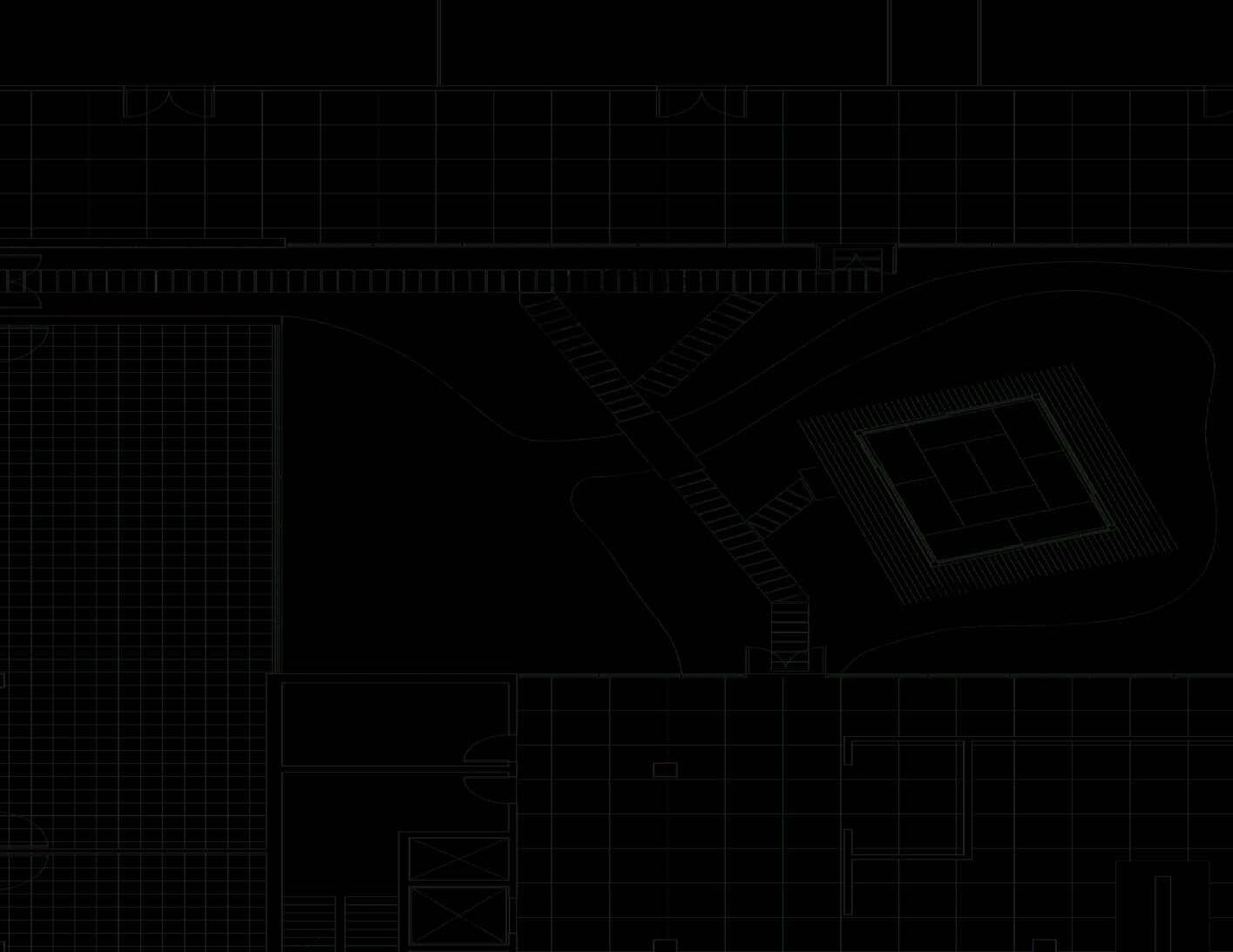
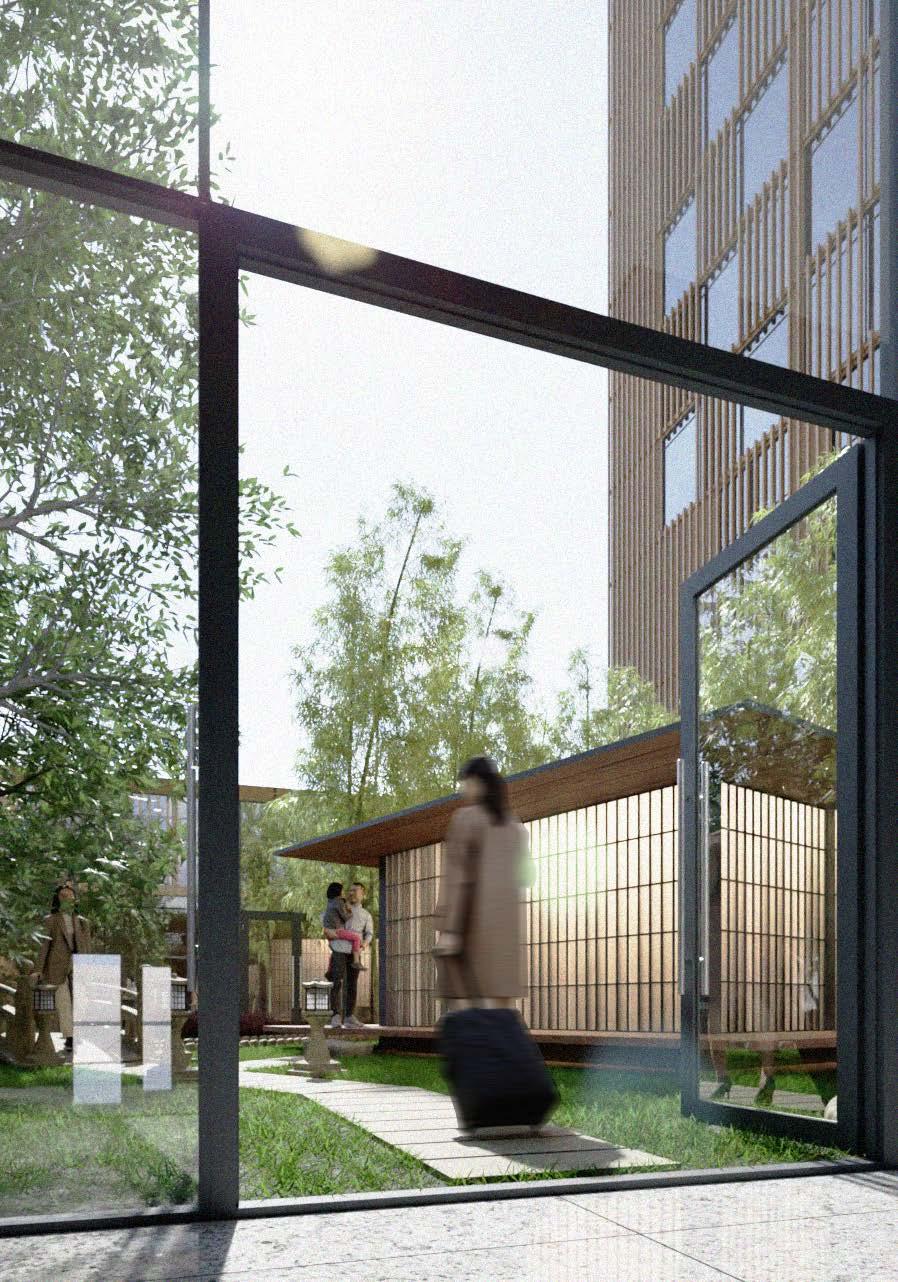
From the lobby corridor, the courtyard opens toward the tea house. Glass walls frame the view, bringing light and greenery deep into the interior. The path leads across the garden, guiding guests between the main building and tea house. The space feels open yet contained—a quiet transition between the rhythm of arrival and the calm of retreat.
TEA HOUSE
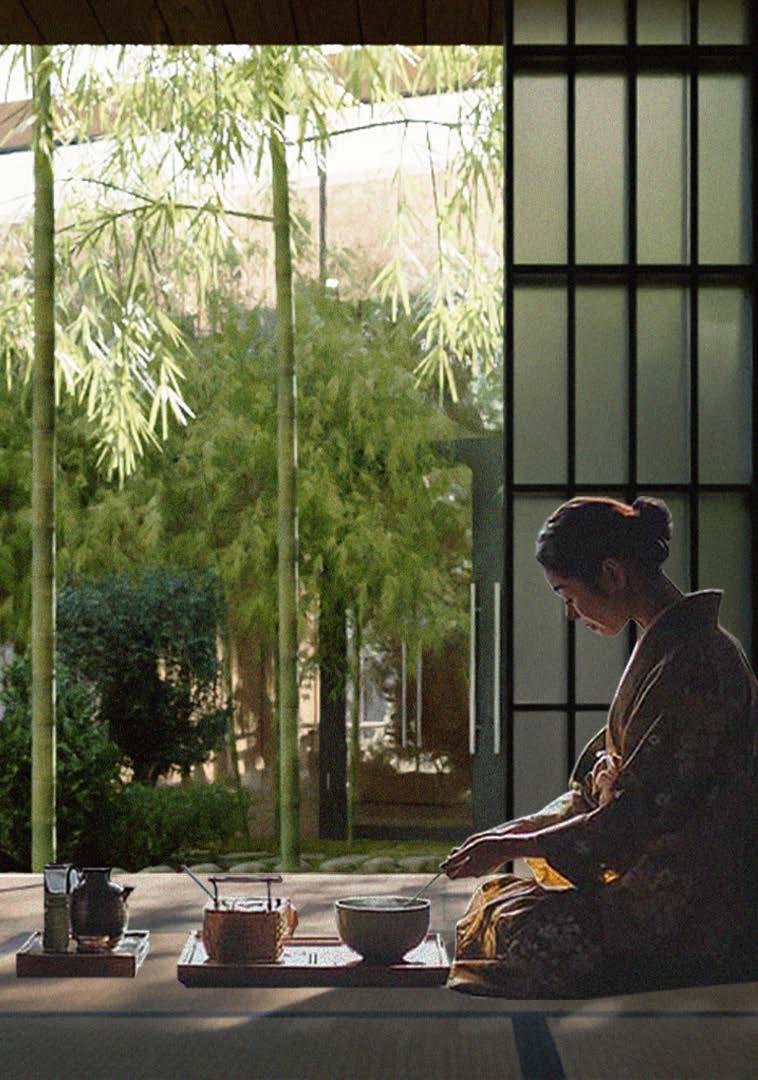
Light filters through the frosted panels, spreading evenly across the tatami floor. The space is simple and quiet, defined by a few clear materials and soft light. Bamboo outside the sliding panels connects the room to the garden, keeping the interior open and calm.
COURTYARAD
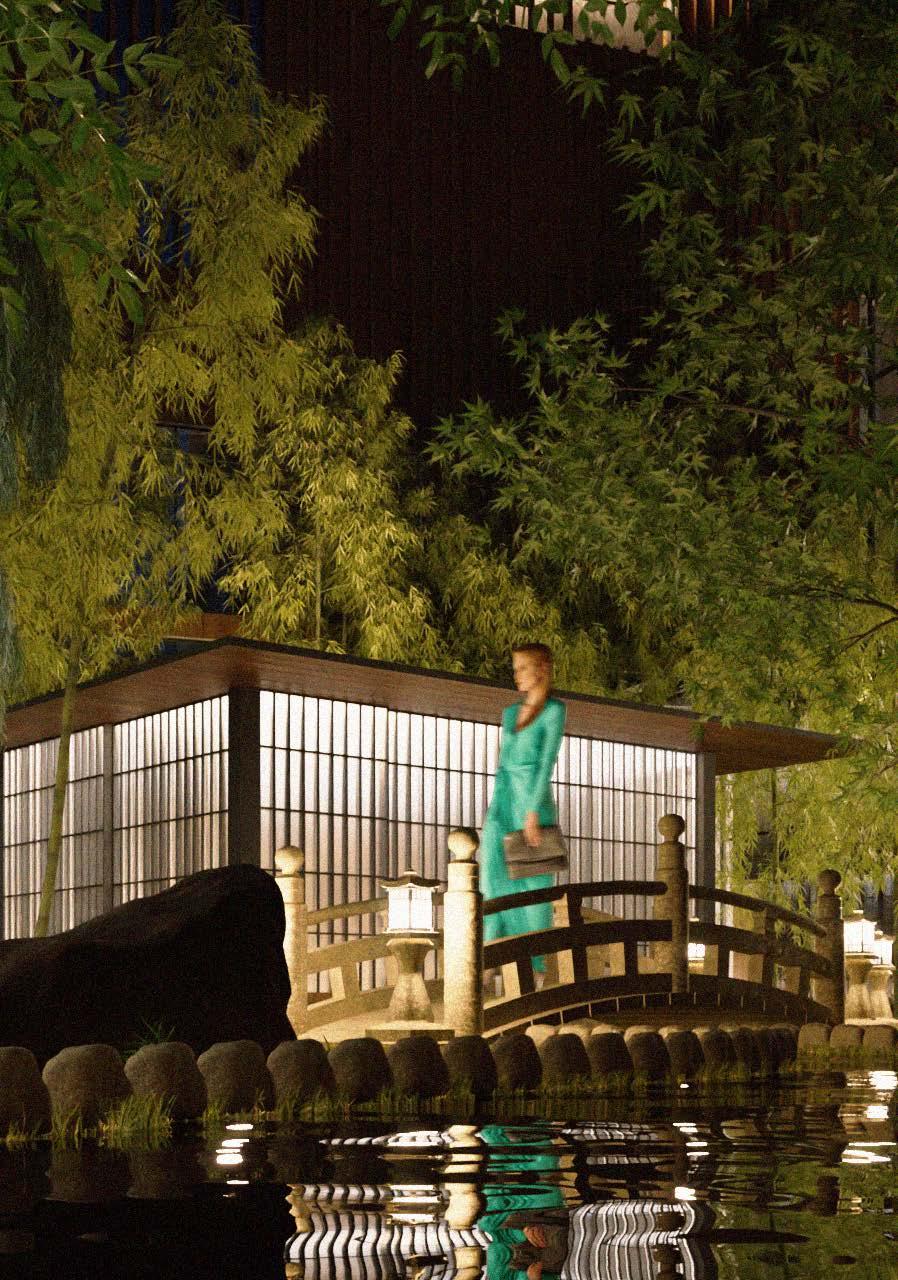
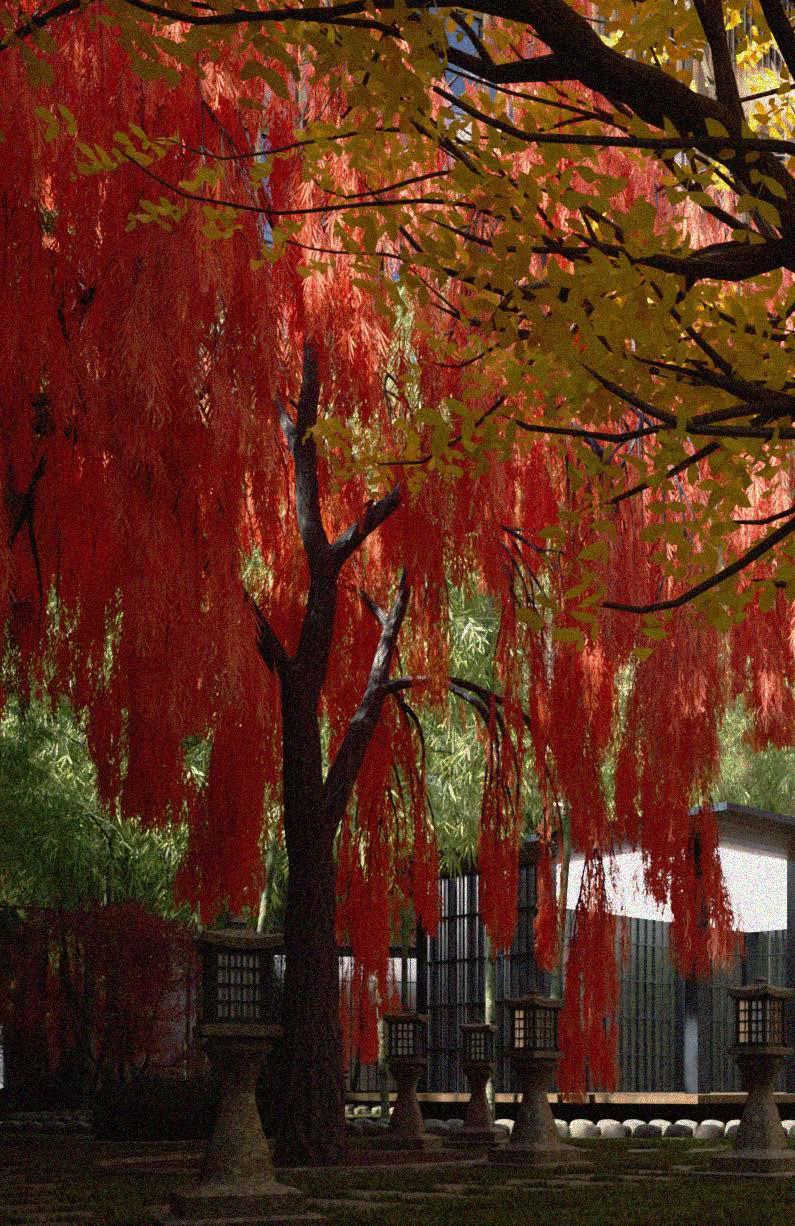
At night, the tea house glows softly across the water. The bridge leads through the garden, surrounded by bamboo, willows, and stone lanterns. The sound of the pond and the filtered light from the panels make the courtyard feel still and contained.
RADIANT HUB
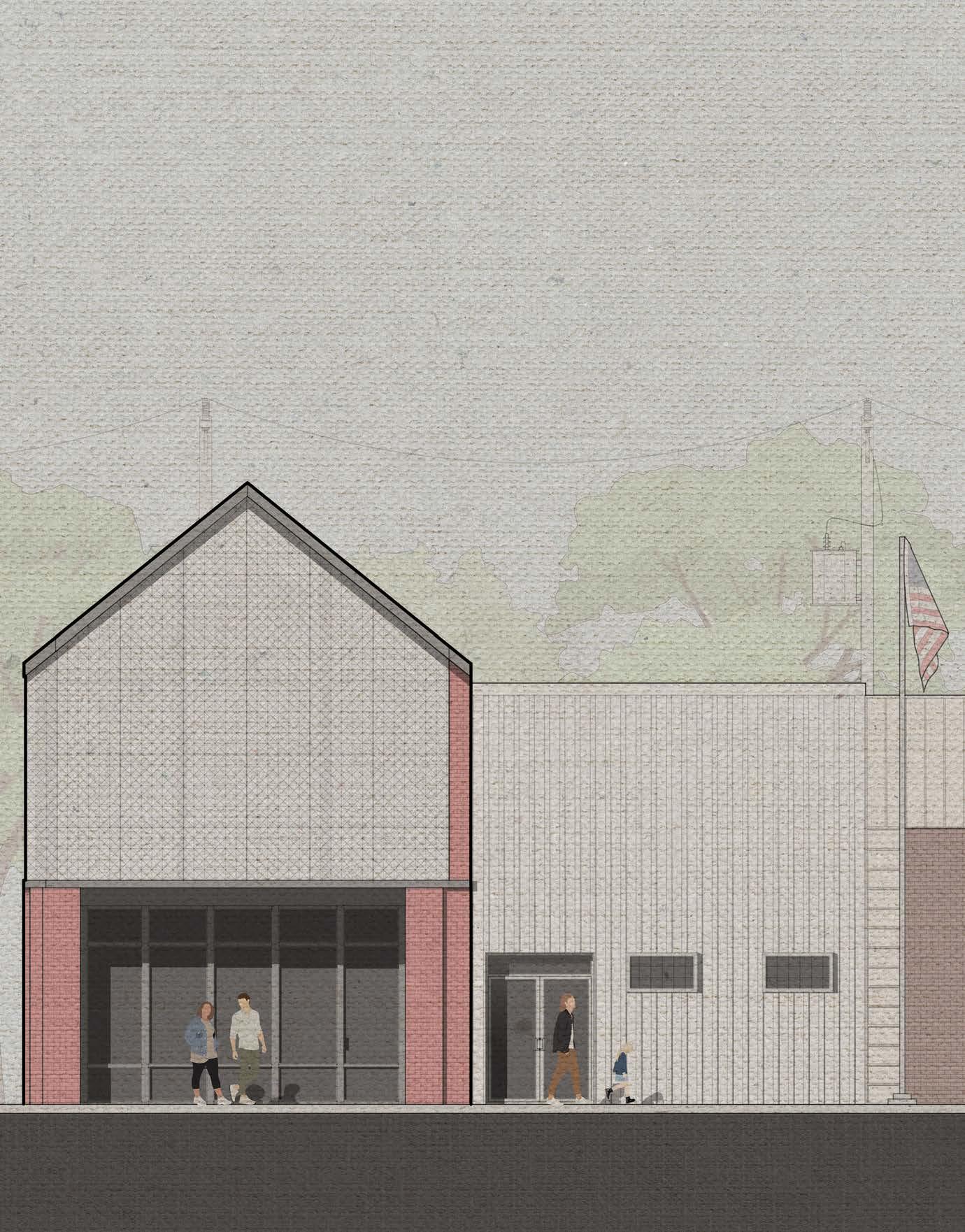
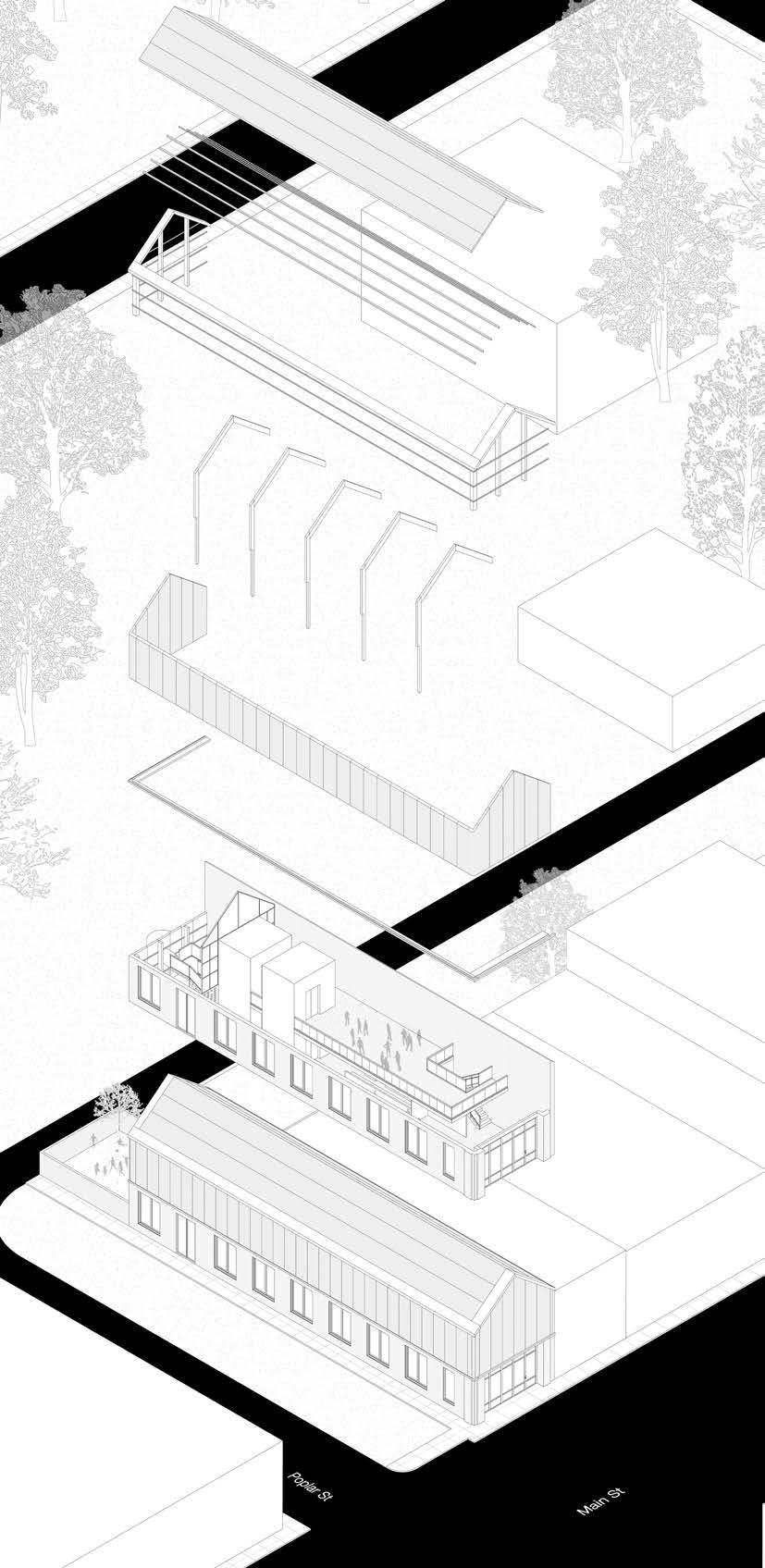
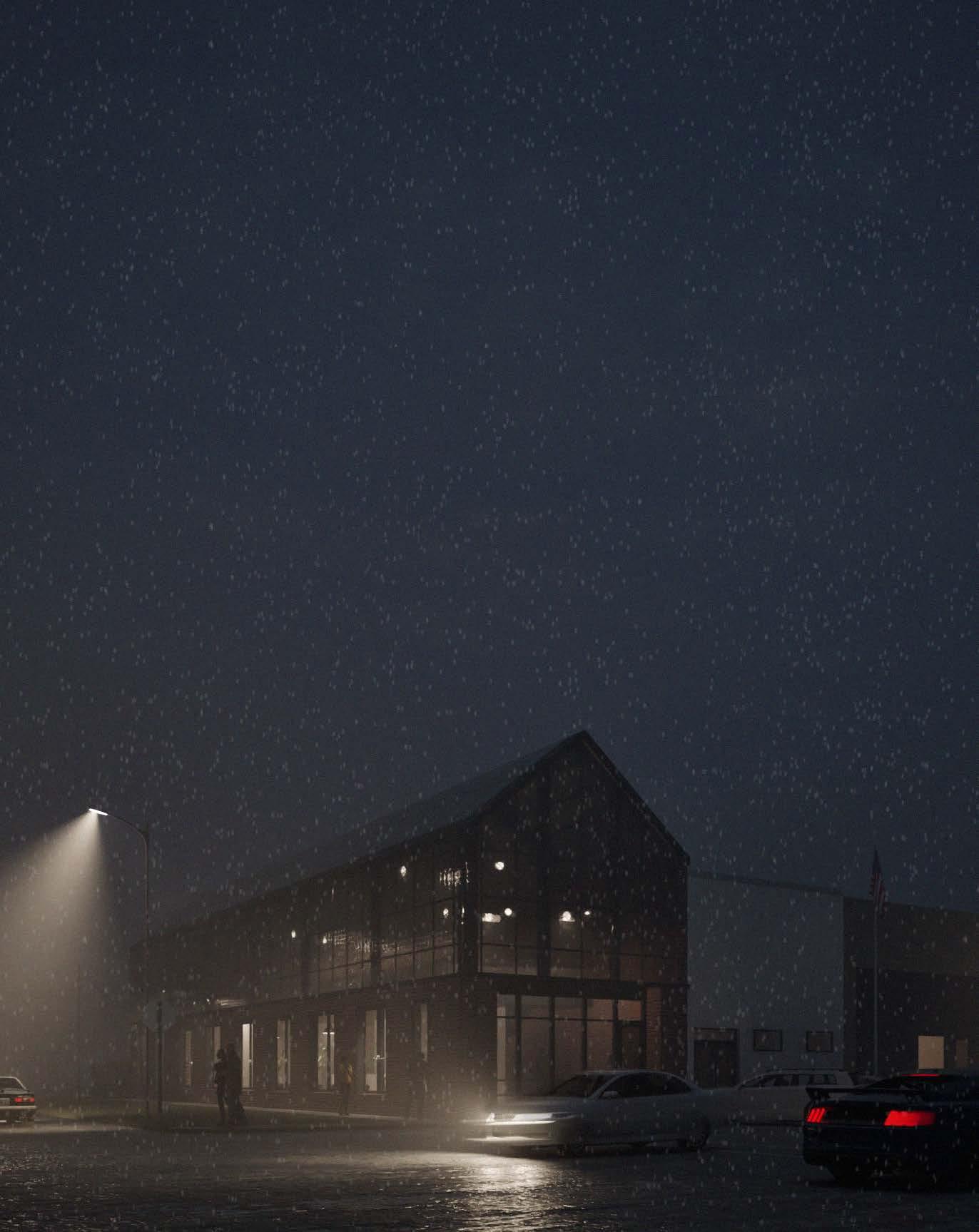
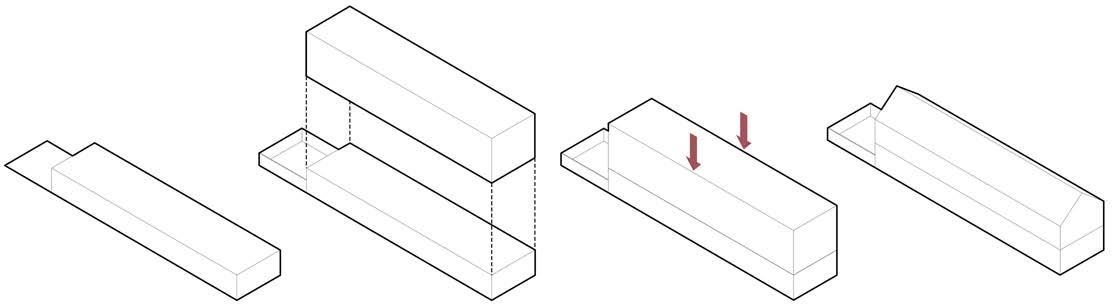
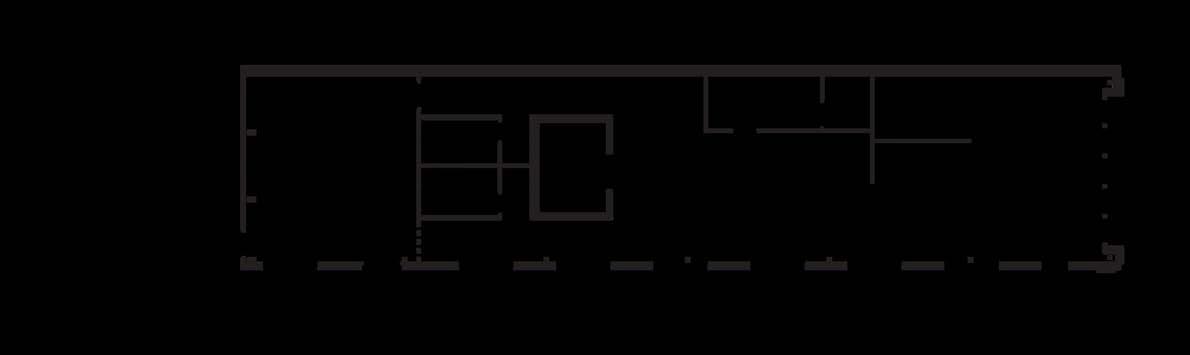
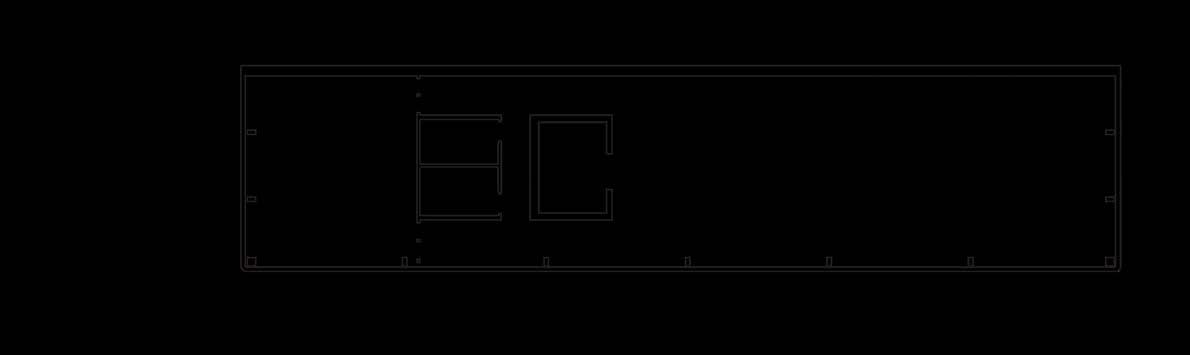
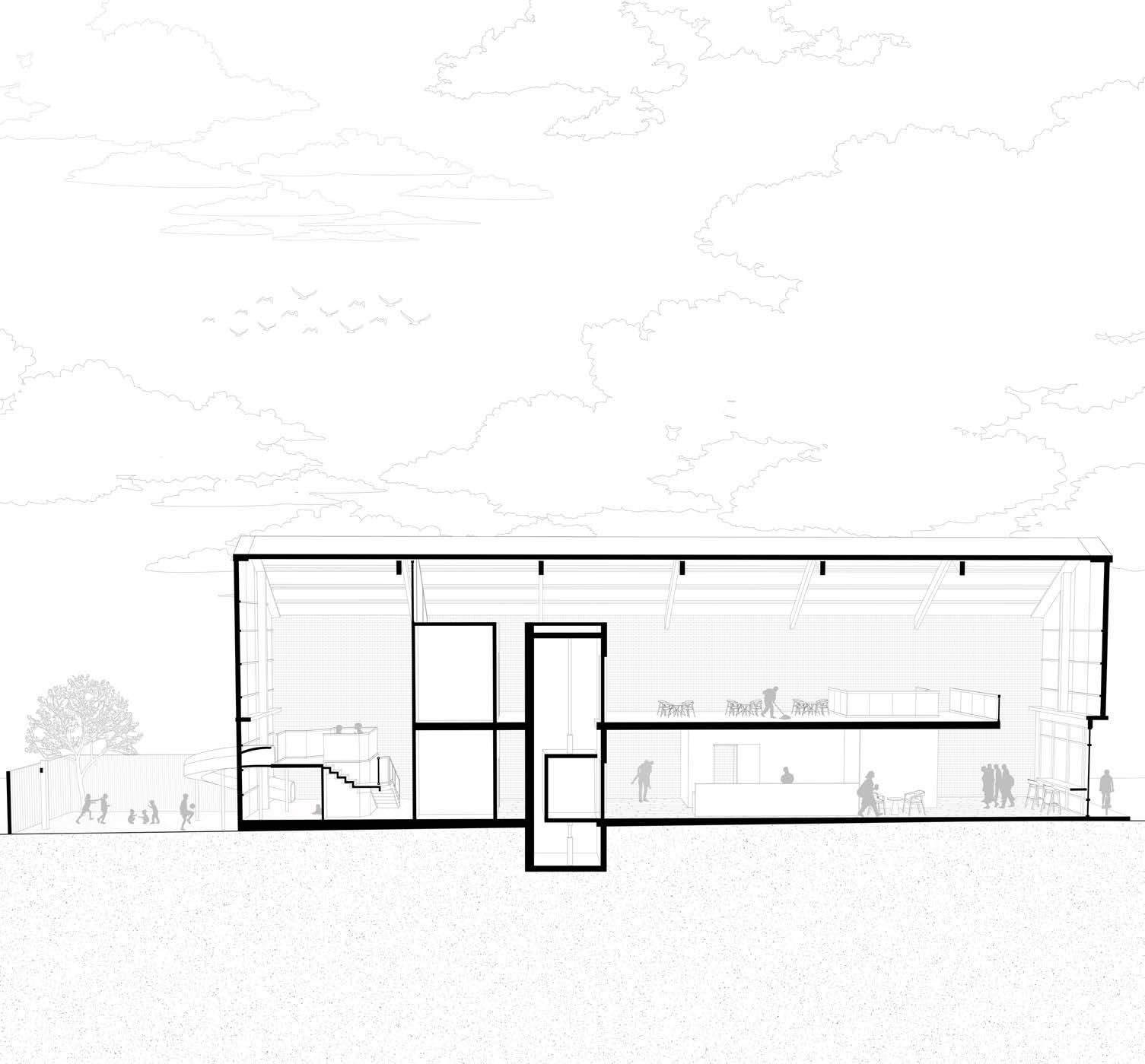
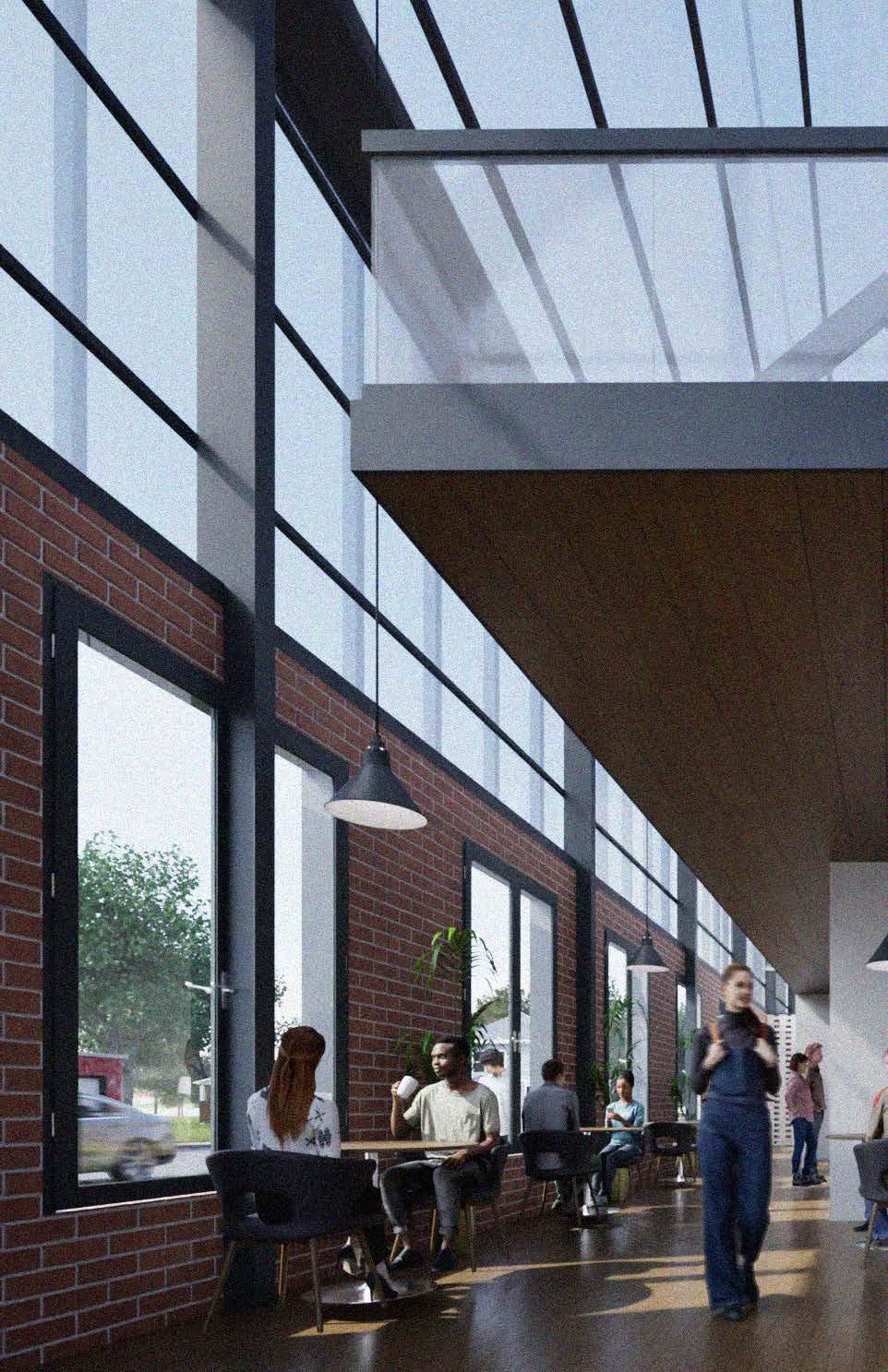
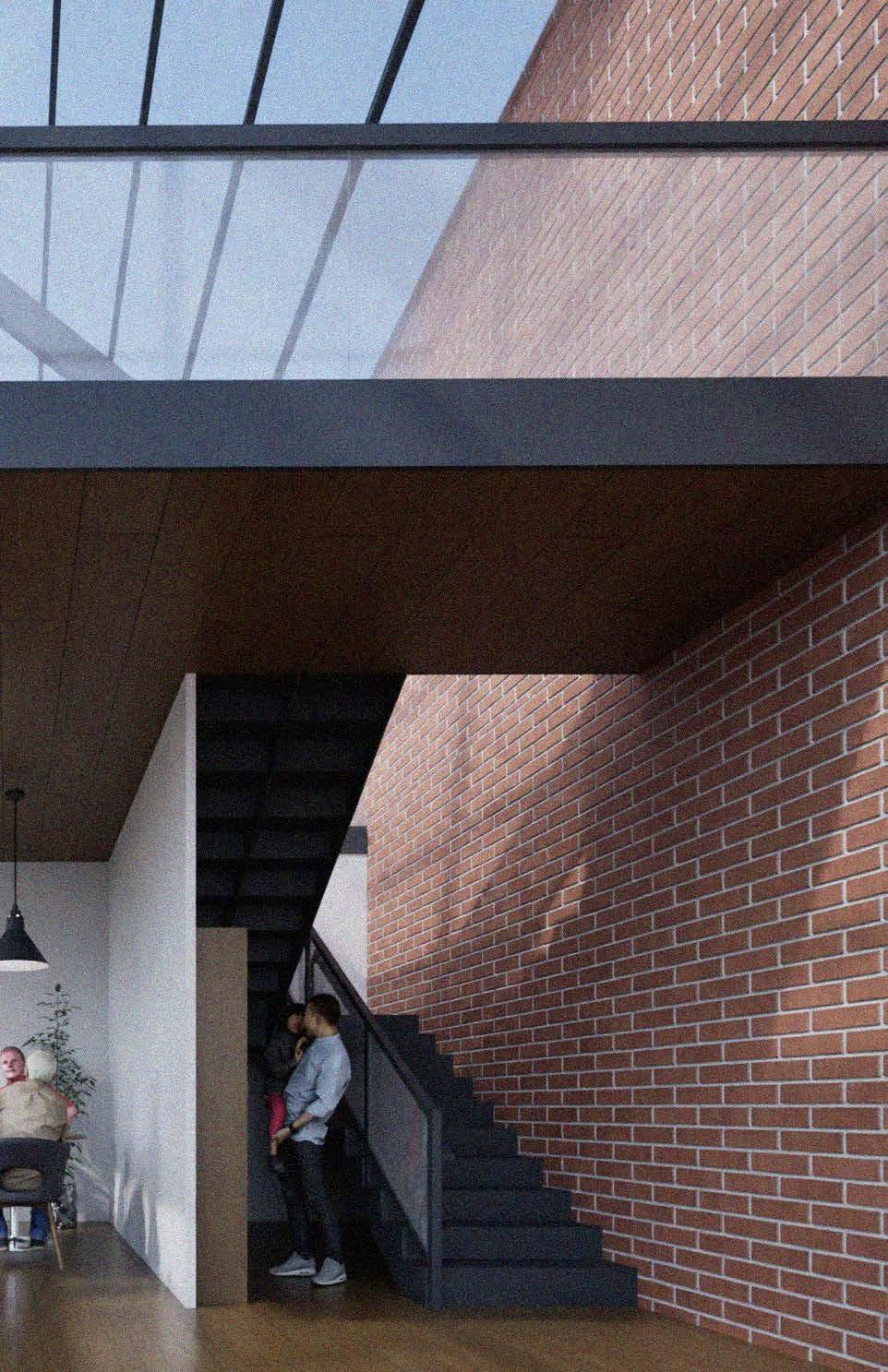
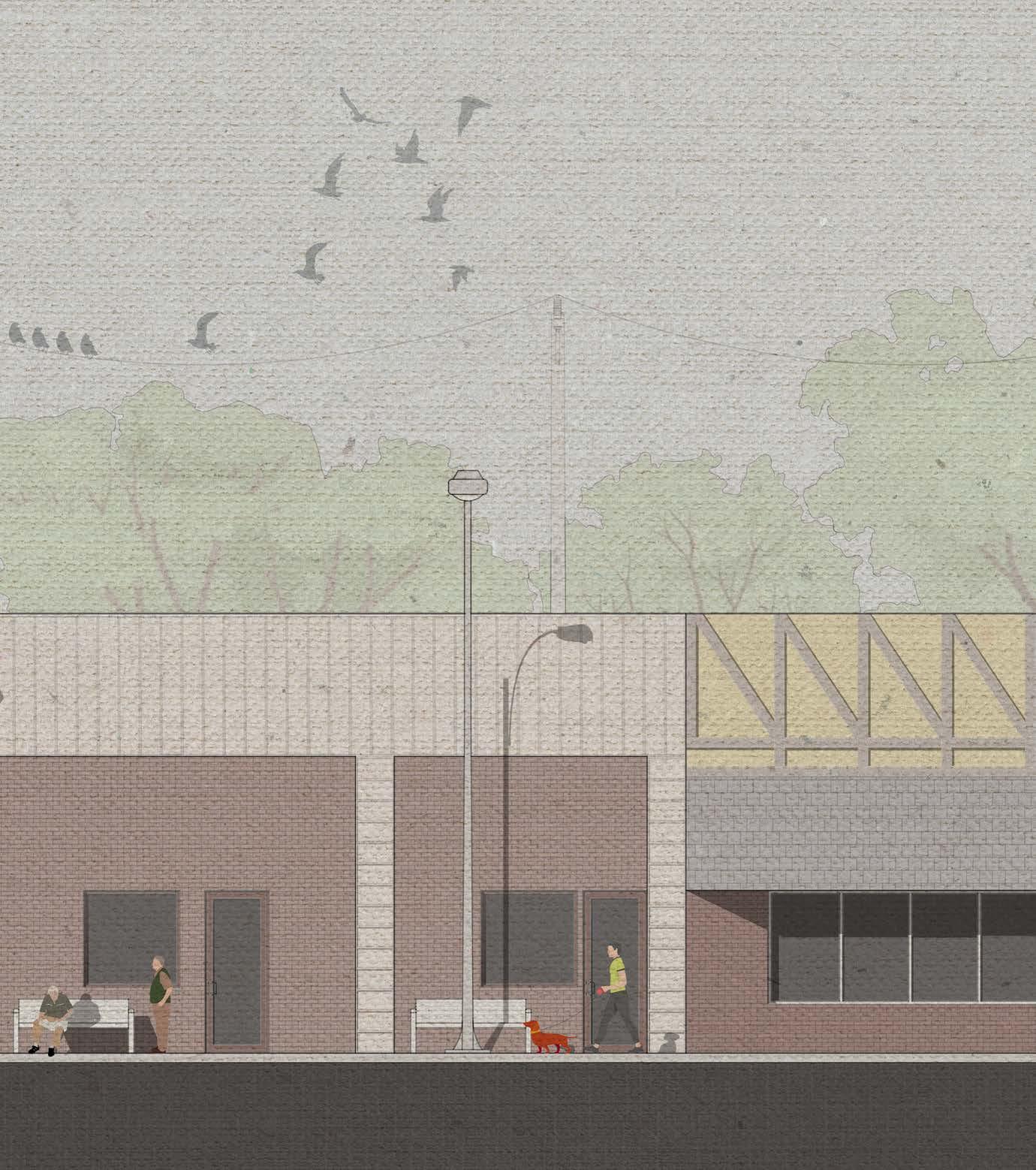
In the small town of Roland, Iowa, Radiant Hub began with the remains of a local bank left roofless and without a floor after a storm. Instead of clearing the site, the project rebuilds within the surviving brick walls, using what was left to shape something new. Inspired by the greenhouses common across Iowa, a light steel frame and translucent facade rise from the old shell, bringing daylight deep into the space. The new floor reconnects the building to Main Street, opening it up to the town as a shared place for workshops, small events, and everyday gatherings. What was once closed and private now stands open to all — a simple structure rebuilt around light, resilience, and care
Project Instructor : Nick Senski Fall 2023
Form Development Diagram
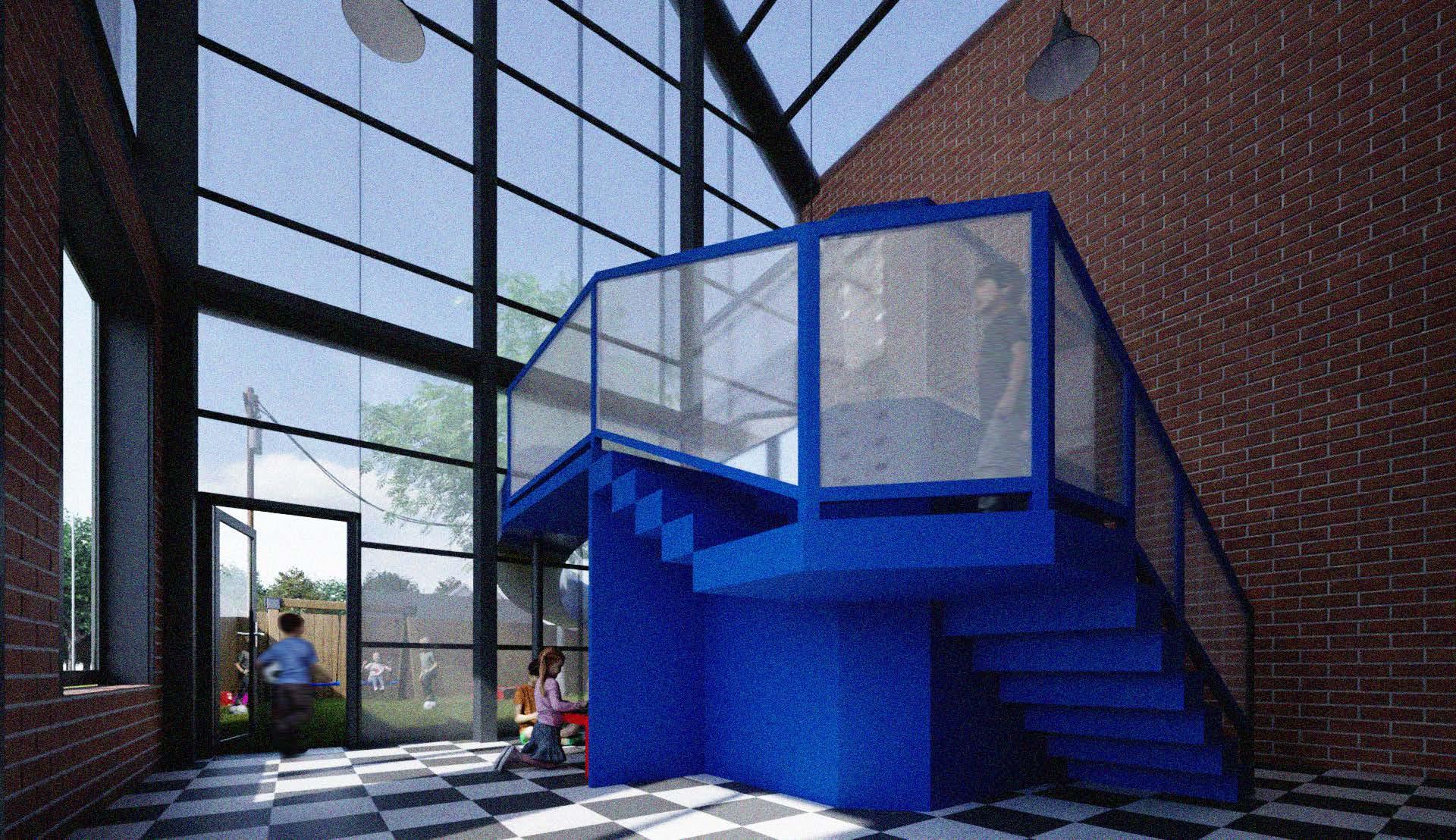
Children’s Play Area
Located at the back of the building, the play area offers a safe and bright space for children in Roland, where few public play spaces are available. The blue structure forms levels for climbing, rest, and observation, with a slide that extends outside and loops back into the interior. Large polycarbonate glazing opens to the yard beyond, blending indoor and outdoor activity. It’s a secure, lively space—active, connected, and centered on play and care.
Community Event Platform
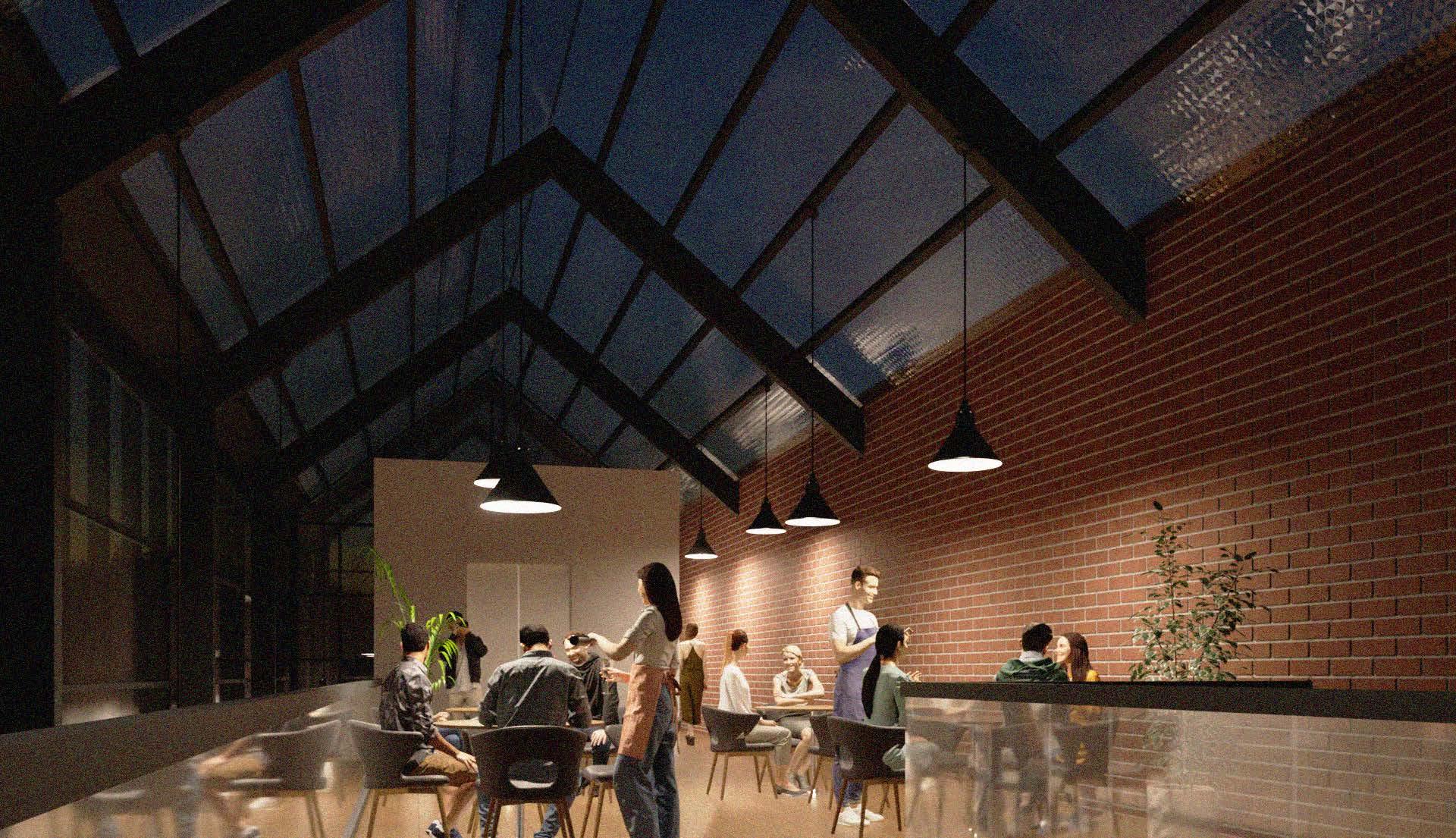
An added upper level creates a flexible space for community events, small gatherings, and workshops. The gabled roof brings light and height to the interior, while the existing brick walls maintain the warmth of the original structure. Pendant lighting and open seating make the space adaptable for everyday use, creating an informal, welcoming atmosphere centered on connection.
ECHOES OF STILLNESS
HOSPICE
Competition Work Award Individual Project Top 40 April 2025
In the small town of Roland, Iowa, Radiant Hub began with the remains of a local bank left roofless and without a floor after a storm. Instead of clearing the site, the project rebuilds within the surviving brick walls, using what was left to shape something new. A light steel frame and translucent facade rise from the old shell, bringing daylight deep into the space. The new floor reconnects the building to Main Street, opening it up to the town as a shared space for workshops, small events, and everyday gatherings. What was once closed and private now stands open to all — a simple structure rebuilt around light, resilience, and care.
Atmosphere Development Diagram
Arrival Communal Courtyard Chapel
Rooms Therapy
Entrance Courtyard
Corridor
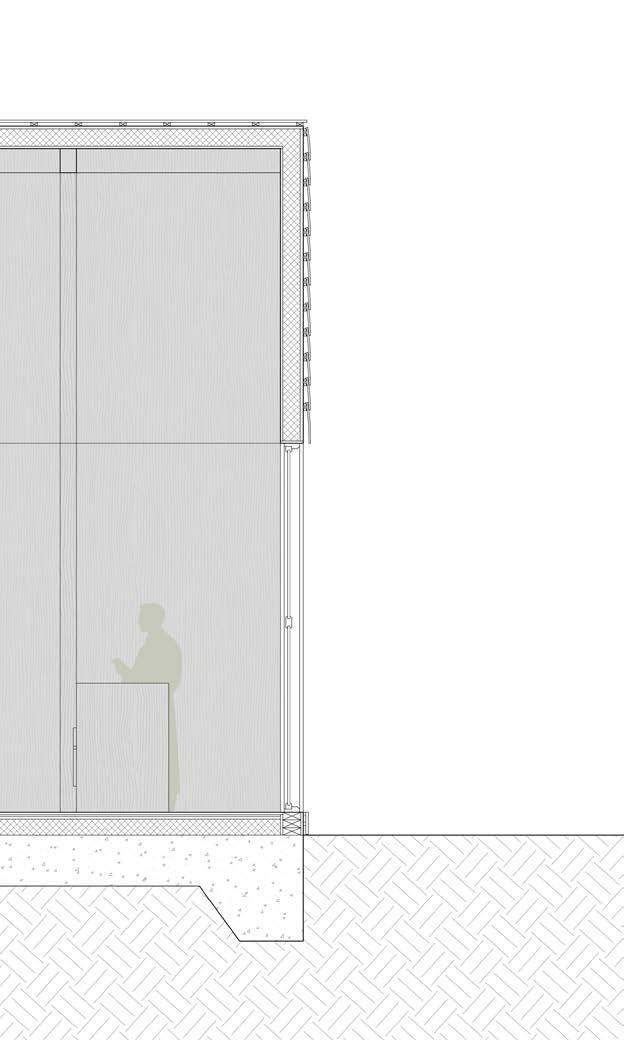
Glulam Frame Structure
Fiber-Cement Panel
Oak Interior Finish
Steel Profile
Insulated Glazing
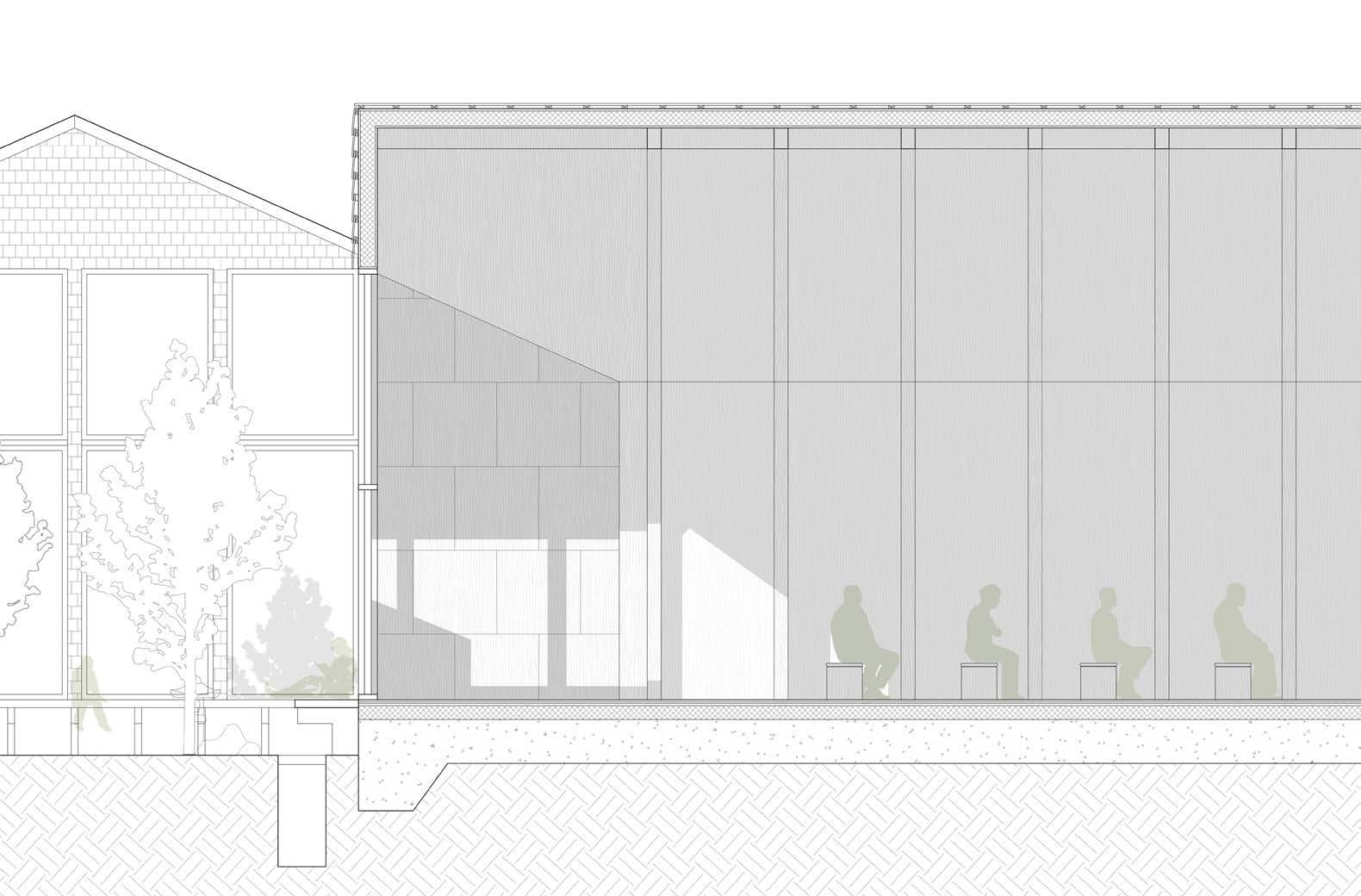
Courtyard and Chapel Section
Radiant Heated Slab
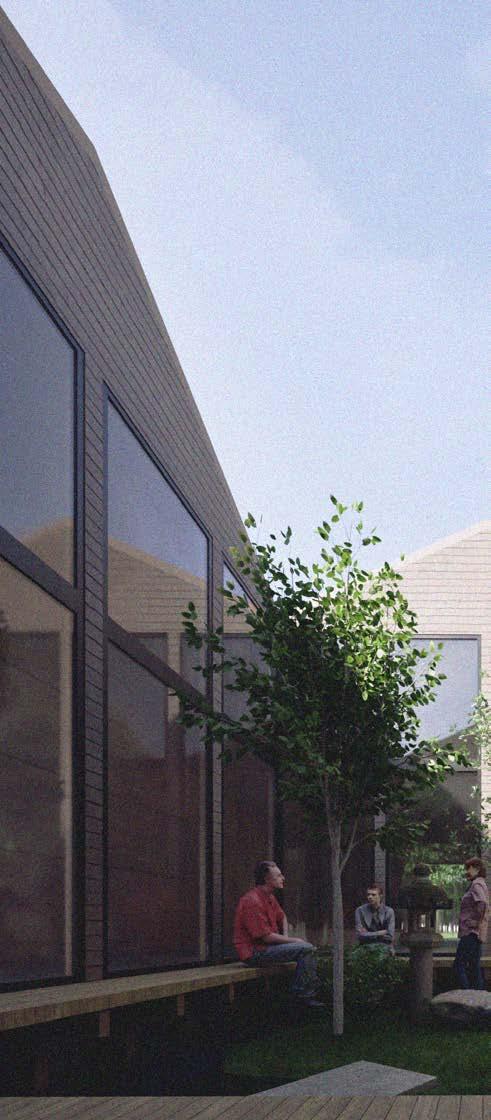
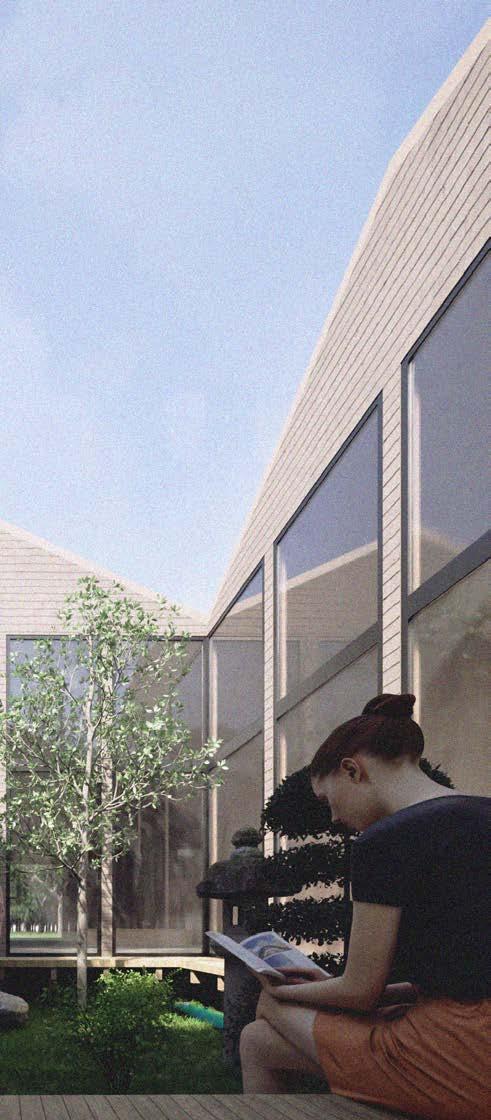
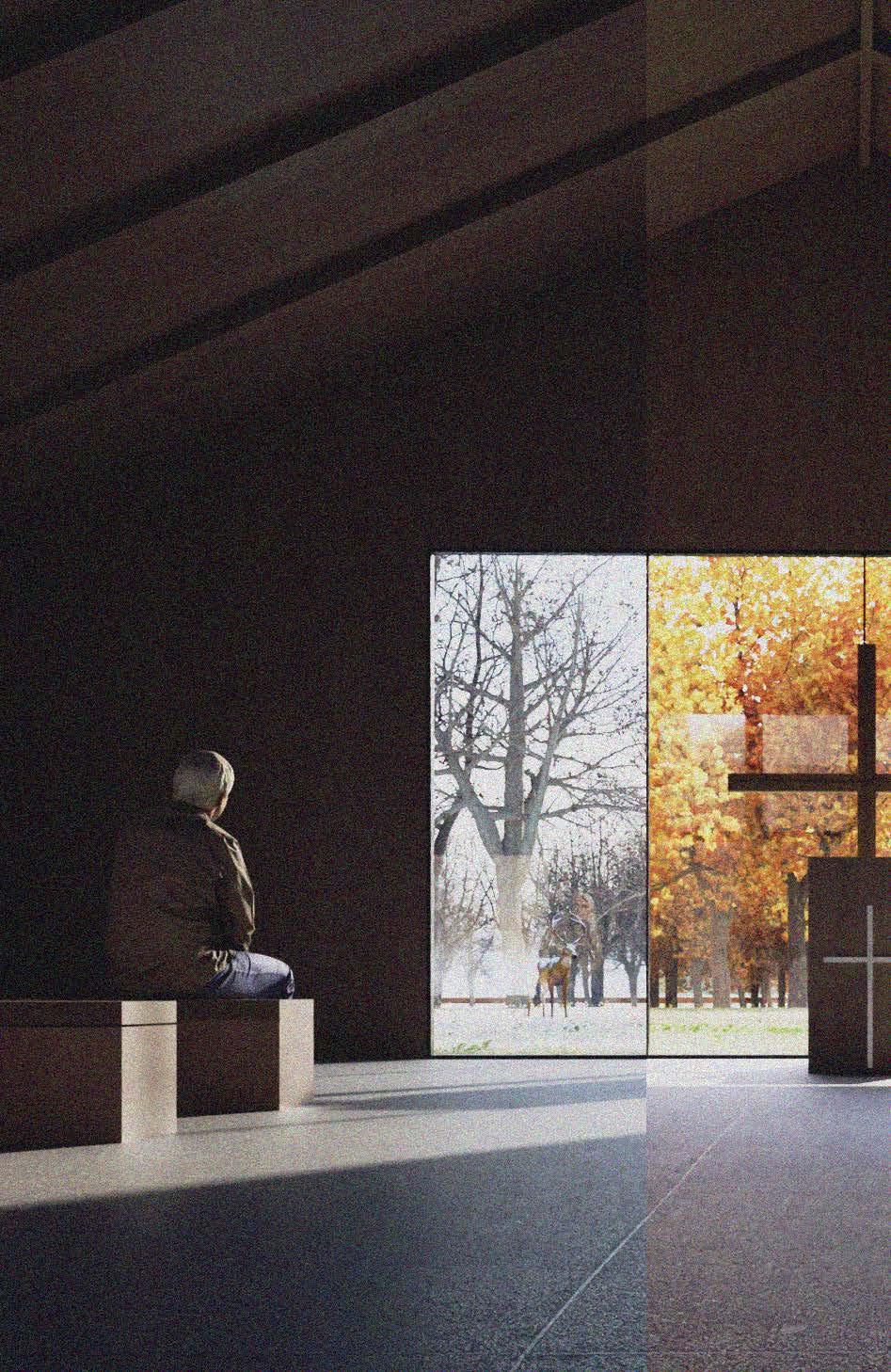
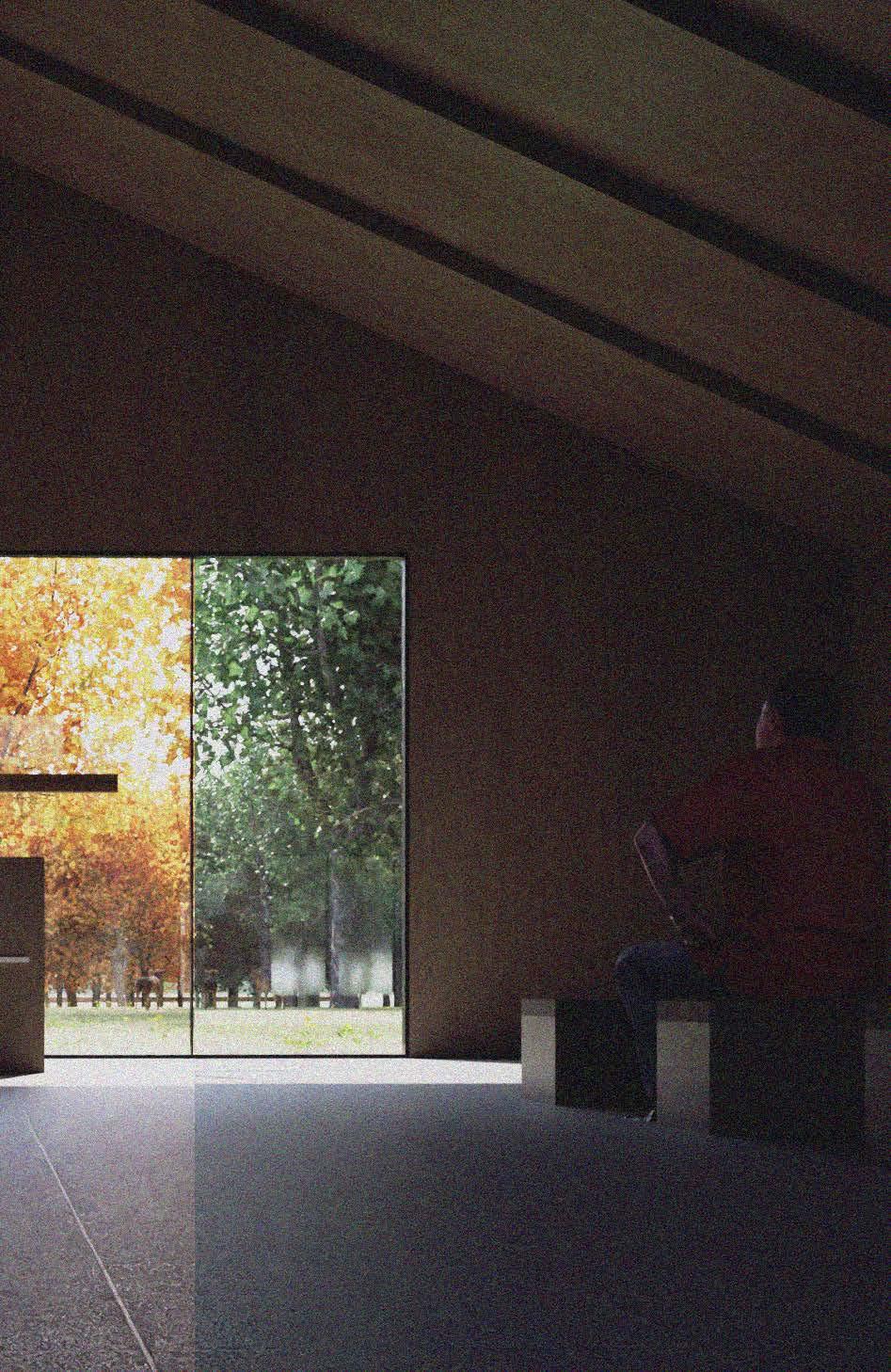
The project focuses on creating quiet spaces through light, material, and proportion. The courtyard provides a small garden where residents and families can spend time outdoors in privacy. Cedar cladding and large windows bring warmth and softness to the space, relating to the simple building forms common across Iowa. The chapel opens to the landscape, letting natural light and the changing seasons shape moments of reflection and calm.
Cedar Shingle Facade
Glulam Beam
Academic Work
Graduate
ARCH 528C Role
A BODY OF CHOICES
Community Center
Team Project Instructor : Vladimir Kulic Spring 2025 Role - Concept development, narrative framing, site selection, and installation planning.
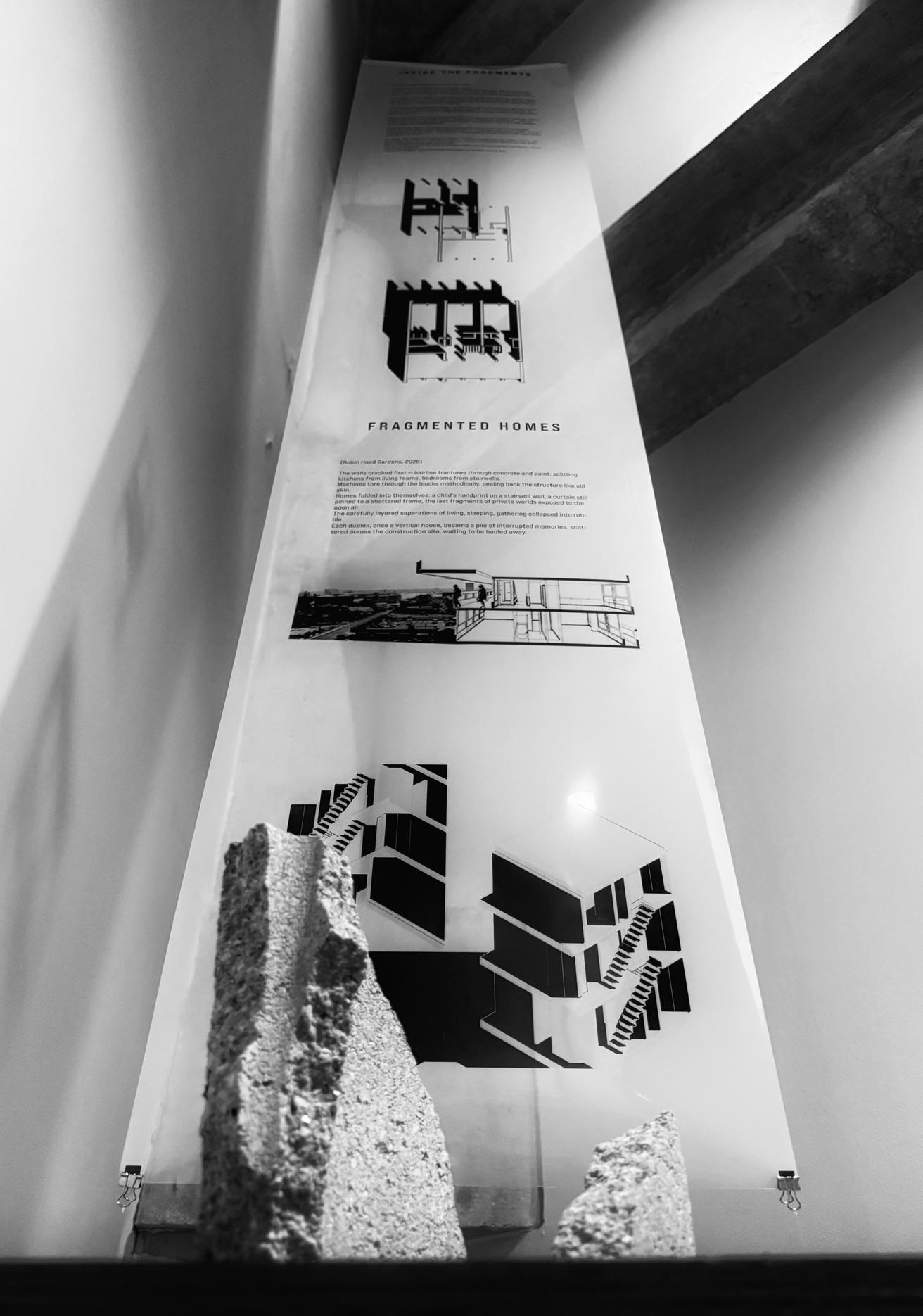
The exhibition unfolds as a quiet act of rediscovery. Fragments of Robin Hood Gardens are reimagined as traces of memory—pieces that still hold the weight of lives once lived. Through drawings, models, and images, the work invites viewers to slow down and reflect on what remains. It transforms absence into form and loss into quiet hope, suggesting that even in decay, architecture continues to speak.
ASCENDED MEMORY
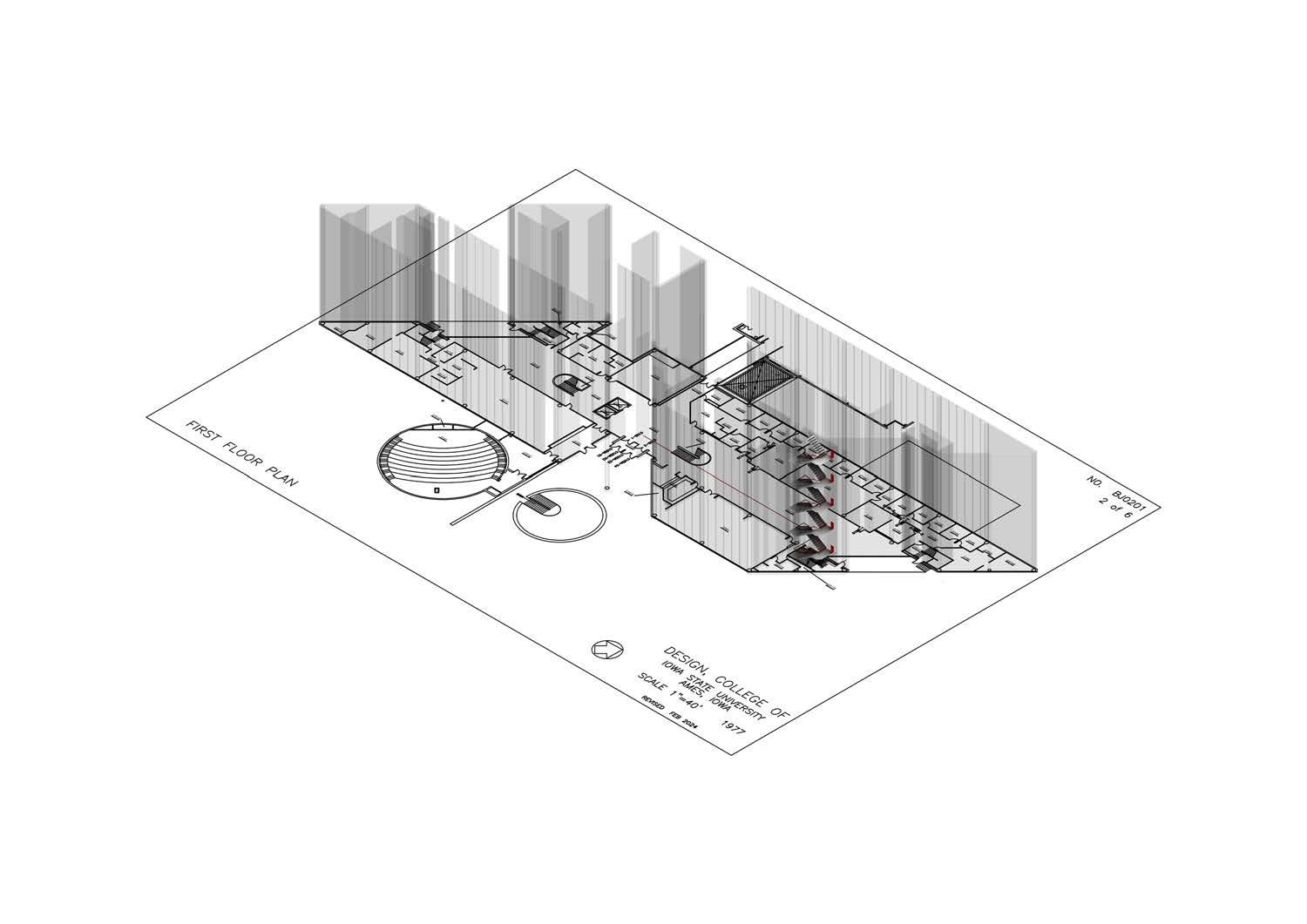
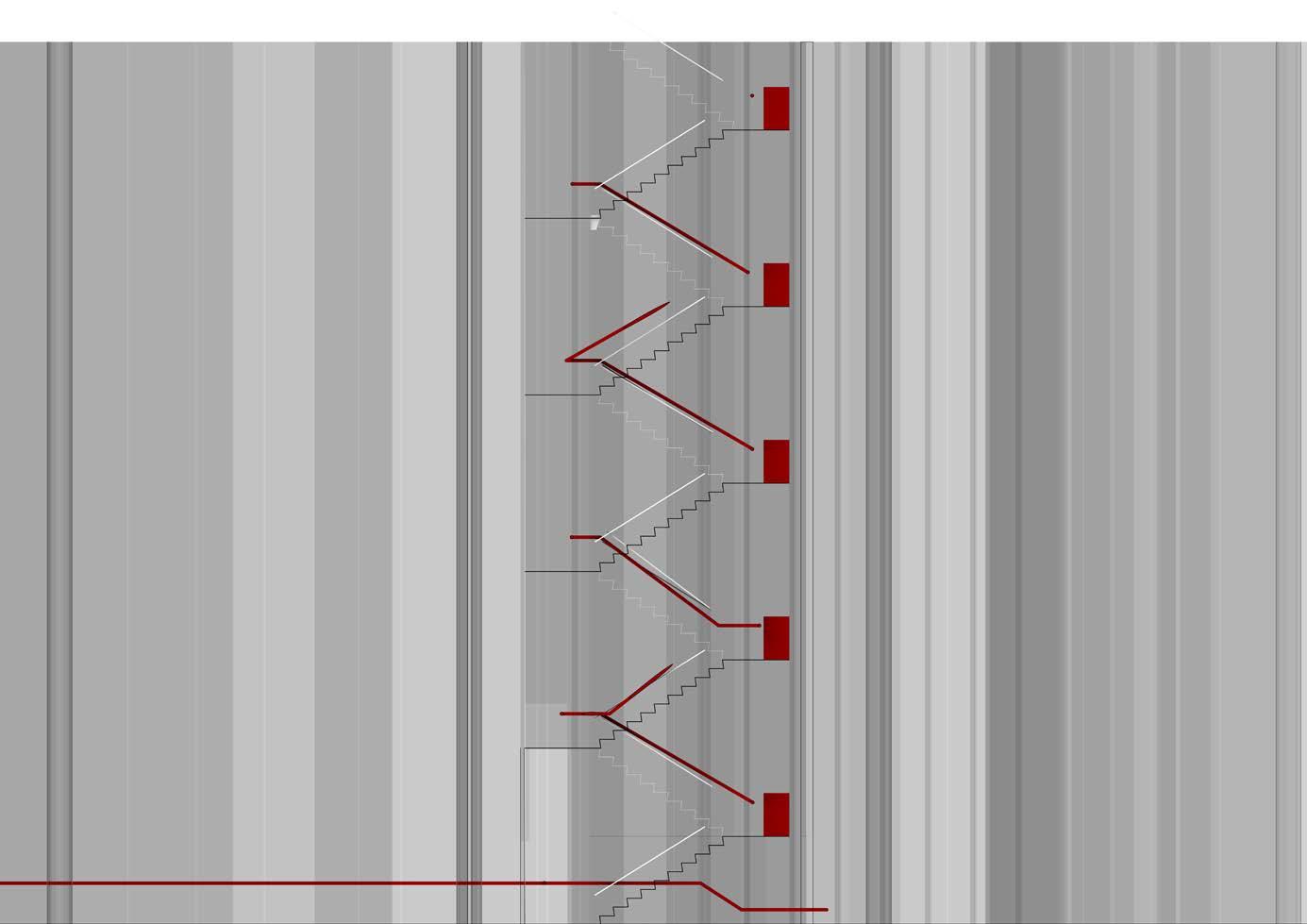
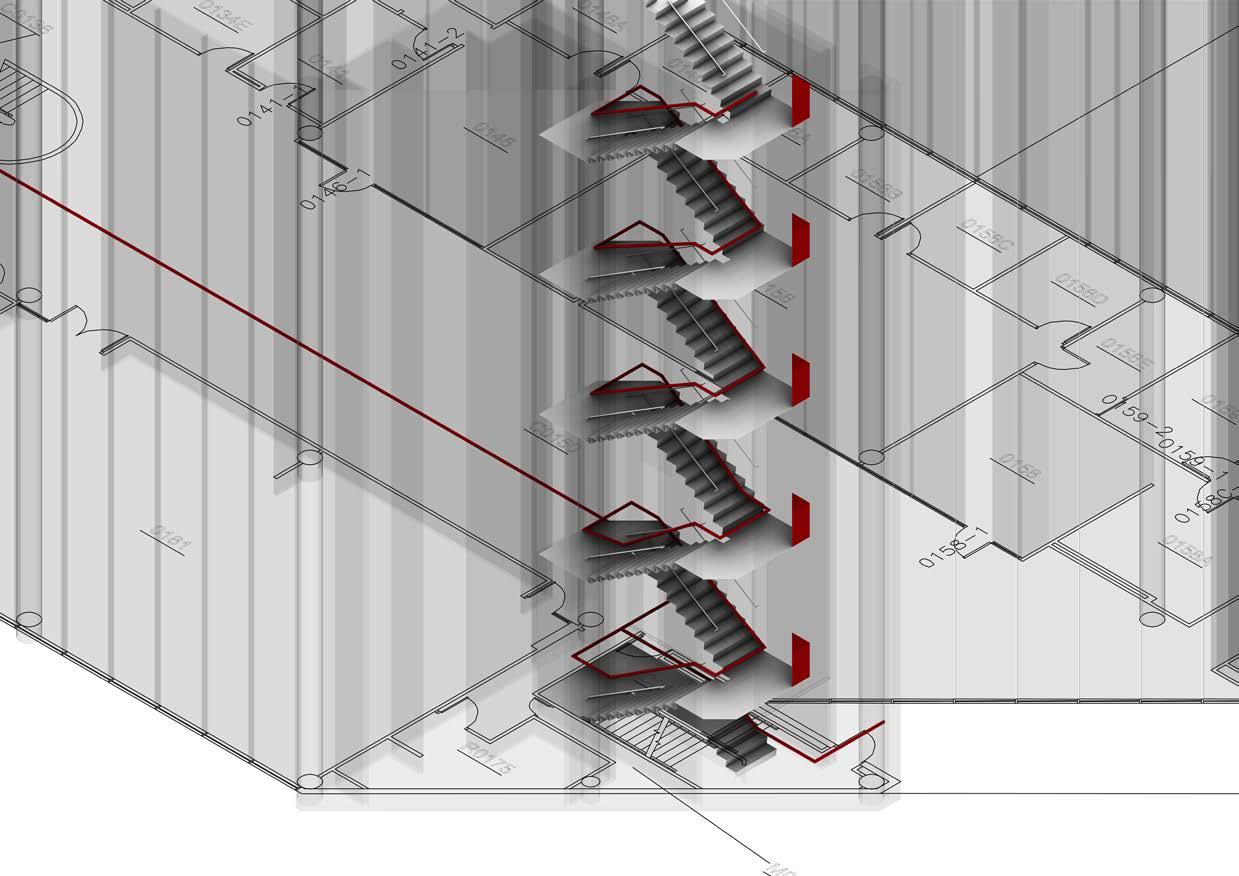
The exhibition unfolds through the stairwell, rising across five floors of the College of Design. Models and panels are placed along the ascent, guiding visitors through fragments of Robin Hood Gardens. The red platforms act as pauses— moments to look, reflect, and continue upward. As one moves higher, and each landing reveals another layer of the story. Together, these small interventions turn circulation into experience, transforming movement itself into a quiet act of remembrance.
DUAL PERSEPECTIVE
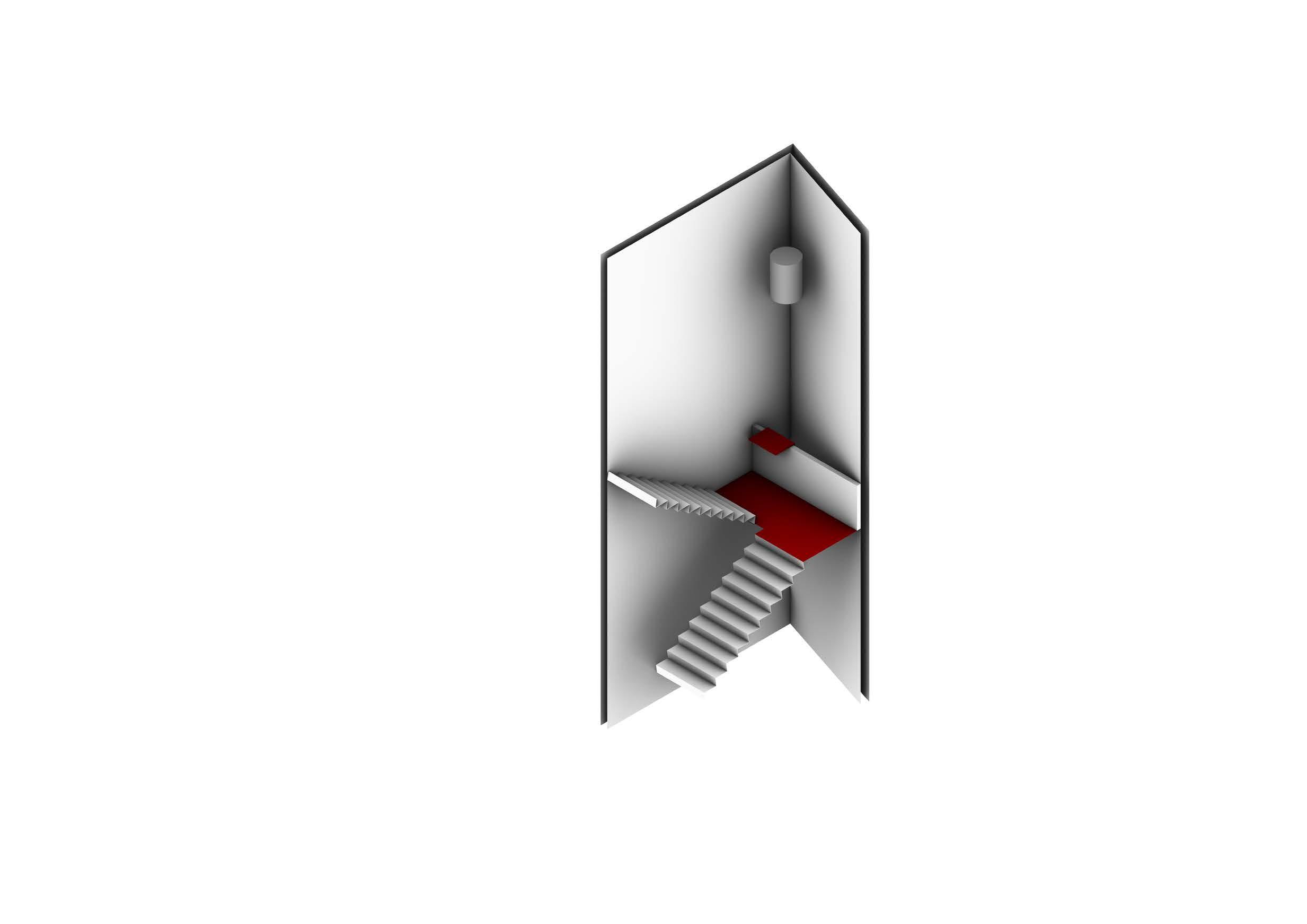
Objects placed at the corners of each landing guide movement through both directions of the stairwell. For those ascending, the fragments emerge gradually, creating moments of pause and anticipation. For those descending, glimpses of what lies below pull the gaze downward, linking one floor to the next. This rhythm of approach and retreat turns vertical circulation into a shared act of discovery—an exchange between memory and motion.
SPATIAL IMPLEMENTATION
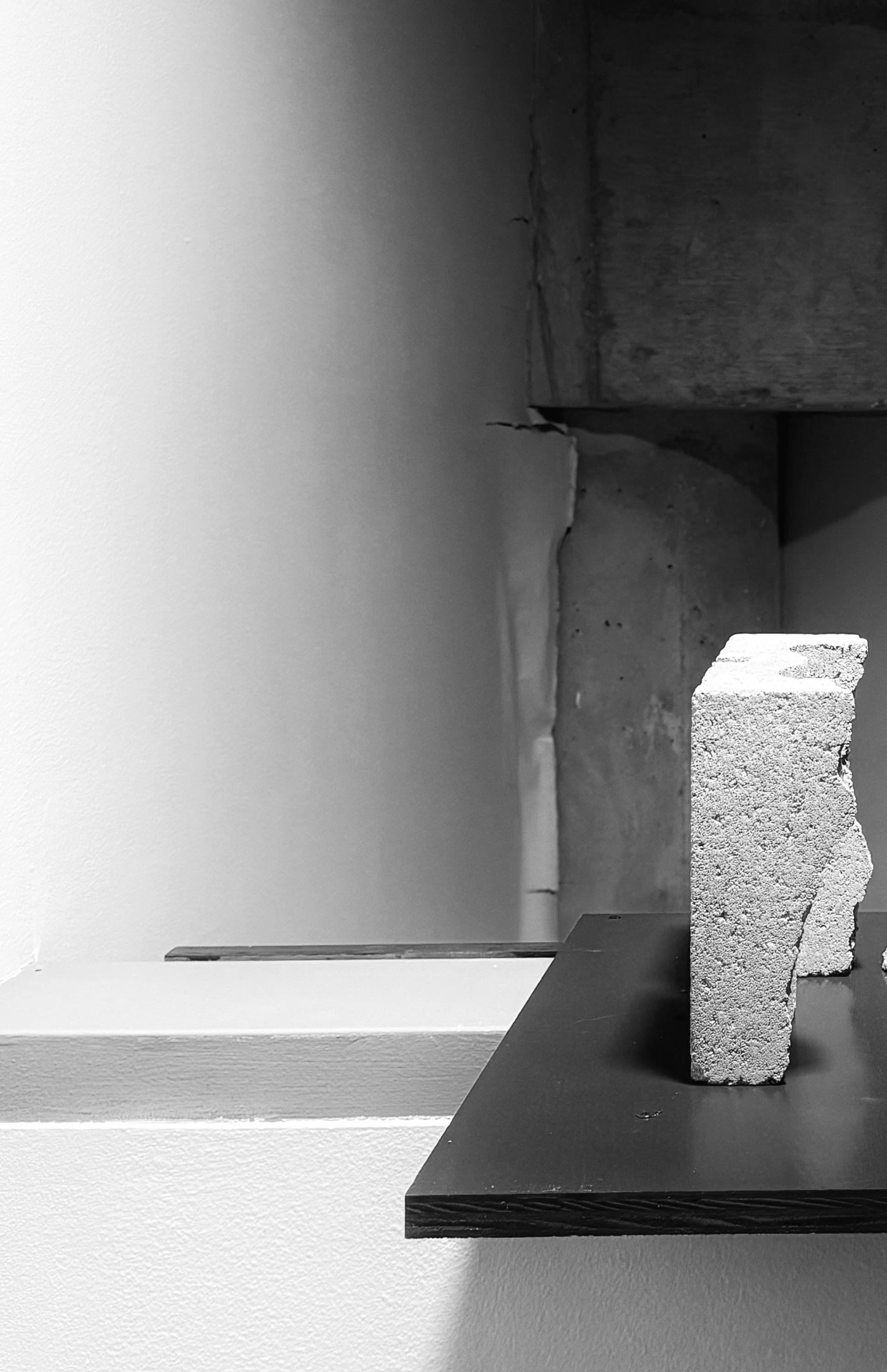
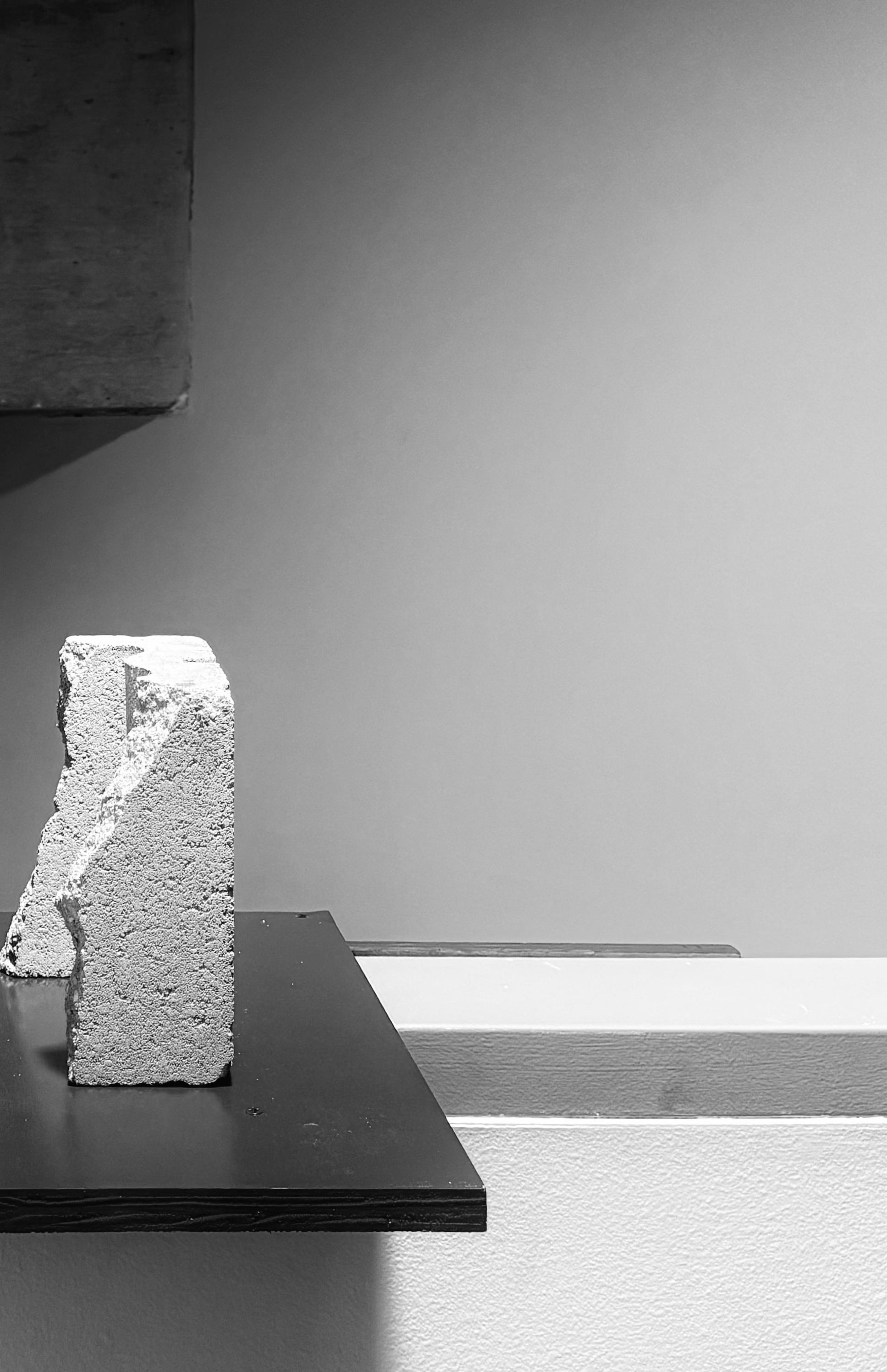
Each landing is shaped to hold light and pause together. Natural light filters from above, softening the corners where suspended wooden platforms display the models. Subtle spotlights and internal illumination draw focus without breaking the quiet rhythm of ascent. The parapet walls, thick enough to anchor small fixtures or mounted elements, become part of the installation itself—turning structure into support, and passage into a sequence of intimate encounters.
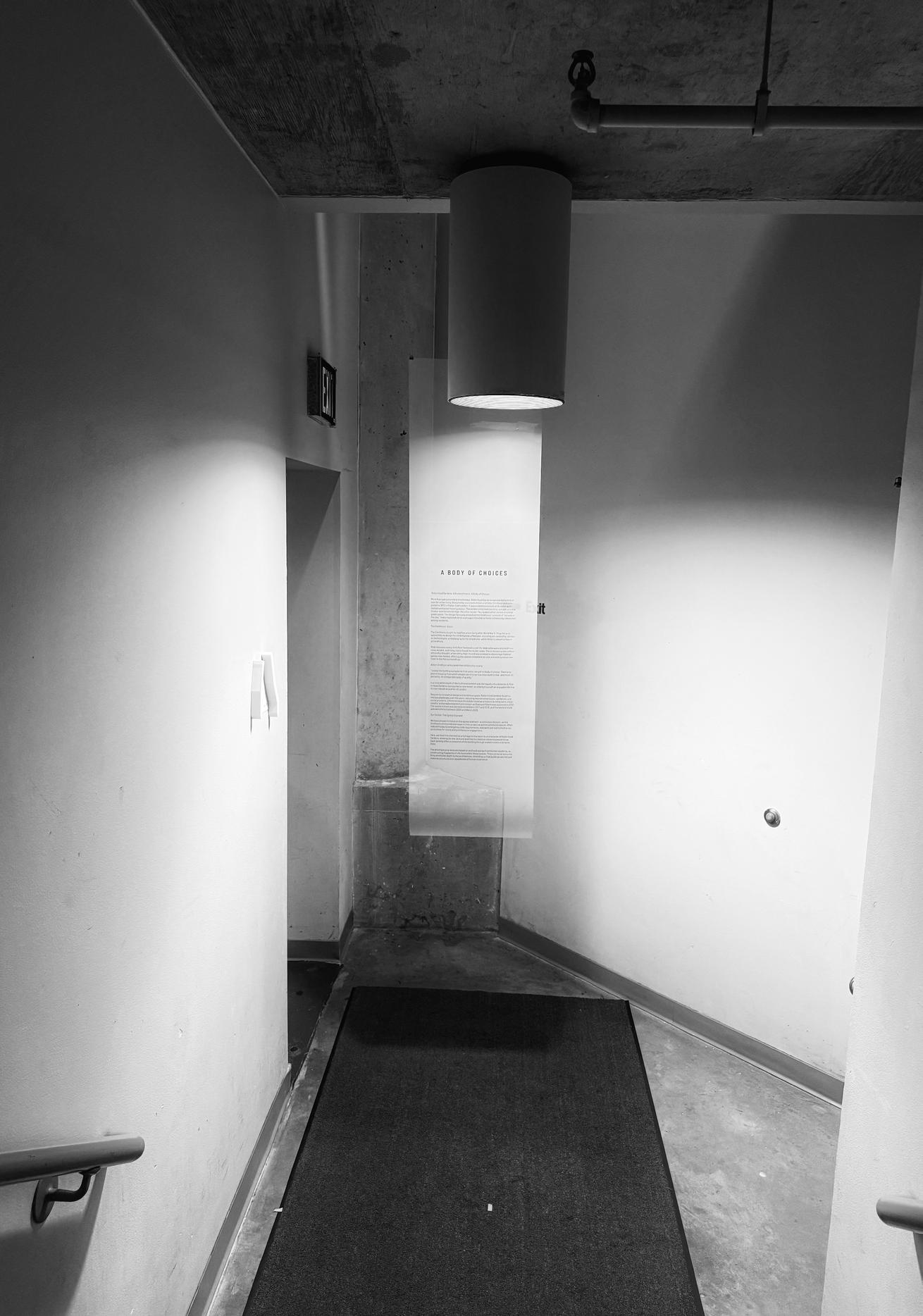
LEVEL ONE
The exhibition begins in quiet restraint. A single panel hangs beneath a dim light, suspended in the narrow stairwell. There is no display yet, only the words that frame what follows. This stillness sets the tone—an introduction not through spectacle, but through pause.
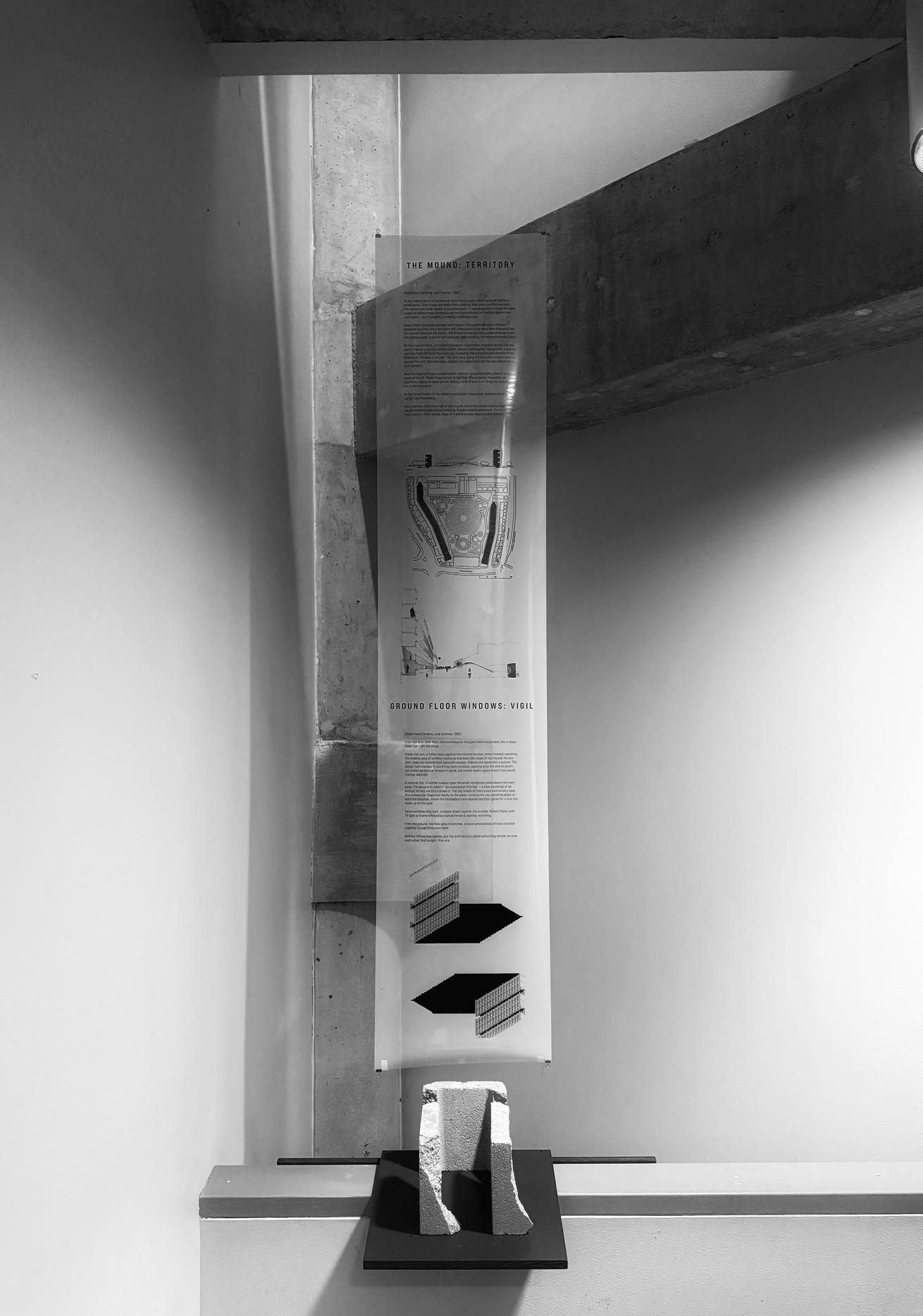
LEVEL TWO
The first landing introduces the site through two fragments—the mound and the ground-level façade. Together, they define Robin Hood Gardens as both landscape and threshold: a place shaped by boundaries and views. The model below recalls the weight of the original concrete, while the suspended drawings trace the architects’ intent—to protect, to open, to frame life within a shared ground. This level marks the shift from distance to contact, where the estate begins to take form.
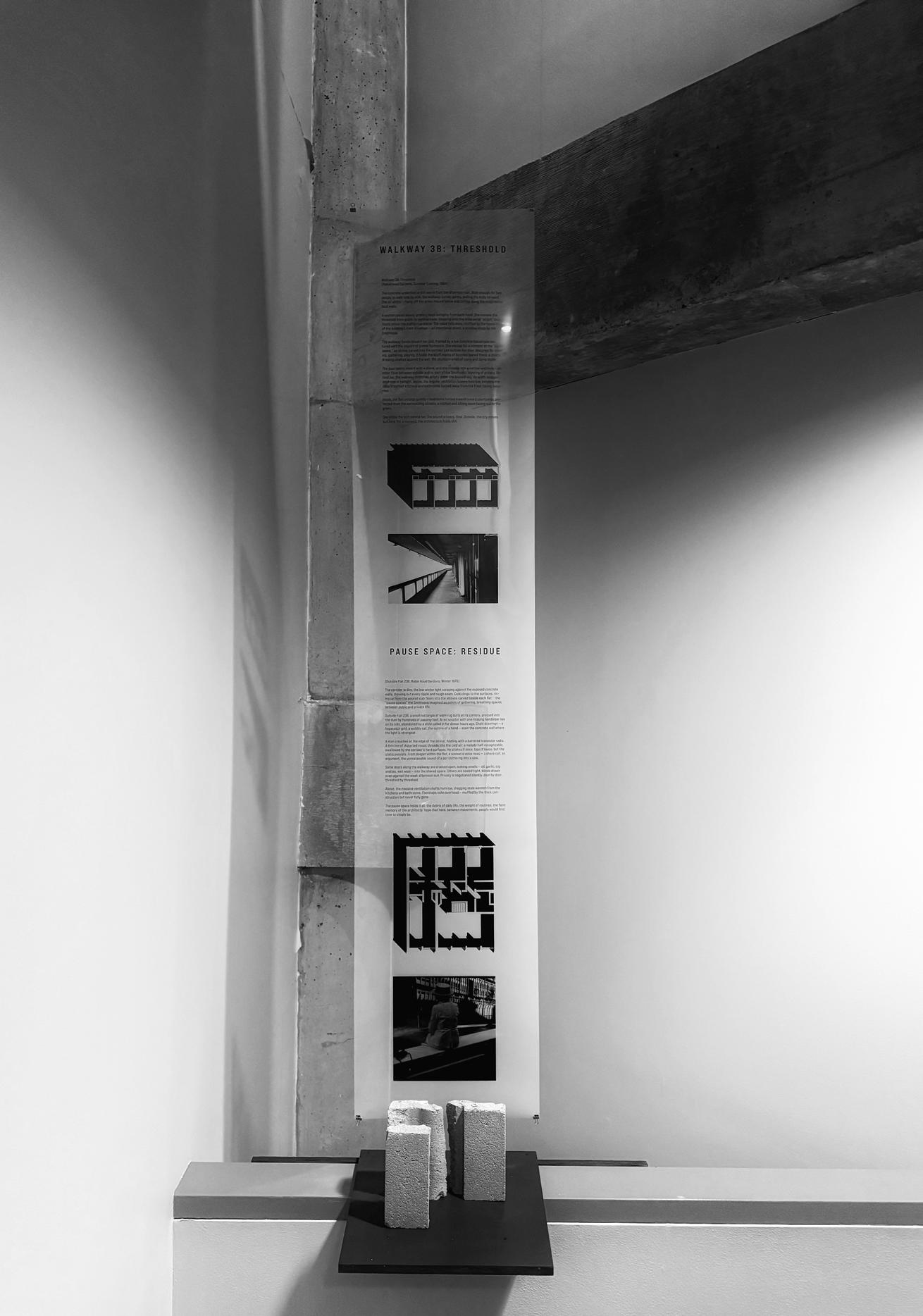
LEVEL THREE
This level explores the spaces between destinations—the elevated walkways and pause zones that carried life through Robin Hood Gardens. These were neither streets nor interiors, but shared thresholds where sound, light, and conversation lingered. The fragments below evoke that tension between passage and rest, between architecture’s structure and its human residue.
LEVEL FOUR
This level turns inward. Drawings and fragments reveal the interior scale of Robin Hood Gardens—the private spaces within the larger frame. The concrete pieces below, once part of the whole, now stand alone, marked by absence and memory. Here, the architecture becomes personal; rooms dissolve into stories, and walls remember their inhabitants.
SCASCI HOSPITAL
SOUTH INDIA
Adaptive Re-use + Renovation Concept Studio Professional Work
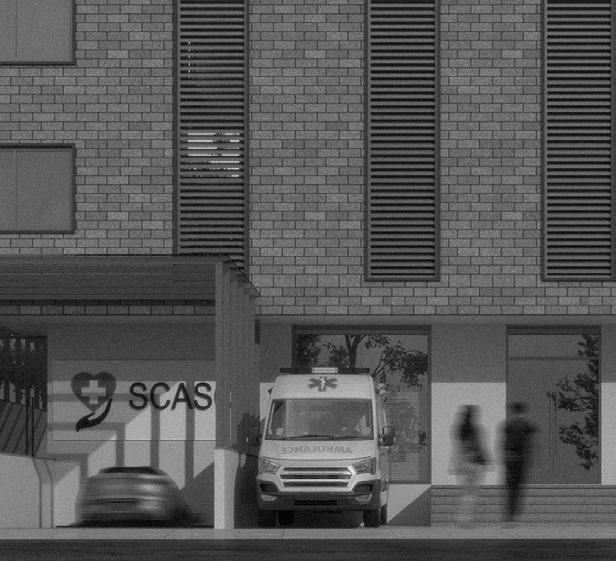
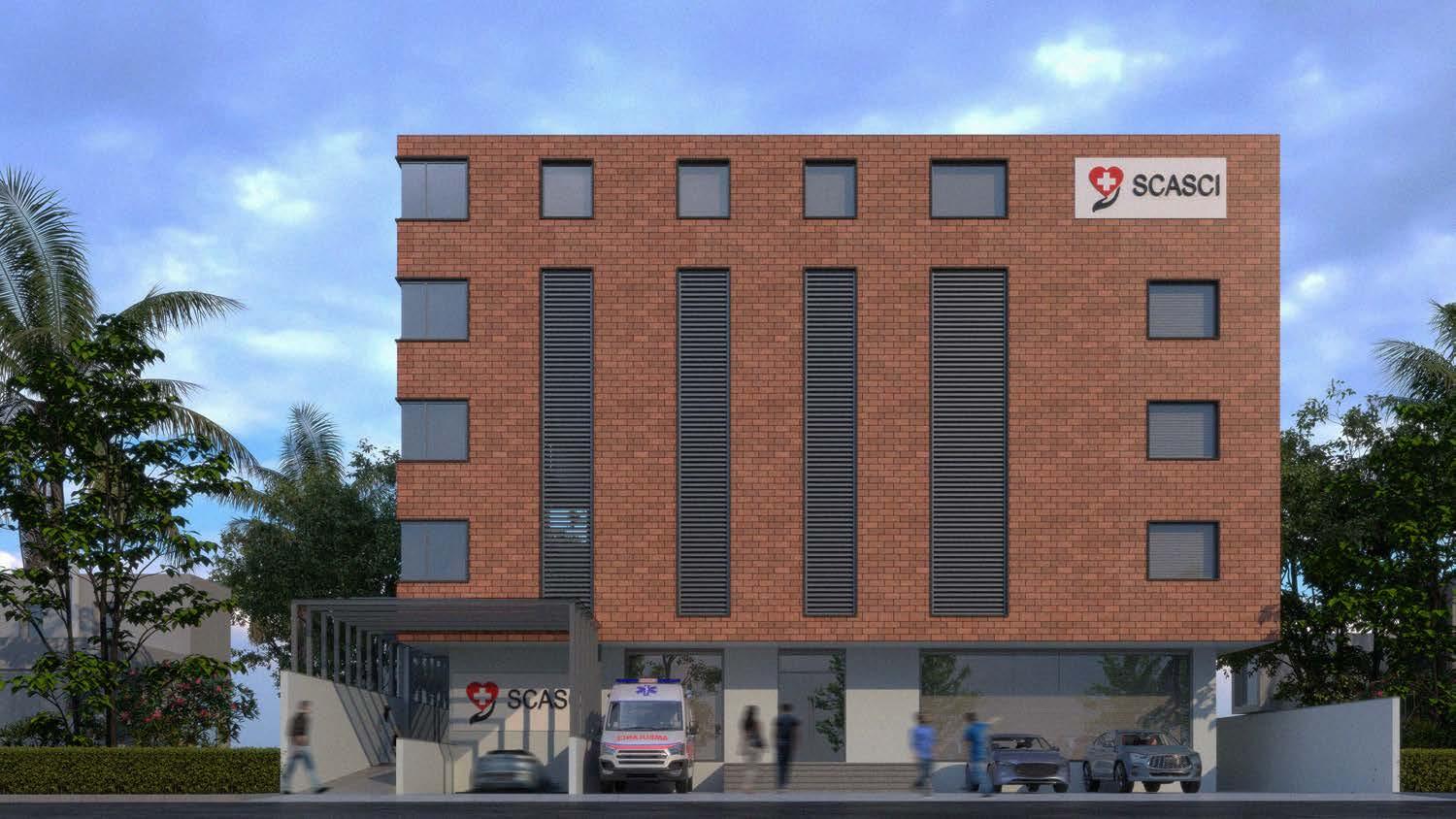
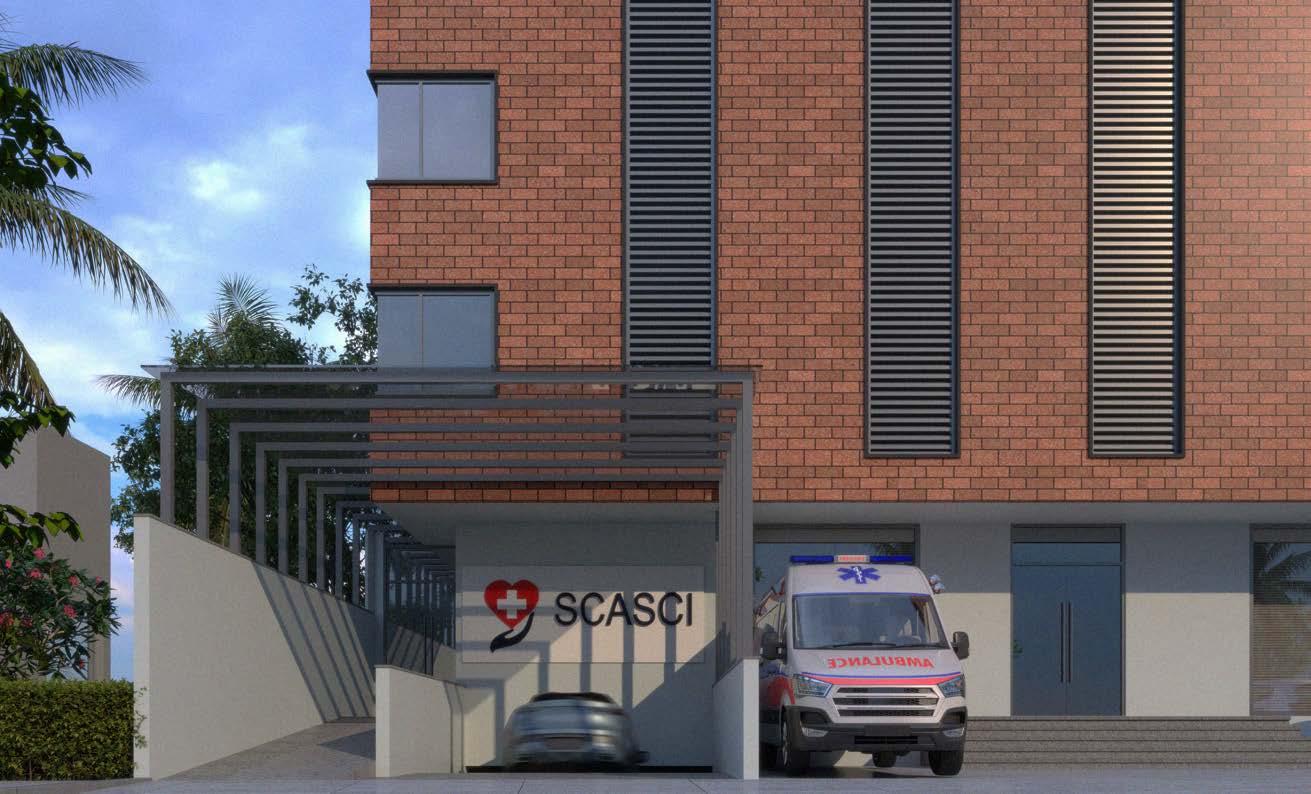
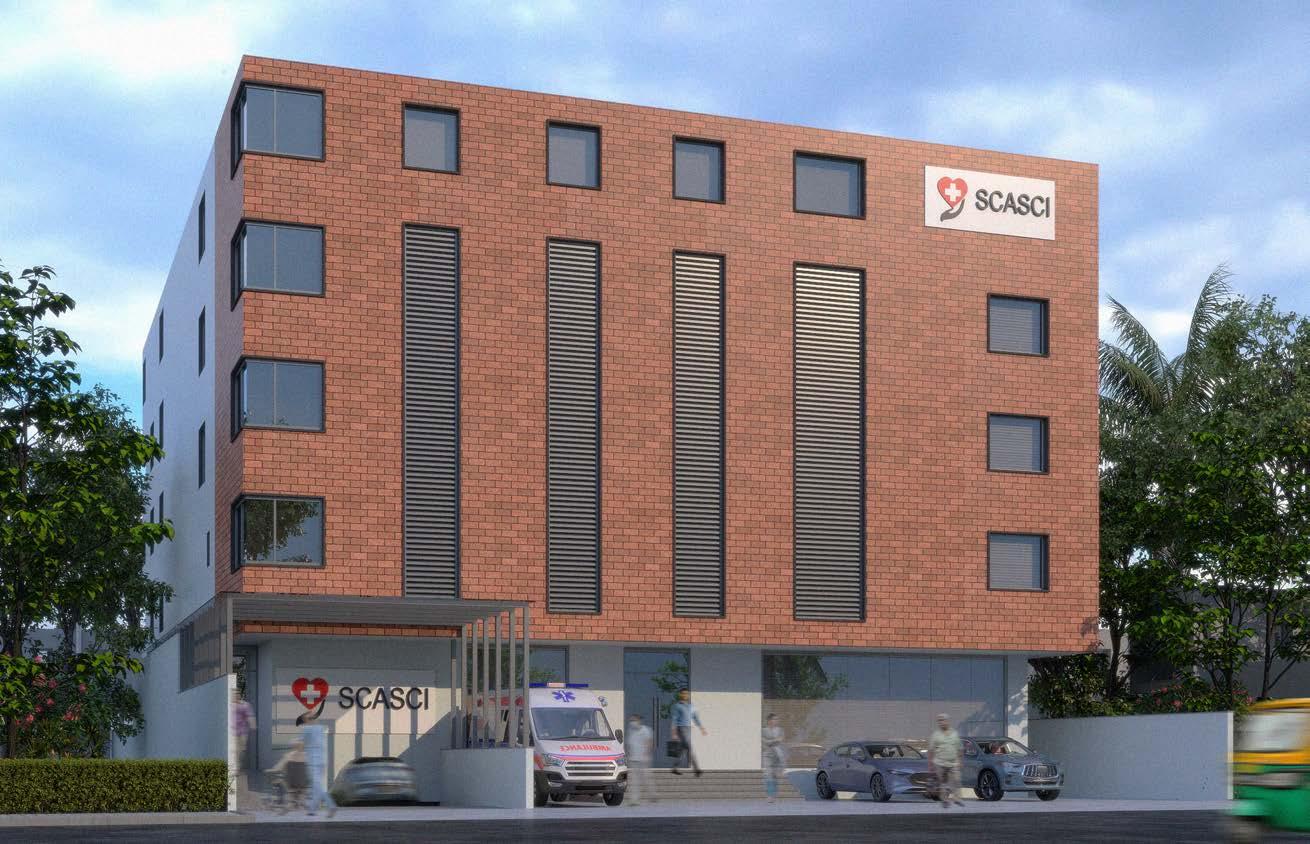
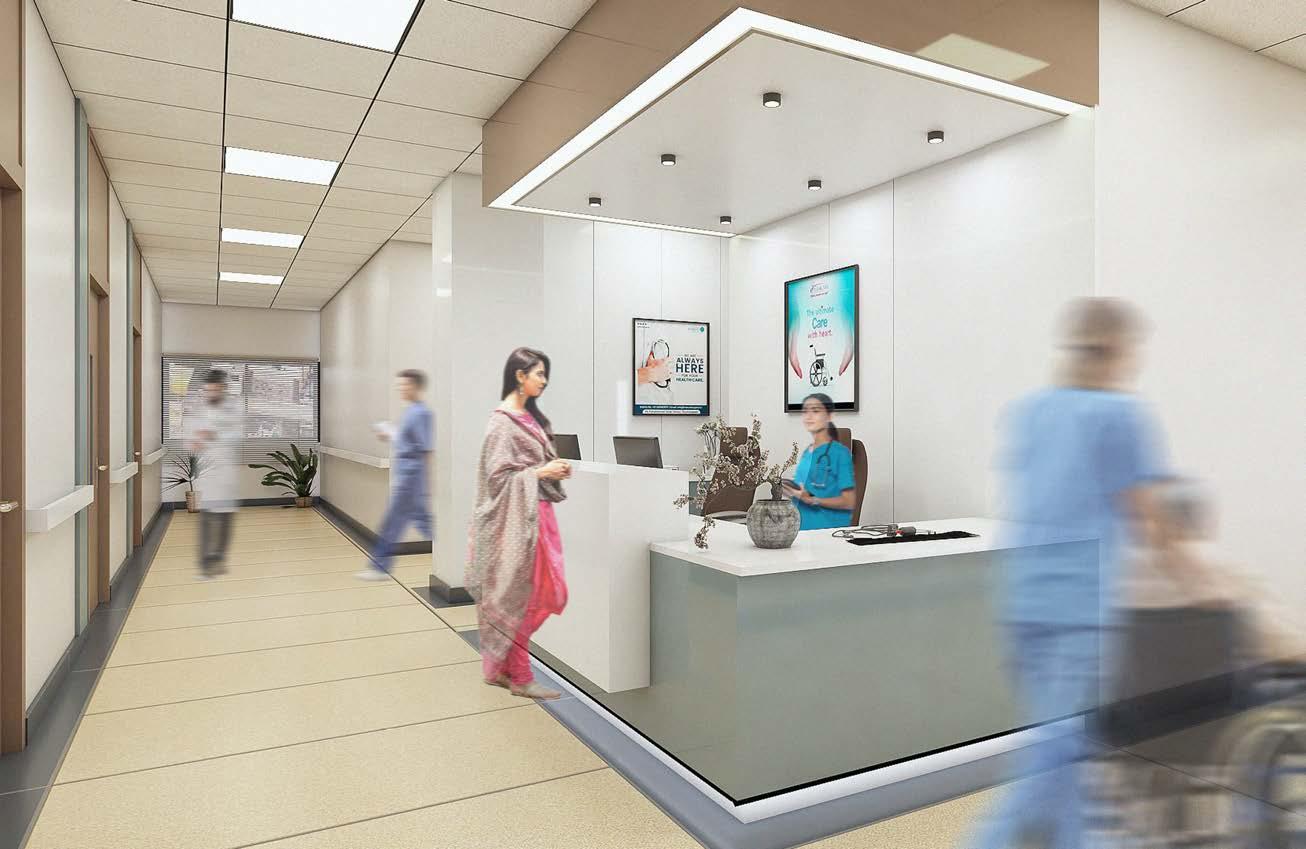
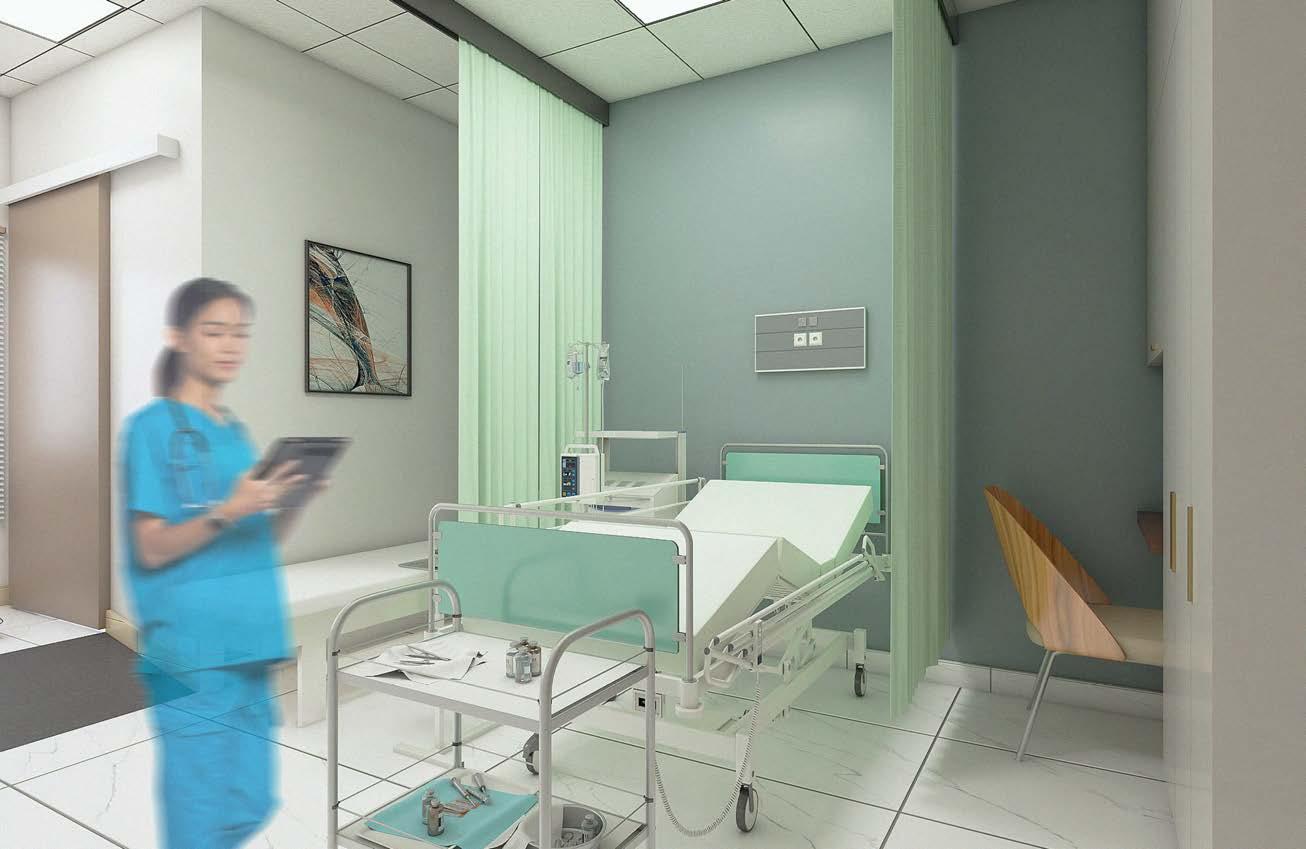
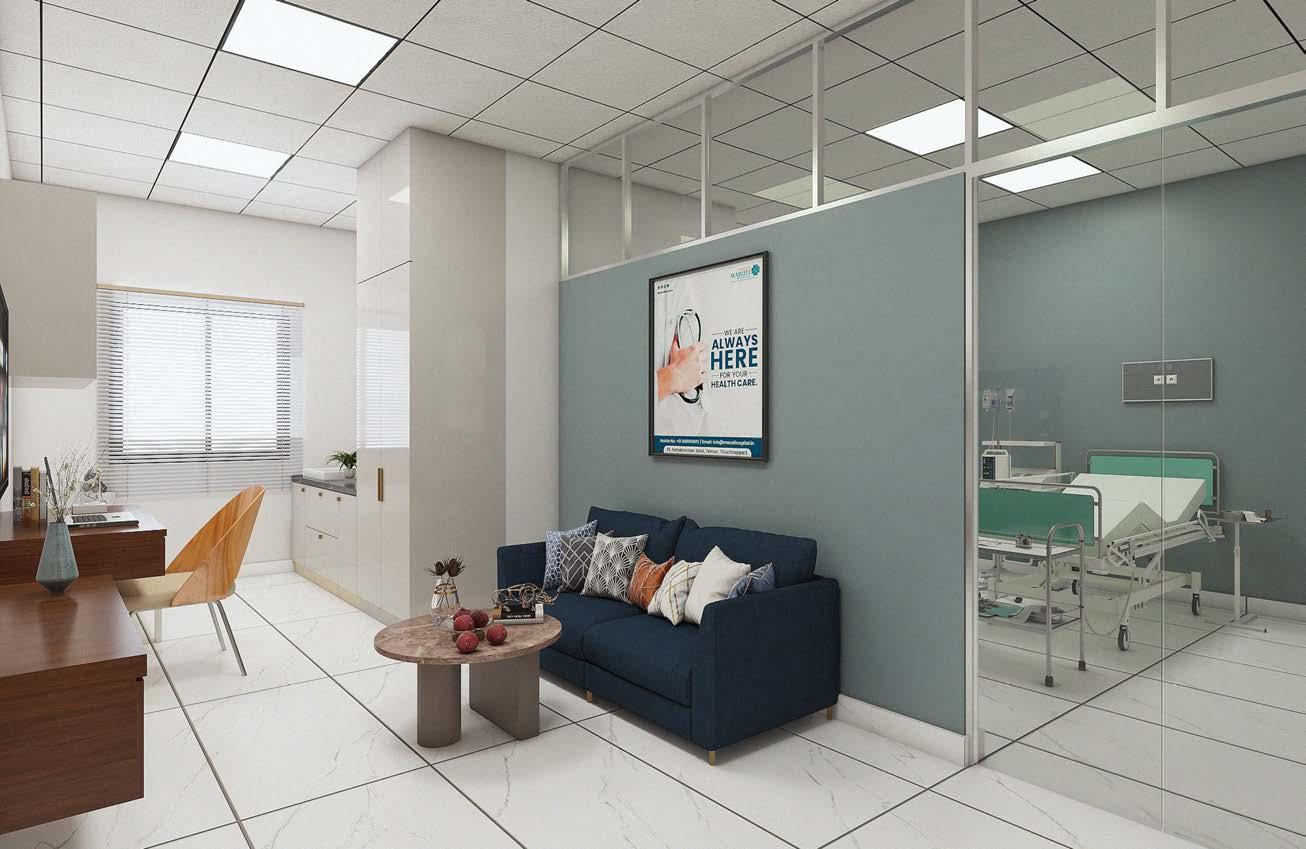
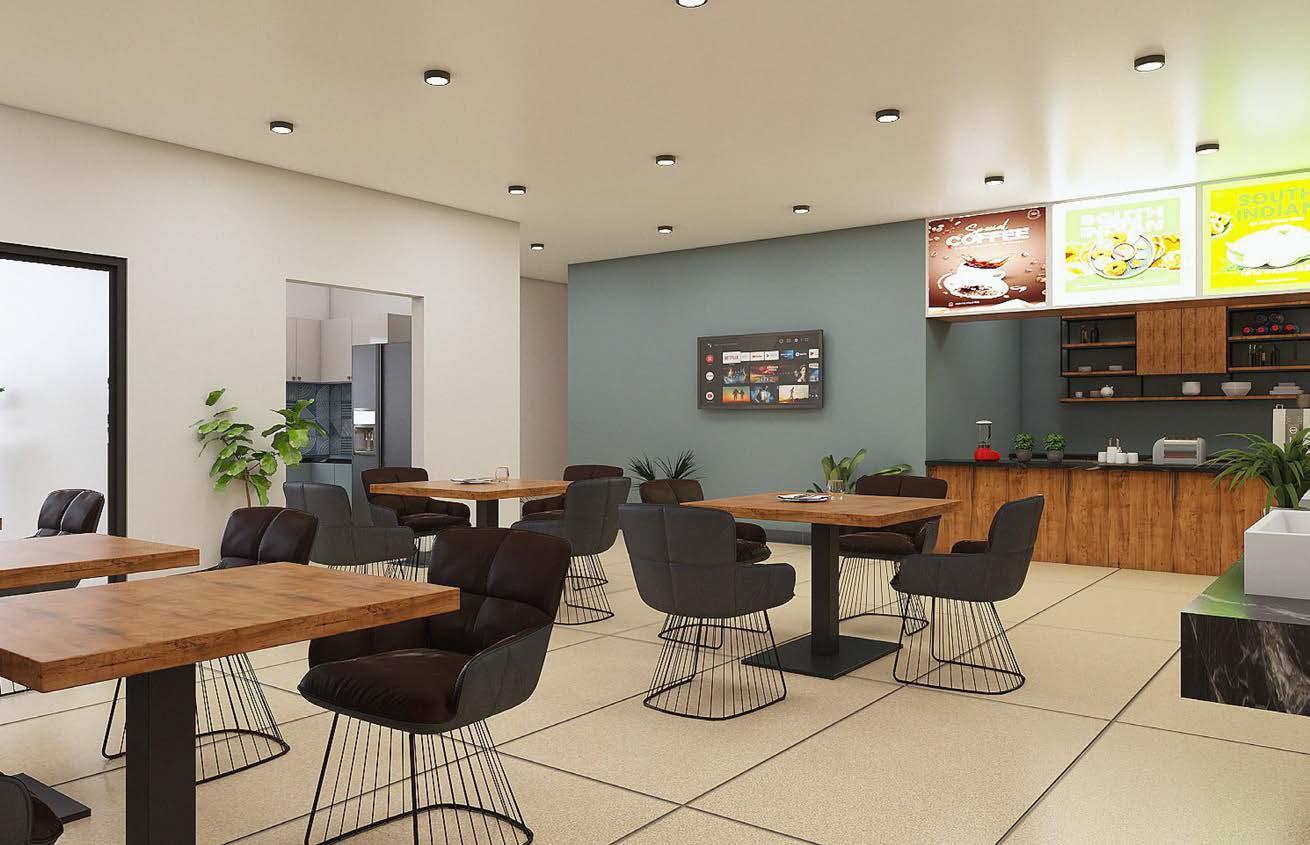
This project converts an existing commercial building into a specialized post-operative care hospital. The scope included reorganizing clinical functions, improving circulation efficiency, and establishing a clearer identity for SCASCI within a previously generic structure. Exterior work focused on renewing the façade through a system of vertical ventilation panels and controlled openings, improving environmental performance and patient comfort while preserving the existing structural framework.
Scope of Work
· Interior reconfiguration for recovery, exam, and support spaces
· Building facade redesign and shading strategy
· Entry canopy and ambulance drop-off upgrade
· Visualization support and exterior design development
· Material and color palette refinement
Interior Render - Waiting Lobby of Prodcedure Room