
DESIGN THESIS
on SCULPTOR’S ART CENTRE prepared
by


SURBHI MAHARSHI KAVAIYA 15041AA049 under the guidance of PROF. KALPANA MANCHALI
is submitted for the award of the degree of
BACHELOR OF ARCHITECTURE by
Jawaharlal Nehru Architecture and Fine Arts University for the year 2018-2019
VENKATESHWARA COLLEGE OF ARCHITECTURE
Madhapur,
City Road, Hyderabad 500
JAWAHARLAL NEHRU ARCHITECTURE AND FINE ARTS UNIVERSITY
SRI VENKATESHWARA COLLEGE OF ARCHITECTURE
86, Madhapur, Hi-Tech City Road, Hyderabad 500 081
CERTIFICATE
This is to certify that this Design Thesis, SCULPTOR’S ART CENTRE carried out by Miss SURBHI MAHARSHI KAVAIYA, Roll No 15041AA049 currently in Fourth Year B.Arch., in the academic year 2018-2019, in partial fulfillment for the award of the Bachelor’s Degree in Architecture from Jawaharlal Nehru Architecture and Fine Arts University, is his/her bonafide work to the best of our knowledge, and may be placed before the Examination Board for its consideration
THESIS GUIDE
Prof. M. Kalpana
THESIS CO-ORDINATOR
Prof. Kamini Singh
EXTERNAL EXAMINER PRINCIPAL
Prof. M. Kalpana
ACKNOWLEDGEMENT
I would like to sincerely thank my thesis guide Principal Prof. Kalpana manchali ma’am, for the immeasurable guidance and support she has rendered upon me throughout the thesis program. I am very grateful to her for having confidence in my vision and constantly pushing me towards it. I would also like to express my gratitude to our thesis co-ordinator, Prof. Kamini ma’am for organizing the entire thesis program. I would also like to thank ______________for having helped me navigate through my thesis. I would also like to express great appreciation to the faculty at Sri Venkateshwara College of Architecture for guiding me through the last four years, allowing me to present a work such as this. I cannot begin to express my gratitude and appreciation for my friends for the criticism and support they have shown for my work. Also artist’s Mr.Peeran sir and Mr.Nandhan who guided me and explained me regarding the feild .Last but not the least, I would like to thank my family, my grandparents, parents for supporting me throughout the project.
Part I : Exploring the Topic
1.1
1.2
Part II : Design Investigation
CHAPTER
CHAPTER
CHAPTER
PART 1
Exploration
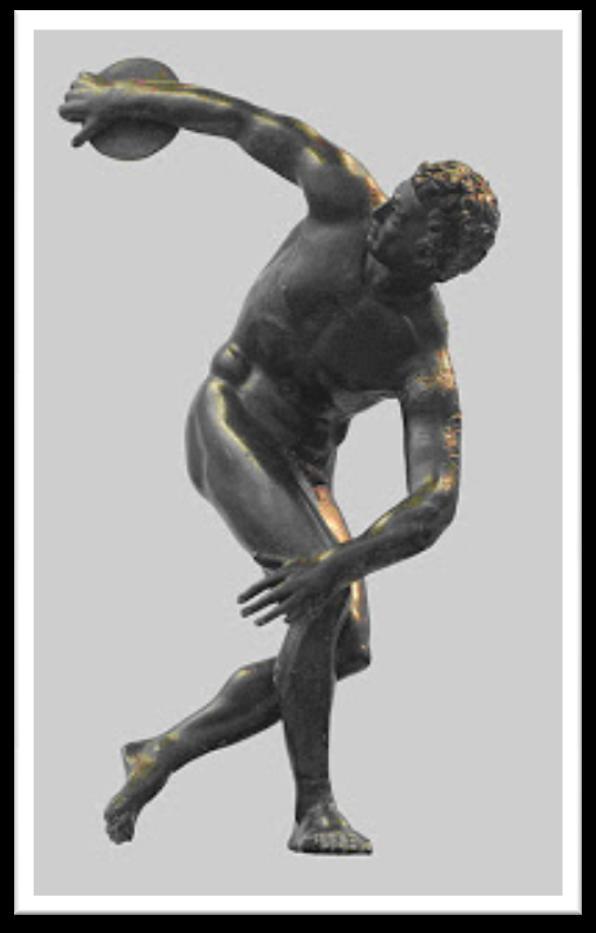
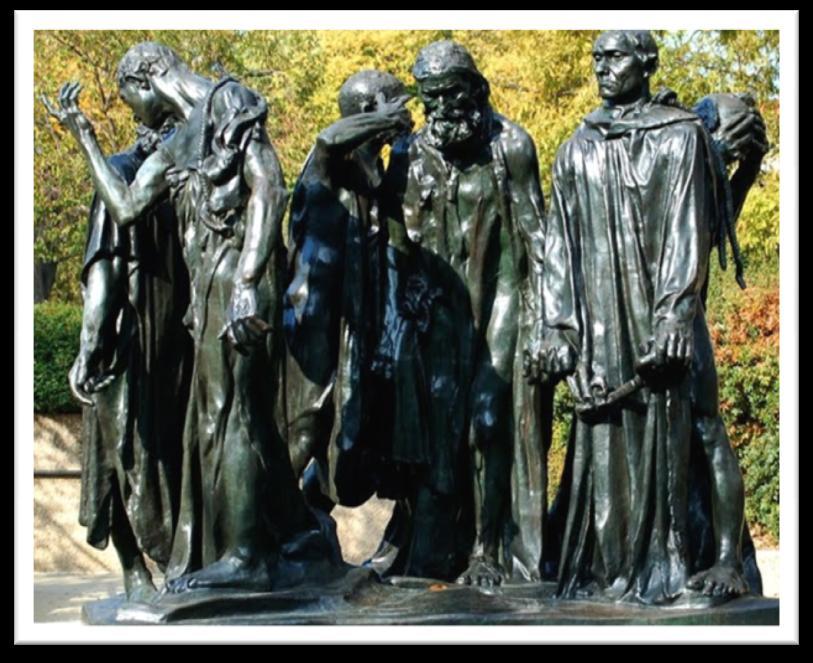
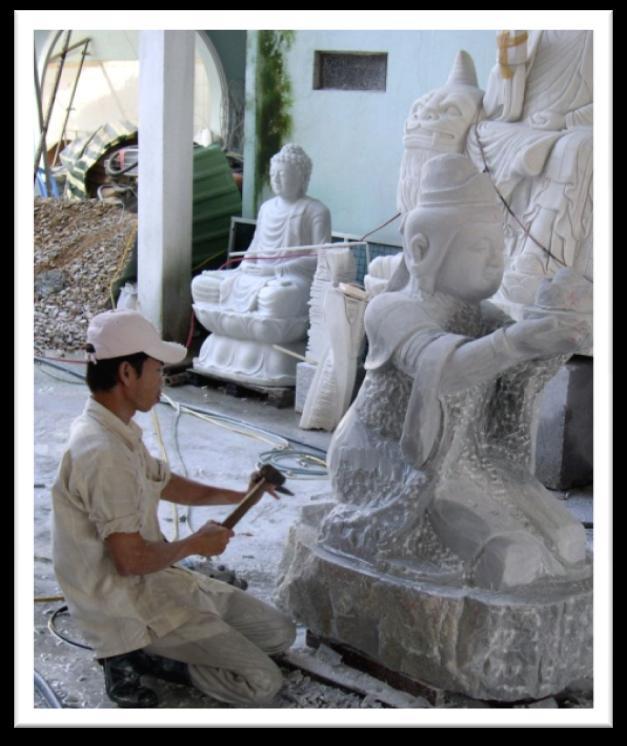
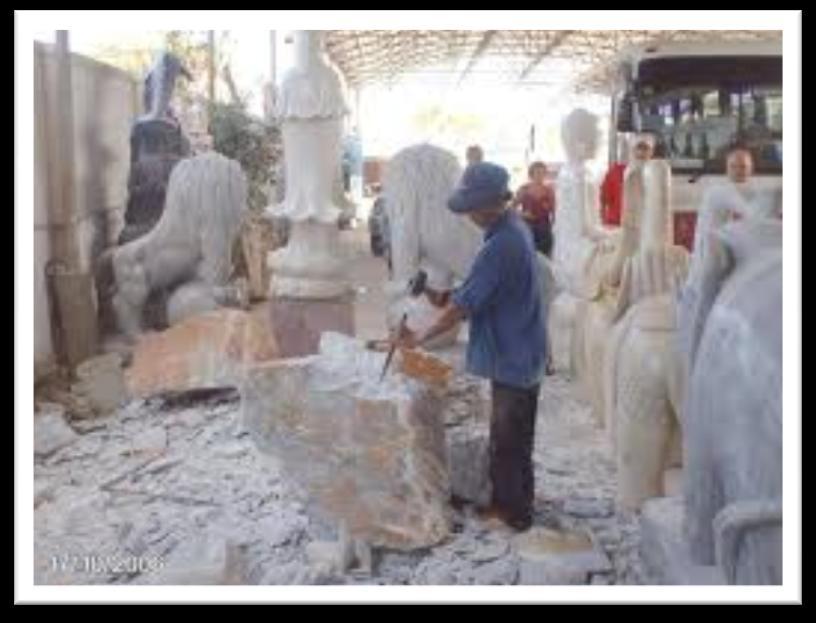

THE HISTORY OF SCULPTURE
For thousands of years sculpture has filled many roles in human life. The earliest sculpture was probably made to supply magical help to hunters. After the dawn of civilization, statues were used to represent gods. Ancient kings, possibly in the hope of making themselves immortal, had likenesses carved, and portrait sculpture was born. The Greeks made statues that depicted perfectly formed men and women. Early Christians decorated churches with demons and devils, reminders of the presence of evil for the many churchgoers who could neither read nor write.
From its beginnings until the present, sculpture has been largely monumental. In the 15th century, monuments to biblical heroes were built on the streets of Italian cities, and in the 20th century a monument to a songwriter was built in the heart of New York City. Great fountains with sculpture in the center are as commonplace beside modern skyscrapers as they were in the courts of old palaces. The ancient Sumerians celebrated military victory with sculpture. The participants of World War II also used sculpture to honor their soldiers.
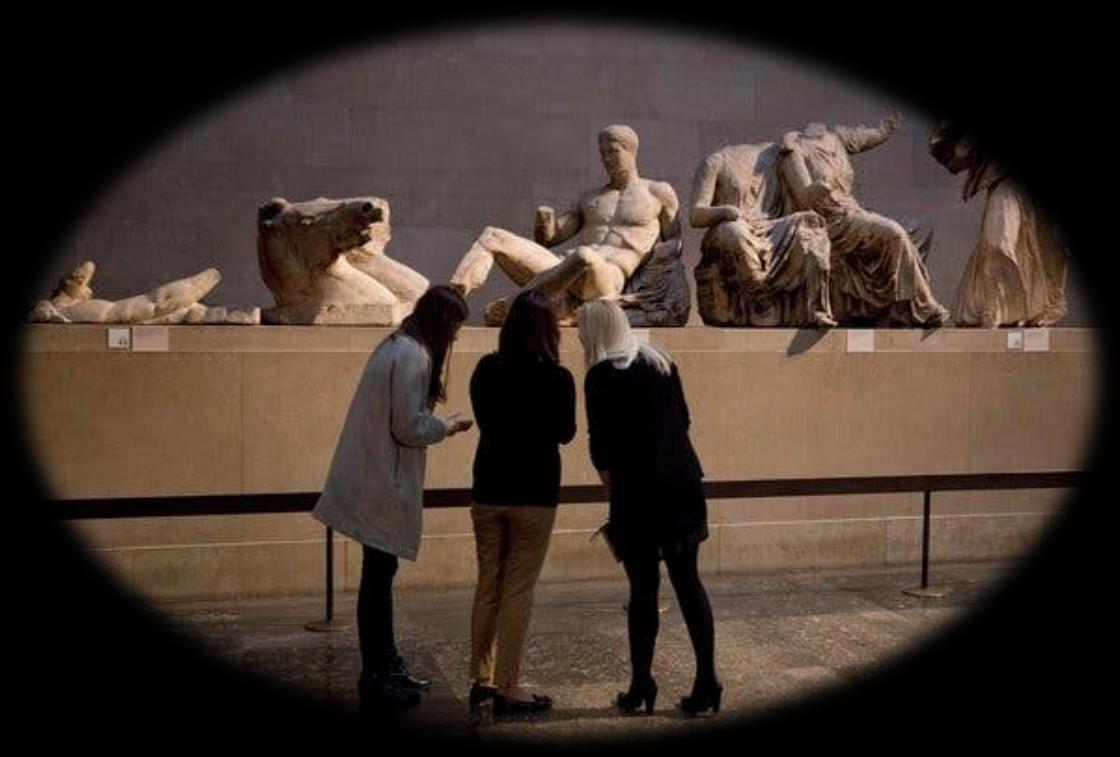
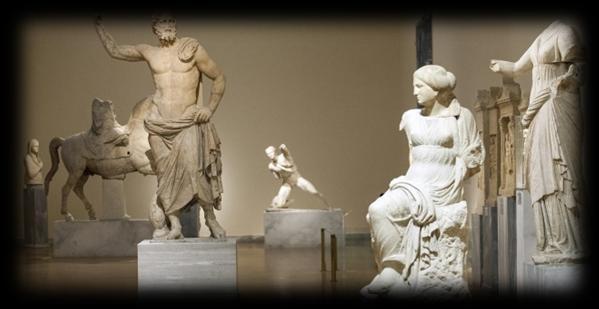
Today, we still create monuments and statues of those things we find important. When our buildings have crumbled and our electronic records are lost to the ravages of time, what will we have left behind of who we were? Will a civilization thousands of years from now, be able to tell who we were by those things that have endured? How about two or three decades from now in our own families?Are we complacent to see the memory of those dear to us fade away, as surely as photos in an album or do we seek to immortalize them in a more lasting art form? Some may say it is morbid to have portraits of those dear to us, or dear to our grandparents in our homes. While others are happy to have what they describe as the comforting presence of their ancestors close to them. Whatever one’s personal view of portrait busts are, perhaps it should be pointed out that sculpture can be used not only to memorialize those dear to us, but to capture a moment in time forever. Maybe its that loving look shared between a couple, a mother with her baby, the sweetness of a child at play, or a triumphant moment for an athlete. Moments like these can be relived for decades to come and can stand on their own as emotive works for your own family or others for long years to come.
Art also helps define who we are or what we find beautiful. It can be used to enhance an otherwise uninteresting niche in our home or be a constant source of encouragement or comfort to us. Our ancestors knew this and used sculpture much in the same ways I've already described above. They just did it in the style of their particular culture. We may remember them in an instant for their greater works, but every year a person discovers an ancient artwork that they are surprised to find is so relevant to their life.
We know how our distant ancestors left their mark on history and how they wanted to be remembered. How will we choose to be remembered?
1.1 Literature study
Sculpture in the Ancient World
The earliest civilizations of Egypt, Mesopotamia, the Indus Valley, and China gradually developed forms of writing about 3000 B C The people of these civilizations, like their prehistoric ancestors, also expressed deeply felt beliefs in sculpture
Egypt
Egyptian sculpture and all Egyptian art was based on the belief in a life after death. The body of the Egyptian ruler, or pharaoh, was carefully preserved, and goods were buried with him to provide for his needs forever The pyramids, great monumental tombs of Giza, were built for the most powerful early rulers. The pharaoh and his wife were buried in chambers cut deep inside the huge blocks of stone
Life-size and even larger statues, carved in slate, alabaster, and limestone, were as regular and simple in shape as the tombs themselves. Placed in the temples and inside the burial chambers, these statues were images of the rulers, the nobles, and the gods worshiped by the Egyptians. The Egyptians believed that the spirit of the dead person could always return to these images Hundreds of smaller statuettes in clay or wood showed people engaged in all the normal actions of life: kneading bread, sailing, counting cattle These statuettes were astonishingly lifelike Scenes carved in relief and painted in the tomb chambers or on temple walls described Egyptian life in all its variety.
Egyptian sculptors always presented ideas clearly The pharaoh or noble is made larger than less important people In relief sculpture every part of a figure is clearly shown. An eye looking straight forward is placed against the profile of a face, the upper part of the body faces front, and the legs are again in profile.
The Egyptians often combined features from various creatures to symbolize ideas For example, the human head of the pharaoh Khafre is added to the crouching figure of a lion to form the Great Sphinx This composition suggests the combination of human intelligence and animal strength. .
Mesopotamia
The "land between the rivers," Mesopotamia, had a much less stable society than Egypt and lacked Egypt's vast amounts of stone for monumental sculpture. Its cities were often destroyed by floods and invading armies
The earliest examples of sculpture in this region were formed of light materials: baked and unbaked clay, wood or combinations of wood, shells, and gold leaf. A group of stone figures from Tell Asmar depicts gods, priests, and worshipers in a way very different from Egyptian sculpture These figures are cone-shaped, with flaring skirts, small heads, huge, beaklike noses, and large, staring eyes.
Stone sculpture from such heavily fortified city palaces as Nineveh, Nimrud, and Khorsabad reveal the aggressive, warlike character of later (10th-century B C ) conquerors of this region, the Assyrians. At the entrances of their palaces the Assyrians placed huge symbols of the king's might and majesty in the form of colossal guardian monsters--five-legged, winged bulls with human heads. Slabs of stone carved in relief with scenes of hunts, battles, victory banquets, and ceremonial rituals were placed along the lower walls inside the palaces
A greater lightness and brilliance can be seen in a still later center of this region, Babylon. The Babylonians used brightly colored tiles in their reliefs.
Persian conquerors who occupied Babylon in the 6th century B.C. brought with them a tradition of fine craftsmanship This skill persisted as they continued creating superb designs in bronze and gold. Sometimes the designs are purely abstract ornamental patterns; sometimes they are animal forms freely shaped into graceful figures Relief sculpture from the great palace of Darius at Persepolis (begun about 520 B.C.) retains some Assyrian features. The figures have heads with tightly curled hair and beards Flat areas bounded by sharply cut lines contrast with richly patterned ones. The figures in this sculpture are softly curved and rounded; draperies are fine and light.
The easy, natural movements of these figures marching in stately procession along the walls of the palace at Persepolis may well reflect qualities of the most original sculptors of the era (6th century B.C.), the Greeks.
Aegean Civilization
Just a few examples of sculpture remain from the colorful Minoan civilization on the island of Crete. Ivory and terra-cotta; small statuettes of snake goddesses, priestesses, and acrobats; and cups with such scenes in relief as a bull being caught in a net or harvesters returning from the fields give lively suggestions of Minoans in action.
Just a few examples of sculpture remain from the colorful Minoan civilization on the island of Crete Ivory and terra-cotta; small statuettes of snake goddesses, priestesses, and acrobats; and cups with such scenes in relief as a bull being caught in a net or harvesters returning from the fields give lively suggestions of Minoans in action.
Power passed from Crete to the mainland, but little sculpture from such sites as Tiryns or Mycenae has been found The Lion Gate at Mycenae (about 1250 B.C.), with its two massive beasts guarding the entrance to the fortified city, is an exceptional monumental sculpture from this time. The beaten-gold mask of Agamemnon is memorable for its suggestion of the great heroes of Homeric legends. The mask was found buried with golden cups, daggers, breastplates, and other objects in the tombs and shaft graves of Mycenae
Greek Sculpture
Around 600 B.C., Greece developed one of the great civilizations in the history of the world. Sculpture became one of the most important forms of expression for the Greeks.
The Greek belief that "man is the measure of all things" is nowhere more clearly shown than in Greek sculpture. The human figure was the principal subject of all Greek art. Beginning in the late 7th century B.C., sculptors in Greece constantly sought better ways to represent the human figure.
The Greeks developed a standing figure of a nude male, called the Kouros or Apollo. The Kouros served to depict gods and heroes. The Kore, or standing figure of a draped female, was more graceful and was used to portray maidens and goddesses. The winged female figure, or Nike, became the personification of victory.
The fact that Greek sculptors concentrated their energies on a limited number of problems may have helped bring about the rapid changes that occurred in Greek sculpture between the 7th century and the late 4th century B.C. The change from abstraction to naturalism, from simple figures to realistic ones, took place during this period. Later figures have normal proportions and stand or sit easily in perfectly balanced poses.
Historians have adopted a special set of terms to suggest the main changes in the development of Greek sculpture and of Greek art in general. The early, or Archaic, phase lasted about 150 years, from 625 to 480 B.C. A short interval called Early Classical or Severe, from 480 to 450 B.C., was followed by a half century of Classical sculpture. Late Classical indicates Greek art produced between 400 and 323 B.C., and Hellenistic art was made from 323 to 146 B.C.
The most important function of Greek sculpture was to honor gods and goddesses. Statues were placed in temples or were carved as part of a temple. Greek temples were shrines created to preserve the images of the gods. The people worshiped outdoors.
Greek sculpture changed with Greek civilization. Praxiteles' Hermes is slimmer and more elegant than the strong, vigorous SpearBearer, by Polykleitos. Figures by Skopas from the Mausoleum at Halicarnassus are harsher and more dramatic than the quiet, controlled figures by Phidias.
Hellenistic sculptors emphasized the human figure. They reflected the great changes in their world when they treated in new ways subjects traditionally favored by earlier Greek sculptors. A new interest developed in the phases of life, from childhood to extreme old age. Sculptors described their figures in as natural and exact a way as possible.An ill old woman hobbles painfully back from the market; a little boy almost squeezes a poor goose to death.
The Greeks were defeated by the Romans, but the Hellenistic style lasted for centuries. Greek sculpture survived because the Romans were greatly impressed by Greek art. From the early days of the republic, Romans imported examples of Greek art, ordered copies of famous Greek works, and commissioned Greek sculptors to do Roman subjects.
Romanesque Sculpture
A new and brilliant chapter in Christian art began after the year 1000. For the next three centuries sculptors, architects, masons, carpenters, and hundreds of other craftsmen created some of the most impressive Christian churches ever built.
These artists worked on a bolder and larger scale than had been possible for hundreds of years. For their ideas they looked to the best examples of great structures they knew Roman buildings. The term "Romanesque" suggests the Roman qualities of the art of the 11th and 12th centuries. Important changes were made by these later artists. German Romanesque churches differ from Italian ones, and Spanish from French ones. Ideas of carving, building, and painting circulated freely, for people often went on pilgrimages to worship at sacred sites in different countries.
An early 11th century example of Romanesque sculpture shows the way Roman ideas were translated. The bronze doors of the Cathedral of Hildesheim have ten panels with scenes from the Bible. The placing, purpose, and arrangement of these large doors clearly recall the 5th-century doors of Santa Sabina in Rome. But the details are different. Small figures twist and turn freely. Their heads and hands are enlarged and stand out from the surface of the relief.
Gothic Sculpture
Sculpture after the 12th century gradually changed from the clear, concentrated abstractions of Romanesque art to a more natural and lifelike appearance. Human figures shown in natural proportions were carved in high relief on church columns and portals.
As Gothic sculptors became more skilled, they also gained greater freedom and independence Later Gothic figures are depicted much more realistically than those made during the Romanesque and earlier Gothic periods The faces of the statues have expression, and their garments are draped in a natural way. Hundreds of carvings in the great Gothic cathedrals all over Western Europe presented aspects of the Christian faith in terms that every Christian could understand.
The great era of building drew to a close by the early 14th century A series of wars and crises prevented the building of anything more than small chapels and a few additions to earlier structures. One finds only small statuettes and objects, used for private devotions, instead of the great programs of monumental sculpture that in the 13th century had enriched such cathedrals as those at Amiens, Paris, Rheims, Wells, Burgos, and Strasbourg
Renaissance Sculpture
Jutting into the Mediterranean Sea, the Italian peninsula, at the crossroads of several worlds, had been the heart of the Roman Empire. Rome was the center of the western Christian world Later, northeastern Italy especially Venice became the gateway to the Near East and the Orient. Italian artists never completely accepted the Gothic styles that dominated art in Western Europe. The reason is that Italian artists were surrounded by the remains of the Classical Age and exposed to the Eastern influence of Byzantine art. (The article Byzantine Art and Architecture can be found in this encyclopedia )
As early as the 13th century the Italians planted the seeds of a new age: the Renaissance. Although the elements of medieval and Byzantine art contributed a great deal to the formation of Renaissance sculpture, Italian artists were interested in reviving the classical approach to art. ("Renaissance" means "rebirth.")
The most significant change in art that occurred in the Renaissance was the new emphasis on glorifying the human figure No longer was sculpture to deal only with idealized saints and angels; sculpted figures began to look more lifelike
The relief sculpture of Nicola Pisano (1220-84) forecast the new age In the late 13th century Pisano carved nude male figures on a church pulpit (The nude figure had not been used in sculpture since the fall of Rome.) Although Pisano obviously tried to copy the heroic figures of classical art, he knew little about human anatomy, and his work was still proportioned like Byzantine and medieval sculpture.
By the early 15th century the Renaissance was well under way The sculptor Donatello created the first freestanding nude since classical times, a bronze figure of David. Donatello clearly understood the whole anatomy of the figure so well that he could present the young biblical hero with an ease and assurance. By the early 16th century the sculptural heritage of another Florentine, the great painter and sculptor Michelangelo Buonarroti, was such that his version of David is almost superhuman in its force and strength
Donatello and his contemporaries Lorenzo Ghiberti (1378-1455) and Jacopo della Quercia (1378?-1438) made themselves the masters of both the freestanding human figure and sculpture in relief Jacopo's stone panels at San Petronio, Bologna, are powerful and emotional. Ghiberti's famous bronze doors of the Baptistery in Florence show his control of the science of perspective and his masterful handling of the human figure
A host of sculptors worked with these men and, in turn, trained younger sculptors. Their individual talents varied, and these were applied to a number of different sculptural problems Christian themes continued to be important, but in addition, fountains, portraits, tombs, equestrian statues, and subjects from classical mythology were all created to meet a lively demand Luca della Robbia (1400?-82) and others developed a new medium--glazed terra-cotta. It was a popular and attractive substitute for the more expensive marble.
Michelangelo unquestionably became the dominant figure in 16th-century sculpture, and he is thought by many people to be the greatest single figure in the history of art. All his sculpture, from the early, beautifully finished Pietà to the tragic fragment the Rondanini Pietà, left unfinished at his death, was made with skill and power Michelangelo's contemporaries and the sculptors who lived in later years in Italy and elsewhere developed a more elegant, decorative style, relying on a smooth, precise finish and complex, elaborate designs. This style was called mannerism.
1.2 Synopsis
NEED FOR STUDY
• The study can be used to understand the relationship between space, place and the user group. The factors involved can guide us towards design and will help us to put things in the framework.Also, an existing case study can help us get better ideas regarding our project.
AIM
•To design a well defined space for sculptors to work, which can give artist a flexibility and freedom of creativity in their work.
OBJECTIVE
•To understand the history of exsisting places,how it got organised and workstages,flexibility and advantages. Also what makes it loose its value now and what changes could be evolved now for it to get life.
•To analyse and find out what kind of spaces are required to work which fitts all the worktypes (sculptors) for example a basic studio divisons are:
1.Claywork section
Where claystorage,wet area includes Kiln section for baking.
2.Bronze sculpture section
Bronze sculpting studio
Casting section
Wax removing section
3.Ceramic section
4.Granite section
METHODOLOGY
1.PRIMARY SURVEY
Interview with sculptors : Mr. Peeran sir
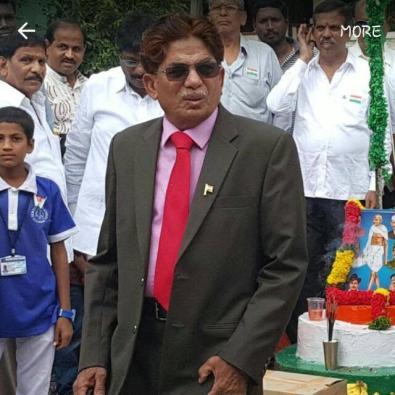
Mr.Peeran shared his childhood stories of how he knew from his school teacher that he has a talent within him to become an artist. He studied FineArts from MS University,Baroda in the year 1964 and is specialised in Bronze sculpture.later he explained me regarding sculpure and its types within it like 1.Stone carving , 2.Wood carving , 3Metal crafts, Arts is a freelance art, some do it with the influence of their forefathers to continue their inherit art and some who likes arts and choose it as profession.
Mr.S.P Nandhan (cholamandal)
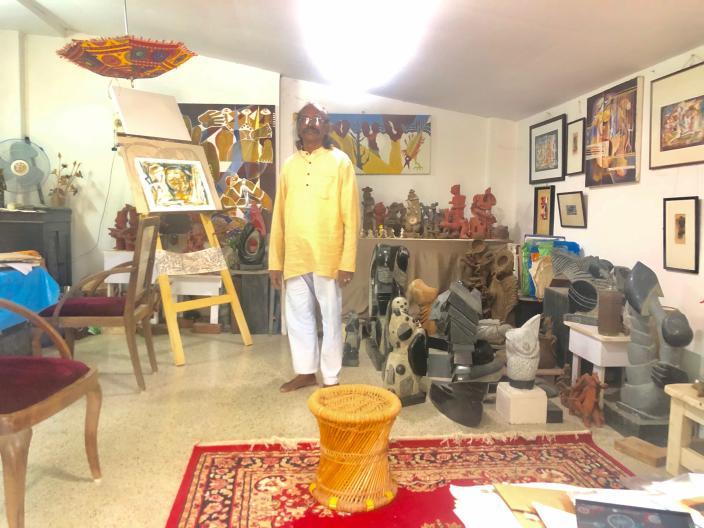
S.P Nandhan in the beginning explained me about how cholamandal the history stories about how his principal Paniker thought about this and it’s a dream come true. He also explained me about programming of the studios and what particular common spaces in studios are required
Workspaces , relaxing zone, public zones(exhibitions), private zone (which includes stay)
Types of mediums in which artist work.. Clay, Terracotta, Bronze, Scrape , Stone, Ceramic, Etc…
And are the useful spaces for them to work and relax and how can it be provided
Divisons of studios based on work
1.Bronze studio
2.Casting and
3.Wax removing section
4.Granite section
5.Ceramic section
6.Stone carving section. Etc
He also mentioned about floorings for stone works like granite requires strong flooring and it has to be a outdoor space if created.
Flooring of blue metal (engineering flooring) Stone carving. He says it has to be near the road area for easy access.
How he feels about cholamandal
He and the other surviving artists love this place because it’s calm and also you have other artists as your neighbour. Which always motivates you to think about your profession art
And also because there’s so much interaction between one artist to other so you learn new things and explore.
Few mentioned studios by him discovered after cholamandal Ghari artist studios ; Delhi Arts acre; Calcutta Kala nagar ; Bombay
MARKET VALUE AND USER (today)
Sculpting is an art form that is associated to luxury. It is this criteria of this intricate art form that allows only a handful number of artists/sculptor to flourish.The motive behind the sculptors art center is to allow and provide more of such artists with a platform, to discover themselves and showcase their talent in a better way. To be able to establish a better life and lively hood because in the end, irrespective of whether it's an art form a source of depicting luxury in a way, it sure is a source of income to many. Hence it makes an exposure such as the sculptors art center, mandatory for the masses
Few incidences when such villages have happened…
Part II : DESIGN INVESTIGATION
Chapter 1
Casestudy
1. Cholamandal artist village
2.Jawaharlal nehru university of finearts Desktop study
1.Songzhuang Artist Residence
2. Artist studio
3. ghari artist studio
1. CHOLAMANDAL ARTIST VILLAGE
Site Location: Injambakkam, Palavakkam, Tamil Nadu
Architect : Shilpa architects and M. V. Devan
Cholamandal began in 1966 as an artist village situated on ten acre plot on the coromandel coast near Chennai. It offered a place where artist could live , create, and share their art with others within the community. At cholamandal, the creative artist is equal participant in society, self-employed and independent. Cholamandal was an attempt to foster a genre of art which,according to principal of the institution in its early days, the late K.C.S. Paniker,was Indian spirit and world wide contemporary. Towards the end of the fifties ,many painters and sculptors in the Madras School of Arts and Crafts joined in the search for what amounted to a new way of life in contemporary art. The venture was an exciting one and soon proved to be exacting as well.
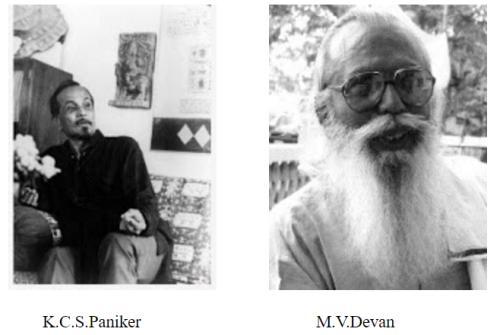
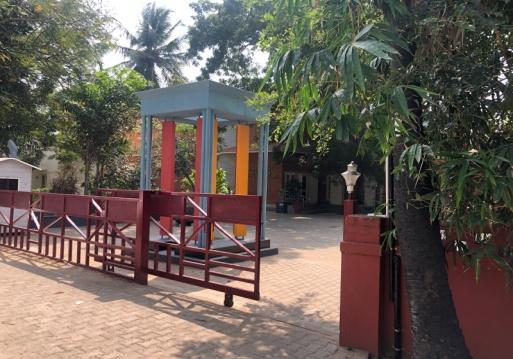
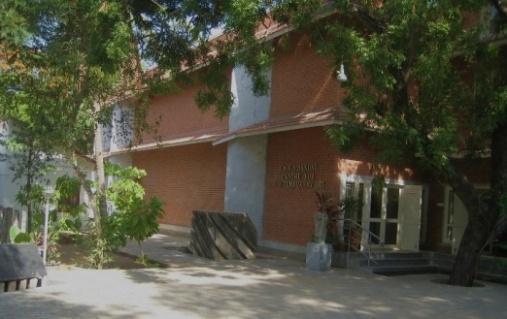
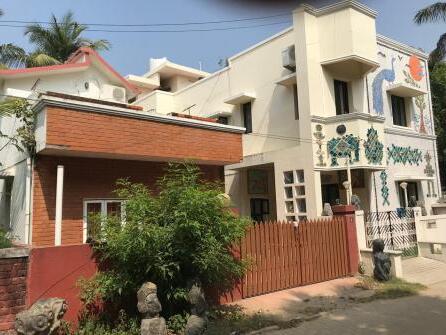
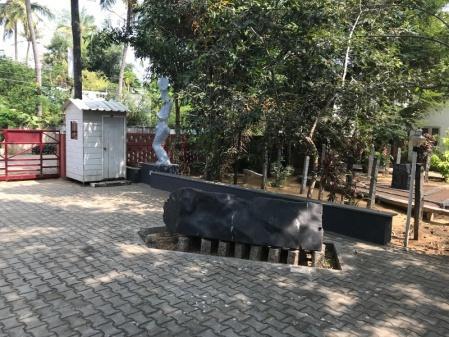
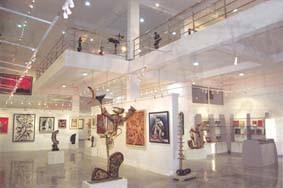
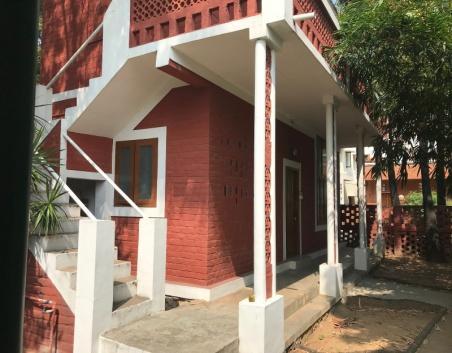
Thirty talented painters and sculptors acquired land to work at cholamandal in comaparative peace. There, the artist would paint or sculpt through major part of the day and applied himself to a congenial art craft durning leasuire hours, to supplement, if necessary,his income from the scale of painting and sculpturess
One of the artist Nandhan also explained the motivation and techniques behind the work produced at cholamandal.These artists, some of whom once students of the government school of arts and crafts , Madras.
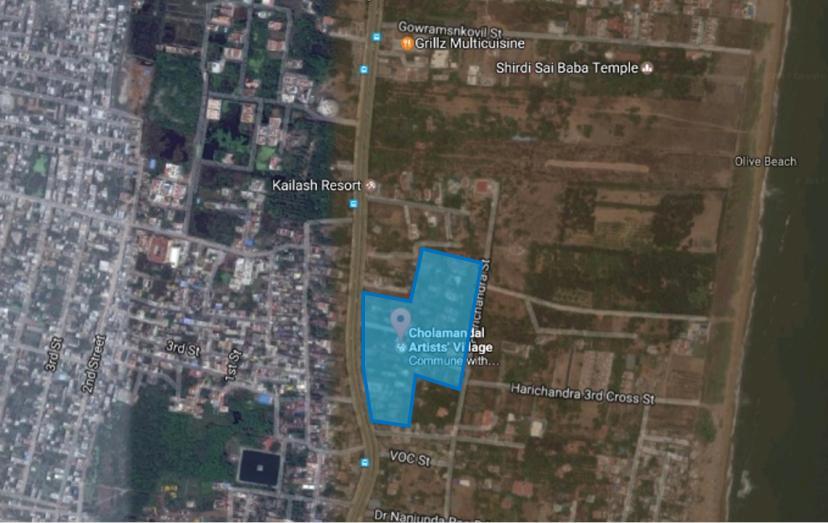
SITE STUDY
Total area: 7.3 acres - 29,540 sq. m
Percentage of built up area: 64%
No. of plots: 45
Total area of plots: 18,357 sq.
Site surroundings :
North:St.Mary’s Orthodox syrian church,spencer’s store
West: commercial areas like shops,shiva hospital,vael’s billabong high international school.
South: sugajeeva cathedral,st thomas church
East: residential areas,olive beach
Visitor parking : 1265sqm
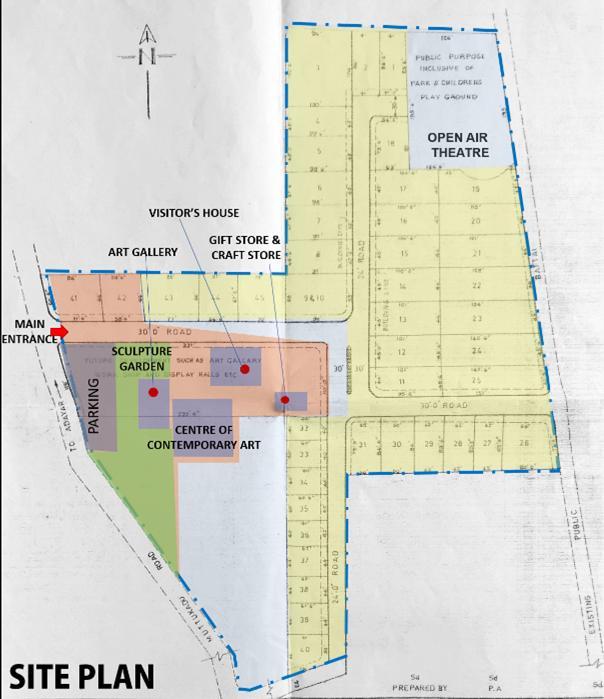
CIRCULATION:
All buildings are oriented to face the interior roads. Most of the circulation within the site happens through walk. There are 8 m and 6 m roads within the site to access each of the plots. The secondary road is used only by the residents and also acts as a service road. Trees are planted along the pathways and around the site forming green networks. This provides shade during the hot afternoons.
USER/ACTIVITY ANALYSIS:
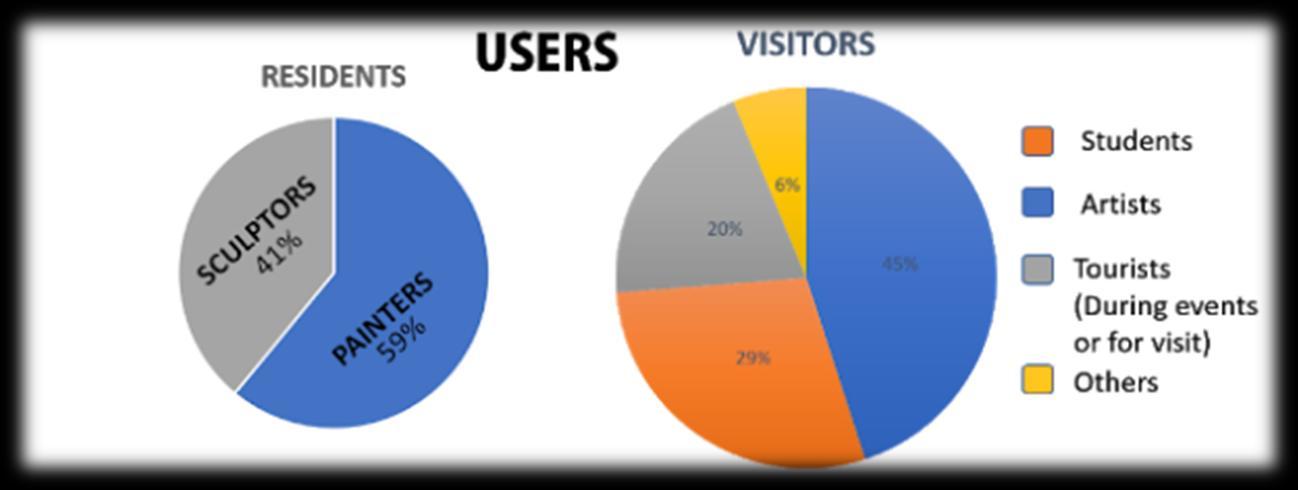
Total no. of artist 45 plots with 42 houses,but 30-35 residence in the community as present
CONCLUSIONS
Thirty painters and sculptors have acquired land for themselves in order to be able to work in comparative peace Here the artist paints or sculpts through the major part of the day and applies himself to a congenial art-craft during leisure hours to supplement, if necessary, his income from the sale of paintings and sculptures Cholamandal is perhaps the first of its kind anywhere in the world It is administered by an annually elected council of members Cholamandal welcomes visitors to the village It has a twin guest cottage
The village perhaps shows how a community that was initially founded to maintain and promote the art scene in Southern India has functioned efficiently over the years. It has become a self-sustainable entity. Initially, it was home to about 40 artists who fashioned their very own art space and dedicated their lives to art. Cholamandalam is today a dynamic space where art is created on an enduring basis. Whether it is classical or contemporary art, this artists’ village offers a platform to all strains of art. It is unique, it’s the first place of its kind globally where artists have come together to pursue their art in sylvan surroundings.
2.JAWAHARLAL NEHRU OF ARCHITECTURE & FINEARTS
(SCULPTURE DEPARTMENT)
Location : Masabtank
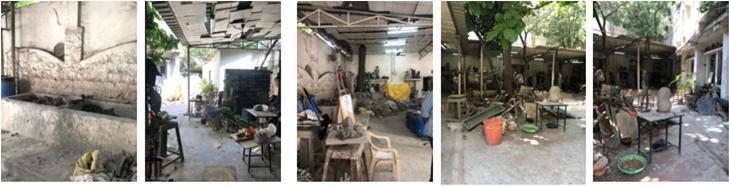
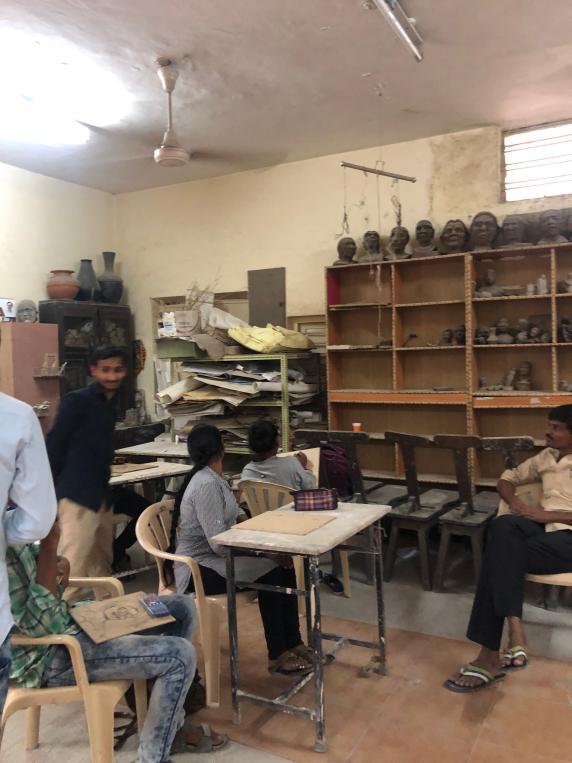
Outdoor sculpture making studios for students to work both life size and small size sculptures
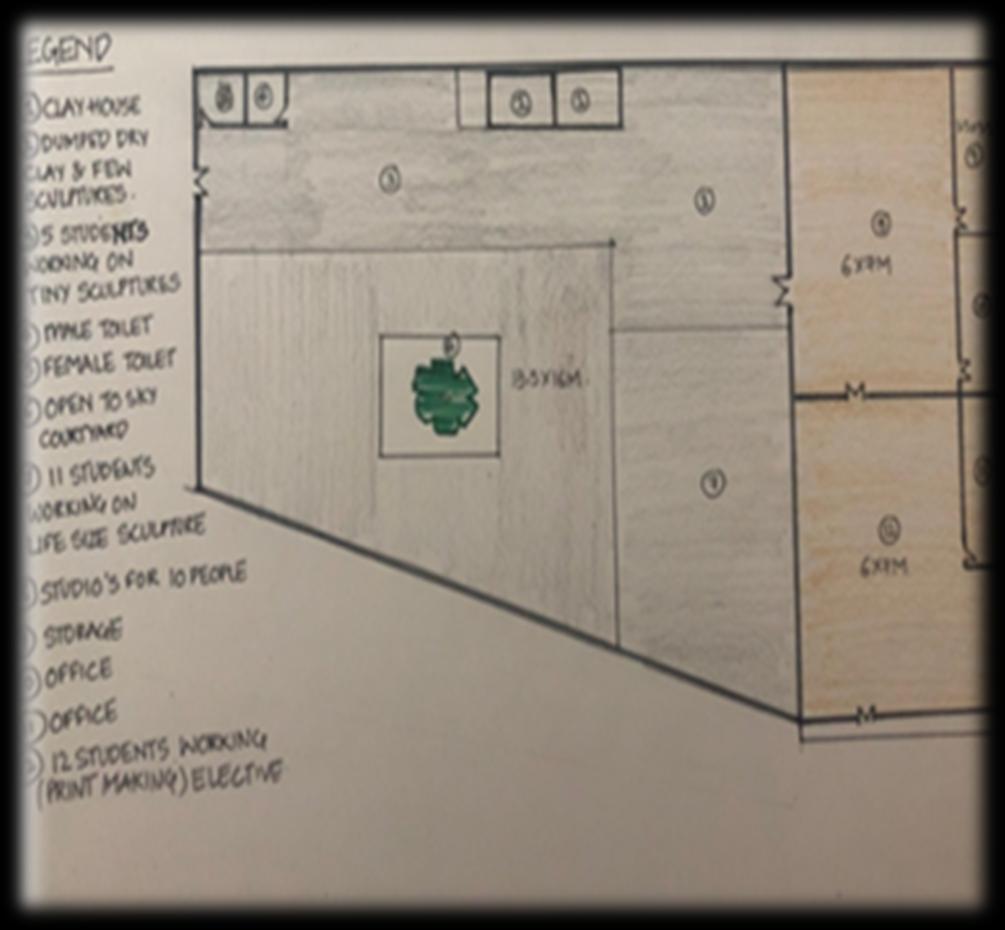
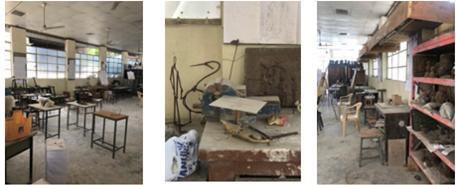
Indoor studios with natural lighting entering into the studios this placement is for small size sculptues made indoors
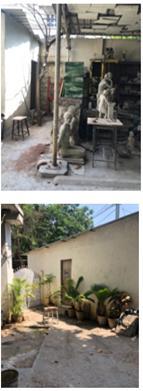
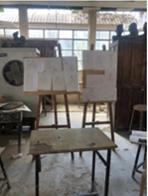
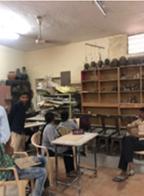
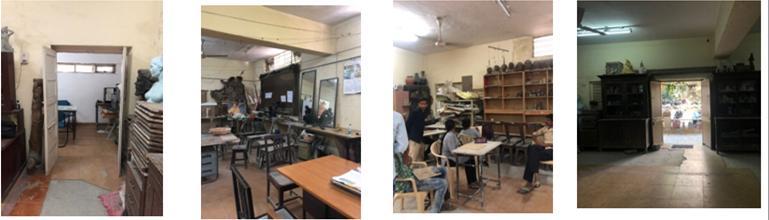
Main intention of choosing JNAFAU as my casestudy is to interact with students and know about there opinions about there own working studio. How comfortable is it to them and if not what types of changes would they appreciate ?
Desktop study
1.Songzhuang Artist Residence
2.Artist studio
3. Garhi art and craft centre
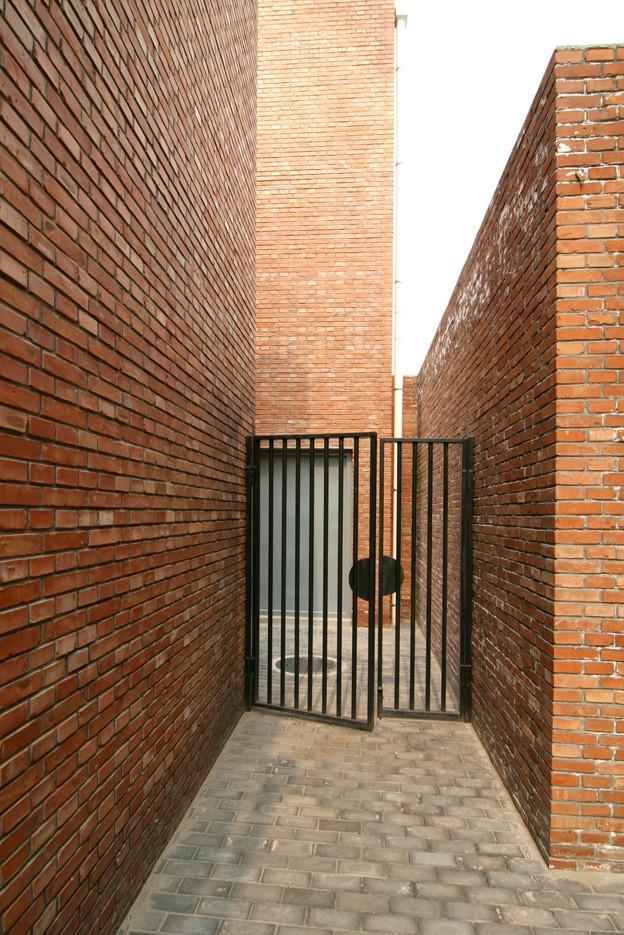
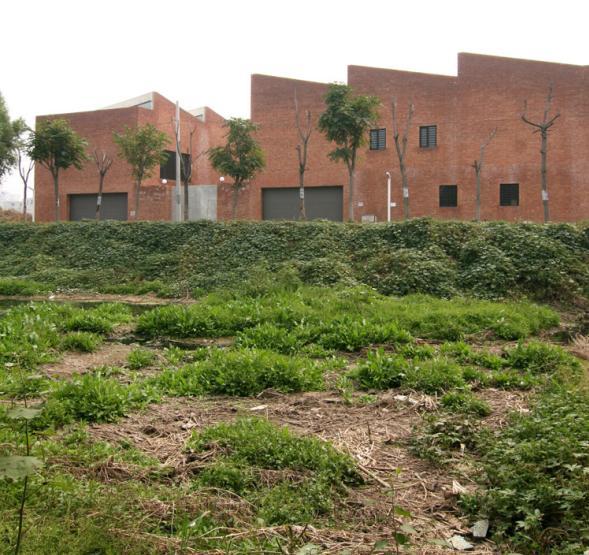
1.Songzhuang Artist Residence / DnA Beijing,china
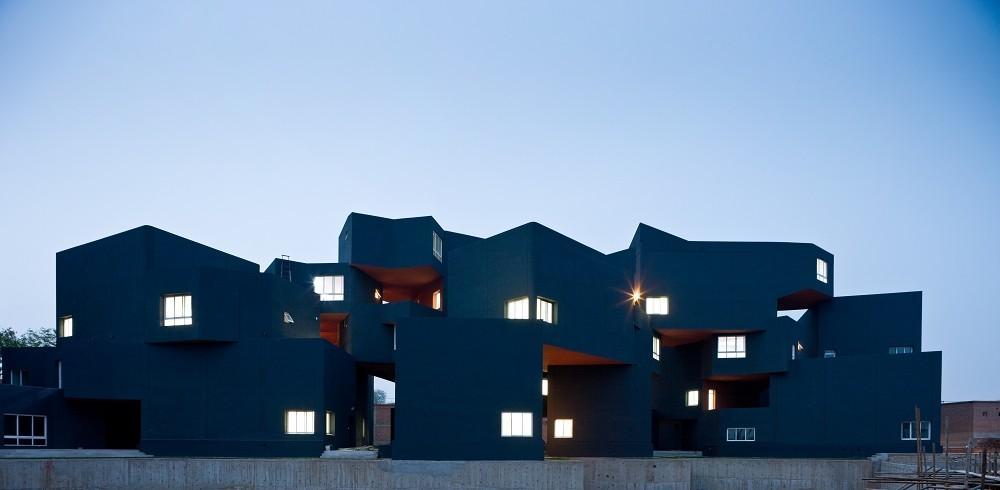
Architects DnA
Architect in Charge Tiantian Xu Program Residence/art studios
Client Private Design year2007-2008
Site area 1,400 sqm
Building area 5,300 sqm
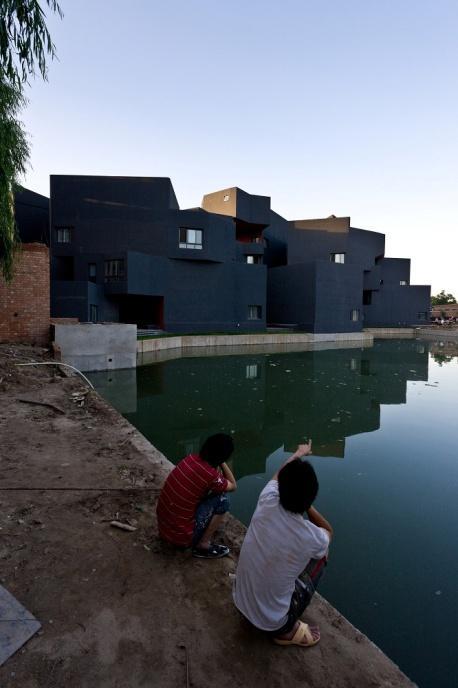
In past years, with the dramatic increase of artist population and demand of artist’s working and living space, many constructions were undergoing in Songzhuang village. A 20units artist residence facing a fishpond at a former outdoor storage lot is one of the local development targeting such demand.
Such a complex reflects an alternative living and working pattern: artists live in their studios, not necessarily working but also hanging out with fellows. Studio or working space is their living room as well as salon and showing space On the other hand, they also invent outdoor space for different activities and art performance.
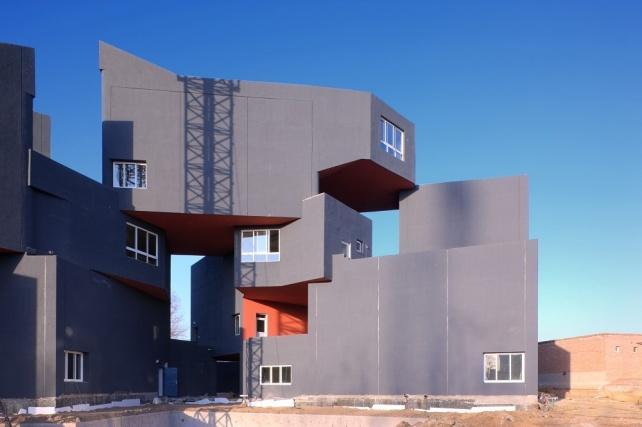
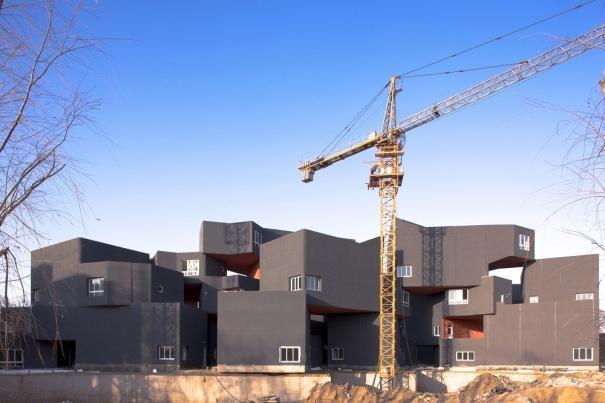
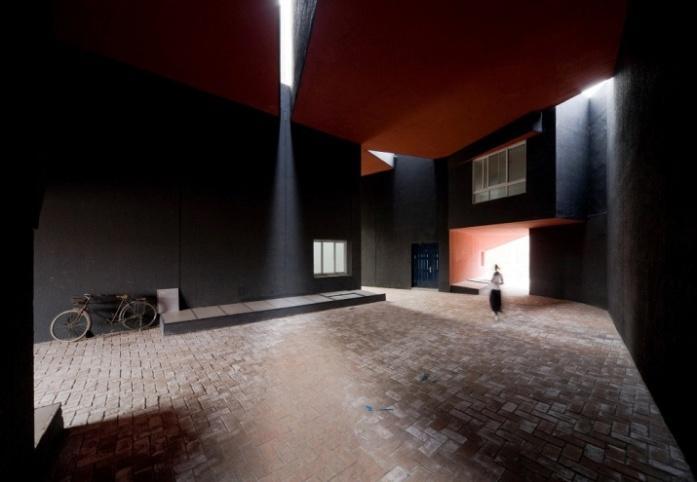
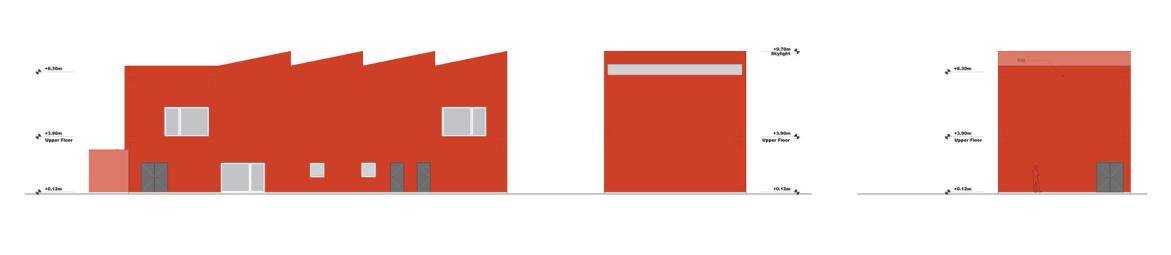
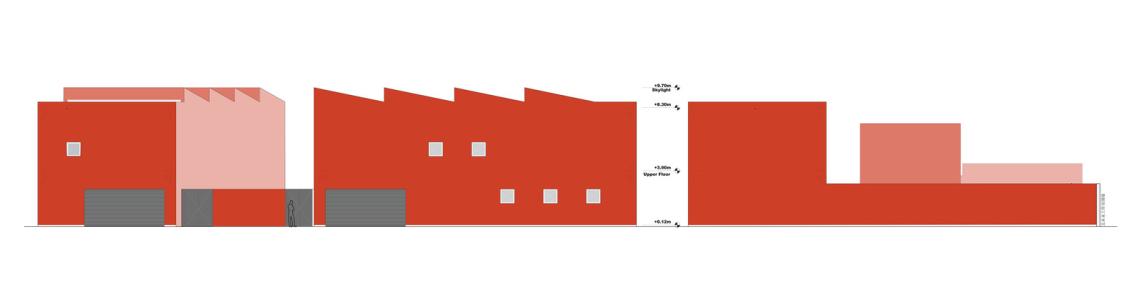
The programmatic requirement of working and living defines the height and geometry of both volumes: 6 metres height for working and 3 metres height for living; a simple rectangular box for studio and a complex geometry for living indicating bedroom, kitchen and toilet. Living volume is plugged into the working volume either on the same level or led by a stair to an upper level The exterior is clad in dark grey concrete and coated in orange for horizontal surfaces which is used to reflect both the industrial and village character. The twenty units on this site are organized to be seen as stacking containers, as a homage to the sites previous use as a former industrial outdoor storage lot. This creates an expressive configuration and unique spatial quality with a series of accidental spaces as blank canvas for artists to fill up with activities. The interplay of volume and void, light and shadow, is a catalyst to allow artists and visitors to constantly explore and experiment in the outdoor community space.In other words, this complex becomes an alternative museum for living art creation and exhibitions
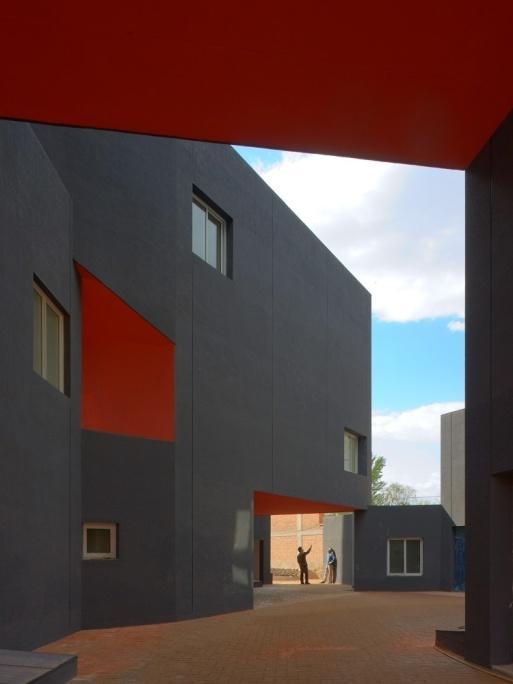
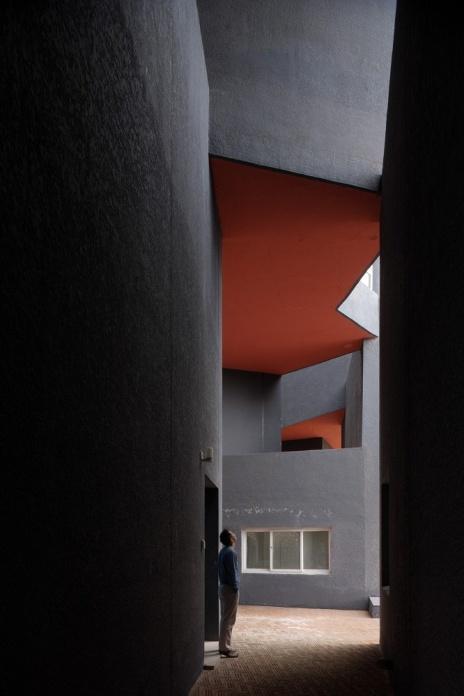
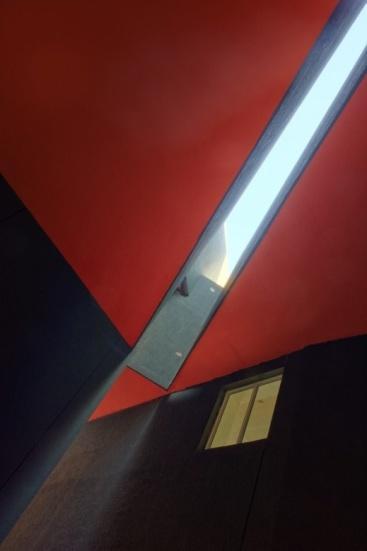
Voids allows wind flow within the blocks
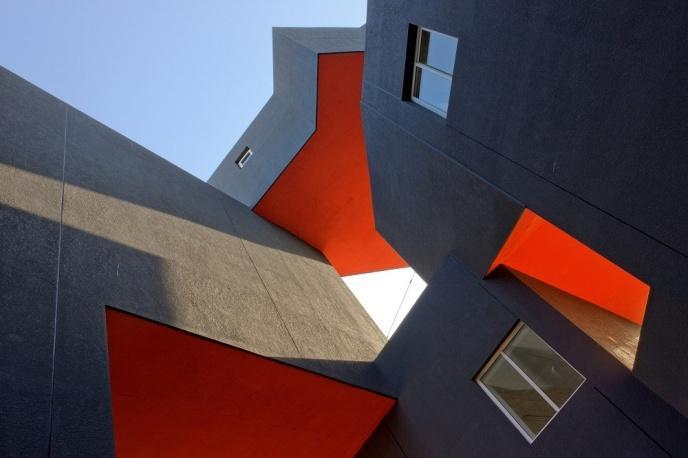
Light and shadow through the voids which defines spaces
2. Artist studio Architects Knowspace
Location
Song Chuan Nan Lu, Kunshan Shi, Suzhou Shi, Jiangsu Sheng, China
Category
Cultural Architecture Area
1488.0 sqm
Project Year
2013
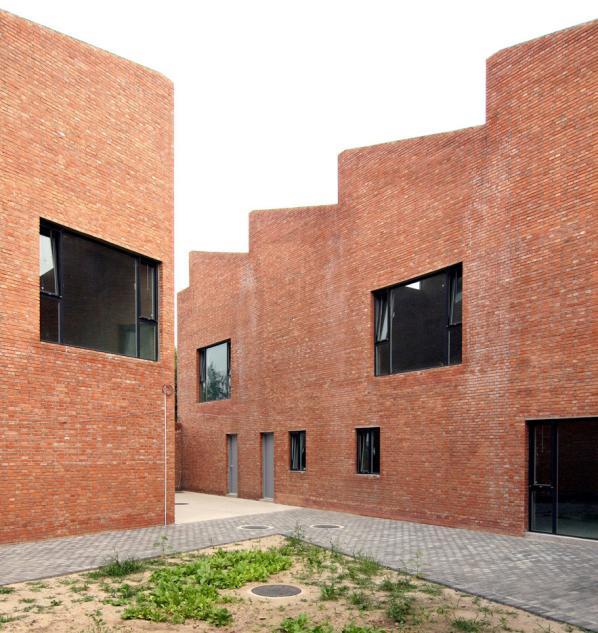
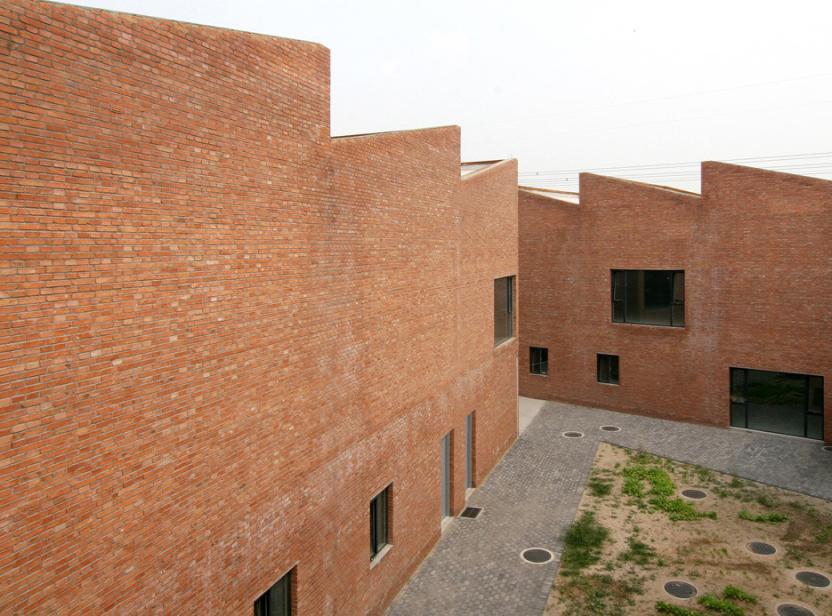
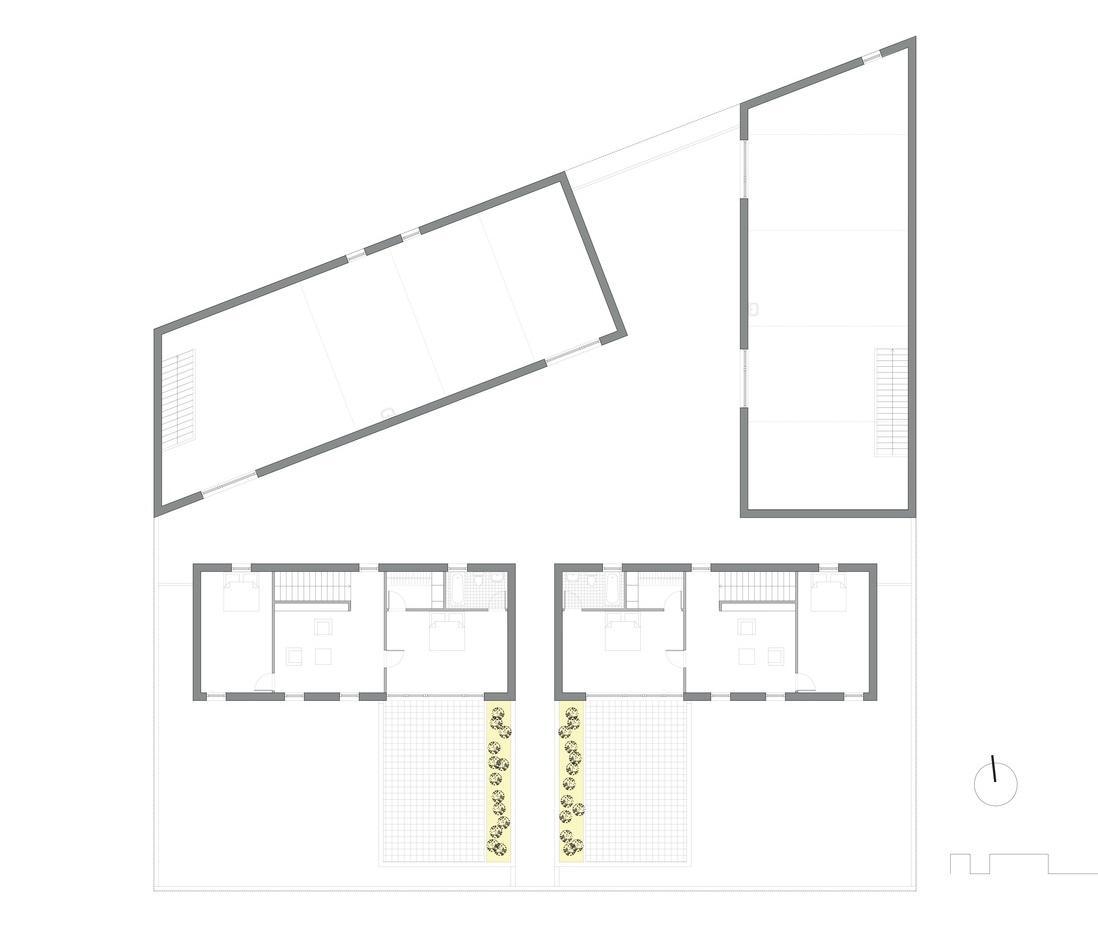
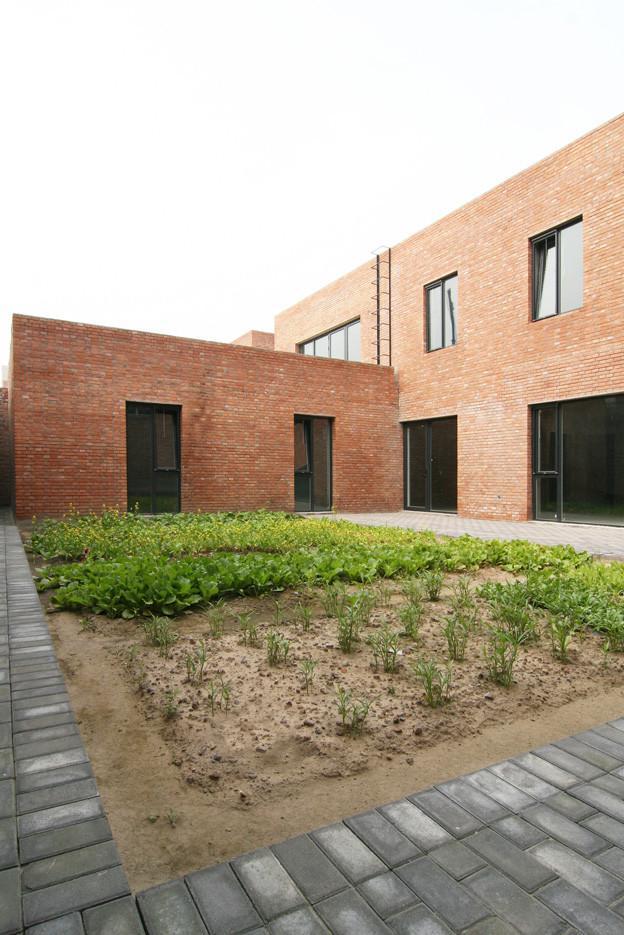
Two renowned Chinese painters decide to move to the outskirts of Beijing to the artist village Songzhuang in order to live and work in the quiet countryside and in the neighborhood of many fellow artists. The design for the studio houses departs from the traditional Chinese Courtyard House Type –not so much in terms of its representation or construction principles, but more in terms of aspects of its spatial performance, namely shelter (shielded outdoor space within the structure and figure), introversion (all openings open towards the inside, not towards the street), degrees of privacy (gradated levels of privacy through the succession of courtyards), orientation (main living spaces with south orientation) These are examined and translated into an architectural Prototype that reconciled 3 different juxtapositions: the inside and the outside, the working and the living, the individual and the collective.
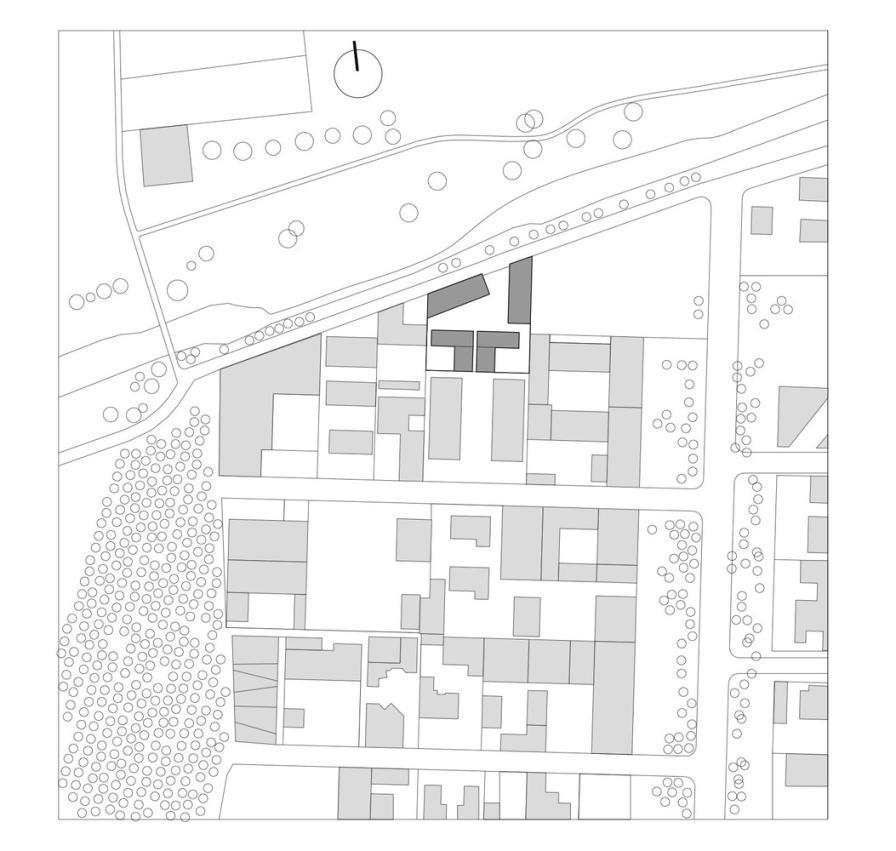
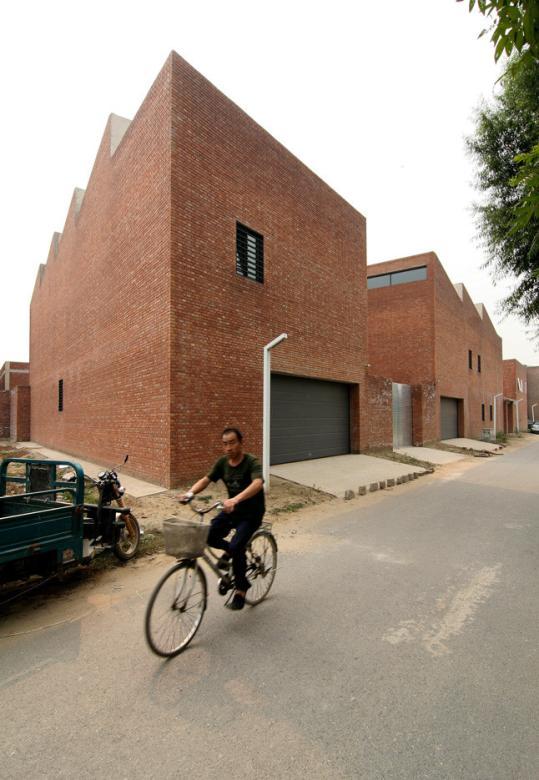
The adaptive figures of the buildings and their specific spatial configurations create differentiated courtyards/ outdoor spaces. The walled exterior shields the building from the outside world, while on the interior the spaces open up into the courtyards. The design task is characterized by 2 different programs, namely working and living, that are reconciled in one plot by means of The programmatic distribution executed by the prototype clearly separates these 2 different programs, yet it allows for complex relationships between both to happen through the courtyard spaces. The latter provide the choice of mutual linkage and separation both in temporal as well as spatial terms. As the one given plot has to accommodate the needs of 2 different owners, the question of coexistence between the individual expression and the collective shared spatial experience play a decisive role for the design. The operative figure of the adaptive prototype caters to this juxtaposition of privacy and individuality on the one hand, and collectivity and publicity on the other, by providing a gradation of differentiated outdoor spaces, that range from private to shared and public ones.
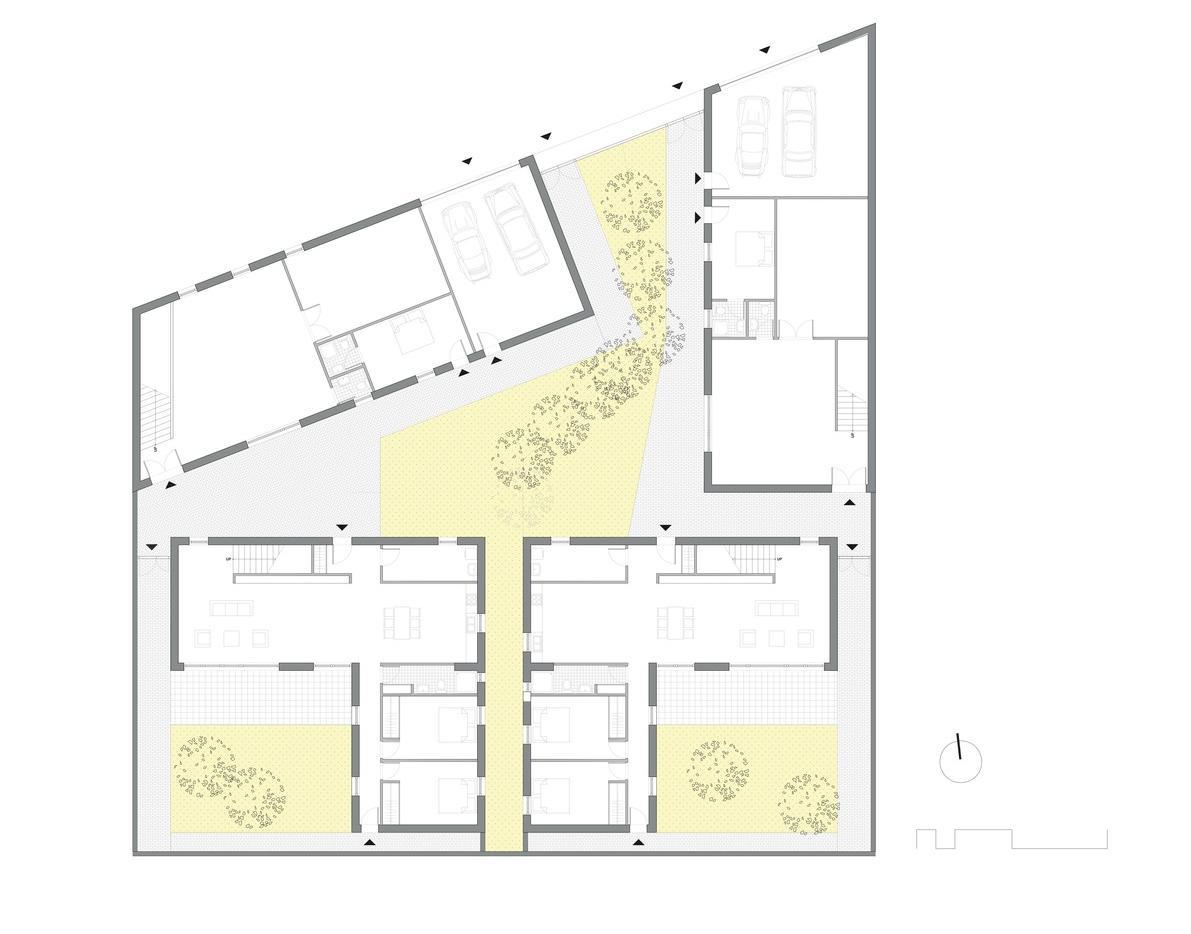
Ground floor
First floor
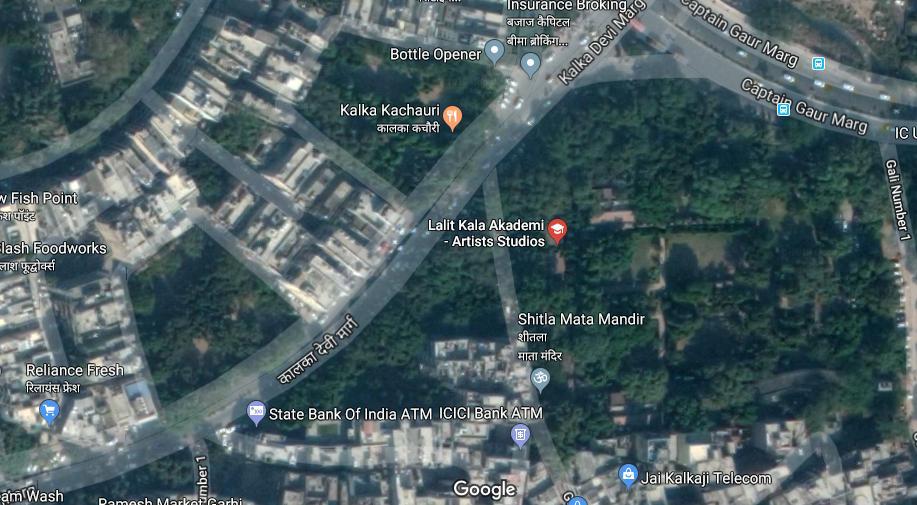
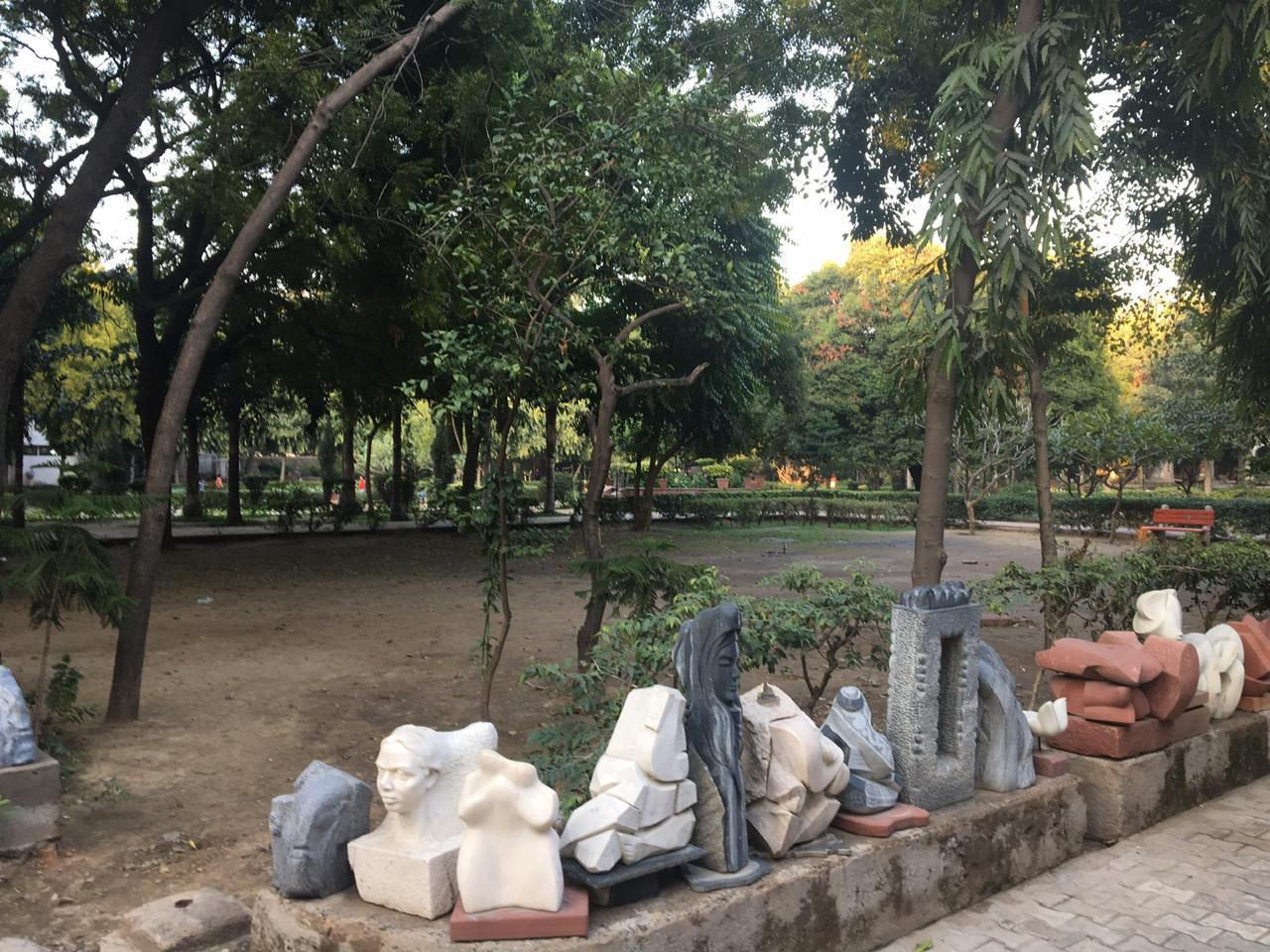
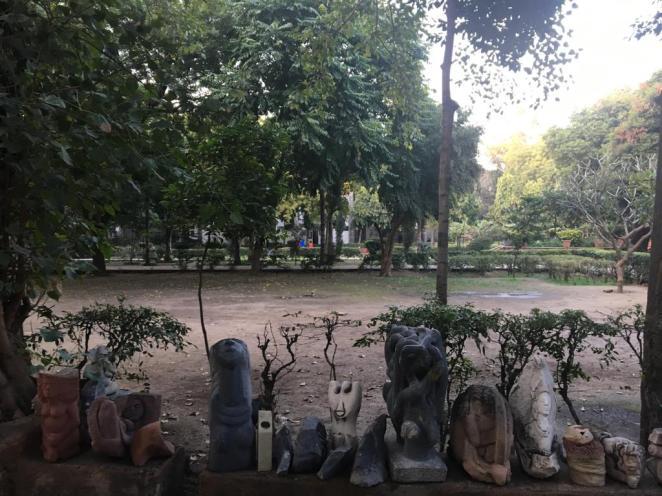
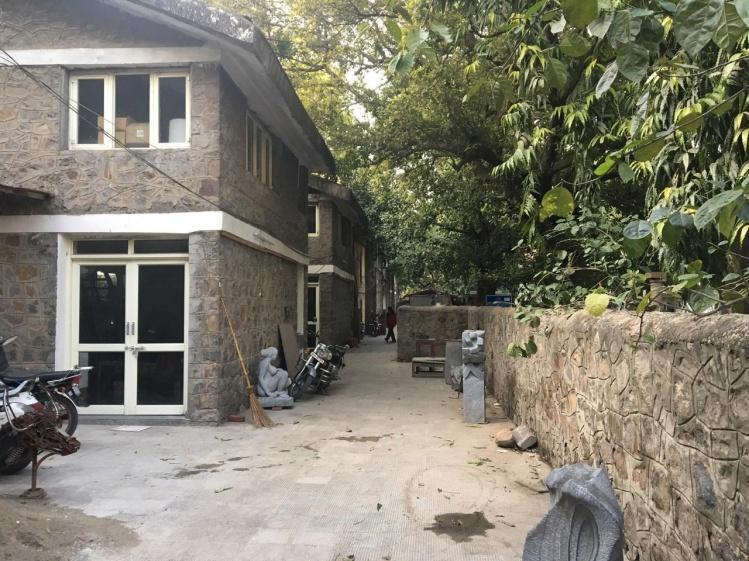
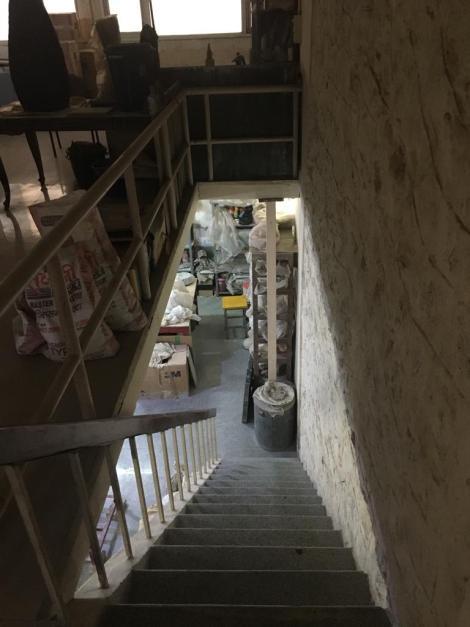
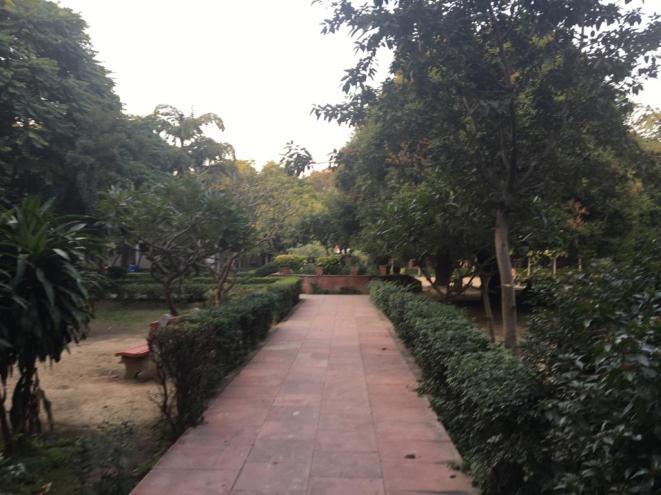
GARHI
Arts and craft village
Program : Arts and craft centre
Location :east of kailash, New Delhi
Site area : 1850
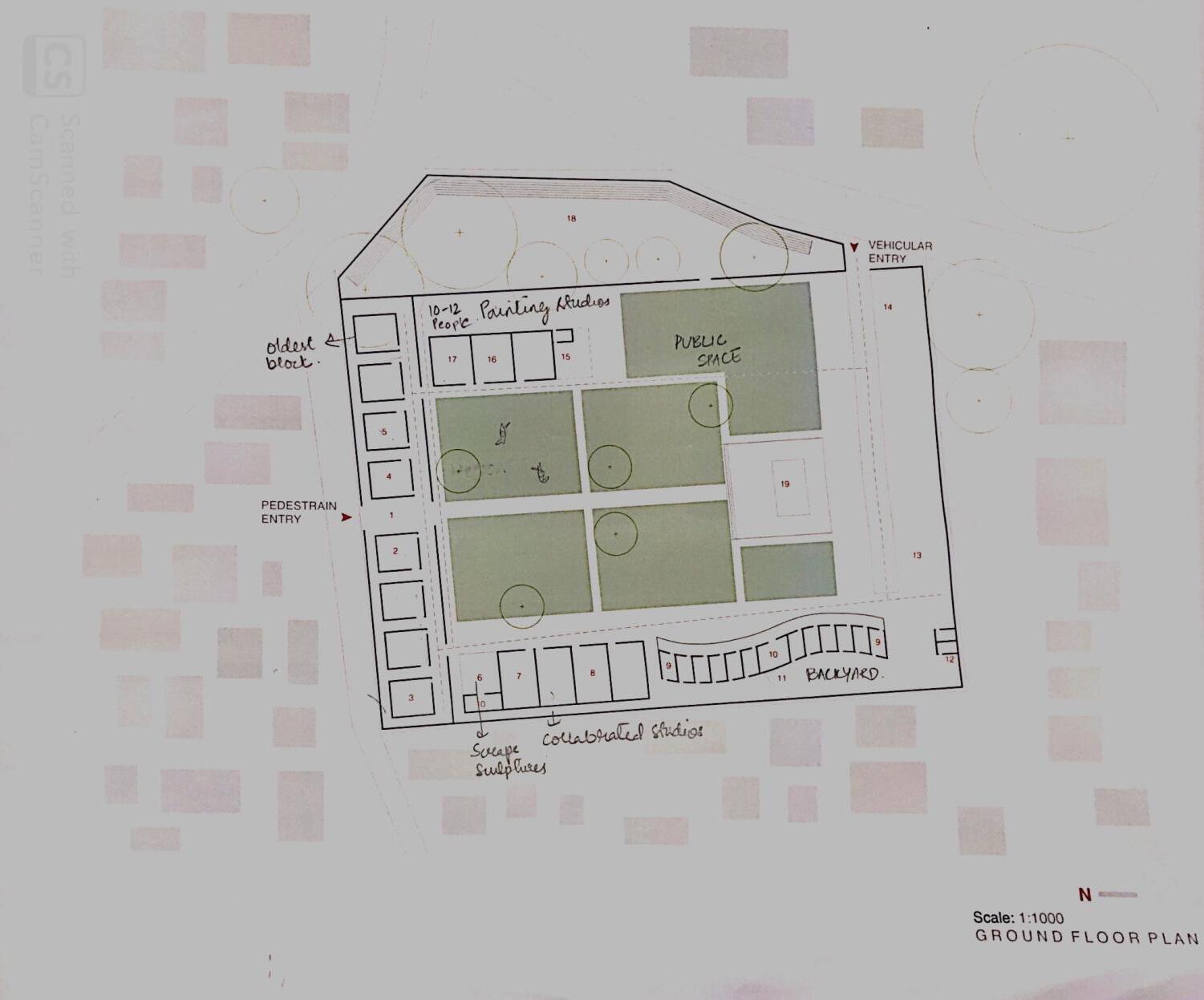
1.Waiting 110sqm
2.Metal workshop 91.80sqm
3.Sculpture studio 91.80sqm
4.Gallery 91.80sqm
5.Woods & glass workshop 91.80sqm
6.Fabrication 130sqm
7. Sculpture studio 130sqm
8. Ceramic studio 130sqm
9. Studio (for 2 artist) 27sqm (26 studios)
10 storage
11 backyard for the artist
12. Toilets 30sqm
13. Stone carving workshop
14 parking
15. Canteen 108sqm (kitchen 15sqm)
16. Painting studio 120sqm
17.Graphic design studio 120sqm
18.Amphitheatre
19. Ruins
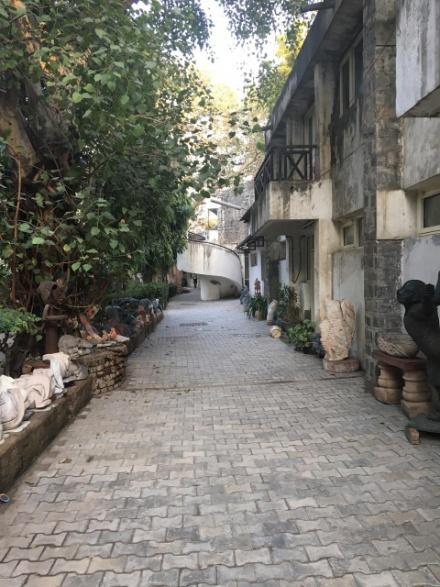
Courtyard
Corridor
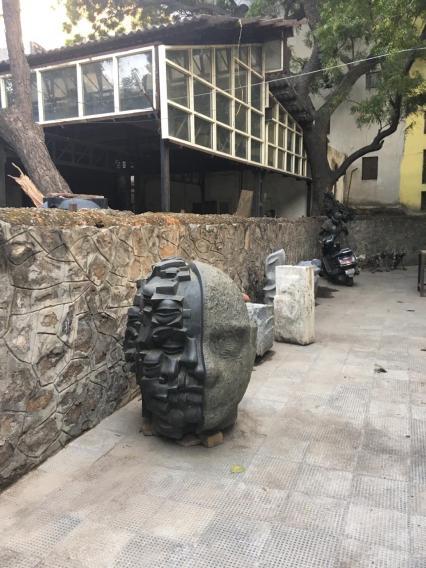
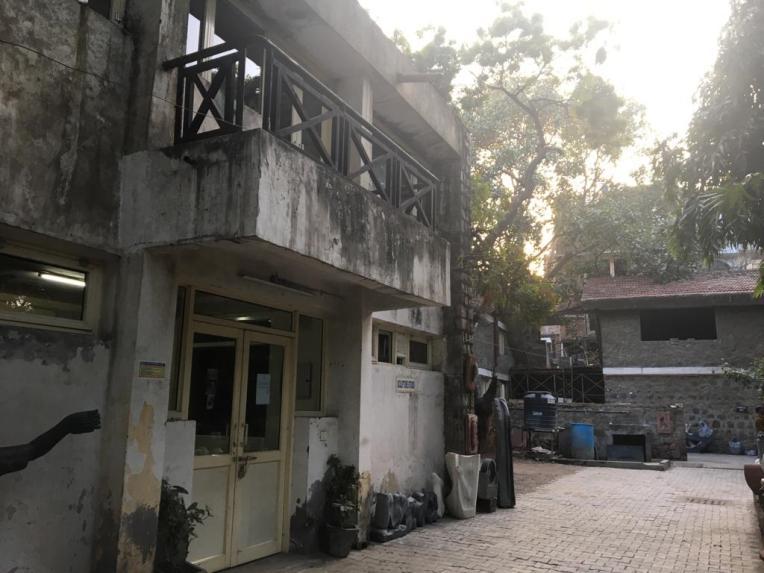
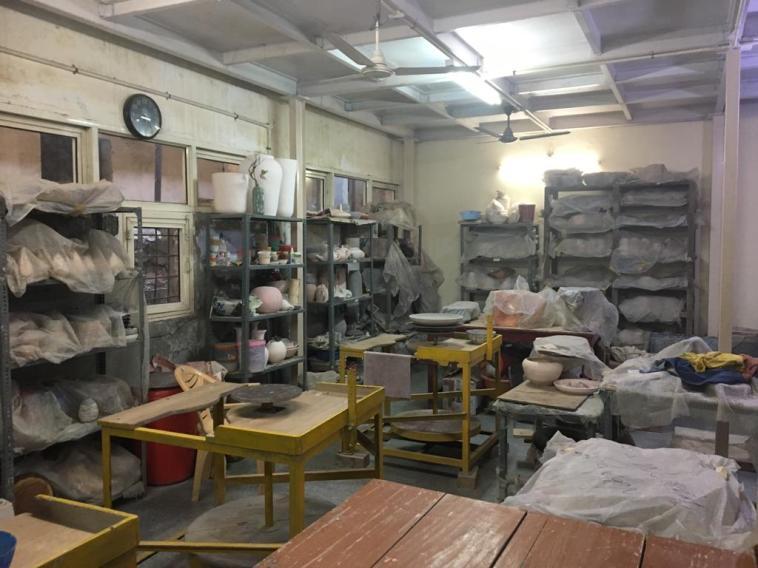
Chapter 2
Data collection
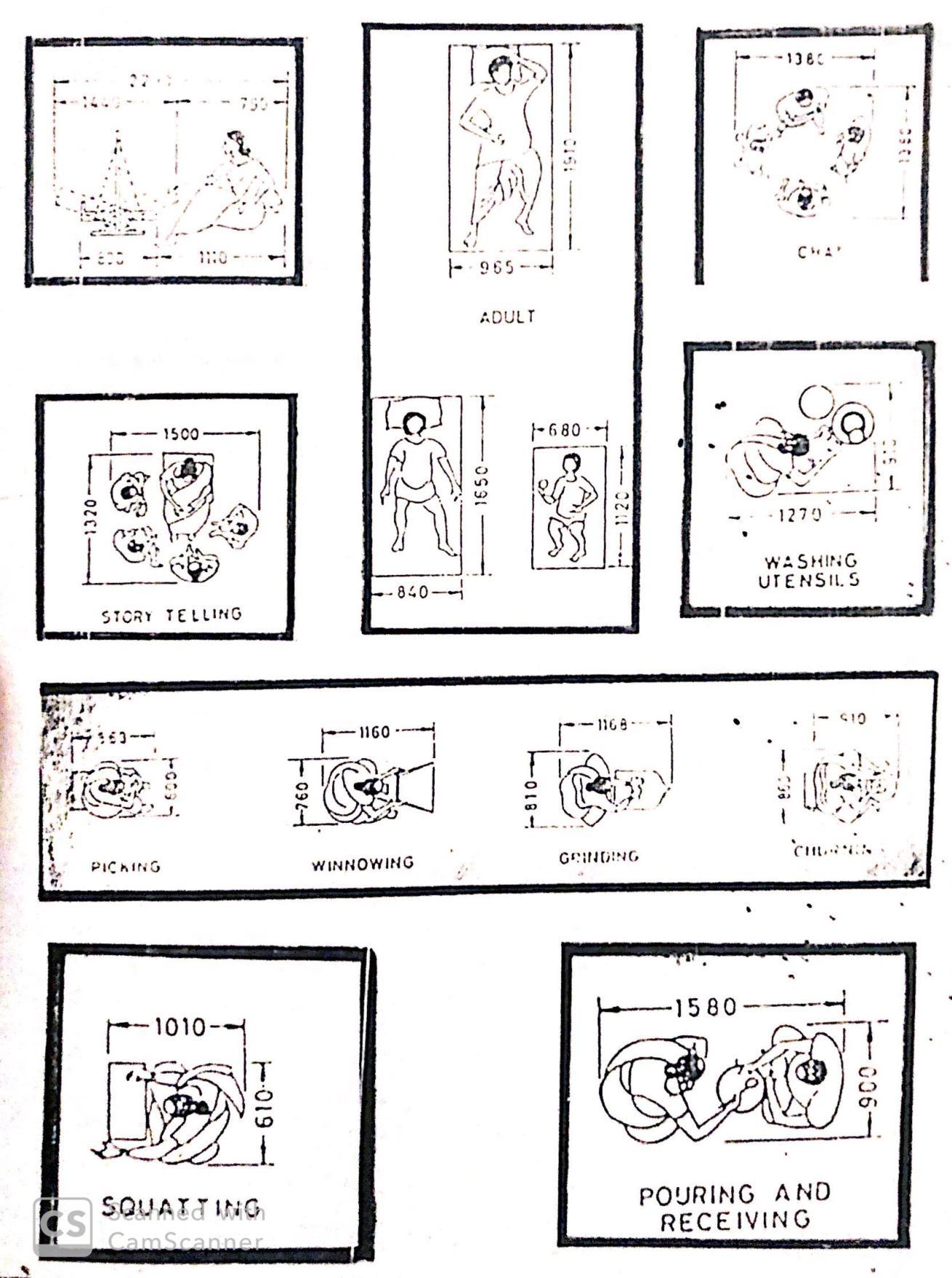
Human dimension for some activities:
KITCHEN:
Kitchen planning requires 4 stages of development.determine a process plan covering all major areas. Check maximum and minimum personnel needs per area. Determine the equipment
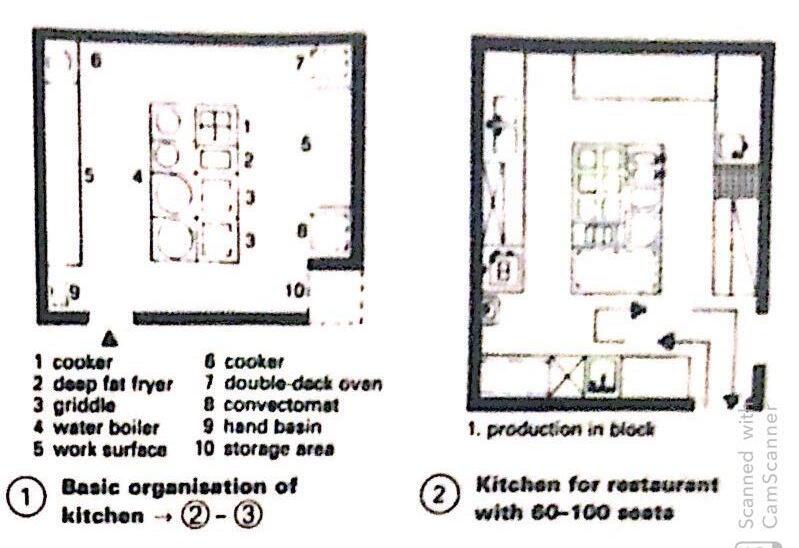
SPACE ALLOCATION :
Vegetable preparation : 4mx3m(Min)
Cooking area : 6.0x10.5m (mini)
STORAGE AREA
(For 30 days)2.43mX3.65M(min)
SERVICES NEEDED FOR A KITCHEN:
Adequate water supply
Hot water supply
Stream for cooking
Piped gas liners for bumers
Garbage disposal
Mechanical exhaust hoods
15amps electrical outlets
Floor should be preferably stone
STUDY OF WORKSPACE
WOODCRAFT
Sawing of wood
Carpentry
Turning Pencil sketching
Finishing
TOOLS
Disc saw
Band saw
Drilling machines
Chisel,plainer
Tools for perforation ROOM REQUIRMENTS
Carpentary 4mX3m
Inlay 3.5X4.5m
Total : 30sqm
CONCLUSION
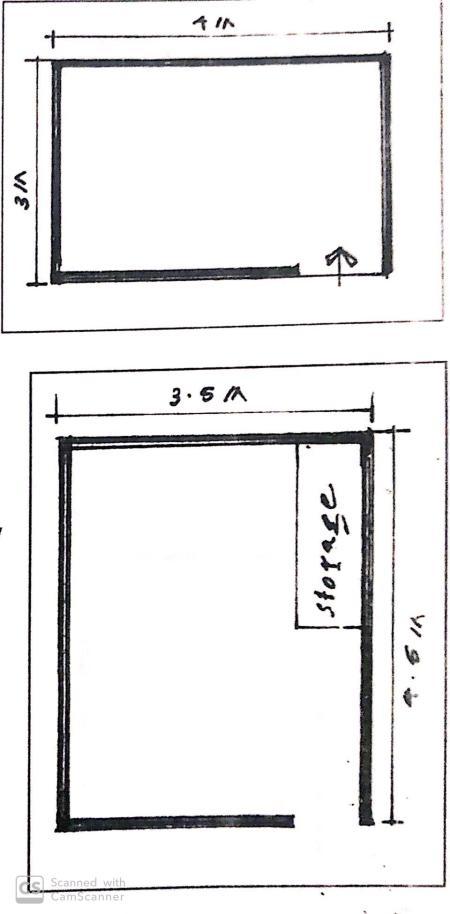
Covered or semi covered space is required. Common tool room for inlay can be provided.
STUDY OF WORKSPACE
SCULPTURE
Process
Stones are cut to size and shape,may be turned for round objects.
Sketch is drawn,rough,fine chiseling is done. Filling and polishing.
TOOLS
Lathe,grinder,chisels,hammer, table,buffer arbor
CONCLUSION
Space required is flexible.work can be done both indoor and outdoor
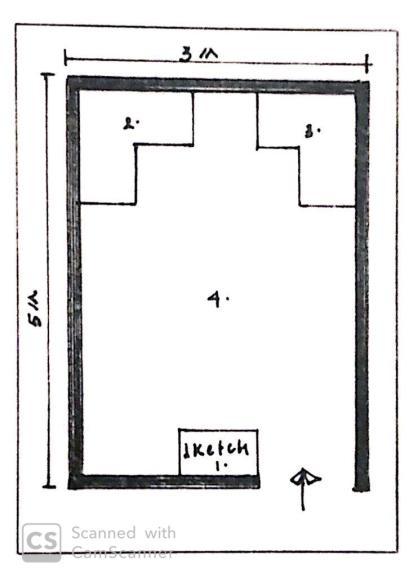
1. Sketching table-1 2. storage areas-2,3 3. workspace-4
STANDARD MACHINE SIZE
WORKSPACE
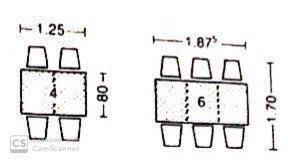
They should ideally have space for a display table and flammable work The table should be arranged with generous spacing and seatingTo be able to eat comfortably, 1 person requires a table area of around 0.6mX0.4m
4 seater with 1 table -1.25mX0.8m
6 seater with 1 table - 1.85X1.70m
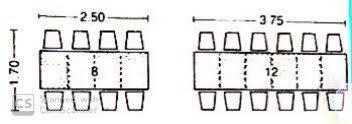
Round table 1.2m DIA (8 no’s) 0.9m DIA (6no’s)
8 seater 2.50mX1.70m
12 seater 3.75m X1.70m
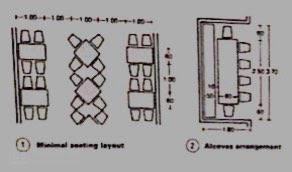
Dining floor area
Dining floor area walkway width
Upto 100 sqm _> 1.10m
Upto 250 sqm _> 1.30m
Upto 500sqm _> 1.65m
Upto 1000sqm _> 1.80m
Outer 1000sqm _> 2.10m
PARKING
Parking is the most important criteria which challenges the whole design of the site.
TYPES OF PARKING
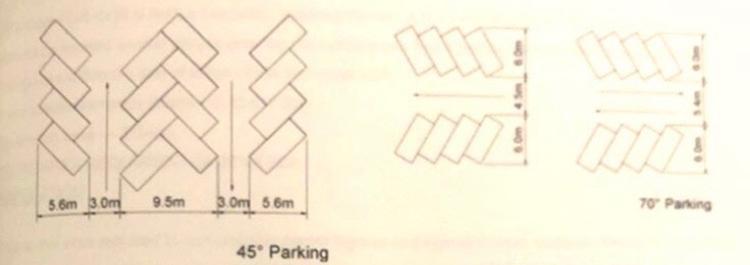
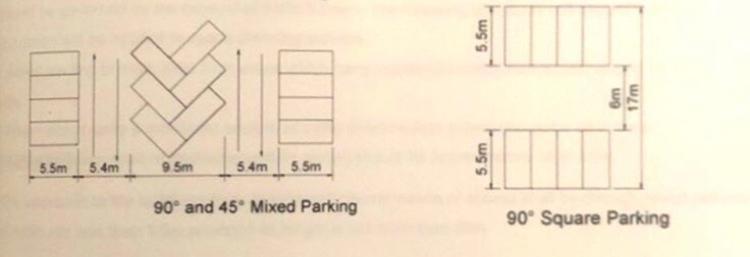
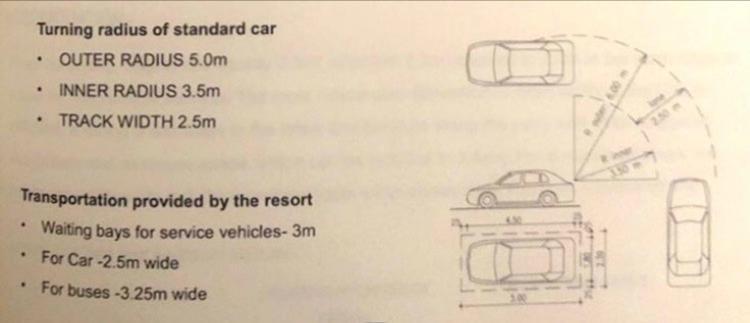
Chapter 3
Reading of the site
Site surroundings climatology studies
Site location :
Manikonda ,Near khajaguda lake
Khajaguda is a major commercial and residential area in hyderabad, telangana
.
It is in the vicinity of nanakramguda,gachibowli financial district and hitec city.
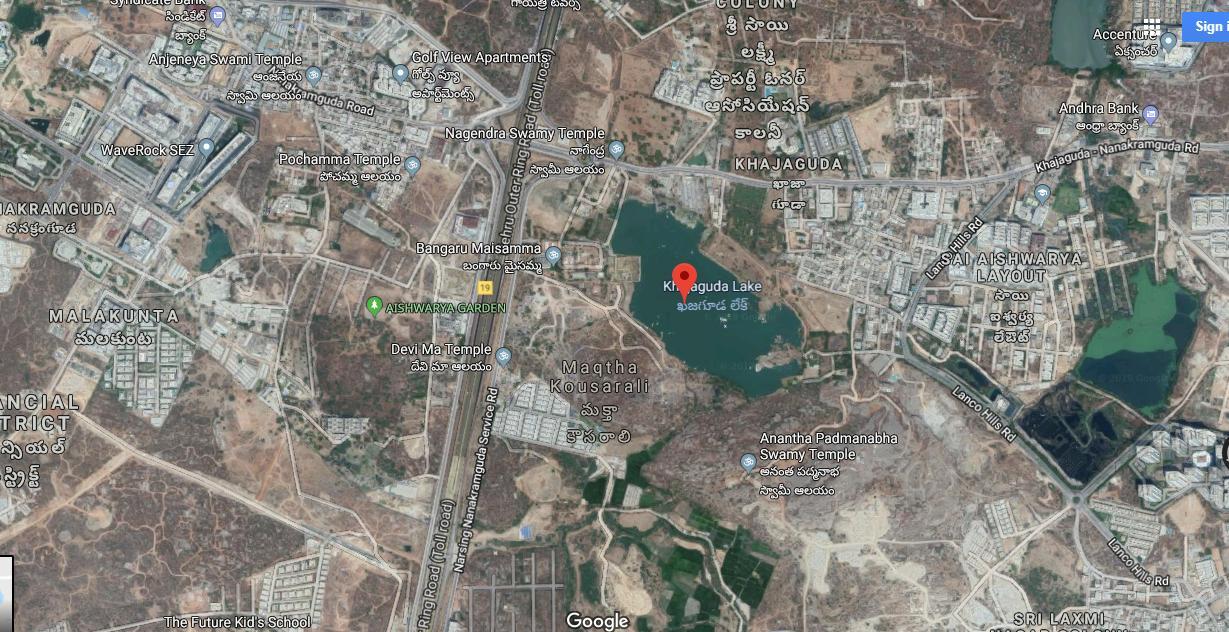

SITE AREA: 3.2 acres
SCHOOLS: Oakridge international school.
Delhi public school

VICINITY: the landmarks near khajaguda are ananthaswamy hills (bodagutta), delhi public school
Ramanaidu studios
Baskin robbins and MJR magnifique

PUBLIC TRANSPORT :
Khajaguda is connected by buses run by TSRTC, since a HCU bus depot is close by , it is well connected.


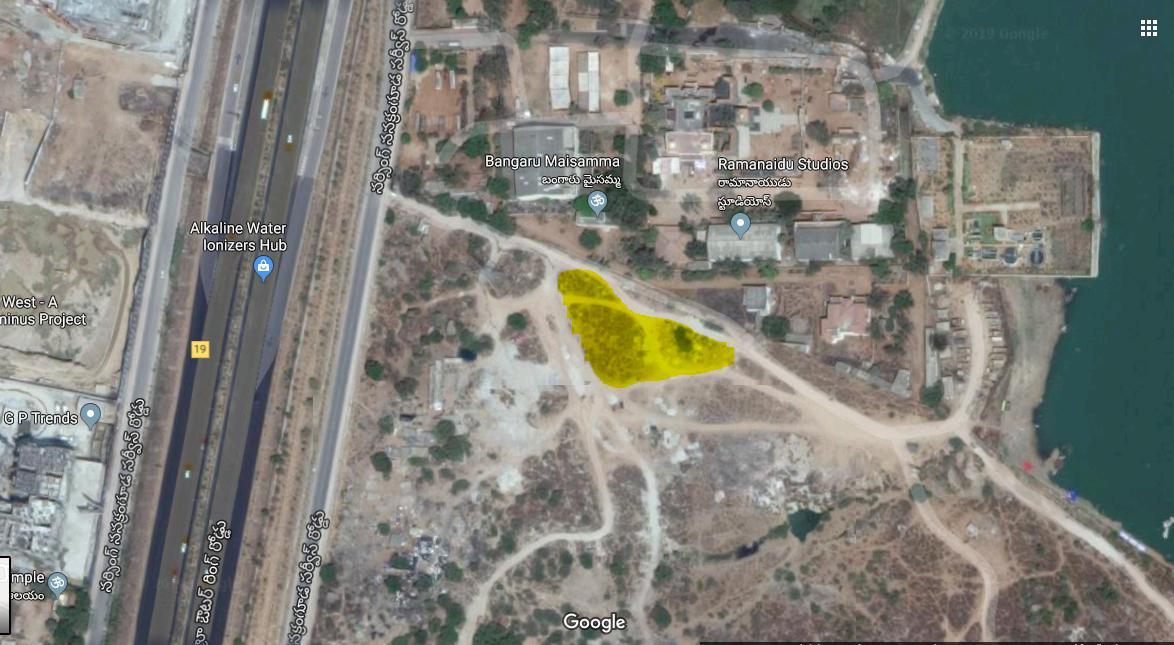
1 Site
2 Khajaguda lake
3 Nehru outer ring road
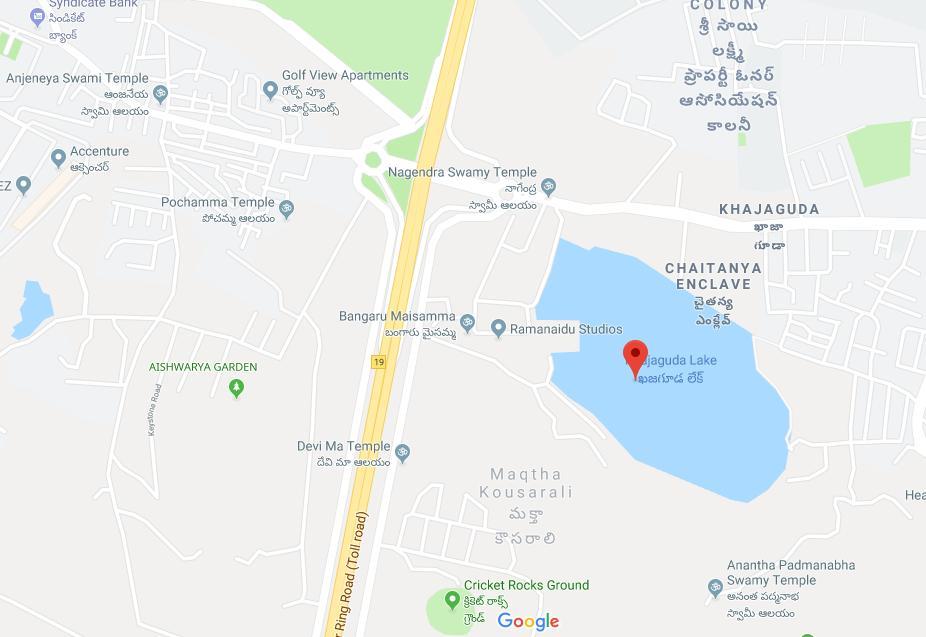
Context around the site
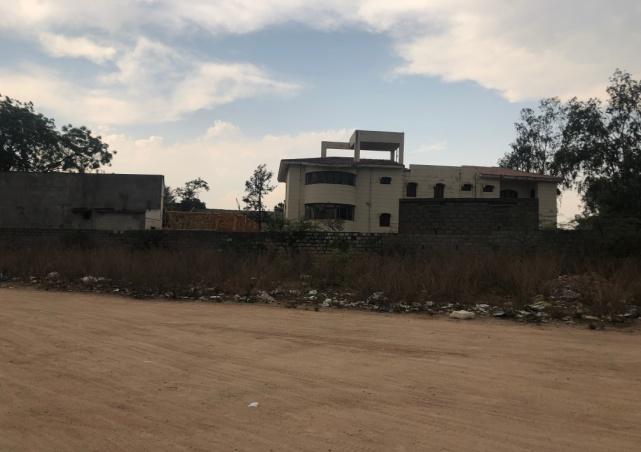
Entrance to the site
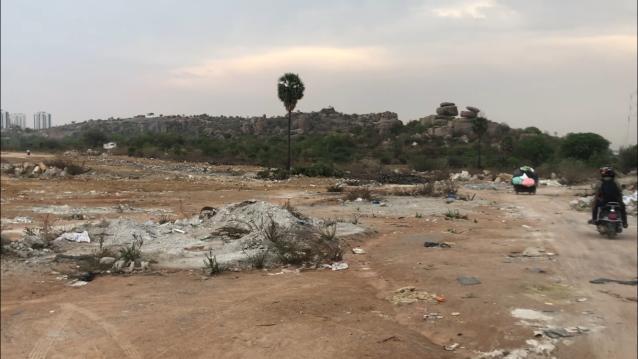
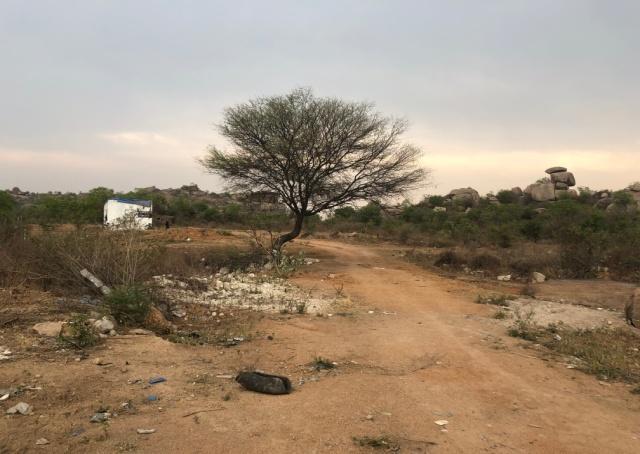
Road given around the site
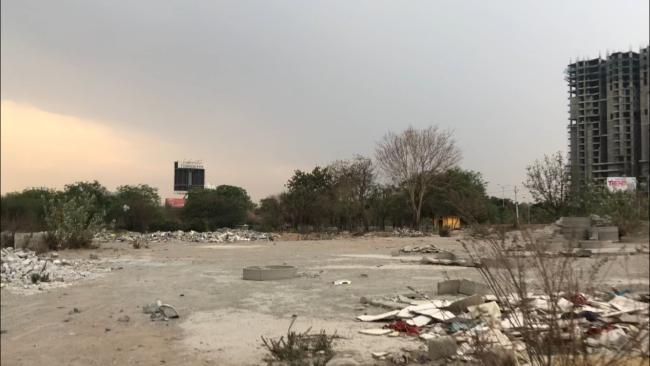
Khajaguda lake adjacent side of the site
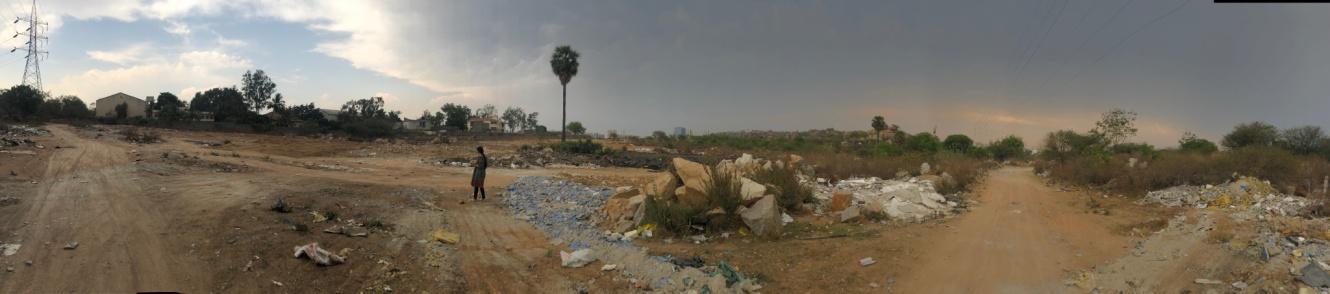
Site and elements within the site
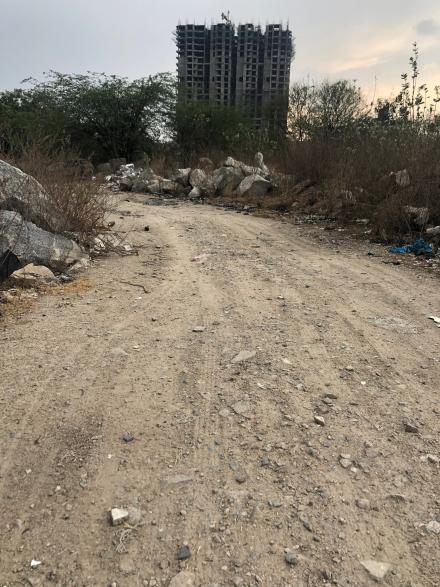
Lane you enter from Nehru ORR along the site .
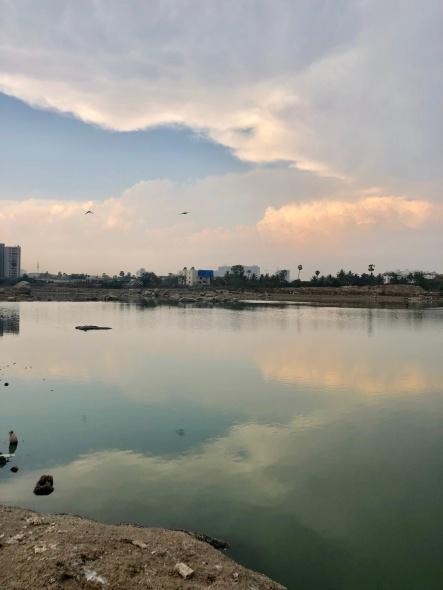
Khajaguda lake
Elements within the site
1. Its an empty land with one tree in the center of the site .
2. It has gradient contours which is an opportunity that the site can be used with freedom.
3. It has narrow unpaved roads on the two sides of the site which can be used or made bigger in size accordingly.
4. Site is 30M away from the ORR . Which is also a great advantage in terms of privacy .
5. Site has empty lands adjacent to it which also clears the view
6. Site has view of lake and boulders.
7. All these phenomena can be used in the site zoning .
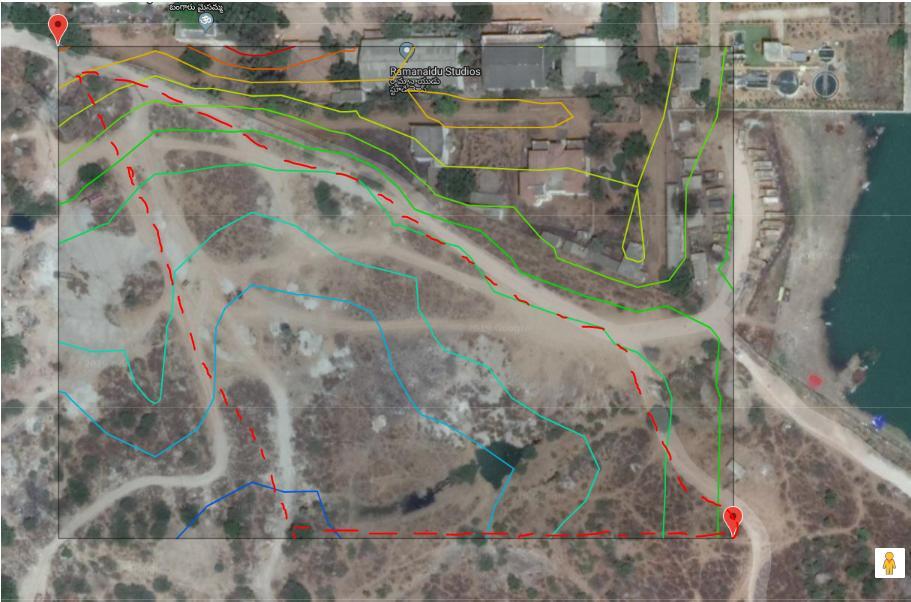
Site selection phenomena:
1. I was looking for a site which is quiet and near by to a waterbody.
2. A zone which is famous enough for the project so that people will get to know.
3. Nehru outer ring road crossing the site.
4. Residences near the site and few upcoming projects will also help people to know more about the praposal
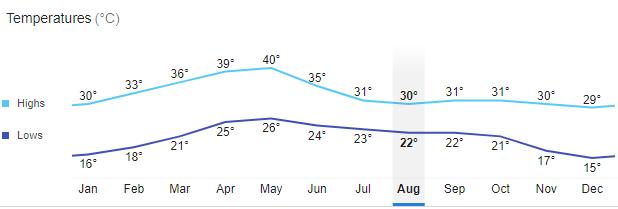
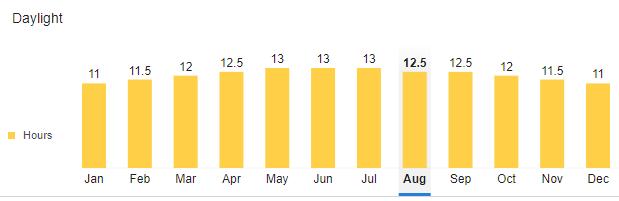
COMAPARTIVE ANALYSIS OF CASESTUDY’S
CHOLAMANDALARTIST VILLAGE (chennai)71`
GHARI ARTIST STUDIO ( delhi )
Established in 1966. In chennai
Cholamandal is a residence cum studio for artists of (govn college of arts, madras)
JAWAHARLAL NEHRU ARCHITECTURE & FINEARTS UNIVERSITY (Hyderabad)
Established in 1977,in. Established in 1940,in hyderabad .
Ghari is a studio space for all the artists to come work,learn & explore
Its a university of arts which has workshop facilty for students
Accessibility -Cholamandal Artists’ Village located in a 8 acre land is situated on the East Coast Road, some eight kilometres further south of the Chennai city and about 18 kms from Chennai city center. This place is well connected to transport facility.
The area where this centre is located now was once known as ghari zharia maria. The land was alloted by delhi developement authority to promote art. this place is well connected to transport facility.
JNAFAU is located at masab tank,hyderabad Its 2kms away from assembly. It has well transport facility
Site zoning- it looks proper though its not architect designed one. On the entrance it has gallery spaces, administration.And sculpture garden outside. Which also leads to cultural spaces like canteen, and second courtyard which takes over all the events happening there.
Site zoning doesnt have proper zoning because its not designed by an architect. It has a central courtyard which is greenspace,open for all the people. Blocks around it are very randomly placed.
Site zoning is done here there is lack of zonong. All the academic and administration blocks were connected to a single loaded corridor.
Studios -Its a residence cum studio. Every residence has its own studio for artists. So it has prefferable space according to artists own choice.
Quality of space
defect- Residence is the main defect there. People of the next generation arent artist, thats the reason theres no continuty of artist that is extended thats why its slowly converted into normal hosuing residence.
Studios are divided into 3 blocks one block is very old and made of stone, other two are normal brick blocks.
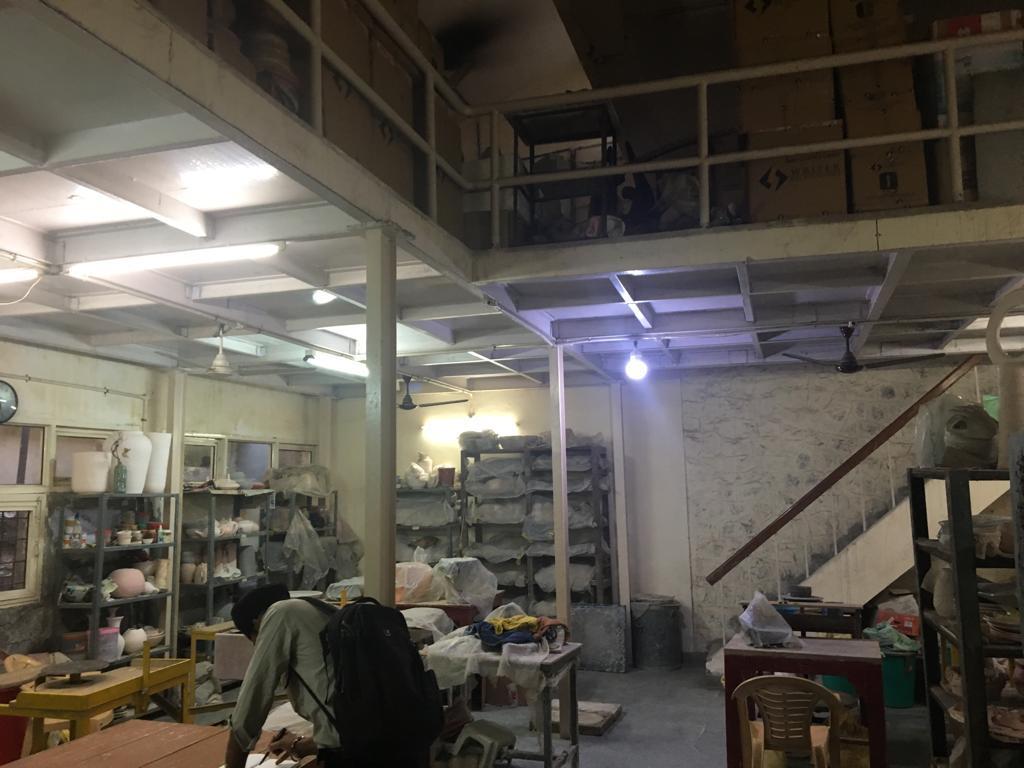
Sculpture studio- 2 studios and 1 shed provided for sculpture department for kilns and stone carving. Roof height is double. 6m approx.
No storage facilties are made No proper storage is defined in the studio. And the sizes of the studios are not enough for group of students to work, for example- a studio has to be big enough for visual connection to the students
1.Gallery spaces
2. Common amenities
JNAFAU. Ghari .
3. Work area
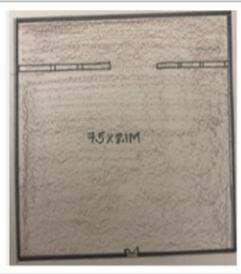
Sculpture studios 1.67.6sq.m 2.42sq.m (12 people) 3.42sq.m(12 + people)
(no.of 2)
cholamand al.
single
Feasibility Aspects
ENVIRONMENTALASPECTS:
CLIMATE :
•Site location is 20m away from the road which will also keep the site away from all the kind of pollutions.Also useful in terms of privacy.
•Passive cooling techniques are used in design due to the presence of lake towards North.
•Courtyards are used in design for air moment, cooling and privacy.
`VEGETATION
:
•Under necessary conditions trees are removed and replaced.
•Provided plantation and Landscape are used for natural cooling and Aesthetical purpose.
CONTOURS
:
•Site contour gradually increases towards North. So water runoff is concentrated towards South.
•Lowest contour on the site is used as STP and Highest contour is used for the provision of water sump.
•Sculptor’s art centre is for all the age groups(majorly adults)
•Due to commercial area around the site and the highway on the adjacent side is helping crowd to visit the place .
•The combination of material usage in the site are very different from the materials used in the surrounding buildings that can also take the attention of the crowd.
Usage of local material:
Brick
Concrete Glass
•According to footfall of the site this art centre is designed to provide accommodations for 50 artists.
•Its made up a creative space according to surroundings where People are engaged in Sculpture making, Reading, Exhibitions and Workshops. Can grab people to visit this place and which can help humans know about art and explore as well.
ART CENTRE INFLUENCE :
•There is no other Art centre in the state that is particularly designed for sculpture making.
•Art is as important as any occupation or any activity where all age groups interact at one place, and it gives oppurtunity and acknowledge people regarding art.
BIBILIOGRAPHY:
https://www.archdaily.com/426809/artist-studios-knowspace https://www.archdaily.com/35696/songzhuang-artist-residence-dna
http://chandan069.blogspot.com/2017/04/case-study-report.html
https://www.google.com/search?rlz=1C1CHBF_enIN845IN846&ei=6_dHXcnsKZbiz7s Pp5C_kAY&q=climatic+conditions+for+khajaguda+manikonda&oq=climatic+conditions +for+khajaguda+manikonda&gs_l=psyab.3..33i160.10576.17436..18021...0.0..0.381.3796.0j17j3j1......0....1..gwswiz.......0i71j33i10j33i21.E2_a3A3vxTU&ved=0ahUKEwiJjuC1tuvjAhUW8XMBHSfID2I Q4dUDCAo&uact=5
https://www.scholastic.com/browse/article.jsp?id=3753866
http://www.visual-arts-cork.com/sculpture-history.htm
https://www.google.com/maps/search/garhi+art+studio+location/@28.5617953,77.250 0755,235m/data=!3m1!1e3
https://www.google.com/search?rlz=1C1CHBF_enIN845IN846&tbm=isch&q=schools+l ogo+design&chips=q:schools+logo+design,g_1:education:_bB3Da6lpR8%3D&usg=AI 4_-kSNXLkofLBWzmK3FsUBMw_3pFonJw&sa=X&ved=0ahUKEwiOoqDTtzjAhUHKY8KHcXrAH0Q4lYINSgG&biw=1350&bih=551&dpr=1#imgrc=ZanSA0PW8KXYM:
https://www.123rf.com/photo_108837726_stock-vector-teamwork-group-peoplesurrounding-globe-vector-logo.html
file:///C:/Users/surabhi/Desktop/bus-logo-260nw-623862206%20(1).webp