REDEFINING INTERMEDIATE COURTYARDS AS YOUTH-LED COMMUNITY SPACES
A case of Worli Koliwada, Mumbai, India
Surabhi Patil
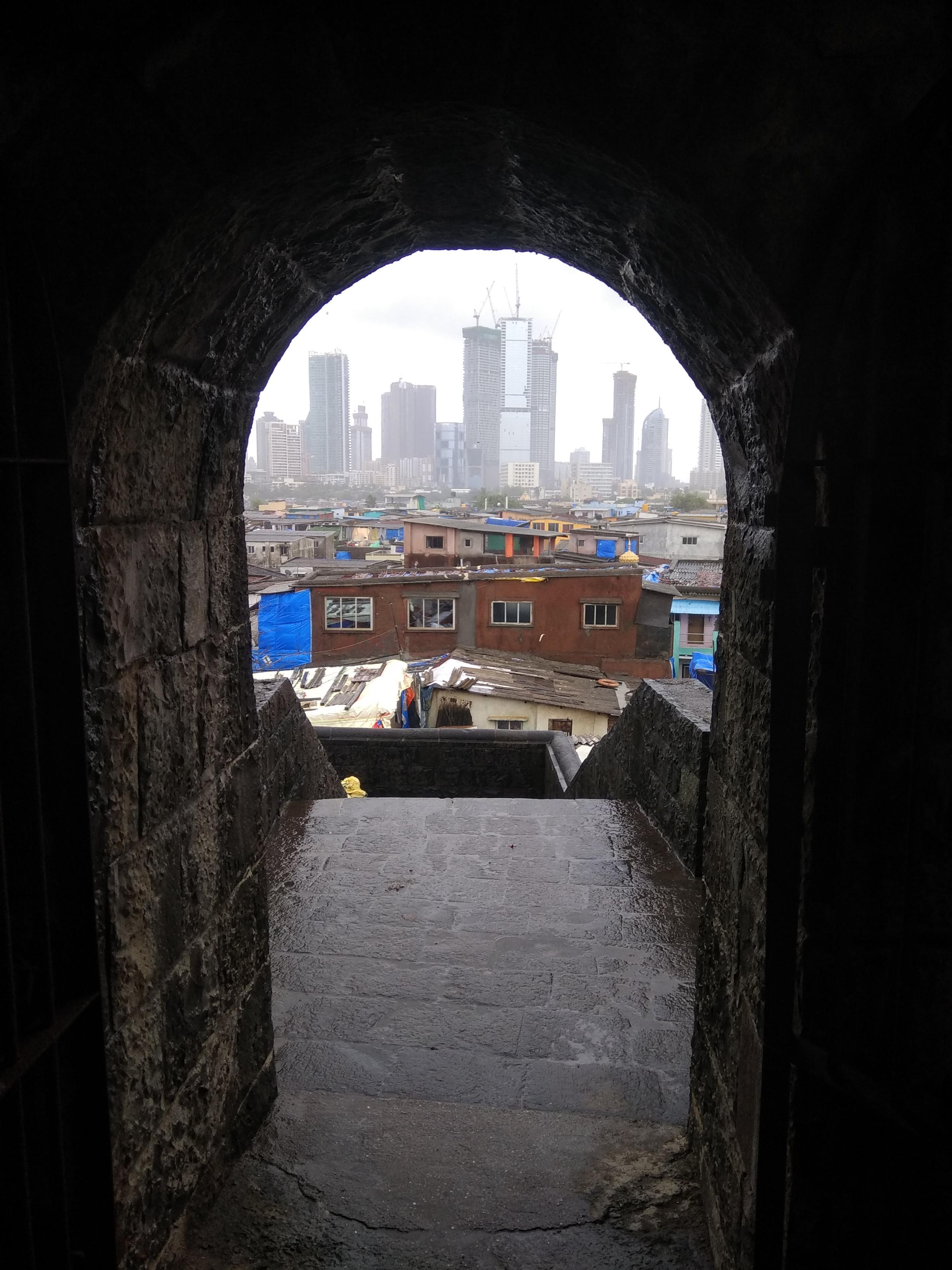
In Worli Koliwada, a story unfolds,
Amidst the bustle of the city, its presence holds A vibrant tableau 'neath the city's grand guise, Where indigenous folk find their earthly ties
A kaleidoscope of hues, With colourful dwellings strewn, This urban village now embraces, A multicultural tune.
The sea, their companion, their livelihood's essence, Their identity, steeped in a narrative of lore.
Yet challenges loom, urbanization, temperatures soaring, And the shadow of marine pollution casting its sombre fore.
Yet their resilient spirits stand, Intertwined with the sea, Their way of life, a tapestry unique
Woven into the city's cultural mystique.
-Surabhi Patil
Surabhi Patil
CONTEXT
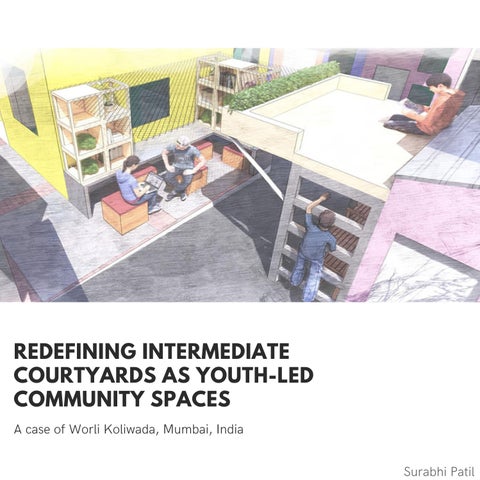
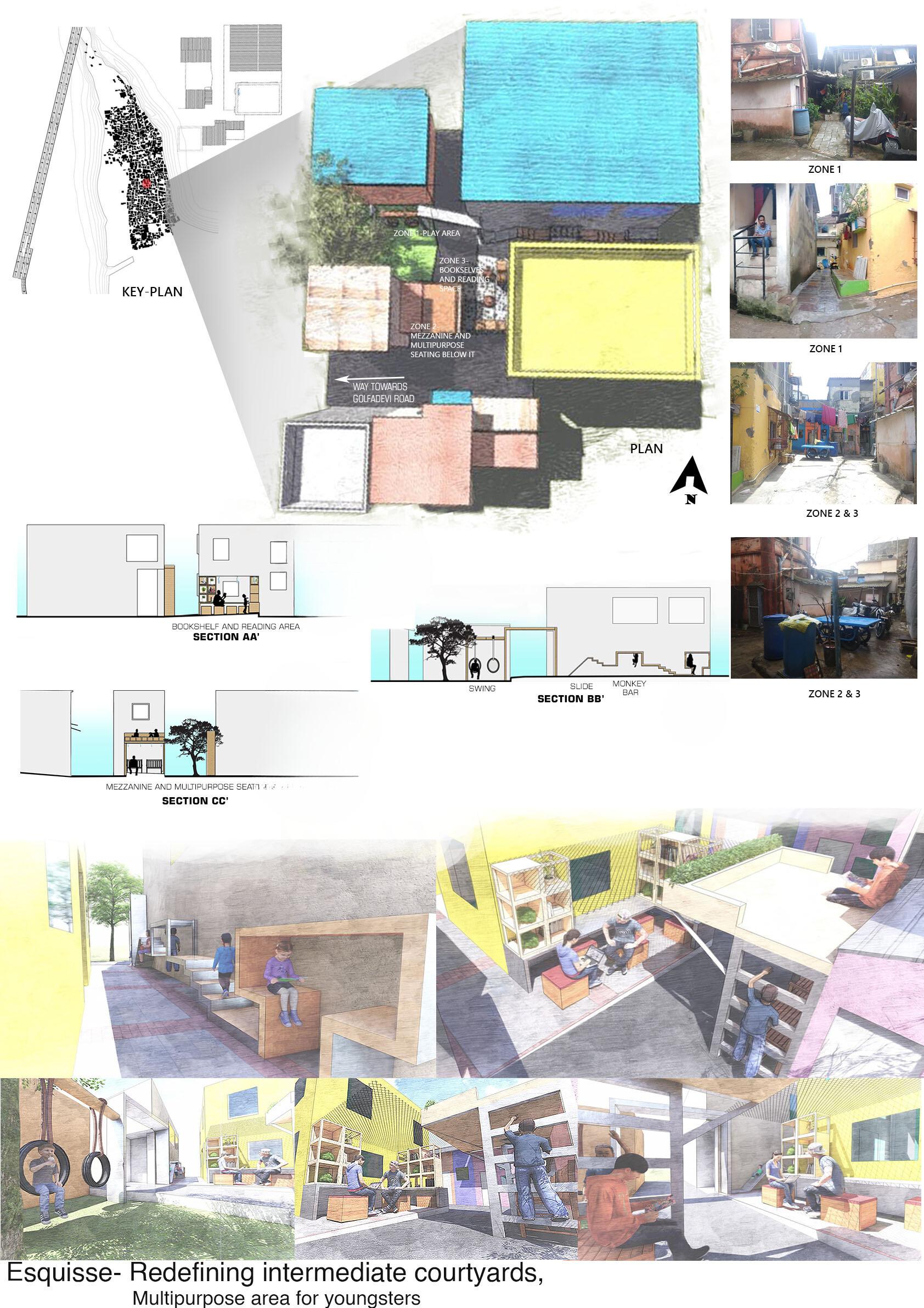
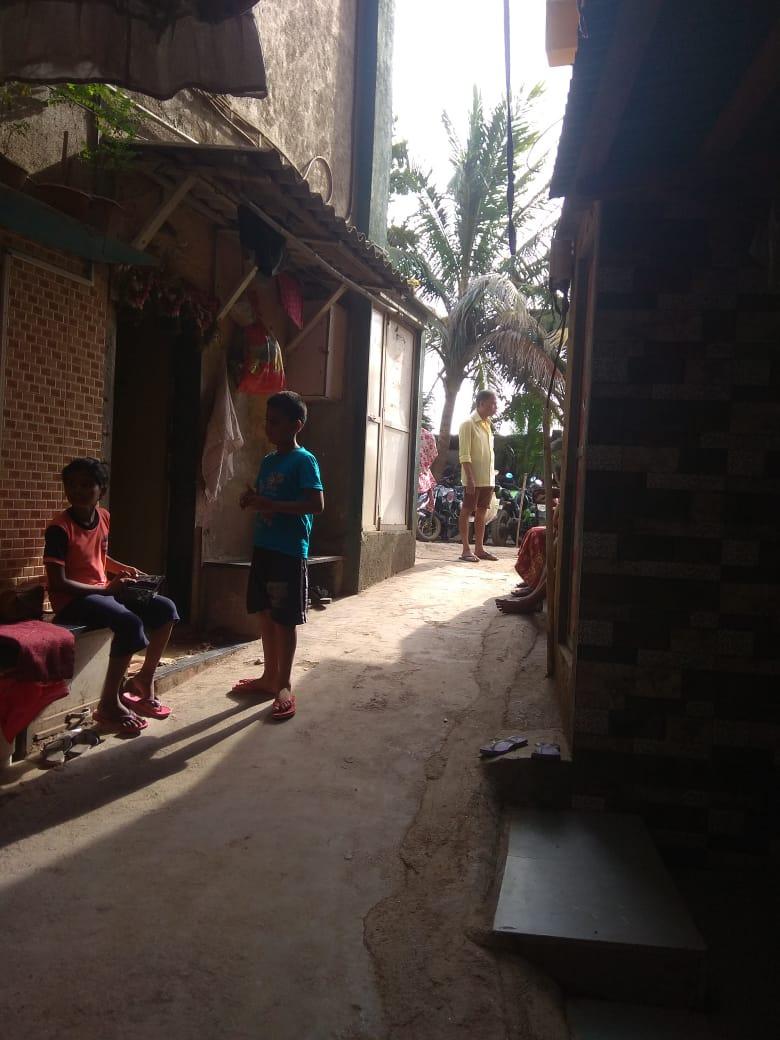
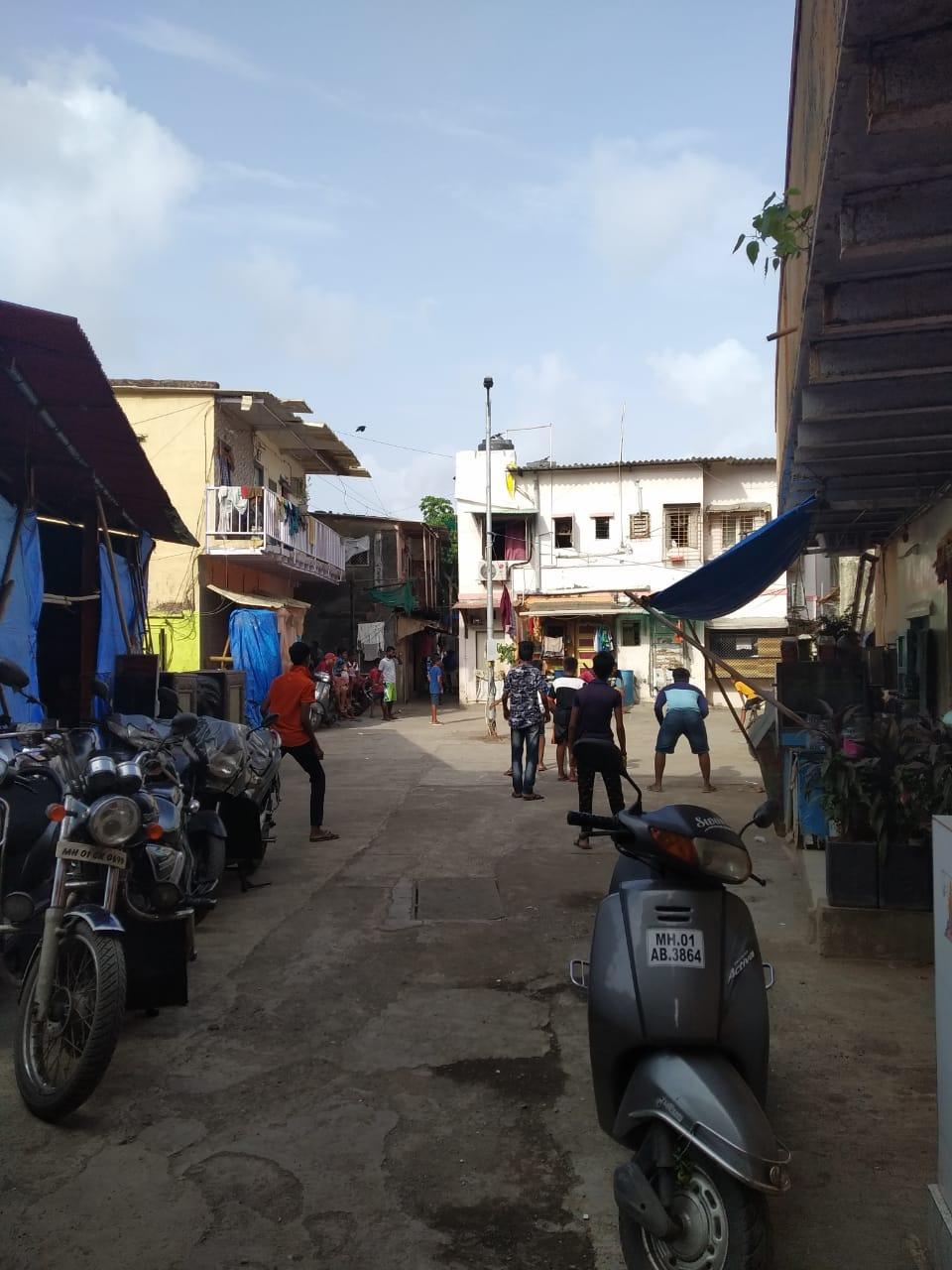
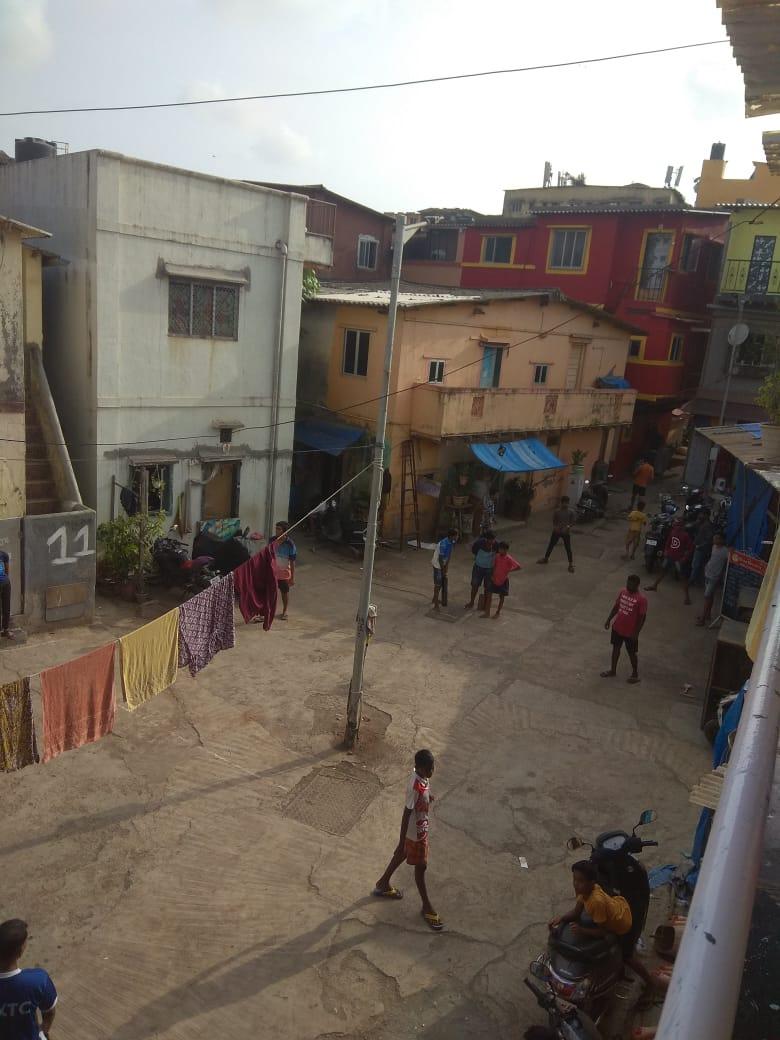
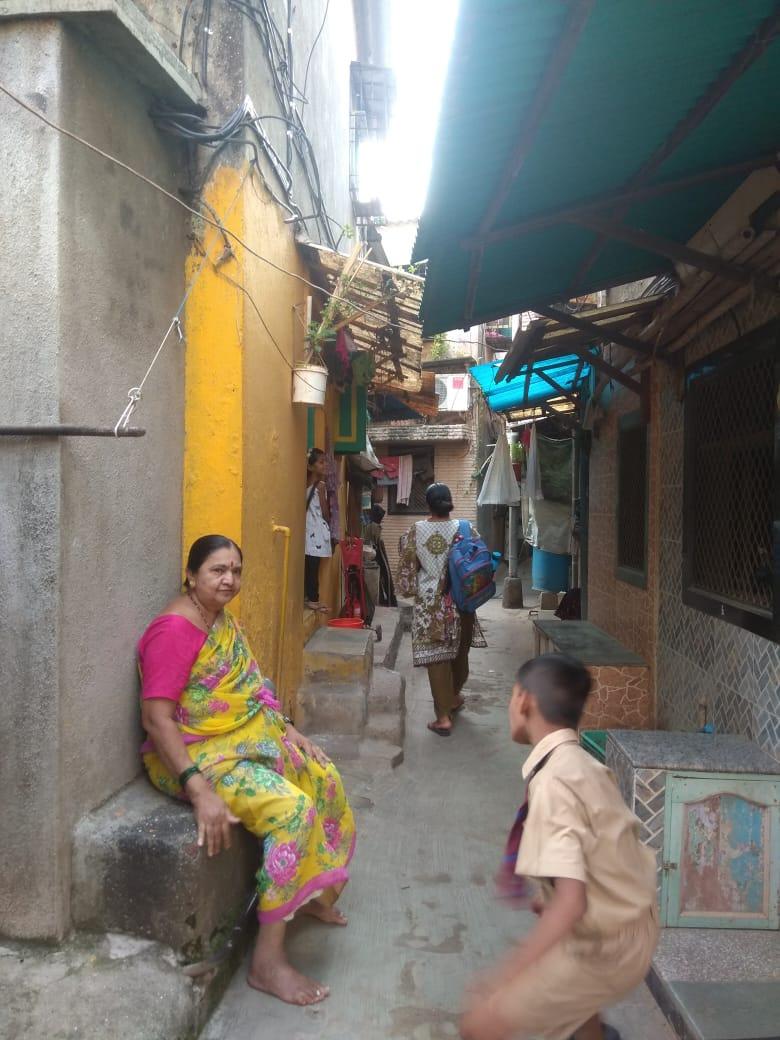
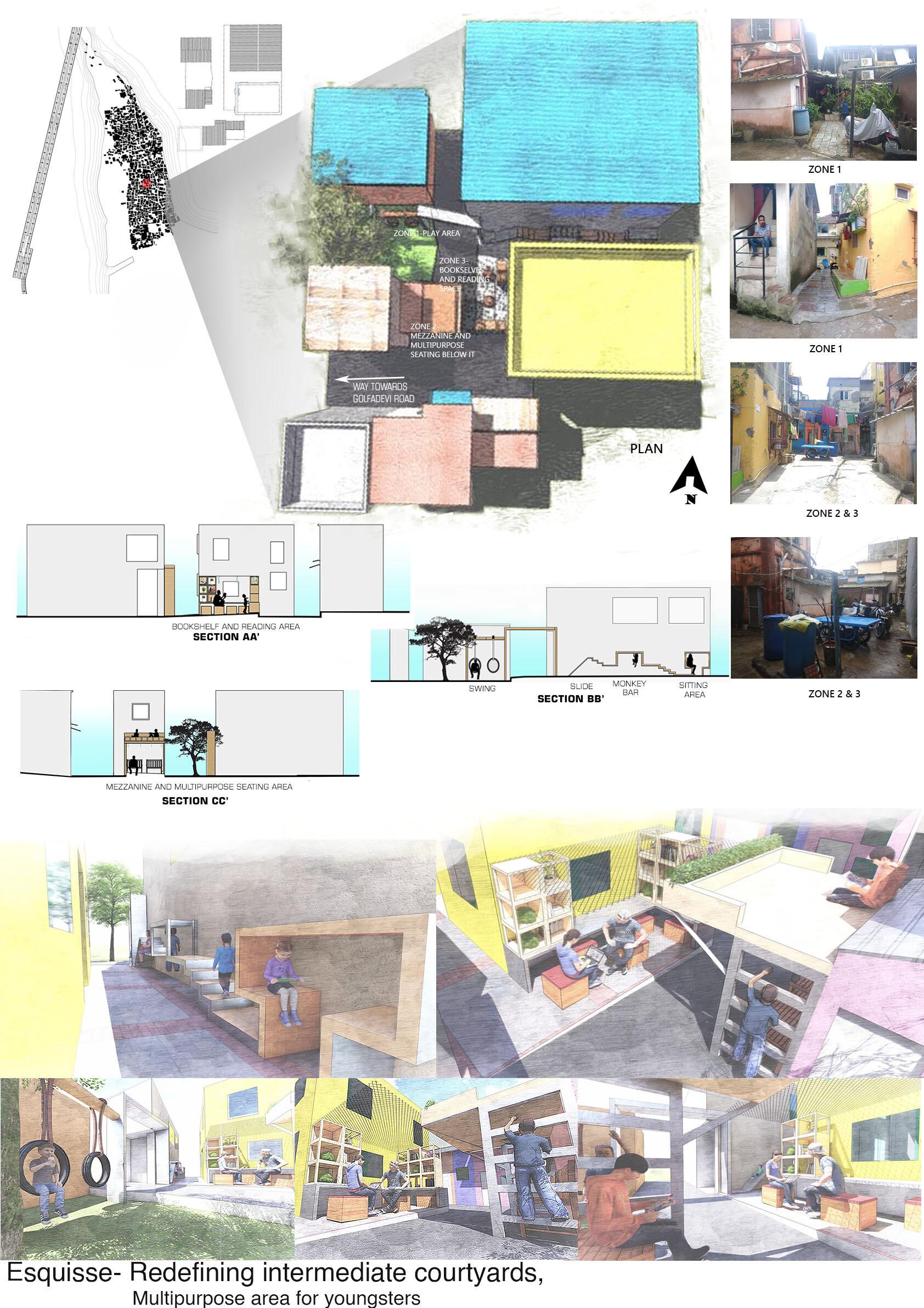
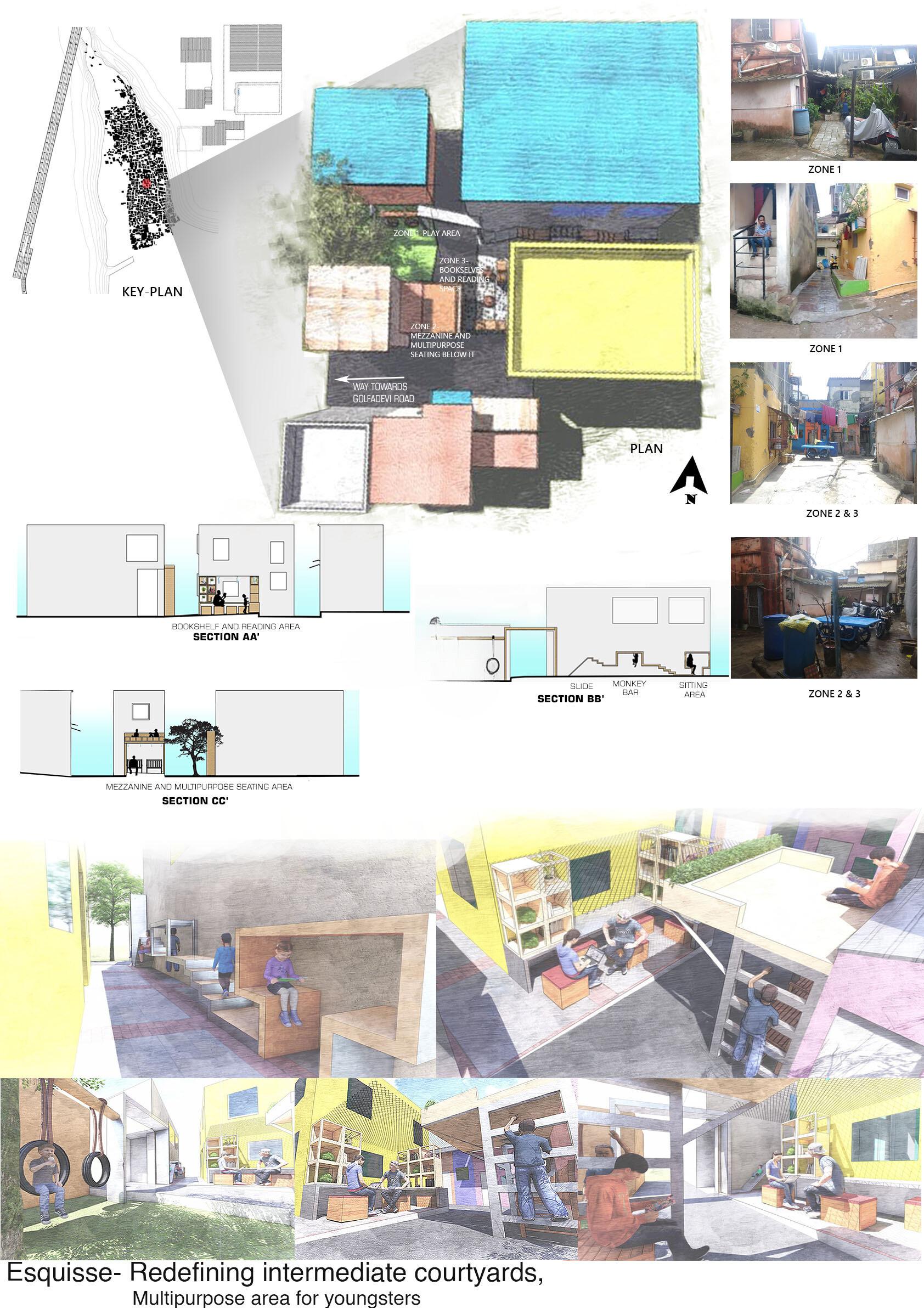
Unplanned, closely packed dwellings characterize the dense settlement. The selected site for intervention is an intermediate courtyard that emerges due to the proximity of buildings. Despite being an open area within such dense surroundings, it hasn't been utilized to its full potential and often remains inactive.
Approximately 75% of youngsters spend a majority of their time outside their homes. Children can be observed playing around their houses in narrow alleyways without a designated area for recreation.
Building upon this notion, the design proposal aims to reimagine the functionality of intermediate courtyards within these closely packed buildings in the face of rising temperatures and climate change.
Surabhi Patil
KEY PLAN
ACTUAL PHOTOGRAPHS OF SITE
Surabhi Patil
Harnessing the potential of discarded materials, the design uses various waste items commonly disposed near the coast – from wooden crates to plastic bottles, metal scraps to bamboo used in fairs and installations.
Traditional fishing nets adorned with plastic bottles filled with water and bleach, powered by solar energy, produce luminescence. This ingenious setup not only illuminates the area during nighttime but also serves as a symbol of resourcefulness and resilience.
Surabhi Patil
WAY FORWARD
Envisioning these in-between spaces as catalysts for collective youth action, the design seeks to empower the community's younger generation. By providing them with a designated space for various activities, a sense of ownership and belonging can be fostered. Importantly, the design process itself could involve active participation from the youth, engaging them in crafting their own spaces using the very waste materials discarded around the urban village. Through this innovative approach, the initiative not only promotes environmental stewardship but also ignites a sense of purpose among the youth, catalyzing meaningful climate action at the grassroots level.