SUNY Adirondack Community Roots: Alumni Collective Issue 19
COMMUNITY ROOTS
THE
ALUMNI COLLECTIVE A QUARTERLY MAGAZINE A
“It’s
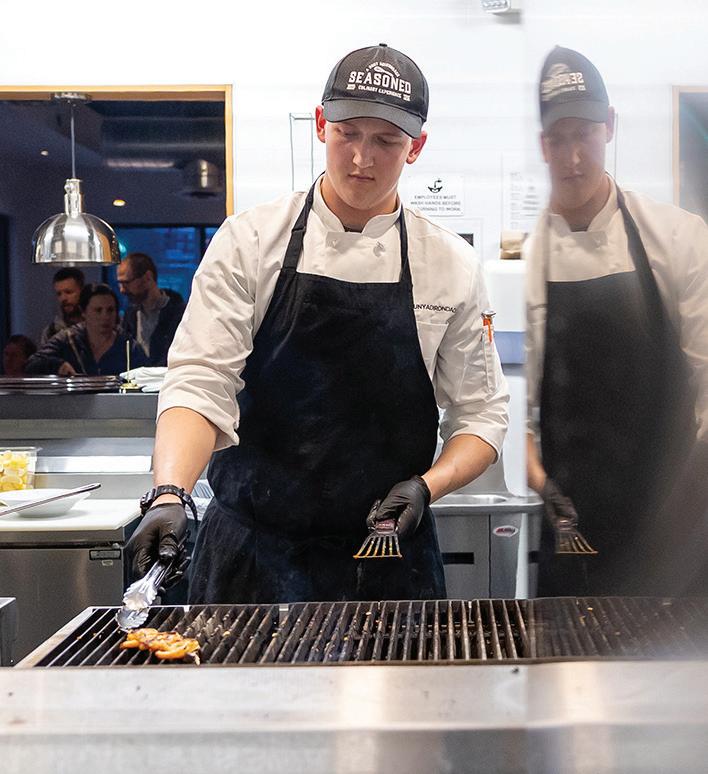
amazing to see how much the Culinary program has grown, and it makes me so happy because it couldn’t have happened to a better professor and more talented guy than Chef Matt Bolton.”
— DAVID MACINTOSH
2016 GRADUATE OF SUNY ADIRONDACK WITH A DEGREE IN CULINARY ARTS
CURRENTLY: SALES CONSULTANT FOR GINSBERG’S FOODS STORY, PAGE 27
MUCH LIKE THE COLLEGE COMMUNITY, SUNY ADIRONDACK ALUMNI ARE A MICROCOSM OF OUR BROADER COMMUNITY.
They come in as students, searching, find themselves here, then bring their gifts out into the world as caring agents of change. In this quarterly magazine, we celebrate all the ways our alumni shape our world, close to home and afar, with their hearts always rooted right here at SUNY Adirondack.
SUNY Adirondack, a community college of the State University of New York, does not discriminate against any employee, applicant for employment, intern, whether paid or unpaid, contractor, student, or applicant for admission or other members of the college community (including but not limited to vendors, visitors, and guests) based on a individual’s race, color, national origin, religion, creed, age, disability, sex, gender identification, gender expression, sexual orientation, self-identified or perceived sex, the status of being transgender, familial status, pregnancy, predisposing genetic characteristics, military status, veteran status, domestic violence victim state, criminal conviction or any other category protected by law. The college adheres to all federal and state laws prohibiting discrimination and sexual harassment in public institutions of higher education.
The college prohibits conduct by any employee or any student who disrupts or interferes with another’s work performance or education experience, or who creates an intimidating, offensive, or hostile work or educational environment due to discrimination based on protected status or sexual harassment. SUNY Adirondack is committed to educating employees in the recognition and prevention of workplace and education discrimination and sexual harassment, and to informing students, employees and others how to report a discrimination complaint.
Inquiries about and reports regarding this notice and procedure may be made to compliance@sunyacc.edu or to one of the following: Lottie Jameson, Director of Compliance and Risk Management and Deputy Title IX coordinator, Washington Hall, Room 132C, jamesonl@sunyacc.edu, 518-832-7741; Mindy Wilson, Chief Human Resources Officer, Washington Hall 105, wilsonm@sunyacc.edu, 518-743-2252; Diane Wildey, Associate Vice President for Academic Affairs/Section 504 Coordinator, Scoville 324, wildeyd@sunyacc.edu, 518-743-2337. Inquiries may also be directed to the United States Department of Education’s Office for Civil Rights, 32 Old Slip 26th Floor, New York, NY 10005-2500, ocr.newyork@ed.gov, 646-428-3800.
OUR ALUMNI BECOME
Certified Recovery Peer Advocates
Credentialed alcoholism and substance abuse counselor— trainees (CASAC-T)
Executive Directors
Music Educators
Plumbers
Professors
Sales Consultants
Sports Operations Directors and so much more!
FALL UPDATE
At SUNY Adirondack, we know progress begins by listening to the people who make our college extraordinary. Every voice — those of students discovering their passions, faculty sparking curiosity, community partners helping us expand opportunity — is important to our shared story.
Since joining SUNY Adirondack, President Anastasia L. Urtz, J.D., has been busy seeking out these voices. Through open conversations across campus and in our greater community, she asks questions that matter: What are our greatest strengths? What opportunities do we have to grow? How can we design a future that reflects our region’s needs while helping our students achieve their dreams? How can we collaborate with others to achieve our vision?
These conversations are shaping a new strategic planning process that will guide the college’s next five years. The Strategic Planning Task Force will meet with faculty, staff, students, trustees and community members, and review the college’s mission and vision statements, ensuring they still accurately reflect who we are and who we aspire to become. That group will then recommend priorities and develop measurable goals that connect purpose to progress.
As important, President Urtz
is focused on democratizing data, ensuring information isn’t siloed and is instead shared to fuel decision making and increase transparency. As SUNY Adirondack prepares for its next Middle States accreditation self-study, the college will build a strategy that supports that process and fosters thoughtful campuswide discussions about student success and continual improvement.
Our students are — as always — at the center of this process. We are committed to ensuring every student finds an environment where they belong, learn and thrive.
In a time when higher education faces unprecedented challenges, SUNY Adirondack is embracing this moment as an opportunity to reimagine, reconnect and reaffirm our mission.
These initiatives are all centered on building organizational resilience, ensuring SUNY Adirondack is nimble enough to meet changing needs and bold enough to lead through the challenges we face.
By listening to the voices of our community, President Urtz is leading us on a path toward a future built on listening, learning and leading together.
GET READY TO SAVOR SOMETHING SPECIAL!
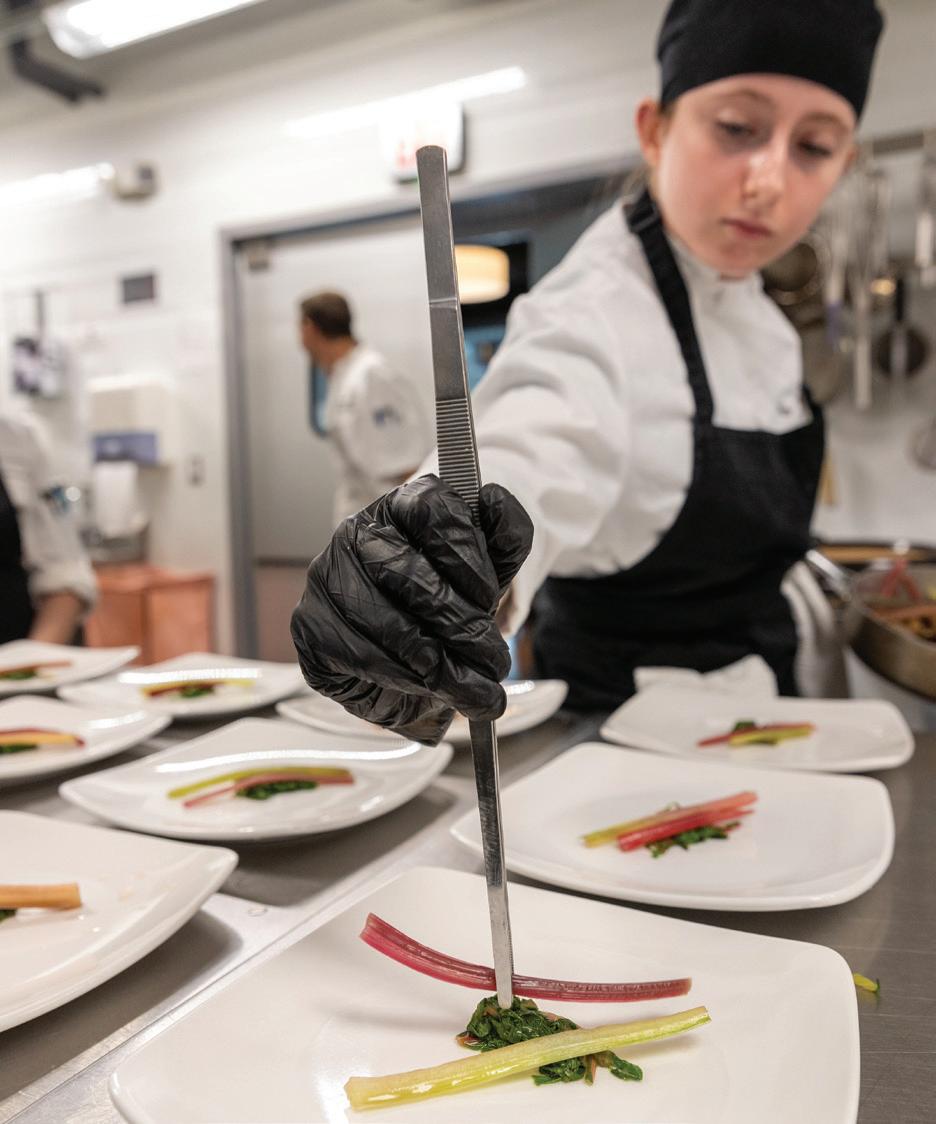
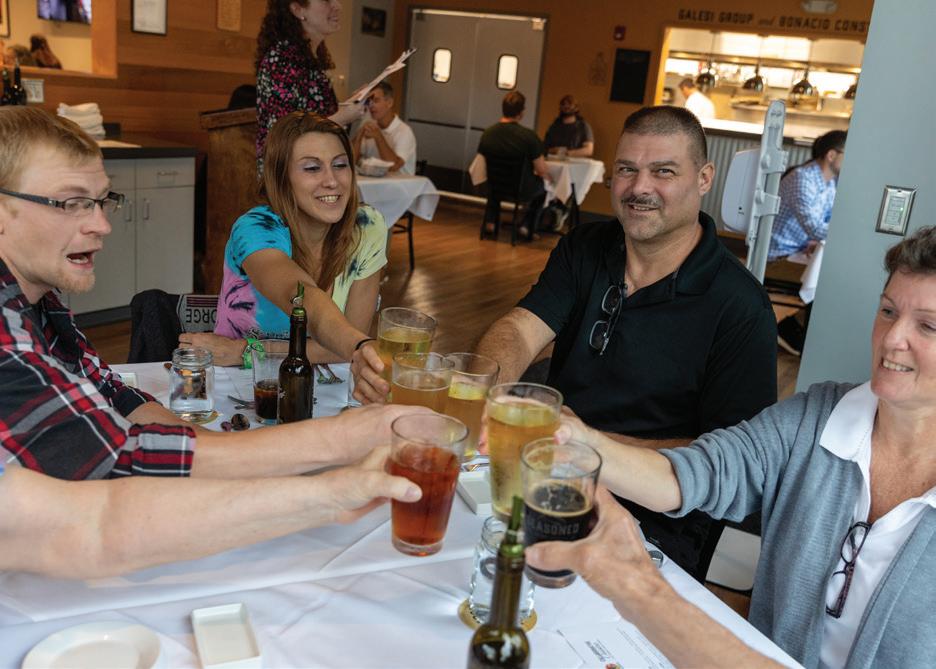
SUNY Adirondack’s Culinary Arts students will team with top local vineyards, distillers and brewers for another season of Collaborative Cuisine — unforgettable evenings of creativity, community and cuisine.
Emily Audette discovered a love of baking while at home during the COVID-19 lockdown.
“I graduated from SUNY Adirondack in 2015 with a communications degree, but during the pandemic, like a lot of people, I realized what really brings me joy: making bread. The first thing I baked was pretzels from one of my mom’s recipes. They weren’t pretty, but they were delicious. After that, I tried focaccia — and it clicked. My favorite thing about bread is that it doesn’t care about your schedule. It forces you to slow down and be patient.
That discovery led me back to SUNY Adirondack, this time to the Culinary program. As soon as I saw the big mixers in the bake shop, I thought, ‘This is where I belong.’
Now, I’m in my fifth semester, graduating in May, and I’ve fallen in love with every part of this program — from breads and bagels to plated desserts. I even teach community education classes like ‘Books and Batter,’ where we read a book and then make food inspired by it. It’s like a book club that meets in the kitchen.
Food connects me to my family, too. Every Christmas morning when I was little, my mom would bake Finnish orange bread. The smell of it filled the house. After years of not making it, we brought it back in 2021, and when it came out of the oven, it was like smelling a memory. That’s when I knew I was on the right path.
My dream now is to open a bookstore bakery — a place where people can grab a loaf, a latte and a story. Until then, you can find me at Park & Elm or in the SUNY ADK kitchens, covered in flour and fueled by coffee, learning as much as I can from the chefs I admire so much. This place has truly become home.”
Learn more about Books and Batter, the Continuing Education course Emily teaches, at https://www. sunyacc.edu/continuing-education-catalog
Follow #HumansOfSUNYAdk on Instagram to read more stories like Emily’s.
ABOUT OUR STUDENTS
13.5 PERCENT INCREASE*
13 PERCENT INCREASE*
19 PERCENT INCREASE*
53.5 PERCENT INCREASE*
in number of students ages 30 and older
32 STUDENTS FROM OUT OF STATE in enrollment from Washington County in enrollment from Warren County in number of students ages 22 to 29
* In Fall 2025, compared with Fall 2024
236 STUDENTS were enrolled in SUNY Reconnect, a state-funded program that supports adults ages 25 to 55 who do not have a college degree and are enrolled in fields deemed high demand
621 STUDENTS ages 25 and older enrolled in a degree program in Fall 2025
38 PERCENT of students ages 25 to 55 are eligible for SUNY Reconnect
10 INTERNATIONAL STUDENTS
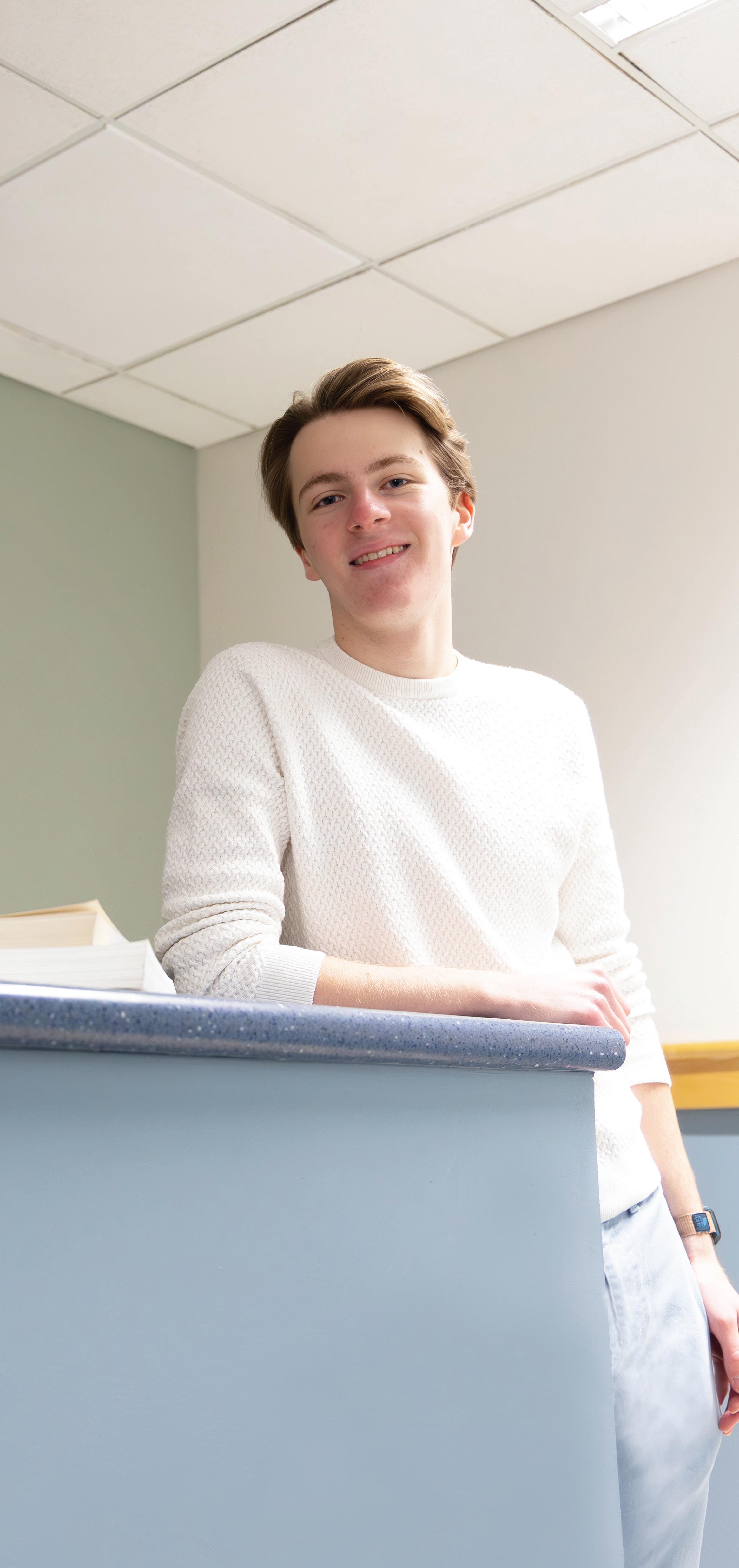
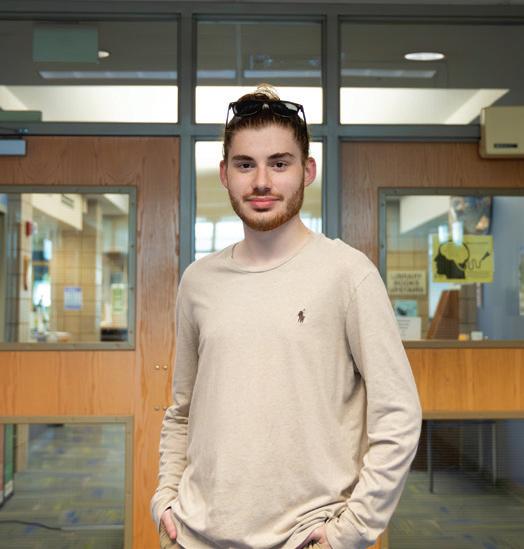
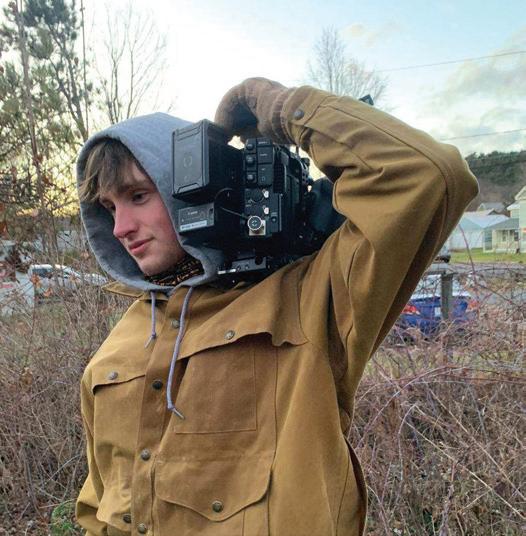
For Cameron Hamell, college is about more than just a degree — it is about making smart choices for the future.
“I was originally going to study film,” Cam said. “But I realized that while it would be fun, it might not be the most practical path for me financially. SUNY Adirondack just made sense — it’s affordable, close to home and the Financial Aid office was amazing.”
Now a Business Administration major, Cam is exploring the world of economics, while never letting go of his creative side. A lifelong storyteller and filmmaker, he’s been making YouTube videos since childhood — playful gaming clips and deep video essays analyzing media, including “Charlie Brown” and “Squid Game.”
“I love studying why people do what they do,” he said. “Economics is kind of like the psychology of the world — understanding what motivates people and systems.”
With challenging classes, supportive professors and a growing circle of friends, Cam said his first semesters at SUNY Adirondack have been “fulfilling in ways I didn’t expect.” He is already president of the Business Club.
“I came in thinking I’d just take classes and go home,” he said with a laugh. “But I’ve met such fun, interesting people here. It’s nice to feel seen and part of a community.”
Whether he’s breaking down the deeper meaning of “Peanuts” or exploring global markets, Cam is already mastering the art of balance — between creativity and strategy, dreams and plans.
Follow #HumansOfSUNYAdk on Instagram to read more stories like Cam’s.
STUDENT PROFILE
Cameron Hamell
Hometown: Glens Falls, New York
Major: Business Administration
CAM HAMELL WAS AMONG GLENS FALLS HIGH SCHOOL’S CLASS OF 2025, WHICH WAS DIRECTLY ADMITTED TO SUNY ADIRONDACK THROUGH A NEW REGIONAL ENROLLMENT INITIATIVE. (READ MORE, PAGE 9)
ENROLLMENT NEWS
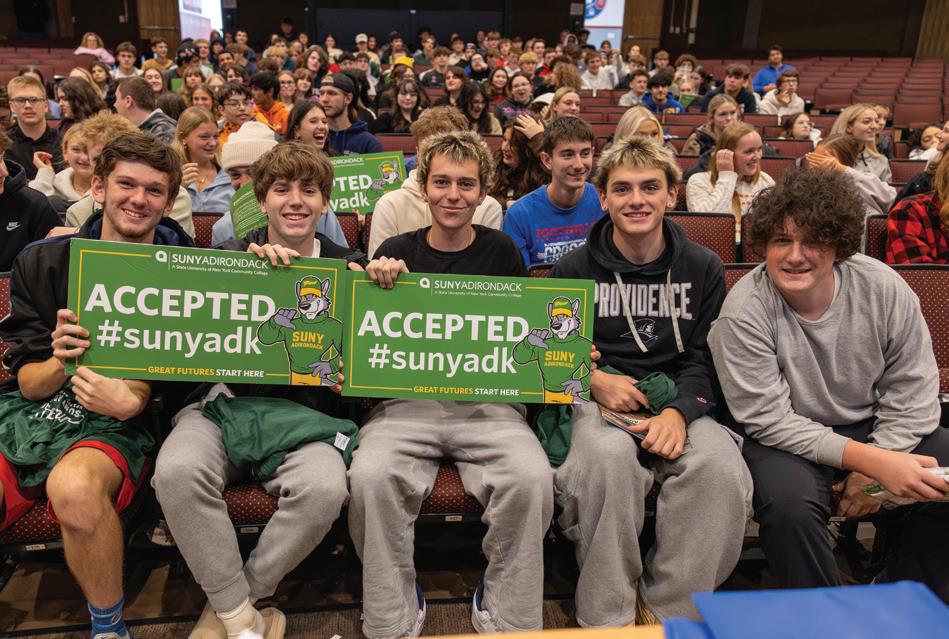
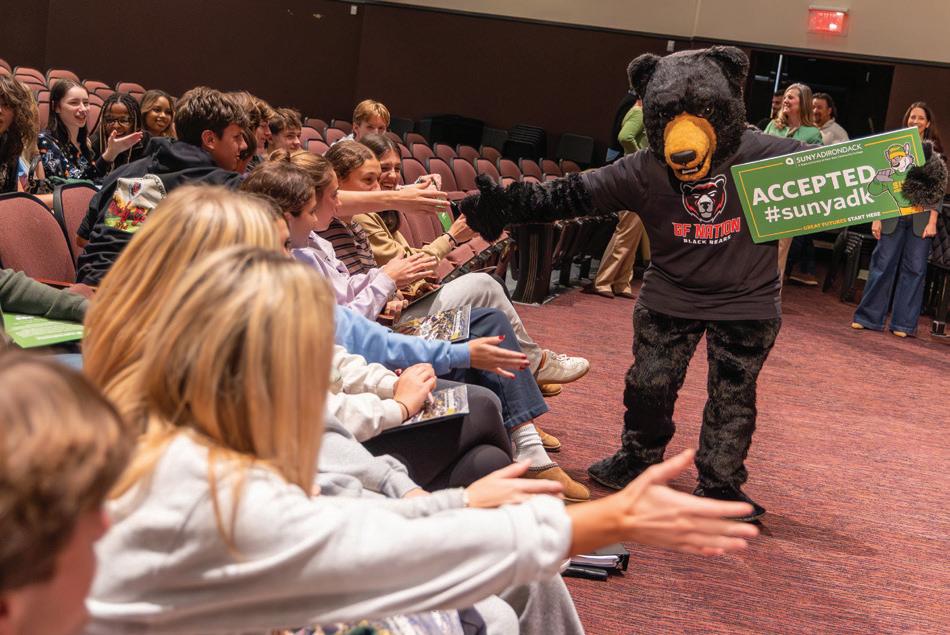
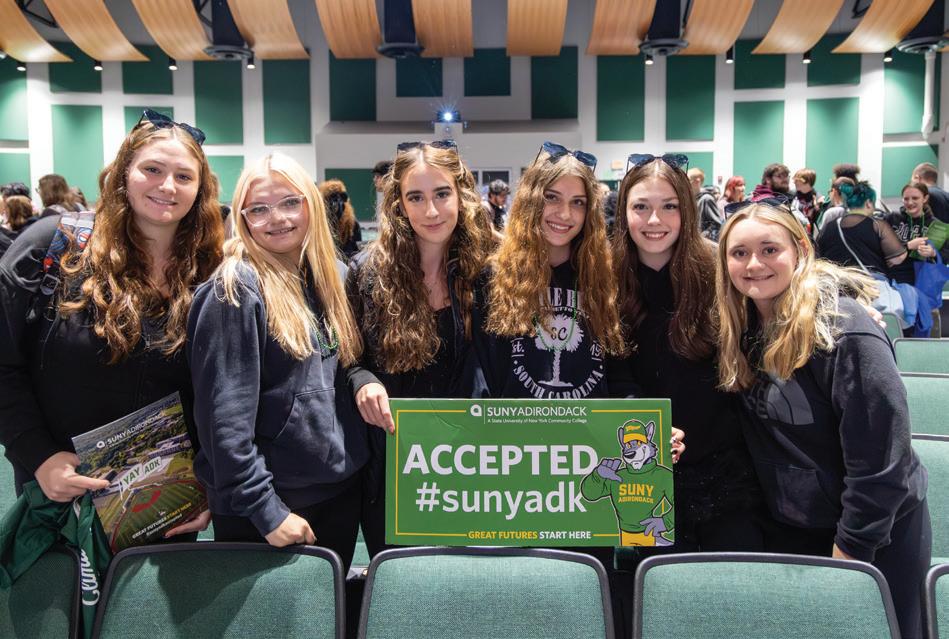
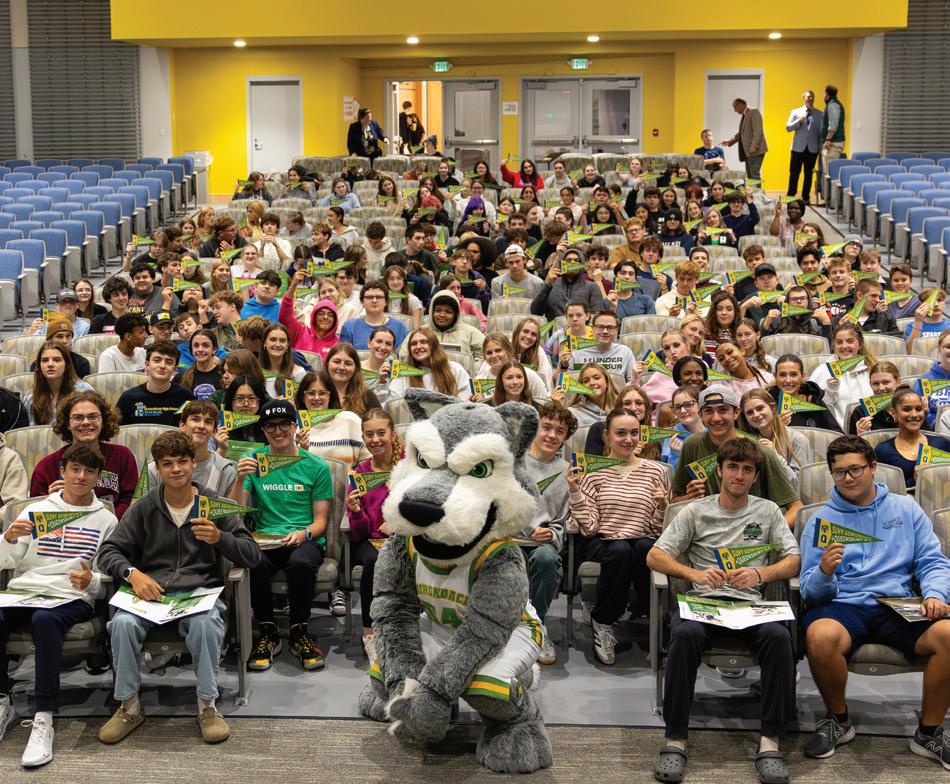
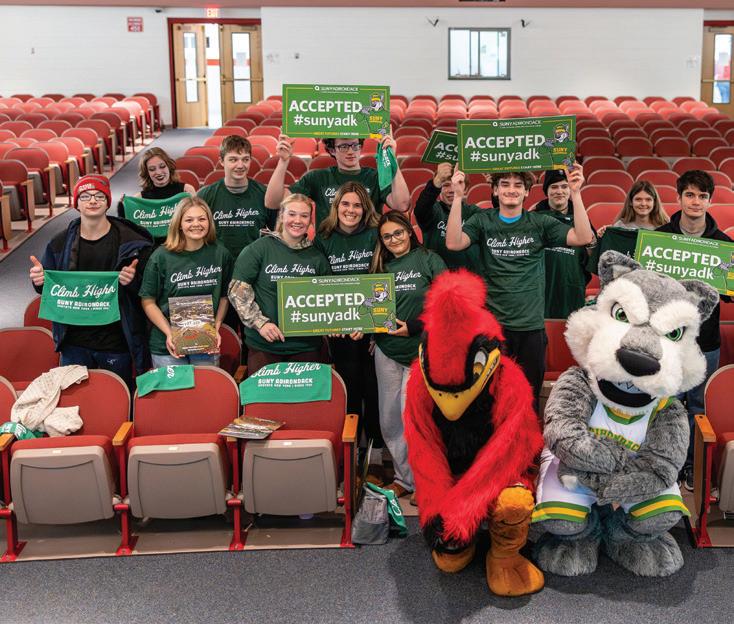
At high schools across the region, something special is happening: Without having to click a mouse, seniors are being accepted to SUNY Adirondack.
Through its Direct Acceptance program, SUNY Adirondack accepted thousands of students from Fort Ann, Glens Falls, Hudson Falls, Queensbury, Saratoga Springs, Schuylerville and South Glens Falls high schools without requiring students to apply.
SUNY Adirondack’s College Access advisors work with high school counselors to automatically transfer students’ transcripts, file necessary paperwork and make the college application process as simple as possible.
“This breaks down any remaining barriers to the college application process,” said Jenny Postlethwaite, director of College Access at SUNY Adirondack. “For a lot of students, the idea of going to college doesn’t seem like a possibility, but by telling them they’re already accepted, they start to realize there is a path to success for them at SUNY Adirondack.”
SUNY Adirondack President Anastasia L. Urtz, J.D.; Postlethwaite;
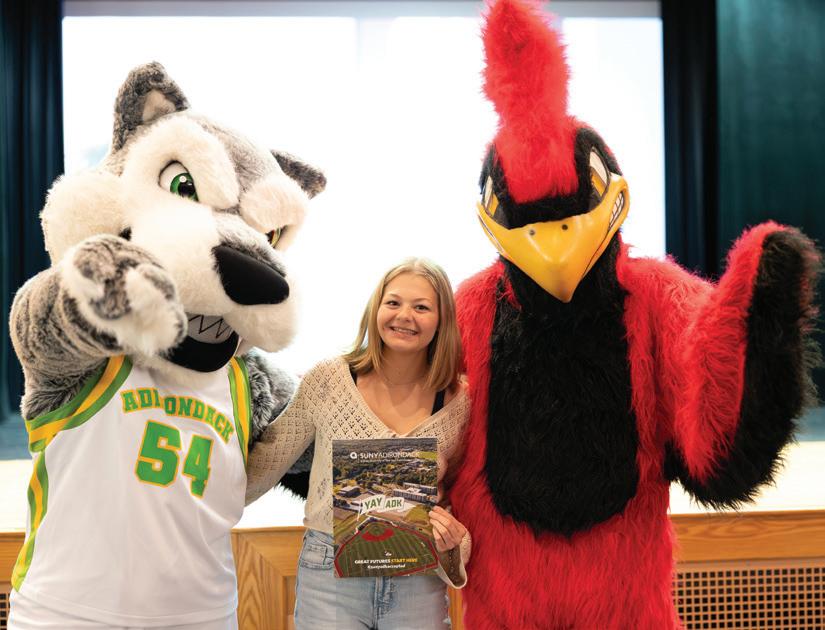
Assistant Director of College Access Casey Job; and members of the College Access, Enrollment and Marketing teams celebrate the events with students in the Class of 2026, principals, superintendents, teachers and counselors throughout the area. The college provides each student with a complete acceptance packet that includes a step-by-step guide on how to apply for financial aid and register for Accepted Student Day, a decorative pennant and more.
“At SUNY Adirondack, we believe every student deserves to see college as an attainable, exciting next step,” Urtz said. “Through our Direct Acceptance program, we’re not just opening doors — we’re walking beside students as they take their first steps toward a brighter future. This initiative reflects our deep commitment to access, equity and opportunity for all learners in our region.”
FACULTY & STAFF NEWS
SUNY Adirondack’s faculty and staff are passionate about their work and exemplify their dedication to the tenets of the college’s mission — on and off campus. In this edition of Community Roots, we celebrate:
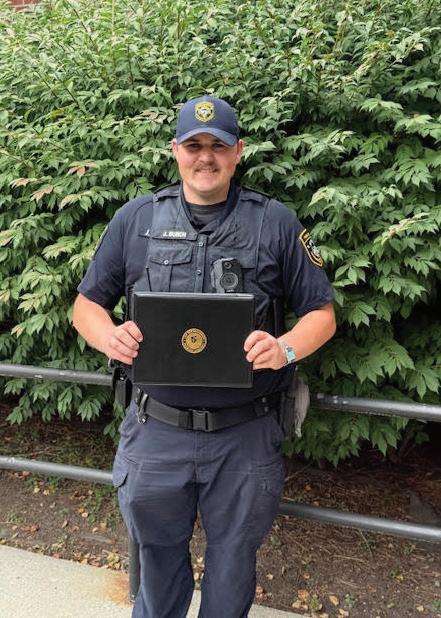
Peace Officer Joshua Burch, from Public Safety, graduated from the New York State Basic Course for Campus Public Safety Officers in August. He was the only graduate to be awarded the Defensive Tactics Award. Recruits go through four weeks of defensive tactics training and the award is given to the officer who demonstrates exceptional defensive tactics skills.
Kyle Ainsworth, coordinator of Accessibility Services, Jolene Corlew, assistant director of Accessibility Services, and Taylor Testa, director of Accessibility Services, successfully earned certification in Accessibility Core Competencies (CPACC) from the International Association of Accessibility Professionals. To do so, each had to achieve above standard in one of three disciplines — Disabilities, Challenges and Assistive Technologies; Accessibility and Universal Design; or Standards, Laws, and Management Strategies. This achievement reflects their deep commitment to accessibility and strengthens their ability to support the college’s inclusive learning goals.
Chandler Atkins, distinguished professor of Business, launched The Veronica Lake Foundation, a nonprofit organization dedicated to preserving the legacy of the screen icon. Atkins purchased, renovated and runs a business on the star’s former property, The Elms Waterfront Cottages in Lake Luzerne. The group is planning events to raise money for a memorial in Los Angeles, a museum in Hadley and a film noir or documentary.
Jessica Best, professor of English and Diversity Initiatives coordinator, was selected as part of SUNY’s third cohort of Diversity, Equity, Inclusion and Social Justice (DEISJ) Fellows. The nine faculty fellows will provide support for other faculty to incorporate diversity, equity, inclusion and social justice into existing courses to meet DEISJ student learning outcomes in the general education framework.
Wendy Johnston, associate professor of Political Science and chair of the Social Science Division, will facilitate the SUNY Council on Assessment’s
Fall 2025 Zoom-In Event, “Assessment in the Age of AI.”
Jeannie Brown Leonard, director of Assessment and Learning Resources, will be a panelist, discussing the importance of developing clear course- or assignment-level policies guiding students’ use of AI; how and when to communicate these policies to students, with transparency about the rationale behind them; and how transparency can bolster student motivation.
Amy Macaluso, associate professor of Biology, Naftali Rottenstreich, professor of English/remedial specialist, and Adriana Umana, assistant professor of World Languages, on Dec. 2 and 3 will present ”Faculty Designing for Faculty: Collaborative AI Mini-Course Development” at The Teaching Professor Conference on AI in Education, a digital conference. Designed by and for community college faculty, the course introduces AI through inclusive, flexible strategies grounded in local teaching realities.
Mary McDermott, professor of Nursing and simulation coordinator, was selected for the 2025-2026 SUNY Nursing Simulation Fellowship. This will provide Mary with a unique opportunity to enhance her simulation skills, collaborate with other fellows and help build the future of simulation-based learning in SUNY nursing programs system-wide.
Taylor Testa, director of Accessibility Services, was elected to participate in the 2025/2026 NYS Community College Leadership Academy. This yearlong developmental opportunity is designed to enhance the leadership skills of participants.
continued
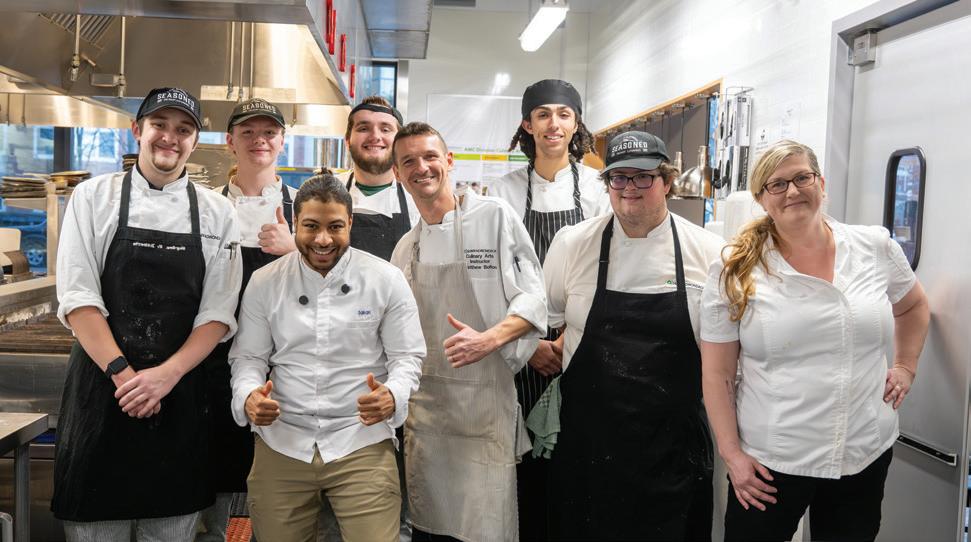
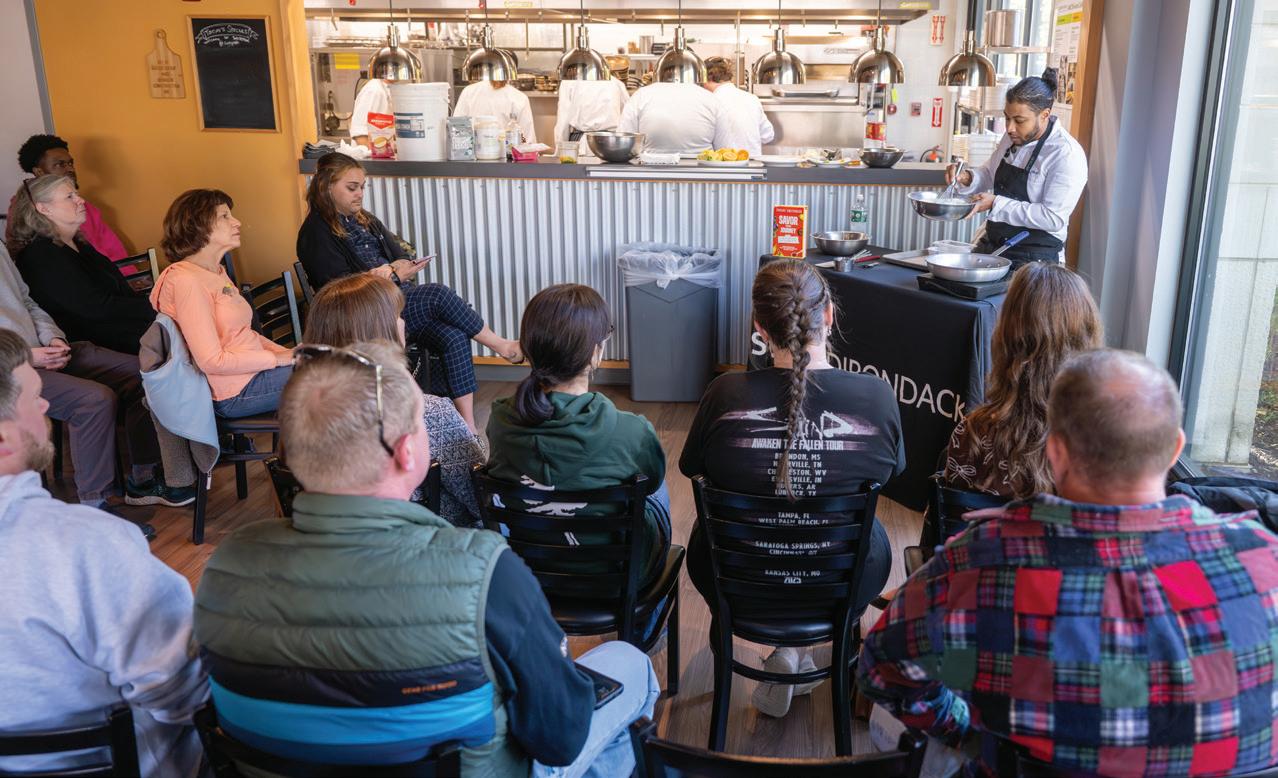
The Business Club, led by Kelli Hatin, distinguished professor of Business, and Dave Matthews, professor of Business, collaborated with The Culinary Club and Matt Bolton, instructor of Culinary Arts, to bring celebrity chef, entrepreneur and activist Sakari Smithwick to Seasoned for a well-attended cooking demonstration and talk that attracted members of the campus and broader communities.
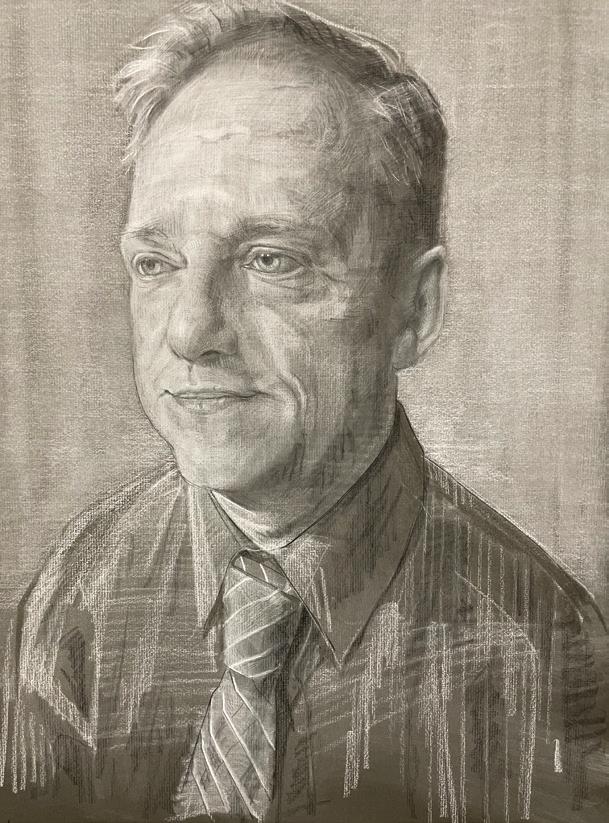
John Hampshire, professor of Fine Arts, added his talents to Inside Change from Within’s “Naming the Loss COVID-19 Memorial,” which was exhibited on the St. Mark’s Church fence through mid-November. John drew a portrait of Robert B. Davies, who worked in banking and securities, was an avid New York Yankees fan and is remembered for his wry sense of humor.
John also exhibited two of his paintings, “Tumult” and “Chase,” in an Inside Change from Within show at Tom & Jerry’s Bar in New York City.
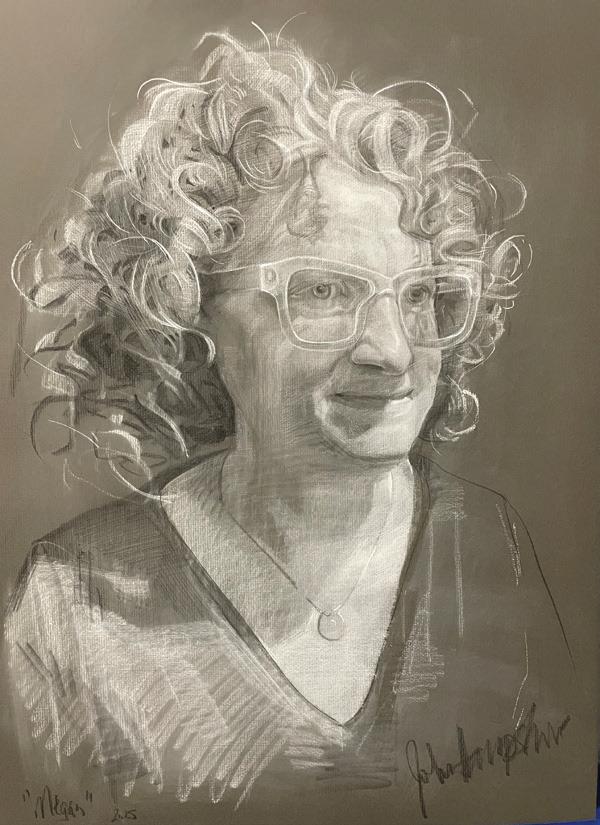
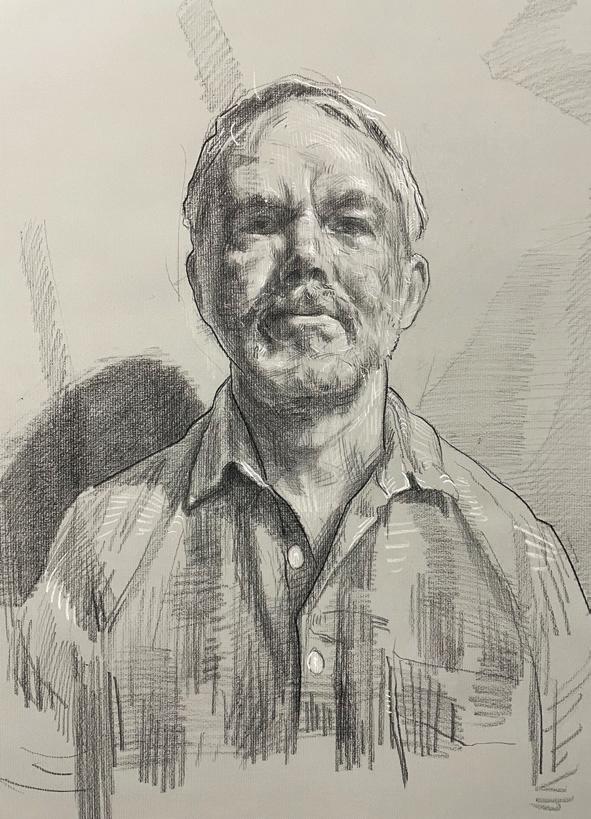
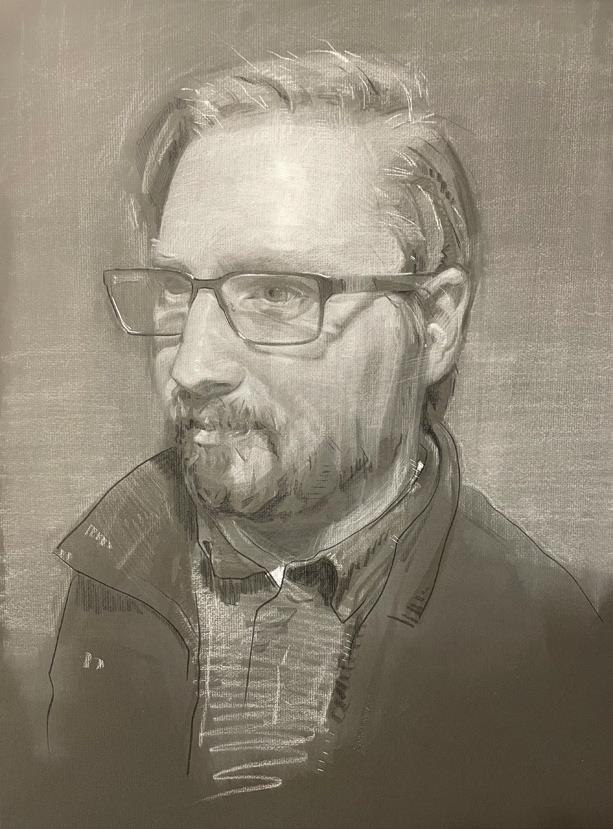
While on sabbatical, John is working on a series of portraits of members of the SUNY Adirondack community to be exhibited in the on-campus Visual Arts Gallery. He has completed 20 portraits in charcoal and has started several paintings and ink drawings.
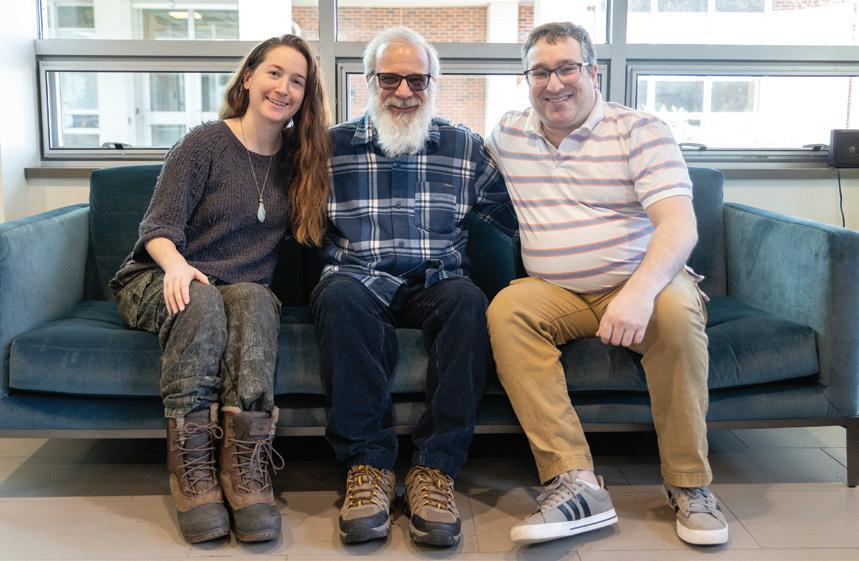
Portraits left to right: Megan Mercier, assistant director of SUNY Adirondack Saratoga & College Academy; Evan Sullivan, Ph.D., assistant professor of European History; Shane Donaldson, director of Technology Support Services; and Kevin Ankeny, distinguished professor of Broadcasting
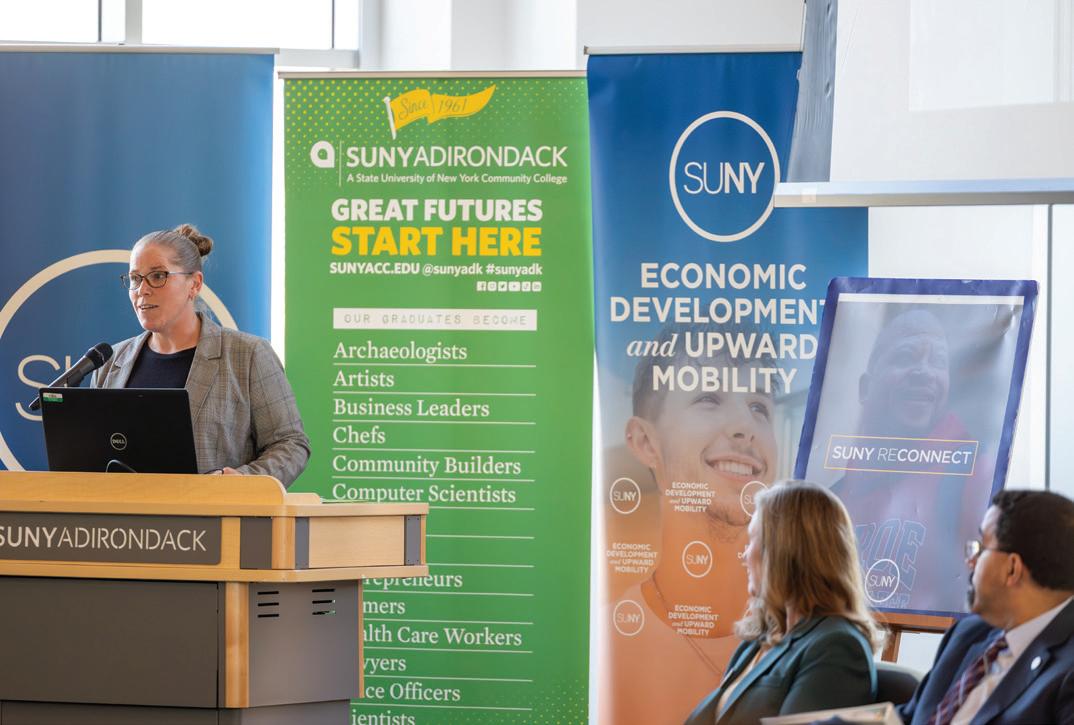
Some of the leading administrators in the State University of New York system sat at the front of the room, but on Sept. 18, the spotlight wasn’t on Valerie Dent, vice chancellor for Community Colleges, or even Chancellor John B. King.
As SUNY Adirondack celebrated SUNY Reconnect, all eyes stayed on Beth Belair and Jonathan Boston, two adult students participating in the program, which provides free tuition, fees, books and mandated supplies for students ages 25 to 55 who don’t have a college degree and pursue one in a high-demand field.
“Without a degree, I can’t advance in my field,” said Belair, who is studying Criminal Justice: Substance Abuse Services. “And if it wasn’t for Reconnect, I wouldn’t be able to do this.”
Boston, a Nursing student, said the program is allowing him to pursue his dreams without having to worry about how to pay for his education. “I became a dad young, and for years I worked jobs I didn’t love just to provide for my family. With SUNY Reconnect, I finally have the chance to come back to school.”
Belair and Boston shared their stories before SUNY Adirondack President Anastasia L. Urtz, J.D., welcomed King to the podium.
“SUNY Adirondack is a statewide leader in providing a world-class education that prepares students to unleash their full potential after graduation,” King said. “With Gov. Hochul’s SUNY Reconnect program, this education is more accessible for adult leaders who can help grow our regional and state economy. I applaud SUNY Adirondack for providing high-quality, engaging and outstanding course offerings to students, especially adult learners, through the new SUNY Reconnect program.”
IN THE FALL 2025 SEMESTER — THE FIRST IN WHICH RECONNECT WAS OFFERED — MORE THAN 450 STUDENTS QUALIFIED AND 263 RECEIVED FUNDING. (SUNY Reconnect pays any remaining balance after all other forms of financial aid are applied.)
“This program is life-changing for adult learners in our region, removing barriers and opening doors to education that lead to new opportunities, stronger families and a more vibrant workforce,” said SUNY Adirondack President Anastasia L. Urtz. “SUNY Reconnect reflects our deep commitment to ensuring that higher education is accessible and transformative for all.”
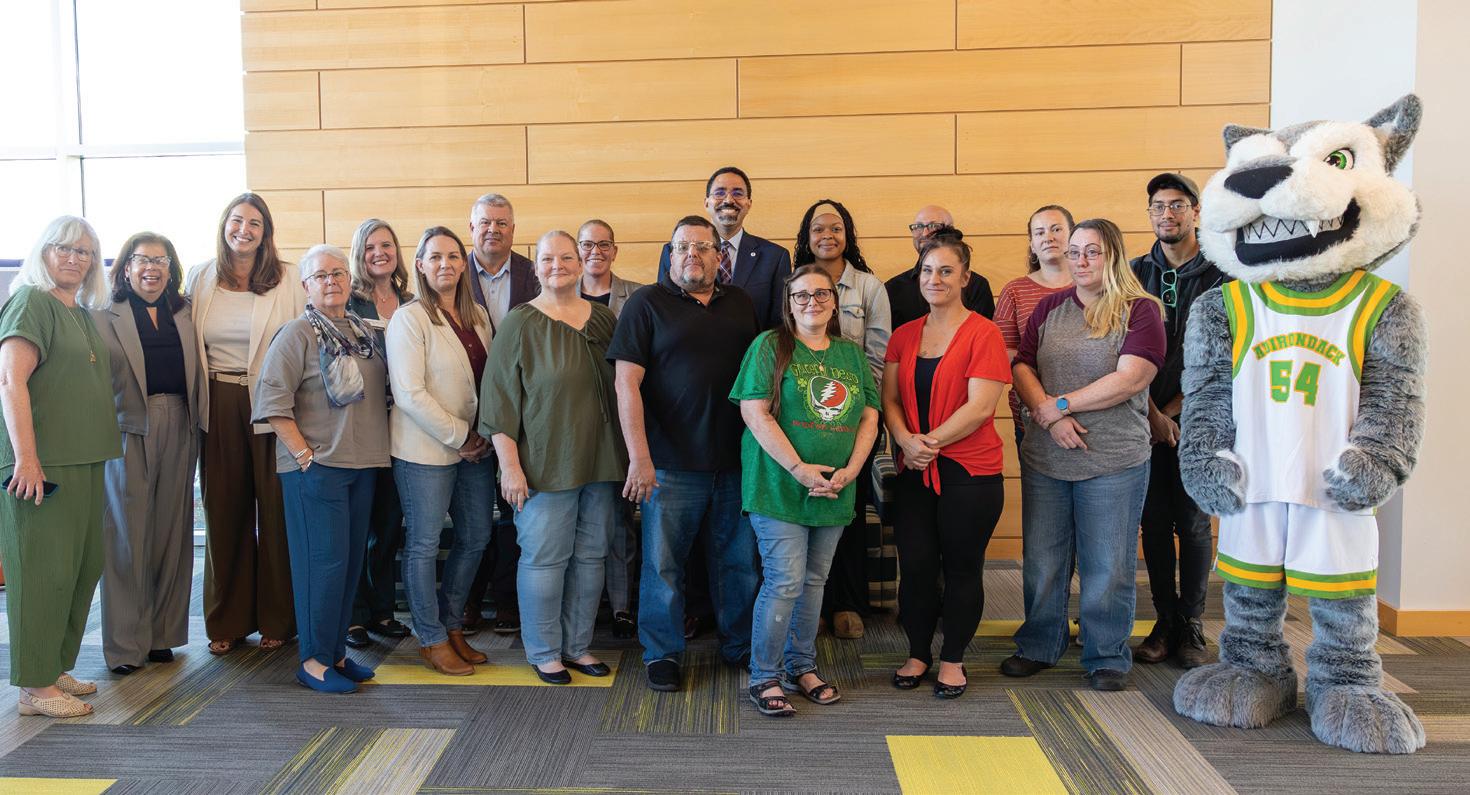
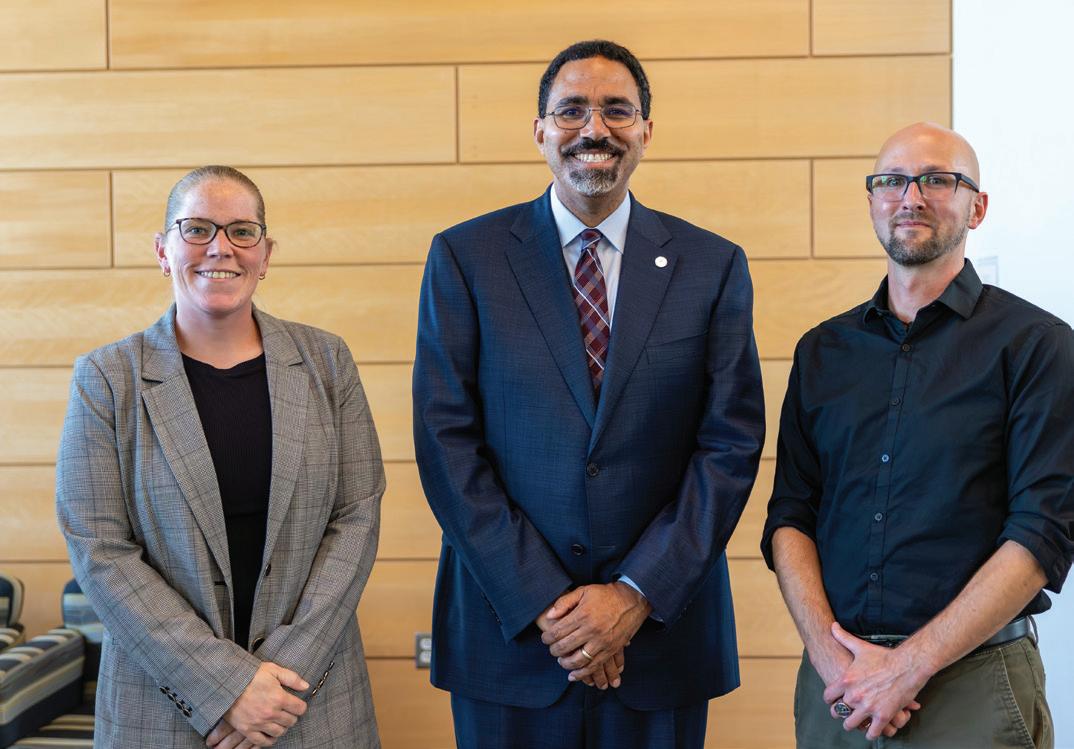
Above: A group of students in the Fall 2025 Reconnect cohort poses with SUNY Chancellor King; Right: Beth Belair and Jonathan Boston stand with Chancellor King.
COMMUNITY NEWS
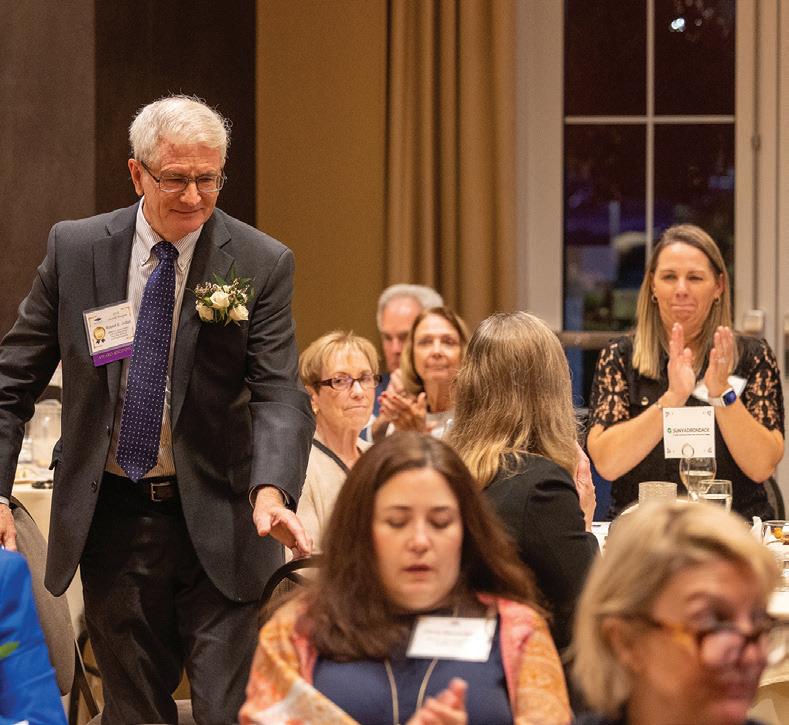
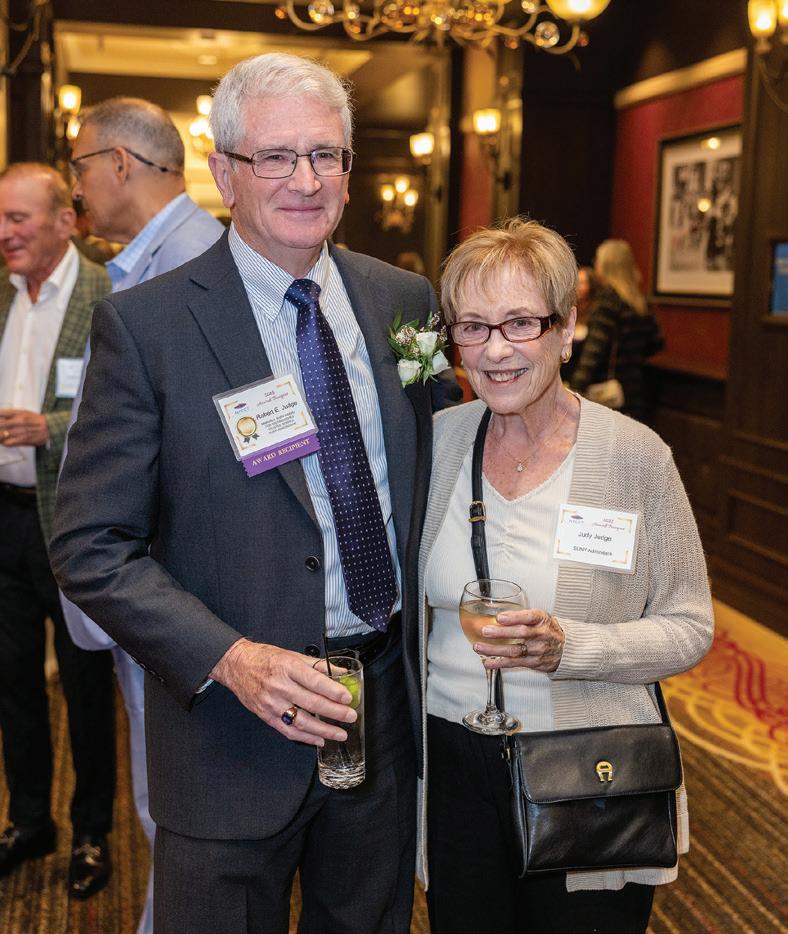
A distinguished member of SUNY Adirondack’s Board of Trustees was recognized with a statewide honor for his extraordinary commitment to community college education.
Longtime
SUNY Adirondack
Board of Trustees member
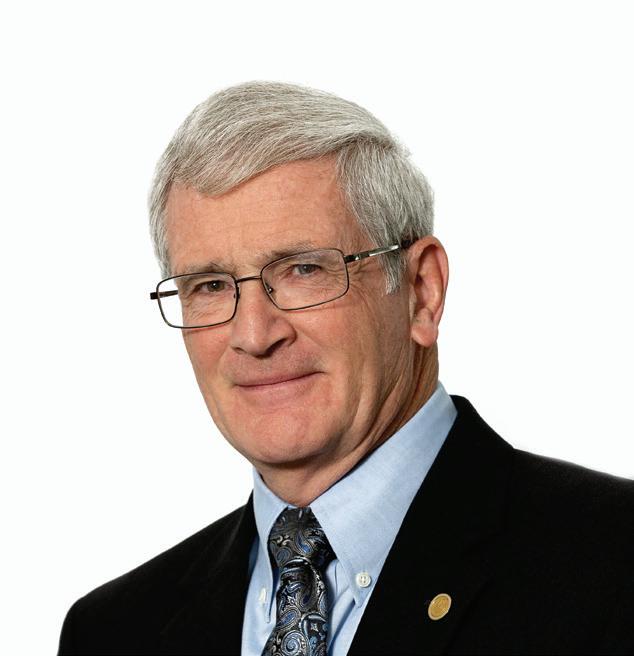
Robert Judge, Ed.D., was awarded the Marvin A. Rapp Award for Distinguished Trustee Service by New York Community College Trustees at its 71st annual conference in September.
“Dr. Judge’s steady presence reflects a sincere investment in the life of SUNY Adirondack and a deep respect for students, faculty and staff,” said Amie Gonzales, chair of SUNY Adirondack’s Board of Trustees.
Judge was recognized at the three-day NYCCT conference, which brought together 80 trustees, presidents, faculty members and stakeholders from CUNY and SUNY community colleges.
He thanked his fellow board members for the nomination. “It has been a pleasure and an honor to serve alongside such conscientious and dedicated people,” Judge said.
The Marvin A. Rapp Award for Distinguished Trustee Service acknowledges the dedicated and effective service a trustee exhibits over an extended period.
Judge was appointed to the Board of Trustees by the governor in 2008 and is the longest-serving member of SUNY Adirondack’s board.
Throughout his long career in education, he worked in New York City, and at Shenendehowa Central School, Burnt Hills-Ballston Lake Central School, Hudson Falls Central School, SUNY Plattsburgh and The College of Saint Rose.
He was also a consultant for the U.S. State Department, an authorial reviewer for the Economy Company’s reading program and a member of Houghton Mifflin’s reference division’s task force.
At SUNY Adirondack, Judge has been instrumental in shaping institutional policy, supporting sound fiscal oversight and strengthening strategic planning.
He was a vital member of the capital campaign committee that successfully raised $5.7 million for construction of the college’s state-of-the-art turf athletic facility. He also actively supported SUNY Adirondack Foundation’s efforts to raise $2.5 million for renovation and expansion of the Nursing and Science facilities.
Judge earned a bachelor’s degree in English from St. Francis College; a master’s degree in English from University at Albany; and a doctorate in reading from University at Albany.
DID YOU KNOW?
SUNY Adirondack offers
Certified Recovery Peer Advocate — provisional (CRPA-P) training twice a year in partnership with Healthy Capital District.
This 50-hour foundational training introduces participants to the essential competencies of peer advocacy, including mentoring and education, recovery and wellness support, ethical responsibility and Medication Supported Recovery (MSR).
Completing this training qualifies participants to apply for provisional certification through the New York Certification Board (NYCB).
The primary function of a Certified Recovery Peer Advocate is to facilitate outreach with individuals enrolled in or considering treatment for addiction. Using their recovery expertise, professional training and lived experience, peers help individuals engage more fully in treatment and strengthen their commitment to recovery. CRPAs also connect clients to communitybased recovery supports consistent with their treatment, recovery and discharge plans.
Upon completion participants can:
• Understand the scope of practice of a Certified Recovery Peer Advocate
• Communicate effectively with patients in a culturally sensitive context
• Demonstrate key skills related to peer services
• Apply essential competencies in the recovery field
Funding support is available.
“I like the word ‘HOPE’; it stands for ‘Help One Person Everyday’.”
ROBIN PORTER
HOMETOWN: INDIAN LAKE, NEW YORK
Certified Recovery Peer Advocates
2025 GRADUATE OF CERTIFIED RECOVERY PEER ADVOCATE TRAINING THROUGH SUNY ADIRONDACK’S WORKFORCE DEVELOPMENT OFFICE AND HEALTHY CAPITAL DISTRICT
CURRENTLY: CERTIFIED RECOVERY PEER ADVOCATE AT BAYWOOD CENTER
For Robin Porter, rock bottom was the floor of her mom’s home, where she lay crying, praying and finally coming to the realization she needed help.
“My alcoholism didn’t take over, didn’t show its ugly face, until my 30s,” Porter said. “Drinking at first was fun, relaxing and casual, a weekend thing. Then it became a daily thing, then it became a habit and then a necessity for me to function.”
Before she knew it, Porter was divorced, fired from her job, at odds with friends, family and her children, and facing a second DWI charge.
After rehab, she moved into a women’s house and faced what seemed like an easy choice: participate in felony drug court or go to prison for a year.
“I was brought up Catholic, so I had a punishing God, and God was going to get me back,” Porter remembered thinking. “You lie, cheat and steal, and God will get you back.”
So on the drive to the courthouse, when a recovery home worker told Porter she should take the jail time because drug court was too difficult, she took it to heart.
“I walked into the courthouse, crying, scared, alone,” she said. “There I was, feeling ‘that big’ [she held her index finger and thumb close together], thinking ‘I’m not doing it because I’m going to fail like I failed at everything else.’”
When her lawyer declared her decision, the drug court director asked
to speak to Porter alone. “She said, ‘Why do you think you don’t deserve recovery?’,” Porter said. “I was done. I surrendered.”
She stayed at the women’s home, successfully completed drug court, got a full-time job and her own apartment, and today still drinks (coffee, of course) out of a mug that reads “Why do you think you don’t deserve recovery?”
At a recovery meeting, a friend who worked at Baywood Center heard Porter speak, then asked her to consider becoming a certified recovery peer advocate (CRPA) — a 50-hour course offered twice a year through SUNY Adirondack’s Office of Workforce Development and Healthy Capital District.
Now Porter helps people in situations she understands. “The work keeps me grounded, humbles me, reminds me of where I was and where I don’t want to be again,” she said.
With more than four years of sobriety fueling her, Porter is relishing her time as a grandmother (she has one grandson and another on the way) and focusing on what matters to her: her three children, her recovery and her work.
“I like being there for people,” she said. “Now that I am a person in recovery, I feel grateful to help the next person struggling.”
SUNY ADIRONDACK ALSO OFFERS A CRIMINAL JUSTICE: SUBSTANCE ABUSE SERVICES ASSOCIATE DEGREE PROGRAM.
STUDENTS EXAMINE PSYCHOLOGY, SOCIOLOGY AND SUBSTANCE ABUSE, GAINING NEW PERSPECTIVES AGAINST THE BACKDROP OF THE CRIMINAL JUSTICE SYSTEM.
THE DEGREE PROGRAM IS DEEMED A HIGH-DEMAND FIELD OF STUDY, SO SUNY RECONNECT PROVIDES FINANCIAL SUPPORT TO THOSE AGES 25 TO 55 WHO HAVE NOT EARNED A DEGREE WHO ENROLL IN THE PROGRAM.
LEARN MORE AT WWW.SUNYACC.EDU/RECONNECT
“If it wasn’t for my advisor, I probably wouldn’t have finished. She encouraged me, was my motivator and, any time I had a question, she was right there.”
SHANNON SPAULDING
HOMETOWN: FORT EDWARD, NEW YORK
2022 GRADUATE OF SUNY ADIRONDACK WITH A DEGREE IN CRIMINAL JUSTICE: SUBSTANCE ABUSE SERVICES
CURRENTLY: CREDENTIALED ALCOHOLISM AND SUBSTANCE ABUSE COUNSELOR—TRAINEE (CASAC-T) AT BAYWOOD CENTER
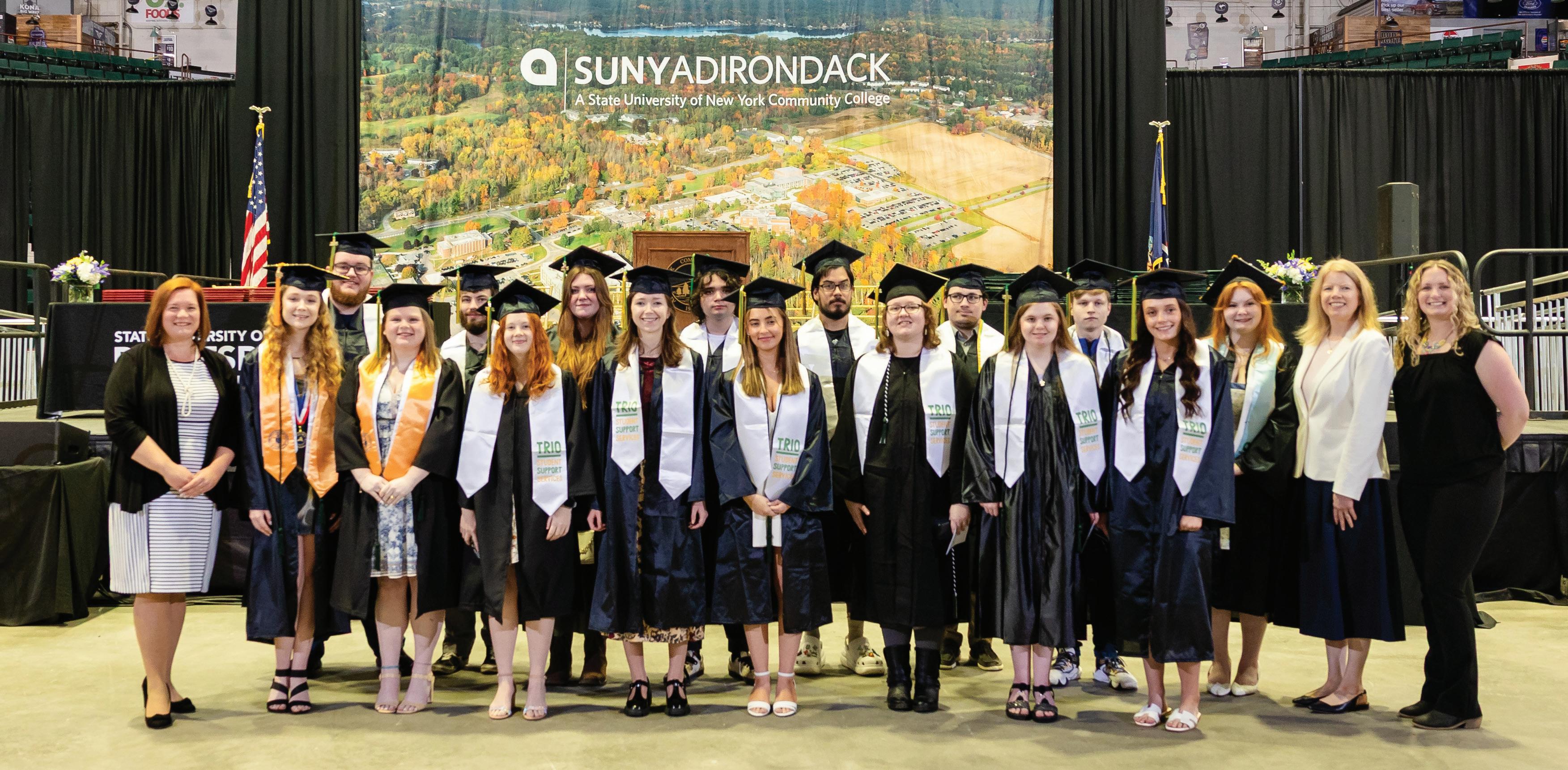
When Shannon Spaulding checked in at SUNY Adirondack’s commencement, her advisor draped a green and white cord over her shoulders and congratulated her.
“I said, ‘What’s this?’ and she said, ‘You’re summa cum laude,’ and I asked, ‘What’s that?’ A 4.0 average, and I had no idea,” Spaulding said. “I had never heard the term.”
Spaulding’s journey to higher education was more a series of back roads and detours than a direct route. “Growing up, I did not like school,” she admitted. “I had no desire to go to college. I didn’t want to do the work; I wanted to play and be rebellious. I did everything I was raised not to do.”
She started partying young. “I’ve been an alcoholic since the time I started drinking at a young age, like 12,” she said. “I was the life of the party. Everyone would want to go home and I was like, ‘Where is everybody going?’ I was just getting started.”
A month after graduating high school, Spaulding got pregnant. After her son was born, she joined a road construction crew, where she worked for 13 years.
By age 30, something had to give. “I had two children and addiction got the best of me,” she said. She went to rehabilitation and when she returned to work, she realized it was no longer a good fit, so she enrolled in cosmetology school.
“I went from working with all men to sitting in a classroom with 30 other women,” she laughed.
After more than a decade, surgery to combat arthritis left her without the dexterity needed to continue cutting hair, leaving her to wonder what was next.
Spaulding decided to give college a try and enrolled in Southern New Hampshire University, which offers all online classes. “I hadn’t opened a computer in more than 20 years,” she said. “So my son convinced me to go to SUNY Adirondack.”
She visited campus and met Michelle Bilodeau-Lanne, who at the time was an advisor for TRIO SSS, an opportunity program that provides services to help eligible students — based on income, first-generation college student status, academic needs, or physical and developmental disabilities — succeed in earning a degree.
“She guided me, inspired me and encouraged me that I can do it,” Spaulding said. “I never wanted to go to college and here I am, going to college at 48 years old.”
Even once she was enrolled, she hit hardship. Her second semester, the COVID-19 pandemic forced classes online, then she ended up hospitalized with pneumonia.
But she overcame adversity, earned an associate degree — with that perfect GPA — in Criminal Justice: Substance
Abuse Services, and went to work in the field immediately, first at Addictions Care Center of Albany and, a year ago, at Baywood Center.
“With my experiences and sobriety — I just celebrated 16 years of recovery — I really love to be able to let people know they’re going to be OK and they can get through anything they put their minds to,” she said.
Now she spends her days doing intakes, running group sessions and meeting with people recovering from substance abuse.
“We try to navigate the feelings, why they are, where they come from, and how to foster growth and change so they’re not dependent on a substance,” she said. “Because I know how they feel: I know what it’s like to recover from crack cocaine, to recover from alcoholism, and the impact it has on family and friends. I am able to use what worked for me and offer that same support and those same resources to my clients.”
FUN FACT
AFTER THE AMERICANS WITH DISABILITIES ACT PASSED IN 1990, LOCAL ADVOCATES ACROSS THE COUNTRY FORMED INDEPENDENT LIVING CENTERS LIKE SOUTHERN ADIRONDACK INDEPENDENT LIVING (SAIL) TO ENSURE THE PROMISE OF THE ADA REACHED EVERY COMMUNITY.
SAIL was put on the map in large part because of the work of SUNY Adirondack alum Brad Williams, who was featured in the Fall 2024 edition of Community Roots. SAIL — a peer-led institution, meaning more than half its staff and board of directors identify as people with disabilities — continues to help neighbors of all ages and abilities live, work and thrive independently.
Williams, Class of 1981, was the former executive director of Glens Falls Independent Living Center (GFILC) and played a key role in its growth and development into SAIL, a larger, multi-county organization. He oversaw expansion from its original location at 25 Sherman Ave. in Glens Falls to Glenwood Avenue, Queensbury.
Williams was also married to the late Cathy Williams, a longtime SUNY Adirondack employee, and is father of SUNY Adirondack alumna and prominent regional muralist Hannah Williams, Class of 2013. The family oversees the Cathy Wright Williams Spirit Fund, a scholarship that helps support deserving SUNY Adirondack students.
Support the scholarship fund by making a donation at www.sunyacc.edu/give
“SUNY Adirondack really prepared me for University at Albany and taught me how to be a good leader.”
TYLER WHITNEY
HOMETOWN: HADLEY, NEW YORK
2011 GRADUATE OF SUNY ADIRONDACK WITH A DEGREE IN LIBERAL ARTS AND SCIENCES: HUMANITIES AND SOCIAL SCIENCES
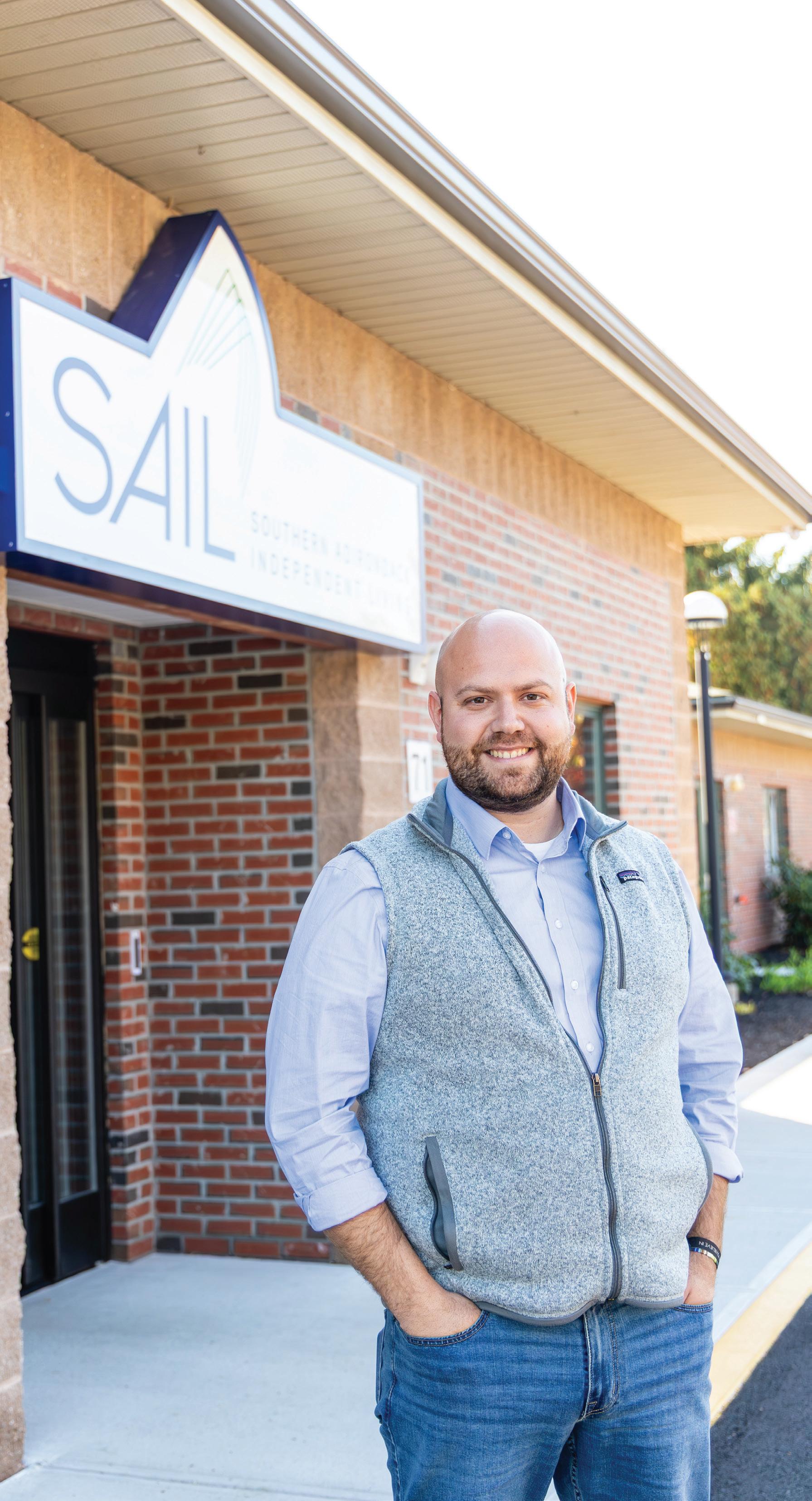
2013 GRADUATE OF UNIVERSITY AT ALBANY WITH A BACHELOR’S DEGREE IN POLITICAL SCIENCE CURRENTLY: EXECUTIVE DIRECTOR OF SOUTHERN ADIRONDACK INDEPENDENT LIVING (SAIL)
When the staff at Southern Adirondack Independent Living (SAIL) learned of a dying woman’s wish to make one more year of holiday memories with her family, they found an all-terrain wheelchair that allowed her to venture into the woods with her children and grandchildren to cut the family’s Christmas tree.
“She passed shortly after, and it’s those little, really heartfelt, meaningful things we all take for granted that make me so proud to do what we do,” said Tyler Whitney, executive director of SAIL. “We make meaningful change.”
Whitney has been a self-described “pioneer for justice” since the sixth grade, when he and classmates were the subjects of bullying. “I realized then, ‘This isn’t right. How do I defend these kids and help the kids who are bullying be better people?’”
The answer, he thought, was to become a lawyer. After high school, he enrolled at SUNY Adirondack to start his journey. “My sister had gone there, so I always wanted to go to SUNY Adirondack, get my degree and figure out my path,” Whitney said. “When I was weighing my options, SUNY Adirondack made the most sense for both my needs and my budget.”
On campus, he was active in Student Senate, College Activity Board and other clubs.
He earned an associate degree, then transferred to University at Albany, from which he earned a bachelor’s degree in political science. “I made a plan to take a year off, then go to law school,” he explained.
He took a job with Washington County EOC — now LEAP — as coordinator of a program that helped low-income families with rent assistance, thinking it would be just for a year. But it actually changed his path.
“That’s when I really fell in love with nonprofit work and really developed into more of an advocate,”
he said.
“I realized how broken some of our systems were, how difficult the government can be. And I thought, ‘I’m not going to law school; I feel like I can really make a difference in this field.’”
After leaving LEAP, he worked at Hudson Headwaters Health Network, SAIL, then Fidelis, before returning to SAIL in 2019. In 2023, he was named executive director — the youngest in the organization’s history.
Last year, SAIL — a nonprofit agency that empowers individuals with disabilities to live more independently by offering assistance in health insurance enrollment, advocacy and access to resources — served 7,000 people, a 40 percent increase over the year before. Under Whitney’s tenure, the agency has expanded its service territory to 17 counties.
“We are helping a lot of people, but have had no increase in staff,” Whitney said. “Our team is made up of strong advocates of people with disabilities, and disability rights and equality.”
Part of the increase is due to changes in health care and government funding, but another contributing factor is public awareness of SAIL and its services.
“Who we are as an agency has gotten out there,” Whitney beamed. “People say we’re the best-kept secret, but I don’t want to be a secret; I’m looking forward to helping this agency go to the next level.”
BRAD WILLIAMS (CLASS OF 1981) WITH HIS CHILDREN, HANNAH (CLASS OF 2013) AND RYAN
“Teaching at SUNY Adirondack brought a lot of really positive memories. People should realize this campus is incredible, so serene, and the quality of education is top notch.”
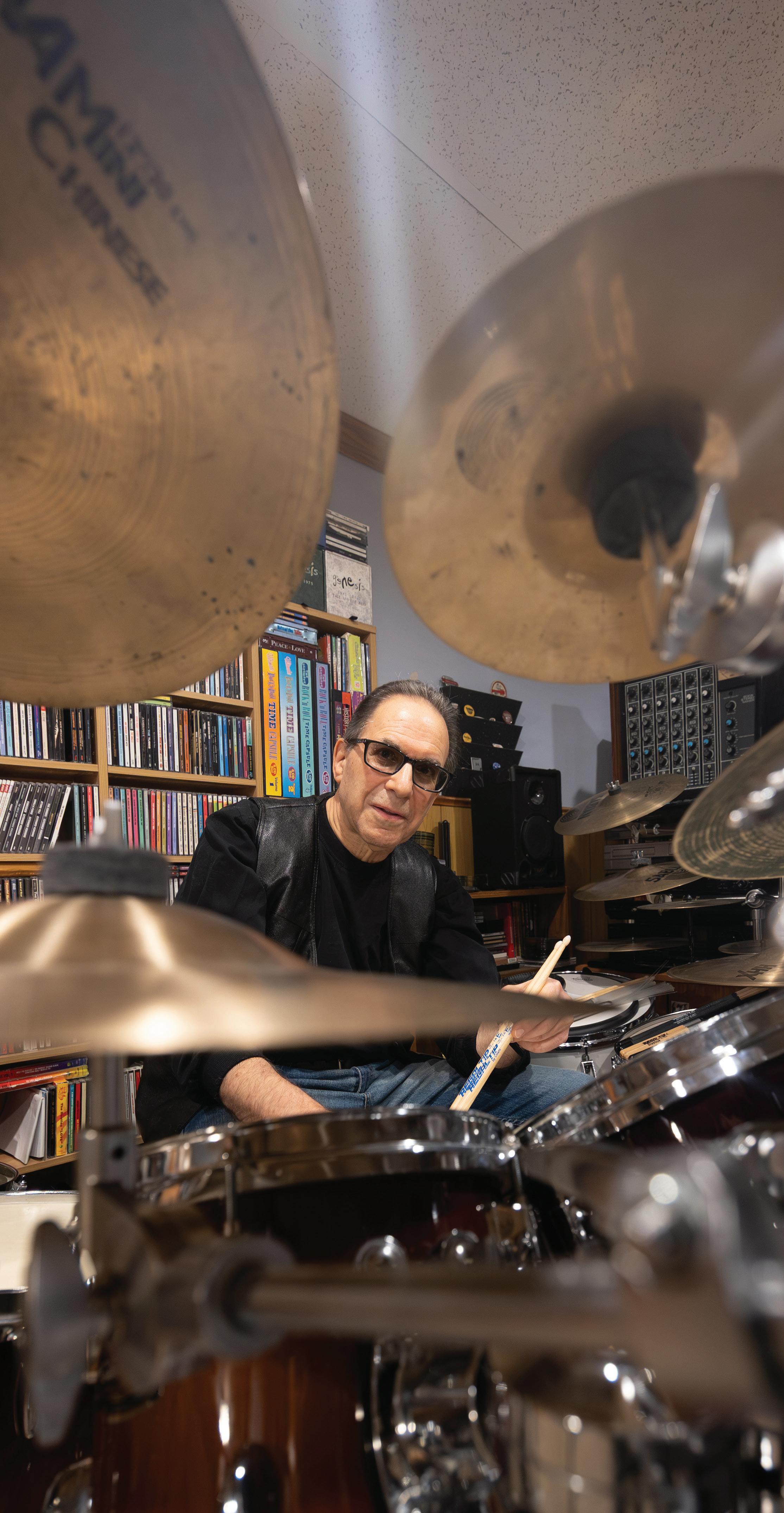
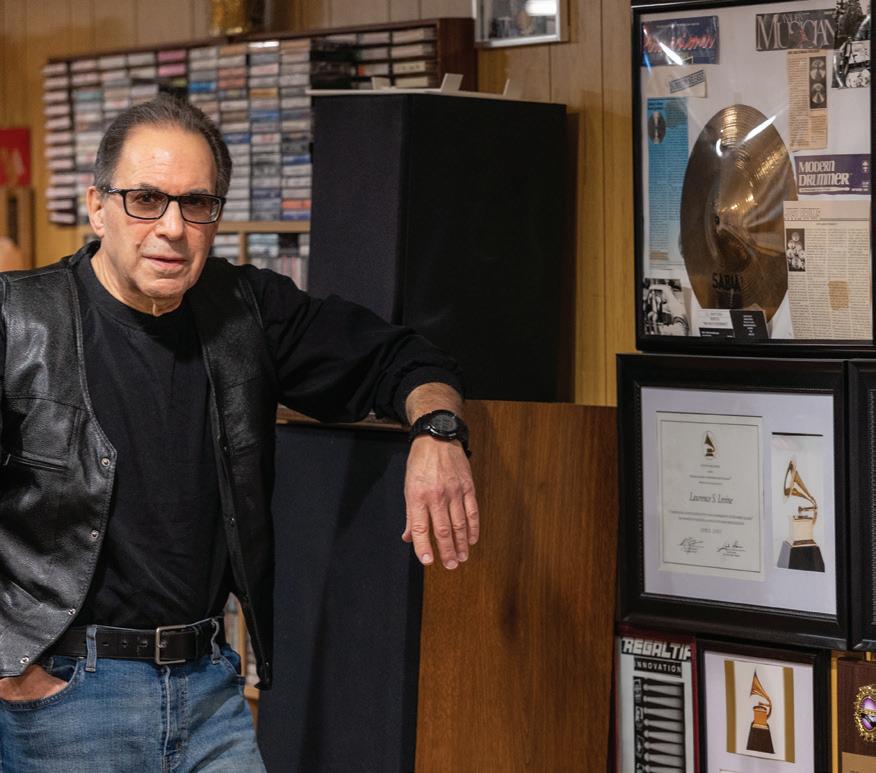
LARRY LEVINE’S EXTENSIVE CAREER INCLUDES WORKING WITH A WHO’S WHO OF THE DRUMMING WORLD.
Starting when he was a teenager in drum corps, he learned from Hal Blaine, who laid drum lines on hits for the Ronettes, Frank Sinatra, Elvis Presley, the Beach Boys, Simon & Garfunkel, the Carpenters, Neil Diamond, and the Byrds, and David Hanlon, who was an early teacher of Phish drummer Jon Fishma.
For more than 40 years, Levine has been an international educator for Yamaha Drums, and a go-to session musician and educator for Sabian Cymbals, Aquarian Drum Heads and Regal Tip Drumsticks, the latter of which is releasing Larry Levine signature drumsticks.
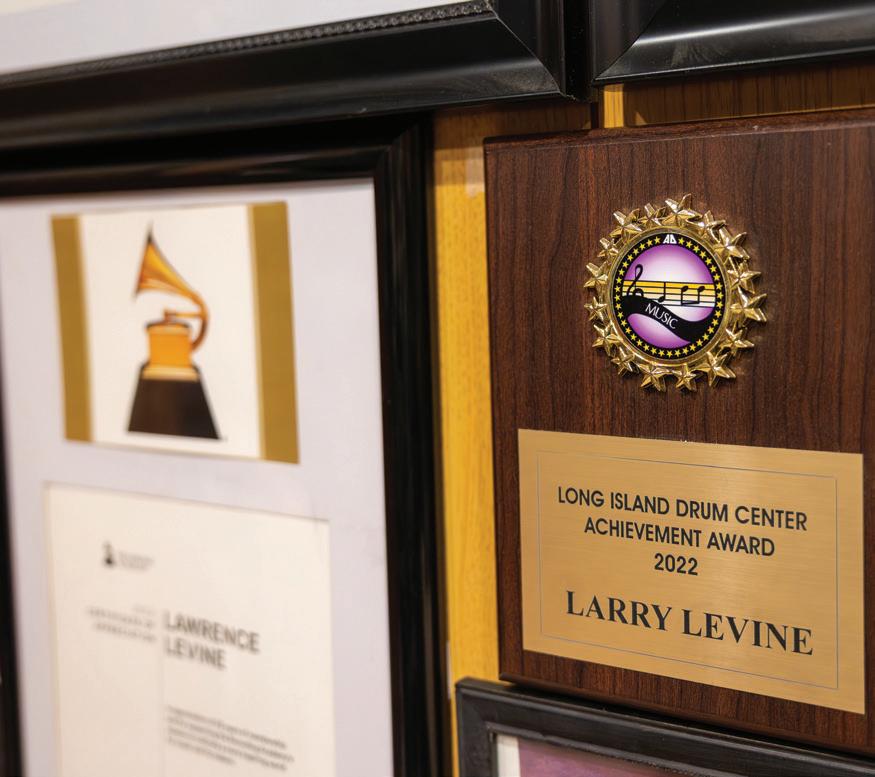
He was named 2022 Drummer of the Year by Long Island Drum Center, where he is a longtime faculty member; is an honored educator for Sabian; is a two-time International Media Communications Competition winner for his Drum-I-Stix instructional series; and is a primary educator in the Global Grammy U Mentorship Program.
Levine continues to teach and works with Rocky’s Music Studio in East Greenbush.
LARRY LEVINE
HOMETOWN: SARATOGA SPRINGS, NEW YORK
1972 GRADUATE OF SUNY ADIRONDACK WITH A DEGREE IN BUSINESS
CURRENTLY: DRUMMER, EDUCATOR, WRITER AND ENTREPRENEUR
Larry Levine didn’t miss a beat in turning a business degree from then-Adirondack Community College into a prestigious decades-long career in drumming.
Levine had rhythm in his blood — his mother was a dancer and his father a Big Band-era drummer — and started playing in drum corps as a child.
After high school, Levine headed to Northeastern University, but an extended illness sent him home. Knowing it offered quality education, he enrolled at SUNY Adirondack, which allowed him to recuperate at his family’s Saratoga Springs home.
After earning a degree, Levine hit the road with his band, Fat Max. “We toured extensively, met high-ranking people in the field,” he said. “As I made more connections and traveled more, I saw doors start opening.”
Levine met record producers, sound engineers, educators and writers, and after the band broke up, realized that to sustain a career in music, he had to diversify. “Literary, recording, performing and education were four doors I tried to spin off into,” he explained.
That tactic worked, as Levine forged a successful career that still keeps him busy seven days a week. He was head writer and an advisory board member for Classic Drummer Magazine, became a sought-after studio musician, and started Drum-I-Stix: From Pad to Performance, a music education program.
“At that time, there was a very limited amount of education as far as my art form,” Levine said. Inspired by Roy Burns, a drummer for Benny Goodman and founder of Aquarian Drum Heads, Levine in 1980 established the all-ages and -abilities education system he spread throughout the U.S. and Canada.
With a focus on becoming well-rounded drummers, Levine provides students with a historical context of drumming. “Developing and learning about the historical perspectives that have evolved and developed over generations of our art form is important for players,” he said. “I stress to individuals that they should learn as much as they can about different genres and styles.”
Drum-I-Stix has been honored internationally for its interactive learning program, which is centered on what Levine calls the “Alphabet of Drumming”: attitude, balance, commitment/control and discipline.
Part of Drum-I-Stix’s early success, Levine said, was because of marketing. “It’s one thing to develop your career and your performance skills and playing abilities until you feel you’re set as a
professional, but how do you market it? My degree from SUNY Adirondack definitely assisted me and came in handy,” he said.
Along the way, Levine taught at numerous musical education institutions and received four Grammy Organization Milestone Commendations.
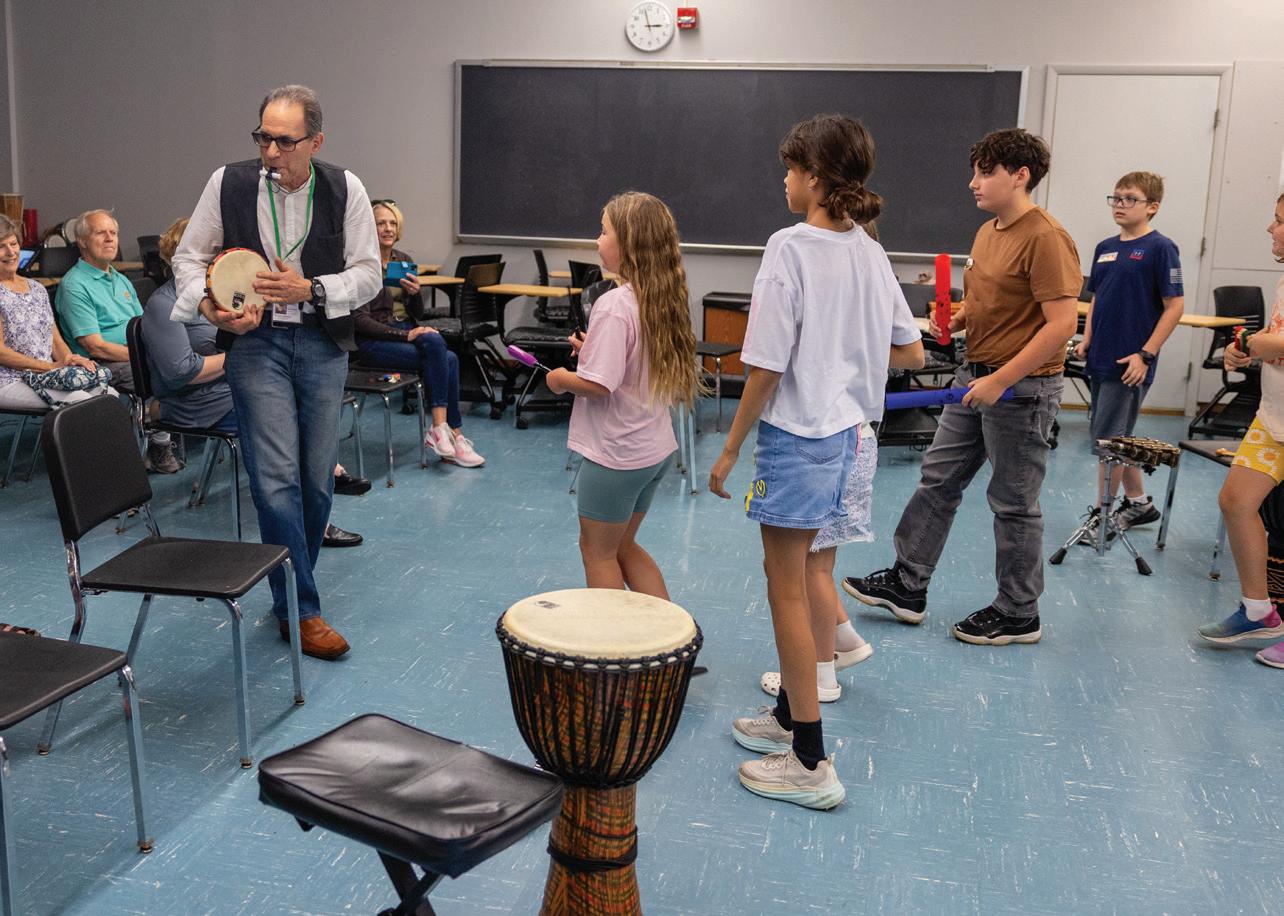
Levine still instructs, including in SUNY Adirondack’s Summer Enrichment program, performs and does sessions.
“My favorite part is seeing the influence I have with people who maybe have zero experience and now they’re ready to play in bands,” Levine said. “This is my dream gig.”
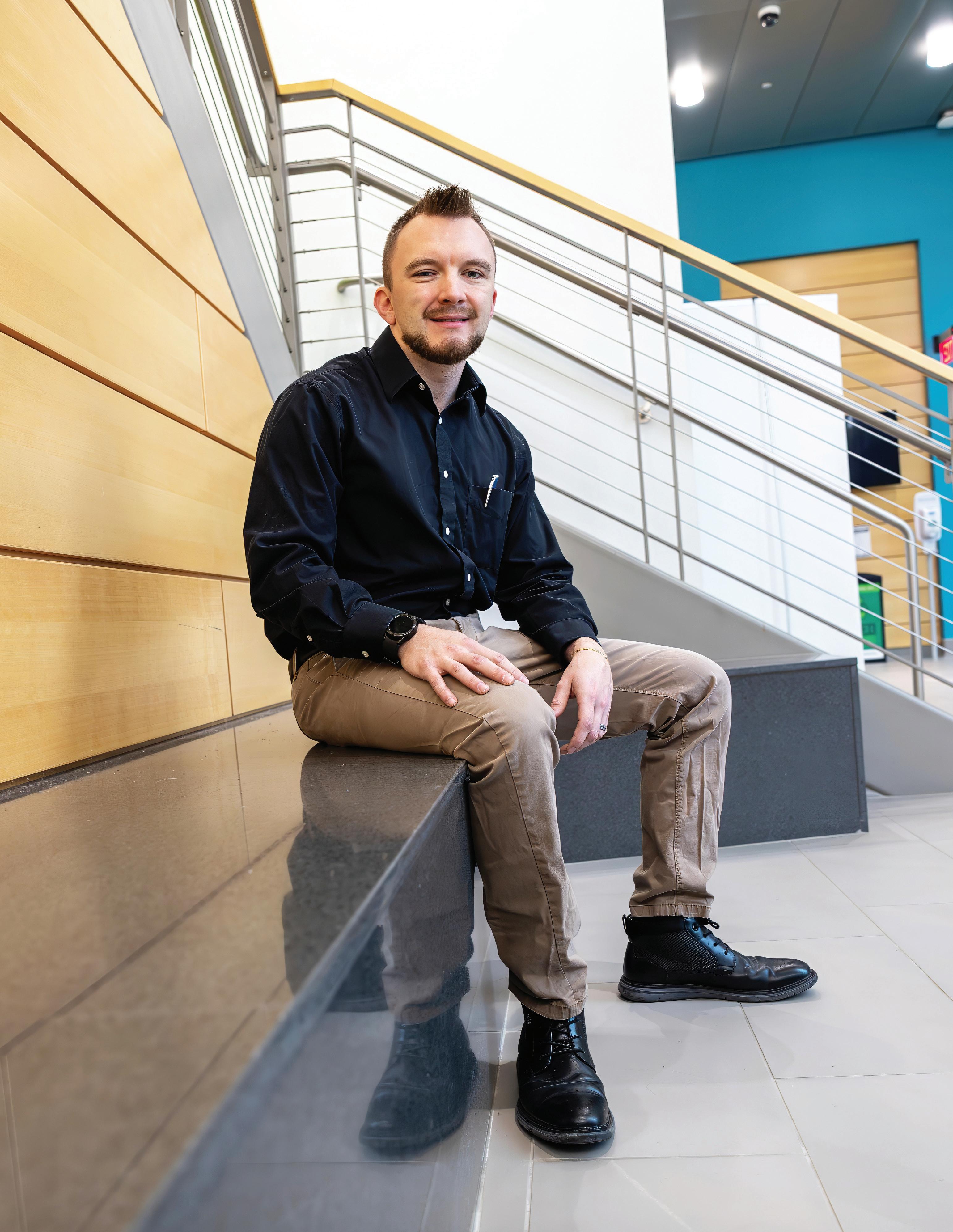
“At SUNY Adirondack, I had some really good professors who would challenge my mind-set on how to think about certain things, and how to draw upon that if you’re in a tight spot.”
ANTHONY SIGNORELLI
HOMETOWN: QUEENSBURY, NEW YORK
2015 GRADUATE OF SUNY ADIRONDACK WITH A DEGREE IN COMPUTER SCIENCE
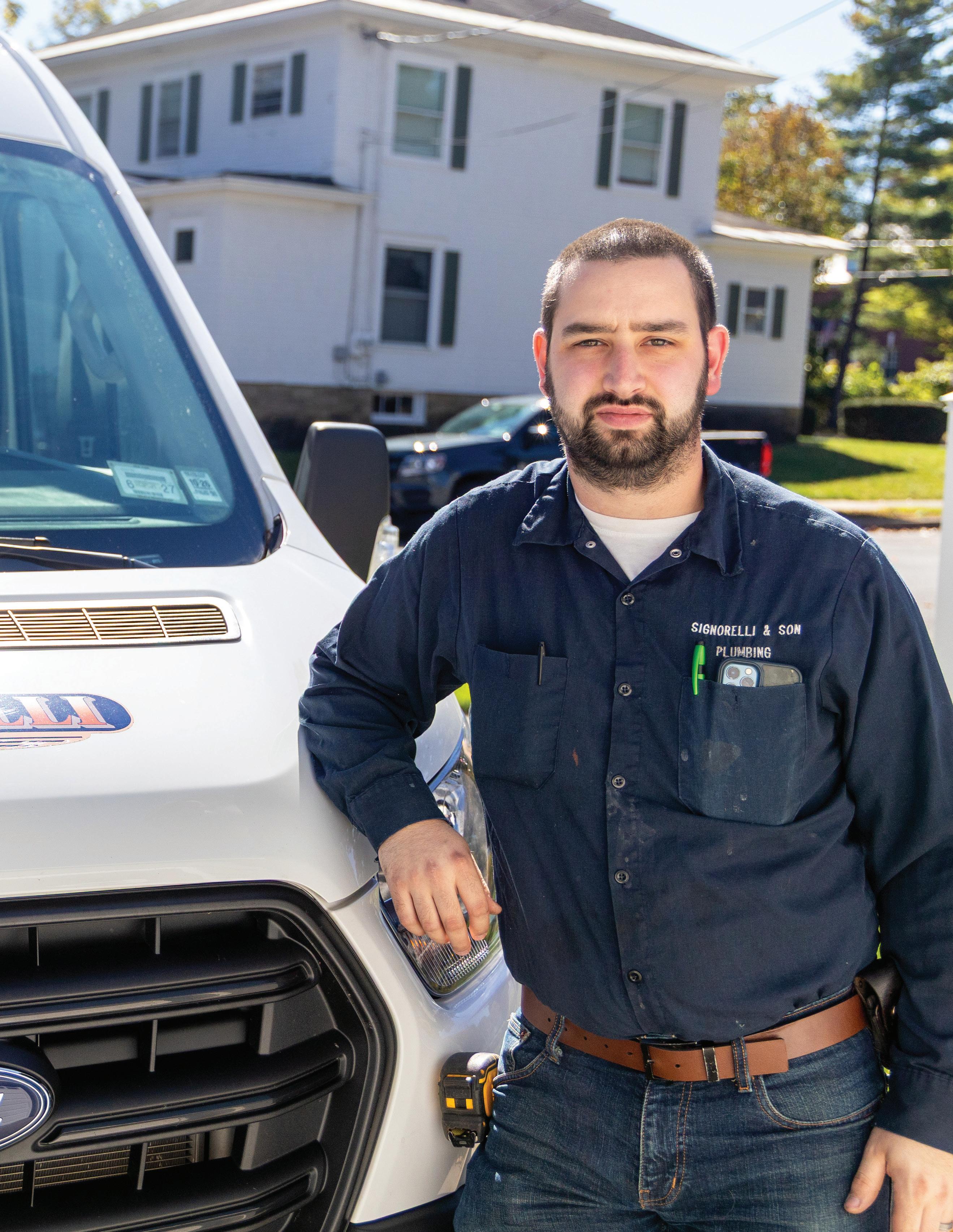
CURRENTLY: PART OWNER OF SIGNORELLI & SON PLUMBING AND HEATING
Anthony Signorelli attended his SUNY Adirondack graduation as a spectator, got hungry and left early, then got up the next morning and went to work as usual.
“I always knew what I wanted to do, so getting a degree was just something to do at the same time,” Signorelli admitted, but then added that he still proudly displays his diploma.
Signorelli’s father, Tony, started Signorelli & Son Plumbing and Heating in 1983 — long before Anthony was born. Growing up, he knew he would one day work alongside his dad.
“He always told me to work with my hands and showed me how to fix things,” Signorelli said. “If the lawn mower didn’t start or there was a problem with something, it was ‘Why is this happening?’ and ‘How do you fix it?’”
That developed in Signorelli a deepseated interest in how things work, which translated into a love of computers. “Video games are a big hobby of mine, and it’s because of the reasoning, the logic behind it,” he said.
Despite knowing he wanted to join his father in the family business from a young age, he enrolled at SUNY Adirondack after graduating from high school. He continued working part time for Signorelli & Son while earning a
degree in Computer Science.
He uses some of what he learned to improve processes at the company. He built an app that digitizes service records, making them easier to search and simplifying paperwork, and another that keeps track of inventory.
“My father likes everything filed through paper, but I figured a computer background could help modernize things,” Signorelli said. “I’ve made a couple apps to save time here and there.”
His knack for systems and learning helps, too, as he regularly takes courses through supply houses to stay up to date on new equipment.
Some things about the company, though, Signorelli plans to keep doing “the old-fashioned way”: “I like being the small company, because I like being able to help customers fix something, but I don’t have to charge what everybody else charges because I don’t have the overhead others do — I don’t have an extra secretary, 15 trucks I have to pay for and all the tools in them,” he said. “I can make a good living by charging a fair rate that doesn’t hurt the pocket of whoever I’m helping.”
THE COMPUTER SCIENCE PROGRAM IS ELIGIBLE FOR SUNY RECONNECT, a program that supports New York state residents ages 25 to 55 who have not earned a degree, as they pursue education in high-demand fields, TUITION FREE. WWW.SUNYACC.EDU/FREECC
FUN FACT
WHEN HE WAS A STUDENT AT SUNY ADIRONDACK, ANTHONY SIGNORELLI SPENT TIME WITH FRIENDS FROM HIGH SCHOOL WHO PLAYED ON THE COLLEGE’S VOLLEYBALL TEAM.
“I went to watch all the games in 2014, then was brought on as the team manager, then was assistant coach from 2014 to 2019.”
There, he met Jessica Trudeau, a student and standout volleyball player, and the two became friends. After she graduated in 2018, their friendship deepened and they started dating. The couple married in March 2025.
Today, they share two dogs and coach University of Vermont— Castleton’s volleyball team together.
“We like to get on a path, then stick with it,” he said. “I’m in it for the long haul, happy to make a living doing something I like.”
Jessica Trudeau was featured in the Fall 2022 edition of Community Roots, available at https://issuu. com/suny_adk/docs/sunyadk_ communityroots_fall2022
“I loved teaching at SUNY Adirondack so much. If I could fit it in my schedule, I’d still be teaching until I’m 80. Instead, I choose to be a retired workaholic.”
As owner of a bridal boutique, Marcia McCormack saw one too many brides faint after starving themselves in unhealthy pursuits to lose weight before walking down the aisle.
“While pinning hems on their gowns, the seamstress would say, ‘Oh, dear. Timber!’ and I’d be talking to them, asking if they were eating, if they were hydrated,” McCormack remembered. “I thought, ‘I really need to be in a health career,’ so when the store sold, I used the money to start at ACC.”
McCormack’s passion for science was decades in the making. Having grown up as part of the Boomer generation in a middle-class family, she was encouraged to do what women did at the time. “High school was all about being a cheerleader and being popular,” she said. When she graduated, her family suggested secretarial school or putting her skill as a seamstress to use.
Perhaps because of the era, her parents didn’t see early signs that McCormack was a budding scientist. “When I was a kid, I wanted a microscope and one of those ‘Visible Women’ anatomy kits; my
parents should have thought, ‘We’ve got a science kid here!’”
Since they didn’t, after graduating from high school, McCormack earned a degree in merchandising at Fashion Institute of Technology. She then married and moved to this area when her husband’s job was transferred. She started classes at SUNY Adirondack, but her husband wanted her to earn an income, so she left after a semester.
She went to work at a store in downtown Glens Falls and, despite being the youngest staff member, was promoted through
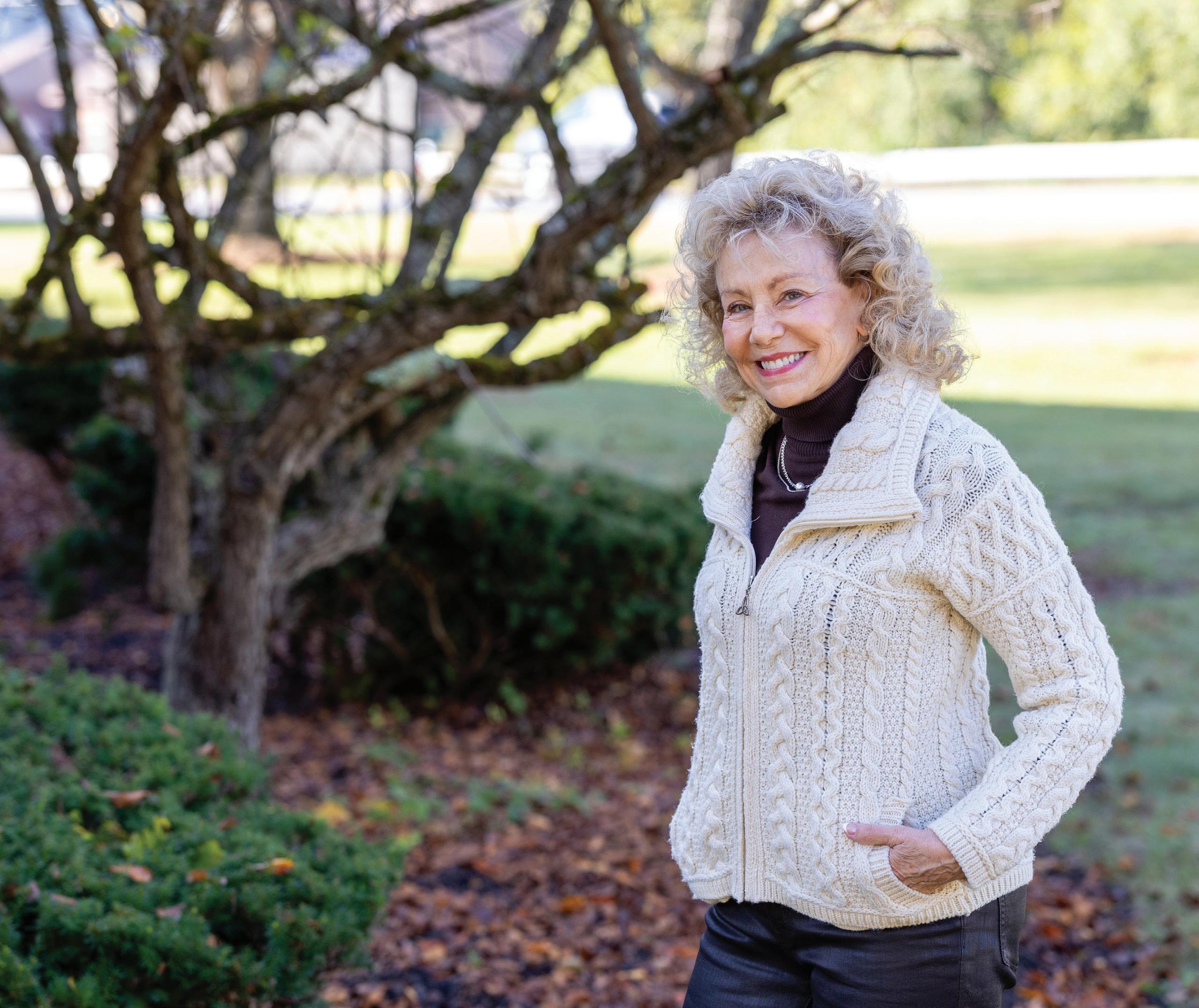
MARCIA MCCORMACK
HOMETOWN: VESTAL, NEW YORK
1970 GRADUATE OF FASHION INSTITUTE OF TECHNOLOGY WITH AN ASSOCIATE DEGREE IN MERCHANDISING
ATTENDED SUNY ADIRONDACK IN 1972, THEN 1983 TO 1985, AND RECEIVED A DEGREE IN LIBERAL ARTS: MATH AND SCIENCE IN 2000
1988 GRADUATE OF RUSSELL SAGE COLLEGE WITH A BACHELOR’S DEGREE IN HUMAN NUTRITION
1991 GRADUATE OF UNIVERSITY OF BRIDGEPORT WITH A MASTER’S DEGREE IN HUMAN NUTRITION
2012 GRADUATE OF NOVA SOUTHEASTERN UNIVERSITY WITH A DOCTORATE IN HEALTH SCIENCE
CURRENTLY: RETIRED SUNY ADIRONDACK PROFESSOR; LEADER OF OSTEOBUSTERS
the ranks to merchandise buyer of several departments. Development of Aviation Mall made McCormack worry about what would happen to small-town retail, so she went to work for JCPenney, where she entered the management program — and, as the only woman among seven staff managers, faced harassment from her male boss.
Appalled by his treatment, McCormack left the retail giant and opened the bridal shop where she encountered more young women in need of nutrition counseling than she could count.
After selling the shop (and moving on from a short-lived marriage), she dove back into higher education at SUNY Adirondack, this time focusing on math and science. “I didn’t realize until I went to SUNY Adirondack and took chemistry that I really have a head for this, and I really love it,” she said.
She earned enough credits for an associate degree (but didn’t register to receive it until many years later), then transferred to Russell Sage, where she earned a bachelor’s degree in human nutrition. She then worked in long-term care while pursuing a master’s degree.
A chance encounter with one of her SUNY Adirondack professors in a bar changed her life. “They said, ‘I’m going on sabbat-
ical. Will you sub for me?’ I said, ‘I’d love to,’ and then I was hooked,” McCormack marveled.
“I said, ‘I don’t want to become a registered dietitian; I want to become an academic. Teaching is where I need to be.’”
She taught that semester as an adjunct, then became a special adjunct, associate professor, then professor — all while continuing her education, eventually earning a doctorate, finding love, marrying and helping raise her stepsons. She retired in 2014 but stayed on as an adjunct until 2024. Today, McCormack is professor emeritus, wintering in Florida with her beloved husband and enjoying their children as adults.
When McCormack was diagnosed as having osteoporosis, she dove into action, taking Osteobusters Senior Fitness Program classes at Queensbury Senior Center. When the trainer stepped down during the COVID-19 pandemic, McCormack — always an educator — stepped up.
“I said, ‘I’m an exercise physiologist,’ I got my certification when I was at SUNY Adirondack, and ‘I’ve got a doctorate,’” she said. She took over the program, teaching classes at three sites, editing the training manual and training 61 leaders at 16 sites.
“When I do the training for Osteobusters, I’m back, I’m teaching, I’m demonstrating, I’m making them laugh,” she said. “I want to stay connected to students.”
FUN FACT
MARCIA MCCORMACK WAS ADOPTED AS A NEWBORN AND, IN 2016, STARTED TO SEARCH FOR HER BIOLOGICAL PARENTS.
Using several online DNA databases and Search Angels, a nonprofit organization that helps with genealogy and DNA test results, McCormack discovered a cousin. “Now we’re like sisters,” McCormack said. “We’re crazy about each other.”
McCormack learned she has a biological half-sister, with whom she shares a father. She also met her deceased mother’s longtime husband and was able to see photos of her biological mom.
In an interesting study on nature vs. nurture, she found out her biological father was a doctor, and her sister is a nurse. “After I met them, I thought, ‘Oh, OK,’” of their shared passion of science and medicine.
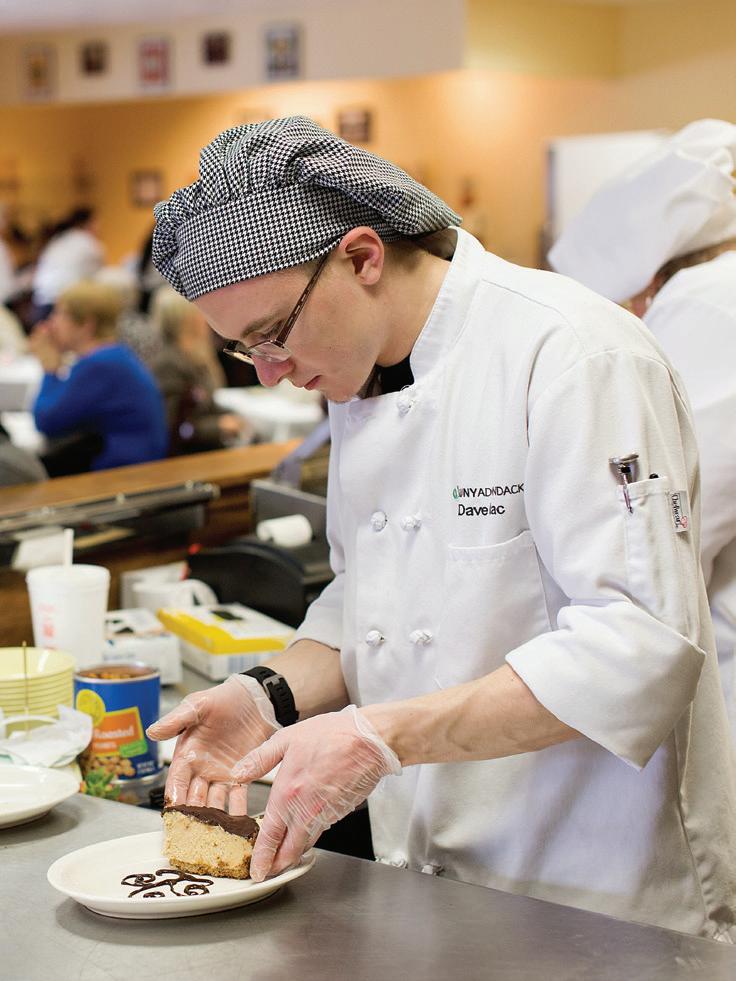
“There’s a huge adrenaline rush of being in the kitchen. It’s hot, it’s sweaty, there are people all around you with literal weapons, and you’re yelling at each other, but you’re working toward one goal: putting out awesome food. If you’re thinking of starting out, start in the kitchen. It breeds great work ethic and thick skin.”
DAVID MACINTOSH
HOMETOWN: GANSEVOORT, NEW YORK
2016
GRADUATE
CURRENTLY:
OF
SUNY ADIRONDACK WITH A DEGREE IN CULINARY ARTS
SALES CONSULTANT FOR GINSBERG’S FOODS
Dave MacIntosh describes working on a line in a kitchen like an addiction, a need that gets in your blood and changes the fiber of your being.
“There’s an instant gratification of cooking, and I don’t think there’s anything like it,” MacIntosh said. “It ruins other experiences as you grow up, because you just don’t get that instant gratification.”
MacIntosh discovered his love of cooking by accident: Soon after graduating from South Glens Falls High School, he moved to Albany and was looking for a job. He saw a “We’re hiring” sign in the window of Anton’s, a popular Greek restaurant, applied and started working.
“They took me under their wing, said, ‘We’ll start you chopping vegetables and doing dishes,” he remembered, “and three or four months in, I knew how to do everything by myself.”
Ownership of the family-owned restaurant changed hands, and that left MacIntosh wondering what was next. “It just wasn’t the same, when you see something you love and helped grow change so much overnight, and I thought, ‘Maybe I’m done here and maybe it’s time to go to college,’” he remembered.
So he moved back home and enrolled at SUNY Adirondack. “I heard all these great things about the Culinary program, so I said, ‘I might as well jump into it; the worst thing that can happen is I learn a few new techniques,’” he said.
Turned out, the worst-case scenario wasn’t so bad, and MacIntosh thrived in the fast-paced environment of the program. “I expected it to be more like
school and it wasn’t: It was very hands on, to a point that even with my little bit of ADHD, I didn’t need to have a wandering eye, I didn’t need to find the shiny thing across the room,” he said. “It’s so busy, just like working in a kitchen, except you’re learning and perfecting your craft while you’re doing it.”
An internship at Inn at Erlowest led to a job after graduation. “I loved the fine dining — in a historic castle on Lake George that is just beautiful — so I thought, ‘I’d be silly to leave this,’” MacIntosh said.
After a few years, he moved to Tennessee, where he discovered a significant change of pace.
He sent resumes to several restaurants
back
home
— “It’s super easy to network when you’re part of the SUNY Adirondack Culinary program because everyone knows it and knows [Chef] Matt [Bolton],”
MacIntosh said — and he got a call.
“Tennessee is great, but it’s not the pace I was used to and I wasn’t fulfilling myself.”
He moved back to the area and worked with the owners to open [forged] in Hud-
son Falls, then, a few years later, farmacy in Glens Falls. In the years since, he left the line for a better work-life balance.
Now a married father of an infant daughter, MacIntosh is a sales consultant for Ginsberg’s Foods, a family- owned wholesale food service distributor in Hudson — a job that keeps him in the kitchens of restaurants throughout the region but also gets him home to his family at a reasonable hour. “It’s a lot of fun because I can bring my ideas and expertise to another aspect, another selling point,” he said.
His culinary know-how is the least of what he said he took away from his time in kitchens. “When you know what goes into cooking, you can make anything in the kitchen work for you, and that bleeds into your real life,” he said. “Knowing that makes life a lot easier and makes getting over hurdles easier too.”
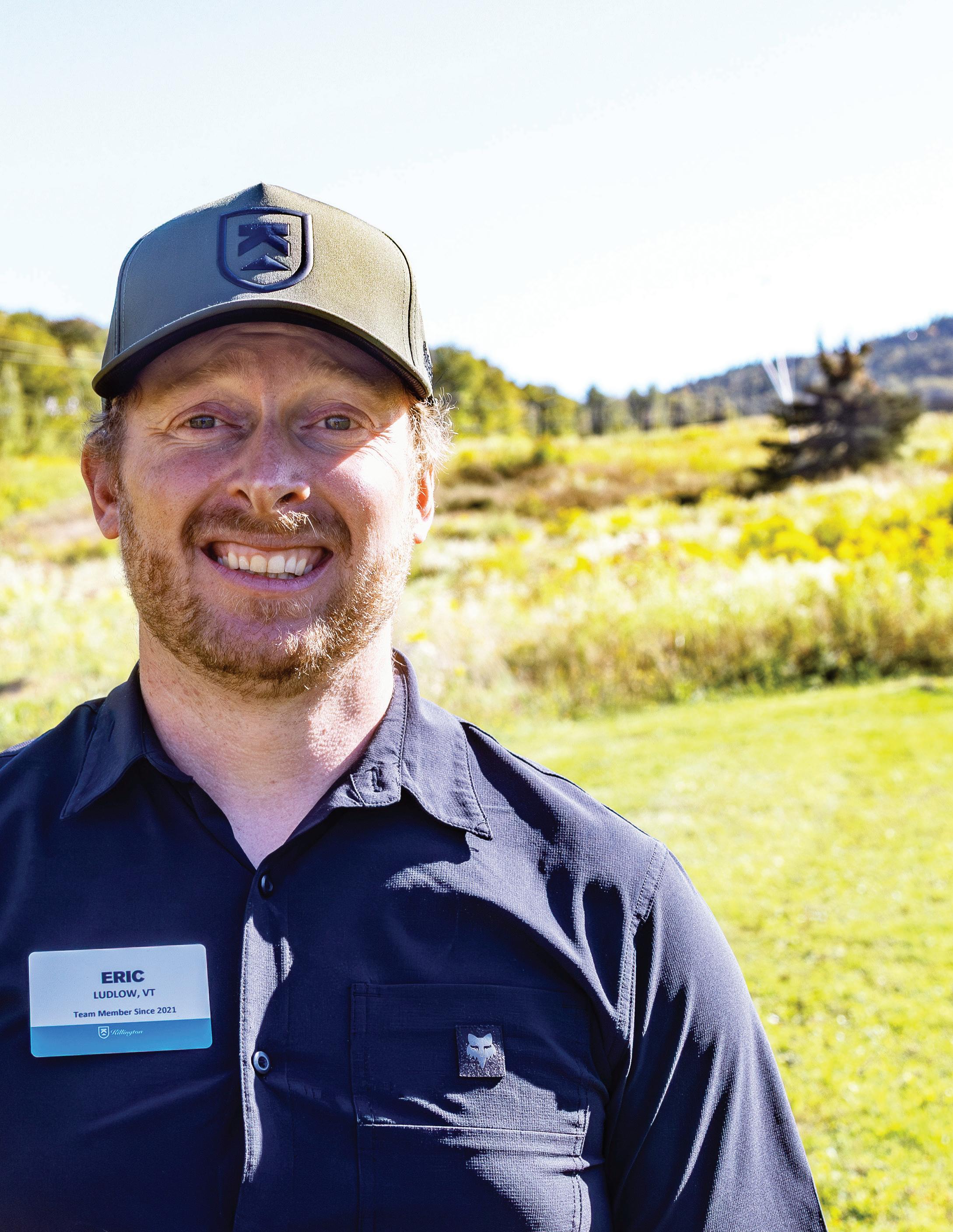
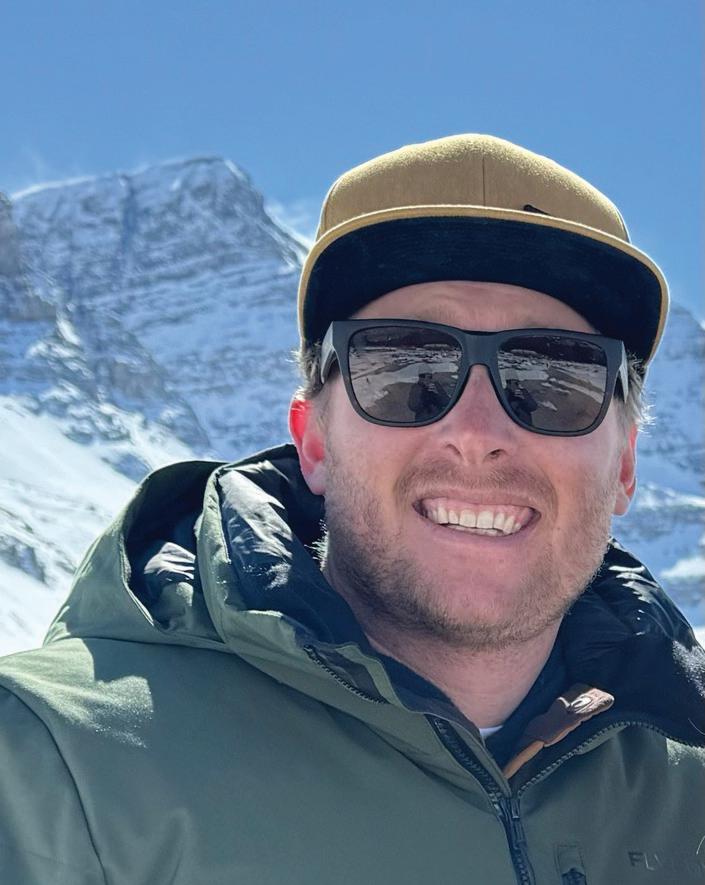
“The Outdoor Education program taught me to manage my own emotions through a situation, and how to work and facilitate others through their own challenges in a safe environment — and that has been key my whole career.”
ERIC KELLEY
HOMETOWN: POULTNEY, VERMONT
2012 GRADUATE OF SUNY ADIRONDACK WITH A DEGREE IN OUTDOOR EDUCATION
CURRENTLY: DIRECTOR OF MOUNTAIN SPORT SCHOOL AT KILLINGTON AND PICO RESORT
Eric Kelley has spent every winter — and, some years, summer too — since he was 2 years old on skis.
He was on racing teams growing up and remembers his parents dropping him off at the local mountain with a packed lunch and a quarter to call when he was ready to go home. By the time he was in college, he worked as a ski instructor.
“Any snow day, any opportunity to go the mountain, I’d go,” Kelley said.
After high school, he enrolled at North Country Community College. “I found I was skiing all the time,” he admitted.
So when he saw SUNY Adirondack offered an Outdoor Education major, he made the switch. “Just seeing the challenge courses, the stuff they had going on, the fact that I could go skiing and backpacking, interested me,” Kelley said.
“I was going to get a business degree and see where I landed,” he said. But along the way, he had a realization: “There is a pathway through as a ski instructor; you can make it a career.”
Kelley earned a degree, then stayed in the ski industry, working as an instructor and in ski shops. During the summer, he worked at Coronet Peak outside Queenstown in New Zealand. “That was a cool opportunity
to work with people from all over the world — Switzerland, Japan, Australia, Germany, Finland and a bunch of people from up in Canada.”
He met the woman who is now his wife when they were both working as ski instructors at Okemo. Kelley’s dad also works in the ski industry, as a line instructor. “We’re a ski family,” Kelley said.
As he worked his way up the ranks, he
continued to earn ski instructing certifications. “I found that what I learned in leadership and problem-solving in school translates well to teaching people how to ski and ride,” Kelley said.
This season, Kelley is director of Mountain Sport School at Killington and Pico Resort, overseeing more than 400 staff members at an organization that offers more than 3,000 lessons a season.
Kelley thrives ensuring his team has the tools they need to be successful.
“I learned how to push people, how to support them and let them feel like they can do their jobs while giving them resources but not micromanaging,” he said.
When he’s not working at Killington, he is active with Professional Ski Instructors of America, traveling all over the East Coast to certify ski and board instructors.
Part of what he loves about skiing is that it’s also an opportunity to be a steward of the environment. “We teach people about the mountains and how to keep them clean — how we live within the mountain while keeping impact minimal,” Kelley said. “I’m passionate about the outdoors — hunting with the dogs, playing on the water, waterskiing, canoeing, fishing, bike riding.”
He’s grateful he has made a career out of doing what he loves. “I think I always thought, ‘I’ll do this through college,’ then at one point, I thought I’d go into a sales rep position. But sticking with what I love the whole time has paid off.”
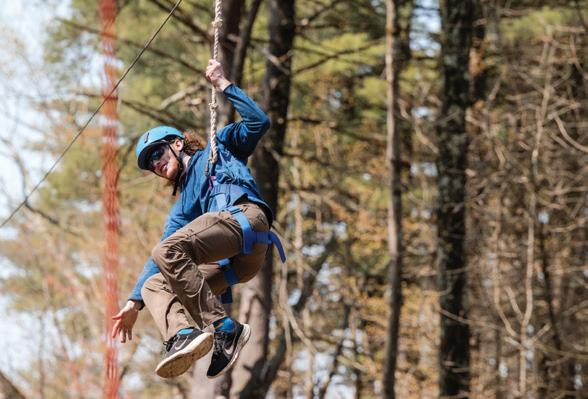
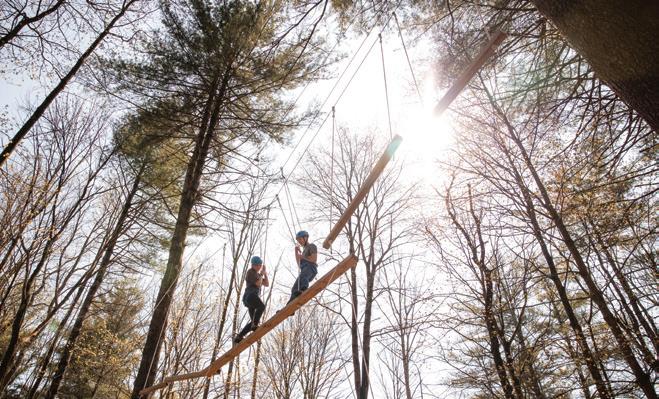
DID YOU KNOW WE HAVE A CHALLENGE COURSE ON OUR QUEENSBURY CAMPUS?
GRANT FUNDING
At SUNY Adirondack, we are dedicated to offering programming that impacts students’ lives and our region’s workforce. To support our efforts, we rely in part on grant funding.
For the 2025-26 academic year, we are proud to have received:
Ian Fleming Foundation: Because of the creative and sustained success of SUNY Adirondack’s Writers Project, the college was selected to receive an Ian Fleming Foundation mini-grant, which will support bringing new guest speakers to the Writers Project series in Spring 2026.
Embedding Industry Certificates
Project: SUNY and the National Association of Higher Education Systems (NASH) granted SUNY Adirondack $50,000 for a two-phase project focused on embedding industryrecognized credentials, such as Google certificates, into academic courses to improve students’ workforce skills.
The first phase, completed in the Spring 2025 semester, involved faculty members participating in Google Certificate training to experience the program and curriculum. The second phase, which is ongoing, includes hiring an instructional designer to help interested faculty embed credentials into their courses, and providing nine faculty opportunity to obtain certification in AI Essentials this semester.
Courses of study considered for inclusion in this project are Google’s Cybersecurity certificate in Cybersecurity and Networking; Google IT Support in the college’s IT Boot Camp; Google Data Analytics and Google Project Management in the college’s Management, Marketing and Entrepreneurship and Business Administration degree programs and Business and Entrepreneurship certificate program; and AI Essentials in coursework.
Ellucian Foundation Block Grant: Michele Sprague, assistant director of Financial Aid, sees students struggling with finances, so she applied for and secured a $15,000 Ellucian Foundation grant for student scholarships. The grant will support PATH Scholarships of between $250 and $1,000 for students living in the Residence Hall and facing financial hardship. The PATH Scholarship will help SUNY Adirondack provide critical funding to fill financial gaps for our most at-risk students so they can stay enrolled and focused on their educational goals.
Green Workforce Grant: SUNY Adirondack received $120,000 as part of Chancellor John B. King’s State of the University initiative to activate programs to meet workforce needs in the growing fields of converting buildings and vehicles from fossil fuels to electrical power.
As part of its effort to address the challenges presented by climate change, SUNY Adirondack offered an HVAC Bootcamp at Local No. 773 during the summer. The 12-week bootcamp included 72 hours of instruction. Students were then able to take the EPA 608 test that certifies them to service, maintain, repair or dispose of refrigeration and air conditioning equipment. Students will also receive OSHA 10 training as part of the bootcamp.
NYS Conference of Local Mental Hygiene Directors: SUNY Adirondack was selected to take part in the second year of the Mental Health First Aid (MHFA) for Higher Education/Harm
Reduction Pilot program. With $20,000 in support, this grant helps build an on-campus team of MHFA instructors to help break stigma, support mental health and give students, faculty, staff and community members tools to assist someone who is struggling.
New York State Department of Health Healthcare Education and Life-skills Program (HELP) grant: SUNY Adirondack was recently selected to receive a five-year, $5 million grant ($1 million annually) from the New York State Department of Health to support health care training programs and wraparound student services. This investment will enable the college to continue its successful Healthcare Pathways program, currently funded by a SUNY Future of Work Centers grant. With that grant concluding in August 2026, the HELP award ensures the seamless continuation of critical programming and support services, allowing SUNY Adirondack to sustain and expand its role in addressing regional health care workforce needs.
Northern Border Regional Commission (NBRC): The college was awarded $128,000 to complete a wastewater infrastructure study, to identify alternative routes and eliminate risks to its 1966 sanitary and storm water collection systems, identifying improvements to existing systems and providing the college with emergency backup and improvements around sustainable wastewater and energy practices. After the first phase, SUNY Adirondack is eligible for a multimillion-dollar Phase 2 construction grant, which, if awarded, would allow the college to begin work in 2027.
Project Pericles Civic Engagement Mini-Grant: SUNY Adirondack Associate Professor Wendy Johnston was awarded a Project Pericles Civic Engagement Mini-Grant to support the creation of resources that help students engage more deeply with public issues and civic life.
SUNY
DOL Internship Grant: SUNY Adirondack was awarded $128,000 in this Department of Labor grant. The college offers 223 internship sites to students, and faculty are working to develop new sites. This grant provides wraparound supports to students in the form of gas cards to support their commute to and from internship sites.
Over the summer, 45 interns were registered; 14 students are in the program this fall, including at Warren County Sheriff’s Office, Warren County District Attorney’s Office and Warren County Public Defender’s Office. SUNY Adirondack also partners with Queensbury, Hudson Falls and Troy high schools to allow their seniors opportunities to participate in credit internships.
Healthcare Pathways, a program funded by the SUNY Future of Work Centers Grant, continues to strengthen the regional health care workforce through non-credit training, wraparound student support and industry partnerships. The $1.25 million, three-year grant program has made measurable progress in enrollment, retention, job placement and professional development. Healthcare Pathways provides PCA, HHA and CNA trainings, which have trained 318 individuals and placed 244 in health care roles. The grant has also provided more than $300,000 in support to 216 students in Nursing,
Health Care Education, Health Sciences and Substance Abuse Services majors, helping with textbooks, testing fees, uniforms, gas cards and farm vouchers, and supported 24 participants in Peer Recovery Support education courses. This grant also supported MASH Camp, a program that introduces high school students to health care careers.
SUNY Office of Higher Education — Prison Education Grant:
SUNY Adirondack was awarded $37,772 through SUNY’s Officer of Higher Education’s Prison’s Equity Fund. The college will use about $20,000 to upgrade instructional spaces at Washington Correctional Facility, including new furniture for students and instructors, and a screen and projector.
The remaining approximately $18,000 will be used to enroll nine cohorts of students in a life skills program at Warren County Jail. “The Business of Life” is a non-credit 15-hour course that uses business-related concepts as a vehicle for personal and professional selfexploration. Students explore pathways to careers through engagement with higher education programs, and are connected with SUNY’s Office of Higher Education in Prison’s Transition Services program, which assists students with the college enrollment process after their release. National data indicates a nearly 50 percent reduction in recidivism for incarcerated individuals who engage with higher education and training.
SUNY Outdoors for All Grant: SUNY
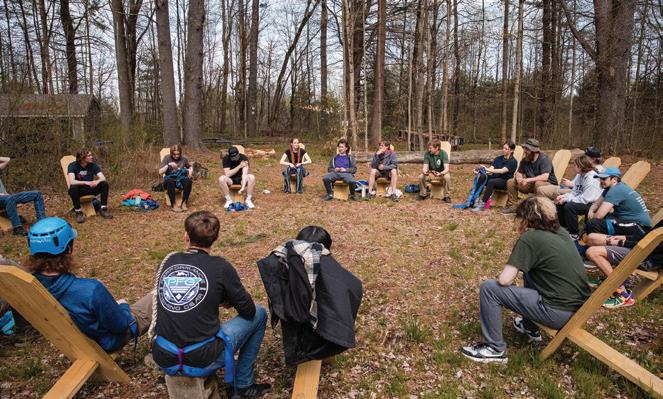
Adirondack was awarded $8,000 for construction of an outdoor classroom. The Outdoor Classroom proposal, originally approved by the college’s Board of Trustees as part of the SUNY Adirondack Innovation Fund, calls for creation of a versatile outdoor space for use as a learning and meeting place.
Vision for the space includes amphitheater-style, tiered seating; moveable and fixed seating options; a durable shed for storage; and accessible design and loca-
tion to ensure the space can be enjoyed by all campus community members.
SUNY Reconnect: SUNY Adirondack was awarded $100,000 in new funding to support the implementation of the new SUNY Reconnect initiative. With this funding, SUNY Adirondack will provide Reconnect-eligible students with dedicated advisement and tutoring. Funding will also support student engagement activities tailored to adult learners.
SUNY Reconnect High-Demand Program Expansion Support:
SUNY Adirondack was awarded $35,000 as part of a SUNY Reconnect supporting grant, to equip labs with enough work stations to accommodate students in the newly introduced Cybersecurity and Networking Associate of Applied Science (AAS) degree and the Cybersecurity Fundamentals microcredential programs. The funds were used to purchase 16 network switches and eight routers at SUNY Adirondack Saratoga.
“I know what I’m supposed to be doing right now. And if it wasn’t for Reconnect, I wouldn’t be able to do this.”
— Elizabeth Belair of South Glens Falls, a Criminal Justice: Substance Abuse Services major in the Reconnect program
CONTINUING GRANTS
Educational Opportunity Program (EOP): SUNY Adirondack’s EOP grant of more than $140,000 a year, funded by New York state, provides financially eligible students academic support, enhanced advising and financial resources to complete college.
Joseph P. Dwyer Veterans Peer Support Project: SUNY Adirondack partners with Warren and Washington counties to provide this important grant program to veterans in our service area. The grant of approximately $200,000 supports recreational and support programs designed to encourage veterans to meet and take part in events designed to build and sustain a safety net for them.
National Science Foundation—
Innovation in Two-Year College
STEM Education Grant: SUNY Adirondack is in the second year of a three-year, $500,000 National Science Foundation grant focused on advancing professional development for community college chemistry faculty. The project is a collaborative initiative with SUNY Albany and SUNY Geneseo.
Perkins Postsecondary Career and Technical Education Grant: SUNY Adirondack’s Perkins grant was renewed for Fiscal Year 2026 in the amount of $235,710. Perkins funding supports a range of initiatives that strengthens career and technical education (CTE) and prepares students for workforce entry. The college’s annual allocation is determined by student enrollment in eligible CTE programs and the proportion of economically disadvantaged students enrolled in those programs.
SUNY Allocation for Healthcare Workforce Investment: SUNY Adirondack received $77,000 through the 2025–2026 SUNY Healthcare Workforce Investment allocation. The funding supports Nurse Success Coaches, instructional costs for new health care courses, and expanded hours for a Clinical Lab coordinator.
SUNY Allocation for Mental Health Investments: SUNY Adirondack was awarded $100,000 annually that in 2025-2026 supports the director of Health & Wellness, a Wellness coordinator in the Fitness Center and Community Resource advocates providing evening Mental Health Support and Prevention in the Residence Hall
positions, as well as Fresh Check Day programming for students. This grant will also fund purchase of EdSights AI Chatbot, a virtual AI program that connects students with campus resources to help overcome barriers to retention.
SUNY Apprenticeship Operational Support Grant: SUNY Adirondack is in the third year of a $60,000 grant that supports staffing and capacity building to grow apprenticeship programming at the college.
TRIO SSS: SUNY Adirondack’s grant was renewed for $272,364 annually for five years. TRIO SSS serves 140 students a year, providing academic support to help eligible students — based on income, first-generation college student status, academic needs, or physical and developmental disabilities — succeed in earning a degree.
TRIO Upward Bound: Funding was renewed for one of SUNY Adirondack’s two Upward Bound grants. This $309,500 is funded annually to serve 60 high school students in grades 9-12 in Argyle, Corinth, Granville, Hartford, North Warren, Salem, Warrensburg and Whitehall high schools.
“Receiving this scholarship alleviated some financial burdens and motivated me to strive for academic excellence.”
BRIGHT FUTURES
Every year, SUNY Adirondack Foundation supports deserving students with more than $400,000 in scholarships. Donating to the SUNY Adirondack Foundation is an investment in individuals and in our community.
Please consider supporting our students with a donation to SUNY Adirondack Foundation.
Your contribution fuels scholarships that ensure accessibility to education, empower innovative learning environments and strengthen strategic initiatives.
Join us in shaping a brighter future.
TO GIVE*, PLEASE VISIT https://sunyacc.edu/give
*To help us better understand the reach of Community Roots, please add “alumni magazine” or “Community Roots” to the optional comments when making your donation.
BASIC NECESSITIES
At SUNY Adirondack, food insecurity in our communities and among our students is always on our minds. We have offered supplemental food/basic necessities on our campus through our Community Hub since 2017.
Given recent insecurity surrounding SNAP and WIC, we want to ensure all students have resources to support themselves and their families. For those able to help, please consider making a donation to our Community Hub campus food pantries by scanning this QR code.
“Your recognition of the challenges faced by single mothers and your willingness to support us is truly inspiring.”
ALUMNI UPDATES
Each year, SUNY Adirondack celebrates the achievements of its alumni by bestowing upon them the title of Trailblazer — leaders in our community, building a path for the future and inspiring our students.
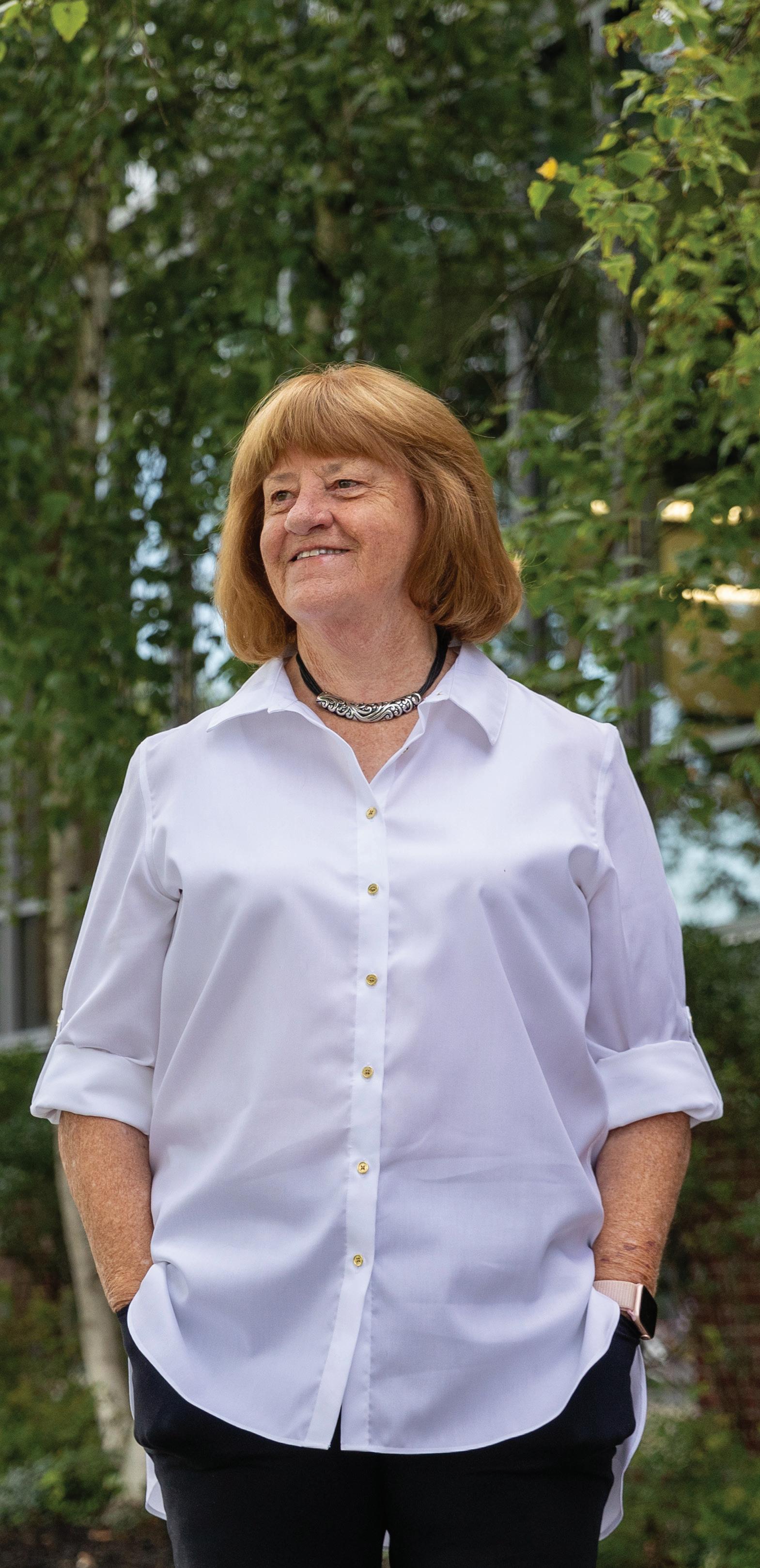
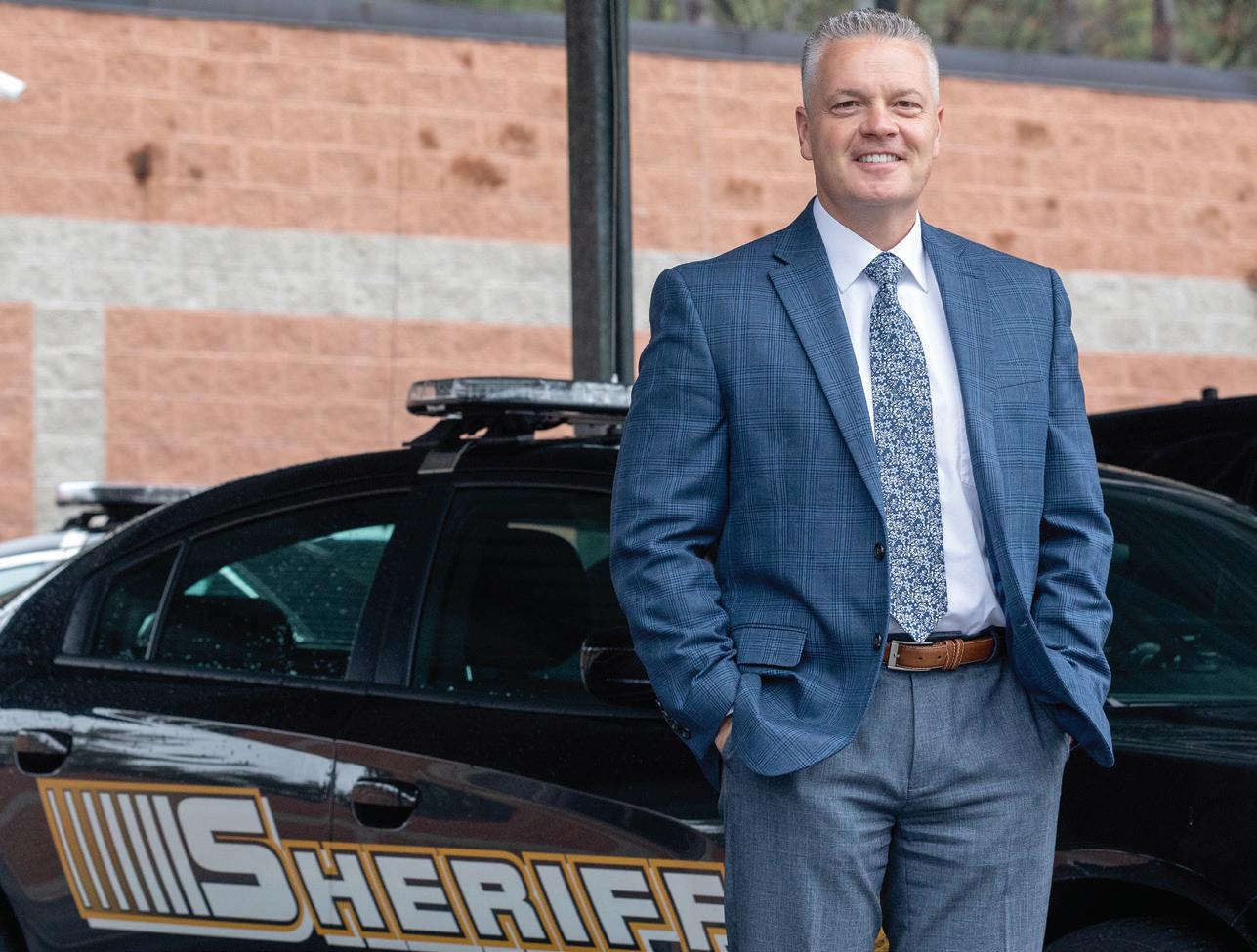
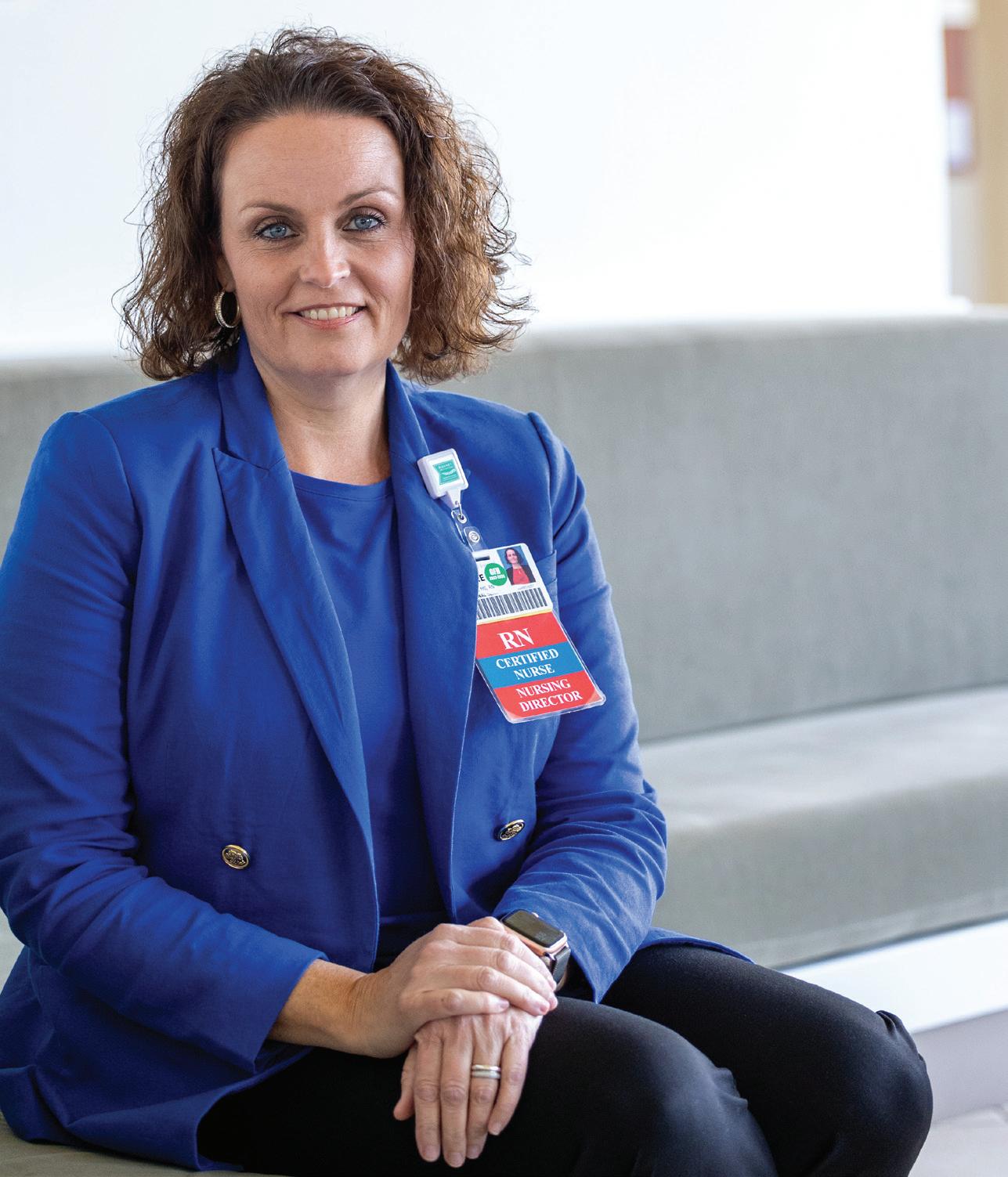
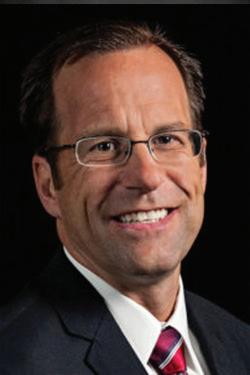
This year, SUNY Adirondack Foundation will honor the newest Trailblazers — Connie Bosse, a retired higher education leader who volunteers extensively throughout the community; Warren County Sheriff Jim LaFarr; Julie Mosher, director of Nursing Practice and Professional Development at Glens Falls Hospital; and the Honorable Judge Robert A. Smith — at its annual celebration Dec. 5.
Bosse, Class of 1972, went on to earn bachelor’s and master’s degrees from Boston University, then had a decades-long distinguished career in higher education administration in Massachusetts and Florida. Upon retirement, she returned to the Glens Falls area, where she has been a constant volunteer for such organizations as AAUW, League of Women Voters, Glens Falls Cemetery Commission, The Chapman Museum, Friends of Crandall Library and SUNY Adirondack Foundation.
Bosse has been a driving force behind the successful Girls Go STEM program, offered in partnership with SUNY Adirondack’s Continuing Education program. She is also a SUNY Adirondack Foundation Garnet Society member.
The Trailblazers recognition is SUNY Adirondack’s celebration of alumni who achieve professional success, have a philanthropic impact on their communities and give back through community service.
Connie Bosse
LaFarr is a 1991 graduate of SUNY Adirondack who served in the U.S. Army and the Air Force National Guard. He was elected sheriff in 2020, after serving Warren County Sheriff’s Office for nearly 30 years, working up the ranks from seasonal officer to investigator, investigative sergeant and lieutenant.
He served on the board of Big Brothers Big Sisters of the Southern Adirondacks, is an active member of Kiwanis International, and Benevolent and Protective Order of Elks No. 81, and was an ambassador for Adirondack Regional Chamber of Commerce.
Smith, Class of 1990, is Warren County Court judge and surrogate. He earned a bachelor’s degree from University at Albany and a juris doctorate from Albany Law School. He was in private practice under Bartlett, Pontiff, Stewart and Rhodes doing civil and criminal litigation, estates and trust work. He also worked in state Supreme Court Judge Stan Pritzker’s private practice, doing general law in Washington County. He then served as Warren County Court attorney.
Smith is on the Board of Trustees of Big Brothers Big Sisters, is a “Big Brother” in the program and is a member of Glens Falls Elks Lodge No. 81.
Mosher, Classes of 2003 and 2008, earned bachelor’s and master’s degrees from Empire State University. She worked as a school nurse, in an urgent care facility and at Glens Falls Hospital. She later became the hospital’s diabetes educator, clinical educator for medical surgical and manager of the education department before being named director of Nursing Practice and Professional Development.
Under her leadership, the hospital’s Education Services department has been transformed. The Nurse Residency Program was accredited by the American Nurses Credentialing Center, helping the hospital attract top nursing candidates. Mosher has earned several career recognitions, including Nurse Leader of the Year.