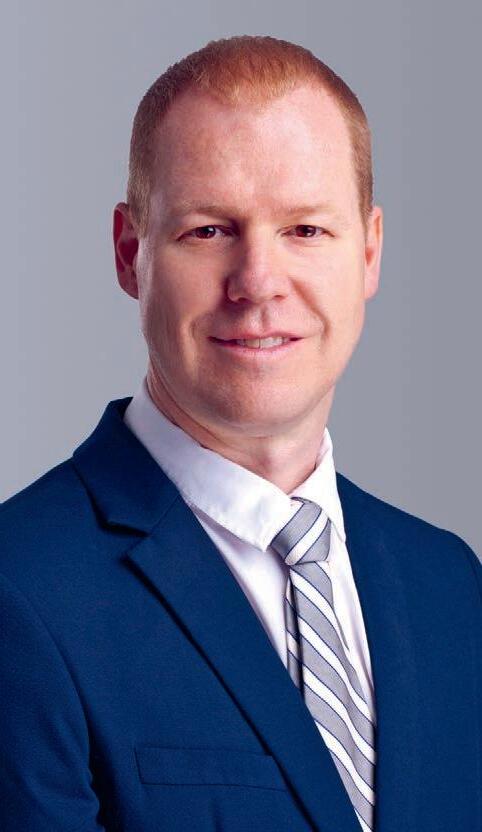
Business Manager: Lodewyk van der Walt General Manager, Magazines: Jocelyne Bayer
ENGINEERING RESILIENCE IN THE FACE OF SCARCITY
As I write this, the reality of our water security is starkly visible across Gauteng. With communities left without water for days, the crisis is no longer a distant threat; it is a lived experience. Consequently, there has never been a better, nor more critical time to produce this edition of Water. We are moving past the point of raising awareness; we are now in the era where we must mandate solutions.
This issue focuses intently on resilience and the leveraging of technology to safeguard our future. We anchor this conversation with two compelling thought leadership pieces. First, Professor Kevin Winter from the University of Cape Town challenges our traditional reliance on centralised systems in “What nature already knows: the case for decentralised water” (page 7). Complementing this, Deerosh Maharaj of Standard Bank provides a crucial economic reality check in “Why infrastructure investment must focus on life cycle value" (page 37), arguing that maintenance is as vital as new construction.
The common thread weaving through the features in this edition is the transition from survival to strategy. We explore how municipalities can build resilient systems for the next decade and why asset management must shift from reactive panic to proactive planning. We also delve into the technological frontier, examining how automation is revolutionising management in our water-stressed landscape, and how we can reconsider desalination not just as an emergency response, but as planned-for resilience.
From smarter agricultural use to advancing ef ciency in water-intensive industries, the message is clear: every drop counts. I hope this edition inspires not just conversation, but the urgent action required to keep the taps running.
Busani Moyo EDITOR
The case for decentralised nature-based solutions.
Boosting productivity through smarter water use.
Shifting from emergency response to planned resilience.
The future of smart and sustainable treatment.
in
Busani Moyo
WASTEWATER REUSE IS NO LONGER A “NICE TO HAVE”
As South Africa’s water crisis worsens, wastewater reuse provides a viable solution. Technology innovations in on-site wastewater treatment offer real options for businesses and the public, writes MASKAM WATER
South Africa is experiencing severe water security challenges, which impact social stability, economic growth and public health. Prolonged droughts, ageing infrastructure, rising urbanisation and climate change are creating a water crisis. High temperatures, unpredictable rainfall and infrastructure challenges are projected to persist, intensifying pressure on existing resources and threatening long-term security. Adding to this crisis is a worsening situation in wastewater treatment. Inadequate, poorly managed and failing wastewater infrastructure is leading to massive pollution of the very freshwater resources that are in crisis.
TREATED WASTEWATER TO THE RESCUE
Wastewater reuse is possibly the only sustainable and viable response to these pressures. Historically, wastewater in South Africa has been largely underutilised, with only a small fraction of ef uent being treated for reuse. Up to 90 per cent of untreated or partially treated wastewater enters our rivers and oceans, resulting in wasted water resources,
pollution of freshwater resources and a risk to public health.
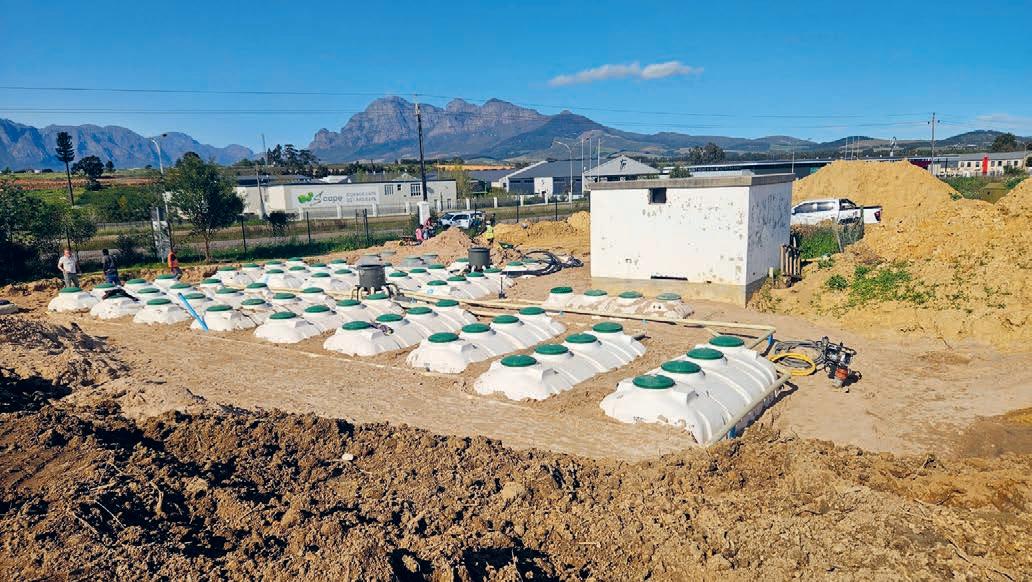
Wastewater treatment has been the purview of government. However, new technology in on-site wastewater treatment is providing real options for businesses and the public not only to mitigate the impacts of the water crisis, but also to have a positive environmental impact, all while saving on ever-increasing water and sewage bills. Treated wastewater can safely be used for irrigation, toilet ushing, washing surfaces, refrigeration, evaporative cooling and, with additional treatment, even potable water. In much the same way solar systems had a huge positive impact on the electricity grid, signi cantly reducing the quantity of wastewater entering sewers reduces the strain on overstretched wastewater treatment plants and reduces pollution of our freshwater resources.
Maskam Water was established in 2010, providing proven on-site wastewater treatment solutions. Over 400 units have been installed
since then, mainly in Southern Africa, but also as far a eld as Dubai and Mexico. Maskam Water’s Fusion, a drop-in wastewater treatment unit, has proven to be highly effective, with very low maintenance and requiring only 60W of electricity to operate. The Department of Environmental Affairs and Development Planning in the Western Cape, the Cango Caves, multiple game reserves, lodges, farmers, manufacturers and residential developers have selected the Fusion.
Gerhard Cronje, founder of Maskam Water, says: “It has been amazing to see the power of word of mouth. In one area of the Western Cape, we installed a fusion unit on a farm; in the years since, we have installed eight more on neighbouring farms. This is not due to fancy marketing, but simply because the Fusion has worked so well for them. Something similar is now happening in Botswana and Namibia. That is something we can be proud of.”
(0)
Cation
We are failing to see the water security solution that stands right in front of us, writes
PROFESSOR KEVIN WINTER, lead researcher in the Future Water Institute at
the University of
Cape Town
For decades, water-scarce nations have invested heavily in expensive, centralised grey infrastructure – massive treatment plants, sprawling pipe networks and complex operational systems that demand constant maintenance and astronomical budgets. Yet this approach has not solved our water crisis. In countries like South Africa, where water scarcity is now a de ning challenge, we continue to pour resources into systems that treat water to drinking standards, when the hard truth is that most water need never reach that level of purity. We are over-engineering a solution to a problem we have fundamentally misunderstood.
The real opportunity, complementary to conventional grey infrastructure, lies elsewhere: in decentralised, nature-based water treatment systems that are simpler, cheaper and in nitely more resilient.
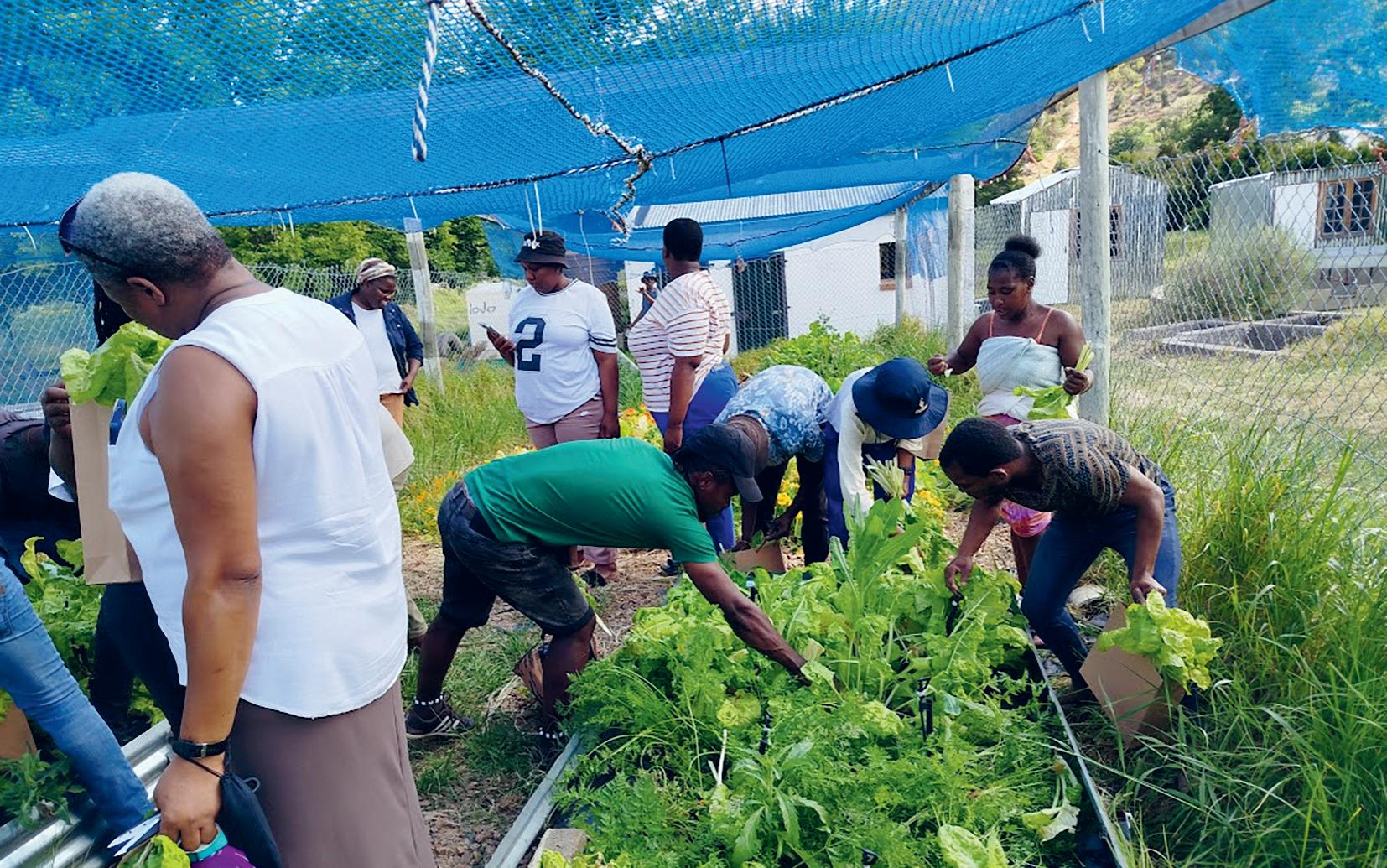
Consider the reality in peri-urban areas across South Africa. In Franschhoek, an af uent wine region, over 7 000 residents in nearby informal settlements lack access to adequate basic sewage services. Wastewater ows untreated into makeshift drainage channels, contaminating rivers and wetlands. This is not a unique problem; it is the de ning crisis of our time, where poverty and water insecurity intersect with devastating consequences. Yet this same setting has become ground zero for a different approach: the Water Hub, established in 2018 at the University of Cape Town’s Future Water Institute.
WHAT NATURE ALREADY KNOWS
The case for decentralised water
NATURE KNOWS BEST
The Water Hub operates on a principle that should be obvious, but remains revolutionary: stop ghting nature and start working with it. Using bio ltration cells lled with biochar and stone aggregates, the system mimics natural water puri cation processes to treat highly contaminated stormwater runoff. The results are extraordinary. Treatment reduces harmful parameters, such as ammonia nitrogen, by over 90 per cent, and eliminates E. coli.
The system treats approximately 24 000–6 000 litres daily – modest volumes, perhaps, but profoundly purposeful. This water is not destined for drinking, but for growing food and creating livelihoods. Herein lies the paradigm shift we desperately need.
This is not cutting-edge innovation in the traditional sense. Nature has been purifying water for millennia. What makes the Water Hub genuinely transformative is its integration of sustainable, low-cost practices: minimal capital investment, minimal operational costs, no chemicals and solar power to operate water pumps. The system adopts a circular-economy approach in which biochar, a form of charcoal produced from invasive exotic trees that plague catchments, serves as ltration media and later becomes a source of carbon for soil amendment. We have found a productive purpose for ecological threats. Compare this to the perpetual expense of centralised grey infrastructure. The Water Hub
demonstrates that decentralised systems require less money, less energy and less expertise to operate effectively – yet we continue to ignore this evidence.
SOCIAL IMPACT AS CORE PURPOSE
The Water Hub does something else that centralised systems cannot: it directly catalyses community transformation. Treated water supports a social enterprise where residents from the informal settlement grow marketable crops on 1.5 hectares. Four young women now work as shareholders with plans to employ more as the operation grows. Employment and dignity ow from access to clean water. Sustainable Development Goal (SDG) 6, ensuring water security, becomes inseparable from SDG 1 and SDG 5, poverty reduction and gender equality.
COURAGE AND HUMILITY REQUIRED
We stand at an in exion point. The clarion call remains for more expensive infrastructure and costly maintenance programmes. However, this represents a failure of imagination and courage. It requires humility to acknowledge that simpler systems can provide enough water for essential purposes and that working with nature rather than against it is not a compromise but wisdom.
Decentralised, nature-based water treatment is not the future we are building. It is the future we are ignoring – despite overwhelming evidence of its ef cacy, affordability and transformative potential. The question is no longer whether it works. The question is whether we are courageous enough to embrace it.
Follow: Professor Kevin Winter www.linkedin.com/in/kevin-winter-5b929447 Visit: Future Water Institute futurewater.uct.ac.za
Professor Kevin Winter
PRECISION IRRIGATION
As climate pressures intensify, precision irrigation is becoming less of a luxury and more of a necessity, writes ELRIZA THERON
Water scarcity is one of the greatest constraints facing South African agriculture, with increasing climate variability, prolonged droughts and growing competition for water resources forcing farmers to rethink how they irrigate crops. Precision irrigation is proving to be a critical tool for producing more food with less water, while strengthening climate resilience and farm pro tability.
At its heart, precision irrigation is about applying the right amount of water at the right time, exactly where it is needed.
According to Nickie Theron, product manager specialising in digital farming at Neta m Southern and East Africa, achieving this level of accuracy is no longer possible without technology. “Even with a lot of effort and time, and the right precision emitter at the plant, 100 per cent precise execution of strategic irrigation and fertigation tasks will not be possible without automation,” he explains.
One of the most impactful advances in precision irrigation is sensor-based irrigation scheduling. Soil moisture sensors, combined with weather data, allow farmers to irrigate based on actual crop demand rather than xed schedules. This integration ensures water is applied only when necessary, reducing waste and preventing stress caused by under- or over-irrigation.
Advanced digital farming solutions now integrate real-time weather data,
soil moisture readings and automated controllers to adjust irrigation schedules dynamically. “We see systems using sophisticated algorithms to analyse sensor data and adjust watering schemes in real-time,” says Charl van Reenen, agronomy manager at Neta m Southern and East Africa. These technologies “enable farmers to leverage data-driven strategies to optimise water use, reduce costs and ensure long-term sustainability”. Automation extends far beyond opening and closing valves. Modern irrigation automation systems manage pH control, fertiliser injection and data collection, all from a single platform. Digital farming solutions enable remote management of complex irrigation systems, reducing labour requirements and human error. This capability is particularly valuable as farms expand. Theron identi es scale as a key driver of automation adoption, explaining that beyond a certain size, “it becomes simply impossible to keep up with manually opening and closing valves” and to monitor and record irrigation activities accurately.
Precision irrigation is not about using less water at the expense of yields but rather
PRECISION IRRIGATION IS NOT ABOUT USING LESS WATER AT THE EXPENSE OF YIELDS BUT RATHER OPTIMISING WATER USE TO UNLOCK CROP POTENTIAL.
optimising water use to unlock crop potential. By precisely aligning irrigation and fertigation with crop needs, farmers can improve plant health, uniformity, and yield quality.
Jared Gouws, digital farming technician at Neta m Southern and East Africa, points out that precise watering “leads to healthier plants and better yields” while reducing water and labour costs over time. This balance between water savings and yield optimisation directly supports food security. Producing consistent, high-quality crops with fewer inputs stabilises supply, protects farm incomes and reduces vulnerability to climate shocks.
BARRIERS TO ADOPTION
Despite the bene ts, adoption remains a challenge for many emerging farmers. High initial system costs, limited access to electricity or connectivity, and low levels of technological literacy are often cited as barriers. “Cost is always raised as the rst limitation,” says Theron, but he emphasises that these costs must be viewed in relation to the overall irrigation system and long-term savings.
Connectivity and power constraints are real, particularly in rural areas, yet solutions such as solar-compatible systems and modular designs are expanding access. Importantly, Theron stresses that technological literacy can be addressed through user-friendly systems and training.
As climate pressures intensify, precision irrigation is becoming less of a luxury and more of a necessity. By integrating sensors, weather data and automation, farmers can protect scarce water resources while improving productivity and pro tability. In doing so, precision irrigation strengthens climate resilience, supports national food security and ensures that every drop of water works harder for South Africa’s agricultural future.
Charl van Reenen www.linkedin.com/in/charl-van-reenen-919591202
Digital agriculture in action.
AHEAD OF THE CURVE
The Energy and Water Sector Education and Training Authority is championing water security through skills, writes Dr MMAPHEFO THWALA
South Africa’s water security is under increasing pressure. In early 2018, Cape Town residents experienced water levels drop to historic lows as the city counted down to “Day-Zero,” a moment when taps were expected to run dry and daily life would be reshaped by strict water rationing. Years later, the anxiety has not disappeared; it has simply shifted. In cities such as Johannesburg and Makhanda, residents wake to dry taps not because of low water levels, but because burst pipes, failing pump stations and ageing infrastructure interrupt supply.
Along the Vaal and Olifants rivers, once-reliable lifelines now carry visible signs of pollution from sewage spills and failing
EWSETA’S APPROACH EXTENDS BEYOND SUPPORTING UNEMPLOYED LEARNERS, PLACING EQUAL EMPHASIS ON UPSKILLING AND PROFESSIONALISING THE EXISTING WORKFORCE WITHIN THE WATER SECTOR.
wastewater treatment works. Meanwhile, communities in KwaZulu-Natal, Limpopo and Mpumalanga have endured the devastating cycle of oods followed by prolonged dry spells, as climate extremes test already fragile systems. These lived experiences, repeated across towns and cities, re ect a deeper truth: South Africa’s water crisis is no longer a distant threat. It is a present and growing reality, reminding us that water security can no longer be taken for granted.
Adding to these pressures is a critical shortage of technical capacity within municipalities and the broader water sector. Ageing infrastructure is often poorly maintained, with signi cant backlogs in repairs and
TO BROADEN ACCESS TO CAREER GUIDANCE AND STRENGTHEN THE SKILLS PIPELINE, EWSETA SUPPORTS LEARNERS AND EDUCATORS THROUGH STRUCTURED NATIONAL COMPETITIONS AND RECOGNITION PROGRAMMES THAT ENCOURAGE PARTICIPATION IN SCARCE AND CRITICAL SKILLS PATHWAYS.
upgrades. High levels of nonrevenue water, driven by leaks and inef ciencies, further weaken supply reliability. In many municipalities, insuf cient technical expertise to operate and maintain water and wastewater treatment works has resulted in service interruptions, declining water quality and systemic inef ciencies.
During his recent State of the Nation Address, President Cyril Ramaphosa indicated that “poor planning and inadequate maintenance of water systems by many municipalities are the main cause of the problems we are going through now and are the reason that taps often run dry”.
TECHNICAL SKILLS SHORTAGE
The compounding reality is that beneath the visible strain on water resources, pipelines and treatment plants lies a less visible, but equally critical challenge – a shortage of technical skills. It has become evident that water security is not only an infrastructure issue, but also, fundamentally, a skills issue.
These challenges present an opportunity to which the Energy and Water Sector Education and Training Authority (EWSETA) is actively responding. Through its mandate under the Skills Development Act (1998), EWSETA is strengthening South Africa’s water security by developing a skilled, capable and future-ready workforce to ensure technical competence to rehabilitate ageing systems, improve water treatment processes, reduce losses through leak detection, implement smart monitoring technologies and strengthen regulatory compliance. Without these capabilities, infrastructure investment alone will not yield sustainable results. Working collaboratively with national and local government, municipalities, water boards and industry, EWSETA is positioning skills development as a central pillar of sustainable water management.
As the statutory body established under the Skills Development Act, the EWSETA plans, facilitates and implements skills development in the energy and water sectors. Its programmes are aligned with national priorities, including the National Skills Development Plan 2030, National
Water and Sanitation Master Plan and broader water sector strategies.
EWSETA’S ROLE IN WATER SECTOR SKILLS DEVELOPMENT
EWSETA delivers targeted interventions that respond directly to sector needs across the water value chain – from resource management and abstraction to treatment, distribution, sanitation and reuse.
A key focus is rebuilding technical and artisan capacity. Each year, EWSETA facilitates the training of artisans and technicians critical to maintaining and repairing water infrastructure, addressing systemic skills gaps across municipalities and utilities. These skilled professionals play a direct role in reducing water losses, preventing outages and improving system ef ciency at municipal level. At the same time, EWSETA is strengthening the professional pipeline through the development of specialised occupational quali cations across multiple NQF levels, from borehole pump operators to water use specialists and water resource managers.
These quali cations create a structured skills pipeline, enabling learners to move from entry-level occupations to increasingly specialised and advanced professional expertise within the water sector. By mapping clear learning pathways across multiple NQF levels, they support both new entrants and existing workers to build competence over time while meeting evolving industry standards.
Through ongoing research into occupational quali cations, strengthened industry collaboration and improved mentorship frameworks, EWSETA ensures that technical and vocational education and training (TVET) programmes remain responsive to real-world needs, are quality-driven and closely aligned with sector priorities. This approach not only enhances employability, but also supports the development of a technically capable water workforce.
In an era de ned by digital transformation and climate adaptation, new competencies
are increasingly required, from data analytics and digital water management systems to advanced treatment technologies and resource conservation strategies. Skills development is therefore not only about maintaining and xing today’s infrastructure; it is about equipping the sector to anticipate risk and respond to environmental change. A workforce trained in smart monitoring, predictive maintenance and sustainable design can reduce losses, improve service reliability and protect scarce water resources. Skills become both a technical necessity and a strategic investment in innovation and long-term resilience.
BROADENING ACCESS AND STRENGTHENING THE SKILLS PIPELINE
In line with its social development mandate, the organisation supports unemployed learners across all provinces by providing them with access to higher education through bursaries, and by advancing them through learnerships, apprenticeships and workplace-based learning opportunities. Attracting some of the country’s brightest young minds to the water sector through these interventions strengthens the long-term professional capacity of the sector.
Dr Mmaphefo Thwala
STRENGTHENING CAPACITY FOR THE EXISTING WORKFORCE
Workplace placements aligned with Quality Council for Trades and Occupations requirements ensure learners gain practical, industry-relevant experience.
To broaden access to career guidance and strengthen the skills pipeline, EWSETA supports learners and educators through structured national competitions and recognition programmes that encourage participation in scarce and critical skills pathways. Digital enablement initiatives, including the provision of devices like tablets, reduce barriers to participation, support learning continuity and prepare young people for fourth industrial revolution technologies.
STRENGTHENING ACADEMIC INSTITUTIONS AND LECTURER CAPACITY
Sustainable skills development requires capable institutions. EWSETA invests in public TVET colleges through lecturer development and management training, workplace exposure programmes, curriculum-aligned studies and bursaries for academic staff. Institutional capacity is further enhanced through infrastructure support, including workshops, training equipment, technology upgrades, regional of ces and centres of specialisation. These interventions strengthen the quality and relevance of training delivery countrywide.
EWSETA’s approach extends beyond supporting unemployed learners, placing equal emphasis on upskilling and professionalising the existing workforce within the water sector. Strengthening institutional performance requires continuous development of employed bene ciaries to address technical gaps, improve operational ef ciency and ensure regulatory compliance.
EWSETA supports employed learners through targeted interventions, such as bursaries for further studies, learnerships, including Recognition of Prior Learning (RPL) pathways and artisan development programmes (apprenticeships) that incorporate RPL to formalise existing competencies. Short-learning programmes, including noncredit-bearing courses accredited by the Council on Higher Education, and occupational skills programmes, provide focused upskilling aligned with sector needs.
Through structured RPL processes, EWSETA also assists experienced practitioners in closing learning gaps, gaining formal recognition for workplace-acquired skills and progressing within de ned occupational pathways. These interventions not only enhance individual career mobility, but also strengthen institutional (municipality) capacity, ensuring the sector retains experienced professionals while elevating standards of performance and accountability.
EXPANDING ACCESS AND DRIVING INCLUSIVE GROWTH
economic growth, EWSETA also supports entrepreneurial development through tailored skills programmes that enhance business sustainability and job creation. By equipping emerging enterprises and independent practitioners with relevant technical and business competencies (including skills in data management, digital water systems, treatment technologies and conservation), EWSETA expands access to economic participation, particularly for individuals who may not enter traditional formal employment pathways.
To strengthen access in rural and underserved communities, EWSETA collaborates with employers, accredited training providers and community-based initiatives to implement programmes that stimulate local economic development and foster self-sustaining environments. By decentralising skills delivery and expanding workplace-based learning opportunities, EWSETA brings training closer to where people live – reducing geographic barriers and supporting local capacity development.
Inclusivity remains central to EWSETA’s approach. The organisation places strong emphasis on empowering women and marginalised groups, including persons with disabilities, through targeted interventions that advance gender equality, leadership development and workplace inclusion. These programmes are designed to remove systemic barriers to participation and promote equitable access to opportunities and representation across the water sector value chain.
Recognising the critical role of small, medium and micro enterprises in
STRATEGIC PARTNERSHIPS FOR IMPACT
Collaboration is central to EWSETA’s water sector strategy. Strategic agreements with government departments, municipalities, water boards and industry partners strengthen co-ordinated skills pipelines across the water sector. These partnerships help align workforce development with infrastructure investment and operational priorities. This supports a more coherent system in which skills planning is linked to service delivery requirements and broader sector reform efforts.
Over the past three years, EWSETA has accelerated skills development across South Africa’s water and sanitation sector through a comprehensive mix of apprenticeships, learnerships, bursaries, internships, candidacy programmes, short courses and work-integrated learning.
Working in partnership with institutions, such as the Department of Water and Sanitation, Desmond Tutu Centre for Leadership, Mvula Trust, Stellenbosch University Water Institute and the Water Institute of Southern Africa, EWSETA has focused on strengthening critical and scarce skills in areas such as water treatment, wastewater process control, sanitation facilitation, civil engineering management and professional registration pathways aligned with the South African Institution of Civil Engineering, the Engineering Council of South Africa and the South African Council for the Project and Construction Management Professions.
These interventions have delivered high-impact outcomes:
•Transitioning unemployed youth into skilled employment
•Reskilling and professionalising the existing workforce.
•Accelerating gender transformation through targeted women-focused programmes.
•Expanding access for people with disabilities, rural youth and “missing-middle” students across NQF Levels 2–8.
Particular emphasis has been placed on closing skills gaps in drought-prone provinces such as the Eastern Cape and Northern Cape.
In 2025, EWSETA continues to expand the pool of quali ed artisans and professionals through initiatives such as RPL, while aligning its programmes to sector reforms, including Regulation 3630, and broader national priorities aimed at strengthening water security and service delivery.
South Africa’s water challenges are complex and deeply interconnected. However, they are not insurmountable. Infrastructure can be nanced and constructed and policies can be drafted and revised. Ultimately, it is people who operate systems, enforce standards, detect leaks, manage treatment works and innovate for the future.
Water security is therefore not only about infrastructure; it is about people. A skilled workforce is fundamental to transforming the water sector, improving municipal performance, safeguarding public health and ensuring long-term sustainability. Through targeted quali cations, artisan development, institutional strengthening, inclusive access initiatives and strategic collaboration, EWSETA is positioning skills development as a national lever for water security. By investing in people today, EWSETA is helping secure South Africa’s water future for generations to come.
For more information: www.ewseta.org.za
FROM EMERGENCY RESPONSE TO PLANNED RESILIENCE
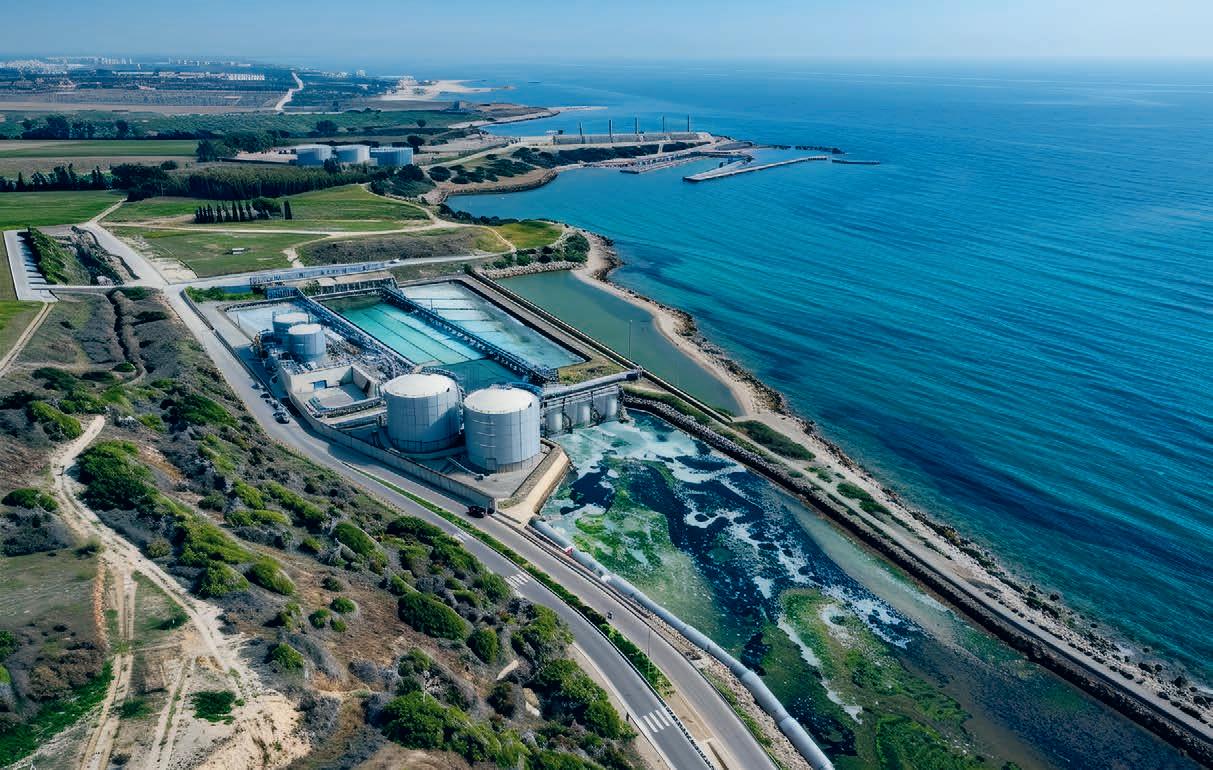
South Africa is rethinking desalination beyond “last resort”: the technologies, renewable-energy link, environmental safeguards and long-term costs shaping investable water security. By BUSANI MOYO
Years ago, desalination was often discussed in South Africa as the option you reach for when everything else has failed. The memory of Cape Town’s 2018 near-Day Zero cemented the “last resort” framing.
However, the water story has shifted. Climate volatility is affecting supply, cities are expanding, rivers are polluted and infrastructure is ageing. Against that backdrop, desalination is being re-examined as a solution that can, in the right places, add reliability to a system that is increasingly exposed.
The core technology is proven, the economics are improving, renewable energy is changing the carbon and cost equation, and the environmental and social questions are manageable, if projects are planned early and designed properly.
Trans-Caledon Tunnel Authority, which nances and implements bulk raw-water infrastructure, explains: “Desalination is primarily a coastal application to produce freshwater from seawater. Inland, desalination can be used to remove salt from brackish water sources, mostly groundwater or mine-impacted water, but the volumes are usually much smaller.”
TECHNOLOGIES FOR WATER-STRESSED REGIONS
Desalination means different things depending on where you stand. Dawid Bosman, a senior manager in strategic advisory at the
He adds that the bene ts ripple beyond the immediate plant.
“Coastal water-stressed regions can bene t greatly and directly from seawater desalination technology, whereas inland regions can bene t from brackish water made potable and indirectly from a reduced requirement to convey inland water to the coast.”
On the technology South Africa is most likely to build at utility scale, Bosman says: “Seawater reverse osmosis (SWRO) has been the dominant technology in the utility scale desalination market since the mid-nineties, supplanting less energy-ef cient thermal technologies in most applications. So, all indicators point to South Africa building SWRO plants when we start building larger desalination facilities.”
Reverse osmosis, which pushes seawater through membranes to remove salts, is now a mature industrial process, and the innovation has focused on ef ciency, reliability and scale. Bosman notes: “Today, SWRO technology can be scaled from as small as ve megalitres per day to more than 1 000 megalitres.” He traces the main improvements and what they mean for energy use: “Thin lm composite membranes in the late 1970s, high-ef ciency pumps in the 1990s, and the introduction of isobaric energy recovery devices in the mid2000s were notable; a modern SWRO plant would use only ten per cent of the energy of a similar plant from fty years ago.”
Dr Jo Burgess, CEO of the Tech Ascend Foundation and director of Trial Reservoirs Initiative at Isle Utilities, which works on testing and adoption of innovative water solutions, agrees that large coastal SWRO will remain the backbone, but she is focused on t-for-purpose solutions.
“For South Africa’s unusual mix of modern cities and scattered rural communities, two main technological trends are most applicable,” she says. “For coastal urban centres like Cape Town and eThekwini, SWRO remains the gold standard. For rural and gridconstrained areas, it’s modular plug-and-play solar desalination.”
The key point is that South Africa needs different desalination solutions, appropriate for the speci c environment of implementation.
DAWID BOSMAN
Dawid Bosman
Dr Jo Burgess
RENEWABLE ENERGY INTEGRATION BECOMING CENTRAL TO AFFORDABILITY AND EMISSIONS
In South Africa, any water solution that leans heavily on electricity must contend with high tariffs and an unstable grid, making energy the single biggest driver of both operating costs and emissions.
“Despite the gains made in ef ciency, SWRO remains an energy-intensive process, with benchmark plants requiring about 2.9 kWh to produce 1 000 litres of freshwater from 2 500 litres of seawater and 1 500 litres of brine released back into the marine environment,” Bosman says. “Where the energy comes from and how much of it is used are extremely important considerations.”
the DBSA as implementing partner, says: “There is a mismatch between the intermittent yield of renewable energy and the continuous power requirement of SWRO; this gap can be lled by energy storage.” He adds: “The outlook for energy storage is very positive, with costs in decline and ef ciencies on the rise.”
For South Africa, the message is not that desalination is “green” by default. It becomes more affordable and acceptable when the energy model is designed as part of the project, rather than bolted on later.
ENVIRONMENTAL CONCERNS AND MITIGATION STRATEGIES
He argues that the global shift to renewables has changed desalination’s role in water planning. “When renewable energy became cost competitive around 2014 (it has since become the least-cost energy option in nearly all markets), this calculus changed fundamentally and created the ability to produce as much freshwater as is required, anywhere in the world, at a predictable price.” And, crucially for public perception and climate commitments, “as the grid energy reduces its carbon footprint, so does desalination.”
Dr Burgess is explicit about the local logic: “Integrating renewables is the primary strategy for managing South Africa’s high electricity costs and grid instability.” In coastal areas, she says, the generation mix matters because wind can complement solar. “Coastal regions bene t from hybridising desalination plants with dedicated solar PV and wind farms. This provides a more constant power supply than solar alone, reducing the need for expensive battery storage.” She also highlights that “modern plants (like the planned Paarden Eiland facility) often use green power purchase agreements to offset grid energy with renewable generation elsewhere, ensuring the water produced has a zero-carbon footprint.”
The technical sticking point is that desalination plants generally require steady power, while renewables can be intermittent. Johann Lubbe, head of the Water Partnership Of ce, a Department of Water and Sanitation programme set up to accelerate delivery, with
No matter how compelling the supply argument, desalination projects rise or fall on environmental con dence and social licence.
Bosman acknowledges the most commonly raised issue: “The most frequently raised environmental concern is the potential impact of brine returning to the environment. This is a great concern with inland desalination applications, where it is harder to mitigate the environmental impact.” At the coast, the methods have been mastered and are well understood. “Brine is released into the marine
environment with relative ease; it becomes a matter of prudent design of the marine outlet structures, continuous monitoring of seawater salinity in proximity to the diffusers and having a protocol of temporary shutdown if limits are exceeded,” he explains. “Fortunately, the South African coastline sees the con uence of two of the world’s most powerful open-ocean systems, so the waters are quite active and brine dispersal would not be an issue.”
Dr Burgess points to mitigation that dispenses with dispersion and rather looks to recovering value. “Instead of discharging concentrated salt back into the ocean, new strategies focus on brine mining to extract valuable minerals, such as lithium and magnesium, turning waste into a secondary revenue stream.” Where recovery isn’t viable, she notes standard engineering choices: “To prevent dead zones, high-velocity diffusers are used to rapidly mix brine with seawater at the discharge point. On the intake side, advanced screening and low-velocity intake systems are now standard to prevent the entrapment (impingement) of plankton and small sh.”
“However, the environmental impact of a desalination plant encompasses much more than brine,” Bosman informs. “The plant has a footprint that extends into both the marine and coastal environments, which implies
“FOR COASTAL URBAN CENTRES LIKE CAPE TOWN AND ETHEKWINI, SWRO REMAINS THE GOLD STANDARD. FOR RURAL AND GRID-CONSTRAINED AREAS, IT’S MODULAR PLUG-AND-PLAY SOLAR DESALINATION.”
Johann Lubbe
that the impact on both domains must be considered.” He cautions that siting can trigger legitimate public opposition. “Coastal property is often attractive for domestic settlements and recreational use, and imprudent site selections have occasionally led to public outcry.
“In essence, site selection for seawater desalination is more complex than most industrial developments … sites that are well-suited for desalination development are quite scarce and once they have been identi ed as such, become strategically important,” he explains.
That last point matters to investors as much as to environmentalists. Good sites reduce risk and impact, shorten delays and make long-term operations cheaper and more reliable.
COSTS AND LONG-TERM OPERATIONAL EXPENSES
Desalination debates often xate on a single number, cost per kilolitre, without acknowledging that the “right” comparison is usually the cost of not having reliable water: restrictions, lost output, emergency trucking and the long-term damage to a city’s investment proposition.
Dr Burgess gives current large-scale benchmarks: “Large-scale desalination costs have stabilised between R9.50 and R21.00 per m3.” For rural areas, she argues the counterfactual can be stark: “While capital expenditure for solar-powered rural units is high, they often pay for themselves in under three years when compared to the cost of tankered water, which can cost ten to twenty times more.” On operating realities, she is clear about what drives long-term budgets: “Energy remains the largest operating expense (forty to fty per cent). South Africa should expect long-term costs to be sensitive to the price of membrane replacements, every three to four years, and specialised technical labour.”
THE MESSAGE IS NOT THAT DESALINATION IS “GREEN” BY DEFAULT. IT BECOMES MORE AFFORDABLE AND ACCEPTABLE WHEN THE ENERGY MODEL IS DESIGNED AS PART OF THE PROJECT, RATHER THAN BOLTED ON LATER.
East and on a very large scale, typically six hundred megalitres per day and more.” South Africa’s task is to import ef ciencies, particularly in contracting and risk allocation, without overselling how quickly tariffs will fall.
LESSONS TO GUIDE FUTURE STRATEGIC DECISIONS
If desalination has a reputation problem in South Africa, part of it comes from how it has
appropriate risk allocation and does not require the client to have the technical depth.”
Dr Burgess reinforces the lesson from Cape Town, saying: “A major lesson from the 2018 Cape Town crisis is that temporary/ emergency plants are inef cient and expensive. Many small-scale projects in rural South Africa have failed due to a lack of local technical expertise.” Her prescription is to contract for long-term operation, not just construction. “Future projects must include long-term maintenance and operations contracts or design-build-operate models to ensure longevity,” she says. Lubbe adds the system-wide economic argument for preparedness: “The economic cost of a period of constrained water supply or a run-out situation in a town or city completely dwarfs the cost of desalination.” In other words, the cost of desalination should be assessed against the economic cost of businesses and employment lost because there was no water, not against the cost of less assured alternative sources.
Lubbe places South Africa’s choices in a global context. “The cost of desalinated water from SWRO has effectively halved over the past two decades: In 2005, the benchmark price per kilolitre was around one US Dollar; today it is around fty cents (US). However, this benchmark is only being achieved in the mature desalination markets of the Middle
been introduced in the past – in a rush, under pressure, with unrealistic expectations.
Bosman’s rst lesson is about timing. “Prepare, plan and budget for desalination long before the drought creates a crisis. Planning for desalination is time-consuming … seawater must be characterised for eighteen to twenty-four months, a suitable site must be found and its feasibility tested.” He also argues that South Africa should choose delivery models that recognise limited specialist capacity: “The PPP/BOT model is very good for
A MORE USEFUL NATIONAL NARRATIVE
The expert view is that large-scale desalination is an integral part of water resources planning. It is a strategic capability and should be managed as such. Getting it right requires good decisions to be made on site selection, the design, the energy supply, the implementation model and the product requirement, a complex process. However, if it is done well, desalination becomes a meaningful step towards water resilience and adapting to climate change.
SOUTH AFRICA’S PROPOSED WATER LAW REFORMS
ALISTAIR YOUNG , director: Environmental Law at Cliffe Dekker Hofmeyr, unpacks six key issues stakeholders need to note
South Africa is advancing towards a new era of water regulation as the National Water Amendment Bill (Amendment Bill) progresses through the requisite parliamentary processes. The Amendment Bill proposes a raft of far-reaching reforms to the National Water Act 36 of 1998 (NWA) to address inequity, misuse, deteriorating water infrastructure and increasingly stressed water resources.
While these reforms aim to modernise the water governance landscape, they could also introduce complex legal, operational, and economic implications for water users, municipalities, industries and governance bodies. This article examines some of the key issues associated with six signi cant proposed changes that will affect stakeholders across South Africa’s water sector.
1. RESTRICTIONS ON THE TRANSFER OF WATER USE AUTHORISATIONS AND PROHIBITION OF WATER TRADING
In the wake of the Constitutional Court’s judgement in Minister of Water and Sanitation and Others v Casper Jacobus Lotter N.O and Others, where it was determined that in the absence of a clear prohibition in the NWA, private persons may agree on fees linked to the surrender of one person’s lawful water use entitlements to facilitate another’s water use licence application, the Amendment Bill proposes strengthened control over the private water trading in this scenario.
To achieve the above, the Amendment Bill proposes changes to section 25 whereby any person authorised to use water for irrigation who wishes to transfer the water use must apply to a water management institution in the prescribed manner. The water management institution may allow
such transfer for a period not exceeding 24 months to another portion of land belonging to the same person or a third person, having regard to the factors listed in section 27. Critically, the Amendment Bill introduces a new provision prohibiting water trading by requiring that a person who surrenders any entitlement must surrender it to the Minister of the Department of Water and Sanitation (DWS) rather than trade it. These proposed amendments will not, in our view, prevent the transfer of lawful water use entitlements in the form of a water use licence or general authorisation as part of a sale of business transaction where there is a sale of shares or business.
UNDERSTANDING THESE CHANGES, ASSESSING RISK EXPOSURE AND ENGAGING EARLY WITH REGULATORY PROCESSES IS THEREFORE CRITICAL.
2. REPEAL OF THE ABILITY TO DECLARE EXISTING LAWFUL WATER USE
The Amendment Bill repeals section 33 of the NWA, which previously allowed persons to apply to have certain water uses declared as existing lawful water uses. This move will result in the end of the transitional framework established in 1998 that recognised water uses that were lawful under the previous legal regimes regulating water uses. It further con rms the move towards requiring all existing lawful water users who have not yet obtained water use licences or general authorisations to regularise their water use through the licensing/general authorisation processes, which could give rise to administrative backlogs in processing the potentially large number of applications.
3. INTRODUCTION OF THE USE-IT-OR-LOSE-IT PRINCIPLE
The Amendment Bill introduces a use-it-or-lose-it provision through the insertion of section 34A, which empowers a responsible authority to curtail the volume of water available to a person holding an entitlement to use water through the existing lawful water use regime (this excludes existing holders of water use licences and general authorisations) where water users fail to exercise the full existing lawful use volume for any period speci ed by the Minister of the DWS. This provision is intended to ensure that more water
Alistair Young
becomes available for reallocation of water use volumes by the Minister of the DWS to address issues of equity, although it may result in circumstances whereby users may feel compelled to use water unnecessarily to retain water volume allocations, potentially undermining water conservation objectives.
4. PROTECTION OF STRATEGIC WATER SOURCE AREAS
An entirely new Chapter 3A is introduced, which is dedicated to the protection of strategic water source areas as newly de ned by the Amendment Bill. The Minister of the DWS must, within three years of commencement of the chapter, publish a list and map of strategic water source areas in South Africa. The Minister of the DWS must also publish regulations for the management of activities within and around strategic water source areas, specifying prohibited and restricted activities. Importantly, the Amendment Bill advances mechanisms whereby the Minister of the DWS may prescribe the manner, extent and procedure for reviewing water use licences previously granted for opencast and underground mining activities within strategic water source areas prior to the chapter coming into
effect and further provides for an outright prohibition on the issuing of new water use licences for opencast and underground mining within identi ed strategic water use areas. The new chapter also provides for further, although more restricted, limitations on the granting of water use licences within the forestry and agricultural sectors in scenarios where activities within these sectors could impact identi ed strategic water source areas.
5. PERSONAL LIABILITY FOR DIRECTORS AND MUNICIPAL MANAGERS
A new section 156A is to be introduced, which creates personal criminal liability for both directors of business entities and municipal managers of municipalities where their organisations commit offences under section 151 of the NWA. A director or municipal manager will be guilty of an offence if it resulted from their failure to take all reasonable steps necessary under the circumstances to prevent the commission of the offence. Proof of the offence by the rm or municipality constitutes a rebuttable presumption that the director or municipal manager is guilty. Upon conviction, courts may order the recovery of amounts for loss
THE AMENDMENT BILL PROPOSES A RAFT OF FAR-REACHING REFORMS TO THE NATIONAL WATER ACT 36 OF 1998 (NWA) TO ADDRESS INEQUITY,
or damage to rehabilitate or prevent damage, determination and recovery of monetary value of any advantage gained consequential of the offence, or recovery of reasonable costs incurred for investigation and prosecution.
6. ENHANCED PENALTY PROVISIONS
The Amendment Bill nally seeks to align the penalty provisions in section 151 of the NWA with the corresponding penalty provisions in the other Speci c Environmental Management Acts by substantially increasing penalties for offences with nes reaching up to R10-million and imprisonment up to 10 years for the most serious offences.
NAVIGATING THE IMPLICATIONS
The Amendment Bill represents one of the most ambitious overhauls of South Africa’s water law since 1998. The reforms address critical challenges – including water scarcity, inequitable allocation and the degradation of strategic water sources – while strengthening enforcement and accountability mechanisms. However, stakeholders across all sectors may face signi cant implications as these changes take effect. Understanding the reforms, assessing risk exposure and engaging early with regulatory processes will be essential. The public consultation processes required for strategic water source area declarations and licensing decisions present important opportunities for affected parties to make representations and protect their interests. Given the extent of these reforms, stakeholders should seek specialist legal and technical advice to navigate the transition to South Africa’s new era of water-use regulatory framework.
For more information: www.cliffedekkerhofmeyr.com
WASTEWATER SOLUTIONS THAT DELIVER
Locally manufactured wastewater solutions enable stronger municipal service delivery writes SEBASTIAN WERNER,
Across Southern Africa, municipalities are under sustained pressure to maintain ageing sewer and stormwater infrastructure. When wastewater systems fail, the consequences are immediate: environmental damage, public health risks and loss of community trust.
Effective service delivery depends not only on planning and skills, but on having the right equipment in the eld.
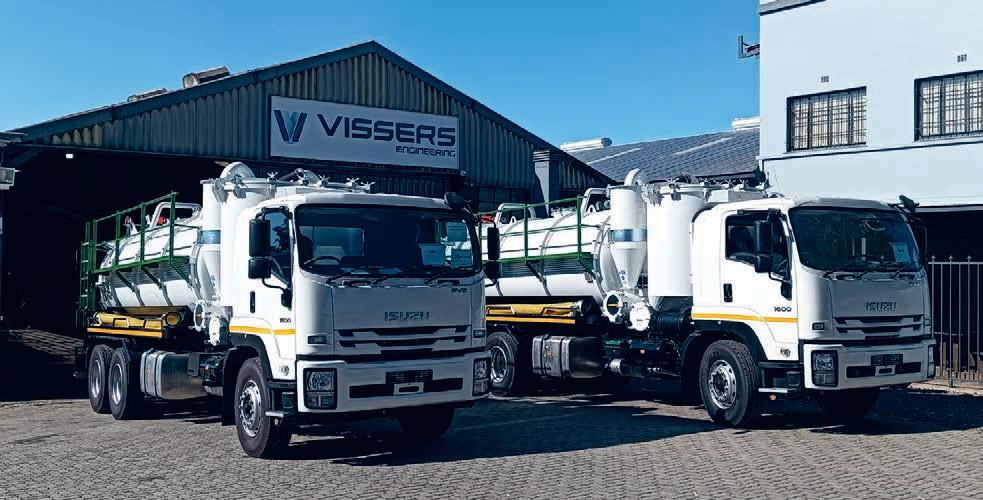
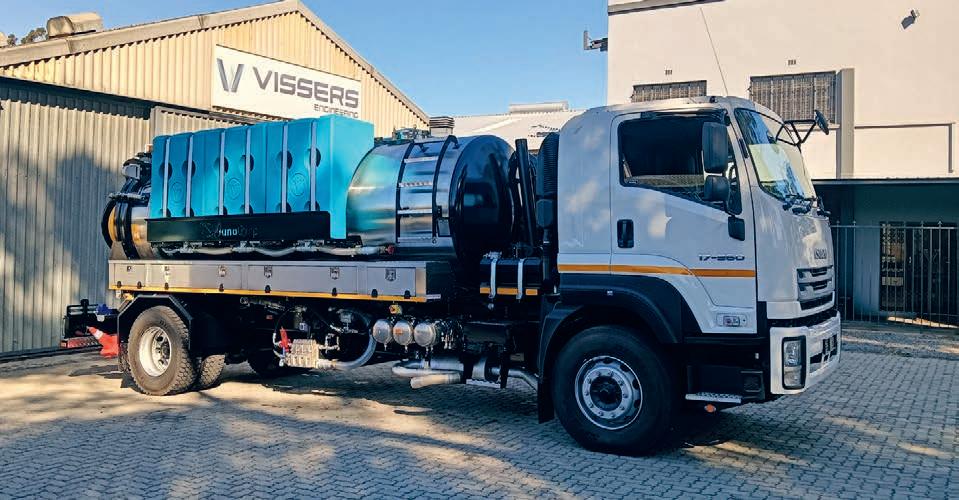
For almost 40 years, Werner Pumps has been designing and manufacturing high-pressure jetting and vacuum equipment in Springs, supplying solutions to municipalities and contractors across South Africa, and later to Botswana and Namibia. Today, Werner Pumps units operate in numerous municipalities across the region, supporting the teams responsible for keeping sewer and stormwater systems functioning.
A COMPREHENSIVE RANGE FOR MUNICIPAL NEEDS
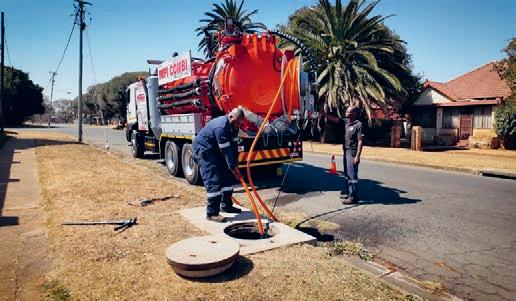
Municipal requirements differ signi cantly depending on geography, budget and infrastructure demands. Werner Pumps has therefore developed a tiered range of solutions to suit both large metros and smaller municipalities. At the heavy-duty end of the spectrum are Werner Pumps combination jetting and vacuum trucks, such as the Impi 12 500-litre unit. These vehicles allow operators to
Werner Pumps MD
jet high-pressure water into blocked lines to dislodge debris while simultaneously vacuuming waste into a sludge tank. This dual functionality improves ef ciency and reduces the time required to clear major blockages, pump stations and sewer over ows.
Werner Pumps dedicated jetting units, available in 6 000L, 10 000L and 15 000L con gurations, are also widely used for preventative maintenance and stormwater drain clearing. Designed to withstand demanding operating conditions, they can be customised to municipal speci cations, including preferred chassis and tank materials.
Werner Pumps also manufactures recycling jetting and vacuum units. These trucks reuse water recovered during vacuum operations for further jetting, signi cantly reducing reliance on clean water sources, as well as travel time and fuel (as trucks don’t need to leave the site to of oad wastewater as frequently). In a single eight-hour shift, the recycling unit can save up to 168 000 litres of clean water, making it particularly valuable in drought-prone regions.
TRAILER OPTIONS
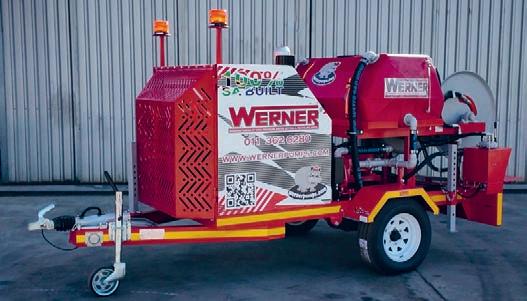
Werner Pumps also offers jetting trailers as a practical and cost-effective solution for sewer line cleaning, drain maintenance and pipeline
unblocking. Compact and towable, they provide exibility in deployment without the need for a dedicated heavy vehicle. For example, in Botswana, the Gaborone Municipality Wastewater Department recently took delivery of a locally manufactured Werner Pumps trailer to strengthen its sewer maintenance capacity. In Namibia, the Municipality of Walvis Bay added a jetting trailer to complement its existing Werner Pumps combination truck, further enhancing its ability to maintain pump stations and sewer networks.
These examples show that many municipalities are adopting a blended eet approach, using both trucks and trailers to optimise resources and improve response times.
BUILT LOCALLY, SUPPORTED REGIONALLY
All Werner Pumps equipment is manufactured in South Africa and backed by ISO 9001:2015 and ISO 14001:2015 certi cation. Local production enables greater quality control, shorter lead times and the ability to customise units, including crew cab con gurations and a broad range of accessories.
Equally important is after-sales support. Training, technical assistance and parts availability are central to ensuring equipment remains operational over the long term. Reliability translates directly into improved service delivery.
Wastewater and stormwater maintenance is foundational to healthy, functioning communities. When municipalities and their service providers have access to robust, reliable equipment, they are better positioned to respond quickly and maintain infrastructure proactively. Quality, locally manufactured equipment is not just a capital purchase; it’s an investment in consistent service delivery.
For more information: www.wernerpumps.com
SMART, SUSTAINABLE TREATMENT
Wastewater treatment is undergoing rapid transformation. Rising energy costs, stricter environmental regulations and ageing infrastructure are forcing utilities to rethink how plants operate, how performance is measured and how value can be unlocked from wastewater systems.
Increasingly, the sector is shifting from a narrow compliance focus to a broader model centred on resilience, ef ciency and resource recovery.
Dean Muruven, associate director at Boston Consulting Group, warns that the risks of continuing to operate deteriorating wastewater infrastructure are mounting.
“The risks can be grouped into three key areas: public health risks from contamination entering drinking water supplies, environmental pollution, such as nutrient loading and eutrophication, and climate and resilience risks. Ageing infrastructure cannot cope with extreme weather events because it was never built for that level of stress.”
He adds: “Operating ageing infrastructure creates serious reliability, operational and nancial challenges that ultimately undermine service delivery.”
Wastewater treatment plants are already being asked to play a broader role, says Hugo Pienaar, director of digital services at Adroit Technologies. “Traditionally, wastewater treatment plants were designed primarily to meet regulatory discharge limits. Today, modern plants are expected to operate as resource recovery hubs, extracting value through water reuse, energy generation and nutrient recovery.”
He further explains that this shift demands new operating models. “Plants need higher process stability, tighter control and greater operational intelligence to balance ef uent quality, energy ef ciency, asset protection and throughput.”
BARRIERS TO ADVANCED TREATMENT
As wastewater infrastructure ages and compliance pressures intensify, utilities are being forced to rethink treatment plants as value-generating assets rather than cost centres.
By ITUMELENG MOGAKI
technologies come with cost implications, operational complexity and workforce capability requirements. Complex procurement processes, stringent regulations and the absence of tariff reform make it dif cult to scale technology quickly.”
Pienaar points to additional constraints: “Utilities face high capital and life cycle costs, integration challenges with legacy infrastructure and a shortage of skilled personnel. Regulatory uncertainty, lengthy approvals and concerns around operational risk and cybersecurity further reduce appetite for change.”
TREAT, OPTIMISE AND MONETISE
As discharge requirements tighten, Muruven says utilities must move beyond compliance thinking. “A strategic pivot is needed from compliance-only thinking to a ‘treat, optimise and monetise’ approach. Smart utilities are digitalising operations, exploring modular treatment, building climate-resilient assets and prioritising resource recovery and circularity.”
He adds: “Energy is a major cost for water utilities, but it is also controllable, making ef ciency a key priority. Energy-ef ciency measures offer low-risk returns in a short timeframe, and even small gains can have a big impact. Biogas adds further optionality, turning energy from just an alternative source into a strategic asset for utilities.”
“OPERATING
Both Muruven and Pienaar highlight structural barriers slowing the adoption of advanced treatment technologies.
Muruven says governance and pricing models are critical. “Advanced treatment
Pienaar believes digitalisation is key to unlocking value. “When supervisory control and data acquisition (SCADA) is historied and contextualised, plants gain insight not only into what is happening, but why,” he explains.
This enables:
• Energy optimisation in aeration and pumping.
• Chemical dosing optimisation
• Predictive maintenance to extend asset life.
• Performance benchmarking across facilities.
Pienaar adds: “Digital control systems help wastewater plants shift from cost centres to value-generating assets. Modern SCADA captures institutional knowledge, reduces operator overload, enables remote operations and supports reliable performance despite skills shortages.”
LOOKING AHEAD
For Muruven, successful transformation depends on leadership and execution. “Sustainability must be treated as a value driver, not a ‘pie in the sky’ aspiration. Utilities need holistic strategies, alignment between operations and regulation and a clear understanding of capability requirements. Ultimately, leadership and culture matter; boards and executives must drive the transition.”
In Pienaar’s view, the future lies in data-driven, adaptive operations where plants anticipate disturbances, adjust control strategies automatically and optimise energy and resource use in real-time. “Control systems are no longer just operational tools; they are strategic enablers of long-term performance, resilience and value,” he explains.
Follow: Dean Muruven www.linkedin.com/in/dean-muruven-b8154b64 Hugo Pienaar www.linkedin.com/in/hugo-pienaar-924a391a
Dean Muruven
ENGINEERING WATER SECURITY TO PROTECT THE ECONOMY
Already a water-scarce nation, South Africa faces additional challenges from infrastructure failures and the large-scale use of water by industry. PROXA SA offers solutions to protect this vital resource
Water security is fast emerging as one of South Africa’s most pressing structural risks, with implications that extend well beyond household access and into the heart of economic stability.
Proxa SA CEO Dumi Luthuli notes that an increasing population leads to an increasing demand for water.
“When this is combined with climate change, instability, the degradation of municipal infrastructure, the extremely high losses of puri ed water through leaks and the collapse of service delivery, the risk of water scarcity is signi cantly ampli ed. To quote 17th-century author Thomas Fuller: ‘The true value of water is only realised when the well runs dry’,” he says.
“It is imperative then that we not only reduce the waste caused by failing municipal infrastructure, but also protect the water resources we do have. Essentially, we need to be able to treat the water we have, and also optimise the water used within industrial processes through proper treatment and reuse.”
He adds that the latter is critical, as water is essential to industrial production processes. When production is disrupted, the economy is affected, unemployment rises, and the ripple effects are felt across multiple sectors.
As water scarcity intensi es, Luthuli continues, South Africa will increasingly seek alternative sources, reducing reliance on traditional surface water and shifting to a more diversi ed supply mix, with the Department of Water and Sanitation projecting a resource mix to be achieved by 2040.
“A key part of this resource mix projection is the goal of achieving a 20- and 10-fold increase in water sourced from mine water and seawater desalination respectively. This, in turn, underscores the need for sustained investment and long-term planning to strengthen water security and economic resilience.”
HOW CAN SOUTH AFRICA DO THIS BETTER?
South Africa has competent people and companies that can contribute much-needed skills by working alongside relevant role players to shift the country’s water sector beyond
“SOUTH AFRICA MUST SHIFT ITS FOCUS AWAY FROM THE ASSUMPTION OF CHEAP, READILY AVAILABLE BUT DWINDLING SURFACE WATER AND ADOPT A MORE STRATEGIC APPROACH TO WHERE AND HOW WATER IS SOURCED, MANAGED AND REUSED.”
– DUMI LUTHULI
reliance on traditional surface water sources and towards a more diversi ed and sustainable supply mix. Through its work, he states, Proxa SA has demonstrated that sustainable, locally developed solutions are possible.
“Impacted mine water has long represented a complex legacy liability. The costs and risks associated with decant, treatment and safe discharge present ongoing operational headaches,” Luthuli explains.
“However, this headache represents a material alternative water resource. It is estimated that approximately 800 megalitres per day (MLD) of impacted mine water is available as a water source. With appropriate
Dumi Luthuli
treatment and conditioning, this resource can be converted into reliable, t-for-purpose potable water supply, capable of reintegration into municipal distribution networks, or reused within industrial and mining operations.”
Proxa has been actively involved in mine water reuse solutions for several decades and across multiple regions of the world, and has a proven track record of converting more than 140 million litres per day of impacted mine water into a high-quality valuable resource. These systems deliver water suitable for a range of end uses, including compliant environmental discharge, industrial process reuse and even potable applications for surrounding communities.
“Mine impacted water often contains salt and other contaminants that must be removed prior to reuse of the water. Proxa offers a range of solutions that can recover these for reuse in industrial, agricultural or consumer applications, subject to economic and other considerations,” he says.
THE DESALINATION OPTION
“Seawater desalination is increasingly being recognised as a viable and strategic augmentation source for South Africa’s coastal water supply. Proxa’s track record across multiple seawater reverse osmosis (SWRO) installations demonstrates the company’s ability to deliver stable, potable water at scale.”
Luthuli indicates that during the Day-Zero water crisis in Cape Town in 2018, Proxa provided two modular desalination plants in the False Bay area to augment the city’s water supply. While these installations were initially deployed as an emergency response to the crippling drought, their core value lies in demonstrating the practical feasibility of SWRO as a scalable, rapid and repeatable solution.
Building on this foundation, Proxa progressed to long-term desalination infrastructure with a 3.3 million litre per day SWRO plant at the V&A Waterfront. Commissioned in 2024, this facility represents a permanent augmentation source for one of Cape Town’s highest-demand precincts.
The plant incorporates advanced pretreatment and process control to manage variable seawater quality and protect membrane integrity, enabling reliable long-term operation and improved lifecycle performance.
“There are still challenges with desalination – notably routine maintenance and security during periods when not fully utilised to prevent deterioration and vandalism of the infrastructure – but their value is undeniable.
“The key lies in public-private partnerships (PPP), where the nance for such plants comes from the private sector, and the investment guarantees come from government. A strong PPP can leverage what is already a proven process to deliver answers to our inability to sustainably rely on surface water for all our needs.”
OTHER RECLAMATION OPTIONS
Ef uent reclamation is increasingly relevant for water-intensive industries, particularly within the fast-moving consumer goods (FMCG) sector. These industries typically rely on high-quality water for production, cleaning and process cooling, making water reuse a key strategy for reducing both water footprint and operational risk.
Proxa has supported multiple agship clients in the FMCG industry with tailored treatment solutions to recycle and reuse ef uent streams, enabling more responsible water use and improved supply resilience.
“Proxa has also worked proactively within the petrochemical sector, executing multiple projects recovering high-quality process water from ef uent. These systems reduce freshwater intake and mitigate environmental impact while maintaining process reliability,” Luthuli comments. “In several cases, Proxa has provided long-term, off-balance-sheet rental solutions that include operations, maintenance and technical support, enabling clients to access water-reuse capability without capital-intensive investment.
“Domestic wastewater treatment and reuse is a critical component of South Africa’s long-term water security strategy. Proxa has demonstrated its capability to partner with
municipal authorities to implement advanced, multibarrier reuse solutions that are technically robust and operationally reliable.”
He points to the company’s work with the City of Cape Town on the 10MLD Zandvliet reuse demonstration plant as underscoring this capability. Over a 24-month operational period, the facility achieved its performance targets, proving that treated domestic wastewater can be further puri ed to stringent potable standards. The project highlights Proxa’s ability to work collaboratively with municipal stakeholders to translate proof of concept into scalable implementation.
“The country is at a watershed moment. Reliable water supply is fundamental to the success of any business and, ultimately, the economy as a whole. South Africa must shift its focus away from the assumption of cheap, readily available but dwindling surface water and adopt a more strategic approach to where and how water is sourced, managed and reused – and Proxa is perfectly positioned to assist,” concludes Luthuli.
WATER DEFICIT
Proxa SA notes that if current consumption patterns persist, data shows that South Africa is projected to face a 17% water deficit by 2030. The macroeconomic consequences are material: gross domestic product (GDP) is expected to contract by 0.34%, with water-intensive sectors facing GDP losses of up to 2.48%. Unemployment is projected to rise by 0.1 percentage points, translating into an estimated 18 000 jobs lost.
INVOLVED
SEVERAL DECADES AND ACROSS MULTIPLE REGIONS
For more information: www.proxawater.com
SOUTH AFRICA’S WATER CRISIS IS DEEPLY PERSONAL
Water insecurity in South Africa is no longer an abstract policy issue; it has become a deeply personal and economic crisis reshaping how households live and how businesses operate. By BUKIWE PANTSHI, head of infrastructure at Investec Corporate & Investment Bank
Millions of residents continue to pay for services even as reliability worsens, and companies increasingly face rising costs. While often framed as an emerging crisis, water insecurity has long been an escalating daily reality for South Africans.
Climate variability and drought contribute to the crisis. However, the core drivers are human-made factors: ageing and poorly maintained infrastructure, extensive leaks, weak municipal management and, most critically, lack of accountability. In many municipalities, more water is lost through systemic failure than is delivered to consumers. South Africa has a functional and ef cient bulk water system that delivers water to municipalities for further distribution to the citizens.
The most recent No Drop Report shows that 47 per cent of South Africa’s potable water is lost or unaccounted for due to leaks, ageing systems and illegal connections. This equates to around 1.660 million m3 of water lost annually. Rand Water has highlighted that Gauteng loses 2.5 billion of the 5.2 billion litres supplied daily due to those reasons.
This structural collapse impacts every sector of society and the broader economy.
For businesses, water insecurity has become an operational and nancial risk. It undermines productivity, increases compliance challenges and drives up costs. For citizens, it threatens dignity, health and household nancial stability. Water insecurity is no longer a government issue; it is everyone’s issue.
CALLING FOR ACCOUNTABILITY
Yet the dominant solution is collaboration, which cannot succeed without confronting an uncomfortable truth: collaboration without
accountability risks perpetuating failure rather than resolving it.
Water service delivery is fundamentally a value exchange, where the government provides a service, and citizens and businesses pay for it. When supply is unreliable or poor in quality, resistance to payment is a predictable response to a broken system.
South Africa does not lack capital to address water challenges; reforms are being implemented to enable public sector participation in addressing water issues. The real constraint is municipal capability and governance. Many municipalities lack the technical skills required to manage complex water systems. Preventative maintenance is neglected, leak detection is limited, and infrastructure planning frequently fails to anticipate growing demand. Billing failures, procurement weaknesses and poor revenue collection compound the crisis. Most importantly, nonperformance rarely results in consequences, eroding any incentive for improvement.
THE ROLE OF THE PRIVATE SECTOr
Many companies have begun self-provisioning by drilling boreholes, installing ltration systems and expanding storage capacity. However, this trend is not a sustainable national solution and is widening inequality between those who can afford resilience and those who cannot.
Private sector involvement must occur within a transparent, accountable framework tied to measurable improvements. Poorly structured partnerships risk enabling failing municipalities to outsource responsibilities without reforming internal governance. Historically, South Africa has successfully implemented water
public-private partnerships, and with all parties aligned, it is possible.
WHAT CITIZENS AND BUSINESSES CAN DO
Citizens retain signi cant in uence when organised and persistent. Beyond paying for services, communities can demand transparency on water losses, outage responses and maintenance planning, and actively participate in Integrated Development Plan processes.
Businesses, particularly those with technical capabilities, can contribute operational expertise rather than funding alone, advocate collectively through chambers and associations and support structured partnerships.
WHAT GOVERNMENT MUST DO
Government should enforce real consequences for persistent nonperformance, professionalise municipal water management through skills-based appointments, increase transparency via published performance data, budgets and recovery plans and create clear frameworks for private sector participation that protect the public interest.
SOLVING WATER INSECURITY
Solidarity alone will not solve water insecurity; performance will. South Africa’s water crisis demands collaboration anchored in capability, accountability and mutual responsibility. Without consequences for failure, partnerships will falter, and without functional municipalities, the private sector cannot ll the gap.
Taking water insecurity personally is not about casting blame. It is about recognising that water underpins economic stability, public health, social cohesion and dignity.
Bukiwe Pantshi
SMART WATER REVOLUTION
In water-stressed South Africa, automation revolutionises water management, from smart sensors and real-time alerts to predictive maintenance, saving millions of litres. By
Given South Africa’s chronic water stress and deteriorating infrastructure, it’s no surprise that automation is hailed as a revolution in water management for industries and municipalities alike.
In 2025, Nederburg wine farm showcased this potential. It invested in automated biological wastewater treatment technology. This innovation reduced dependence on the strained municipal grid. More crucially, it saved an impressive 45 000 cubic litres of water annually. The World Wildlife Fund granted the company “WWF Conservation Champion status because of its exceptional water stewardship measures”.
This example highlights the broader bene ts of digitised water management systems, transforming how water is monitored, conserved, and distributed.
Rudie Opperman, manager for engineering and training at Axis Communications, explains the shift: “Intelligent water systems shift the approach to detecting water leaks, failures and water loss from reactive to proactive.” He adds that these systems use digital tools to provide real-time oversight of entire water networks. No more relying on rough estimates or belated reports. Managers gain precise views of water usage, pressure uctuations, emerging leaks and nonrevenue losses.
“The main bene t of these systems is improved visibility,” Opperman emphasises. “When water managers can clearly see what is happening across the network, they can respond faster and make better decisions.”
LISA WITEPSKI
slashed operating costs, and dramatically less water wasted.
INTEGRATED APPROACH IN ACTION
Soria Hay and Brittnay Manson of AQFin, the providers of a smart-water-as-a-service solution for South African businesses, demonstrate full integration. “Before a system is even installed, we use digitised hydrogeological mapping and satellite data to pinpoint the most viable borehole locations,” explains Hay.
Once live, the containerised systems boast proprietary IoT (internet of things) -enabled smart sensors. These track water quality (pH, TDS), tank levels, borehole depth and ow rates in real-time.
“This live data feeds into both our technical teams and the client dashboard, offering instant visibility, proactive alerts, and, where possible, remote system adjustments,” says Manson. “If an anomaly is detected, technicians are noti ed before it becomes a crisis. This enables predictive maintenance, reduces unplanned downtime and ensures clients can maintain productivity, even under stress.” Such end-to-end solutions maximise ef ciency in tough conditions.
Rudie Opperman
Early leak detection minimises waste. Proactive maintenance prevents breakdowns before damage occurs. In the long term, usage patterns inform supply planning. The outcome? More reliable services,
OVERCOMING BARRIERS IN SOUTH AFRICA
Adoption varies widely. While some municipalities lead with intelligent systems, the nationwide roll-out remains slow, according to Opperman. Key hurdles include ageing pipes and pumps not designed for digital integration, and complex and expensive upgrades.
Compounding this is a critical shortage of skilled workers to handle data analysis, interpretation and implementation.
“Partnerships play an important role in overcoming these challenges,” Opperman asserts. “Public sector bodies, technology providers and specialists who help connect systems all have a part to play. Working together makes it easier to deliver solutions that are practical, exible and suited to local conditions.”
Through collaboration, South Africa can unlock the full potential of automation to secure water supply for a sustainable future.
INSIDE THE INTELLIGENT WATER MANAGEMENT TOOLKIT
Axis Communications’ Rudi Opperman identifies a suite of technologies that power automation. “Technology adds value only when the information it produces can be easily interpreted,” he says. Together, these tools create a seamless, responsive ecosystem.
• Smart meters: offer precise, frequent readings that eclipse outdated manual methods. Utilities and municipalities get a crystal-clear view of consumption, quickly identifying leaks, losses,or unusual patterns.
• Sensors: deployed across networks, they continuously monitor flow rates, pressure levels and water quality. Even subtle shifts signal potential problems, allowing intervention before escalation.
• Cloud-based platforms: aggregate data from all sources into one hub, breaking down silos and ensuring teams can access a single, shared view of the network, making it easier to analyse information, share insights across teams and reduce response time.
• Dashboards and analytics tools: distil raw data into actionable intelligence. Operators visualise trends, pinpoint risks and prioritise fixes.
Brittnay Manson www.linkedin.com/in/brittnay-manson-837bb3205
Brittnay Manson
AQFin
ENGINEERING SOLUTIONS THAT KEEP WORKING
Celebrating 50 years of operation, TECROVEER continues to innovate and provide wastewater and industrial water solutions to ensure security of supply
South Africa’s water challenge is no longer theoretical – it is operational, and the consequences are both real and harsh.
Ageing infrastructure, theft and vandalism, energy volatility, capacity, operational and budget constraints, and procurement complexity are colliding at plant level. When budgets are tight and expectations are rising, infrastructure cannot simply be “delivered”. It must perform – reliably, sustainably and long after commissioning. In a disruptive world, the winners will be those who can execute consistently, not those who can make the biggest announcements.
Since March 1976, Tecroveer has completed more than 1,200 water and wastewater projects across Southern Africa — not by making the biggest announcements, but by building systems that keep working. In its 50th year, that discipline delivered a global rst: the world’s rst utility-scale 50 ML/d package water treatment plant, now operational at Hammanskraal. 50 years. 50 megalitres per day. In a sector where shortcuts are costly, long-term performance is the only acceptable metric.
MUNICIPAL WATER AND WASTEWATER: PERFORMANCE UNDER CONSTRAINT
Across South Africa, treatment plants are being asked to do more with less –dealing with overloaded hydraulics, ageing equipment, limited preventive maintenance,
IN MINING AND MANUFACTURING, WATER RELIABILITY AFFECTS PRODUCTION CONTINUITY, SAFETY AND COST CONTROL.
sludge pressures and compliance risks. The temptation is often to pursue large, complex upgrades. Yet many recoveries come from getting the fundamentals right: robust mechanical design, sound process integration and life-cycle asset thinking, while making the most of existing infrastructure.
That means energy-aware aeration, dependable solids separation and sludge handling, and engineering review systems that make quality repeatable – not dependent on heroics. The objective is straightforward: achieve compliance and remain maintainable under real operating conditions.
INDUSTRIAL WATER: MANAGING COMPLEXITY AND RISK
Industrial water carries a different risk pro le. High-strength ef uent, variable chemistry and strict environmental requirements demand precision, monitoring and control. In mining and manufacturing, water reliability affects
production continuity, safety and cost control. Systems must be measurable, controllable and maintainable — not simply installed.
MODULAR WATER TREATMENT: SPEED TO CLEAN WATER WITH CALABASH
A major shift in infrastructure is modular, standardised treatment that can be deployed faster and expanded in phases. Tecroveer’s Calabash modular water-treatment approach is built around pre-engineered, repeatable modules, manufactured and assembled under tighter quality control, then installed and commissioned in parallel with site works. The advantages are practical: faster time to clean water, scalable capacity, reduced site disruption, clearer interface accountability and a simpler path to future upgrades and expansions. For clients facing urgent supply gaps or constrained programmes, modularity is often the difference between planning and delivery.
THE CHALLENGE AHEAD
South Africa does not lack engineering knowledge. It lacks transparent procurement, consistent execution, professional technical management, energy-aware process design, life-cycle planning, independent oversight and maintenance discipline. That includes using better data and automation, where it reduces operator burden and improves control, without adding complexity for its own sake.
As Tecroveer marks 50 years, its positioning remains deliberate: we clean water. In a sector where failure carries environmental, social and economic consequences, durability must matter more than announcements, and performance more than optics.
VISIT WEBSITE
AMD Eastern Basin
MAKING WATER REUSE A MAINSTREAM SOLUTION
As climate pressure and infrastructure failures intensify South Africa’s water challenges, ITUMELENG MOGAKI examines how water reuse is shifting from an emergency measure to a long-term strategy
South Africa’s water crisis continues to dominate headlines, from recurring supply interruptions in major metros to warnings about failing wastewater treatment plants and declining dam levels. The conversation is no longer limited to cyclical droughts; it is about long-term resilience.
In light of this, water reuse is gaining momentum as a critical component of the country’s future water mix.
The scale of the challenge is signi cant. According to the International High-Level Panel on Water Investments for Africa, convened under the African Union’s Africa Water Investment Programme, Africa needs an additional USD 30-billion annually by 2030 to achieve water security and climate-resilient water and sanitation services. For South Africa, reclaiming and reusing water is increasingly viewed as one of the most practical ways to close this gap.
FROM PILOT PROJECTS TO NATIONAL STRATEGY
Mpho Ramphao, managing director for water business at Zutari, an infrastructure engineering and advisory practice, says the biggest barriers to scaling water reuse are not technological, but institutional.
“The main barriers to water reuse stem from poorly maintained wastewater treatment plants rather than technology. Ageing infrastructure, inconsistent plant operations and governance gaps at municipal level make regulators cautious about approving reuse schemes.”
He adds: “Responsibilities are fragmented across national and local government, slowing decision-making and blurring accountability.”
Ramphao also says chronic undercollection of water revenue limits maintenance and upgrades, while regulatory guidance for risk-based potable reuse remains insuf ciently clear. “Without stronger institutional capacity and predictable rules, reuse struggles to move from pilot projects to widespread implementation.”
PERCEPTION VERSUS SCIENTIFIC REALITY
Public resistance remains another major obstacle. According to Ramphao, much of the hesitation around water reuse is driven by perception rather than science.
“Public trust has been eroded by visible failures at wastewater treatment plants and low con dence in local service delivery. This often leads to the misconception that reuse simply means ‘drinking’ sewage when, in reality, potable reuse requires treatment standards often higher than those applied to traditional surface or groundwater sources, with multiple safety barriers and continuous monitoring,” says Ramphao.
He adds: “The risk is not the technology itself, but implementing reuse without strong governance, transparent performance data and meaningful public engagement where trust is already fragile.
“By investing in reuse and, where viable, zero-liquid-discharge systems, industries can secure reliable, climate-resilient water supplies while reducing demand on potable networks,” says Ramphao.
“However, this shift must be carefully governed, because without tariff reform and strong oversight, reduced industrial demand could worsen municipal nances,” Ramphao explains.
LEGAL AND REGULATORY LANDSCAPE
From a legal perspective, Wandisile Mandlana, partner at Bowmans law rm, says regulatory complexity continues to slow adoption.
“There is no single consolidated standard applicable to nonpotable water equivalent to SANS 241,” he explains. “Reuse is governed by a patchwork of legislation, municipal bylaws, regulations and national standards, including the 2025 Water Services Act Norms and Standards and SANS 1732, creating overlapping requirements and uncertainty for developers.”
Mandlana adds that institutional weaknesses further complicate matters. “Municipalities are responsible for water and sanitation services, often contracting bulk suppliers such as Rand Water and Magalies Water. Failings at municipal level have driven growing debt to water boards, highlighting the need for new approaches and stronger private sector participation.”
BUILDING LONG-TERM WATER RESILIENCE THROUGH REUSE
Water reuse is moving beyond emergency drought response, as climate volatility and ageing infrastructure make traditional sources less reliable, says Ramphao.
“Reuse turns wastewater into a dependable local resource, yet South Africa still lacks a uni ed national water resilience strategy. Mainstream reuse would make wastewater plants climate-resilient, supported by stable nancing, rigorous safety checks and transparent reporting, building public trust and con dence.”
Ultimately, it seems closing the water loop requires more than technology; it demands governance, regulation and trust to make reclaimed water a cornerstone of South Africa’s water security.
Precision-engineered tankers for South Africa’s water, sanitation and energy sectors — built in Worcester, serving Africa.
50 YEARS OF ENGINEERING AND MANUFACTURING EXCELLENCE
South Africa’s water and sanitation infrastructure depends on equipment that can be trusted — in the fi eld, on the road, and under regulatory scrutiny. Vissers Engineering designs, manufactures, and services a comprehensive range of tankers built for municipalities, contractors, mining operations, and industrial clients across Southern Africa.
From vacuum and combination JetVac units for sewer and drain maintenance, to high-capacity Super Suckers, water tankers, and mobile sanitation vehicles — our modular designs are tailored to the specifi c operational requirements of every client.
Customisation and Ongoing Support You Can Rely On
We provide full customisation in consultation with each customer to ensure every tanker meets the exact demands of its intended application. Our commitment extends beyond manufacturing — we offer dedicated maintenance and servicing at our Worcester facility, supported by a responsive fi eld service unit providing reliable on-site maintenance to minimise downtime and keep your fl eet operational.
Vissers Engineering also manufactures tankers certifi ed for the transport of dangerous goods, including fl ammable liquids such as petroleum and chemical products — serving the energy, mining and industrial sectors with equipment built to National Road Traffi c Act regulations and SANS standards. Every tanker is precision-built at our Worcester facility with a focus on durability, compliance and long-term value.
WHY INFRASTRUCTURE INVESTMENT MUST FOCUS ON LIFE-CYCLE VALUE
Fixing South Africa’s water system requires shifting from reactive crisis spending to sustained investment in maintenance, refurbishment and life-cycle asset management, writes DEEROSH MAHARAJ, head of energy, infrastructure and mining, business and commercial banking, at Standard Bank South Africa
South Africa’s water challenge is often framed as a question of scarcity. Yet in many parts of the country, water does exist in the system. The more persistent issue is whether our infrastructure can reliably move, treat, store and reuse that water over time. Increasingly, the constraint is not supply alone; it is the system itself.
Much of South Africa’s water and wastewater infrastructure is ageing. Pipes, pumps, reservoirs, treatment works and electrical systems designed decades ago are now operating beyond their intended lifespan. As assets deteriorate, failures become more frequent and more disruptive. Leaks go undetected, pump stations fail under load, reservoirs cannot be isolated during bursts, and wastewater treatment works struggle to maintain compliance when key components underperform.
The result? Intermittent supply in areas with available raw water, rising nonrevenue water, declining ef uent quality and escalating operating costs. These challenges re ect cumulative stresses across interconnected systems that have not received consistent maintenance, renewal and operational support.
This is why infrastructure investment must shift from a narrow focus on new capital projects towards a broader emphasis on life-cycle value, with stakeholders across the public, private and development sectors all playing their part.
The true cost of water assets is not only what it takes to build them, but what it takes to operate, maintain and renew them over decades. When investment decisions prioritise short-term capital delivery without equal
attention to operations and maintenance, performance inevitably degrades. Emergency repairs replace planned maintenance, costs rise and reliability suffers.
LIFE-CYCLE COSTING
Life-cycle costing helps reverse this trajectory. By evaluating assets throughout their full life cycle, from design and construction through to operation and renewal, decision-makers can prioritise interventions that deliver the greatest long-term value. Often, these are not large new builds, but targeted rehabilitation programmes: pressure management, leak reduction, pump refurbishment, electrical upgrades, process optimisation at treatment works and improved monitoring and control.
The impact of these interventions can be transformative. Reducing nonrevenue water by even a few percentage points can unlock signi cant volumes of supply at a fraction of the cost of developing new sources. Improving pump ef ciency and reliability lowers energy costs while stabilising service delivery. Strengthening wastewater performance protects downstream water resources and reduces future treatment burdens.
Funding models must evolve to support this approach. Water infrastructure is well-suited
to blended nance structures that combine public funding, development nance and commercial capital. Grants and concessional funding can address affordability constraints, while debt can scale delivery where revenue mechanisms are credible and performance improvements measurable.
Programme-based funding models are proving effective. Rather than nancing isolated projects, these approaches support multiyear rehabilitation and performance programmes, with funding linked to outcomes such as reduced losses, improved compliance or increased asset uptime. Performance-based contracting and energy-water ef ciency bundles further align incentives between asset owners, funders and delivery partners.
STRONG TECHNICAL LEADERSHIP IS NEEDED
However, funding alone is not enough. Engineering expertise and project governance are critical enablers of success. Many infrastructure challenges arise not during construction, but at the interface between design, operations and maintenance. Projects speci ed without suf cient consideration of operability, skills availability, spare parts or energy realities consistently underperform.
Strong technical leadership ensures assets are designed for the environments in which they must operate. Robust front-end planning, independent technical assurance, disciplined commissioning and operator training are essential. Equally important is clear accountability: de ned asset ownership, empowered programme leadership and transparent decision-making structures. Accountability must be supported by meaningful performance measurement. A focused set of metrics provides powerful insight into system health. When tracked consistently and linked to improvement plans, these indicators shift focus from crisis response to sustained performance.
By prioritising life-cycle value, xing and maintaining what works, and renewing what no longer does, we can unlock reliability, affordability and resilience across South Africa’s water system.
WHEN INVESTMENT DECISIONS PRIORITISE SHORT-TERM CAPITAL
DELIVERY WITHOUT EQUAL ATTENTION TO OPERATIONS AND MAINTENANCE, PERFORMANCE INEVITABLY DEGRADES.
Deerosh Maharaj
BUILDING ROBUST MUNICIPAL WATER SYSTEMS
South Africa faces rising water insecurity, ageing infrastructure and climate shocks. Building resilient municipal systems is urgent for the decade ahead, writes BUSANI MOYO
Sub-Saharan Africa is in a pivotal decade for water security. As the Center for Strategic and International Studies (CSIS) senior fellow for water security, David Michel, noted in a recent address where the CSIS Global Food and Water Security Program launched a new report, the region is now “the world’s most water-insecure”, with more than 845 million people lacking safely managed drinking water and over 900 million without safe sanitation. For South Africa, already a water-scarce country facing infrastructure decline, this continental crisis is acutely local.
Michel reported that water use in sub-Saharan Africa is rising faster than anywhere else on Earth, with projections of a 103 per cent increase by mid-century. Domestic water demand alone is expected to triple. At the same time, rainfall patterns are becoming more erratic, drought frequency has tripled since the 1970s and ooding events have surged more than tenfold. Floods “wash away infrastructure” while droughts drain critical groundwater and dam systems, leaving municipalities struggling to deliver even basic services.
Against this backdrop, South Africa’s municipal systems face both structural and human-resource fragilities. Professor Kevin Winter from the University of Cape Town describes the country’s most urgent weaknesses as a combination of “poor
FIXING LEAKS, IMPROVING REVENUE COLLECTION AND TIGHTENING DEMAND MANAGEMENT ARE AMONG THE MOST STRATEGIC STEPS CITIES CAN TAKE.
maintenance, ageing treatment works, water losses and rising demand”, but argues that an equally serious challenge lies in leadership capacity. Municipal technical teams are understaffed, underskilled and experience high turnover. Without renewed investment in skills and leadership, even the best infrastructure plans will underperform, he says.
THE PEOPLE FACTOR
South Africa’s ability to ensure a reliable supply over the next decade will also depend on changing how society values water. Professor Winter argues that the country has not fully recognised the nite nature of water, even after repeated droughts. He points to Singapore’s ethos, “Conserve it, value it and enjoy it”, as an illustration of how national culture can
reinforce resilience. In South Africa, by contrast, municipalities lose an average of 37 per cent of their treated water each year, with some losing up to 60 per cent. Fixing leaks, improving revenue collection and tightening demand management are among the most strategic steps cities can take. Citizens also need to play a greater role in reporting bursts and leaks, because, as Professor Winter says, “it can’t be left to municipalities alone”.
When it comes to building resilience, infrastructure investment remains essential, but so is investing in people. Professor Winter argues that bursaries, internships and career pathways with clear opportunities for innovation are critical to rebuilding the talent pipeline that will manage water systems for decades to come.
Protecting vulnerable communities is another major challenge. Professor Winter recounts seeing women carrying 25-litre buckets up steep hills after collecting water from municipal trucks, a reminder that shortages impose real physical and economic costs. Decentralised water-reuse solutions offer one way to lessen this burden. The Water Hub in Franschhoek, a UCT Future Water initiative, uses nature-based bio lters to clean contaminated run-off to WHO standards, supporting food production and local livelihoods. Such small-scale, community-embedded systems can become lifelines when centralised supply falters.
Looking ahead, South Africa’s climate future remains uncertain. Professor Winter emphasises that the country cannot afford to build redundant systems for every scenario, but it can prioritise catchment restoration, wetland protection and urban design that reduces run-off.
The next decade will test South Africa’s ability to adapt. Building resilient water systems that can anticipate, absorb and recover from shocks is nolonger optional. It is foundational to public health, economic stability and social cohesion. The urgency is clear; so is the opportunity to rebuild water security forfuture generations.
Follow: Professor Kevin Winter www.linkedin.com/in/kevin-winter-5b929447
David Michel www.linkedin.com/in/david-michel-0108b532
PUBLIC SECTOR
ADVERTISING CONTACT
JEROME VAN DER MERWE SALES PROJECT MANAGER
CELL: +27(0) 82 668 1496
EMAIL: JEROMEM@PICASSO.CO.ZA
PUBLISHER
PICASSO HEADLINE, a proud division of ARENA HOLDINGS (Pty) Ltd Hill on Empire 16 Empire Road (cnr Hillside Road), Parktown, Johannesburg
Publication date: October 2026
WEDGE GATE VALVES:
Dependable control for municipal systems
Guided stem design ensures long-term sealing integrity. In municipal water systems, valves must withstand pressure, thermal expansion, vibration, and cycles, delivering consistent, reliable isolation, writes DYNAMIC FLUID CONTROL .
Municipal water networks operate under dynamic conditions. Pressure uctuations, thermal changes, water hammer and vibration all in uence the mechanical behaviour of isolation valves. Over time, these operational realities expose weaknesses in traditional wedge gate valve con gurations.
A conventional wedge gate valve typically relies on seal pressure to maintain stem alignment. While functional in stable environments, this con guration may be susceptible to side loading, uneven wear, vibration-induced damage and eventual gate misalignment. These mechanical stresses increase leakage risk and reduce long-term reliability, particularly in critical municipal applications.
Guided stem wedge gate valve designs address these performance limitations through engineered stabilisation of the stem-to-wedge interface. By incorporating precision guidance mechanisms, the stem assembly remains aligned during operation, reducing side loading and minimising vibration effects.
This alignment stability directly in uences:
• Sealing force consistency.
• Tolerance to thermal expansion.
• Resistance to gate tilting.
• Reduced leakage potential.
• Improved service life.
In municipal installations where access can be restricted and shutdown costs are high, maintaining sealing integrity over extended service periods becomes essential. Rather than relying solely on sealing pressure to maintain alignment, engineered stabilisation ensures that
ENGINEERED STABILISATION
ENSURES THAT MECHANICAL INTEGRITY SUPPORTS
HYDRAULIC PERFORMANCE
THROUGHOUT THE VALVE’S SERVICE LIFE.
mechanical integrity supports hydraulic performance throughout the valve’s service life.
INSTALLATION AND OPERATIONAL PERFORMANCE CONSIDERATIONS
During installation and commissioning, pressure equalisation plays a signi cant role in long-term valve behaviour. Managing pressure differential during operational changes:
• Minimises mechanical shock.
• Reduces the risk of valve stickiness.
• Protects against water hammer.
• Improves operational smoothness. When combined with guided stem stabilisation, pressure equalisation contributes to balanced loading across the gate assembly, supporting consistent sealing performance under real-world municipal conditions.
ENGINEERING INSIGHT
Stable stem guidance preserves gate alignment, reduces vibration-induced wear and enhances long-term isolation reliability in municipal systems.
As municipalities continue to prioritise infrastructure resilience, component-level design decisions matter. Isolation valves are often overlooked until failure occurs. Specifying engineered stabilisation features within wedge gate valve assemblies can signi cantly reduce operational risk and lifecycle maintenance costs.
Design integrity at the installation stage determines performance longevity in service.
VISIT WEBSITE
SCAN THIS QR CODE TO GO TO THE DYNAMIC FLUID CONTROL WEBSITE
For more information:
www.dfc.co.za
+27 10 823 8877
dfc@dfc.co.za
FROM REACTIVE TO PROACTIVE Rethinking
water asset management
A growing population, ageing infrastructure and climate change demand a shift in how we approach water asset maintenance, writes ANTHONY SHARPE
While load shedding has receded slightly from the public consciousness, South Africa now faces a water crisis of frightening proportions. Climate change is likely to exacerbate the situation, but the frightening truth is that much of it stems from ageing, poorly maintained infrastructure.
According to the most recent Department of Water and Sanitation (DWS) No Drop Report, South Africa loses a staggering 47.4 per cent of its treated municipal water, an increase of more than 10 per cent since 2012. Roughly 70 per cent of that total loss is due to physical leaks from ageing and broken pipes.
The nancial implications are equally staggering. These losses translate to roughly R29.7-billion in lost potential revenue annually, and the DWS has estimated that addressing the maintenance backlog in our worst municipalities would require investment of R400-billion.
Dr
Historically, the approach in South Africa has been largely reactive: waiting until infrastructure assets fail before attending to them. This is re ected in the ease with which funding can be procured for repairs rather than routine maintenance, says Dr Harrison Pienaar, chairman of the Water Institute of Southern Africa and deputy chairman of the Water Research Commission. “If there is an emergency, it’s easy to get funding quickly,” says Dr Pienaar. “However, if you ask for money more strategically and proactively to prevent problems from occurring, it’s highly unlikely that you’ll get it – whether that’s because a good business case isn’t presented or simply because we don’t believe prevention is better than cure.” This makes it dif cult, he continues, to move away from reactive “run to failure” strategies.
MUNICIPAL MISMANAGEMENT
Many maintenance issues stem from failures at the municipal level. Water boards across the
“CONDITION-BASED MONITORING MONITORS THE ACTUAL OPERATING CONDITIONS, FOR INSTANCE, IN PUMPS AND MOTORS, TO SCHEDULE YOUR MAINTENANCE EXACTLY WHEN IT NEEDS TO HAPPEN.”
– DR HARRISON PIENAAR
country, which are responsible for sourcing, purifying and selling the water to municipalities, are struggling to settle the debts owed to them by these municipalities.
“They are drowning in municipal debt,” says Dr Pienaar, “the results of which are deferred maintenance and the looming threat of bankruptcy.”
Moreover, municipalities are not approaching maintenance proactively.
Mike Muller is a professional engineer and former DWS director-general who currently advises the Strategic Water Partners Network. He says the National Treasury, supported by the auditor-general, recommends that municipalities spend at least eight per cent of the value of their infrastructure on maintenance. “However, very few actually do. There is also a disturbing tendency to subcontract maintenance work without proper checks on its quality.”
These failings led the National Treasury to decide in December last year to withhold equitable share transfers from 75 of the worst-performing municipalities, a drastic intervention with severe implications for service delivery, but one that has successfully compelled some to start making payments.
LEVERAGING TECHNOLOGY
Shifting to more proactive asset management requires close monitoring of these assets.
“Because water is becoming an expensive commodity, we’re seeing a lot of interest from water boards and authorities in adopting technology to harvest data so they can make informed decisions,” says Peter Marumong, who heads up the water and wastewater segment for Schneider Electric. “There are several solutions in the market that can be used, including IoT (internet of things) -ready meters that send information to the cloud, and equipment that can be coupled to existing infrastructure assets to monitor their performance and ensure the right maintenance is performed at the right time.”
These sensors can monitor a range of factors, including pipe material, age, pressure and vibrations, says Dr Pienaar. This enables condition-based monitoring. “So instead of relying on rigid, time-based schedules, condition-based monitoring monitors the
Harrison Pienaar
Mike Muller
actual operating conditions, for instance, in pumps and motors, to schedule your maintenance exactly when it needs to happen.”
Digital twins – models of real-world systems or processes –can also help speed up the design of plants by foreseeing how the network will perform when you change your equipment, says Marumong, as well as analysing existing operations.
As for actual adoption, Marumong says most water boards are early adopters of technology. “They put in place these systems to detect where water is being lost, analysing information at a central location. The water authorities, on the other hand, are falling behind in terms of tech.”
“Many technically competent South Africans are ready to help run our services,” says Muller. “However, too many municipal political heads prioritise holding on to power rather than keeping water running and lights on. As a result, many newly quali ed engineers and technicians struggle to gain the practical experience needed to develop into well-rounded professionals.
FACING CLIMATE CHANGE
As the effects of climate change become more pronounced, droughts, flooding and extreme weather will become more common. It’s clear that relying on predictable rains is no longer a viable strategy.
“Cape Town learned the hard way,” says Mike Muller, advisor to the Strategic Water Partners Network.
However, Muller cautions that efforts to implement technological solutions can be hampered if management is not addressed. “For most municipalities, the challenge is to get the basic competencies and information in place. That can then be supported by adopting new technologies, as is already happening in a few municipalities.”
DATA IS KEY
Water and the costs associated with its distribution may be quanti able, yet reliable digital repositories of data are lacking, says Dr Pienaar. “We keep talking about the importance of data-driven responses, but if you go to almost any municipality and ask about their groundwater monitoring systems, for example, you’ll nd it’s in a state of complete failure due to lack of investment.”
Muller adds that where data has been lost, “it may be necessary to bring in specialists to map it again. But asset registers must be regularly updated. That requires ongoing management discipline in the municipality.”
Another issue, says Dr Pienaar, is that while many smart meters and IoT-enabled sensors are being deployed by various role players, the data generated by these is not shared. “The DWS has the National Integrated Water Information System, but that is only as good as the data that is fed into it.”
THE HUMAN TOUCH
All the technology and data in the world are of little use without skilled personnel to analyse, manage and implement effective maintenance strategies across the value chain – along with political will.
“There is, correctly, a lot of focus on the professionalisation of the top tier of managers and engineers, and protecting them from political interference. However, to keep services running, we also need well-trained technicians and artisans. Not nearly enough attention is given to strengthening those levels through better recruitment, training and supervision. We also need mature senior managers to build and support that group.”
“Following their near-Day-Zero debacle, they now prioritise infrastructure investment in parallel with encouraging water users to use less. Ethekwini also learned that failing to maintain and build stormwater drains, particularly in poor peri-urban communities, can cause devastating damage.
“If we were properly prepared for the existing climate, Cape Town, Ethekwini and Gqeberha would not have suffered such devastating impacts from extreme, but not unprecedented, droughts and floods. The first priority must be to bring existing infrastructure back up to standard, then improve it further as and when we have the resources to do that,” concludes Muller.
“FOR MOST MUNICIPALITIES, THE CHALLENGE IS TO GET THE BASIC COMPETENCIES AND INFORMATION IN PLACE. THAT CAN THEN BE SUPPORTED BY ADOPTING NEW TECHNOLOGIES.”
– MIKE MULLER
Follow: Dr Harrison Pienaar www.linkedin.com/in/dr-harrison-pienaar-pr-sci-nat-fwisa-m-inst-d-6625763b
Peter Marumong www.linkedin.com/in/peter-marumong-14079640
Mike Muller www.linkedin.com/in/mike-muller-07941710