




















































Who is the survey about?
Frustration levels may be high at the slow pace of addressing structural blockages to economic activity, particularly in our energy and transport markets, but internationally SA is becoming more attractive to investors. This is largely due to the commodities rally but also because of the shrinking pool of investible emerging markets. The progress already made on the reform front is also being noticed, writes Colin Anthony
● Riding the commodities wave, SA has become the pick of emerging markets as Russia and Turkey have effectively barred themselves from global investments while even China has become less appealing because of its regulatory attacks on big tech.
These developments are something the economy, crippled by an inadequate energy supply among other state inefficiencies, desperately needs. Analysts emphasise how important it is to accelerate the reforms designed to eliminate structural flaws such as energy supply as well as a transport system that is incapable of exporting the volume of products required by businesses. Infrastructure rollout also needs to be accelerated to stimulate economic activity.
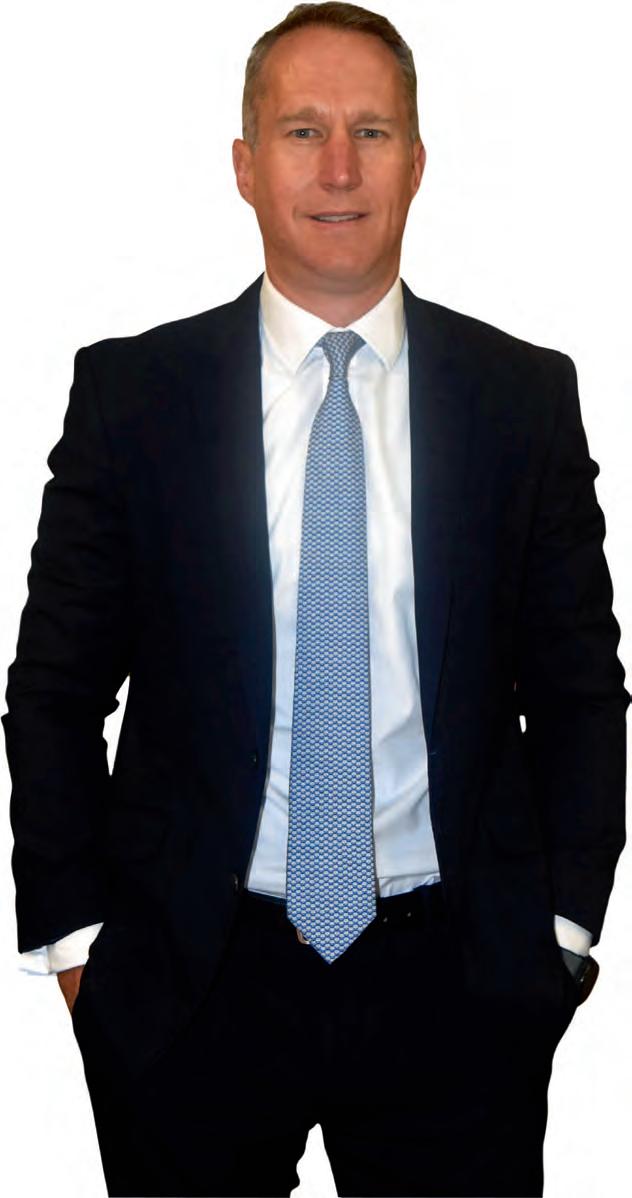
Still, there is much to be positive about. Matthew Rattray, CEO of this year’s winning firm, RMB Morgan Stanley, says there has been a shift in the landscape for SA within an emerging market context over the past two months (see table on page 10).
Russia’s invasion of Ukraine not only triggered widespread sanctions but also resulted in the country being kicked out of the MSCI emerging markets (EM) index, which resulted in SA’s weighting in the main EM benchmark climbing from just below 3% at the start of 2022 to
more than 4%. In its subindex, the MSCI EM Europe, Middle East & Africa index (EMEA), SA’s weighting jumped from 23% to 30%.
Rattray says China’s enhanced regulation of the largecap tech industry has driven a sharp derating of that sector.
“This has lowered China’s weighting in the main emerging markets benchmark to the benefit of other emerging markets, including SA, despite the drag for SA performance from the Naspers share price.”
Investors are also turning away from Turkey because of a self-inflicted wound. Those calling for unorthodox monetary policy in SA should take note: as inflation started climbing, President Recep Tayyip Erdogan insisted on embarking on a rate-cutting cycle from September last year, sending the inflation rate soaring to nearly 70% today. The SA Reserve Bank started its rate-hiking cycle in November, raising it from 3.5% to 4.75% today, and consumer inflation in April was unchanged at 5.9%.
But it’s not only because of the shrinking pool of emerging markets that investors are turning to SA. While the bull run in commodity prices is the
prime reason, there are other factors driving it. SA’s reforms may be happening agonisingly slowly, but they are being noticed by global investors. Even our sovereign credit ratings are showing signs of emerging from the depths of subinvestment grade, with S&P Global recently revising our outlook from stable to positive.
Not only the reforms are being noticed but also SA’s fiscal discipline. The ravages of the Covid crisis shrank the economy by 6.4% in 2020, according to Stats SA, and sent unemployment to about 35% today, resulting in increasingly urgent demands on the fiscus.
But SA has remained on a disciplined fiscal trajectory. In the February budget, finance minister Enoch Godongwana set the course for the debt ratio to stabilise at 75.1% of GDP by 2024/2025, three percentage points lower than projected when the medium-term budget policy statement was tabled last November.
Driven by higher tax revenue, primarily from mining companies, the consolidated budget deficit is now expected to narrow from 6% of GDP in 2022/2023 to 4.2% in 2024/2025 and the government expects to achieve a primary surplus where revenue exceeds noninterest expenditure by 2023/2024.
Marc Ter Mors, head of equity research at Standard Bank SBG Securities, says that over the long term emerging markets are looking more attractive than developed markets, with buoyant commodity prices one of the drivers. And SA is looking relatively more attractive within the EMEA region because of the issues with Russia and Turkey, in particular.
He points out that net inflows into SA equities have reached R30bn year to date. Excluding net flows out of dual-listed companies, that figure rises to R50bn, which represents the net investment in
Covid and the vaccination response brought the public and private sectors closer together Matthew Rattray
SA-orientated companies. The R30bn was mostly shared evenly between the financial and resources sectors with a small inflow of R2bn into industrials. “There were outflows in the tech sector in the context of the global derating of the sector.”
Ter Mors highlights another factor that has benefited SA’s investment case: “The global trend as interest rates rise is seeing investors rotating from growth to value stocks. SA’s financial sector, especially banks, were on low ratings and have benefited.”
SA, he says, is becoming more attractive to international investors as well as enjoying a higher weighting in the MSCI emerging market index.
Domestically, a notable
market trend is that retail investors have become more risk-averse, with US and European equity markets down 12%-14% year to date. Retail investors have been strongly engaged and bullish in the past few years, Ter Mors says. “After the market shocks, they’ve typically come back to the market before the market correction, ahead of institutional investors. However, they’re more cautious now.”
With the country experiencing a dark, cold winter with regular power cuts, frustration levels over the slow pace of the measures taken to address the energy crisis are high, but the big picture is still positive in that policies are in place and considerable progress has been made in the past few years.
Rattray describes Operation Vulindlela, a unit within the presidency that works with the National Treasury to overcome obstacles to reforms, as “a great initiative” which is starting to
Africa
Beverages & Tobacco Commodities
Construction, Building Materials & Machinery
Derivatives
Diversified Industrials
Economic Analysis (Domestic)
Economic Analysis (International)
Environmental, Social & Governance
Financial
Fixed-Interest
Food
General
General
Jibran Qureishi, Kuria Kamau, Ferishka Bharuth & team
Kato Mukuru, Ronak Gadhia, Luis Colaco, Moses Waireri Njuguna, Muammar Ismaily, Silha Rasugu and Oyinkansola Fagbulu
James Starke
Rey Wium
Thabang Thlaku, Tim Clark and Adrian Hammond
Irnest Kaplan
Rowan Goeller
Robyn MacLennan, Steffen Kriel and Latisha Nunan
Emlyn Flint, Florence Chikurunhe and Ndinae Masutha
Rowan Goeller
Elna Moolman
Mary Curtis, Andrea Masia and Ian Doyle
Waseem Thokan and Rob Worthington-Smith
Muneer Ahmed and James Twyman
Mike Keenan and Nikolaus Geromont
Sumil Seeraj
Brian Morgan
Warwick Bam and Sabena Omar
Tim Clark and Thabang Thlaku
Sean Holmes
Adrian Hammond
Alex Comer
Ian Doyle and Jamie Pegg
Sean Holmes and Vikhyat Sharma
Thabang Thlaku and Tim Clark
Mary Curtis, Andrea Masia and Christopher Nicholson
Warwick Bam
Rey Wium
Mary Curtis
Rey Wium
Kevin Ma ison and Warwick Bam
Gerhard Engelbrecht
Christopher Nicholson
Simon Freemantle
Mweisho Nene and Pranita Daya
Tim Clark, Thabang Thlaku and Adrian Hammond
Josiah Rudolph Emlyn Flint, Florence Chikurunhe and Ndinae Masutha
Neels Heyneke
Jonathan Kennedy-Good
show signs of gaining traction. He says that last month’s progress report on the reforms showed that of the 26 priority areas, eight have been completed, with 11 on track.
“What’s interesting is that Covid and the vaccination response brought the public and private sectors closer together and did a lot to reduce the trust deficit that existed. It feels like the president is trying to build on this and involve some of the private sector in assisting the task team and enable greater co-operation,” says Rattray.
“I know there has been a lot of frustration around delivery but we are now starting to see some of the short-term issues being addressed: auction of spectrum, launch of bid window 6 of the renewable energy independent power producer procurement programme, revamping the e-Visa system, and raising the licensing threshold for embedded generation.”
gas is located, has scuppered attempts to develop them.
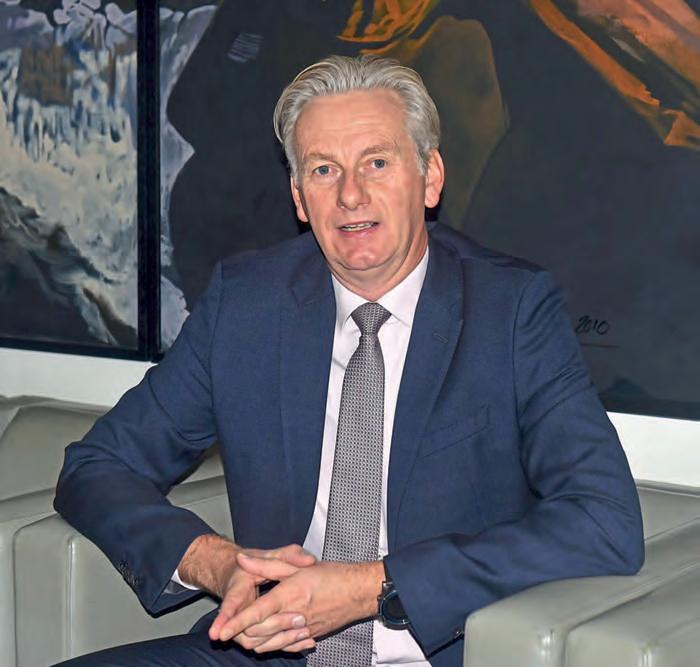
Ter Mors calls for a co-ordinated approach by Southern African countries to address energy supply deficits across the region. “What we need to strive towards is to enable regional trade in energy across Southern and Sub-Saharan Africa. In that context, the gas fields in Mozambique are an important element.”
Mozambique’s gas fields, first discovered in 2013, contain an estimated 125-trillion cubic feet of gas. An Islamist insurrection, however, particularly in the north where the
“Regional leaders need to make a concerted effort to stamp out the insurrection in Mozambique to allow those gas investments to go ahead to use gas for energy generation across Southern Africa. We can replace coal fires (high carbon emitters) with gas which is still a fossil fuel but we won’t be exporting it so we can replace our coal intensity. This is a big opportunity that should not go to waste.
”
Rattray sees more to come for the equities market, with emerging market investors under pressure to catch up with their benchmarks after being caught in underweight positions. “On average, our survey data shows that active emerging market investors started this year running in an underweight position in SA relative to the benchmark.
“Foreign flows into the SA equity market this year have been relatively strong [particularly into the big, liquid names] but closing out an underweight position when the benchmark for the market is gapping higher takes a concerted effort. Despite the inflows, we calculate that foreign investors are still light on exposure to SA.”
What’s important now is to use SA’s “flavour of the month” status to build investor confidence over the long term.
“We need to improve investor confidence in SA,” says Ter Mors, “particularly foreign direct investment people who put capital in for the long term. The most important issue is to get the structural reforms and infrastructure development right. The policies and plans are in place these need to be delivered urgently.
“There must be a strong focus on enabling systems of
the public sector such as energy supply, rails and ports, which need substantial investment.” Outside those, he lists other areas where there are initiatives, though progress is slow. “Another important element is to ease the cost of doing business. The performance and balance sheets of SOEs also need to be improved.”
Even the R1-trillion infrastructure programme is beginning to make progress, though not at a pace fast enough to trigger any of the hoped for short-term stimulus to economic activity. The National Infrastructure Plan was gazetted on March 11 2022.
In the executive summary the department of public works & infrastructure, charmingly oblivious to similar promises having been issued regularly since the 2010 Fifa World Cup, grandiosely states: “Infrastructure delivery will be one of the most significant contributors to SA’s transition from a historically closed minerals economy to one that is globally and regionally integrated, low carbon, inclusive and promoting of dynamism in the industries of the future.”
One thing the government does recognise is that it needs the private sector for this, and while public-private partnerships (PPPs) face extremely complex bureaucratic procedures for approval, Ter Mors says SBG has noted increased tender activity on PPPs. “This is important. With government debt levels so high, PPPs draw in the private sector to rebuild infrastructure.” One notable
PPP is the Beitbridge border upgrade project and there are other PPP opportunities still under tender related to public sector office management, other border posts and building clinics and schools.
“PPPs are often complicated to fund and to ensure they’re attractive enough for local and global capital because you’re competing for capital within the private sector.” They are no silver bullets, he says, but it will be more of a gradual opportunity and an important element of reforming SA.
Another bit of positive news is that the government underspending on infrastructure is starting to improve, having dropped to about 20% in March 2021 from the mid-20s in 2020. “This is not happening at municipal or provincial levels they still underspend,” says Ter Mors, “so it’s likely to be coming from the national government and SOEs, which implies they’re recovering their balance sheets. So these are early green shoots showing infrastructure spend is starting to recover.”
The bottom line, however, is that the structural weakness of Eskom makes it crucial to get more renewable energy onto the grid. “Allowing the private sector to build 100MW energy plants without a licence is critical to the structural reform that needs to take place.”
Rattray says the energy supply deficit will continue to inhibit growth and needs to be addressed. “I think the biggest challenge for the government will be to tackle the longerterm structural issues. For example, we haven’t seen much progress on the emergency procurement of 2,000MW of energy and raising the country’s energy availability factor to more than 70%.
“SA is a resource-rich country and if we can address some of these structural issues then it should unlock a number of key areas in the economy and, im-
portantly, create jobs.”
He says there is also a significant skills shortage and though in the long term we need to address this by developing skills locally, in the near term we need to create an environment or policies which make it easier to attract international skills into SA. “There is a multiplier effect on the economy and growth which will benefit from this, along with the skills transfer that will take place locally. This is difficult to address, particularly when SA has high unemployment levels, but it’s importance cannot be overlooked.
”
Though Rattray does not say it, reforms are also difficult to address in another area that he highlights as being important: “We do need to look at labour reforms and address them so that they are seen as an enabler to business, which is not the case currently.
”
Labour reform, however, struggles to even get onto the agenda at Nedlac where organised business, labour and civil society organisations negotiate with the government on important reforms. Given the strong alliance between the ANC and Cosatu, this is unlikely to change.
The country’s challenges are certainly formidable, but considering the economic shocks endured, including Covid lockdowns, the social unrest in July last year and the more recent flooding in KwaZulu-Natal, SA has shown its resilience.
Rattray says that when Covid hit in 2020, one of the key contrasts between corporate SA and the US and UK was the defensiveness of balance sheets. “SA companies tend to run much lower gearing levels than what you see in the US and UK, possibly because most executives in SA have lived through interest rates north of 20% so they tend to be more conservative.
“During the first year of the
pandemic, we saw an unprecedented amount of US and UK companies tapping the market through accelerated book builds and shoring up balance sheets through equity raises.
This enabled them to react quicker and remove any overhangs or market concerns regarding ongoing operations. I think we saw some of this in SA but on a much smaller scale. Investors had to react quickly over this time and attempt to establish what was cyclical vs structural and which business models would best survive the downturn.”
Rattray says the social unrest in 2021 highlighted a risk that previously hadn’t been fully factored into the SA market or business environment. “I think it had a material impact on business and investor confidence.
“In particular, it emphasised what some foreign investors have thought for a long time: that SA is no different to some of the other emerging markets that have poverty and inequality problems and where social unrest occurs more frequently. This obviously all contributes to a higher equity risk premium
Another threat to our economic prospects, global inflation, makes it even more urgent for SA to conclude its reforms
for the market.”
While the impact of the recent floods in KZN was devastating, “tragically causing a significant loss of life and displacing a large number of people” , they also highlighted the importance of town planning and infrastructure.
“I think logistically it had an impact on trade flows [particularly around the Durban port] but speaking to some of the mining execs, these disruptions appear to have been relatively short-lived.
“The key difference is that
the floods were a localised event that didn’t affect business confidence across the economy. Though the riots were somewhat localised, the effect was a lot broader because they could have happened anywhere. With a natural event, the ability to bounce back is more accelerated as long as infrastructure is repaired quickly. Confidence takes a lot longer to repair.”
Another threat to our economic prospects, fast-rising global inflation, makes it even more urgent for SA to conclude those reforms and get the infrastructure programme up and running. High inflation will have the most devastating effect on the unemployed and low-income earners.
“The debate around transient inflation is long forgotten and it’s hard to see what’s going to stand in the way of a strong dollar for the time being,” Rattray says. “The recent rand weakness is attributable to global central banks becoming more hawkish on inflation and the increased downside risks to global growth. We have seen a fully-fledged bear market in US Treasuries, the euro and emerging market local currency debt. This has exhausted investors and contributed to dramatically tighter financial conditions.
“From here, we think that slowing growth with downside risks coupled with peak inflation and sovereign supply, should help rates and currencies settle down in the second half of 2022. Even still, the dollar looks set to remain relatively firm, which could be a headwind for emerging markets, particularly those with large external funding needs.
“The good news is that with a meaningful current account surplus and improving fiscal position, SA remains relatively well placed to weather the storm.” x Colin Anthony is head of Intellidex media projects
Company brings equity best practice, deep experience and expertise, and an unparalleled technology platform
● It has won for six consecutive years, but Standard Bank SBG Securities’ dominance of the Ranking the Analysts survey has finally ended. RMB Morgan Stanley is the topranked research firm, with SBG in second place and JPMorgan third.
Believed to be the longestrunning survey of its kind in the world, the FM has been publishing the rankings of SA’s sellside analysts since 1977 and Intellidex has been conducting the research for them since 2014.
The awards recognise excellence in research, shining an important light onto the institutional stockbroking sector in SA. The buy side – largely asset managers and pension funds –rate individual research analysts in various sectors and categories.
The top analysts in each category are presented in the accompanying ranking tables along with two special awards designed to highlight excellence among SA’s young analysts and small black brokers. The latter face severe difficulties compared with their larger counterparts for two main reasons: lack of resources and accessibility to asset managers and pension funds, a factor that is hindering transformation in the sector.
Noah Capital is the Small Black Broker of the Year for the
third consecutive year (see page 15), while Absa CIB’s Samantha Naicker is the Young Analyst of the Year (page 12).
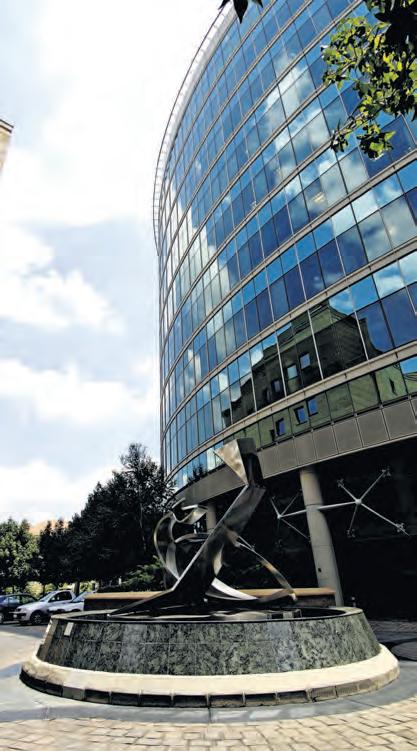
RMB, the investment banking arm of FirstRand, joined forces with the internationally powerful Morgan Stanley in 2006 and has been consistently highly rated in these awards that recognise excellence in SA’s sellside analysts.
CEO Matthew Rattray puts the key to success being down to the team “particularly in a competitive market where there has been a lot of attrition” .
He says Morgan Stanley has one of the largest equities businesses globally and brings equity best practice, deep experience and expertise along with an unparalleled technology platform. “RMB is obviously a dominant player in the SA market, with an incredible franchise across both the corporate and institutional markets.”
Rattray says joint ventures are often tricky and difficult to manage “and we’ve had a few examples of ones in the local market that haven’t succeeded. We have been privileged to have supportive shareholders who both bring a lot to the relationship.”
The attrition he refers to has been accelerating in recent years with a bunch of international investment banks closing or cutting back on their SA operations, but Rattray says both shareholders remain committed to the joint venture and see a significant amount of value in the partnership and what it has created.
Arqaam Capital and Credit Suisse have left SA while Renaissance Capital, Deutsche
Bank, Citigroup and UBS have downsized in SA. Though this obviously benefits the remaining players, it has also reduced analyst coverage of listed companies, a problem worsened by the EU introducing Mifid 2 regulations in 2018 that require institutional stockbrokers to cease bundling their research and execution costs and invoice separately for them. The unintended consequences were that asset managers started using fewer research firms while many launched inhouse research teams, which saw consolidation in the sector with smaller brokers being squeezed out and leading to a shrinking commission pool. These factors, along with others, have seen coverage dropping dramatically over the past few years. According to market data and infrastructure supplier Refinitiv, the top 80 companies on the JSE (by market cap) had a 26% reduction in research coverage by analysts over the three years to June 2021.
Rattray says it’s important to note that the decisions by the international groups to cut back or leave were largely driven by global strategic initiatives on emerging markets or

equities as an asset class rather than because of idiosyncratic SA-specific reasons. Existing players had also reduced the breadth of their coverage, driven by pressure on commission rates.
“Business owners are having to make decisions balancing investors’ needs and requirements for research coverage with the ability to monetise that research either through a direct unbundled payment allocation or client trading flow. Investors are also building larger in-house research teams so, at face value, the implications don’t seem as
The reduced sellside coverage is driving the trend of corporatecommissioned research
significant. But they can miss a lot of feedback on market flows and positioning along with where consensus sits. These things can often drive material share price performance.”
Another shift in the industry, he says, relates to the largescale technology investment required to remain relevant to clients, particularly with regard to automation. “You can see it in how concentrated market share has become in the dom-
inant players, not only on the JSE but also in key developed markets. Some of the brokers that exited weren’t able to scale up their operations and with constant pressure on commission rates, the business can become very marginal, particularly in a competitive market like SA.”
The reduced sellside coverage is driving the trend of corporate-commissioned research – already big in Europe – where small and mid-cap companies that are not covered by the sell side pay for research to generate consensus earnings forecasts, without which they largely get ignored by asset managers.
Standard Bank SBG Securities head of equity research Marc Ter Mors says demand for this is rising in SA because many small and mid-caps “are substantially undervalued in SA” and have underperformed large caps for about 15 years.
“Historically, they usually outperform over 25-30 years and many are recovering from Covid and are eager to get their investment case to investors. They are therefore willing to pay for research on their companies. The demand for corporate-commissioned research is high and a number of brokers are addressing that demand.” x
The annual survey, collected and analysed by the Intellidex team, is conducted through a confidential online questionnaire process
● The structure of the survey is developed by the FM in conjunction with research house Intellidex. The survey is conducted through an online questionnaire process. The Intellidex team collects and analyses the results to determine the rankings and ratings.
The survey’s intention is to capture each institution’s house view of the brokerage services it obtains, rather than the views of its individual fund managers. But the online questionnaire makes it possible for multiple individuals at an institution to complete different sections. This allows for specialists to contribute insights in their relevant sectors.
Before compiling the ques-
tionnaire, Intellidex asked all institutional brokers to submit a list of their analysts and the sectors they had covered in the past year. This year 27 firms submitted lists. Those names and sectors were then placed into lists on the online questionnaire.
In the case of firms that did not submit nominee analysts, institutional investors can insert the names of analysts into the questionnaires and the resulting rankings in this survey reflect the firms’ performance on that basis.
Questionnaires were completed by 27 institutional respondents. Respondents included asset managers, life insurance companies, some
wealth managers and hedge funds. We attempted to include all the largest fund managers by assets.
For each research sector, respondents were asked to rank the five best firms and separately, the five best analysts, using the following criteria: quality of written fundamental research in terms of content and value; accuracy of forecasts and buy/sell recommendations; useful ideas; effective communication, both written and verbal; and consistency over the past 12 months.
Points are awarded to each analyst according to the rankings, ranging from five points for first place to one point for fifth. The analysts’ rankings are derived from the votes specifically for individuals, while the firms’ rankings are from votes specifically for firms. Votes for individual analysts are not transferred to the firms.
In the sections covering institutional sales teams, corporate access and dealing and back-office administration, the respondents were asked to nominate and rank the firms they considered to be the best 10. There are no rankings for individual traders or sales specialists.
Results were weighted in the first instance by brokerage paid to the sell side. We also included weightings by domestic assets and unweighted results. This ensures the survey correctly reflects achievement in the industry, according to its own business objectives.
The brokerage weightings were determined from two sources. We asked brokers to place their clients into different brokerage “buckets”. We also asked the institutions to tell us how much they paid in brokerage broken down into equity, fixed interest and derivatives or other.
On both the sell and buy sides, some firms would not disclose this information. On the buy side, the 24 that did (15 last year) spent a total of R432m (last year R363m) but these are not comparable. On a likefor-like basis of the 10 firms that provided data in both periods, commissions paid decreased 6.7% from last year. On a weighted basis, about 33% of the commission was spent on execution and 67% on research.
Figures for each broker were added to get an indication of the total paid by each institution. This was compared to the institutions’ disclosure, where we had it. Where we had no information, assets under management (AUM) and our own market insights, largely drawn from previous studies, were applied to give a subjective weighting. All institutional respondents
were categorised into 10 bands, which were used to weight their responses. A similar process was used for the AUM weightings.
All the tables on sectors, equity dealing, sales teams, corporate access and administration tables are presented without further amendment. However, in the case of the derivatives and fixed-interest se-
curities dealing tables, an additional weighting was applied to firms that indicated they make extensive use of derivatives and fixed interest research and trading. The AUM and brokerage weightings were adjusted to give greater weight to those firms that indicated that derivatives and fixed-interest trading was a greater priority for them. This attempts to cater for
the distortion that arises from the fact that most brokerages and assets are connected to equity instruments.
In the case of the overall rankings for research, an additional layer of weightings was applied. Equity sectors were weighted according to their market capitalisation as at December 31 2021, using the Swix capped index constituent
weightings. The rankings with this weighting applied are presented in the column, “Equity sectors weighted by market cap” .
Nonequity sectors, such as quantitative analysis and risk management, were weighted according to the institutions’ feedback on how important these sectors were to them. Investment strategy and both
Adrian Hammond
Arnold van Graan
Jared Hoover
Jeffrey
Herbert Kharivhe
Rene Hochreiter
Wade Napier
Rene Hochreiter
global and domestic economics carried the largest weightings of the nonequity sectors. We then gave the equity sectors a 70% total weight and the nonequity sectors a 30% total weight to determine the results presented in the “all sectors weighted” column.
For the Small Black Broker Award, the rankings are determined by the same method used for determining the overall rankings for the research
award (mentioned above) to qualifying brokers. To qualify firms must be more than 50% black-owned, have at least a level 2 BEE ranking, and topline revenue should be less than R100m. Nine brokers qualified for the small black broker award, commanding a combined 3.6% of total votes.
The following 34 buyside companies voted in this year’s rankings: Absa Asset Management; Aeon Investment Man-
agement; Allweather Capital; Aluwani Capital; Argon Asset Management; Ashburton Investments; Benguela Global Fund Managers; Blue Alpha Asset Managers; Citadel Asset Management; Clucas Gray; Coronation Asset Management; Foord Asset Management; Gryphon Asset Management; Harvard House; Investec Asset Management; Kagiso Asset Management; Laurium Capital; Matrix Fund Managers;
Meago Asset Management; Melville Douglas Investment Management; Mergence Investment Managers; Momentum Investments; Nitrogen Fund Managers; Northstar Asset Management; Peregrine Capital; Prudential Portfolio Managers; PSG Wealth; Public Investment Corp; Sasfin Asset Managers; Sasol Pension Fund; Sesfikile Capital; Steyn Capital Management; Stanlib Asset Management; Visio Capital. x
Judges describe her research on Tiger Brands as extensive and thorough
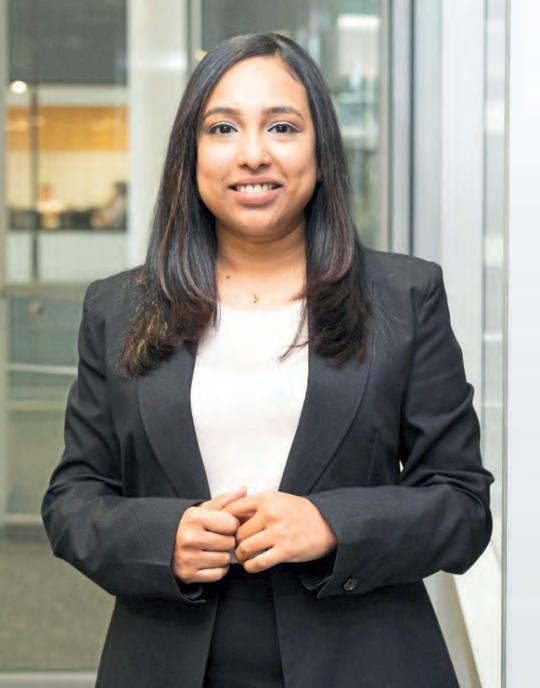
● Samantha Naicker from Absa CIB wins the 2022 Young Analyst of the Year award with her paper on Tiger Brands.
Judges who are CFA charterholders take a lot of time and care to review the papers on an anonymous basis and to provide comprehensive feedback in terms of what was good in the papers and where there were areas that could be improved.
Judges described Naicker’s research on Tiger Brands as being extensive and thorough as the reason for their recommendation. While the research provided good detail overall, its discussion of operational performance of other segments of the company that could support or challenge the overall thesis was limited.
Ya’eesh Patel from Standard Bank SBG Securities ranks second with his paper on Ten-
cent, described as “a very detailed report, covering all aspects of the company”. Its explanation of past attempts to narrow the Naspers-Tencent discount was described as excellent, while a weakness was some repetition, leading to a lengthy report.
Renaissance Capital’s Chibundu Emeka-Onyenacho produced an insightful paper on Fan Milk Ghana “that showed thoroughness in research”, though the upside thesis was limited.
Introduced in 2016, the Young Analyst award recognises excellence among researchers who are still building their careers in this competitive industry. Previous winners have noted that the award has helped them to advance their careers.
The CFA Society SA judging panel: Aadil Omar; Audrey Mashoko; George Ndindi; Hugh Hacking; Lungile Luvuno; Nadeem Hoosen; Oshiro Sebogiso; Ruan Koch. Convener: Jennifer Henry x
Thabang Thlaku and Tim Clark
Brian Morgan
Nkateko Mathonsi & Peter Richardson
Edward Morse, Ephrem Ravi & team
Rene Hochreiter
Wade Napier
Natasha Kaneva & team
Myles Allsop & Steven Friedman
Arnold van Graan
Dominic O’Kane
Award acknowledges struggles faced by young up-and-coming brokers
● Noah Capital wins the Small Black Broker award for the third consecutive year with a commanding lead over Prescient Securities in second place and Primaresearch third.
This award was introduced in 2020 to recognise excellence in this space, as well as to acknowledge the struggles that small black brokerages endure as a direct result of the structure of the market.
There are two distinct pools of institutional stockbrokers: the large established firms make up the first league, with the second league consisting of young up-and-coming brokers.
Firms in the second league face severe obstacles compared with their larger coun-
terparts for two main reasons: lack of resources and accessibility to asset managers and pension funds.
Hopefully, the recognition gained from this award will help address some of these issues and facilitate the firms’ “graduation” to the first league.
The rankings for this award were determined by the same method used to determine the overall firm rankings for research. To qualify, firms must be more than 50% black-
owned, have at least a level 2 BEE ranking, and their top line revenue should be less than R100m.
Nine brokers qualified for the Small Black Broker award and commanded a combined 6.3% of total votes. Only firms that participated in this year’s survey were considered for the award. x
Vikhyat
Samantha
Anthony
Anthony
Nick
Muneer
Todd Juenger
John Kim & Alex Yao
Jonathan Kennedy-Good Ya’eesh Patel & Nadim
Jibran Qureishi, Kuria Kamau, Ferishka Bharuth & team
Mohamed Abu Basha & Simon Kitchen
Yvonne Mhango
Ridle Markus & Sam Singh
Andrea Masia
Danelee Masia
David Aserkoff
Kato Mukuru, Ronak Gadhia, Luis Colaco, Moses Waireri Njuguna, Muammar Ismaily, Silha Rasugu & Oyinkansola Fagbulu
Adesoji Solanke, Dayo Ayeni (resigned in November 2021) & Oluwatoyosi Oni
Muyiwa Oni , Patrick Mumu & Tunde Ogunleye (Financials)
Timothy Wambu, Linet Muriungi & Adedayo Ayeni
Tracy Kivunyu & Nadim Mohamed (Telcos)
Fola Abimbola, Ayodeji Dawodu & Yinka Adesanya (Consumer)
Ian Doyle, Jamie Pegg & Christopher Nicholson
Thabang Thlaku, Tim Clark & Adrian Hammond
Marius van Straaten, Christopher Nicholson & Brian Morgan
Nkateko Mathonsi, Peter Richardson & others
Arnold van Graan
Edward Morse, Ephrem Ravi & team
Gerhard Engelbrecht
Wade Napier
Jeffrey Christian (CPM Group)
Mary Curtis, Andrea Masia & Christopher Nicholson
Atiyyah Vawda
Neels Heyneke, Walter de Wet, Reezwana Sumad, Jones Gondo & Nthulleng Mphahlele
Elna Moolman & Simon Freemantle
Peter Worthington, Miyelani Maluleke, Mike Keenan, Neil Venter, Khaya Mthembu, Brent Madel, Gerhard Engelbrecht, Sam Naicker, Anuja Joshi & Mahir Hamdulay
Rupert Wilson
Tim Clark, Thabang Thlaku & Adrian Hammond
Rene Hochreiter
Rowan Goeller
Elna Moolman
Andrea Masia
Peter Worthington, Miyelani Maluleke, Sello Sekele & Andiswa Mdingi
Sonja Keller
Reezwana Sumad & Walter de Wet Azar Jammine (Econometrix)
David Faulkner
Mary Curtis, Andrea Masia, & Ian Doyle
Steven Barrow & Jeremy Stevens
Jim Reid
Charles Robertson
Gyorgy Kovacs
Sonja Keller
Jeff Schultz & BNP Paribas Markets 360 team
Peter Worthington, Miyelani Maluleke, Mike Keenan & Nikolaus Geromont
John Morris & team
Bruce Kasman & team
David Aserkoff & team
Simon Freemantle
Stephen Friedman
Peter Worthington & Miyelani Maluleke
Nic Borain & Jeff Schultz
Aubrey Matshiqi
Andrea Masia, Mary Curtis & Ian Doyle
Josiah Rudolph
Emlyn Flint, Florence Chikurunhe & Ndinae Masutha
Warrick Erlank, Mark Sarembock & Petrus Bosman
Navigare Labs
Deanne Gordon & Adele Fermoyle
Jacques Pretorius
Mary Curtis, Mike Wilson & Boris Lerner
Waseem Thokan & Rob Worthington-Smith
Warwick Bam & team
Jessica Alsford, Mary Curtis & Chris Nicholson
Dominique Laroque, Syd Vianello, Pheza Figlan & Jaquieline Monama
Lucy Acton, Ashim Paun & Dylan Whitfield
Penny Byrne & Simon Freemantle
Marc Ter Mors & Mark Hodgson
Robyn MacLennan, Steffen Kriel & Latisha Nunan
Kate Rushton
Sivenathi Marwarwa & Nicolus Khampepe
Warrick Erlank & Petrus Bosman
James Gondo & Nthulleng Mphahlele
Andrea Masia, Mary Curtis & James Lord
Emlyn Flint, Florence Chikurunhe & Ndinae Masutha
Petrus Bosman, Shivaan Gurayah, Kristof Kruger & Mark Sarembock
Paul Marais & Fred Axon
Constellation Capital Team
Mthokozisi Mvubu & Taryn Geyser
Hennie Snyman, Renita Nair & Nick Petzer
Ved Somera
Mike Keenan & Nikolaus Geromont
Walter de Wet, Reezwana Sumad & Neels Heyneke
Elna Moolman
Kim Silberman and Varushka Singh
Andrea Masia, Mary Curtis & James Lord
Warrick Erlank & Petrus Bosman
Jeff Schultz
David Faulkner