




























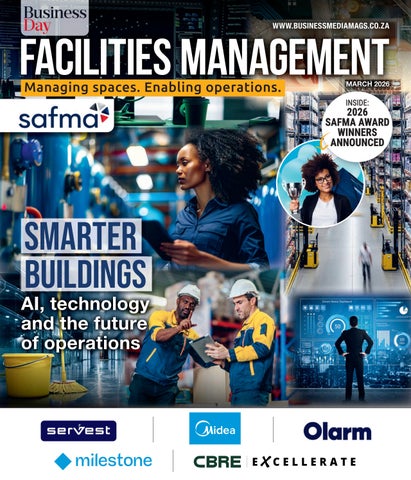







Managing spaces. Enabling operations.




























































AI, technology and the future of operations

























































4
Managing spaces. Enabling operations.
PUBLISHED BY
Picasso Headline, A proud division of Arena Holdings (Pty) Ltd, Hill on Empire, 16 Empire Road (cnr Hillside Road), Parktown, Johannesburg, 2193, PO Box 12500, Mill Street, Cape Town, 8010 www.businessmediamags.co.za
EDITORIAL
Editor: Tersia Booyzen
Content Manager: Raina Julies, rainaj@picasso.co.za
Contributors: Johan Burger, Manan Goenka, Itumeleng Mogaki, Brendon Petersen, Anthony Sharpe
Copy Editor: Brenda Bryden
Content Co-ordinator: Natasha Maneveldt
DESIGN
Head of Design: Jayne Macé-Ferguson
Senior Designer: Mfundo Archie Ndzo
Cover Images: Cladanifer/123rf.com, oak22studio/123rf.com, appolegi/123rf.com, thesohailmart/123rf.com, peshkova/123rf.com, pitinan/123rf.com, dragoscondrea/123rf.com, Supplied
SALES
Project Manager: Jerome van der Merwe jeromem@picasso.co.za | +27 21 469 2485 | +27 820 668 1496
Sales: Frank Simons
PRODUCTION
Production Editor: Shamiela Brenner
Advertising Co-ordinator: Shamiela Brenner
Subscriptions and Distribution: Fatima Dramat, fatimad@picasso.co.za
Online Editor: Stacey Visser, vissers@businessmediamags.co.za
Printer: CTP Printers, Cape Town
MANAGEMENT
Management Accountant: Deidre Musha
Business Manager: Lodewyk van der Walt
General Manager, Magazines: Jocelyne Bayer
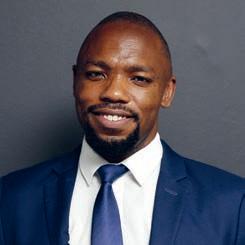
SAFMA celebrates facilities management professionals advancing excellence, growth and recognition while shaping South Africa’s built environment. By BATABILE SIBACA , president of the South African Facilities Management Association
In 2026, we stand at a transformative moment in the life of the South African Facilities Management Association (SAFMA). This is a moment de ned by purpose, vision and belief in the extraordinary people who make up our industry. I write from the heart to honour your work, af rm our shared journey and highlight the progress ahead.
Facilities management (FM) is more than an enabling profession. It is the quiet force that keeps our world moving, ensuring safety, dignity, productivity and care for every person who uses the spaces we manage. It is carried out by individuals with resilience, creativity and a deep sense of responsibility.
SAFMA’s vision remains clear: a professional, respected and advancing FM industry that drives excellence across the built environment. Our mission – to motivate, mould and inspire all FM stakeholders – continues to guide our work. Leadership takes centre stage this year. SAFMA is strengthening governance and preparing to announce a capable board at the 2026 Annual Conference – leaders who are ready to act with integrity, clarity and heart. We have also expanded our leadership with expert portfolios in sustainability, technology, education and governance, ensuring SAFMA re ects the full scope of the FM ecosystem and can respond to emerging challenges with agility.
Yet leadership alone is not enough. Professional excellence drives our progress. SAFMA’s designation framework, from Certi ed Facilities Practitioner (NQF 4) to Accredited Facilities Professional (NQF 7), recognises skills, af rms credibility and elevates the stature of FM professionals nationwide. Clients, employers and government can trust the capability and accountability of those who hold these titles.
Professionalisation also advances our journey to become a recognised Council under the Council for the Built Environment – a milestone over two decades in the making. This will enable SAFMA to legislate, regulate and formally govern the profession, strengthen our voice in national policy and secure FM the recognition it deserves.
Growth remains central. In 2026, we are expanding provincial chapters while deepening the value of SAFMA membership. Our industry thrives when every voice is heard and every region empowered. We also recognise the vital role of small, medium and micro enterprises (SMMEs) in driving innovation, inclusion and service excellence, and we are committed to creating pathways for their participation and visibility.
COPYRIGHT:
To every FM professional – whether you manage a hospital, maintain a school, oversee a portfolio, run an SMME, or serve in the public sector – your work matters. It matters to the people who rely on the spaces you keep safe, to organisations that depend on your insight, to our nation, and to SAFMA.
As we embrace the year ahead, let us continue to build together – with purpose, professionalism and heart. Together, we shape environments where people thrive, elevate our profession and write the next chapter of South Africa’s FM story.
Outsourcing in South Africa is transforming facilities management from operational support into a strategic, technology-driven function.
By MANAN GOENKA , engagement manager at Ken Research
In 2020, facilities management (FM) in South Africa was largely invisible. Most organisations relied on internal teams, outsourcing only select services such as cleaning or security. Outsourcing penetration was roughly 45 per cent, mostly as single-service agreements, with only 19 per cent of organisations using integrated facilities management (IFM), where a single partner manages the full facility ecosystem. This approach worked while costs were manageable, infrastructure predictable, and facilities management was viewed as an operational necessity rather than a strategic function.
However, over the past decade, electricity tariffs rose nearly 190 per cent, and load shedding exposed infrastructure fragility. Facilities became operational risks, with power continuity, equipment reliability and energy ef ciency moving from the FM department to the boardroom. Most internal teams, however, lacked digital tools, predictive systems and centralised monitoring platforms to optimise energy usage or prevent failures.
Outsourcing began to evolve structurally and technologically. Organisations recognised the value of predictive maintenance over reactive repairs, with integrated providers deploying digital FM platforms, internet of things (IoT) sensors and real-time monitoring to track asset performance and identify early warning signals. Benchmarks show predictive maintenance models can reduce maintenance costs by 18–40 per cent, cut downtime by 30–50 per cent and extend asset life by 20–40 per cent.
By 2025, outsourcing penetration had increased signi cantly, reaching approximately 63 per cent of FM services. More important than the overall growth was the shift in structure. Single FM dropped from 52 per cent in 2020 to 31 per cent, bundled FM grew from 29 to 35 per cent, and IFM rose from 19 to 34 per cent, representing the most meaningful
structural change. This transition re ected a growing recognition: managing multiple stand-alone vendors led to operational inef ciencies, slower response times, unclear accountability and fragmented oversight of facility performance.
Integrated FM offered something fundamentally different. By consolidating responsibility under a single provider, organisations gained co-ordinated maintenance planning, centralised data systems, predictive asset management and structured energy optimisation strategies.

rank highest in strategic impact and automation potential, re ecting the importance of predictive maintenance, building management systems and IoT monitoring platforms. Energy and sustainability management score strongly across cost reduction and ef ciency improvement, underscoring how rising electricity costs are accelerating investment in optimisation technologies.
Workplace and space utilisation management demonstrates particularly high-ef ciency gains, driven by hybrid work models and data-driven occupancy planning. In contrast, traditional soft services, such as cleaning and basic support, show lower automation potential.
Outsourcing became about acquiring capability, transferring operational risk and strengthening resilience. Smart building technologies accelerated this transition. Digital platforms now monitor occupancy patterns, indoor climate conditions, equipment ef ciency and energy consumption in real-time. Energy optimisation, emissions reduction and resource ef ciency have become strategic priorities as organisations align with environmental, social and governance (ESG) objectives and regulatory expectations. In a market facing rising utility costs and power instability, energy management is increasingly viewed as a nancial strategy rather than solely an environmental initiative.
The high-impact areas for digital and outsourced facilities management illustrate where value is being created. Asset maintenance and integrated building operations
Looking ahead, this transformation is expected to accelerate further. Outsourcing penetration is projected to reach approximately 70 per cent, with IFM becoming the dominant delivery model. IFM is expected to account for around 51 per cent of outsourced contracts, while bundled FM will stabilise near 29 per cent. Single-service outsourcing is projected to decline to just 20 per cent.
FM is being recognised as a strategic lever for operational ef ciency, cost optimisation, infrastructure resilience and ESG performance. Predictive maintenance, digital infrastructure management and integrated service delivery are reshaping how buildings are operated and maintained.
Facilities are no longer just spaces where work happens. They are complex, energy-intensive systems that require continuous monitoring, data-driven optimisation and co-ordinated expertise. Increasingly, organisations are turning to integrated outsourced partners not just to manage facilities, but also to future-proof them.




South Africa’s facilities management sector faces data, skills and technology gaps, demanding integrated digital strategies and innovation, writes JOHAN BURGER , vice president of SAFMA and director of SAFMA: consultant in private practice
In early 2026, the facilities management (FM) industry in South Africa faces a complex set of challenges. Key pressures include:
• Severe budget constraints.
• Ageing infrastructure.
• High workload pressure.
• Load shedding.
• Utility failures.
• Limited technology adoption, alongside rapid adoption of hybrid work models.
• Technology lag and data issues.
There is widespread dissatisfaction with existing technology systems. Common contributing factors include:
• Poor data quality and integration.
• Poor data hindering the adoption of AI (arti cial intelligence) -driven solutions within organisations.
• A severe skills shortage, leading to a scarcity of skilled personnel in FM, particularly in data management.
According to a recent article by Andrew Mason of Workplace Fundi, several factors
may affect the effective introduction and adoption of AI in companies, including:
• Maintenance planning challenges.
• Asset management limitations.
• Service delivery constraints.
The same article notes that AI thrives on data that is:
• Accurate – the old adage “garbage in, garbage out” remains relevant.
• Real-time – outdated data limits usefulness.
• Comprehensive – enabling analysis to support smarter decision-making.
A further requirement is access to usable, deliverable data. The article highlights that many companies still rely on manual record-keeping, including Excel spreadsheets, checklists, data sheets and test records.
This outdated practice leads to:
• Inconsistent reporting.
• Fragmented technical systems.
• Poor or outdated data quality, such as inaccurate as-built drawings showing shut-off valves.
This situation creates a compounding effect, making it extremely dif cult for AI to generate meaningful insights and reports.
Further research included the PwC CEO Survey (March 2025), Transforming Facilities Management in Sub-Saharan Africa – Key Insights. The report highlights that the workplace landscape in sub-Saharan Africa is undergoing rapid transformation, driven by:
• Technological advancement.
• Sustainability imperatives.
• Evolving business models.
The report identi es facilities and workplace management as a critical enabler of workplace productivity, sustainability and innovation, including hybrid work models. Opportunities include:
•Optimising hybrid work models while reducing operating costs.
• Meeting environmental, social and governance (ESG) targets.
Key ndings from the report include:
•72 per cent of CEOs plan to adopt AI within the next 12 months.
•32 per cent report growth from sustainability investments.
•44 per cent are reinventing their business models.
There is a strong inclination to introduce predictive maintenance using AI-powered sensors. This underscores the need for accurate, reliable, real-time data to:
•Monitor HVAC (heating, ventilation and air conditioning) systems.
• Monitor lighting.
• Track water usage.
• Reduce downtime and maintenance costs.
Another article, “How Should C-Suite Executives Maintain Their Real Estate”, reveals that the South African market is shifting towards technology-driven solutions, including:
•Increased adoption of smart building technology.
• Internet of Things (IoT).
• Data analytics.
• Integration with BMS (building management systems) and IoT devices.
Key factors contributing to technology lag include:
• Financial constraints limiting procurement and upgrades of modern software and digital technologies.
•Skills shortages, including limited expertise in Industry 4.0 technologies and low digital literacy among some staff.
• Infrastructure de ciencies, including unreliable power connectivity, which negatively affects smart system adoption.
•Cultural resistance to change, with some organisations preferring traditional methods.
• System incompatibility when integrating advanced technologies with legacy systems.
Research also revealed key factors affecting data quality and management:
•Poor management of built drawings, commissioning and testing data, leading to fragmented information across departments.
• Lack of strategic direction in data governance.
•Security challenges, including risks of data breaches, corruption and loss, highlighting the need for cybersecurity measures.
Research for this article also referenced Advancing Facilities Management with a Digital Thread (30 Nov. 2025), a white paper by the International Facilities Management Association. The paper notes that the FM industry is addressing signi cant technology lag caused by reliance on legacy systems, skills gaps and critical data de ciencies. Further reports emphasise that, to move towards AI-powered digital work ows, the industry must overcome high adoption costs and poor data interoperability. There remains limited digital adoption despite the availability and affordability of solutions such as:
• BIM (building information modelling).
• GIS (geographic information systems).
• IoT
• AI.
• VR/AR (virtual reality and augmented reality).
• Cloud computing.
In many cases, FM still relies on fragmented traditional methods across design, construction and operations, highlighting the need for a digital strategy supported by a digital execution guide. Digitalisation of the built environment is no longer a future trend, but a present-day imperative.
Another challenge is data interoperability and the integration of new systems with existing software and hardware to maintain reliable, accurate and accessible data.
As noted earlier, a digital execution plan and guide are essential. Digital technologies
must be viewed as key enablers and critical success factors for data utilisation within IWMS (integrated workplace management systems) or CMMS (computerised maintenance management systems). These systems require standardised datasets and governance.
Introducing digital execution practices enables:
• Optimised energy usage.
• Enhanced occupant comfort.
• Strengthened maintenance processes. Digital systems must deliver tangible bene ts.
One recommendation is to invest in middleware solutions, such as building operating systems, using independent data layers for integration, normalisation, translation and secure data exchange. IDL (independent data layers) or BOS (building operating systems) can improve data integrity, quality and security.
Ideally, systems should collect and update data automatically without manual intervention using IoT, BAS (building automation system) and integrated platforms such as IWMS. These solutions help automate FM and operations and maintenance processes.
Further opportunities exist in using data platforms that integrate sensors, databases and external feeds, enabling automatic retrieval of relevant information.
It is essential to maintain the security and functionality of systems, such as access control and emergency management, through robust cybersecurity measures.
A strong case can be made for addressing one of the most pressing FM challenges: technology lag and data issues. By implementing the strategies outlined in this article, organisations can ensure accurate, reliable, real-time data is readily available to facility managers, enabling better decision-making and improved operational performance.
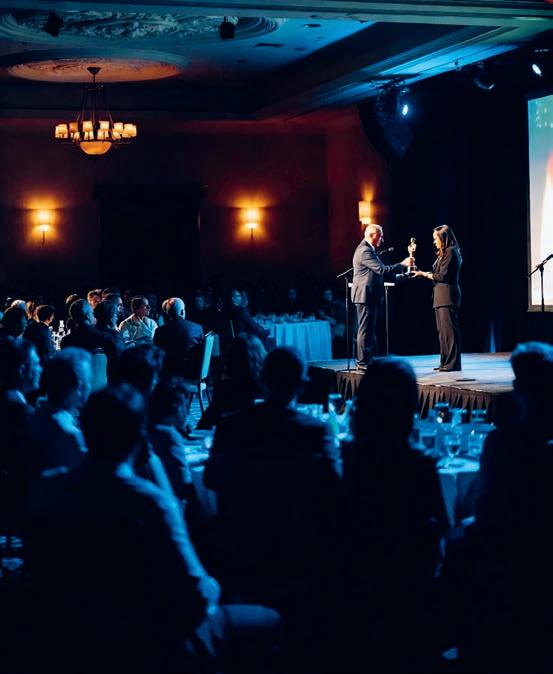
The SAFMA Awards celebrate innovation, leadership and impact across a diverse range of categories, shining a spotlight on those who are raising the bar, shaping the future and making a meaningful difference in the built environment
1. YOUNG ACHIEVER OF THE YEAR
This award recognises an exceptional facilities manager aged 35 or under who has demonstrated outstanding professionalism, innovation and commitment to the facilities management industry. The award aims to recognise individuals who, despite it being early in their careers, have already made a measurable impact through successful projects, innovative solutions, leadership or contributions to industry knowledge.
2. INNOVATION IN FACILITIES MANAGEMENT
Awarded to an individual, team or organisation that has developed and implemented an innovative idea, process, service or technology with measurable impact on facilities management practice. The innovation may address operational ef ciency, sustainability, cost management, user experience or digital transformation.
3. BEST FACILITIES MANAGEMENT SERVICE PROVIDER
Honours an outsourced service provider, such as cleaning, maintenance, security, catering, landscaping, waste management or other facilities management services, that has consistently demonstrated exceptional service quality, innovation, and client satisfaction. This award acknowledges providers that deliver not only excellent operational outcomes, but also proactive solutions, value and strong client partnerships.
4. COMMUNITY IMPACT AWARD
Recognises a project, initiative or organisation where facilities management has directly contributed to positive change in communities beyond daily operations. This could include social development, community infrastructure,
sustainability efforts or skills development programmes. The award honours facilities management professionals and organisations who use their expertise to uplift society and create lasting impact.




Highlights an outstanding initiative, campaign or programme designed to enhance health, safety and wellness in facilities. The award celebrates organisations or individuals that have gone beyond compliance to proactively protect and improve the wellbeing of staff, occupants and visitors.
6.
Awarded to a senior facilities management professional who has demonstrated outstanding leadership, strategic vision and signi cant contributions to the facilities management industry. This individual inspires teams, drives organisational success, mentors emerging talent and champions the advancement of the profession.
7.
Spotlights a woman in the facilities management sector who is leading change, breaking barriers and actively contributing to gender equality and professional advancement in facilities management. This award recognises women who serve as role models, inspire others and drive innovation and excellence in the industry.
This award recognises an individual, team or organisation demonstrating exceptional leadership in advancing environmental sustainability within the facilities management



sector. It honours those championing green building practices, energy ef ciency, waste reduction and responsible operations; driving measurable impact and setting a benchmark for sustainable facilities management.
9. UP-AND-COMING SME OF THE YEAR
This award celebrates a small or medium enterprise (SME) making a remarkable impact within the facilities management sector, whether as a direct service provider or a supplier supporting the industry. It recognises emerging businesses that demonstrate strong growth potential, innovation and a commitment to quality and professionalism in their operations.
This year, the awards are aligning with the Global Facilities Management framework by introducing a tiered recognition system in place of the traditional 1st, 2nd, and 3rd place awards. Entries are now scored out of 50, with awards granted based on the score achieved:
• Platinum (45+)
• Gold (40–44.9)
• Silver (35–39.9)
• Bronze (30–34.9)
Please note: awards are not limited to a xed number per category; multiple entries may receive the same tier, or none if the minimum score is not met. Submissions scoring below 30 will not receive an award.







































digital technologies, such as automated sensors, have enabled ongoing monitoring, analysis and optimisation of a building’s systems throughout its operational life.

There’s been a lot of talk about green buildings in recent times, but this terminology can make it seem like the process stops once construction has been completed. In reality, this process continues throughout the lifespan of the building or infrastructure in the form of an integrated approach to managing power, water, waste, regulatory compliance, occupant health and ultimately cost.
Zadok Olinga , director of ÖLINGA, says that while facilities managers may not necessarily have the expertise to design and implement resource-saving interventions, they are on the frontline of maintaining these. “They’re pivotal to picking up inef ciencies in the system, along with building usability and customer comfort.”

This is the essence of sustainable facilities management, which is vital to the environmental performance of a green building, says Lisa Reynolds, CEO of the Green Building Council South Africa. “Without effective facilities management, the sustainability intentions of the building will not be achieved. A certi ed green building with an ef cient and sustainable design is a needed starting block, but it is expert and engaged facilities management that enables the building to live up to its green potential. No matter how sustainable the design and how ef cient the construction, if a building is not run with an intentional mandate towards ef ciency, you will not have an optimally ef cient building.”

Olinga adds that in the wake of the COVID-19 pandemic, the spotlight has been shone on the role of facilities managers because many companies have downsized, driving competition among owners of commercial buildings. “Therefore, the available space and the service provided have to be of a higher standard.”
Sustainability as an ongoing process is re ected in the practice of ongoing commissioning. While traditional commissioning involves a one-time inspection of all systems to ensure operational ef ciency,
“Ongoing commissioning helps to close the ‘performance gap’ associated with buildings, making it a critical but overlooked step in the construction and handover process in South Africa,” says Reynolds. “We need to see more of this in our buildings if we are going to reach our net-zero carbon targets by 2030.”
Anton Potgieter, managing member of Energy Resource Optimizers (ERO), agrees, asserting the age-old adage that you can’t manage what you don’t measure. “Monitoring is crucial. Best practice is to review consumption daily in light of the previous day’s activity levels and climatic conditions. If that’s out of line, immediate action can be taken to bring it back to the expected levels.”
Consistent monitoring is obviously key to controlling electricity usage. Heating, ventilation and air conditioning (HVAC) systems play a huge role in this, with Reynolds citing
“WHILE FACILITIES MANAGERS MAY NOT NECESSARILY HAVE THE EXPERTISE TO DESIGN AND IMPLEMENT RESOURCE-SAVING INTERVENTIONS, THEY ARE ON THE FRONTLINE OF MAINTAINING THESE.” – ZADOK OLINGA
them as responsible for 40–50 per cent of a typical large commercial building’s energy consumption.
Olinga says many HVAC systems in older buildings are “run- at systems”, which are switched on in the morning and left to run all day – even when they don’t have to. “Then when you do an energy audit, you nd there is this massive baseline consumption throughout the day.” In the absence of replacing the entire system for a discretely managed one, which is very expensive, facilities managers can at least help to keep costs down by taking variable electricity tariffs into account and switching the HVAC system on to cool or heat the building before peak times.

Potgieter says the rst step is to ensure the most ef cient equipment is procured from the start or when refurbishments are done. “Secondly, the control of the system must be optimised to make sure that the equipment operates only when necessary. For example, a building could be ‘ ooded’ with cold fresh air during the night to pre-cool it for the daytime. Chiller set points are increased in the winter months and, in some cases, the chillers are switched off completely.”
With a growing population placing increasing pressure on already strained water resources and infrastructure, collecting and interpreting data about water use is becoming a more important component of facilities management.
“Real-time monitoring and understanding what the outputs of that monitoring mean are essential for ongoing water ef ciency,” says Reynolds. “Making sense of this data, and how it changes, is a critical facilities management role. Unexpected and steep changes can indicate a problem with systems, like a leak, while common patterns in use can identify hidden inef ciencies in user behaviour. Both of these can be addressed and corrected to keep systems running as designed.”
Reynolds says facilities managers are also well-placed to identify areas of high use and interrogate and question their necessity.
“FACILITIES MANAGEMENT TEAMS ARE IN A UNIQUE POSITION BOTH TO IDENTIFY AREAS FOR INNOVATION, EXPLORATION AND EXPERIMENTATION
TO IMPROVE EFFICIENCIES AND STREAMLINE RESOURCE USE.” – LISA REYNOLDS
“Somebody who knows their building, its use patterns, and the actions and behaviours driving that use has an incredible advantage in driving ef ciencies.”
Potgieter says that facilities managers should benchmark buildings according to the same month in previous years, as well as the same activity levels. “A second check would be to benchmark according to standards as well as other ‘similar’ buildings.”
Waste management in South Africa faces a host of challenges, including collection backlogs, dumping, over owing land lls and methane issues – all of which are compounded by poor commercial waste management.
“Waste and recycling initiatives must t with both the needs of the building and the business model of the company or companies that own and operate the building,” says Reynolds. Nevertheless, she identi es some key principles. “Tenant buy-in is critical: as waste is operationally generated, if tenants are not consulted, supported and ultimately incentivised to divert their waste from land lls, then behaviours will not change.” Reynolds says a green lease, which builds sustainability actions like waste diversion into the starting conditions of tenancy within a speci c building, can be an effective incentive.
Reynolds says adequate space and infrastructure for separation on-site, as well as any on-site recycling or composting projects, must be provided in the building’s initial design. “While waste management needs may change over time, adding space to waste management areas is complex and sometimes fraught.”
Partnerships are often necessary and valuable, adds Reynolds, whether at the design phase with companies and consultants who specialise in waste-diverting designs, or at an operational level to manage and maintain on-site waste management
With the European Union’s Carbon Border Adjustment Mechanism having come into effect at the start of the year, ÖLINGA’s Zadok Olinga warns that the built environment and commercial real estate sectors need to keep a close eye on carbon emissions to avoid incurring exorbitant export tariffs. “Facilities managers play a key role in managing energy consumption, which is the leading contributor to carbon emissions.”
processes, and/or to be part of the ultimate destination of the recycling or recycled waste. “Many successful net-zero waste projects have included the surrounding community in the waste mitigation plan. This has led to job creation and support for the communities. An example of this is to offer local farmers composted waste for use on their farms.”
As environmental, social and governance criteria become more stringent, the role of facilities managers will become more important, particularly at the long-term strategic planning level.
“Understanding the ‘whys’ of resource use patterns can be the building block of understanding ‘What’s next?’ and ‘What ifs?’,” says Reynolds. “Facilities management teams are in a unique position both to identify areas for innovation, exploration and experimentation to improve ef ciencies and streamline resource use. They are also a critical part of responding to our context of change, and of conceptualising both buildings and management processes that will support safe, comfortable and sustainable buildings, even in an uncertain future.”
Follow: Lisa Reynolds www.linkedin.com/in/lisa-reynolds-a92626197
Zadok Olinga www.linkedin.com/in/zadokolinga
Anton Potgieter www.linkedin.com/in/anton-potgieter-63336624


BRENDON PETERSEN explores how facilities management is shifting from system oversight to outcome-driven strategy, where data, artificial intelligence and integration improve resilience, efficiency and long-term organisational value
South African facilities management (FM) teams operate under mounting pressure: escalating energy costs, ageing infrastructure, critical skills shortages and evolving security threats. The operational environment has shifted dramatically. Facilities management is no longer viewed purely as a cost-driven function but has emerged as a strategic enabler shaping workplace experiences, operational resilience and long-term enterprise value. The $3-trillion global FM industry now sits at the intersection of technology adoption, workforce transformation and business continuity planning.
The challenge extends beyond technology adoption. Vinesh Maharaj, director of smart manufacturing at NTT DATA for the Middle East and Africa region, argues that the fundamental shift FM teams must make is from system ownership to outcome ownership. “Traditionally, facilities teams managed discrete systems independently: building management, access control, CCTV and energy management. The real shift today isn’t simply integrating these systems, but using shared data to manage outcomes: uptime, energy ef ciency, safety, comfort and cost.”
Integrated operations require teams to trust data from outside their traditional domains and collaborate across IT, operational technology, security and business stakeholders. This cultural shift often proves more challenging than technical integration, yet it unlocks the value of connected buildings.
This transformation addresses a critical workforce challenge. Industry projections suggest facilities management faces a 30 per cent skills gap over the next few years, driven by an ageing workforce and scarcity of candidates with the required skills. Technology must augment human capabilities, enabling smaller, more skilled teams to deliver superior outcomes across increasingly complex building environments.
“Predictive maintenance is delivering value, but only where the basics are right,” Maharaj emphasises. While arti cial-intelligence-powered predictive analytics dominate industry discussions, real-world success remains concentrated in speci c applications: heating, ventilation and air-conditioning systems, backup generators, lifts, chillers and critical electrical infrastructure (areas where failures carry measurable costs and operational impact).
The prerequisites are unglamorous but essential: accurate asset registers, comprehensive maintenance histories within computerised systems, strategically deployed sensors and de ned work ows for acting on insights. Organisations still operating paper-based or inconsistent processes struggle to extract value regardless of arti cial intelligence (AI) sophistication. The digital foundation must be solid before predictive analytics deliver meaningful results.
The payoff, when properly implemented, proves substantial: fewer unplanned outages, optimised technician deployment, extended asset life cycles and improved budget predictability. Critically, AI augments rather than replaces maintenance teams, directing skilled expertise where it delivers maximum impact while freeing technicians from routine monitoring.
Smart buildings extend beyond connected devices. True integration requires bridging traditionally siloed systems to enable outcome-focused management. This demands a fundamental operational shift: teams must trust data originating outside their domains and collaborate across IT, operational technology, security and business functions.
Maharaj observes that people and integration matter more than technology.

“SMART FACILITIES AREN’T ABOUT FUTURISTIC BUILDINGS. THEY’RE ABOUT BETTER DECISIONS, MADE EARLIER, USING TRUSTED DATA.”
– VINESH MAHARAJ
“Organisations often launch impressive pilots (smart meters, occupancy sensors, AI dashboards) but struggle to scale. The determining factor isn’t device sophistication but data integration effectiveness and team adaptation.” The global smart building market, valued at $143-billion in 2025, is projected to reach $691.56-billion by 2034, yet scaling remains the primary challenge organisations face.
Buildings equipped with smart sensors but reliant on manual co-ordination between security, facilities and IT remain inef cient. ACEEE research shows smart buildings with integrated systems can achieve 30–50 per cent energy savings in existing inef cient buildings, but only when properly integrated. Successful implementations invest early in platforms bridging OT and IT data, coupled with staff training for operational insight utilisation. This includes role rede nition, updated service agreements and building con dence in data-driven decision-making.
“Cybersecurity, physical security and resilience must now be treated as one conversation,” Maharaj emphasises. The distinction between cyber and physical risk

is dissolving. According to CompTIA’s 2025 State of Cybersecurity Report, 94 per cent of companies now place moderate or high focus on their operational technology strategy. A compromised access control system represents both cybervulnerability and a physical safety risk. An unpatched building management system exposes organisations to operational disruption and compliance failures. The attack surface has expanded as operational technology systems connect to corporate networks and cloud platforms, creating vulnerabilities requiring sophisticated security approaches.
This convergence demands collaborative risk management. FM leaders must partner with IT and security teams to ensure connected systems are secured by design: network segmentation, identity management, continuous monitoring and incident response processes, addressing both digital and physical assets. CompTIA’s research reveals that 58 per cent of rms now maintain a high focus on operational technology security, with 36 per cent reporting moderate focus, re ecting the urgency driving investment decisions.
Modern security leverages AI for intelligent threat detection, analysing patterns across data sources to identify suspicious activities. Resilience becomes paramount: early detection and rapid recovery when systems are disrupted. Standards such as IEC 62443 provide frameworks for securing industrial automation and control systems.
For South African organisations in constrained economic environments, Maharaj advises starting with visibility and energy. “Energy monitoring and optimisation consistently deliver measurable bene ts, particularly given local power constraints, emissions reduction requirements and rising tariffs. Asset visibility (understanding what you have, how it performs, where risks concentrate) represents the next logical investment.”
JLL’s 2025 State of Facilities Management Report reveals that while 32 per cent of organisations plan increased FM software investment, this marks a decline from 39 per cent in 2024 and 42 per cent in 2023, as economic uncertainty drives cautious capital allocation. However, AI adoption is accelerating dramatically: 92 per cent of organisations have piloted or plan to pilot AI tools in real estate use cases, up from 61 per cent in 2024 and under 5 per cent in 2023. Signi cantly, 28 per cent of organisations have already embedded AI solutions in FM operations, rising to 46 per cent among large enterprises with over 100 000 employees.
Leading organisations prioritise focused, high-impact use cases rather than comprehensive implementations. They
READ JLL’s 2025 State of Facilities Management Report
CompTia’s 2025 State of Cybersecurity Report
integrate data into uni ed operational views and build capabilities incrementally, reducing risk while proving return on investment (ROI) and establishing foundations for sophisticated applications.
Maharaj concludes that smart facilities aren’t about futuristic buildings. “They’re about better decisions, made earlier, using trusted data. For FM leaders, real transformation means moving from system ownership to outcome ownership, from reactive operations to proactive intelligence, from isolated technologies to integrated operational excellence.”
With cost ef ciency dominating priorities (84 per cent of FM leaders identify escalating operating costs as their top concern, according to JLL research), the imperative is clear. Technology investments must deliver demonstrable ROI in compressed timeframes. Success belongs to organisations that recognise technology as a human capability enabler rather than a replacement, particularly as the sector addresses a projected 30 per cent skills gap that traditional recruitment cannot solve. The facilities management sector’s evolution from cost centre to strategic function demands this mindset shift: empowering skilled professionals with intelligent tools rather than attempting wholesale workforce replacement.
In a $3-trillion global industry, competitive advantage will accrue to organisations that thoughtfully combine people and technology to achieve outcomes neither could accomplish alone. The future of facilities management lies not in choosing between human expertise and digital systems, but in strategic integration that elevates both.
Follow: Vinesh Maharaj www.linkedin.com/in/vinesh-maharaj
XProtect
Connect all your cameras, sites, and data through a powerful product portfolio that lets you centralize and customize your entire security ecosystem. Use responsible AI to turn video data into insights, respond faster, and adapt to whatever comes next.
Connect
XProtect



XProtect
Connect
Award-winning video management software trusted in 500,000+ customer sites worldwide.


0:01:15
XProtect
XProtect
Award-winning video management software trusted in 500,000+ customer sites worldwide.



Award-winning video management software trusted in 500,000+ customer sites worldwide.
Award-winning video management software trusted in 500,000+ customer sites worldwide.
XProtect
Award-winning video management software trusted in 500,000+ customer sites worldwide.







Award-winning video management software trusted in 500,000+ customer sites worldwide.

BriefCam

The video analytics platform that turns video footage into insights, enabling


BriefCam
data-driven decisions.

The video analytics platform that turns video footage into insights, enabling faster, data-driven decisions.
The video analytics platform that turns video footage into insights, enabling
decisions.
BriefCam
The video analytics platform that turns video footage into insights, enabling faster, data-driven decisions.
The video analytics platform that turns video footage into insights, enabling faster, data-driven decisions.
The video analytics platform that turns video footage into insights, enabling faster, data-driven decisions.


A
video surveillance as a service (VSaaS) that provides



video surveillance as a service (VSaaS) that provides



security without the complexity.
A video surveillance as a service (VSaaS) that provides cloud-based security without the complexity.
A video surveillance as a service (VSaaS) that provides cloud-based security without the complexity.
video surveillance as a service (VSaaS) that provides cloud-based security without the complexity.
ITUMELENG MOGAKI finds out how facilities management cleaning is evolving to become smarter, greener and more health-focused
Facilities management (FM) cleaning is said to advance rapidly in 2026, with a growing focus on pathogen reduction, eco-friendly practices, deep cleaning for events, hygiene programme management and safety compliance.
Two industry leaders highlight the need for a holistic approach that balances operational ef ciency, regulatory adherence and employee wellbeing.
Wahl Bartmann, CEO of Fidelity Services Group, an integrated security and services provider, says global FM cleaning trends are moving towards data-driven and sensor-based demand cleaning. “Instead of rigid schedules, facilities are adopting predictive models that monitor high-traf c areas, optimise labour and reduce unnecessary overtime.”
He says smart restroom technologies, for example, can track usage, reducing waste while improving hygiene outcomes. He also mentions that, although labour-intensive cleaning still dominates in South Africa, integrating these technologies allows staff to focus on critical areas that require human judgement.
Adding another layer, Wynand Deyzel, commercial air treatment expert at Solenco, says facilities are increasingly considering indoor air quality alongside traditional cleaning. “By integrating ventilation, air ltration, humidity control and monitoring, FM teams can prevent airborne transmission of pathogens and maintain healthier workplaces. Data-driven, preventative maintenance is replacing reactive or cosmetic cleaning,” Deyzel says, highlighting the broader scope of modern hygiene management.
Pathogen control is no longer limited to surface cleaning. Bartmann says advanced disinfection methods, such as UV-C light systems and electrostatic sprayers, combined with targeted protocols for high-risk zones like ICUs and isolation rooms, are being used. “Terminal cleaning now signi cantly lowers pathogen presence, while probiotic cleaning offers eco-friendly alternatives,” he explains.
Deyzel concurs that pathogen reduction must also address environmental factors. “Maintaining indoor humidity between 40–60 per cent reduces viral survival and airborne transmission. By managing air quality alongside surface cleaning, FM teams can prevent mould growth and reduce infection rates, transforming cleaning from a cosmetic task into a health-critical function.”
Sustainability is another de ning trend. Bartmann focuses on the use of enzyme-based detergents, acid-based cleaners, re llable systems and certi ed eco-label products. “These methods reduce chemical residues, plastic waste and environmental impact, while ensuring effective cleaning performance,” says Bartmann.
Focusing on energy and resource ef ciency, Deyzel explains that balanced air treatment reduces reliance on harsh chemicals and overworked heating, ventilation and air conditioning systems. “Smarter building management integrates energy savings with health bene ts, creating cleaner, safer workplaces without excess chemical intervention.”
Deep cleaning extends beyond routine maintenance. Bartmann says effective event cleaning involves pre-event, during-event and post-event strategies, covering high-touch surfaces, carpets and upholstery. “Quality control and checklists ensure standards are met, while waste management and scheduling prevent disruption.”
Deyzel adds that air quality must be maintained alongside surface cleaning, particularly in high-occupancy scenarios. “Poor ventilation combined with low humidity can create ‘sick buildings’,” he warns, citing potential legal risks and revenue loss if indoor air is neglected.
FOR
Fidelity Services Group’s Wahl Bartmann shares these practical tips:
• Tailor your checklist: develop a cleaning checklist customised to the venue and type of event to ensure no area is overlooked.
• Communicate expectations: co-ordinate clearly with event organisers regarding cleaning schedules, responsibilities and timelines.
• Prioritise guest experience: remember that cleanliness directly affects comfort, safety and the overall reputation of the event.
• Document for accountability: keep records of cleaning processes and inspections to track performance and guide future improvements.
“DATA-DRIVEN,
– WYNAND DEYZEL
Both experts emphasise hygiene programmes and compliance as core to workplace safety. Bartmann points out that structured hygiene practices, combined with hazard analysis and critical control point-aligned protocols, reduce illness transmission and improve employee morale.
Deyzel put emphasis on the need for compliance to also include monitoring temperature, humidity, CO 2 and volatile organic compound levels. “Effective hygiene programmes link cleaning, air quality and compliance into a single strategy, demonstrating that health, productivity and operational ef ciency are inseparable.”
Follow: Wahl Bartmann www.linkedin.com/in/wahl-bartmann-957954192 Wynand Deyzel www.linkedin.com/in/wynand-deyzel-za