
Lexington Housing Study

January 10, 2024

Lexington Housing Conditions Study 2024
The Virginia Department of Housing and Community Development (DHCD) has provided funding for the City of Lexington to conduct a City-wide Housing and Infrastructure Assessment. The study has mapped and conducted a windshield survey that will provide information on local housing conditions, identifies properties potentially in need of assistance and denotes the absence of necessary infrastructure to enhance neighborhood quality of life. The study will be used to inform the City’s staff, officials, and DHCD of the conditions in the community, as well as provide recommendations on relevant policies, programs, and funding sources to improve areas of need. Areas of need may include accessibility to affordable units, diversifying the types of housing available, rehabilitating the current stock of aging units, or incentivizing the production of new units.
The study combines quantitative and qualitative data. Stakeholder interviews and a review of existing plans and studies was conducted to offer qualitative insight into the current conditions and challenges that community members are facing when trying to find or maintain housing in the City. Quantitative demographic data was also collected and analyzed for this report from various sources, such as ESRI Business Analyst, U.S. Census data, and the most recent 2022 American Community Survey (5 Year Estimates), to provide as clear a picture as possible of existing conditions in the City.
Stakeholder Interviews
Introduction
Summit staff conducted interviews in the late summer of 2024 with key stakeholders that are related to housing policy in Lexington. Interviewees included policy makers, City of Lexington staff, local real estate agents, residents of Lexington, and local housing advocates. In performing these interviews, Summit staff sought to learn from local experts within the City of Lexington – helping to contextualize the condition of the housing market, as well as physical housing conditions within Lexington. Staff prepared relevant questions that were asked of each stakeholder, with supplementary questions added based on responses.
Interviewees made it apparent that Lexington has many well-kept homes, but there are some homes dispersed throughout the City that have deteriorated. Additionally, interviewees noted that Lexington is facing a housing supply shortage, which, according to interviewees, is the result of a collection of contributing factors and is ultimately affecting affordability for prospective buyers and existing homeowners alike. Finally, interviewees stressed that the relationship between neighborhoods and the universities leads to an uneven balance of power. This frequently leads to a deteriorated sense of community and the loss of housing supply as the result of university expansion, whether it be direct or indirect.
Housing Conditions
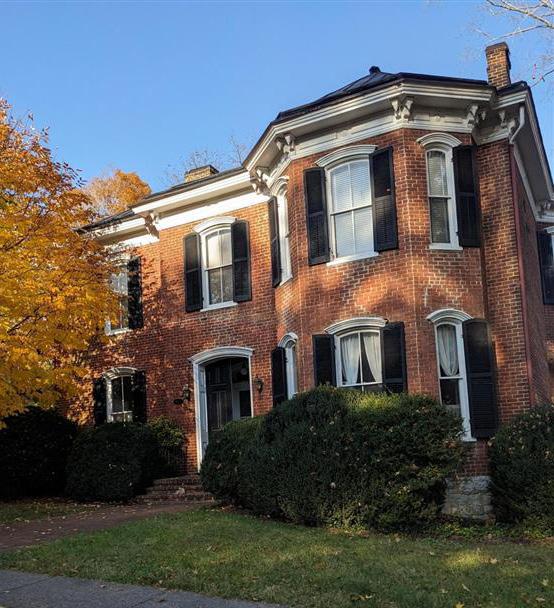
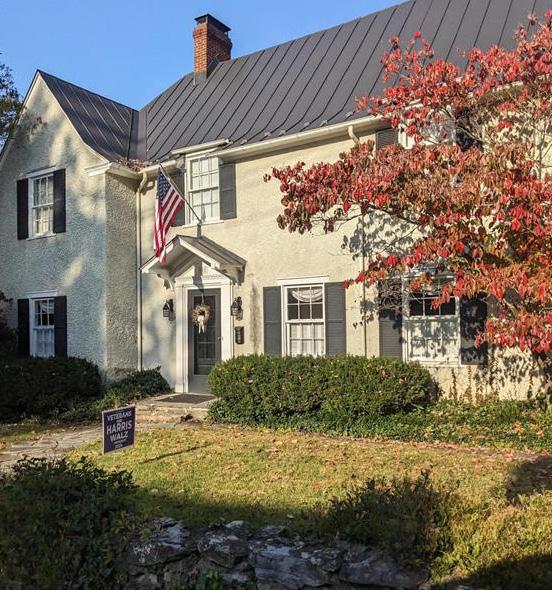
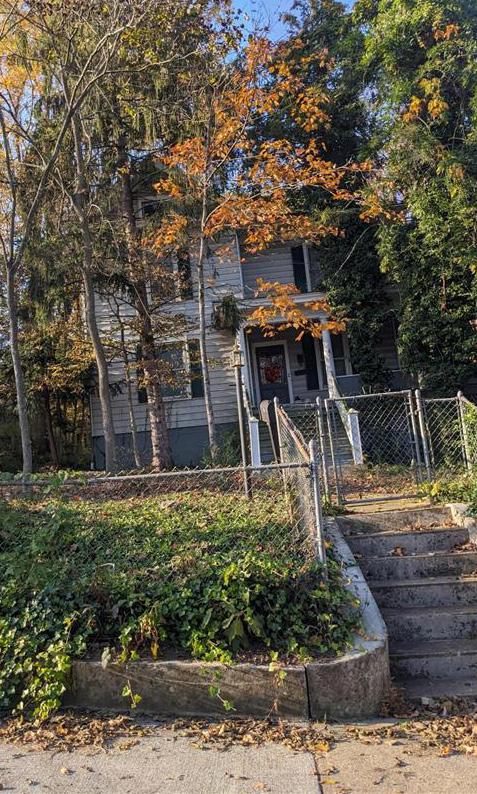
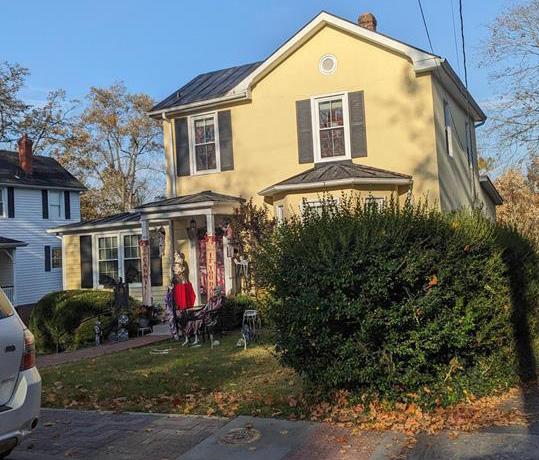
There are many homes in Lexington that are historic and have been maintained well for generations, despite their age. However, as interviewees have noted, dispersed throughout the City, there are homes that are in poor condition hidden on many residential streets.
According to interviewees, these homes are either vacant or are inhabited by older individuals who no longer have the physical capability or the financial means to perform the maintenance needed for their homes. The Lexingtonians we interviewed all agreed that these homes “need a little help,” in the form of assistance by any means possible to help them maintain their homes. Not only for the sake of aesthetics, but for the safety of the inhabitants, as well as preserving historic homes throughout the City for future generations. There is concern among some interviewees that the neighborhoods closest to Lexington’s universities are slowly becoming proliferated by landlords who do not presently live in the City or in the region. These homes are rented to students for premium rates, yet the properties rarely see the maintenance standards that local landlords or homeowners give to their own homes. Other interviewees noted that there is a “condition gap” present in Lexington – which was generally explained that when dilapidated homes finally go to market in the City, first-time homebuyers can’t find the financing necessary to make the crucial rehabilitation and repairs necessary to live in these homes. However, outside investors have the necessary capital to immediately purchase and begin significant renovations to these properties, thus creating another barrier for first-time homebuyers to contend with. Overall, interviewees hope to see support from state agencies to support homeowners, while also looking inward to create more protections and joint-regional efforts to preserve affordable housing for the City.
Housing Supply & Availability
Lexington has not been immune to the housing supply issues that have been proliferating across the United States. The lack of housing opportunities for buyers and renters has led to exacerbated prices of homes as well as unaffordable rental rates. In Lexington, interviewees noted that the City has identified this as an issue and has been working towards addressing it. All interviewees praised the City for its efforts in approving the Accessory Dwelling Unit (ADU) ordinance recently, as well as its efforts towards approving the cottage homes ordinance. Although, as interviewees noted, more must be done to alleviate the housing shortage for the City. Interviewees stressed that there is little in the way of affordable housing for moderate- to low-income families and older adults of limited means. Some interviewees noted that housing in the region is so hard to come by that when residents can obtain an affordable unit, they don’t have the flexibility to consider moving because there are so few options. Additionally, nearly all interviewees mentioned that there are vacant parcels and land throughout the City, but due to constraints such as heirs, or the development capability of the site prevent new construction from occurring. Interviewees mentioned that there are currently two multifamily housing projects that are underway but have been stymied by high interest rates and rising construction costs. One of these multifamily projects includes affordable housing units. Unfortunately, however, the selected developer withdrew from both projects during the due diligence period.
When it comes to rental units, Lexington is faring slightly better than in previous years due to changes in housing policy at the universities. However, some interviewees noted that rental rates are skyrocketing to price points that are unaffordable for many Lexington residents, particularly those who work for the City of Lexington itself. Additionally, interviewees noted
that there were many individuals and families looking for affordable units, particularly in the past several years, but income-restricted housing communities were at or near full capacity.
Stakeholders have stated that closer collaboration with the City of Lexington is needed to bring more affordable housing developments online. Affordable housing volunteer organizations are burdened with increasingly tight budgets, aging volunteers, and less capacity to seek out suitable land for development. Stakeholders have noted that since the COVID quarantine of 2020, affordable housing recipients have been relocating to more affordable sites in Rockbridge County. To mitigate out-migration and encourage additional collaboration within Lexington, stakeholders noted that community land trusts could be a viable method to keep housing affordable in perpetuity.
Relationship with Universities
Lexington has two universities in the North of the City, the Virginia Military Institute (VMI) and the Washington and Lee (W&L) University. These universities have contributed to the fabric and culture of Lexington, but they have also grown and contributed to displacement in adjacent neighborhoods. Interviewees have stated that historically African American neighborhoods nearest to VMI have faced significant issues of affordability and displacement due to university growth and student families, alumni, and investors purchasing homes and converting them into rentals for students. Some interviewees noted that this problem extends beyond the neighborhoods adjacent to the universities and into the downtown and surrounding neighborhoods. This exacerbates an already competitive rental market for workers and longterm residents of Lexington as they compete with students and university parents for limited units. The rental units purchased by investors create maintenance concerns as many investors and landlords haven’t maintained their properties to
the standards of the surrounding neighborhood, according to interviewees. However, there has been some improvement in recent years. Not long ago, Washington and Lee University brought more of their students on-campus to live in university dormitories, rather than off-campus. According to interviewees, this has improved the housing supply somewhat, but not to the extent expected. One interviewee noted that the student populations seem to grow each year, leading to fewer units available and a higher average rent for the City as a whole.
Key Takeaways
The City of Lexington is grappling with many of the challenges with maintaining quality housing conditions for select properties and overall affordability. Leaders across the City have been working to address these issues but the complexity of the housing crisis creates hurdles beyond what the resources of a small city can accommodate. However, interviewees noted that Lexington is charging ahead with innovative approaches to housing, including accessory dwelling units, cottage housing developments, and traditional approaches of bringing more multifamily units online. Interviewees made it clear that even with these approaches, it still may not be enough to satisfy the growing housing needs of the City. This requires the City, housing advocates, the universities, and housing providers to contemplate other ways to bring more housing to Lexington. In the meantime, interviewees expressed the need to assist residents in maintaining their aging homes. As the population of Lexington matures, it will become and is currently becoming more difficult for them to repair their homes, particularly homes that are decades or even over a century old. Nevertheless, interviewees stated that they are hopeful that the City will continue to improve housing for all residents of Lexington.

Demographics & Existing Conditions
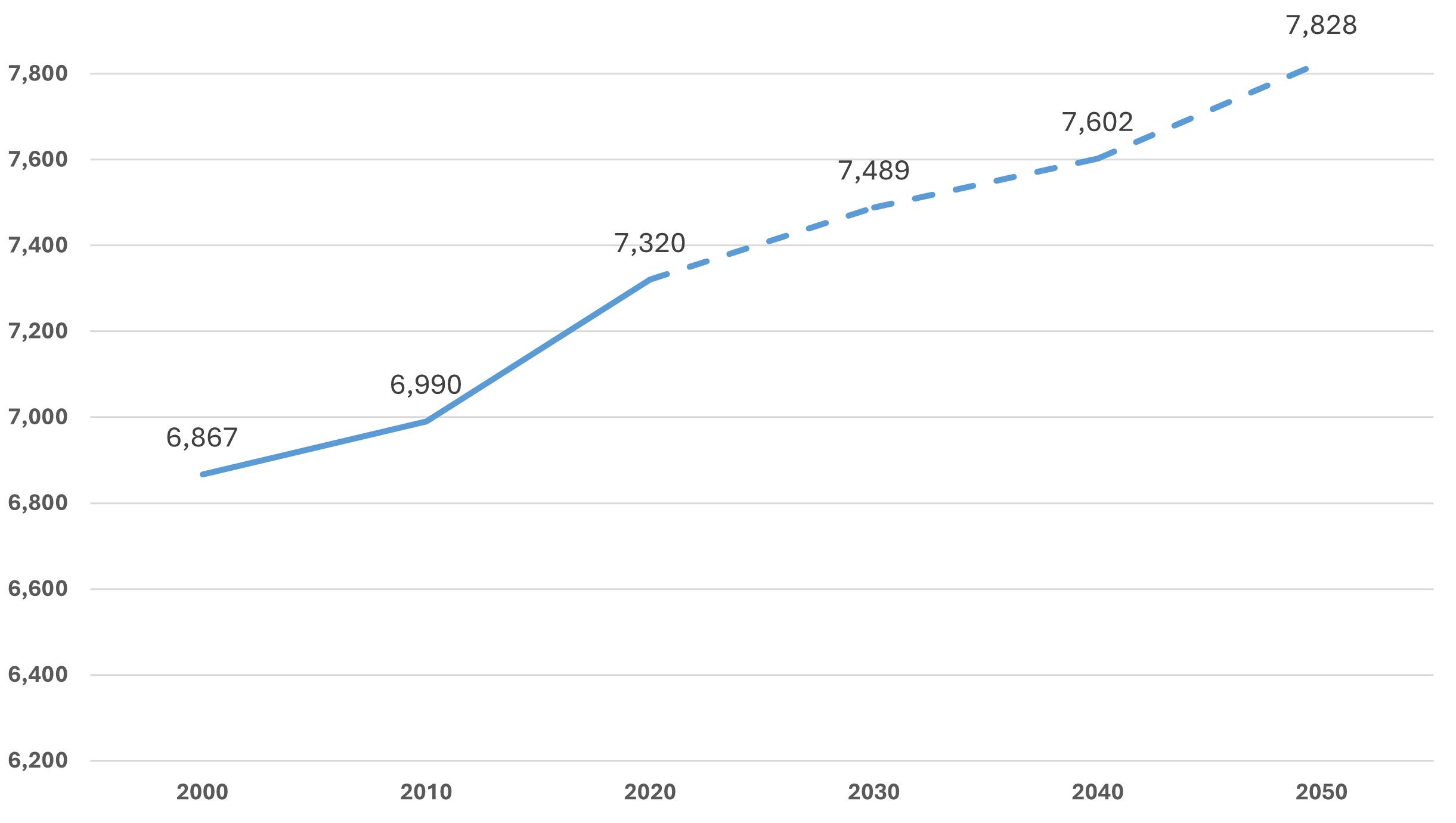
Demographic data was collected from the U.S. Census Bureau to give a better understanding of existing conditions in the City. The total population of Lexington is estimated at 7,346 per the latest available 2022 American Community Survey 5-Year Estimates Data. This number represents an ongoing increase in the population, up almost 6,867 people from the Decennial Census in 2000. The University of Virginia’s Weldon Cooper Center for Demographics, which projects population forecasts for Virginia’s localities to plan for their future, predicts that the City of Lexington will continue to see an increase in population, reaching 7,828 people by the year 2050.
Lexington’s growth is likely due to many factors, as a highly desirable place to live with many amenities and other resources that contribute to a high quality of life, such as the local universities, college towns tend to create a “bubble” when compared to the surrounding area. Higher salaries associated with the universities and the desirability of the community leads to higher housing prices that are further compounded by a growing student population and even alumni looking to return for retirement or seasonal events.
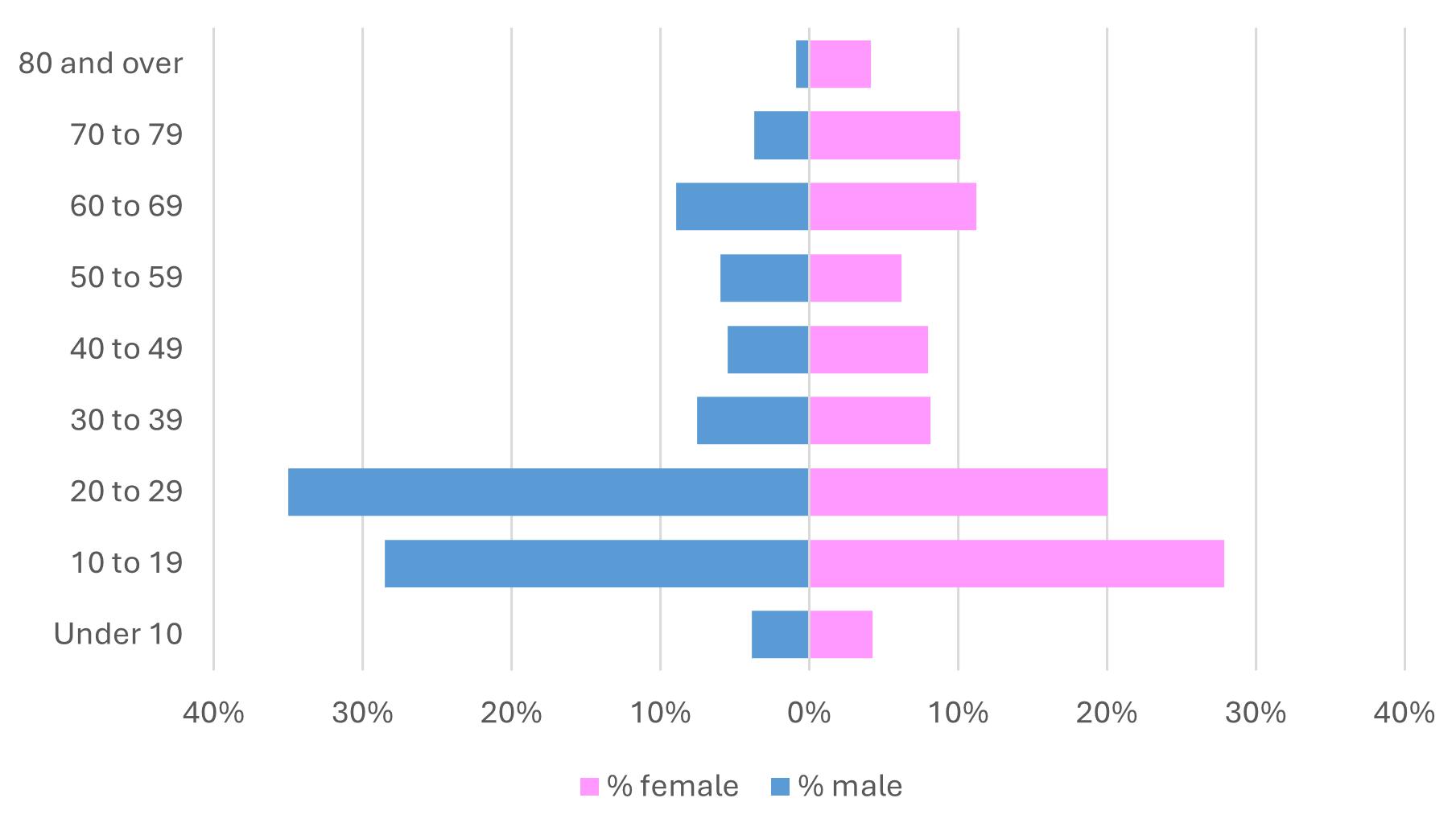
The chart above shows that Lexington’s largest share of the population is predominantly the youth (ages 10 to 29). With the presence of Virginia Military Institute and Washington & Lee University, the population of these age groups is expected to be much larger than the rest of Lexington. Notably, the share of the population that is aged 60 to 69 is larger than other groups between 30 and 59, showing that potentially aside from the influence of the universities, Lexington’s population is aging and there are less families with children. The median age of Lexington is 22.7 (2022 ACS 5-Yr. Est.). This is much lower than the United States median age of 38.5 and Virginia’s of 39.
The presence of the universities undoubtedly drives this median age lower, however, the presence of an otherwise aging population that lives in Lexington full-time can have implications for the housing stock. Elderly populations may have trouble maintaining homes and successive inheritance of homes may have challenges being placed back on the market. While some in the City may be housing secure with ownership, others who are struggling to afford rent or home ownership are priced out. This may be a reason Lexington’s population, without ages 10-29, shows an “inverse pyramid” shape, where new families are pushed outside of the community to look for housing.
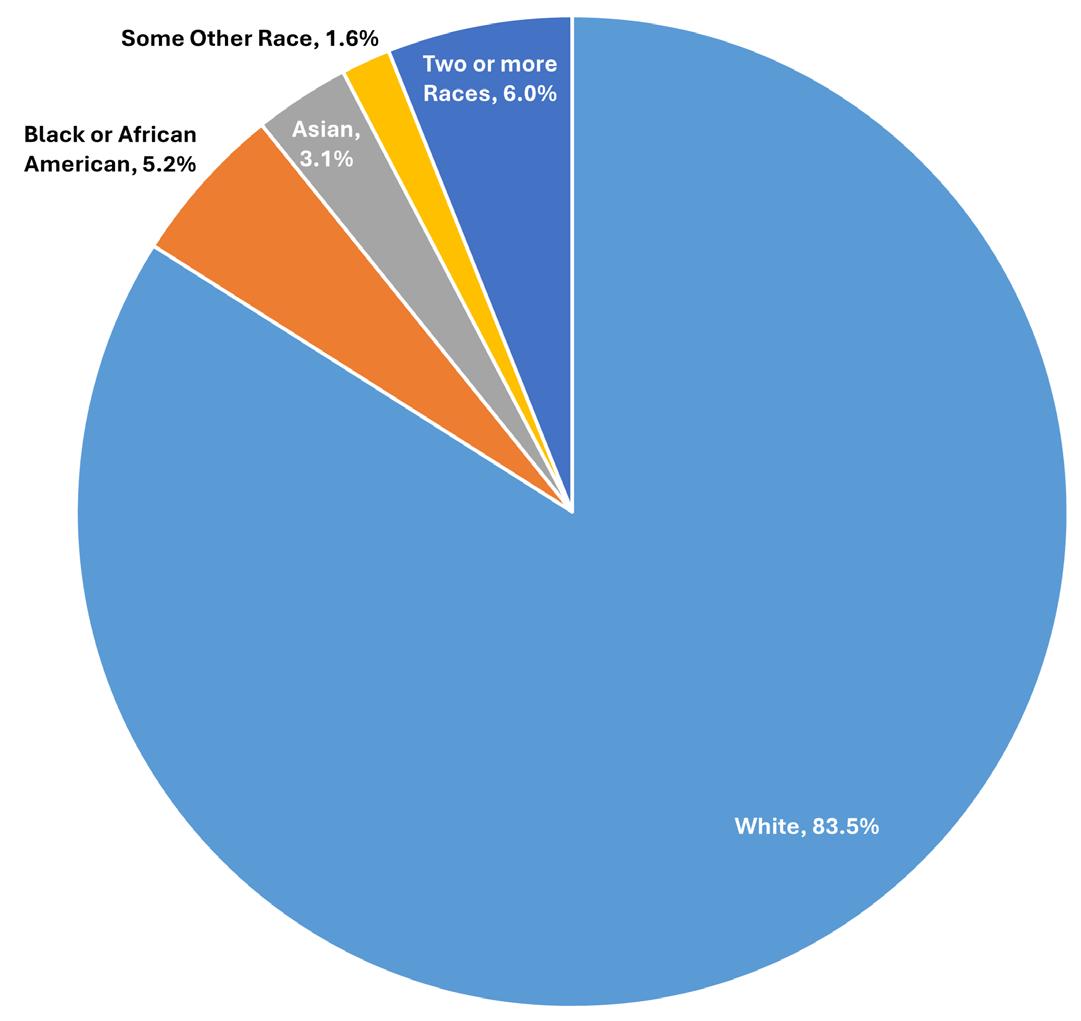
The City’s racial demographics show that the population is predominantly white, represented by 83.5% of the population. The second largest demographic are people who identify as bi-racial (Two or more Races) at 6.0%, followed by 5.2% of the population identifying as Black or African American. The American Community Survey identifies Hispanic or Latino populations as other categories, however, those self identifying as Hispanic or Latino make up approximately 4.6% of the population. Structure by Type
2,617 Total Housing Units
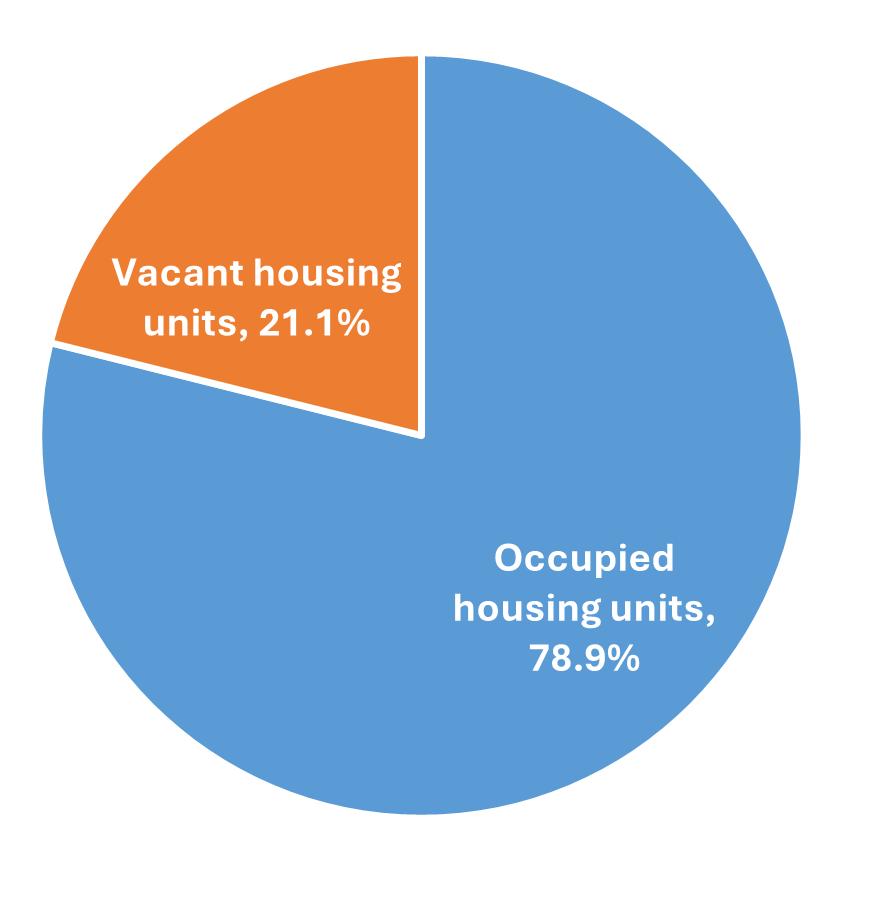
The American Community Survey data estimates that there are approximately 2,525 total housing units in the City. Of these, 78.9% are occupied, while 21.1% are vacant. This is a relatively high vacancy rate, but may be due to the ownership of second homes or the condition of the property.
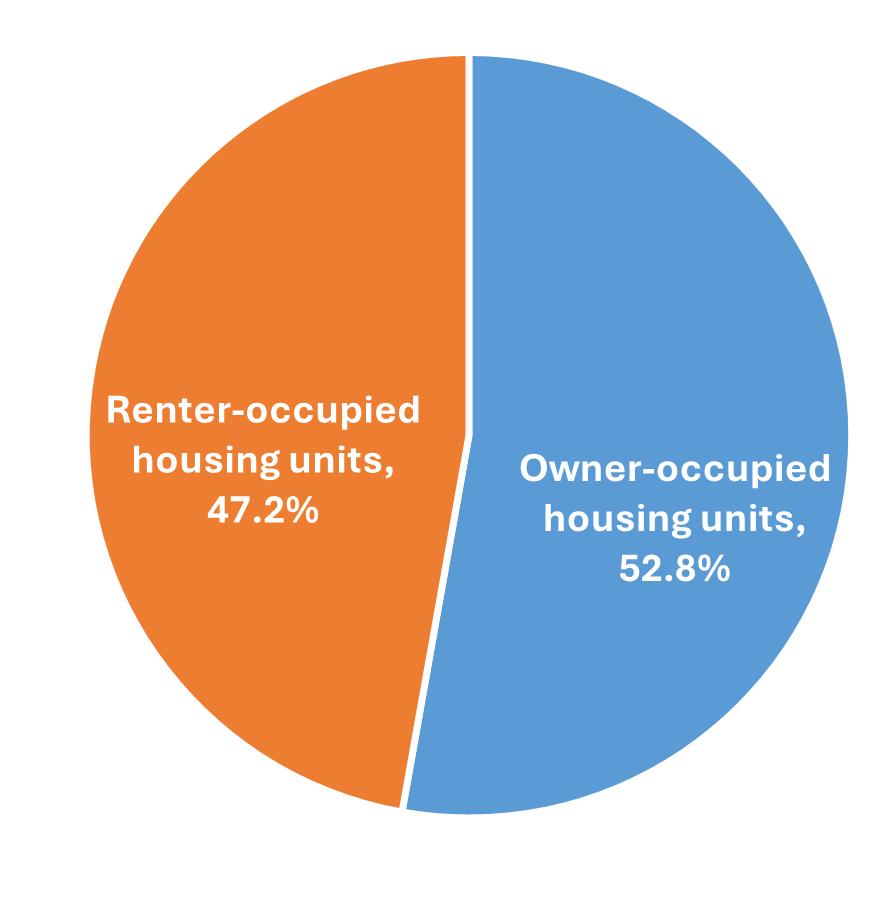
Of the occupied units, 52.8% are owner-occupied and 47.2% are renter occupied. Stakeholders indicated that the large presence of absentee landlords contributes to lower quality housing stock for renters. Despite a high share of rentoccupied housing units, it was also indicated there is competition for limited rental housing stock.
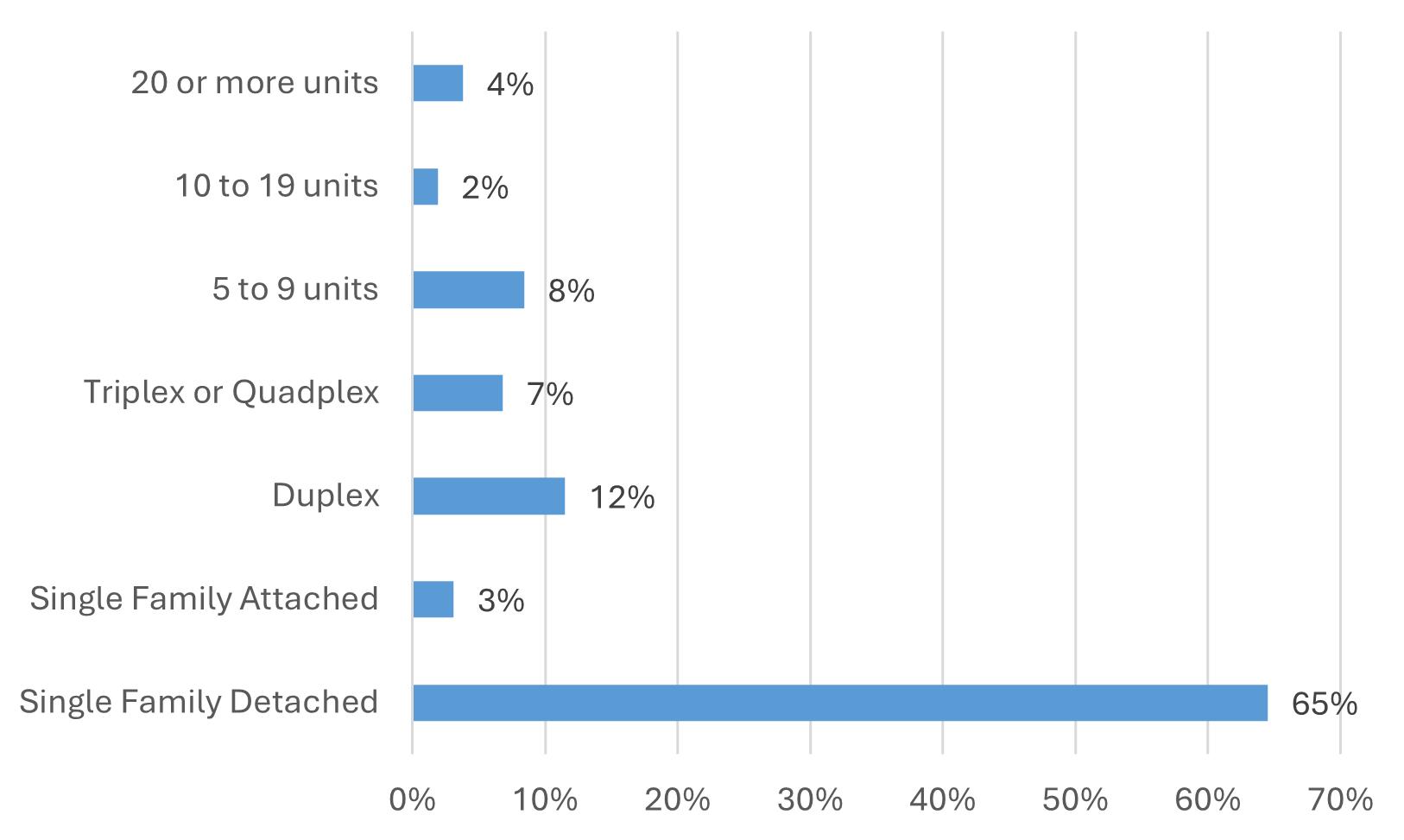
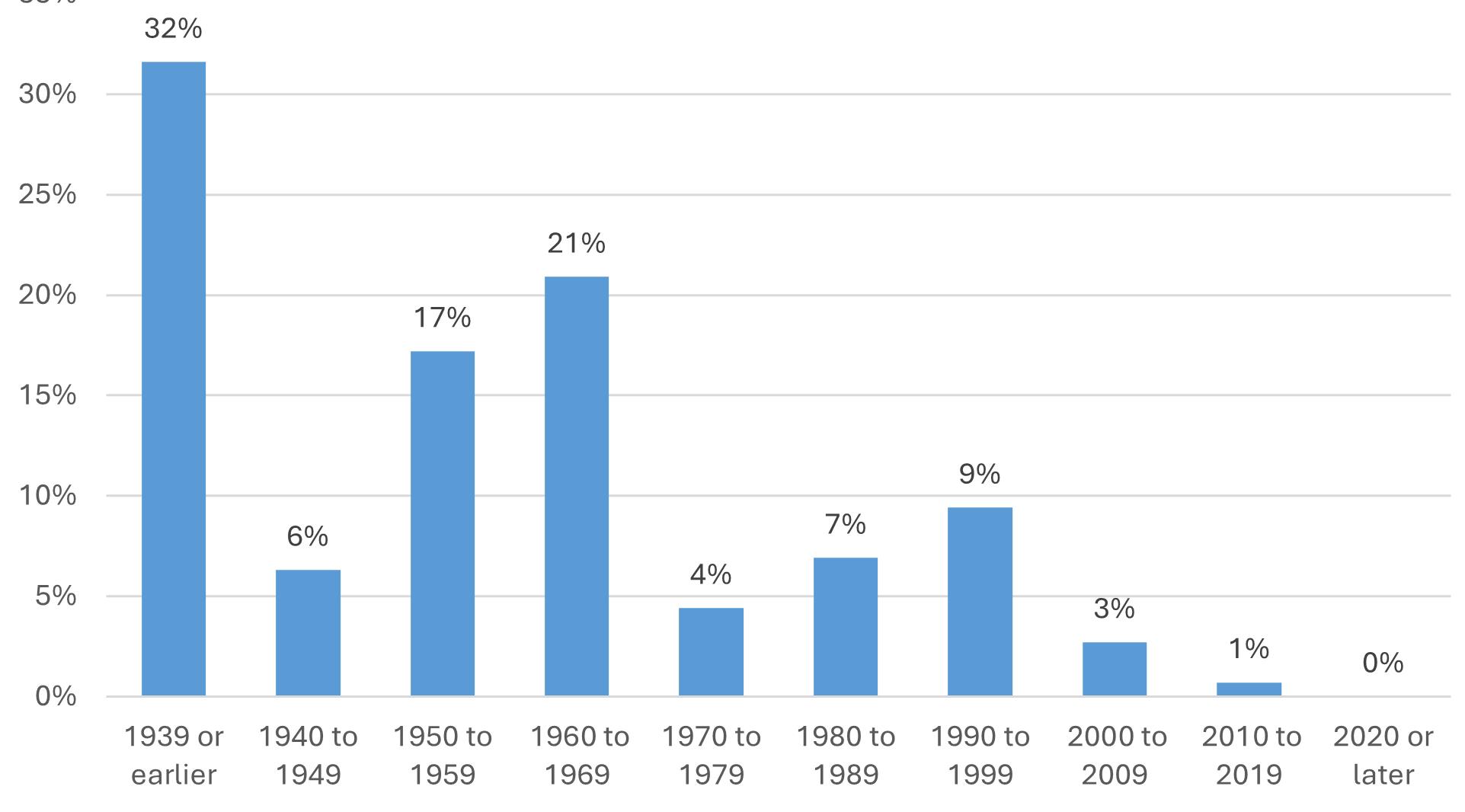
Of the occupied housing units, residents of Lexington predominantly live in single family detached houses (65%). 21% of the structures are multi-family apartments. The increasing demand for housing should prompt the City to seek diversified housing types to maximize affordablity and unit availabillity. The chart below shows the percentage of units built by year.
Lexington’s housing stock was predominantly built earlier than 1939, 85 years ago. Many structures will reach the end of their life cycle unless they have constant preservation and maintenance. In more recent years, new housing construction has slowed to a halt. Production of new homes is necessary to accommodate the demand for it.
Housing Units by Occupancy Housing Units by Tenure
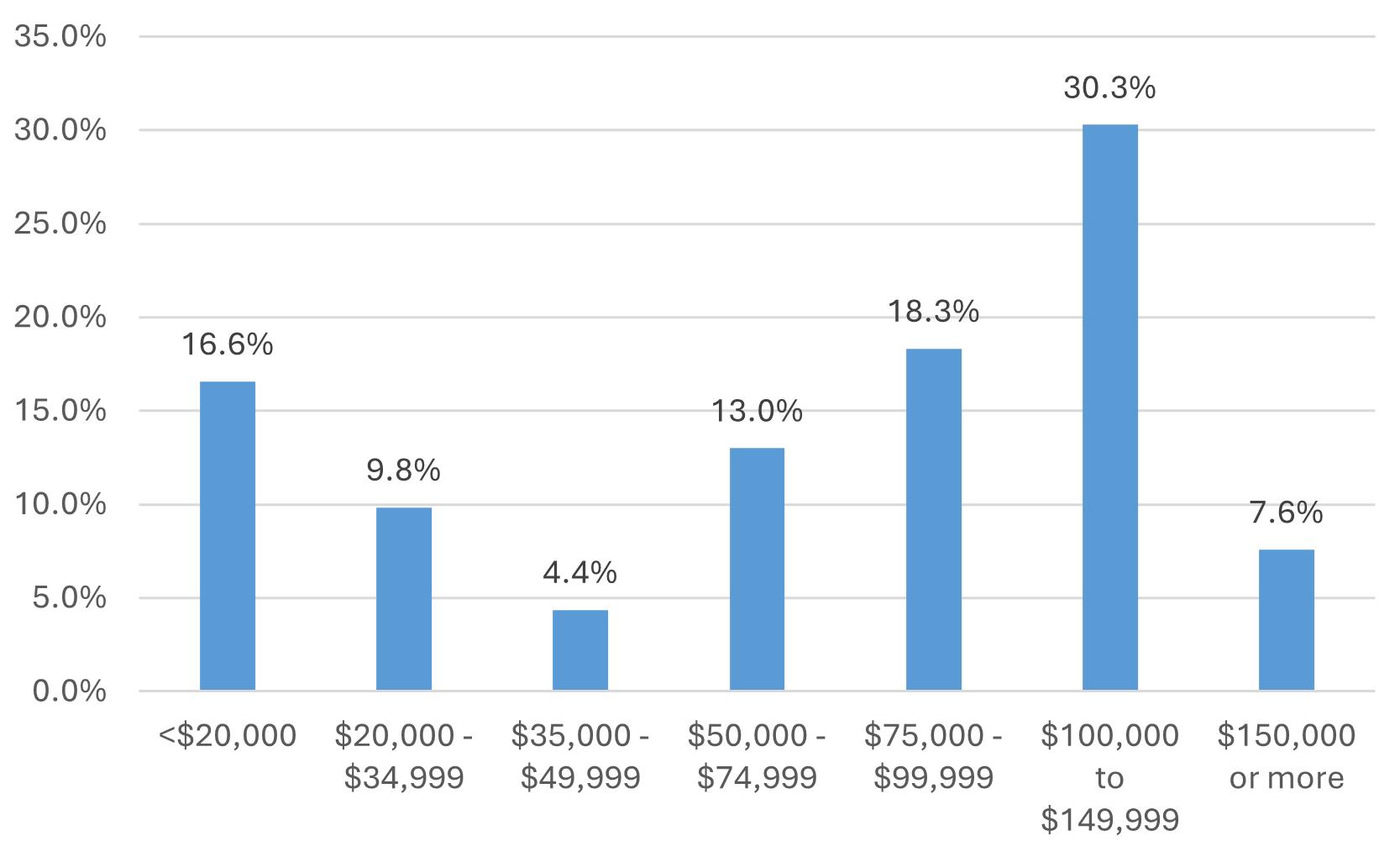
The City’s median household income is estimated at $93,651. The chart above shows that the largest amount of households around $100,000 to $150,000. 43.8% of households have incomes lower than $75,000. This is substantially higher than Rockbridge County’s median of $61,903. Virginia’s overall median is estimated at $87,249. Higher incomes can mean higher housing prices as well as the pricing out of those with lower income if they are all competing for the same units.
Potential homebuyers are often advised to look for a home that is approximately 3 to 5 times their household income. One way to reveal affordability problems in a community is to look at how Median Household Income compares to Median Home Value. Therefore, with a household income of $93,651, homes should range between $281,000 and $468,000. The Median Home Value and value of most of Lexington’s units falls in this range, however, for the 43.8% of incomes lower than $75,000 there is nothing available.
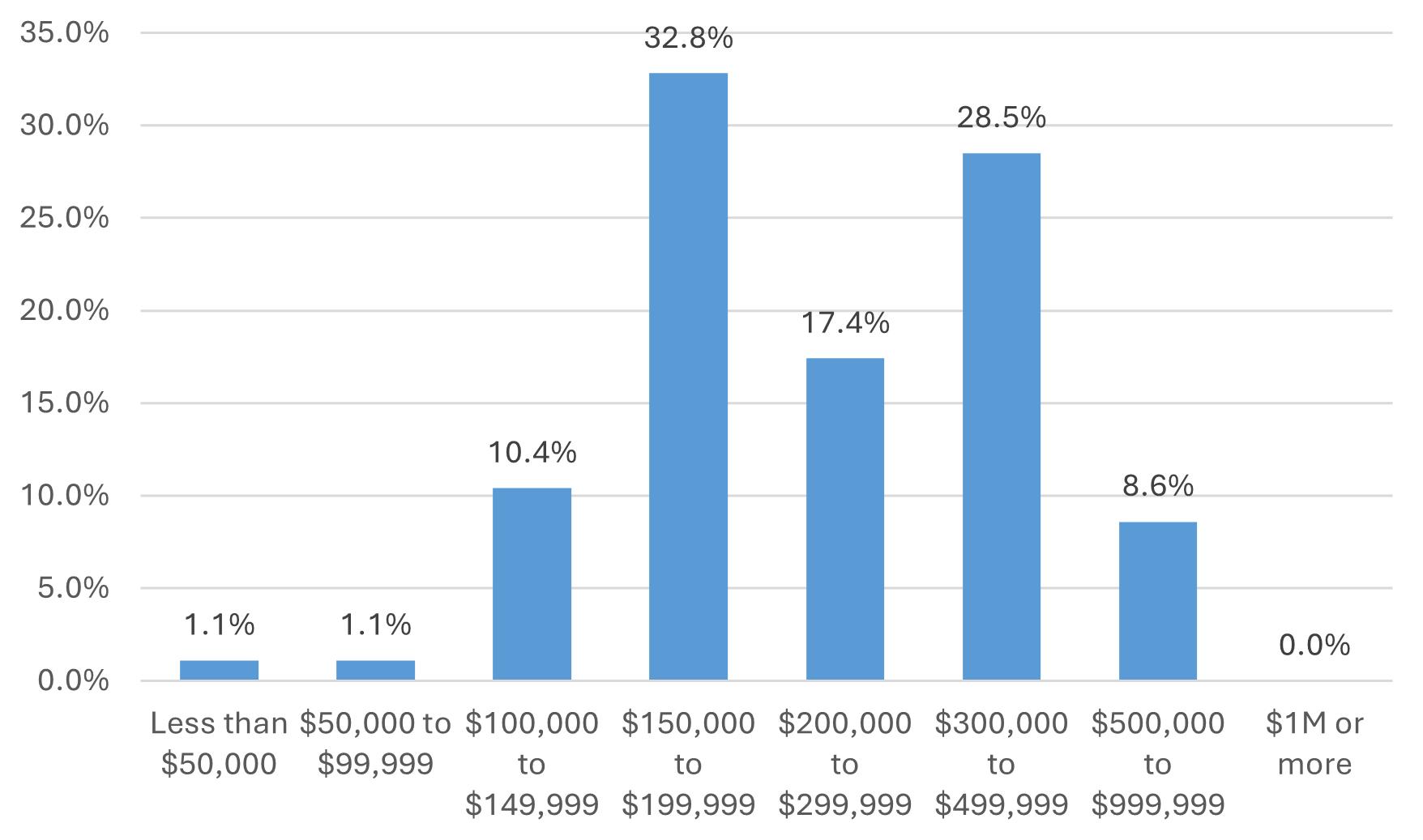
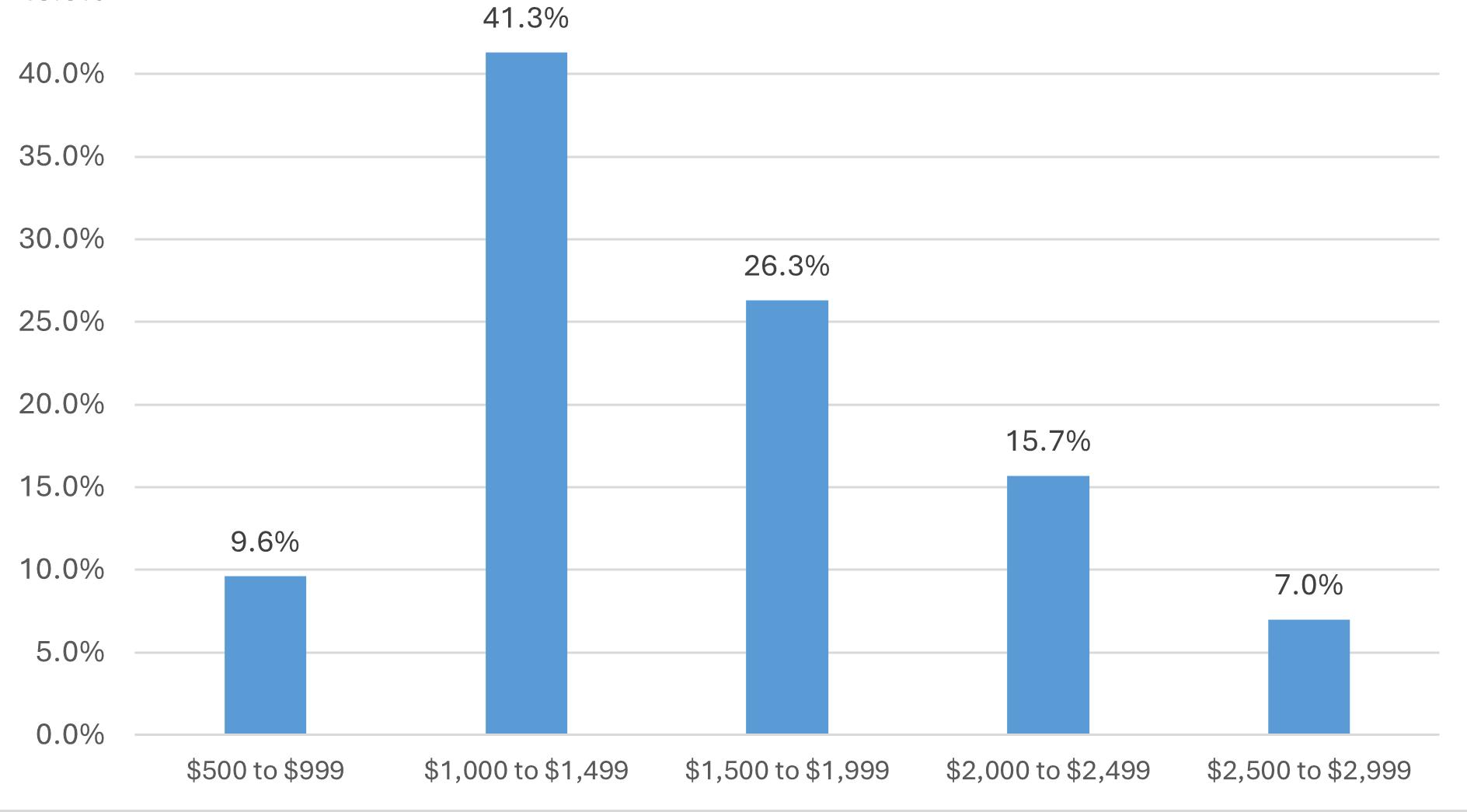
The overall cost of housing is a significant factor for individuals and families in deciding where to live. Conventional wisdom typically states that home ownership is a route to affordability of housing. However, the above chart shows the typical monthly housing costs of households with a mortgage. The cost of these units generally ranges from $1,000 to $1,500 for most homeowners, but a large share of Lexington is paying even more.
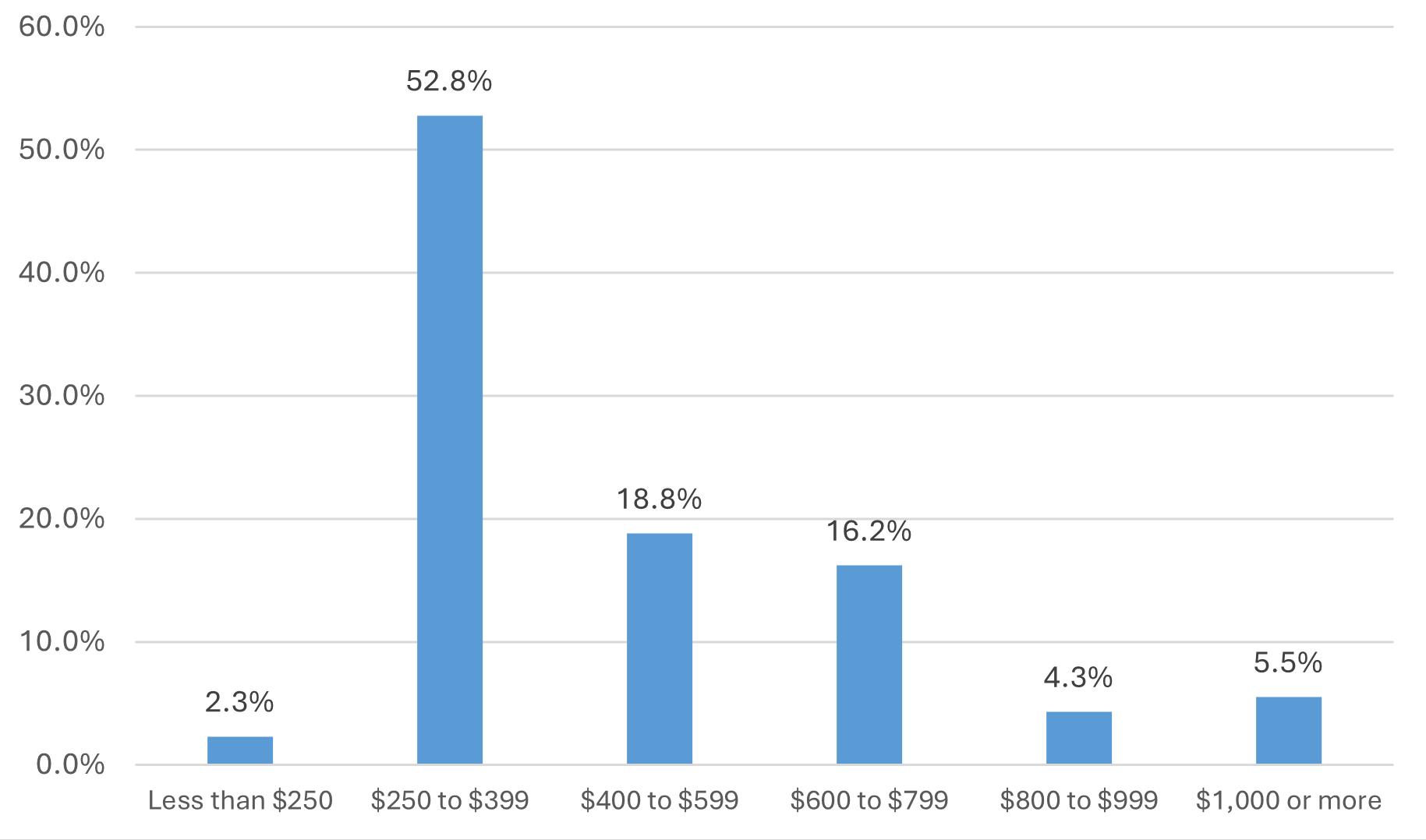
In the chart below, without a mortgage, housing costs are generally cheap because the home is paid off. With the hidden costs of homeownership, such as maintenance and upkeep or renovating older homes, housing costs can be a large challenge even to homeowners in the City of Lexington. Allowing a larger more diverse housing supply could help ease the cost for homeowners as well.
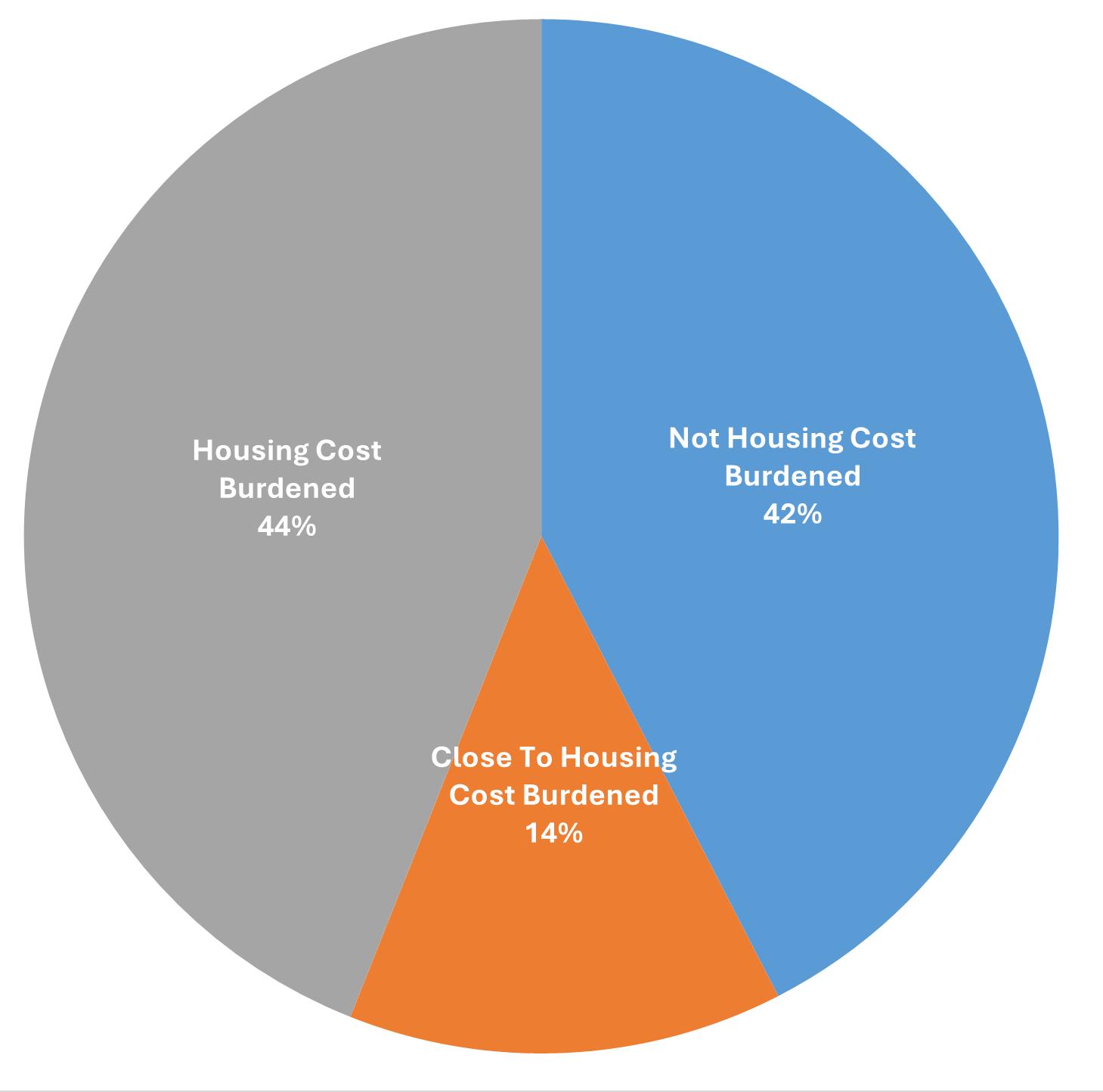
The U.S. Department of Housing and Urban Development (HUD) defines housing-cost burdened families as those who spend more than 30% of their income on housing. The chart on the right breaks the income to housing cost ratio down into three categories for Lexington’s population.
Not Cost burdened - Paying less than 20% of income on housing.
Close to housing cost burdened - paying 20% to 29% of income on housing.
Housing cost burdened - paying 30% of income or more on housing.
Over half of the City’s population is cost burdened relative to their income.
The City is located off of Interstate 81, connected by Route 60 which bisects Lexington. Business Route 11 runs through the downtown area. Historically the center of the agricultural area, its long time institutions of Washington & Lee and Virginia Military Institute have supported the local economy.
There is a population of 6,920 aged 16 and over with 41.8% participating in the labor force. The unemployment rate is approximately 2.5%.
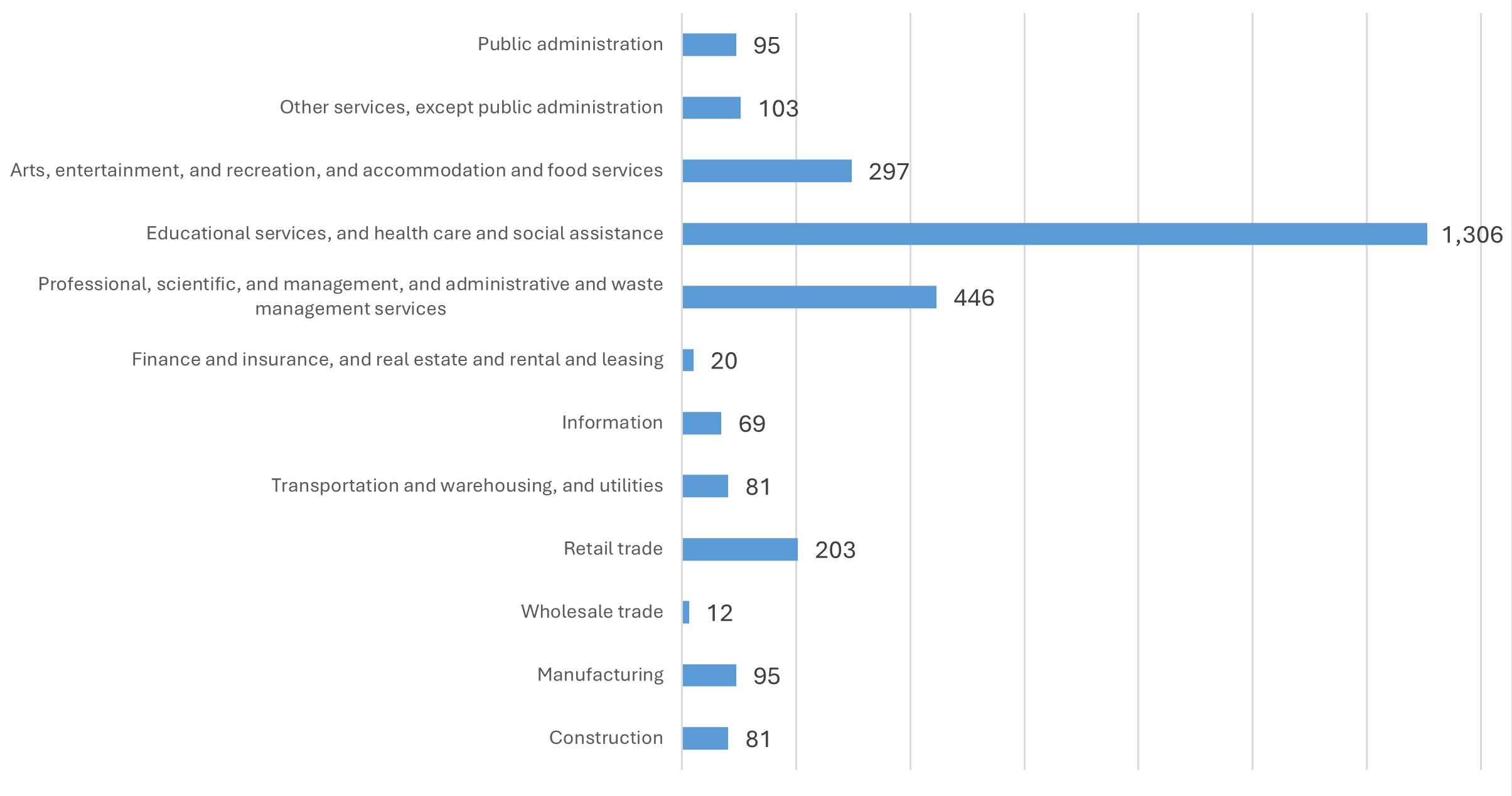
The chart below shows the predominance of educational services and health care employment among Lexington’s labor force.
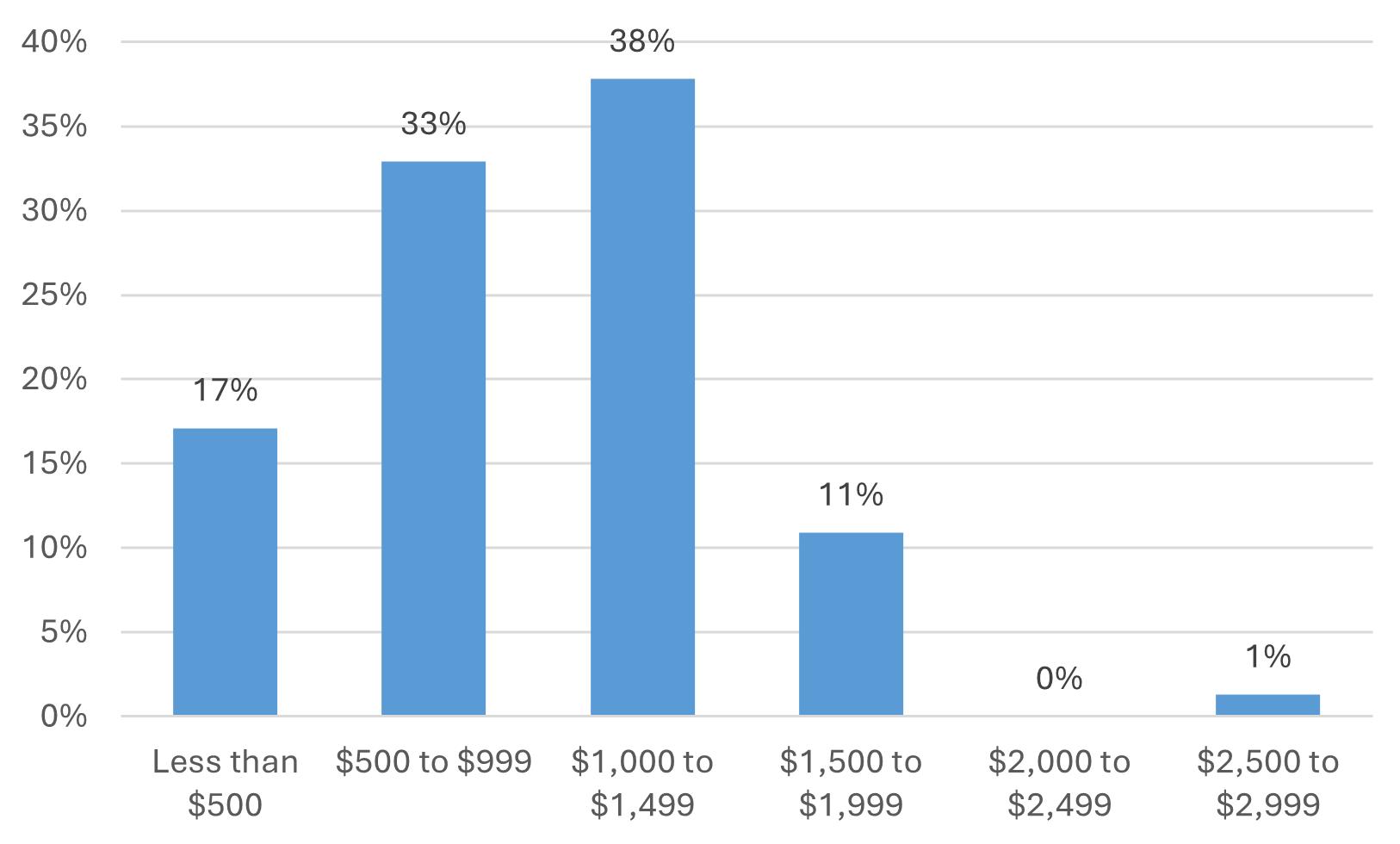
There are 936 total occupied units paying rent.
Rent is predominantly between $500 and $1,500 though more units are closer to $1,000 or above making a years worth of rent around $12,000 to $18,000. These prices follow higher incomes and a constrained supply.
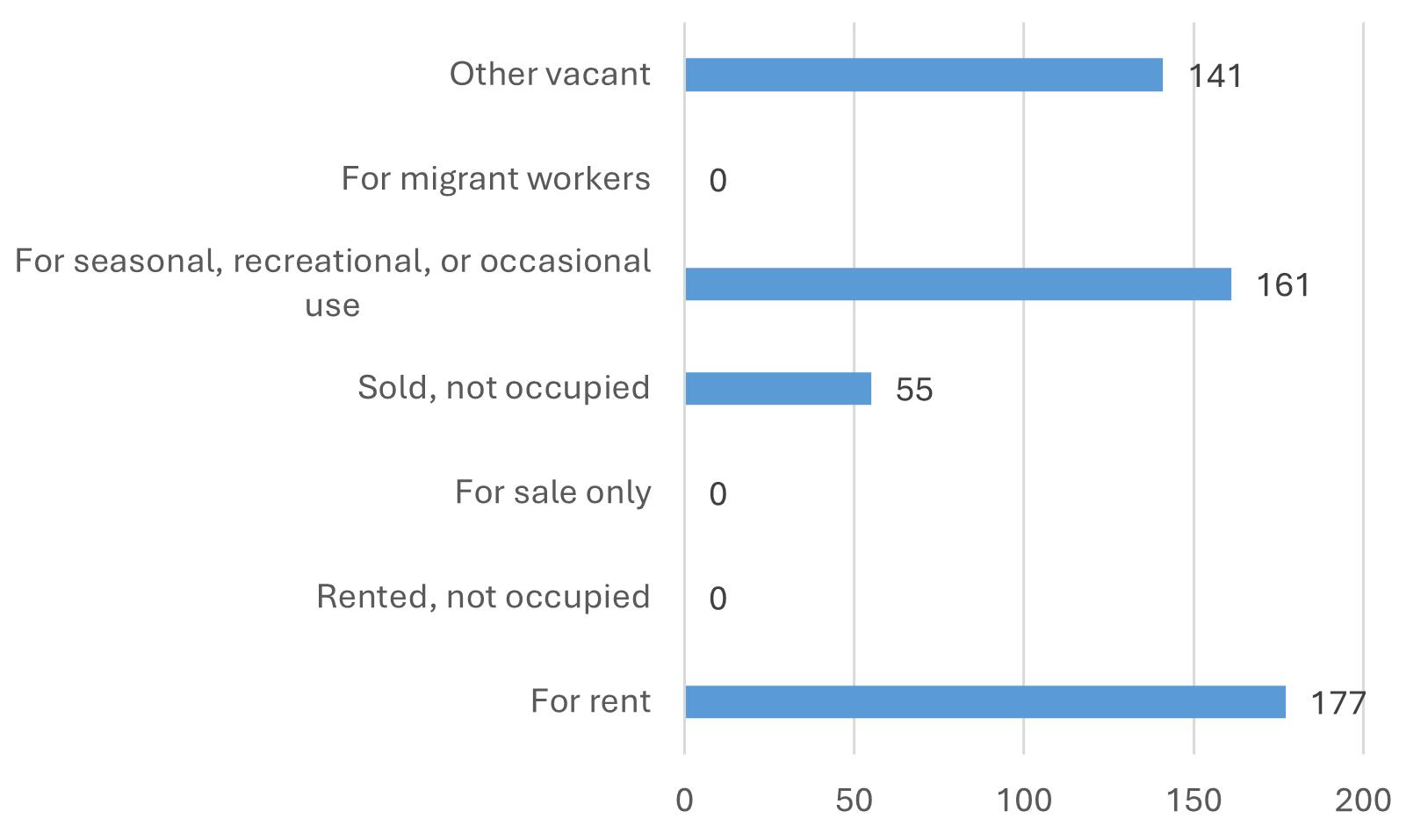
The chart below shows that there are 141 vacant units and only 177 units for rent. Given the additional hundreds of people expected over the next decades, it is important to expand this supply of rental units to maintain affordable prices.
City-wide Windshield Survey
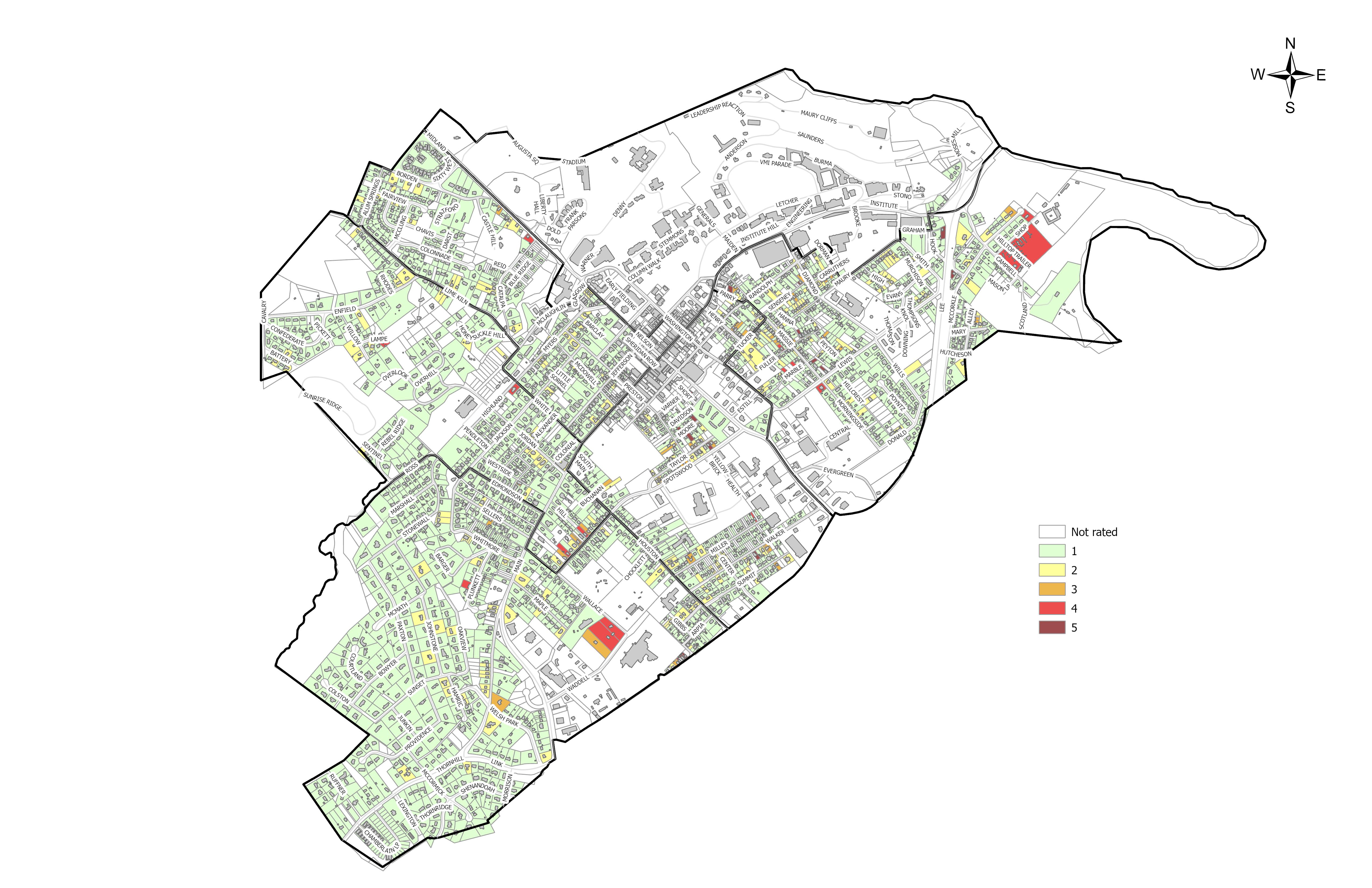
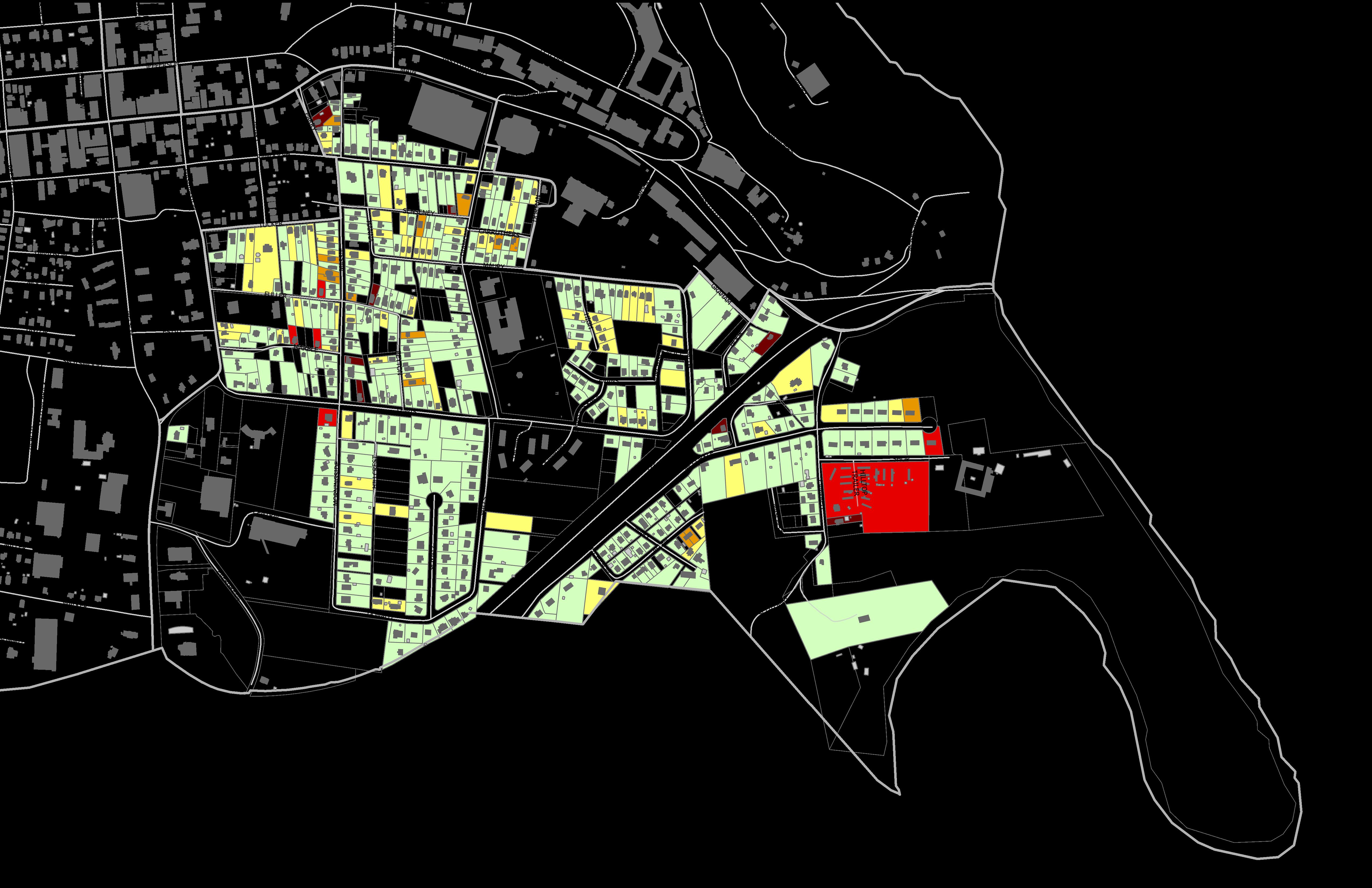
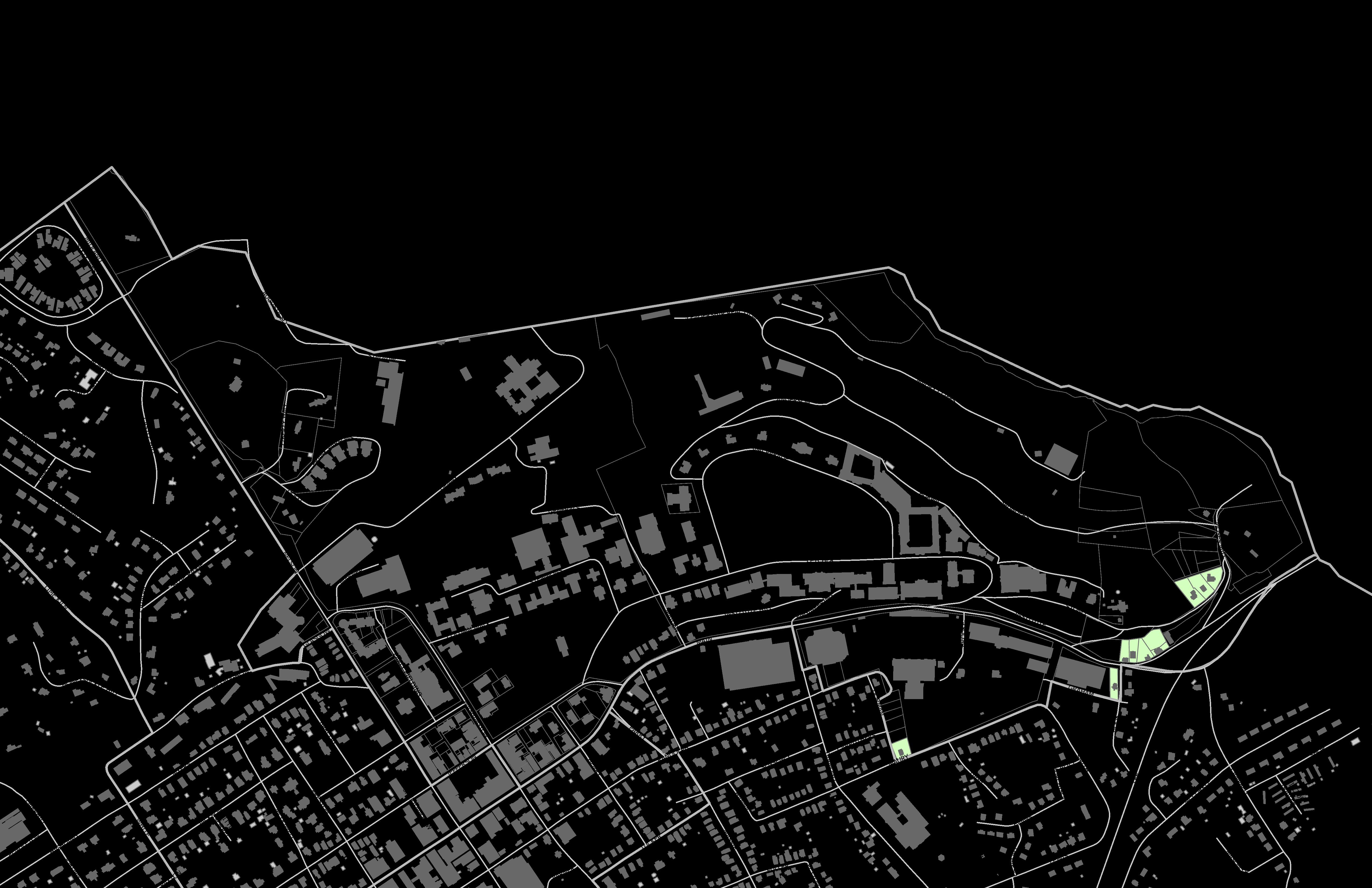
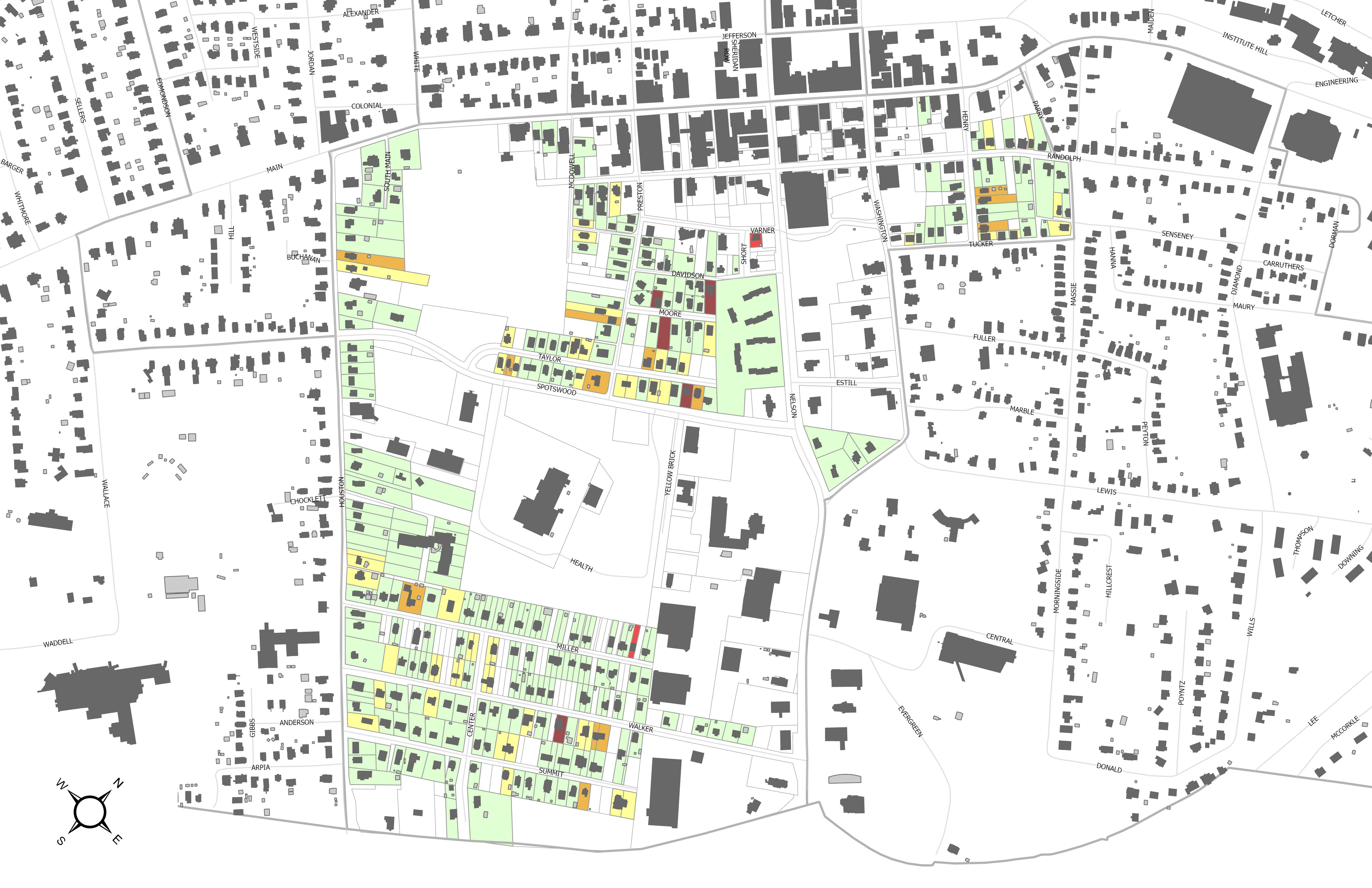
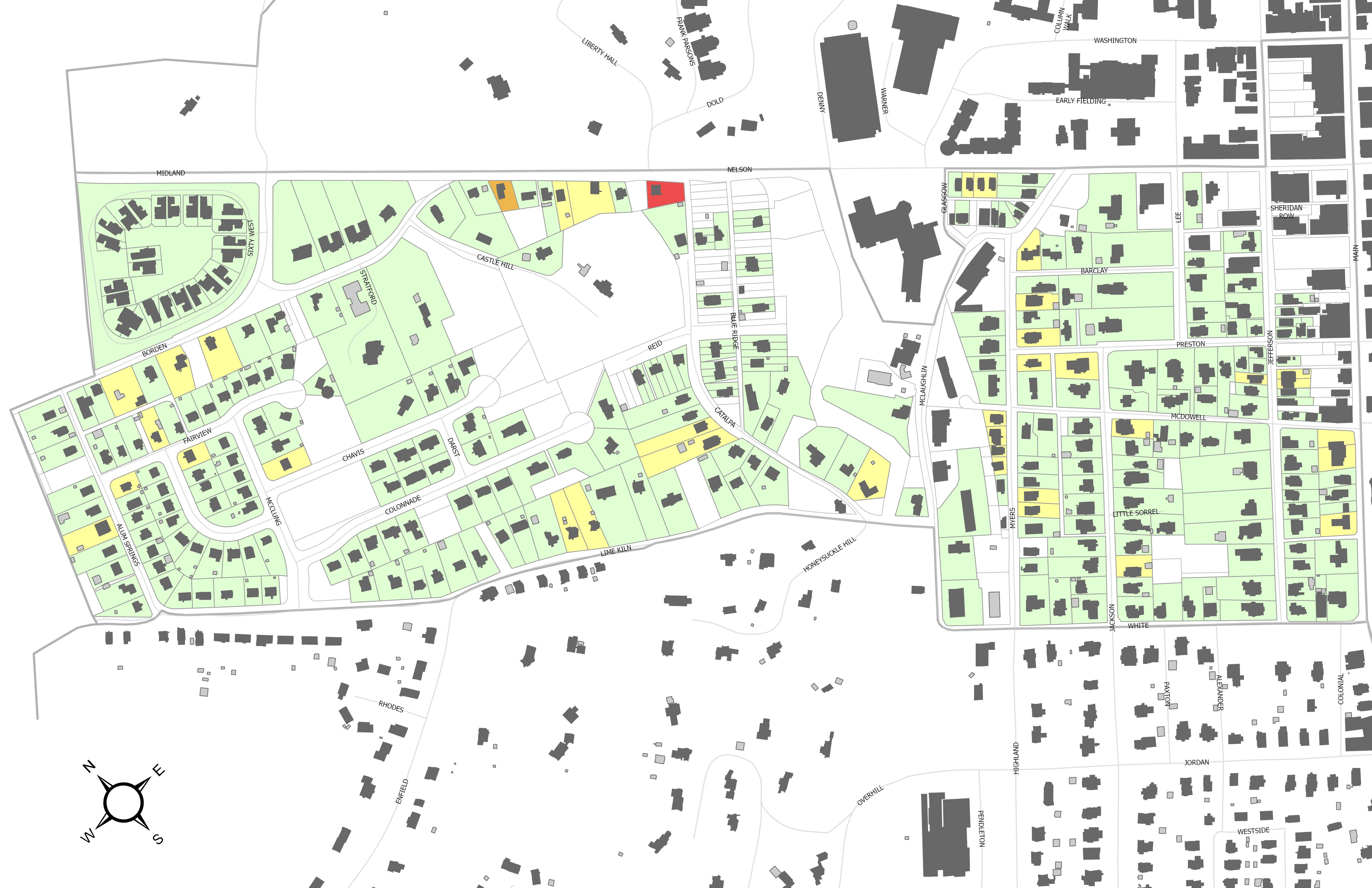
On October 28th and 29th, 2024, physical housing conditions across the City of Lexington were assessed by Summit Design & Engineering staff, who performed a windshield survey of the entire city. The project team used data from the City’s Geographic Information Systems (GIS) to create maps with parcel lines, building footprints, and street labels in order to map the collected data. One team member drove and helped assess building condition, while the other assessed the condition and wrote down the scores on the map.
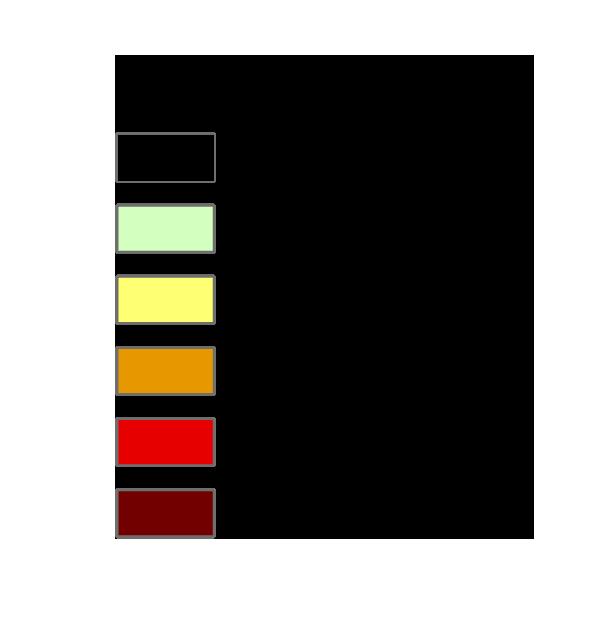
The rating system utilized assesses each housing unit based on three categories of the building’s overall condition: the foundation, roof, and exterior walls. Within these categories, there are three levels of structure condition rating given to them. Defining these categories starting at level one, referring to no cosmetic signs of damage, to level three, which refers to the highest amount of damage to any of the three main categories. In aggregate, this produces a final grade of all three categories on a one (1) to five (5) scale, with a score of (1) representing sound conditions and a score of five (5) representing dilapidated conditions. These score categories are visually explained to the right. For example, a building may appear to have a sound condition for its walls and foundation, but visible damage to the rooftop will make its score closer to a four (4) or five (5).
Commercial, institutional, or otherwise nonresidential or inaccessible structures were not assessed. These parcels have been left white on the maps. Limited “double-checking” of some properties that were located on hard to access side or internal streets was conducted utilizing Google Street View which has been updated as of September 2024.
Neighborhood Level Infrastructure Observations
After the assessment was completed, the collected scores of housing conditions were mapped per each area of Lexington alongside a brief description of notable features in that area. 1 2 3 4 5
Sound/Standard, in good condition or in need of minor repairs.
Minor Deficiencies, minor defects beyond regular maintenance.
Intermediate Deficiencies, significant defects requiring rehabilitation but do not require clearance.
Major Deficiencies, major defects requiring substantial reconstruction or clearance.
Dilapidated, structure has undergone severe damage or decay with defects requiring clearance.
Lexington’s core and many neighborhoods are historic and developed before automobile infrastructure required most of the rightof-way that allowed for other infrastructure improvements to be developed alongside wider roads. The City has many potential projects throughout its historic areas that will require a greater level of creativity and problem-solving to address.
Continue Expansion of the Sidewalk Network.
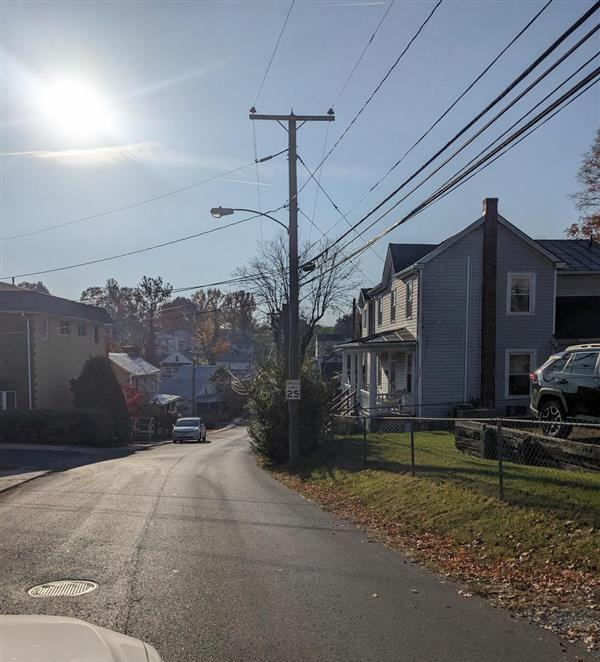
Much of the historic downtown and adjacent neighborhoods have sidewalks on at least one side of the street, which provides some mobility for residents on foot. However, some newer neighborhoods on the far west and far east of Lexington are lacking sidewalks on both sides, requiring residents to walk directly in the street – prompting conflict with vehicular traffic. While this is technically acceptable street design where roads are 25 miles per hour or slower, often the right-of-way width of these newer roads also encourages speeding, creating a potentially dangerous conflict between pedestrians and automobiles. There is evidence of continued work on expanding the sidewalk network, with newly implemented ADA-access ramps, crosswalks, and wider sidewalks found in older neighborhoods.
Potential Stormwater Runoff Issues.
Many of the older neighborhoods have homes built at a variety of elevations on top of steep grades. As weather events intensify, many older homes will be increasingly susceptible to improper stormwater drainage and flooding. In order to mitigate these impacts, a reduction in impervious surfaces should be pursued along with biophilic stormwater retention methods that use additional plantings to trap and slow water. While specific runoff conditions were not able to be observed, there were many homes at the low point of slopes that may experience issues
during excessive rainfall. The City could offer programs that distribute rain barrels, educate and encourage the use of rain gardens, and utilize City owned property to make stormwater improvements. Lexington has recently approved a stormwater utility fee to fund stormwater improvements city-wide, which will certainly contribute to the resiliency of the City in the near future.
Limited Opportunities for Non-Automobile Transportation.
Throughout Lexington, there are few safe opportunities for bicycle riders to connect from one corner of the City to the next. Although the City has many steep hills, electric bicycles now have pedal assist measures to enable even mobility impaired individuals to cycle great distances with minimal effort. In order to further enable and encourage alternative transportation, the City should invest in low-cost bicycle infrastructure such as sharrows and flex posts in coordinated areas. Increased bicycle parking across the community, particularly conveniently located in front of businesses utilizing a “bike corral” or similar additional parking would encourage more use. Additionally, a partnership with neighboring universities could contribute to a more well-rounded non-automobile transportation plan in the form of campus buses and bicyclist routes to downtown. Reducing car usage in the community will help improve air and water quality, safety, public health, relieve traffic congestion, and general affordability. The local bus system could also be incrementally expanded to allow for greater local use.
Overhead Power lines.
Overhead power lines can still be found throughout Lexington, mostly in historic areas where it is harder to retrofit older buildings to underground connections. These may present issues in the event of intense storms and further disrupt the sidewalk network.
City-wide Survey Results
Block Group 4
Block Group 5
Block Group 2
Block Group 3
Block Group 6

Block Group 2

Block Group 3

Block Group 4

Block Group 5
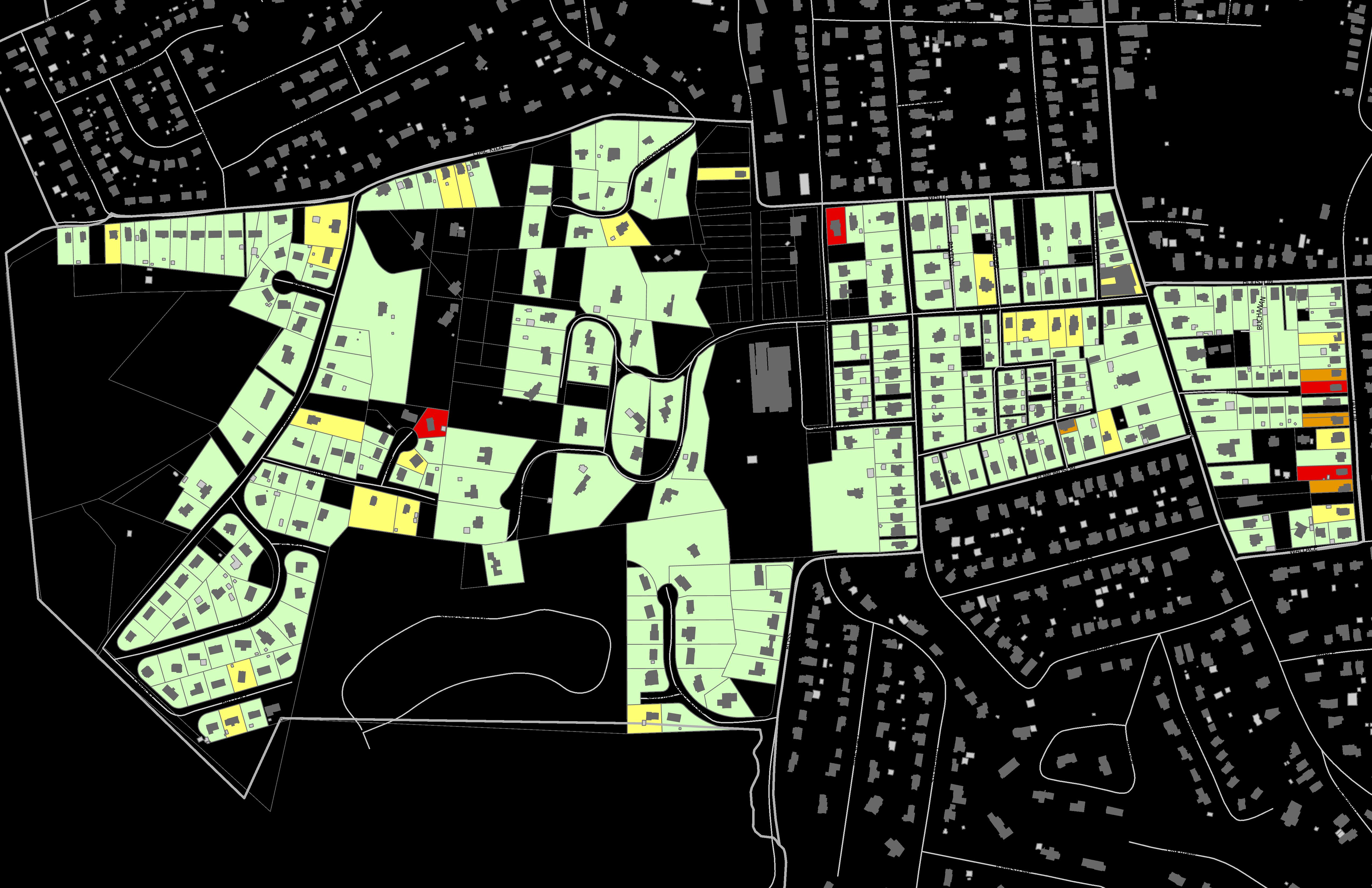

Block Group 6
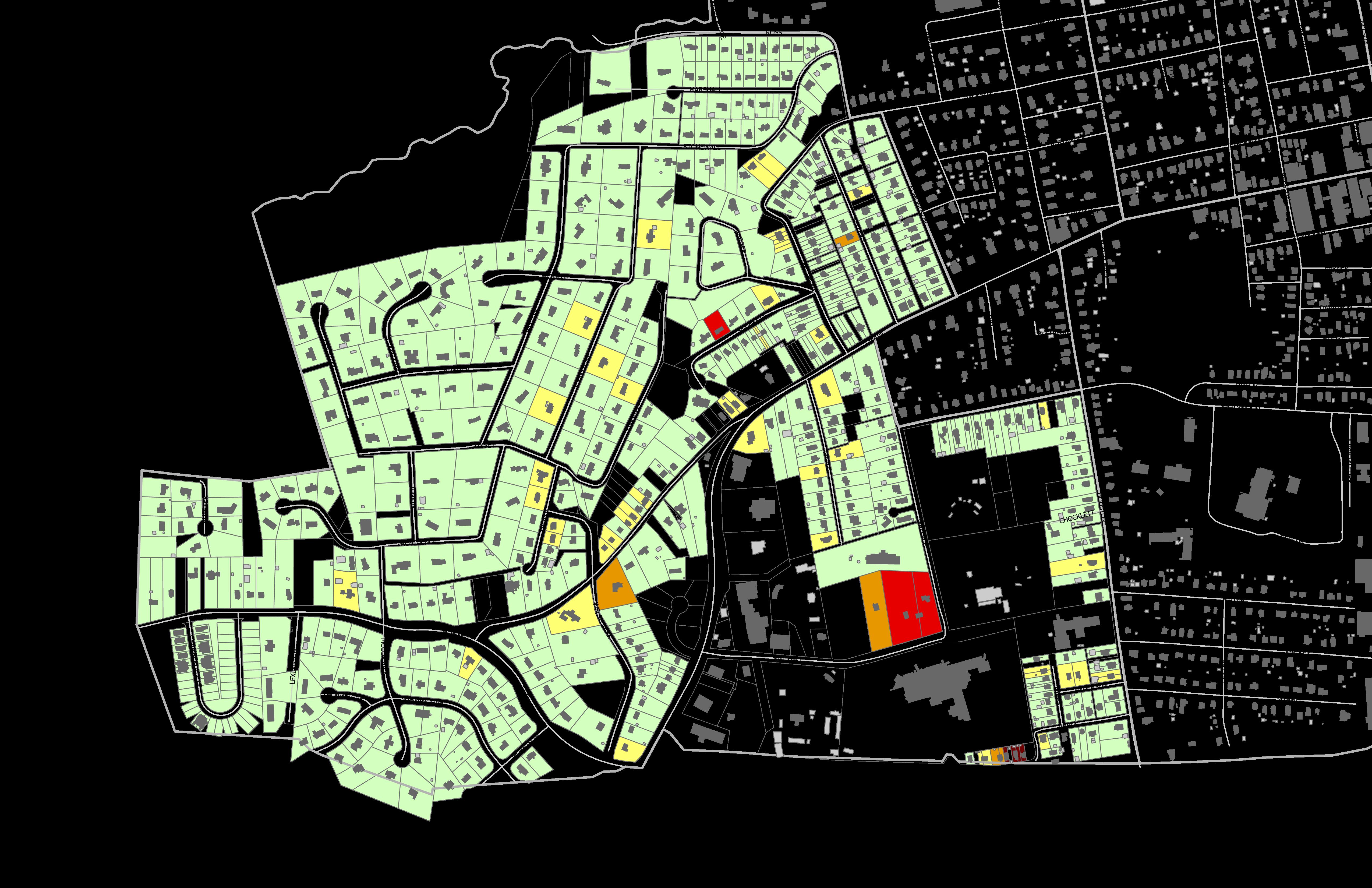

Recommendations
The housing stock across Lexington is generally in good condition, with very few instances of clustered houses that exhibited dilapidated or majorly deficient conditions. However, across the fabric of neighborhoods throughout the City, certain properties appeared to be abandoned or otherwise had some issue that prevented their ongoing maintenance and upkeep. Through our examination of data related to housing, it is evident that there is a severely constrained supply of available housing and that prices for housing, either owned or rented, is exceeding low to middle income people’s ability to afford it.
There are two separate issues that are equally important in Lexington that need addressing. First, the rehabilitation of deficient homes, demolition of dilapidated homes, and support for vulnerable populations ongoing maintenance of their property is an important part of keeping housing in stock and available, preserving historic homes, supporting quality of life, and assisting neighborhoods with maintaining their collective value. Second, addressing the barriers to new housing production, such as zoning restrictions, is essential to building sustainable affordability into the overall housing market of Lexington. As the center of the region, Lexington and Rockbridge County could see sprawling development begin to appear over the countryside if changes are not made to increase density at key sites throughout Lexington.
Maintaining the Housing Stock
1. Promote education and good maintenance practices.
Through partnerships with local organizations, and maintenance experts Lexington can promote property maintenance educational programs that provide guidance for homeowners in maintaining their home. Community workshops that highlight preservation practices could be held in older neighborhoods to ensure that homes are preserved against time and the elements.
2. Address community needs holistically.
As noted by stakeholders, dilapidated housing conditions in Lexington are typically exacerbated due to the age of householders, physical and mental ailments, and tight home repair budgets. These issues, outside of housing itself, can foster cyclical conditions that may be difficult to overcome for some members of the community. By addressing needs through holistic programs, the City can also help address housing issues with select properties before they arise.
3. Create or utilize a spot blight abatement program.
Throughout all of Lexington, certain properties were identified as abandoned or in dilapidated condition. The Code of Virginia (§36-49.1:1) authorizes localities to have the power to acquire or repair any blighted property with certain legal restrictions. Lexington can create a spot blight abatement program in accordance with the law to further address these select blighted/ dilapidated structures.
Preserving Affordability
1. Encourage new housing unit production and reform local ordinances as needed.
The review of local economic conditions related to housing showed that demand is outpacing the supply of available housing units, particularly for those seeking to rent. Nearly half of the community is considered or close to being housing cost burdened. To ensure affordability, new housing production should be supported when proposed as well as local ordinances, such as height restrictions, minimum lot sizes, or other limits on density, should be re-examined to ensure that there are fewer barriers to new production. Without new units accommodating increased demand or replacing aging structures, the prices of the limited supply will greatly increase further inhibiting members of the community from being able to locate in Lexington. The Code of Virginia (§15.2-2305) allows localities to adopt affordable dwelling unit programs as part of their local zoning ordinance to increase allowable density in exchange for defined affordable units.
2. Further diversify the housing stock.
Although Lexington has generally more multifamily units than other localities, the unit mix is still predominantly single family homes. Multifamily apartment buildings can more efficiently house more people. These do not necessarily need to be large apartment complexes, but duplexes or small-to-medium scale “missing middle” developments can help provide more housing opportunities for a variety of life needs.
3. Support the creation of a Community Land Trust.
Community Land Trusts can have varying organizational structures, funding sources, and typical projects that are initiated, but the concept at its core works to develop and retain affordable units for the community in perpetuity. As a non-profit or quasi-governmental entity, the Community Land Trust can acquire, maintain, or develop new units. Typical arrangements involve a homebuyer purchasing a house on property that remains owned by the Community Land Trust, as the value increases, the homeowner can benefit from the increased equity value in selling the house while the land beneath the home is perpetually owned by the trust. Different types of housing, including apartment buildings, can assist the City in diversifying the stock.
4. Continue collaboration with the local universities.
The local universities will continue to have a profound impact on the housing market. Either through students or alumni, there will be a high demand for housing units that often can outbid local community members. In order to mitigate the impacts, continued work should be conducted to collaborate with the local universities, encouraging on campus housing at densities capable of accommodating the projected student population as well as leveraging influence with alumni and alumni groups where possible.
Funding Sources
There are many state and federal funding resources that can improve housing conditions in the City of Lexington. Funding should be applied to the improvement of existing houses, as well as the construction of new housing. All potential grant funding and incentives require an affordability component for either all of the units improved or developed or a substantial portions of the units. The U.S. Department of Housing and Development (HUD), typically defines affordability as housing units occupied by or available to households with low-tomoderate income levels (LMI), which is defined as 80% of the Area Median Income (AMI). Affordability is further defined by household size, a threshold that applies to programs such as the Community Development Block Grant Program. Other funding, such as HUD’s HOME Investment Partnership Program, not only require that the program meet the 80% threshold, but also require that a portion of the units be made available to households making 60%, 50%, and 30% of AMI, in addition to the 80% threshold.
However, nothing precludes a locality in Virginia from subsidizing or incentivizing the improvement of existing housing or the development of new housing through its own resources. Many small and medium sized localities within Virginia may struggle to obtain (or maintain) the liquid assets required to fund such projects without government assistance. However, an asset that small and medium sized localities can utilize to develop affordable and market-rate housing is the surplus land they have in their inventory. Such land, acquired by various means including tax sales, can be sold at a discount or transferred for $1 in order to incentivize housing development. Typically, such land transactions take place through a locality’s redevelopment and housing authority or economic development authority, so as to
avoid extra steps it takes for a locality to sell surplus land. To ensure that the development occurs as intended, the deed of transfer or similar legally binding document, is used to put in place performance standards and “clawback” provisions to regain control of the property if performance becomes an issue.
The following subsections delineate the state and federal funding resources that may be applied to improving or developing new housing. They also define the City’s role in tapping into the funding and overseeing their expenditure. For some funding, the City is the sole entity applying for and responsible for the funding, although the administration of the funding/program can be subcontracted. For other funding, a nonprofit or private developer is required to be the lead entity, a requirement particularly relevant to the development or redevelopment of multifamily housing. Finally, for funding provided directly to households, such as first time home-buyer assistance, the City mainly functions in a communicative and educational capacity, informing eligible households of the funding assistance available to them and coordinating efforts to distribute benefits.
Housing Rehabilitation Funded by Community Development Block Grants (CDBG)
As part of the Small Cities CDBG Program, funds are administered by the Virginia Department of Housing and Community Development (VDHCD) and are available to communities that do not receive a direct allocation of funding from HUD (referred to as Non-Entitlement communities). Applications for funding can be submitted one or two times per year. With every Small City in Virginia eligible to apply for funding, the process is very competitive. Communities that are successful in obtaining VCDBG grants are able to
fully explain the housing needs in the community, the number of LMI households, and the level of economic stress in the area, which form the criteria by which grant applications are scored.
VCDBG funding can be utilized in a number of different types of projects, but the most common type of project is Housing Rehabilitation of properties that benefit LMI households, a priority in Virginia and for HUD in general. Housing Rehabilitation Projects are eligible for up to $1.25 million with a cost limit of $125,000 per rehabilitated house. In some cases, where a house is in such condition that it can not be rehabilitated within the cost limit, the home can be replaced as a “substantial reconstruction” on the same footprint. The term “substantial reconstruction” is very intentional in that CDBG funds can not be used for the construction of new housing except in specific circumstances. In most substantial reconstructions, other outside funding has to be tapped to cover the difference between the cost limit and the actual cost of construction. It is also important to note, that the VCDBG program design includes a strong preference for addressing homes for homeowners. Due to rental properties often being mixed in with the home-owned properties, a typical Housing Rehabilitation Project does include several landlord/investor-owned properties where the tenant household is LMI.
In the past, VDHCD required that Housing Rehabilitation Projects be implemented in a narrowly defined neighborhood or portion of a neighborhood so that the impact of the improvements would be more recognizable and create synergy throughout the project area. However, in recent years, VDHCD has allowed for scatter-site Housing Rehabilitation Projects and projects combining rehabilitations intended to address a cluster of housing needs with other
nearby scattered sites where individual houses are in need of rehabilitation, but the surrounding homes are in good condition. This provision is may be helpful in Lexington’s case, where the windshield survey conducted identified only select properties throughout the City surrounded by otherwise sound homes.
Virginia CDBG funds can be used for Comprehensive Community Development (CCD) projects, where the grant request may include public space improvements in addition to housing rehabilitation. Water and sewer utility upgrades, stormwater improvements, roadway and sidewalk improvements, and other public welfare improvements that enhance the quality of life in the project area are included in this grant. However, when scoring a CCD, VDHCD will be looking for the locality to also put some of its own money into these additional major activities through its capital improvement program, VDOT funds, or other matching grant sources. VDHCD also frowns upon improvements that are simply deferred maintenance that the locality has failed to address in the past.
As a part of any VCDBG-funded project, a portion of the grant funds can be used for administering the grant. This portion can be retained by the locality to compensate for staff time dedicated to the management and administration of the project. Alternatively, a locality can procure the services of an outside consultant or its Planning District Commission for managing and administering the project. However, even where outside assistance is utilized, the locality has to make the application for the funding upon approval of its governing body and is contractually responsible for expending and administering the funds in keeping with VDHCD and HUD requirements. Similarly, per VDHCD guidance and cost limitations, VCDBG funds
can be utilized for the cost of procuring and utilizing the services of a Housing Rehabilitation Specialist, an architecture firm, and/or an engineering firm as needed for the specific project.
VDHCD also provides VCDBG funding toward Planning Grants to do the community outreach, neighborhood research, housing assessments, preliminary architecture, preliminary engineering, planning and budgeting, and project development for potentially eligible VCDBGfunded projects. As mentioned, a portion of the funds can be retained to compensate for staff time put into the planning of the project, or a locality can procure the services of an outside consultant or the Planning District Commission to manage the grant. The funds can also be utilized for the cost of preparing housing assessments and preliminary reports.
Housing Construction Funded by CDBG Funds and Other Virginia Resources
While VCDBG funds can not be used for the construction of new housing, VCDBG grants and other Virginia funding sources can be used in support of new housing construction. VCDBG funding up to a set amount can be used for improvements necessary to bring newly constructed housing units online, whether singlefamily or multifamily. Eligible improvements include the design and development of the infrastructure (water, sewer, storm drainage, and sidewalks/roadways) needed to serve the new homes as well as initial site improvements. At least 51% of housing units or households must be considered LMI to qualify for these funds. Lexington also needs to control the property at the time of the application and through construction, typically via ownership. Afterwards, the City may transfer ownership to a housing
developer. Utilizing VCDBG in this manner is ideal where the City owns a larger vacant parcel of land that is well suited for new housing development. The improvements represent a significant incentive that the City can provide. If coupled with a discount or $1 sale of the land, the incentive is even larger.
Where housing is being constructed for home ownership, the VCDBG funds can also be used for down payment assistance as long as the funding does not exceed 50% of the assistance provided. Many projects created in order to provide affordable first-time home buyer opportunities are developed by certified Community Housing Development Organizations (CHDO), housing development non-profits that receive direct subsidies from VDHCD/HUD in support of their housing efforts. These organizations have extensive knowledge of the grant programs and the effort required to make such a project successful. They also have staff that provide credit counseling, prequalification/under-writing of households eligible for home ownership, home ownership education, and other supportive services required by the grant funding agencies.
VDHCD oversees HOME Investment Partnership
Program funding in Virginia and the Virginia Housing Trust Fund. Down payment and closing cost assistance of up to 10% of the value of the home being purchased can be provided to households that have incomes at or below the 80% AMI level and contribute 1% of the sales price to the purchase from their own funds. This assistance is subject to recapture if the home is sold within the 5 to 15 year affordability period depending on the amount of assistance provided. Similarly, an individual who develops housing affordable to those under the 80% LMI income cap can receive a direct subsidy to buy down the cost of newly constructed affordable
homes (not including market-rate homes that might be included in a project.) Furthermore, the home receiving the subsidy would be subject to a 5 to 15 year affordability and recapture period depending on the monetary value of the assistance provided.
Specific programs typically change year to year, please reference the Virginia Department of Housing and Community Development and Virginia Housing websites for the latest information regarding funding opportunities as well as the specific rules and limits on funding availability.
Homeowner Support
Virginia Housing, Virginia’s housing finance agency, works directly with potential homeowners to educate and prepare them for homeownership. By working with local banks to arrange favorable loan terms, particularly for first-time home buyers. It serves as the gateway for affordable loans through its conventional lending program that requires only 3% down payments and favorable interest rates; FHA loans that require a 3.5% down payment; VA lending that requires no down payment; USDA Rural Housing Service loans that also require no down payment; and even second mortgages for first time and repeat home buyers in federally targeted areas. Virginia Housing also provides down payment grants of 2.0% to 2.5% and closing cost assistance for income-qualified first-time home buyers. Required credit scores for these various programs run from 620 to 660, depending on the program. The City would not have a direct role in accessing Virginia Housing support for homebuyers, however, it does have a role in making sure the community is aware of the resources that are available. By inviting Virginia Housing to provide an information booth
at City-sponsored community events, building awareness among community groups of the support that is available, and communicating the availability of the resources through means such as its website, public service announcements, newsletters, utility bill inserts, and so forth.
Low-Income Housing Tax Credits and FHA
Guaranteed 221(D)(4) Lending
The LIHTC program is a tool used by nonprofit and private developers to under gird the rehabilitation of or construction of affordable rental housing. Technically a locality is not involved in the development process other than through zoning and land use decisions that have to be rendered. However, this program is relevant to the City because of the role that Lexington can play in incentivizing LIHTC housing development through discounted or $1 land sales. Most LIHTC developments involve larger apartment buildings or complexes in order to make the finances work. Vacant parcels in the City’s inventory could provide a workable location for a LIHTC project. While it is impossible to cover all of the bases of what a LIHTC project involves, this document provides some basic information.
LIHTC tax credits give investors a dollar-for-dollar reduction in their federal tax liability in exchange for providing financing to develop affordable rental housing. Investors’ equity contribution subsidizes low-income housing development, thus allowing some units to rent at below-market rates. In return, investors receive tax credits paid in annual allotments, generally over 10 years. Competitive credits of 9% tend to generate around 70% of a development’s equity over the 10-year period, while less-competitive credits of 4% tax credits are used for those projects seeking financing through tax-exempt lending, whereas projects using the 9% tax credits are not eligible
for such financing. In Virginia, Virginia Housing oversees the LIHTC program. Virginia can only provide the 9% credits in any given year per an allocation of credits provided by the federal government, so the process is very competitive. The 4% credits are limited only by Virginia Housing’s volume cap on its tax-exempt lending and are therefore still competitive, but not nearly as competitive as the 9% credits.
Owners or developers of projects receiving LIHTC tax credits agree to meet an income test for tenants and a gross rent rest. There are three ways to meet the income test:
1. At least 20% of the project’s units are occupied by tenants with an income of 50% or less of AMI for household size.
2. At least 40% of the units are occupied by tenants with an income of 60% or less of AMI.
3. At least 40% of the units are occupied by tenants with income averaging no more than 60% of AMI, and no units are occupied by tenants with income greater than 80% of AMI. The gross rent rest requires that rents do not exceed 30% of either 50% or 60% of AMI, depending upon the share of tax credit rental units in the project. All LIHTC projects must comply with the income and rent tests for 15 years or credits are recaptured. In addition, an extend compliance period (30 years in total) is generally imposed.
The FHA 221(d)(4) lending program guaranteed by the Federal Housing Administration (FHA), is the multifamily industry’s highest-leverage, lowest-cost, fixed-rate loan available for the development of multifamily housing. 221(d)(4) loans are fixed and fully amortizing for 40 years, not including an additional interest-only period of three years during construction. A 221(d)(4) loan
can be used for the construction or substantial rehabilitation of detached, semi-detached, walk up, row, and elevator-type multifamily properties, including market-rate, low-to-moderate income, and subsidized multifamily, cooperative housing and affordable housing properties with at least five units. Commercial and retail space in mixeduse properties is limited to 25% of the new rent-able area and 15% of underwritten effective gross income. Projects funded in this way are subject to numerous FHA requirements and fees and the Davis-Bacon Act’s prevailing wage for the locality, but the lower long-term interest rate associated with a federal guarantee compensates for the additional upfront costs.
- Review of Existing Plans
2018 Strategic Plan
The City’s 2018 Strategic Plan discusses housing goals in several areas. Vision II: Economically Healthy City, Goal II Ensure adequate population and demographic mix for a healthy community details four strategic action items:
1. Incentivize and encourage multifamily and high density development or redevelopment in accordance with the Comprehensive plan. (Short term)
2. Consider ways to increase affordability of units for lower-income residents. (Ongoing)
3. Compensate public employees with competitive wages, raises, and benefits. (Ongoing)
4. Encourage development and redevelopment of upper floors in downtown properties as a means of increasing downtown population. (Ongoing)
The goal notes that several thousand college students come and go throughout the year and Lexington’s population totals 7,045 with a median income of under $35,000, which increasingly is unable to afford the cost of rent or purchasing a home. The strategic plan states that “encouraging and promoting the development of affordable housing and a mix of housing types is a must.”
The infrastructure that supports livable neighborhoods is also mentioned in Vision I: Healthy & Physically Active City, Goal IV Improve walk-ability and bike-ability for recreation and transportation and Vision IV: Safe City, Goal III Provide and improve pedestrian and bike accommodations and awareness. This goal seems to be well underway as there is a Bicycle and Pedestrian Plan adopted as of May 2022. This plan will benefit community members by making it more affordable, safe, and comfortable to lower their transportation costs by not being burdened by an automobile. Automobiles often take up the largest share of lower income community members’ total income

through maintenance and fuel costs. Vision II: Economically Healthy City, Goal IV Maintain and update infrastructure and align fees with costs also discusses making sure that capital improvements to infrastructure continue and expand the ability of utility systems to handle new or expanding businesses. Housing is not mentioned, but to incorporate new units in mixed use areas, the City will need to ensure that its utility capacity is not a barrier to new growth.
As strategic plans are more dynamic documents that typically set direct priorities for the City Council to achieve, it is good to include this special focus on affordable housing and its connection with incomes. The further review of the Comprehensive Plan will determine if the targeted areas for multifamily and high density development are sufficient to address the overall need and the goal of mixing housing types in the community. While it is directly mentioned, the language is not particularly strong in its ambitions. “Consider ways,” or “incentivize and encourage” still leave the possibility open that nothing changes. Also, the strategic plan is six years old and needs to be updated, showing that only so much progress has been made on housing affordability while it remains a top issue in the community.
Threshold Housing Report (2018)
The Home Improvement Needs across Five Neighborhoods study was prepared by Washington & Lee students of the SOAN 276 Art & Science of Survey Research in April 2018 for the Lexington Threshold Housing Commission. The report was to explore various neighborhood dynamics in relation to housing and affordability.
The students drew data from the Census Bureau and Lexington’s 2007 Comprehensive Plan to find that Lexington increased housing stock from 2000 to 2009 by 95 housing units. However, even with the addition of housing units, costs for housing have far-outpaced supply and families find themselves competing with students for the same housing stock. This situation was mildly ameliorated when Washington & Lee built the on-campus housing of the Village Apartments and required juniors to live on-campus. This study revealed that this has not alleviated the housing situation for law students at the university, which have been increasingly living off-campus.
The median value of owner-occupied housing was $74,500 in 1990, increasing by 77% by 2000 to $131,900 according to Lexington’s 2007 Comprehensive Plan. In 2000, the median household income for Lexington residents was $31,046, increasing by roughly $7,000 by the time the 2007 Comprehensive plan was released. The same year, median sales prices for homes increased to $244,913. Lexington’s 2007 Comprehensive Plan noted that “a household had to make over 150% of median income to purchase a median priced home.”
In 2007, The Threshold Housing Commission stated that, “the largest net increase in housing demands will come from younger, less affluent households,” while later adding “the number of households headed by people age 75 and older will continue to increase rapidly.”
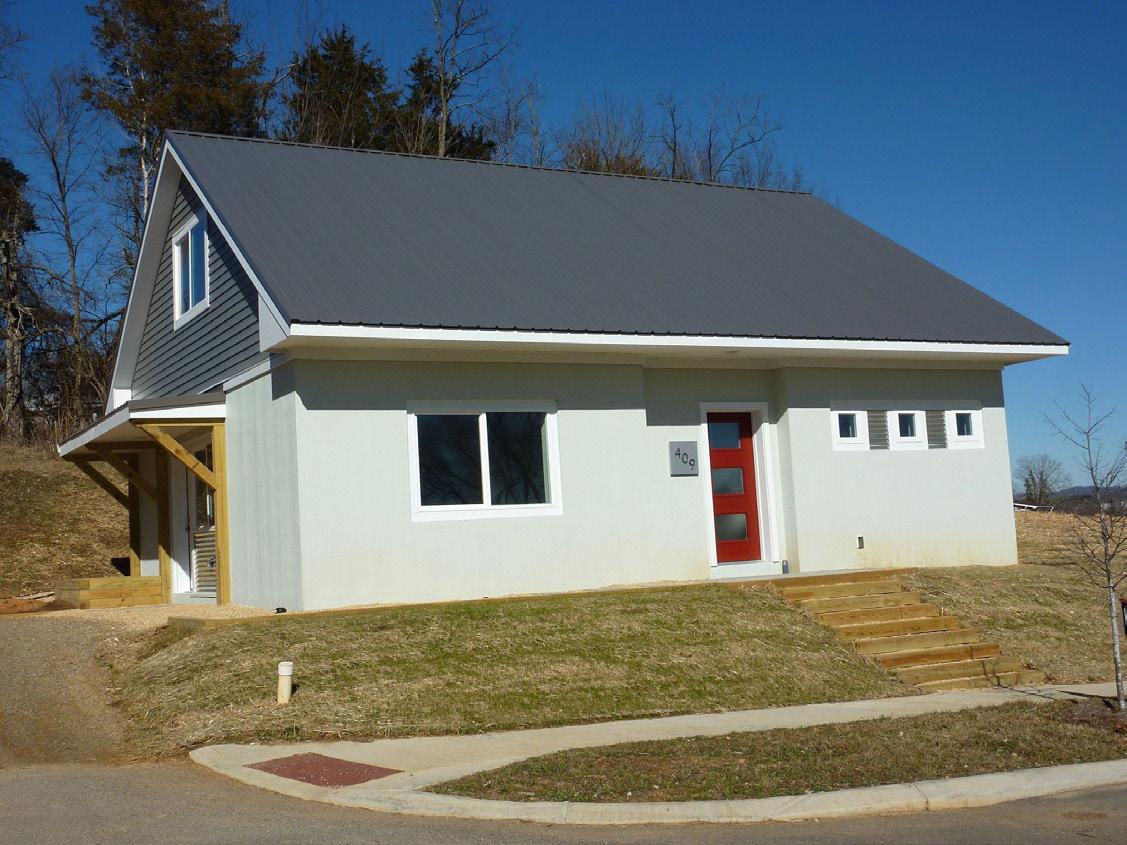
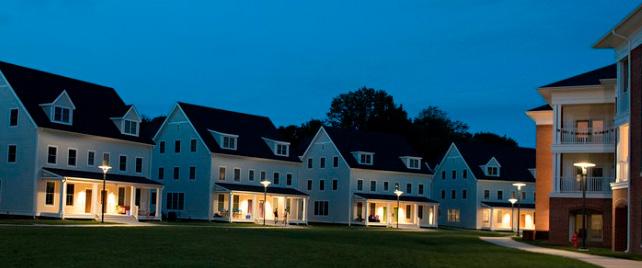
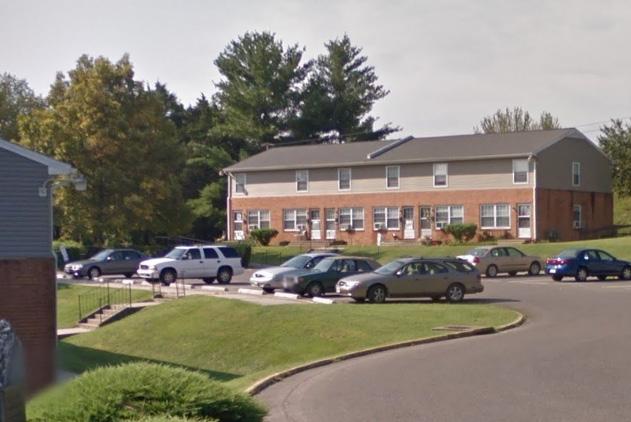
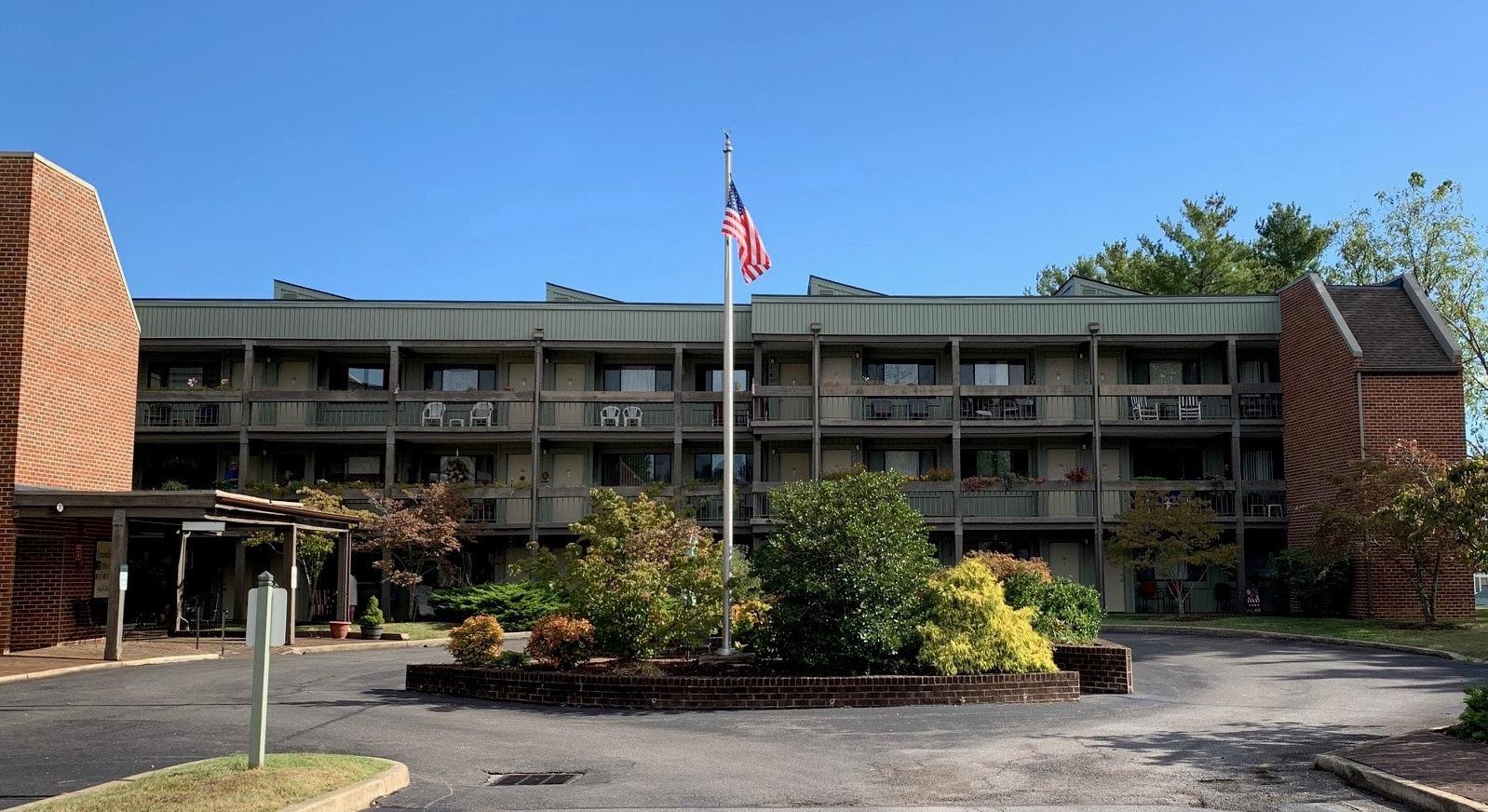
Lexington’s affordable housing stock is primarily found in three developments: Lexington House Apartments, Mountain View Terrace Apartments, and Windemere Apartments.
Lexington House Apartments – funded by VHDA, 78 total units, all one-bedroom, Section 8. Eligible residents of the complex must meet Section 8 income requirements and be elderly or handicapped.
Mountain View Terrace – HUD Section 8, 39 units. Tenants must meet Section 8 income guidelines.
Windemere – 38 one-bedroom units, restricted to the elderly, handicapped, or the disabled. Approximately a 6 month wait time for a unit.
Threshold attempted another project, titled Thompson’s Knoll, but the requirements for eligibility were unattainable for the majority of Lexington’s low- to moderate-income residents.
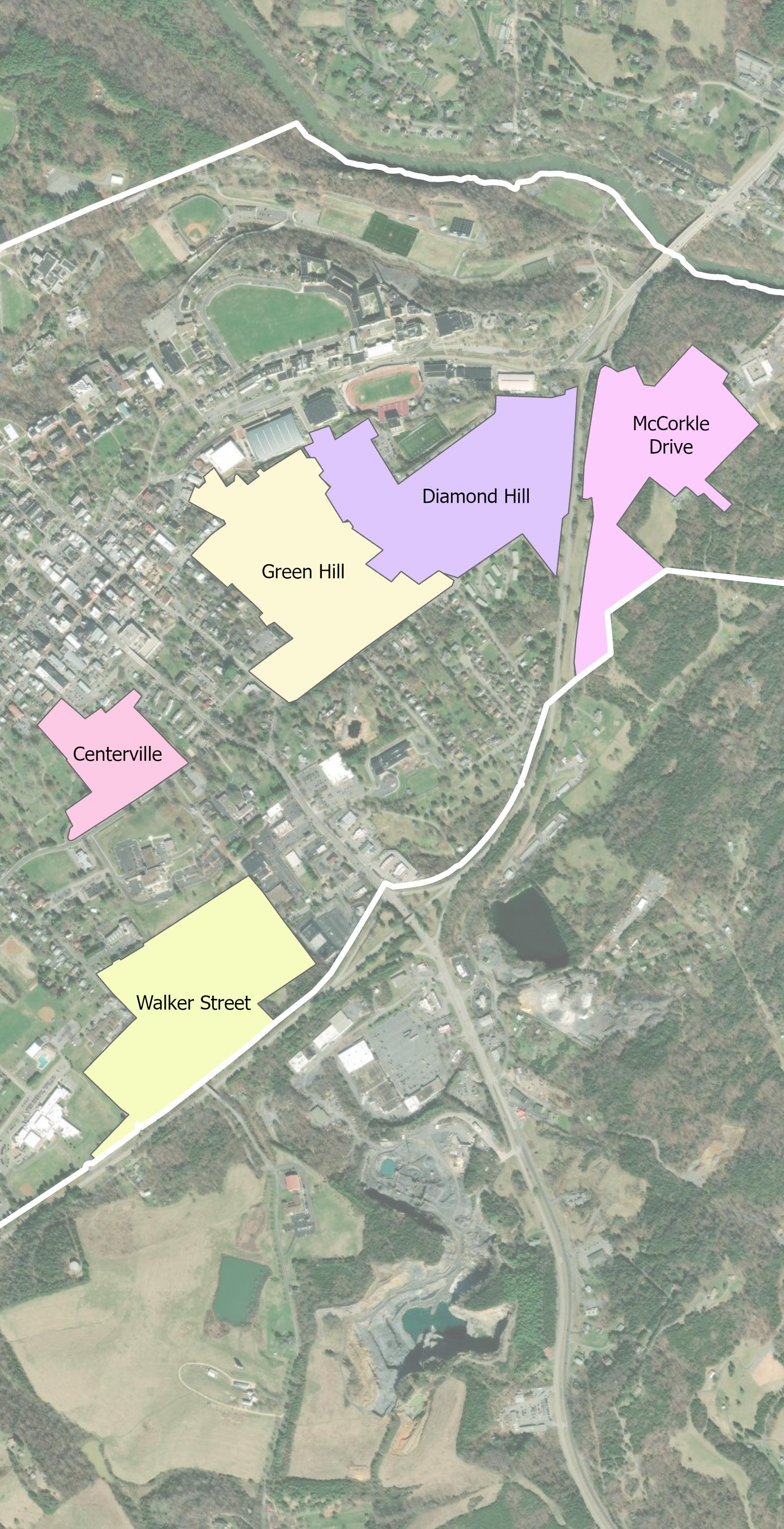
The study focused on five identified neighborhoods: Centerville, McCorkle, Diamond Hill, Green Hill, and Walker. Each of these neighborhoods were historically working-class, blue-collar neighborhoods inhabited by minority groups. Students developed a survey with the Threshold housing nonprofit of Lexington to ascertain information on housing needs in each neighborhood. The students mailed postcards to residents of the five neighborhoods, alerting them of the study. Initially, the survey was conducted in-person, but it was later switched to a mailed survey instead. The response rate was about 40% for each neighborhood.
Questions in the survey were set up to gauge perceptions toward housing and neighborhood characteristics. The first two questions were
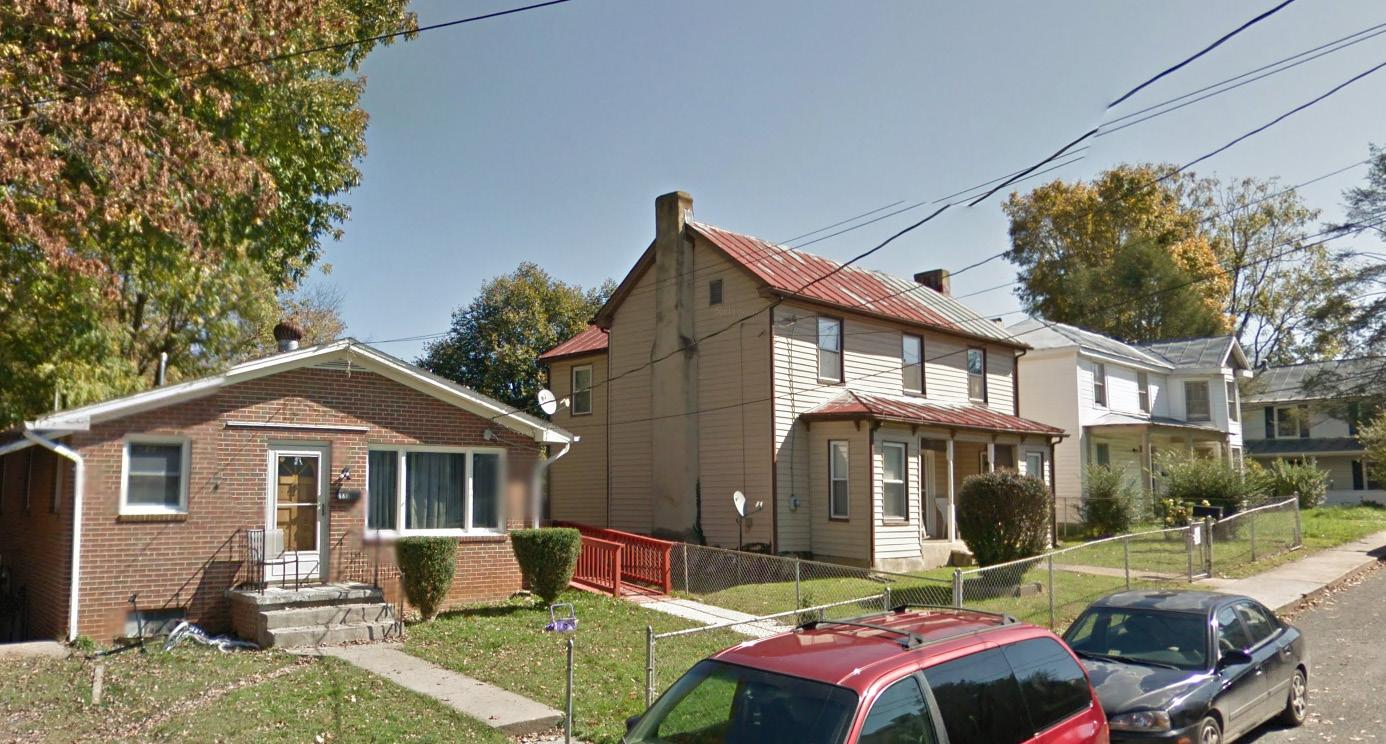
about how long residents had lived in Lexington, then questions were asked about the age of their home, the general makeup of the home (presence of a basement, cellar, or attic) and the number of bedrooms. Next, questions were asked about if the homes were rented or owned, and if their homes had undergone necessary repairs or general repairs, and how long the repairs had taken.
The survey results found that the Green Hill neighborhood suffers from the greatest housing needs and is home to populations that could be considered vulnerable. Residents of the Green Hill neighborhood expressed a desire to repair their homes, but many of the residents are elderly and low-income, which makes repairs more difficult to achieve.
“Housing Report for Lexington” (2022)
The report was completed by students at James Madison University for their PUAD 573 Economic and Community Development Course and sought to identify the extent of the housing crisis in the City of Lexington. The potential of an affordable housing crisis is placed in historical context with analysis comparing housing conditions in Lexington to Rockbridge County and the rest of Virginia and by looking at the impact of Washington & Lee and Virginia Military Institute universities, non-taxable land, height limits and a Memorandum of Understanding (MOU) between the County and City are having on housing affordability. Findings and recommendations are then presented for Lexington’s consideration in the future.
The context of Lexington’s housing crisis is in line with state and national trends. The 2008 recession triggered a slowdown of home production which has caused home prices to increase over time. However, household incomes have remained stagnant raising rental prices as more families can no longer afford to buy. This was made worse with the COVID pandemic, shifting housing production trends more towards larger, more expensive units. Overall, the result has made housing unaffordable either for rent or ownership opportunities. This process is pushing people seeking the most affordable housing opportunities further out into the County. The report notes that challenges to producing more housing and increasing prices come from the presence of Washington & Lee and Virginia Military Institute, the dedication to preserving the “historic character” of downtown Lexington, height limits of 35 or 45 feet, and a MOU with Rockbridge County to no longer annex land.
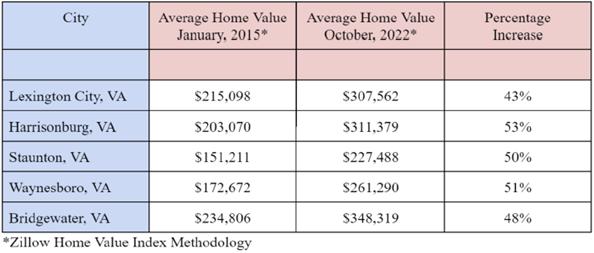
The report found that local residents median household income in 2020 was $50,714, which would allow affording a house around $100,000 to $250,000 in price. However, the average home
value in 2022 was $307,562 in Lexington, having risen 43% from 2015. This means that community members cannot afford a house in the City. Students noted that Lexington’s height ordinance greatly reduces the City’s ability to build upward, particularly within the historic downtown. The height ordinance combined with the Memorandum of Understanding with Rockbridge County significantly reduces Lexington’s ability to increase housing stock, which may be hindering growth. Short-term rentals are also removing units from more permanent housing opportunities, as landowners are looking to rent to students for income. Lexington also features the highest percentage of tax exempt property of any jurisdiction in Virginia, due to the non-profit organizations, churches, and public entities. This increases the property tax burden of residents to fund infrastructure, but also prevents expansion of capacity to facilitate larger economic development projects.
The report states that they do not consider Lexington to be in a housing crisis due to the poverty level being obscured by the student population as well as the similar price of housing in other localities. Interviews with stakeholders suggested that housing availability and affordability was not a major issue and that requests for assistance mostly came from Rockbridge and not Lexington. There was also no desire to change the dedication to preservation of the downtown area through height limits.
The recommendations from the study suggested the following ways to move forward: review and update the local zoning ordinances to encourage growth, including raising the height limit and increasing density in target areas of the City as well as adjusting setbacks, and allowed housing types. Reduce short-term rentals through enforcement of new ordinances dedicated to limiting them. Encourage new types of single-family dwellings, such as cottage style housing or duplexes and make key infrastructure improvements in targeted areas to provide mixed uses and new housing opportunities. Attract developers to build more affordable housing units to provide first time or median income buyers with opportunities. Collaborate with Rockbridge County to address housing insecurity regionally. Conduct an “independent city census” to capture more specific types of resident data to reveal trends in demographic or economic changes over time while adjusting for the presence of college students. Revisit the MOU with Rockbridge County to determine if alternative agreements or adjustments could better address Lexington’s needs to improve housing conditions. In conclusion, the study found that Lexington is facing a housing crisis that is proportional to the rest of Virginia and the United States, though slightly less so than other cities of comparable size.
Comparison of Home Values 2015-2022
This present study will examine some of the American Community Survey or Census data to see if trends have remained the same. The characterization of Lexington’s housing crisis appears to be minimizing an existing problem that has gone on for some time and is clearly mentioned in other planning documents. The extent that the recommendations from this study have been followed will also be examined. Overall, the report provides Lexington with good context about its overall housing “landscape.” Critical issues between the perceived lack of space, historic preservation, and housing affordability appear to go on unaddressed over the previous decade. This is the case in other communities across Virginia, however, as the trends that comprise the housing crisis get worse there may need to be an overall reassessment of community responsibility towards providing for affordable housing or creating the conditions that new housing production can exist. The “side effects” such as a dragging local economy as local workers can no longer afford to even commute from outside of the community, or influx of out-of-state populations or retirees moving to the community as a cheaper area to live despite it being locally unaffordable for the existing community, will begin to add up and further exacerbate the problem.
Lexington Comprehensive Plan
The Lexington 2040 Comprehensive Plan was adopted on November 5th, 2020, replacing the previous Comprehensive Plan from 2007. This provided the City with a more modern planning document that could support active use as decisions are made for the future. The Code of Virginia, §15.2-2230, requires the Comprehensive Plan to be reviewed by the local planning commission to determine whether it is advisable to amend the plan. Next year, 2025, will mark five years since the Plan’s adoption, making this study of housing conditions in the City of Lexington a good chance to see how housing conditions have changed in the short term with an eye to the future for what improvements could be made. This summary focuses on where the Plan touches on housing conditions in the community.
The Plan’s vision statement reads “The City of Lexington will develop strategically and sustainably by diversifying economic opportunities, housing options, and transportation methods while protecting the City’s rich and historic natural resources and enhancing the quality of life enjoyed by its residents and visitors.” This is further supported by Plan Values, which does not mention housing
directly, but emphasizes increasing accessibility to opportunities, a sustainable economy, local identity and character, citizen engagement, and collaboration.
The Community Input Summary combined information provided in online surveys, public meetings and workshops, interviews with community stakeholders, leaders of City departments, and other organizations, and County and regional leadership. The top planning issues identified were the balance of growth and preservation, as well as affordable housing. Top projects identified included the development of affordable housing and programs to facilitate it. In the survey and every event of the public input process, affordable housing, diversity of housing types, and homes for seniors and young families, were all topics that continued to appear in the results of the engagement with the public. However, small town character, preservation, and “no change” appeared. This is an area where balancing interests can be difficult as new development projects come in and face opposition, or updates to the Zoning Ordinance can face scrutiny as they are trying to address the issues of housing affordability and diversity of unit types.
Housing Planning Context
Housing is identified as being critical to the health, well-being, and economic vitality of Lexington’s citizens. The Plan notes that little housing has been built recently due to difficult topography and a low supply of undeveloped land. The local economy is strong and the City has a high quality of life, which makes Lexington a highly in demand place to live. The Plan states that during the Community Engagement process both in the survey and at community meetings, housing affordability was one of the most frequently stated concerns for the future. The Plan then explores local conditions by utilizing the latest available data at the time, ACS 5-year
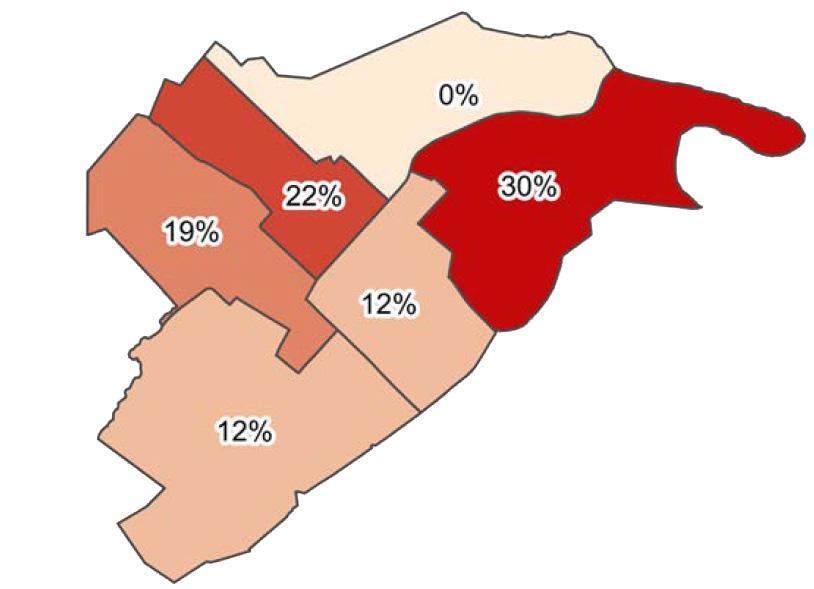
estimates, 2014-2018. Various data points are mapped by Census Block Group, including population, number of housing units, household size, housing type, tenure, age of housing, vacancy rates, and cost burdened households. The eastern most census block including Diamond and Green Hill neighborhoods stands out as having higher percentages of renters, cost burdened households, and vacancies.
For further context, the Housing section details the market forces that impact Lexington’s housing market. The Plan notes a 2019 market study showed that the market-rate and tax credit apartment supply was 98.8% occupied. This statistic means that there is a limited number of open housing opportunities to meet the demand, a trend that continues today. It is noted that housing demand for Lexington will be pushed into Rockbridge County for more affordable housing over time. Revitalization and rehabilitation of buildings, particularly in the downtown area, is an ongoing effort in the Plan to bring new units to the market. Infill of vacant parcels and parking lots is encouraged and preventing residential units from being converted to commercial units. There is also pressure from the local universities influence of off-campus student housing, although Washington & Lee has made strides to require on-campus living for some of their class years. The Plan notes the 2019 market study estimates that 82% of the local apartment base is occupied by students. Undeveloped/vacant residential land is mapped to highlight areas potentially developable in the future at the time of the Plan, with the suggestion that further modifications to the Zoning Ordinance could improve the developability of the parcels. The Plan notes that Lexington’s population is aging, and that there is a need for more senior housing opportunities. Accessory Dwelling Units are recommended to provide more infill development and increase housing affordability. Short-Term Rentals are mentioned, likely beginning to appear more
frequently at the time of the Comprehensive Plan, as an area that the City will need to monitor to ensure the balance of short-term rentals do not threaten the quality of life in residential neighborhoods.
Partnerships and Initiatives
Local advocacy groups that assist with home repair, rehabilitation, or building affordable housing units include Total Action for Progress (TAP), Mission Next Door, Habitat for Humanity, and Rockbridge Area Relief Association, and HelpLine, all working in various ways to provide relief to low-income area residents and prevent homeless.
The Rockbridge Area Rental Assistance Office provides affordable housing for low income citizens through the Section 8 Housing Choice Voucher program, which is funded and overseen by the United State Department of Housing and Urban Development (HUD) and administered by the Virginia Housing Development Authority (VHDA). These vouchers allow residents to find a home and utilize the voucher to pay for all or part of their rent.
The Plan states that in 2006, the City of Lexington had been conducting a “Rental Housing Inspection Program” based on observations of City staff, complaints from landlords, tenants, or the public, however, this program was suspended in 2020 with an intended re-evaluation of the ordinance in Fiscal Year 2021. This program was discontinued following the re-evaluation.
The City’s Threshold Housing Commission has been supporting the housing needs of low-
% of Cost
Burdened Households with Mortgages (>30% of income)
and moderate-income families, elderly, and handicapped since 1988. Threshold has been the main driver of housing rehabilitation projects for eligible households utilizing Community Development Block Grant (CDBG) funding, funding from the City, and from local banks. The Plan notes that despite their impact in assisting the community, they have been unable to develop new affordable housing units using CDBG funds due to eligibility requirements that were unattainable for Lexington’s low to moderate income residents. Today, they continue to provide housing assistance and coordinate efforts of various local housing assistance providers and are part of this current study of Lexington’s “Baseline Housing Initiatives.”
Needs Assessment
• Preservation and expansion of affordable housing opportunities.
• Additional appropriate and compatible multifamily, rental housing.
• New age-friendly housing opportunities, including age-restricted multi-family and senior living.
• Continued promotion of adaptive reuse, revitalization, and infill development.
• Continued exploration and expansion of innovative housing options, such as accessory dwelling units.
• Protection of neighborhood character by limiting encroachment from commercial uses, promoting homeownership, and supporting housing rehabilitation programs.
Goals Objectives and Strategies
• “Conserve and foster the improvement of the City’s neighborhoods to ensure safe, affordable, and desirable places to live.”
• Promote a variety of safe and affordable housing options for all of Lexington’s residents.
• Pursue policies that bolster Lexington’s housing market, promote new development, and reduce long-term financial burdens on property owners.
• Protect and enhance the quality and character of Lexington’s residential neighborhoods.
• Engage Lexington residents and property owners to create a more robust local housing market.
• Leverage community resources to support diverse, safe, and affordable housing.
Land Use Planning Context
The Land Use section of the Comprehensive Plan assesses Lexington’s growth and development, setting priorities for the future. Community engagement related to land use revealed that people desired a variety of housing types and that the City should welcome new residential growth. However, the engagement also showed a desire for preserving history/small town character. The City is seen as being mostly built out which makes infill and redevelopment the form that future growth will take. Currently, residential uses throughout Lexington are predominantly single-family detached homes, with the oldest being found on smaller lots nearest to the downtown and larger lots with more contemporary homes towards the City’s edges. There are also sparse duplexes and multifamily buildings scattered throughout the City. These are generally small multi-unit buildings rather than large apartment complexes and are well-integrated into the existing fabric of otherwise single-family neighborhoods.
Future Land Use Plan
The Future Land Use Plan section begins with the phrase “as a historic city with a great deal of existing development, Lexington must carefully plan for those areas where change is possible.” While trying to create a more connected, accessible community, expand traditional neighborhood patterns, and protect sensitive cultural and natural resources. The Future Land Use Map includes five overarching “Land Use Areas” - Gateways, Centers, Corridors, Opportunity Areas, and Pattern Areas, with supporting objectives and design principles for each. Corridors are then further articulated into two types and Pattern Areas of seven different types to explain the vision of land use in
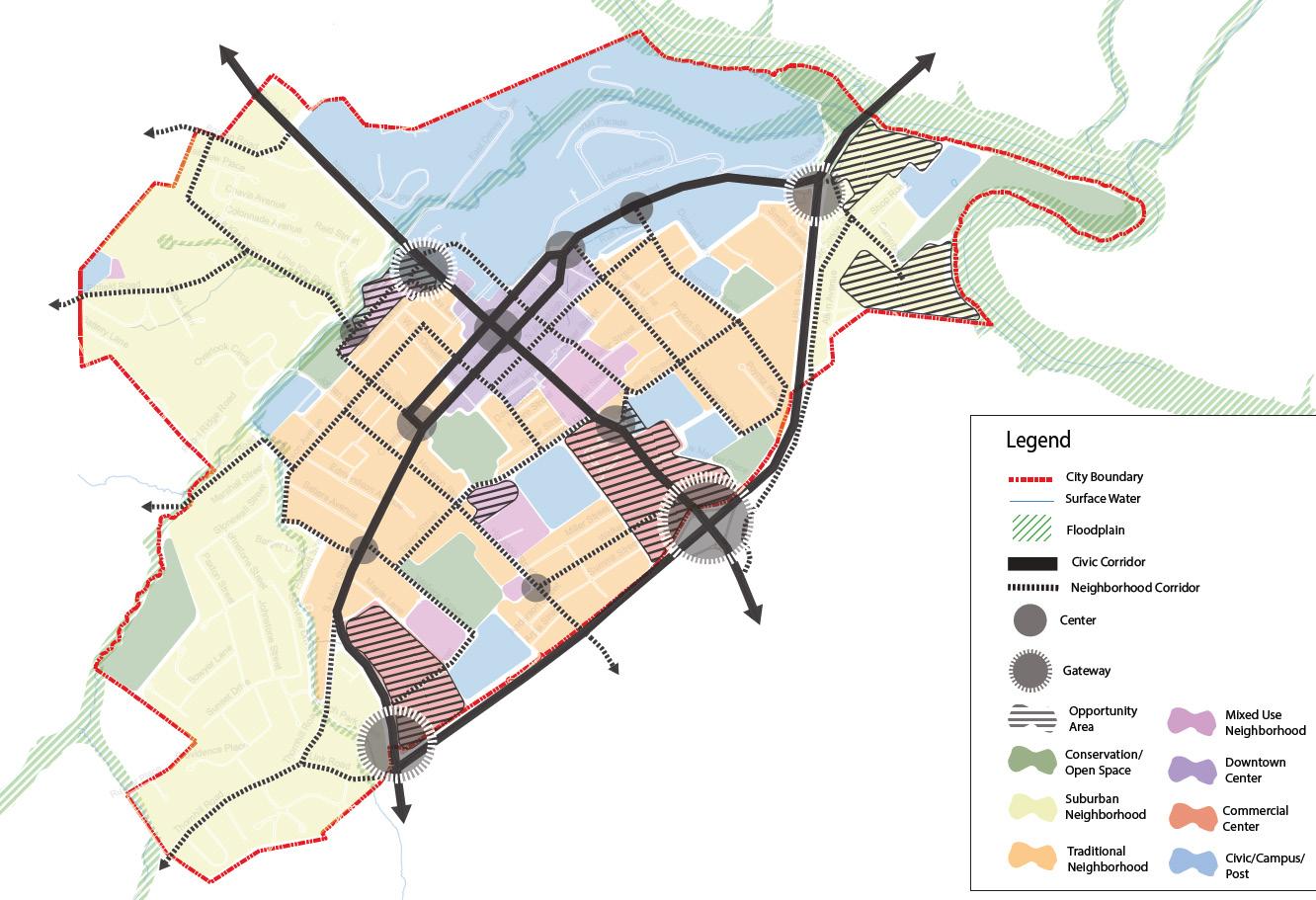
Lexington in the future.
Gateways - These are key places identified to establish “first impressions and reinforce perceptions of the City.”
Centers – These areas are described as community focus areas anchored by services and amenities for surrounding neighborhoods. Growth and investment are encouraged to create compact and walkable development.
Corridors – Corridors describe connections between areas of Lexington. The Plan identifies Civic corridors which connect the community regionally, while neighborhood corridors connect residential areas to centers and commercial areas.
Opportunity Areas – These are identified for change, revitalization, infill, redevelopment, or development. The Plan targets these areas to add density and create new neighborhoods. The opportunity areas are identified as McLaughlin
Street, East Lexington, E. Nelson Street, Spotswood Drive, and S. Main and Waddel Streets. They are generally fairly constrained in area, likely only where there are vacant or undeveloped properties.
Pattern Areas – These areas describe the intended form, character, and planning objectives of future development/redevelopment. They are intended to guide decision making as development applications are received.
Of these areas, Opportunity Areas, Neighborhood Corridors, and Civic Corridors are where infill and redevelopment is to be targeted, only Centers and Opportunity Areas are where mixed use development is encouraged, and only Opportunity Areas are where “fostering the development of a variety of housing types, including affordable housing” is encouraged. Generally, planning objectives are targeted towards different future land use areas.
Suburban Neighborhood – The plan notes that these are larger homes on large lots, targeting them for “preservation and enhancement.” There are some existing infill lots. They are mostly located on the western half of Lexington, although there is a small portion in the east. These areas are exclusive to single family homes.
Traditional Neighborhood – These are areas of more “moderate density” in closer proximity to the downtown core with smaller lots and a more urban character. They are generally located around downtown. Small infill projects are possible throughout the area. These neighborhoods are allowing of twofamily homes/duplexes as an opportunity to “increase density and provide a more affordable residential option in near-downtown areas while maintaining the architectural appearance of existing neighborhoods,” with additional guidance that “Duplexes should be of highquality design, respecting the scale of the neighborhood through architectural forms, sizes, and styles compatible with the buildings in the neighborhood.”
Mixed Use Neighborhood – These areas are identified as a “transitional zone” between downtown commercial areas and other areas and intended to meet their site context in “design, density, and character.” However, it still allows apartments, townhomes, and commercial uses. There is an emphasis on the form of development to protect pedestrian circulation and reduce the intensity of lighting and signage or certain automobile intense uses on adjacent neighborhoods. The Future Land Use map only shows these areas in limited places throughout Lexington.
Downtown Center – The Downtown Center is Lexington’s central hub. It is intended to limit the
expansion of commercial areas into residential neighborhoods but does allow more growth in the form of encouraging second and third floor spaces above the street front for more residential uses. Residential uses are “welcomed” to increase the use of downtown businesses and extend business activity hours.
Other Categories – Civil/Campus Post, Commercial Center, Conservation/Open Space
– The Civil/Campus areas are institutional uses, such as W&L and VMI which feature residential buildings as part of the overall campus and are planned through master planning processes separate from the Town’s efforts. However, it encourages collaboration between the institutions and the City to ensure compatibility. Commercial Centers and Conservation / Open Space limit any residential development.
Land Use Needs Assessment
• The “Needs Assessment” section summarizes a need for:
• Maintaining Lexington’s historic development forms while allowing for additional infill and redevelopment where appropriate.
• Balancing the community’s housing needs with economic development goals.
• Enhancing community character.
• Encouraging participation in development decisions that affect residents.
• Continuing to work with the Planning Commission, Architectural Review Board, homeowners’ associations, and other citizen groups to promote maintenance investment, and enhancement of existing neighborhoods.
• Coordinating regionally to accomplish shared goals with Rockbridge County, institutions of higher learning, and other non-profit and private partners.
• Ensuring that land use policies and regulations are updated and adapted to meet community goals.
Goals Objectives and Strategies:
• “Plan for strategic, efficient, and quality development that increases the economic vitality of Lexington by building on local character and identity; protecting sensitive resources; and prioritizing connectivity between neighborhoods and services.”
• Support development patterns that are interconnected and provide opportunities for all of Lexington’s residents.
• Implement land use and growth policies that minimize the burdens placed on the community and increase resiliency and adaptability.
• Encourage innovative development that respects, complements, and builds on Lexington’s historic character.
• Encourage participation in land use plans, policies, and decisions.
• Work with local and regional organizations, institutions, and groups to further Lexington’s land use and development goals.
Reflections
While Lexington’s Comprehensive Plan addresses
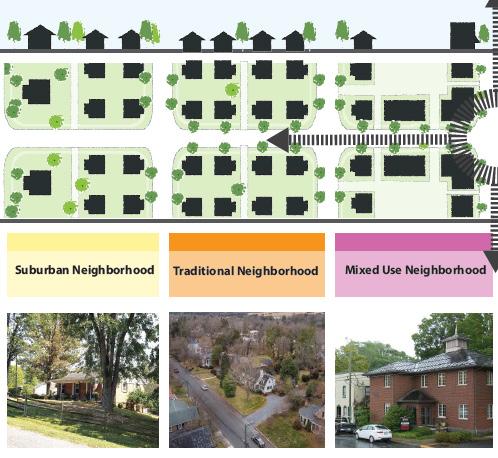
Future Land Use Categories that encourage new housing.
housing in various ways, some of which are in process or have been accomplished, there is still further research to understand if these efforts are meeting the demand. Housing affordability is often a long-term issue and can be identified in successive planning documents as a problem that is never fully resolved. From reviewing the Comprehensive Plan, it appears that activities related to rent assistance, unit rehabilitation and maintenance are ongoing and have a meaningful impact in improving the lives of many Lexington residents. While these efforts are an important part of uplifting the community, the actual demand and need for creating sustainable housing affordability may not be reached. In most communities, when the first Zoning Ordinances were adopted, they artificially constrained the process and created an administrative structure around what historically was an organic process of building as needed. Alongside technological advances such as the adoption of automobiles and the related infrastructure needed to move cars around, the amount of space in a community taken up by parking lots, garages, or roadways greatly decreased the amount of space available for residential or commercial purposes. Through parking requirements, buffer yards, set-backs, landscaping requirements, and lot size minimums, new development and redevelopment could no longer provide the same amount of housing or spaces for business that the dense, walkable, and compact footprint of historic downtowns or neighborhoods could provide. If housing production is graphed over previous decades, it typically reveals a sharp decline in the production of units, even as population increases. Overall, the Comprehensive Plan could be improved by adding some elements that have worked to increase housing production elsewhere. Adding specific metrics of success, such as the number of new units to be produced by a set
year will allow Lexington to better track its progress towards its vision statement.
While preserving historic properties or other assets is important, the emphasis on “appropriateness,” “scale,” or “existing character of the neighborhood,” is often used to prevent efforts to build new housing units or may further stigmatize renters or apartment buildings. Housing affordability is an issue that effects everyone in Lexington, whether one enjoys the downtown area businesses, or are looking to downsize, or has children looking for a home, everyone in the community benefits from a robust supply of new housing opportunities.
Areas of growth or change are quite limited in scope. The amount of land in the Future Land Use map targeted as “mixed use areas” where more flexibility and housing unit density could be provided is small compared to the overall need. Related to the additional burden of “existing character of the neighborhood,” development projects which are already difficult to finance and execute become difficult and the units are never achieved. More flexibility and expansion of these areas can help promote growth needed towards improving housing conditions. Typically, the vision of a sustainable, resilient, and inclusive community requires the mixing of income levels in any given area of a place. Otherwise, patterns emerge that reveal general segregation by income level as residents sort themselves into wealthier and poorer neighborhoods with negative impacts to quality of life, such as declining connections, a stagnating or separated local economy, or other issues, for everyone in the City.
Improving connectivity and bicycle/pedestrian safety throughout the community is mentioned,
and this study is not specific to transportation, however, the explicit connection between the ability to provide housing without required parking is generally the gap between providing new units more efficiently and the perception that there is not enough space for new development in Lexington. If someone either by choice or through income-level wants to live in a housing unit without an automobile, they will still pay for the cost of a garage space or on-site parking as a pass-through cost to their rent. Creating a path in the Plan to reduce parking requirements, or creating maximum parking requirements, can be a big step towards growing the local economy and using land more efficiently to keep up with demand. This is also an important part of making the community more accessible for seniors, youths, or anyone who is unable to drive.
Lexington is not alone in its efforts to keep up with the national housing crisis. Examples across the state, country, and internationally of historic character, “small town charm,” alongside new buildings that house many people, and new businesses can be found. To reach its desired vision of sustainable and diversified housing or employment opportunities, as stated by the Comprehensive Plan, it is important to establish metrics of success and measure progress towards them year to year. The current language of the plan recognizes the problems and makes efforts towards them but does stops short of committing to their resolution. Further research will be conducted as part of this study to determine the extent of Lexington’s housing needs. Communities that have made progress towards housing affordability have employed the same efforts Lexington has undertaken to rehabilitate and maintain the existing stock and encouraged new units where possible, but they have also
encouraged new diverse types of units more broadly across their communities, reduced car dependence, set measurable goals for new units, and reoriented their approach to preserving historic character.
Regional Housing Study 2024
The Central Shenandoah Planning District Commission (CSPDC) conducts regional planning efforts for the area Rockbridge County and the City of Lexington are part of. There is currently a Regional Housing Study underway nearing publication by year’s end. Data analysis from the Rockbridge County area, including Lexington, was provided by the Planning District Commission for this current study that focuses on the City of Lexington. The Study conducted focus groups and examined various sources of quantitative data to illuminate housing conditions in the region. This summary will highlight some of the findings that either come from Lexington or influence Lexington directly.
Rockbridge Regional Housing Market
The regional housing market in Rockbridge County is characterized as a set of submarkets at a crossroads, containing various metro areas and corridors that influence it. Living in the area is described as a matter of preference for newcomers or longtime residents that have family ties and inherited property in the area. Employers in the area provide existing residents with less competitive jobs that other households will not relocate or commute to take, and because of this dynamic the submarket will be slow to add additional new housing units. This makes it difficult for newcomers to find a place to live, restricting the labor force from growing and preventing local businesses from being able to find workers for lower-wage service and support positions. Only 17% of Lexington’s workers also live in Lexington; 43% commute in from Rockbridge County, and 8% commute from Buena Vista. The study suggests that this may be due to housing preference for where they would like to make their home, noting that smaller percentages of employees commute out of areas such as Augusta, Staunton, and others as alternative markets to the Rockbridge area.
Households
Lexington constitutes 15% of the 13,631 households of the Rockbridge area. 54% of Lexington’s households are occupied by homeowners. This is lower than its neighboring communities within Rockbridge, but this is also noted to be impacted by the presence of student households that are renting rather than owning. 3,200 households in the Rockbridge region spend more than 30% of their income on housing, and may need affordable housing. This defines them as “cost-burdened” households.
Of these households, nearly half are severely cost-burdened and spend over 50% of their income on housing. 38% of those households are seniors 65 or older. Cost-burdened households are more exposed to sudden expenses such as medical needs or car repairs. 40% of the region’s households are defined as having a low income, defined as income at 80% of the HUD Area Median Income or lower. 45%, or 970 households are determined to be low income in Lexington.
The Virginia Coalition for Human Rights collected American Community Survey data showing that 1,175 (59%) of Lexington’s households are currently “Working,” and 830 are “Not Working.” Data is collected to reveal wages relative to occupation and determine which professions can afford housing in the area and which occupations will struggle to find housing. Focus groups revealed the impacts of unaffordability on certain occupations. Employers describe difficulties hiring employees that will be able to work at a certain wage and afford housing near their workplace. The phrase “Dishwashers don’t drive,” emerged, conveying that dishwashers are not paid enough to afford commuting costs, thus they need affordable housing within a short distance of a job. For low-wage jobs that do pay a “living wage,” employers are relying on people who have inherited a home or who live
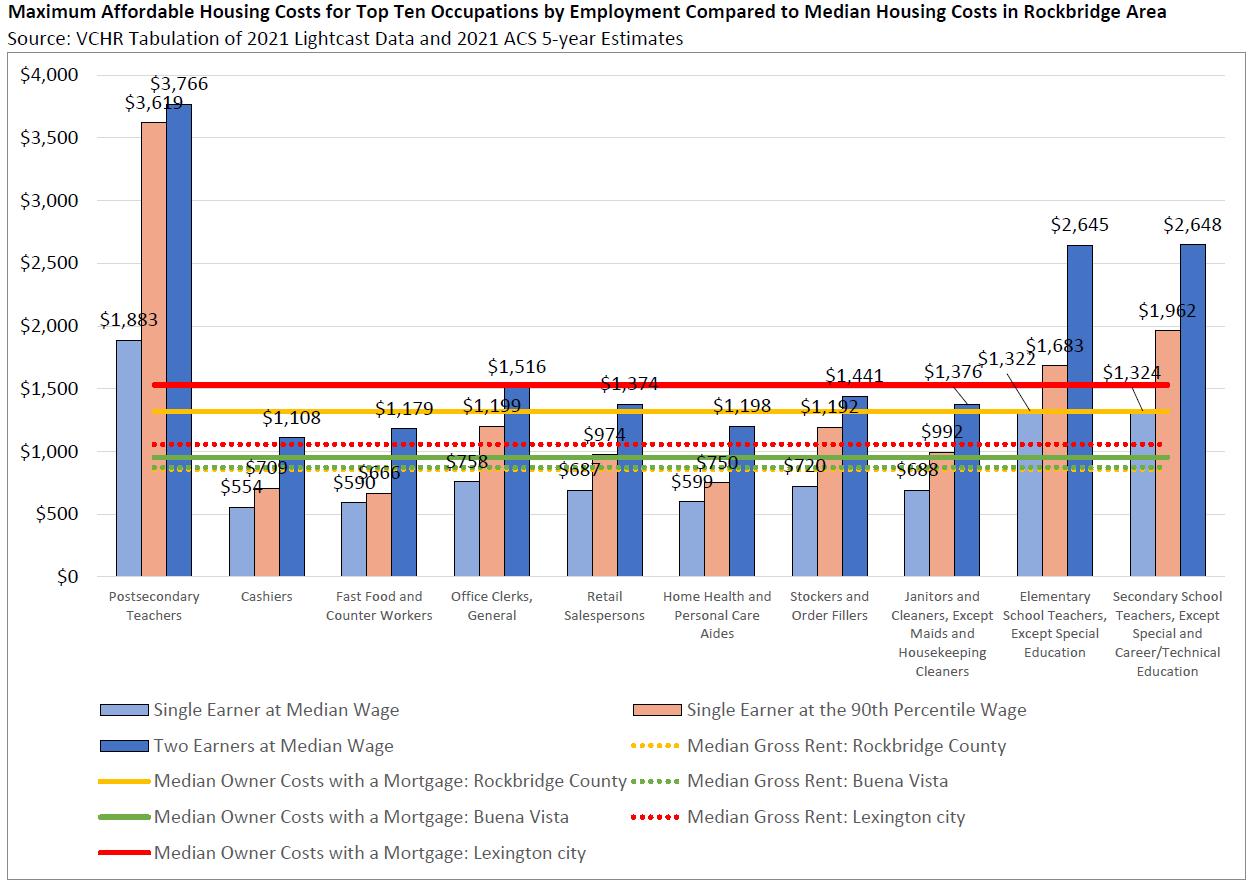
in a multi-generational household to be able to live nearby. Low-income workers would qualify for subsidized housing such as Low-Income Housing Tax Credit developments and housing choice vouchers. The regional study suggests that building more affordable for-sale units and developing new subsidized units would allow the Rockbridge region to compete for new residents and employees to work in support and service jobs.
Housing Stock
There are 16,579 total housing units in the Rockbridge area, the majority of these are 77% single family detached units. Mobile and manufactured units make up 9% of housing units, with most located in the County. There are fewer than 1,012 single-family attached units, townhomes, or duplexes, and about 1,500 multifamily units, located generally more in Lexington and Buena Vista.
Bedrooms
Efficiency and one-bedroom units represent only 8% of the housing stock in the region, although 29% of households are individuals living alone. Two-bedroom units make up 26% of the region’s housing stock, and three-bedroom units make up approximately ~50% of the housing stock. Larger units with four or more bedrooms make up 19% of the stock. This reveals a lack of small units for small households. The study notes that a three-person family could share a twobedroom space without creating an overcrowded condition, but while 84% of households include three or fewer people, only 35% of units have two or fewer bedrooms. The focus groups that were conducted noted that combined density of smaller units could allow for more housing opportunities near employment and amenities in Lexington and Buena Vista, citing that this was required for both students and workers.
Graph of Housing Costs from the Regional Study.
Conditions
The focus groups revealed that quality, trustworthy contractors are all booked up and homeowners must be careful hiring who is available. There are many older units throughout the region that need repair and upgrades. Rental inspections and enforcement would help ensure that units are in good quality.
Rental Market
The study shows that there are 1,049 rental units and little to no vacancy rate of rentals in Lexington. Median rent in the City is the highest in the Rockbridge County area and in the entire Central Shenandoah area. The steep rent increases over the past several years indicate that the demand for units is outpacing the supply in the City. The study notes that rental units can be absorbed in both Buena Vista and Lexington if development meets the demand for small one and two bedroom units that are well located. Renters in the region are disproportionately costburdened, making up 31% of all households but
55% of cost-burdened households. The regional study also noted that the student population faces challenges finding places to live offcampus, even as they try to build more housing on campus. Investments are typically made for students of the same family attending the school successively, but these students and parents can pay more than locals looking for housing, thus impacting the market affordability further.
Homeownership Market
Lexington’s median owner cost is the highest in the Rockbridge region and in the entire Central Shenandoah footprint. Lexington’s median price of a home has even increased by 76% since 2014. Decreasing interest rates until 2022 allowed for homebuyers to accrue wealth and enjoy housing affordability, but for first-time homebuyers’ homeownership is increasingly inaccessible. Realtors noted that low to moderate income households are increasingly excluded because of financing availability and that current resources and benefits do not cover everyone in need.
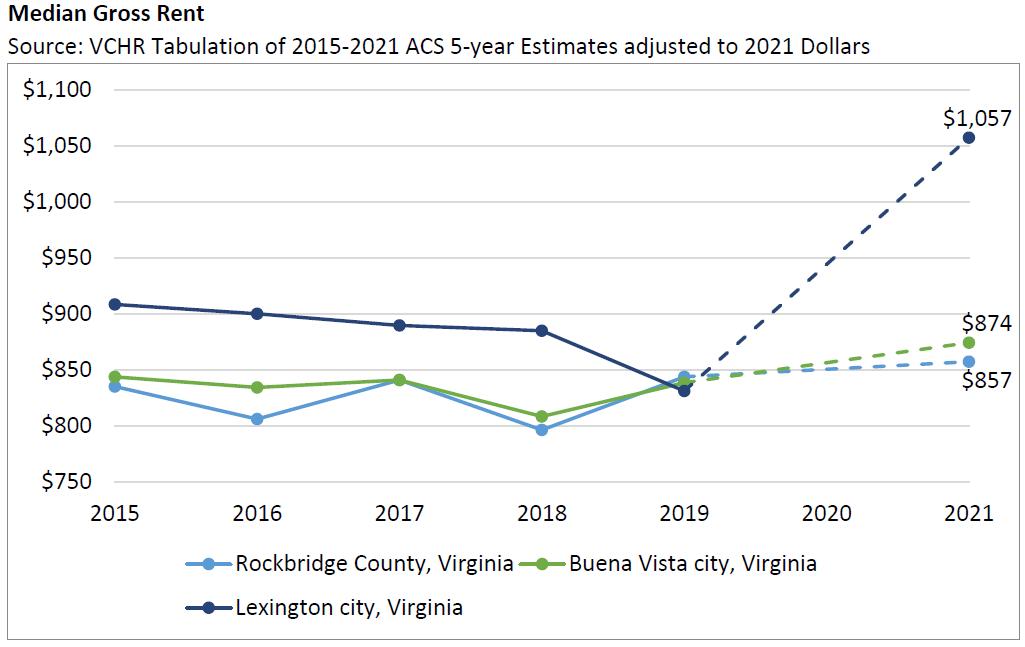
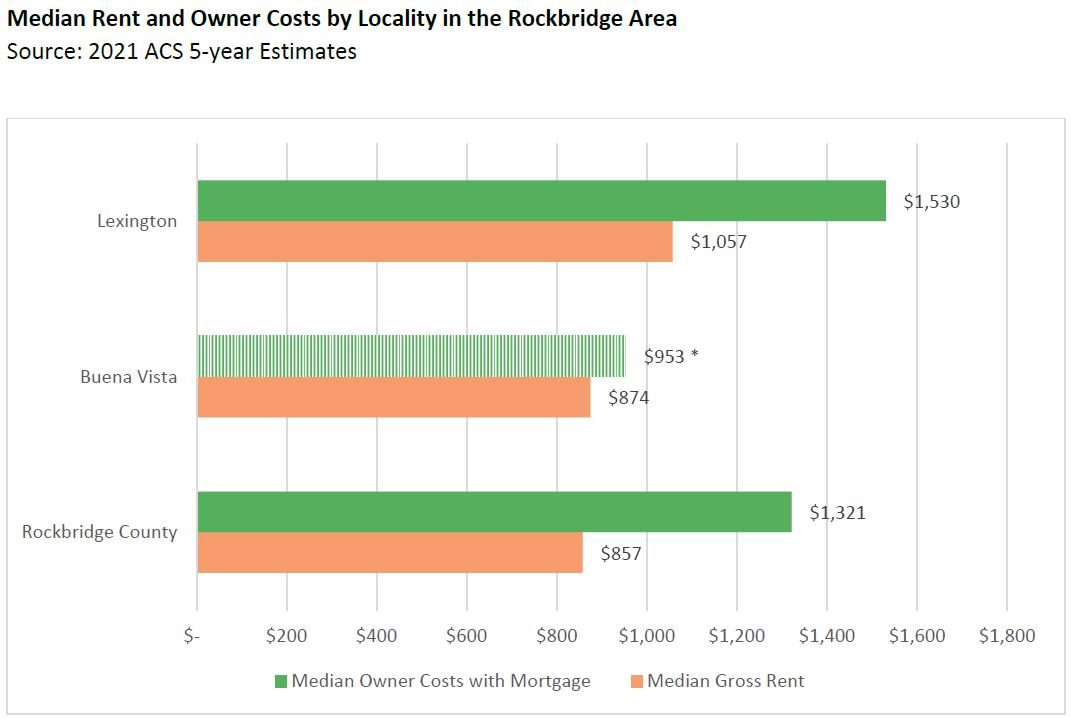
Conclusions & Lexington Solutions
The Rockbridge region is recommended to focus on adding diversity to the existing housing stock and continuing its assistance to households in need. Lexington is identified as the least accessible market in the Rockbridge region and Central Shenandoah area for workers earning lower wages. New units are needed for seniors and service/support workers. Continuing to support the maintenance, rehabilitation, weatherization, and other forms of assistance will help keep residents protected from challenges with housing.
The Central Shenandoah Planning District Commission has prepared a list of solutions to providing for more housing units and affordability in the community. They are clearly written into sections that detail particular issues, solutions, how the solution works, along with sources of information for implementation as needed. This document is expected for public release before the end of 2024.
Graph of Rents from the Regional Study.
Graph of Rent and Owner Costs from the Regional Study.