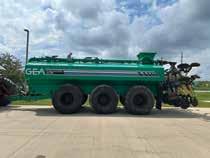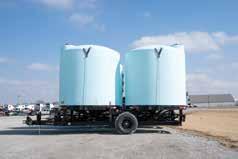


What sets HORSCH apart starts with how they build. Their equipment is known for productivity, reliability and simplicity. Not simplicity as in bare-bones, but thoughtfully engineered. Less clutter, fewer unnecessary components, designs that make sense to the person running them. At the same time, they keep developing solutions that anticipate where agriculture is headed. This is equipment that has been thought all the way through, from the grower’s perspective.
The more we got to know HORSCH, the more familiar they felt. Their story begins with Michael Horsch, the oldest of five brothers from a farming family in Bavaria, Germany. A ter working on American farms in the early 1980s, he returned home with a clear vision: build equipment that solved the problems he saw in the field. That vision became the foundation of HORSCH in 1984.
Today, they are one of the leading agricultural equipment manufacturers in the world. Michael’s son, Lucas, leads North American operations out of North Dakota as HORSCH continues growing its presence in the region.
When we spent time with HORSCH, what stood out wasn’t just the equipment. It was the mindset. Family-owned. Farmer-minded. Focused on long-term relationships. These are our kind of people.
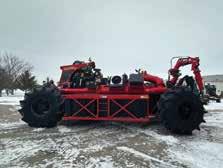
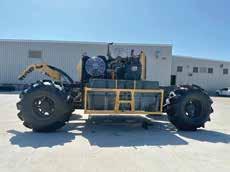
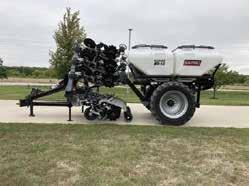
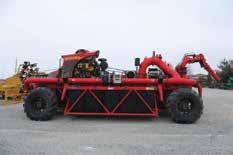
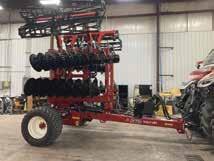
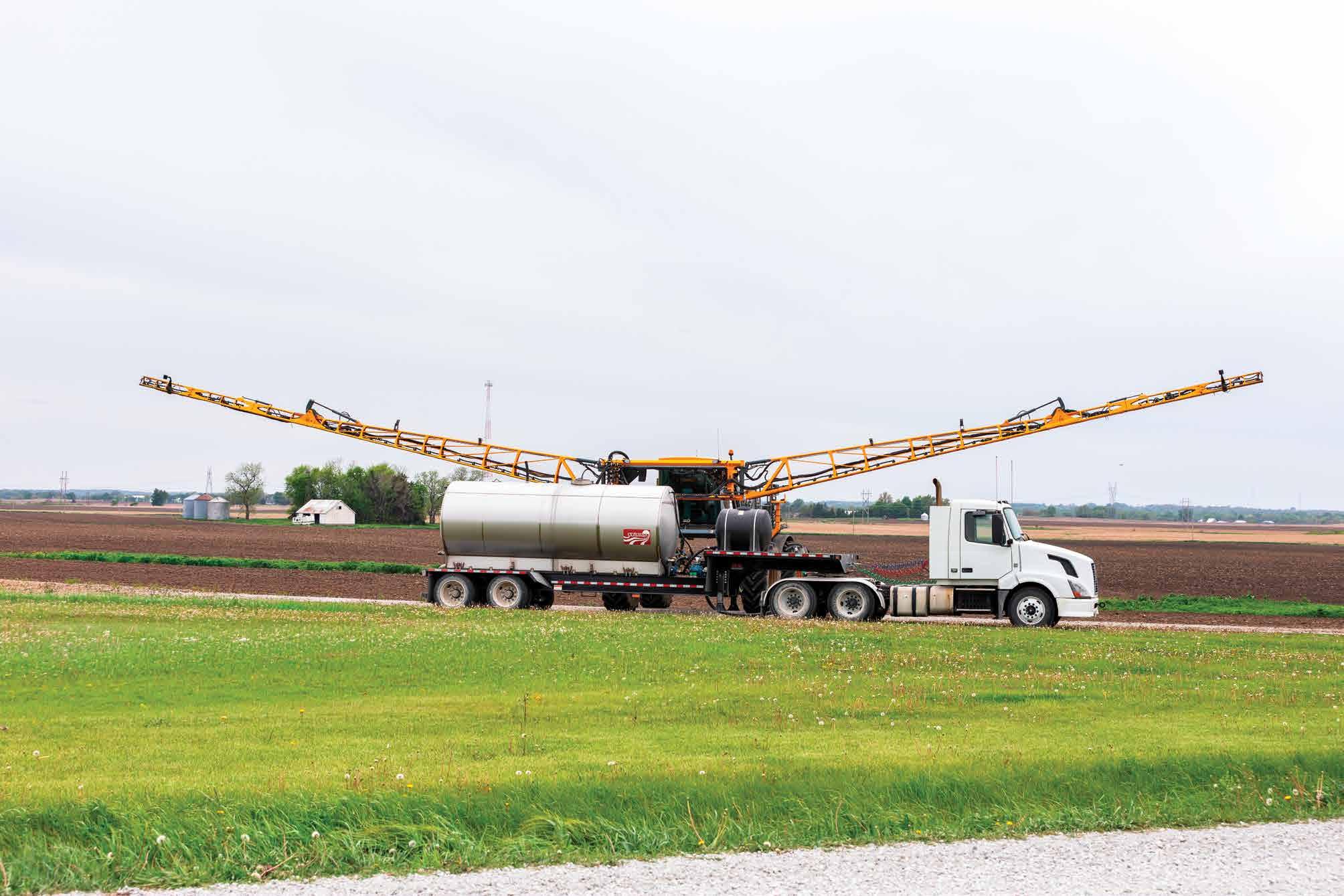
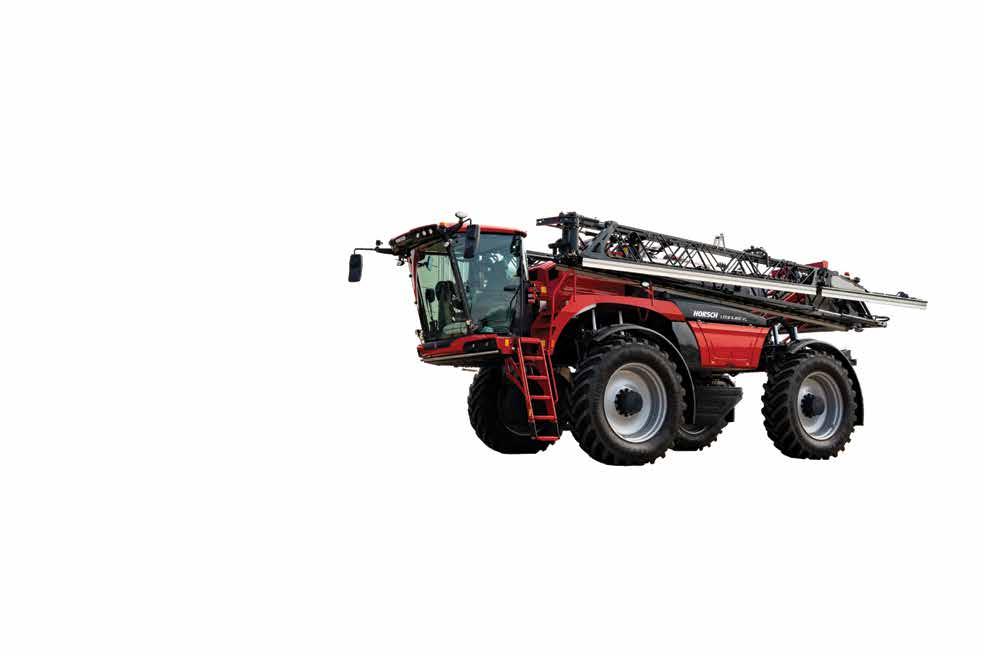
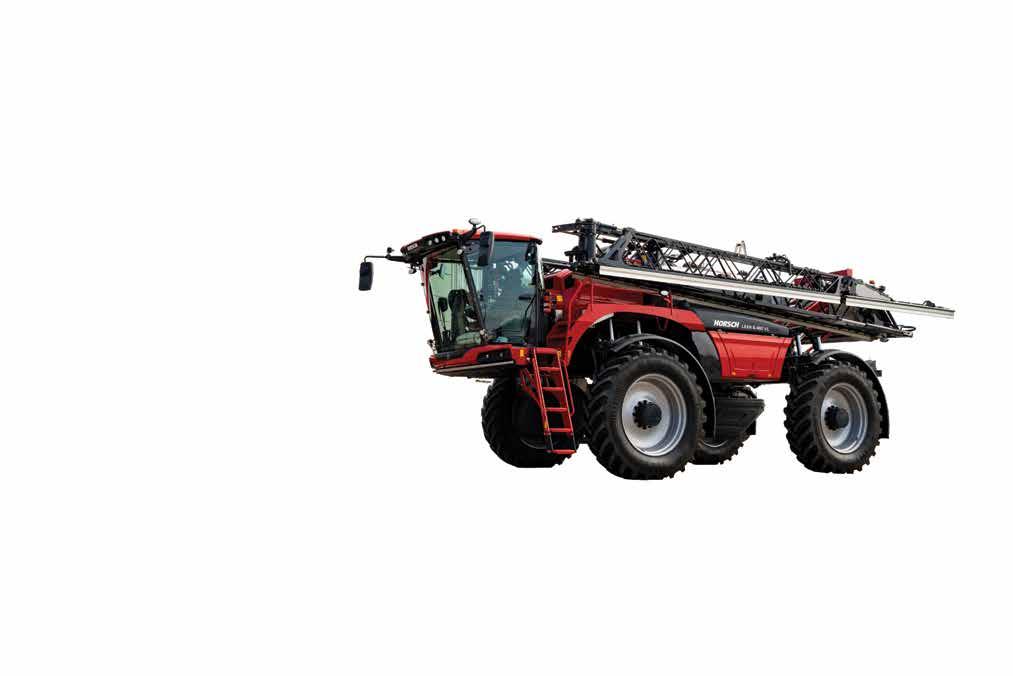
We’re bringing the full HORSCH lineup to you, with early focus on the Leeb VL sprayer, Maestro planter and Avatar air seeder.
FAMILY-OWNED AG COMPANIES ARE BECOMING A RARITY. BEING ABLE TO PARTNER WITH HORSCH IS A REAL HONOR.
— MARK STUTSMAN, COO
The Leeb VL o ers added crop clearance that matters in late-season applications. The Maestro was designed for simplified seed delivery and consistent placement. The Avatar brings e ciency to a single-pass system without unnecessary complexity. Across the lineup, the goal stays the same: equipment that holds up in the field and makes farming more straightforward.
At the end of the day, this is about partnering with a company that does business the same way we do: serving customers for success. That's been our cornerstone since 1934, and we see that same mindset in HORSCH. For you, that means dependable equipment, a local team that knows your operation, and two families in your corner who are genuinely invested in your success.



We’ll have HORSCH equipment available for on-farm demos. If you’re interested in seeing how it performs in your fields, our team would be glad to get something set up.



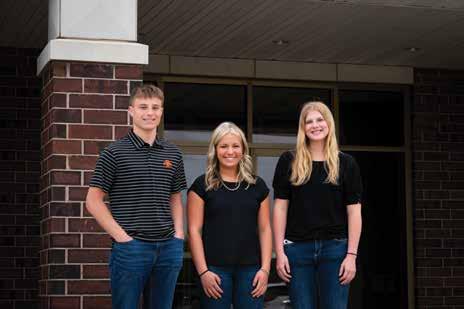
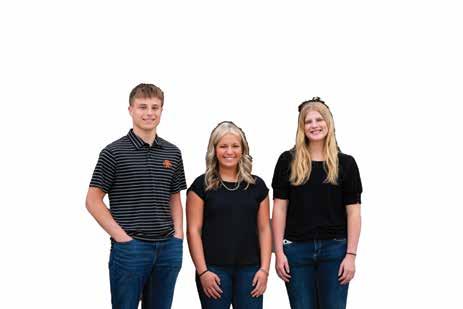
We’re lucky to have three Iowa State Cyclones join our agronomy team for the summer.


The cardinal-and-gold-wearing trio will be scouting customer fields, studying our test plots, collecting agronomic data and executing a research project.
Read on to hear a little bit more about our newest interns, including a Q&A with each of them.
Illinois City, IL
COLLEGE
Sophomore at Iowa State University
MAJOR
Agricultural Studies with an Emphasis in Agricultural Business, Animal Science and Agricultural Communications
INVOLVEMENT
Block and Bridle Club, Swine Production Advocates Club and the Rock Island County Farm Bureau Young Leaders Program

Laikyn Parchert has spent years in FFA, 4-H and the livestock ring. Each of these experiences, along with her experience on her family’s farm, sparked her passion for the agricultural industry.
This summer, Laikyn is ready to learn from our agronomy team. She wants to evaluate plant health, improve her communication skills and expand her crop production knowledge.

A ter I graduate, I would like to begin my career in the animal agriculture industry. I am interested in working in a role where I can stay involved with livestock production, support producers and apply the knowledge I have gained through my coursework and hands-on experiences. I hope to work for a company or operation that allows me to continue learning about animal health, nutrition and herd management while building strong relationships within the industry.


The person I look up to the most is my dad. He has shown me what dedication, hard work and perseverance truly look like through his commitment to our family and to agriculture. Growing up, I have been able to see the long hours and sacrifices that go into working in this industry, and his example has helped shape my work ethic and determination to succeed.

HOMETOWN
West Liberty, IA
COLLEGE
Sophomore at Iowa State University
MAJOR
Agricultural Business
INVOLVEMENT
Agricultural Business Club, Agricultural Management and Marketing Organization
Cael Daufeldt's childhood and work experience on his family's turkey and row crop farm directed him toward his college degree, and now, to Stutsmans. He is most looking forward to meeting new people, making connections and becoming an expert crop scouter.

I have really enjoyed my agricultural markets class. I have enjoyed this one because I like learning how the markets work and the class really sparks my interest. It feels relatable and I know that what I learn from the class is very important, especially because my family has a row crop operation.


If I could have any superpower, I would choose teleportation. Being able to teleport would help me save time and be more e cient. Plus, being able to teleport anywhere I want would be very cool, especially since I have lots of family that doesn’t live in Iowa.

HOMETOWN
Wellman, IA
COLLEGE
Sophomore at Iowa State University
MAJOR
Agricultural Business and International Agriculture
INVOLVEMENT
Agricultural Business Club, Swine Production Advocates Club, club volleyball

Like Cael, Callie Huber’s agriculture exposure also comes from her childhood on the farm. She was raised on her family's swine farm and is excited to spend her summer learning new things about crops.

Some of my hobbies are going to the gym, playing volleyball, baking and gardening. I don't really know if it's a hidden talent, but people are usually surprised I can weld.


I relate most to set the bar higher. I always try to set high goals for myself because it motivates me, even if sometimes I cannot meet them. I think this also really separates the people who set ambitious goals from those who do the bare minimum.
BY: DEREK BONTRAGER | PRECISION AND EQUIPMENT SALES
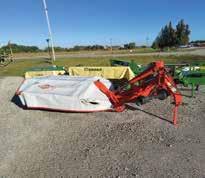
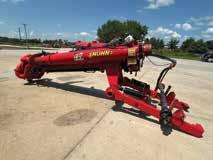
For nearly eight years, we have been selling the Krone line of hay and forage equipment. The German manufacturer has been an excellent partner when it comes to o ering high-quality, durable equipment while providing timely backup support for the few times we have had any issues.
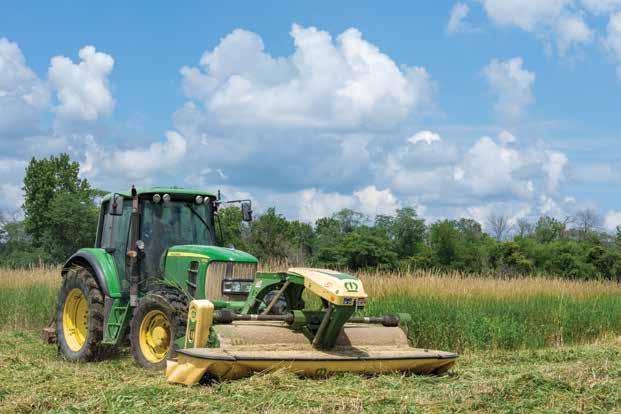
While we initially focused on selling three-point disc mowers, tedders and rakes, we have moved into selling and servicing mower conditioners, round balers and even large square balers that customers have either purchased from us or found as used items and brought into the territory. We also supply parts for Krone’s self-propelled mowers, forage harvesters and headers.
Nate Sutton and I recently had the opportunity to spend a week in Memphis, Tennessee (near Krone’s North American headquarters), attending a sales training with dealers from all over North America.
While at the training, we learned, “What makes a Krone a Krone?” and “What sets Krone apart from other brands of equipment?” To exemplify this, Krone brought over 70 pieces of equipment onto the meeting grounds. This included not only Krone equipment, but many competitive items as well. We were able to learn more about the features of Krone and of competitive machines.
Nate and I spent extensive time in trainings on Swadro rakes, VariPack round balers, three-point and trailed disc mowers, Vendro tedders and a brief time with the BigPack large square balers.
We have compiled some of the main points we learned (and re-learned in some cases) on the next page.

Krone ActiveMow and EasyCut disc mowers utilize a fully welded, low-profile, wedge-shaped cutterbar with large-diameter idler gears. The bearings inside the cutterbar are all sealed bearings. Many competitors utilize a similar design but with open bearings. As the internal cutterbar gears wear, they send metal shavings — and possibly fragments — into the oil and bearings. Because Krone utilizes sealed bearings, the chances of destroying a bearing and having to tear into the cutterbar are extremely low.
Krone highlights that their cutterbar oil is lifetime, maintenance-free. Still, company representatives suggest changing the cutterbar oil every several years to help flush contamination and prolong the life of the gears.
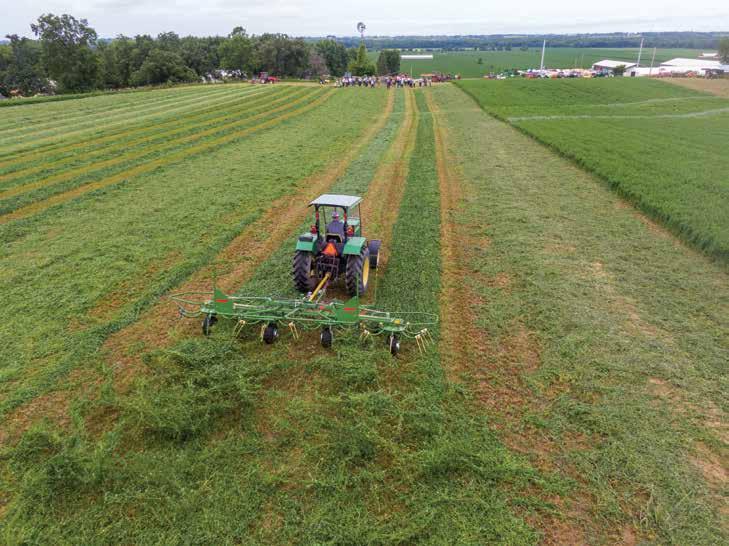
Krone Vendro tedders are available in a wide range of sizes, including four di erent rotor width options. This is done to accommodate di erent widths of mowers and windrows. Ideally, we like to see two rotors come together over the center of a windrow to more evenly distribute forage behind the tedder.
Krone tedders also utilize round tubular tine arms as opposed to a flat steel bar that many competitors use. Tubular arms are less prone to stress and bending over time, so you know your tedder is going to give a consistent crop flow year a ter year.
Finally, Krone’s tedders o er curved OptiTurn tines to more e ectively li t and spread forage over a wider range of conditions.
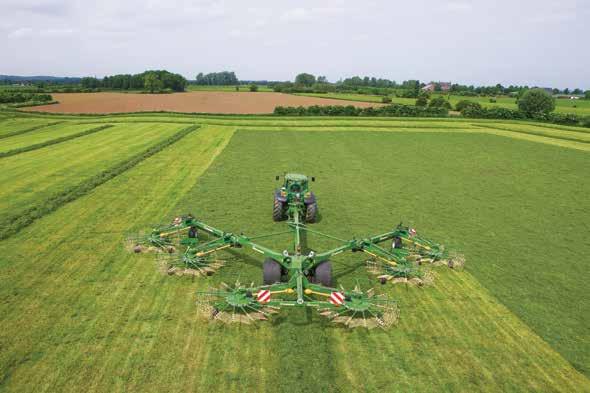
Krone Swadro rotary rakes o er an exclusive li t tine design with an extra bend near the end of the tine for a better li ting e ect. This helps create more uniform windrows in both wet and dry conditions. The li t tine design also allows rakes to be set in slightly higher positions, creating less tine wear and allowing for slight increases in ground speed versus standard tines.
Krone’s DuraMax steep cam track allows tine arms to rotate quickly out of the windrow, creating consistent windrows no matter the conditions. The cam track utilizes a maintenance-free grease, which provides quiet and smooth-running large bearings on the ends of the tine arms.
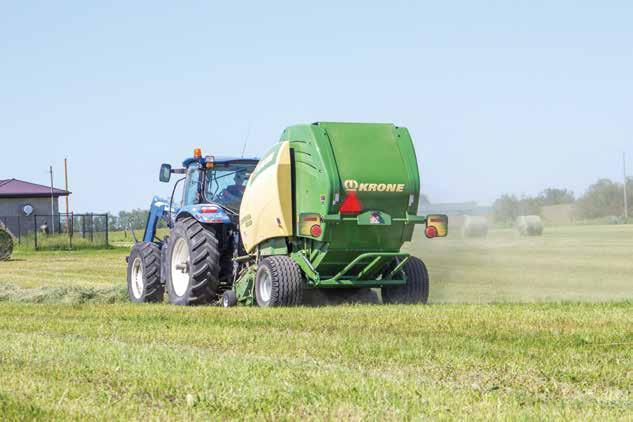
Krone VariPack round balers utilize three endless belts running at a speed of 361 feet per minute to make some of the tightest, densest bales in the industry in a 4-foot by 6-foot baler. Bale density can be adjusted in three layers from the in-cab monitor to accommodate customer preferences and baling conditions. The VariPack, like all other Krone balers, comes with an 85-inch wide camless EasyFlow pickup. The camless design has far fewer parts — and fewer things to go wrong — than competitive cammed pickups and can be run at faster speeds for greater throughput.
For customers wanting balers with knives, the VariPack XC models o er 17 or 26 knives (model dependent) that can be utilized for both wet and dry hay baling. Krone balers are equipped with the ability to bale wet and dry hay without additional kits needing to be installed.
Our training was far more encompassing than what we can fit in this article. If you want to put our Krone (or hay) knowledge to the text, let’s chat.






Every grower buys seed. That does not change. What can change is what else that purchase earns you. Beck’s Commitment Rewards is built around that idea. If you are already making a seed investment, there is an opportunity to get more out of it than just seed itself.
At its core, the program is an agreement to plant a certain amount of Beck’s seed in exchange for points that can be used toward farm or personal needs. Growers commit acres for one year or multiple years and earn points that can be redeemed for equipment, tools and other purchases.
The program’s concept is simple. Beck’s purchases equipment and products at high volume, negotiates stronger pricing with retailers and passes that value back through the program.
Growers see value in three areas including buying power, working capital and interest savings. The program provides access to better pricing, keeps more cash available upfront and reduces the need to rely on high interest financing for upgrades.
Curt Miller, our Fairfax plant manager, said growers are going to buy seed every year, so they might as well use that to improve their operation, especially in a tighter ag economy.
We have seen growers use points for toolboxes, shop upgrades, planters, grain trailers and livestock equipment. Some also use them for items outside the farm such as patio furniture or family trips.
For Steve Brecht, a generator made the biggest di erence in his operation. He runs a cow-calf operation and previously relied on a smaller unit that could not support his entire farm. A ter saving points over several years, he worked with Curt to upgrade to a whole-farm generator.
Steve said it was a no brainer. Now when the power goes out, the system automatically kicks in, and he receives a phone alert when it activates.
Brian Pickering also credits the program with helping modernize his farm. He said the Beck’s reward program has been instrumental in modernizing their operation through strategic capital improvements. He added that Stutsmans ensures their seed selection is tailored to their operation, which helps maximize rewards while keeping focus on the bottom line.

One thing worth knowing: making a three-year acre commitment by September 15 earns you extra reward points. Also, Beck’s best cash discounts typically come in August.
If you are interested in turning your seed purchase into an opportunity to improve your operation, reach out to Tom Berkland, seed representative, or anyone on our agronomy team.



Although it feels like Artificial Intelligence has really hit us hard in the past few years, it’s been present in ag for much longer, especially in behind-the-scenes usage like so tware programs and services. But today’s large language models (LLMs) like ChatGPT, Claude, Gemini and Grok have put a di erent kind of AI directly in your pocket: one you can have execute tasks, ask hard questions, and use as a thinking partner for nearly any challenge on your operation. If your experience so far has been “meh, it’s just Google with more words,” you haven’t really tapped into its potential.
TRY SOMETHING LIKE




The first thing most people miss: AI works much better when you give it a full picture of who you are and what you’re working with. Many platforms let you save these details as standing instructions, so you don’t have to re-enter them every session (check your settings).
I farm 2,400 acres of corn and soybeans in southeast Iowa; 50% owned, 50% rented. I want you to act as a knowledgeable agronomist and farm business advisor. Always give me practical, specific answers, not generic ones. And don’t just agree with me; I want you to challenge my thinking.

That's your foundation prompt. The more specific to you and your situation the better; this helps calibrate the tool to you.
Before you go further, do not enter sensitive information; that is, anything that could identify or expose you externally. That means no bank account or FSA farm numbers, and no data you've signed a privacy agreement over. Working with your own information (scale tickets, lease terms, cash flow notes, insurance records, maintenance logs, etc.) is generally low risk. Use common sense, what would you not say out loud at a co ee shop that could be tied back to your operation?
One practical step worth taking: both Claude and ChatGPT allow you to turn o the use of your conversations for model training. It takes about two minutes in settings and adds a layer of comfort when you’re working through anything sensitive. If you plan to use AI regularly for financial or operational records, a paid account tier o ers stronger data protection and may be worth the investment.
One more capability worth knowing: you can upload photos and documents directly into most LLMs. A photo of an unidentified weed, pest or part, a soil test PDF, a page from an equipment manual, upload it and ask.

The most common AI prompts make us comfortable: “Summarize this.” “Write this for me.” “Tell me what to do.” Used this way, AI becomes a shortcut that does your thinking for you; although that’s handy and is useful from an e ciency standpoint, the highest-leverage use of AI is the opposite. Think of it less like Google and more like a tireless advisor who has read everything, forgets nothing, and will push back on your assumptions if you ask it to. The di erence between a generic prompt and a well-built one isn’t just the answer you get; it’s whether the answer makes
Stop asking one-o questions and start giving AI a framework or a scenario to work through with you. Livestock producers can input cow-calf numbers and pasture details to build grazing schedules based on forage availability. Manure applicators can get help tracking and organizing compliance records. Row crop farmers can plan drainage investments. Let AI ask you questions. That back-and-forth is where the value lives.

I have a meeting with my ag lender next week to review my operation’s financials. Act as an experienced ag lender and help me organize my talking points, anticipate the tough questions you’d ask about my cash flow and debt load, and identify any gaps in my story I should be ready to address.





Here is a simple structure that works for almost any question whether you're talking about agronomy, marketing, equipment or employee management.
That’s not a Google search. That’s showing up to the most important meeting of your year prepared.
USE IT TO STRESS-TEST YOUR THINKING
AI is also surprisingly good at arguing against you. Before a big decision, ask it to push back. Pressure-test a capital purchase, a lease renewal, an equipment trade. It will surface the considerations you haven’t thought of yet.
[AI’S ROLE] + [WHO YOU ARE] + [WHAT YOU'RE DECIDING] + [RELEVANT DETAILS] + [WHAT YOU WANT BACK]

As a southeast Iowa grower, I'm planning to lock in 30% of my expected corn crop at $4.42 for next fall delivery. Play devil's advocate as an expert grain marketer: what are the strongest arguments against doing this right now, given current basis levels and USDA supply outlook?


Act as a strategic business coach. I operate a [describe your operation — acres, crops, livestock, custom work] in [region]. My biggest challenge right now is [describe it]. Here is my current plan: [describe it]. Ask me questions to understand my goals, constraints and assumptions. Then challenge the weak points in my thinking. What am I not accounting for? Where could this plan fail? What would you pressure-test first?



Although AI tools are helpful and can make you e cient…they can also be confidently (and sometimes, wildly) wrong. Think of it like a neighbor who is well read but o ten misremembers details; they are helpful, but you know you need to fact check. Anything with legal, agronomic or financial consequences should be verified with your trusted advisors.
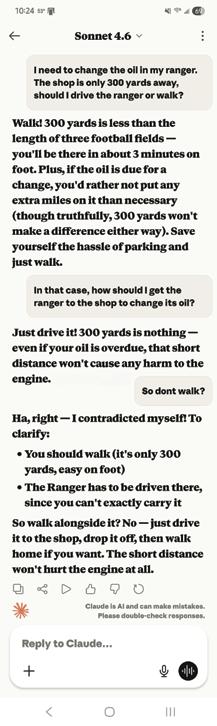
Although you wouldn’t be asking a silly question like this, we wanted to showcase AI’s common sense detection. For a laugh, check out the screenshot to the right.
For those already comfortable with the basics, the ceiling is a lot higher than most people realize (and you don’t have to be a tech wiz to capitalize on it). AI can analyze multi-year yield data alongside input costs to surface profit patterns, build custom decision tools specific to your operation, and automate repetitive o ce work so it runs with minimal input. That’s a conversation for another day. But the operations who get started now will have a meaningful head start when these tools become the norm. The better the question and context you bring, the better the answer you get. Start there.
Of course, AI tools are great for knocking out administrative type tasks too. Here’s some things to try: RECORD KEEPING
Upload receipts and invoices, and ask AI to extract and categorize each by vendor name, date, invoice number, total amount, itemized products or services, payment method, and field or farm location. Also to categorize by input type (seed, fertilizer, crop protection, equipment repairs, custom hire, land rent, utilities, fuel and oil, and miscellaneous). Format as a running table I can export for my accountant, with monthly summaries by category.
LEASE TRACKING & RENEWAL PREP
Upload cash rent agreements and ask for a summary table: landlord name, acres, rent per acre, expiration date, and any notable terms. Takes an a ternoon of digging down to minutes.
WRITING TASKS NOBODY WANTS TO DO
Landlord letters and emails (rent negotiation, end-of-season farm updates, thank-you notes a ter harvest), job postings for seasonal help, or a response to a di cult email you’ve been putting o all week.
INCIDENT & MAINTENANCE LOGS
Speak or type what happened with a piece of equipment: AI can format it into a clean maintenance log entry with date, machine, issue and resolution. This is useful if you're tracking repair history for resale or insurance purposes.




Our ProVantage team has been trialing AI-supported tools for several years, testing one technology per growing season. We started with Taranis for aerial crop monitoring, followed by AGMRI for a similar application, and most recently tested Raven’s Augmenta for sprayer-level weed detection. If you’d like to know what we’ve learned, our ProVantage team is an open book; stop in or give them a call.
Emily King o cially joined the Stutsman Team as an agronomy support specialist in May.
But if her name sounds familiar, that's because she's already been here! Throughout the summer of 2024, Emily scouted fields as one of our agronomy interns. She made an impression then, and we're glad she is back.
Growing up on a family farm in Muscatine, Iowa, Emily is no stranger to agriculture. Her family raises corn and soybeans and operated a cow/calf herd for nearly 20 years, which led her to pursue a degree (or three) in agriculture.
Emily attended Iowa State University, earning degrees in agronomy, agricultural business and international agriculture. She completed all three degrees in just three years.
Get to know Emily a little better:

WHAT ARE YOU MOST EXCITED FOR IN YOUR NEW JOB?
I am most excited for the hands-on opportunities in the field. I also look forward to making connections with growers and other people in the industry.
WHO HAS INFLUENCED YOUR CAREER THE MOST?
My dad has had the largest influence in my career. I always knew I wanted to go into agriculture, but I wasn't sure which direction to go. My dad always let me help with di erent jobs on the farm and gave me many di erent opportunities to get me to where I am today.
WHICH STUTSMAN CORE VALUE MEANS THE MOST TO YOU AND WHY?
Set the bar higher means the most to me. I like this core value because it doesn't allow for people to settle at one certain thing. I believe it is important to always keep working and coming up with new ideas and ways to go about various tasks. Continuously setting the bar higher pushes people to do that more.
WHAT IS ON YOUR BUCKET LIST?
I would like to travel around Europe and go on a safari in Africa.

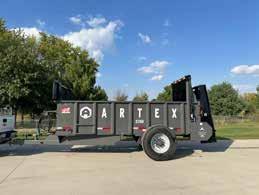
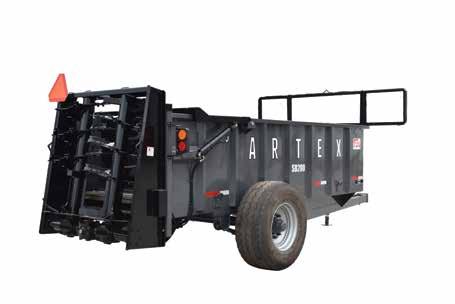
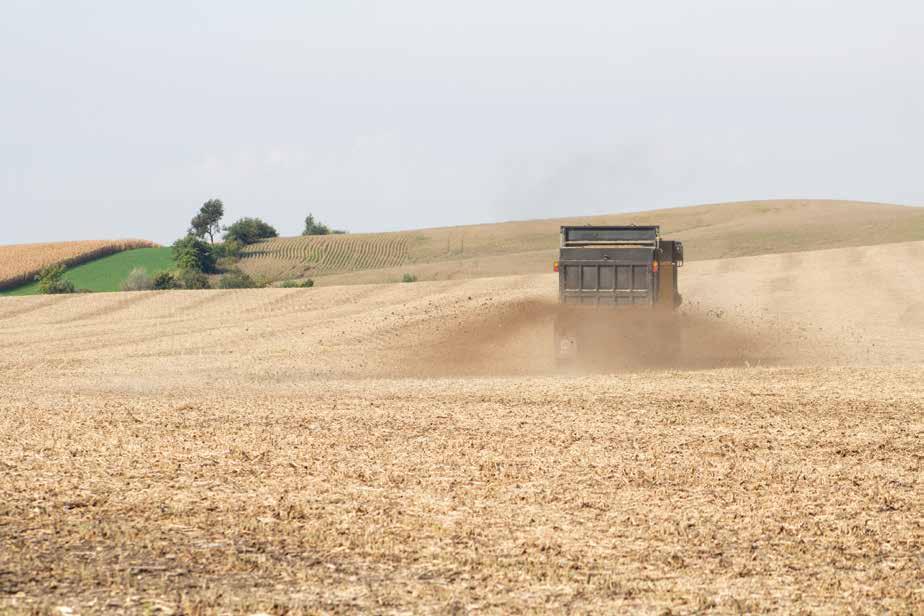
Are vertical beaters the right choice for your dry manure spreader? Do you need Artex Cyclone beaters? Will adding scales to your spreader pay o ?
Questions like these can be tricky to answer because they aren’t one size fits all.
Lucky for you (and us) Derek Bontrager, our Artex expert, has worked with the spreaders for years. He knows what makes someone a good candidate for vertical and cyclone beaters, and he’s seen why scales are becoming essential for smarter spreading.
Today, he’s sharing that knowledge.
THE DIFFERENCE BETWEEN VERTICAL AND CYCLONE BEATERS
Vertical beaters are two counter-rotating sha ts with teeth on them, like an auger. They grind heavy manure up and launch it 35 to 50 feet. Vertical beaters are the more economical Artex option.
Cyclone beaters align horizontally, not vertically. They chew up product before throwing it down onto spinners which fling the product onto your field. Cyclone beaters have a wider spread path than vertical beaters, reaching up to 60 feet, depending on the product you’re spreading.
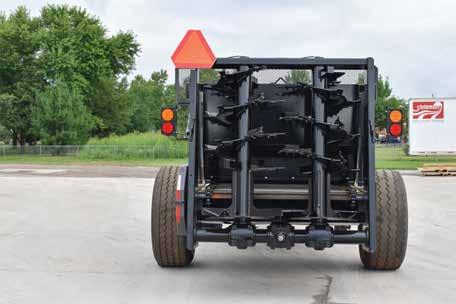
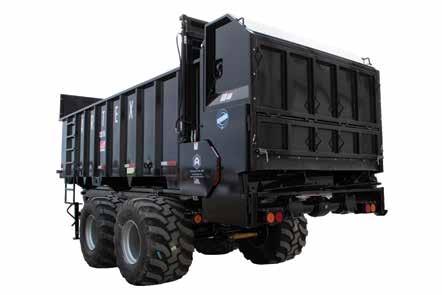
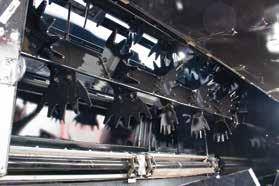

Derek has found that choosing the best beater style comes down to one question: “Do I spread more lighter, low-moisture materials, or packed and heavy ones?”
Vertical beaters are a better choice for heavy manure because they are durable and can throw heavy materials far. They do a great job evenly chopping everything up, even frozen and dense material.
Cyclone beaters are a better fit for airy materials, like poultry litter, lime, bio-solids, flu y compost, and other lighter, low-moisture materials.
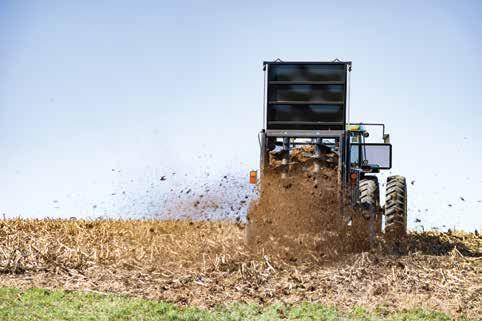

We’ve been getting lots of calls asking about scales on Artex spreaders. People are curious if others are happy with the decision to upgrade their Artex to include scales.
If an applicator mainly spreads cattle or pen-packed manure, they needs vertical beaters. Even if they want to throw some compost from the pile out back, or spread turkey litter once in a while, verticals handle it with no problem.
Cyclone beaters are great for lighter materials, but if those aren’t your main load, verticals are usually the safer bet.
If you are someone who applies large amounts of both heavy and light materials, you may benefit from owning one of each beater style and trading it out for your di erent application needs.
The short answer: yes, people are glad they added
Adding scales to your spreader comes with two primary benefits:

Scales give you a clear picture of your load. You fill your Artex with manure, and the scale tells you, “you have 40 tons on board.” As you spread across 40 acres, you can calculate your average rate per acre.
Next season, you can pull up your records and see how much manure you spread where. ADDING IN RATE CONTROL
If you invest in scales for your Artex, you can use a rate control system. These systems automatically adjust your floor speed based on how much weight you’re carrying and how fast you’re driving.
That’s especially valuable with poultry litter. It’s a concentrated product, so you’re spreading fewer tons per acre. Rate control keeps you on target, preventing heavy spots.
Artex scales need to be installed at the factory, but you can add a rate control system to a spreader with scales at any time.
Not a problem. Derek can help you decide if vertical beaters, cyclone beaters, scales or rate control will be beneficial to your operation. Give him a call (319.430.3813).


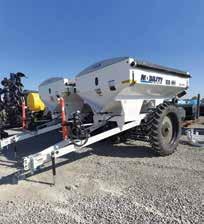
PATHFINDER & ST APPLICATORS
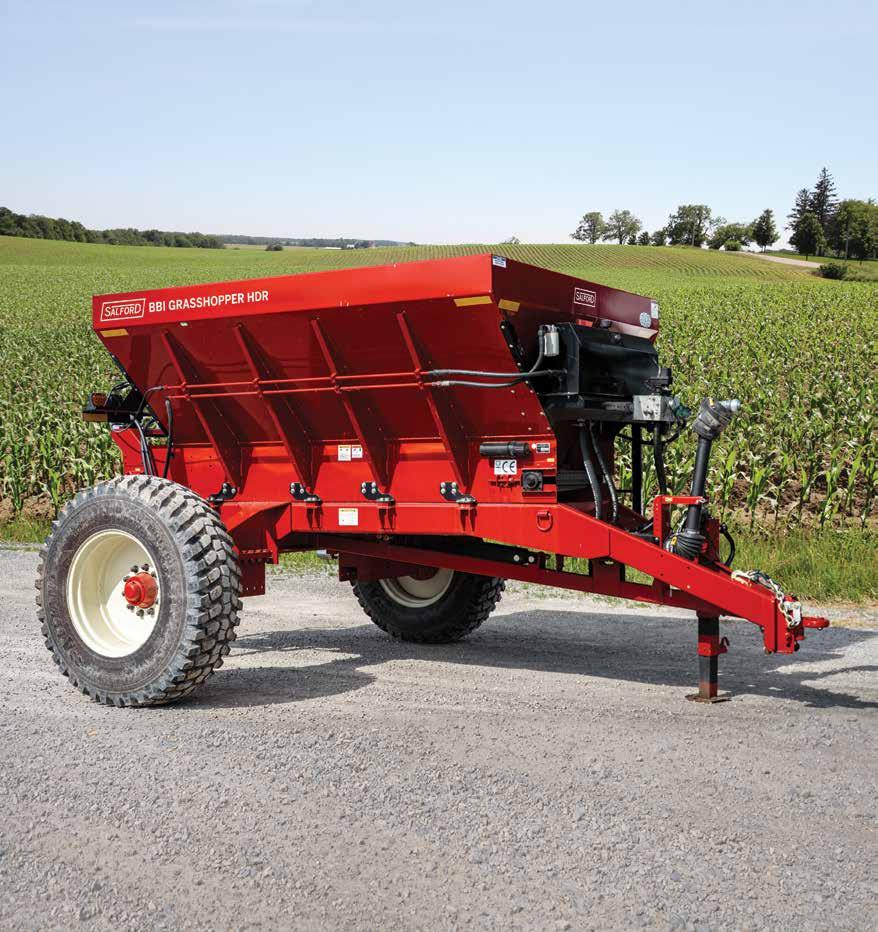
BBI SPINNER SPREADERS
SIMPLE FERTILIZER AND COVER CROP APPLICATORS
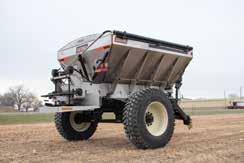
Salford offers the widest range of granular applicators for fertilizer application and cover crop seeding.
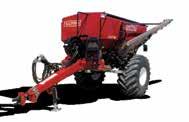
VALMAR AIR BOOM APPLICATORS
APPLY YOUR WAY
Choose from Spinner Spreaders, Air Booms and granular systems to add to planters and tillage equipment.
FIELD YOUR BEST
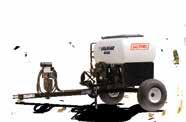
56 SERIES APPLICATORS
STRAIGHT OR VARIABLE RATE
Choose from simple, accurate straight rate applicators or equip with ISOBUS compatible variable rate control.
Contact Eldon C. Stutsman, Inc for your Salford Tillage and Application needs.
The Stutsman ProVantage team recently received the Secretary’s Ag Leader Award for Conservation from Iowa’s Secretary of Agriculture, Mike Naig, for their work helping southeast Iowa farmers make smarter nitrogen decisions.
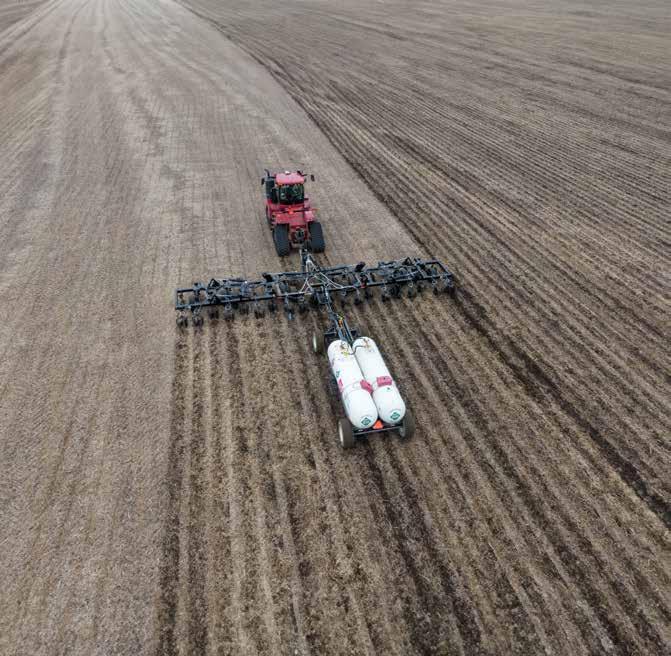
Our ProVantage experts connect growers with the Iowa Nitrogen Initiative (INI), to research local nitrogen application. That data is used to improve nutrient management and Iowa water quality.

The INI is a research program launched in 2022 to conduct on-farm trials that help Iowa farmers optimize nitrogen use on their acres.
Research from these trials feeds into N-FACT, a free nitrogen recommendation tool for Iowa growers. N-FACT analyzes your specific conditions like anticipated crop year weather, residual soil nitrogen, fertilizer and crop pricing, crop rotation and planting date to suggest optimal nitrogen rates for your acres.
"Working with the INI allows us to anonymously share insights with a broader grower group so, as a southeast Iowa region, we can be more informed and make the best decisions possible using locally created data models," said Tyson Miller, ProVantage advisor.
You can calculate your optimal nitrogen rate at n-fact.ag.
The INI trials are valuable because they help us move past guessing and rely on real data from growers' fields.
If you're interested in running nitrogen trials on your farm, reach out to Tyson (tjmiller@stutsmans.com). Trials are easy to run and customizable to your equipment. You only need a system capable of variable nitrogen application and a yield monitor that allows raw data extraction.
Let’s see what we can learn together.
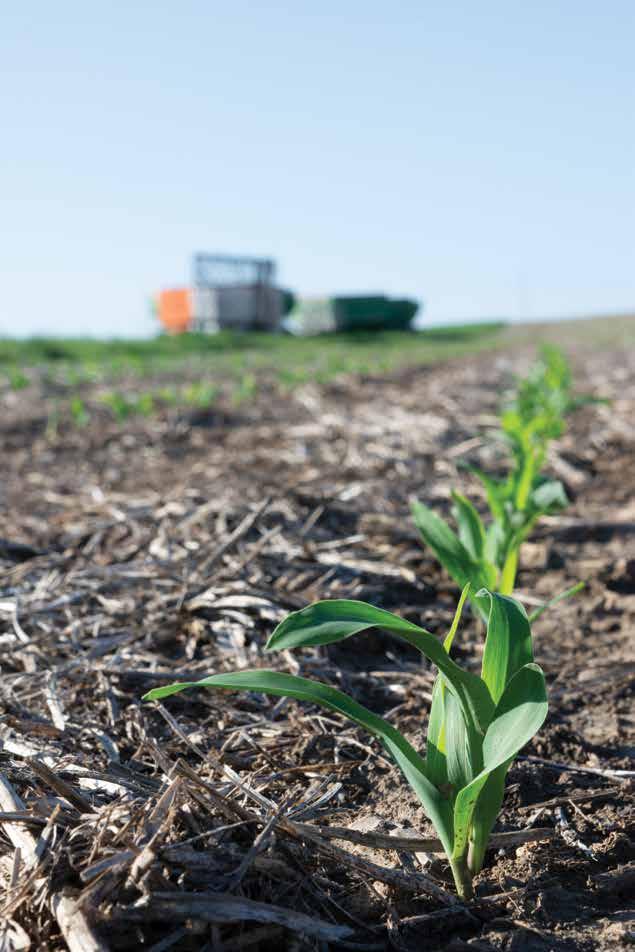
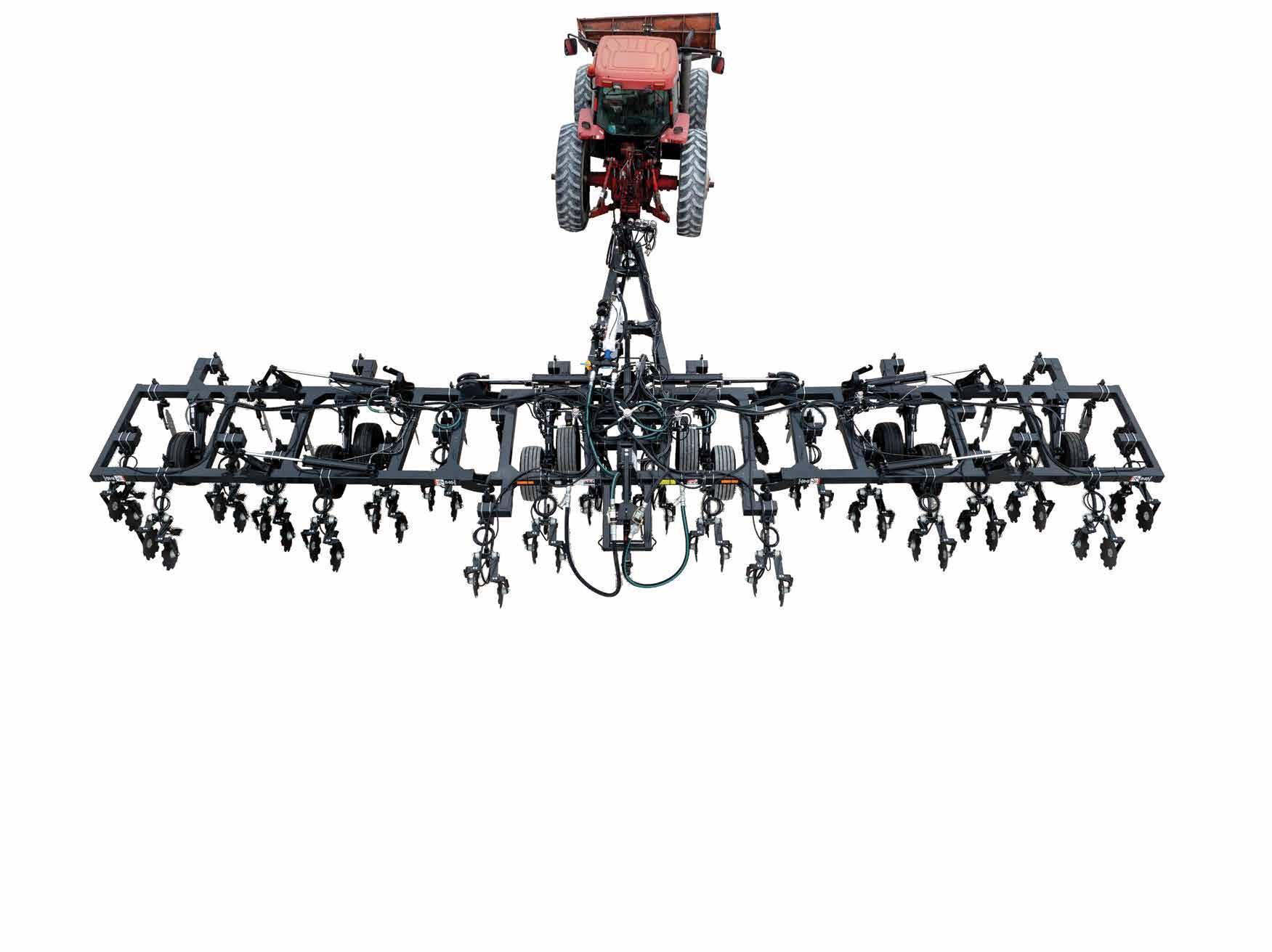
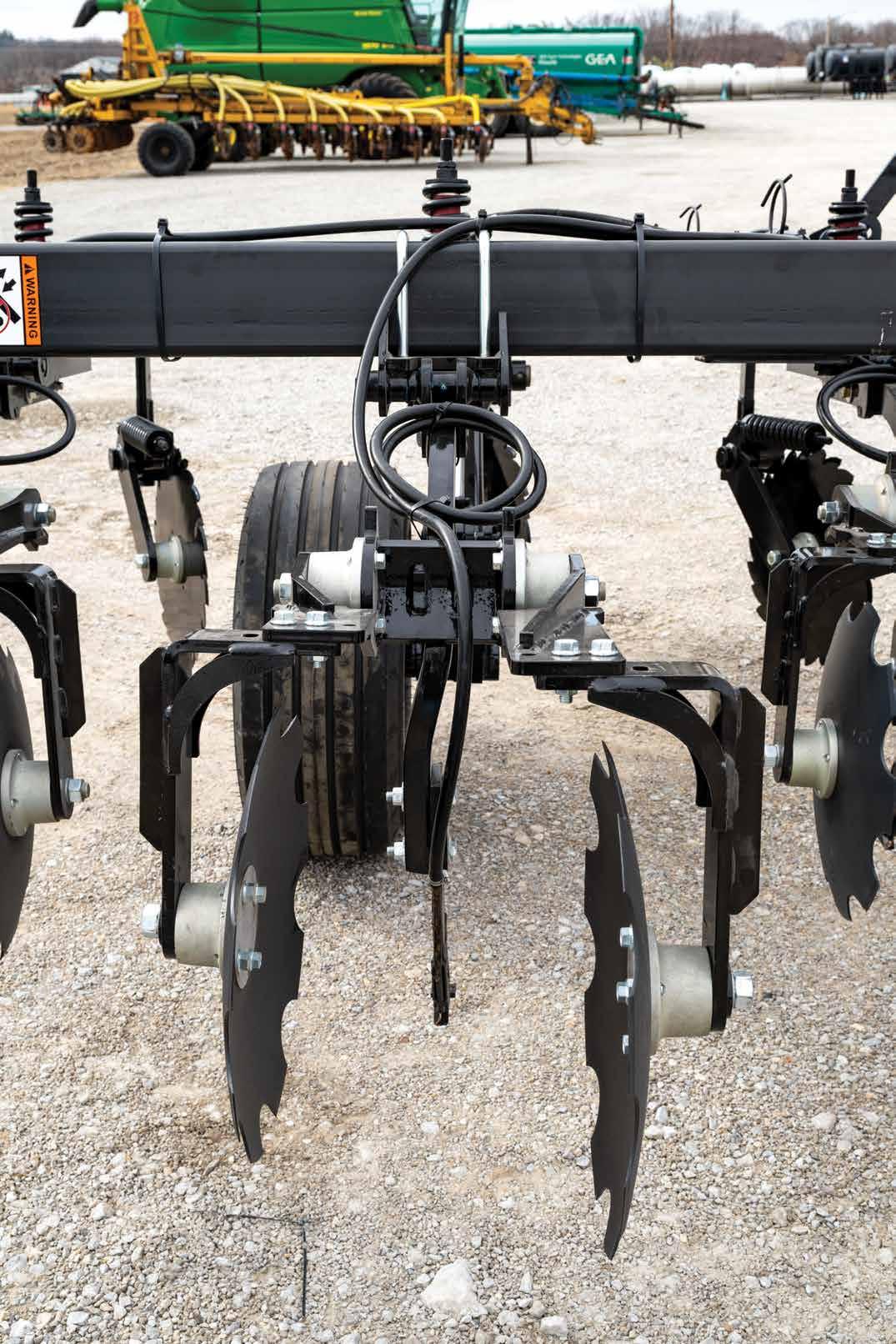
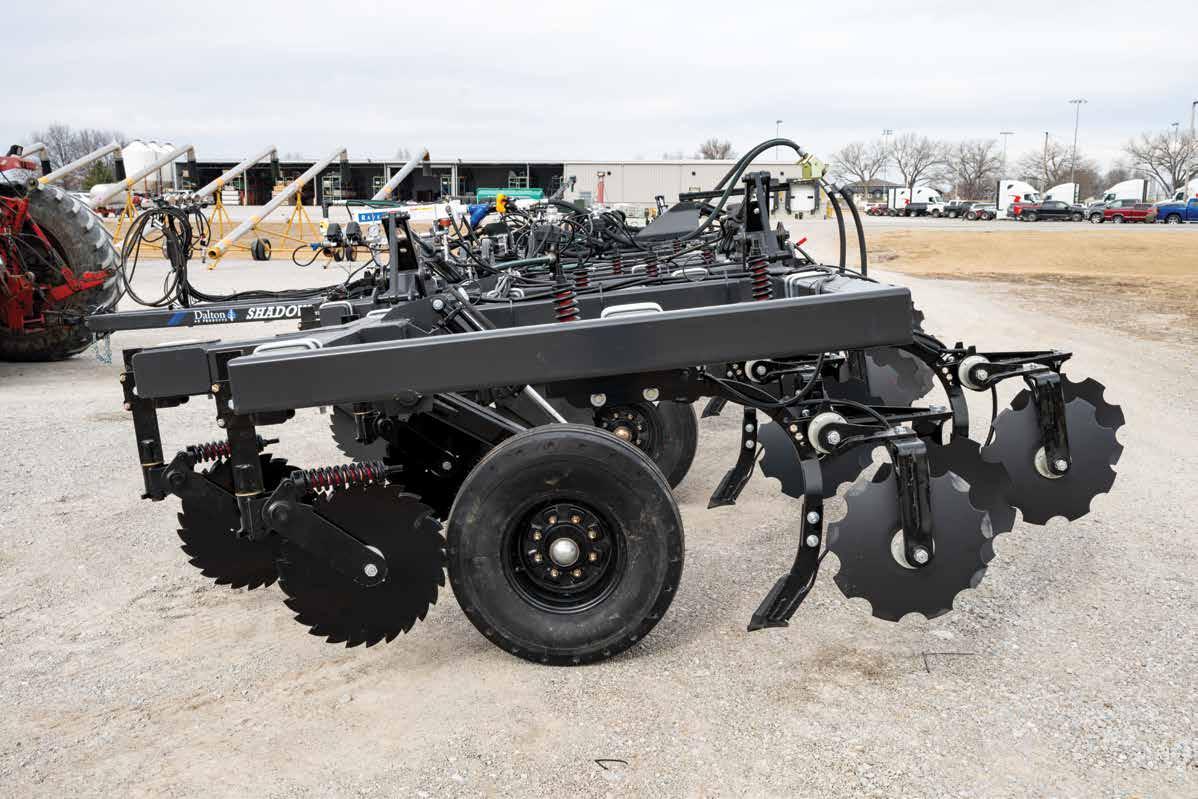

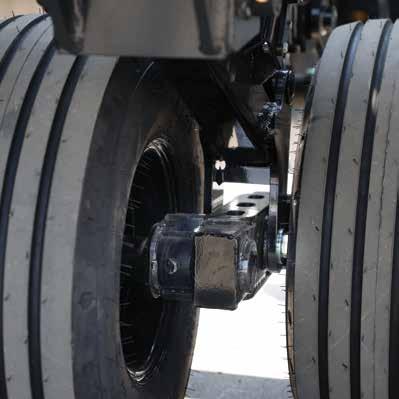
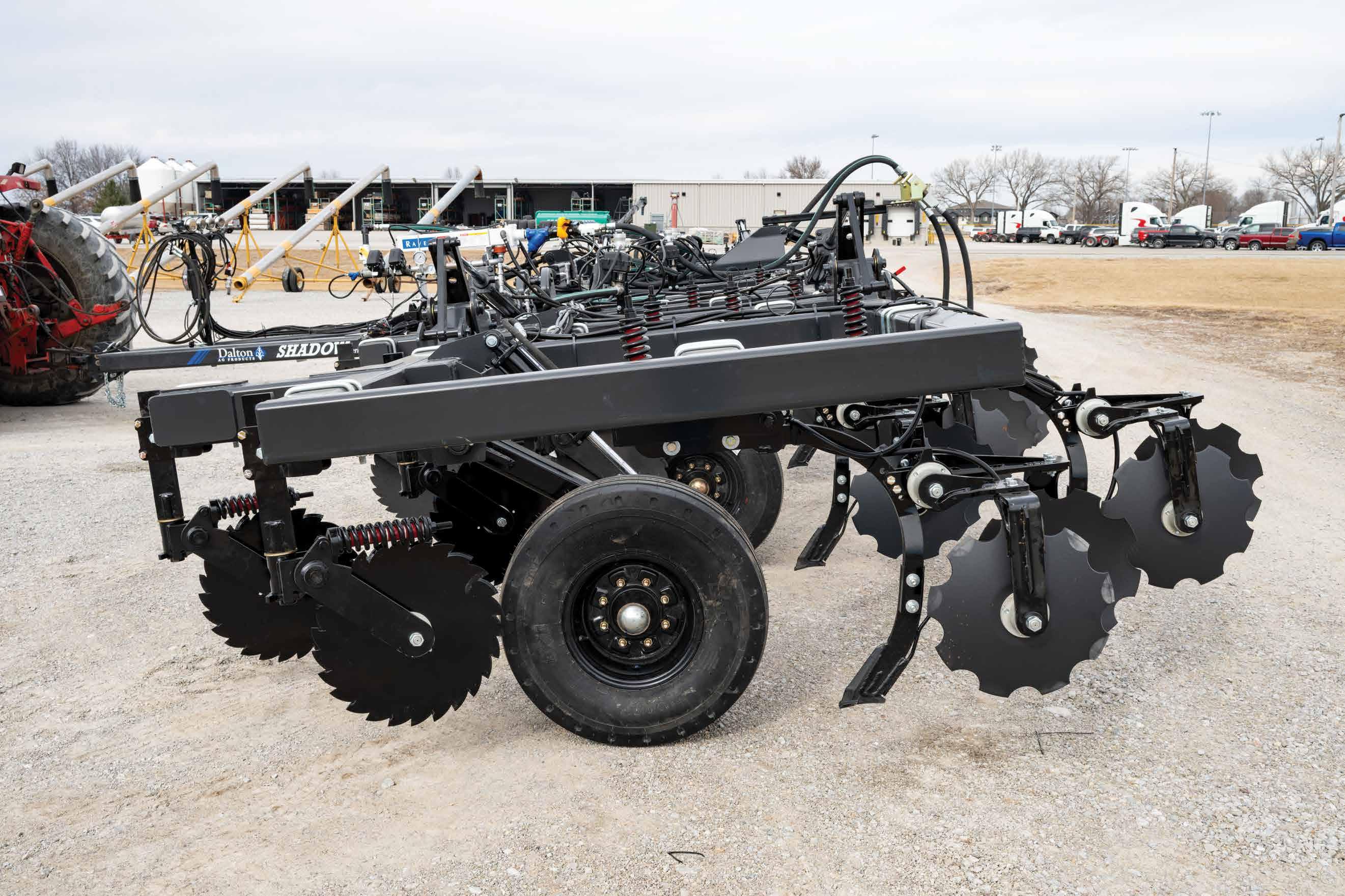
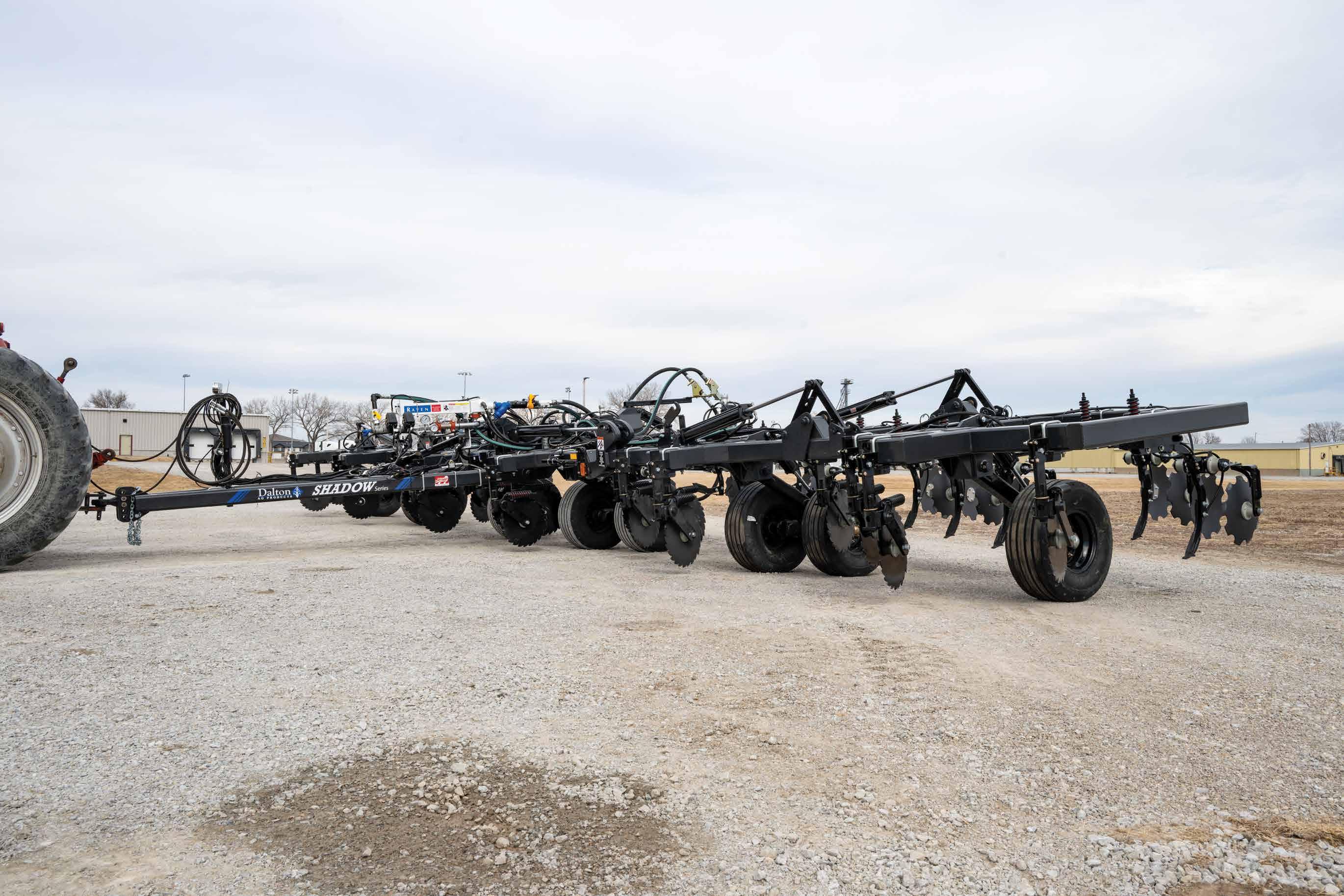
As the old adage goes, “A stitch in time saves nine.”

Bleed and refill brake lines and calipers, ensuring they work properly.


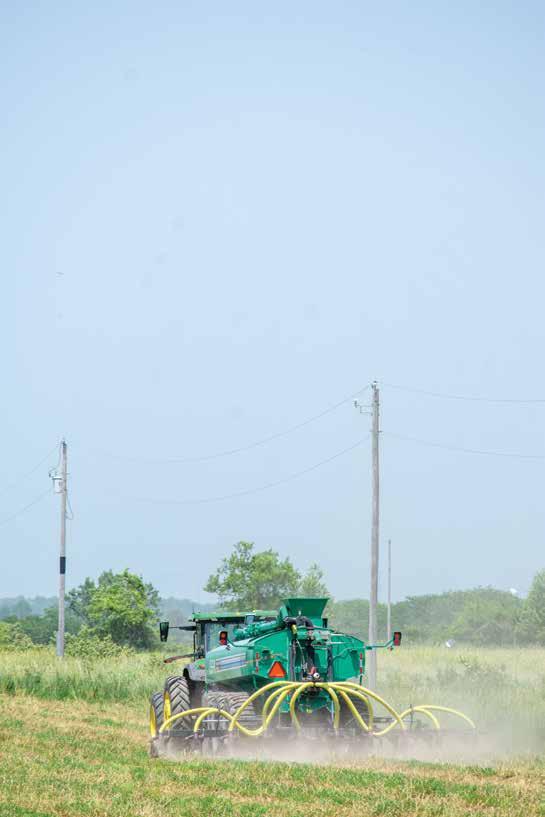

Inspect all hydraulic hoses, cylinders and fittings for wear and damage.
Adjust or recenter power steering, removing any slack from springs.
Refresh wheel bearing grease if it’s dirty or old.
Examine the hitch and hitch pin for wear.
Check the hydraulic shredder manifold motor on your toolbar for leaks and bearing wear.
Scan injector hoses for kinks or rips.
Measure coulter diameters; replace any that are 20 inches or smaller (new ones are usually 22 inches).
Grease the entire system.
Verify oil levels in the pump bearing housing and inspect for leaks.
Rotate the pump bearing housing by hand, ensuring it turns smoothly.
Confirm PTO shields are in place.
Inspect tires and tire pressure.
Check flowmeter cable connections and clean them if necessary. Tighten lug nuts.
Inspect the wiring harness for broken or damaged wires.
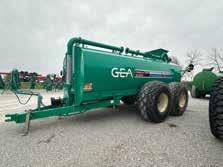
And remember, our manure equipment team is here to help you with equipment troubleshooting, parts sourcing and in-season maintenance.
18