

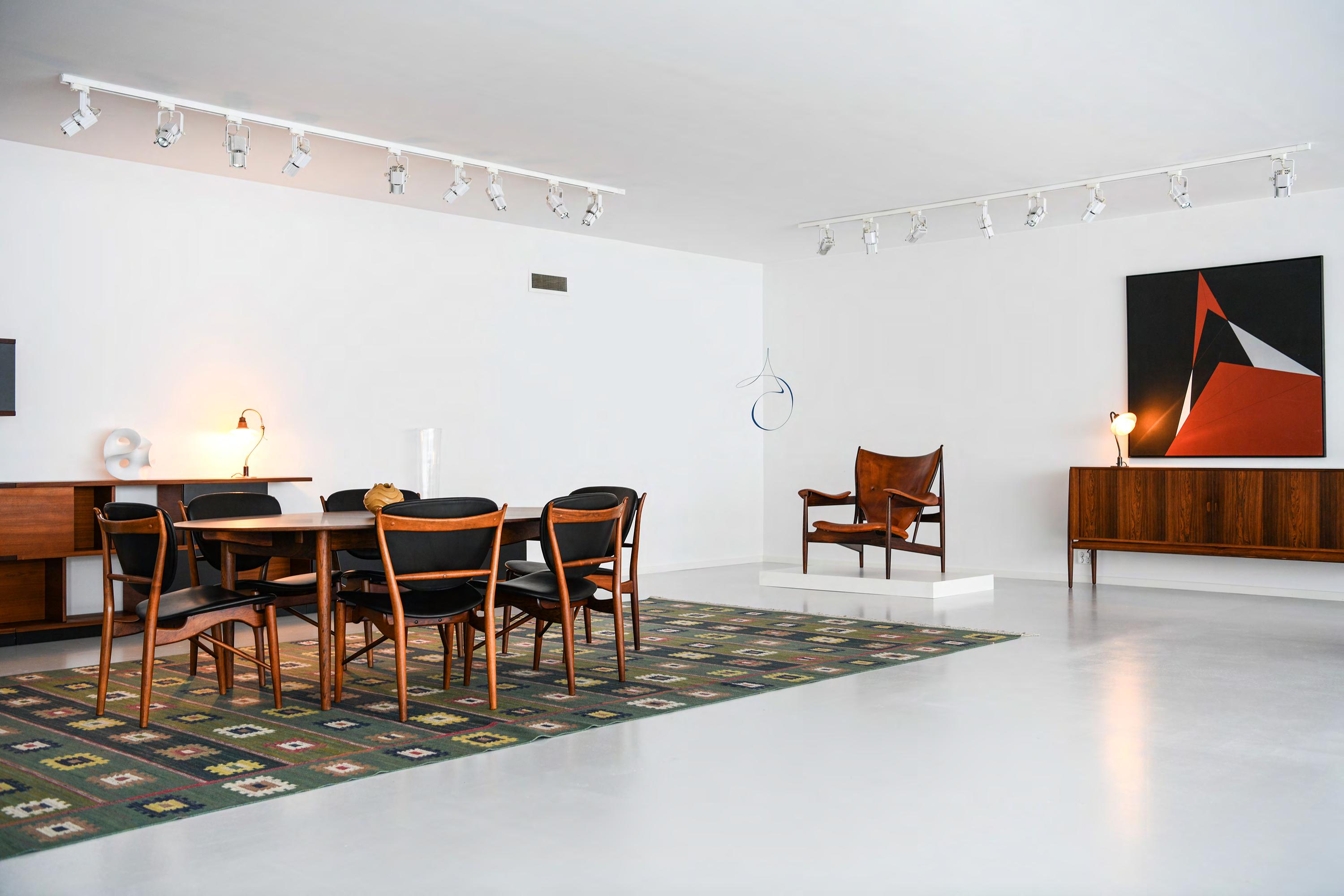
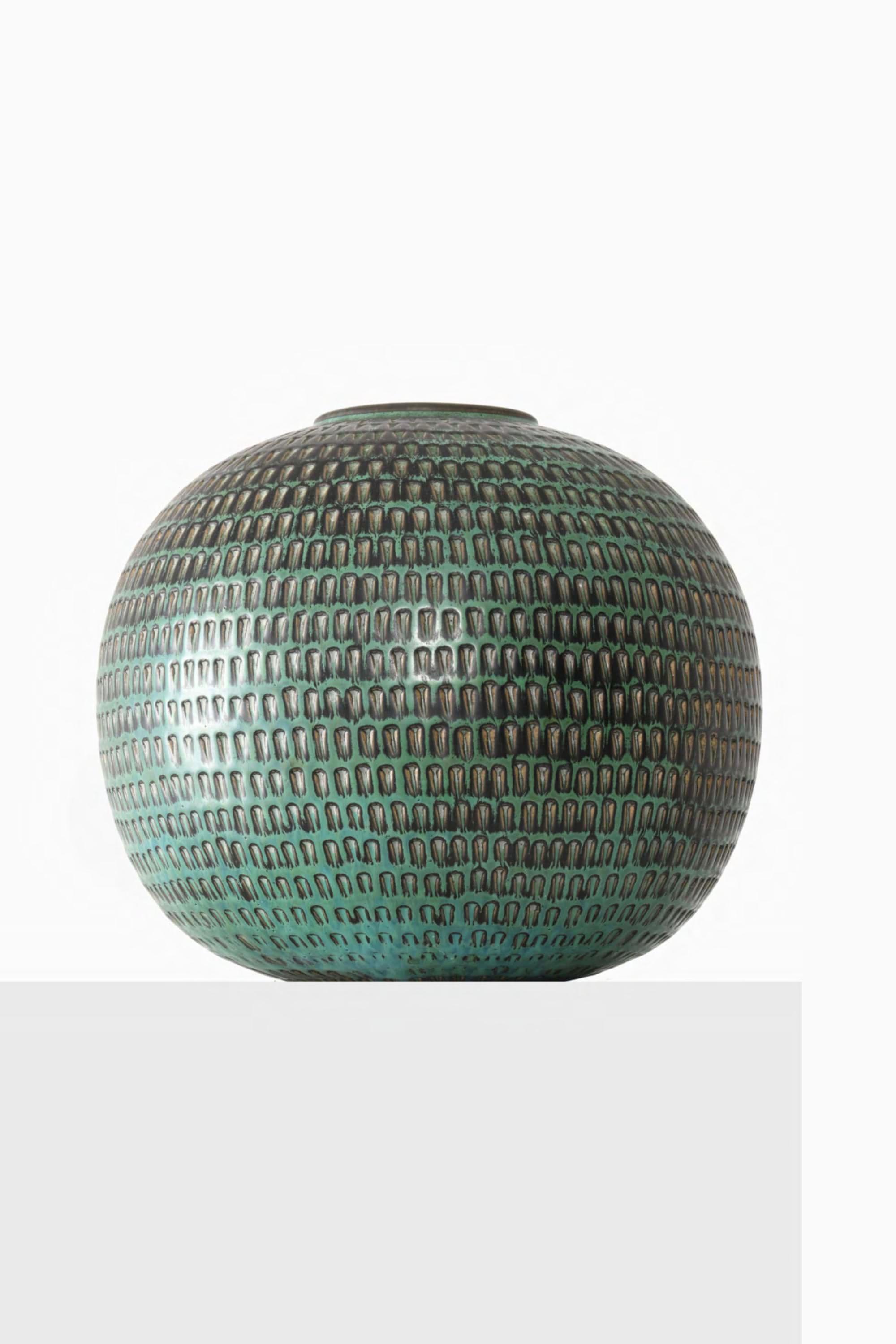
At Studio Schalling, each object is selected for its ability to convey history - through craftsmanship, provenance, and design significance. Our collection spans rare Scandinavian furniture, lighting, and decorative arts, with a focus on works that embody both cultural weight and timeless form. This issue presents a curated selection of recent arrivals: objects that reflect the diversity and depth of 20th-century design, from singular commissions to iconic works by celebrated architects and designers. Together, they illustrate the values that define our work - authenticity, rarity, and an enduring dedication to quality.
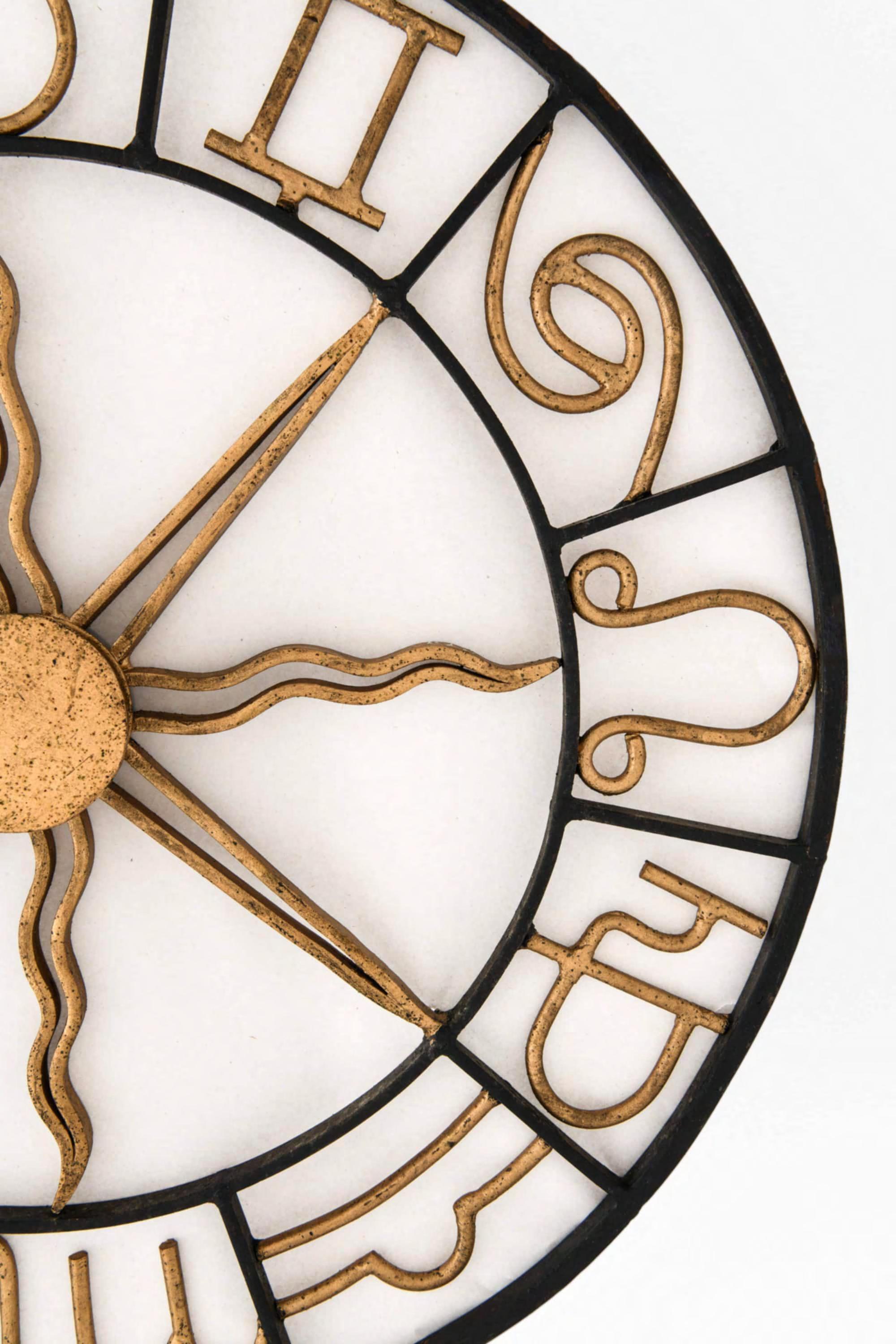
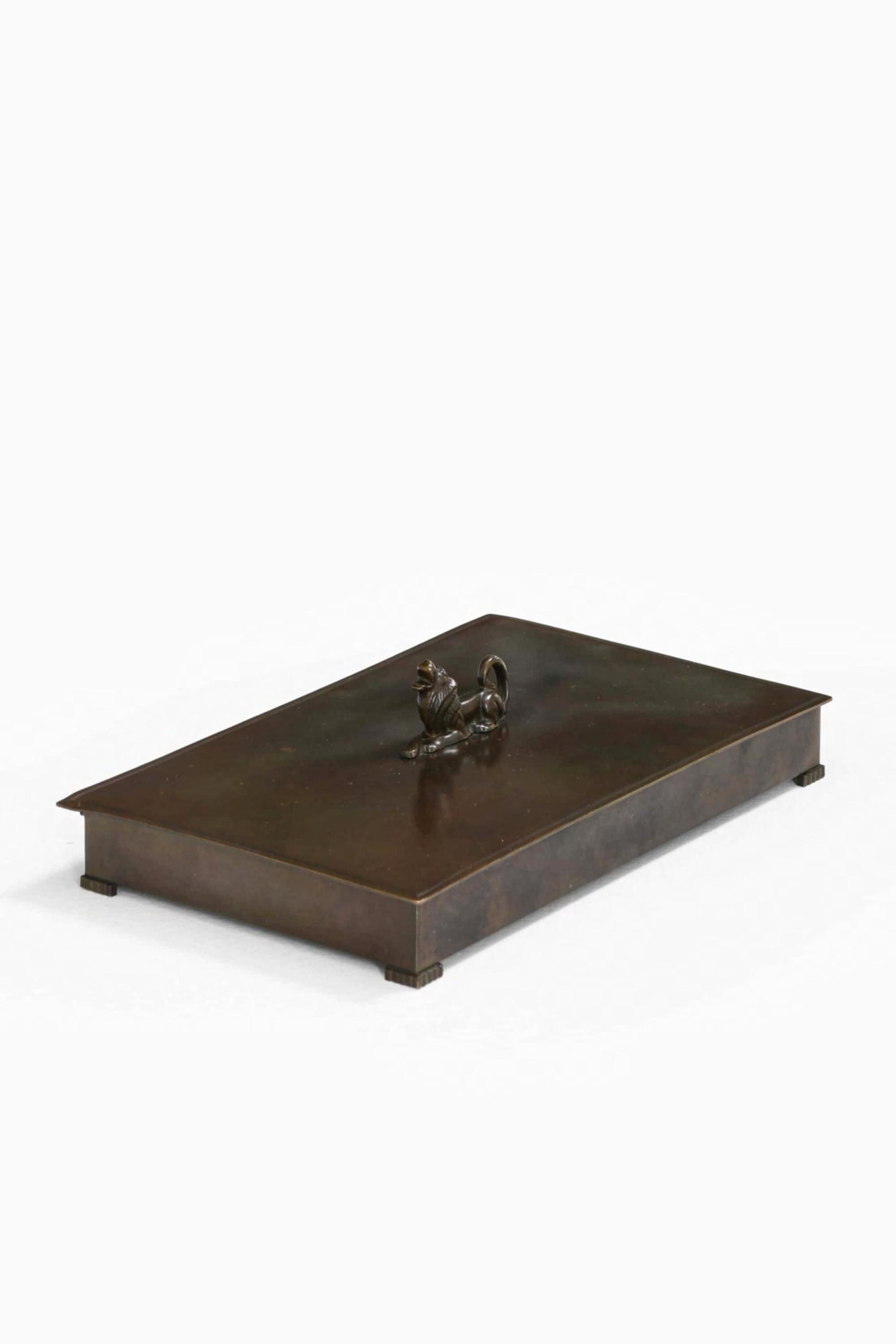
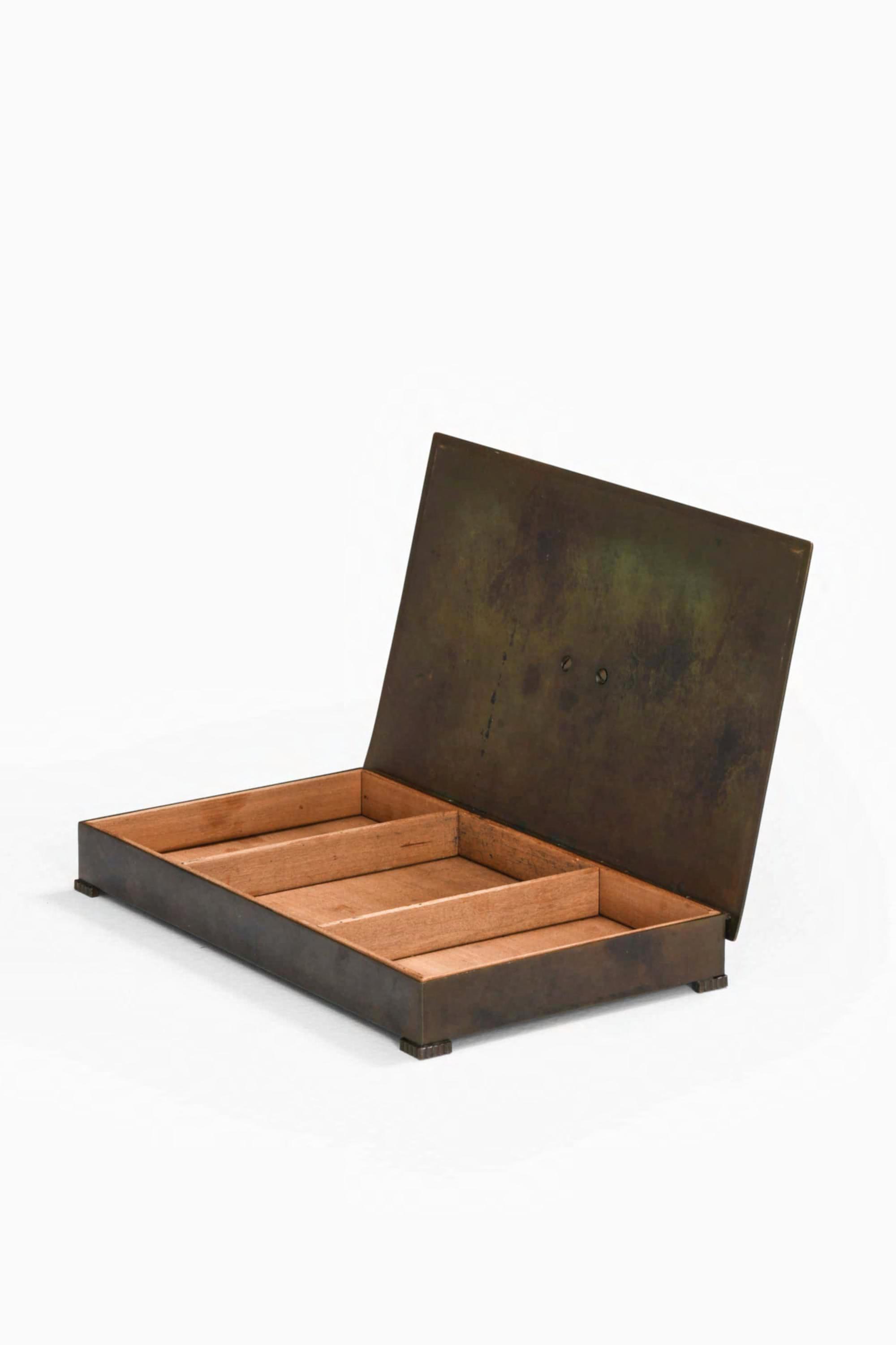
Produced by GAB (Guldsmedsaktiebolaget)
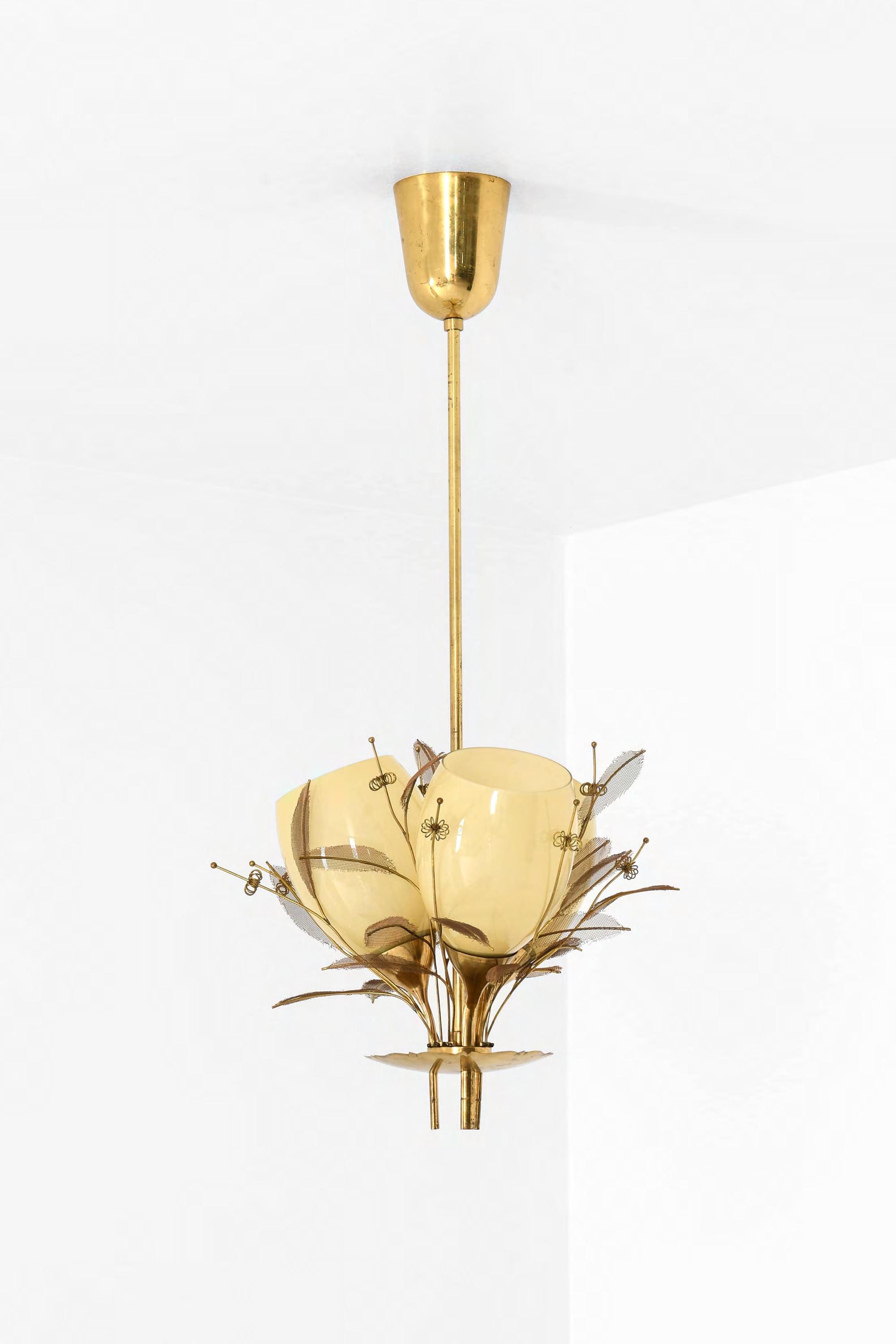
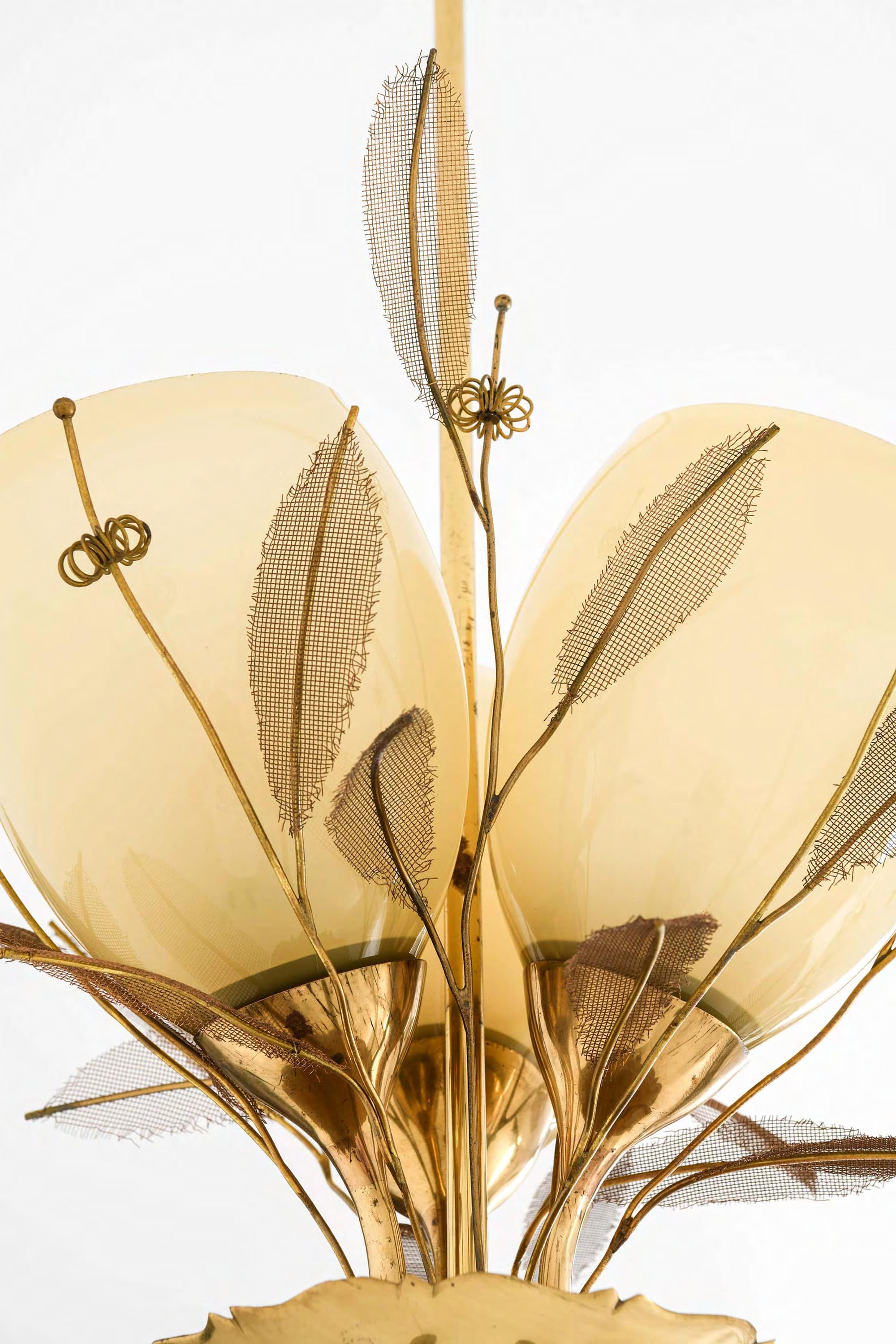
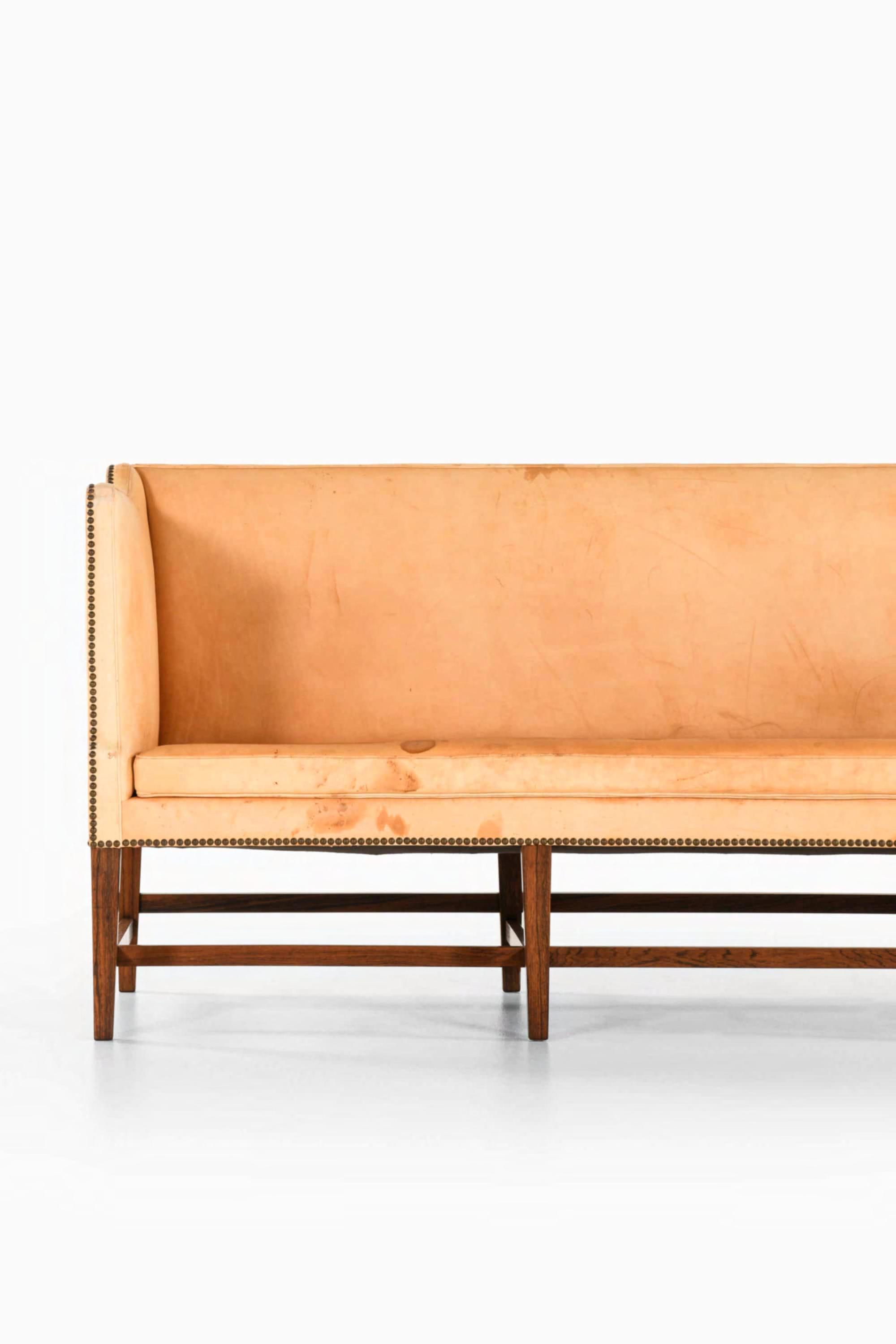
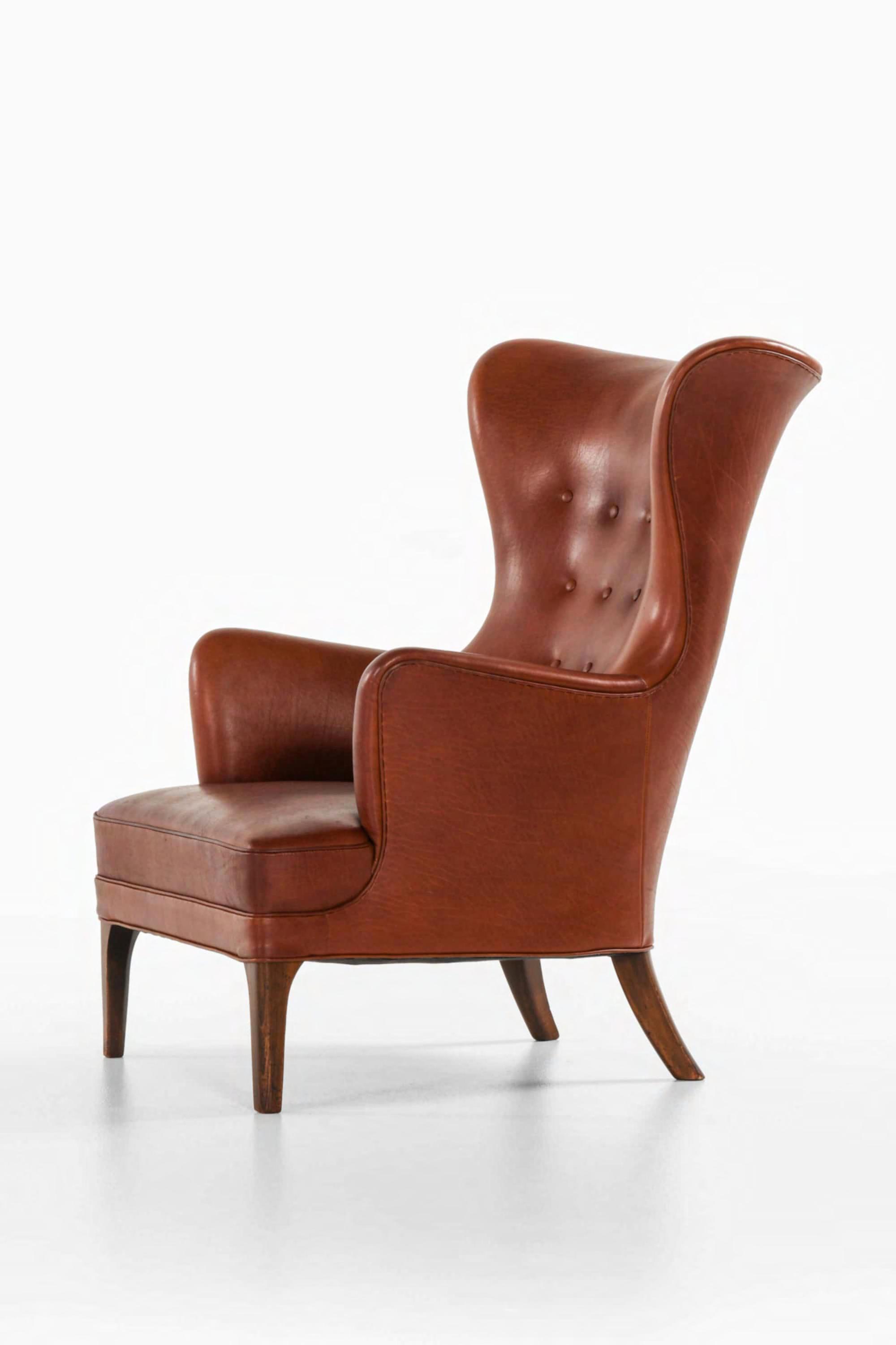
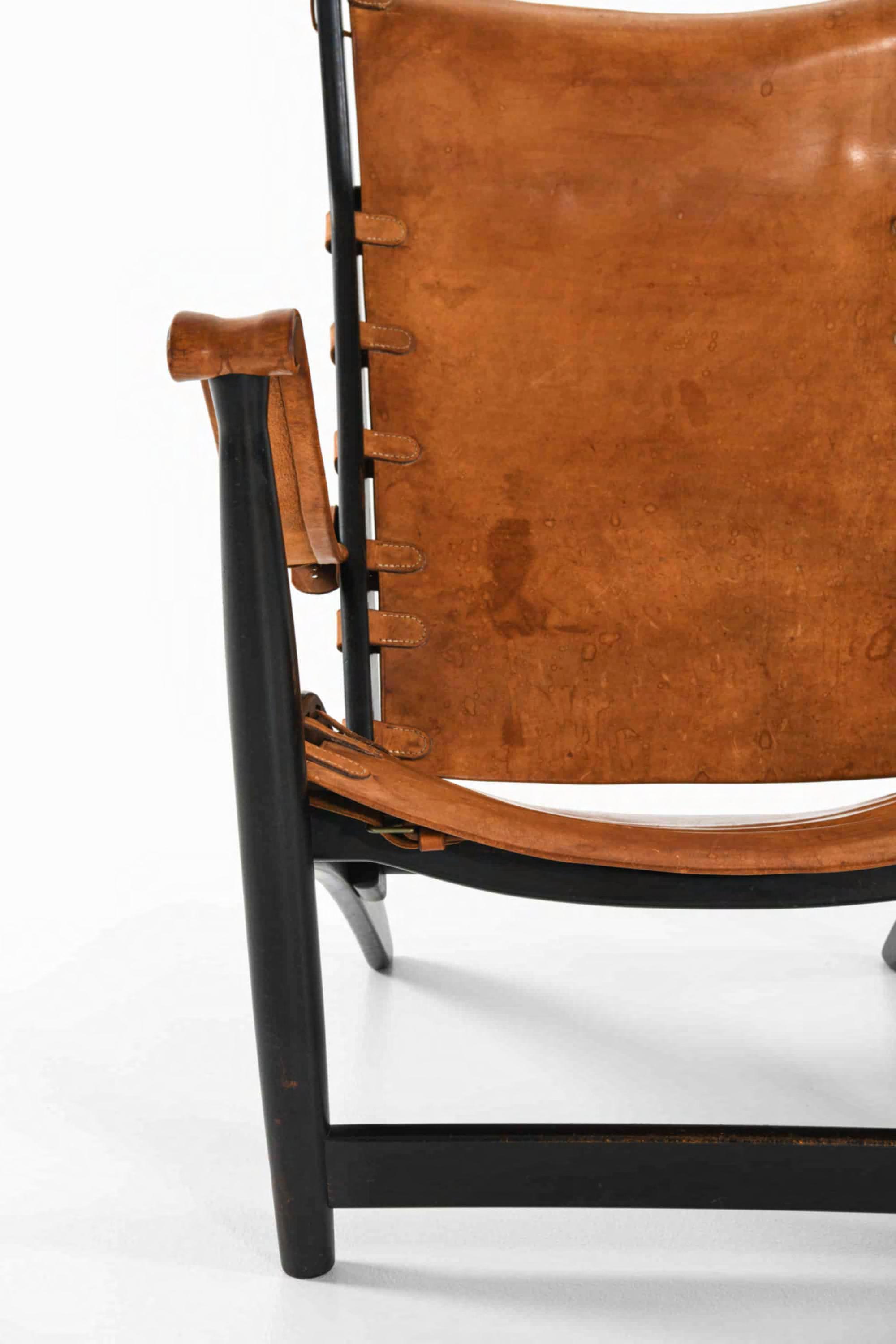
by Frits Henningsen
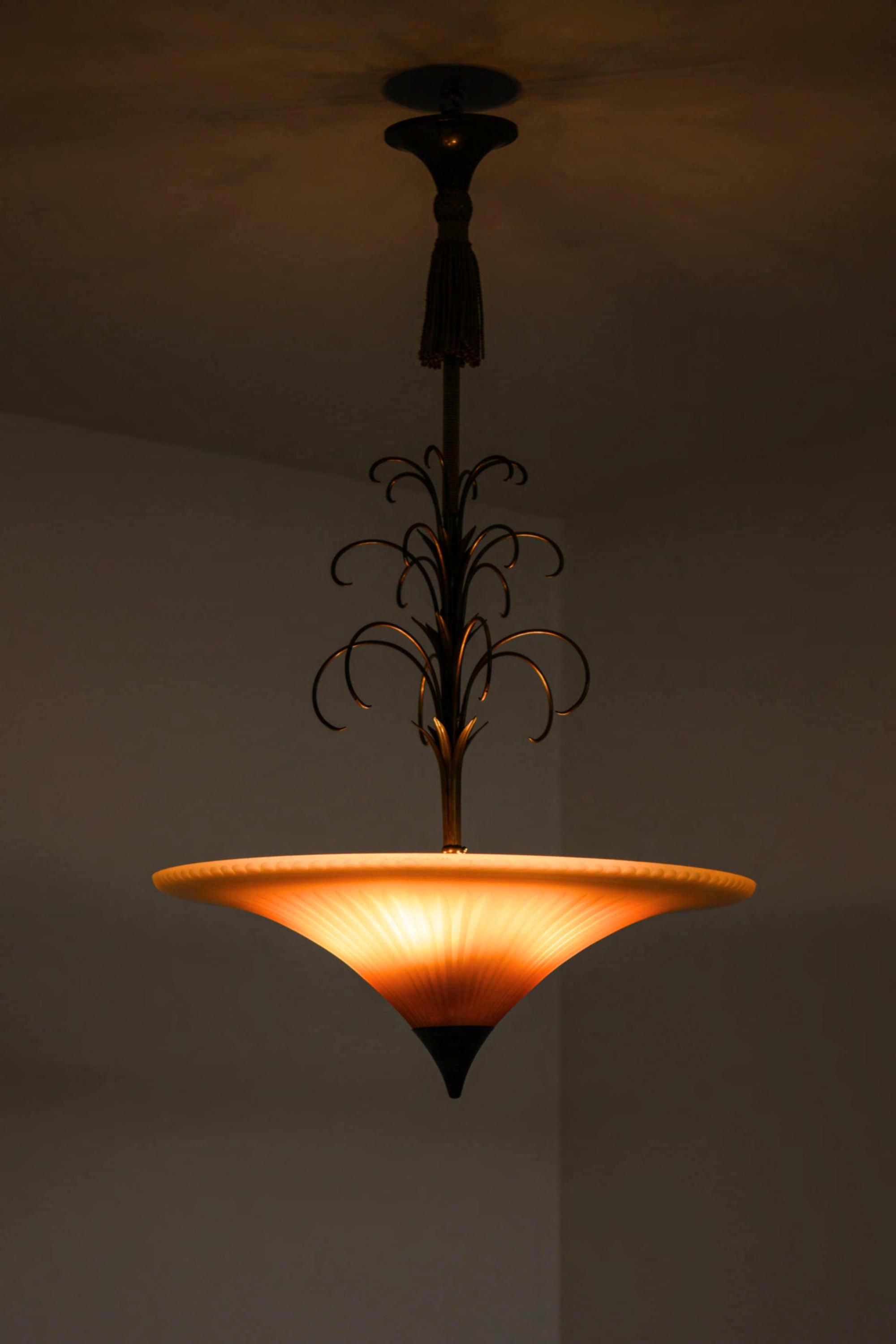
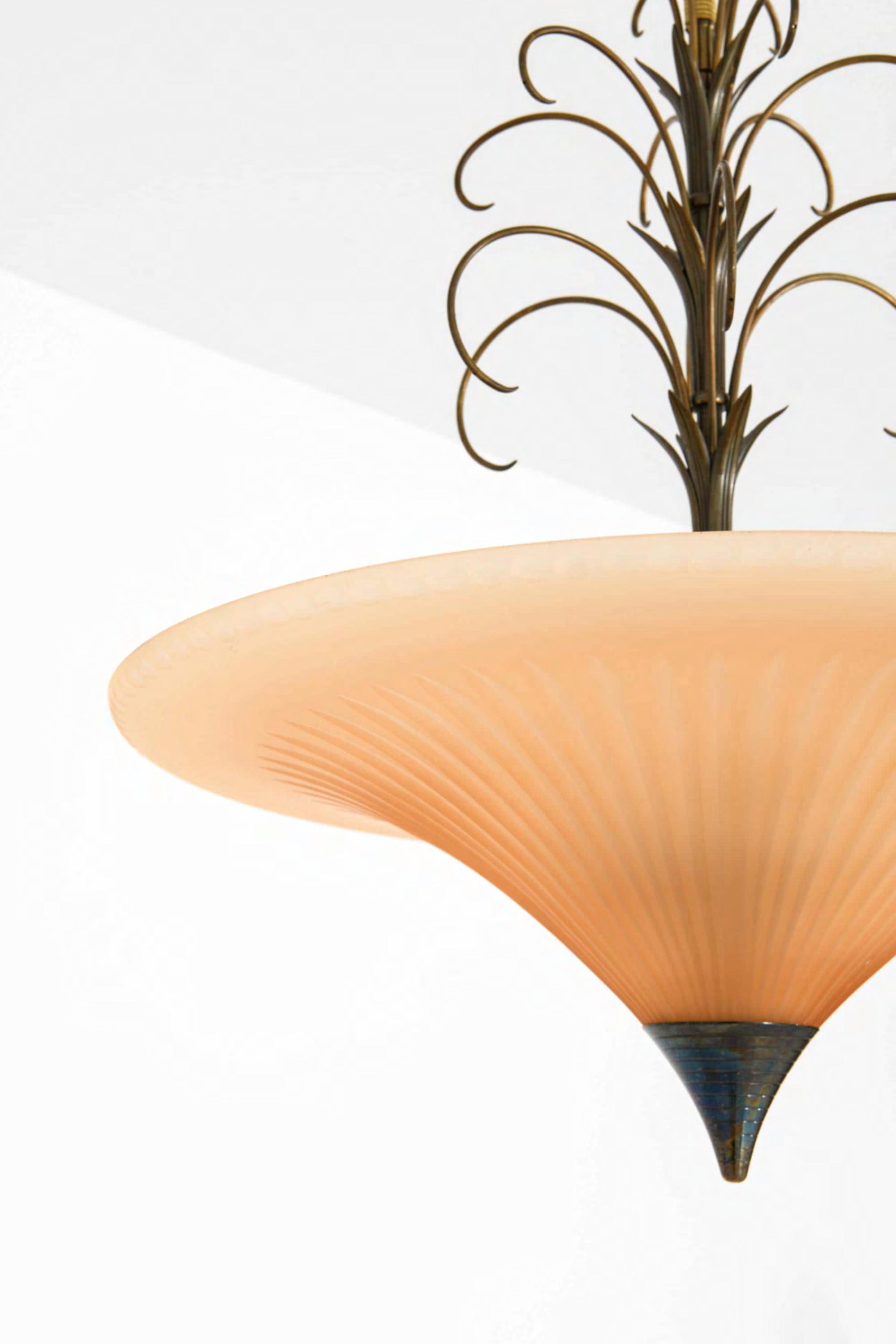
Produced by Böhlmarks
1930s
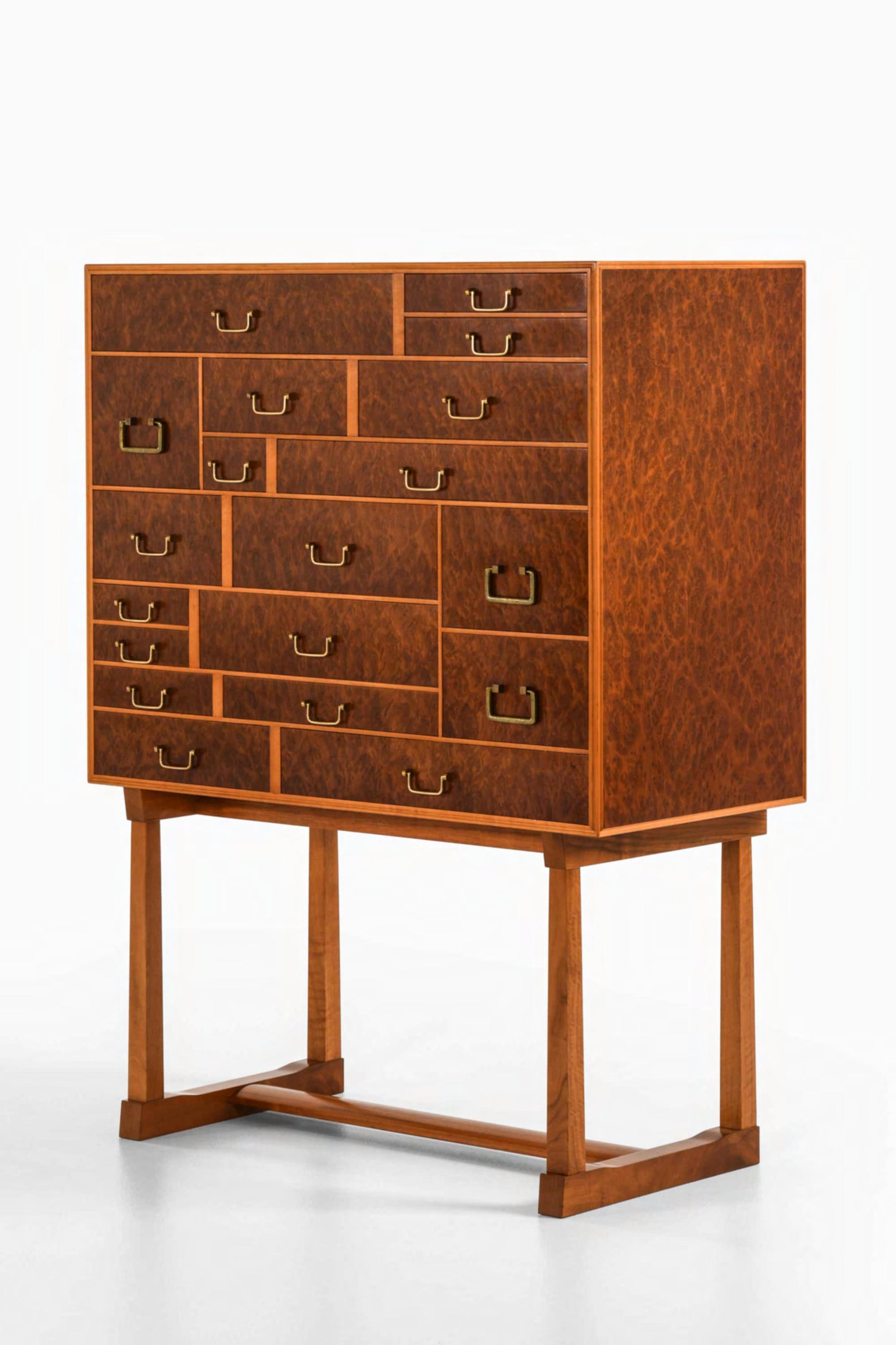
’Nationalmuseum Cabinet’ by Josef Frank
Produced by Svenskt Tenn
Austrian-born architect and designer Josef Frank (1885–1967) was one of the leading figures in 20th-century design and became the most influential collaborator at Svenskt Tenn in Stockholm, where he worked from 1934 until his death. Frank is celebrated for his opposition to rigid functionalism, instead embracing pattern, color, irregularity and a deeply humanist approach to interiors.
The cabinet, model 881, designed in 1938, is veneered in redwood root and amboyna burl on a mahogany frame with a walnut plinth and brass handles. Originally conceived with 21 drawers, Frank revised the design to 19, creating an asymmetrical yet harmonious grid that reflects his belief in the beauty of irregularity. With its veneered back, the piece was intended to stand freely as a sculptural element in a room.
The cabinet achieved iconic status when exhibited at ’Josef Frank - 20 Years at Svenskt Tenn’ at the Nationalmuseum in 1952, where the museum acquired an example for its collection. Today it is regarded as one of Frank’s most important works, uniting modernist clarity with decorative imagination.
Josef Frank Cabinet, Model 881 ’Nationalmuseum Cabinet’ (Nationalmuseiskåpet)
Produced by Svenskt Tenn
1938
Mahogany, Walnut, Redwood Root Veneer, Amboyna Veneer, Brass
Exhibition
Josef Frank - 20 Years at Svenskt Tenn, Nationalmuseum, Stockholm, 1952
Literature
Kristina Wängberg-Eriksson, Josef Frank, Livsträd i Krigens Skugga, Signum 1994, The Cabinet Depicted in Color p. 112 and Mentioned p. 224.
Provenance
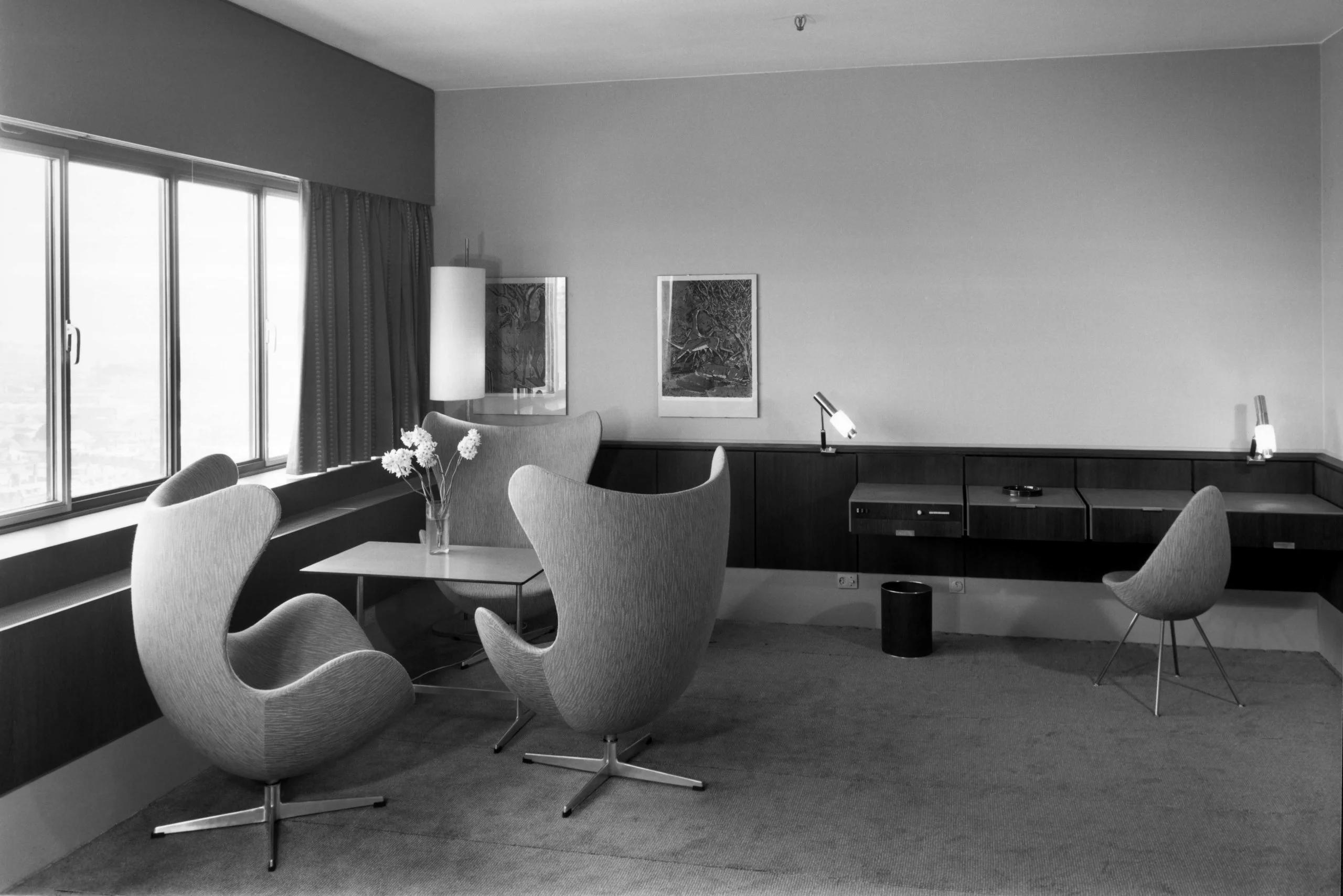
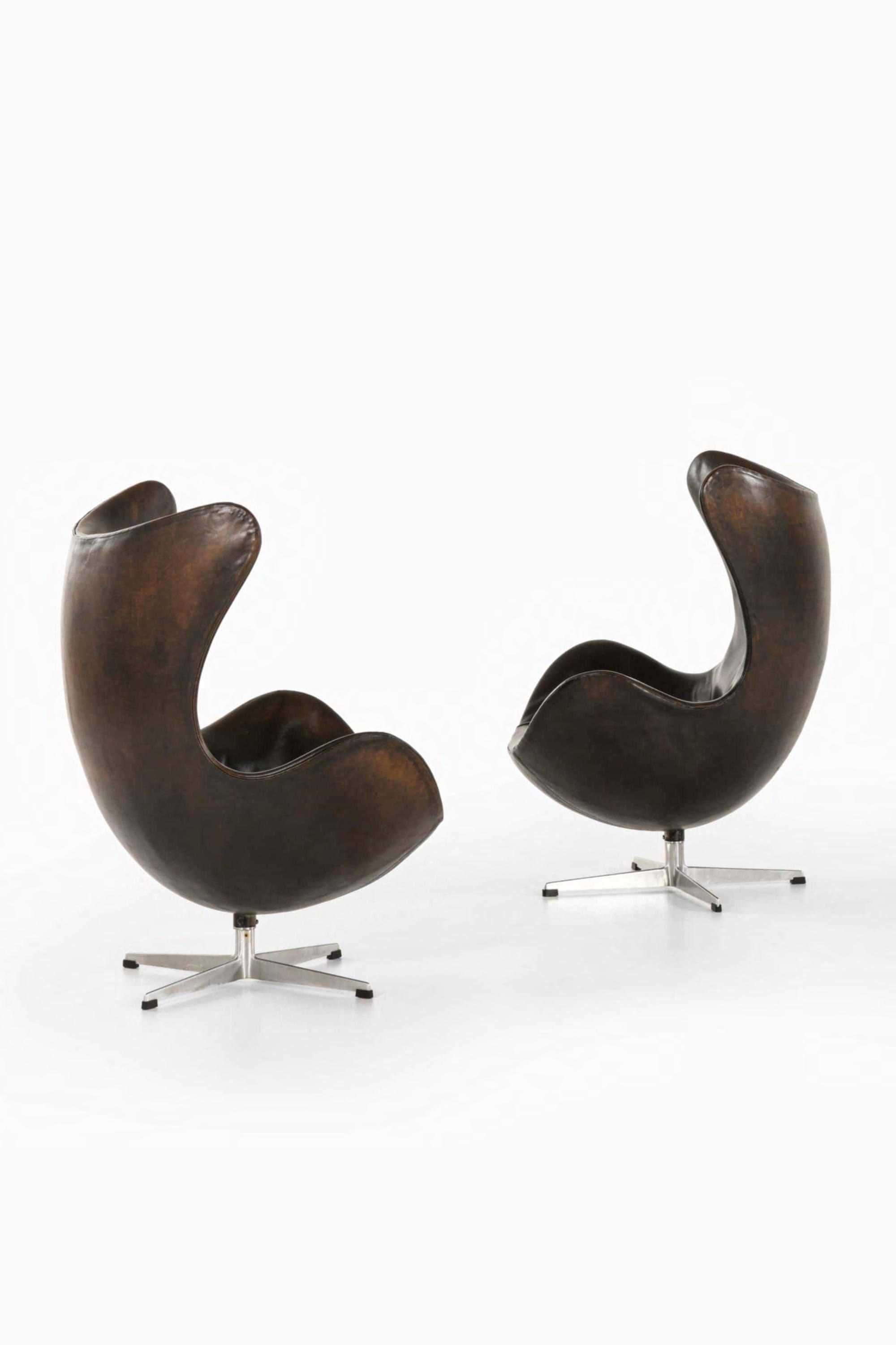
Originally Conceived for the SAS Royal Hotel, Copenhagen
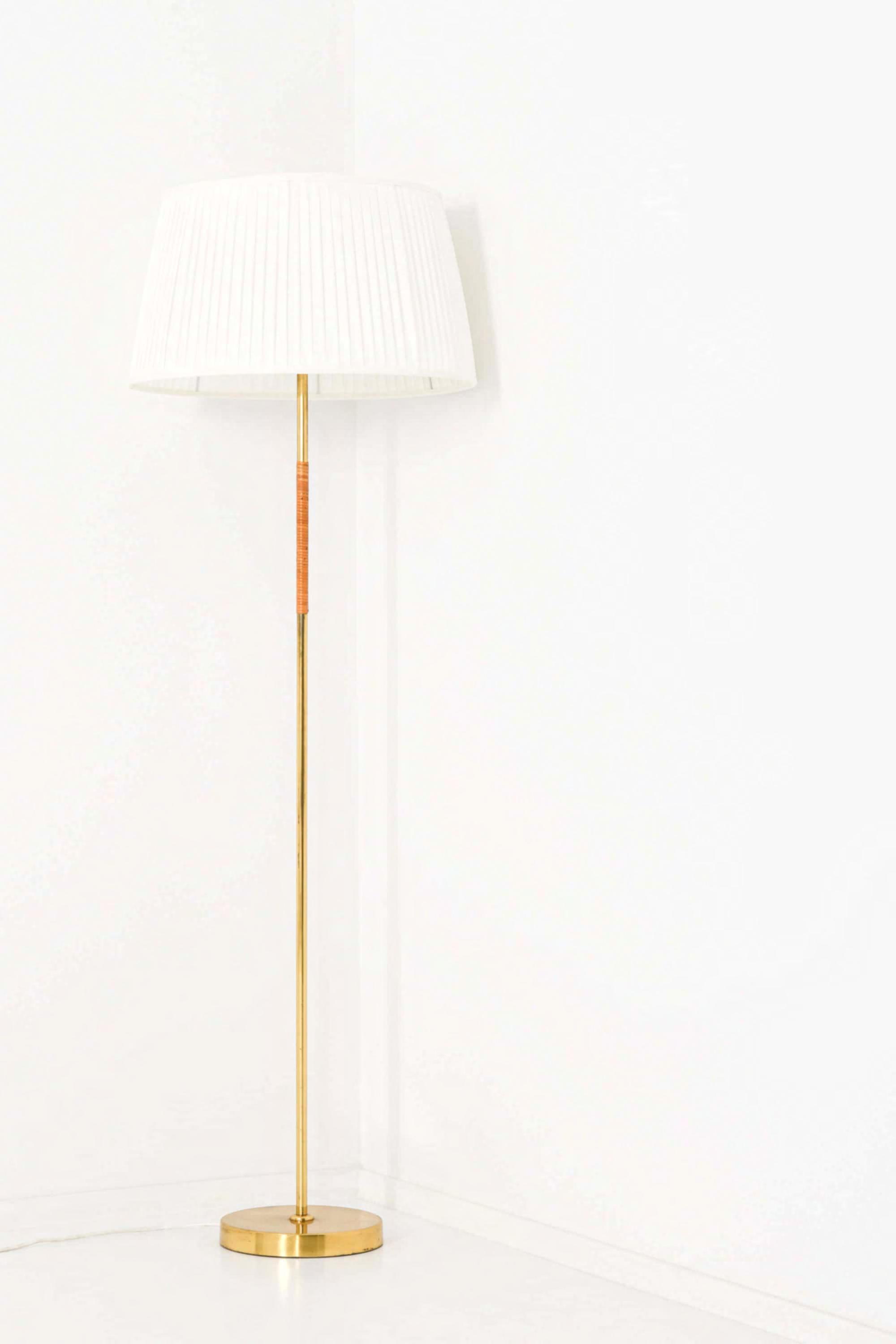
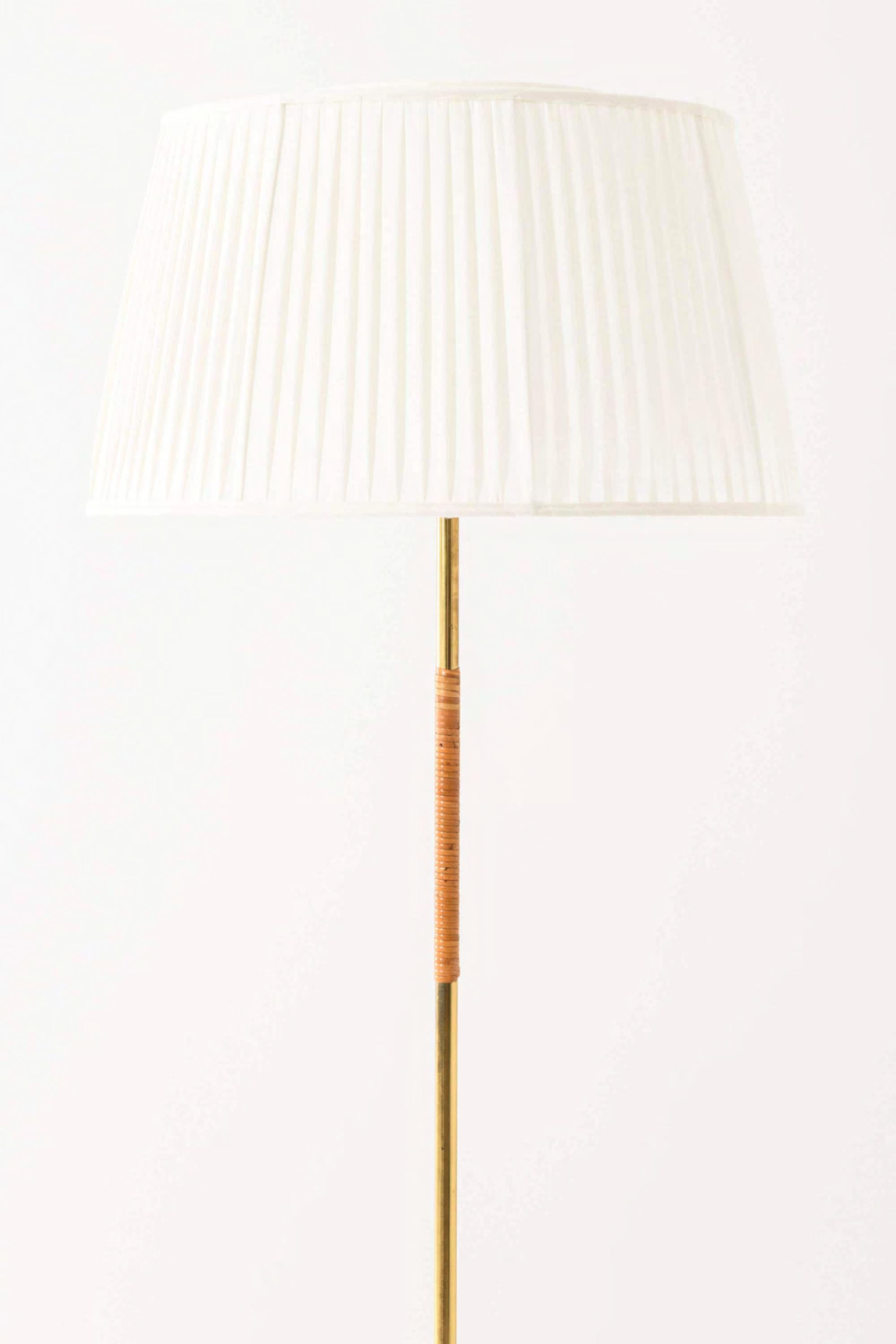
Tapio Wirkkala
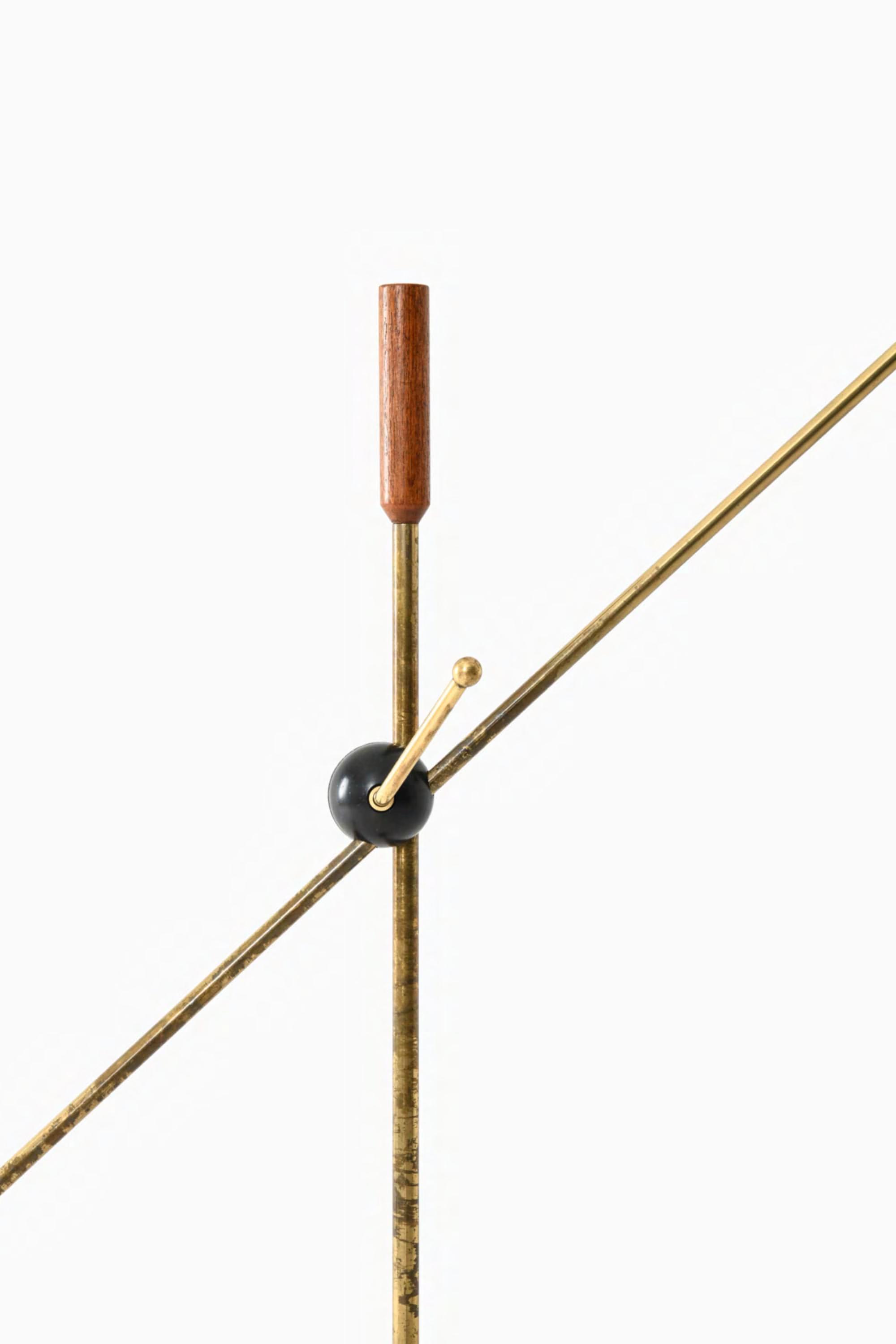
Adjustable Floor Lamp, Model K10-47
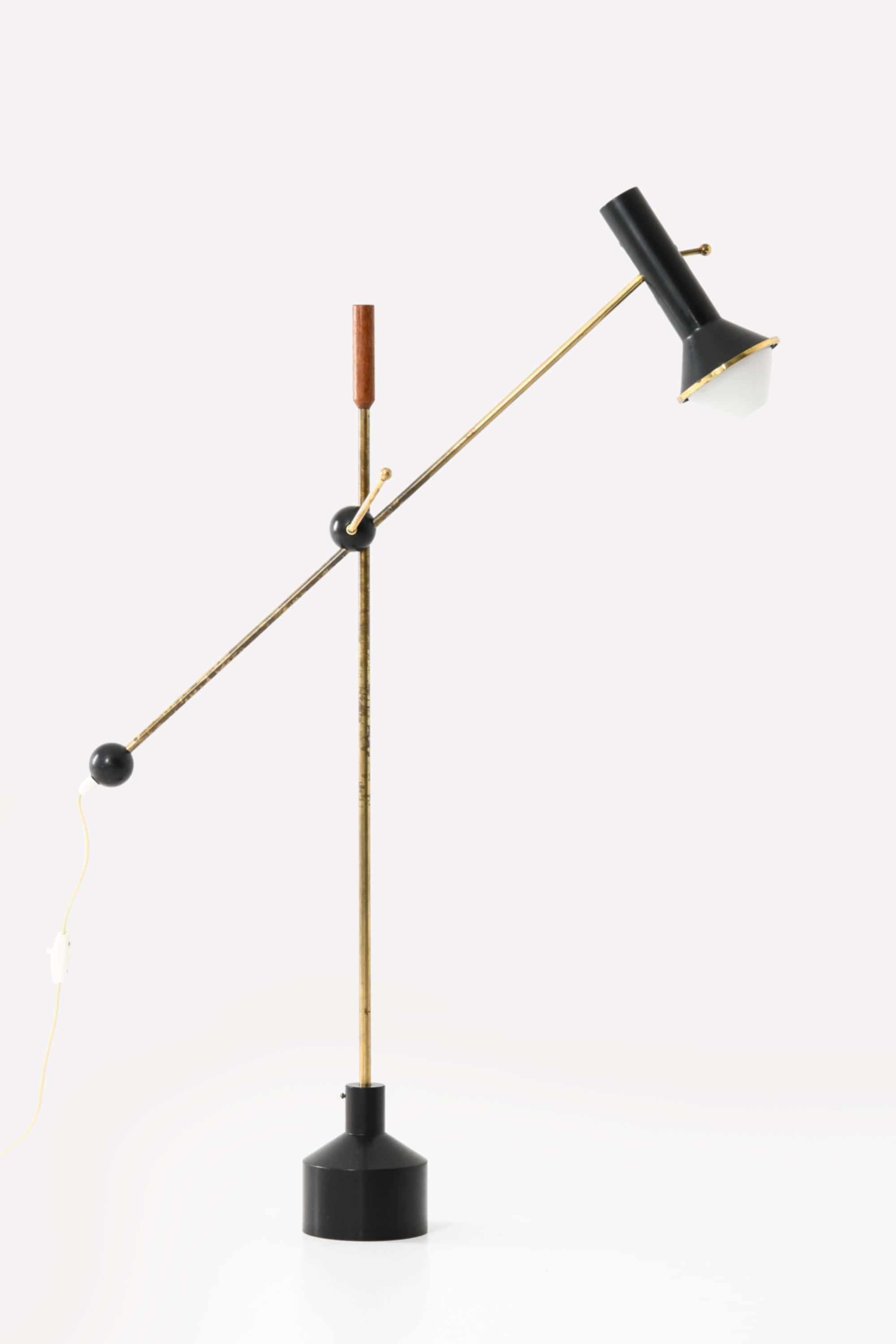
Produced by Idman, Finland
1960
Lacquered Metal, Brass, Teak
Literature
Marianne Aav, Eeva Viljanen (eds.), Tapio Wirkkala - Eye, Hand and Thought, Art and Industry Museum, Helsinki, WSOY, 2000, pp. 382–383, no. 494.
Carl-Axel Acking
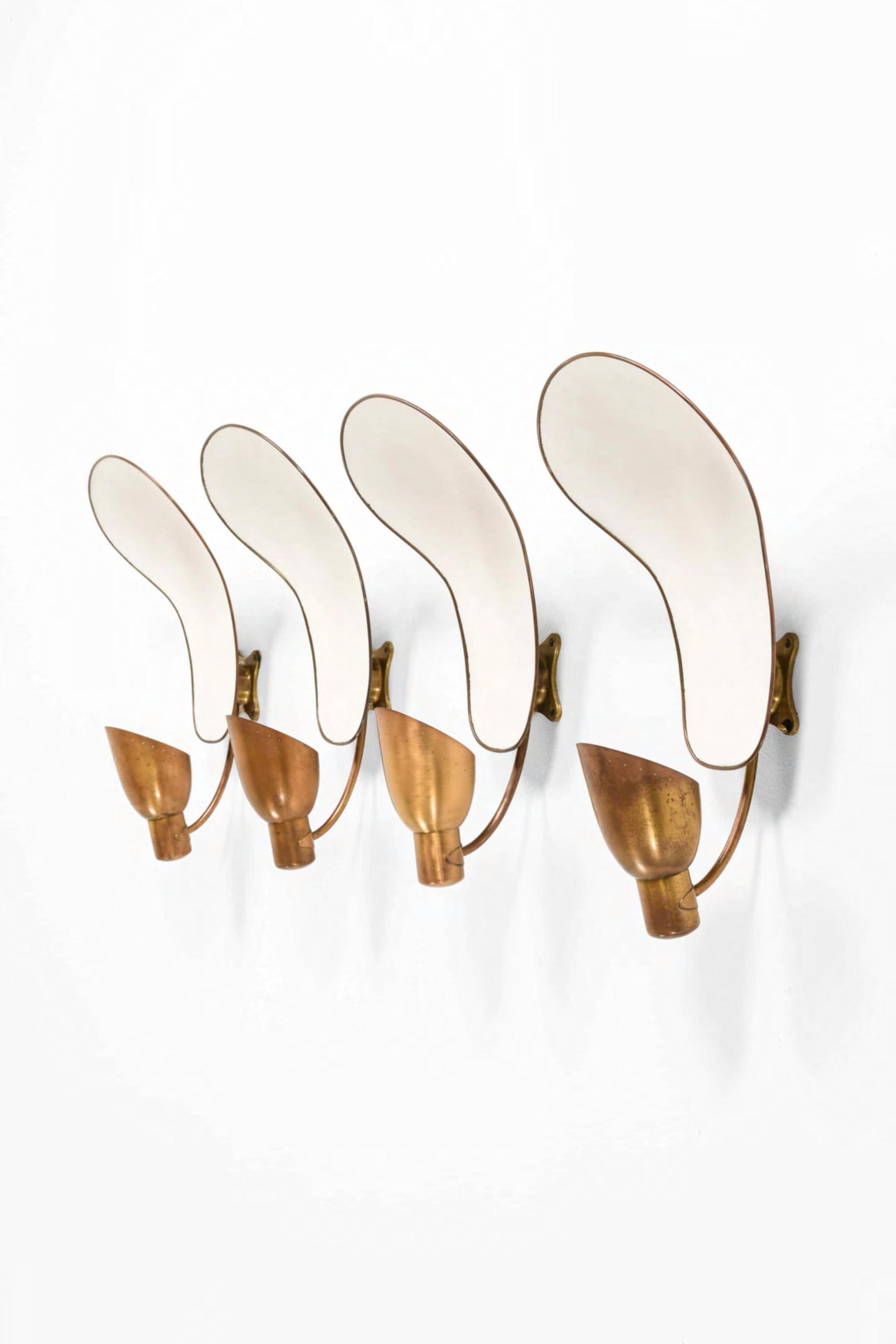
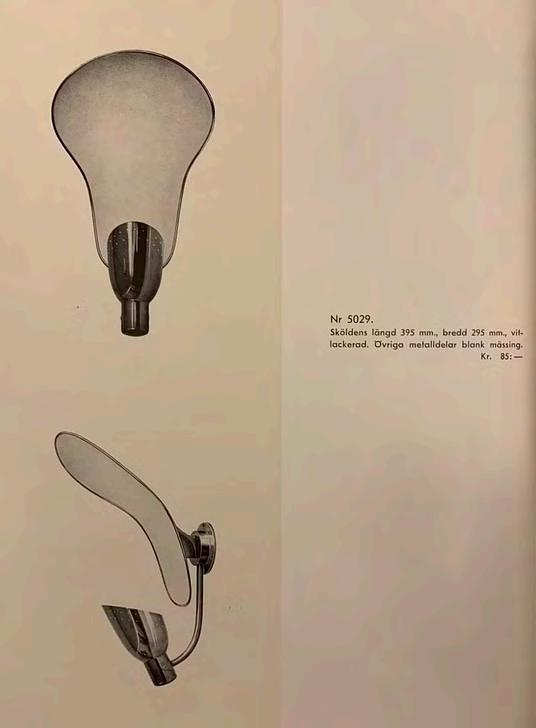
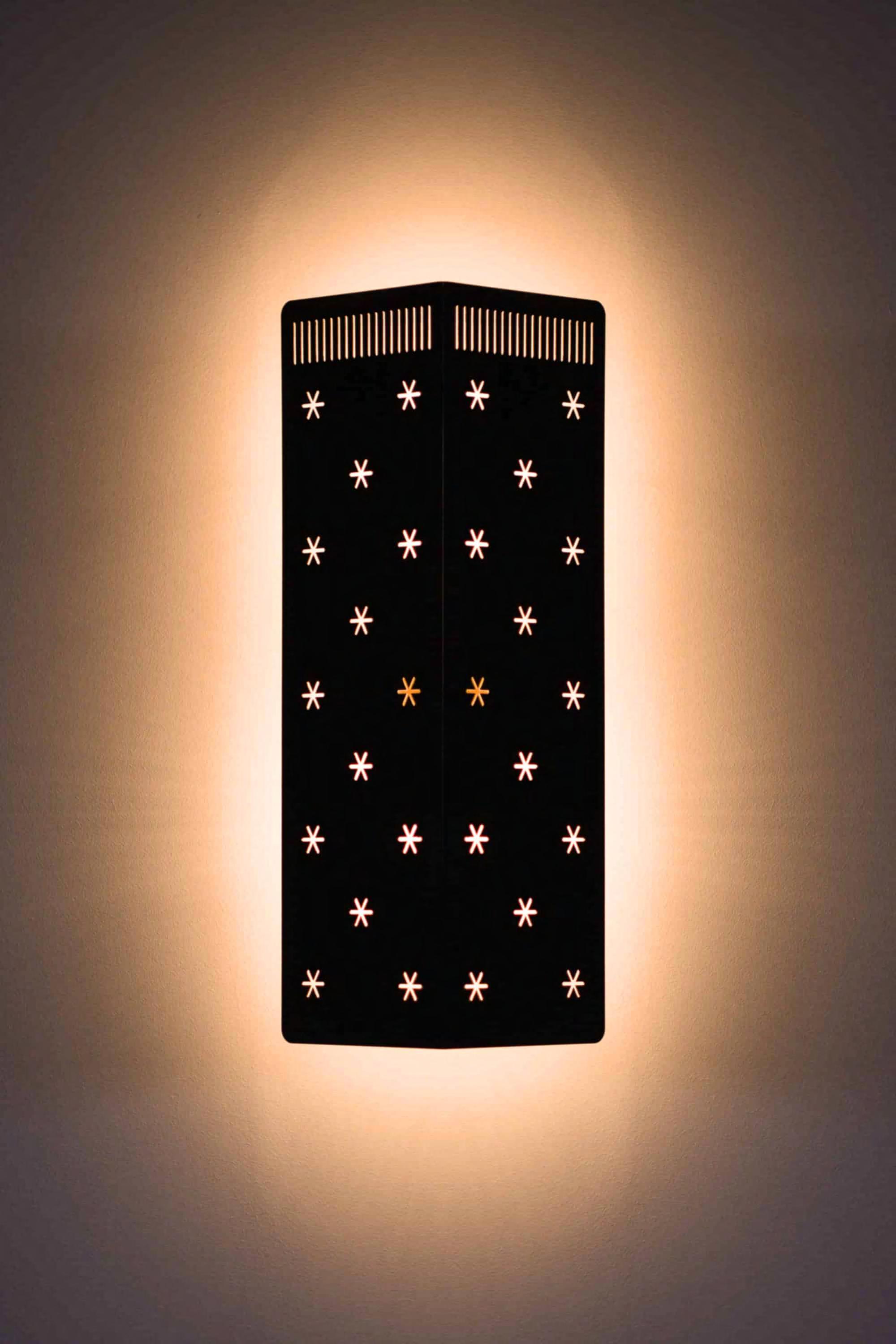
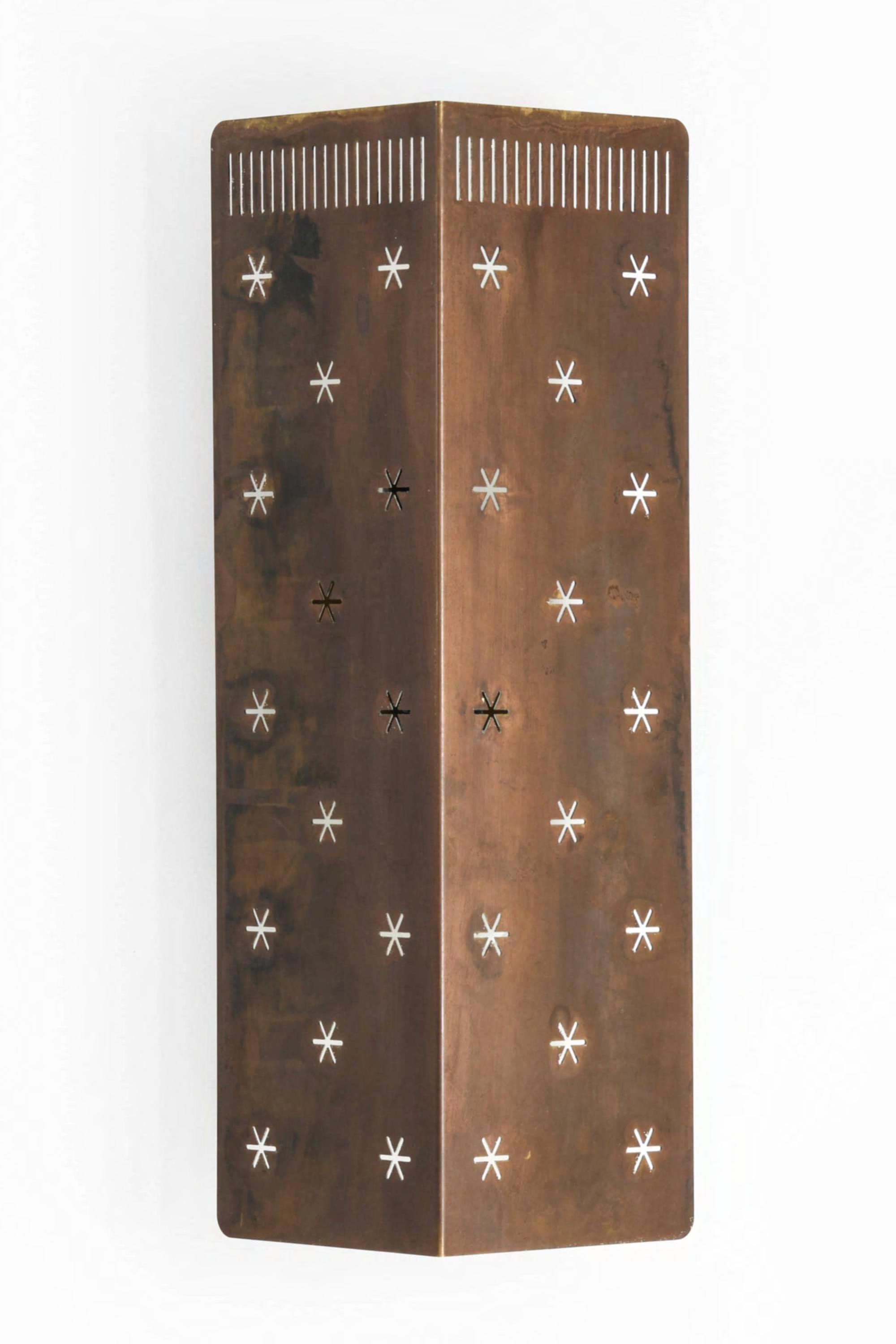
Wall Lamps, Model 5029
Produced by Bröderna Malmströms Metallvarufabrik 1940s
Brass, White Lacquered Brass
Provenance
Commissioned for a Church Interior in Skåne, Sweden, 1940s
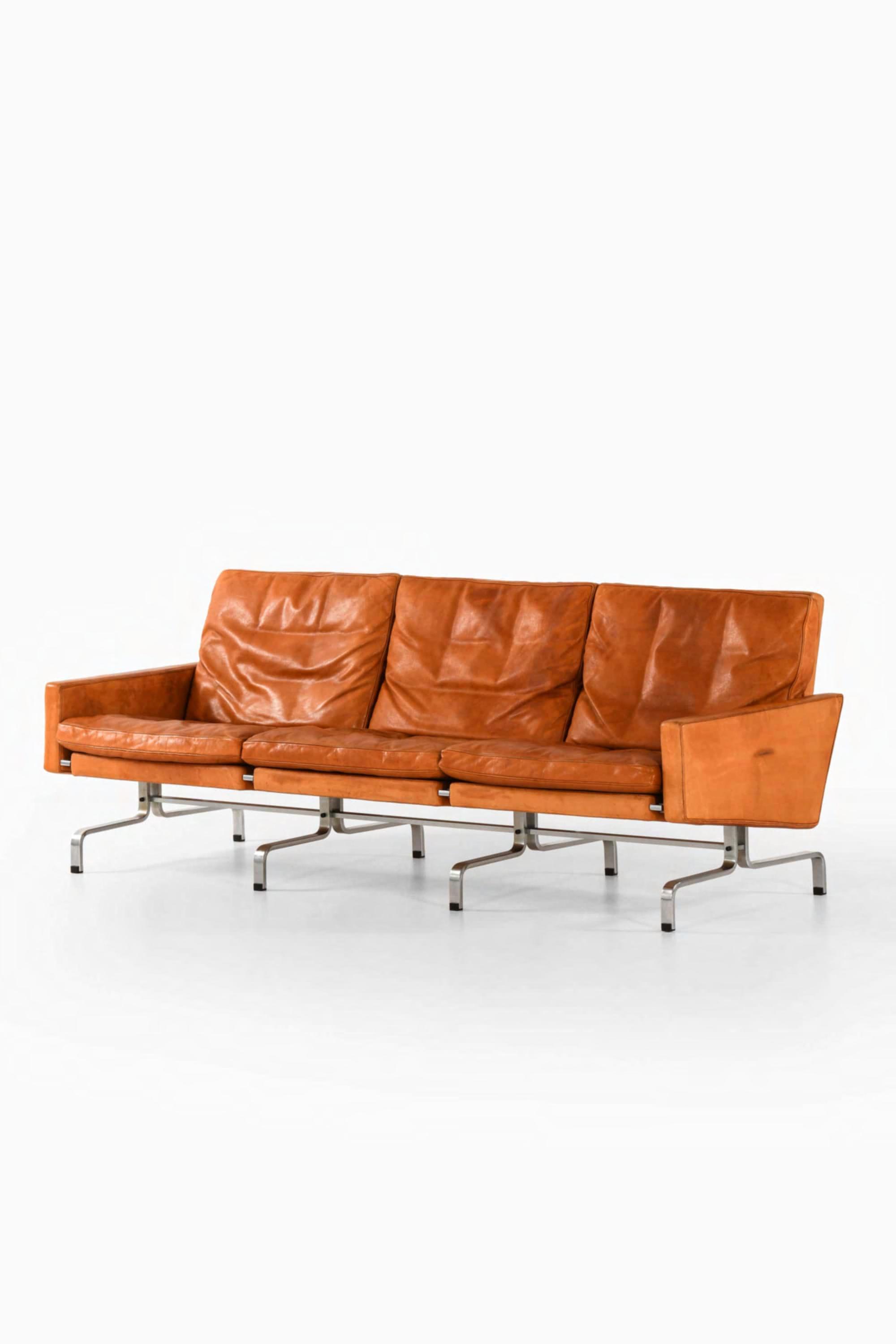
Three-Seat Sofa, Model PK-31/3
Produced by E. Kold Christensen
1958
Steel, Leather
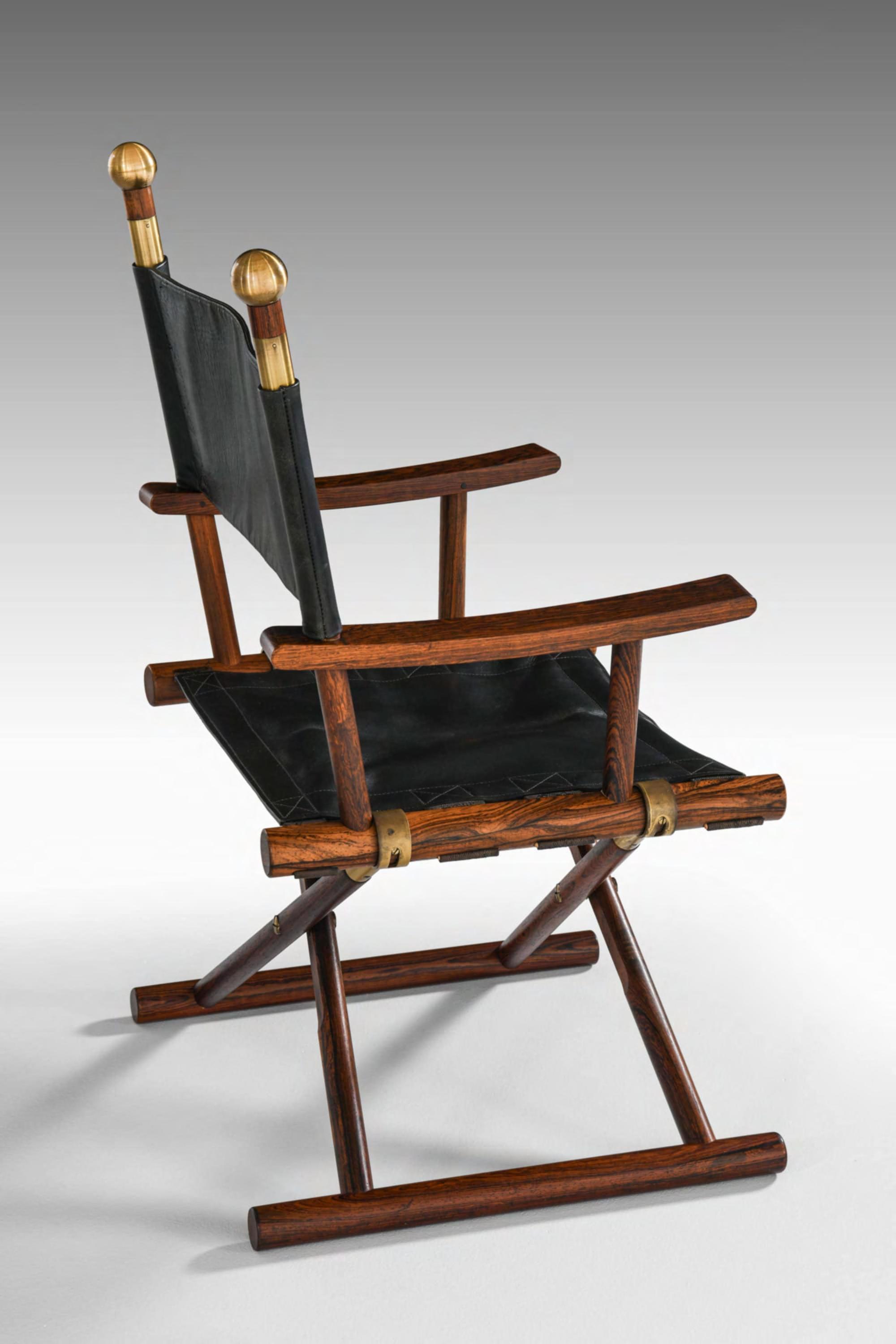
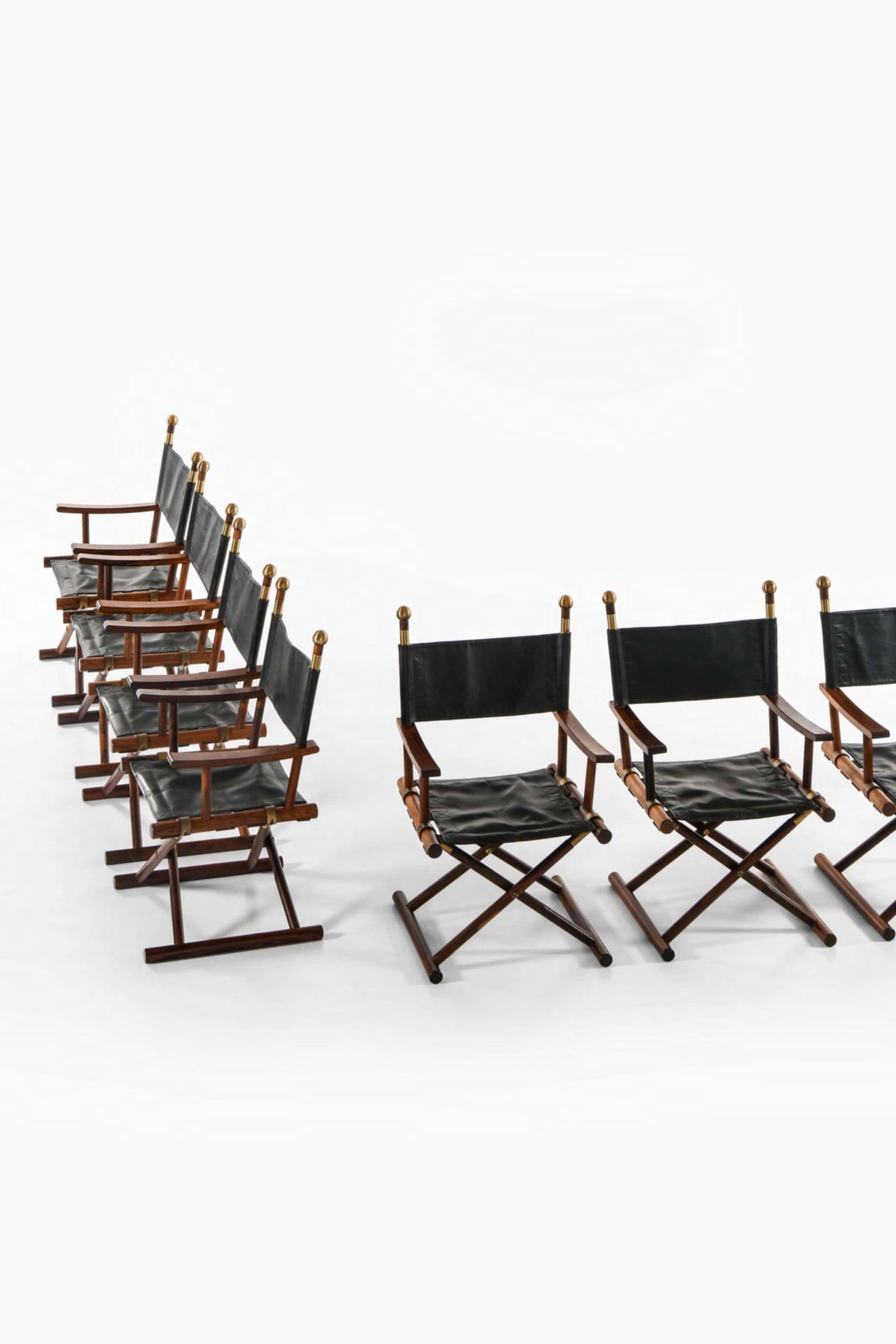
Sune Lindström Set of Eight Folding Armchairs
Produced by Nordiska Kompaniet (NK) Mid-20th Century Rosewood, Leather, Brass

Hans Bergström
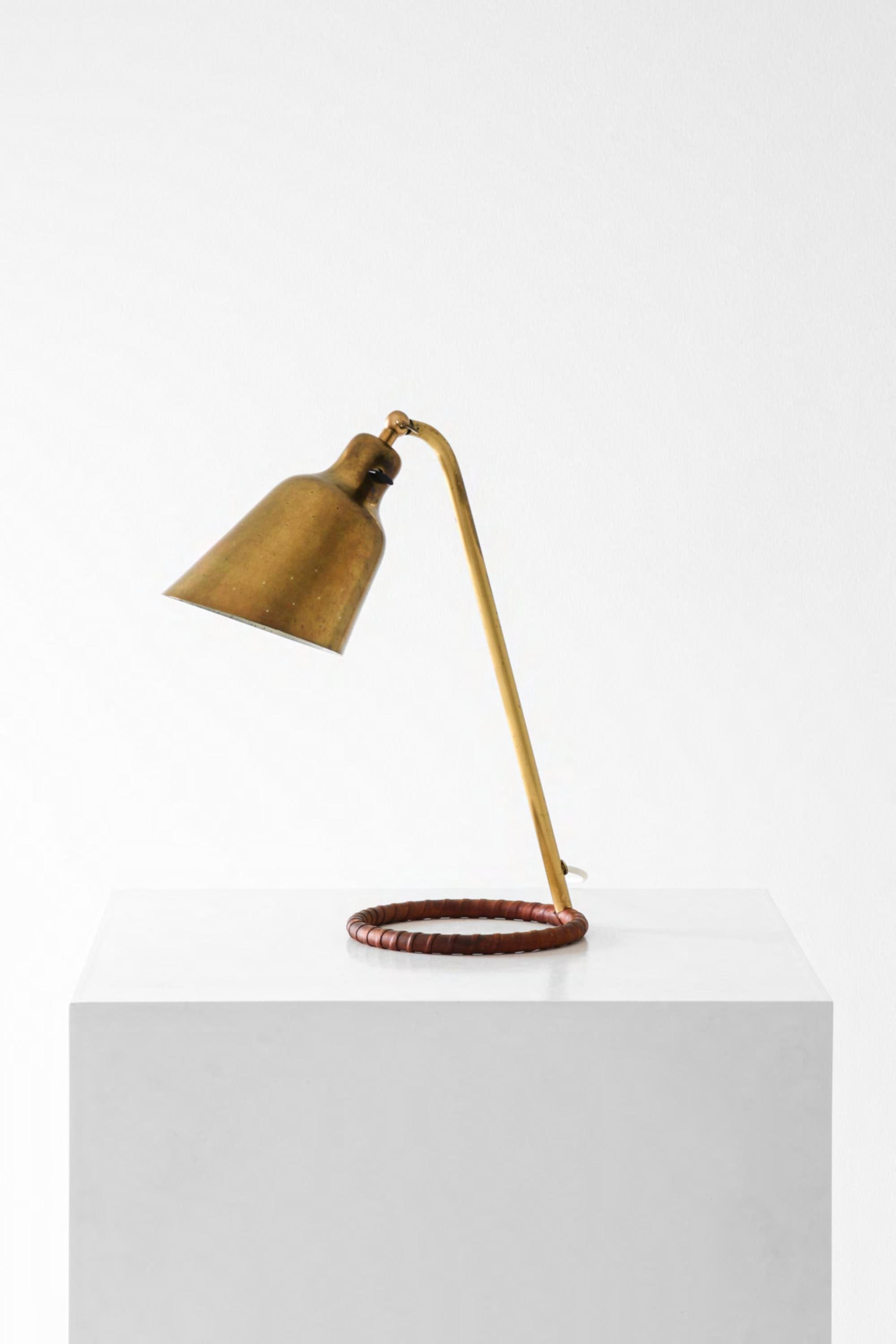
Table Lamp, Model 711
Produced by Ateljé Lyktan
1940s
Brass, Leather
Literature
Åke Stavenow (ed.), Form - Svenska Slöjdföreningens Tidskrift, 1942, Model Depicted p. 144
Arvid Berghmam (ed.), Boet: 1945, 1945, Model Depicted
Drawing in the Ateljé Lyktan Archive
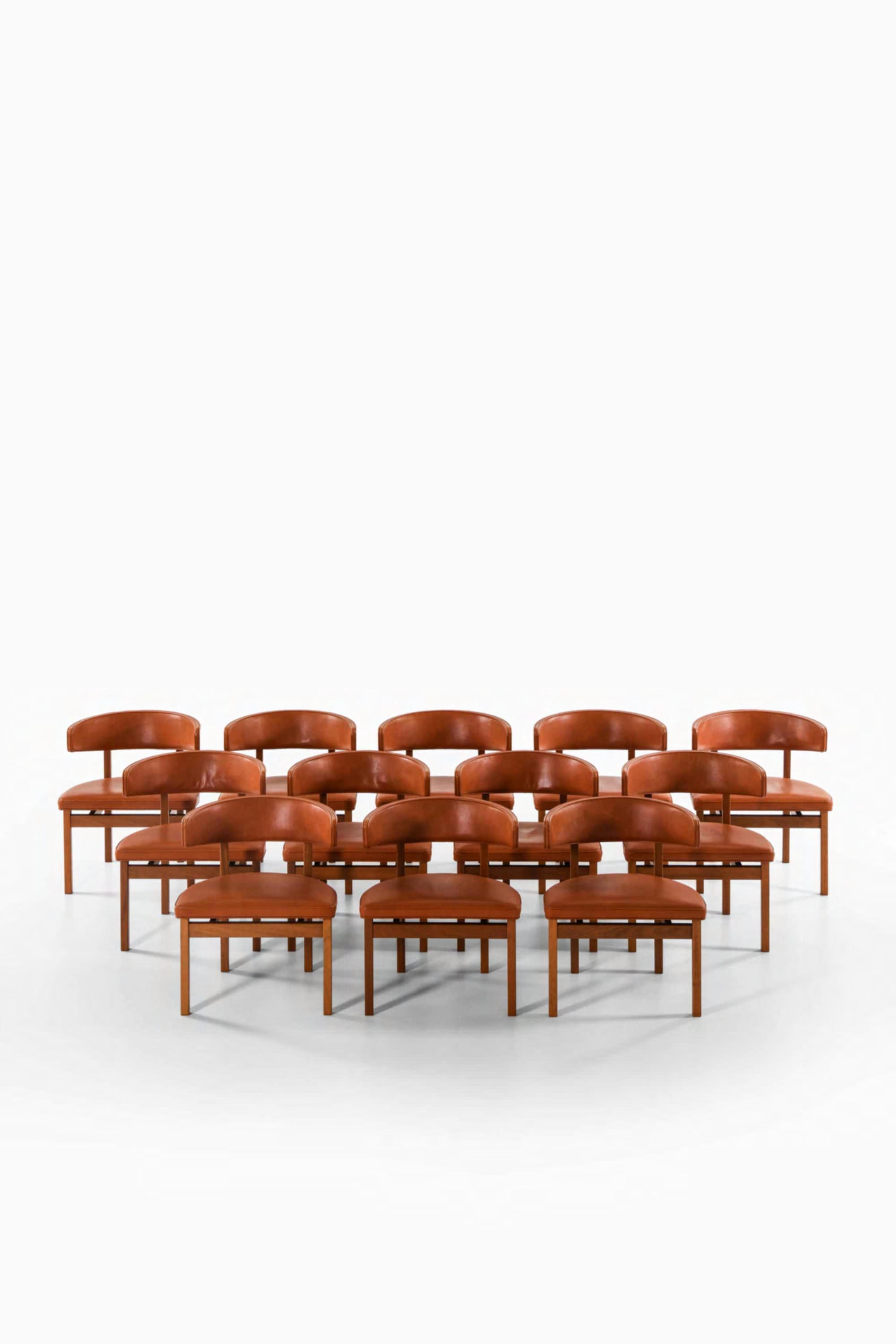
Set of Twelve Dining Chairs, Model 3245
Produced by Fredericia Stolefabrik
1961
Mahogany, Leather
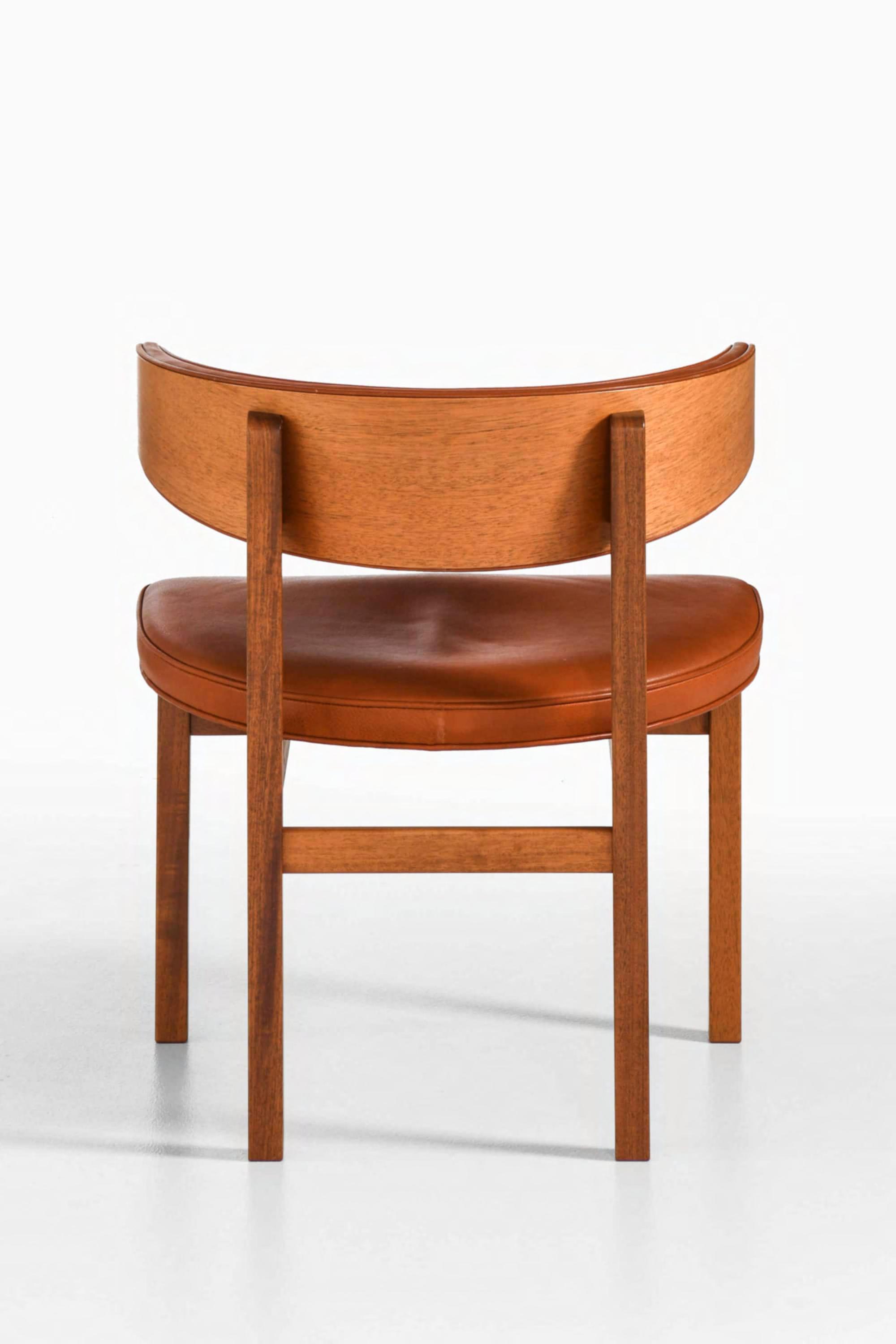
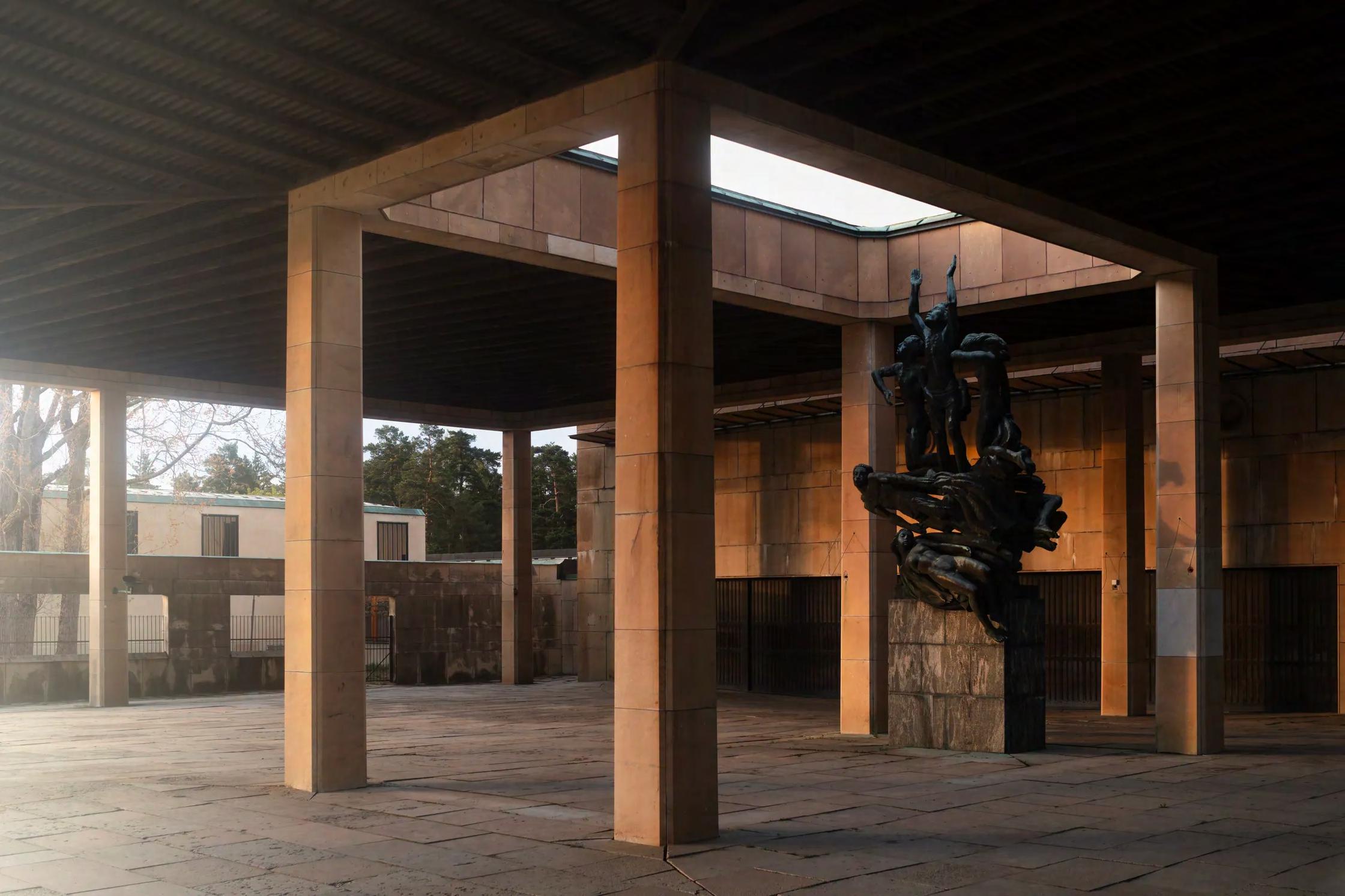
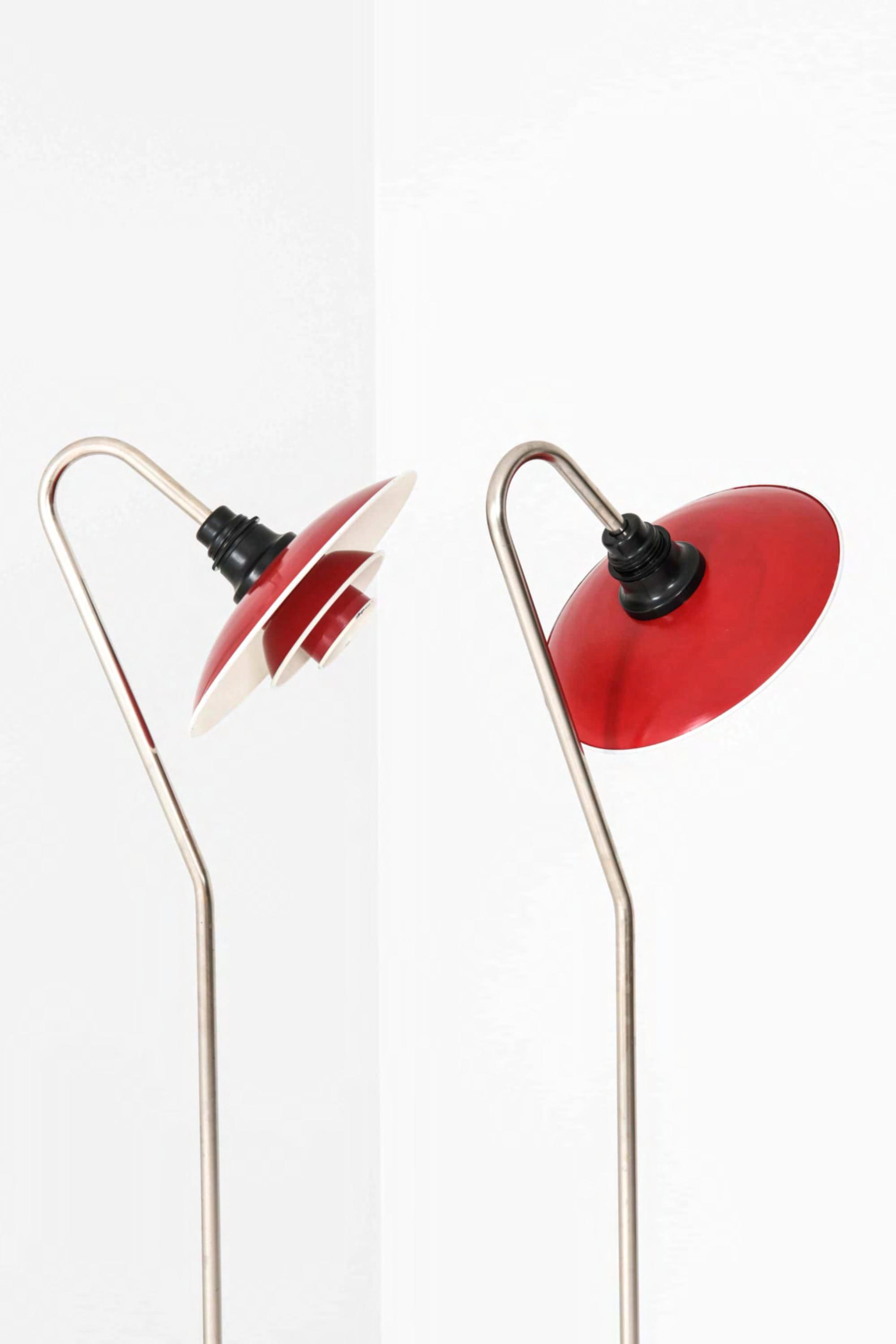
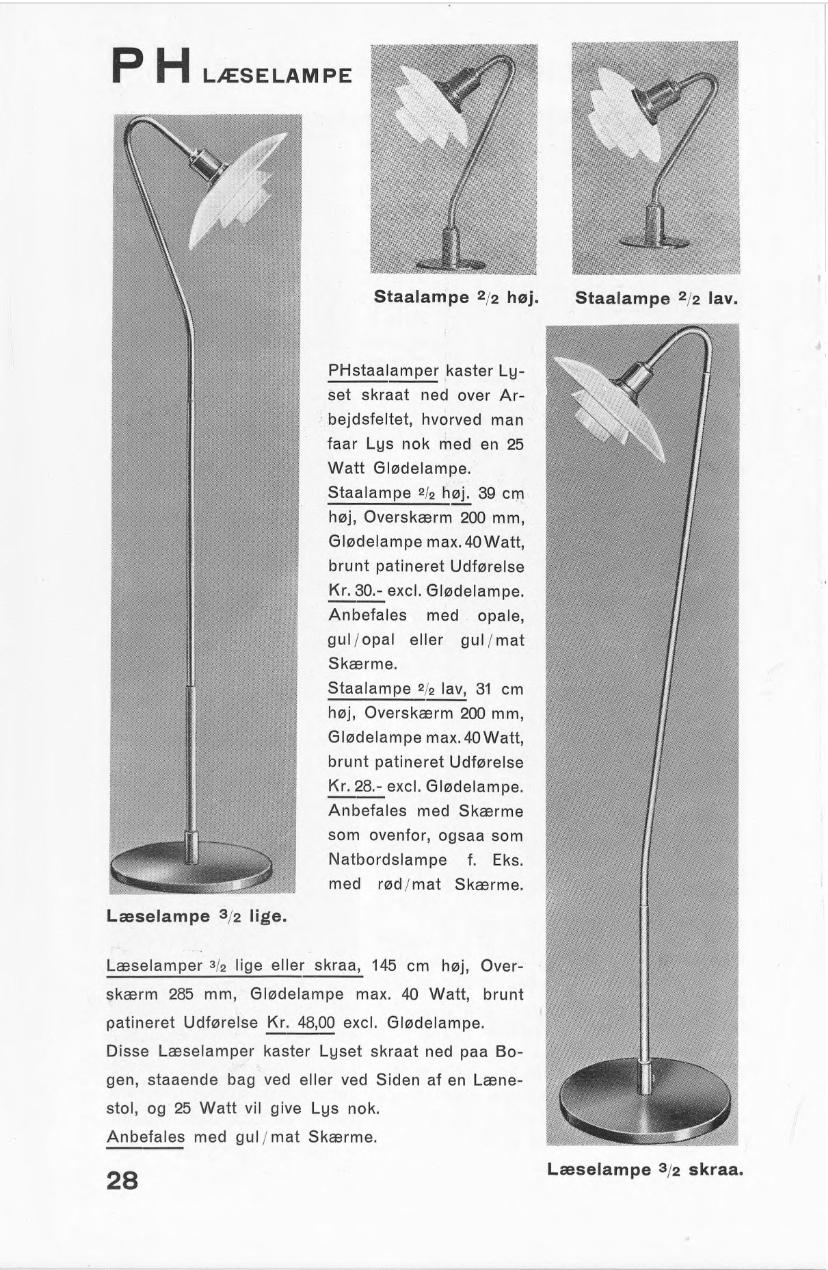
Produced by Taito Oy 1950s
Axel Einar Hjorth
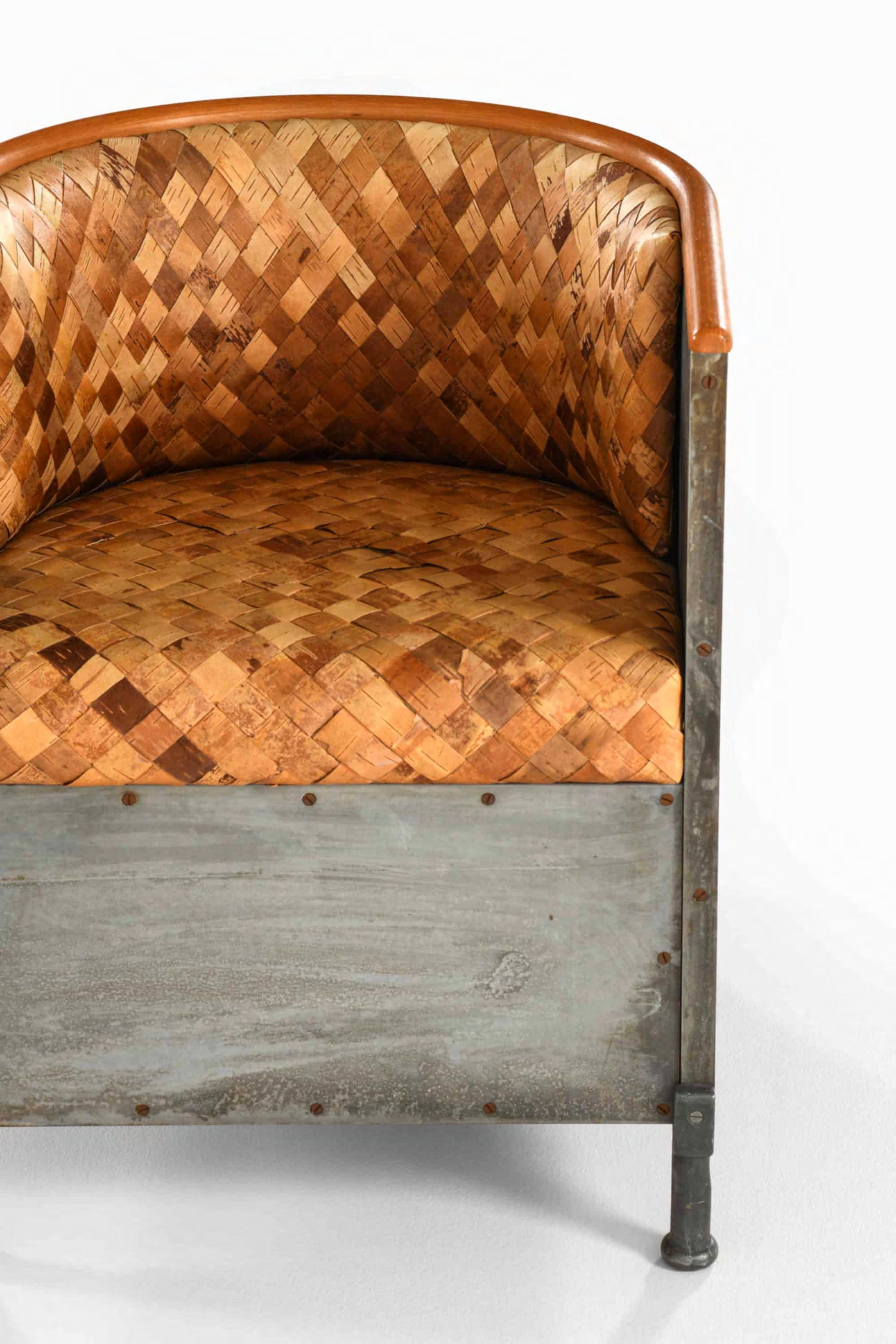
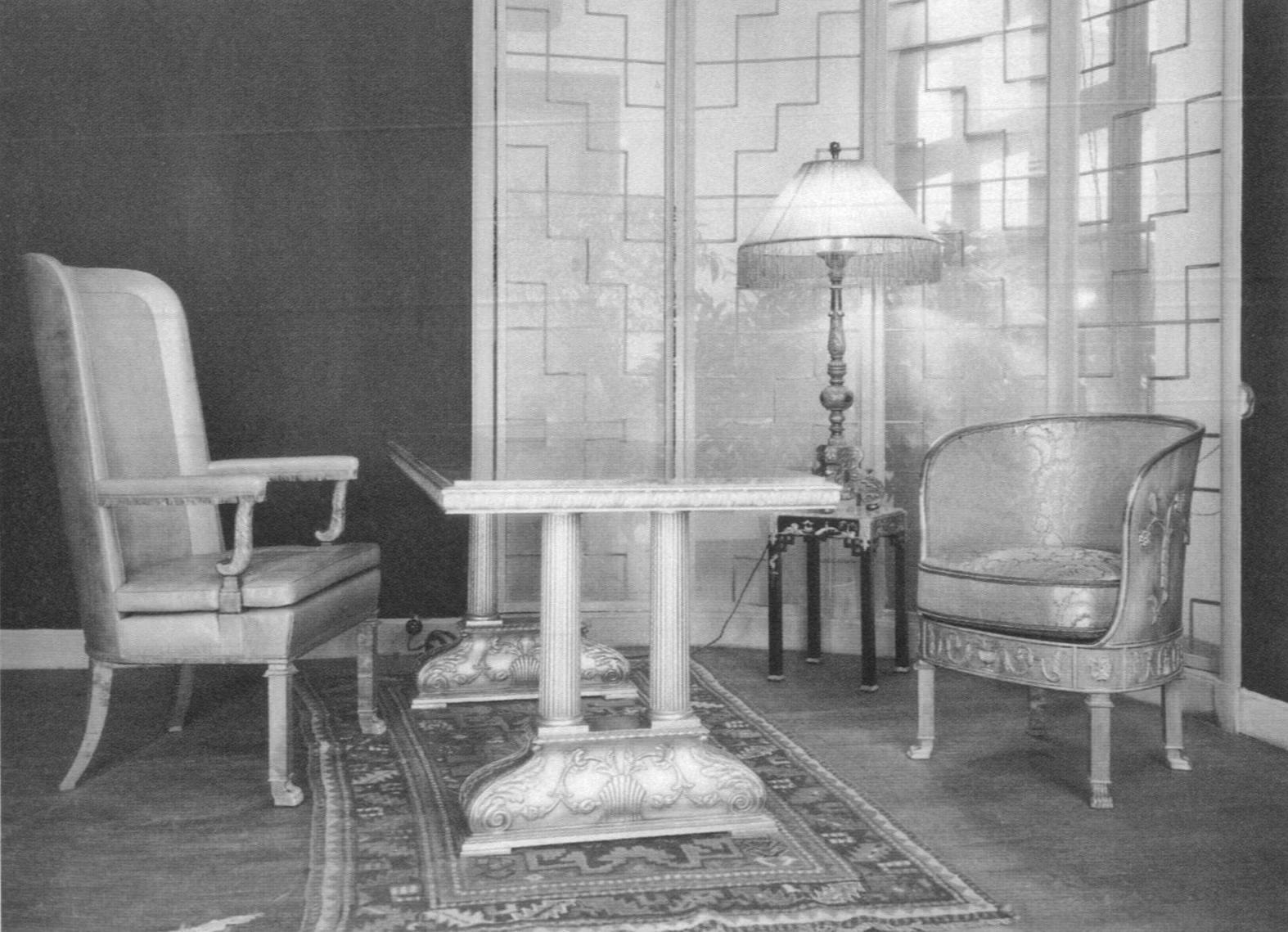
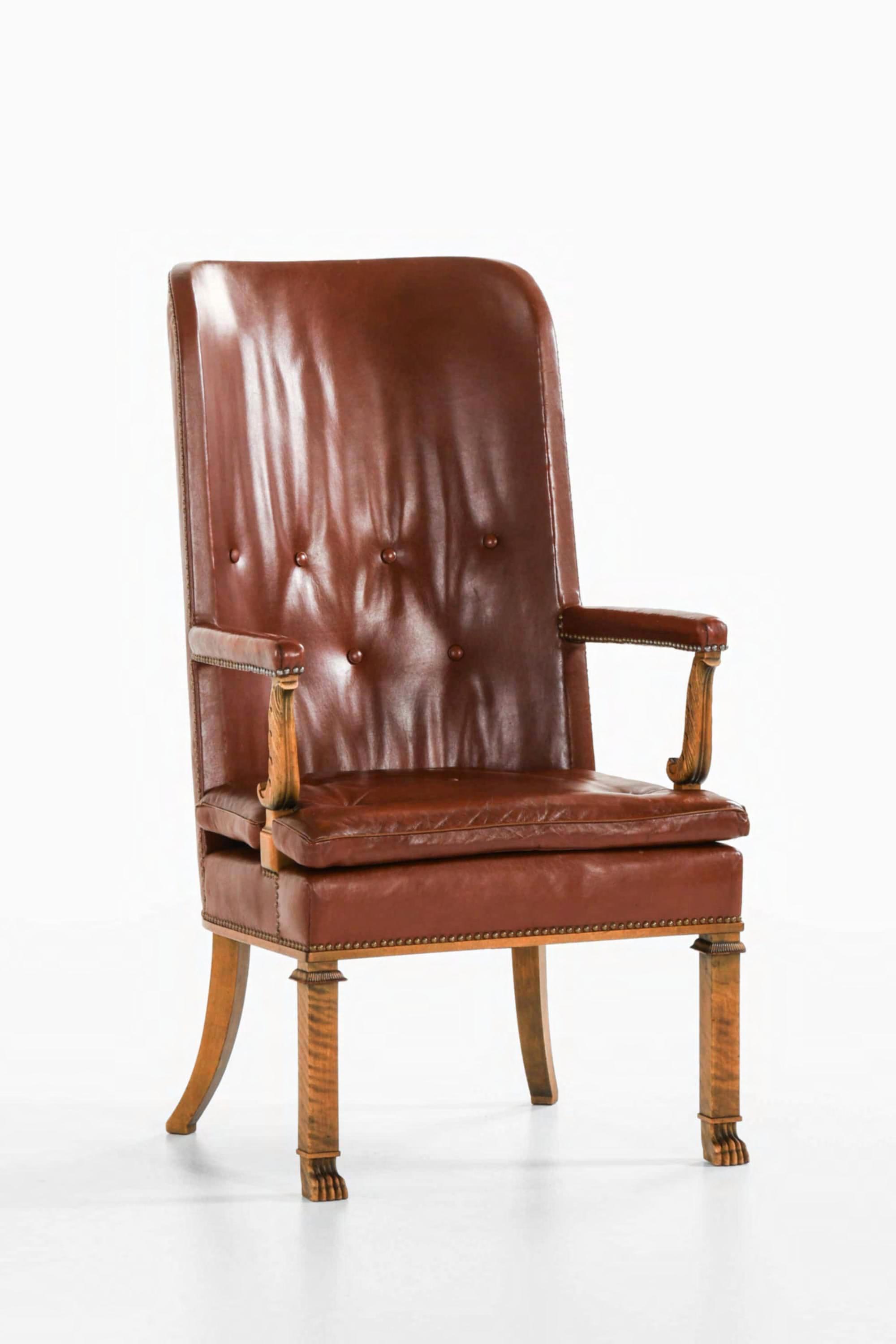
Armchair, Model Caesar
Produced by Nordiska Kompaniet, Sweden
1928
Birch, Leather, Brass
Provenance
With NK Badge Marked AB NORDISKA KOMPANIET R 33242 – 31 1 29
Literature
Gregor Paulsson & Nils G. Wollin (eds.), Annual Book of the Swedish Crafts Association, Self-published 1929, Model Depicted From the Exhibition in Barcelona, p. 55.
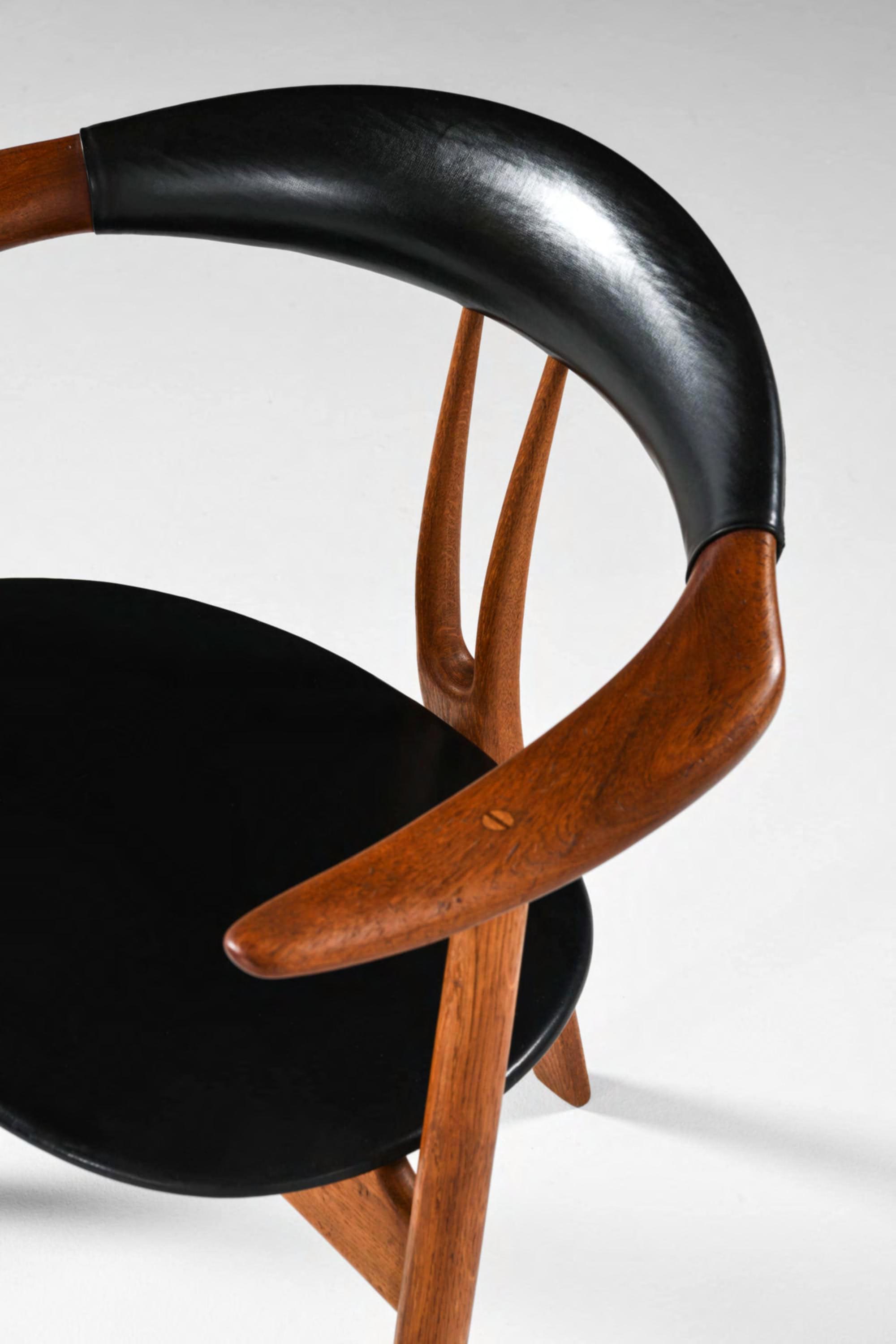
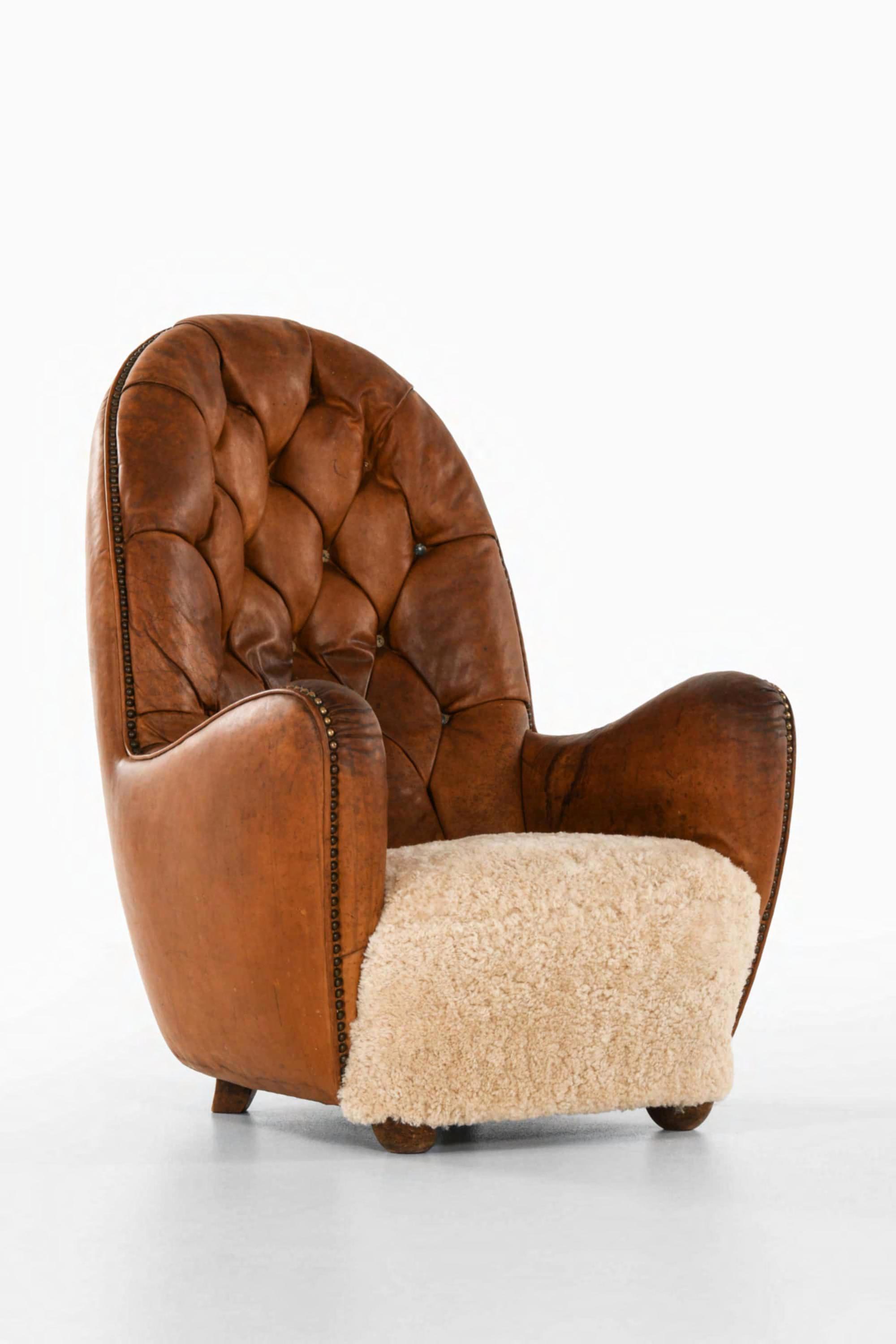
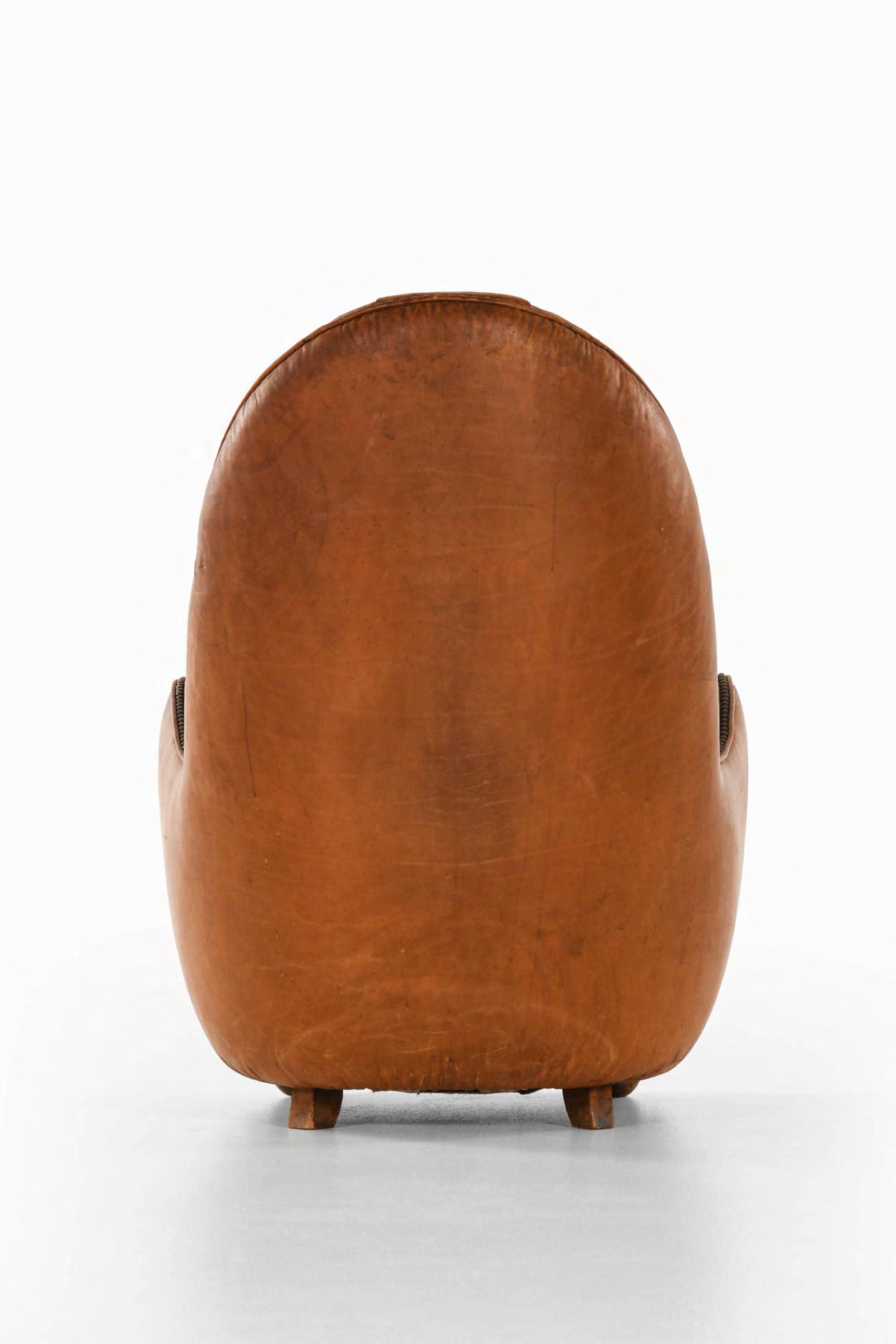
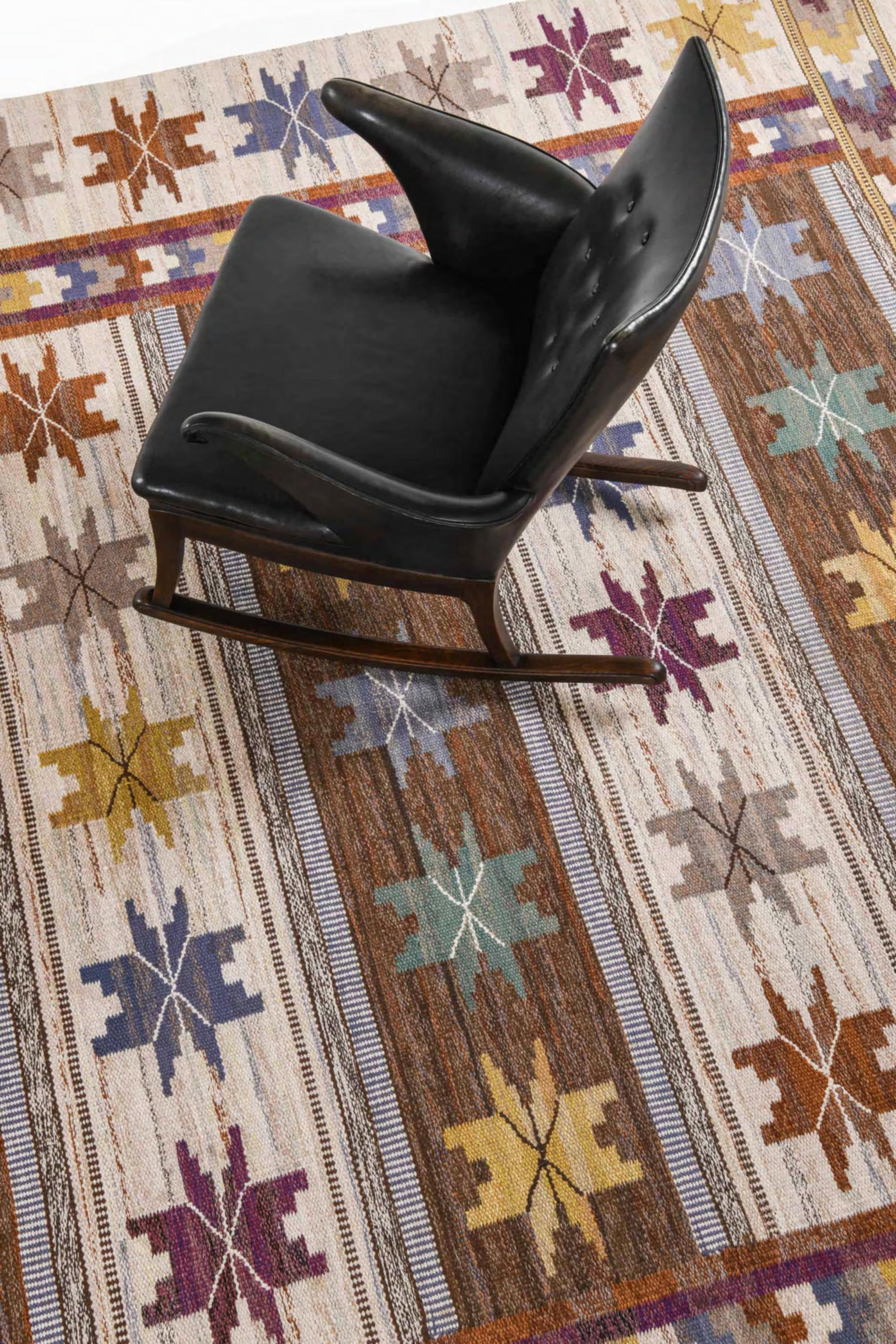
Frits Henningsen
Rocking Chair
Produced in Denmark
1940s
Oak, Leather
Märta Måås-Fjetterström
Flat-Weave Carpet ’Höstmattan’
Produced by Märta Måås-Fjetterström Workshop
Design Conceived in 1918, Woven Before 1942
Signed ’MMF’
Wool on Linen Warp

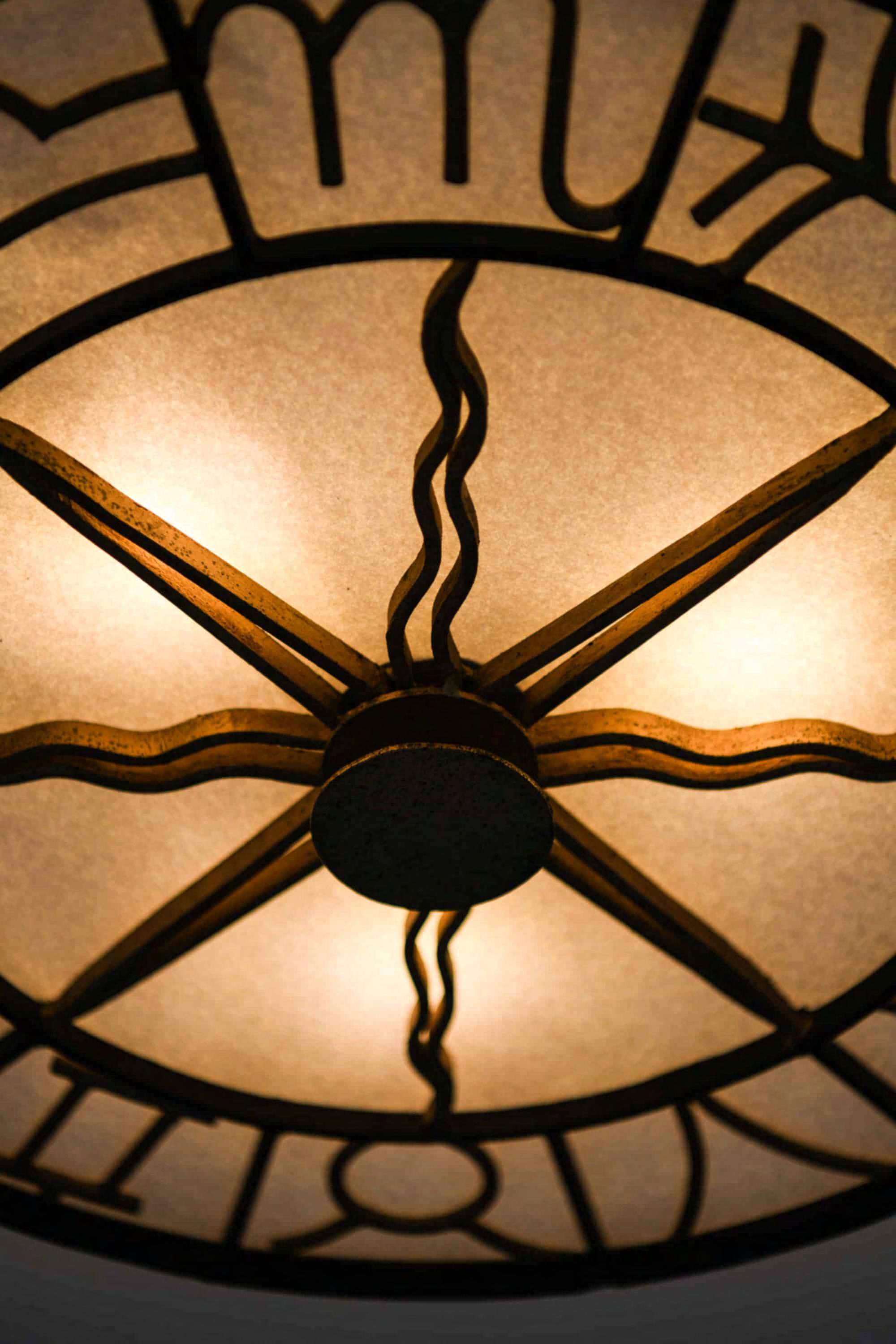
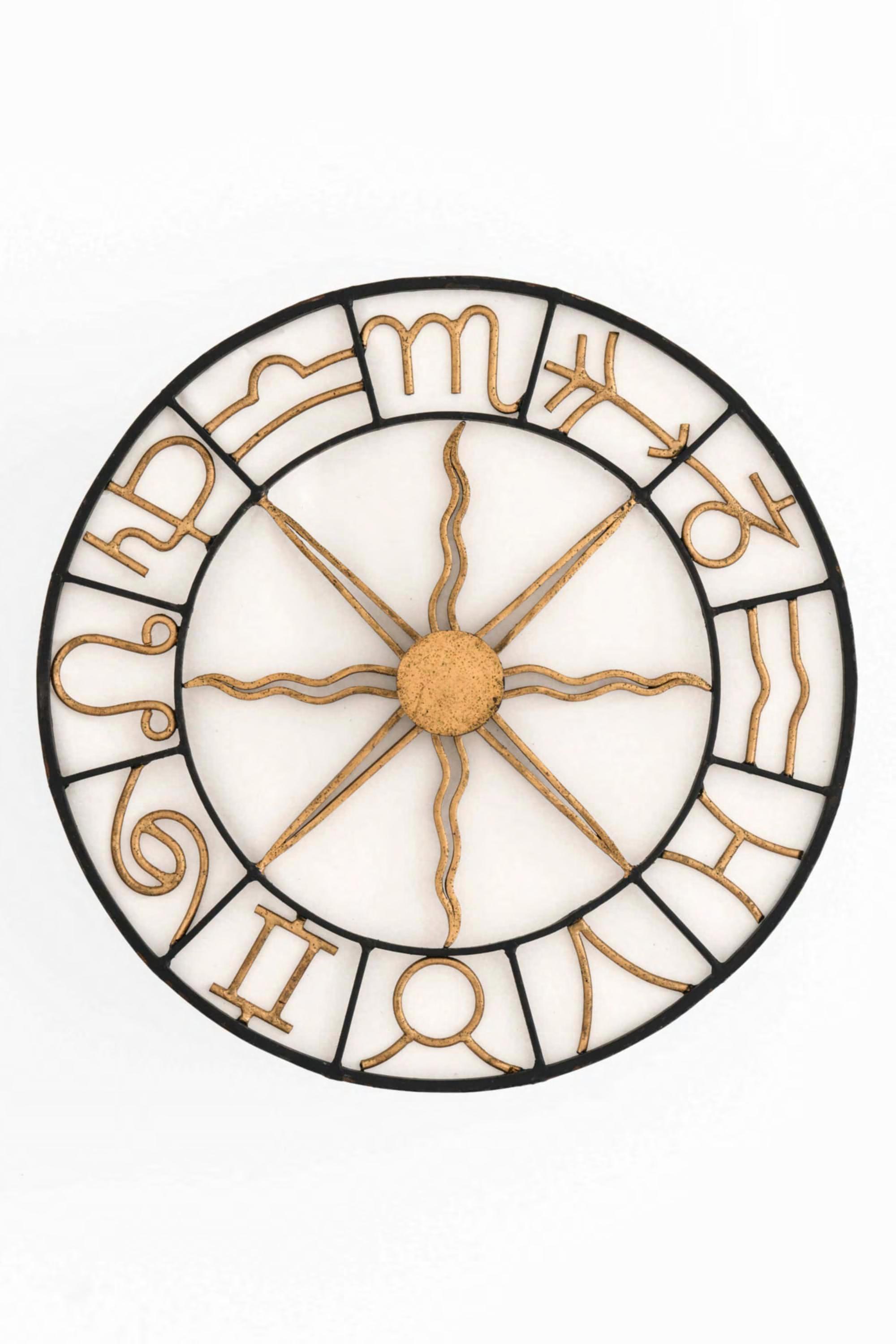
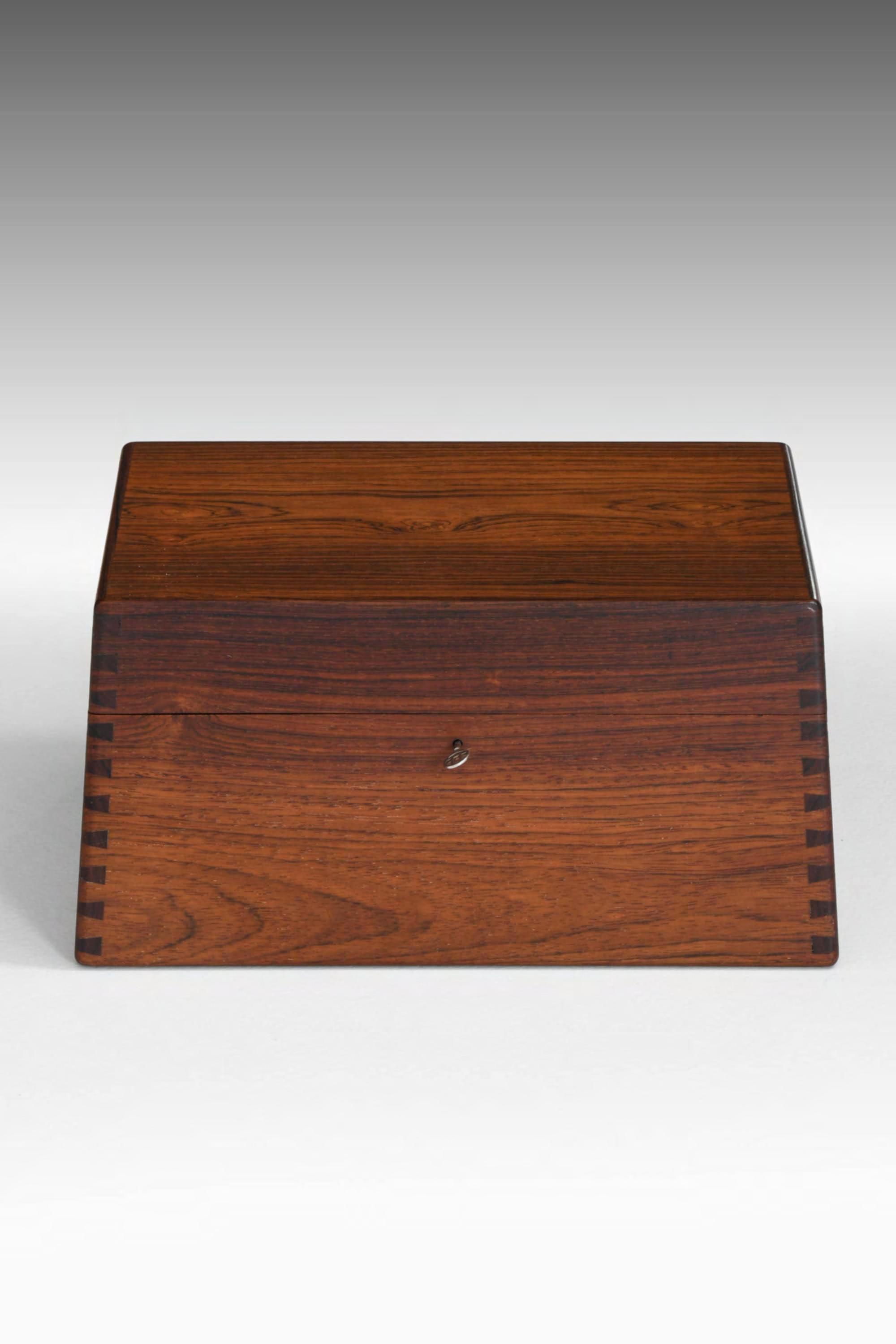
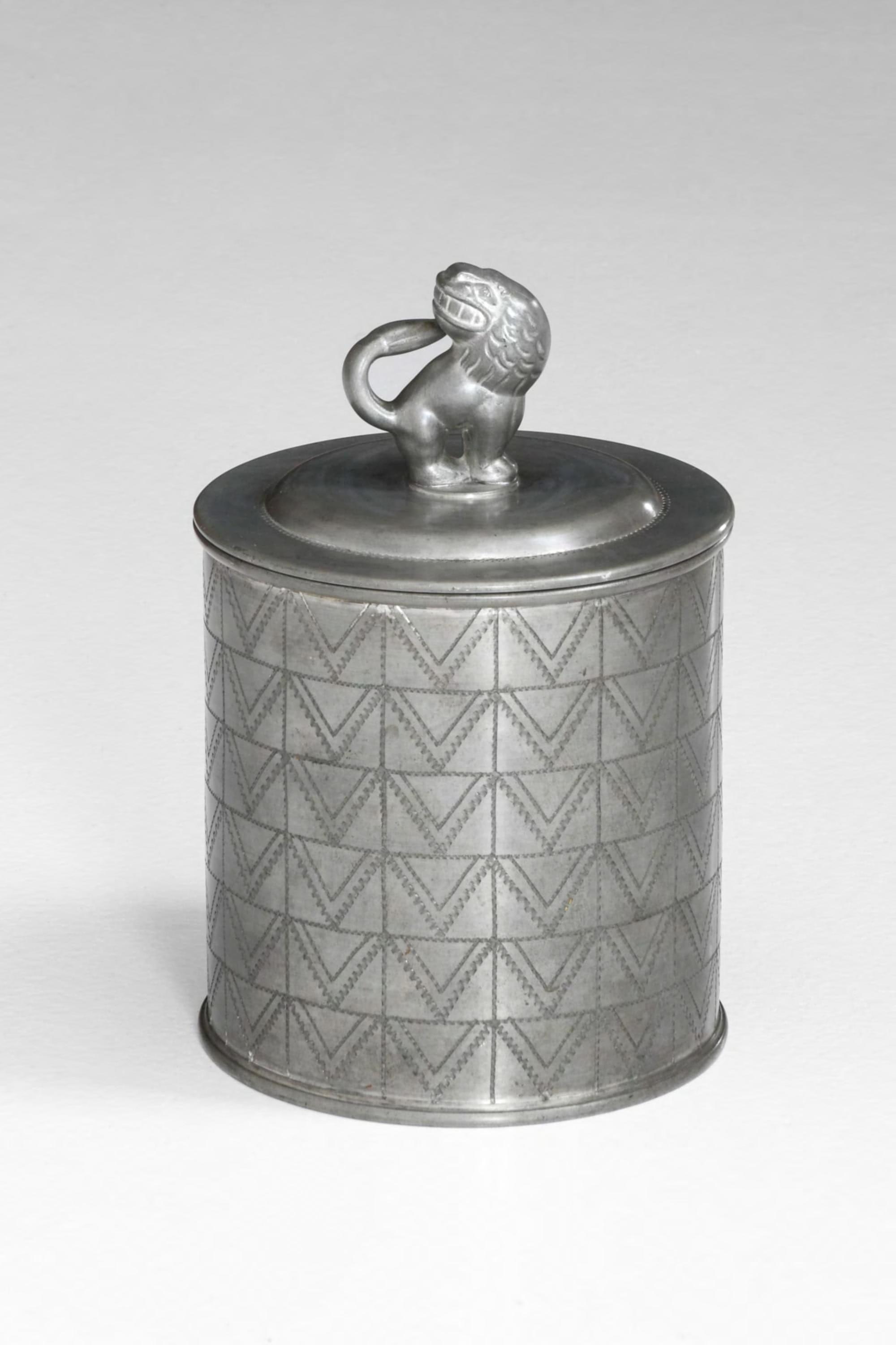
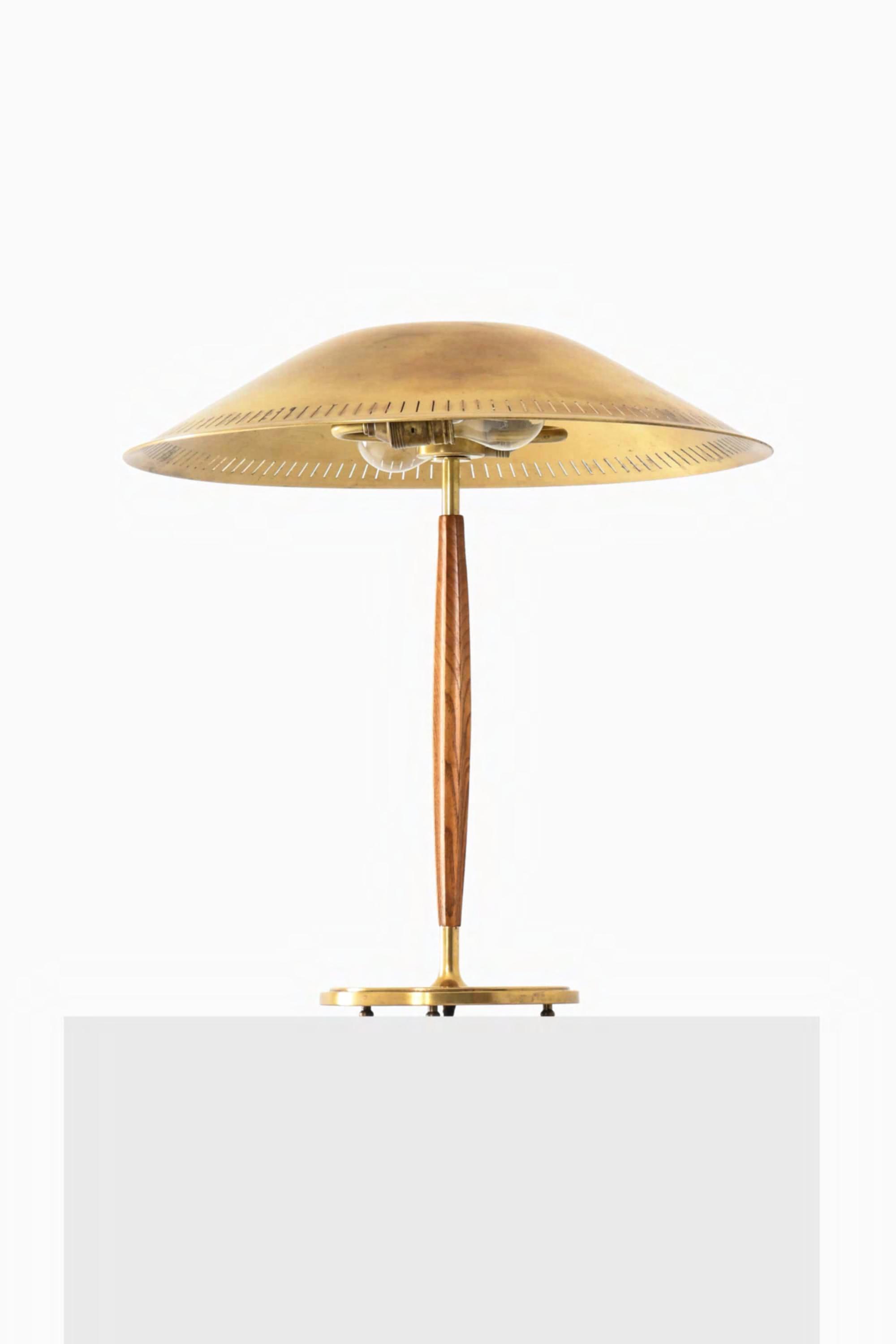
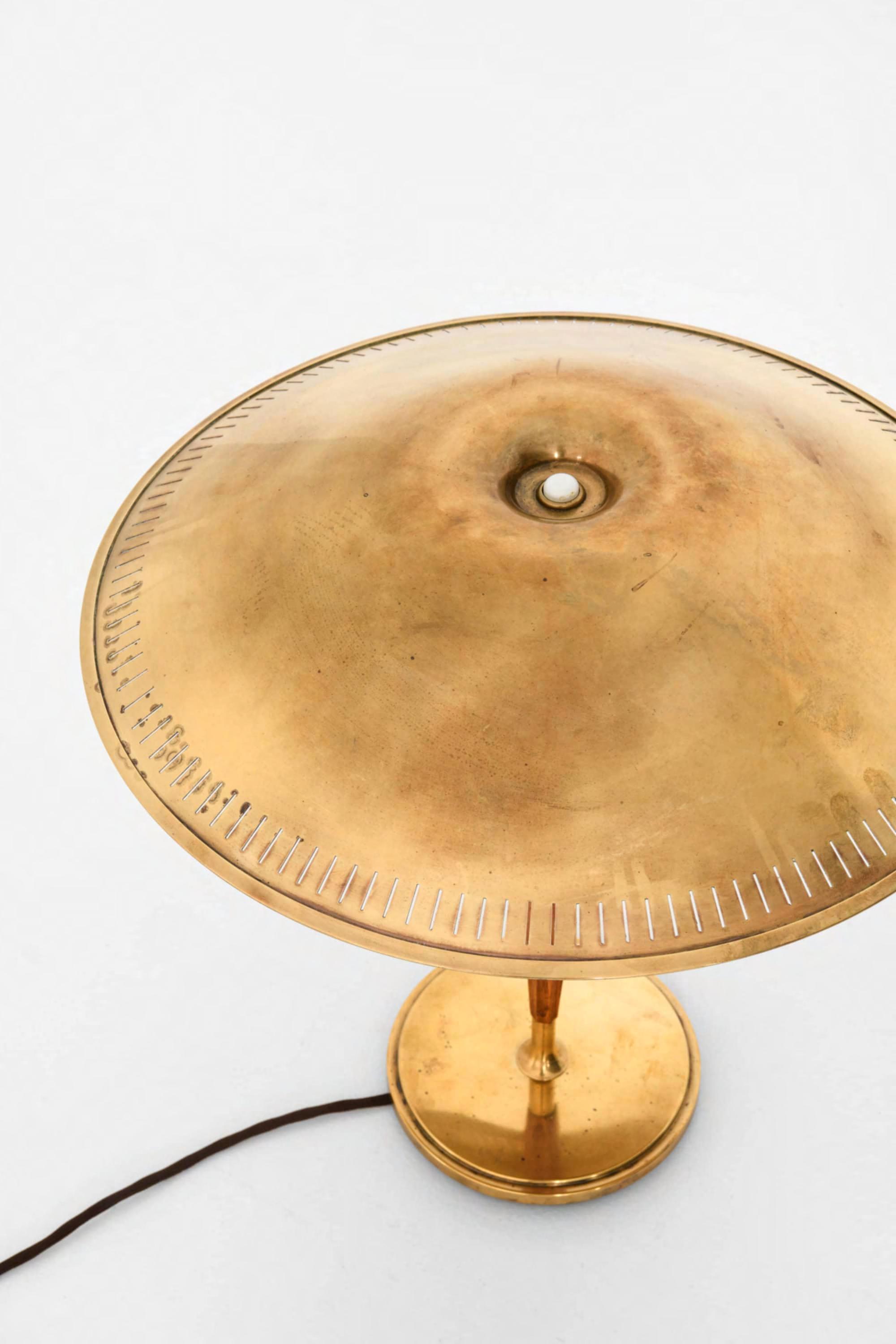
Table Lamp, Model 15277
Produced by Arvid Böhlmarks Lampfabrik 1940s
Brass, Elm
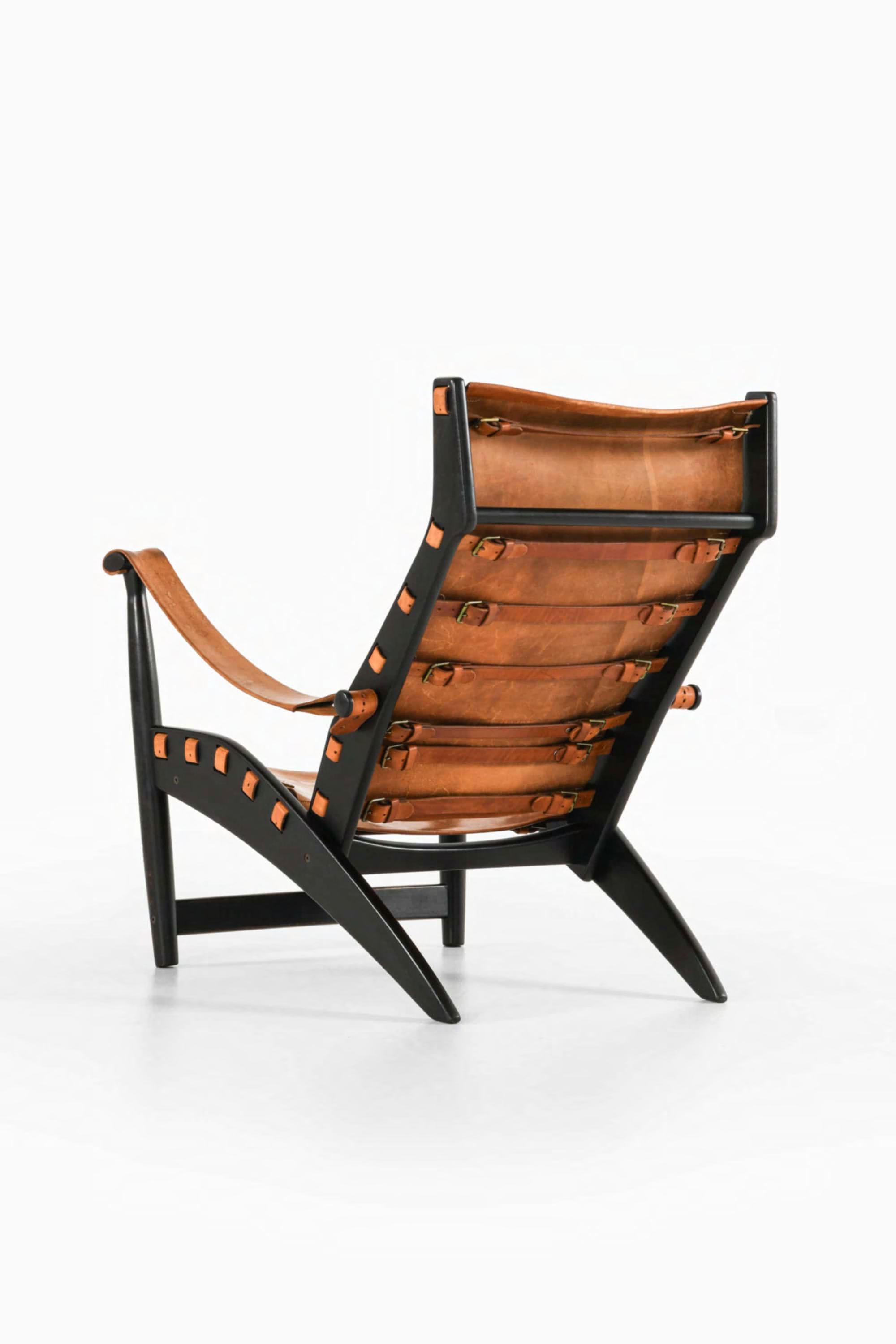
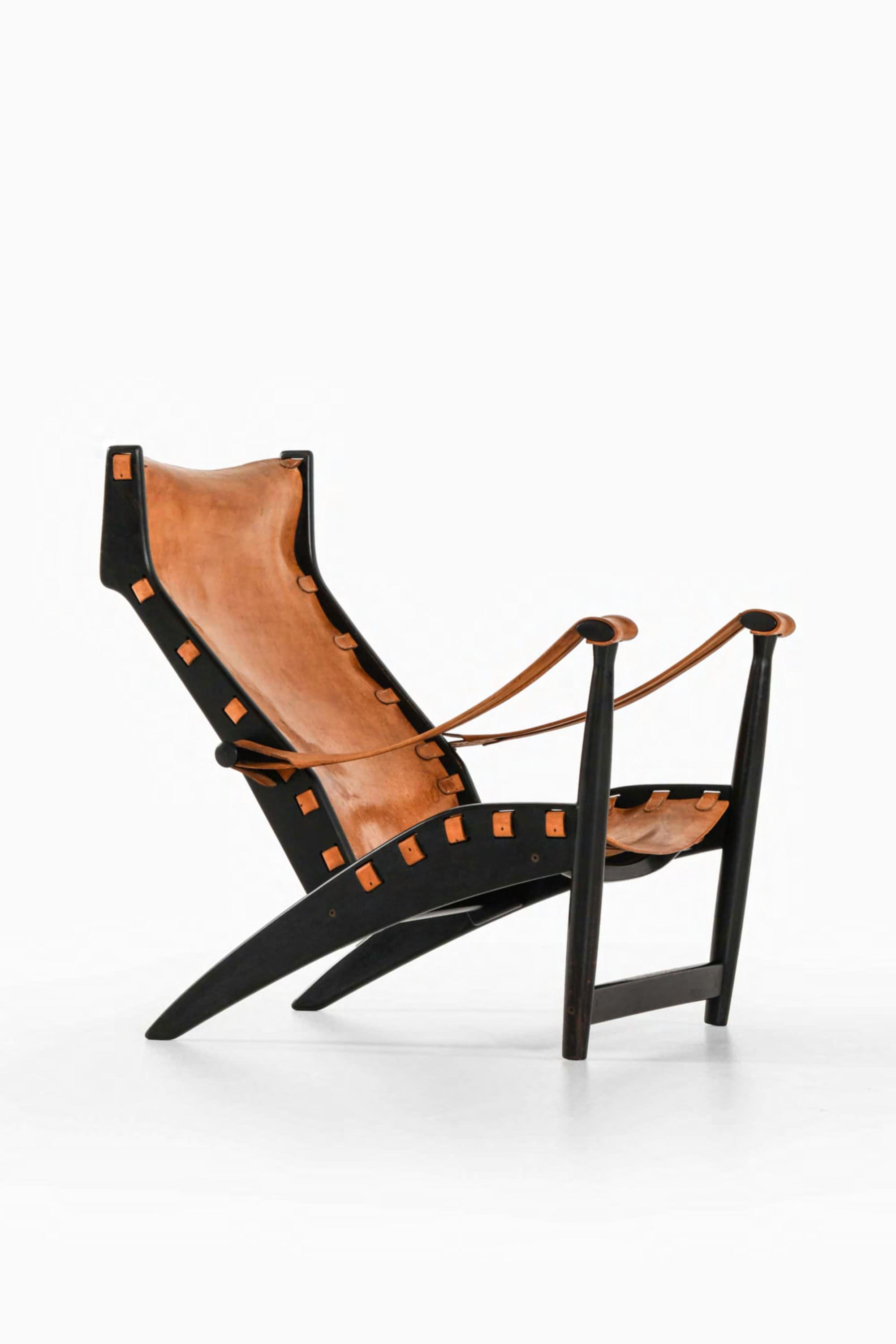
Mogens Voltelen
Lounge Chair, Model ’Copenhagen II’ / MV60
Produced by Niels Vodder 1960
Lacquered Wood, Leather
Exhibition
Designmuseum Danmark, 1960
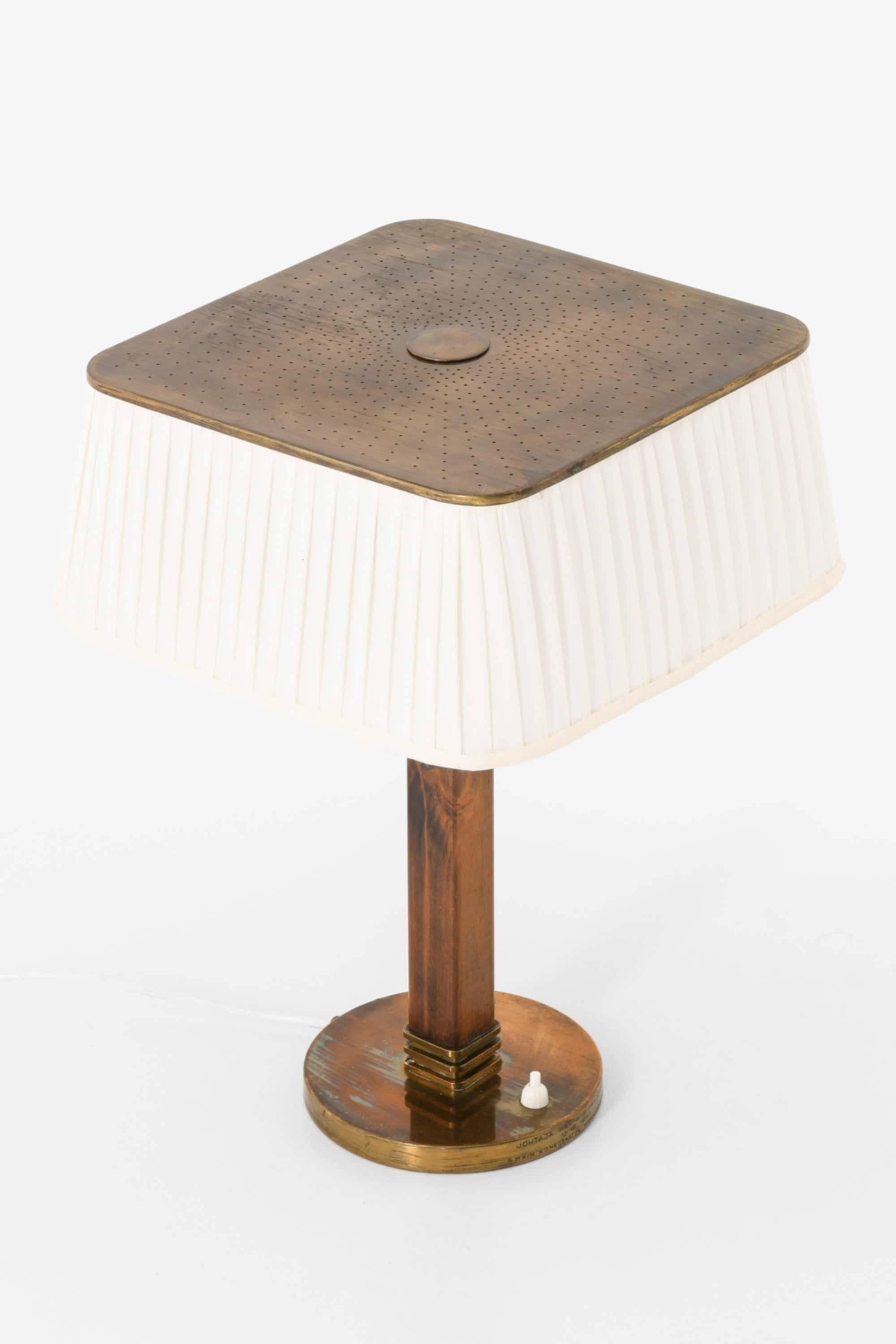
Produced by Taito Oy, Finland
1950s
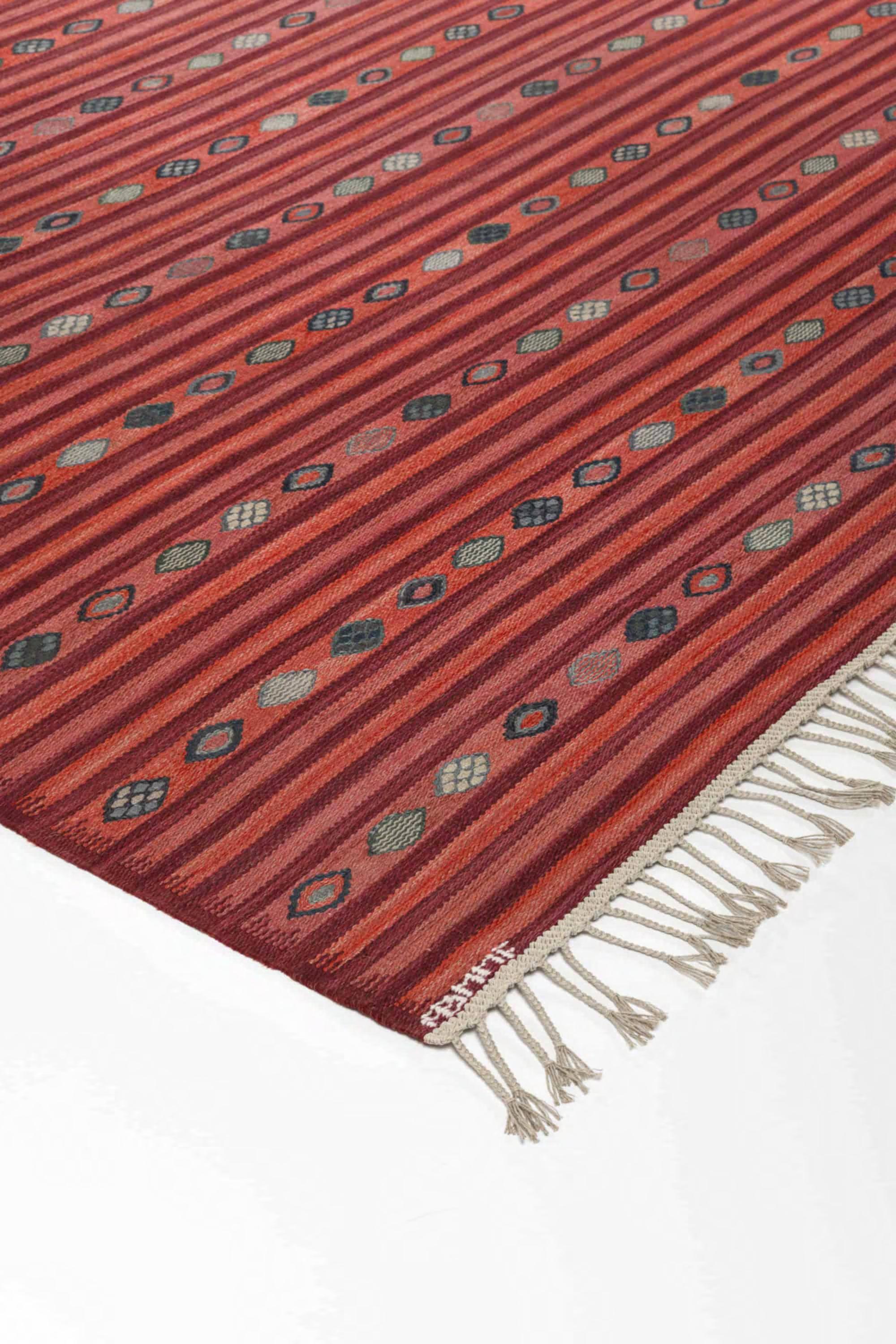
'Bärmatta, Docenten’ by Barbro Nilsson
Produced by Märta Måås-Fjetterström Atelier
Barbro Nilsson’s “Bärmatta, Docenten”, designed in 1946, is a landmark in Swedish textile modernism. Executed by the Märta Måås-Fjetterström atelier, it demonstrates Nilsson’s mastery of balancing geometric structure with natural rhythm, here expressed through berry-like motifs arranged in axial order.
The carpet was originally commissioned for the Folksam building in Stockholm, where it was displayed in the lobby and alternated seasonally with a blue counterpart. This practice reflects the period’s ambition to integrate textiles into architecture, making them not only decorative but architectural elements in dialogue with space and light. Its scale, condition, and provenance secure its status as one of Nilsson’s most important works.
Barbro Nilsson
Tapestry-Woven Carpet 'Bärmatta, Docenten'
Produced by Märta Måås-Fjetterström Atelier
Designed 1946
Woven Monogram ’AB MMF BN’
Wool
Provenance
Folksam, Bohusgatan 10, Stockholm
Literature
Tyra Lundgren, Märta Måås-Fjetterström and the Weaving Workshop in Båstad, 1968, Compare pl. 71.
Viggo Sten Möller, A Book About Barbro Nilsson, 1977, Compare Color pl. p. 37, 66.
Liljevalchs Konsthall, Märta Måås-Fjetterström – Märta Flies Again, 90 Years with Märta Måås-Fjetterström, 2009, Compare p. 149.
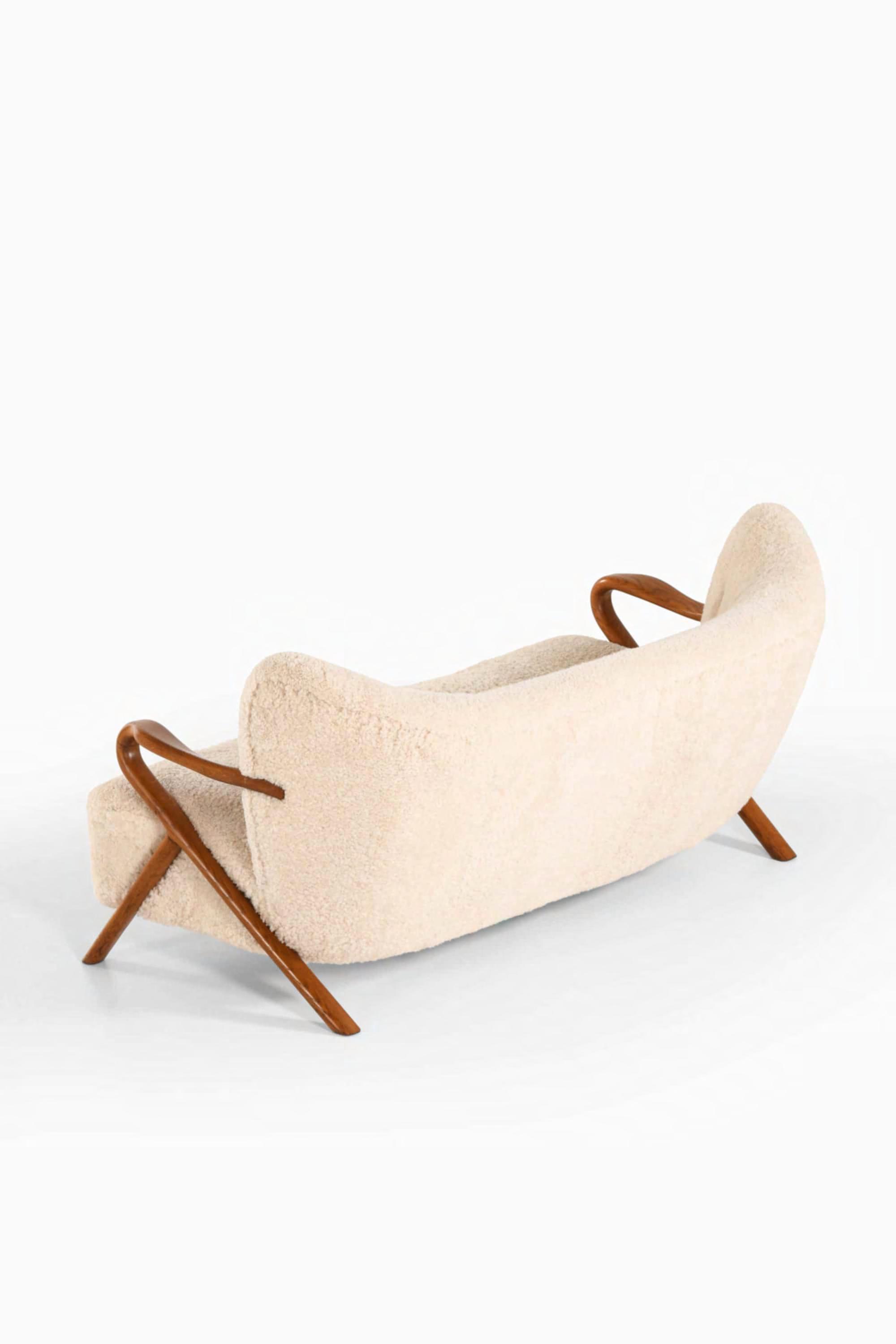

Produced by Slagelse Møbelfabrik
1930s–1940s

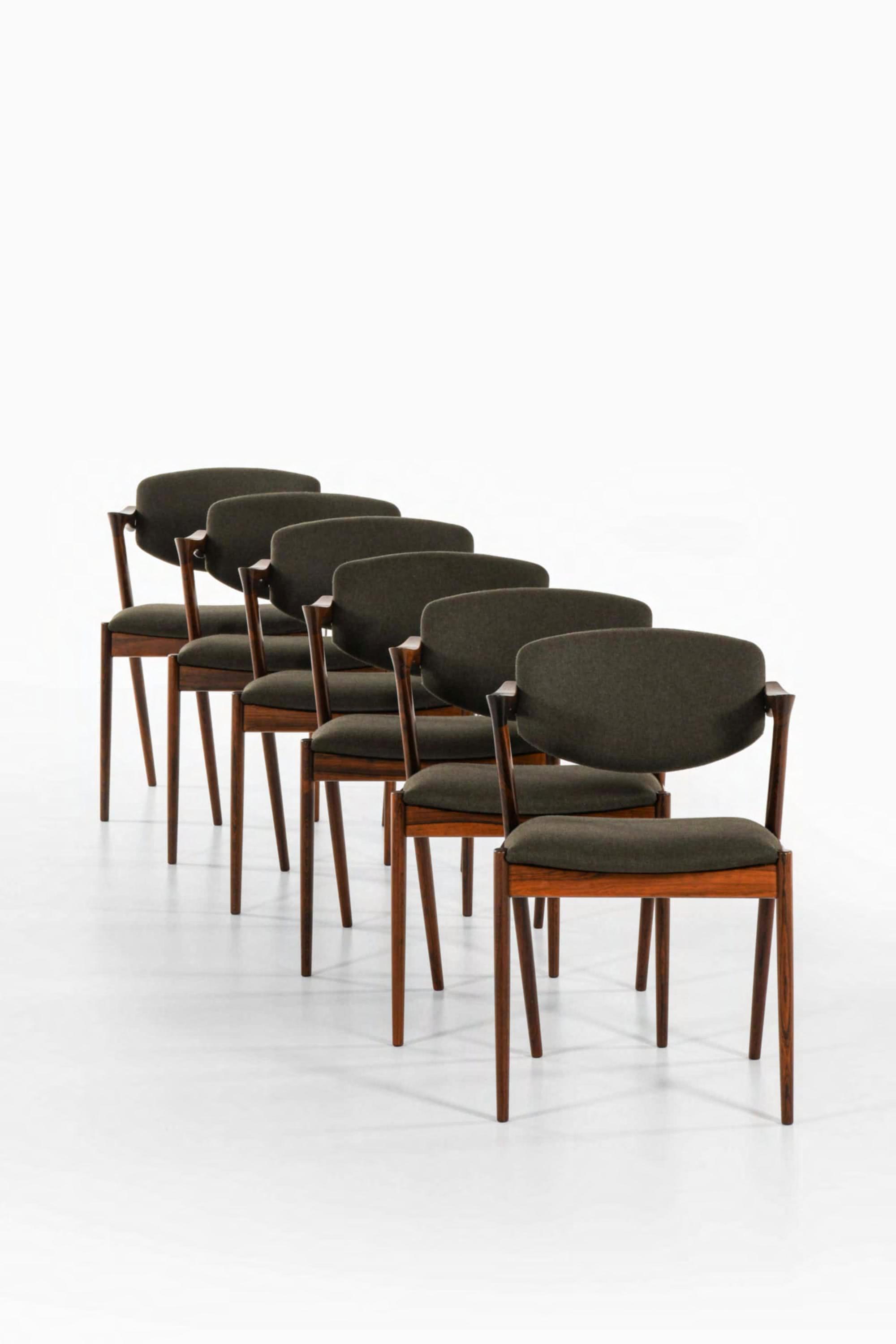
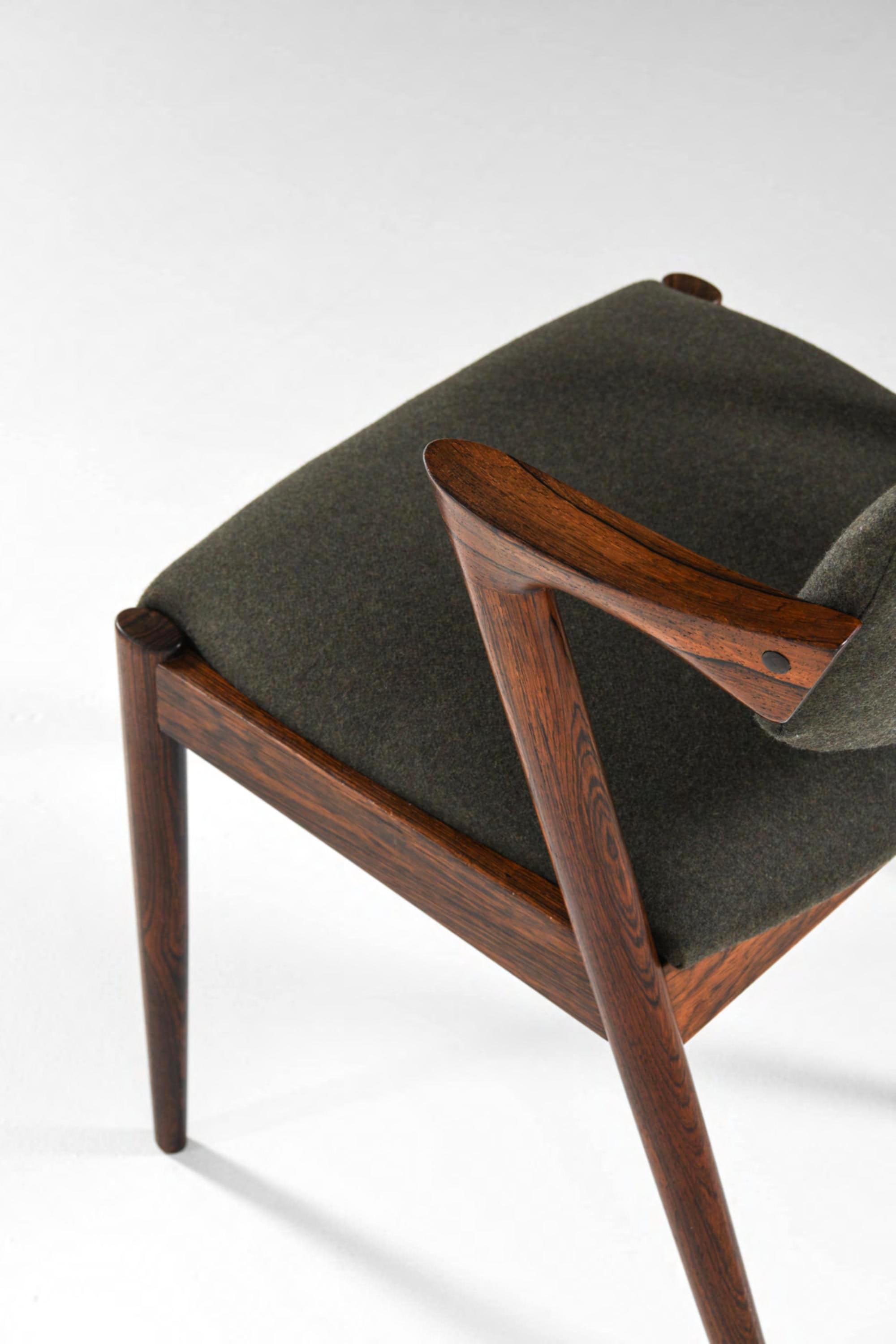
Kai Kristiansen
Set of Six Dining Chairs, Model 42
Produced by Villy
Schou Andersen 1956
Rosewood, Fabric