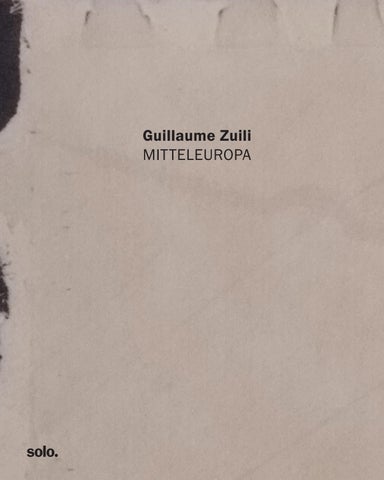
Guillaume Zuili MITTELEUROPA
Guillaume Zuili MITTELEUROPA
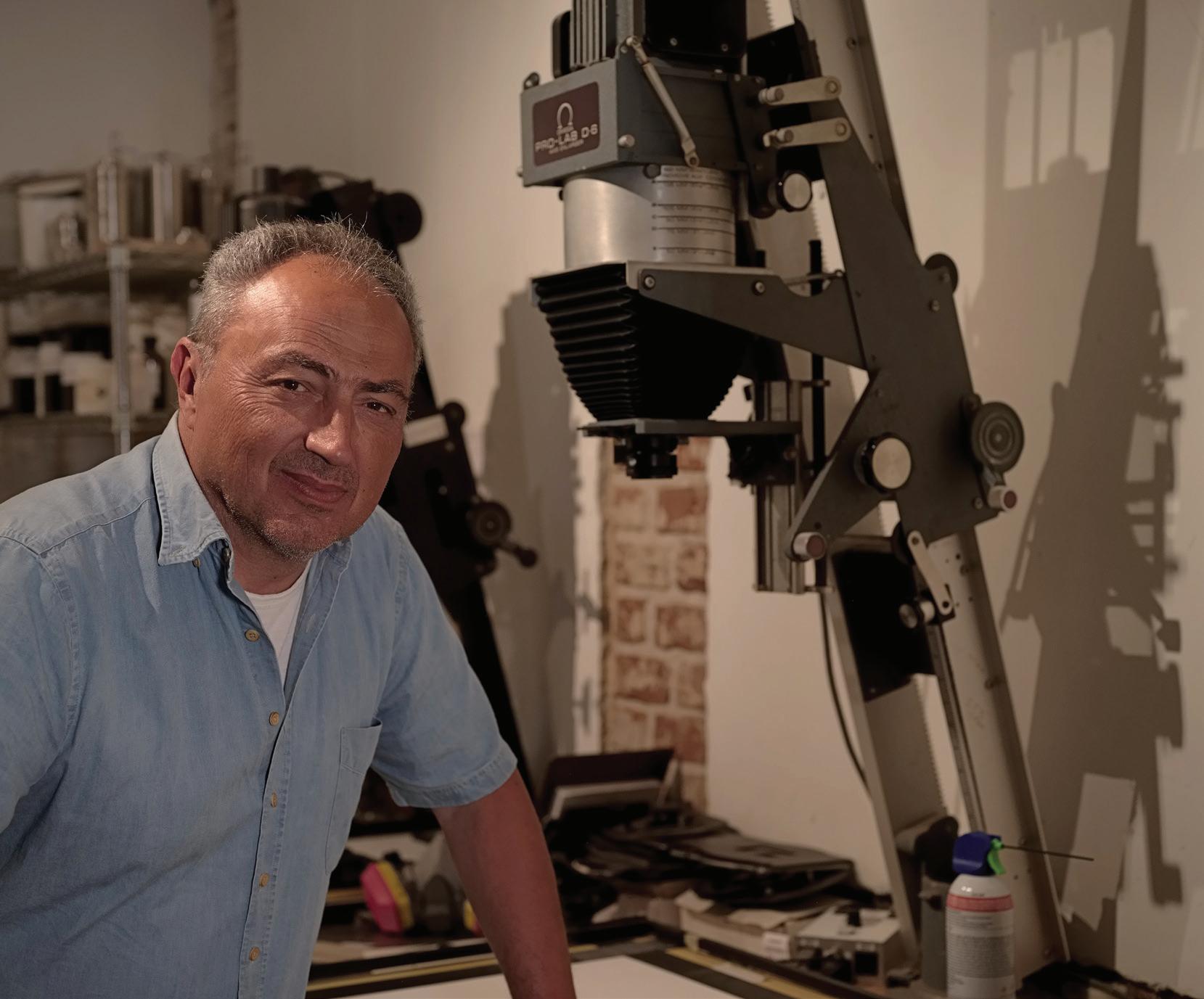
Guillaume Zuili in his darkroom, August 2025. Photographed by his son, Jack Zuili.
In the late 19th century, spirit photography became popular amongst individuals who believed spirits could be caught on camera. These images were created through double-exposure photography and experimentation, often using uncleaned photographic plates and pre-exposed images to have the appearance of ghostly figures.
Since then, double-exposure photography has come a long way, and what began as a way to capture images of departed friends and relatives is now a form of creative expression.
Technically, an echo is a sound effect where a sound wave bounces off a surface and reflects back to the listener, creating a delayed, distinct repetition of the original sound. Used metaphorically, an echo may variously describe a flashback or an awakening to something past.
Zuili’s Mitteleuropa presents as a visual echo contextualizing the past as present. In painterly parlance atmospheric perspective refers to a gentle softening of background in service to foreground images – visual space as time, echoes of the past informing the present. Zuili’s images, technically and conceptually, present, as Herbert Marcuse reminds us in Eros and Civilization, “Time loses its power when remembrance redeems the past.”
- Ron Linden
Mitteleuropa by Guillaume Zuili at Solo.
On view from October 18 until December 13, 2025.
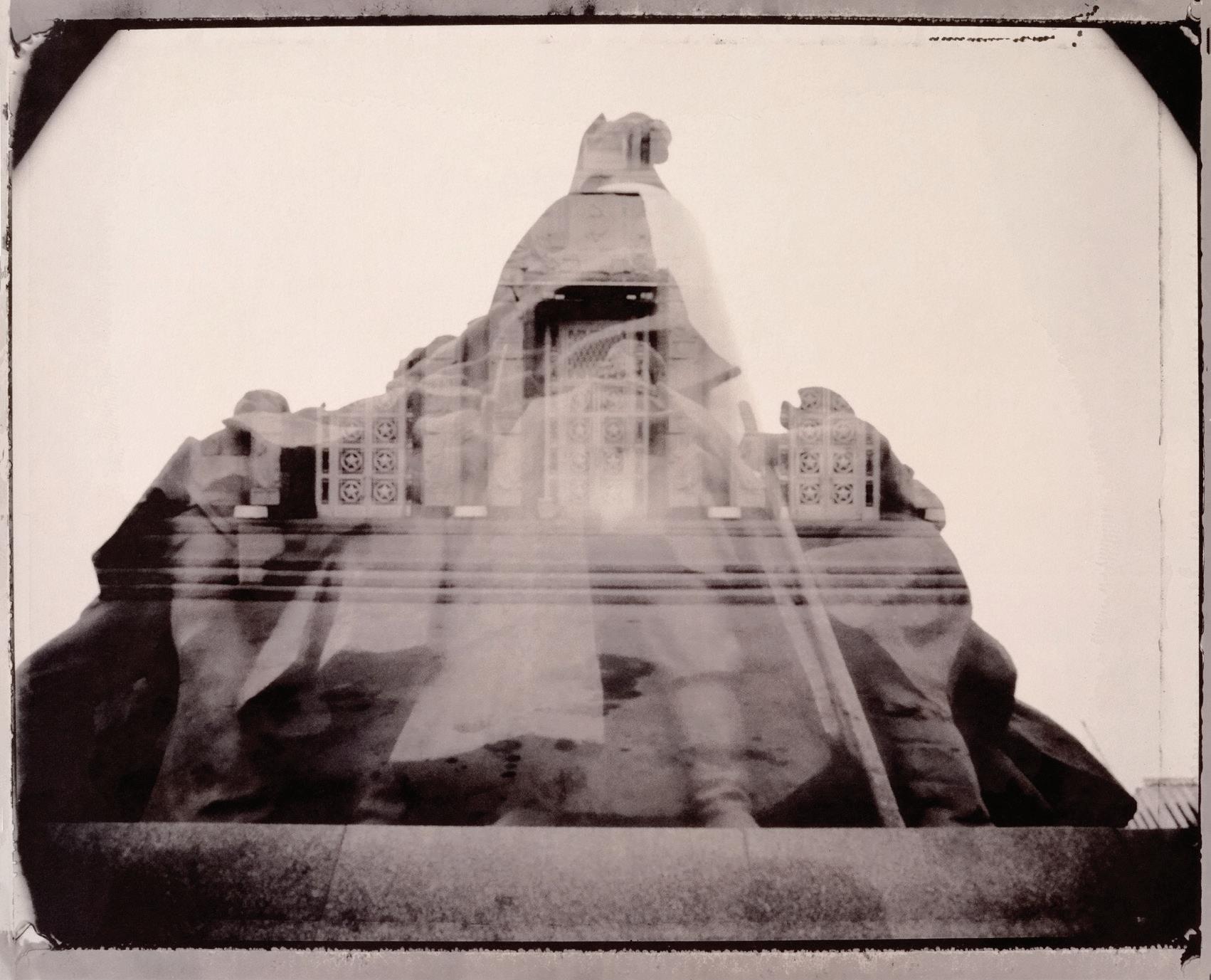
Glorification, Moscow
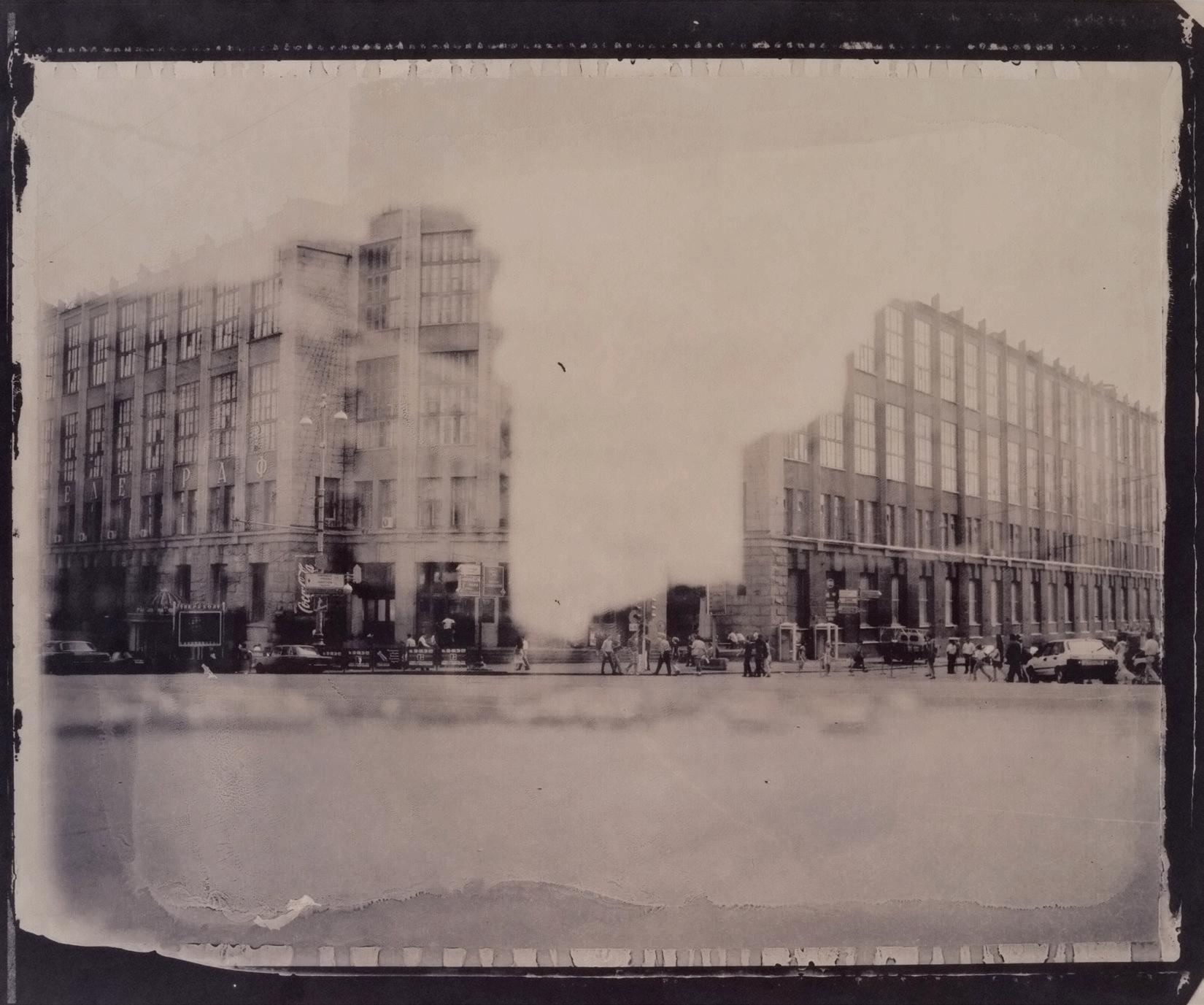
Ring, Moscow
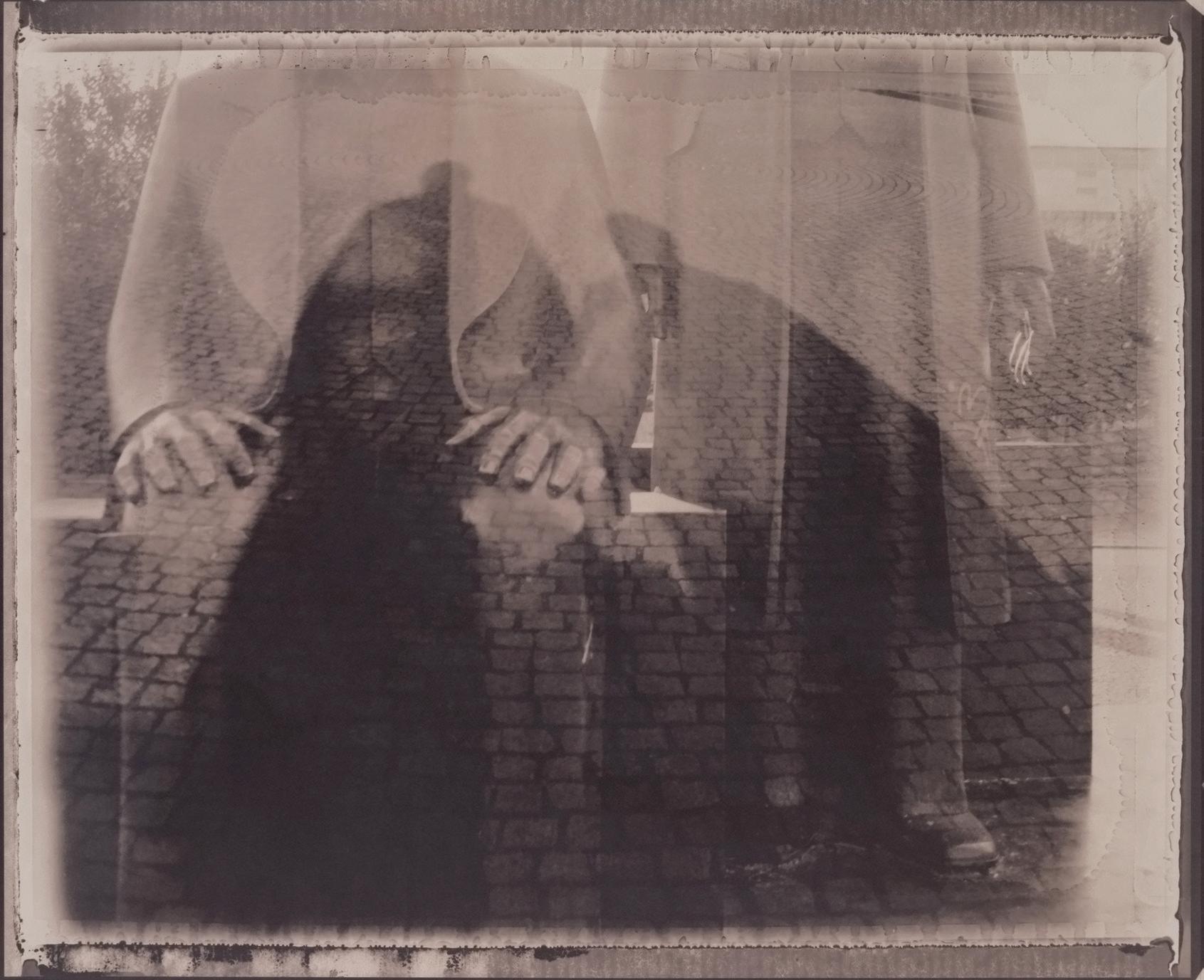
Marx & Engels, Berlin
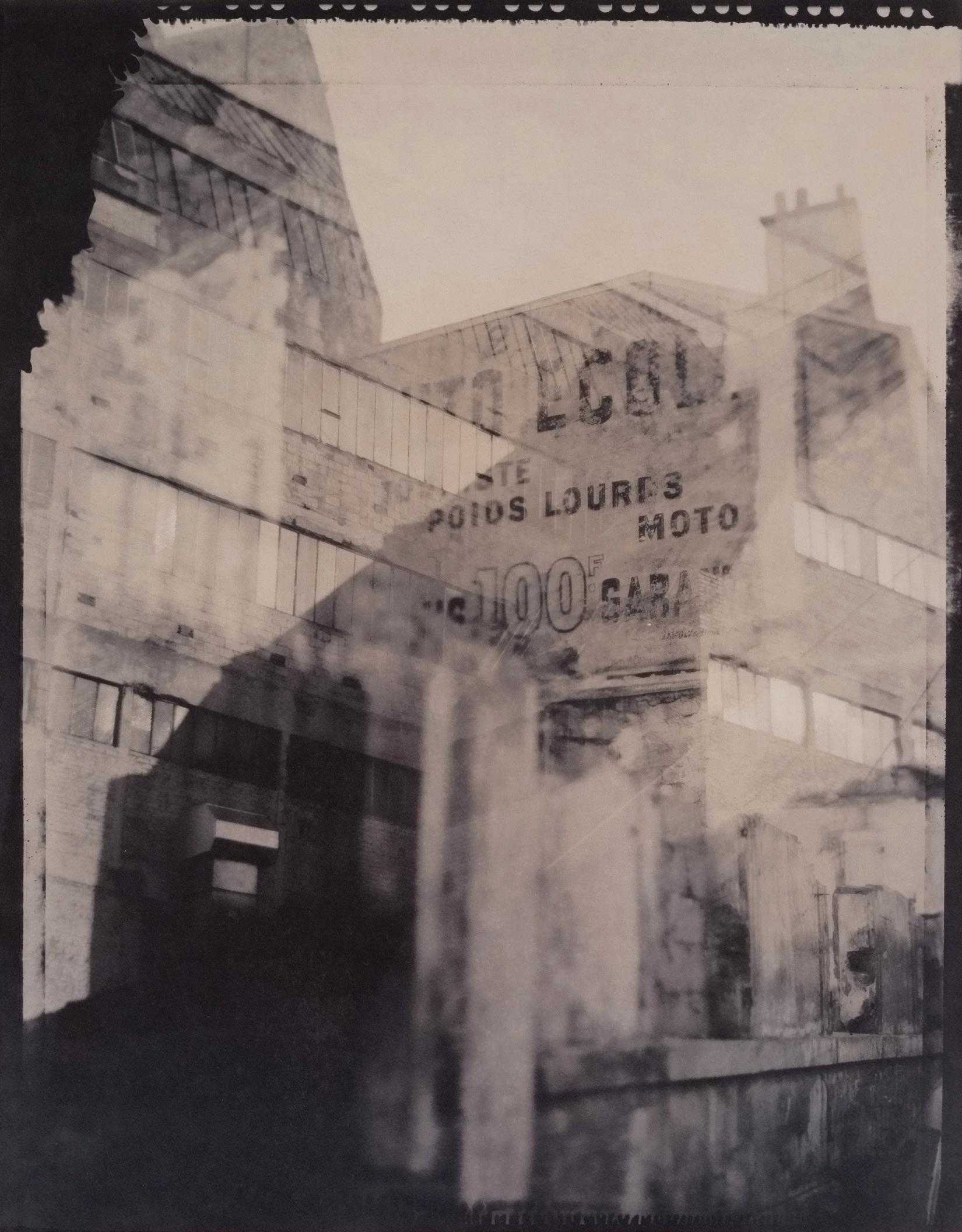
Vanishing, Paris
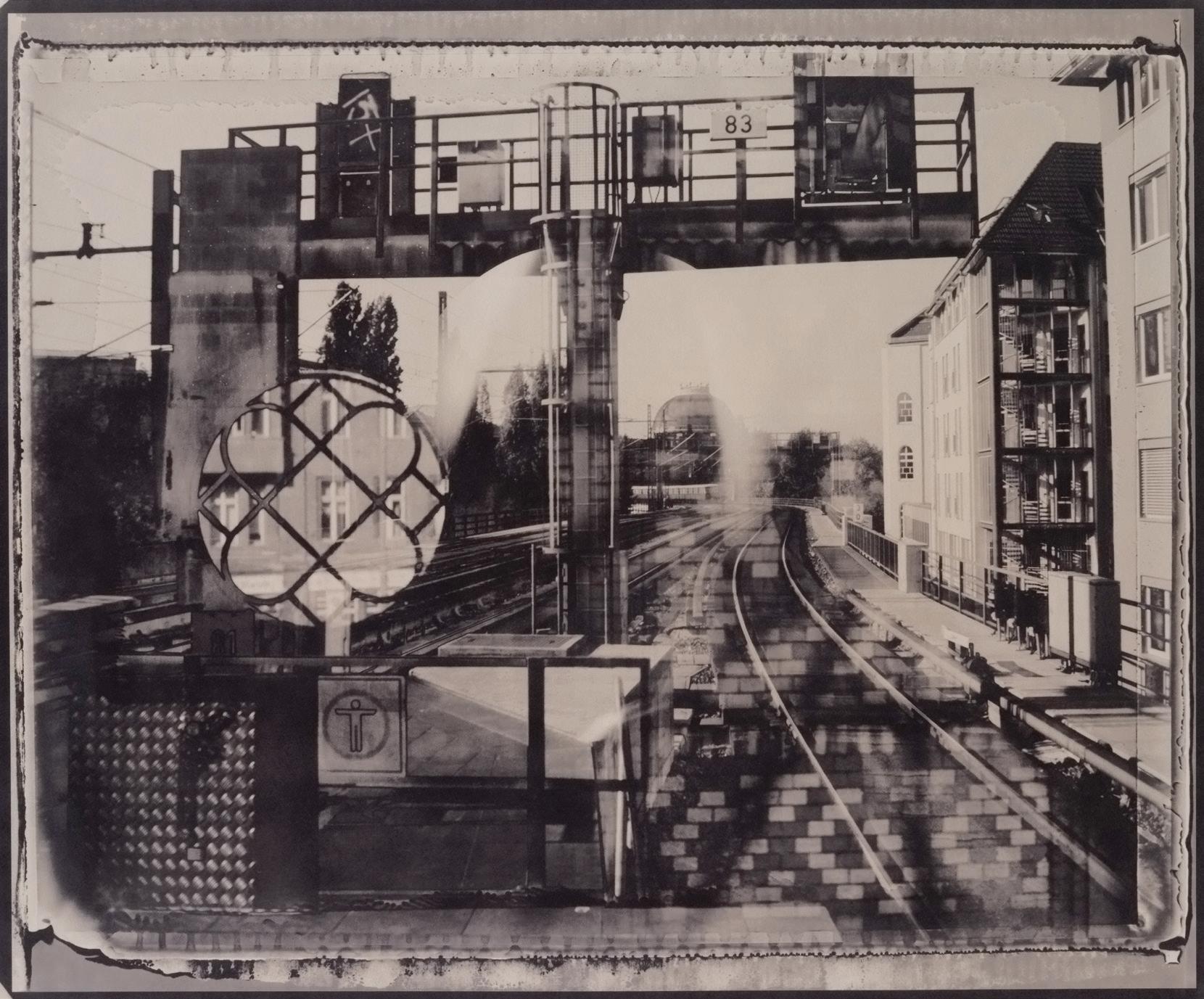
S Bahn, Berlin
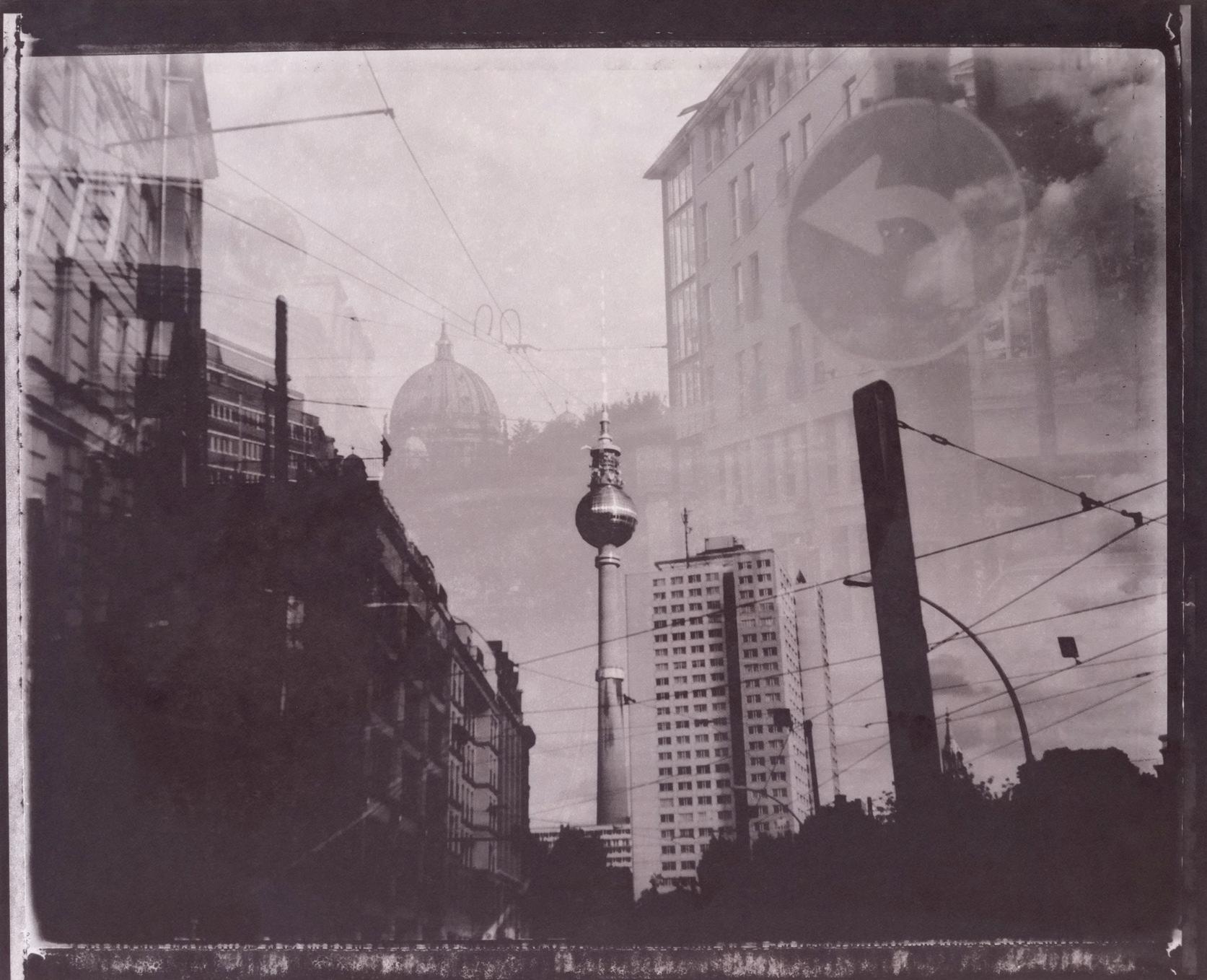
TV Tower, Berlin
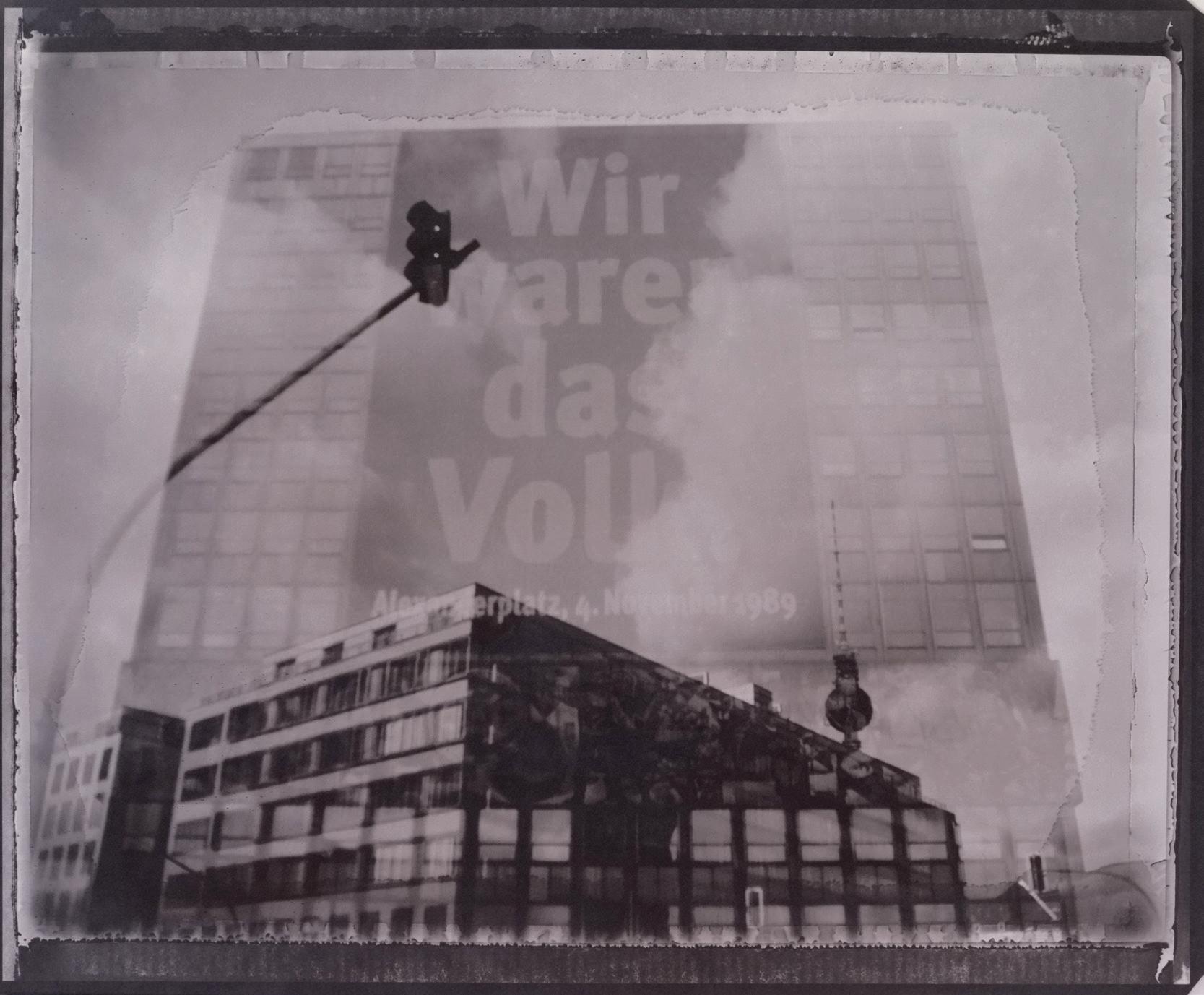
Ex Stasi Bldg, Berlin
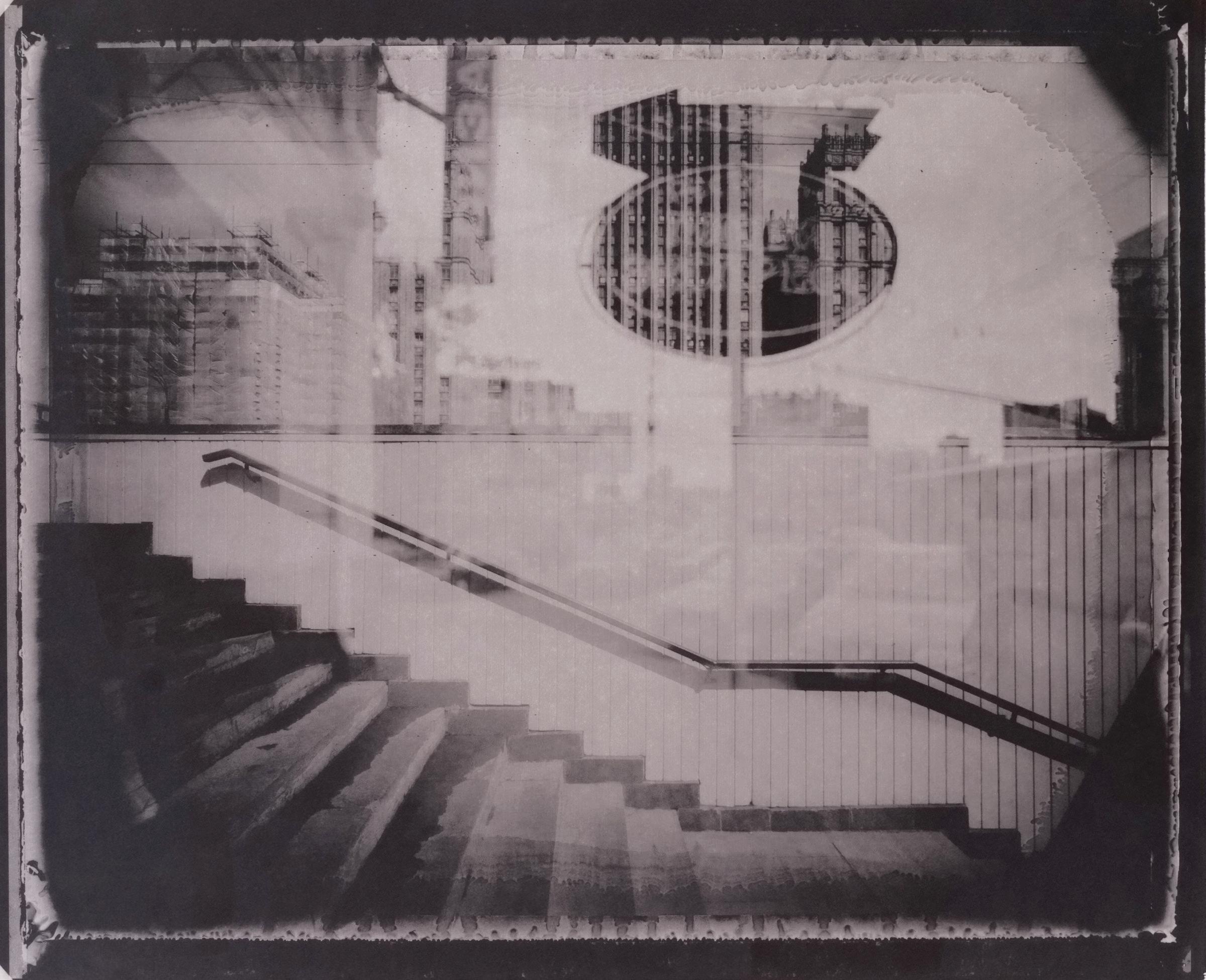
Underground, Moscow
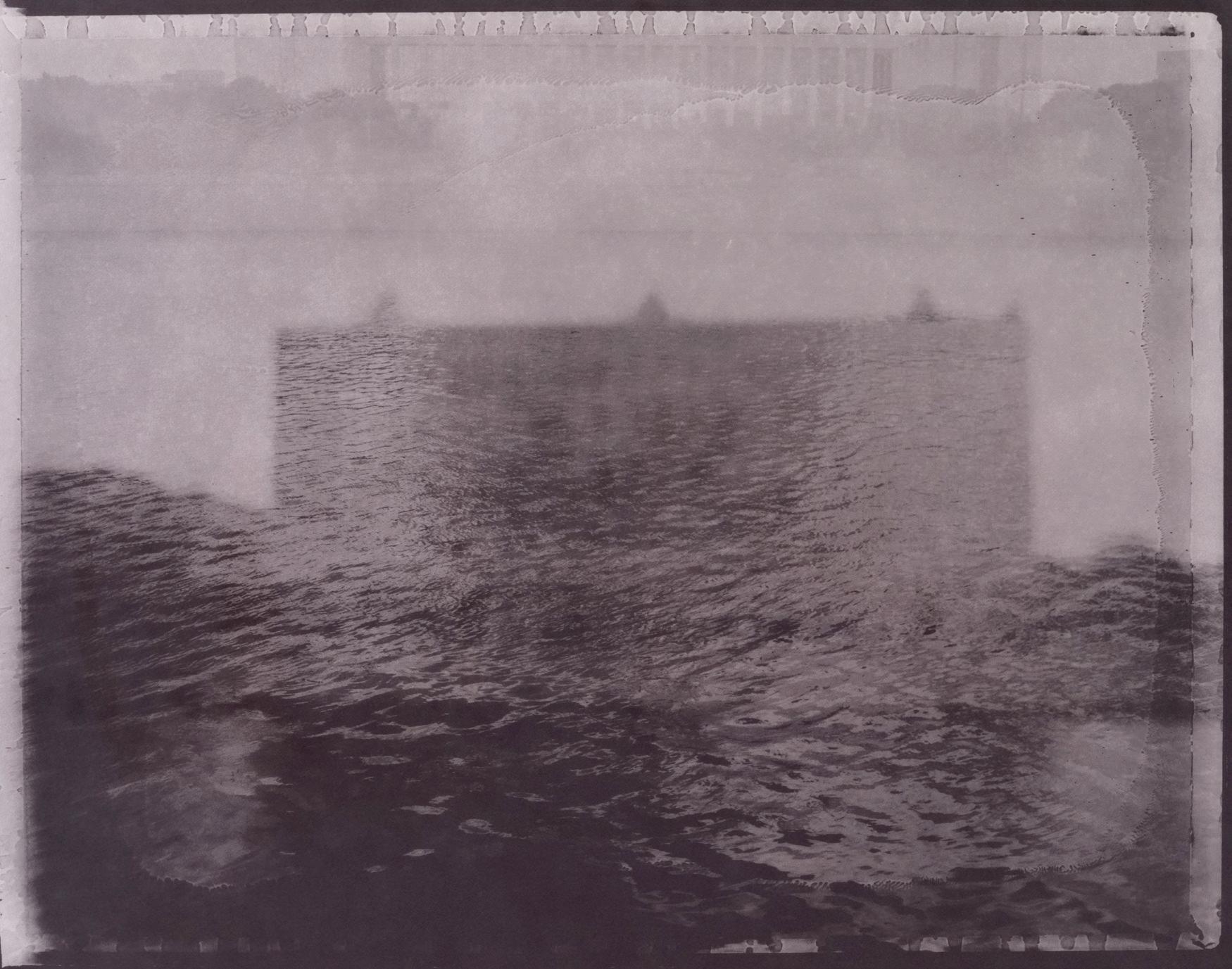
The White House, Moscow
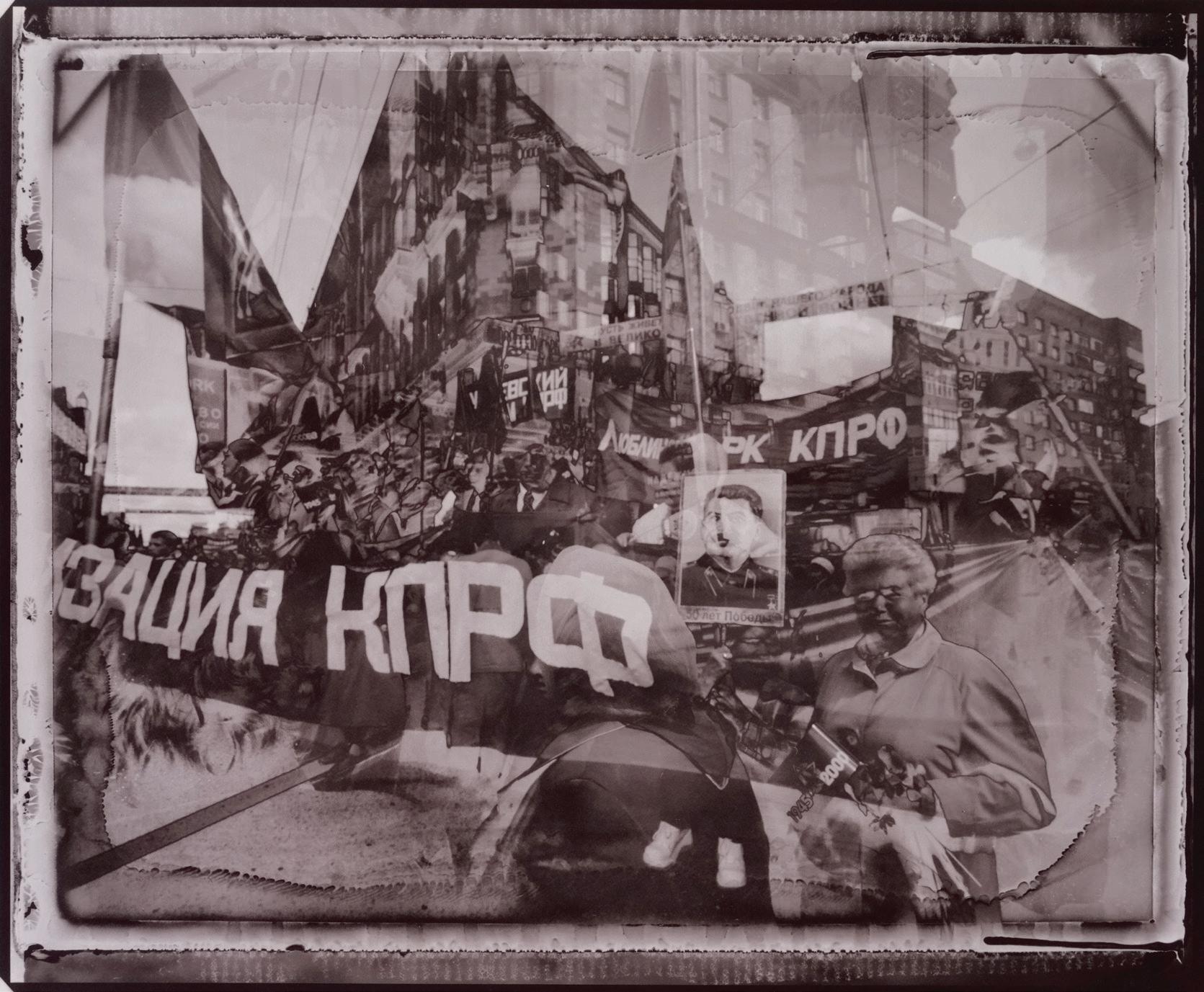
May 9 Victory Parade, Moscow
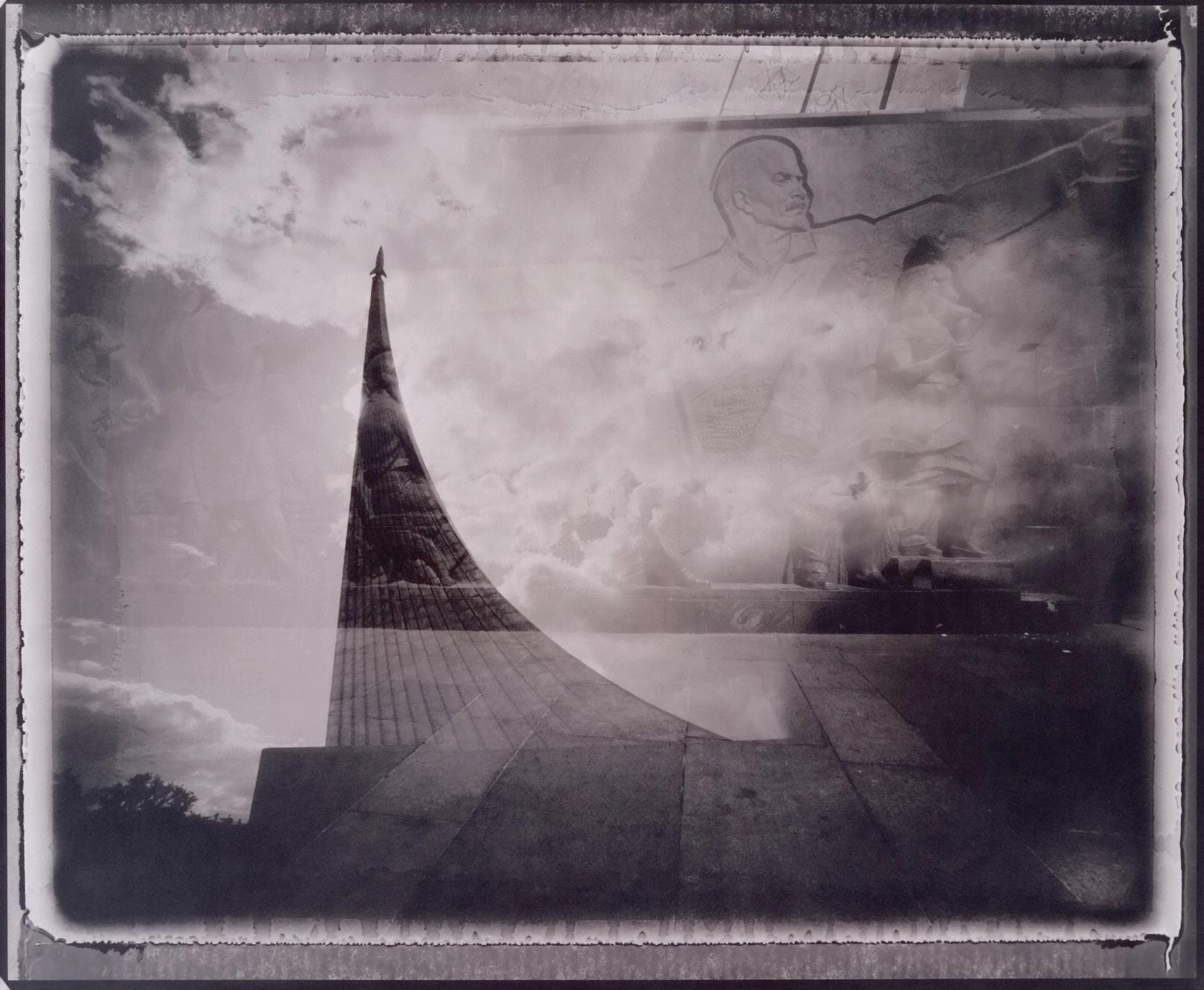
Space Race Tribute, Moscow
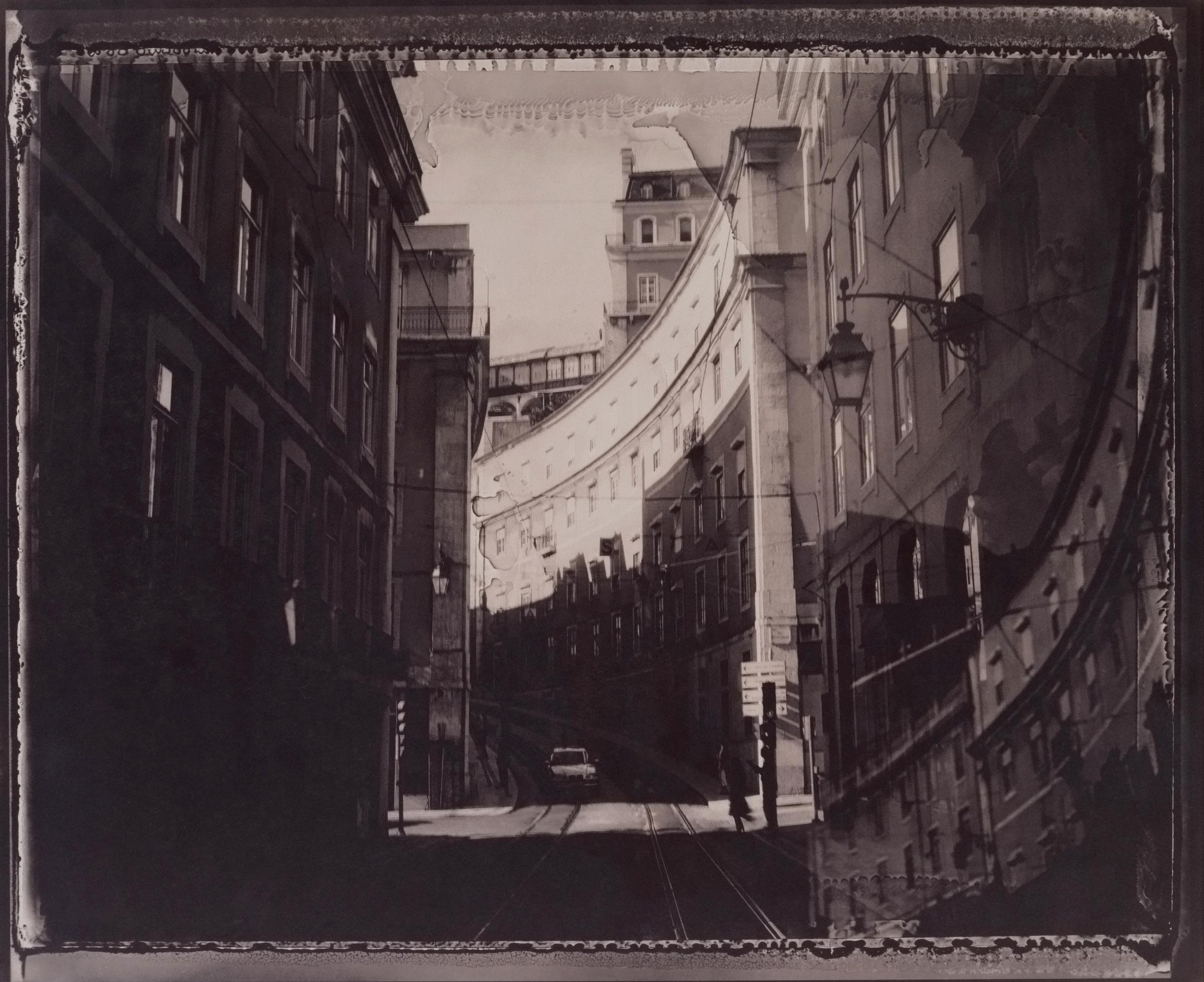
Streets of Lisbon
Guillaume Zuili
An avid history buff, Guillaume Zuili tells tales of the city through his work. Born in 1965 and raised in the heart of Paris, this Los Angeles-based photographer is no stranger to the complex, layered history of cities. In fact, he is a life-long student of it.
A childhood fascination with World War II photographs of French cities first sparked his imagination. Later, as a teen, he developed a love of cinema, in particular American Film Noir with its stark contrast of light and shadow used to portray the gritty urban landscape. All of this black and white imagery combined to inform his aesthetic as a photographer.
But Guillaume was never expected to become an artist. He was expected to become a physician, like his father. Growing up with an office in their Paris apartment and watching his father develop X-rays was his earliest experience with the darkroom. While it didn’t inspire him to pursue a medical career, it did set the stage for his mastery of the photographic printing process.
The journey to becoming a photographer began for Guillaume in the 1980s with a fateful trip to India. He fell in love with the country and learned to use a film camera as a tool for storytelling.
Lacking technical expertise and money to fund his travels, he became a studio assistant for a Parisian advertising photographer with a passion for black and white street photography. There, he established a daily routine of working with one negative at a time until each print was perfected. It is a work ethic that has stayed with him to this day.
When it was time to move on his mentor gifted him with a prized possession – a Rolleiflex camera. Guillaume returned to India to tell the story of five cities that were historic French settlements. This body of work became the subject of his first book, Pondichéry, Chandernagor, Karikal, Mahé, Yanaon: Les anciens comptoirs français de l’Inde.
Guillaume went on to have a successful career as a photojournalist with VU’ Agency. His photo essays were published in major European magazines and he received financial support for his projects. Nonetheless, he longed for a creative outlet for his work.
The unlikely catalyst for his transition from photojournalist to artist was a broken winder on his Rolleiflex camera, resulting in
multiple exposures on a single frame of film. Disappointment gave way to revelation when he printed the negative. He recalls,
I was just blown away by all the layers –what was there and what was not. It was fascinating, so I had to find a way to make it happen as a system. I found a way, and this is why I started the double exposure. It was the first door for me to leave reality, to make something that was abstract and not necessarily documentation.”
Beginning in the late 1990s, Guillaume combined his love of WWII history with his double exposure system in his visits to Moscow and storied European cities. There he discovered a connection to his father’s wartime experiences, as well as his own Jewish heritage. What he documented was a vanishing world being replaced by a new world order.
In the double exposure series that comprises Mitteleuropa, the monuments, the architecture, and the streets built up over time in Berlin, Moscow, Paris, Lisbon and Prague converge into a rich tapestry of overlapping imagery. Each print is a palimpsest; layered surfaces revealing traces of urban change and shifting cultural identity. Utilizing vintage 19th and 20th century photographic processes, these silver gelatin and salt prints are a tale of two cities. They evoke
ghosts of the past while capturing a pivotal period in time when the 20th century gave way to the new millennium.
Since relocating to Los Angeles in 2001, the artist has explored a number of techniques to portray his adopted city. His pinhole photography of L.A., shot through a hole in his lens cap, became the Smoke & Mirrors series and a book published by Galerie Clémentine de la Féronnière, with whom he exhibits annually at the Paris Photo international art fair.
Guillaume’s desire to push past the limitations of these pinhole prints led him to try lith printing, a creative process using vintage black-and-white darkroom printing papers. The resulting works, with their warm sepia tones, have a timeless quality. Over the past 24 years, he has mastered the lith printing process and made it his artistic language.
Today, Guillaume continues to find inspiration in the City of Angels and its mythology. The works in his current Urban Jungle series are possessed of the same cinematic qualities as the Hollywood classics of his youth. From time to time he incorporates double exposure for added effect. For the viewer, it is yet another compelling tale of the city as seen through the lens of this singular artist.
Gail Phinney, October 2025
Gail Phinney is a freelance writer on art and culture, and the Community Engagement Director at Palos Verdes Art Center
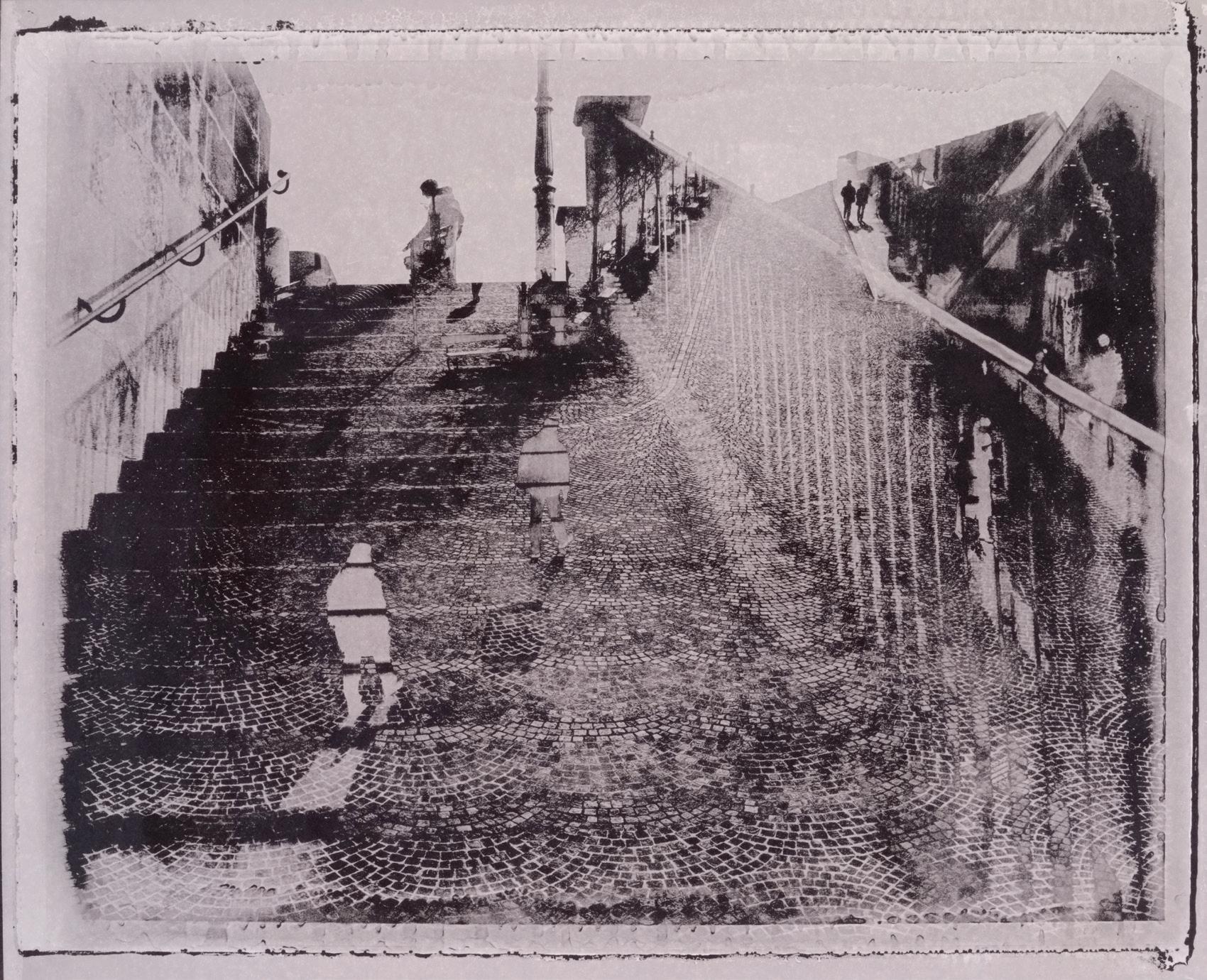
The Bridge, Prague
All works © copyright Guillaume Zuili. All rights reserved.
Published in October 2025 by
solo. an art gallery by studio mousetrap is located at 366 W 7th Street, San Pedro, California 90731.
Intro by Ron Linden. Essay by Gail Phinney. Printed at Acuprint.
Studio Mousetrap, LLC.