C O M P E T I T I V E P R O G R A M

INFORMATION FOR FAMILIES CONSIDERING COMPETITIVE DANCE
You're Invited!
Congratulations! Your dancer has demonstrated the focus, fundamental skills, and work habits that we look for in members of our competitive program Each year, only a few dancers are contacted with the invitation to join our competitive program, and regardless of the choice your family makes, we want you to know that we think your little dancer is pretty special!
To help families make the important decision to opt into competitive or to stick with recreational dance, we have compiled the following FAQ Please take the time to read through and consider if competitive dance could fit into your family’s schedule and lifestyle We believe strongly in the value and fun of our program, and we would love to have your dancer join us! If the Studio C Competitive Program sounds like a good fit for your dancer, we invite you to let us know by email or phone prior to Friday, July 14th. Additionally, if you have any questions that are not answered in this guide, please feel free to reach out There are no silly questions!
1
WHAT IS THE TIME COMMITMENT?
Mini dancers (approx. 6-8 years old), are required to take two classes per week - 45 minutes of Jazz and 45 minutes of Tap. Their classes take place on Monday & Tuesday, and are typically scheduled somewhere between 5:00 and 7:00 pm
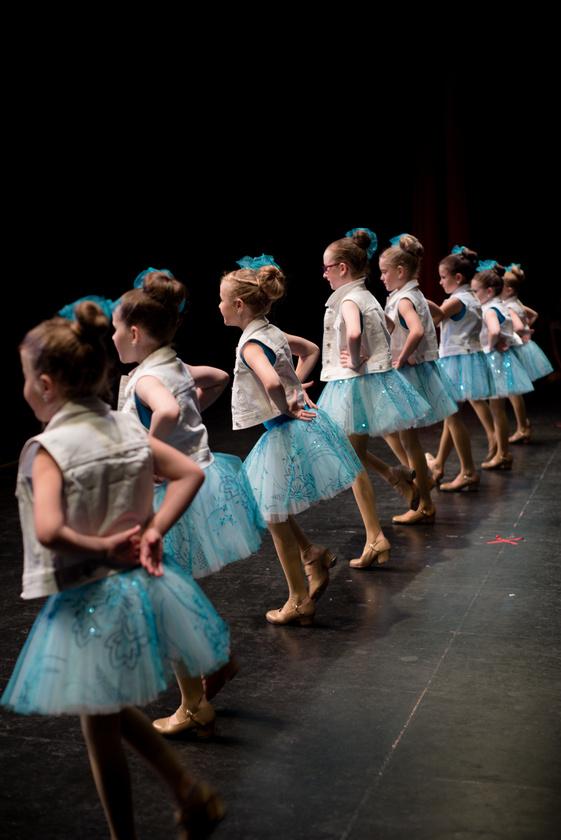
Junior dancers (approx 8-10 years old), are required to take two classes per week – 45 minutes of Tap and 60 minutes of Jazz Their classes take place on Monday & Tuesday, and are typically scheduled somewhere between 5:30 and 7:30 pm
Competitive dancers must also commit to a special production rehearsal in December, a full day dress rehearsal in
March (after March Break), 2 weekend competitions which take place in April/May (dates TBA), the recital at the end of May, and CDTA exams in the fall (though most dancers do not examine every year).
Different from recreational dance, competitive dancers train year-round (with 2 weeks off at Christmas, 1 week off at March break, and no dance in the month of June) Of course, summer absences are more common with family vacations and special events, but competitive dancers are still required to make dance class a priority throughout July and August
WHAT IS THE COST OF CLASSES?
Competitive dancers make monthly tuition payments that cover the annual cost of the program They do not pay per class
In 2022-2023, yearly and monthly tuition costs were as follows:
Mini Program: $1,125 annually or 9 monthly installments of $125 (Sept –May)
Junior Program: $1,170 annually or 9 monthly instalments of $130 (Sept –May)
CAN MY DANCER TAKE OTHER CLASSES?
Yes. Many of our competitive dancers also take Ballet and/or Acro. We do not compete those styles, but they provide important training that supports their technique in Jazz, Tap & Lyrical. Those classes are offered to competitive dancers at a special discounted rate. In 2022-2023, costs were as follows:
Acro OR Ballet: $396 annually or 9 monthly installments of $44 (Sept –May)
Acro AND Ballet: $612 annually or 9 monthly instalments of $68 (Sept –May)
WHAT IS THE ATTENDANCE POLICY?
We don’t have an official attendance policy beyond requiring that competitive families make regular attendance a clear priority Dance is unique in that it is team-based Your dancer’s absence has a direct effect on the other dancers in their group Whatever choreo you miss will need to be retaught, and all the other dancers will have to repeat those lessons It’s not ideal for anyone Obviously absences will occur: illness, vacation, school events, family celebrations
There are things that are unavoidable, which is why we don’t put a number on how many classes you can miss Instead, we simply remind our competitive families that to be a good teammate, you need to make attendance a priority in your dancer’s life This includes choosing dance over other activities, or going late/leaving early in order to make it to dance If/when attendance becomes a concern, we speak with families directly
CAN I STILL OBSERVE THE CLASSES?
Yup! The lobby is still open for observations during competitive classes And actually, watching is a great way to meet the other dance
parents You can watch every week, or some weeks, or never Just like with recreational, it’s totally up to you
HOW LONG IS OUR COMMITMENT?
Dancers must commit for the whole season, ending with the recital in May At the start of July, we ask dancers to commit to the next season At that time, dancers who wish to leave competitive let us know Dancers who
opt out of competitive, and return to recreational must understand that they would need to be re-invited to the competitive program Due to the progressive nature of dance, we do not typically re-invite more than once
8
WHAT ARE THE ADDITIONAL COSTS ASSOCIATED WITH COMPETITIVE DANCE?
1. Increased training hours
Like all sports, the higher level teams require more training hours A recreational dancer can be at the studio as little as 45 minutes a week The minimum for Mini and Junior dancers is 90 minutes (spread over two evenings) Those minimum training hours increase as dancers get older and take more classes The increased training hours increases tuition cost
2. Higher quality shoes
Competitive dancers must purchase the required dance footwear for each discipline they study For Minis and Juniors that means jazz and tap shoes
3. Class dancewear
Competitive dancers are still free to choose their own clothes for class, and you can purchase those clothes wherever you prefer (though we do sell high-quality, affordable dancewear at the studio) We do not have a uniform We do however, have a strict dress code for competitive Dancers must wear dance clothes to each class This includes: leggings, booty shorts, crop tops, leotards, tights, bodysuits, and tight form-fitting tank tops This specialized clothing may present an additional cost for your dancer
WHAT ARE CDTA DANCE EXAMS?
CDTA stands for Canadian Dance Teachers Association, and is the national training syllabus that we follow CDTA provides student (and eventually instructor) training levels through a graded system To help with technique development, competitive dancers are also required to study CDTA grade level syllabus and complete dance exams through that organization
4. Travel & Accommodations
Competitions do not take place in Cornwall Recently, Gatineau has been our destination for both competitions, but theoretically we could travel throughout eastern Ontario and western Quebec Gas, food, and lodging are all the responsibility of individual families
5. Entry fees
All competitive dancers are required to participate in fundraising campaigns throughout the season 100% of these funds go towards offsetting the cost of group entry fees (which are surprisingly high) If ever we do not meet our fundraising goal, then the remaining cost of entry fees is divided among competitive families As dancers get older, and possibly take on solos or duets, those entry fees are not covered by fundraising
6
Hair & Makeup
Competitive dancers must purchase the products to complete our stage hair and stage makeup aesthetic for performance All items are available locally, and some items you will already own (ie a hair brush), but there is a moderate cost associated with hair and makeup
Dancers learn the syllabus in jazz and tap classes throughout the year, with exams taking place in the fall Not all dancers complete an examination each year It often takes more than one dance season to prepare Dancers are submitted for exams based on age and readiness which is at the discretion of studio staff Exam participation is mandatory
Thank you so much for considering competitive dance We believe it is a great program for your dancer, and we genuinely hope that you will join us for our next season!