OGA Chain 2025
The annual publication for St Swithun’s Old Girls, former parents and staff
Contents
While every effort has been made to ensure the accuracy of the information supplied herein, St Swithun’s School cannot be held responsible for any errors or omissions. Unless otherwise indicated, opinions expressed are those of the author/subject of the page and do not necessarily represent the views of St Swithun’s School. No part of this publication may be reproduced, stored or transmitted in any shape or form without prior permission from St Swithun’s School.
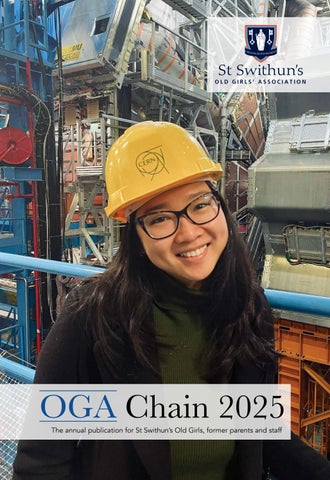
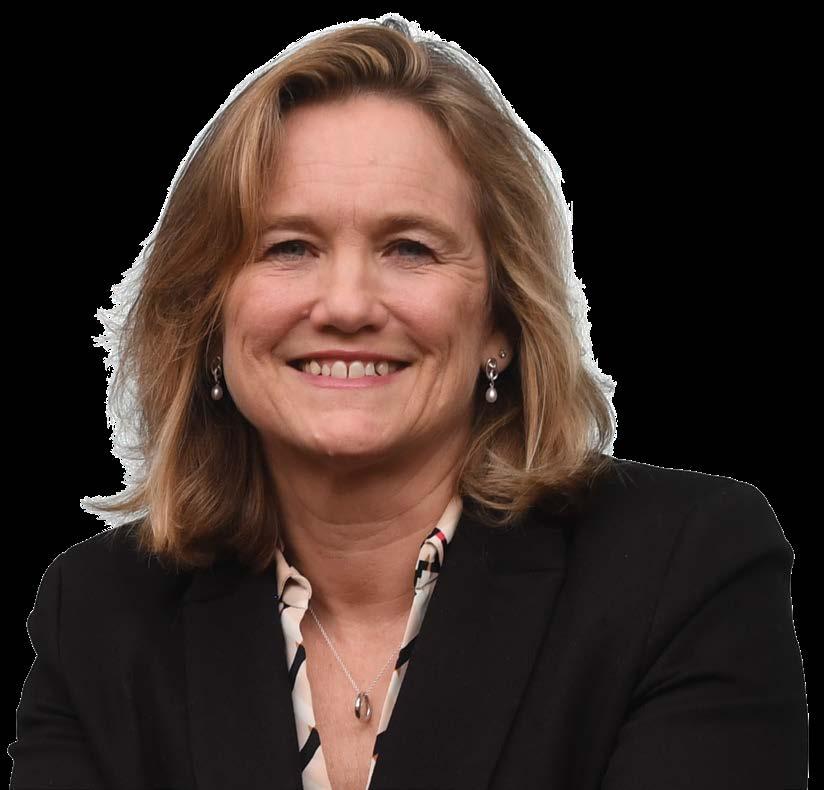
Front cover: Maggie Chen (HA 2016)
Phone:
Email:
Phone:
Edited by Rosy Oscroft
Headmistress’ Welcome
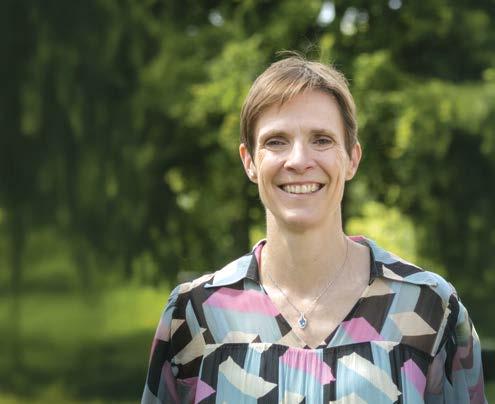
I am writing this having just had a delightful impromptu meeting with an 83-year-old former student who happened to be passing through Winchester with her daughter. One of the absolute highlights of working at St Swithun’s is meeting former students and hearing what you have all been up to. For example, I recently exchanged emails with Jodie Russell (V 2015) and Ella Jonas (D 2015) who are working in Zimbabwe and studying in California respectively.
Last September’s OGA day was a particular treat. I enjoyed answering all your questions and hearing where life has taken you since leaving St Swithun’s, and how naughty some of you were at school!
I would like to take a moment to celebrate the 2025 leaving year. They achieved some excellent A level results – indeed our strongest results ever with 34% at A* and 70% A*/A – and they go on to a wide range of courses and universities.
We hope that all of our 2025 leavers will keep in touch with us and that in due course they will feel they can return as speakers, to conduct mock interviewers, to share their experience of higher education or of the workplace or simply to say ‘hello’.
Speaking of keeping in touch, Kate, Rosy and I were delighted to be able to meet up with old girls in Hong Kong and Singapore in the spring of 2025. Once again, it was uplifting to hear about their lives and we thank Mandy Lui (ED 2001) and Angela Campbell-Noë (HC 1982) for so generously sharing their post-St Swithun’s experiences at the Hong Kong Bankers’ Club and the Tanglin Club respectively.
Back in Winchester, we thoroughly enjoyed hearing from Dr Chibundu Onuzo (HA 2009) about her writing and singing career – she particularly delighted in getting her hands on the Steinway, in front of Mr Brett! Whilst in London, at our creative networking event, Charlotte Heath-Bullock (HA 1994) explained how she combines her love for art with public relations. This was a particularly noteworthy event reuniting, for perhaps the first time, former students from many different creative industries such as film-making, architecture and fashion.
From my office, I can just make out an orange JCB next to the swimming pool. We recently started work on our Building Active Lives project, a two-phase programme to improve our indoor sports spaces so that all students, from age 3 upwards, have more opportunities to enjoy the benefits of an exercise habit.
We are thrilled to be able to develop our facilities in this way, and we are very grateful to those in our community who have so far felt able to donate money to this project. You might be aware that girls’ schools remain the poor relations of the educational world when it comes to philanthropy. I would very much like to buck this trend – it is time for St Swithun’s to break through the philanthropic glass ceiling. ■

Jane Gandee Headmistress
Prep Head’s Welcome
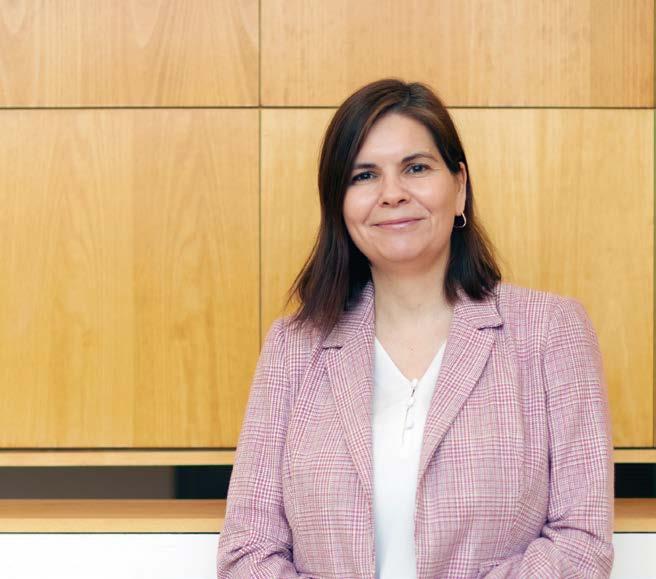
As I reflect on another year at St Swithun’s, I’m struck once again by just how much life, learning and laughter we manage to pack into a single year at the Prep School. From curriculum developments to changes in our staff and pupil body, the rhythm of school life continues to evolve, and yet, our vision remains steadfast.
One of the most joyful additions to our calendar was the introduction of our very first Grandparents’ Day. Watching our pupils proudly guide their grandparents around the school, sharing the spaces and stories that matter most to them, was truly heartwarming. The event proved so popular that we hosted two sittings of afternoon tea in a packed Prep Hall, creating some very special memories.
Our pupils have continued to thrive both in and out of the classroom, with residential trips offering opportunities for adventure, independence and friendship. Last year also saw the return of a Prep ski trip for some of our older girls. These experiences remain a vital part of Prep life, helping to shape confident, curious learners.
We also said farewell to two much-loved members of staff, Miss Silvester and Miss Jones, who together gave an extraordinary 74
years of service to the school. Their departure marked the end of an era, and I’m sure many readers of the OGA Chain will remember them with great fondness and gratitude.
At the heart of everything we do is a strong sense of community and partnership. We deeply value the collaboration between home and school, recognising that the best outcomes for our pupils come when parents, staff and children work together. Everyone at the Prep School, from our youngest learners to our dedicated team, is part of the vibrant, caring community of St Swithun’s. It’s this shared commitment, where each individual contributes to the whole, that makes our school such a special place to grow and learn.
As ever, our engagement with the wider school community is central to all we do. Whether you are a recent leaver or a long-standing member of our alumnae family, we are proud to be part of your story, and grateful that you remain part of ours. ■

Liz Norris Prep Head
Welcome to the Class of 2025
Institution Course(s)
Cardiff University
City St George’s
Durham University
Grant Thornton
Modern languages
Financial economics
Economics with management; geography; modern languages and cultures; philosophy; psychology
Accountancy
Hull York Medical School Medicine
Imperial College London
King’s College London
Medicine; medical biosciences with management
Classical studies with English; biochemistry; European studies; law; philosophy, politics and economics; social sciences
London School of Economics and Political Science Law
Newcastle University
Oxford Brookes University
The University of Edinburgh
University College London (UCL)
University of Bath
Biomedical science; psychology
Midwifery
Arabic and Spanish; biological sciences; business and economics; psychology; psychology and business
Applied medical sciences; architecture, biochemistry; biological sciences; biomedical sciences; engineering and architectural design; history of art
Chemistry; education with psychology; international development with economics; psychology
University of Birmingham International development and politics
University of Bristol
University of Cambridge
University of Exeter
Mathematics with statistics
Anglo-Saxon, Norse and Celtic; archaeology; English; natural sciences
Biomedical sciences; business economics; medicine; politics and international relations
Institution Course(s)
University of Leeds
English literature; modern languages; business
University of Liverpool Medicine
University of Oxford
University of Southampton
University of St Andrews
University of the Arts London
University of Warwick
University of Winchester
University of York
Earth sciences; English language and literature; experimental psychology
Chemistry with medical sciences
Biochemistry; philosophy
Art direction and visual effects
Physics with astrophysics
Sport and exercise psychology
History of art; human geography and environment
Washington University in St. Louis Liberal arts
From the Director
The remit of the Bramston Foundation has widened to include fundraising for an ambitious new building project designed to enhance active wellbeing and indoor sports facilities for everyone.
The Building Active Lives at St Swithun’s campaign launched in May 2025. We have already achieved close to a quarter of the £2m needed of this £4m first building.
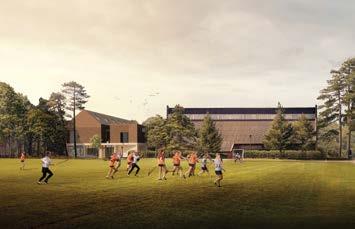
The first phase will see three netball/four tennis courts with an upstairs spectator gallery and a ground floor strength and conditioning suite become one indoor space. Currently, we are focussed on major donor support to realise the first building, so that it can be in use by September 2026. A second building phase, with a further capital fundraising campaign to raise at least £3m, will follow.
To learn more about this project and to see CGI images of our bold vision, please visit: https:// hub.stswithuns.com/activelivesproject and pages 32 and 33.
The fundraising for our established transformational bursary programme has remained strong, despite the challenging backdrop of VAT added to school fees. We are so grateful to those who very loyally support these bursaries. In 2024-25, over £190,000 of vital funding was raised for our current cohort of ten beneficiaries, an outstanding achievement.
Our annual online silent auction achieved a record total this year. Other events such as our Bramston Talks and Christmas hamper raffle
Foundation Income 2024-2025
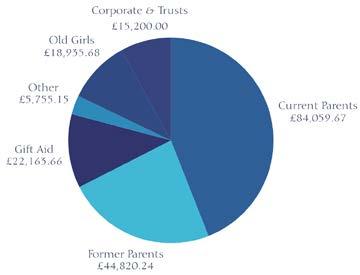
were well supported. Sincere thanks to all who bid, donated, or bought tickets; we couldn’t do it without you.
Alumnae community support through our 1884 Club, contributed £9,010.68 towards a total of £18,935.68 gifted from former students in the past year. Thank you!
Over the next three years, our mission is to achieve enough funds for 14 transformational bursaries in the senior school, covering 50% of their boarding fee costs.
Philanthropy is vital for St Swithun’s to thrive and flourish, and your support is the key. Unlike many boys’ or co-educational schools, St Swithun’s has no founding endowment to underwrite facilities’ improvements. It is your donations that help to ensure the Bramston Foundation can support St Swithun’s in providing a world-class education for girls and young women from any background, equal in opportunity to any other school.
So many of you achieve remarkable things. We enjoy hearing about all of them and celebrating your stories, achievements and interests through the Old Girls’ Association. We hope this comes across in this edition of the OGA Chain. Please also support our professional guidance team if you can, through volunteering to mentor, providing a career or subject talk or a work experience opportunity. ■
With gratitude,

Kate Lewis Director of development and alumnae
Bramston
A Last Act of Kindness
A gift in your will can be the most significant financial donation you ever make. Leaving 1% or more of your residual estate to St Swithun’s can create a lasting impact for future generations.
● Transform a life: Help disadvantaged young girls access a world-class education.
● Reduce inheritance tax: Giving 10% or more to charitable causes reduces inheritance tax rate for your beneficiaries from 40% to 36%.
● Secure the future: Support future facilities’ improvements.
Legacy giving presents a unique opportunity to make a difference, after caring for loved ones and without affecting your current income.
We recommend speaking with your solicitor or legal advisor on how best to make changes or add a codicil to your existing will.

For more information visit: hub.stswithuns.com/pages/how-to-help
Or for a confidential discussion please contact Kate Lewis via development@stswithuns.com / 01962 835734

Meet the new teams
This year, both the alumnae and development and professional guidance departments have new members
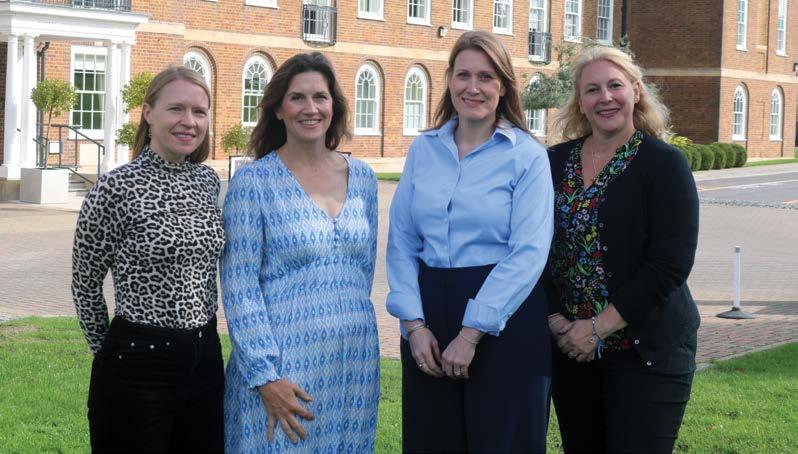
Maria Rosengren Development and alumnae coordinator
Maria joined St Swithun’s this September and has worked in human resources, admissions and development for the past 15 years for schools and charities. Her focus at St Swithun’s will be on strengthening alumnae engagement, celebrating their achievements, and nurturing lasting connections with the school community.
Sarah Layzell Events and engagement officer
Sarah comes from an events background having organised many large fundraisers for sports clubs, schools and charities. She will be providing the wider St Swithun’s community with opportunities to connect whilst raising awareness of the Bramston Foundation. Alongside this, she will work with the professional guidance department, running student events as part of the academic enrichment programme.
Gwen HeywoodWaddington Data and research officer
Gwen brings over 15 years of experience in fundraising and membership engagement, having worked for a diverse range of local and international charitable organisations as well as professional bodies. She will focus on fostering meaningful connections and advancing the mission of both the St Swithun’s community and the Bramston Foundation.
Kate Lewis Director of development and alumnae
Kate has worked in the charitable sector since 2008, fundraising for the arts in Suffolk, for Snape Maltings for eight years and then Petersfield Museum & Art Gallery, after moving back to Hampshire in 2016. She has also worked in the maritime sector for the RNRMC and the Jubilee Sailing Trust. Kate splits her time between alumnae and fundraising activities, whilst supporting the trustees and overseeing the development office.
Meet the professional guidance team
Working alongside the development and alumnae team, the professional guidance department supports students in exploring future study and career paths with confidence. Alumnae play an important role, returning to share their experiences through talks, workshops and mentoring, offering insights and inspiration. We warmly encourage alumnae to stay involved and continue supporting the next generation.
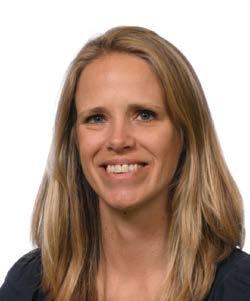
Annabel O’Keeffe, Head of future pathways
Annabel joined St Swithun’s this September after several years providing careers guidance at university level. She supports students with applications and interview preparation, organises careers talks and events, and runs the work experience programme. Annabel also works with the alumnae and development team to connect OGs with students through mentoring and networking opportunities.
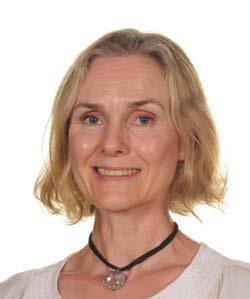
Victoria Taylor, Head of academic enrichment and teacher of English
Alongside teaching English, Victoria leads the academic enrichment programme, combining external speakers, student research and activities beyond the curriculum. She also supports Oxbridge applicants and works with Annabel O’Keeffe to strengthen links between academic enrichment and professional guidance.
Tinker Tailor careers consultancy at St Swithun’s School
Tinker Tailor are experienced careers advisers who bring deep insight into the modern world of work. Their tailored guidance helps deliver a purposeful careers programme that equips every student with the confidence, skills and awareness to thrive beyond St Swithun’s. Working collaboratively, they ensure our careers education reflects our values of curiosity, courage and integrity.

Nick Fyfe, Head of sixth form and
head of economics
Nick has been head of sixth form at St Swithun’s since September 2021 and leads the teaching of A level economics. Nick oversees university applications, both to UK and international universities. He is proud of the school’s strong results: 10% of students to Oxbridge for four consecutive years, 20% to medical, dental or veterinary schools, 40% to ‘UK G5 universities’ in 2025, and 80% to Russell Group universities, while equally proud of the range of courses and destinations of students, reflecting the diverse interests of our girls.
Spotlight On...
Juliet Slot (HA 1984)
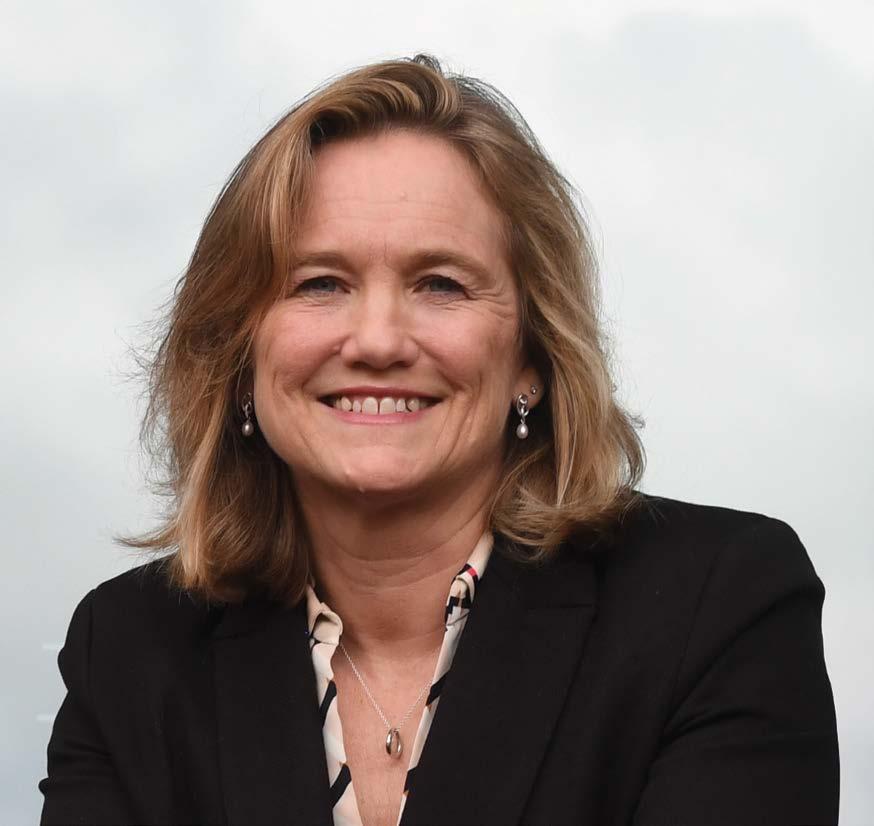
From the lacrosse pitches of St Swithun’s to the boardrooms of elite sport, Juliet Slot has built a remarkable career. Now chief commercial officer at Arsenal Football Club, she reflects on the lessons that began at school: independence of mind, self-belief and the quiet confidence that nothing should stand in your way except yourself. Her story is one of breaking barriers, embracing challenge and leading with passion and determination.
Can you tell us a bit about your time at St Swithun’s?
I arrived at St Swithun’s as a weekly boarder in Le Roy but after a term asked to go full boarding as I was having so much fun. My strongest memories of St Swithun’s are of discovering my love and passion for playing lacrosse which led to Junior England U18 and England U21 selection, and of the lifelong
friendships I made there. Four of my friends who were in Hyde Abbey with me, and one in Earlsdown remain my closest mates.
We weren’t the best behaved and probably caused our housemistress a lot of angst, but the bonds we formed are still as strong today, some 45 years later! Weekends were spent playing matches, walking into town in the hope of meeting some Winchester boys, and filling our time talking endlessly. I did work hard and got good O levels but to be honest I was a bit of a rebel.
How do you think your education at St Swithun’s has shaped you?
My passion for history began at St Swithun’s, along with my complete lack of talent for chemistry, which I didn’t even take at O level! I went on to study history at Bristol and still love it today; I’ve always
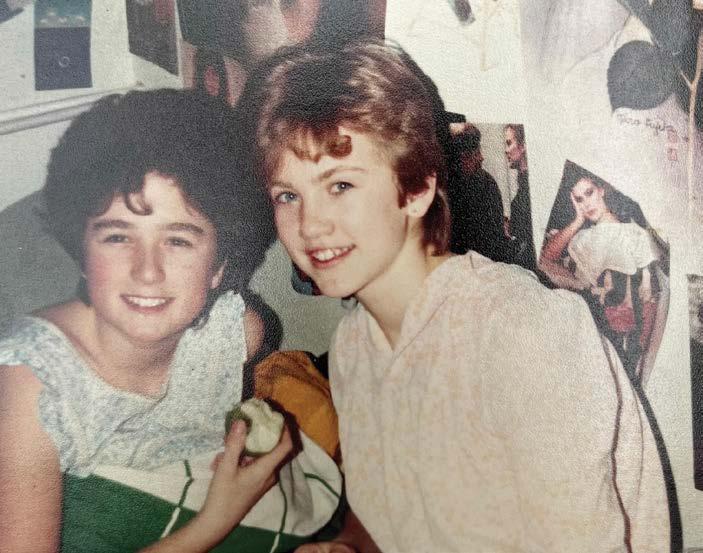
1980 / 1981 - Tania Hull née Howlett (HA 1986) and me in my Hyde Abbey cubicle
been fascinated by how events repeat themselves and how little we seem to learn as humans. Studying history instilled in me a curiosity and the ability to take in vast amounts of information, distil it, and shape it into a clear narrative and opinion, a skill I still use every day at work.
Many of my teachers encouraged me to believe in myself and be the best that I could be. The education I received at St Swithun’s gave me the foundation for everything that followed: my A levels and university achievements.
I have such fond memories of the school and when I dig deep into my memory bank, I can see how much of who I am today was shaped there: independence of mind, the self-belief, and the sense that as women, we could achieve anything. We all believed that nothing stood in our way, except ourselves, which is something I remind myself of even today.
What inspired you to pursue a career in sports marketing, communications and strategy, and how did your journey begin?
In my third year at university, a friend persuaded me to stand in an election for the Student Sabbatical position leading the athletic union. My campaign motto, “Don’t Forget, Vote Juliet” clearly stuck, and I won by a landslide. After graduating, I found myself sitting in an office on £6,000 per year: managing student sport with a secretary old enough to be my granny! It was my first executive experience: managing budgets, simple P&Ls and fundraising. I even landed my first sponsorship deal with Deloitte for the Student Half Marathon, pitching them access to top graduates. The buzz of that “yes” has stayed with me ever since.
When funding cuts threatened, I led a student “strike” and ended up negotiating with the vice-chancellor at 21. I loved it all and that year confirmed I wanted to work in the business of sport in any way I could. There were no grad schemes back then, so I took a job as a secretary at a sports marketing agency.
I was the worst secretary, and I thank my first boss for tolerating this ambitious nonsecretary secretary. After helping the team win a new pitch, I was promoted to account executive and sent off to run pasta parties for marathons across Europe, negotiating catering contracts, delivering activations, and managing the branding for Barilla Pasta. At one of those races, I met the marketing director of adidas international, who asked if I’d apply for a new role. At 24, I moved to Germany as marketing communications manager for running, wondering how on earth to do the job, but I was determined to figure it out. I did, learned masses, and never looked back!
Could you tell us about some of the ups and downs along your career path?
I have experienced some terrible sexism in my life: not being one of the boys, being treated differently because I was a woman. It used to knock me a great deal and make me angry. Even growing up, the boys in my family were offered roles in the family company and I was not. I think many people forget what lots of women of my generation had to push through to reach leadership roles. Happily, it’s very different now, and Arsenal has an incredible culture to work in. But for many years, being the only woman in the room was normal, being passionate was considered emotional, but for a man it was seen as being strong. Once I was even asked in an interview how I’d manage the job as a mother of three. I nearly asked him the same knowing he had three children, but it would not have done any good, so I just took it (fuming inside).
A coach later helped me channel that frustration, using empathy and persuasion to get things done. I’m still known for being direct, sometimes too much so, but that’s a work in progress.
One of my toughest experiences came after my third maternity leave at Fulham, when a new CEO questioned whether I could still do the job. Despite glowing appraisals, we parted ways. It hurt, but six months later he was gone, and I was at London 2012, having the time of my life. That taught me that setbacks can open doors to something better.
Taking a “sidestep” to London 2012 was one of my best decisions. I was filling my toolbox and expanding my network. Our small team, led by Sir Keith Mills and Lord Coe, raised over £10 million selling little more than belief: the dream of bringing the games to London. Being in Singapore when our winning bid was announced remains a career highlight and helped pave the way for my later role as a non-executive director on the British Olympic Committee, which I am immensely proud of.
Soon after, one of our sponsors invited me to become Haymarket’s first female managing director, which turned out to be the hardest two years of my career. I restructured and rebuilt the business but learned the hard way that sometimes you have to slow down to go faster.
Joining Ascot as its first Commercial Director was a huge high for me. I never thought
they’d employ someone who knew nothing about racing. The night before I started, I told my husband I couldn’t do it; he reminded me I’d said that before and always found a way. I stayed eight years, helped transform the brand, and fell completely in love with racing. Today, as a non-executive director at Newbury, I am thrilled to stay connected to the sport.
My latest career highlight began with a phone call from Arsenal. I’d left Ascot to care for my parents and was considering consulting when the call, from Vinai [Venkatesham], gave me that buzz I loved about a commercial challenge. Post-Covid, Arsenal was commercially challenged but full of potential, a sleeping giant. The chance to shape a new commercial strategy was something I couldn’t turn down. Three and a half years later, every revenue and profit line has grown, but most exciting for me is how the club embraces putting the supporter at the heart of all we do. We’re just at the start of that journey and I love it.
What is the best and or worst advice you were ever given and what was the impact?
My best advice was from a friend who told me to enjoy my success rather than rushing onto the next
thing. At the time I did not listen but now if I have something really great happen, I am always careful to take some time to reflect and feel good. It is really important and we often forget to do that.
My worst advice was agreeing to not speak up when I was in an uncomfortable position. I regret not pursuing my complaint, because I am sure I would not have been the only person with the same experience. I was told I would be the loser in the situation as the person was so senior. The decision not to do something still rankles with me. My advice is always speak up for yourself, find the right person to talk to. If you get advice from someone that doesn’t sit right, talk to someone else.
Can you think of any particularly difficult or useful lessons you have learned along the way that you would like to pass on to the next generation of OGs?
My best advice to anyone starting a career is to build your network, but don’t just look up, look sideways. Your peers will grow alongside you, and that network will become very important. And don’t only reach out when you “need something” – nurture it and offer help where you can. I call it “reciprocal networking”
For women, my advice is that you can have a career and be a fantastic mum, but you can’t be perfect. Accept that some things won’t always go to plan. Having an equal partner makes all the difference. My husband and I both have demanding careers, but we’ve also worked hard to be great parents. We couldn’t do it alone, so we invested in consistent childcare, which was hugely expensive, but it gave our family stability. Our kids are proud of us, and while we may have missed the odd school event or bit of homework, there was always someone there for them, a nanny or amazing grandparents. Having that strong network around us allowed us to thrive both professionally and as parents. I’m grateful for it, and proud that we’ve achieved both. That’s my message to every woman: you really can be what you want to be, in your career and as a mother.
What does a typical workday look like for you as Chief Commercial Officer of Arsenal?
Every day is different as the roller-coaster of each football season is very intense. We have games most weekends, midweek matches, as well as European and international travel.
Even so, my week has structure. I manage a team of nearly 300 people, so I rely on my direct reports and spend plenty of time with them, my executive colleagues and other stakeholders. There are always strategy meetings, creative reviews and reports to digest – my history training comes in full force daily!
I try to coach my teams to find their own answers but also know when I need to step in and make the call.
My remit at Arsenal is broad, covering the brand, the content across all our channels, and of course the revenue from partnerships, retail, venue, licensing and membership. I work closely with our brilliant finance partners to keep a firm grip on costs, because driving revenue is one thing, but managing what goes out is just as important.
What is your favourite and/or most challenging part of what you do?
I still love landing the big deals. My team handles most of the work on our global partnerships, but I’m often the one who brings in the client or is approached through my network, so I stay closely involved. For major partnerships like Emirates, adidas, Sobha, and Visit Rwanda, I will sit very much in the centre of those deals as they are so important. I also love being part of building, protecting and promoting our brand, staying close to the creative content, and driving our commercial strategy forward.
The biggest challenge is bringing everyone with me. I like to move fast, but sometimes I need to slow down to reach the best outcome. I’m lucky to work with an incredible executive team who share the same vision for the club and aren’t afraid to tell me when I’m pushing too hard or too fast. That dynamic makes for a brilliant working environment, and I’m hugely grateful for it. ■
Bramston Foundation Update
Will Beardmore-Gray
It has been a busy year for the Bramston Foundation. We have been undertaking the formal and administrative transition into becoming a Charitable Incorporated Organisation (CIO), which is overseen by the trustee board.
As trustees, it is important that we understand the vision which Jane Gandee and Liz Norris have shared with us for both schools. Meeting with members of the Senior Leadership Team (SLT) gives us valuable insight into their work, so that we can best support the schools in fulfilling their objectives.
The Bramston Foundation is now able to receive donations for both the established transformational bursary programme and the new building project, Building Active Lives at St Swithun’s to improve indoor sports spaces and active wellbeing for everyone. Once built, the new facilities will be shared as part of our state school partnership programme with local schools, residents and various community and amateur sports clubs, which provides a wider impact beyond just St Swithun’s students and will provide hireable facilities, that can benefit all types of activities.
As well as chairing the trustees, I also chair a small group of dedicated parents who have pledged their support and are keen to see this project achieved in full. They are committed, as am I, to inspire other parents to help provide St Swithun’s girls with the best facilities we can. However, current parents aren’t going to be able to fund this entirely on their own.
Whilst there is never a good time to be raising £2m for the first phase of a vital building project, doing so against the backdrop of VAT on fees and the wider economic pressures affecting us all makes this fundraising additionally challenging. Yet, if we wait,
construction costs will only continue to rise. So, the school and the Foundation are being bold and hoping that the whole school community will lend a hand to help realise both building phases.
Like Jane, I very much hope that St Swithun’s alumnae will help us smash some philanthropic glass ceilings through their support. So many women, often celebrated by the school, have gone on to achieve successful careers and financial security for themselves. Your gift could help inspire others to follow suit. Or perhaps you could lead a syndicate of women from your year group to undertake a fundraising challenge or pool a friendship group of donations to help us?
Investing in a wonderful school like St Swithun’s provides so much reward and I promise you there will be some fun to be had along the way.
I believe that, in these more challenging times for independent schools, we must all do what we can to protect St Swithun’s and the values that it instils for the next generation and beyond. Sports and physical activity provide an excellent foundation for developing key skills that every individual needs in life, both personally and professionally.
Therefore, please consider helping the trustees and me at the Bramston Foundation in supporting this project. We believe in the power of community.
To find out more and see some images of the proposed buildings and the new spaces they will create, please, visit pages 32 and 33 or use the following link: https://hub.stswithuns.com/ activelivesproject

A Memorable Visit to Hong Kong and Singapore
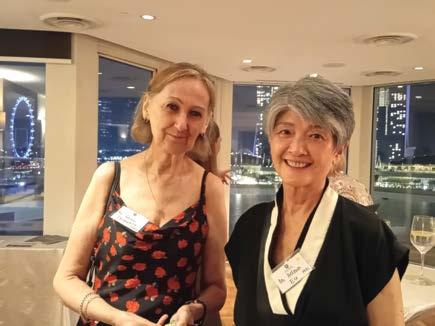
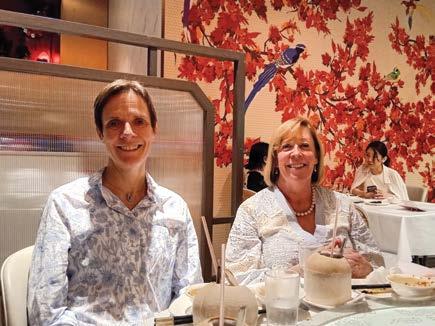
In April 2025, headmistress Jane Gandee, chair of the school council, Alison McClure and the OGA team, embarked on a memorable trip to Hong Kong and Singapore. The trip, inspired by celebrations of St Swithun’s 140th anniversary, highlighted the enduring strength and global reach of our Old Girls’ network. The visit was filled with warmth, inspiration and shared stories – each one a testament to the lifelong connections formed at St Swithun’s.
Hong Kong Highlights
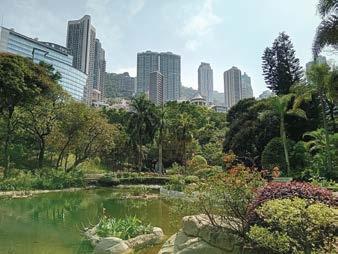
Our time in Hong Kong included three vibrant events, beginning with a traditional British afternoon tea reception at The Mandarin Oriental on Sunday 6th April. This much-anticipated gathering quickly reached full capacity and welcomed families from across the community. It was a joy to see new friendships forming and longstanding bonds rekindled.
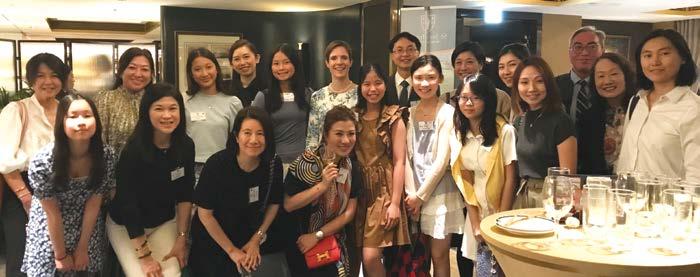
The following day, we hosted an OGA cocktail reception at The Hari Hotel in Wan Chai, where former and current students and parents came together for an evening brimming with nostalgia, laughter and reconnection.
Our final Hong Kong event took place at The Hong Kong Bankers Club, bringing together a dynamic mix of alumnae, current families, and new families who were set

to join the school in September 2025. A highlight of the evening was hearing from Mandy Lui (ED 2001), Head of Greater China Wealth and an affiliate board member for BlackRock in Hong Kong. Mandy generously shared her career insights and reflected on how the lessons she learned at St Swithun’s helped shape her collaborative approach and professional success.
Singapore Connections
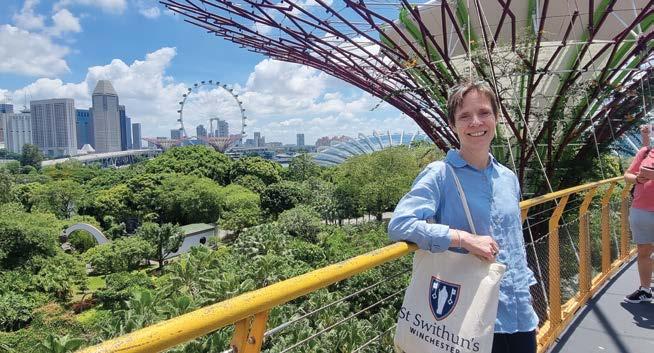
From Hong Kong, we travelled to Singapore, where we hosted a rooftop OGA cocktail reception at The Lighthouse, atop the iconic Fullerton Hotel. With panoramic views of the Marina Bay skyline – first by day and later illuminated by the city’s spectacular light show – it was an unforgettable evening. We were thrilled to welcome former students spanning five decades, from the class of 1971 to recent graduates.
Our final event took place at The Tanglin Club, where we were honoured to hear from guest speaker Angela Campbell-Noë (HC 1982), Senior Managing Director and Chief Client Strategy Officer, Asia Pacific, at global consultancy Teneo. Angela shared inspiring reflections on how her time at St Swithun’s laid the foundation for her studies at Oxford and her impressive career in business, strategy and communications.
A Global Community
This special trip was a powerful reminder of the ties that bind our community – across continents, careers and generations. We extend our heartfelt thanks to everyone who joined us. Your warmth, generosity and hospitality made this visit truly special.
We look forward to many more international reunions in the years to come. If you weren’t able to join us this time, we hope to see you at a future OGA event. And if you’d like to organise a reunion for your class, year group, or a multi-year gathering in your region, please get in touch via oga@stswithuns.com.

School News
St Swithun’s celebrates impressive academic results
This year we celebrated record outcomes at both GCSE and A level, including our highest percentage of A*/A grades at A level since 2014 and third-highest of 9/8/A* grades at I/GCSE since 2012. Compared with national results for girls, the 2025 U6 leavers achieved nearly four times the national A* figure and three times the A*/A percentage. At GCSE the 2025 U5 cohort
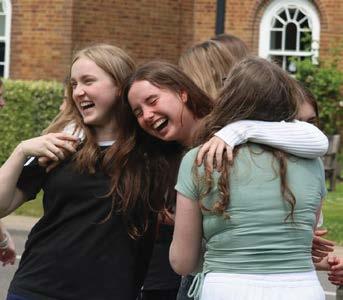
earned 36% grade 9 and 60% 9/8/A*, far above national figures of 5% and 13% respectively.
GCSE Results
37% of grades were Grade 9, an uplift of 7% on the previous year and 60% of grades were 9/8/A* with 77% being 7/A and above. 56% of the cohort earned six or more 9/8/A* grades and over a quarter of the year group gained nine or more 9/8/A* grades. 11 students achieved straight 9/8/A* grades, three of whom gained all 9s.
A level Results
35% of all grades were A*, which is the school’s highest ever amount of A*s. 71% of the grades were A*/A while 91% received A*-B. Just under two-thirds of the year (65%) earned grades AAA and above, while 17% of the year group achieved three or more A* grades.
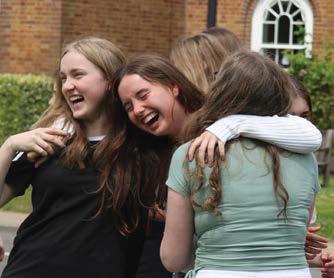
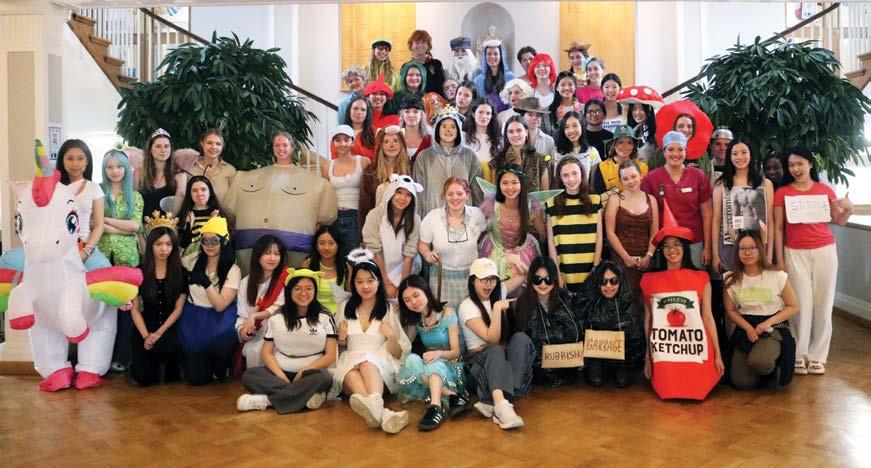
Students celebrating their achievements. Well done to all students for their exceptional results!
Grandparents’ Day at the Prep School
Despite the blustery weather outside, the Prep School was filled with warmth and joy as we welcomed grandparents for a special celebration of Grandparents’ Day. The children delighted in giving their grandparents a tour of their classrooms, sharing their learning and school life. The afternoon concluded with a delicious afternoon tea, enjoyed by all.
Mr Patrick O’Keefe reflected that, “It was a very nice opportunity to see Charlotte’s school and classrooms which all were very impressive. The tea was particularly appreciated and I was given some candid comments about the school. I really enjoyed my afternoon at St Swithun’s.”
It was a wonderful occasion to celebrate the important role grandparents play in the
lives of our youngest students, and we thank everyone who joined us for making the day so memorable!
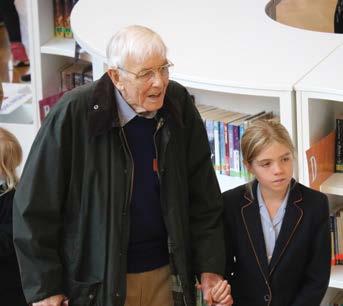
Mr O’Keefe with his granddaughter, Charlotte
Outdoor Explorers – best experiential learning
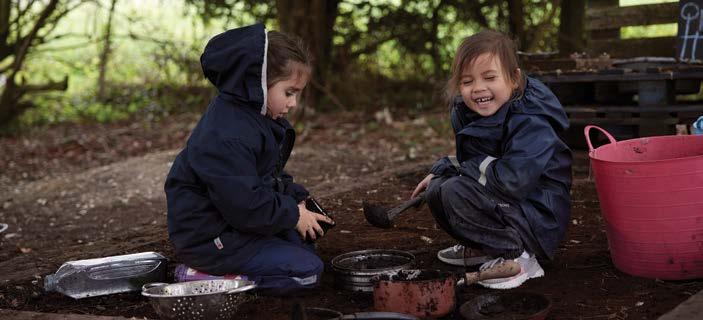
St Swithun’s Prep School’s Outdoor Explorers programme has been ‘highly commended’ in the Muddy Stilettos Best Schools Award for Best Experiential Learning. We are very proud of our unique Outdoor Explorers programme, and it has become an integral part of the St Swithun’s Prep School experience. Our beautiful campus and purpose-built outdoor learning setting provides the perfect place for children to engage with nature and learn beyond the classroom. This muchloved part of school life gives our pupils the
chance to learn through hands-on discovery, developing teamwork, problem-solving and environmental awareness along the way.
Head of outdoor learning, Caroline Albin, says: “In Outdoor Explorers sessions, pupils are not only developing knowledge and skills that enrich their learning across the curriculum. They learn to problem solve, work as a team and connect with the natural world, and we see them return to the classroom happier and more engaged.”
Hong Kong meet-up for new and returning students and families
Caffè Luna in the Aberdeen Marina Club of Hong Kong was the venue for a summer gathering of new and returning St Swithun’s students and families. It was a chance to reconnect and to begin forming friendships ahead of the girls’ boarding journey at the school.
Current St Swithun’s parents, Alan and Shirley Yeoh, planned this warm welcome, creating an ideal opportunity for students and parents to meet before the new school year. Returning students shared their positive first year experiences, offering guidance and reassurance to those joining for the first time. This mentoring spirit helped our new students feel supported and inspired, while beginning to build their own pathway into the community. Hearing directly from other girls who have navigated the same transition laid the foundation for a strong sense
of belonging within the wider St Swithun’s community. Our grateful thanks to Alan and Shirley for this positive and valuable initiative.
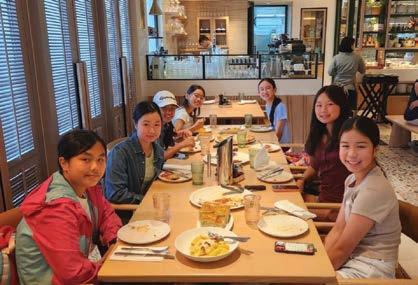
New and returning students meeting for lunch in Hong Kong
Prep children enjoying outdoor learning
A year of sporting highlights
This has been quite a sporting year, one to remember for St Swithun’s sport. Across pitches, courts and fields, our students have shown exceptional talent, spirit and determination that lie at the heart of our sporting vision: that every child leaves St Swithun’s seeing sport and exercise as an important lifelong part of who they are.
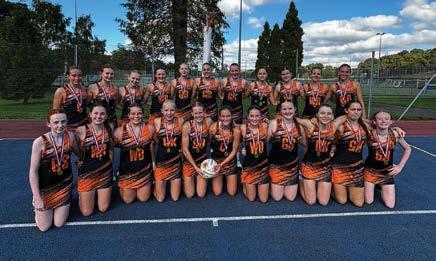
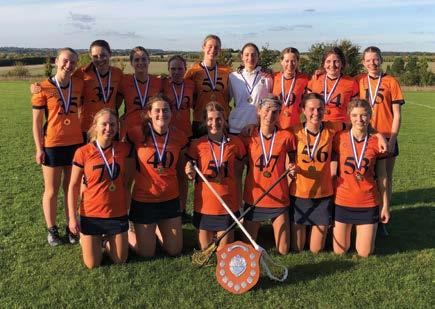
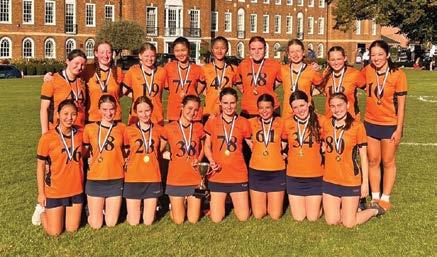
Lacrosse led the way, with the 3rd team crowned National Champions, and the 1st, 2nd, U15A, and U13A teams sweeping the board as South West Rally Champions. These victories speak volumes about the depth of talent and their collective drive.
Our netball teams continued to impress, combining precision and grit to achieve a string of outstanding results. The U14A team were named County Champions, while the U16A team delivered a standout season to become County and Regional Champions, finishing a commendable 5th at the Nationals.
Cricket rounded off a stellar sporting year, with the U13A team securing County and South West Regional titles before placing 4th nationally, and the U15A team claiming an impressive 2nd at the Nationals.
These achievements embody our mission to provide the best opportunities, experiences and support, inspiring every student to believe in their own sporting journey, one that will continue long after they leave St Swithun’s.
We are looking forward to building on these successes in the next academic year!
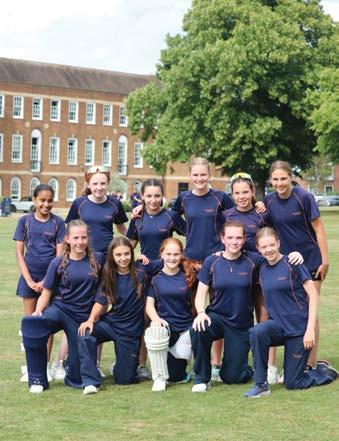
Cricket team
Lacrosse 1st team champions
U14 and U16 netball county champions
Lacrosse 2nd team champions
St Swithun’s Wellbeing and Grit Festival: fostering wellbeing in young people
This past summer, St Swithun’s hosted its very first Wellbeing and Grit Festival, a day dedicated to mental health, mindfulness and resilience. The school was transformed into a festival space focused on personal growth and community spirit.
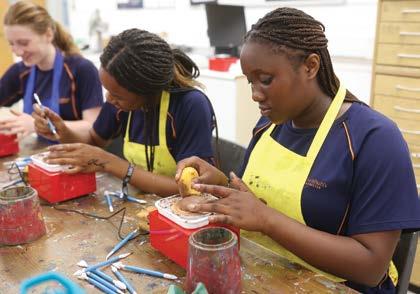
With inspiring guest speakers, including pop star and author Will Young and rising band The Entitled Sons, there were also a wide range of hands-on activities from yoga, pottery and African drumming to Swithrox, a challenging mix of running and workouts, and even alpaca walking! The event encouraged students to explore new perspectives and build inner strength.
Dr Helen O’Connor, St Swithun’s clinical psychologist and festival organiser, explained, “The main aim for the day was to find opportunities for the students to focus on their wellbeing and to put themselves in situations that they may not normally have tried.”
Headmistress Jane Gandee reflected, “Wellbeing is the foundation of success. Girls who feel supported and confident in themselves can achieve anything.”
The day offered every student the opportunity to pause, connect and grow through stories of perseverance, reflection and self-belief.
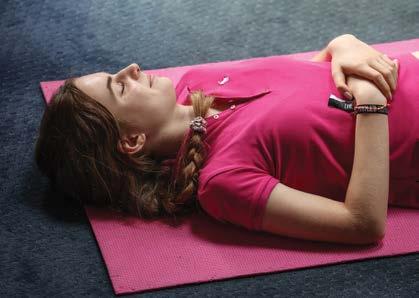
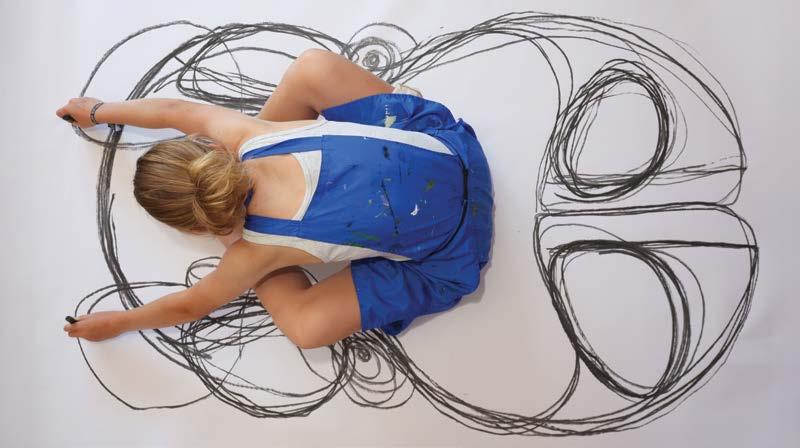
A student enjoying a quiet moment of restorative yoga
Students took part in calming activities including breathwork, perfume making and, as pictured, charcoal yoga
A few students enjoying making and decorating pottery
Spotlight On...
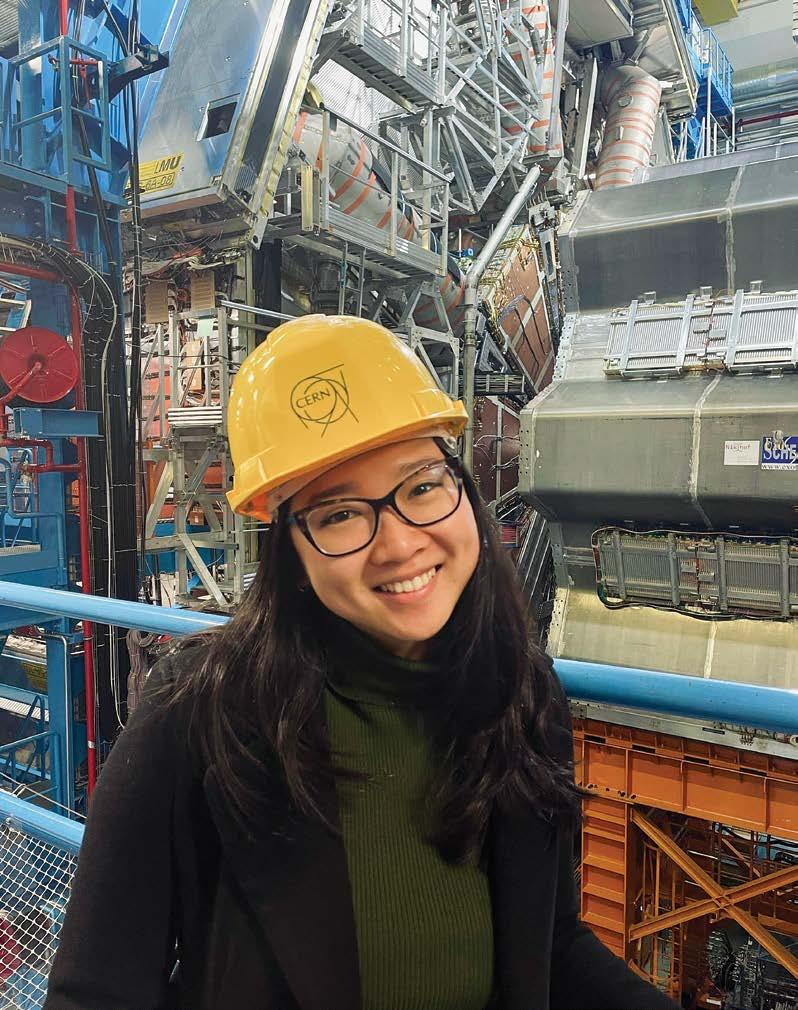
Maggie Chen (HA 2016)
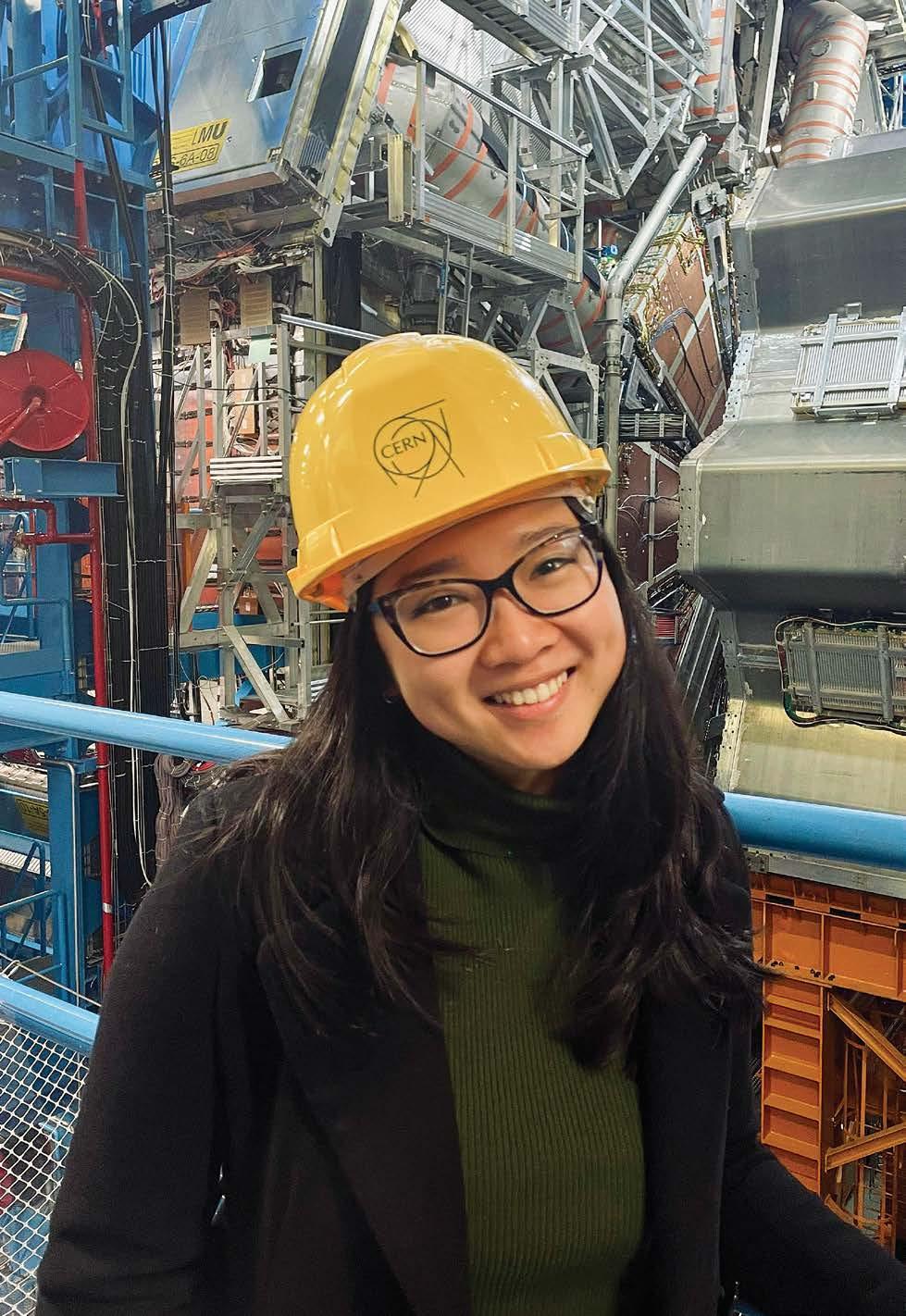
At the underground cavern of the ATLAS detector, CERN
Having recently completed her PhD in particle physics, Dr Maggie Chen is now an AI researcher working in partnership with the European Space Agency developing advanced machine learning tools for greenhouse gas detection onboard satellites.
Maggie relishes the independence that comes from research work. “I love the freedom to explore new ideas and really run with them,” she says. “My working hours are flexible too, which suits me well. I’m a keen traveller and like to take my work with me. When I worked at CERN, my day started with some reading before work as I found it important to not think about work first thing in the morning. Then I usually had a few meetings with my collaborators, and a few hours of coding as my research largely involved analysing data from the Large Hadron Collider. I would often grab lunch and coffee with colleagues to break up the work day, and I sometimes went for a cycle in the forest nearby to get some fresh air. In the evening, I enjoyed cooking dinner and catching up with friends. I hit the bouldering gym three times a week too.
“So, what is it about particle physics that attracts her so strongly? “I am deeply driven to pursue a path that is fulfilling, both in its process and in its end goals. Particle physics attempts to answer some of the most fundamental questions about the Universe, and the machine learning methods I develop also have tangible benefits. Right now, I’m applying them to detect greenhouse gases from space. Every day, I feel I’m making a positive impact on the planet, both in the short term and the long term.”
Maggie admits that her career aspirations took time to define and shifted frequently as a teenager. Concert pianist! Genetic biologist! Theatre production manager! “Not all at once, of course! Everything (at St Swithun’s) felt new and exciting: I was
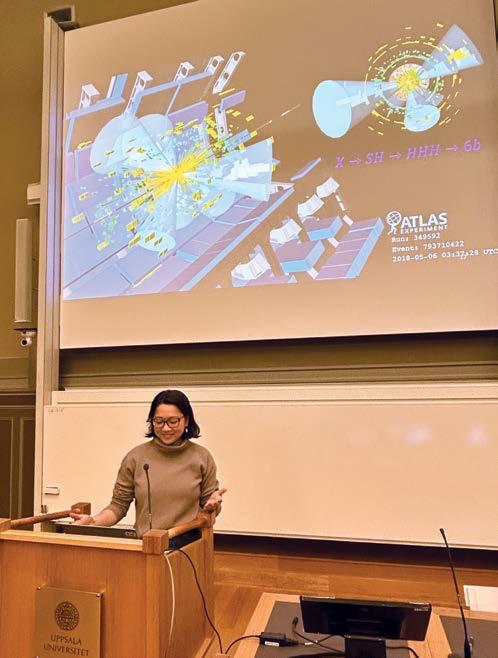
Presenting results from the search for triple Higgs boson production at the Higgs2024 Conference, University of Uppsala, Sweden
exploring, and I later learnt that the beginning of a journey did not necessarily start at choosing which degree to study at university. Even though I studied physics, I went through periods where I was unsure about a career in the subject. It took a few years of trial and error to figure out my current path, and it might still change in the future!”
Reflecting on her time at St Swithun’s, Maggie recalls the academic and intellectual freedom and encouragement she felt while exploring the subjects she was passionate about. Dr Sturton, her physics teacher, inspired her to think beyond the syllabus and to approach confusion and uncertainty not as failure but part of the path to greater understanding. One particularly vivid memory stands out: a school trip to the London Science Museum to see an exhibition on the Large Hadron Collider. The awe she felt then was profound. Could she imagine that just a decade later, she would be working at CERN?
Her strongest memories of St Swithun’s are those of discovery: learning cryptography, performing in a band, acting in school theatre productions, and staying late in classrooms discussing ideas. “Those experiences really helped shape both my personal and academic identities.”
There have been difficult times too, such as when she didn’t get accepted to the University of Oxford for her undergraduate degree. “This sounds very cliché, but it was a challenging time. However, I truly enjoyed my time at UCL instead, and in retrospect, I don’t think the Oxford way of undergraduate teaching would have suited
my learning style. The lesson I learnt was to not be so fixated on one thing.”
Completing her PhD came with its own share of highs and lows. “Working towards a singular goal for four years is no small feat, and there were many stressful deadlines, writing blocks and academic politics. But there were also some of the best times of my life so far. Working at CERN in Geneva was definitely a highlight, I truly felt part of a major human endeavour.”
Now, with her research expanding into climate and space science, Maggie feels a renewed sense of confidence and possibility. “I feel
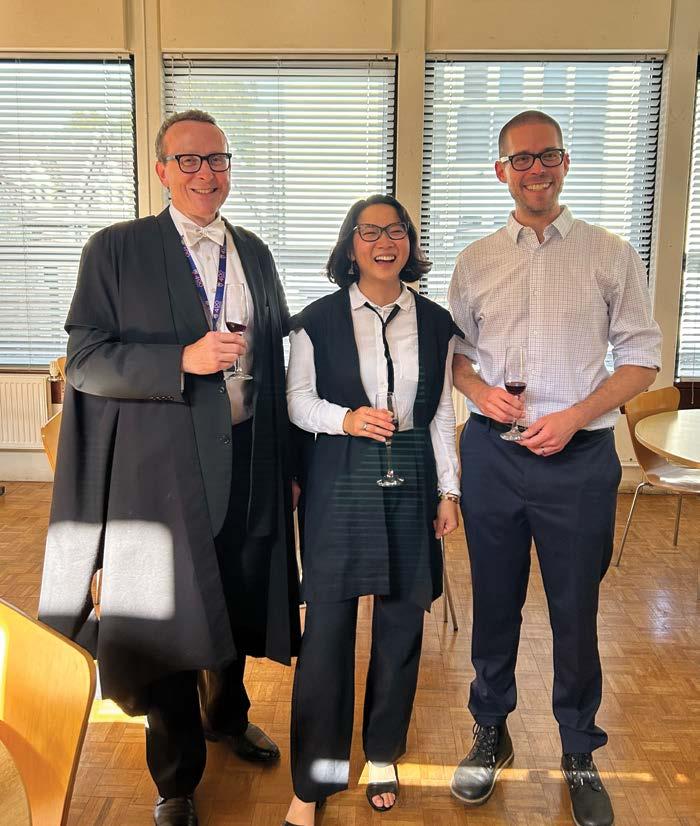
Post PhD viva with examiners, University of Oxford
more experienced as a researcher, especially after working as part of large international collaborations. But deep down, I’ll always be a particle physicist.”
When asked about advice that continues to resonate, Maggie recalls words from Dr Martin, then head of classics at St Swithun’s: “There is no right decision. Whatever decision you make, you have to make it the right one.” It’s a philosophy she carries with her still. The worst advice was the classic: “be yourself.”
“It’s so vague! How can you know who to be if you don’t yet know who you are? I think discovering yourself, making mistakes, trying different versions of who you might be is what really matters.”
That curiosity extends into her approach to life outside her work. “I remind myself that, at the end of the day, it’s just physics. That helps me not take setbacks too personally.”
Her many hobbies: climbing, cooking, making music, keep her grounded. “I’m also the designated dinner party host in my circle,” she adds. “Doing other things I love helps me keep perspective and avoid tunnel vision.”
Looking to the future, Maggie’s goal is to bridge the gap between complex science and public understanding. “I’m passionate about bringing the world of particle physics to a wider audience,” she says. “We don’t have the spectacular images of galaxies that astrophysics does, but we could do better at explaining our work at the Large Hadron Collider. As a starting point, I wrote an article for the CERN Physics Briefing, aimed at the general public, about the rare physics process I researched during my PhD.”
As she reflects on her journey from the rooms of Hyde Abbey to the underground tunnels of CERN, Maggie recognises how much she’s learnt about perspective: “If I could change
one thing about my time at school,” she says, “I would have done less. Leaving time to think, reflect, and let your mind wander is important. Burnout at school is real.”
It’s a thoughtful conclusion from someone who so clearly made the most of her time at St Swithun’s, carrying its ethos of intellectual curiosity into a wider world. Yet, as Maggie reflects, it isn’t about how much she did or achieved, but about the value of exploration itself. “What matters most,” she says, “is trying out different things, rather than focusing on quantity or outcomes.” That’s how you can discover what truly inspires you. ■
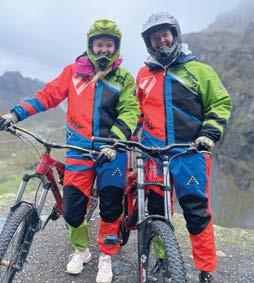
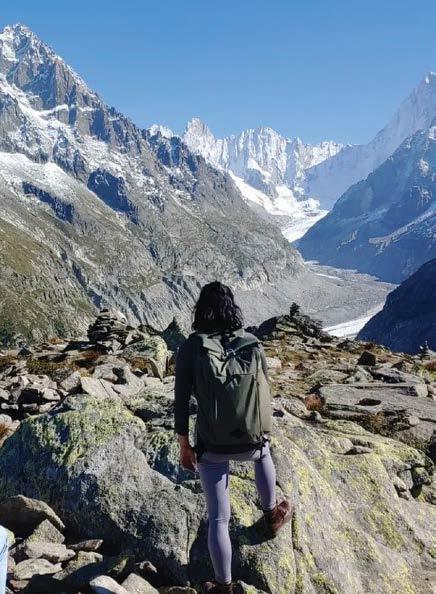
On a hike in Chamonix, France
All former students & staff are warmly invited to
Old Girls’ Day 2026
on Saturday 12th September 2026
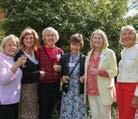
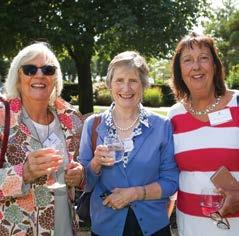
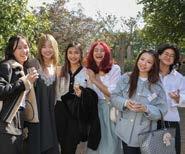
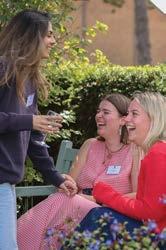
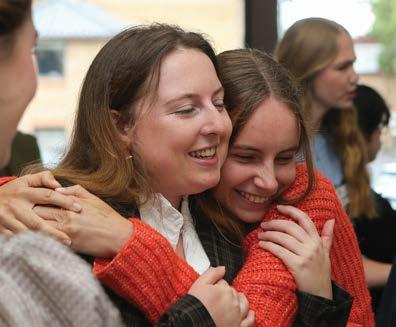
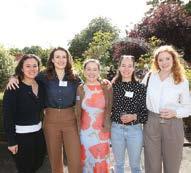
We would particularly love to see St Swithun’s leavers from the classes of 2021, 2016, 2001 and 1976 to celebrate your five, ten, 25 and 50 year anniversaries.
The day will offer opportunities to tour the school with current students, see material from the school archive and enjoy a delicious sit-down lunch.
If you are interested in coming, or gathering a group of your contemporaries from school, please let us know by emailing oga@stswithuns.com or call us on 01962 835782.

Upcoming Events
Old Girls, former members of staff and former parents are warmly invited to our forthcoming programme of events:
Wednesday 4th February 7pm Music Scholars and Exhibitioners’ concert, Harvey Hall
Sunday 8th February 6.30pm Confirmation service, Winchester Cathedral
Tuesday 3rd March 1pm Music Scholars’ lunchtime recital, Romsey Abbey
Friday 6th March 7.30pm Spring concert, Harvey Hall
Wednesday 11th March 7.30pm Cabaret evening, Harvey Hall
Wednesday 18th March 7pm Swithun’s Live!, Harvey Hall
Wednesday 29th April 7pm Founders’ Day concert, Harvey Hall
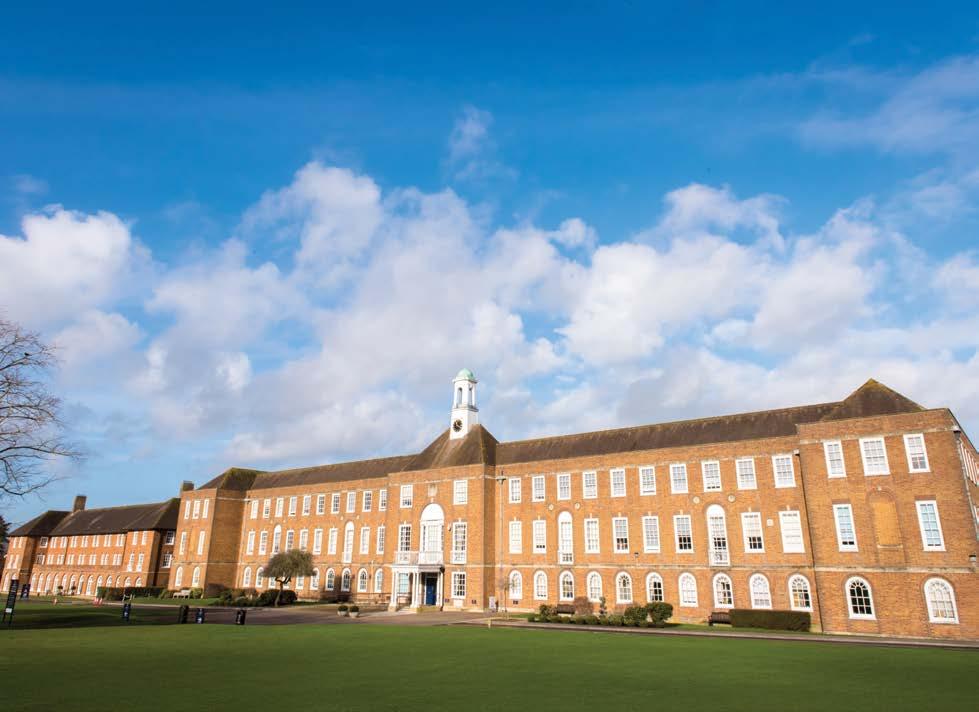
Wednesday 13th May 7pm Music Scholars and Exhibitioners’ concert, Harvey Hall
Saturday 20th June 9am Summer senior school open day (prospective families)
Wednesday 1st July All day St Swithun’s Challenge, St Swithun’s School
Thursday 9th July 2.30pm Valedictory service, Winchester Cathedral
Saturday 12th September 11am Old Girls Day, St Swithun’s School
Saturday 3rd October 9am Autumn senior school open day (prospective families)
Sunday 29th November 6.30pm Advent service, Winchester Cathedral
Spotlight On...
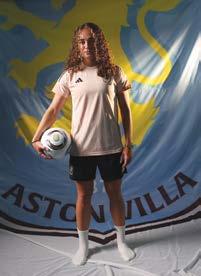
Lucia Kendall (M 2022)
From the cricket pitch to football stadiums: Lucia Kendall’s journey to the Women’s Super League (WSL) and Lionesses.
When Lucia walked onto the pitch at the Emirates Stadium earlier this season, starting for Aston Villa against Arsenal, it marked a milestone in a journey defined by talent, determination and some difficult choices. For Lucia, now a rising star in the Women’s Super League, the past year has been one of big changes and even bigger opportunities.
“It’s been a big step moving away from home and into a new team,” Lucia reflects. “But I knew it would help me develop both as a player and as a person. I’ve been enjoying the challenge and can feel myself growing all the time.”
Lucia’s path to professional football wasn’t straightforward. For much of her teenage life, she balanced two sports at an elite level: cricket and football. She represented England in age-group cricket while also making strides with Southampton FC. “It wasn’t an easy
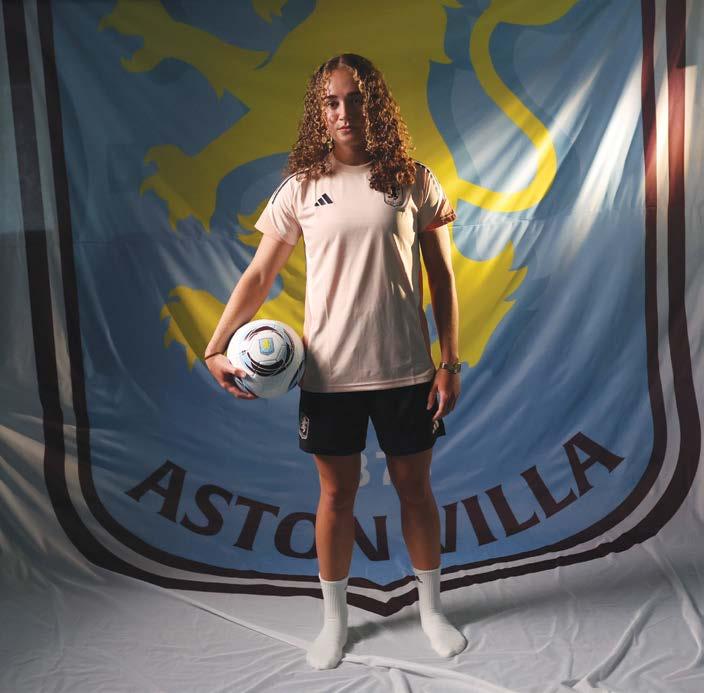
Special moment for Lucia as she signs for Aston Villa
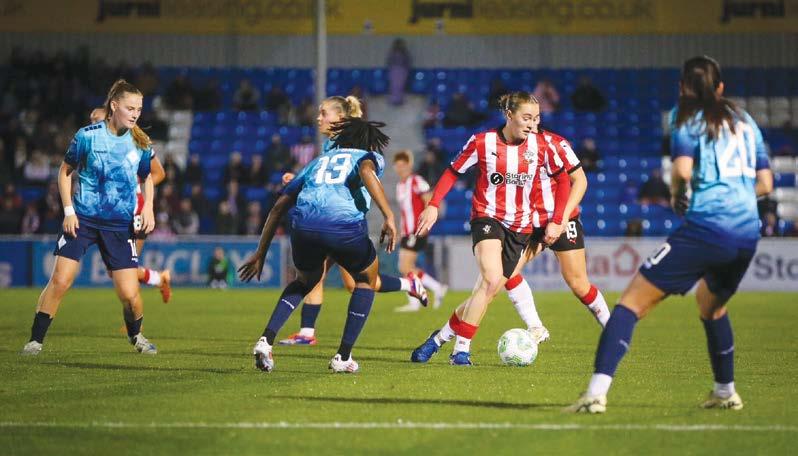
Lucia previously played for Southampton FC
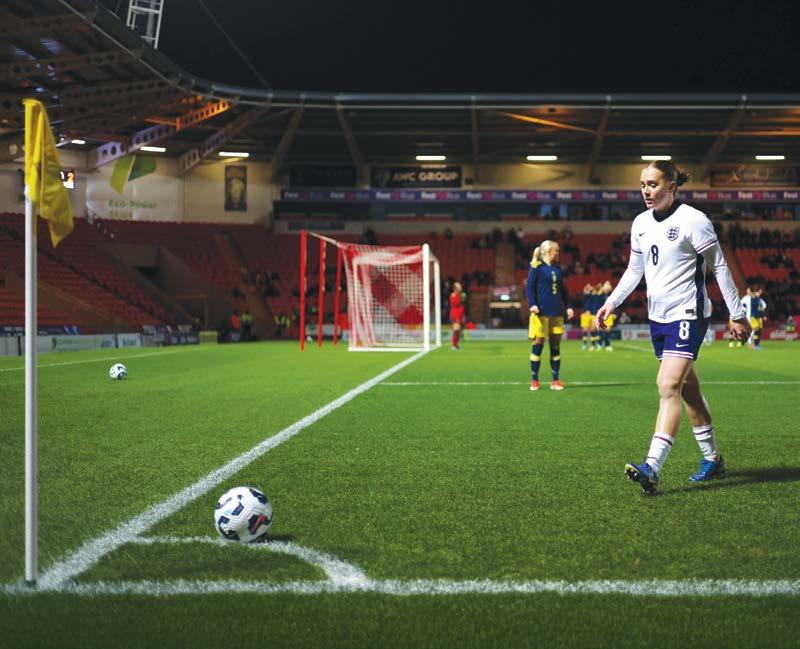
Playing for the England under-23 team
decision,” she admits. “For a long time, I thought I’d carry on with cricket. But by 16, I realised I had to choose. I was enjoying football more and was breaking into the first team at Southampton, so that was the moment I committed.”
It proved to be the right call. After progressing through Southampton’s system, Lucia attracted interest from Aston Villa last summer. “They were really forthcoming, and it was clear they wanted me there – not just for now but for the long term,” she says. “That made the decision a no-brainer.”
Life in Birmingham is very different from her rural upbringing. Lucia now lives in the city centre, away from family and the school friends who mostly headed to university. “Of course it’s been a big change,” she admits. “But the team has been really welcoming and I’ve had a lot of support.”
Her week is structured around training –“we’re usually in from nine till three, with meetings, gym sessions and time on the pitch” – and fixtures, which mostly fall on Sundays. Alongside this demanding schedule, she has found time to pursue a degree in psychology with the Open University. “It’s been good to have something outside football to focus on,” she says. “The game can be consuming, so studying helps me switch off and keep

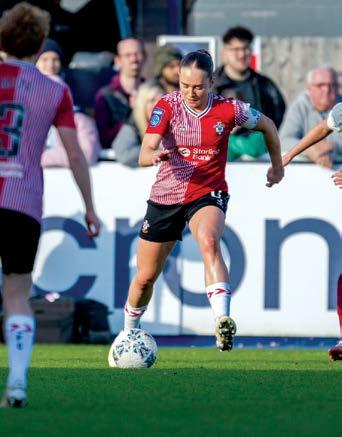
Lucia captaining Southampton
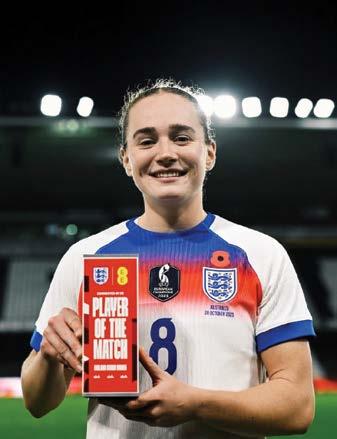
Lucia receiving player of the match at her debut for the Lionesses
a balance.” She makes sure that she stays connected with friends and family whenever she can and has recently rediscovered the joy of playing the piano as a way to unwind.
The women’s game itself is evolving rapidly, something Lucia has been glad to experience first-hand. “Everyone in the top two leagues is now on a full-time wage, and there’s a minimum salary in place. It’s exciting to see how much the game has grown, and it’s only getting better.”
International recognition remains another key ambition for Lucia. Having previously been called up to England’s under-23 camps, she had her sights set on taking the next step in the coming years. That next step came sooner than expected: this October, she was selected for the Lionesses squad to play against Brazil and Australia, an extraordinary achievement and a testament to her hard work and talent.
“The ultimate dream is to play for England
at a World Cup or European Championship,” she says, and with her recent call-up, that dream looks to be within her grasp.
Looking back, she credits her school with supporting her ambitions during those formative years. “They were brilliant with me,” she remembers. “They understood the demands of training and camps, and I don’t think I would have been able to get here without that flexibility.”
Now, as she establishes herself in the WSL, Lucia is focused on continuing her development. “For me, it’s about solidifying my place in the team, improving every week, and pushing myself to reach that next level,” she says.
Her journey is still in its early stages, yet it already reflects the determination, resilience and quiet ambition that have carried her this far. We look forward with great anticipation to watching her continue to grow in the years ahead. ■
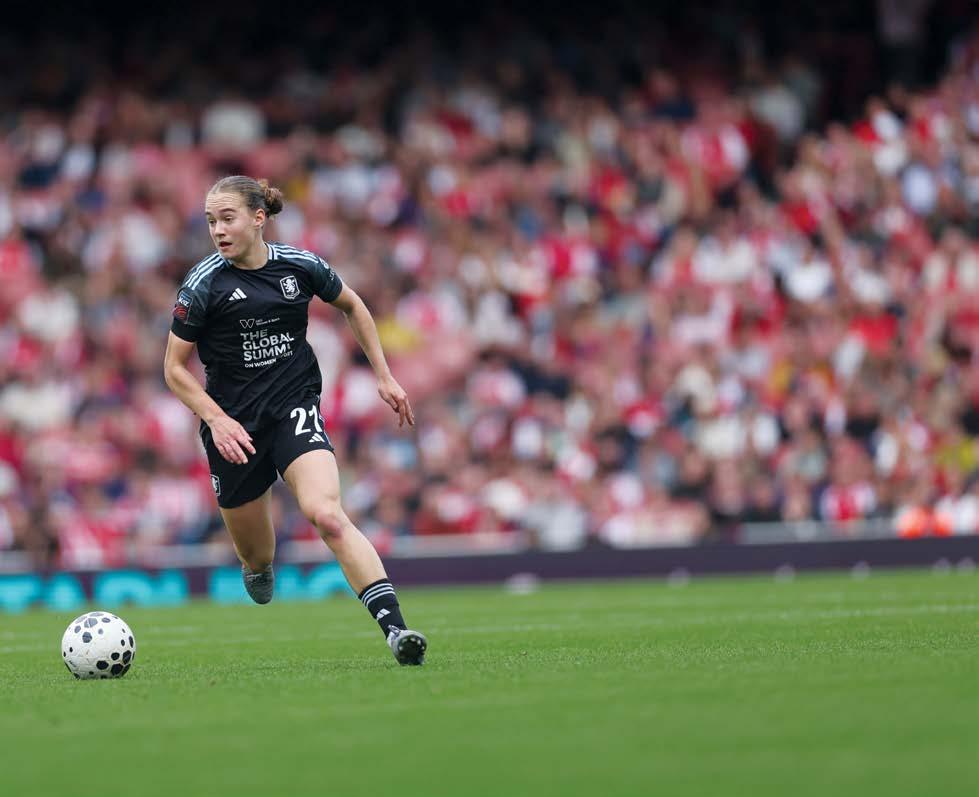
Playing her first game for Aston Villa
Building Active Lives at St Swithun’s –Our Sporting Vision
Developing Girls’ Sport and Wellbeing
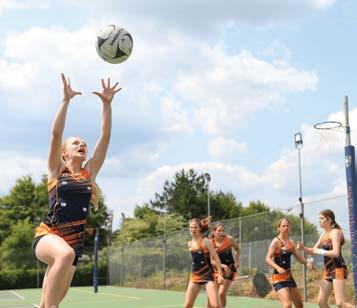
These new facilities will play a central role in supporting students to develop a lifelong love of sport and physical activity.
By extending our indoor facilities, we are giving every student greater opportunity to experience the benefits of being active: building confidence, developing self-esteem and psychological wellbeing, whatever the weather.
If we can fundraise the £2m needed by the end of the summer term 2026, we will move to the second building phase.
Building Phase 1, INDOOR COURTS
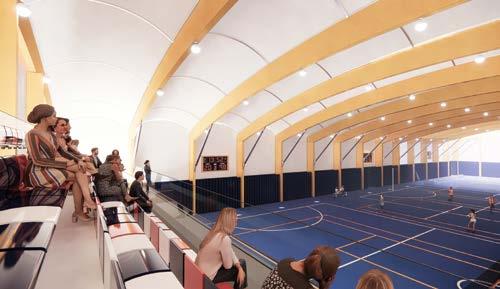
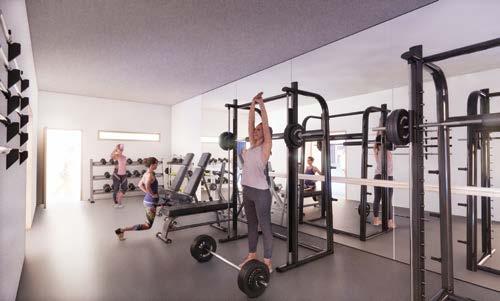
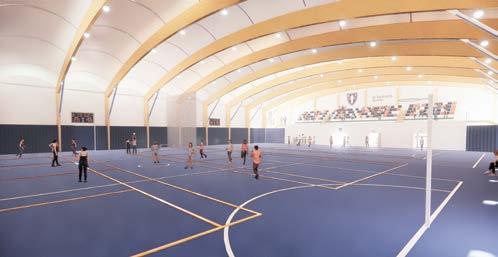
Provides the school with three indoor netball courts/four indoor tennis courts, a spectator gallery and a strength and conditioning suite, along with additional parking and a dedicated entrance from Alresford Road.
Estimated Building Cost, £5m Funding Model:
The Bramston Foundation is seeking to raise £2m+ and the School Council will provide the remaining finance.
Timeline:
Works have commenced, aiming for completion summer 2026.
Local economic impact:
We are working with a local architect firm, Ayre Chamberlain Gaunt, and a local landscape architect.
A spectator gallery for watching matches
Strength and conditioning suite
Building Phase 2, STUDIOS, GYM & CAFÉ
(Planning permission still to be sought)
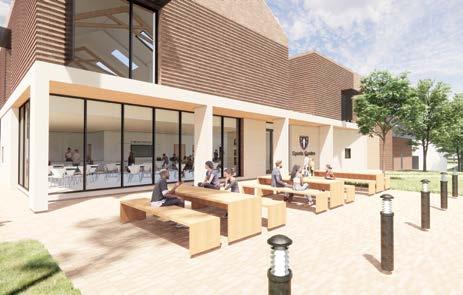
The second building provides three generous indoor studios, a gym, improved wet and new dry changing facilities and a café overlooking the school’s iconic grass pitches.
Estimated Building Cost, circa £10m Funding Model:
The Bramston Foundation will be looking to raise in excess of £3m to support the School Council with the costs of the second building phase. The rest of the costs will be financed by the school.
Timeline:
Planning permission to be applied for. Circa 2-3 years from breaking ground.
Local economic impact:
We will be working with the same local architect and wherever possible, local contractors will be used.
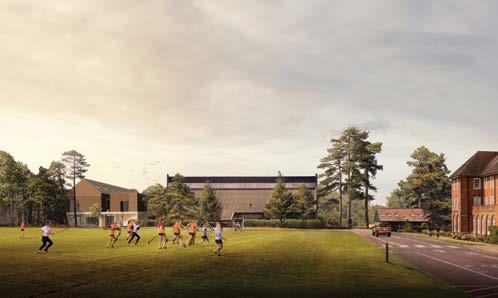
CGI images of the building, which will attach on to the swimming pool
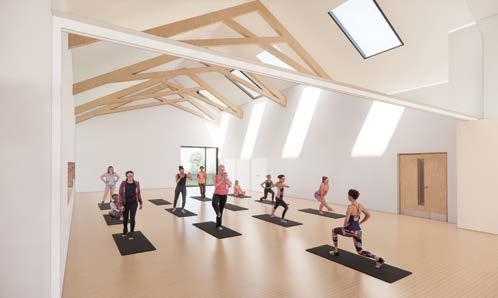
wider variety of activities to be programmed
Acknowledgements
Our thanks to those who have already supported this exciting project, including those who wish to remain anonymous.
Sophie and William Beardmore-Gray
Bella Feuchtwanger Traubkatzova
Sylvia, Countess of Limerick CBE
Philippa and Steven Petrow
The David and Jennifer Sieff Charitable Trust
The Vrana Family
Noemi and Jeremy Wall
Members of St Swithun’s School Council
Learn more, here:
Who will benefit?
The new facilities will benefit St Swithun’s students and staff. Through St Swithun’s Letting Company, the spaces will be available for hire by local sports clubs, leisure members, holiday camps and extracurricular programmes, as well as private hirers. In addition, the school’s state school partnership programme, along with local swimming groups and families will also benefit. Alumnae will be able to use these spaces at a discounted rate

A
Your Confessions
Earlier this year, we invited our alumnae to share their funniest and most mischievous memories from their time at St Swithun’s, all shared anonymously. Here are just a few of the tales you sent in:
Once in our German class we set an alarm clock that sounded like the school bell and when it went off we all just got up and left the poor teacher. I’ve always felt bad about that.
Upper 5 muck-up day was always a bit chaotic, but one year someone managed to sneak an alarm clock under the Harvey Hall stage. Right in the middle of assembly, it started ringing and wouldn’t stop.
Watching Mrs Tomlinson frantically try to locate the source of the noise was comedy gold. After about five minutes of confusion, she ended up pulling apart the stage, crawling underneath, and finally emerging with the alarm clock in hand. She then gave the entire school a stern telling-off for being “so stupid and ridiculous” and made us all stay put until someone confessed. No one did. It was one of those moments that never fails to make me laugh.
I don’t imagine I will be expelled sixty-seven years after the event, so I now admit to having played truant whilst a boarder in High House in June or July 1958.
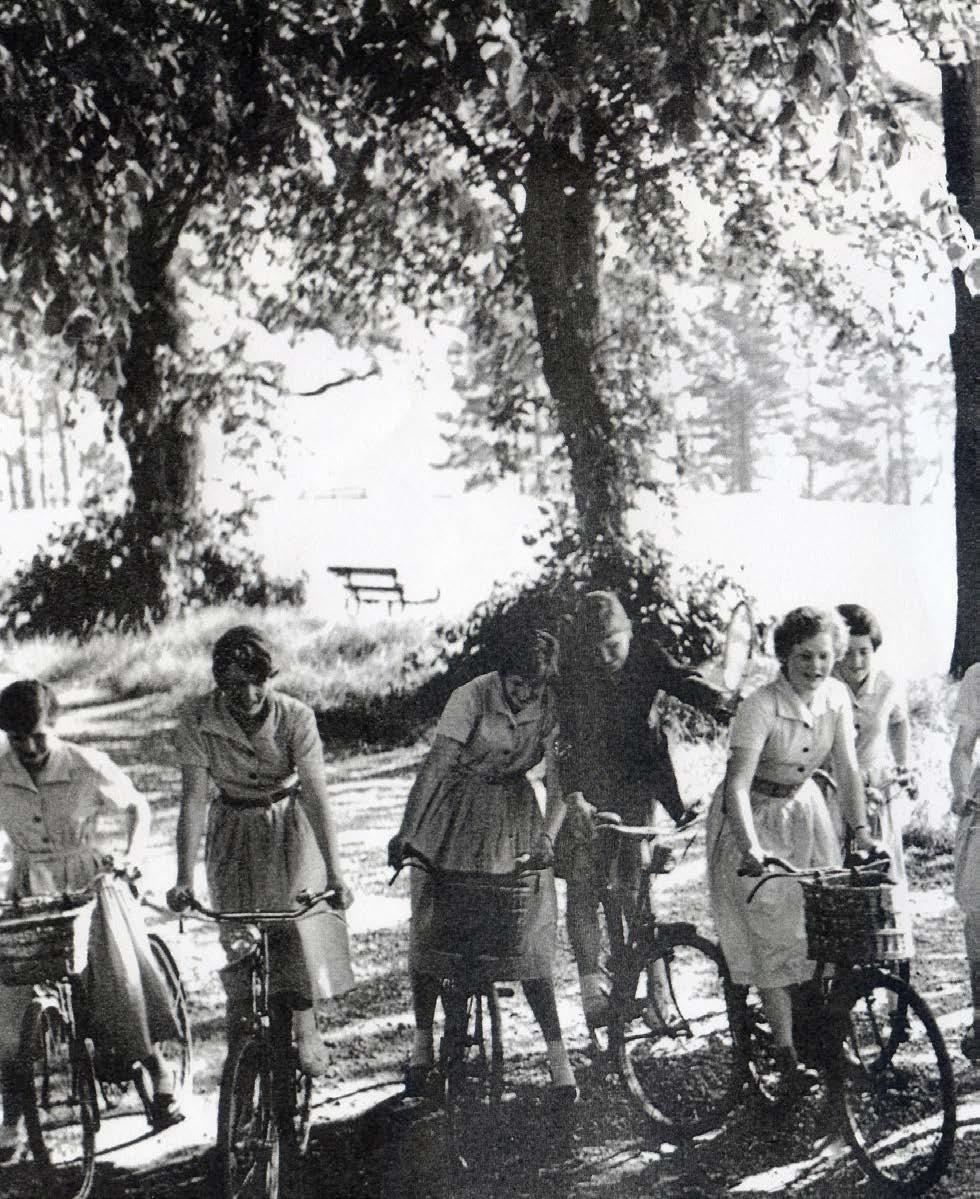
After Sunday lunch, three friends and I cycled to a pre-arranged spot on the outskirts of Winchester, where four Wykehamists collected us in an ancient Land Rover. Leaving our bicycles well hidden, the eight of us embarked upon a somewhat cosy trip to Henley-uponThames. No seat belts in those days.
We hired a boat for a cruise on the Thames. All was going well until we spotted a young couple in a punt under a willow tree. Upon closer inspection, half the couple turned out to be our young and glamorous French Mademoiselle from School, employed to help improve our French pronunciation. Needless to say, we beat a hasty retreat.
Our intrepid escorts were required to attend Chapel back at College around 6pm, so we were deposited in some woods while they fulfilled this duty. An hour later, the eight of us drove into Alresford for dinner at the pub and then returned to our original meeting place.
I have often wondered whether our sighting on the Thames was the reason for our little escapade never coming to light – until now!
Bramston Talks
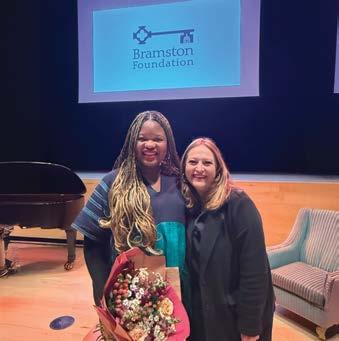
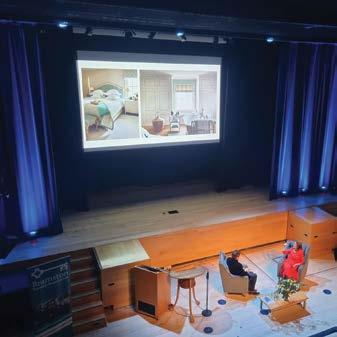
Our Bramston Talks, launched in 2023, have quickly become a highlight in the school calendar, offering insightful and entertaining evenings for our community and the wider public. The talks have brought leading voices in design, wine, literature, horticulture and more to St Swithun’s, all while raising vital funds for the Bramston Foundation’s transformational bursaries programme, which provides life-changing boarding places for girls on the edge of care. Ticket income helps change a young person’s future.
The inaugural event set the tone with celebrated interior designer Nina Campbell OBE, who shared “ten important lessons” from her 50-year career in a lively conversation with Country Life’s Interiors Editor, Giles Kime.
This was followed by a convivial Wine Masters’ Quiz, hosted by television wine experts Susie Barrie and Peter Richards. With friendly competition, expert insight and a guided tasting, the evening was informative and entertaining, with guests discovering new favourites along the way.

We were also delighted to welcome back distinguished Dr Chibundu Onuzo (HA 2009) now an award-winning novelist, academic and musician. After leading a storytelling workshop for Prep students, she joined literary presenter Rebecca Fletcher for a fireside-style interview exploring her journey from St Swithun’s student to acclaimed author of The Spider King’s Daughter and the imaginative Mayowa trilogy. The evening concluded with an unforgettable performance of her original songs.
Most recently, our Gardeners’ Question Time-style event brought horticultural expertise to Harvey Hall, with BBC panellist Pippa Greenwood joined by Hillier specialists Charles Carr and Barry Clarke, chaired by former parent and Bramston Foundation trustee, Lucy Collis, who is also a garden designer. From sustainable planting to drought-resilient crops, their knowledgeable and often humorous responses sparked lively discussion and sent guests home brimming with ideas for their own gardens.
Thank you for supporting this meaningful series. If you or someone you know is interested in being a speaker or a presenter, please contact us at oga@stswithuns.com.
Dr Chibundu Onuzo with Rebecca Fletcher Nina Campbell in conversation with Giles Kime
House News
We know that many of you have fond memories of your former schoolhouses, here is a catch up with what’s been happening in some of them...
What’s been the best event for your house this past school year?
Hyde Abbey (HA) - Activities during the week were great fun, however the arcade in-house event with inflatables, arcade games, and food van was fun as well as the Winter Wonderland last December, and let’s not forget the September Silent Disco!
Venta (V) - Everyone in Venta really enjoyed doing house drama last year and we came back with a win!!! But I think our favourite event was probably house sport, the vibes were high and everyone worked so hard.
Mowbray (M) - There have been many opportunities for the house: pottery painting, bowling and a water park. This was a great way to ensure that there was no separation between the day houses, and that everyone had time to relax and talk, whether that be between year groups and houses or just an opportunity to get to know people they might not usually talk to. It is very difficult to pick the best activity, but overall, the water park was a highlight for the year.
Hillcroft (HC) - The highlight of Hillcroft’s year has undoubtedly been our success in the House Drama competition, where we proudly
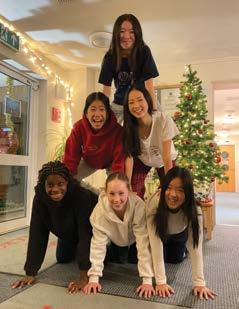
secured second place. More than the result itself, it was the experience that made the event so memorable: rehearsals filled with laughter, the costumes and makeup, the performances, strengthened our bonds. We showcased our creativity and talent, as well as the humour and team spirit that define Hillcroft. Coming together on stage reminded us that laughter, teamwork, and memories are the true rewards.
Who is the inspirational icon for your house?
HA - Miss Bell, who was also nominated for the Tatler Magazine Boarding edition, is the glue that keeps Hyde Abbey together and inspires us. She was also awarded ‘Best House Baker’ at the Summer 2025 Boarders’ Ball.
V - We really appreciate all of the hard work that Mrs Mitchener and Miss Mitchell put into our house and they provide such inspirational icons for us to aspire towards as a house.
M - I couldn’t choose just one person as everyone has been enthusiastic this year. That said, this year’s U5s stand out as especially inspirational. They have worked hard in the house, even applied for some house leadership roles, boosting confidence across the lower years by setting great examples.
HC - Our inspirational icon comes in the form of someone who is at the very heart of
Hillcroft getting into the Christmas spirit
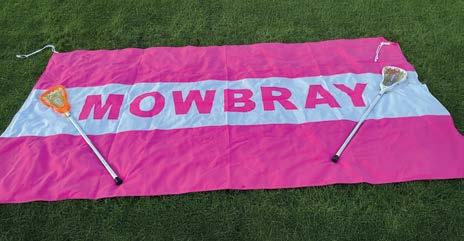
Mowbray have fun on the pitches
our house community: Mrs Meixner. She is a guiding presence as well as the spirit that keeps Hillcroft thriving. With her care and tireless support, she ensures every student feels valued and at home. From her thoughtful words to her legendary house snacks, Mrs Meixner shows us what it means to lead with kindness and dedication.
What is your house’s favourite way to celebrate?
HA - Karaoke, food – pizza, and any event –as well as Mario Kart nights in the common room, where everyone is together!
V - Venta is definitely partial to a sweet treat. After house meetings, when we sing extra loud in preparation for the house song, we tend to congratulate our singers with some Haribos.
M - Food or a mixed house event are certainly house favourites. Last year, there was a bracelet making event near the end of term which was a great way to wind down and prepare for a lot of revision over the holidays. Games within houses and house outings are also a wonderful way to celebrate the end of term time and promote a healthy sense of competition.
HC - In Hillcroft, we believe that celebrating together is just as important as working hard side by side. Our favourite way to mark the end of term is through unforgettable house outings that bring us closer as a community. Whether it is unleashing creativity in pottery painting, enjoying shared meals at Nando’s, or embracing our playful spirit in play zones, each celebration reflects the joy and friendship that define Hillcroft. These moments remind us that success is not only measured in achievements, but also in the laughter, friendships, and memories created.
What makes your house a great house to be in?
HA - I once stated Hyde Abbey could be described as the UN of boarding houses: everyone is kind, has diverse personal attributes, and is considerate. Hyde Abbey girls strive to exemplify “Caritas, Humilitas, Sinceritas” and to support each other. That support is found in academics, the sports we play, as well as the way we are with each other.
V - The vibes during house meetings and house sports are amazing. I think the primary reason why we do so well in competitions is because everyone is a friendly face. The older years always look out for the younger years, and the younger years aspire to be like the older years, and everyone bands together and works so hard to be the best house EVER. The varying ages are one of our main strengths.
M - Our differences and our confidence are the secrets to our strength. There is a great sense of integration throughout the year groups and there’s a very comfortable and welcoming environment. People are not afraid to contribute, to ask questions, as well as to offer constructive criticism where needed. This willingness to take risks ensures that everyone is involved. There is a great sense of community and overall, the atmosphere is vibrant with some friendly competition sprinkled through.
HC - Hillcroft has become a family! What makes Hillcroft special is not simply its traditions or its achievements, but the warmth, unity, and the spirit that every member contributes. Within its walls, laughter is shared, challenges are faced together, and every individual is supported in growing into their best version. Hillcroft pride lies in the loyalty, care and resilience of its members.
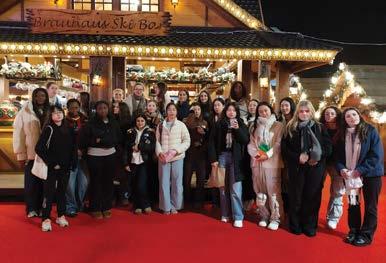
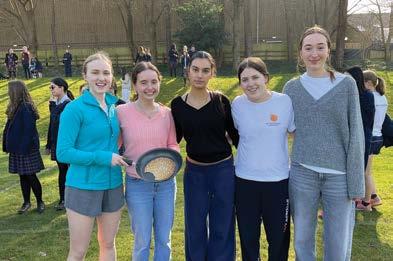
Hyde Abbey students enjoy Winter Wonderland Venta students
Greenpower Upate
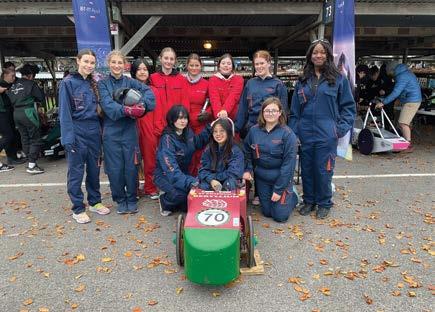
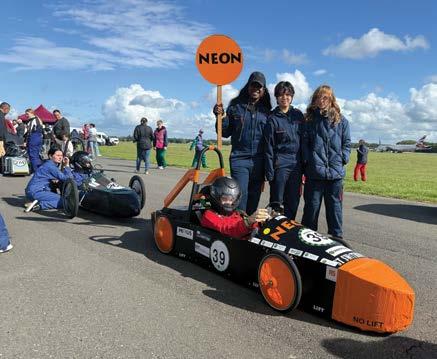
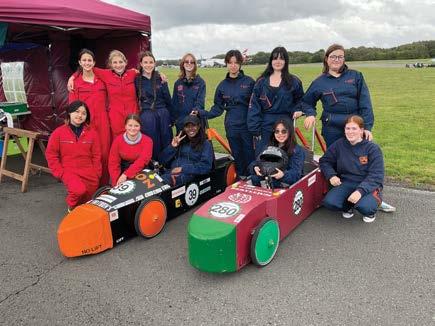
Written by Rebecca Bainbridge, U6
In October 2025, the team behind our car, Beryllium, woke before sunrise to head to the Goodwood motor circuit for the Greenpower International Finals. This was the culmination of the season’s hard work. In contrast to the torrential rain we experienced at Dunsfold, we arrived to clear skies. Whilst it was cold, we were simply glad it was dry. We then efficiently unloaded our equipment and prepared for scrutineering. After passing scrutineering with flying colours, we quickly sent the drivers out for practice laps.
After a mildly frustrating first race, where we ended up having a red flag, losing valuable time, the team enjoyed lunch and began discussing various strategies to boost their performance in the all-important final race. Before the final race began, a small parade saw all 80 cars, including teams from as far as Spain, Brazil and Belgium escorted by cheering teammates before heading to the pit lane. The St Swithun’s team achieved a very respectable position, with Beryllium 31st in its class.
Over the winter, the team plans to build on this year’s progress by improving our cars’ design and performance. Beryllium will be retired for parts, its lessons informing the construction of a new car, while Neon will undergo aerodynamic improvements to boost speed and distance in future races.
This season’s final meant that we bid farewell to our sixth-form members of our team. Rebecca, Hui-Yin, and Amber have been our amazing captains this year, organising club meetings, timetables and the highly essential emails reminding people to bring sunglasses to the race. We are sad to see them go and wish them all the best in their future endeavours. ■
Driving Forward: St Swithun’s Marks 25 Years of Greenpower
Current and former students, staff, parents and volunteers came together earlier this year to celebrate 25 years of Greenpower at St Swithun’s. The event brought the school community together to reflect on a quarter of a century of engineering creativity, teamwork and innovation inspired by the Greenpower project.
Founding head of design and technology, Vaughan Clarke, shared how he introduced Greenpower to St Swithun’s and the lasting impact it has had on generations of students. The celebration recognised the school’s pioneering role in championing hands-on STEM education and its enduring influence.
Special guest and Greenpower Chair Nash Vracas (HA 2009) returned to campus to cut the celebratory cake. She said, “The lessons you learn in your teenage years stay with you for life, and I’ve often reflected on the confidence St Swithun’s gave me as I’ve moved forward in my career. Coming back was a wonderful reminder of that.”
Nash reflected on how the Greenpower experience shaped her journey: “It gave me a platform to develop teamwork, problem-solving and perseverance in a safe environment and at a much younger age than most. It also sparked a passion for the subjects that continue to support me in my career. Giving back through the Greenpower board feels like a natural continuation of the values of caritas and contribution we learned at school.”
Also in attendance were Greenpower CEO Barnabas Shelborne, current headmistress Jane Gandee, and former headmistress Dr Helen Harvey.
Reflecting on the milestone, Jane Gandee said, “Greenpower has been a defining part of life at St Swithun’s for 25 years, sparking curiosity and ambition in many of our students. We are proud to have been involved for a quarter of a century and to see the movement grow. As a girls-only school, Greenpower has been especially powerful in breaking down gender stereotypes. Engineering and motorsport are still too often seen as male-dominated fields, but our students show year after year that talent, creativity and determination are not defined by gender. Taking part in Greenpower helps them to see themselves as future engineers, designers and leaders.” ■
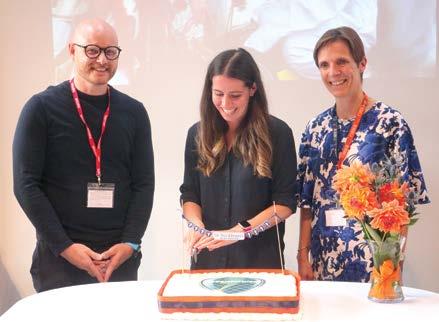
Nash Vracas cuts the cake alongside Jane Gandee and Barnabas Shelborne
Spotlight On...
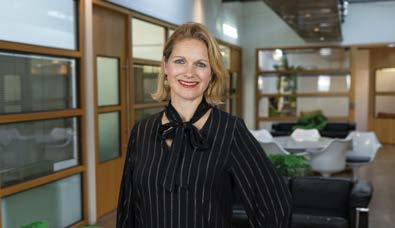
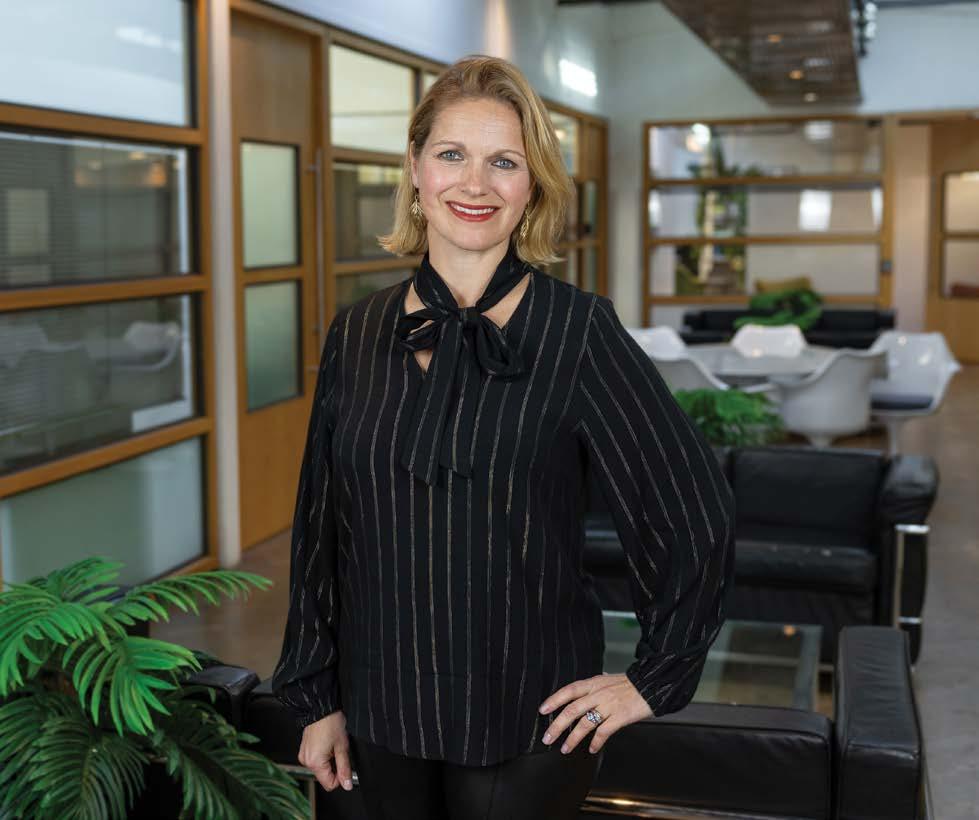
Charlotte Heath-Bullock (HA 1994)
We caught up with Charlotte Heath-Bullock, former head girl, who thrived on the buzz of boarding life at St Swithun’s. From lacrosse practice at dawn to friendships that still endure, she recalls her school days with warmth and humour. Now enjoying a successful career in public relations, Charlotte reflects on the experiences that shaped her, the highlights and challenges of her professional journey, and the lessons she would share with the next generation.
Can you tell us a bit about your time at St Swithun’s? What are some of your fondest memories?
I absolutely loved my time at St Swithun’s. Boarding school isn’t for everyone, but I was one of those who thrived in the busy, buzzing environment and made the most of everything the school had to offer – from tennis and lacrosse to music and drama.
I have vivid memories of early-morning house lacrosse practice before breakfast and hours spent whacking tennis balls from the ball machine in the sports hall while Mrs Chown’s advice echoed around us. While I probably didn’t realise it at the time, the many choral evensongs at Winchester Cathedral instilled in me a deep love of church music and ecclesiastical architecture – which, in hindsight, explains my later choices of Durham and Vienna for university.
I also made lifelong friends at St Swithun’s. We can go months or even years without seeing each other, yet when we do, it feels like no time has passed. I certainly wasn’t a model student – which made it all the more surprising (not least to my parents!) when I was appointed head girl. I don’t think I always made life easy for my teachers either. Poor Mr Strand endured endless torment from us putting books in the pianos, and Mr Brewer deserves a knighthood for getting me through Maths GCSE. But I was lucky to have firm yet nurturing support from Mrs Jarvis, my Hyde
Abbey housemistress. Somebody clearly saw potential in me before I saw it in myself, and I’ll always be grateful for that.
How do you think your education at St Swithun’s has shaped you? Were there specific experiences or teachers who had a lasting impact?
St Swithun’s gave me a sense of independence, resilience and ambition – qualities that have shaped my life ever since. I’d never have spoken another language without Mrs Lorge. She was utterly formidable in the classroom, but her steely determination brought out the very best in her pupils. When I was struggling with French A level, she refused to give up on me. Thanks to her persistence, I got an A in my oral exam and later went on to work in France and Switzerland – opportunities I would never have had without her faith in me.
What were your life and career aspirations as a teenager at St Swithun’s, and how did they evolve?
In the early years, we all did one of those rudimentary “AI” career questionnaires, and my results came back with “fighter pilot” or “librarian” – which baffled me then and baffles me still!
There was never any sense that we wouldn’t want to forge our own paths. St Swithun’s instilled in us both confidence and responsibility: we were expected to make the most of our education and encouraged to give back to society, which resonated strongly with me. I didn’t leave with a clear career path in mind, but having grown up around my parents’ art fairs, I was already fascinated by the art world – something that would shape my future direction.
What inspired you to pursue a career in communications, and how did your journey begin?
I’ve always loved organising, whether events or people. Even at school, I threw myself
into running the leavers’ ball. My parents’ involvement in the art world meant I’d grown up surrounded by history, creativity and storytelling, so when someone suggested I consider public relations, it immediately clicked – even though, at the time, I had very little idea what PR actually was!
I started at the very bottom, working as an office manager at an advertising agency, but my inability to make a decent cup of coffee saw me swiftly promoted into the PR team. From there, I was hooked. At 24, I was working on the Sydney Olympics campaign, coordinating interviews between major sports editors and medal-winning athletes.
I organised a Guinness World Record for bubble blowing at West Ham United and spent several years working with David Beckham when he fronted Police sunglasses. It was intense, exhilarating and exhausting – we worked hard and played harder. Five-hour “client lunches” were almost the norm… those were very different days!
Could you tell us about some of the ups and downs along your career path?
The PR world is full of big personalities, and you work with an extraordinary mix of characters. I’ve been lucky to work for inspiring leaders with huge integrity, but I’ve also encountered a few “Ab Fab” moments.
Pictured in Cultural Communications’ London office
I once got screamed at by the entertainment editor of the Daily Mail after they missed an RSVP deadline and were barred from an event – a formative reminder that not every crisis is yours to carry.
What’s the best or worst piece of advice you’ve ever been given?
One of my brilliant mentors told me: “Always hire people better than yourself.” That’s been invaluable throughout my career and has shaped the team I’ve built today.
My father’s advice has also stuck with me: “Be nice to everyone on the way up – because you’ll meet them all again on the way down.” He was right. Relationships are everything.
What are the most important lessons you’ve learned that you’d pass on to the next generation?
Self-awareness is a superpower. Knowing your strengths, but also recognising your weaknesses, is critical. When things don’t go my way, I’m the first to ask myself what I could have done differently. That ability to reflect honestly – and learn from mistakes –
has been one of the most valuable skills I’ve developed.
What does a typical workday look like for you?
“Typical” is a bit of a stretch in PR! PostCovid, I work a hybrid week, usually three to four days in London and one at home. Mondays are planning days, meeting with client teams and setting priorities for the week.
Much of my time is spent meeting clients, editors, and potential collaborators. Evenings are often taken up with events or launches, but I try to limit these to two a week now. Fridays are my focus days – I use them for big-picture work: client strategy, campaign planning, thought leadership pieces, and presentations.
I travel when needed, usually once a year to New York for the art fairs and a fortnight in the Netherlands for a major client event. Those trips are intense but hugely rewarding – and I always try to sneak in a museum visit under the guise of “professional development”!
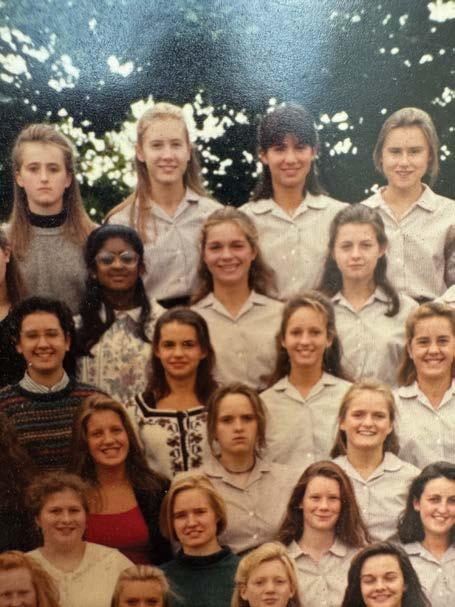
With members of her team at the 67 Pall Mall Summer Party 2025
How do you manage work-life balance and stress?
Experience teaches you perspective. When I was younger, I’d lose sleep over minor crises. These days, I’ve learnt not to sweat the small stuff. Parenthood has helped too – children are great levellers and have a brilliant way of reminding you what actually matters.
What’s your favourite and most challenging part of your work?
I love the diversity – one day I’m trying on priceless jewellery at a press event, the next I’m leading a strategic workshop. It’s no coincidence that my agency specialises in “investments of passion”: art, jewellery, fine wine and antiques. These are things I care about personally, which makes the work endlessly fascinating.
The challenges tend to be the more mundane elements – budgets, spreadsheets and endless reporting – but they’re all part of running a successful business.
What personal or professional goals are you most excited about?
On a personal level, I’ve recently moved back into my childhood home after a long renovation,
and I’m loving reconnecting with the village where I grew up.
Professionally, I’m focused on growth. There are exciting opportunities ahead – from expanding into new markets to exploring innovative ways of working – and I feel optimistic about the future.
Do you have a funny or mischievous St Swithun’s story to share?
As a weekly boarder, I discovered a loophole early on: if my parents dropped me in Winchester on a Sunday afternoon, I wasn’t technically “on school time” yet. I’d often persuade my mother to drop me at Winchester College instead, where we’d head to Charlie’s House for a bit of illicit underage drinking before heading back up the hill. We weren’t terribly rebellious – nobody got wildly drunk –but they were fun, carefree teenage moments.
“What advice would you give your younger self?”
Mine would be: trust yourself more, take a few more risks, and remember that no career path is linear – and that’s perfectly fine. ■
With her son at the Qatar Goodwood Festival 2025
Charlotte and her husband at Royal Ascot, 2025
OGA Summer Drinks at Cristea Roberts Gallery in London
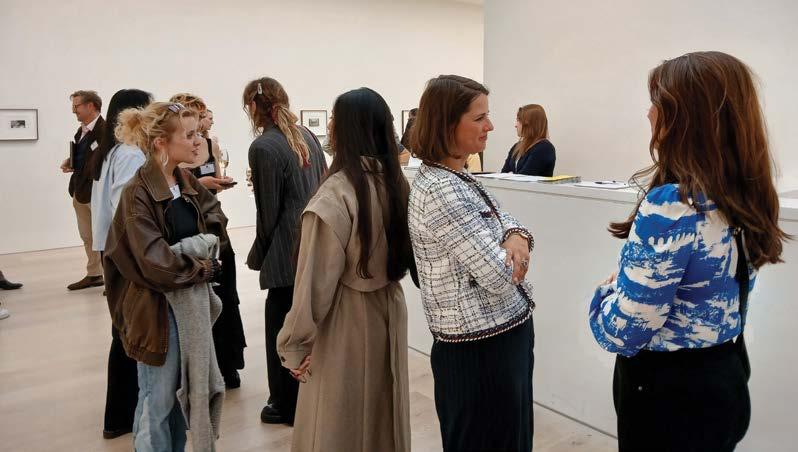
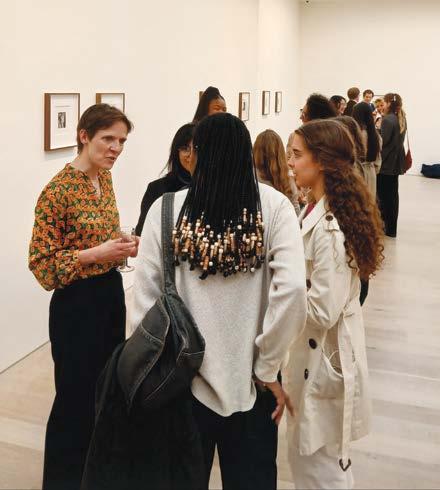
In June, the OGA hosted its summer drinks evening at Cristea Roberts Gallery, Pall Mall, where guests and students enjoyed a captivating exhibition by artist Marie Harnett. Her intricate pencil drawings – depicting scenes from film trailers and inspired by Greek mythology – left a lasting impression on all who attended.
We were delighted to see so many alumnae at the event, which buzzed with conversation and energy. We were especially grateful to the Cristea Roberts Gallery for generously allowing our event to take place in their exceptional gallery, providing an inspiring setting for the evening.
We were thrilled to welcome our keynote speaker, Charlotte Heath-Bullock (HA 1994) whose inspiring talk captivated the entire audience. She spoke with warmth and humour as she reflected on her time at St
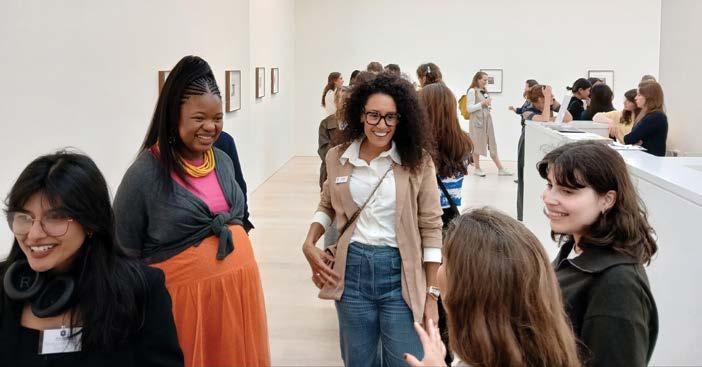
Swithun’s and Durham University, where a last-minute Erasmus placement in Vienna unexpectedly ignited a lifelong passion for art. Although initially drawn to theology for its rich interdisciplinary scope, Charlotte found herself increasingly enchanted by the cultural depth of Vienna. Returning to the UK with a theology degree, limited German and a newfound love for art, she began interning in London’s art world, gaining invaluable, hands-on experience.
Through this journey, she identified a unique niche – helping luxury brands connect with culturally attuned audiences through art –which ultimately led her to establish her own consultancy. Charlotte encouraged current students to see the art world not only as accessible but as a rewarding and dynamic career path, urging them to follow their passions with courage and conviction. ■
Read more about Charlotte’s experience of school and beyond in our Spotlight interview with her on page 40.
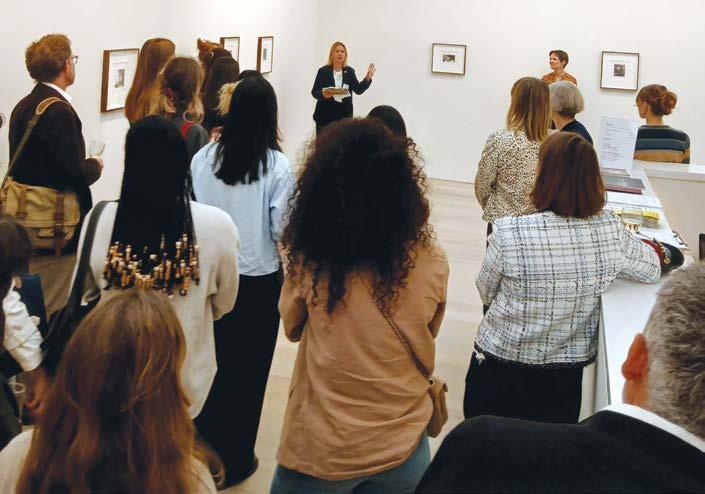
Old Girls’ Day 2025
This year’s Old Girls’ Day was a joyful and sunny occasion, bringing together alumnae and former staff from across the decades, from the class of 1961 to more recent leavers. It was especially meaningful to welcome back the class of 2020, for their five-year anniversary after missing their traditional farewell from school during the pandemic. We were also delighted to celebrate milestone reunions with alumnae from 2015, 2000 and 1975, marking 10, 25 and 50 years since leaving school.
Welcome
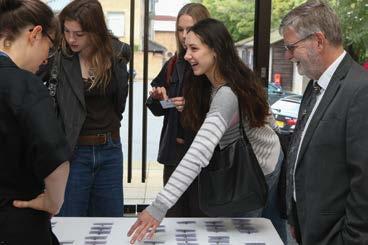
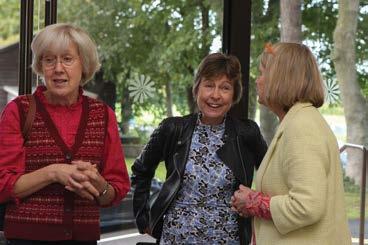
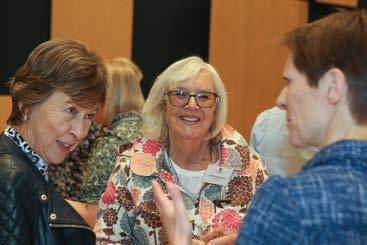
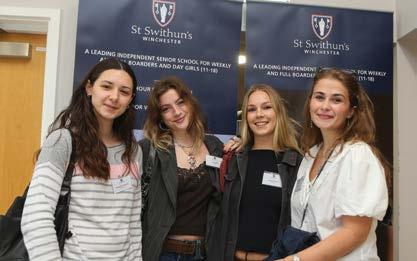
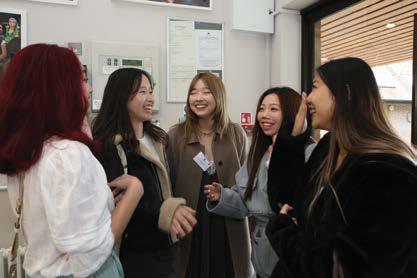
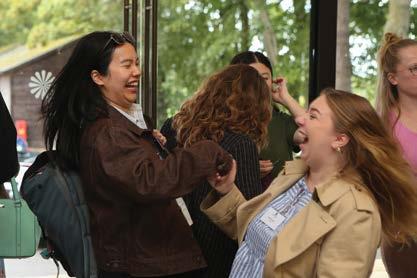
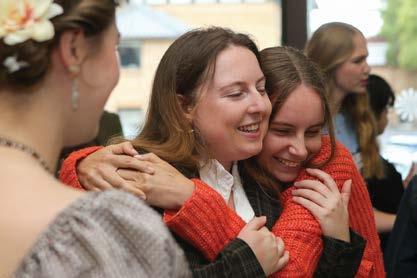
Q&A session with headmistress Ms Jane Gandee, Reverend Wallington and current sixth-form students
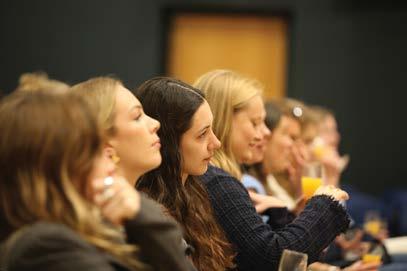
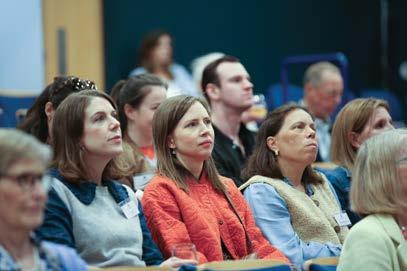
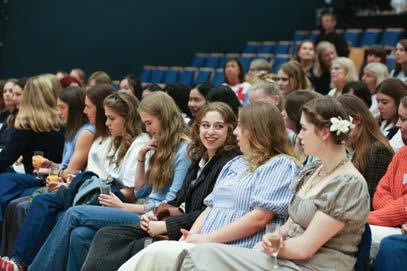
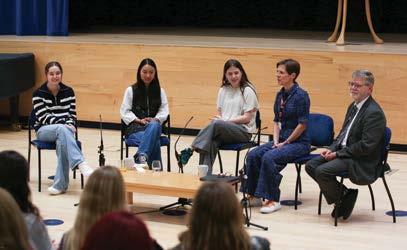
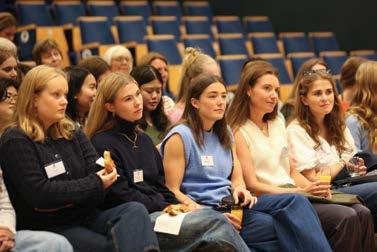
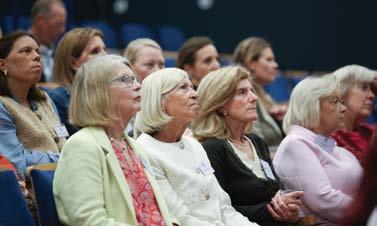
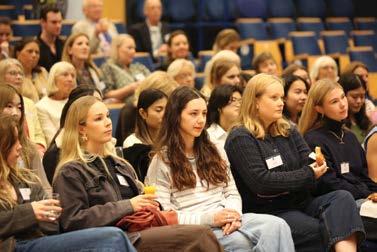
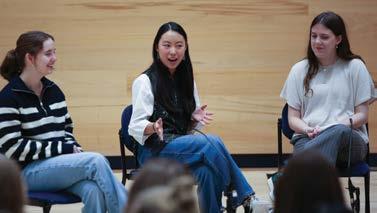
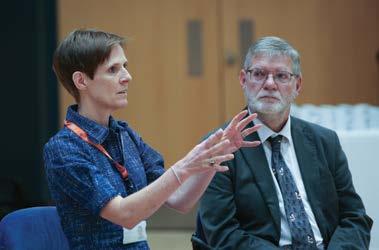
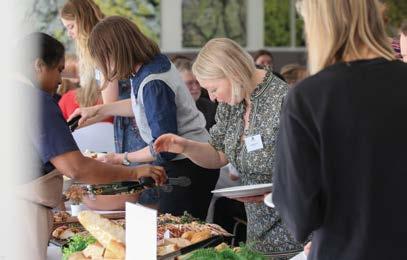
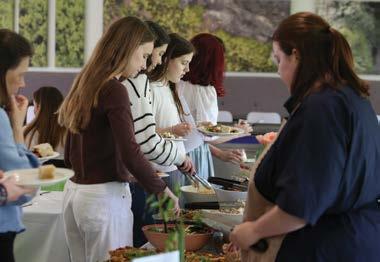
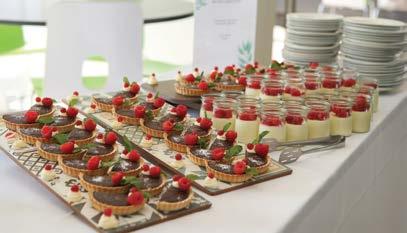
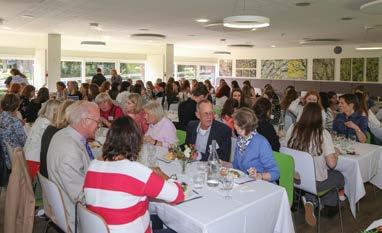
Old Girls’ Day 2025 cont...
Touring the School
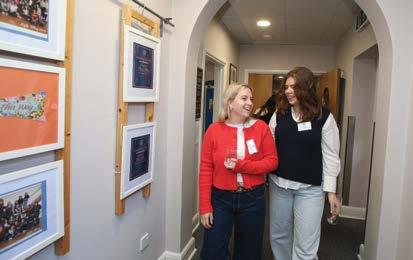
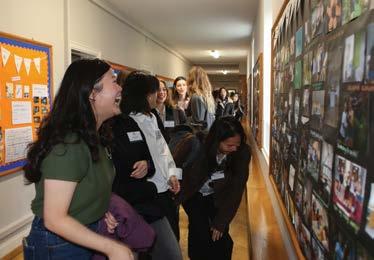
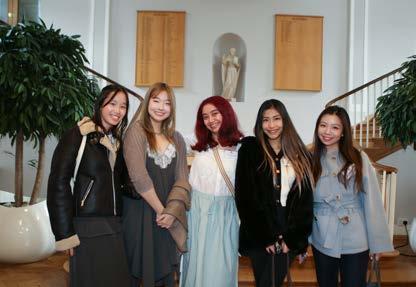
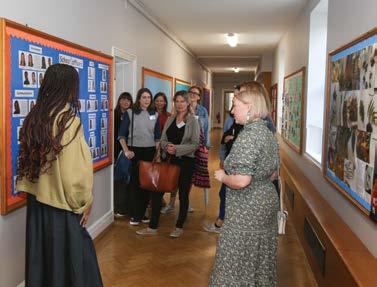
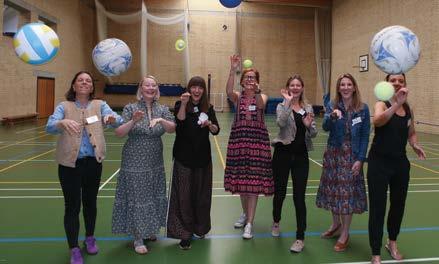
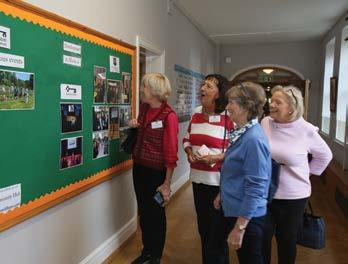
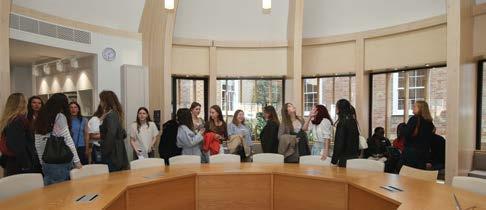
Groups
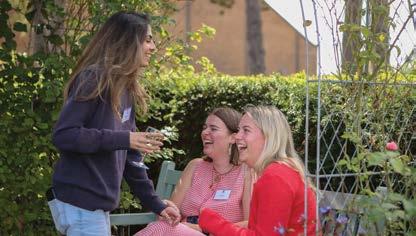
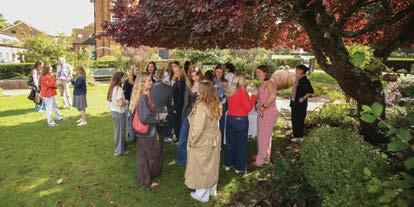
The class of 2000
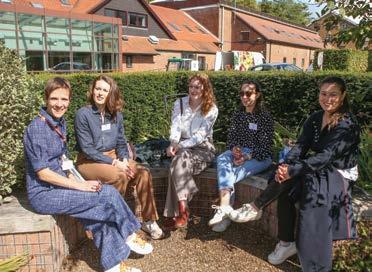
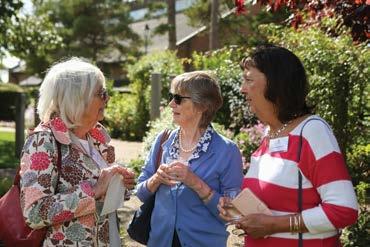
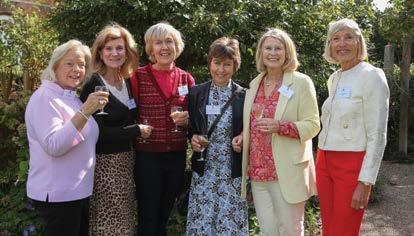
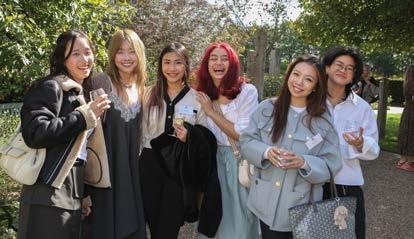
20 Former students booked tours of the school this year 63.2% Average open rate of our OGA e-news
140 For mer students in 2024/2025 enjoyed one of our events or more 17 Alumnae spoke at our events –sharing stories, insight, and inspiration
4 OGA events for alumnae to connect with each other, cur rent students and the school

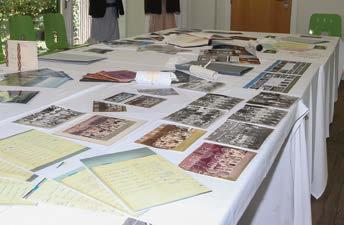
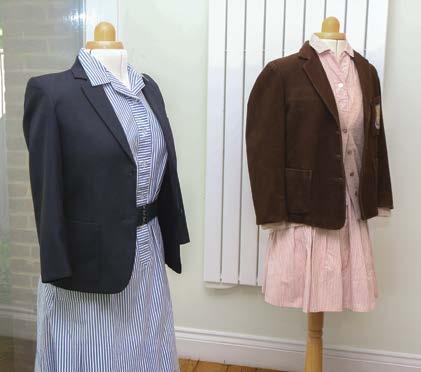
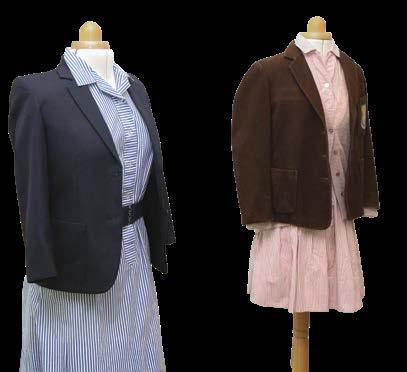
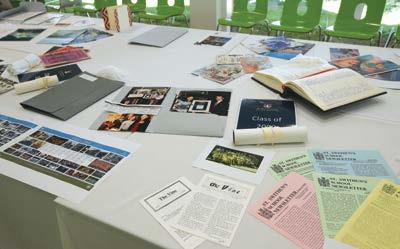
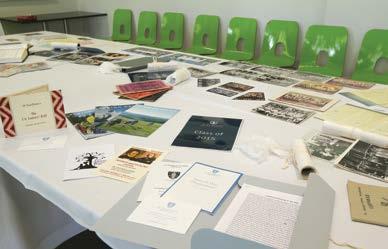

St Swithun’s Letting Co.
Within close proximity to historic Winchester, St Swithun’s offers the opportunity to hire unrivalled facilities in a picture-perfect rural setting as well as the opportunity to take part in a wide range of activities, courses and residential camps for both adults and children throughout the year.
St Swithun’s has a range of residential, educational, performing arts and sporting facilities including auditoriums, conference rooms and small spaces ideal for all business events, seminars and commercial hire.
We offer a broad range of holiday camps including cricket, lacrosse, netball, tennis, with more to be announced in due course.
With in-house caterers and comprehensive technical and IT support we are able to offer a variety of packages to suit any requirement.
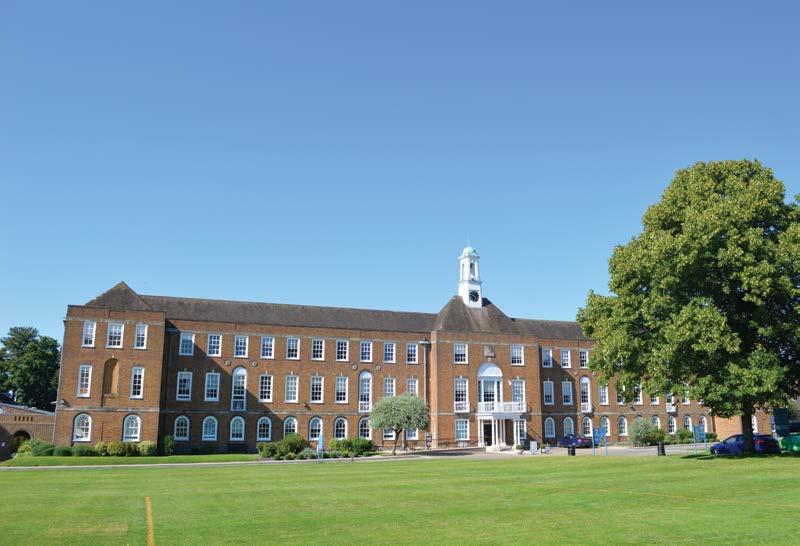
For more details:
Tel: +44(0)19 6283 5239; Email: lettings@stswithuns.com
In Conversation with Our Head Girl
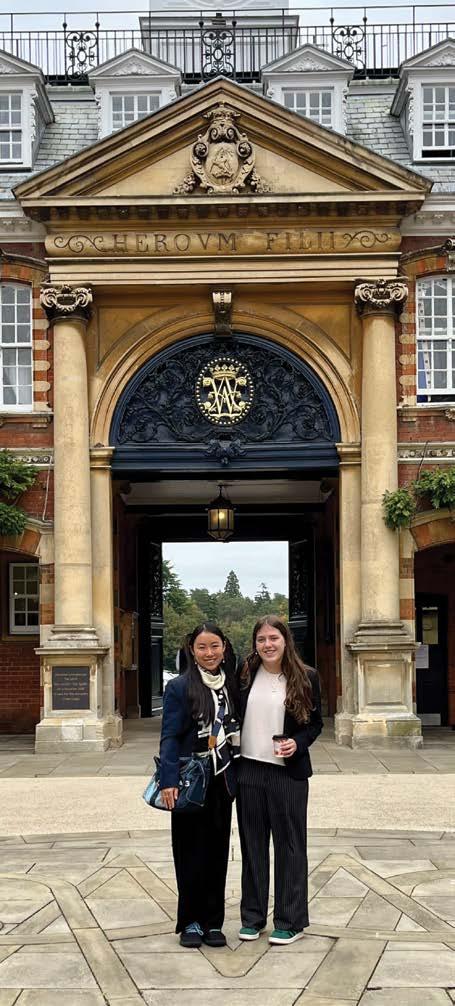
Lois Macdonald, U6
What were your first impressions when you joined St Swithun’s
Having joined St Swithun’s Prep School at the age of three, I honestly can’t remember a time when I wasn’t a Swithunite! What stands out from joining the senior school, though, is the incredibly friendly atmosphere. I was shown around by my U6 ‘aunties’ who made me feel so welcome, and being an ‘auntie’ to the new L4s this year has been such a lovely fullcircle moment. I remember being so excited by all the clubs and opportunities on offer that I signed up for almost everything. I also loved the school traditions like the Christmas assembly and the Game, and I can’t quite believe this is my last year taking part in them.
What do you like to do in your free time?
Most of my free time is spent playing sport particularly netball, lacrosse and cricket. Most Saturdays you’ll find me on the pitch or court. My favourite days are the ‘Super Saturdays’, when we play both a netball and lacrosse match against the same school. I also enjoy reading, and this year I joined the choir, which has been such a fun new challenge.
What is your favourite memory so far?
Having been at St Swithun’s for so long, it is impossible to choose just one favourite memory. Some of my happiest moments have simply been laughing and spending time with my friends. A particular highlight, though, is the Senior Lacrosse Nationals, where we spend two nights away competing as a team. I’ll never forget the team dinners, motivational gifts, orange ribbons in our hair, and the amazing bond across year groups. It really captures the Swithun’s spirit and pride.
How did you feel about becoming head girl?
When I found out, I was honestly shocked but incredibly excited. It is such a privilege
Head girl, Lois (right) with deputy head girl, Claire C (left) at the Heads of School Conference, Wellington College
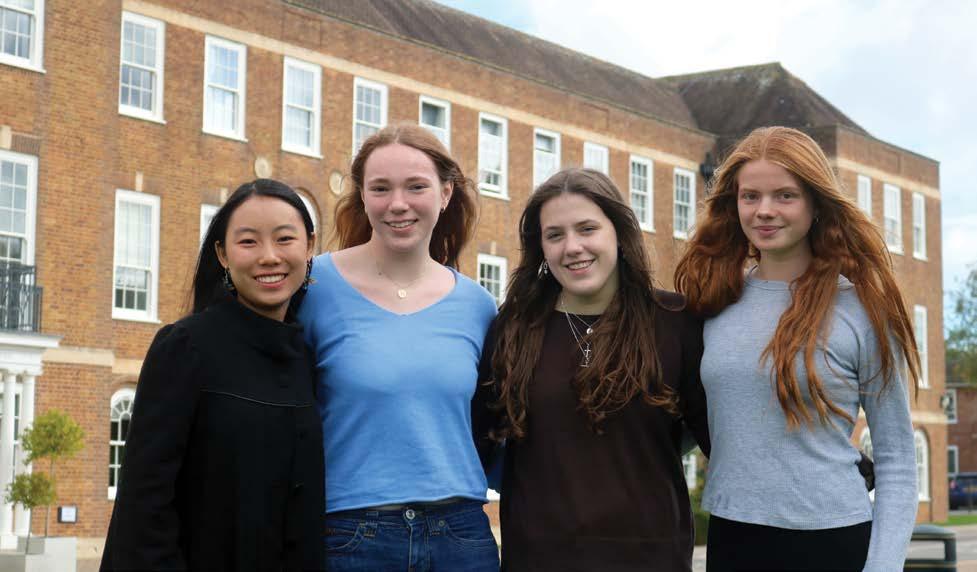
to work alongside such an amazing team, and we have lots of exciting things planned. Everything we have taken part in so far has been so much fun and I cannot wait for what is still to come. We are currently choreographing the head girl team part of the annual Finlay dance which is greatly entertaining and a new challenge for us.
What qualities has St Swithun’s helped you develop?
Having been at St Swithun’s from the age of three to eighteen, I’ve grown and changed in countless ways. I’ve learned the value of teamwork through being part of many different teams, and I’ve become more resilient, determined and confident in facing challenges. Most importantly, St Swithun’s has given me the courage to try new things and
step outside my comfort zone, knowing there’s always support behind me.
What would you like to do after St Swithun’s?
I’ve just submitted my UCAS application to study medicine, which is both exciting and a little daunting! I hope to study medicine at university and eventually become a doctor. I also plan to keep playing sport, as it’s been such a big part of my life at St Swithun’s.
Do you have any advice for future head girls?
My advice would be to just be yourself and enjoy it. Stay organised because it can get busy but remember you have a great team around you. I would also say, get stuck in and make the most of every opportunity you have. ■
Lois M, with her head girl team. (From Left: Claire C, Amy H, Lois M, Hattie S)
Rosie Kendall (D 2024) Gap Year Adventures
What did you do for A levels and what were you thinking about doing at university? Did that change?
For my A levels, I studied PE, geography and psychology. I had a place lined up at Durham University to study sport and exercise BA but always planned to go straight after sixth form. My subject choice didn’t change, but I deferred my place to take a gap year which wasn’t an easy decision, but looking back now, it was one of the best decisions I’ve ever made.
Why did you choose to take a gap year?
After a busy final two years at school, I felt I needed a break. I wanted a year with more freedom – a chance to travel, gain new experiences and to step outside of my usual rigid routine. I was also eager to work and play lacrosse in a different country, which made the gap year feel like the perfect opportunity.
What did you do during your gap year?
The first few months were spent working to save up. I waitressed at a local golf club, refereed lacrosse matches at St Swithun’s, coached at my club Centaurs Lacrosse Club in London, and rode horses for local owners. It was a busy but rewarding few months.
In November, I flew to Melbourne with four friends for five unforgettable months. We quickly fell in love with the city and managed to land some amazing jobs –including working at the Australian Open Tennis tournament and in the McLaren Paddock Club at the Formula 1 Grand Prix. Being behind the scenes at world-class sporting events like these was surreal.
Working at Piper Heidsieck Champagne bar at the Australian Open
Sunset training with Footscray Lacrosse Club in Australia

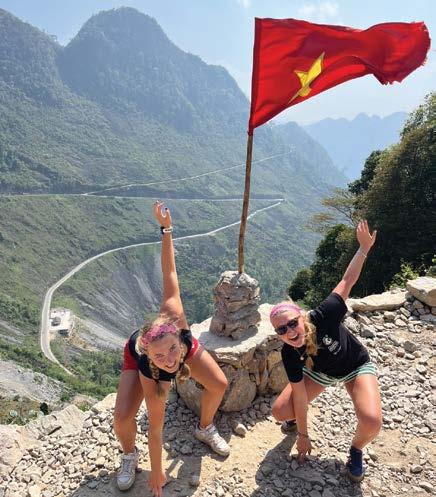
Between work commitments, we travelled up the east coast of Australia. A highlight was Airlie Beach, where we spent three nights sailing, snorkelling on the reef, and watching the unbelievable sunrises from the water.
Whilst in Melbourne, I also got the opportunity to play for Footscray Lacrosse Club. Competing alongside top Australian internationals was an incredible learning experience and helped me build lifelong friendships with teammates from all over the world.
On my way home, I travelled through Thailand, Vietnam and Cambodia for a few weeks. One of my favorite memories was staying in floating bungalows in Khao Sok National Park, spotting a baby elephant on a sunrise safari.
Would you recommend it to current sixth-formers?
100% yes! You never know where a gap year might take you, and the experience is what you make of it. Whether you travel, work, volunteer, or do a bit of everything, a gap year is a brilliant chance to set yourself up to make the most of every opportunity at uni.
What do you think you gained from your experience?
I learned how to adapt to new environments, manage life abroad, and to be bold – say yes to opportunities even when they felt outside my comfort zone. More than anything, I gained confidence – and a global network of friends who I will hopefully be visiting soon! ■
Skydiving at Airlie Beach, Australia
Our local view of Albert Park, Melbourne, Australia
Ha Giang loop around the Vietnam mountains
Ysella Collis (CG 2024) Gap Year Adventures
What did you do for A levels and what were you thinking about doing at university? Did that change?
I did maths, physics and chemistry for A levels. I was originally thinking of doing natural sciences but after I completed an Extended Project Qualification (EPQ) on soil science I decided on earth sciences at university. I reapplied to university after A levels.
Where are you now and what are you doing?
I am about to start at Oxford University to do a MSc in earth sciences.
Why did you choose to take a gap year? I wanted to take a break from studying and travel to some different places, meet different people and learn some new skills.
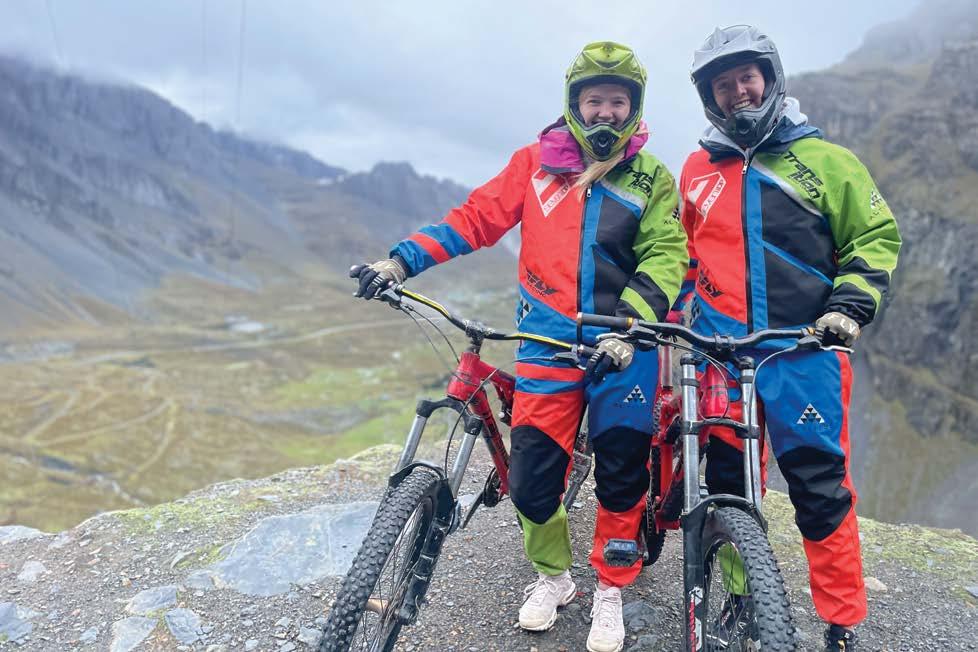
Ysella and a friend mountain biking down the Death Road in Bolivia
What did you do during your gap year?
Over the summer I worked to earn money catering at festivals and in a coffee van at events. In October, I went to Costa Rica with the organisation Raleigh International for 2 months. This was a great combination of community and environmental work, and a long 3-week trek through the volcanoes and national parks. There was a very international, but like-minded group of people so it was a lot of fun. Afterwards I backpacked around Peru and Bolivia with a friend for a month, before going to Sydney, Australia where I met up with Anna, my twin sister, and we did various Royal Yachting Association sailing courses over a month. We lived on a boat in Sydney harbour for part of the time. Then I headed for South Africa where I had a job with Horizon Horseback safari for 3 months. It was hard work – helping to look after over 100 horses and take the guests for rides twice a day – but I loved it there and learnt a lot.
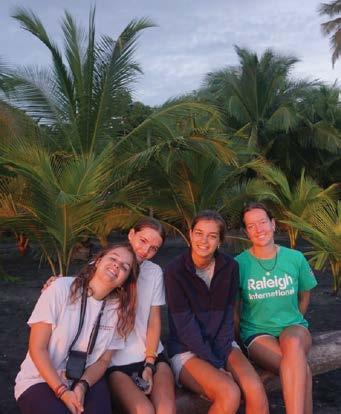

Would you recommend it to current sixth-formers?
I would recommend taking a year out. Although the universities say that they prefer STEM students not to, I think that after 14 years in education, it is valuable to have a break as you go to university ready to start learning again. In my case it also allowed me to apply to university post A levels and really focus on my application.
What do you think you gained from your experience?
I have returned with more confidence in meeting new people, lots of new skills and a wider perspective on life. I gained independence too which I think will help me in the transition to university. ■
Watching the sunrise with friends before a day of planting mangroves on a Raleigh Expedition in Costa Rica
Enjoying a sunset ride while working at Horizon Horseback in South Africa
Gap Year Adventures
Ananya Powis (ED 2025)

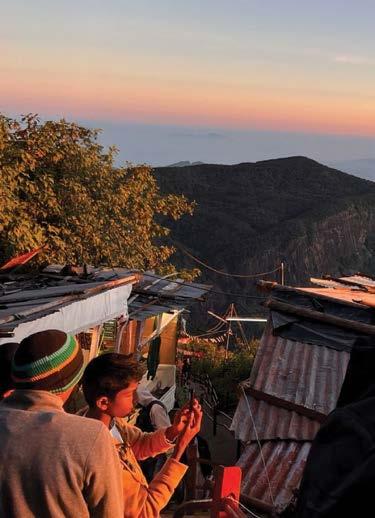
What did you do for A levels and what were you thinking about doing at university? Did that change?
I studied English, maths and economics at A level and chose to pursue politics and sociology at university after researching orientalism for my Extended Project Qualification (EPQ). I was initially torn between studying English or politics and sociology, but my gap year ultimately reinforced my curiosity about the world and my enthusiasm for understanding different political systems and the way they interact.
Where are you now and what are you doing?
I’m currently studying politics and sociology at the University of Bristol, which has been a fantastic experience. The course feels very relevant and encourages us to engage with contemporary issues in a meaningful way. Bristol itself is a great city: it has a strong student community while still offering the variety and vibrancy of a larger city, so there’s always something new to explore.
Why did you choose to take a gap year? I always knew I wanted to take a gap year, as travel has been an important part of my
Grace Pickance (D 2024) and I on the Ha Giang loop in Vietman
Adam’s Peak in Sri Lanka
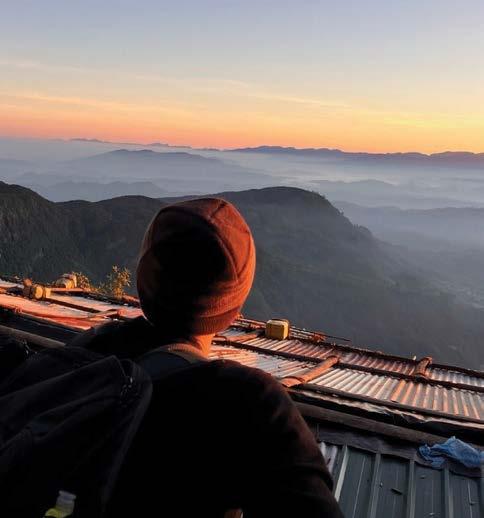
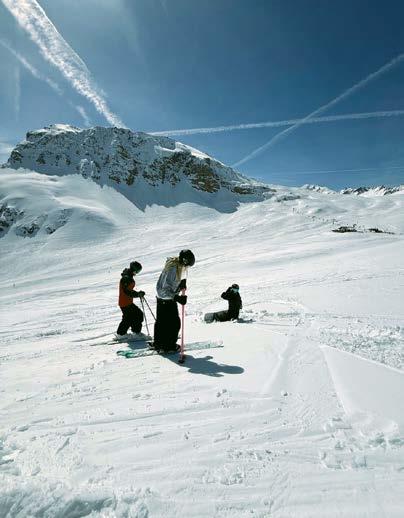
life and how I was brought up. I saw it as a unique opportunity without rushing straight into university; I wanted to make sure I was choosing a path that truly interested me.
What did you do during your gap year?
I spent six months working and six months travelling. I began my travels in Sri Lanka, where I spent five weeks volunteering while living with a local family, an experience that allowed me to make lasting friendships. I then stayed on to explore more of the country for another three weeks, which gave me a real appreciation for its culture and diversity; I couldn’t recommend it more.
After that, I joined some friends in Val d’Isère for their ski season, where I worked as a chalet host and learned to snowboard. This was such a fantastic opportunity, and I loved learning a new skill. I then spent the final three months travelling around Southeast Asia with my friend Grace from school. We explored northern Thailand, Laos, Vietnam, Cambodia, and the Thai islands, experiencing everything from the Ha Giang Loop to diving in Koh Tao and seeing the bioluminescent plankton on Koh
Rong. It was an incredible and eye-opening experience that I’ll never forget.
Would you recommend it to current sixth-formers?
I would recommend doing a gap year to anyone who is able to. It has been one of the most valuable experiences. I gained so much independence by organizing everything myself and working to fund my plans. It’s also such a rare time in life when you can dedicate an entire year to travelling freely and pursuing what genuinely interests you.
What do you think you gained from your experience?
I think I gained a real sense of independence during my gap year, which has served me well at university. Transitioning straight from school into such an unstructured environment can be challenging but managing my own time and plans while travelling taught me valuable lessons on how to structure my time. I also learned a lot about myself and realised that travel, and discovering new cultures and places, is something I’ll always prioritise whatever I do in the future. Some people view a gap year as a time out of education, but I feel I learned so much, if not more, from the experience. ■
Skiing in Val d’Isère with Grace Pickance (D 2024), Emma Clarke (CG 2024) and Lucie Nelson (D 2024)
Catching up with Friends
When we last spoke to garden designer Zoe Claymore (CG 2007) two years ago, she was already establishing herself as a creative force with a distinctive vision within the world of garden design. We caught up with her to hear how the intervening years have unfolded, and how her 13 years at St Swithun’s continue to inform her.
Zoe’s memories of her time at St Swithun’s are filled with creativity and curiosity. She recalls playing timpani and double bass in the school orchestra “probably quite badly” and building a reclaimed chair for her GCSE art exam. Being able to explore creatively gave her both joy and purpose. St Swithun’s instilled resilience, a hunger to learn, and the drive to work hard without apology. That work ethic has carried her through the challenges of running a business, where
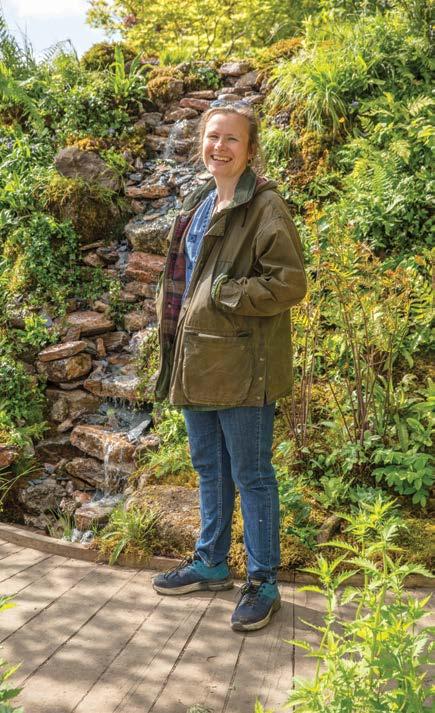
determination and perseverance often matter just as much as talent.
As a teenager, Zoe explored a wide range of possible futures: architecture, dentistry, music, even the possibility of running a vineyard. In the end, she decided on landscape architecture and horticulture, supported by undergraduate and postgraduate study as well as formative experiences in anthropology and psychology. Looking back, she sees this multifaceted background positively, saying “every experience adds transferable skills. I draw on knowledge from anthropology, music, psychology, and policy in my work today, so none of my time has been wasted.”
In hindsight, the deeper roots of her career, though, started early. At the age of ten, Zoe redesigned part of her parents’ garden, an early experiment that planted the first seeds of interest. In her mid-twenties and following a PTSD diagnosis, gardening and spending time outdoors took on greater meaning: time
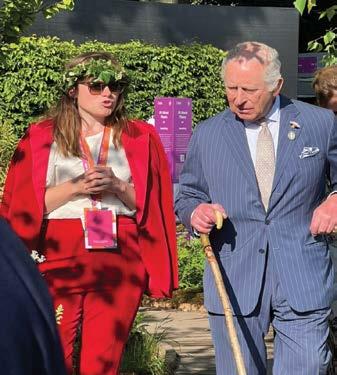
Zoe Claymore
Chelsea Press Day with HM The King, Patron of The Wildlife Trusts
Photo credit; Arit Anderson
Photo credit; Clive Nichols
outside, nurturing plants and creating spaces became central to her healing, a vital way of regulating herself. What began as a refuge and hobby soon became something much more: if this could change her life, it could do the same for others.
Zoe is now widely viewed as a rising talent in her field. She was named an RHS Horticultural Hero in 2023 and designed The Wildlife Trusts’ British Rainforest Garden at RHS Chelsea 2025. There have also been inevitable setbacks: projects falling through for reasons outside her control, and the financial pressures of running a new business. Yet each setback or disappointment has been an opportunity to reflect, learn and build resilience.
Along the way, advice has played its part. The best Zoe ever received was the simple reminder that “if you don’t ask, you don’t get”, advice that has given her the courage to reach out and create opportunities. It took time, she admits, after PTSD to find peace with the fact that life is short and uncertain. She did this by living more in the present and focusing on enjoying the journey (the day to day) more than the destination.
Each workday is different: one moment Zoe might be sketching a new design or costing a project, the next planting on-site, overseeing landscapers, or calling multiple stone suppliers. She enjoys the variety but insists on staying close to the plants and clients, keeping her practice personal and tangible, small enough to stay close to the heart of her work. Zoe’s most rewarding moments come when an idea takes root and she sees clients connect emotionally with her work. The greatest challenges are the practical ones: juggling several complex projects, navigating shifting regulations and managing expectations in the face of rising costs, all things that keep her learning and growing.
When asked about a “work-life balance” Zoe talks instead about energy. Over the years, she has become better at setting boundaries to protect her own, accepting that some months will inevitably be heavier than others. Pilates,
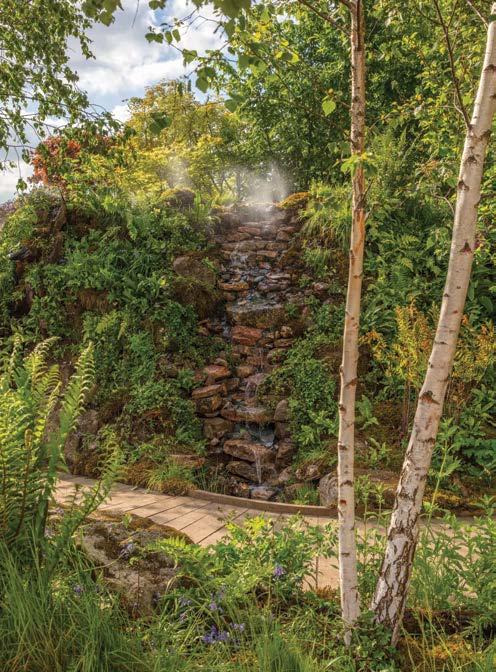
therapy, and of course gardening itself help her to manage stress, while the support of her husband provides perspective.
Professionally, Zoe wants to make sustainable gardening and green spaces more accessible, creating more resources and projects. What motivates Zoe is the belief that gardens can inspire, support and empower people to live more connected and fulfilled lives. She also hopes to extend that impact to those in society who are most marginalised and disadvantaged. On a personal level, she and her husband have put in an offer on a house in Surrey, and she is eagerly anticipating the move. We wish her well! ■
Waterfall designed by Zoe for The Wildlife Trusts’ British Rainforest Garden
Photo credit; Clive Nichols
Catching up with Friends
When Aysel Akhundova (CG 2013) joined St Swithun’s in Year 8, she quickly realised she had landed somewhere very different from her previous international school. “I came from an international school where kids coming and going was the norm,” she says. “St Swithun’s was completely different. Luckily, I was able to make friends quickly and was welcomed in. Some of the friends I made back then remain some of my closest friends to date.”
Looking back, Aysel credits her time at St Swithun’s with helping her develop the confidence and independence she draws on daily as a family lawyer. “We were encouraged to be ourselves and to be individuals,” she reflects. “I think the all-girls environment was impactful in ways I didn’t fully appreciate at the time. As a family lawyer, I need to advocate strongly for my clients, the confidence to have a voice, to question and challenge, when necessary, was something nurtured at St Swithun’s.”
Aysel recalls her teachers with fondness, she says, “They were all so different! I’ve always had a soft spot for Dr Martin. The way things were taught made such a difference, I honestly attribute getting the grades I did to that.” Aysel had wanted to move to Peter Symonds College for sixth form, but her parents insisted she stay. “I’m so grateful they did. I don’t think I would have got the grades or into Bristol to study law otherwise. I needed the support that St Swithun’s offered.” And in an unexpected full-circle twist, her husband, James, now teaches at St Swithun’s. “He’s colleagues with some of the teachers who taught me back in the day! I
still can’t get over him referring to them by their first names.”
Aysel’s ambition to be a lawyer started early, very early in fact. “I recently found a note I wrote when I was seven that said I wanted to be a ‘loyer’ (lawyer). So that was always the plan (cough, parental conditioning, cough).” But over time, what did change was her understanding of what kind of lawyer she wanted to be. “At university, I thought corporate law was the only way to go. But when I took the family law modules, I fell in love. Law stopped feeling dry, it became about people.”
After graduating from Bristol, she secured a training contract at Dawson Cornwell LLP, a leading family law firm in London. “That’s where it all began,” she says. “I loved the human element of family law, helping people through their most challenging and transformative moments, whether that’s separation, adoption, or surrogacy. No two cases are ever the same.”

But her path wasn’t without challenges. “Adjusting to university life was tough. Suddenly, it was on me to make sure I studied and I didn’t always get that right at first,” she admits. “Then qualifying during the pandemic was another big challenge. I started my training contract in 2018,
A weekend away at The Grove hotel with her son
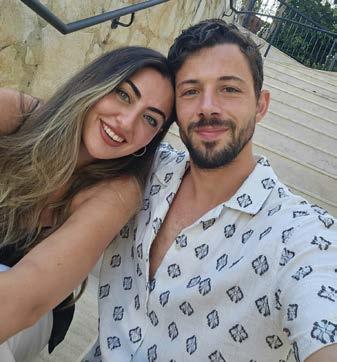
and six months into my second year, the world shut down. There was a lot of uncertainty about jobs and retention. Luckily, it all worked out, and I’m still at Dawson Cornwell, now as a Senior Associate.”
When it comes to advice, Aysel has strong opinions. “The worst advice I ever got was that ‘emotion is the enemy of reason’. I completely disagree. Emotion isn’t the enemy, it’s essential information. Our feelings tell us what matters. The key is to understand and work with them, not ignore them.”
Her best advice? “Sleep on it. Don’t make big decisions when emotions are high. Draft the email, sleep on it, and look again later. Things are rarely as urgent as they seem.”
She pauses, then adds: “And remember comparison is the thief of joy! You don’t know what’s really going on in someone else’s life, so focus on your own path.”
When asked what lessons she’d pass on to younger OGs, she doesn’t hesitate.
“Success rarely follows a straight line and you don’t need to know your exact life plan at 18, or 30! I had this perfect timeline in my head, but the detours taught me resilience and empathy in ways a smooth path never could. Don’t get so attached to your plan that you miss the lessons in the unexpected turns.”
“And perhaps more importantly,” she adds, “your career is important, but it’s not your
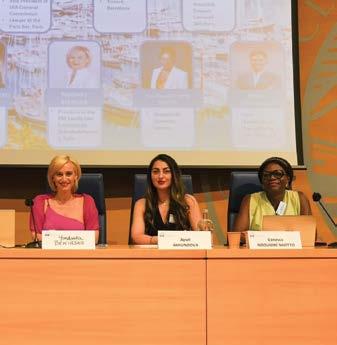
Speaking on a panel on surrogacy law at an International
entire identity. Some of my proudest moments aren’t awards or listings – they’re the times I’ve genuinely helped someone through an impossible situation. Define success on your own terms, not someone else’s.”
So, what does life look like for Aysel these days? “No two days are ever the same which is what keeps it interesting,” she smiles. “I might be in court one day, drafting documents the next, or helping intended parents navigate surrogacy laws. The variety is what I love, never a dull day!”
Work-life balance, she says, is a constant work in progress. “Some days I manage better than others. I do compressed hours so every Friday is my day with my toddler and spending time with him helps me reset. I try not to check emails when I’m with him. Boundaries are key.”
Working from home has its pros and cons, too. “I love the flexibility, but there’s no transition time – you go straight from your desk to parenting mode! Still, having a young child forces balance. His joy is infectious, and his ability to be completely in the moment reminds me what actually matters.”
Looking ahead, Aysel’s goals are both personal and professional. “My husband and I have always talked about taking a sabbatical and travelling the world with our children. It’s a dream I’m determined to make happen before our son starts secondary school!” And professionally? “Let’s just say... a Winchester or Hampshire base is something that I may be working on!” ■
Aysel and James at Kalkan
Private Client conference in Palma (Mallorca)
Catching up with Friends
We were delighted to hear from Chloë Evans (D 2016) who shared an overview of her life and career since St Swithun’s.
Can you tell us a bit about your time at St Swithun’s?
I look back on my time at St Swithun’s with real fondness. I was there from Year 2 to Upper Sixth: it was a huge part of my life. Singing was a big part of my time at school; travelling with the choir to Hong Kong and Malta and performing at the Barbican with the chamber choir were real highlights. I still can’t believe we got to do all that! Even the less glamorous moments, like sorting through endless sheet music as choir co-lead or sitting through long rehearsals, I still loved every minute. Harvey Hall and the music school were very important.
How do you think your education at St Swithun’s has shaped you? Were there specific experiences or teachers that had a significant impact on you?
I was diagnosed with dyslexia when I was seven, so when I first arrived at St Swithun’s, I really struggled academically. But what shaped me most wasn’t just the academics it was the confidence the school helped build in me. Ms Gandee used to say all the time in assembly: “Feel the fear and do it anyway.” The teachers made me believe that nothing was too big a
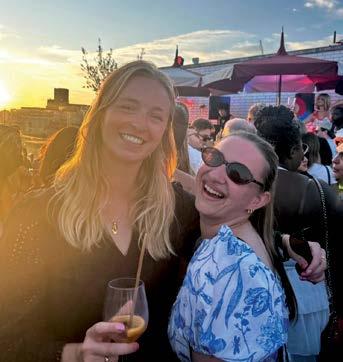
challenge; I just had to put my mind to it, start to believe in myself. And I did: eighteen-year-old me would never have imagined doing half the things I do now.
Even now at work, when I feel out of my depth, I give it a go anyway. It doesn’t always go perfectly, but I’ve learned it’s better to try and learn than to hold back. I absolutely credit that mindset to my time at school.
Can you remember what your life and career aspirations were as a teenager at St Swithun’s? Did they change and if so, what informed those changes?
I was theatre and music obsessed, so I imagined myself doing something in the creative world. I haven’t lost that passion: I studied English Literature and Theatre Studies at university, and I still sing regularly. I also help out at my partner’s family comedy club in my spare time, so I like to think I’m still a creative at heart.
Teaching a theatre module during university to high-security male prisoners opened my eyes to how much could be improved in the prison system and got me thinking more broadly about how public sector organisations could run with the same ambition and efficiency as big corporations.
That curiosity led me to consulting at Deloitte, where I now work in public sector transformation. My goal is to bring best practices into organisations that really matter and hopefully make a bit of an impact along the way.
What inspired you to pursue a career in management consulting, and how did your journey begin?
A friend already at Deloitte introduced me to consulting, and it sounded like a great way to work on meaningful projects while building professional skills. At the final stage of interviews, I met a Partner working on a prison project. I credit our shared passion about prisons with securing me this job.
Chloë with Emily Chapman (D 2016) enjoying live music. Emily was deputy head girl in 2016; Chloë and Emily are still very close friends
Could you tell us about some of the ups and downs on your path to where you are now?
Plenty! In just six years at the firm, there have been many highs and lows. One of my first projects was known for being the toughest in the industry, as earlier several firms had tried and failed. The environment was challenging, morale was low, and it went on for two years. But it helped build my reputation as someone who thrives in complex transformation work, and hopefully as a leader who delivers with impact and most importantly, with integrity.
Staying resilient through that was hard but it led to one of my biggest highs: becoming a finalist for ERP Young Professional of the Year and winning an internal consulting award. It taught me the value of sticking with something and having the confidence to speak up when things can be better.
Can you think of any particularly difficult or useful lessons you have learned along the way that you’d like to pass on to the next generation of OGs? I once worked with a formidable diplomat, easily one of the most impressive people I’ve met. We were on a complex project that was incredibly frustrating, and at the height of it she turned to me and said, “don’t get mad, get curious.”
At the time I thought it was a bit corny, but that advice has helped me stay grounded and open-
minded. When things get tough, ask questions. Stay curious. It’s the best way to keep learning and keep moving forward, especially today.
How do you manage your work/life balance and stress levels?
A big learning curve occurred about a year ago, when I took on an internal role supporting the wellbeing of over 1,000 people at the firm. I sought out experts in workplace wellbeing and the biggest lesson I learned was the importance of creating environments where people feel able to advocate for what they need and learning to do that for ourselves too.
So, I’ve started thinking about what fills up my cup and I’m being ruthless about prioritising the gym, time with family and friends, and the family comedy club. I show up better at work and feel more in control of how I grow, both professionally and personally.
What personal or professional goals are you most excited about pursuing next? Personally, I’m really into fitness and have some big goals in the gym, maybe a Hyrox one day! Who knows? Professionally, I’ve always had a quiet ambition to return to the arts. My not-sosecret plan is to take what I’ve learned in business and help transform the creative sector. There are so many challenges around scaling sustainably, and I’d love to support that space when the time feels right. I like to think I’m not quite done with the arts, rather I’m scratching the corporate itch for now. ■

Chloë at Deloitte’s headquarters in London
Former Teacher Feature
Dom Berry’s commissioned artwork of The Jill Isaac Study Centre for St Swithun’s
Dom Berry
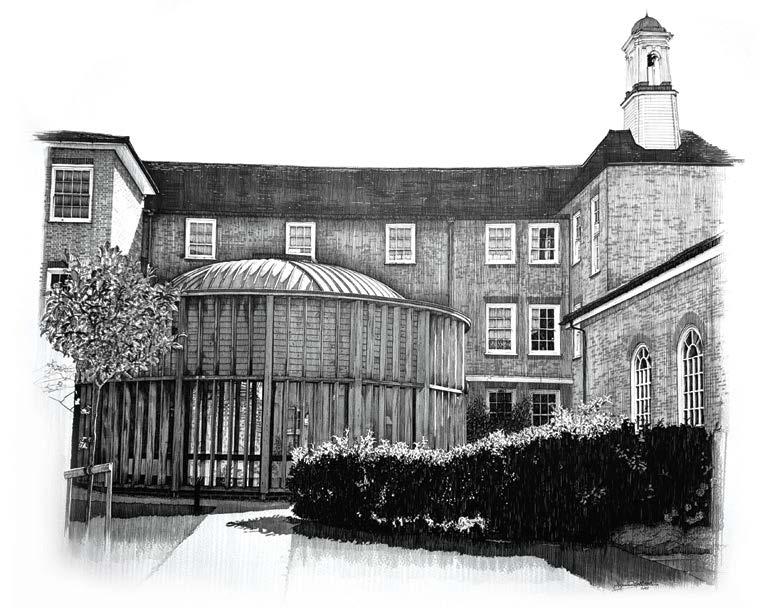
Head of Art 2020-2023
When I first arrived at St Swithun’s in September 2020, the world was upside down. I had been appointed as head of art earlier that year, just before the pandemic struck, and stepping into a new school during such an uncertain time was an extraordinary challenge. Normally, starting in a new community comes with bustling staff rooms, friendly conversations, and a chance to find your rhythm. Instead, my welcome was shaped by hazard tape across classroom floors, masks, social distancing, and staff meetings over Teams. I remember lunch was no less strange: queuing outside the day rooms below Hillcroft in all weathers, masked up, waiting to be handed a cardboard box of food to carry back to the department. As part of the boarding team, I was soon swept into the weekly ritual of mass Covid testing! How quickly we forget the huge upheaval that 2020/21 entailed. It is a testament to our wonderfully strong community that we all got on, supported each other, and made the best of it.
Leading the art department at St Swithun’s was the highlight of my career and my
proudest achievement. The department itself wanted for nothing in terms of resources, and the support from leadership was tremendous. More importantly, the atmosphere in the department was one of fun but purposeful learning and studious progress, be that a L4 or U6 lesson. The girls in the lower years would see impressive work being produced daily and feel inspired; they were on that same journey and they would reach those same heights. I loved teaching at St Swithun’s. Don’t get me wrong, teaching is a tough profession with real pressures on you professionally, but the rewards were equally powerful and made everything worthwhile.
When restrictions began to ease, I found my place more firmly among the staff. As heads of department, we supported one another and quickly became a strong team. Most of my memories of St Swithun’s are about the girls, and how phenomenal they all were. I had come to St Swithun’s with two decades of teaching experience, yet I realised almost immediately that I had arrived somewhere truly special. The students embodied
everything a teacher hopes for: they were polite, inquisitive, intellectually challenging, kind, ambitious and loyal.
I recall key moments and events in the year with fondness: the Christmas assembly, SwithLive, summer assembly and the Christmas service in the cathedral. The reaction from the girls when we performed was amazing and really gave you a lift. The choir in the cathedral, Revd Wallington’s jokes from the pulpit, all are fond memories.
Looking back over my own journey, I realise that creativity has always been my compass. At school I never imagined myself doing anything else. I didn’t have confidence in many areas, but I knew I could make and create. After leaving school, I worked as a scenic sculptor for television, and later in special effects and model-making for commercials and music videos. To this day it feels surreal to say I produced special effects on stage for Michael Jackson, Tina Turner, the Spice Girls and ACDC. There were other chapters too: working in Harrods’ toy department, managing at John Lewis. Yet it was a casual conversation with a colleague in 2000 that changed everything. When she asked why I didn’t become an art teacher, something clicked. Within months, I was enrolled on a PGCE at UWE at the age of 29. From that point, teaching became my vocation, and I never looked back.
Teaching also taught me lessons that reach far beyond the classroom. Despite years of standing in front of students, I have always found public speaking daunting. Oddly, I never once gave a spoken assembly in my entire 23-year career, though I did sing in many of them! Over time, though, I grew in confidence. When it came to giving a speech at my own wedding earlier this year, I managed it with a composure my younger self would never have believed possible.
Leaving St Swithun’s before I was truly ready was a difficult decision, though one made for personal family reasons. Those challenges are now happily behind me, but I will always miss the daily rhythm of life at the school: the camaraderie of colleagues, the inspiration of the students, and the joy of creativity shared in a community that valued it so deeply.
Life now has a different shape. Almost a year ago, I was elected a full member of the Society of Architectural Illustrators, and I take commissions to draw houses and properties throughout the year. At the same time, my wife and I have thrown ourselves into renovating our 300-year-old home. Most weeks you’ll find me in dusty overalls, bricklaying or plastering, or behind a camera documenting our progress for Instagram. It’s hard, hands-on work, but satisfying, too. In the afternoons, I tutor privately from the studio I built at home – rewarding and creative, though never quite the same as being in the lively, bustling world of Swiths.
As I look ahead, I hope to finish the house and then devote more time to my own artistic practice and tutoring. Creativity has always been at the centre of my life, and I intend to keep it that way. ■
If you’d like to learn more about Dom Berry’s work, please visit: Website: www.dominicberry.co.uk Instagram: domberry_artist
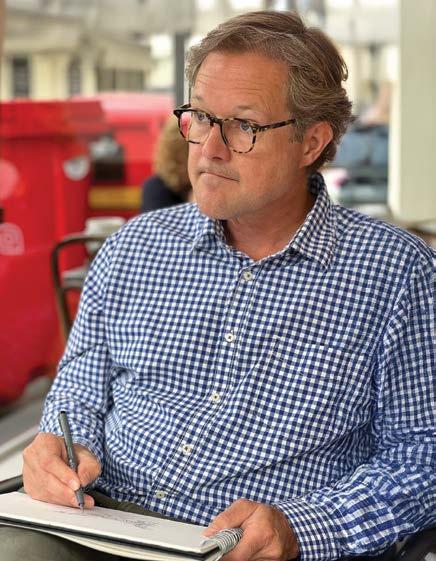
Dom Berry at work
Jonathan Brown Former Teacher Feature
Head of geography, deputy safeguarding lead and head of co-curricular activities, 1996 – 2025
It takes a minute to calculate that impressive St Swithun’s career arc denoted by the small dash; it is indeed 29 teaching years! But Jonathan Brown’s attachment to the school goes back to his sister, Susannah Prindle née Brown (CG 1984), an OG herself. “I already felt a connection,” as well as being a native Wintonian, with his stepfather serving as a teacher and housemaster at Winchester College. “I intended to stay for just a few years, but I loved it so much and had so many opportunities that I never felt bored. The years honestly flew by!”
Jonathan’s willingness to take part in all aspects of school life, beginning at just 26 years of age, soon defined his time at St Swithun’s. “I became assistant day housemaster of Caer Gwent, volunteered as a trainer in the Duke of Edinburgh (DofE) scheme, and also became a house tutor in Earlsdown, something I continued for 15 years” and all in addition to his regular teaching. By 2009, Jonathan was managing the DofE scheme and head of geography, the latter role until his departure this summer. “I was also head of co-curricular from 2014 and led several overseas expeditions as head of DofE.”
Those overseas expeditions would take Jonathan and his students around the globe to Borneo, Iceland, Kenya, Tanzania, Malawi and Uganda. “Spending four weeks in challenging environments, working with local communities, and climbing mountains with St Swithun’s students, seeing them gel as a team, those are amongst my fondest memories,” he reflects. Taking those expeditions in total, Jonathan calculates, “I had spent well over a year on residential trips during my time at the school!”
Jonathan also led geography field trips across the UK, from the Rheidol study centre in Wales to the Lake District and Pembrokeshire, even helping with the organisation of trips to the Azores and Italy’s Amalfi Coast. “Because of my fieldtrip experience,” he adds, “I was also invited on several sports tours with the PE department, including two to the East Coast of the United States and to Canada.”
His path into teaching wasn’t one he had initially planned. “When I was at school and even at university, I never saw myself pursuing a career as a teacher; however, I did come from a teaching background,” he admits. “But my Mum suggested that I do a PGCE and, short of anything better to do, I continued with this after graduating from Birmingham university and continued from there. I knew that I loved my subject and wanted to teach at A level. I had always been passionate about trying to make sense of the human and physical landscape,” Jonathan says. “I wanted to be able to share that with others.”
His enthusiasm for both teaching and geography began to take shape during his teacher training. “I fell in love with teaching during my teaching practice, particularly from a stint that I did at Lordswood School for Girls in an inner-city area of Birmingham. I remember being invited on a residential trip to Shropshire
Trip with my wife on the ferry from Sicily to mainland Italy
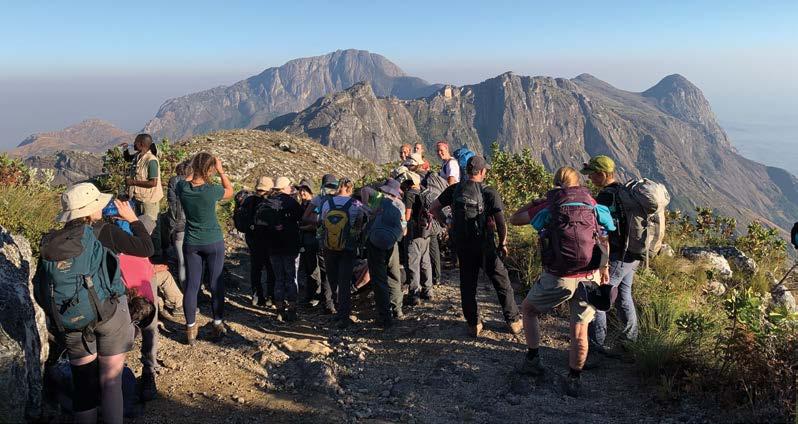
Trip to Malawi 2019
for a weekend and seeing how some of the students were inspired by the landscape.”
That passion stayed with him throughout his career. “I loved being a classroom teacher. Seeing students inspired by the subject was my main motivation and I certainly thoroughly enjoyed teaching such motivated and enthusiastic pupils, and I can honestly say that I enjoyed all my classes at St Swithun’s,” he says. “Another highlight was leading my team of geography teachers. I worked with some incredible professionals over the years, and we achieved great results and had a lot of fun too.”
Jonathan’s contributions stretched far beyond the geography department. As deputy safeguarding lead, he supported students through moments of personal challenge and change. “Although it was very challenging at times, it was great to see students come through difficult times with the support of an exceptional pastoral team,” he reflects.
On a lighter note, he also fondly recalls helping with drama productions in his early years, taking on roles in Pride and Prejudice, Maria Marten and the Red Barn, and the staff pantomime Cinderella, where he played Buttons alongside Hilary Mitchener’s Cinderella. “I loved the camaraderie and teamwork of those productions.”
Teaching is as much about life lessons as it is about learning: “You have to have a lot of
patience and empathy,” he reflects. “You learn to see things from different perspectives, to manage your time, and to stay calm under pressure. I’ve also learned not to worry about things beyond my control and, eventually, how to switch off from work.”
And now that the switch-off from work is more extended, Jonathan brings us up-to-date: “My wife and I have just returned from a ten-week campervan trip through France, Italy, Slovenia, Croatia, Bosnia, Montenegro, Albania, Greece, Sicily and the Alps. We both love exploring and trying to discover the real country rather than just the tourist hotspots.”
Back home, the couple plan to catch up on long-postponed house projects and spend time with their grown-up children and their partners. “We’ve got lots of ideas for future trips,” Jonathan says. Perhaps taking a lesson from his many years at St Swithun’s, Jonathan practises his life-long-learning skills: “I’m also trying to improve my French. My aim is to be able to hold a proper conversation next time we go to France.”
Jonathan was recently nominated and named a finalist in the Tatler Schools Awards for the Unsung Hero category, recognising those who work tirelessly behind the scenes and are invaluable to school life, a testament to his enthusiasm and dedication at St Swithun’s. We send Jonathan our heartfelt congratulations on this welldeserved recognition! ■
Remembered With Affection
Betty Crowther
23rd September 1927 –
5th February 2025
Former Assistant Bursar until 1988
Some of you will remember Betty Crowther, who was part of the fabric of St Swithun’s for many years. Betty passed away peacefully in February this year, aged 97. Born in Southport, Betty was the youngest of three children.
After school she joined Martin’s Bank as a cashier, but it was in 1950 that her life changed when she met Neville Crowther. Apparently she was particularly taken by his MG sports car and soon after they met they were married. Their son Trevor was born in 1953, and when Neville’s job took the family to Winchester, Betty joined St Swithun’s, a move that would shape the next chapter of her life.
Betty started in the bursary and quickly became indispensable. According to a former colleague “she seemed to know how everything worked and, more importantly, how to make things work when they didn’t!” Day to day she kept the wheels turning amongst staff: catering, cleaning and housekeeping, making sure that everything ran like clockwork. She eventually became assistant bursar, supporting the Headmistress with everything from concerts and open days to the annual speech day which involved a significant amount of
catering as well as a marquee. A particular highlight of Betty’s career at St Swithun’s was helping mastermind the centenary celebrations, in May 1984, which included the very successful visit of Her Royal Highness, the Princess Royal (Princess Anne).
She was admired for her professionalism and thorough knowledge of every aspect of the bursary, from accounts and payroll to the management of school lettings during the holidays. She acted as coordinator to the board of governors, the bursar’s personal assistant and indeed was knowledgeable in all aspects of the bursar’s office.
Colleagues across all departments valued her approachability and her readiness to assist with any difficulty, no matter how large or small. She was firm but fair and well respected. A former colleague has said that she was “someone who was approachable if there was a problem whichever part of the school you were employed in”.
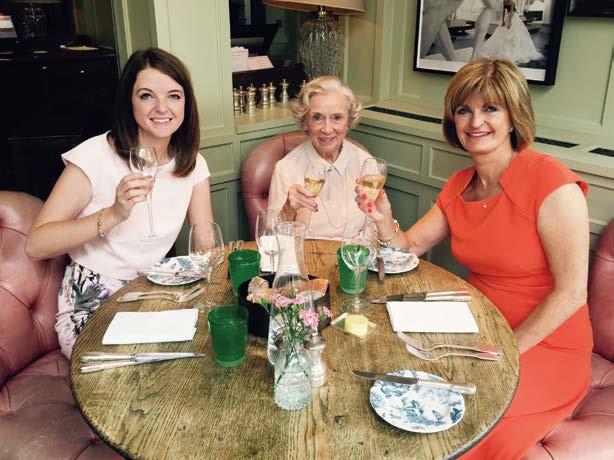
Betty also formed lasting friendships within the school community. In her latter years as assistant bursar she shared a close professional and personal bond with the then Headmistress Joan Jefferson (who subsequently became Lady Appleyard). Joan recalled a story from a previous headmistress about Betty’s immaculate appearance, which was never sacrificed, even in a crisis! When the junior school caught fire in the small hours, Betty arrived perfectly turned out in full make-up. Her first comment to the headmistress who had just returned from a black tie function? Not about the fire, but: “What a beautiful dress!”. Following her retirement, Betty was persuaded to remain as Joan’s personal assistant, continuing to serve the school with the same loyalty and dedication as when she was assistant bursar.
Animals were another constant in Betty’s life. Her golden labrador, Kim – a birthday gift from her sister Grace and niece Hilary - became a familiar sight at school. Kim’s
only quirk was a dislike of anyone in a white coat, thanks to rather too many visits to the vet! One unfortunate lab assistant found herself pinned against a wall by an indignant Kim, much to everyone else’s amusement.
Outside school, Betty’s faith played a big part in her life and in retirement she devoted her time to Winchester Cathedral, managing the busy information desk team of around 40-50 volunteers for over 5 years. She commissioned the new altar cloth in the Epiphany Chapel in memory of her husband, Neville, who passed away in 2017 and the kneelers in the Chapel in memory of her son, Trevor, who passed away in 2015. Betty will be fondly remembered by all who knew her at St Swithun’s – not only for her dedication to the school and its ethos, but for the warmth and style she brought to her role as assistant bursar. ■
Written by Betty’s niece, Hilary Omissi OBE
Betty with her niece Hilary and great niece Sophie at Limewood Hotel
Remembered With Affection
Margaret Lois Froggatt
01 October 1935 –02 December 2024
Most staff and students will remember Margaret Froggatt, Mrs Froggatt, as their colleague, friend, singing teacher and mentor, someone who stood up and made you feel good about yourself. She was definitely all of those. She was also a sister, mother, and grandmother, and perhaps little known to some, a classical contralto soloist who had achieved a few instances of those incorrectly-attributed Andy Warhol “fifteen minutes of fame”.
My mother’s fame came in several guises: Born on the same day, in the same year as Julie Andrews, she was also part of a musical family; her parents would sing and play the piano, and my mother would accompany them. When she was about 18 years old, she made one of her first “78” recordings, singing “Still is the Night” for a local radio station near Manchester. She attended the Royal Manchester College of Music, along with Harrison Bertwhistle, the modern composer, and John Ogden, the pianist, and later took singing lessons with the renowned Roy Henderson, famous for “performing at the first Glyndebourne season and teaching Kathleen Ferrier” (The Guardian, 2000). In the late 1960s, she performed on Opportunity Knocks, hosted by Hughie Green, and won ITV’s Saturday morning Talented Teacher three times in the 1980s. She was offered a recording contract with Malcolm McLaren for £100, but turned it down; he ended up paying Montserrat Caballé significantly more.
Margaret was born in Hazel Grove, Cheshire, barely four years before the onset of WWII. Living close to Manchester meant the family did not escape the bombs; sometimes she spoke about the makeshift bomb shelter in the back garden and Billy, the boy billeted from London to stay with the neighbours. There is even a photograph of the family and
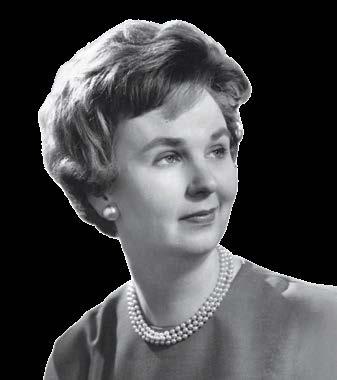
neighbours. Mummy was made from a time when you made do; you cared for your family, friends, and neighbours; you looked after strangers.
She hoarded. Sometimes to the point that you had to open cupboards slowly, which annoyed my father intensely. We repaired, mended and passed down clothes, or gave them to others. The fridge was always stocked, and as for useby dates, those meant nothing. If something was in the fridge, you could eat or drink it. We were taught to appreciate the importance of finishing the food on our plates and then using the leftovers in the fridge during the week. Nothing was wasted. Empty milk bottles were left outside for collection; you always returned other bottles or glass jars and collected the return-deposit. That mindset teaches you not to waste anything. These are life lessons that even her grandsons now live by.
Mummy was always the first to sing and dance, to be wickedly naughty with her sense of humour. All she had to do was give a look or a comment, which either made you roll your eyes or bite the inside of your cheek so you didn’t laugh. Mummy brought us up to love singing, dancing, poetry and life. As I remember her, I keep returning to the words of Alice Walker in Poem at 39:
“tossing this and that into the pot; seasoning none of her life the same way twice;”
Margaret in her early 20’s
Life was not without its mishaps. She was prone to driving into lampposts, trees and bits of old tyres on the road, but she always survived. A few years ago, she drove her car into a road divider. When asked if she had had anything to drink that morning, her reply was, “Yes, a cup of tea and a glass of water,”. The policeman was not amused.
Margaret always dressed elegantly and appropriately. She had a collection of shoes, many of which were high heels, that would have put Imelda Marcos to shame. Until recently, she refused to part with most of them. She was also a stickler for good grammar, reprimanding vehemently anyone on the radio or television who “split the infinitive” or used an adjective in place of an adverb.
Mother was the first friend a young French au pair made in Altrincham, Cheshire. To this day, the lady, who became my godfather’s wife, has never forgotten Margaret’s selfless friendship. She not only took those who needed help under her wing, she was also a matchmaker!
She inspired so many lives, young and old, through her singing, teaching, mentoring and humour. Margaret taught us, and every pupil she met, to be curious, to seek and to discover. The first poem Mummy taught me was “Someone”, by Walter de la Mare, a poem of curiosity, published in a collection of
poems for children, entitled “Silver Pennies”. The preface states, “You must have a silver penny to get into Fairyland”, and so I grew up believing in fairies.
She brought mirth to the classroom, telling her students that if they didn’t behave, she’d take off her wig, stamp on it and throw her wooden leg. (One day, she invited a boy who didn’t believe her to pull her hair! I leave the rest to the imagination.)
She used her singing to support an elderly pupil with dementia and to inspire younger students to overcome their struggles. In the words of one of her pupils, “Your mother was truly unique and one of a kind. I will forever hold her in my heart. She inspired me in ways that I will remember forever. She always had the kindest soul, and if I can give even a fraction of what she gave to the people she cared about, to the world, then I know I’ve done a good thing.”
Margaret Froggatt left us on 2nd December 2024. She believed in God and believed she would eventually be reunited with those she had loved and lost. So, if Margaret made a difference in your life, please find a moment, a time, a day, to pay that forward and continue her legacy. ■
Written by Margaret’s daughter, Sarah Froggatt CG 1979
Margaret visiting Sarah, her daughter, in Singapore, January 2010
Remembered With Affection
Susan Mansergh
15th January 1936 –
3rd December 2025
Former Head of Geography and Housemistress 1963 -1996
Susan Mansergh was a much-admired geography teacher and active member of the Stockbridge local community. She had a deep sense of duty and an unfailing generosity of spirit.
Born in 1936 at Grey’s Hospital, Pietermaritzburg, South Africa, Susan was one of three children. Her father, head-hunted as headmaster to rescue Hilton College, at that time a struggling boys’ boarding school, had moved the family to Natal from the UK. In 1947, following the end of the war, the family returned to England, settling first in London and then at Penstrassoe Barton, a farm in Cornwall. Susan went to Queen Anne’s School, Caversham, distinguishing herself both academically and on the sports field, becoming House Captain of lacrosse and cricket and swimming for her school.
Susan went on to read Geography at St Hugh’s College and played lacrosse for Oxford. Afterwards she did post-graduate teacher training at Cambridge. She was awarded Blues at both universities. Her teaching career began in High Wycombe, but soon moved to St Swithun’s School, Winchester, where she stayed for the rest of her working life, as head of the Geography Department. Former pupils remember her with great affection, describing her as an inspirational teacher who instilled a love of geography and learning.
When she finally retired in 1996, she threw
herself into the life of Stockbridge, the Hampshire village she had made her home. She was a stalwart of the local church, supporting the upkeep of ‘Old’ St Peters and loved attending services at St Nicholas Church Leckford. She played an active role in the Stockbridge Amateur Dramatic Society and was a regular walker and organiser of outings for the University of the Third Age.
While having no immediate family of her own, she was very much family to many. Susan was always ready to support her parents, siblings, nephews and nieces. She energetically arranged many get togethers for friends and family, meticulously organised picnics at the Chichester Festival, and annual outings to Hyde Park and the Proms. She is remembered as “a model of positivity, being always cheerful.”
Sue at Penstrassoe Barton Farm, Cornwall c.1959
A passionate traveller, Susan’s adventures often with her friend Joanna, took her far afield, ranging from Turkey and Ukraine, to the Nepalase mountains and the British School at Rome. She was an inveterate letter writer, a keen family historian and a formidable crossword solver.
Susan is survived by her sister-in-law, Pam, brother-in-law, Ted, five nephews and nieces, several godchildren and a wide circle of friends, all of whom will remember her with deep affection and gratitude. She had a full and rich life which we and many friends and family were fortunate to be part of. ■
Written by Sue’s nephew, Andrew Jackson
Sue, Christmas Day 2019, at her niece Ellie’s
Following the announcement of Sue’s death on the OGA Facebook page, many people shared fond memories and spoke of the lasting impact she had on their lives – here are just a few of their reflections:
● I loved my geography lessons, especially the one on Italy....and look where I ended up living!! Yes, an inspirational teacher.
● She taught us how to read an Ordnance Survey map in conjunction with a compass which I have always found useful. She came to the Old Girls Reunion for many years which was such a joy. She never looked any older.
● She was very definitely my favourite teacher and I still remember how oxbow lakes were formed. Also, the diagrams and maps we drew using thin-nibbed mapping pens! She made a huge impression and I still love geography.
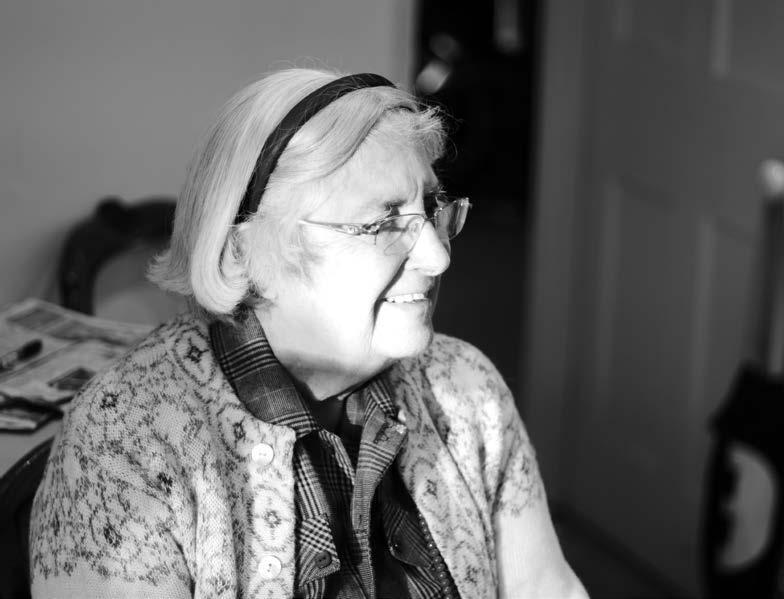
She was an inspirational teacher, fondly
I always think of her when I see a bend in a
Remembered with such affection, Sue inspired me to be a better student and a better person. It was a privilege to have known her and have shared a friendship
She was a fabulous teacher. I still remember learning about glaciated valleys with her. Miss Mansergh was a wonderful teacher, I always enjoyed her lessons! She also used to wave at me from her flat window when I
Remembered With Affection
Ruth Walton née Pierce
30th July 1940 –1st April 2025
Former Junior School Teacher / Deputy Headmistress 1982-2000
Ruth was brought up in Winchester by her father and grandmother. She attended County High, the girls’ grammar school in Winchester (now Westgate School), before going on to Bromley, Kent, to complete her teacher training. Education ran in the family – her father was a master at Peter Symonds, then the boys’ grammar school.
Her teaching career began in Gillingham at an infants’ school, and it was during this time that she met Peter Walton at a local dance. Peter had just returned from military service in Hong Kong, and the pair were soon inseparable. They married on 8th September 1962, when Ruth was 22 and Peter 23, beginning a partnership of more than six decades. Together they raised two daughters, Sarah and Joanna.
In the late 1960s, the family returned to Winchester to be near Ruth’s grandmother. Once re-established, she resumed teaching infants at Nethercliffe School. In 1982, Ruth joined St Swithun’s Junior School, where she first taught infants before becoming deputy headmistress, a role she held with distinction until her retirement in 2000. She was admired by colleagues for her steady hand, her fairness, and her gift for building bridges between staff and leadership. For generations of pupils and teachers alike, she left an enduring mark.
Ruth’s retirement was enriched by the joys of family, friendship and creativity. She took great pleasure in her involvement with the Embroiderers’ Guild, the Women’s Institute, the Winchester Music Club Choir and her local book club, where her warmth, humour, and generous spirit were always evident. Those who knew her remember her love of
flowers – fresh blooms graced the staffroom each week during her working years – her skill with a needle, her elegant style, her calm and reassuring presence, and her sparkling sense of humour.
Ruth was cherished as a colleague, a confidante and a loyal friend. She will be deeply missed by her beloved husband Peter, her daughters Sarah and Joanna, her wider family and the many friends whose lives she enriched. ■
Written by Ruth's family
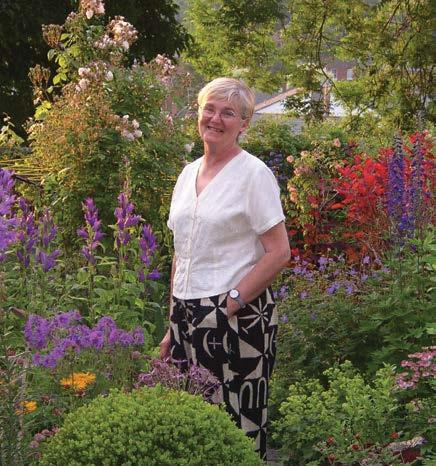
Ruth enjoying a day by the sea
Ro (Rosemary) Rickett née Ducat (HA 1959)
4th July 1942 –29th November 2020
Ro sadly died aged 78 in November 2020. She often spoke of her time at St Swithun’s with great fondness, and her family recall how warmly she reminisced about her schooldays in the 1950s – playing lacrosse in the winter, learning to dive in the school pool, and proudly reminding anyone who might forget that she was once the recipient of the much-coveted Deportment Cup! It was also at St Swithun’s that Ro met her dear friend Sue Simpson (Vigor), 1959. Though Sue later settled in Edinburgh, their close friendship endured across the decades.
Ro grew up in Middlesex and joined St Swithun’s from Enfield. After school, she spent a formative year in Paris before moving to London at the height of the swinging sixties. It was there she met her future husband, John Rickett. The couple married in 1968 and later relocated to
Devon, where they raised their three children – Sophy, James and Lucy.
Ro’s life in Devon was full and richly lived. She was a much-valued member of her community – serving as an advisor at Citizens’ Advice, a school governor, and later as a magistrate. Music was a lifelong passion, and she gave generously of her time and talent to the Shaldon Festival, where she served as Chair during its 30th anniversary year in 2019. She also sang with both the St Peter’s Church Choir and the Shaldon Singers, helping the latter grow into a flourishing choral society.
Whether on the tennis court, golf course, or at the bridge table, Ro was as sharp as she was sociable. She had a famously tricky backhand slice, a keen strategic mind when it came to cards, and a delicate touch on the green – becoming Ladies’ Captain of Teignmouth Golf Club in 2007.
In her later years, Ro found comfort, companionship and great conviviality with Kevin Sheridan, her much loved partner of 25 years. The two enjoyed many happy years together, playing bridge, travelling and holidaying with mutual friends. She also relished time spent with her evergrowing family – including her seven grandchildren, of whom she was immensely proud.
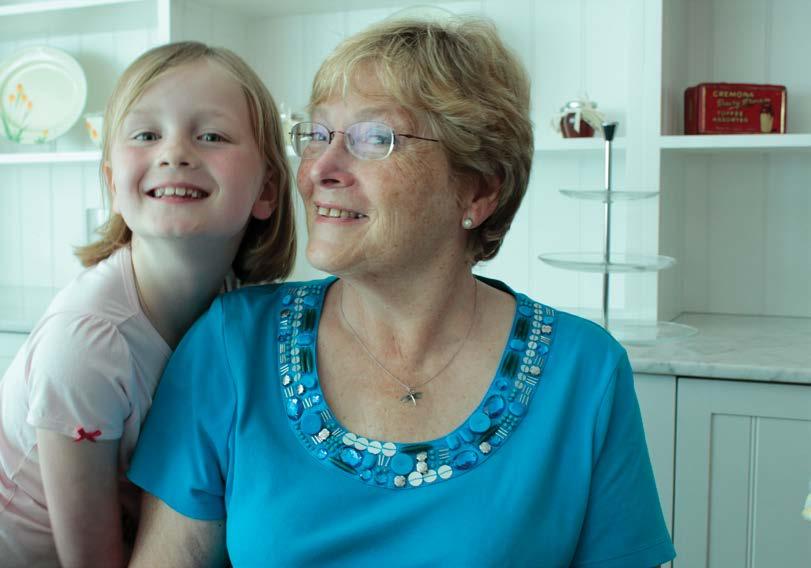
Ro lived a life filled with warmth, generosity and care for others. She is deeply missed by Kevin and the rest of her family, who remember her humour and zest for life with love and affection. ■
Written by Ro’s daughter, Sophy Rickett
Ro in 2012 celebrating
eldest granddaughter, The annual publication for St Swithun’s Old Girls, former parents and staff
Remembered With Affection
Nancy Safford née Marshall (HA 1946)
15 January 1929 –27 August 2021
Nancy Safford, was born in 1929 in Chislehurst, Kent. With nature all around, chickens next door and pets, her early years with her brother Geoff and sister Gill were happy. With the outbreak of war, they moved to Clevedon near Bristol. The bombing of nearby Bristol and the sound of guns was a nightly backdrop.
In 1942, when Nancy was thirteen and away at boarding school, her mother died suddenly. Nancy took a substitute parent role for her nine-year-old sister Gill, so Nancy’s move to St Swithun’s shortly after must have been difficult for them both.
During her time there, the school buildings were in use as a military hospital, so lessons and dormitories were in large Victorian houses in Highcliffe.
Despite the difficult circumstances, she spoke fondly of the school which fostered her deep knowledge and love of literature and culture, and the capacity to produce often startlingly pertinent references and quotations, or entire poems, into her late 80s. She would have liked to go to university, but times were hard and decommissioned men from the services had priority. St Swithun’s was all the more important to her for this.
After the war, her father retired to nearby Chilbolton and Nancy stayed with him after leaving school, working at Winchester
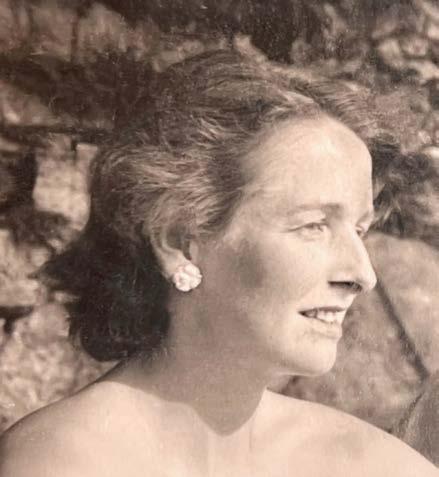
Cathedral with Roger Lloyd, an influential Anglican priest and Christian Socialist whom she had met through the school. He was a lifelong influence for her; this was an important and happy time.
She then took an intriguing series of jobs, including stints as a secretary for a flamboyant Cambridge don and then for the Royal household, bringing back colourful accounts for all to enjoy.
She married her husband John in 1958, moving to Richmond in Surrey. Three children were born between 1960 and 1967, and she often joined them in their hobbies, such as horse-riding; one even won the school squash cup, while she herself ended up with tennis elbow. While raising her family she took on much voluntary work in healthcare and justice, campaigning
Nancy on holiday in about 1957
successfully with the National Association for the Welfare of Children in Hospital to change the practice of allowing parents very little access to their children in hospital. She was active as a juvenile court magistrate, in the local Community Health Council and with a youth counselling service Off the Record, still active today.
When John became ill with heart failure, for seven years until his death in 2007 Nancy was his carer. She stayed physically fit, going on long walks well into her 80s and remarkably, her striking chestnut hair did not start to grey until she was nearly 90. In later years, in a local support circle for the
elderly, memory problems led her to observe, wryly, that she was not sure if she was a helper or patient; the answer was surely both.
Nancy had great determination and loyalty, incisive perceptive powers, a gift of spoken and written expression, and deep empathy. These qualities not only advanced the causes she cherished but also left an example for those who knew her, not least her three children and six grandchildren, who continue to be inspired by her integrity, compassion and strength of spirit. ■
Written by Nancy’s children, Judith, Nick and Roger
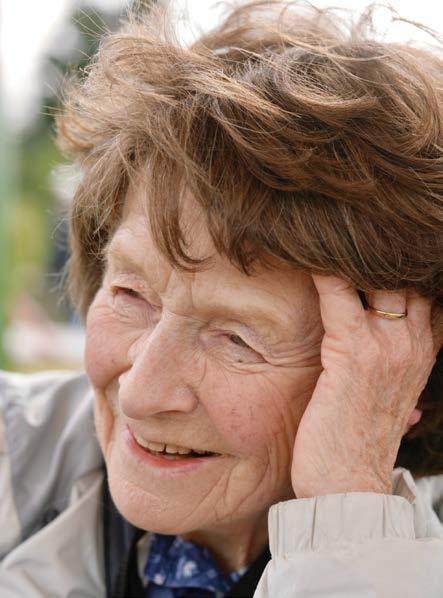
Nancy on a day out with grandchildren in 2011 (age 82)
Remembered With Affection
Sarah Lucas (HA 1948)
1st January 1931 –25th October 2023
Sarah was a well-travelled and welleducated woman with a successful business career at British Home Stores, followed by a long and happy retirement in Oxfordshire. Her nephew and godson, Edward Lucas sent us his remarks made at her funeral and a poem by Sarah’s sister-in-law:
Ten years ago I dedicated a book to Sarah, my “aunt, godmother and friend.” It was the least I could do, given how she has shaped my life.
Paradoxes abounded. She disliked what she called tribal gatherings and family chitchat. She complained that the Lucases were stiflingly clannish, the men dreadfully badly dressed, and the women downtrodden. Yet she was fiercely loyal to her relatives, both living and dead, particularly to her father’s memory and to her mother’s family, the Randolphs – compiling an archive that she bequeathed to the village of Steeple Aston.
Her relationship with the church was, in her own words, semi-detached. Her spiritual guidance to me was limited. A strict instruction to abjure all modern translations of the bible, and all contemporary liturgy, and to take church doctrines, particularly regarding the place of women in the world, with great scepticism,
Yet she was a model godmother. No birthday went unmarked. She had an eagle eye for my faults, and gave unstinting, sometimes scorching advice about how to remedy them.
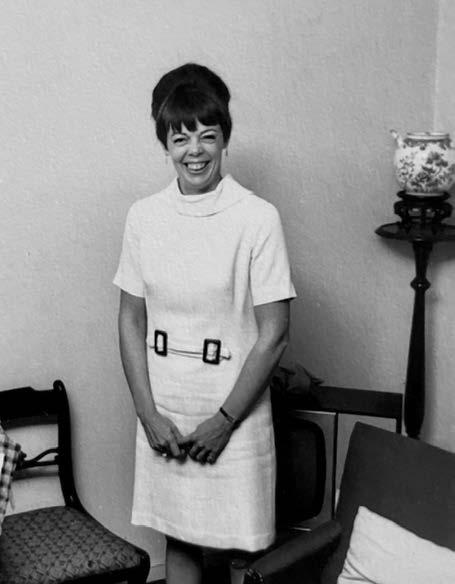
Going through her papers, I found she had kept every letter I wrote to her since the age of five; I have kept almost all of hers. One of them begins “I wonder if you realise how annoying you have become”. To be clear: that was from her to me. I was cross at the time. In retrospect she was right.
Most of all she was a friend, in fact my oldest friend, from my first solo visit to London, undertaken with trembling excitement in 1969. She claimed not to like or understand young children, and she was certainly the first grown-up to treat me as an adult. That was fun, mostly. Later, when I really was an adult, I would sometimes have to remind her that I was no longer aged six. I suspect I’m not the only one.
If she disliked children, she loathed old age. She remained at heart, and in her own mind’s eye, to the last, a strong, independent professional woman, a breaker of hearts and of conventions, free in her decisions and her opinions.
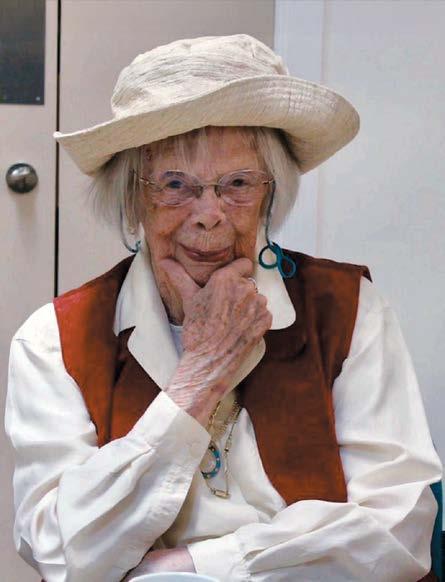
She was plagued by her moods. But she was happy in many places: as a student in Edinburgh, a social worker in Canada, sailing with those lucky boyfriends, in the buzzy Camden of the 1960s and 70s, in Kidlington, and lastly in Wantage where she quickly acquired a new circle of friends and admirers.
But I remember her as happiest of all in Steeple Aston, in her early retirement years with Jean, cut short far too early in 1992. Some of us were here in this room for Jean’s funeral, and I’m glad that we meet here now to celebrate Sarah’s life. A good party, she said, and no moping.
So without moping, please fix in your mind your happiest, funniest, most striking, paradoxical, impressive memory of our remarkable relative, neighbour and friend, and carry it with you. She may be gone, but she’ll never be forgotten. ■
Sarah was a stylish dresser in all circumstances, throughout her adult life – perhaps a legacy of having to wear a school uniform that she detested.
For whatever you say about Sarah
The opposite’s equally true: She was blunt –She was sharp –She was generous and kind
But wilfully blind
To the impact on others of speaking her mind. She had powerful opinions And no inhibitions.
She would fiercely defend Her right to offend
Those in charge, if they dared to cause friction. Then, into reverse, And she’d feel no remorse
At espousing complete contradiction! But Sarah had charm and perception which endeared her to friends and to family, for we all of us knew that her love filtered through, lighting up her robust personality.
Poem by Morar Lucas, Sarah’s sister-in-law:
Remembered With Affection
Susan Jane Kelly née Isaacs (ED
1951)
24th February 1933 –4th March 2025
Sue was born in North London on 24th February 1933. She was just 6 years old when World War II broke out and was sent to the country for her safety, separating her from her parents. These were not happy times and she was glad to be eventually reunited with her parents.
Sue arrived at St Swithun’s School in September 1946 (Earlsdown House) when she was 13, going into Form Lower 5B. Sue left in April 1951 (Upper 6). She was Head Girl in 1950.
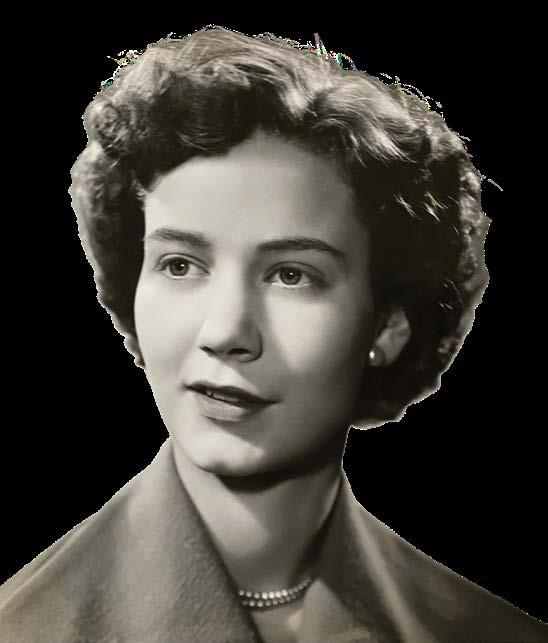
Sue made lifelong friends during those schooldays and kept in touch with them right to the end of her life. In fact, she even attended the funeral of a schoolfriend only two weeks before she herself died. Her links to St Swithun’s and her happy times at school were important to her.
After leaving St Swithun’s, Sue went to drama school in London – where amongst other skills, elocution was on the syllabus. Sue had a beautiful speaking voice and, many years later, was asked to put her training to use by helping a novice vicar with his projection.
In 1953, she met and married her husband, Graham Kelly. They set up house in England and then, in 1960, Graham and Sue moved to Jakarta just after their first son, Simon, was born. Due to Graham’s job, they were soon on the move again, this time to Trinidad where their second son, Nicholas, was born in 1963. After a brief time back in England, they moved
to Antigua. Four years later, Graham joined the Foreign Office, and they were posted to Barbados. It was during her years in Barbados that some of her happiest times were spent and, once more, deep friendships forged.
Graham was posted back to Trinidad in 1976, but sadly during this time their marriage ended and Sue returned to England. Her return coincided with her parents’ retirement from the business they had been running. It was a happy time for the three of them, joined by Simon and Nicholas in their school holidays, in the lovely house that Sue and her parents shared in Farnham. After many years as a diplomat’s wife, Sue began a new career, first with Yellow Pages, then as a Careers Officer for Surrey County Council, before joining former colleagues in their new business developing educational computer programs for junior schools.
Eventually, Sue retired and moved from Farnham to the nearby village of Rowledge.
From the beginning, she loved being in Rowledge. She said that her new house was the first house she had chosen on her own and furnished on her own! Sue joined St James’ Church in the village. She was a very active member of the church community and helped with all the events that were organised, from cake sales and other fundraisers to the Sunday School. She hosted communion in her own home for those who were unable to get to St James’ on Sundays and then cooked her guests a slap-up lunch afterwards. Her friendship and hospitality made these monthly get-togethers very special occasions, much appreciated by those who attended.
Family was very important to Sue. We have happy memories of her ninetieth birthday, in February 2024, when she said she didn’t want any presents (she said that, if she had presents, there would just be more to declutter eventually!) but would love tea at The Ritz. So, the family travelled from Jersey, Barbados, the UK and Canada to be with her at the celebrations. It was a time for us all to be together and mark this special birthday.
In 1991, Sue’s first grandchild was born. Eventually, there were five grandchildren, now ranging in age from seven to thirty-three! She followed their lives in great detail, with words of wisdom and encouragement. In 2018, she spent a week in Jersey, prior to the wedding of her first grandchild, Georgia, which was a special time for all the family, with lots of laughs and memories for us to look back on. Luckily, before she died, Sue was able to meet her older two great-grandchildren, born in 2023 and 2024 and travelled up to London for her oldest grandchild’s baptism. The photos of that day record the smiles and happiness of all four generations.
Sue’s funeral in St James’ Church, Rowledge, in April was overflowing with family and
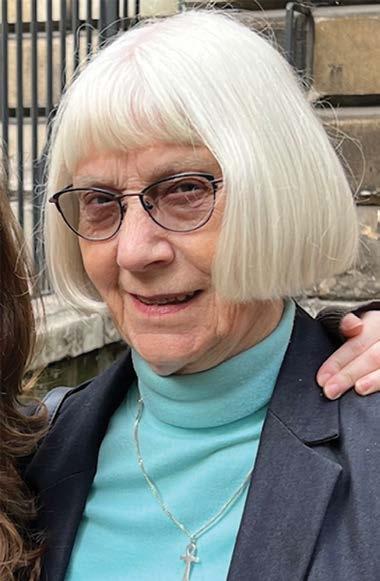
friends. During the years she had lived in the village, she had made many new friends not only at church but also in the community. Old friends came from far and wide, including friends she had made over 50 years ago in the Caribbean. Many others followed the live stream online.
Despite the challenges of her early life, Sue always had a positive attitude. Right up to her last days in hospital, she turned to her sons and said “We all have so many blessings to be grateful for.” Sue’s final illness was unexpected and brief and she died peacefully, with her family next to her, on 4th March 2025. She will be much missed. ■
Written by Susan’s sons, Simon and Nicholas Kelly
Sue at her granddaughter’s confirmation in London, 2022
Remembered With Affection
Gillian Mary Pulzer née Marshall (HH 1950)
19 July 1933 –9 February, 2024
Our mother was born in Chislehurst on 19 July 1933, at home – the magical sounding address of Willow Bank, Willow Vale, Willow Grove. Her sister Nancy, who also attended St Swithun’s, described it like this:
‘[my brother] Geoff and I had been taken for a walk, and returned to be told that Mummy had gone to bed and we could go and see her as she had a surprise for us. She looked tired but pleased, and on the other pillow was a very small baby, awake but quiet, with blue eyes. I couldn’t imagine how it had got there, and thought it a bit odd that my mother had undressed and gone to bed in the afternoon just to look at the baby, but everyone seemed very happy so we had a good look and then had to go and have tea. I learned that this was a sister who would stay with us always; so we were all pleased, and enjoyed watching Gill being bathed, fed and generally played with.’
Gill learnt to sew, knit and mend from her mother and this may be where she got her lifelong love of making and doing with her hands – upholstery, joinery, stained glass, repairing cane chairs and of course cooking and gardening – she was always active.
During the war, her family moved to Clevedon to live with their maternal grandmother. Clevedon was not a target, but was close enough to Bristol to get the odd stray bomb, all of which Gill slept through.
Tragedy struck in 1942 with the death of her mother, resulting in Nancy and Gill being sent to boarding school – first a prep school in Devon and then St Swithun’s in Winchester – a city to which she formed a lifelong attachment. She left school with a love of poetry (she would write to and receive letters from John Masefield) and a detailed knowledge of English Church architecture.
After school she trained at a London cookery school and gained a job as a chef in Oxford, and it was now that she was to meet our father, Peter Pulzer, who remembered it as “… the most important event of my life and certainly the one that has brought me the greatest happiness… On 3 December 1960 my friend John Lemmon and his wife Pat gave a party at their house. At some stage of the evening
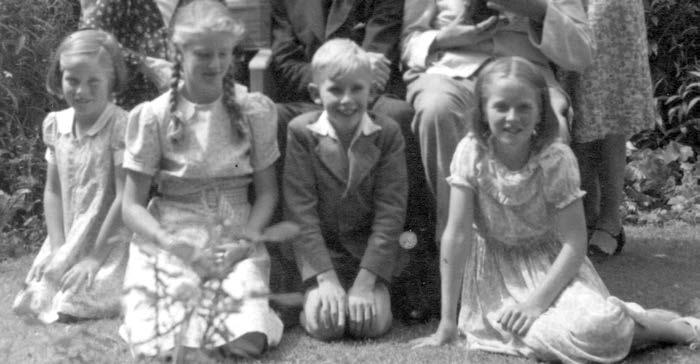
Gill first left, her sister Nancy first right (middle, cousins Jack and Margaret)
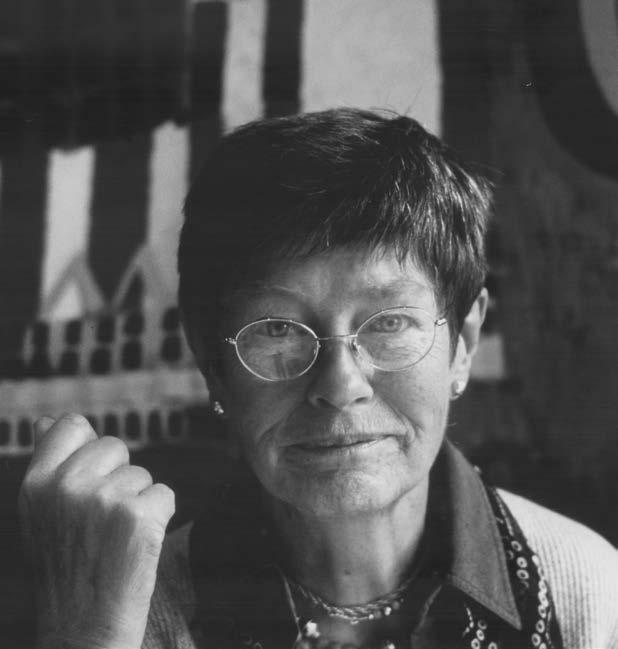
their lodger, a young lady in an elegant long dress came slowly down the stairs surveying the gathering, rather like Arabella in the last act of Richard Strauss’s opera. We began talking and she introduced herself as Gillian Marshall – Gill for short – a chef at the renowned Tudor Cottage in Iffley (listed in the Good Food Guide). By the end of the evening we had arranged to go out to dinner the next evening. From then on we met as often as Gill’s unsocial hours allowed, drove round the countryside, went for walks in Blenheim Park and enjoyed meals out. We were married on 8 December 1962.”
60 years later, they were still married and celebrated their diamond anniversary at home in North Oxford.
Their son Matthew was born in June 1963, and Paddy followed in February 1966. It was a home full of Gill’s antique glass and
ceramics, music, books and entertainment –parties for Oxford undergraduates and huge Christmas parties for our extended family. She taught both of us to cook – indeed some of our earliest memories are chopping parsley or making crumble.
Once we were at secondary school, she returned to restaurant work at The Cherwell Boathouse and then worked at The Museum of Oxford until retirement when she volunteered at The Ashmolean and Oxfam.
Our parents managed to stay in their home surrounded by the things they loved right to the end of their lives. In particular, our mother loved the humour in Jane Austen and PG Wodehouse which, as her memory began to fail, she found she could re-read again and again with equal pleasure. ■
Written by Gill’s sons, Matthew and Patrick Pulzer
Remembered With Affection
Angela Underhill née Starkey (V 1939)
27th September 1925 –5th June 2025
Angela was born in Reigate in September 1925 to Richard and Grace Starkey, the second of four children. She and her elder sister, Rosemary, shared a close childhood in Winchester, both attending St Swithun’s School. Angela was proud to be chosen, aged seven, to present a bouquet to the Princess Royal at the opening of the new school buildings. Childhood memories included watching the abdication of Edward VIII and, at the death of George V, forcing tears by thinking of her cat rather than the king. She lived through the reigns of five monarchs.
In 1939, when her father was recalled to the Royal Marines, the family moved to Portsmouth and experienced the devastation of bombing raids. Angela and her sisters attended Byculla School in Southsea, boarding away from home for long terms.
At 18, she began training as a nurse at St Bartholomew’s Hospital, London. Life was tough: twelve-hour shifts, a dormitory of sixty, and wartime London beyond the gates. Though clever enough for university, wartime expectations kept her on a vocational path. She became a midwife and worked on Martha Ward, caring for East End mothers with humour and compassion, though Guinness and jellied eels were never to her taste.
In 1948 she joined Queen Alexandra’s Royal Naval Nursing Service, seeking travel and adventure. Two years later, while nursing in Plymouth, she met her future husband after he was admitted following a motor accident. They married in 1951. A Siamese cat named Suki soon joined them, the first of seventeen cats Angela would love through her life.
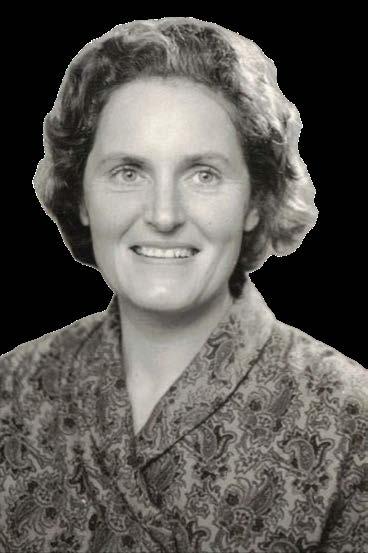
Her first child, James, was born in 1952, followed by Sarah in 1955 and Simon in 1959. Family life was shaped by her husband’s naval career: frequent moves, long absences, and postings overseas in Londonderry, South Africa, and Washington, D.C. Angela was not naturally suited to cocktail parties and embassy circuits, but she made friends her own way, planted instant gardens, and always found a cat to adopt.
Back in England, the family settled in Haslemere, where Angela took work as a relief sister at the Royal Naval School. Colleagues remembered her as conscientious, caring and devoted to her vocation. She even took up skiing at 57, preparing seriously with long training walks. She also became President of her local St John Ambulance.
In later years, Angela and her husband moved to Suffolk to be near Sarah’s growing family. Angela cherished this time, helping with her four grandchildren and enjoying with her husband the family life they had missed during his years at sea. The bond with her grandchildren remained strong.
Poppies from Provence, one of her watercolours sold as cards for charity, painted at the age of 87
There were sorrows too. The death of her son James in 1993 was a lasting grief, one she often contemplated in her garden. Her husband died in 2009, after which Angela admitted to thinking of him every day. She nursed him through his illness and described it as “like getting to know him all over again.”
Angela’s resilience showed in how she rebuilt life after each loss. She returned to painting, studying watercolours with Elizabeth Jane Lloyd and producing floral works treasured by friends and family. She tended her gardens with energy, mowing lawns and hauling watering cans into her nineties. At 94 she bought a new petrol car, Bluebell, undeterred by her family’s concerns. Though computers baffled her (“What does boot mean?”), she embraced her iPad, playing crosswords, emailing and video-calling loved ones, especially during the isolation of Covid.
She never lost her sharp mind: she recited poetry from memory, quoted Shakespeare,
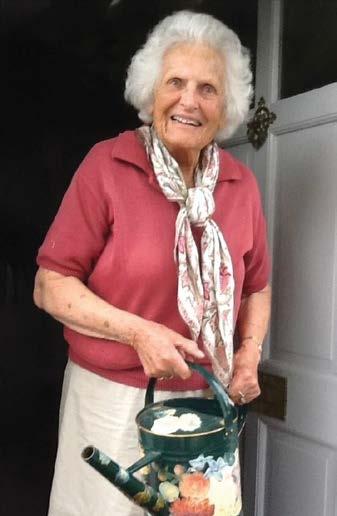
Armed with hand painted watering can in front of the Garden House, Woodbridge, aged 89
kept up with politics, and read newspapers daily. She asked mischievous questions –“What is woke?” – and debated the merits of Sunday broadcasters.
Angela’s 99 years were full of contrasts: demanding yet kind, high standards yet humour, independence alongside devotion to family. Her eccentricities – cats on buses, moving furniture for fun, disdain for orchids – were matched by her warmth, loyalty and intelligence. She kept in touch with lifelong friends, who returned her affection.
She is survived by her children, Sarah and Simon, her grandchildren, Katie, Nicholas, Tom and Emily, and her greatgrandchildren. She will be buried with her husband and son James in Pettaugh, at peace in a garden she loved, with a Siamese cat forever on her lap. ■
Written by Angela’s son, Simon Underhill
Remembered With Affection
Mary Sturges née Probert (HC 1950)
2 June 1932 –23 February 2025
Mary was born in Blackburn, Lancashire in 1932. Her father Bill was a manager for Lloyds Bank and mother Elsie was a housewife. Bill’s job meant there were frequent transfers for work and house moves.
They moved to Northwood in London after Bill was transferred to Lloyds HQ in the City, but when war broke out they went to Saltford near Bristol to be closer to family. In 1941 they moved to Pen-y-Lan near Cardiff until after the war ended when they came to Chilworth near Southampton and in 1946 Mary started school at St Swithun’s as a boarder in Hillcroft. In later life, Mary, despite worsening dementia, would often reflect and say her time at St Swithun’s was some of the happiest times of her life. She was captain of the tennis team, played cricket and lacrosse and obtained her school certificate. A few years ago, she returned for the school reunion as the oldest old girl to attend and loved reminiscing about her time with returning former pupils.
After school Mary went onto secretarial college in Southampton and got her first job at Canadian Pacific, a shipping company, before moving to the regional office of the Bank of England, where the dress code included the instructions, ‘all female staff must wear stockings or tights, whatever the temperature’.
It was during this time that Mary met John Sturges an executive for the petrochemical distribution company Powell Duffryn. They were engaged in 1959 and married at Stoneham church near Southampton in 1960.
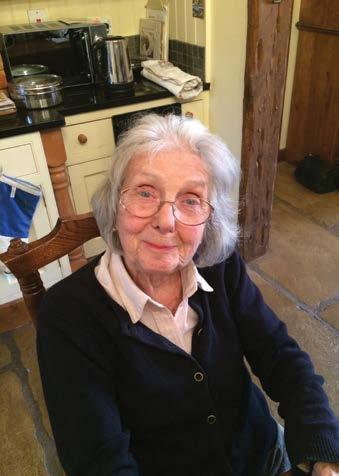
Mary was a brilliant mother, home maker, cook, dressmaker and made the kitchen the centre of the house, the place to sit and talk whilst the sweet smell of cakes and biscuits baking in the oven filled the room. Mary and John were great dinner party hosts, where family, friends and neighbours would be hosted with John being front of house welcoming guests and serving the drinks, whilst Mary cooked and presented the most amazing three courses of supper.
They had two children, Richard born in 1960 who works in financial services, and Jeremy born in 1965 who works for Twinings, the tea company. They both still live and work in and around Winchester.
Mary and John moved back to Dorset in 2007, after living for 28 years in West Meon. John died in 2017 after a period of ill health and Mary came back to Winchester to be closer to her family, but as the years passed became gripped by dementia and died in February 2025.
‘To live in the hearts we leave behind, is not to die.’ ■
Written by Mary’s sons, Jeremy and Richard Sturges
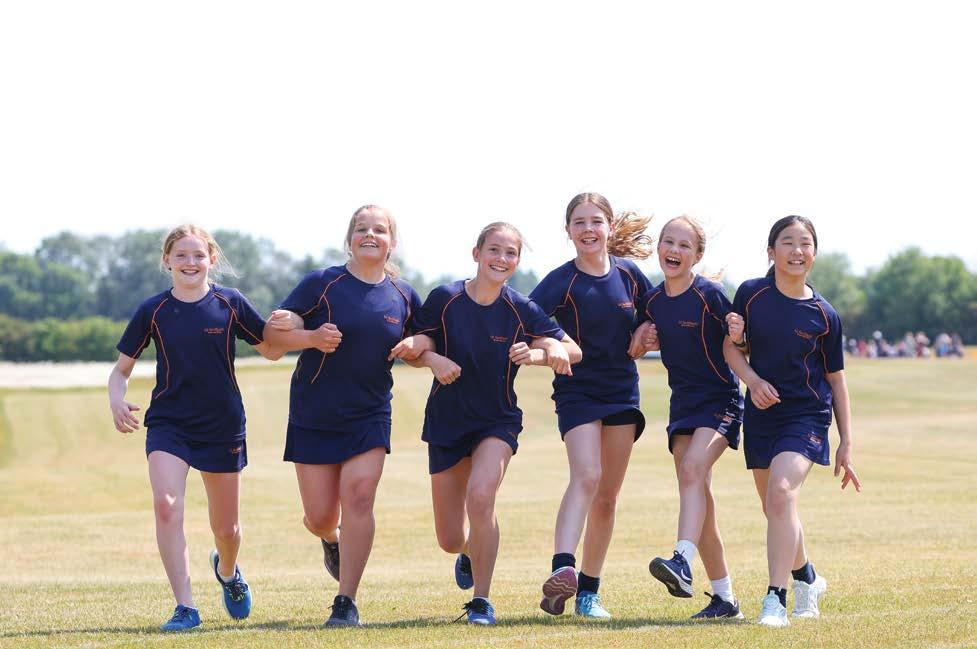
Have you joined our 1884 Club yet?
Named after the year St Swithun’s was founded, the 1884 Club is a community of supporters whose generosity changes lives. These bursaryfunded boarding places are offered to girls who are at risk of entering social care or who otherwise face serious disadvantage. A St Swithun’s education opens doors to new opportunities, helping each girl build the confidence, skills and aspirations to shape her own future. As a valued member of the St Swithun’s community, you will have seen first-hand the impact of a well-rounded St Swithun’s education.
This year, we are supporting ten beneficiaries. Our aim is to raise the funds and donate to the school a 50% contribution of circa £206k plus the additional amount needed for two more girls to join the cohort in September 2026.
Regular giving, whether monthly, quarterly, or annually, provides the steady foundation that makes this possible. Help us unlock their potential. ■

88 Donors made a regular gift in 2024/25 as part of our 1884 Club.
4 Organisations donated to and supported the bursary programme in the last 12 months.
7
Old Girls have pledged a gift to St Swithun’s in their will.
41
9
Supporters made their first donation this year.
3 Supporters are major donors.
£190,934
£95,636 generously donated by major donors.
£5,000
Companies supported our summer silent auction and our Christmas hamper raffle. donated through corporate support.
total raised in 2024/25
£19,988
£10,200 in support from charitable trusts and grant funds.
Our Supporters Their Generosity
10 Students currently in receipt of a Bramston bursary.
Our mission is to sustain 14 fully funded bursary places, two in every year group, so that girls from any background can thrive as full members of the St Swithun’s community.

One of last year’s Upper Sixth bursary recipients has gone on to study human geography and environment at the University of York, continuing her journey of academic curiosity.
raised from events.
Changing Lives
Community spotlights
Our community holds a shared belief in the power of opportunity. From parents who give so that others may thrive to students whose lives are transformed by that generosity, these voices capture the heart of what the Bramston Foundation bursary programme makes possible. Their words remind us that every contribution extends far beyond one individual, and it shapes the spirit of the whole St Swithun’s community.
Why we give
“
“I'm very aware, as I think many other parents are, of how fortunate our girls are to be at St Swithun's and to be able to take advantage of everything that this school offers. I would like to be able to contribute to enabling other girls with potential to fulfil that and to come to a school like St Swithun’s, to thrive and to really take advantage of everything that's here for them.”
“
Tessa Laughton Current parent and Chair of the Bramston Bursary Fundraising Committee
Your impact
“It's such an experience I know I'll take with me for the rest of my life. It's the kind of thing that will influence the things I do. I feel like my horizons are so much wider. I can just do anything.” - Claire I. Bursary recipient and ambassador
“It's just an incredible opportunity that you're giving us and even to people in the school who aren't receiving this bursary, they're friends with someone who is and they've had an experience with someone who is, so it's really affecting the lives of everyone in the school. I just want to say thank you on behalf of me and everyone in the school who receives a bursary.” - Matilda O. Bursary recipient and ambassador
Thank you for helping us change lives!
Supporting Bright Futures

The Bramston Foundation is incredibly grateful to our former students, parents and staff, who support either our transformational bursary programme or the Building Active Lives at St Swithun’s project. Your support is vital and so appreciated.
We do need to grow bursary support to be able to fund 12 places from September 2026. We are also grateful for all those who act as advocates for the Foundation and those who volunteer at our events. This year we offer our thanks to the following donors, as well as those who wish to remain anonymous:
Pru Alexander-Cooper (OG)
Robin Ashbrook
Janice Aslin (OG)
Rachel Bainbridge
Emma Gordon and Patrick Barouki
Charlene Barr
Jill Bath (OG)
Sophie and William Beardmore-Gray
Carola Bell
Susan Biddle (OG)
Stephanie Biden (OG)
Josephine Boal (OG)
Lauren and Andrew Bray
Neil Budd
Mary Burnett-Stuart (OG)
Sharon and Michael Careless
Ian Carry
Suzanne Ceiriog-Hughes
Vera Christensen
Charlotte Clark
Julia and Peter Cole
Lucy Collis
Maria Constantinou
Joanne Copley
Lesley Cranham (OG)
Trudy Curtis (OG)
Christine Curzon Lewis (OG)
Juliet Davie-Thornhill
Lesley Day
Kirsty Dennett (OG)
Suzanne Denton (OG)
Dr Grace Ding (OG)
Laura Dixon (OG)
Dr Ella and Paul Donegan
Cynthia Downie (OG)
Shelley and Tim Dudderidge
Emily Dunlop (OG)
Jane Eastwood
Margaret Evans (OG)
Serena Evans
Dr Caroline Fairley
Kate FitzGerald
Dr Celia and John FoxRobinson
Emma Franklin-Webb
Chrissie Frere-Cook (OG)
Jane Gorst (OG)
Rebekah and Stephen Gosling
Deirdre and Jeffrey Green (OG)
Jean Green (OG)
Josephine Grime
Jennifer Grove (OG)
Katharine Hadley (OG)
Jean Hamilton (OG)
Janet Harland (OG)
Adele Holmes (OG)
Carolyn Howard-Jones (OG)
Stevan Hoyle
Gemma Hunt (OG)
John Hyman
Nicola Jackson
Caryn and James Kendall
Liz Kennett
Lucy Kennett (OG)
Christopher Kindt
Dr Fiona Kirkham-Wilson (OG)
Asia Kiyani
Danielle and Maurits
Kleingeld
Joanna Koenigsberg (OG)
Olufemi Ladeinde
Sarah Layzell
Emeritus Professor Natalie Lee
Wee Siang Lee
Tessa Laughton
Kate Lewis
Lucia Lindblom
Elizabeth Linton (OG)
Alice Liu
Dr Louise Locock (OG)
Michael Lyndon
Lisa MacLaren (OG)
Charlotte Marshall (OG)
Tracey-Ann Mathias
Dr Prudence Meek (OG)
Rose and Julian Milford
Jenny and Stuart Miller
Lottie Mitchell (OG)
Elly Motherwell
Xanthe Neale (OG)
Katya Nelhams-Wright
Sophie Neyroud (OG)
Kim Nicolin
Dr Lucinda Parlett and William Nicoll
Yee-Ling Chong
Jason Ng
Mia Norcaro (OG)
Dr Catherine Page (OG)
Natalie Parks (OG)
Sarah Parrish (OG)
Miranda Paterson
Georgina Perceval-Maxwell
Anna-Louise Peters (OG)
Philippa and Steven Petrow
Anna Pillar
Laura Plant (OG)
Belinda and James Powell
Charlotte Prendergast
Nicola Ravilious (OG)
Elizabeth Reid
Pippa Reid (OG)
Sophie Reid (OG)
Frances Robinson (OG)
Louise Rodge (OG)
Cat and Matthew Sabben-
Clare
Martina Salvin
Jane Sanders (OG)
Nicola Sanvoisin
Dr Robin Sellwood
Suzie Shearer (OG)
Elizabeth Shepherd (OG)
Margaret Siggers (OG)
Georgina Simmons (OG)
Lucy Smith
Diana Stent (OG)
Lottie and Simon Stevenson
George Stober (OG)
Dr Penelope Sutton (OG)
Nuala Thomas
Dr Claire Thorne (OG)
Joseph Tirado
Victoria Trelinska (OG)
Emma Trumbull (OG)
Louise and Richard Tyson
Ellen and Michael Vrana
Angie Whitworth (OG)
Eleanor Wilkinson (OG)
Claire Williams
Diana Wilson
Dr Stephen Wimbush
Jean Winch
Clare and Andrew Wingfield
Janet Woodhead (OG)
Jeanie and William Wykeham
We also thank the following organisations for their ongoing support:
Knight Frank LLP
Milles Charitable Foundation Ltd
The Hobhouse Charitable Trust
The Frank Misselbrook Foundation

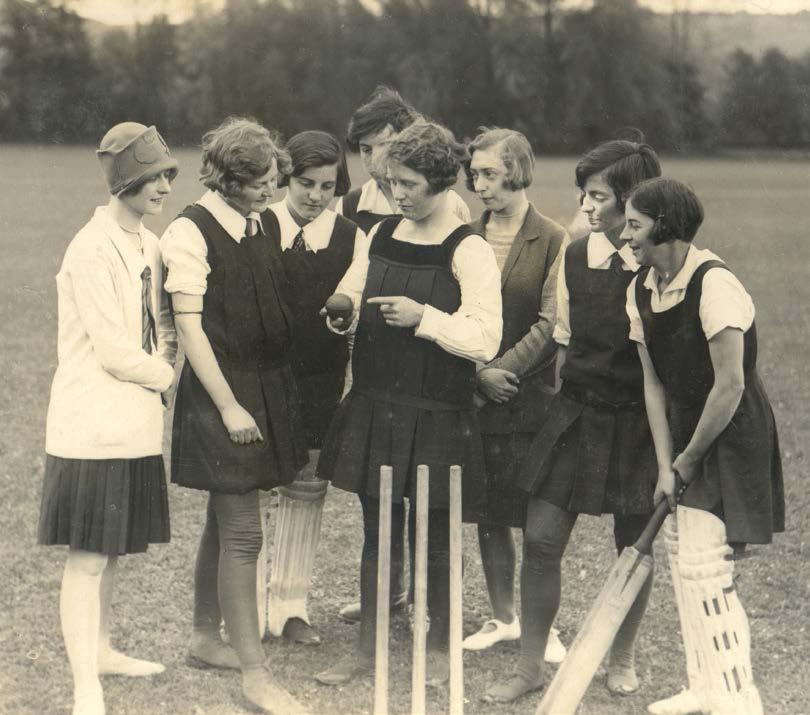


Cricket in 1928