STRUCTURE
Complimentary tools and expert support for engineers, fabricators and detailers looking to better leverage the advantages of HSS.
Complimentary tools and expert support for engineers, fabricators and detailers looking to better leverage the advantages of HSS.
Simplify your HSS Connections today.
with the HSS Connections Hub™
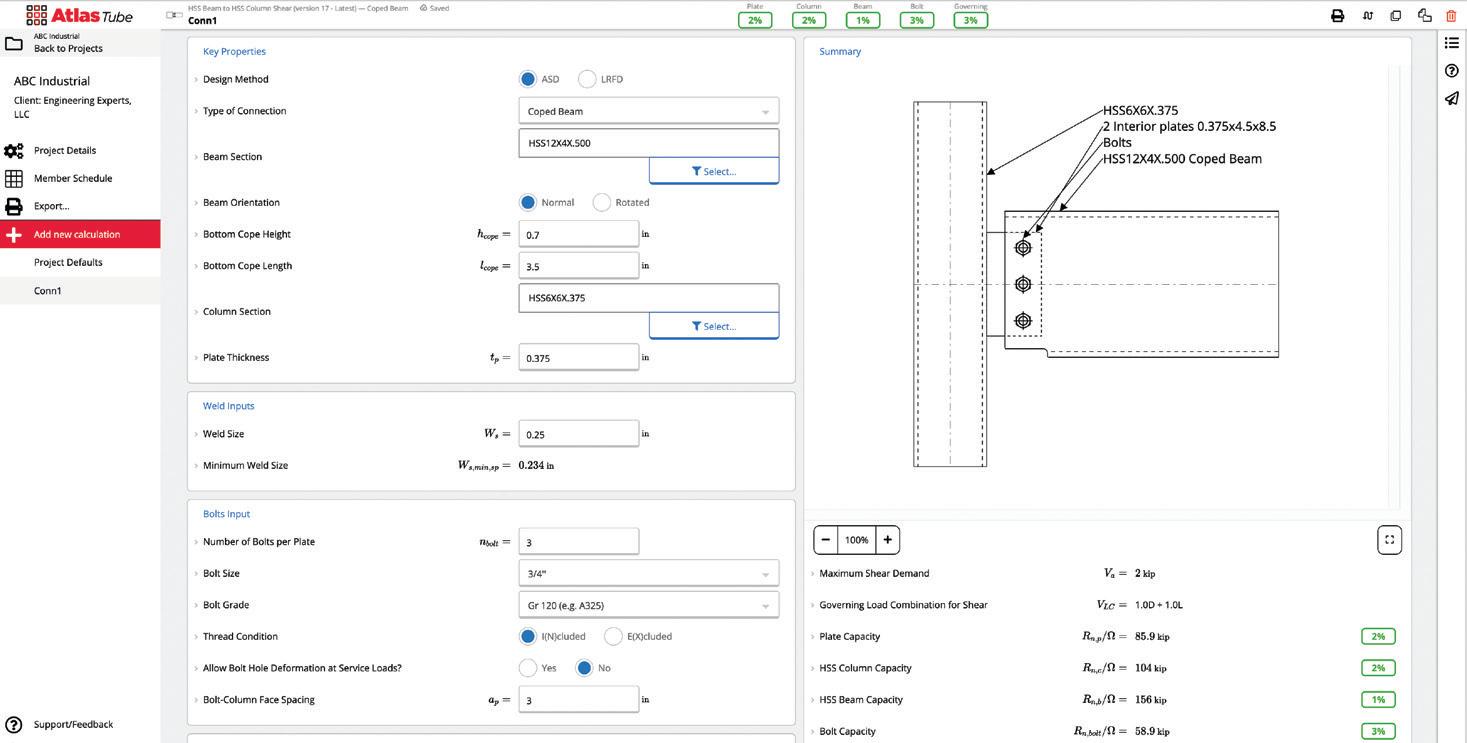
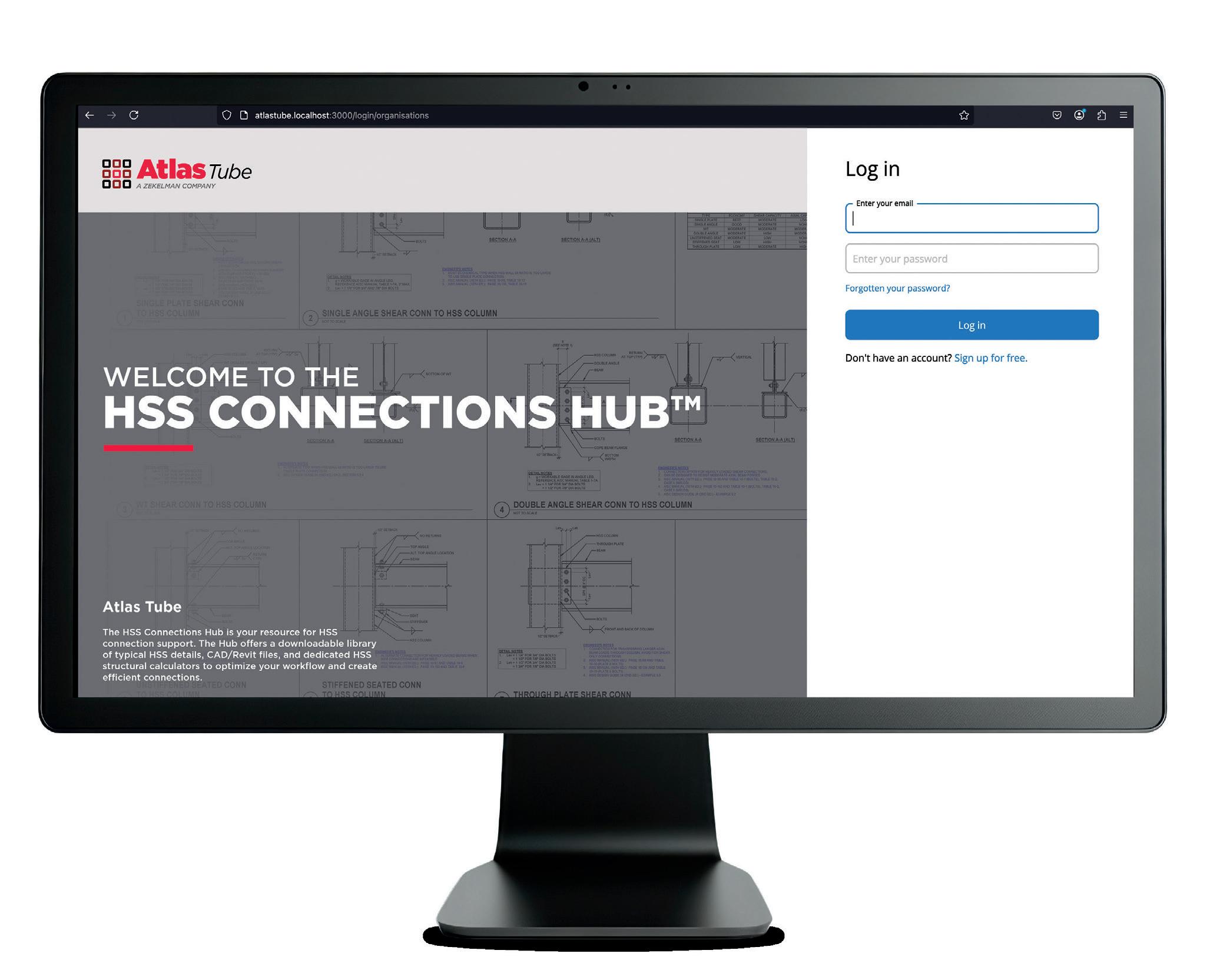
This invaluable — soon-to-be indispensable — and complimentary online resource will save design time by eliminating the need for developing and maintaining custom spreadsheets. Fabrication-friendly typical HSS details are an excellent starting point for design while corresponding calculators enable design completion.
Teams can streamline the design process and enhance collaboration directly on the HSS Connections Hub. Engineers can quickly create HSS connection calculations based on the most recent design manual and specific code requirements. Fabricators will receive connection designs that meet requirements and are fabrication-friendly, eliminating back-and-forth revisions.
Since September, we’ve doubled the number of connection types and typical details available in the HSS Connections Hub to over 70. See what’s new:
• HSS Baseplate Connection
• TKYX (Shear) Y with Rectangle HSS
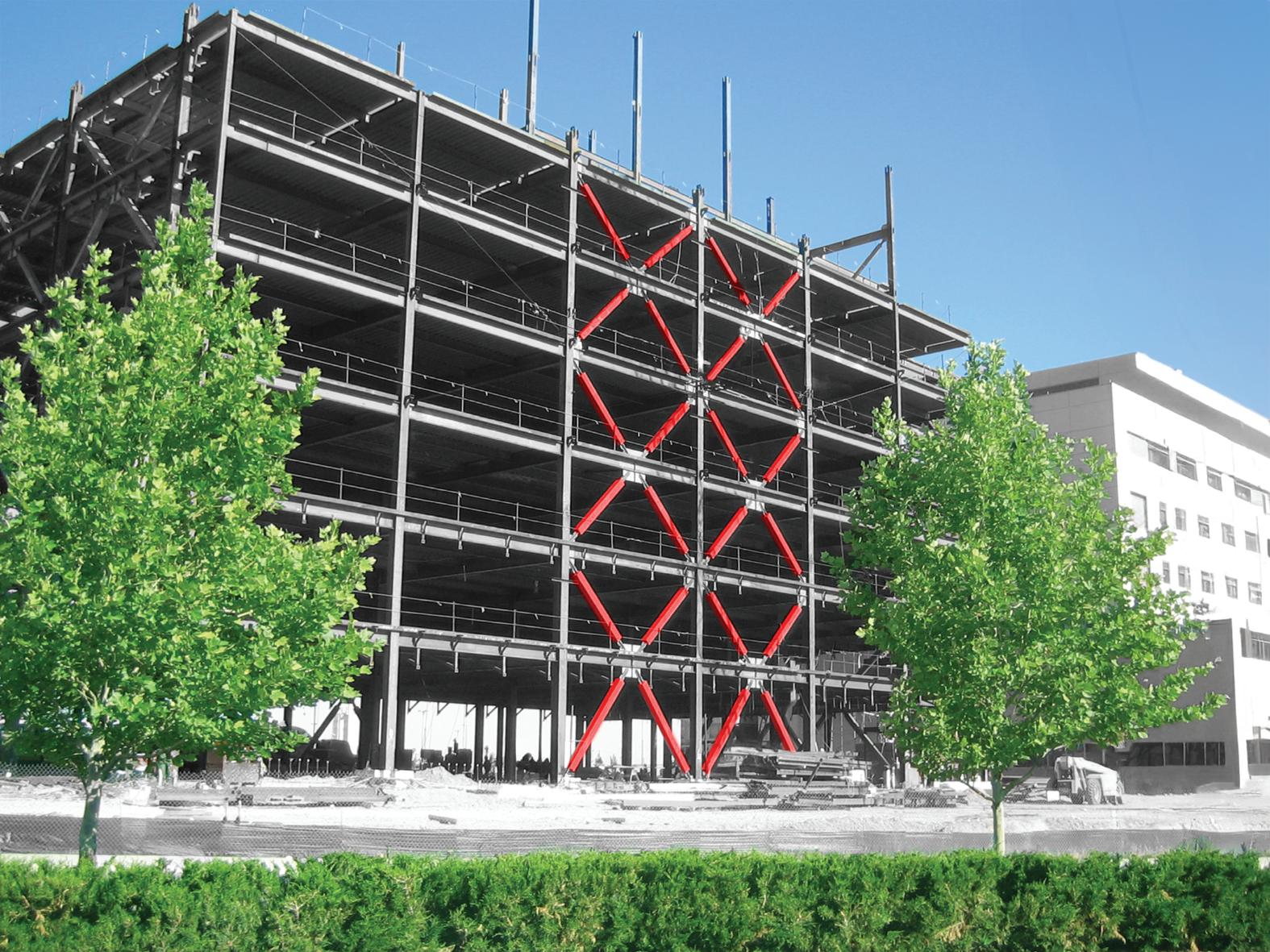
• Bracing to Column: Field-welded
• Bracing to Column: Bolted
• Bracing to Column: 2 Sides
• Bracing to Column: 4 Sides
• TKYX (Shear) Cross Connection with Rectangle HSS
• TKYX (Shear) Overlapped KT Connection with Square HSS
• TKYX (Shear) Gapped K with Square HSS
• TKYX (Moment) Vierendeel Connection with Square HSS, In-plane Bending
• TKYX (Moment) T Connection with Rectangle HSS, Out-of-plane Bending
• TKYX (Moment) Cross Connection with Rectangle HSS, Out-of-plane Bending
• HSS to WF Shear End Plate to WF Web
• WF to HSS Shear-stiffened Seat
• WF on top of HSS Post Bearing (Simple Beam)
• HSS to HSS Moment End Plate (Concrete Filled)
• WF to HSS Moment End Plate
• WF to HSS Moment End Plate (Concrete Filled)
• WF to HSS Moment Diaphragm II
• HSS to HSS Splice End Plates
• HSS to HSS Splice with Rectangular Sections
• Round HSS End Plate Splices
• Round HSS to HSS Moment Seated
• ...and more!
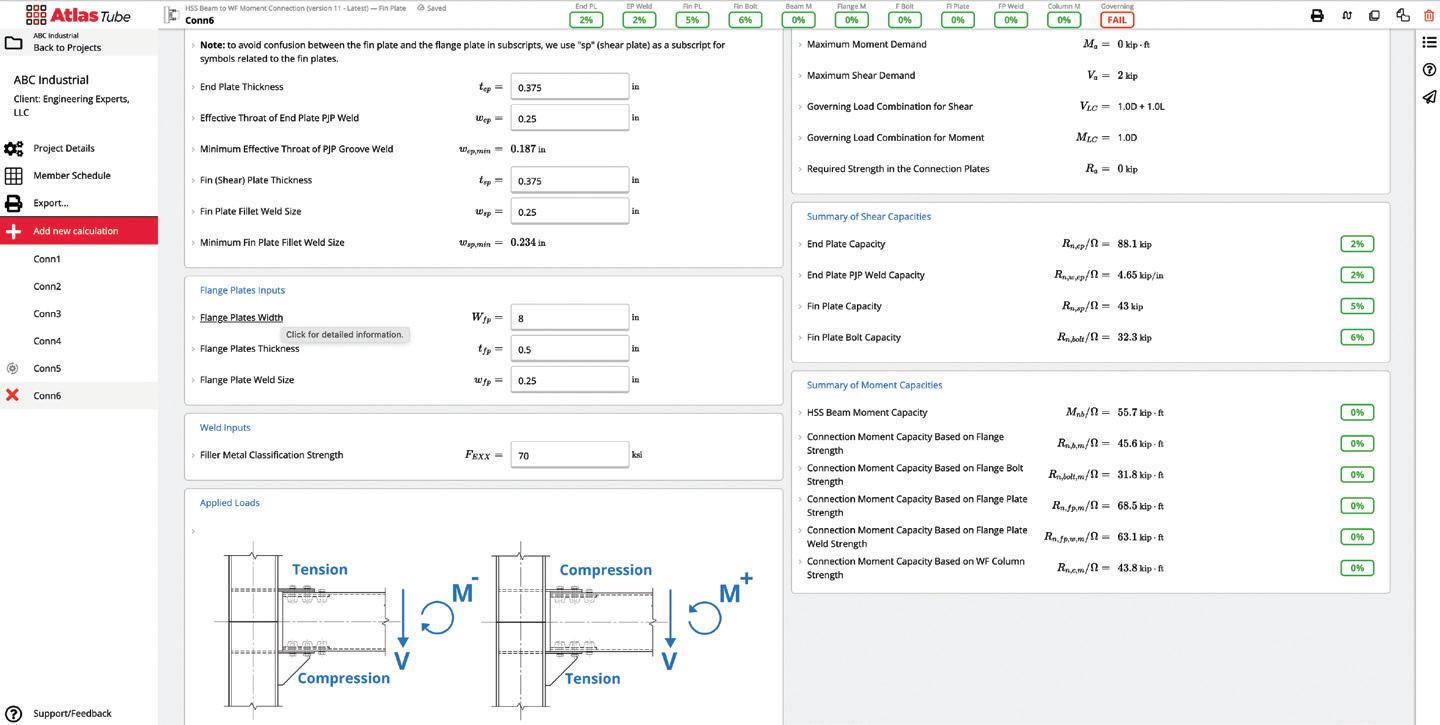
• Access a growing library of HSS connection calculators and fabrication-friendly typical HSS details, each available with a wide range of options.
• Hub calculators automate and confirm connection designs in real-time based on the AISC Steel Construction Manual, 16th edition.
• Clear and concise results indicate whether the designed connection is efficient and it meets specified requirements.
• Full transparency: Review and verify your calculations against specific code references with a simple click.
• Download or share detailed connection drawings, including dimensions, bolt sizes and other relevant information for easy communication with fabricators.
• Request support from Atlas Tube’s engineering experts on your project.
Sign up today and start using the HSS Connections Hub.
connectionshub.atlastube.com
Watch the how-to video.



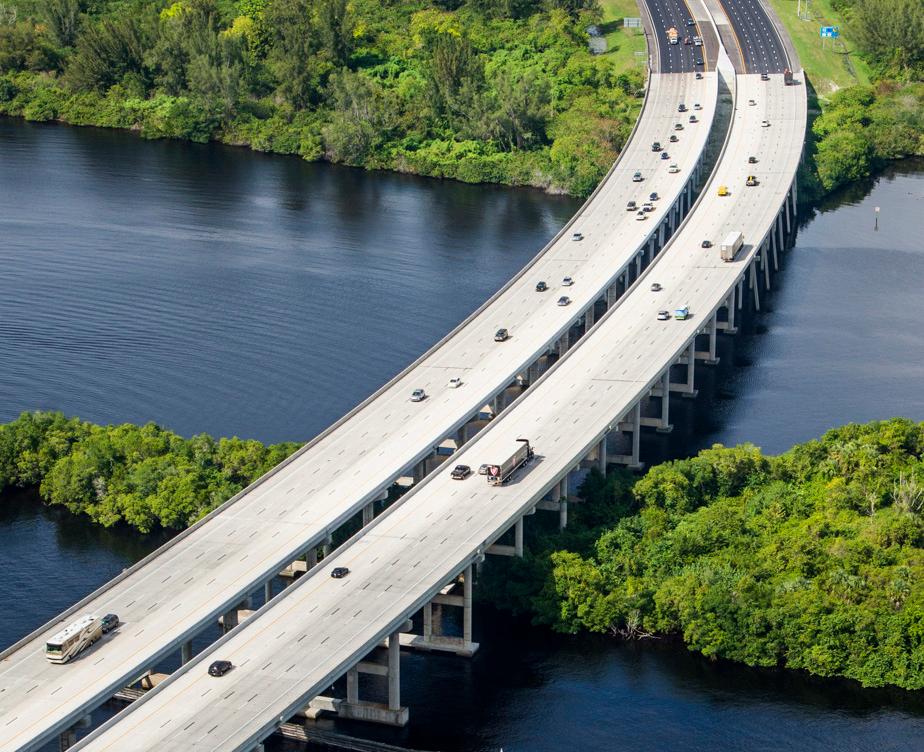
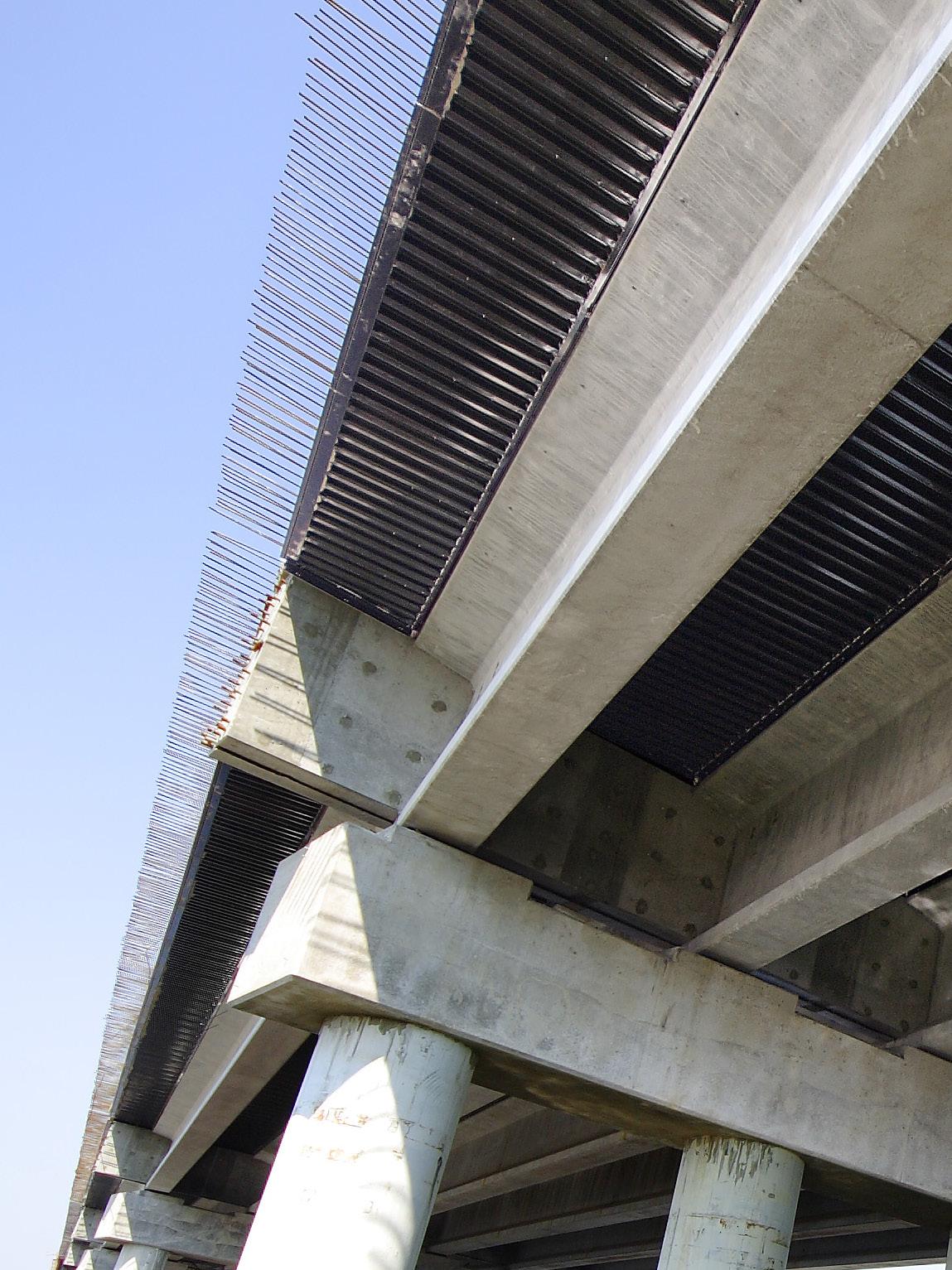
Rhino-Dek® polymer-laminated bridge deck forming systems
Aggressive environments are no match for the corrosion-resistant protection of Rhino-Dek ®. Easily installed stay-in-place bridge deck forms support new bridge construction and rehabilitation.
• Service life up to 124 years
• DOT tested and approved in many states
• Custom-color coating options for enhanced aesthetics
• 5 profiles for spans up to 14 feet
Build bridges that last. Go to: newmill.com



Available Only at STRUCTUREmag.org
Publication of any article, image, or advertisement in STRUCTURE® magazine does not constitute endorsement by NCSEA, CASE, SEI, the Publisher, or the Editorial Board. Authors, contributors, and advertisers retain sole responsibility for the content of their submissions. STRUCTURE magazine is not a peer-reviewed publication. Readers are encouraged to do their due diligence through personal research on topics.
subscriptions@structuremag.org
Chair John A. Dal Pino, S.E. Claremont Engineers Inc., Oakland, CA chair@STRUCTUREmag.org
Kevin Adamson, PE Structural Focus, Gardena, CA
Marshall Carman, PE, SE Schaefer, Cincinnati, Ohio
Erin Conaway, PE AISC, Littleton, CO
Sarah Evans, PE Walter P Moore, Houston, TX
Linda M. Kaplan, PE Pennoni, Pittsburgh, PA
Nicholas Lang, PE Vice President Engineering & Advocacy, Masonry Concrete Masonry and Hardscapes Association (CMHA)
Jessica Mandrick, PE, SE, LEED AP Gilsanz Murray Steficek, LLP, New York, NY
Brian W. Miller Cast Connex Corporation, Davis, CA
Evans Mountzouris, PE Retired, Milford, CT
Kenneth Ogorzalek, PE, SE KPFF Consulting Engineers, San Francisco, CA (WI)
John “Buddy” Showalter, PE International Code Council, Washington, DC
Eytan Solomon, PE, LEED AP Silman, New York, NY
Executive Editor Alfred Spada aspada@ncsea.com
Managing Editor Shannon Wetzel swetzel@structuremag.org
Production production@structuremag.org
Director for Sales, Marketing & Business Development
Monica Shripka Tel: 773-974-6561 monica.shripka@STRUCTUREmag.org
Sales Manager
Audrey Schmook Tel: 312-649-4600 Ext. 213 aschmook@ncsea.com
By Devin Bowman
When an elevator design includes glass curtain walls or other glazing assemblies, project teams can utilize steel sub-frames to meet both fire-rated as well as dynamic and static load requirements.
By Filippo Masetti, PE, David Ribbans, PE, Lauren Feinstein, PE, and Kevin Poulin, PE
The Frick Collection recently reopened after a years-long renovation to the century-old museum. Simpson Gumpertz & Heger was tasked with engineer ing the unique solutions that addressed the archaic systems and complex structural limitations of this historic landmark.
By Michael Lynch, PE, SE, and Jimmy Liang, PE
Bethany Senior Terraces offers a compelling example of how structural engineering can drive innovation across disciplines, from modular logistics to high-performance building design.
By Sarah Outzen, PE, Clyde Ellis, and Jesse Davis
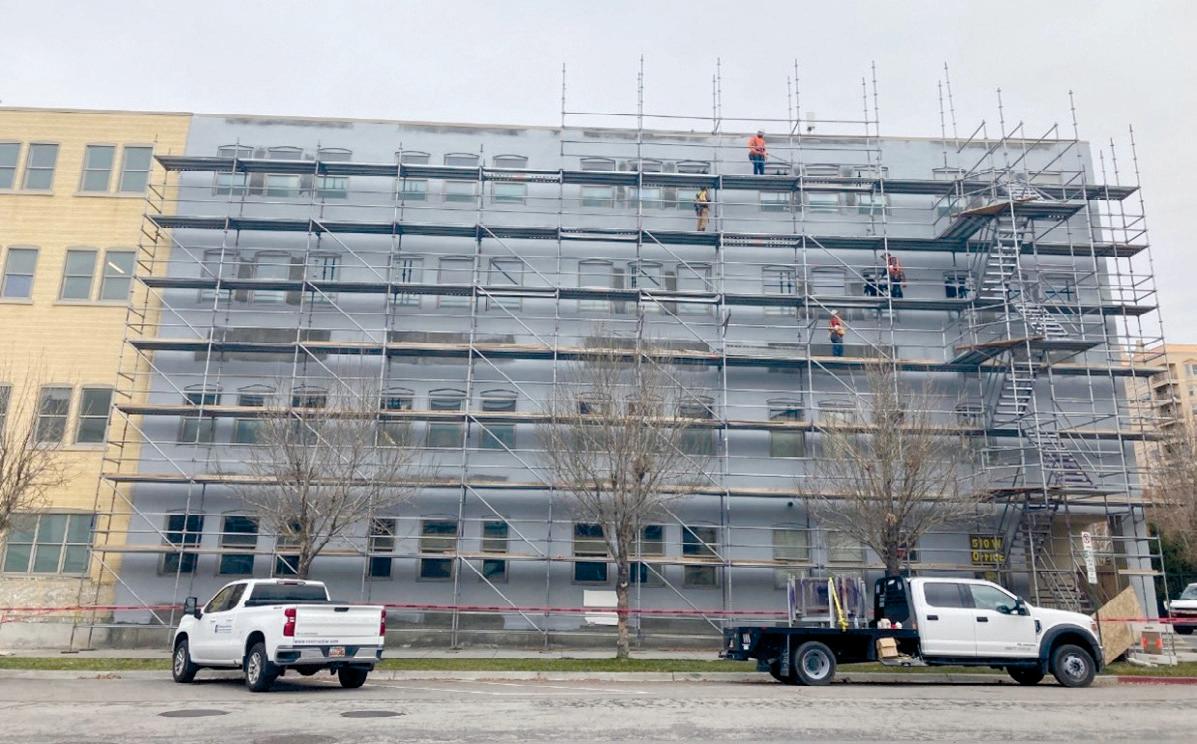
When a 2020 earthquake compromised the historic Towne Storage Gateway building in Salt Lake City, engineers faced the challenge of reinforcing its unreinforced masonry facade while maintaining its original architectural character. Through an advanced combination of retrofit techniques using FRCM and FRP, the team delivered a seismic upgrade that enhances structural integrity while preserving the building’s historic character.
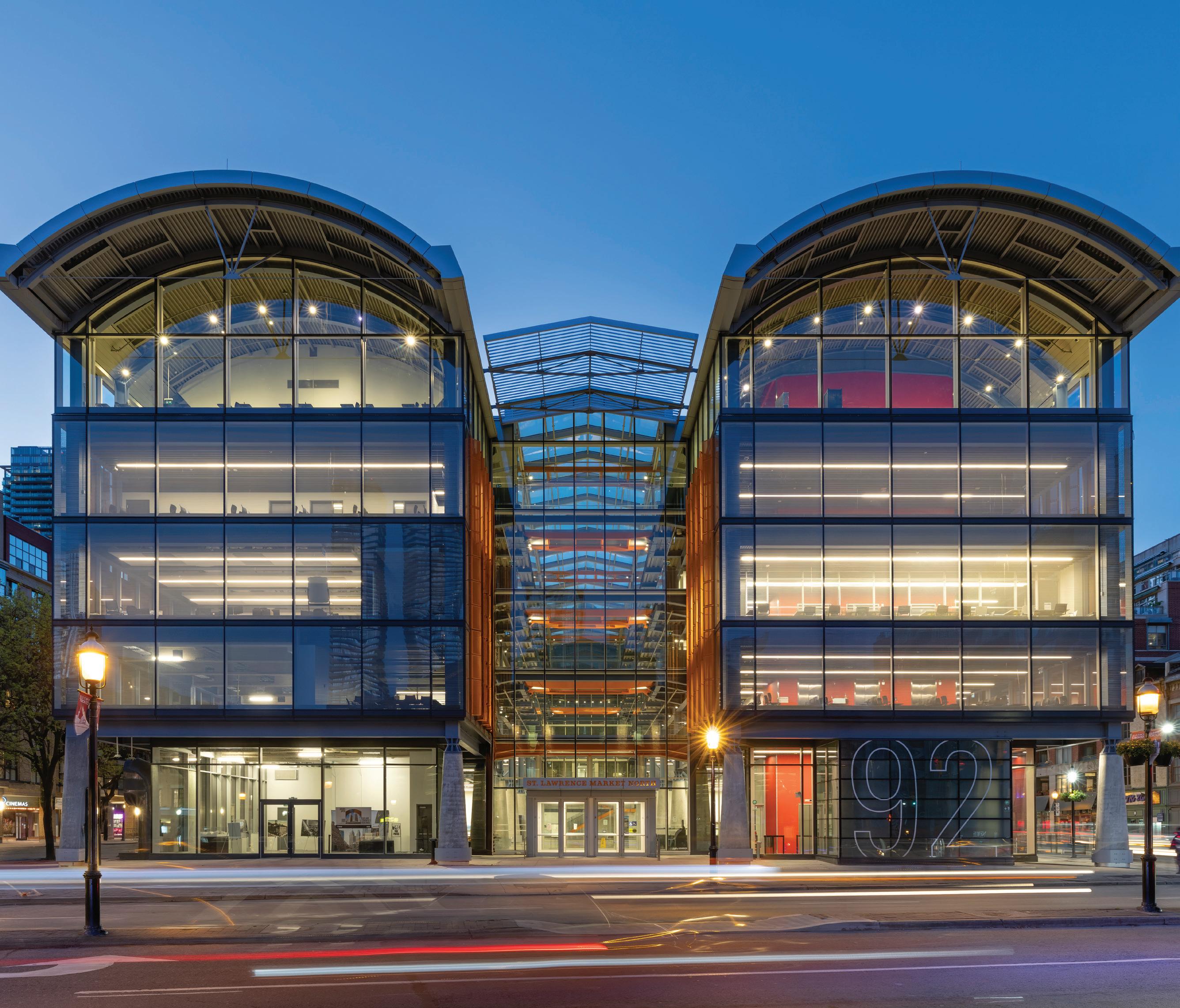
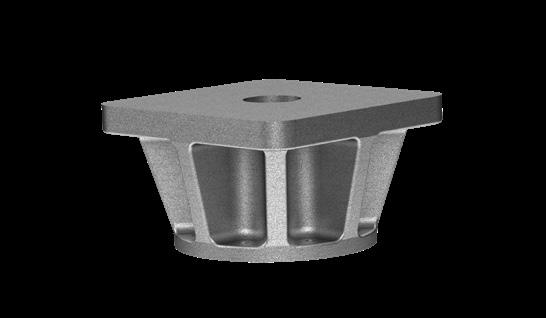
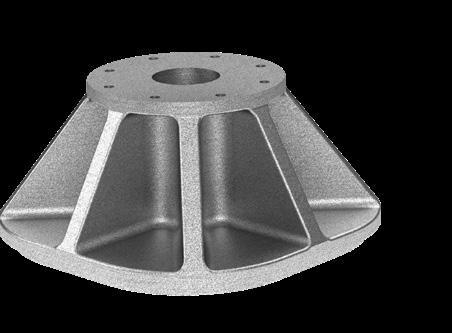
CAST CONNEX ® custom steel castings allow for projects previously unachievable by conventional fabrication methods.
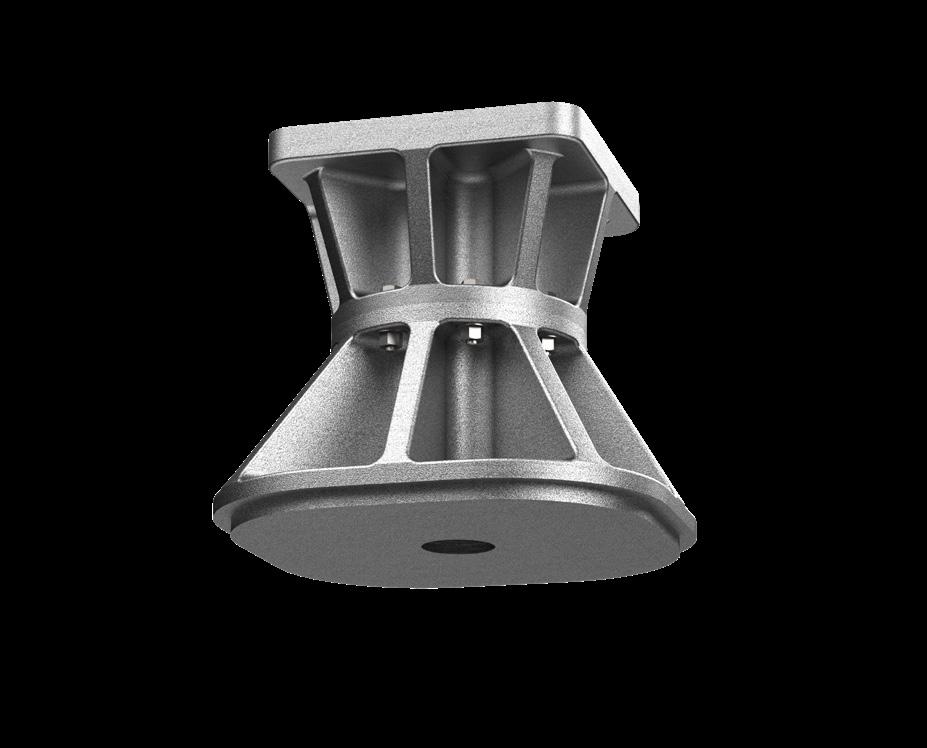
Freeform castings allow for flexible building and bridge geometry, enabling architects and engineers to realize their design ambitions.

Innovative steel castings reduce construction time and costs, and provide enhanced connection strength, ductility, and fatigue resistance.
Custom Cast Solutions simplify complex and repetitive connections and are ideal for architecturally exposed applications.

ST LAWRENCE MARKET NORTH, TORONTO
Architects: RSHP | Adamson Associates
Structural Engineers: Entuitive
Steel Fabricator: Steel 2000 Inc
Steel Erector: E.S. Fox
Photography by Karl Hipolito






By Anthony LoCicero, PE
My one-year term as Chair of CASE started in May at the ACEC Spring Convention in Washington DC. Now halfway through my term, I have had a lot of time to dwell on the challenges facing our profession. While my nomination and election was not exactly contested, here is a brief version of what my campaign platform would have been had I needed one.
Issues surrounding the rollout of the new Computer Based Test (CBT) PE Structural Exam, needed for SE licensure, have been documented within these pages, such as here (https://www.structuremag.org/article/ what-in-the-world-is-going-on-with-the-newcomputer-based-structural-exam/) and here (https://www.structuremag.org/article/ big-changes-in-se-exam-are-a-big-concern/), NCEES needs to communicate more openly with the professional community and work with organizations like CASE, SEI, and NCSEA to review the data and address unintended impacts. Upholding high standards also means being accountable and transparent about how those standards are measured. While I am hopeful that the changes they plan to implement in the spring of 2026 will allow for increased pass rates, only time will tell if they are impactful enough. In the meantime, readers are encouraged to reach out to their state licensing board to voice their opinions. Share your perspective, lend your expertise, and take part in the discussions ahead. With the licensing boards engaged, we are more likely to see the impactful changes that our profession needs.
The structural engineering sector is confronting a significant workforce challenge that threatens both productivity and innovation. For example, the ASCE reports that the U.S. needs approximately 25,000 new civil engineers each year just to replace retirees—and this figure does not fully account for the surge in demand from major infrastructure initiatives. Meanwhile, the broader engineering-workforce outlook shows demand for engineering skills is projected to grow by about 13% from 2023 to 2031, with an estimated 186,000 openings per year in architecture and engineering occupations combined. Many experienced professionals are nearing retirement, creating a widening skills gap that younger engineers are not filling quickly enough; in 2023 only 298
bachelor’s degrees were awarded in structural engineering specifically. These combined factors—accelerating demand, a limited influx of new entrants, and an aging workforce—result in firms turning away work, increasing project delays, and elevating pressure on existing staff. To help combat these issues, our senior leaders must foster growth in our next generation. We can do this by actively engaging in knowledge sharing, whether through professional associations, conferences, or online platforms and serving as stewards of our profession.
While climate change is a charged topic these days, there is no doubt that it is impacting our practices and elevating our risk. As an example, the court in Conservation Law Foundation v. ExxonMobil Corp. stated “… ‘good engineering practices’ include consideration of foreseeable severe weather events, including any caused by alleged climate change.” How are practicing engineers to design to this stan-
Ultimately, the future of the profession lies in expanding beyond the technical to embrace leadership, advocacy, and creativity.
dard? Historically, we have relied on codes to prescribe the requirements of a given design. Because many codes are based on past data rather than future projections, an engineer who designs only to meet code may not be designing to what some clients, regulators, or courts might consider reasonable best practice under changed climate conditions. (I am confident that our colleagues at ASCE and other code making bodies are studying recent events, but surely they do not have a crystal ball.) In response to this growing risk, engineers should collaborate with legal counsel and insurers to update contracts, explicitly defining how climate-related risks are considered, allocated, or disclosed to clients. Professional associations can strengthen the industry’s position by developing guidance, training, and model language to help practitioners align with the evolving standard of care. At the individual level, engineers must stay current with climate science, code development, and liability trends,

treating continuing education on resilience and sustainability as essential—not optional. Our industry is also facing other legal chal lenges from courts and politicians alike. For example, in my home state of Pennsylvania, the state Supreme Court is currently hearing an appeal in Clearfield County v. TransSystems et al. which could have significant impacts on the Statue of Repose. The County (Clearfield County) filed a civil complaint in January 2023 against the architect (and structural engineering successors) and contractors involved in the construction of its county jail alleging a construction defect: specifically that a required bond-beam under the roof deck was missing, which became evident during a 2021 renovation and cost the County an additional ~$4 million. The trial court ruled that the County’s action is time-barred by the Pennsylvania statute of repose (12 years) because the original construction was completed in 1981 and the lawsuit was filed 42 years later. The county’s attorney raised a pretty obscure legal provision called nullum tempus, essentially claiming that, since the project is considered a public work, no expiration on the claim should apply. While many practitioners in Pennsylvania are watching this case closely, all practicing engineers need to be watchful for similarly challenging litigation and legislative activity in the jurisdictions where they work.
The structural engineering profession stands at a pivotal moment. Licensure difficulties, workforce development, climate change, and a shifting legal environment each represent profound challenges.
Ultimately, the future of the profession lies in expanding beyond the technical to embrace leadership, advocacy, and creativity. Structural engineers are not just builders of towers and bridges; we are custodians of public safety, sustainability, and resilience. By confronting these critical issues head-on, the profession can continue to provide the backbone of a thriving and sustainable built environment. ■
Component analysis & design
Code updates
Yes - over 50 modules for wood, steel, concrete and masonry components
We find them, we update them
Professional output with graphics, consistent module-to-module output
Low — user-friendly tabular inputs and Help Manual documentation with explanations for the underlying assumptions and code provisions
Industry-standard trusted by 65,000 engineers
No — you create manual calculations from a blank spreadsheet YOU DO IT ALL to every spreadsheet
Manual formatting needed
Higher — reliant on manual formulas, no built-in validation tools, user-dependent accuracy
Varies — generally accepted with rigorous set-up, but not a dedicated structural engineering tool
Veronica Cedillos is an engineer and the President & CEO of GeoHazards International (www.geohaz.org) based out of Pleasanton, California. Veronica earned her Bachelor of Science in Civil Engineering at MIT and her Master of Science in Civil Engineering at Stanford. Her career spans roles in practice as a building engineer, and non-profit work at Engineers for a Sustainable World, GeoHazards International, and the Applied Technology Council. She was the 2025 Shah Distinguished Lecture recipient, a 2017 Housner Fellow, the 2011 Shah Family Innovation Prize recipient, and a 2010 ASCE New Faces of Engineering awardee. She can be reached at cedillos@geohaz.org.
STRUCTURE: Can you please explain the term Geohazard, what hazards it encompasses, and how it relates to your work?
Veronica Cedillos: Geohazards pertain to natural geological processes or events that can result in disasters and include earthquakes, volcanoes, landslides, and tsunamis.
I work on disaster risk, which is the intersection of natural hazards (e.g., earthquakes), exposure to such hazards (e.g., built infrastructure and people living in harm’s way), and vulnerability (e.g., buildings that are not designed to withstand earthquakes). I have dedicated most of my career to working in places with a high disaster risk, meaning they have a high likelihood of hazard events, high exposure, and high vulnerability. These are the places that are most likely to suffer severe damage and losses from future disasters.
STRUCTURE: As a leader in the non-profit sector, can you tell us a little more about GeoHazards International and your current projects?
Cedillos: GeoHazards International (GHI) is a small, global non-profit with the mission of saving lives by empowering at-risk communities worldwide to build resilience ahead of disasters and climate impacts. We work before disasters to help protect people and communities from harm. This is important as the vast majority of funding for disasters (about 96%) comes post-event, after irrecoverable harm and loss has already occurred. We focus our efforts in areas that have a high fatality risk from disasters, may not be aware of their risk, and have limited technical and financial resources to reduce their risk.
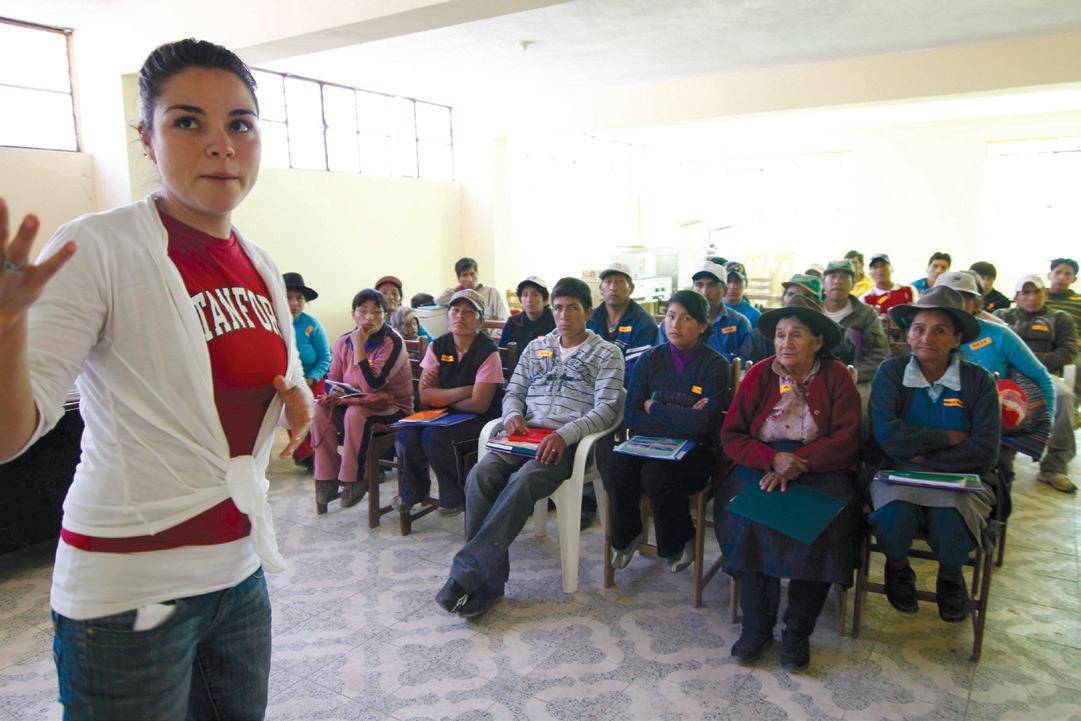
Our approach emphasizes equipping local leaders, professionals, as well as the broader community with knowledge and skills to take efforts into the future. This is fundamental, as building disaster resilience requires long-term efforts, not just a one-off project.
Current initiatives include: (1) technical assistance for national leaders in Bhutan on planning for earthquake resilience in their capital city of Thimphu where there are many vulnerable buildings; (2) a recentlylaunched project focused on improving the disaster resilience of health infrastructure in Haiti in order to support continuous delivery of medical care during and after emergencies and hazard events; (3) a program in the Philippines that integrates nature-based solutions, particularly mangroves, as a way to reduce risk from tsunamis and other coastal hazards; and (4) a multi-faceted program in Nepal focused on protecting the lives of schoolchildren in vulnerable, collapse-prone school buildings. This multi-faceted program includes training local builders and/or engineers on seismic vulnerability assessments and earthquake-resistant

techniques for new construction and retrofit, as well as training local manufacturers to produce Earthquake Desks, which are specifically designed to protect schoolchildren from falling debris during earthquake shaking. Earthquake Desks provide a valuable, interim solution until schools are made safer, which will take decades given the vast number of vulnerable school buildings in Nepal.
STRUCTURE: What or who encouraged you to seek a career in structural engineering?
Cedillos: I think structural engineering is an amazing field. We design and build bridges, buildings, and critical infrastructure that provide essential services and value to people and communities. Its roots in service to humanity attracted me to this field. My father is a civil engineer, and I was always intrigued by his work. I was first exposed to earthquake engineering and earthquake-resistant design during my master’s degree, which fascinated me as I realized this technical knowledge could save people’s lives.
STRUCTURE: You worked in practice before moving to nonprofits. What did you learn there or who did you meet then that proved useful later? How can engineering practice and non-profits better engage?
Cedillos: I worked as an Engineer at Gilsanz Murray Steficek (GMS) in New York City prior to my master’s degree and my work with nonprofits. I found that experience incredibly valuable as it grounded my knowledge in practice. It was wonderful to reconnect, years later, with my former boss at GMS, Ramon Gilsanz. He was engaged as a board member at the non-profit, the Applied Technology Council (ATC), where I also worked. Ramon now also sits on our (GHI) Board of Trustees.
Several engineering firms have provided probono support to GHI over the years, in addition to corporate sponsorship. I find our engineers value these opportunities to apply their skills to benefit at-risk communities because they inherently understand why this work is important. A challenge is ensuring that the pro-bono support includes financial backing for our team to coordinate and ensure that the technical support is impactful for the communities we are serving. This is not trivial and can require significant effort on our end. I hope we have more opportunities to engage with engineering firms in the future.
STRUCTURE: In practice, projects are typically funded by owners. How are projects funded at GeoHazards International? What are the greatest impacts to funding?
Cedillos: Our funding is typically from funding agencies, corporations, family foundations, and individual donations. Flexible funding—which typically comes from corporate sponsorships, family foundations, or individual donations—is my favorite. This is because we can have more control over how we design and implement projects. This flexibility allows us to adapt to changing contexts, and more effectively address evolving needs on the ground. A major challenge of funding our work is that we work pre-disaster. The majority of worldwide funding for disasters is focused after events (e.g., disaster response, recovery, and reconstruction). Of course these are critical, but if we ever hope to see a different outcome from natural hazard events, we need to start investing more in resilience efforts in advance. Mitigation and preparedness efforts are the most effective way to save lives and protect communities, and are cost effective (studies show that every dollar invested in advance can save up to $15, or more in some cases, in post-disaster recovery). This is where we focus our efforts.

that consider the local context, gaps, and leverage points. This can be different in varying contexts. For example, we have found that working with the national government in Bhutan is incredibly effective at leading to change in policy and planning. In other countries, we have found that working at the grassroots level is more impactful (e.g., hands-on training for local builders and community-based activities).
We also consider timing. Over the years, we have learned that disasters can encourage communities to take bold steps towards resilience. This increased interest can arise even if a disaster does not directly impact the community, as proximity, cultural relevance, or emotional connections can evoke a sense of urgency. We aim to lead initiatives in at-risk communities during these critical moments, as it can be an effective time for accelerated progress.
STRUCTURE: Much of GeoHazards International work is in developing countries. How is the approach different from engineering in the United States?
Cedillos: I actually think there are more similarities than differences and there’s a lot we can learn from each other. For example, the barriers to integrate disaster resilience in codes and building practices are similar, whether it’s lack of resources, interest, or other more pressing needs. The challenge is in bringing these issues to the forefront. Differential vulnerability and exposure to hazards is also something we see in the U.S. and abroad. Those with fewer resources tend to be most at risk. Many places, including in the U.S., have a large number of existing vulnerable buildings and infrastructure. Specific technical solutions may vary depending on construction types, typical vulnerabilities, and local resources, but effective approaches and strategies to managing disaster risks over time can be similar.
STRUCTURE: There isn’t enough funding to pursue all worthwhile initiatives. How do you select which projects you pursue?
Cedillos: We are a small organization with limited resources, so we seek initiatives that can have the most impact given our strengths and abilities. Our on-the-ground staff are native to the places where we work and are well connected to local decision makers and professionals. They are incredibly valuable in helping us identify high-impact initiatives
STRUCTURE: Of all the initiatives you have been involved in, what has been the most rewarding? Of what are you most proud?
Cedillos: I am very proud of our work in Indonesia on tsunami evacuation. This project focused on providing recommendations to a city of close to a million people that faces extreme risk from tsunamis. Our efforts provided several recommendations, many which were taken up and implemented by local leaders. This included constructing several tsunami vertical evacuation buildings, improving access to high ground, and focusing new development outside the tsunami evacuation zone. I feel incredibly proud to have contributed to those efforts, which will save thousands of lives in a future tsunami.
Overall, I’m also very proud of GHI’s approach, which centers on equipping and empowering local people to drive efforts forward. We see our work as planting seeds, and it’s deeply rewarding to learn, years later, how those seeds continue to bear fruit.
STRUCTURE: What lessons did you learn that were valuable for later?
Cedillos: A key lesson was that local ownership is absolutely key, and with local ownership, it’s important to let go of control. When I was in the middle of the tsunami project I had my own ideas of what success meant and when it had to be done. At first I felt that our efforts were a
failure, mostly because results didn’t happen right away and didn’t turn out exactly as I had envisioned. But with time, I realized that local leaders took up many of the recommendations we had co-developed with our Indonesian colleagues. They didn’t look exactly as planned, but they were even better as they were fully locally owned. This means they are much more likely to continue into the future, which is ultimately what is needed to sustain impact.
STRUCTURE: Your 13 years with GeoHazards International were split up with a 4-year stint at the Applied Technology Council in the middle. What attracted you to the work of ATC? What drew you back to GeoHazards International?
Cedillos: I learned of ATCs work while at GHI when I was working on tsunami vertical evacuation structures. I learned of technical guidelines ATC developed for FEMAon this topic and became very interested in their work. Later I got the opportunity to work for ATC, which was an incredibly valuable experience. I learned a lot about technical practice development, and the progress, as well as remaining challenges, of building disaster resilience in the U.S. My work there made me realize how disaster resilience takes time. It struck me that California, a leader in earthquake resilience, has been working on this topic for a century and we still have work to do. This insight influenced my perspective on how to effectively make a meaningful impact elsewhere – it requires a long-term approach. I was quite happy at ATC, but when I was offered the position to lead GHI, I couldn’t pass up the opportunity.
STRUCTURE: How has your background contributed to where you are today?
Cedillos: I grew up in the border town of El Paso, Texas. I spent a lot
of my childhood visiting family right across the border in Ciudad Juarez, Chihuahua. This experience made me deeply appreciate the importance of opportunity and how it can influence one’s life trajectory. I have felt a deep desire to do meaningful work in my life since I was young. I like structural engineering from an intellectual perspective, so my work with non-profits (both GHI and ATC) has been a perfect intersection of my interests and desire to contribute to a meaningful cause.
STRUCTURE: What is the best advice you’ve been given in your career, or otherwise?
Cedillos: I’ve had so many wonderful mentors along the path of my education and career. I have been lucky, but I have also deeply valued
the people who have been willing to share their wisdom and insights with me. I find that most people are quite generous in sharing if you are authentically interested in their thoughts and advice. I forget who first highlighted the importance of mentors to me, but I continue to apply it in my career (and personal life, for that matter). In fact, one of the things I enjoy most about working at GHI is engaging with board members. GHI’s board is made up of incredibly talented and experienced people from various backgrounds, all who want to help GHI succeed. I have benefitted so much from engaging and learning from them. I feel similar about my global team across 6+ countries. They all bring different perspectives and insights that continue to shape the way I see the world.
STRUCTURE: What is the biggest challenge that GeoHazards International is facing?
Cedillos: GHI, like many others, has been deeply affected by the federal funding cuts this year. Our largest ongoing program, which was funded by USAID, was terminated along with over 80% of USAID’s projects worldwide. This program represented about 1/3 of our annual revenue, involved on-the-ground work in four countries, and consisted of teams totaling 32 people across nine countries.
We are pivoting and adapting, and although our work volume has reduced, our commitment towards our mission has not. We have other ongoing projects across multiple countries, and already had efforts underway to diversify our funding streams. Many people and organizations who believe in our work and our team have also stepped up to help. It is a challenging time, but I’m confident that our resilient, global team will be able to continue our work despite the unprecedented circumstances.
STRUCTURE: What can practicing structural engineers do to help?
Cedillos: Structural engineers play a critical role in ensuring the safety and resilience of our built environment and therefore in protecting people and communities. With increasing disasters, this is all the more important. Structural engineers can advocate for ensuring that disaster resilience is integrated into our industry. Disaster resilience is not achieved in silos, so I encourage structural engineers to learn about other relevant disciplines and learn to communicate effectively to decisionmakers and people who are influential in the industry.
More specific to GHI, structural engineers can follow our work, share it with others who may be interested, and spread the word as to why our programs are important. ■
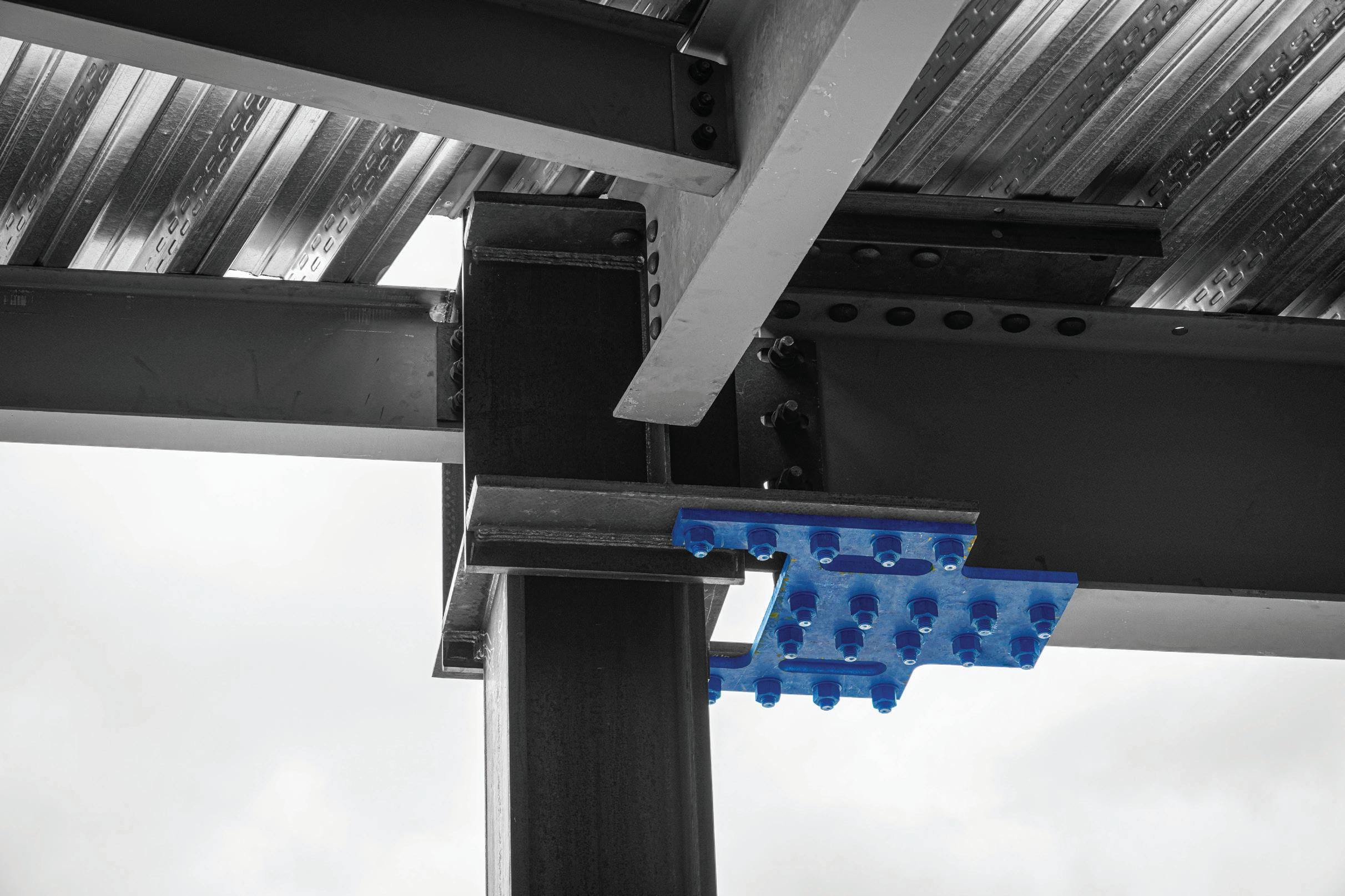
Proficiency, efficiency, legibility, and continuous improvement are key criteria in measuring whether a quality program is yielding better work.
By Mark Walsh
As architects, designers, and engineers, we believe that Quality Assurance and Quality Control improve the work we do, but how do we really know that’s true? More specifically, how does a firm know if the QMS they have in place is effective, provides value, and improves project outcomes?
The answer to that question comes in three parts. The first is establishing a system of document review that is meaningful, repeatable, and consistent. The second is determining effective metrics to assess deliverable quality in the document review. And the final part is comparing the adoption rates of QA and QC processes with the document review results to determine whether the Quality Program and its components are yielding better work.
The first step in determining the Quality Program’s effectiveness is to establish a document review system that is consistent, repeatable on a regular cycle, and measurable. The system’s components are:

Determine which deliverables will be reviewed.
In the current AEC industry, the most predictable and consistent deliverables are made for the end of the Construction Documents phase, making the contract documents a good choice. Given the sheer volume of information contained in the specifications, reviewing only the drawings is more achievable and better suited to yield broadly actionable results. This also applies to projects that are fast tracked or have multiple bid packages; any drawing set delivered for bidding would be suitable.

Determine how many deliverables will be reviewed.
Reviewing a representative cross-section of the firm’s work helps ensure the process is meaningful and broadly applicable. Being a multi-office firm, the author’s firm decided on a sliding scale between three and six drawing sets, based on office head count. The assumption being that larger offices produce more work so more sets are needed to get a representative sample.

Set parameters for eligible projects.
Depending on the firm’s breadth of work, it may be necessary to establish parameters that help select the most representative

work. That can mean identifying eligible project types or setting upper and lower cost or size limits. To ensure that current practices are being assessed, it is also important to establish a timeframe in which the documents were issued. Because the review is conducted annually, the timeframe is limited to the 12 months prior to the document review.
Determine the project data to be collected.
It can be helpful to collect information on project type, project size, cost, delivery method, and project-specific delivery conditions to add context to review results. For instance, if very large projects consistently score poorly, the firm might be ineffectively staffing or managing these types of projects.

Determine a review frequency.
Review process results are useful in any given cycle, but they are more likely to reveal trends and patterns if they’re gathered regularly. Establish a review frequency to ensure that the process repeats on a regular and predictable basis.

Select reviewers.
Reviewers can influence an evaluation system’s success or failure as much as any other factor. Reviewers need the requisite experience to effectively and efficiently evaluate the drawings, and they should also be open to novel and innovative approaches that can surface during a review process. Another consideration is whether to maintain a consistent reviewer group across cycles, to consistently select new reviewers, or to implement a combination. A consistent reviewer group can help reinforce firm standards and bring consistency to the process but can also be resistant to innovation and potentially institutionalize suboptimal practices. Regular turnover can result in inconsistencies, but it brings a variety of perspectives and approaches and can help encourage new delivery methods. The decision is primarily a matter of firm culture and review process goals.

a scoring system.
After establishing evaluation criteria, it is equally important to create a scoring system to apply them. A system with a large range, say 1-10, allows nuance and flexibility in scoring, but it can also lead to a lack of clarity in the results. Conversely, a small
Change Order (CO): A written agreement to implement changes in a construction project after a contract for construction has been executed.
Contract Documents: A deliverable that describes the work required to complete a building project that is usually delivered at the end of the Construction Documents design phase and typically includes drawings and specifications.
Deliverable: A document, or set of documents, issued by the design team to describe a building project at one of the conventional design phases, Schematic Design, Design Development, or Construction Documents. Deliverable requirements are typically defined for each phase in an architect’s contract.
Document Review: A regularly recurring and firmwide review of Contract Documents that is separate from Quality Control and specifically designed to provide a broad assessment of the firm’s output.
Quality Assurance (QA): The planned and systematic set of procedures necessary to meet Quality Program goals. All project team members participate in this ongoing process.
Quality Control (QC): The systematic examination of documents to ensure the project team has performed appropriate Quality Assurance processes and has met the Quality Program goals. Quality control is a point-in-time review that is typically done by someone not regularly involved in the project.
Quality Program: Also called a Quality Management System (QMS), this is a set of Quality Assurance and Quality Control processes and procedures performed on every project. The goal is to ensure regulatory compliance and efficiency in the design and delivery process, as well as adherence to professional standards and contractual requirements in the deliverables.
Request for Information (RFI): A standard form for owners, designers, and contractors to request further information from each other during construction.

Because the evaluation criteria are subjective and the reviewers bring their own perspectives and experiences to the task, it is important to control for subjectivity. Have multiple reviewers evaluate each of the submitted drawing sets and average the reviewer scores to balance out individual biases.

Collect, analyze, and disseminate the results.
After reviews are complete, analyze the data to correlate reviewer scores with project parameters and attributes in a way that makes sense for the firm. Rankings can be based on individual project scores, projects by office (for multi-office firms), projects by building type, or delivery method. The analytics will be based on the firm’s structure and goals for the evaluation. Disseminating the results to firm leadership, office leadership, and project teams is critical to improving future outcomes.
Measuring the effectiveness of a Quality Program has two primary challenges. First, every building project is shaped by its unique site, program, constraints, requirements, and parameters. As a result, every building project is, essentially, a “prototype” that requires bespoke approaches, documentation, and delivery. In manufacturing, prototypes are made and then analyzed, tested, and revised to create an ideal product that production versions can be compared to. The unique nature of every building project means the design process and documentation differ from project to project and cannot be measured against predetermined “ideals.” How, then, do you measure the effectiveness of a Quality Program if you don’t have something to compare the outcome to?
Second, design and construction take a long time. Most projects take a year or more, and the largest and most complex can last for a decade. By the time the drawings can be evaluated for their effectiveness in conveying information, design processes, tools, and staff are likely to have changed, significantly limiting the feedback’s value. Before discussing a proposed evaluation system, it is worthwhile to look at the metrics frequently suggested in the Architecture/ Engineering/Construction (AEC) industry: RFIs, COs, and Legal Claims. While each of these can provide information on the quality or completeness of a set of documents, none are reliable as primary measures of deliverable quality.
range like 1-3 provides great clarity in differentiation and can help make sense of the inherent subjectivity of the evaluation criteria, but it lacks nuance. Considering all factors, a simpler and smaller range is recommended to provide clarity.

A large-scale evaluation of a firm’s deliverables is a significant undertaking, so establish a timeframe to help manage the cost and effort. In setting guidelines for the time spent on each set, remember this is an evaluation and not a detailed QC review. An hour or two per drawing set is sufficient for an experienced reviewer to make a reasonable evaluation.
RFIs: Tallying the number of RFIs on a project is easy, and we can use that number as an indication of document quality. While RFIs will be issued as a direct result of document quality, RFIs are also issued for many reasons that have nothing to do with the design documents. RFIs can be submitted due to unforeseen site conditions, market forces, confirmation of a change, or even mistakenly because the contractor missed information contained in the deliverables.
COs: Similarly, some COs may result from document deficiencies, but they are equally likely to stem from owner changes, client (architect) changes, regulatory requirements, or unforeseen site conditions. Additionally, the total number of RFIs and COs and their causes will not be known until construction is complete and, as noted previously, months or years after the completion of the QA and
QC processes. Even if RFIs and COs were effective measures of document quality, that information would not be available until too late to positively impact future design work.
Legal Claims: As with RFIs and COs, legal claims on building projects have many causes. Some are legitimate, some are spurious, and most have a multitude of contributing factors. They also typically take even longer to surface than RFIs and COs, making them even further removed from the design and documentation process and less effective as a metric.
If these are not the correct metrics, what are?
One measure of efficacy is QA/QC process uptake, which is fairly straightforward to evaluate. However, a high adoption rate of QA and QC tasks does not, by itself, prove the system is working. Understanding a Quality Program’s effectiveness in improving the design process and its outcomes is significantly trickier.
A two-tiered approach can be used in the document review to assesses construction documents’ quality.
The first tier that the author’s firm uses consists of the baseline criteria of proficiency, efficiency, and legibility that can be applied to any set of documents.
Proficiency measures whether all needed content is present and technically correct, if every area of the project is documented, and if the firm’s standards are utilized.
• Has the project been thoroughly documented?
• Has the team used the firm’s standard elements where appropriate (e.g. sheet numbering, set organization, tags, symbols)?
• Do detail components have an appropriate level of complexity (e.g. no overly complex graphics of manufactured items, like curtain wall extrusions)?
• Are details technically sound and constructible?
• Are drawings annotated and dimensioned appropriately? Efficiency measures whether the documents are organized in a clear, concise manner and if the content and number of drawings match the project’s scope and complexity.
• Is the amount of content sufficient to convey design intent and no more?
• Has sheet real estate been used intelligently?
• Are plans scaled appropriately for efficient presentation without unnecessary enlargements?
• Is ‘SIM’ used effectively to identify details that are largely the same?
• Is information duplicated at multiple scales or in multiple drawings?
• Is information in the drawings that is, or should be, in the specifications?
Legibility assesses whether the set is easy to navigate, if information is easy to find and read, and if the sheets are laid out logically.
• Is the flow and navigation of the set intuitive?
• Are drawing sheets organized in a logical way?
• Does the general graphic quality make the set easy to read?
Tier 2
Tier 2 is applied at the beginning of the assessment program’s second
year and has just one criterion: continuous improvement.
Continuous Improvement—During each review period, reviewers should identify “Start” (elements that all drawing sets should employ) and “Stop” (elements that should not be used in the future) practices. These will depend entirely on the firm’s processes, standards, and priorities.
After the first review period has been completed and the Start and Stop elements are broadcast to all design staff, adherence can then become a review criterion going forward.

The final step in determining the efficacy of a Quality Program is to compare review results with adoption rates of individual QA and QC components. This can be done broadly or narrowly.
Broadly, the combined scores of all assessment criteria can be compared to the overall adoption rate of all QA and QC processes by a project team, practice area, or office. This can be useful in surfacing broad trends across the firm.
More narrowly, individual criterion scores can be correlated with individual QA and QC processes to better understand their effectiveness. For instance, Efficiency scores can be compared to the frequency of projects doing cartoon sets to see if the cartooning process is improving productivity.
A combination of broad and granular assessments is likely to provide the best and most complete evaluation of whether a Quality Program and its individual components is working well, and it can also surface areas for improvement. Engaging in this process on a regular cycle will help demonstrate the Quality Program’s value and allow the firm to adjust that program to be most effective.
The work of architects, engineers, and designers is variable, constantly changing, and often difficult to evaluate objectively. A rigorous and repeating system of evaluating a firm’s work and correlating the results with the QA and QC process is one way to bring some order to the process, help firm leadership understand strengths and weaknesses, and improve project outcomes. ■
Mark Walsh is an architect with 30 years of experience in design and coordination for all phases of project design and delivery, from programming and pre-design through construction contract administration. As Perkins&Will’s Firmwide Director of Technical Design, Walsh focuses on developing a culture that delivers design and technical excellence while embracing innovative delivery and construction techniques and seeking to improve efficiency across all aspects of the firm’s work.
Recommendations for a new direction for residential buildings in high-risk areas include using masonry or concrete in construction and adding a sprinkler system to the roof.
By Dilip Khatri, PhD, SE, PE
The recent disaster in Pacific Palisades, Malibu, and Altadena areas of Los Angeles County, California has brought the issues of fire damage to the forefront of a national conversation. The Los Angeles fire disaster is estimated to exceed $50 billion in damages, most of this will be underinsured or not insured. Recently, the Grand Canyon North Rim Lodge burned to the ground from the Dragon Bravo Fire. These recent events again bring up the topic of rebuilding homes with “fire-safe” materials to avoid such future catastrophes.
As a country, the United States has the highest proportion of wood-framed buildings in the world. In 2020, residential woodframe construction accounted for 64% of the fire deaths in 2020. Approximately 70-80% of residential buildings are wood-framed buildings. The five types of construction recognized by the building code are:
• Type I: Noncombustible construction, office, commercial, hospitals, schools, police stations, fire stations.
• Type II: Noncombustible construction; shopping malls, warehouses, schools.
• Type III: Noncombustible exterior, combustible interior, older warehouses, apartments, mini-malls.
• Type IV: Heavy timber construction, combustible cross laminated timber (CLT).
• Type VA/B: Combustible woodframed building.
Combustible wood-framed buildings are classified as Type V construction structures which have zero-fire resistance. Commercial buildings, retail structures, churches, schools, police stations, fire stations, and government offices are not Type V construction buildings but are Type I construction buildings with maximum fire protection and that also can resist earthquakes, wind forces, and storm effects with greater resiliency.
Then why are homes built out of wood-frame construction?
Wood-frame construction
has been the primary building type in the U.S. for over 200 years. The main reason for this is cost and availability of materials. Woodframe construction is termed, “Light-Frame Construction” by the building code because it is easy to work with. Wood can be cut and placed by carpenters with simple tooling. No heavy machinery is required, and changes can be handled during the construction phase.
The downsides of wood-framed buildings are:
• Poor resistance to fire
• Poor resistance to termites
• Prone to dry rot
• Good resistance to earthquakes only for buildings up to 2 stories, but questionable beyond 3 stories.
• Poor resistance to wind, tornado, and hurricane forces
The risk factors for wood-framed buildings include:
• Wood houses burns.
• Interior content is flammable.
• Storage of flammable/combustible materials.
• Garages used for incorrect storage.
• “Homemade” electrical solutions.
• Electrical overload.
• Smoking.
• Kitchen fires responsible for 50%+ cause and origin.
Given this track record and known risk factors, this author proposes a new direction for residential buildings.
The number one building system for protection is Type I construction which is specified for shelter structures and “critical facilities” such as police stations, command centers, government offices, military stations, embassies, hospitals, telecommunications facilities, power stations, etc. Facilities that are “must have” are never built as Type V construction. The code and
regulations will not allow this because wood-framed buildings have the highest risk of destruction from fire.
In 2008, the author wrote an article recommending the residential home building industry move away from Type V construction, especially in areas of high fire risk [i.e., California].
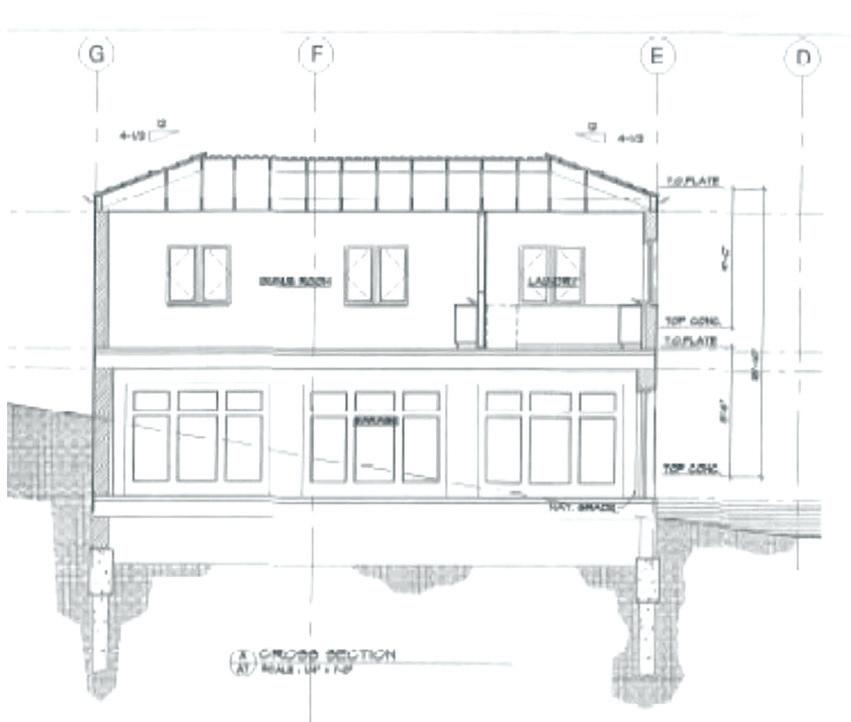
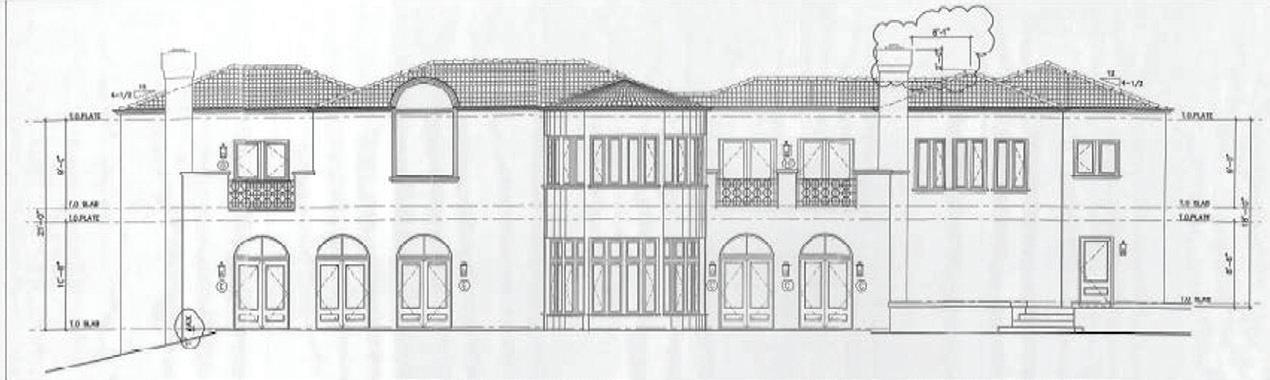
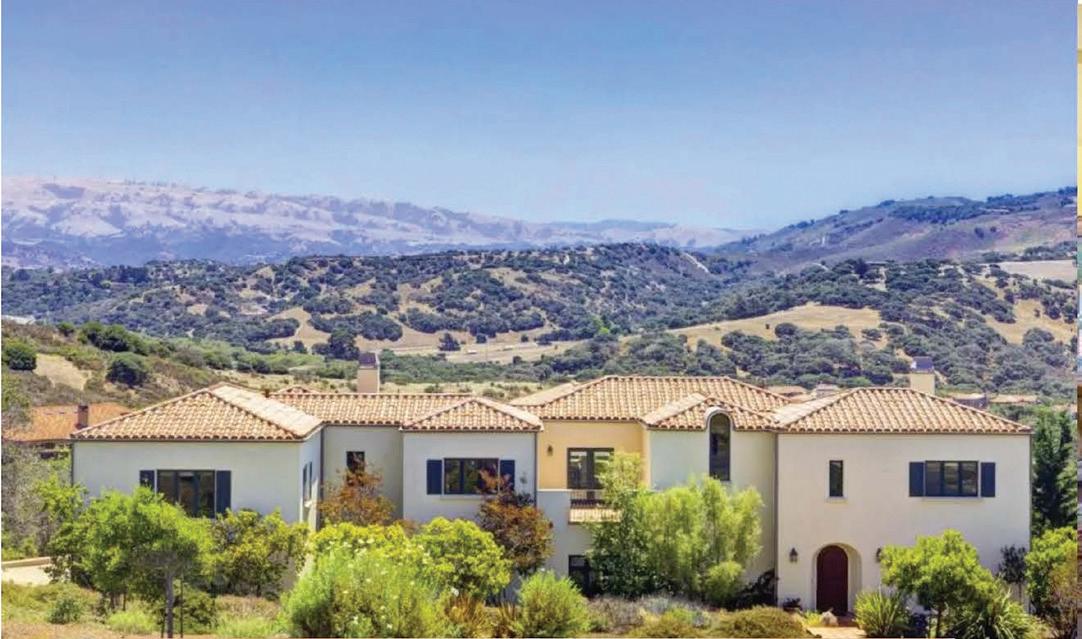
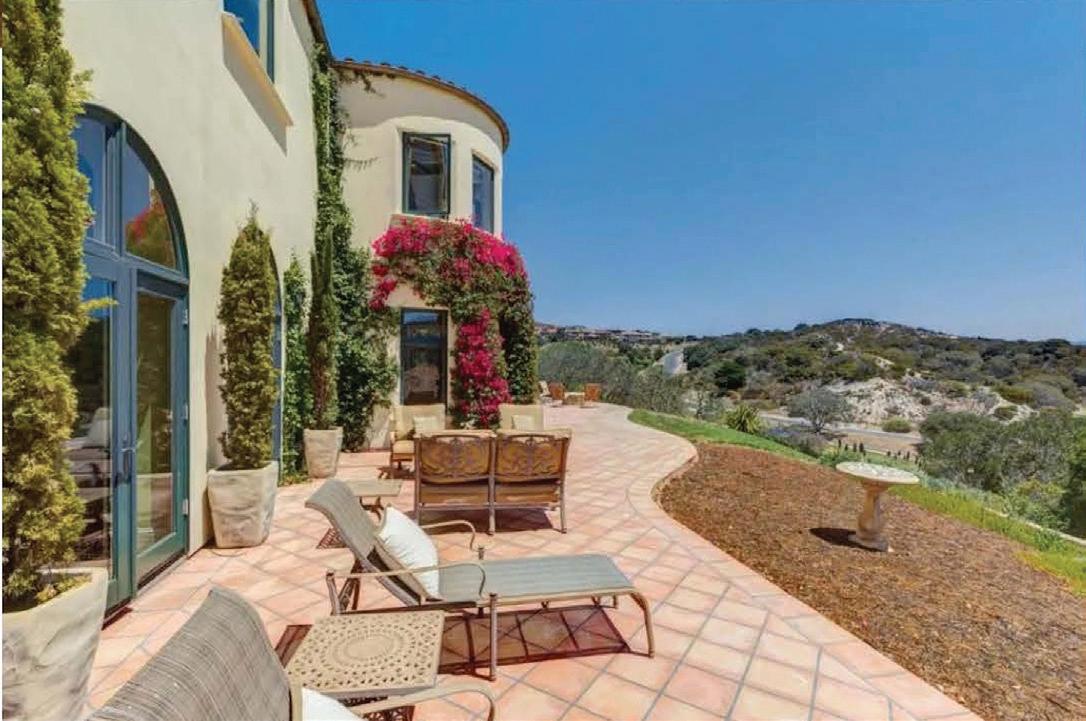
This author built two prototype buildings of custom home design (Figs. 1-3) The first one was approximately 6,000 square feet located in Monterey, California, in a private development. The second house was approximately 12,500 square feet located in Bell Canyon, California. Both homes have survived for the past 20 years, with several fire threats in the area.
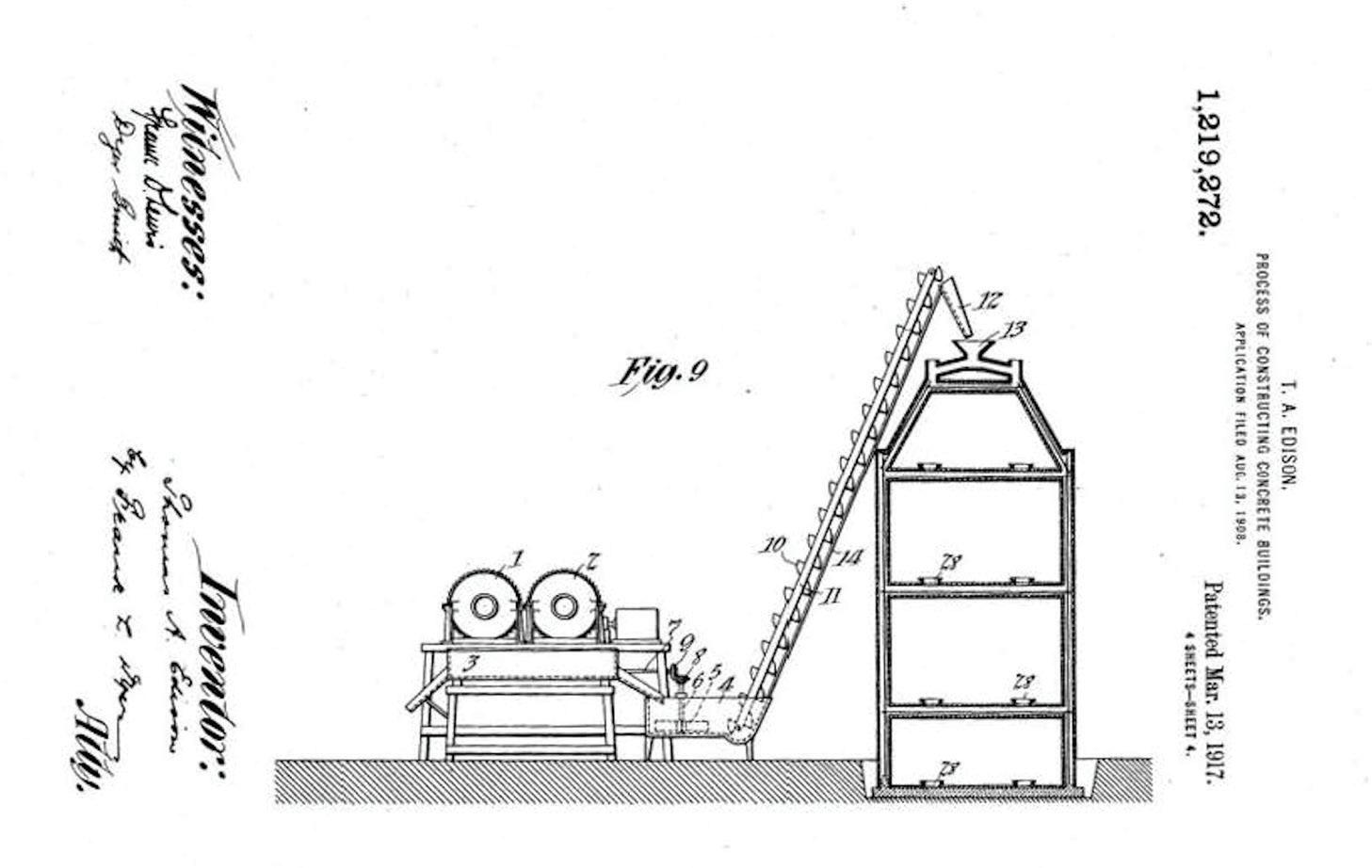
This is not an original idea. Thomas Edison built the first concrete
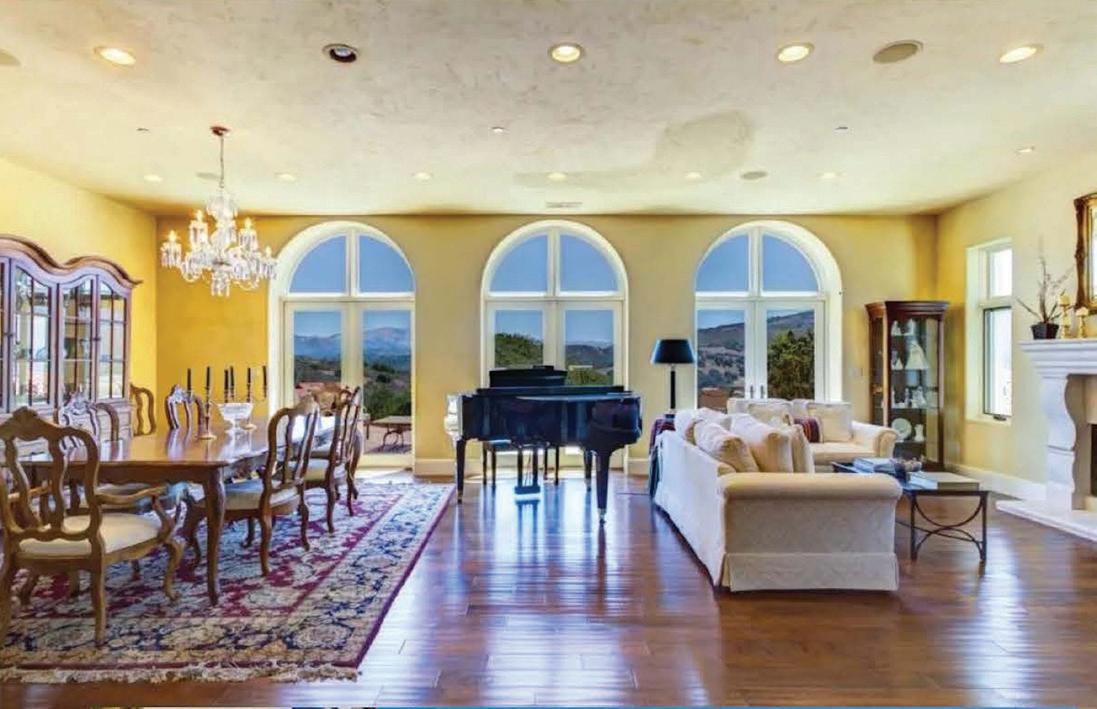
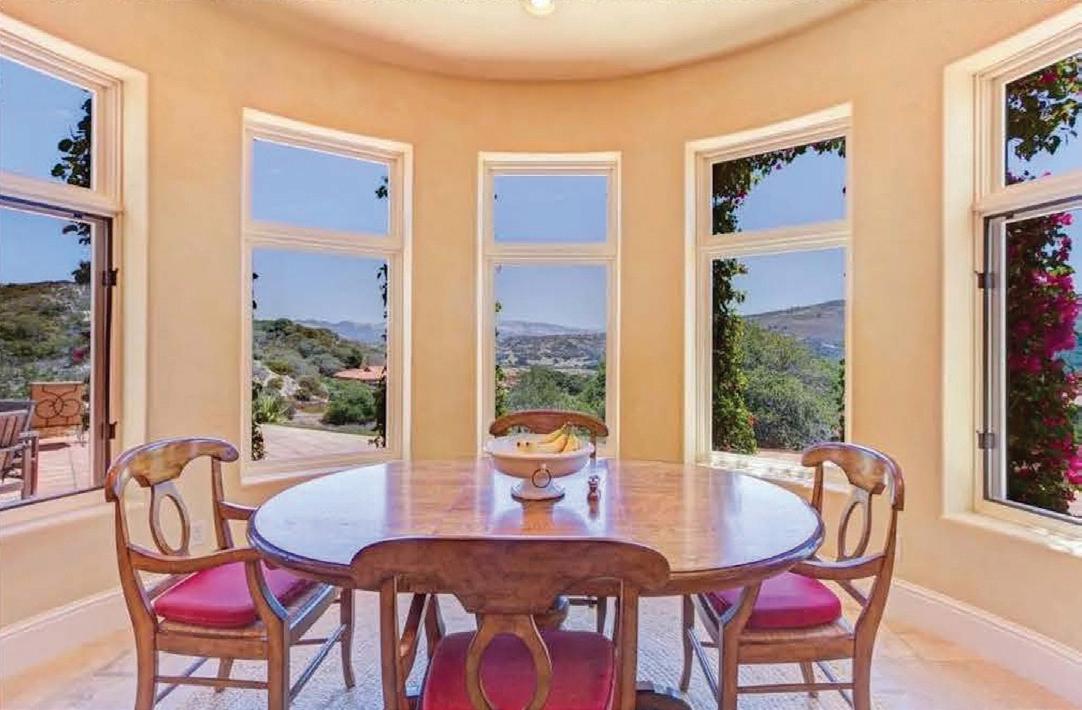
house in 1908 in New Jersey and patented the concept of building mass housing out of concrete with a single pour (Figs. 4-5).
The use of reinforced masonry and/or precast, prestressed hollow core concrete floor planks (e.g. Spancrete) are the best materials for resisting fire because they are noncombustible, eliminating many of the risk factors associated with Type V construction buildings. The advantages of building with masonry and concrete are:
1. Best fire-resistant material.
2. No termite infestation.
3. No dry rot.
4. Excellent earthquake resistance for larger floor spans and taller structures.
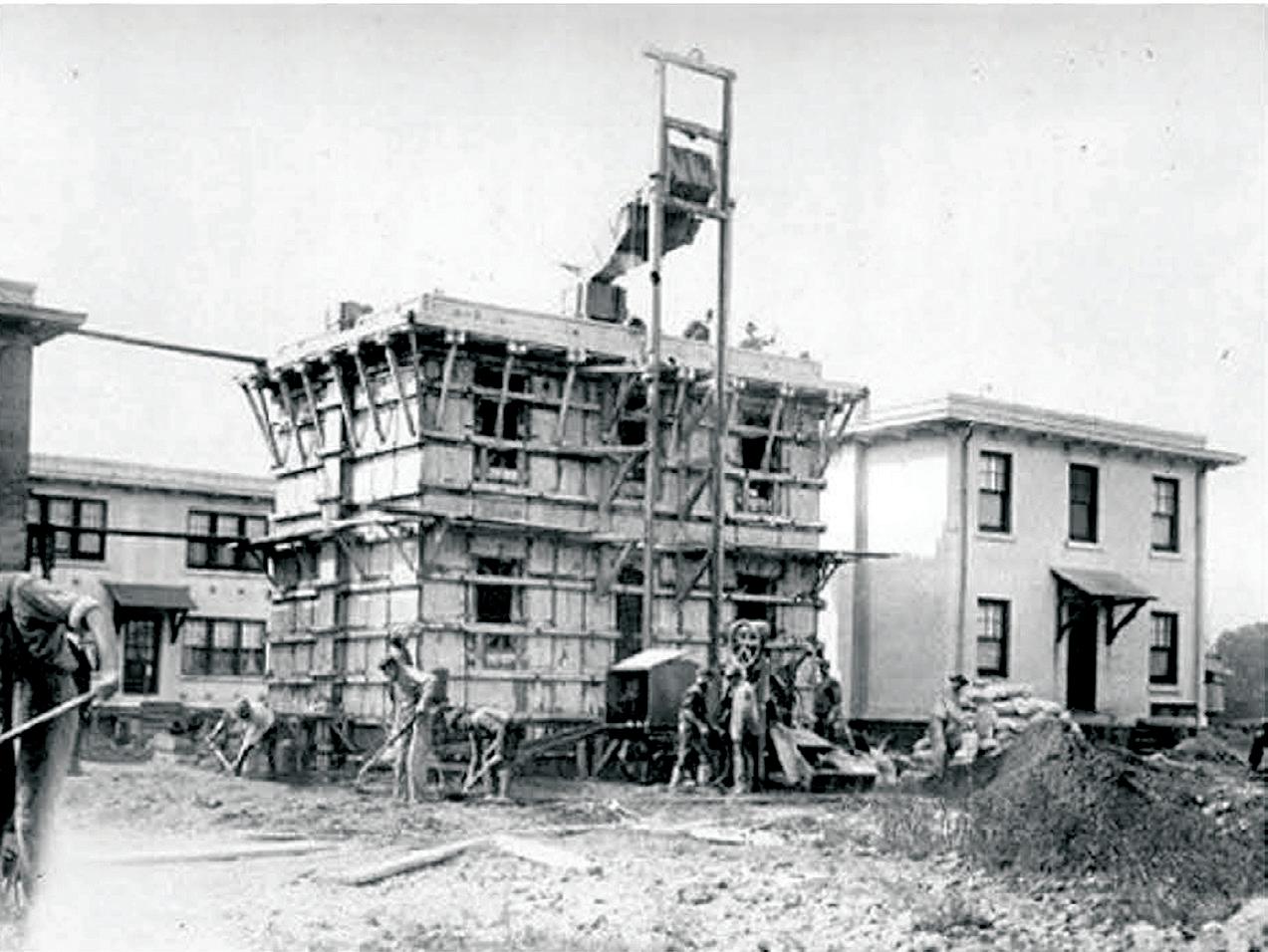
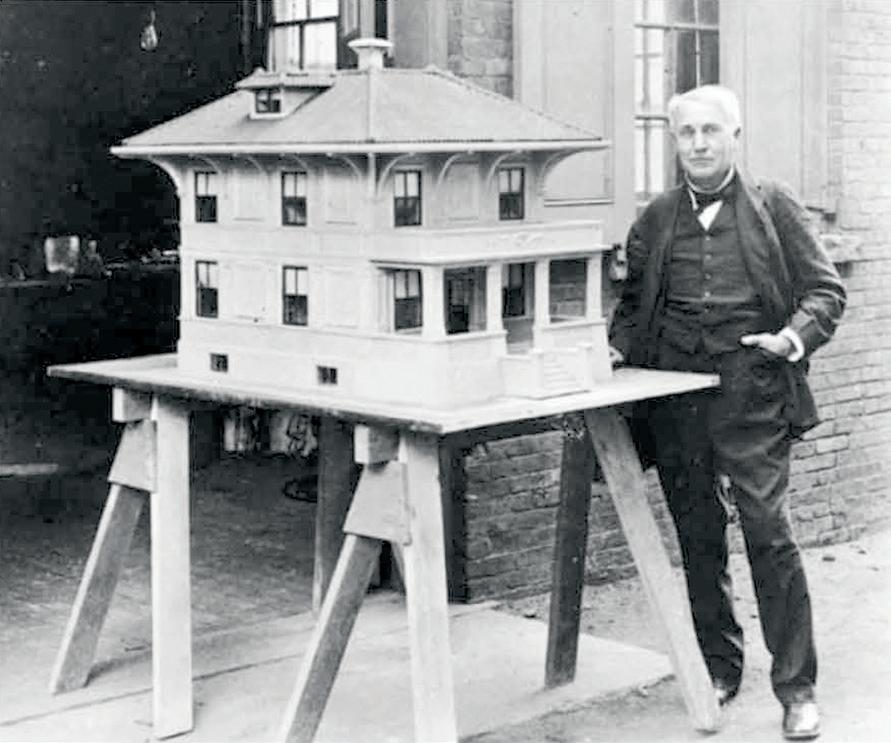
5. High resistance to wind, tornado, and hurricane forces.
Cost is a significant concern as there is an increased structural cost in materials and labor using reinforced masonry and precast, prestressed hollow core concrete floor planks. The interior improvements, finishes, and mechanical systems will be the same as a Type V building using interior drywall/finished surfaces because they are not changed.
The author recommends adding a sprinkler system for the rooftop framing system powered by a gas generator that draws water from a backyard pool or water tank. This will provide a primary fire protection system to prevent flame spread from the outside through windows that could enter the structure. The cost of this system would be added to the overall structure cost.
The final cost of Type I construction depends on many factors, but industry estimates indicate this should not exceed 15% of the wood-frame system. Each floor plan and design will dictate a different cost profile, so this is not a guarantee, but an educated estimate. The important advantages are clear, and long-term sustainability will add a lifelong security for the home. Also, insurance risk is far less. Survivability of the Type I construction residential structure will match that of other critical facilities like police and fire stations. This Type I construction residential home will be a fortress, and its life equity will remain protected.
forces, projectile impact, and earthquake resistance and are well suited for tornadoes, hurricanes, and fire zones.
D. It is advised to consider additional fire protection measures for new/existing homes: (a) Adding metal shutters to all windows; (b) Roof sprinkler system; (c) perimeter fire protection sprinklers linked to a pool/water tank with temporary power generation.
This Type I construction residential home will be a fortress, and its life equity will remain protected.
For example, in Palisades the projected replacement cost estimates for residential properties are in the range of $600-$850/square foot. This estimate is for higher-end residential rebuilds and depends on interior improvements. The structure’s cost is approximately 50% of the replacement cost or $300-$425/square foot for a two-story woodframed building of approximately 4,000 square feet, [foundation not included]. Three major areas where reinforced masonry wall and concrete floor systems will reduce costs are:
A. Reinforced masonry shear wall strength is approximately 3,000 pounds per linear foot (plf) vs. approximately 1,500 plf maximum for wood shear walls. This system makes every masonry wall a shear wall and therefore the installation of hold downs, straps, etc. are reduced/eliminated because the diaphragms are precast, prestressed hollow core concrete floor planks.
B. Precast, prestressed hollow core concrete floor planks can be designed for longer spans, upwards to 40 feet with no interior columns/walls. This gives the architect great flexibility in design options.
C. Reinforced masonry walls and precast, prestressed hollow core concrete floors provide excellent resistance for wind
Certainly, there are disadvantages. Wall and diaphragm designs must be precisely dimensioned and cut to fit perfectly with tight tolerances. One cannot make adjustments in the field to “move a wall” or cut an opening arbitrarily. But this could be an advantage because it forces the design team and owner to reconcile their designs before construction begins and not allow for inordinate change orders during the construction phase.
Final cost estimates of the masonry and concrete Type I construction are emerging to be approximately 15-20% above the wood-frame Type V construction, with reduced insurance risk and long-term sustainability. This is arguably a negligible increase considering the life safety advantages.
The biggest advantage is the reduced risk for total loss. Given the insurance industry crises in California and fire prone states, for many communities in hillside/high fire risk areas this may not be an option, but the only way to build in the future. ■
SE, PE, Ph.D., is a professional structural and civil engineer with 42 years of experience and licensed in 48 United States, four Canadian Provinces, and Australia. He has published over 200 technical papers/symposiums/presentations. (dkhatri2006@gmail.com, Khatriinternational.com)
Photo by Nicholas Venezia.
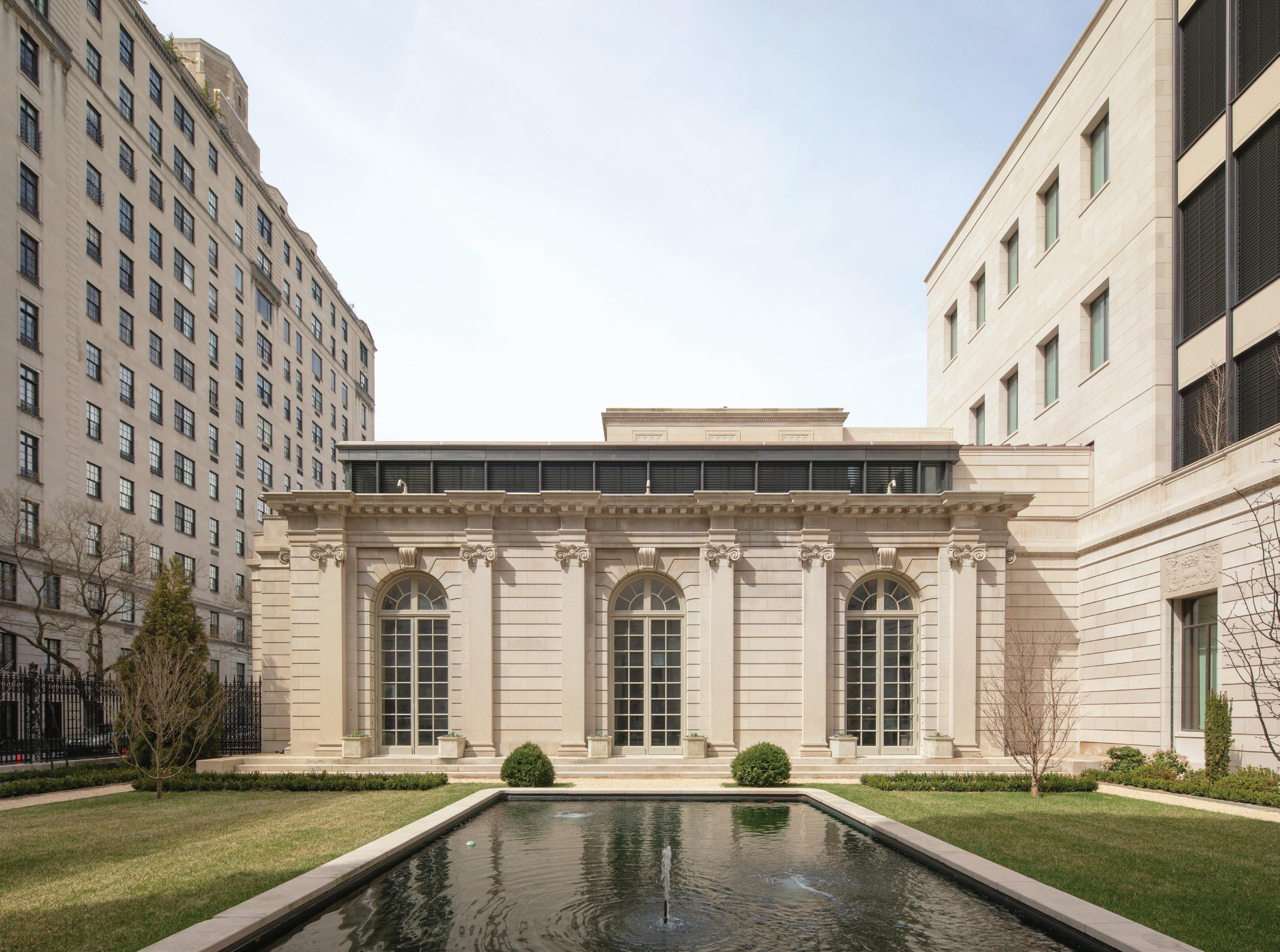
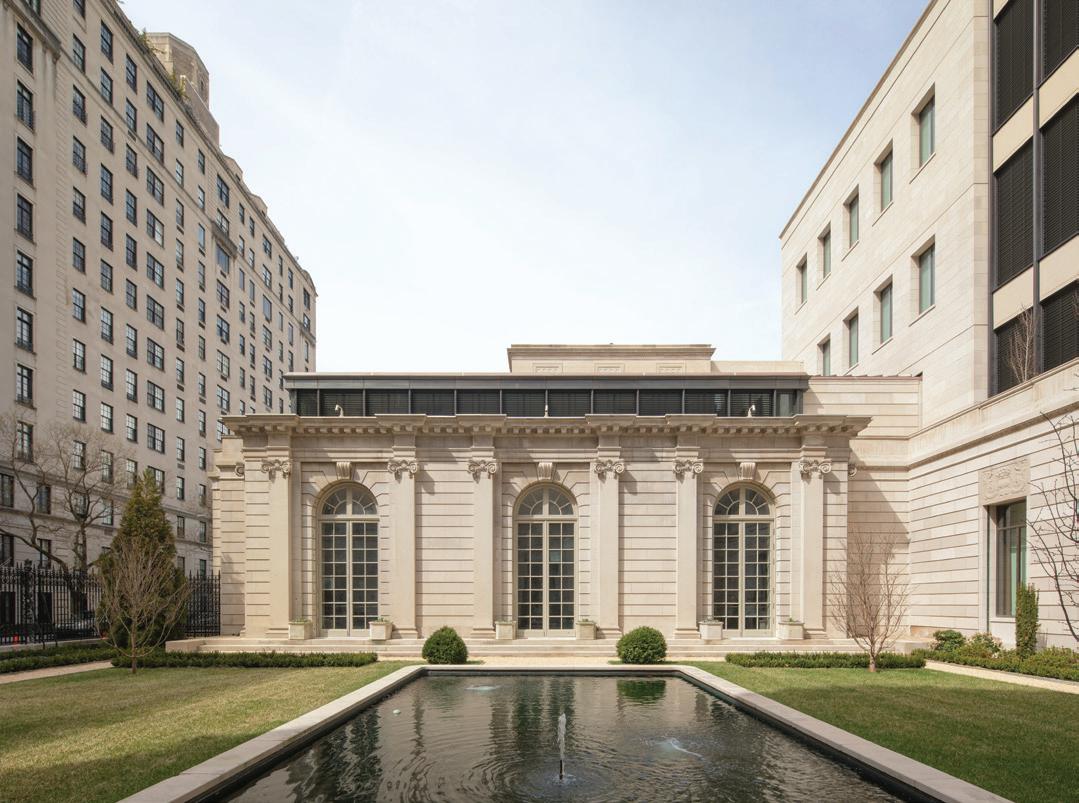
The Frick Collection recently reopened after a yearslong renovation to the century-old museum. Simpson Gumpertz & Heger was tasked with engineering the unique solutions that addressed the archaic systems and complex structural limitations of this historic landmark.
By Filippo Masetti, PE, David Ribbans, PE, Lauren Feinstein, PE, and Kevin Poulin, PE
This is the second of a two-part series discussing the renovation of The Frick Collection in New York City. Part 1 was published in the July 2025 issue of STRUCTURE Magazine and discusses design challenges in modifying archaic gravity systems.
Nestled into half a city block on Manhattan’s Upper East Side, just steps from the tranquil green expanses of Central Park, The Frick Collection is a world-class art museum and research center specializing in fine and decorative arts from the Renaissance to the late 19th century. The collection was initially enjoyed by Henry Clay Frick and family in their 1914 Gilded Age Mansion, which became a public museum 90 years ago in 1935. The property has expanded over the course of more than a century to consist of five separate buildings and three historic gardens (two outside and one inside). With an evergrowing collection attracting an increasing number of first-time and returning visitors with each passing year, The Frick Collection commenced a renovation project in 2016 to expand publicly accessible gallery spaces within, improve circulation and amenities, modernize back-of-house facilities, and improve energy efficiency. Simpson Gumpertz & Heger (SGH) was the Engineer of Record for this challenging project that included the repair and strengthening of numerous archaic structural systems throughout the historic buildings.
While renovations occurred in all of the institution’s buildings (Fig. 1), it was the three buildings with additions (Fig. 2) that required new lateral-load-resisting (lateral) systems and strengthening of existing lateral systems: the Frick Art Research Library (FARL), a 1935 extension, originally called the Music Room, and the reception hall. The additions provided more space for a new conservation studio, educational programming, and additional galleries, and they provided an interconnection of all buildings for the very first time. This trio of structures is now clad with a panelized facade system (a thin-stone system supported by metal backup framing) that harmoniously complements the original limestone cladding of the adjacent buildings. Although the impact of this new system is primarily aesthetic, it significantly affected the renovation’s structural design and presented some unique challenges for the SGH engineering team.
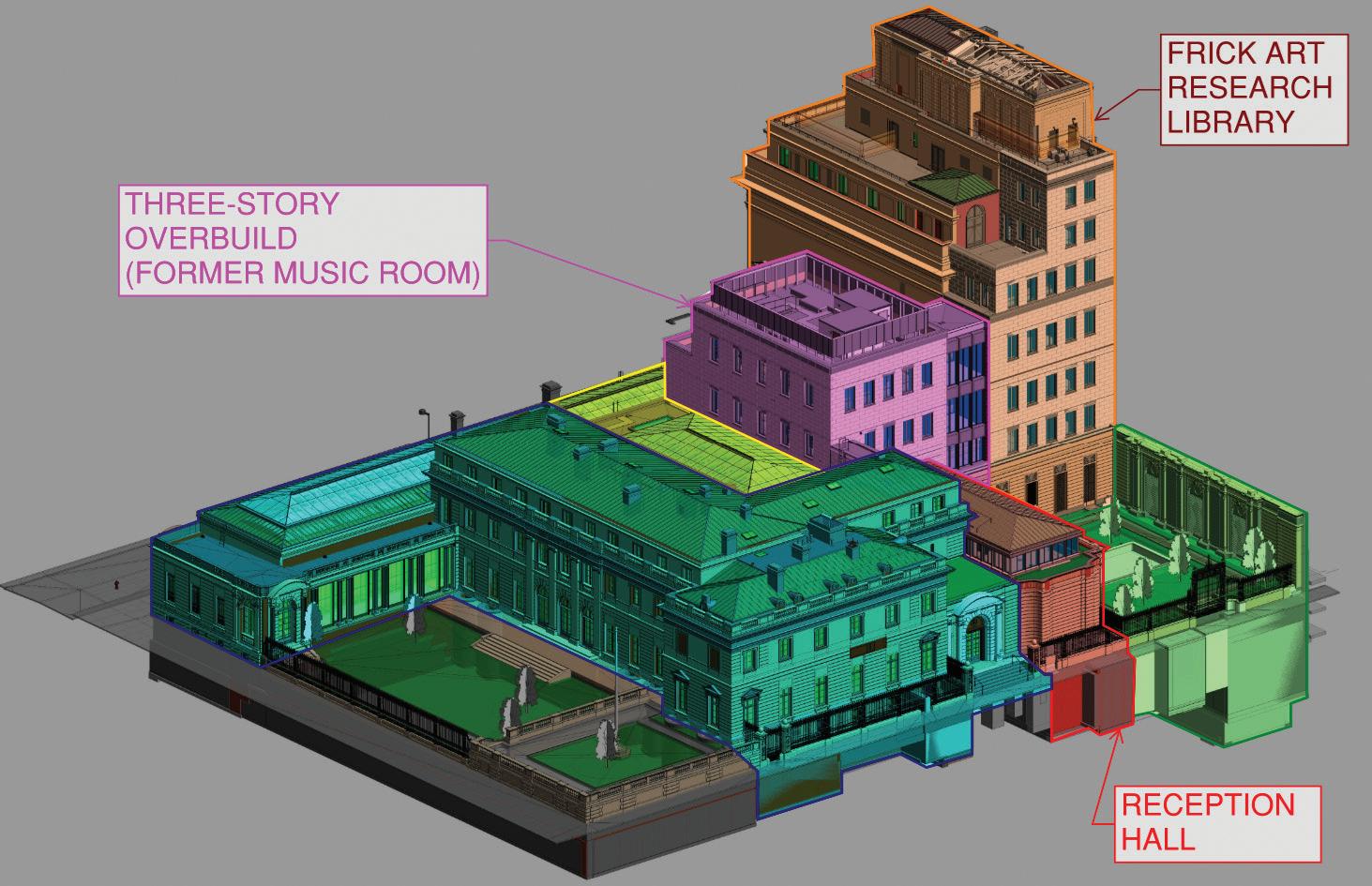
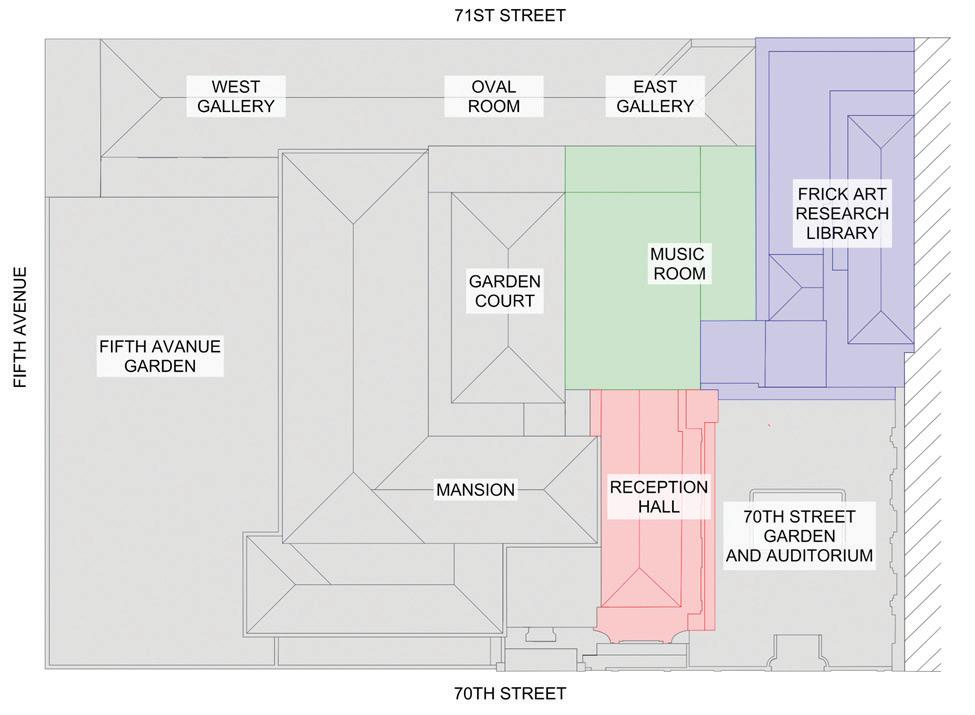
Fig. 1. The three buildings with additions are shown in this Revit model: the Frick Art Research Library, reception hall, and 1935 extension (former Music Room).
Fig. 2. The Music Room, Frick Art Research Library, and reception hall required new lateral load resisting systems and strengthening of existing lateral systems.
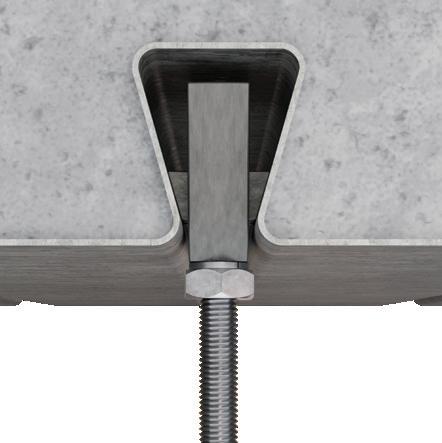
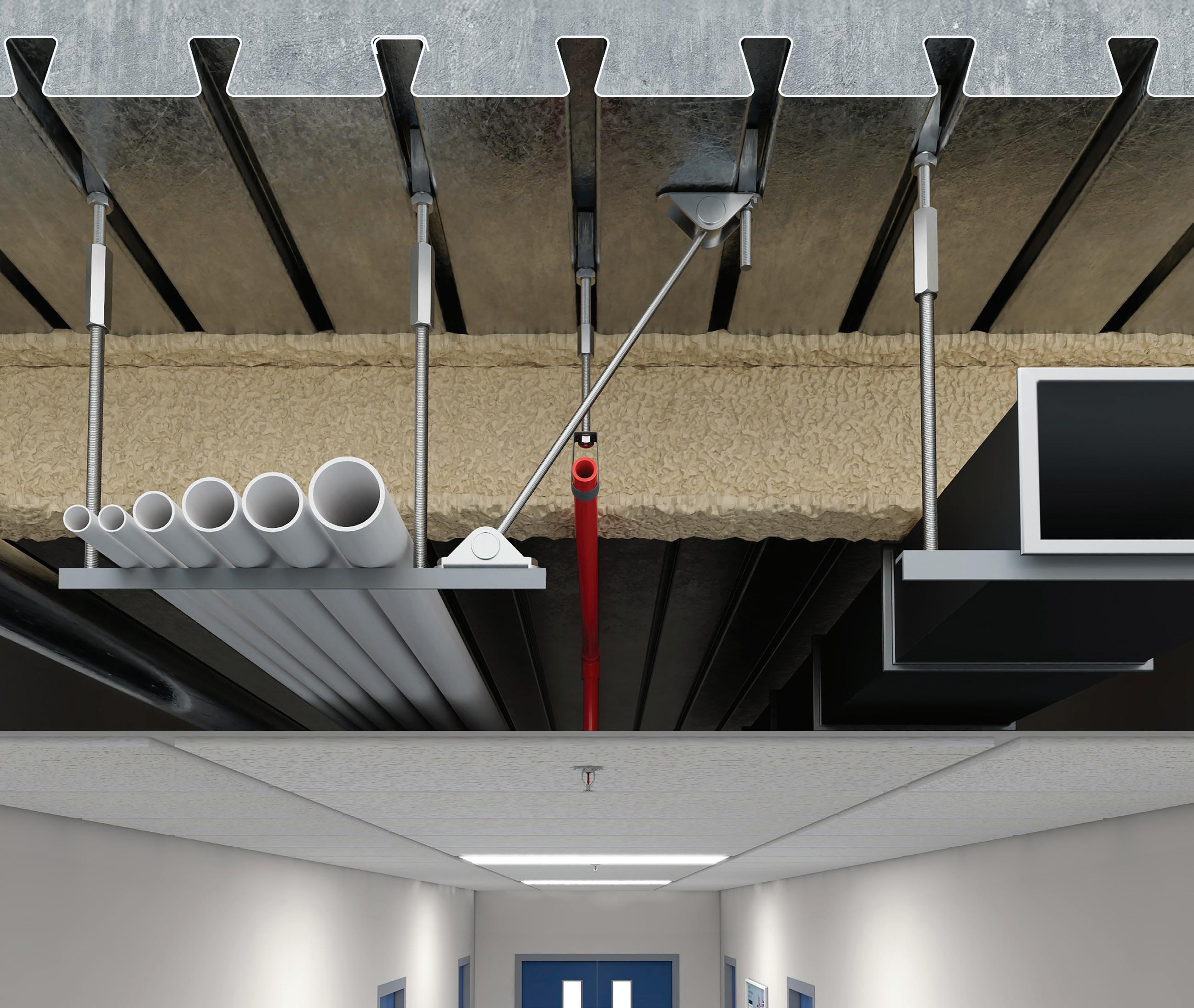
New construction architecture requires special consideration for the inevitability of future upgrades. That’s why modern construction projects need hanging solutions that are built for speed, versatility, and adaptability to ensure quick and seamless renovations.
To help meet that challenge, Vulcraft-Verco has developed the PinTail™ Anchor, an innovative hanging solution that works exclusively with our Next Generation Dovetail Floor Deck, and are specifically designed to futureproof today’s construction projects for tomorrow’s renovations.
To provide more space for the museum, the project team designed a narrow, nine-story addition to the FARL (horizontal enlargement), a three-story “overbuild” (vertical enlargement) at the 1935 extension, and a one-story overbuild at the reception hall.
The FARL’s nine-story transitional masonry structure (the exterior steel frame is embedded in masonry) has two below-grade levels, and, as discussed in Part I of this series, the floor structure varies from the proprietary “stack-slab” system in the library stacks to draped-mesh cinder concrete slabs and slagblok (waffle) slabs. Large openings in the floor diaphragms were needed for a new egress stair and elevator at the south end of the building, adjacent to the steel framing for the new addition.
The 1935 extension was a two-story transitional masonry structure with two below-grade levels and floors that featured draped-mesh cinder concrete slabs spanning between steel framing. The recently-completed project included demolishing the upper floors and roof while keeping the perimeter steel columns, first-floor structure, and below-grade construction to allow for a new three-story overbuild above the first floor, reaching a full height of four stories. To provide a connection with the nearby reception hall, the building was also expanded south beyond the original footprint.
In 1975, The Frick Collection demolished existing townhouses east of the mansion and constructed the reception hall and 70th Street Garden on top of remnant brick masonry foundation walls. The reception hall included two original below-grade levels and featured a steel-framed roof. The structure abutted, but was separate from, the mansion’s masonry walls. The recently-completed renovation included the demolition of the roof framing, interior floors, and a portion of the north masonry wall. For the new construction, SGH designed an opening in the west masonry wall for access to new elevators located within the mansion, a one-story overbuild featuring glass curtain walls, a concrete core for a monumental stair, and the replacement of the east masonry foundation wall with a new corbeled concrete shear wall.
Given all the modifications over several decades, SGH had to decide whether to structurally connect the buildings or keep them separated. Unfortunately, there was no catch-all solution, as each building presented different existing conditions and constraints dictated by the architectural vision for the project. The team’s design followed the 2014 New York City Building Code (NYCBC), which included provisions for structural separations. They also relied on “Technical Policy and Procedure Notice 4/99” (TPPN 4/99) issued by the New York City Department of Buildings, which provides guidelines on the interpretation of seismic design requirements when renovating existing buildings. In this provision, a seismic retrofit of an existing building is not required if there is a seismic joint isolating it from the new construction. A seismic retrofit can also be avoided if the increase in seismic forces is less than 20 percent, even if the existing building is not isolated.
The first step was to understand whether the existing buildings were connected and, if so, how. Above grade, the FARL was separated from the adjacent 1935 extension (without a distinguishable joint), and both the 1935 extension and reception hall were connected to the adjacent portions of the mansion. Below grade, all of the buildings were not generally connected.
SGH decided to connect the FARL and its addition because the increase in seismic forces was below the 20 percent threshold, but the FARL was kept separated from the 1935 extension, above grade. The
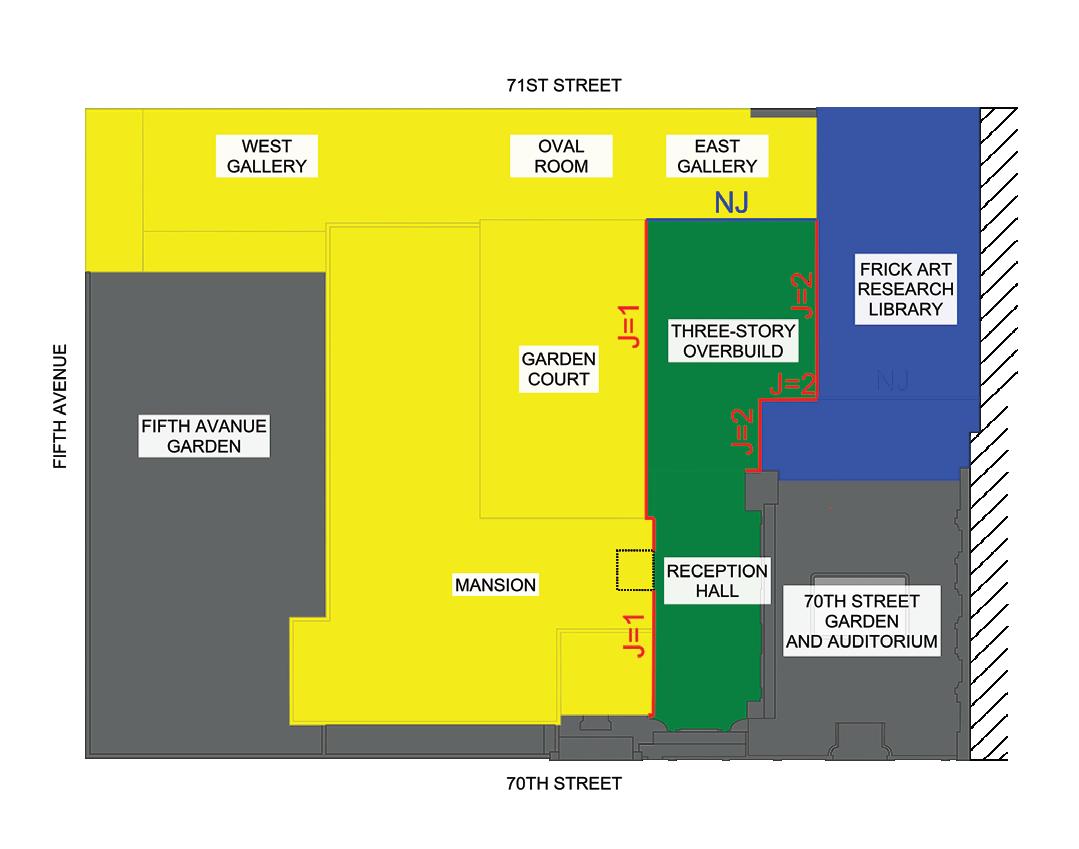
1935 extension and reception hall were connected to one another, but the team disconnected them from the mansion as much as possible. However, in some locations, the columns of the 1935 extension were integrated with the bearing walls of the mansion and could not be separated (Fig. 3). Remaining below the 20 percent threshold avoided a costly seismic retrofit of the mansion. Per TPPN 4/99, the new superstructure at the FARL addition, three-story overbuild, and reception hall were designed for both the seismic and wind requirements of the NYCBC.
Next, SGH had to determine the required joint sizes between the above-grade separated portions of these buildings. This required a delicate balance between meeting the code-required minimum structural separations, while reducing the size of the joints in architectural finishes and limiting the movement of deflection-sensitive facades under lateral loads. The final design required substantial effort and coordination between SGH and the facade consultant. The spandrel beams needed to be iteratively designed to limit the facade joints considering the combination of lateral drift of the buildings under wind and seismic loading, along with the gravity deflections. After the facade consultant established the deflection criteria of the spandrel framing, SGH designed them, determined lateral drifts under wind and seismic loading, calculated resulting joint sizes and spandrel deflections, and repeated the process (typically by upsizing or downsizing the lateral and spandrel structural systems) until the results were satisfactory. In general terms, the controlling scenarios were the minimum inter-building joint size under ultimate limit-state seismic loading and the square root of the sum of the squares of the lateral drifts of adjacent buildings under service-level wind loads (MRI=50 years).
Because of the elevational difference of the foundations, the first floor was the lowest level to connect the three buildings via the 70th Street Garden slab, and SGH designed the new first-floor framing and slab diaphragms to withstand significant lateral force transfers. On upper floors, there were also pinch points in the diaphragms. For the FARL, it was near the new elevator and stair openings on every floor. At these locations, the engineering team added slab reinforcing or in-plane bracing at the concrete-on-metal-deck slab to withstand the forces. A similar pinch point existed between the elevator core of the three-story overbuild and the monumental stair of the reception hall on the first and second floors that generated high diaphragm forces. At the threestory overbuild and reception hall, SGH designed solid cast-in-place concrete slabs with heavy chord reinforcement that acted compositely with the steel floor framing.
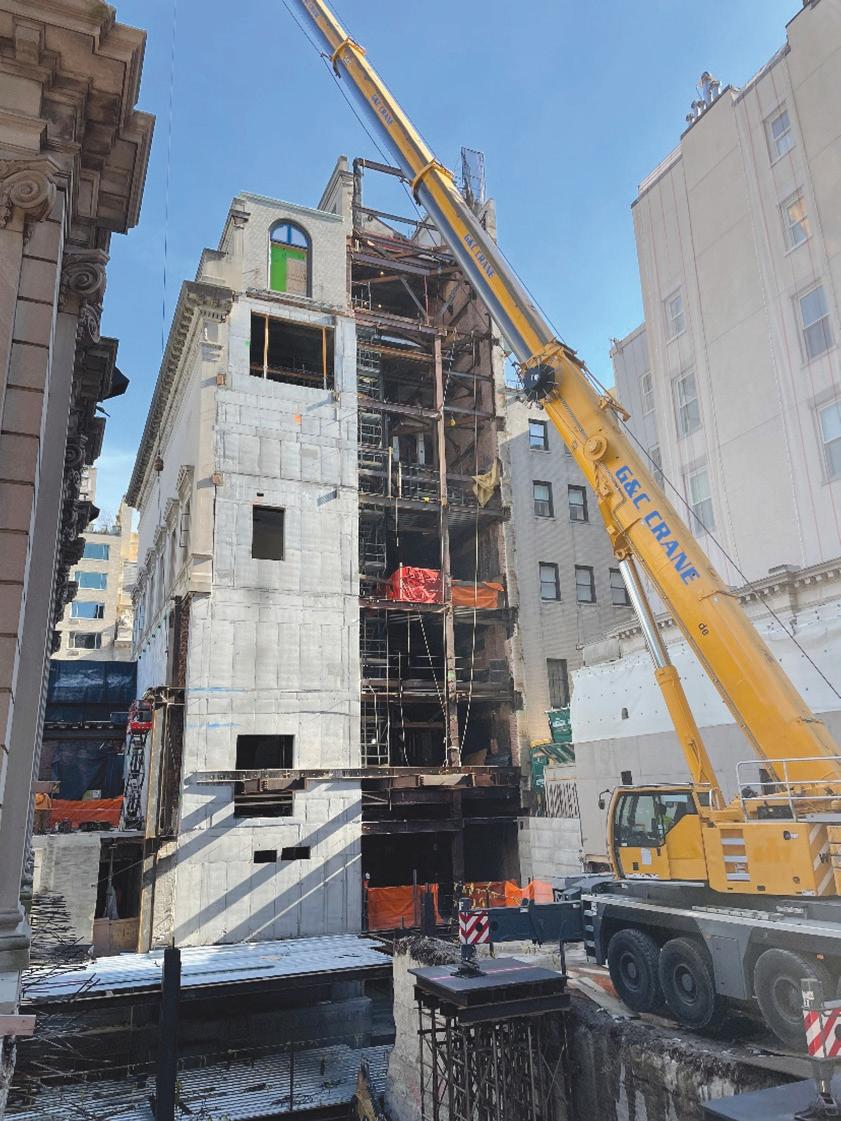
Frick Art Research Library
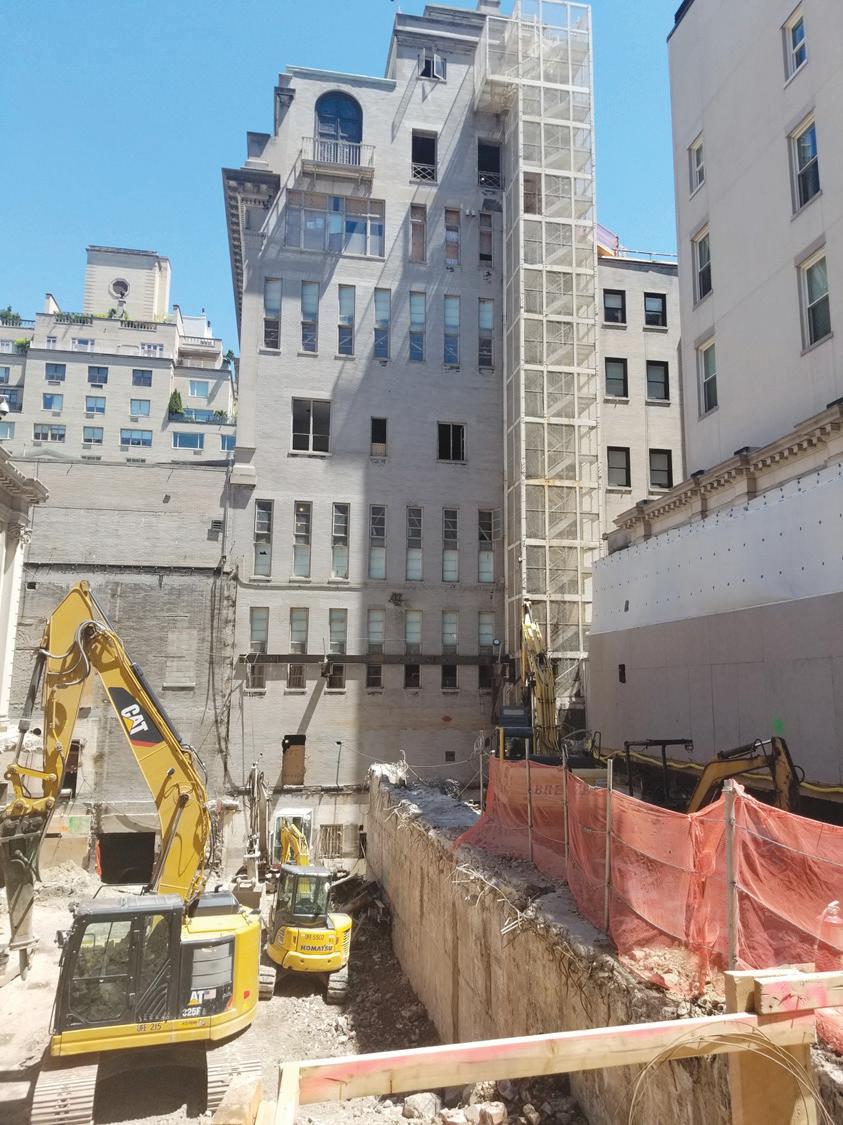
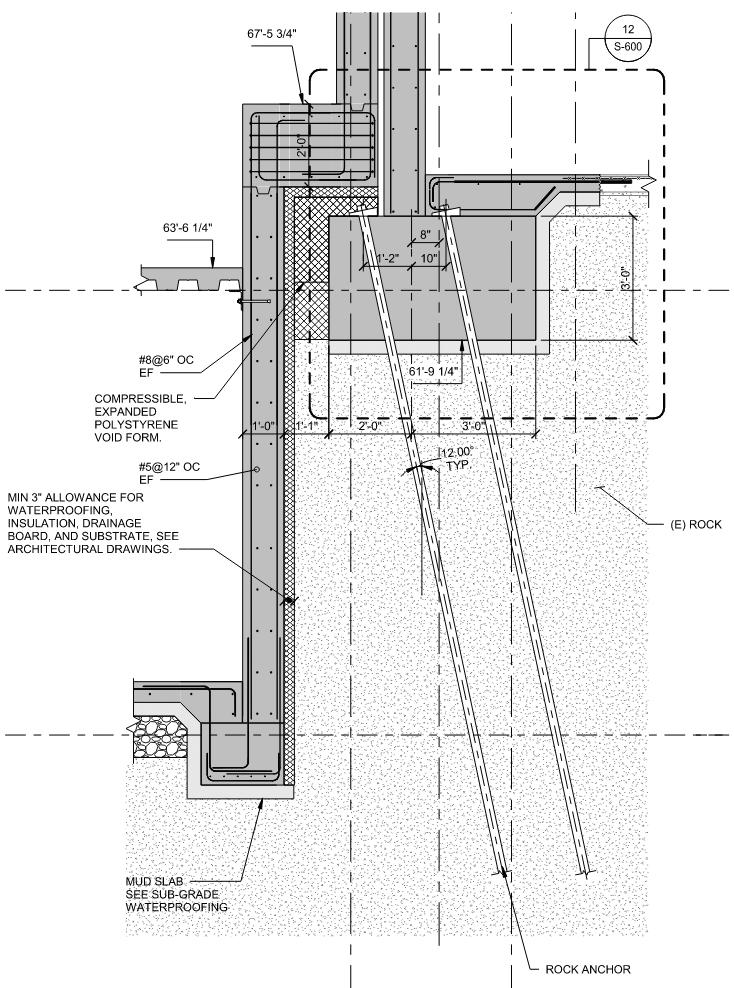
To provide access to the FARL addition, the western portion of the exterior masonry wall on the south elevation of the existing FARL was removed and replaced by a new reinforced concrete shear wall, in between and encasing two columns, and the eastern portion was removed to allow for circulation to and from the addition (Figs. 4 and 5). The new shear wall extends from the subcellar to the eighth floor and replaces the lateral capacity of the previous transitional masonry wall. The new shear wall is the stiffest lateral element of the FARL and its expansion. On top of the resulting significant lateral forces, the design of the shear wall was complicated by the detailing to connect existing diaphragms of the FARL and the new diaphragms of the addition. The existing columns and spandrels encased by the concrete shear wall are detailed with welded studs at the webs of the columns and couplers at the top and bottom flanges of the beams to transfer gravity and lateral forces to the shear wall, rather than into the columns and their existing foundations. The diaphragm was laterally connected to the shear wall while the associated gravity loads were re-supported (Fig. 6).
Because the shear wall extended between and encased the existing columns, openings for the door and window were needed, and the proximity of these openings to the existing columns required close coordination with the boundary-element reinforcement.
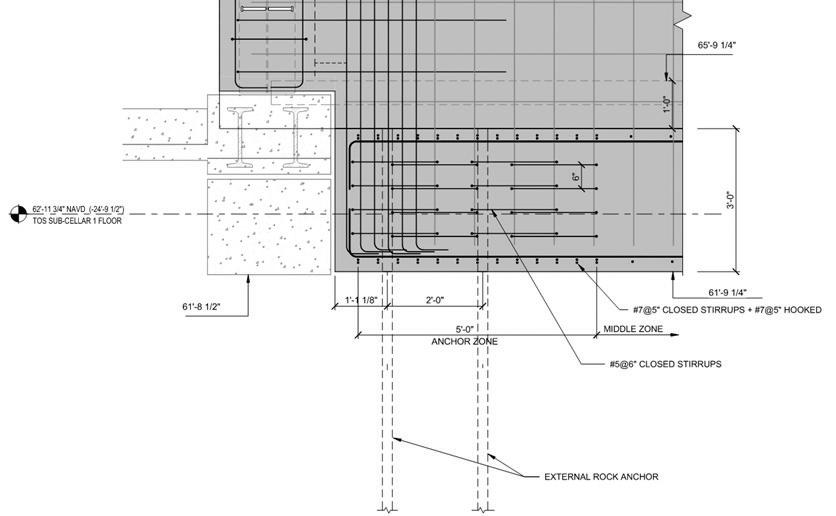
The foundation for the shear wall needed to be independent from the existing column footings because strengthening the existing footings would be both difficult and costly. South of the shear wall, the rock excavation continued down to Subcellar 2, approximately 10 feet below the bottom of the existing column footings, and thus the shear wall foundation, which
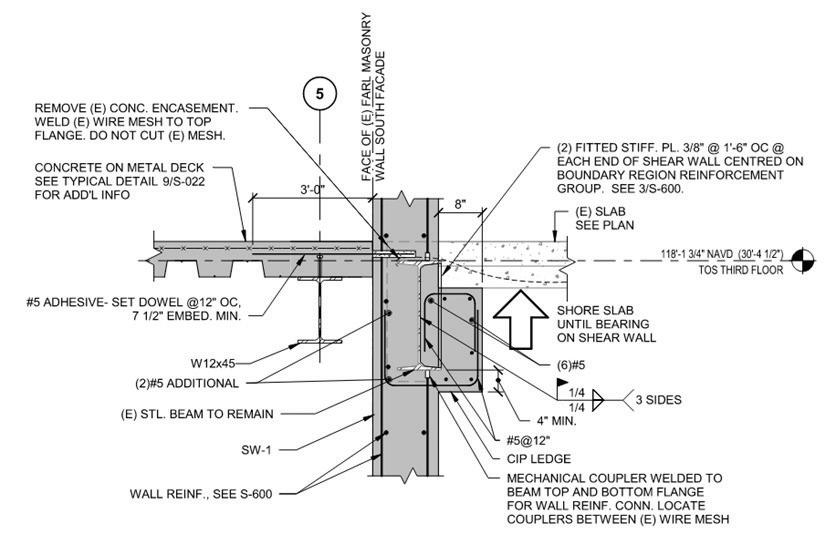
would also bear on rock, needed to be located away from the edge of excavation. Consequently, the new footing is eccentric with respect to the shear wall. It extends the full length of the shear wall but stops at the edge of the existing column footings and cantilevers over them (Fig. 7).
To resist uplift, rock anchors were required below the boundary element zones of the shear wall. Due to the proximity of the rock face as well as the shear wall eccentricity, the rock anchors were inclined. (Fig. 8).
To accommodate new art galleries, offices, and a conservation studio, the museum added three stories to the 1935 Extension. As such, the three-story overbuild required a new lateral system that extended all the
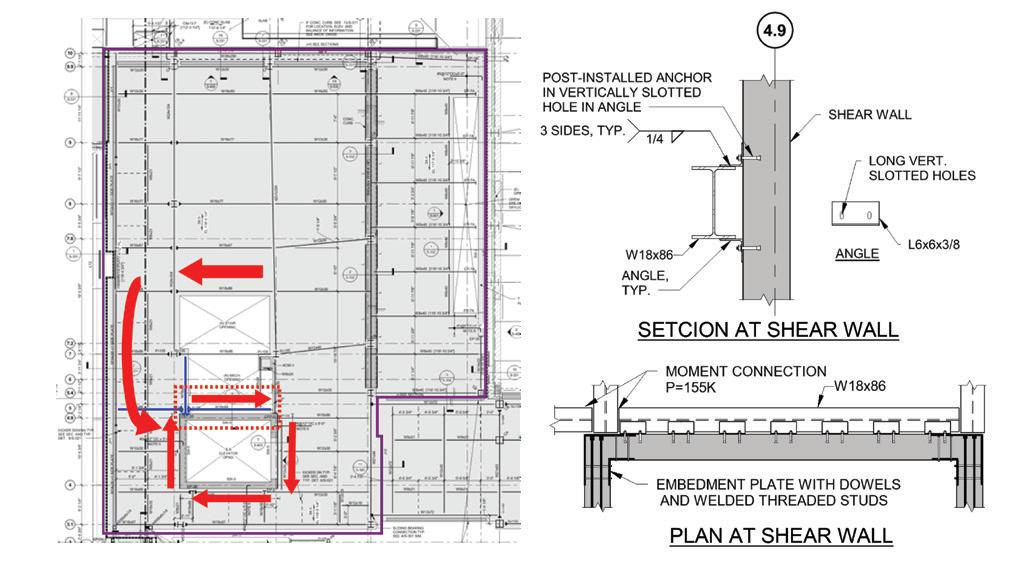
way down to the foundation. To maximize the use of the new space and minimize the size of the new structure, SGH designed an asymmetric lateral system comprising a reinforced concrete core at the south end of the building, a stepped reinforced concrete shear wall at the east end (adjacent to the FARL), and a horizontally offset steel frame at the north end. The steel frame features moment frames in the upper floors for large windows and braced frames on the lower floors at the solid masonry walls that separated the 1935 extension from the East Gallery.
The eccentric layout of the lateral system resulted in a large, concentrated transfer of lateral forces around the elevator’s concrete core. The programming of the new space also required stair and mechanical openings to be located adjacent to the core, exacerbating the lack of space to transfer forces. The design team utilized the shear studs of the composite steel framing around the openings to collect lateral forces, and a steel drag strut on the south edge of the opening connected to the concrete core through a series of angles and post-installed anchors (Fig. 9).
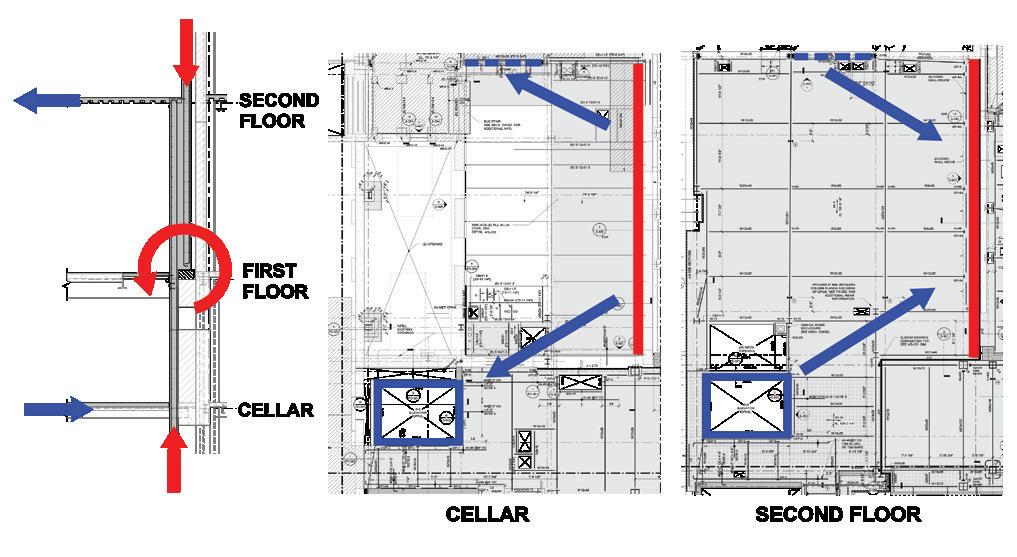
The team designed the below-grade portion of the east concrete shear wall as a liner wall inside the footprint of the existing foundation wall to avoid strengthening of the wall and its footing. Above the first floor, it “steps over” the top of the existing mass masonry foundation wall toward the FARL to maximize interior space. Between the first and second floors, the shear wall doubles in thickness to allow the formation of an inclined diagonal strut to transfer gravity and lateral forces to the lower portion of the wall at the step. The moment from the gravity eccentricity caused by the step was resolved by transferring the resulting force couple to the concrete diaphragms of the new second floor and the existing cellar floor (Fig. 10). At the cellar level, SGH specified the removal of the cement topping and cinder fill of the existing draped-mesh cinder-concrete slab and its replacement with a new structural concrete topping slab that was detailed to transfer the compression component of the force couple from the east shear wall to the concrete core and the braced frame. Transferring the tension component of the force couple to the new second-floor diaphragm was more straightforward, and it was detailed as a simple slab connection to the concrete wall and braced frame.
Several factors and constraints dictated the design of the new belowgrade concrete shear wall along the east side of the reception hall. First and foremost, the new concrete wall needed to re-support the landmarked masonry wall on the east facade, which is eccentric to the new concrete wall below. In addition, the new concrete wall required a large opening for an entrance to the new auditorium below the 70th Street Garden, and many smaller openings for mechanical ductwork. The new concrete wall also needed to laterally connect the first-floor diaphragm of the reception hall and the 70th Street Garden slab diaphragm.
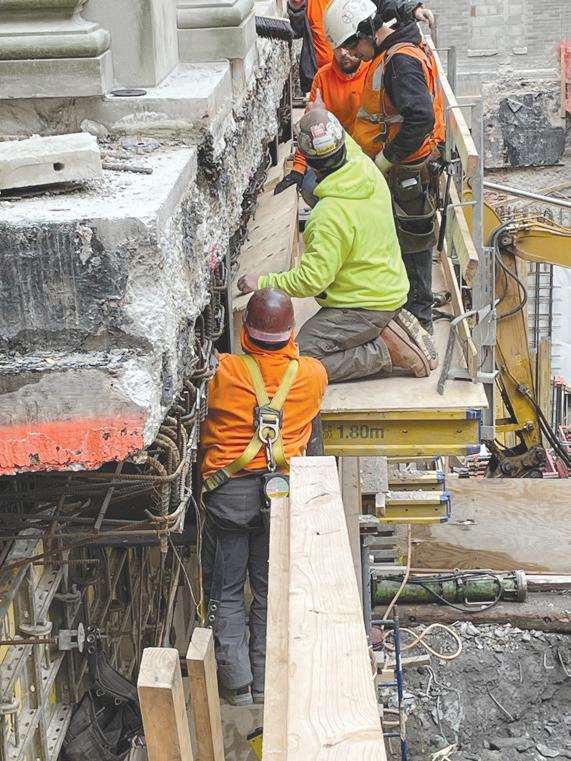
The top of the concrete wall was designed with a heavily reinforced corbel to re-support the eccentric landmarked masonry wall and reinstalled limestone-clad concrete stairs. The new concrete wall continues slightly above the corbel to support the framing of the new first-floor slab and to laterally tie the diaphragm to the wall. The “closed ties” that are required across the height of the corbel were particularly difficult to install, as the contractor only had access from the exterior side to install the ties. Access from above and from the interior side, something generally available in ground-up construction projects, was restricted by the
construction sequence and the existing wall to be re-supported. As a workaround, SGH designed a series of hooked reinforcement and cross ties that could be installed from one side (Fig. 11).
Finally, SGH designed a horizontal steel truss to transfer lateral forces between the shear wall and the 70th Street Garden diaphragm. The truss, located just below the corbel base, is connected to the shear wall by cast-in-place steel plates embedded into the concrete wall and to the garden diaphragm by steel-plated connections welded to the long-span composite steel beams that support the garden slab.
Navigating the challenges of designing lateral systems for additions and overbuilds in historic buildings requires an in-depth knowledge of several archaic structural systems, an understanding of lateral load paths, some creative detailing, and extensive familiarity with relevant building codes and available literature. When all this takes place at an iconic, world-renowned museum like The Frick Collection, the journey becomes even more arduous.
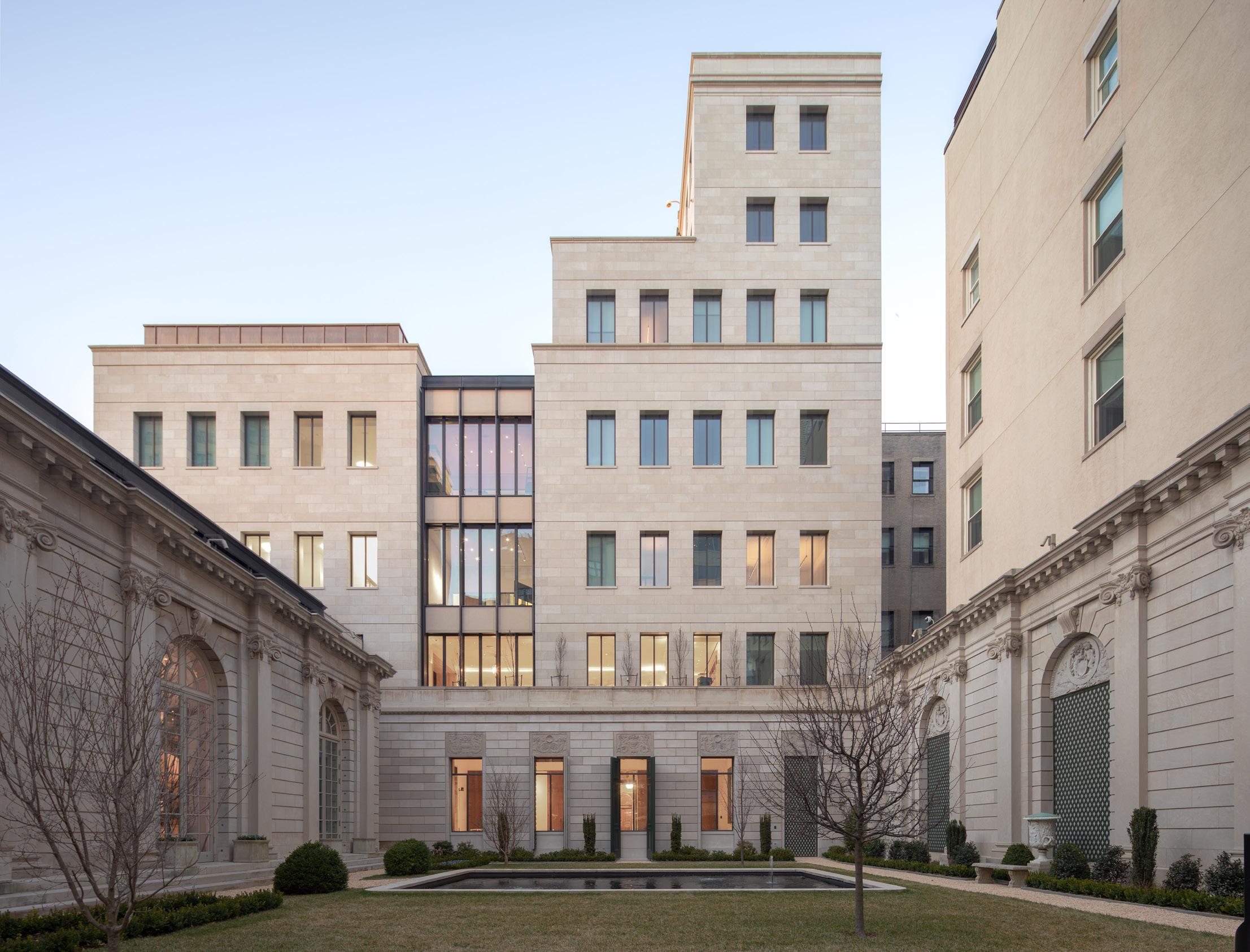
After several years of seamlessly concealing structural systems behind lavish finishes, addressing unforeseen field conditions, and modifying the structural design to expedite construction, The Frick Collection finally reopened to the public in April 2025 to overwhelming acclaim and throngs of curious visitors (Fig. 12). Despite its array of complex challenges, the project proved to be a formative, unprecedented, and deeply rewarding experience—and one for which the authors remain profoundly grateful.■
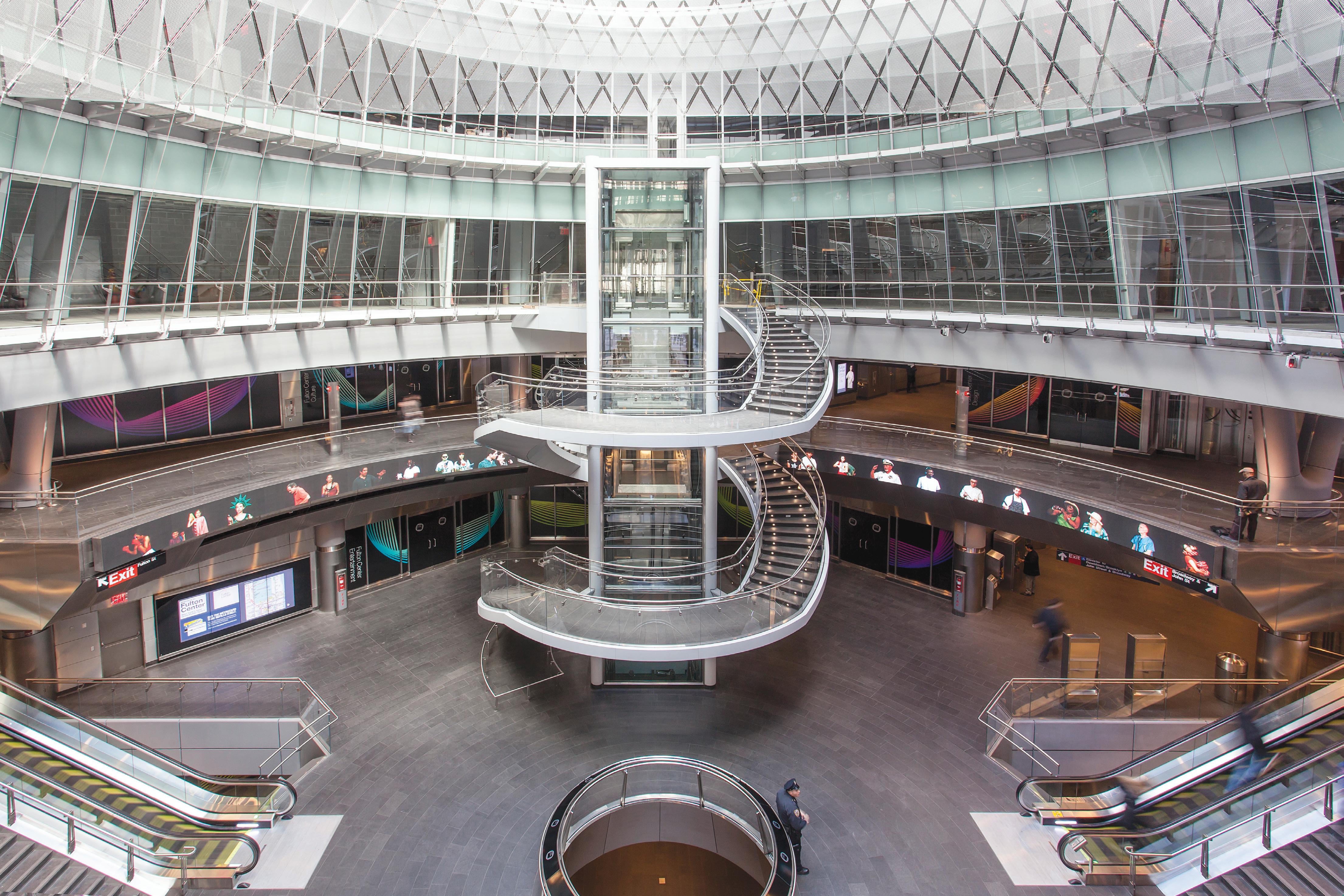
Strong but narrow-profile steel frames offer visual continuity between fire-rated and non-rated assemblies within the
By Devin Bowman
Elevators are a near necessity in most publicly accessible buildings. They augment stairwells by dispersing traffic flow. They also support accessibility and provide additional means of egress. With advances in fire-rated glazing, designers have shifted from using strictly opaque materials to planning open, bright and code-compliant elevator shafts. However, unlike other elements of the built environment, elevators generally require larger load tolerances to accommodate full cars, machinery, and dynamic forces. These higher tolerances help maintain precise alignment of vertical elements.
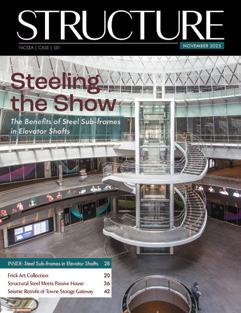
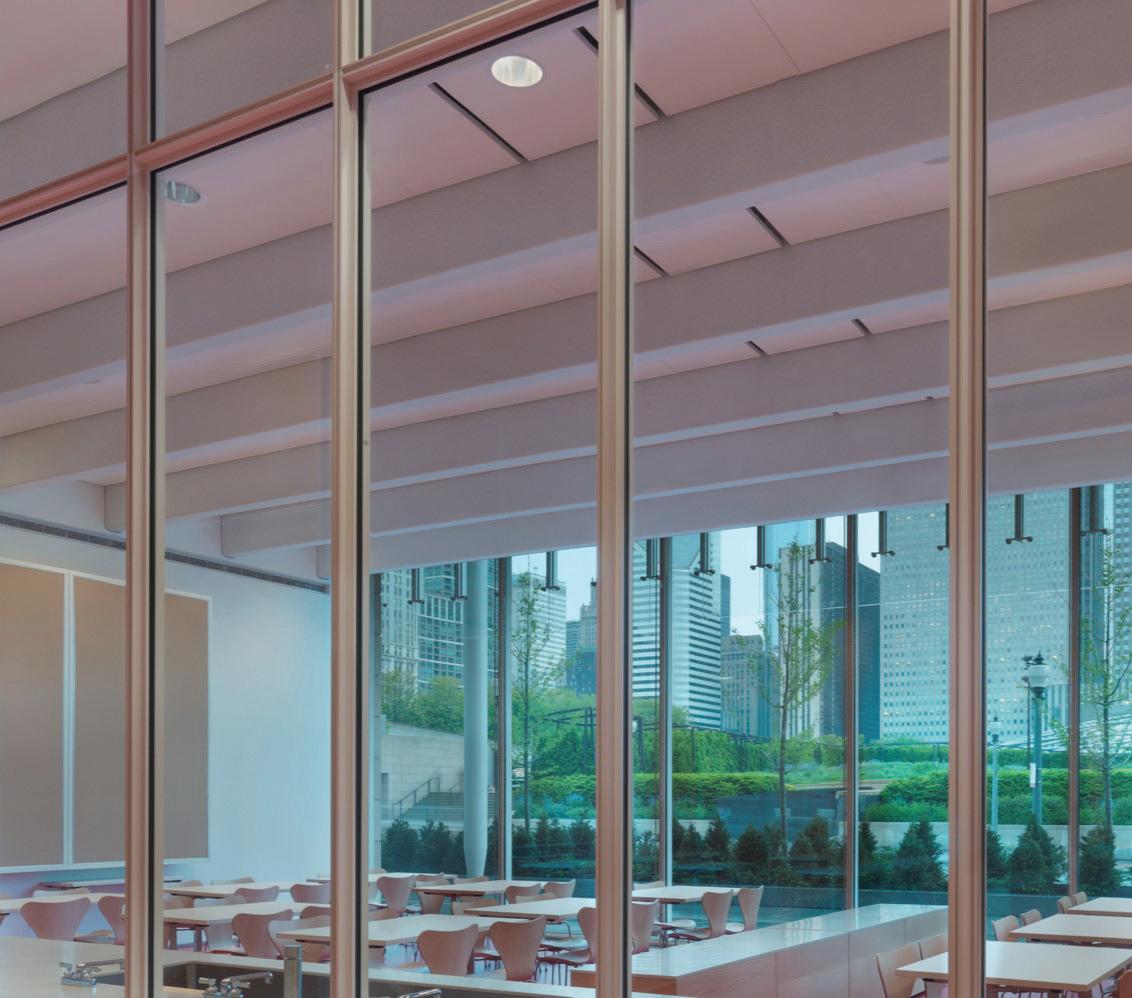
These considerations can make designing and engineering modern and visually stunning elevators challenging, especially when taking into account visibility into and out of elevator cars. When an elevator design includes glass curtain walls or other glazing assemblies, project teams can utilize steel sub-frames to meet both fire-rated as well as dynamic and static load requirements. And when these sub-frames are roll-formed, they can be specified with narrower profiles to maximize the glazing area and allow the use of a variety of cover caps without significantly increasing framing width. This can support a cohesive design aesthetic between fire-rated and non-rated assemblies in a wide range of applications.
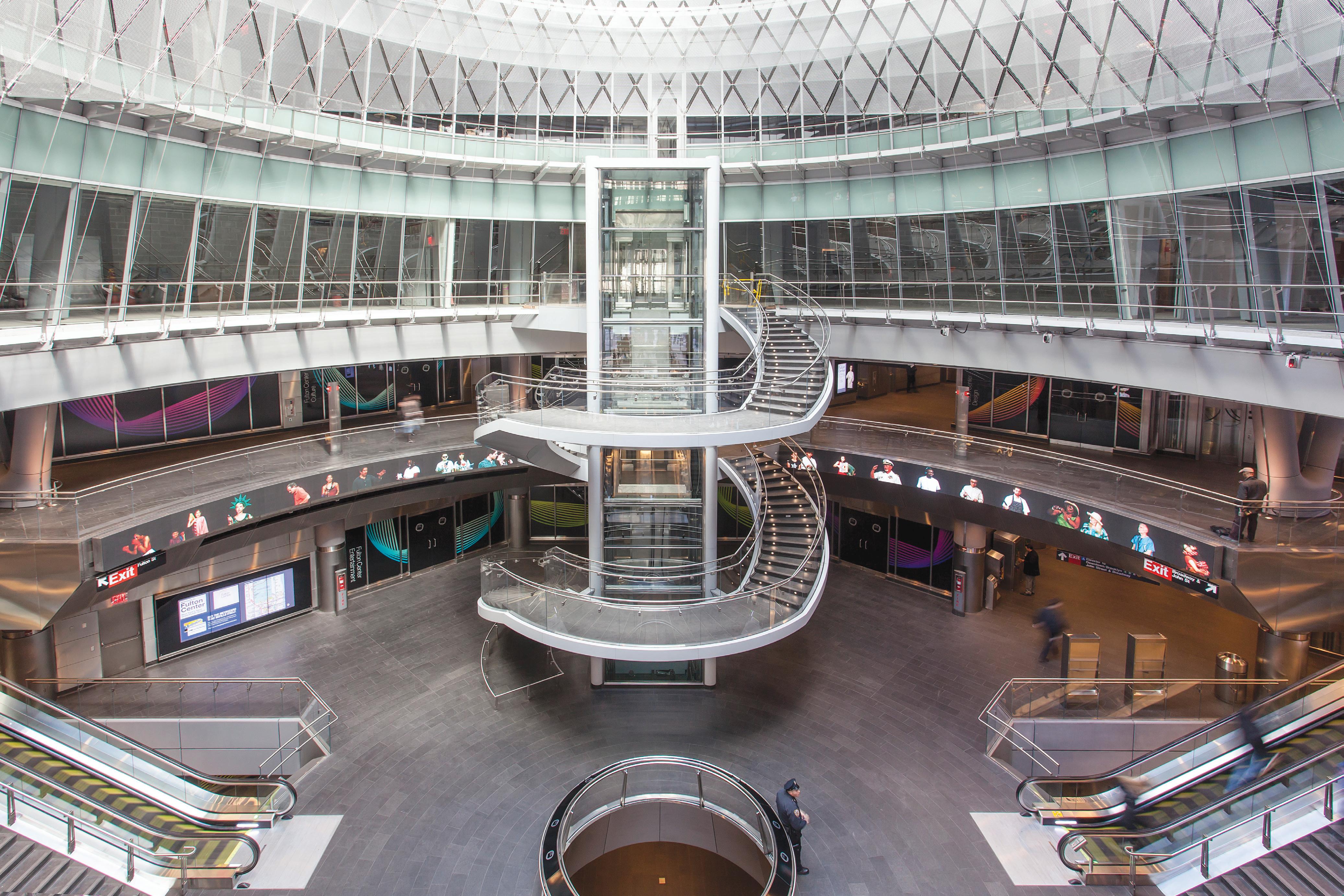
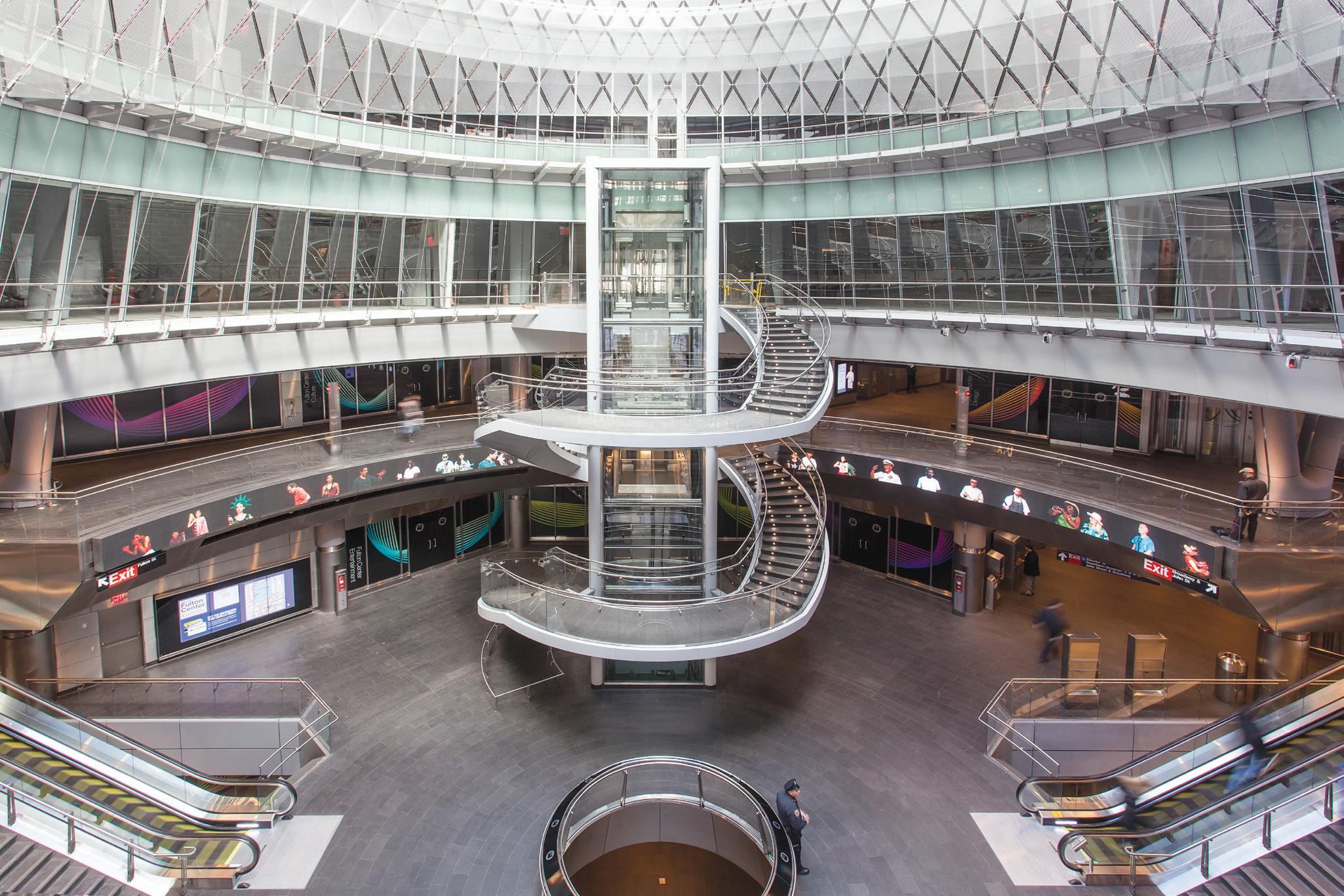
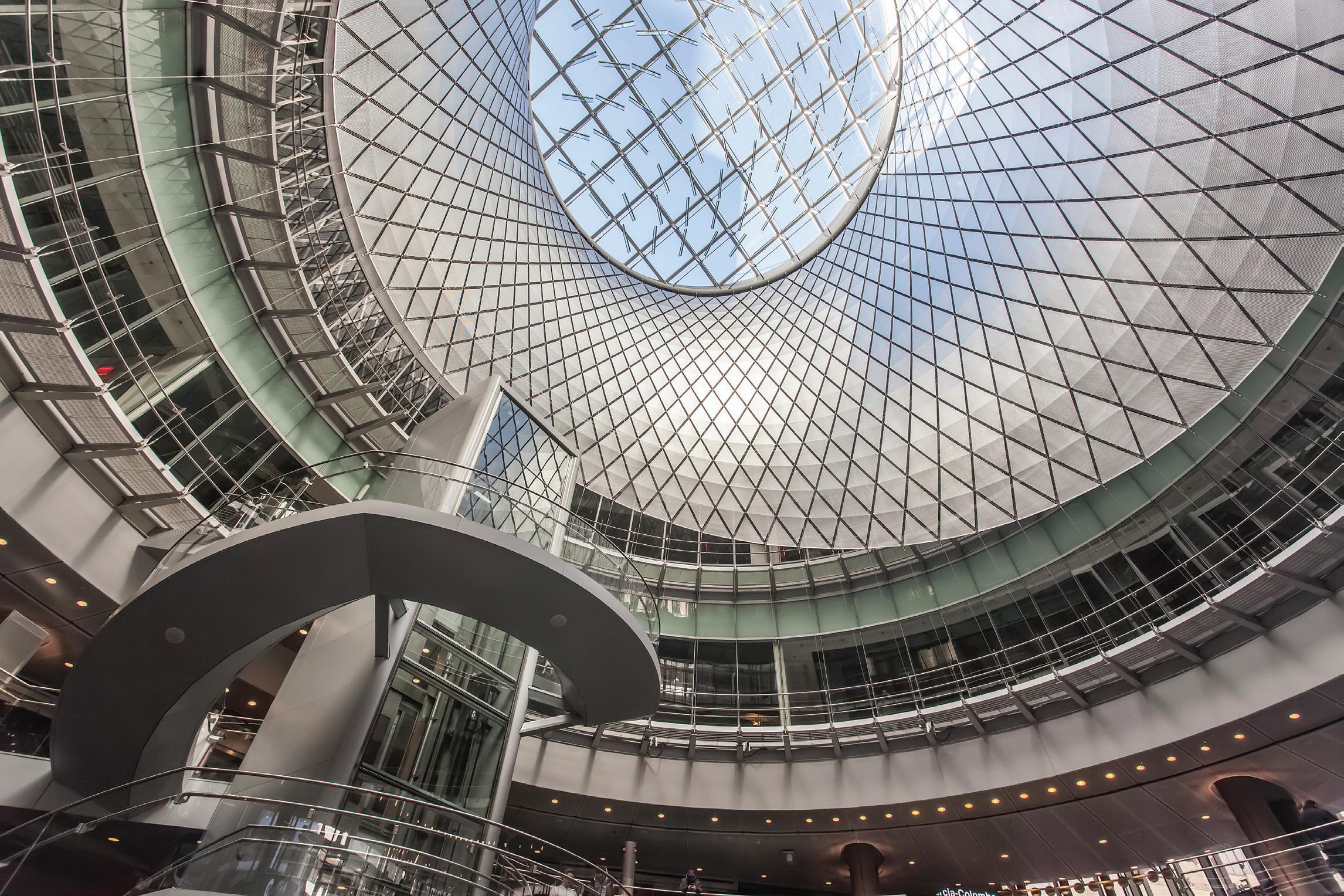
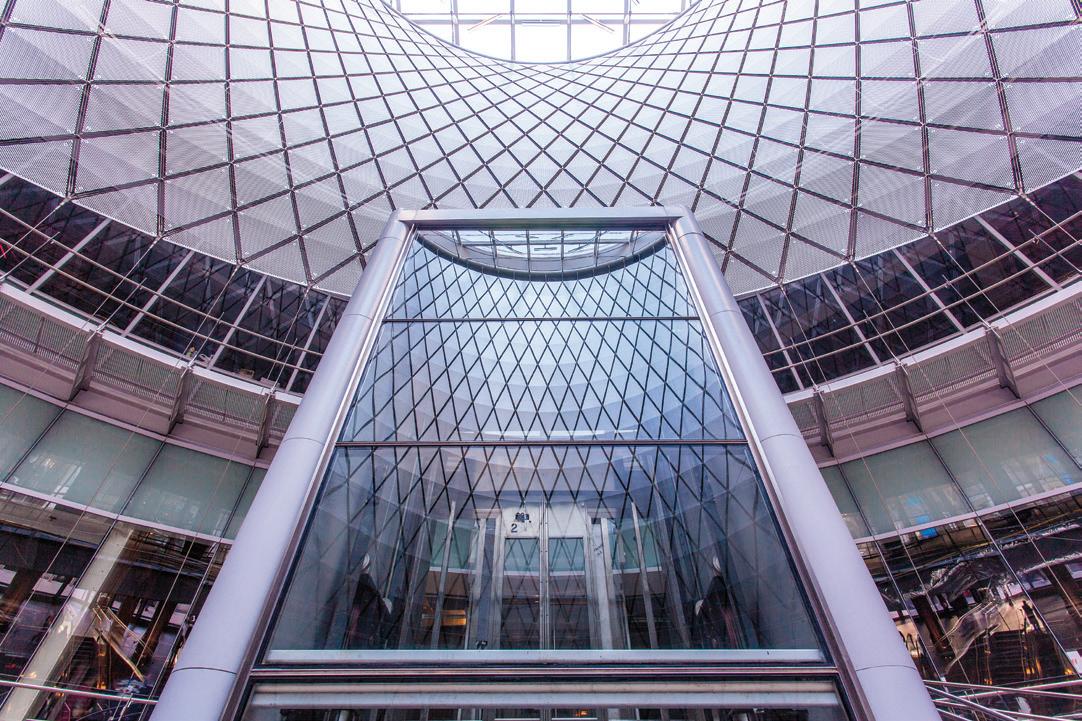
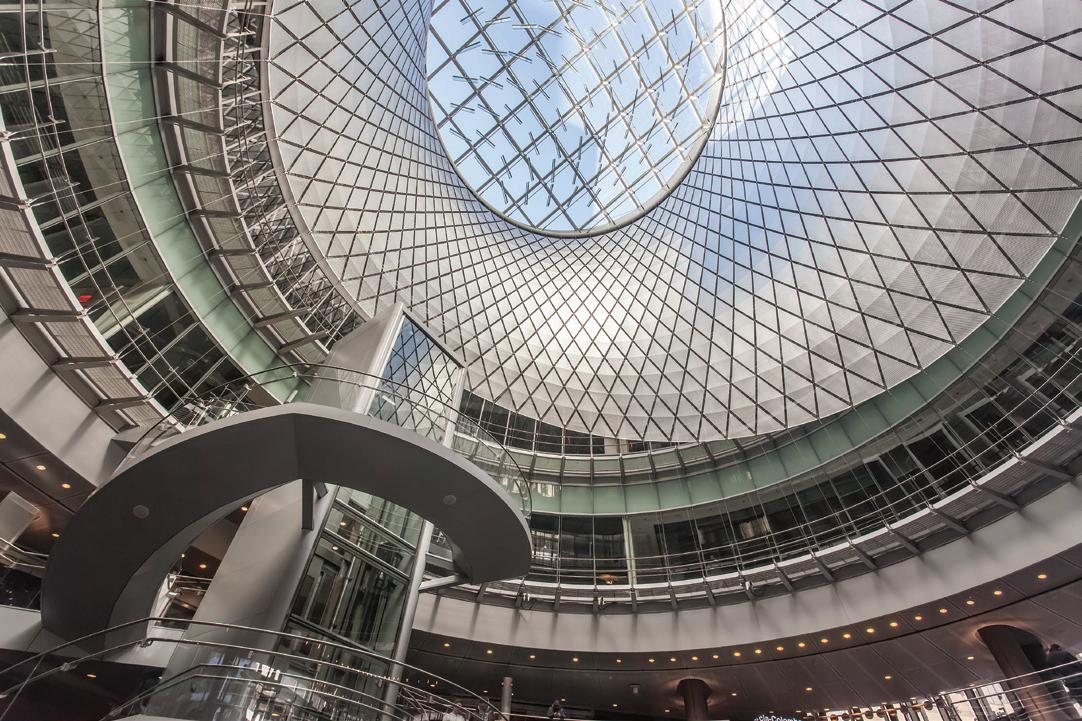
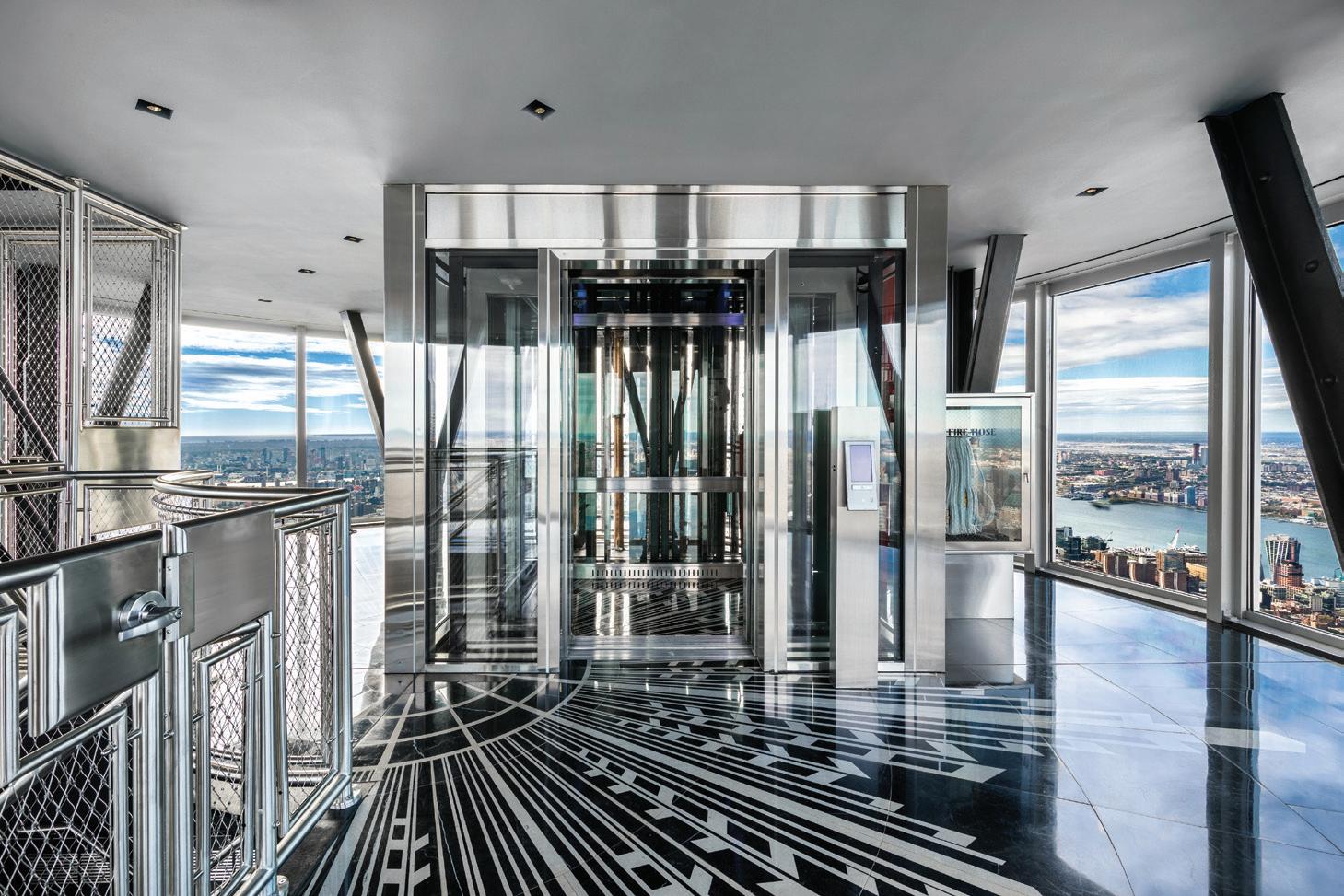
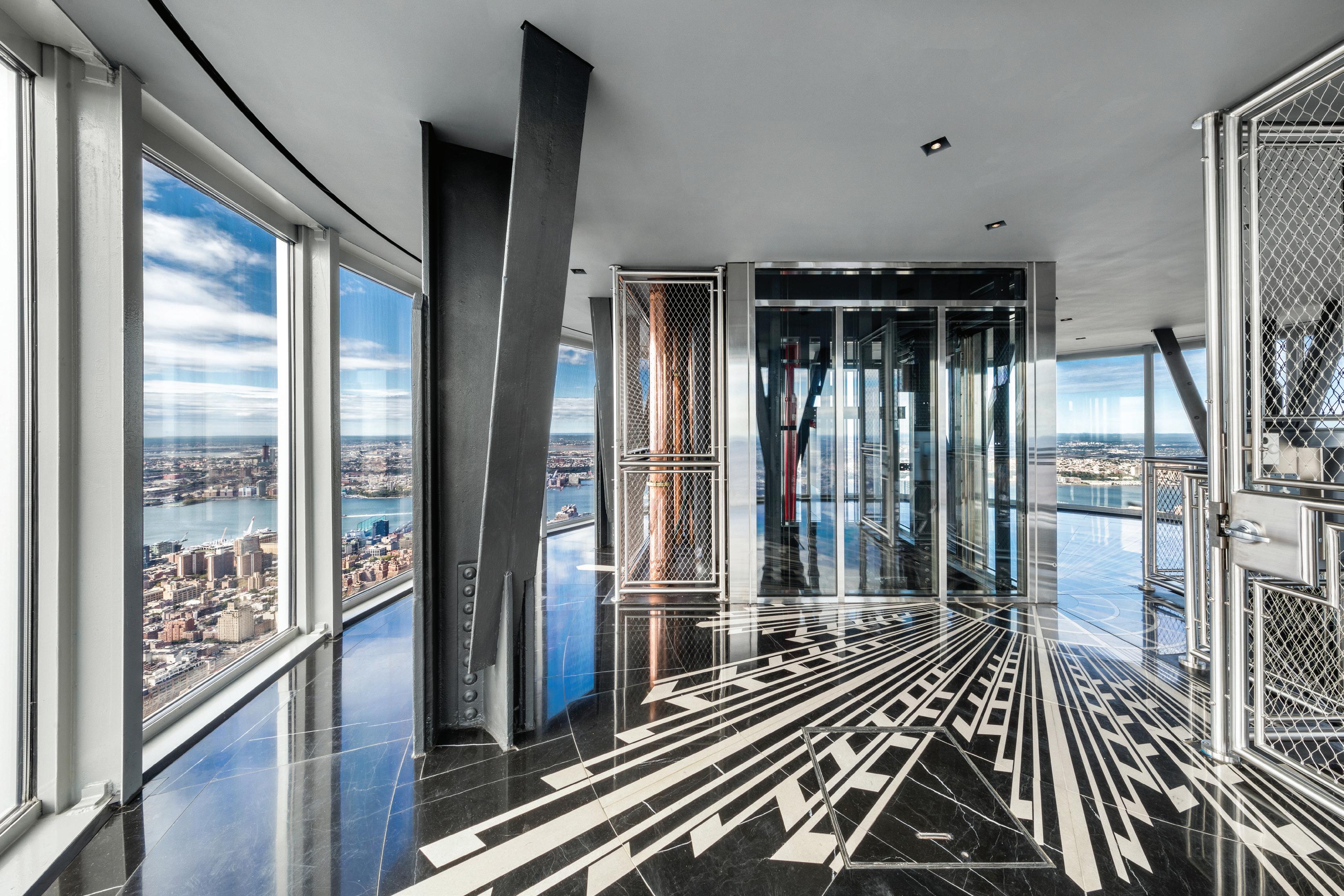
Steel sub-frames were used in two prominent elevator shafts in New York City: The Fulton Center Transit Hub and the Empire State Building. These projects exemplify how steel can be at the center of a successful elevator shaft design—literally and metaphorically. But before discussing them directly, it is important to detail what these structures may need to be safe and code-compliant.
First and foremost, as a vital component in a means of egress system, elevators shafts are often required to meet local building code requirements for fire and life safety. As these requirements can vary significantly between locations, project teams are encouraged to consult with local
fire- and life-safety codes and to clarify any ambiguities with an Authority Having Jurisdiction (AHJ). That said, model building codes, like the International Building Code (IBC), provide an adequate baseline for the discussion of these structures.
According to Chapter 7 of the 2024 edition of the IBC, shaft enclosures must be constructed as fire barriers, which is a wall or other kind of continuous membrane designed and tested to limit the spread of fire—a full definition can be found in the National Fire Protection Association’s Life Safety Code (NFPA 101). Commonly, for elevator shafts that connect less than four stories, a fire-resistance rating of 60 minutes is required. Shafts larger than four stories will often need a 120-minute fire-resistance rating. To meet these requirements, structural components, including glazing and framing systems, will need to defend against fire, smoke, and radiant heat for the duration specified in the building codes for their size and occupancy.
In addition to meeting requirements for fire and life safety, as structural elements of the built environment, elevator shafts and their components must meet all applicable design loading criteria, including wind, flood, and seismic loads, as defined by local codes. Likewise, these structures must also have the strength to hold the machinery, elevator cars and their maximum load weight without deformation to ensure proper functioning. They must also meet requirements for vertical and lateral deflection tolerances. These requirements can vary significantly between projects based on local building codes, location of the elevator shaft within the building, its height, its motor and car, capacity, and other considerations—all found in Chapter 16 of the 2024 edition of the IBC. Although aluminum frames can meet these requirements, they may require more material, supplemental supports, and ancillary fire defense systems. Steel frames, on the other hand, can minimize the need for these additional systems. Steel frame systems can pass ASTM E330-97 test standards, demonstrating a resistance to damage from a uniform structural load of +/- 125 pounds per square foot (PSF). Additionally, there are systems ranked for use in hurricane zones that have been certified to multiple standards that determine
their resistance to wind loads, cyclic wind pressure, impact, design pressure, and more.
In terms of fire-resistance, two factors differentiate steel from aluminum: melting point and thermal conductivity. Depending on the alloy, steel generally has a melting point between 1,370C and 1,540C while aluminum’s is around 660C. Considering temperatures can reach up to 1,000C in typical commercial building fires, steel’s higher melting point helps reduce risk of deformation and melting, which is crucial for ensuring elevator components remain functional to help occupants evacuate during a fire emergency.
Steel also has a lower thermal conductivity than
aluminum—approximately 50-60 Watts per meter-Kelvin (W/mK) compared to 205-237 W/mK. This means steel transfers less heat over a given time range than aluminum. With a higher resistance to radiant heat, steel framing helps egress paths remain traversable as occupants evacuate and first responders arrive. Both the higher melting point and lower thermal conductivity of steel contribute to a full glazing system’s ability to meet ASTM E119 (Standard Test Methods for Fire Tests of Building Construction and Materials) and UL 263 (Fire-resistance Ratings) as required by fire- and life-safety building codes.
In addition to fire-resistance, steel also offers a modulus of elasticity of over 29 million pounds per square inch (PSI), nearly three times that of aluminum’s 10 million PSI. As a stiffer material, steel framing can accommodate design loading criteria, including both static and dynamic loads, as well as the extra weight of fire-rated glazing. And the material can do this without requiring larger framing profiles since it does not require any fire resistive interlayers or multiple bulky secondary
supports. This helps project teams create a close visual match to adjacent non-rated systems.
The material data paints a picture of what fire-rated steel frames can contribute to a project from an engineering perspective. But their project value extends beyond their data. The Fulton Center Transit Hubs’ central elevator clearly demonstrates how strong-but-narrow frames and large spans of transparent glass can create a design-centered solution to an engineering challenge.
Due to the design’s influence on the Fulton Center’s means of egress system and New York’s particular code requirements for this occupancy type, the upper level of the transit hub required fire-rated glazing curtain
wall assemblies while the lower level did not. The central elevator stretches between the fire-rated glazing assemblies on the upper level to the non-rated ones on the lower level. As a part of the Fulton Center’s means of egress system and as a vertical shaft enclosure that connects less than four stories, the entire elevator shaft was built in compliance with fire barrier requirements, including its openings. The glazing assemblies used in the elevator shaft are fire-resistance rated for 120 minutes, exceeding the minimum requirements for vertical shaft enclosures that connect less than four stories.
The project team specified roll-formed, fire-rated steel frames to provide both fire-resistance ratings and sufficient strength to maintain safe operating conditions in normal and emergency situations. Because these systems meet and exceed the project’s fire- and life-safety requirements without bulkier frames, they also support a cohesive design. While the narrow-profile fire-rated frames created a close visual match to nonrated systems, their strength allowed large spans of uninterrupted glass,
which contributed consistent vertical mullion spacing between systems. Both the profile size and spacing supported an open, light-filled design that remains consistent between levels—and as visitors move between levels. Whether it opens to showcase a fire-rated curtain wall system on the upper floor or a non-rated one on the lower, the elevator shaft helps maintain a seamless aesthetic across the entire built environment.
While slender steel frames can satisfy code requirements for design load as well as fire and life safety, their strength can also support larger lites of fire-rated glazing. Often, fire-resistive rated glazing can weigh between 0.54 kilograms per square meter (kg/m²) and 0.91 kg/m² while non-rated glass typically ranges from 0.27 to 0.38 kg/m². At approximately two to four times the weight of non-rated glass, fire-rated glazing requires strong framing systems. Since curtain walls, windows, doors, and other openings in elevator shafts are typically required to be fire-resistive rated for 60 to 120 minutes, if fire-rated glazing is used in these applications, it will skew toward the heavier end of the spectrum, which in turn impacts the strength needed for other components.
In elevator shafts that incorporate fire-rated glazing, steel frames provide the necessary physical strength to accommodate spans of glass large enough to meet accessibility requirements for elevator openings and car dimensions. They can do this without always requiring vertical mullions between the corners of an elevator shaft. This allows uninterrupted spans of glass between corner frames.
While this was a design benefit for the Fulton Center Transit Hub’s central elevator, it was almost a design necessity for the elevator that brings visitors to the Empire State Building’s 102nd floor Observatory Deck.

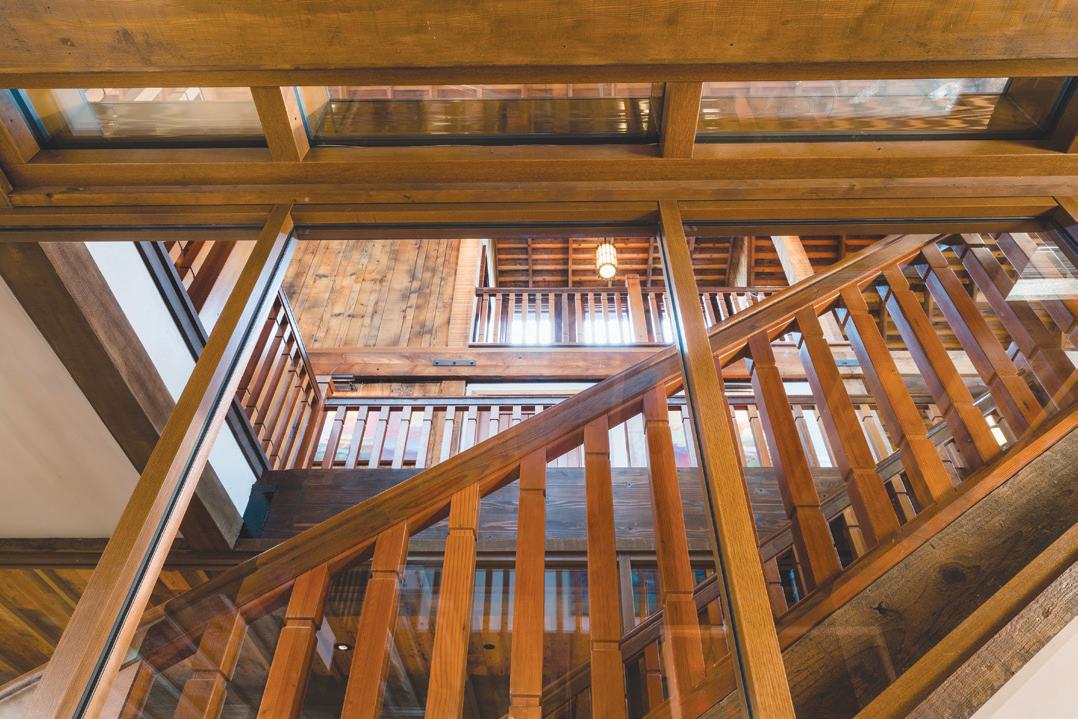
The elevator to the Empire State Building’s Observation Building offers a top-tier view of the city that never sleeps. Like in the Fulton Center Transit Center application, the material performance data of these frames support the project’s design goals. In this elevator, 120-minute fire-resistive-rated glass, held by narrow-profile fire-rated frames and wrapped in stainless steel cladding, form an interior elevator surround. The strength of these frames allow uninterrupted spans of glass between corner mullions. This gives visitors jaw-dropping, 360-degree views of the city skyline. According to Anthony E. Malkin, Chairman, President, and CEO of Empire State Realty Trust, this is a crucial design feature as “the interior curtain walls help maintain purity of view, ideal for tourists

looking for an unrivaled view from 1,250 feet above New York City.”
Likewise, because of the system’s slender framing profiles, it could also support stainless steel cladding without significantly increasing its profile size. As a result, the system creates a close visual match to adjacent non-rated systems in terms of framing dimension and blends the elevator opening seamlessly with the Observatory Deck's interior through material choice. The cohesive design aesthetic made possible by steel’s material strength limits visual distraction to both frame and augment the aerial views of Manhattan.
In addition to multiple cladding options, narrow-profile steel frames can incorporate cover caps without significantly increasing the framing profile size to maintain a close visual match with non-rated systems. Cover caps are non-structural components that cover a framing system’s subframe to subtly change its exterior shape and finish. They offer designers a variety of finish options and profile shapes to meet a wider range of aesthetics without compromising the performance capabilities inherent to the subframe.
For instance, an elevator shaft that uses fire-rated steel sub-frames can include custom H-channel cover caps that match the finish color of adjacent framing systems and allude to the art deco architectural styles prominent in New York. The shape and material of these cover caps extends beyond this example—from box and contour shapes to a broad swath of finish options, including wood veneer. Because these caps fit over the fire-rated steel components, they allow more design versatility while maintaining steel’s strength and ability to defend against fire, smoke, and radiant heat.
Elevators used to be limited to small cars within shafts enclosed by opaque materials, visually cutting them off from the rest of the building and their surroundings.
As The Fulton Center Transit Hub and The Empire State Building demonstrate, fire-rated glass and fire-rated steel frames have revolutionized elevator shaft design. Providing significant strength, fire-resistance and aesthetic variety, steel framing systems readily accommodate design load criteria as well as fire and life safety requirements for most projects without compromising the visual goals of the built environment.
But buildings encompass more than just elevators. Steel-framed glazing assemblies can support design goals and code requirements for stairwells, fire-rated curtain walls, door systems, and non-rated architectural systems in both interior and exterior applications. With such versatility, project teams can specify steel-framed glazing systems in multiple areas of the built environment to create a coherent and modern design that meets the most stringent performance requirements.
With over 20 years of industry experience,
is actively involved in advancing fire- and life-safety codes and sits on the Glazing Industry Code Committee (GICC). (Devin.Bowman@allegion.com)
In this way, steel framing systems contribute to both building functionality and occupant experience—whether they are used for an elevator enclosure, an exterior curtain wall, or anything in between. ■ Bull Moose Tube made a major investment in a new 350,000 ton-per-year facility in Sinton, Texas – with the goal of providing you with the “greenest” steel tube in the United States.
• SUSTAINABILITY-FOCUSED | Our state-of-the-art facility boasts the lowest carbon footprint for steel pipe & tube in the United States. Additional Bull Moose products means a greater range of possibilities for your designs…while helping you achieve your green initiatives.
• MORE HSS AND NEW PIPE PILE CAPACITY | Our new mill enables us to produce HSS up to 14” square and 18” round, up to ¾” walls, and the ability to enter the pipe pile market.
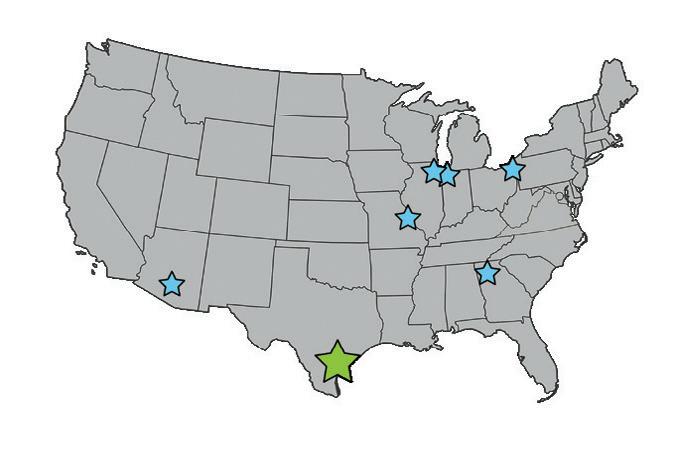
SUSTAINABLE STEEL SOLUTIONS TO BACK YOU UP
Cabinets & Racks
Conduit
Fasteners
Grating
High-Strength Structural Steel
High-Performance & Overhead Doors
Hollow Structural Sections (HSS)
Insulated Metal Panels
Joists & Joist Girders
Pre-Engineered Metal Buildings
Racking
Rebar
Sprinkler Pipe
Solar Structures
Steel Foundations & Piling
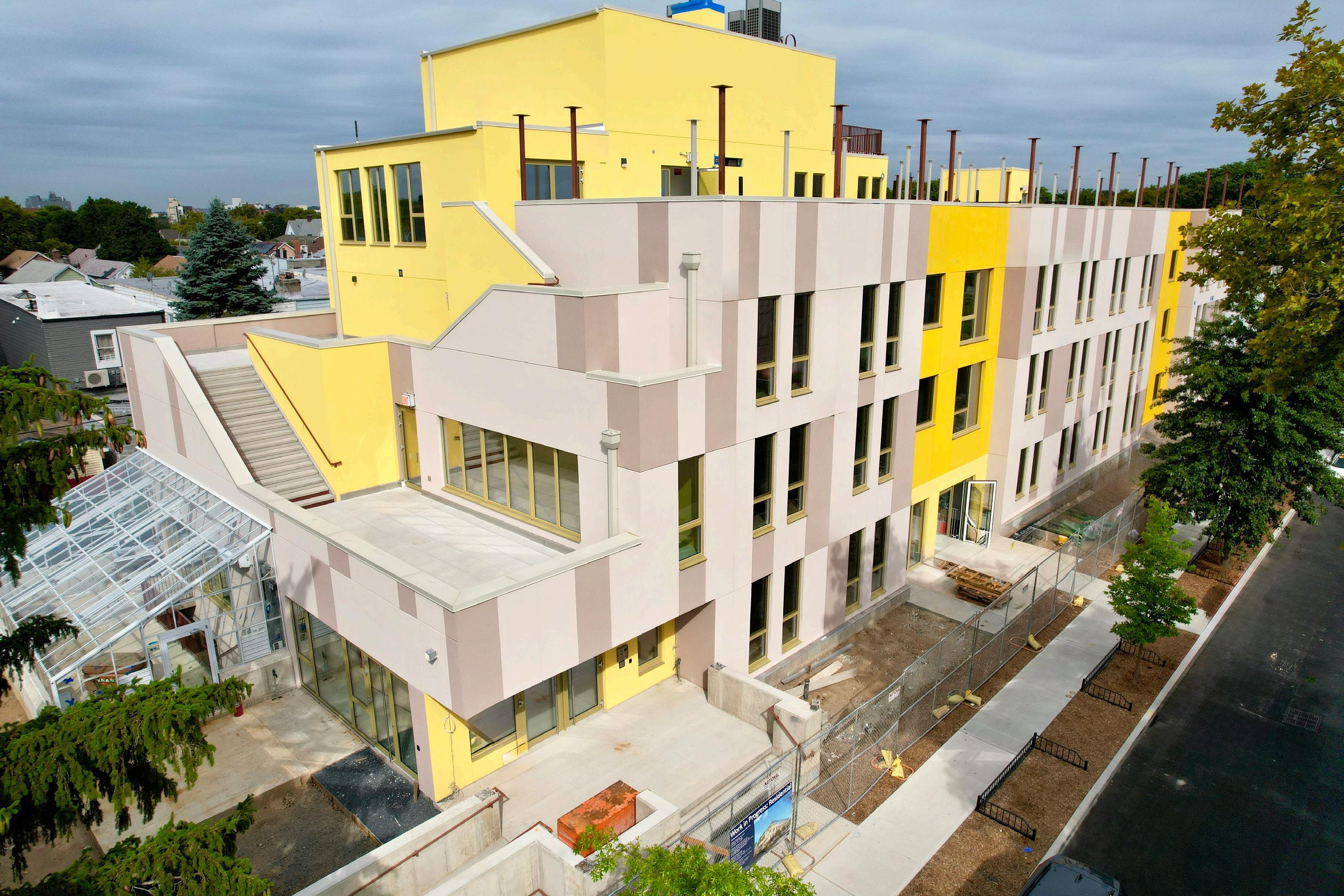
Bethany Senior Terraces offers a compelling example of how structural engineering can drive innovation across disciplines, from modular logistics to high-performance building design.
By Michael Lynch, PE, SE, and Jimmy Liang, PE
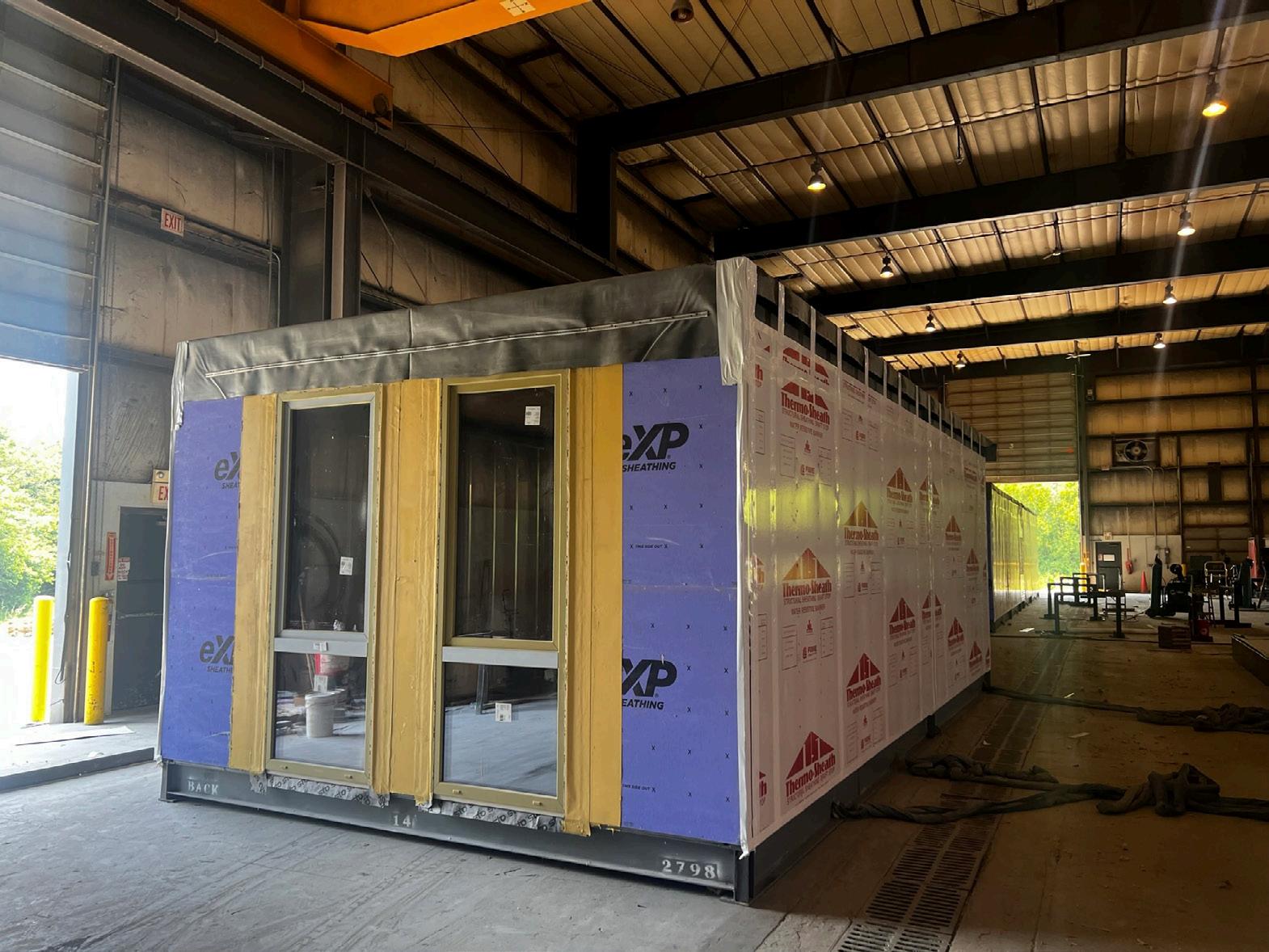
In the rapidly evolving landscape of New York City construction, where performance standards grow more demanding and housing needs remain urgent, Bethany Senior Terraces in Brooklyn represents a forward-looking model. It is the city’s first modular affordable senior housing building designed and constructed to meet Passive House standards, a project that integrates volumetric modular construction, structural steel framing, and PHIUS+ 2015 certification to deliver 58 units of sustainable and affordable housing for low-income and formerly unhoused seniors. Developed by RiseBoro Community Partnership and located in the East Flatbush neighborhood of Brooklyn, the five-story, all-electric building demonstrates how structural engineering can lead innovation, not only by solving technical problems, but by helping define a replicable path toward low-carbon, high-quality, resilient housing in urban settings.
Bethany Terraces includes 58 studio and one-bedroom apartments, all constructed to Passive House criteria. Communal spaces like a test kitchen, greenhouse, and outdoor gardens were included to foster social engagement and wellness. In terms of energy performance, the building is certified under PHIUS+ 2015, DOE Zero Energy Ready, and Enterprise Green Communities, powered in part by a 130-kW solar PV array that meets 100% of common area energy needs and about 80% of the building’s total annual usage.
What distinguishes this project structurally is the combination of volumetric modular construction and Passive House performance, delivered with a steel-framed structure.
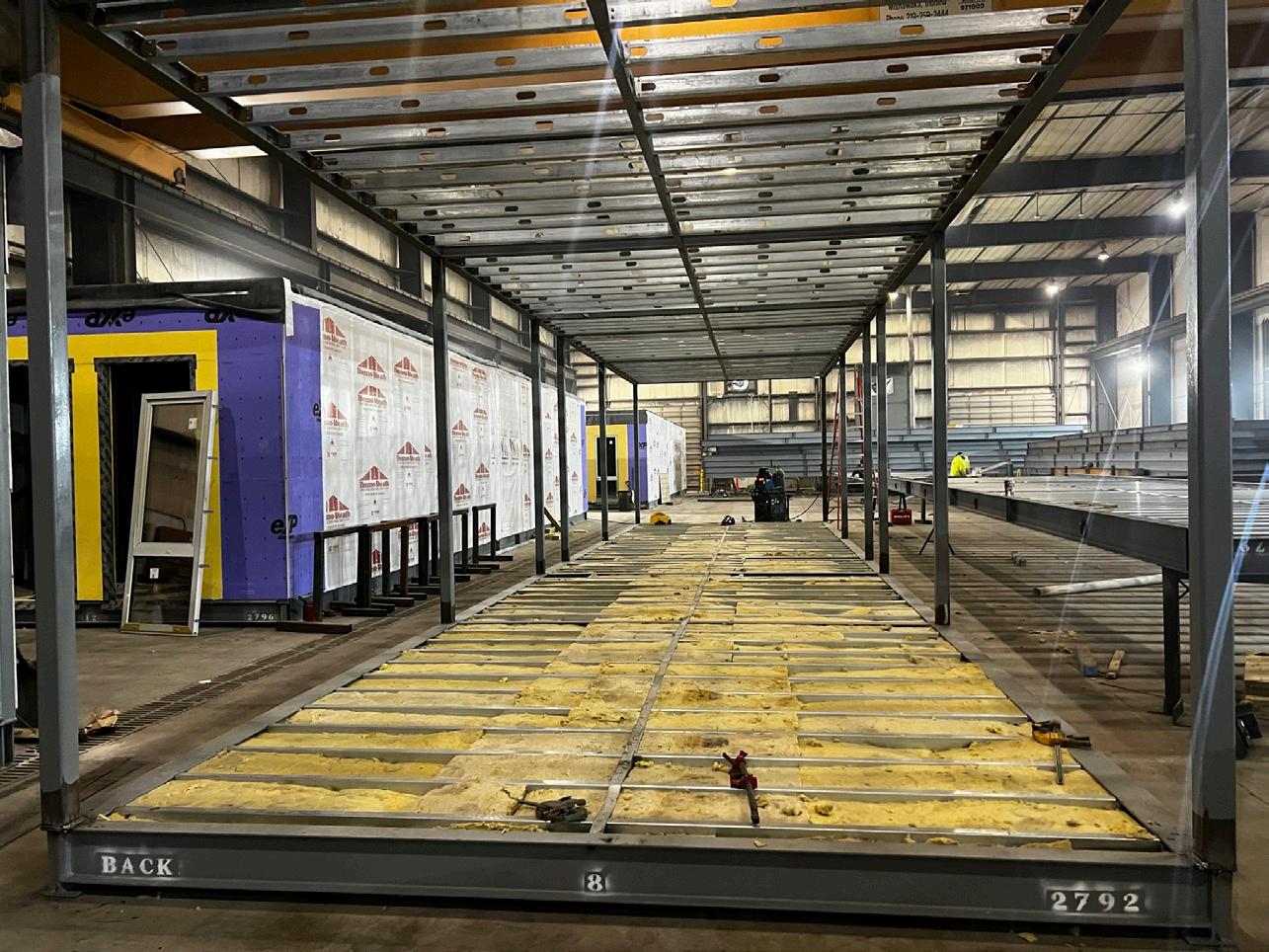
Volumetric modular construction is an advanced off-site construction technique in which fully enclosed, three-dimensional building modules are fabricated in a controlled factory environment. These modules are typically delivered to the site with a high level of completion, including integrated mechanical, electrical, and plumbing (MEP) systems, interior finishes, and in some cases, fixtures and furnishings. Unlike panelized systems that involve assembling separate components such as walls or floors on-site, volumetric modular construction delivers structurally independent units that are assembled on site to merge into the complete building.
Bethany’s structural system was designed around a cast-in-place concrete base, which included the foundation (spread footings), cellar floor, a series of piers, and the perimeter wall forming the support system for the modular building above. The remainder of the superstructure, floors 1 through 5 and the rooftop penthouse, was constructed from 47 volumetric steel-framed modules—accounting for 75% of the building's structure—each fabricated off-site by Whitley East LLC in Pennsylvania and delivered to Brooklyn.
Each module measures up to 14 feet wide, up to 60 feet long, and 11 feet high, weighs up to 43,000 pounds and is sized to accommodate two fully finished studio apartments. Modules were fabricated under factory-controlled conditions and delivered at approximately
Structural Engineer: Murray Engineering (New York, NY)
Architect: Paul Castrucci Architects (New York, NY)
Developer/Owner: RiseBoro Community Partnership (Brooklyn, NY)
Modular Fabricator: Whitley East (Leola, PA)
Modular Consultant: AMSS (Hellertown, PA)
Site Contractor: L. Riso & Sons (Brooklyn, NY)
Passive House Consultant: ZeroEnergy Design (Boston, MA)
MEP/Energy Consultant: Bright Power (New York, NY)
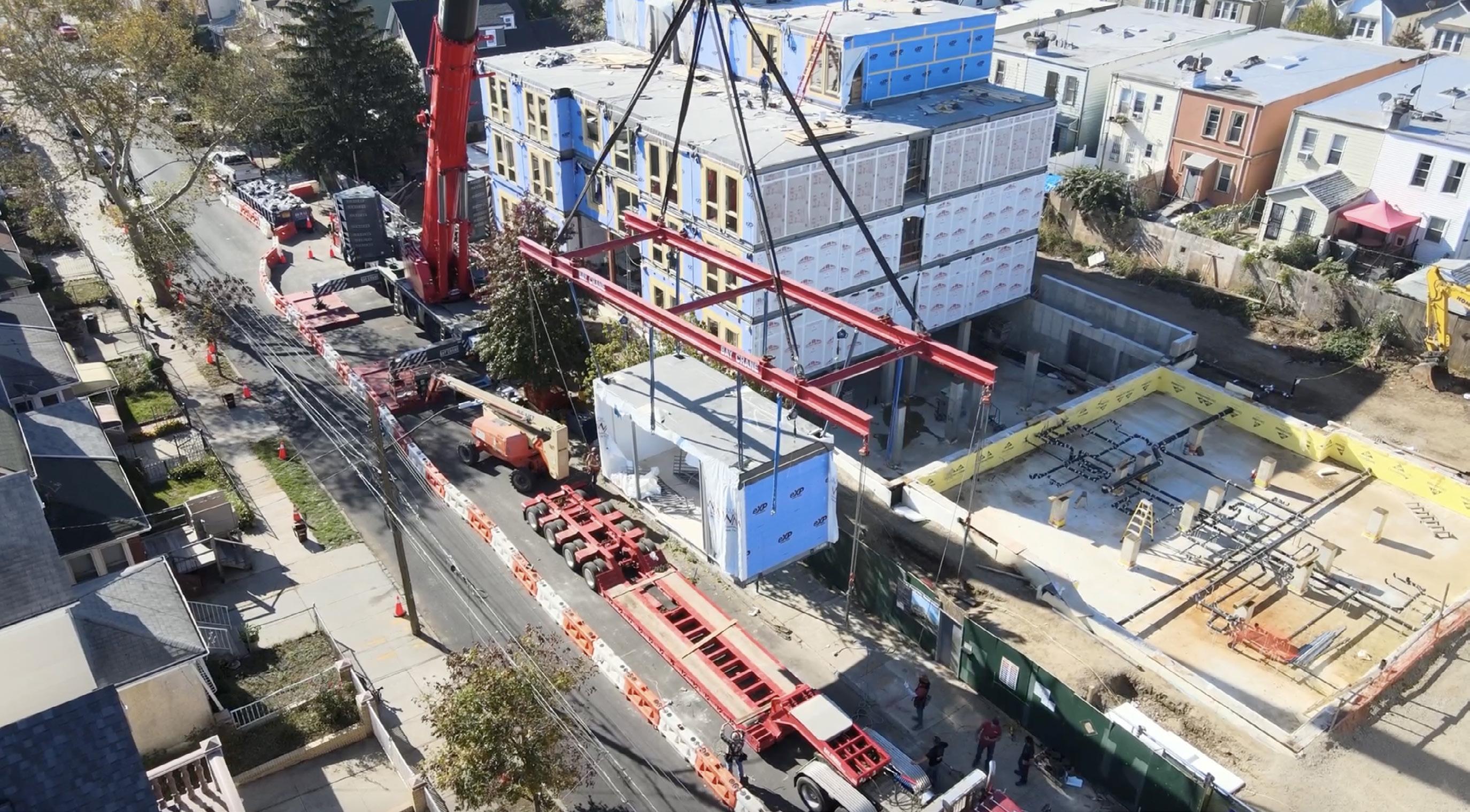
90% completion, including interior finishes, triple-glazed windows, integrated MEP systems, and envelope thermal insulation. Each module was designed to support:
• Dead load: Module self-weight + finishes + insulation + exterior wall + rooftop planters/greenhouse (where applicable).
• Live load: Based on NYC code (40 psf residential, 100 psf at corridors, 100 psf at the roof terraces with the solar array).
• Lateral load: Wind and seismic load per the NYC Building Code.
In modular construction, each module consists of a six-sided surface, meaning when the upper module is stacked on top of the lower module, there is a floor-ceiling “sandwich.” Furthermore, when two interior modules are placed and installed adjacent to each other, there is a double wall. We refer to these two junctions (vertical and horizontal spaces) as module matelines which define and distinguish the gap between two or more modules. The mateline is a critical location within the module layout, and connections are required to transfer loads across each mateline to complete load paths for gravity and lateral loads. Module matelines are typically between ½ inch to 1 inch, with the latter providing more construction tolerance in the field.
The modules were framed using:
• Hot-rolled perimeter frames consisting of steel wide flange girders and beams at both the floor and ceiling levels. The modules were
supported by the steel frame during transport and installation.
• Cold-formed steel (CFS) joists (spans between the girders) and wall stud panels, optimized for factory assembly and pre-installation of systems.
• Cold-formed flat strap shear bracing in the longitudinal direction of the module and eccentrically braced frames (EBFs) in the corridor adjacent to apartment doors in the transverse direction of the module for lateral stability within individual modules and across stacked assemblies. The use of EBFs was needed because the system provided the only option for lateral force resistance based on the architectural layout.
The modules were stacked in five levels over the foundation system and welded together at the floor and wall matelines to create continuity for both the vertical and lateral load paths.
Special care was taken to define gravity and lateral load paths, particularly:
• At matelines: Gravity and vertical loads were transferred from upper to lower modules through steel-on-steel bearing plates. Although vertical load can be transferred through direct bearing; to meet NYC Building Code structural integrity requirements, additional vertical plates were field installed at the intersection of two mateline columns and welded together.
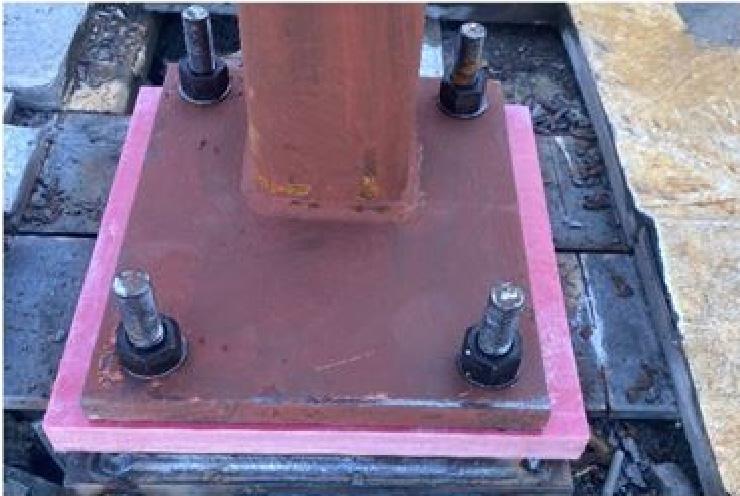
• At the foundation: Welded baseplates connected the first-level module beams to embedded steel plates in the concrete perimeter walls and interior piers.
• For lateral loads: Diaphragm action was provided at the floor level of each module and loads were transferred through
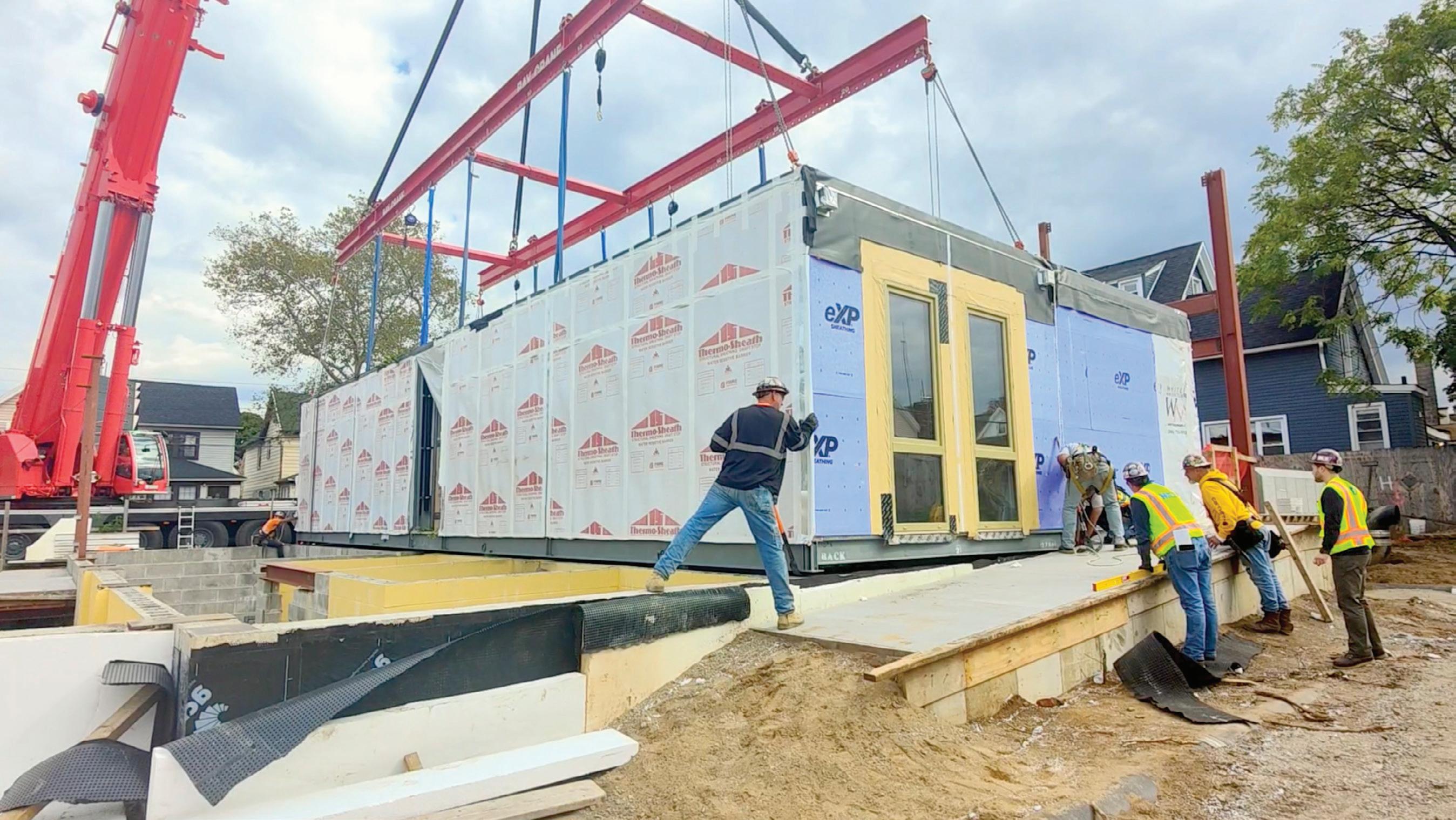
bolted/welded connectors to provide a load path to the perimeter foundation walls and interior lateral force resisting systems. Loads imposed at the site-built portion of the project such as the stepped terraces on the south facade, the greenhouse roof structure, and the rooftop solar canopy were transferred into the modular frames. This required reinforcing module beams and girders with web stiffeners.
To achieve a 2-hour floor fire rating, the UL-H501 assembly was enforced. This assembly consists of a ¾-inch thick nominal structural cement board fastened on top of the structural floor framing. Although it is not required for the H501 assembly, an additional ¼-inch fiber rock was provided to enhance durability for this project. At the bottom of the ceiling framing, one layer of ⅝-inch nominal gypsum board is secured to ½-inchx25ga resilient channels that are fastened to the ceiling framing. In this assembly, individual protection (by means of intumescent paint or applied fireproofing) for the primary floor framing is not required. Not having to place concrete slabs on the floors eliminates the time needed for concrete to cure and also reduces the weight of the modules.
The typical 1-hour wall fire rating was accomplished with UL-U419. This assembly consists of one layer of ⅝-inch type X gypsum board in the interior side of the module. The wall stud cavity was filled with 1-½-inches of acoustical fire mineral wool batt insulation. At the vertical
mateline gap, the joint was firestopped with mineral wool. The stair and elevator walls were fire rated for two hours by providing an additional layer of ⅝ inches gypsum on each side of the module.
Modular construction achieves an increased sound transmission class (STC) rating and better noise reduction/transmission due to the thicker floor-ceiling and double wall assemblies.
Meeting Passive House standards in a modular senior housing development introduced unique challenges. The building must achieve high thermal performance, excellent indoor air quality, and accessibility, all within strict energy targets. While Passive House buildings often rely on heavy timber or concrete for thermal mass and airtightness, Bethany Senior Terraces demonstrated how structural steel can be effectively used in Passive House applications, with the right detailing.
One of the most stringent Passive House requirements is achieving less than 0.6 air changes per hour at 50 Pascals (ACH50). Modular construction adds complexity due to the many joints between units. Each module underwent factory blower door testing before shipping. Final building-level testing occurred after full stacking and mateline sealing. Critical structural connections, such as steel joists spanning from one module into another had to be detailed with air barriers, gaskets, and pre-installed membranes. Mateline gaskets were selected based on thermal expansion coefficients, expected deflections, and durability over time.
Transitions between modular components and site-built elements
including the greenhouse, rooftop terrace framing, solar canopy, and stair towers were particularly challenging. These transitions had to meet both structural and Passive House airtightness requirements, which often conflicted. Structural steel also poses a challenge for Passive House designers due to its high thermal conductivity.
To mitigate thermal bridging:
• Structural thermal break pads were specified at all steel-to-steel and steel-to-concrete interfaces where continuity of the thermal envelope was at risk.
• Load-bearing terrace supports were designed with insulated connections.
• Exterior wall systems, including the EIFS facade, were extended to wrap steel framing and maintain continuity of insulation.
The result was a steel-framed modular building that passed Passive House testing without compromising load path efficiency or constructability.
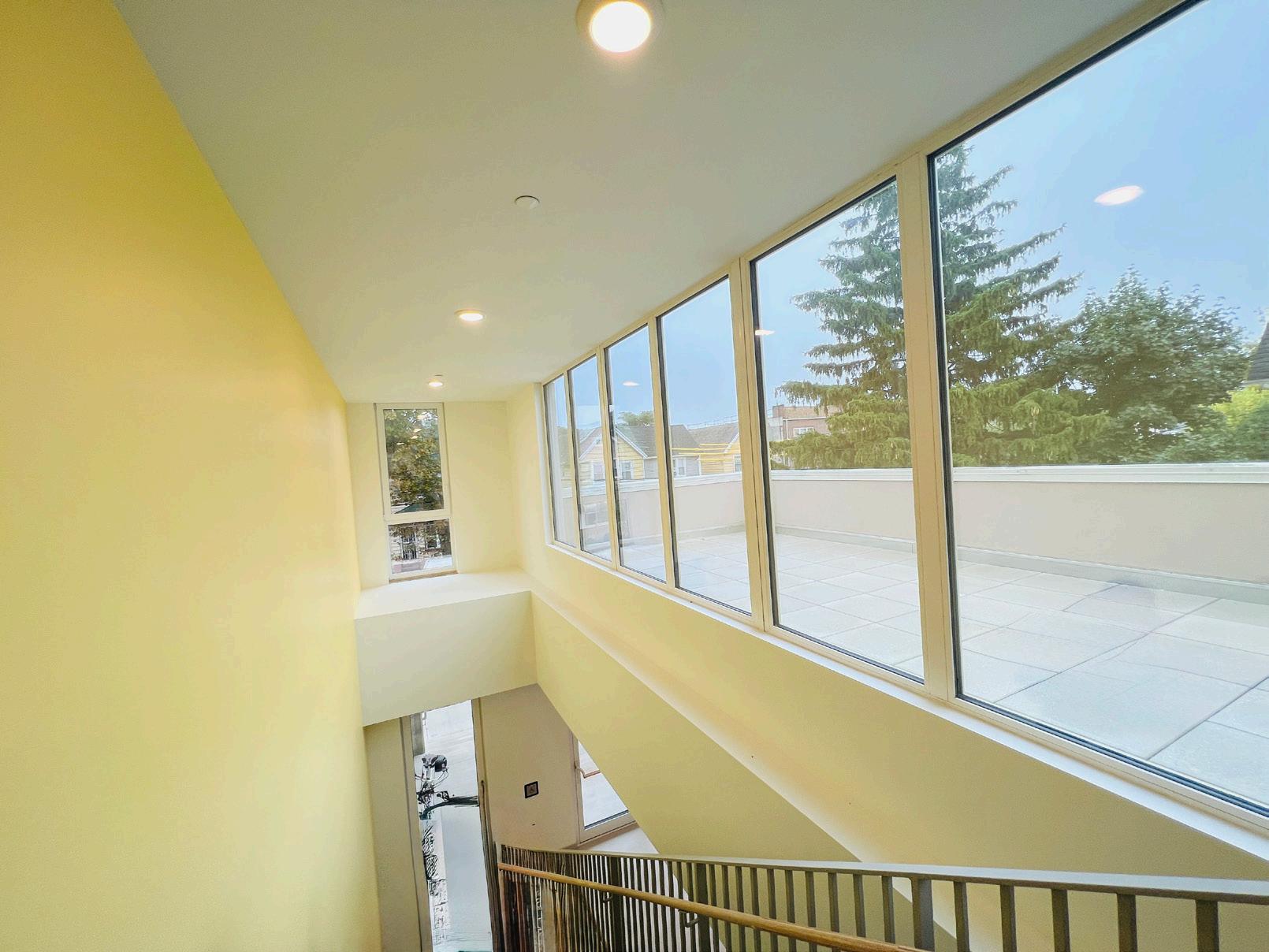
A key engineering success was the integration of mechanical systems into the structural design. MEP risers were routed through modular corridors and shaft walls, with chase alignment modeled in 3D prior to fabrication.
The all-electric systems include:
• ERVs (Energy Recovery Ventilators) factory-installed in each unit.
• A centralized VRF (Variant Refrigerant Flow) system with rooftop condensers.
• Low-profile floor assemblies designed to accommodate drain piping, ductwork, and sprinklers without compromising ceiling height or insulation thickness.
CFS joist layouts were coordinated with MEP routing to minimize interference, and all penetrations were detailed with thermal breaks and air seals.
Constructability challenges, such as the interface between modular and site-built components, were resolved through early-stage planning using Revit-based Building Information Modeling (BIM). Structural, architectural, and mechanical systems were tightly coordinated across disciplines to ensure seamless integration, reducing potential conflicts during construction.
Digital coordination tools included a fully integrated 3D Revit model for structural modeling and coordination between other consultants. Moreover, the fully integrated model assisted in the module weight verification, crane pick analysis, and shipping loading constraints.
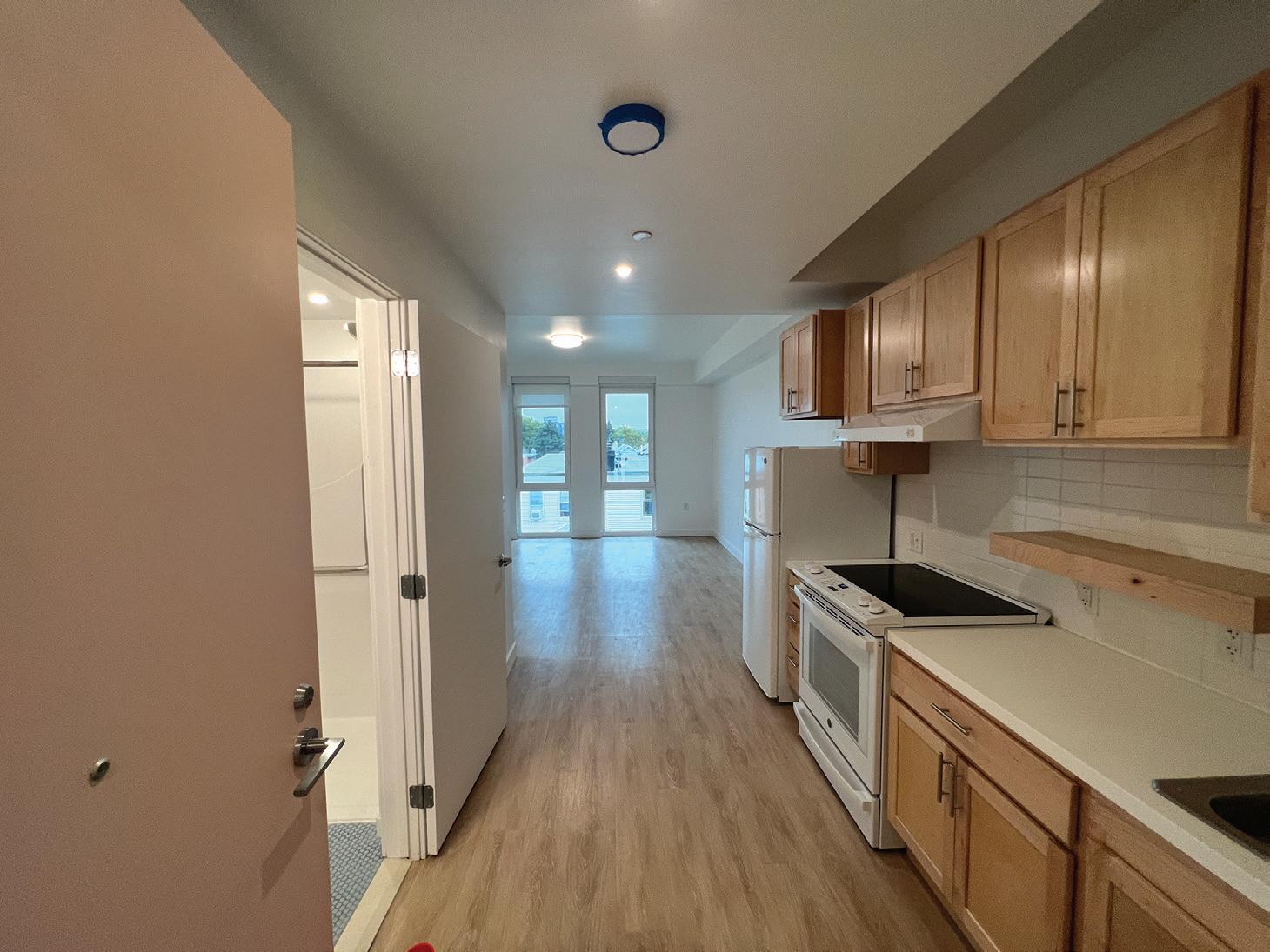
BIM coordination was also essential to ensure:
• Mateline continuity for structural load transfer.
• Precise location of MEP penetrations and access panels.
• Pre-installed facade elements and alignment.
Modules were transported over 170 miles from Pennsylvania, requiring planning for size, route, and timing. They were staged in New Jersey and delivered via truck to the site, where a mobile crane stacked all 47 modules over an 11-day install sequence.
The challenges included:
• Coordinating just-in-time delivery to minimize street closures and crane downtime.
• Achieving ±1/4-inch alignment between modules for floor level continuity and mateline sealing.
• Completing field welds for structural
continuity at key lateral shear load transfer and gravity connection points.
• Evaluating the individual modules for shipping and lifting. A special lifting beam was designed and used to aid in lifting the modules.
Each module included embedded connections with pre-drilled holes for module installation. The construction team used alignment pins and laser measurements to set each unit within tolerance before welding crews completed horizontal and vertical joints.
Bethany Terraces offers valuable takeaways for engineers pursuing modular or Passive House projects:
1. Modular + Passive House = Coordination First
Integrating steel modular systems into Passive House requires early design-phase alignment across all trades. Structural engineers must lead in defining how modules interact with airtightness and thermal performance criteria.
2. Steel in Passive House Is Feasible
With attention to thermal breaks, envelope detailing, and integrated modeling, structural steel can meet Passive House goals, even in modular construction.
3. Define Modular and Site Responsibilities Early
Clearly delineating responsibilities (between site contractor and modular builder) avoids clashes over fieldwork, reduces change orders, and streamlines the construction process.
4. Transport and Lift Planning Is Structural Work
Every module is a moving building. Engineers must account for lifting stresses, transport deflection, and pick point reinforcement.
5. BIM Is Not Optional
Without 3D modeling and real-time coordination, tolerance errors and connection misalignments are likely to derail off-site projects. Model everything, including matelines, and risers.
The project exemplifies how modular Passive House construction is viable at scale. Efficient use of materials and labor was integral to the project’s success. Repetitive, standardized unit layouts—primarily studios and one-bedrooms—enabled economies of scale in fabrication, and transport. Offsite construction reduced material waste, improved labor conditions, and accelerated timelines. Site work and modular fabrication occurred concurrently, shortening the overall project duration and minimizing neighborhood disruption. Use of modular construction allowed the project to avoid significant on-site labor costs typically associated with New York City prevailing wage requirements. It serves as a replicable model for public and supportive housing across the U.S., particularly in urban areas facing cost, labor, and climate constraints.
From a sustainability perspective, Passive House design minimizes operational energy use, while modular construction reduces embodied carbon and material waste. The fully electric, solar-powered design ensures long-term affordability and operational savings. Durable finishes and resilient systems provide thermal comfort and backup capacity in the event of outages or extreme weather. This development is designed with its residents and community in mind, offering spaces that are not simply amenities but extensions of the building’s mission to foster community and provide comfort
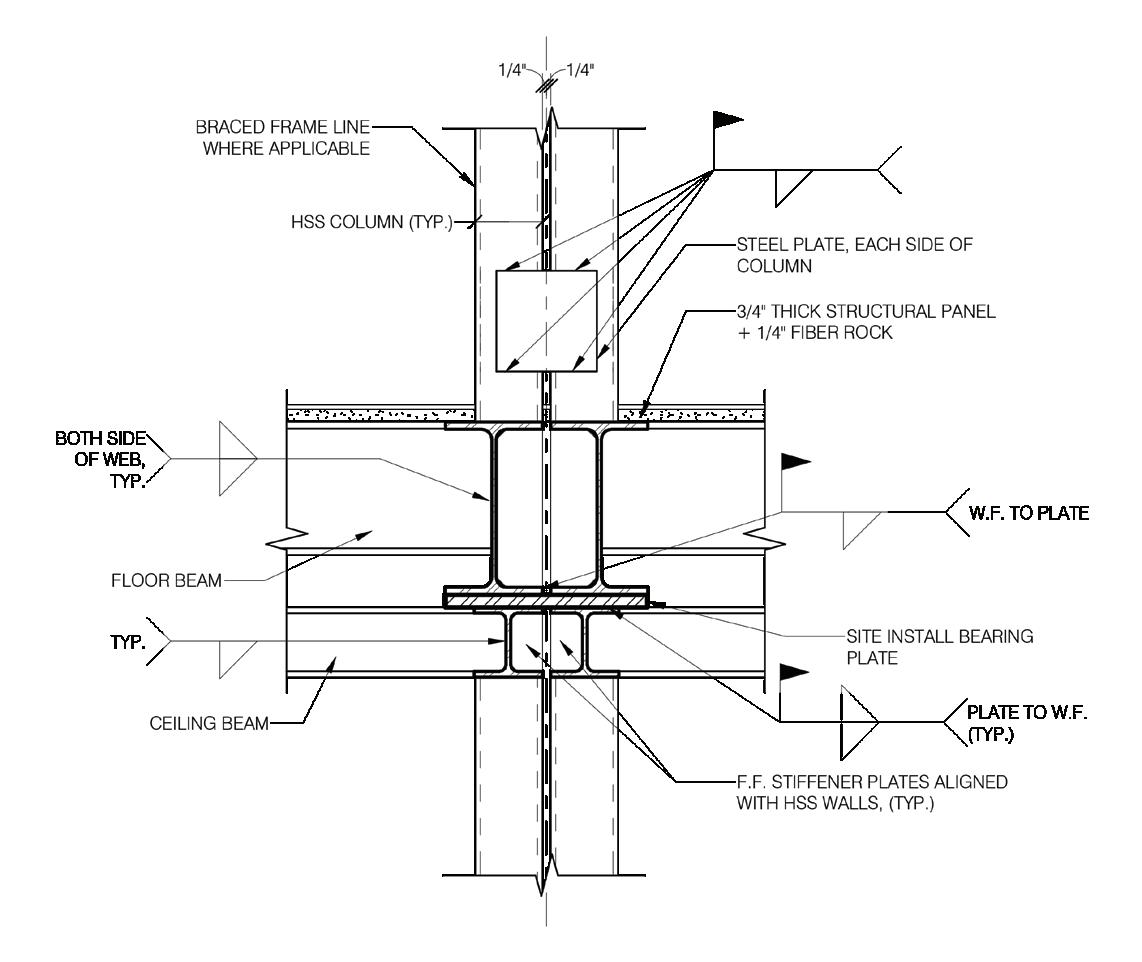
and dignity to its occupants.
Bethany Senior Terraces has been recognized with:
• SEAoNY Structural Engineering Excellence Award - New Building.
• MBI First Place Award for Permanent Modular – Social and Supportive Housing.
• NYSERDA Buildings of Excellence Blue Ribbon Award.
• Case Study feature in Architectural Record/Continuing Education Center - The Steel Institute of New York.
The use of steel-framed volumetric modules within a Passive House envelope required precise engineering, advanced coordination, and construction discipline. As urban housing, energy efficiency, and prefabrication continue to converge, structural engineers are increasingly challenged to deliver integrated, high-performance solutions. Projects like Bethany Senior Terraces provide a tested roadmap for achieving these goals effectively, efficiently, and at scale. ■
Michael Lynch, PE, SE, has over 35 years of experience in the construction industry, specializing in both conventional and modular structural systems across residential, commercial, educational, and healthcare projects. As Director of Modular Design and Construction at Murray Engineering, he leads the firm’s modular portfolio, including several multi-story housing developments, schools, hotels, and the largest off-site modular healthcare hospital in the United States.
Jimmy Liang, PE, is a Project Engineer at Murray Engineering with ten years of experience in the structural design of steel, concrete, and wood buildings. He has led the design and coordination of complex multi-story residential, commercial, and institutional projects for both conventional and modular off-site construction.
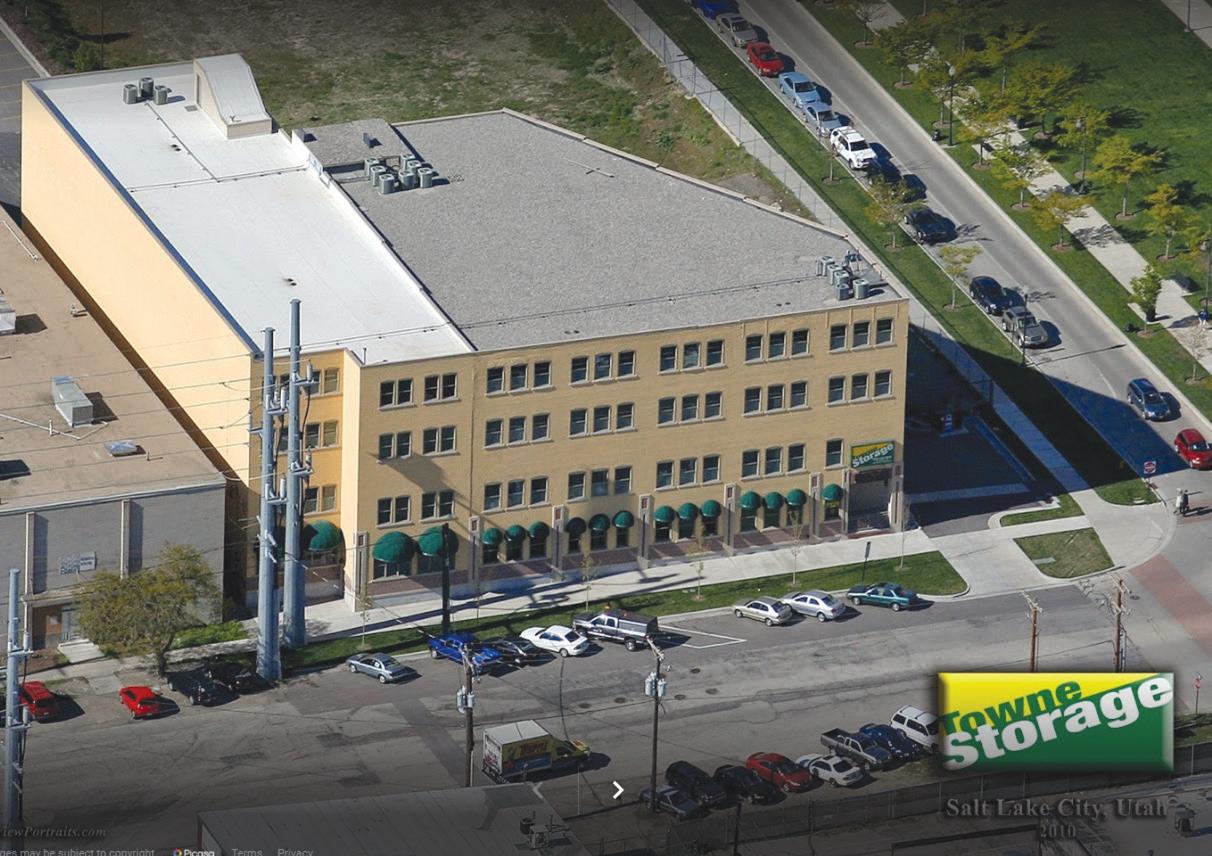
When a 2020 earthquake compromised the historic Towne Storage Gateway building in Salt Lake City, engineers faced the challenge of reinforcing its unreinforced masonry facade while maintaining its original architectural character. Through an advanced combination of retrofit techniques using FRCM and FRP, the team delivered a seismic upgrade that enhances structural integrity while preserving the building’s historic character.
By Sarah Outzen, PE, Clyde Ellis, and Jesse Davis
Located in the heart of Salt Lake City, Utah, at 510 W 100 South, the Towne Storage Gateway building serves as a striking example of how structural engineering can preserve history while meeting modern safety standards. Originally constructed in 1920, this four-story structure, repurposed as a storage facility, faced daunting challenges when its south-facing exterior wall suffered significant damage during a March 2020 earthquake. Built using unreinforced masonry (URM), the wall—measuring 55 feet in height and 100 feet in length—was no match for the lateral seismic forces exerted against it. The damage included significant cracking in the three-wythe brick wall, detachment issues, and compromised structural integrity, necessitating extensive repairs. The wall was analyzed per ASCE 41 and determined to be part of the building’s lateral system, requiring strengthening for in-plane shear and overturning moment forces based on seismic demands. To address these
issues, Simpson Heli-Ties were installed at 30-inch intervals to tie the wythes together, ensuring monolithic behavior and preparing the wall for advanced retrofitting techniques.
Beyond addressing public safety concerns, retrofitting the damaged wall became an urgent necessity due to refinancing conditions imposed by the property’s lender. Approaching this problem required innovative design solutions, modern materials, and meticulous execution. Combining the expertise of WCA Structural Engineering, Menlove Construction, Simpson Strong-Tie, and Structural Preservation Systems, the project involved a cuttingedge approach employing Fabric-Reinforced Cementitious Matrix (FRCM) and Fiber-Reinforced Polymer (FRP) technologies to improve the capacity of the URM wall against lateral loads. Here, we provide an in-depth technical account of the project, from analysis to final application.
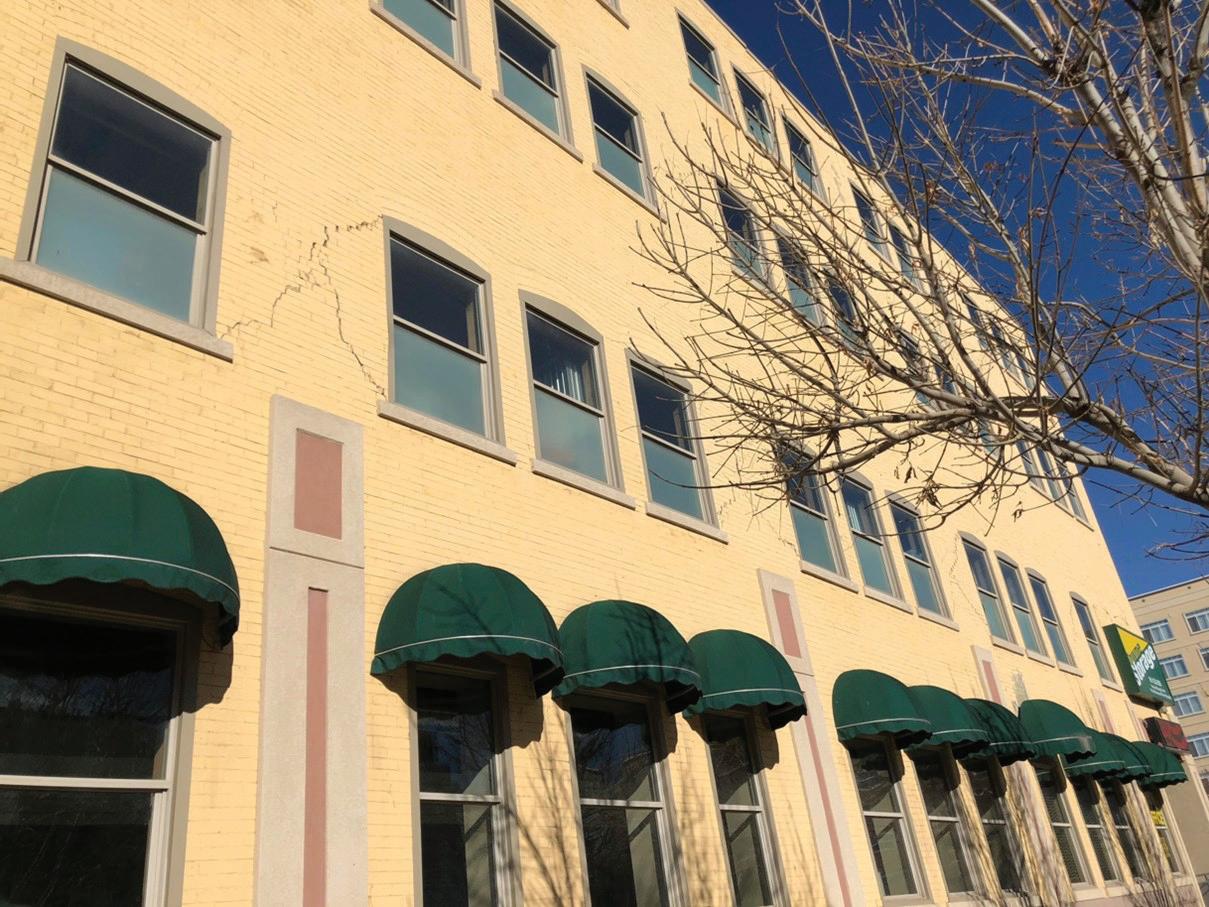
The unreinforced masonry (URM) south facing facade, like many historical structures, was designed without embedded steel to resist tensile forces. URM walls rely entirely on the compressive strength of bricks and mortar as well as the bond strength between units and mortar, making them highly vulnerable to lateral forces caused by earthquakes. This was compounded by the presence of multiple window openings, which effectively creates small piers and spandrels where the stiffness and strength are reduced. Seismic activity led to diagonal shear cracking and weakening of the piers, leaving the wall unable to resist overturning loads or out-of-plane movement.
The engineering team, led by WCA Structural Engineering, evaluated the extent of the damage using visual inspections and structural analysis in accordance with ASCE 41-17 standards for seismic evaluation and retrofit. It was determined that the wall needed global in-plane shear strengthening, enhanced tensile capacity at the piers, and improved overturning resistance.
A traditional method of repair might involve adding a 3-4-inchthick layer of shotcrete (sprayed mixture of concrete) over the existing brick wall, filling and covering treated cracks caused by the earthquake.
However, shotcrete is a higher-profile solution that would have added more mass and load to the structure. Another commonly used solution involves adding near surface mounted tension reinforcement where slots are cut into the brick wall and vertical rebar is installed, but this method is a more costly fix. Clyde Ellis, Senior VP at Structural Technologies noted, "The chosen solution was thoroughly analyzed to ensure it fully met the design intent of the SEOR.”
The team determined the solution required a hybrid approach combining traditional reinforcement techniques with modern composite materials. Key components included Fabric-Reinforced Cementitious Matrix (FRCM), Fiber-Reinforced Polymer (FRP), and helical anchors,
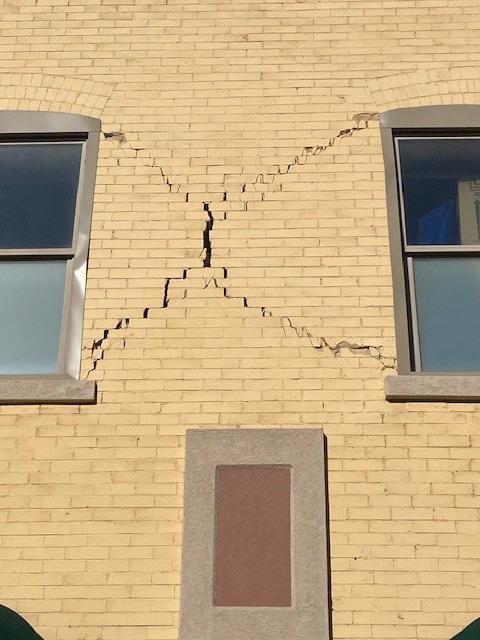
applied in a sequence to stabilize and strengthen the structure holistically. WCA’s engineering analysis dictated where critical strengthening elements like FRP were needed versus generalized FRCM coverage.
FRCM is a composite material consisting of a high-performance fiber grid embedded within a cementitious matrix. The combination offers significant flexibility in its application to URM walls. Unlike traditional FRP systems, where polymers carry the load, the cementitious matrix in FRCM is compatible with masonry substrates and provides enhanced fire resistance.
The FRCM system utilized for this project included both unidirectional and bidirectional, high-strength carbon fiber grid embedded in a portland-cement-based mortar. The cured composite tensile strength of the fiber grid is 128,300 psi for the unidirectional product, and 143,000 psi for the bidirectional product. The FRCM grid was applied in multiple layers to achieve a final thickness of approximately 1.5 inches.
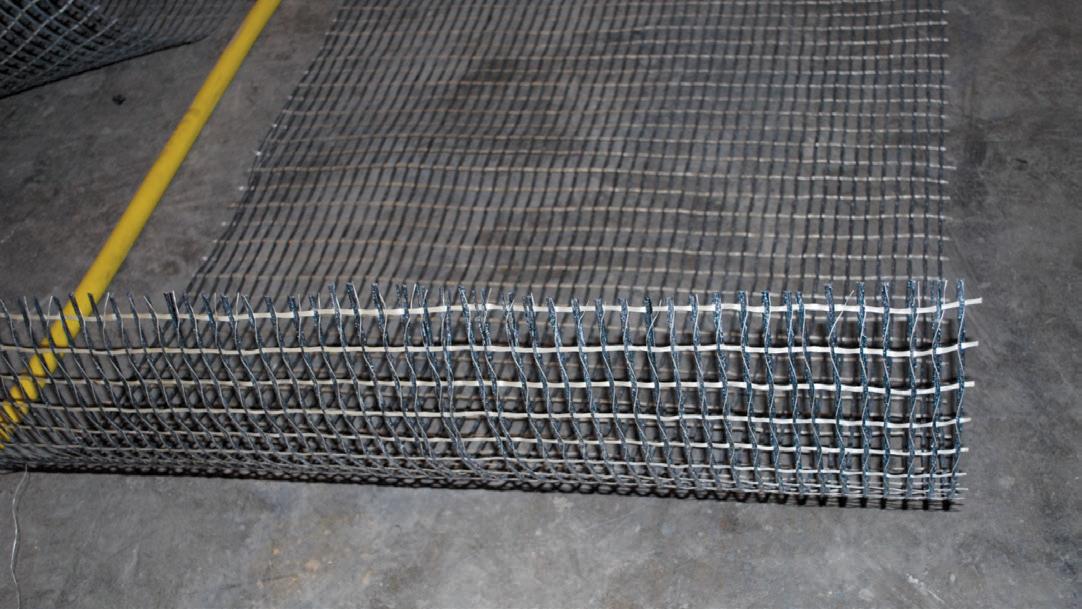
Mode of Action:
FRCM enhances the wall's in-plane shear strength by bridging diagonal cracks and distributing forces uniformly. It also fills large surface cracks and spalls during installation, bolstering the structural integrity of the facade without necessitating pre-repair crack filling.
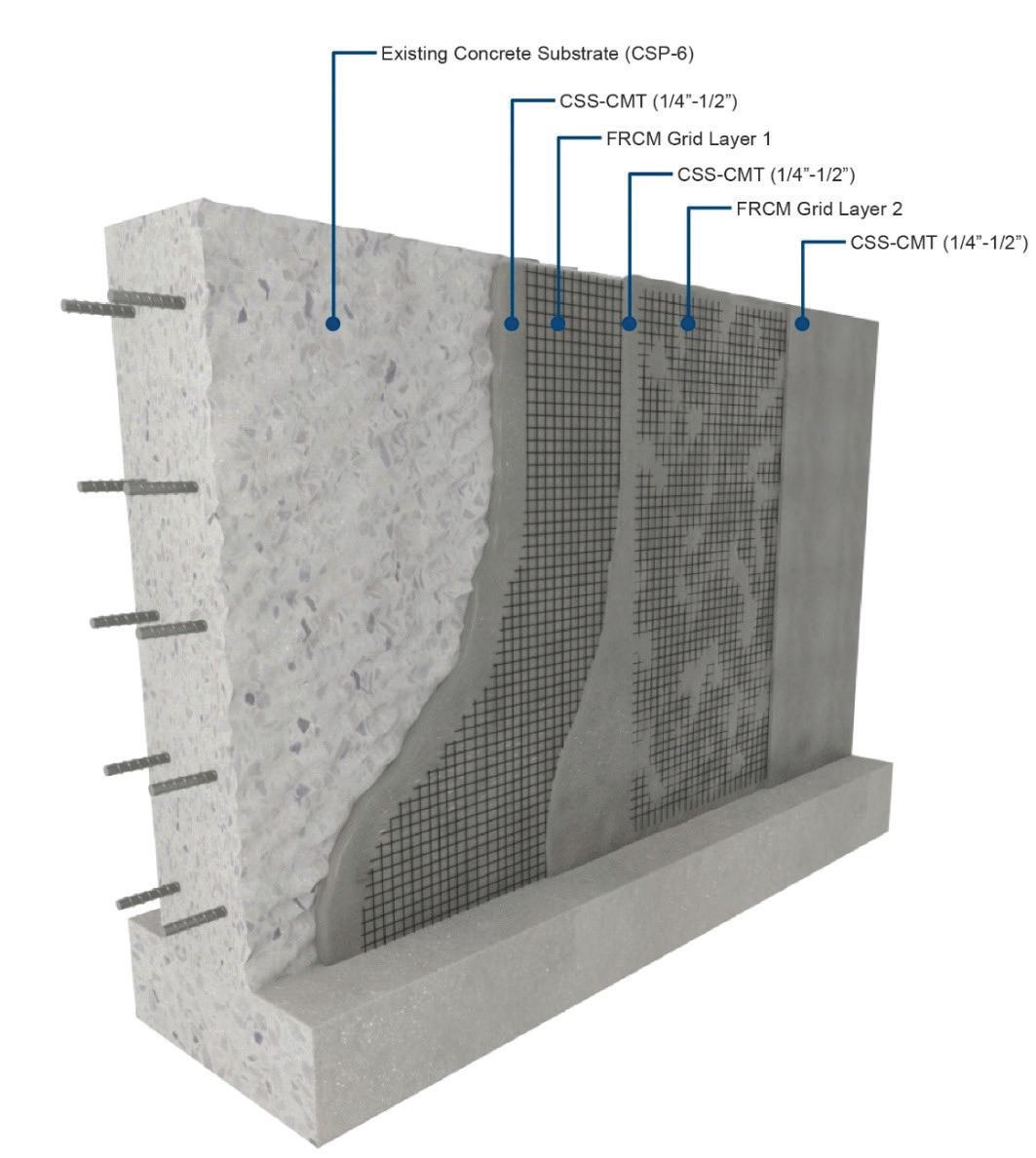
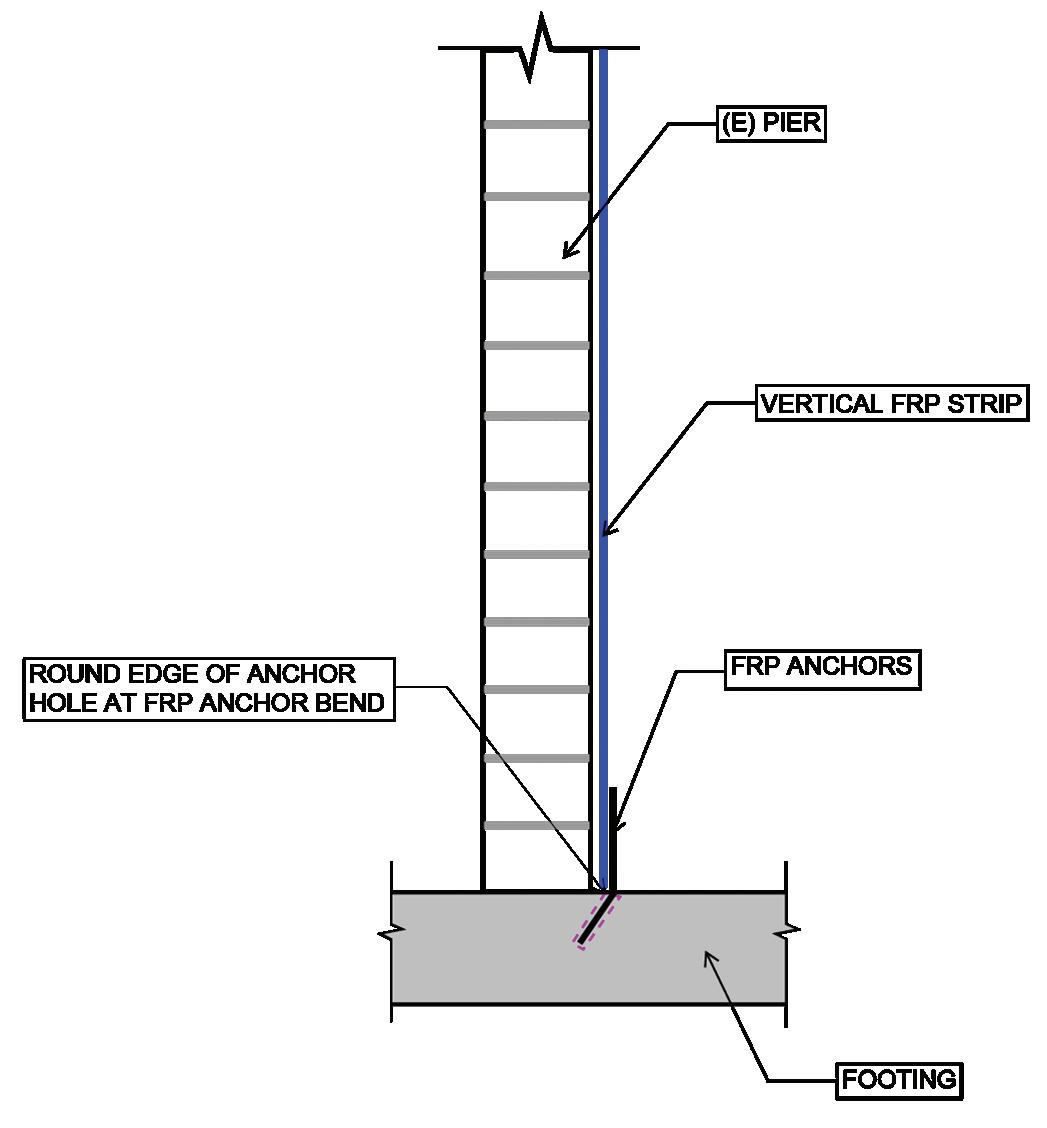
Advantages:
The cementitious base is inherently compatible with masonry surfaces, allowing for optimal adhesion and reduced risk of debonding. Additionally, FRCM systems are vapor permeable, mitigating moisture entrapment and future degradation.
FRP, widely used in seismic reinforcement, is a high-strength composite material characterized by unidirectional carbon fibers encased in an epoxy matrix. For this project, FRP strips were applied vertically along the piers between windows to counter both tensile and flexural demands.
Material Properties:
The FRP strips applied had a tensile modulus of elasticity of 14,200 ksi and a tensile strength of 128 ksi. The strips were 6 inches wide and adhered using epoxy, meeting the requirements of ACI 440.2R-17 specifications.
Mode of Action:
FRP reinforces the piers by resisting tensile forces generated by overturning behavior during seismic events. The carbon fiber strips were anchored into the building’s foundation to create a continuous load path for overturning forces.
Advantages:
The lightweight and high-strength nature of FRP allowed for targeted reinforcement without adding significant weight. Its ease of application on masonry walls made it ideal for areas requiring reconsolidation and tensile strengthening of piers.
Helical anchors were installed to address deficiencies in the overturning of the masonry facade. These anchors tethered the unstable brick veneer to the stable interior wythes, providing composite action and reducing risks of detachment during seismic loading.
Spacing & Installation:
Anchors were installed in a 2-foot x 2-foot grid pattern across the wall, penetrating the facade at a shallow angle and embedding into the substrate at least 3 inches. Specialized drilling tools were used to avoid damaging the existing brick.
The engineering solution was meticulously implemented under the supervision of Jesse Davis, Construction Manager at Structural Preservation Systems, alongside field installation teams. The sixphase execution included surface preparation, helical anchor installation, FRCM application, crack repair, FRP installation, and final finishing.
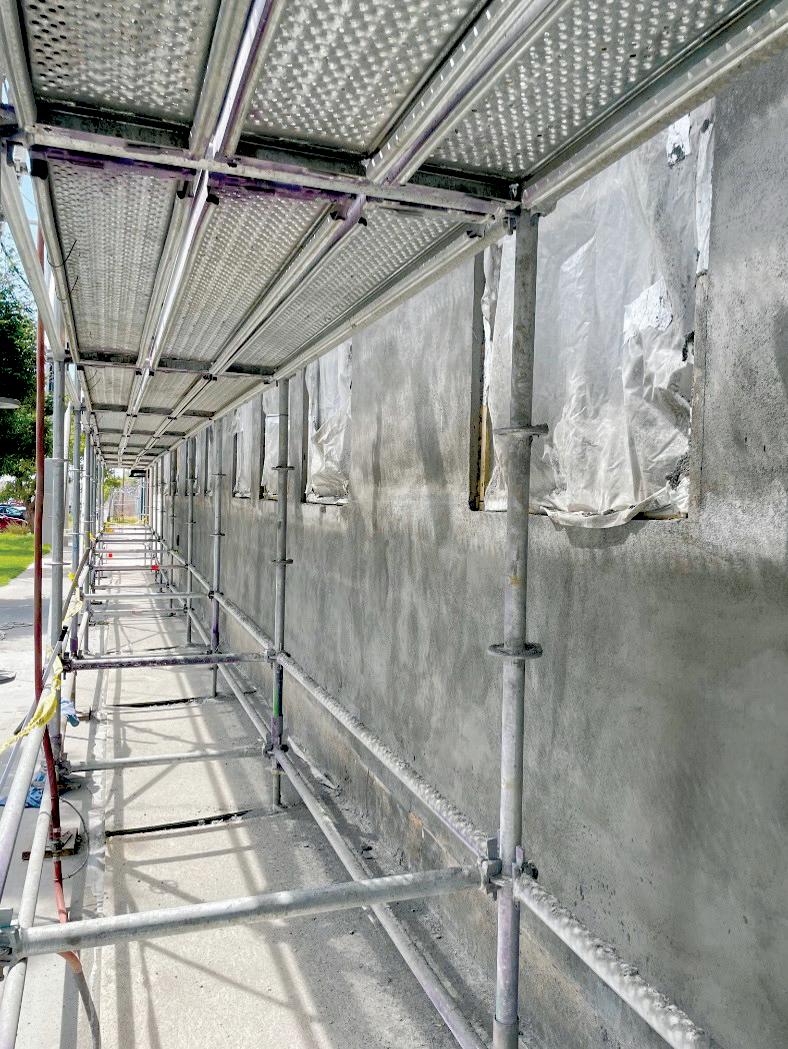
1. Surface Preparation:
Existing stucco and paint layers were removed to expose the brick substrate. High-pressure water jets and abrasive cleaning were employed to achieve a roughened, moisture-compatible surface necessary for adhesion. Existing cracks were repaired with appropriate crack repair materials meeting industry standards.
2. Helical Anchor Installation:
Over 500 helical anchors were embedded into the brick substrate to secure the outer facing brick and interior wythes. This step addressed facade detachment and provided a critical anchor matrix for subsequent treatments.
3. Initial FRCM Layer Application:
A base layer of cementitious mortar was sprayed onto the wall using specialized sprayers. The high-tensile carbon grid was then embedded into the wet matrix, followed by a second coating. Special tools ensured uniform pressure during installation to optimize mortar penetration into porous masonry surfaces.
4. Final FRCM Layer:
Additional layers were applied as needed in high-shear zones. Each layer was allowed to cure for 24 hours under controlled humidity and temperature conditions. Thermal blankets were utilized to
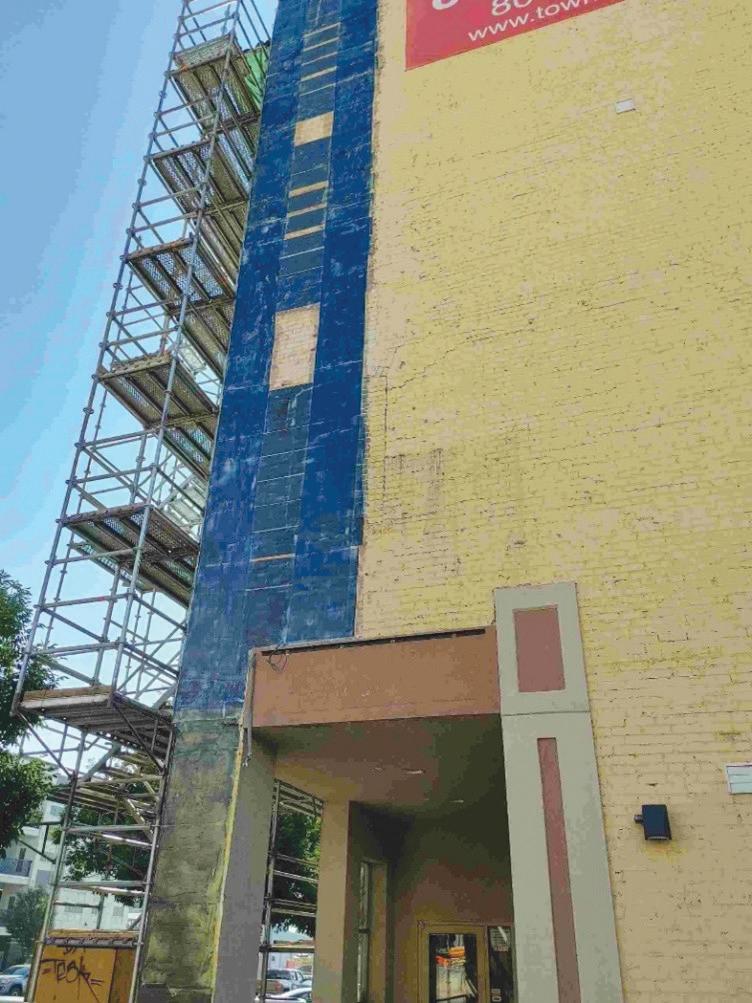
mitigate direct sun exposure and ensure uniform hydration.
5. FRP Application:
Vertical FRP strips were installed along piers. Strips were bonded using epoxy adhesives mixed on-site, with overlapping anchors embedded into the wall’s foundation. Surface finishing minimized trap zones for air bubbles, ensuring full mechanical engagement of the laminate.
6. Finishing Treatment:
Aesthetic continuity was restored by applying a textured coat overlay across the entire wall surface to ensure uniformity between treated and untreated areas.
Coordination among WCA Structural Engineering, Simpson StrongTie, Menlove Construction, and Structural Preservation Systems was central to the project’s success, particularly in managing the complexities of the site. Due to the building's proximity to public spaces, careful planning was required to synchronize scaffolding, material staging, and team rotations to maintain uninterrupted workflows. Measures were implemented to protect the surrounding area, including the establishment of a designated laydown area for materials and equipment. Additionally, an overhead protection system was constructed above the sidewalk and around the exterior to safeguard both traffic and pedestrians throughout the duration of the work.
The Towne Storage Gateway retrofit stands as a case study in engineering ingenuity, achieving an effective seismic upgrade while preserving the building’s historic character. By leveraging innovative materials like Fabric-Reinforced Cementitious Matrix (FRCM) and Fiber-Reinforced Polymer (FRP), the project not only repaired the structure but also enhanced its resistance to future seismic events. These advanced systems addressed the vulnerabilities inherent in unreinforced masonry (URM) by strengthening, repairing, and protecting the brickwork in a single, cohesive solution. This hybrid approach fully mitigated the structural weaknesses of the URM walls, ensuring the building is better equipped to withstand potential earthquakes.
From a structural perspective, the project lays a foundation for the broader adoption of these systems in retrofits of similar scale and complexity, particularly in seismic regions. The Towne Storage Gateway project reflects the possibilities of material science and structural retrofitting, as well as the foresight required to preserve architectural heritage in hazardous environments. This comprehensive approach exemplifies technical excellence and sets a benchmark for future URM rehabilitations. ■
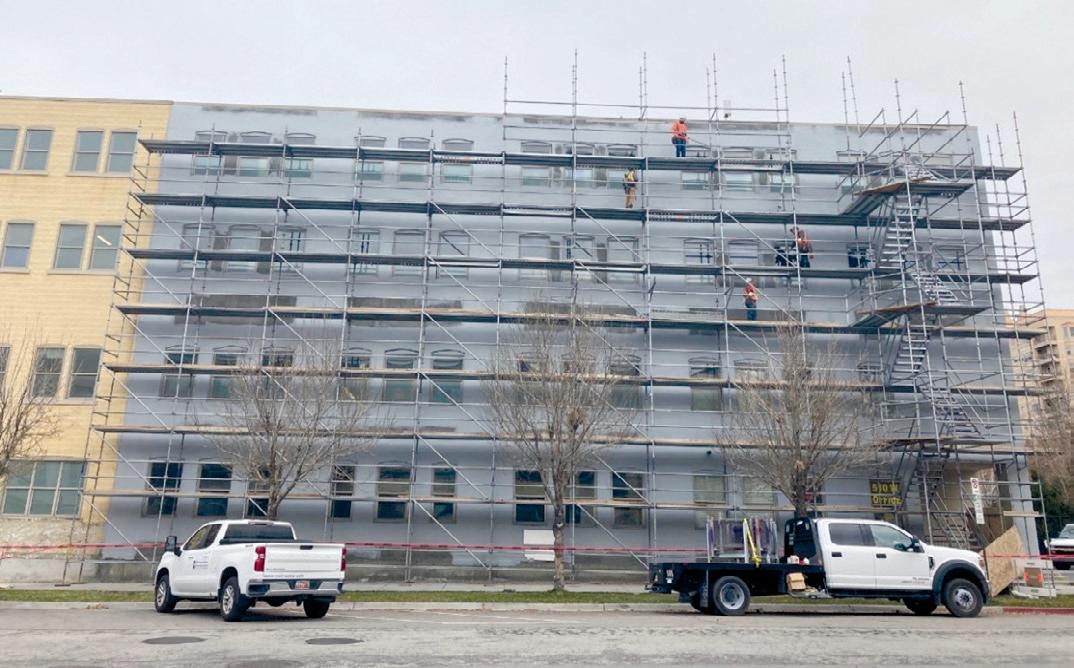
Sarah Outzen, PE, is a Senior Strengthening Solutions Engineer supporting composite products at Simpson Strong-Tie since 2020. Before joining Simpson Strong-Tie, she worked for about a decade in structural engineering consulting, both in new construction and retrofit of existing structures.
Clyde Ellis is a Senior Vice President of Sales for strengthening solutions with STRUCTURAL TECHNOLOGIES. He has over 25 years of experience developing innovative design-build solutions for commercial and public structures that adds value and reduces cost for repair/rehabilitation, structural enhancement and protection from future deterioration.
Jesse Davis is a Manager of Construction with STRUCTURAL. He has experience in structural repairs including concrete strengthening, steel repair, hydro demolition and concrete overlays. In 2022, Davis took over the operations of the STRUCTURAL Utah division, overseeing all projects and personnel.
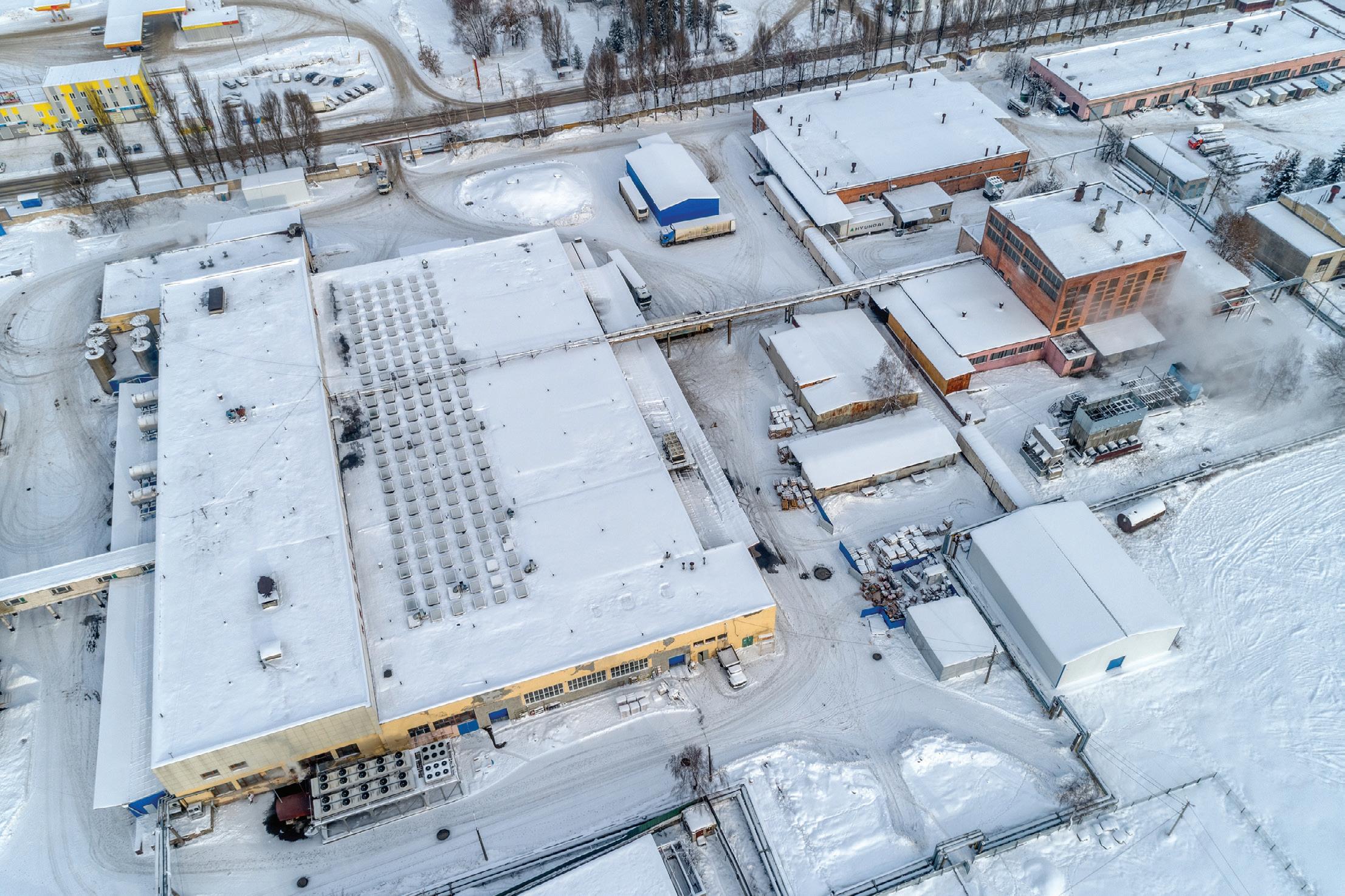
Proper application of adjustment factors is critical for snow
By John “Buddy” Showalter, PE, and Donna E. Adams, PE
Snow load design changes to the American Society of Civil Engineers’/Structural Engineering Institute’s ASCE/SEI 7-22 Minimum Design Loads and Associated Criteria for Buildings and Other Structures include new strength-based ground snow load (GSL) maps based on the risk category of a building (Figs. 1-2). The new maps are also used in the 2024 International Building Code (IBC).
The introduction of strength-based GSL values has led to modifications in the load combinations. For allowable stress design (ASD), the snow load adjustment factor is 0.7. ASCE 7-22 Equation 7.3-1 converts ground snow load to flat roof snow load with a 0.7 exposure reduction factor. This should not be confused with the ASD modification. ASCE 7-22 Section 7.3.3, Minimum Snow Load for LowSlope Roofs, pm, further requires a minimum snow load independent of additional adjustments. Application of the adjustment factors is critical for the new snow load design provisions.
ASCE 7-22 Section 2.4.1, Basic Load Combination s, includes ASD load combinations. Equations 3a, 4a, and 6a
The 2024 IBC includes a GSL conversion to ASD. This conversion is necessary for IBC provisions that rely on ASD GSL.
1608.2.1 Ground snow conversion. Where required, the ground snow loads, pg, of Figures 1608.2(1) through 1608.2(4) and Table 1608.2 shall be converted to allowable stress design ground snow loads, pg(asd), using Equation 16-17.
Equation 16-17 pg(asd) = 0.7pg
where:
pg(asd) = Allowable stress design ground snow load. pg = Ground snow load determined from Figures 1608.2(1) through 1608.2(4) and Table 1608.2.
One example of where pg(asd) is required is IBC Section 2308.11 Roof and Ceiling Framing. The rafter span tables included in Section 2308 for conventional light frame construction are based on pg(asd) Note also that the 2024 International Residential Code (IRC) also requires the use of pg(asd). Additionally, determination of IRC GSL needs to be based on Risk Category II values from the maps or the ASCE Hazard Tool.
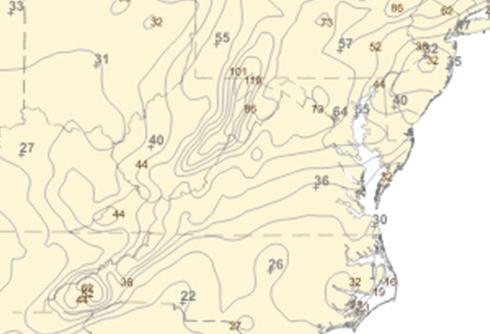
are excerpted here and show the new adjustment factor of 0.7 for strength-based GSL:
• 3a. D + (L r or 0.7 S or R).
• 4a. D + 0.75L + 0.75(L r or 0.7 S or R).
• 6a. D + 0.75L + 0.75(0.6(W or W T )) + 0.75(Lr or 0.7S or R).
ASCE 7-22 Equation 7.3-1 converts ground snow load to flat roof snow load (p f ):
p f = 0.7 C e C t p g
where:
C
e = Exposure factor
C t = Thermal factor
ASCE 7-22 commentary contains the following regarding the 0.7 adjustment factor in Equation 7.3-1:
The normal, combined exposure reduction in this standard is 0.70 as compared with a normal value of 0.80 for the ground-to-roof conversion factor in the 1990 National Building Code of Canada
The decrease from 0.80 to 0.70 does not represent decreased safety but arises because of increased choices of exposure and thermal classification of roofs (i.e., five surface roughness categories, three roof exposure categories, and four thermal categories in this standard vs. three exposure categories and no thermal distinctions in the Canadian code).
In summary, the 0.7 factor in ASCE 7-22 Equation 7.3-1 is based
on exposure and thermal conditions, whereas the new 0.7 factor in the ASD load combinations is based on converting from a strength design basis to ASD basis.
Evaluation of both pf and minimum roof snow load, pm, is required along with sliding, drifting, unbalanced snow loads, etc. Much of the confusion regarding application of adjustment factors seems to relate to pm. Per ASCE 7-22 Section 7.3.3, when pg > pm,max, then pm = pm,max. However, the last sentence of the section states the following: “This minimum roof snow load shall be a separate uniform load case.” And the ASCE 7-22 commentary Section C7.3.3 states, “In such areas, single storm events can result in loading for which the basic ground-to-roof conversion factor of 0.7, as well as C e and C t factors, are not applicable.” Some designers have incorrectly assumed that this is referring to the ASD load combination adjustment. The actual intent is to have a minimum strength-based snow load included in the roof design. As such, the ASD load combination D + 0.7S would be used for both pf and pm. The comparable strength design load combination 1.2D + 1.0S would also be used for pf and pm McGraw-Hill’s Structural Load Determination–2024 IBC and ASCE/ SEI 7-22 by David A. Fanella includes background on this issue that is excerpted here:
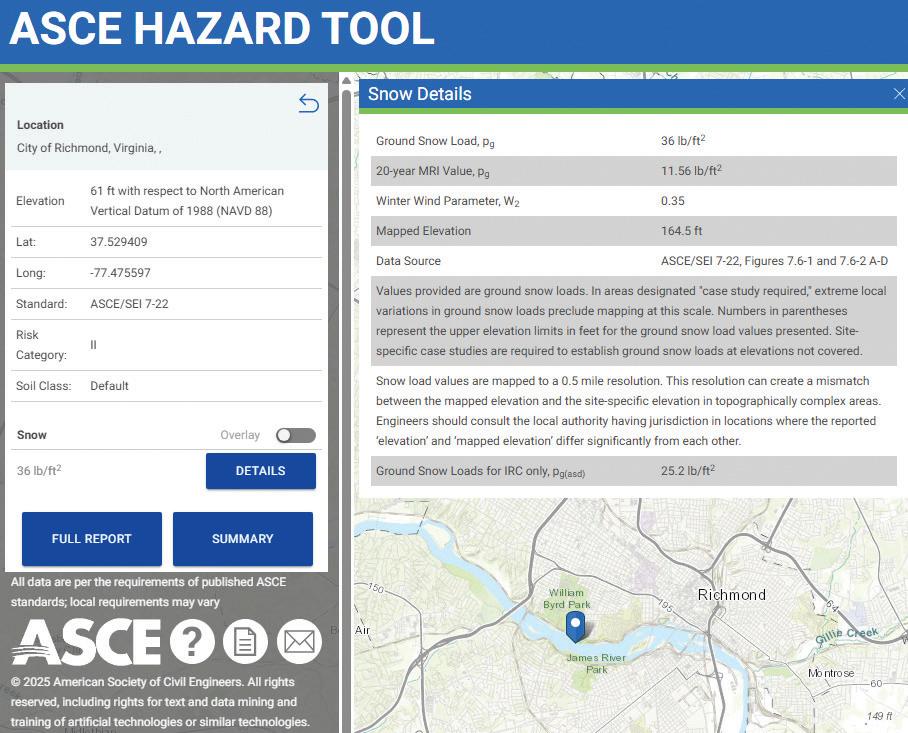
when S = pf the snow load, S, includes the 0.7 GSL to roof snow load factor. For this specific location, the load case using pm controls for Risk Category I buildings but does not control for other risk categories.
“The purpose of the minimum snow loads is to account for important situations that may develop on roofs that are relatively flat. For example, in regions where pg < pm,max, a single storm event can result in loading where the ground-to-roof conversion factor of 0.7 and factors C e and C t are not applicable, resulting in a roof load equal to at most pg
“The minimum snow load is a uniform load case to be considered separately from any of the other applicable load cases. It need not be used in determining or in combination with drifting, sliding, unbalanced, or partial snow loads.”
To easily determine new ground snow loads based on location and risk category, the ASCE Hazard Tool (ascehazardtool.org) is a free resource referenced in both the IBC and IRC. Note that the hazard tool also provides pg(asd) values; however, as noted earlier, determination of IRC GSL needs to be based on Risk Category II.
Table 1 provides a simple example of various snow load values and ASD load combination 3a for Richmond, VA. This location is chosen not only to see the difference in GSL based on Risk Category but also to help compare pg and pm. See Figure 3 for determination of Risk Category II values for this location using the ASCE Hazard Tool. Assume C e = 1.0, C t = 1.2 and roof dead load (D) = 20 psf . In Table 1, pg is greater than pm,max for all risk categories. Therefore, pm = pm,max for all risk categories. Note that when S = pm, the snow load, S, does not include the 0.7 GSL to roof snow load factor, whereas
Table 2 reveals the point where the GSL would equal the minimum snow load based on varying exposure and thermal coefficients (pg = pm/[0.7C e C t]). Whenever GSL is greater than the values shown in the table, the GSL will control over pm. Whenever GSL is less than the tabulated value, pm controls. The highlighted row in Table 2 corresponds to the C e and C t assumptions in Table 1.
Structural engineers should be aware of significant changes in the 2024 IBC Chapter 16 and ASCE 7-22 for snow loads. Snow loads are now based on the risk category of the structure and use strengthbased design values. With the introduction of strength-based GSL values, the load combinations have been modified. For allowable stress design, the adjustment factor for snow loads is 0.7. The conversion from ground snow load to flat roof snow load also uses a 0.7 exposure factor. These two factors are independent of each other, even though they have the same value. ASCE 7-22 further requires a minimum snow load exempt from certain adjustments. Proper application of the adjustment factors is critical for accurate designs.
The 2024 IBC also includes a GSL conversion to ASD. This conversion is necessary for IBC and IRC provisions that rely on ASD GSL. The ASCE Hazard Tool (ascehazardtool.org) is a free resource for determining snow loads, including ASD GSL, based on location and risk category. ■
John “Buddy” Showalter, PE, M. ASCE, M. NCSEA, (bshowalter@iccsafe.org) is Principal Staff Engineer of ICC’s Technical Product Development Group. Donna E. Adams, PE (dadams@dunbarstructural.com) is a Senior Associate with Dunbar Structural.
By SE 2050 Resources Working Group
The SEI SE 2050 Commitment Program was developed and is managed by a dedicated group of volunteers. Each member of the team brings a unique perspective and level of expertise to SE 2050. This is the third of a series of lists developed by the SE 2050 Resources Working Group to communicate essential information that every structural engineer should understand about the topic of embodied carbon as they approach their work, and it is focused on steel. See http://SE2050.org to learn more about both the commitment program and embodied carbon in general.
1. Steel Mills Account for About 90% of Steel Industry Cradle-to-Fabricator-Gate Greenhouse Gas Emissions
Steel mills typically fall into one of the two categories: an integrated mill which utilizes a blast furnace combined with a basic oxygen furnace or a mini-mill which utilizes an electric arc furnace. Both processes result in a raw steel material that can then be further processed into different steel alloys and structural members. The remaining 10% of emissions associated with the steel industry are due to secondary processing, transportation, and fabrication.
2. What Is a Blast Furnace?
A blast furnace converts iron ore (rocks or minerals from which metallic iron can be efficiently extracted) into an intermediate processed form of iron known as pig iron. Coke (fuel created by heating and processing coal or oil) is utilized to develop extremely high temperatures. Additional inputs include flux materials such as limestone. Additional outputs include slag which can be processed into a useful supplementary cementitious material for use in concrete or used as an aggregate.

carbon from the pig iron. Additional inputs include flux materials such as limestone and steel scrap metal that can be utilized up to 30% of the total raw material input. Additional output is slag material, although basic oxygen furnace slag is not typically of a quality to be used as a supplemental cementitious material in concrete and is typically landfilled.
4. What Is an Electric Arc Furnace?
An electric arc furnace converts steel scrap into raw steel material through the introduction of an electric current. Pig iron, direct reduced iron, or hot briquetted iron processes can be used to convert iron ore into a usable input if inadequate steel scrap is available. Sometimes additional carbon, oxygen, or natural gas are introduced during the process as well. Additional output is slag material, although electric arc furnace slag is not typically of a quality to be used as a supplemental cementitious material in concrete and is typically landfilled. Nearly all domestic rolled shapes are produced using electric arc furnaces.
5. Steel Scrap and Recycling Are Important Components of the Steel Industry
The steel industry is driven by recycling, and steel scrap has high value in the domestic economy. Steel can be continually and completely recycled (cradle-to-cradle). Its magnetic property allows it to be easily removed from various waste streams. Domestic structural steel on average contains 90% or more recycled content and 98% of structural steel is recovered at the end of the material’s life for recycling. The steel industry is the largest recycler in the US by mass.
3. What Is a Basic Oxygen Furnace?
A basic oxygen furnace converts pig iron into raw steel material. This is achieved primarily through an oxidation process that removes excess
6. Global versus Domestic Global Warming Potential Impact
The U.S. is a leader in the efficient production of steel. The average CO2 intensity per ton of steel produced in the U.S. is less than half
that of steel produced in China and two-thirds that of steel produced in most European facilities. This is a result of high amounts of electric arc furnace usage (68.3% of production compared to 28.6% for the world average). The U.S. also has high availability and a mature market for steel scrap collection and use. The steel industry accounts for 8% of global greenhouse gas emissions and 2% of domestic greenhouse gas emissions. Note that the built environment accounts for 59% of the total steel used domestically and more specifically buildings account for 32%. The following values published by the World Steel Association highlight the order of magnitudes of different production processes: 2,330 kg-CO2e/metric ton for integrated mills, 1,370 kgCO2e/metric ton for mini-mill production with high DRI content, and 680 kg-CO2e/metric ton for mini-mill production with high scrap content.
EPDs are readily available for a variety of different steel products including HSS members, WF members, plate material, steel decking, rebar, and joists. The domestic structural steel industry has a nearly 100% coverage rate for facility-specific EPD representation. When reviewing an EPD it is important to understand if it represents an industry average, a specific product/ supplier, or a specific facility. Additionally, users should note whether a steel EPD is displaying a cradle-to-mill-gate, cradle-to-manufacturer-gate, or cradle-to-fabricator-gate scope; as the A1-A3 definitions change based on the perspective of the EPD author. Note that significant variation can exist in the embodied carbon reported in EPDs for different types of steel products depending on the impacts of secondary processing and the source of raw materials and electricity. As an example, the Global Warming Potential reported in the industry-average EPD for HSS is greater than that for WF due to use of coil material produced in integrated mills by some manufacturers, however steel products must be evaluated on a functional basis rather than a mass basis.

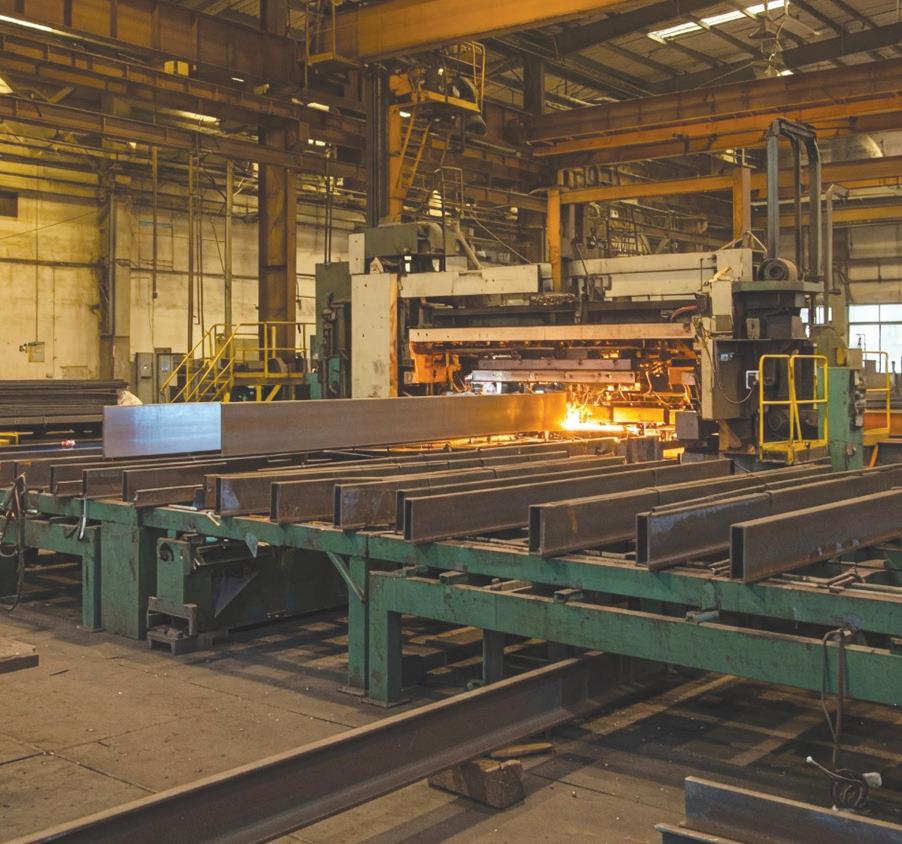
The innovations available need to be categorized by the two types of mills described in item 1. For a mini-mill, reductions are driven by the source of electricity. This could include increasing the share of renewable energy in the grid or the owner of the mill investing directly in on-site or off-site renewable energy. An integrated mill is likely to involve a combination of direct carbon capture and storage, green hydrogen fuel, and transitioning production to alternative production methods (I.E. direct reduced iron combined with an electric arc furnace).
Build smart through early design decisions and build light with the goal of reducing the amount of steel used on the project (reducing emissions and costs if done effectively). Consider steel specific material strategies such as cambering, castellated beams, designing load-optimized members, addressing fireproofing, using high-strength materials, and involving a local fabricator as early as possible. Also consider solutions applicable to all materials including structural optimization, maximizing design utilization, refining serviceability criteria, engaging in “smart” coordination, utilizing parametric design methods, and conducting floor bay studies. More detail is provided on all these strategies in the Build Light—Structural Steel section of the Design Guidance page at SE2050.org for additional information.
Steel reuse can result in significant reductions in emissions and strengthens the circular economy and cradle-to-cradle nature of the steel industry. Steel reuse may involve full building reuse, reuse of components from an existing building on site, or reusing components from an offsite location. Steel component reuse has the advantage of avoiding the emissions associated with raw material production (i.e., the emissions that occur at the steel mill). See the Implement Circular Design Principles Section of the Design Guidance page at SE2050.org for additional information.■
The SE 2050 Resources Working Group produces, maintains, and publishes resources on the SE 2050 website for structural engineers on the topic of embodied carbon. More information on the SE 2050 Commitment can be found at http://SE2050.org.
Lawrence Group’s Austin office is the design architect for upgrades to the pedestrian bridge and surrounding site at the historic Elisabet Ney Museum in Downtown Austin, TX.
The museum was closed to the public in December 2024 for much needed interior and exterior renovations, which include replacing the pedestrian bridge across Waller Creek and updates to the historic landscape around the museum.
Partnering with Austin-based structural engineering firm Structures, Lawrence Group designed a new 65-foot-long, prefabricated steel truss bridge to replace the museum’s outdated, dimensional lumber bridge over Waller Creek. Installed on Sept. 23, 2025, the new pedestrian bridge rests on a pair of oval-shaped concrete piers that direct water around the bridge’s foundation. The new bridge is also designed at a higher elevation than the old bridge to promote better water flow during flooding events. Its decking is made of durable, 4x8 treated cypress planks that will extend the lifespan of the bridge.
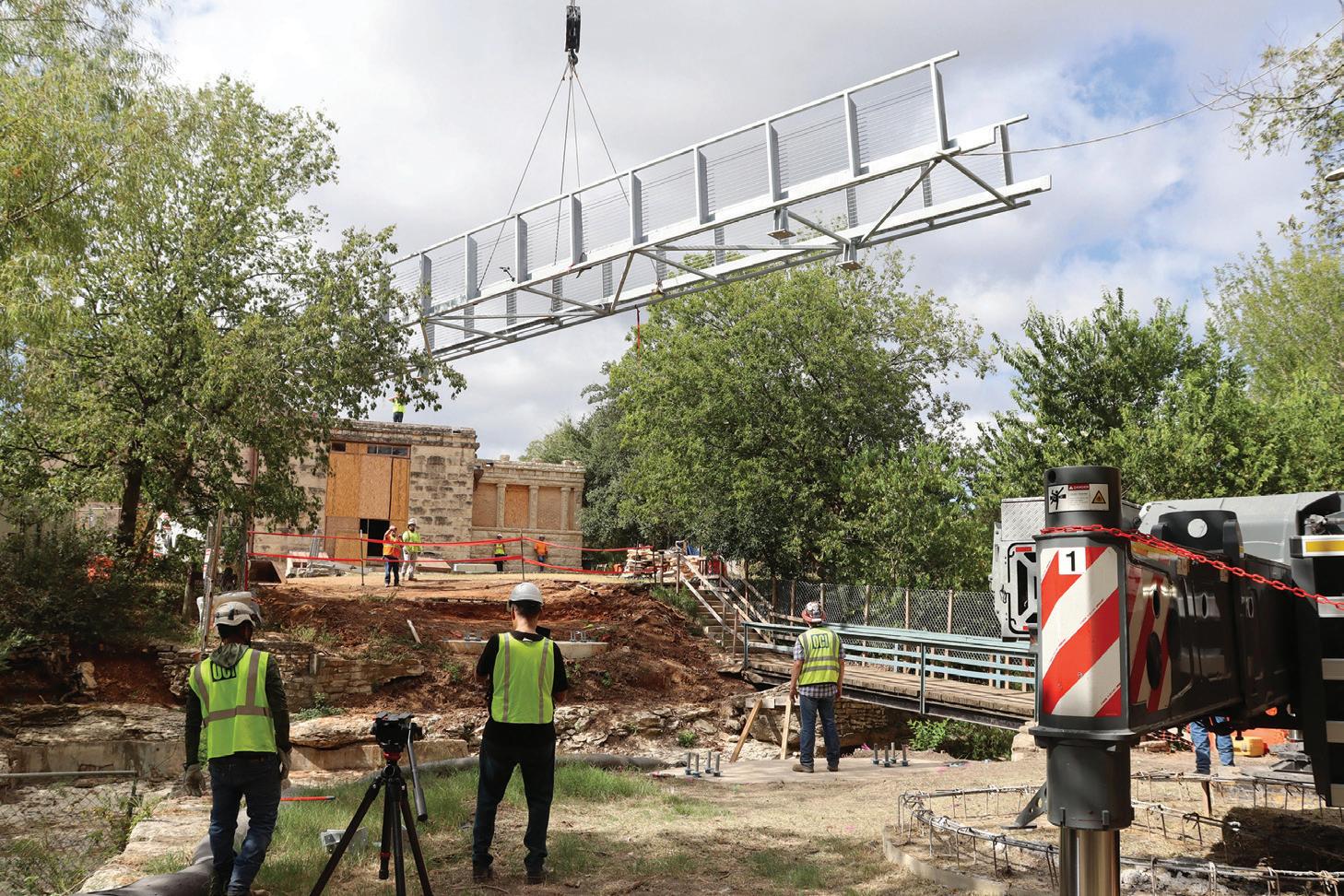
In addition to designing the bridge, Lawrence Group collaborated closely with civil engineering firm Doucet to develop new approach
The 30,000-square-foot Neel-Schaffer Building in Ridgeland, MS, will bring together the company’s Jackson, Madison, and Ridgeland offices under one roof when it opens in February 2027.
“Today isn’t just about a new building, it’s about investing in our people and creating a headquarters that reflects how we serve our clients and communities,” said Joey Hudnall, PE, President & CEO of Neel-Schaffer. “From the start, we asked what our employees needed to thrive. Their input shaped this facility, including flexible spaces for collaboration, a dedicated training center, state-of-the-art technology, and amenities that support balance and growth. This headquarters is a direct reflection of our values of Care, Service, and Excellence.”
By bringing staff together under one roof, Neel-Schaffer is creating conditions for greater collaboration across disciplines and more effective solutions for clients across the firm’s nine-state footprint. ■
pathways to the bridge that enhance site accessibility and identified new landscape beds on the north side of the bridge to support both beautification and visual identification of the structure.
The museum is expected to reopen to the public in summer 2026. ■
The American Concrete Institute SPEC-563-25: Repair of Concrete in Buildings, is now available in the International System of Units (SI). This milestone provides design and construction professionals worldwide with greater accessibility and usability of ACI’s widely respected repair specifications. The SI edition of ACI SPEC-563-25 ensures that engineers, contractors, and owners working in global markets can implement the specification seamlessly within their projects while maintaining consistency with international measurement standards.
ACI SPEC-563-25 provides standardized specification requirements for the repair of concrete in buildings, covering materials, evaluation, surface preparation, application, curing, and quality assurance. Now, with SI units integrated throughout, international practitioners can more easily adopt and apply the guidance to improve durability, performance, and sustainability in concrete repair projects.
ACI SPEC-563-25 in both U.S. customary Inch-Pound Units and SI units is available for purchase at concrete.org. ACI SPEC-563-25 is also available in the ACI 562 PLUS Concrete Repair Subscription. ■
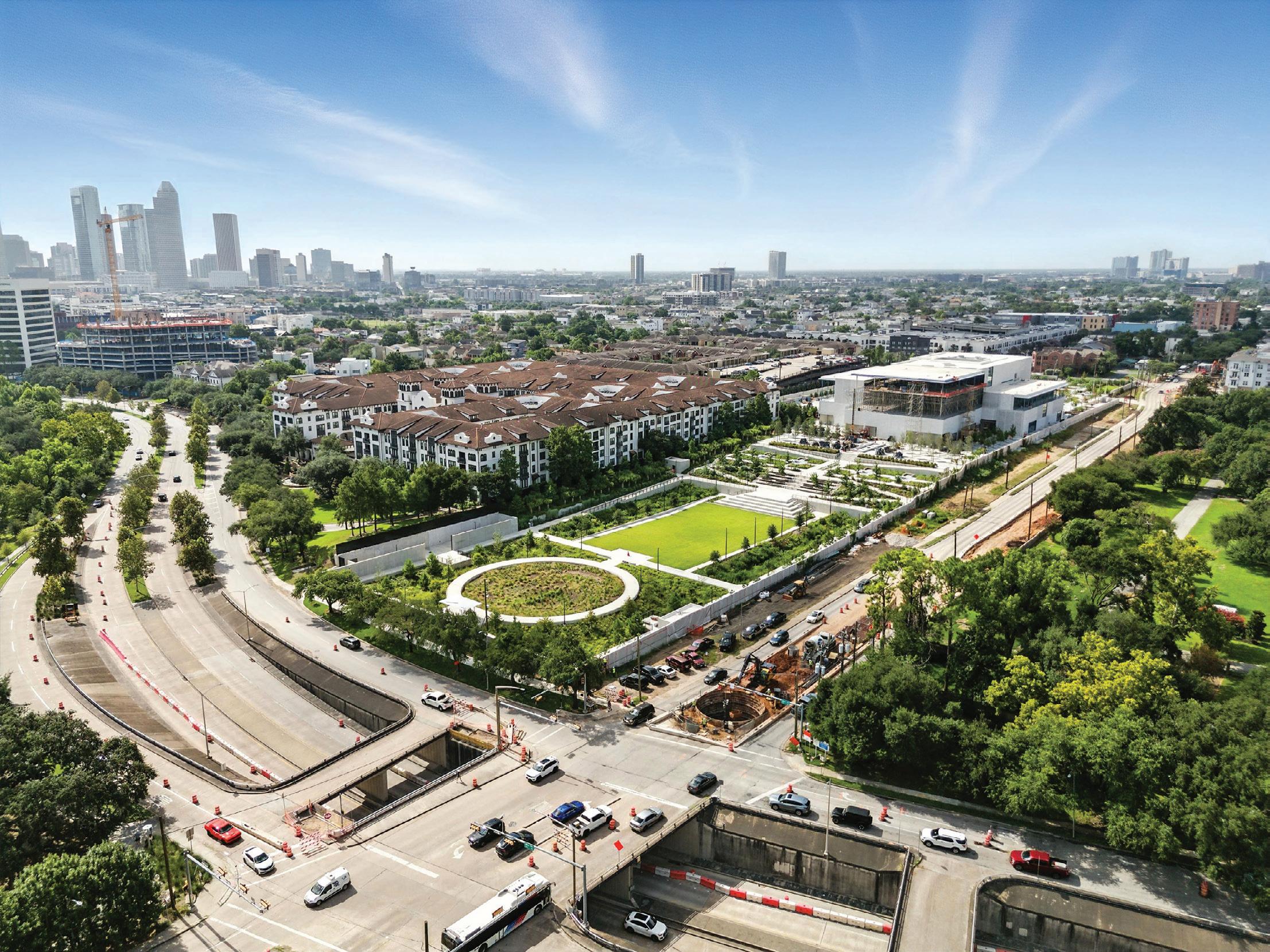
The Ismaili Center Houston is set to open by the end of the year.
Designed by architect Farshid Moussavi, the Center represents both a milestone for the Ismaili Muslim community and a meaningful addition to Houston’s cultural landscape. Moussavi’s design, developed in partnership with structural engineering firm AKT II and DLR Group (architect and engineer of record), is a modern expression of history and tradition.
Final preparations are underway, including the completion of dramatic veranda spaces and the landscaping of nine acres of gardens by Nelson Byrd Woltz Landscape Architects.
At the heart of the 150,000-square-foot building is a five-story atrium, flanked by two side atriums that connect to soaring eivans (Persian for verandas). While the atriums celebrate indoor gatherings, the eivans allow light to flood the interior from all sides. Architectural surfaces are adorned with geometric patterns inspired by Islamic traditions.
The Center’s cultural and civic facilities will include an exhibition gallery, a black box theater, banquet halls, meeting rooms, educational spaces, a café, and a prayer hall. These features ensure the Center will be a vibrant hub for both spiritual reflection and civic life.
Construction is led by McCarthy Building Companies, Inc., known for delivering many of Houston’s cultural landmarks. To achieve the project’s intricate architectural details, McCarthy implemented
advanced construction strategies, including self-performing all architectural concrete work.
The 150,000-square-foot structure is set on an 11-acre site along Montrose Boulevard between West Dallas Street and Allen Parkway, directly across from Buffalo Bayou Park and near Tolerance, a public artwork by Spanish artist Jaume Plensa that celebrates unity in diversity. The gardens create a contemplative oasis in the heart of Houston’s urban core, complementing other notable NBW projects at Memorial
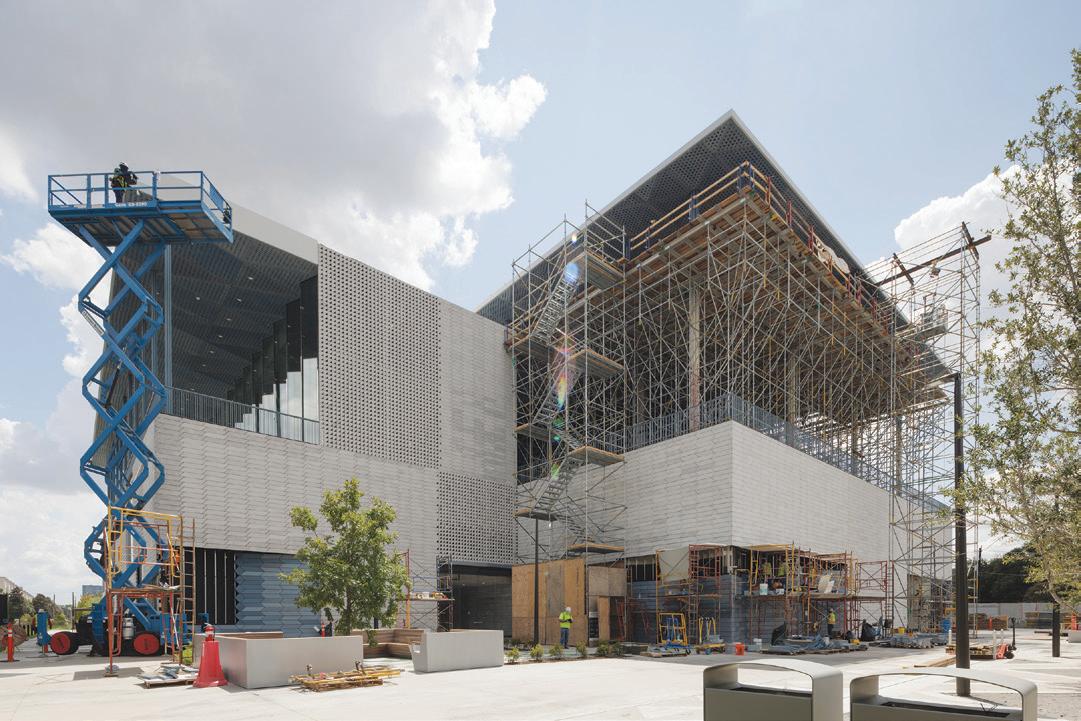
The fifth bridge over the river Danube in Linz, Austria, is part of the A 26 bypass project, which aims to connect the A 7 motorway with the B 127 on Rohrbacher Strasse. Once complete, the bypass will both reduce traffic in the city centre and shorten journey times for commuters travelling from the west.
Measuring 305.55 meters in length and 22.5 meters in width, the bridge is the only suspension bridge over the Danube in Aus-tria. The 500-meter-long suspension cables are anchored directly in the rock, while the access and exit ramps are located in tunnels at the north and south ends of the bridge. The bridge is the longest earth-anchored suspension bridge of its kind and appears to float elegantly over the Danube without any piers.
The superstructure features a composite design consisting of a singlecell steel-box girder with a concrete deck, keeping the bridge slim and elegant.
An optically light design generally brings a number of technical challenges, and the bridge in Linz was no exception.
MAURER was tasked with one of the most decisive elements: the transition from the bridge into the tunnels. Due to its comparatively light and soft design, the bridge is subject to relatively large movements and rotations at its ends on the north and south banks.
The bridge is connected to the ends by means of expansion joint constructions. These allow for displacements and rotations in the structure, while also absorbing the traffic loads. Displacements usually result from temperature fluctuations in the superstructure, for example. Rotations at the ends of the superstructure can be caused by deflection of the superstructure and/or the cables expanding due to temperature. The specific expansion joints used in Linz are known as swivel joist expansion joints. Unlike other expansion joints, these can allow for displacements in all directions and rotations in all axes.
The swivel joists were designed, built, and installed in order to provide a permanent solution to the large rotations around the bridge’s lateral axis at both ends of the superstructure.
A pair of noise-insulated expansion joint constructions were fitted in the summer of 2023. Each of these measures around 23 meter in length, with a movement capacity of 570 mm (XLS 600) and 665 mm (XLS 700).
The surface of the expansion joints features special rhomboid plates that reduce the noise of vehicles passing over by 50-60%. In addition, a special insulating system encloses the underside of the bridge and further reduces noise emissions significantly. This can be easily opened and closed again at any time for inspections and assessments of the expansion joints from below via the gap in the structure. As a result, the noise level at the expansion joint construction is only slightly higher than that of the normal road surface.
Construction of the new bridge over the Danube began in January 2019. It was approved for use by traffic in November 2024, initially with only one lane in each direction for local traffic. Once the next section of the A 26 is completed in 2028, the bridge will open to traffic on two lanes with hard shoulders.
ASFINAG (Autobahnen- und Schnellstrassen Finanzierungs-AG) is responsible for managing the entire project.■
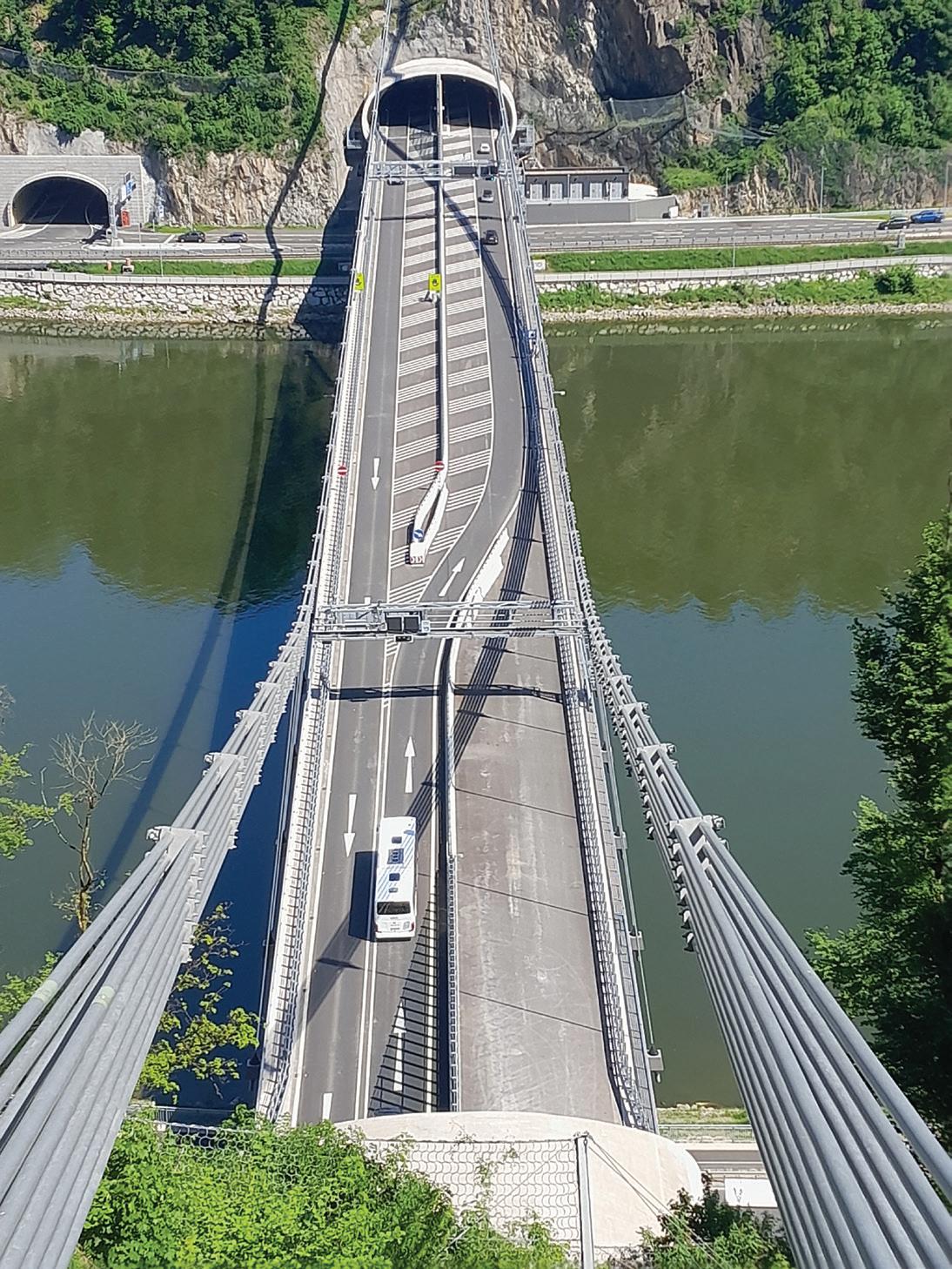
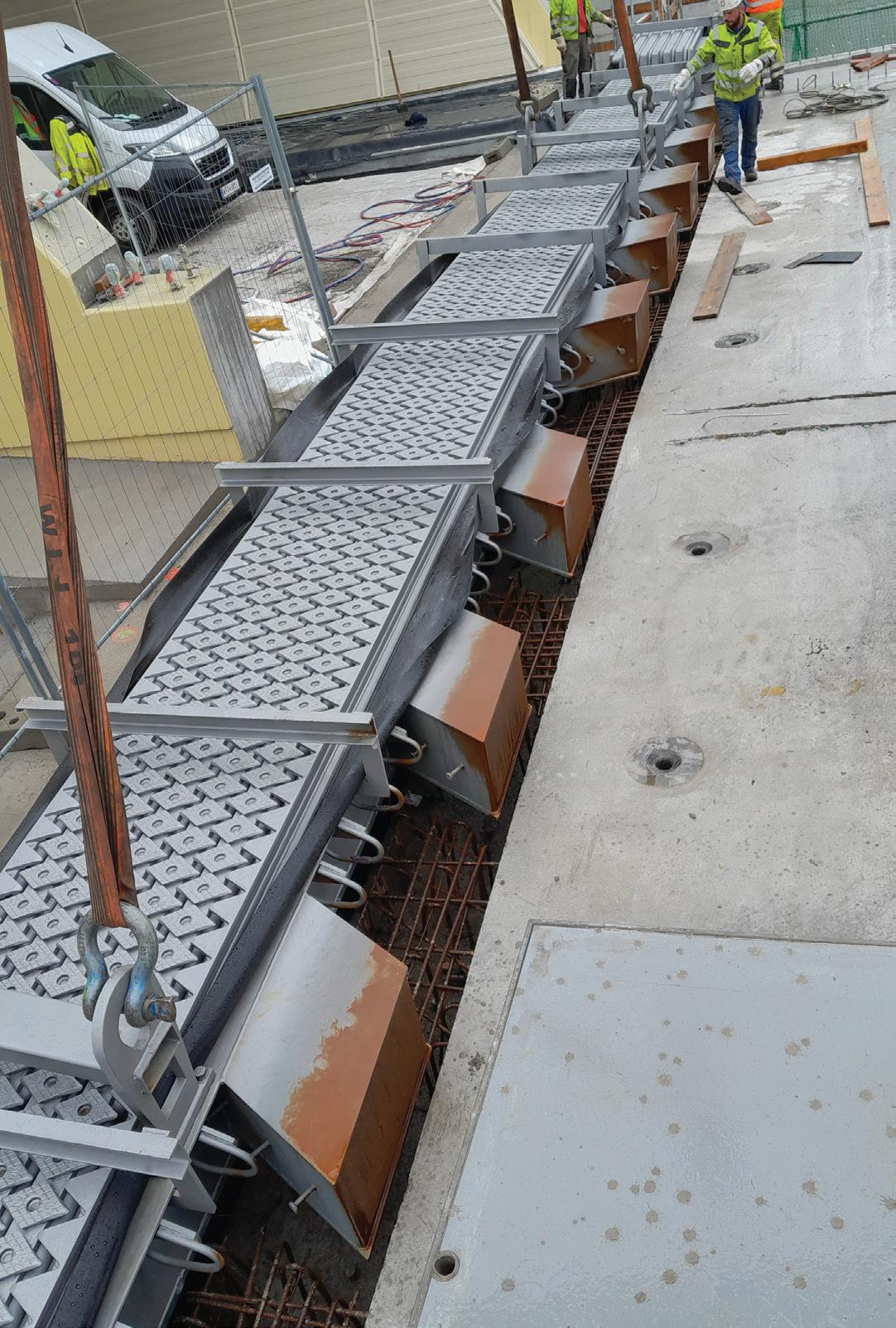
The American Institute of Steel Construction welcomed Northeastern University Professor Jerome Hajjar, PE, Ph.D, to its inaugural Innovation Fellowship program, a collaborative research residency at the Institute’s Chicago headquarters.

The fellowship, a minimum semester-long iteration of AISC’s two-week Innovation Scholar summer program, aims to engage industry leaders with structural steel-focused research and provide avenues for continued collaboration in the process.
Supported by the AISC Education Foundation, Hajjar will work with AISC staff on a variety of initiatives during his academic sabbatical. His expertise, insight, and decades of experience researching resilient and sustainable structures will be invaluable to AISC’s continued investment in creating educational and actionable sustainability resources.
Learn more about the program at aisc.org/innovation-fellow.
The Concrete Foundations Association (CFA) installed three leaders to its Legacy Committee: Lance Jordan, formerly of Stephens and Smith Concrete Construction; Mark Saldana of Saldana Concrete; and Van Smith of Hudson Valley Concrete Pumping, Inc. The appointments honor their significant contributions and long-standing service to the concrete foundation industry and the Association.
These individuals have demonstrated exceptional leadership and commitment throughout their careers, particularly during their service on the CFA Board of Directors. Their efforts have been instrumental in advancing the Association’s mission, supporting its members, and driving industry-wide progress. Each has left a lasting impact through their dedication to CFA events, resources, and strategic development, making them exemplary additions to the Legacy Committee.
Lance Jordan’s tenure on the board was marked by his stabilizing leadership during the economic recession, a critical period for the Association. His persistent efforts helped ensure the CFA’s continuity and fostered a collaborative environment for members. Mark Saldana’s service was defined by his passionate involvement in strategic planning, which formalized the mission and vision that guides the Association today. Van Smith brought dynamic energy to the board, championing the “Projects of the Year” program and passionately sharing his expertise in construction education and technology.
Case Engineering has expanded with the recent hiring of Electrical Engineers Eli Tran and Xavier Moore, Plumbing Designer Leon Perry, Jr. and Structural Engineer Ted Valentine. Tran graduated from Texas A&M University in College Station, TX with a degree in Electrical Engineering and a minor in Mathematics. He is actively pursuing an EIT certification with the goal of obtaining his PE license.
Moore completed an Electrical Engineering internship at Case
Engineering in summer 2024 and was recently hired upon earning a degree in Electrical Engineering from Missouri University of Science and Technology in Rolla, MO.
Perry has a degree in Project Engineering from the University of Missouri – St. Louis. With over 20 years of experience in mechanical, electrical, plumbing and fire protection design, Perry has worked on a variety of projects that include renovations to the Missouri S&T Child Development Center and upgrades to the Indiana Schools for the Deaf and the Blind and Visually Impaired. He is a member of the American Society of Plumbing Engineers.
Valentine graduated from Missouri University of Science and Technology in Rolla, MO with degrees in Civil Engineering and Architectural Engineering. He completed two summer internships as a Structural Intern at Kreher Engineering in Columbia, IL and also worked a year as a Transportation Project Engineer at Gonzalez Companies in St. Louis, MO.
Magnusson Klemencic Associates (MKA) Principal Kevin Aswegan, PE, SE, has been named a member of Building Design+Construction’s (BD+C’s) “40 Under 40” Class of 2025. The national program recognizes rising AEC leaders for their career achievements, technical innovations, industry service, and community impact.
Aswegan joined MKA in 2013 and rapidly advanced from Design Engineer to Principal in 2024. His portfolio encompasses high-rise projects across the United States, particularly in regions with significant wind and seismic hazards, with a specialty in PerformanceBased Design (PBD) for both wind and seismic systems. He helped advance MKA’s design efforts for ATX Tower in Austin, the world’s first application of the American Society of Civil Engineers (ASCE) Prestandard for Performance-Based Wind Design, achieving measurable cost and schedule savings while reducing embodied carbon.

Matthew Reichenbach Presents Robert J. Dexter
Matthew Reichenbach, Ph.D, PE, assistant teaching professor of the Civil, Architectural and Environmental Engineering Department at Drexel University, was recently selected as the recipient of the 2025 Robert J. Dexter Memorial Award Lecture by the Steel Bridge Task Force of the American Iron and Steel Institute (AISI) and presented his research—which is focused on the lateral torsional buckling behavior of non-prismatic steel bridge girders — at a recent Task Force meeting in Lafayette, IN. In addition to AISI, task force members include the National Steel Bridge Alliance (NSBA) and the American Association of State and Highway Transportation Officials (AASHTO) Steel and Metals Technical Committee.
Before his academic career, Dr. Reichenbach worked as a structural engineer with the Harman Group and Hardesty & Hanover, designing steel bridges and complex structural systems. His combined academic and professional experience provides him with a practical perspective that informs both his research and his teaching.■ Kevin Aswegan
The 2025 NCSEA Structural Engineering Summit brought together more than 1,000 structural engineers and thought leaders to the New York Hilton Midtown on October 14–17, marking the largest Summit in NCSEA history.
Over four days, attendees explored the latest innovations shaping the built environment through three dynamic keynote presentations, dozens of education sessions, and three vibrant exhibit areas showcasing cutting-edge products and technologies. From thought-provoking discussions on leadership and resilience to deep dives into codes, materials, and AI applications, the Summit reflected the forward-thinking spirit of today’s structural engineering community.
In addition to the educational program, the Summit offered countless opportunities for connection. Attendees reconnected with peers and met new collaborators at the Welcome to New York Party, celebrated the best in structural engineering at the SEE Awards Ceremony, and shared inspiration through networking events, receptions, and tours highlighting some of New York City’s most remarkable structures.
NCSEA extends sincere thanks to the speakers, exhibitors, and attendees whose participation made this event such an outstanding success. Special appreciation goes to the sponsors whose support helps make the Summit possible: CSI (Anchor Sponsor), Atlas Tube, Nucor, DrJ Engineering, Think Wood, AISC, New
Allen Business Advisors
American Concrete Institute (ACI)
American Galvanizers Association (AGA)
American Institute of Steel Construction (AISC)
American Society of Civil Engineers (ASCE)
ArcelorMittal
Armatherm Thermal Bridging Solutions
Atkinson-Noland & Associates
Atlas Tube
Bekaert
Bentley Systems
Blind Bolt
Block Design Collective
Blockpad
Boccella Precast LLC
Bull Moose Tube Company
Calcs.com
CALMFLOOR
Cast Connex
CBS2, LLC
CMC (Comercial Metals Company)
COMSLAB – Bailey Products
Concrete Reinforcing Steel Institute (CRSI)
CoreBrace
CTS Cement/Komponent
Dayton Superior
DEWALT
Dlubal Software
DuraFuse Frames
Earthbound Corporation
Ellwood Specialty Metals USA
ENERCALC, LLC
Engineers Alliance for the Arts
Euclid Chemical
EVER Seismic LLC
Exploration Instruments, LLC
Fabreeka
fischer fixings LLC
Fyfe FRP
HUB International
Genia Engineering, Inc.
GERB Vibration Control Systems, Inc.
GIZA Steel
Greenbrook Engineering Services
GRM Custom Products
Groundworks
HYTORC
IDEA StatiCa
InspectMind
Integrated Engineering Software, Inc.
International Masonry Institute (IMI)
Intsel Steel
KRABO
Lindapter
Master Builders Solutions
MAX USA Corp.
Menard USA
MiTek
Morris-Shea Bridge Company
Mosaic
Motioneering, Inc.
National Ready Mixed Concrete Association (NRMCA)
New Millennium
Nucor
Paragon
Peikko
Pirros
PNA Construction Technologies
Post-Tensioning Institute (PTI)
PS=0
PYTHON Fasteners
Qnect
QuickTie Products
RedBuilt
RISA
Rothoblaas
SAFI Structural Technologies
SDS2 by ALLPLAN
Simpson Strong-Tie/QuickFrames
Splice Sleeve North America, Inc.
Steel Joist Institute (SJI) and Steel Deck Institute (SDI)
Steel Tube Institute (STI)
struct.digital
Structural Building Components Association (SBCA)
TNA Torque+Angle Fastening System (LeJeune Bolt)
Trimble/Tekla
Truss Plate Institute (TPI)
voestalpine Tubulars GmbH & Co KG
Structural engineers gathered in San Diego for the ACEC Fall Conference, where technology, workforce, and licensure trends took center stage. Sessions explored the new SE computer-based exam format, project delivery challenges, and practical uses of AI in design coordination.
Advocacy discussions included proposed H-1B visa restrictions, DBE policy changes, and workforce retention strategies. A joint CASE–MEP roundtable highlighted how cross-disciplinary collaboration is shaping risk management and project leadership.
Keynote speakers reminded attendees that innovation and resilience define the modern engineer: futurist Mike Walsh observed that “when you change the tools, you change the work,” while adventurer Debra Searle spoke on building “resilience muscles” to navigate isolation, pressure, and change an apt metaphor for today’s firms.
Several episodes of ACEC’s Engineering Influence podcast, recorded live at the 2025 Fall Conference, are now available. Topics include Engineering Outlook 2025, where panelists discussed business sentiment, policy risk, and workforce projections heading into the new year.
The Q3 2025 Engineering Business Sentiment Study shows continued optimism across the design industry. Backlogs climbed to a median 12 months, and 60% of firms plan to increase hiring in 2026. For structural practices, strength remains in data centers, energy and utilities, and aviation markets emphasizing complex structures and resilience. Inflation and tariff concerns continue to ease. Read the summary report at acec.org/resource/ engineering-business-sentiment-q3-2025.
The CASE Toolkit Committee released an updated Tool 4-1: Project Status Report, improving how firms track schedule, scope, and client communication. The revised version adds space for milestones, decision points, and risk notes—helping engineers document progress consistently and manage exposure across teams. Available now in the CASE Toolkit library at acec.org.
ACEC has eliminated separate dues for coalition participation (except DPC), so member firms can now join CASE at no additional cost.
Members gain access to contract documents, business-practice guidelines, and peer discussions tailored to structural engineering. The change broadens participation and makes CASE resources accessible to more firms of every size.
Join a coalition at https://www.acec.org/member-center/get-involved/ coalitions/.
U.S. DOT Issues Interim Rule on DBE Program
The U.S. Department of Transportation (DOT) has issued an Interim Final Rule (IFR) that removes the race- and gender-based presumptions of social and economic disadvantage in the federal Disadvantaged Business Enterprise (DBE) program.
The agency cited recent constitutional challenges—including a federal case in Kentucky (Mid-America Milling)—as the basis for the change. While the proposed consent decree in that case remains pending, DOT stated that it has determined the program’s rebuttable presumption is unconstitutional and that immediate revision is necessary.
The Interim Final Rule took effect upon publication in the Federal Register on October 3, 2025, with a 30-day comment period. Under the new policy, applicants must provide a written narrative and supporting evidence showing individualized social and economic disadvantage, similar to recent changes in the SBA’s 8(a) program.
Mark your calendar for May 3–6, 2026 in Washington, D.C. Topics will include infrastructure investment, licensure policy, and innovation in building safety. Structural engineers are encouraged to participate and lend their perspective to ACEC’s national advocacy work.
February 26–27, 2026 – Houston, Texas
InterContinental Houston
The 2026 ACEC Winter Coalition Summit will feature an exclusive look inside one of the nation’s most advanced aviation infrastructure programs—the Houston George Bush Intercontinental Airport Terminal Redevelopment Program (ITRP).
Valued at $1.458 billion, ITRP represents the largest capital improvement effort in the history of the Houston Airport System (HAS). The initiative expands and modernizes Terminal D, home to the Mickey Leland International Terminal (MLIT), creating a seamless, technology-driven experience for international travelers.
CASE will host a featured session titled “Reimagining Resilience: Integrating Technology, Security, and Structure at Houston’s ITRP,” presented by Matthew Meier, PE, CTS-D, Project Manager with Burns Engineering, and (invited) Darryl S. Daniel, Chief Technology Officer for the Houston Airport System.
Burns Engineering has served as the prime technology and security engineering consultant for the MLIT renovation and the new International Central Processor (ICP) terminal. Burns also led the design and production of the ICP’s signature multimedia centerpiece “The Oculus,” a 200-foot seamless digital display visible across two terminal levels. Supporting the architectural design team of HOK and Page, Burns guided HAS through design, procurement, and implementation of the immersive multimedia system, coordinating structural, electrical, and communications systems to achieve a truly integrated result.
The ITRP also includes:
• Construction of the new International Central Processor (ICP) with a 17-lane security checkpoint—one of the largest in the country.
• Expansion of Terminal D-West Pier, adding six gates and nearly doubling terminal capacity.
• Development of a new Check Baggage Inspection Service (CBIS) building and integrated baggage-handling upgrades.
• Modernized technology systems including gate management, visual information displays, security, and fire safety networks. When complete in 2025, the ITRP will position Bush Intercontinental to accommodate future international growth and improve passenger experience through state-of-the-art design, safety, and technology integration.
In addition to the airport feature, the CASE–MEP Joint Roundtable will explore “Implementing AI in the Vertical Engineering Space.” This focused discussion, led by firm and industry leaders, will examine how artificial intelligence is changing the way design teams coordinate, model, and manage projects—from predictive analytics and risk evaluation to generative design and documentation efficiency.
Register for the Winter Summit today at https://www.acec.org/ education-events/events/coalitions-winter-summit/. Firms are encouraged to send both senior leaders and emerging professionals to capture a full range of perspectives from across the engineering disciplines.
Contact Michelle Kroeger (mkroeger@acec.org) or Erin Wander (ewander@acec.org) for details on opportunities to participate.
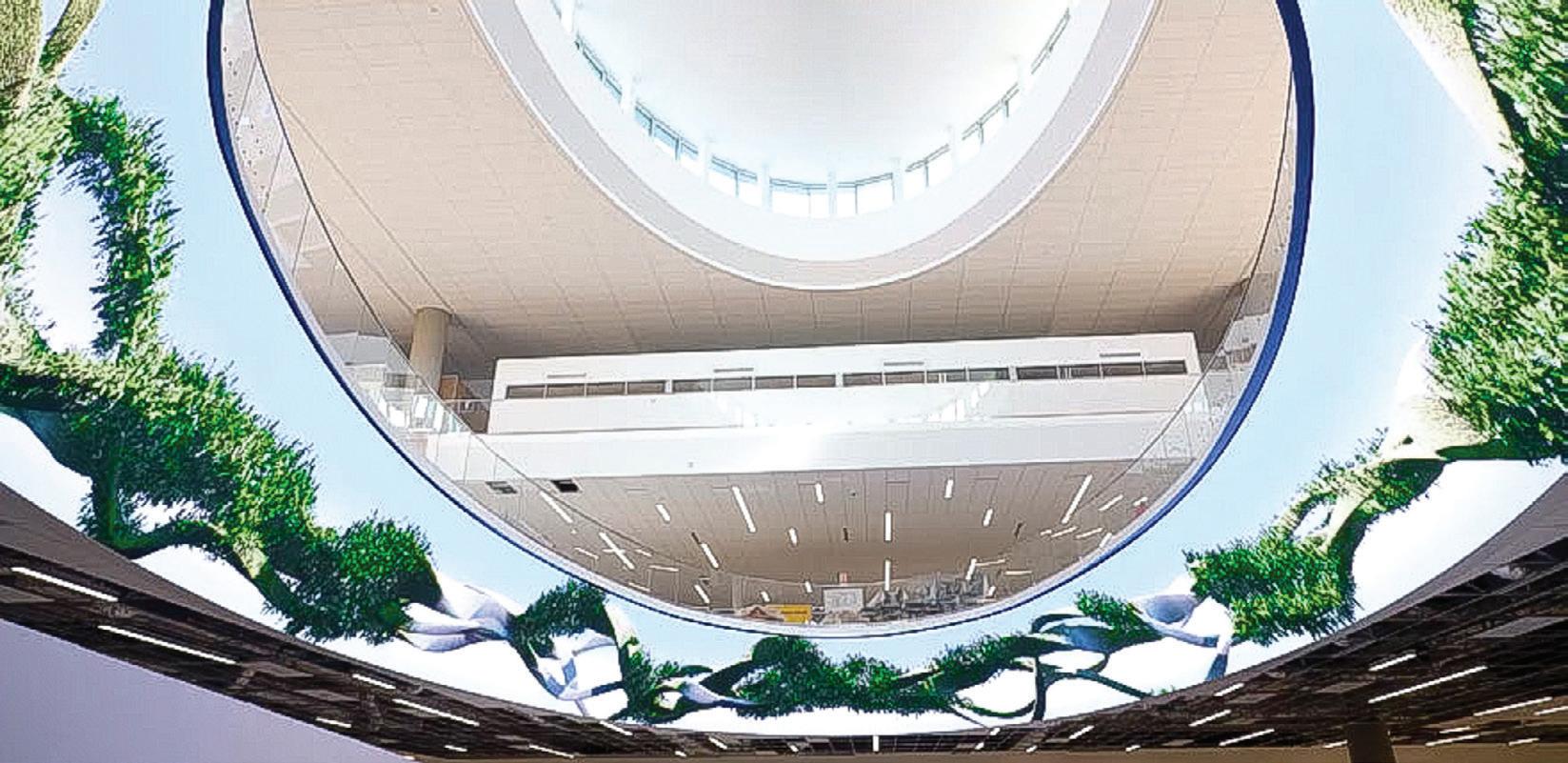
Over three inspiring days in Dallas, SEI’s Electrical Transmission & Substations Conference welcomed 2,107 attendees, including 1,964 in person and 143 virtually, from 47 states and 11 countries. This marked the largest, most diverse, and most dynamic gathering in the event’s history.
The Preconference Workshops on the forthcoming ASCE/SEI Manual of Practice on the Design of Overhead Powerline and Substation Foundations and the second edition of ASCE/SEI’s Substation Structure Design Guide, Manual of Practice 113 drew 375 participants, both in person and online, reflecting the growing reach and relevance of ETS.
Starting in 2027, ASCE’s institutes and technical groups are coming together in one conference that will feature both discipline-specific content and create a space for cross-cutting sessions that bridge across civil engineering disciplines. Whether you are advancing climate-resilient systems, pioneering smart technologies, or progressing the structural engineering profession, ASCE wants to hear your ideas. Submit your abstract and display your original scientific, technical, or project-based work to a global audience
From a vibrant exhibit hall with 134 exhibitors to in-depth technical sessions and four plant tours, ETS 2025 showcased cutting-edge ideas, meaningful collaboration, and bold visions for the future of the profession.
As SEI Managing Director Jennifer Goupil shared: “ETS is not only a conference; it is a community.”
That message was reflected in the energy and engagement across every part of the program.
The next evolution of ETS will be the Overhead Power Line Structures Conference (OPS 2028), taking place in 2028 in Nashville.
of engineers, researchers, and changemakers. Your abstract should be a single, well-crafted paragraph around 300 words written in clear, professional English. It must present the scope, principal findings, and conclusions of your work without lists, tables, figures, equations, footnotes, or references. Literature reviews are not accepted. Each presenter may submit up to two abstracts. This is your platform to inspire, challenge, and shape the future of infrastructure. https://experience.asce.org/ program/call-for-content.
SEI’s SE 2050 Committee has announced the launch of the new SE 2050 Database. This upgraded platform features a streamlined interface, expanded dashboard, and built-in ECOM tool. It now tracks both embodied carbon and structural materials to help engineers design smarter, lower-impact structures. Explore the website today: https://database. se2050.org/landing.
The SEI-NIST Forward-Looking Codes and Standards: Future Engineering Design Guidance Workshop brought together leading voices in structural engineering and resilience for two days of focused dialogue on advancing the scientific foundation for designing future-ready buildings and infrastructure systems. With opening remarks from Workshop Director Jayantha Obeysekera (FIU) and an introduction by Dr. Terri McAllister (NIST), the event featured expert presentations, case studies, and interactive breakout sessions. Discussions centered on emerging research, innovative tools, and strategic approaches to support adaptive and resilient design practices. The insights shared throughout the workshop will help inform the next generation of codes and standards, shaping a more resilient built environment.

OPEN is a gold open access, civil engineering journal that presents an all-encompassing civil engineering perspective on the built and natural environment. ASCE OPEN accepts submissions from across all disciplines of civil engineering and is particularly interested in original interdisciplinary, transdisciplinary, or convergence research. Authors are encouraged to submit research that advances solutions to global grand challenges, including resilient and sustainable infrastructure, alternative energy sources, clean water and water security, climate change mitigation and adaptation, interdependence between infrastructure sectors, project management, AI and ML applications, and cybersecurity.
Explore the journal and consider submitting your work. https:// ascelibrary.org/journal/aomjah .
TheSEI Business Practices Committee is seeking members to join the effort in considering issues related to the role of structural engineers in the greater business environment and within the public at large.
Key initiatives include:
• Developing a Continuing Education Series for universities to bridge the gap between academic knowledge and industry practices
• Establishing a platform for storing Best Practices resources
• Graduate Student & Local Chapter Outreach
• Creating guidelines for cross-disciplinary management in SE
• Workshop development for Structures Congress 2026 Apply: go.asce.org/seicommitteeapplication.
The Proceedings of the Electrical Transmission and Substation Structures Conference 2025 present 49 peer-reviewed papers focused on the design, analysis, construction, and maintenance of electrical transmission and substation structures. Topics include case studies, structural design and analysis, substation and transmission foundations, innovative solutions, unique loading scenarios, and special design considerations. This collection offers up-to-date insights for engineers, suppliers, contractors, utility professionals, and others working in the electrical transmission industry.
Reaffirmed in 2025, SEI/ASCE 32 addresses the design and construction of frost-protected shallow foundations in areas subject to seasonal ground freezing. Foundation insulation requirements to protect heated and unheated buildings from frost heave are presented in easy-to-follow steps with reference to design tables, climate maps, and other necessary data to furnish a complete frost-protection design. The advantages of this technology include improved construction efficiency over conventional practices, increased energy efficiency, minimized site disturbance, and enhanced frost protection. A commentary is included to provide background information and important technical insights.

Taking place February 11, 2026, this free, virtual, half-day event convenes structural engineers and related industries to discuss how the profession can meaningfully reduce the climate impact of the industry. Join us to gain practical strategies that can be implemented today wherever you are in your climate journey. Register your interest here: https://asceforms.wufoo.com/ forms/w1lbbom80o31gpb/.
Modern structural engineering firms can implement these strategic policies in their practice to improve both employee experience and company profitability.
By Lisa Hartley, PE
DEI, or diversity, equity, and inclusion, has been highly talked about in the last few years. While the term has been highly politicized, DEI practices are important, helpful tools for modern business.
How does this manifest in the financial administration of a structural engineering firm? Generally speaking, the biggest operational cost of a firm is payroll, comprising 50-70% of expenses. Hiring a new employee typically comes with the expectation that they will be a net loss for the company for 6 months or more as they are onboarded, learn the ropes, and become independent enough to be profitable producers. Companies with high employee turnover become stuck in this rut of investing without the return of long-term employee profitability, so employee retention is key. Great Places to Work reports that employees who feel their work culture is inclusive are 5.4 times more likely to stay at that company for the long term. Glassdoor also reports that 76% of job seekers note that a diverse workforce is an important factor in choosing where they want to work. It stands to reason, therefore, that implementing practices that seek to achieve diversity, equity, and inclusion is a significant factor in engaging and retaining employees. Employees who enjoy their work environment, who trust their company to treat them well, and who feel safe and supported, will produce better work and be motivated to contribute above and beyond to support a company that has actively supported them.
Diversity is the concept of a non-homogeneous group; that is, one made up of individual elements that vary from each other in one or more characteristics. Diversity is the keystone of biological life; an inadequately biodiverse ecosystem becomes inbred, sickly, unsustainable, and eventually perishes. The same is true when discussing the concept of diversity in modern industry and workplaces; a group of people that largely shares characteristics like age, socioeconomic background, gender, and race, will be inherently less well-suited to change, growth, and adapting to new opportunities. According to research reported by McKinsey & Company in 2023, companies with ethnically diverse management and leadership teams (those in the top quartile of subjects) are 27% more likely to financially outperform their industry peers, and companies ranking in the top quartile of gender diversity are 18% more likely to do so.
This disparity is widely attributed to the notion of ‘diversity of experience’ wherein if you have an abundance of different backgrounds and opinions participating in a discussion, there is a larger pool of potential creative solutions to issues. An example of this is the case of Daina Taimina, a mathematics professor at Cornell University

who, when learning about hyperbolic planes and the troublesome nature of attempting to create representative physical models thereof, realized that the phenomenon could be easily replicated in crochet; her colleague is noted as quipping “huh… so that’s what those look like.” Absent the experience of a woman with a traditionally feminine hobby, there is no telling how long it would have taken to develop functional models. Similarly, a young professional with an aptitude for learning about cutting-edge construction techniques will have different insight into a problem than a seasoned engineer with a career’s worth of real-world experience. The two can collaborate and combine their knowledge to arrive at a solution that neither could have derived independently. In this way, diversity fuels innovation and creative thinking, both key attributes of a successful engineering business. Equity is best characterized as the concept of an even playing field— one on which no individual has inherent advantages in achieving the objective. At SE firms, equity initiatives may be developed with the intent of ensuring a particular group does not face unfair obstacles in their work environment. The vast majority of equitable hiring practices address issues with the interviewer, rather than the candidate; training interviewers about unconscious bias and developing a consistent rubric for ranking candidates’ relevant qualities help ensure that qualified candidates aren’t excluded on the basis of irrelevant or discriminatory factors. For example, an interviewer may discover that one candidate for a position shares a love of the same football team as them, where another candidate does not. While of course football fandom is not relevant to a candidate’s ability to do the job, the interviewer may have a sense of better ‘fit’ based on shared interest that makes them more inclined to hire the football fan.
The important thing to note is that many, if not most, biases are implicit, meaning that the individual is not consciously deciding to include that criteria in their decision, but the factors remain in play. The best way to combat implicit bias is through education and standardization. By educating hiring managers about implicit bias and having a consistent system of ranking candidate merits, firms can avoid unintentionally skewed hiring. Equity is not about giving opportunities to unqualified candidates to meet a quota; it is about ensuring that qualified candidates are not passed over on the basis of discriminatory criteria.
Inclusivity is arguably the most nebulous concept in this trio, but generally is the idea of welcoming all people into a space where they feel they belong and are understood. In many ways, inclusive practices overlap with equitable ones; for example, in order for a person with
a disability to be included and participate in an activity, obstacles barring their way must be removed.
A while back I was told about a learning experience that some industry colleagues went through: they scheduled a forum event for engineers who were also parents to attend, share stories, and provide mutual support for dealing with the challenges of their personal and professional lives. This is inarguably a worthwhile effort; however, the event was scheduled for 6 p.m. on a school night—not a time when busy working parents of young children tend to be available for networking and cocktails. The lesson here harkens back to the idea of ‘diversity of experience’. If parents had been included or consulted during the event planning process, it’s likely that they would have pointed out the dissonance. By making a work environment intentionally inclusive, you ensure that all parties can participate in the problem-solving process, and you don’t accidentally exclude someone with relevant and valuable insights.
Implementing DEI practices in a business will look different for each organization. It may involve accommodating an alternative work schedule for a single parent, so that they can manage their time in a way that works for them rather than conforming to the standard 8-to-5 in-office paradigm. Perhaps it involves hiring a lively, outgoing person who doesn’t ‘fit in’ with the stereotypical engineering personalities: that person may become an invaluable networking asset, reaching out across industry lines and achieving new business connections. It may include making workplace accommodations for someone with
ADHD or autism that enable them to work at their most effective level, leveraging their organizational skills to overhaul an antiquated spreadsheet, thereby saving everyone who uses it in the future hours of effort.
With these insights and perspective, I encourage you to consider what DEI practices can look like for your firm, from minor tweaks to major initiatives. Seek out a diverse talent pool and use an equitable and consistent hiring process. Train your managers to recognize and avoid bias in performance reviews and be open to changing workplace policies to be more inclusive and accommodating. Make your workplace culture supportive so that employees can make the best use of their unique perspectives and strengths. In doing so, you leverage a wealth of experience, access, and input that you would otherwise be missing out on when they underperform or seek work elsewhere. Invest in making your business work for your employees, and they will in turn invest their time and effort to maximize the possibilities for your business. ■
Full references are included in the online version of the article at STRUCTUREmag.org
Statement of Ownership, Management, and Circulation (All Periodicals Publications Except Requester Publications)
Publication Title: STRUCTURE; 2) Publication Number: 1536-4283; 3) Filing Date: 10/21/25; 4) Issue Frequency: Monthly; 5) Number of issues Published Annually: 12; 6) Annual Subscription Price: $75-Domestic; $90-Canada; $135-International; 7) Complete Mailing Address of Known Office of Publication: 20 N. Wacker Drive, Suite 750, Chicago, IL 60606; Contact Person: Alfred Spada; Telephone: +1 (312) 649-4600; 8) Complete Mailing Address of Headquarters or General Business Office of Publisher (Not printer): 20 N. Wacker Drive, Suite 750, Chicago, IL 60606; 9) Full Names and Complete Mailing Addresses of: Publisher –Alfred Spada, 20 N. Wacker Drive, Suite 750, Chicago, IL 60606, Editor – Alfred Spada, 20 N. Wacker Drive, Suite 750, Chicago, IL 60606, and Managing Editor – Alfred Spada, 20 N. Wacker Drive, Suite 750, Chicago, IL 60606; 10) Owner: NCSEA Media, Inc., 20 N. Wacker Drive, Suite 750, Chicago, IL 60606; No individual owners; 11) Known Bondholders, Mortgagees, and Other Security Holders Owning or Holding I Percent or More of Total Amount of Bonds, Mortgages, or Other Securities: None; 12) Tax Status, N/A; 13) Publication Title: STRUCTURE magazine; 14) Issue Date for Circulation Data Below: September 2025; 15) Extent and Nature of Circulation. (Average No. Copies Each Issue During Preceding 12 Months, No. Copies of Single Issue Published
Nearest to Filing Date); 15a) Total Number of Copies (Net press run): 28805, 25,906; 15b) Paid Circulation (By mail and outside the mail) 1. Mailed Outside County Paid Subscriptions Stated on PS Form 3541: 27153, 27590; 2) Mailed In-County Paid Subscriptions Stated on PS Form 3541: 0, 0; 3. Paid Distribution Outside the Mails Including Sales Through Dealers and Carriers, Street Vendors, Counter Sales, and Other Paid or Requested Distribution Outside USPS: 0, 0; 4. Paid Distribution by Other Classes of Mail Through the USPS: 0, 0; 15c) Total Paid Distribution (Sum of 15b (I), (2), (3), and (4)): 27419, 27948; 15d) Free of Nominal Rate Distribution (By mail and outside the mail); 1. Free or Nominal Rate OutsideCounty Copies Included on PS Form 3541: 0, 0; 2. Free or Nominal Rate In-County Copies Included on PS Form 3541: 0, 0; 3. Free or Nominal Rate Copies Mailed at Other Classes Through the USPS: 0, 0; 4. Free or Nominal Rate Distribution Outside the Mail: 9, 0; 15e) Total Free or Nominal Rate Distribution [Sum of 15d (I), (2), (3) and (4)]: 0; 0; 15f) Total Distribution (Sum of 15c and 15e): 26,675, 23,339; 15g) Copies not Distributed: 2,130; 2,567; 15h) Total (Sum of 15f and 15g,) 28805, 25,906; 15i) Percent Paid(15c divided by 15f times 100): 100%, 100%; 16) Electronic Copy Circulation: None; 17) Publication of Statement of Ownership: Will be printed in the November 2025 Issue of this publication; 18) I certify that the statements made by me are correct and complete: Alfred Spada, Executive Editor.
The ACE Mentor Program is building the next generation of aspiring structural engineers by connecting professionals with high school students.
By Amy Hufnagel, PE
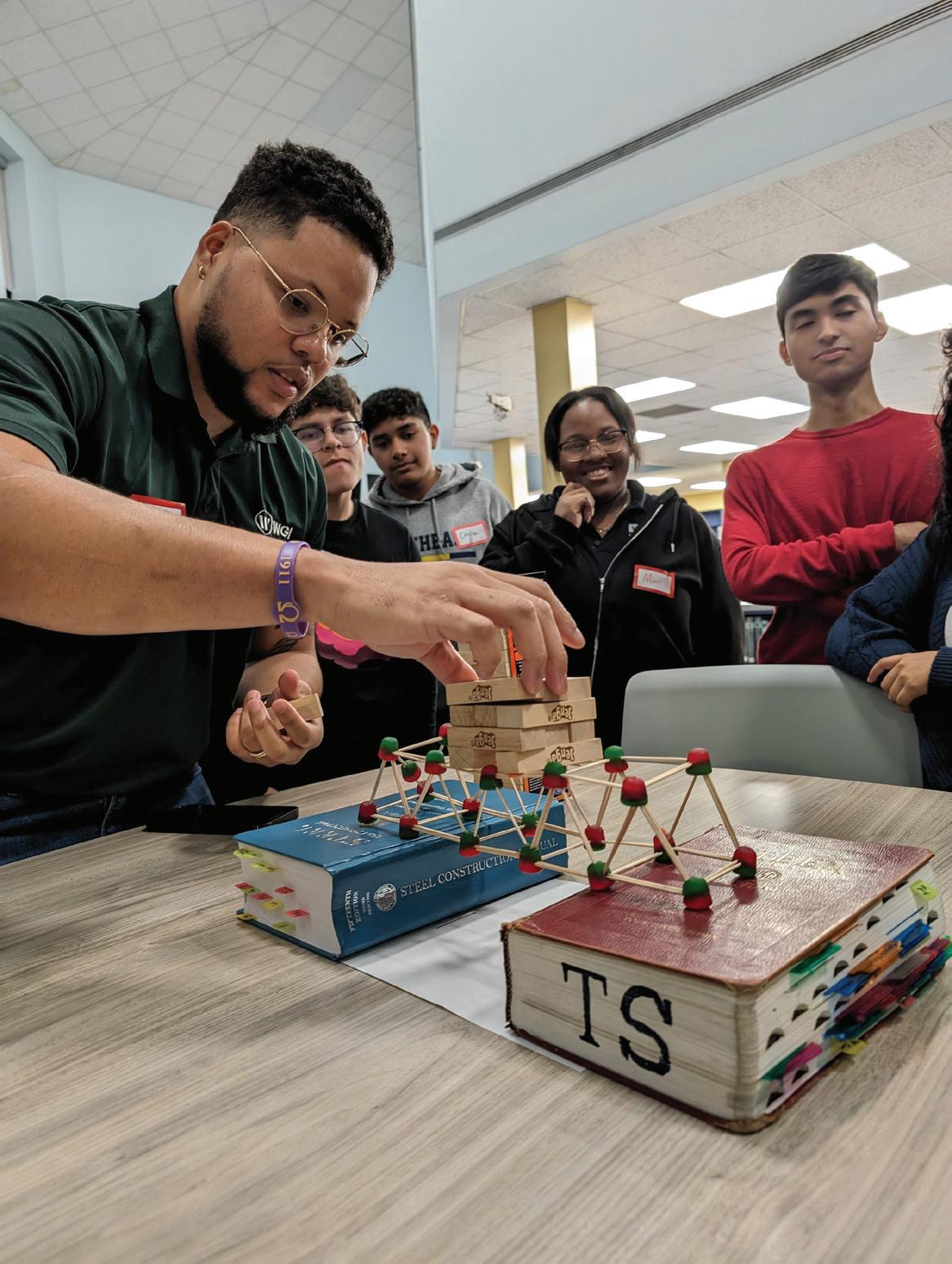
Most of us can point to at least one mentor who helped shape our journey from engineer-in-training to professional engineer: someone who offered advice at the right moment, advocated for us, answered incessant questions about an especially tricky load path analysis, or simply believed in us when we did not yet believe in ourselves.
In fact, the profession itself acknowledges the essential value of mentoring by requiring aspiring structural engineers to complete several years of supervised experience under a licensed professional before they can become licensed themselves. It is not simply a regulatory step though – it is a tradition of learning by doing, guided by someone who has been there.
Enter the ACE Mentor Program, which, through an established, nationwide mentoring program, is helping shape future engineers to be thoughtful, capable leaders who will follow in the impressive path of today’s innovators and ultimately build the world of tomorrow.
The ACE Mentor Program of America is a national nonprofit whose mission is to engage, excite, and enlighten high school students about careers in A rchitecture, C onstruction, and E ngineering through mentoring and to support their continued advancement into the industry. With more than 70 affiliates across the country,
ACE connects students with working professionals through handson activities, project-based learning, and personal guidance that brings real-world relevance to classroom concepts. ACE uses mentorship to bridge the gap between education and industry.
ACE was established in 1994 and is the brainchild of worldrenowned structural engineer Charles H. Thornton of Thornton Tomasetti. Noticing a concerning trend of declining enrollment in engineering and construction programs at educational institutions in the early 1990s, he recognized the need for dramatic change. In a 2011 television interview with the NBC Today Show, Thornton said he started to realize “you can’t sell engineering to high school students; you’ve got to go in and sell an industry. You’ve got to talk about architecture, construction, engineering, subcontracting, steel erection, the trades, and get these kids excited.” Thus became the inspiration for the ACE Mentor Program of America. It started small, within the Thornton Tomasetti office in New York City. Now, 30 years later, over 14,000 high school students across the country meet with more than 5,000 professionals from the industry on an annual basis to learn about design and construction in ways that transcend the typical classroom experience. Each year, an estimated 2,000 ACE alumni enter the design and construction industry, thanks in large part to the more than $42 million in scholarships that the organization–through financial contributions from industry partners–has invested in students’ post-secondary education goals.
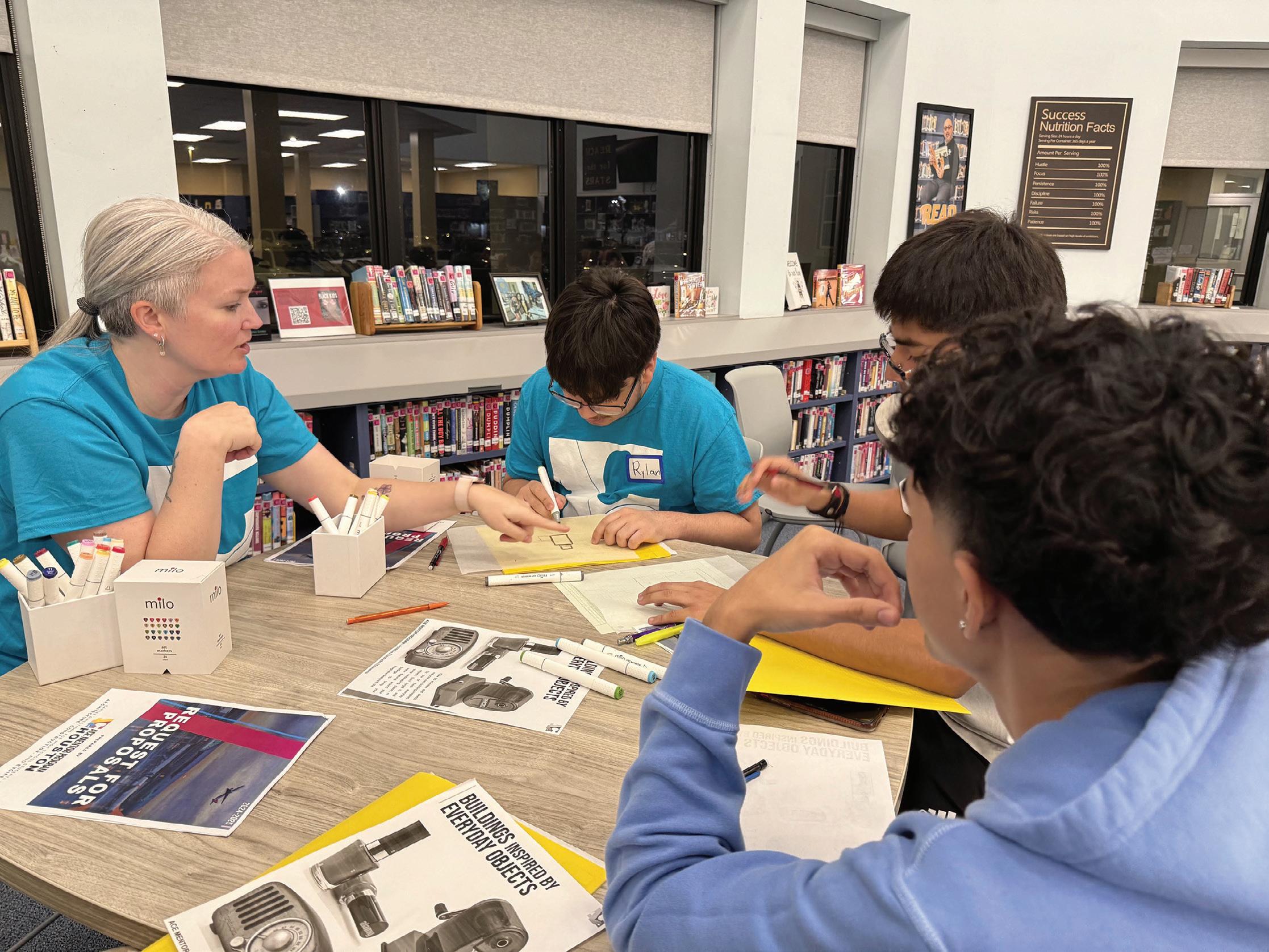
Besides exposure to a specific career pathway, personalized guidance can help a mentee navigate challenges in life, academics, or career with greater self-empowerment and clarity. Through regular support and encouragement, mentees develop stronger problem-solving skills, better communication, and a greater sense of self-awareness, which can be a powerful head start both personally and professionally. For a young person navigating big decisions about their future, a mentor can help them explore what is possible, identify a path forward, provide the tools and encouragement to go after a goal, and even open a few doors along the way. Most importantly, the opportunity of a trusting relationship, especially in today’s digitally-connected and personally-distant world, is an unrivaled advantage. When so much communication, for young people in particular, is filtered through screens–or maybe even done via artificial intelligence–mentorship offers something increasingly rare: genuine, face-to-face connection. There is a difference between watching a tutorial online and sitting next to someone who can explain why a beam failed, walk through the math, and even share a personal anecdote of a lesson learned on a past project. Human connection builds confidence in a way that digital resources simply cannot replicate, and in structural engineering—a discipline rooted in trust, collaboration, and public safety—real relationships matter.
ACE brings these benefits of mentorship to life through a structured and supportive mentoring program where high school students can explore careers in architecture, construction, and engineering alongside real working professionals. In weekly sessions from October through March, students hear from industry professionals, as well as try various careers for themselves through hands-on activities, construction site visits, and project based learning. Each week focuses on a specific career path or skill set, like structural systems, bubble diagramming, or cost estimating, principles of which are then applied to a design project that ties the entire curriculum together.
Activities like designing and load testing bridges made from toothpicks and gumdrops can make the complex world of structural engineering both approachable and fun for a 14-year old. Stepping onto a construction site or walking through a professional office brings the industry to life and connects classroom concepts to real-world careers – because if they can see it, they can be it. By designing and presenting their very own projects, students step into the shoes of their mentors and experience the challenges and problem solving of the industry firsthand.
These design projects are truly the cornerstone of the ACE experience. Teams of students are challenged to collaborate, imagine, and develop a real world project – anything from a museum to a multi-modal transportation center, or an airport terminal to a community space. Guided by their mentors, students work through every stage of the design process from research and planning, to concept development and budgeting, and ultimately conclude the program with a final presentation to industry leaders.
This process intentionally mirrors the collaborative and iterative nature of professional design and construction. By experiencing this dynamic firsthand, the students gain technical knowledge as well as the interpersonal and leadership skills that are essential for any career. In essence, ACE doesn’t just teach students about design and construction – it immerses them in the very way the industry works together to transform skylines. Beyond the regular mentoring sessions and design challenges, ACE also connects students to scholarships, internships, post-secondary academic resources, continued mentoring, and job opportunities, making the path to a career in structural engineering and related fields more accessible.
Mentors stand to gain as much as mentees in sharing their time, knowledge, and passion to invest in the future workforce. Sharing knowledge pushes mentors to reflect on personal growth, refine their own communication skills, and stay connected to evolving perspectives and interests of the next generation.
Being a mentor offers a deep sense of fulfillment that comes from giving back to a field they care about. It is incredibly rewarding to share knowledge and see it spark curiosity, growth, or confidence in someone just starting out. Watching a student grasp a difficult concept, complete their first project, and grow as a young professional is a powerful reminder that the mentor’s experience matters. For many mentors, it’s a meaningful way to make a lasting impact and contribute to the future of the profession that can also offer a refreshing break from the daily grind. Many mentors walk away from each session feeling recharged, inspired, and filled with energy, fresh perspectives, and meaningful conversation with bright, young minds.
Mentorship is also powerful for professional growth. It emphasizes the need to articulate decision-making processes more clearly, which can improve one’s ability to lead teams, manage projects, or train junior staff in your workplace. It cultivates patience, empathy, and active listening–all traits that are essential in effective leaders. Additionally, being an ACE mentor offers opportunities to hone technical expertise. Explaining complex ideas, like structural systems and design loads, to curious high school students can sharpen a mentor’s own understanding. In fact, young mentors often admit to learning right alongside their students as they listen in on presentations from their co-mentors in other (or perhaps even their own) disciplines in design and construction.
Mentors often form lasting bonds as they collaborate, share insights, and work toward the common goal of supporting the next generation. These connections expand professional networks, reinforce a shared commitment to the future of the industry, and even set an example to the students that professional success is about much more than technical skill. Because mentor teams represent the full spectrum of AEC disciplines (architecture, engineering, construction management, technical trades, and beyond), professionals also enjoy a chance to strengthen relationships across the industry. In many cases, they find themselves networking not only with peers, but also with current and future clients, making the program a true win-win for mentors and students alike.
The ACE Mentor Program has set itself apart as the fastest growing AEC mentoring program for high school students in the country. The secret to the success of the program lies in harnessing the passion of volunteers who work in the industry and sharing it directly with our next generation. ACE’s multi-disciplinary approach surpasses other organizations’ tendencies to provide a single-discipline scope, offering a well-rounded and diverse introduction to a variety of career paths with an emphasis on
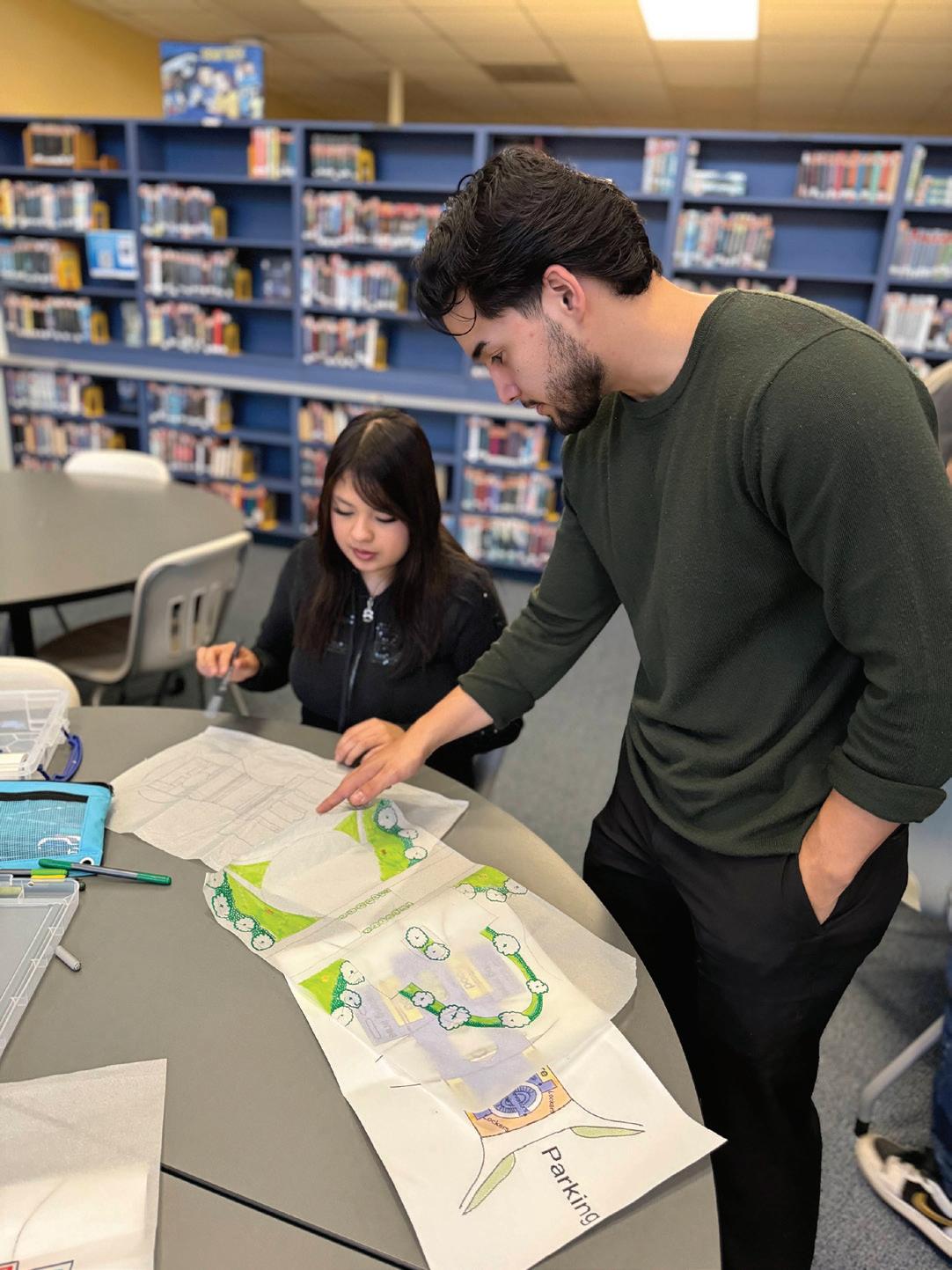
changing opportunity to get a head start on exploring real careers, gaining professional exposure, and building confidence through meaningful connections with passionate mentors. Students leave the program with a clearer vision for their own future, a stronger support system, and the inspiration to pursue paths they may never have imagined possible. ACE’s unique combination of technical learning, real-world exposure, and personal connection sets the program apart. Best of all, the program is completely free and has no GPA requirements, ensuring that any student with curiosity and interest can take part.
For firms and professionals, ACE is more than a volunteer opportunity; it’s a platform for networking, collaboration, and industry engagement. Through its mission-driven work, ACE is showing that mentorship is the key for ensuring a stronger, more inclusive, and better-prepared structural engineering workforce. ACE creates meaningful opportunities for companies and their employees to grow professionally, strengthen industry connections, and have a direct hand in the development of their future talent pipeline.
Mentorship is not about being perfect or having all the answers. It doesn’t even require a huge time commitment. It’s about being present. Whether it is through the ACE Mentor Program or simply by volunteering with a local school, offering a job shadow, speaking at a career day, or seeking out the new graduate engineer in your office, your experience has the power to shape the future of this industry.
You probably remember the person who helped you believe you could do it. Now it’s your turn. Be that person for someone else. ■
Amy Hufnagel P.E., is the Executive Director of ACE Mentor Program Houston, the local affiliate of the national ACE organization. As a licensed structural engineer and ACE mentor since 2012, she is dedicated to inspiring the next generation of design and construction professionals. Learn more at acementor.org.