Thank you to all of the participants
Your hard work and dedication to the craft and skill of structural engineering is unmatched.
We are honored to be a part of your projects, and look forward to what the future holds for our industry.
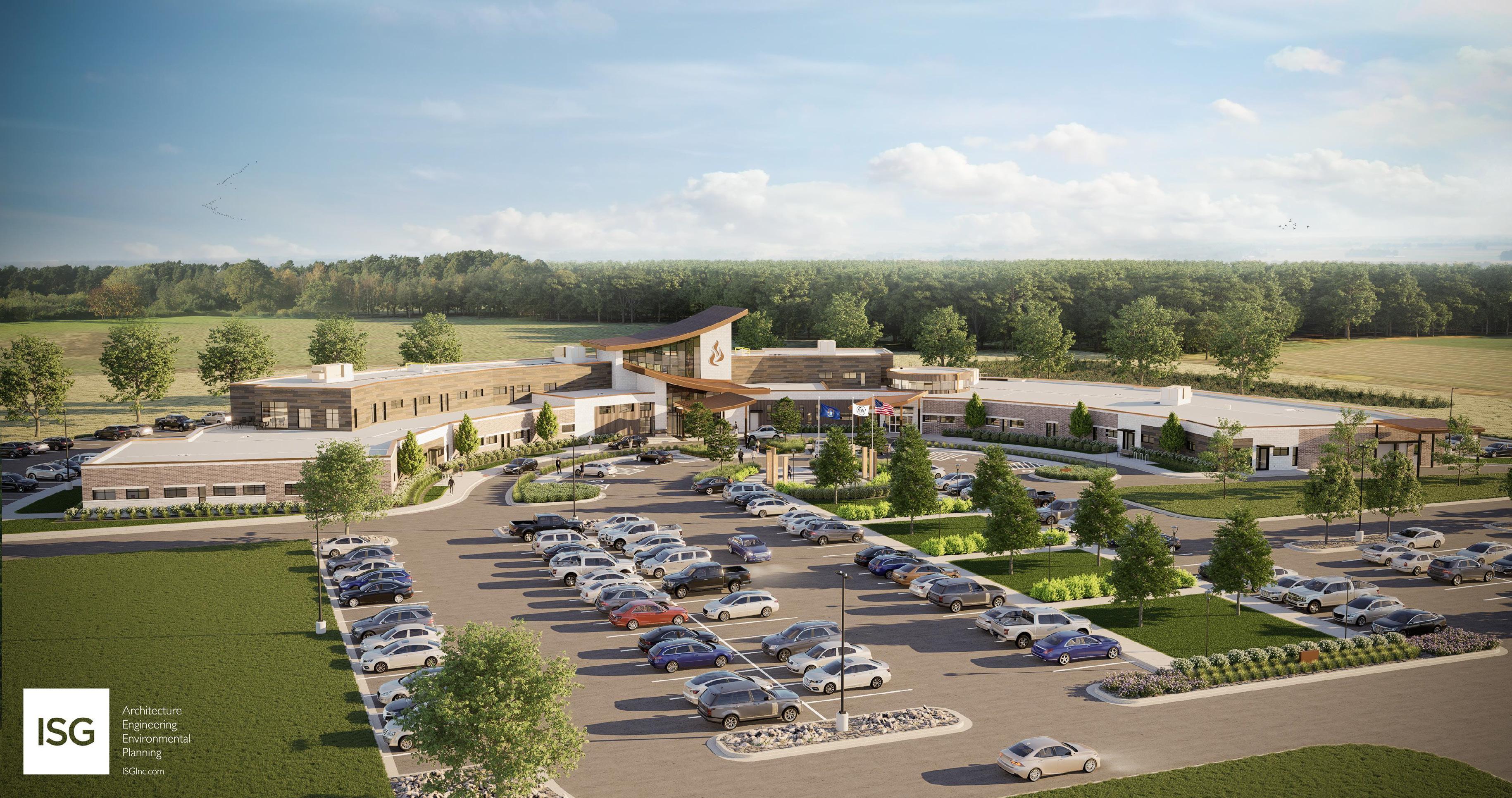
Prize of the Public
Hannahville Indian Community Governmental & Health Services Building
Wilson, MI
Lead Engineer | Gregory Naghtin
Company | ISG
Architect | ISG
Contractor | Miron Construction
Software | RISA-3D | RISAFloor | RISAFoundation | RISAConnection
Scan to See All Winning Projects
— Gregory Naghtin, PE
Available Only at STRUCTUREmag.org
Publication of any article, image, or advertisement in STRUCTURE® magazine does not constitute endorsement by NCSEA, CASE, SEI, the Publisher, or the Editorial Board. Authors, contributors, and advertisers retain sole responsibility for the content of their submissions. STRUCTURE magazine is not a peer-reviewed publication. Readers are encouraged to do their due diligence through personal research on topics.

subscriptions@structuremag.org
Chair John A. Dal Pino, S.E. Claremont Engineers Inc., Oakland, CA chair@STRUCTUREmag.org
Kevin Adamson, PE Structural Focus, Gardena, CA
Marshall Carman, PE, SE Schaefer, Cincinnati, Ohio
Erin Conaway, PE AISC, Littleton, CO
Sarah Evans, PE Walter P Moore, Houston, TX
Linda M. Kaplan, PE Pennoni, Pittsburgh, PA
Nicholas Lang, PE Vice President Engineering & Advocacy, Masonry Concrete Masonry and Hardscapes Association (CMHA)
Jessica Mandrick, PE, SE, LEED AP Gilsanz Murray Steficek, LLP, New York, NY
Brian W. Miller
Cast Connex Corporation, Davis, CA
Evans Mountzouris, PE Retired, Milford, CT
Kenneth Ogorzalek, PE, SE KPFF Consulting Engineers, San Francisco, CA (WI)
John “Buddy” Showalter, PE International Code Council, Washington, DC
Eytan Solomon, PE, LEED AP Silman, New York, NY
Executive Editor Alfred Spada aspada@ncsea.com
Managing Editor Shannon Wetzel swetzel@structuremag.org
Production production@structuremag.org
Director for Sales, Marketing & Business Development
Monica Shripka Tel: 773-974-6561 monica.shripka@STRUCTUREmag.org
Sales Manager
Audrey Schmook Tel: 312-649-4600 Ext. 213 aschmook@ncsea.com
The National Council of Structural Engineers Associations (NCSEA) is pleased to share winners of the 2025 SEE Awards, which were recognized at the NCSEA Summit.
By Jessica Westermeyer, PE, SE
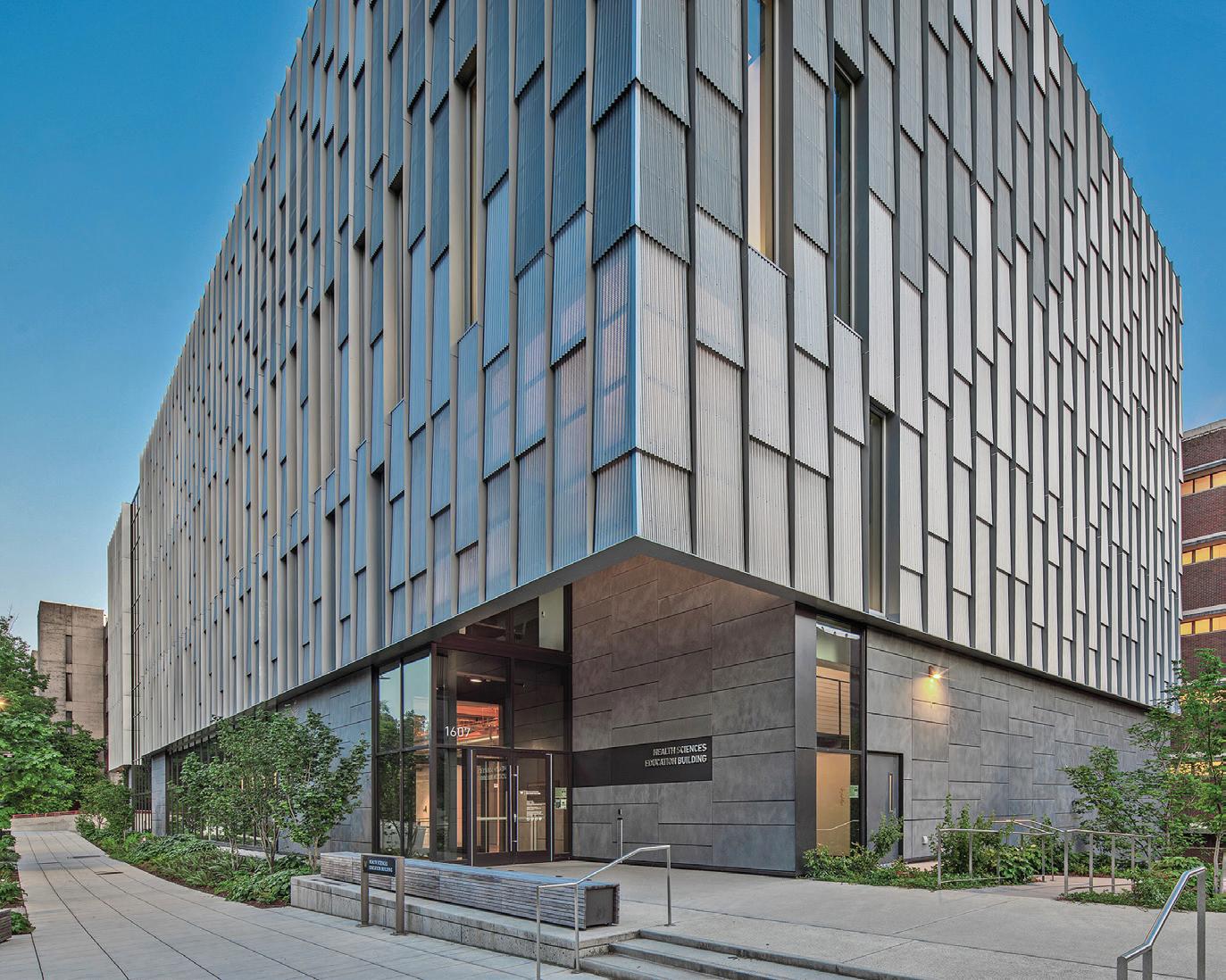
The four-story Health Sciences Education Building at the University of Washington represents a case study in hybrid mass timber.






SPEED-TO-MARKET

DEDICATED TEAM DESIGN FLEXIBILITY


SUSTAINABILITY
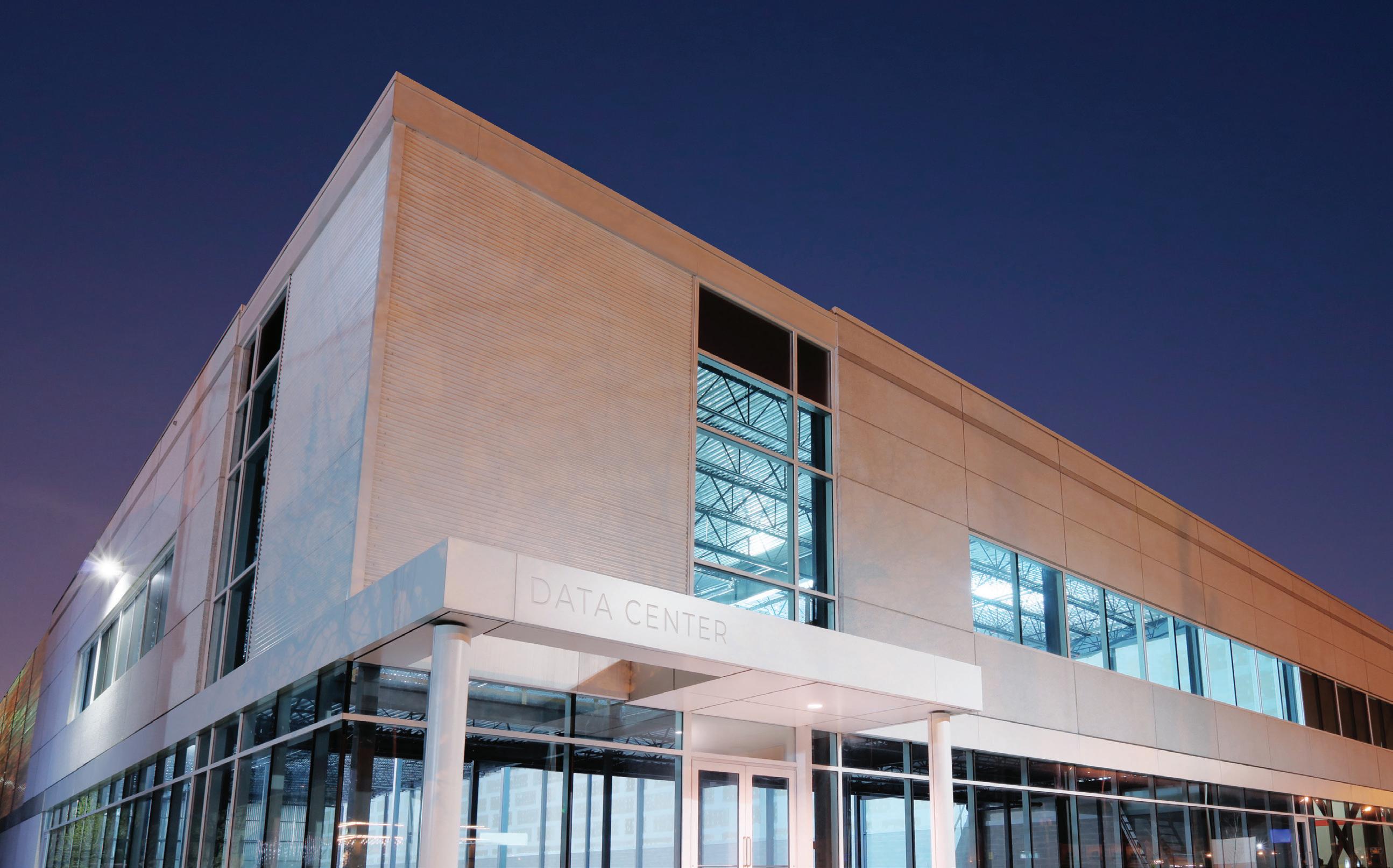
Technology evolves at warp speed, and the construction of your data centers needs to keep pace. Steel joist and deck solutions from New Millennium bring data centers to market quickly, so revenue flows faster.

By James Robert Harris, Ph.D, PE
Salmon, PE,

By Robert K. Dowell, Ph.D, PE and Althaf Shajihan, Ph.D
Silky Wong, Ph.D,
Aaron Kostrzewa,

By James Robert Harris, Ph.D, PE
The SEI Futures Fund supports programs beyond the SEI operating budget—programs that inspire, educate, and connect the next generation of structural engineers while advancing the art, science, and practice of the profession.
Through the generous support of donors, the Fund invests in high-impact initiatives that align with SEI programs and vision for the future of structural engineering. I am proud of the programs the SEI Futures Fund has made possible in 2025, through the support of your donations.
120+ scholarships were awarded to students and young professionals to help them get involved at Structures Congress and the Electrical Transmission and Substation Structures Conference, including informal mentoring for further involvement in SEI. This was the largest group of scholarship recipients to date, with former scholarship recipients leading and serving at all levels—on the SEI Board, committees, and with local and grad student chapters.
The Fund provided support for 17 Young Professional SEI Standards Committee Leaders (Secretary, Balloter, or Historian), to participate in committee operations, realizing critical knowledge transfer to next generation leaders. Past recipients now serve in several Chair and Vice-Chair positions.
“Serving as the balloter for the ASCE 7 Wind Load Subcommittee has allowed me to actively participate in the Steering Committee and gain a comprehensive understanding of the entire code development process—from proposal generation, to voting, approval, and final inclusion in the next code. The Committee brings together professionals from diverse disciplines, including wind and structural engineering, as well as consultants and researchers. This experience has strengthened my relationships with industry leaders, opened the door to new professional connections, and sparked cross-disciplinary conversations—even beyond the scope of code development. This code cycle has been particularly exciting, as it includes impactful changes, and I was able to engage directly with the researchers whose work is driving these advancements.”—Juliana Rochester, PE, SE, M.ASCE
Going forward this will expand to other SEI standards and technical committees.
At the Towards Zero Carbon 2025: Summit and Symposium, support was provided for speakers, representatives from SE2050 signatory firms, and members of the organizing committee to participate. In 2026, support will align strategic Towards Zero Carbon activities to address growing needs: to offer the SE2050 Signatory Summit at Structures Congress as a pre-conference workshop, to continue to educate about the SEI Embodied Carbon Prestandard, and to support data analysis of the new SE2050 database, enabling insights on design parameters that influence lower carbon and resource efficient designs, to develop a roadmap to net zero.
Funding brought together leading experts in a workshop to plan implementation of performance-based design for wind, identify next steps in developing standard provisions and performance objectives for performance-based design procedures, and produce resources and educational activities to advance the use of performance-based design procedures in practice.
Small grant funding was provided for 12 local SEI Chapters and Grad Student Chapters to run innovative programs leveraging local partnerships to engage students and professionals and to foster continuous membership and involvement in SEI/ASCE. Efforts included technical/networking and career insight events, site or firm visit, training, etc.
The SEI Futures Fund has supported the following resources:
• SEI/ASCE webinar series on Client Value, Productivity, Entrepreneurship,

which will continue in 2026 with SEI Grad Student Chapters.
• ASCE/SEI 7 Student Primer.
• Prestandard for Assessing the Embodied Carbon of Structural Systems for Buildings in the ASCE Library.
Through your generous giving, the SEI Futures Fund Board has committed more than $300,000 to support SEI strategic initiatives in 2026.
Now more than ever we need your gift to continue growing and empowering the next generation of innovators, problem-solvers, and leaders who will define the future of structural engineering.
Our goals include supporting programs that:
• Invest in the future of the structural engineering profession.
• Promote student interest in structural engineering.
• Support younger member involvement in SEI.
• Enhance opportunities for professional development.
Give now to show your support and invest in the future of our profession. Your gift is taxdeductible and goes 100% toward programs, with no administrative fees.
Thank you to SEI Futures Fund Donors, and especially Thornton Tomasetti for their match up to $5,000! If you or your firm want to set up a matching gift challenge, contact me or any other member of the SEI Futures Fund Board (www.asce.org/SEIFuturesFund ). And by the way, if you have a great idea to further these goals and want to submit a proposal, contact the leaders of SEI chapters or national committees for guidance on how to gain their support for a proposal.
Thank you for your gift and have a wonderful holiday season! ■




Contractor involvement during design can help take the guesswork out of what may be most economical for building projects.
By Jeremy Salmon, PE, SE and Zak Pruitt, PE, SE
Design decisions are typically based on previous experience, engineering judgment, and code requirements. However, the project location, general contractor, trade partners, and local practices may impact the structural design and detailing. Contractor involvement during design can provide input on key decisions in the selection of structural systems, use of building materials, and more. Instead of value engineering after the project has been completed, early contractor input can avoid costly redesign efforts and schedule delays. Part 1 will discuss contractor input that affects the design of the structure. Part 2 will discuss contractor input that affects detailing, constructability issues, and construction sequencing.
Concrete elevated floor systems can be constructed using either structural lightweight or normal weight concrete. Structural lightweight concrete can reduce an elevated slab’s weight and thickness. Lightweight concrete weighs approximately 107 to 112 pounds per cubic foot (pcf) versus approximately 145 pcf to 150 pcf for normal
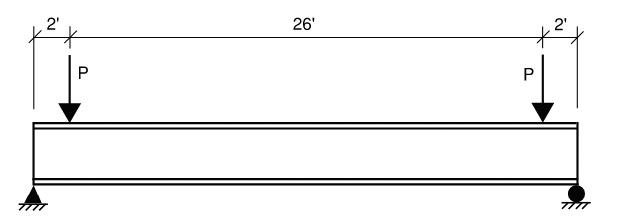
Precast Panel Loading at Ends of Beam Only:
Total Panel Weight Supported by Beam =2xP
Maximum Applied Moment =2xP
Moment of Inertia Required for L/480 =17.77xP
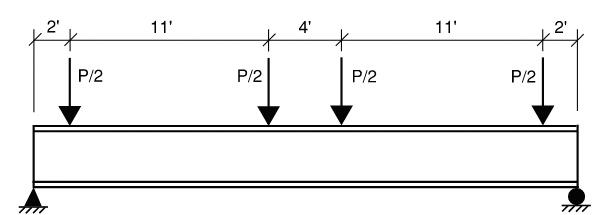
Precast Panel Loading at Ends of Beam and Mid-Span:
Total Panel Weight Supported by Beam =2xP
Maximum Applied Moment =7.5xP
Moment of Inertia Required for L/480 =52.44xP
Takeaway: While the total panel weight to be supported by the beam remains constant, the applied moment demand increases by 375% and the required moment of inertia increases 295% due to precast panel loading locations.
UL assembly D-925). The lighter floor system decreases dead load, which reduces the beam, column, and foundation member sizes. However, structural lightweight concrete may not prove to be the most economical choice for a project. The availability and source of lightweight aggregates must first be discussed with the contractor. It may be more common for normal weight concrete to be specified in some locations, such as Alaska, Idaho, and others. The same holds true for lightweight concrete masonry units (CMU). While lightweight CMU is easier to handle during construction, its availability may be limited in some locales.
weight concrete. Lightweight concrete also provides better fire rating properties. For example, to achieve a two-hour fire floor rating, only 3¼ inches of structural lightweight concrete is required compared with 4½ inches of normal weight concrete (per Underwriters Laboratories
Design of concrete structures is not limited to just one solution. A range of member sizes and material strengths are available for each structural component. Understanding the availability and cost associated with high strength concrete may help determine member designs. For example, a spread footing or pile cap may be adequate with a 2-foot thickness and a 28-day compressive strength (f’c) = 8 kips per square inch (ksi), or a 4-foot thickness and f’c = 4 ksi. Either option may be adequate structurally, but the cost difference in mix design, material quantities, excavation depth, formwork, etc. may not be obvious without contractor input. As another example, specifying various concrete column compressive strengths at various columns within a given floor could result in mix design savings, but the contractor may prefer to use the higher strength concrete for
Save time and money with the world-leading structural design software.
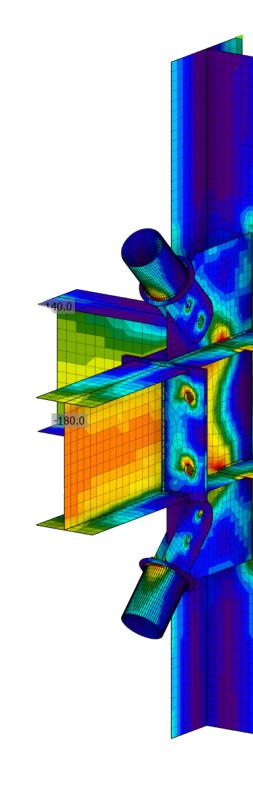
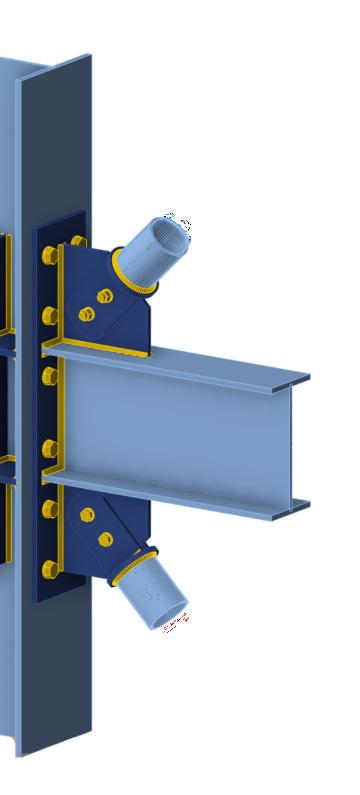
Connection design at its best
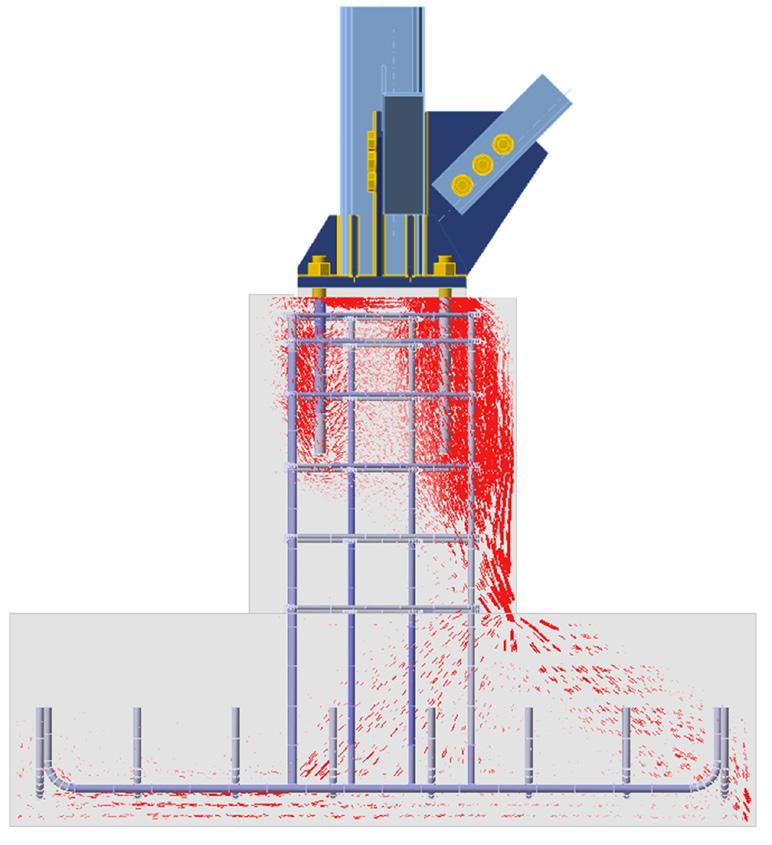
Steel anchorage workflow
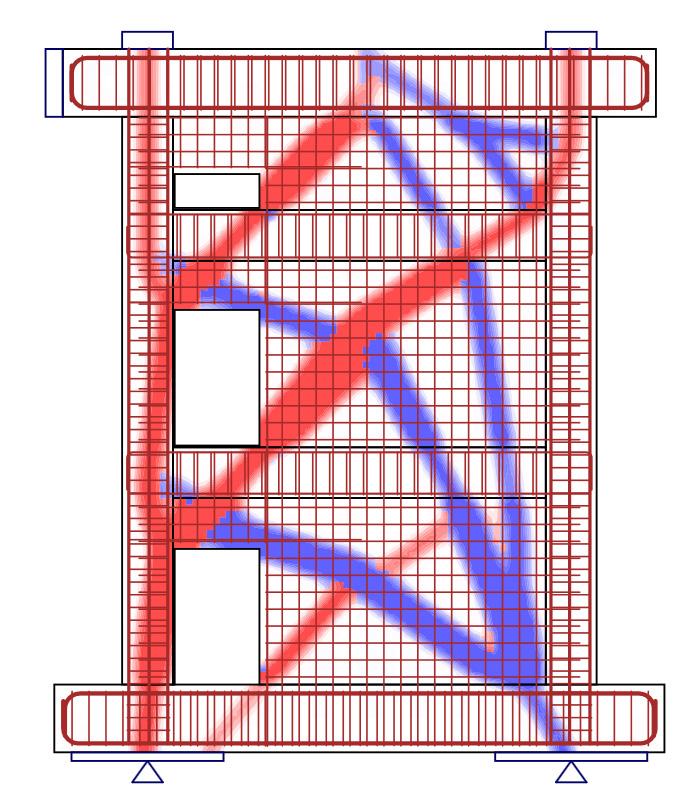
Supplement your strut and tie analysis
Any geometry, any loading, in minutes
Intergates with your software
Try the full version for 14 days for free

all columns to avoid concrete mixer trucks with different strengths of concrete to maintain simplicity on site.
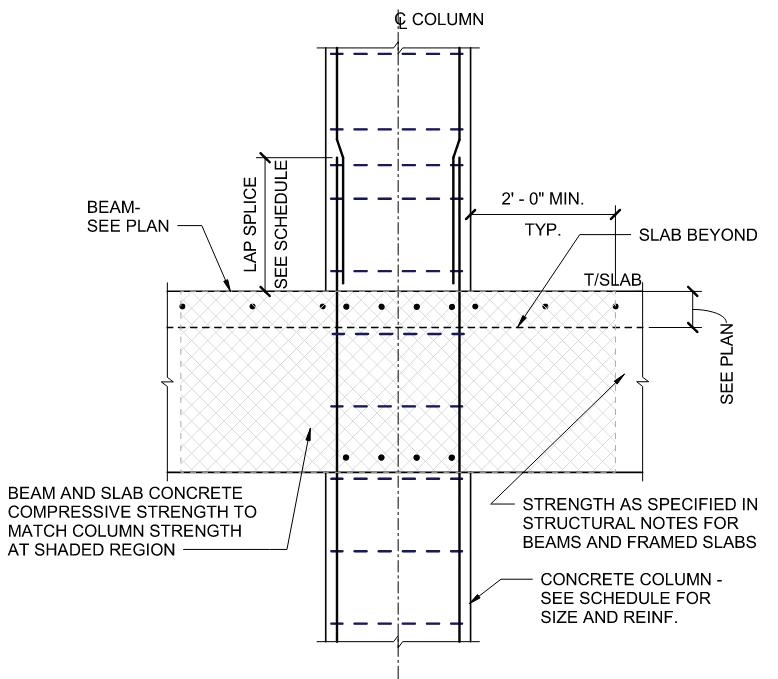
Another example is puddling at concrete columns which consists of placing higher strength concrete in the slab around a column before the rest of the slab is placed (Fig. 1). Discussion with the contractor may dictate if it is cheaper to puddle, increase the specified floor plate compressive strength, or increase the column size to reduce its required specified compressive strength.
There are more grades of reinforcement steel for concrete structures available now than ever before. High strength reinforcement, such as 75 ksi, 80 ksi, and 100 ksi are now options found in the American Concrete Institute’s ACI 318, Building Code Requirements for Structural Concrete, and the American Society for Testing and Materials (ASTM) specifications. Specifying higher grade reinforcement can help mitigate congestion issues, but their longer development lengths and material availability should be considered. Providing options for contractor review will allow for an economical design and minimize the risk of specifying high strength reinforcement that may not be available or would require a cost premium.
Architectural precast panels can provide strength, durability, and energy efficiency to the building facade. A wide variety of custom
shapes and sizes are possible. Designing the structure for the weight of the precast panels successfully requires an understanding of the panel thickness, joint locations, and approximate locations of bearing/lateral connections. The floor heights, wind pressures, and building elevations will drive the panel thickness and connection locations. While it may be simplest to assume the precast panels can span between columns, bearing locations may be necessary on each side of the columns, or even at mid-span of the spandrel beams. The crane selection and site constraints may determine how the panels need to be broken up for erection purposes. Two possible precast loadings are shown in the sidebar. In one scenario the precast bearing connections are located two feet from the columns. In the second scenario, the precast panels are broken at mid-span adding additional point loads along the length of the beam. The total weight on the beam is the same, but the maximum moment and required moment of inertia are significantly different. Contractor and precast supplier involvement can provide input on the feasibility of complex precast shapes.
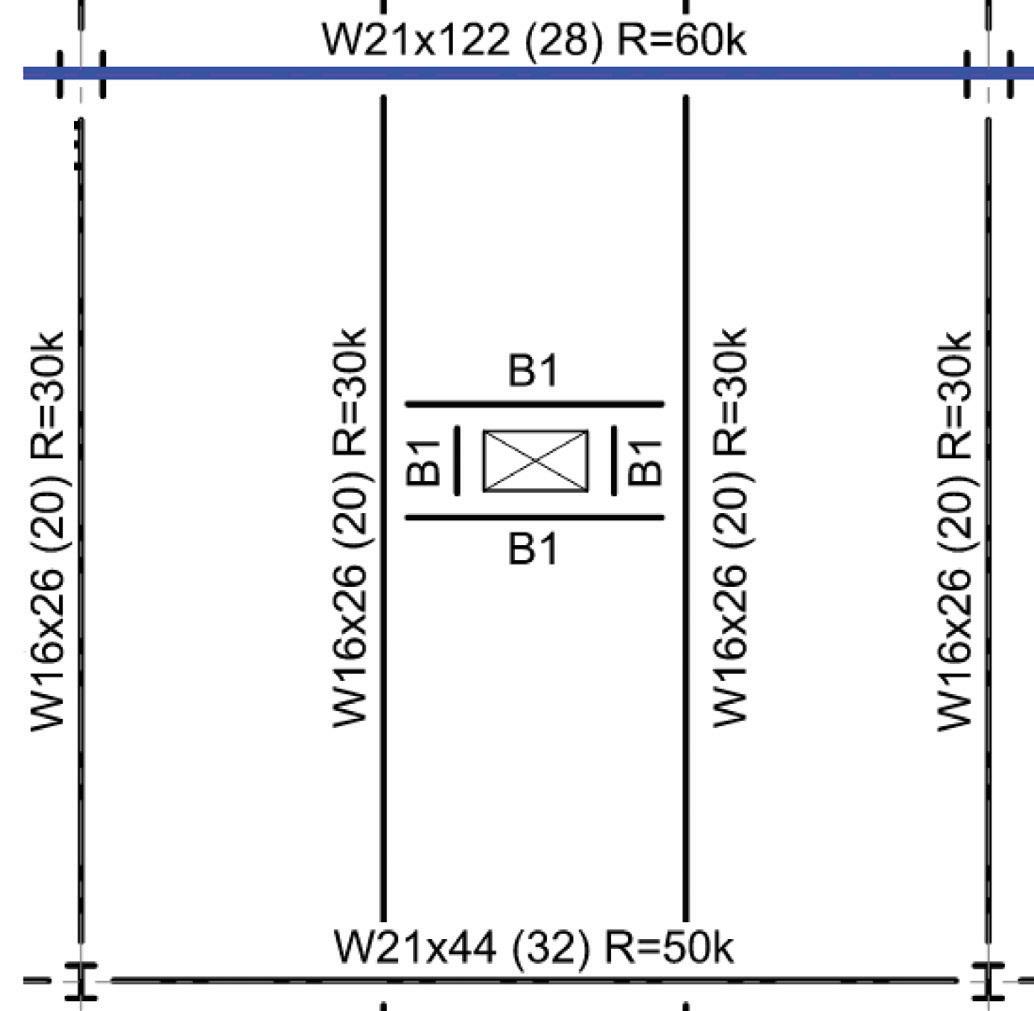
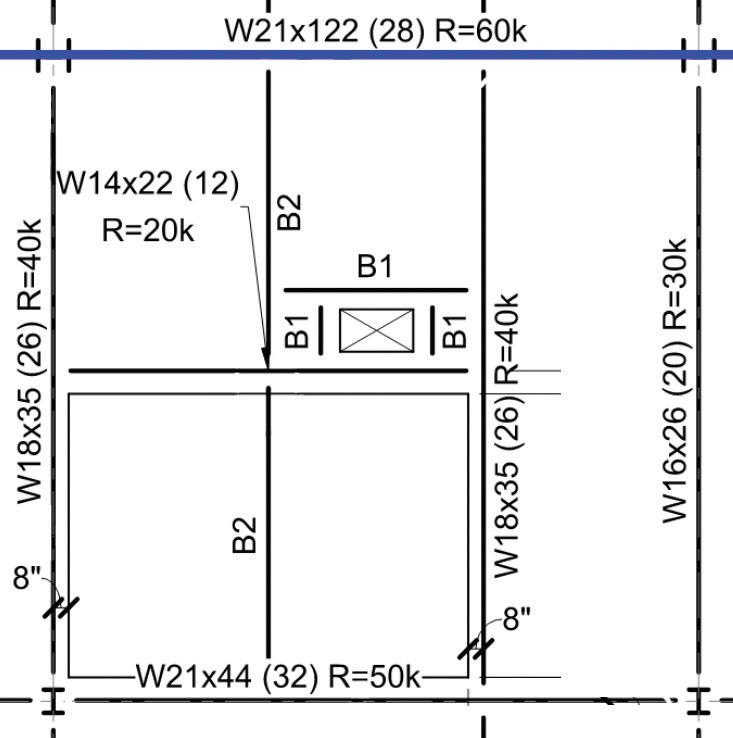
Design of the roof and floor framing may be affected by the need for the contractor to access the lower floors of the structure. Large items, e.g. construction materials or say prefabricated bathroom pods, may need to be dropped into place through the roof of the structure, which will require roof opening framing (Fig. 2). Similarly, if site constraints or crane reach limitations require the crane to be located within the building footprint, an opening at each floor and a required crane mat will affect the design of the structure and foundations.
Before proceeding with a proprietary system, the product should be reviewed with the contractor during the design phase. For example, SidePlate moment frame connections consisting of steel plates connected to the columns that are field bolted to plates and angles on the beams are widely used today. SidePlate eliminates complete penetration welds and ultrasonic testing. It is a best practice to ensure the contractor, fabricator, and erector are familiar with the proprietary system and licensing fee, and if not, get them connected.
Foundation types will vary between projects, but contractor input can assist in providing cost-effective and practical solutions.
• For auger cast piles, geotechnical engineers will typically provide multiple pile diameter options (e.g. 14 inch, 16 inch, or 18 inch) and varying embedment depths. The contractor may have a preference on fewer piles with bigger diameters/deeper pile tip elevations compared with more piles with smaller diameters/ shallower pile tip elevations. So for lightly loaded columns, is it better to switch pile diameters or keep the same pile diameter?
• Drilled pier diameters could range from 24 inch diameter to over 120 inch. The pier diameter could vary from column to column with a consistent embedment depth, or the pier diameter could be kept constant and vary the embedment depth. There also could be a maximum pier diameter that is feasible for the drill rig; in lieu of using a 120 inch diameter drilled pier, it could be better to use two 84 inch diameter piers with a concrete grade beam to support the building column.
• For additions adjacent to existing buildings, it is helpful to understand what drill rig will be used and how close a new drilled pier or auger cast pile can be installed next to an existing structure. If a building column with its drilled pier is located only a foot from an existing building, the drilled pier instead may be located say three feet away from the existing building with
a concrete grade beam designed to cantilever over the drilled pier to support the building column.
• Aggregate stone column foundations can be an effective intermediate foundation system and would allow for a high allowable bearing capacity (5 ksf to 8 ksf); however, the vibrations and noise from their installation should be considered. Sensitive equipment and occupant discomfort can be addressed with the contractor to determine if alternative ground improvement methods (e.g. rigid inclusions, compaction grouting) should be considered. Monitoring equipment may also be recommended for adjacent existing structures.
• Due to expansive soils or undocumented fill on a site, the geotechnical engineer may recommend removing a significant volume of existing soils or using a framed first floor over a crawl space. Contractor pricing can provide insights to the owner on the most economical approach.
Contractor involvement during design can help take the guesswork out of what may be preferred and considered most economical by the contractor. The design can be optimized to provide a cost-effective project and minimize potential design and drawing changes after construction documents are issued. Part 2 of this series will discuss contractor input that affects detailing, constructability issues, and construction sequencing. ■
at zakp@sdg-structure.com.

The traditional and novel computational methods are compared in various statically indeterminate structural engineering problems.
By Robert K. Dowell, Ph.D, PE and Althaf Shajihan, Ph.D
Artificial Intelligence (AI) has really taken off since the release of the initial version of ChatGPT in 2022 by OpenAI, and its use has accelerated with the many subsequent versions, having a significant impact in so many different areas of life. The newest open-to-public version from OpenAI is GPT-5, with more sophisticated capabilities for solving problems using the deeper reasoning model (GPT-5 Thinking) and GPT-5 Pro with research-grade intelligence. AI is rapidly growing and affecting our daily lives, both professionally and personally. So it is important to understand its benefits and limitations applied to structural engineering and how it can be used by the profession going forward. Until about 1980, structural analysis and structural design of buildings, bridges, and other structures, were still typically performed using hand calculations. However, since about 1980, most structures have been analyzed and designed using computers and dedicated, commercially available structural analysis software, from beam elements to sophisticated finite element solutions, including shell and solid elements. While hand calculations are still used by structural engineers, this is typically relegated to spot-checking the computer results.
In 2022, another potential option suddenly presented itself to solve structural analysis problems, including statically indeterminate structures, with the release of the first version of ChatGPT. Engineers now have three possible ways to solve structural engineering problems: (1) hand calculations, (2) developing a computer model of the structure and solving it on a computer with dedicated structural analysis software, and (3) using generative AI.
Since the first author has, for decades, been steeped in hand calculation methods and deriving unique closed-form solutions to complicated structural engineering problems, allowing these to be solved by hand, and the second author is an expert of AI applications in structural engineering, this article presents several examples of statically indeterminate structures and compares the AI results to those found from the relatively simple hand calculations. When ChatGPT and hand-calculated solutions did not match, another hand calculation method was used to verify the hand results. In the following, five different statically indeterminate problems are given, asking for either the numeric or symbolic solutions from ChatGPT, depending on the problem statement. Interestingly, a computer model is not required to solve these problems with ChatGPT, at least not a model developed by the user. For each problem, three independent trials were conducted. ChatGPT was provided with a screenshot of the problem statement and the corresponding structural image, along with the following prompt: “Think thoroughly, satisfy governing physics and compatibility requirements, and solve this.” Notably, even a simple hand sketch of the structure proved sufficient in place of a detailed engineering drawing, as ChatGPT is trained to interpret visual inputs through advanced visual-understanding capabilities.
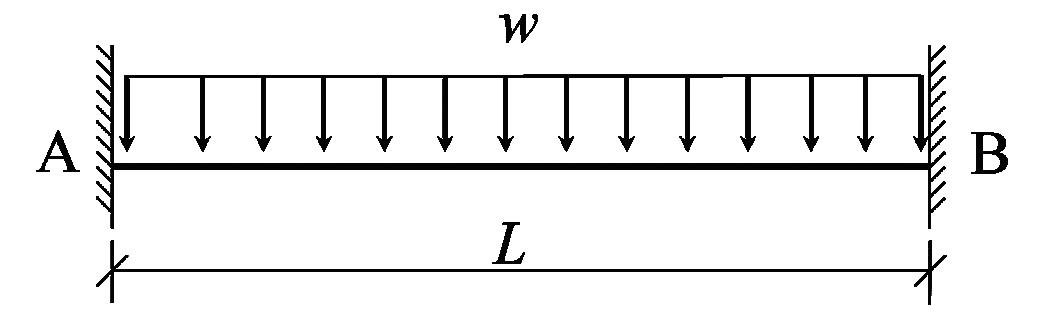
Problem 1. Find the final member-end-moments, symbolically, in terms of w and L, for the beam with fixed ends given below. Consider only flexural deformations (no shear deformations).
Solution: Attempt Model and Approach by AI Result Accuracy Comments
1 (GPT-5 Thinking) First principles, Euler-Bernoulli beam theory
2
3
Correct final member-endmoments of wL2/12; matched hand calculation from compatibility method.
Same as above ✅ NA: problem solved correctly in first trial.
Same as above ✅ NA: single attempt sufficient.
Summary: For this simple fixed-fixed beam, ChatGPT quickly produced the correct symbolic solution for final member-end-moments, matching the well-known closed-form hand-calculation result of wL2/12
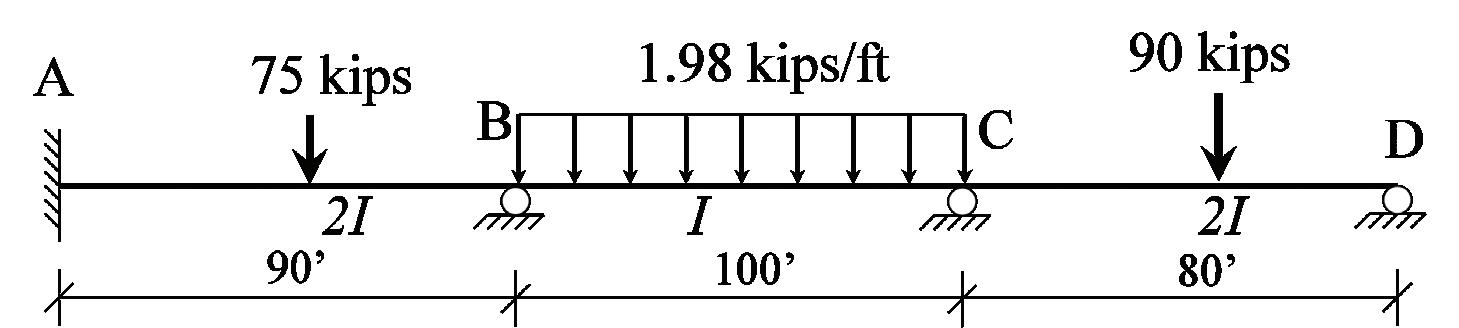
Problem 2. Determine final member-end-moments, and draw shear and moment diagrams, for the three-span continuous beam shown. Consider only flexural deformations (no shear deformations). Provide results in kip and kip-ft units.
Solution:
Attempt Model and approach by AI
1 (GPT-5 Thinking) Moment Distribution
Stiffness Method
2 (GPT-5 Thinking) Slope Deflection Method
3 (GPT-5 Thinking) Moment Distribution
Correct results; AI wrote Python code; ~8 min to solve.
Incorrect; largest member-end-moment error over 600%; ~12 min to solve.
Correct results; consistent with Attempt 1 and hand calculations; ~13 min.
Summary: Three independent attempts using GPT-5 Thinking produced mixed results. ChatGPT selected a different fundamental method each time and independently wrote computer code to solve the structure. Two of the three attempts matched the hand calculations exactly, while one produced large errors. In the first attempt it switched part-way through from one method to another.
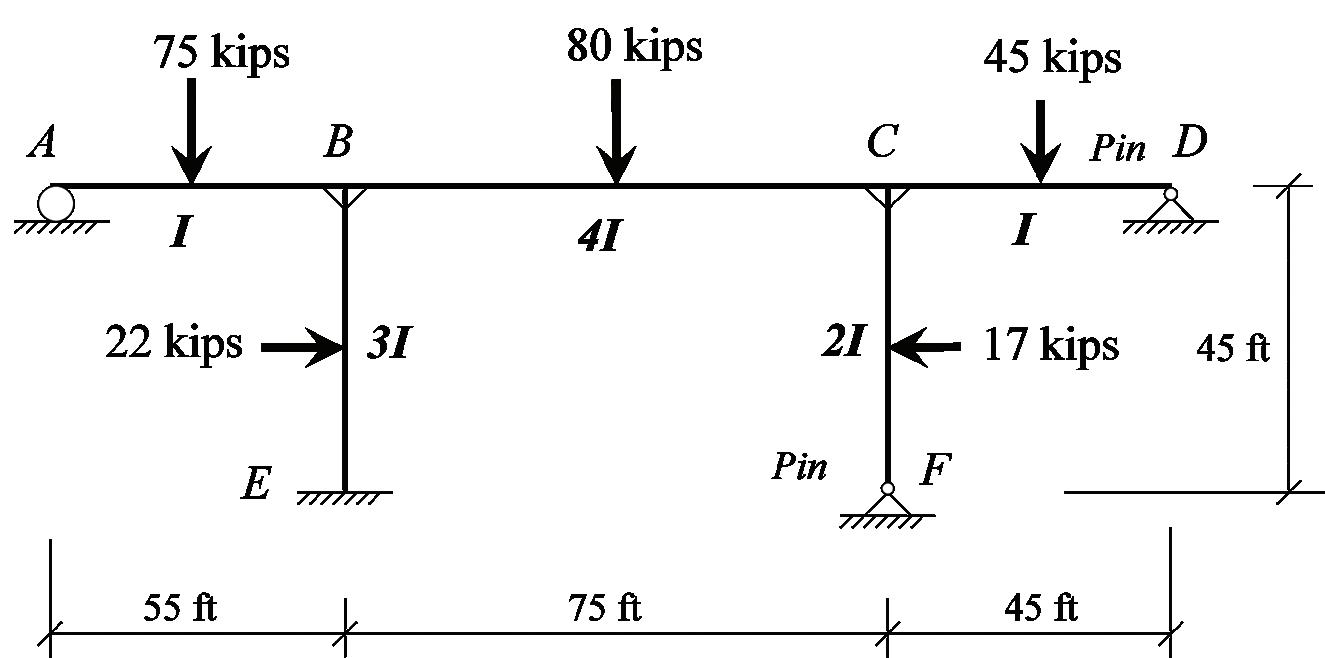
Problem 3. For the statically indeterminate frame structure given here, calculate final member-end-moments, and draw shear, moment and axial force diagrams. Consider only flexural deformations (no shear or axial deformations). Provide results in kip and kip-ft units.
Solution:
1 (GPT-5 Thinking) Slope Deflection Method
2 (GPT-5 Thinking) Stiffness Method
3 (GPT-5 Thinking) Stiffness Method
Maximum moment error in: Span ~12%; column error ~90%; AI wrote Python code.
Maximum moment error in: Span~10%; column error ~100% (factor of two).
Same as Attempt 2; results consistent with each other but incorrect compared to hand calculations.
Summary: Three independent GPT-5 Thinking attempts produced similar but incorrect results. ChatGPT used the Slope Deflection and Stiffness Methods, writing Python code in each case. Errors were verified by hand using the Closed-Form Method, confirming deviations of up to 100% in column member-end-moments.
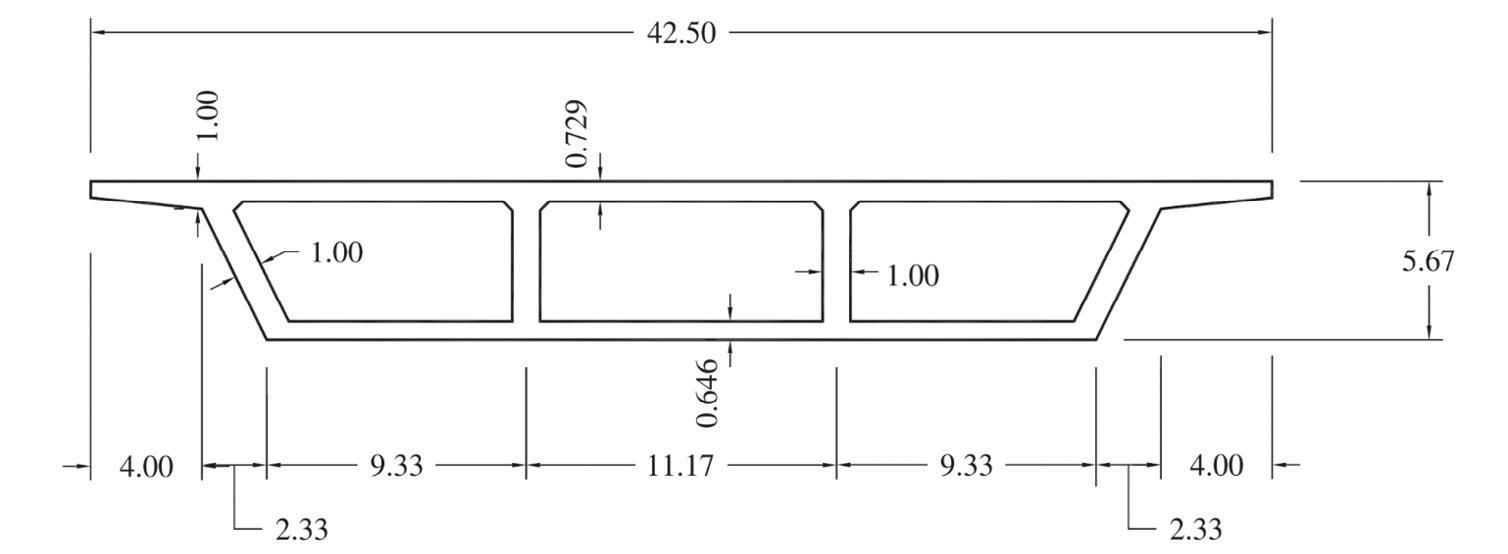
Problem 4. Find final shear flows on all walls for the box-girder bridge crosssection given here, with applied torsion of 20,000 kip-ft. The lengths in the figure below are in ft units. Ignore the cantilevers at the overhangs. Solve this as three cells of a multi-cell, statically indeterminate, cross-section. Provide shear flow results in units of kips/ft.
Solution:
Attempt Model and approach by AI
1 (GPT-5-Pro) Bredt-Batho model for multi-cell torsion
2 (GPT-5 Thinking) Bredt-Batho model
3 (GPT-5 Thinking) Bredt-Batho model
Comments
Approx. 10% error in shear flow; incorrect torsion area for exterior cells.
Same error; used simultaneous equations for torsion compatibility.
Same as above; consistent but incorrect.
Summary: All three ChatGPT attempts produced similar but incorrect shear-flow distributions. The error was traced to the AI’s use of the exterior surface instead of the girder centerline for calculating effective torsion areas in the end cells. Despite the mistake, ChatGPT correctly applied the Bredt-Batho compatibility equations and wrote Python code to solve the system.
Problem 5. For a continuous beam that is loaded with point load P at the center of one span, and has an infinite number of spans, all of length L, in each direction from this one loaded span, determine exact final member-end-moments for the loaded span in terms of P and L, as well as any span beyond this loaded span, considering only flexural deformations. The results to this infinitely-redundant problem are to be given exactly as a fraction, and not in decimal form.
Solution:
Attempt
1 (GPT-5-Pro) Slope Deflection Method, symbolic
2 (GPT-5-Pro) Slope Deflection Method, symbolic
3 (GPT-5-Pro) Slope Deflection Method, symbolic
Correct for non-loaded spans; incorrect for loaded span.
Same result; omitted fixed-end-moment for loaded span.
Repeated same oversight; otherwise, consistent symbolic reasoning.
Summary: This problem represents a significant challenge to solve exactly, since the Stiffness Method and the Moment Distribution Method require either an infinite number of equations to be solved or an infinite number of distribution cycles for convergence. Requiring the results in fractional form rather than in decimal form further increases the difficulty. An exact, hand-derived solution to this problem was published in Engineering Structures in 2009 by the first author, introducing the Closed-Form Method for continuous beams and frame structures. In three independent attempts using both GPT-5 Pro and GPT-5 Thinking, ChatGPT solved the problem symbolically with the Slope Deflection Method, thereby avoiding the pitfalls of the other techniques. It produced the correct symbolic fractional results for all non-loaded spans but made an error for the one loaded span by omitting the initial fixed-end-moments from the final solution. Since no initial fixed-end-moments exist in the non-loaded spans, the distributed moments from the single loaded span were otherwise correct and final.
AI is being used in all sorts of ways, including in structural engineering. This article considered state-of-the-art AI for public use, focusing on the most recent version from OpenAI, GPT-5, including the more advanced GPT-5-Thinking and GPT-5-Pro versions for their higher problem-solving capabilities. Five statically indeterminate problems were solved by hand calculations and then compared to the ChatGPT solution. In all cases, the input to ChatGPT was just a simple drawing of the problem and the statement that it needed to solve it by thinking. From the drawing, ChatGPT correctly interpreted the member lengths, point loads and distributed loads, boundary conditions, and the different moment of inertia values for the various members. It also understood when the point loads were applied at mid-span, based on the geometry of the drawing. To solve the problem, ChatGPT wrote its own computer program in Python and then ran it. Interestingly, it relied on classical methods of structural engineering, rather than inventing its own new technique, and then wrote the program to solve the problem once it had decided on a method to use - typically Moment Distribution, the Stiffness Method or the Slope Deflection Method. For one problem, it solved it three different ways in the three different attempts. When there was a difference between the ChatGPT and hand calculation results, another hand calculation method was used to verify the initial hand calculations. In addition, for all five problems the first author’s Closed-Form Method was applied by hand to verify the results. The AI approach is extremely simple and sometimes provides the correct results, but it often gives the wrong answers, even on

repeat attempts for the same problem that it got correct on another attempt. And sometimes the results were off by a lot. This variation in results is expected because large language models (LLMs) such as ChatGPT rely on probabilistic reasoning rather than deterministic computation. Each attempt follows a slightly different logical path, depending on how the model interprets the problem, leading to different intermediate steps and final answers. Note that for each attempt of the same problem, no information was given from one try to the other; they were all completely independent efforts. Also, after providing ChatGPT with the initial information for a given problem, there was no human involvement whatsoever. Clearly, had we guided ChatGPT along its path to a solution, better results could have been found and, perhaps, the correct solutions obtained more consistently. It seems that for structural engineering applications, especially for statically indeterminate structures, AI in its current state should be used as an assistant to the structural engineer, helping with given tasks, but not allowed to just move along on its own, from start to finish. Results from the five examples in this article clearly show that AI is powerful, but can be wrong, and for various reasons. To use AI, the structural engineer needs to verify key elements of the analysis and prod it to change direction if it gets lost. While the examples in this article demonstrate the remarkable capability of ChatGPT to interpret sketches and write its own computer code and reason to solve structural problems, this may not be the most effective use of AI for engineering work. The proper role of AI should be to assist in developing, validating, or automating components within established engineering workflows, rather than replacing them. At this stage, a more practical approach would be to use AI to generate or translate model inputs for established

















Want to experiment yourself? Scan the QR code to download the Chat GPT prompts and hand calculations, and compare the results.
matrix-based analysis programs where materials, boundary conditions, and load combinations can be defined and verified by the engineer. In this way, AI could act as an intelligent interface—converting sketches or descriptions into preliminary models, plotting and visualizing the structure, or writing custom code to perform specific tasks—while leaving final analysis and design decisions under direct human control. Future implementations may evolve toward an agentic AI workflow which involve existing software/tool use, where AI systems interpret and help reason with the problem to complete the solution process collaboratively. These examples therefore highlight both the power and the current limitations of AI, emphasizing that its greatest potential lies in assisting the engineer to work more efficiently, not in performing complete tasks autonomously. Ultimately, the structural engineer, the human, is still responsible for the analysis and design of structures, and the proper use of AI, computer modeling and hand calculations. ■




Robert K. Dowell received his B.S. degree in Civil Engineering from San Diego State Univeristy (SDSU), and his M.S. and Ph.D degrees in Structural Engineering from the University of California at San Diego (UCSD). He is a licensed Civil Engineer (PE) and a Professor of Structural Engineering at SDSU.
Dr. Althaf Shajihan, Assistant Professor at San Diego State University, received his Ph.D. in Civil Engineering and M.S. in Computer Science from the University of Illinois Urbana-Champaign. His research bridges structural engineering and artificial intelligence to advance the structural assessment of civil infrastructure.



A framework based on past project experiences offers practical insights for engineers.
By Silky Wong, Ph.D, SE, PE, C.Eng, P.Eng. and Vigneshwar Natesan PE, P.Eng.
Dimensional control has emerged as a critical discipline in modular construction, particularly for energy infrastructure. The integration of dimensional control into early project phases ensures geometric fidelity—meaning that the construction of modules accurately matches the dimensions and spatial relationships as defined in the engineering model—across modules and mitigates risks associated with misalignment, settlement, and thermal expansion.
Dimensional control is a specialized form of surveying that focuses on precise measurements using techniques and methods designed to determine the three-dimensional spatial properties, dimensions, conformity, and interconnection of objects or structures through both simple and complex calculations. While it shares foundational principles with industrial metrology, dimensional control differs primarily in its broader scope and its application in more varied and often challenging field environments. As the design progresses, the Engineer of Record typically identifies the initial critical control points. These are then reviewed by the dimensional control surveying company. Upon client approval, the surveying company conducts the dimensional control survey and collects the necessary measurements to meet the module erection requirements.
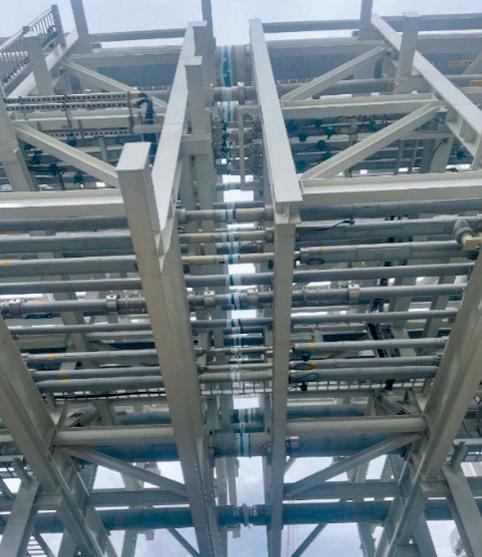
The delayed engagement of dimensional control teams in modular construction projects can result in significant geometric discrepancies, misalignments, and costly rework. Dimensional control is not merely a verification step—it is a proactive quality assurance mechanism that should be embedded throughout the project lifecycle. Figure 1 shows an example of a misaligned pipe at the site when a dimensional control survey was not performed early during the fabrication at the
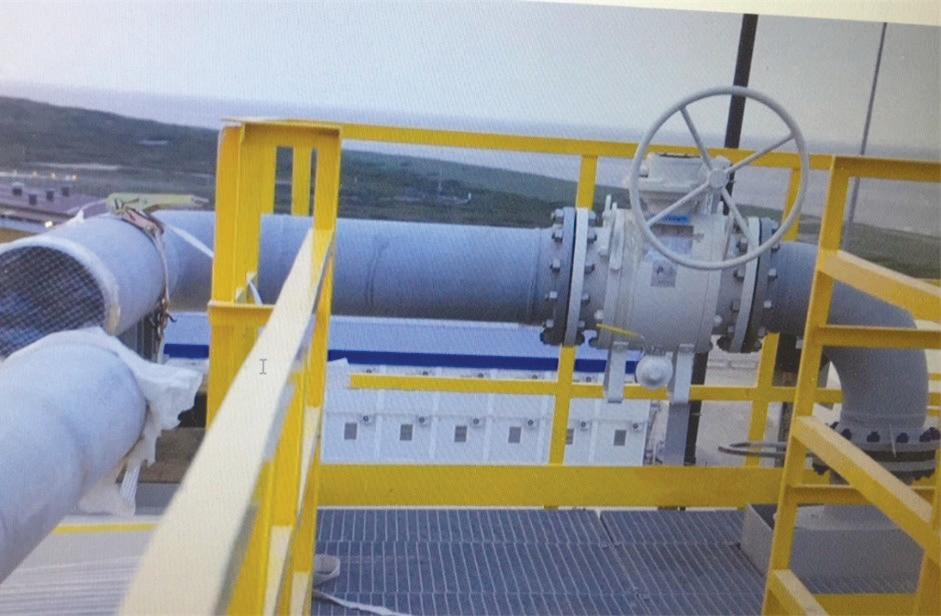
Without continuous oversight from dimensional control, control monuments and layout references are susceptible to settlement, thermal drift, and cumulative errors without being noticed. In one case, a project ran for 18 months with surveying lacking dimensional control requirements, resulting in misaligned bolt patterns across eight tank foundations. When the tank arrived, it could not align with the bolts. A dimensional control survey was subsequently conducted to enable trimming for fit-up. However, the tank holes were found to be deviated from the engineering design—an issue that early dimensional control verification at the fabrication yard could have identified and resolved.
Projects involving remote fabrication yards face compounded risks when dimensional control is not mobilized early. In a case involving a fabrication yard in the Gulf Coast region of the U.S., the absence of dimensional control jeopardized the single weld hookup strategy. The mitigation involved leaving one module end long and performing as-built surveys post-installation to guide trimming of subsequent modules. This adaptive strategy enabled successful single weld hook-up execution across multiple modules, but only after dimensional control was engaged midstream.
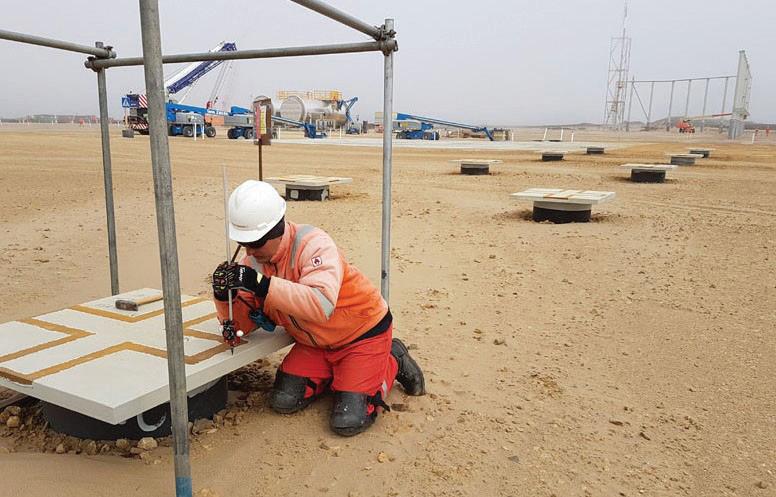
Late dimensional control mobilization (Fig. 2) also limits the ability to influence fabrication procedures. On a project involving mega modules, pile caps were bowed up vertically in the middle (~0.236 inches dome) due to welding-induced shrinkage. The deformation disrupted the use of tapered shim plate, requiring grinding of the cap centerline to achieve surface-to-surface contact. Had dimensional control been present during early welding operations, procedural adjustments could have mitigated the bowing effects at the pile caps.
Large-diameter piping systems, typically those exceeding 30 inches in diameter, pose distinct challenges in modular construction, particularly within the energy facilities including liquefied natural gas. The following project cases collectively highlight the necessity of early and continuous dimensional control engagement in modular construction. From nozzle alignment to thermal expansion, proactive surveying and verification
are essential to preventing costly errors and ensuring successful field fit-up of large-diameter piping systems.
Nozzle misalignments and spool fit-up are common large-diameter piping installation issues, as they are highly sensitive to small coordinate deviations at source points like tanks, absorbers, and compressors. In a recent project, the absence of early dimensional control support for the compressor piping fit-up resulted in multiple failed spool installations and seven piping cuts. Facing the challenge of excessive spool shortening, dimensional control surveyors were finally brought in, and the surveyed data from spools and hard points were used to guide a single corrective cut. In another case, delayed surveying allowed minor misalignments to compound into nearly a foot of deviation after module placement, causing substantial cost and schedule impacts.
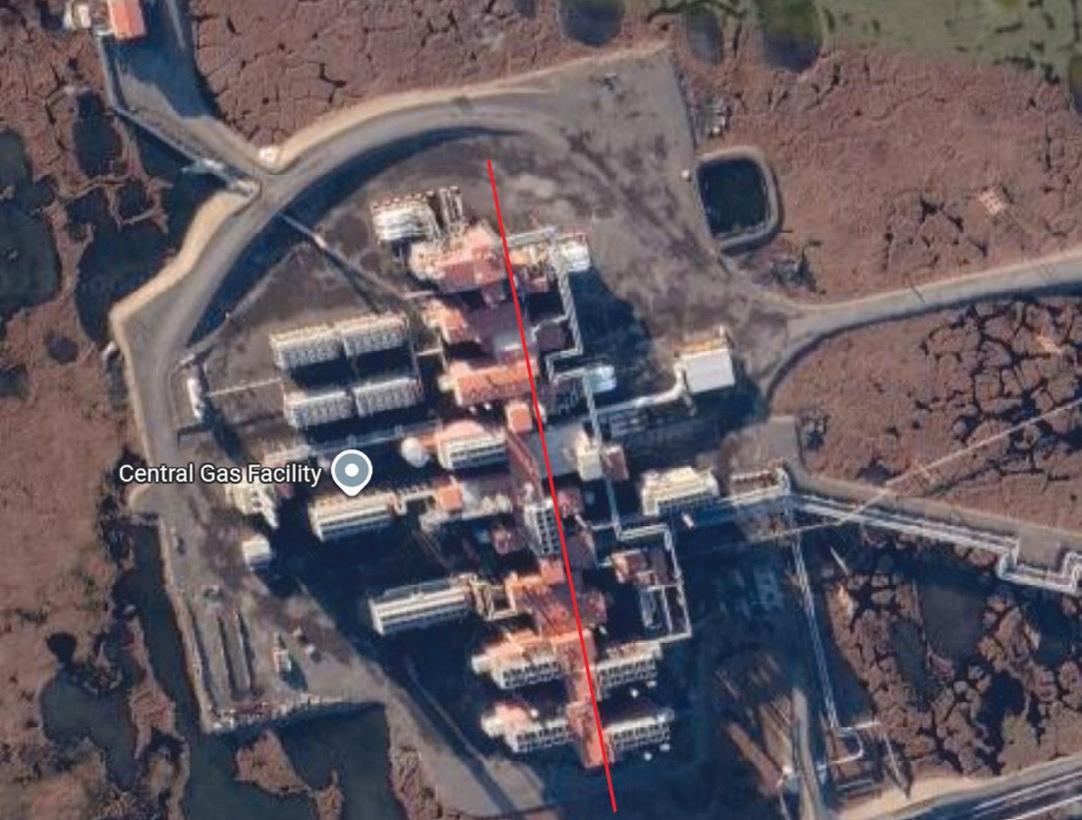
Thermal expansion is another critical factor in large-diameter piping systems. Temperature differences between fabrication and installation environments can significantly affect pipe lengths due to the coefficient of thermal expansion in steel, potentially causing clashes or gaps. In a past project, modules fabricated in Louisiana (average temperature 69F) were installed in Alaska (average temperature 14F) without accounting for thermal differential.
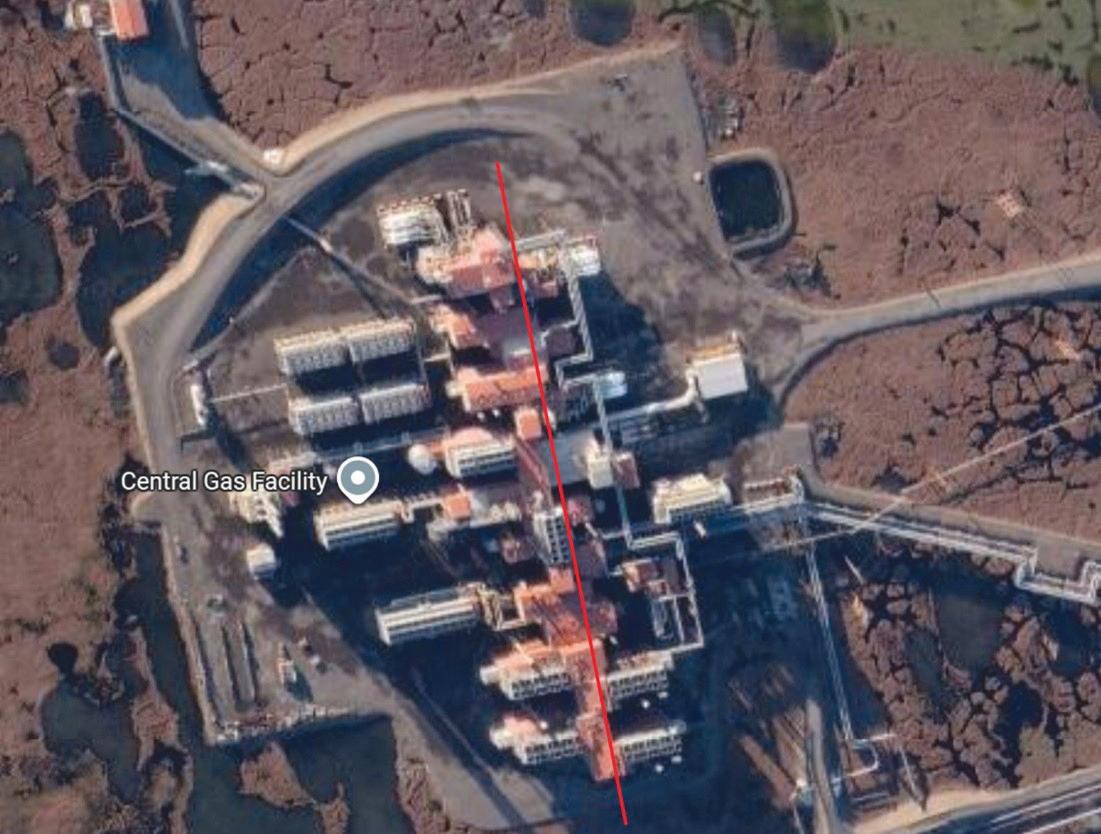
A large-diameter pipe designed for single weld hook-up spanning all modules (highlighted in red in Figure 3) led to repeated positional offsets, eventually deviating from the pile foundations’ centerline. Structural engineers halted further offsets due to integrity concerns, leaving a substantial gap between modules. Additional piping was procured to bridge the misalignment, delaying startup and triggering penalties from the State of Alaska. The cost impact, though unreported, was substantial. While observed thermal different effects may be misinterpreted as a design error, qualified dimensional control teams can mitigate this risk by establishing temperature correction protocols and adjusting the spool lengths accordingly, often using multiple target temperatures based on schedule and location. This example illustrates that dimensional control teams are not merely surveying control points but are also
considering the broader project context to ensure successful completion of modular scope.
Dimensional control surveys conducted prior to taking ownership of structures and large diameter piping spools enable early detection of fabrication errors. In several cases, pre-fabricated spools were found to be dimensionally incorrect. Identifying these discrepancies in the shop environment prevents downstream installation issues and minimizes field modifications. Early verification not only improves installation efficiency but also enhances quality assurance across the project lifecycle.
Although not traditionally categorized under dimensional control, modern structural QA/QC practices increasingly incorporate advanced surveying and visualization technologies to identify issues and verify tolerances. This is especially critical in large-scale modular construction projects, where conventional methods may be impractical due to access limitations or time constraints.
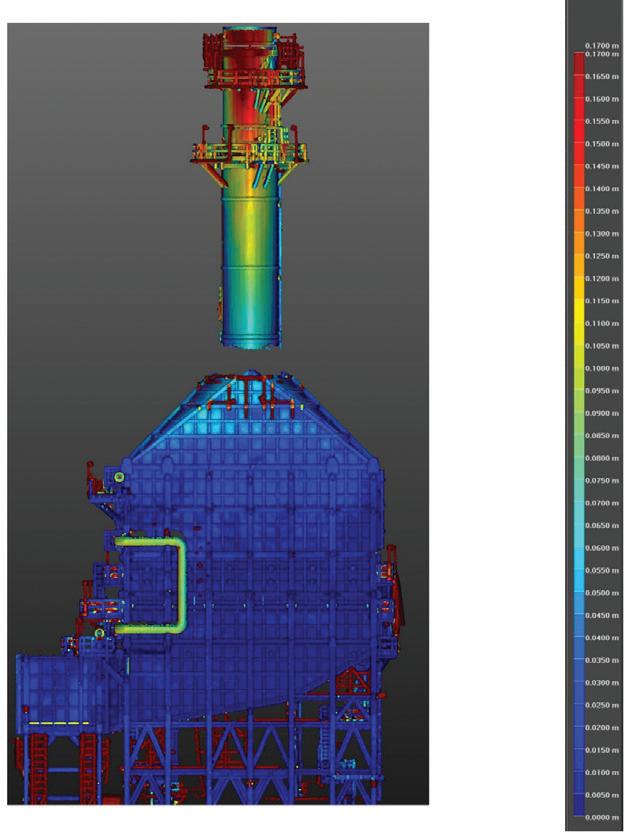
In one industrial facility, a tall flare tower was required to remain within a strict tolerance of ±50 mm. With limited access, 3D scanning proved to be effective in meeting this requirement. While laser scanning does not replace traditional dimensional control surveys, it enhances survey effectiveness by providing highresolution spatial data.
3D
Verification: Tools like 3D heat maps (Fig. 4), inspection point clouds, and automated reports allow engineers to visually assess the conformance of fabricated or installed structures to design tolerances. These deliverables provide accurate visualizations of deviations, enabling quick detection of out-ofspec conditions and timely corrections.
Geo-Referenced Model Alignment
To maximize inspection accuracy, the design model, typically in .ifc format, is geo-referenced to
the survey dataset using identifiable key connection points (such as bolt hole #1 at the base plate corner). This process begins with a full structure scan and simultaneous surveying of key locations. Aligning the model to these references eliminates control errors, instrument or setup inaccuracies, and ensures results reflect actual conditions.
By integrating high-precision instruments with intelligent model alignment workflows, teams can achieve more reliable QA/QC supporting both safety and performance goals, particularly for the following situations:
• Verticality assessments of tall or complex structures.
• Out-of-tolerance detection in prefabricated modules.
• Surveying in remote or constrained environments.
In this project, a structured interface management plan was established early among dimensional control teams, the owner’s construction group, precast manufacturer, structural steel fabricator, general mechanical contractor, and heavy-haul contractor to align expectations across stakeholders.
Design Provisions for Tolerance Control
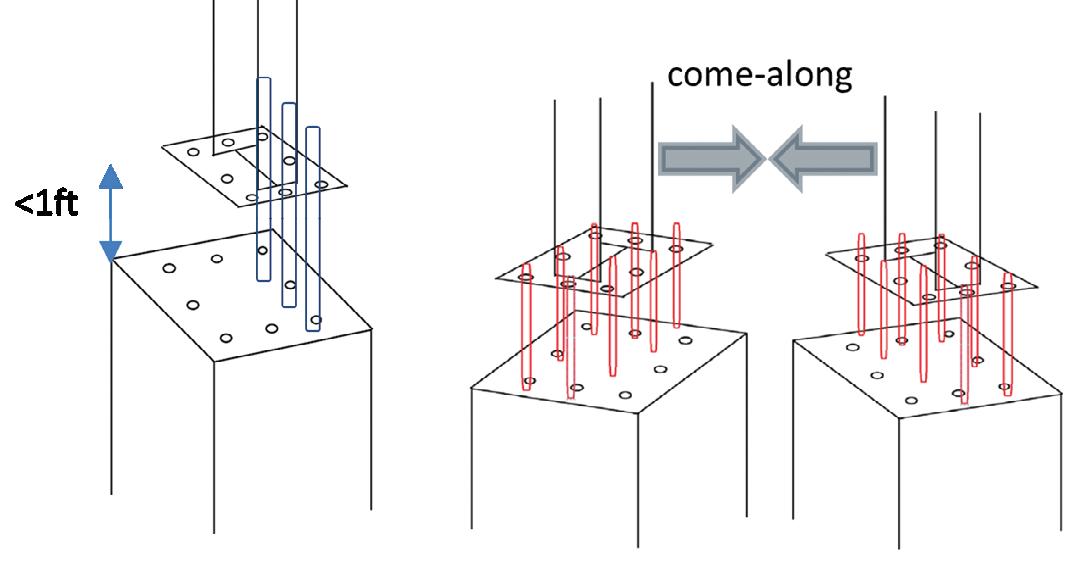
During detailed design, provisions were incorporated to manage interface challenges. These included tighter tolerances for concrete pedestal pours with embedded anchor bolts and revised connection details (Fig. 5) at the top of precast columns to accommodate structural steel base plates. These measures helped reduce misalignment risks during construction.
Progressive Measurement and Verification
Critical interfaces, including anchor bolts in concrete pedestals, precast column bases, precast column-to-steel connections, and structural steel base plates (Fig. 6), were measured and checked for alignment by dimensional control survey team to provide unbiased data. Field measurements were continuously compared against design values, and any deviations were corrected before proceeding with the next installation step.
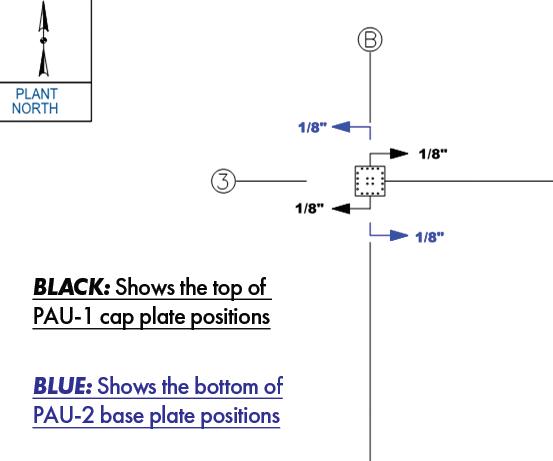
These proactive approaches prevented cumulative errors and significantly reduced the risk of costly rework during later phases.
The following dimensional control optimization framework is recommended to improve coordination, reduce rework, and prevent schedule delays:
1. Team Education for Establishing Full Dimensional Control Workflow: Promote awareness of dimensional control’s role in risk mitigation and encourage adherence to full workflows, from design and fabrication to field installation. Establishing appropriate fabrication tolerances and integrating dimensional control into QA/QC processes from the shop floor to the field further strengthens project delivery.
2. Early Mobilization: Engage dimensional control teams during initial layout and fabrication to monitor control points and minimize settlement-related alignment issues.
3. Design Provisions: Ensure engineering design supports dimensional control, for example, incorporate thermal expansion calculations into spool length specifications.
4. Pre-shipment Verification: Survey modules and spools at fabrication yards to ensure dimensional compliance before transport.
5. Field Monitoring: Integrate dimensional control into construction activities for alignment checks and corrections.
6. Advanced Surveying Tools: Where appropriate, utilize high precision surveying tools and scanning to improve measurement accuracy and data confidence.
As modular projects grow in complexity, adopting modern dimensional control practices is essential for improving precision and predictability in construction. Early deviation detection and strong stakeholder collaboration are key to minimizing risk and improving project outcomes.■
Full references are included in the online version of the article at STRUCTUREmag.org .
Silky Wong leads the Civil, Structural & Buildings Modularization Technical Solutions team at Dow Inc. She chairs the ASCE Energy division task committee on Wind Induced Forces and serves on its Onshore Heavy Industrial Modularization Guidelines Task Committee.
Vigneshwar Natesan is currently pursuing a Master of Science degree in energy management from University of Texas at Dallas and is a member of the ASCE Energy division task committee on Wind Induced Forces. He was Civil Engineer Manager at Dow Inc. with over 13 years of industry experience.

Successful design incorporates key considerations at the interfaces of the facade and primary structure.
By Aaron Kostrzewa, PE
Successful structural design relies on the harmonious integration of various elements. The primary building structure often comes to mind first when thinking of the structural integrity of a structure, but many other elements are critical to the design. The building facade is one such element, with curtainwall being a further subset.
The goal of the engineer is ultimately to protect the “health, safety, and welfare” of the public as dictated by the engineering code of ethics. While individually, one can complete a scope and achieve this goal, the greater goal of achieving this for a building is only satisfied when this is accomplished for all structural trades. It is at these crossroads where critical junctions occur, and proper coordination is essential for successful design.
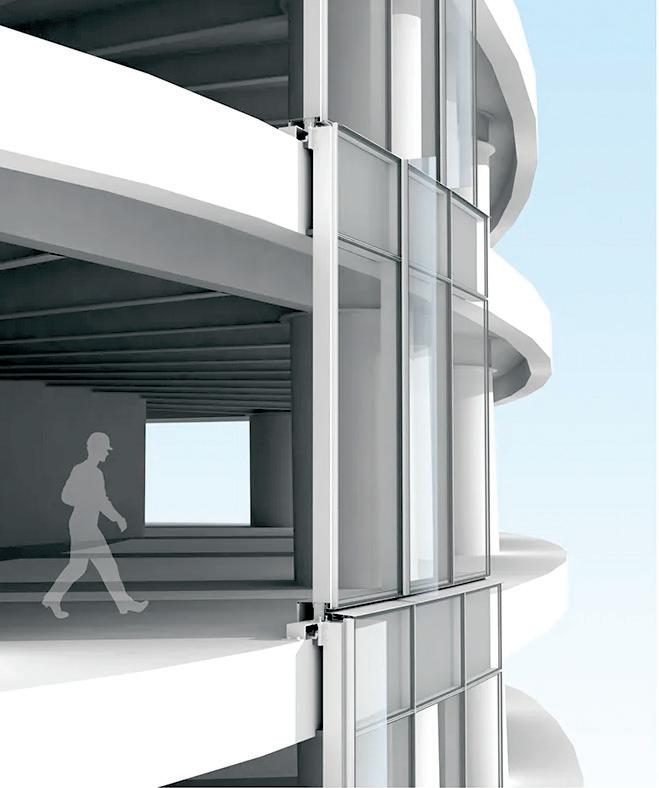
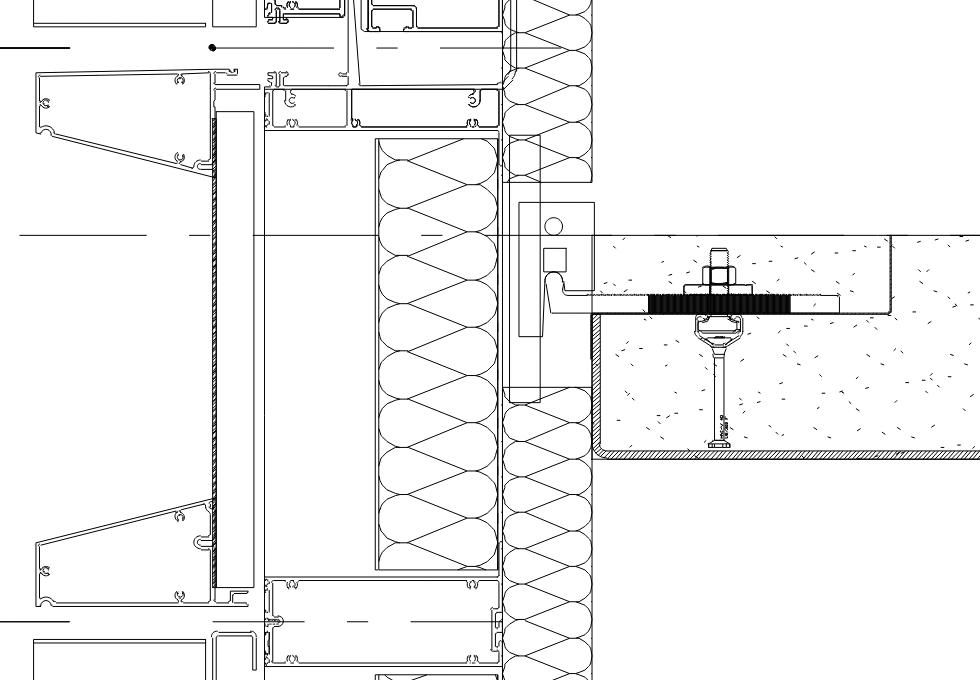
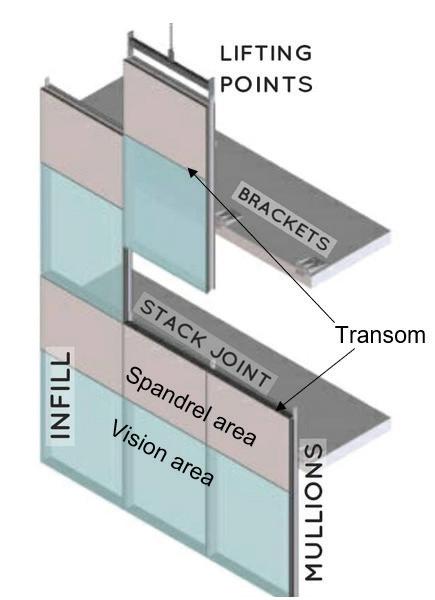
Curtainwall is a type of exterior building cladding commonly unitized to facilitate rapid installation on large projects. Modular sections, known as units, are prefabricated in a factory and shipped to the site for fast installation and better quality control. The units are lifted into place and hung from the structure with perimeter anchors (Fig. 1 and 3). The units interface with one another to provide a weather-tight seal via gasket engagement and minimal field-applied sealant.
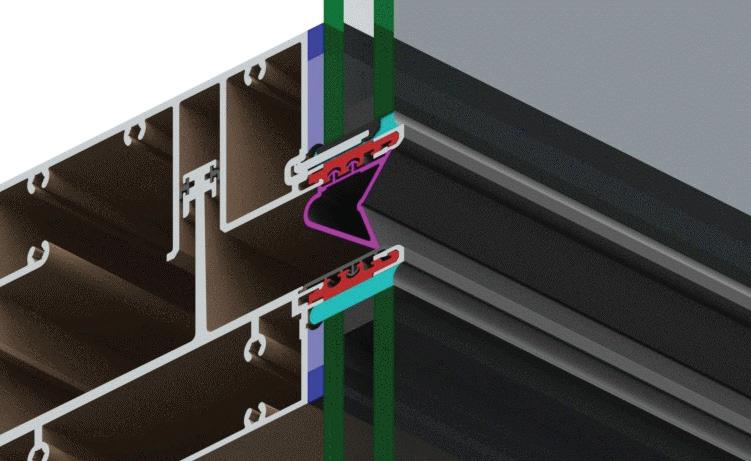
A typical unit is rectangular with a transparent vision area and an opaque spandrel area, collectively known as the infill, but limitless geometric configurations exist. The vision area permits occupants to view the exterior while the spandrel area covers the slab and plenum space. Vertical framing components, known as mullions, interface with horizontal elements, called transoms (Fig. 4). The transoms frame into the mullions and the mullions engage with the units above and below for structural continuity.
Curtainwall must resist all applicable loads as dictated by their use case, but common loads are self weight, wind pressure, loads induced from seismic acceleration, and live loads from building maintenance units (e.g. window washing platforms). The common standards governing the designs are the adopted
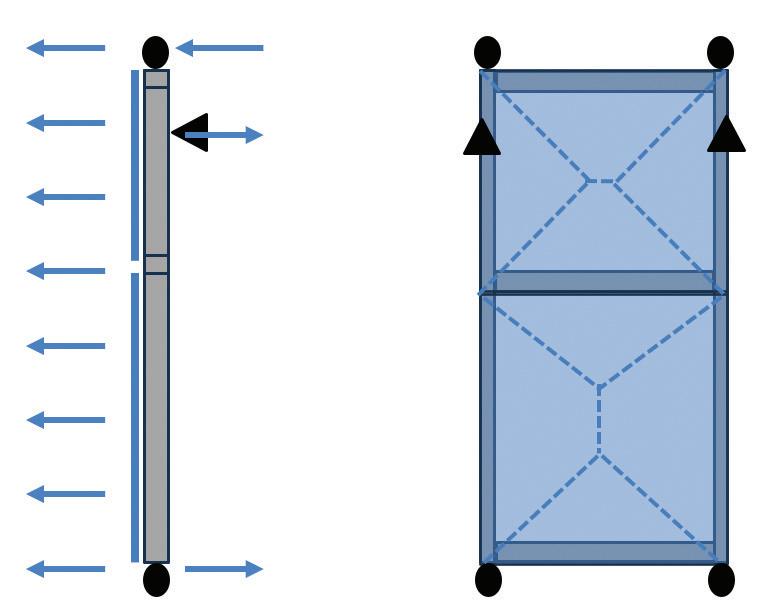
versions of ASCE 7 (loads), Aluminum Design Manual (ADM) (aluminum), ASTM E1300 (glass), AAMA TIR-A9 (fasteners), AISC-360 (steel) and ACI 318 (concrete anchorage), in addition to any unique materials used in the facade. Curtainwall is commonly still designed according to allowable stress design (ASD). Wind pressures are frequently the type of load governing the design of curtainwall. A typical unit will resist the resultant force of the building internal pressure and the external pressure imparted from wind events. Zone 4 (interior wall) and 5 (edge/corner wall) component and cladding wind pressures from ASCE 7 Chapter 30 are of interest, which consider the localized “hot spots” on a structure during a wind event. Negative wind pressures (suction) at the corners of the building often govern cladding design as they can be nearly double those of interior wall pressures. Wind pressures are resisted by the framing infill, commonly glass or metal panel, transferred to framing members, and then to anchorage into the primary structure. See Figure 5 for an example load path and free body diagram. For complex buildings, a wind tunnel study is frequently commissioned since the often lower-than-code-prescribed pressures can result in net savings.
The engineer of record will naturally have to make assumptions about the weight of the facade and loading imparted to the primary structure prior to the engagement of the facade
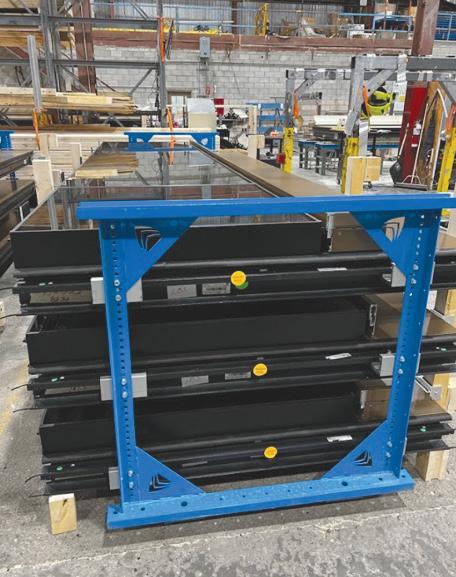
contractor. For critical interfaces or incipient design where conservative assumptions are warranted, one should take due care for the determination of loads. However, the following may be considered as general guidance: metal panel cladding typically does not exceed 10 psf; typical glass units, 15 psf; or extra thick glass, 30 psf. Facades with stone or other cementitious products can greatly exceed this value. One can determine an approximate facade weight by multiplying the thickness of the predominant infill material by the appropriate specific gravity. For the case of an all-glass facade unit, most of the weight is the glass, so an approximate determination can be carried out if the thickness of glass is known.
Unitized curtainwall designers often leverage the interface of the units by using the unit above and below for stability and load transfer, thus requiring two anchorage points to the structure per unit. The mullions are the primary wind load resisting members since the horizontals frame into them. If horizontal members (transoms) are beams, then mullions are girders. The mullion can be conservatively analyzed as a simple beam loaded based on its tributary width with determinate boundary reactions. Mullions of unitized curtainwall mate together as the units are installed and will share tributary out of plane load based on relative stiffness since they are constrained to deflect together. In addition to aluminum stress and buckling checks, mullions must be designed for deflection, which is commonly L/175 for spans less than 13 feet-6 inches and L/240 + ¼ inches for greater spans, where L is the clear span between supports. Framing members supporting glass must be limited to L/175 along the length of the glass infill for the edge to be considered firmly supported, which dictates which edges may be considered supported for glass analysis.
The wind load imparted to the primary structure at discrete anchorage points can accurately be determined by statics of an individual unit or approximated by the tributary wind of the adjacent unit on either side of the anchor multiplied by the tributary height. Reactions can exceed this simplification at the lower floor of a curtainwall run, the upper floors of a run, and at parapet conditions, and should be considered on a case by case basis accordingly.
Unitized curtainwall is commonly hung from the perimeter of the slab. The self weight of the unit is imparted at the slab edge, inducing eccentricity in the primary structure. A common note in structural drawings and specifications is that the facade shall not impart any torsion to the perimeter of the structure, which is not feasible. To be more accurate and avoid inherently impractical requirements, construction documents and specifications should state that “the facade engineer of record shall submit a diagrammatic representation of the loads imparted to the primary structure and associated eccentricities,” for proper consideration in the design of the structure. For unique or critical load coordination locations, the engineer of record should require that a loads-imposed coordination document be sealed by the facade engineer of record.
Coordinating loads imposed is almost always challenging due to the varying manner in which loads can be conveyed and engineers’ attention to detail on the providing and receiving end. The facade is most often designed based on allowable stress design, and the structure is likely designed according to Load Resistance and Factor Design (LRFD). A loads-imposed document could indicate factored ASD loads, unfactored loads, factored LRFD, and so on. The document must convey the loading category, factors to the loads, how load combinations are considered, and eccentricities. The facade engineer must discern how to concisely provide reactions at facade anchorage points in a document with sufficient accuracy. The document must encompass the varying conditions while striving for brevity to avoid providing loads for each individual anchorage condition. Additionally, he or she must also discern what buffer to incorporate into the loading to account for conservatism and the potential for the design to
Before Curtainwall Installation
Primary structure erection tolerance
During Curtainwall Installation
Deflection of structure from curtainwall weight
change that could alter the loading. The author encourages engineers of record to tell the facade engineer how to communicate loads, since they are the ultimate recipients of such information.
The facade engineer should provide curtainwall shop drawings and/or calculations that clearly convey the loads imposed. Elevation drawings should have graphics of wind load and dead load anchors of the facade, and calculations and/or detail drawings should convey facade anchor reactions to clarify how load is being imparted to the structure. The coordination of loads at the interface of engineering trades is one that requires careful consideration and communication

After Curtainwall Installation
Structure
- Column shortening
- Creep - Live load deflection
- Building drift
Curtainwall
- Thermal movement
- Fabrication tolerance
to avoid additional provisions for facade reactions that are higher than anticipated.
The final consideration for this article is the coordination of building and facade movements. The facade will move, and the building will move. Their movements must be compatible in order to avoid
a clash. Any such clash will almost certainly result in a failure of the facade in the form of glass breakage, facade damage, and potentially dislodgement of the facade from the building. The impetus is on the facade engineer to facilitate the proper design of the facade for movement consideration; however, the engineer of record must also provide values of the primary structure movement for proper coordination. While the facade engineer must take due care in providing loads with adequate specificity and conservatism, so too must the engineer of record when providing building movements. Common structure movement considerations are structure creep, slab edge deflection prior to curtainwall installation, slab edge deflection due to curtainwall self weight, slab edge live load deflection after curtainwall installation, structure settlement, construction tolerances, and service/ultimate level drifts for wind and seismic building movements. Additional unique movements should be provided as needed. The facade is effectively always set in a theoretical position, regardless
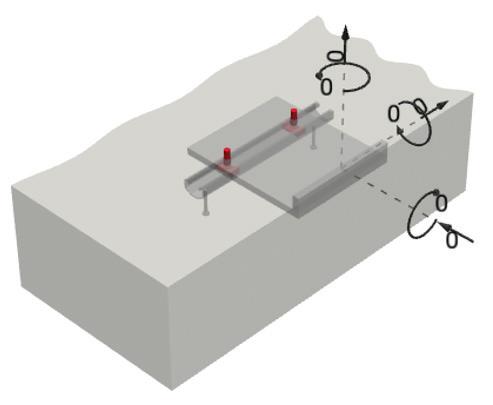
of the position of the primary structure. This is required to ensure the aesthetic of the facade. Therefore, unitized curtainwall units must accommodate movements in several ways. Movements prior to the installation of the facade can be accommodated via 3-way adjustability of the facade anchorage. Thus, the magnitude of these movements needs to be understood for provisions in the anchorage design. Further, smaller erection tolerances will result in a more economical facade design and lower facade reaction eccentricities, which is worth considering when engaging various contractors.

by CTS Cement Manufacturing Corp
Movements of both the facade and the structure after installation need to be accommodated in the vertical and horizontal joints of the facade. Facade movement such as thermal, fabrication tolerances, and movements induced from vertical and horizontal building movements are all combined as appropriate to determine the opening and closing demand of the facade joints. The sidebar, “Movement Considerations” on page 23 notes where the various movements need to be considered in the design of the facade and its attachment to the structure. Adjustable anchors can adjust the unit attachment point to the nominal position while the movement joint between the units, known as the stack joint, accommodates movements after installation. The deflection of the structure due to the weight of the curtainwall can be accounted for in adjustment of the anchors or at the stack joint.
Your work shapes skylines. But staying ahead of changing codes, materials, and innovations can be a challenge.
CTS Cement’s AIA-accredited CE Courses offer learn on-demand or live training designed to meet today’s construction challenges and sustainability initiatives:
¾ Performance-driven concrete solutions you can specify with confidence.
¾ Latest standards, materials, and best practices for sustainable, durable designs.
¾ Innovative design options using Komponent shrinkage-compensating concrete.
¾ Case studies that solve real-world challenges.

Early coordination of facade gravity and lateral anchors along with anticipated facade movements is critical between the facade engineer, engineer of record, and the architect to ensure coordination, movement coordination and joint sizes. Curtainwall extrusions are often custom on elaborate projects. Any change resulting in a modification of the design curtainwall movements can have significant fees resulting from changing extrusions and undesirable aesthetics due to larger curtainwall joints.
Facade design is constantly evolving as architects push the boundary of creativity. Custom curtainwall warrants individualized considerations with the information presented as key considerations. Ensuring the resilience of the primary structure and accessory structures demands close coordination between the structural engineer of record and the facade engineer of record. Doing so will facilitate the conveyance of digestible information without undue conservatism. ■
Aaron J. Kostrzewa, PE, has served as the facade engineer of record for multiple projects and has designed curtainwall systems around the country. He serves as the managing member at Kosco Engineering Group and enjoys teaching structural concepts. Connect with him on LinkedIn.
The National Council of Structural Engineers Associations (NCSEA) is pleased to share winners of the 2025 Excellence in Structural Engineering (SEE) Awards, which were recognized at the SEE Awards Celebration on October 16, 2025, at the New York Hilton Midtown during the 2025 NCSEA Structural Engineering Summit. The winning projects can also be viewed throughout 2026 during the free, in-depth SEE Awards Webinar Series at www.ncsea.com.
Outstanding Projects were awarded in each of the following 10 categories:
• Bridge and Transportation
• Forensic/Retrofit/Rehabilitation
• Innovation in Materials
• Landmark Structures
• Non-Building Structures
• Performance Design for Resilience
• Renovation/Adaptive Reuse
• Residential/Single and Multi-Family Homes
• Social Impact
• Sustainable Design
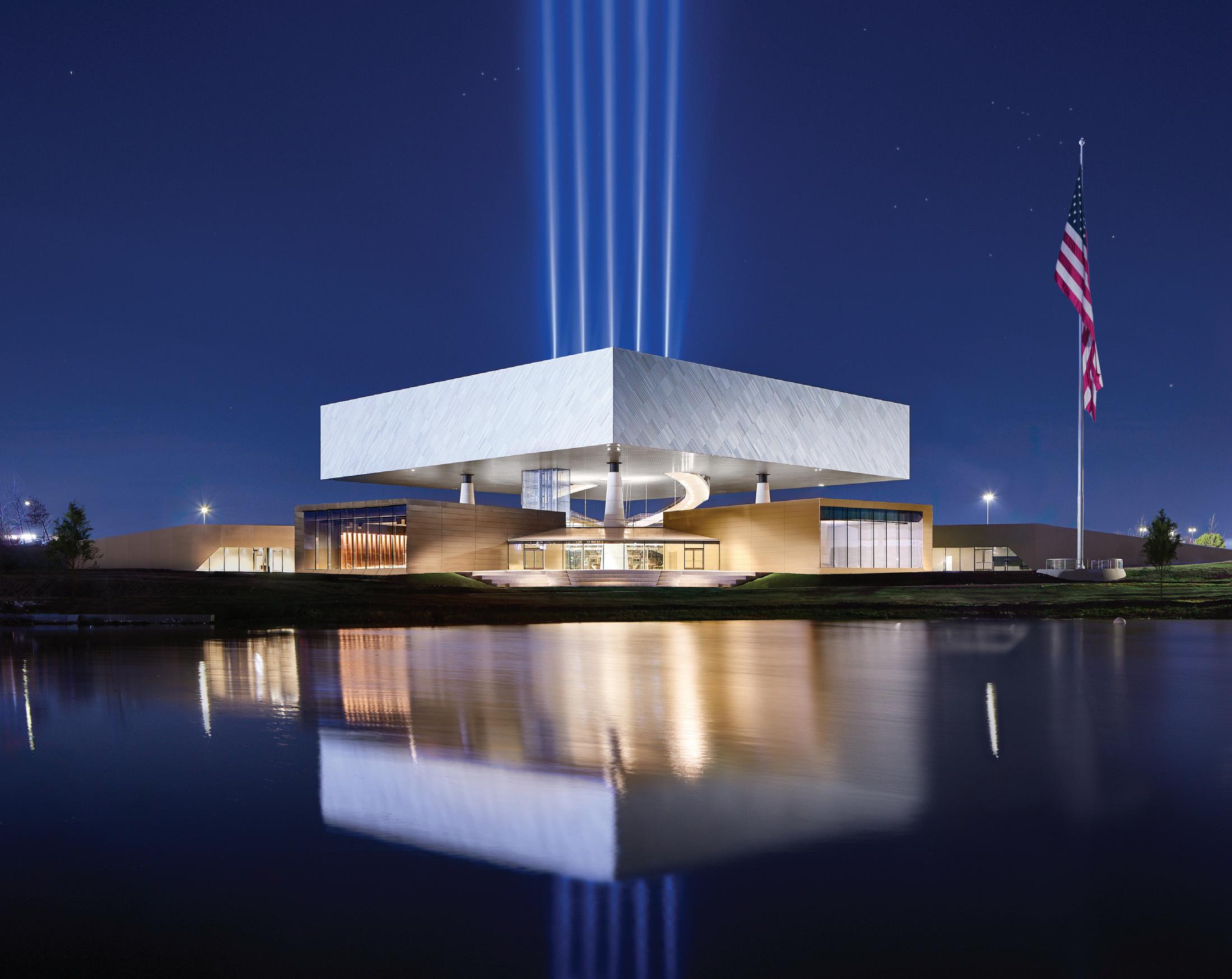
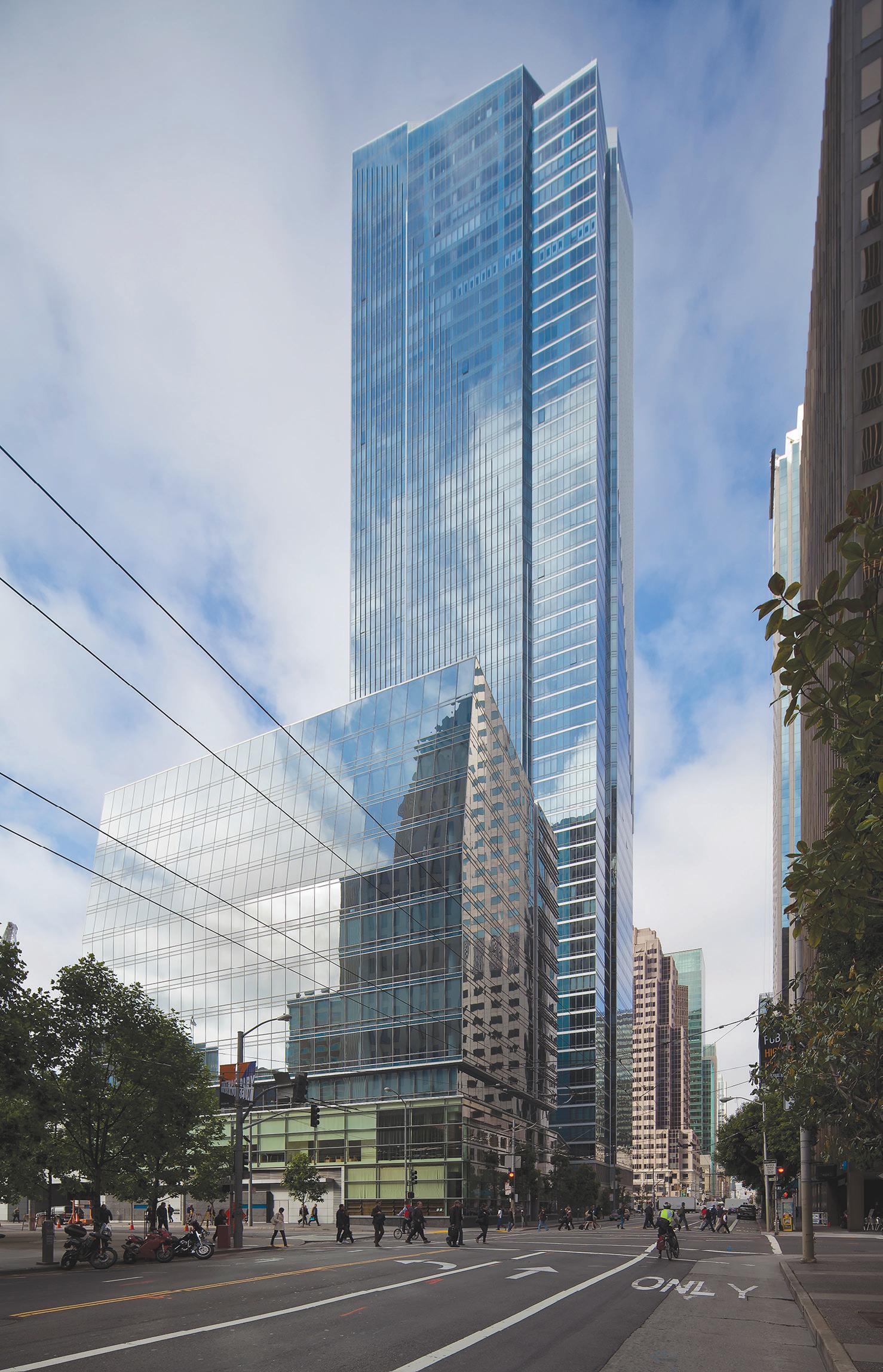
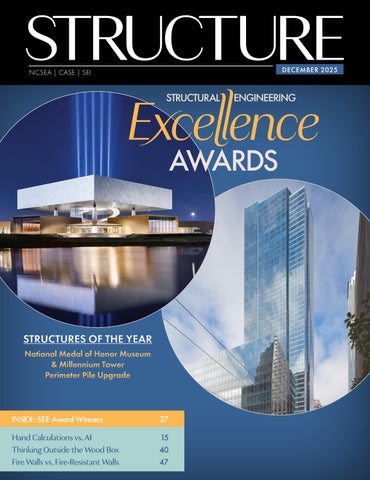
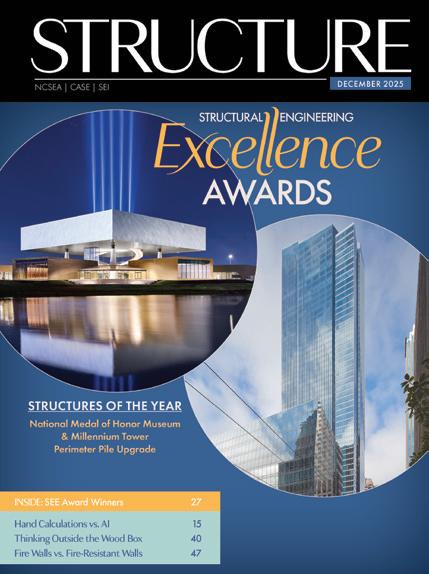
For the first time in program history, two projects have been named Structure of the Year. The judges were so impressed by the ingenuity and technical achievement of both projects that they chose to honor the National Medal of Honor Museum in Arlington, Texas, by schlaich bergermann partner, and the Millennium Tower Perimeter Pile Upgrade in San Francisco, California, by Simpson Gumpertz & Heger, as this year’s top honorees.
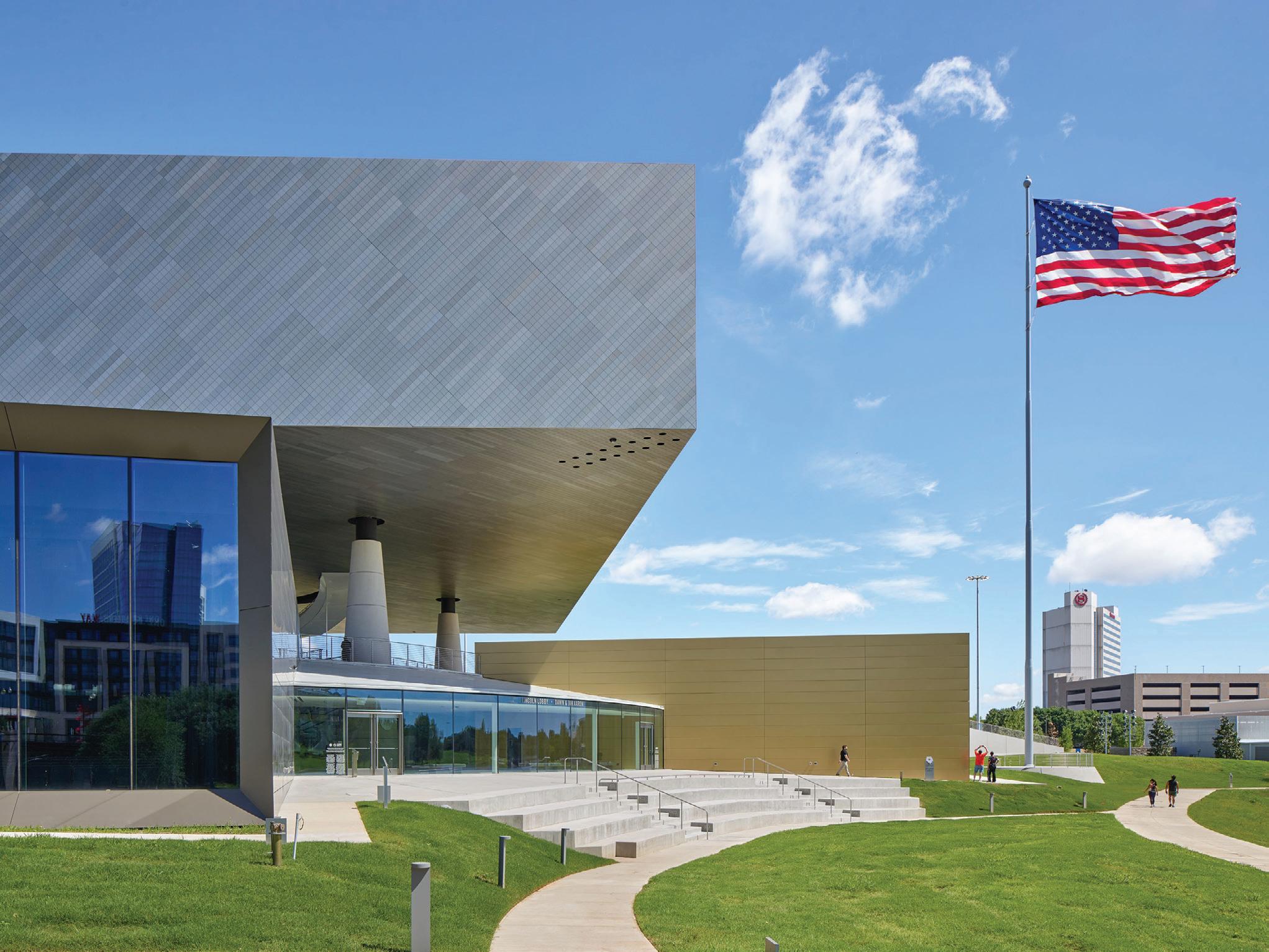
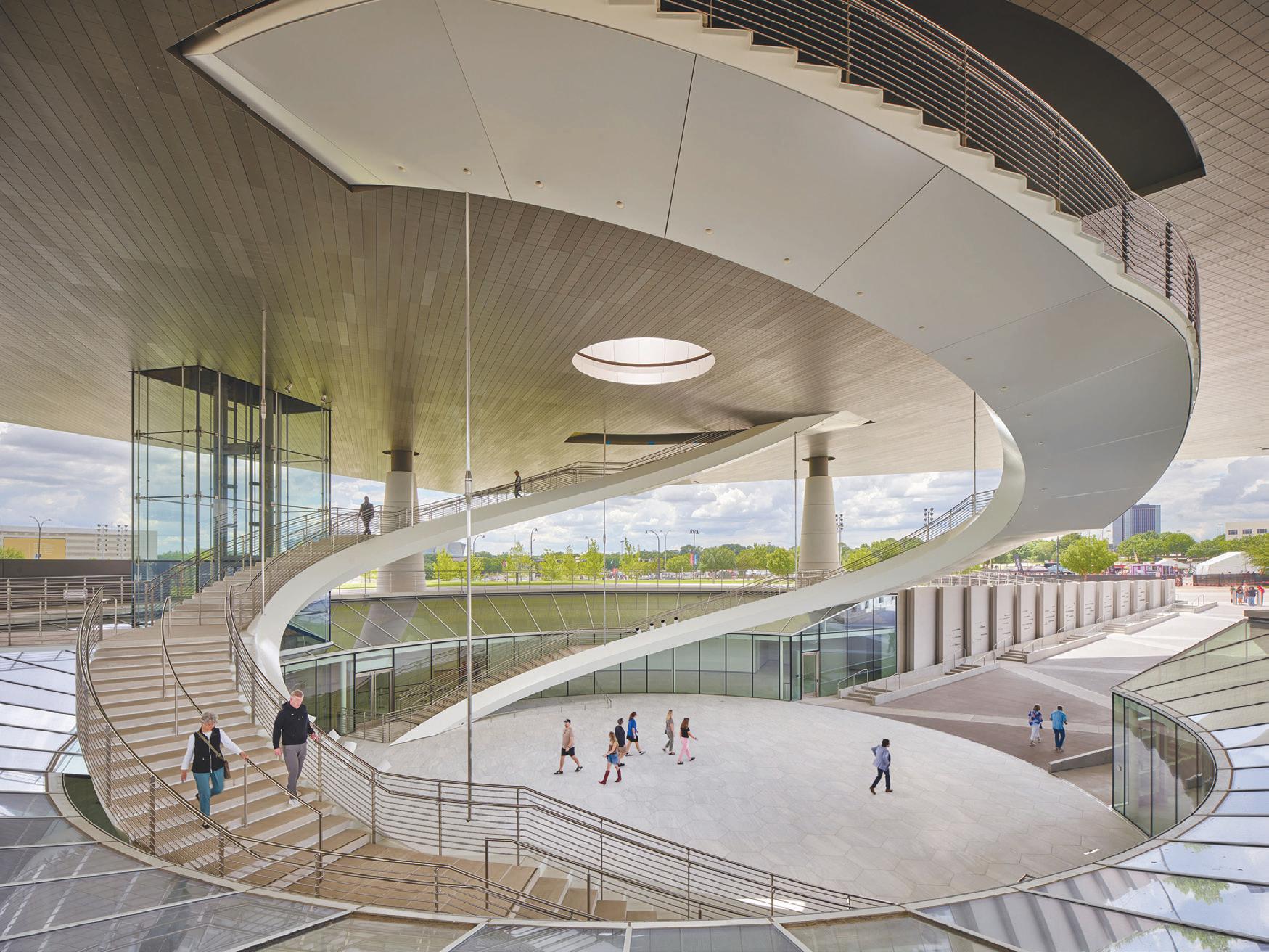
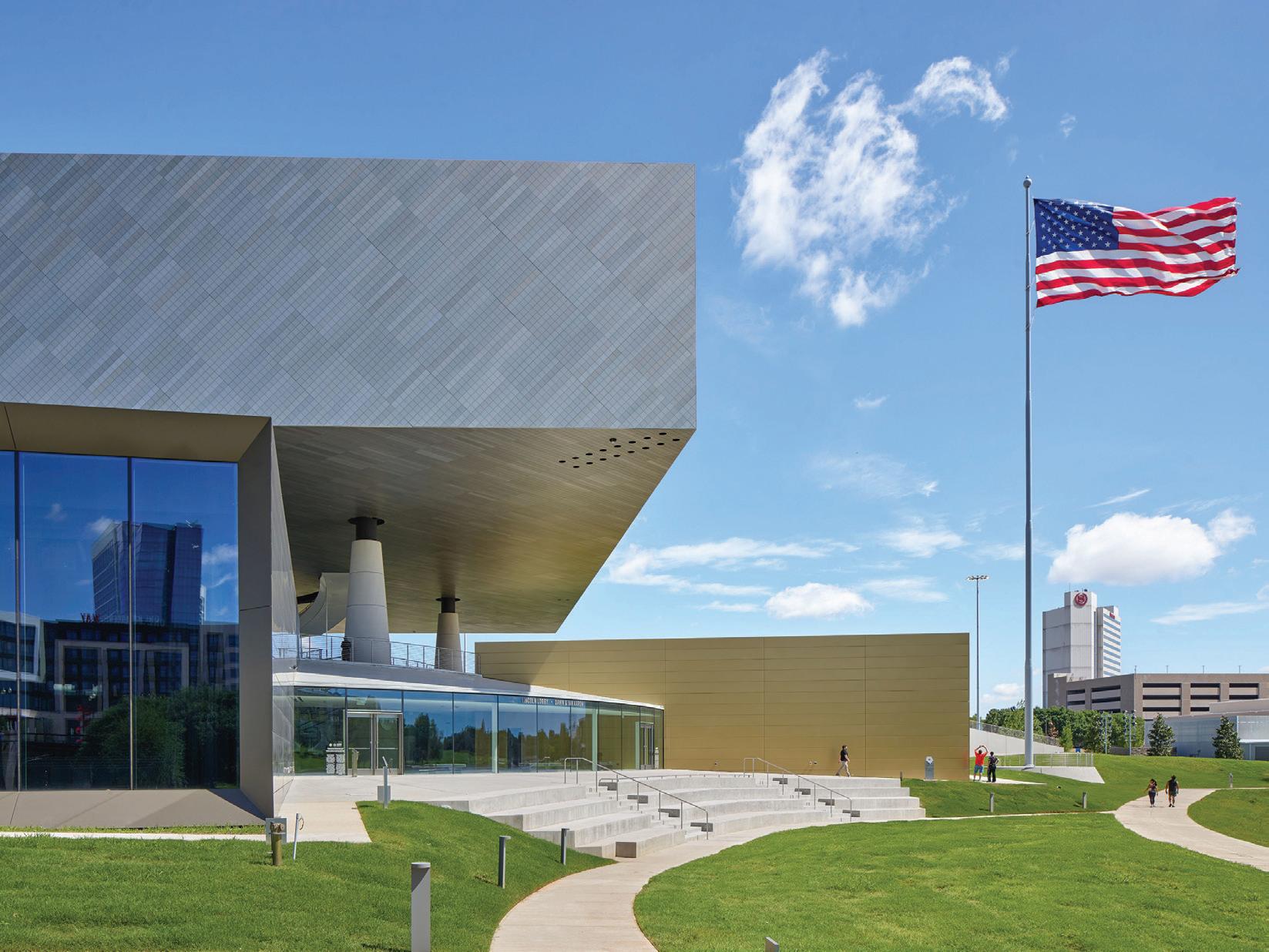
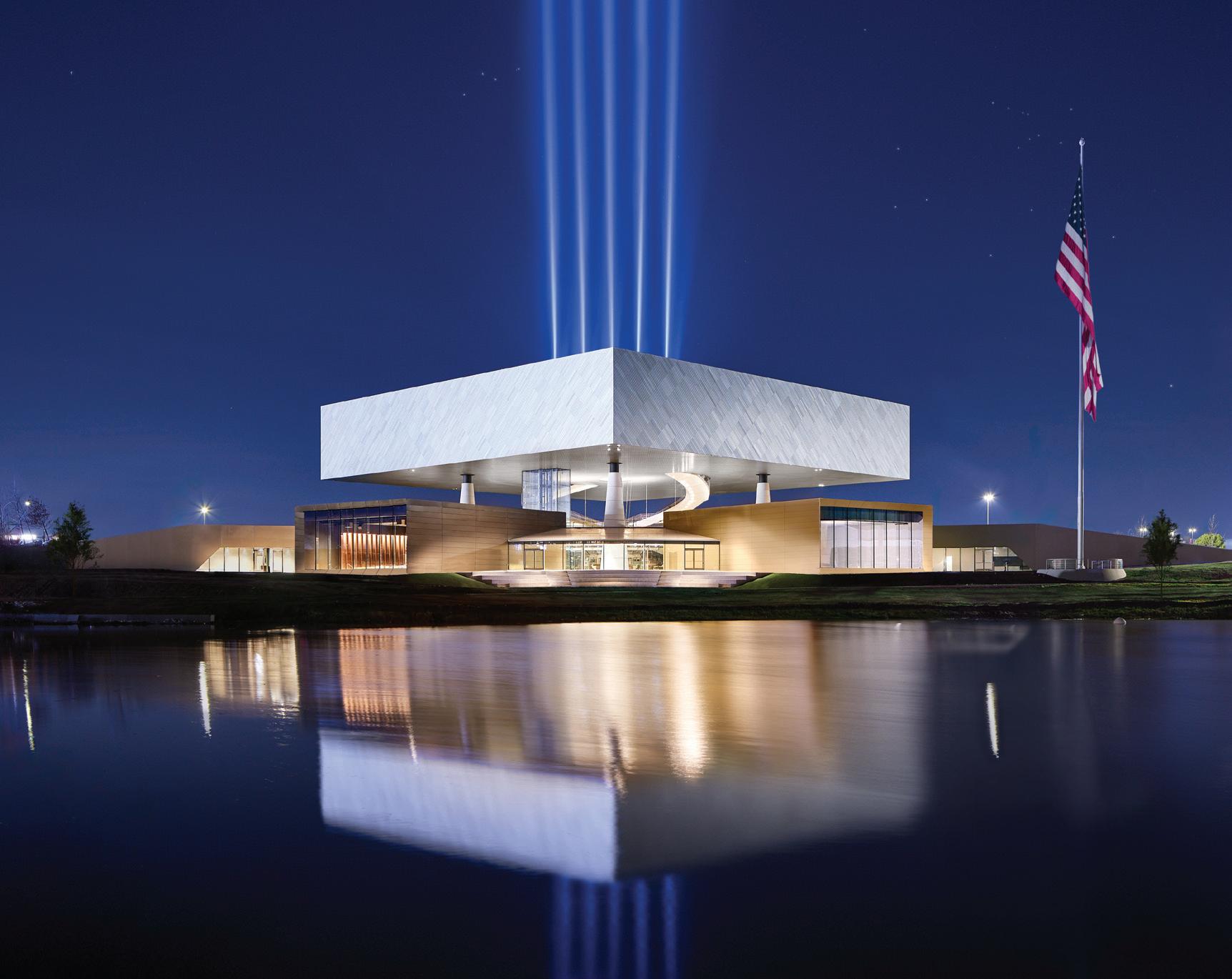
The National Medal of Honor Museum by schlaich bergermann partner was chosen because of its unique structural challenges. With its sweeping stair and framing cantilevered from only five columns, it represents how structural engineering can enhance the design of a building.
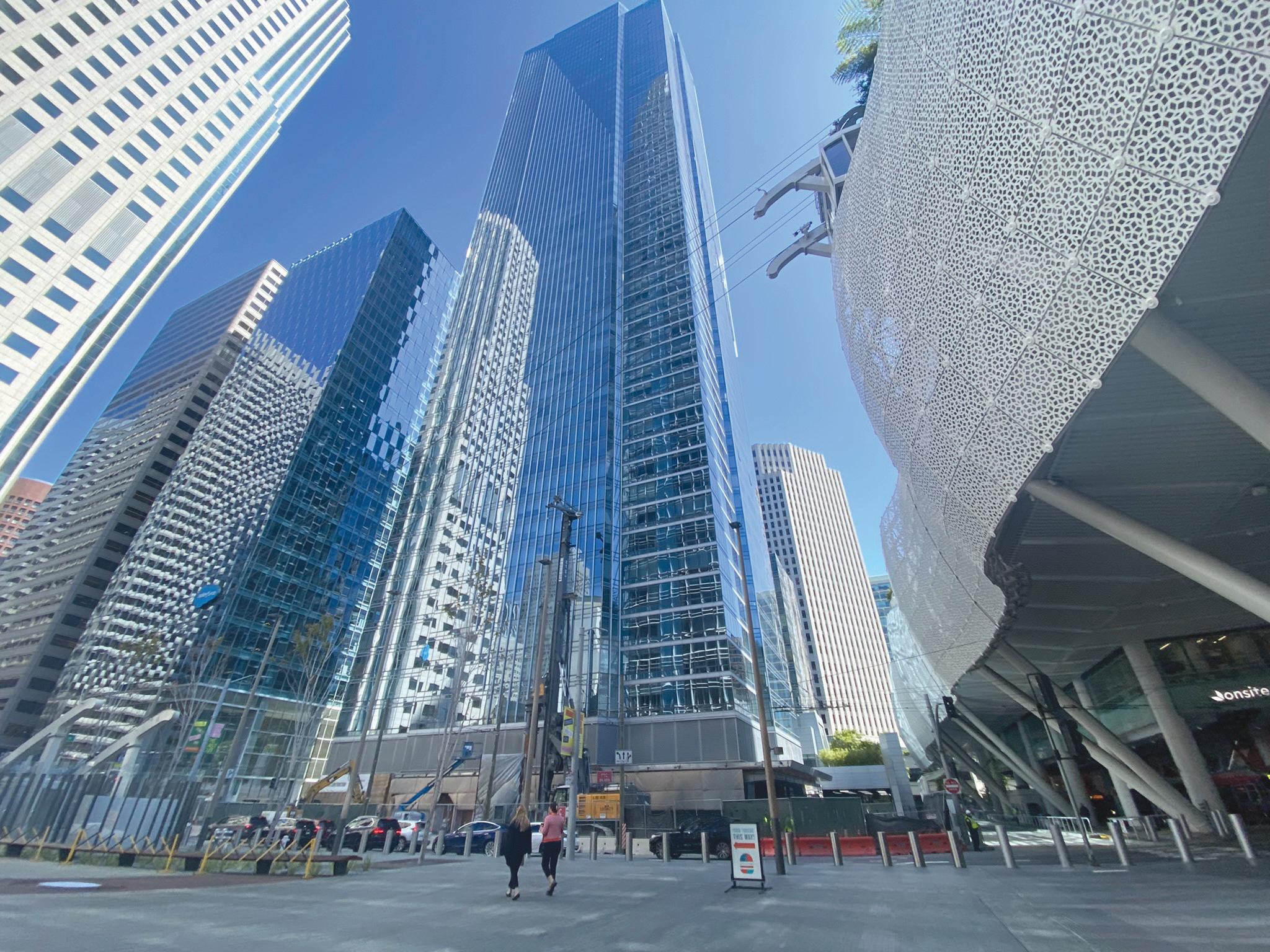
Simpson Gumpertz & Heger’s Millennium Tower Perimeter Pile Upgrade was selected due to the immense creativity required to solve an extremely difficult problem at a fraction of the predicted cost while under intense public scrutiny.
The SEE Awards celebrate the most accomplished work in structural engineering, recognizing projects that demonstrate innovation, resilience, creativity, and more.
of the
SAN FRANCISCO, CA
Structural Design Firm
Simpson Gumpertz & Heger
General Contractor
Shimmick Construction
Approximate Construction Cost $100 million
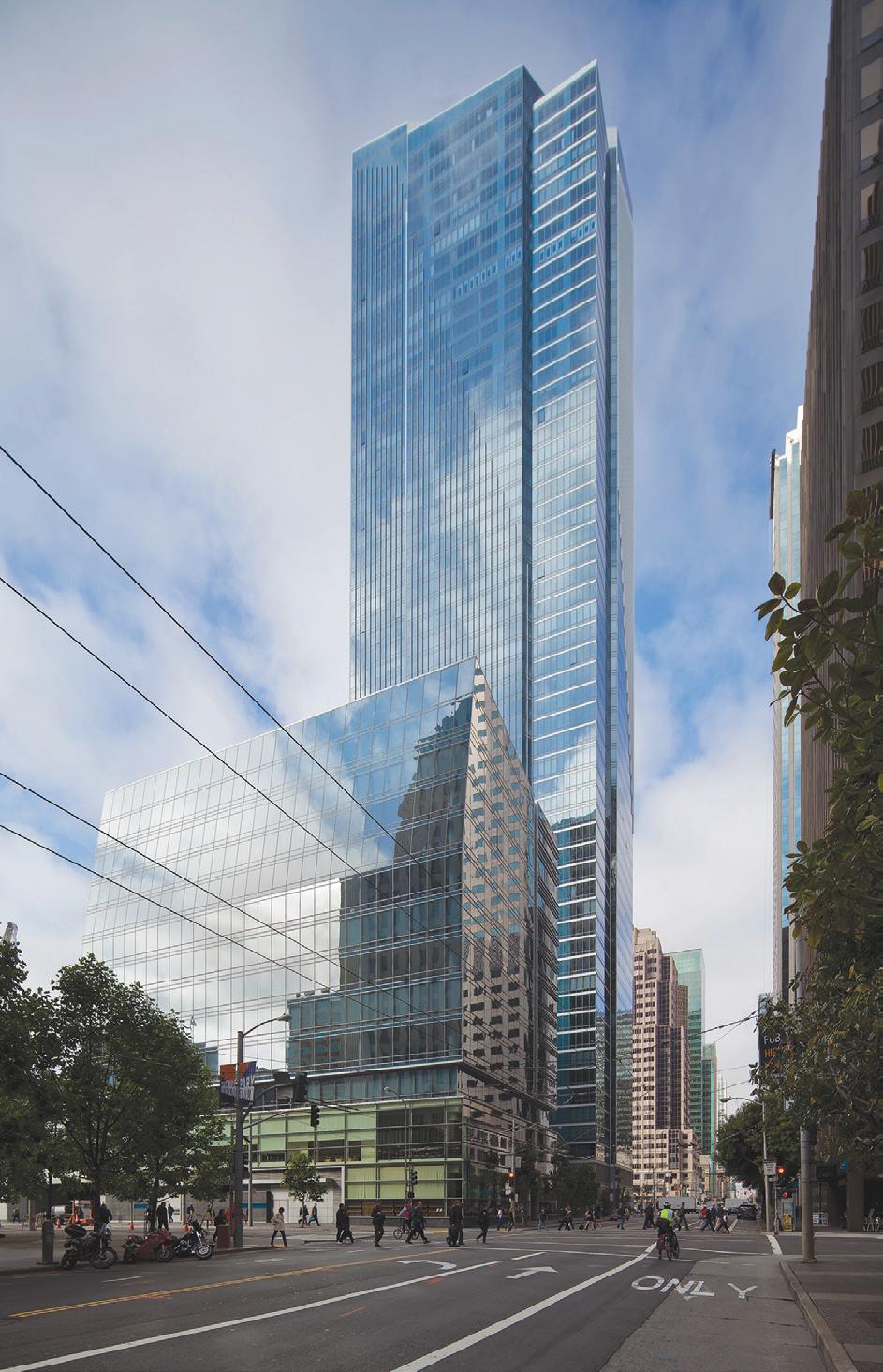
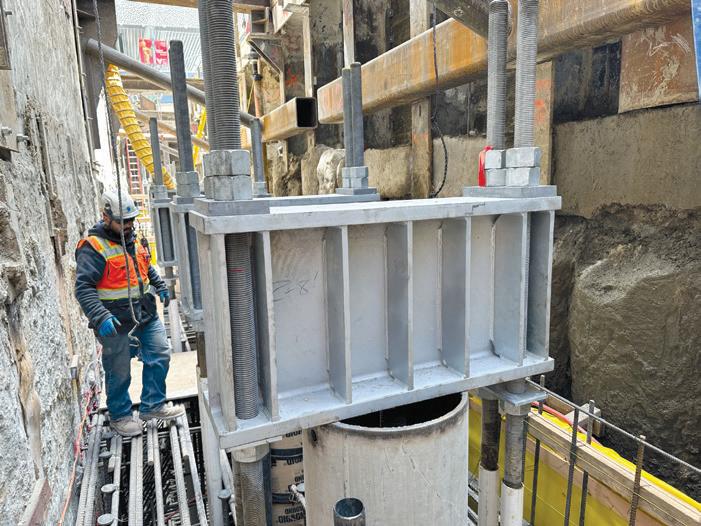
The 58-story Millennium Tower in San Francisco, one of the city’s tallest residential buildings, was designed with a foundation of 990 pre-stressed precast concrete piles. By 2016, the building had settled 14 inches and was tilting. This led to a lawsuit from homeowners, who sought a $300 million foundation upgrade requiring 300 piles installed to rock through the existing 10-foot mat. SGH devised a new plan to install 55 piles drilled to rock along the north and west perimeters. New pile installation resulted in further settlement and tilting. Under public scrutiny, the project team determined the issue was due to the installation technique. They modified the procedure and reduced the number
of new piles to 18, with additional load jacked onto each. After 18 months of monitoring, the project has been deemed a success, with the building’s settlement arrested and gradual tilt recovery occurring. The project demonstrated the use of a minimalist approach and capacity design principles to solve a challenging problem in a safe and reliable manner. Notably, the project used existing underpinning technology, but at a scale not previously attempted. Despite substantive criticism in the local and national media, the project team persevered and completed the project successfully. Now that the work has completed, the building’s reputation and property values have been restored.
ARLINGTON, TX
Structural Design Firm schlaich bergermann partner
Architect Rafael Viñoly Architects
General Contractor Linbeck Group
Approximate Construction Cost
$140 million
The new museum by Rafael Viñoly Architects is dedicated to the legacy of the 3,500 recipients of the Medal of Honor. The design symbolically lifts their accomplishments with a 200 foot x 200 foot x 35 foot Exhibition Hall that appears to float 50 feet above the rotunda below. At the center of the Hall is a 20-foot diameter oculus that allows light to enter below. Additional education, conference and event spaces are housed in the museum’s lower levels, below an accessible green roof, overlooking Mark Holtz Lake. The primary Exhibition Hall is housed in a striking, aluminum-clad volume and is supported by five tapering precast mega-columns, each hollow to accommodate mechanical, electrical, and plumbing systems routed through their cores. Atop each column sits a spherical bearing beneath a massive steel supernode that supports built-up box beams forming the floor and primary structural frame. The interior of the Exhibition Hall is entirely column-free, aside from five inner service-ring columns. The outer roof members are supported by a perimeter belt truss. Access to the elevated structure is provided by a pair of intertwining spiral staircases suspended from the floor above by seven tension rods at the inner edge of each stringer. Additional access is offered via hydraulic elevators enclosed in glass.
INDIANAPOLIS, IN
Structural Design Firm: schlaich bergermann partner
Architect: Practice for Architecture and Urbanism
General Contractor: Kokosing Construction Co.
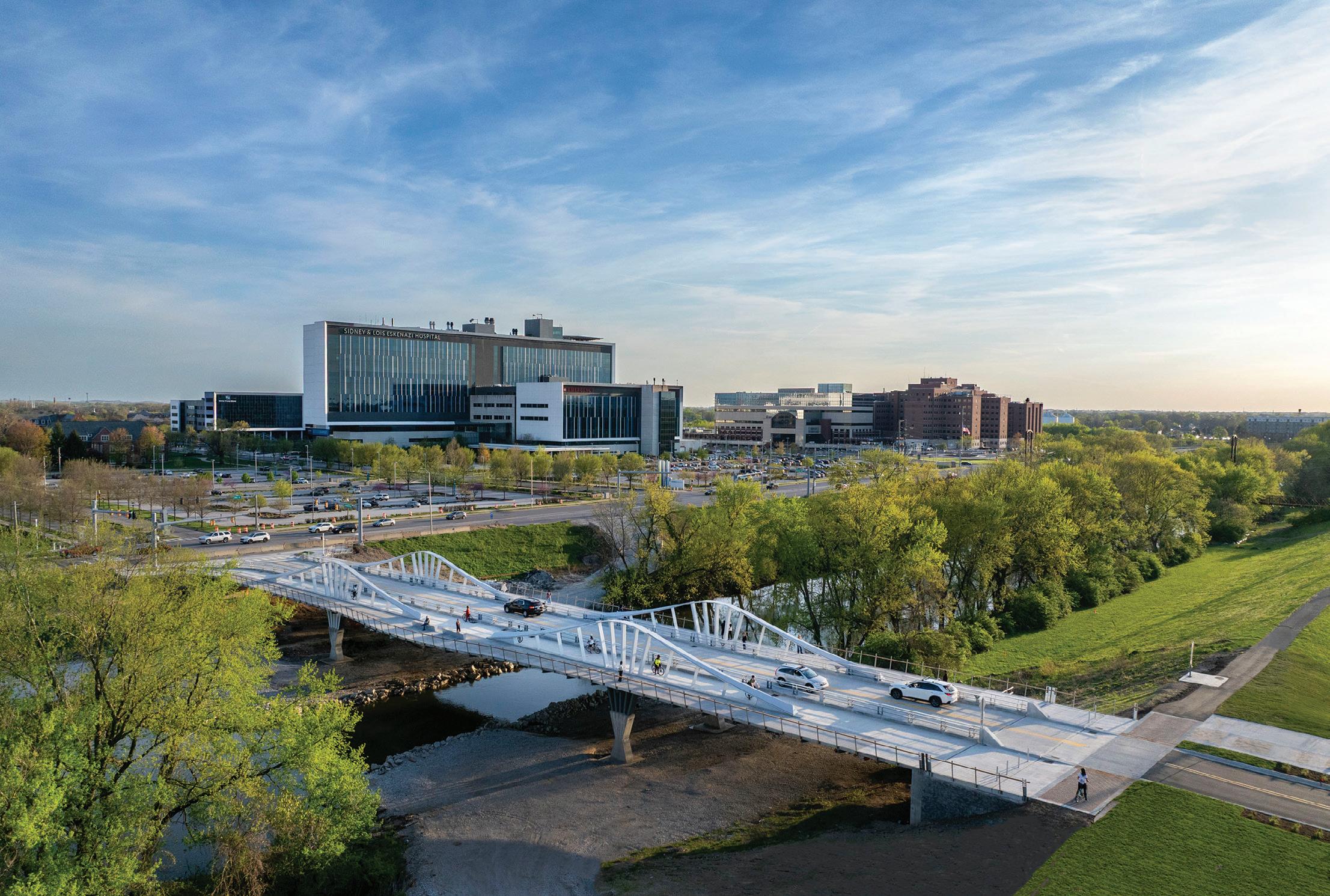
The 16 Tech Innovation District Bridge spans 342 feet and creates a new multimodal connection between the 16 Tech Innovation District and Indianapolis’ research and medical corridor. The bridge reinterprets a classic suspension bridge by replacing the large vertical masts with a fan-type arrangement of multiple smaller masts. Likewise, elegant flat steel plates replace the traditional suspension cables as the main supports. The bridge’s tension element is allowed to follow the new mast arrangement, creating its signature wavelike form. The resulting shape promotes axial behavior, primarily utilizing tension and compression instead of bending. The bridge is designed as an integral structure, with the superstructure and substructure acting as a single monolithic unit. This eliminates expansion joints and bearings increasing long-term durability, reliability, and simplicity. With more than half of the 65-foot-wide deck devoted to non-vehicular use, the bridge promotes multimodal forms of transit to and from the Innovation District.
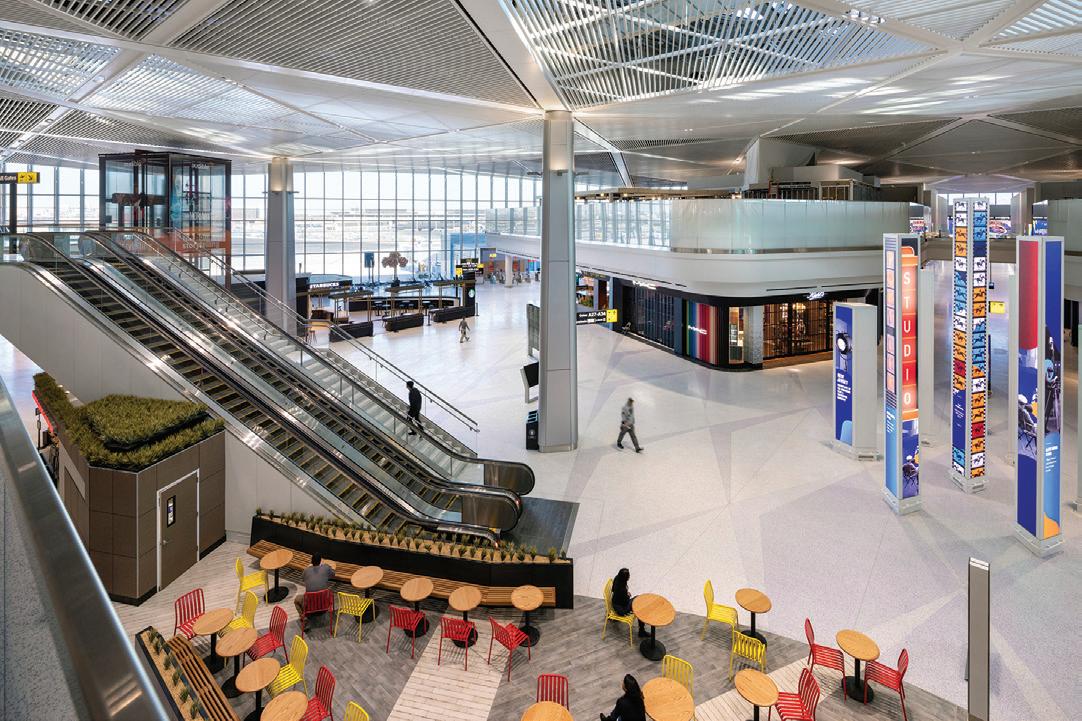
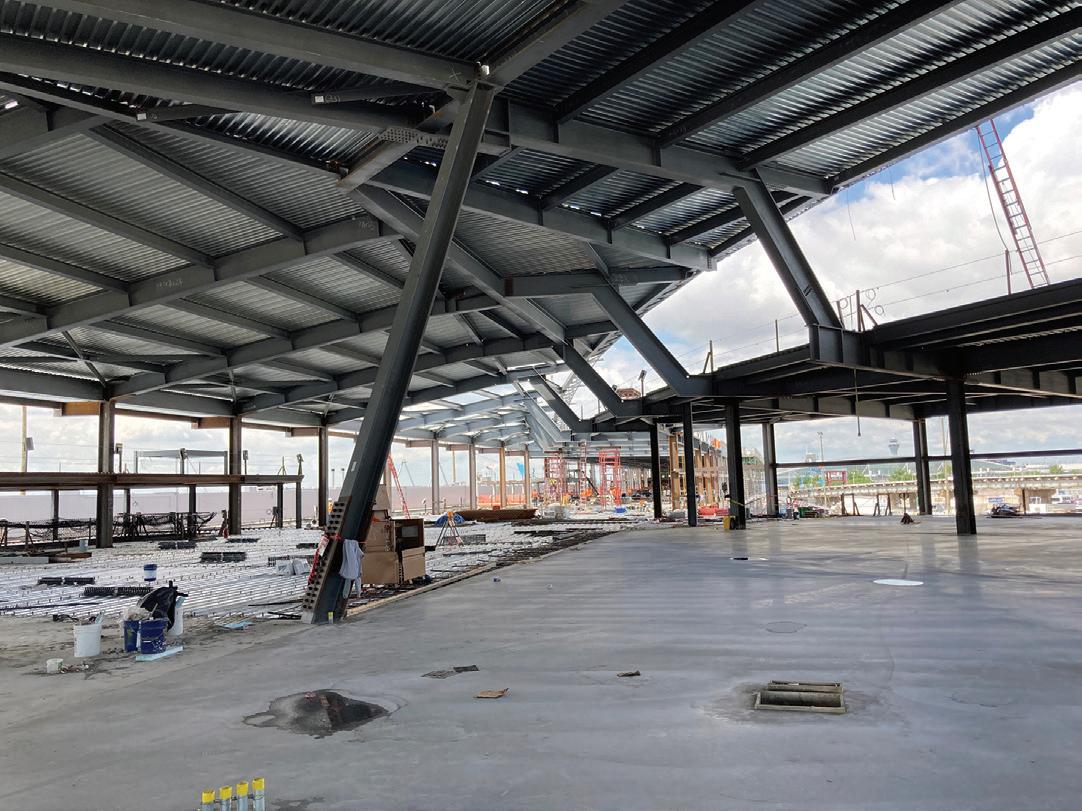
Newark Liberty International Airport’s new Terminal A replaced the existing terminal with a new 1-million-square-foot, 33-gate domestic terminal. The structural team was tasked with minimizing the number of columns in the terminal building to create a large, open space. With 150-foot-long roof spans using a diagrid system of tapered plate girders, the terminal features a sloping ceiling that expresses the structural members and allows natural light to enter. In addition to the terminal building, the project includes 1,000 feet of new bridge structures approaching the departures level, a 660-foot-long pedestrian bridge to a new car rental facility. The structural team designed a substructure utilizing over 3,000 De Waal drilled displacement piles.
CHICAGO | HOK
Finalist
O’Hare’s expansion consists of a new 300,000 square foot east concourse and expanded headhouse. The headhouse expansion sits atop the existing sub-grade customs facilities; the need for continuous operation drove the selection of framing that would not require modifications to the original building foundations. A unique parabolic clerestory is defined by the interstitial space between the low and high portions of a series of bent steel girders that span 67 feet across the concourse width. To rationalize the complex east concourse roof geometry, HOK’s engineers developed a Grasshopper parametric script that defined a series of intersecting planes and two singly-curved tilted barrel vaults to generate the appearance of a curving roof structure.
Balboa Botanical Building
SAN DIEGO, CA | DEGENKOLB ENGINEERS
SAN FRANCISCO, CA
Structural Design Firm: Simpson Gumpertz & Heger
General Contractor: Shimmick Construction
The 58-story Millennium Tower in San Francisco, one of the city’s tallest residential buildings, was designed with a foundation of 990 pre-stressed precast concrete piles. By 2016, the building had settled 14 inches and was tilting. This led to a lawsuit from homeowners, who sought a $300 million foundation upgrade requiring 300 piles installed to rock through the existing 10-foot mat. SGH devised a new plan to install 55 piles drilled to rock along the north and west perimeters. New pile installation resulted in further settlement and tilting. Under public scrutiny, the project team determined the issue was due to the installation technique. They modified the procedure and reduced the number of new piles to 18, with additional load jacked onto each. After 18 months of monitoring, the project has been deemed a success, with the building’s settlement arrested and gradual tilt recovery occurring.
SANTA MONICA, CA |TIPPING
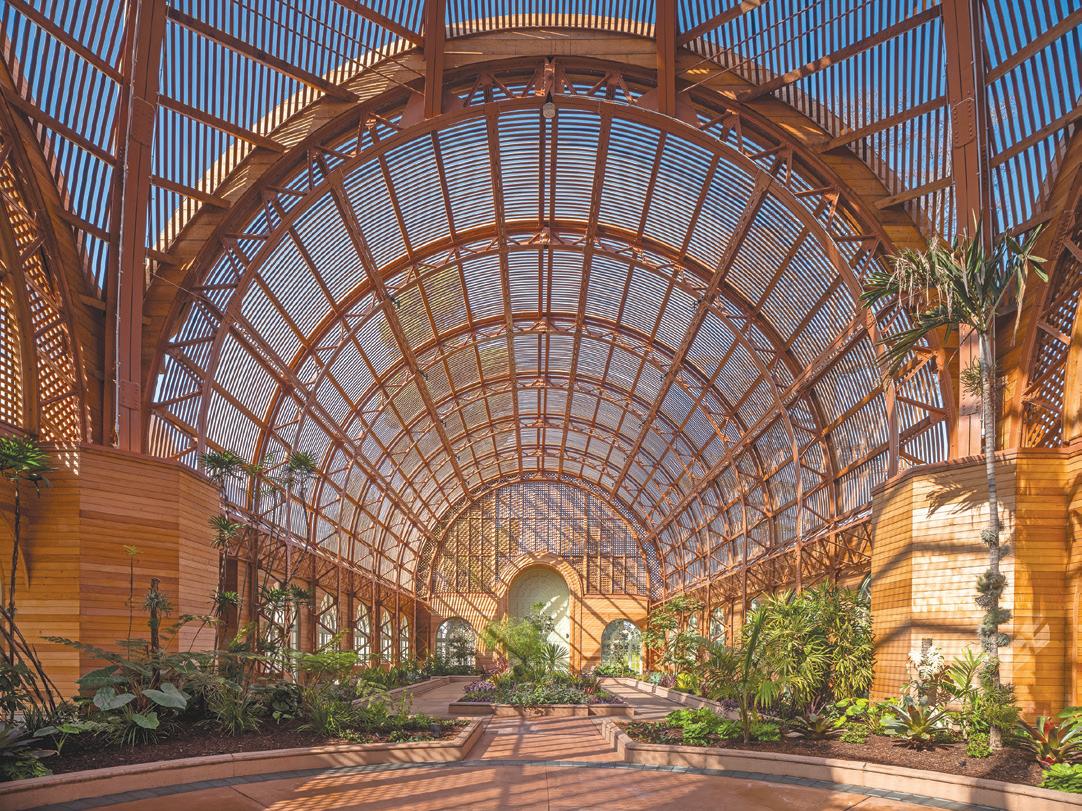
The Balboa Botanical Building, originally constructed in 1915, is composed of exposed steel three-hinge arch trusses which support wood purlins and wood lath. In 2021, a design-build team embarked on a project to fully restore the building to its original historic character and repair decades of deterioration. The project included new solutions to repair and replace structural framing and reconstruction of the historic arcade that wraps the building. The existing truss hinge base which had previously been cast into concrete as a repair strategy was exposed, requiring shoring, removal, and replacement of the bottom 10 feet of the steel trusses. After nearly 4 years of design and construction, the project was completed at the end of 2024.
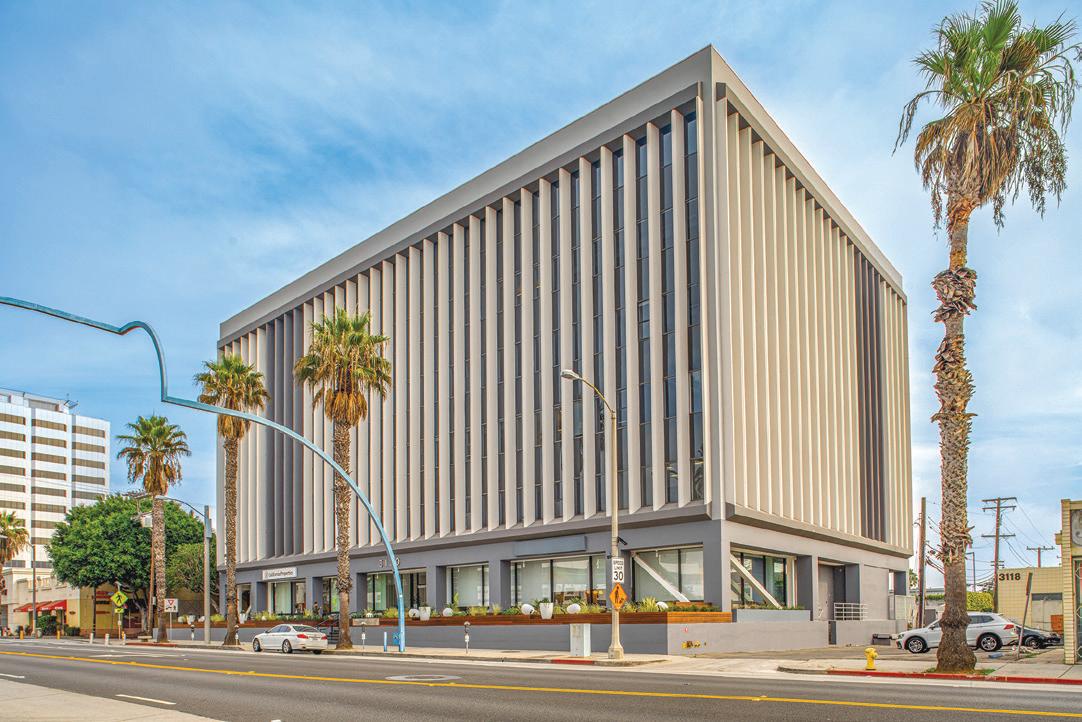
3130 Wilshire, a 1968 six-story office building in Santa Monica, was subject to the city’s Mandatory Nonductile Concrete Ordinance. The building’s lateral system does not resemble the layout or proportions common in modern buildings. However, the key to this project’s success lies in recognizing the original construction of repetitive exterior concrete fins actually creates a robust and ductile seismic system in need of only localized improvements. Using nonlinear analysis, Tipping developed a way to “harvest the strength and ductility” of the existing structure using six Buckling Restrained Brace frames at the perimeter of level one. The result was a significantly more resilient building for a fraction of the initial assessment, saving substantial costs over the conventional approach.
General Medical Center GOLDEN, CO
Structural Design Firm: Martin/Martin, Inc.
Architect: HDR
General Contractor: Barton Malow Builders + Haseldon Construction
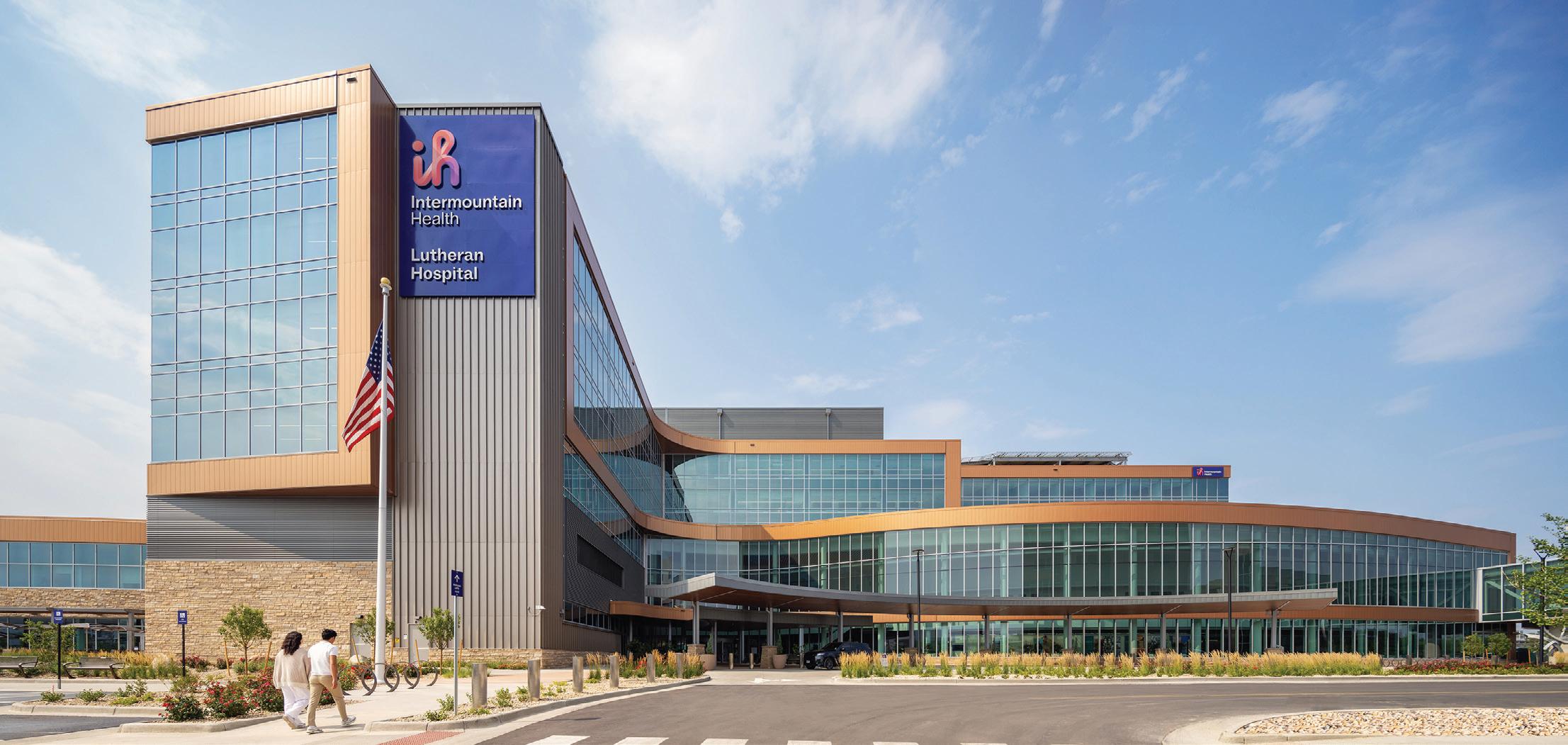
Intermountain Health Lutheran Medical Center represents a new standard in fast-track healthcare construction, combining high-performance structural design, material innovation, and interdisciplinary collaboration. The seven-story, 660,000-square-foot facility was delivered on an accelerated schedule, moving from schematic design to completion in less than four years. Martin/Martin’s engineering team used innovative structural systems to cut four months from the construction schedule. The hallmark innovation was the use of shotcrete core walls supported by core wall frames. These frames housed leave-in-place formwork and allowed steel erection and core wall construction to proceed simultaneously. The result was quicker erection of the primary structure, improved safety, and fewer site coordination conflicts. Additional innovations included field-welded anchor systems, erection-optimized steel framing, and phase-sequenced steel packages. The completed hospital reflects a highly constructible, material-efficient solution delivered with speed and precision.
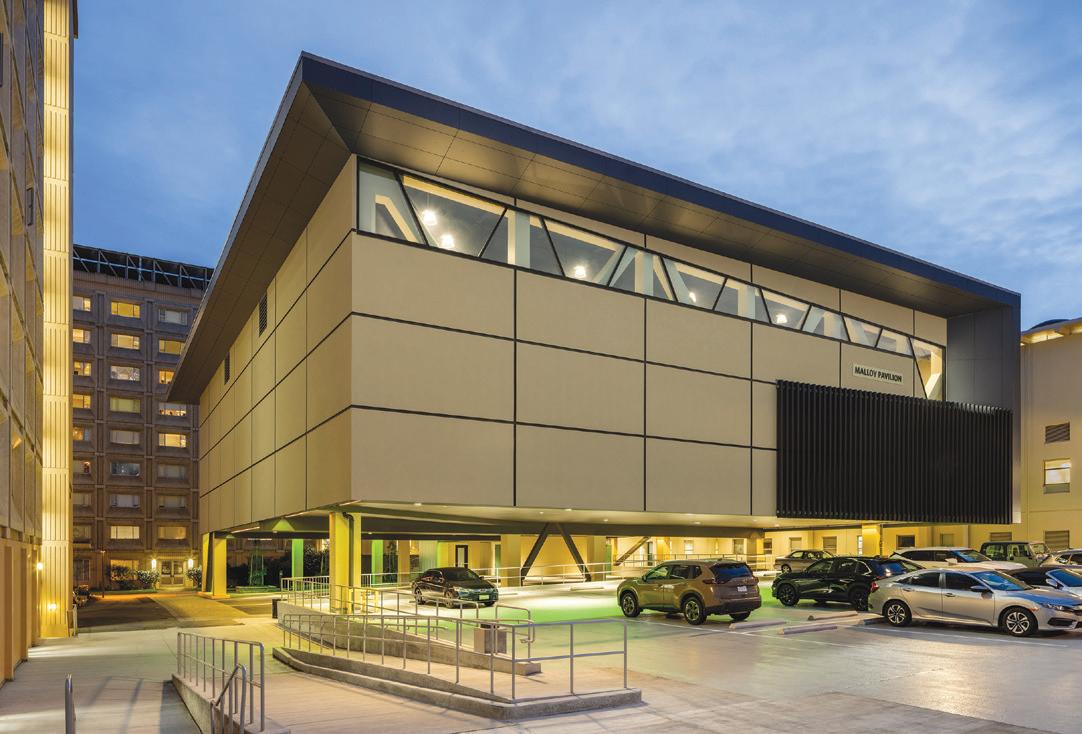
The University of San Francisco’s new Malloy Pavilion faced significant site challenges due to its location above a 1965 concrete parking garage. Given the site constraints, the project could not be designed as a conventional building using typical engineering solutions. To ensure that the parking garage was not affected by a new building above, only one steel frame and one stand-alone steel column penetrate through the garage levels below. The new Pavilion extends beyond the footprint of the existing parking garage, allowing robust perimeter steel frames to occur outside the garage structure. Minimal steel columns over micropile foundations provide vertical support, creating the appearance of a floating structure.
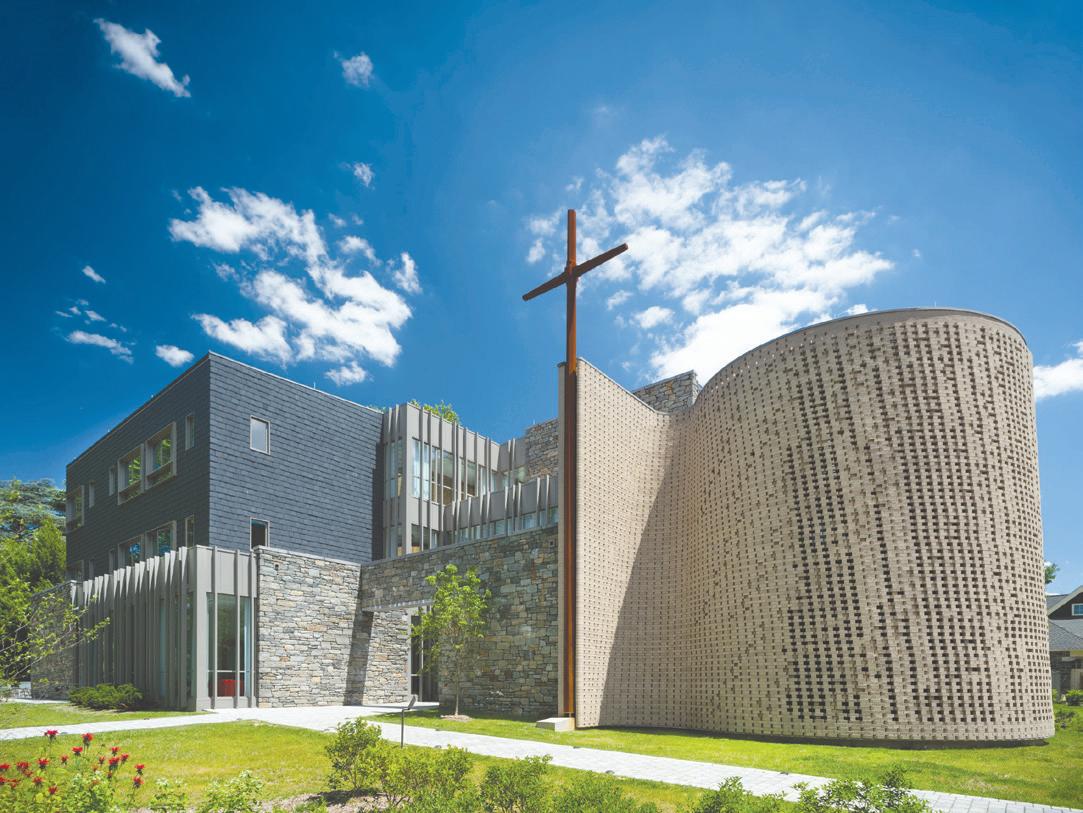
The three-story Arrupe Hall combines elegant architectural expression with complex structural coordination. Keast & Hood’s structural design uses a hybrid steel and wood system. A key challenge was integrating a lateral system within the open-plan layout. Load-bearing walls that stepped back along the facade utilized transfer beams and panelized shear walls. At the heart of the building, a three-story atrium features a monumental wood-and-steel stair with a flowing guardrail. The chapel’s brick screen wall stands as the project’s most innovative structural feature. Rising 30 feet, the curving and battered singlewythe wall is built with custom hollow-core bricks and reinforced with concealed stainless-steel rods. A hidden galvanized steel armature provides lateral support while allowing for thermal movement.
ARLINGTON, TX
Structural Design Firm: schlaich bergermann partner
Architect: Rafael Viñoly Architects
General Contractor: Linbeck Group
The new museum by Rafael Viñoly Architects is dedicated to the legacy of the 3,500 recipients of the Medal of Honor. The primary Exhibition Hall is housed in a striking, aluminum-clad volume, elevated 50 feet above the entry rotunda. The Exhibition Hall is supported by five tapering precast mega-columns, each hollow to accommodate mechanical, electrical and plumbing systems routed through their cores. Atop each column sits a spherical bearing beneath a massive steel supernode that supports built-up box beams forming the floor and primary structural frame. The interior of the Exhibition Hall is entirely column-free, aside from five inner service-ring columns. The outer roof members are supported by a perimeter belt truss. Access to the elevated structure is provided by a pair of intertwining spiral staircases suspended from the floor above by seven tension rods at the inner edge of each stringer.
BOSTON, MA |LEMESSURIER
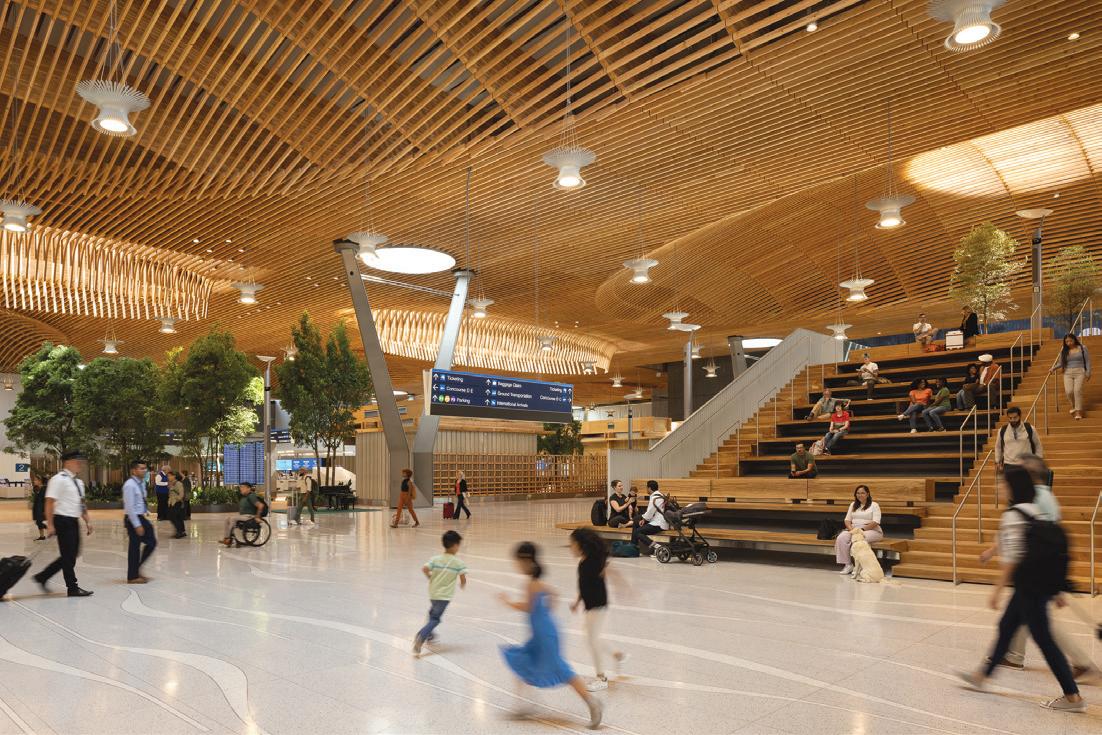
The $2 billion Terminal Core Redevelopment project provides a completely rebuilt open concept terminal where 670 existing columns at tight grids were replaced with 34 new columns supporting a new 1,000 feet x 400 feet hybrid mass timber roof. A long-span, 1,000-feet by 400-feet (9-acre) hybrid mass timber roof was designed as a series of modules to cover the terminal, supported by 34 Y-shaped steel columns that provide both gravity and lateral support with seismic isolation bearings at the roof connection for seismic resilience. The remaining portion of the existing structure was seismically retrofitted. The design exceeds code requirements for seismic resilience, achieving Immediate Occupancy performance after a Magnitude 9 earthquake on the Cascadia Subduction Zone.
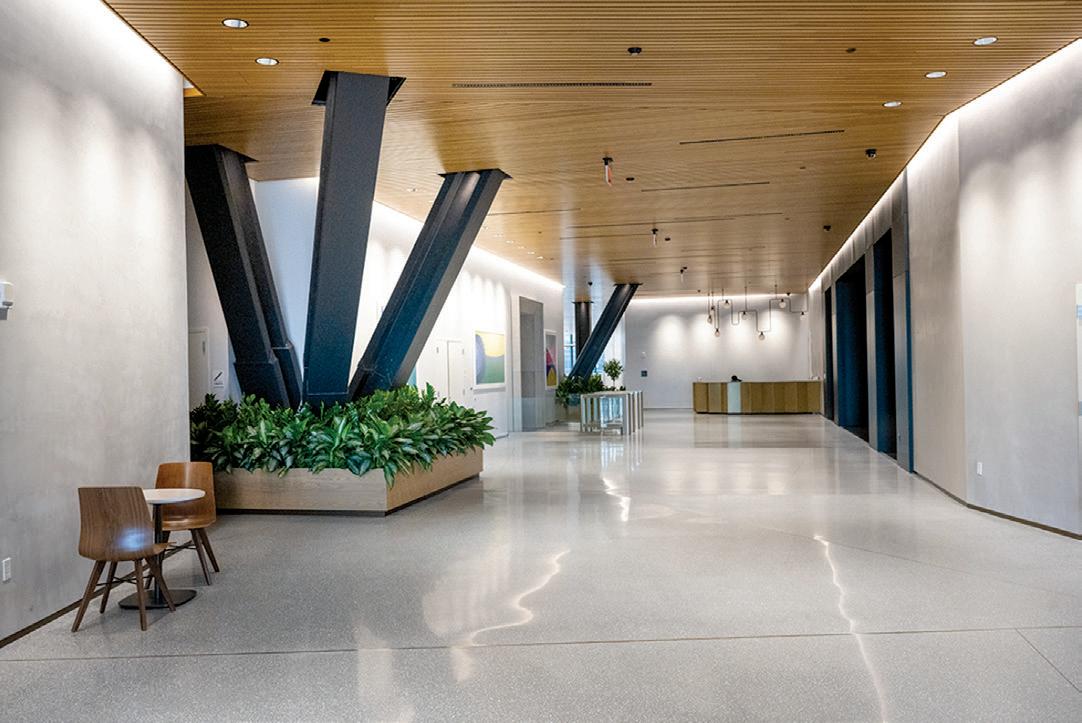
400 Summer Street is designed to rise above the complex underground infrastructure of the Central Artery Tunnel. Originally intended to support a five-story building, the site was reimagined decades later as a high-rise tower. The structural team designed a solution to prevent this 630,000 square foot tower from overloading the existing infrastructure and keep the asymmetric structure plumb as it was erected. Transfer girders were used to align the building grid with existing foundation. Sloping columns shed excessive tower loads away from the foundation elements. A multi-story Vierendeel truss transfers loads from the perimeter tower columns to the sloping columns. Lateral camber counterbalances the lurching effect of the asymmetrically positioned sloping columns.
SEATTLE, WA
Structural Design Firm: KPFF Consulting Engineers
Architects: Power Engineers (Substation Electrical Design and Prime Consultant) and NBBJ (Architect)
General Contractor: Walsh Construction
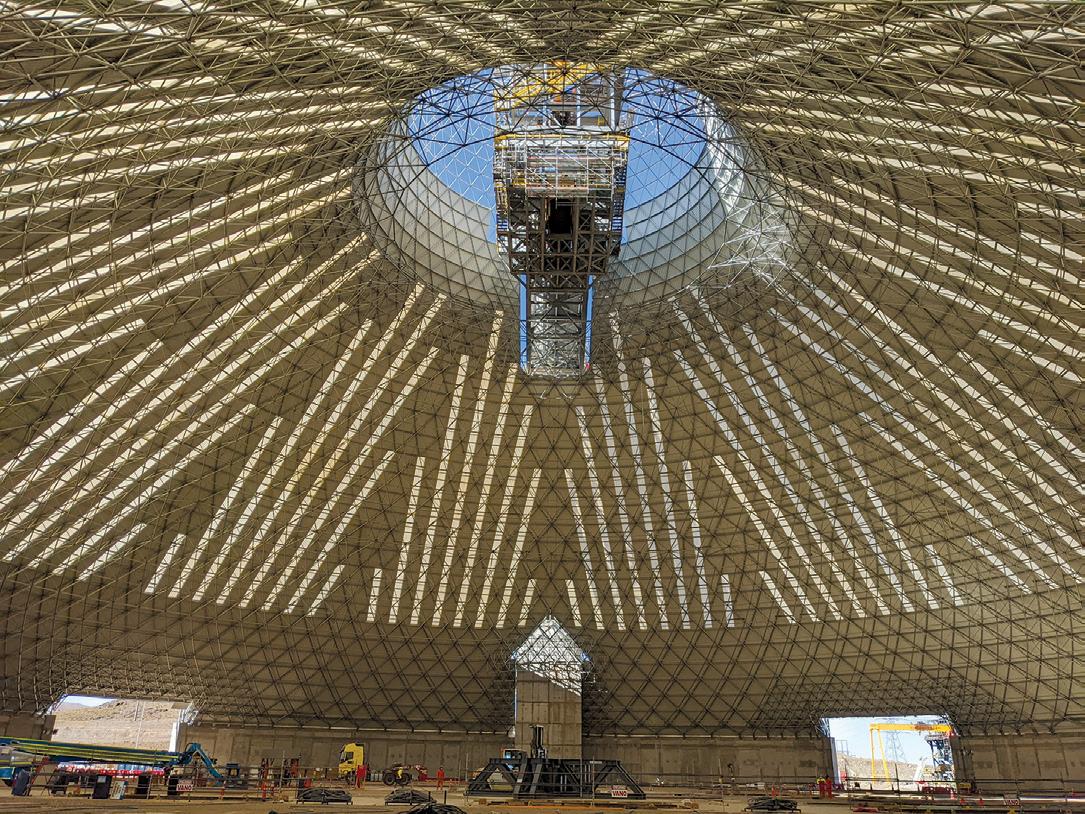
The dome, completed in 2022 for Teck’s Quebrada Blanca Phase 2, spans 124 meters and houses crushed copper ore and a conveyor at 4,300 meters elevation. Geometrica designed a hyperbolic doublelayer frame, assembled at grade and lifted using a single hydraulic tower to enhance safety and accelerate construction. The dome’s hyperbolic geometry naturally creates a “gazebo” at the dome’s apex, enclosing the feeding conveyor delivery point. The structure covers nearly 10,000 square meters without internal supports and was enclosed with corrosion-resistant cladding during assembly. The result is a durable, efficient enclosure—engineered for extreme weather and tailored to support critical operations at one of South America’s highest-altitude mines.
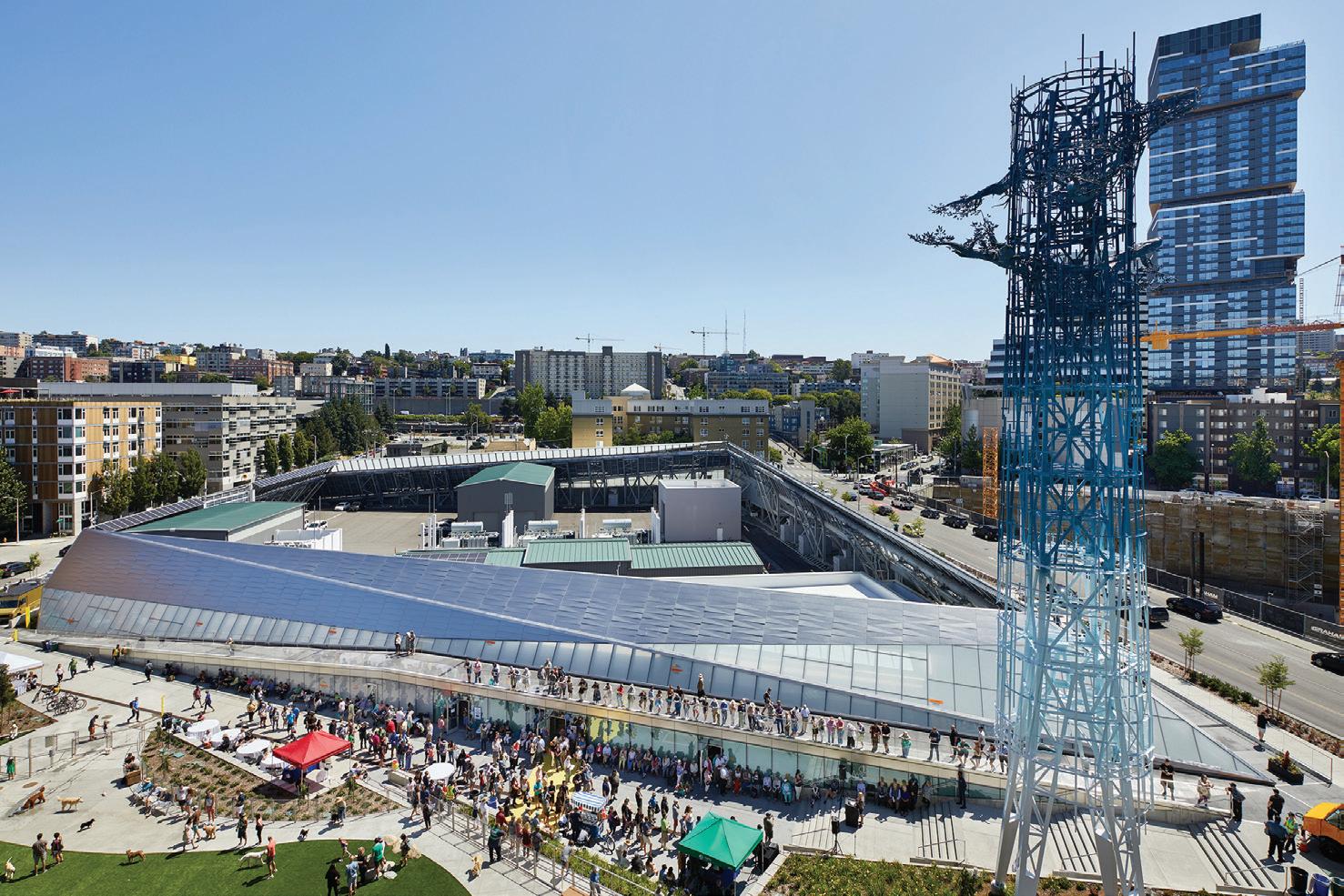
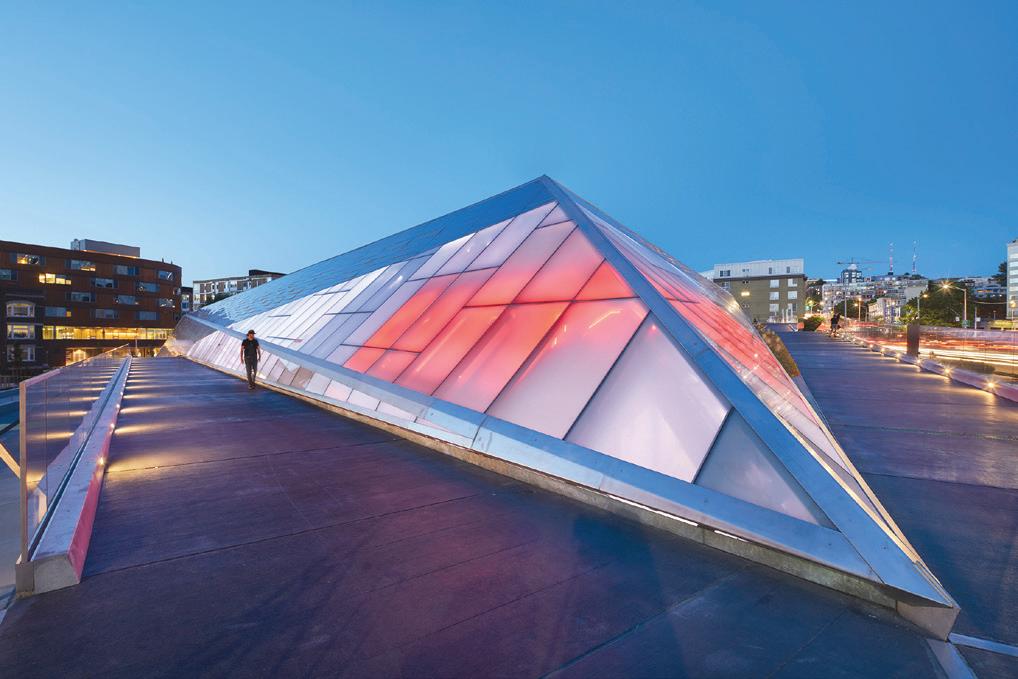
Seattle City Light’s Denny Substation sets a new urban substation standard with its intricate non-building structure. KPFF’s team designed a complex cantilevered screenwall to protect the public from high-voltage equipment while adding visual appeal. This structure features an elevated park and a 1/4-mile walkway supported by innovative box-truss towers. Advanced modeling software aided in designing prefabricated components. A deep foundation system coordinated below-grade utilities, incorporating temporary excavation shoring piles. The highly sensitive existing HPFF transmission line, over which the substation was built, had to remain energized during construction activities. KPFF designed an innovative temporary reverse-shoring system and supportive structures and considered how the permanent structure could be sequenced to protect the line throughout construction and
GEORGETOWN, WASHINGTON, DC | MCMULLAN & ASSOCIATES, INC.
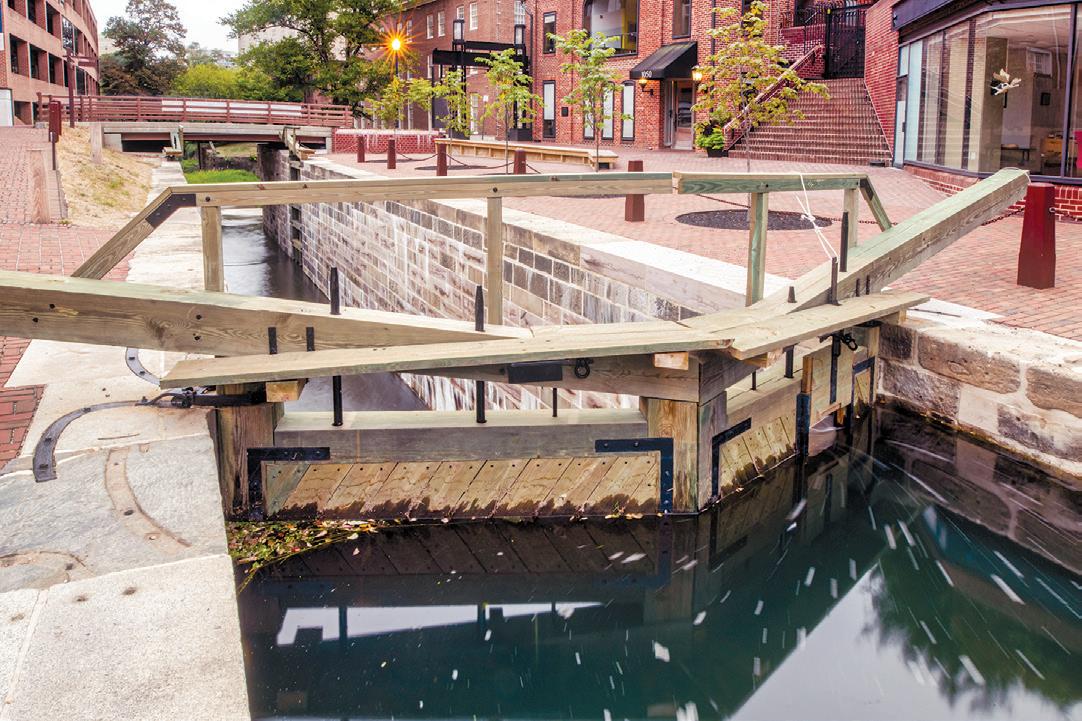
The C&O Canal features four locks to transition barges between water levels. McMullan performed the structural engineering for two 1832 stone masonry locks between 30th and 31st Streets NW. Lock No. 3 was fully reconstructed due to wall tilting from a failing timber foundation; its wooden gates were removed, stone walls disassembled and stored, and a new concrete foundation was laid. The original stones were then reassembled. Lock No. 4 underwent repairs for water leakage and deteriorated timber gates, including stone replacement, repointing, and the replacement of wood gates and hardware.
LOMA LINDA, CA
Structural Design Firm: Arup Architect: NBBJ
General Contractor: McCarthy Building Companies
At 1,000,000 square feet and 260 feet tall, the Dennis and Carol Troesh Medical Campus is currently the tallest hospital in California. As the hospital is situated only 0.6 miles from the San Jacinto fault and 3.1 miles from the San Andreas fault, this critical care facility faces significant earthquake risk and the highest seismic demands of any hospital in California. To ensure the highest level of earthquake resilience and hospital safety, Arup implemented an integrated state-of-the-art structural system consisting of 126 triple-friction-pendulum isolators, 104 nonlinear fluid viscous dampers, buckling restrained braces and SidePlate moment frames. A nonlinear performance-based design, cloud-based digital tools and LS-Dyna software were used to analyze, design, and permit the hospital in a high seismic region under the stringent requirements of OSHPD/HCAI. The state-of-the-art facilities, improved services, earthquake-ready construction, and increased capacity for care will enable Loma Linda to serve the community better for generations to come.
VANCOUVER, BC, CANADA | FAST + EPP
The Hive is a 10-story mass timber office building in Vancouver, BC, and the tallest timber braced-frame structure in North America. The Hive replaced a conventional concrete core with a braced timber system, significantly reducing embodied carbon. The structure’s seismic strategy centers on a hybrid lateral system of perimeter timber braced frames and interior CLT shearwalls with supplementary energy dissipating devices. At select interior locations, balloon-framed CLT shearwalls anchor the building around the elevator and stair cores. A key innovation is the integration of Resilient Slip Friction Joints, a performance-based seismic solution from Tectonus. These devices, installed at the base of timber braces and ends of shearwalls, dissipate seismic energy through controlled self-centering behavior, preserving structural integrity.
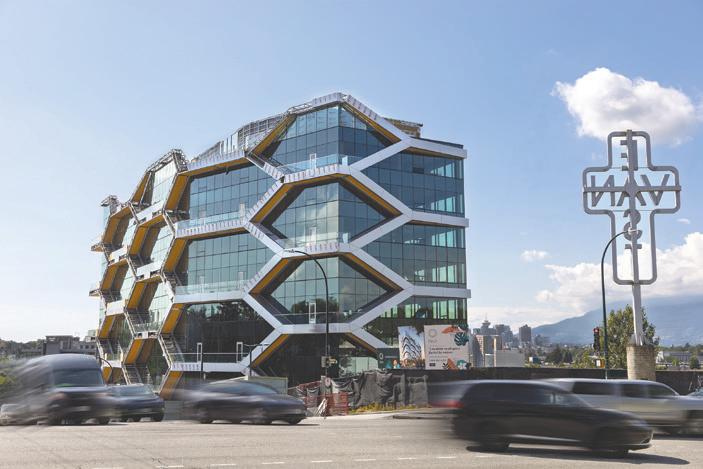
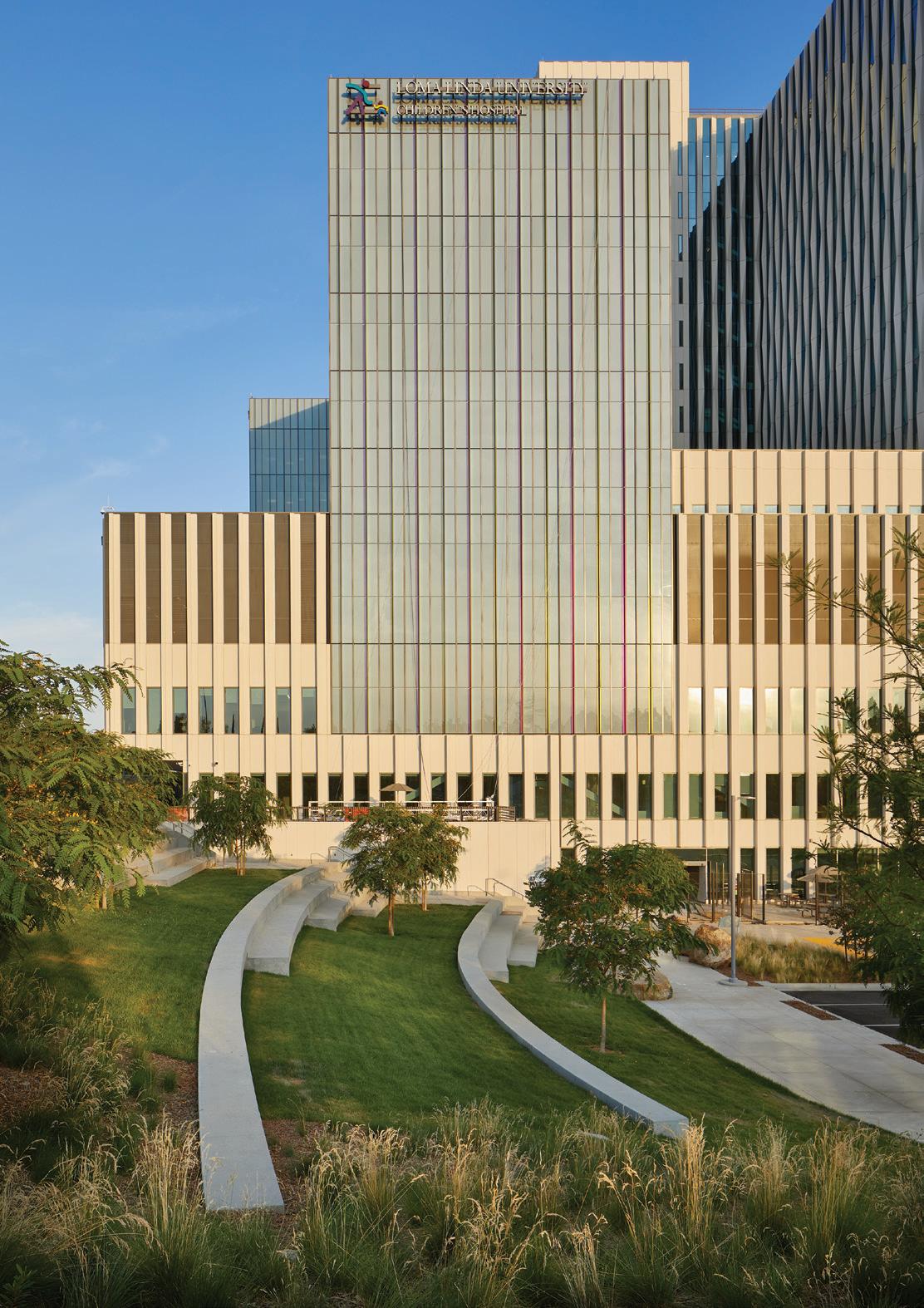
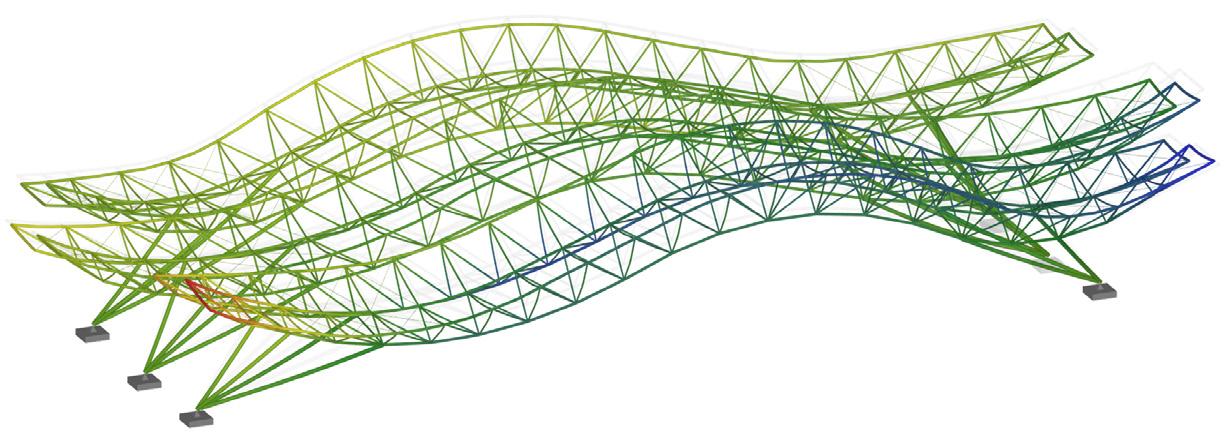

Structural Design Firm: Entuitive
Architects: CookFox Architects (Design Architect) and Adamson Associates (Architect of Record)
General Contractor: Turner Construction
Google’s New York headquarters building is an example of creative engineering and adaptive reuse on Manhattan’s West Side. Originally built in 1934 as a freight terminal for the rail lines that are now the High Line, the structure was transformed into a 1.3 million square foot, 12-story office building. The heart of this transformation was a first-of-its-kind vertical application of segmental precast post-tensioned concrete cores, a technique adapted from bridge construction. Over 200 massive C-shaped segments were fabricated offsite, transported to Manhattan, rotated on a custom tilt-table, and stacked without joints. This significantly accelerated the schedule and improved safety and precision. Designing a new lateral system for the overbuild while preserving the existing podium added complexity, requiring careful coordination, sequencing, and analysis without compromising the historic structure. The result is a creative, high-performance workplace that sets a new standard for building construction innovation and proves what’s possible when past and future architecture are seamlessly integrated.
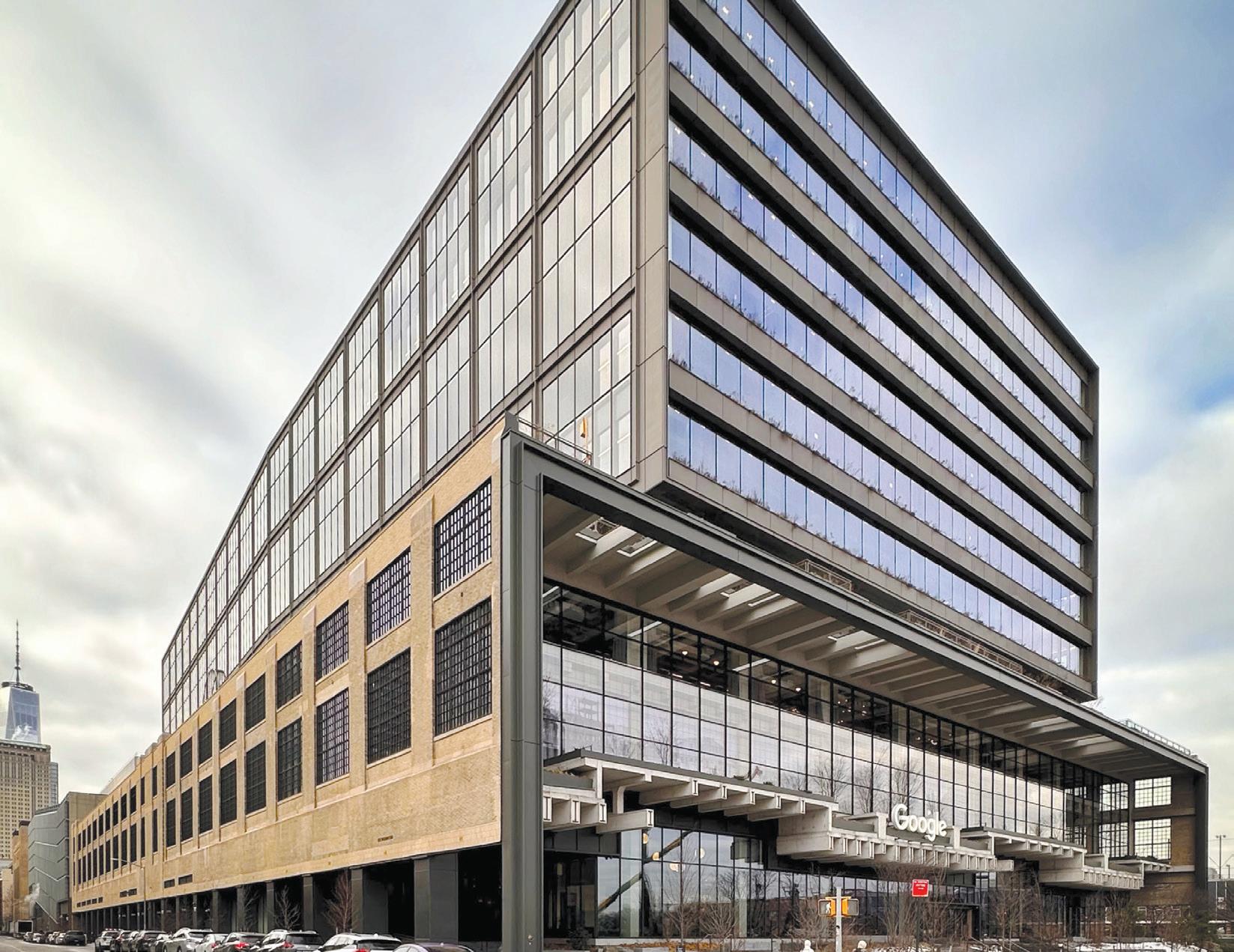
Redevelopment of One Madison Avenue transformed a mid-20th century office building into a contemporary office tower. The existing 16-story building with an 18-foot column grid was not suitable for modern office layouts and not conducive to the alterations that would be needed. The absence of a robust lateral-force-resisting system also required reinforcement of hundreds of connections. The solution utilizes a new concrete core to laterally support the entire building while also allowing the elevators and stairs to be upgraded in capacity. The existing core of the 10-story podium was demolished, creating a 65-foot by 185-foot well, within which the new concrete core was constructed. Additionally, four columns south of the core and nine east of it were increased in size. Architecturally expressed steel transfer trusses sit atop the existing podium, bearing on these mega-columns and support an additional 18 levels of steel framing
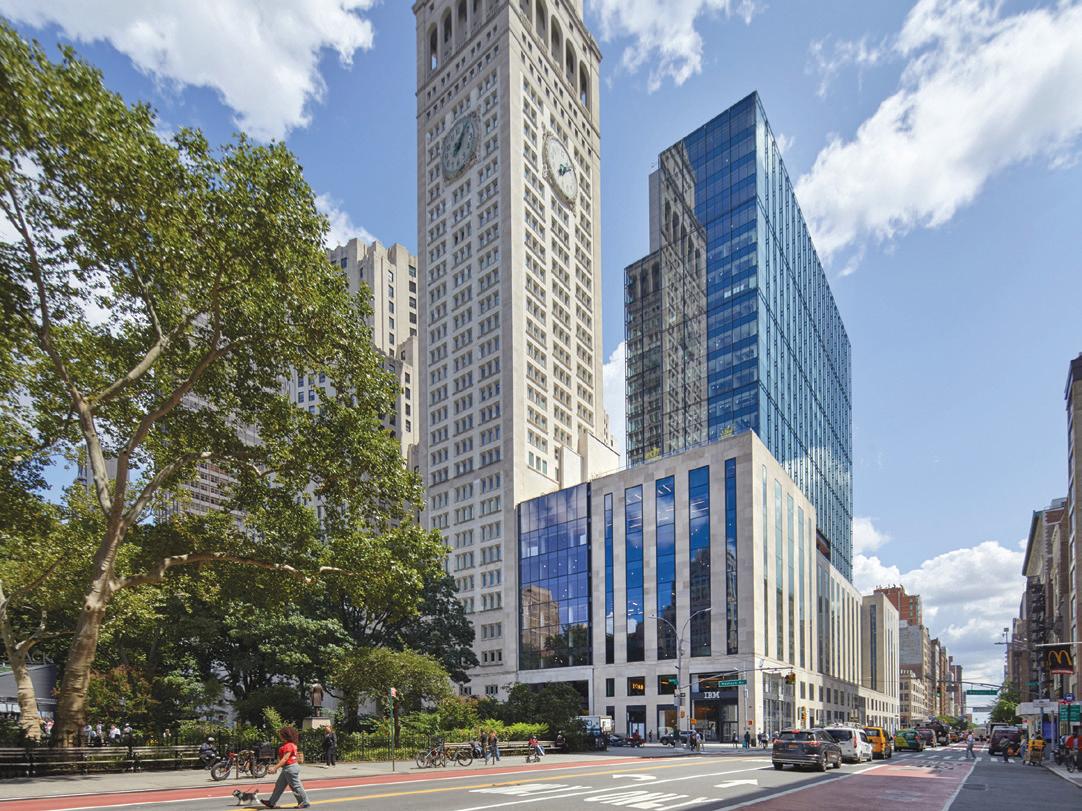
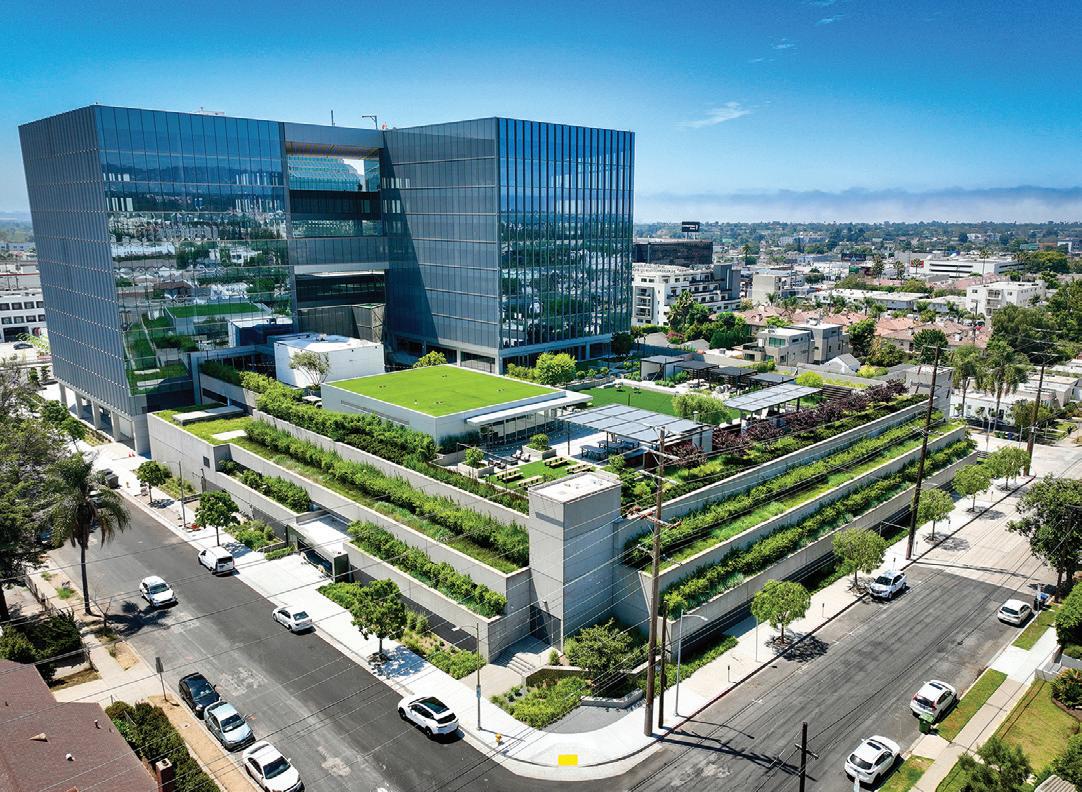
The former Trident Center was originally two 10-story towers along with a parking structure. All three structures are seismically separated and sit above two levels of subterranean parking. The structural system consists of concrete over metal deck floors supported by steel wideflange beams and columns. The lateral system utilizes pre-Northridge moment frame connections. The renovation added 115,000 square feet by extending elevated floors at the corners of the existing floor plates, introducing multi-level bridges connecting the two towers, and increasing both towers from 10 to 11 stories. These additions in area and mass triggered a full seismic retrofit. The result was the first high-rise steel moment frame building in the City of Los Angeles to undergo a seismic retrofit using ASCE 41. ASCE 41 Tier 3 linear dynamic procedures were utilized to evaluate and design the retrofit. This approach ensured compliance with performance criteria while accommodating the architectural vision.
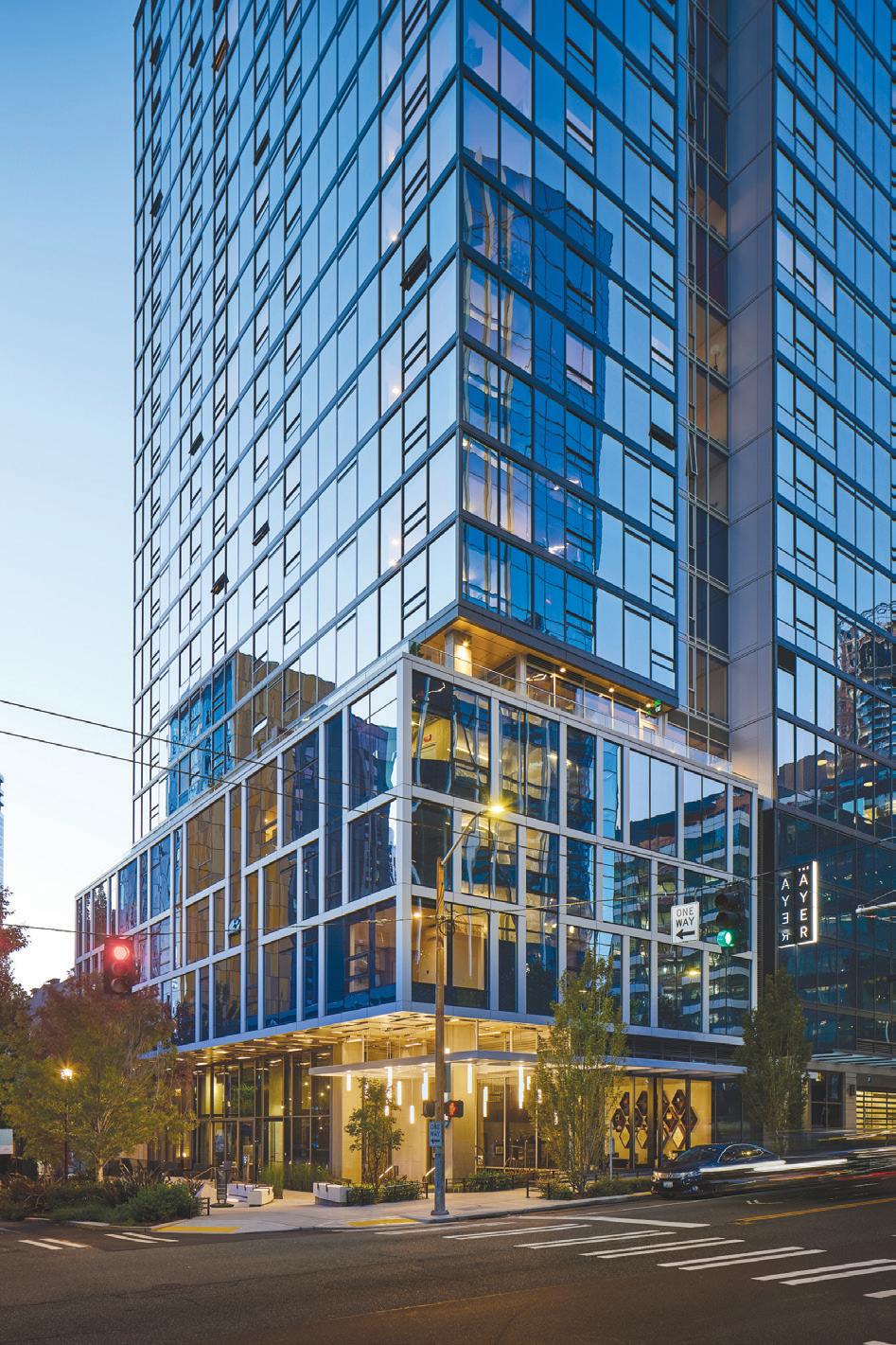
SEATTLE, WA
Structural Design Firm: CKC Structural Engineers
Architects: Weber Thompson
General Contractor: Holland Partner Group
The Ayer is a stunning new 45-story residential tower that adds a dynamic vibe to the Seattle skyline. Completed in December 2023, The Ayer’s construction was under budget and ahead of schedule. The Ayer’s structure is cast-in-place concrete with post-tensioned slabs and a shear wall core for seismic and wind resistance. The use of PT allowed long slab spans with perimeter cantilevers of twelve feet. The concentric concrete core utilized Performance Based Design (PBD), with sensitivity studies conducted on wall thickness, concrete strength, and elastic modulus. A unique coupling beam feature was the use of Steel Fiber Reinforced Concrete (SFRC) in lieu of the difficult-to-construct diagonally reinforced beams normally used in high seismic regions. High strength reinforcement reduced steel tonnage, lowering The Ayer’s embodied carbon.
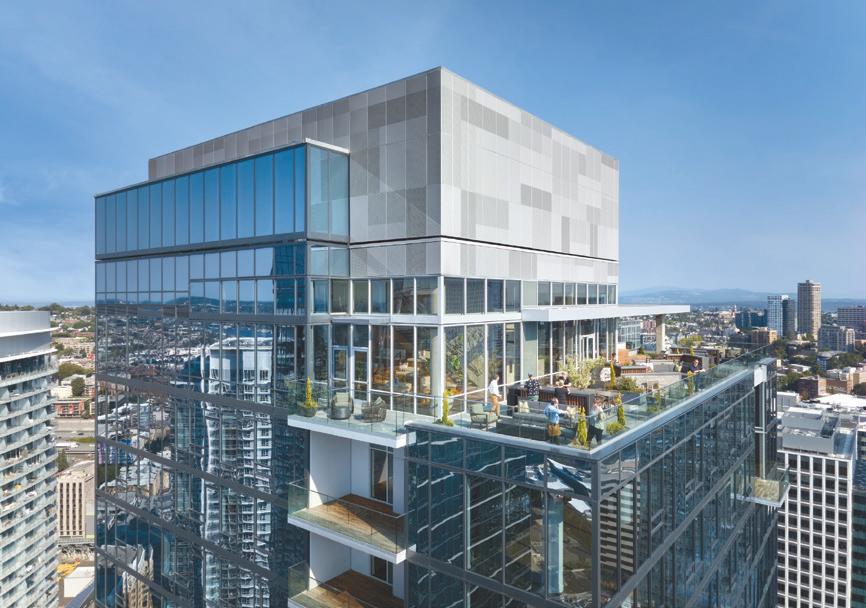
520 Fifth Avenue is a new supertall luxury tower rising 1,002 feet with a slenderness ratio of 1:12. Designed to accommodate multiple setbacks and complex floor layouts, the structure uses reinforced concrete slabs, shear walls, and “walking columns” to support its unique geometry. Setback levels at floors 43, 45, 65, 74, and 76 incorporate thick transfer slabs, while outrigger systems at floors 36, 62, and 89 improve lateral stability. A 500-ton tuned mass damper (TMD) at the top mitigates wind-induced motion. The foundation includes mat footings and 47 deep rock anchors. High-strength concrete (up to 14,000 PSI) supports lower-level columns and walls, tapering at upper levels. A custom steel-concrete composite column was installed at the southeast corner, walked in two directions to accommodate design constraints.
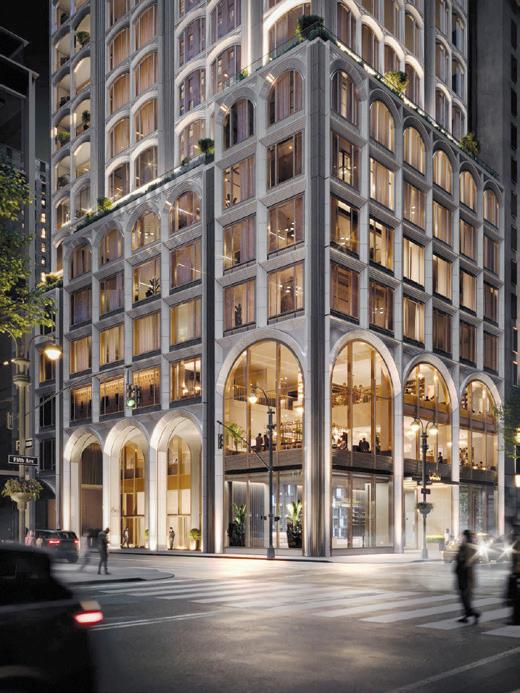
Additionally, Type 1L Portland Limestone Cement was used throughout the structure, saving more than 450 tons of CO2 and making The Ayer a sustainability leader.
NEW YORK CITY | WSP USA BUILDINGS, INC.
With over 450,000 square feet of high-end space, 520 Fifth Avenue is a striking addition to Manhattan’s skyline, combining engineering innovation with luxury living.




TOLEDO, OH
Structural Design Firm: SmithGroup, Inc.
Architects: SmithGroup, Inc.
General Contractor: The Lathrop Company
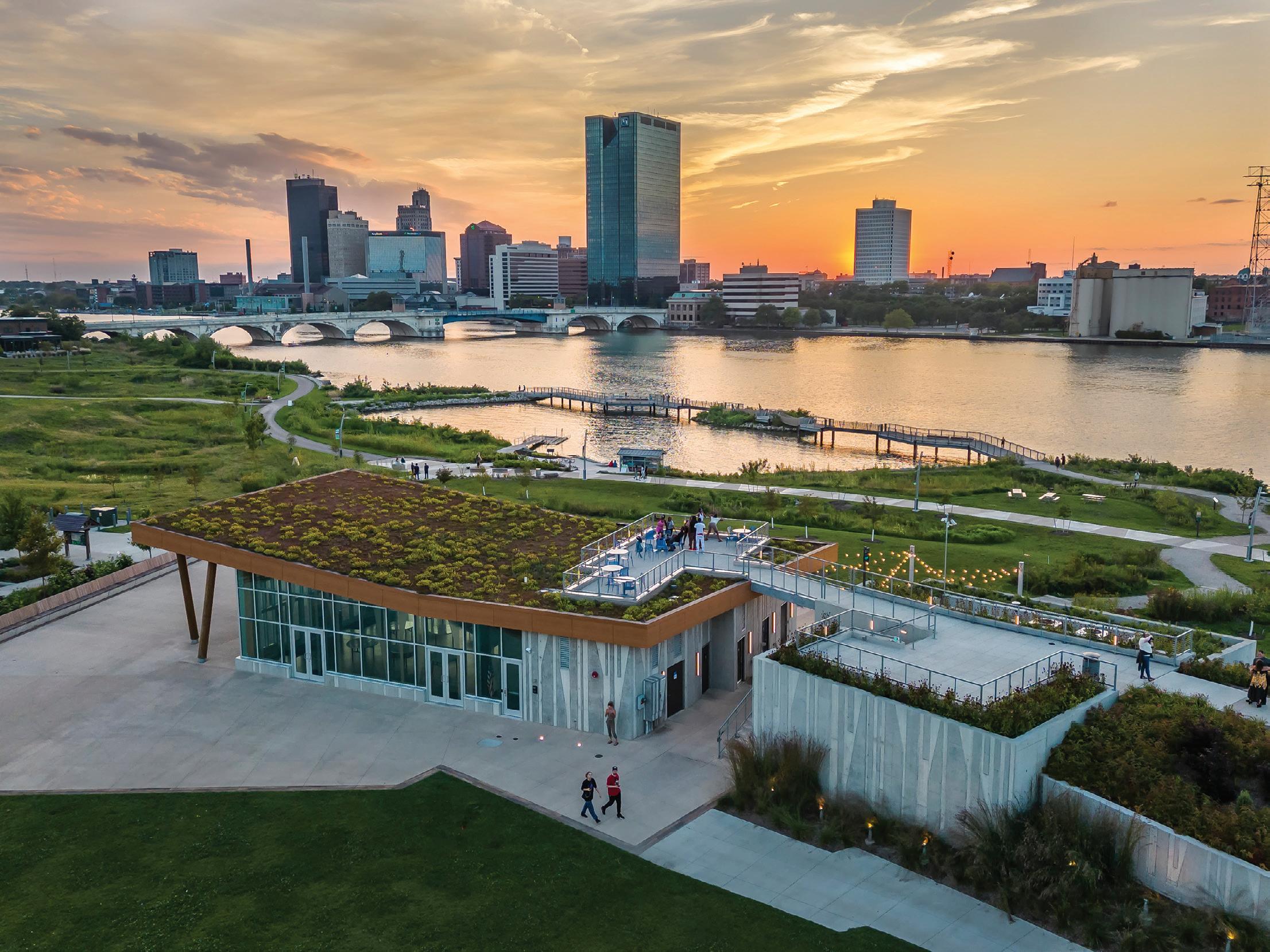
The Glass City Metropark in Toledo revitalizes the Maumee Riverfront with innovative, sustainable design that creates vibrant public space to connect neighborhoods and visitors to recreational opportunities. The project featured several community-serving park structures that each have unique structural engineering elements, including the Market Hall inspired by a forest canopy, the Glass City Pavilion featuring a green roof, and a pedestrian bridge connecting regional trails and neighborhoods. A former marina was transformed into a naturalized cove for kayaking, surrounded by an adventure boardwalk with rope bridges and elevated decks engineered to withstand river conditions. Along the shoreline, the brownfield site was stabilized using sustainable methods like chemical soil enhancement and lightweight fill, avoiding the need to remove fly ash-laden soil. The non-traditional structural engineering design solutions implemented throughout the project stand as an innovative example to successfully transform a brownfield site into a popular regional attraction.
ST. LOUIS, MO | HOK
Energizer Park is the 22,500-seat centerpiece of a mixed-use stadium district in the Downtown West neighborhood of St. Louis. Engineers chose structural steel as the primary material to meet the architectural goals of openness and transparency while also ensuring expedited fabrication and erection. Slender steel columns facilitate this transparent aesthetic. A thin canopy accentuates the overall sense of lightness and provides protection from the elements while letting daylight in. By optimizing the column designs and finding locations to conceal lateral framing in the concourses and back-of-house areas, HOK structural engineers avoided the imposition of perimeter braced frames that would obstruct views into the field from the surrounding area and views out to the city from the seating bowl.
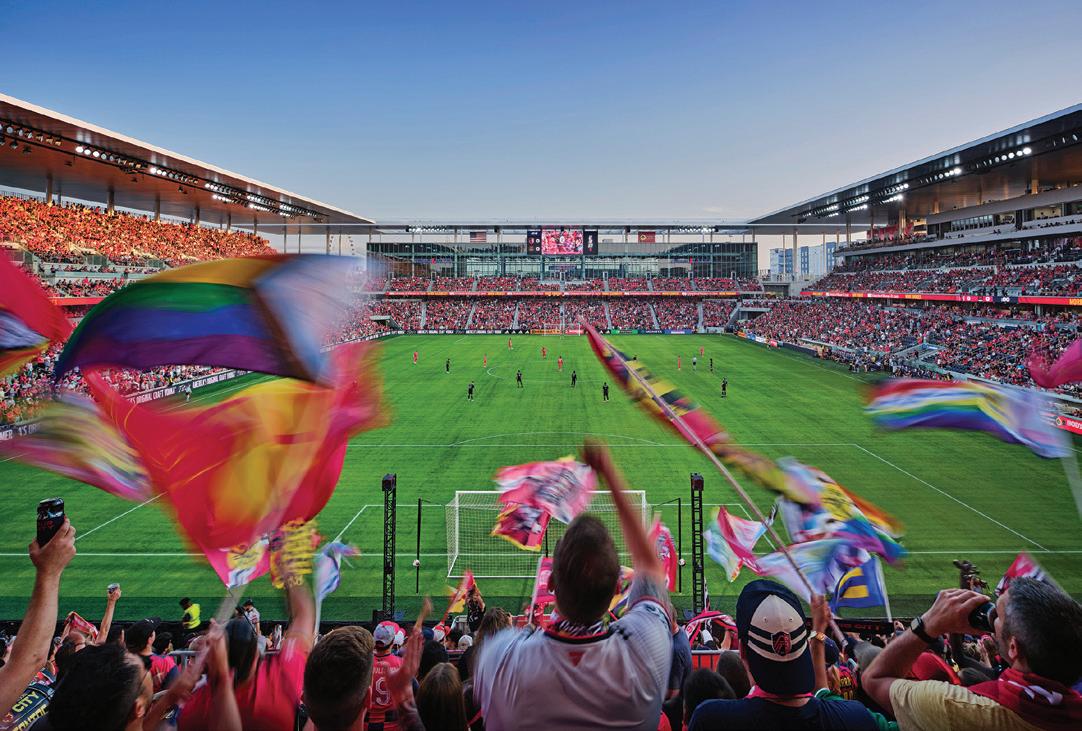
La Nube’s primary framing consists of structural steel with concrete slabs on metal deck, designed to optimize load-bearing capacity while maintaining material efficiency. The lateral system incorporates architecturally expressed braced frames to resist moderate seismic events. Arup’s design for gravity and lateral stability and the intertwining walkways and staircases was based off loads imposed by the climber. The walkways and supporting climber steel, composed primarily of HSS tubes and connected to multiple floors, are designed to resist gravity and lateral loads. The central atrium required long-span structural framing, which was refined through detailed footfall comfort analysis across all exhibit levels. This approach provides flexibility for the museum’s exhibits while
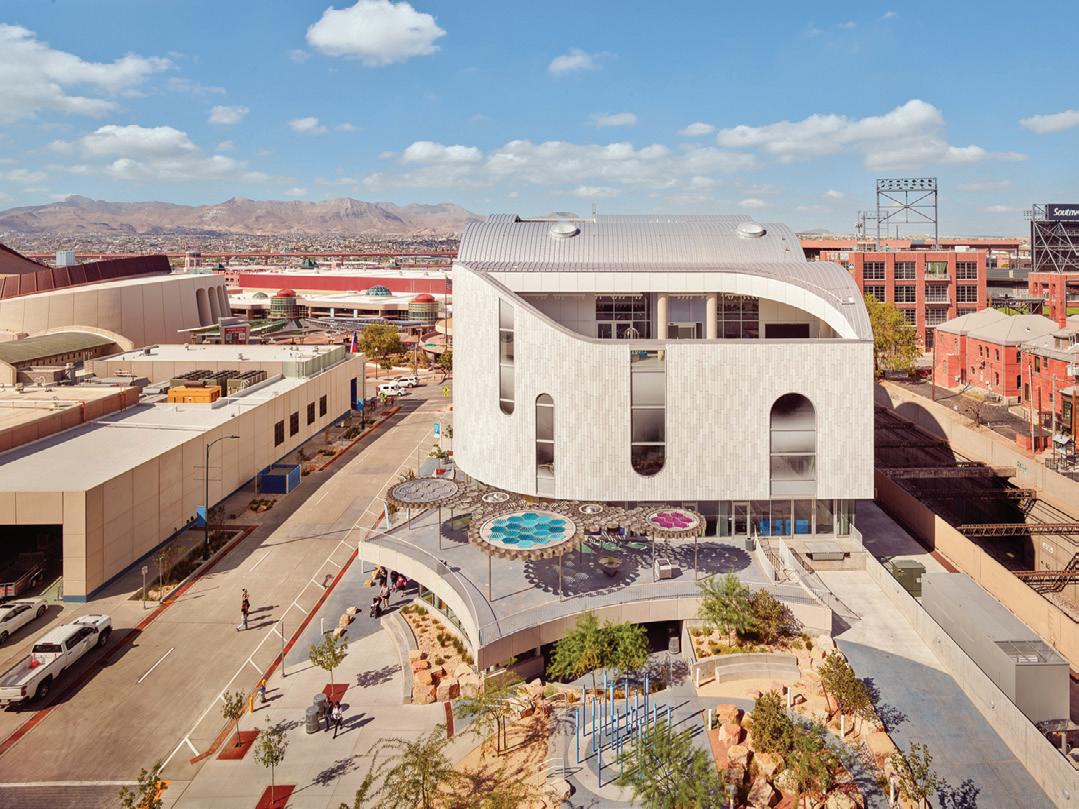
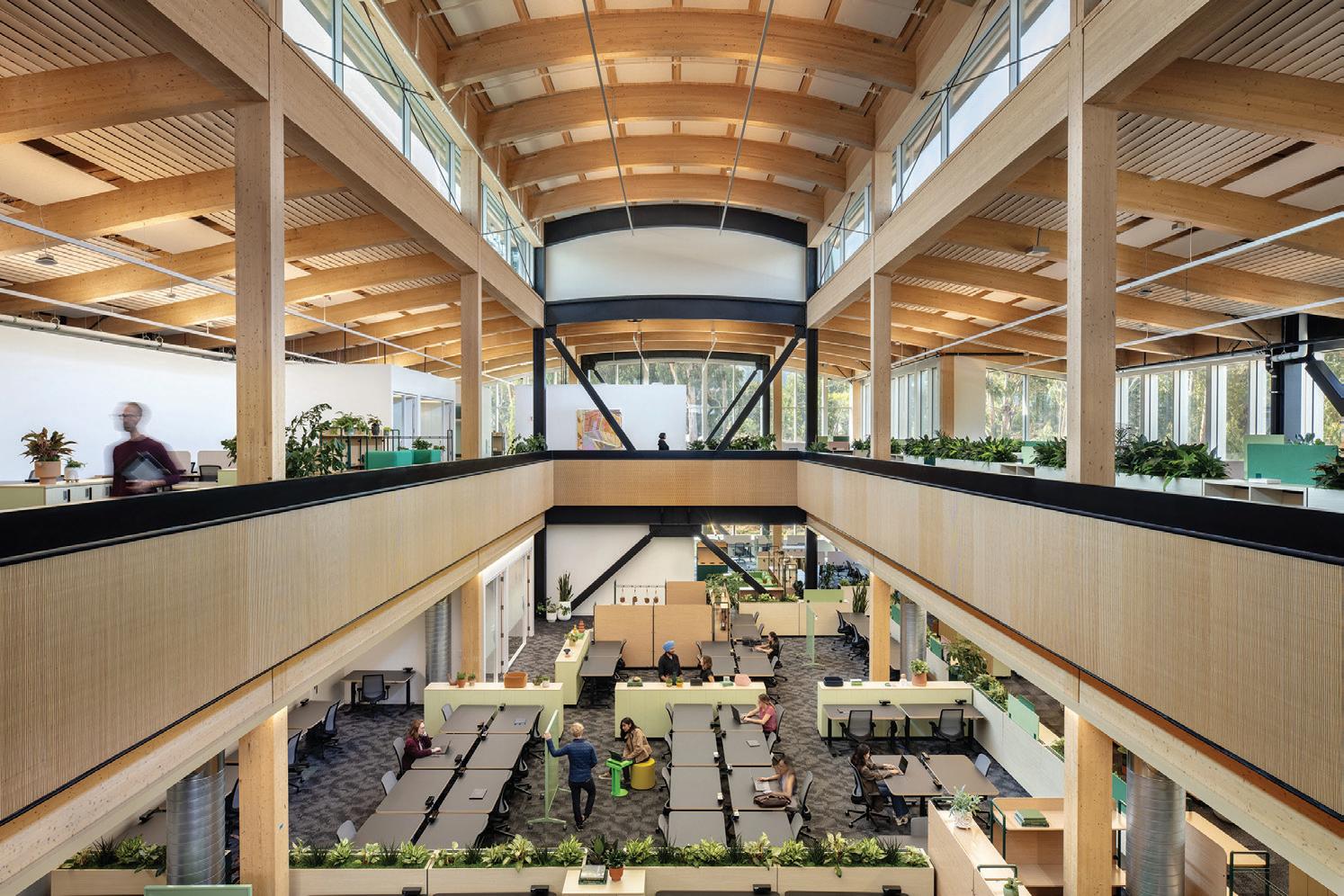
SAN BRUNO, CA
Structural Design Firm: Holmes
Architects: EHDD
General Contractor: McCarthy Building Companies, Inc.
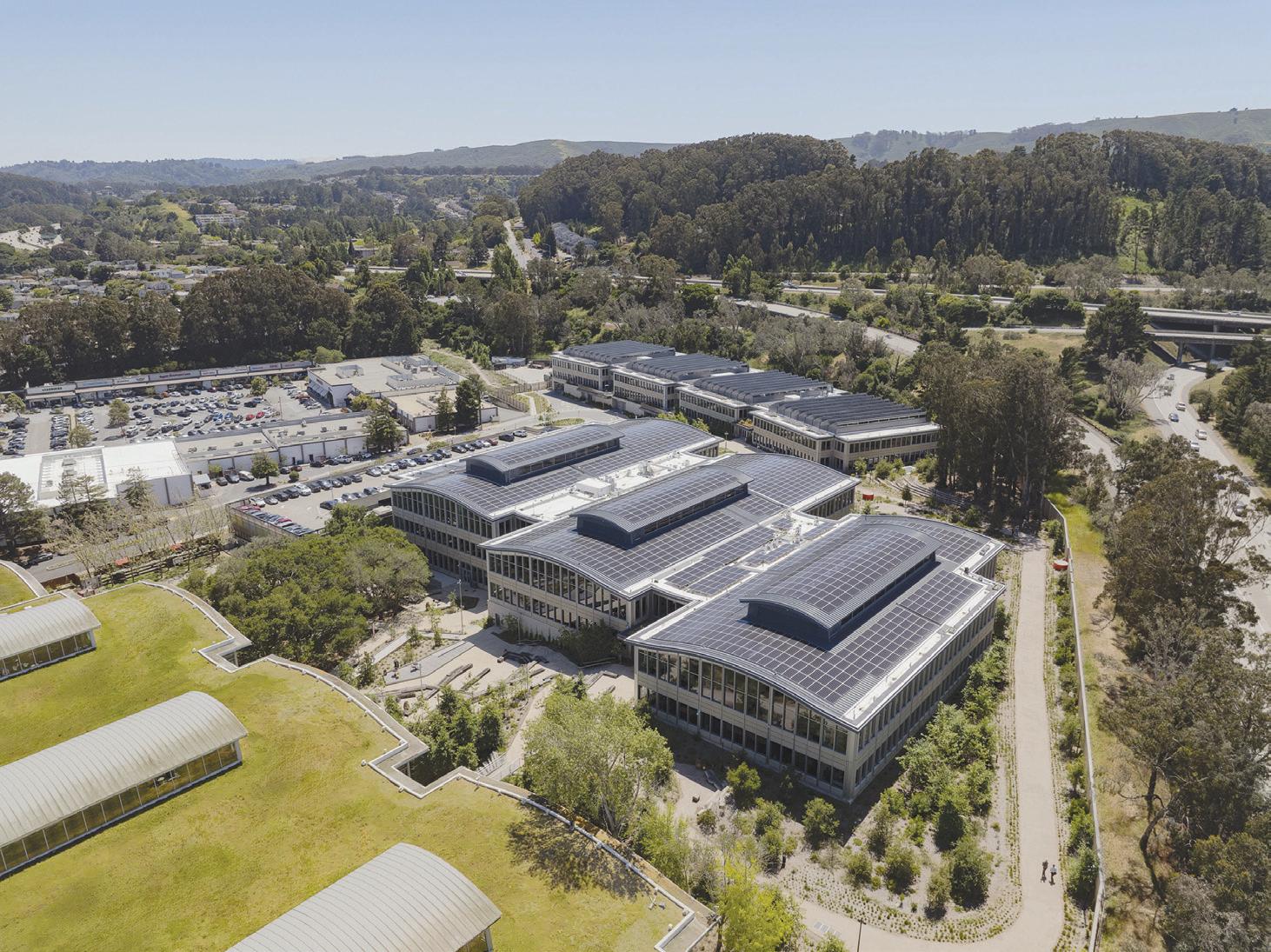
YouTube expanded its headquarters with two office additions—1400 and 1450 Bayhill. As a combination of mass timber, steel, and concrete construction; these buildings continue the sustainability conversation sparked by their on-campus neighbor: a 1997 steel and concrete edifice also designed by William McDonough+ Partners. One of the most fascinating and unique characteristics is the design for disassembly at the end of its functional life. The design team wanted to honor the cradle-to-cradle philosophy of the original design. The throughline of design decisions, including a slotted mass timber beam-to-beam column connector, facilitate the potential deconstruction of the structure. Holmes utilized innovative techniques to contribute to the immense sustainable impacts of this project. The curved and discontinuous mass timber diaphragms throughout the project eliminate the need for carbon-intensive structural concrete topping while meeting high performance objectives. An estimated 22,000 metric tons of carbon dioxide equivalent were saved by using low-carbon building materials.
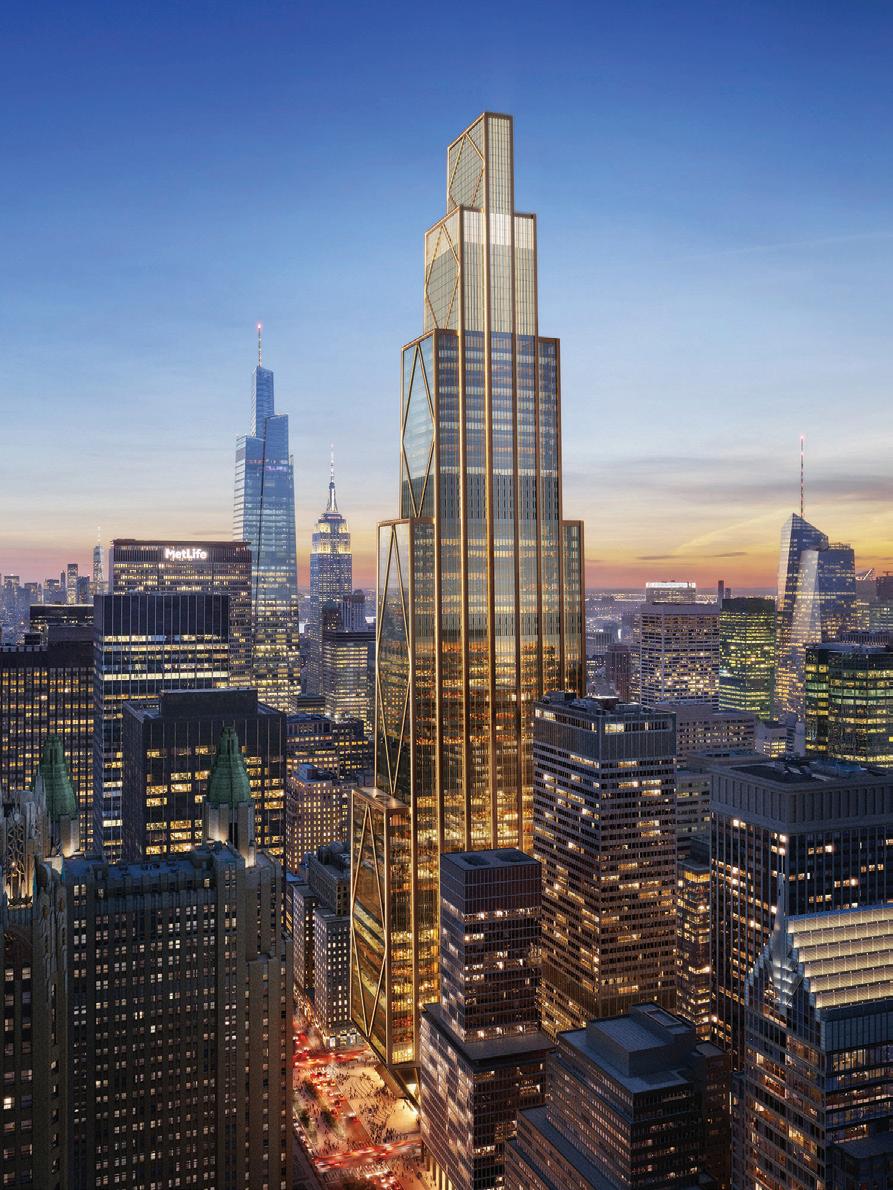
NEW YORK CITY | SEVERUD ASSOCIATES
Constructing a 60-story, 2.5 million square foot high-rise office building in the dense urban landscape of New York City is challenging even in ideal conditions. The construction employed low-carbon materials, including concrete that substituted ground glass pozzolans (GGP) for 40 percent of the cement. Use of locally sourced GGP in 52,000 cubic yards of concrete saved about 5,000 tons of embodied carbon and diverted more than 29 million glass bottles from landfills. The ultra-high-performance concrete contained about 60 percent supplemental cementitious material. An impressive 97 percent of the demolished building was reused, recycled, or upcycled.
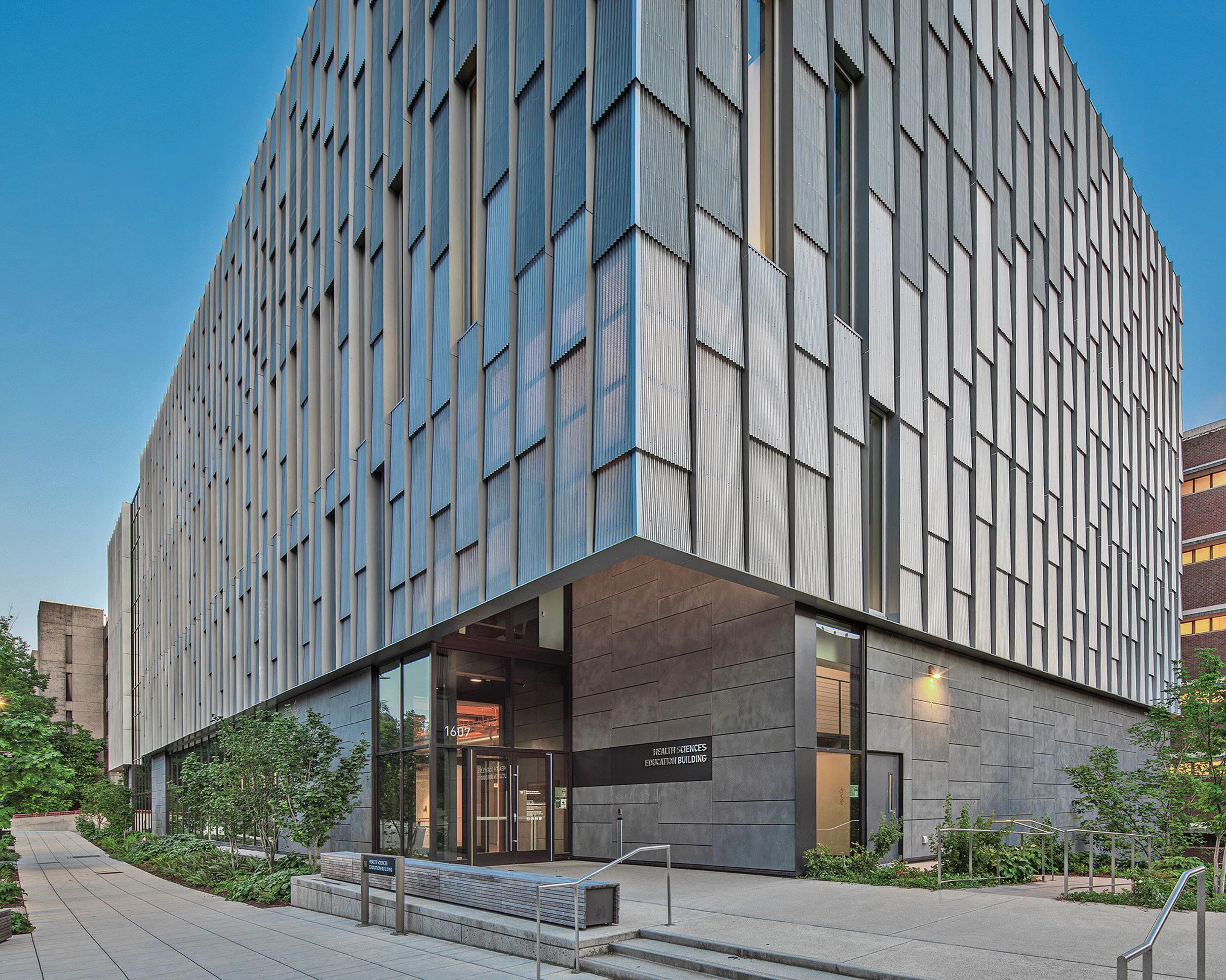
The four-story Health Sciences Education Building at the University of Washington represents a case study in hybrid mass timber.
By Jessica Westermeyer, PE, SE
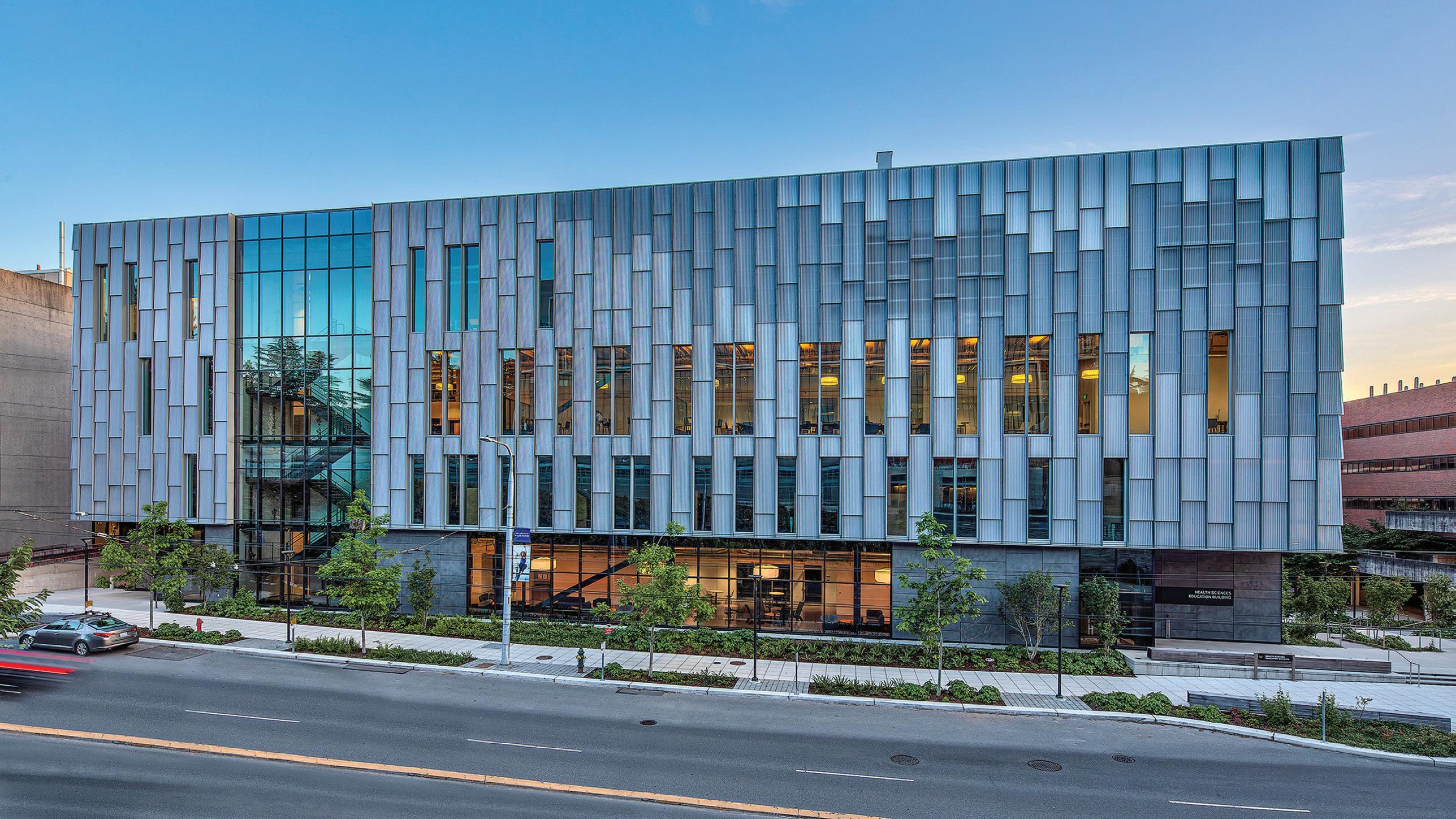
While mass timber is gaining traction in the United States for its sustainability benefits, it is still often treated as a boutique material limited to short spans and particular market sectors. The new University of Washington (UW) Health Sciences Education Building (HSEB) flips that narrative. A high-performance academic facility, the HSEB combines cross-laminated timber (CLT), composite steel, and concrete to achieve long spans, control vibration, and reduce embodied carbon without compromising constructability or aesthetics. The project was also used to validate the U.S. Mass Timber Floor Vibration Design Guide , opening the door to using mass timber for more vibration-sensitive applications and showcasing what is possible when structural engineers think outside the wood box.
Located on the UW’s Seattle campus, the four-story, 98,000-squarefoot HSEB houses large lecture halls, skills labs, and classrooms designed to teach and inspire future healthcare professionals. From the start, the University prioritized sustainability, but would not compromise programming, functionality, or schedule. The large classroom spaces required 50-foot clear spans with good floor vibration performance, which created a unique design challenge.
Architect: Miller Hull Partnership
Structural Engineer: KPFF Consulting Engineers
General Contractor: Lease Crutcher Lewis
With only six months to finalize the design, the University chose to use a progressive design-build (PDB) delivery model, bringing together architects (Miller Hull Partnership), structural engineers (KPFF), the contractor (Lease Crutcher Lewis), and fabricators for an integrated design and construction approach. This integrated delivery method allowed real time pricing and constructability feedback and enabled the team to explore a range of structural systems, including some that were outside of conventional construction methods. By leveraging the PDB principle of “choosing by advantage,” the team identified the top priorities of the project, which included program, performance, sustainability, cost, and local materials. Using these project priorities as a decision metric, the team selected a hybrid composite steel-CLTconcrete structural framing system over a more traditional composite steel structure or a full mass timber structure. The hybrid system maintained the health and sustainability benefits of wood, while keeping the long span and efficient structural depth of steel. This was the University’s first CLT project, and it not only achieved a significant reduction in embodied carbon but also expanded the industry’s understanding of hybrid systems and vibration performance.
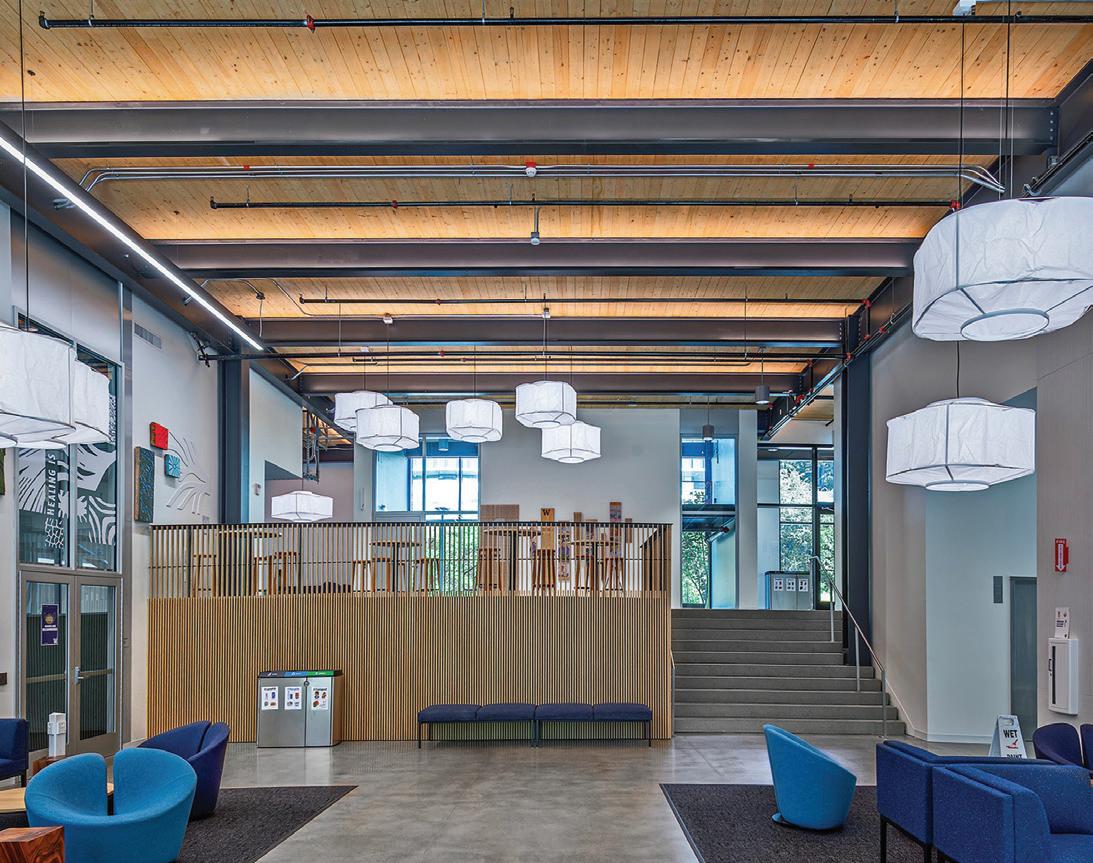
The University’s embodied carbon goals were a driving force in selecting CLT for the HSEB’s floor system. The project was an early example of the UW’s effort to reduce embodied carbon, specifically setting targets to achieve a minimum of LEED Gold certification and to limit embodied carbon to ≤500 kg CO₂e/m² in the core and shell. These targets were later adopted campus wide in the UW Green Building Standards.
Using CLT significantly reduced the embodied carbon of the building. Embodied carbon refers to the upfront energy used to extract, process, and ship materials to the site. Miller Hull completed a whole building life cycle assessment (WBLCA) for the project, which quantified the carbon reduction of the HSEB’s CLT floors when compared to those of a conventional steel building. The results showed that the CLT floors achieved a 150% reduction in upfront carbon, or a 50% reduction in full lifetime embodied carbon. The building achieved LEED Gold in May 2024, underlining the University’s commitment to balancing performance and carbon reduction.
The regional benefits were also compelling: sourcing CLT from regional suppliers (Structurlam), using renewable forestry practices, and supporting local manufacturing reinforced the project’s environmental mission and commitment to the local timber economy and forest management goals. This in turn supports the region’s efforts to mitigate wildfire risks by responsibly managing and protecting natural resources. Using a regional supplier also helped limit shipping cost and the CO₂e expended during transport to the site.
While steel and CLT are often paired together, the HSEB went a step further and used a composite steel, CLT, and concrete system to achieve the long spans and vibration performance of traditional composite steel framing, without adding structural depth and still maintaining the aesthetic and biophilic benefits of wood. The composite hybrid floor system is made up of:
• Concrete Topping: A 3-inch reinforced concrete slab is cast on top of CLT panels.
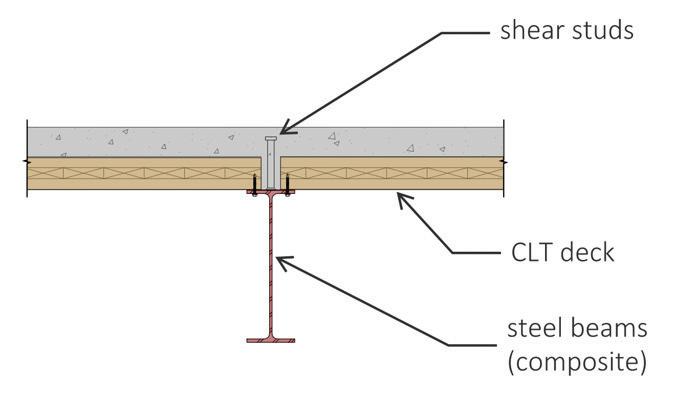
• CLT Panels: 3-ply CLT panels span beam to beam. The panels bear on top of the beams and are positively fastened with screws that pass up through the steel beam flanges into the CLT.
• Steel Framing: Composite beams (W16x36 up to W27x84) spanning 30 to 54 feet out to steel girders and columns. The composite action is achieved by leaving gaps between the CLT panels at each beam line. A 3- to 4-inch gap or trough is left between the panels, which allows enough room to weld shear studs running down the centerline of the top of the steel beam. When the concrete topping is poured, the concrete flows into the trough, engaging the shear studs and creating composite T-beam action between slab and beam. This dramatically increases stiffness and reduces vibration. One of the clever yet seemingly simple strategies the team used was to design the column grid on a 10-foot module. This module was compatible with both the single-span capacity of 3-ply CLT and standard concrete on metal deck. This approach allowed the team to carry two schemes forward and delay making the decision to use CLT until later in the project without risking major redesign. The PDB team was able to progress the design to a point where there was sufficient pricing certainty and design contingency could be released to fund the CLT. If the team had been forced to decide whether to use CLT in the early design phases before there was time to bid and price the project, CLT would have been removed during value engineering phases. The 10-foot module also worked for a wide variety of suppliers, which gave the team flexibility during procurement and enabled cost-competitive bidding.
To aid the cost model, the design team worked closely with the contractor to reduce labor and increase erection speed. One example of a labor-saving decision was to use a spandrel panel. Standard CLT layups typically orient the strong axis of the panel in the long direction. Since panels were broken at every beam, this approach would have resulted in many small panels, driving up the piece-count. The HSEB team instead used spandrel panels, which have the strong axis oriented in the short direction. Using these panels allowed 40-foot CLT panels to be placed parallel to the steel beams, along their weak axis, reducing labor to just 25% of typical panels. One consequence of this piece-count optimization was that the panels themselves were very flexible during erection. To make this work, KPFF and Lease Crutcher Lewis developed a custom rigging-frame that allowed the long, weak-axis panels to be hoisted safely and efficiently. The rigging frame was adjustable to work with all panel sizes. The prefabricated panels flew into place rapidly, and the topping slab tied everything together.
The building’s lateral system consisted of buckling restrained braced frames around the perimeter, which integrated seamlessly with the steel gravity framing. The concrete topping was also used as the structural diaphragm at typical floors, although a bare CLT diaphragm was used at the roof. The seismic base occurs at level 1, with a single-story basement below. Traditional concrete-onmetal deck was used at the seismic base due to below-grade timber durability concerns and to brace the concrete basement walls. The building was founded on conventional spread footings.
When the project started, the design of the hybrid system was not covered in the AISC Steel Construction Manual or the National Design Specification for Wood Construction (NDS). Because the hybrid system fell outside of prescriptive-code pathways, KPFF conducted performance testing to confirm that the system complied with the International Building Code (IBC) chapter 17, section 1709, “Preconstruction Load Tests,” for alternate construction materials, and met the requirements of the local authorities having jurisdiction (AHJ). The design team partnered with the University’s own Large-Scale Structural Engineering Testing Laboratory to test full-scale 34-foot composite beam specimens. The testing consisted of two phases:
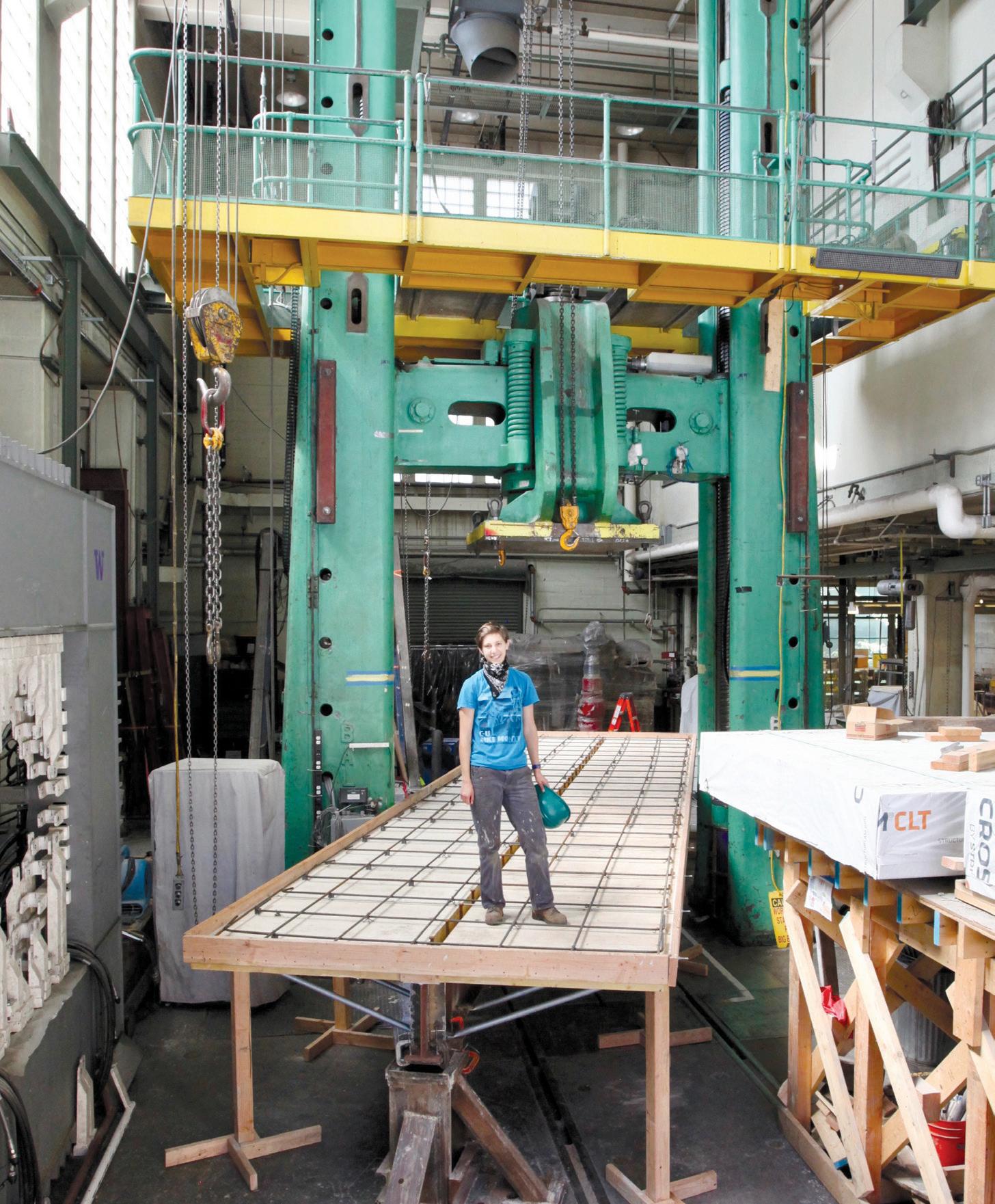
1. The beam was loaded to 200% of the design load and held for 24 hours. The beam was then unloaded and checked that it rebounded to within 25% of the initial unloaded deflection.
2. The beam was tested to failure or to 250% of the design load. The beams performed well in the tests, meeting the IBC strength and deflection requirements. Further, during testing, a narrow crack formed in the topping slab down the centerline of the beam. When testing was complete, the topping slab was chipped away, and it was observed that the shear studs on the beam had deformed in a gentle S-curve, which is consistent with composite behavior. This testing allowed the team to use the initial optimized beam design.
Unlike concrete and steel structures, which have 100 years of built examples to draw from, the vibration performance of mass timber is still relatively unexplored. While KPFF coauthored the U.S. Mass Timber Floor Vibration Design Guide (the Guide), there are limited constructed projects to validate it. This lack of performance data has led to limited adoption of mass timber in structures where vibrations could be of concern, either for vibration-sensitive equipment
or occupant comfort. In the HSEB project, the team saw a unique opportunity to advance vibration research on CLT’s performance, and they applied for and received a Wood Innovations Grant from the U.S. Forest Service to study floor vibrations.
The HSEB was therefore one of the first full-scale implementations to align lab tests, field measurements, and modeling predictions with the Guide. The team completed the vibration study in three stages:
Using the method outlined in the Guide, the team used SAP2000 to run a finite-element modal analysis to estimate modal frequencies and mode shapes. The model used modified shell elements for the CLT and assumed full composite action of the topping slab and steel beams. The results of the modal analysis were post-processed in KPFF’s proprietary vibration software called FIVE (Footfall-Induced Vibration Evaluation). Material damping was assumed to be consistent with the Guide (2-4%). The vibration performance was then predicted under walking loads and group motion for both peak accelerations and rootmean-squared velocities. These results were calculated and compared to threshold values, with a target acceleration of <0.5% of gravity, to align with industry guidelines for classrooms and offices.
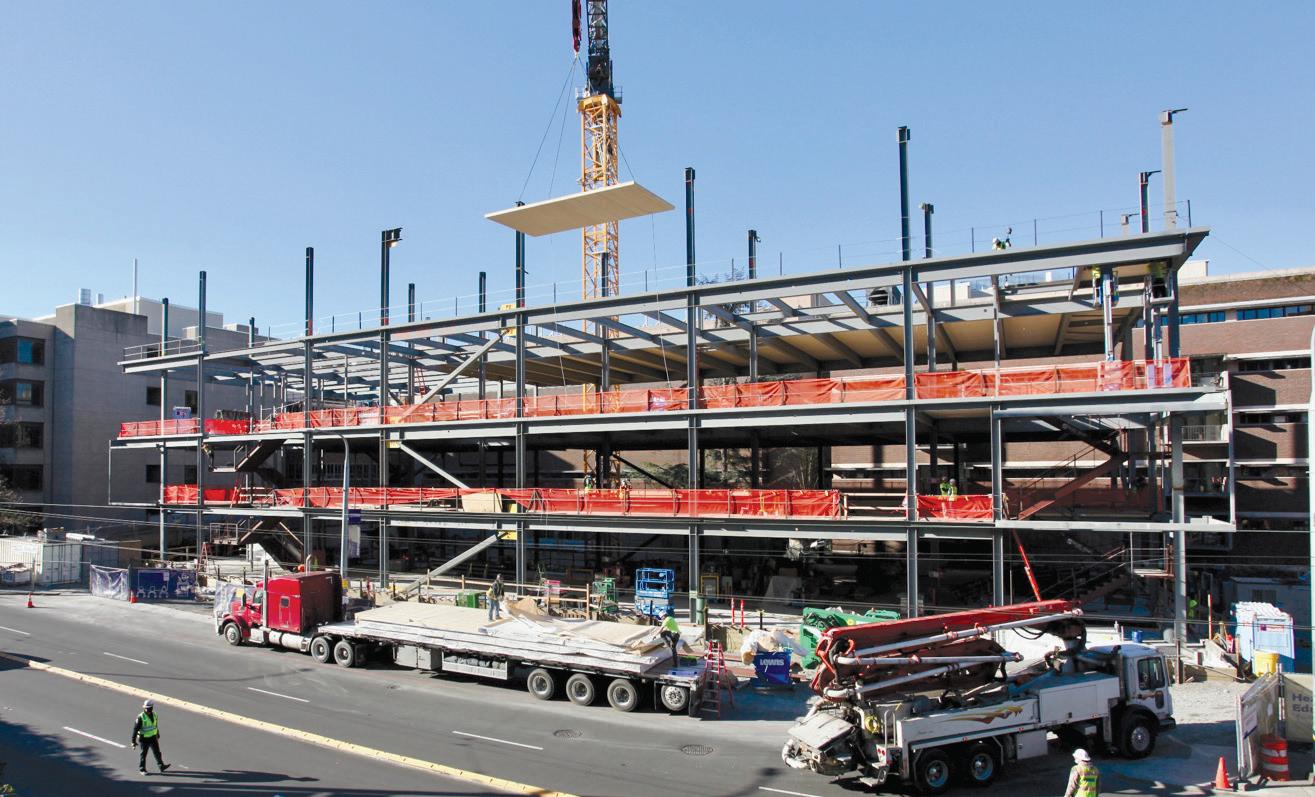
Basic structural properties of CLT, are still unknown. The HSEB team saw this as a unique opportunity to study some of those basic properties and behaviors such as damping ratios. The team tested bare CLT panels, concrete-topped CLT panels, and the previously mentioned full-scale beam specimens. Lab testing focused on the following areas:
• Composite Action: Measured the composite action between topping slab and CLT panel.
• Slip and Stiffness: Measured interface slip and flexural stiffness to investigate shear transfer without special adhesives or fasteners.
• Vibration Dynamics: Modal testing captured natural frequencies, damping, and accelerations under walking loads and impulse loads.
The lab tests for 3-ply panels closely matched predicted stiffness values from PRG 320. The 5- and 7-ply panels tested slightly lower (by 7–14%), which was attributed to shear deformation effects in low span-to-depth ratios (13 to 19). Test results confirmed the assumptions behind the design models and allowed the team to confidently reduce overdesign.
The team took field vibration measurements during various stages of construction. They collected accelerometer data while conducting measured walks in representative labs and classrooms, then verified that the measured natural frequencies and accelerations matched or exceeded predicted performance at three time points:
1. After the panels had been installed, but before concrete was placed (no composite action).
2. After concrete had been poured (composite action).
3. Immediately prior to occupancy (finishes and fit-out complete). This in-situ data was the final piece of validation, closing the loop from design to lab testing to the final as-built condition.
A few highlights of the study include:
1. Natural Frequency Targets: With a long span CLT deck plus
The team developed a custom rigging-frame that allowed the long, flexible, weak-axis panels to be hoisted safely and efficiently.
concrete slab, the first natural frequency typically exceeded 6–7 Hz, which is aligned with the frequency threshold for occupant comfort that the team has typically observed in classrooms and lecture halls.
2. Damping Ratio: Inherent damping in the hybrid floor system was measured in the 2–4% range. This is higher than plain steel systems, which are often closer to 1–2% damping. The extra material interfaces (CLT to concrete) may provide beneficial energy dissipation.
Long spans and wood floors typically spell trouble for vibration. But the HSEB proved that a hybrid approach can meet stringent comfort standards even in classrooms and labs and can be reliably predicted by following the methodology outlined in the Guide.
The HSEB project shows that the use of mass timber does not have to include compromises. When paired intelligently with steel and concrete in a hybrid system, mass timber can deliver good vibration performance at long spans, reduce embodied carbon, and be erected quickly—all within budget and on schedule. Furthermore, the project’s extensive testing and published results should help future designers expand the use of mass timber. The HSEB proves that when we think outside the wood box, we don’t lose what we know: we build on it. ■
Full references are included in the online version of the article at STRUCTUREmag.org
Jessica Westermeyer, PE, SE, is an associate and licensed structural engineer at KPFF focused on progressive design-build, mass timber, and higher education projects. Her projects include the DBIA 2021 Project of the Year (UW HRC) and a 2024 NCSEA SEE finalist (UW HSEB). (jessica.westermeyer@kpff.com)
Designed to support both firms and individuals, the Compensation & Benefits Study offered by NCSEA allows users to benchmark salaries, bonuses, and PTO; compare results based on demographics; and visualize workplace trends that inform business growth and career decisions. By NCSEA Staff
NCSEA’s Compensation and Benefits Study is a comprehensive look at compensation, bonuses, PTO, and benefits available to structural engineers today. The data in the study comes from direct participation of structural engineering firms and individuals, and the information is reported through interactive benchmarking tools that can be filtered by various firm categories and individual demographics. Nearly 2,000 engineers participated in the inaugural study this past year, and those results are now available.
Survey questions cover a wide array of factors that measure job satisfaction and workforce competitiveness. They look at employee demographics such as company role, certifications, and professional association involvement, and organization type, such as company size, reach, and range of work. Along with compensation and benefits questions, the survey dives into how work flexibility, access to resources, and utilization of skills and experience can affect an employee’s happiness and engagement with their firm.
The 2024 study revealed important trends across the profession on health insurance offered, paid education and training benefits, and work load. For instance, while a portion of respondents (27%) were very dissatisfied or dissatisfied with their level of stress related to work, a large majority (77%) were satisfied or very satisfied with the level of meaningful work they were doing.
Survey collection for 2025 is in progress now. It is free to complete, and participation helps build a robust and actionable dataset for the structural engineering profession to make informed decisions. Both firms and individuals can participate. Responses are anonymous and confidential. Data collected is not linked to individuals or firms.■
See the Results, Take the Survey Scan the QR code to learn more about the NCSEA Compensation and Benefits Study, including how to access the results and participate in the next phase of data collection.

Annual Base Salary (No Filters)
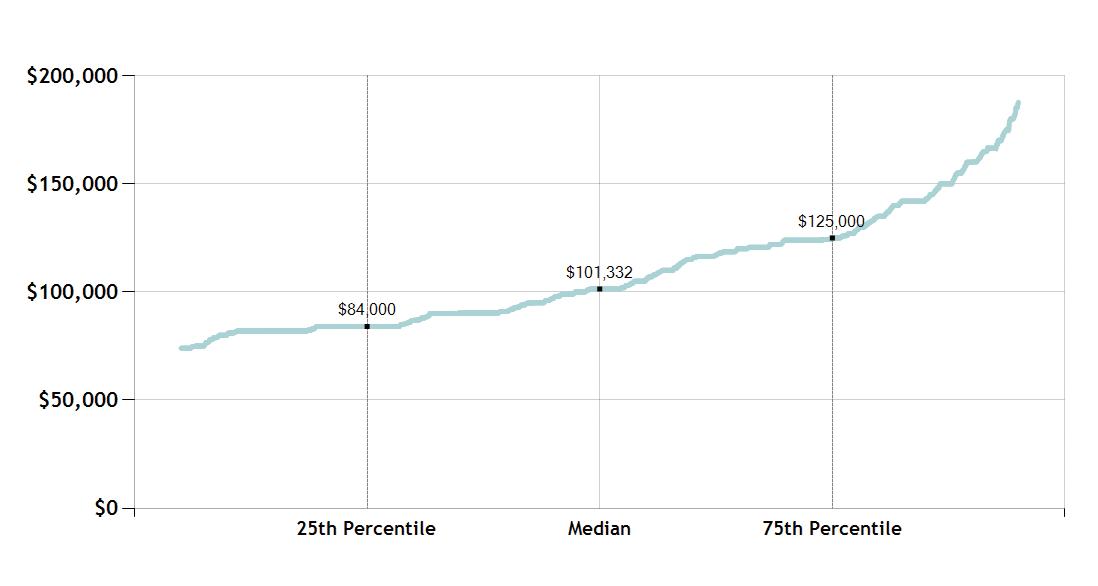
According to results from the 2024 Compensation and Benefits Study, the median salary of a structural engineer was $101,332. The Compensation and Benefits Study is an interactive tool that allows users to dive deeper into the data—filtering questions like base salary by gender, position grade, and/or location to provide more accurate comparisons.
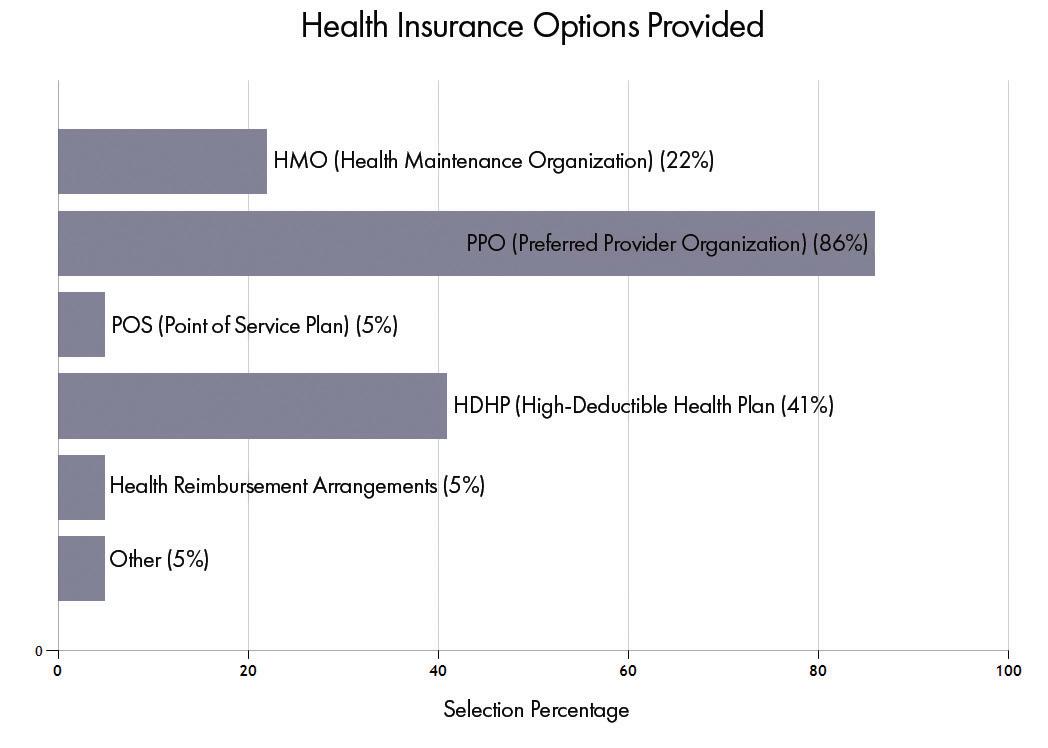
The Compensation and Benefits Study is updated in real time as more individuals and firms complete the survey. The 2024 study showed that most firms are offering a PPO health plan.
Individuals taking the Compensation and Benefits Survey share anonymous information about how happy they are in their job based on a wide range of factors, such as level of stress related to work. These answers help the profession gain insight on opportunities to improve retention and engagement.
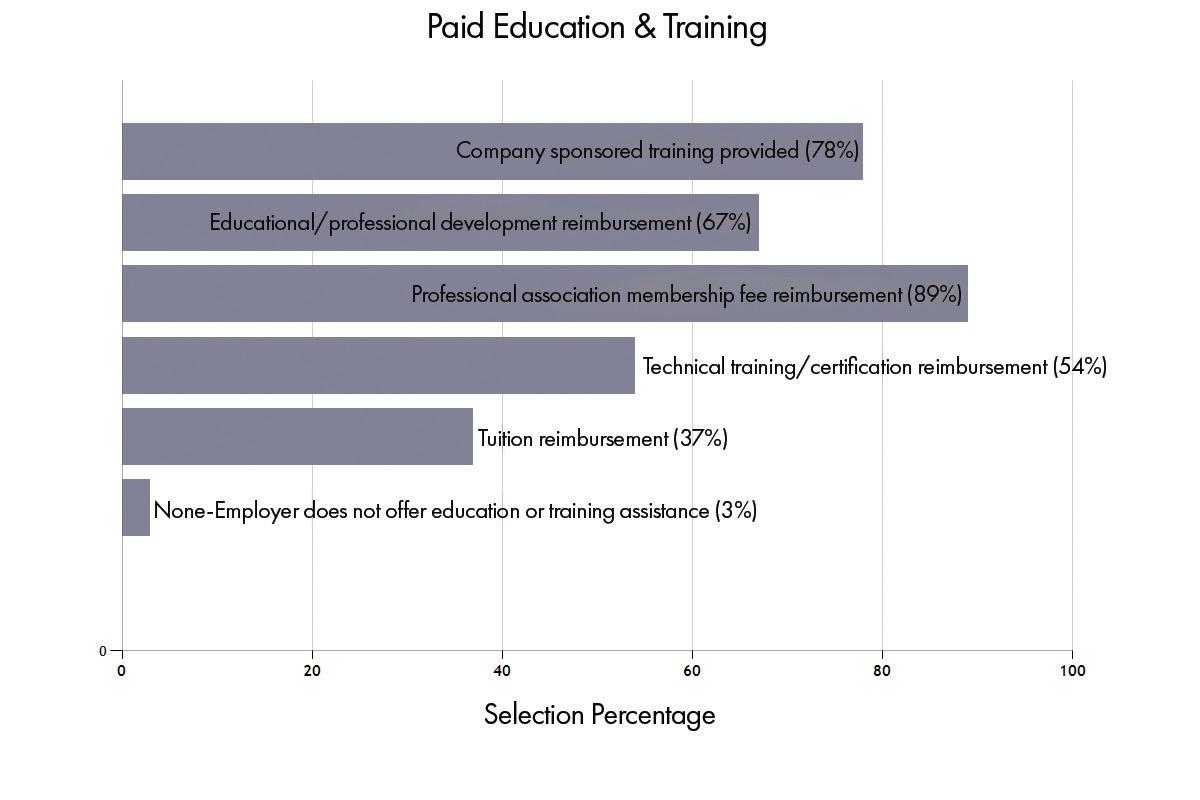
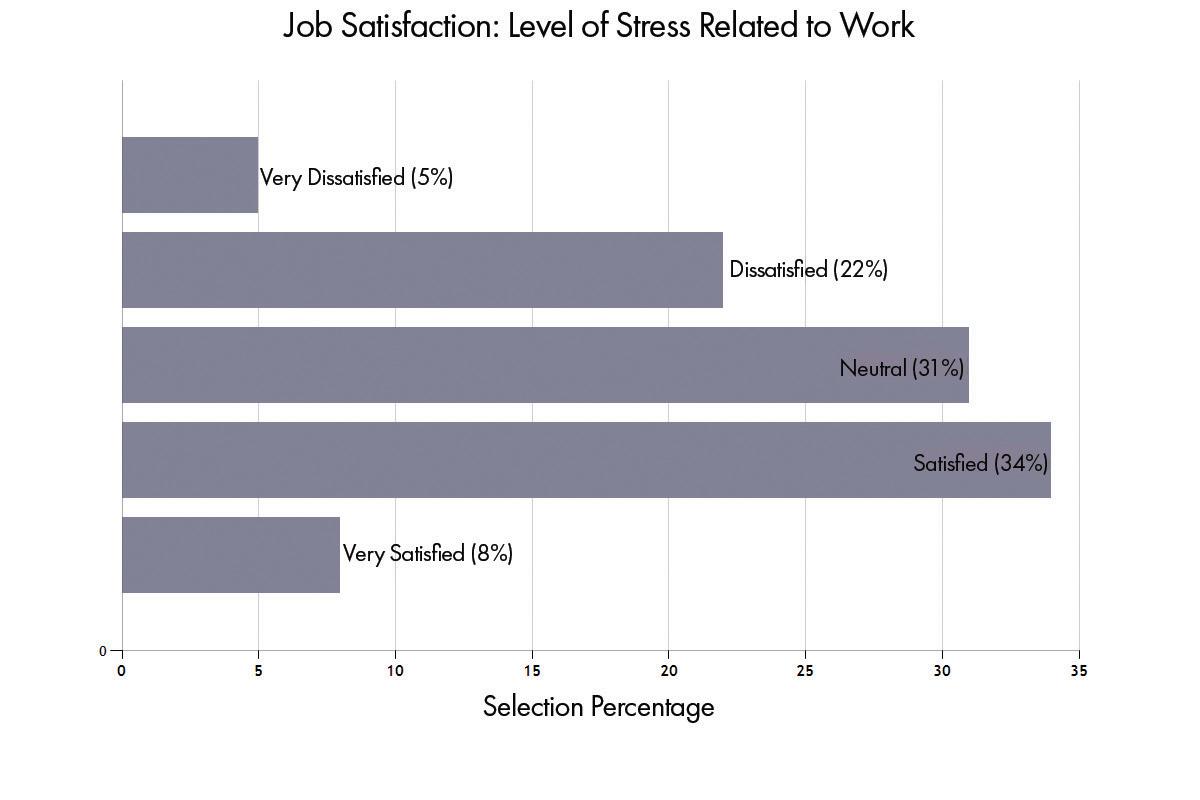
3.5%
Median Value of Company Match Percentage of Employee 401(k)
Finding out what others are offering their professional staff helps firms of all sizes benchmark benefits.
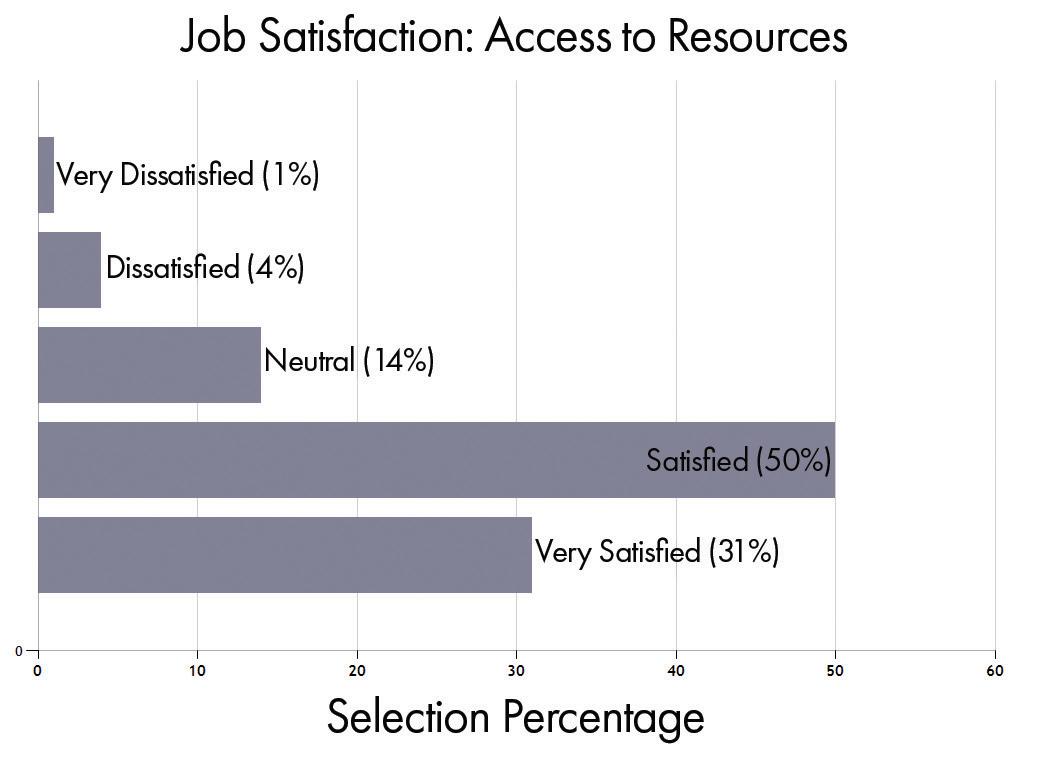
According to the 2024 study, firms appear to be doing a solid job of offering individuals access to the resources they need to do their job well.
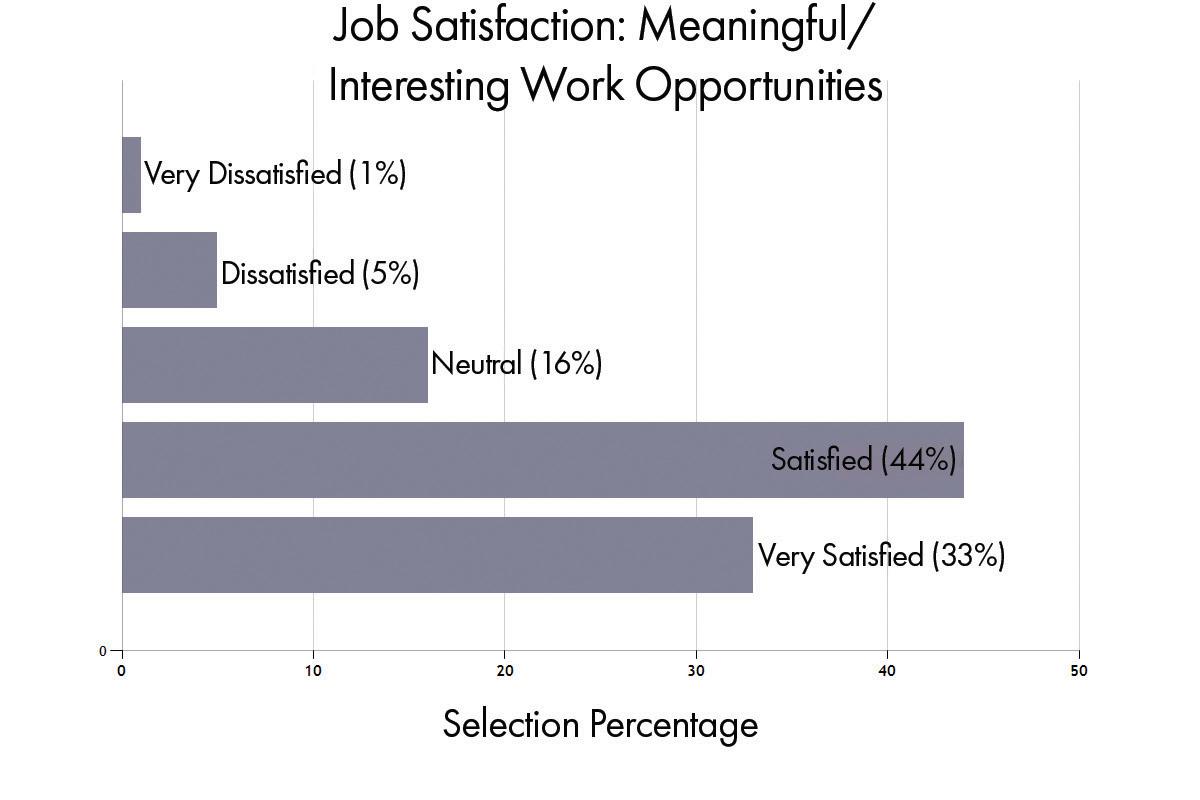
Most structural engineers found their work to be meaningful or interesting, according to the 2024 study.
Their differences are unpacked here, along with structural implications.
By Swarna Karuppiah, PE
Structural engineers often navigate the fine print of the International Building Code (IBC 2021) while balancing architectural vision, constructability, and life safety. Among the many details that can trip up a project team, one recurring source of confusion is the distinction between a fire wall and a fire-resistance-rated wall. At first glance, the terms may seem interchangeable—both assemblies are designed to resist fire spread, yet their roles differ in ways that are critical to how engineers detail load paths, design diaphragm connections, and coordinate with other disciplines.
These differences will be unpacked here through the lens of IBC and National Fire Protection Association (NFPA), highlighting key criteria such as horizontal and vertical continuity, parapet requirements, and opening limitations.
Think of fire protection in buildings like defense on a soccer field. A fire wall is the goalkeeper—a collapse-independent barrier that stands on its own, no matter what happens to the rest of the team. If everything else falls apart, the fire wall still holds the line, keeping fire from crossing into the other “half” of the building. By contrast, a fire-resistance-rated wall is more like the midfield screen—critical for slowing the attack and containing movement but ultimately tied to the overall team structure. If the building around it fails, so does the wall.
The stakes of misclassification are high. Confusing a fire wall with a fire-resistance-rated wall (or vice versa) can result in serious consequences: code violations and permit rejections, costly redesigns when retrofits are needed during construction, life-safety risks if collapse independence or continuity is not achieved, and coordination
conflicts that ripple through diaphragm design, lateral systems, and penetrations.
Retrofitting fire walls into existing buildings can be particularly challenging because unexpected conflicts often arise during design and construction. Existing bracing systems may interfere with planned door relocations, making it difficult to maintain required openings. In some cases, the building’s foundations are not originally designed to carry fire wall loads, creating structural limitations when adding a new fire wall. Additionally, columns and beams that are co-planar with the rated wall often require added fireproofing to achieve compliance, which increases both cost and complexity. These conditions make retrofits far more complicated than new construction, requiring close coordination between engineers, architects, and contractors to achieve a compliant and practical solution. Having an upfront coordination call with the architects and fire marshals during the schematic phase can help the project team foresee the issues to plan a layout for the fire wall separating various building occupancies and corridors accordingly.
Unlike wind or seismic hazards, neither the IBC nor ASCE 7 defines fire loads for structural design of these fire walls, nor do they require thermal load modeling. Instead, fire wall performance is addressed prescriptively through ASTM E119 fire-resistance testing and the IBC’s requirement that these walls remain structurally stable during and after a fire. Consequently, engineers design fire walls as freestanding cantilevered elements—or as walls laterally restrained through fusible slip connections, capable of resisting full design wind and seismic forces without relying on floor or roof diaphragms. Tall freestanding walls demand tight control of slenderness, use of reinforced concrete or stiffened CMU, strategic pilasters or framing systems, and foundations sized to resist significant overturning and sliding. Ultimately, fire wall engineering is governed not by fire-induced forces, but by the need to withstand conventional environmental loads while remaining structurally independent in a post-fire collapse scenario.
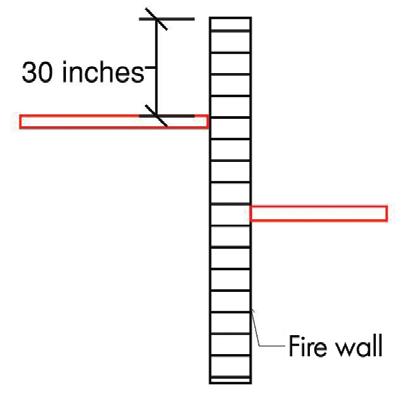
Defined in IBC Section 706, a fire wall is a fireresistance-rated wall that creates separate buildings such that each side of the fire wall is treated as an independent structure with its own area, height, and occupancy limits. To qualify, the wall must meet stringent requirements:
• Structural independence: The fire wall must remain standing even if construction on either side
collapses (IBC 706.2). Fire walls are used when height/area limits are exceeded, when construction types change, or when hazard isolation requires a higher-rated assembly than a fire barrier. Fire walls can sit between connected buildings or subdivide a single footprint, and while the code doesn’t cap their height, the practical limit is controlled by structural stability, and out-of-plane loading—not prescriptive language.
• Continuity: The wall must extend from the foundation through the roof (706.6).
• Parapets: A minimum 30-inch parapet, as shown in Figure 1, is required unless the following exception categories apply: stepped roof conditions, fire-rated roof assemblies, noncombustible or protected combustible decks, podium construction, and sloped roofs (706.6.1).
• Fire rating: Typically 2–3 hours depending on occupancy and construction type (Table 706.4).
• No unprotected openings: Penetrations and doors are highly restricted (706.8). Even fire-rated doors have strict limits, often disrupting exit path planning. For any operable fire-rated door, verify the supporting structure is independent of the adjacent building framing.
In contrast, fire-resistance-rated walls —including fire barriers (IBC 707), fire partitions (IBC 708), and rated exterior walls (IBC 705)— serve to compartmentalize spaces within a single building. Their key attributes include:
• Shared support permitted: They may rely on adjacent framing for stability.
• Termination flexibility: They can stop at the underside of fire-rated floors/roofs instead of extending through the roof as shown in Figure 2.
• Lower fire ratings: Often 1–2 hours.
• Openings allowed: Protected penetrations and fire-rated doors are permissible.
These assemblies are essential for separating occupancies, corridors, or shafts, but they do not reset building area limitations. Structurally, they behave like typical interior walls—not independent boundary elements.
While most of the discussion around fire walls focuses on their continuity through the building, it is equally important to consider what happens when the wall meets the building’s edge. Without proper detailing, fire can wrap around the corner of an exterior wall and defeat the purpose of the fire wall. National Fire Protection Association (NFPA) 221 and related standards describe three common conditions: extension walls, end walls, and angle walls. See Figure 3 for an extension and end wall case.
An extension wall simply projects the fire wall beyond the plane of the exterior wall. By carrying the wall past the face of the building, it blocks fire from breaking out of windows or cladding and traveling around the end of the wall. Engineers should verify that the extension
is tied back into the foundation and roof structure so it can resist wind loads on its exposed surface.
An end wall (sometimes called a wing wall) runs perpendicular to the fire wall at its termination, creating a T-shaped condition. The idea is to build a solid masonry projection that acts like a shield, stopping fire from wrapping around the building corner. The required length of this end wall depends on the fire wall height. For structural engineers, this means checking that the end wall is properly braced and can transfer its own wind loads without relying on combustible framing that may not survive a fire.
An angle wall is used at L-shaped corners of buildings. Here, the fire wall connects to exterior walls that turn a corner, creating a pathway for flames to bypass the barrier. The angle wall projects outward at a diagonal, extending far enough to block fire spread around the corner. NFPA 221 allows the angle wall to be rated one hour less than the fire wall itself, but engineers still need to coordinate with architects to ensure the adjoining exterior walls are noncombustible and adequately detailed.
Together, these detailing strategies ensure that the “ends” of a fire wall are not weak points. For engineers, they translate to additional lateral design checks, foundation ties, and careful coordination with the envelope and architectural team. Treating extension, end, and angle walls with the same rigor as the fire wall itself is key to maintaining collapse independence and true fire separation.
One of the most important details in fire wall design is the way the wall connects to the rest of the structure. If the building frame collapses
during a fire, the connections must release so the fire wall can remain standing. To achieve this, engineers use fusible elements—materials that melt at high temperatures and allow the framing to pull away from the wall without dragging it down as shown in Figure 4. The type of fusible connector depends on whether the wall is masonry, gypsum, or timber.
For masonry fire walls, zinc-based anchors are common. These “break-away anchors” melt at around 790°F, releasing the steel framing attached to the wall. Some systems use rolled zinc alloy anchors or nylon/steel hybrid connectors, where a nylon washer softens during fire and allows the steel member to slide free.
For cold form metal framing stud fire walls, aluminum burn clips are standard. These clips melt on the fire-exposed side, allowing the affected framing to collapse, while clips on the safe side remain intact and keep the wall standing. UL guidance also specifies that these clips be spaced at set intervals with a small gap between wall sections to help them function properly.
For timber fire walls, aluminum clips or specialized break-away joist connectors are used. These systems often include nylon or lowtemperature alloy washers that weaken when heated, letting joists disengage from the wall without damaging it.
In all cases, the principle is the same: the fusible connector holds strong during normal service, but melts or softens in fire, ensuring that the wall performs its job as an independent wall element even if the structure around it collapses.
Fire walls often divide diaphragms into independent sections. Engineers must carefully model shear transfer across the fire wall and ensure each side has a complete lateral load path. Neglecting this can lead to overstressed connections or unbraced diaphragms when one side fails.
Unlike fire barriers, they must be designed for wind pressures from either direction—even if one building collapses. This increases demands on wall thickness, reinforcement, and foundations.
As noted earlier, fire walls must extend continuously from the foundation to a point at least 30 inches above both adjacent roofs (IBC 706.6), but several exceptions allow designers to terminate the wall below the roof or adjust fireproofing based on construction type and roof rating. For stepped or multi-level roofs, the wall may stop at the lower roof if the roof structure within 10 feet on both sides has a 1-hour fire-resistance rating and no openings occur in that zone. In other cases, a 2-hour wall may terminate at the underside of a rated deck if both roofs carry Class B coverings, or in Types III–V construction, where the roof is fire-retardanttreated (FRT) wood or protected with 5⁄8-inch Type X gypsum for 4 feet on either side. Podium buildings can begin their fire wall at the 3-hour horizontal separation. Complementing this, IBC 706.5.2 governs horizontal projecting elements such as balconies, canopies, and roof overhangs within 4 feet of a fire wall. The wall must extend to the outer edge of these projections unless the adjacent exterior wall and supporting structure provide 1-hour fire-resistance-rated construction for a distance equal to the projection’s depth. For noncombustible projections with
concealed spaces, a rated wall must continue through the concealed cavity, while combustible projections require rated protection beneath and behind the element.
In practice, engineers face a trade-off:
• Adding parapets to maintain continuity above the roof, increasing wind and seismic demands, or
• Enhancing fireproofing of the roof structure, overhangs, or wall interfaces to maintain the same level of protection.
Fire walls and fire-resistance-rated walls are not interchangeable terms; they represent fundamentally different levels of protection in the built environment. For structural engineers, recognizing this difference is not optional—it is central to designing safe, code-compliant buildings.
In the end, the strength of a building’s fire protection is only as reliable as the engineer’s ability to turn code into constructible reality. By mastering the nuances between fire walls and fire-resistance-rated walls, structural engineers not only uphold the intent of the code but also deliver safer, more resilient buildings that stand as a testament to the profession’s responsibility to protect the public. ■
Full references are included in the online version of the article at STRUCTUREmag.org
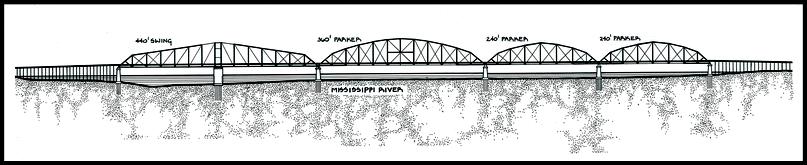
By Dr. Frank Griggs, Dist. M. ASCE
Winona, Minnesota, is located between St. Paul and Lacrosse on the westerly bank of the Mississippi River. It already had a railroad bridge across the Mississippi built in 1871. The Winona and Southwestern Railroad (later Winona and Western Railroad) ran from Winona northwesterly along the river to Minnesota City and then ran southwesterly through Rochester towards Osage with plans to extend to Omaha. The railroad was looking for a bridge to connect with railroads in the State of Wisconsin and to provide access to the rich iron, copper, and lumbering regions of Northern Wisconsin. It joined with the Chicago, Burlington & Northern Railroad and the Green Bay, Winona, and St. Paul Railroad to form the Winona Bridge Railway that would build the bridge.
Newspapers called it “one of the best on the river” with a final cost of nearly $500,000.
Congress passed, “AN ACT to authorize the Winona and Southwestern Railway Company to build a bridge across the Mississippi River at Winona, Minnesota” on August 13, 1888.”
Section 1 stated in part, “Said bridge shall be constructed to provide for the passage of railway trains, and at the option of said corporation, its successors and assigns may be so constructed, to provide for and be used also for the passage of wagons and vehicles of all kinds, for the transit of animals, and for foot passengers, for such reasonable rates or tolls, to be fixed by said company, its successors or assigns; and the Secretary of War shall have the right, from time to time, to revise, prescribe, and determine such rates of toll.”
Section 2 stated in part, “Provided, That if said bridge shall be constructed as a draw-bridge, the same shall be constructed as a pivot draw-bridge, with a draw over the main channel of the river at an accessible and navigable point, and with spans giving a clear width of water-way of not less than two hundred feet on each side of the central or pivot pier of the draw, and the next adjoining span or spans to the draw shall give a clear width of water-way of not less
than three hundred and fifty feet; and every part of the superstructure shall give a clear headroom of not less than ten feet above extreme high water-mark: Provided, That all spans shall be so located as to afford the greatest possible accommodation to the river traffic, and a draw shall, if practicable, be located next or near shore: Provided also, That in case of a low bridge if the physical characteristics of the locality so require and the interests of navigation be not injured thereby, the length of the fixed spans or the number of draw openings may be reduced: Provided also, That for any two adjacent draw-openings of two hundred feet each, one draw-opening of three hundred feet may be substituted if the interests of navigation be not injured thereby.” This is the first act of its kind that contained language permitting changes if navigation was not injured.
Section 5 was also different than earlier Acts authorizing bridges. It stated, “That all railways desiring to use said bridge shall have and be entitled to equal rights and privileges in the passage of the same, and in the use of the machinery and fixtures thereof, and of all the approaches thereto, under and upon such terms and conditions as shall be prescribed by the Secretary of War, upon hearing the allegations and proofs of the parties in case they shall not agree.”
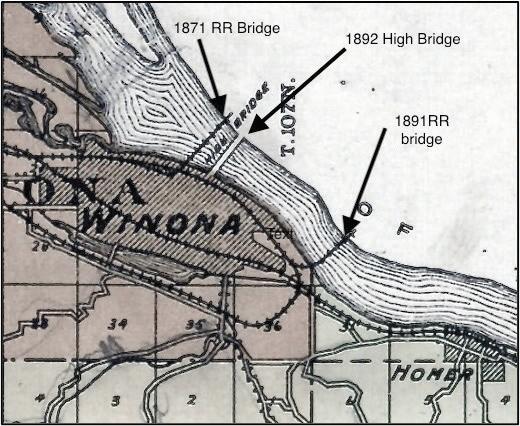
The State of Minnesota approved the bridge with Special Law Chapter 306 on March 9, 1889. The State of Wisconsin approved the bridge with Chapter 96 on March 14, 1889. With all the approvals the Winona and Southwestern Railroad transferred its grants to the Winona Bridge Railroad Company who would build and run the bridge.
The Chief Engineer of the Winona and Southwestern Railway Co. was D. M. Wheeler, with George S. Morison acting as Consulting Engineer. They prepared the plans that were submitted to the Secretary of War on June 2, 1890, who approved them on July 9, 1890. The truss spans were like those Morison used
earlier on the Merchants Bridge at St. Louis. Starting from the Minnesota shore at Winona there was 270 feet of trestle, a 420foot swing span, a 360-foot Parker Truss called the raft span, two 240-foot-long Parker Trusses and 1,100 feet of trestle. This was followed by 895 feet of embankment in Wisconsin. The bridge was built of both wrought iron and steel members as it was built in the transition period from wrought iron to steel in bridge building. “In general, the compression members are of iron and the tension members of steel, soft steel being used in place of iron in the upper chord of the 360 ft. span. The center panel and a portion of the bottom chord of the swing span are of medium steel.” The wrought iron was, “required to show an elastic limit of at least 24,000 lbs., and an ultimate strength of at least 47,000 lbs. per sq. in.; an elongation of at least 10% in 8 ins., before breaking, and a reduction of area of at least 15% at the point of fracture.”
The Winona and Southwestern track on the Winona side crossed the bridge with a Wisconsin connection to the tracks of the Chicago, Burlington and Northern in West Winona, Wisconsin.
The bridge was for a single track. The width of the fixed spans was 17 feet and the width of the swing span and 360-foot span was 20 feet.
The Swing span plan was published in the Engineering News as shown in Figure 4.
The contractor for the bridge was the Union Bridge Company under Charles Macdonald with shops in Athens, Pennsylvania at an estimated cost of $440,000 and with a completion date of March 1, 1891. They began work on August 1, 1890, on the masonry piers supported by wood piles. The iron and steel were erected on false work. Due to delays at the shop, it was completed four months over the projected date and opened on July 4, 1891. The first trains of the Chicago, Burlington and Northern crossed the bridge on July
15, 1891. Newspapers called it “one of the best on the river” with a final cost of nearly $500,000.
The bridge served until 1985 when it was closed due to maintenance costs and its inability to carry the increase weight of locomotives and cars. It was partially burned in December 1989 and demolished in late 1990. ■
Dr. Frank Griggs, Dist.M. ASCE, specializes in the restoration of historic bridges, having restored many 19th Century cast and wrought iron bridges. He is now an Independent Consulting Engineer (fgriggsjr@verizon.net).
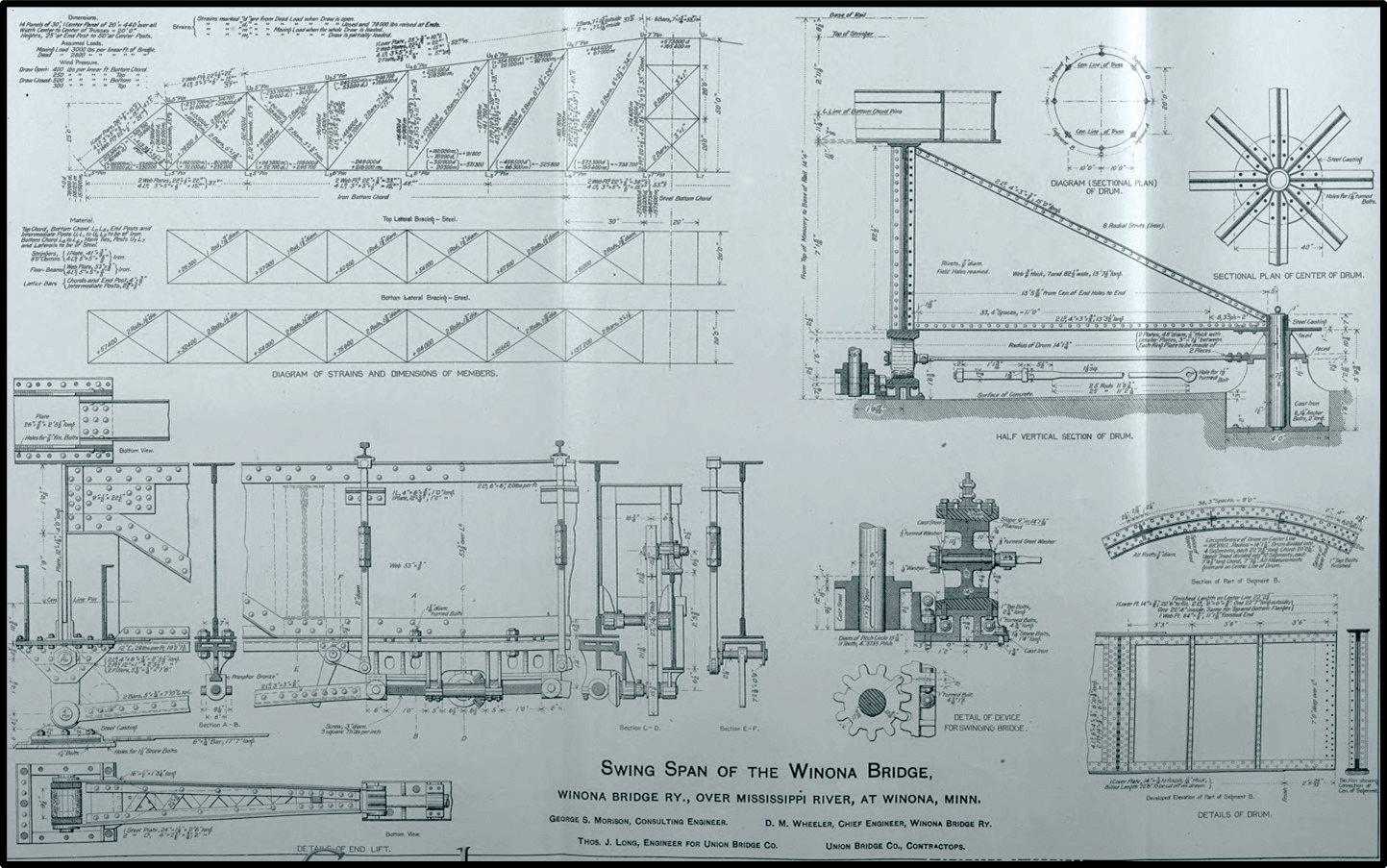
Western Specialty Contractors–St. Louis Concrete Branch recently completed restoration work on structural slabs supporting the Keokuk Housing Authority’s Mississippi Terrace apartments in Keokuk, IA.
Constructed in the 1960s, Mississippi Terrace is a five-story, 90,956-square-foot tenant building overlooking the Mississippi River. It’s one of the few structures in the country with post tension cables supporting a habitual space. Years of wear-and-tear and weathering to the slabs’ exterior post tension grout pockets resulted in cracking, spalling, and water seeping into the tendons that support the structure. Western’s concrete experts started the restoration project in April 2024 by patching back exploration openings made the year prior to
view the condition of deterioration on the post tension cables to ensure that moisture had not settled. If the moisture had settled and corrosion was present, then additional repairs would have had to be made. Western’s post tension repair work was performed on multiple levels throughout the building that support the structure. After repairing the cables, Western applied an architectural coating over the exterior grout pockets on the north, east and west elevations of the building to prevent water intrusion.
To complete the project, Western installed a traffic membrane over the building’s south walkway balcony. All work at the apartment complex was completed within two months. PSBA was the engineering consultant on the project. ■
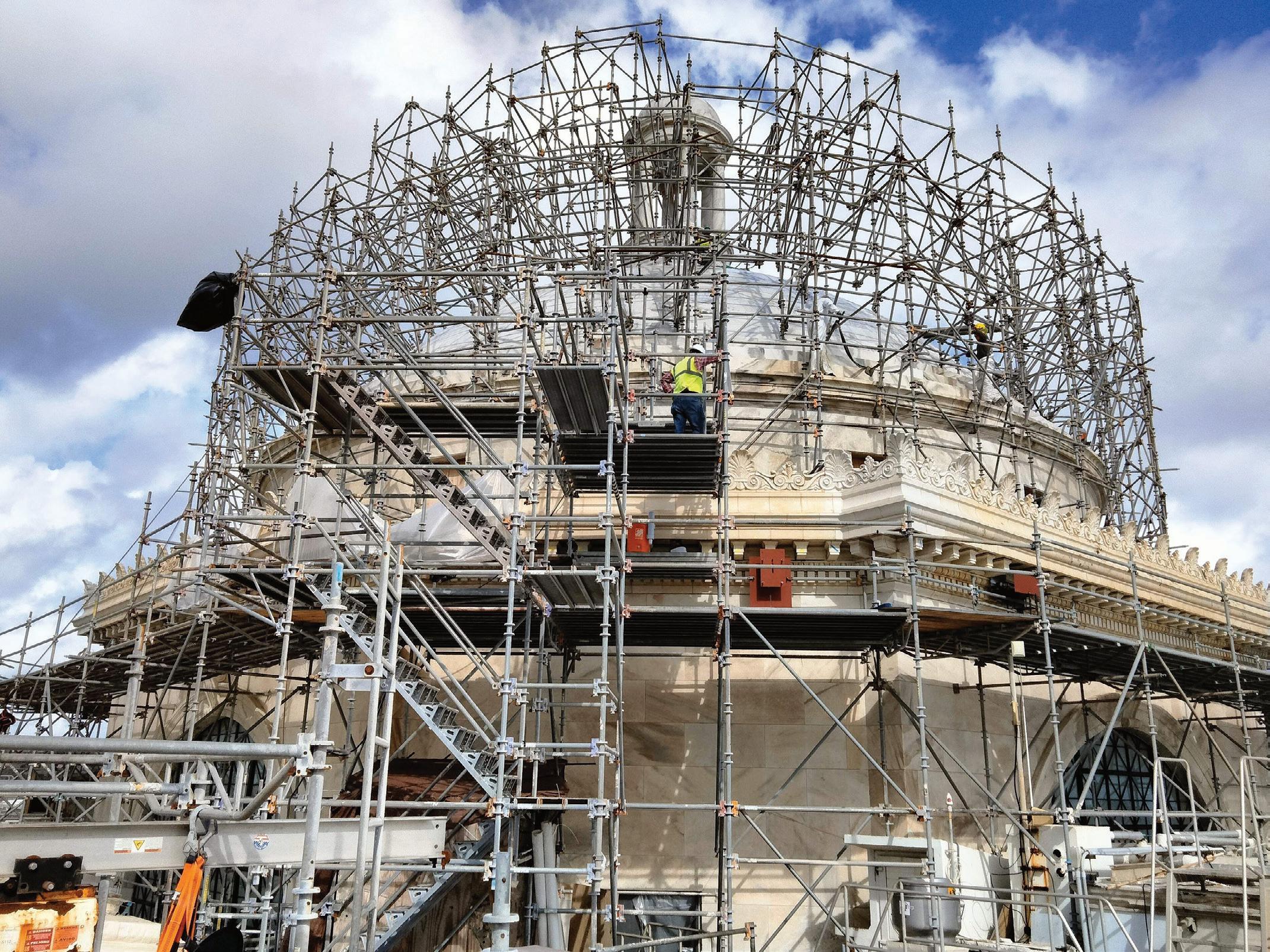
Bowman Consulting Group Ltd., a national engineering services and program management firm, has been awarded a $7 million multi-year contract by Seattle Public Utilities (SPU) to lead the design of a landmark habitat restoration and infrastructure project within the Fauntleroy Creek watershed of West Seattle. The engagement will enhance flood mitigation, restore critical salmon passage and improve long-term climate resilience for one of the region’s most environmentally sensitive urban corridors.
The multi-phase project will replace an aging 376-foot-long culvert beneath California Avenue SW that currently restricts fish migration and poses flooding risks to the surrounding community. When complete, the new design will directly support Puget Sound salmon recovery goals by reconnecting vital upstream habitat and modernizing infrastructure to withstand increasingly severe storm events. Given the project’s complexity, scale and stakeholder alignment it is
among SPU’s most ambitious and consequential culvert replacement efforts to date.
“This project embodies the intersection of our commitments to engineering excellence and environmental stewardship,” said Gary Bowman, founder and CEO of Bowman. “By leading this transformative effort for SPU, we are helping restore natural ecosystems, safeguard local neighborhoods and demonstrate our commitment to sustainable infrastructure design.”
Bowman’s work will span the full project lifecycle including civil and structural engineering, hydrologic and hydraulic modeling, stream and habitat restoration design, utility coordination, environmental permitting support and landscape architecture. This award marks Bowman’s first time serving as primary design lead for SPU.
Design is scheduled to begin in 2025, with construction expected to be completed by 2031. ■
The 11th annual ACI Excellence in Concrete Construction Awards celebrated outstanding and innovative concrete projects from around the world. The Overall Excellence honor was awarded to the Capitol Dome in San Juan, Puerto Rico, which also won first place in the Repair and Restoration Structures category during the ACI Concrete Convention on Monday, October 27.
The awards were established to celebrate the most visionary projects in the concrete industry and to offer a platform to acknowledge global advancements in concrete innovation, technology, and excellence. To be eligible for the ACI Excellence in Concrete Construction Awards, projects must be nominated by an ACI Chapter, International Partner, or submitted through self-nomination.
In addition to the highest honor, the Overall Excellence award, additional projects recognized during the ACI Excellence in Concrete Construction Awards include: Repair & Restoration
• 1st Place: Capitol Dome, in San Juan, PR, USA
• 2nd Place: UCSD York Hall, in La Jolla, CA, USA
Decorative Concrete
• 1st Place: California Firefighters Memorial, in Sacramento, CA, USA
• 2nd Place: Campus Development Project of Indian Institute of Technology Hyderabad (Phase-2) – Package 3B, in Telangana, India
Low-Rise Structures
• 1st Place: The Altamura Home, in Santa Rosa, CA, USA
• 2nd Place: Project Heat, in Chicago, IL, USA
Mid-Rise Structures
• 1st Place: City of Hope – Hope Plaza, in Duarte, CA, USA
• 2nd Place: National Taiwan University Humanities Hall, in Taipei City, Taiwan
• Honorable Mention: Shanghai Grand Opera House, in Shanghai, China
High-Rise Structures
• 1st Place: Satsukita 8-1, in Sapporo, Hokkaido, Japan
• 2nd Place: The Ayer, in Seattle, WA, USA Infrastructure
• 1st Place: Romaine-4 Generating Station, in Havre-StPierre, QC, Canada
• 2nd Place: King Salman Energy Park (SPARK), in Abqaiq, Eastern Province Bridges
• 1st Place: Delhi-Meerut Rapid Rail Transit System, in Meerut, India
• 2nd Place: Cebu Cordova Link Expressway, in Cebu City, Philippines Flatwork
• 1st Place: Low Carbon Concrete: Bus Charging Station, in Salt Lake City, UT, USA
• 2nd Place: Apron and Taxiway Project for T3, TTIA, in Taoyuan City, Taiwan
The winning project details can be found at ACIExcellence.org. Entries for the 2026 ACI Excellence in Concrete Construction Awards are now being accepted now through April 1, 2026. ■
T
he Council on Vertical Urbanism (CVU)—formerly known as the Council on Tall Buildings and Urban Habitat (CTBUH)—has named ZIN in No(o)rd, located in Brussels, Belgium, the Best Tall Building Worldwide for 2025. The recognition was announced at the organization’s annual international conference, in Toronto, Canada, which convened thought leaders and practitioners from around the world to explore how urban density, when designed responsibly, can serve as both a climate solution and a social framework for thriving communities. (A complete list of categories and winners appears below.)
The 2025 Award of Excellence program
honored more than 100 outstanding projects that exemplify innovation in design, engineering, sustainability, and community-building. Collectively, these projects illustrate the emergence of vertical urbanism as a defining global paradigm, one that integrates architecture, infrastructure, ecology and equity into the vertical dimension of the city.
Selected from entries across 24 countries, ZIN in No(o)rd was recognized for
Walter P Moore’s expansion into Riyadh, Kingdom of Saudi Arabia, represents a significant step in strengthening the firm’s presence in the Middle East and supporting development across the region. The Riyadh office is led by Ismat Abulhamayel, General Manager, alongside Tarek Ayoubi, Director of Structural Engineering. With more than 30 years of experience across airports, infrastructure, buildings, and oil and gas projects, Abulhamayel brings deep technical expertise and proven leadership in civil and structural engineering. He has led major initiatives at Red Sea International and Saudi Aramco, including airport developments, large-scale housing, refinery upgrades, and work at King Abdullah University of Science and Technology.
Global engineering firm DeSimone announced the expansion of its vertical transportation service offering with the addition of Robert Haughey to lead its practice in New York. Haughey has nearly a decade of experience across vertical transportation consulting, modernization, and maintenance strategy, and his portfolio includes major projects for Amazon JPMorgan Chase, American Express, JLL, Hines, Brookfield Properties, CBRE, Related, Marriott International, NBCUniversal, Radio City Music Hall, Raytheon, and Kaiser Permanente. In his new role, Haughey will strengthen DeSimone’s capabilities in elevator and building
its transformative reuse of a 1970s-era office complex into a mixed-use vertical ecosystem combining workspace, housing, hospitality and public amenities. The project embodies the tenets of vertical urbanism—verticality, sustainability, livability and innovation—by knitting together new and existing structures within an energy-efficient, carbon-conscious framework.
The design extends the urban street life vertically, introducing terraces, gardens and public spaces throughout the tower’s height, while a highly efficient doubleskin façade, passive ventilation system and integrated photovoltaic elements reduce
systems strategy and integration following its acquisition last year of KP Elevator Consulting—known for landmark projects like the elevator modernization at the Seattle Space Needle.
EXP, a global engineering, architecture, design and consulting firm, announces the opening of its new office in Galleria Dallas, Texas. The move signifies EXP’s ongoing commitment to expanding its footprint throughout Texas and the region. The new state-of-the-art office serves as another hub of EXP’s mission critical, aviation and infrastructure capabilities. EXP intends to hire over 30 engineers and specialists to support its ongoing expansion.
Mead & Hunt announced that Amy Squitieri will become Chief Executive Officer effective November 1, 2025. Currently serving as the firm’s Chief Operating Officer, Squitieri brings more than three decades of leadership experience to the role and has been instrumental in shaping the company’s strategic direction, employee-focused culture, and innovation initiatives.
Beyond Mead & Hunt, Squitieri contributes to shaping the future of the AEC profession through her service on the Board of Engineering Change Lab-USA (ECL-USA), a nonprofit preparing the engineering community for 21st-century challenges. She also actively contributes to the ACEC Research Institute. ■
operational energy use.
Additionally, 85% (in mass) of the existing structure, including cores and basements, was retained, and more than 60% of the material of the project has been reused on site or elsewhere, representing a major reduction in embodied carbon and setting a benchmark for large-scale adaptive reuse in Europe.
The 2025 Award of Excellence winners collectively reveal how tall buildings are evolving from isolated architectural statements into integrated vertical districts, urban systems that produce energy, manage resources and foster community. From carbonconscious construction and biophilic design to vertical mobility networks and mixed-income housing, this year’s projects represent a new generation of high-density development that is both adaptive and inclusive.
In addition to the Best Tall Building Worldwide award, winners were announced in multiple height, regional and functional categories, each highlighting a distinct facet of performance, from structural innovation to adaptive reuse and urban habitat integration.
• Best Tall Building Worldwide: ZIN in No(o)rd, Brussels, Belgium
• Best Tall Building (under 100 meters): Sirius, Sydney, Australia
• Best Tall Building (100-199 meters): ZIN in No(o)rd, Brussels, Belgium
• Best Tall Building (200299 meters): Karlatornet, Gothenburg, Sweden
• Best Tall Building (300 meters and above): Merdeka 118, Kuala Lumpur, Malaysia
• Best Tall Building Americas: Ontario Court of Justice, Toronto, Canada
• Best Tall Building Asia: The Henderson, Hong Kong
• Best Tall Building Europe: ZIN in No(o)rd, Brussels, Belgium
• Best Tall Building Middle East & Africa: Ciel Tower, Dubai, UAE
• Best Tall Building Oceania: 1 Elizabeth, Sydney, Australia
• Urban Habitat Award: CIBC Square 1, Toronto, Canada
• Future Project Award: Vertical
Landscapes, Tokyo, Japan
• Construction Award: One Bloor West, Toronto, Canada
• Repositioning Award: PENN 2, New York City, United States
• Innovation Award: (Re)Euston— Towards Concrete Reuse at Scale
• Structure Award: One Bloor West, Toronto, Canada
• Façade Award: The Henderson, Hong Kong
• Systems Award: Punggol Digital District, Singapore
• Space Within Award: Booking. com City Campus, Amsterdam, Netherlands
• Equity, Diversity & Inclusion Award: 495 Eleventh Avenue, New York City, United States
• 10-Year Award (joint winners): Shanghai Tower, China & Sky Habitat, Singapore ■
Last month, Arup unveiled three revamped designs for sidewalk sheds to be used at construction projects and buildings undergoing facade maintenance across New York City.
The Arup team, with KNE studio, Reddymade, and CORE Scaffolding, designed systems with an emphasis on safety and aesthetics. Each is highly flexible, with modular components that can be reused and adjusted based on the streetscape. Simultaneously, the designs will greatly improve pedestrian experience, offering better visibility and a sense of openness at sidewalk level.
In February 2024, the city brought aboard leading design consulting firms Arup and Practice for Architecture and Urbanism (PAU) to help reimagine how we protect the public from hazards associated with buildings and construction sites.
Working separately, the Arup and PAU teams were tasked with delivering a total of six new pedestrian protection designs that simultaneously improve the pedestrian experience, beautify the streetscape, and keep costs reasonable for building owners, all without sacrificing public safety. The firms were also charged with coming up with designs that use materials readily available to contractors to reduce barriers to adoption.
Each of Arup’s three designs uses modular components and standard construction techniques, ensuring flexibility and scalability for building owners and contractors.
Going forward, NYC’s Department of Buildings (DOB) will be working with PAU and Arup to make all six of these designs available for public use through the agency rulemaking process. Registered design professionals will be able to obtain permits for these designs through DOB’s Professional Certification program, much in the same way that they currently obtain permits for the old hunter green pipe-and-plywood sheds. In addition, allowing every design professional and contractor the ability to utilize these new designs further drives down costs for building owners through competition. The city expects to see these new designs on city sidewalks as early as 2026. ■
Arup designed three sidewalk sheds for New York City: (from top to bottom) the Rigid Shed for major projects like new building construction, the Flex Shed for light duty such as maintenance work and emergency repair, and the Air Shed that is completely off the ground and anchored to the building for facade repair and window replacement.
(Photos courtesy Arup.)
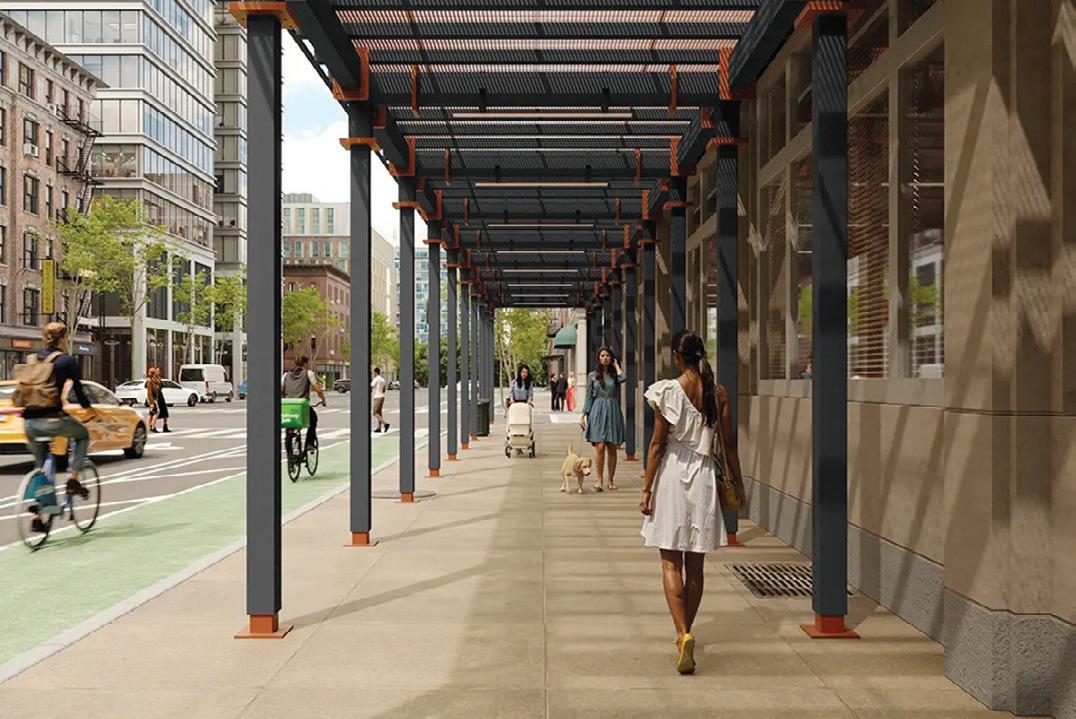
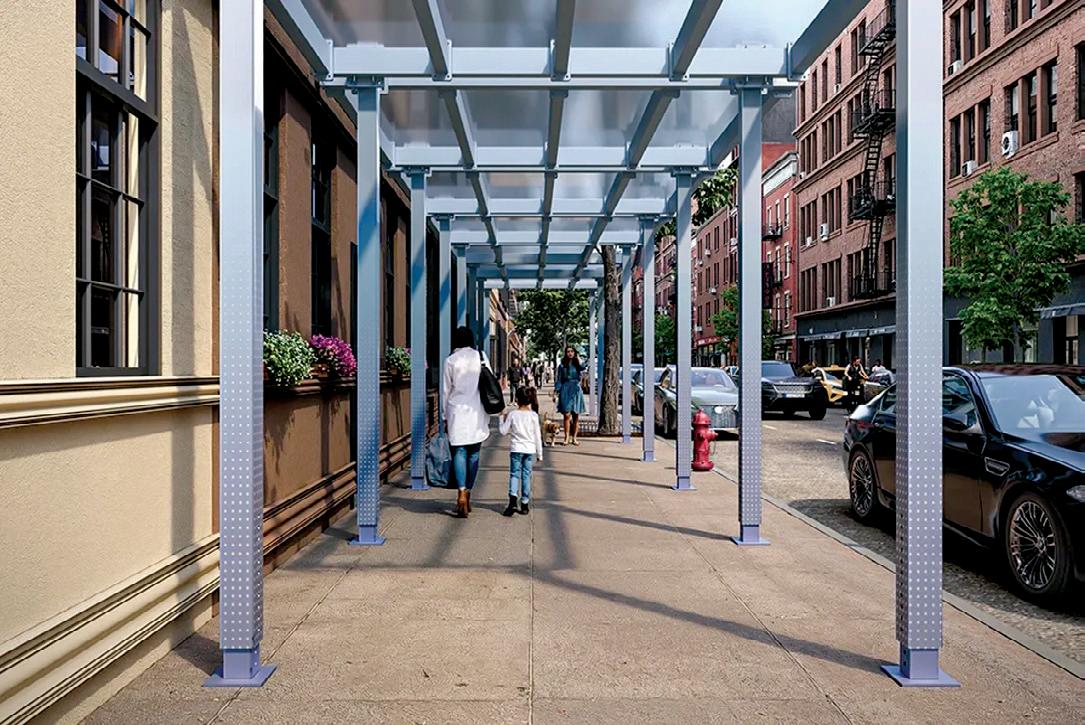
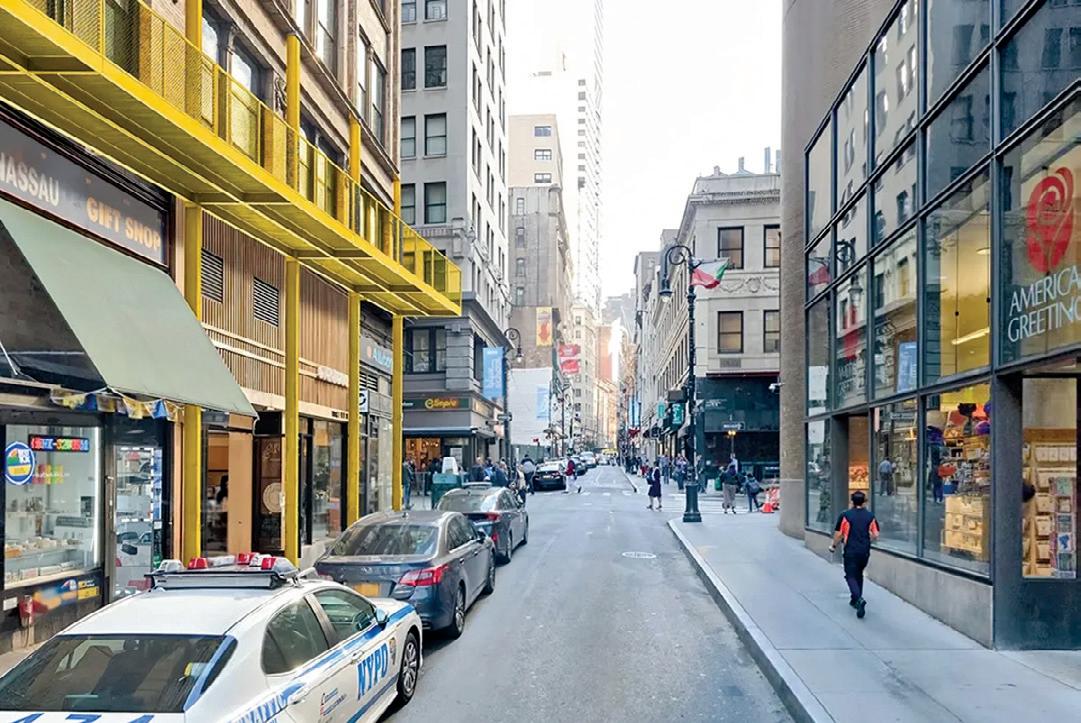
Adraft of the next edition of the AISC Code of Standard Practice for Steel Buildings and Bridges (AISC 303) is now available for public review and comment.
The next edition of AISC 303 will supersede the 2022 version and is anticipated to be finalized in 2027. This draft introduces the term “character of work” and integrates the term throughout the standard. It also proposes updates to clarify the responsibilities
for the design of member reinforcement. The draft will be available as a free download at aisc.org/publicreview between November 5 and December 5, 2025. If you’d prefer to review a hard copy, please contact Martin Downs at downs@aisc. org; there is a $35 nominal charge for printed copies. Please submit comments using the form provided online or by email to Nathaniel Gonner (gonner@aisc.org) by December 5, 2025, for consideration.
In October, Skidmore, Owings & Merrill (SOM) and COIMA SGR (COIMA), construction on the 2026 Winter Olympics Athletes’ Village in Porta Romana, Milan, was completed 30 days ahead of schedule. The Porta Romana Olympic Village is as sustainable, intergenerational, and green community in the heart of Milan’s dynamic Porta Romana district. Designed to become an integral part of Milan’s urban fabric, the village encompasses a set of public green spaces, the transformation of two historic structures, and six new residential buildings that will serve Olympic athletes in the short term, and subsequently transition into Italy’s largest affordable student-housing development to address a chronic shortage of student beds.
Following the games, the conversion to a 1,700-bed student accommodation scheme will be completed in just four months, ensuring it is ready for the 2026/27 academic year. Likewise, the Olympic Village Plaza will become a neighborhood square, with shops, bars, restaurants, and cafes at street level, as well as outdoor spaces for farmers’ markets and community events.
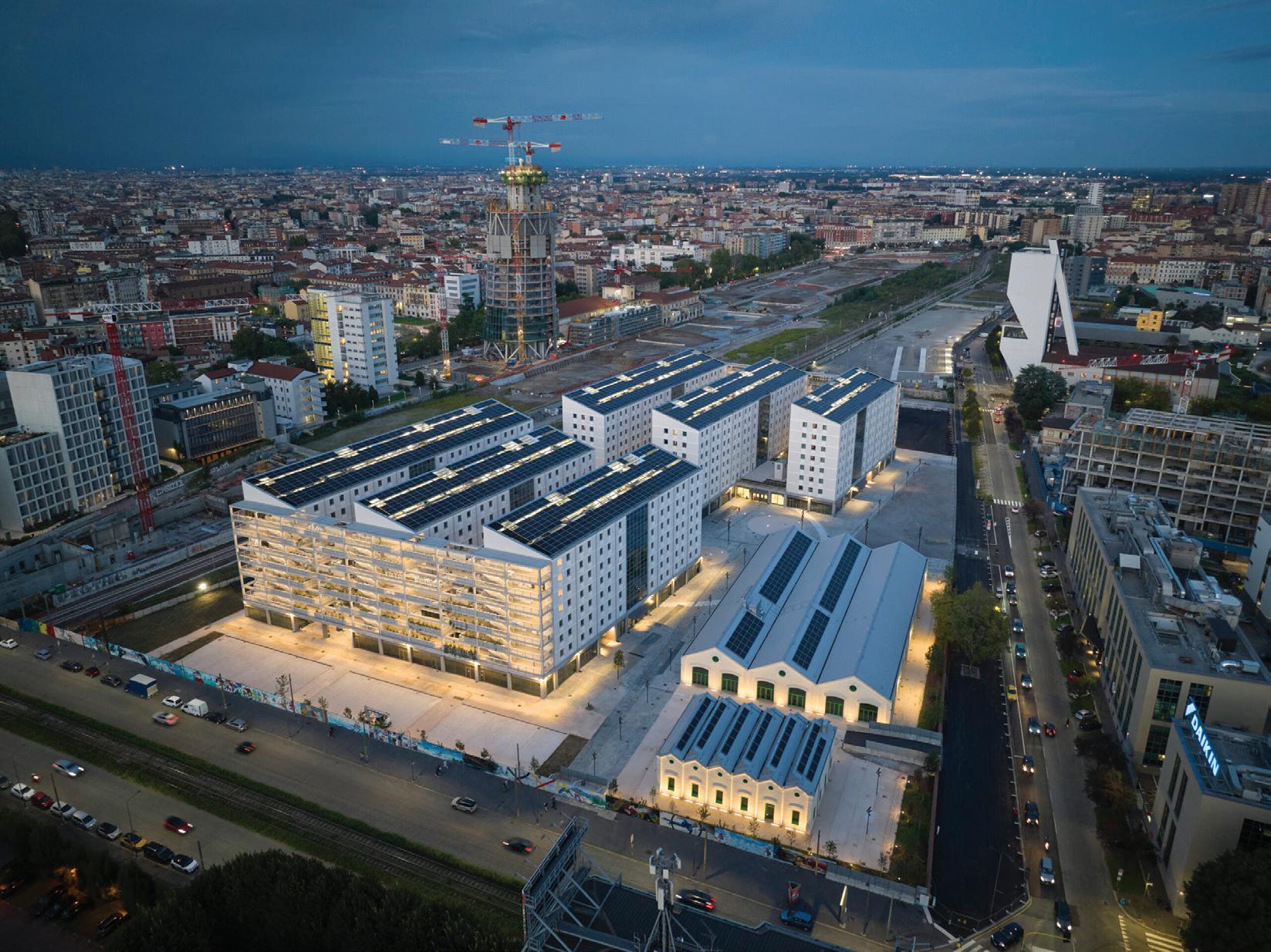
Located on the site of a former rail yard, the Olympic Village takes architectural inspiration from the site’s industrial history, as well as the building typologies of Milan. The site plan adopts the rhythm of the surrounding streetscape, creating a porous urban block with a variety of new public pathways and connections to additional components of the Porta Romana Railway Area Master Plan. The preserved historic structures and ground floor of the residential buildings will house a variety of cultural and economic anchors that serve both residents and visitors, enhancing the tapestry of ground floor experiences that define the urban landscape of Milan.
The new buildings reinterpret the neighborhood’s familiar linear bar typology by pairing it with a material palette that is at once contextual and resolutely contemporary. Bookending the campus, communal terraces act as connective bridges—both physically and socially—to establish a new form of shared infrastructure. The terraces will help buffer the private residential units from the busy streets and public spaces at the edges of the site. Integration of greenery for the outdoor areas is key to the neighborhood’s climate resilience, as well as for the comfort, health and wellbeing of the occupants and visitors.
At the base of the new buildings, flexible podiums accommodate programs that evolve with the usage of the village—just as historic palazzos throughout Italy have provided users with the flexibility to adapt to new uses over time. The porous ground floor with connected
alleyways and urban pockets encourages exploration and experiences that create unexpected moments. During the Olympics, these spaces will house recreational and support areas for the athletes. After the games, they will transform into student amenities and public programs, curated as three ‘districts’ forming anchors at the corners of the site: The Scene for media and culture events; The Social where coworking and flexible social spaces will live; and Live Well for fitness and wellness.
The historic structures, the Ex Squadra Rialzo Building and Basilico Building, are located adjacent to Via Giovanni Lorenzini on the southwestern corner of the site. Both buildings were built for industrial uses and similarly lend themselves to flexible, public programs. Together they form a gateway to the complex and establish the importance of the area’s history. The exterior envelope and roofs of both buildings will be fully restored, and their interior structures of masonry, wood, and iron will be exposed, illustrating the neighborhood’s transformation from industrial center to contemporary urban district. Interventions within the buildings’ interiors, like new timber roofs, mechanical systems, infrastructure for restaurant and community space, and art pieces, may also be undertaken.
The entire Olympic Village is designed according to the principles of a smart and sustainable city, creating a complex that is at once connected and self-sufficient. The village’s mechanical systems will tie in to the precinct’s loops, yet passive cooling strategies, solar panels, and rooftop gardens—among other features—will ensure that the complex avoids energy waste and generates much of what it consumes on site. In addition, the new buildings maximize the use of sustainable materials, from the mass timber structure of the residential buildings to low-embodied carbon facade materials. ■
ASCE 2027 will convene March 1–5, 2027 in Philadelphia, marking a new chapter in collaboration as SEI joins all ASCE institutes for a fully integrated conference experience. Content proposals are due by March 4, 2026. Watch the announcement: https://www.youtube.com/watch?v=99vJ_PaQiPI
SEIattended ICC Committee Action Hearing #2 held in Cleveland October 22-29 to advocate for integration of the latest ASCE/ SEI standards into the 2027 edition of the I-Codes. Dan Cox, Jessica Mandrick, Manny Perotin, Carol Friedland, Jeannette Torrents, and Jennifer Goupil represented ASCE/SEI 24-24 on a suite of proposals to expand the flood hazard area to the 500-year flood plain and to update design flood events to correspond with the reliability-targeted design floods in ASCE/SEI 7-22 Supplement 2.
The SEI Futures Fund helps emerging structural engineers participate in technical leadership by supporting travel to committee meetings and reducing financial barriers to engagement in standards development and interdisciplinary collaboration.
Suzanna Barna, EI, of Wiss, Janney, Elstner Associates, Inc., ASCE/SEI 11 Historian, shares:


“Serving on the ASCE 11 committee has been a meaningful way to contribute to the engineering community. It’s been rewarding to apply my structural assessment knowledge and engage with diverse perspectives from across the industry.”
Juliana Rochester, PE, SE, of Magnusson Klemencic Associates, reflects on her experience as Balloteer for the ASCE 7 Wind Load Subcommittee:
“The Committee brings together professionals from diverse disciplines, including wind and structural engineering, as well as consultants and researchers. This experience has strengthened my relationships with industry leaders, opened the door to new professional connections, and sparked cross-disciplinary conversations—even beyond the scope of code development.” Lean more about the SEI Futures Fund: https://go.asce.org/seifuturesfund.
AMPLIFY has now launched Eaves, an AI assistant built to support engineers with detailed, multilingual responses powered by ASCE’s trusted body of knowledge. Eaves can answer questions on 21 SEI standards including ASCE/SEI 7 and ASCE/SEI 41. Now in beta, Eaves is available at no cost for a limited time, offering unlimited prompts and full-length answers. Users are encouraged to explore its features and share feedback to help improve accuracy and inclusivity. Explore Eaves: amplify.asce.org/eaves.
Registration is open for Structures Congress 2026, scheduled for April 29–May 1 in Boston, Massachusetts. The annual event brings together structural engineering professionals for three days of technical sessions, networking, and industry insights.
Kicking off the week is the SE2050 Signatory Summit on April 29, a
dedicated gathering for firms and supporters of the SE2050 Commitment Program. Attendees will take part in interactive workshops focused on sustainable design, emerging resources, and shaping the future of climateconscious engineering. View the full Structures Congress 2026 Program: https://www.structurescongress.org/program.
The SEI Mentoring Committee has launched a new interactive bingo game to help mentors and mentees connect through meaningful, skill-building conversations. Developed by Vice Chair Gabriel Ackall, M. ASCE, the game features prompts in each bingo square, from discussing the mental load in engineering and sharing time management strategies to exploring new technologies and walking through drawing details. Designed to spark thoughtful dialogue and foster professional growth, the bingo board turns mentoring into a collaborative skill-building experience where every square is a chance to learn and grow together.
Share your completed boards and tag @ SEI - Structural Engineering Institute on LinkedIn to inspire other mentors. Ready to play? Scan the QR Code.

The SEI Pittsburgh Chapter has used a Small Grant from the SEI Futures Fund to purchase Mola Structural Kits, enhancing its outreach to students and professionals. The kits have been featured at events including Carnegie Science Center’s SciTech Day, a University of Pittsburgh presentation, and a bridge rehabilitation meeting, engaging audiences from middle school students to practicing engineers. The ASCE Pittsburgh Younger Member Forum also adopted the kits after seeing them in action. These activities align with the Futures Fund’s goals of strengthening connections between education and practice and encouraging continued involvement in SEI and ASCE. The chapter plans to expand its use of the kits in future projects, including a shake table initiative. Read more about the chapter’s activities: https://asce-pgh.org/SEI.
The fourth and final SEI NIST Forward Looking Codes and Standards Adaptation and Resilience Workshop was held on October 29 at the Bechtel Conference Center in Reston, Virginia. The full-day event brought together experts from academia, government, and industry to explore how future building codes and standards can better support climate adaptation and resilience. The program opened with remarks from leaders at Florida International University, NIST, and SEI, followed by presentations on synergistic efforts including decision scaling, adaptive policy pathways, and community resilience. Case studies featured the Charlestown Bus Facility Shoreline Stabilization, flexible adaptation planning in Honolulu, and resilience efforts in Salt Lake City. Afternoon sessions focused on defining next-generation goals and identifying top research priorities to guide the development of standards that address nonstationary, risk-sharing, and long-term resilience in the built environment.
ASCE has named Maria C. Lehman as interim executive director, effective Oct. 9, ahead of Tom Smith’s retirement on Dec. 31, 2025. Edward Stafford, ASCE COO, will take on expanded executive duties during the transition.
A search for the next executive director is underway, with applications opening soon at www.asce.org and a final selection expected in early 2026.

Witha career defined by technical excellence, professional service, and a passion for developing future engineers, Carrie Johnson, P.E., S.E., was honored by NCSEA with its prestigious Lifetime Achievement Award at the 2025 Structural Engineering Summit in New York City on October 16, 2025.
Johnson has been a driving force in structural engineering for decades. She served as NCSEA’s President from 2013-2014 and was previously recognized with the NCSEA Service Award in 2016. Her contributions span leadership on numerous committees, including as chair of the Summit Program Committee, the Education Committee, and the Structural Engineering Excellence (SEE) Awards Task Group.
Beyond NCSEA, Johnson has also led the Applied Technology Council (ATC) as President, and through her long career at Wallace Design Collective, she has mentored and inspired the next generation of engineers. Her career reflects a deep commitment to advancing the profession, elevating education, and fostering collaboration across the structural engineering community.
“Carrie Johnson represents the very best of the structural engineering profession,” said Al Spada, NCSEA CEO and Executive Director. “Her thoughtful leadership and years of dedicated service have strengthened not only NCSEA, but the structural engineering community as a whole.”
NCSEA’s Lifetime Achievement Award is a rare and distinguished recognition, reserved for individuals whose professional accomplishments and service to NCSEA have a profound impact on the practice of structural engineering.
NCSEA has launched two important data-gathering efforts to deepen understanding of today’s structural engineering profession and invites all structural engineers to participate.
The Compensation & Benefits Study collects quantitative information on salaries, bonuses, paid time off, and employer-provided benefits. The results will offer valuable benchmarking data for both individuals and firms and support broader efforts to promote fair and competitive compensation across the profession.
The SE3 Survey examines the human experience within the

profession, exploring topics such as career satisfaction, mentorship, work-life balance, and overall sense of belonging. Responses will help NCSEA build a clearer, data-driven picture of the realities faced by structural engineers and identify opportunities for continued improvement.
Together, these surveys provide critical insights that guide NCSEA and its member organizations as they advocate for a strong, supportive, and sustainable profession. Structural engineers are encouraged to complete both surveys by visiting benchmarking.ncsea.com.
Firm leaders from across the United States will gather next March for the 2026 Structural Engineering Executive Retreat, NCSEA’s flagship event for executive-level learning and collaboration. The retreat will take place March 18–20, 2026, at the Omni Amelia Island Resort & Spa in Florida.
Designed for current and emerging executives, the program offers an opportunity to shift focus from daily demands to the broader challenges and opportunities facing the profession. Attendees will participate in expert presentations, roundtable conversations, and peer networking,
with sessions covering risk management, recruitment and retention for the next generation, and economic trends and forecasting.
Registration is open to all firm leaders across the structural engineering profession. NCSEA will coordinate hotel reservations at the Omni Amelia Island Resort for registered attendees.
The 2026 Executive Retreat provides a dedicated space for leaders to explore the future of structural engineering, gain strategic perspective, and strengthen their firm’s direction for the years ahead. Learn more and register at NCSEA.com/exec-retreat.
The NCSEA is pleased to announce the recipients of the 2025 Young Member Group Awards, presented during the 2025 NCSEA Structural Engineering Summit in New York City. Each year, these awards recognize Young Member Groups for outstanding contributions to the structural engineering profession through leadership, engagement, and community impact.
For 2025, NCSEA introduced an updated awards structure, honoring three groups across new categories. The following SEAs have been recognized for excellence in developing the next generation of structural engineers:

Young Member Group of the Year: SEAONC—Northern California
SEAONC’s Young Member Group continues to demonstrate sustained excellence through strong attendance, active volunteer leadership, and innovative programming. This year, SEAONC expanded board roles to support growth, strengthened student outreach, and hosted creative cross-committee initiatives, including a Plant, Paint, and Sip event with the Sustainable Design Committee.
Established less than two years ago, SEAoK’s Young Member Group has rapidly grown to approximately 65 members and built a vibrant statewide network. From hosting site visits and workshop series to organizing a crossdisciplinary pickleball tournament, SEAoK has fostered strong engagement among young engineers across long distances and time zones.
Best Event/Initiative of the Year: SEAONY—New York
SEAONY earned recognition for its MOLA model structural competition, hosted in collaboration with another committee. The event brought together more than 50 students, professionals, and educators, and featured participation from the founder of MOLA. The program successfully strengthened connections among students, young professionals, and industry leaders while promoting hands-on learning and collaboration.
NCSEA congratulates this year’s honorees and commends all Young Member Groups for their ongoing leadership, creativity, and commitment to advancing the structural engineering profession.
The Minnesota Structural Engineers Association Young Members Group (MNSEA YMG) brought emerging engineers together for a tour of the Abbott Northwestern Hospital Surgical and Critical Care Pavilion, now under construction in South Minneapolis.
Designed by HGA, the 10-story, 690,000-squarefoot, LEED-certified facility will feature 30 operating rooms and 200 inpatient rooms when it opens in 2026. The tour, held in partnership with the AIA Young Members Group, offered participants a firsthand look at major construction milestones, including the completed nine-story concrete moment-frame superstructure, partial steel penthouse framing, curtain wall installation, and the structural system supporting a heavy MRI machine.
By connecting young engineers and architects with projects shaping their community, MNSEA YMG continues to create meaningful, real-world learning opportunities that strengthen the next generation of professionals.
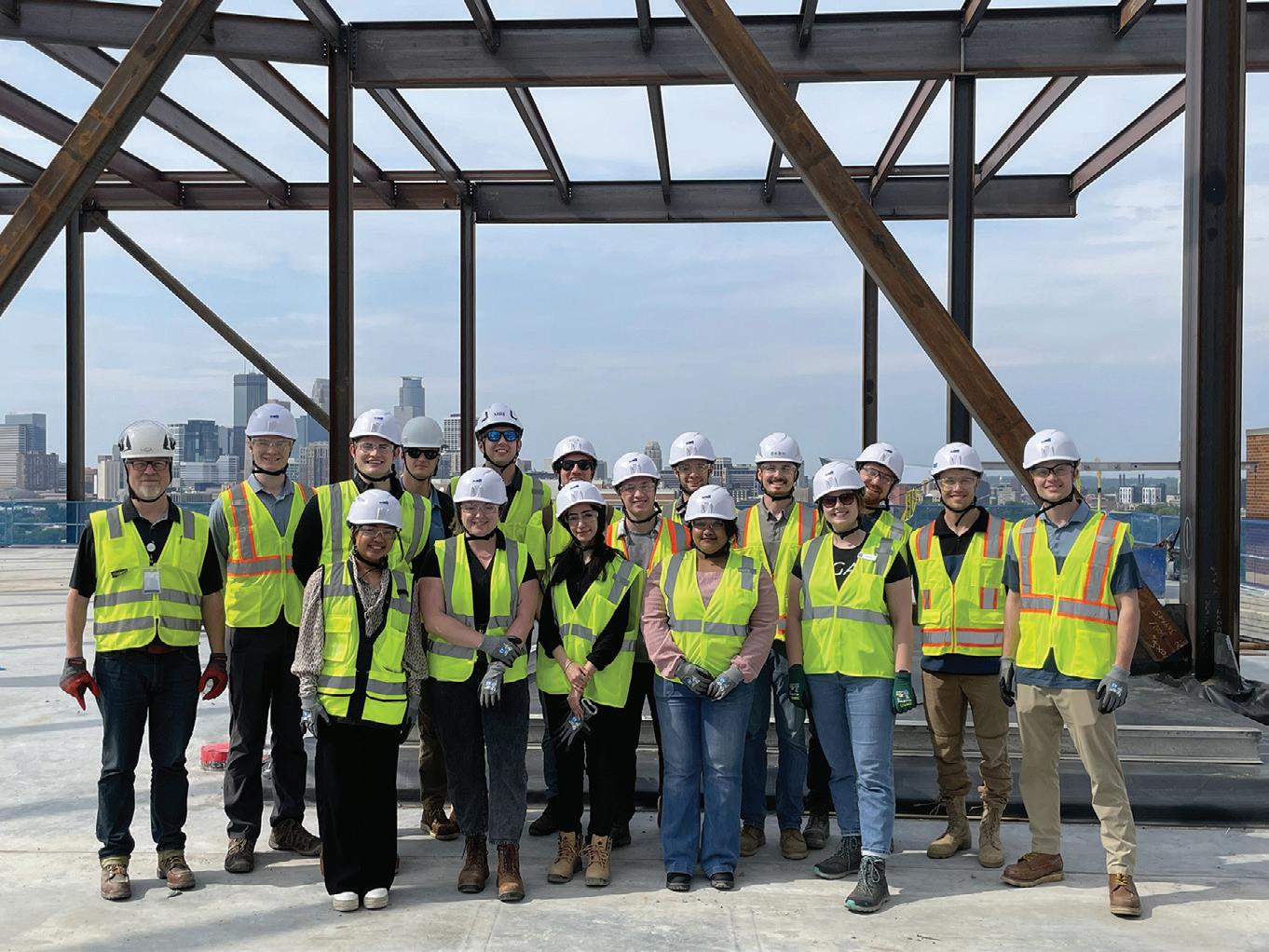

Anthony LoCicero, PE, LEED AP, of Burns Engineering, is the current Chair of the Coalition of American Structural Engineers (CASE), serving from May 2025 through May 2026.
LoCicero brings more than 15 years of structural engineering experience across transportation installations, major waterfront terminals, specialized industrial sites, and utility infrastructure facilities, projects where safety, innovation, and long-term resilience are essential. At Burns, he serves as Facilities & Infrastructure Project Manager, leading teams, mentors emerging engineers, and advancing firm wide planning and delivery systems.
As Chair, LoCicero guides CASE’s ongoing work to strengthen professional practice standards, expand peer knowledge sharing, and promote business leadership. His priorities also include advancing collaboration across engineering disciplines and raising the visibility of structural engineers in industry-wide initiatives.

ACEC has eliminated separate dues for coalition participation (except DPC), so member firms can now join CASE at no additional cost.
Members gain access to contract documents, business-practice guidelines, and peer discussions tailored to structural engineering. The change broadens participation and makes CASE resources accessible to more firms of every size.
Join a coalition at https://www.acec.org/member-center/get-involved/ coalitions/
Mark your calendar for May 3–6, 2026 in Washington, D.C. Topics will include infrastructure investment, licensure policy, and innovation in building safety. Structural engineers are encouraged to participate and lend their perspective to ACEC’s national advocacy work.
Available now in the CASE Toolkit library at https://www.acec.org/ resources/resource-library/.

he CASE Toolkit Committee has released an updated Tool 4-1: Project Status Report, improving how firms track schedules, scope, and client communication. This updated version provides a customizable template for keeping clients and stakeholders informed throughout a project. More than a form, it is a communication system designed to protect firms from misunderstandings, improve client satisfaction, and support stronger project control.
Recent updates help to provide a more comprehensive and user-friendly tool that also includes feedback from users. It organizes key information such as recent activities, upcoming deliverables, action items, invoicing, and reimbursable expenses into one clear, professional format. By maintaining a written record of progress and responsibilities, firms can demonstrate accountability, document decisions, and reduce exposure to claims or disputes.
Available now in the CASE Toolkit library at https://www.acec.org/resources/ resource-library/.

February 26–27, 2026 – InterContinental Houston
The 2026 ACEC Winter
Coalition Summit will feature a session on the future of artificial intelligence in structural engineering, led by Jim Jacobi, , Managing Principal & CIO Emeritus at Walter P Moore.

With more than 35 years in engineering design and technology integrations, Jacobi has guided the firm’s use of tools like Building Information Modeling (BIM), and virtual design and construction to enhance project delivery. At the Summit, he’ll explore how AI is transforming engineering workflows, and how firms can act now to stay competitive.
“Technology isn’t just hardware or software—it’s a strategic enabler of transformation,” Jacobi said. “AI is reshaping our industry, and waiting to adopt it means losing competitiveness and opportunity.”
Jacobi will share practical steps for firms looking to begin their AI journey. His advice: start small, start now.
“Generative AI tools like Microsoft Copilot and ChatGPT can quickly produce first drafts for specs, RFPs, and proposals,” he noted. “Use AI for the first 20–30% of the lift, then refine with your expertise.”
Jacobi also hopes to shift mindsets about AI’s role in engineering. “AI won’t replace engineers,” he said. “But engineers who use AI will replace those who don’t.”
In addition to Jacobi’s session, the CASE–MEP Joint Roundtable will examine “Implementing AI in the Vertical Engineering Space.” The discussion will feature firm and industry leaders exploring how AI is influencing design coordination, modeling, and predictive analytics in vertical projects.
Register for the Winter Summit today at https://www.acec.org/ education-events/events/coalitions-winter-summit/ Both senior leaders and emerging professionals are encouraged to attend, ensuring that discussions reflect a range of experience and perspectives across the engineering disciplines.
Contact Michelle Kroeger (mkroeger@acec.org) or Erin Wander (ewander@acec.org) for details on opportunities to participate.
The U.S. Department of Transportation has issued an Interim Final Rule (IFR) that removes race- and gender-based presumptions of social and economic disadvantage under the Disadvantaged Business Enterprise (DBE) program. The change follows a federal court ruling in Kentucky (Mid-America Milling) and similar constitutional challenges.
The new rule, effective October 3, requires all current DBE firms to re-certify and provide individualized evidence of social and economic disadvantage, regardless of race or gender. Until recertification is complete, federal funding recipients may not set DBE goals or count participation toward existing targets.
The IFR also updates terminology, replacing “race-conscious” and “race-neutral” with “DBE-conscious” and “DBE-neutral,” and revises record-keeping and goal-setting procedures.
ACEC is preparing formal comments and working with AASHTO to monitor how state DOTs will implement the new requirements.
Additional Resources
ACEC Comments on the DBE Rule
DBE Guidance on the IFR
DBE FAQs on IFR
State DOT DBE Policies
ACEC Resources
Resources are available to support using forecasting to predict staffing needs for projects in the pipeline.
By the Coalition of American Structural Engineers (CASE)

In today’s fast-paced AEC industry, the ability to predict staffing needs has become just as critical as the ability to deliver quality design. Yet many structural engineering firms continue to staff reactively by responding to project pressures or client demands reactively rather than planning proactively based on expected workload. This approach leads to operational inefficiencies, strained teams, and missed opportunities for growth.
As firms seek to scale responsibly, improve retention, and maintain high technical standards, it’s essential to align staffing decisions with future workload expectations. That alignment starts with accurate, actionable revenue forecasting.
Most firms track utilization, billing, and backlog. These metrics are useful for understanding what has happened. But staffing decisions are about the future. Forward-looking forecasting requires visibility into what work is likely to come in, when it might start, and how much effort it will require from staff across disciplines.
This is easier said than done. Proposals vary in scope and certainty, start dates and milestones are often fluid, and fee structures don’t always translate cleanly into staffing needs. Yet failing to build this kind of model leads to the all-too-familiar cycles of feast and famine, where firms alternate between overworked staff and underutilized teams.
Available industry data highlights this disconnect. Fewer than half of firms say they are confident in their ability to accurately forecast project costs and staffing needs. In many cases, project managers lack access to real-time project data, making it difficult to anticipate workload or inform hiring decisions. Meanwhile, staff shortages and
retention remain among the top concerns reported by firm leaders, underscoring the need for a more predictive and integrated approach.
To improve alignment between current and future staffing needs, firms must develop systems that connect business development, project planning, and resource management. A basic framework includes three core elements:
1. Opportunity Tracking:
The starting point is a clear view of the active proposal pipeline. Opportunities should be categorized by project type, client sector, contract value, and anticipated start date. This allows firms to see not just how much work is in pursuit, but also how that work breaks down across meaningful business dimensions.
2. Probability and Timing:
Not every opportunity will convert into revenue, and not every project starts immediately. Firms that analyze historical hit rates— by client type, market sector, or contract size—can assign realistic probabilities to each pursuit. They can also calculate the average lag between contract signing and the start of billable work.
Combining these inputs allows firms to generate a weighted and time-shifted projection of future work. For example, a high-probability $25,000 feasibility study with a short activation lag may be weighted more heavily than a lower-probability public-sector project that could take many months to get started.
3. Factored Revenue Forecasting:
By applying win probabilities and activation lags, firms can produce a factored revenue forecast that distributes expected workload across
future months. This is far more actionable than a flat backlog figure. It offers insight into not just what’s under contract—but what is most likely to impact staffing into the future.
Once a firm has created a forecasted view of incoming work, the next step is converting that forecast into staffing needs. This can be done by applying your firm’s work rates (hours worked per week) and production rates (revenue generated per hour) to the revenue forecasts. Firms can use this information to:
• Anticipate hiring needs several months in advance.
• Reschedule or shift staff internally to smooth out workload peaks and valleys.
• Delay hiring or backfilling if projected workload does not support the need.
• Proactively plan for onboarding and training during expected slow periods.
• Support retention by minimizing burnout and providing more predictable work allocation.
The key is not to seek perfection in the forecast, but to establish a structured, recurring process for refining it. Regular updates based on new proposals, contract status, and project shifts help keep forecasts relevant and responsive.
While the value of data in forecasting is clear, it’s equally important to recognize its limits. No formula can fully account for the nuances of a longstanding client relationship, the subtle cues of a shifting market, or the political dynamics of a public procurement process. For this reason, experienced firm leaders and project managers remain essential to interpreting data, adjusting assumptions, and spotting patterns that are invisible to automated systems.
In practice, the best forecasting models combine quantitative analysis with professional judgment. A proposal may appear low-probability on paper but be all but guaranteed due to a trusted client relationship. Leadership intuition, grounded in years of experience, provides critical context.
Rather than replace intuition, forecasting tools should enhance decision-making by providing a clearer picture—while still leaving room for insight that comes from working in the field, understanding the market, and building client trust over time.
Current industry data shows that firms maintain, on average, nearly nine months of backlog. However, backlog alone is a poor predictor of staffing needs unless it accounts for actual start dates and resource demands. A large project with a 12-month design window may have minimal short-term impact on staffing, while a cluster of smaller projects could create immediate needs. Additionally, only a minority of firms report having strong alignment between their business development and project delivery teams. This lack of coordination makes it harder to plan for resource needs in advance. When PMs are not involved in the pursuit pipeline—or when BD staff are unaware of current capacity constraints—forecasts become disconnected from operational reality.
Despite the growing availability of resource planning tools, many firms still rely on informal processes or siloed systems. Firms that integrate even basic forecasting—through simple spreadsheets or custom dashboards—report stronger confidence in hiring decisions and better control over workload planning.
Firms of any size can begin improving their forecasting process with the following actions:
1. Organize the Pipeline - Track all active opportunities in one place. Include contract value, client name, project type, expected start date, and the probability of winning the project.
2. Analyze Historical Data - Review past proposals to determine hit rates and typical lag times for different project types or client sectors. This creates a baseline for weighting future opportunities.
3. Build a Rolling Forecast - Apply win probabilities and lag times to current opportunities. Distribute the resulting expected revenue or hours across future months to estimate when work will occur.
4. Convert to Staffing Demand - Use historical labor data to estimate full-time equivalents (FTEs) required to support projected revenue. Break this down by role, discipline, or experience level.
5. Update Regularly - Forecasts should be reviewed regularly to reflect new opportunities, shifts in project status, and hiring decisions.
6. Share the Outlook - Communicate forecast data with project managers, leadership, and HR. This supports transparency and helps teams prepare for upcoming needs or potential slowdowns.
Implementing a forecasting model doesn’t require perfect data, expensive software, or a dedicated analyst. What it does require is a shift in mindset. Relying solely on experience and intuition to anticipate when work will arrive often puts firms in a reactive position—scrambling to respond rather than preparing in advance. A structured forecasting model helps move the approach from reacting to work toward proactively planning for it.
Staffing is not just a financial consideration; it is a strategic function that shapes culture, quality, and client satisfaction. When firms align staffing decisions with predicted workload, they are better positioned to retain talent, manage risk, and grow responsibly.
The ability to forecast revenue—and directly connect that forecast to resource planning—is no longer a “nice to have.” It is a foundational business practice for firms that want to thrive in a competitive environment. With the right approach, staffing can shift from a reactive function to a proactive strength—one that combines data with the judgment and intuition that have long guided the profession.
To support firms in this effort, CASE is introducing a new resource: Tool 3-2 Staffing and Revenue Projection. This tool provides a practical framework to link projected revenue with staffing capacity, helping firm leaders turn forecasts into actionable strategies. It is one more way CASE is working to equip firms with tools to navigate today’s challenges and plan confidently for the future. ■
The Coalition of American Structural Engineers (CASE) represents more than 200 firms committed to advancing a fair, profitable, and resilient structural engineering industry. CASE helps firms strengthen their businesses by sharing best practices to reduce risk and improve profitability.
By John Dal Pino, SE
Irecently listened to a podcast that started with a focus on the scientific advancement of man over time and then expanded to and bounced around the myriad of possible underlying explanations that included societal structure, human nature, theology, and philosophy.
The premise of the podcast was that starting in the Middle Ages, sciencebased achievements advanced quickly and on a sustained basis in many areas until roughly the late 1960s (around the time of the Apollo moon landings), at which time it slowed markedly. To recap, over the 100 years preceding the 1960s, mankind learned:
• How to build and live in tall structures.
• How to combat waterborne diseases by providing clean fresh water and proper waste disposal.
• How to make vaccines that greatly improved life expectancy and reduced childhood deaths.
• How to make mechanical devices, first steam engines, then the internal combustion engine and finally gas turbines, that permit long distance travel greater than the distance a horse can run/walk in a day.
• How to mechanize agricultural and industrial production.
• How to make and distribute electricity to power economical labor-saving devices in homes and factories.
• How to communicate over long distances via electromagnetic waves, first by wire, then through the earth’s atmosphere and beyond.
• How to solve mathematical problems in seconds or less, first using mechanical computing devices and later silicon chips, that used to take days or weeks or just weren’t solvable at all.
• How to fly in space and travel to the Moon and beyond.
• How to blow up the world if we don’t all learn to get along.
I had to agree with the podcast’s premise. Thinking back over the time since the late 1960s, we have improved on these prior inventions, but what entirely new inventions have been made? We travel the same ways, communicate in the same ways, cook, clean and heat our homes the same way, etc. Have we really invented everything there is to invent? Or have we stopped letting entrepreneurs invent and innovate? Have we become scared of technology? (Think of anything nuclear, genetically modified foodstuffs, artificial intelligence, self-driving cars, etc.) Have we convinced ourselves that living a pastoral life like in the pre-industrial era would be better, but of course with all of our modern creature comforts?
I think that structural engineering is not immune to stagnation. I appreciate that the profession has advanced analytical tools that allow the design of more economical structures, that construction materials are better than ever and that we have learned to design more reliable and better performing structures. But at the most basic level, what has really changed? The steel beams we use look much like those forged by Andrew Carnegie, the 1930s-era Empire State Building is still one of the tallest buildings in the world with the steel erection completed in less than 6 months, reinforced concrete is much the same as it has been since reinforcing steel was invented, we still stick frame most wood frame construction with steel nails, etc. You get the picture. Please don’t get me wrong, I love being a structural engineer, but if you were a young person with his/her hair on fire who wanted to change the world, what course of study and profession would you choose today? In the parlance of real estate, does structural engineering still have “curb appeal” or do young people “drive on to the next house on their list without stopping to look”? Would you rather work for SpaceX and get to Mars, become a Nvidia or OpenAI millionaire working on machine learning and advanced

computing or go with something tried and true? If you go with tried and true (and there is nothing wrong with that) will you be excited to regularly work on multi-story podium residential buildings (seems like most new buildings these days) or do you want to work at a firm that pushes the envelope with regard to building height, building performance or employing new materials?
I appreciate that not every project pushes the envelope, and that many parts of the design process of all buildings can seem repetitive after you have done it a few times. But if you agree that we as a profession need to focus on freshening our curb appeal, what should we do?
Here are some ideas:
Increase investment in basic research focused on developing new technologies. Decades-ago, cooperation between practicing structural engineers and university researchers led to amazing advancements that are commonplace in today’s buildings. It’s time to double down and make structural engineering exciting again. From personal experience, young engineers love getting involved in these kinds of activities.
Reduce the constraints on creativity. The NCSEA Foundation is answering this challenge with CURE (Code Updates for Reduction of Embodied-carbon), a groundbreaking initiative to modernize structural design standards while reducing material-related carbon emissions at scale. Modern buildings are engineered for strength, efficiency, and safety, but are the standards lagging behind them? Many standards haven’t been updated in over 50 years. That’s a problem.
Reduce government regulatory oversight. Just compare a copy of the Uniform Building Code from the late 1960s to the International Building Code of today to see that something is seriously amiss in my opinion. The engineering regulation portion of the 1967 UBC (Chapters 23 to 28) was 280 pages long on pages roughly 6 inches by 8-1/2 inches in size and included the design procedures and requirements for wood, masonry, concrete and steel that were also published separately by the various industry organizations. Most everything an engineer needed except the weights and dimensions of steel members was in one place. The equivalent length today of ASCE 7 (not including the commentary), ACI 318 (including the commentary), Americal Wood Council NDS, and the Masonry Design Manual total approximately 2,000 pages on 8-1/2-inch x 11-inch paper stock. Regarding AISC, let’s agree that the Manual of Steel Construction is essentially the same in scope and length as in the past, The AISC Seismic Provisions for Structural Steel Buildings, which didn’t exist in 1967, adds another 400 pages. Some increase in regulations based on new knowledge is certainly understandable, but does a trained and licensed professional really need this volume of regulations to do their job properly? Do you feel that weight on your shoulders?
Would it be possible to return to the days when engineers practiced more like doctors do, following a rational process starting with the definition of the problem, assembling the facts and data, developing a solution, discussing with colleagues and gathering second opinions and then designing a solution based on their professional judgment and experience?
At the heart of the matter, I am suggesting that we engineers practice a little closer to the edge to bring needed energy to what we do and how we serve the public. Makes me think of the famous Manfred Mann lyrics “Mama always told me not to look into the eyes of the sun. But mama, that’s where the fun is!” ■