Hon. Jason Poydras
Noted for Hearing: May 29, 2026 at 10:00 a.m.
Trial Date: November 2, 2026
IN THE SUPERIOR COURT OF WASHINGTON FOR KING COUNTY
ADAM JOHNSON, CARRIE REES JOHNSON, and EMMETT JOHNSON, a minor child, (the family of Mattheis Johnson, deceased), Plaintiffs, v. CITY OF SEATTLE, Defendants.
NO. 25-2-32127-4 SEA
PLAINTIFFS’ MOTION FOR PARTIAL SUMMARY JUDGMENT AND FOR ORDER OF ABATEMENT OF PUBLIC NUISANCE
I.INTRODUCTION
The City of Seattle (“the City”) has known for years that the cracking towers at Gas Works Park attract climbers, particularly children and young males, and that falls from the towers frequently cause catastrophic injuries and death. The City’s records show that in recent history there have been three fatalities, numerous severe injuries, repeated failures of fencing and other deterrents, structural deterioration, and the need to remove climbable elements to protect the
public. On this record, no reasonable factfinder could conclude that the cracking towers, in their present state, are anything other than a public nuisance under RCW 7.48.
An order requiring abatement is long overdue. First, the undisputed facts show a welldocumented danger of repeated falls, serious injuries, and notice to the City. Second, those same facts establish that the City understood the source of the danger was and continues to be the climbable, deteriorated pedestrian appurtenances that provide access to elevated areas of the towers and create hazards even for City staff. Third, according to the City’s own experts and internal records, fencing is not enough, and physical removal of the appurtenances is the appropriate means of reducing the danger. Each element of public nuisance is therefore satisfied as a matter of law.
Richard Haag’s vision for Gas Works Park is not to the contrary. The City has already determined that the towers themselves, and not the deteriorating ladders, catwalks, and related appurtenances, are the historically significant features, and has identified, designed, and priced the necessary fix. This Court should enter an order of abatement to ensure the City finally makes good on its obligation to public safety at Gas Works Park.
II.STATEMENT OF UNDISPUTED MATERIAL FACTS
A.The cracking towers
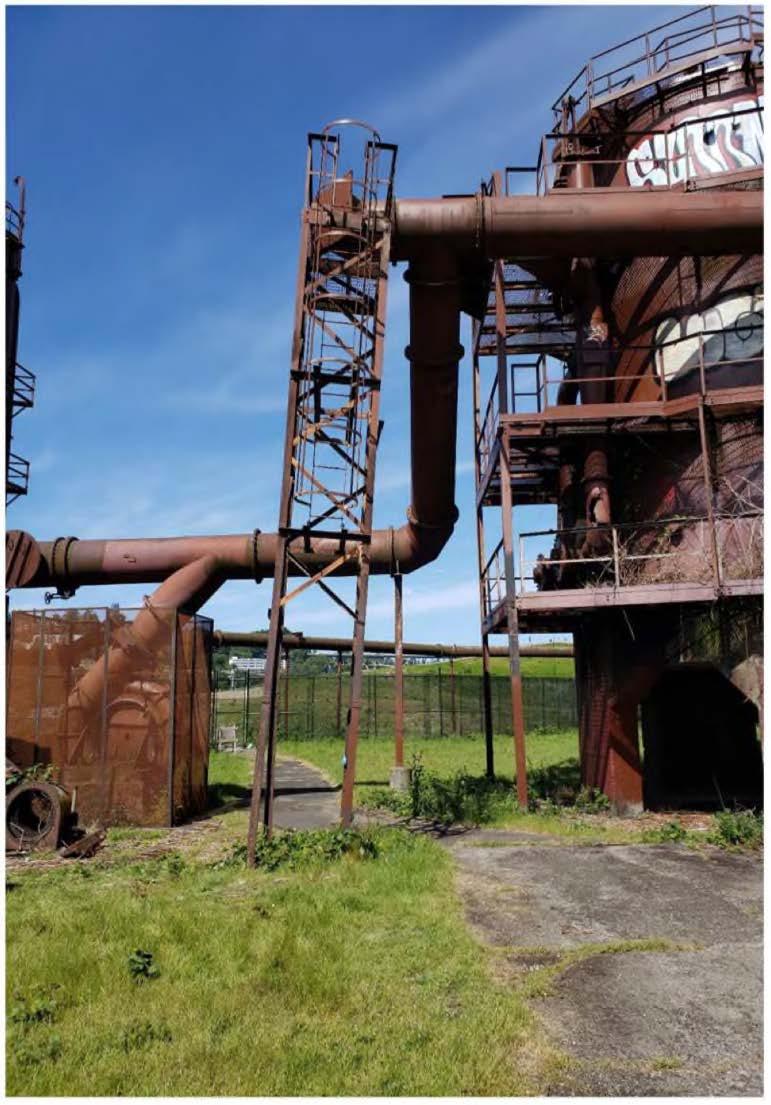
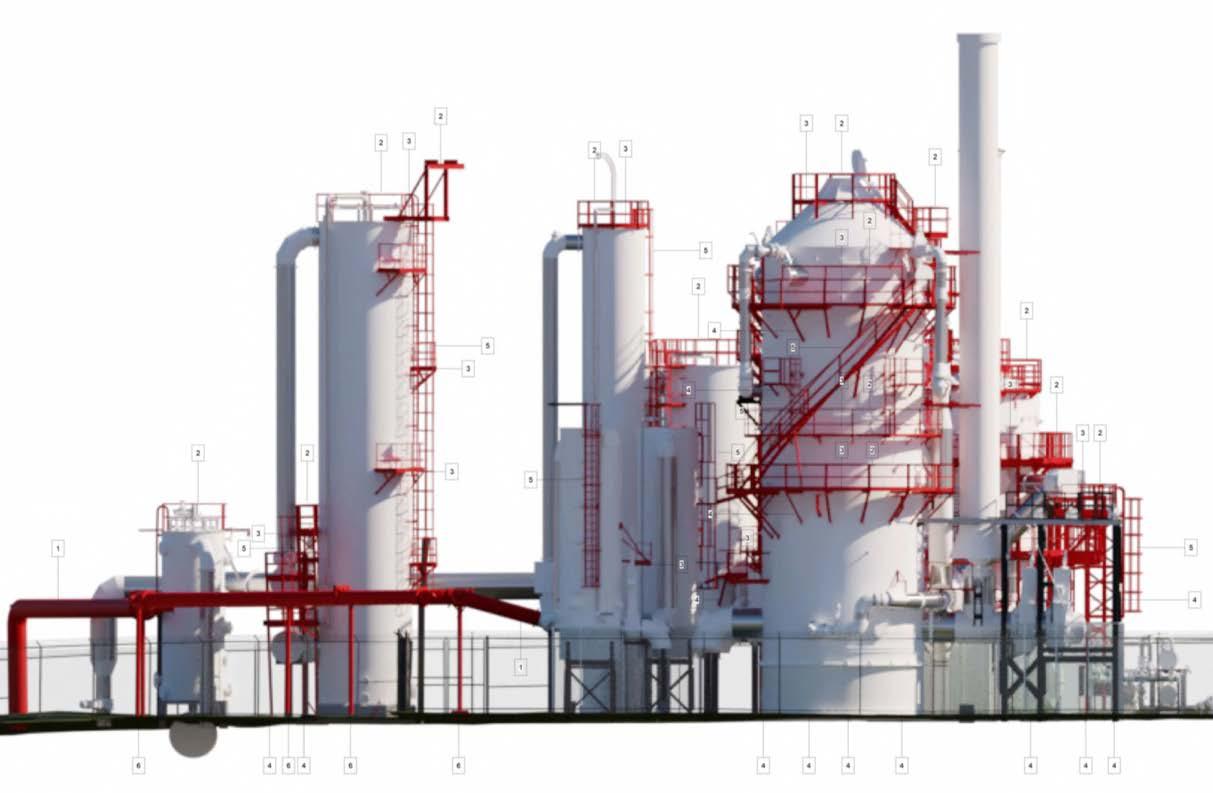
Gas Works Park “contains a former coal and gasification plant that operated from 1906 to 1956, which is comprised of several towers, tanks, piping supports, railings, ladders, and catwalks.”1 The conversion of the industrial ruin to a public park was the design of landscape
1 See Exhibit 1 to Declaration of Karen Koehler (hereinafter “Koehler Declaration”): GEAR Report at 2 (footnote omitted). (GEAR000682).
architectRichardHaag.2 Itfirstopenedtothepublicin1975.3 ItbecameaCityofSeattlelandmark in 2002, and was listed in the National Register of Historic Places in 2013.4
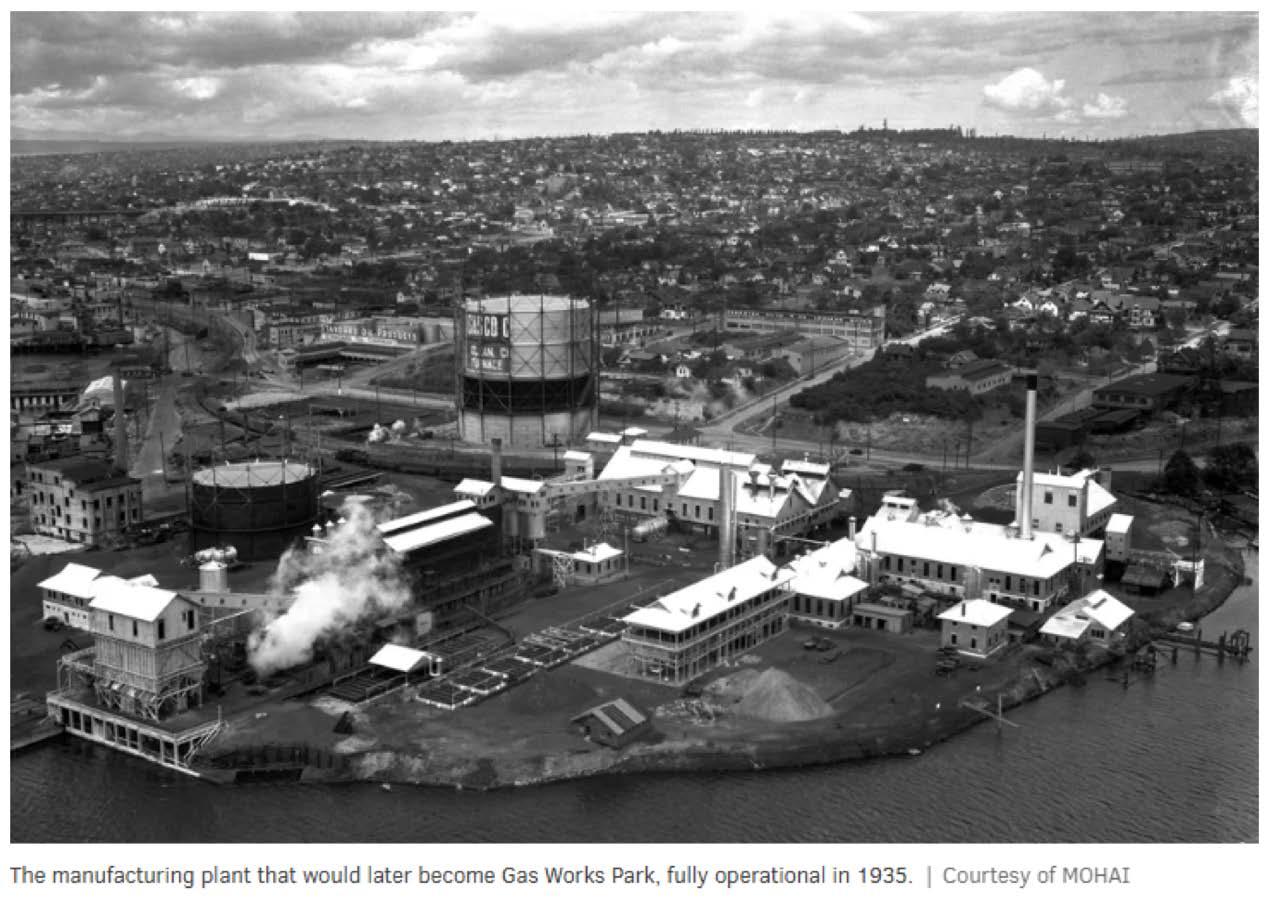
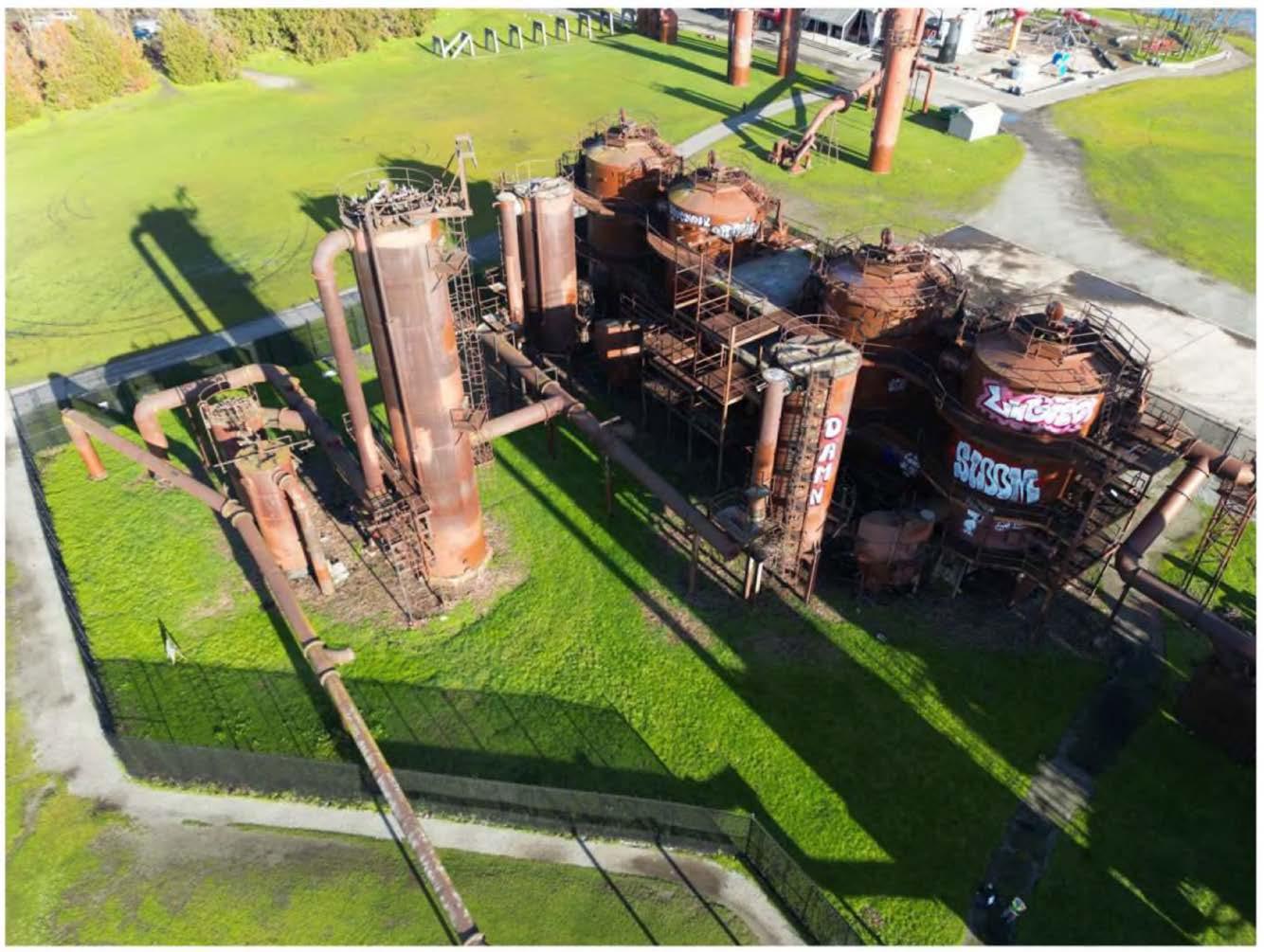
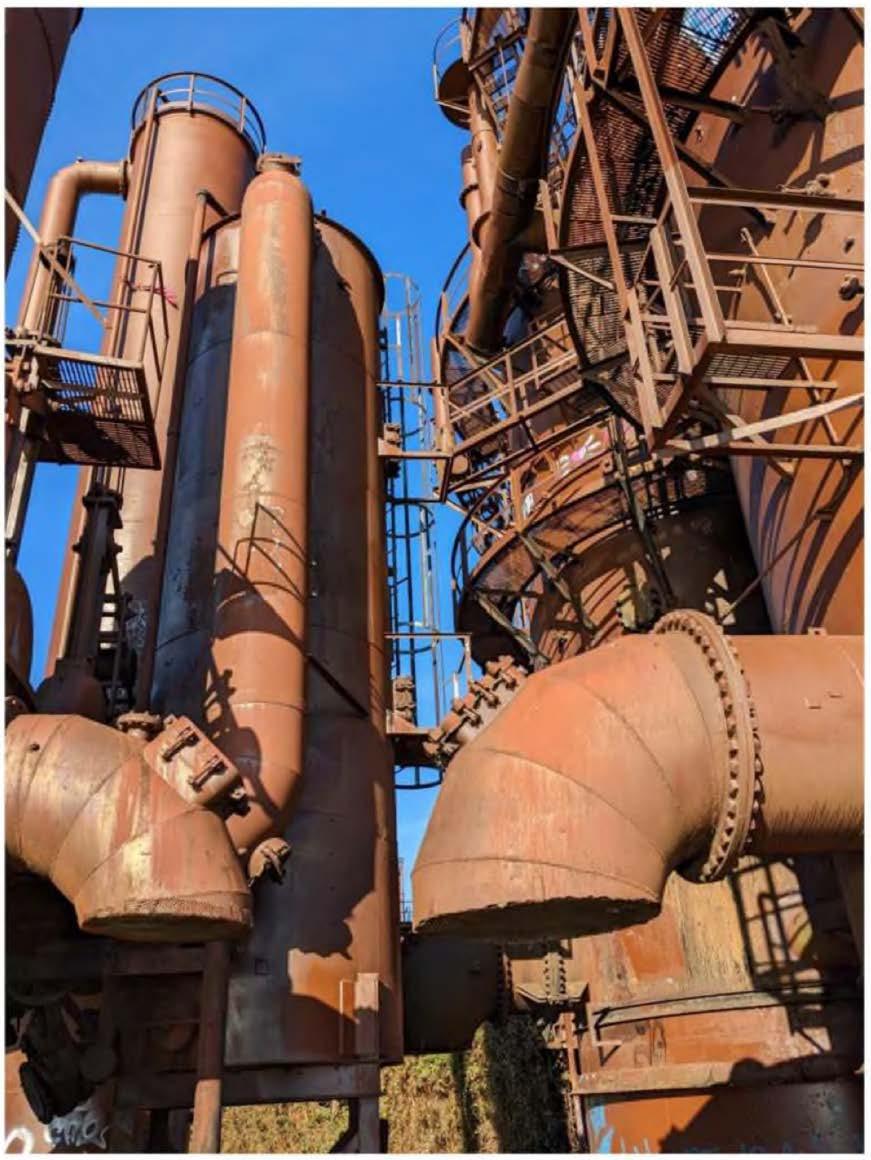
The pedestrian appurtenances attached to the cracking towers were originally installed for maintenance of the gasification equipment. These structures are “designed to convey human beings vertically and horizontally along the towers.”5 “[M]any of these elements are severely deteriorated and many of the attachments have failed or are at point of failure.”6
2 See Exhibit 2 to Koehler Declaration at SEA001737: City of Seattle Landmarks Preservation Board Certificate of Approval Application dated May 23, 2019.
3 Id.
4 Id.
5 See Exhibit 3 to Koehler Declaration: Letter from David Graves to City of Seattle Landmarks Preservation Board (Oct. 9, 2025), at SEA000543.
6 See Exhibit 4 to Koehler Declaration: Seattle Facilities & Admin. Servs., Detailed Damage Assessment Form (Sept. 9, 2025), at SEA001446.
B.A long history of injuries
Falls from the towers have plagued Gas Works Park. From the very beginning, the climbing affordances presented a unique opportunity for potentially dangerous activities like “structure and pipe climbing and sliding.”8 Within a year of the park opening, fencing was installed around the cracking towers “after two children were injured during falls.”9 According to records from the last eighteen years, people have frequently gained access to the cracking towers
7 See Exhibit 5 to Koehler Declaration: at SEA000520.
8 See Exhibit 6 to Koehler Declaration: SEA000425.
9 See Exhibit 2: Certificate of Approval Application (May 23, 2019), SEA001733.
and suffered catastrophic injuries. By the City’s own count, falls from the cracking towers have led to three deaths and “at least eleven … serious injuries” since 2008.10
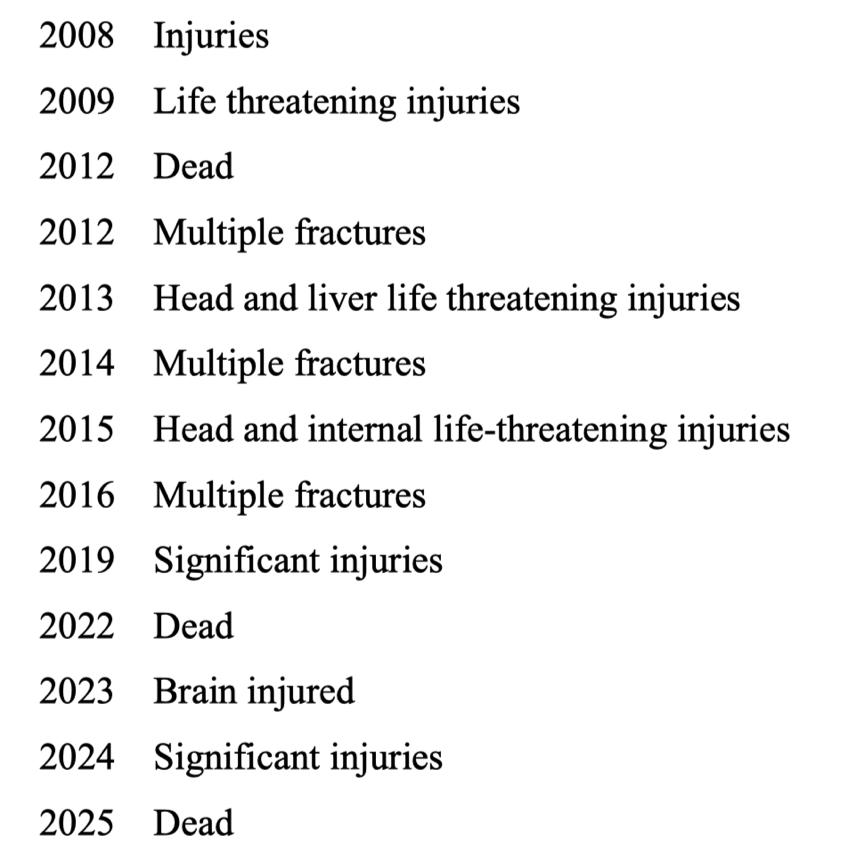
Those documented incidents include the death of a 19-year-old visitor from Massachusetts on May 25, 2012; the death of a 20-year-old woman who fell through an opening in a walkway on September 17, 2022; and the death of Plaintiffs’ family member Mattheis Johnson after a fall from the towers on July 10, 2025.11
10 See Exhibit 4: Seattle Facilities & Admin. Servs., Detailed Damage Assessment Form (Sept. 9, 2025), SEA001446, at 1, 5-6.
11 See Exhibit 5 at SEA000517-000518. and Exhibit 4 at SEA001446.

Other documented incidents include life-threatening head and internal injuries in 2015, an open femur fracture and possible pelvic fracture after a 2016 fall through a hole in a catwalk, and a 2023 fall that left a 16-year-old survivor with brain damage.12
C.Decades of failed attempts to ameliorate the dangerous cracking towers
The City has long been aware of the danger posed by the cracking towers. City materials show that a fence has been in place around the towers since 1975, and the City’s own 2019 landmarks narrative states that fencing was installed shortly after the park opened because children were injured in falls from the towers.13 Andy Sheffer, Deputy Superintendent of Seattle Parks and Recreation, testified that in the early 2000s, Seattle Parks and Recreation (“SPR”) removed lower sections of access points and fortified fencing and signage in response to people getting onto the structures and being harmed after falling from them.14 David Graves, Strategic Advisor for Seattle Parks and Recreation, also acknowledged that a 2002 structural analysis discussed the same
12 See Exhibit 5 at SEA000518.
13 See Exhibit 7 to Koehler Declaration: SEA002444 at 1; see Exhibit 2: SEA001738 at 2.
14 See Exhibit 8 to Koehler Declaration: Sheffer Dep. 25:22–26:2; 43:14–20.
hazards associated with ladders, catwalks, and piping that he later brought back to the Landmarks Preservation Board.15
In June 2015, SPR briefed the Architectural Review Committee of the Landmarks Preservation Board (“ARC”) about removing some or all of the stairs and landings on the south towers to deter climbing, yet ARC advised SPR to begin with more focused removals of obvious access points.16 SPR’s 2019 Certificate of Approval narrative states that SPR had been working with Seattle Fire Department Engine Company 18 since 2015 to address emergency situations at the fenced cracking towers and that unauthorized use of the facility had already resulted in “numerous injuries and fatalities over the years.”17 Graves testified that these efforts culminated in a 2019 request to remove some appurtenances from the towers to make them less climbable.18
In 2016, the City retained outside engineers to evaluate the climbing hazard directly. The City’s March 16, 2016, scope of work for a “Gas Works Park Cracking Towers Climbing Safety Evaluation” stated that “[f]all from heights at these facilities has resulted in deaths and injuries” and that SPR had suggested that “removal of structural elements may be the most effective method to prevent unauthorized climbing.”19 After a June 2016 site visit, PSM Consulting Engineers reported that many injuries and rescue calls were the result of people illegally climbing the towers and then falling when deteriorated members such as ladders, stairs, and grating unexpectedly failed, and advised that items below a certain height should be removed or modified.20 The City’s
15 See Exhibit 9 to Koehler Declaration; Graves Dep. 26:10–14.
16 See Exhibit 7: SEA002445 at 2.
17 See Exhibit 2: SEA001737 at 1.
18 See Exhibit 9: Graves Dep. 22:3–5.
19 See Exhibit 10 to Koehler Declaration: City of Seattle Parks & Recreation Short Form Consultant Agreement at 8. (SEA000238).
20 See Exhibit 11 to Koehler Declaration: PSM Report dated June 30, 2016 at SEA001079.
later narrative further states that Rich Haag and Cheryl Trivison reviewed the proposed “selective pruning” alternatives in late 2016 and agreed with them.21
Those efforts led to formal approvals and additional work, but not a solution. SPR represented in 2019 that its proposed safety modifications were “lifesaving measures,” had been developed over several years, and were intended to “increase safety and restrict spontaneous climbers from accessing elevated, and potentially dangerous areas of towers.”22 On August 7, 2019, the Landmarks Preservation Board approved a Certificate of Approval for selective alterations to the cracking towers to prevent climbing.23 The City’s December 2025 application states that SPR Metal Shop crews then undertook the approved work between 2019 and 2023, while Parks continued repairing fences and gates that were cut or otherwise manipulated to gain access.24 Andy Sheffer testified that these earlier projects were efforts to do “as much as we could within our means” to address the risk that kids and other trespassers would get into the structures and climb them.25
When those partial measures proved inadequate, the City escalated its efforts again. In 2023, SPR obtained administrative approval to reinforce the existing fence so it would be harder to cut or climb, and then hired All City Fence to restore the chain-link fence, restore barbed wire, addsteelmeshpanels,andreconstructthegates.26 SPRalsohiredalandscapecontractortoremove vegetation around and among the towers to eliminate potential access points.27 Yet the same City
21 See Exhibit 2 at SEA001738.
22 Id at SEA001737; Id at SEA001738.
23 See Exhibit 12 to Koehler Declaration: Excerpt of Landmark Preservation Board minutes for August 7, 2019 at SEA001743–44; See Exhibit 7 at SEA002445.
24 Id at SEA002445.
25 See Exhibit 8: Sheffer Dep. 43:14–20.
26 See Exhibit 13 to Koehler Declaration: Landmarks Preservation Board Certificate of Approval dated April 25, 2023 at SEA000370; See Exhibit 5 at SEA000517; see Exhibit 7 at SEA002445.
27 See Exhibit 5 at SEA000517; See Exhibit 7 at SEA002445.
chronology states that, even after that work, SPR continued monitoring and hardening access points, welded shut three of the four gates, and paved under gates to reduce digging access.28 Sheffer testified that Parks also removed immediate access to ladders, reestablished a stronger fence, and continued responding to graffiti and evidence of trespass because those conditions showed people were still getting onto the structures.29
By 2024 and 2025, the City’s concern had expanded from climber falls to the danger posed to its own employees and to the public from deteriorating steel. In 2024, SPR removed a leaning support element within the cracking-tower area under a Certificate of Approval because it posed a safety concern.30
28 See Exhibit 7 at SEA002445.
29 See Exhibit 8: Sheffer Dep. 25:22–26:2; 32:15–16; 43:14–20.
30 See Exhibit 5 at SEA000517; See Exhibit 14 to Koehler Declaration: Doherty Dep. 27:2–28:14.
During the same period, SPR recorded that staff generally avoided working directly under the towers because of “safety concerns/potential falling metal.”32 After Mattheis Johnson’s death in July 2025, the City moved toward broader removal. Andy Sheffer wrote on July 28, 2025, “We need to remove any and all attractive nuisances,” later explaining that he was referring to public safety hazards.33 In September 2025, the City issued an Emergency Public Works Pricing Request for “Gas Works Park Cracking Towers Emergency Deconstruction,” stating that the purpose of
31 See Exhibit 15 to Koehler Declaration: Email re Inspection at Gas Works Park dated June 6, 2024 at SEA000675.
32 See Exhibit 5 at SEA000517.
33 See Exhibit 8: Sheffer Dep. 32:15–16; 35:22–24.
the work was to prevent and discourage climbing access by removing ladders, catwalks, pipes, and other supporting elements.34
The City then returned to the Landmarks Board with a broader and more heavily supported application. In October 2025, SPR told the Board that falls had caused serious injury and death, that the appurtenances were not structurally sound, and that removing them would promote public health and safety.35 A Landmarks staff report on the 2025 application stated that the applicant had demonstrated the reasonableness of selective removal to deter access to and potential climbing of the structures.36 Yet the process stalled. Graves testified that the 2019 request to remove appurtenances had not been accepted, that ongoing trespassing, injuries, and deaths were why SPR returned to the issue, and that the Landmarks process had become “prohibitive.”37 Erin Doherty, Landmarks Preservation Board coordinator at the Seattle Department of Neighborhoods, similarly testified that the December 18, 2025, application was not approved because the Board tabled it and requested additional information.38 As of Graves’s February 18, 2026, deposition, the City was still preparing an updated proposal: “We’re still working on it.”39
SPR’s approach is consistent with Richard Haag’s original design philosophy for Gas Works Park. As part of an earlier push to make the towers safer, SPR stated that Richard Haag and his wife, Cheryl Trivison, reviewed similar proposed safety changes in late 2016 and “agreed
34 See Exhibit 16 to Koehler Declaration: City of Seattle Dept. of Finance & Administrative Services Emergency Public Works Pricing Request at SEA001561 and SEA001562.
35 See Exhibit 3 at SEA000543; See Exhibit 17 to Koehler Declaration: City of Seattle Parks & Recreation letter to Landmarks Preservation Board dated October 9, 2025 at SEA000581.
36 See Exhibit 18 to Koehler Declaration: City of Seattle Landmarks Preservation Board Staff Report on Certificate of Approval at SEA000034-000035.
37 See Exhibit 9: Graves Dep. 22:3–5; 24:11–17.
38 See Exhibit 14: Doherty Dep. 30:9–15.
39 See Exhibit 9: Graves Dep. 32:11.
with the proposed ‘selective pruning’ alternatives.”40 The same narrative explains that Haag had originally removed certain pipes and catwalks both to preserve the key visual character of the site and to address safety concerns.41
D.The City’s own conclusions
By October 2025, SPR was telling the Landmarks Preservation Board that “Falls have occurred resulting in serious injury and death” and that “Removing the appurtenances will eliminate them as a means of access, promoting public health and safety.”42 In the same submission, SPR stated that the facility “is not structurally sound which is why public access is precluded and the area fenced,” that the towers’ design intent did not necessarily include the pedestrian appurtenances, and that there was “no long-term management/conservation plan for the towers and no identified budget to maintain the structural integrity of the structures.”43 The same day, Superintendent Anthony-Paul Diaz wrote that the pedestrian appurtenances “are not structurally sound,” “are beyond repair,” and that “[n]o engineer would take responsibility for a design to stabilize them.”44
40 See Exhibit 2 at SEA001738.
41 See Exhibit 2 at SEA001738.
42 See Exhibit 3 at SEA000543.
43 Id.
44 See Exhibit 17 at SEA000581.
1.Safety determinations
The City’s safety concerns were not limited to unauthorized climbers. In 2024, SPR recorded that a small ladder-tower structure within the cracking-tower area was leaning and was being prevented from falling only by a horizontal pipe flange, making it unsafe for SPR staff to enter the area for maintenance, graffiti removal, and trash removal.46 The same record stated that one support was fractured at the base and another was so badly corroded that steel was peeling
45 See Exhibit 5 at SEA000528.
46 See Exhibit 19 to Koehler Declaration: City of Seattle Parks & Recreation Gas Works Parks/Cracking Towers, Certificate of Approval Request at SEA000659.
off.47 City materials also acknowledged that no formal condition survey had been performed because it was “too risky to get on the towers,” that there was “lots of evidence of deterioration,” that pieces on the ground were “evidence of failure,” and that an elevated pipe remained “a safety hazard” to SPR crews working inside the fence.48
SPR is not the only City department that has been concerned with the safety hazards at Gas Works Park. On March 30, 2026, the Seattle Department of Construction and Inspections issued a Hazard Correction Order against SPR as property owner under Seattle Building Code § 102.2, which authorizes such an order only when the Building Official “finds that an unsafe building, structure, or premises exists.”49 After reviewing SPR’s application materials and structural engineering reports, Building Official Sam Steele determined “portions of the pedestrian appurtenances on the Gas Works Cracking Towers are unsafe” and “the conditions causing the structure to be unsafe are the pedestrian appurtenances to the Cracking Towers.” Id. at 1. The Order directs SPR to “remove the hazard conditions affecting the pedestrian appurtenances from the Gas Works Park Cracking Towers” consistent with the March 20, 2026, structural engineering report, sets a compliance deadline of May 15, 2026, and imposes a civil penalty of $500 per day for continued violation. Id. at 2.
2.Expert reports
After Mattheis Johnson’s death, the City retained Guidance Engineering and Applied Research(“GEAR”)toevaluatethestructures. InitsDecember17,2025,report,GEARconcluded that the structures contain multiple climbable features and that signs, lighting, and fencing would
47 Id.
48 See Exhibit 20 to Koehler Declaration: SEA000386.
49 See Exhibit 21 to Koehler Declaration: City of Seattle Dept. of Construction & Inspections Hazard Correction Order dated March 30, 2026 at SEA006160.
not reliably prevent future climbing incidents by motivated individuals. GEAR found 99 percent of the general population would not be able to jump, reach, and grip a structure more than 11 feet above the ground, and identified protruding ledges, horizontal bars, piping, catwalks, railings, and other structures on the cracking towers that were less than 11 feet high and could serve as potential climbing handholds and footholds.50 GEAR further concluded that the existing “NO TRESPASSING” signs “are not an effective deterrence” for individuals motivated to penetrate the fence and that changes to the signs or supplemental lighting were unlikely to change that.51
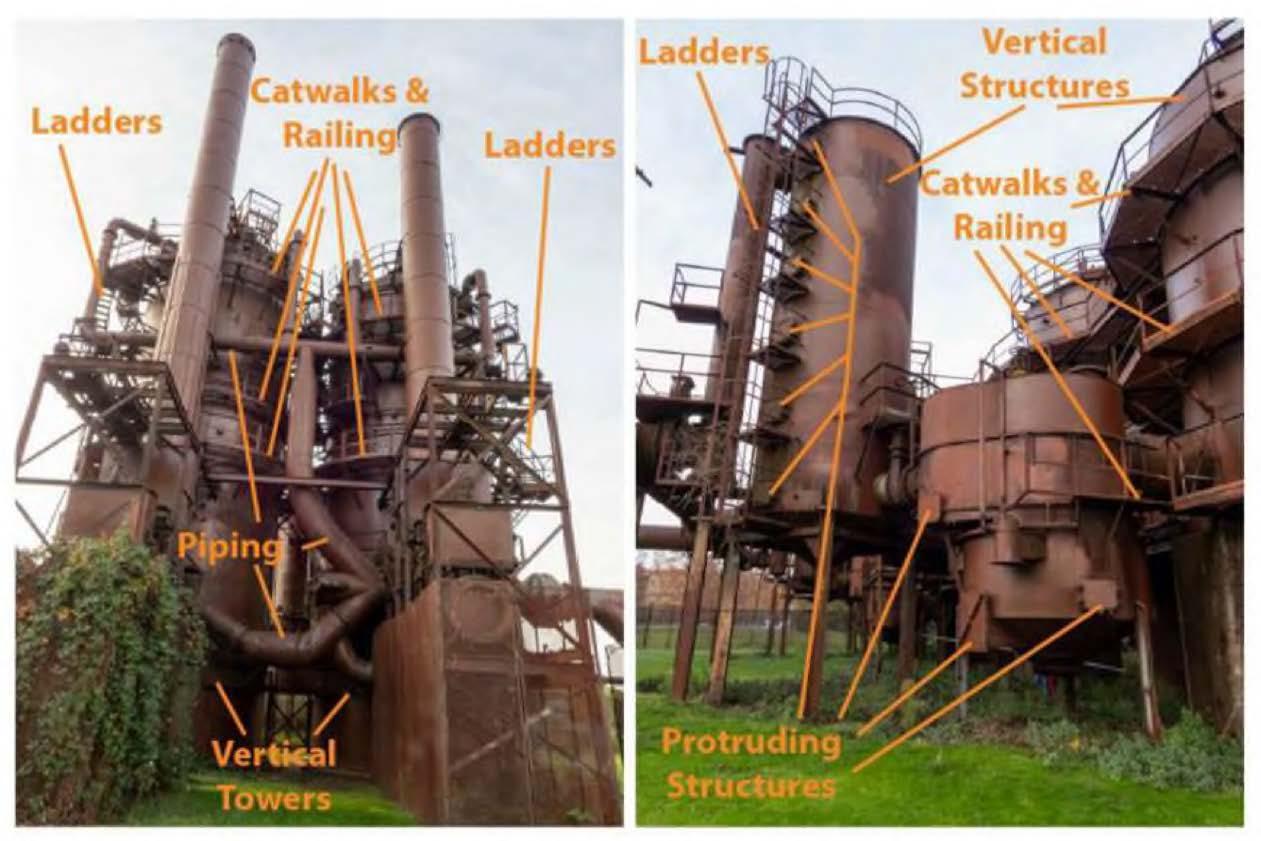
GEAR determined that the fence “is not an effective barricade for individuals who are motivated to penetrate the fence” and that future visitors to Gas Works Park will continue to include people with risk factors that increase the likelihood of future incidents as long as climbing
50 See Exhibit 1: GEAR Report at GEAR000692-000694 & 000703-000704.
51 Id .at GEAR000696, 000701 & 000703-000704.
52 Id. at GEAR000692: Figure 10.
affordances remain on the structure.53 Finally, GEAR concluded that the pedestrian appurtenances themselves provide “visual affordance cues” that can motivate access to the structure, and that removing them will eliminate those cues and reduce physical climbing opportunities.54
E.Abatement is feasible
The City did not merely identify the hazard; it developed and priced a removal plan. In September 2025, the City issued an Emergency Public Works Pricing Request for “Gas Works Park Cracking Towers Emergency Deconstruction.”55 The City stated that the intent of the emergency contract was to “prevent and discourage climbing access” by removing existing ladders, catwalks, pipes, and other supporting elements and by installing security lighting.56 The scope of work included surgical deconstruction of the tower climbing appurtenances, removal of the pipe section extending over areas of the park open to the public, and worker-safety protocols for lead-containing coatings, while excluding ground disturbance because the soil is heavily contaminated.57
53 Id. at GEAR000699-000701 & 000703-000704.
54 See Exhibit 1 at SEA000702-000703-000704.
55 See Exhibit 16 at SEA001561.
56 Id
57 Id. at SEA001561-0001562.
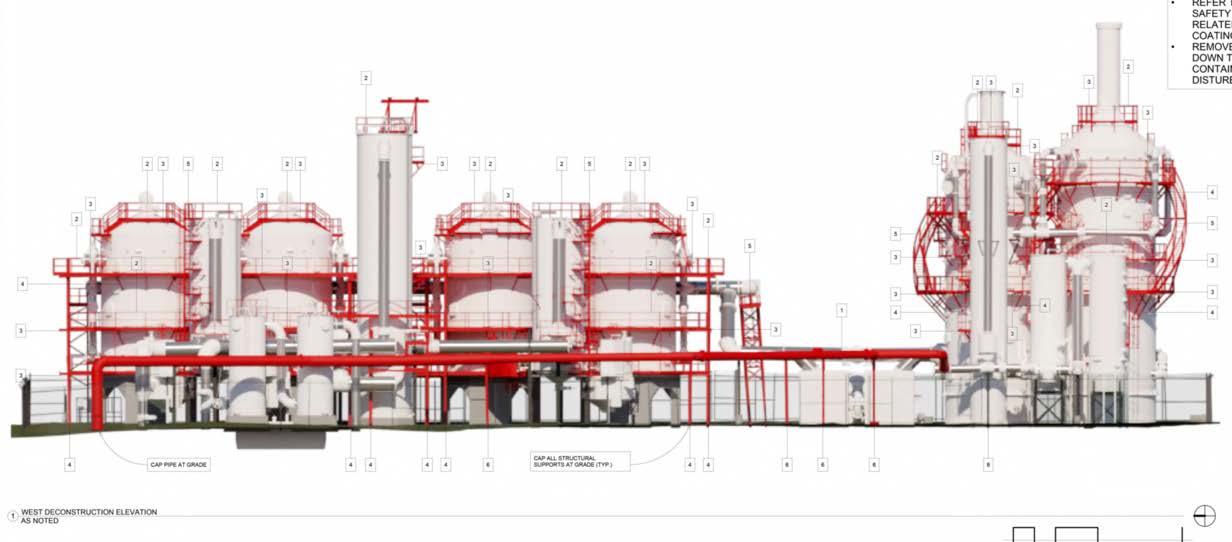
The City’s pricing documents assumed that the towers would not be climbable without specialized climbing equipment at substantial completion and projected 30 working days to substantial completion and 40 working days to physical completion.60 One schedule of values priced the work at $530,390 before tax, including line items for surgical deconstruction of catwalks, ladders, and the pipe section, as well as security lighting, contaminated-material disposal, and site restoration.61 At the same time, SPR represented to the Landmarks Preservation Board that the historically significant features were the towers themselves, that “there is no reference to the pedestrian appurtenances, and they are not shown on the plans,” and that Rich Haag’s master plan stated that “[a]ll structures will be modified, etc. to meet applicable safety codes.”62 SPR also explained that it was trying to preserve the towers’ monolithic character while proposing to remove only the pedestrian-related appurtenances.63
III.EVIDENCE RELIED UPON
This Motion relies upon the Declaration of Karen Koehler with exhibits, and the pleadings and files in the record.
IV.ARGUMENT AND AUTHORITY
A.Summary judgment standard
Summary judgment is appropriate “where no genuine issues of material fact exist, and the nonmoving party is entitled to judgment as a matter of law.” Fisher v. Allstate Ins. Co., 136 Wn.2d 240, 243–44, 961 P.2d 350, 352 (1998); CR 56(c). “A ‘material fact’ is a fact upon which the outcome of the litigation depends, in whole or in part.” A.S. v. PROVAIL, 36 Wn. App. 2d 34, 49,
60 See Exhibit 16 at SEA001562.
61 Id. at SEA001566.
62 See Exhibit 3 at SEA000543.
63 Id.
581 P.3d 193, 203 (2025) (quoting Jacobsen v. State, 89 Wash. 2d 104, 108, 569 P.2d 1152 (1977)). A genuine issue of material fact exists where reasonable minds could differ on the facts controlling the outcome of the litigation. Ranger Ins. Co. v. Pierce Cnty., 164 Wn.2d 545, 552, 192 P.3d 886, 889 (2008). The Court must “consider the evidence and the reasonable inferences therefrom in a light most favorable to the nonmoving party.” Schaaf v. Highfield, 127 Wn. 2d 17, 21, 896 P.2d 665, 667 (1995).
A motion for summary judgment should be granted when, “after viewing the evidence in the light most favorable to the non-moving party, … there is no genuine issue of material fact or if reasonable minds could reach only one conclusion on that issue.” Grimsrud v. State, 63 Wn. App. 546, 549, 821 P.2d 513, 514 (1991). “The purpose of summaryjudgment is to avoid a useless trial when there is no genuine issue of any material fact.” LaPlante v. State, 85 Wn.2d 154, 158, 531 P.2d 299, 301 (1975).
B.Governing law
Washington law defines nuisance as “unlawfully doing an act, or omitting to perform a duty, which … annoys, injures or endangers the comfort, repose, health or safety of others, … or in any way renders other persons insecure in life, or in the use of property.” RCW 7.48.120.
Where an act or omission “interferes with the comfort and enjoyment of others, nuisance liability exists only when the conduct is unreasonable,” which is determined by “weighing the harm to the aggrieved party against the social utility of the activity.” Kitsap Cnty. v. Kitsap Rifle & Revolver Club, 184 Wn. App. 252, 276–77, 337 P.3d 328, 339 (2014), amended on denial of recons. (Feb. 10, 2015) (quoting Lakey v. Puget Sound Energy, Inc., 176 Wash.2d 909, 923, 296 P.3d 860 (2013)).
A public nuisance, in contrast to private nuisance, is “one which affects equally the rights of an entire community or neighborhood, although the extent of the damage may be unequal.”
RCW 7.48.130. “A private person may maintain a civil action for a public nuisance, if it is specially injurious to himself or herself”—a “requirement [that] is not a particularly high bar.” Chelan Basin Conservancy v. GBI Holding Co., 190 Wn.2d 249, 272, 413 P.3d 549, 560 (2018); RCW 7.48.210. The defendant’s act or omission must be the proximate cause of the plaintiff’s harm. Sauk-Suiattle Indian Tribe v. City of Seattle, 25 Wn. App. 2d 741, 749, 525 P.3d 238, 243 (2023). It is well-established that physical conditions maintained on land that risk injury to others may be a public nuisance. See Elves v. King Cnty., 49 Wn.2d 201, 202, 299 P.2d 206 (1956) (affirming finding of public nuisance where surface-water culvert maintained by county government carried contaminated water that was “a menace to public health and safety”).
Land uses that unreasonably endanger public safety—even longstanding uses—qualify as a public nuisance under Washington law. In Kitsap Rifle, the plaintiff County sued a shooting range that had been continuously operated since 1926 on the basis that its physical layout allowed bullets to escape the range. 184 Wn. App. at 283. The operation of the shooting range was a public nuisance and its operation under the challenged conditions was permanently enjoined. Id. at 276-83. Under Kitsap Rifle, where the conditions of land use create a hazard to the public and the operator fails to ameliorate the danger, those conditions constitute a public nuisance and abatement is the proper remedy. Cf. Animal Legal Def. Fund v. Olympic Game Farm, Inc., 1 Wn.3d 925, 937, 533 P.3d 1170 (2023) (reaffirming that Washington “cases have established the rule applicable to nuisance claims, limiting claims to property infringement or threats to health and safety”).