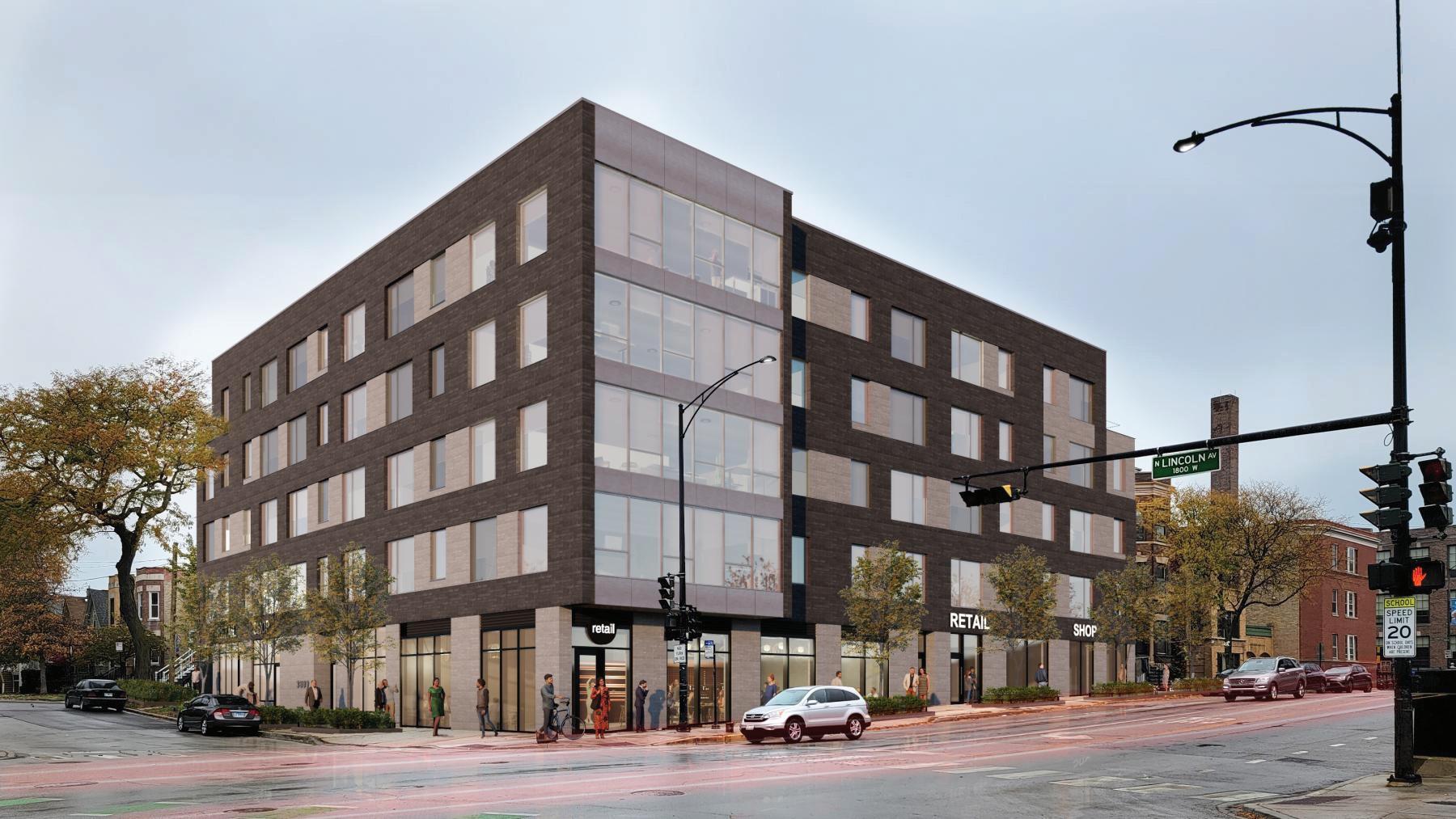
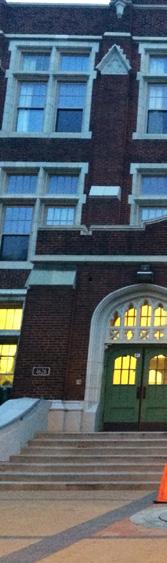
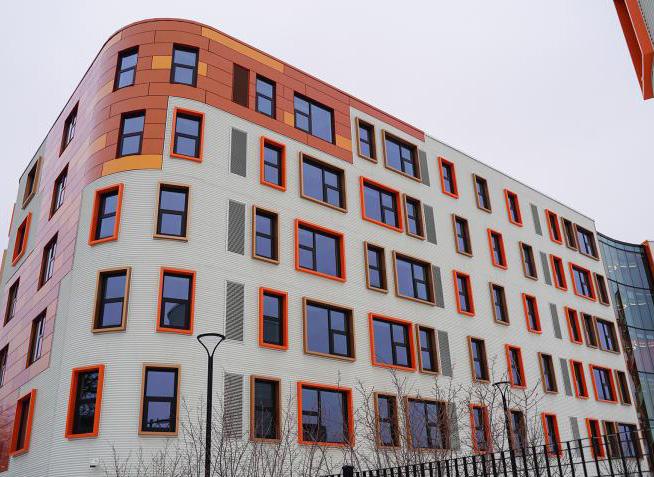
Seven two-bedroom two baths and a one bed one bath below market-rate rental units available at Five Points Lakeview, 3605 N Ravenswood!
Five Points Lakeview is a new construction rental building that features 52 residential units; a rooftop patio, gym, bike storage, and outdoor parking is available. Trader Joes, Loba Cafe, and the CTA Brown Line are within blocks of the property! The property is located within the Hamilton CPS School District
Affordable rents range from $849.00 to $1,659.00 a month. Must be income eligible. Households must earn no more than the maximum income levels below:
Unit 508, One Bedroom One Bath, 80% of Area Median Income: One person - $67,150; 2 persons -$76,750
Units 403 + 407, Two Bedrooms Two Baths, 70% of Area Median Income: 2 persons -$67,200; 3 persons - $75,600; 4 persons - $83,930
Units 303 + 307, Two Bedrooms Two Baths, 60% of Area Median Income: 2 persons -$57,600; 3 persons - $64,800; 4 persons - $71,940
Units 202 + 207, Two Bedrooms Two Baths, 50% of Area Median Income: 2 persons -$48,000; 3 persons - $54000; 4 persons - $59,950
Unit 203, Two Bedrooms Two Baths, 40% of Area Median Income: 2 persons -$38,400; 3 persons - $43,200; 4 persons - $47,960
Please contact the Five Points Lakeview for an application and more information at 773-308-6806 or info@fivepointslakeview.com or https://fivepointslakeview.com/
Applicants with vouchers or other third-party subsidies are welcome to apply. These units are subject to monitoring, compliance, and other restrictions by the City of Chicago’s Department of Housing. For more information visit https://www.chicago.gov/city/en/sites/affordable-requirements-ordinance/home.html
ADVERTISEMENTS
4 6 8 12 14 15
Arts & Entertainment
Event highlights of the week!
SportsWise
The SportsWise team discusses Bulls guard Jaden Ivey, who was waived by the team after he called Pride Month "unrighteous."
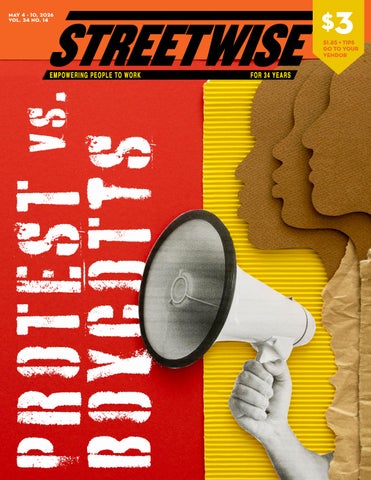
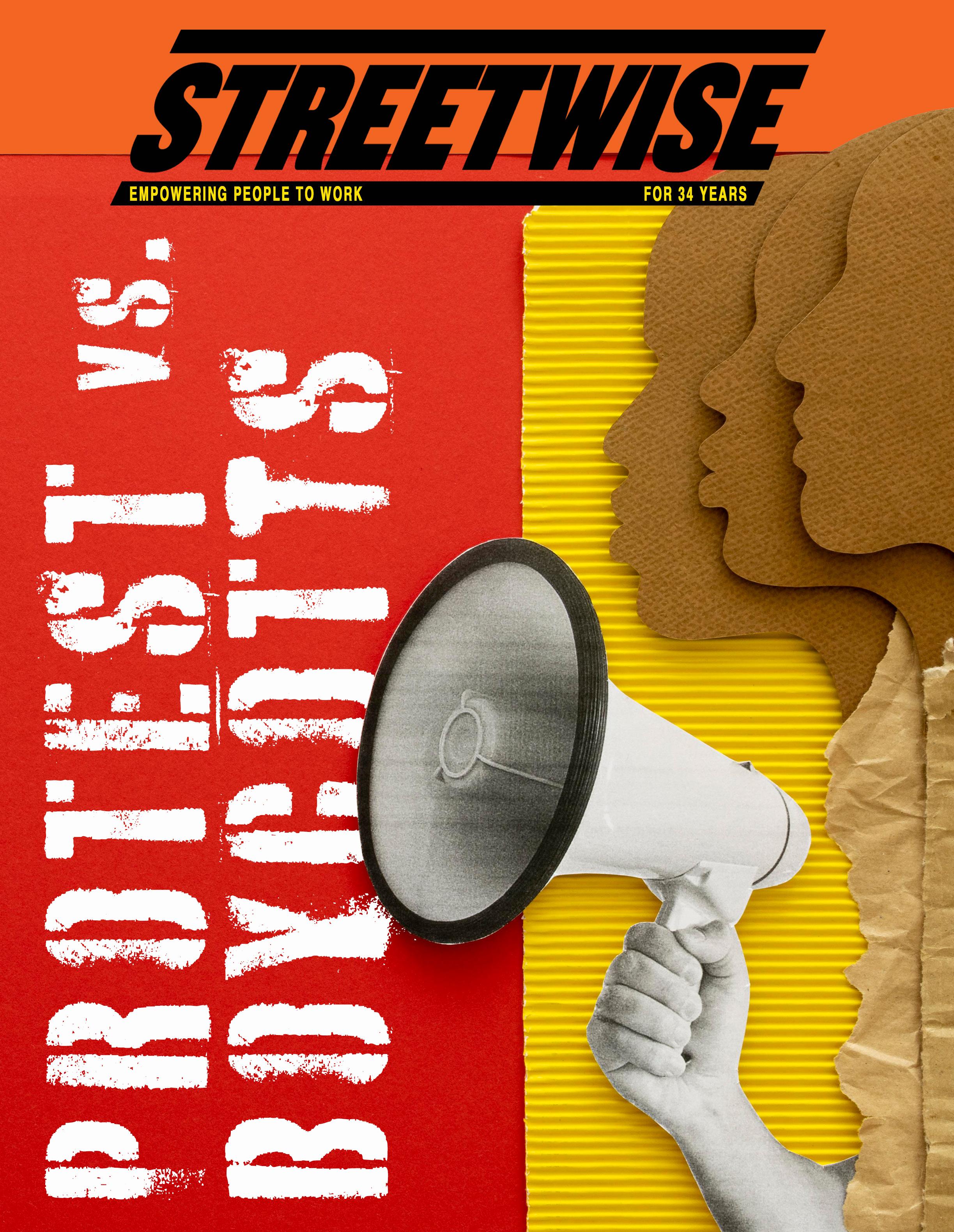
Cover Story: Protests vs. Boycotts
Millions are protesting – but boycotts might be key to changing government policies.
From the Streets
A bill now in the Illinois General Assembly would limit a U.S. Supreme Court ruling against people living in encampments. Also, Mayor Brandon Johnson and the Chicago Department of Housing annoounce an investment of $300 million in 15 affordable housing developments across the city -- 1,223 rental units, 1,164 of them affordable. Total cost is $711 million, which incorporates public and private resources and market rate housing.
Inside StreetWise
As the Mayor talks about reparations, StreetWise vendors weigh in on the matter.
The Playground
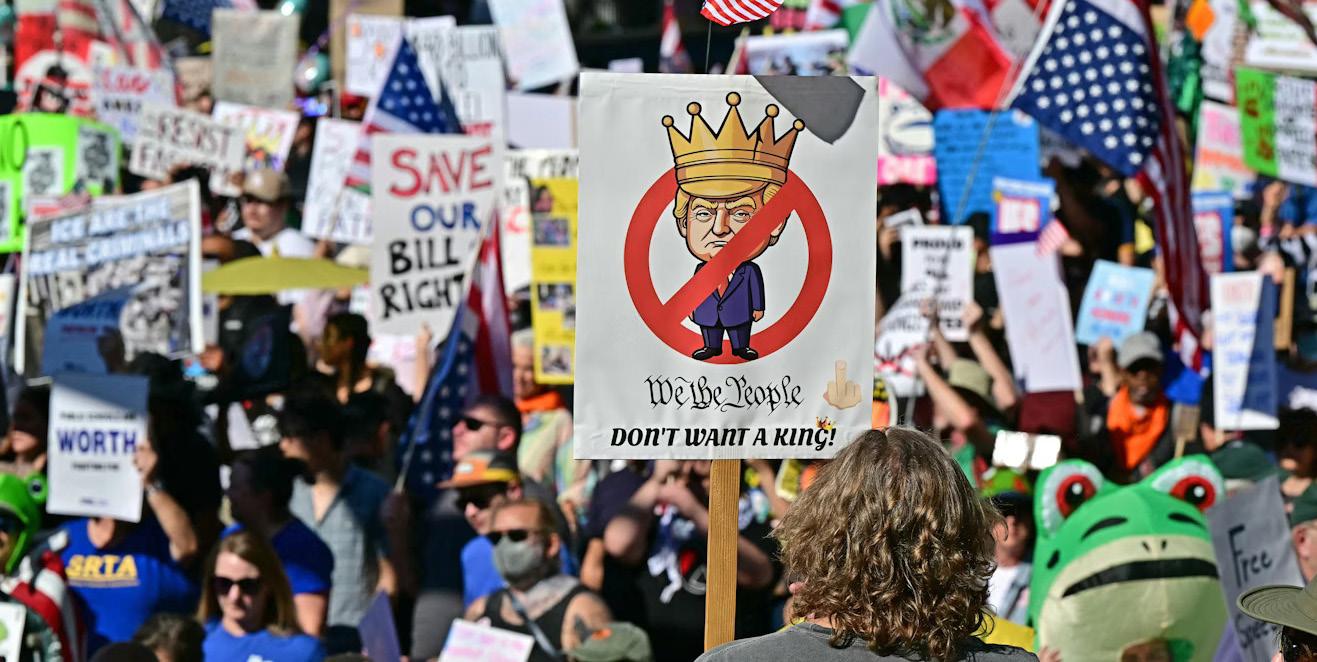
THIS PAGE: Protesters during the No Kings Rally on Oct. 18, 2025 in front of Trump Tower in downtown Chicago (Dylan Martinez photo).
DISCLAIMER: StreetWise publishes perspectives from vendors and contributors to reflect a range of lived experiences and viewpoints. These opinions do not necessarily reflect the views of StreetWise. We are committed to fostering dialogue grounded in dignity and respect, and we do not endorse language or perspectives that harm or dehumanize others.
Dave Hamilton, Creative Director/Publisher dhamilton@streetwise.org
Julie Youngquist, Executive director jyoungquist@streetwise.org
Ph: 773-334-6600 Office: 2009 S. State St., Chicago, IL, 60616
ARTS & ENTERTAINMENT RECOMMENDATIONS
Compiled by Dave Hamilton
From Generation to Generation!
‘L’dor v’dor’
Nova Linea Musica (NLM) presents “L’dor v’dor” —“from generation to generation”—a moving tribute to the legacy and evolution of Jewish-American composers. Soprano Arianna Zukerman, mezzo-soprano Heather Johnson (pictured), and pianist Jason Wirth come together for an evening of vocal works that reflect cultural memory, resilience, and artistic innovation. The cornerstone of the program is “Ki Ger Anokhi Imakh,” an NLM-commissioned world premiere by David Hanlon. Using text from Psalm 39:13-14, the piece was inspired by connections between Hanlon's grandparents who fled Austria in 1939 and the refugees of today. In the composer’s own words, “Psalm 39 draws on the Jewish tradition of seeing the stranger in ourselves… We are obliged to empathize with the Stranger, not only because our ancestors were the Stranger, but because we are all visitors passing through the land of the living.” The program also features music by Leonard Bernstein, Laura Kaminsky, Ricky Ian Gordon, Laura Karpman, David Leisner, and Alex Weiser. May 6 at Guarneri Hall, 11 E. Adams St. “L’dor v’dor” will begin at 6:30 p.m., enhanced with a pre-concert panel discussion at 5:45 p.m. and a catered post-concert reception where audiences can mingle with artists. Tickets are $40 and include access to both the pre- and post-concert events at novalineamusica.org.
The Old Razzle Dazzle!
‘CHICAGO’
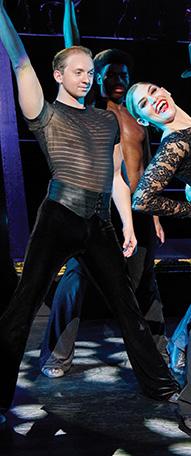
“CHICAGO” is still the one musical with everything that makes Broadway shimmy-shake: a universal tale of fame, fortune, and all that jazz, with one showstopping song after another and the most astonishing dancing you’ve ever seen. In the whirlwind of Chicago’s Jazz Age, two of the Cook County Jail’s most notorious murderesses—vaudeville star Velma Kelly and chorus girl Roxie Hart — become fierce rivals as they compete for headlines amidst a media frenzy. Broadway’s longest-running musical has been razzle dazzling audiences for over 29 years, and after more than 10,000 performances, 6 Tony Awards®, 2 Olivier Awards, and a Grammy®, it is playing at The Auditorium, 50 E. Ida B. Wells Drive, May 5-10. Tickets start at $55 at auditroiumtheatre.org
Scam Alert!
‘Tartuffe, or, the Charlatan’
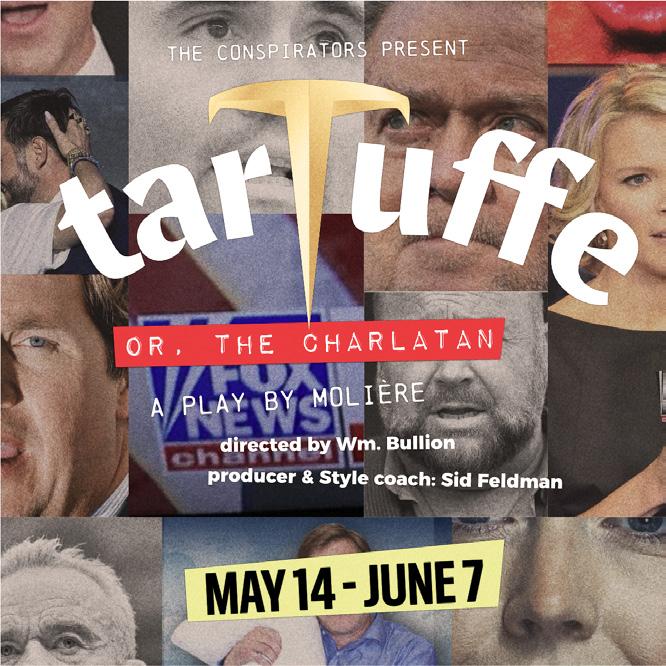
This story takes place in the home of the wealthy Orgon, where Tartuffe—a fraud and a pious charlatan—has insinuated himself. He succeeds in winning Orgon’s respect and devotion then attempts to marry his daughter, seduce his wife, and seize the deed to his property. Tartuffe nearly gets away with it, too, but an emissary from the King arrives in time to recover the property, free Orgon and haul Tartuffe off to jail. The charlatan’s duplicity is finally exposed and punished, but not before the author mercilessly skewers the evil that men can commit with the right cult following. “Tartuffe, or, The Charlatan” is a comedy about the dangers that imperil those who would believe only what they choose to believe despite a mountain of evidence to the contrary. Playing May 8 - June 7 at Stars & Garters, 3914 N. Clark St. Tickets are $30 ($15 for previews May 8 & 9) at ConspireWithUs.org
Museum Dance!
‘Concerts of Dance: Laura Baumeister’
Evolving from a process spanning nearly two years, Laura Baumeister is joined by collaborator Jenna Weatherbie to present a freshly finalized work, “Inosculate.” Born from a series of long-form improvisational sessions and rooted in trust and relational intimacy, this project examines closeness formed by necessity versus choice, and the quiet tenderness embedded in everyday acts of care—buttoning clothing, braiding hair, tying ribbons, and holding one another. Weatherbie and Baumeister will hold open rehearsals and improvisational performances in the Murphy Auditorium Wednesday, May 6–Friday May 8, leading up to the final performance on May 9 at 1 p.m. at the Driehaus Museum, 50 E. Erie St. FREE, registration recommended at DriehausMuseum.org
Thank You for Being a Friend!
‘The Golden Girls: The Cheese Pyramid’
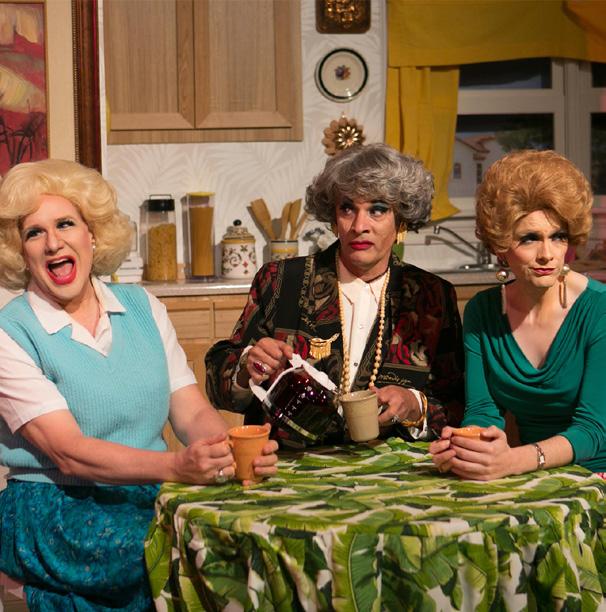
In this hilarious new adventure, Rose finds herself in need of extra income and stumbles upon a unique business opportunity — the first multi-level marketing company in St. Olaf, introducing local households to the cheeses of her hometown. Pretty soon Rose has a garage full of cheese, and no idea how to get rid of it. Enter Blanche, Dorothy and Sophia with their creative ideas to help Rose organize an unforgettable cheese party, with the audience invited as guests. The show asks: Can the girls save Rose from financial disaster using their party-planning expertise? Playing May 8 - June 21 at The Clutch, 4335 N. Western Ave. Tickets start at $32 at handbagproductions.org
Versatile Talents!
Ballet Chicago: ‘Balanchine + Beyond: Fascinatin’ Rhythms’ Ballet Chicago’s acclaimed “Balanchine + Beyond” series returns with a vibrant new program highlighting the company’s exceptional artistry and range. Featuring George Balanchine’s masterworks “Allegro Brillante,” “Tarantella,” and “Who Cares?,” with newly staged pieces by Resident Choreographer Ted Seymour—”Intermezzi” and “Bach Suite”—this year’s performance showcases both the brilliance of Ballet Chicago’s classical repertory and the vitality of its creative vision. May 9 at 2 & 7 p.m. at the Harris Theater, 205 E. Randolph St. Tickets start at $25.30 at HarrisTheaterChicago.org
Building Your Best Self!
‘Architecture of Memory’
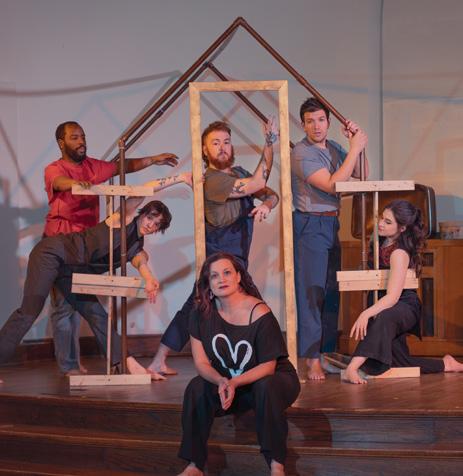
“Architecture of Memory” is a new, original work exploring perseverance, hope and selfdiscovery. Told through film, dance, theater and original music, this visceral performance experience aims to showcase the beauty of overcoming obstacles and creating a new sense of self. Playing Fridays & Saturdays, May 8 - 23, 7:30 p.m., at Chicago Danztheatre, 1650 W. Foster Ave. Tickets are $10 - $25 at danztheatre.org
An Uprising!
‘The Targeted’ Welcome to the Solidarity and Truth Summit. A gathering of the most persecuted, tortured, and misunderstood people in the entire world. They call themselves Targeted Individuals, and they are victims of a vast and covert program of systematic torture, surveillance and harassment by global intergovernmental powers. Over the course of this weekend in the woods they will discuss strategies to take down the deep state, bring awareness to their plight, and despite their suffering, stay human. Playing May 7 - June 14 at The Chopin Theatre, 1543 W. Division St. Thurs-Sat at 7 p.m.; Sat & Sun at 3 p.m. Tickets start at $17.50 at ARedOrchidTheatre.org
‘Mornings at Seven’
A Day in the Life!
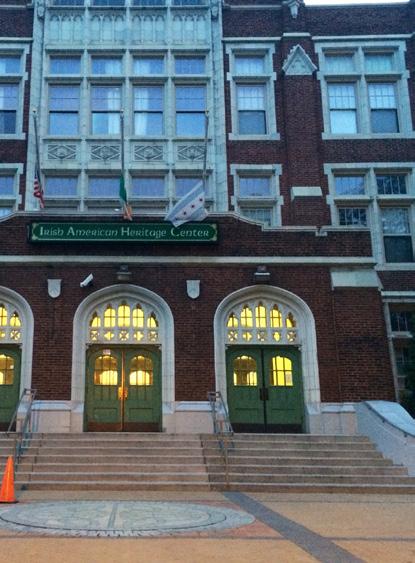
The Sag-Aftra Chicago Radio Players will present a radio adaptation of “Mornings's at Seven.” The 1939 comedy by Paul Osborn focuses on four sisters and their husbands who live near each other in a small Midwestern town, as well as contentment and the desire for change. The 1980 revival won a Tony Award. Directed by Iris Lieberman, it will be presented at the Irish American Heritage Center, 4626 N. Knox, Chicago on Friday, May 15 at 6:30 p.m. Admission is FREE, but you must RSVP online at Irish-American.org. The IAHC Pub will be open for purchase of food and drinks.
New Presentations!
Readings on Ravenswood
Readings on Ravenswood, now in its third year, runs May 4 - June 15 on Monday nights at Remy Bumppo’s rehearsal space, 1751 W. Grace Ave. at 7 p.m. This reading series introduces audiences to relevant plays, both old and new, and includes post-reading conversations that reflect the themes of the plays. Readings on Ravenswood are free to attend with a suggested donation and reservations at RemyBumppo.org. The 2026 series includes: “Arcadia” (May 4); “Furlough’s Paradise” (May 11); “Laughs in Spanish” (May 18); Different Words for Happiness” (June 1); “Gruesome Playground Injuries” (June 8); and “Marjorie Prime” (June 15). remybumppo.org
The Bulls Waive jaden Ivey
John: The Chicago Bulls on March 30 waived guard Jaden Ivey after he said Pride Month was “unrighteous.”
According to ESPN.com, Ivey was outspoken about his religious beliefs before the Bulls acquired him from Detroit, but he grew more intense in Chicago. “His social media rants often lasted nearly an hour and ventured into a variety of topics, including his own bouts of depression, finding religion, ‘wicked’ music lyrics, antiCatholicism, abortion and asides about his love for apple pie."
Even though the Bulls knew his religious beliefs, he’s also had serious knee problems. His injury or his performance was not the reason they got rid of him.
Russell: The Chicago Bulls decided to waive this former first-round pick from Duke. He was performing conduct
detrimental to the team. That’s usually the catchall phrase for any negative behavior. On March 30 management noticed he interrogated reporters, “What did I do?” he said to the press.
“Everyone comes with their own personal problems, but we have to give respect to one another,” Coach Billy Donovan said.
Percy : In the 2025-26 season, he only played 15 games for the Pistons and four games for the Bulls. On Sunday, February 19, his nagging knee injury began to show. That injury was really detrimental to a career, but your conduct has to be up to par to be a professional.
Allen: He called gays unrighteous. Everyone has an opinion, but his mouth gave them a reason to dismiss him. He
played four games, then was put on the injured reserved list.
John: People get very offended by certain things. Each person in this country can be what they want to be. If you were living in Iran, the old regime, and didn’t believe in their religion, they would kill you.
In this country, what’s great about it is that not only Christian, but LGBTQ and everyone else, you get to practice it. Or not.
Percy : We’re in America, the land of the free.
Russell: I like the guy, I hope other guys get the same breaks as superstars do. Kobe Bryant was fined $100,000 for using a homophobic slur against another player after a technical foul in 2011. He
got another chance after an apology and working with human rights activists.
Allen: Russell has a good point. Just like his mouth got him into trouble, his mouth can get him out of trouble with an apology. It’s not worth sacrificing his whole career.
John: I think we agree. All I ask is more transparency for all different groups: Christian, Muslim, Jewish, to say what they believe in, so that everybody can come to their own conclusions. The more there is, the better the world will be.
Any comments, suggestions or topic ideas for the SportsWise team? Email StreetWise Editor Suzanne Hanney at suzannestreetwise@yahoo.com
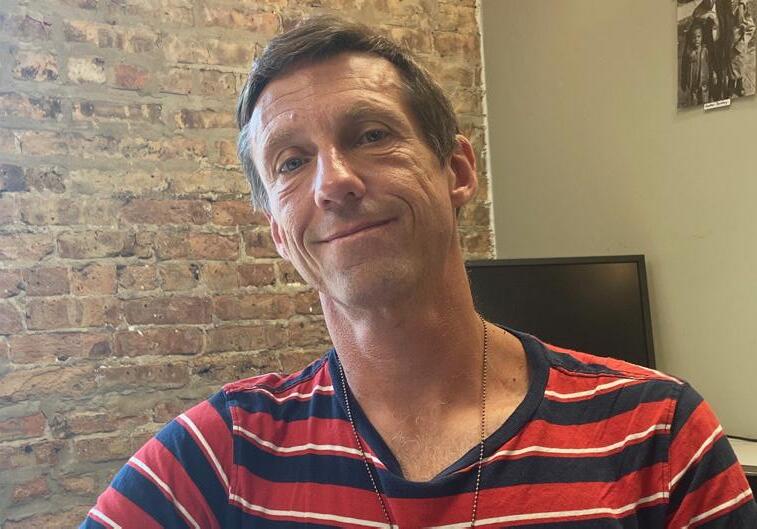
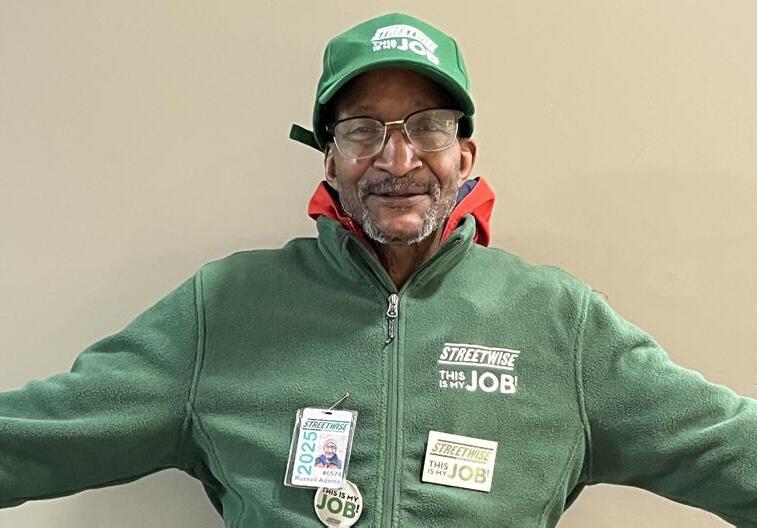
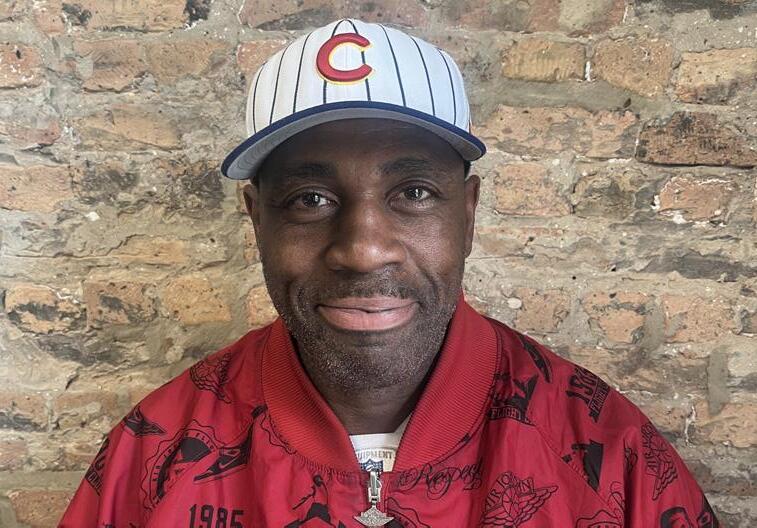
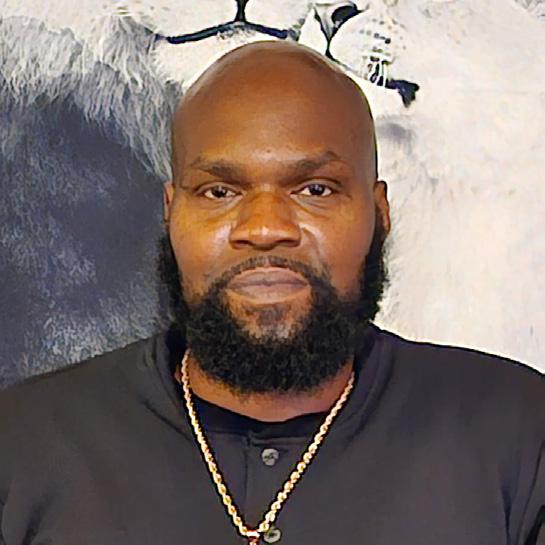
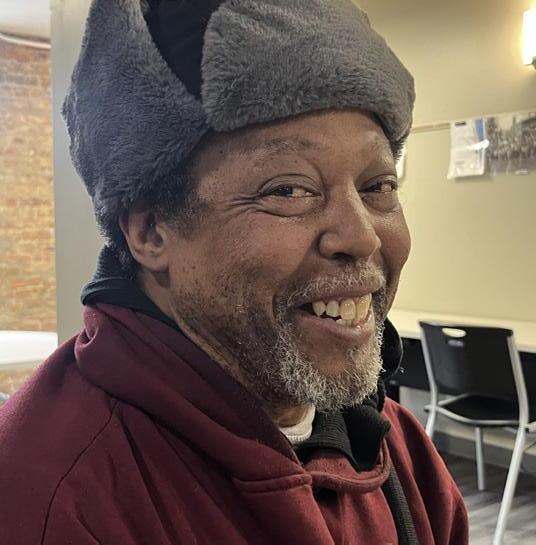
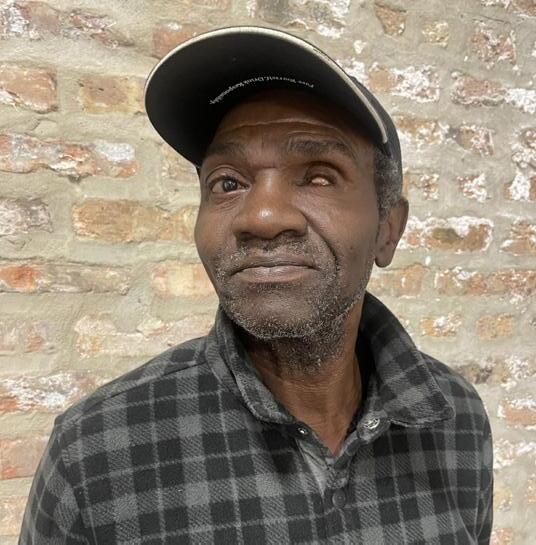
Vendors (clockwise from top left) John Hagan, Russell Adams, A. Allen and Percy Butler chat about the world of sports.
A CELEBRATION
Boycotts achieve the public participation to affect change that protests don’t
by Lisa Schirch and David Cortright
Organizers of the estimated 3,000 “No Kings” protests, rallies and other events planned for March 28 said they expected that the protests would be the largest such mass mobilization in U.S. history; their final estimate was 8 million attendees. (Editor’s Note: The Chicago Committee Against War and Racism estimated there were 24,000 attendees, based on a timed clip from an L platform on Dearborn Street and a drone shot of Butler Field.)
As scholars of peace studies and social movements, we investigate how ordinary people press their governments to change their policies.
An estimated 7 million Americans took part in the 2,100 “No Kings” protests on Oct. 18, 2025, breaking all previous records. But research that we and other scholars have conducted indicates that massive turnouts at protests may not be enough to achieve the goals of a protest movement, such as bringing about changes in government policies.
We believe that protest movements can be more effective when they place more emphasis on boycotts of corporations that support a government’s agenda than on increasing the size and scope of these protests.
That’s because history suggests that boycotts are uniquely suited to expand public participation and reach the scale necessary for political change. Boycotts attract first-time activists with simple “buy this, not that” instructions. They offer easy ways for people to feel heard with little investment of time, money or risk.
Rise of the ‘No Kings’ movement
The “No Kings” movement has been holding nonviolent protests across the U.S. since June 2025 to express mass opposition to the Trump administration’s policies. Its organizers include a range of nonprofits. They include those supporting civil rights, such as the American Civil Liberties Union; LGBTQ+ rights, like the Human Rights Campaign; progressive political groups, including Indi-
visible and MoveOn; and unions, such as the American Federation of Teachers.
The protests’ organizers are harnessing growing public opposition to President Donald Trump’s second administration. Gallup’s final presidential poll, for example, conducted in December 2025, found that only about 1 in 3 Americans approved of his performance.
In March 2026, Fox News found that 6 in 10 Americans disapprove of Trump’s immigration enforcement effort, and a CBS poll found that 6 in 10 oppose the U.S. war with Iran.
The “No Kings” movement from the start has objected to harsh federal immigration enforcement tactics, including the rapid growth in the number of immigrants being detained and deported. The March 28 protests also made the widespread opposition to the costly Iran war more visible.
“No Kings” organizers cite other reasons for their protests, such as the White House’s threats to intervene in elections, health care spending cuts and the cessation of many environmental protections.
Opposition to Trump is spreading
The “No Kings” protests have spread to more parts of the United States than ever before.
Protests have taken place in every state – in large cities like Dallas, Philadelphia and Phoenix, as well as thousands of smaller towns like Corydon, Indiana, and Hamilton, Montana. The protests even drew thousands of people in some GOP strongholds.
Researchers find that only a small part of the population needs to protest, boycott or strike to create strong pressure. If 3.5% of a population participates in nonviolent protests or boycotts, it can lead to policy changes.
In the United States, 3.5% of the population translates to nearly 12 million people. The “No Kings” movement would need to nearly double in size from its October 2025 levels to reach this threshold.
Boycotts could help reach this tipping point.
How boycotts work
Economic boycotts have a long history as a tool of collective protest as people withdraw their labor, purchases or cooperation to pressure powerful institutions.
Boycotts are a form of mass noncooperation that enables more people to resist without taking time off from work, engaging in confrontation or risking arrest. While demonstrations signal dissent, boycotts change incentives for business leaders. When boycotts cause companies to lose customers and profits slump, they can become unexpected allies in public opposition.
For example, after mass protests against federal immigration raids in Minneapolis, many of the biggest corporations operating in the state released an announcement that called on the government to de-escalate to reduce tensions in the area.
Public support for boycotts
Several consumer boycotts are underway in the U.S., with many taking aim at the Trump administration’s policies.
Boycott leaders focus on major companies, such as Target, Walmart, Amazon and Home Depot, that have donated to the White House ballroom construction project and other causes Trump is personally spearheading, People’s Union USA, a movement seeking to leverage the power of U.S. consumers, organized what it called a nationwide “economic blackout” on February 28. The organizers urged Americans to avoid spending any money for 24 hours to protest corporate influence over U.S. policies. It’s unclear how effective that boycott was.
Where corporate boycotts have worked
In the 1980s, consumer boycotts of white-owned businesses in South Africa reduced profits and drew global attention to the government’s support of apartheid, a discriminatory system that denied rights to the country’s Black majority. As business suffered, white business leaders pressed for reforms, contributing to the end of apartheid and South Africa’s multiracial elections in 1994.
In the U.S., different boycotts from both the right and the left have compelled Target to change its policies in recent years. Right-wing boycotts demanding the removal of LGBTQ+ Pride merchandise in 2023 caused Target to curtail its embrace of diversity practices.
After Trump’s 2025 executive order banning diversity, equity and inclusion programs, Target faced left-wing boycotts for ending its Racial Equity Action and Change program. The company’s sales fell and its stock declined by 33% in the first three quarters of 2025.
The ‘No Kings’ protests have drawn millions of Americans and may grow even larger (Frederic J. Brown photo).
In March 2026, boycott leaders declared victory, saying that the boycotts led to Target’s weak financial performance.
Following the growing wave of consumer boycotts, several media companies have also faced pressure from the public.
In September 2025, Disney suspended late night talk show host Jimmy Kimmel, whose program airs on ABC, after Kimmel suggested that right-wing influencer Charlie Kirk was killed by a fellow conservative. The comedian accused Trump supporters of using his death to “score political points.” Disney owns ABC.
Kimmel’s suspension triggered a rapid public backlash. Three million viewers called for a Disney boycott to disrupt the company’s streaming revenue. Facing mounting risks to its reputation and bottom line, Disney reversed course and put Kimmel back on the air. In December 2025, it renewed his contract for the following year.
The episode illustrated how organized consumer pressure can counter attempts at political intimidation when boycott campaigns focus on a company’s core economic interests.
Uncoordinated boycotts can fail
To be sure, many boycotts fail to meet their goals even when they do succeed at raising awareness.
Their economic impact depends on how many people take part, sustained participation, and clear demands. Boycotts lacking adequate coordination and clear aims are likely to fail, especially when different groups target different companies.
The No Kings protests will no doubt continue to reflect mounting public frustration. But to be effective at their goal of reigning in many of Trump’s policies and actions, we believe that this vast movement will likely require a larger, focused boycott that can hurt the revenue and reputation of companies that have financially backed the president or provided support for his policies.
Lisa Schirch is professor of the Practice of Peace Studies at the University of Notre Dame.
David Cortright is professor emeritus at the Kroc Institute for International Peace Studies at the University of Notre Dame.
Courtesy of The Conversation (www.theconversation.com)
The Origin of the Term 'Boycott'
The term “boycott” comes from Charles Boycott, a landowner in Ireland who attempted to evict tenants seeking rent reductions. In response, the community organized against him. Workers refused to harvest his crops, local businesses stopped trading with him, and even his mail delivery ceased. Boycott was forced to leave. The widely reported incident led to “boycott” entering the English language as both a noun and a verb.
Successful Boycotts in the U.S.
Boycotts have long been a powerful tool for social change. Below are five of the most well-known and successful examples in U.S. history.
Boston Tea Party
In response to British taxes in the 1760s and 1770s, American colonists boycotted imported goods like tea, sugar, and textiles. While most taxes were repealed, the tea tax remained, sparking renewed resistance. In 1773, colonists protested by dumping British tea into Boston Harbor. This act of defiance intensified colonial unity and resistance, helping catalyze the American Revolution.
Montgomery Bus Boycott
In 1955, Rosa Parks refused to give up her seat on a segregated bus in Montgomery, Alabama, sparking a mass boycott. Black residents avoided buses for over a year, organizing carpools and alternative transportation. The boycott severely impacted transit revenue and led to a 1956 federal ruling that segregation on public buses was unconstitutional.
United Farm Workers
Delano Grape Strike
In 1965, Filipino farmworkers in Delano, California, launched a strike for fair wages, later joined by the National Farm Workers Association. The movement grew into a nationwide boycott of nonunion grapes, supported by consumers and retailers. After years of pressure, major growers agreed to contracts in 1970, improving wages and working conditions for thousands of farmworkers.
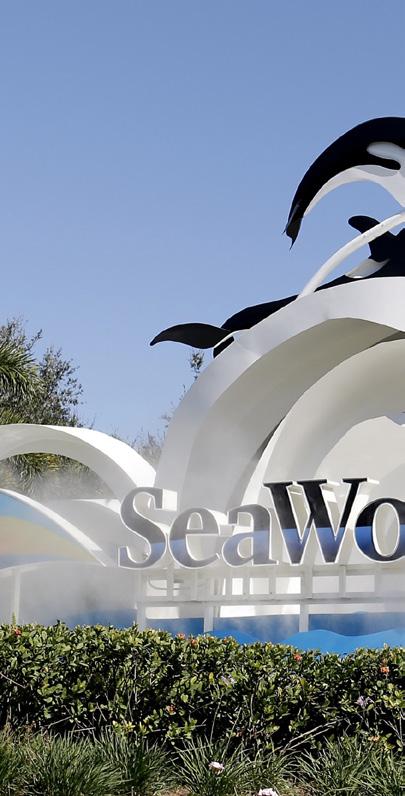
SeaWorld
The 2013 documentary "Blackfish" sparked outrage over the treatment of captive orcas at SeaWorld. Public protests and celebrity support fueled a boycott, causing attendance, revenue, and stock prices to drop significantly. In response, SeaWorld ended its orca breeding program in 2016 and began phasing out live orca shows across its parks.
Bud Light
In 2023, Bud Light faced backlash after partnering with transgender influencer Dylan Mulvaney. Conservative figures and consumers called for a boycott, leading to a sharp sales decline within a month. Annual revenues dropped by $1.4 billion in 2023, and the brand lost its long-held position as the topselling beer in the U.S.
Target
Driven by conservative criticism, Target faced backlash and boycotts in 2023 and 2024 over its annual Pride Month collection, contributing to a 5.4% drop in sales. Since 2025, additional liberal boycotts tied to scaling back Diversity, Equity, and Inclusion (DEI) initiatives have led to a reported 30% stock decline and prompted a “Target fast,” which has lasted over a year
-Compiled by Julie Youngquist
ILLINois house ponders bill to protect encampments
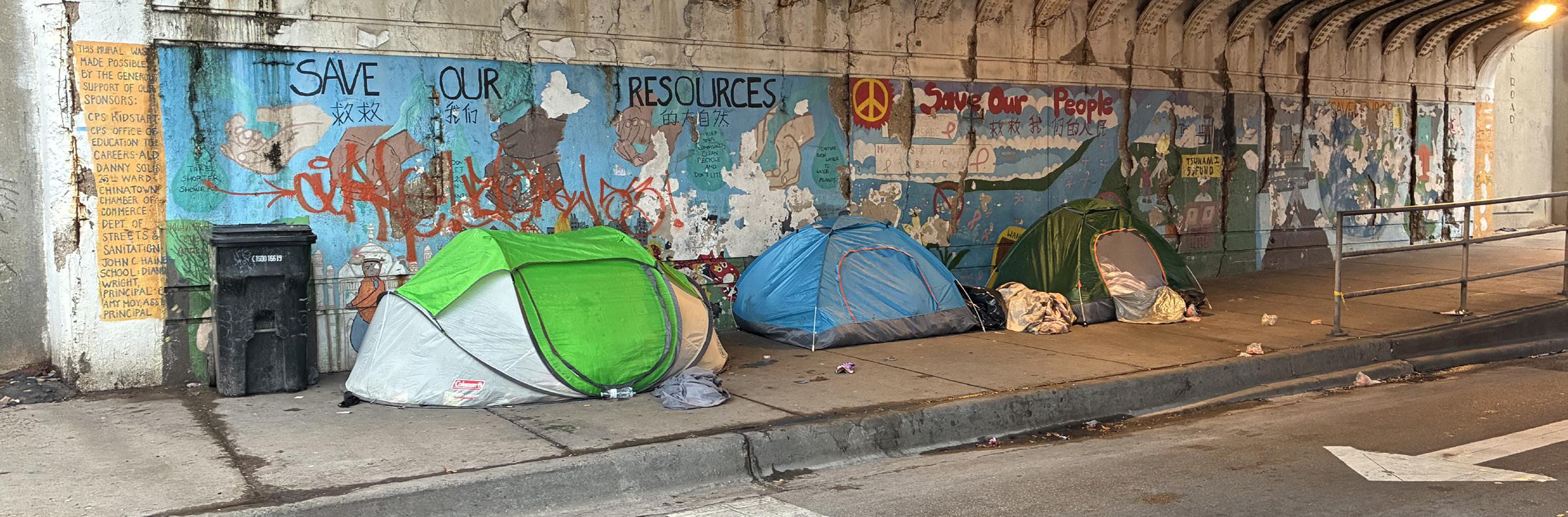
A bill now in the Illinois General Assembly to limit a U.S. Supreme Court ruling against people living in encampments has been significantly changed since it was first filed in January 2025, to the point where the Illinois Association of Parks Districts and the Northwest Municipal Conference now maintain a neutral position on it.
HB1429, the “Local Regulation of Unsheltered Homelessness Act,” says that a governmental entity may not enforce ordinances that include fines or criminal penalties against individuals experiencing unsheltered homelessness “for solely participating in life-sustaining activity on public property if the activities do not physically prevent pedestrian or vehicular traffic in such a manner that creates a hazard to others.”
The key word is “fine” or “penalty.” The proposed law would allow a governmental entity to remove a person to ensure compliance with hours of operation or scheduled use of the property as long as no fine is assessed. Notice of intent to remove an encampment must be posted three business days ahead; the governmental entity must also store personal property removed for up to 30 days.
The bill had been recommended for passage in the House April 15 but was referred to the Rules Committee on April 17.
Also on April 15, the Chicago Tribune published an editorial that opposed the legislation, because restricting when government can impose fines “may actually make it harder to address encampments in public parks.”
The Tribune quoted written testimony submitted to the Illinois General Assembly March 26 by the Northwest Side Gompers Park Coalition, which said that “leaving individuals in tents – without sanitation, security or support – is not a compassionate solution.” The editorial also cited two fires in Legion Park.
The next day, the Chicago Coalition to End Homelessness responded with a letter that said, in part, “We cannot punish people out of frustration over the fact that we have failed to provide adequate solutions.”
Unsheltered homelessness stems from a 5,379-bed shortage at emergency shelters and a 10,872 shortfall of affordable permanent housing units, according to the response from the Coalition, co-signed by more than 100 other organizations across Illinois.
The Supreme Court ruled against encampments in 2024 in Grants Pass v. Johnson and more than 40 municipalities in Illinois have enacted “anti-camping ordinances,” the Coalition wrote. These laws are “counter-productive,” because ticketing people can prevent them from securing a job or a lease from a landlord.
Story and photo by Suzanne Hanney
Mayor johnson & DOH invest $300M+ in housing developments
by Suzanne Hanney, from prepared materials and online research
Mayor Brandon Johnson and the Chicago Department of Housing (DOH) have announced an investment of more than $300 million in 15 affordable housing developments across the city. Total costs are estimated at $711 million, which incorporates public and private resources and market rate housing. This includes approximately $16 million in Low Income Housing Tax Credits (LIHTC), which will generate an estimated $100 million in private equity, and a 30-year guarantee of affordability for tenants.
The 15 developments will create or preserve 1,223 rental units: 1,164 of them affordable. Among them are two Chicago Housing Authority (CHA) developments, with 566 total units, of which 426 are affordable. There are 130 units designated for households earning 30 percent of the Area Median Income ($25,200 for a single person).
Three of the 15 are preservation projects maintaining the affordability of 425 units; 12 are new construction of 798 units. All but two are Equitable Transit-Oriented Developments (eTOD). Three are senior housing.
“Today we take a transformational step forward in our mission to make ‘housing as a human right’ a reality for every Chicagoan,” Mayor Johnson at the April 1 announcement. “As we continue to make the critical investments we need to increase housing accessibility and equity, we are redoubling our efforts to ensure Chicagoans have access to not just stable housing, but enjoy security and dignity throughout their lives.”
“We are thrilled to present these 15 awardees and commend the development teams for prioritizing affordable housing amidst our current housing crisis,” said DOH Commissioner Lissette Castaneda. “We are looking at more than a thousand units coming to communities that, in a lot of ways, are seeing rising rates of displacement.”
The 2025 awardees are:
• Southbridge 3A, 2400 S. State St., Near South Side;
• Heart of South Shore, 7056 S. Stony Island Ave., South Shore;
• Gateway 79, 7901-19 S. State St., Chatham;
• 79th & Woodlawn Senior Living, Calumet Heights;
• Bontemps Apartments, 1241 W. 58th St., West Englewood;
• Woodlawn Social, 1017 E. 63rd St., Woodlawn;
• KLEO'S Corner Apartments, 119 E. Garfield Blvd., Washington Park;
• 18th & Peoria M2, 900 W. 18th St., Lower West Side;
• Encuentro Square Phase 2 (Encuentro Square Phase 1 pictured, CHA photo), 3745 W. Cortland, Logan Square;
• Ogden Commons A-3 Residential, 1244 S. Washtenaw Ave., North Lawndale;
• Westgate, 3801-11 W. Madison St., West Garfield Park;
• Metropolitan L Apartments, 2525 N. Kedzie Blvd., Logan Square;
• Leland Apartments, 1207 W. Leland Ave., Uptown;
• Hollywood House Apartments, 5700 N. Sheridan Road, Edgewater;
• Gateway Apartments Preservation, 7450 N. Rogers Ave., Rogers Park.
These developments will be the first in Mayor Johnson’s Cut the Tape initiative, which city officials said would accelerate development. Closing is expected within 18 months.
StreetWise Participants on reparations
by Suzanne Hanney
Repair Chicago will collect the experiences and input of Chicagoans to help inform the Johnson administration’s Reparations Study, due the end of July. The engagement effort invites Black Chicagoans to complete a public survey at Chicago.gov/RepairChicago on their lived experiences by May 31. Survey participants will have the opportunity to enter a gift card drawing.
Vetress Boyce, president of Conrad Worrill Community Reparations Commission and co-chair of City of Chicago Task Force, said that Chicago was the first locale to launch a eparations initiative in 2019, but the city lagged behind Evanston because it was unable to get the support of elected officials. When Brandon Johnson was in the runoff against Paul Vallas in 2023, her committee met with Johnson "and he committed that if he won, he would definitely support reparations. He won and did exactly what he said."
Johnson's executive order put a task force in place, funded $500,000 from the FY24 budget to hire consultants, do the framework and make sure there was legal support, as well as work with the Office of Equity and Racial Justice. https://www.chicago.gov/city/en/sites/chicago-reparations-initiative/home.htm
StreetWise participants gave their thoughts on what reparations should entail:
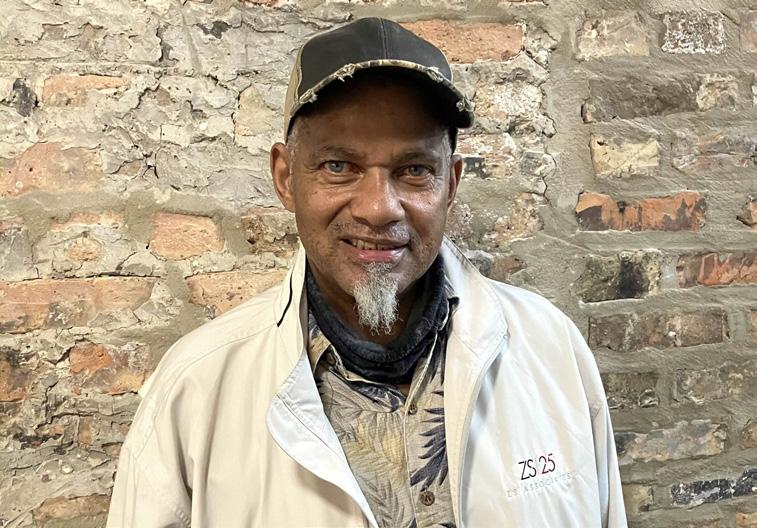
Clarence Bryant, editor/ publisher of the book, “Unequal
Roots: Systemic Racism in America”
From the 1600s up until the late 1800s, there was no paid labor. I think about the Japanese who had reparations and I also think about the Holocaust. If anyone should be getting reparations, it should be Black people. Restitution, even rehabilitation. We need some form of structure among Black people where we can get ahead in this country. Right now, we’re not there.
Keith
Hardiman
We should do everything we can. It’s like if we are helping other countries out after a war, help to rebuild them. Resources they use to help them, they should use for us here. I believe charity begins at home: you got to make sure your homefront first is OK before you go reaching out for others.
Mary J
I am not sure if they would ever compensate us for the wrongs that have been done, but it would really be nice. First, they need to do a study for what damage was done and then correct it. I know there has been a lot of inequality in our community, as far as buying houses, getting loans to buy houses. Jobs: we’re not always looked at as the person that gets the job that pays the most, even if we’re qualified. We continue to be underpaid and underhoused – under-everything. Then they talk about us as if we don’t want to do anything, but the system is set up that no matter how hard we try, we can’t get to where we need to be.
Henry Johnson
Give them training in different vocational skills.