The SportsWise team reviews the highlights of 2025.
Cover Story: the top 5 stories of 2025
The Top Five stories of 2025 concerned threats to homeless funding by the federal government and to food stamps as well as rising intake at Chicago Animal Care and Control as an indicator of potential homelessness, the opening of the National Public Housing Museum in Chicago and the election of the first American pope.
voice of the Streets – op-ed
Dr. Victor Devinatz explains the role trade unions and the working class had in the election of New York Mayor-elect Zohran Mamdani.
The Playground
DISCLAIMER: The views, opinions, positions or strategies expressed by the authors and those providing comments are theirs alone, and do not necessarily reflect the views, opinions, or positions of StreetWise.
Dave Hamilton, Creative Director/Publisher dhamilton@streetwise.org
Julie Youngquist, Executive director jyoungquist@streetwise.org
Ph: 773-334-6600 Office: 2009 S. State St., Chicago, IL, 60616
ARTS & ENTERTAINMENT RECOMMENDATIONS
Compiled by Dave Hamilton
Future Superstars!
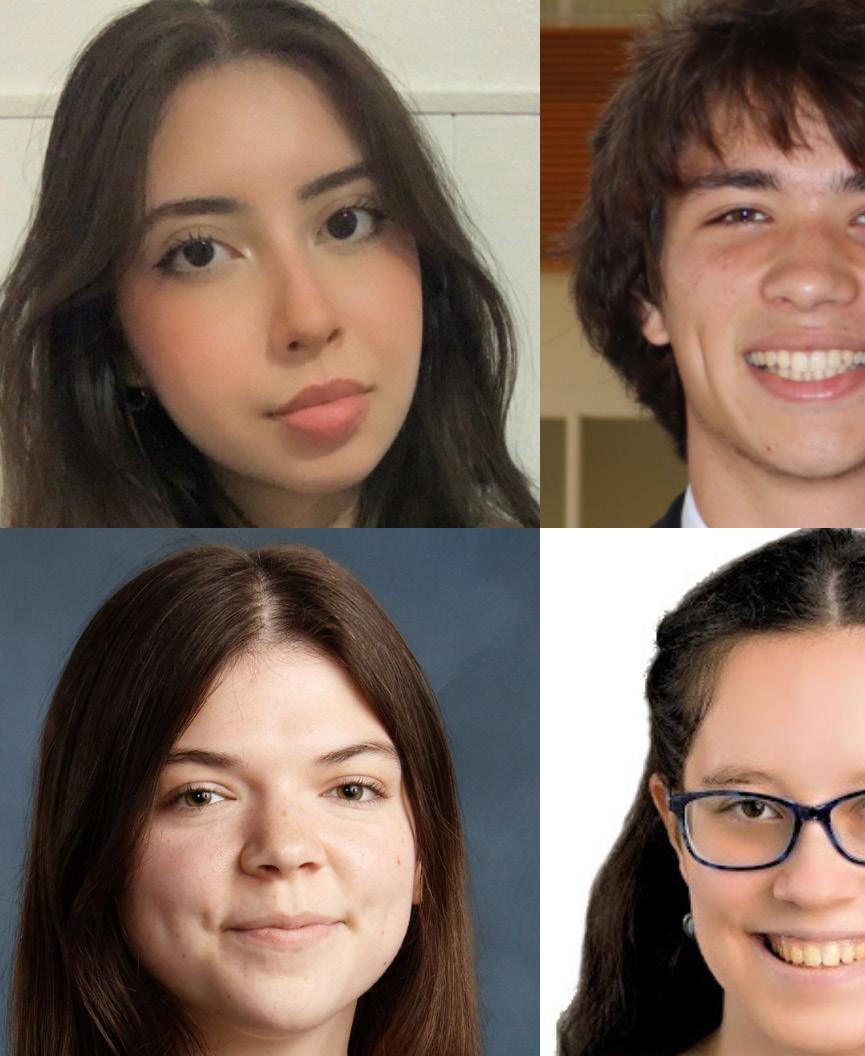
Young Playwrights Festival
Pegasus Theatre Chicago presents the 39th Annual Young Playwrights Festival, January 1 - 24 at Chicago Dra matists, 798 N. Aberdeen. For nearly four decades, the Young Playwrights Festival, the oldest such festival in the United States, has engaged and inspired high school students across Chicago by teaching them to craft one-act plays. More than 300 submissions are received annually with the winning teen playwrights’ productions being work-shopped, staged by industry professionals and premiered under the auspices of Pegasus Theatre Chicago’s Young Playwrights Festival. Previews are Thursday, Jan. 1 and Friday, Jan.
2 at 7 p.m. and Saturday, Jan. 3 at 2:30 p.m., with the Opening Ceremony performance, Sunday, Jan. 4 at 2:30 p.m. The regular performance schedule continues Fridays at 7 p.m. and Saturdays at 2:30 p.m. and 7 p.m. Tickets are $15 - $30 are available at PegasusTheatreChicago.org. Educators may schedule school group matinees via YPF@PegasusTheatreChicago.org.
An Artistic Legend!
‘Yoko Ono: Music of the Mind’
“Yoko Ono: Music of the Mind” is one of the most comprehensive exhibitions to date of the trailblazing artist, celebrated musician, and formidable campaigner for world peace. This remarkable retrospective—on view at the Museum of Contemporary Art, 220 E. Chicago Ave., as the only US venue—celebrates key moments of Ono’s career, showcasing art driven by ideas and expressed in poetic, humorous, and profound ways. Tracing Ono’s career since the 1950s, “Music of the Mind” presents over 200 works across a variety of media including performance footage, music and sound recordings, scores, film, photography, installations, and archival materials. Participatory artworks—a key aspect of Ono’s practice—are also featured in the exhibition, and visitors are invited to partake in several interactive, instruction-based artworks throughout. On display through February 22.
Music to Warm the Soul
Winter Chamber Music Festival
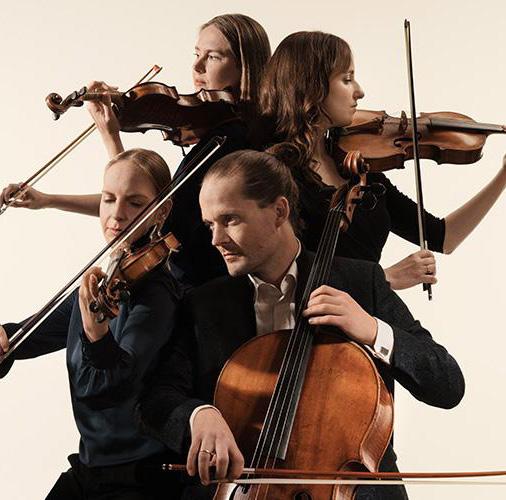
The Winter Chamber Music Festival returns to Northwestern University’s Henry and Leigh Bienen School of Music for its 29th season. Weekend concerts will be presented Jan. 9 to 23, with a special closing performance on Saturday, Feb. 14. This year’s festival features a dynamic mix of internationally celebrated quartets and distinguished Bienen School faculty artists. Returning festival favorites include the Dudok Quartet Amsterdam (pictured), the Vertavo String Quartet and the two-time Grammy-nominated Dover Quartet. Rising star ensemble the Isidore String Quartet, last heard at the festival in 2023, also returns to the lineup. All performances will take place in Pick-Staiger Concert Hall, 50 Arts Circle Drive on Northwestern’s Evanston campus. Subscriptions and single tickets are available by phone at 847-467-4000, music.northwestern.edu, or in person at Pick-Staiger Concert Hall.
The Music of the Night!
‘Phantom of the Opera’
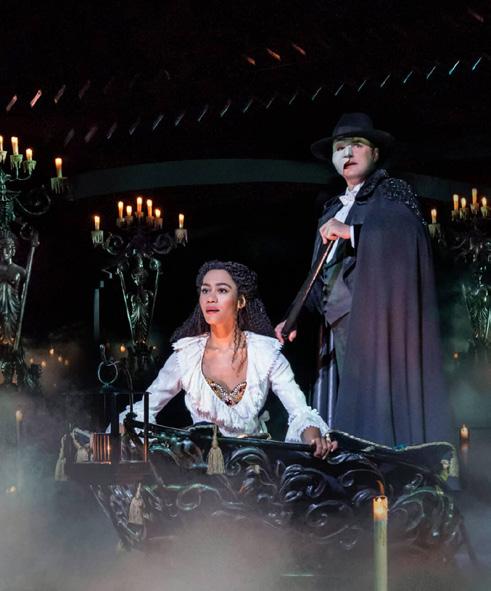
“The Phantom Of The Opera” is widely considered one of the most beautiful and spectacular productions in history, playing to over 160 million people in 47 territories and 195 cities in 21 languages. Andrew Lloyd Webber’s romantic, haunting, and soaring score includes “The Music of the Night,” “All I Ask of You,” “Wishing You Were Somehow Here Again,” “Masquerade,” and the iconic title song. It tells the tale of a disfigured musical genius known only as ‘The Phantom’ who haunts the depths of the Paris Opera House. Mesmerized by the talents and beauty of a young soprano, Christine, The Phantom lures her as his protégé and falls fiercely in love with her. Unaware of Christine’s love for Raoul, The Phantom’s obsession sets the scene for a dramatic turn of events where jealousy, madness, and passions collide. Playing through February 1 at Cadillac Palace Theatre, 151 W. Randolph St. Tickets start at $150 at www.broadwayinchicago.com/shows/the-phantom-of-the-opera
A Struggle for Freedom!
‘Uncertain Histories’
The Grand Army of the Republic (GAR) Hall was built as a memorial to the sacrifices of Union Civil War veterans and their families. According to the renowned American abolitionist Frederick Douglass, their sacrifices were for freedom and are a testament to the most profound declaration of human rights in history. Yet, Douglass also argued in a 1877 speech to the GAR that the task of fully realizing this freedom remained unfinished. The art exhibit, “Uncertain Histories,” reveals entanglement between past military actions and today’s state repression, between historic declarations and the current struggle for freedom. On display at the Chicago Cultural Center, 78 E. Washington St., through May 24.
A Soothing Experience!
‘Rain”: for babies and their carers
“Rain” is crafted specifically for newborns to crawling babies and their caretakers. A trio of performers on cello, voice, and movement act as gentle guides as adult carers and their littlest ones are immersed in an intimate, mindful installation space full of surprise and delight, with opportunities for connection through music and sensory exploration. Audiences are invited to experience the wonder and generosity of rain and explore together water's elemental connection between parent and child. The experience will run at Filament Theatre, 4041 N. Milwaukee Ave., January 6-18. Tickets are $15-30 at filamenttheatre.org/rain/
A Family Torn Apart
‘The Unknown Variable’ by Nahal Navidar
Separated from her bābā in Iran and living in a strange new land, a determined young girl contacts the President, Santa Claus, and God to determine the unknown variable – when her father will be granted a Green Card from the United States so they can be reunited. January 8 - February 1 at The Edge Off Broadway, 1133 W. Catalpa Ave. Show times are 7 p.m. on Mondays, Thursdays, Fridays, and Saturdays, and 2 p.m. on Sundays. Tickets are $30 general admission and $15 for student tickets at www.thisismomentary.com
Dick Clark’s New Year’s Rockin’ Eve
Happy New Year!
“Dick Clark’s New Year’s Rockin’ Eve with Ryan Seacrest,” America’s most-watched New Year’s celebration and one of the country’s most enduring annual traditions, will add a countdown live from Chicago for the first time in its more than 50-year history -- featuring Grammy-winning Chance the Rapper and Chicago blues vocalist Shemekia Copeland, DJ Mike Dunn, DJ Mike P and Grammy-, Peabody- and NAACP Image Award-winning poet and artist J Ivy. Chicago will bring the city’s energy and New Year’s festivities directly into homes across the nation live on ABC-TV (and Hulu the next day) from December 31 at 7 p.m. with onstage performances and fireworks from ART on THE MART at the Merchandise Mart. FREE
Good Grief!
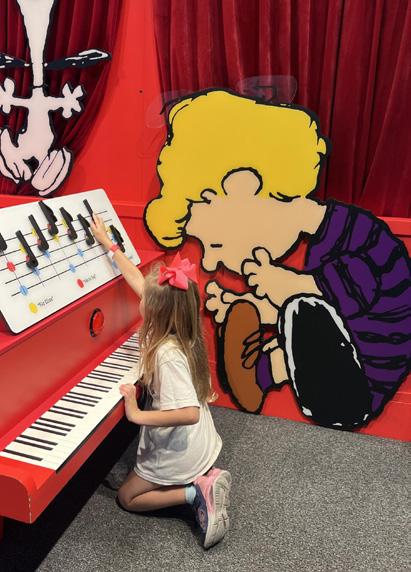
Take Care with Peanuts: The Exhibit
Join Charlie Brown and the Peanuts Gang at Chicago Children’s Museum, 700 E. Grand Ave. Step into “Take Care” and be transported into the world of Charles M. Schulz’s iconic comic strip. See beloved characters spring to life with interactive displays and activities focused on self-care, empathy, and environmental stewardship. Explore character-themed sections, comic-inspired designs, and sustainable features that inspire learning, creativity, and kindness for visitors of all ages. Through January 4.
Black Liberation!
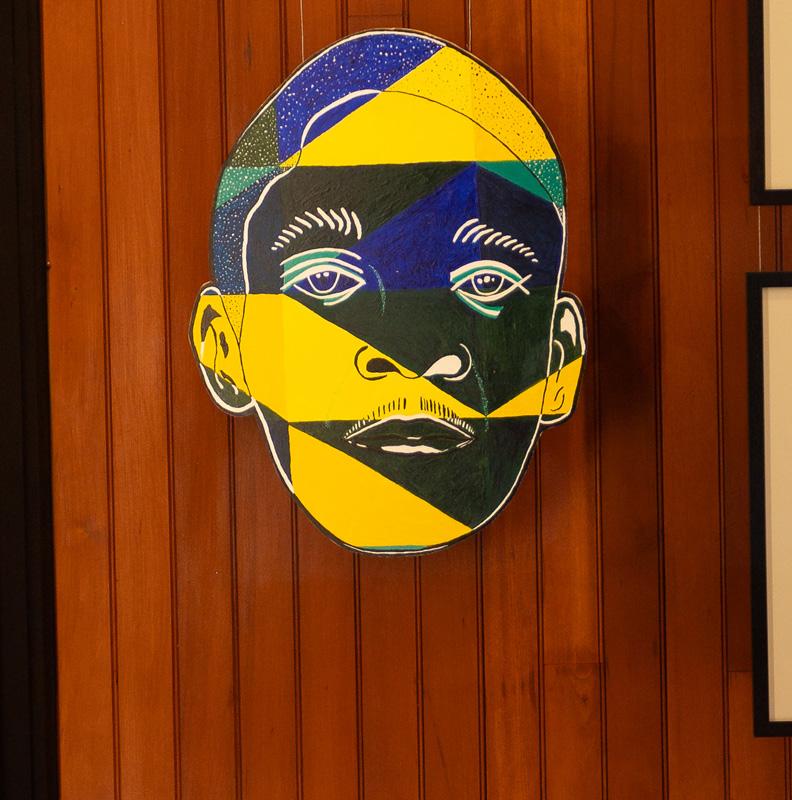
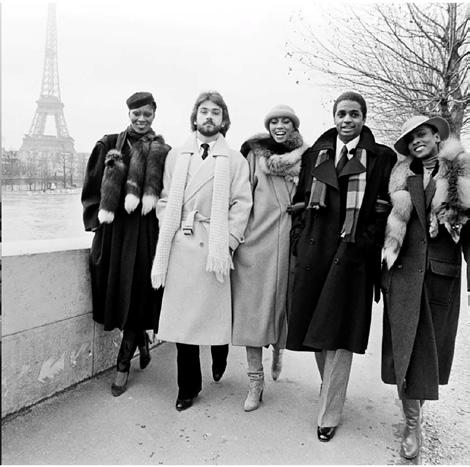
‘Paris in Black: Internationalism and the Black Renaissance’ Discover the profound journeys of Black artists, writers, performers, and intellectuals who found freedom, inspiration, and transformation in the liberating cultural and social environment of Paris. Be transported to the city of lights, where figures like Henry Ossawa Tanner, Josephine Baker, Langston Hughes, Richard Wright, and James Baldwin lived and created in defiance of American racism. With over 100 objects, including masterpiece paintings and sculptures from the DuSable’s permanent collection, archival photographs, and multimedia elements, “Paris in Black” tells a global story of Black resilience and creativity. On display at the DuSable Museum of African American History, 740 E. 56th Place, through January 5.
2025 sports in review
John: We are talking about the year in review: the Good, the Bad and the Ugly in the world of sports in Chicago.
Russell: My Good is the Bears – surprise 1st place in the NFC – until their loss at Green Bay December 7. It felt good to see the Minnesota Vikings at the bottom, to be on top of Green Bay, Detroit, the Rams, the Eagles. Also my Good is, the Cubs made it to the playoffs, although they lost to the Brewers in five games.
Allen: The Good thing about the Bears is they’ve been building the team and it’s finally showing. They’ve been changing quarterbacks, changing defense, the offensive line and it’s finally paying off. You have to start from the ground up. I don’t care if the Bears go to the Super Bowl, just make it to the playoffs and win the first game.
John: My Good is also the Chicago Bears. At the beginning of the season, I was like, ‘what the hell are they doing with the Chicago Bears,’ but since early November, they won 9 of their last 10 games. Unless there is a major collapse, it’s likely they’ll have a playoff spot. The way the
NFL is this year, they could very well get to the Super Bowl. No one expected Denver or New England to not make the playoffs or Kansas City to be on the outside looking in.
Russell: My Bad is the White Sox. Teams like Minnesota, every year they rebuild on the fly. The Sox just sit there and trade all their players away. My Bad is also the Bulls; they started off so well and now lost four or five in a row. They lost to Indiana, whose record is four and 16; and to New Orleans, three and 15.
Allen: My Bad is the White Sox losing 100 games two consecutive seasons. They are not changing their roster to improve. They have won championships, but it don’t look like they are even trying to win championships now. I can’t say enough about the Bears; they beat the World
Champion Philadelphia Eagles, so they could win the Super Bowl if they get there.
John: My Bad, even though the Cubs had a successful season, is that they went to Game 5 against the Milwaukee Brewers and lost all games there in the playoffs. Every team wants home field advantage, but you’ve gotta win on the road if you are going to be a champion. Just ask the Dodgers; they didn’t have home field advantage for 2025, they won three of four games in Toronto.
Allen: If Jerry Reinsdorf is not in it to win it, he needs to sell the team, because the team don’t look like it got no potential whatsoever and it do have potential.
Russell: The Blackhawks are on the rise, putting Chicago on the map again, the winningest city, not the Windy City.
John: My Ugly is the Chicago White Sox. They join the Colorado Rockies with three straight years of 100+ losses in Major League Baseball -- a combined loss of 323. The stadium situation is also Ugly. The Chicago Fire, which hasn’t been around as long, has Chicago City Council approval for a stadium on the 78 land, which leaves the White Sox out.
Russell: The Chicago Sky got to do something about that lineup because they got good players, but they can’t win.
John: How about Angel Reese?
Russell: She’s pretty good, and she wants to win.
Any comments, suggestions or topic ideas for the SportsWise team? Email StreetWise Editor Suzanne Hanney at suzannestreetwise@yahoo.com
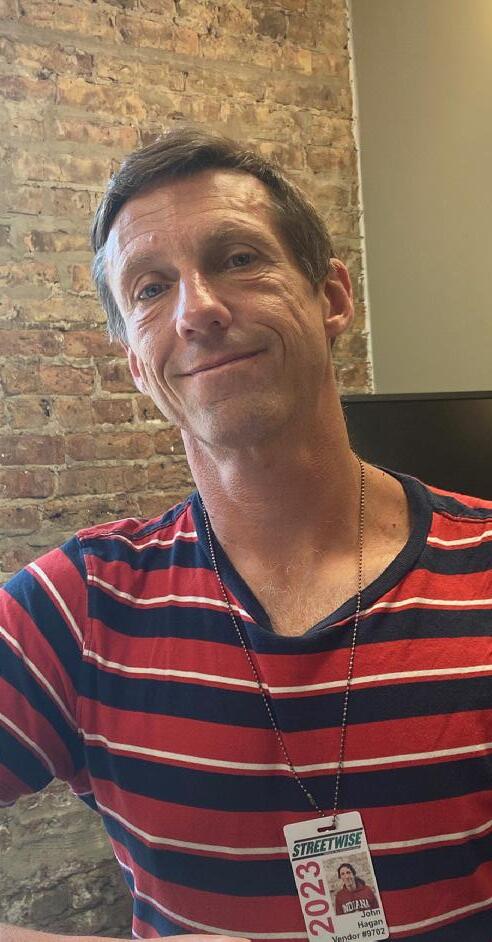
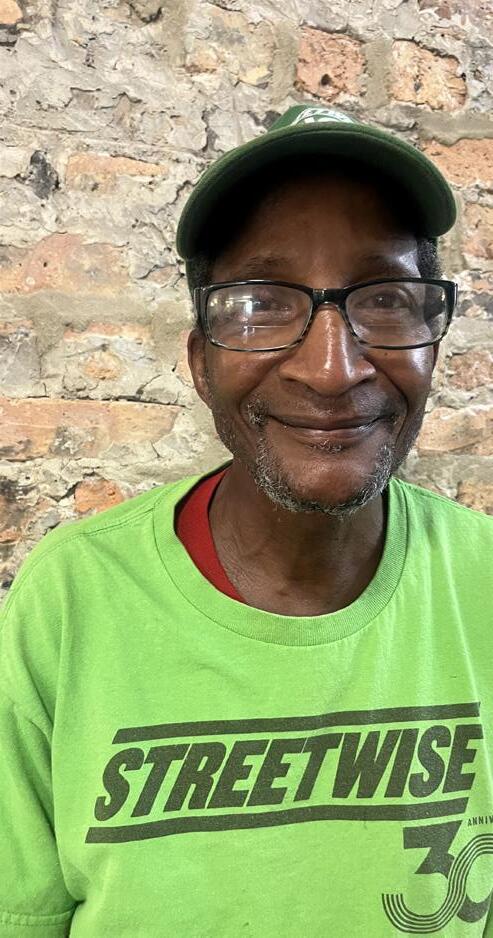
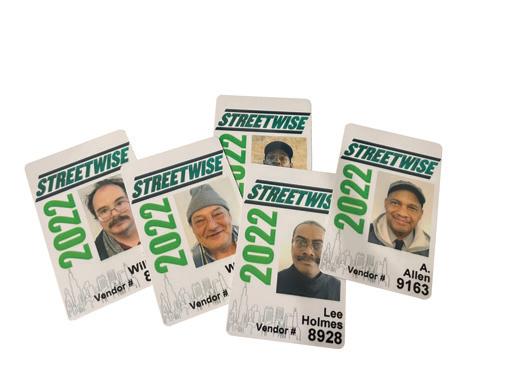
Vendors John Hagan, Russell Adams, and A. Allen chat about the world of sports.
The U.S. Department of Housing and Urban Development (HUD) announcement on November 13 that it would seek a new NOFO (Notice of Funding Opportunity) rather than renew nearly $4 billion in contracts for homeless programs shows restructuring in line with Trump administration policy (StreetWise Dec. 1-9). Challenged in court December 8, HUD temporarily rescinded the change.
More than 80% of current federal funding to the 19 Continuum of Care (CoC) programs in Illinois goes to permanent supportive housing (PSH). However, the new NOFO caps PSH at 30%.
“Existing federal grants start to expire early in 2026. At this late date, there is no way the federal government can undertake a brand-new funding competition without causing a monthslong gap between the end of many existing awards and the beginning of new funding,” said Bob Palmer, policy director for Housing Action Illinois (HAI). HAI and Thresholds coordinated a letter to members of Congress and HUD Secretary Scott Turner signed by 226 Illinois entities seeking a 12-month renewal – and sent earlier on November 13.
Trump said in a presidential campaign video in 2023 that he would “ban urban camping” and force people to move into designated tent cities under threat of arrest. They would be given chance to accept treatment “if willing to be rehabilitated...” (StreetWise April 16-22)
TOP 5 stories of 2025
Compiled by Suzanne Hanney
The Chicago Continuum of Care had remained in a state of readiness for a possible NOFO for months, even as the situation remained unclear, Hank Sartin, director of communications for All Chicago Making Homelessness History, said. “In previous years, the NOFO announcement would happen in late July and be completed in September. Normal deadlines came and went with no word from HUD.”
Jennifer Hill is executive director of the Alliance to End Homelessness in Suburban Cook County, the state’s second largest CoC behind All Chicago. Hill noted that on November 13, “HUD launched a competition that will make our community and yours cut permanent housing by two-thirds for people experiencing homelessness. The competition notice is four months overdue, and Congress had instructed HUD not to do a competition this year because it is so late in the year.”
The new NOFO differs so much from homeless policy of the last 15 years that it will likely face legal challenges, Hill said.
“It has a focus on service participation requirements, involuntary treatment, criminalization and immigration enforcement, in stark contrast to prior NOFO competitions’ emphasis on Housing First, harm reduction, racial equity, LGBTQ+ protections and more.”
“Housing First,” the idea that the best way to help people experiencing homelessness is to provide them a place to live, has been mandated by HUD since 2013.
However, Trump’s choice for director of the U.S. Interagency Council on Homelessness (U.S. ICH) in his previous term, Robert Marbut, pushed for a “Housing Fourth” approach, grounded in the belief that homelessness is a personal failing rather than a systemic issue tied to a lack of affordable housing.
The sudden shift to temporary supports and involuntary treatment could cost 170,000 people their permanent housing, according to the National Alliance to End Homelessness. In Illinois, the 19 CoCs support more than 21,400 people in permanent housing – 9,362 of whom may lose it, noted Kristin Ginger, director of communications for HAI.
“But a key point that gets lost with all these calculations is that the potential funding and housing loss is significantly greater because of new program requirements and goals that may result in applications from Illinois not scoring well in competition and/or certain agencies being disqualified from receiving funding.”
Right behind housing in importance to survival is food, and food stamps, better known as the Supplemental Nutrition Assistance Program (SNAP), faced continuing threats in 2025.
University. For the first time, adults age 55-64 and adults with children over 14 will have to work at least 20 hours a week or receive benefits for a maximum of three months over three years. Tens of thousands of legal immigrants will also lose food stamps, according to Politico.
SNAP is managed at the federal level by the U.S. Department of Agriculture and at the state level by the Illinois Department of Human Services, where recipients apply to get an electronic Illinois Link card, much like a debit card. There are 1.9 million Link recipients in Illinois (15% of the state’s population).
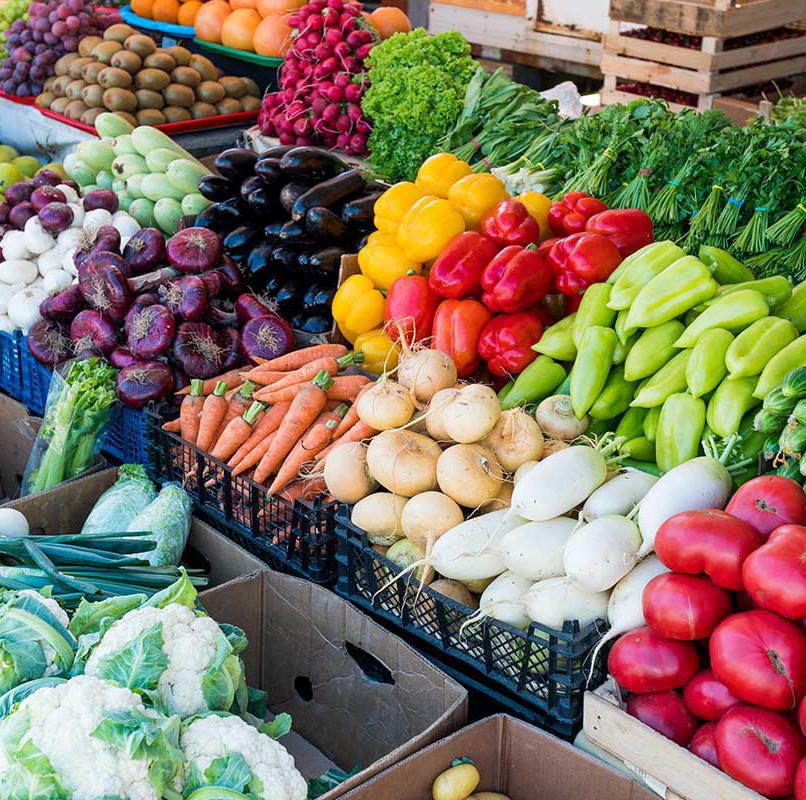
Link Match (StreetWise Vol. 33 No. 15, May 14-20, 2025) gives consumers double value on purchases of fruits and vegetables – a win for their health, and Illinois agriculture too.
“As someone managing high blood pressure, having access to fresh produce weekly has made a significant impact on my life,” said Karen, a Jackson Park Terrace resident and Market Shuttle rider to the farmers market at the Experimental Station in Woodlawn.
Last year, 131 partner venues (traditional farmers mar kets, farmstands, mobile markets, brick and mortar stores and more) saw spending of $1.47 million by Link Match users statewide, according to the Experimental Station, which launched Link Match in 2011 and which began this year to create an Illinois Food System Roadmap, with IDHS help. Of the 131 Link Match venues, 51 were in Chicago, 39 in northern Illinois and the remainder downstate.
However, on July 23, Gov. JB Pritzker’s office noted that 360,000 Illinoisans are at risk of losing SNAP because of expanded work requirements in the Republican-backed domestic funding bill. The 42-day (October 1-November 12) government shutdown over failure to pass appropriations for that bill was the longest in history and affected SNAP for the first time, although ben efits resumed in November.
“For every meal that food banks provide, SNAP provides nine,” the Harvard Kennedy blog noted. “Charities do not have the capacity to make up for the shortfall.”
However, the “Hunger Pains: Food Access for Unhoused Individuals in Illinois” study by the Institute for Research on Race & Policy at the University of Illinois/Chicago (StreetWise Vol. 33 No. 22, September 10-16, 2025) discussed ways to expand food access with dignity. Policy recommendations included grants to help food banks expand cold storage equipment to allow a wider variety of donations, especially fresh produce, dairy and meat; and tax credit advocacy for food waste diversion programs.
Chicago Food Rescue, for example, links food donors with volunteers, who pick up leftovers (from an employee cafeteria or supermarket perhaps) and deliver them to shelters and food pantries. Between its founding in September 2024 and mid-August, the 501(c)(3) had rescued just under 120,000 pounds of food – 100,000 meals – which is also the equivalent of 350,000 pounds of carbon mitigated.
The One Big Beautiful Bill will reduce SNAP funding by $186 billion over 10 years, a 20% cut that is the largest reduction in its history, accord ing to a blog by the Harvard Kennedy School at Harvard
Could the first American pope have come from anywhere but Chicago, the most Catholic city in the U.S. since the late 19th century and diversely “Blue” before its time?
Mildred Martinez Prevost was raised in Chicago Catholic high school, college and graduate school before she became the mother of Pope Leo XIV, formerly known as Robert Prevost. Mildred was a member of the Class of 1929, “one of the most representative of all,” at The Immaculata High School, which was at the time the new girls' central Catholic high school for the North Side. In the early 1920s, after the great wave of European immigration, thenArchbishop George Mundelein wanted to bring Catholics out of their small, ethnic parish high schools and into mainstream American society. Mundelein got his wish, because on the day after Immaculata’s new building opened in 1923, the Chicago Tribune ran a photo proclaiming it “the last word in high schools, one of the finest institutions of its kind in the country.”
(StreetWise Vol. 33 No. 18, June 18-24, 2025)
Primarily attended by Irish and German students in Mildred’s day, The Immaculata hosted as semblies where students performed in their ethnic dress, as they did when StreetWise Editor Suzanne Hanney went there 40 years later. Her classmates were from Lake Meadows/Bronzeville, China town and Ukrainian Village. Navi gating such diversity was common when she and the future Pope Leo were growing up in Chicago, just as it had been for Chicago mayors dating to the 1890s.
Mildred was a vocal star in high school and went on to Mundelein College intermittently from 1935 to 1941 before earning a graduate degree from DePaul. Like Immaculata, Mundelein College was founded by the Sisters of Charity of the Blessed Virgin Mary at Munde lein’s behest; he wanted a college for first-generation women attendees.
Chicago historian Ellen Skerrett said the high school and college were beautiful places “cre ated by women for women, and the pope’s moth er was a part of that. It maybe influenced him in ways her sons never even thought about.”
The nuns were close enough themselves to the immigration experience that they knew the aspiration of parents for their daughters, Skerrett said.
“Their education enabled them to go to college and get jobs, even during the Depression, to work in places like the telephone company or the front office of mail order houses like Sears, Roebuck, to bring home paychecks that were crucial in keeping their families going.”
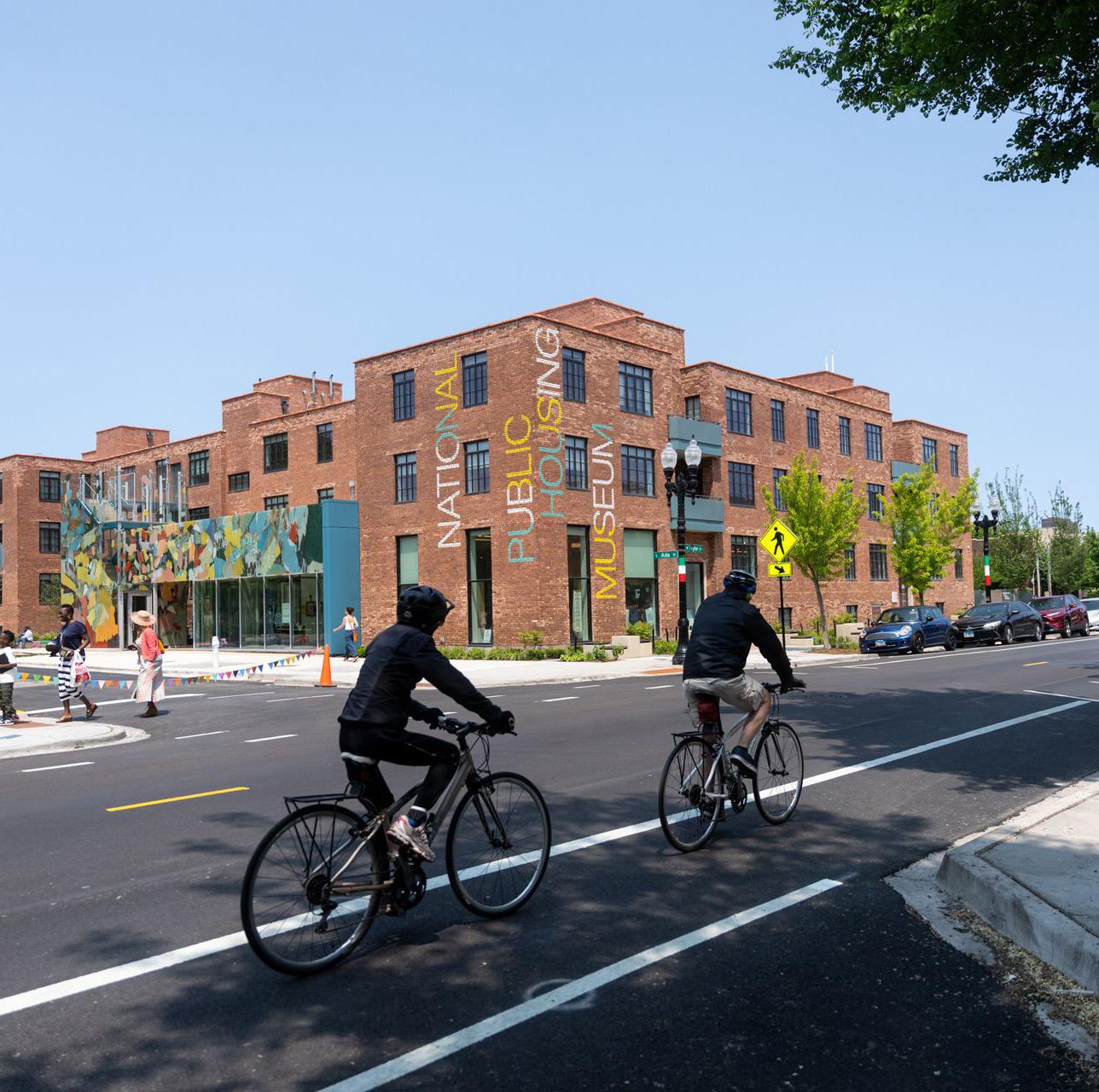
The National Public Housing Museum (NPHM) opened the weekend of April 4 in the last remaining building of the Jane Addams Homes, 919 S. Ada St. The only cultural institution devoted to telling the story of public housing in the United States, NPHM has a mission to preserve, promote and propel the right of all people to a place where they can live and prosper – a place to call home. (StreetWise Vo. 33 No, 12, April 30-May 6, 2025)
The reason Chicago is the site of a “national” museum devoted to public housing dates to 2002 and the closing of the Jane Addams Homes as part of the Chicago Housing Authority’s Plan for Transformation to rehab or replace all of Chicago’s public housing. Deverra Beverly, who was president of the resident council at CHA’s surrounding ABLA Homes and also a CHA commissioner, wanted to preserve their history. In November 2018, CHA granted a 99-year lease on the land for a dollar, and the U.S. Department of Housing and Urban Development donated the last of the ABLA buildings.
NPHM serves a dual role: as a house museum and a place to discuss housing policy. As a house museum, it recreates the Depression-era home of a Jewish family and the Civil Rights-era home of a Black family. A point of pride is that so many music stars grew up in public housing: Barbra Streisand, Elvis Presley, Kenny Rogers, Jay Z, Mary J. Blige, Curtis Mayfield. NPHM’s “REC Room” recreates a music store with album covers keyed to the stories of individual artists and their music.
Sunny Fischer, NPHM board chair, grew up in public housing in Brooklyn: “a very positive experience…a symbol to me my government wanted us to make it.” Fischer, who was executive director of the Richard H. Driehaus Foundation for 21 years, chair of both the Shriver National Center on Poverty Law and Illinois Historic Preservation Agency and co-founder of the Chicago Foundation for Women, said her public housing in Brooklyn was a healthy and bright place to be, with a librarian who cared about her intellectual growth, good playgrounds and an integrated group of families.
“We have to be determined to make ‘public’ a good word, not break that social contract that citizens should have with their government,” Fischer said.
much as NPHM looks back at history, it also must look to the future and make housing policy more transparent, said Executive Director Lisa Yun Lee, PhD. The NPHM counters the old racist stereotypes that made public housing easy to demolish. It believes in the right of all people to have a place to call home and works for housing as a human right. There is not a single county in the United States where a minimum wage worker can afford a modest two- bedroom home. Yet 89 countries around the world refer to housing as a human right.
“We can learn from other nations about how housing is part of the common good,” Dr. Lee said. TOP 5 storie s of
# 5 Chicago Animal Care and Control in Crisis
Pet ownership is an indicator of the economy, and Chica go Animal Care and Control shows the effects of postpandemic housing instability, inflation and ongoing unaffordability. CACC intake, through owner sur renders and strays, hit a 12-year high of 14,800 animals this October; 1,720 cats and dogs were euthanized, compared to 1,613 in the same period last year. (StreetWise Vol. 33 No. 37, November 12-18, 2025)
CACC is at physical capacity (225 dogs/200 cats) pretty much every day. Adoptions for the first three quarters exceeded last's stats but would have to number 50 to 60 daily in order keep up with intake. For 2024, strays/ surrenders to CACC numbered 2,304/383 in the first quarter; 3,185/368 in the second; 3,260/398 in the third; 2025 numbers were 1,843/1,410 in the first quarter; 2,642/1,610 in the second and 2,843/1,501 in the third.
There are also more abandoned, friendly and stray cats than Cats in Action co-founder Liz Houtz has seen in 15 years. Cats in Action has a mission to help people help 1500 outdoor cats this year, mainly on the South Side, through Trap/Neuter/Return. Almost every city in US is addressing this issue except Chicago, she said, citing a $500,000 grant recently received by NYC.
“When we have a shelter that is obviously overwhelmed by the amount of animals coming in and concerned about type of processes to put in place in order for volunteers to help the department do the work and when we have to euthanize animals based on behavior because we don’t have the programming to have well-trained dogs, it speaks to a crisis,” said Ald. Jessie Fuentes (26th ward), who sponsored a resolution supported by half the 50-member council for an October 9 subject matter hearing on CACC.
CACC is funded at $7.51 million in the City of Chicago budget, which speakers at the hearing said is lower than any other major city in the U.S., a set-up for failure. The department has 73 budgeted full-time equivalent positions, including three full-time veterinarians. However, nine fulltime and four part-time positions are vacant. For two years, the deputy director has been doing the job of the executive director; also vacant are staff assistant, animal control inspector, four animal control officers, animal care clerk, animal care aide and four hourly animal care clerks.
Houtz said later that advocates would be willing to help with a nationwide search for a new executive director and to present the top three candidates to Mayor Johnson.
Jenny Schlueter, executive director of Heartland Animal Shelter who was previously executive assistant to the director of CACC, said she knows there is no more money to give, so the City must find creative ways to fund the necessary capacity. Her suggestion was Fortune 500 corporate sponsorship of medical care.
The deputy can’t keep doing two jobs, so the executive director position must be filled, Schlueter said later. A couple more veterinarians and vet techs would also help. More ground could also be gained with full-time coordinators for fosters, adoptions and volunteers.
As families are stretched thin, they rightly prioritize their human members, said an attendee at the CACC budget hearing. “The fallout shows up in our neighborhoods, on our porches and in the hands of volunteers who absorb the costs and the labor the city should be bearing.” Cityfunded programs for free or low-cost vaccinations, spay and neutering would help more people keep pets or adopt the excess population, she said.
The Trade Unions’ and the Working Class’s in Zohran Mamdani’s NYC Mayoral Election
by Dr. Victor G. Devinatz
Due to President Trump’s failing economic policies, the Democrats performed exceedingly well on Election Night 2025 scoring decisive wins in the New Jersey and Virginia gubernatorial races with the election of Mikie Sherill and Abigail Spanberger, two moderate Democrats. However, perhaps the evening’s biggest news was Zohran Mamdani, a progressive Democrat who identifies as a democratic socialist, and was elected New York City (NYC) mayor. Mamdani defeated former Gov. Andrew Cuomo, a centrist Democrat running as an independent after Mamdani beat him in last June’s primary, by a margin of 50.4% to 41.6%; Republican Curtis Sliwa had 7.1% of the vote. Running on a platform of making NYC affordable for the working class and middle class, Mamdani’s victory benefitted from the support of trade unions and the working class.
In NYC politics, union support is vital to candidate success, given that NYC has a union density of 19.8%, almost twice the national average. In elections, trade unions perform essential functions such as providing financial contributions to candidates, helping bring voters to the polls, and supplying canvassers for contacting voters.
In the Democratic primary, the large unions divided their support between Mamdani and Cuomo. Most unions supported Cuomo, with only AFSCME District Council 37 (municipal workers); the Professional Staff Congress at the City University of New York (faculty and staff); and the United Auto Workers Region 9A backing Mamdani. However, after Mamdani’s primary victory, major NYC unions such as the United Federation of Teachers/AFT, NYC’s largest and most politically powerful trade union; the Hotel and Gaming Trades Council (hotel workers); SEIU 32BJ (building service workers); SEIU 1199 (health care workers); New York State Nurses Association/National Nurses United; Communication Workers District 1 and the NYC Central Labor Council, joined the Mamdani bandwagon.
The trade unions’ efforts, Mamdani’s 40,000 canvassers, and the candidate’s message regarding high costs of rent, groceries, and childcare, which resonated with working class and middle-class voters, resulted in victory. Mamdani won most of the working-class communities in NYC’s five boroughs while doing particularly well in areas that were some of the poorest and most racially diverse neighborhoods and most affected by soaring living costs. For
example, Mamdani bested Cuomo by 45% in Harlem, 28% in Jamaica (Queens), 28% in East New York (Brooklyn) and 27% in Parkchester (Bronx).
Mamdani did particularly well among certain working-class segments, especially in predominantly Black neighborhoods, the Bronx (NYC’s poorest borough), public housing districts, and in lower-income neighborhoods. In Black neighborhoods, a critical voting bloc in NYC mayoral elections, Mamdani attained 64% of the vote, an increase from 39% in the primary. In the Bronx, Mamdani obtained 51% of the ballots, 11% more than Cuomo, while losing by 18% to Cuomo in the primary. Among public housing residents, Mamdani won 55% of the votes in the general election, up from 38% in the primary. Mamdani’s largest increases were in districts including Baisley Park Houses (Queens), and Glenwood and Woodson Houses (Brooklyn) where he improved by 40%, 38%, and 37%, respectively, over his primary results. And, finally, in lower-income neighborhoods where most households earn below the median income,
Class’s Role Election
Mamdani achieved 51% of the vote, compared to 41% in the primary.
While Mamdani will diligently work towards achieving his platform, which undoubtedly will benefit both the working class and the trade unions, his administration will face numerous obstacles. That said, it is important that the working class and the trade unions do not view Mamdani as a Moses who will lead them out of the desert. It is necessary for the working class and the trade unions to organize independently with community organizations and continue to exert pressure if they want to see Mamdani’s agenda come to fruition.
Dr. Victor G. Devinatz is Distinguished Professor of Management, specializing in labor relations, and the Hobart and Marian Gardner Hinderliter Endowed Professor (2014-2015) at Illinois State University. He can be contacted at vgdevin@ilstu.edu
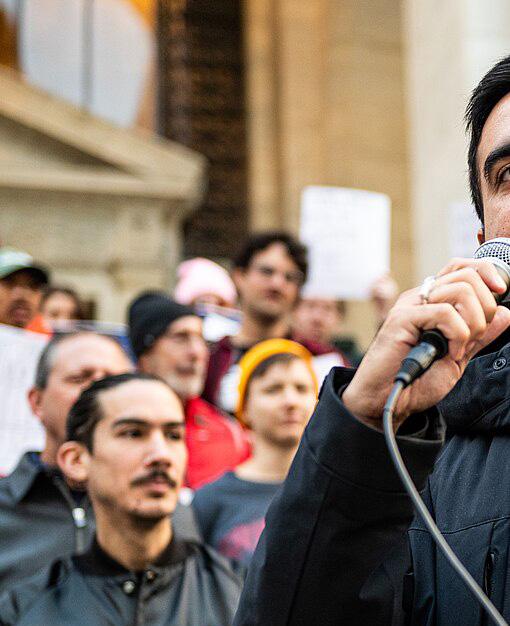
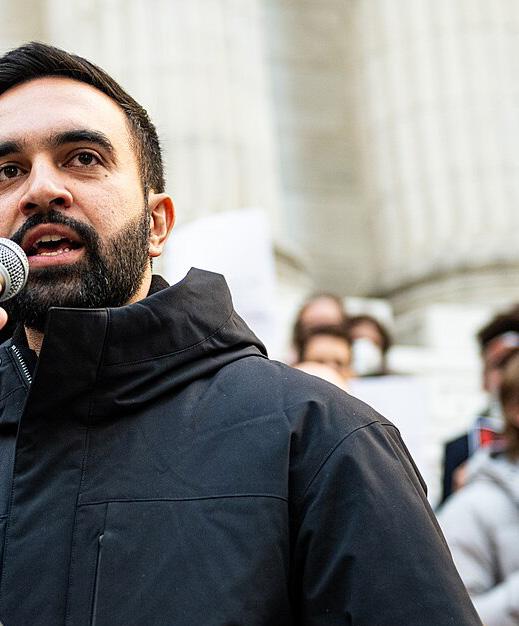
Zohran Mamdani at the Resist Fascism Rally in Bryant Park, New York City on Oct .27, 2024 (Wikimedia Commons photo)..