














suggested contribution goes directly to your vendor
















































suggested contribution goes directly to your vendor
Street Sense has produced thousands of articles on homelessness, housing, and povery, including some that led to change in the city. The paper has won awards from D.C.’s Society of Professional Journalism and regularly breaks news about homelessness and housing.
The Cover
BY
Abel Putu, Abraham Aly, Archie Thomas, Aida Peery, Akindele Akerejah, Alia Huag, Amia Walker, Andre Brinson, Andre Baltimore, Andrew Anderson, Angie Whitehurst, Angela Morris, Anthony Carney, Apollos Robinson, Beverly Sutton, Brian Holsten, Brianna Butler, Cameé Lee, Carlos Carolina, Carlton Johnson, Charles Armstrong, Chris Cole, Chon Gotti, Conrad Cheek, Craig Thompson, Cynthia Herrion, Daniel Ball, Darrel Stone, Darlesha Joyner, David Snyder, Debora Brantley, Degnon Dovonou, Dominique Anthony, Don Gardner, Drake Brensul, El-O-Him, Elizabeth Bowes, Elynora Houston, Eric Glover, Eric Thompson-Bey, Evelyn Nnam, Faith Winkler, Flegette Rippy, Frederic John, Frederick Walker, Gerald Anderson, Gloria Prinz, Gracias Garcias,
Greta Christian, Henrieese Roberts, Henry Johnson, Invisible Prophet, Ivory Wilson, Jacqueline Gale, Jacqueline Turner, James Davis, James Hughes, James Lyles III, Jay B. Williams, Jeanette Richardson, Jeff Taylor, Jeffery McNeil, Jeffrey Carter, Jemel Fleming, Jenkins Dalton, Jennifer McLaughlin, Jewel Lewis, John Littlejohn, Josie Brown, Julienne Kengnie, Kenneth Middleton, Kannon Brown,
Kendarius Tucker, Kym Parker, L.Q. Peterson, Lawrence Autry, Leo Hughes Jr, Levester Green, Lillie Thomas II, Marc Grier, Marcus McCall, Mars, Maurice Carter, Melody Byrd, Melveon Harp, Milan Stevenson, Nikila Smith, Patricia Donaldson, Patty Smith, Paul Martin, Phillip Black, Qaadir El-Amin, Queenie Featherstone, Rachelle Ellison, Randall Smith, Rashawn Bowser, Reginald Black, Denny,
Reneece Brinkley, Ricardo Meriedy, Richard Mooney, Rita Sauls, Robert Vaughn, Robert Warren, Rochelle Walker, Ron Dudley, Ronnell Wilson, S. Smith, Sasha Williams, Saul Presa, Shawn Fenwick, Sheila White, Shuhratjon Ahmadjonov, Starchild BLK, Susan Wilshasen, Sybil Taylor, Tasha Savoy, Tim Holt, Tonya Williams, Tony Morris, Vincent Watts, Warning Label, Warren Stevens, Wayne Hall, Wendell


Wendy Brown, William Hargrove, William Shuford, Willie Futrelle, William Young, Zero

BOARD OF DIRECTORS Ashley McMaster, Blake Androff, Clare Krupin, Chris Curry, Cole Ingraham, David Grant, Jonquilyn Hill, Matt Perra, Michael Vaughan Cherubin, Nana-Sentuo Bonsu, Stanley Keeve
AUBREY BUTTERFIELD Editorial Intern
n a Jan. 27 oversight roundtable, the D.C. Housing Authority (DCHA) addressed findings from Chief Compliance Officer Petuna Cooper regarding the alleged mishandling of taxpayer dollars. Cooper, who is currently on paid administrative leave for reasons DCHA officials said are unrelated to the allegations, testified that she documented over $60 million in financial mismanagement within the agency.
ICooper’s observations, released in a September 2025 report to the agency, detailed 10 findings, including $60 million in unapproved transfers within the agency’s repair and maintenance fund, $1.4 million in unclear transfers, and $2 million in stale checks. Cooper and her team also found the agency made voucher payments for deceased residents and failed to distribute penalties under the Davis-Bacon Act following DCHA contractors’ violations of wage laws, totaling to $167,000.
Speakers at the roundtable, including Housing Committee Chair Councilmember Robert White and Ward 3 Councilmember Matthew Frumin, expressed concern over the findings. Calling the situation “grave,” the councilmembers noted previous difficulties with DCHA’s financial statements, as D.C. taxpayers remain unaware of where DCHA’s money ends up.
During the roundtable, Cooper said she was asked not to pursue any of the issues raised in the observations. She has been on administrative leave since Dec. 11, which DCHA claims is due to her unprofessional treatment toward employees, including the use of derogatory words to belittle staff, though Cooper denies these allegations, according to reporting by the Washington City Paper. Cooper has since sued the organization, including specific employees, for retaliation. The employees were unable to comment due to the ongoing litigation, DCHA officials said at the roundtable.
After she released her observations, Cooper recommended conducting a forensic audit, separate from the standard and frequent auditing of the organization. During the roundtable, DCHA officials said a forensic audit was unnecessary.
Deputy Executive Director Nicole Wickliffe, Board Chair Raymond Skinner, Interim Chief Financial Officer (CFO) Isra Elkhazeen, Commissioner Leroy Clay III, and Office of Financial Management Advisor Steve Nolan testified on behalf of DCHA.
According to their testimony, DCHA was already aware of the issues brought forth in the September observations. DCHA’s Office of Audit and Compliance (OAC) is reviewing the agency’s finance officer’s responses and is working on a final analysis and recommendation. OAC says there is no fraud in the organization, and DCHA says the issues are actively being addressed, though officials acknowledged the gravity of the issues in the meeting.
CHIEF EXECUTIVE
OFFICER
Brian Carome
DIRECTOR OF PROGRAMS
Darick Brown
DIRECTOR OF VENDOR
EMPLOYMENT
Thomas Ratliff
EMPLOYMENT SPECIALIST
Esmat Amin
VENDOR PROGRAM
ASSOCIATES
Aida Peery, Chon Gotti, Nikila Smith
VENDOR PROGRAM
VOLUNTEERS
Ann Herzog, Aiden
Eisenschenk, Beverly Brown, Roberta Haber
EDITOR-IN-CHIEF
Annemarie Cuccia
DEPUTY EDITOR
Donte Kirby
EDITORIAL INTERNS
Aubrey Butterfield,
“There has to be progress,” Nolan said. “We should be making some strides in that regard.”
The agency’s plans include the reconciliation of accounts; optimization, including ensuring proper accounting, correct account mapping, fixed asset modules, and increasing overall process efficiency; and conducting a risk assessment, officials said. While some of these plans are in action, DCHA has no definitive timeline to complete them. The organization said it must first hire a new CFO and complete outstanding audits. According to testimony, a timeline should be crafted by the end of June.
DCHA did not respond to a request to provide updated timeline information by the deadline. Another DCHA performance oversight hearing is scheduled for Feb. 25.

Dylan Cestaro, Elizabeth Short, Grace Copps, Katie Doran, Kordell Martin, Natalie Note
WEB INTERN
Zachi Elias
GRAPHIC DESIGN INTERNS
Arisha Shumael, Kevin Akakpo
SOCIAL MEDIA INTERN
Harmony Jones
ARTISTS-INRESIDENCE
Alexandra Silverthorne (Photography), Bonnie Naradzay (Poetry), David Serota (Illustration), Willie Schatz (Writing),
□ New workshop! Chair Yoga will be every Thursday from 11:30 a.m. - 1:00 p.m. No need to bring anything!
□ Applications for the vendor journalism fellowship are open through Feb. 27. Come to the editorial office to learn more.
□ Is the office closed for a holiday or bad weather? Street Sense follows the federal government (opm. gov/status). Also, you can call the front desk (x101), check your texts or emails from Thomas, or go to the vendor announcements page at streetsensemedia. org/vendor-info.

Sasha Williams
Feb. 18
ARTIST/VENDOR
Read this democratically elected code of conduct, by vendors, for vendors!
1. I will support Street Sense Media’s mission statement and in so doing will work to support the Street Sense Media community and uphold its values of honesty, respect, support, and opportunity.
2. I will treat all others, including customers, staff, volunteers, and fellow vendors, respectfully at all times. I will refrain from threatening others, pressuring customers into making donations, or engaging in behavior that condones racism, sexism, classism, or other prejudices.
3. I understand that I am not an employee of Street Sense Media but an independent contractor.
4. While distributing the Street Sense newspaper, I will not ask for more than $3 per issue or solicit donations by any other means.
5. I will only purchase the newspaper from Street Sense Media staff and volunteers and will not distribute newspapers to other vendors.
Molly Pauker (Watercolor), Debbie Menke (Watercolor), JM Ascienzo (Yoga)
EDITORIAL VOLUNTEERS
Anne Eigeman, Erin Swain, Franziska Wild, Kyrah X, Madi Koesler, Priya Christensen, Rachel Santarsiero, Sarah Eccleston
6. I will not distribute copies of “Street Sense” on metro trains and buses or on private property.
7. I will abide by the Street Sense Media Vendor Territory Policy at all times and will resolve any related disputes with other vendors in a professional manner.
8. I will not sell additional goods or products while distributing “Street Sense.”
9. I will not distribute “Street Sense” under the influence of drugs or alcohol.
10. I understand that my badge and vest are property of Street Sense Media and will not deface them. I will present my badge when purchasing “Street Sense” and will always display my badge when distributing “Street Sense.”

ELIZABETH SHORT Editorial Intern
025 was an almost a “bizarre” year for D.C. encampments, Wayne Turnage, the deputy mayor for Health and Human Services (DMHHS), said at a Jan. 29 performance oversight hearing.
This summer and fall, city and federal law enforcement led highlypublicized encampment closures at the behest of President Donald Trump, and sometimes without the knowledge of the city’s encampment team. Meanwhile, the city oversaw its own spike in closures and encampment-related outreach spending, impacting the approximately 200 people living in encampments city-wide in Dec. 2024. While DMHHS, which oversees the encampment team, says D.C. hasn’t changed its policy on encampments, Turnage made it clear the city’s goal is to get everyone off the street.
“We’ve transitioned from the notion of maintaining encampments to the point of closing them,” Turnage said at the hearing.
D.C. Municipal Regulation 24-100 and D.C. Code 22–1307 outlaw camping and obstructing public space in D.C., allowing the city to close encampments, which it has done regularly for the past several years. The District closed 54 encampments in 2023, 69 in 2024, and 109 in 2025. There were an additional 30 full cleanups in 2024 and 22 in 2023, after which encampment residents were allowed to return to the area. Meanwhile, the recorded number of encampments city-wide has steadily fallen. According to data prepared by DMHHS, D.C. had 105 encampments in December 2023, 81 in December 2024, and 62 in December 2025.
Despite this city-wide decrease in encampments, Street Sense reporting shows little correlation between encampment closures and residents getting housed. Few residents accept shelter at closures, sometimes opting to temporarily relocate before returning to the same spot.
The city’s data does not include federal encampment closures, which also increased due to Trump’s federal crackdown on homeless encampments and under the National Park Service’s
(NPS) enforcement of no-camping laws, which it stepped up in 2024. In March, Trump signed the “Making the District of Columbia Safe and Beautiful” executive order, directing the secretary of the interior to use NPS to remove all homeless encampments on federal lands in D.C. In 2025, NPS closed more than 100 encampments on federal land in D.C., according to NPS spokesperson Jasmine Shanti.
From June 9 to Aug. 22, the federal government also closed at least 10 encampments in the city, including on federal property, according to DMHHS oversight responses. DMHHS did not always know about all of the federally-directed closures beforehand, according to an agency spokesperson, including closures at Washington Circle and other sites in Foggy Bottom on Aug. 15, during the first week of the federal takeover.
In an email from the morning of Aug. 15, which Street Sense obtained via public records request, Turnage wrote that the city was scheduled to close the Washington Circle encampment on Aug. 18, but that federal officials may decide to close the site earlier. While Turnage advised against an earlier closure, “It was not clear to me from the conversation whether my advice will be heeded,” he wrote. Federal officials did not follow his suggestion. Turnage sent the email at 11 a.m., about 10 minutes after Street Sense observed MPD officers beginning to close the encampment.
“We shouldn’t have encampments on the streets”
In order to close an encampment in 2024, DMHHS had to determine it posed a threat to health or safety or obstructed the use of public space. But in 2025, DMHHS announced it loosened this criteria and would close encampments even if they did not meet any of those concerns.
“In the past, if we went to a site, say it was a cleanup or a bulk trash removal, we would conduct that activity, and we would leave,” Turnage said at the hearing. “Now, we take the position that we shouldn’t have encampments on the streets in the city.”
However, in the hearing and in following statements, Turnage and a DMHHS spokesperson said the increase in closures was not planned or a policy change, but the agency’s reaction to encampments in the city. “We just respond to the environment. If there is a situation that requires a bulk trash removal, then we execute it. If there’s a situation where there is a public health hazard, a public safety hazard, or danger to the residents or the surrounding community, then we address it accordingly,” Turnage said.
In recent years, spending on staff and equipment for encampment-specific outreach also rose. In fiscal year 2024, the Department of Human Services’ (DHS) budget for encampment-specific outreach was $908,000. In fiscal year 2025, it topped out at over $2.5 million, nearly a threefold increase.
At the Jan. 29 hearing, Turnage said this increase was probably because the city is visiting and closing encampments more frequently. DHS contracts outreach teams under Pathways to Housing, Community Connections, and Miriam’s Kitchen. Jamal Weldon, deputy chief of staff for DMHHS, said the heightened efforts of these teams contributed to the budget increase.
The overall cost associated with encampment clearings is higher than the outreach staff and equipment costs, and has not risen. The budget in fiscal year 2025 was over $3.4 million, compared to under $3.2 million in fiscal year 2024 and over $4.5 million in fiscal year 2023.
In 2025, DMHHS also shortened the notice it provides ahead of closing encampments, from at least 14 days to seven, under its protocol signed in February 2025 – although the DMHHS encampments website still lists 14 days.
Public witness testimonies from the first half of the hearing, held Jan. 27, criticized the reduced notice time, use of immediate dispositions, in which encampment residents receive just days’ notice before their encampment is closed, and confusion about encampment closures occurring before they were scheduled. Encampment residents are “now likely in the most precarious position they’ve ever been in,” testified Joshua Drumming, policy and advocacy attorney at Washington Legal Council for the Homeless.
Last year brought an unprecedented federal government crackdown on visible homelessness from the federal government. During the federal takeover of D.C., Trump directed law enforcement agencies, including the federalized Metropolitan Police Department, to remove encampments in the city. But months later, the true number of federal clearings in the District during 2025 remains unclear.
The White House has said that combined District and federal efforts closed at least 50 D.C. encampments in August. District documents only list 24 closures in August, though the number could also include NPS closures.
In responses to pre-hearing questions, DMHHS said the federal government led 10 closures which displaced 21 people throughout the city, starting before the takeover and stretching to late August. But there are discrepancies between the list of federal closures in the prehearing questions and Street Sense reporting from August.
For example, the pre-hearing questions list a clearing at the Institute of Peace as a federal closure. Street Sense reporters did not see federal officers at this clearing and understood the District had decided to close the encampment ahead of potential federal action. Additionally, the closure at Washington Circle on Aug. 15, conducted by federalized local police without previous DMHHS knowledge, is absent from both the city and federal closures lists.
During the federal surge, DMHHS took the position that, if the federal government was closing encampments, DMHHS outreach teams should arrive first and offer shelter. “We believe that our process is superior,” Turnage said. When federal partners alert DMHHS of an upcoming closure, the agency works to conduct outreach to residents.
However, these clearings are not routinely communicated to DMHHS. According to an email from a DMHHS spokesperson, “The District is consistently not made aware of when they occur prior to or post its execution [in] many cases.” Emails Street Sense reviewed from mid-August, obtained via a public records request, show DMHHS and DHS officials often were not told when and where encampment closures would begin or where outreach staff were needed, coordinating late into the night to try to provide support.
In an email, NPS spokesperson Shanti said NPS works closely with the District and its partner agencies to close encampments on NPS land.
When closures are led by federal officials, encampment residents may have fewer options. While DMHHS generally must give at least seven days’ notice, federal agencies are only required to notify residents 24-72 hours before the closure. DMHHS has no control over this, Turnage testified Turnage. District protocol also requires DMHHS to coordinate outreach to connect encampment residents with shelter or housing options. There is no similar requirement for NPS’s Park Police. “U.S. Park Police Officers are not required to provide shelter information or routing to these persons. Further, U.S. Park Police Officers are not required to inquire regarding any of these persons’ desire to avail themselves of the D.C. shelter program,” Orville Greene, identified by News4 as chair of the D.C. Safe and Beautiful taskforce, wrote in an email to Turnage on Aug. 17, obtained by Street Sense from a public records request.
In order to provide its outreach, DMHHS relies on communication from federal agencies prior to closures communication which remains inconsistent. “What we try to do is work with [federal partners] and make sure they let us know if they’re going to close something,” Turnage said during the hearing. “Please give us the appropriate notice so we can get there with our outreach teams and help move people into shelter or housing if they have vouchers.”

DYLAN CESTARO High School Editorial intern
On Feb. 3, the D.C. Council approved a bill that would stop landlords from evicting tenants on days when the temperature is expected to hit 95 degrees or higher.
The Extreme Heat Eviction Protection Act of 2025 was first introduced by Councilmember Janeese Lewis George last March and has been slowly making its way through the council. At a public hearing for the bill on Nov. 20, legal advocates spoke about how extreme weather affects housing in the District and testified in support of the bill, though representatives for housing providers opposed it.
The bill helps to mirror the protections already put in place during hypothermia season, when evictions are prohibited in dangerously cold weather. In advocating for the bill, Lewis George emphasized that extreme heat can be just as deadly as the cold. “DC law already extends these same protections to tenants in below-freezing temperatures, with the recognition that housing is the first line of protection against extreme temperatures,” she wrote in her November newsletter about the bill. Lewis George continued, “The bill would take a simple step that would make a big difference, pausing evictions on any day when temperatures rise above 95 degrees by 8 a.m.”
After the public hearing, the bill moved through the council’s usual process. It was reviewed in committee, and no councilmembers spoke against it. When the bill came up for a final vote at the Feb. 3 legislative meeting, all councilmembers present voted yes. With council approval, the bill now goes to the mayor for review before it can take effect. If approved, supporters hope it will give tenants more stability during heat waves and prevent people from having to be outside during unsafe weather.
“Extreme heat kills,” wrote Lewis George in her newsletter, “and we know that unhoused residents and those without adequate resources face the greatest risk.”
KORDELL MARTIN Editorial Intern
The annual Point-in-Time (PIT) Count looked different this year as icy streets and freezing temperatures led the city to cancel part of the usual census of people experiencing homelessness in the District.
The PIT Count is a nationwide census to tally sheltered and unsheltered residents experiencing homelessness. Volunteers take to the streets annually each January to discover the state of homelessness on a single night, surveying each person they see sleeping outside.
But this year, D.C. did not conduct the outdoor canvassing portion of the PIT. Originally scheduled for Jan. 28, then moved to Feb. 4, the survey was ultimately canceled due to concerns about volunteer safety in freezing weather conditions, according to The Community Partnership for the Prevention of Homelessness, which coordinates the count. The city will instead use alternative collection methods, such as pulling data stored in meal programs, drop-in assessments, and the Homeless Management Information System, to estimate the total number of unsheltered residents. Indoor counts occurred Feb. 4 for people in shelters and temporary housing, who make up the majority of the city’s homeless population.
Tom Fredericksen, chief of policy and programs for The Community Partnership, told Street Sense he expects this year’s process to produce the same level of accuracy as outdoor counts in the past. “I think it will continue to be the same. Every year we run into this, the colder the weather is,” Fredericksen said. “The weather will have a greater impact on just how many people are outside. I really think it’s more of the cold versus the changing methodology.”
The Metropolitan Washington Council of Governments (COG) has been coordinating regional PIT Counts since 2001. Approaches to this year’s PIT varied throughout the region, according to Hilary Chapman, housing program manager for the Metropolitan Washington Council of Governments. Some surrounding areas, like Montgomery County, Loudoun County, and Prince William County, hosted outdoor canvassing the night of Feb. 4. Counties with smaller jurisdictions, like Prince George’s and Arlington County, will rely heavily on data collection because these areas attract fewer volunteers, Chapman said. In 2024, homelessness in D.C. dropped by 9%, after rising for two years, according to a report from the COG. The 2025 PIT Count recorded 5,138 residents experiencing homelessness, 500 fewer than in 2024. Similar to D.C., many Democratic cities experienced a decline in homelessness in 2024 during former President Joe Biden’s last year in office, according to reporting from the New York Times.
But Trump’s Department of Housing and Urban Development has yet to release a national report of the homeless population in 2025, which the agency usually does each December.
This year’s count is the District’s first after the federal takeover last year. In an August 2025 memorandum, President Donald Trump directed Defense Secretary Pete Hegseth to deploy 800 D.C. National Guard troops in the District to combat what he described as “violent crime.” Under this crackdown, Metropolitan Police Department officers under federal control accelerated encampment closures in the District.
While volunteer canvassing occurs at night to ensure a majority of homeless individuals can be accounted for, the PIT Count and its methods still may result in inaccurate reports of homelessness. Nationally, the survey is widely considered to be an undercount, missing people experiencing homelessness for various reasons.
Chapman said the changes to this year’s PIT Count are needed to make the count as accurate as possible, despite it being what she described as “a flawed instrument.”
Nationwide, cities including D.C. use estimations, street headcounts, and outreach coverage to quantify the unsheltered portion of the count. While useful, Chapman said these methods are “not the most accurate or the best way to estimate” the depth of homelessness in the District over one year.
“All of these methods are accepted by and are widely used across the United States. That means it’s ultimately the day,” Chapman said. “It’s difficult to consider these entirely applesto-apples data sets to the information that we have.”
The homelessness measured in one day is far below that seen across a whole year. In fiscal year 2024, for instance, D.C’s homeless services system recorded serving 8,768 individuals and 1,431 families, far more than the 3,960 individuals and 539 families counted in the 2024 PIT Count.
Other local data also suggest the PIT is an undercount. The number of D.C. students who experienced homelessness during the 2024-2025 school year nearly doubled the 5,000 residents tracked in last year’s PIT Count, as recorded by the District’s Office of the State Superintendent of Education. The office reported about 9,000 students experienced some form of homelessness during the school year, two-thirds of whom were aged 5-17 years old.
Many unsheltered adults may also be unaccounted for due to the count occurring in one of the coldest months of the year. Some may be forced to seek temporary shelter as freezing conditions continue, according to Chapman. People staying with friends or family, in hotel rooms, or in other temporary arrangements outside shelters are not counted in the PIT, even though they do not have permanent housing.
D.C. conducted the sheltered census on Feb. 4 and will collect data from outreach groups on unsheltered homelessness. Chapman said collecting data from organizations and outreach workers has been standard in past PIT Counts.
“There’s always follow up every year by all organizations in the region on the PIT Count. Relying on information from partner organizations, drop-in centers, shelters, and outreach workers was always part of the data collection process,” Chapman said.
She likened this year’s change to a similar one when outreach workers tallied residents by tracking the number of unsheltered residents previously staying indoors during a 2016 snowstorm, instead of conducting a volunteer count.
Similarly, Fredericksen said he expects this year’s process to be akin to a less formal census the city conducted last August in response to the federal takeover, which had fewer volunteer teams. Chapman told Street Sense the replacement of volunteer canvassing with outreach data collection will have little impact on the expected accuracy and timing of the count, but will increase the burden on local outreach workers.
“The elimination of the volunteer portion of the count, unfortunately, just makes a bigger list for D.C. staff, providers, and outreach workers,” Chapman said.
Frederickson said there will be no change in pace for this year’s count, since further interruptions are not expected. The D.C. Department of Human Services said it expects results from this year’s PIT Count to be released this spring, as per usual.

GRACE COPPS Editorial Intern
When President Donald Trump announced the federal takeover of law enforcement in D.C. in August 2025, he called on officials to clear encampments and eliminate visible signs of homelessness. County officials in Maryland and Virginia worried the effort would drive people experiencing homelessness to the surrounding areas, where homelessness has increased in recent years.
Now, following six months of increased federal law enforcement and National Guard deployment in D.C., some organizations supporting people experiencing homelessness in Maryland and Virginia report that while the takeover may have caused a small uptick in people seeking their services, the economy and cost-of-living crisis remain the main drivers of the increase in demand they have seen over the past couple of years.
At least a few people left D.C. for the surrounding counties following the takeover. Two of six encampment residents Street Sense followed in the aftermath of the takeover said they left D.C. for Virginia. “It was feeling pushed, feeling forced, feeling like I didn’t count as a person in D.C.,” said Jesse Wall, one of the residents. Jeff Padgett, meanwhile, told Street Sense he moved to Virginia after outreach workers warned him the Trump administration might direct harsher crackdowns against encampments in D.C.
But city data didn’t indicate a large exodus. Weeks after the takeover started, D.C. took a census of people sleeping outside, similar to the annual Point-in-Time Count. The census findings were similar to the most recent count, recording over 750 people sleeping outside.
While outreach organizations outside of the District say they may have seen slight increases in their number of clients since last summer, they expressed more concern about the growth they have been seeing over the past couple of years. They cite economic conditions and the rising cost of living as the main reasons for the climbing numbers, in line with national trends of affordable housing shortages driving up residential prices, making it harder for people to pay rent.
Shepherd’s Table, a social services provider in Silver Spring, does not ask its clients questions about where they are coming from and why, said executive director Jan Weetjens. But from what he knows, he said it is “a coincidence” and “not a new phenomenon” that Shepherd’s Table is seeing more need in the wake of the D.C. takeover.
The organization recently had to discontinue its Beyond the Table program, which began during the COVID-19 pandemic and delivered meals to community sites in Montgomery and Prince George’s Counties, due to too much demand. “It’s mainly the economy,” Weetjens said when asked about what he thought was driving the rise in clients.
But that doesn’t mean the takeover hasn’t had an effect. Edward Dana, a Shepherd’s Table community member who has experienced homelessness, wrote via a text message that the takeover and Trump administration policies “make it harder to receive service.” Dana also expressed concerns about potential interactions with ICE or “having all your things thrown in the trash.”
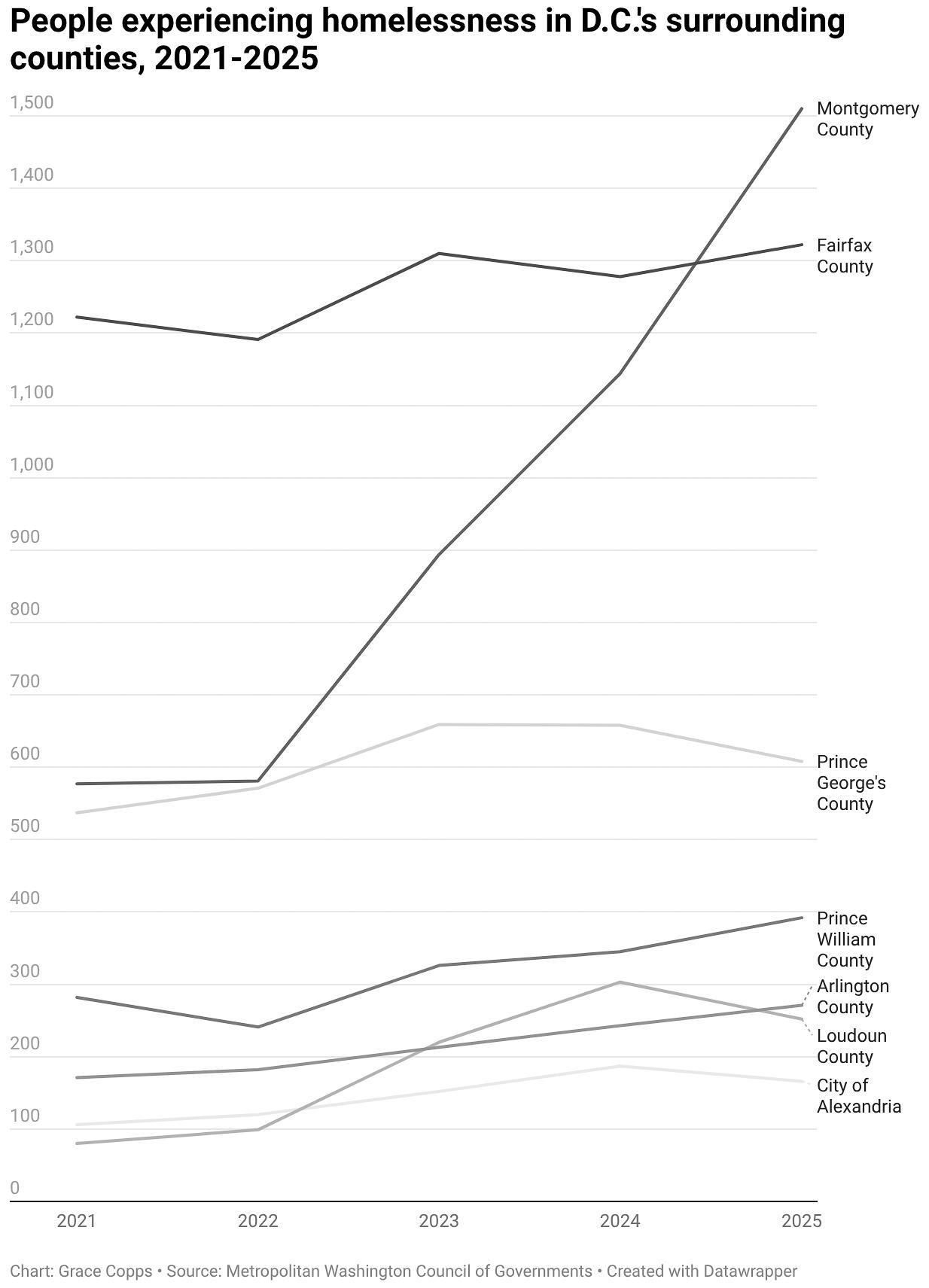
Before the takeover, the homeless population in D.C. and its surrounding areas had been growing since 2021, according to each jurisdiction’s annual Point-in-Time (PIT) Count, as reported by the Metropolitan Washington Council of Governments. Loudoun County, to the west of D.C. in Virginia, saw the
largest percentage increase in homelessness at 215%, from 80 people in 2021 to 252 people in 2025. Montgomery County, which borders the District to the northwest, saw a 162% increase, from 577 to 1,510 people. Other nearby counties saw smaller increases over the last four years, such as 58% in Arlington County, 13% in Prince George’s County, and 8% in Fairfax County. While D.C. has a much larger unhoused population than any of these jurisdictions, the District actually had the smallest increase in homelessness over the past four years.
Some counties saw slight decreases in their homeless population from 2024 to 2025, according to their local PIT Counts. Prince George’s County’s homeless population shrank by 8%, from 658 to 608 people. Loudoun County recorded a 17% reduction, from 303 to 252 people. Other counties, however, still saw increases. Montgomery County’s homeless population increased by 32% from 1,144 to 1,510 people, and Fairfax County saw an increase from 1,278 to 1,322 people.
Tara Ruszkowski, executive director of the Lamb Center in Fairfax, echoed Weetjens’ thoughts about the economy driving the surge in regional homelessness over the past few years. The Lamb Center recorded 202 more visits in August and September 2025, the first month of the takeover, than in the same time period in 2024, Ruszkowski said. But the numbers dropped in the following months, and there was no evidence of a clear or sustained impact. She said the Lamb Center’s distance from transit lines could be one possible reason why encampment clearings and crackdowns on homelessness did not increase demand for its services more this fall.
More broadly, though, Ruszkowski said Fairfax County has seen a “significant” expansion of its homeless community since 2019, amounting to an approximately 27% increase. Ruszkowski cited a lack of affordable housing as the main reason behind the increase.
“With a high cost of living, people can be just one paycheck shy of losing their apartment, of losing their place to live,” she said.
This increase in need could soon run up against a shortage of resources. Towards the end of 2025, the U.S. Department of Housing and Urban Development (HUD) proposed a dramatic change in guidelines for funding services meant to support people experiencing homelessness. While a federal judge issued an injunction in December preventing these changes for now, there’s uncertainty about whether outreach organizations and local governments will be able to fund operations and keep people out of homelessness. The Metropolitan Washington Council of Governments’ board of directors voted unanimously to ask Congress and HUD to maintain the expected funding for 2026, when the federal government decides on new guidelines.
Both Weetjens and Ruszkowski expressed concern over the loss of funding for homeless services. “One of the things that I’m concerned about, really, is the shift in rental assistance, that policy. I expect that will affect our numbers,” Weetjens said.
Ruszkowski said she is worried about any policy that would move resources away from permanent supportive housing, as the HUD funding guidelines suggest. She called the policy “the most effective solution for permanently ending homelessness.”
What resources are available can also affect where people experiencing homelessness seek support. Dana said that some people may go to different jurisdictions because they believe they have better options; for instance, he’s had bad experiences at shelters in D.C., including witnessing abuse, that make him feel safer living outside than in the city’s shelters. For accessing housing, he prefers the system in Arlington, where he says it is easier to get a voucher than in D.C. or Maryland, which both can have long waitlists. Anecdotally, he thinks these differences could cause some of the increases in surrounding counties.
“There has been an increase of D.C. residences [sic] moving outside of the District to receive better housing support services that meet them where they’re at,” Dana wrote.


AUBREY BUTTERFIELD
Editorial Intern
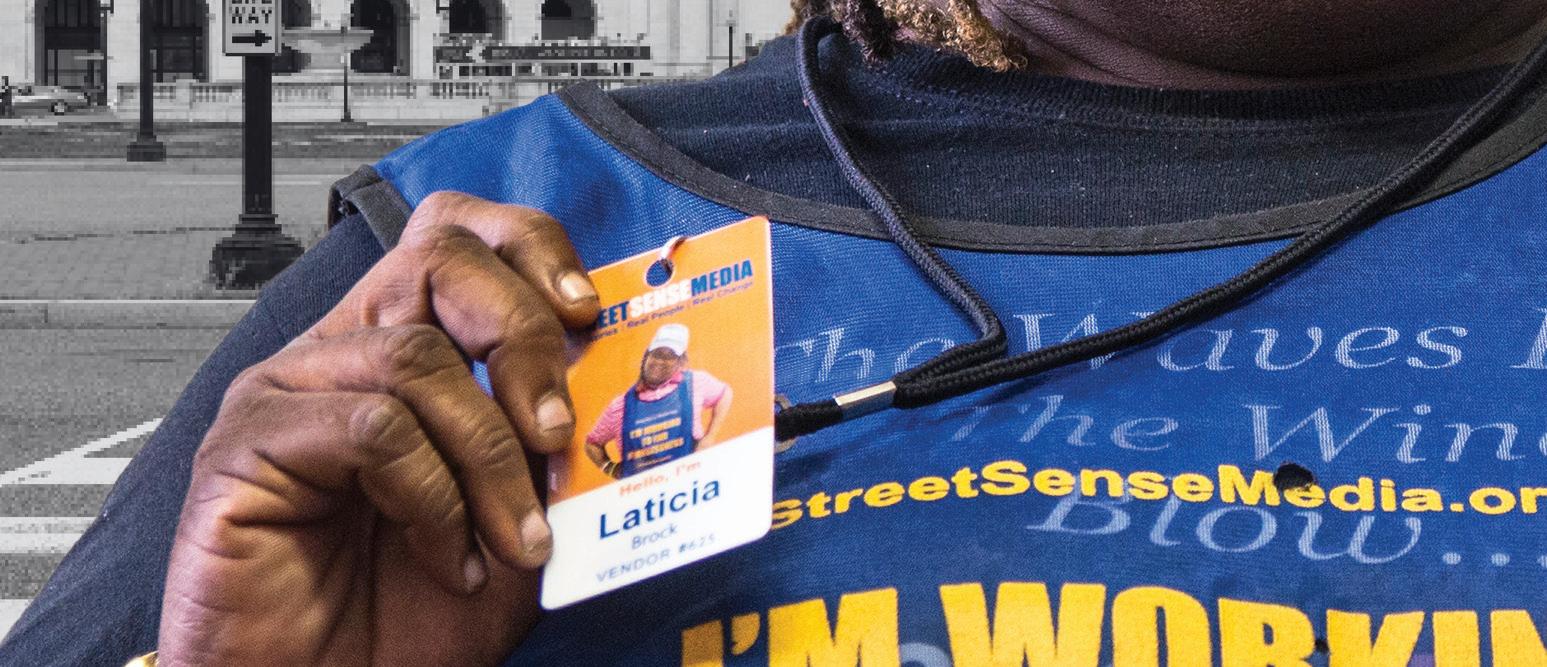
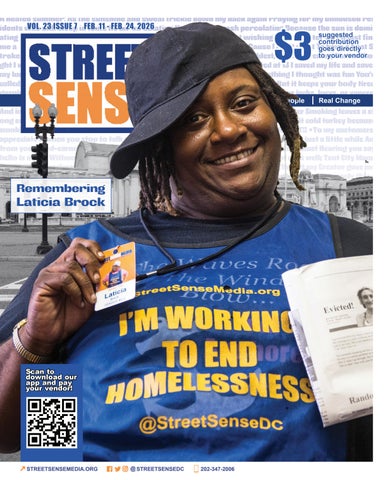
There wasn’t an open seat in the visiting room of the southwest D.C. funeral home. Local business owners, creatives, and advocates for the unhoused community lined up along the walls for a chance to pay their respects to Laticia Brock, who died on Dec. 26, 2025.
Some called Laticia “Precious,” others “PWEEZY,” or “Tent City Ma.” No matter what her community called her, they all remember Laticia in the same way — as authentic, hilarious, and a fierce advocate for people experiencing homelessness. Laticia was an active member of Street Sense Media, working as a vendor and poet who tirelessly fought for the rights of the District’s homeless community, and wrote over 70 pieces for the paper.
The Washington native was born on Dec. 5, 1980, to a family-oriented bunch. Laticia’s mother, Ernestine Brock, remembers her friendly personality and said she was always surrounded by people who loved her. Sometimes, that was her biological family. Laticia’s nephew, Jabaree Valentine, was her pride and joy, Ernestine said. Laticia assisted her mother in raising Valentine and made it a point to remind him of how much she loved him.
But Laticia’s family extended far beyond those she was related to. Ernestine met every friend her daughter ever made; Laticia would often make FaceTime calls, introducing her mom to any new person who’d entered her life. To Laticia, her people were her family.
“She would call me and say, ‘Ma, this is your new daughter, this is your new grandson,’” Ernestine said.
Laticia was a natural people-person. Thomas Ratliff, Street Sense’s director of vendor employment, said she had a unique talent for connecting with everyone she met.
“She did not believe in sugar coating things about life… and that said she did not judge other people for having problems,” Ratliff said. “She almost found universal connection in identifying with other people.”
Laticia’s inclusive, kind-hearted nature stretched back to her school days, where Ernestine said she always had friends. Laticia enjoyed school and entertained her classmates. Her mother fondly remembers her preschool graduation and how much love she had for her teacher. Outside of school, she pursued creative activities.
“She loved to dance and prance,” Ernestine said. “She did it like a swan, a ballet dancer.”
As she grew older, Brock began to pursue another creative outlet: writing.
Laticia became involved with Street Sense in 2018, and she quickly joined Street Sense’s writers’ group,



where she worked with Ratliff, who led the group. He recalled her immediate interest in poetry and how she was eager to manifest her thoughts, feelings, and ideas on paper.




“I would read her pieces back to her, and I would see in her body language that I was getting it, and that I was feeling what she was trying to do,” he said. “That’s when I realized that she was a poet.”





Laticia, who often went by Tent City Ma or PWEEZY in her work at Street Sense, wrote pieces that addressed themes of homelessness, grief, addiction, and relationships. She smoothly navigated through difficult topics with her words, which became a form of expression and advocacy.

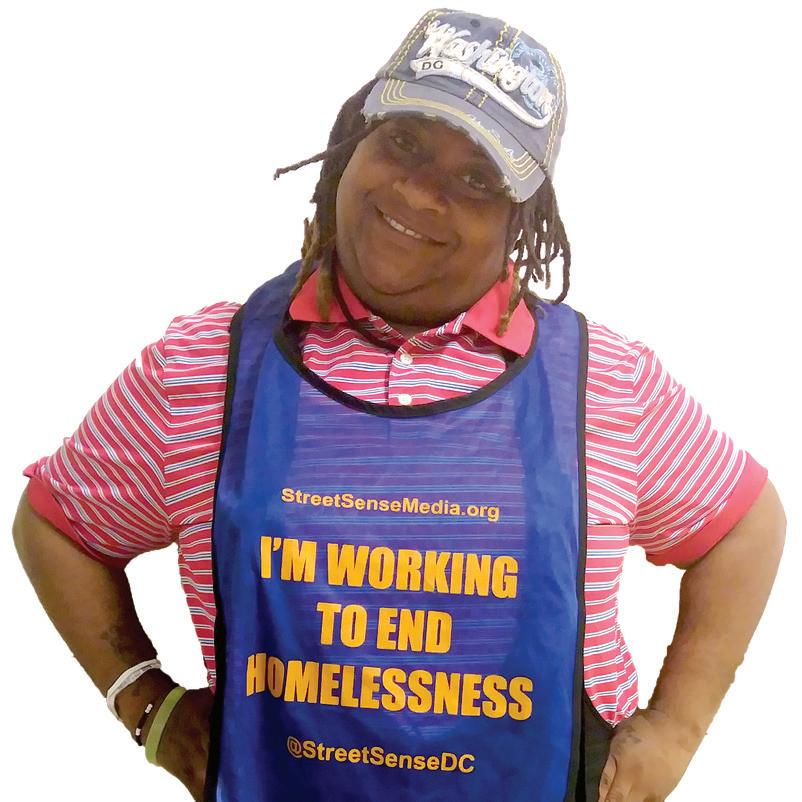
At writers’ group, Carlos Carolina, another Street Sense vendor, watched Laticia advocate for her community through her poetry. He said she always wrote something worth reading and hoped her message got across to those who read her work.

got really District,”
“She really cared about the District,” Carolina said, “She really cared about the people of the city. She really cared about putting a stop to homelessness.”
According to her mother, Laticia became homeless to better understand the struggles of the community in her area. She soon found belonging at the Union Station encampment, which was cleared in 2022.
Shawn Fenwick, also a Street Sense vendor, was a member of Laticia’s Union Station community, where she was lovingly known as “Tent City Ma.” As Laticia’s best friend, he fondly remembered their times trying out perfumes at Macy’s and the many, many occasions where she made him laugh.
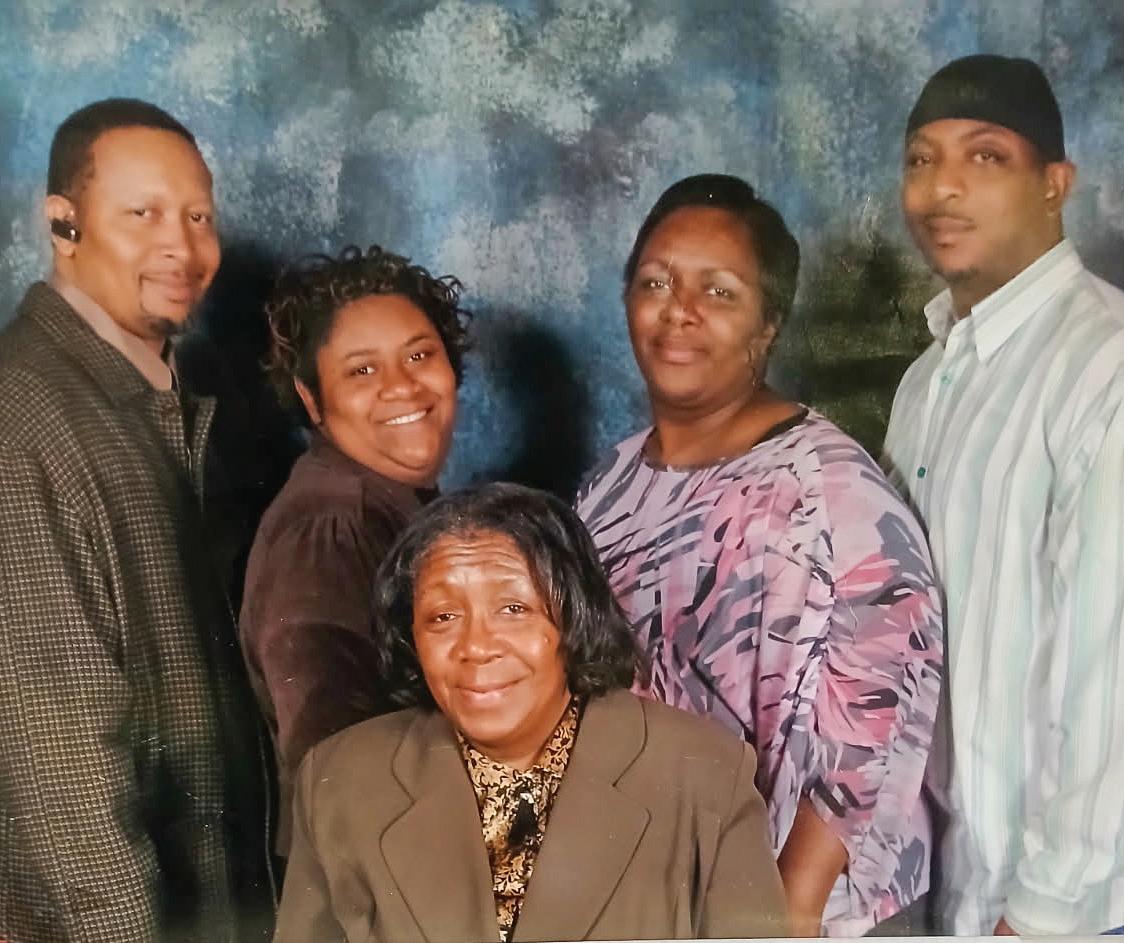
Fenwick, like some of Laticia’s family and friends, called her Precious. He recalled how influential she was to people and how her authenticity brought out the most in others.
people
Fenwick most remembered her kindness at their encampment, where she made sure he and the rest of her community were fed through her visits to local restaurants inside the station.
“She’s the nicest person anybody can meet,” Fenwick said.
To support her community, Laticia worked alongside The h3 Project, a Union Station-based nonprofit that assists homeless residents with employment and housing needs. As homeless people in D.C. struggled to get support, the group’s work, especially in substance abuse awareness, was important to Laticia.

The project’s founder, Dr. Ami Angell, said Laticia was immediately intrigued by her presence at the station and quickly became involved in the project.


“She always had that fire to bring other individuals,” Angell said. Carolina felt similarly. As a member of her Union Station community, he witnessed her compassion and care for her people, as she made sure Carolina got the water and food he needed.
rest of her community were fed through her visits to local restaurants support a As group’s in substance abuse awareness, was important to Laticia. founder, her compassion people, as she made sure Carolina got the water and food was community.


Angell watched in disbelief as dozens of high school students listened to Laticia freestyle about her love for homeless activism. As security sat confused, and teenagers stood shocked, Angell was amazed by Laticia’s unashamed pride in her community.
“She took an incredibly difficult situation and spun it around to help others,” Angell said. “She used her voice for others.”


“She was a very inspirational person for our encampment community. She was like [a] big sister,” he said. “She could lift your spirits, you know.”








Laticia wasn’t only the one getting nicknames — she was giving them out, too. Carolina laughed as he recalled her calling him CoCo outside the tents.

all

he recalled her calling him CoCo outside the tents. Laticia had a gift for making people feel like they environment.

Laticia had a gift for making people feel like they belonged, no matter the environment. Angell recalled Laticia’s presence at a recent opioid awareness event. In classic Laticia fashion, she sang all the songs the DJ played, including some she didn’t know. Angell laughed as she watched Laticia do what she did best: bring life to a room.



Laticia brought that same pride and energy to the Street Sense office. She participated in Street Sense’s F.A.C.E. program, where she continued her advocacy through meetings and discussion groups.
“She used her voice for others.” brought Street program, discussion groups.
“She her abilities

“She cared, she asked questions, she would raise her hand,” Brian Holsten, one of her fellow participants, said. “She was very proactive in demonstrating those skills and abilities that homeless people do have intelligence and have feelings.”
Holsten was inspired by Laticia’s positive attitude and willingness to share her ideas and feelings with her peers.
“[She was] a prideful individual who really cared about others of her culture and herself to evolve from homelessness,” Holsten said. “She’s an individual who tried to be proactive and tried so hard to make every day a better day for everybody and herself, a better world.”
Holsten was inspired by Laticia’s positive attitude and willingness to share her ideas and evolve from homelessness,” Holsten said. “She’s an individual who tried to be proactive and Vendor
When visiting the office, Laticia frequently brightened the day of Street Sense Vendor Program Associate Nikkie Campbell. Despite a rocky introduction, Campbell was drawn to her.
Associate Campbell.


“It was just something about her,” she said. “She became this young lady I cared about.”
Like many others, Campbell was deeply impacted by Laticia’s spirit and passion for others.
“It was just something about her,” she said. “She became this young lady I cared about.” Like many others, Campbell was deeply impacted by Laticia’s spirit and passion for others. admired community’s love and life through her work. increasingly mother. experience closely connected to God. Ernestine believes Laticia was chosen by God to make a change and be a friend to others, which she accomplished throughout her 45 years.
Campbell admired her ability to paint homeless D.C. residents in a new light, sharing her community’s love and life through her work.
“I don’t want her to be forgotten,” she said.





Near the end of her life, Laticia’s religion became increasingly valuable to her, according to her mother. After a near-death experience in November, she became closely connected to God. Ernestine believes Laticia was chosen by God to make a change and be a friend to others, which she accomplished throughout her 45 years. With each seat at her funeral service filled with someone impacted by her, it’s clear her friendship stretched far.
her friendship stretched far. you met



“It didn’t matter if you wanted to dance or not, you were dancing,” she said.

“It didn’t matter if you wanted to dance or not,
Another time, Angell said, Laticia created her own h3-themed song. Using her talents from her work at Street Sense, she masterfully crafted a tune she then performed on a blocked-off portion of a Union Station stage.





and her brother, Robert F. Brock, preceded her in death. She leaves behind her mother, Ernestine Brock, her brother, William Brock,
“She can make you mad, she can make you sad, she can make you cry, she can make you happy. She was a friend nobody never met before,” Fenwick said. Laticia died on Dec. 26, 2025, at the age of 45. Her father, Willie McGuire, and her brother, Robert F. Brock, preceded her in death. She leaves behind her mother, Ernestine Brock, her brother, William Brock, her sister, Jacqueline Carter, and many nieces and nephews.




“That’s when I realized that she was a poet.”
-Thomas Ratliff, Street Sense’s director of vendor employment
DONTÉ TURNER
If y’all gettin’ paid to shovel the snow with the snowplows (or snowtrucks, as some of you know it to be), then let me ask you this question: how the hell ya’ snowplow get snowed in? Make it make some sense. I stay on the Waterfront, and that’s where the rich and powerful stay and where most of the big businesses are. So, that means the sidewalks and pavement (especially for the handicapped) should have been shoveled or mostly cleared before the snow turned into ice. But, they weren’t.
On the evening of Jan. 25, I decided I wanted to go make some runs, until I saw the streets were covered with snow. Why? Because half of your so-called city workers weren’t doing their jobs. I was literally lookin’ at these people being lazy. Check it. I had made it up in my mind that I wanted to go to the trenches in Southeast. So, I’m thinkin’ I’mma ride the bus and come back, but instead, I come out to a street full of snow. The first thing that hit my mind was “Didn’t they say on the news the snow trucks were out there for the purpose of not letting it get like this?” While I was waiting on the C11, I lie to you not, I saw a snowtruck snowed in. There was a lady and her son who I knew were waiting on the C11 (which wasn’t running, because the buses weren’t running) with me, and she told me the truck that was snowed in had been sitting there since that morning. And, I know she wasn’t lying because there was not even any evidence of tire tracks in the snow. What the hell was ya’ city workers doin’ all those hours?
The next day, I decided I was going to try it again, but this time if the buses weren’t running, I was going to walk there. It took me a while to get to Southeast by Anacostia, but when I got there, the streets were clearer over there than they were on the Southwest side. It was so clear that the C31 was the only bus that was running; it ran late but she got the job done. If that doesn’t make you question yourself about what’s really going on wit’cha tax dollar money, lemme ask you ‘dis: Why is it that when I got back to the Waterfront, I was actually looking at one of the city workers driving the snowplow, but not picking up any snow until I said something about it? Really?!
Y’all might not like what I’m ‘bout to state, but Mr. Donald Trump is taking jobs from the wrong people. Da hell y’all gettin’ paid fa’ if ya’ just sittin’ on ya’ ass, and some of you posting on the phone while you’re at work?! Then, when someone like me says something about it, some of you want to try to play victim or come up wit’ some excuse that doesn’t even make sense when you try to explain it. If you people who work for the government state that you respect God, and Romans 13:1 states to obey the government for God is the one who has put it there, then why are you not abiding by the laws y’all created that y’all stated everyone, including yourselves, have to abide by? Yeah, ok!
Donté Turner is an artist/vendor with Street Sense.


By refusing to extend the Affordable Care Act’s subsidies, our government made getting affordable healthcare harder and scarier.
In addition to the 25 million people who had those subsidies losing them, about five million more people won’t be able to afford proper health care. They include people living in states that refused to expand Medicaid, small business owners and their employees, the elderly, and those living in rural areas. It was hard enough getting through to the agencies who are supposed to help us stay well. Now the wait to talk with someone and the lines at health care places will be even longer. That’s not fair for the people who need the most help. Why didn’t the government extend these benefits?
LISA ULLVEN AND ANGIE WHITEHURST
et’s chat about a burning question that had us on the edge of our seats at last year’s Washington, D.C. American Association for the Advancement of Science (AAAS) Pulitzer Panel discussion on “Extremes: Protecting workers from a warming climate.” Observing how the brilliant panelists were puzzled as to why more employers were not taking action, we decided to dig deeper to get answers. Consulting with experts for over a year now since the Nov. 19, 2024 event, we believe we identified the missing puzzle piece.
LPanelist Aryn Baker, TIME magazine senior international climate and environment correspondent, summarized the panel’s view, saying, “Water, rest, shade. This is fundamental common sense. We should start thinking of it that way. Solutions take time, money… but this is not one of those problems. This one can be fixed.” Given the benefits, the Pulitzer panelists naturally presented the puzzling question: Why are more employers not providing the very basics to help with heat stress?
According to Cathy Feingold, deputy president of the AFL-CIO and International Trade Union Confederation, high temperatures affect over 2.41 billion workers and community members. This impacts about 71% of the global workforce, so the benefits of a solution would be massive. Feingold noted business benefits like “increased productivity by 20% and improved attrition by 57% by just having mandated breaks.”
Viewing the University of Hawaii’s “deadly heat” map of the growing number of “too hot to work” days, Tim Appenzeller of Science Magazine commented on how this is “quite frightening.” Expressing how this puts an “unacceptable toll on people,” he asked the panelists, “Are there any models?” Among the many success stories of the impact of doing the basics, Douglas Parker shared how California had a 75% reduction in heat illness deaths by putting in basic protections for agriculture and construction workers. Parker, who served as the assistant secretary of labor for the Occupational Safety and Health Administration from 2021 to 2025, reminded us that “This is not a novel hazard; Romans wrote of heat hazards when thinking of the Roman Army. In 1972, OSHA created criteria recommending heat standards to protect workers. Not new issues.”
Panelist Barrak Alahmad, director of the Occupational Health and Climate Change Program at the Harvard T.H. Chan School of Public Health, said one challenge is “Far too often, the doctor puts primary cause of death like kidney shutdown or heart stops. In fact, heat does not make it to death certificate…but heat contributed to it. The fundamental question that I believe: Do we have enough data to act? For me, that is a resounding yes — guarantee the fundamental rights — access to shade, access to water and rest — this is simple — the data is coming — do we wait until we get the data or do we act?”
Further illustrating the value of taking action now, Alahmad shared a success story involving young workers in Nicaragua with kidney issues. Realizing it was due to the young people working outside in the heat, “they worked with the community and implemented simple stuff (rest, breaks, hydration). They had a 70% reduction in acute kidney injuries and productivity of workers increased by 9 to 19% — so there is a business case as well.” The panelists cited statistics reporting 75% of heat-related deaths occur in the first week on the job. Simply helping new hires get educated and acclimated can literally can save lives.
So why are we not providing basic needs to improve productivity and save lives?
Could the answer be in the question? If we view it from the IPO (Input – ProcessingOutput) model used for years by businesses, it kind of makes sense. Trying to leap from identifying the “basic needs” (INPUT) to implementing the basic needs (OUTPUT) is like trying to jump over all five phases contained in that middle box (PROCESSING). Good news! Global organizations like the Association of Change Management Professionals and the Project Management Institute have over one million people certified in the middle piece. Both leaders and members of these groups and Guided Results are eager to empower nonprofit and community change leaders with these skills. Stay tuned, and we hope you will join us! To learn more, you can view https:// linktr.ee/guidedresults
advocate, Street Sense vendor, and writer.
BRIAN CAROME
Editor’s note: This editorial was not produced by and does not express the views of Street Sense’s newsroom, which maintains a firewall with the rest of the organization to provide unbiased, honest reporting.
Occasionally, I feel compelled to comment on issues outside the sphere of homelessness. Such is the case with the recent federal immigration crackdown in Minnesota. Like so many of you, I was horrified by the video-documented shootings of Renee Good and Alex Pretti. From my viewpoint, neither posed any imminent threat to ICE agents. The immediate and unsubstantiated accusations they were domestic terrorists represent a troubling distortion of justice and an affront to the democratic principles of civil rights and the rule of law. It is essential both killings be thoroughly investigated by independent parties, free from political or institutional interference.
I am further troubled by the harassment, arrest, and at times violent resistance faced by peaceful citizen observers and protesters in Minnesota. The right to protest is a cornerstone of American democracy, protected by the Constitution. ICE’s reaction to lawful expressions of dissent not only escalates tensions but also undermines any legitimate operations they may have in the state. Within the Street Sense Media community, we stand in solidarity with the protesters and affirm their right to speak, assemble, and document without fear of federal retaliation.
Much more about ICE’s tactics demands scrutiny. Warrantless home invasions, actions carried out in schools, the detainment of children, and family separations all represent dangerous overreach that contradicts claims these efforts are for “community safety.” The practice of ICE agents concealing their identities behind masks raises serious concerns about transparency, accountability, and public trust. This imagery evokes memories of authoritarian “secret police” forces — an approach that has no place in a society governed by democratic norms and human rights.
Minnesota has never led the nation in undocumented immigration. That it was singled out for such an overwhelming surge of federal enforcement raises questions about the political motivations behind this operation. It is difficult to observe the unrest in Minneapolis without wondering whether the Trump administration has turned its power inward — targeting not just immigrants, but the broader community of Minnesotans who stand with them.
Our community joins those calling for an immediate de-escalation of ICE’s operations in Minnesota. Together, we support sensible reforms, including prohibiting agents from wearing masks, banning warrantless searches and actions in schools or daycare facilities, mandating body cameras for all agents, and strengthening cooperation between federal and local law enforcement.
This moment is a test of our nation’s values. The measure of a democracy lies not in how it wields power, but in how it restrains it; not in how it asserts control, but in how it protects the vulnerable. When fear and force replace compassion and accountability, we risk losing the very freedoms we claim to defend. The Street Sense Media community stands with the people of Minnesota — and with all communities — calling for transparency, justice, and the reaffirmation of human dignity as the guiding principle of our public life.
Brian Carome is the CEO of Street Sense Media.
ANDREW ANDERSON
Over the past year, the Trump administration has aggressively intensified its crackdown on immigration, causing community fragmentation and widespread fear that threatens our social fabric. This crackdown should make us feel concerned about the community’s well-being and motivated to act.
Immigration enforcement over the past year has impacted the U.S. education system. For example, reports indicate that in immigrant communities, school absences increased by 20% due to enforcement activities. As a result, many immigrant families are keeping their kids out of school. These actions have created a climate of fear and anxiety for many, leading to overall enrollment declines and affecting students’ educational opportunities.
Trump’s approach to immigration has put many immigrant families at risk of harm. The Trump administration, in 2018, implemented a zero-tolerance policy aimed at deterring illegal border crossings. However, this policy led to the separation of thousands of families, raising serious questions about its legality and fairness. These separations caused widespread fear and anxiety among affected families, highlighting the human cost of such enforcement measures.
Immigration enforcement impacts families, especially children who worry intensely about losing loved ones. Parents work tirelessly to provide stability, and these policies tear families apart, causing fear and anxiety in children who may worry their parents might never return.
The expansion of family detention centers is another policy that causes harm. Holding families for prolonged periods of time can cause severe mental and physical health problems for children and their parents. Another way this administration is causing even more harm is the “chilling effect” on public programs. Many immigrant families, even those with legal standing, use public benefits like the Supplemental Nutrition Assistance Program, Medicaid, and other programs. Still, now many immigrants are leaving these benefits aside for fear of being targeted and labeled or arrested for misusing these assistance programs.
Let’s not forget Trump’s approach to immigration has undermined the core values of America. Disregard for court orders and attacks on the judiciary threaten the principles of justice and fairness that define us, urging us to uphold these values.
The Trump approach to immigration and our core values, which make the real America great, are at a crossroads, but we have to keep up the good fight and stop Trump’s takeover.
First off, I thought it was just nothing until it was explained to me the reason behind it, but then I learned they are letting ICE take over not only America, but also our community. They are barging into stores and snatching people who work, trying to feed their families, and from what I heard, Target approves it and lets it go down. I’m not a regular shopper at Target, and I have my reasons, but if it is promoting working with ICE, I’m going to join in with the protests. I did last weekend, wearing the Street Sense logo. The protesters recognized us vendors and had our support. I was feeling like a star shining because I felt like I made people feel I was with a movement, and I went home not only with a smile but also knowing there were people who respected and knew what Street Sense means to our community as well. I’m thankful for getting out and reaching out to people who are trying to find better solutions to better us as citizens in America.
William Shuford is an artist/vendor with Street Sense Media.




The titanic figures in my life have changed recently. Professor Xavier of Marvel Comics' X-Men long held the spot as a role model. His pursuit of justice and his pursuit of peace for all humanity equaled Martin Luther King Jr.'s. Professor Xavier used his social, political, and mutant powers to promote unity and compassion. More than any figure in the comic book universe, the professor's example has been the standard throughout my life.
A prominent religious figure used to be titanic in my life until about 15 years ago. I used to marvel at this titan's sensitivity, knowledge, and devotion. I admired his service to this country as well as his willingness to die for his faith. Through love and my desire to grow as a leader, I took on various leadership positions under this person. Through his guidance and influence, I became a department head and congregational leader. Eventually, I left his church and his organization. In the past, I basked in his favor and belief in me. And, though I sometimes miss him, I remember my feelings, values, knowledge, skill, and opinions are worth recognizing. But my admiration for this particular titan in my life may continue even as I move on, like the titans in Greek mythology, who were defeated by the gods, but still remembered.
Finally, Beyonce. Originally a great influence in my life, she has risen to the rank of titan. I feel good identifying with her. I feel empowered believing that with her faith and skill, along with her supportive team, one can elevate to eternal stardom. Although Michael Jackson is the king of pop and will transcend all of time, Beyoncé makes me feel like I can do the same! When my mom sees Beyoncé on television, she goes, "There's Lillie!" One reason she does that is my sister and I performed Destiny's Child's rendition of “Amazing Grace” for our school talent show. Maybe my mom recognizes my marching band and musical performance abilities there as well.
CRAIG THOMPSON Artist/Vendor
We’re all people in the US of A
We’re living pretty good, and well, what can we say? We’ve got fine homes, fine cars, fine money But where is the honor? Things are getting pretty funny
Let’s take it from the start with the Bill of Rights Now, there were some boys with a whole lot of heart Things were pretty bad when George stood and said “It’s time we fix this; many are dead.” But they united and planned, and things unfurled Into what some say is the best in the world And they guaranteed the rights to three things Are you all listening as this homeboy sings?
Now, the first guarantee is the right to life
Yet, some guy down the street will have just killed your wife Judge says it’s life as you peer through your tears
But he did it twice before, and he’s out in 10 years
Because some fool says there’s not enough room
But you didn’t pay a ticket, and the cell door booms
The second guarantee is liberty
That’s to choose what you are and what you wanna be Let’s go to the year 1852 And ask them, well, was that true?
The third guarantee is happiness’s pursuit Now listen here, children, this gets pretty cute Now I don’t push drugs, truth is purity’s way
But if you get curious, what’s the cop say? Does she tell you why you shouldn’t and give you free choice? Well, hey, good people, we all have a voice
And if you get your love from Mary Magdalene Do they listen and suggest, or throw you in the bin Where you’re with the people who have no respect For body and property, and your whole life’s wrecked? You learn the wrong things, you’re down the wrong path Well, dear Mr. Senator, wink at me and laugh
They run all your morals while your property and face Would be safer somewhere in outer space
And the car door says protect and to serve Well, hey brother law, you sure have some nerve I know things can change; we don’t have to stay there But all of you people, you don’t really care You’ve got your cell phone and your new TV We’re U.S. citizens, LAND OF THE FREE

JAMES LYLES III Artist/Vendor






My experience started in 1964 when I was five years old. My father won a trip to San Juan, Puerto Rico, and my mother, father, and I flew Continental from Dulles to San Juan. Both of my parents and I stayed in a lavish hotel, ate at a nice restaurant for breakfast and dinner, viewed the historical landmarks of Puerto Rico, and then flew back home. They both were night flights.
In 1972, both of my parents and I flew out of Dulles to San Francisco on Trans World Airlines on a Boeing 707 plane. On the morning flight, we were traveling at an altitude of 35,000 feet. It was fascinating to look down to see lakes, rivers, and mountains. We arrived in San Francisco International Airport, where we took a propeller aircraft operated by Hughes Airwest. We flew to what is now Sacramento International Airport.
My Uncle David James Moss picked us up, and we stayed at his house. We went to downtown Sacramento, where we viewed the old Sutter Fort and the California State Capitol. We also saw Old Sacramento, which is a western town of the 1800s. We also visited South Lake Tahoe, and Stateline, Carson City, Reno, and Sparks in Nevada.
On our way back, my Uncle Dave drove us to the airport in Sacramento. My parents and I flew on Hughes Airwest to San Francisco. This time, we flew United Airlines to Kansas City, Missouri, to fuel the plane up, then we flew to Dulles. We didn’t arrive in Washington, D.C. until nightfall.
CHRIS COLE Artist/Vendor

I gotta stay outta these streets
My friends are dying
And they ain’t coming back
Their souls whisper to me, Extinguishing my yearning to crack
To crack a bottle
To light a stem
To roll a leaf
Is that how my struggle begins?
It could surely be how it ends
I’m now viewing things
Through a glare-proof lens
They aren’t coming back
But I can!
Only because I am still here
I must refocus my lens
And make my decisions crystal clear
My actions MUST be fueled by fear
Fear of dying
Not my current fear of living
Despite my current misgivings
I cannot go back
I will not fade to black
I will seize this time
And make it mine
Laticia, I promise you, I won’t go back
The lions are for England, the eagles are for the USA, and the cherub is for Italy.
PATRICIA DONALDSON
Artist/Vendor




You keep blaming yourself for what you couldn’t change.
You keep blaming yourself. You consistently attribute negative events or outcomes to your shortcomings even when they’re not entirely your fault, often as a coping mechanism for feeling out of control, stemming from past experiences, and creating a false sense of predictability or safety.
How to stop blaming yourself for everything:
To stop blaming yourself for everything, practice selfcompassion, challenge your inner critic by talking back to negative thoughts, separate genuine responsibility from excessive blame, and focus on solutions rather than dwelling on the past by using mindfulness and journaling.
How to write to understand yourself:
Put your finger to the keyboard and write about a life experience you’ve gone through and what you’ve taken away from it. Then you’ll have an easier time writing because it’s something you know, and chances are, there’s someone out there for whom your writing will resonate strongly.
How do I train myself to write better:
To train yourself to write better, you must combine consistent practice with active study and external feedback. Writing is a skill that improves over time through deliberate effort, not just talent.
FEATHERSTONE Artist/Vendor

President Trump, we all must live by our constitutional plan, for which it stands. (So help us God.) You are a very rich man and have disastrous, evil ways against America’s constitutional plan. Come meet with us and take heed to great advice, and please do what’s right. We, the people, desire for all to uphold our constitutional plan.
JENKINS DALTON Artist/Vendor
A man went to America, and he slept at a shelter. They served black-eyed peas and cold cereal in the morning. Then he saw Mr. Bill Gates driving a Mustang and having four cups of coffee. He trailed him.
Soon, he asked him, “Can I have a cup of coffee, sir?” Gates had finished his drink. He replied, “I have a different kind of life and 100 billion dollars. I am always a poor man. Imagine if I drove a car like yours.”
SYBIL TAYLOR Artist/Vendor




This is February, Black History Month and Groundhog Day month. I lost my dad on Feb. 20. I am dealing with homelessness in a shelter. I am selling papers to earn a living. I am in need of support and help from customers to buy a paper. I am in need of housing and support. Please support the homeless to get a little support. Always pray for everybody. Be blessed.
CYNTHIA HERRION
Artist/Vendor
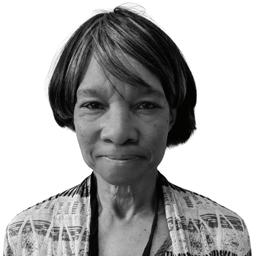
Finding peace in the midst of chaos means finding a sense of calm and tranquility despite experiencing external turmoil or uncertainty. It’s about cultivating inner resilience and maintaining a sense of balance, even when life feels overwhelming or unpredictable. This doesn’t necessarily mean the absence of chaos, but rather the ability to find a space of serenity within oneself amidst challenging circumstances.
Chaos refers to a state of complete disorder, confusion, or uncertainty. It can manifest as external events, internal struggles, or a combination of both. In my context, peace doesn’t just mean the absence of conflict. It encompasses a state of inner calm, serenity, and well-being, even when I am faced with challenging situations. Practices like mindfulness and meditation can help individuals like me focus on the present moment, manage stress, and cultivate a sense of calm. Recognizing and accepting what is within my control and gracefully letting go of what is not can reduce my anxiety and promote a sense of peace. Connecting with personal strength, support systems, or spiritual practices can provide stability and grounding during turbulent times. Embracing the inherent uncertainty of life and choosing to move forward despite not knowing the outcome can foster resilience and peace. Being present in the moment, rather than dwelling on the past or worrying about the future, can help me reduce stress and promote a sense of calm. Holding onto hope, even in challenging situations, can provide me with optimism and encourage perseverance. Talking to a counselor, therapist, or a trusted friend can provide a safe space to process emotions and develop coping mechanisms. In essence, finding peace in the midst of chaos is about cultivating an inner sanctuary of calm and resilience against the storms of life. Serenity is when I find peace in the midst of chaos, and serenity is when I find peace through the acceptance of the things I cannot change. Serenity is the acceptance of the present moment without judgment. Serenity is the tranquil balance of the heart, spirit, and mind. Stillness is where creativity and solutions to problems are found. To allow myself to feel and think and dream. Serenity is not the absence of trouble, but the presence of my inner peace. Serenity is the peaceful surrender to the flow of life. Serenity is my ability to stay centered no matter what life throws at me. Serenity is the gentle acceptance of life’s unpredictability. Serenity is the peaceful acceptance of my life’s impermanence. My serenity is found in the acceptance of what is and the release of what was. Peace begins with a smile. Serenity is the peaceful coexistence with life’s challenges. My serenity is not freedom from the storms but peace amid them. My serenity comes when I trade expectations for acceptance. My serenity is the balance of my mind, body, and spirit. My serenity is the quiet confidence that comes from within. Serenity is found when I let go of expectations and find peace in the moment. My serenity is the quiet strength that comes from within. My serenity is the calm that comes when I stop trying to control the uncontrollable. Stillness is where I find my true essence. Serenity is a quiet mindset. My serenity is the calm that comes from knowing I am enough.
FREDERIC JOHN
Artist/Vendor
What is it like to have Kurt Vonnegut on one side of your walk-up in the East Fifties of Manhattan and Katherine Hepburn on the windward (river) side? And of course, if you have roots in the “nabe,” you know the locals call it Turtle Bay!
Why that? Well, before 1850, there were no brownstones to clean and sweep, just mud, logs, and snouted, dish-shaped turtles. Lots of mud.
But enterprising game fisherman could dredge ‘em out of the greenish spore off the banks of the East River and whip up the makings of the finest terrapin chowder this side of Delmonico’s restaurant (that’s where Diamond Jim Brady went for his dozens of blue point oysters!)
But back to Vonnegut and Kate. In January of 1979, we had a whale of a blizzard, all up and down the Atlantic coast — especially New York, which caught a “poifect” storm. Subzero tempest, gale force winds, buckets of crunchy white powder.
Vonnegut and his lovely photographer wife had very steep slate steps, very slippery, but I polished them off with his small shovel. Ten dollars. On to the Hepburn abode. East 51st, I think. Her personal maid handed me a dainty broom. I swept dry from the curb to the doorpost. Twenty crisp dollars. Deal! Ms. H smiled behind the iron filigree portal. Across the way at Sutton Place, Irving Berlin, who penned “White Christmas.” He didn’t answer the bell. I trudged home happy nonetheless. What neighbors!
JAMES DAVIS Artist/Vendor


Let us take the word “resolutions” and call it “re-solutions.”
I say this because we find a “solution” in our lives that has failed, and we redo it again! This time around, though, let us say we will stop smoking. This is one of, if not the, hardest habits to break. The key to making this re-solution a reality is, of course, to make NOT smoking your habit.
First, forget about the chewing gums, patches, and other gimmicks used in the past. Just cold turkey! Do not smoke for 30 days, no matter how much your craving and desire to smoke wants you to, asks you to, demands you to. I know, because 46 years ago I quit. Now I HATE cigarettes. I did it with sodas at age 60. When I tried to drink a soda two years ago, at age 66, it made me sick because the beverage had become a foreign object for my digestive system. I know each person has a different constitution and different immunities, which cause different reactions. But what is not different is realizing strength and mental toughness must play their parts. All I’m asking is to try whatever you make your resolution for 30 days. You have nothing to lose, especially when you have tried everything else.
You will have a truly new year when you succeed.
ZERO Artist/Vendor
And it just so happened the ape could talk. It could grunt, emote, and almost gesture at a sign of prominence, or at least a type of sentience. The language will always be foreign, and the dialect completely regressive, truly devolved. But I must admit I see a bit of myself in these attempts it makes to perceive reality as more than its Neanderthalic playground. However, its disposition to access any dimension beyond the basic four limits its progress. It keeps falling victim to itself in a ritualistic practice akin to its earlier iteration: the act of flesh sacrifices to appeal to some ideology amplified by the illusion of superiority.
Out of grace, I tried to convey that soon its extinction would take place. It tried to form a rhetoric about some being that would come and save it from the mess it made by itself. I had to calmly and carefully articulate that nothing would save it from its own sins. I used every tool at my disposal to be sure it understood the concept: everything it does will carry on with it for eternity. Simply put, there is no such thing as immunity or absolution. Your only choices are to evolve or die.

Across
1. Have the “gift of ____” (be a born schmoozer)
4. Marathon
8. Former Seattle Seahawks QB Smith
12. Online periodical, for short
14. “Life is like ___ of chocolates” (well-known Forrest Gump line) (2 wds.) (1,3)
15. Actress Lotte
16. D.E.A. agent, slangily
17. Type of sweater named for an aquatic creature’s body part
19. Gershwin’s “Rhapsody ____” (2 wds.) (2,4) (NUBILE anagram)
21. Choice, slangily
22. Main idea, as of a proposal
24. Main group at a college reunion, briefly
26. Thrown, as soiled shorts or socks, into a hamper
28. Ashes and aspens, e.g.
30. Budding entrepreneurs, for short (abbr./ initialism)
33. Alaska and La., once (abbr.)
35. Mex. miss (abbr.)
37. H.S. diploma equivalency exam (abbr./ initialism)
38. “Go team!”
39. Republicans, for short (abbr./initialism)
40. Like a bug in a rug
42. The late Seattle fan favorite Slick Watts was one for most of his NBA career
44. Yiddish word for “money”
45. Vote into office
47. Curl one’s lip
49. Felt sun hat (IRATE anagram)
51. Where you might find some people who walk? (2 wds.) (2,5)
55. Deli hanger that sounds like it’s not the best?
57. Tampa Bay city, familiarly (2 wds.) (2,4)
58. A woman who’s pregnant, especially for the first time (6-2-2)
62. Genesis garden
63. How onion rings are fried (2 wds.) (2,3)
64. It’ll all come out in the wash (hopefully!)
65. “____ Heil!) (Ger. for “Hail Victory!?)
66. Jazz saxophonist legend Stan
67. “My bad!”
68. A.M.A. members (abbr.)
Down
1. Wish grantor from a lamp or bottle
2. “___ home is his castle” (2 wds.) (1,3)
3. Hooking points on some thistles and fishing tackle
4. Positive decision by ‘the Fed’ for potential investors (2 wds.) (4,3) (TRUE ACT anagram)
5. Father of, in Arabic
6. Part of BBC (Abbr.)
7. Old time echoing street call once heard before “... read all about it!”
8. Biological sequences used for diagnosing diseases and understanding evolutionary relationships (MENS EGO anagram)
9. WSW’s reverse
10. Big Apple inits.
11. Durable wood
13. Heads of staff, musically speaking? (2 wds.) (1,5)
15. Primate of Madagascar
18. Light, happy songs (STILL anagram)
20. Not in the phone book (abbr.)
23. Spanish for “January”
25. Suit material
27. Nicknames for the mom’s and pop’s moms in many families
29. Mil. plane for quick takeoffs (abbr./acron./ init.) (LOTS anagram)
30. Classic British sports cars (abbr./initialism)
31. The “B” of N.B. (Lat.)
32. A word with “beverage,” “fare” or “supervision”
34. Tusked safari sight, briefly
36. Like the names of track athletes Usain Bolt and Lisa Lightfoot
41. “Good golly!” alternative (2 wds.) (3,4)
42. Bart, Belle, Brenda, Kenneth or Ringo
43. They’re swung in church (SCREENS anagram)
44. Complains, or complaints
46. Barbaric
48. Online money transer from a bank account, in brief (abbr./initialism)
50. “How much ____ much?” (2 wds,) (2,3)
52. Made over
53. Animal in a roundup
54. $10,000 in mobspeak... or a hint to a feature of the circled squares of this puzzle (2 wds.) (3,2) (GENTS anagram)
56. ___ list (2-2)
58. Acronymic name coined for fighter jet devleoped by aviation designers Mikoyan and Gurevich
59. Four quarters or half and half
60. Crib sheet user?
61. Hit on the head or a jazz style
This crossword puzzle is the original work of Patrick “Mac”McIntyre. It is provided to us courtesy of Real Change News, a street paper based in Seattle, Washington. Learn more about Real Change News and the International Network of Street Papers at realchangenews.org and insp.ngo.
CROSSWORD A Grandiose Puzzle Puzzle by Patrick “Mac” McIntyre





Academy of Hope Public Charter School
202-269-6623 // 2315 18th Pl. NE
202-373-0246 // 421 Alabama Ave. SE aohdc.org
Bread for the City 1525 7th St., NW // 202-265-2400 1700 Marion Barry Ave., SE // 202-561-8587 breadforthecity.org
Calvary Women’s Services // 202-678-2341 1217 Marion Barry Ave., SE calvaryservices.org
Catholic Charities // 202-772-4300 catholiccharitiesdc.org/gethelp
Central Union Mission // 202-745-7118 65 Massachusetts Ave., NW missiondc.org
Charlie’s Place // 202-929-0100 1830 Connecticut Ave., NW charliesplacedc.org
Christ House // 202-328-1100 1717 Columbia Rd., NW christhouse.org
Church of the Pilgrims // 202-387-6612 2201 P St., NW (1-1:30 on Sundays only) churchofthepilgrims.org/outreach
Community Family Life Services 202-347-0511 // 4860 Fort Totten Dr, NE cflsdc.org
Community of Hope // 202-232-7356 4 Atlantic St., NW communityofhopedc.org
Covenant House Washington 202-610-9600 // 2001 Mississippi Ave., SE covenanthousedc.org
D.C. Coalition for the Homeless 202-347-8870 // 1234 Massachusetts Ave., NW dccfh.org
Father McKenna Center // 202-842-1112 19 North Capitol St., NW fathermckennacenter.org
Food and Friends // 202-269-2277
(home delivery for those suffering from HIV, cancer, etc) 219 Riggs Rd., NE foodandfriends.org
Foundry Methodist Church // 202-332-4010 1500 16th St., NW foundryumc.org/idministry
Identification services
Friendship Place // 202-364-1419 4713 Wisconsin Ave., NW friendshipplace.org
Georgetown Ministry Center // 202-338-8301 1041 Wisconsin Ave., NW georgetownministrycenter.org
Jobs Have Priority // 202-544-9096 1526 Pennslyvania Ave., SE jobshavepriority.org
Loaves & Fishes // 202-232-0900 1525 Newton St., NW loavesandfishesdc.org
Martha’s Table // 202-328-6608 marthastable.org 2375 Elvans Rd, SE
2204 Martin Luther King Ave. SE
Miriam’s Kitchen // 202-452-8926 2401 Virginia Ave., NW miriamskitchen.org
My Sister’s Place // 202-529-5991 (24-hr hotline) mysistersplacedc.org
N Street Village // 202-939-2076 1333 N St., NW nstreetvillage.org
New York Avenue Shelter // 202-832-2359 1355-57 New York Ave., NE
Patricia Handy Place for Women 202-733-5378 // 810 5th St., NW
Samaritan Ministry 202-722-2280 // 1516 Hamilton St., NW 202-889-7702 // 1345 U St., SE samaritanministry.org
Sasha Bruce Youthwork // 202-675-9340 741 8th St., SE sashabruce.org
So Others Might Eat (SOME) // 202-797-8806 71 O St., NW some.org
St. Luke’s Mission Center // 202-363-4900 3655 Calvert St., NW stlukesmissioncenter.org
Thrive DC // 202-737-9311 1525 Newton St., NW thrivedc.org
Unity Health Care unityhealthcare.org - Healthcare for the Homeless Health Center: 202-508-0500 - Community Health Centers: 202-469-4699
1500 Galen Street SE, 1251-B Saratoga Ave NE, 1660 Columbia Road NW, 4414 Benning Road NE, 3924 Minnesota Avenue NE, 765 Kenilworth Terrace NE, 850 Delaware Ave., SW, 3240 Stanton Road SE, 3020 14th Street NW, 425 2nd Street NW, 4713 Wisconsin Avenue NW, 2100 New York Avenue NE, 1333 N Street NW, 1355 New York Avenue NE, 1151 Bladensburg Rd., NE, 4515 Edson Pl., NE
Washington Legal Clinic for the Homeless 1200 U St., NW // 202-328-5500 legalclinic.org
The Welcome Table // 202-347-2635 1317 G St., NW. epiphanydc.org/thewelcometable
Whitman-Walker Health 1525 14th St., NW // 202-745-7000 1201 Sycamore Dr., SE whitman-walker.org
Woodley House // 202-830-3508 2711 Connecticut Ave., NW
In-Store Shopper – Seasonal Part-Time
Whole Foods Market // Washington, D.C.
Part Time / Seasonal
Support customer orders by preparing grocery items for pickup or delivery, stocking shelves, and maintaining store appearance.
Requirements: Comfortable using mobile devices; able to lift up to 50 lbs: stand/walk most of the shift; eager to learn and work with urgency.
Apply: tinylink.net/Z6aCV
Warehouse & Fulfillment Jobs – Amazon Careers
Amazon // Washington, D.C. greater metro area
Full Time / Part Time / Seasonal
Roles may include fulfillment center associate, package sorter, and distribution team.
Requirements: Entry-level jobs don’t require prior experience.
Apply: tinylink.net/t3iK5
Metrobus Operator Trainee (Training Program)
Washington Metropolitan Area Transit Authority (WMATA) // Washington, D.C.
Full Time
Participate in the Metrobus Operator Training Program to learn safe and effective bus operations. Upon successful completion, transition into a full-time Metrobus Operator role serving the D.C. metro area.
Requirements: Must be at least 21 years old; licensed driver.
Apply: tinylink.net/zlrqk
@StreetSenseMedia.org Housing/Shelter Vivienda/alojamiento Case Management Coordinación de Servicios
Samaritan Inns // 202-667-8831 2523 14th St., NW samaritaninns.org
For further information and listings, visit our online service guide at StreetSenseMedia.org/service-guide
EVELYN NNAM
Artist/Vendor
Today, we celebrate with hearts and flowers
Taking time in these quiet hours
To think about the love we know,
And let our appreciation show
Love lives in every act of care
In moments big and small, we share
It doesn’t need a special day
But today, we pause and say:
Thank you to the ones who stay
Who help us through in every way
Who lift us up when we are down
Who turn our frown into a smile
Who make the journey all worthwhile





Some people spend this day with someone special
Others keep their feelings personal

Some are with family and friends
While some hope loneliness will end
Love comes in many different ways
It’s in our words and in our days
It’s not just romance, cards, and candy
It’s also having someone handy
It’s kindness from a stranger’s smile
A friend who stays and talks awhile
It’s family gathered all around
It’s anywhere that care is found
So whether you’re alone today,
Or celebrating in your way
Remember, love is all around
In every person, in every town
May this Valentine’s bring you cheer
May you feel loved and held dear
And may you spread some kindness too
To everyone surrounding you
Happy Valentine’s Day, everyone!
TASHA SAVOY Artist/Vendor




Love has many meanings, and there are many ways to love.
Love is a feeling given and received in a manner both cherished and exciting. Love is cold, happy, hot, mad, nurturing, and sad. It is often wrapped in the shape of a heart. Receiving love from someone who knows how to share it puts you on top of the world.
Love also brings questions. Is your love for your children the same as for your spouse? Or for yourself? Ask yourself whether you love your religion the same way as you do your family. Are any of those the same as for your pets? Compare and weigh the loves you have in your heart.
As we age, the feelings and emotions in our hearts grow and mature. Please read this poem and decide whether this is what love means to you.
L: Laughter is what keeps your heart pumping
O: An outstanding God we serve
V: Vision of warm, tingly love for the rest of your life

E: Everyone should want and need love in their family and self




STARCHILD BLK
Artist/Vendor
They ain’t treat me perfect, But I kept my aura clean, Walkin’ steady through the chaos Like a quiet sunbeam.
Whole room feel cloudy,






Black history is learned in high schools, libraries, or by playing a movie or watching the parade on TV or on the news. Dr. Martin Luther King’s birthday is a reminder. He preached about the church, home, and walking by faith. He also preached about apartments and shelters for the homeless people to live free from the streets.
But my light cut through, ’Cause a spirit with some roots Always know what to do. Pressure tried to press me, But I flipped it to a win, Turned the echo of the struggle To a drumbeat in my skin.
JEANETTE RICHARDSON
Artist/Vendor
I been hummin’ with the ancestors, Movin’ smooth, movin’ wise, Lettin’ every little setback
Be the fuel when I rise. Yeah, the path got twists, But I glide anyway — Head high, heart warm, Colorin’ up the gray.

During this month, we should also talk about the famous boxing champs Muhammad Ali, George Foreman, and Sonny Liston, who were heavyweight champions. Also, there are track and field stars! Stars of horse racing, tennis, football, and the famous golfer, Tiger Woods.
Voting is soon to come with more Democrats to take back the House and Congress. So Americans can get good jobs, like working at the food market, a barber shop, or a sports department store, and earn their Social Security checks, Medicare, and food stamps. American people work hard, so when they retire, they can have money to send their kids to college or to summer camps that they deserve. Please make Donald Trump and his cabinet keep their promises.
Valentine’s Day is Feb. 14. I will be mailing and sending cards and balloons to make people’s day happy. Young couples are getting together on Valentine’s Day to go out at a fine restaurant or a buffet to enjoy dinner and dancing, or if they prefer, the club or a night spot for socializing. I hope and pray that my son, his girlfriend, my girlfriend, and I all get together on this special occasion.


Ain’t speakin’ on details, Just know I found my sway — Kept bloom in my chest, Kept joy in my day.
I ain’t just survivin’, I’m buildin’ all the way, Dancin’ through the hard parts, Still glowin’ when I pray.
Happy Valentine’s Day! Enjoy your sweetheart with candy and flowers to make their day happy.

The first time holding hands with my holy mother on a camping trip in the wilderness. How afraid was I to leave her side, and when I did, we became separate from each other. In the dark, I cried for a long time; so until this day, I have not really held her hand yet. Cause we have not seen each other in person to hold hands or embrace one another.



The cause of the darkness and the separation from one another is due to the movements of the government. One thing I know is the latest discoveries enable man to be in various climates; if the light of day were on, we would still be connected. I love to see her and hold her hand tight.

MARC GRIER
Artist/Vendor











The first hand I held was not my girlfriend’s, but I loved this person very much. This was my mother. She would say, “Come on, get over here to protect me.” It was unforeseen by my young eyes. It was a time when I knew I was protected, and I knew the world was not a place big enough for me to fit in. Somehow, I knew my place was here with my parents, and I would make a difference. Even though now, I have no hand to hold on to, I have the memory of holding her hand.