


















































suggested contribution goes directly to your vendor


































































suggested contribution goes directly to your vendor
veryone at Street Sense Media works together to support and uplift our vendor community.
$3 You pay
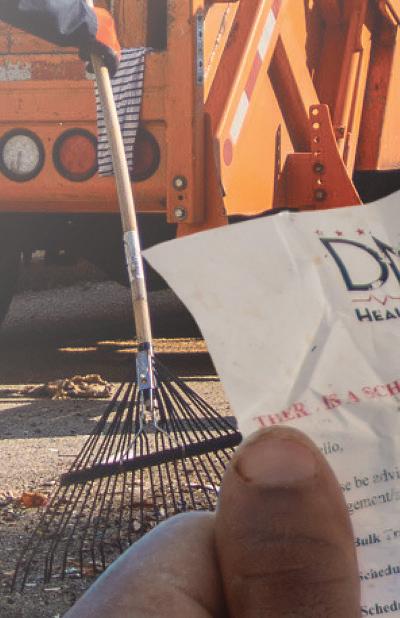
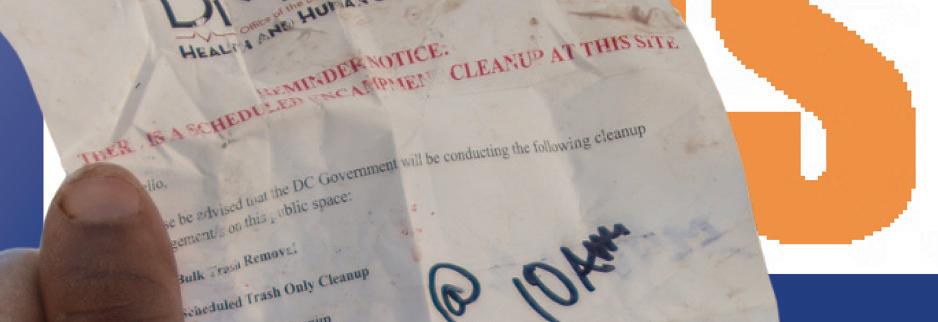
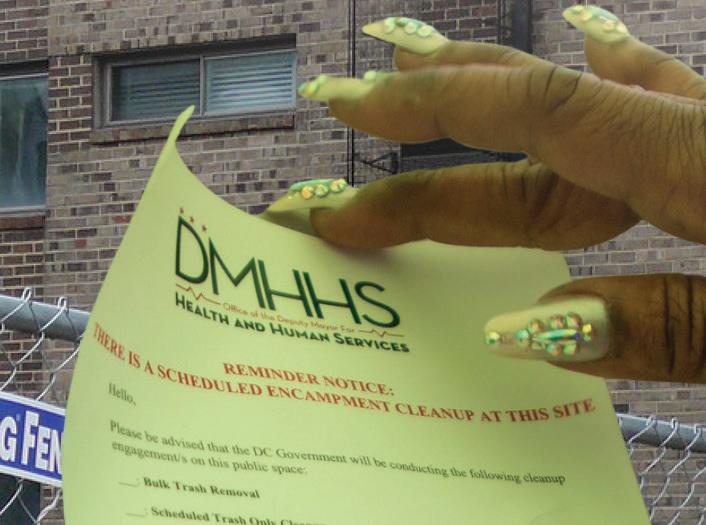
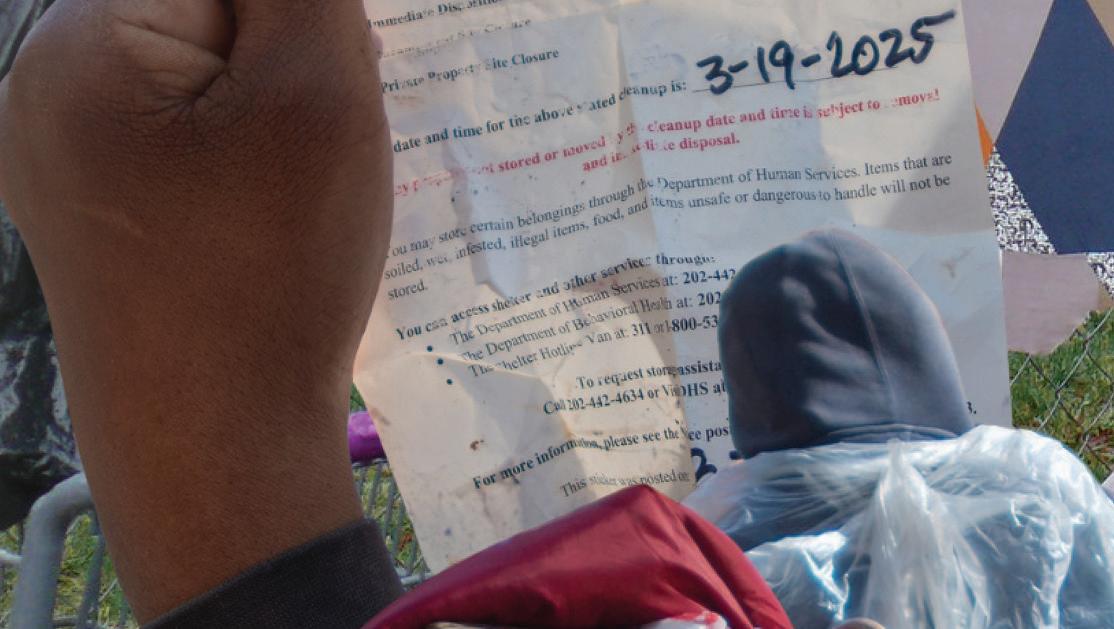
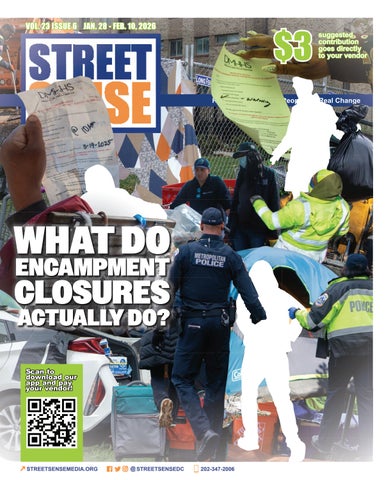
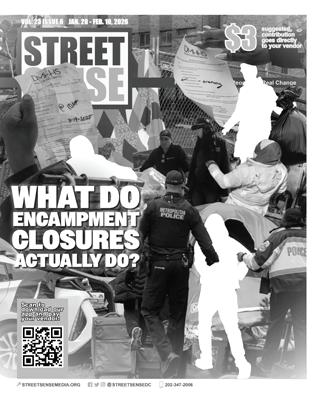
The Cover
PHOTOS BY MADI KOESLER, COVER DESIGN BY KEVIN AKAKPO
Abel Putu, Abraham Aly, Archie Thomas, Aida Peery, Akindele Akerejah, Alia Huag, Amia Walker, Andre Brinson, Andre Baltimore, Andrew Anderson, Angie Whitehurst, Angel Morris, Anthony Carney, Apollos Robinson, Beverly Sutton, Brian Holsten, Brianna Butler, Cameé Lee, Carlos Carolina, Carlton Johnson, Charles Armstrong, Chris Cole, Chon Gotti, Conrad Cheek, Craig
Thompson, Cynthia Herrion, Daniel Ball, Darrel Stone, Darlesha Joyner, David Snyder, Debora Brantley, Degnon Dovonou, Dominique Anthony, Don Gardner, Drake Brensul, El-O-Him, Elizabeth Bowes, Elynora Houston, Eric Glover, Eric Thompson-Bey, Evelyn Nnam, Faith Winkler, Flegette Rippy, Frederic John, Frederick Walker, Gerald Anderson, Gloria Prinz, Gracias Garcias, Greta Christian, Henrieese
Roberts, Henry Johnson, Invisible Prophet, Ivory Wilson, Jacqueline Gale, Jacqueline Turner, James Davis, James Hughes, James Lyles III, Jay B. Williams, Jeanette Richardson, Jeff Taylor, Jeffery McNeil, Jeffrey Carter, Jemel Fleming, Jenkins Dalton, Jennifer McLaughlin, Jewel Lewis, John Littlejohn, Josie Brown, Julienne Kengnie, Kenneth Middleton, Kannon Brown, Kendarius Tucker, Kym Parker,
L.Q. Peterson, Lawrence Autry, Leo Hughes Jr, Levester Green, Lillie Thomas II, Marc Grier, Marcus McCall, Mars, Maurice Carter, Melody Byrd, Melveon Harp, Milan Stevenson, Nikila Smith, Patricia Donaldson, Patty Smith, Paul Martin, Phillip Black, Qaadir El-Amin, Queenie Featherstone, Rachelle Ellison, Randall Smith, Rashawn Bowser, Reginald Black, Reginald Denny, Reneece Brinkley, Ricardo
Meriedy, Richard Mooney, Rita Sauls, Robert Vaughn, Robert Warren, Rochelle Walker, Ron Dudley, Ronnell Wilson, S. Smith, Sasha Williams, Saul Presa, Shawn Fenwick, Sheila White, Shuhratjon Ahmadjonov, Starchild BLK, Susan Wilshasen, Sybil Taylor, Tasha Savoy, Tim Holt, Tonya Williams, Tony Morris, Vincent Watts, Warning Label, Warren Stevens, Wayne Hall, Wendell Williams, Wendy Brown,



William
BOARD OF DIRECTORS
NOTE
The founder of Casa Ruby — a former nonprofit resource center and shelter that housed and helped immigrant and LGBTQ youth in D.C. — was sentenced to 33 months in prison in January after she pleaded guilty to wire fraud, according to a U.S. Department of Justice (DOJ) release. Ruby Corado was sentenced for diverting at least $150,000 in emergency federal COVID-relief funds intended to support the Casa Ruby shelter to a bank account in El Salvador for personal use, according to the DOJ release. After her prison sentence, Corado will serve two years of supervised release. She is also required to pay $956,215, the amount Casa Ruby received in pandemic relief, in restitution to the Small Business Administration, the release states.
Casa Ruby provided services to more than 6,000 people each year across its D.C. shelters from 2012 until its closure in 2022, the organization’s website stated, including case management and mental health support to LGBTQ youth and immigrants.
Casa Ruby case managers praised the shelter in 2018, telling Street Sense it helped get homeless youth off the streets and provided them a place where they could be themselves, something that is still needed in the city. The 2025 Pointin-Time (PIT) Count showed LGBTQ youth ages 18-24 made up 38.4% of all homeless single youth, a 9% increase from 2024. Without Casa Ruby, only a few shelters specifically tailored to LGBTQ youth remain in the District.
During her sentencing, Corado begged for leniency, admitting she had mishandled some of the $1.3 million loan she received from the federal government, but claiming she meant to invest it into a new shelter for transgender women in El Salvador. Corado said she regrets these decisions now, the Washington Post reported. Corado is from El Salvador and left the country as a teenager to come to the District. Her sentence may result in her deportation, according to the Post.
“I got caught up in my mission to help others. But I am the first one to hold myself accountable,” the Post reported Corado said in court. Corado and her legal team appealed the sentence the weekend following her conviction.
Casa Ruby was plagued by years of financial issues and irregularities. Despite receiving over $9.6 million in grants from the D.C government between 2016 and 2022, Casa Ruby closed its doors in 2022, according to court documents from a separate case involving Casa Ruby.
According to the court documents, Casa Ruby closed as a result of financial misconduct by Corado, who used Casa Ruby’s funds to benefit herself and her associates, diverting money from programs for homeless youth. During the summer of 2022, investigators with the D.C. attorney general’s office examined the nonprofit’s management, financial oversight, and allegations of improper use of District grants and charitable donations.
“This financial misconduct ultimately resulted in Casa Ruby failing to pay its employees, failing to pay its vendors, and failing to pay rent at the properties it operated from until the time it was evicted, leaving vulnerable populations unserved,” court documents state.
After Casa Ruby closed its doors in 2022 and the organization’s financial irregularities came to light, Corado sold her home in Prince George’s County, Maryland, and left the country for El Salvador, according to the DOJ release. Corado was arrested by Federal Bureau of Investigation agents in March 2024, when she returned to the U.S.
The Wanda Alston Foundation — a transitional housing program for transgender and LGBTQ youth in the District — was appointed by a D.C. Superior Court judge to fill the gap in services that Casa Ruby left in 2022. In October, the Wanda Alston Foundation said LGBTQ supportive homeless shelters and transitional housing facilities throughout D.C. were operating at full capacity, even after the organization recently expanded.
Street Sense wants to thank the volunteers of the Public Service Commission of the District of Columbia for all the work they put into making the December holiday celebration another magical end-of-year event. At least 120 people attended, including 77 Street Sense vendors and 25 Street Sense volunteers, sta , and board members. Under the DCPSC's Good Neighbor Initiative, at least 15 DCPSC volunteers decorated, provided and served food, and brought warm weather gear to stu holiday gi bags for vendors. The entire Street Sense community is grateful to share this little stretch of 13th Street with such generous neighbors and friends.
BIRTHDAYS


CHIEF EXECUTIVE
OFFICER
Brian Carome
DIRECTOR OF PROGRAMS
Darick Brown
DIRECTOR OF VENDOR
EMPLOYMENT
Thomas Ratliff
Ivory Wilson Jan. 29
ARTIST/VENDOR
EMPLOYMENT SPECIALIST
Esmat Amin
VENDOR PROGRAM
ASSOCIATES
Aida Peery, Chon Gotti, Nikila Smith
VENDOR PROGRAM
VOLUNTEERS
Ann Herzog, Aiden
Charles Woods Feb. 2
ARTIST/VENDOR
Eisenschenk, Beverly Brown, Roberta Haber
EDITOR-IN-CHIEF
Annemarie Cuccia
DEPUTY EDITOR Donte Kirby
EDITORIAL INTERNS
Aubrey Butterfield,


Dylan Cestaro, Elizabeth Short, Grace Copps, Katie Doran, Kordell Martin, Natalie Note, Shani Laskin
WEB INTERN Zachi Elias
GRAPHIC DESIGN INTERNS
Arisha Shumael, Kevin Akakpo
Frederick Walker Feb. 3
ARTIST/VENDOR
SOCIAL MEDIA INTERN
Harmony Jones
ARTISTS-INRESIDENCE
Alexandra Silverthorne (Photography), Bonnie Naradzay (Poetry), David Serota (Illustration), Willie Schatz (Writing),
□ Is the office closed for a holiday or bad weather? Street Sense follows the federal government (opm. gov/status). Also, you can call the front desk (x101), check your texts or emails from Thomas, or go to the vendor announcements page at streetsensemedia. org/vendor-info.
□ Stop by the admin office to meet our new employment specialist, Esmat! He can work with you on resumes, job trainings and certificates, interviewing skills, applying for jobs, and more.
Craig Thompson Feb. 10
ARTIST/VENDOR
Molly Pauker (Watercolor), Debbie Menke (Watercolor)
EDITORIAL VOLUNTEERS
Benjamin Litoff, David Fucillo, J.M. Ascienzo, Madi Koesler, Mark Rose, Natalie Kinkead, Nora Scully, Sarah Eccleston, Ryan Bacic
Read this democratically elected code of conduct, by vendors, for vendors!
1. I will support Street Sense Media’s mission statement and in so doing will work to support the Street Sense Media community and uphold its values of honesty, respect, support, and opportunity.
2. I will treat all others, including customers, staff, volunteers, and fellow vendors, respectfully at all times. I will refrain from threatening others, pressuring customers into making donations, or engaging in behavior that condones racism, sexism, classism, or other prejudices.
3. I understand that I am not an employee of Street Sense Media but an independent contractor.
4. While distributing the Street Sense newspaper, I will not ask for more than $3 per issue or solicit donations by any other means.
5. I will only purchase the newspaper from Street Sense Media staff and volunteers and will not distribute newspapers to other vendors.
6. I will not distribute copies of “Street Sense” on metro trains and buses or on private property.
7. I will abide by the Street Sense Media Vendor Territory Policy at all times and will resolve any related disputes with other vendors in a professional manner.
8. I will not sell additional goods or products while distributing “Street Sense.”
9. I will not distribute “Street Sense” under the influence of drugs or alcohol.
10. I understand that my badge and vest are property of Street Sense Media and will not deface them. I will present my badge when purchasing “Street Sense” and will always display my badge when distributing “Street Sense.”
SHANI LASKIN Editorial Intern
This piece includes strong language and mentions of assault.
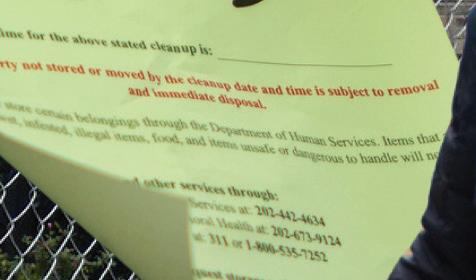
At the beginning of January, D.C.’s Deputy Mayor’s Office of Health and Human Services (DMHHS) scheduled 25 homeless encampment closures — a sharp increase from recent months.
A majority of the closures were ultimately cancelled or rescheduled due to weather or residents moving before the clearing date; in winter months, the city cancels clearings when temperatures drop to freezing or if the day is forecast to have rain or snow. Of the 25 initially planned closures, between eight and ten were actually conducted; DMHHS did not respond in time for publication to confirm the status of two recently scheduled closures. But if the city had moved forward with all the closures it set out to, there would have been more encampment clearings this January than in any month last year. Throughout January, DMHHS’s encampment team — a small group of city workers who coordinate and oversee encampment closures on District land — scheduled between one and three clearings nearly every weekday. According to Street Sense Media records of city-led encampment closures, DMHHS scheduled more engagements for this January than any month in 2025. Although the city ultimately cancelled at least 15 of them, rescheduling many for the first few weeks of February, for some people experiencing homelessness, even the process of receiving a closure notice is a source of distress and frustration.
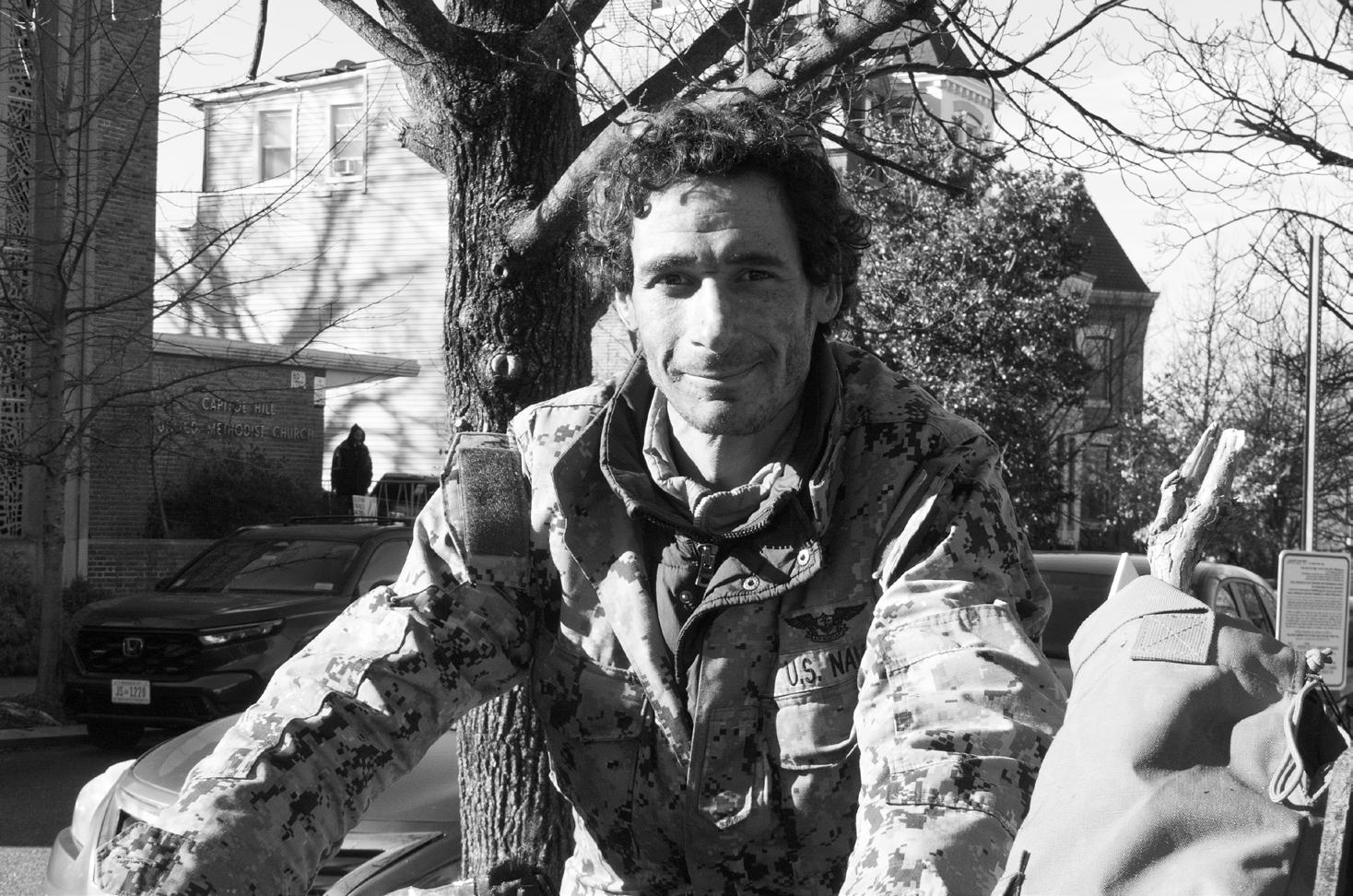
On the morning of Jan. 13, Jacques Santee started packing their belongings, following the instructions on signs announcing they had to move from their spot across from the Capitol Hill United Methodist Church. As they began packing, Santee learned the city cancelled the closure that day due to a city-wide cold weather alert, but decided to leave anyway, worried Park Police would still come by to make them move. The sidewalk where they lived is D.C. property, but borders federal National Park Service land.
Santee told Street Sense Media they moved to the spot across from the church a couple of months ago, because they have friends in the area. They often go to the church for the free breakfast it serves each day. That morning, their friends came by to see how they were doing, bringing them a lollipop and a smoke.
While Santee wants to move into stable housing, they’ve faced persistent obstacles. According to Santee and an outreach worker present that morning, they had been connected to a housing unit about two years ago, but it fell through. Now, they are connected to a housing program but do not have a voucher.
“I could be so good over here if I can get past this wall,” Santee told Street Sense Media. “Housing is the last thing.”
Since the fall, the majority of closures have addressed single-person encampments, like Santee’s. The congregation of multiple people in an encampment has become increasingly rare following President Donald Trump’s takeover of the Metropolitan Police Department, during which federal and local authorities closed dozens of sites. In January, all but one clearing impacted just a single person.
The exception to that was the closure DMHHS conducted at Martin Luther King Jr. Memorial Library on Jan. 14. That morning, several people packed up their belongings to comply with the notices DMHHS posted, warning people staying outside the library they would have to move. Every night, about a dozen people sleep under the library’s awning. During the day, many people leave their belongings outside the library while they go inside to access computers, amenities, or find a warm place to sit to escape the winter cold.
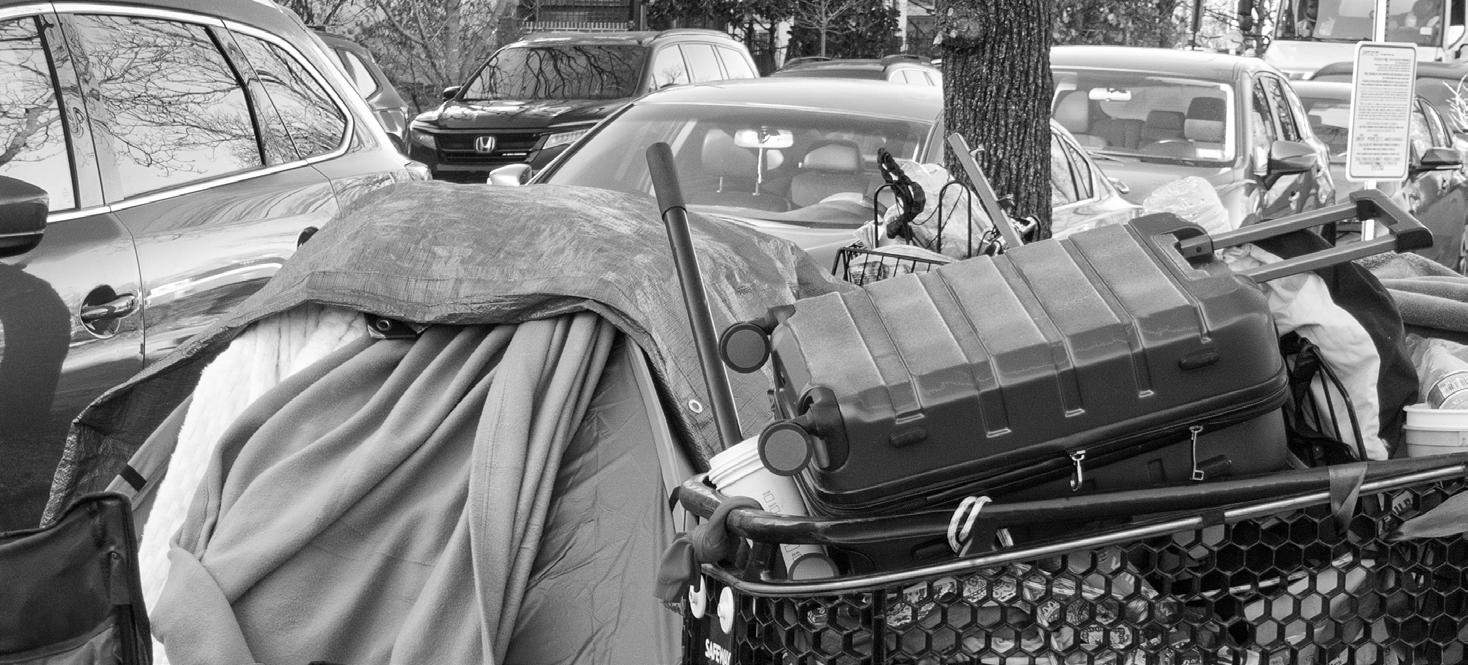
This fall, DMHHS conducted three clearings at the library under the guidance of an immediate disposition — a designation that allows the city to clear an encampment within 24 hours. Standard clearings, like most of the ones conducted in January, are done with at least a sevenday warning and are oftentimes announced to residents two weeks in advance. According to DMHHS, immediate dispositions are triggered when there is a significant health and safety concern or interference with the use of public space. After the city conducts an immediate disposition, “no encamping is permitted,” according to a DMHHS spokesperson.
DMHHS announced the Jan. 14 closure two weeks ahead of time, posting multiple notices on people’s belongings and around the block. While some people were still packing their things when city workers arrived that morning, Cristian, who introduced himself just by his first name, felt the city had given him plenty of time. He said as soon as he saw the notices, he started moving most of his things to a friend’s house.
Within about 30 minutes of city officials arriving at the site, most people had cleared out of the area. Workers threw away whatever had been left behind and power-washed the concrete. Residents at the scene who spoke to Street Sense Media guessed most people would come back to the library later the same day, after the clearing was over.
People returning to sites that the city has cleared is relatively common. Because of that, DMHHS often revisits sites it has already closed. The same day as the closure at the MLK Library, DMHHS closed another spot at 2nd and D Streets NW, a site the agency addressed at least three times in 2025. That morning, the resident was not present. In line with DMHHS’s protocol, city workers looked through the items left behind to find anything eligible for storage before throwing away everything else. Street Sense Media witnessed a Department of Human Services employee take a tent from the site to store.
On Jan. 13, as they prepared to leave, Santee didn’t know where they would go next. They told Street Sense Media that just hours before the clearing, they had been physically assaulted by a stranger in the middle of the night.
“I’ve got people coming at 3:30 in the f***ing morning, talking about ‘I’ma stab you. Why you in the tent?’ I’ll get out and beat your ass, and I gotta get up every morning and still be nice,” they said. “That’s what happened last night... This is an every day event for me.”
The stress of living outside, plus the city’s notice Santee had to leave without what they felt was adequate help in finding them housing, left them exasperated.
“Homelessness don’t end if you’re not actually gonna give everybody a voucher,” they said. “It’s never gonna end. They keep them here on purpose.”
KATIE DORAN Editorial Intern
eople experiencing homelessness in D.C. may go days, or even weeks, without being able to take a shower, as they can access only a few lowbarrier shelter facilities in the District.
Pathway Homes, a nonprofit that provides housing and homeless services in Northern Virginia and D.C., is trying to change that. The organization’s new mobile outreach unit, a retrofitted trailer, will offer showers and other resources to people experiencing homelessness throughout the region.
The trailer is fitted with three bathrooms with showers, including an accessible unit. It is designed to provide 20 showers during each stop, with organizers aiming to provide at least 1,000 showers in the first year.
On Jan. 21, Pathway Homes launched the mobile shower at its first official stop in D.C., Miriam’s Kitchen, a homelessness outreach nonprofit.
Dr. Sylisa Lambert-Woodard, CEO of Pathway Homes, said for people experiencing homelessness, showers are a “tremendous unmet need.”
“Showers offer an opportunity to restore individuals by providing not only health and hygiene, but also being able to restore hope and dignity,” Lambert-Woodard told Street Sense.
While many shelters have showers, they are typically only for shelter residents, leaving out the hundreds of people who sleep outside. According to Lambert-Woodard, there are only about five places where people can take drop-in showers in D.C., and none are mobile facilities. “This key is that [the mobile shower] is low-barrier. This is not something that you have to travel across town for. This is something that is here, right in your backyard,” Lambert-Woodard said.
The new mobile shower will stop at Miriam’s Kitchen every two weeks, and will make stops at other partner organizations around D.C. and Northern Virginia in between, organizers said, though they did not provide a definite schedule.
Miriam’s Kitchen does not have its own shower facilities, but Scott Schenkelberg, the organization’s president and CEO, said showers are one of the top needs for the people the nonprofit serves.
“Every time that we do listening sessions with our guests to hear about ways that we can improve our services, the top of the list is showers and laundry. Unfortunately, we just don’t have the space to be able to offer those kinds of services,” Schenkelberg said. “Having access to basic hygiene is just so critical. Can you imagine going without showers for weeks on end? For many of our folks, that’s what they have to do, because it is just so hard to find showers.”
Responding to this need, other advocates around the DMV have also pushed to improve access to showers and hygiene resources. In Hyattsville, Maryland, the nonprofit Neighborhood Well operates a mobile shower trailer that provides showers twice a month.
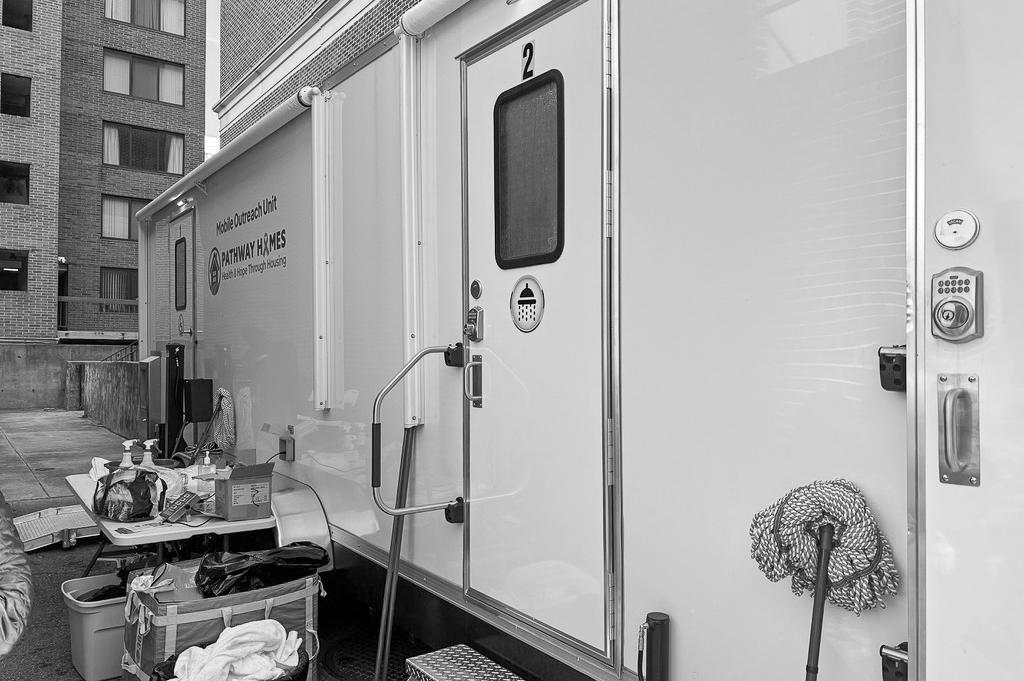

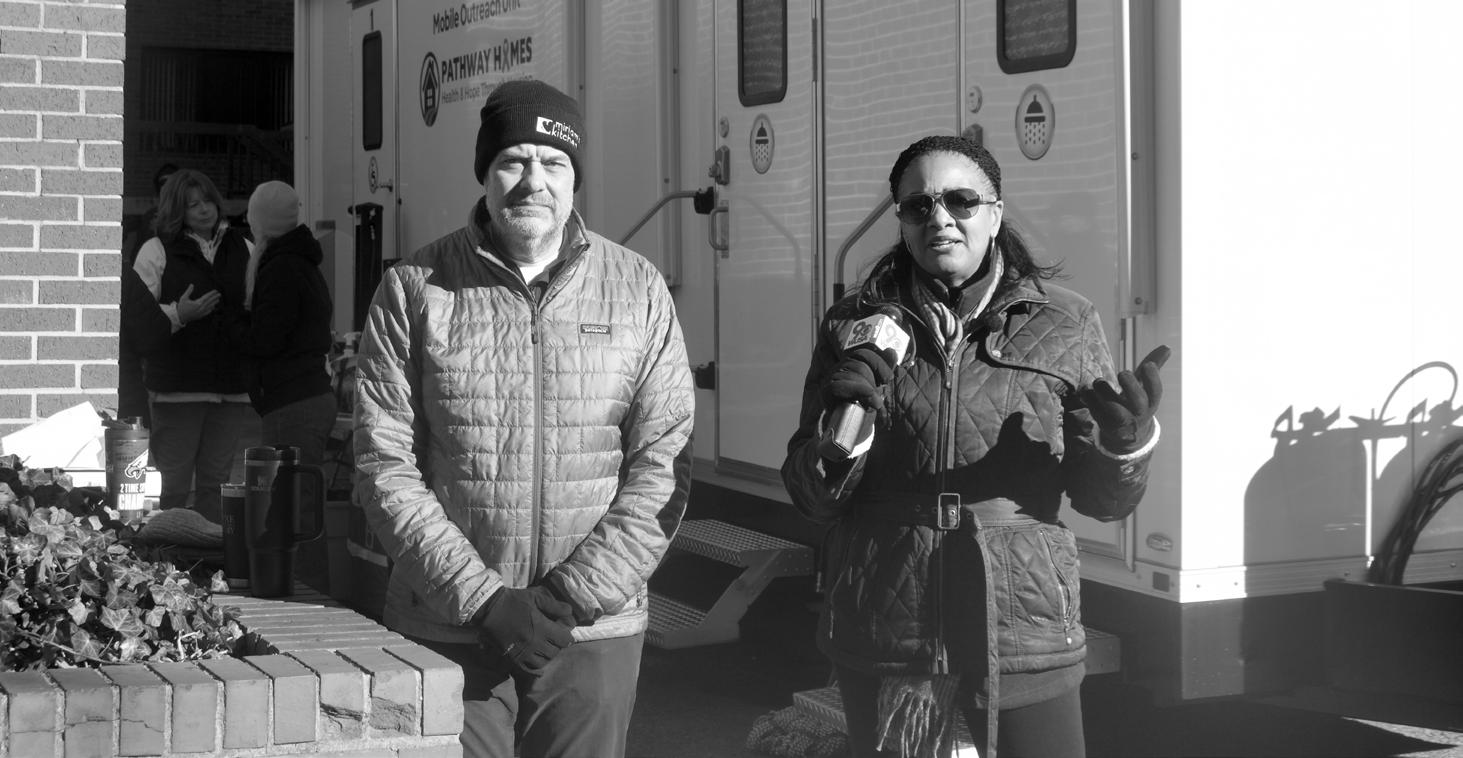
In addition to showers, the Pathway Homes trailer has a water bottle filling station and extra sinks at the back. At its stops, workers will hand out health kits with supplies like hand sanitizer, toothbrushes, hats, hand warmers, and blankets.
Organizers hope the mobile shower can help people experiencing homelessness access other services as well, such as meals, health care, and case management. When the trailer stops at a place like Miriam’s Kitchen, Lambert-Woodard said, people coming in for a shower can also easily connect with the organization and the services they offer. If the shower is stopping at a location without these support services, case managers and other workers from Pathway Homes will be there instead.
“A shower is a simple way of being able to engage an individual, to connect in a relationship and allow them to receive the services that they need to be able to become selfsustaining in our community,” Lambert-Woodard said. “The shower is just an entry point.”
To use the mobile shower, contact Miriam’s Kitchen (2401 Virginia Ave. NW) or Pathway Homes for more information.
ELIZABETH SHORT
Editorial Intern
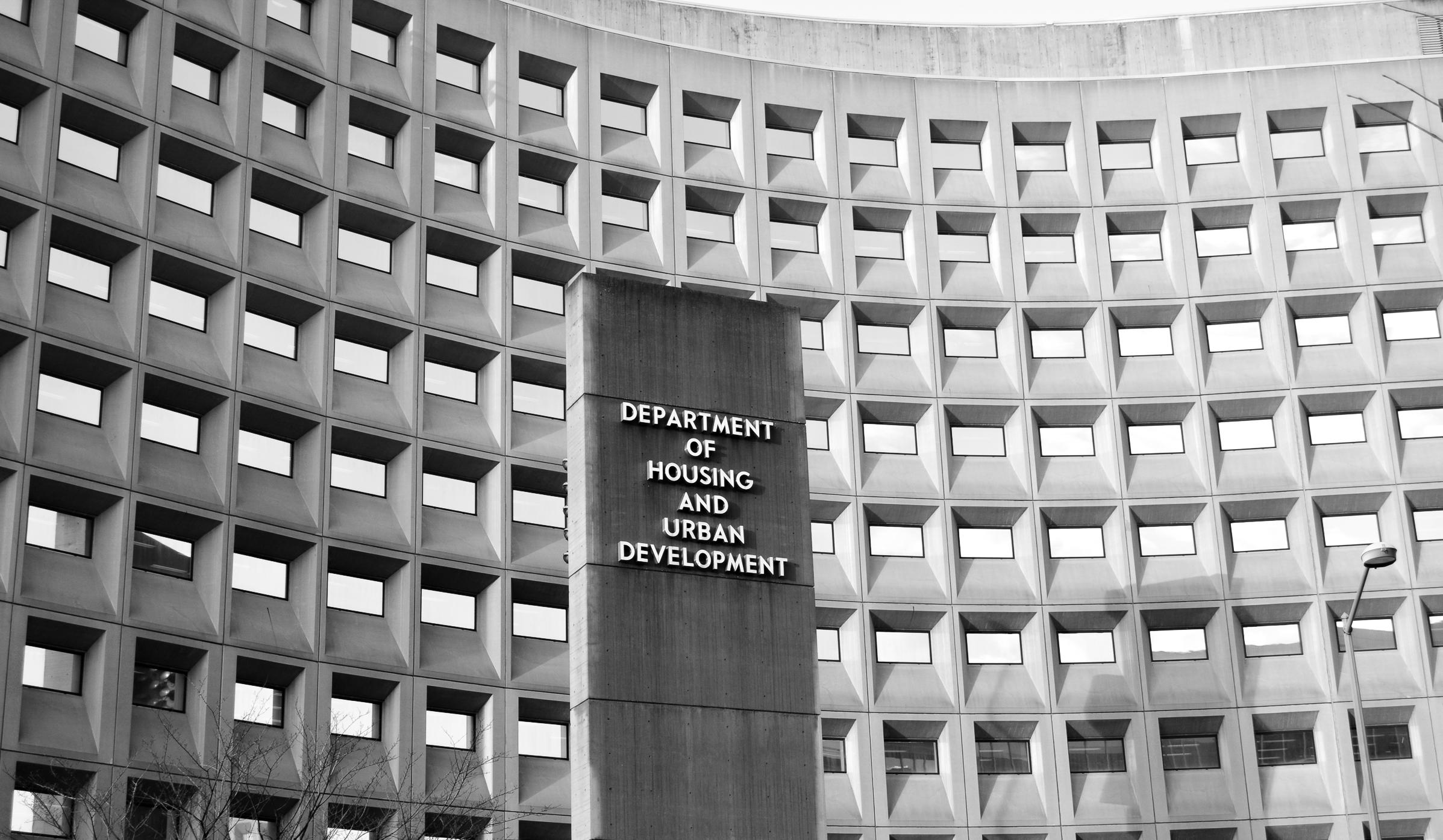
An ongoing lawsuit over the future of federal funding to end homelessness is leaving D.C.-area organizations with uncertainty as the year gets underway and some grants begin to expire.
Late last year, the U.S. Department of Housing and Urban Development (HUD) announced an overhaul of the federal program allocating funds to organizations providing housing to people experiencing homelessness. The policy would have limited the department’s awards to permanent housing programs and stripped funding from historically bipartisan Housing First programs, redirecting money to temporary housing and treatment programs, and potentially leaving thousands of Americans without support.
In December, a federal judge temporarily blocked the changes after a coalition of state attorneys general and a separate group of nonprofit organizations and local governments each filed lawsuits against HUD, arguing the new funding guidelines were “unlawful and unreasonable.”
The judge’s temporary order requires HUD to return to the status quo, renewing most programs funded in the last year, though not yet actually distributing the funding. If HUD prevails in the lawsuit, however, the department could return to something similar to its November plan, potentially destabilizing the local programs that rely on the funding.
The debate is over the $3.9 billion awarded to community organizations providing housing under the Continuum of Care (CoC) program, which pays for the housing of hundreds of thousands of formerly homeless people across the country. In fiscal year 2024, HUD awarded more than $77 million of this funding to programs in the DMV, according to HUD figures and local officials.
Since President Donald Trump took office in January 2025, he and his administration have sought to criminalize homelessness and end federal support for Housing First programs, which provide individuals with housing without imposing requirements such as sobriety or treatment. Most experts believe Housing First is the best approach to help people exit homelessness, according to the Urban Institute in 2024. With federal funding for this year still up in the air, some programs in the DMV are scrambling to find the money to continue operations and provide housing services through the first few months of 2026. Advocacy organizations have warned that nationally, large changes to the CoC program could put more than 170,000 people at risk of losing their housing again.
“When that funding is delayed or disrupted, it creates immediate operational risk for providers and immediate stability risk for people who depend on those housing services,” Christine Hong, chief of services to end and prevent homelessness in Montgomery County, said at a Jan. 14 meeting of the Metropolitan Washington Council of Governments (MWCOG), during which the body discussed the region’s HUD funding.
HUD announced Nov. 13 that it would cancel its existing funding opportunity, which was supposed to last through this year, and implement a new funding competition, with new rules.
HUD’s proposed plan would have significantly stripped funding from two common housing programs, Permanent Supportive Housing and Rapid Rehousing, capping these services at 30% of total funding. This change would cut federal funding for long-term housing programs by about two-thirds, shifting money to “short-term, punitive models,” according to a December fact sheet by the Public Rights Project.
A state-level analysis by the National Alliance to End Homelessness (NAEH) found that under the proposal, $22 million would be cut or redirected from permanent housing in D.C. alone, where almost 1,500 people rely on these programs.
The policy would also have drastically reduced the percentage of a locality’s dedicated “Tier 1” funding from 90% to 30%. Jurisdictions can usually rely on this funding, which is generally protected year-to-year, to maintain the continuity of CoC-funded programs. Under HUD’s November proposal, most funding would have instead come through competitive, merit-based “Tier 2” programs, making it harder to guarantee stability. According to the NAEH, prioritizing competitive funding “could lead to major funding losses.”
The proposed guidelines would also have given HUD the ability to deny funding for programs that do not comply with the Trump administration’s agenda, including those that acknowledge the existence of transgender and nonbinary individuals, Politico reported.
On Nov. 25, a coalition of state attorneys general and governors, led by New York Attorney General Letitia James, filed a lawsuit against the HUD policy change. On Dec. 1, the NAEH, the National Low Income Housing Coalition, and co-plaintiffs filed a similar lawsuit against HUD in the same court. Judge Mary McElroy, of the U.S. District Court of Rhode Island, is considering these cases together.
On Dec. 19, McElroy granted a preliminary injunction, temporarily preventing HUD from implementing its proposed changes while the case continues.
The court found HUD’s actions were likely unlawful and harmful to the plaintiffs. “Continuity of housing and stability for vulnerable populations is clearly in the public interest,” McElroy said in issuing the injunction.
Under the injunction, HUD must reinstate, for now, the original funding plan, which would carry over many programs funded last year, and begin processing eligible renewals. On Jan. 8, HUD announced it was opening applications for this funding from Jan. 9 to Feb. 9. In the announcement, HUD confirmed projects funded in fiscal year 2024 may not have to apply for renewal. According to the announcement, HUD will decide these awards by March.
However, funding will not actually be given to localities until the court issues a final ruling on the lawsuit. Even then, if McElroy were to rule against HUD, the department could potentially appeal and prolong delays. If the court rules in HUD’s favor, it will likely move forward with a proposal it released in late December that is similar to its November plan, but is also paused due to the ongoing litigation.
Providers across the D.C. area offer programs that serve thousands of residents every day. With grants expiring and no official ruling yet from the lawsuit, programs face uncertainty about having the funding to continue services.
In fiscal year 2024, Washington, D.C. and surrounding counties received $77.4 million in CoC funding, Hong, from homeless services in Montgomery County, said in the MWCOG’s January meeting. Nationally, an estimated one-third of CoC funding is associated with grants expiring between January and June, Politico reported.
Local programs are currently operating under “severe uncertainty on timing and steps for continued funding,” Hong said at the meeting. “The problem isn’t whether federal funding is available for CoCs. The problem is whether those dollars are obligated in time to match local grant terms that expire on fixed dates. Even a short delay creates a real risk of a funding gap.”
In Montgomery County alone, CoC grants fund 12 permanent housing programs that provide housing to approximately 800 people. Funding for one of them expired Jan. 1, Hong said.
One program affected was Montgomery County Coalition for the Homeless’s (MCCH) Home First Permanent Supportive Program, whose HUD grant expired in January, according to Montgomery County Media. St. John’s of Norwood Episcopal Church in Chevy Chase donated its Christmas collection money, approximately $15,000, to the program; the Rev. Anne Derse, the church’s deacon and minister for community engagement, told reporters the money would cover the January rent of 11 households.
According to Hong, funding for two additional programs will expire in the first three months of 2026, another six programs will expire on July 1, and three more are set to expire later on in the calendar year. Montgomery County has found some grant funding to help cover these lapses for the first six months, Hong said, though in D.C., officials have suggested they would not be able to cover gaps.
Gaps in funding could mean contract expirations, delayed payments, emergency financial decisions, staff reductions, service interruptions, decreases in move-ins, decreases in availability of housing, longer shelter stays, fewer available beds, and an increase in unsheltered homelessness, Hong said.
At the Jan. 15 Arlington County Housing Commission meeting, Maureen Coffey, vice-chair of the county board, briefly discussed the local impact of the funding drama. “The not knowing is in and of itself a budget impact...We’re not going to not find a way to cover it at the end of the day,” she said. She suggested the board could prepare to keep funding in reserves, though it’s not clear how much.
Following the Jan. 14 meeting, the MWCOG board sent letters to HUD and to Congress, urging them to prevent service interruptions and to maintain continuity while the court case is ongoing.
Receiving this funding “means everything” for individuals and families who receive housing from CoC programs, Hong said at the meeting. If funding is delayed, the risk of people returning to homelessness is real.
“Without stable funding renewals, it becomes much harder to sustain housing, maintain services, and make the improvements we know are needed,” Hong said.
MARK ROSE
Aconfluence of socioeconomic factors has had a strong influence on D.C.’s severe crisis in affordable housing. Buildings, located in the poorer areas of town and inhabited largely by Black or lowincome residents, offer dismal conditions.
Take “slumlord” Ali “Sam” Razjooyan, who runs dozens of apartment complexes, including two that have been sued by the city. According to reporting from DCist and Washington City Paper, among other local outlets, Razjooyan breaks D.C. rules by lying to apartment residents. He tells residents he will do necessary repairs, and then doesn’t. He breaks D.C. Department of Buildings building code laws by not repairing heating and cooling systems in his buildings, and not driving out pests, such as mice, rats, cockroaches, ants, and mosquitoes, which can show up in apartments, in hallways, in the laundry, or on the buildings’ grounds. He runs the complexes like pigsties. D.C. Attorney General Brian Schwalb’s assigned staff attorney filed a lawsuit in D.C. Superior Court against him. Tenants in Razjooyan’s buildings aren’t the only ones with poor housing conditions. Jushelle, one housed Black, low-income woman, told me her mother’s story, which is harrowing. Her mother, Michelle, died after moving into an apartment. The building, management told her, had supposedly just been renovated at a cost of $80 million. So, her mother would be moving into a revitalized building.
But the landlord moved Michelle into the wrong apartment, where Jushelle claims she was exposed to a faulty heater unit, spewing carbon monoxide. Michelle eventually died a few months later, partially, Jushelle suspects, of carbon monoxide poisoning, though the official cause of death was listed as diabetes. Jushelle told me building management never talked to her about it.
“Why did they put her into the wrong unit?” she asked. “At the end of the day, they didn’t follow protocol; they didn’t move her into the unit approved for her.”
Jushelle lost her job before her mom died, and then took care of her full-time. She now subsists on Social Security, which makes paying rent a challenge, even as building conditions still leave a lot to be desired; she said she’d seen all the apartments in the building, and every single one had some issue.
“These places are not up to par — mold, damage. The moment you don’t pay the rent, they put your ass back on the street,” Jushelle said. “All of our slumlords collect the rent, make money, and move out to the suburbs. They pick and choose what they want to do.”
Some recent D.C. policies and laws are moving in a positive direction. Ward 8 Councilmember Trayon White, Sr. said in a statement his office is working to improve subpar living conditions at some Ward 8 housing developments, meeting with tenants, landlords, and government agencies.
“We are well aware of the substandard living conditions residents are raising concerns about in some Ward 8 housing units, and we take them seriously,” he wrote. “When issues are brought to us, we refer them to enforcement channels, push for inspections and compliance, and stay engaged with all parties to ensure proper follow-through.”
The city is also using other laws to combat a lack of housing affordability. The Tenant Opportunity to Purchase Act allows tenants to collectively purchase their building from the owner if they indicate they want to sell. That often means these tenants/owners can run their own building, and pass their own rules.
“At the policy level, I continue to support and strengthen tenant protection laws, including the Tenant Opportunity to Purchase Act, so residents have real leverage when landlords fail to meet their obligations,” White wrote. “Safe, clean, and dignified housing should not be optional. All residents, especially our most vulnerable and those on fixed incomes, deserve better, and we will keep holding property owners accountable while standing with tenants.”
Other positive affordable housing proposals are in the local government pipeline. In social housing, tenants might be able to work on their buildings, which would enable good, strong wages and union partners. And public housing is a critical need — Mayor Muriel Bowser’s administration isn’t pursuing enough low-income housing, where tenants can pay a modest rate. Also, it’s important to have mixed-income housing throughout buildings.
It’s expensive to build public housing, but it is one of the best and most important investments to make.
the last two years. What does that mean for the people living in them?
SHANI LASKIN Editorial Intern
hen President Donald Trump took office for his second term, national attention turned to homelessness in D.C. as the president derided the presence of encampments across the city and called for their removal.
Throughout the spring and summer, city officials ramped up encampment closures, which came to a head when Trump’s takeover of the Metropolitan Police Department correlated with a spike in clearings.
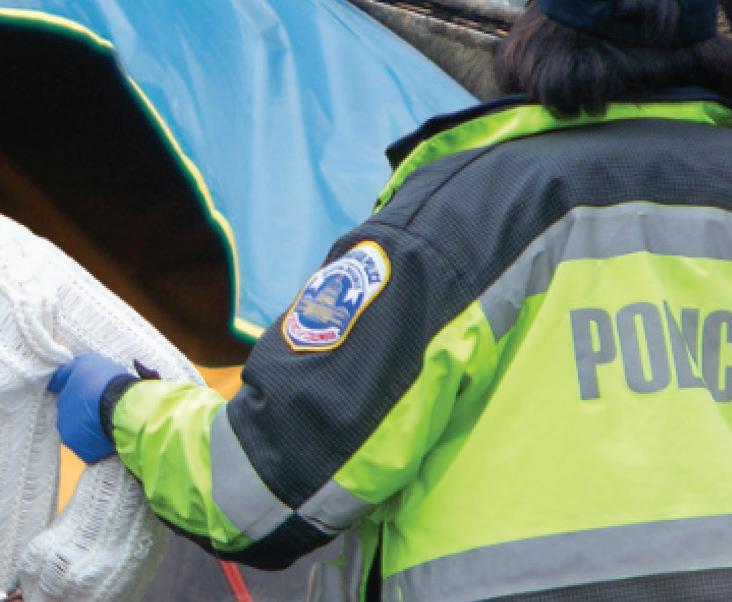
But encampment closures in D.C. are not a new phenomenon. In 2025, D.C. closed 109 homeless encampments, according to city numbers. The year before, that number was 99. D.C. residents regularly report encampments to the government, sometimes asking for help for those living outside, sometimes asking for them to go somewhere else. While the city’s encampment protocol says its goal is to maintain public space while connecting people to more stable housing, in fact, outreach workers, advocates, and residents say most encampment closures result in residents continuing to live outside and shuffling across the city, sometimes just to be told to move again.
When the D.C. Deputy Mayor’s Office of Health and Human Services (DMHHS) — which is responsible for coordinating encampment closures on District land — closes an encampment, it documents the conditions and reasons for closure at each site. Street Sense reviewed internal documents from closures in 2024 and reports to the agency’s encampments email, obtained via public records request, to understand why the city focuses on people living in encampments, which areas are targeted, and why, despite consistent closures, people continue to live outside.
DMHHS defines encampments as “a set-up of an abode or place of residence of one or more persons on public property or an accumulation of personal belongings that is present even when the individual may not be.” If a person living outside finds a different spot each night or returns to their awning or park bench only to sleep, leaving nothing behind, the city might not see that as an encampment. However, if they leave their belongings in one place and move around during the day, that could fall under the definition.
In the last year, encampments closed by the city have generally consisted of an accumulation of personal belongings that remain in the same area for an extended period of time, often with some semi-permanent setup, like a tent or other structure. The description of encampments can be contentious for some people experiencing homelessness, as the line between what is and isn’t an encampment can be unclear, for instance, if someone is also running a business near where they sleep.
While encampments are set up all over the city, many of the ones the city identifies for closure are concentrated in Ward 2. This is for a variety of reasons. For one, people experiencing homelessness might want to be close to the services they access, several of which are located in central parts of the city, like Miriam’s Kitchen in Foggy Bottom or the Downtown Day Services Center. Sometimes, it could come down to the safety in numbers people feel when they are in busier parts of the city, with more neighbors, housed or not, to keep an eye on them.
“The same benefits we enjoy as housed residents, our unhoused residents want,” Trupti Patel, chairperson for Advisory Neighborhood Commission 2A, which represents Foggy Bottom and surrounding areas, said. “They want access to health care. They want access to food.”
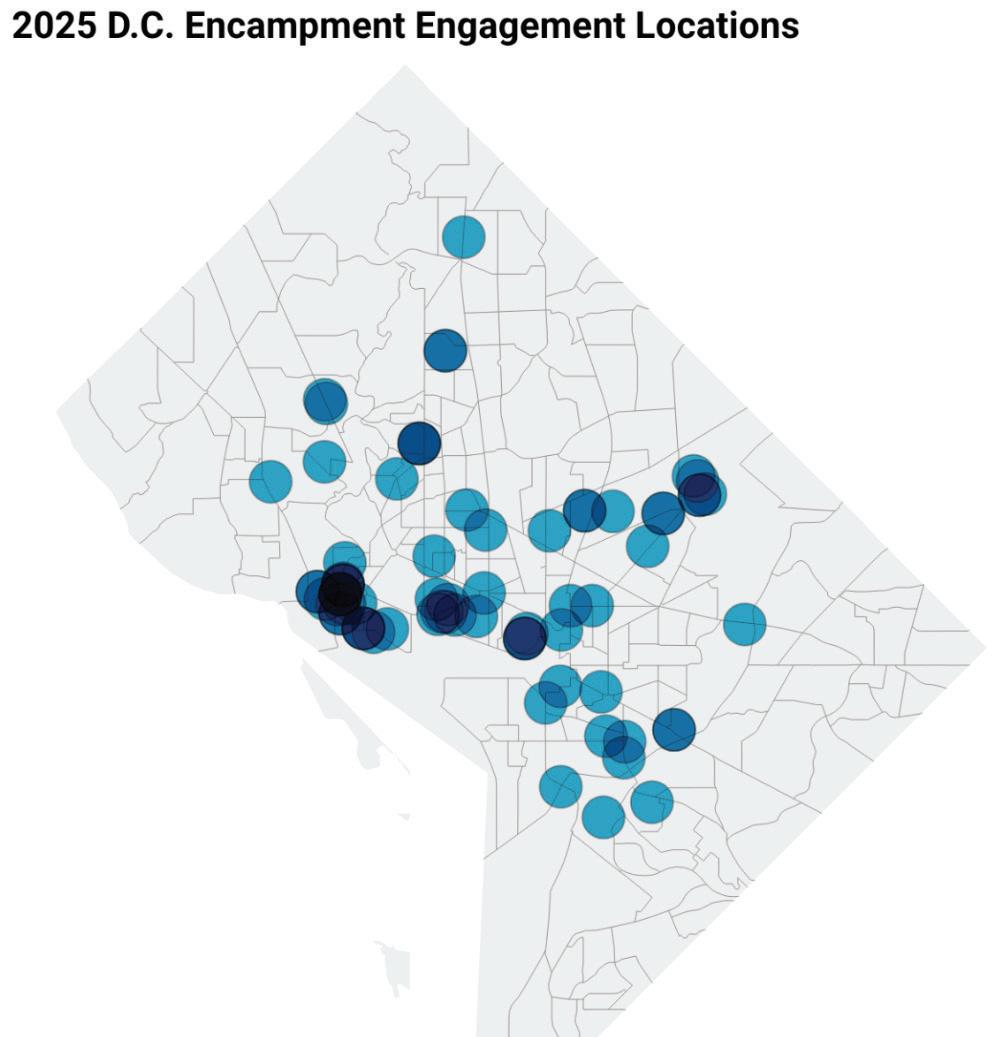

But centrality also means more visibility, which can lead to a higher likelihood someone reports an encampment. While DMHHS does not close all encampments people report, the office does follow up on encampments people report, according to its protocol.
When D.C. residents think of an encampment, the former setups at McPherson Square or the E Street Expressway — large encampments whose closures received widespread attention — may come to mind.
But now, large encampments are rare in the District, and the majority of the city’s clearings actually target small encampments. According to DMHHS data obtained by Street Sense, in 2024, over half of the city’s encampment closures displaced fewer than three people. Since the federal takeover, only a small number of closures have impacted more than one person.
Andy Wassenich, director of policy at Miriam’s Kitchen, which conducts outreach to people living outside, explained that as people have moved out of larger encampments, the city has increased the frequency of smaller encampment clearings. Some outreach workers have compared this new pattern of closures to a game of whack-a-mole.
“What has happened over the years, even prior to Trump’s presidency, is that the large encampments were broken up and then the smaller encampments were pursued,” he said. “The frequency [of encampment clearings] … and the tempo picked up.”
According to DMHHS’s protocol, clearings start with a report. Whether it was from a neighbor, a nearby business, a property manager, or groups like Business Improvement Districts, DMHHS fielded around 600 encampment reports in 2024, according to documents obtained by Street Sense via public records requests. Other agencies, councilmembers, or ANC commissioners also often forwarded reports from neighbors who were unsure where to bring them.
There are countless reasons people report encampments to DMHHS. Sometimes, neighbors were concerned for the safety of people living in encampments — worried that they were too close to a big road, that they needed behavioral health services, or that it was too cold outside for them to safely be outside.
More often, though, neighbors said they were frustrated by the presence of an encampment and wanted the city to close it. For the most part, these kinds of reports cited sanitation concerns, increased rodent presence in the area around the encampment, or large accumulations of personal belongings that made it hard to navigate public spaces, among other things.
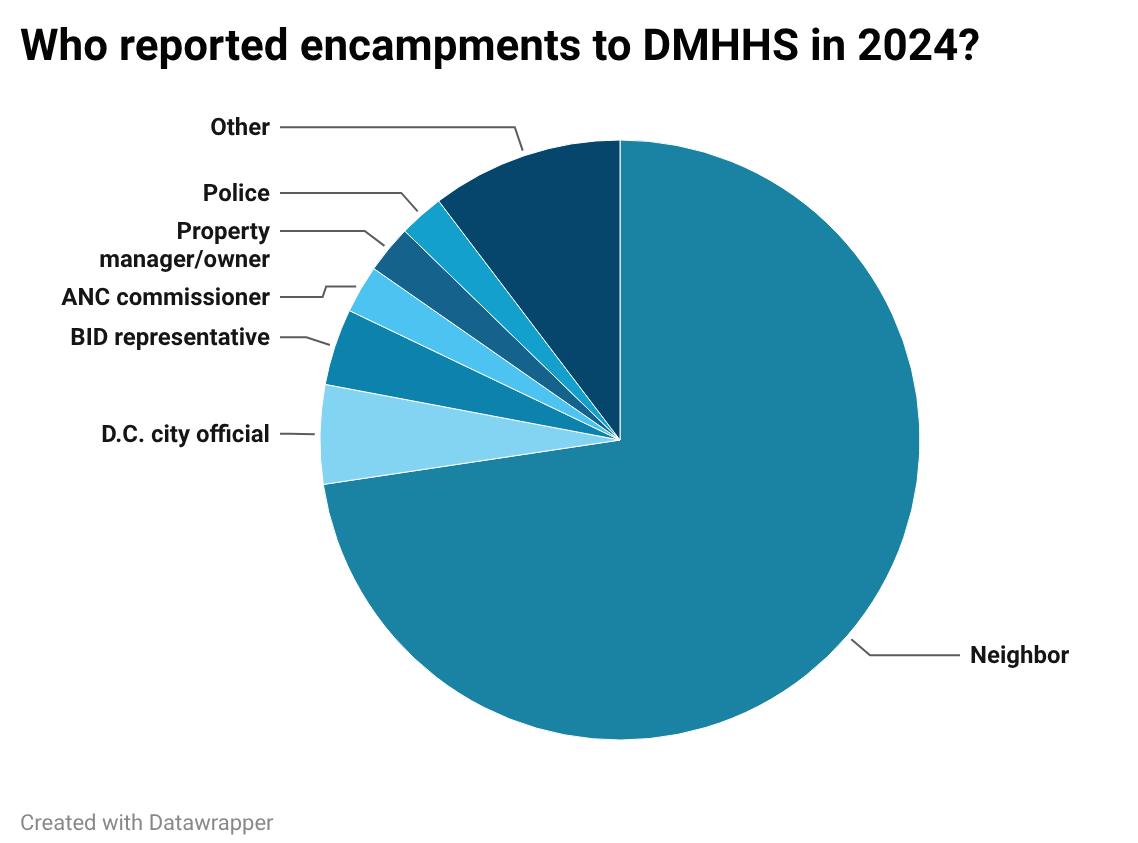
According to DMHHS’s encampment protocol, once it receives a report, the office is supposed to communicate its next steps, whether that be closing the encampment or providing outreach to the resident, to whoever initially reported it. However, emails from 2024 suggested DMHHS did not always follow through with that commitment. In one case, someone reported an encampment in Mount Pleasant seven times over five months before the agency responded.
In their sixth email reporting the encampment, the neighbor wrote: “I and many others in the community are growing frustrated with the lack of action/communication regarding this encampment.” Two days later, they wrote, “The lack of response here reflects really poorly on your department.” Though records obtained by Street Sense did not show DMHHS replied to the emails, the agency was responding to the encampment itself; the city cleared that encampment 14 times that year.
Often, when someone reports an encampment to DMHHS, the office’s encampment team is already aware of its existence and knows the people living there through its outreach efforts — as do other homeless service providers, outreach workers say. But according to its protocol, when DMHHS receives a report, the agency officially has to assess the site and decide whether or not to close it.
In 2024, to close an encampment, DMHHS had to determine if the site presented a safety, security, or sanitation concern, or interfered with the use of public space. According to the office’s reports from the day of the closures, obtained by Street Sense via public records request, the specific concerns often included residents who posed a danger to themselves or others, trash accumulation, biohazards, the presence of rodents, illegal behavior, and the extent to which the encampment impacted access to public space.
According to the reports, nearly all encampments had at least a sign of rodents, if not visible vermin, and over 80% of them had what the city designated as significant trash accumulation or significant safety concerns, which often means the encampment is near a roadway or the resident poses a threat to themselves or others. In 2024, the majority of encampments, 61%, did not have any signs of illegal behavior.
In early 2025, Deputy Mayor Wayne Turnage, who oversees DMHHS, testified the office was loosening its criteria to close encampments, meaning encampments now do not necessarily have to meet any of these concerns for the city to close them.
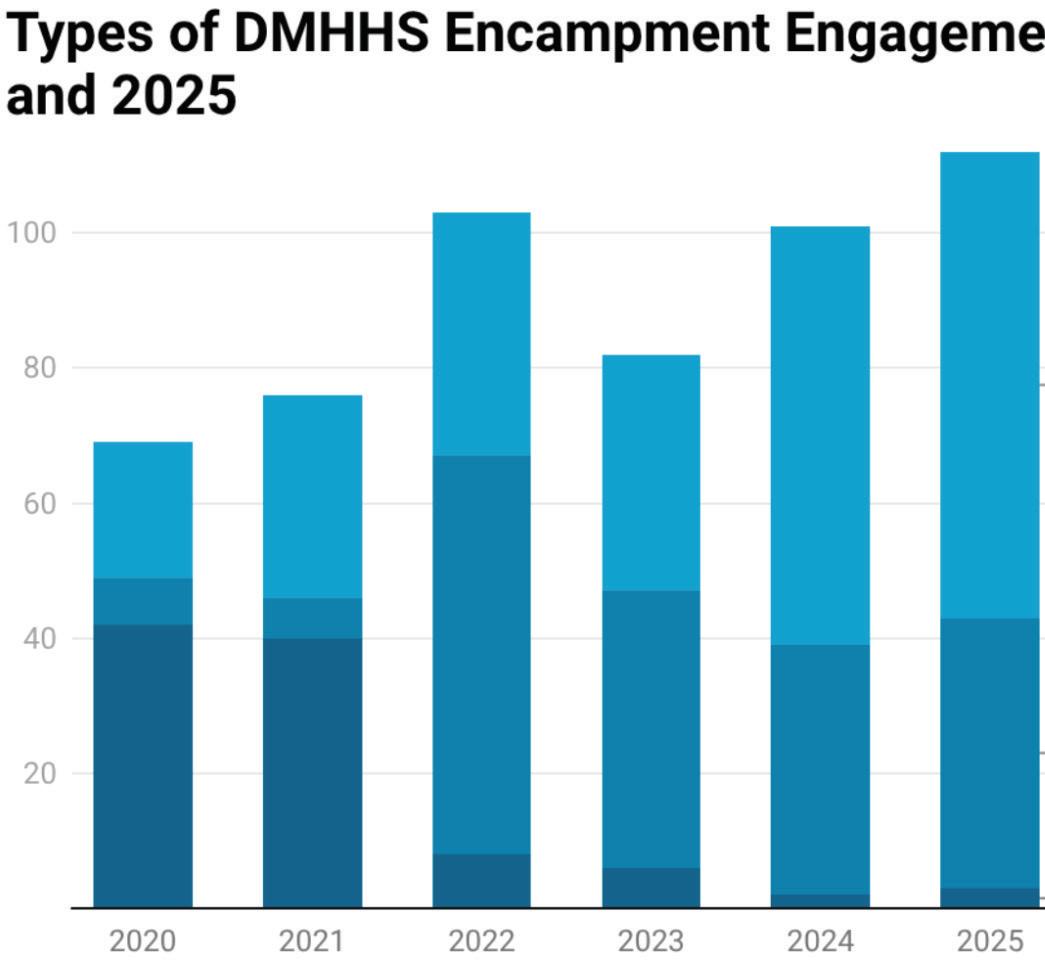
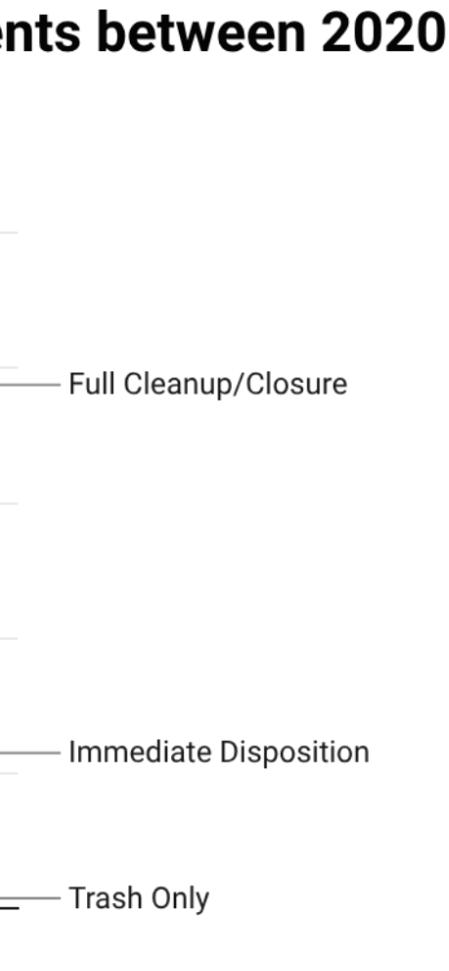
DMHHS uses three main kinds of engagement types at active encampments, according to the office. In one, trash-only cleanups, the city throws away items with the goal of reducing the volume of things at an encampment. In these kinds of engagements, residents of an encampment do not have to move.
Regardless of what type of engagement it is, encampment residents and city officials do not always see eye to eye on what should be thrown out. At a closure this January, an encampment resident wanted to keep a pile of her blankets that she had been sleeping in. City officials, however, claimed the blankets were wet and that she had to throw them away. After a long back-and-forth, DMHHS officials told her she could not take the blankets and threw the pile into the back of a garbage truck at the scene.
The other two kinds of engagements, full cleanups/closures and immediate dispositions, both require a resident to pack their belongings and leave the site, but they differ in how much warning DMHHS gives to the people living in an encampment. For full cleanups or closures, DMHHS has to give a minimum warning of seven days, although the office often gives a two-week notice. In contrast, immediate dispositions can be carried out within a 24-hour period. According to DMHHS, immediate dispositions are scheduled if an encampment causes an “immediate threat to the health, safety, or the intended public use of that space.”
Since 2020, DMHHS encampment engagements have overall been on the rise, with a spike in 2022 as the city returned to more regular closures following the COVID-19 pandemic. Trash-only engagements were more common in 2020 and 2021 to prevent the spread of COVID-19 by minimizing contact and displacement. As the number of engagements has gone up, the share of trash-only engagements sharply decreased, meaning most of DMHHS’s encampment engagements now displace residents.
While the city offers to store encampment residents’ belongings with the city’s Department of Human Services (DHS), DMHHS’s day of reports from 2024 showed that people rarely accept it. Of 101 DMHHS engagements in 2024, the office listed only two people as accepting an offer for storage. That’s partially, residents say, because of the city’s specific criteria for what can be stored, including items having to fit into two 40-gallon bins. Andre, who introduced himself by his first name, has been staying outside the Martin Luther King Jr. Memorial Library for over a month, and told Street Sense he finds the storage protocols unclear. During closures, people living in encampments often lose belongings or important personal items, like IDs or medication. Andre told Street Sense that this brings people “back to square one, or square zero.”
Encampment closures can also further the trauma people living outside experience. In rare cases, when someone refuses to leave, the city authorizes an FD-12, which is a temporary involuntary commitment to a medical facility when health care professionals or police believe someone poses an immediate danger to themselves or others. When officials conduct an FD-12, the city often throws away whatever is left behind that is not eligible for storage, such as a case in 2024 where city workers threw away a pregnant woman’s tents, blankets, roller skates, and other items as she was detained, though she was released before being committed.
DMHHS conducts encampment closures for the stated goal of maintaining public space while connecting encampment residents with services and indoor shelter or housing. But in reality, the link between encampment closures and people moving into shelters or housing is tenuous.
In 2024, all but one resident of an encampment the city closed was already connected to outreach, according to DMHHS’s day of reports, meaning outreach workers had met the person before the closure. In these cases, outreach workers may have already told people about options for shelter or tried to connect them to limited housing resources. Street Sense has witnessed very few people choosing to go to shelter after an encampment closure, and except in rare cases when noncongregate shelter beds are available, residents whose encampments the city closes are not prioritized for housing vouchers or other programs, meaning outreach workers generally don’t have anything new to offer.
While people can always go to a low-barrier shelter, many encampment residents have told Street Sense they are hesitant to do so. Andre said he had stayed in a shelter whose operating hours were 7 a.m. to 7 p.m. (though most D.C. shelters are now open 24 hours a day). He said he prefers to live outside so he can have more control over when he goes to sleep. Others have told Street Sense they have had traumatic experiences in shelters, which is why they avoid them. One reason so many people were connected to outreach but continued to live outside after a closure could be that DMHHS’s 2024 data indicates very few residents at encampment closures were connected to housing. In 2024, during 101 encampment engagements, only two residents were listed as being connected with a housing process, and another two were listed as accepting services, though it’s not clear if those included just DMHHS/DHS services or services from any outreach group. DMHHS and DHS did not respond in time for publication to questions about how the agencies make these classifications, but outreach workers say those numbers may be significant underestimates based on their knowledge through working with encampment residents.
After an encampment closure, residents often tell outreach workers or Street Sense they are going to move to another spot outside or return to where they had been once city officials are gone, which DMHHS data suggests they do. In 2024, DMHHS closed 13 sites multiple times, closing most between two and five times. In one case, DMHHS closed the same encampment 14 times in one year. These repeat sites accounted for almost half of all closures that year.
In 2025, the city closed about 19 sites multiple times, with the most frequent clearings happening at the MLK Library, where the city conducted 11 clearings in one year, according to its data. Some encampments have persisted despite multiple clearings. For instance, the city cleared one site at 23rd and E Streets five times in 2024 and six times in 2025. With at least a few repeatedly cleared sites, Street Sense has observed the same residents coming back time after time.
According to outreach workers, with a shortage of housing options, some people living in encampments who are not already matched with a voucher might not have many other options if they don’t want to go to a city shelter.
“If you are an unhoused individual and you are not already connected to a housing resource, you are not getting connected to one anytime soon,” Wassenich from Miriam’s Kitchen said.
Unless a resident goes to a shelter or receives housing soon after a clearing, they may remain in limbo for months, if not years.
“I’m going right back to my same spot,” Charles Williams told Street Sense in 2025. “I’ll wait for another notice and then come right back [here]. Going back and forth, that’s all I can do. That’s all I can do. That’s all I can do.”
JEFFERY MCNEIL Artist/Vendor
Editor’s Note: This is chapter 9 of “The Grind.” You can read past chapters on our website
When Jackson Terry saw the headline accusing him of stealing from a children’s charity, he slumped onto the sofa, feeling the weight of shame and betrayal as if he’d been hit by plywood. He wondered if everything he’d built was about to crumble over accusations, innuendos, and lies. What hurt wasn’t just the betrayal — it was how gullible he’d been. He believed he was using his celebrity and status for something good. He’d made a commitment that if he ever struck it big, he wouldn’t let money change him, and he would give back to children who didn’t have the same opportunities he did. But his generosity had been twisted into something unrecognizable.
His mind drifted to the charity he once supported, Build a Foundation for Children. He believed in its mission — mentors, structure, hope. He thought he was making a difference. Children should be allowed to be children, not pushed into adulthood too early, and he wanted to set an example through his donations. They asked him to be the face of it. Testimonials. Infomercials. A hotline flashing across the screen: 1-800-CALL-JACK.
Parents donated. The community rallied. Jackson gave, promoted, and believed.
What he didn’t know was that executives were siphoning money into personal accounts — funding lifestyles off the backs of kids. When a staffer was fired and blew the whistle, the CEO — already tied to past scams — was arrested.
That’s when Darrell made the connection. Jackson was the biggest donor, the spokesman. In Darrell’s mind, that meant complicity.
Jackson knew the saying: if you don’t know who the dummy at the table is, it’s you. He knew Darrell was reckless — but he never imagined someone would use his good intentions as a trap. He had receipts he’d tried to do good. But receipts don’t win the first round. Optics do. And the optics stank.
There is a cost to everything. Right now, Jackson was assessing the cost to restore his reputation and good standing with his back to the wall. This wasn’t a bad beat; this was a coin flip where, if he picked the wrong side, not only would there be devastation, but his house of cards would crumble. As a high-stakes poker player, he’d been in pressure-cooker situations before, but this one felt different. He was no longer young and hungry.
The blowback came fast and without mercy.
Netflix paused the documentary. The phone rang again and again, but Jackson didn’t answer. Bad news drained him. When he finally looked at the caller ID and saw the owner of Taboo’s Palace, where he had his suite, he knew this one mattered. “Jack, I’m still on your side,” the man said carefully. “I know you’re not capable of stealing from kids. But the pressure’s real. Nobody wants their name tied to child theft.”
Apathy crept in. He had already accomplished what he set out to achieve. Part of him didn’t have the energy to fight lies anymore. He wanted out.
Jackson never wanted the spotlight. Money was supposed to buy privacy, not exposure. He hated being boxed in as just a poker player — tired of interviews about hands and odds when he wanted to talk about people, gratitude, survival. He wanted the fortune, not the baggage. His mind drifted back to the jetty he once slept under. Being ignored. Never invited anywhere. No clean clothes. Now he owned things. No landlords breathing down his neck. No loan sharks. He could walk away. But could you really walk away from dignity?
“I’m tired of running,” he muttered. “Why let Darrell use my name to lift himself?” He wasn’t fleeing. If it came to it, he’d stand on principle, because deep down, he knew he did nothing wrong — his integrity was the only thing left to hold onto. Poker had always been his template for life. The best hand doesn’t always win. He’d seen good people die young and snakes live forever. Morality didn’t guarantee outcomes — awareness did. Timing did.
“Enough philosophy,” he said aloud. “When you’re on top, every gunslinger wants your seat.”
But Darrell didn’t just want a seat. He wanted the crown. Since Jackson wouldn’t help him out, why not blow up Jackson’s whole image?
Jackson had always been divisive. Poker pros mocked him — said he hit one miracle hand and avoided real competition. They hated that he became the face of poker. He was magnetic. He could charm a room, turn insults into jokes, take hits, and smile. On camera, he was polished. In private, rougher.
Nobody resented that image more than Darrell. They ran the streets together. Did dirt together. And when things went bad, Darrell took the fall while Jackson slipped through.
That’s when Jackson stopped feeling sorry for himself and started building a plan: clear his name, beat the charge, and expose Darrell for using children as shields behind God’s name. He stepped onto the balcony. Neighbors watched. “You want a show?” he said quietly. “Watch me survive.”
Darrell sat alone, replaying his version of history. He had looked out for Jackson, fed him, toughened him up, and given him spine, believing he was doing right. Now, he wondered whether Jackson ever truly appreciated it or if he was just using him.
The tears dried. Anger rushed in. Darrell opened the cabinet and stared at the Glock. “I asked nicely,” he said. “Asked for gratitude.”
Reality pushed through the rage. Camille was pressing him. His wife was wavering. The church was sifting through the books — bills stacked higher every week.
Darrell was in his own chip-and-chair moment, with a bad hand and no exits.
“I’m not killing myself,” he said. “And I’m not going back to jail.”
He stared at a photo of him and Jackson.
“Time to make the donuts.”
Back in his suite, Jackson didn’t see a trap. He saw a fight. “I’m not running,” he said. “I’m leaning into it.” Rage flared, then settled. Rage was tilt. Tilt made you lose.
He looked at Charlie, his goldfish, drifting calmly in the tank. “One of us is going down,” Jackson said quietly. “And it won’t be me.”
--
Across town, Camille opened the closet, hiding her own secrets behind a facade of calm. One diaper left. No formula. Her stomach ached from hunger and stress.
This wasn’t how it was supposed to be. Camille was beautiful. Dangerous-smart. She survived on charm and strategy, not sympathy. Darrell had what she wanted — status, power, a platform. She knew he was married, yet she played anyway. For a while, they felt like Bonnie and Clyde. She believed he would choose her.
But amateurs learn too late. You don’t see the river card until it hits. This was high stakes now. Jackson held aces. Darrell was chasing a monster draw. And Camille — Camille was the card neither man controlled.
Whoever she sided with would decide who got exposed… and who walked away clean.
In years past, every group of people coming to the United States was seeking a better, kinder way of life. Those immigrants wanted to be free from unjust laws and avoidable catastrophes because they knew what it meant to live under limited “human” rights, to not have the freedom to learn, to grow, to educate their families, and to have peace of mind. They hoped for a new start.
Sadly, that is no longer the country I loved and knew was the place to be, where all its people had a chance to experience life, liberty, and the pursuit of happiness. Too many Americans are lost in the sauce. Somewhere along the way, too many forgot the struggle to be free to live the lives they deserve and they desire.
Rather than banding together to fight for our rights and our freedoms, little by little and piece by piece, we have let many changes happen that serve only the most well-off and encourage the making of self-important kingpins, hate mongers, and out-and-out gangsters, one of whom runs the country. These people bully and intimidate others to exercise power over them.
Now this negative way of life penetrates our governments, our family values, and our lifestyles. It hurts my heart, saddens me, and makes me ashamed the country is changing for the worse. We don’t even have free education for our children. Doing that is a private business!!
What is next? God help us.
Jaqueline Turner is an artist/vendor with Street Sense Media.
WENDELL WILLIAMS Artist/Vendor
Writer’s note: I sat down to write this on a Sunday night in September, right in the middle of trying to process a wave of not-so-good news and make some quick decisions about my health and wellbeing, while managing my fears.
Several months ago, I was asked for my help in planning a yearly fundraising event for The National Coalition for the Homeless here in Washington, D.C. The organization’s CEO, Donald Whitehead, is my great friend and mentor, and for 30 years, it seemed as if he and I were joined at the hip. I can’t begin count to the number of employment or empowerment opportunities he’s given me as he’s moved around, starting from The Greater Cincinnati Homeless Coalition and its Streetvibes paper, along with other important assignments from tenant organizing and public speaking engagements and hosting our community access Streetvibes TV and radio shows when he traveled. And each time I’d experience a setback, he’d wait the appropriate length of time, and after hearing of my return to fitness, he’d give me another chance to contribute.
Because of those setbacks, we were at different levels of involvement in the fight to end homelessness. He is in the more public national legislative fight, and I’m still “boots on the ground.” In a way, I envied my friend for his national profile, with attention from NPR, Dr. Phil, and other media. Sometimes, I even resented him for staying his personal course, thinking it should/ could’ve been me. But ego never saved or changed a life or fed a hungry child. Hard, tireless work did, and he’s done it. Still if we’d been involved in leading a fledgling country, I may have staged a coup against my friend because in those jealous times of anger at him, I’d forget he always came back and got me, dealt with where I was at recovery wise, and offered me a chance at redemption. This included a last mission working for a county government when nobody would take a dangerous assignment during the scary beginning period of COVID-19, which I survived four times, when he became director of their homeless outreach services. (Most of my continuing healthrelated problems are due to COVID, but the job came with no benefits. Only the Creator’s 401K that paid in more time on this earth against the machine.)
But all the same, I was so ungrateful and didn’t want to do this for him because lately, he and I seemed to be having one big disagreement after another over how to effectively address homelessness. Sadly, it was negatively affecting our long and deeply caring relationship. Things were so bad his wife forbade us from “talking shop” at social gatherings at their home.
To me, it seemed those of us working with the unhoused were no longer talking realistically about ending it, but how to manage it, like the “Built for Zero” movement’s strategy of “Functional Zero” that’s been called everything, up to and including a scam. We were brothers in the struggle long ago, who now more often found ourselves with differing views on certain critical issues. We were spending too much emotional energy trying to get the other to change his views, and the results were disastrous. We were in different camps, and it hurt. Each claimed the other had gone to the “dark side of the force.”
But he wanted me on this committee. He knows that for me, being part of one is like exposing Superman to kryptonite, because I love working at a rapid-fire pace and independently, plus because of my lived experience, I don’t collaborate well, and most will not understand my thoughts. And I confess, I’m not very patient with the novices in the field, even though they mean well. But our histories are so intertwined, try as I might to avoid this request to be of service, he knew the greater good for the cause ultimately would mean I’d have to say yes. That the “Circle of Life” would win out, because you cannot escape from this thing called homelessness, if you’ve experienced it, and not care about the wounded left on those killing fields. So, the song that’s sung about the process of life in the classic “The Lion King” lends itself to this struggle, because being unhoused is like
living in a jungle with all types of predators and intolerable conditions.
And today’s actions by governmental predators make it clear that supporting any effort to bring in those remaining out there in will always be more important than being right in one of our many debates over which of our proposed solutions makes the most sense.
If you’ve had the opportunity to catch my earlier installments of RAOK, you know my involvement with street papers started with a promise of a McDonald’s meal from Donald (From McDonald’s to Scotland). Donald had given me that first lift out of the abyss. But what I never shared was how he and I came together before that dinner offer in the late fall of 1996 in Cincinnati. Here’s what happened.
After yet another attempt at recovery had failed, miserably, I may add, I found myself at a religious rehab program in Dayton, Ohio, desperately looking for that magic bullet to slay my demons. After a misunderstanding at that facility, the staff was found to be wrong, and a compromise was presented to save face. It was a transfer to Cincy, and I did well at first.
There, the program was a little different. We were allowed to go outside in the community to recover. And then one day, she walked into a recovery meeting, and it was boy meets girl on a recovery campus. I lost focus, spent every moment I could after that with her, and in no time, I now know, I stopped recovering. She was my new drug, and in record time, I moved in with her and her two kids. And everything went well, for a while. She did nothing wrong, but invested her emotions in someone who was as incomplete as a human being could be at that stage of recovery and didn’t have himself as together as he presented, with a lot of flaws well hidden. Then, on a sunny day with nothing going on, I took a walk after becoming bored, and forgot her warning about where we were living, thinking, “How bad could it be? I’m a bad ass from D.C.” I went right when I should’ve gone left, and the floodgates opened on our lives like the levees bursting during Katrina.
Over the next few weeks, after back-to-back trips to a detox and an unsuccessful trip to a 30-day halfway house, she bagged up my possessions in my fashionable “homeless” luggage (contractor bags) and dropped them off at the Greater Cincinnati Coalition for the Homeless. And to keep them from being rummaged through, Donald put them in his office with my name on them. She then somehow got a message to me. I went there and was told the director had them, and that’s how we actually met.
As the days passed, I’d stop in to grab a change regularly. And he’d give me something to do around the offices, including help with the sale of the Coalition’s Streetvibes paper, get involved with the speakers bureau, and do community events. This was in 1996, 30 years ago. And in a Random Act of Kindness, we’ve never been completely out of touch since that failed relationship with “what’s her name” brought us together. The journey continues, the “Circle of Life.”
TONYA WILLIAMS Artist/Vendor




Martin Luther King Jr. (Jan. 15, 1929 - April 4, 1968) was probably America’s greatest civil rights leader. This Baptist minister was on the front lines and in the trenches of this historic movement from 1955 until his assassination. He advocated non-violent protests as the most effective method to end segregation and to advance the civil rights of those who had been denied them for more than three centuries.
His iconic “I Have a Dream” speech was pivotal in Congress passing and President Lyndon Johnson signing the Civil Rights Act of 1965 and subsequent landmark legislation, such as the Voting Rights Act.
King’s causes resonated globally. He championed human rights for the oppressed and the downtrodden. He fought tirelessly for justice for all, using such phrases as “injustice anywhere is a threat to justice everywhere.” He inspired people to build strong, harmonious communities based on love and justice with words like these on Aug. 28, 1963:
“I am happy to join with you today in what will go down in history as the greatest demonstration for freedom in the history of our nation...I have a dream that one day every valley shall be engulfed, every hill shall be exalted, and every mountain shall be made low, the rough places will be made plains, and the crooked places will be made straight, and the glory of the Lord shall be revealed, and all flesh shall see it together.”
ANGEL MORRIS
Artist/Vendor
Hello and good day!
You can call me Angel — the origin of my name (Angela), financially cut off pressed by life-hating walls and suppressing actors. But I was born with God’s fire that burns hot in me one that can hurt but rather reflects God’s heart of love; a spark of God’s light more abounds in me.
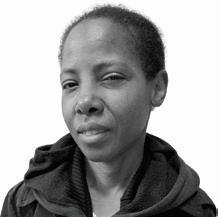
It has cried through the pain, the thefts, the assaults it has prayed for a return to my better nature — the one created that prefers the peace and happier parts. A light of gratitude that always filled my heart starting my day with a salutation to the Divine for all blessing, pleading, praying for mercy and grace for all especially those in the streets, the shelters, the cars. Life’s crooked paths try to redirect my way; they throw at me betrayals that I fight to forgive every day. More than a conqueror, I rise, and I continue to stand, knocked on my knees for a moment, but this is no quicksand! So my God sends my angels to minister to me and through the spirit gives me all I need!
No darkness can conquer this light ordained in me, God gave me strength, and in defiant determination I stand emboldened by my ancestors’ gifts of light carrying on the legacy of God’s love fight. So here I stand — have a great day! Take this precious paper, my message of love as you go your way!
God’s peace, mercy, and blessings to all!
Artist/Vendor
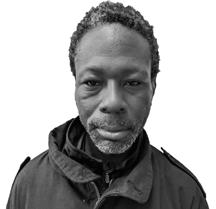
ANDRE BALTIMORE Artist/Vendor
I had the right to be a part of something I never thought would happen ever in my life, but the time I got there, this bear man came about and said, “Thank you for that.”
I said, “What?” He said, “Begin.”
So, I began my journey with myself and became famous in a game called Double Dare Dribble. I said, “Aren’t these the cardinals? The art is here for me.”
So, don’t let somebody tell you something that is not theirs because they will shoot you and leave you for dead.
DANIEL BALL
Artist/Vendor




Yes, we all have dreams. We are both walking this morning. Yes, I wake up in this evil world every day.
When I was small, my mother said, “Daniel, go to 7-Eleven and get me a cup of coffee, please.” Could that have been an aspiration? No, it was not. But it could have been a dream from last night.
When I was at Street Sense, I always had a good dream about my girlfriend. Those really felt significant.
WENDY BROWN
Artist/Vendor
Missing in action is my story. After years of being homeless, I learned I wasn’t the only one, so I remained patient. Patient and vigilant. Submitted lighter and copacetic articles. Distinct news is the best for information.

A lot of things happened to celebrate this day! Fireworks at the Washington Monument for the Freedom 250 series commemorating the country’s birthday. The fireworks were projected onto the monument! The National Mall offers prime viewing for these free, large-scale events, which often include the Lincoln Memorial and the Jefferson Memorial. I hope the next fireworks are also projected onto the Washington Monument. That is a beautiful sight.

CARLTON JOHNSON Artist/Vendor





I write to keep my life in the way of movements for the greatness that is here for me. Time will never end. I am in control of things I do for me, the ups, the downs, and the turnarounds. The only way I can do my mission is to hold onto the life that’s here for me. The love I have is for me and the community. I look for ways to hold on as I find my life is controlled only by me.
I pray for help from my Lord. You are the only help I need living life on the streets. Now, when I seem to be on my way off the streets, I want to say thank you for hearing my prayer for that.
My hard times have come to an end.
MELVEON HARP
Artist/Vendor


Let’s give God the blessing and the glory. He is the answer in my life. I get more connected with my God. I’m looking forward to a better life: save money, stop drinking, quit smoking. So far, though, life is good. I have a lot to be thankful for — my apartment and my dog, Smokey. I see myself on the right track. But I’m tired of being alone, so I keep asking God to help me find someone.
I pray for the homeless, for my God, for Street Sense, and for all its employees and vendors. This year, I’m going to make more money, work on my body, and work on my mindset to keep me happy. And I’ll always help someone if I can.
Thank God for all he does. And Happy New Year to all the people in the world.
The last thing I believed




would surprise you, not me in life, there are no guarantees Catholic or Epiphany two different forms of Christianity fear of my beliefs being debunked by someone who sells Street Sense for lunch
RON DUDLEY
Artist/Vendor
I just wanna say thanks for the food, for the drank





Another man’s trash is another man’s treasure
Another man’s lady is another man’s pleasure
Another man’s ex is another man’s wife
Another man’s death is another man’s life
What would you do if you had one slice of bread
Would you eat or split it with your family instead
A wise woman told him to eat it
Brought his family back a loaf, just what the family needed
I’m color blind, I don’t see color
If I like ya, then I like ya; if I love ya, I love ya
Eric told me to never give up Eric, he good luck, he reminds me of Chuck Chuck told me to never give in
Eric is like Chuck, the definition of a friend
My baby momma getting high again
Telling the same old lie again
Selling her food stamps to get her drugs
But all kids need is food and love
My friends, they left me for dead
They get scared when they see me in red
Even my dreams got my enemies scared
When I got eyes in the back of your head
I just wanna say thank you to the people who supported me
They never avoided me
They coulda aborted me
They coulda easily hung me
Instead, they helped me eat
They put food in my tummy
DARLESHA JOYNER
Artist/Vendor


Not just the money in the bank
Fake coworkers wanna steal your shine
Fake coworkers wanna leave you behind
Fake coworkers wanna lie to the boss
Fake coworkers wanna get you involved
Fake coworkers be having attitude problems
Steal out the cash register and act like somebody robbed them
I’m a regular man with a regular life
I got regular kids with a regular wife
I got regular family
I got regular friends
To say what family is
They say I’m the tree of life
They tried to stab me with a knife
Then they tried to chop me down
I grew back overnight
Then they tried to cut my root
Take my seed, take my fruit
Then they tried to burn me down
I grew back out of the ground
They say I’m the tree of life
I’m older than a dinosaur
I was in the Garden of Eden
With Adam and Eve before
I was on the boat with Noah and all the animals
And I made it float to go the way we had to go
They say I’m the tree of life
I’m here to keep the world alive
God gave his only son
But he let a tree survive
I been working on a master piece
God woke me up, then put me back to sleep
I been working on a master plan
God woke me up, then shook and dap my hand


Oh, how exciting as a mother to look forward to three birthdays in the upcoming year. What a blessing it is to see all these things coming, Chuck E. Cheese, and a cruise for Markquelle’s birthday I am excited go back home, looking forward to the beach, the mall, and being with all three kids in nice weather.


How the moon glows in the midst of darkness.


How it walks in the darkness. I can see your face in the light — you shine so bright.
So let your light shine so bright in the moonlight. Spread love.
VINCENT WATTS Artist/Vendor
GRETA CHRISTIAN
Artist/Vendor


The movies you want to see and the previews that hold the content of the movies you want to see. When you’re broke, or you’re just the hard-working middle-class folks you are, check out my movie reviews and bank yourself some time. This week, we’re still on YouTube, and yes, our favorite social media channel is still free, and what’s playing is “Ender’s Game.” This is such a terrifically awesome, beautiful, amazing… book. Yes, this is a book-to-movie adaptation, but the movie is actually pretty damn good. What I want to get into, though, is this movie’s modern-day modernism and cranked-up futuristic futurism of the present. See, aliens have invaded the solar system we call home, and yes, you know it, our childhood friend Ender (Asa Butterfield) has been selected to defend it. Cool and all, but you have to ask yourself: “Wow, did all of this actually take place, because everything is right on point?” The base of operations looks like our U.S. Space Station, and their space ships… well, the space ships look a little more advanced than ours, but you can almost see the Elon Musk SpaceX cockpit seats if all the space cadets weren’t puking out of them. The conversations and character dilemmas are great, and they have their moral dilemmas at every turn. The visuals provide a form and function with a touch of high-definition that makes you feel right at home. It’s written by Orson Scott Card, who oversees a lot of his own franchises, re-releases, and graphic novels… well, let’s just say he definitely oversaw this, and it’s awesome. Its dialogue, its pacing. Scott Card has authored some ultra-cool lines from his franchise: our favorites thus far: “The enemy’s gate is down,” “Ho Ender,” and “If they come home, it’s my job to put them back together again.” Simply moving.
Everyone’s colonel, Hyrum Graff, is played by Harrison Ford, who’s the leader of the deep state. Viola Davis plays Major Gwen Anderson, the would-be military work wife who strikes a balance in our futuristic military mommy and daddy psyches, keeping Ender and his fellow cadets well kept. Ben Kingsley’s role as Mazer Rackham is utterly perfect, short, but perfect. He serves as one of Ender’s mentors within the sci-fi war trials. Hailee Steinfeld plays Petra Arkanian, the cutie with a gun, and Abigail Breslin is Ender’s sister Valentine, and she couldn’t be more compassionate. These two have strong roles, and this was their introductory role for me, and they nailed them spot on. Now, Steinfeld is famously known for her Marvel role of Kate Bishop in “Hawkeye.” In short, this movie is a contemporary 70s sci-fi book adapted for the big screen and for adults, but essentially written for children, today, in the real world, 2026. Yeah, that’s it. It’s excellent… so don’t miss it!
Being homeless in D.C., and staying in the usual shelters. They are rife with filth and bed bugs. I’m not one to complain, but not having soap in the bathrooms is just spreading disease. You would think they would do something about the cleanliness.
ELYNORA HOUSTON Artist/Vendor


of my story




I don’t know what to write. Writing is a headache. You got to keep calm when you write. I got to come to the meeting and write something. I don’t know what to write. Everything I write is gone from my head.
I write about people. I write about cats and dogs. I write about kids. I write about the world.




Today I had a great lunch, I’m not too normal and don’t want to be liked by everyone. As John 15:18 says, “If the world hates you, know it hated me before.” I support federal and state law and local law enforcement, fire/rescue, and emergency medical services. I will continue to pray for everyone. I’m always happy to see the National Guardsmen. I’m happy Andrew Wolfe is continuing to make big improvements.
Happy New Year to everybody! This new year is for me and my family because I have some goals. I would like to get my certificate to be a peer support specialist, and I would like to get my CASAS score up to 240 and get my reading score. I would like to save money for my birthday, and I am going to celebrate my birthday all this month, and also celebrate my mom’s birthday, my grandmother’s birthday, and my dad’s birthday, and spend more time with KJ and be more hands-on with him. I am turning 46, and I am blessed to get to see another year for my birthday and celebrate with my family and friends. Horror
Across
1. Some classic old PCs (abbr./acron./init.)
5. Breather
9. Not as young
14. History Muse or Madison Ave. award
15. Montreal player
16. “Keen!”
17. Make, as money
18. “___ she blows!”
19. As of yet (2 wds.) (TWO ON anagram)
20. Even though the famous conductor had never attended Radcliffe, the college awarded her one of these (2 wds.) (8,2)
23. Filled with wickedness
24. “... man ___ mouse?” (2 wds.) (2,1)
25. Joe Namath and Jack Nicklaus, to name a couple (2 wds.) (4)
33. Tomato sauce brand named for a famous restaurant in E. Harlem
34. Did not set a high bar, say (2 wds.) (5,3)
35. Mar. follower (abbr.)
36. East, in Germany
39. Something taken from waiters to get water? (2 wds.) (2,1)
40. Kitchen appliances with blue flames (2 wds.) (3,5) (VEGAN SOS anagram)
42. Some PC screens, calculators, or watch faces (abbr./inits.)
43. Basic baked dessert items (3 wds.) (3,5,5)
47. Trauma ctrs. (abbr./init.)
48. Emhoff who was the U.S.’s first second gentleman
49. One aim of many diet and exercise regimens... or a directive to help solvers make sense of the answers to 20-, 25-, 35- and 43-Across (3 wds.) (4,3,6)
55. Actress Shire who played Adrian in “Rocky” and Connie in “The Godfather”
56. Look before you ____
57. Well-ventilated
59. Cockeyed
60. Mozart’s “____ Pastore” (2 wds. meaning “The King” in Italian) (2,2) (RILE anagram)
61. KOA visitor with a rig, briefly (incls. abbr.)
62. “Heavens to ___!”
63. Online recap letters (Textese/abbr./init.)
64. Barely passing grades
Down
1. Winter coat?
2. Hardly thrilling
3. Surrealist painter Joan
4. Shakespeare wrote 154 of them
5. Prune back again
6. Yoga breathing instruction
7. Practice in the ring
8. Laborite’s opponent, in British politics
9. Be right ____ (hit the bullseye) (2 wds.) (2,6) (NOT GREAT anagram)
10. Ballet garment named for a trapeze artist
11. “Book ‘em, ___” (“Hawaii Five-O” phrase)
12. School on the Thames since 1440
13. Propel a boat
21. Prefix meaning “egg” seen before duct and sac
22. Prosperous and/or proliferative periods
25. “Is that a stop! ____ sign? It’s not clear (3 wds.) (2,1,2)
26. Two-mile-high capital of Bolivia (2,3)
27. Back prefix (ODORS anagram)
Slimming Down
Puzzle by Patrick “Mac” McIntyre
28. ____ - walsy (chummy)
29. ___ de Janeiro
30. “Alas and ____” (“Woe is me”)
31. Paris newspaper, with “Le” (means “The World,” in English)
32. Word before “cheese” or “Army Knife”
36. Frequent fried egg qualification (2 wds.) (4,4)
37. Horse of the Year, 1960-64, or a Washington State city since 1890
38. Words before: ____ big hurry, ____ bind, ____ bit, or ____ blue moon (2,1)
41. What Prince Phillip needed to awaken Princess Aurora (Sleeping Beauty) (2 wds.) (3,4)
42. Old word for a time-wasting slowpoke (GLAD RAG anagram)
44. Actor Asner, Burns or Norton
45. Ebert’s movie-reviewing partner in the 2000s
46. ____ bono (Lat. legal phrase meaning “for whose benefit”)
49. Unlikely to bite
50. Touched down (upon)
51. Dart about like moths
52. Tumbled, like Jack who broke his crown
53. Home for a queen and her honey bunch?
54. Arboretum unit
55. Something kept running in a bar, perhaps
58. The decades of the 2000s and the 2010s each weathered nine of these (abbr.)
This crossword puzzle is the original work of Patrick “Mac”McIntyre. It is provided to us courtesy of Real Change News, a street paper based in Seattle, Washington. Learn more about Real Change News and the International Network of Street Papers at realchangenews.org and insp.ngo.





Academy of Hope Public Charter School
202-269-6623 // 2315 18th Pl. NE
202-373-0246 // 421 Alabama Ave. SE aohdc.org
Bread for the City 1525 7th St., NW // 202-265-2400 1700 Marion Barry Ave., SE // 202-561-8587 breadforthecity.org
Calvary Women’s Services // 202-678-2341 1217 Marion Barry Ave., SE calvaryservices.org
Catholic Charities // 202-772-4300 catholiccharitiesdc.org/gethelp
Central Union Mission // 202-745-7118 65 Massachusetts Ave., NW missiondc.org
Charlie’s Place // 202-929-0100 1830 Connecticut Ave., NW charliesplacedc.org
Christ House // 202-328-1100 1717 Columbia Rd., NW christhouse.org
Church of the Pilgrims // 202-387-6612 2201 P St., NW (1-1:30 on Sundays only) churchofthepilgrims.org/outreach
Community Family Life Services 202-347-0511 // 4860 Fort Totten Dr, NE cflsdc.org
Community of Hope // 202-232-7356 4 Atlantic St., NW communityofhopedc.org
Covenant House Washington 202-610-9600 // 2001 Mississippi Ave., SE covenanthousedc.org
D.C. Coalition for the Homeless 202-347-8870 // 1234 Massachusetts Ave., NW dccfh.org
Father McKenna Center // 202-842-1112 19 North Capitol St., NW fathermckennacenter.org
Food and Friends // 202-269-2277
(home delivery for those suffering from HIV, cancer, etc) 219 Riggs Rd., NE foodandfriends.org
Foundry Methodist Church // 202-332-4010 1500 16th St., NW foundryumc.org/idministry
Identification services
Friendship Place // 202-364-1419 4713 Wisconsin Ave., NW friendshipplace.org
Georgetown Ministry Center // 202-338-8301 1041 Wisconsin Ave., NW georgetownministrycenter.org
Jobs Have Priority // 202-544-9096 1526 Pennslyvania Ave., SE jobshavepriority.org
Loaves & Fishes // 202-232-0900 1525 Newton St., NW loavesandfishesdc.org
Martha’s Table // 202-328-6608 marthastable.org 2375 Elvans Rd, SE
2204 Martin Luther King Ave. SE
Miriam’s Kitchen // 202-452-8926 2401 Virginia Ave., NW miriamskitchen.org
My Sister’s Place // 202-529-5991 (24-hr hotline) mysistersplacedc.org
N Street Village // 202-939-2076 1333 N St., NW nstreetvillage.org
New York Avenue Shelter // 202-832-2359 1355-57 New York Ave., NE
Patricia Handy Place for Women 202-733-5378 // 810 5th St., NW
Samaritan Ministry 202-722-2280 // 1516 Hamilton St., NW 202-889-7702 // 1345 U St., SE samaritanministry.org
Sasha Bruce Youthwork // 202-675-9340 741 8th St., SE sashabruce.org
So Others Might Eat (SOME) // 202-797-8806 71 O St., NW some.org
St. Luke’s Mission Center // 202-363-4900 3655 Calvert St., NW stlukesmissioncenter.org
Thrive DC // 202-737-9311 1525 Newton St., NW thrivedc.org
Unity Health Care unityhealthcare.org - Healthcare for the Homeless Health Center: 202-508-0500 - Community Health Centers: 202-469-4699
1500 Galen Street SE, 1251-B Saratoga Ave NE, 1660 Columbia Road NW, 4414 Benning Road NE, 3924 Minnesota Avenue NE, 765 Kenilworth Terrace NE, 850 Delaware Ave., SW, 3240 Stanton Road SE, 3020 14th Street NW, 425 2nd Street NW, 4713 Wisconsin Avenue NW, 2100 New York Avenue NE, 1333 N Street NW, 1355 New York Avenue NE, 1151 Bladensburg Rd., NE, 4515 Edson Pl., NE
Washington Legal Clinic for the Homeless 1200 U St., NW // 202-328-5500 legalclinic.org
The Welcome Table // 202-347-2635 1317 G St., NW. epiphanydc.org/thewelcometable
Whitman-Walker Health 1525 14th St., NW // 202-745-7000 1201 Sycamore Dr., SE whitman-walker.org
Woodley House // 202-830-3508 2711 Connecticut Ave., NW
Customer Service/Sales Associate
Home Depot // Washington, D.C. Full-Time (onsite)
Customer service/sales associates provide fast and friendly service, help customers with product questions and purchases, maintain stock in assigned areas, and ensure a clean and safe environment. Training provided.
Requirements: N/A
Apply: shorturl.at/f0ryz
To-Go Line Cook (Entry-Level)
PF Chang’s // Washington, D.C. Full-Time/Part-Time
Prepare and cook menu items for to-go/takeout orders, maintain kitchen cleanliness, and follow safety and sanitation procedures.No previous experience required, training provided.
Requirements: Must be at least 18 years old
Apply: shorturl.at/HRAG5
@StreetSenseMedia.org Housing/Shelter Vivienda/alojamiento Case Management Coordinación de Servicios
Samaritan Inns // 202-667-8831 2523 14th St., NW samaritaninns.org
For further information and listings, visit our online service guide at StreetSenseMedia.org/service-guide
Are you a SNAP recipient? If so, Street Sense’s new employment specialist can help you find a job, whether or not you’re a Street Sense vendor. Come by the office or contact us at esmat@ streetsensemedia.org to learn more.
DENNY
REGINALD
Artist/Vendor
“Quiet the voices, silence the demons.”
Good morning, readers. It is my sincerest prayer we begin 2026 with great expectations for our lives, now and forevermore, so w abundantly as our souls prosper. Likewise, as God’s holy writ professes and declares, “our words have power” to create that which we speak. So, let’s speak life in one another and ourselves this 2026 without restraint! I would be remiss if I failed to mention God is more than enough and all we need if we seek him with our whole heart. So I will be the first to give God all the glory, honor, praise, majesty, domination, and power to do the impossible in my life. For he knows all things and does all things well! This brings me to the message: “God is not the author of confusion, but even more, he promotes a sound mind, love, and power within us.”
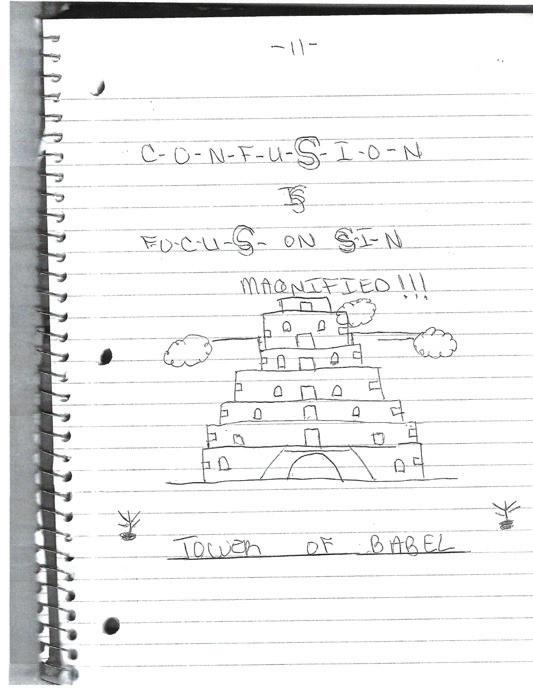
How have we gotten to the point where one would play the blame game and try to justify, fully knowing they are the culprit, and not something or someone else? We tend to ride on the shirttail of where there is good, evil is there, present and accounted for. As well, a lot of folk make excuses, knowing it was not right in the first place. It is no longer looked upon as a mistake, but as well planned and strategically calculated. At this point, there is no excuse for the action that transpires. You knew exactly what you set forth to do, regardless of the ramifications.
Case in point… when I was a young boy, growing up in the hood on the corner off 5th and H Streets NE, I was exposed to multiple ways of life. First, the right way. Next, the wrong way. Then ultimately, my way. Depending on the situation or circumstance at that moment. I just happened to be the eighth child of nine, five boys and four girls. My parents were Joseph Edward and Amelia Ann Denny. We lived in a two-level, four-bedroom house with a basement and one and a half baths with a shower. I had really groovy parents (now deceased), and they did (I believe) a great job at raising us. Times were sometimes unpredictable and somewhat stifling. There was always more month at the end of the money. As a response to this unwarranted fact of life, I began to do unseemly things to compensate, confiscating things that weren’t mine and collecting stuff that did not belong to me. “Oh, what a tangled web we weave,” another writer once penned.
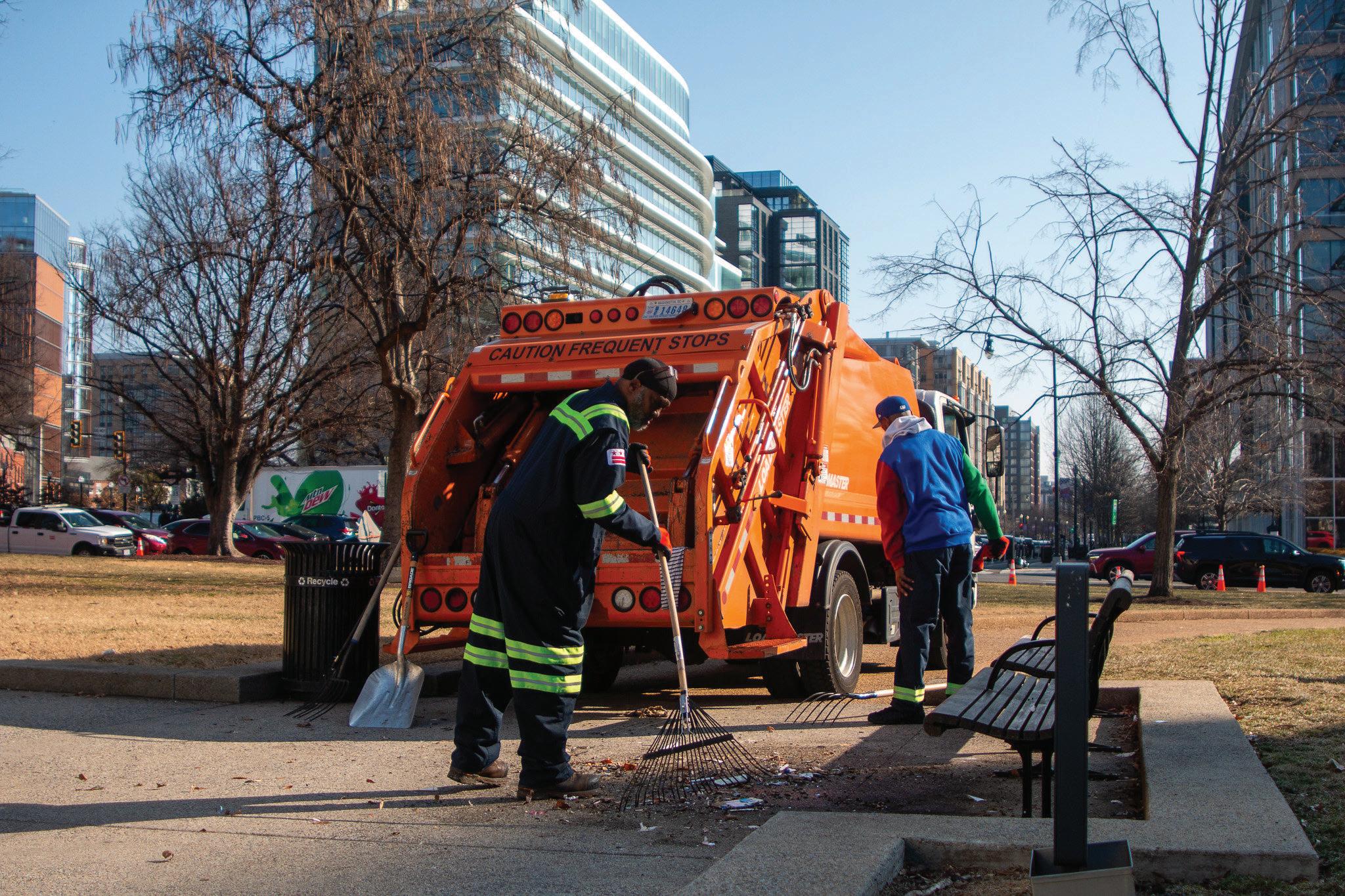
My parents are from Bristol, Virginia. My dad was a decorated representative of the United States Army, where he was awarded the Silver Star and Purple Heart decorations for his dedication and valor. Two of my brothers followed in my dad’s stead, one a Marine and the other in the Army. My mom was a dedicated housewife. She was fond of home life, along with performing housework for two prominent lawyers in Chevy Chase. She was great at organizing, cooking, cleaning, baking, and a host of other talents. My mom was my #1 girl, and I always vowed I would choose a wife who resembled “my favorite girl,” my mother. She was beautiful. Brilliance and love exuded from everything she put her hands to. Oh, how I miss her so!!!
I would now like to present “The intoxicating, exasperating, but invigorating WIP (work in progress) man of God; the original Reginald Denny.” Born April 29, 1964, at the historic Columbia Hospital for Women, I am 62 years young and still active, vibrant, and a go-getter. I am not through advancing the kingdom, only under the direction of God’s leading. I fall short from time to time, but I dust myself off and advance in the spirit of Elijah. The power of God is in my life… think about it!!! He goes before me, and he is my regarded magnified!!! He’s got my back.
Every day is a day of thanksgiving, but at the same time, the world seems to be in an uproar and spiraling out of control, off its axis. It’s almost as if right is wrong and wrong is right. We make excuses when there are none, complain about things we cannot change, and say harsh things to one another. Instead of advancing each other, a lot of us are caught up in this vicious cycle of being greedy for gain, regardless of who suffers as a result of our selfishness. The world is a blaze of confusion. Our focus has been skewed to the point many of us have become calloused and uncaring, forgetting the price of sin is ultimately death. Where is the love? What happened to the sensitivity? Why can’t we just be friends? I refuse to be abused by a mother sucker who is confused!! It seems like the more you try to be at peace with your neighbors, it ends up in discourse and disdain. Why can’t we just agree to disagree and leave it at that? It was oh, so simple then, in the old and good times when we were children running up and down and all around, fancy free, without a care in the world. I would love to go back to how it used to be, to those old landmarks of joy and happiness. Instead, the world we live in today is one of “do what you want, when you want, how you want. And do as much as whatever you desire.” Man’s mind is becoming exceedingly wicked. Woe to the inhabitants of the earth. There will be a day of reckoning. Perilous times have come. We are living in a state of confusion.
Webster defines “confusion” as stated in the Bible as “the state of disorder, tumult, perplexity, or shame, often contrasted with God’s character.” The world has become chaotic and out of control due to the lack of God’s order and divine guidance. My personal definition of confusion is enveloped and engulfed in the very word confusion.
C-O-N-F-U-S-I-O-N all mixed up is F-O-C-U-S-O-N-S-I-N!
Artist/Vendor
I was inspired by the colors. I saw two ladies, they were friends or maybe family wearing matching colors and laughing. It also reminded me of these flowers…. It was a day, cause I got a call from my Google Meet, and automatically I was like, where are my folks? I started missing my sister, who I haven’t seen in years, and then started thinking about my sister’s daughter, who is just growing up and dealing with life. Anyhow, I just started having anxiety, cause people call people all the time, but it gets interesting cause you may or may not have the right number when looking for someone. That was just a moment cause the girls and I were leaving to go eat out, but the call was before we were about to leave.
We got to the Metro, but the train didn’t go past Rhode Island, so we transferred to the Green Line, then waited
for the bus. The timing actually wasn’t bad, but I was like wow, that was unexpected. I did find my aloe vera drink and got something for home. Getting stuff for home is a blessing, so that was important. My sandals have been a blessing, but it was time to get new ones. On the way to our destination, the top part fell of so I was walking differently, but I was trying to make sure I wasn’t touching the floor. My sandals were going to be replaced, but the mall was closed, so they didn’t get replaced as planned. We ate, and I was eating to make my ancestors proud, but I only enjoyed the ice cream for real. I couldn’t enjoy my food like I used to…. time to find a better eatery. I threw my sandals away when I got home. I am happy I took a good photo and very thankful that we went out. Have a blessed season, cause it is a lot going on.


KYM PARKER
Artist/Vendor
To know true love, to know peace
To understand that heavenly glow that makes me happy
To know God’s love is always here
To know this: I am love
God loves me, Jesus loves me
And I love myself with all my heart and soul
I am joy, I am God’s peace
When I wake up in the morning, I pray
And I ask God for the blessings she has given me
The strength to get through the day
To her, everything works
She gives me energy, the joy that’s always here
All of her children, it’s true
She made us all perfect individuals and equal
Like thumbprints, snowflakes, rainfall
Like the patterns on a tree
What makes me happy?
I breathe, I have strength
I have joy, and I have life
She gave me all of these things
I work, I make things happen
More about me: I am a doctor, a vet, a poet
I pray to God every day for the skills she’s given me
My mother showed me unconditional and unexacting love
So I smile
BRIANNA BUTLER
Artist/Vendor


I’m looking forward to a good future in achieving God’s purpose for my life. I am studying to mentally overcome the things that held me back from meeting the mark. I will not be a slave to things that I’m not proud of. I’m going to keep focusing on the positives, the love, and support, when I look up into the hills where my help comes from. I am more true if I believe and put my whole heart into trusting the word I read. He makes me feel special when I am in his presence. He informs me how he wants me to walk in his way and come up higher. He lets me know I should be flying on a high frequency scale. I was made to soar, wonderfully! I’m putting an end to the snares around me. I shall and will be free. He’s really working the good in me.

