Radical Mothering: How Liz Dyer Built a Movement to Protect Queer Youth
by Percy Laird
When Liz Dyer talks about Real Mama Bears, she doesn’t describe it like a nonprofit. She talks about it like a kitchen table—one that keeps expanding as more chairs are pulled up, more stories spill out, and more mothers recognize they’re not alone. What began in 2014 as a private Facebook group for moms of LGBTQ+ kids has grown into a global grassroots movement serving more than 100,000 families each year. And the foundation hasn’t changed: mothers who are fiercely committed to making the world safer for their kids.
“Support, educate, and empower”—that mission was there from the start. “I really believe that a mother’s love can change the world,” Dyer says. “And—as the families go, so goes the world.”
Today, Real Mama Bears includes more than 60 chapters across the United States, Canada, the UK, and Australia. It remains rooted in maternal love, but the community has expanded to include allies, queer parents, and even members who realized—through supporting their children—that they themselves were nonbinary or trans. The name “Mama Bears” wasn’t even strategic. “We landed on the name accidentally—it
grew out of the community,” Dyer says. “We do not want to exclude anyone <3.”
Seeing the Pattern—and Breaking It
Across decades of political cycles, Dyer noticed the same harmful playbook:
“Take a marginalized group.
Portray them as a danger to kids or families.
Use fear-based messaging to gain political ground.
Let real people suffer while the headlines and campaign ads roll in.”
The current wave of anti-trans legislation is part of the same pattern. But Dyer sees cracks forming. “As visibility grows and as more people get to know transgender individuals in their own families and communities, fear loses its grip.”
Real Mama Bears exists to accelerate that loosening—not through think tanks or lobbying machines, but through the radical, ordinary acts of care that queer people have always relied on.
“Advocacy work can be a bandwagon,” Dyer says, “but that is not the case for moms. Moms for LGBTQ+ kids continue to
“When
I looked at LGBTQ+ people who were living their authentic lives, they were healthier in every way than people trying to repress their identity. I read books, went to meetings, sought out resources. To do what’s best for my son, I need to keep an open mind. I need to do the right thing for my kid”
-Liz Dyer
do the work for the rest of their lives because of the world we live in. We want people to live wholeheartedly.”
From Conservative Christianity to Community Builder
Before becoming a movement leader, Dyer was a Southern Baptist Bible study teacher, writing curriculum and speaking at women’s events across Texas. In 2006, her son came out as gay at age 19. The world she knew shifted instantly.
“I didn’t have a lot of foundation for what to think,” she recalls. “Being a woman of faith, the first thing I did was look at the Bible.” But the verses used to condemn LGBTQ+ people described acts like worshipping fertility gods through temple orgies—“nothing related to my son.”
So she broadened her search. “I read books, went to meetings, sought out resources. To do what’s best for my son, I need to keep an open mind. I need to do the right thing for my kid.”
Listening to LGBTQ+ people ultimately changed everything. “When I looked at LGBTQ+ people who were living their authentic lives, they were healthier in every way than people trying to repress their identity.” She knew she wasn’t the only mother in need of this clarity,
so she began blogging in 2010. Parents found her. The community grew before the organization even existed.
By the time she formed the Facebook group in 2014, it was already national.
Mothering as Community Practice
One thing sets Real Mama Bears apart: it is built on the instinctive drive of mothers to protect their children and each other. Dyer also recognized that mothers and fathers often needed separate spaces. “A lot of cisgender dads are slow to come along or never come along,” she says. “It would mean the mom wouldn’t have the space to share and get resources. Parents need to go on their own journeys.”
All programs emerged from listening to what the mothers themselves wanted to do.
The Blanket Project began because moms wanted LGBTQ+ youth to have something tangible—soft, warm proof that someone cares.
Mama Bears to the Rescue grew from the desire to show up physically when queer youth were targeted. Early in the project, the
MAMA BEARS - To Page 20
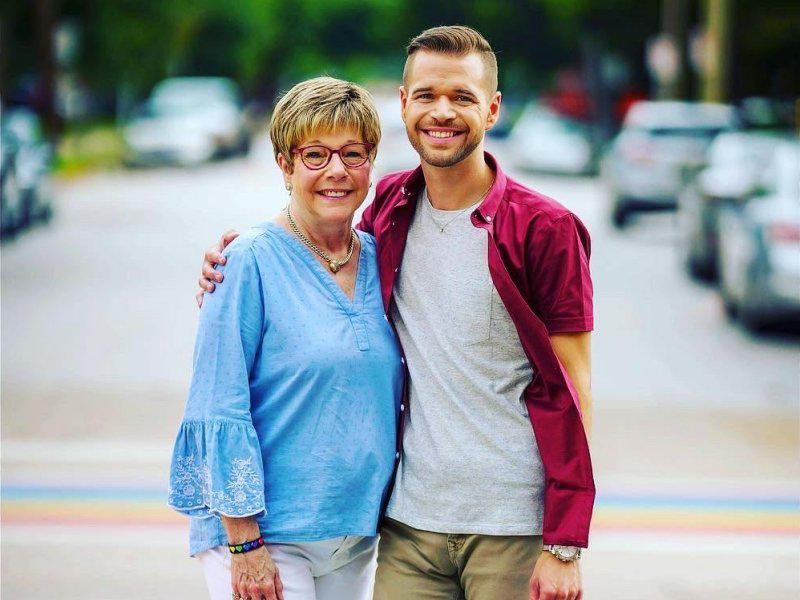
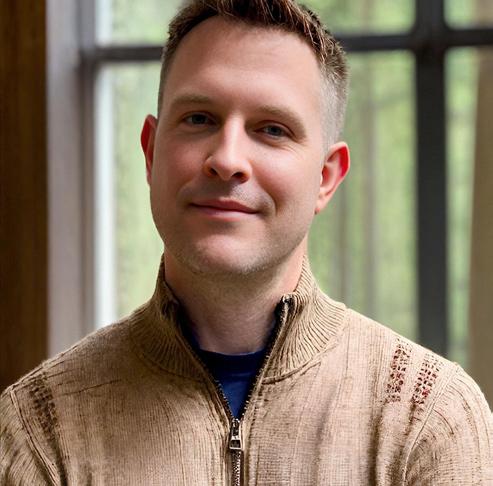
Liz Dyer and son Nicholas
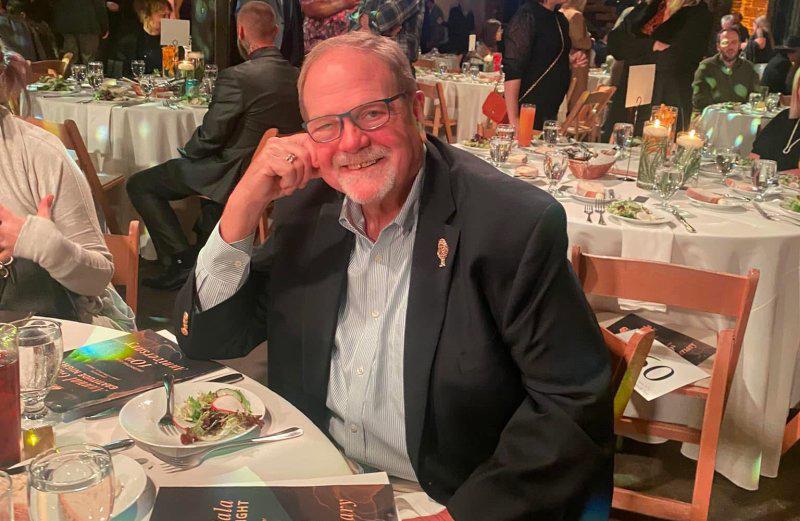
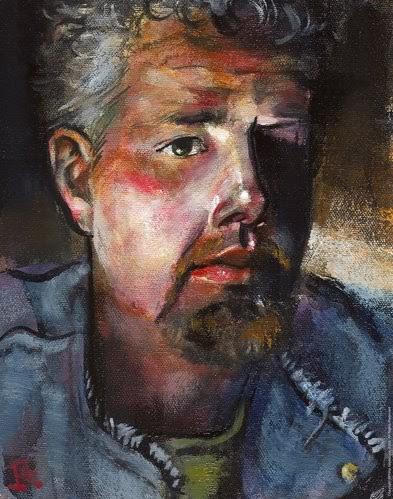
Bill was the true personification of “larger than life.” He devoted endless time and dollars to helping local Portland area LGBTQ+ organizations and nonprofits obtain their goals. He was the “master of the ask,” often called upon to make the money rain at benefits and fundraisers.
Bill Dickey, community advocate and philanthropist, dies at 69
What I find myself sharing today is sad on many levels, as Portland lost a big part of our community on November 3 with the passing of Bill Dickey.
Bill was truly a larger-thanlife figure. He was big in his generosity, his stature, his humor, his wisdom, and yes, even his temper. Bill was also one of my closest friends, and his too-early passing is a deep loss for me.
The formal obituary has yet to be published in local newspapers of record. But here and now I want to share some reflections on his life, with thoughts from groups and people who knew and appreciated his many accomplishments and contributions.
On November 3, 2025, the Portland/Vancouver community lost Bill Dickey, who succumbed to cancer after a short and brutal illness.
Bill was the true personification of “larger than life.” He devoted endless time and dollars to helping local LGBTQ+ organizations and nonprofits obtain their goals. He was the “master of the ask,” often called upon to make the money
rain at benefits and fundraisers. Bill was so dedicated to giving that in 2019 he was honored as the Portland recipient of the Association of Fundraising Professionals 2019 Philanthropy Award.
According to a Pamplin Media Group article published at the time, “In all, Dickey has given over $2.5 million in cash [to] and organized charity events [for] more than 100 organizations and given in-kind donations to many more. Recipients have included Basic Rights Oregon, the Oregon League of Conservation Voters, the ACLU Foundation of Oregon, Planned Parenthood of the Columbia-Willamette, DoveLewis Emergency Animal Hospital, and the 42nd Avenue Business Alliance. Portland Monthly magazine awarded Dickey [its] Light a Fire Award in 2007, and the recognitions haven’t stopped. In 2013, Dickey was named a Queer Hero by the Q Center and a year later received the 2014 Sam C. Wheeler Freedom Award from De Paul Treatment Centers. Both the Multnomah County Democrats and Basic Rights Oregon recognized him as the 2015 Hero of the Year.”
Tributes to Dickey have poured in. Here are just a few.
From the Portland Lesbian Choir: “A longtime supporter and friend, Bill Dickey, passed
away earlier this week. Bill was dedicated to our community and supported many organizations. His generosity helped so many people and communities in Portland and beyond. He will be truly missed.”
From the Portland Gay Men’s Chorus: “As we celebrate the light of community this season, we honor the life of Bill Dickey, a cherished friend and steadfast PGMC supporter. Bill passed peacefully on November 3, leaving behind a legacy of generosity and care that continues to inspire.”
From Samantha Swaim of Swaim Strategies: “How lucky are we to have lived in Bill Dickey’s Portland, [with] his generous giving, his dream of a better world for everyone. He loved art. He advocated for all of us. And he gave so much. Our community and our city are better for his love of us all.”
From Cinema 21: “We here at Cinema 21 lost a great friend in Bill Dickey — a man whose energy, generosity, and curiosity shaped so much of the Portland we know and love. His presence filled every room he entered: the laughter, the stories, the eager interest in people and ideas. Bill was a champion of the arts, a devoted supporter of local causes, and a connector of countless lives. He believed in community, in beauty, and in showing up again and again, with heart.
Those of us who knew him will remember his big personality and irrepressible humor, but also his thoughtfulness, his kindness, and his deep love for this city and its culture. Portland shines a little dimmer without him, yet the light he shared carries on in every life he touched.”
From media personality Carl Wolfson: “As many of you know, Bill Dickey passed away a few days ago after a battle with lung cancer. I don’t think there is a person in Portland who was not touched by his warm spirit, endless philanthropy, and daily good deeds.”
As cofounder and owner of the printing business Morel Ink, Bill Dickey sponsored my radio show, “Wire to Wire,” for its full 10year run. I am eternally grateful for his unflagging support and his large and cheerful presence in all of our lives.
Bill’s last public appearance was on October 21, when hundreds of friends and admirers gathered at Portland’s Mother’s Bistro and Bar to pay tribute and offer personal hugs and goodbyes.
Bill Dickey passed away two weeks later, in the early morning hours of November 3.
He will be deeply missed.
by Marty Davis
Originally published online by Stoneall News Northwest November 14, 2025
Bill Dickey
Trans Day of Remembrance draws 200 to Spokane library to honor lives lost
Spokane Mayor Lisa Brown delivered a Proclamation marking November 20, 2025, Transgender Day of Remembrance in the City of Spokane. City Council members Paul Dillon and Zack Zappone were also in attendance, along with incoming council member Sarah Dixit.
by Luke Grayson
On Saturday more than 200 people gathered to mourn, honor and celebrate the 58 trans lives that have been lost in the U.S. this last year … a few not even old enough to drive yet. The youngest was just 14. There were more than 320 deaths worldwide, at least according to the countries that keep a report.
Fifty-eight names and faces that we know about, that weren’t erased in death because of unsupportive or ignorant families or because they were assumed to be the sex they were assigned at birth by the police.
Fifty-eight people who survived their coming out stories, but not counting those
who had yet to come out, to come into who they were.
This year’s Trans Day of Remembrance (TDOR) seemed even more important than before because of this world we currently find ourselves in, and it was more heartbreaking to process.
The history and importance
Transgender Day of Remembrance began in 1999 by Gwendolyn Ann Smith, whose work chronicling anti-trans murders led to the creation of TDOR in 1999. She started the Remembering Our Dead project in 1998, after the murder of Rita Hester, a Black trans woman.
Spokane held its first TDOR in 2012, the same year I came out. Since 1999, TDOR has grown to 155 cities worldwide.
While trans people make up roughly 2% of the population, our statistics stay stacked against us. There’s speculation about whether this number is still correct or not. The average life expectancy of a trans person (especially trans women of color) is 35.
I’ve seen this statistic glaring in the back of my mind since I came out. So much so, that for a long time I didn’t know that happy, trans adults existed, or that it was even a possibility for me to be one of those happy people.
I know my story isn’t unique in this way because so many queer youth have never been able to be around adults that support them and who are like them. So, why should they believe that we get to have the same kind of happiness as everybody else?
I could drown you in statistics for a while, but I’d just be repeating the same ones over and over. As much as things have changed, things have also stayed the same. So I’ll leave you with four more:
Trans individuals are 1.7 times more likely to experience all forms of intimate partner violence.
50% of transgender people have attempted suicide at least once. Just this year, 61% of all those lost to suicide were trans youth ages 15-24.
17 of the 27 violent deaths tracked in the past year were due to gun violence.
TDOR held at Spokane Public Library’s Central Branch
Spokane held its Trans Day of Remembrance in the downtown branch of Spokane’s library from 2-5 p.m. in nxʷyxʷyetkʷ Hall. They hosted an art gallery of local trans artists around the back and resource tables for about a dozen different organizations and groups.
A big theme was obviously grief, many touching on it. A memorial tree was set up for people to write the name of someone they’ve lost on an ornament; I chose my friend Justice who passed away from suicide a few years ago at the age of 22.
Mayor Lisa Brown delivered a Proclamation marking November 20, 2025, Transgender Day of Remembrance in the City of Spokane. City Council members Paul Dillon and Zack Zappone were also in attendance, along with incoming council member Sarah Dixit.
Many people shared their words, music and art about what it’s like to be trans in this society.
Dr. Pam Kohlmeier spoke about
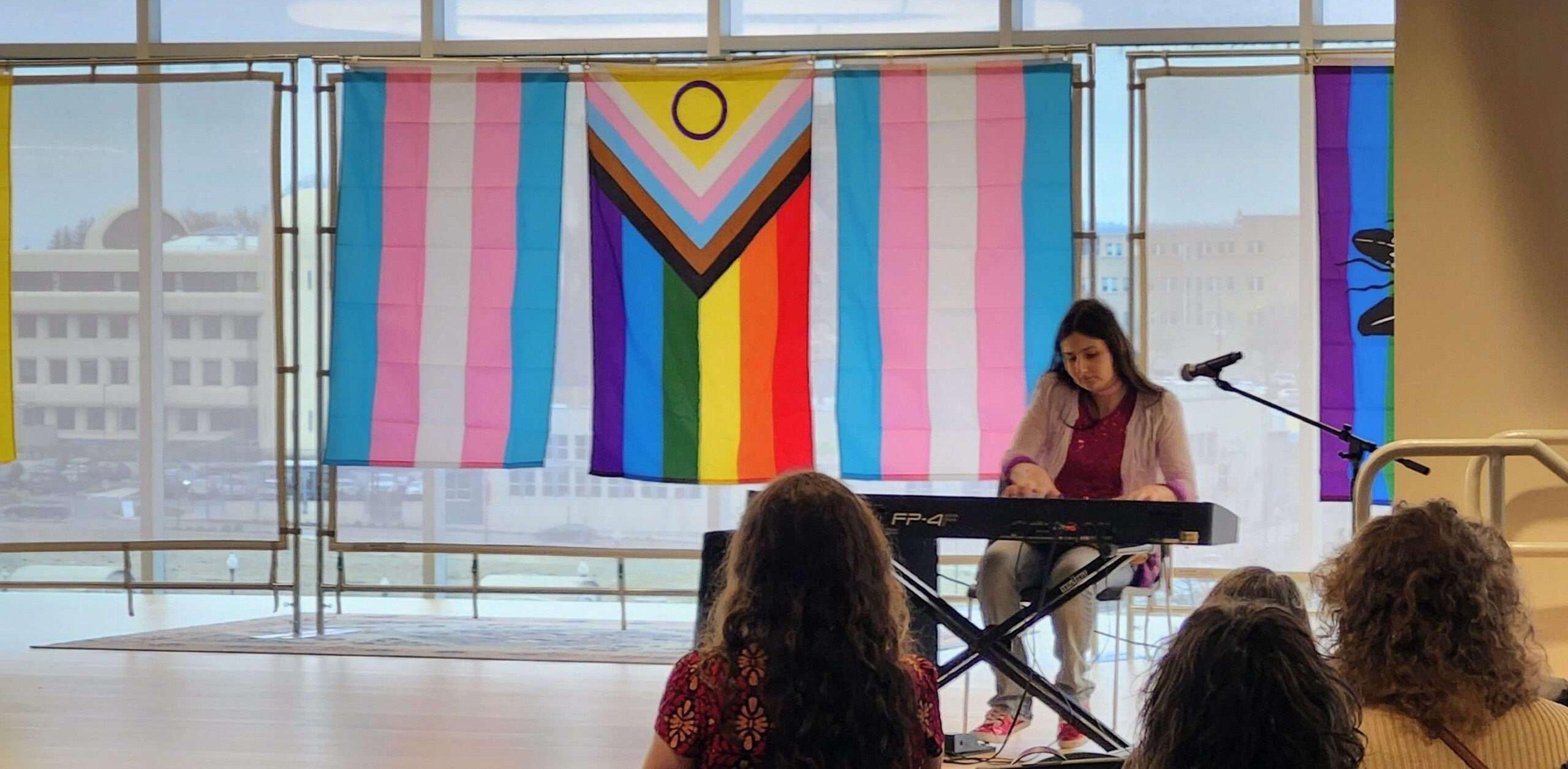
Pianist Accalia Murray (Lucas Grayson/ FāVS News)
This article first published on FāVS News. We appreciate their invitation to republish this piece in Stonewall News Northwest.
“In a time when transgender individuals face elevated rates of suicidal ideation and barriers to competent care, accrediting courses that spread disinformation is not only unethical but also endangers lives.”
-Spectrum Center
Spokane
WSU Suspends Hate Group’s Medical Courses; Coalition Says Make It Permanent
by Erin Reed
Acoalition of over 30 LGBTQ organizations and allied institutions in Washington and Idaho has launched a campaign calling
for greater transparency and accountability after Washington State University allowed the Society for Evidence-Based Gender Medicine (SEGM), a Southern Poverty Law Centerdesignated hate group, to offer continuing medical education (CME) credits to medical
providers. Taking CMEs is essential for healthcare workers to retain their licensure.
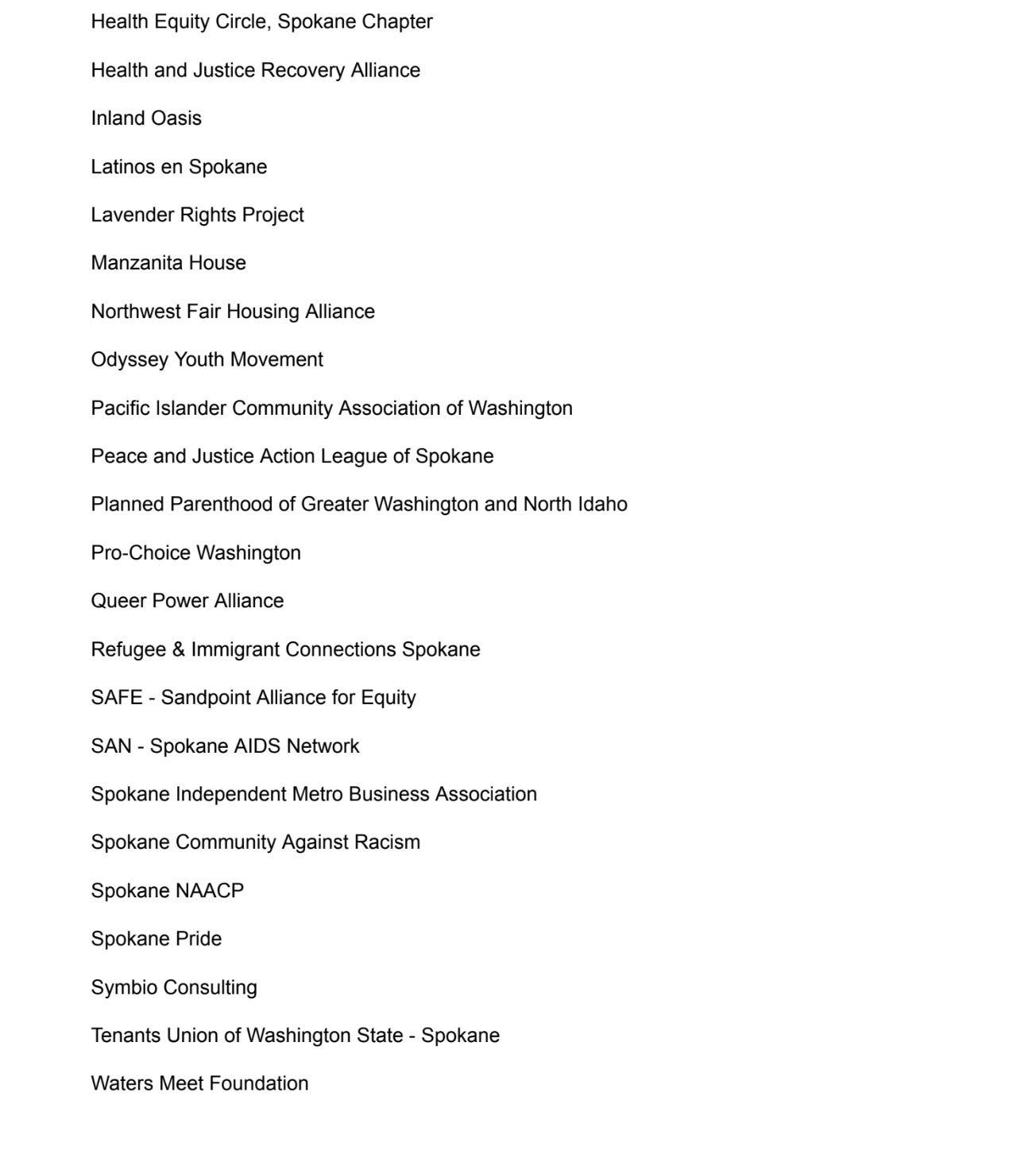
An open letter was penned by Spectrum Center Spokane, and co-signed by groups like Spokane Pride, the Greater Seattle Business Association (Washington’s
LGBTQ+ & Allied Chamber of Commerce), and local chapters of the NAACP and Planned Parenthood. This is in addition to the hundreds of people who have already written to WSU leadership about the fiasco as of Nov. 5, Spectrum told Erin in the Morning.
This article first published by Erin in In The Morning.
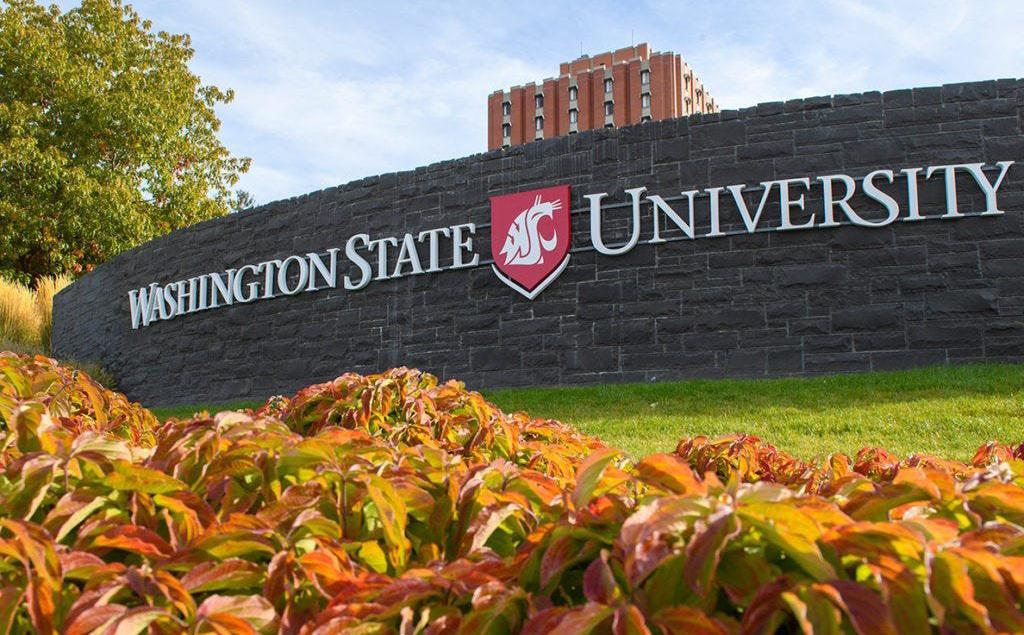
Washington State University
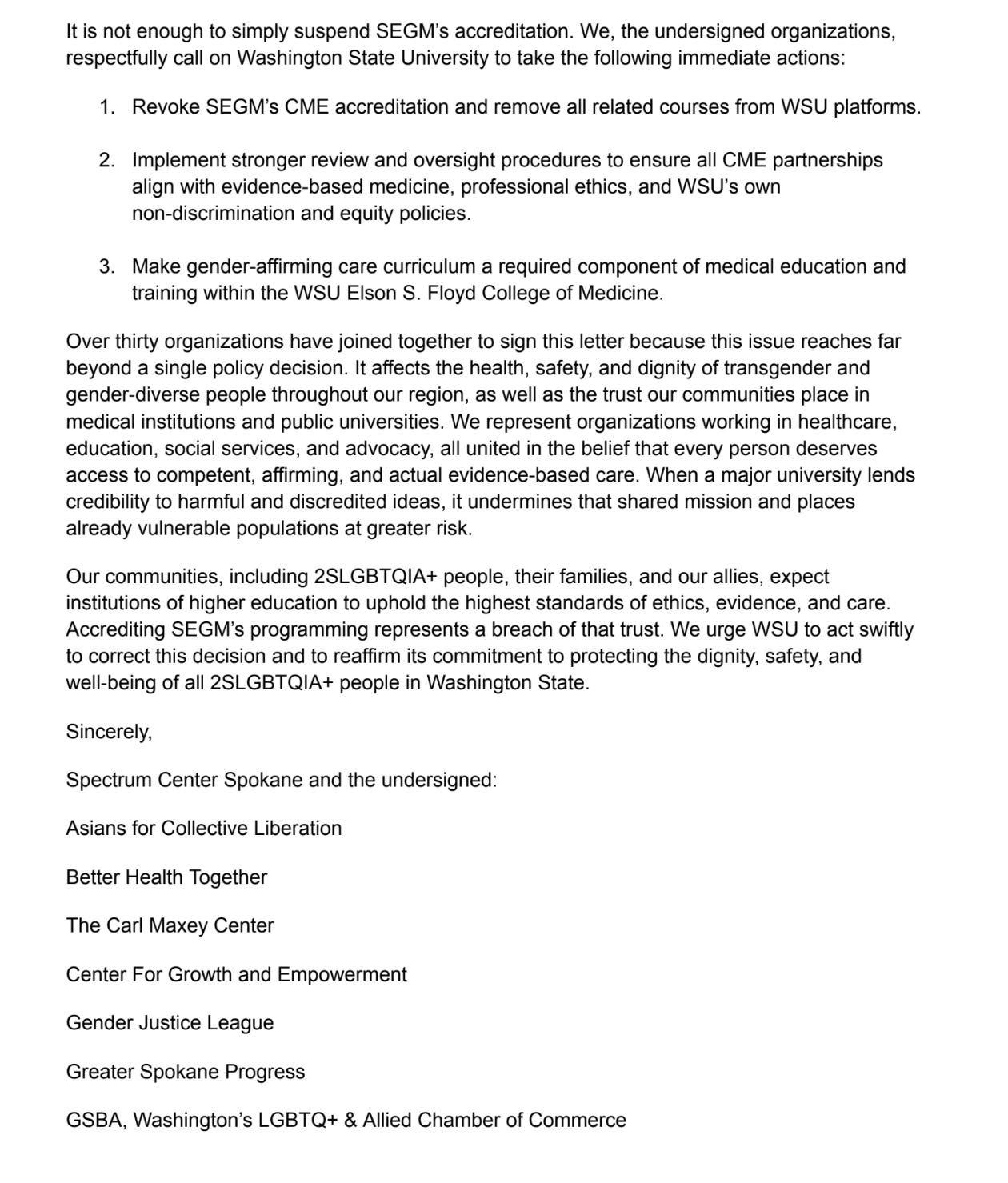
Below: Letter from Spectrum Center to Washington State University signed by over 30 LGBTQ organizations and allied institutions in WA and ID.
“Trans patients deserve better,” said KJ January, Spectrum’s co-executive director, in a press release. “For some licensed practitioners, continuing education is the only opportunity to learn about transgender healthcare. Accrediting a group that promotes anti-trans propaganda is a disservice to both the medical community and the patients they serve.”
The video series was offered under a joint providership between the university and SEGM.
“The harm of disinformation and bias in medical settings is not hypothetical,” the letter reads. Indeed, a 2022 joint survey from the KFF and the Washington Post found that nearly half of trans adults said they have had to interact with health care providers who know “not too much” or “nothing at all” about trans people. Nearly one in five trans adults reported they had been refused health care from a provider due to their gender identity.
“In a time when transgender individuals face elevated rates of suicidal ideation and barriers to competent care, accrediting courses that spread disinformation is not only unethical but also endangers lives,” the open letter continues.
Among the group’s demands is a mandatory gender-affirming care curriculum for medical students and “stronger review and oversight procedures to ensure all CME partnerships align with evidence-based medicine, professional ethics, and WSU’s own non-discrimination and equity policies.”
The letter comes after Erin in the Morning reported on the CME and SEGM’s SPLC-branded hate group status. Complaints were subsequently filed with the national Accreditation Council for Continuing Medical Education (ACCME). The university temporarily suspended the group’s CME credentials as the ACCME conducts an inquiry to determine whether the content violated the organization’s requirements for scientific integrity and balance. It could also weigh in on whether the videos engaged in ACCME-outlined best practices for responsibly broaching “controversial” medical topics in CMEs.
Washington State University did not immediately provide further comment upon request from Erin in the Morning. SEGM, for its part, has contested the SPLC’s hate group label.
Thoughts from the Hobbit House
A Middle Earth Cuddle Puddle: The Healing Power of Touch
“Every time we sit shoulder to shoulder with others—on a porch, a trail, or a dodgeball court—we quietly rebuild something powerful: connection, belonging, and hope.”
by Ryan Oelrich
During the pandemic, I was diagnosed with heart failure after landing unexpectedly in the ER. The medical team was covered headto-toe in plastic shields, gowns, and gloves. I spent hours alone in a dark hospital room. My husband wasn’t allowed to enter. I held onto my cell phone like a lifeline, but without a charger, the battery slowly drained. Staff kept promising to find one, but they were short-staffed and overwhelmed. Eventually, the
screen went black.
And I remember feeling desperate—not just for answers, but for touch.
A hand squeeze. A reassuring arm. Some simple, human reminder that I mattered, that I wasn’t disappearing into the noise and machinery. But there was none.
When I was finally released, my husband wrapped his arms around me in the parking lot. In that moment, I felt like I was falling apart—and his touch was what
Human touch is one of the first languages we ever learn. Before we form words, identities, or meaning—we learn safety through being held. Touch tells us we exist.
I remember being at youth group as a teen playing hide-and-seek in the dark. A boy grabbed my hand
HOBBIT HOUSE - To Page 22
Out on the Ranch
The Season of Thanks and Resilience
“At the ranch, we have found that if we shift our conditioned perspectives away from nuclear family and toward community connection, toward self-responsibility rather than self sufficiency, we can chart a course through the turbulence of social upheaval. ”
by David Capocci
Thankfulness is found in the turbulent waters of this historic time, by charting a path toward community and away from the idea of rugged American individualism, self sufficiency, and the nuclear family.
to the public. This column shares their ongoing experience in working and living as out and proud members of their community in their guest ranch setting.
So many dream of moving to the mountains and become as self sufficient and removed from urbanity as possible. They want land where they can shoot their
guns, light their fireworks, and grow all the food they need. Little consideration is given to the road their ancestors built allowing the access out to that land, just the expectation that the road will be there. From our very experience of actually homesteading a 17 acre parcel of land, in the mountains among the national forest, and opening it to the public on a daily basis, we can honestly share: until making toilet paper
OUT ON THE RANCH - To Page 23
David Capocci is one of the owners of the homestead campground, Paca Pride Guest Ranch, along with his husband, Glenn Budlow, and business partner, Tim Leingang. Having purchased land to build a legacy project in the mountains, they went from city boys to rural ranchers, turning their yurt camping experience into a business plan to reinvent the family farm and bring “glamping”
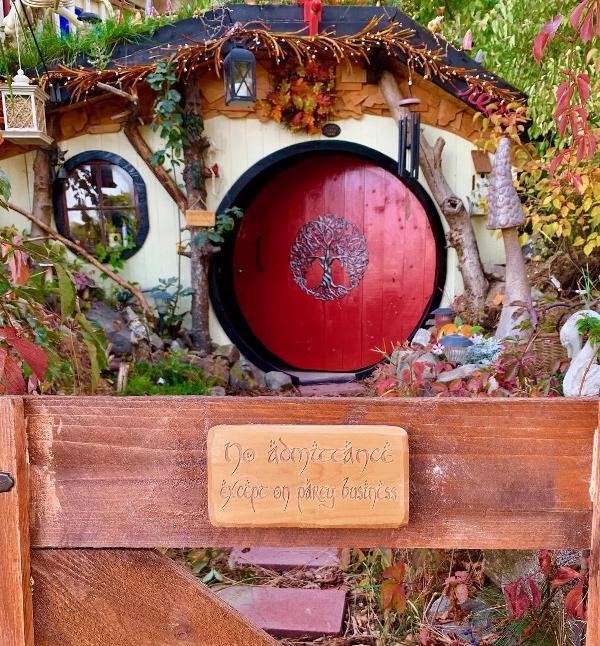
Ryan and his husband built a Hobbit House that’s become a regional attraction.
Photo courtesy of David Capocci
held me together.
“TDOR asks us not just to mourn what happened, but to confront why it keeps happening. It asks us to acknowledge the quiet and public violences we survive, the traumas we carry, and the policies and systems that attempt to erase us.”
-Percy Laird
Transgender Day of Remembrance: Carrying the Weight of What We Survive
Every year on November 20th, I show up for Transgender Day of Remembrance with my breath held a little too tightly. It’s a collective ritual of grief—a moment when our community gathers to speak aloud the names of those taken by anti-trans violence. But for many of us, TDOR is also a private reckoning: why am I still here when so many others aren’t?
Four years ago, when my youngest child was just a few months old, I attended my first Transgender Day of Remembrance at the downtown Spokane Public Library. I was still reckoning with my own transgender identity then. On the outside, I appeared as a mother with a lactating chest, a body that had just grown and delivered another human into the world. But at my core, I knew I was not a cisgender woman. My transness didn’t take away from my female identity—it expanded it. I am nonbinary, transmasc, gender nonconforming, and not one of those truths diminishes the fullness of who I am as a human being and an individual. If anything, they bring me closer to myself.
That day, the faces around me were unfamiliar—strangers gathered in remembrance. Today, many of those same faces have become my chosen family. I didn’t yet understand the silent language of TDOR: the steadying glances,
the shared breath, the way grief and resilience sit side by side.
There were no candles at that first event—just art, music, and the weight of memory. The speeches, the words shared, the music played, the songs sung, and the lives honored created a collective current in the room. Gentle, heavy, unflinching.
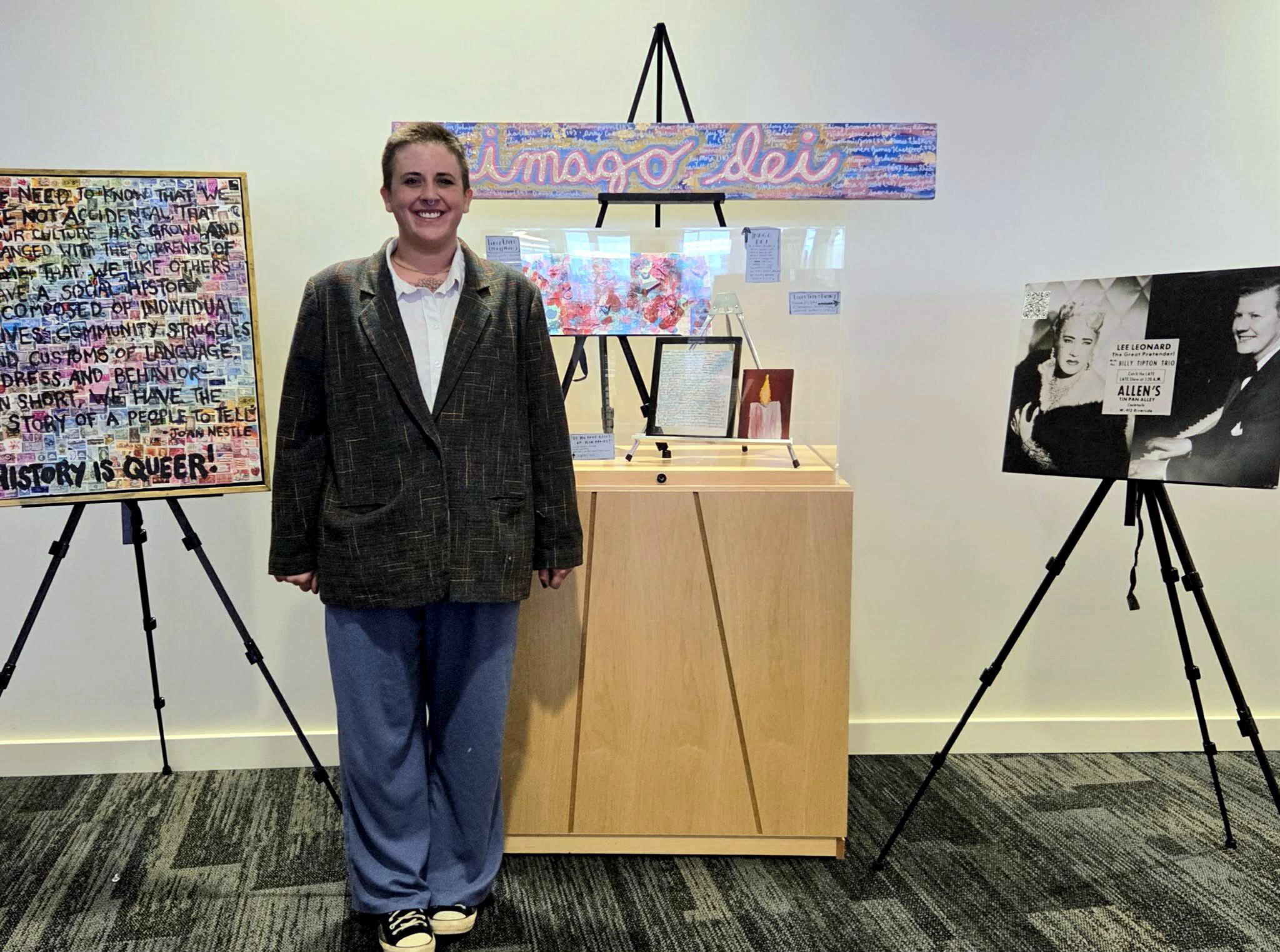
This year, one of the pieces I contributed was a horizontal wooden panel shaped like a cross, painted with the Latin phrase imago dei—image of God. Behind the bold lettering, in faint cursive, were the names of the transgender people who died this year. Their names deserve dignity. They deserve breath. They deserve the space they were denied in life.
This is the second year I have hand-written each name myself. Letter by letter, I write them with care, almost as though handwriting could hold their stories a little longer. It has become a ritualistic practice— my own form of grieving and honoring—as I confront the truth that I survived another year while so many did not.
Survivor’s guilt always finds its way into this space. It whispers that my life is borrowed. That I owe something impossible. That by living, I must justify what others lost.
But the truth is: I am not alive because I was braver or more deserving. I’m alive because of chance, timing, community, and the grace of being held up by people who refused to let me slip away. I’m alive because somehow, despite everything, life kept insisting on me.
That first TDOR planted a seed in me. I didn’t know then how much this annual gathering would shape me—how each year I would arrive carrying more stories, more pain, more gratitude. I didn’t know those strangers would become the people who would walk with me through transitions, divorces, custody battles, housing instability, and the daily complexities of being a trans survivor in a world that treats our humanity as conditional.
Our survival is communal, messy, uneven. None of us earn it. None of us deserve to die. And none of us escape the grief of seeing the list of names grow longer each year.
To honor the dead is sacred work. But to honor the living is equally necessary—those of us still stitching together lives in systems that were never built for our safety or belonging. TDOR asks us not just to mourn what happened, but to confront why it keeps happening. It asks us to acknowledge the quiet and public
violences we survive, the traumas we carry, and the policies and systems that attempt to erase us.
It also asks us to sit with the truth that we survived things we never should have had to endure.
This year, I am trying to let survivor’s guilt soften me instead of hollow me out. To let it remind me that survival is not a debt—it is a commitment. A commitment to presence, to compassion, to telling the truth, to showing up for my community, and to imagining a world where our lives are not negotiable.
We honor the fallen by remembering. But we honor them more fully by building a world where remembrance is no longer necessary.
And as I write their names, I write my own quietly too—not because I am gone, but because I am still here. Because being alive is both a wound and a vow. Because survival, for us, is an act of courage, defiance, devotion, and love.
This is what survival looks like: grieving, creating, speaking, singing, writing, witnessing, fighting—and refusing to disappear.
by Percy Laird
Percy Laird stands in front of a horizontal wooden panel shaped like a cross they made for this year ’s TDOR. The panel is painted with the Latin phrase imago dei—image of God. Behind the bold lettering, in faint cursive, are the names of the transgender people who died this year.
LGBTQ+ Equality
Weekly National Headlines
by Fabrice Houdart
US News
U.S. Government Pulls Out of World AIDS
Day
Newly issued guidance reveals that the U.S. Government will not commemorate World AIDS Day this year—overriding prior approval and imposing sweeping restrictions. Agencies are directed not to use federal funds for any World AIDS Day–related events, and staff are instructed to avoid publicly promoting the day across all channels, including social media, speeches, or media engagements. While CDC and other U.S. government personnel are permitted to attend locally organized events, they are barred from speaking or acknowledging their attendance publicly. The notice recognizes the abrupt shift and warns that planned activities must be adjusted immediately.
Shaming Is Not Justice
I’ve spoken before about how alien it feels—especially as a Frenchman—when U.S. police departments publish mugshots or lists of people that were arrested. This week, the St. Lucie County Sheriff’s Office in Florida posted the names, photos, and ages of two elderly men (82 and 87) arrested in an undercover sting at a public park. The post was laced with innuendo and mockery. I saw it and felt only sadness. America remains deeply punitive. This is unnecessary and, frankly, cruel.
Florida Driver Attempts to Run Down LGBTQ Running Group
A Florida man was arrested on November 26 after allegedly attempting to run over members of an LGBTQ running group—not once, but three times—before fleeing the scene. Eyewitnesses say the driver deliberately targeted the runners during their regular meetup, raising serious concerns about rising hate-motivated attacks. See here.
Jeremy Bernard Reflects on the East Wing Demolition
In a new piece on LGBTQ+ Freedom Fighters, veteran
November 26, 2025
journalist Karen Ocamb spotlights
former Obama White House
Social Secretary Jeremy Bernard, who speaks candidly about the emotional and symbolic demolition of the East Wing. Bernard—the first openly gay man to hold the role—remembers his office not just as a workspace but as “a part of history,” the welcoming heart of the People’s House, where Americans of all backgrounds, including LGBTQ+ guests, once entered with dignity. “Everyone came through the East Wing,” he reflects. As Ocamb notes, its destruction is more than architectural—it’s a stark metaphor for Project 2025’s campaign to erase inclusion and civility. Read the full interview on Karen Ocamb’s Substack here.
Queering the Boardroom
December 3: PDA Holiday Party
Next week, the Private Directors Association’s New York Metro Chapter hosts its annual Holiday Party—and yes, LGBTQ+ leaders belong in that room. I will be there. Register here.
December 9: Crafting Your Board Journey
On December 9, our friends at UNC’s Director of Diversity Initiative (DDI) are holding their popular session “How I Got My First Board Seat.” You can register here.
December 10: How to Land Your First Board Seat
On December 10 at 3 p.m. ET, the Association of LGBTQ+ Corporate Directors is hosting a Securing Your First Board Seat webinar, featuring Jennifer Knight of Orient Point Strategic Advisors
(and now a Board member of the Association) and Brian Ellner of APCO. Register here.
Boardroom Moves: Herratti Steps Down, Bertozzi Steps In Vimeo announced the November 24 departure of board member Jay Herratti, while Eli Lilly signaled a high-impact addition with Nobel laureate Carolyn Bertozzi set to join (back) its board effective December 8. I had a trick back in the day, when people would question whether lgbtq+ people were qualified for the boardroom, I would ask How many Nobel Prizes do you have on your board using Carolyn as an example of the talented lgbtq+ people in our network?
The Gay Business
Launching 2026 Ring the Bell for LGBTQ+ Equality at the UN
This year, stock exchanges worldwide are invited to ring the bell for equality from May 17 (IDAHOBIT) through the end of June. At the United Nations Forum on Business and Human Rights this week in Geneva, we launched the 2026 edition of “Ring the Bell for LGBTQ+ Equality”. This is the second iteration (see article on last year’s event), organized by a coalition comprising Koppa, which I cofounded, Open for Business, and several UN Agencies. See the UN post on LinkedIn and SSE’s post here.
Corporate Equality: 765 Companies Achieve Perfect CEI Scores
Out of curiosity, this week I checked the Human Rights Campaign’s 2025 Corporate Equality Index, which saw 1,449
companies participate, with 765 achieving perfect scores—details in HRC.
Semi-Cultural Desk
Television: November Brings Queer Content
November’s LGBTQ+ programming included returns of Palm Royale (I watched a bit of the first episode, and I got bored), Selling the OC, and Stranger Things, plus new titles All’s Fair and The Beast in Me. Based on Mason Deaver’s novel, “I Love L.A.” follows non-binary teen Ben DeBacker as they navigate family rejection and find community at a new school. Watch trailer. From (The Advocate).
MIX NYC Cancels Party Amid Allegations
In response to a delayed and poorly handled report of alleged sexual assault by a subcontractor during its May 2025 event, MIX NYC has officially cancelled its upcoming closing night party, MIX: SLIT. The organization released a public accountability statement admitting that key members and volunteers were not informed until the issue surfaced online months later. See here.
La Petite Dernière: Desire, Faith, and Defiance
In La Petite Dernière, director Hafsia Herzi boldly adapts Fatima Daas’ autobiographical novel about the coming-of-age of a young Muslim lesbian, navigating the intersection of religion, gender, and sexuality. I’d watch it.
Alice Douard’s Des Preuves d’Amour offers a compelling film about the winding path of adoption through the eyes of Céline and Nadia, a lesbian couple navigating love, legality, and legitimacy—finally, a film where queer family is neither tragedy nor manifesto, just truth.
In The New Yorker’s profile “Wilde at Heart,” Rebecca Mead explores the electric throughline between Oscar Wilde and Stephen Fry—two towering, queer, complicated minds bound by wit, theatricality, and the scars of public disgrace. As Fry returns to the London stage as Lady Bracknell in The Importance of
NATIONAL - To Page 16
This article first published on Fabrice Houdart | A weekly newsletter on LGBTQ+ Equality. Please consider becoming a subscriber of his work at https://fabricehoudart.substack.com
Photo courtesy of Fabrice Houdart
Wicked: For Good – A Magical Return to Oz
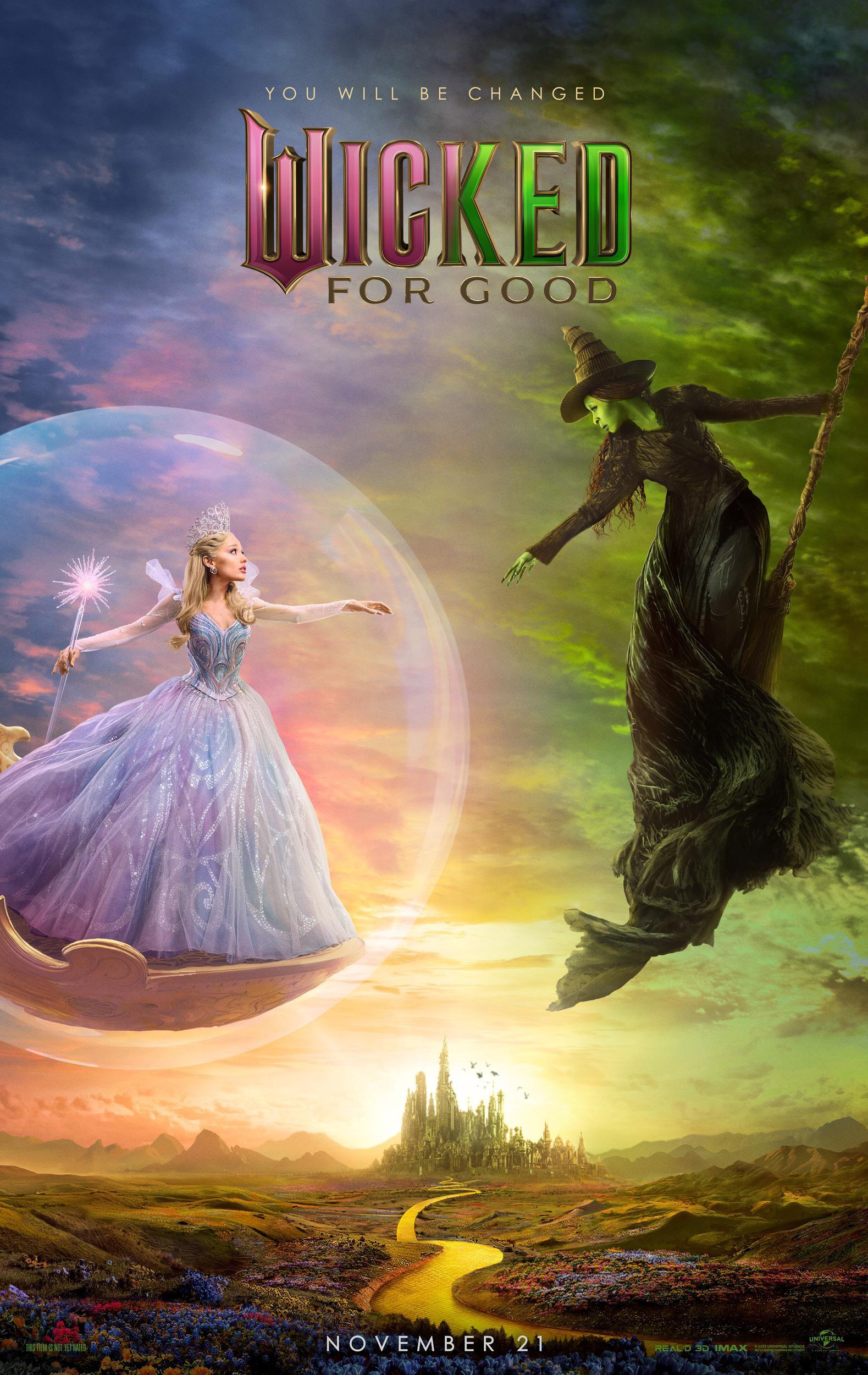
Wicked: For Good is filled with moments that will delight both newcomers and devoted fans. Musical numbers dazzle, costumes burst with color, and the talented cast brings passion to every frame. It may not be a perfect conclusion, but it remains a magical reunion with Oz for anyone who has ever cherished its world
by Frank Gaimari
Wicked: For Good returns audiences to the magical world of Oz, promising grand spectacle and heartfelt drama. While it doesn’t always recapture the dazzling heights of its predecessor, the film offers plenty of enchantment — particularly for longtime fans, who will find much to enjoy in this anticipated finale.
The story resumes five years after Elphaba’s bold stand against the Wizard. Now living in exile and known as the “Wicked Witch of the West,” Elphaba fights from the shadows to defend the rights of Animals. Glinda, on the other hand, has risen to prominence as the public face of the Wizard’s regime and is engaged to Fiyero, who now serves as Captain of the Guard. Their lives collide once more through personal loss and political unrest, drawing in Elphaba’s sister Nessarose, the arrival of a mysterious girl from Kansas, and a final, climactic showdown with the Wizard. The narrative ultimately asks Elphaba to embrace her identity, while Glinda must reckon with her own role in Oz’s destiny.
Central to the film’s enduring appeal are the magnetic performances of Cynthia Erivo and Ariana Grande. Erivo commands the screen as Elphaba, her intense yet vulnerable portrayal capturing the character’s quiet strength and internal struggle. With an emotional range that brings Elphaba’s journey vividly to life, Erivo transforms each musical number into a showcase of both vocal power and heartfelt storytelling. Her renditions of defiant anthems and moments of quiet heartbreak are equally compelling, ensuring the audience feels every step of Elphaba’s transformation.
Ariana Grande is a standout as Glinda, bringing a delightful blend of wit, charm, and emotional nuance to the role. Grande transitions effortlessly from comedic timing to dramatic introspection, allowing viewers to see beyond Glinda’s bubbly exterior. Her soaring vocals infuse the character’s songs with energy and uplift, while her ability to convey genuine vulnerability gives depth to Glinda’s personal growth and self-discovery.
Together, Erivo and Grande are electric. Their dynamic tension and heartfelt connection infuse the film’s most memorable scenes — whether in spirited conflict or moments of forgiveness and friendship. Their harmonic duets stand out as true highlights, with each performer complementing the other in tone and emotion. The synergy between these two remarkable talents elevates the film, giving it its emotional core.
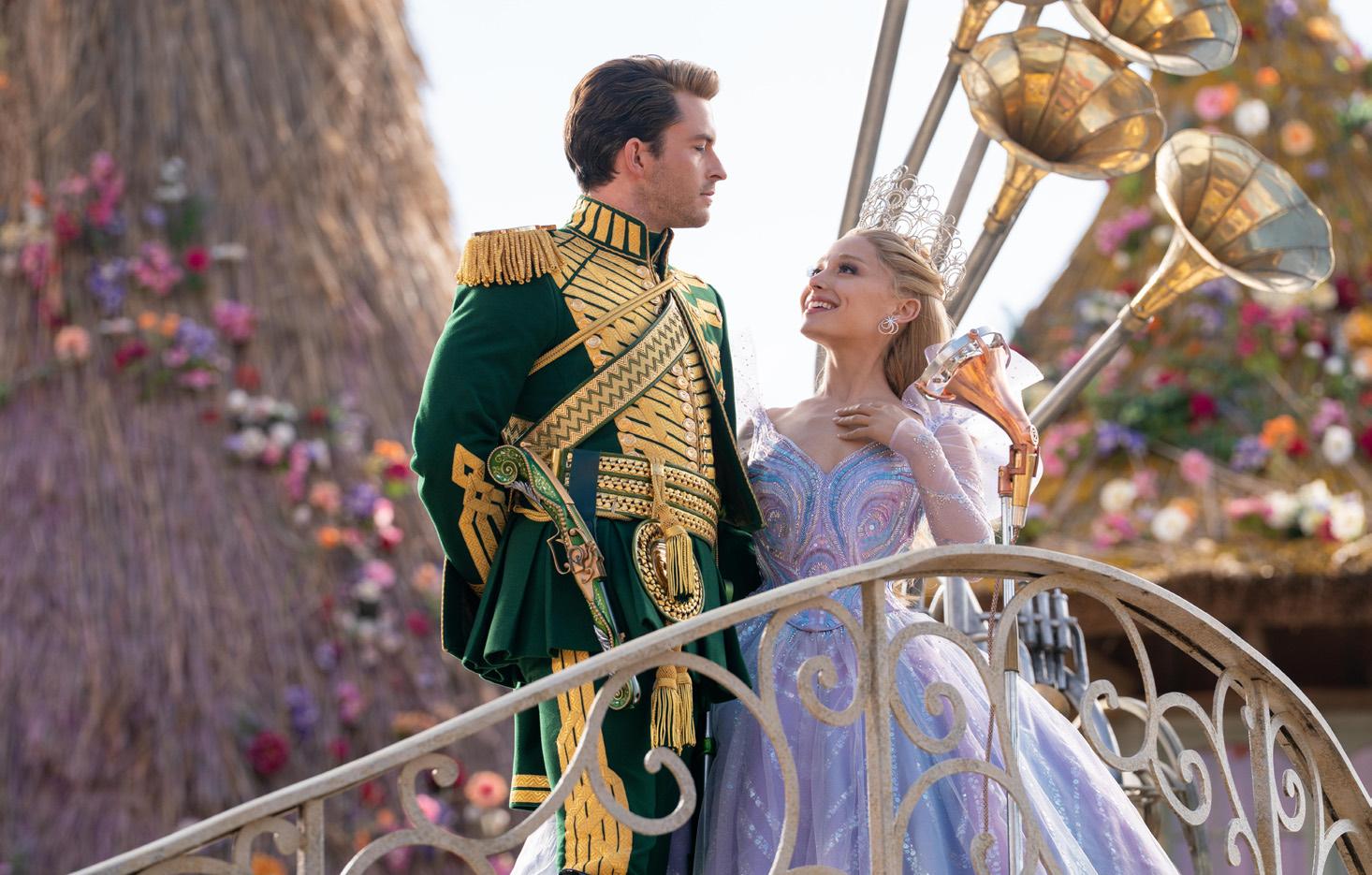
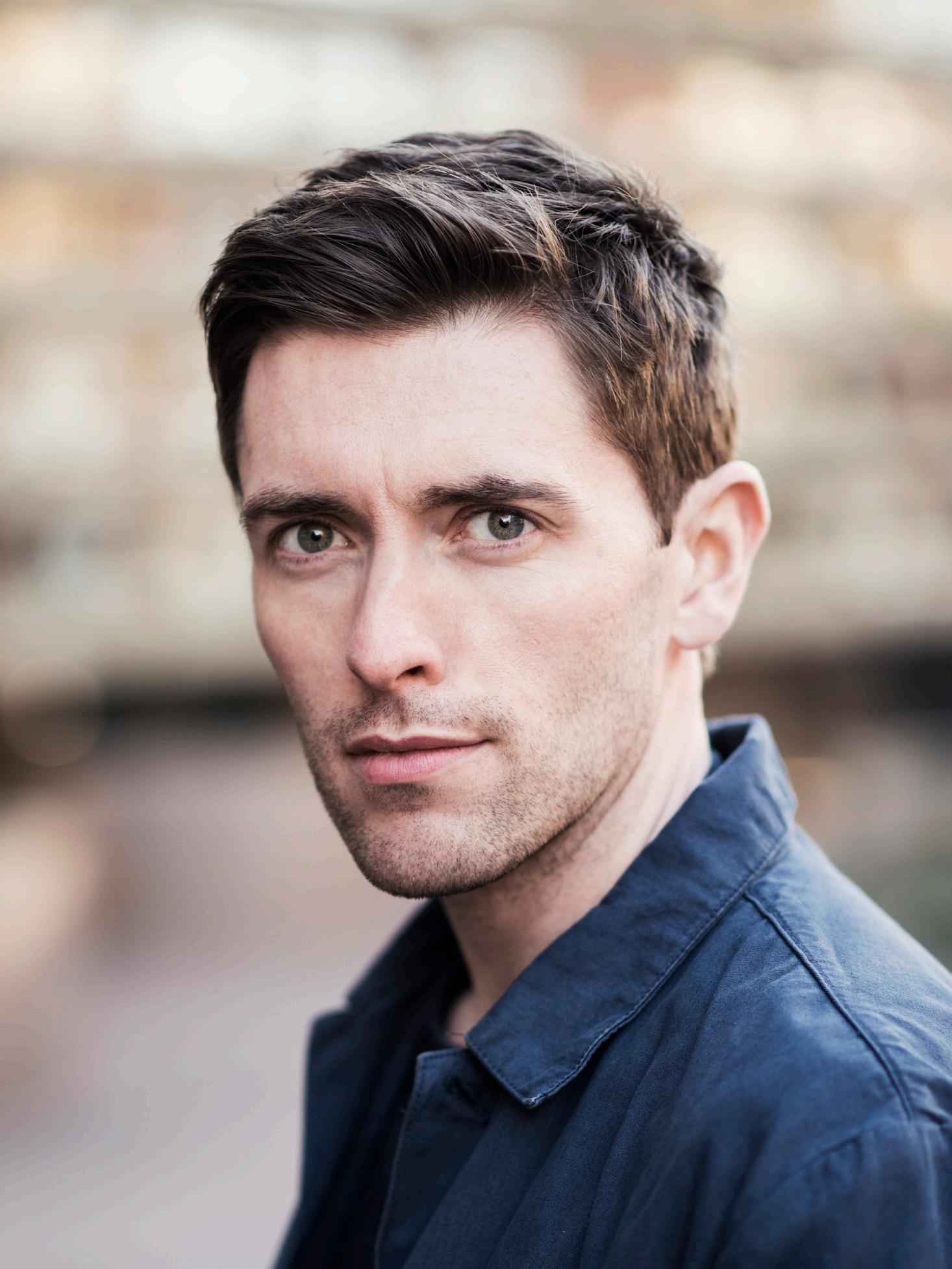
In addition, Jonathan Bailey delivers a charismatic and crowdpleasing performance as Fiyero. Bailey doesn’t just step into the role; he owns it with confident charm that is sure to make fans (especially this reviewer) swoon. His striking screen presence, highlighted by his cheeky grins and undeniable charisma, ensures Fiyero is not only a dashing romantic lead but also genuine “eye candy” — and yes, a little skin makes an appearance to the delight of many viewers. Bailey adds depth, heart, and a fun energy that brings every scene he’s in to life.
Where the film falters is in its pacing. The original movie set a breathless tone, while this installment sometimes struggles to sustain it. Extended subplots and a few sluggish scenes detract from the overall energy. The decision
to split the story into two films is keenly felt, with certain moments that could have benefited from a tighter edit.
Nevertheless, Wicked: For Good is filled with moments that will delight both newcomers and devoted fans. Musical numbers dazzle, costumes burst with color, and the talented cast brings
passion to every frame. It may not be a perfect conclusion, but it remains a magical reunion with Oz for anyone who has ever cherished its world. So, gather your friends — and perhaps your admiration for Jonathan Bailey — and prepare for a cinematic journey that’s equal parts dazzling, heartfelt, and, above all, unforgettable.
Jonathan Bailey and Ariana Grande
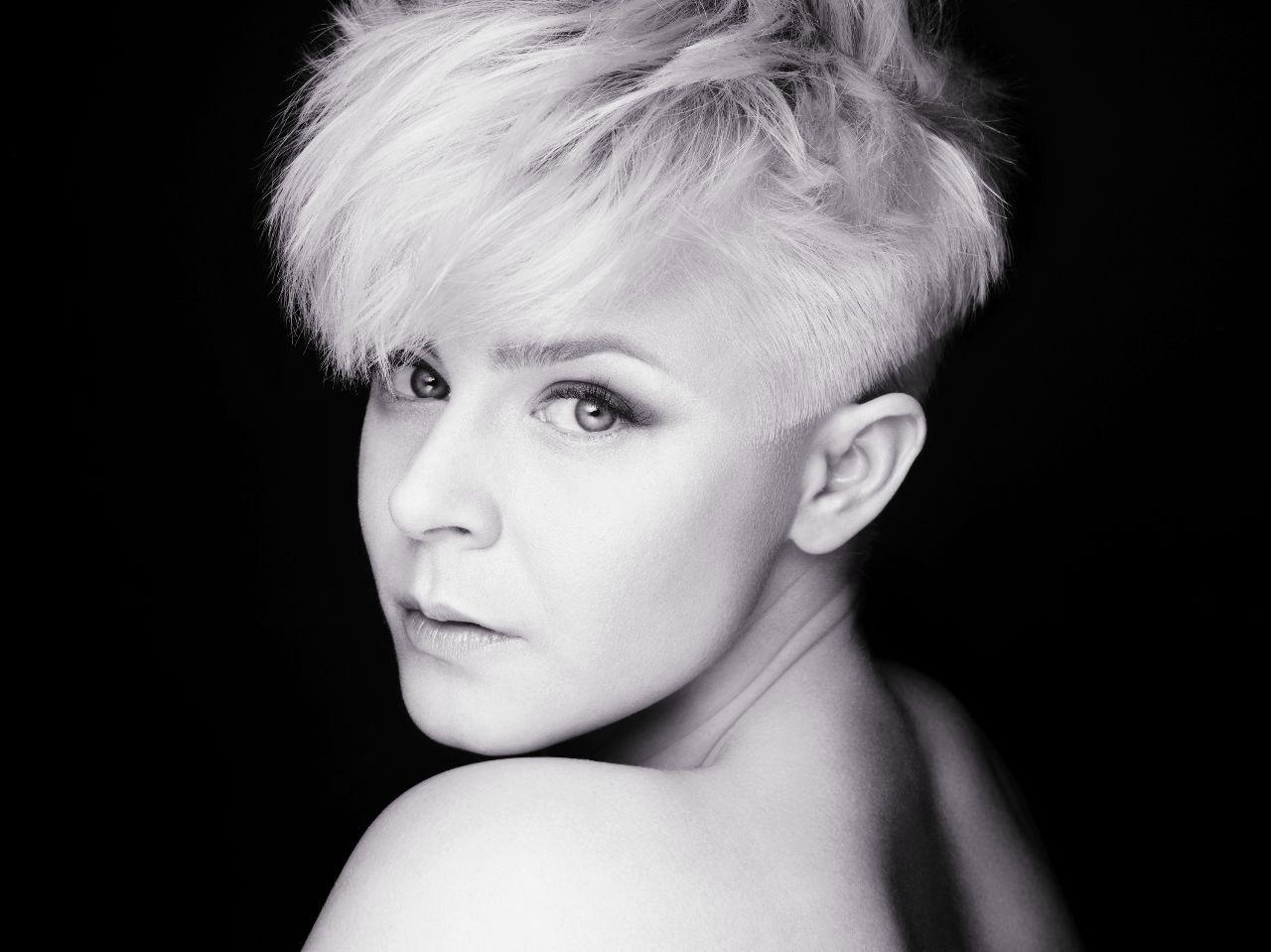
Robyn’s Back with a “Dopamine” Infusion
by Frank Gaimari
R2004, she founded her own label, Konichiwa Records — a move that wasn’t just about business but a declaration of artistic freedom.
With complete creative control, the Robyn we know today emerged. Her 2005 self-titled album was a reset, buzzing with a new electronic edge. It gave us the witty swagger of “Konichiwa Bitches” and the devastating synth-pop of “Be Mine!” She was no longer just a pop star; she was an architect of a sound that was vulnerable, sharp, and defiantly her own.
Robyn had cemented her legacy as a pop visionary, proving that dance music could be innovative, complex, and deeply human.
After Body Talk, she took her time. Her next album, Honey, didn’t arrive until 2018. It wasn’t the explosive banger many expected. Instead, it was a warm, immersive, and softer record. Born from a period of personal loss and reflection, tracks like “Honey” and the melancholic “Missing U” felt like the afterhours glow of the club: intimate, communal, and healing.
obyn first appeared in the late ’90s as a Swedish teen-pop export. She delivered slick R&B hits such as “Do You Know (What It Takes)” and “Show Me Love.” They were undeniable pop songs — polished and perfectly suited for the times.
But the industry machine that created that version of Robyn also tried to contain her. Instead of conforming, she walked away. In
Then came 2010’s Body Talk, a game-changing project released as three mini-albums across a single year. It was a treasure chest of pop perfection. “Dancing on My Own” became a generational anthem for anyone who’s ever found strength in solitude, turning heartbreak into a powerful act of defiance. The trilogy also gave us the stunning empathy of “Call Your Girlfriend” and the soaring power of “Indestructible.”
A new chapter is beginning. On November 12, Robyn released “Dopamine,” her first new single in seven years (video at https:// youtu.be/vitil9qMN6A). The title alone exudes excitement, hinting at the euphoric energy and pure joy that have always defined her music.
For updates on Robyn’s new album, subscribe to her official website, https://www.robyn.com.
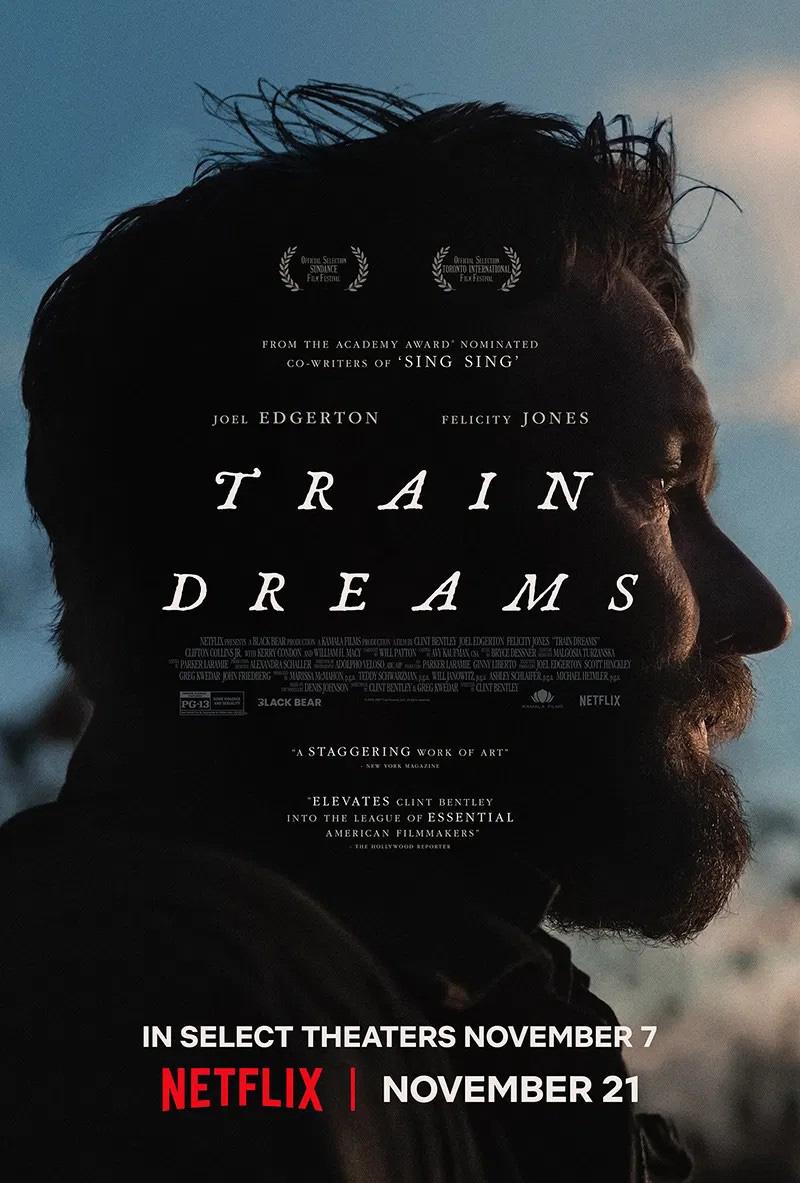
Train Dreams: A Quiet Journey Worth Taking
The film moves at its own deliberate slow pace — like a river at summer’s end. Sometimes it drifts, sometimes it lingers, always unrushed. There aren’t many big moments or easy payoffs, and that might not be for everyone. But when Train Dreams lands — when the camera catches a glance or a moment of stillness — it resonates in a way you can’t shake.
by Frank Gaimari
As I recently stepped into the theater for the Seattle International Film Festival, my heart pounded with anticipation. Like many in the audience, I was eager to see Train Dreams, the new adaptation of Denis Johnson’s acclaimed novella. But I had another reason for my excitement. About a year and a half ago, I spent a long, unforgettable day on set as an extra for the film. Half-hoping to catch a glimpse of myself on the big screen, I settled into my seat amid the electric anticipation and waited for the lights to dim.
And then — disappointment. My brief scene didn’t make the final cut. All those hours on set, gone in an instant. It stung more than I expected, yet, unexpectedly, it was also a relief. I stopped searching for my face in the crowd and allowed myself to get swept up in the story like everyone else.
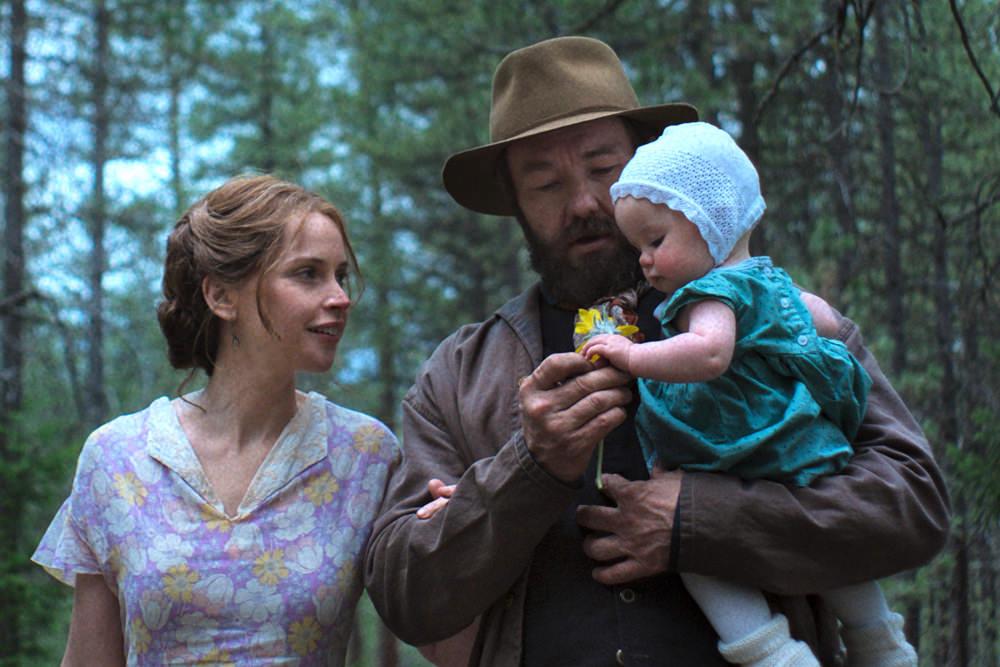
Train Dreams takes us to the rugged and beautiful American Northwest in the early 1900s. It follows Robert Grainier (Joel Edgerton), a logger and railroad worker. His days are hard, marked
TRAIN DREAMS - To Page 16
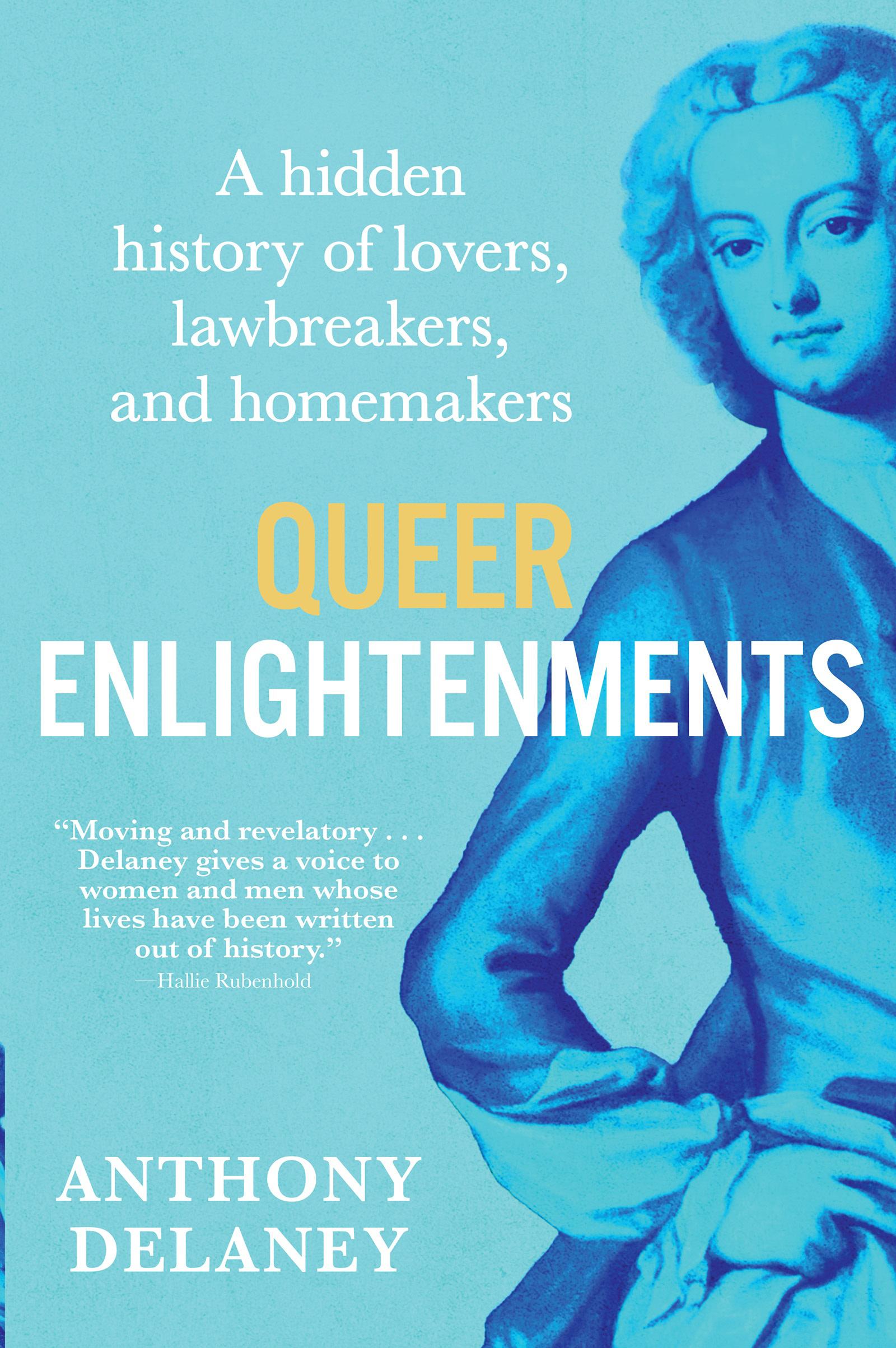
Queer Enlightenments: A Hidden History of Lovers,
Lawbreakers, and Homemakers
Read this book, and you’re platform-side at a hanging, in jail with an ally, embedded in a King’s court, and on a ship with a man whose new wife generously ignored his secret. Most of these tales are set in Great Britain and Europe, but North America features some, and Delaney wraps up things nicely for today’s relevance.
by Terri Schlichenmeyer
It had to start somewhere.
The discrimination, the persecution, the inequality, it had a launching point. Can you put your finger on that date? Was it DADT, the 1950s scare, the Kinsey report? Certainly not Stonewall, or the Marriage Act, so where did it come from? In “Queer Enlightenments: A Hidden History of Lovers, Lawbreakers, and Homemakers” by Anthony Delaney, the story of queer oppression goes back so much further…
The first recorded instance of the word “homosexual” arrived loudly
in the spring of 1868: Hungarian journalist Károly Mária Kerthbeny wrote a letter to German activist Karl Heinrich Ulrichs referring to “same-sex-attracted men” with that new term. Many people believe that this was the “invention” of homosexuality, but Delaney begs to differ.
“Queer histories run much deeper than this…” he says.
Take, for instance, the delightfully-named Mrs. Clap, who ran a “House” in London in which men often met other men for “marriage.” On a February night in 1726, Mrs. Clap’s House
ENLIGHTENMENTS - To Page 17
“Queer Enlightenments: A Hidden History of Lovers, Lawbreakers, and Homemakers” by Anthony Delaney c.2025, Atlantic Monthly Press | $30.00 | 352 pages
Philip Gladstone: Modern Intimacy in Male Nudes
by Frank Gaimari
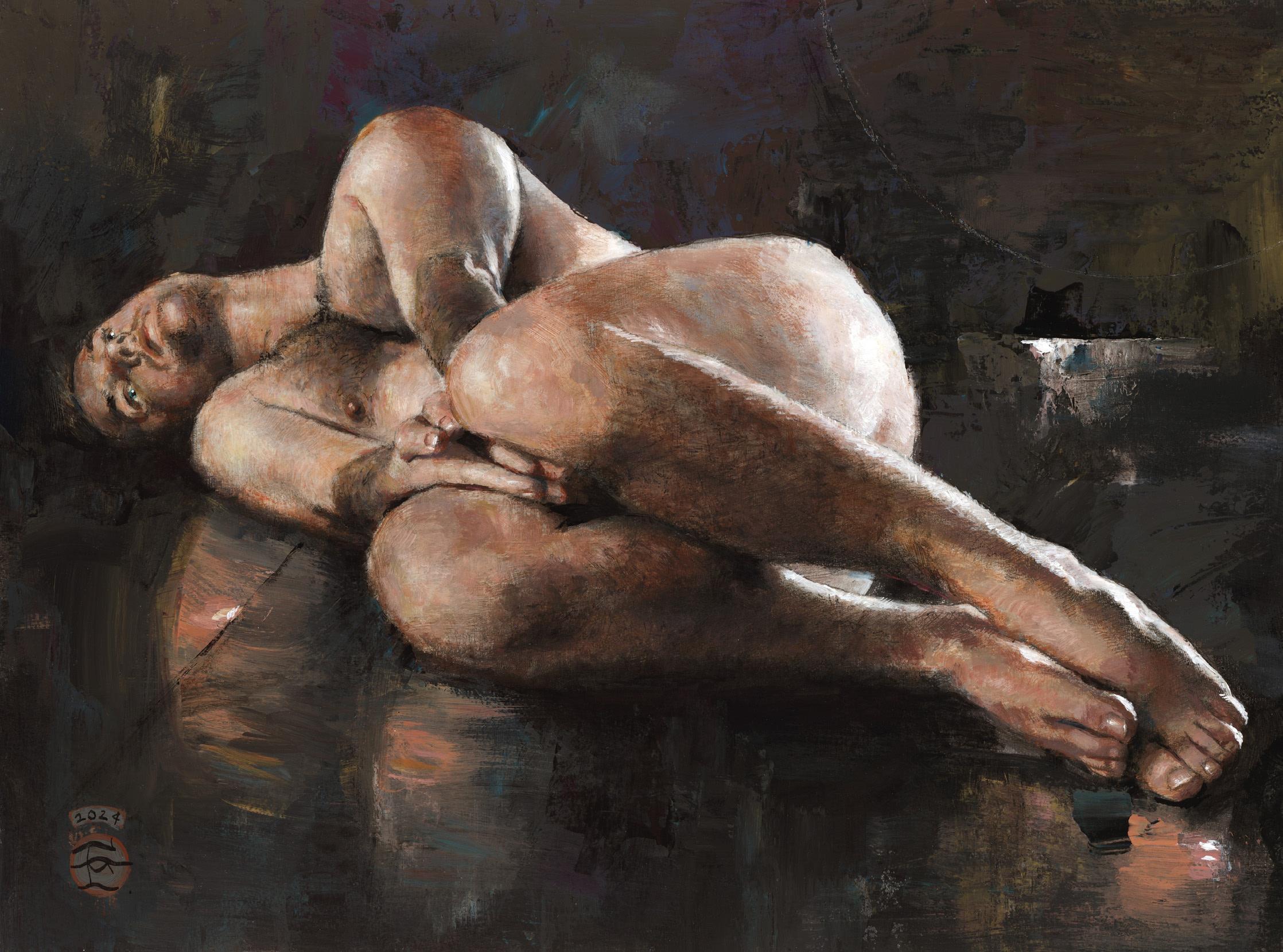
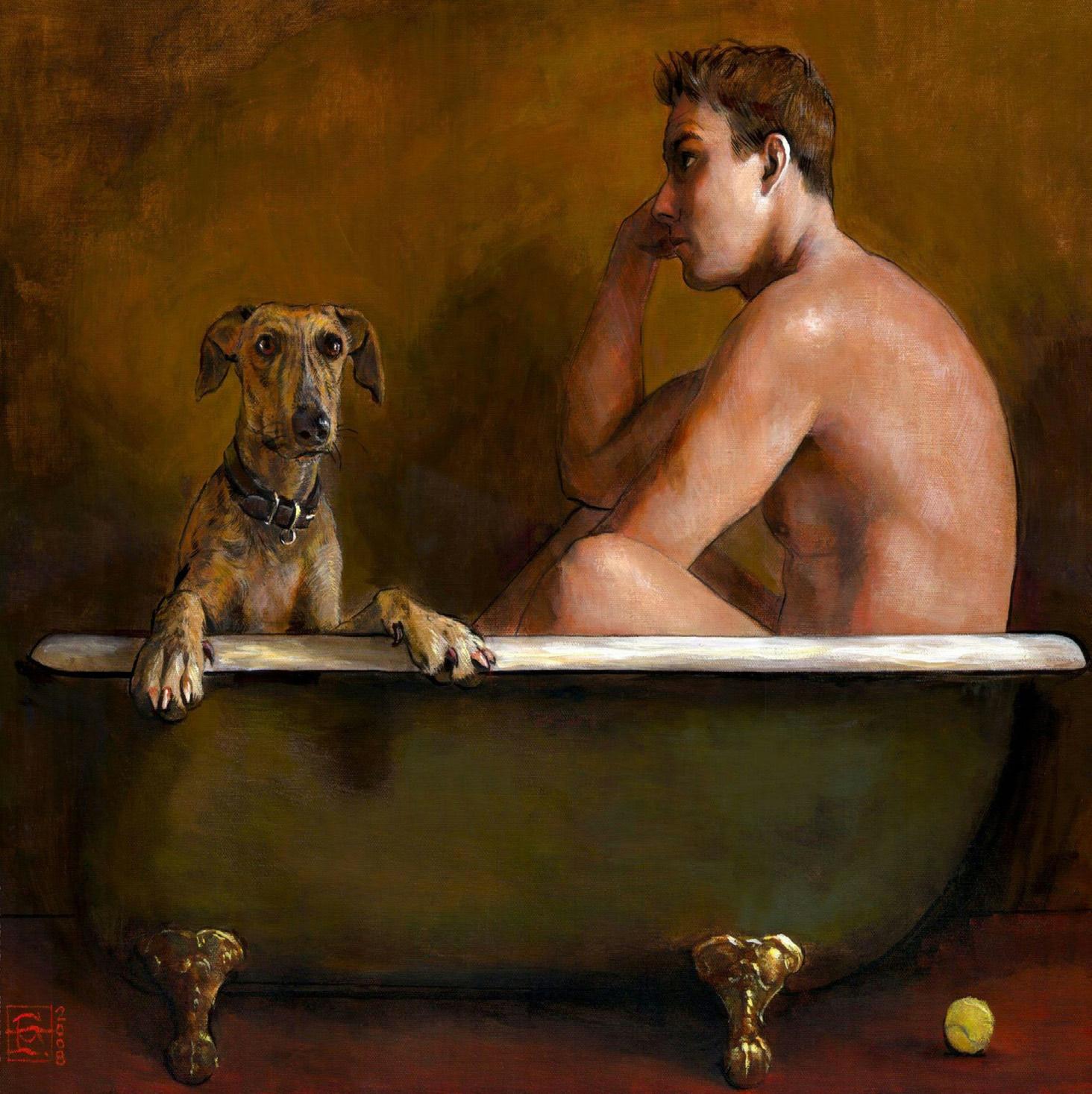
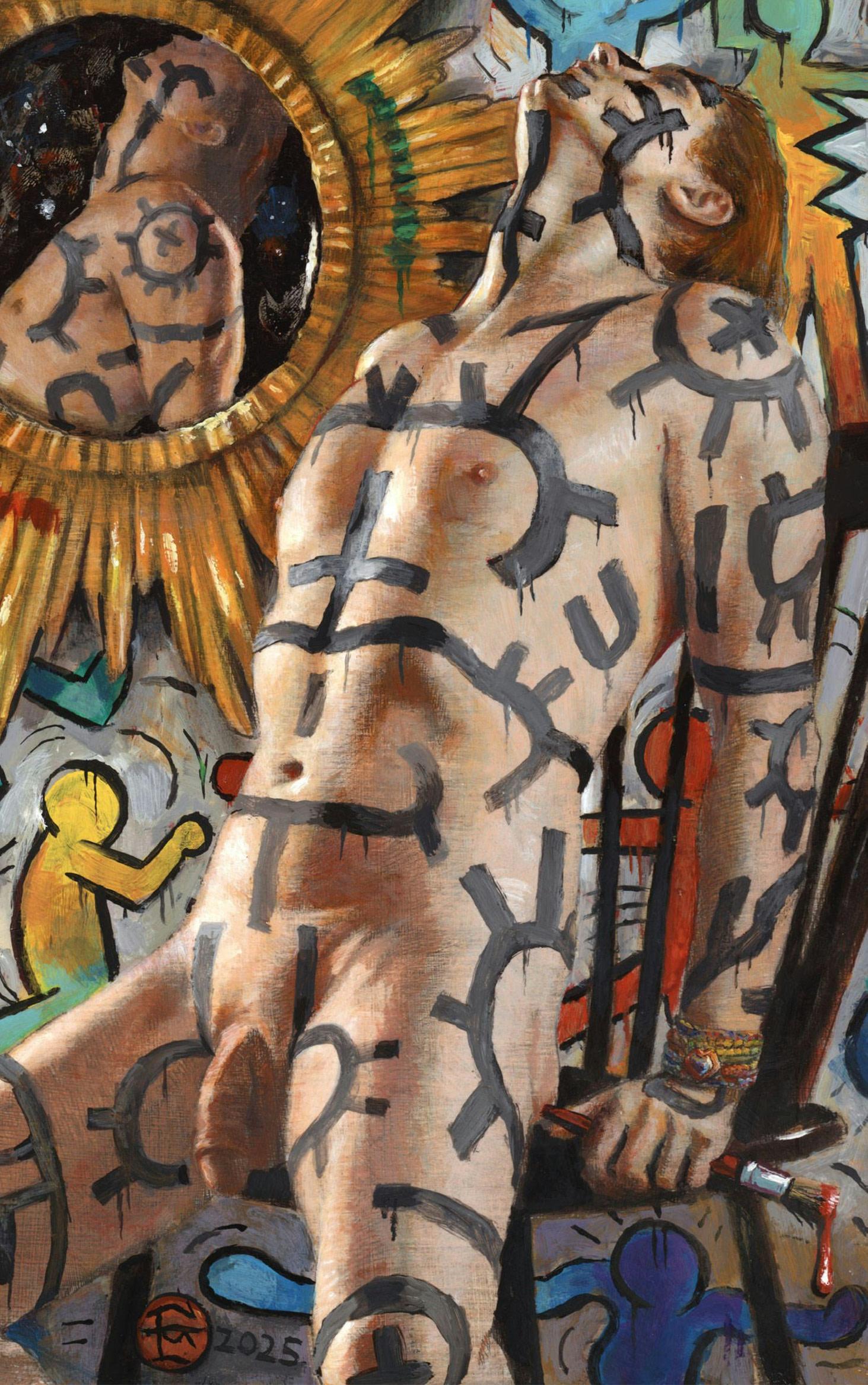
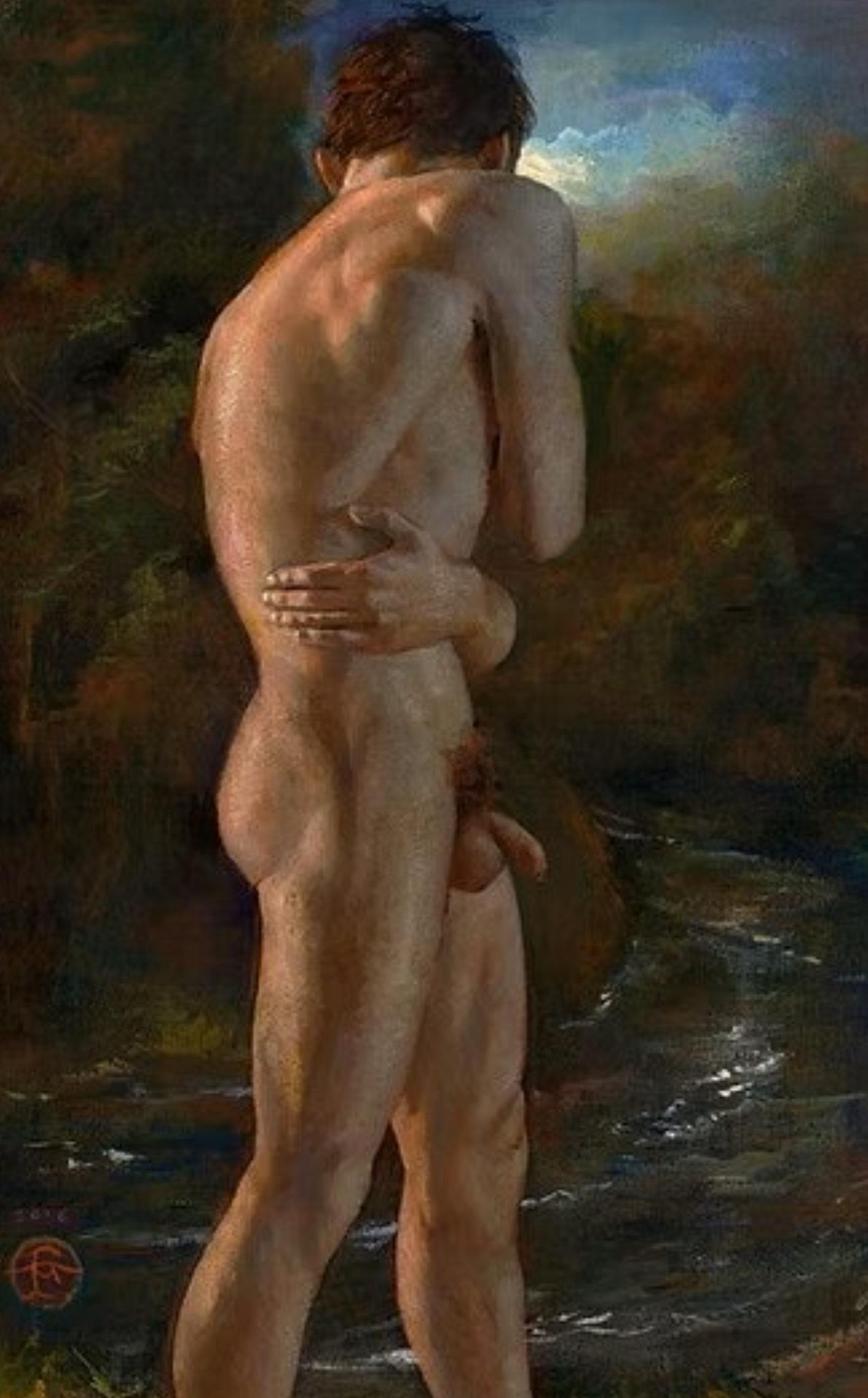
In the ever-evolving world of contemporary art, the enduring appeal of the wellpainted figure remains strong. Few artists embody this more than Philip Gladstone, whose work bridges centuries of tradition with a distinctly modern sensibility. Gladstone’s paintings are intimate, honest, and deeply rooted in the exploration of identity — most often focusing on the male form not as an idealized or heroic subject, but as a vessel for vulnerability, tenderness, and selfreflection.
Born in 1963 in Philadelphia, Gladstone’s upbringing took him through Maryland, Maine, Florida, and Connecticut, following his father’s creative career as a graphic designer, illustrator, and cartoonist. Though Gladstone’s father never considered himself a “real” artist, he passed on a vast knowledge of art history and technique, offering an informal but rich education “at his knee.” Beyond these early influences, Gladstone is mainly self-taught, save for a formative summer at the renowned Skowhegan School of Painting and Sculpture at age 19.
Gladstone’s journey into the art world was unconventional. Before devoting himself entirely to painting, he spent nearly two decades as the owner and operator of a frame shop and gallery in Connecticut. In 2004, he began auctioning paintings on eBay and, within months, found that art could comfortably support him. By 2008, he had relocated to Maine, establishing his studio in a renovated barn — an environment that continues to foster his deeply personal and experimental practice.
The heart of Gladstone’s work is his sensitive portrayal of the male nude. He moves away from the gods and warriors of art history, instead painting men in quiet, everyday moments — lounging on wrinkled sheets, bathed in morning light, or lost in reverie. His nudes are not objects of conquest or fantasy, but stand-ins for himself and, by extension, the viewer. As Gladstone himself notes, “When you strip away the social constructs that seek to segment us, a clearer picture emerges, and our common humanity takes precedence over any differences.” His paintings invite viewers to see themselves — stripped of pretense, open, and vulnerable.
“I’d like to believe that by exposing my innermost self, sometimes in a painfully honest, unashamed way, through my work, I can help others celebrate their own differences — the beautiful qualities that make them unique — and feel at peace with being different.”
- Philp Gladstone
Technically, Gladstone’s skill is evident in his confident compositions, mastery of light, and subtle rendering of flesh. His paintings often recall the chiaroscuro of Caravaggio and the compositional rigor of the Old Masters, yet they are unmistakably contemporary in their emotional resonance. Working primarily in acrylic, he employs a limited, earthy palette that heightens the sense of intimacy. Drawings and works on paper supplement his practice, capturing moments
of immediacy and serving as preparatory studies and finished statements.
Gladstone’s art has found a particularly devoted following in the LGBTQ+ community. Though not gay himself, his honest and unguarded depictions of male intimacy have filled a void in mainstream visual culture, offering gentle, respectful, and relatable portraits of longing,
GLADSTONE To Page 18
Hope / Philip Gladstone
The Controversy / Philip Gladstone
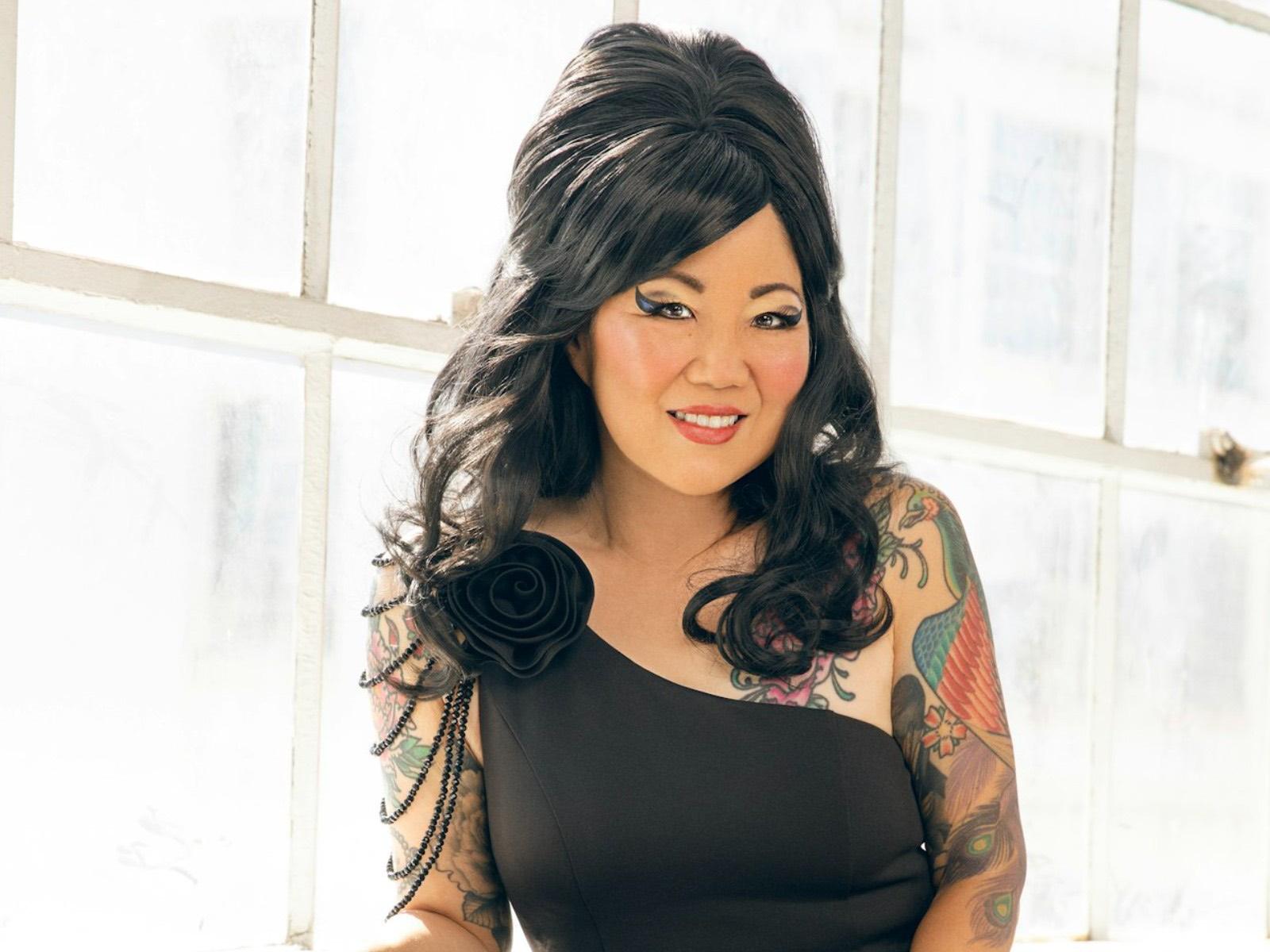
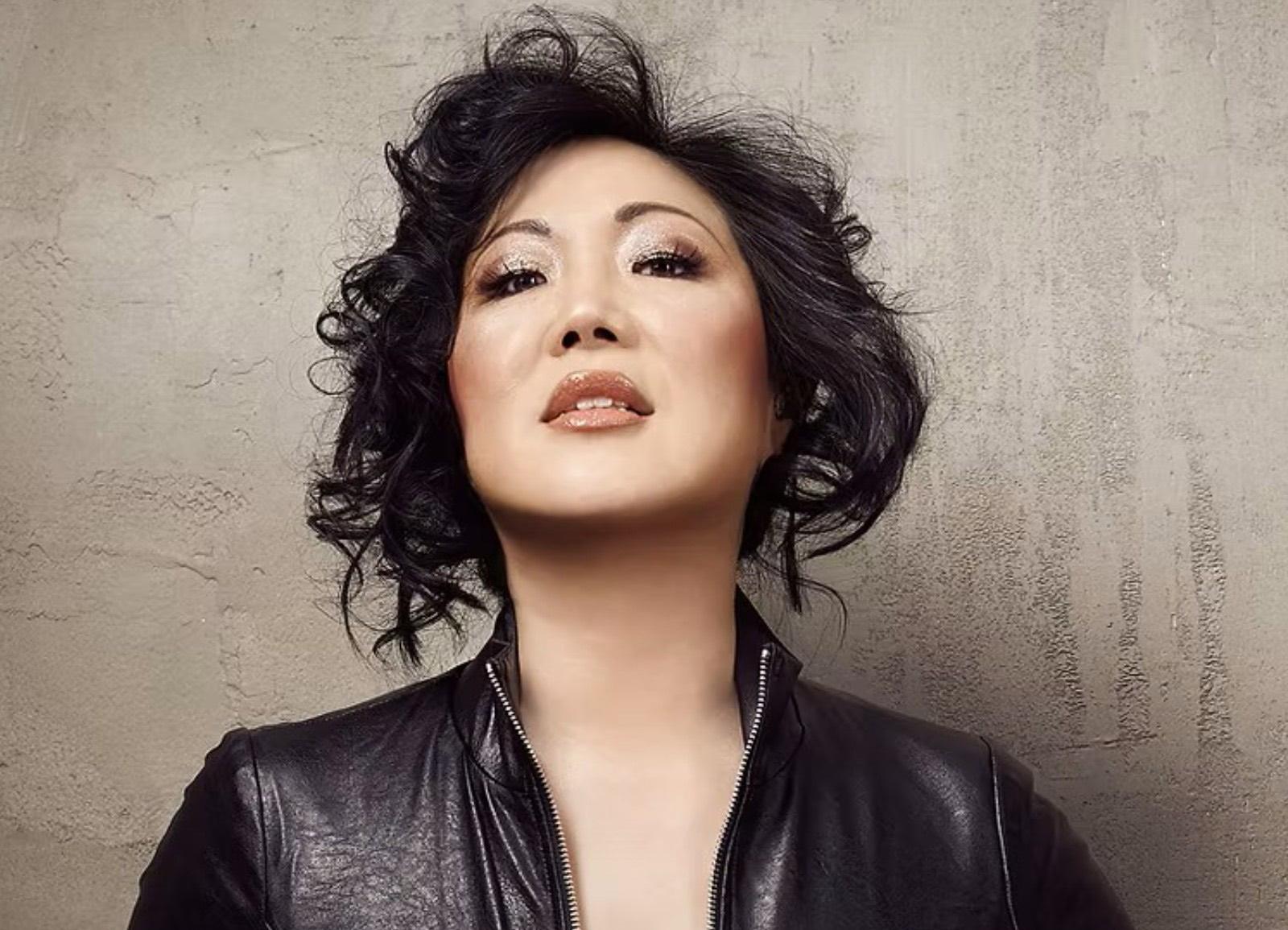
Join the Choligarchy: Margaret Cho’s New Tour
“I’m incredibly frustrated with the state of the union, and I believe humor is my only weapon. The wealthiest people in the world are trying to take over. I want to fight fascism with everything I’ve got. This will be my most blistering and brutally honest show yet! Let’s tear down racism, homophobia, and sexism. We need to act now, before it’s too late to protect what matters most.”
- Margaret Cho
by Frank Gaimari
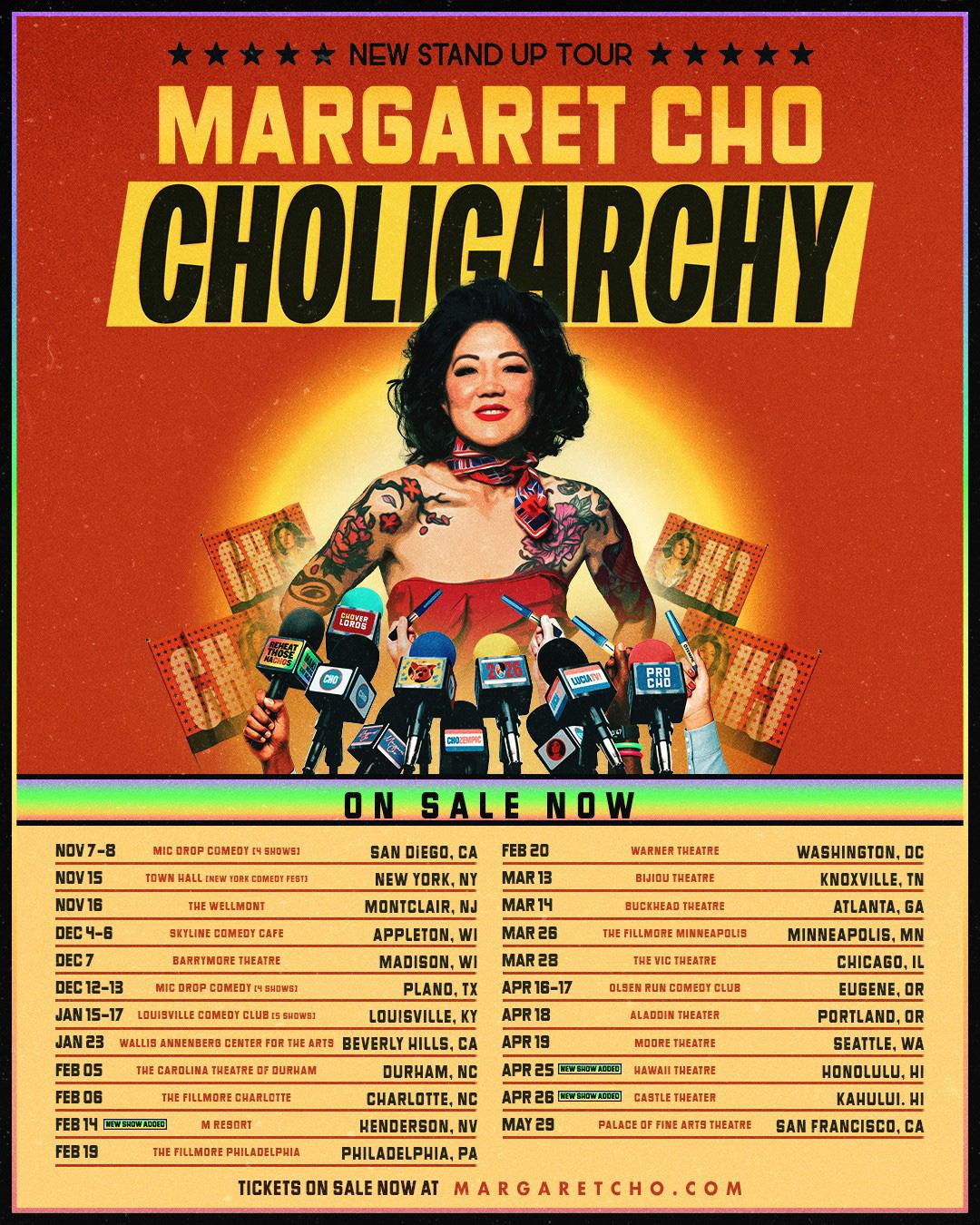
Margaret Cho is hitting the road with a brand-new comedy tour, crisscrossing North America in celebration of her fortyyear career. Her latest show, Choligarchy, is more than just a series of stand-up dates — it’s a powerful statement about the world today. Audiences can expect an evening of sharp, progressive commentary, all delivered with the unfiltered honesty that has defined Cho’s legacy.
The Choligarchy tour places Cho’s unique voice front and center. As a queer Asian American woman who has never backed away from the truth, she offers a perspective you won’t find anywhere else. The show features all-new material that tackles the current cultural and political landscape through heartfelt personal stories and fearless humor. It’s an urgent, funny, and deeply moving experience that invites audiences into a space of radical candor. This isn’t just comedy; it’s advocacy through laughter.
The tour marks a major milestone — it’s been forty years since Margaret Cho first stepped onto a comedy stage in San Francisco. But calling Cho just a comedian doesn’t fully capture her impact. She’s also an actor, musician, writer, and dedicated advocate — constantly pushing boundaries with her work.
See Margaret Cho live in the Pacific Northwest: April 16-17, Eugene, OR April 18, Portland, OR April 19, Seattle, WA
For info & tickets: margaretcho.com
From the very beginning, Cho’s career has been defined by her willingness to speak openly about family, identity, sexuality, and mental health. This vulnerability has not only forged a deep bond with her audience but has also paved the way for a new generation of performers to share their own truths. Whether breaking ground with her 1994 sitcom
All-American Girl or earning five Grammy nominations for her comedy albums, Cho has always been a trailblazer.
As a longtime fan, I was thrilled to have the opportunity to speak with her. What struck me most was her warmth and candor. Here’s our conversation.
Frank Gaimari: Your career has spanned stand-up, acting, and writing. How does your creative process adapt when you shift between these different modes of expression?
Margaret Cho: My creative process really depends on the type of project I’m working on, and I find that each medium demands a unique approach. When I’m doing stand-up, I’m balancing my own need for self-expression with connecting to the audience, shaping the material to reflect my voice and their reactions. In contrast, working on movies or reality-based projects means stepping into someone else’s world — I’m there to help bring another person’s vision to life, so my mindset shifts to serve the story rather than my own perspective.
On the other hand, when I’m making music or writing my book, the experience is much more personal and introspective. These projects give me the freedom to fully explore my own ideas and push the boundaries of my creativity, much like standup. Ultimately, whether I’m collaborating or working solo, I adapt my approach to suit the demands and opportunities of each creative endeavor.
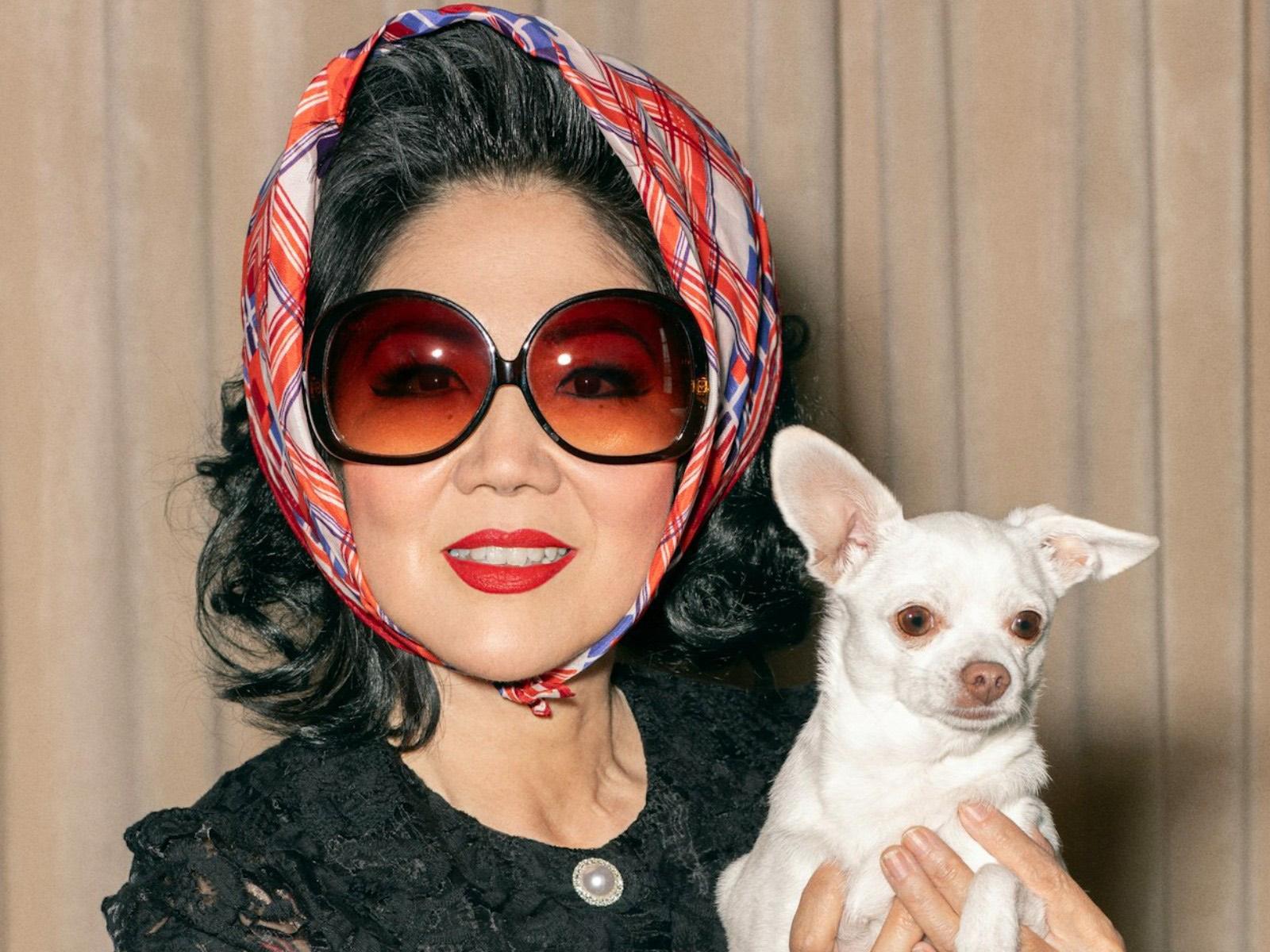
Margaret Cho by Nick Spanos
Margaret Cho by Nick Spanos
NATIONAL - Continued
NATIONAL - From Page 10
Being Earnest, the piece discusses Fry’s decades-long kinship with Wilde, shaped by shared battles with mental illness, addiction, societal shame, and exile (#same).
Stephen King’s “Mister Yummy“ Heads to the Screen
From the pages of The Bazaar of Bad Dreams to the silver screen, Mister Yummy—Stephen King’s poignant short story exploring aging, queerness, and mortality— is set for a film adaptation.
Announced at the American Film Market earlier this month, the adaptation is penned by Troy Blake and produced by Intrinsic Value Films. The story’s quiet queerness, centered on an elderly gay man’s vision of death, offers a rare, tender look at queer aging— an often-overlooked subject in both horror and LGBTQ+ storytelling.
Coming and Going
Twink-Off 2025: Cameron Kasky On A NY-12 Race
In a race that already feels like the pilot of a Ryan Murphy series, queer activist and Parkland
FILM - Continued
TRAIN DREAMS - From Page 12
by long hours, rough weather, and the daily struggle to get by. We watch him grow from a young husband newly married to Gladys (Felicity Jones) into an older man marked by loss and time alone. The movie is not about big twists. It is about small moments that add up — a laugh on the porch, quiet snowfall, and the silence of an empty house. Those moments slowly reveal who Robert is and what life has taken from and given him.
Director Clint Bentley and cinematographer Adolpho Veloso make a great team, but what really stood out to me on set was Bentley’s willingness to step back and let Veloso take control — literally. I spent hours on a hard church pew as an extra, watching Veloso at work. He wasn’t just operating the camera; he was shaping each shot, searching for the perfect light, texture, and moment. If Veloso wasn’t satisfied with a shot, he did another take without complaints. Everyone could see he
survivor Cameron Kasky is leaning into the fabulous chaos of New York’s 12th congressional district contest, describing it on The Don Lemon Show as a “twink-off.” (see below). With candidates including our NYC councilmember Erik Bottcher, Kennedy heir Jack Schlossberg, and nonprofit founder Liam Elkind, Kasky quipped that the crowded field of “quirked-up white boys” feels like boarding the ferry to Fire Island Pines. I would argue that gay candidate Mathew Shurka does not fall in the twink category. Read more on Them.
There is a cadre of twinks right now. It makes you feel like you are on the ferry to Fire Island Pines getting ready to go dance with a lot of people who are on G and it’s exciting.
@cameronkasky
Udo Kier Leaves Us
I was sad to read Udo Kier left us this week. I once met Udo at the Fruit Farm Festival in Oregon (see Ari Shapiro reminiscing on the defunct festival here) and was smitten. I loved him a few years later in “Swan Song,” in which
he portrayed the post-Stonewall generation so well. A generation characterized by creativity, rebellion, irreverence, as well as considerable stigma and the brunt of the HIV epidemic. “Swan Song” best encapsulated the gay outlook on life: the willingness to dream of a different way of living, the solidarity despite our differences, and our resilience when faced with formidable obstacles.
Stonewall Honors Krishna Omkar
The 2025 Stonewall Inn Brick Awards Gala is shaping up nicely, as it honors the OG Global Gay, Krishna Omkar. Held on December 8 at Sony Hall in NYC, the event celebrates LGBTQ+ leaders from around the world who carry forward the legacy of the historic Stonewall Inn and support the work of The Stonewall Inn Gives Back Initiative (SIGBI). Buy tickets or donate here
Mark your calendars: from December 4–6, Washington, D.C., will host the 2025 International
LGBTQ+ Leaders Conference, one of the most influential annual convenings for queer political powerbrokers. Organized by the Victory Institute, this year’s edition promises a landmark moment as it honors a national figure whose leadership has reshaped LGBTQ+ political influence in the U.S. Go to lgbtqleaders.org.
January 21-25, 2026: Creating Change Conference in DC
The nation’s foremost political leadership and skills-building conference for the LGBTQ+ movement returns to the capital with advocacy training, policy discussions, and organizing workshops at the Washington Convention Center.
July 19-August 9, 2026: WorldPride Amsterdam
I will confess here that I haven’t been back to Amsterdam since I was 4. Amsterdam celebrates 25 years of marriage equality as WorldPride host this year, featuring the canal parade, street parties, and cultural events across the city. I plan to find a way to weasel my way in.
was chasing something just out of reach, a flicker of beauty or truth only he could perceive. That trust and patience are woven into the film itself. Here, light, shadow, and silence carry as much weight as dialogue. Veloso’s visuals don’t just tell the story — they are the story. His work is Oscar-worthy. It’s that good.
Edgerton’s portrayal of Grainier is remarkable — tough but never cold, gentle without weakness. Felicity Jones imbues Gladys with genuine warmth. When they share a scene, the whole theater seems to glow. The supporting cast — Clifton Collins Jr., Kerry Condon, William H. Macy — brings the world to life, adding depth without ever taking focus away.
The film moves at its own deliberate slow pace — like a river at summer’s end. Sometimes it drifts, sometimes it lingers, always unrushed. There aren’t many big moments or easy payoffs, and that might not be for everyone. But when Train Dreams
lands — when the camera catches a glance or a moment of stillness — it resonates in a way you can’t shake.
Train Dreams will be shown in select theaters on November 7th. If you get the chance to see it on the big screen, I strongly suggest it. But for those who can’t see it in theaters or prefer to watch it at home, the wait won’t be long. Train Dreams will be available
on Netflix starting November 21, 2025.
Would I have liked to see myself on screen? Absolutely. But even without my celluloid moment, I left feeling proud — proud to have been a small part of this film and proud of how powerful it turned out to be. Train Dreams won’t please everyone. It’s slow, patient, and it asks you to meet it halfway. But if you do, it doesn’t just tell you a story — it lets you
Felicity Jones and Joel Edgerton
SPOKANE TRANS - From Page 5
grief, love and hope, while she told us about her transgender, nonbinary child, Katie Thew, who was lost to suicide.
She said, “Grief will forever be a part of my life, but so will love.”
Fanny Devito spoke about the song he was about to perform and how his view of it has changed with time.
“I have been asked what I thought the emotion being portrayed was, and I said anger because that’s all I heard,” Devito said. “But I was only half right. Now, my voice has changed, and my views on the song have, too. I’m no longer a soprano, and I am no longer blind to grief.”
Affirmations came from military veteran and trans woman Maeve Griffith.
“Your life matters, and you are here for a reason,” Griffith said. “Every single day you live you make a difference in the world … I will never in public let them see
ENLIGHTENMENTS - From Page 13
was raided and forty men were taken to jail, where they were put in filthy, dank confines until the courts could get to them. One of the men was ultimately hanged for the crime of sodomy. Mrs. Clap was pilloried, and then disappeared from history.
William Pulteney had a duel with John, Lord Hervey, over insults flung at the latter man. The truth: Hervey was, in fact, openly a “sodomite.” He and his companion, Ste Fox had even set up a home together.
Adopting your lover was common in eighteenth century London, in order to make him a legal heir. In about 1769, rumors spread that the lovely female spy, the Chevalier d’Éon, was actually Charles d’Éon de Beaumont, a man who had been dressing in feminine attire for much longer than his espionage career. Anne Lister’s masculine demeanor often left her an “outcast.” And as George Wilson brought his bride to North American in 1821, he confessed to loving men, thus becoming North America’s first official “female husband.”
“Bein’ trans is about bein’ seen, heard, respected, and valued. It’s about livin’ your truth, unapologetically, and with pride. … To every trans person out there, I see you, I hear you, and you’re valid. You’re loved, and you’re enough. Your identity ain’t up for debate; it’s who you are, and that’s somethin’ to be proud of”
-Beyonce St. James
us just because we dare to exist. We continue to count those who will never have another birthday, see another holiday and see their families again. We honor their lives, we light candles and we speak their names.
I leave you with this, spoken by Beyonce St. James at Saturday’s event. She’s the first Black, Puerto Rican trans woman and lifelong Spokanite to win Miss Trans USA.
me afraid, see me angry or see me hurt, because they feed on the destruction and the pain they think they are inflicting. … The hardest thing I have ever done is come out.”
Every speaker, every piece of music, every piece of art in the gallery hit differently, and each one important in its own unique way.
While I hope this event will help visibility and acceptance continue to grow, I also hope for a year where the number of trans lives lost is zero, including through
misrepresentation or erasure. That we’re still living, we’re still thriving.
I know the reality that it probably won’t be for a very long time, maybe not even in my lifetime, but I still have to hope, because even one less death is progress. So maybe one year on Nov. 20, I can stay home and not have to count and honor the latest people in my community who won’t see next year.
But this year, we count those that won’t see the end of this regime, the end of this hatred of
“Bein’ trans is about bein’ seen, heard, respected, and valued. It’s about livin’ your truth, unapologetically, and with pride. … To every trans person out there, I see you, I hear you, and you’re valid. You’re loved, and you’re enough. Your identity ain’t up for debate; it’s who you are, and that’s somethin’ to be proud of,” St. James said.
To see the In Memoriam for those we’ve lost this last year visit https://www.transremembrance. org/in-memoriam.
Continued - BOOKS
Sometimes, history can be quite dry. So can author Anthony Delaney’s wit. Together, though, they work well inside “Queer Enlightenments.”
Undoubtedly, you well know that inequality and persecution aren’t new things - which Delaney underscores here - and queer ancestors faced them head-on, just as people do today. The twist, in this often-chilling narrative, is that punishments levied on eighteenthand nineteenth-century queer folk was harsher and Delaney doesn’t soften those accounts for readers. Read this book, and you’re platform-side at a hanging, in jail with an ally, at a duel with a complicated basis, embedded in a King’s court, and on a ship with a man whose new wife generously ignored his secret. Most of these tales are set in Great Britain and Europe, but North America features some, and Delaney wraps up thing nicely for today’s relevance.
While there’s some amusing side-eyeing in this book, “Queer Enlightenments” is a bit on the heavy side, so give yourself time with it. Pick it up, though, and you’ll love it til the end.
Author Anthony Delaney | Photography by Pip
PROFILES - Continued
GLADSTONE From Page 14
comfort, and everyday beauty. As he reflects, “I’ve always felt a little out of place and ‘different’ since childhood… I’d like to believe that by exposing my innermost self in a sometimes painfully honest, unashamed manner through my work, I can help others to celebrate their differences — the beautiful things that make them unique — and be okay with being different.”
Gladstone’s artwork is increasingly showcased in prominent galleries, yet many collectors and enthusiasts discover it online. The interaction with his audience is crucial: “I spend hours working on each piece alone in a room, but it only truly comes alive through the eyes and minds of others once I’ve shared it.”
This sincere exchange highlights the intimacy embedded in his paintings.
Frank Gaimari: What draws you to the male form repeatedly?
Philip Gladstone: I’ve often thought of my process as similar to that of a writer — perhaps a playwright — creating “characters” who act as standins for myself. These characters may or may not resemble me, but they embody my deepest self. Because of this, they’re almost always nude, showing both their vulnerability and the feeling that the viewer is stepping into a private space.
When I paint a male figure, I’ve discovered that, as I work, I begin to feel as though I inhabit his mind and body — as if I am him — rather than simply being an outside observer. When I was young and learning to draw, I attended as many as three lifedrawing classes a week. One particular model — a male dancer who could hold any pose for improbable lengths of time — had a lasting impact on me. The work we did together felt like an epiphany, because when I drew him, it felt as though I was drawing myself — a sensation I had never experienced before.
Later, when I had a family and a demanding job, time for painting became scarce, and models were hard to find. During those years, I often painted myself nude late at night using a mirror. I was the model for much of my work — nudes and otherwise — created in the early 2000s at the beginning of my professional career.
FG: Your paintings of the male nude have found a devoted LGBTQ+ audience. How does it feel to know your work resonates so powerfully in Queer communities, and do you feel any sense of responsibility or kinship because of their responses?
PG: That quickly became evident from the reactions when I first showed my work, and it was a pleasant surprise to make that connection. As a straight man, I never would have presumed to be qualified to speak about, or to, the experiences of the gay community. I was expressing myself — my state of mind — through the work. Yet, when you strip away the social constructs
that seek to divide us, a clearer picture emerges, and our shared humanity takes precedence over any differences.
Gay men told me they saw themselves in my work, and some initially assumed I must be gay, imagining that the feelings I was expressing were specific to that experience. They’re not, but as a rule, straight men in this culture seem to be terrified of admitting to those kinds of feelings, so I understand why it might seem that way. In the early days, I sometimes worried about how a gay collector might react upon discovering I was straight — would they reject me and view me as inauthentic, a charlatan? But the reality was quite the opposite: they were as surprised and delighted to discover our differences and commonalities as I was, and they welcomed the opportunity to explore them further. Our growing relationships became as meaningful, revelatory, and fulfilling to them as they were to me. It was kinship, without a doubt — and yes, it brought with it a responsibility to maintain and
Young Artist Laments / Philip Gladstone The Bend / Philip Gladstone
nurture the honesty and integrity that made these connections possible in the first place, and to continue creating a unique world within my work where anyone might recognize themselves once they look beneath the surface.
The artist–collector relationship is, among other things, a partnership, with each doing their part to make the work possible and bring it to life. These relationships can be long-lasting and exceptionally intimate; in fact, my relationships with collectors have been among the most personal and fulfilling of my life. I am humbled and very proud that many collectors and fans in the queer community have told me they see me as an ally, which I most assuredly am.
Like many artists, I have always felt a little out of place and “different” since childhood. I’d like to believe that by exposing my innermost self, sometimes in a painfully honest, unashamed way, through my work, I can help others celebrate their own differences — the beautiful qualities that make them unique — and feel at peace with being different.
FG: How do you respond to viewers who see autobiographical meaning in your work— especially those who assume the art reflects the artist’s identity?
PG: They’re a reflection of myself and an exploration of identity in the broadest sense, but not in a literal or narrative way. I’m not sure I would go so far as to call them “autobiographical.” For example, I painted a long series over several years that people refer to as the “Tubs Series,” depicting nudes in clawfoot tubs surrounded by their pets, musical instruments, and other props. The series proved very popular, yet I don’t have a clawfoot tub and have never taken a bath in one. What inspired the series was the feeling of wanting to crawl into a safe, cocooned space surrounded by my favorite things for comfort — and that’s really what the series is about: what it feels like to be me sometimes.
The “Museum Series,” while fun to paint and observe, also reflects feelings I’ve always experienced — confusion, exposure, and fear — in a world where I seek comfort, peace, and beauty, yet instead feel threatened and
intimidated by authority figures. In these paintings, the nudes represent me (often a much younger version of myself, as these feelings date back a long time), while the clothed guard often serves as my nemesis, perhaps shaming me simply for being myself.
About twenty paintings from the Museum Series were included in a show at the Las Cruces (New Mexico) Museum of Art earlier this year — a singular honor, made possible by longtime collectors who arranged to showcase their collection there.
FG: In what ways have the reactions and interpretations from Queer viewers shaped or surprised your own understanding of your paintings?
PG: They’ve often shown me, through their reactions and interpretations, what’s working and what isn’t in a piece — how well I’ve communicated and how close I’ve come to achieving a sort of universality. For me, communication is everything, so feedback is vital. I spend hours working on each piece alone in a room, but the work only truly comes alive through the eyes and minds of others after I’ve shared it.
risks rather than simply repeating past successes.
FG: What do you hope viewers, regardless of identity, first notice or feel when standing in front of one of your male nudes?
PG: Once viewers overcome what can be a kind of reflexive embarrassment that people sometimes feel when confronted by a nude work of art, I hope they realize that what they’re looking at is honest and real — and that they might even see themselves in it. From there, they can appreciate the draftsmanship, brushwork, and other aesthetic qualities. I once did a brief series depicting nudes sitting on toilets, simply for the challenge of creating pieces with that subject matter in a way that wouldn’t provoke laughter. While there were a few giggles, the overwhelming reaction was along the lines of, “I’ve been there,” so I believe I was successful.
FG: Do you find yourself consciously thinking about your audience’s expectations (Queer or otherwise) when you’re composing new work, or is the process entirely personal?
PG: I’ve always shared my work, for better or worse, in ‘real time’ with very little editing. This began in my early days on eBay, when I might list as many as three small paintings a day at auction. I’ve read that many performers — comedians, musicians, and others — describe being at their best when there’s a give-and-take with a live audience, and it’s a little like that for me. My audience’s expectations and reactions inform my work and often inspire new pieces.
I’d be lying if I said I never think about my audience’s tastes and expectations. I haven’t had an outside job for more than twenty years, and this can be an unstable way to make a living at times. So, if I have five pieces in progress and a big tax bill coming due, for example, I might prioritize finishing the one I think will be the most salable. Still, it remains a very personal process, and even after all these years, I can have a panic attack when it’s time to reveal a new piece. I put so much of myself into each one, and I can be very experimental, often taking
FG: For younger Queer artists struggling to find their voice, what advice would you offer about putting their authentic selves into their work?
PG: Trust your instincts, overcome fear, and steer clear of compromise at all costs. Collectors and others will recognize the authenticity in your work. They will want to enter your world, watch you grow, and offer support and encouragement as you navigate your unique, sometimes treacherous, and uncertain path.
Philip Gladstone’s paintings do more than celebrate beauty. They encourage us to take our time, notice our own and others’ grace and vulnerability, and pay attention to the small moments that shape our modern lives. Each canvas lets viewers see the lasting importance of kindness, identity, and connection. This demonstrates that figurative painting, when executed honestly and skillfully, still has a great deal to reveal about who we are and the world we create together.
group supported a young trans girl elected to her high school homecoming court as a joke. When parents pushed for a revote, the Mama Bears stepped in. They helped her choose a dress, did her makeup, and ensured her family felt surrounded with love on a night meant to humiliate her.
This is mothering extended beyond the home. Mothering practiced as mutual aid. Mothering as survival and resistance.
Real Mama Bears also emphasizes advocacy, not just support. “We never want to speak over people in the community,” Dyer explains, “but the reality is that in some places we need hetero straight cis people to speak up on behalf of the community. Sometimes it
just isn’t safe for someone in the community to show up and we must keep that in mind.”
A Movement That Continues to Learn
Real Mama Bears adapts constantly. “We are constantly learning,” Dyer says. “Over the years we have adapted language and continued to improve as we have learned.” Programs evolve or sunset depending on the community’s needs, especially as trans people continue to be used as political pawns.
The Giving Circle—Real Mama Bears’ grantmaking arm—has distributed more than $450,000 in the last three years to nonprofits serving LGBTQ+ communities.
“We give away more money than we take in,” Dyer notes. Funds are managed through Pure Charity for
transparency.
Soul Force and a Viral Moment
The Soul Force project recognizes individuals, churches, artists, and institutions that uplift LGBTQ+ people. One mom suggested writing to Schitt’s Creek; the show’s publicist agreed to pass the letter to the cast. They read it on camera during the Season 6 special.
The clip went viral. Thousands reached out. Meta took notice and accepted Real Mama Bears into a nine-month accelerator with a $50,000 grant—offering operational skills without changing the movement’s heart.
“Moms trying to keep queer people alive.”
That’s how someone once
described Real Mama Bears to Chasten Buttigieg. Dyer embraces the sentiment. “We are never trying to take the place of anyone’s parent,” she says. “What we can do is be a loving presence in someone’s life.”
And maybe that’s why the movement continues to grow: because mothering—real mothering—is a radical act. It is the oldest form of community care. It is sustainable, fierce, adaptable, and contagious. And when turned toward protecting queer youth, it becomes a force big enough to change the world.
Real Mama Bears Facebook page: https://www.facebook.com/ RealMamaBears
Website: https://www. realmamabears.org
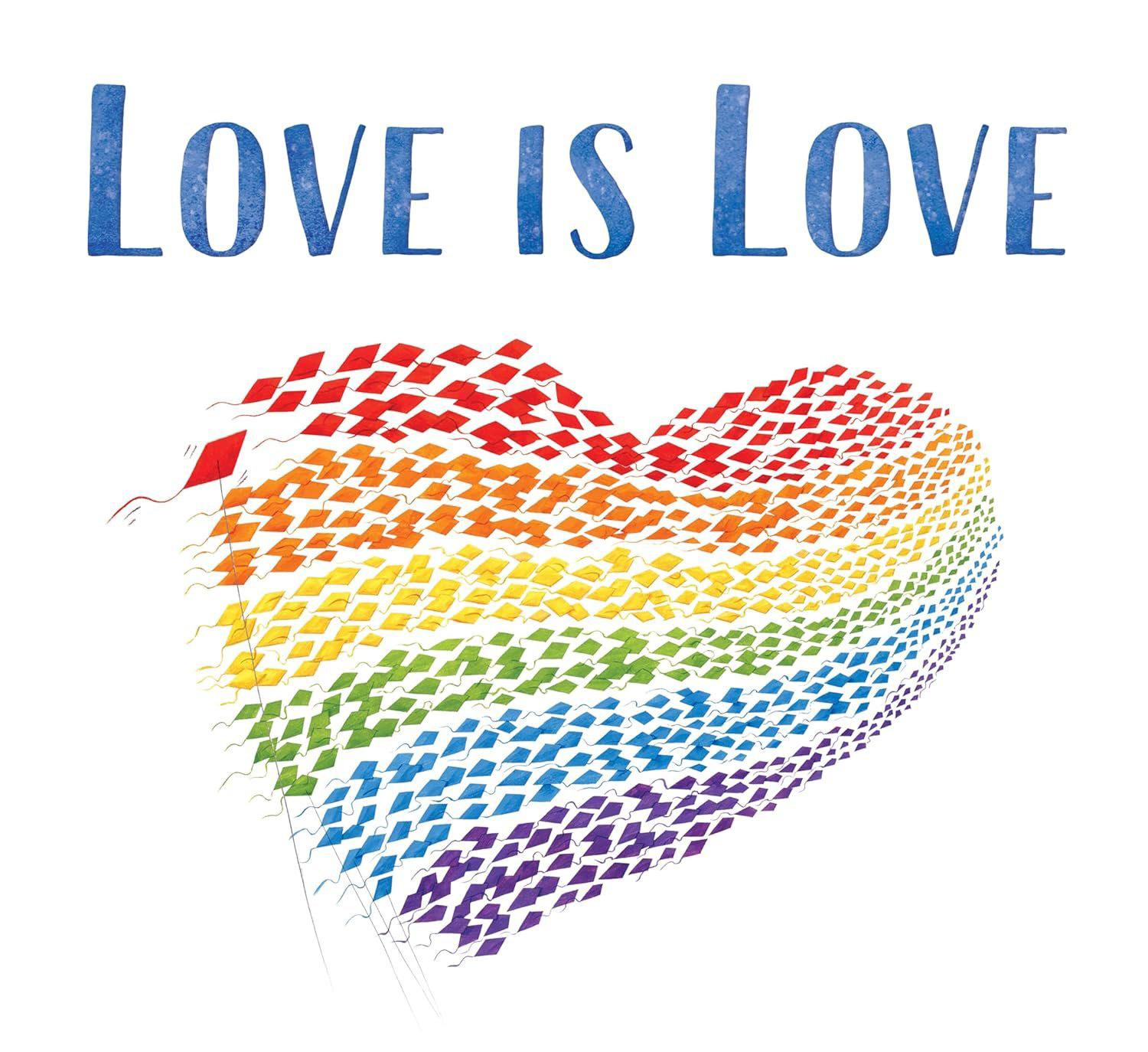
Illustration by Ken Min
MARGARET CHO - FromPage 15
FG: Reflecting on projects like All-American Girl, what key lessons did you learn that influenced your approach in the entertainment industry?
MC: Working on All-American Girl was a pivotal moment in my career, offering invaluable insight into the inner workings of television and Hollywood. Before that experience, I viewed acting as simply another job, but being at the center of the show made me realize how important it is to have my own voice and agency. In hindsight, I wish I had asserted myself more and truly shared my perspective, but I’m grateful for the lessons I learned — even though the process was incredibly challenging. Ultimately, that experience taught me the importance of owning my story and using my platform to its fullest.
FG: You’ve often drawn from your family and Korean heritage in your work. How has your perspective on sharing these deeply personal stories evolved over the years?
MC: I really enjoy sharing stories about my family and personal experiences. When I talk about my life, I’m not intentionally trying to make a formal statement about Korean American culture or the immigrant experience. Instead, I share what has happened to me — these are just genuine moments from my own life that I find worth sharing.
What I find especially funny and relatable is the feeling of being an outsider, which I think everyone goes through, regardless of background. In my view, feeling a bit disconnected or on the edge of your own culture is a universal human experience. That’s the perspective I try to bring to my comedy. I want people to see themselves in these stories, to realize that feeling like you don’t quite fit in is something we all share.
FG: You’ve been a vocal advocate for mental health awareness. How do you balance channeling personal struggles into your comedy while also protecting your own well-being?
MC: I believe mental health is incredibly important, and sharing
my own experiences has always been healing for me — and I hope it’s healing for others, too. I really value it when other artists talk openly about their mental health journeys because it helps remind all of us that we’re not alone in our struggles. For me, dealing with mental health challenges has always been a part of my life. That’s why being honest and open about it matters so much to me. When I share my story, I’m not only helping myself by breaking the silence, but I’m also creating space for others to do the same. I truly believe that sharing our experiences is one of the most powerful ways we can support ourselves and those around us.
FG: As a prominent voice in the LGBTQ+ community, how have you seen the landscape of queer representation in media change, and where do you see the most urgent need for progress today?
MC: Over the years, I’ve seen a fundamental shift in how queer people are represented in the media. There’s a much stronger sense that we deserve equal rights, and visibility has improved as more stories and voices from our community are being shared. But despite this progress, there’s still significant resistance, especially when it comes to protecting our rights like marriage equality, which is under threat. That’s why we must stay alert and keep advocating for our rights.
At the same time, I believe the most urgent need for progress is supporting and protecting the trans community. The queer movement owes so much to the leadership and contributions of trans people, and we can’t move forward without ensuring they are seen, heard, and safe. Uplifting trans voices and ensuring their stories are told is crucial. Supporting them should be a core part of our movement.
FG: Your new show, Choligarchy, returns to your political-comedy roots. What inspired this sharper, more confrontational direction?
MC: I’m incredibly frustrated with the state of the union, and I believe humor is my only weapon. The wealthiest people in the world are trying to take over. I want to fight fascism with everything I’ve got. This will be my most blistering and brutally honest show yet! Let’s tear down racism,
homophobia, and sexism. We need to act now, before it’s too late to protect what matters most.
FG: When you reflect on your entire body of work, what message do you hope audiences connect with most?
MC: When I look back at my body of work, I hope people laugh — and feel connected. I want them to hear something that resonates — a deeper truth that not only makes them laugh but also reminds them they’re not alone in their thoughts, opinions,
ideas, perspectives, or lives. I want people to feel okay. That’s always been my message.
For forty years, Margaret Cho has been a trailblazer, building an innovative career on persistence and fearless comedy. Her voice remains as relevant and powerful as ever, and she’s bringing her next chapter to the stage. See Margaret Cho live at Seattle’s Moore Theatre on April 19 at 7:00 pm. Tickets are selling fast — get yours before they’re gone.
Tickets: https://margaretcho.com/
Margaret Cho by Nick Spanos
COLUMNISTS - Continued
HOBBIT HOUSE - From Page 8
and pulled me quietly into a small storage closet so we wouldn’t be found. It was completely innocent. But I remember everything about that moment — how alive and nervous and grateful I felt just being that close to another human. Feeling his arm around me as we were squished together in the dark. Feeling chosen for a moment. That split-second connection imprinted on me in a way I didn’t even understand until years later.
It lasted maybe three minutes. But it has stayed with me for decades.
That’s the power of human touch. Not romantic touch. Not sexual touch.
Just touch paired with presence — the recognition that another human wants you near them.
And yet in gay male culture, touch often gets tangled. Many of us grew up in systems that treated our bodies as shameful, our desires as dangerous, and our love as a threat. Some of us learned young that closeness could get us hurt. Many of us survived adolescence by pulling away, armoring up, or training ourselves not to need what humans need most: each other.
So today, I want to talk about something beautifully simple, and wildly underestimated:
Consensual human touch as healing, connection, safety — and resistance.
Why This Matters for Us
One in three Americans feels lonely on a weekly basis according to the American Psychiatric Association.
Gay men experience some of the highest levels of loneliness in the country. Studies show LGBTQ+ adults are nearly twice as likely to report persistent isolation. We crave brotherhood, tenderness, belonging — but have been trained to access it only through romance or sexuality.
We forget that touch itself can be sacred — separate from performance or expectation.
Hugging your friend for five full seconds.
Leaning shoulder-to-shoulder during a movie.
Lacing fingers with your husband, wife, or partner while walking down the street.
A friend silently placing a hand on yours during a hard moment.
These tiny gestures reset the nervous system. They tell the body: you’re safe, you’re real, you matter, and you’re not alone.
A Middle Earth Cuddle Puddle
For several months, once a week, two good friends came over and we worked our way through every version of Middle Earth — the extended LOTR trilogy, The Hobbit, the animated films, and Rings of Power. We’d pile onto the couch, laugh, debate scenes, and slowly melt into one collective Hobbit-loving human heap.
It was wonderful. Those nights I slept better. That was the healing power of a Middle Earth cuddle puddle.
I’m grateful for all the “cuddle puddles” and beautiful humans who have embraced me and allowed me to embrace them over the years.
Touch Is Medicine
This isn’t poetic metaphor — this is literal biology. Healthy touch reduces cortisol, blood pressure, anxiety, and even physical pain. It strengthens the immune system. It reminds the nervous system that the world is survivable. That you’re not alone.
For a community that has carried shame, rejection, violence, and loss — this is revolutionary.
We Need To Normalize Gentle Touch in Friendship
Some of my most healing moments were not conversations at all — but simple presence. Sitting next to my husband as we hand out dragon eggs at Hobbit Halloween. Hugging friends before and after sporting events. Leaning into one another during a game night on the patio.
The tight embrace of a loan officer friend before we watch a scary movie.
The energetic hug from a doctor friend before she beats me at kickball.
Touch bypasses shame. It bypasses the fear-spinning
mind.
It goes straight to the heart.
As I face new health challenges in the months ahead, I am thinking deeply about the touches I will need to heal — right alongside the treatments and medications. Our bodies heal better when we do not face the journey alone.
A Small Challenge
Reach out — literally.
Hug your friends longer (with permission). Sit closer.
Put a gentle hand on someone’s back when they’re sharing something heavy.
Let your community not just be the people you know — but the people you feel.
Loneliness is not cured by logic. Loneliness is cured by proximity. Our community is tired. Our community is grieving. Our community is rebuilding constantly.
Human touch — safe, consensual, kind — is one of the most powerful tools we have to heal each other.
And it costs nothing.
We were never meant to go through this life alone.
We were meant to hold each other up — and hold each other close.
So put on an extended version of Lord of the Rings, have over a couple good friends, and invite them to enjoy a Middle Earth cuddle puddle.
is
regarded mental health trainer and facilitator, having trained thousands of professionals since 2008. He’s developed mental health curriculum used by Washington State. He is a Robert Wood Johnson Foundation Culture of Health Fellow and has an MBA and an MA in Leadership. Oelrich was awarded the Peirone Prize for service in 2016 and has received congressional recognition for his work on poverty and homelessness issues. Oelrich has founded 3 nonprofits focused on youth issues, and he’s an advocate for increased collaboration and coordination.
Ryan Oelrich
a highly
OUT
ON THE RANCH - From Page 8
and light bulbs, one is never self-sufficient, one is survivor. The goal of Self-Sufficiency is a myth that disconnects us from community.
The promise that was the nuclear family is another myth that disconnects us from our intergenerations. How often do we see the generations as being different than one another, conditioning us to highlight contrasts, rather than connections. The labels of Boomers, Gen X, Millennials, etc. becoming distillations of differences, bitter liquors to be separated. Many focus on breaking of generational chains rather than building upon previous foundations.
Our elder generations are separated from family, placed in institutional care. The nuclear family, no longer able to accommodate or provide care. National polarization trickles downward toward a dissolution of familial ties among siblings and relatives. Each are dwelling within information bubbles that are becoming too fragile to bump into one another, more comfortable with estrangement instead. The blood of online engagement becoming thicker than the waters of relational reality.
At the ranch, we have found that if we shift our conditioned perspectives away from nuclear family and toward community connection, toward selfresponsibility rather than self sufficiency, we can chart a course through the turbulence of social upheaval. We leaned into these concepts this year to counter the noise, chaos and turmoil of this nation. We find ourselves thankful for having done so. Profoundly, in dark times, our light shines brighter this year for having strengthened ties with those around us in solidarity.
In the early years of the ranch, we learned we simply could not grow tomatoes out here without expending a lot of effort. Instead, we found a hot house grower whose core competency was growing incredible on-the-vine tomatoes and bringing them to the local markets. We could rely on this community member and small business for our tomatoes. That taught us to know our core competencies and what we could bring to community. This season we did manage to grow an
abundance of turnips. Eight crates of those were donated to our local food bank.
We learned to develop rapport, finding those we could invest in and position for success as well. Our very definition of success becoming positioning others to become successful. This year, we worked to expand our ranchhand program to include a few more persons who could use some extra income, or permaculture experience. We are thankful for reconnecting with one person who worked here over 9 years ago, and making new connections with a handyman person and another homestead oriented person. All of them local community members.
We leaned into growth this year at a time when others are hesitant. Our growth came in the form of spa amenities as part of a newly constructed bathing pavilion. Our core competency is offering hospitality and creating a space where transformation can happen. Having a sauna, soaking tubs, hot tub, and steamroom fits right into that wheelhouse.
Most importantly, to make manifest the new pavilion took connecting with the community. We wanted this to be a building of relationships as well as a construction project. The rapport we were able to make with tradespeople was a moment of grace. We are thankful for having expanded the ranch family to now include their families to come enjoy the fruit of their labors. When someone has vested their time and effort here at the ranch, we return that with what we bring to the table, hospitality.
We leaned into art as a form of resistance and that resulted in a scenic barn mural and whimsical bathing pavilion mural that brightens the entire ranch. The transformation adds to that feeling of stumbling upon a sense of the sacred blossoming in front of you when driving up our main drive.
Still out in our fields, are our seasonal run of meadow raised turkeys ending the final stretch of their journey. We bring them here as baby chicks in early Spring, and raise them so the public can see what they get from the store. They do a summer job of pasture renovation and bug control, until that Sunday before T-day when they go from farm to table. We are thankful to be able to sell many
of them, but even more so, we are thankful to be donating a few to local families in need as well.
Our collective Thanksgiving tables seemed to have shifted over the recent years given the polarizing trends. You may have seen some distancing among those who’ve attended your past gatherings. But this season, a new
solidarity seems to be rebuilding itself in its place, one that is highlighting Community and our connections to it. This season, try reaching out to your local community if you have space at your table. This is the best time of year to make a new connection or strengthen the bonds of one newly formed.
Paca Pride Guest Ranch is nestled on 17 acres in the rural mountains outside Granite Falls, Washington.
David Capocci, Glenn Budlow and Tim Leingang founded Paca Pride Guest Ranch in 2004.