
Collaboration
Uniting people, ideas, and expertise to
Publication Leadership:
Senior VP Marketing & Corporate Communications, Rebecca Leonardis
Editor, Alison Smith
Creative Director, Sarah Kennedy Lembo
Content Contributors: Breanna Ahern, Evan Keeley-Burke, Leah Collie, JP Ervin, Dylan Evans, Colette Finnerty, Patrick Moriarty, Hannah Walker
Proofreaders: Kari Mullen, Caryn Norton
Special thanks: to the STOBG Corporate Marketing and Business Unit marketing teams.

STO Building Group refers to a group of separate legal entities including:
Structure Tone, LLC
Structure Tone Southwest, LLC
Structure Tone International Limited (UK)
Structure Tone Limited (Dublin)
STO Mission Critical
Pavarini North East Construction
Pavarini McGovern, LLC
L.F. Driscoll Company, LLC
Govan Brown
Ajax Building Company
BCCI Construction
Layton Construction
Abbott Construction
RC Andersen
as well as their subsidiaries, joint ventures, divisions or affiliates.
Each member company is an independent legal entity operating and providing services solely under its own name.
STO Building Group is an equal opportunity employer.
© Copyright STO Building Group, 2026.
STO Building Group Insights magazine is a publication of the STOBG Corporate Marketing Department
330 W. 34th Street, New York, NY 10001
We’re often asked about how STO Building Group came about. It’s a story of following our clients and their needs. It’s a story of growth. And it’s a story of collaboration.
We knew that working together—with our clients, with each other, and with experts in other geographies and sectors—was the most effective way to find solutions to construction challenges. That diversity of expertise and perspective opens the door to growth, innovation, and success.
That’s what this issue of STOBG Insights is all about. We’re celebrating the many ways collaboration leads to success, whether that’s to solve a problem on the jobsite, to create an industry-leading safety culture, or to combine our resources and expertise to serve a growing client or sector.
We would also like to use this issue to introduce a new member of our executive leadership team, STOBG president, Paul Drecksel. As president, Paul joins the two of us in leading the vision and direction of our family of builders. Paul served as chief operating officer at Layton Construction for the last several years, where he saw first-hand how the power of the STOBG platform benefits our employees, our clients, and the industry as a whole. On page 8, you can read more about Paul’s background and what he sees as the challenges and opportunities facing our industry.
Please enjoy this issue of Insights—and thank you for the opportunities to collaborate with you, now and in the future.

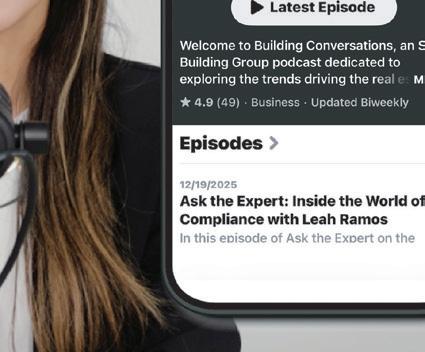
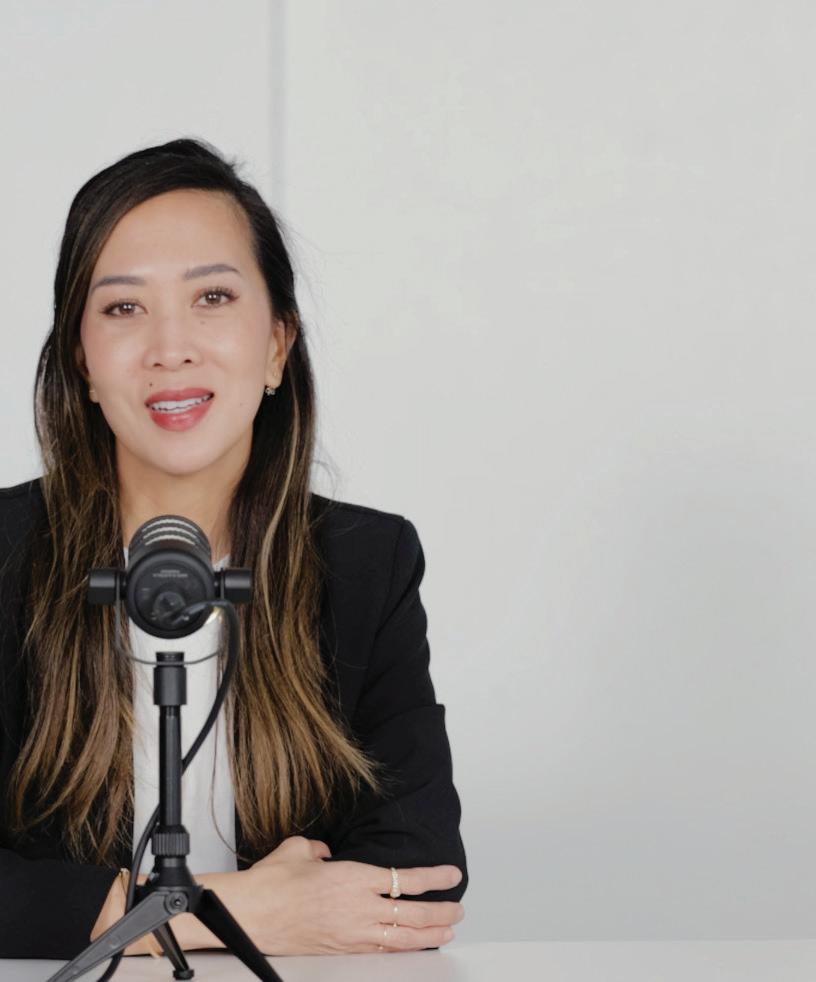
SUBSCRIBE TO THE BUILDING CONVERSATIONS PODCAST
Passion and Performance:
The Delivery of the Porsche Experience Centre Toronto
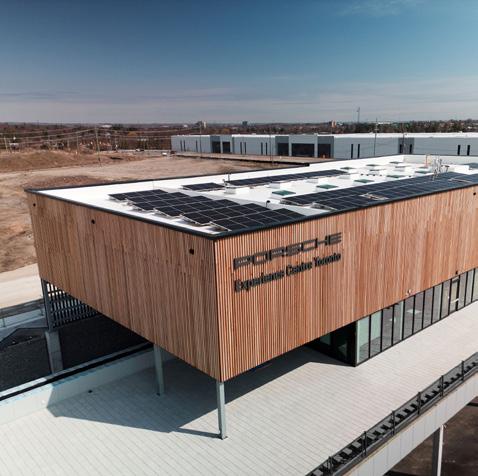
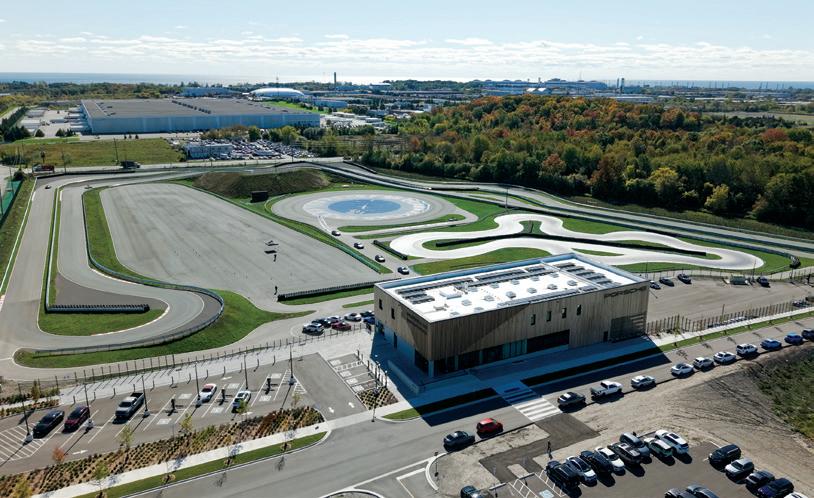
Govan Brown Building Group (GBBG), Govan Brown’s core-and-shell construction division, delivered the first-ever Canadian Porsche Experience Centre (PEC) in Spring 2025, the tenth of its kind globally. Located in Toronto, the complex serves as a hub for brand enthusiasts, bringing together a modern showroom, immersive driving simulators, and café along with a 2-km driving circuit. While the driving modules was a separate project, GBBG was entrusted with the delivery of the main facility on this build that required passion, agility, and performance from start to finish.
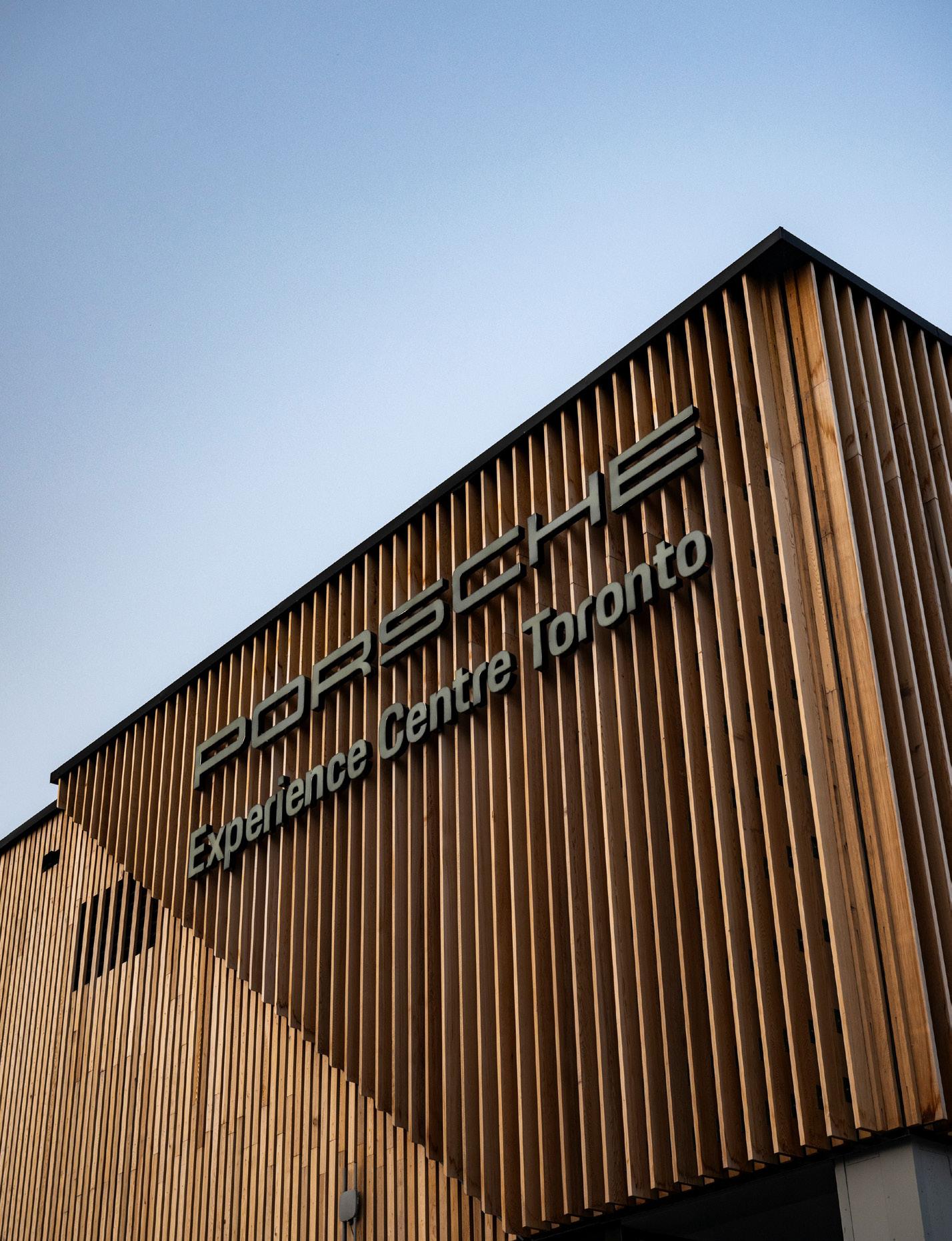

With a dynamic scope and complex site conditions, PEC Toronto demanded an approach that was disciplined and adaptive. The Porsche brand standards, known for their precision and craftsmanship, informed every decision. Together, Porsche and GBBG navigated ambitious performance goals and operational constraints through meticulous planning and proactive problem-solving, bringing to life this highly specialized destination that’s reflective of its eponymous brand.
SUSTAINABILITY IN MOTION
Performance at PEC Toronto isn’t just measured in speed. Designed to achieve LEED Gold certification and zero-carbon building standards, sustainability was embedded in the project vision. Features such as geothermal fields, gabion stone walls, and locally sourced materials reflect this. Early design options included solar panels on the 25ft-high gabion stone wall, showcasing the client’s ambition to implement environmentally conscious practices. The GBBG team identified structural limitations made this option unfeasible, so the panels were relocated to the roof, which preserved the original intent: marrying cutting-edge technology and the exacting standards that are synonymous with the Porsche brand.
TESTED AND PROVEN
Performance and operational excellence came to life through a series of advanced performance tests led by the GBBG team. These included smoke and water tests, infrared scans, and whole-building air tightness assessments. Many of these were introduced mid-construction, requiring the team to
adapt in real time. When design challenges emerged, the only way forward was to work closely, and often daily, with the architects.
“From the outset, our focus was on presenting solutions,”
SAYS
GBBG PROJECT MANAGER EIMAN ELHAG. “Rather than simply flagging problems, we came to the table with options and a path forward. Working closely and consistently with the Porsche team meant everyone stayed aligned on the client’s expectations and was key to building trust with Porsche.”
NAVIGATING SHARED ROADS
The project was unique in that two scopes—the main facility and the driving modules—were delivered by two distinct contractors. This created overlapping zones, shared site access, and areas of responsibility divided by as little as 1.5 meters. To avoid conflicts and keep operations efficient, GBBG leaned heavily on structured coordination meetings and built collaboration deep into the project’s overall execution strategy. GBBG worked in tandem with the partnering contractor to synchronize schedules, manage site traffic, and build a cooperative relationship. Roads and lay-down areas both required careful negotiating to ensure both teams could operate safely and efficiently, as well as determining who was responsible for site access roads or re-working crane pads to suit both scopes. By leaning on proactive communication, well-mapped layouts, and a solution-focused mindset, the team ensured that site operations flowed smoothly in order to maintain safety and progress.
PUSHING INTO HIGH GEAR
With PEC Toronto now open, Porsche has a new Canadian home that reflects its brand values: precision, performance, and uncompromising attention to detail.
“Working together with Porsche was ideal,” say Eiman Elhag. “By integrating sustainable design strategies, navigating complex site conditions, and fostering collaboration at every turn, we were able to deliver a project that meets the highest standards of construction and client expectation.” <
PROJECT DETAILS
Location: Toronto, Canada
Completion: April 2025
Unlocking THE VALUE OF BIM
The construction industry is experiencing a rapid digital transformation, driven by the demand for improved efficiency, accuracy, and collaboration. At Structure Tone Dublin, we recognised that traditional methods of managing Building Information Modelling (BIM) data were limiting our ability to deliver projects efficiently.

Ryan Forde
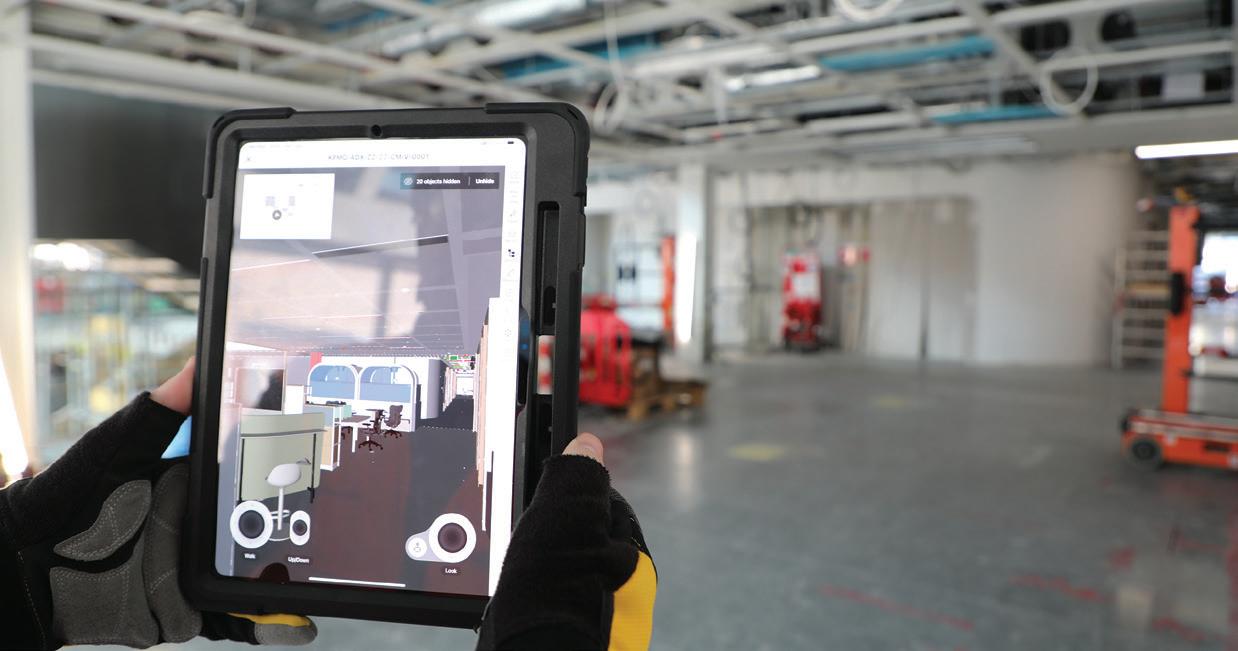
Clashes were often slow to resolve, models were difficult to access on-site, and subcontractors faced barriers to engaging fully with BIM processes. To overcome these challenges, Structure Tone Dublin undertook a strategic review of how BIM information was managed and delivered across our projects.
RECOGNISING THE NEED FOR CHANGE
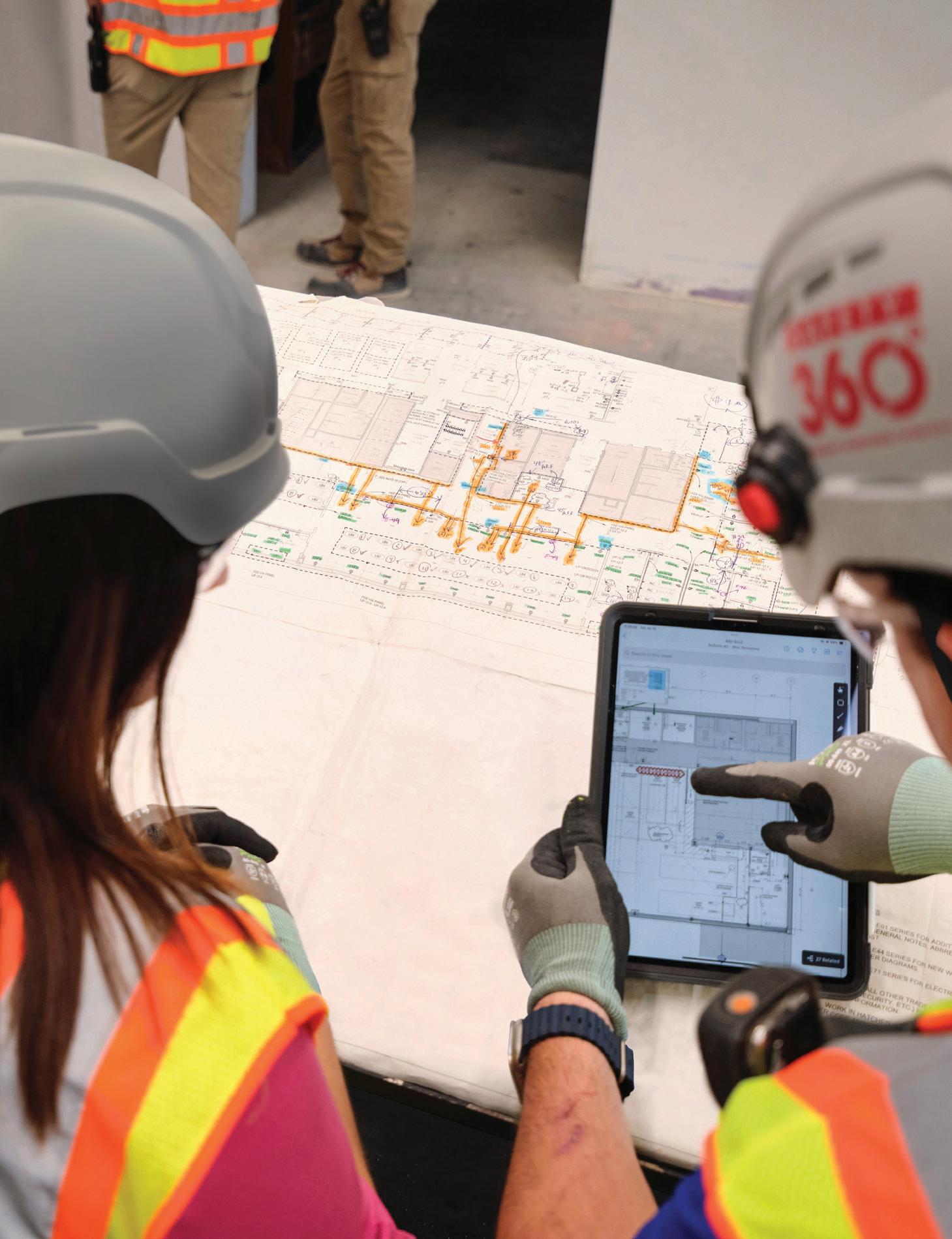
Historically, BIM coordination depended on specialised hardware and software, typically limited to use in the office. Site teams and subcontractors were often working from 2D drawings or static screenshots that quickly became outdated. We set out to change this by making BIM information accessible to everyone involved in project delivery—from
project managers and site supervisors to subcontractor installers.
Our first step was to conduct controlled trials using mobile BIM tools on live projects. We wanted to understand:
l How accessible models could be on tablets and mobile devices
l How easily staff with different levels of digital confidence could use them
l Whether issue resolution could be improved compared to traditional methods
Feedback from the trials was overwhelmingly positive. Site teams reported that being able to carry the model onto site allowed them to check conditions in real time and raise issues
immediately, significantly speeding up the coordination process.
CONTINUITY FOR BIM TEAMS
A key success factor was ensuring our BIM team could continue working with their existing tools and workflows. We integrated mobile access into our standard BIM processes, allowing coordination and model updates to continue in familiar environments such as Navisworks and Revit.
The difference was that models were now accessible to everyone, not just BIM specialists. Site teams could view floorplans, navigate directly into model views, flag issues, and track coordination progress—all within a shared digital environment.
BIM Manager, Structure Tone Dublin
This integration reduced communication gaps, eliminated email chains, and ensured everyone worked from a single, current ver sion of the model.
PARTNERING WITH SUBCONTRACTORS AND INSTALLERS
For digital adoption to succeed, subcontractors must be active participants, not observers. Traditionally, this was one of the biggest barriers to BIM integration. With im proved accessibility, Structure Tone Dublin’s subcontractors could now:
l View trade-specific models directly in the field
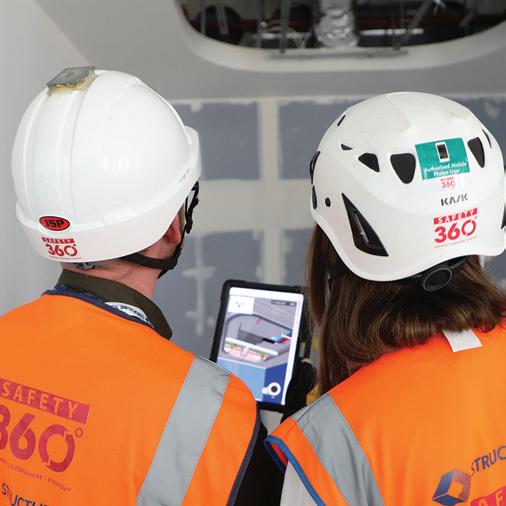
l Identify and resolve issues before installation
l Work from the most current model without specialist equipment
This shift empowered our partners to contribute directly to coordination, improving collaboration and reducing the likelihood of rework.
ACCELERATING COORDINATION AND ISSUE RESOLUTION
One of the most measurable outcomes of our digital transformation has been the speed of issue resolution. Coordination problems that once took weeks to close out can now be addressed in days—or even hours.
By managing issues digitally, teams in both the office and on site have immediate visibility of clashes, ownership, and status updates. This transparency has reduced duplication of effort and increased confidence in project information.
LOOKING AHEAD: EXPLORING AUGMENTED REALITY OVERLAY
As our Structure Tone team continues to evolve digitally, augmented reality (AR) presents the next frontier. We are currently exploring AR overlay technology that allows site teams to view digital models directly on top of real-world installations.
Potential benefits include:
l Instant validation of installation accuracy
l Early identification of clashes before materials are installed
l Assurance that the built environment matches design intent
We see AR as a natural extension of our commitment to digital delivery and continuous improvement.
With BIM now an inherent part of our process and AR capabilities on the horizon, Structure Tone Dublin is committed to pushing digital construction forward—ensuring that we continue to deliver, efficient, coordinated, and future-ready projects. <
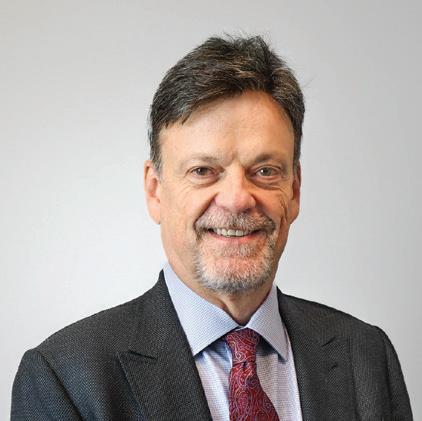
MEET Paul Drecksel, STOBG’s New President
In January 2026, STO Building Group named Paul Drecksel president, joining CEO Bob Mullen and executive chairman Jim Donaghy in our senior executive team. From his basketball days to his years as COO of Layton Construction, Paul’s background and perspective are a perfect fit for the role.
Tell us about your background. Did you set out to work in construction?
No. Early in my career as an attorney, I began representing companies involved in the construction industry: project owners, architecture and engineering firms, subcontractors, and general contractors. It wasn’t the only focus of my practice, but it became my favorite. As anyone who’s worked in the industry knows, there are many shades of grey during the construction of a job. Projects are most successful when all project participants work together to solve the inevitable issues that arise. So I loved that problem solving, collaboration, and teamwork part of the business. It’s also never boring—which is not true in a lot of industries. I loved everything about it.
You spent most of your career at Layton. How has joining STO Building Group affected Layton’s (and its clients’) success?
At STOBG we talk about the “power of the platform,” which refers to the synergies and benefits the broader organization provides to both the individual companies of STOBG and our clients. Our mission critical and data center work is a great example. There, our CEO, Bob Mullen, has been directly involved in combining the resources of our constituent entities to meet our clients’ needs in ways that simply would not have been possible if we were not all part of the platform. It has provided new opportunities for our team members, added value to the company and thereby benefitted our thousands of
employee shareholders, and has been a huge help to our clients who need a contractor with the resources, scale, and sophistication of the broader STOBG family. That is the power of the platform in action.
What do you think makes STOBG different from its competitors?
We have tremendous size, resources, and geographic and market sector breadth without being a one-size-fits-all solution. Our collective scale allows us to successfully navigate the largest and most challenging
construction projects. The individual identities of our builders ensure that clients get a contractor who operates according to local market factors and client priorities rather than a set of generic corporate guidelines. That individuality allows us to be much more nimble and responsive, and to handle jobs our clients need completed no matter how big or small. Clients get the resources of a massive company and the responsiveness and relationships of a home-town contractor. It really makes STOBG special and different from its competitors.
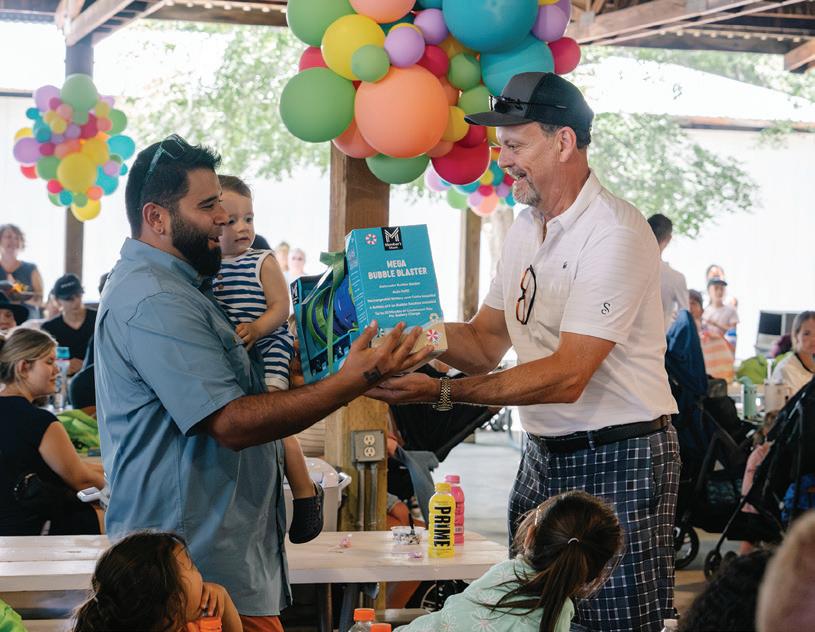
As you step into the president role at STOBG, what are your key focus areas for the company and our clients?
STOBG is an incredibly successful and well-run organization with a best-inclass leadership team. So one focus will simply be helping the team maintain the momentum already in place while preserving everything that makes the organization a great place to spend a career and the contractor of choice for our clients. I’m a big believer that every thing good that happens in our business is the result of relationships, as manifested by the huge percentage of our work that is for repeat clients. That philosophy is already well entrenched at STOBG, and I look forward to helping ensure it continues for years to come.
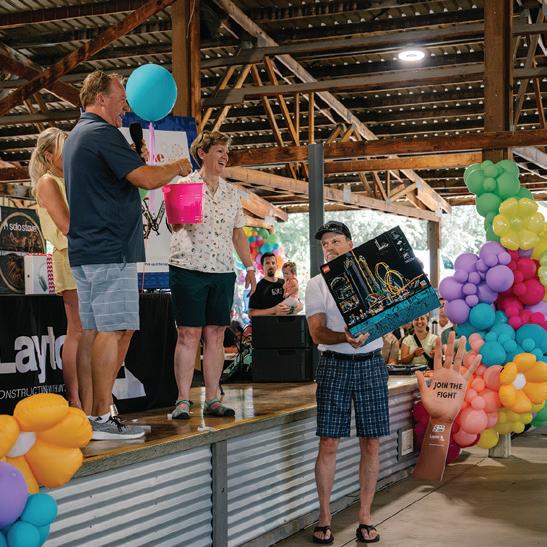
What are the biggest challenges you see for our industry in the coming year(s)?
As is often the case in business and in life, our biggest challenge is also our biggest opportunity: how to effectively use AI, other technology platforms, and the massive amount of data at our fingertips to be better—to deliver projects quicker, at lower cost, and with even better quality, all while continuing to improve on the fantastic results we’ve seen in our safety performance. Ensuring we meet this challenge and seize this opportunity is already a major focus for STOBG, and I’m looking forward to working with our leadership team on these exciting developments.
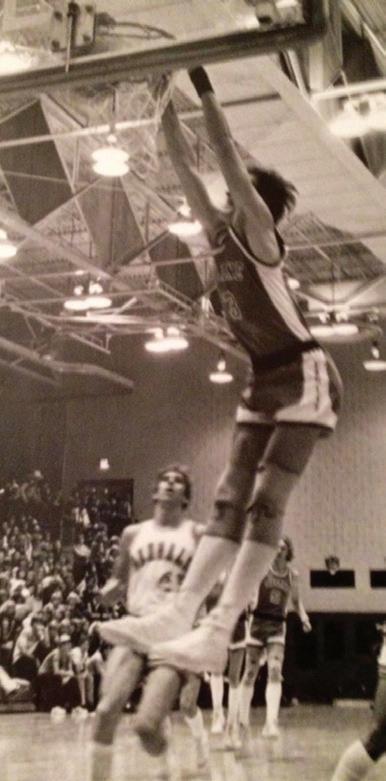
You played Division I basketball in college. How has playing competitive sports influenced you professionally?
In many ways. One is that it taught me resilience. I had a serious back injury before my freshman year at BYU and spent 8 months in bed—at age 18. I learned that when bad things happen, you can either feel sorry for yourself—which I did for a while, and it made things worse—or you can focus on turning setbacks into opportunities. But for that injury, I wouldn’t have taken school as seriously, and I likely never would have gone down the path that landed me where I am today. So I go through life now with a very small rearview mirror—just big enough to learn from challenges, mistakes and losses—and a huge windshield that allows me to focus on the oppor
tunities in front of me. That’s been very useful in this business. You don’t always win. You make mistakes. But if you have the right attitude and work ethic, and you’re objective and humble enough to admit when you’re wrong, you can get through anything and come out better on the other side.
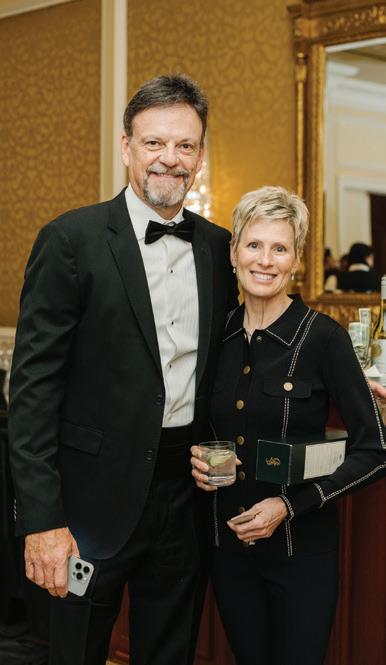
What is one of your proudest moments in your career so far?
Without question, it’s been watching the accomplishments of our team members as they grow and mature professionally, seeing what spending a career with us has done to better their situation. As an example, before Layton merged with STOBG, we had a long-time superintendent who passed away after a brief illness. It was unexpected and a shock to everyone. At his funeral, his widow thanked Dave Layton for what he’d done for her family. Specifically, for allowing employees like our superintendent to be shareholders in the company. He’d put away enough that she’d never have to worry about how she’d pay her family’s bills.
It was really powerful, and it’s one reason that Dave and I are such big proponents of the GISI stock program that’s available to our employees. STOBG is a great place to spend a career, and it offers opportunities that are hard to match elsewhere. That’s something we can all be very proud of. <
NJPAC Cooperman Family Arts Education and Community Center
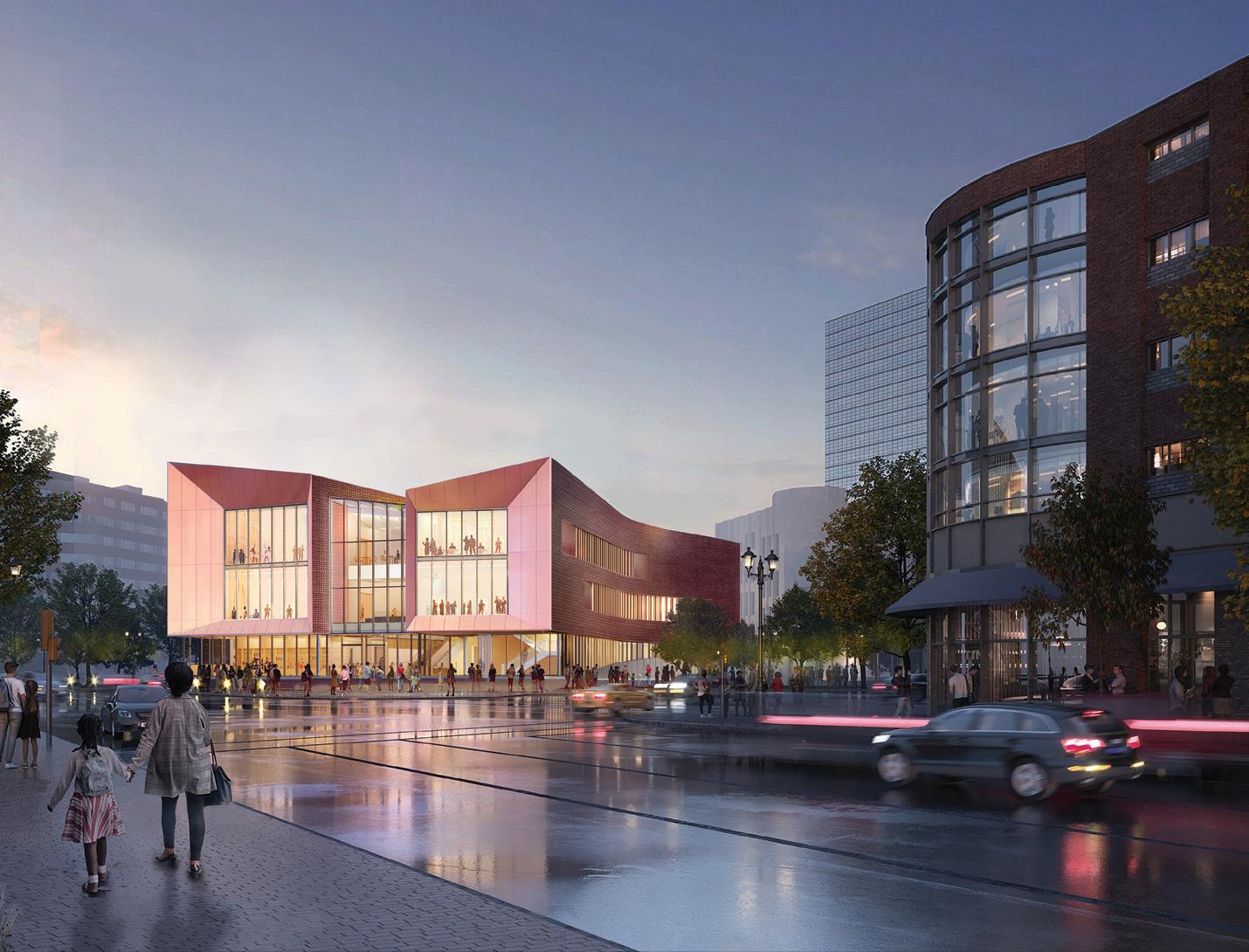
Situated on NJPAC’s campus in Downtown Newark at Center and Mulberry Streets, the three-floor, 58,000sf Cooperman Center will feature classrooms, student lounges, a reading room, a black box studio, rehearsal spaces with sound studios, breakout rooms, changing suites, private restrooms with showers, and storage areas.
Opening in 2027, the Center represents a major investment in Newark’s cultural and educational landscape. By connecting local students and community members with renowned and emerging artists, it strengthens NJPAC’s performing arts education program and inspires creativity across all ages.
Designed for flexibility and innovation, the building’s open facades and double-height windows frame views of NJPAC and Mulberry Street. This state-of-the-art facility fosters collaboration and community engagement, offering spaces for learning, rehearsal, and artistic creation.
“It’s rewarding to see this vision come to life for Newark,” says Ken Burke, Structure Tone senior project manager. “NJPAC’s master plan
NEW JERSEY
PROJECT DETAILS
Location: Newark, NJ
Size: 58,000sf
Client: NJPAC
Architects: SOM/ Weiss/Manfredi
Engineers: Jaros, Baum & Bolles (MEP); Thornton Tomasetti (structural)
Sector: Cultural
Completion: 2027
aimed to create a vibrant hub in the heart of the city, and we’re proud to help make that happen.”
The Cooperman Family Arts Education and Community Center will also drive economic growth as part of NJPAC’s three-year downtown redevelopment, which includes 350 mixed-income residential units, retail spaces, and outdoor gathering areas.
“This initiative will not only provide housing and commercial spaces, but also create vibrant cultural and educational opportunities that will enrich the lives of Newark residents for generations to come,” SAID FORMER NEW JERSEY GOVERNOR PHIL MURPHY IN AN EXTERNAL PRESS RELEASE FROM SEPTEMBER 18, 2024. <
Structure Tone New Jersey is building a new facility for the New Jersey Performing Arts Center in Newark, NJ
Your vision , our expert i se — deliv e red throug h colla b or a t i on an d smart solutions .
BUILDING CIRCULARITY:
How Partnerships and Takeback Programs Are Transforming Construction
The construction industry faces a massive environmental challenge: more than 160 million tons of debris ends up in US landfills each year. But as sustainability expectations rise, new partnership-driven solutions are beginning to take hold. One of the most promising? Manufacturer takeback programs. In this conversation, STO Building Group VP of sustainability Jennifer Taranto, Structure Tone Southwest sustainability coordinator Avery McKitrick, and Shaw Industries VP of sustainability Tim Conway discuss how these programs are evolving, and what it will take to scale them across the industry.

Jennifer Taranto VP of Sustainability, STO Building Group

Avery McKitrick Sustainability Coordinator, Structure Tone Southwest

Tim Conway VP of Sustainability, Shaw Industries
Jennifer Taranto (JT): What are manufacturer takeback programs, and how do they work in commercial construction?
Tim Conway (TC): Over 20 years ago, we designed a product for disassembly. And when we got it back, we saw that it was a profitable raw material. But we had to create a process that was easy for the supply chain in the reverse distribution of that material. There also had to be some reward at the end, not only for Shaw, but for the general contractors and the owners as well. So we started trying to find a way to make it profitable, create a process, and then create this reward at the end that is really working now with our partners like Structure Tone.
JT: Avery, what are some of the challenges we’ve had from the construction side?
Avery McKitrick (AM): One is volume. For some of these manufacturer takeback programs, the volume exceeds what the project will produce. And then another problem is cost.
HEAR THE WHOLE CONVERSATION
ON OUR PODCAST, BUILDING CONVERSATIONS
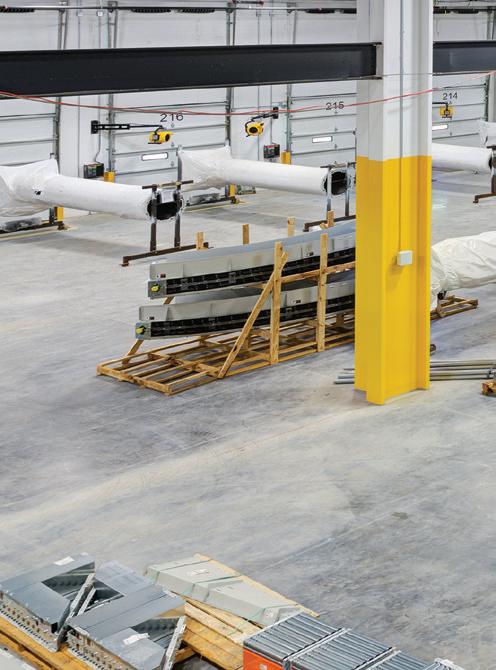
Sometimes there’s an associated freight cost, or there’s a labor cost to palletize these materials. We can save money, though, for example, by reducing our costs towards tipping fees for landfills. So while some takeback programs aren’t necessarily going to be 100% free, we can offset those costs.
JT: How early in the design and procurement process do we need to start thinking about takeback programs to make them feasible?
AM: We should spec materials with takeback programs in mind because when that
project reaches the end of its life and it’s demoed, those products can be taken back. Step two, as early as you possibly can, determine how you are going to deconstruct this building to make sure it’s palletized, to make sure your demo company has experience in deconstruction. It’s never too late, but earlier is always better.
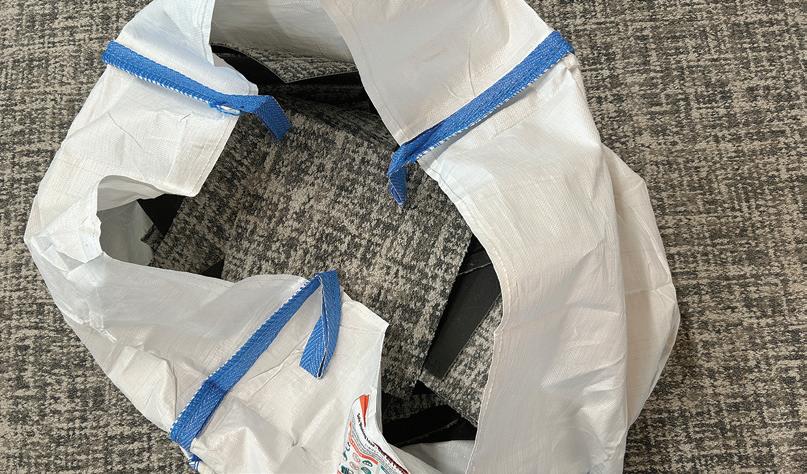
TC: What we ask designers, preconstruction, and building owners is can you, before anything gets bid out, take a smartphone photo of the carpet tile and send it to this cell number. We want to see if there’s an opportunity
to reduce the project’s landfill consumption. Then we’ve developed a carpet tile reclamation specification that is intentionally overwritten. Just those two tasks—identify early and specify the practice—are helping our program see a great trajectory right now.
JT: How do you see takeback programs evolving?
TC: This is either going to happen to us, or it’s going to happen because of us. The more people we get in these partnerships, the more these become a reality. This is going to take us forever, so I’m glad we’ve gotten started. But if we don’t, our forever isn’t going to look very good.
AM: I think it’s a complete reimagining of the demolition process. I’d love to see more subcontractors who specialize in deconstruction so that we can partner in takeback programs and recycle and partner with nonprofits who will take these building materials.
JT: The one other layer I would add is in the partnerships and finding more opportunities for our trade partners to create a business line for being aggregators of the materials. If we can have more trade partners regionally aggregating materials so that they can go out in bulk, that would be my secondary win to create this utopia we’ve described. <

Built to Scale: STOBG’s Mission Critical Expertise
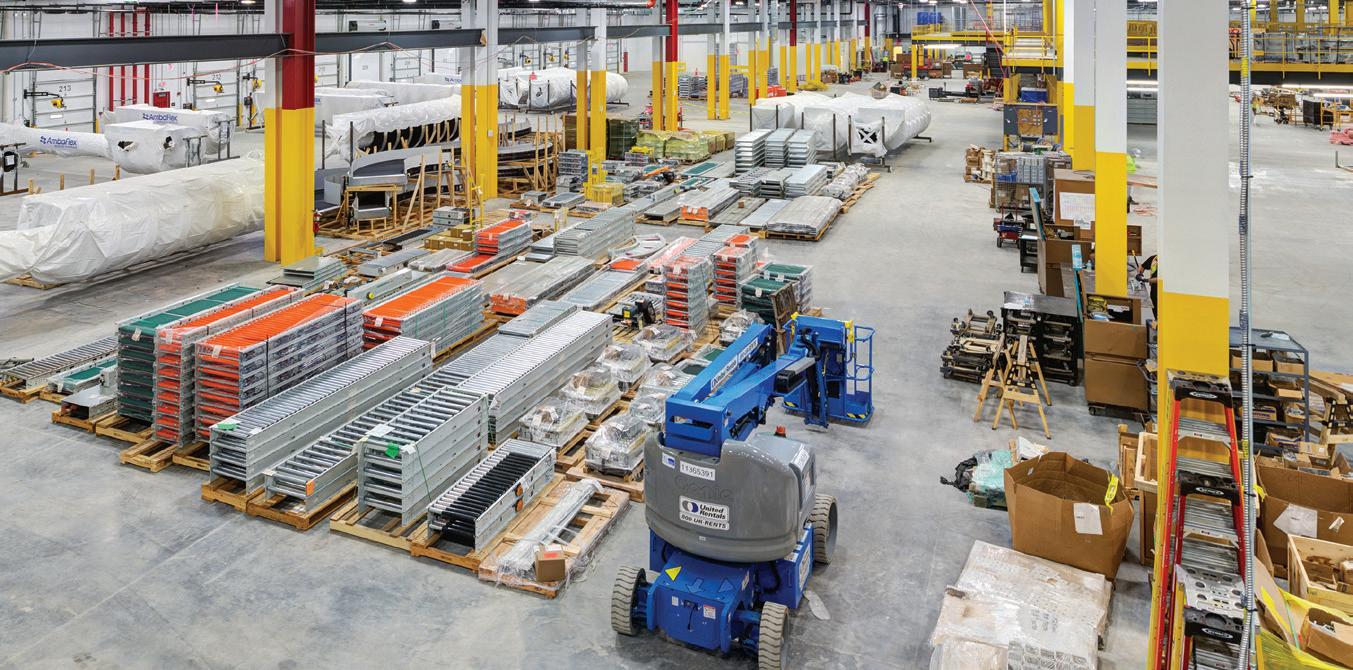
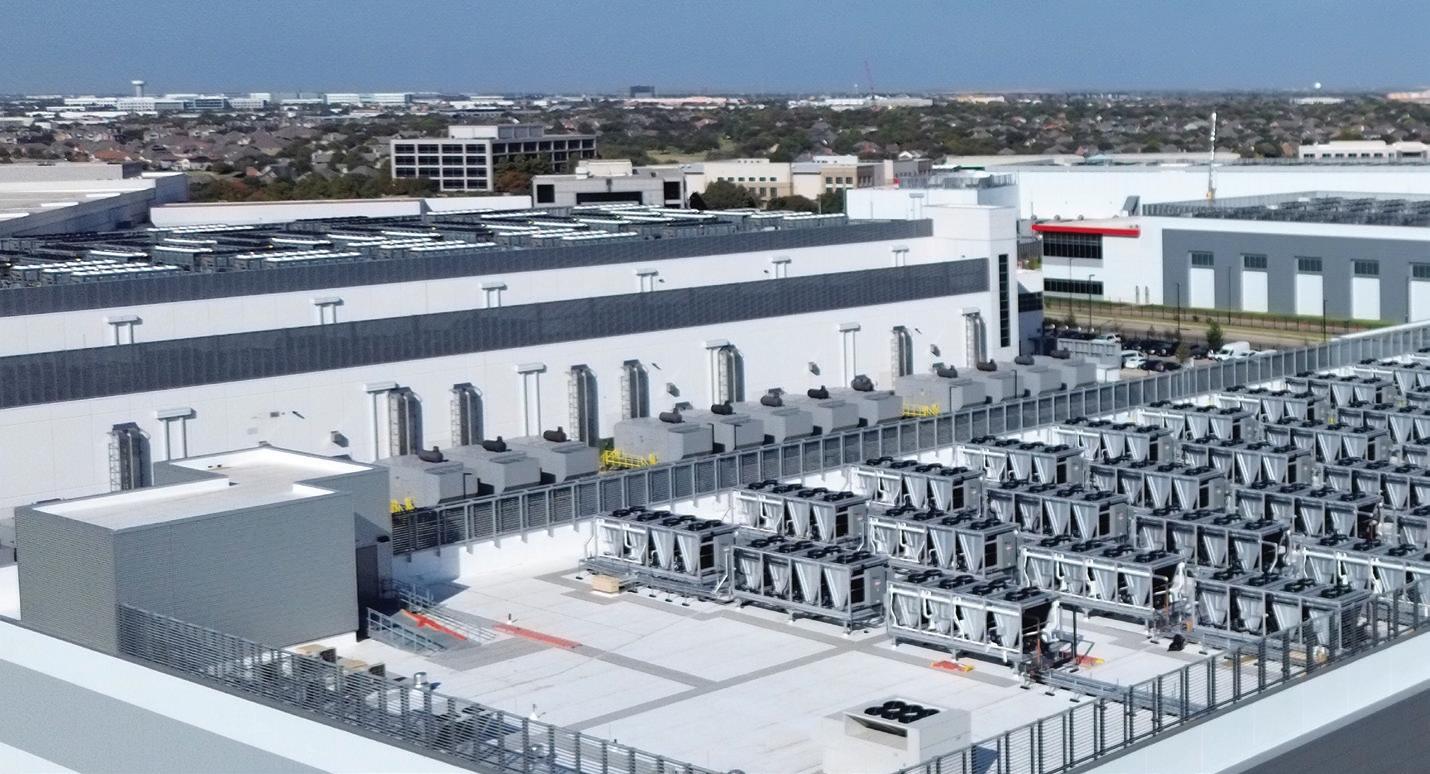
A 2025 report from McKinsey projects that the data center market will require $6.7 trillion to keep up with computing demand. This meteoric growth means data center developers need teams who can jump right in to get these projects online with speed and with skill. That’s where the STO Building Group’s family of builders comes in.
“Our mission critical experts have been building data centers for 40 years,” SAYS TERENCE DENENY, SVP OF STO MISSION CRITICAL. “That expertise evolved into our STO Mission Critical centers of excellence, which draw from our teams in Texas, Dublin, and everywhere in between to support the entire family of builders.”
It’s true, the Structure Tone and Structure Tone Southwest mission critical teams have been serving data center clients in the US, Ireland, and the UK for years. They have continued to follow clients wherever they need them—from enterprise hubs in the New York City metro area to large multi-megawatt campuses in Virginia, Texas, and beyond. When one such client approached the Dublin team with a 4.5MW project opportunity in the Netherlands, they jumped right in. Two years later, with an office in Amsterdam, a growing portfolio, and a team built to scale, STO Mission Critical’s European journey has taken off. “Our approach is to follow the client, control the risk, and do what we do best,” says Jason Monks, Structure Tone Dublin’s mission critical director. “We went from running a project to running a business in the Netherlands. And we’re just getting started.”
Layton Construction had done some data center work for select clients over the years, but what really made the difference was their existing comfort with traveling teams. “We were serving healthcare and industrial clients all over the country,” says Layton EVP Cris Bryant. “For us, it was a perfect marriage of expertise in similar sectors and traveling teams with clients who already trusted us.”
While the Layton team was growing in the data center market on their own, joining STO Building Group took it to a new level. “With the rate this market is growing, we would have capped out on what we could do,” says Bryant. “As part of STOBG, we can pull in resources from across the company to get these jobs done and help our clients continue to expand.”
LF Driscoll is especially known as a healthcare construction leader—but they’ve actually been working on mission critical projects for decades. “We’ve been supporting data center projects across the company for years thanks to our understanding and expertise in large-scale MEP infrastructure, commissioning, and controls,” says LF Driscoll EVP Michael Delaney. “So as the market ramped up, we were poised and ready to take on even more. ”The LFD team now leads the preconstruction efforts for STOBG’s data center projects in the eastern half of the US and is partnering with Layton on several more.
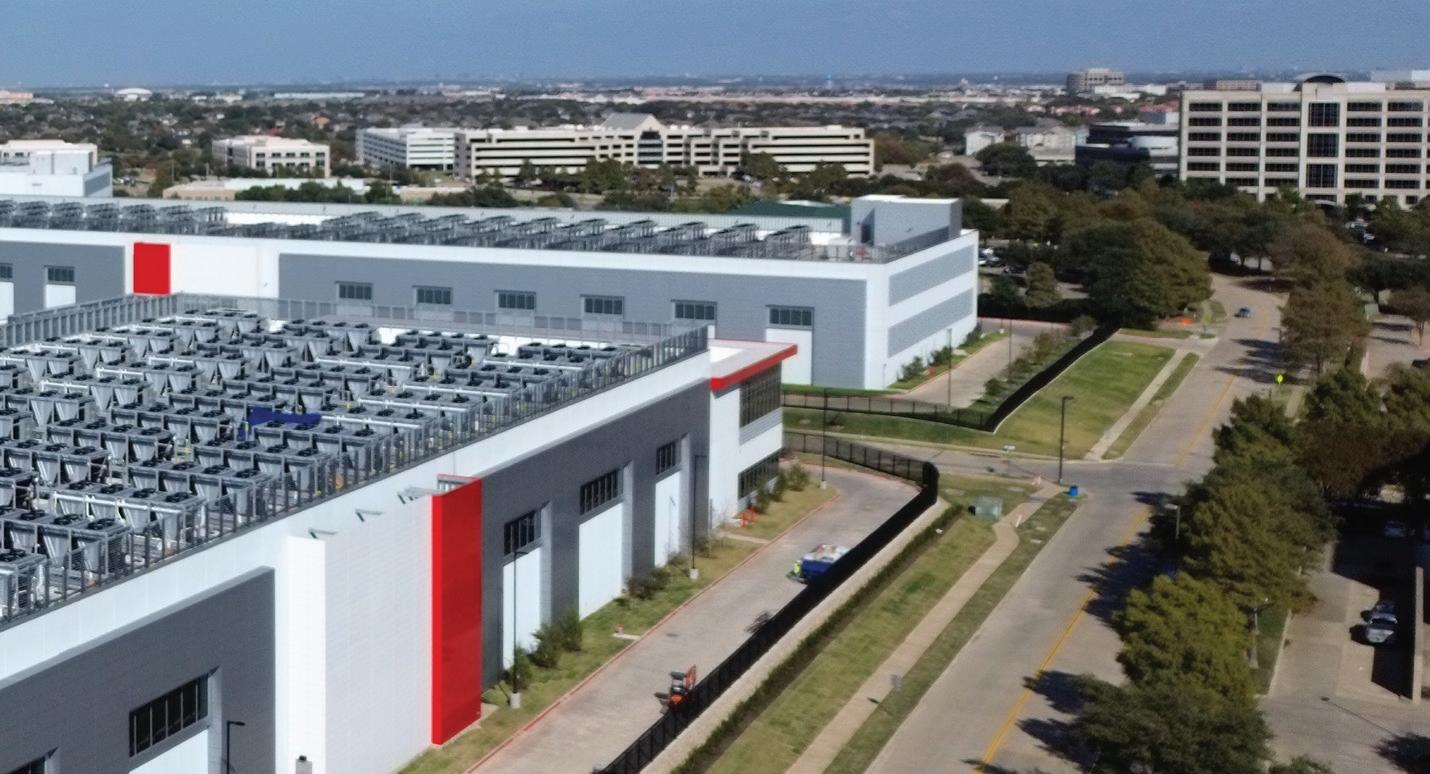
RC Andersen has been guiding industrial clients on siting and building their projects for decades. “The building shells and the site development are similar,” says Neil Ascione, president of RC Andersen. “So with the added fit-out, systems, and commissioning expertise of STOBG, we were in a great position to help.”
Chris Carey, RC Andersen’s director of mission critical agrees. “Many of our industrial development clients own properties that may
be able to serve the data center sector,” he says. “We can leverage the expertise we have across the organization to help them do that and avoid any pitfalls.”
As data center clients continue to expand south—in fact, Ajax Building Company has several projects in the works across Georgia and the Carolinas—the team has been tapping into its STOBG resources as well as lending its traveling teams to data center projects in other regions, learning the
intricacies that make data center construction unique. The team’s long-time experience in building for resilience also comes into play, says William Byrne, Ajax north regional director. “We build a lot of emergency operations centers that have mini data centers and require a high emphasis of reliability and continuity,” he says. “Both facilities operate as essential hubs that must function without interruption. With STOBG backing us, we have the expertise and confidence to advise our clients from both perspectives.” <


Our Mission Critical Centers of Excellence in the Continental US and Europe
From the Field
Strong client relationships are built on partnership, trust, and consistency, from the first project to the fiftieth—and beyond.
Construction is a people business. Yes, we build physical structures, but strong relationships undergird every project we deliver. Our approach to client relationships is rooted in partnership, trust, and consistency. When
we meet with a potential first time client, we’re not just thinking about winning a job. We’re thinking about building a relationship that can take us from the first project to the fiftieth—and beyond.
I speak regularly with STOBG leaders who have built long-standing relationships with our enterprise clients. We continually review success stories and discuss strategies for strengthening our client-first approach. Here are three key takeaways from our conversations.
1. Strong partnerships lead to stronger results.
Partnerships don’t happen by accident. They are built through commitment and follow through. That’s where we excel.
According to Matt Sarver, executive vice president of STOBG East, partnership means thinking beyond the job.
“
I’ve always approached our clients as if they’re a client for life,” MATT SARVER SAYS. “It’s more than the project. It’s getting to know their culture and what drives their business. On our most successful projects, we are able to connect with our client in many ways.”
Eric Nay, executive vice president of Layton’s National Building Group, echoes that idea, emphasizing the importance of problem solving and foresight.
“It boils down to a few key questions,” Nay says. “How do you take a front seat as a
STOBG Chief Operating Officer
by Greg Dunkle
partner with your clients? How do you solve problems for them? And are you looking around the corner for challenges that may come up? The most important thing for our clients is finding a trustworthy, reliable partner that can be predictable.”
A genuine partnership is a two-way street. Jay Smith, president of Ajax Building Company, says building lasting relationships comes from communicating our culture and values to our clients.
“We have a third-generation family culture at Ajax,” Jay says. “We tell our clients that once we work with them, we want them to be part of our family. When we start a relationship, it’s built for a lifetime. We provide solutions that go outside the box. We think as if we’re building it for ourselves.”
2. Trust is earned—and lost—at every stage. Trust is the foundation of every strong relationship. Transparency is how we earn it.
Ed Hanzel, senior vice president of LF Driscoll, has seen firsthand how transparency builds confidence during more than 25 years working in the healthcare sector.
“We’ve earned projects because of the confidence our clients have in us as a team and our ability to support them, but also to do that in a transparent way,” Ed says. “That’s always been our culture. We’re an open book. We don’t hide anything from the owner, and that’s helped us gain their confidence.”
Hanzel adds that trust has carried relationships through leadership transitions and other organizational changes.
“We’ve maintained relationships due to familiarity with us, trust in us, and the consistency of the people we provide, from preconstruction to project management.”
Nay sees a similar dynamic play out with his clients, even in the difficult moments.
“I want clients to trust us to be a solution provider,” he says. “I love that some of our clients say when they have a really difficult project, they come to Layton. That is such a compliment. It means they really trust our opinion and know we care about them.”
3. You’re only as good as your last project.
This is one of the most common refrains I hear in our industry. It doesn’t matter how many successes came before if your most recent project misses the mark.
Our teams push not only for consistency, but consistent improvement in how we do business.
“Every time you do something, you’ve got to set the bar even higher the next time,” Jay says. “It’s a challenge for your project teams to think through what we can do this time. When we celebrate success with our clients after completion, we also look at the lessons learned. We ask what we could have done better and take note of what the client wishes we would have done.”
Matt Sarver underscores the importance of adaptability. Consistency doesn’t mean keeping things the same—it means demonstrating reliability in the face of challenges.
“How do you adapt? Can you be flexible when challenges come? Every project that we do has challenges. We make sure we’re consistently adapting and providing solutions to those challenges.”
In the end, consistency is how we show who we are: steadfast partners who stay focused on delivering for our clients, each and every time. <
Zero Punch Wins
STOBG builders are securing flawless project deliveries thanks to quality initiatives, planning, and collaboration.
The construction industry often talks about the “elusive” zero punch—completing a project with no outstanding corrections on the punch list. While flawless deliveries certainly don’t come easy, STOBG builders are hitting the mark thanks to strong quality initiatives and the efforts of local teams.
Several of our quality experts and field leaders shared perspectives on how to achieve zero punches. They stressed the importance of collaboration, partnership, and strong planning. They also shared that zero punches are attainable when an organization comes together—the power of our platform in action.
QUALITY AT WORK
The foundation of a flawless delivery is set before a project even breaks ground.
“
Zero punches are a product of our Quality 360° program,” EXPLAINS LISA DUNMEYER, TECH OPS PROJECT MANAGER FOR STOBG.
“They result from our best practices. If you follow the recipe, you will be on track to achieve a zero punch.”
That recipe begins with identifying constructability concerns before building begins and continues when the project begins with in-progress reviews. Up to six weeks before substantial completion, some teams may bring on a designated closeout group to support the punch process, though this practice varies across projects and business units throughout the organization. Pre-punch items are tracked in STOBG’s quality control database and reviewed weekly. Following an inspection, STOBG prepares a punch list and develops a strategy to finalize the space for the client.
Dunmeyer also chairs STOBG’s Quality 360° Leadership Group, which brings STOBG builders together to strengthen quality. “The whole idea of the group is to get on the line, talk about particular top ics, and have an open forum for people to reach out,” she says.
This openness is a key part of STOBG’s quality approach. According to Susan Tienhaara, quality manager for Govan Brown and a key proponent of their zero punch initiative, these programs work because everyone comes together with the same goal.
“My messaging to teams is trying to come across as being an assistant,” Tienhaara says. “I want to help you. I’m not here to criticize you. We want to collaborate, not police. Partnering, not policing.”
From monitoring to dialog, our practices ensure that quality is a continuous commitment—and strong deliveries are a natural outcome.
A TEAM EFFORT
While organizational culture sets the tone for flawless execution, our field leaders are the front line. By addressing issues early and building strong close-out plans, they increase the odds of a zero punch finish.
Ryan O’Malley, superintendent for Structure Tone NY, credits his team’s flawless delivery to setting the punchlist process and schedule early, aligning the client, consultants, and trade partners from day one. The team also reserved time at the end of the schedule for thorough review and sign- off, enabling early QA/QC, proactive issue resolution, and a seamless closeout.
“That’s essentially building a schedule that allows for enough time on the tail end of the job to be really focused,” O’Malley explains, “and zeroing in on quality control and punch listing before the client moves in.”
Matthew Iametti, another STNY superintendent who achieved a flawless delivery this year, noted that having an out- of-town architect added complexity. “Establishing the punchlist standard early, the team prepared mock-ups during the architect’s first site visit, giving trade partners a clear benchmark as the project progressed. They also set a detailed schedule at the start and reviewed it weekly, keeping punchlist completion a priority during construction.”
In fact, STNY’s Zero Punch Program has become a major focus of the team’s presentations and has been instrumental in securing a significant number of new project awards.
No matter what, zero punches are a function of the outstanding effort of our field teams. This point was emphasized by Catalina Murillo, a project manager for BCCI who achieved a zero punch on a project in Southern California.
“I cannot commend our team enough for their flexibility,” Murillo says. “In the week prior, we printed out and put the zero punch sheet on everyone’s desk. We were being reminded every single day of what we were working towards.”
Dunmeyer underscores that zero punches are a team achievement, a testament to what happens when teams aspire to the highest standards.
“Zero punches help us quantify and celebrate workmanship,” she says. “Workmanship can be so abstract and emotional. But you can feel quality, and it feels fantastic. That is all connected to the way you relate to your work. There isn’t a single person who’s going to get the zero punch. The attainment of a zero punch is the height of a collective achievement.” <
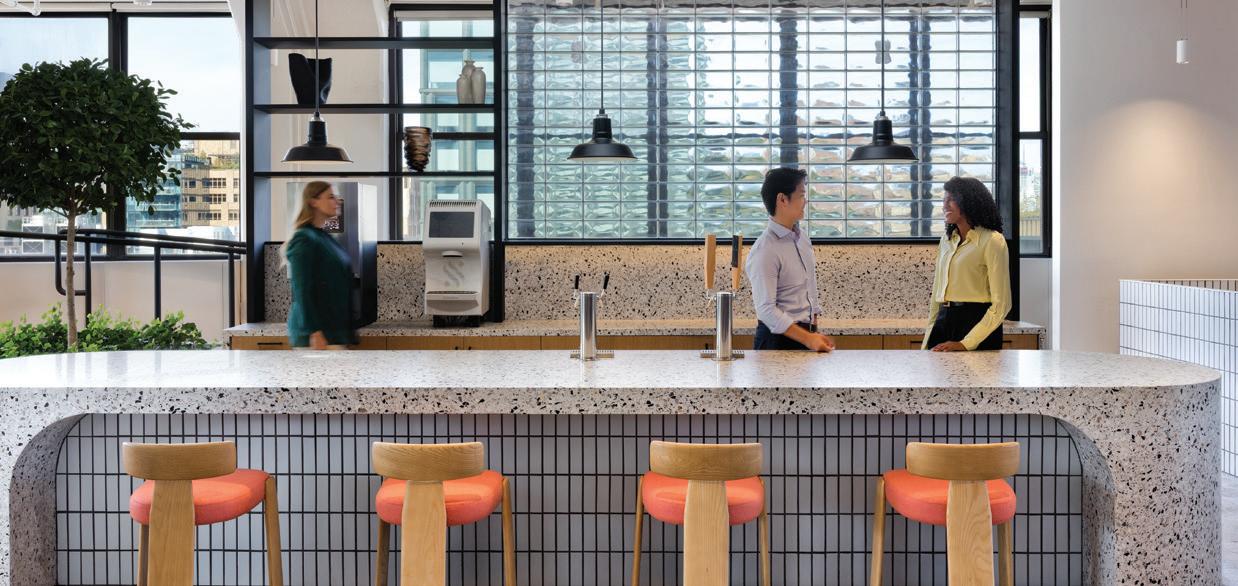
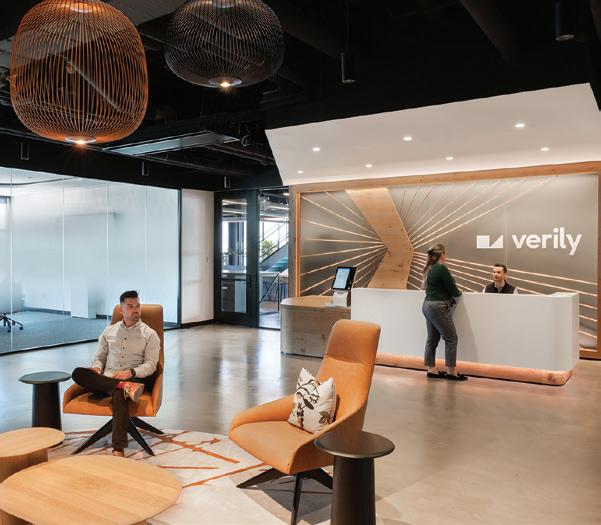
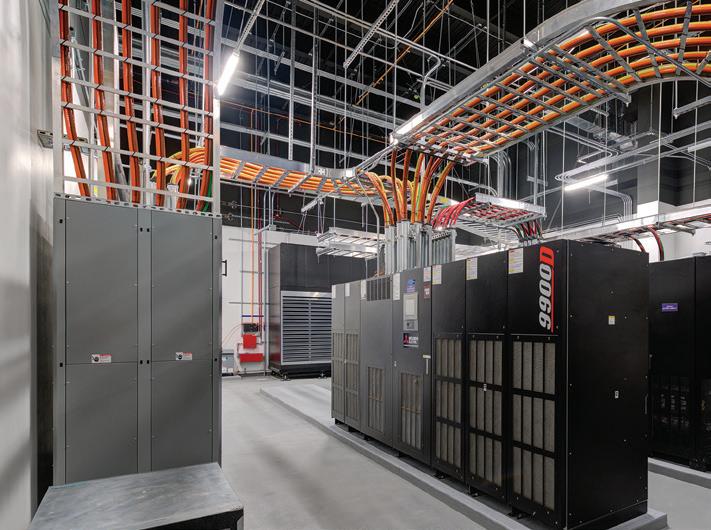
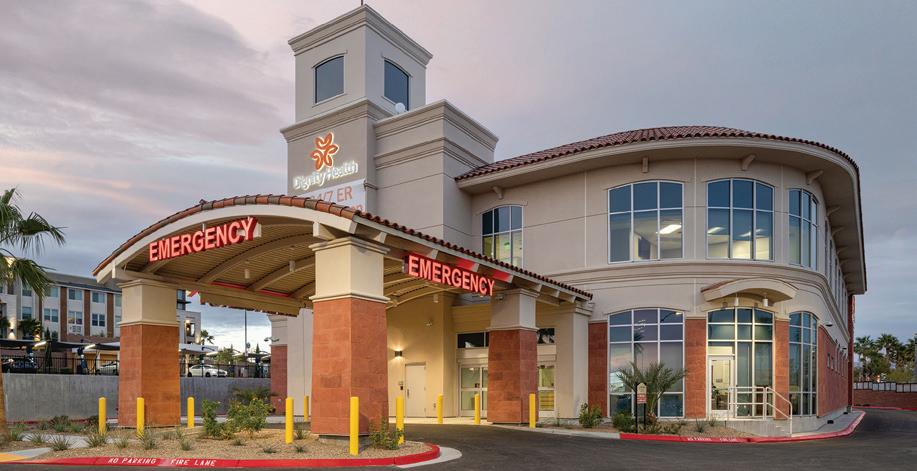
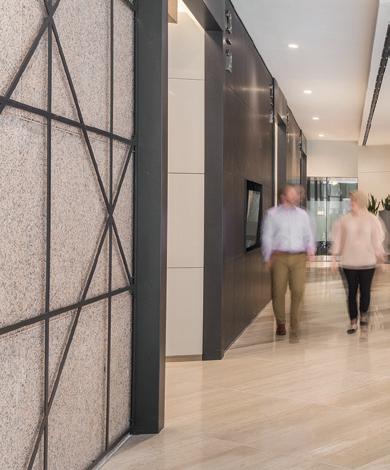
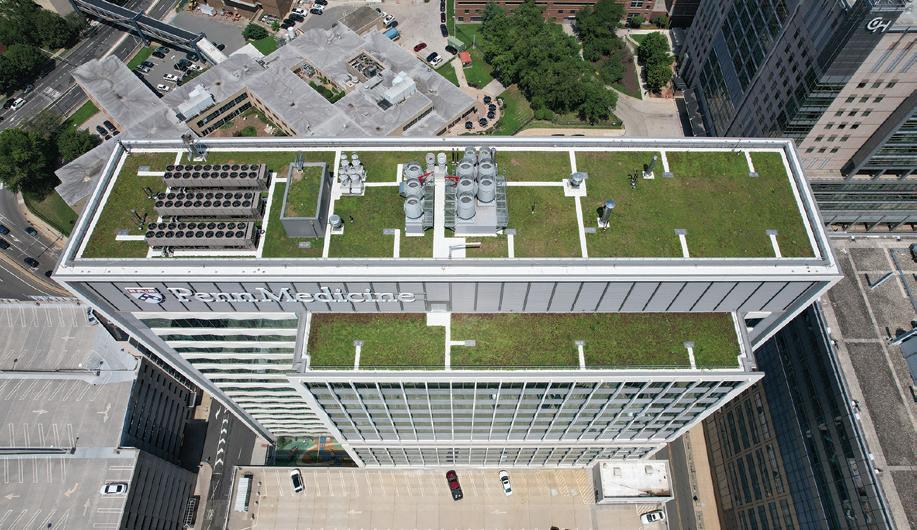
Dignity Health - St. Rose Dominican Hospital | LAS VEGAS, NV
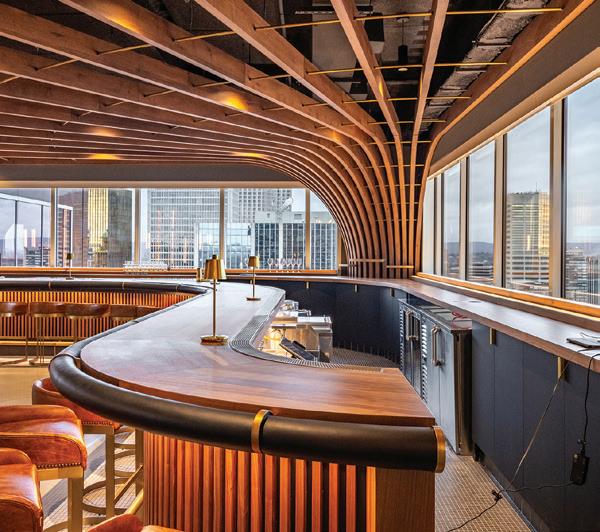
The Foundry | HARTFORD, CT
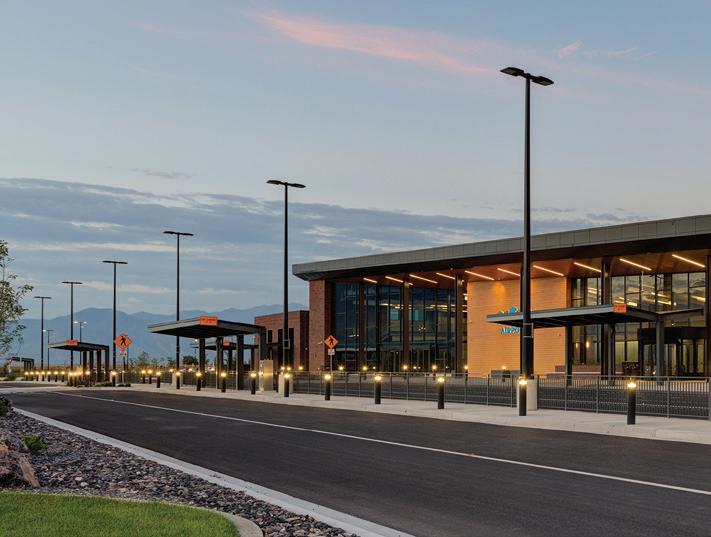
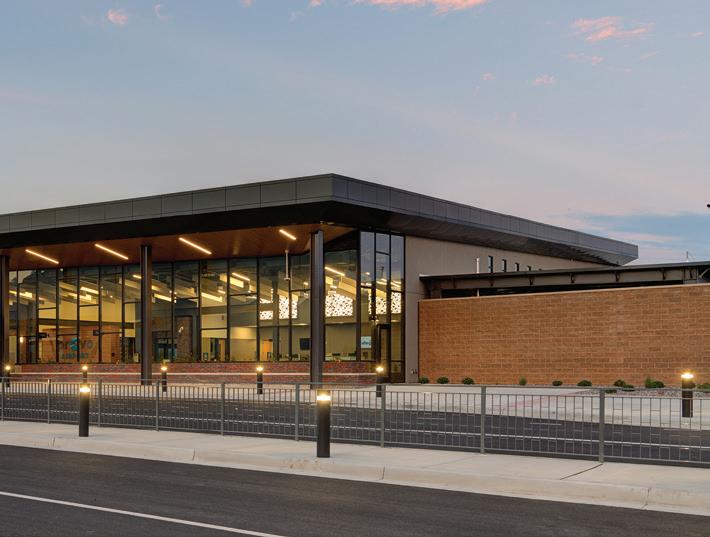
Terminal Replacement at Provo Airport | PROVO CITY, UT
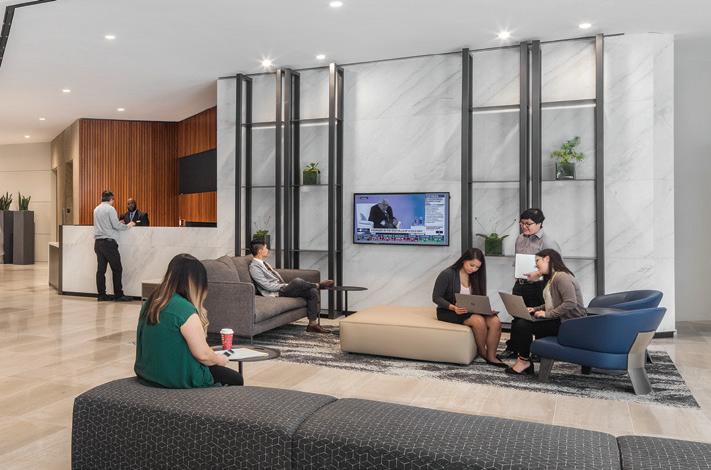
Sage Plaza | HOUSTON, TX
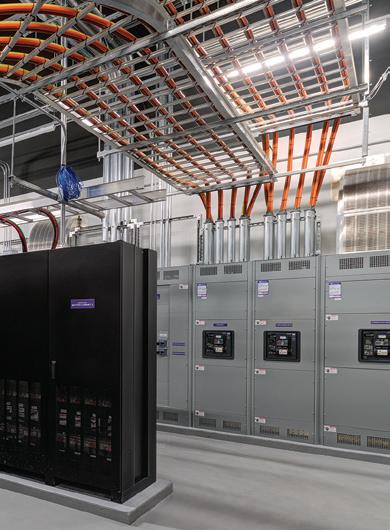
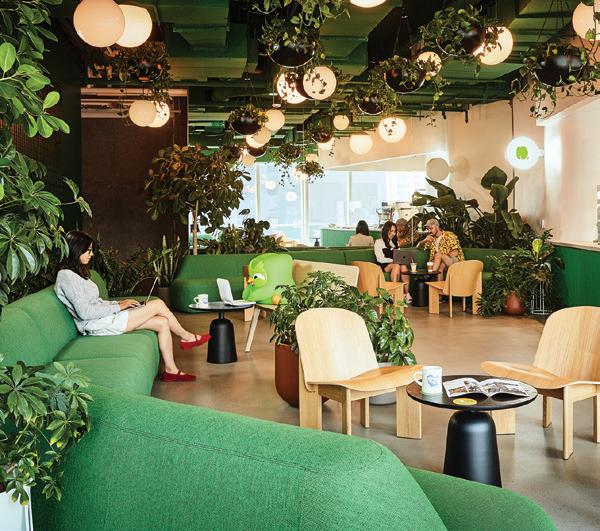
Duolingo | NEW YORK, NY
PROJECT DETAILS
Location: Philadelphia, PA
Size:
30,335sf (Education Center)
42,610sf (Driving Range)
Client: Cobbs Creek Foundation
Architects: Blackney Hayes (Education Center); EwingCole (Driving Range)
Sector: Non-Profit
Completion:
March 2025 (Education Center) October 2025 (Driving Range)
Re-Imagining a Legacy Revitalizing Cobbs Creek Through Collaboration
The revitalization of the historic Cobbs Creek Golf Course in West Philadelphia marks a milestone in communitycentered development. Led by the Cobbs Creek Foundation, the initiative is transforming the 340-acre site into a destination for recreation, education, and public connection. As part of this effort, LF Driscoll, in partnership with Perryman Construction, managed the preconstruction and construction of the Smilow Woodland TGR Learning Lab and the Lincoln Financial Center, advancing the Foundation’s long-term vision for the campus.
ANCHORING EDUCATION AND ACCESS
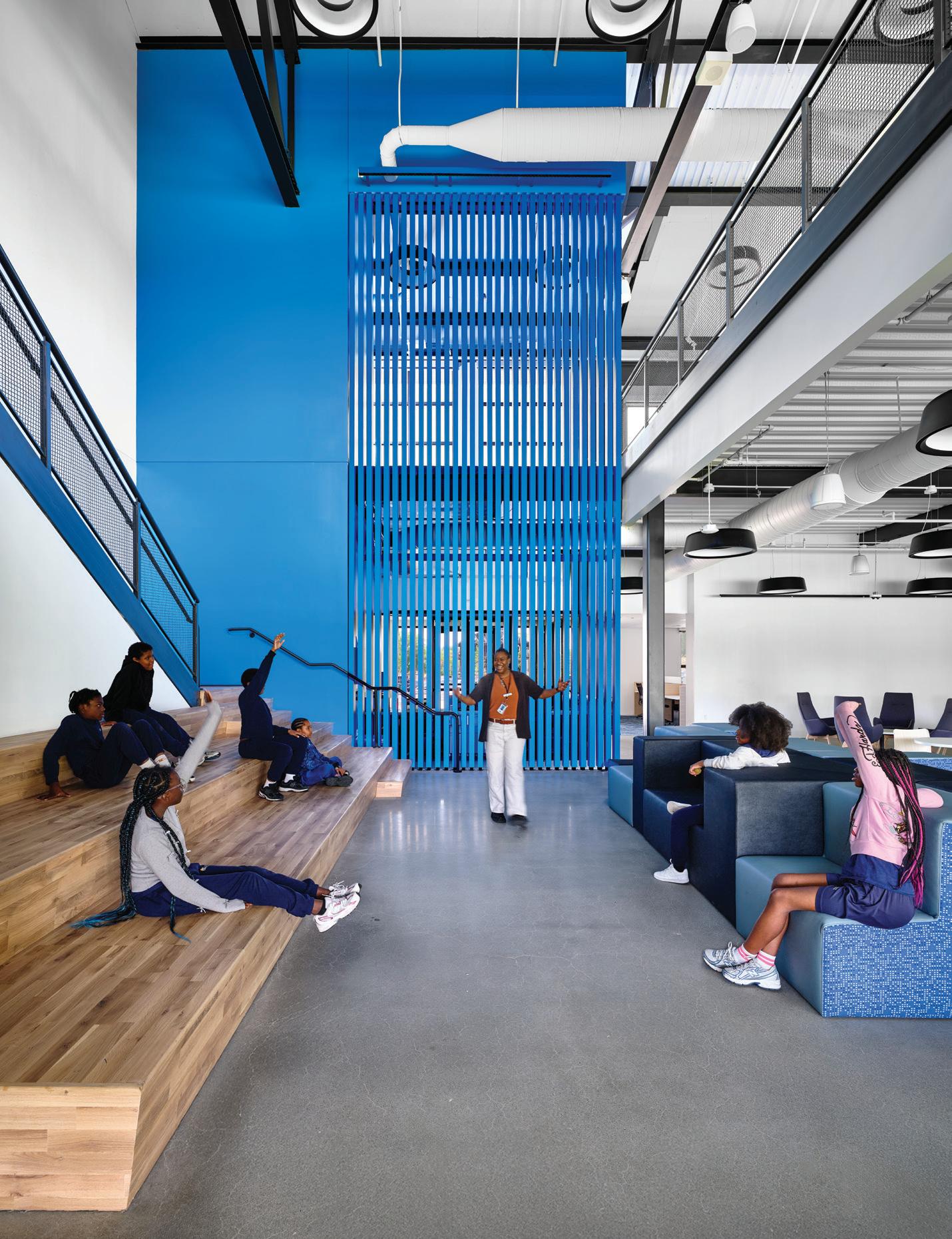
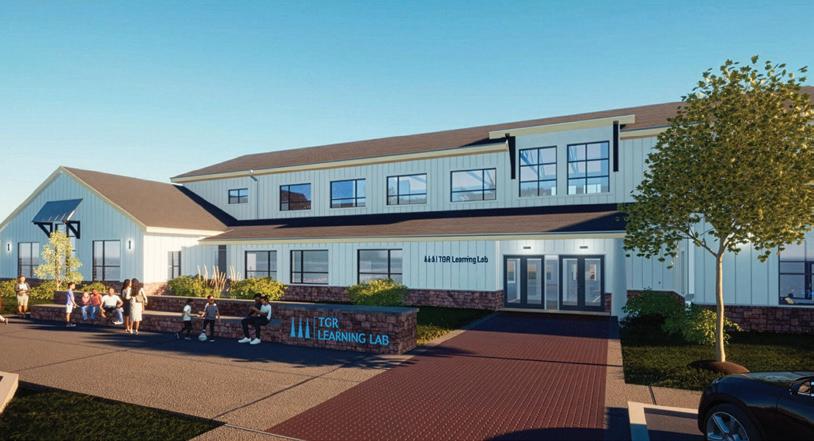
A cornerstone of the early revitalization effort is the Smilow Woodland TGR Learning Lab, a nearly 30,000sf facility construct ed by LF Driscoll on behalf of the TGR Foundation. Established by Tiger Woods, the TGR Foundation empowers youth through innovative STEAM education and career readiness programs.
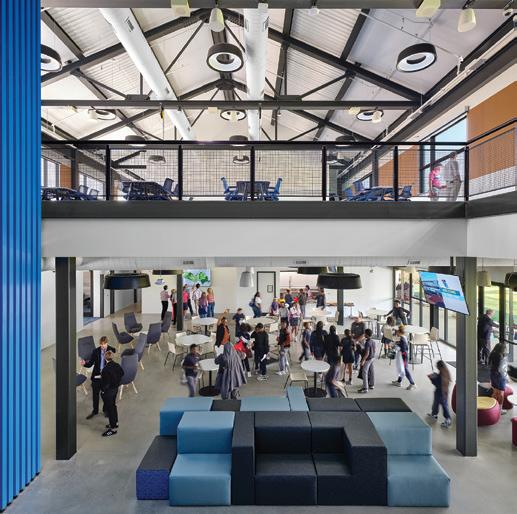
As the first structure completed on the former golf course, the Learning Lab quickly became a focal point for community engagement. Designed to provide free, year-round programming for students in grades 1 through 12, the facility includes classrooms, a makerspace, a podcast studio, and flexible collaboration spaces that support hands-on learning in robotics, engineering, and digital media. A short course adjacent to the building further reinforces accessibility and youth participation in golf.
“It’s
transformative for the area,” SAYS
MICHAEL WOLFE, VICE PRESIDENT OF OPERATIONS AT LF DRISCOLL.
“The golf course
and the installation of a prefabricated pedestrian tunnel beneath Lansdowne Avenue, enhancing connectivity across the campus.
“Integrating their needs and their desires was an important component of the project,” Wolfe explains.
COLLABORATION AT THE CORE
Central to the coordination of the broader campus was Don Dissinger, the Cobbs Creek Foundation’s Project Development Director and Principal of Suntop Design Group. Hired directly by the Foundation, Dissinger was responsible for the programming, planning, design, and construction oversight of the restoration, rehabilitation, and preservation of the Cobbs Creek Golf Course and campus, providing continuity and leadership across all phases of development.
WORKFORCE, INNOVATION, AND LASTING IMPACT
has a lot of historical
not only
golf,
contribution to
but equality—so it was super meaningful for us to be a part of it.”
NAVIGATING COMPLEX SITE AND INFRASTRUCTURE CHALLENGES
Redeveloping a former golf course presented unique technical challenges. Preparing the campus required extensive grading, deep excavations exceeding 20 feet, and new stormwater management systems. One of the most complex efforts was the design and installation of a campus-wide underground electrical system—complete with manholes, transformer vaults, and PECO modules—strategically routed to avoid sensitive golf course greens.
LF Driscoll and Perryman Construction worked closely with PECO, civil engineers, and the design team to precisely map utilities and reduce risk. Weekly drone flights were used to survey elevation changes, verify underground conditions, and track progress in real time. Additional infrastructure work included a private-cost sewer installation, a new force main,
Collaboration was essential to maintaining momentum across a complex, multi-stakeholder project. LF Driscoll and Perryman Construction spent nearly a year in detailed preconstruction planning and value management sessions, aligning scope, budget, and quality expectations.
The Lincoln Financial Center—a two-story golf entertainment and practice facility—introduced additional coordination challenges with two design teams: one focused on the core and shell and the other on the interior fit-out. Regular design charrettes and pull-planning sessions helped align priorities and resolve conflicts.
Innovation and workforce development were key drivers of success. Drone technology improved accuracy and situational awareness across the site, while advanced golf technology systems at the Lincoln Financial Center required close coordination with operational partners. Skilled union labor and dedicated trade partners delivered high-quality work across all trades, supported by partnerships with workforce development programs such as Everybody Builds and Women in NonTraditional Careers.
Even as the revitalized Cobbs Creek campus continues to open in phases, its impact is already evident. The Smilow Woodland TGR Learning Lab now serves more than 4,500 students annually through tutoring, after-school programs, field trips, and college readiness initiatives.
“My hope is that this revitalization reestablishes the course’s historic significance—both within the golf community and across the region,” Wolfe says. <
STOBG Cares: Building Opportunity in Dublin
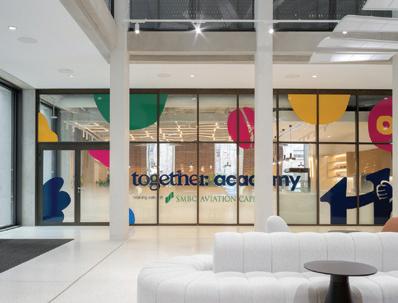
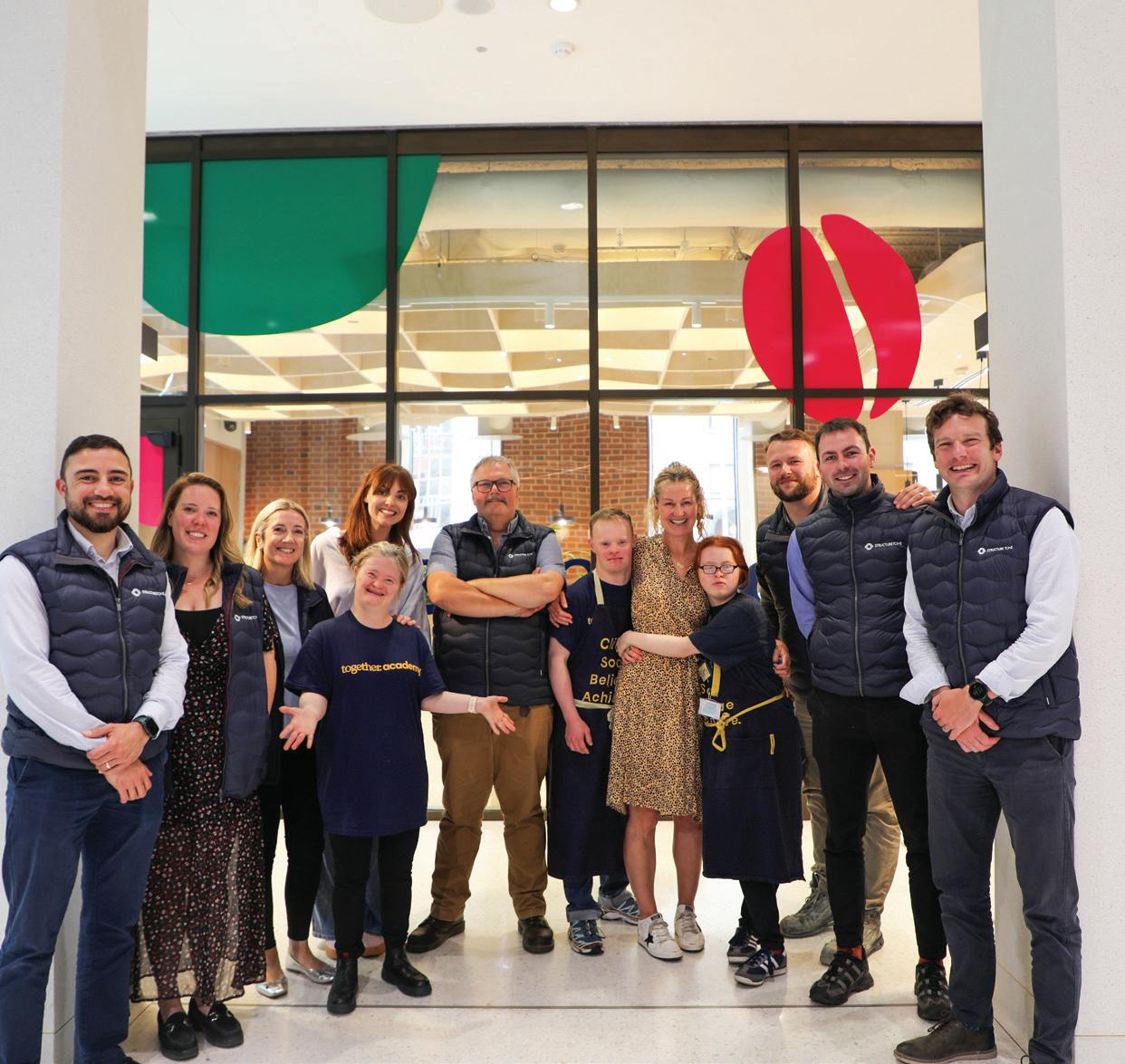
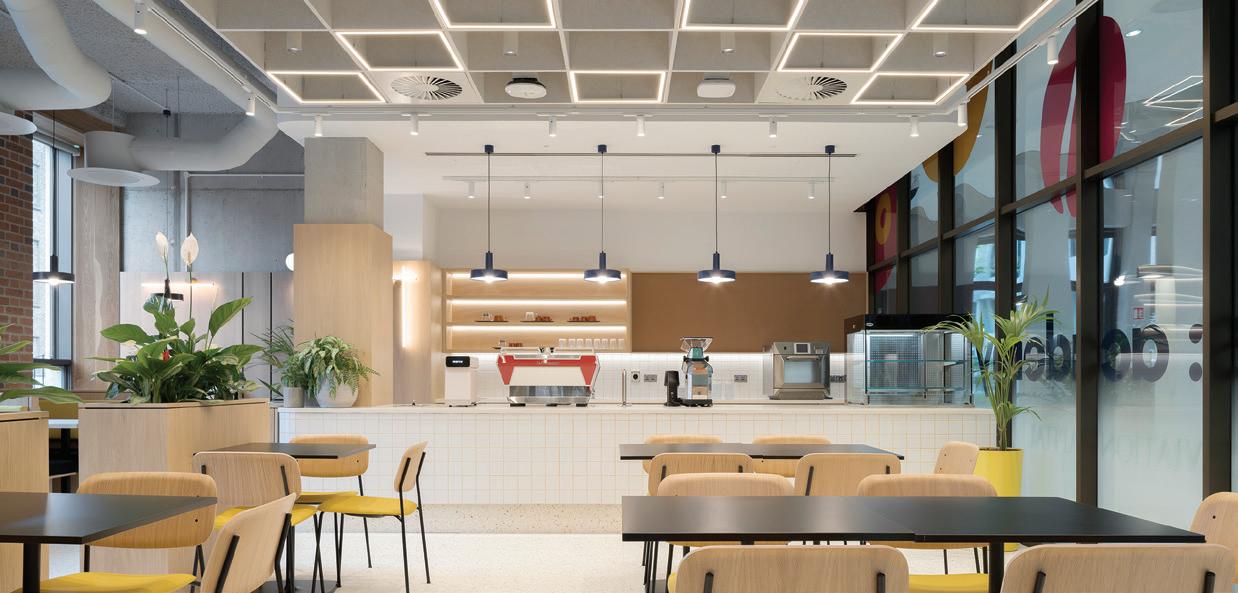
Together Academy has opened the doors to its new home at Fitzwilliam 28—a space designed to advance its mission of creating opportunities for young adults with Down syndrome. The fit-out, delivered by Structure Tone Dublin in collaboration with SMBC Aviation Capital, reflects a commitment to accessibility, inclusion, and empowerment.
Founded in 2020 by Therese Coveney and Cathy Smith, Together Academy is both a college and a social enterprise. Its goal is to address a stark reality: nearly 90% of adults with Down syndrome in Ireland are unemployed. Through partnerships with organizations such as the Down Syndrome Centre and QQI, the Academy offers a range of programs aimed at bridging this gap, including:
l A two-year QQI Level 3 program in culinary and employability skills
l A 20-week vocational training course focused on job readiness
l Work placements in the awardwinning Together Café and other inclusive businesses
l Tailored support from occupational therapists and mentors
INSIDE THE NEW SPACE
At the heart of the facility is a full-service café, open to the public since October 2025. Operated by Together Academy trainees, the café provides hands-on experience in food preparation, customer service, and teamwork. More than a training venue, it serves as a hub for inclusion and community engagement.
The design emphasizes accessibility and warmth, creating an atmosphere that supports learning and confidence-building.
COLLABORATION AND IMPACT
Structure Tone Dublin worked closely with SMBC Aviation Capital, Together Academy, and the design team to ensure every detail aligned with the Academy’s values.
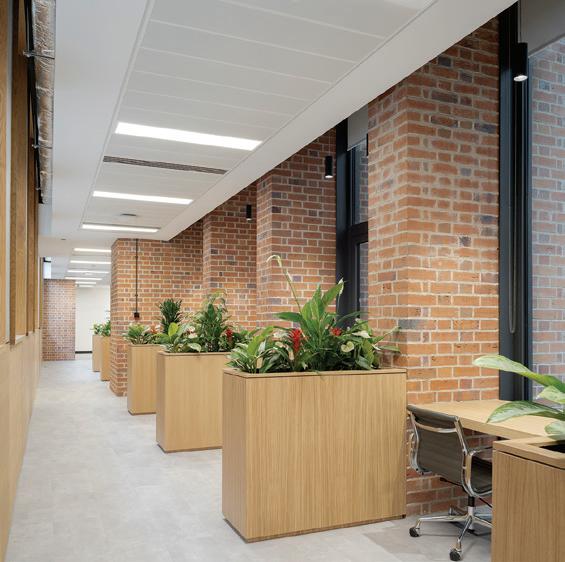
The lower level has been transformed into a modern educational environment featuring:
l Classrooms for life skills and employment training
l Breakout areas for group work and independent study
l A fully equipped training kitchen
l Private meeting rooms for mentoring and therapy sessions
l Dedicated staff spaces
“
It’s been an incredible privilege to work on a project that has such a meaningful impact on people’s lives,” SAYS STRUCTURE
TONE PROJECT MANAGER SEAN BAGNALL. “Every decision—from design to delivery—was driven by Together Academy’s mission to create opportunity and inclusion.”
The power of collaboration, says Bagnall, was critical in bringing a project like this to fruition.
“Seeing the space come to life, knowing it will empower young adults to grow in confidence and capability, is something our whole team is deeply proud of.” <
AHEAD OF THE CURVE
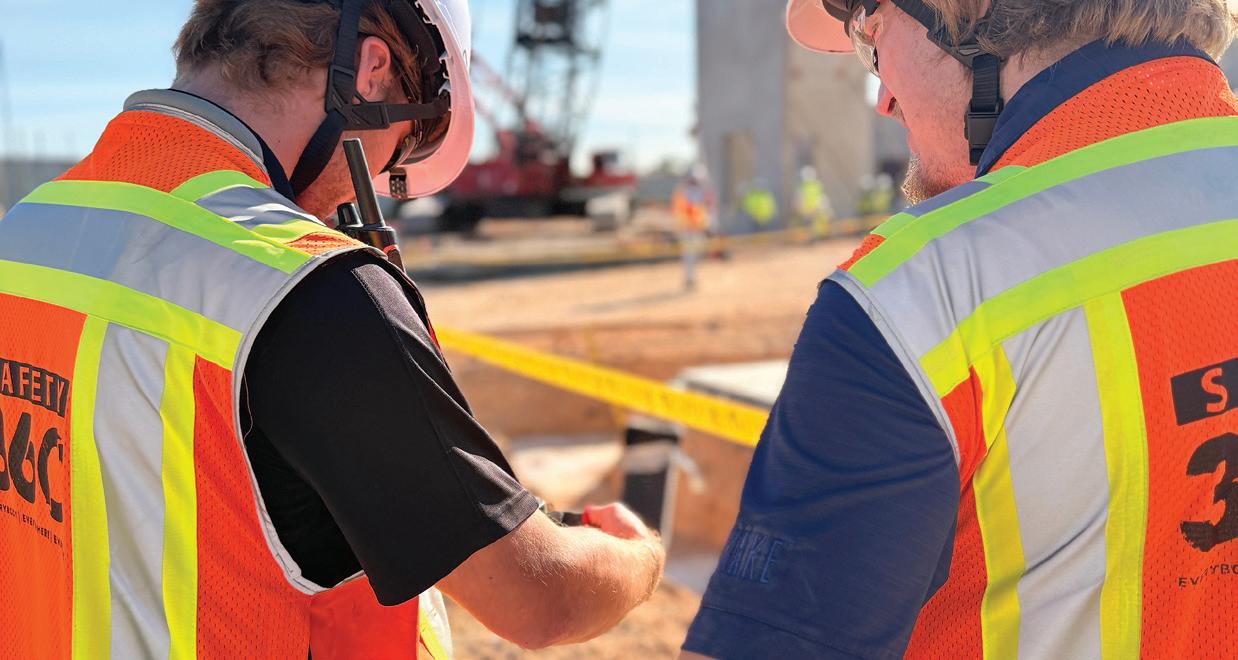
STOBG’s leading indicators initiative is identifying key project stressors, gathering meaningful data, and taking proactive steps to prevent incidents before they happen.
The construction industry relies heavily on lagging indicators—outcome metrics generated after an incident occurs and over time. This data is crucial for understanding incidents after the fact and working to prevent them from happening again.
Through a new leading indicators initiative, STO Building Group is strengthening how it recognizes potential incidents before they occur.
Leading indicators are factors that serve as early warning signs, allowing teams to make adjustments of a declining safety posture before it’s too late. By tracking these signals, project leaders can potentially reduce hazards, improve decision-making, and strengthen overall project outcomes through early intervention.
The new initiative goes beyond traditional leading indicators, looking at operations pressures like schedule compression, float erosion, and subcontractor burn rate, and
an increasing number of critical path items being tracked. Schedule compression, for example, can result in overlapping tasks or extended hours, which can increase fatigue and coordination risks. By studying these and other elements, we hope to isolate important but less visible areas that affect quality and safety.
“
Safety and quality are a downstream outcome of operations,” SAYS
KEITH HASELMAN, SENIOR VICE PRESIDENT OF CORPORATE SAFETY FOR STOBG.
“Pressures from project timelines, costs, and other drivers can be enormous distractions. By better understanding these factors, we will enhance our ability to intervene early and support project teams before incidents arise.”
Through a partnership between Safety, IT, TechOps, and Data & Analytics, our team is currently screening potential metrics and developing a strategy for monitoring and interpreting data, using tools like Power BI. Their goal is to leverage diverse perspectives and develop smart analytic approaches to gain deeper insight into the factors that negatively impact project outcomes.
Using this knowledge, we hope to drive improvements that safeguard our people and elevate every project—ensuring that safety and quality remain at the core of everything we do. <

A Record of Results
While we set two organizational safety records in 2025, the real win isn’t the numbers— it’s people going home safe at the end of each day.
by Greg Dunkle, STOBG Chief Operating Officer
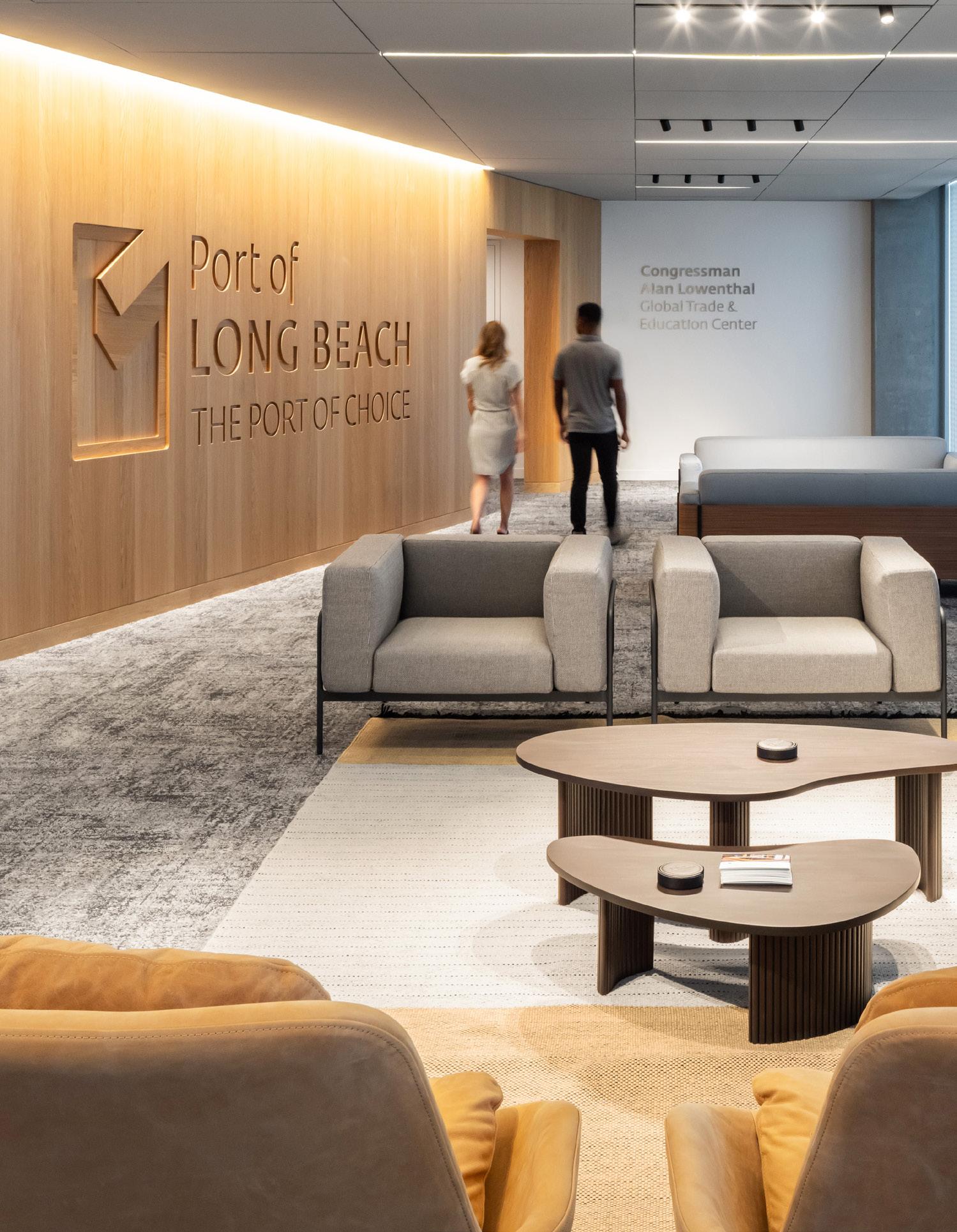
In 2025, we recorded our lowest Total Recordable Incident Rate (TRIR) and Lost Time Incident Rate (LTIR) in company history. This is especially significant because we crossed 60 million labor hours on projects, more than we’ve ever logged before. Adding to these amazing results is the fact that four STOBG family companies worked the entire year without any lost time incidents—a truly inspirational feat.
For us, safety is more than a metric; it’s a core value woven into every aspect of our work. Success means that real people return home safely at the end of each day.
Even so, we are proud to see the data reflects the remarkable progress we’ve made since launching our Safety 360° program. To put things into perspective, if we performed this year at our pre-Safety 360° LTIR, we would expect nearly 200 more lost time injuries than we actually experienced in 2025.
These new numbers stand out against industry benchmarks. In fact, our TRIR and LTIR are not just below the industry average—they are lower than the ambitious goals we set for ourselves going into 2025. This improvement underscores the effectiveness of our approach: focus on leading indicators, engage our employees at every level, and maintain a relentless drive toward continuous improvement.
Many of these results come from the proactive measures embedded in our Safety 360° program. Each avoided incident is a reminder of the program’s impact and the importance of vigilance in protecting our teams. Safety 360° is about building a culture where safety is non-negotiable. By studying lost time durations, tracking the severity of incidents, and analyzing leading indicators, we are ensuring that results are not only sustained but improved every year.
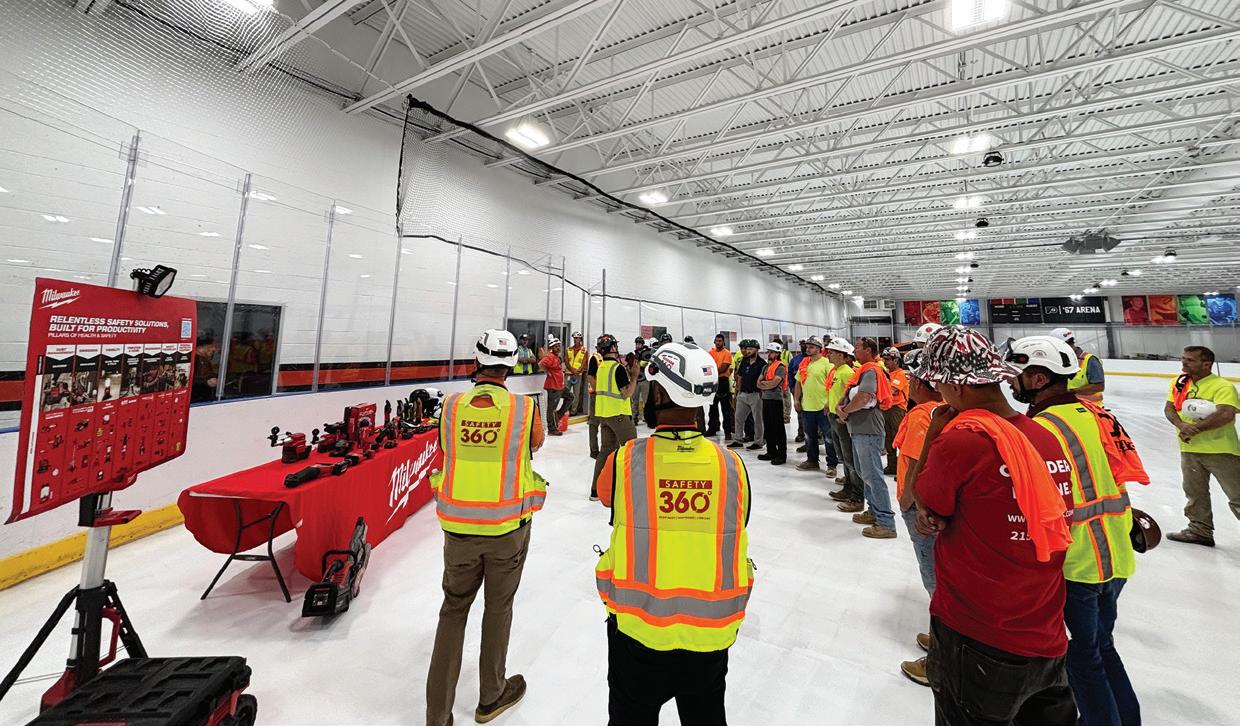
Structure Tone Philadelphia Flyers project team
Equally important, these results come from the dedication of our people. Every STOBG employee played a role in making this achievement possible, from how leadership sets a tone for the organization to the way our teams on the ground promote safe practices every day.
Three years ago, we launched our annual Safety 360° Excellence Awards to recognize project teams who exemplify leadership, engagement, and proactive safety practices. I’m consistently amazed by the submissions, which make it obvious why record-setting results are possible. Our field teams take the
initiative, from toolbox talks and stand-downs to third-party safety training and on-site safety recognition programs. Each award winner reinforces what the data says: safety isn’t a coincidence, but a shared commitment that drives our exemplary performance.
Ultimately, our numbers this year are a testament to our employees and the outstanding culture of safety we’ve built at STOBG. Together, we have proven that excellence in safety is possible, even at scale. And together, we’ll continue to raise the bar—striving not only toward better numbers, but a safer workplace for everyone. <
SMALL PROJECTS (Under $10M)
PAVARINI NORTH EAST AIG Nation Hall (Westport, CT)
MEDIUM PROJECTS ($10M–$100M)
STRUCTURE TONE PHILADELPHIA Philadelphia Flyers Rink and Ice Replacement and Equipment (Voorhees, NJ)
LARGE PROJECTS ($100M or More)
STRUCTURE TONE LONDON 20 Ropemaker Street (London, UK)
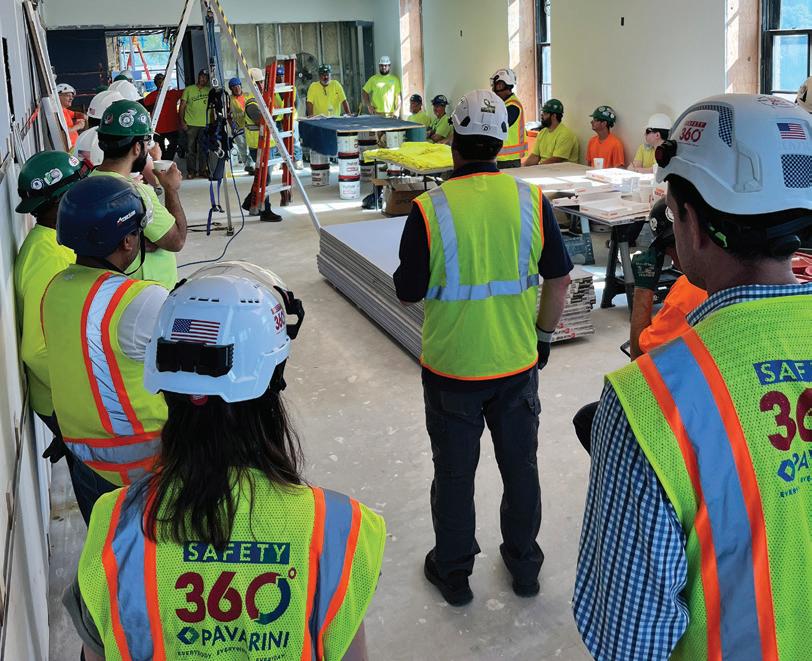
Pavarini North East AIG Nation Hall project team
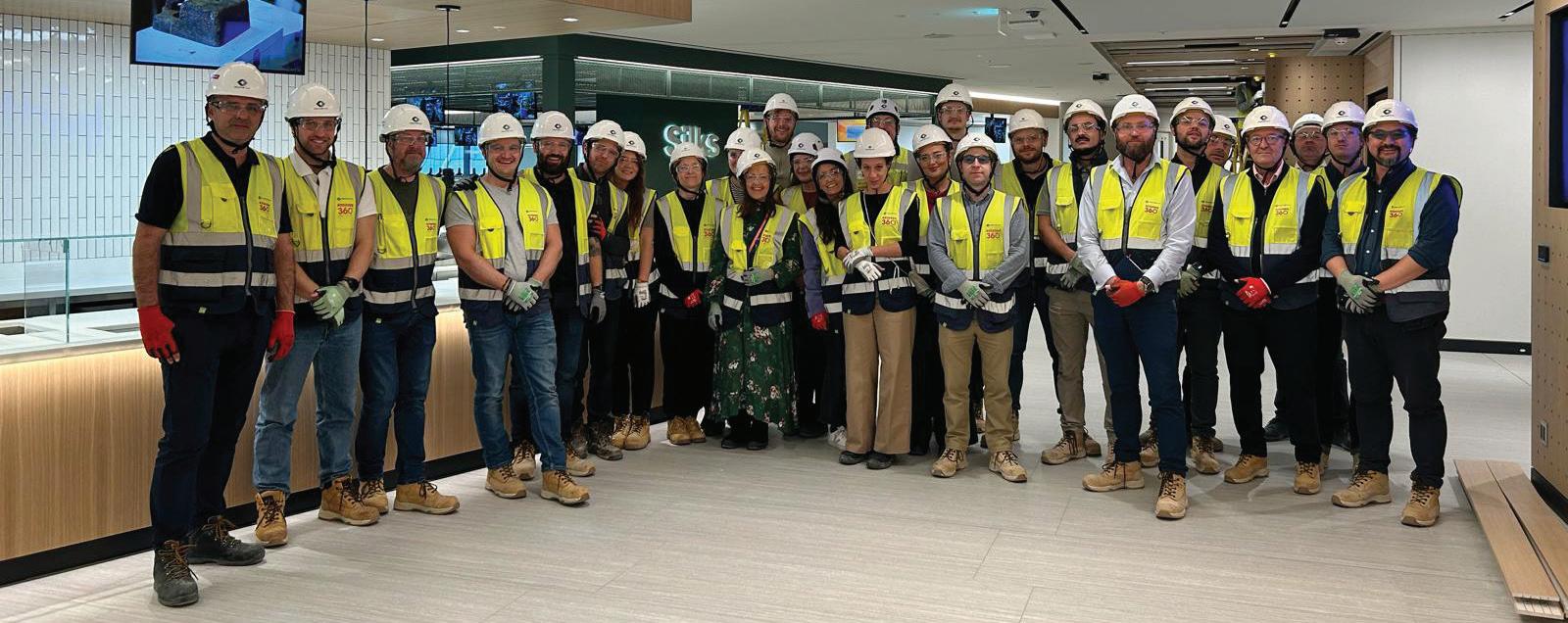
Structure Tone London
When Impossible Logistics Meet Uncompromising Design in West Hollywood
A new three-story, mixed-use building has transformed one of West Hollywood’s most challenging urban sites into a 21st-century workspace. Every element of building “The Now”—from the zero-lot-line footprint to the custom façade—was met with complex constraints. Teamwork was the name of the game.
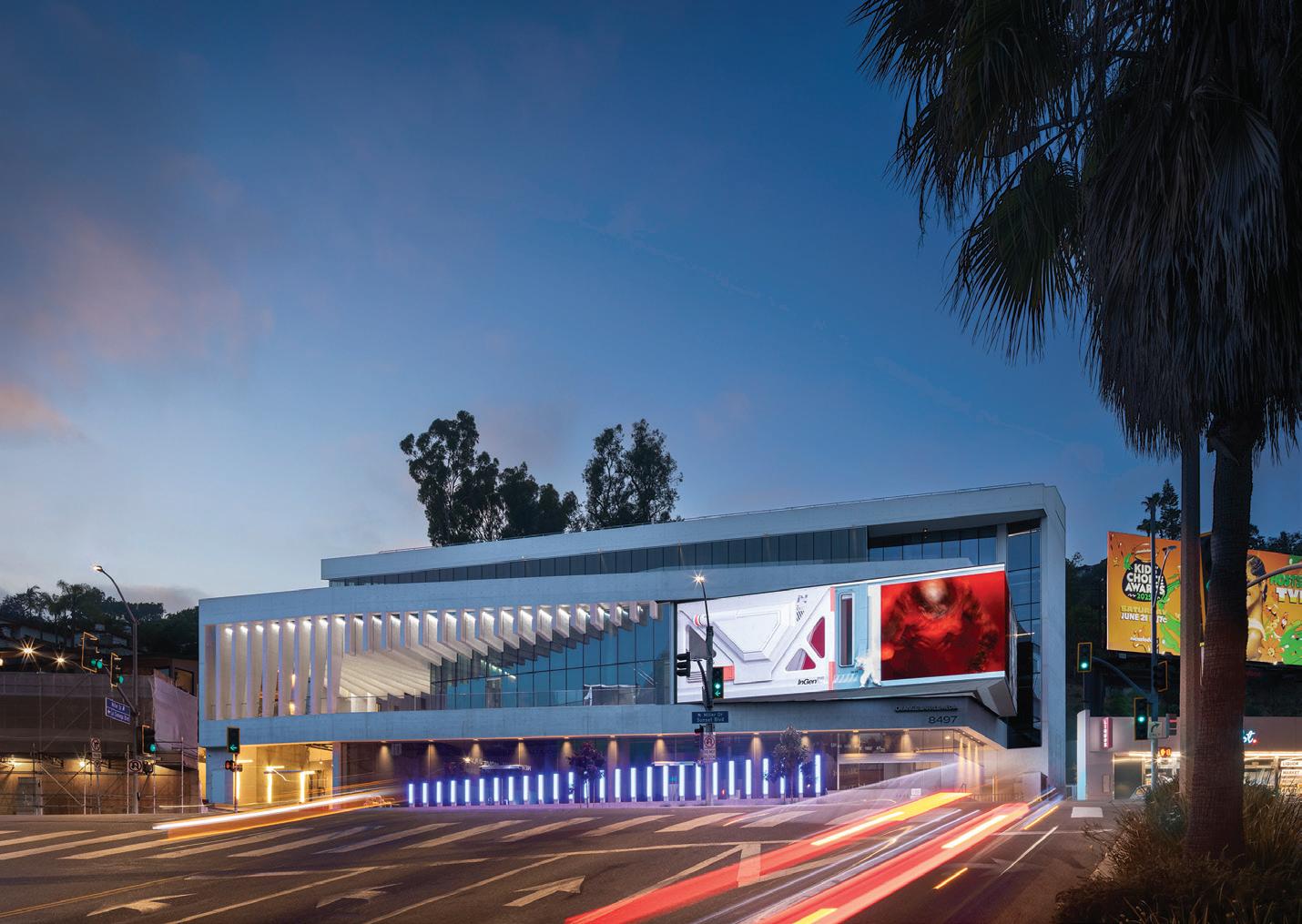
15 MONTHS OF PAINSTAKING ROCK EXCAVATION
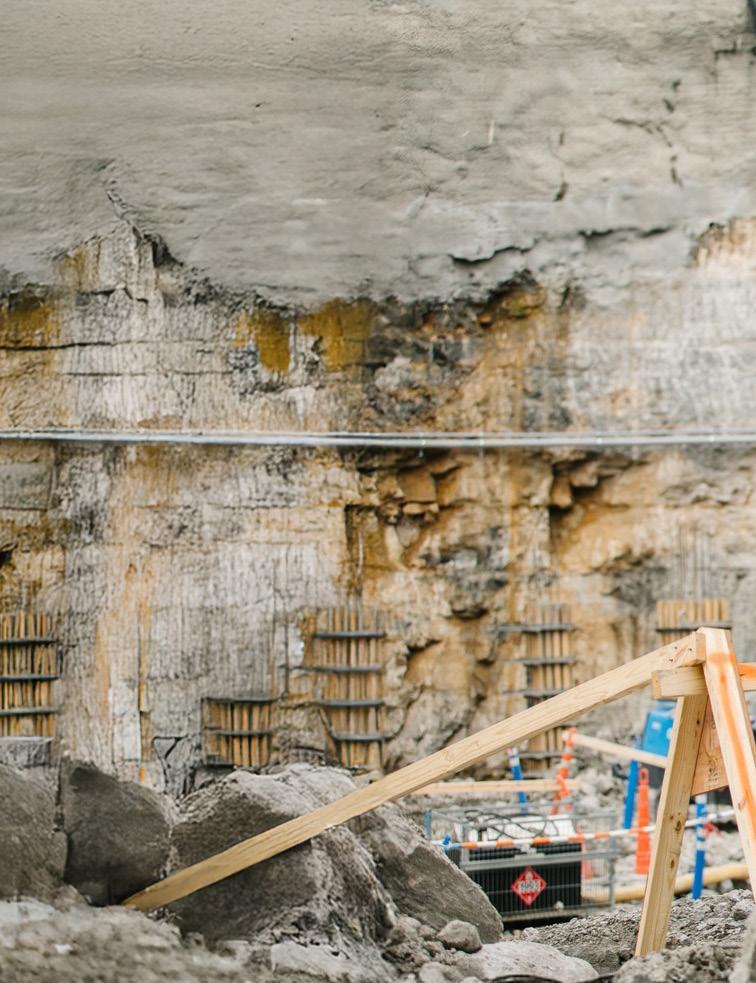
While most projects start with simply pour ing a foundation, The Now required extensive site preparation before any concrete could be poured. Sitting atop Hollywood Hills, digging down for the subterranean garage meant chipping through rock—and a lot of it.
For 15 months, trade partners worked through challenging geological conditions while the Layton team orchestrated complex logistics across utilities, permitting, and trade coordination. What emerged from this foundational work was a proven system for managing the intricate constraints that would define this unique urban project.
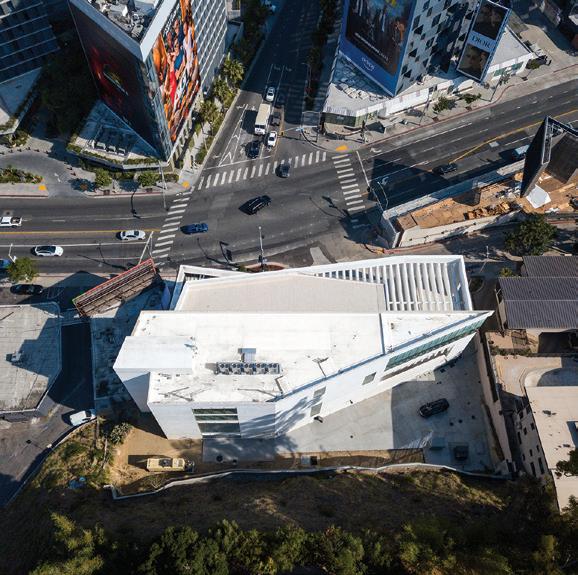
ZERO-LOT LINES: THE SITE LOGISTICS OF SUNSET
Situated on a zero-lot line and positioned above one of LA’s busiest intersections, every aspect of site access required careful orchestration. “On one side of the building, we’re just two inches from the next property. On the south side, it’s on the property line—and the same on the north,” explains Palmer Martines, project manager with Layton.
Each trade needed to obtain an encroachment permit. At an intersection as heavily trafficked as La Cienega and Sunset Boulevard, these permits dictated exact timeframes and locations for every delivery, crane operation, and material staging. Layton choreographed every delivery, so trucks arrived in a single lane, positioned materials precisely, and departed without disruption.
VALUE PLANNING FOR FUTURE FLEXIBILITY
The Now was specifically planned as a future-ready core-and-shell to attract high-end creative tenants. Recognizing the unique blend of design ambition and long-term tenant adaptability, Layton worked with the developer from beginning to end. The team had one goal: keep the budget down while maximizing leasing flexibility and tenant customization.
“We were continually working closely with the client, eliminating certain elements to open various spaces and keep things flexible for tenants,” Martines explains. “As we poured slabs for each level, we’d also find opportunities for design changes and discuss them with the developer.” Those conversations turned into realized savings and enhancements. Selective finish omission, future-ready vertical systems, rooftop utility housing, and temporary envelope flexibility all contributed to Layton’s goal to drive down budget.
A CONCRETE MASTERPIECE
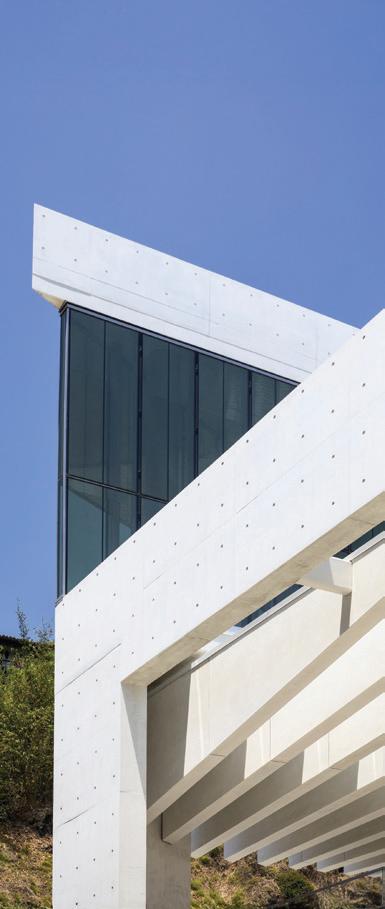
Perhaps the most intricate and labor-intensive aspect of the project, the white structural concrete inside and out is what makes the building such a statement.
“With it being all high-finish concrete, it made for a unique build,” says April Stock, Layton construction manager. “It’s rare and incredibly expensive.” In other words, it had to be perfect. Layton partnered with the architect and developer to execute an exceptionally
PROJECT DETAILS
Location:
West Hollywood, CA
Size:
3 stories/60,000sf
Client: The Now
Architect: Mithun
Engineers: GreenMEP (MEP); Labib Funk + Associates (structural)
Sector: Corporate Base Building
Completion: 2025
detailed concrete package, merging structural integrity with design precision.
Both attaining the right materials and putting it all together was a long process. The team worked through a series of steps to make it happen, from material selection and finish to custom formwork.
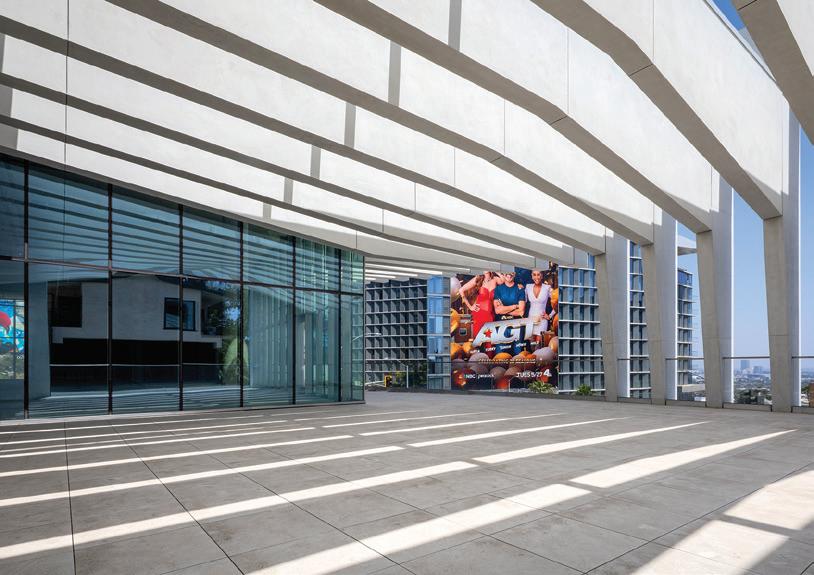
PRECISION DELIVERED: A NEW ICON ON THE STRIP
Complete with three levels of underground parking, elevated terraces, and a unique LED projection billboard, The Now quite literally cements itself as an innovative masterpiece.
Through material innovation, precise execution, and an unwavering commitment to Mithun’s vision, the Layton team delivered a facility that’s as technically impressive as it is visually iconic.
“ The way the team came together to make this project happen is just so impressive,” SAYS PALMER MARTINES. “We’re proud to be part of this bold, functional, and future-proof addition to one
of LA’s most recognizable urban corridors.” <
Working Together in a MARKET ON THE MOVE
If there is one simple truth in construction it’s this: great partnerships make great projects. Structure Tone London’s Ilka VanHeerden and Scott Palmer discuss this very idea with Jayson Crosley (formerly of Turner & Townsend, now JPMC), digging into the benefits of strong supply chain relationships and what really makes a partnership work. Ilka VanHeerden




Head of Marketing & Pursuits Structure Tone London
Ilka VanHeerden (IV): What major shifts have you noticed in the way clients, consultants, contractors, and the supply chain work together?
Jayson Crosley (JC): We’ve moved away from resolving issues in a room together. Prepandemic, meetings were in person, and problems were solved quickly. Now with virtual tools, we have shorter meetings, more frequently, but with less attention. What used to take five minutes now takes two or three weeks. The industry is more siloed for engineers in one office, architects in another, consultants elsewhere. We’ve lost the human element.
Scott Palmer (SP): Contractors still tend to work in rooms together, but I can see how on the consultancy side, the sheer volume of virtual meetings increases pressure. When people multitask on calls, relationships strain because you lose trust and clarity.
IV: What behaviors help build collaboration?
SP: Early involvement. Even if we’re not the chosen contractor, sharing drawings, logistics plans, and cost input early reduces surprises later. Transparency between consultants and contractors has improved massively in the last few years, and it has made the product better.
JC: And as much as tech helps, nothing beats being physically together. If I were a client, I’d insist on fewer but fully in-person meetings. We have the tools—but we’re not using them to enhance the basics of collaboration.
IV: Let’s talk about supply chain partnerships. What does great collaboration look like on-site?
SP: Without the supply chain, we have nothing. The best projects are where everyone—from boots on the ground to directors—respects each other. Mistakes happen, but if trades support each other and fix issues early, they never escalate into cost or programmed impacts. When everyone works collectively, relationships strengthen and quality improves. Structure Tone’s focus on paying on time and partnering with subcontractors has made a difference.
JC: And even though I’m a degree removed from the trades, I still consider myself part of the supply chain. Building relationships with subcontractors helps me sanity-check information and reinforces trust across the team. We’re all delivering the client’s outcome, regardless of our role.
IV: The London market is seeing a wave of mega-projects and stretched supply chains. How do we adapt?

JC: We may need to rethink delivery entirely, splitting jobs between multiple architects, engineers, contractors, and supply chains. It increases management, but spreads risk and capacity. With the right leadership at the top, it’s workable.
SP: Smaller subcontractors could scale up, but only if supported properly. We help by being fair, paying on time, and ensuring they’re not overextending. Success depends on strong, honest partnerships.
IV: What single reform would most improve our industry?
JC: Pace. We’re building too fast. Designs aren’t as mature as they should be; cost plans often lack detail, and programmes are compressed. London builds quickly and well, but to create resilient outcomes, we need sensible timeframes and a properly developed design before rushing into procurement.
IV: Collaboration, time, and trust sit at the heart of great projects. This conversation shows how vital it is to work together across every level of the supply chain. <
CHECK OUT the full conversation in Structure Tone London’s “Brand Conversations” video series.






Building the Beat: Inside the Hip Hop Museum
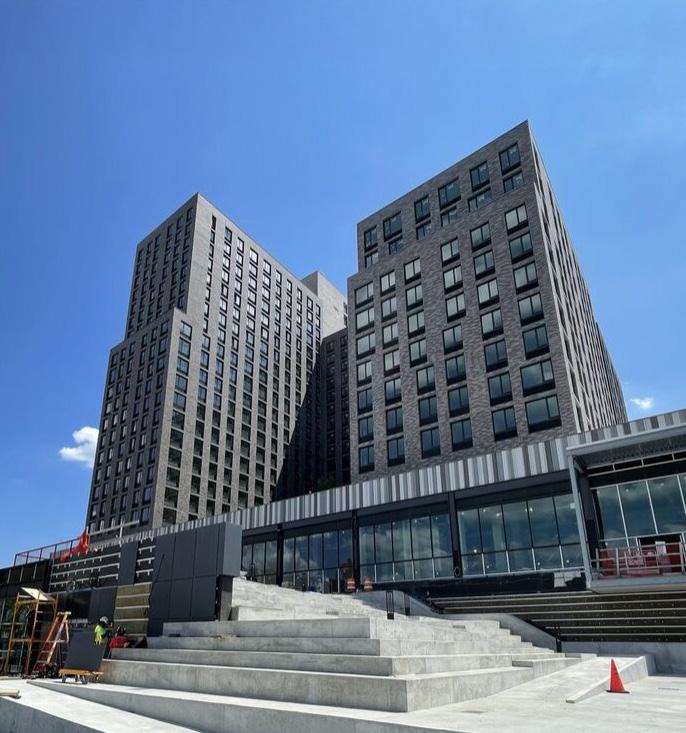
In the Bronx—where hip-hop was born—a new landmark is rising. The Hip Hop Museum will stand as a living monument to rhythm, resilience, and community. And for Pavarini McGovern, this building is more than a project; it’s a movement.
A PROJECT FUELED BY HEART
Pavarini McGovern has been guiding the museum’s construction since the project’s earliest presentations to the founder, working with passion, precision, and pride to bring a global cultural legacy home to the New York borough. That same intentionality also shaped the team itself, with Pavarini McGovern partnering with the Velez Organization to support the museum’s mission.
For Joseph Renna, project superintendent at Pavarini McGovern and a native New Yorker, the Hip Hop Museum represents significant personal importance. Similarly, project manager Dinnel Roberts describes the project as completely from the heart. “You can see the excitement as each space takes shape,” says Roberts. “That energy drives everyone to create something grand.”
Preconstruction manager Yacine Ansari, who grew up in France, found inspiration in American culture and honed his English literacy through the poetic storytelling of Nas. This adds another layer to the team’s shared passion. “Hip hop is universal,” says Ansari. “It’s incredible to think that a movement born here in the Bronx now connects people around the world.” For all three team members, helping build a museum dedicated to the music that shaped their youth feels like coming full circle.
BUILDING WITH RHYTHM
Translating that passion into a physical space hasn’t been without challenges. The museum—encompassing more than 55,000sf of galleries, theaters, and interactive installations—required both technical innovation and logistical finesse.
“The space was brand new, which gave us creative freedom,” Renna explains. “But it also meant we were starting completely from scratch.” Managing deliveries and coordinating large equipment in a tight urban environment proved to be one of the project’s biggest hurdles.
The museum’s theater also posed one of the most intricate construction challenges. Designed for complete acoustic isolation, it required “a room within a room” structure—walls and floors built independently from the main frame and connected through specialized dampers to block sound transmission. Achieving that level of isolation meant coordinating with multiple trades down to the millimeter. Electrical conduits, lighting supports, and HVAC ducts all had to be reimagined to avoid creating sound bridges between structures. The team even chose specific screws and clips for their vibration control.
TECHNOLOGY MEETS CREATIVITY
As the museum took shape, the Pavarini McGovern project team blended innovation with craftsmanship. “We use MyComply with SST cards to track safety certifications and who’s on-site each day,” Renna says. “We also set up multiple camera systems—one for security and another for time-lapse documentation—to capture the evolution of the project.”
But as Roberts points out, technology alone doesn’t drive success—it’s teamwork that keeps the beat steady. “The digital tools keep us organized,” she says, “but the collaboration keeps us inspired. Everyone here knows what this project represents, and that shared purpose fuels everything we do.”
A SHARED SENSE OF PRIDE
That shared purpose has shaped every step of construction. For Renna, who spent years managing projects across the country, the Hip Hop Museum feels unlike anything he’s ever built.
“Some
projects are built to be seen, but this one is built to be remembered,” SAYS JOSEPH RENNA.
As construction nears completion, the team looks forward to opening day with anticipation and pride. Roberts notes that she’s most excited for visitors to feel the history and love that’s been built into every corner, and Ansari looks forward to sharing the moment with his young son, knowing that the museum’s message of creativity and unity will inspire the next generation. In the end, the Hip Hop Museum is more than a construction project—it’s a cultural legacy built on rhythm, resilience, and respect.
As Roberts puts it, “We’re not just building a museum. We’re helping build the story of hip hop itself.” <
Bringing Mass Timber TO
CLEMSON UNIVERSITY
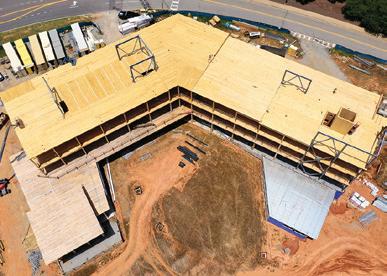
From sustainability and education to cutting-edge construction techniques, Clemson University’s Forestry and Environmental Conservation Building project has it all. The new 78,152sf mass timber structure is designed to house the university’s Forestry and Environmental Conservation (FEC) department, which is part of the College of Agriculture Forestry and Life Sciences (CAFLS). Together with Ajax Building Company and Moseley Architects, the university aims to welcome faculty and students in April 2026.
MASS TIMBER SHOWCASE
The Forestry and Environmental Conservation Building is one of the region’s premier examples of mass timber construction, using locally sourced southern yellow pine (SYP). “This approach hits on sustainability, schedule, and cost,” explains Tony Johnson, senior project manager at Ajax Building Company. He describes mass timber as a material that combines architectural beauty and structural integrity, saying, “From the moment you step inside, you feel a connection to nature, which is fitting for a building focused on forestry and conservation.” The mass timber components, fabricated in nearby Alabama, are carefully designed to minimize waste and reduce environmental impact—a process that aligns with Clemson’s com mitment to sustainability.
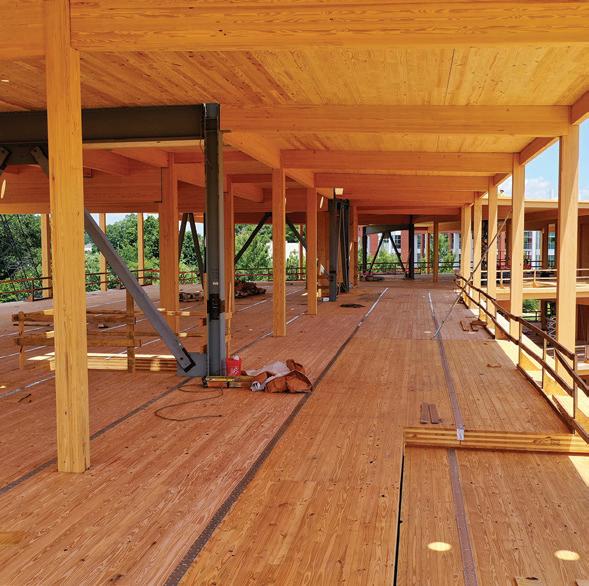
But for Clemson University, the decision to use mass timber wasn’t only about sustainability—it was also an educational opportunity. With features like exposed cross-laminated timber (CLT) plank floors and glulam beams, the new facility will serve as living classrooms where FEC students can observe mass timber components up close. “This is a building designed to teach,” says Sam Verzella, another senior project manager at Ajax.
As the university explains, the facility will serve as a central hub for teaching, research, and outreach in wildlife, forestry, and natural resources management and conservation—all the while showcasing the adaptability and aesthetic qualities of wood construction through its use of mass timber and other engineered wood systems.
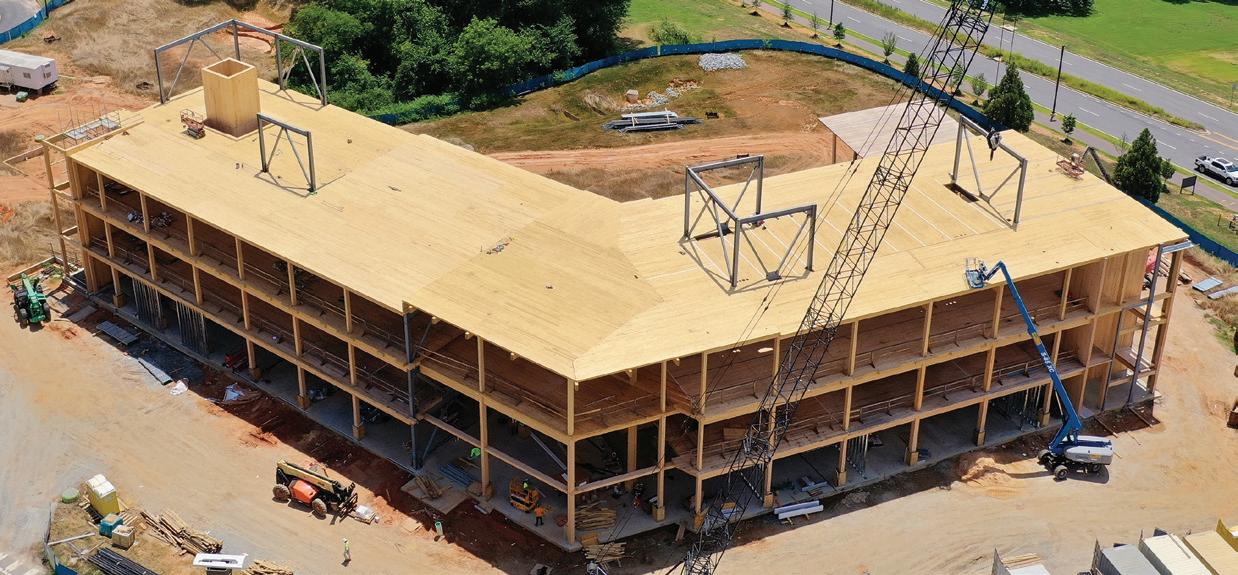
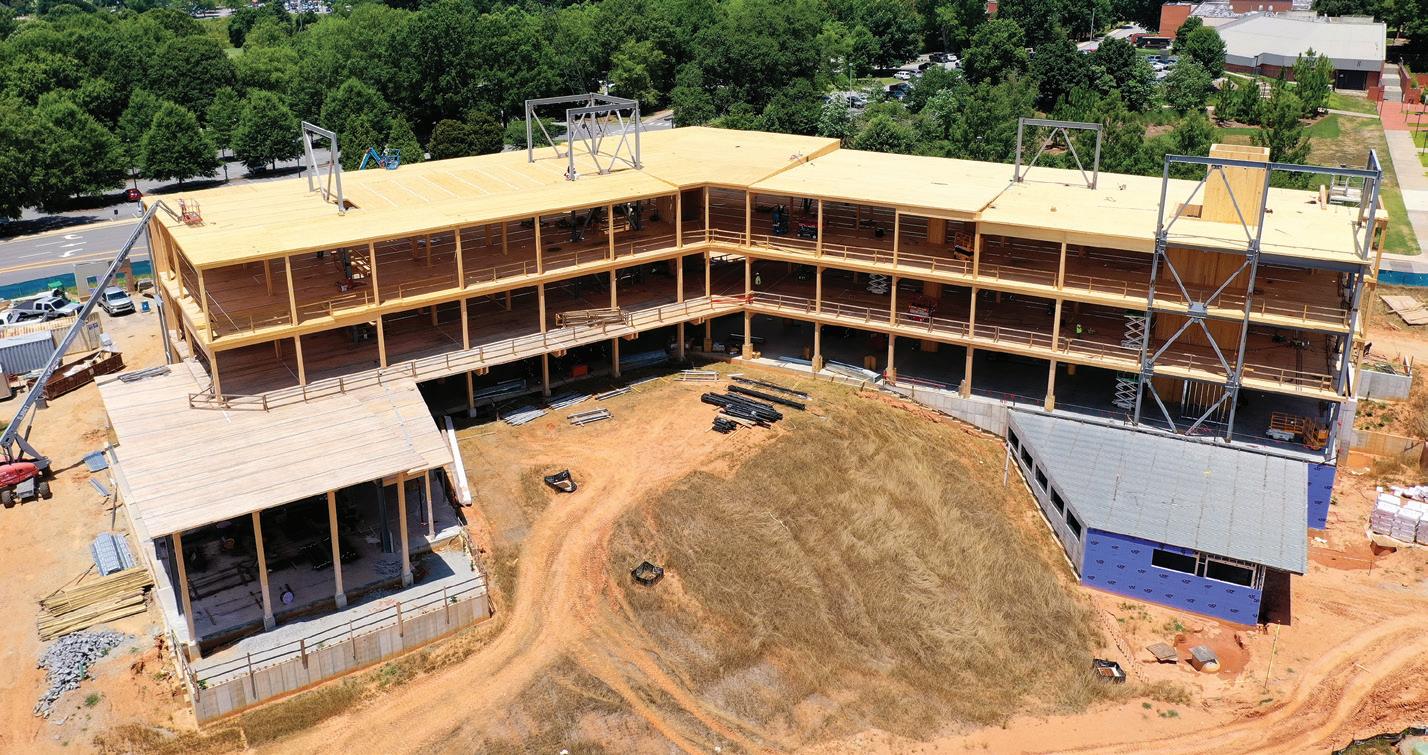
In fact, wood used in the building’s CLT components was harvested from Norfolk Southern’s Brosnan Forest, and timber sourced from the Clemson University campus will be featured in custom shelving and flooring. Led by the Wood Utilization + Design (WU+D) team, this effort highlights the building’s sustainability and environmental benefits, demonstrating the strong connection between mass timber construction, healthy forest management, climate resilience and carbon sequestration.
BUILDING TOGETHER
Building with mass timber comes with unique challenges. From coordinating the exposed mechanical, electrical, and plumbing systems to minimizing on-site adjustments, every detail requires precise planning. “You can’t have a chainsaw buzzing on a mass timber site—everything must be planned and fabricated in advance,” Verzella says.
“
This project has been a learning experience for everyone involved, and it’s taken a lot of collaboration with Clemson and the mass timber experts at STO Building Group to get it right.” ADDS TONY JOHNSON.
A GREEN IMPACT
The Forestry and Environmental Conservation Building is designed to meet the Green Globes certification standards—a building rating system that evaluates the environmental sustainability, health and wellness, and resilience of commercial buildings. Ajax is working closely with Clemson’s sustainability advocates and the design team to ensure the building meets these goals. By utilizing renewable materials like wood and incorporating energy-efficient systems, the project will be a top-tier example of environmentally conscious construction.
THE CLEMSON FAMILY
For much of the team, this project serves as a testament to the Clemson family. From project managers and superintendents to assistant PMs, Clemson graduates have been integral to the project’s success. Johnson, a Clemson civil engineering alumnus himself, adds, “There’s something special about being able to give back to your alma mater and work with others who share that connection.”
Verzella, whose daughters are both Clemson graduates, agrees. “The Clemson family isn’t just lip service, and it shows in how the alumni on our team, within our subcontractors’ teams, and within the university community work together.”
Interested in more mass timber? FIND MORE project stories and insights on our website.
PROJECT DETAILS
Location: Clemson, SC
Size:
3 stories/78,152sf
Client: Clemson University
Architect/Engineer: Moseley Sector: Education
Completion: Spring 2026
As the project progresses, the building stands as a beacon of innovation and collaboration, blending sustainability, education, and cutting-edge design. It is poised to become a source of inspiration for generations to come. <
Office to Residential vs. Hybrid Conversions:
What’s the Smarter Bet?

Brooks McDaniel
Sr. Vice
President,
STO Building Group

We’ve all seen the headlines about the officeto-residential conversion boom. From New York to San Francisco, policymakers and developers have embraced the narrative that underutilized office buildings could be the key to solving both housing shortages and commercial real estate distress.
But as more projects make their way from concept to construction, a new trend is emerging: office-to-hybrid (or mixed-use) conversions. So, what’s driving this shift, and what should owners and developers be thinking about when considering their next repositioning strategy?
MANAGING TENANTS & RISK
While fully converting an underused office tower to residential can seem like a straightforward solution, many buildings still have longterm commercial tenants whose leases bring in steady income. Buying out those leases can be expensive and cut into reliable cash flow, especially in uncertain market conditions. In these cases, the barrier isn’t a building’s layout or design, but the cost of displacing paying tenants too early.
More owners are finding that keeping some commercial space alongside new residential units helps manage risk, maintain steady income, and stay flexible as market demands shift. Rather than going all-in on either office or residential, a hybrid approach offers a more balanced path to long-term value.
THE HYBRID MODEL
Hybrid conversions might include transforming the upper floors of a building into residential units while keeping the lower levels for office, coworking, or retail. Some even include hotel or hospitality components. Others reconfigure space for community facilities, medical offices, or educational facilities. From a construction standpoint, this flexibility allows us to phase the work for each end-user, minimize disruption, and tailor infrastructure upgrades to the needs of each occupant type.
At STO Building Group, we’re seeing more clients explore these options, particularly in urban areas where the live-work-play model is in high demand. In New York City alone, Pavarini McGovern has embarked on several new office-to-hybrid projects. The team is currently in the preconstruction phases of reconfiguring 342,000sf at 845 3rd Avenue, 235,000sf at 300 East 42nd Street, and 515,000sf at 100 Wall Street.
CHECK OUT the full article on STOBG’s “the word” what’s next in construction website.
WHAT TO LOOK FOR
Not every building is a fit for this strategy, but here are some characteristics we look for when evaluating hybrid potential:
l Zoning Flexibility: Buildings in areas with mixed-use codes have more options from the start.
l Column Spacing and Floor Depths: Shallow floor plates and generous window lines improve feasibility for residential use.
l Multiple Cores and Entry Points: Separate access for different user groups (office tenants and residents, for example) helps streamline operations. An existing large lobby is easier to subdivide into two or more smaller lobbies for individual uses.
l Mechanical and Utility Capacity: The ability to zone systems separately or upgrade incrementally is key.
l Location: Buildings located near transit, amenities, and neighborhoods with unmet housing needs are well-positioned.
THE VALUE
In our post-pandemic reality, it’s clear that no one-size-fits-all solution exists. Office-toresidential conversions are still a powerful tool in the urban development playbook, and hybrid repositioning is another smart, scalable way to unlock value. <
Structure Tone
Critical
Pavarini | Pavarini McGovern
LF Driscoll | Govan Brown | Ajax | BCCI | Layton | Abbott | RC Andersen