St. LouiS AmericAn
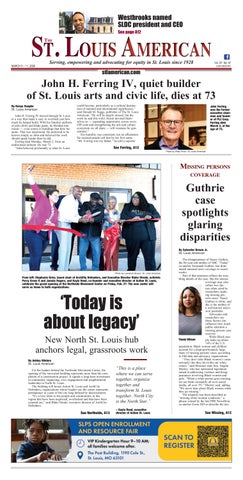
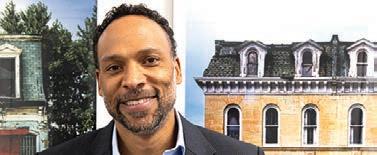
John H. Ferring IV, quiet builder of St. Louis arts and civic life, dies at 73
By Kenya Vaughn St. Louis American
John H. Ferring IV moved through St. Louis in a way that made it easy to overlook just how much he helped build. With his familiar uniform of polo shirts and khaki pants, he blended into rooms — even rooms in buildings that bore his name. That was intentional. He preferred to be known simply as John and believed the work should speak louder than he did.
Ferring died Monday, March 2, from an undisclosed ailment. He was 73.
“John believed profoundly in what St. Louis
could become, particularly as a cultural destination of national and international significance,” said Donald M. Suggs, publisher of The St. Louis American. “He will be deeply missed, but the work he and (his wife) Alison devoted themselves to — expanding opportunity across every ZIP code and strengthening the arts and culture ecosystem we all share — will resonate for generations.”
His humility was consistent, not an affectation.
He insisted people call him by his first name.
“Mr. Ferring was my father,” he told a reporter
‘Today
is about legacy’
By Ashley Winters St. Louis American
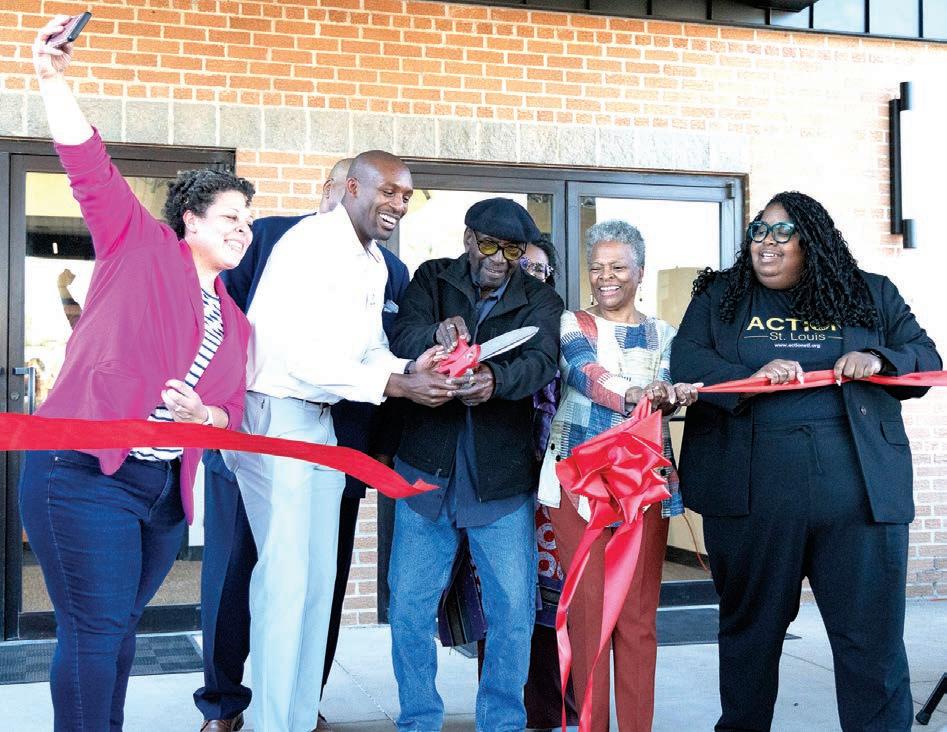
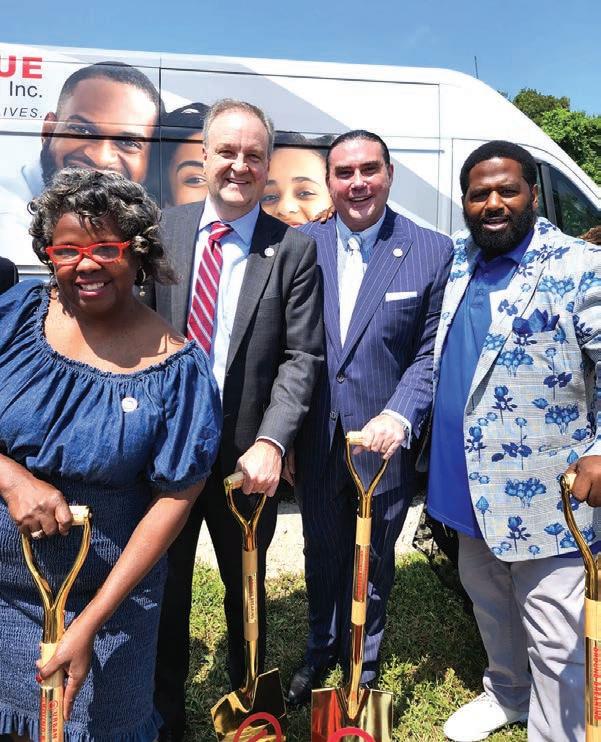
For the leaders behind the Northside Movement Center, the opening of the renovated building represents more than the completion of a construction project. It signals a long-term investment in community organizing, civic engagement and neighborhood leadership in North St. Louis.
The building will house Action St. Louis and ArchCity Defenders, organizations whose leaders say the center represents permanence in a part of the city long defined by disinvestment.
“It’s a love letter to the people and communities in this region that have been neglected, overlooked and that have been counted out,” said Blake Strode, executive director of ArchCity Defenders.

“This is
a place where we can serve together, organize together and transform St. Louis together. North City is the North Star.”
– Kayla Reed, executive director of Action St. Louis
Guthrie case spotlights glaring disparities
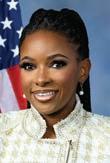
By Sylvester Brown Jr. St. Louis American
The disappearance of Nancy Guthrie, the 84-year-old mother of NBC “Today” co-anchor Savannah Guthrie, has dominated national news coverage in recent weeks.
Part of that attention reflects the troubling details of the case. But the intense coverage may also reflect two factors often cited by researchers studying missing persons cases: Nancy Guthrie is white, and she is the mother of a well-known television journalist. Advocates and researchers say those factors can influence how much public attention a missing persons case receives.

While Black people make up about 14% of the U.S. population, Black women and children account for a disproportionately large share of missing persons cases, according to FBI data and advocacy organizations.
“They don’t take Black women’s cases seriously like they do (with) our white sisters,” said Missouri state Sen. Angela Mosley, who has sponsored legislation aimed at addressing violence and disappearances involving Black women and girls. “When a white person goes missing, we see them constantly all over social media, all over TV,” Mosley said, adding. “We never hear about Black women when they go missing.”
The disparity has been described as “missing white woman syndrome,” a phrase coined by the late PBS NewsHour co-anchor Gwen Ifill to describe the ten-

See Ferring, A12
John Ferring was the former executive chairman and founder of PLZ Corp. Ferring died March 2, at the age of 73.
Photo by Wiley Price / St. Louis American
From left: Stephanie Grise, board chair of ArchCity Defenders, and Executive Director Blake Strode, activists Percy Green II and Jamala Rogers, and Kayla Reed, co-founder and executive director of Action St. Louis, celebrate the grand opening of the Northside Movement Center on Friday, Feb. 27. The new center will serve as home to both organizations.
Photo by Lawrence Bryant / St. Louis American
Theda Wilson
Guest Editorial Norman Francis was truly an institution
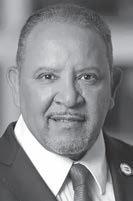
By Marc Morial
“We’ve got to have people who believe that education belongs to everybody. The future is education for our kids, starting early. Let them know about Blacks who made history and did it from their own belief in themselves, and belief in that we have to make a change.”
— Dr. Norman C. Francis
There are times in history when we are called to meet the moment. During the civil rights movement, the murder of Martin Luther King Jr. dimmed hope in the eyes of many who had exalted him for courage in the face of violence and racism.
For Dr. Norman C. Francis, who began his presidency at Xavier University of Louisiana on the day of King’s assassination, it was a call to build something greater.
It was a call he answered for nearly five decades.
understood both the cruelty of exclusion and the power of institutions to transform lives.
He chose education as his battlefield and excellence as his strategy. He believed deeply that when you prepare people to lead in medicine, science, business and civic life, you are advancing justice in its most practical form.
He also understood that leadership requires steadiness. For nearly half a century at the helm of Xavier, through economic downturns and the devastation of Hurricane Katrina, he modeled disciplined, values-driven stewardship. His singular intellect and devotion to service were matched by humility and humanity.
Francis did not simply lead a university; he opened doors to higher education and professional advancement that were systematically closed to Black Americans. He widened them and then insisted they remain open.
Under his leadership, Xavier became a national model of excellence, particularly in science and premedical education, producing generations of doctors, pharmacists and scientists who now serve communities across the nation.
But the impact of that work cannot be measured solely in numbers or rankings. Francis understood something fundamental: health equity is not a niche issue. It is a national imperative. By investing in STEM education long before it was fashionable and by building world-class programs at a historically Black university, he not only expanded opportunities for Black students but also strengthened America’s health infrastructure.
The physicians trained at Xavier treat patients of every race, in rural towns and urban centers, in community clinics and major hospitals. The path he paved has improved outcomes not just for one community, but for all Americans.
That clarity of vision did not emerge by accident. Raised in a segregated New Orleans, educated in Catholic schools and formed by service in the U.S. Army and at Loyola University Law School, Francis
Today, as we face an adversarial government and renewed threats to equity, opportunity and truth itself, Francis’s example feels less like history and more like instruction. We are once again called to meet the moment. The forces that would roll back progress are organized and emboldened.
As this administration and its supporters continue their assault on access to health care, voting rights, educational opportunity and economic mobility, we need courage. We need leaders who understand that building institutions is one of the most powerful forms of resistance.
Francis showed us what that looks like.
He demonstrated that fighting for equity does not always mean shouting the loudest. Sometimes it means preparing the next generation so thoroughly that they cannot be denied. Sometimes it means constructing pipelines where none existed. Sometimes it means holding steady when others falter.
That resonance is our responsibility now.
We will honor his legacy the only way that truly matters: by fighting for what is right. By defending access to quality education. By advancing health equity. By insisting that opportunity in this country is not the privilege of a few, but the birthright of all.
Francis answered the call on one of the darkest days in modern American history and spent a lifetime building light. In this moment of challenge and uncertainty, may we find the courage to do the same.
Marc Morial is president and CEO of the National Urban League.

A political inheritance left
by
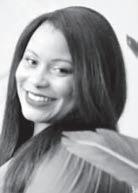
By Constance Harper
Jesse Jackson
On Feb. 17, life slowed as we paused to honor the life and legacy of the Rev. Jesse Louis Jackson Sr.
On that day, Rev. Jackson joined the lineage of ancestors who shaped the moral architecture of the late-20th-century civil rights movement. Rev. Jackson was a builder of coalitions, a translator of moral imperative into electoral force and a strategist who understood the utility of organized power.
To understand Rev. Jackson’s significance in our own lives and as a moral force in American democracy, we must situate him within movement history.
Born in Greenville, South Carolina, in 1941, Rev. Jackson rose to national prominence as a young minister and organizer working alongside the Rev. Dr. Martin Luther King Jr. He served in the Southern Christian Leadership Conference and was in Memphis in April 1968 at the Lorraine Motel when Dr. King was assassinated. That moment symbolized a generational transfer of moral urgency. Rev. Jackson would spend the next five decades translating that urgency into political action.
In 1971, he founded Operation PUSH (People United to Save Humanity) and later the Rainbow Coalition as organizing frameworks rooted in economic justice, political participation and global human rights.
al interests.
Rev. Jackson ran for the Democratic nomination for president in 1984 and again in 1988. His 1984 campaign was historic; his 1988 campaign transformative. He won 11 primaries and caucuses, secured more than 7 million votes, and finished second in the Democratic delegate count. When we see Black elected officials running for office, we must remember that Rev. Jackson was their forerunner, even as Shirley Chisholm was his political predecessor.
The American electorate we talk about today — one that is diverse, multiracial and coalition-based — did not materialize spontaneously. Rev. Jackson helped fuel it.
His influence extended beyond domestic politics. In 1984, he negotiated the release of U.S. Navy pilot Lt. Robert Goodman from Syria. He engaged leaders in Cuba. He advocated against apartheid and brought international visibility to human rights struggles when formal diplomatic channels stalled.
Long before there were online accountability campaigns targeting corporations, Rev. Jackson pressed major companies to diversify executive leadership and invest in Black communities. He challenged companies whose profits depended on Black consumers but whose leadership, policies and practices excluded them. He understood what too many still resist: civil rights without economic leverage leave structural inequities intact.
In 1984, Rev. Jackson adapted and nationalized the “Rainbow Coalition.” He proposed a durable political alignment of Black voters, Latino communities, labor unions, poor white people, LGBTQ people and farmers — a coalition grounded not in identity alone, but in shared materi-
But beyond strategy, Rev. Jackson was a preacher of possibility. He would proclaim, “I am somebody,” in call and response with children across the country. That affirmation was not performance; it was psychological liberation. In an era when Black children were routinely marginalized by public systems, Rev. Jackson insisted on pride as a political act. In this moment, voting rights are being gutted state by state and economic inequality has reached historic heights. Further, democratic norms and standard constitutional practices are being upended. Now, especially now, the question his life leaves us is not simply how we will remember him or honor his legacy, but how we will bend history for generations to come. Even still, the deeper measure of our learning the lessons his beautiful life offers is whether we will build coalitions wide enough, courageous enough and disciplined enough to build a new democracy.
Constance Harper is vice president of strategic impact and innovation at the Deaconess Foundation.
The Rotunda is a room; Jackson was a movement
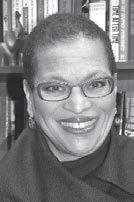
By Julianne Malveaux
America has rituals for the dead. We lower flags. We dim lights. We ask for moments of silence. In rare cases — former presidents, Rosa Parks — we place bodies beneath the Capitol dome and call it honor. So when congressional leaders declined to extend that honor to the Rev. Jesse Louis Jackson, they cited precedent. Precedent is tidy. Procedural. It is also how exclusion dresses itself in neutrality.
But here is the truth: the Capitol Rotunda is too small for the Rev. Jesse Jackson. Not physically. Symbolically. The Capitol dome was built with enslaved labor. The wealth that shaped Washington was extracted from Black bodies. The building that houses American democracy rests on people once denied it. The Rev. Jackson spent a lifetime forcing this nation to confront that contradiction. And he did not simply protest injustice. He altered the political terrain. Through the Rainbow PUSH Coalition, he pressured corporations to diversify hiring and boardrooms long before “diversity” became a culture-war slur.



The Rotunda honors office. The Rev. Jackson held movement.
The rules governing who lies in state or in honor privilege elected officials and generals. That is not neutral. It reflects a nation that confers legitimacy through title and rank. But American democracy has been most profoundly changed by people who held neither — people who organized, agitated, preached, marched and demanded. I am not sure I want my leader under that dome.
Through Operation PUSH, he translated moral authority into economic leverage. His presidential campaigns in 1984 and 1988 did not merely seek votes; they expanded the electorate and reshaped the Democratic Party’s coalition, language and imagination.
He helped register millions of voters. He stood with sanitation workers, auto workers, underpaid hotel workers and farmworkers. He negotiated the release of hostages when official diplomacy stalled. He could pivot from children who needed eyeglasses to geopolitics in a single breath because he understood both were about power — who has it, who hoards it and who must demand it.
The Capitol is majestic. It is also a monument to compromise with slavery, to exclusion, to legislative delay in the face of moral urgency. It represents power consolidated and negotiated. The Rev. Jackson represented power mobilized. He did not ask permission from marble. He pressured it. He did not seek validation from chambers that too often stalled justice. He stood outside them and forced them to respond. Perhaps lying in the Rotunda would symbolize acceptance. But the Rev. Jackson’s life was never about acceptance. It was about disruption — holy, strategic, relentless disruption. He was not carved from stone; he was forged in struggle.
The deeper question is not why he is not in the Rotunda. It is whether the Rotunda has ever been worthy of him. Flags lower at the discretion of those in authority. Movements rise without their consent.
The Rotunda is a room. The Rev. Jesse Jackson was a movement. History will not measure him by who allowed him into the room. It will measure the room by him.
Julianne
a
Guest Columnist Constance Harper
“With
‘We
just can’t give up’
Dr. Ross revives King’s health equity warning
By Sylvester Brown Jr.
St. Louis American
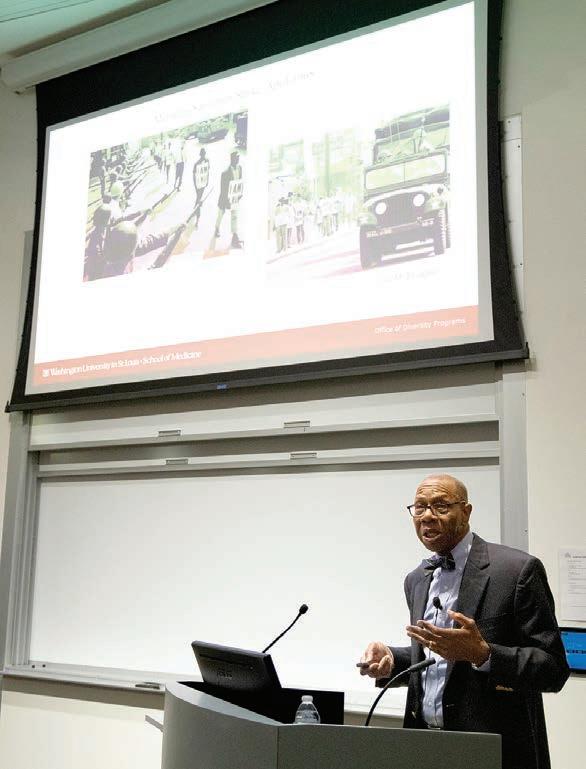
Washington University physician Dr. Will Ross opened a seminar on public health and community engagement with a warning from Dr. Martin Luther King Jr.
“Of all the forms of inequality, injustice of health is the most shocking and most inhumane.”
Ross displayed the quote — delivered by King at a 1966 press conference for the Medical Committee for Human Rights — at the start of his presentation last week, just before Black History Month ended.
He reminded the audience that King’s expanding advocacy for economic justice and health care helped lead the FBI under longtime Director J. Edgar Hoover to label him “the most dangerous man in America” in internal memos after the 1963 March on Washington.
Ross said he first shared King’s warning with colleagues in 2005 while discussing the civil rights leader’s effort to broaden coalitions advocating for adequate health care for Black Americans.
That mission, Ross said, remains unfinished.
He framed much of the talk around the region’s long history
of racial disparities in housing and health care.
“What are we trying to do with diversity?” Ross recalled asking colleagues in 2005.
“Diversity is much more than recruiting students, much more than recruiting faculty,” he said.
“If we’re going to bring people in and talk about changing, transforming America, we (must) think about how we’re going to get all these larger groups and address all these myriads of complex problems.”
Ross, associate dean for diversity and Alumni Endowed Professor of Medicine in nephrology at WashU, pointed to the formation of the United Welfare Association in St. Louis in 1915.
Organized by local real estate leaders, the group promoted racial segregation through efforts to restrict Black residents from moving into White neighborhoods. Although racial zoning laws were later declared unconstitutional, housing and health disparities persisted for decades.
Ross also revisited the opening of Homer G. Phillips Hospital in 1937, which replaced the segregated City Hospital No. 2 and served St. Louis’ Black population of more than 70,000 at the time.
Before its closure in 1979,
Ross said Homer G. Phillips had become “far superior” to City Hospital No. 1 on Lafayette Avenue. He also referenced St. Louis Regional Medical Center, which opened on Delmar Boulevard in 1985 and closed in 1997, leaving the city without a public hospital.
Ross displayed a slide of a 1995 commentary he wrote warning that the hospital’s


closing would cause unnecessary harm to “the citizens of St. Louis, especially the North Side, both from the standpoint of quality health-care delivery and loss of jobs.”
His larger point was that Black residents have long borne the consequences of uneven access to health care in the region.
Ross also presented recent demographic estimates show-
ing the city’s largest groups as Black (44.9%), White (44.5%), Hispanic or Latino (4.1%), Asian (3.44%) and two or more races (2.54%).
Despite those demographics, health outcomes can vary dramatically by ZIP code. Life expectancy in some inner-city areas of St. Louis is roughly 18 years lower than in nearby suburbs — a gap highlighted in the “For the Sake of All” report on regional health disparities.
Ross said improving those disparities requires a sustained focus on workforce diversity, program development, community engagement and population health.
He also outlined broader steps to improve health outcomes in the region, including speaking “as one voice,” developing a 25-year plan for neighborhood revitalization, creating a “Marshall Plan” for North St. Louis city and county, addressing the wealth gap between White and Black residents through targeted reparations, and investing in public schools, small businesses and efforts to attract more immigrants and Fortune 500 companies.
Ross also addressed growing pressure on diversity, equity and inclusion initiatives nationally, saying institutions must continue defending those efforts even when doing so is controversial.
“I hate to say this, but many of my colleagues across the country have abdicated too quickly,” Ross said. “We cannot abdicate our responsibility. As an institution, we (must) step up and support it.
“When you’re under duress, you have to stand and fight. If we take a hit, we have to stand up again. We just can’t give up. There’s just too much at stake.”
Sylvester Brown Jr. is the Deaconess Foundation Community Advocacy Fellow.






Photo by Lawrence Bryant/St. Louis American
Dr. Will Ross, associate dean for diversity and Alumni Endowed Professor of Medicine in nephrology at WashU, gave a a seminar on public health and community engagement.
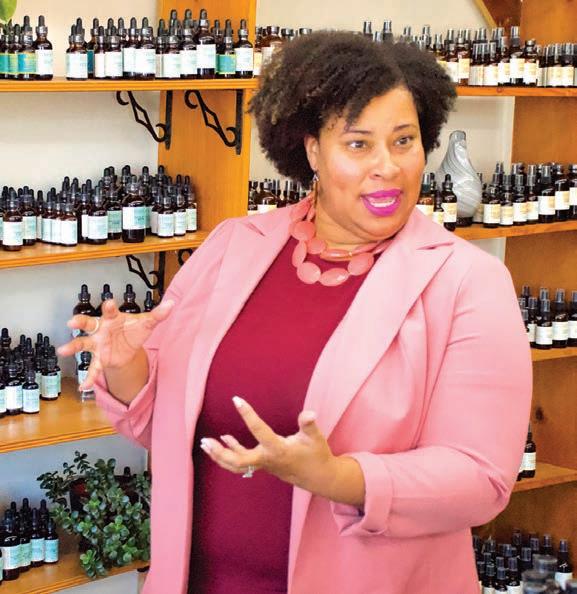
Tiffany Jones purchased Cheryl’s Herbs in Maplewood, Missouri, in 2019, and the growing Black woman-owned enterprise was a member of Schnucks Markets’ second Schnucks Springboard cohort.
Jones’ and other cohort businesses’ products will appear on select Schnucks store shelves for a trial run beginning in mid-April.
Springing back in action
Schnucks Markets Inc.’s innovative program that places small-business products directly on its shelves is returning as the season turns from winter to spring.
Schnucks is seeking its third cohort of emerging suppliers for the Schnucks Springboard accelerator program, which has helped local and out-of-state businesses grow their companies.
To apply, Midwest business owners should visit schnucks.com/springboard by April 25, 2026.
To qualify, owners must:
• Have annual consumer packaged goods (CPG) revenue of less than $1 million
• Have fewer than 10 years in the CPG business
• Employ fewer than 50 employees
• Offer a product never previously carried by Schnucks Markets Inc. or any of its banners
• Be based in one of 12 Midwestern states (as defined by the U.S. Census Bureau): Illinois, Indiana, Iowa, Kansas, Michigan, Minnesota, Missouri, Nebraska, North Dakota, Ohio, South Dakota or Wisconsin.
If selected, vendors must attend all
business development classes in person at Schnucks’ St. Louis headquarters this fall and meet food safety, insurance and other regulatory requirements for a product shelf trial.
Businesses that meet all requirements and are accepted into the cohort will receive $5,000 in equity-free funding and an in-store product trial at select Schnucks stores in 2027.
“After receiving incredible feedback from the first two Schnucks Springboard classes, we’re proud and excited to welcome our third cohort of businesses and look forward to helping them reach more customers and grow their businesses,” said Adria Moore, Schnucks senior director of merchandising enablement and emerging suppliers.
“Not only are we here to teach, we’re here to learn, and we’ve incorporated feedback received from the first two cohorts to make this an even better learning experience for our participants.”
Products from the second cohort of companies will appear on shelves in select Schnucks stores for a trial run beginning in mid-April.

Commentary
Stealing student dreams to back billionaires
By Satra D. Taylor
President Trump has declared that he has “won affordability.” In his State of the Union speech, he even bragged that he’s bringing costs “way down on health care and everything else.”
In reality, the Trump administration is making it much harder for working families to meet their daily needs – and to fulfill their long-term dreams of higher education.
The Republican tax and spending plan adopted last year – the so-called “Big Beautiful Bill” – includes huge tax giveaways to the rich, paid for with deep cuts to programs for working people. The Congressional Budget Office expects 7.5 million Americans to lose their Medicaid insurance and 4 million to lose some or all their SNAP food aid benefits.
be where we are today. Now, the aid programs that I’ve depended on are under attack. Students are facing tighter borrowing limits and dramatically reduced repayment options, making it even more difficult to get out from under heavy debts. Under the new borrowing caps, the government plans to slash about $44 billion in aid over the next 10 years, affecting roughly 25% to 40% of graduate borrowers.
Making matters worse, the Pell Grant program, which helps more than 6 million low-income students a year pay for college, is facing a potential shortfall crisis. If Congress doesn’t put in new funds, the program’s deficit will skyrocket to $11.5 billion in 2027, and those grants could very well dry up.

Slashing these public assistance programs will make it even harder for working families to save money for college. In fact, the same tax law also includes an overhaul of critical federal student aid programs that will destroy many young people’s dreams of pursuing higher education – again, all to finance tax breaks for corporations and the rich.
This problem is not abstract to me. It’s personal. I am a first-generation college student and now a doctoral student. My hard-working Black family and my broader community poured everything they had into me because they believed – against every obstacle – that education could be my ladder up.
Federal student aid programs like Pell Grants and the Grad Plus subsidized loan program helped me as I struggled up that ladder. It still wasn’t easy. I worked two part-time jobs and still could barely make ends meet. But without that help, I, and many of us, wouldn’t
Across the country, families who believe education is their way forward are feeling their dreams fade away. I’ve spoken to aspiring and current graduate students who are unsure if staying in school is still an option. I’ve talked to borrowers who fear they will live the rest of their lives crushed by student debt and parents who are worried they’ll never be able to afford to send their babies to college.
Trump didn’t even mention student aid in his State of the Union address. But this issue is central to the health of our union. It’s about whether we as a nation believe working families deserve opportunity – or just survival. It’s about whether we as a nation value the futures of our young people – or only the futures of billionaires.
Higher education was supposed to be the great equalizer. But if we continue to shortchange student aid, working families will see it as either a hopeless fantasy or a life-long debt sentence.
Satra D. Taylor is a doctoral student at the University of Maryland, College Park, studying Higher Education. Dallas Weekly originally published this commentary.

Photo by Wiley Price / St. Louis American
Satra D. Taylor
Schnucks seeks suppliers for third Springboard cohort
Mission and Money
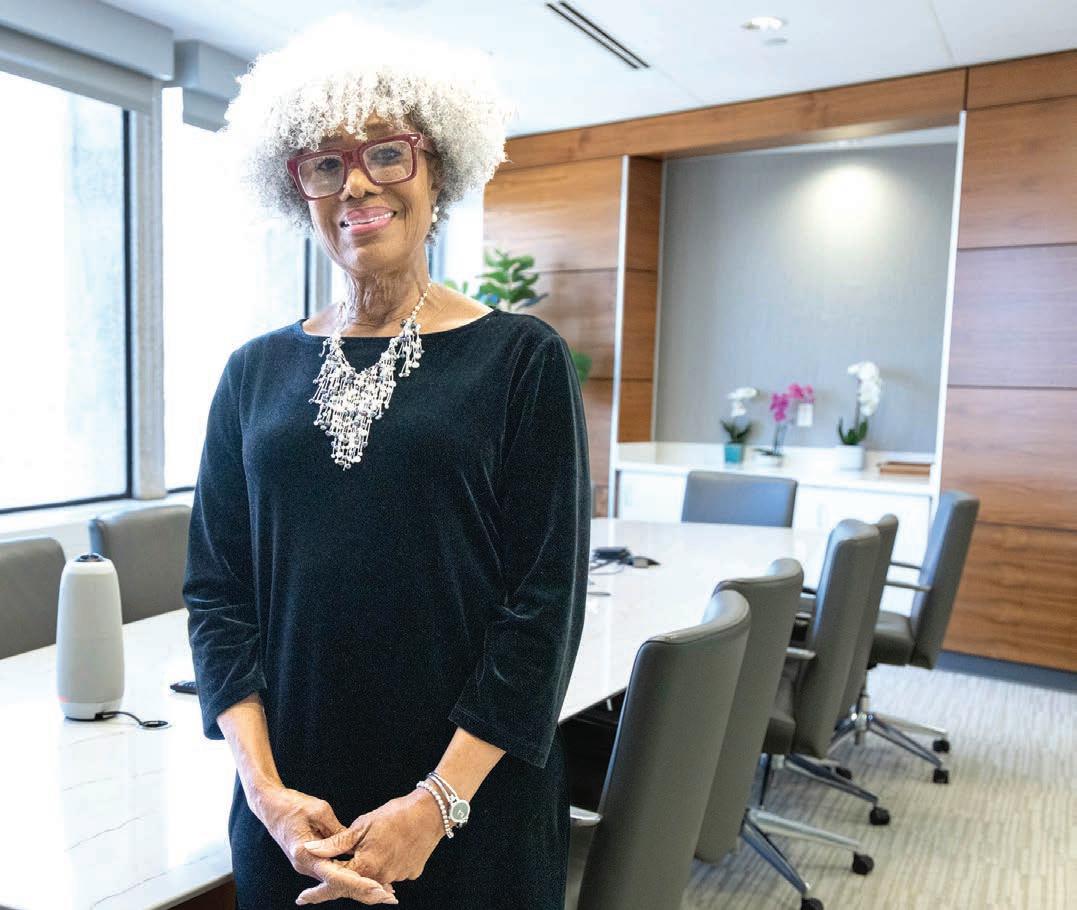
Advantage Capital’s Sandra Moore ties profit to purpose
By Ashley Winters
St. Louis American
By the time Sandra Moore was 11 years old, she had already decided she wanted to change the world. Growing up in a traditional Black family on the west side of St. Louis, she watched her hardworking parents do everything right — work long hours, sacrifice and push forward — and still struggle to get ahead. When she walked down Lindell Boulevard toward The Muny and sat in the free seats, she
noticed something else: systems at work. Some neighborhoods flourished. Some families seemed buffered by opportunity. Others, like hers, were not. Today, as managing director and chief impact officer at Advantage Capital, Moore has built a career around reshaping those very systems — using capital, policy and private investment to expand opportunity in communities long left out of traditional economic flows.
“I knew early that sys-
tems and money changed things,” Moore said. “And I wanted to learn how to push them, pull them, reshape them to better serve my people and my community.”
That realization sharpened during her first year at Washington University in St. Louis, where Black studies courses helped her connect lived experience with structural analysis. She later earned her law degree there, grounding her mission in both scholarship and strategy. Her career became what
she calls a “through line” of change work: representing poor clients as a public service lawyer, serving as a federal administrative judge with the Equal Employment Opportunity Commission before age 40 and later joining the cabinet of the late Gov. Mel Carnahan. Each role deepened her understanding of how law and policy can either reinforce inequity or disrupt it. At Urban Strategies, she learned how to marry public outcomes with private dollars
Urban League advances plaza development on West Florissant
By Alvin A. Reid St. Louis American
In spring 2027, four new businesses are expected to open on West Florissant Avenue where vacant lots have sat empty since two businesses were burned following the police killing of Michael Brown in August 2014.
Michael P. McMillan, president and CEO of the Urban League of Metropolitan St. Louis, said the nonprofit is transforming three vacant lots on West Florissant. The properties are adjacent to a planned First Bank branch that will anchor the project.
“When people see vacant abandoned lots that they know used to be businesses, it adds to the thought that a community is dying,” McMillan said.
“We will always be judged on what we did or did not do in Ferguson.”
Construction has begun on
See Urban League, A6
Ottley appointed to U.N. artificial intelligence panel
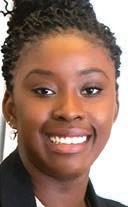
Alvitta Ottley, an associate professor of computer science and engineering at the WashU McKelvey School of Engineering, has been appointed to the Independent International Scientific Panel on Artificial Intelligence, established within the United Nations. Ottley is one of 40 members selected by the U.N. General Assembly after an independent review by the International Telecommunication Union, the U.N. Office for Digital and Emerging Technologies and the U.N. Educational, Scientific and Cultural Organization.
Franks represents Lincoln U. at state student forum
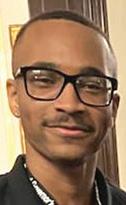
Lincoln University of Missouri student Jaylan Franks was one of 60 collegiate students selected to attend the 39th Annual Missouri Governor’s Student Leadership Forum held Feb. 12-14. Franks is a senior pursuing a Bachelor of Science in business administration. Andrew Reynolds, LU associate professor of social work, served as a small-group facilitator during the forum at the Missouri State Capitol, which featured speakers including Mike Kehoe, state legislators, entrepreneurs and nonprofit leaders.
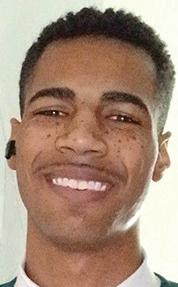
Savion Harris serving as legislative intern Savion Harris
Savion Harris, a freshman political science major at Lincoln University, is serving as an intern during the 2026 Missouri legislative session with state Rep. David Tyson Smith. Harris attends public and executive hearings, taking notes while Smith serves on panels. Afterward, he asks questions to clarify points or gain a deeper understanding.
He also reads and summarizes bills, providing feedback to help inform Smith’s review before final decisions are made. Additionally, Harris sits in House sessions, observing debates and watching representatives vote.
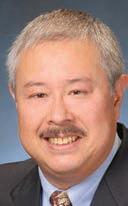
Affinia names David Miller vice president, COO David Miller
Dr. David A. Miller has been appointed Affinia Healthcare’s vice president and chief operating officer. Miller was serving as Affinia Healthcare Convenience Care clinical director and assistant medical director. He helped advance patient-centered care and strengthen clinical operations across the organization, according to Affinia Healthcare President and CEO Dr. Kendra Holmes.
“Dr. Miller has demonstrated outstanding leadership, deep commitment to our mission, and an unwavering focus on improving access to care for the communities we serve,” Holmes said.
Alvitta Ottley
Photo by Alvin A. Reid / St. Louis American
left, state
Yolanda
Photo by Lawrence Bryant / St. Louis American
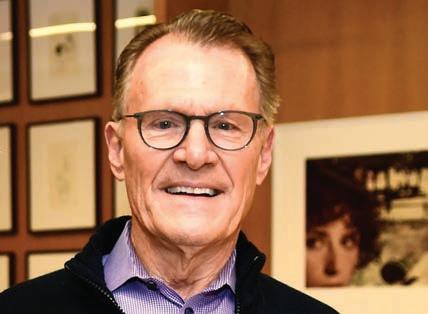
Sandra Moore, managing director and chief impact officer at Advantage Capital, stands inside a conference room at the firm’s Clayton office on February 22, 2026.
Jaylan Franks
Two legacy Black newspapers close, citing financial pressures
The Richmond Free Press and Portland Skanner shut down as leaders warn of a broader funding crisis in Black media.
By Stephen Magagnini Sacramento Observer
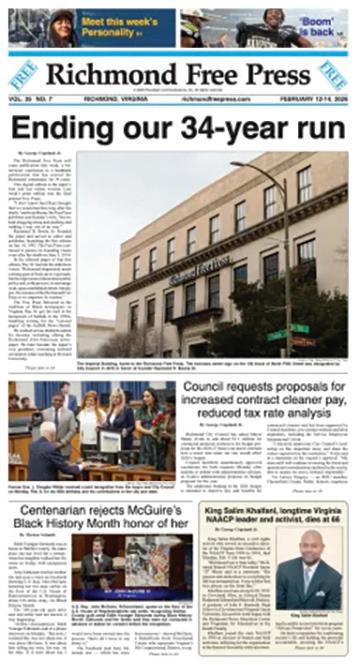
Over the last couple of weeks, two of America’s most respected Black newspapers — the Portland Skanner and the Richmond Free Press — have folded after decades of serving their communities.
Both publications cited the political and economic climate, along with mounting digital challenges, as revenue declined beyond recovery. The Skanner closed after 50 years. The Free Press shut down after 34.
‘They’ll come and buy a car anyway.’”
Boone founded the Virginia-based paper in 1992 with her late husband, Raymond H. Boone Sr. She said racism continues to shape corporate decision-making.
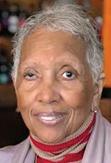
“The problem is advertising has dried up,” Free Press Publisher Jean Boone told The Observer. “And the aura and influence of our national politics is such that corporations have ceased to take seriously or care about the Black community.”
Boone said corporate advertisers no longer see value in investing in Black media.
“Their view is Black consumers will buy anyway,” she said. “I’ve had people in sales told,
“Racism is alive and well in this country and indeed in Richmond,” Boone said. “DEI — the so-called new words for affirmative action — have permeated the decision-making tables of corporate America, and as such we have been left on the cutting room floor.”
The Free Press was a free weekly sustained by advertising. It published every Thursday.
“We believe there should be no barrier for people getting the information they need and want,” Boone said.
Two major advertising agencies eventually moved away from the paper.
“Their incentive is to work with large-revenue newspapers, for example The New York Times, where they get more of a fee for ad placement than
they would with a ‘little pip-squeak weekly,’ as my husband called us,” she said.
At times, the paper waited months to be paid for ads. Meanwhile, digital readership failed to replace lost print revenue.
“A lot of people born in the late 20th century don’t want to read their news online,” Boone said. “They’re old-fashioned. They want a print newspaper.”
The paper operated what Boone described as an “underground distribution center,” placing boxes throughout the city where readers would take copies — often distributing extras themselves.
Launching a Black newspaper in Richmond — the former capital of the Confederacy — was never easy, Boone said.
“That aura looms very (heavily) in this city,” she said, referencing the paper’s efforts to push for the removal of Confederate statues from Monument Avenue. Despite threats and vandalism, the publication endured.
By the early 2000s, the Free Press had built a weekly circulation of nearly 35,000, reaching an estimated 120,000 readers.

Urban League
Continued from A5
the plaza project. A new senior citizen center has opened across the street. The senior citizen center includes 44 housing units.
“We worked with the county, looked at the neighborhood driven plan of what they wanted to
Moore
Continued from A5 — rebuilding distressed communities and helping families return home after Hurricane Katrina. She still receives emails from residents of Harmony Oaks in New Orleans, once known as the Magnolia Projects, thanking her team for stabilizing families after the storm.
That experience prepared her for a defining chapter: joining Advantage Capital as its first woman and first person of color partner roughly 25 years after the firm’s founding. Scott Murphy, the firm’s chief investment officer, said Moore brought something rare to the table.
“She has never seen investment performance and community impact as competing priorities,” Murphy said. “She often says, ‘No money, no mission.’ If a project can’t pay the bills, it can’t have long-term impact.”
Murphy credits Moore with institutionalizing impact at the firm. Before she built the Impact Team, job creation was the prima-
see in the area and then purchased those three lots with the help of Centene Corporation and Emerson. We are now beginning to implement what the community said they want to see,” McMillan said.
“The community needs to see action. They need to see that people still care; that Ferguson, Dellwood and North
ry metric. Under her leadership, the lens broadened to include wages, upward mobility and how investments reduce reliance on social safety nets. The firm has raised more than $730 million during her tenure.
“She brings intellectual rigor to investment discussions, but she also brings lived experience,” Murphy said. “She understands what economic disinvestment feels like at the ground level. That perspective sharpens her expectations.”
One example close to home is the redevelopment of City Foundry STL, once an abandoned industrial site. Advantage Capital invested in multiple components of the project, helping create space for locally owned businesses and new jobs. Murphy said Moore’s deep roots in St. Louis — and her relationships across sectors — ensured the investment was more than a transaction.
“She insists that impact be tangible,” he said. “She asks, ‘What changed because we invested here?’” Moore’s toughest test came early, when she
County have not been forgotten.”
The plaza concept grew out of community planning tied to the Promise Zone initiative, according to the St. Louis Economic Development Partnership. The Environmental Protection Agency supported brownfields cleanup and reuse efforts that helped make several parcels buildable.
traveled the country as a young Black administrative judge ruling on discrimination cases involving mostly white, mostly male federal officials — all while raising two small children at home. It was, she said, “challenging, stressful, often scary.”
She navigated it the way her parents taught her: bold and fearless.
Beyond balance sheets and boardrooms, Moore takes particular pride in the young women she has mentored — some now mayors, members of Congress, foundation leaders and executives at global firms such as Accenture.
Murphy sees that commitment daily.
“Sandra invests in people the same way she invests capital — with intention and for the long term,” he said. “She takes calls. She makes introductions. She asks tough questions because she wants people to grow.” For Moore, the legacy she hopes to leave is simple.
“Do it. Say yes to the hard stuff. Don’t allow yourself to be denied. Be brave.”
Photo courtesy of the Richmond Free Press
Jean Boone
An image of the final edition of the Richmond Free Press.
HealthMattersHealthMattersHealthMatters
Care of You’
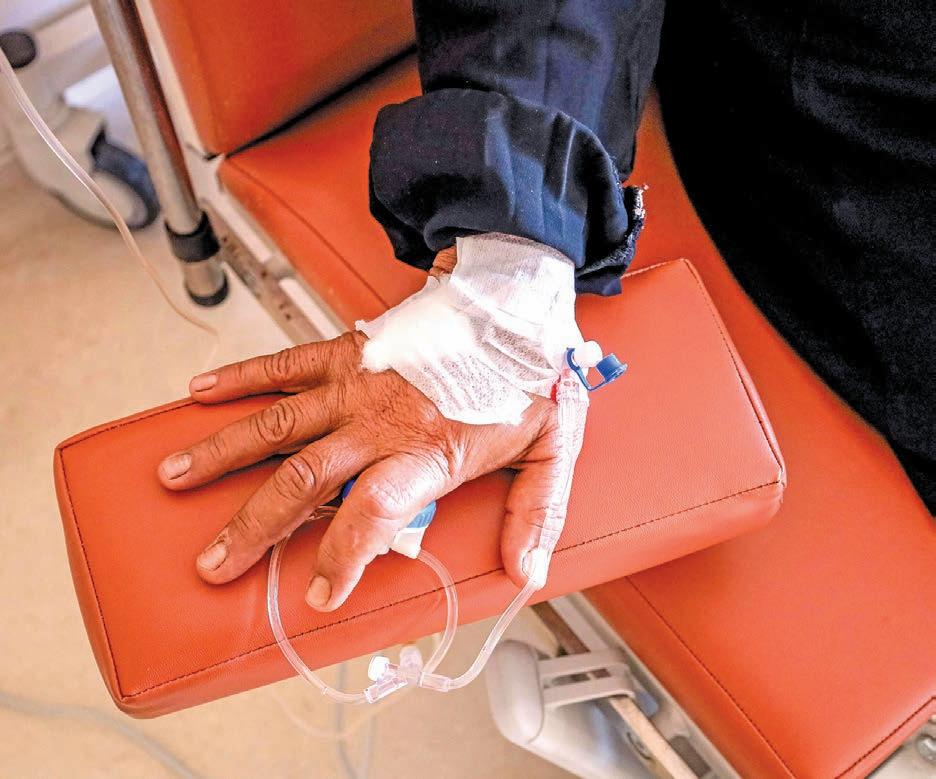
Black Americans face greater barriers to quality cancer care and experience worse outcomes. Survival rates are lower for
than for their white counterparts for nearly every type and stage of cancer.
Cancer care isn’t equal
Black patients pay the price
By Sheri Biller and Cynthia Carter Perrilliat For The St. Louis American
ancer does not discriminate. Access to care does — and the consequences for Black communities across the country are devastating.
Expanding access to Supportive Cancer Care — a model that treats the whole person, not just the disease — can help provide the level of care and empowerment all people living with cancer deserve, but that is too often missing for communities of color.
Black Americans face greater barriers to quality cancer care and experience worse outcomes. Survival rates are lower for Black
By Laura Onyeneho Word In Black
Black Americans face higher cancer mortality rates. A whole-person model could help rebuild trust and improve outcomes.
Americans than for their white counterparts for nearly every type and stage of cancer.
Black men have a 4% higher cancer incidence than white men, but a 16% higher mortality rate. Black women have a 9% lower incidence rate than white women, yet
See Cancer, A8
Faith leaders address AIDS’ toll on Blacks
By Rev. Dorothy S. Boulware Word in Black
Prayers are rising this week from altars across the country, not only for spiritual renewal, but for physical healing, public understanding, and compassion toward those living with HIV and AIDS.

Congregations are observing the National Week of Prayer for the Healing of AIDS, March 1-8, an annual faith-based campaign sponsored by Balm In Gilead that calls religious communities to confront HIV through prayer, education and advocacy.
For many faith leaders, the observance represents a bridge between sanctuary and society — a recognition that healing involves both faith and informed action.
A disproportionate burden
Black Americans make up about 13% of the U.S. population, but account for more than 40% of people living with HIV nationwide.
African Americans continue to bear a disproportionate burden of HIV in the United States, underscoring the urgency behind faith-based awareness efforts According to the Centers for Disease Control and Prevention, Black Americans make up about 13% of the U.S. population, but account for more than 40% of people living with HIV nationwide. Public health experts point to disparities in health care access, economic inequality, and persistent stigma as major contributors to infection rates.
Faith leaders say churches remain trusted institutions capable of addressing misinformation while encouraging testing and treatment.
See AIDS, A8
Demystifying the end
Hospice care impact on the Black community
When people hear “hospice,” they often think it’s the end of hope, of options, of life itself.
But for the caregivers and advocates, it’s really the beginning of something else. That is peace, dignity and the chance to say goodbye on your terms. Yet, despite its critical role in the healthcare continuum, hospice care remains underused and misunderstood, especially in Black communities.
Monica James has seen firsthand the confusion and emotional strain families face when end-of-life care isn’t discussed early enough. She works for the non-profit organization Houston Hospice as the Community Engagement Coordinator, serving 13 counties across Southeast Texas. James’s role involves educating both the public and healthcare
Despite its critical role in the health care continuum, hospice care remains underused and misunderstood, especially in Black communities.
professionals about hospice and what it isn’t. “Many people aren’t prepared for the end of life. They haven’t discussed it with their loved ones until there’s a crisis,” James said. “Sometimes the person is nonresponsive and can’t express what their wishes are. That can cause a lot of conflict within the family.”
James said one of her top priorities is addressing the cultural and generational
See Hospice, A8

Courtesy photo
Courtesy photo
Blacks
HealthMattersHealthMattersHealthMatters
Care of You’
AIDS
Continued from A7
A movement born in Harlem
The movement began in 1989 when theologian and public health advocate Pernessa C. Seele launched what was then called the Harlem Week of Prayer for the Healing of AIDS. Working at Harlem Hospital during the height of the epidemic, Seele saw patients facing fear and isolation — not only from society, but sometimes from religious communities themselves.
“One of my responsibilities was to work with people living with HIV. I was taken back by the lack of pastors and people in church that were present,” Seele said. “Many church leaders don’t know how to approach that issue, or they believe that homosexuality causes HIV. Since they are against homosexuality, they don’t talk about HIV.”
She later described feeling spiritually com-
Cancer
Continued from A7
a 10% higher mortality rate.
It should not be this way — and it does not have to be.
Treatment alone is not enough
Continued progress in early detection and advances in chemotherapy, radiation, and surgery are critical. But treatment alone cannot close the equity gap.
Expanding access to Supportive Cancer Care can help address disparities by closing gaps Black patients too often face before, during, and after treatment.
Supportive Cancer Care is a comprehensive model that treats the whole person. It connects people living with cancer — and their caregivers — to practical, emotional, and social support alongside clinical treatment. That includes symptom management, counseling, insurance navigation, transportation coordination, and more.
It is one of the most effective tools we have to confront inequities in care and outcomes.
Hospice
Continued from A7
misconceptions that continue to plague communities of color.
“A lot of times, people think hospice is about giving up. It’s not. It’s about pain management and symptom relief, not just for the patient, but for the family too,” she said.
Hospice care provides specialized, compassionate support for patients in the final stages of life, focusing on comfort rather than cure. According to data collected by the National Hospice and Palliative Care Organization, Black Americans on Medicare seek hospice and palliative treatment 13% less than their white counterparts.
For African American, Afro-Caribbean and African immigrant families, generational trauma and a lack of trust in the healthcare system often lead to delayed decisions about hospice care.
pelled to mobilize clergy to respond differently — replacing silence and judgment with prayer, education, and compassion.
What began as a local initiative soon grew into a national movement embraced by multiple denominations and faith traditions. By the early 1990s, the effort expanded into the Black Church National Day of Prayer for the Healing of AIDS and ultimately evolved into a weeklong observance engaging congregations across the United States and internationally.
Faith and public health partnerships
Today, organizers encourage participating houses of worship to integrate prayer services with practical outreach, including health workshops, HIV testing events, and conversations about prevention and care.
“The week reminds us that healing is both spiritual and communal,” organizers note in materials distributed to participating congregations.
Public health officials increasingly recognize
The trust gap is costing lives
As leaders working to advance health equity and improve cancer outcomes in communities of color, we have seen firsthand how systemic inequities compound the challenges of a cancer diagnosis, particularly for Black patients and their families. We have also seen how mistrust of the medical system can prevent people from seeking care — or from asking for services that meet their unique needs. Too often, delayed detection and delayed treatment follow, leading to worse outcomes.
Expanding Supportive Cancer Care — especially in underserved communities — can help rebuild trust by creating systems that listen to patients, are culturally responsive, include racially equitable care teams, and recognize that every person’s needs evolve throughout treatment.
The evidence is clear
These services are not simply compassionate — they are effective. Research shows that patients receiving Supportive Cancer Care services are less likely to visit the emergency
“There’s been a historical gap in access and trust,” said James. “Our goal is to show up consistently, to listen and to let these communities know they have options and that they’re not alone.” Her outreach strategy involves speaking at churches, health fairs and community centers—anywhere people feel comfortable having vulnerable conversations.
“In many families, caregivers don’t seek outside help because they feel it’s their duty,” James said. “We let them know we’re here to walk alongside them and help relieve caregiver stress.”
Connie Marron knows the fear and uncertainty around hospice care. As a longtime caregiver for her grandmother and father, she admits she initially had no clue what hospice really was.
“I was 25 when I started caregiving and back then, I thought hospice was just where people went to die,” she recalled.

faith communities as essential partners in addressing HIV. Churches often serve populations that may distrust tradi-
tional health care systems, making clergy influential messengers in reducing stigma and promoting accurate medical informa-
tion.
Over the years, the observance has mobilized thousands of congregations and helped deliver HIV education to millions, particularly within African American communities historically underserved by public health campaigns.
Confronting stigma
Organizers say stigma remains one of the most significant barriers to ending the epidemic.
During the early years of AIDS, fear and misunderstanding often led to the exclusion of those living with HIV from faith spaces. The prayer week was designed, in part, to transform that history by encouraging congregations to model acceptance and care.
Events planned during the week include prayer vigils, sermons focused on healing and justice, youth forums, community discussions and virtual gatherings addressing current developments in HIV prevention and treatment. Many congregations also partner with local health agencies to promote con-

room and spend fewer days in the hospital. By proactively managing symptoms and side effects, Supportive Cancer Care improves both quality of life and clinical outcomes,
But Marron’s perspective shifted dramatically after volunteering with the Harris County LongTerm Care Ombudsman Program and receiving training through Houston Hospice.
Her experience came full circle in 2013 when her father, whom she had cared for over a span of 17 years, entered hospice care during the final days of his life.
“When the ambulance wheeled him into Houston Hospice, he looked around and asked, ‘Am I in the hospital?’” Marron said. “My sister told him, ‘No, Dad. You’ll never have to go to the hospital again.’ He smiled and said, ‘Good.’” Marron described how the facility didn’t just support her father they cared for her as a caregiver, too.
“The room was peaceful, spacious and comforting. And I knew he wouldn’t be alone,” she said. “I sent everyone else home and stayed
while easing the burden on caregivers.
Yet today, only 15% of people living with cancer utilize these services. That must change.
with him. I wanted to be there when he took his last breath because I had walked that entire journey with him.”
Misconceptions of hospice care
A 2020 poll revealed that 55% of Black Americans distrust the American healthcare system due to historical racism, discrimination and horrific treatment such as the Tuskegee Syphilis Study.
Despite the Affordable Care Act reducing the uninsured rate by nearly 10 percentage points, Black Americans are less likely than white Americans to get health insurance. People without insurance may be less inclined to seek medical attention, even once they are 65 and have access to Medicare.
Since they are unlikely to have a primary care physician without insurance, they are unable to see specialists and must
fidential testing opportunities.
A global reach
The initiative has expanded beyond U.S. borders, engaging faith communities in the Caribbean and parts of Africa as leaders address global health disparities affecting people of African descent.
Advocates say the observance remains deeply relevant, even as medical advances have transformed HIV into a manageable chronic condition for many. New infections continue to occur, particularly in communities facing economic and health care inequities.
For participants, the week ultimately reflects a theological conviction that faith communities must respond to human suffering holistically. As congregations hold services and outreach events, organizers hope the message resonates beyond church walls — that prayer, education and compassion together can help move communities closer to healing.
ground. Through our coalition, Together for Supportive Cancer Care, national organizations are working to expand early, equitable access to these services. We are building connections among communities, resources, and expertise, while pushing for systemic change in a health care system that too often leaves people — especially people of color — behind.
Everyone deserves comprehensive, whole-person care.
By expanding Supportive Cancer Care, we can reduce suffering, improve outcomes, and close longstanding equity gaps in cancer treatment.
This February, as we honor Black History Month, policymakers, health systems, and payers must confront these disparities and act.
Supportive Cancer Care must become a right — not a privilege.
A national standard — not a privilege
Supportive Cancer Care should be the national standard, regardless of ZIP code, income, or back-
wait until their sickness has gotten out of control before seeking treatment.
Black Americans have the greatest poverty rate (19.5%) as of 2021, which can make it difficult for them to get the necessary medical treatment both individually and as a system. Both insured and uninsured people might not have the funds to pay for out-of-pocket expenses, which are frequently hidden until the visit.
Houston hospice resources
Houston Hospice has served the Harris County region for more than 40 years and is working to close that equity gap.
Through community outreach initiatives, culturally tailored education efforts and partnerships with local churches and clinics, the organization intentionally reaches out to underserved communities.
At its core, hospice prioritizes the quality of life for individuals with
Rev. Cynthia Perrilliat, MPA, is executive director of the Alameda County Collaborative Care Alliance. Sheri Biller is co-founder of the Sheri and Les Biller Family Foundation.
terminal illnesses. It manages pain and symptoms so people can be comfortable. But it’s also about emotional and spiritual support for both patients and families. James is part of a larger, interdisciplinary care team that includes doctors, nurses, home health aides, social workers, chaplains and trained volunteers. Together, they work to ensure that patients receive holistic support in their final days and throughout their transition. Beyond direct patient care, Houston Hospice also provides grief and bereavement support for up to 13 months after a loved one’s passing, caregiver education and community workshops on advance directives and hospice myths.
“For communities of color, we have to meet people where they are. That means understanding family dynamics, faith and what dignity means to different people,” she said.
Courtesy photo
Continued progress in early detection and advances in chemotherapy, radiation, and surgery are critical. But treatment alone cannot close the equity gap.
Photo by Nehemiah Brent / Nappy Black Americans continue to bear a disproportionate burden of HIV in the United States, underscoring the urgency behind faith-based awareness efforts.

Jenifer Lewis back on campus for ‘A Different World’ reboot
Kinloch’s own Jenifer Lewis is headed back to Hillman in the reboot of the Black‑culture‑defining sitcom “A Different World.”
According to Deadline.com, production is under way in Atlanta with a slate of familiar faces return ing for the sequel series. Alongside Lewis, fans can expect Kadeem Hardison back as Dwayne Wayne, Jasmine Guy as Whitley Gilbert-Wayne, Darryl M. Bell as Ron Johnson, Cree Summer as Freddie Brooks, and Charnele Brown reprising her role as Kimberly Reese.
Lewis will once again step into the shoes of Dorothy Dandridge Davenport. She served as a dean in the original run, but this time around she’ll be returning to campus life as a professor.
Robert Cosby Jr., son of ‘RHOSLC’ star Mary Cosby dies at 23
Robert Cosby Jr., the son of “Real Housewives of Salt Lake City” cast member Mary Cosby, has died at 23.
Page Six reports that a spokes person for the Salt Lake City Police Department confirmed officers respond ed to what began as an overdose call and ultimately became a death investigation. Mary later addressed the loss in a statement shared on Instagram.
dropped what sounded like a bombshell about his cli ent and close friend Zendaya and her longtime love, Tom Holland. When an “Access Hollywood” report er pressed him for details on the couple’s rumored upcoming wedding, Roach didn’t blink.
“The wedding has already happened — you missed it,” he said. When the reporter asked if he was serious, Roach doubled down: “It is very true.”
Zendaya and Holland met on the set of Spider‑Man: Homecoming in 2016. After years of insisting they were “just friends,” the two finally went public in 2021. Their engagement went public when Zendaya appeared on the Golden Globes 2025 red carpet wearing a massive diamond ring.
Wiz Khalifa’s Romanian weed rap sheet isn’t going up in smoke
A Romanian court has rejected rapper Wiz Khalifa’s latest attempt to overturn the nine‑month jail sentence he was handed last year for allegedly smoking cannabis onstage at the Beach, Please! Festival in Constanța County. The New Haven Register reports that Khalifa — born Cameron Jibril Thomaz — filed an appeal seeking to have the con viction annulled, but judges weren’t moved. Authorities stopped Khalifa in July 2024 after the festival performance and charged him with drug possession. The December ruling ordered that he serve the sentence if he ever returns to the country — a detail that made head lines at the time but didn’t soften the court’s stance this week.

“Our beloved son Robert Jr. has been called home to the Lord,” she wrote. “Though our hearts ache, we take comfort in God’s promise and in knowing he is finally at peace. We are grateful for your prayers and trust in the Lord to carry us through this time of sorrow.”
Did Zendaya already jump the broom?
Celebrity stylist Law Roach served some piping hot tea while making an appearance on the SAG Awards red carpet Sunday night.
Roach had folks clutching their pearls when he
The denial keeps the original con viction fully intact.
Cause of death revealed for Oliver Grant
Oliver “Power” Grant’s cause of death has been confirmed as pancreatic cancer, according to a joint statement from Wu-Tang Clan and his family shared with Rolling Stone over the weekend.
The group said Grant, the Wu Tang Clan co founder who died last week at 52, fought a “cou rageous battle” and remained “a true fighter until the end.”
Though he wasn’t a performing member of Wu‑Tang, Grant was instrumental in building the empire that reshaped hip‑hop. He helped finance the crew’s debut single “Protect Ya Neck” and served as an executive producer on their landmark 1993 album Enter the Wu‑Tang (36 Chambers) — a proj ect Rolling Stone later ranked among the 30 greatest albums of all time.



























Wiz Khalifa
or 314-533-8000
or 618-910-9551

CLASSROOM SPOTLIGHT

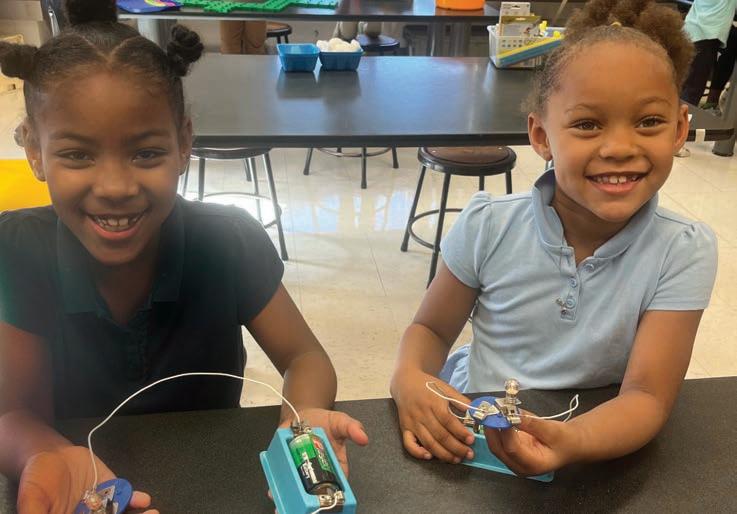
Students Aariyah Thompson and Savannah Fisher, in Ms. Stovall’s firstgrade class at Gateway MST Elementary School, are learning how to construct a series circuit.
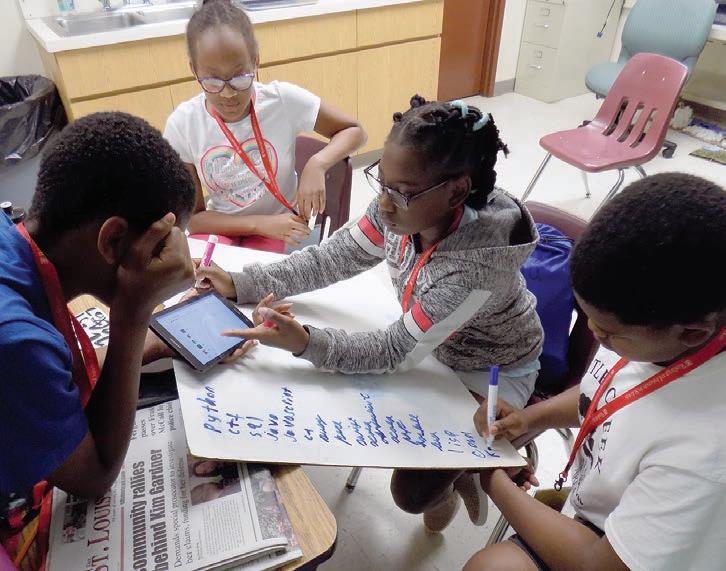
Students at The American’s Summer Science Academy work in teams to discover the many different computer programming languages.
Students at The American’s Summer Science Academy work in teams to discover the many different computer programming languages.
Teachers, if you are using the St. Louis American’s NIE program and would like to nominate your
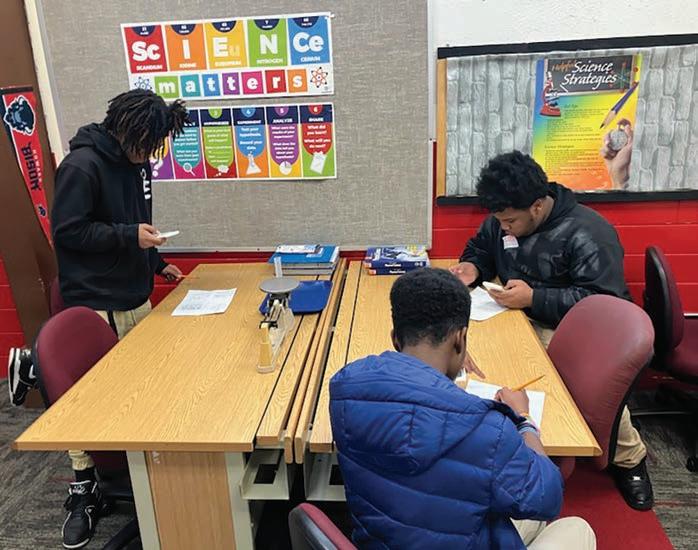
Students Koryeon Johnson, Isaiah Jones, and Cadyn Edwards, in Ms. Cheryl M. Christian’s 9th grade class at Jennings Senior High School, collaborate as a team to determine the volume of irregular objects using a ruler, different 3D objects, and the formula Length x Width x Height.
by Cheryl Christian
your class for a Classroom Spotlight, please email: csewell@stlamerican. com
SCIENCE CORNER

FAMILY SPOTLIGHT SCIENCE STARS

SCIENCE CORNER
A hurricane forms over tropical and subtropical ocean water. Warm water and cool, moist air combine to create strong winds that can gust up to 200 miles per hour! These winds create waves that bring the storm on shore. Hurricanes are very destructive. They can flip cars, sink boats, uproot trees, and demolish houses.

The Carbon Dioxide
Are Fungi ?
In addition to powerful winds, hurricanes bring a lot of rain. (Taiwan received 114 inches of rain in three days during a hurricane.) These rains can cause landslides and flash floods.
Fungi are organisms made of filaments (called hyphe) that are stacked together. Unlike plants, fungi do not have chlorophyll, so they cannot make their own food. Some fungi are parasites, which mean they live off of other organisms. Some fungi feed off of dead and decaying matter. Fungi are everywhere in the environment, including the soil, lakes, river and seas, air, and on plants and animals. Fungi (plural of fungus) help organic matter to decay and release carbon and oxygen into the environment. Unlike plants, fungi do not have

Are
Fungi
?
SCIENCE INVESTIGATION
In this experiment, you’ll create a replica of a hurricane and identify how the forces work together to create a hurricane.
• 3
Fungi are organisms made of filaments (called hyphe) that are stacked together. Unlike plants, fungi do not have chlorophyll, so they cannot make their own food. Some fungi are parasites, which mean they live off of other organisms. Some fungi feed off of dead and decaying matter. Fungi are everywhere in the environment, including the soil, lakes, river and seas, air, and on plants and animals. Fungi (plural of fungus) help organic matter to decay and release carbon and oxygen into the environment. Unlike plants, fungi do not have
SCIENCE INVESTIGATION
Did you know that all living things are made of carbon? Carbon is part of the ocean, air, and even the rocks. Carbon does not stay still; it moves. When in the atmosphere, carbon attaches to oxygen in a gas called carbon dioxide. Carbon dioxide and sunlight help plants to make their own food and grow. It creates a cycle. Carbon becomes part of the plant. Plants that die are buried and turn into fossil fuels made of carbon (such as coal and oil). Carbon enters the atmosphere as carbon dioxide when humans burn fossil fuels.
Carbon dioxide heats the atmosphere because it is a
In this experiment, you will learn how mold grows best. Mold is an important fungus that has several uses, including breaking down dead organic material. Some purified molds are actually used as an antibiotic to treat illnesses.
Materials Needed:
• 3 slices of bread • Water • 3 Ziploc bags
SCIENCE INVESTIGATION
Materials Needed:
• 10x10 square centimeter grid • Ruler
Procedure:
• 3 slices of bread • Water • 3 Ziploc bags
Process:
q Fill one bottle with the paperclips, peanuts and sand. These represent the debris and help make the movement of water easier to see.
Hurricanes can last a few hours or several days. Most hurricanes occur during the fall months. How can you stay safe? Have an evacuation plan and an emergency kit prepared. Meteorologists can track these storms and keep you informed. For more hurricane facts, visit: http://www.sciencekids.co.nz/ sciencefacts/weather/hurricane.html.
leaves, stems, or roots. Fungi use spores to reproduce. One common type of fungus is the mushrooms you find on your pizza. Mold, yeasts, and mildew are also types of fungus.
For More Information, Go to: https://kids.kiddle.co/Fungus
greenhouse gas. With the increase of fuel use, there is more carbon dioxide in the air today than there was 150 years ago, and many say the earth is becoming a warmer place.
leaves, stems, or roots. Fungi use spores to reproduce. One common type of fungus is the mushrooms you find on your pizza. Mold, yeasts, and mildew are also types of fungus.
Learning Standards: I can read nonfiction text to gain background information about fungi.
For More Information, Go to: https://kids.kiddle.co/Fungus
Learning Standards: I can read nonfiction text to gain background information about fungi.
Discuss: What is carbon dioxide? What purpose does it serve? Explain the steps of the carbon dioxide cycle.
Learning Standards: I can read nonfiction text for main idea and supporting details.
For more information: https://climatekids.nasa.
gov/carbon/
create a watertight seal. Continue taping 1 to 2 inches above and below the seam.
In this experiment, you will learn how mold grows best. Mold is an important fungus that has several uses, including breaking down dead organic material. Some purified molds are actually used as an antibiotic to treat illnesses.
Growing Mold!
t Hold the bottles by the middle and lift the jugs.
Learning Standards: I can read nonfiction text to find main idea and supporting details.
y Quickly, turn the bottles over so that the water-filled bottle is on top. Set the bottles on the table again.
Dancing Raisins
In this experiment, you will see carbon dioxide in action. Club soda contains carbon dioxide. This carbon dioxide is the cause of the fizz and bubbles you experience when you drink soda.
• 10x10 square centimeter grid • Ruler Process:
q Wet one slice of bread enough to make it moist and place it in a bag. Seal the bag very tightly.
w Place the funnel in the mouth of the bottle and pour water into the bottle until it is 3/4 full, then remove the funnel.
q Wet one slice of bread enough to make it moist and place it in a bag. Seal the bag very tightly.
w Place the two other slices of dry bread in two separate bags and seal them, as well.
Predict what will happen when raisins are added to a glass of club soda. Will they sink? Will they float? Does it make a difference if the raisins are added first, last, or at the same time as the club soda?
Materials Needed:
e Turn the second empty bottle upside down and hold it over the first bottle so that the mouths of the bottle are aligned. The bottles will look like an hourglass.
w Place the two other slices of dry bread in two separate bags and seal them, as well.
Procedure:
e Place the bag with the wet slice of bread and one of the bags with a dry slice of bread in a dark place, such as a closed cabinet or closet.
Large, Clear Glass • Raisins • Club Soda
r Tape the seam, pressing the duct tape firmly to
e Place the bag with the wet slice of bread and one of the bags with a dry slice of bread in a dark place, such as a closed cabinet or closet.
q Add raisins to the empty glass. Slowly, add club soda and observe what happens.
w Next, add raisins and club soda to the glass at the
r Place the third bag with a dry slice of bread in the refrigerator.
r Place the third bag with a dry slice

MATH CONNECTION
MATH CONNECTION
z A hurricane has moved 456 miles in 6 hours. How many miles per hour is the hurricane traveling? ______ If it continues to travel at that speed, how far will it travel in 10 hours? ______
MATH CONNECTION
u Observe the water as it drains into the bottle below. The water competes with the air from the empty bottle. Both substances push to pass through the neck.
t For five days, measure the square centimeters of mold on each piece of bread through the bag. Use a grid, if possible, or a ruler. If mold covers more than half a square centimeter, it is counted as one full centimeter. If it is less, it is counted as 0 centimeters. This will give you the area of mold on each slice of bread
same time. Observe what happens.
t For five days, measure the square centimeters of mold on each piece of bread through the bag. Use a grid, if possible, or a ruler. If mold covers more than half a square centimeter, it is counted as one full centimeter. If it is less, it is counted as 0 centimeters. This will give you the area of mold on each slice of bread y At the end of a week (5 days of measuring) or longer, use your final results to say what percentage of the bread was covered in mold. Make a table or graph to display the information.
e Finally, add club soda to the glass and slowly add raisins. Observe what happens.
i Turn the bottles over again. This time, shake the bottles in a circular motion. Be sure to keep the bottles vertical.
Evalute: Were your predictions correct?
y At the end of a week (5 days of measuring) or longer, use your final results to say what percentage of the bread was covered in mold. Make a table or graph to display the information.
o The water will form a vortex as it drains into the next bottle. The water will flow along the outside of the neck, while air moves quickly up through the center of the vortex. The water will drain much faster.
Analyze: How did water and air create a hurricane?
Did it matter what order the raisins were added: When carbon dioxide reaches the surface, it releases its gases into the air. How does this release affect the motion of the raisins?
Discussion Questions: How much mold was on the bread? Which location had the most mold? Which had the least? What conclusions can you draw about the conditions in which mold grows? How can food manufacturers and restaurant owners use this information to help them?
Discussion Questions: How much mold was on the bread? Which location had the most mold? Which had the least? What conclusions can you draw about the conditions in which mold grows? How can food manufacturers and restaurant owners use this information to help them?
Learning Standards: I can follow sequential directions to complete an experiment. I can make observations and draw conclusions.
Learning Standards: I can follow sequential directions to complete an experiment. I can display my results, make observations, and draw conclusions.
Learning Standards: I can follow sequential directions to complete an experiment. I can display my results, make observations, and draw conclusions.
Math Storms!
Learning Standards: I can make predictions and complete an experiment to test their accuracy. ConvertFahrenheittoCelSius!
Scientists often use tables and graphs to display the results of their research. Looking at these displays, you can draw conclusions.
Carbon dioxide traps heat. Temperature is one way to measure heat. In this activity, you will convert Fahrenheit to Celsius and vice versa.
Scientists often use tables and graphs to display the results of their research. Looking at these displays, you can draw conclusions.
x Hurricane Frederick is traveling at 86 miles per hour. If the hurricane is 129 miles from the coast, how many hours will it take until the hurricane reaches the coast? ______
TO CONVERT FAHRENHEIT TO CELSIUS: subtract 32, then multiply by 5, and divide by 9. -32, x5, ÷9
As we approach spring weather (and increased rain), create a bar graph that displays the amount of rain that falls for several consecutive days or weeks. (Day 1: 1.5 inches, Day 2: 0 inches, Day 3: 1.5 inches, etc.)
As we approach spring weather (and increased rain), create a bar graph that displays the amount of rain that falls for several consecutive days or weeks. (Day 1: 1.5 inches, Day 2: 0 inches, Day 3: 1.5 inches, etc.)
TO CONVERT CELSIUS TO FAHRENHEIT: multiply by 9, then divide by 5, then add 32. x9, ÷5, +32
Analyzing a Bar Graph
Use the Conversions to Solve the Following Problems:
c A tropical storm takes on a hurricane status when the winds reach 74 miles per hour. After three days, Tropical Storm X has grown to have wind speeds of 48 miles per hour. How much faster will the winds have to become for Tropical Storm X to become Hurricane X? ______

v Upon landfall of a Category 4 hurricane, local officials ordered an evacuation. City A has a population of 9,613, City B has a population of 5,013 and City C has a population of 3,972. How many people were evacuated in all?

This special Newspaper In Education initiative is made possible, and delivered to classrooms through the St. Louis American Foundation and its NIE Corporate Partners:
Discussion Questions: Which day had the most measured rainfall? Which day(s) had the least? Looking at the bar graph, what might you conclude about rain patterns in March/April? What other observations can you make?
Discussion Questions: Which day had the most measured rainfall? Which day(s) had the least? Looking at the bar graph, what might you conclude about rain patterns in March/April? What other observations can you make?
q If normal body temperature is 98.6 degrees Fahrenheit, convert that
w If the temperature of a room is 21 degrees Celsius, what is the temperature in Fahrenheit?
Learning Standards: I can use a bar graph to display information. I can use the information to make deductions and inferences.
Learning Standards: I can use a bar graph to display information. I can use the information to make deductions and inferences.
$115,264 in damage, City B reported $236,096 and City C reported $436,869 in damages. What was the total cost of damages rounded to the nearest thousand? ______ If the state and federal government promised $500,000 in aid, how much would the local people have to raise by themselves? ______
Learning Standards: I can add, subtract, multiply and divide to solve a problem.
b After citizens returned to their houses after the evacuation, reports of damage were totaled. City A reported
There are over 10,000 species of mold, with 1,000 of those species found in the United States.



Learning Standards: I can add, subtract, multiply, and divide to solve a problem.


African American Meterologist William “Bill” Parker

AFRICAN-AMERICAN MYCOLOGIST AND EDUCATOR: Jeanette Jones
Joy Buolamwini: Scientist and Advocate for Fair Technology
AFRICAN-AMERICAN MYCOLOGIST AND EDUCATOR: Jeanette Jones
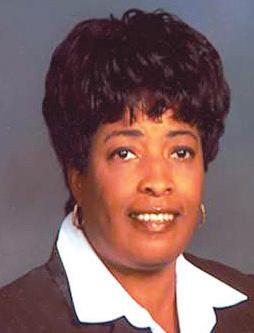
Jeanette Jones was born on September 19, 1950, in Fort Valley, Georgia. Jones graduated from Fort Valley State University in 1972 with a bachelor’s degree in biology education. In 1973, Jones received her master’s degree in botany and mycology (a branch of biology that studies fungi) from The Ohio State University. In 1976, she received her doctorate (Ph.D.) degree.
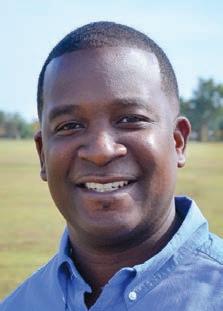
William (Bill) Parker grew up in New Orleans. He graduated from JFK High School, which focused on math, science, and engineering. Parker was interested in hurricanes at a young age, but he became interested in the weather after a high school statistics class. In this class, he learned how to predict the chance of rain. Parker wanted to attend a historically black college/ university (HBCU), so he chose Jackson State University to study meteorology. He graduated with his bachelor’s degree, in 1994.
Jeanette Jones was born on September 19, 1950, in Fort Valley, Georgia. Jones graduated from Fort Valley State University in 1972 with a bachelor’s degree in biology education. In 1973, Jones received her master’s degree in botany and mycology (a branch of biology that studies fungi) from The Ohio State University. In 1976, she received her doctorate (Ph.D.) degree. She also studied at the University of Nevada, the University of California Medical School, the National Center for Disease Control-Atlanta, and the Massachusetts Institute of Technology. After graduation, Alabama A&M University hired Jones as an assistant biology professor. In 1986, she served as an adjunct professor in the College of Pharmacy and Pharmaceutical Services at Florida Agricultural and Mechanical University and worked on a project with NASA. In 1991, Jones served as the first female vice president of research and development at Alabama A&M University. She also served as President of Alabama A&M University’s Faculty Senate from 2001 to 2006. In 1992, she was appointed to the U.S. Army Science Board by the U.S. Secretary of the Army, Togo West. Since 2004 Jones has been the director of the Center for Biomedical, Behavioral, and Environment Research at Alabama A&M University. She also worked as a consultant with federal agencies to help them develop training programs to attract women and minorities to STEM education and careers.
She also studied at the University of Nevada, the University of California Medical School, the National Center for Disease Control-Atlanta, and the Massachusetts Institute of Technology.
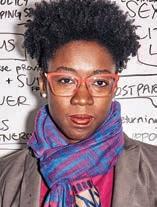
Joy Buolamwini is a scientist who works with computers and machines to make sure they treat everyone fairly. From a young age, she loved both art and science because her mother was an artist and her father was a chemistry professor. Joy calls herself a “poet of code” which means she uses programming, research, and art together to solve problems. When Joy was in school, she discovered something surprising. Computers that were supposed to recognize faces could not easily detect her face because she has darker skin. This showed her that machines can make mistakes and unfair ones. Joy decided to do something about it. She wanted to make sure technology treats everyone equally, no matter their skin color, gender, or background.
Joy studied computer science at the Georgia Institute of Technology. She then earned advanced degrees at the Massachusetts Institute of Technology (MIT) and the University of Oxford. She worked very hard, learning about coding, artificial intelligence (AI), and how machines “see” the world.
After graduation, Alabama A&M University hired Jones as an assistant biology professor. In 1986, she served as an adjunct professor in the College of Pharmacy and Pharmaceutical Services at Florida Agricultural and Mechanical University and worked on a project with NASA. In 1991, Jones served as the first female vice president of research and development at Alabama A&M University. She also served as President of Alabama A&M University’s Faculty Senate from 2001 to 2006. In 1992, she was appointed to the U.S. Army Science Board by the U.S. Secretary of the Army, Togo West. Since 2004 Jones has been the director of the Center for Biomedical, Behavioral, and Environment Research at Alabama A&M University. She also worked as a consultant with federal agencies to help them develop training programs to attract women and minorities to STEM education and careers.
Today, Joy is the founder of the Algorithmic Justice League (AJL). Her team studies how AI and face-recognition software work and finds where they make mistakes. They teach companies, governments, and other people how to fix these problems so machines are fair. Her work is very important because computers and AI are used more and more in schools, phones, and even cars. Making sure machines are fair helps everyone in daily life.
In 1993, he began to gain experience in the field when he worked as a student meteorologist. One year later, he was a meteorologist intern at Shreveport. In 1998, Parker became a general forecaster, and ten years later, a lead forecaster. In 2012, he became a warning coordination meteorologist (WCM). There are only 122 people with this title in the United States, and Parker was the only African American. Parker is currently the meteorologist-in-charge (MIC) at the National Weather Service, leading a team of 26 weather professionals. Parker is also very active as a volunteer in his community. He is a member of the Shreveport-Bossier Mayors’ Prayer Breakfast Executive Committee, La Cima Bilingual Leadership Academy, Bossier Chamber of Commerce Education Committee, Volunteers for Youth Justice, and a coach for Bossier Parks and Recreation. Parker is also an associate minister at Elizabeth Baptist Church in Benton, where he has been serving the congregation since 1997.

In 1975, Jones was listed in the World’s Women’s Who’s Who and she was named an Outstanding Young Woman of America in 1978. Beta Beta Beta National Biological Honor Society awarded her the distinguished service award. Jones also received the Significant Service Award from the NASA Space Life Sciences Training Program and the Extramural Associate Research Development Award from the National Institute of Health. In 1990 and 2006, she was named Woman of the Year at Alabama A&M University and was given the Outstanding Leadership Award by the Faculty Senate. The U.S. Army presented Jones the Commander’s Award for Outstanding Civilian Service as a member of the Army Science Board. Discussion Questions: Dr. Jones received many awards and honors. How would you describe her achievements and her contributions to science? Dr. Jones is studying how fungi might be used as agents of war. What purpose do you think fungi serve in modern warfare? Are fungi beneficial or harmful?
In 1975, Jones was listed in the World’s Women’s Who’s Who and she was named an Outstanding Young Woman of America in 1978. Beta Beta Beta National Biological Honor Society awarded her the distinguished service award. Jones also received the Significant Service Award from the NASA Space Life Sciences Training Program and the Extramural Associate Research Development Award from the National Institute of Health. In 1990 and 2006, she was named Woman of the Year at Alabama A&M University and was given the Outstanding Leadership Award by the Faculty Senate. The U.S. Army presented Jones the Commander’s Award for Outstanding Civilian Service as a member of the Army Science Board.
Joy also inspires young people to explore science, technology, engineering, art, and math (STEAM). She shows that if you like computers, coding, or art, you can use your skills to help the world. Her story teaches kids to notice when things seem unfair, ask questions, and work to make a difference.

Discussion Questions: Dr. Jones received many awards and honors. How would you describe her achievements and her contributions to science? Dr. Jones is studying how fungi might be used as agents of war. What purpose do you think fungi serve in modern warfare? Are fungi beneficial or harmful?
Joy Buolamwini shows us that hard work, creativity, and curiosity can help change the world. By combining art and science, she helps make technology fairer for everyone, and she inspires a new generation of problem-solvers to explore, experiment, and speak up for justice.
ELA Questions:
Learning Standards: I can read a biography to learn about an African American who has made contributions in science, math, technology, or engineering.
What unfair problem did Joy Buolamwini discover with face-recognition software, and what did she do about it?
Learning Standards: I can read a biography to learn about an African American who has made contributions in science, math, technology, or engineering.
Parker believes in serving as a role model to the youth and to recruiting African Americans in the STEM field. Personally, he has hired three African-American meteorologists. In addition, he has recruited minorities for summer intern positions. Parker has also mentored an Airline High School student for his senior project. Parker’s advice to students interested in meteorology is to take as many math and science classes as possible. Learn about summer opportunities in your community. If you are interested in meteorology, visit National Weather Service offices and serve as a volunteer or intern, and find leaders in your community to serve as your personal role models.
Learning Standards:

Use the newspaper to complete the following activities:
a person who has made contributions to the fields of science, technology,
Use the newspaper to complete these activities:
Use the newspaper to complete the following activities: Types of News:
MAP CORNER

Convert That
Number:
Enjoy these activities that help you get to know your St. Louis American newspaper.
Partial numbers can be displayed as a fraction, a decimal, or a percent. Use the newspaper to find a percent and convert that number to a decimal and a fraction.
Types of News: Use the front section of the newspaper to evaluate the types of news stories presented: local, national, and international. Sort the articles into the three categories and create a bar graph that displays the amount of coverage each type of news story received.
Use the front section of the newspaper to evaluate the types of news stories presented: local, national, and international. Sort the articles into the three categories and create a bar graph that displays the amount of coverage each type of news story received.
Activities — Who works where? a picture of a building in the newspaper and tell what kind of jobs people who work in that building could have.




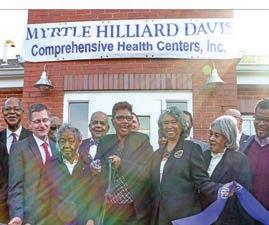
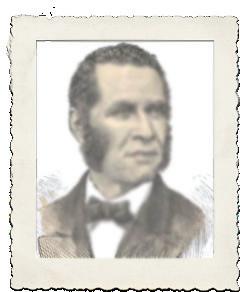


Mystery Story: Cut out several pictures from the newspaper without reading the caption. Place the pictures in a bag, and without looking, pick your mystery picture from the bag. That’s your stimulus for writing. Construct a graphic organizer to identify the 5Ws (who, what, when, where, and why) of your story by looking at your picture. Then, continue the writing process.
Mystery Story: Cut out several pictures from the newspaper without reading the caption. Place the pictures in a bag, and without looking, pick your mystery picture from the bag. That’s your stimulus for writing. Construct a graphic organizer to identify the 5Ws (who, what, when, where, and why) of your story by looking at your picture. Then, continue the writing process.
Problem and Solution: Over a period of weeks, clip articles from newspapers that deal with problems and issues facing your local or county government. Discuss the reasons for these problems and how the government hopes to solve them.
Local Famous Missourian: You have been given the task to write about a local Missourian who has contributed to your community. Skim through the newspaper to find the person who best fits this description. Tell how this person has impacted the community and why he or she should be recognized for his or her contributions.
Learning Standards: I can use the newspaper to locate information. I can categorize and summarize that information.
Learning Standards: I can add, subtract, multiply, and divide to solve a problem. I can write for a specific purpose and audience.
Learning Standards: I can use the newspaper to locate information. I can categorize and summarize that information.
Learning Standards: I can use the newspaper to locate information. I can discuss problems and solutions. I can identify types of jobs. I can make text-to-world connections.




Photo by Ms. Stovall
Photo
Analyzing a Bar Graph
Growing Mold!
By Alvin A. Reid
Stephen Westbrooks named SLDC president and CEO
St. Louis American
Upon returning to his hometown in 2013 as an underwriter for Affordable Equity Partners, Stephen Westbrooks told the St. Louis American, “St. Louis has a lot to offer.”
“It has a solid foundation and many interesting things that can grow from that.”
On Wednesday, Westbrooks was named president and CEO of the St. Louis Development Corporation. He will replace Otis Williams, who has been serving as interim president and CEO, and starts effective March 30.
Williams assumed the interim role after Neal Richardson left the position following the election of Mayor Cara Spencer.
Westbrooks joins SLDC from his role as
Ferring
Continued from A1
in 2023. It was a small window into his leadership style — grounded, collaborative and never performative.
Ferring was the former executive chairman and founder of PLZ Corp. He began his career in the aerosol industry in 1978 when he purchased Plaze Inc. from his father, John Ferring III. Over more than 50 years, he built deep relationships across the industry and helped shape its national footprint.
But his civic and cultural leadership — steady, strategic and often behind the scenes — left the deepest imprint on St. Louis.
He joined the board of Arch Grants in 2017, supporting its mission to drive economic development through entrepreneurship. His belief in the power of ideas and the people behind them was unwavering. That commitment later extended to the Donald M. Suggs Excellence in Entrepreneurship Awards, a $100,000 annual investment for five years that the Ferring Foundation established in 2021 to support founders committed to building in St. Louis.
“What is unique about John and Alison is that they have this desire to see dreamers actually fulfill their vision for uplifting communities,” said Urban Sprouts Child Development Center founder and Executive Director Ellicia Lanier.
Missing
Continued from A1
dency for cases involving missing white women to receive far more media attention than cases involving people of color. In 2022, the Columbia Journalism Review created an online tool designed to calculate a person’s “press value,” measuring how much coverage a missing person’s case receives based on factors including race, gender and geography. Several cases in the St. Louis area illustrate the challenge families sometimes face in generating public attention when someone disappears. Among them:
• John Rieves, a 60-year-old St. Louis man who disappeared Oct. 2, 2025. He was last seen near the VA hospital on North Grand Boulevard.
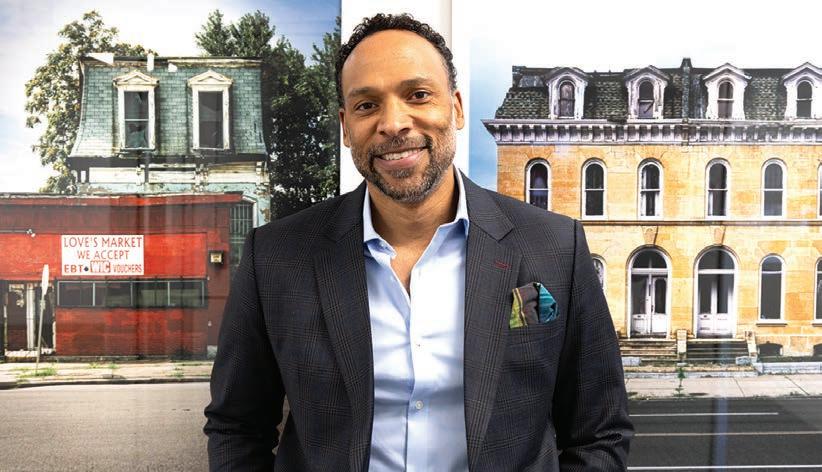
executive director of IFF’s Southern Region, where he has worked for 10 years. He provides strategic leadership and managed operations, lending and consulting activities in Southern Illinois, Missouri
She said the Ferrings carried a wealth of knowledge shaped by the lives they lived, the businesses they ran and the campaigns they spearheaded.
His leadership in the arts was equally expansive. He served on the board of trustees for the Contemporary Art Museum St. Louis, including a term as board president from 2004 to 2007. He chaired CAM’s first endowment campaign and later co-chaired the second with Alison from 2015 to 2021.
“John’s impact and presence are woven into the very walls of CAM,” said Executive Director Lisa Melandri. “Alison and John have been the people who make things happen: they have made CAM vibrant, alive and flourish. I feel that our Museum is truly, in part, their legacy.”
He became a board member of the Gateway Arch Park Foundation in 2014, helping steward improvements through the CityArchRiver project. He also served on the executive board committee for Opera Theatre of Saint Louis from 2012 to 2021.
“For more than three decades, John Ferring shaped Opera Theatre of Saint Louis as a supporter, and for more than 20 years as a board member,” said General Director Andrew Jorgensen. “He asked tough questions, spoke honestly and was deeply moved by art that mattered. His influence was profound, and it will endure.”
From 2013 to 2020,
• Angela RobinsonJimerson, 45, who was last seen in the 9600 block of Halls Ferry Road. Robinson-Jimerson was reported missing last fall. She was known to ride Metro buses, has mental health issues and relies on medication.
• Michelle Harper, 38, who was reported missing by her family March 15, 2025. She disappeared in the 5800 block of Wabada Avenue and has not been seen since. Harper also suffers from a mental health disorder and requires medication.
These are three of the 9,091 individuals reported missing in Missouri last year. According to available data, 123 adults and 146 juveniles from St. Louis city remain actively missing.
Mosley’s legislation, approved in 2024, created the Missing and Murdered African American Women Task Force, which exam-
and Kansas, overseeing more than $1 billion in total assets.
“I am honored to join the St. Louis Development Corporation and excited to work alongside the dedicated team and part-
ners who are committed to making St. Louis a place of opportunity for all,” said Westbrooks.
“There’s great potential in St. Louis, and I look forward to collaborating with community stakeholders to
Stephen Westbrooks is named St. Louis Development Corp. president and CEO., replacing Otis Williams.
drive meaningful change that will benefit everyone who calls this great city home.”
Spencer, who said during her successful campaign against incumbent Mayor Tishaura
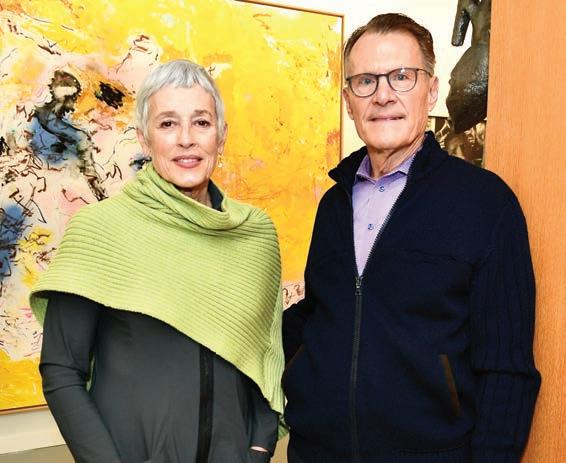
he served on the board of Jazz St. Louis, chairing the capital campaign for what became the Harold and Dorothy Steward Center for Jazz — home of The Ferring Jazz Bistro.
“John’s generosity, vision and leadership strengthened countless organizations across our region, and Jazz St. Louis is profoundly grateful to have been among them,” said Robert Steward, chair of the board of directors.
His leadership extended to Forest Park Forever, where he chaired the “Forever” campaign from 2009 to 2018, helping raise more than $140 million for improvements.
“Alison and John are visionary leaders and huge supporters of so many great organizations in St. Louis,” said Lesley Hoffarth, president and executive director of Forest Park Forever. “And they love having the abili-
ines violence against Black women and girls and requires annual reports to the governor and General Assembly outlining recommendations for improving prevention, investigation and support for families.
Advocacy organizations are also working to raise awareness of missing persons cases involving people of color.
The Black and Missing Foundation Inc., a nonprofit dedicated to bringing attention to missing persons of color, reports that hundreds of thousands of children are reported missing each year in the United States.
Theda Wilson knows the uncertainty families face when a loved one disappears.
Her 9-year-old son, Christian Taylor Ferguson, disappeared June 11, 2003. Sixteen years later, in 2022, the boy’s father, Dawan Ferguson — who had custody of Christian at the time — was arrested, charged with first-degree
ty to bring that to the people of St. Louis.”
Ferring also served on the board of commissioners for the Saint Louis Art Museum from 2010 to 2017, on the St. Louis Children’s Hospital Foundation board from 2005 to 2012, and as founding chairman of the board for the City Museum from 1997 to 2002.
Together, John and Alison became known for philanthropy that was both generous and strategic. They established the Ferring Family Chair for Pediatric Cancers and Related Disorders at St. Louis Children’s Hospital in 2009, supporting research in sickle cell anemia. They created the Ferring Annual Award for Philanthropy at COCA in 2010 and the Ferring Family Foundation Endowed Executive Director Chair at CAM in 2018.
murder and later sentenced to life in prison without parole.
Christian’s body has never been found.
In a June 2024 interview with PBS NewsNation, Wilson spoke about the years of grief and uncertainty following her son’s disappearance.
“People would say, ‘Oh, you’re so strong,’ but they didn’t know what those foundational stages of distress were like,” Wilson said.
Since her son’s disappearance, Wilson has organized annual walks to raise awareness about missing children and created a nonprofit organization, Looking For An Angel, dedicated to reporting abuse and neglect of children and providing resources for parents of missing children.
Wilson is now lobbying city officials and Missouri lawmakers to pass the CTF Alert. The proposal uses her son’s initials and would immediately notify
Jones that she would replace Richardson, said Westbrooks “brings a broad range of experience, including affordable housing development, corporate finance, and community development.”
“This moment calls for a balanced, consistent, and thoughtful approach to development. I fully trust him to help us create a clear, standardized incentive process that is transparent and predictable for developers and community alike.”
Nancy M. Hawes, chair of the SLDC board, said the organization is “thrilled to have Stephen join us as the new executive director.”
“His proven track record and vision for development will help lead SLDC as we continue to work toward making St. Louis a place of opportunity and prosperity for all.”
John and Alison Ferring shared their friendship, generosity and belief in the power of the arts for more than four decades.
“John Ferring was a dear and longtime friend of COCA,” said Indigo Sams, president and CEO of COCA, adding that “John and Alison shared their friendship, generosity and belief in the power of the arts” for more than four decades. In 2020, the couple was honored at CAM’s annual gala. “They put their energy, they put their passion and they put a sense of duty behind what they do,” said Sue McCollum in a video produced for the event. “When it comes to the Ferrings, they will always be part of the answers and never part of the problem,” added former TV news anchor Christine Buck. Their contributions earned numerous honors, including the Heart of Gold Award from St. Louis Children’s Hospital and the Arts & Education Council’s Excellence in
the public when a person who requires critical medication is reported missing Wilson said high-profile kidnapping cases can sometimes lead to improvements in public awareness and law enforcement response.
One example often cited is the 1981 abduction and murder of Adam Walsh, the son of “America’s Most Wanted” host John Walsh. That case helped lead to changes in law enforcement coordination and national alert systems for missing children.
The national attention surrounding the disappearance of Nancy Guthrie has again highlighted the difference in how some missing persons cases are covered.
Guthrie disappeared from her home near Tucson, Arizona, early Feb. 1. Authorities say evidence at the residence suggests she was taken from the home, and the case is being investigated as a possible kidnapping.
Philanthropy Award in 2009. Forest Park Forever recognized them with the Kathryn Nelson Keeper of Forest Park Award in 2017, and the Missouri Arts Council honored them with the Missouri Arts Award for philanthropy in 2019. In 2023, The St. Louis American Foundation presented the couple with an Excellence in Community Impact Award at the 21st Annual Salute to Excellence in Business Awards luncheon. In that moment, Ferring reflected on how St. Louis embraced him long before he had the means to give financially.
“The thing that is really wonderful about St. Louis is that way before we could give any money, we could get involved,” he said. “I got on a board when I was 31. I didn’t have money, but I could work on their finance committee — and I felt great about that.” That belief shaped how he and Alison approached philanthropy: with time, effort and a genuine desire to strengthen the institutions that make St. Louis a place where creativity and community can thrive.
“St. Louis is still the same way,” he said. “If you show an interest and you are willing to work — even if you don’t have any money — the boards will want you.” Ferring is survived by Alison and their three sons, Nick, Will and Brooks.
News outlets have reported details about the investigation, including that a doorbell camera was disconnected and that family members called 911 around midday Feb. 1 after becoming concerned. The family has offered a $1 million reward for information.
Wilson said her hope is that missing persons cases receive the same level of urgency regardless of race or public profile.
“It would be nice if we were given just a portion of the attention they (whites) are receiving,” Wilson said.
“If they simply did that, then we wouldn’t have to be out here saying ‘you have to be white to get a billboard’ or to get all the same kind of constant attention.
“It just shouldn’t have to be like that.”
Sylvester Brown Jr. is the Deaconess Foundation Community Advocacy Fellow.
Photo by Lawrence Bryant / St. Louis American
Photo by Wiley Price / St. Louis American
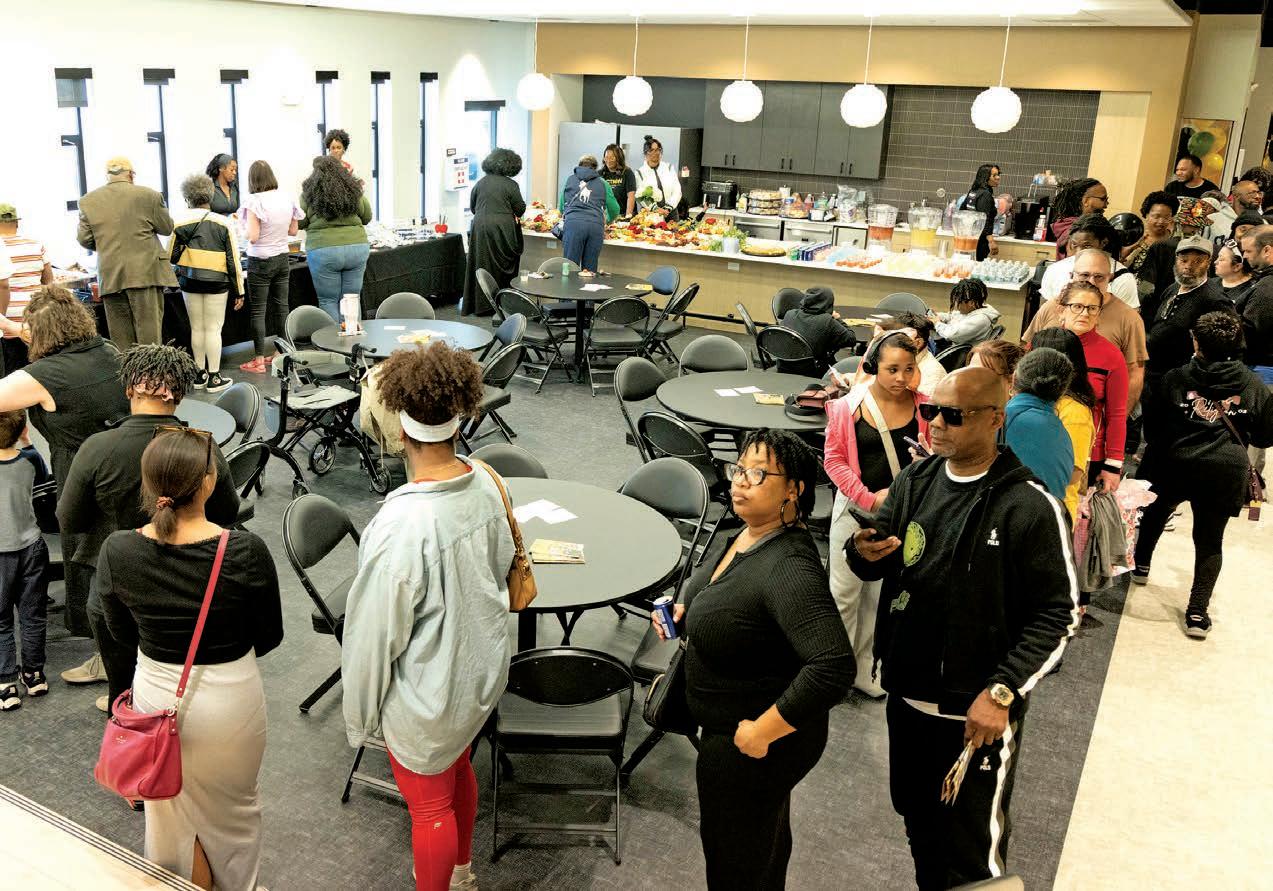
Northside
Continued from A1
His organization provides holistic legal advocacy for residents navigating housing instability, municipal court debt and other systemic barriers. Strode said the center reflects a deeper commitment to “community first, people first and community building.”
“In this place we stand together and we are powerful,” he told supporters gathered for the opening last week.
For Kayla Reed, executive director of Action St. Louis, the building is rooted in both movement history and personal memory.
“Today is about legacy,” Reed said. “This is a place where we can serve together, organize together and transform St. Louis together. North City is the North Star.”
Reed said the north side — often spoken about in terms of vacancy and decline — instead holds “stories of resistance, brilliance, struggles and possibility.” She said the center was intentionally designed to honor that history.
Every room in the building carries the name of a North City neighborhood — Mill Creek,
The Ville, College Hill, O’Fallon and WellsGoodfellow among them.
The names serve as a daily reminder of who the work is for, Reed said.
“This is a declaration that North City is worth investment,” she said. “It is a declaration that our communities are worth permanence.”
The organizations say the center is designed to serve as a permanent hub for advocacy groups, organizers and service providers working across North St. Louis.
Dr. Will Ross, chairman of Friends of Northside, the nonprofit leading the capital campaign for the building, called the center “the epicenter for a network of social services, empowerment, community justice and community dreams.”
Strode said renovations to the Northside Movement Center have been funded through a combination of donations from individuals and foundations, along with an allocation of New Markets Tax Credits, a program that gives private investors a 39% federal tax credit in exchange for providing equity to projects in specific areas.
The building was purchased April 11, 2025, for $2.9 million by the Northside Center for Power and Transformation,
an organization established by ArchCity Defenders and Action St. Louis. Renovation costs are estimated at about $6.7 million.
To support the project, the organizations created Friends of Northside, a 501(c)(3) charitable foundation that coordinates fundraising and grantmaking for the center with independent board oversight.
ArchCity Defenders and Action St. Louis plan to raise $15 million through a capital campaign. About $10 million will cover acquisition, design and construction costs, while $5 million will establish an operating endowment to sustain ownership and maintenance of the property.
Organizers say about $9.2 million has been raised so far.
Action St. Louis began as a coalition rooted in collective action and neighborhood organizing. The grassroots organization builds campaigns that combine organizing, communications, advocacy and direct civic engagement to grow community power across the region.
Its work is guided by a vision of a St. Louis where residents — particularly those historically excluded from leadership — are equipped to shape public policy and transform their

own communities.
Central to that effort is The People’s Plan, a policy agenda anchored by dozens of local organizations that calls for equitable housing, fair taxation, youth investment, transparent government and a reimagining of public safety.
Since its founding, Action St. Louis has focused heavily on yearround voter education and issue-based organizing. The group has hosted candidate debates, produced citywide voter guides, knocked on more than 200,000 doors and organized community events aimed at increasing participation in local elections.
Housing justice has also become a cornerstone of
the organization’s work, particularly in North St. Louis neighborhoods impacted by vacancy, eviction and predatory landlords.
Leaders say their organizing around tenant protections and equitable development is rooted in direct conversations with residents navigating housing instability — work they view as essential to building long-term political and economic power in the city.
ArchCity Defenders has similarly focused on systemic inequities affecting low-income residents, particularly in housing and the criminal legal system.
Bringing those efforts together under one roof is a central part of the
Movement Center will house Action St. Louis and ArchCity Defenders organizations.
vision for the Northside Movement Center.
Rather than operating from scattered offices across the region, organizers say the building will provide a shared space where advocacy groups, service providers and residents can collaborate, strategize and build longterm solutions for the communities they serve.
Dr. Sabrina Tyuse, a social work professor at Saint Louis University who volunteered with Action St. Louis in the aftermath of the May 16 tornado, said the center meets people where they are.
“This will be a jewel for this community,” she said.

Photo by Lawrence Bryant / St. Louis American
Northside

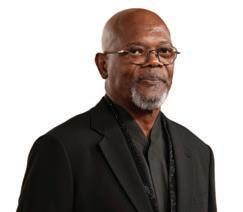
Living It
A deeply rooted experience
IN UNISON Chorus honors Black musical lineage through sound and spirit
By Zaria Mac
The St. Louis American
When the first notes of “Lift Every Voice” rose inside the newly renovated Powell Symphony Hall—now part of the Jack C. Taylor Music Center—they car ried a charge that felt both familiar and newly awakened. Under Kevin McBeth’s steady direction in his 15th year with the St. Louis Symphony IN UNISON Chorus, classical strings met gospel fire, Afro‑spiritual rhythms met orchestral warmth, and together they shaped a musi cal experience deeply rooted in culture and tradition.
Guest soloist Imara Miles, joined by electric guitarist Vince Clark and drum mer Bernard Long Jr., merged effortlessly with the IN UNISON Chorus and the St. Louis Symphony Orchestra. Together, they delivered a musical experience that honored tradition while expanding its reach—an offering grounded in joy, rev erence, and the unmistakable heartbeat of Black sacred music.
The program paid tribute to renowned vocalist, scholar, and choral composer Dr. Rosephanye Dunn Powell. Her work has become essential repertoire for choirs seeking to honor the depth of the African American sacred tradition. Powell is widely regarded as one of the most influ ential living composers of choral music, celebrated for her ability to merge classi cal technique with the emotional vocab ulary of gospel, spirituals, and the Black church. Her compositions often carry the architecture of European choral writing, but the soul, phrasing, and call‑and‑re sponse patterns remain unmistakably root ed in Black musical lineage.
Her pieces “Keep Yo’ Lamps” and “The Word Was God” were featured in

the celebration. Though unable to attend, Powell appeared in a video message, expressing gratitude for the recognition.
“I am grateful for your performance of my music, especially my ‘Gospel Trinity,’ which holds a very special place in my heart,” she said. “I hope it fills you and the audience with strength, joy, and praise.”
Her Gospel Trinity—led by Miles— did exactly that. The performance was soul‑stirring, moving audience members
SLSO honors a century of sonic brilliance
By Kenya Vaughn The St. Louis American
There was something striking about the St. Louis Symphony Orchestra’s pre sentation of Coltrane 100: Legacy — and surprisingly, it had little to do with the saxophone, the instrument most synony mous with John Coltrane’s name.
That’s not to say Joe Lovano didn’t deliver. He absolutely did — matching every sprint, every sharp turn, every har monic hurdle embedded in the breakneck manner of “Giant Steps.” And each mem ber of the quartet — Bob DeBoo on bass, Lawrence Fields on piano, and Emanuel Harrold on drums — executed compos er‑curator Carlos Simon’s vision with pre cision under the baton of Edwin Outwater.
But what the sold‑out audience at Powell Symphony Hall witnessed was something deeper: the genius orbiting Coltrane’s horn, the constellation of Black brilliance that shaped him and the century of sound he helped define.
Charlie Parker’s bebop vocabulary became the soil Coltrane rooted himself in. What Parker sketched in quicksilver lines, Coltrane rebuilt into something almost architectural — a harmonic maze grounded in Bird’s logic but expanded into its own universe.
And then there was Miles Davis — the icon from East St. Louis whose bandstand
and even some in the chorus to tears.
Bathed in deep blue light, the Trinity opened with “The Lord Is in His Holy Temple,” a joyful, upbeat proclamation that immediately lifted the atmosphere inside Powell Hall.
“Jesus, Son of God” followed, swelling into something that felt cinematic. With the full chorus and orchestra behind it, the piece grew into a moment larger than the room—layered, textured, and emotionally expansive. Powell’s writing, which often

and, through
became Coltrane’s crucible. Miles pushed Coltrane toward spaciousness, toward the long, searching lines that would become his signature. Coltrane pushed
Coltrane, Miles Davis, Duke Ellington, and Thelonious Monk belong in the canon of great composers — not just jazz composers, not just virtuosos, but architects of American sound.
Miles toward harmonic daring, toward the modal language that reshaped jazz. Out of their creative partnership came “Kind of Blue,” the best‑selling jazz record of all
time and a blueprint for modern impro visation. That shared history hovered over the evening like an unseen soloist, a reminder that Coltrane’s evolution was inseparable from the men who challenged and sharpened him, and one with a local connection. Through sweeping orchestral introduc tions that pulled from every section of the ensemble, the program affirmed that Coltrane, Miles Davis, Duke Ellington, and Thelonious Monk belong in the canon of great composers — not just jazz composers, not just virtuosos, but archi tects of American sound. Their music carried what they, as Black men in segre gated America, were denied the freedom to express in their daily lives: their full
bridges the sacred intimacy of the Black church with the grandeur of symphonic sound, came alive in a way that felt both contemporary and ancestral. Two angelic ballads, “Holy Spirit, Come” and “Gloria Patri,” continued the journey under soft red lighting that wrapped the hall in warmth and peace. Addressing the structure of the work,

Photos by Taylor Marrie/St. Louis American Daemon debuted his “Euphonic (Deluxe)” project at The Dark Room on Saturday, Feb. 28, delivering the album’s raw emotion and genre‑bending sound to a live audience.
Photos by Taylor Marrie/St. Louis American
The St. Louis Symphony IN UNISON Chorus celebrated Black history and the legacy of Black music during its annual Lift Every Voice program on Friday, February 27, at Powell Symphony Hall. This year’s concert featured soloist Imara Miles and honored the musical contributions of acclaimed composer Dr. Rosephanye Dunn Powell.
Photos by Taylor Marrie/St. Louis American
The St. Louis Symphony Orchestra honored the musical legacy of John Coltrane —
Coltrane, the influence of East St. Louis’ own Miles Davis — during its ‘Coltrane 100: Legacy’ concert Saturday night at Powell Symphony Hall.
St. Louis American Calendar
STL Sites & Sounds
314 DAY ACTIVITIES
Sun., Mar. 8, 5 p.m. STL Vs. Errbody produced by Second Sunday, Chevre, 1624 Delmar Blvd, St. Louis, MO 63103. For tickets visit, https://posh. vip/e/stl-vs-errbody.
Sat., Mar. 14, doors open at 7 p.m. 314 Day 20th Anniversary Celebration featuring Lil Webbie, Big Boogie, Murphy Lee and many more, The Pageant, 6161 Delmar Blvd, St. Louis, MO 63112. For more information, visit www.thepageant.com.
Sat., Mar. 14, 12 p.m. We All We Got: 314 Day Brunch produced by T.Moore Media, The Pennywell Hotel, 400 Olive St, St. Louis, MO 63102. For tickets visit https://posh. vip/e/314-day-brunch.
Sat., Mar. 14, 10 p.m. STL House Party produced by The Kickback Club, Treasures, 4517 Olive St, St. Louis, MO 63108. For tickets, visit https://posh. vip/e/the-house-party-12.
Sat., Mar. 14, all day, 314 Day Scavenger Hunt, City Museum, 750 North 16th St, St. Louis, MO 63103. For more information, visit https://citymuseum.org.
CONCERTS
Sat., Mar. 7, 8 p.m. October London with Eric Benét and J. Brown, Stifel Theatre, 1400 Market Street / St. Louis, Missouri 63103. For more information, visit www.stifeltheatre.com.
Fri., Mar. 20, 8 p.m. The 18th Annual Gateway Blues Festival, Chaifetz Arena, 1
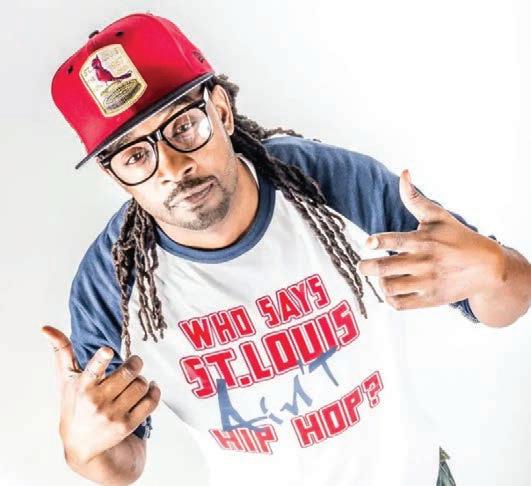
South Compton Avenue St. Louis, MO 63103. For more information, visit www.chaifetzarena.com.
Fri., Mar. 27, 8 p.m. The New Edition Way Tour featuring New Edition, Boyz II Men and Toni Braxton, Enterprise Center, 1401 Clark Ave, St. Louis, MO 63103. For more information, visit www.enterprisecenter.com.
SPECIAL EVENTS
Sun., Mar. 8, 7:45 a.m. Flow with the Fish a yoga experience, St. Louis Aquarium at Union Station, 201 S 18th St, St. Louis, MO 63103. For more information, visit www.stlouisaquarium.com.
Mon., Mar. 9, 7 p.m., St. Louis County Library Foundation’s
Favorite Author Series and Left Bank Books present Tayari Jones, Clark Family Branch Library, 1640 S. Lindbergh. For more information, visit www. slcl.org.
Fri., Mar. 13 - 17, 6:30 p.m.
Animals Aglow, Saint Louis Zoo, 1 Government Dr, St. Louis, MO 63110. For more information, visit https://stlzoo. org.
COMEDY
Thur., Mar. 5, 7:30 p.m. The Christi Show: Ms. Shirleen, City Winery St. Louis, 3730 Foundry Way, St. Louis 63110. For more information, visit https://tickets.citywinery.com.
Sat., Mar. 7, doors open at 6

p.m. Eddie Griffin: Live and Unleashed, The Factory, 17105 North Outer 40 Rd, Chesterfield, MO 63005. For more information, visit www.thefactorystl.com.
Fri., Mar. 13- 15, Special Event Tacarra Williams, Helium Comedy Club, 1151 St Louis Galleria St, St Louis MO 63117. For more information, visit https:// st-louis.heliumcomedy.com.
Fri., Mar. 27, doors 7 p.m. Sherri Shepherd in the Make It Make Sense Tour, The Pageant, 6161 Delmar Blvd, St. Louis, MO 63112. For more information, visit www.thepageant.com.
ST. LOUIS MUSIC SPOTLIGHT
Fri., Mar. 6, 6 p.m. Advisor Magazine & Rare Radar presents Rise a listening party and magazine cover reveal, Sophie’s Artist Lounge, 3333 Washington Ave, St. Louis, MO 63103. For more information, visit https:// kranzbergartsfoundation.org.
Fri., Mar. 6, 9 p.m. Damenaii & The After Hours, The Dark Room, 3610 Grandel Sq, St. Louis, MO 63103. For more information visit https://kranzbergartsfoundation.org.
Fri., Mar. 20 - 21, 7:30 p.m. Anita Jackson: Jazz in Protest, Steward Center 3536 Washington Ave, St. Louis, MO 63103. For more information, visit https://my.jazzstl.org.
THEATRE
Fri., Mar. 6 - 8, 7:30 p.m. STOMP, The Fox Theatre, 527 North Grand Blvd, St. Louis,
MO 63103. For more information, visit www.fabulousfox.com.
Wed., Mar. 11 - 29, Flyin’ West a Black Rep production, Ross Family Theatre, Kirkwood Performing Arts Center, 210 East Monroe Ave, Kirkwood, MO 63122. For more information, visit www.theblackrep.org.
Through Mar. 25, Promenade the Musical, The Marcelle Theatre, 3310 Samuel Shepard Dr. St. Louis, MO 63103. For more information, visit https:// kranzbergartsfoundation.org.
Fri., Mar. 27 – Sun., Mar. 29, Metro Theater Company presents Life Doesn’t Frighten Me by Paige Hernandez, Based on the poem, Life Doesn’t Frighten Me from the book And Still I Rise by Maya Angelou, The Sun Theatre, 3625 Grandel Square. For more information visit metroplays.org.
ART
Fri., Mar. 6 - Aug. 9, Teaser by Ayana Evans, Contemporary Art Museum, 3750 Washington Blvd, St. Louis, MO 63108. For more information, visit https:// camstl.org.
Fri., Mar. 20 - Jun. 28, Martine Syms: Soliloquy, St. Louis Art Museum, 1 Fine Arts Drive, Forest Park, St. Louis, MO 63110. For more information, visit www.slam.org.
Through June 2026, The Future Is Female, 21c Hotel and Museum Hotel St. Louis, 1528 Locust St, St. Louis, MO 63103. For more information, visit https://21cmuseumhotels.com.

314 Day 20th Anniversary Celebration featuring Lil Webbie, Big Boogie, Murphy Lee and many more. See 314 DAY ACTIVITIES for more details.
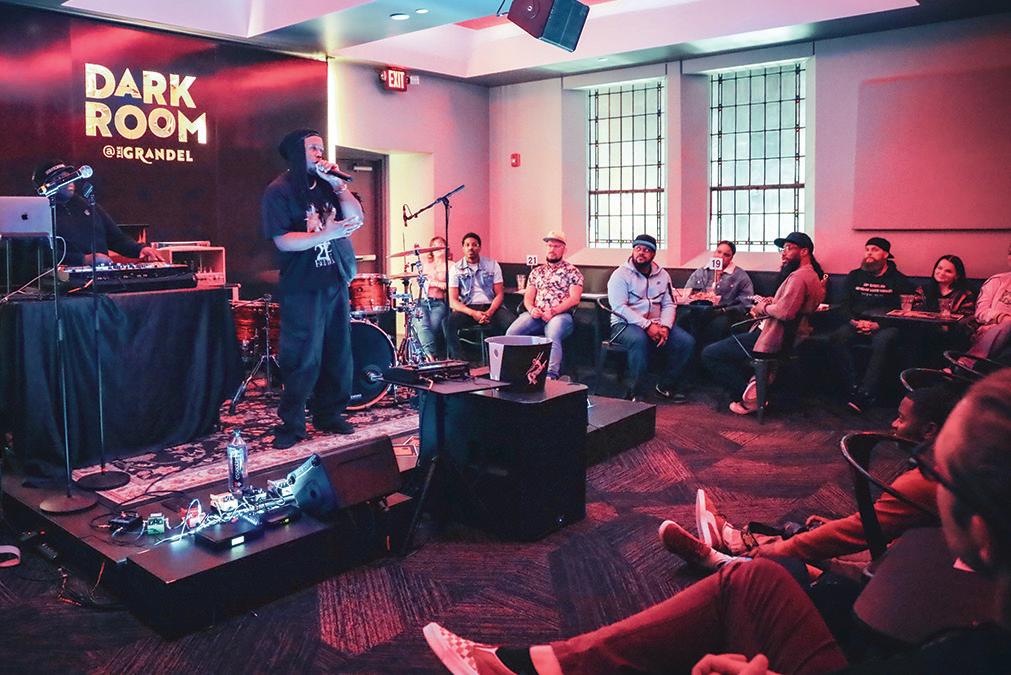
Euphonic
ing another layer of energy to the room.
But the heart of the night belonged to “Euphonic”—an album born from loss. Daemon created it after the unex pected passing of his girlfriend, a grief that sent him spiraling into drug and alcohol use.
Coltrane
Continued from B1 reimagined version of his album featuring five new tracks. The project also includes a remix by Trackstar the DJ of Run The Jewels. The room pulsed with anticipation, and Daemon matched it with a sound that hit like a jolt that was sharp, emo tional and impossible to ignore.
“With this album I wanted to tell a story, but I wanted it to be sonic,” he said. “It’s sort of a homage to ’90s hip hop sounds, and then out of nowhere it flips into a grunge vibe. It’s like a lyrical plot twist.”
His influences—
Biggie Smalls and Kurt Cobain—sit on opposite ends of the musical spec trum, yet Daemon threads them together with light ning‑fast precision.
He opened the night with earlier works, including “Red Pill,” a hook‑heavy earworm that had the crowd locked in from the first bar. The chorus hit with a chant‑like rhythm, his lyr ics walking the beat with ease. Bandmate Supreme Sol of ROTN—the SLUM Fest 2025 Best Rap Group winners—joined him, add
“Now I tell my story very openly about drug use, and I use the music to illustrate it sonically,” he said. “I’m trying to make songs that show that vul nerability and pain.”
“Euphonic” is his jour ney from chaos to clari ty—memories, mistakes, and moments of awaken ing transmuted into sound.
“When I got clean I ended up with these two parts of me,” he said. “Some songs I wrote when I was up for days, and then you have the clarity after that. I wanted to show people that.”
One of the night’s most moving performances was “Mother Divine,” a hope ful track about his mother and the better days he’s fighting toward.
“We’ve been through a lot together,” he said. “We were homeless when I was young, and she shielded me from so much—just for me to get strung out. In the song I say, ‘steal ing out her purse like I’m ready to die,’ just laying it out plainly. The crap
I pulled. And she never gave up on me.”
Now performing “Euphonic” sober—and with his mother in the audience—Daemon carried the stage with a renewed sense of purpose. He tore into “Megalodon (Top of the World)” alongside vocalist MG‑M, producer Adrian’s Beats on electric guitar, and Jack Hanson on drums. The high‑en ergy rock beat fused with blues‑tinged lyrics, creat ing the sensation of speed ing down a Daytona race track. Daemon’s rapid‑fire delivery brought the room to a thunderous applause. He also performed “Bad Miracle,” a track commis sioned by Jordan Peele for the film “Nope.” Though it didn’t make the final cut of the film, Daemon per formed it proudly—proof of how far his music has traveled.
Throughout the night, he returned to the emotion al core of Euphonic: hon esty. Pain. Transformation. “I get messages from people saying it resonated with them,” he said. “And it means a lot.”
The deluxe version of “Euphonic” is available only through limited physical copies, each including an exclusive download link. It won’t be on streaming platforms— making it a rare, tangible piece of Daemon’s story.

humanity. The rage. The tender ness. The romance. The righteous anger. The entire spectrum of emotion that lived beneath their skin. Their creative response to racism and identity — forged in clubs, studios, and relentless self‑study — transcended genre long before critics had the language to describe it. And in Powell Hall, their validity as artists and men manifested in real time before an audience whose lived experiences often stood worlds apart from the composers on the program. Yet they listened on one accord, connected through the emotional truth of the music: the unconditional love of “Naima,” the aching beau ty of “In a Sentimental Mood,” the urban affir mation of “Central Park West,” the righteous fury of “Alabama.”
When Davis’ “So What” opened with a sweeping orchestral swell, it felt like a homecoming layered with history. The motif of the evening gave every section its moment before dropping into those unmistakable bass notes, the same ones Coltrane once danced around with restless brilliance. “Blue in Green” shimmered with the quiet melancholy that made it a classic, and the bass‑and‑piano intimacy of “In a Sentimental Mood” expanded into something cinematic through Simon’s orchestration.
The contrast between the orchestral thunder of “Giant Steps” and Lovano’s tender, almost whispered approach to “My One and Only Love” revealed the breadth of Coltrane’s emotional palette. Lovano crooned through the melody with the interpretive grace of Nancy Wilson or Abbey Lincoln, then seasoned it with Ella‑like riffs that danced just above the strings.
Every member of the
quartet made the perfor mance sing. Harrold kept the pace on “Giant Steps” with manic precision, carving out just enough space for Lovano to let the notes ricochet at dizzying speeds. Fields channeled Monk’s obsessive focus on “Crepuscule with Nellie,” then shifted to the softest touch for the tenderness required in “My One and Only Love.” And the strings — they wrapped around the horn in ways that defy lan guage, turning familiar standards into something newly illuminated.
The concert delivered Coltrane’s greatest hits, though “My Favorite Things,” listed on the pro gram, was ultimately not performed. Even without it, the evening stood as a testament to the enduring power of Black genius — and to the lineage of brilliance that shaped Coltrane, from Parker’s fire to Miles’ cool, all con verging into a legacy still unfolding.
McBeth offered a gentle clarification: “The ques tion came up, ‘If it’s a Trinity, why are there four movements?’ Well, here we get the chance to hear about the Father, Son, Spirit, and then how they all come together to bless us.”
Each movement was connected by spoken word that echoed the cadence of a Sunday sermon— reminders of God’s love and mercy that tied the music together in both message and mood.
The Lift Every Voice program paid tribute to renowned vocalist, scholar, and choral composer Dr. Rosephanye Dunn Powell. Her work has become essential repertoire for choirs seeking to honor the depth of the African American sacred tradition.
Black American tradi tions were woven through out the performance, especially through the drums. “Keep Yo’ Lamps” was performed a cappel la, anchored only by a conga‑style drum whose Afro‑inspired beat ground ed the piece in ancestral rhythm. That foundation shifted with “Jericho,” which introduced a full drum set—bass drum, cymbal, and a jazz‑inflect ed pulse that signaled both evolution and continuity. The transition from Afro‑percussive to jazz‑driven rhythms traced the journey of Black sound across generations —car rying history, resilience, and the enduring heartbeat of a people who continue to create, adapt, and uplift.

Continued from B1
Voice
Continued from B1
Photo by Taylor Marrie/St. Louis American
All eyes were on Daemon during his Feb. 28 performance at The Dark Room, where he premiered ‘Euphonic (Deluxe).

Choosy voters stand up. Choosy voters, stand up. If you love St. Louis like you say you do, now is the time to prove it by giving The St. Louis American Reader’s Choice Awards nominations period your full attention. It popped off March 1, and you have until the end of the month — March 31, to be exact — to make sure your faves have their chance to shine.
If I were y’all, I would go ahead and vote now. That way you won’t have to worry about missing the opportunity, and you can know you did your part to make sure the best and brightest in the STL have their hat in the ring. Keep in mind: if you don’t vote, you don’t have an inch of room to complain about who didn’t make the cut or accuse the city of hatin’ on a person, place, or thing you feel deserves some love.
This won’t be my only reminder, because I want y’all to take full advantage of the opportunity to play your part in bigging up the culture for doing big things in the STL. And did I mention that this inaugural St. Louis American Reader’s Choice Awards is being powered by St. Louis City SC? Of course I did, but it’s worth repeating. For the full run down on what you need to do as far as casting your vote, visit www.stlamerican.com/readerschoice/
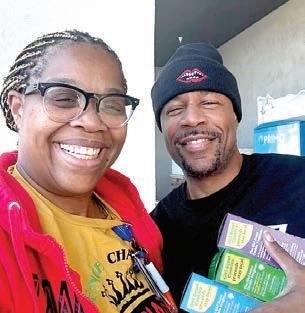
314 Day is the big 2-0. Since I’m already talking about St. Louis love, I might as well let y’all know how my mind is blown by the fact that 314 Day is a whole 20 years old. It’s one thing to feel old when you notice that your nephew has a little hair on his chest after you catch him cussing people out on his PS5
while wearing his undershirt. But to have the idea that my baby brothers Dip and Tatum brought to fruition evolve into a national movement has me all up in my feelings – and feeling like a for real auntie – like a Loretta Devine and Kinloch’s own THE Jenifer Lewis auntie. Oh, and when I say national movement, I’m saying it with my whole body. Did y’all see footage from those celebrations in Texas last year? The vibe was as real as The Palace or The Mono. I took it easy this week out here in these streets so that I can well rested for the 20th anniversary turnup that is about to be utterly epic. I don’t even have the words to truly express how lit the STL is gonna be. And I don’t want to be accused of playing favorites, so I won’t get to naming events – but trust that there is something for every doggone body looking to show the city some love. They are not hard to find – and I would have to devote the rest of Partyline if I did go ahead and decide to list them all. But I will tell you what, if you are looking for me on March 14, one of the places you can find me for sure is at The Pageant for that all-star 314 Day Concert. I’ve been taking Pilates classes at the Mid-County YMCA every Wednesday since the clock struck 2026 in preparation. My arms will be ready to hit the “wop wop wow,” my legs can take on any “Mobb Out” challenge and my full body is ready to hit the “Chicken Head” at hello. All of my faves will be on that stage Saturday night – Murph, Kyweezy, Shorty, Hitman Holla, Keem and Buddy Luv to name a few. And while we are on the subject of

being ready so that you don’t have to get ready, Webbie, an STL adopted son, will be blessing the mic as well. I have singled him out to give y’all eight whole days to re-acclimate yourselves with how to spell independent. The p is the fifth letter in. I’m not being shady; I’m basing my remarks on experience. I’ve heard y’all’s cousins go straight letter salad when it comes time to spell the word in Webbie’s song- even after all these years. I promise one time I heard a poor thing spell what sounded like a mash up of independent and imperial. I’m not judging, I just don’t want the nieces to be out here in these streets looking like they need “Hooked on Phonics.”
2026 NAACP Image Awards adored STL. Since I’m big into my St. Louis love bag the week before 314 Day, I might as well take the time to shout out some folks that represented St. Louis on a global stage over the past weekend. The 57th NAACP

Image Awards had more St. Louis seasoning than those fire Red Hot Riplet dry rub wings at Sybergs! These are in no particular order, before y’all accuse me of playing favorites a second time. Give it up for SZA, who was born here and spent her summers here. She and K. Dot were the rightful winners of “Outstanding Music/ Visual Album” for “luther.”
Our boy (one of our favorite Northwest Blue Devils) William Stanford Davis, had a hand in “Abbott Elementary” earning “Outstanding Comedy Series” honors. And he also won a solo award. “Outstanding Supporting Actor in a Comedy Series” to be exact. STL had both the supporting and leading comedy categories locked down for television. Ceddy Ced won “Outstanding Actor in a Comedy Series” for “The Neighborhood.” And Sterling K. Brown was all of us when he said “St. Louis in the house” before he accepted his award for “Outstanding Actor in A Drama Series” for “Paradise.”
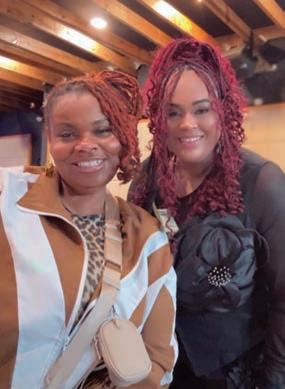
On a side note, “Paradise” has one more time to “This Is Us” me with the raw emotion. Count your days if you do! Okay, back to the NAACP Image Awards. It just hit me that St. Louis held it down for comedy and drama on the TV side. And while he’s technically not from St. Louis, Don Lemon made his bones as an anchor on KTVI, so I’m claiming his “Outstanding News Series” and “Outstanding Host” awards – and both his podcast award wins – for us. And just when you thought I was finished, I have to shout out East St. Louis’ own Reginald Hudlin (who won with my girl Shola Lynch) for “Outstanding Directing in a Documentary” for “Number One on the Call Sheet.”

1. St. Louis native Kenyatta ran into R&B star Tank in Los Angeles last weekend
2. The AKAs came through to support the St. Louis Alumnae Chapter’s 100 Year Charter Day two weeks ago at Ryse 3. Mocha Latte rang in her birthday at Soul 2 Soul last Thursday and Sonja was there to help her celebrate
“When we play like this as a team, I think we are the best team in the world.”
— San Antonio Spurs star Victor Wembanyama, after a 40-point victory over the Philadelphia 76ers on Tuesday night

InSIdE SportS
With Earl Austin Jr.
For the Phoenix, fourth time was the charm
The fourth time was definitely the charm for head coach Brandon Wright and his Miller Career Academy boys basketball team.
The Phoenix had made three consecutive trips to the Class 4 district championship game, only to run into the mighty Vashon Wolverines. Vashon defeated the Phoenix each time en route to winning the Class 4 state championship. Once again, Miller Career Academy was back in a district championship game last weekend. However, the Phoenix were dropped into Class 3, and their opponent last Saturday was Soldan. The host Phoenix broke through and defeated Soldan 76-31 to win the district title and advance to the state sectionals.
Four participants last season. The Phoenix also played Cardinal Ritter, East St. Louis, St. Mary’s, Columbia Battle and competed in the alwaysstrong Centralia Christmas Tournament in Southern Illinois.
Although the Phoenix may lack the height to match up with those strong teams, they do have outstanding speed and team quickness, which they take advantage of with tenacious pressure defense. They are tough, and they don’t back down from anybody.
The last time Miller Career Academy defeated Soldan in a district championship game was in 2009, when it advanced to the Final Four of the Class 3 state tournament in Columbia. The Phoenix are hoping to follow a similar path to the Final Four this season. The winner of their sectional game with Valley Park on Tuesday night will advance to the state quarterfinals Saturday at Ste. Genevieve.
The Phoenix are currently 16-12 while playing an incredibly tough schedule. Among the teams they have played are Vashon, Chaminade, Logan-Rogersville and Nixa, who were all Final
The top player for Career Academy is 6-foot senior guard CJ Nelson, who has been one of the area’s top scorers throughout the season. He has enjoyed some big scoring nights, including 50 points against Chaminade, 38 points against Lutheran North and 30 points in a victory over Cardinal Ritter.
CJ Nelson is the oldest of three brothers on the team. The second is junior point guard Calvin Nelson, a quick floor leader who can score and play excellent defense. Joining the older two brothers is freshman guard Cam Nelson, an excellent offensive player who can make 3-pointers.
The Phoenix also feature a group of talented guards that include 5-9 senior Michael Dickerson, 5-10 junior Elijah Thomas and 5-10 freshman Braylon White. Dickerson is a veteran guard who is very shifty and can also shoot the ball from 3-point range. In the frontcourt,
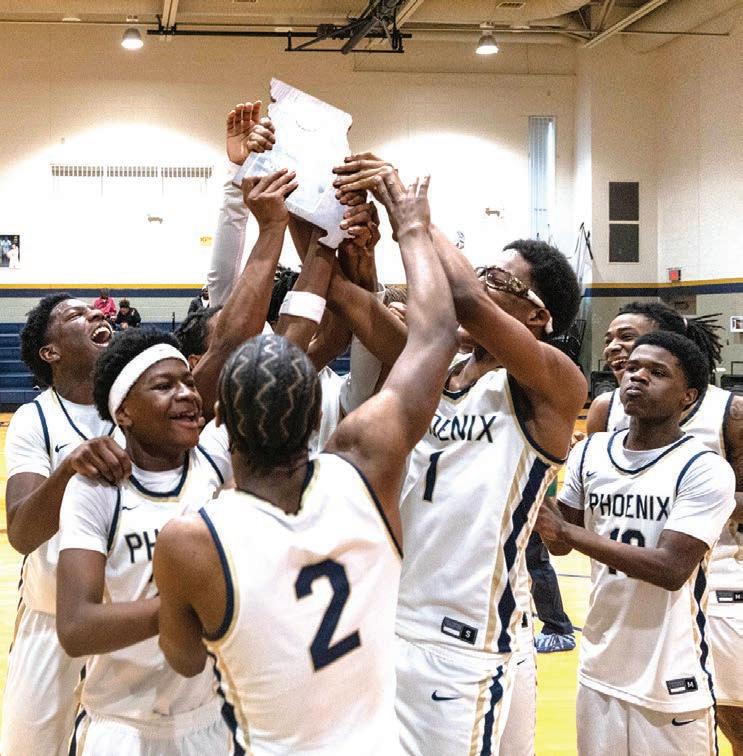
The Miller Career Academy boys basketball team celebrates after defeating Soldan 76-31 to win the Class 3 district championship last Saturday.
the Phoenix rely on 6-4 senior Marquise Molton, 5-11 junior Kieng Jackson and 6-3 freshman Jayke Haynes.
Large-school district tournaments are this week
The large schools take center stage this week with district tournaments in Missouri Classes 4, 5 and 6. Here are some big storylines as we approach this week’s boys and
girls district tournaments. To see all of the district tournament brackets, visit www.mshsaa.org.
• The Vashon Wolverines enter the postseason as the five-time Class 4 state champions. The Wolverines are the No. 1 seed in the Class 4, District 6 tournament at Vashon. They are currently 20-3 and enter the postseason on a 12-game winning streak.
• Cardinal Ritter is having a strong bounce-
SportS EyE
With Alvin A. Reid
back season after being eliminated from the district playoffs in the first round last season. The Lions had won two consecutive state championships in 2024 and 2025. They enter districts with a 17-9 record and a nine-game winning streak. They are the No. 1 seed in the Class 6, District 1 tournament at SLUH.
• Metro Catholic Conference rivals Chaminade and DeSmet will once again be in the same Class 6 district tour-
nament. Chaminade is the No. 1 seed, while DeSmet is the No. 2 seed in District 2 at DeSmet. The teams split two meetings during the regular season, with both teams winning on each other’s home court.
Girls storylines
• As always, the beginning of the girls postseason centers on the Incarnate Word Academy dynasty. The Red Knights have won five consecutive Class 6 state championships and are seeking No. 6. IWA is the No. 1 seed and host of District 3.
• Lift for Life enters the postseason as back-toback state champions. The Hawks won the Class 4 state title in 2024 and the Class 5 championship in 2025. A potential threepeat will be a harder task as the Hawks are without their talented twin guard duo of juniors Amaya and Cara Manuel, who are out with season-ending injuries. The Hawks still have talented players who were big contributors in the championship years. They remain an intriguing team to watch.
• Cardinal Ritter has been moved down to Class 4 after playing for a district championship in Class 5 this season. The Lions are the No. 1 seed in District 5 at Vashon. They are just returning to full health after missing key players to injuries over the course of the season. When fully healthy, Cardinal Ritter is one of the most talented teams in the state.
Team USA won’t win WBC diversity title
With the World Baseball Classic beginning today, March 5, let’s talk about the international tournament and the St. Louis Cardinals as spring training continues. Of the 30 players who comprise Team USA for the WBC just two are Black. Representing Black America are outfielders Aaron Judge of the New York Yankees and Byron Buxton of the Minnesota Twins…Michael Hill, who worked in the Miami Marlins organization for 20 years and now serves as senior vice president of on-field operations and workforce development for Major League Baseball, is the general manager for Team USA…Former MLB player Michael Young is serving as an assistant manager for skipper Mark DeRosa…DeRosa is not my choice for manager. The USA could do better… Future Hall of Famer Albert Pujols is manager of the Dominican Republic squad, which will help him land an MLB managerial
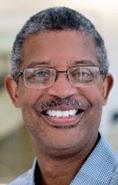
Alvin
position soon…Yadier Molina, who is working with the Cardinals, at least for now, is manager of Team Puerto Rico… Another pair of former Cardinals have Team USA roles. Skip Schumaker, Texas Rangers manager, is Team USA bench coach and Matt Holliday is hitting coach…Andruw Jones, the former Atlanta Braves star who will be inducted into the Baseball Hall of Fame in July, will manage the Netherlands team… The USA is a solid betting favorite to win the WBC followed by Japan, the Dominican Republic and Venezuela. If Shohei Ohtani were pitching in the WBC, Japan would likely be the favorite. As for the Cardinals… To the chagrin of many fans, manager Ollie Marmol has received a two-year contract extension. The team’s record in 2026 will determine whether Marmol manages in 2027…Marmol will navigate a team that is without Brendan Donovan, Nolan

Arenado, Sonny Gray and Willson Contreras who were traded… Shortstop Masyn Winn, a 2025 Gold Glove winner who underwent knee surgery shortly after the season, did not play Monday as he deals with a sore arm. He had two hits in 10 at-bats before Monday’s absence…
Granted it’s a short sample size, but outfielder Jordan Walker is just 3-for13 (.231) with no home runs and one RBI in five spring training games… Center fielder Victor Scott II is also off to a slow start with two hits in 10 at-bats…Pitching prospect Tink Hence threw a solid inning in his first
spring training appearance, then had a disastrous one. He sports a 16.20 ERA after giving up three runs, including a home run, in just 1 2/3 innings…Top prospect JJ Wetherholt is hitting .375 with a home run and four RBI. He seems a lock to make the Opening Day lineup… Wetherholt would play second base and Nolan Gorman would play third base if the season began today, according to MLB. com writer Will Leitch
The Reid Roundup
Belmont is the top seed in the Missouri Valley Conference Tournament, which begins at Enterprise Center on Thursday, March 5. The Bruins are on a 13-1 run entering the tournament, shooting 62.2% from the field and 40.7% on 3-point attempts. They are dealing with the loss of starter Nic McClain (10.4 points per game) to a knee injury… Players to watch include Drake’s Jalen Quinn, who leads the MVC with 19.7 points per game. Jaquan Johnson of Bradley is averaging 17.4 and Belmont’s Tyler
Lundblade is averaging 15.8 with five rebounds… Southeast Missouri State is a favorite to win the Ohio Valley Conference Tournament. Luke Almodovar leads the way with 14.2 points per game and 3.5 rebounds… Former Cardinals George Hendrick, Brian Jordan, Yadier Molina and Albert Pujols are nominated for the St. Louis Cardinals Hall of Fame in 2026. Here’s the catch: Just one can be voted in by fans. I’m voting repeatedly for Hendrick although he realistically has no chance this year…Hendrick will be eligible in the Veterans category in 2028, which will be his ticket into the Cardinals Hall…Boys & Girls Clubs of Greater St. Louis Mathews-Dickey Club and the PUSH Flag Football League will host a free flag football skills camp for youth in grades 3-12 from 9 a.m. to noon Saturday, March 7, 2026, at Mathews-Dickey Field, 4245 N. Kingshighway Blvd., St. Louis. Participants can also register for the upcoming free NFL Flag Football summer league, which runs April 25 and May 2-23.
A. Reid
Minnesota Twins outfielder Byron Buxton is one of two Black players on Team USA in the World Baseball Classic.
Photo courtesy of twins.com
Photo by Lawrence Bryant / St. Louis American
Earl Austin Jr.

CITY OF BELLEFONTAINE NEIGHBORS JOB POSTINGS –FULL TIME POSITIONS
The City of Bellefontaine Neighbors is seeking the following Full Time positions:
Public Works Director - The duties entail the Director plans, organizes, and direct operations of the Public Works Department/Building and Streets Department; serves as advisor to the Mayor and Board of Aldermen; supervises all Public Works and Building Department employees; and communicates effectively with citizens regarding their questions and/or complaints.
Public Works Foreman - The duties entail assist the Director with plans, organizes, and direct operations of the Public Works Streets Department; serves as advisor to the Mayor and Board of Aldermen in the absence of the Public Works Director; supervises all Street Department employees in the absence of the Public Works Director; and communicates effectively with citizens regarding their questions and/or complaints.
Deputy City Clerk- The position assists the City Clerk in performing statutory and administrative duties required for the efficient operation of the City by the maintenance of official municipal records, preparation of meeting agendas and minutes, records management, public inquiries, administrative functions of filing and communicating with the public and serves as advisor to the Mayor and Board of Aldermen in the absence of the City Clerk.
For more details regarding the job duties, visit our website: www.cityofbn.com.
ST. LOUIS HOUSING AUTHORITY SOLICITATION RD26-13 UNIT REPAIRS & PTAC REPLACEMENT
CALIFORNIA GARDENS APARTMENTS – SOUTH BUILDING 2926 CALIFORNIA AVE, ST. LOUIS, MO 63118
The St. Louis Housing Authority (SLHA) seeks bids to perform the following project:
The replacement/repair of all damaged flooring, walls, ceilings, electrical, light fixtures, plumbing, door and door hardware, attachment components, and replacement of PTAC units as noted on the plans and specifications at the California Gardens - South building located at 2926 California Ave., St. Louis, MO 63118. Performance period to be 90 days
The pre-bid conference will be held at 10:30 AM on Tuesday, March 3, 2026 at the project site.
Sealed bids are due at 1:00 PM on Tuesday, March 24, 2026 via QuestCDN or hand delivered to the SLHA Main Office at 3520 Page Blvd, St. Louis, MO 63106.
Latasha Barnes Contracting Officer
AN EQUAL OPPORTUNITY EMPLOYER

SITE COORDINATOR – BEYOND SCHOOL PROGRAM
Mission: St. Louis is hiring a full-time Site Coordinator. Details/apply: www.missionstl.org/ serve-and-volunteer
IT PROFESSIONALS (POSITIONS ARE IN ST. LOUIS, MO)
Technical Managers, Computer Support Engineers, Senior Data Analysts, Support Engineers, Software Engineers, Software Test Engineers, Software Quality Assurance Analysts, Sr. Database Administrators, Software Quality Assurance Testers, Software Developers, Implementation Engineers, UX Designers, IT Project Managers, QA Test Analysts, Database Analysts, Jr. Systems Administrators, Application Engineers, Data Testers, Business Analysts, Business Systems Analysts, Business Operations Analysts, Solution Architects, Software Quality Assurance Engineers, Computer Systems Analysts, Technical Business Analysts, Business Intelligence Analysts, Date Engineers, Graphic Designers. Multiple positions. Mail resume to: Infinite Computer Solutions, Inc., Attn: HRGC, 2600 Tower Oaks Blvd, Ste. 700, Rockville, MD 20852.
REQUEST FOR PUBLIC COMMENT
East-West Gateway Council of Governments is seeking comment on its proposed fiscal year 2027 Unified Planning Work Program (UPWP). The public comment period runs from Friday, February 27, 2026 through Sunday, April 12, 2026, during which time the document will available online at www.ewgateway.org
All comments on the document must be received or postmarked by midnight on April 12, 2026. Send comments to: upwp@ewgateway.org or Attn.: UPWP Comments, East-West Gateway Council of Governments, 1 S. Memorial Dr., Suite 1600, St. Louis, MO 63102.
PUBLIC NOTICE
Notice is hereby given that the Metropolitan St. Louis Sewer District Requests for Quotes, Bids and Proposals are posted online for public download. Please navigate to www.msdprojectclear.org
> Doing Business With Us > View Bid Opportunities
Metropolitan St. Louis Sewer District is an Equal Opportunity Employer.
REQUEST FOR PROPOSALS
Hazelwood School District is seeking bid proposals for asphalt replacement at The Learning Center, Coldwater, West High, Northwest Middle, Opportunity Center, East High School.
Interested parties should submit their bid proposal through Vendor Registry via the district’s website at https:// www.hazelwood schools.org/Page/2238 on or before Tuesday, April 7, 2026 not later than 10:00 a.m.
SEALED BIDS
Bids for Building Envelope Repairs at Missouri State Highway Patrol Troop D Crime Lab, Project No. R2516-01, will be received by FMDC, State of MO, UNTIL 1:30 PM, April 7, 2026. Project information available at: http://oa.mo. gov/facilities
BID REQUEST CITY OF BELLEFONTAINE NEIGHBORS REQUEST FOR GRASS/VEGETATION REMOVAL SERVICES
The City of Bellefontaine Neighbors, MO is accepting bids for contract mowing services to cut vegetation in our three (3) City Parks (Tanglewood, St. Cyr and Bissell Hills). The City of Bellefontaine Neighbors recommends a visual walkthrough of all parks listed prior to presenting a bid proposal. Bid forms are available at www.cityofbn.com and can be picked up at city hall 9641 Bellefontaine Rd, St. Louis, MO 63137. Forms should be submitted to the attention of Marvin CrumerDir. Of Parks and Recreation at mcrumer@cityofbn.com . Please call (314) 882-0044 with any questions.


SEALED BIDS
Bids for Exterior Building Renov, Project No. R241601 will be received by FMDC, State of MO, UNTIL 1:30 PM, April 2, 2026. Project information available at: http://oa.mo. gov/facilities
SEALED BIDS
Bids for New Sites/Cabins & Site Repairs/ Renovs, State Park, Lagrange, MO. Project No. X2410-01 will be received by FMDC, State of MO, UNTIL 1:30 PM, 3/17/2026.
available at: http:/ /oa.mo. gov/facilities
REQUEST FOR BID
Great Rivers Greenway is seeking sealed bids for two frost free outdoor water fountains. Go to https://greatrivers greenway.org/bids/ for details and submit by April 04, 2026.
INTEGRATED FOOD, BEVERAGE, AND RETAIL OPERATIONS MANAGEMENT SYSTEM RFP 2026
The Saint Louis Zoo seeks bids from qualified vendors to submit proposals. Bid documents are available as of 3/4/26 on the Saint Louis Zoo website: stlzoo.org/vendor
REQUEST FOR PROPOSALS
The Gateway Science Academy of St Louis is accepting proposals for contracting out the Food Service Program with a Fixed Price contract for the upcoming school year. A mandatory pre-proposal meeting will be April 13, 2026 at 10:00 am. Request for Proposals are due by April 27, 2026. For questions and bid specifications, please contact the GSA District Office at 314-282-0534 EXT 1. The Gateway Science Academy of St Louis reserves the right to reject any or all bids. hcilingir@gsastl.org
A new Season A new Location. The Same Loving Church Family. In the wake of the devastating May 16th tornado that destroyed our church building. COTE BRILLIANTE PRESBYTERIAN CHURCH has continued to stand strong in Faith, Hope, and community. We are grateful to share that we have relocated and are now worshiping at: First Presbyterian Church of Ferguson 401 Darst Rd Ferguson, MO 63135
REQUEST FOR PROPOSALS
The City of University City, Missouri is soliciting proposals for moving services associated with the relocation of Police and Court operations from temporary trailers to the newly renovated Annex (AN) and Trinity (TR) Buildings. This is a Request for Proposal (RFP) and not a hard bid. The intent is to establish hourly and daily rates for moving technicians and equipment and to develop a non-binding estimated budget based on the scope described herein.
The relocation is anticipated to occur between late March and April 2026. Moves will occur in phases, generally involving four (4) to twelve (12) offices per move day, and may take place on non-consecutive days to accommodate IT coordination and operational needs. Final schedules will be provided in advance; however, ingress and access may be limited or temporarily paused due to ongoing police operations. Both buildings are equipped with elevators, though the Annex elevator is smaller than standard. Trailer access includes an ADA-compliant ramp and stairs.
Most furniture is already installed within the Annex and Trinity Buildings as part of the renovation project. The selected contractor will move boxed files, select furniture, file cabinets, safes, shelving, appliances, and miscellaneous equipment. Police and Court personnel will relocate computers, phones, printers, personal items, evidence, firearms, ammunition, and other controlled items. Certain materials may require escort by Police or Court staff. The contractor shall provide all labor, supervision, equipment, vehicles, moving boxes delivered in advance and retrieved after completion, moving tags, protective materials, and protection of floors, walls, elevators, doors, and finishes. Building conditions will be documented prior to move activities. The University City Police Department will conduct background checks on all moving personnel, and twenty-four (24) hour advance notice is requested.
The anticipated total duration of work is approximately seventeen (17) workdays, plus or minus. Phase 1 consists of Courts personnel, four (4) staff members relocating to the Trinity Building first floor over two (2) days. Phase 2 consists of the Detective Bureau, nine (9) staff members relocating to the Annex second floor over three (3) days. Phase 3 consists of the Bureau of Field Operations, six (6) staff members relocating to the Annex second floor over five (5) days. Phase 4 consists of Administrative Offices, four (4) staff members relocating to the Annex second and third floors over three (3) days. Phase 5 consists of the Bureau of Services, eight (8) staff members relocating to the Annex first floor over four (4) days. Predominant items include boxed files and multiple file cabinets per phase. Additional specialty items include small safes, gun safes (emptied prior to move), evidence safes and drying cabinets, ammunition storage cabinets, shelving relocation, mail slots, a magnetometer, x-ray machine, appliances including refrigerators and washer/dryer units, and related equipment.
Proposals shall separately identify the cost or fee structure for moving boxes, including ownership versus rental terms, the cost for moving tags, hourly rates by technician classification, and equipment rates. Respondents shall provide a non-binding summary estimate of total man-hours, box costs or usage fees, and equipment usage expressed as separate line items extended by the proposed rates to establish an estimated budget. A lump sum total shall not be provided.
Questions regarding the move scope may be directed to David C. Lowell with NAVIGATE Building Services at david@NAVIGATEbuildingservices.com. Questions regarding University City purchasing requirements may be directed to Chris Crabel at ccrabel@ucitymo.org. The City of University City reserves the right to reject any or all proposals.



Summer cAmpS Summer cAmpS
Summer camp season will be here soon
This Camp Guide was produced in partnership with Blueprint4, a free database of St. Louis-area out-of-school programs. To find additional information about these summer programs and many more, visit blueprint4.com.
ACE Academy Website:
https://obap.org/ace/stlouis/
Phone: 602-321-4174
Address: 910 N Newstead Ave.
St. Louis, MO 63108
Camp Description: The Organization of Black Aerospace Professionals offers exposure to the wide variety of career opportunities in aviation and aerospace for middle and high school students.
Age Range: 13-18
Cost Range: $175
Ackermann’s Swim Program
Website:
https://www.aspkirkwood.com/
Phone: 314-821-1070
Address: 1044 Curran Ave. Kirkwood, MO 63122
Camp Description: Teaching children the life skill of swimming and water safety in a non-competitive environment.
Age Range: 4-11
Cost Range: $340-$850
Acts of Healing
Website:
https://www.actsofhealing.org/
Phone: 847-561-3181
Address: 8147 Delmar Blvd.
Suite 214, St. Louis, MO 63130
Camp Description: The mission of Acts of Healing is to support youth who have experienced trauma, while they learn to allow, understand, and express emotion in a healthy and productive way through words, movement, and personal expression.
Age Range: 10-16
Cost Range: $300
Adventures of Intrigue
Website: https://intriguestl.com/
Phone: 314-348-8627
Address: 2400 S Jefferson Ave.
St. Louis, MO 63104
Camp Description: Summer Camp where Theater Arts Meets Stem! Kids team up to design & build a REAL escape game!
Age Range: 8-18
Cost Range: $600
Aim High St. Louis Website: https://www.aimhighstl.org
Phone: 314-432-9500
Address: 755 South Price Rd.
St. Louis, MO 63124
Camp Description: Aim High offers a five-week academic enrichment summer program for middle school students focusing on math, science and humanities with physical fun (swimming, basketball, golf and tennis).
Age Range: 10-14
Cost Range: It’s free!
All American Gymnastics & Super Ninja
Website: https://www.aag-stl.com/
summercamp2026
Phone: 314-426-2496
Address: 10449 Midwest Industrial Drive
St. Louis, MO 63132
Camp Description: Our gymnastics programs, ninja training and activities provide a place for all children to develop confidence, character and a healthy active lifestyle in a positive safe and fun environment.
Age Range: 3-12
Cost Range: $435-$495
See Camps, B
Summer in St. Louis
Local nonprofit works to help more youth access summer opportunities
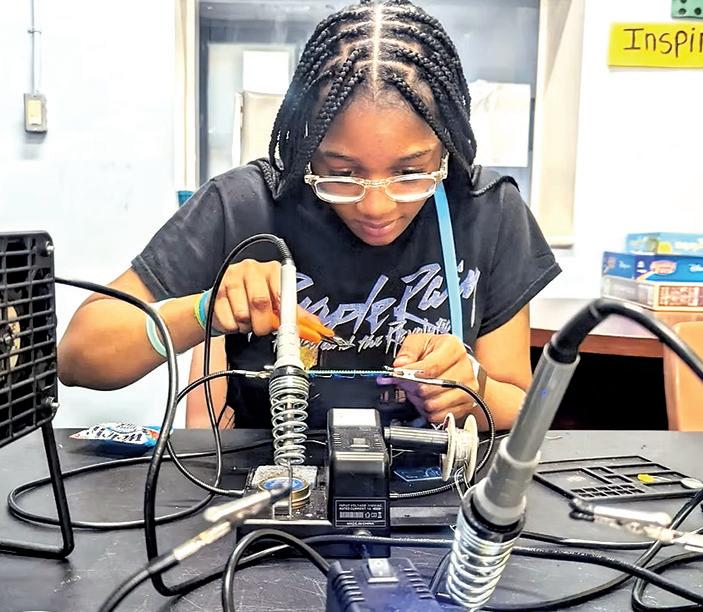
ummer in St. Louis conjures memories of hot, humid days, growth spurts and extra time with friends. But for many kids, the summer months can also be a time of setbacks.
In fact, according to the American Educational Research Association, children can lose up to 40% of their school-year learning gains over summer break. Beyond academic loss, for youth without a safe place to go, summer can bring disruption in routine and more time unsupervised — on screens or at risk for unsafe behaviors.
According to the American Educational Research Association, children can lose up to 40% of their school-year learning gains over summer break.
In 2025, the St. Louis region was rich with summer programs designed to mitigate these risks. In fact, there were 433 organizations providing youth programming across the metro, according to the Blueprint4 2025 Annual Report But in a climate of economic struggles, the impact of the tornado and everyday stress, many families face an overwhelming process to access these camps.
“I have to closely monitor my finances each month to stay on budget,” said one St. Louis mother. “ And then summer camp registration comes along after the holidays, right when I am financially extra thin.”
Acknowledging these barriers to summer programming, one St. Louis nonprofit is taking action to help families plan for the end of the school year. Blueprint4 is an initiative of the Clark-Fox Family Foundation with a
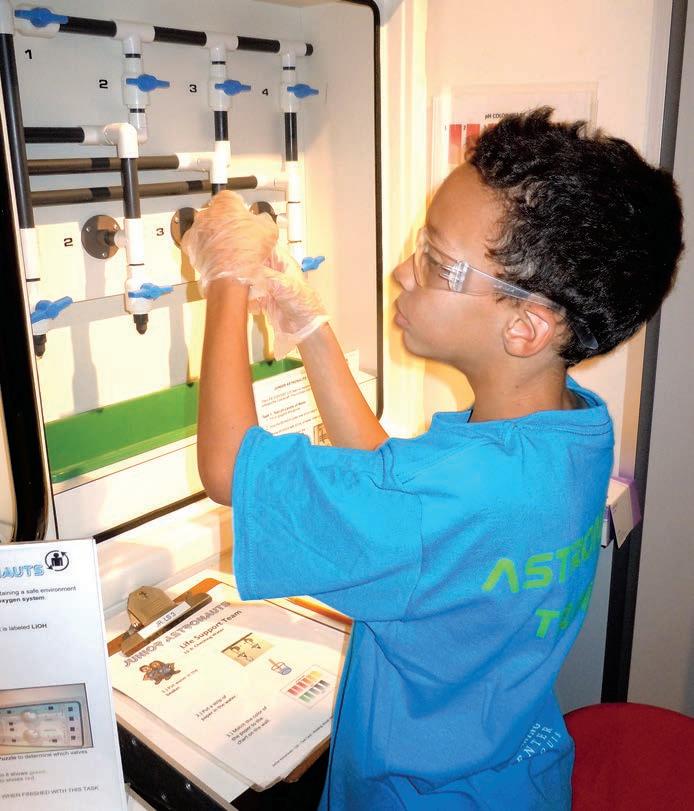
At the Challenger Learning Center Camp participants will experience an “out of this world” summer camp adventure with space mission simulations, DIY maker activities, robots, drones, and more!
mission to make summer after-school and college-prep programs accessible for all youth in the St. Louis area. The organization operates a free database of local youth programs — blueprint4. com — where families can filter camps by distance from their house, cost, date, subject area, age range and more. While the database has proven to
be a useful time-saver and critical planning tool for parents, some families are still left in the dark. So for the summer of 2026, Blueprint4 has teamed up with the Saint Louis Mental Health Board and the St. Louis County Children’s Service Fund to launch a more comprehensive summer resource
Camps, B10
At Gene Slay’s Girls and Boys Club Camp campers will choose activities according to your interests, from swimming to art to outdoor adventure, and combat summer learning loss with academic enrichment.
Photo courtesy of Blueprint4
Photo courtesy of Blueprint4
Camps
Continued from B9
AR Workshop Olivette
Website: http://arworkshop.com/olivette
Phone: 314-898-9151
Address: 9200 Olive
Blvd. Suite 112 St. Louis, MO 63132
Camp Description: Register your child for a hands-on crafting experience in one of our Youth DIY Craft Studio Camps!
Age Range: 6-18
Cost Range: $240-$300
BESt Pharmacy
Summer Institute
Website: https://besthealthcareinstitute.org/
Address: P.O. Box 32810
Olivette, MO 63132
Camp Description:
The mission of the BESt Healthcare Institute is to expose local high school students for future careers in healthcare through academics, exposure to healthcare environments, and professional development.
Age Range: 14-17
Cost Range: It’s free!
Boys & Girls Clubs of Greater St. Louis
Website: https://www. bgcstl.org/programs/ summer-camp/ Phone: 314-335-8000
Address:
2901 North Grand Blvd., St. Louis, MO 63107
Camp Description: Boys & Girls Clubs of Greater St. Louis offers one of the most affordable, SAFE, high quality summer day camp programs in the Bi-State region. Campers participate in educational, recreational, and social activities including opportunities for creativity, sports and recreation, teen and STEM programs, music studio, and Esports. 6 area locations.
Age Range: 6-18
Cost Range: $250-$600
Bricks 4 Kidz - St Louis Website: https://www. bricks4kidz.com/stl Phone: 314-930-9535
Address: 1840 Sparks Ct. Wildwood, MO 63011
Camp Description: Bricks 4 Kidz provides an extraordinary experience for kids to learn, build and play with LEGO bricks, Robotics and more!
Age Range: 5-12
Cost Range: $135-$185
Camp Able Saint Louis Website: https://www. campable.org/
Address: 11333 St. John’s Church Rd., St. Louis, MO 63123
Camp Description: Camp
Summer
guide for kids, teens and families.
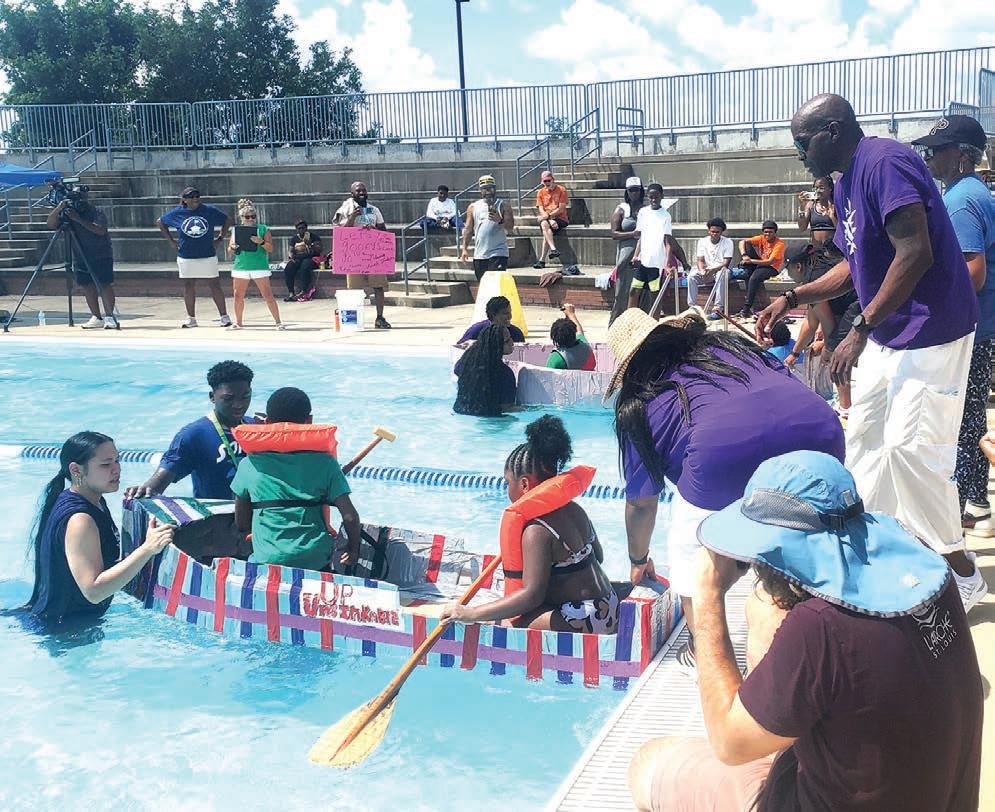
Able provides a camp experience for people with diverse availities for all ages, using a one-toone camper-to-counselor pairing.
Age Range: 5+
Cost Range: $200
Camp Encourage Website: http://www. campencourage.org
Phone: 816-830-7171
Address: 4025 Central Street, Kansas City, MO 64111
Camp Description: Overnight camps for youth on the autism spectrum and their peers, ages 10-18. Each camp session includes both traditional camp activities and activities tailored around the individual campers’ interests. Age Range: 10-18
Cost Range: $625-$1,395
Camp Indigo Point Website: https://www. campindigopoint.org/ Phone: 314-348-6412
Address: 12770 N. Benton Rd., Benton, IL 62812
Camp Description:
Camp Indigo Point is a residential summer camp for queer and trans youth entering grades 2nd-11th. We believe that LGBTQ+ youth deserve a place and environment made specifically for them to build friendships, take risks, and have joy. Age Range: 7-17
Continued from B9 or volunteer opportunities,” said Abbey Barrow, Blueprint4 program manager. “But not all families know about these resources. We want the Summer in St. Louis campaign to make it easier for parents to learn about and access summer supports for their children.”
“Our region is blessed to have so many free activities for families, camp programs with scholarships and even teen job
By sharing information
Cost Range: $2,700
Camp Nerd Street Website: https://nerdstreet.com/camps
Address: 650 Maryville University Dr. St. Louis , MO 63141
Camp Description: Our week-long summer experience offers a robust camp that allows kids who are interested in gaming to meet and engage with their peers in a fun and safe atmosphere.
Age Range: 8-13
Cost Range: $360
Camp Ondessonk
Website: http://www. ondessonk.com
Phone: 618-695-2489
Address: 3760 Ondessonk Road Ozark, IL 62972
Camp Description: Camp Ondessonk is a residential youth focusing on providing exceptional outdoor progamming, including horseback riding, archery, caneoing, and more.
Age Range: 8-16
Cost Range: $409-$749
Camp Weloki for Girls Website: https://campweloki.com/ Phone: 636-530-1883
Address: 16100
Chesterfield Parkway West Suite 2000 Chesterfield, MO 631027
Camp Description: Camp Weloki for Girls is a one week overnight camp. We teach girls leader-
across the community and bringing organizations together, Blueprint4 aims to strengthen the network of support for St. Louis children and teens during the summer months.
Residents can visit the Summer in St. Louis webpage for information on available camps, teen job or volunteer opportu-

ship, communication, and self-awareness. Camp activities include, swimming, hiking, sports, camp fires, creative arts, outdoor movies, and so much more!
Age Range: 8-18
Cost Range: $1,495
CDF Freedom Schools Website: https://beyondhousing.org/ freedom-school/ Phone: 314-376-5980
Address: 6506 Wright Way St. Louis, MO 63121
Camp Description: Freedom School is a free, six-week summer program serving scholars in grades K—5 across tmultiple locations in the he St. Louis region. Our program focuses on building strong readers, confident leaders, and joyful learners through culturally responsive education.
Age Range: 5-11
Cost Range: It’s free!
Central Print Website: https://www. centralprint.org/ summer-camp-2026 Phone: 314-241-1346
Address: 2624 North 14th Street, St. Louis, MO 63106
Camp Description: Printmaking and Book Arts Summer Camps for children aged 6-10. Scholarships available. Age Range: 6-10 Cost Range: $110
nities, free and low-cost family activities and community support services. Resources will be updated throughout the season so families can access current information in one place. While the campaign aims to ease the child care burden and promote summer safety, organizers say the broader goal is to
Challenger Learning Center Website: https://www. challengerstl.org/ Phone: 314-521-6205
Address: 205 Brotherton Lane Ferguson, MO 63135
Camp Description: Experience an “out of this world” summer camp adventure with space mission simulations, DIY maker activities, robots, drones, and more! Age Range: 8-17
Cost Range: $225-$375
Cheer St. Louis Website: https://cheerstl. com/littlebits-home Phone: 636-980-5678
Address: 1930 Trade Center Dr., Saint Peters, MO 63376
Camp Description: Summer fun starts HERE! Our camps keep kids moving, laughing, learning, and making memories all summer long. Let the adventures begin! Open play, crafts, themed games and activities, obstacle courses, quiet time, snack time, and more! Age Range: 3-18 Cost Range: $160-$240
CID - Central Institute for the Deaf Website: https://cid.edu Phone: 314-977-0226
Address: 825 S. Taylor Ave., St. Louis, MO 63110
Camp Description: CID offers theme-based sum-
expand opportunity.
mer programs for children who are deaf and hard of hearing ages 2 to 17. Children and teens who are deaf or hard of hearing receive 100% scholarship support. Age Range: 6-17 Cost Range: $325
Circus Harmony Website: http://www. circusharmony.org
Phone: 314-436-7676
Address: 4120 Parker Rd Florissant, MO 63033
Camp Description: A fun, active, and two week long performance-based circus camp for kids ages 8-15 with Circus Harmony at City Museum! Scholarships and payment plans are availble! Age Range: 8-15
Cost Range: $625
City Jump Family
Entertainment Complex Website: https://www. cityjumpstl.com/ Phone: 314-766-4747
Address: 7400 Natural Bridge Road St Louis, MO 63121
Camp Description: This 8-Week Camp gives campers hands-on, behind-thescenes experience learning how to open and manage the daily operations of a businessall while enjoying play and interactive fun. Age Range: 8-13 Cost Range: $150
COCA Website: http://www.cocastl.org Phone: 314-561-4898
Address: 6880 Washington Avenue, St. Louis, MO 63130
Camp Description: Enriching lives and building community through the arts for more than 35 years. Age Range: 3-18 Cost Range: $36-$700
Color Coded Kids Website: http://www. colorcodedkids.com
Phone: 314-282-5344
Address: 105 Behlmann Meadows Way Unit C, Florissant, MO 63034
Camp Description: Color Coded Kids (CCK) is an interactive, educational and fun organization designed to teach kids all things artificial intelligence including how to code! Our courses are led by instructors from leading corporations across the region. Age Range: 8-12 Cost Range: $50
Cornerstone Center for Early Learning Website: https://www.
See Camps, B11
“My son struggled with behaviors, especially at school,” said one St. Louis parent following last summer. “It was life-changing when he attended the [camp]. They didn’t just have fun; there was also a lot of character building. My son has completely transformed since attending; even his teachers recognized it.”
With information access and families’ needs at the forefront, the stage is set for more life-changing moments for St. Louis youth this summer. To find Summer in St. Louis resources or use the searchable camp database, visit blueprint4.com.

The wide variety of camps throughout St. Louis allow kids to select a camp that meets their interests. Photo courtesy of Blueprint4
Camps
cornerstonecenterstl.org/
Phone: 314-865-5244
Address: 3901 Russell Blvd. St. Louis, MO 63110
Camp Description:
Wunderkind Adventure
Camp welcomes children for an engaging summer experience that includes breakfast, lunch, and snack. Featuring music and movement, Missouri Botanical Garden, outdoor games, field trips, and a community garden.
Age Range: 5-11
Cost Range: $270
Craft Alliance Website: http://www. craftalliance.org
Phone: 314-725-1177
Address: 5080 Delmar Blvd.
St. Louis, MO 63108
Camp Description: Arts Camp for Ages 7-14 in our pottery, metalsmithing, glass, fibers, print, and wood studios! Your child will learn and explore their creativity, make new friends, and have a blast!
Age Range: 7-14
Cost Range: $100
Cub Creek Science and Animal Camp
Website: https:// cubcreeksciencecamp.com/
Phone: 573-458-2125
Address: 16795 State Route E Rolla, MO 65401
Camp Description: With more than 300 animals and over 100 species, our overnight summer camp is an animal lover’s paradise, plus swimming, fishing, hiking, arts and crafts, ropes course, and more!
Age Range: 7-17
Cost Range: $1,495
DaySpring Arts & Education
Website: https://www. dayspringarts.org/summer
Phone: 314-291-8878
Address: 2500 Metro Blvd Maryland Heights, Mo 63043
Camp Description: Camps in Art, Science, & Everything in Between... DaySpring Arts & Education is a unique and creative environment where students can be well equipped in the disciplines of both performing and fine arts.
Age Range: 3-18
Cost Range: $90-$545
Dream Big Career Camp Website: https://dreambigcamp.org/ Phone: 314-588-7090
Address: PO Box 775670 Saint Louis, MO 63177
Camp Description: Empowering CollegeBound Students with Disabilities. Intensive focus on showcase careers in a variety of fields, including STEM; Instruction in self-advocacy, independence, goal-setting, college prep, and much more.
Age Range: 11-21
Cost Range: It’s free!
Endangered Wolf Center
Website: https://www. endangeredwolfcenter.org
Phone: 636-938-5900
Address: 6750 Tyson Valley Rd., Eureka, MO 63025
Camp Description: Day time outdoor summer camp in Eureka, MO with nature games, activities, and crafts! Your child will see and learn about the animals that call the Center home, explore natural spaces, and inspire their inner conservationist.
Age Range: 4-15
Cost Range: $355
Ethical Society Nursery
School Summer Camp
Website: https://ethicalsocietynurseryschool.com/ summer-camp-2025/
Phone: 314-991-1353
Address: 9001 Clayton Road St. Louis, MO 63117
Camp Description: Join us for any or all weeks during our June and July offerings and experience the joys and beneifts of play-based learning. Engage in science, music, water play, and crafts built around the weekly theme.
Age Range: 2-7
Cost Range: $150-$195
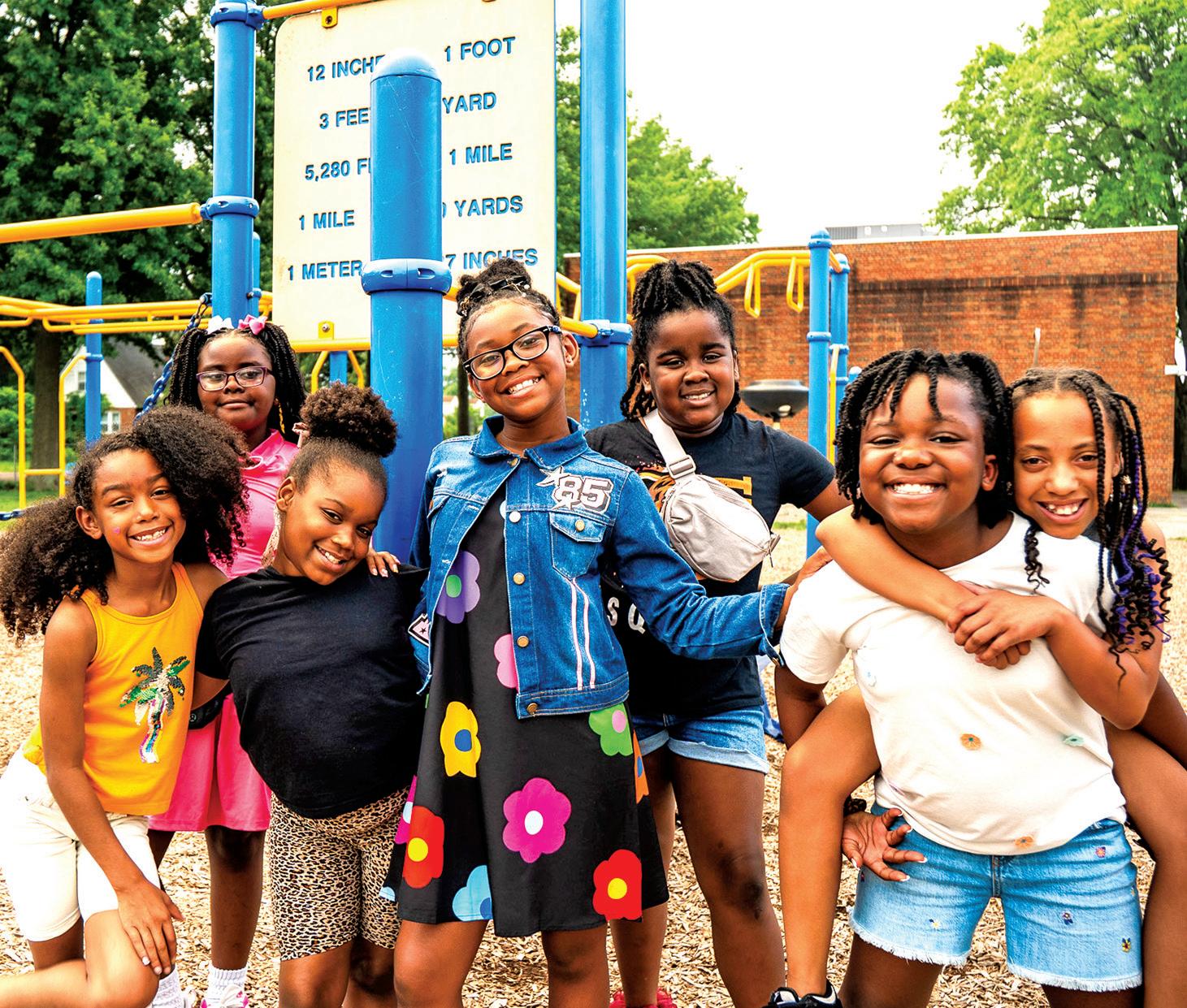
Forest Lake Tennis and Swim Club
Website: https://forestlaketennisclub.com/summer-junior-camp/ Phone: 314-878-2722
Address: 1012 N. Woods Mill Rd. Chesterfield, MO 63017
Camp Description: Forest Lake is offering tennis camps by the week for students indoors on our air-conditioned courts. We will have tennis instruction as well as games to keep your child entertained and to learn a life-long skill.
Age Range: 6-14
Cost Range: $295
Foundry Art Centre Website: https:// foundryartcentre.org/ kids-workshops Phone: 636-255-0270
Address:
520 N. Main Center St. Charles, MO 63301
Camp Description: The Foundry Art Centre connects youth with the arts through creative opportunitites and a varity of themes!
Age Range: 6-16
Cost Range: $235
Gateway Region YMCA
Website: https://gwrymca. org/summer-camp Phone: 314-436-1177
Camp Description: Our age-tailored adventures are designed for preschoolers, teens, and everyone in between. Summer Day Camp at the Y provides a fun, safe experience for kids to learn new skills, build self-confidence, and make lasting friendships. Camps are offered at 22 Y locations and sites throughout St. Louis and the Metro East.
Age Range: 3-15
Cost Range: $50-$335
Gateway Writing Project Website: http://www.bit. ly/checkoutgwp Address: One University Blvd., 302 Marillac Hall, St. Louis, MO 63121
Camp Description: Writers@Play is a oneweek summer writing camp focusing on writing, exploring, and creative building for students entering 6, 7, or 8th grades.
Age Range: 11-14
Cost Range: $350
Gene Slay’s Girls and Boys Club Website: https:// www.gsgbcstl.org/ Phone: 314-772-5661
Address:
2524 S 11th Street, St. Louis, MO 63104
Camp Description: 8 weeks of summer fun for kids & teens from 6 - 16. Choose activities according to your interests, from swimming to art to outdoor adventure, and combat summer learning loss with academic enrichment.
A Place To Go...
A Way To Grow. Age Range: 6-16
Cost Range: $200-$360
Gifted Resource Council Website: https:// giftedresourcecouncil.org/ Phone: 314-962-5920
Address: 10425 Old Olive Street Rd. LL1
St. Louis, MO 63141
Camp Description: GRC’s Summer Academies are two week hands-on camps covering a variety of topics for bright and gifted kids finishing K - 8th grade.
Age Range: 6-14
Cost Range: $540-$550
Girl Scouts of Eastern Missouri Website: https://www. girlscoutsem.org
Phone: 314-590-2300
Address: 2300 Ball Drive
St. Louis, MO 63146
Camp Description: Camping for girls in grades pre-k through 12th.
Camp Description: Whether your girl is a first-time camper or a seasoned pro, our activities are designed to support girls’ development in a welcoming and inclusive environment. For questions, please contact 314400-4600. Financial aid available.
Age Range: 4-18
Cost Range: $30-$1,600
Girls Incorporated of St. Louis Website: https://www. girlsincstl.org/ Phone: 314-385-8088
Address: 3801 Nelson Dr. St. Louis, MO 63121
Camp Description: Girls Inc. Extended Learning Program provides a fun, safe, environment for kids to learn new skills, make lasting friendships and build self-confidence.
Age Range: 5-12
Cost Range: $550
Grand Center Arts Academy Website: https://www.grandcenterartsacademy.org/apps/ pages/summerartscamp Phone: 314-533-1791
Address:
711 N. Grand Ave. St. Louis, MO 63103
Camp Description: Grand Center Arts Academy’s summer arts camp is a one-of-a-kind opportunity for students to explore their creativity via vocal music, theater, dance and visual arts. Each week culminates with an Arts Camp Showcase for families.
Age Range: 10-15
Cost Range: $40
Greater St. Louis Area Scouting Website: https://stlbsa.org
Phone: 314-361-0600
Address: 4568 West Pine Blvd St. Louis, MO 63108
Camp Description: Scouting inspires kids to explore and learn about the world, making a positive impact that gives them the confidence to
succeed in their futures.
Age Range: 6-18
Cost Range: $75-$300
This Camp Guide was produced in partnership with Blueprint4, a free database of St. Louis-area out-ofschool programs. To find additional information about these summer programs and many more, visit blueprint4.com.
HollaBack STL @ UMSL-MIMH Website: https://www. hollabackstl.org/ Phone: 314-516-5212
Address: 8225 Florissant Rd., Ste. 9 St. Louis, MO 63121
Camp Description: Free 2-Day Summer Academy for 9th - 12th graders focusing on healthy life skills, substance misuse prevention education, and mental health promotion!
Age Range: 14-19
Cost Range: It’s free!
Humane Society of Missouri Website: https://www.hsmo.org/ Phone: 314-951-1535
Address: 1201 Macklind Avenue, St. Louis, MO 63110
Camp Description: Join us as we celebrate ALL animals, ALL week long! Engage in fun interactive games and activities, meet animal experts and ambassadors and put our compassion into action through service projects that benefit animals.
Age Range: 6-14
Cost Range: $350
i9 Sports Website: https://www. i9sports.com/ Phone: 314-782-1780
Address: 12545 Fee Fee
Rd St. Louis, MO 63146
Camp Description: We
offer recreational sports camps and clinics for kids in today’s most popular sports such as flag football, soccer, basketball, baseball, lacrosse and volleyball. Multiple STL-area locations.
Age Range: 4-12
Cost Range: $110-$170
Indian Hills Swim Club Summer Camp Website: https://indianhillsswimclub.com/ Phone: 314-651-9790
Address: 4 210 Lasata Drive, St. Louis, MO 63123
Camp Description: At IHSC camp, campers receive group swim lessons every morning. They have FUN through participation in a variety of activities including arts and crafts, sports, games and special events.
Age Range: 5-14
Cost Range: $220-$320
Junior Achievement of Greater St. Louis, Inc. Website: https://www. juniorachievement.org/ web/ja-gstlouis/ summer-camps Phone: 636-728-0707
Address: 17339 N Outer 40 Rd., Chesterfield, MO 63005
Camp Description: If your child is creative and has the entrepreneurial spirit, JA might be just the place to nurture that talent! Join us for a oneweek summer camp geared toward developing future leaders, business professionals and entrepreneurs.
Age Range: 9-13
Cost Range: $300
Kitchen Conservatory Website: https://kitchenconservatory.com/ Cooking-Classes.aspx?price=5
Phone: 314-862-2665
Address: 9011 Manchester Road St. Louis, MO 63144
Camp Description: For aspiring chefs, children from ages 7 to 11. Enjoy a three-day culinary extravaganza learning techniques, skills, and lots of great eats.
Age Range: 7-11
Cost Range: $195
Larry Hughes Summer Basketball Camp Website: https://www. lhbastl.com/ Phone: 855-678-7843
Address: 140 Long Road Suite 123 Chesterfield, MO 63005
Camp Description: Whether you’re brand new to the game of basketball or you’re an experienced player, the Larry Hughes Basketball Academy gives you an opportunity to improve your skills while having fun and making friends.
Age Range: 7-13
Cost Range: $249
Laumeier Sculpture Park Art Camp Website: https://www. laumeiersculpturepark.org/ education-programs Phone: 314-615-5268
Address: 12580 Rott Rd. St. Louis, MO 63127
Camp Description: Laumeier’s education programs are designed for audiences with diverse interests in art, creativity, nature, recreation and more.
Age Range: 3-18
Cost Range: $25-$2,700
LEAD STL Website: https://www. leadstl.org/camp Phone: 314-354-8236
Address: P.O. Box 63215 St. Louis, MO 63163
Camp Description: Camp LEAD is a summer day camp for rising 6th-8th graders designed to spark curiosity, build confidence, and develop young leaders committed to social justice and community change. Financial aid available. Age Range: 11-14 Cost Range: $350
LifeBridge Partnership Website: https://www.lifebridgestl.org/ Phone: 314-701-7264
Address: 11457 Olde Cabin Rd. Suite 235 St. Louis, MO 63141
Camp Description: Join Lifebridge Partnership for a summer adventure where campers with an IDD diagnosis engage in activities that encourage creativity, indepedence, and teamwork. Scholarships are available. Age Range: 7-21
Cost Range: $150
Mad Science St. Louis Website: https://stlouis. madscience.org/parents-register-c.aspx Phone: 314-991-800
Address: 8420 Olive Blvd Suite R St. Louis, MO 63132
Camp Description: Kids, get ready to explore the world of science this summer! It’s so much fun, they won’t realize they are learning! Our unique
Camps,

Girls participating in summer camp at Boys & Girls Clubs of Greater St. Louis.
Photo courtesy of Blueprint4
Camps
approach gives children a solid scientific foundation through hands-on activities and spectacular demonstrations.
Age Range: 5-12
Cost Range: $125-$365
Maryville University
Website: https://www. maryville.edu/summerprograms/
Phone: 800-627-9855
Address: 650 Maryville University Dr Creve Coeur, MO 63141
Camp Description:
From sports to science, Maryville offers a wide range of fun summer camps youth and college-prep programs for teens! Enjoy hands-on, creative experiences with cutting-edge technologies Includes all aspects of Science, Technology, Engineering, Art, and Math (STEAM).
Age Range: 4-18
Cost Range: $75-$700
Metro Theater Company Summer Camps Website: https://www. metroplays.org/
Phone: 314-932-7414
Address: 3311 Washington Avenue St. Louis, MO 63103
Camp Description:
Whether it’s playing with storytelling through movement or music or learning how to audition for a play, MTC’s professional teaching artists bring fun and growth through the arts to campers of all ages.
Age Range: 4-18
Cost Range: $240-$575
Mrs. Roam’s Art Camp Website: https://www. rebeccaroam.com/camps
Phone: 714-494-3500
Address: P.O. Box
300243 University City, MO 63130
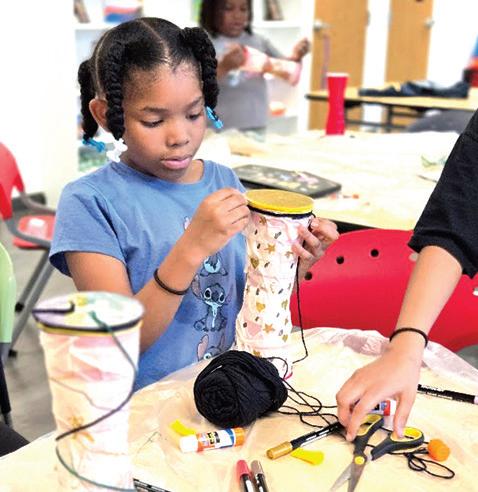
Camp Description: Enjoy painting, collage, sculpture, watercolors, oil pastels and mixed media lessons, inspiring students to draw on their instinctive creativity to produce dazzling works of art!
Age Range: 4-18
Cost Range: $0-$300
Olympia Gymnastics Website: https://olym-
piagymnastics.org/
Phone: 314-291-7664
Address: 7 metro area
locations
Camp Description: Day camps for children with weekly themes. Our camps ignite curiosity and foster exploration, led by our trained and safety-certified staff who love working with children.
Age Range: 5-12
Cost Range: $200-$325
Opera Theatre of Saint Louis Website: http:// experienceopera.org/ SummerCamps
Phone: 314-961-0171
Address: 210 Hazel Ave. St. Louis, MO 63119
Camp Description: Experience the magic of opera at Opera Theatre’s summer music camps for St. Louis students.
Age Range: 8-18
Cost Range: $0-$195
Parks & RecBrentwood
Website: https://www. brentwoodmo.org/ 1562/Programs
Phone: 314-963-8680
Address:
2505 S. Brentwood Blvd., Brentwood, MO 63144
Camp Description: The mission of Brentwood Parks and Recreation is to provide exceptional spaces and opportunities for a sustainable future that best serve the evolving needs of our community. 5-10
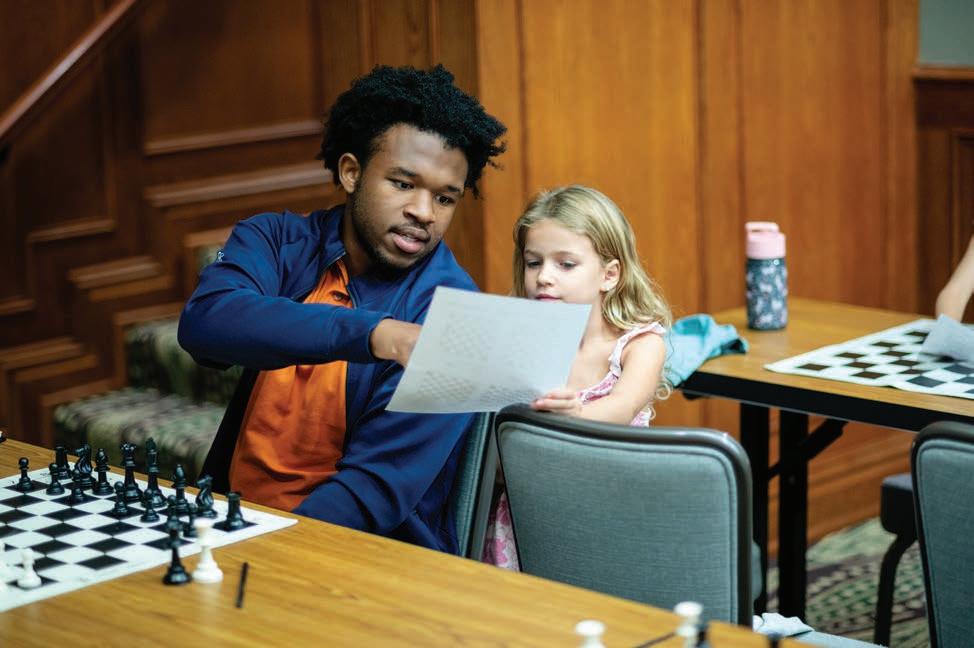
$350
Parks & Rec - Bridgeton https://bridgetonmo.com/391/Summer314-739-5599 4201 Fee Fee
Rd Bridgeton, MO 63044
Camp Description: The Bridgeton Parks and Recreation Department offers a traditional-style outdoor day camp program for kids ages 5-12 years. The camp covers a wide range of activities including arts & crafts, swimming, sports, games and more. 5-12
$150-$160
Parks & Rec - Ferguson https://www. fergusoncity.com/588/ Programs-Activities
Phone: 314-521-4661
Address: 1050 Smith Ave. Ferguson, MO 63135

Camp Description: Join us all summer long for our action-packed summer camp experience where kids will learn new sports, experience the outdoors, go swimming twice a week, go on field trips, and so much more! Every week has a different theme. Age Range: 5-13
Cost Range: $105
This Camp Guide was produced in partnership with Blueprint4, a free database of St. Louis-area out-of-school programs. To find additional infor-
Cost Range: $135-$280
Pura Vida Academic Champions Website: https://pvachamp.org/ Phone: 314-393-8536
Address: 3731 Laclede
Ave St. Louis, MO 63108
Camp Description: CampVibez is a high-energy summer camp for students in grades 3—8 focused on hands-on STEM learning, health and nutrition, immersive Spanish and Latin dance, and skill-based soccer development led by collegiate mentors. Age Range: 8-14
Cost Range: $300-$765
Saint Louis Chess Club
Website: https://saintlouischessclub.org/education/ chess-summer-camp/ Phone: 314-361-2437
Address: 4657 Maryland Avenue St. Louis, MO 63108
Camp Description: Chess is a valuable educational tool that helps teach important lessons including problem solving, critical thinking, sportsmanship, patience and goal setting — plus, it is fun!
Age Range: 6-14
Cost Range: $300-$475
Saint Louis Dance Theatre Website: https://www. saintlouisdancetheatre.org/ Phone: 314-338-4058
Address: 3305 Washington Avenue St. Louis, MO 63103
mation about these summer programs and many more, visit blueprint4.com.
Parks & RecHazelwood Website: https://secure. rec1.com/MO/hazelwood-mo/catalog
Phone: 314-731-0980
Address: 1186 Teson Road, Hazelwood, MO 63042
Camp Description: Participants will enjoy themed activities, games, crafts, swimming, field trips and more!
Age Range: 6-11
Cost Range: $94-$115
Parks & Rec - Olivette Website: https://www. olivetteparksandrec.com/ programs.html Phone: 314-991-1249
Address: 1200 N. Warson Rd. Olivette, MO 63132
Camp Description: Welcome to Summer Camp at Five Oaks! Prepare for an exciting adventure with new friends, fun games, and unforgettable experiences. Age Range: 5-12
Cost Range: $214-$360
Parks & RecSt. Charles Website: https:// stcharlesparks.com/programs/summer-camps/ Phone: 636-949-3372
Address: 1900 Randolph St St. Charles, MO 63301
Camp Description: Our camps are designed to provide your child with a unique experience in fun environment that will help them create memories and build new friendships! Age Range: 4-21
Cost Range: $0-$200
Parks & RecSt. Louis County Phone: 314-615-4386
Address: 41 S. Central Ave. Clayton, MO 63105
Camp Description: St. Louis County Parks and Recreation offers over 400 programs and events each year! Age Range: 5-15
Cost Range: $136-$360
Prickly Pear Nature School
Website: https://www. pricklypearnatureschool. com/summer-camp
Address: 3317 Humphrey
St. St. Louis, MO 63118
Camp Description: Trees and creeks! Bikes! Muddy confectionary! Arts and crafts! These are the hallmarks of summer. At Prickly Pear— a nature focused micro school in St. Louis City— we enjoy all this and more! Age Range: 5-8
Camp Description: Experience the highest quality dance training in the heart of St. Louis!
Age Range: 10 + Cost Range: $895
Saint Louis Public Schools
Website: https://www. slps.org/campslps
Phone: 314-231-3720
Address: 801 N. 11th Street St. Louis, MO 63101
Camp Description: Saint Louis Public Schools offers summer learning opportunities for all grade levels. During the 4-week session, elementary and middle school students engage in learning and participate in project-based experiences. At the high school level, students can earn credit.
Age Range: 3-18
Cost Range: It’s free!
Saint Louis Zoo
Website: https://stlzoo. org/education/education-programs Phone: 314-646-4544
Address: 1 Government Drive St. Louis, MO 63110
Camp Description: The Saint Louis Zoo offers various camp programs for children focusing on a variety of animal based topics. We accept scholarship applications until April 1st
Age Range: 5-15
Cost Range: $315-$385
Sherwood Forest Camp
Website: https://www. sherwoodforeststl.org/ Phone: 314-644-3322
Address: 12430 Tesson Ferry Rd Suite 304, St. Louis, MO 63128
Camp Description: By balancing traditional camp adventures with yearround support, Sherwood Forest connects with, educates, and inspires youth of the Greater St. Louis area from under-served and under-resourced communities.
Age Range: 6-15
Cost Range: $35-$75
St. Charles Community College Summer Camp
Website: https://www. stchas.edu/workforce-community/community-education/summer-camps.php
Phone: 636-922-8233
Address: 4601 Mid Rivers Mall Drive Cottleville, MO 63376
Camp Description: Immerse your child in a world of excitement, creativity, and friendship. Adventure awaits! Age Range: 5-14
Cost Range: $165-$355
St. Louis Arc
Website: https://www. slarc.org
Phone: 314-569-2211
Address: 1177 North Warson Road St. Louis, MO 63132
Camp Description: An 8-week summer project serving teens ages 13-20 in St. Louis City & County to gain employment relationship skills through volunteer work.
Age Range: 13-20
Cost Range: $400
St. Louis Artists’ Guild & Galleries
Website: http://www. stlouisartistsguild.org/ Phone: 314-727-6266
Address: 12 N Jackson Ave St. Louis, MO 63105
Camp Description: Camp STLAG allow students to take art classes that develop their abilities and imagination as they push themselves beyond what they knew they were capable of achieving!
Age Range: 6-13
Cost Range: $160-$210
St. Louis Public Library
Website: https://slpl.jumbula.com/home Phone: 314-880-8169
Address: 1415 Olive Street St. Louis, MO 63103
Camp Description: St. Louis Public Library offers free week-long summer camps for kids and teens!
Registration is required and space is limited. Limit two camps per child.
Age Range: 0-18
Cost Range: It’s free!
St. Louis Shakespeare Festival Website: https://stlshakes. org/programs/camp/ Phone: 314-531-9800
Address: 3333 Washington Ave. St. Louis, MO 63103
Camp Description: The Festival’s summer intensives train passionate young actors in professional Shakespeare!
Age Range: 9-19
Cost Range: $850-$1,500
Summer at SLU
Website: https://www.slu. edu/summer-and-extended-studies/summer-camps/ index.php
Phone: 314-977-3534
Address: 3840 Lindell Boulevard St. Louis, MO 63108
Camp Description: From diving into creative arts to immersive experiences in our STEM programs, there is bound to be something that sparks your family’s interest and leads to their best summer yet.
Age Range: 4-18
Cost Range: $0-$650
Sunnyhill Adventures
Website: https://www.sunnyhillinc.org/adventures Phone: 636-274-9044
Address: 6555 Sunlit Way
Dittmer, MO 63023
Camp Description:
Inclusive outdoor adventure camp offering adaptive recreation, team-building, and nature exploration for all ages and abilities specialized in supporting individuals diagnosed with developmental disabilities!
Age Range: 8 +
Cost Range: $1,300
Sweet & Sassy
Website: https://www. sweetandsassy.com/st-louis/in-store-events/
Phone: 314-909-1901
Address: 17B West County Center St. Louis, MO 63131
Camp Description: Glam Camps at Sweet & Sassy are the perfect way for kids to explore their creativity with a variety of fun activities, such as manicures, pedicures, facials, make-up application and hairstyling.
Age Range: 3-18
Cost Range: $325
Taste Buds Kitchen Website: https://tastebudskitchen.com/ofallon/kidscooking-camps/
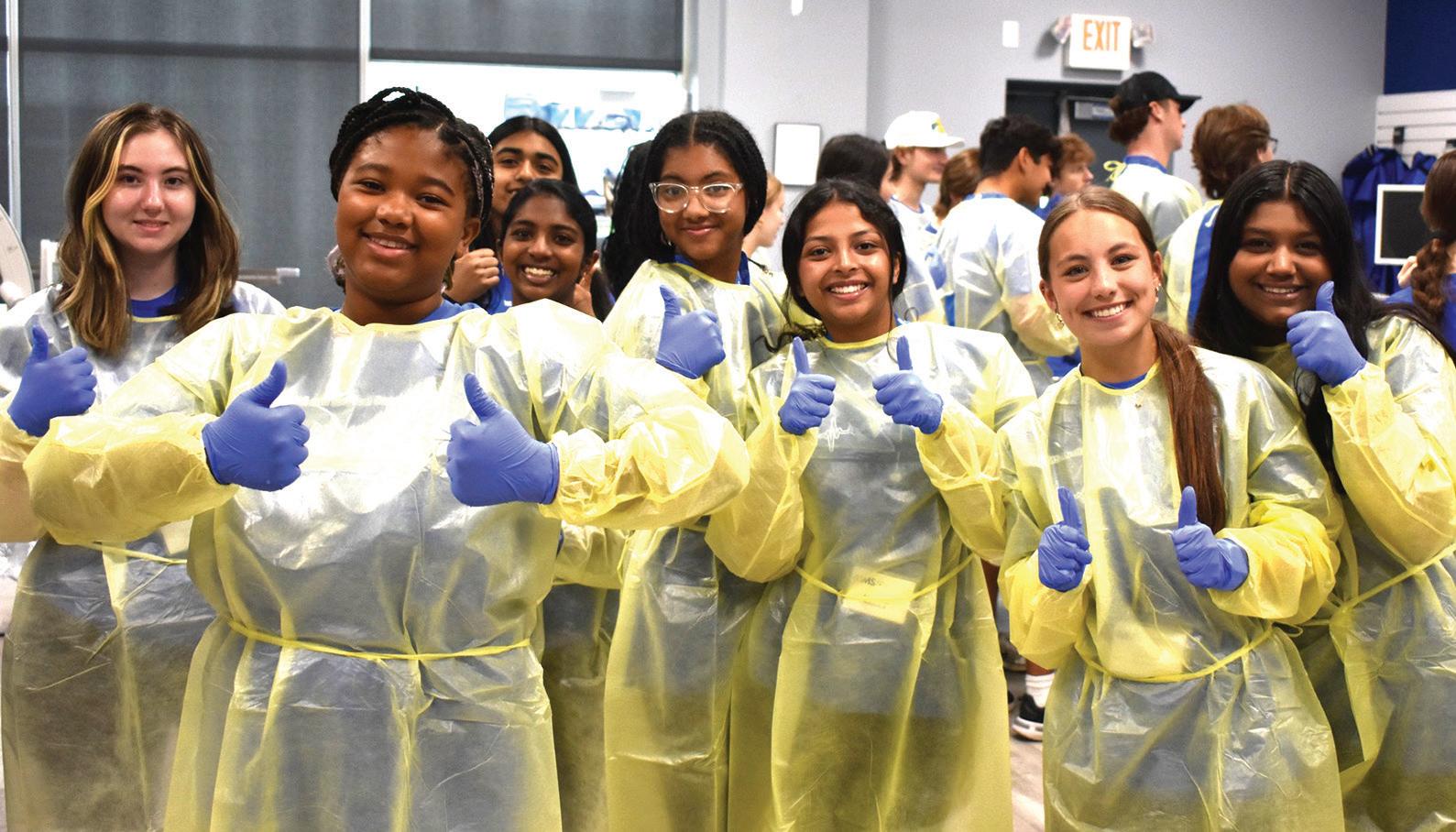
Phone: 636-224-8254
Address: 367 Winding Woods Dr Center
O’Fallon, MO 63366
Camp Description: Taste Buds Kitchen is the premier culinary entertainment experience for kids. We specialize in fresh and unique cooking camps that engage and delight youth.
Age Range: 4-18
Cost Range: $260-$540
The Coder School Website: https://www.thecoderschool.com/locations/ westcounty/camps/ Phone: 636-220-3002
Address: 157 Lamp and Lantern Village Chesterfield, MO 63017
Camp Description: Let’s get ready for summer camps! Our Summer Camps will be a mix of a week-long coding project, mini lessons, coding challenges, tech talks, interactive games, screen-free breaks and project presentations on the last day of camp!
Age Range: 8-18
Cost Range: $399
The Green Center Website: https://www. thegreencenter.org/ Phone: 314-725-8314
Address: 8025 Blackberry Ave St. Louis, MO 63130
Camp Description:
The Green Center is an arts and environmental education organization dedicated to helping people connect with the natural world through: Hands-on Experiences Restoring Native Habitats —Encouraging Artistic Expression Inspired by Nature
Age Range: Cost Range:
The J Day Camps Website: https://jccstl. com/camps-afterschool/jday-camps/ Phone: 314-442-3263
Address: 2 Millstone Campus Drive St. Louis, MO 63146
Camp Description: J Day Camps offer an unforgettable summer experience for campers ages 3 to grade 7, where curiosity, confidence, and joyful exploration come to life. Age Range: 5-13
Cost Range: $180- $225
The Magic House @ MADE Website: https://www. magichouse.org/madehome/made-summer-camp/ Phone: 314-328-0561
Address: 5127 Delmar Blvd. St. Louis, MO 63108
Camp Description: This summer, MADE for Kids is the perfect place for young artists, designers, and makers! Kids will explore their creativity through hands-on projects, using tools like laser cutters and 3D printers to bring their ideas to life. Age Range: 6-13
Cost Range: $325
The Novel Neighbor Website: https://thenovelneighbor.com/
Phone: 314-738-9384
Address: 7905 Big Bend Blvd Webster Groves, MO 63119
Camp Description: Book themed fun with arts and crafts for ages 5-15
Age Range: 5-12
Cost Range: $315-$342
TNT Painting Palooza Website: https://tnt-painting-palooza.square.site/ Phone: 314-704-6516
Address: 11520 Saint Charles Rock Road Suite 200 Bridgeton, MO 63044
Camp Description: TNT Painting Palooza Kidz offers high-quality, themed indoor summer art camps where children explore painting, drawing, and hands-on creative projects taught by an experienced certified K—12 art educator.
Age Range: 6-12
Cost Range: $250
UMSL Bridge Program Website: https://www. umsl.edu/precollegiate/ Phone: 314-516-5196
Address: One University Blvd 107 Lucas Hall St. Louis, MO 63121
Camp Description: Our Summer Academy offers academic enrichment courses in mathematics, science, written and oral communication, career research, personal and professional development and activities that support college planning. Plus, check out the Succeed Summer Enrichment Camp for neurodiverse teens and the Department of music pre-college programs.
Age Range: 11-18
Cost Range: It’s free!
UMSL U-CREATE Summer Camp Website: https://www. umsl.edu/campusrecreation/youthprograms/ucreatesummercamp.html
Phone: 314- 516-2348
Address: 1 University Blvd. 229 Recreation and Wellness Center St. Louis, MO 63121
Camp Description: At U-CREATE Summer Camp, campers can expect an array of sports, recreational activities, crafts, and team building challenges that meet the diverse interests and capabilities of our campers.
Age Range: 6-12
Cost Range: $170
Upper Limits Rock Climbing Camps Website: https://www. upperlimits.com
Phone: 314-241-7625
Address: 17375 Edison Ave. Chesterfield, MO 63005
Camp Description:
Upper Limits Camps are a great way to keep your kids active and engaged when school is out! Our programs are designed to teach kids about rock climbing. 2 locations in Chesterfield and Maryland Heights.
Age Range: 7-15
Cost Range: $99-$399
Vetta Sports Website: http:// VettaSports.com/camp Phone: 636-842-3111
Address: 5 locations across the St. Louis area
Camp Description: Discover a variety of activities, including sports such as soccer, basketball, tennis, racquetball, and kickball. Campers learn innovative team-building skills, play archery tag, and get creative with arts & crafts.
Age Range: 5 - 12
Cost Range: $168-$245
WashU Pre-College Programs
Website: https://precollege.wustl.edu/ Phone: 314-935-4807
Address: One Brookings Drive St. Louis, MO 63130
Camp Description: Washington University
Programs provide stu-
dents the opportunity to challenge themselves in a supportive atmosphere. Discover your passion, explore academic interests, and prepare for college success! Check out additional Wash U Pre-College Programs in medicine, arts, and business. Age Range: 13-18
Cost Range: $885-$4,075
Webster University Website: https://webster. edu/summer/ Phone: 800-981-9801
Address: 470 E. Lockwood Ave. Webster Groves, MO 63119
Camp Description: With nearly 30 offerings for various ages and interest, campers have an opportunity to learn from Webster University faculty while having fun! Age Range: 11-19
Cost Range: $295-$475
Yucandu Art Studio
Website: https://www. yucandu.com/camps/ Phone: 314-963-4400
Address: 20 Allen Avenue Suite 110 Webster Groves, MO 63119
Camp Description: At Yucandu Art Studio, your child gets more than just art—they gain confidence, focus, and the chance to really connect with others through creativity! Age Range: 4-15
Cost Range: $220-$325
This Camp Guide was produced in partnership with Blueprint4, a free database of St. Louis-area out-ofschool programs. To find additional information about these summer programs and many more, visit blueprint4.com.

Campers having fun at Summer at SLU where participants will do a variety of things from diving into creative arts to immersive experiences in the STEM programs.
Photo courtesy of Blueprint4
From lament to action: Baltimore church backs racial repair
By Rev. Dorothy S. Boulware
Word In Black
Five years before the murder of George Floyd on a Minneapolis street corner inspired worldwide demands for justice, a young Black man named Freddie Gray died in the back of a Baltimore police van. His death triggered days of civil unrest, revealing the Black community’s anger about systemic racism and chronic inequality that had been simmering just below the surface.
In the aftermath of the protests, as elected leaders debated the path forward for a fractured city, the local Presbyterian clergy decided to lead the way. It created the Reparative Justice Initiative, an ambitious plan to dismantle deep-seated bias and poverty that had hamstrung generations of Black Baltimoreans.
The effort would later help push the Presbyterian Church (U.S.A.) toward what the church’s 22nd General Assembly later called “radical atonement and reconciliation.” The proposal, originating in Baltimore, laid groundwork for a broader denominational reckoning with racism.
The Cross and the Lynching Tree
Momentum grew after Dr. J. Herbert Nelson II was elected
the church’s stated clerk and elevated the Matthew 25 movement, which calls churches to live out their faith by dismantling structural racism and addressing systemic poverty.
The following year, the denomination launched a study of “The Cross and the Lynching Tree,” a book by Black liberation theologian Dr. James Cone. That theological deep dive led to listening sessions and the formation of a Dismantling Racism Team — with Baltimore among the first presbyteries to sign on.
According to the presbytery’s website, “The Dismantling Racism Team offers at least 2 workshops per year and is open to people of all racial and ethnic backgrounds.”
As a majority-white presbytery, it notes that some sessions may be organized by affinity groups, while others are open to ruling elders and congregational leaders seeking to “strengthen their own antiracist leadership.”
Rev. Hal Bennett, who joined the effort in 2020 after “receiving a call from Grove Presbyterian Church,” says that year also marked the creation of a Reparative Justice Working Group.
Funding to Rebuild
The presbytery went further, “allocating 15% of year-end non-committed funds totaling $2,274,000 for reparative jus-

tice, payable in two tranches contingent on standing up a governing board; specified to be composed of African-American members only to serve Black churches and communities in Baltimore.”
But Bennett says the larger challenge is cultural and generational.
50 and 60,” the church is “losing, not gaining,” Bennett says.

“The real job,” he says, “is to train all the ministers and elders.”
With Presbyterian membership in Baltimore hovering around 12,000 and “the average age being somewhere between

“Our young people did not come back to the church,” he says. “They went off and found other non-denominations.”
To address ministry gaps in the city, the presbytery created the LOOP, a group focused on organizing and supporting inner-city churches within the Presbyterian structure.
“It hasn’t been an easy fight,” Bennett says, underscoring that repentance, reparations and racial reconciliation inside historic
Than You Think
I used to believe great leadership came from polished stories. From people who seemed untouched by the messiness of life. From leaders who stood tall without ever having been knocked down.
But I’ve learned something very different along the way.
The leaders who rise — the ones who lead with clarity, courage, and compassion — are the ones who carry scars.
Not because scars make you special, but because scars make you true
A scar means you survived something that could have taken you out.
A scar means you wrestled with your humanity and didn’t lose your hope.
A scar means God met you in a place of pain and brought you through — not untouched, but transformed.
Leadership that has never been broken often lacks empathy. It can be brittle. Defensive. Detached.
But leadership that has been shaped by suffering? That leadership carries weight differently. It listens differently. It sees differently. It builds differently.
Your scars become wisdom. They become discernment. They become compassion wrapped in authority.
They become a reminder that healing is possible, transformation is real, and God still raises people from what tried to bury them.
white denominations remain ongoing work — not settled triumphs.
Word In Black recently interviewed Bennett about the initiative. The interview has been edited for length and clarity.
Word in Black: Are you still pastoring full-time?
Hal Bennett: Right now, I’m serving as a bridge pastor, a transition pastor. I have a couple more years that I can preach before I turn 82. I don’t think I can ever retire. I’ve retired twice and so I don’t think I’m going to retire from God’s job.
WIB: How were the particular churches selected?
Bennett: They did some case studies and Knox Presbyterian was one of those selected. You’re familiar with them? But probably not with their story. So when Knox was started, they were forced to take a dilapidated old building that belonged to a white congregation during the white flight. Not only were they forced to take it, to make repairs, the Presbyterian offered them a higher interest rate, okay? And the church that moved to the county got an interest-free loan.
WIB: So what are the great things that could be done with this money?
Bennett: There are all kinds of possibilities. One would be to invest the money and live on the interest. Invest the principal, use interest for programs and delay large distributions for up to five years to ensure sustainable impact.
WIB: Will you post for prospective board members and hope the right people come along?
Bennett: Once approved by the Dismantling Racism Team, the call for members will go to the Reparative Justice Team for approval. Then it will be put on the website of the Presbytery of Baltimore by May 2026, at which time BIPOC candidates will be invited to apply.
Here’s the truth we rarely admit:
The scar isn’t the weakness. The scar is the credential.
Because scars don’t just tell what happened — they tell what didn’t happen.
They testify that trauma didn’t have the final word. They prove resilience you didn’t know you had.
They show that the enemy’s plan failed.
They reveal the grace that sustained you and the God who never left.
So when people say, “I don’t know if I’m strong enough to lead,” I often respond, “You’re stronger than you think. Look at your scars.”
Your scars aren’t disqualifiers. They’re indicators.
They remind you that you’ve already survived worse than what you’re facing now.
They remind you that you’ve been carried before.
They remind you that resurrection isn’t just a story God wrote — it’s a story He’s still writing.
You rise differently when you rise with scars. You lead differently when you don’t hide the places where God healed you. And people follow differently when they know your strength is rooted in truth, not performance.
Your scars aren’t the end of your story. They’re the evidence of the rise.
Reflection Question: Which scar in your life carries a lesson your leadership needs today?
For more, visit OrvinKimbrough.com or MidwestBankCentre.com.
Rising With Scars: Why Your Leadership Is Stronger
The Next MOVE