
‘We don’t define it as progress’
By Ashley Winters St. Louis American
Residents push for faster recovery nearly a year after tornado
The meeting came as key forms of relief remain uncertain or delayed.
Shouts from residents echoed through the room as community members described what they called a lack of response following last spring’s devastative tornado, with one attendee calling the recovery effort “horrible.”
More than 300 residents, organizers and local leaders gathered Saturday at the Northside Movement Center, voicing frustration over what they see as slow and uneven rebuilding nearly a
year after the May 16 tornado tore through North St. Louis. The meeting came as key forms of relief remain uncertain or delayed. A proposed state tax credit aimed at helping tornado survivors cover insurance deductibles and other costs remains in limbo, though some residents can still apply for assistance, St. Louis Public Radio reported Monday. Residents and organizers said the gaps between
unshakable faith
By Kenya Vaughn St. Louis American
The members and guests who packed the pews of Central Baptist Church last Sunday, weren’t simply commemorating a milestone. They gathered because exactly 180 years earlier, 23 free and enslaved African Americans stepped into the Liberty Engine House with nothing but their faith, their courage and a determination to build something slavery could not silence.
On this anniversary morning, the descendants of their faith stood in the sanctuary as living proof that those founders’ prayers did not fall on deaf ears.
“Bound by chains of an unjust social system, they walked through those doors and did something bold — something resistant, something divinely ordained,” said Rev. Dr. Robert C. Scott,
See Church, A10


On this anniversary morning, the descendants of their faith stood in the sanctuary as living proof that those founders’ prayers did not fall on deaf ears.
The AI expansion
As data centers loom, St. Louis confronts energy, equity questions
By Sylvester Brown Jr. St. Louis American
As data center development tied to artificial intelligence expands across Missouri, St. Louis officials are weighing whether to slow that growth locally until clearer rules are in place.
Multiple large data centers are planning to locate in the region, according to Ameren Missouri CEO Marty Lyons, who said some companies have already signed binding agreements. While proposals are spreading into rural counties, only one confirmed project has emerged within the city — a development tied to the Armory site in midtown.
Last month, Alderwoman Alisha Sonnier said she would follow up on concerns raised by residents at a public meet-
Senate
Six years after the 2020 presidential election, President Donald Trump continues to claim the race was marred by voter fraud and election insecurity — assertions that have helped fuel Republican support for the Safeguard American Voter Eligibility, or SAVE Act. Now, as the measure faces long odds in the Senate, critics warn the proposal could make it harder for millions of eligible Americans to vote. Supporters say it is needed to secure elections, though there is no evidence of widespread voter fraud.
SAVE Act, A10

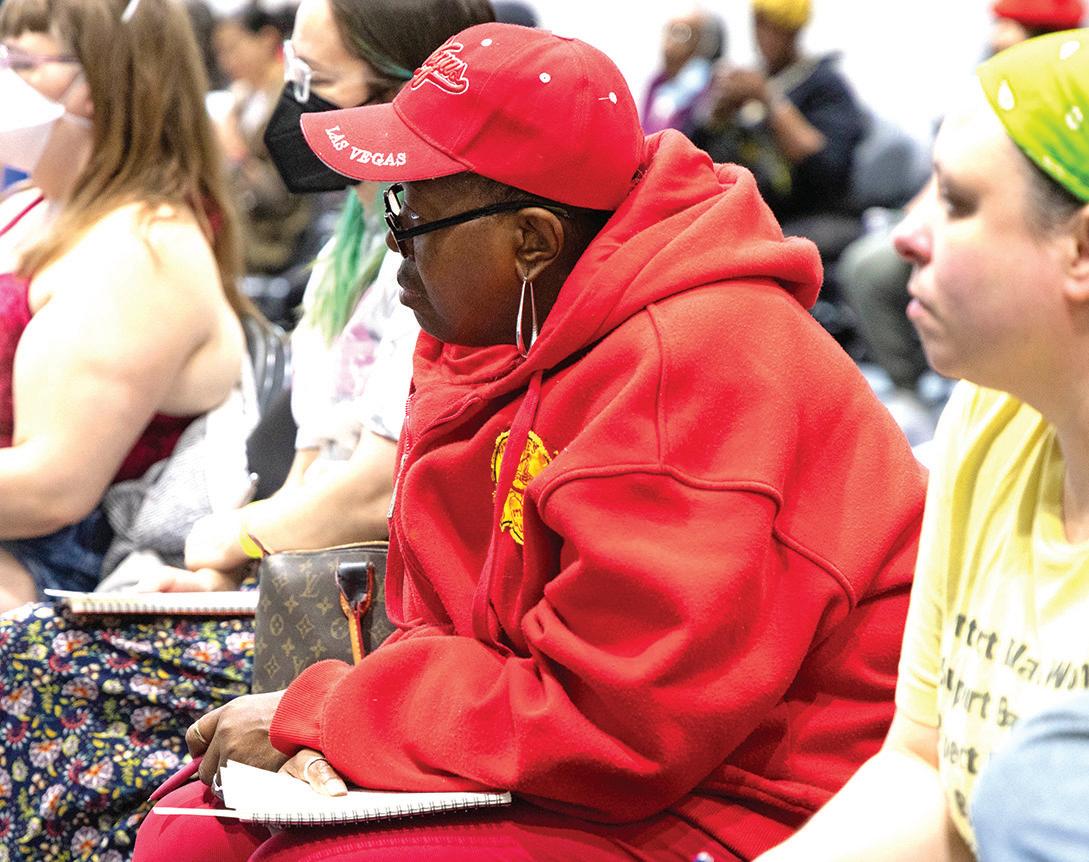
Sylivia Wood Grisby took notes during the March 21, 2026 mass emergency meeting at the Northside Movement Center, as residents gathered to address ongoing recovery efforts following the May 16 EF3 tornado.
Photo by Lawrence Bryant / St. Louis American
By Sylvester Brown Jr. St. Louis American
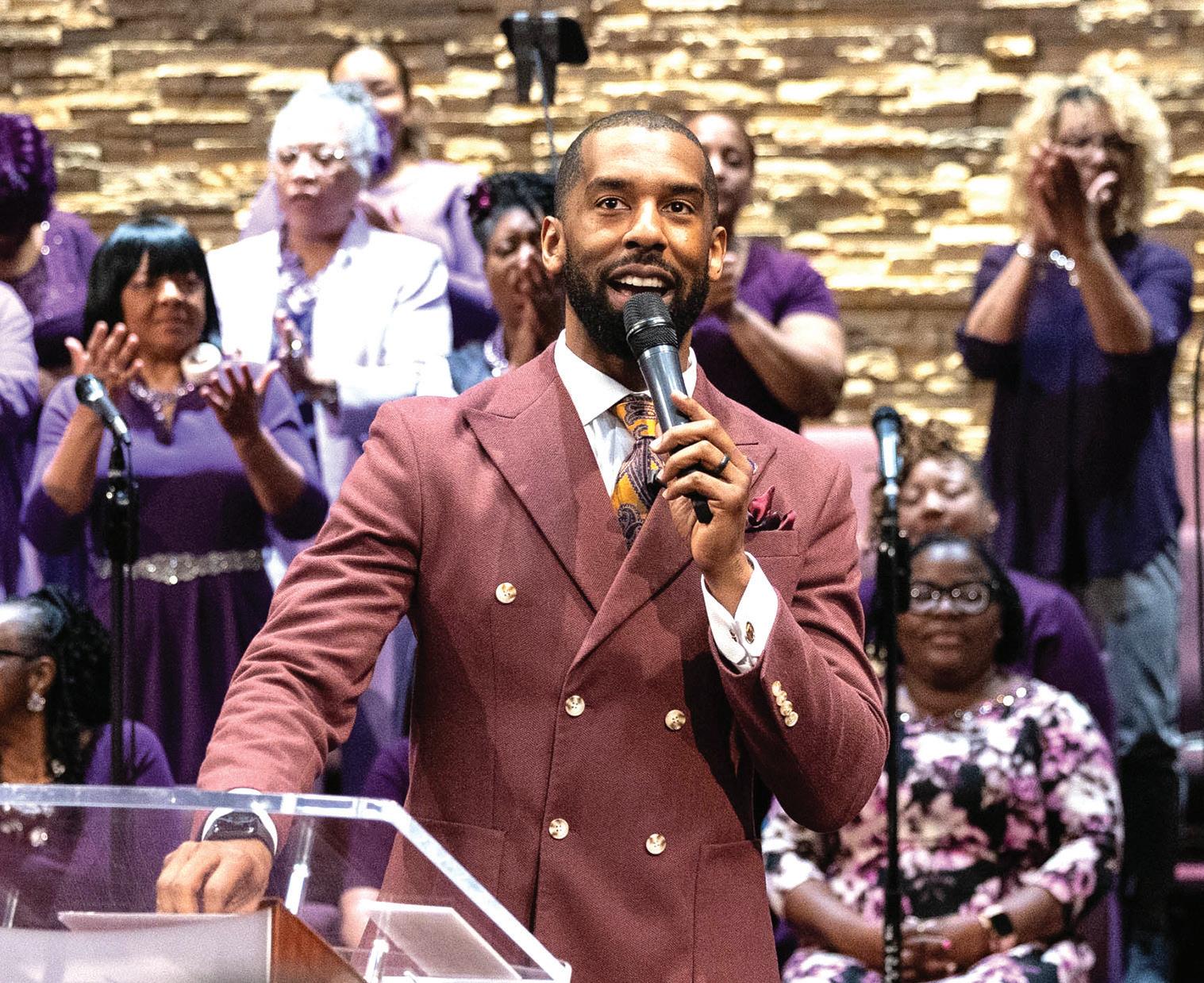
Rev. Dr. Anthony L. Riley, the 14th pastor of Central Baptist Church, speaks during the church’s 180th anniversary service Sunday, Mar. 22.
Photo by Lawrence Bryant / St. Louis American
Guest Editorial Recession has already arrived in Black America
“Policy rollbacks that have removed protections and investments designed to support Black communities … is the regression, combined with economic indicators, particularly unemployment, that would qualify as recessionary if they were applied to the national economy.”
— Monica Mitchell, chief of staff, Joint Center for Political and Economic Studies
By Marc Morial
The revelation that the U.S. economy shed 92,000 jobs in February and now faces its highest unemployment rate in years has rattled economists, many of whom warn the country may be on the brink of a recession.
For Black America, the recession has already arrived.
Even worse, the Black recession isn’t driven by natural market cycles alone. It is the predictable outcome of deliberate policy choices by the Trump administration — choices that have aggressively dismantled the very protections meant to advance equity and stabilize communities historically shut out of opportunity. Not only did the administration take a sledgehammer to federal diversity, equity and inclusion programs on Day One, it has spent the past year slashing agencies that have long served as engines of mobility for Black workers, including the federal civil service. More than 327,000 federal jobs have been eliminated — not through attrition or organizational modernization, but through deliberate cuts that have eroded pathways to the middle class built through generations of civil rights gains.
discrimination from traditional lenders. Removing them does not create a level playing field; it cements an unequal one.
The consequences are measurable and immediate. After reaching an all-time low during the Biden administration, the Black unemployment rate surged to 8.3% by November 2025 — the highest level since the pandemic — and remains more than twice the rate for white Americans.
The Black homeownership rate fell to 43.9% in the first half of 2025, wiping out years of fragile progress and deepening a racial wealth gap that already stands among the most persistent in the country.
Even before the latest jobs report, the Joint Center for Political and Economic Studies had already declared 2025 a “regression and recession” for Black Americans. In its State of the Dream 2026 report, the authors wrote that rather than demonstrating aggressive leadership to dismantle structures of racial inequality, the country is witnessing regressive leadership that is slashing government employment and agencies designed to address predatory economic practices that disproportionately harm Black communities.
The report also notes that the One Big Beautiful Bill Act entrenched permanent tax cuts for high-income households and corporations while reducing investment in poverty-alleviating programs and leaving support for working families stagnant or shrinking.
Policy experts often refer to Black Americans as the “canary in the coal mine” — the first to feel the impact of economic stress. If that analogy holds, the warning is clear: a broader national recession may not be far behind.
By Eric Morrissette
On Saturday, Feb. 28, Americans woke up to find their country at war with Iran. Breaking news alerts carried word that the United States had joined Israel in an unprecedented joint military operation aimed at Iranian targets.
The human cost is already jarring: one week in, Al Jazeera’s live tracker reports more than 1,300 dead in Iran, at least 11 in Israel, nine in Gulf states and six American soldiers.
But for millions of Americans already struggling through an affordability crisis, a different and urgent question is forming: what will this war cost their families at the pump, in the store and in their economic futures?
We know that wars are costly. Having extricated ourselves from protracted Middle East conflicts just three years ago, we have clear reference points that are not reassuring. The Costs of War Project at Brown University’s Watson Institute estimates that from late 2001 through fiscal 2022, the U.S. spent or obligated $8 trillion on post-9/11 wars: $5.8 trillion in direct costs and at least $2.2 trillion in future veterans’ care through 2050. Every dollar in that accounting was a dollar that did not go toward schools, bridges or health care.
oil prices surged sharply to more than $100 a barrel — their highest level in years. As of March 9, gas hit a nationwide average of $3.48 a gallon. When President Trump delivered his State of the Union two weeks ago, gas stood at $2.92, down from $3.11 at his January 2025 inauguration, a benchmark he routinely cited as proof of his economic stewardship. That ground was surrendered in under seven days. Economists estimate that every $10 rise in crude translates to roughly 25 cents at the pump.
And gas pricing is not simply about commutes to school and work. It is about getting goods to consumers, which multiplies inflationary pressure across the entire economy.
Transportation disruption along the Strait of Hormuz is no incidental detail. Nearly 20% of the world’s oil passes through that narrow chokepoint.
History offers three lessons worth holding onto. First, the United States does not have a reliable record of quick exits from Middle East conflicts. What begins as weeks becomes years, and what is promised as surgical becomes protracted.
At the same time, the administration has abandoned federal support for disadvantaged businesses. Critical institutions — among them the Community Development Financial Institutions Fund and the Minority Business Development Agency — have been targeted for defunding or dismantling altogether.
These programs have been lifelines, offering capital and technical assistance to Black entrepreneurs who face entrenched
Acknowledging that Black America is already in recession is not merely a prediction about the future; it is a call to confront what is unfolding in the present. The question now is whether policymakers will heed that warning — or continue to ignore the communities already bearing the brunt of the nation’s economic retreat.
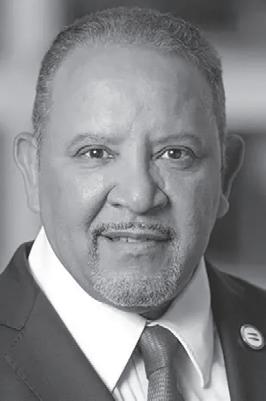
Marc Morial is president and CEO of the National Urban League.

These numbers reflect a long campaign, advocates of this war will say. President Trump has promised resolution in weeks, perhaps months — not years. His supporters point to Venezuela, where a U.S. military operation removed Nicolás Maduro from power, or to the June 2025 strikes on Iran’s nuclear program as models of swift, decisive action. The math tells a different story.
The June 2025 strikes alone cost an estimated $2.04 billion to $2.26 billion, according to the Costs of War Project. Regional operations — including Yemen, sustainment and Israel support — cost $4.8 billion to $7.2 billion.
In total, from October 2023 through September 2025, the U.S. spent between $9.65 billion and $12.07 billion on military activities across the wider Middle East.
The cost of war goes beyond military spending, and Americans are already paying it. Over the course of about a week,
Illinois voters
By Glynda C. Carr
On March 14, Illinois voters did more than choose a nominee for the U.S. Senate. They made clear that the political landscape is changing — and that Black women are at the center of that change.
Juliana Stratton won the Democratic primary with 39.8% of the vote, defeating Raja Krishnamoorthi, who received 33.3%, and Robin Kelly, who earned 18.3%.
If she wins in November, Stratton could become only the sixth Black woman ever elected to the U.S. Senate. She would join Angela Alsobrooks of Maryland and Lisa Blunt Rochester of Delaware.
This race featured two dynamic, qualified Black women leaders: Stratton and Rep. Robin Kelly.
Let’s be clear. The presence of two Black women in this race was not a problem. It was progress.



Second, the financial costs of war consistently exceed early projections; the $8 trillion post-9/11 reckoning was not visible in the confident early days of those campaigns.
Third, the burden of those costs — through inflation, debt, higher prices on everyday goods and lost lives — falls hardest not on those who wage wars. The cost of war falls hardest on those who fill their tanks, buy their groceries and pay their bills: the poor, the underemployed and those least equipped to absorb rising prices and stagnant wages.
Sadly, there is a war that weary Americans are urgently waiting to see fought. It is the war for affordability. Right now, painfully few shots are being fired on that front.
Eric Morrissette is deputy secretary in the Maryland Governor’s Office for Children and a senior fellow at the Joint Center for Political and Economic Studies.
United States. Since then, progress has accelerated, but it remains far too slow.
Laphonza Butler of California, who completed the term of Sen. Dianne Feinstein, along with Alsobrooks and Blunt Rochester, have each added to that legacy, bringing the total number of Black women who have ever served in the Senate to just five. Five.
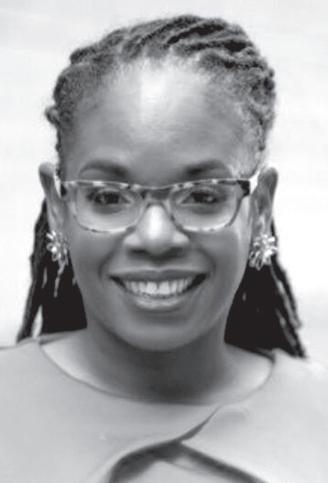
For generations, Black women have been told to wait our turn, to step aside and to make space for others. In Illinois, we saw something different. We saw what it looks like when there is not just one path, but many — when Black women are not competing for a single seat at the table but building a bigger table altogether.
That is what growth looks like.
And it is the direct result of years of organizing, investment and belief in Black women’s leadership.
Illinois knows what it means to lead on this front. In 1992, the state made history by electing Carol Moseley Braun, the first Black woman ever to serve in the U.S. Senate. Yet it took 24 years before another Black woman, Kamala Harris, would follow.
Illinois has also been a launching ground for historic leadership, including the election of Barack Obama to the Senate before he became president of the
In a body of 100 members, across more than two centuries, that number tells the story. The U.S. Senate remains overwhelmingly white and male.
That is why this moment matters.
As Illinois’ lieutenant governor, Stratton has been a leading voice on advancing equity, expanding economic opportunity and addressing disparities that affect working families.
Her record speaks to what happens when Black women lead.
From advancing maternal health initiatives to supporting the next generation of girls in leadership and championing policies that uplift communities across the state, she has demonstrated that representation is not just about who holds office — but about the impact they make once they are there.
If we want to see more Black women in the Senate, a Black woman in a governor’s mansion and more Black women shaping policy at every level, we must keep organizing, mobilizing and investing in Black women candidates and the communities that power them.
Because this moment tells us something important: Our work is working. Now we must keep going.
Glynda C. Carr is president and CEO of Higher Heights for America and its federal political action committee, Higher Heights for America PAC.
Guest Columnist
Eric Morrissette
Guest Columnist
Glynda C. Carr

Under state scrutiny, RAC defends spending and mission
By Ashley Winters St. Louis American
The Regional Arts Commission of St. Louis sought to reassure artists and the public as it faces a state audit and growing concerns about its finances, oversight and future grantmaking.
During a virtual town hall last week, RAC leaders addressed questions about funding, explained recent financial decisions and emphasized the organization’s role in supporting the region’s arts sector.
The performance audit, launched by Missouri State Auditor Scott Fitzpatrick after a whistleblower complaint, is examining whether RAC misused taxpayer funds. Unlike a financial audit, a performance audit reviews operations, compliance, efficiency and effectiveness. An initial review identified potential issues including excessive administrative costs, questionable bonuses, weaknesses in grant oversight and other expenditures that may violate state law.
“Arts strengthen our community,” said board chair Contantino Ochoa, who described the sector as a “crucial part of the region’s civic fabric.” He noted that RAC has awarded more than $100 million to artists and cultural organizations throughout St. Louis.
RAC leaders used the
forum to respond to concerns and reaffirm the commission’s long-term commitment to sustaining the region’s arts ecosystem.
Ochoa also suggested that outside entities have expressed interest in redirecting arts funding. He said that in May 2024, a sports commissioner contacted RAC leadership, arguing the funds could generate a greater return on investment if spent on sports. Business and tourism leaders have also discussed shifting some hotel-motel tax revenue toward convention and sports efforts, according to reporting by the St. Louis Business Journal and the St. Louis Post-Dispatch.
During the town hall, RAC President and CEO Vanessa Cooksey acknowledged ongoing concerns about the timing of grant payments. She said fourth-quarter payments this year are being scheduled based on responsible cash management and the timing of hotel-motel tax revenues.
“We are actively exploring options for earlier payments or phased payments,” Cooksey said. “We understand timing matters for your operations,” she added, addressing grantees attending the virtual meeting.
Cooksey also pushed back on claims raised by the auditor, saying

employee compensation has been appropriate and reviewed through the organization’s oversight process, according to the Business Journal.
Cooksey emphasized that her decisions are guided by a central responsibility: ensuring the arts in St. Louis remain accessible, supported and sustainable.
“The decisions we make now will influence what St. Louis looks like for decades to come,” she said.
However, RAC will not

We
accept new grant applications this year. Cooksey said the decision reflects a conservative approach based on actual, rather than projected, revenue.
According to the auditor’s office, the review is examining whether RAC exceeded a state law capping administrative expenses at 15% of annual revenue, issued bonuses that may be prohibited under the Missouri Constitution and failed to adequately follow up on some grant awards.
Vanessa Cooksey, president and CEO of the Regional Arts Commission, speaks during the organization’s Birthday Bash in August. Last week, she addressed concerns raised in a state performance audit, defending employee compensation practices and acknowledging delays in grant payments.
Photo by Taylor Marrie/ St. Louis American
Founded in 1985, RAC is the region’s largest public funder of arts and culture, distributing grants to nonprofit organizations and individual artists in St. Louis city and county. The organization is funded through a dedicated share of the hotel-motel tax collected in both jurisdictions, with state law limiting how those funds can be used.
In recent years, RAC has played a key role in directing federal pandemic relief funds to the
arts sector. In November 2022, the St. Louis Board of Aldermen approved $10.6 million in American Rescue Plan Act funding for the commission. So far, RAC has distributed $9.5 million of those funds, supporting 195 individual artists and 75 organizations.
Local arts leaders have said the sector supports more than 19,000 jobs and generates nearly $600 million annually in economic activity — surpassing the impact of all local sports franchises combined.
The arts community was hit hard during the COVID-19 pandemic, as tourism declined and tax revenues fell sharply. Funding for RAC dropped from $9.5 million in fiscal 2019 to $2.8 million in 2020. While revenues have since rebounded, they have not yet returned to pre-pandemic levels. RAC reported receiving $7.5 million in tax revenue in fiscal 2024.
The auditor’s findings could ultimately determine whether additional oversight or policy changes are needed, with state and local authorities responsible for addressing any confirmed issues.
The St. Louis American’s “Living It” content is produced in partnership with the Regional Arts Commission.

MONTHS
We’ll resolve your debt as quickly as possible so you can finally start living the life you want. I am so happy with National





Exercising,
•
• Comprehensive team of spine specialists
• Comfortable, safe hospital setting
• Multiple convenient locations
Commentary
Former SLPS superintendent files lawsuit over firing
Former St. Louis Public Schools Superintendent Millicent Borishade has filed a lawsuit alleging she was wrongfully terminated by the district. The suit, filed in St. Louis Circuit Court, names the district, the teachers union and multiple officials as defendants. Borishade, who served as superintendent until October, claims she was fired without cause and in retaliation for raising concerns about misconduct within the district. District leaders have said a leadership change was necessary, and officials say the matter will be resolved through the courts.
Missouri high court allows mid-decade redistricting
The Missouri Supreme Court ruled 4-3 that lawmakers can redraw congressional districts outside the once-per-decade census cycle, upholding a 2025 map. The plan reshapes Kansas City’s 5th District, represented by Emanuel Cleaver, to include more Republican-leaning and white voters, potentially eliminating one of two districts held by Black members of Congress from Missouri. A pending referendum could still block the map before the 2026 election.
County to cut services, close offices on Fridays
St. Louis County will close three government buildings to in-person services on Fridays and cancel the “JB Blast” Fourth of July event as budget cuts continue to affect operations. The closures affect the Clayton headquarters, a St. Ann site and the South County Government Center on Lemay Ferry Road. County Executive Sam Page said the changes aim to address staffing shortages and growing backlogs.
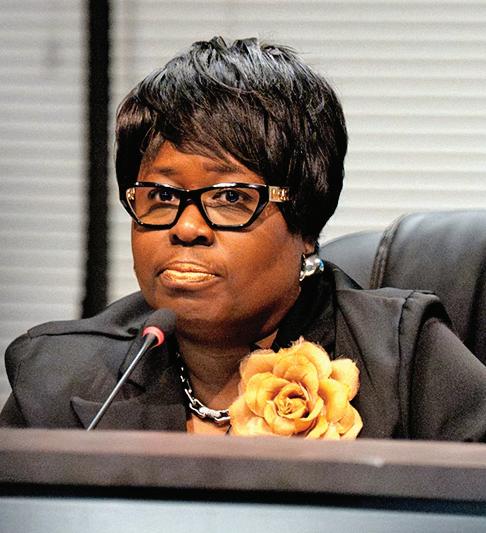
Millicent Borishade
St. Louis voters to decide earnings tax renewal April 7
St. Louis voters will decide April 7 whether to renew the city’s 1% earnings tax, a key revenue source that funds core services. The tax, paid by people who live or work in the city, generates about $209 million annually, or roughly one-third of general revenue. State law requires renewal every five years. If rejected, the tax would phase out over a decade, forcing major budget changes.
‘No Kings’ rally, march Saturday in downtown St. Louis
A rally and march tied to a national “No Kings” day of action is scheduled for Saturday, March 28, at Aloe Plaza in downtown St. Louis. The event begins with a rally at 1 p.m., followed by a march at 1:30 p.m. Organizers say the demonstration will focus on concerns about government power and policies under President Donald Trump. The event is planned as nonviolent, with legal observers expected to be present.
Are we prepared for a terrorist attack?
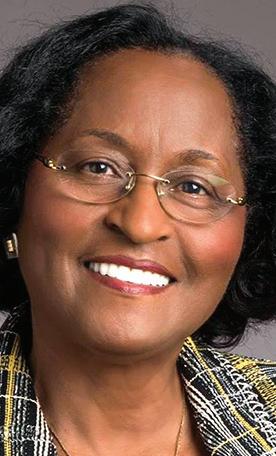
By Janice Ellis
There have been multiple terrorist incidents in the United States this month: near the New York City mayor’s home; at a synagogue in Michigan; on a university campus in Virginia; and in front of a bar in Austin, Texas. Several of these cases are now being linked by federal authorities to extremist ideologies and, in some instances, retaliation tied to the escalating U.S.-Iran conflict.
As terrorist attacks increase within our borders, will they become a part of our way of life, requiring that we be ever watchful of our surroundings no matter where we are, even fearful of those who look or don’t look like us if they act suspicious or look out of place?
A study released in April 2025 provides a thorough analysis of terrorist attacks on U.S. soil since 2001, following 9/11, answering the questions who, what and why.
us all to thwart, minimize and defeat this enemy. We must educate ourselves about the many facets and faces of terrorism.
We must educate our children in ways that will help them better understand and manage, without paralyzing fear, the new world in which they will have to live — a world that sadly has been commonplace for so many children who live in other countries with beliefs and practices different than our own.
In addition to the many horrific results of the war with Iran, living with impending terrorist attacks is a cost we all will have to pay. Indefinitely.
Even when the missiles, bombs and drones cease to fly in the war with Iran, a different war will continue to be waged.
This enemy will be more amorphous, not neatly defined or contained, philosophically, religiously or geographically. The enemy could be seas and continents away or they could be in our country, our city, our neighborhood.
One could think most terrorists have Middle Eastern origins or have become radicalized by Middle Eastern extremist groups. But that is only one profile.
A terrorist could be anyone from any racial or ethnic group or geographic region. In recent years and months, we have seen Americans, Africans, Latinos, Asians, Europeans and others become radicalized and sympathetic to religious and political causes.
So where is the enemy?
Like the rest of the world, we have become vulnerable to an enemy that places little or no value on life, including their own. Terrorism can strike within our borders at any time.
Our intelligence capability, our military might and our police protection provide a great element of comfort. But it will take
How ready are the state of Missouri and our major metropolitan areas — St. Louis and Kansas City — to handle terrorist attacks?
How would our state and cities measure up if they were to take a “Terrorism Response Readiness Test?”
Better still, how do we fare in our intelligence gathering and our ability to avert or prevent an imminent terrorist act?
Based on the current quality and extent of the communications from our experts, elected officials and law enforcement agencies, does the public have any realistic idea of the current level of terrorist threats or how many have been foiled or averted?
Or will we be left to become alarmed when the latest carnage and destruction occur?
No matter how many surveillance cameras, drones, satellites and fighter jets are deployed to fly over the United States, no matter how many National Guardsmen are deployed at airports, and no matter how many arrests are made by national law enforcement agencies, our offensive and defensive strategies will also rest on how prepared or unprepared we are at the citizen level.
With the massive federal cuts in many of our critical governmental agencies, and the un-funding of critical functions in the Department of Homeland Security, elected officials and administrators across government jurisdictions must have a handle on our state of readiness.
So do we as ordinary citizens.
What potential tragedies are in the offing that can be averted?
Janice Ellis is a political columnist for the Missouri Independent

Janice Ellis
MAR. 26 – APR. 1, 2026

Women and wealth
Tips for navigating a lifelong financial journey
J.P. Morgan
Wealth Management
The United States is in the midst of a seismic shift in wealth. Often referred to as the “Great Wealth Transfer,” it describes the unprecedented movement of assets from the Baby Boomer generation to their heirs — an estimated $105 trillion by 2048. Women are poised to inherit much of that wealth.
At the same time, women are not waiting to build wealth. A 2025 investor study by J.P. Morgan Wealth
Management found that 93% of women expecting an inheritance are not relying on it to reach their financial goals.
Here are a few tips for women to consider on their wealth-building journey:
Create a financial roadmap
A detailed, well-thoughtout plan can make a big difference. J.P. Morgan’s study found that 90% of those surveyed with a plan feel confident about reaching their financial goals,
Mill Creek Valley event to examine Black business legacy
An educational event focused on the legacy of Mill Creek Valley will be held at 1 p.m. Friday, March 27, at the Center of Innovation and Entrepreneurship at Harris-Stowe State University. Held with the Missouri Historical Society, the program will examine the neighborhood’s role as a hub of Black business and professional life before its demolition in the 1950s. The free event will include historical presentations, discussion and networking opportunities for students and local entrepreneurs.
Ameren Missouri urges customers to seek energy assistance
Ameren Missouri is urging customers to apply for energy assistance, including more than $1.5 million remaining in its Dollar More program. Eligible households may receive up to $600 annually and can also seek federal LIHEAP aid before the May 31 deadline. Applications are handled through local Community Action agencies. The utility said expanded income eligibility allows more households to qualify. More information is available at AmerenMissouri.com or by calling 314-554-2182.
Nexstar deal puts 3
St. Louis TV stations under 1 owner
Nexstar Media Group has completed its $6.2 billion acquisition of Tegna, bringing St. Louis stations KSDK, KTVI and KPLR under one owner. The deal, approved by federal regulators, significantly expands Nexstar’s national
compared with 49% of those without one.
Your plan should reflect your unique goals, priorities and circumstances. Are you saving for a home, preparing to send your children to college or thinking about retiring early? Where do you want to be in five, 10 or 20 years?
Everyone’s financial situation is different, so it’s important to build a plan that fits your life. Be sure to revisit it regularly as your goals and circumstances evolve.
Women also tend to live longer than men and are more likely to take time away from work to care for family members. Those factors can shape long-term planning and should be taken into account.
Where to start with investing
Don’t let misconceptions hold you back. You don’t need a large sum to start investing, and getting started early can give your money more time to grow.
PEOPLE On The Move
Patton to receive honorary doctorate
Webster University graduate
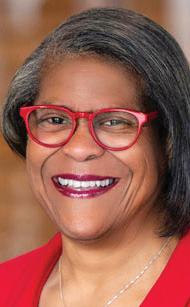
Valerie Patton, Class of 1982, will receive an honorary doctorate during the university’s 2026 commencement ceremony. From 2002 to 2024, she served as chief diversity, equity and inclusion officer and president of the Greater St. Louis Foundation and Greater St. Louis Inc.
Patton holds a master’s degree from Eden Theological Seminary with an emphasis in community leadership, public advocacy and ministry in the public square, and a master’s degree from Washington University in St. Louis.
Alicia Perry has joined Gray Design Group as an interiors studio associate.
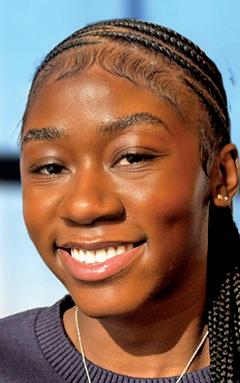
Perry is a recent graduate of the University of Missouri-Columbia, where she earned a bachelor of science in architectural studies with an emphasis in interior design.
“I enjoy seeing a client’s vision and wants for a space come to life, which I feel is one of my strongest skills,” she said. Perry “will utilize her technical skills and rendering capabilities to work with project managers to visually translate design concepts and support design and documentation,” according to a Gray release.
Fowlkes named 2026 St. Louis Titan 100 honoree
Paraquad President and CEO
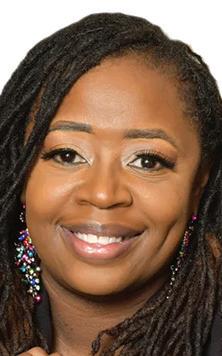
Latosha R. Fowlkes has been named a 2026 St. Louis Titan 100 Hall of Fame honoree, recognizing her leadership in advancing disability rights, economic inclusion and community impact.
footprint and consolidates control of major local TV outlets. The combined company reaches more than 80% of U.S. households. The shift could reshape the St. Louis media landscape, raising questions about competition, newsroom independence and how local news is produced and delivered to viewers.
Stifel Charity Classic raises $640,000, to open 2026 playoffs
The Stifel Charity Classic raised more than $640,000 for charitable organizations in North St. Louis County and beyond, tournament officials said. The 2025 primary beneficiaries — Boys & Girls Club of Greater St. Louis, Marygrove, RecoVET and the Urban League of Metropolitan St. Louis — each received $125,000 following the event, which concluded Sept. 7, 2025. Since 2020, total giving has exceeded $4.2 million. The 2026 tournament, set for Oct. 19-25, will open the PGA TOUR Champions Charles Schwab Cup Playoffs.
Almost Home to host Sneaker Soiree fundraiser June 18
Almost Home will host its annual Sneaker Soiree gala, its largest fundraiser, to support programs serving young mothers in the St. Louis area. The event will be held June 18 from 6 to 9 p.m. at The Hall at Olive + Oak in Webster Groves. It will feature cocktails, a program and presentation of the Women and Children’s Advocate Award, along with live music, raffles and an auction. Proceeds will fund housing, education and support services aimed at helping young mothers achieve self-sufficiency. Business Briefs
Fowlkes, a 2023 St. Louis American Foundation Salute to Excellence in Healthcare honoree, previously served as president and CEO of the Core Collective at St. Vincent. She is a licensed clinical social worker in Illinois and Missouri and has more than 20 years of service and leadership experience.
Gunter named TeanSnap National Coach of the Year
Jareem Gunter, a former Lincoln University student and baseball player, was recently named TeamSnap National Coach of the Year.
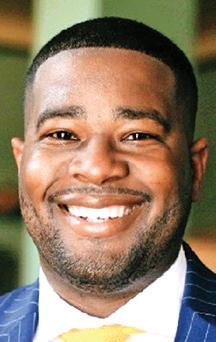
Jareem Gunter
Gunter, a California native who attended Lincoln, is the founder of Dream Team, the only free AAU basketball program in California. The organization operates an after-school program and hosts weekly “Manhood Mondays” workshops. About 95% of the boys in the program do not have fathers in the home.
The Obama Foundation has also honored Gunter, and he was recently featured on “The Jennifer Hudson Show.”
Please submit your People on the Move item (including photo) to areid@stlamerican.com
See Wealth, A6
Valerie Patton
Photo courtesy of J.P. Morgan
Latosha R. Fowlkes
Don’t let misconceptions hold you back. You don’t need a large sum to start investing, and getting started early can give your money more time to grow.
Alicia Perry joins Gray Design Group Alicia Perry
‘Trunks Up’ to provide hygiene kits, snacks at four sites
St. Louis American staff
The St. Louis Delta Foundation will expand its annual “Trunks Up Extravaganza” to new locations this year as organizers aim to serve more residents still facing economic hardship.
The event, scheduled from 11 a.m. to 1 p.m.
Saturday, April 25, will take place at four sites in St. Louis, St. Charles and East St. Louis, including new locations at the Urban League of Metropolitan St. Louis and in St. Charles County.
Local retailers and community organizations will partner with the St. Louis Alumnae, Alpha Omega City-Wide, East St. Louis Alumnae and St. Louis Metropolitan Alumnae chapters of Delta Sigma Theta Sorority, Inc.
Volunteers will distribute personal hygiene items and nonperishable food from decorated car trunks, a signature feature of the event.
Organizers said they served more than 900 unhoused and underserved residents last year
Wealth
Continued from A5
Before you begin, take a close look at your overall financial situation. Set clear goals and develop a long-term plan.
and expect to reach about 1,500 this year, citing increased need following last year’s tornado.
“This is our fifth year and one of our signature community events,” said Dawn Gipson, Delta Foundation chair.
The four sites are:
• Berkeley Fire Station – 8404 Airport Road, St. Louis,
• Urban League –1408 N. Kingshighway Blvd., St. Louis, (11 a.m. to 2 p.m.)
• Mount Zion Missionary Baptist Church – 2100 W. Randolph St., St. Charles, Missouri
• St. Vincent de Paul Cosgrove’s Kitchen –3718 State St., East St. Louis, Illinois
Items to be distributed include soap, deodorant, toothpaste, laundry detergent, hand sanitizer and snacks.
Donations and volunteers are being accepted. More information is available by email at CAI.sladst@gmail.com.
It’s also important to prepare for the unexpected. Building an emergency fund — typically three to six months of expenses — and paying down high-interest debt can help create a strong foundation before investing.

Taking
charge of your finances
The good news is that women are taking charge of their finances. The J.P. Morgan study found that 75% of women respondents either lead financial decisions or share that

responsibility with a partner.
If you have a spouse or partner, it’s important for both people to stay involved in financial planning.
Building wealth can be empowering. The survey found that 73% of women respondents said money provides a sense of security, while 64% of Gen Z and millennial women said it represents freedom.
The power of having a team
You don’t have to do it alone. Some people find it helpful to work with a financial advisor who can help create a plan tailored to their goals and keep them on track over time.
If you expect to receive an inheritance, it can also be helpful to consult estate planning and tax professionals.
No matter where you are on your financial journey, education is key. There are many resources available to help you become a more informed investor, including free tools at chase.com/theknow. As the wealth landscape continues to evolve,
Building wealth can be empowering. The survey found that 73% of women respondents said money provides a sense of security, while 64% of Gen Z and millennial women said it represents freedom.
women have a unique opportunity to shape their financial futures — and those of future generations. By staying informed and planning ahead, they can position themselves to navigate the Great Wealth Transfer with confidence.
The views, opinions, estimates and strategies expressed herein constitute the author’s judgment based on current market conditions and are subject to change without notice, and may differ from those expressed by other areas of J.P. Morgan. This information in no way constitutes J.P. Morgan
Research and should not be treated as such. You should carefully consider your needs and objectives before making any decisions. For additional guidance on how this information should be applied to your situation, you should consult your advisor.
JPMorgan Chase & Co., its affiliates and employees do not provide tax, legal or accounting advice. You should consult your own tax, legal and accounting advisors before engaging in any financial transaction.
Investing involves market risk, including possible loss of principal, and there is no guarantee that investment objectives will be achieved. Past performance is not a guarantee of future results.
Diversification and asset allocation does not ensure a profit or protect against loss.
J.P. Morgan Wealth Management is a business of JPMorgan Chase & Co., which offers investment products and services through J.P. Morgan Securities LLC (JPMS), a registered broker-dealer and investment adviser, member FINRA and SIPC

The St. Louis Delta Foundation’s “Trunks Up” event served more than 900 residents across six locations last year. In the wake of the May 16 tornado, organizers expect to serve more than 1,500 residents on April 25.
Photo courtesy of Delta Foundation
HealthMattersHealthMattersHealthMatters
‘Taking Care of You’

Gamechanger
New WashU approach could change how Alzheimer’s is treated
By Sylvester Brown Jr.
St. Louis American
Researchers at Washington University School of Medicine have developed an experimental immunotherapy they say could change how Alzheimer’s disease is treated — and potentially delayed — particularly for people at highest genetic risk.
The approach targets amyloid beta, a sticky protein that builds into nerve-damaging plaques in the brain and is widely believed to play a major role in Alzheimer’s, especially in early-onset cases. In tests on mice, researchers say a single injection of the engineered therapy cut amyloid plaques in half, raising the possibility of slowing — or altering — the course of the disease.
The findings are early and have not yet been proven in humans. But they build on a growing body of research suggesting that removing amyloid early and consistently may delay the onset of symptoms.
WashU researchers reported in Lancet
The findings are early and have not yet been proven in humans. But they build on a growing body of research suggesting that removing amyloid early and consistently may delay the onset of symptoms.
Neurology that a subset of 22 participants who received amyloid-removing drugs for an average of eight years saw their risk of symptom onset cut roughly in half.
David M. Holtzman, a professor of neurology at WashU Medicine and co-author of a paper on the new treatment, said timing appears critical.
“Consistent with the antibody drug treatments, this new CAR-astrocyte immunotherapy is more effective when given in
See Alzheimer’s, A8
SNAP overhaul reshapes access to food
By Jennifer Porter Gore Word in Black

The changes are reshaping how the 42 million people who rely on the program can use the benefits to stave off hunger each month.
In the year since Donald Trump returned to power, his administration and its allies in Congress have rolled out a series of harsh new rules for recipients of SNAP, the federal food assistance program formerly known as food stamps. From a massive budget cut to new work requirements, experts say, the changes are reshaping how the 42 million people who rely on the program can use the benefits to stave off hunger each month. But now, anti-hunger advocates, and grocers who serve customers using Supplemental Nutritional Assistance Program benefits, are pushing back on one change in particular: limits on what kinds of foods SNAP recipients can buy. SNAP recipients in five states — Colorado, Iowa, Nebraska, Tennessee and West Virginia — sued in early March to roll back the changes. They argue the Trump administration bypassed or ignored laws mandating how changes to SNAP are made, transforming a uniform federal standard for eligible food into a hodgepodge, state-by-state system. The nonprofit National Center for Law and Economic Justice and the antitrust law firm Shinder Cantor Lerner filed the suit. In a statement, NCLEJ attorney Katharine Deabler-Meadows said that SNAP used the changes as a “backdoor in national
See SNAP, A8
Study: Fix to kidney test shortens wait for Black patients
By Jennifer Porter Gore Word in Black

When Congress established it in 1984, the Organ Procurement and Transplantation Network was given a key mandate: set up a system to handle the growing demand for organ transplants that would efficiently match donors and recipients and prevent human organs from being bought and sold.
In turn, OPTN created a nonprofit organization, United Network for Organ Sharing — that has run the program since 1986. But for decades doctors used a racebased calculation that caused Black kidney patients to be less likely to be referred for a transplant evaluation — and more likely to remain on waiting lists longer than whites.
Now, however, an unprecedented
“Race is a social construct,” Dr. Deidra Crews, president of the American Society of Nephrology, said in a news article published by Johns Hopkins Medicine.
“There’s no blood test that you could do and then come away and say, ‘She’s a Black person.’”
effort to right that historic wrong seems to be working.
Credit given for extended waiting time
According to a study published this
See Kidney, A8

The U.S. transplant system formally ended the use of racebased kidney function calculations in 2022, and subsequently began implementing corrective policies.
Envato photo
Envato photo
Researchers at Washington University School of Medicine have developed an experimental immunotherapy they say could change how Alzheimer’s disease is treated.
Kidney
Continued from A7
month, thousands of Black patients waiting for kidney transplants have been given credit for lost time and moved up the transplant waiting list after the transplant system stopped using the test.
The medical journal JAMA Internal Medicine which published the study, found that the positive results from the move could have broader implications for a field that has struggled with racial inequity.
“These findings provide evidence that remedying the harms of race-based medicine may be a promising approach to address racial kidney transplant inequities,” the researchers wrote.
But Dr. Deidra Crews, a nephrologist and deputy director of the Johns Hopkins Center for Health Equity, was more succinct: “There is no biological basis to race.”
“Race is a social construct,” Crews, president of the American Society of Nephrology, said in a news article published by Johns Hopkins Medicine “There’s no blood test that you could do and then come away and say, ‘She’s a Black person.’”
SNAP
Continued from A7 policy that expresses the administration’s preferences around food.”
The changes, DeablerMeadows said, put an undue burden on grocery retailers, who are now required to “identify, track, and enforce restrictions across tens of thousands of products, necessitating costly system reprogramming, item coding, employee retraining, and customer education.”
Meanwhile, the administration has shifted some of the federal government’s responsibilities to the states, leaving it up to them to determine what food qualifies.
Almost 26% of SNAP participants — approximately 10.2 million people — are Black. Participants receive an average of $187 a month, or just over $6 per day.
The federal budget approved last July and known as the “One Big, Beautiful Bill Act” cuts roughly $187 billion from SNAP over the next ten years. Around the same time, the Trump administration placed new work requirements for SNAP eligibility.
Then in May, the U.S. Department of Agriculture, which administers SNAP, announced it would approve state-level foodchoice waivers. These
Alzheimer’s
Continued from A7 the earlier stages of the disease,” Holtzman said. “But where it differs, and where it could make a difference in clinical care, is in the single injection that successfully reduced the amount of harmful brain proteins in mice.”
The experimental therapy draws on advances in cancer treatment known as CAR-T, which engineers a patient’s cells to target disease. In this case, researchers reprogram astrocytes — brain cells — to act as amyloid-clearing agents, an approach described as turning them into “amyloid-gobbling machines.”
HealthMattersHealthMattersHealthMatters
Care of You’

Because of the disconnect between society and science, “A lot of people have been concerned that we were using this social construct of race in a way that had biologic consequences,” Crews said.
The U.S. transplant system formally ended the use of race-based kidney function calculations in 2022, and subsequently began implementing
rules restrict purchases of soda, energy drinks, candy, and other foods for people who receive SNAP benefits, according to a list of changes the agency provided. Such items are considered to have little nutritional value and so far, 22 states have rolled out the restrictions.
States having the widest range of restricted items include Iowa, followed by states like Tennessee, which banned “processed foods and beverages.” South Carolina, for example, prohibits SNAP recipients from several categories of sweetened products, including prepared desserts.
A state-by-state patchwork
Several states implementing food waiver restrictions also have some of the largest Black populations in the country.
Texas, Florida, Louisiana, Oklahoma, Tennessee, and South Carolina are phasing in rules throughout 2026. Texas alone is expected to affect more than 3.5 million recipients when its restrictions on candy and sweetened beverages take effect.
Others note the changes have caused confusion among recipients and retailers alike. Previously, most food items intended to be eaten at home were SNAP eligible. But now,
Even as researchers point to the promise of the approach, they caution that significant work remains to optimize the treatment, understand potential side effects and translate the findings into safe, effective therapies for people. Similar approaches in other diseases have shown only modest progress and, in some cases, raised safety concerns.
The urgency is clear. According to the Centers for Disease Control and Prevention, nearly 7 million Americans are living with Alzheimer’s in 2026, a number expected to double by 2060. For patients with inherited forms of the disease, the stakes are especially high.
corrective policies. That involved reviewing cases to adjust waiting-list time for Black patients.
Hospitals were required to determine which Black patients on their transplant lists could have qualified for a new kidney sooner and to credit them for that time.
The researchers analyzed a database of all kidney transplants
between January 2022 and June 2025. When comparing transplant rates before and after the policy change, they found that among the more than 21,000 Black transplant candidates whose waiting time was modified the median gain was 1.7 years.
The National Kidney Foundation says the average waiting time for a
kidney transplant is three to five years, but it can be far longer in different parts of the country. By ending the race-based test some patients may have their waiting time cut almost in half.
A race-based misconception
The calculation was based on the incorrect

grocers have to enforce the state-specific restrictions.
Concerns from grocers and advocates
Grocers report several challenges, such as confusion over which items qualify under varying state definitions and the cost of updating systems.
In a statement, the National Grocers Association said the approval of SNAP restriction waivers “has introduced significant new challenges for independent grocers working to serve
Jake Heinrichs, a New York City resident and participant in a Washington University Alzheimer’s clinical trial since 2012, has spent much of his life expecting the disease to follow a familiar and devastating path through his family. He suffers from Autosomal Dominant Alzheimer’s disease, a rare, inherited form that typically causes symptoms to appear before age 60, often in a person’s 40s or 50s.
Alzheimer’s is not just a research subject for Heinrichs; it is encoded in his DNA. His father, grandmother, uncle and older brother all died from complications related to the disease, often at simi-
their communities and uphold the core mission of SNAP.”
“As of January 1, retailers in five states are required to identify, track, and enforce restrictions across tens of thousands of products, necessitating costly system reprogramming, item coding, employee retraining, and customer education,” according to the statement. “These operational demands place additional strain on stores and could disrupt checkout experiences as retailers work in good faith to comply.”
lar ages.
Heinrichs began showing symptoms at 40.
“I remember feeling helpless and him not being able to comprehend what I was asking him … and I just started crying,” he said of watching his father decline as a child.
Now 51, Heinrichs has lived more than a decade beyond the point when his family history suggested he would already be in steep decline. He remains symptom-free, something he attributes in part to his participation in clinical trials targeting amyloid.
“It’s still a study but it has given me an extension to my life that I never banked on having,” Heinrichs told The Associated Press.
assumption that Black people have more muscle mass, indicating a less advanced stage of kidney disease than in non-Black patients.
Since 2023, at least 10 people have sued UNOS for using the racist-based calculation.
Last September, a federal judge rejected UNOS’s attempt to dismiss the lawsuits of patients suing the nonprofit organization for harm the race-based and unscientific calculation caused them.
In allowing the case to go forward, the judge ruled that allegations made by plaintiffs Deon Santos and Mark Thompson constituted racial discrimination.
As of 2023, nearly 37 million Americans have chronic kidney disease, meaning millions of Black Americans are affected, according to the Centers for Disease Control and Prevention.
As many as 9 in 10 adults don’t know they have the disease, including 1 in 3 adults with severe CKD.
Roughly 90,000 Americans who have endstage kidney disease were waiting for a transplant as of late 2024.
Black candidates make up roughly 30% of the waiting list.
overstepped.
The agency “authorized states to narrow the statutory definition of ‘food’ haphazardly without statutory authority or evaluation methodology,” with no notice or input from businesses or SNAP recipients, the suit alleges.
The practical effect, the plaintiffs said, “is to destabilize food access for every SNAP participant in the affected states.”
“We commend these organizations for taking legal action to protect the dignity of the tens of millions of people who rely on SNAP to put food on the table,” the Food Research & Action Council said in a statement. “We also recognize the courage of the individual plaintiffs who stepped forward to challenge these policies.”
There is also concern about transaction delays and customer frustration at checkout, especially during the early phases of implementation.
Recipients push back
Hunger prevention advocates have raised several concerns. They argue that the Trump administration violated laws authorizing SNAP and the methods required to make such policy changes.
The NCLEJ and Shinder Cantor Lerner lawsuit says the USDA has
Recent treatments that remove amyloid through regular infusions have already shown they can slow cognitive decline by about 30% over 18 months in patients with early symptoms, according to Dr. Jon LaPook, chief medical correspondent for CBS News.
For Heinrichs, those advances have made possible decisions he once thought unlikely. After more than a decade receiving amyloid-targeting treatments, his condition has remained stable long enough for him and his wife, Rachel Chavkin, a Broadway director, to have a child.
“They now have this beautiful kid, Sam … I mean, what a moment for
Organizations that represent the convenience store industry also repeated concerns it had voiced before the changes went into effect. Margaret Mannion, director of government relations for the National Association of Convenience Stores, said the lawsuit raises the issue “that NACS has flagged for the Department of Agriculture many times.” “We need answers for how SNAP restrictions can work in the real world,” she said. “If there are no answers, then the courts or the Department should put an end to these waivers.”
them,” LaPook said in a televised segment. In an earlier interview with the Associated Press, Heinrichs said he hopes his son will be spared the experience that defined his own childhood — watching a parent slowly fade.
Rachel Chavkin said the potential of these treatments is measured not just in years, but in quality of life. “It’s just about keeping people alive or helping them live better,” she said. “And, in this case, it’s helping my husband survive.”
Sylvester Brown Jr. is the Deaconess Foundation Community Advocacy Fellow.
Several states implementing food waiver restrictions also have some of the largest Black populations in the country.
Envato photo
The model at left shows the effects of kidney disease. As of 2023, nearly 37 million Americans have chronic kidney disease, meaning millions of Black Americans are affected, according to the Centers for Disease Control and Prevention.
Envato photo

Xavier Smalls says ‘sorry’ to LGBTQ+ community
Actor Xavier Smalls is issuing an apology after a resurfaced clip from his Feb. 7 social media broad cast showed him comparing LGBTQ+ people to murderers and calling them an “abomination.”
Smalls plays Angel, a gay‑for‑pay exotic dancer, on Tyler Perry’s Netflix drama series “Beauty in Black.” The comments drew swift backlash once the clip began circulating again last week, prompting Smalls to release a lengthy statement on Instagram Sunday.
He said he has “taken time to listen” to friends — including those within the LGBTQ+ communi ty — and now recognizes “how my approach may have lacked the love, humility, and awareness that I believe God calls us to have.”
Smalls added, “Allow me to be very clear about my heart and intentions. Nothing I shared was meant to condemn or harm any one. Every human being deserves dignity, compassion, and most importantly love.”
Teyana Taylor and her ‘aunties’ will curate ESSENCE Festival 2026
ESSENCE Festival took to its social media channels to announce that they have named Teyana Taylor Chief Curator for the 2026 ESSENCE Festival.
Did Usher and Justin Bieber almost exchange blows at Bey-Z Oscar party?
TMZ is reporting that things got tense between Usher and Justin Bieber at Beyoncé and Jay-Z’s Oscars after‑party two weeks ago— and the longtime mentor‑protégé relationship may be officially on the rocks.
“We have heard people talking about the incident between Usher and Justin, with some saying that it ended up as a [near] fist fight between the two,” TMZ said.
According to the outlet, the two got into a “heat ed exchange” after Usher approached Bieber “with energy and anger.” Sources close to Bieber insist no punches were thrown, but describe the moment as “intense.”
Usher famously helped launch Bieber’s career in 2008, signing him to his joint venture with Scooter Braun and guiding him through his early superstar dom. For years, Bieber referred to Usher as a big brother.
But TMZ’s sources claim Bieber has been dis tancing himself from people from his past, with one insider saying he has “always been rude to Usher.”

“We said ladies first, and we meant it,” ESSENCE said on Instagram alongside an image of the Oscar‑nominated multi‑hyphenate. “And you already know the vibes are about to be next level.”
It’s a major move for Taylor, who has been in the middle of a well‑deserved surge in visibility. After retiring from music in 2020, she’s been booked and busy — choreographing for icons, directing visuals for top artists, and earning an Academy Award nom ination for her breakout role in “One Battle After Another.” Her creative collective, The Aunties, has become one of the most in‑demand teams in enter tainment.
“Along with her creative team, The Aunties are curating the moments, the surprises, and everything in between for one of the most celebrated festivals in the world,” ESSENCE said.
Mystikal pleads guilty to third-degree rape
Louisiana rapper Mystikal has pleaded guilty to third‑degree rape, four years after a woman accused him of holding her against her will and sexually assaulting her at his Ascension Parish home.
“The rapper, whose real name is Michael Tyler, was accused of beat ing, choking and robbing a woman at his Ascension Parish home in 2022,” Baton Rouge ABC affiliate WBRZ.com reported. “The victim said Tyler took her keys and phone so she couldn’t leave. While she was looking for her missing money, she was forcibly assaulted. Once the assault was over, Tyler allegedly let the woman leave after he forced her to send him money via CashApp.”
Mystikal was originally indicted on multiple charges. They include first‑degree rape, simple rob bery, domestic abuse battery by strangulation, simple criminal damage to property, and false imprisonment. Prosecutors amended the charge to third‑degree rape, which he accepted in court last Tuesday.
Mystikal faces up to 20 years in prison when he is sentenced in June. He had faced a possible life sentence under the original charges. He previously served six years in prison following a 2004 sexual assault case involving his hairstylist and is a regis tered sex offender.
Sources: TMZ.com, ESSENCE.com, Instagram.com, WBRZ.com.






















Teyana Taylor
Central’s 13th pastor and guest preacher for the celebration. “They established a church.”
Founded in 1846 as Second African Baptist Church, Central’s story is inseparable from the larger struggle for Black freedom. Among the original 23 was Harriet Robinson Scott — wife of Dred Scott — whose fight for freedom would reshape the nation’s legal and moral consciousness.
“That same Harriet Scott … whose pastor, Rev. John Anderson, was right here helping enslaved and free people file Freedom Suits,” said Scott, who is not related to Dred or Harriet. “Because Central Baptist Church has never just been a church. It has always been a movement.”
The church was renamed Central Baptist Church in 1885 and is the second oldest Black church in St. Louis, preceded only by First African Baptist Church.
Scott spoke as someone shaped by the church he once led.
“I would not be who I am and I would not be where I am had it not been for 17 years as the lead servant here,” he said, noting his tenure stands among the longest in the church’s history. “I would not be who I am as a pastor and a preacher — but more importantly as a person, husband and father.”
Before Scott preached, Rev. Dr. Gwendolyn Packnett of Westside Missionary Baptist Church offered a historical reflection, tracing Central’s role beyond the pulpit.
“Her pastors have been more than preachers,” she said. “They have been activists, educators, organizers and prophetic voices who stood in the gap for God’s people.” Under the leadership

of her late husband, Rev. Dr. Ronald B. Packnett, Central became a hub for social justice work, including his role leading the St. Louis delegation to the Million Man March in 1995.
“You leave an indelible mark on every visitor who walks through these doors,” Packnett said.
“Before the world ever coined the word influencer, Central was shaping the conscience of a nation.”
Packnett said that legacy continues under current pastor Rev. Dr. Anthony L. Riley, who has led the church since 2019.
“He carries on the
tradition of greatness that would make the ancestors proud,” she said.
Central’s longevity has not come without trial.
A devastating electrical fire in 1971 destroyed the sanctuary, wiping out decades of history. Gone. A structure that sheltered the prayers of thousands. Gone. Countless sermons of 11 pastors. In 2007, a storm tore away the roof. Each time, the congregation rebuilt.
“The devil thought that was the end for Central Baptist Church,” Scott said. “But God did not let the devil write the final chapter.”
For Riley, the anniver-

sary is both celebration and responsibility.
“All year long we have been celebrating what God has done to and through Central Baptist Church,” he said. “I might not have been here all 180 years, but if it had not been for the Lord on my side …”
Anniversary committee co-chairs L’Erin Wagner and Deacon Robert Henson echoed that forward-looking message.
“While today is a time to look back with gratitude, it is also a time to look forward with hope,” Henson said.
Scott’s sermon — “There Is Nothing Like the Church,” drawn from Psalm 138 — returned to the audacity of the church’s beginnings.
SAVE Act
Continued from A1
The bill, which passed the House in 2025, would require people registering to vote in federal elections to provide documented proof of citizenship, such as a birth certificate or passport, along with a government-issued photo ID.
Voting rights groups say those requirements could create new barriers, particularly for people who lack easy access to official documents or whose records do not match.
The Brennan Center for Justice estimates that 21.3 million voting-age citizens do not have documents such as birth certificates or passports readily available, while another 3.8 million lack them entirely.
“Under these bills, most voters wouldn’t be able to register to vote with their driver’s license alone,” the Campaign Legal Center wrote.
Advocates also warn that obtaining required documents can come with costs that create additional hurdles. A U.S. passport, for example, can cost about $130, with additional fees for processing or travel.
According to the Brennan Center, two-thirds of Black Americans do not have a valid U.S. passport, and passport ownership declines as income falls. Older Americans and rural residents are also less likely to possess passports.
The American Civil Liberties Union says documentation requirements could also create complications for people whose legal names differ across records, including married women, adoptees and transgender individuals.
“Just 23 people,” he said. “Not 230. Not 2,300. Just 23.” They could not vote. They could not testify in court. They faced constant harassment. But they could gather.
“And they gathered in the name of Jesus on March 22, 1846 — exactly 180 years ago today — and that’s exactly what they did,” Scott said.
From that act grew a church that would anchor Black life through slavery, Reconstruction, Jim Crow, the Great Migration and the Civil Rights Movement.
Even as he celebrated the past, Scott warned of new challenges.
“We are witnessing the systemic disconnection of a generation from its spir-
Supporters of the bill dispute those concerns.
“The SAVE Act itself contemplates these name changes and provides protections so that Americans who have changed their names — because of marriage or otherwise — are not prevented from voting,” the Federalist Society said.
Supporters say the measure would strengthen election integrity and ensure that only U.S. citizens participate in federal elections.
Sen. Josh Hawley, a Republican from Missouri, said the bill reflects requirements already used in many states.
“This is what we do in my home state. … We have voter ID, we have citizenship requirements, we’ve had so for years,” Hawley said. “This is not nuts.”
Sen. Rand Paul, a Republican from Kentucky who supports the SAVE Act, said a procedural vote could determine whether the bill can advance to a final vote. The measure lacks the 60 votes typically needed to advance in the Senate and has drawn near-unified Democratic opposition.
Rep. Wesley Bell, a Democrat from Missouri, called it “a manufactured crisis based on falsehoods about the 2020 election.”
Supporters say the bill responds to concerns about election security, even as studies suggest documented cases of noncitizen voting are rare. A Washington Post analysis of the Heritage Foundation’s voter fraud database found 85 such cases nationwide between 2002 and 2023.
Similar proof-of-citizenship requirements in states such as Kansas have been struck down by
itual roots,” he said. “This is not a social problem. This is a spiritual emergency.”
He urged Central to remain rooted in the spirit of its founding.
“Central was made by complicated folk — enslaved and free people at the same time,” he said. “Don’t you dare become the church that turned away people the founders would have welcomed with open arms.”
Every time Central gathers, he said, it stands as evidence of endurance.
“God is a providing keeper and a keeping provider,” Scott said. “God has been faithful — and God’s faithfulness will carry Central to another 180 years.”
courts after blocking thousands of eligible voters while uncovering relatively few cases of noncitizen registration.
Federal law already prohibits noncitizens from voting in federal elections.
The debate also comes as the U.S. Department of Justice has requested unredacted voter registration records from at least 40 states, including Missouri — a move some voting rights advocates describe as another potential voter suppression tactic.
In a press statement, Xavier Persad of the American Civil Liberties Union called the bill a “dangerous assault on democracy.”
“Laws like this have historically resulted in many eligible citizens being delayed or denied access to the ballot,” Persad wrote.
The Senate’s consideration of the SAVE Act comes as public confidence in elections remains unsettled.
A PBS News/NPR/ Marist poll found twothirds of Americans say they are confident their state or local government will conduct fair and accurate elections, down from levels measured before the 2024 presidential election.
“It’s the politicians driving the cart,” said Lee Miringoff of the Marist Institute for Public Opinion.
With the Senate closely divided and Democrats united in opposition, the SAVE Act’s future remains uncertain, with no clear path to the votes needed for passage.
Sylvester Brown Jr. is the Deaconess Foundation Community Advocacy Fellow.
Reverend Dr. Robert C. Scott led the sermon during the 180th anniversary service at Central Baptist Church on March 22, bringing energy and conviction to the moment.
Photo by Lawrence Bryant / St. Louis American
ing about whether zoning rules should be established before new data centers are built. Some residents opposed the projects outright, while others raised concerns about electricity, water use and environmental impacts.
Residents question impact, oversight
During the nearly fourhour meeting, resident Adrian Cosby questioned whether the city could effectively regulate largescale developments.
“I don’t trust the city to actually regulate this when we’ve already said ‘no’ and are once again being pushed to accept something we don’t want.”
Others focused on affordability.
“It might not seem like most people are living that close to the line, but I know that some of my neighbors truly are,” said Sylvia Kueny. “So, when there’s an 11% rate increase, they don’t have 11% to give.”
Resident Stephen Begany said draft proposals could worsen existing challenges downtown.
“Under the current proposal, it would compound our retail problem by requiring more street retail and these data centers competing with the spaces that are already unfilled,” he said.
Armory proposal
Tornado
Continued from A1
promised help and actual recovery have left many struggling to rebuild.
“We are watching things be rolled out slowly and ineffectively and told that’s progress, and we don’t define it as such,” said Kayla Reed, executive director of Action St. Louis.
The three-hour meeting brought together residents from North City, North County and South City, along with advocacy groups including Action St. Louis and Metropolitan Congregation United and Missouri state Rep. Marty Murray.
Speakers pointed to decades of disinvestment in North St. Louis, arguing that the tornado compounded long-standing inequities and that recovery efforts have been inconsistent.
Reed said she believes state lawmakers have
draws attention
So far, the only verified large-scale data center proposal in the city is a modified version near the Armory center. Under the plan, the historic Armory building would be converted into office space, while a data center would be constructed at the adjacent former Macy’s/FamousBarr warehouse site.
Supporters estimate the project would create about 600 jobs and generate more than $200 million over 10 years for the city and its schools.
The development team — including Contour, TeraWatt, THO Investments and several St. Louis-based firms — has said it will not seek tax abatements or local incentives. A conditional use hearing with the city’s zoning committee is scheduled.
Zoning debate continues
Sonnier and Alderman Michael Browning proposed legislation that would pause new data center development until zoning regulations are in place. The proposal, like a similar bill introduced earlier, failed to pass. “We were asking for a pause until there were zoning regulations,” Sonnier said. “The public … were just asking for a chance to have these regulations in place.”
City officials are now considering interim zoning rules that would limit where data centers can be built and require develop-
delayed directing resources to communities north of Delmar Boulevard, leaving residents to navigate overlapping challenges.
“We are looking at compounding crises across the board and failure across the board that has prolific impact on our communities,” she said. “A tornado swept through our city — resources should have been poured in, and that did not happen.”
For longtime resident Cynthia Jordan, whose family has lived in North St. Louis for generations, the scale of the damage remains daunting.
“It’s a massive undertaking,” she said. “We need a better, more coordinated effort.”
Lillie Clay said her home sustained damage to its roof, deck and windows during the storm. While she sought assistance through FEMA, she described the process as difficult to navigate.
“It was a lot of jumping through hoops,” Clay said,

ers to obtain conditional use permits.
Energy demands drive concerns
The debate comes as data centers become central to modern computing, particularly with the growth of artificial intelligence.
A single AI query uses a small amount of electricity — about the same as running a 10-watt LED bulb for two minutes. At scale, however, millions of daily requests can consume vast amounts of energy, potentially rivaling the power use of small countries, according to researchers.
The proposed Armory facility would operate
noting that her insurance ultimately covered repairs where other assistance fell short.
Clay added that many residents on her block — including seniors and people with disabilities — struggled with the recovery process and feared being taken advantage of while filing claims.
The uncertainty surrounding additional relief has added to those frustrations. The proposed state tax credit, still under consideration in Jefferson City, is intended to help offset out-of-pocket costs for storm victims, but its future remains unclear, according to St. Louis Public Radio.
Organizers at Saturday’s meeting called for greater public investment in hard-hit neighborhoods, including directing Rams settlement funds toward North St. Louis recovery efforts.
They also pointed to broader legislative debates that could affect taxes, public spending and access

at about 120 megawatts, placing it among the largest energy users in the region.
Who pays?
Questions about energy demand have led to concerns about rising electricity costs.
Ameren officials have said large data centers will not directly increase rates for residents. However, during a Public Infrastructure and Utilities Committee meeting, James O’Mara, the company’s manager of economic development, said all customers would help pay for expanding the grid to accommodate “large load” users.
A state law signed last
to resources, arguing that policy decisions at the state level continue to shape the pace of rebuilding on the ground.
As recovery efforts continue, residents and
year allows utilities to charge customers for infrastructure projects under construction, and analysts have warned that growing demand could increase long-term electricity costs.
Economic benefits debated
Supporters say data centers could bring jobs, investment and help position St. Louis in a growing technology sector.
Mayor Cara Spencer has emphasized the importance of remaining competitive.
“We want to be open for business,” she said. “We recognize that data centers play an important role … in attracting technology companies.”
organizers said they plan to keep pressing for a faster, more coordinated response.
Nearly a year after the storm, many said, the work of rebuilding — and the
Business and labor leaders have echoed those concerns.
“All we’re asking is that … we don’t push an industry away,” said Tim Green of a partnership between IBEW Local 1 and area contractors.
But critics question whether the long-term benefits match the promises.
“These centers are not like large manufacturing facilities that will hire thousands of workers,” said James Busch of the Missouri Public Service Commission.
“Is there any justification for forcing everyone to pay for their energy use?” asked Ari Peskoe of Harvard Law School.
What comes next
City planners are continuing to review public feedback and develop a regulatory approach.
“We’re going to take the feedback … and refine that to make the best possible regulations we can,” said planning official Rasmus Jorgensen. Any proposed rules would be reviewed by the Planning Commission and then considered by the Board of Aldermen.
For now, the debate reflects a broader question facing St. Louis: how to balance the potential economic benefits of a growing industry with concerns about cost, infrastructure and community impact.
Sylvester Brown Jr. is the Deaconess Foundation Community Advocacy Fellow.
fight for resources — is far from over.
St. Louis Public Radio politics correspondent Jason Rosenbaum contributed to this report.

The former Armory building stands as a potential site for a future data center.
Photo by Lawrence Bryant / St. Louis American
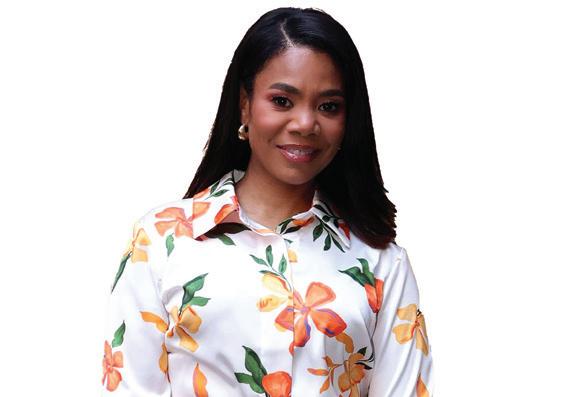
Living It
MATI 2026 lineup unveiled

Star power, hometown legacy and larger footprint mark new chapter for STL’s signature music festival
By Kenya Vaughn St. Louis American
Wyclef Jean, Killer Mike, PJ Morton and Big Freedia will anchor a genre-spanning Music at the Intersection when it returns July 17–19. MATI 2026 will bring more than 100 performances to the Grand Center Arts District and expand its footprint with new venues, new programming
Staging courage
Metro Theater Company brings Maya Angelou’s words to life for a new generation
By Kenya Vaughn St. Louis American
There is something powerful about a room full of children declaring, in unison, “Life doesn’t frighten me.” For Metro Theater Company Artistic Director Jacqueline Thompson, that moment is more than a line from a script—it is the heartbeat of the company’s latest production, Paige Hernandez’s Life Doesn’t Frighten Me, which returns home to St. Louis this weekend for public performances at The Sun Theatre. Rooted in the poetry of Maya Angelou, the production unfolds as a choreopoem—an expressive blend of movement, music and storytelling that invites young audiences to see themselves not just as observers, but as participants in their own
Twenty years of African cinema in St. Louis

first-ever four-day run when it takes over Grand Center July 17–19.
and a four-day festival experience. The 2026 edition opens with a major new addition: eight-time Grammy winner Jon Batiste headlining a special kickoff concert at The Fabulous Fox Theatre (a separate ticketed event) on July 16, marking the first time MATI has extended beyond its traditional weekend slate.
The main lineup continues MATI’s signature blend of global star power and deep St. Louis roots. Neo-soul favorites Moonchild, rising R&B voice Destin Conrad and the Latin instrumental trio LA LOM join the bill, along with a cross-generational pairing of funk legends Zapp and modern groove duo Tuxedo. The festival also stretches across
regions and eras with the Memphis-rooted “Take Me to the River” showcase featuring Carla Thomas, while New Orleans makes its presence felt through sets from PJ Morton and Big Freedia.
Even with its national reach, MATI keeps St. Louis artists at the center of its identity. Ferguson-born trumpeter Keyon Harrold returns as Artist-in-Residence, curating and performing across multiple sets—including collaborations with Rapsody, AJ McQueen and Tef Poe.
Two-time Grammy-winning drummer Chris Dave joins as Artist-at-Large, appearing throughout the weekend and

courage. And for Thompson, bringing this work to the stage is as much about place as it is about purpose.
From Angelou’s deep ties to St. Louis to the local artists shaping every aspect of the production, Life Doesn’t Frighten Me is a reflection of Thompson’s mission to ensure that Metro’s stage mirrors the richness of the city it serves. Direction and choreography come from St. Louis native Christopher Page Sanders, a collaborator Thompson knew instinctively was right for the work.
“When I read it, I thought, this has to live in the body,” Thompson said. “It needed someone who understands how movement tells the story just as much as words—and Chris does that with both excellence and care.”
That care shows up in the cast, including Ja’Don Hamilton, whose movement anchors the production and draws audible reactions from young audiences.
Founder Wilmetta Toliver-Diallo reflects on
festival’s growth and impact
By Zaria Mac St. Louis American
This year marks a major milestone for Washington University’s African Film Festival. Founded by Wilmetta Toliver-Diallo, with 2026 comes two decades of bringing the depth and diversity of African cinema to St. Louis audiences. What began in 2006 as a modest effort to share films from across the continent has grown into a beloved cultural event—one that celebrates African storytelling in all its complexity.
“Having visual images for people who might have never been to the continent has always been a goal.”
— Wilmetta Toliver-Diallo
“Before I came to St. Louis, I had done some small festivals,” Toliver-Diallo said. “But I was particularly interested in bringing African voices to the United States so everyone could experience them.” A native of Tupelo, Mississippi, Toliver-Diallo eventually returned to Washington University as a professor after completing a post-doctoral fellowship there a few years earlier. She brought that vision back with her, determined to widen the reach of African cinema for American audiences.
From the beginning, she envisioned the festival as a bridge—using film to introduce audiences to cultures, histories, and perspectives they may never encounter otherwise. “Having visual images for people who might have never been to the continent has always been a goal,” she said. Embedding African history and culture into education was equally important.
By its fifth year, the festival expanded to include a youth matinee—now the “matinee for all ages”—spotlighting animated films and young protagonists. Toliver-Diallo saw it as a
Photo courtesy of Wilmetta Toliver-Diallo Washington University’s African Film Festival founder Wilmetta Toliver-Diallo. The festival will commemorate twenty years when it returns to Brown Hall from March 27-March 29.
Photo by Lawrence Bryant/St. Louis American
Jon Batiste performs at St. Louis Music Park in 2024. The eight-time Grammy winner returns to St. Louis to open MATI with a landmark kickoff concert at The Fabulous Fox on July 16—launching the festival’s
Photos by Jennifer A. Lin / Courtesy of Metro Theater Company Metro Theater’s presentation of ‘Life Doesn’t Frighten Me’ will play The Sun Theatre in The Grand Center Arts District March 27-29.
CONCERTS
Fri., Mar. 27, 8 p.m. The New Edition Way Tour featuring New Edition, Boyz II Men and Toni Braxton, Enterprise Center, 1401 Clark Ave, St. Louis, MO 63103. For more information, visit www. enterprisecenter.com.
Thur. Apr. 16, 7 p.m., Boys 4 Life Tour featuring B2K & Bow Wow, Chaifetz Arena, 1 South Compton Avenue St. Louis, MO 63103. For more information, visit www. chaifetzarena.com.
Thurs., Apr. 16, 8 p.m., Floetry presents the Say Yes Tour featuring Raheem DeVaughn, Stifel Theatre. For more information, visit www. stifeltheatre.com.
Fri., May 1, 7:30 p.m., The Love and Relationship Tour starring David and Tamela Mann, Stifel Theatre. For more information, visit www. stifeltheatre.com.
SPECIAL EVENTS
Thur. Mar. 26, 10 a.m.
Cardinals Opening Day, Ballpark Village, 601 Clark Ave, St. Louis, MO 63102. For more information, visit https:// stlballparkvillage.com.
Fri., Mar. 27, 7 p.m. SLAM Underground—SUMMIT, Saint Louis Art Museum, 1 St. Louis, MO 63110. For more information, visit www.slam.org.
STL Sites & Sounds
Pulitzer Arts Foundation, 3716 Washington Blvd, St. Louis, MO 63108. For more information, visit https://slso.org.
April 10-11, Dance St. Louis presents Ailey II, The Touhill Performing Arts Center, One University Place, St. Louis MO 63121. For more information, visit www.dancestlouis.org.
Sun., Apr. 12, An Evening with Sir Ervin Williams, author of Mr. Duplicity, Emerson Theatre, HarrisStowe State University, 3026 Laclede. For tickets, visit www. sirervinwilliams.com.
COMEDY
Fri., Mar. 27, doors 7 p.m. Sherri Shepherd in the Make It Make Sense Tour, The Pageant, 6161 Delmar Blvd, St. Louis, MO 63112. For more information, visit www. thepageant.com.
Fri., Mar. 27, 7:30 p.m., St. Louis’ own Gary “G-Thang” Johnson, City Winery St. Louis, 3730 Foundry Way, St. Louis, MO 63110. For more information, visit https://tickets. citywinery.com.
Sat., Mar. 28 - 29, 9:30 p.m. Godfrey, Helium Comedy Club, 1151 St Louis Galleria St, St. Louis, MO 63117. For more information, visit https://st-louis. heliumcomedy.com.
Fri., Apr. 24, 8 p.m. We Them

www.chaifetzarena.com.
ST. LOUIS MUSIC SPOTLIGHT
Sun., Mar. 29, 2 p.m. The National Blues Museum Celebrates Great Women of Jazz, Blues, and Soul, National Blues Museum, 615 Washington Ave, St. Louis, MO 63101. For more information, visit www. nationalbluesmuseum.org.
Wed., Apr.1, 7 p.m. SLSO Community Concert –Powell Hall, 718 N Grand Blvd, St. Louis, MO 63103. For more information, visit https://slso.org.


Rep presents Pearl Cleage’s Flyin’ West, Ross Family Theatre, Kirkwood Performing Arts Center, 210 East Monroe Ave, Kirkwood, MO 63122. For more information, visit www. theblackrep.org.
Through Mar. 29, Soul Siren Playhouse presents Robbin, from the Hood, .Zack Theater in the Grand Arts District, 3224 Locust. For more information, visit www.playsiren.com
Sun., Apr. 12, 5 p.m. Je’Caryous Johnson Presents: Set It Off Live!, Stifel Theatre, 1400 Market St, St. Louis, MO 63103. For more information, visit www.stifeltheatre.com.
ART
Fri., Mar. 27, 7 p.m. SLAM Underground—SUMMIT, St. Louis Art Museum, 1 Fine Arts Drive, Forest Park, St. Louis, MO 63110. For more information, visit www.slam.org.
Soulful Glory Vol. II presented by Townsendx3.live, City Winery St. Louis, 3730 Foundry Way, St. Louis, MO 63110. For more information, https://tickets. citywinery.com.
THEATRE
Fri., Mar. 27 – Sun., Mar. 29, Metro Theater Company presents Life Doesn’t Frighten Me by Paige Hernandez, Based on the poem, Life Doesn’t Frighten Me from the book And Still I Rise by Maya Angelou, The Sun Theatre, 3625 Grandel Square. For more information visit metroplays.org.
Through March 29, The Black
Thur., Apr. 7- 8, 7:30 p.m., Live at The Pulitzer, Pulitzer Arts Foundation, 3716 Washington Blvd, St. Louis, MO 63108. For more information, visit https://slso.org.
Jun. 28, Martine Syms: Soliloquy, St. Louis Art Museum, 1 Fine Arts Drive, Forest Park, St. Louis, MO 63110. For more information, visit www.slam.org.
Through June 2026, The Future Is Female, 21c Hotel and Museum Hotel St. Louis, 1528 Locust St, St. Louis, MO 63103. For more information, visit https://21cmuseumhotels.com.

helping lead a “Miles Jam” tribute honoring Miles Davis in what would have been the East St. Louis legend’s 100th year.
The festival’s expansion is as much about place as it is about programming. In addition to The Fox, MATI’s stages will include Jazz St. Louis, The Sovereign, The Big Top and Sophie’s Artist Lounge—creating a fully walkable indoor-outdoor experience across one of the country’s most vibrant arts districts.
“Grand Center is a top arts district in the nation,” said Chris Hansen. “As MATI continues to grow and evolve, we’re thrilled to welcome The Fabulous Fox Theatre and Jazz St. Louis as official festival main stages. Utilizing the existing infrastructure of world-class venues allows us to deliver a high caliber, fully walkable indoor-outdoor festival experience at an affordable price.” Hansen emphasized that the festival’s growth is
matched by a commitment to access. “And for those without a festival pass, the District is still for you,” he said. “We’re going even bigger with the free community block party this year. Washington Avenue is coming alive, with rides, roller skating, art, music and more. MATI has something for everyone.”
That block party remains one of MATI’s most beloved anchors— stretching along Washington Avenue with DJs, live performances, visual art, a roller skating rink and a vendor marketplace spotlighting local creatives. This year’s programming includes appearances by DJ Spinderella and Natasha Diggs, carnival rides, pop-up fashion shows and a curated marketplace. In partnership with Frizz Fest, the Blooming Business Market will highlight local artisans and entrepreneurs with handcrafted goods, food and community resources.
MATI’s conference component also returns, offering free panels and networking opportunities designed to support the region’s creative economy. Sessions will
focus on pitching ideas, building sustainable income streams, content creation and branding. Film-focused discussions presented by Cinema St. Louis and networking opportunities supported by Arch Grants round out the slate—reinforcing MATI’s mission to uplift not just performers, but the ecosystem around them.
Weekend passes start at $109, with single-day options and premium experiences available, including a Delux Magazine partnership package.
Now in its sixth year, Music at the Intersection continues to evolve into a cultural platform—one that honors the musical lineage of St. Louis, amplifies the voices shaping its present and connects the city’s creative spirit to a global stage.
“MATI is a celebration of St. Louis,” he said. “We’re thrilled to have so many great community organizations on our production team.”
For tickets, the full schedule and details on all MATI 2026 programming, visit www.MATIstl.org.

and Lillie
language for feelings they had not yet named.
“To hear kids respond to him in real time—you can feel what that representation does,” Thompson said. “It opens something.”
Even in its design, the production remains intentionally simple, allowing imagination to take the lead. Blocks shift and transform throughout the performance, ultimately forming a crown—an image that has already sparked awe among student audiences during the show’s touring run.
“You never know what’s going to land,” Thompson said. “But when that crown comes together and you hear them react—it’s like they’re seeing themselves in it.”
That moment is no accident. At its core, the production is about redefining what it means to be fearless—and who gets to claim that identity. Through a series of vignettes, the show follows characters navigating fear, anxiety and uncertainty, offering young audiences a mirror for their own experiences.
“Fearless doesn’t mean the absence of fear,” Thompson said. “It’s about moving through it anyway.”
Since January, the cast has carried that message into schools across the region, often beginning their days before sunrise to meet students where they are. In gymnasiums and auditoriums, they have watched children not only engage with the work, but internalize it—repeating its affirmations, reflecting on their own fears and, in some cases, finding
“For me, that’s the best part of the job,” Thompson said. “When you see a child light up, when they connect what they’re watching to their own life—that’s everything.”
Each performance ends with a conversation, inviting students to share what frightens them and how they’ve found the courage to push through. Those exchanges, Thompson said, often reveal just how deeply the work lands.
“I want them to walk away knowing that same courage they saw on stage lives inside of them,” she said.
“My mission is always to celebrate the people and the artistry that come from here. This is part of that.”
Jacqueline Thompson, Metro Theater Company Artistic Director
But the impact is not limited to children. For Thompson, the production also serves as a reminder that theater for young audiences holds just as much weight for the adults in the room—if not more.
“There’s something in it for everybody,” she said. “And sometimes I think we forget that.”
That universality is part of what makes Life Doesn’t Frighten Me feel like a bridge—connecting generations through the familiar resonance of Angelou’s words while opening new pathways for younger audiences to engage with her legacy. It is also a full-circle
moment for Thompson, who first encountered Angelou’s work as a child.
“To think about how that inspired me, and now to be in a position to pass that on—it means everything,” she said.
That sense of responsibility—to both legacy and community—guides Thompson’s work at Metro Theater Company. Now in her second season, she remains committed to uplifting St. Louis artists and ensuring their stories are not only told, but centered.
“My mission is always to celebrate the people and the artistry that come from here,” she said. “This is part of that.”
As the production makes its way to The Sun Theatre this weekend, Thompson is looking forward to something she cannot rehearse or predict: the collective energy of a live audience.
“I just love watching them experience it,” she said. “The wonder, the surprise, the moments that catch them off guard— that’s what makes it special.”
And in a time when both art and attention feel increasingly fragile, she is holding firm to what matters most—making space for young people to see themselves, to feel affirmed and to imagine new possibilities.
“I hope they get whatever they need in that moment,” Thompson said. “Whether it’s joy, reflection or just the reminder that they can keep going.”
Metro Theater Company’s will present Life Doesn’t Frighten Me at The Sun Theatre (3625 Grandel Square) from March 27-29. For more information, visit www. metroplays.org.

Roll call: The women who built this city
By Lyah Beth LeFlore-Ituen, Missouri Historical Society
Let’s just keep it real like we do in the Lou: Black women be bad. Been bad. And we’re gonna keep on being bad— from the crown of our heads to the soles of our feet. From our natural hair to our boardroom style, our swagger, our class, our resilience—it’s unmatched.
That power shows in every walk of our lives. We’re scholars, lawyers, doctors, educators, artists, mothers, daughters, civic leaders, and entrepreneurs. From classrooms to courthouses, from hair salons to city halls, Black women have built, shaped, and protected this city and its communities.
We see that spirit today in programs like Celebrating Hair-itage, put together by MHS’s own Julia Clark, a program specialist on the African American History Initiative team I lead. Hundreds gathered to celebrate Black hair—the artistry, the culture, the self-love, and the confidence that we carry naturally. Moments like that remind every young girl meticulously swooping her edges, getting them just right, or a sister proudly rockin’ her naturally crinkly, coily hair, that our beauty is powerful, our presence is necessary, and our stories deserve celebration.
That legacy also continues in entrepreneurship. Leslie Hughes, founder of Frizz Fest and Frizzy by Nature, has created a vibrant space celebrating self-love, and natural beauty for women of color. With her sister-in-law Val Hughes, they carry forward the entrepreneurial spirit begun generations ago by pioneers like Annie Turnbo Malone.
School), Dr. Sharonica Hardin-Bartley, and Dr. Paula Knight dedicate their lives to shaping young minds. Civic leaders like Darlene Green and the Honorable Tishaura O. Jones, and political leaders like Mavis Thompson and Alderwoman Shameem Clark Hubbard. We salute native St. Louisans Jasmine Crockett and the legendary Maxine Waters, continuing to lead and serve. In the health professions, Dr. Kendra Holmes and next generation’s Dr. Jordyn Norde. Our community prides itself on generational excellence, too, through families like the Nashes— one of the many historic Black medical families in St. Louis. Siblings Dr. Homer and Dr. Helen Nash led a family practice in the Tandy Building; today, Homer’s daughter, Dr. Alison Nash carries that legacy forward—practicing medicine and owning the building.
We also honor the collective strength of our Divine Nine women: Alpha Kappa Alpha Sorority, Delta Sigma Theta Sorority, Sigma Gamma Rho Sorority, and Zeta Phi Beta Sorority.
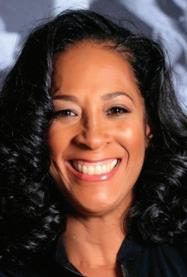
Columnist Lyah B. LeFlore-Ituen
Here in St. Louis and across the river in East St. Louis, Black women have long been builders of community. They canvassed neighborhoods when civic power did not welcome them. They organized clubs and federations when institutions excluded them. They built schools, churches, businesses, and movements that strengthened the foundation of this region. They made a way.
We see that same generational leadership in media and civic life. Dr. Donald Suggs, dentist and publisher of the St. Louis American, built one of the most important platforms for Black voices in our region. Today, his daughters Dawn and Dina carry that vision forward. Leaders like Lois Conley, founder of the Griot Museum of Black History, and Fannie Lebby, founder of Call to Conscience, preserve and celebrate African American stories that teach empathy, justice, and reflection.
Black women’s influence also shapes our schools. Educators like Mary Elizabeth Grimes (Marian Middle
We honor the Links, Jack and Jill of America, the Carats, Girlfriends, the Paupers, the Drifters, and Ladies of Distinction, to name a few. Black women’s history in St. Louis is not a short list. It is a river. A river of brilliance. A river of resilience. A river of women who stepped into classrooms, courtrooms, beauty shops, churches, radio stations, city halls, and community halls determined to leave this city better than they found it. These are just some of the names who hold gifts carried the spirit of this region far beyond the Mississippi River. As my mother Shirley Bradley Price LeFlore would say, they are, “a river . . . rivers and rivers of women,” collectively a river of St. Louis’s brilliance. A river of resilience.
Say the names of queens past and present: Frankie Muse Freeman, Mary Meachum, Pearly Evans, Jamala Rogers, Betty Lou Thompson, Ida Wolfolk, Grace Bumbry, Josephine Baker, Katherine Dunham (East St. Louis), Maya Angelou (East St. Louis), Jackie Joyner-Kersee (East St. Louis), Fontella Bass, Reverend Claudine Murphy, Martha Bass, Zella Jackson Price, Mother Willie Mae Ford Smith, Elizabeth Garlington, Ethel Hedgeman Lyle, Dr. Doris Graham, Pacia Elaine, Lezley McSpadden, Brittany Packnett Cunningham, Hazel Erby, Sandra Moore, Dee Castro, Michelle Tucker, Adrian Bracy, Bonita Cornute, Robin Smith, Sharon Stevens, Dr. Sandra Murdock, Billie Haley Crumpton, Cheryl D. S. Walker, Maxine Birdsong, Rev. Bethany Johnson-Javois, Lois Conley, Fannie Lebby—and many, many more. To be continued.


Photo by Jennifer A. Lin/Courtesy of Metro Theater Company
Ja’Don Hamilton, Aloha Mischeaux,
Self-Miller perform in Metro Theater Company’s presentation of “Life Doesn’t Frighten Me” at the Saint Louis Art Museum. The production will be at the Sun Theatre for a limited run, March 27–29.

Last call to choose your nominations. I’ve been telling y’all for weeks. Now the rubber is hitting the road on the nominations period for the inaugural St. Louis American Reader’s Choice Awards. You only have until the end of the month –which is a few short days. I’ve said it before and now I’m saying it again: Don’t leave your folks hanging. Because if you do, you’ll have no one to blame but yourselves. So go ahead and make this first Reader’s Choice one for the record books. At this point you should have already copied and pasted the link – and saved the page. But because I don’t want to hear any of that “I wanted to nominate, but I didn’t know where to go” foolishness, I’m going to share the link one more time. Don’t say I’ve never done anything nice for y’all. Here’s where to go to get the full rundown on how to nominate your people: www.stlamerican. com/readerschoice/
A good day to be a St. Louis R&B leading lady. We had already gone to print, so it was too late to mention last week. But two women making waves for St. Louis on the R&B music scene experienced major moments on the same day last Wednesday. First off, Tamron Hall invited Tish Period back to her show to perform her new single “Mirrors.” I was over the moon to see that Auntie Tam is demonstrating her continued support of Tish’s talent. Kelly Clarkson, it’s your move. You picked her for your team on “The Voice,” now put her on your show too! You know what…instead of saying what somebody else should be

doing, let me spend the last little bit of my words on this topic to give Tamron Hall some flowers for following up. Meanwhile back at home, Morgan Taylor was slaying the stage for her sold-out City Winery debut presented by Alonzo Townsend and ‘nem Wednesday night. I got my life and saw so many of my favorite folks that if I mention them all I won’t have room to say everything I want to say about the actual show. I will say that City Winery temporarily became City Nupery! All the top-tier Kappa uncles were squozed (yes, squozed) up in there. And I saw some of couples goals, particularly Larry and Becky Blue and Eric and Angela Rhone Okay, back to Morgan. She did that! I do have one tiny piece of advice though. Morgan, niece, don’t let anybody put you back in that catsuit again. Now the little short set prom dress hybrid was giving! But that other thing was looking like something Tisha Campbell’s character in “School Daze” would have worn in one of those performances by the “wannabes.” There, I got that off my chest. Now I can tell y’all how our daughter tore that stage up! And she wasn’t just singing other folks’ music. She had original music and all of it was a straight up bop! I was checking more for her music than the covers – which is rare for an emerging talent…and a good thing. She just needs the right person to see her with the power and influence to put her on and I’m sure she’s got next. And when she does level up, can somebody send her a note telling

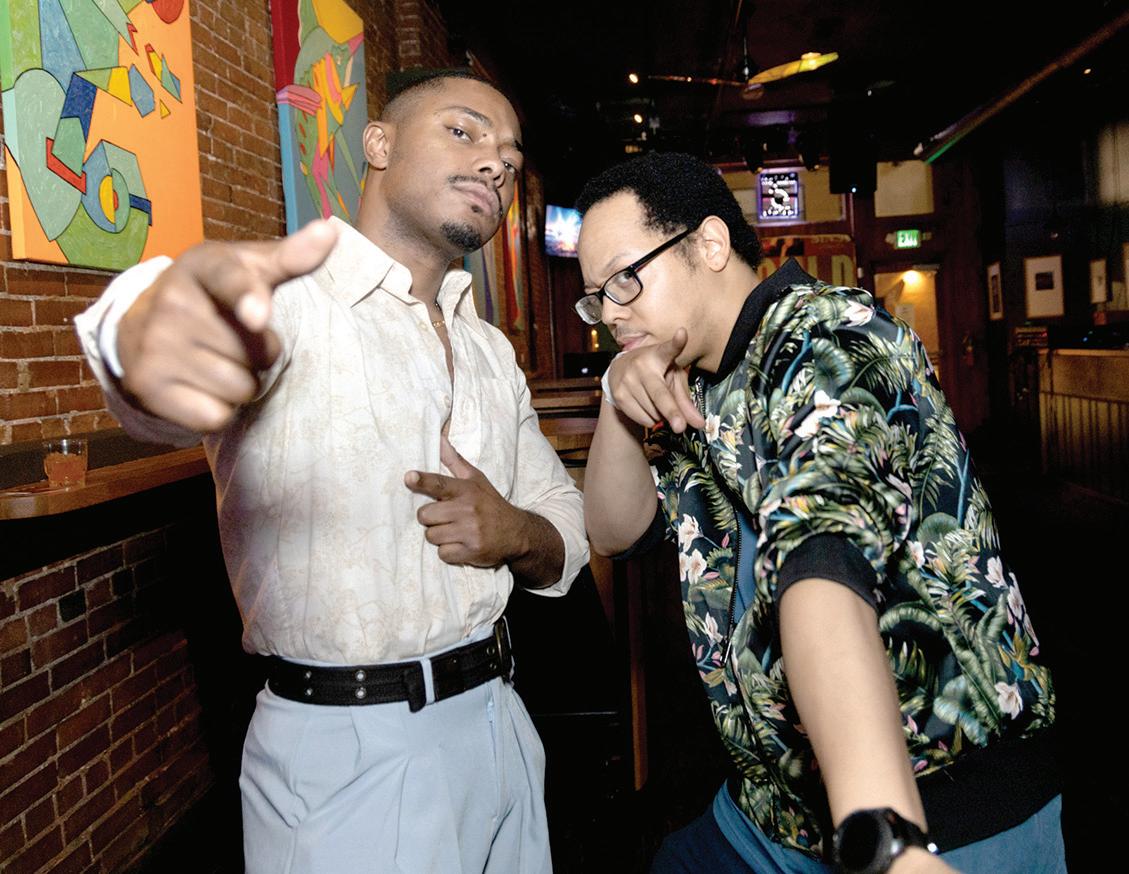


her take Yolanda Lankford with her as a hype woman. She was hollerin’ like the rent was do – and I wasn’t mad about it.
New school blues you can use. The quick weaves were deep in the building at Chaifetz Arena for the 18th Annual Gateway Blues Festival Friday night – and I would be a hypocrite if I was bothered by it! I’m talking about looks that that would have given EJ Johnson, Billy Porter and Law Roach a run for their money. For clarity, I’m talking about Law’s recent 1970s game show host cropped looks of late, not the typical 30-inch middle part bust downs and cholo French braids. If y’all were there and saw somebody who looked like me with a blended 27-piece pulled together from dismantled units like a patchwork quilt… and was! I was giving the ladies “Before You Walk Out My Life” Monica with a splash of the original Harriet Winslow

from “Family Matters” about the head. My fellow aunties were rightfully shook! But enough about my OG Nene Leakes hair game, let’s get on with the show. I had an absolute ball! Full disclosure, I was lowkey expecting to be underwhelmed because I’m partial to the veterans. I’ve attended more than a dozen of the Gateway Blues Festivals, and this was the first one that didn’t have a legend in the game on the bill. I was like, “Can a sista at least get a sip of Theodus Ealy or Bobby Rush?” I know they are long in the tooth, but they are still out in these streets singing and hunchin’ and carrying on. But I must say that King George, Tucka, 803Fresh, West Love, EJ Jones, Mike Clark Jr. and host Henry Welch held it down for 2026. And the audience was as entertaining as the acts. There are two things I know for sure after attending Friday’s performance. The first is that “Boots on the Ground” ain’t going
nowhurre (said in my St. Louis accent). Go on and put it with “The Electric Slide” and “The Wobble.” The second is that everybody should attend at least one Gateway Blues Festival in their lifetime, because it is a show you have to experience to truly explain. Millie Jackson’s grown woman rap transitions still lives rent free in my head and that was about 15 years ago. Millie crawled so that Meg Thee Stallion could twerk!
314 week, take two. I know we technically have a whole 50 weeks before 314 Day turns the big 2-1, but it’s gonna lowkey feel like we are having a 314Day repeat for the rest of the week. As you are reading this right now, I am somewhere downtown cutting up for St. Louis Cardinals Opening Day 2026. And on Saturday, I will be kaw-kawing until the cows come home when the St. Louis Battlehawks kick off their 2026 season at home. And did anybody tell y’all that Nelly and the St. Lunatics will be the halftime entertainment? The Dome is gonna be lit! Oh and a little birdie told me that game tickets where 33 percent off.























1. Ron
“I’ve waited 35 years for a night like this.”
– St. Louis American Sports
Editor/SLU Basketball radio
analyst Earl Austin Jr., after the Billikens 25-point victory over Georgia in the NCAA Tournament
InSIdE SportS
With Earl Austin Jr.
Lift for Life, Incarnate Word continue dynasties with state titles
It was a very productive weekend for high school basketball teams from the St. Louis area at the state championships in Columbia.
There were eight teams from the area at the state tournament and four brought home state championships. The girls from Lift for Life and Incarnate Word Academy continued their dynasties by winning state titles, while the boys from DeSmet and MICDS also captured championships. The Lift for Life girls battled through all kinds of adversity throughout the season to win their third consecutive state title. The Hawks defeated MICDS to win the Class 5 championship. They overcame season-ending injuries to AllState guards Amaya and Cara Manuel, as well as an injury to standout guard Zha Harris, who joined the team in late January.
stood a big challenge from Staley to post a 50-46 victory in the Class 6 state championship game. It was the eighth consecutive state title for the Red Knights. Senior guard Peyton Olufson, a Saint Louis University recruit, had 17 points in the semifinals against Lee’s Summit West and 15 points in the championship game against Staley.
Senior guard Diamond Polk was a constant throughout the championship season with her talent and leadership. The 5-foot8 Polk scored 16 points in the semifinals against Grandview and 13 points in the championship game against MICDS. Harris scored 15 points in the semifinals and followed with 16 points in the state finals. Forwards Kahmyla Bell and Rian Lenox both recorded double-doubles in the championship game. Bell had 11 points and 13 rebounds while Lenox had 13 points and 11 rebounds. Incarnate Word with-
On the boys side, DeSmet defeated Blue Springs South 78-62 to win the Class 6 state championship. It was the Spartans’ second state title in the past three years and seventh overall for one of the most storied programs in the St. Louis area. Senior forward Jordan Boyd scored 26 points and grabbed nine rebounds to lead the Spartans in the championship game. The 6-foot-4 Boyd is headed to Northern Iowa, which recently won the Missouri Valley Conference Tournament in St. Louis. Senior guard Ian Thomas scored 21 points in his final high school game at DeSmet.
MICDS won the Class 5 state championship with two impressive victories over Hillcrest and Sikeston. The Rams defeated Hillcrest 62-35 in the semifinals and Sikeston 55-38 in the championship game. Junior forward Tyler Ray had a tremendous weekend for the Rams, averaging 22 points and six rebounds in the two Final

Four games. Senior guard Brandon Clemens scored 15 points in the championship game against Sikeston. It was the Rams’ second state championship in school history.
Clayton boys finish as state runners-up
Clayton made its first appearance in the state tournament’s Final Four since 1975. The Greyhounds finished as runner-up after losing to a powerful Logan-
Rogersville team in the Class 4 state championship game. Clayton advanced to the finals with a thrilling 54-52 victory over St. Joseph Benton on a last-second layup by guard Matthew Hurst.
The Greyhounds were led by 6-foot-3 junior guard Sebastian Bolden, one of the top scorers in the St. Louis metro area. Bolden scored a team-high 21 points in the victory over Benton and assisted on Hurst’s game-winning basket. Junior guard
SportS EyE
With Alvin A. Reid
The Lift for Life girls celebrate their Class 5 championship after defeating MICDS last weekend.
against Logan-Rogersville and 35 points against Benton in the third-place game.
Cardinal Ritter boys and girls bring home state trophies
Both the boys and girls from Cardinal Ritter College Prep competed in Columbia. The girls finished in third place while the boys placed fourth. After a narrow loss to eventual state champion Strafford in the semifinals, the Lions’ girls defeated Benton in the third-place game. Sophomore guard Trinity Jackson scored 21 points in the third-place game while junior guard Nylah Scales added 18 points. The Ritter boys finished fourth after losses to Blue Springs South in the semifinals and Rockhurst in the thirdplace game.
Damarion Verges also had a big game in the semifinals with 21 points, four rebounds and four assists.
Vashon boys finish fourth in Class 4
The Vashon Wolverines took home a fourth-place trophy from the Class 4 state tournament. The finish ended the Wolverines’ streak of six consecutive state championships. Junior guard Jimmy McKinney III had a big weekend, scoring 27 points in the semifinals
Quentin Coleman named Gatorade Player of the Year in Missouri Standout guard Quentin Coleman of Principia was named the Gatorade Player of the Year in Missouri. The 6-foot-4 Coleman led the Panthers to the Class 3 state championship for the second consecutive season. As a senior, Coleman averaged 23.1 points per game, leading the Panthers to a 29-2 record and a national topfive ranking. He capped his career by scoring a career-high 50 points in the Panthers’ victory over Miller Career Academy in the Class 3 title game.
Tennessee State brought soulful pep to STL
My NCAA Tournament brackets are a mess. KU’s season came crashing down on millions of Jayhawks’ heads in a painful Round of 32 loss to St. John’s at the buzzer, and Missouri coach Dennis Gates is again under fire.
Yet I came away with a smile on my face Sunday night. The tournament games held in St. Louis last weekend were amazing. Downtown was buzzing from Thursday through Sunday with fans from all corners of America. Enterprise Center had big crowds and high energy. I doubt another NCAA Tournament game will top the overtime battle between upstart Santa Clara and blue blood Kentucky on Friday afternoon. Purdue and Iowa State made statements, while Miami showed Missouri and its hometown crowd that it will be a force on the national scene.
those of the bigger programs, it was loud and proud.
Leading the charge was the site’s most popular pep band, whose members are also part of the Aristocrat of Bands, TSU’s marching band.
Every song the band belted out, including “Funkin’ for Jamaica,” drew the attention of fans and media members inside Enterprise Center.
It was the fight song, “I’m So Glad,” that had fans swaying along. After blaring out the notes in spectacular fashion, band members held their instruments to the sky, joined with TSU fans, and sang:
I’m so glad I go to TSU! I’m so glad I go to TSU! I’m so glad I go to TSU!
Singing glory hallelujah, I’m so glad!
The biggest winner of the weekend, though, was Tennessee State University. While its fan contingent didn’t match
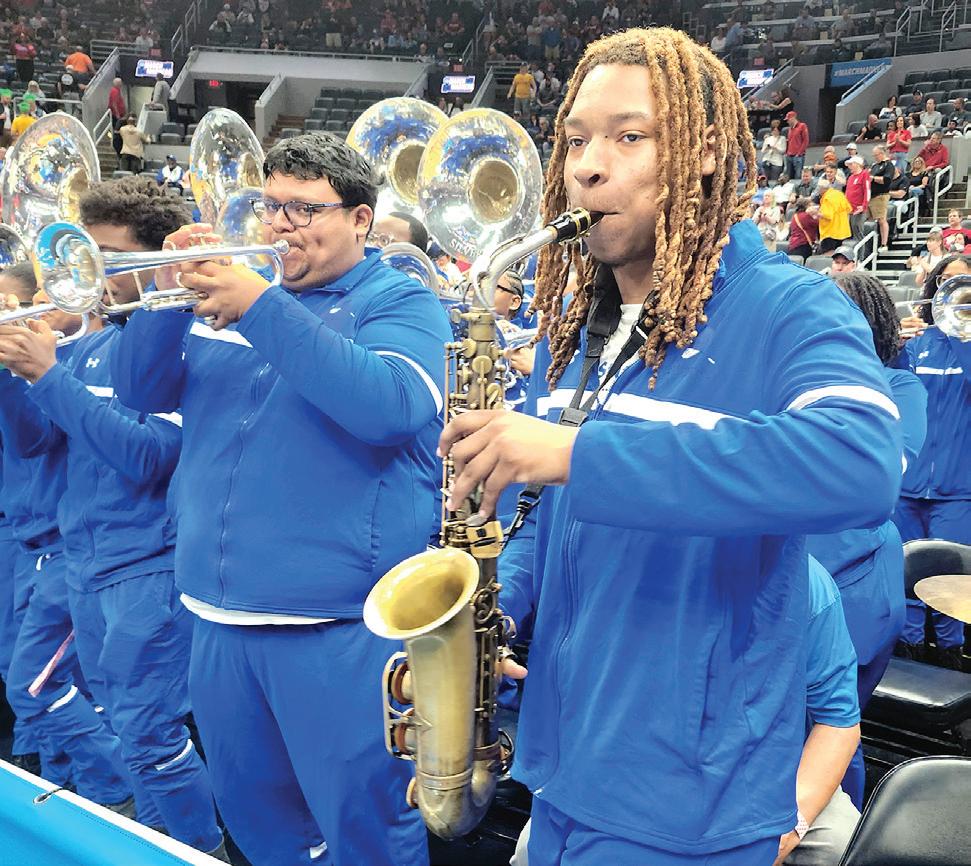
saxophone and Cassius Henley on brass helped the TSU pep band bring soulful energy that captivated fans of every team.
“Any band you name, I’m in it,” Durham said of his musical interests at TSU, which include the marching band.
During breaks in action, CBS and the center-hung scoreboards paid close attention to the youthful band, showing it respect as it played — and it features a pair of Hazelwood West High School graduates.
Donovan Durham on
After arriving Thursday, the band practiced at Enterprise Center, and videos began to pop up on social media. The band and cheerleaders also took in St. Louis sights, including the Gateway Arch and Ballpark Village.
Henley made sure to acknowledge Aaron
I asked
if TSU could hang with Iowa State like Santa Clara did with Kentucky. He quickly responded, “We’re going to do better.”
It didn’t happen, but it didn’t dampen the enthusiasm of the band, TSU cheerleaders, or fans. The TSU experience is what the NCAA Tournament is all about.
Leave the worries about name, image and likeness dollars and the dizzying transfer portal at the door. Enjoy the students like
Donovan Durham, a Hazelwood West graduate, belts out the opening notes of Tennessee State’s fight song, “I’m So Glad,” as the Tigers take the court before their NCAA Tournament first-round matchup with Purdue in St. Louis.
those from TSU, who left an impression on people who have likely never set foot on an HBCU campus.
The Reid Roundup
Hey Missouri fans and certain area sports columnists; remember where Missouri basketball was before Dennis Gates took over the program… Young Black head coach Jai Lucas led Miami University over Missouri in Friday’s nightcap in St. Louis. The Hurricanes held a two-point halftime lead over Purdue and gave the No. 2 seed all it could
handle on Sunday. “It’s hard to be a part of March Madness. It’s hard to win a game. I am just appreciative of that,” Lucas said… Iowa State’s best overall player, Joshua Jefferson, suffered an ankle sprain early in the Tennessee State game. The Cyclones then blasted Kentucky without him. If he returns later in the tournament, watch out for Iowa State… While college basketball is dominated by Black players, only one Black coach is in the Sweet 16. Kelvin Sampson and his Houston Cougars will face Illinois on Thursday… SLU hung with Michigan for much of its Round of 32 game last Saturday. But the Wolverines’ size and talent led to a 95-72 win. Coach Josh Schertz is made of gold, while Mizzou’s Dennis Gates is getting trashed. Guess which coach has accomplished more… Michigan beat SLU by 23 and Howard by 21. A shoutout to Howard coach Kenny Blakeney and the other HBCU schools that reached the NCAA Tournament: Tennessee State and Prairie View.
Alvin A. Reid
Jackson, Hazelwood West’s recently retired band director.
him
Photo by Lawrence Bryant / St. Louis American
Earl Austin Jr.
Photo by Alvin A. Reid / St. Louis American
STL’s own Morgan Taylor makes her mark with sold-out City Winery debut
By Kenya Vaughn
St. Louis American
Morgan Taylor may be young, but the moment she walked onto the City Winery stage for the first time Wednesday night, she showed she belongs there. Her presence and perfor mance made it clear she’s ready for whatever comes next.
Her “Big Mo” persona arrived fully charged— energy high, confidence unwavering, and star power radiating through the room.
The emerging St. Louis R&B singer performed to
a sold‑out crowd for her City Winery debut, pre sented by TownsendX3. Live. From the instant she greeted the audience, it was clear they were rooting for her—but also believed in her. They cheered as if they were witnessing the early chap ters of a career destined for bigger stages.
“Sing, Morgan!” echoed through the venue as she moved through an hour‑long set blending familiar R&B favorites with original music. “I want to take you there,” she told the crowd. “I’m gonna be doing some
sionals. But Toliver‑Diallo says the community remains its foundation.
way to nurture emerging filmmakers and encourage creativity. “Animation is such a growing field in Africa, especially in plac es like South Africa and Kenya,” she said. “There’s a huge need for support, so I wanted to encourage young filmmakers to keep telling their stories.”
The festival’s audience has always been a blend of students, community members, and film profes
“Many of the people who came to the first festival are still coming back,” she said. “Some have attend ed all 20 years—and it’s always heartwarming to see them year after year.” The impact has been far‑reaching. Attendees often tell her the festival introduced them to films they would never find elsewhere. Some were inspired to study film. “I met a young lady who came as a child, and she said it inspired her to pursue a career in film,”

original music, unreleased tracks and some covers.”
She opened with a mashup that paired her own “Sucka 4 U” with Beyoncé’s “Drunk in Love,” setting the tone for a show that balanced homage with individuality. Taylor performed with the poise of a seasoned profes sional—commanding the intimate stage with cho reography sequences that
Toliver‑Diallo recalled.
Filmmakers also value the festival’s intimate atmosphere. “They love that our festival is not like the big New York or Toronto festivals,” she said. “They enjoy the gen uineness of staying to chat with the audience, answer ing questions, and shar ing experiences.” Those conversations often spark cross‑cultural collabora tions and help filmmakers expand their reach.
This year’s lineup continues the tradition of exploring themes like family, resistance, and identity, with a particular

lifted the room’s energy even higher.
Her covers were solid, but where many rising artists lean heavily on familiar songs to show case their vocal chops, Taylor shined brightest in her original work. Her midtempo bops—rooted in a Gen Z perspective on love, longing and lessons learned—held the audi ence’s attention without
focus on young women navigating societal expec tations. Films from Sudan and Morocco examine how women challenge tradition and capitalism in pursuit of autonomy.
For its 20th anniversary, the festival is adding new programming, including a special screening of “My Father’s Shadow” by Nigerian director Akinola Davies—the first Nigerian film to win an award at Cannes. Davies recently earned a British Academy Award as well.
The festival will also host a film intensive led by director Ekwa Msangi,









Emerging St. Louis R&B singer Morgan Taylor performs to a sold‑out crowd during her City Winery debut, presented by TownsendX3.Live, on Wednesday, March 18.
Photo by Taylor Marrie/ St. Louis American
relying on nostalgia. Even though most listeners were hearing the songs for the first time, they moved along as if they were already radio staples or the next viral soundtrack.
Vocally, Taylor is strong and distinct. While it’s clear she grew up studying Beyoncé’s phras ing, improvisation and runs—like so many singers of her generation—she isn’t a carbon copy. Her tone is her own, and with continued breath‑control work, she has the poten tial to become a complete vocal package. That promise was especially evident during her cover of Whitney Houston’s “I Have Nothing,” a song that leaves no room for shortcuts.
whose work has appeared on Netflix and American Airlines. “Ekwa will lead a workshop on writing, producing, and distributing films,” Toliver‑Diallo said. “It’s a rare opportunity to learn from someone with real industry success.”
The festival remains free and open to the pub lic, running March 27–29 at 7 p.m. in Brown Hall on the Washington University campus.
As it celebrates two decades, the African Film Festival stays rooted in its mission: bridging cul tures, uplifting emerging filmmakers, and offering
But the night wasn’t just a mix of covers and originals. Taylor crafted a narrative.
“I want to take you on a journey of a relationship,” she said—and she deliv ered. The set opened with the spark of new love, then shifted halfway through when the object of her affection “Wasn’t Man Enough,” punctuated by dance moves to the Toni Braxton club classic. She closed with her original “Cut Off,” signaling the end of the relationship and the start of something new.
Her encore—Chrisette Michele’s “A Couple of Forevers”—brought the crowd to its feet.
Taylor was backed by a tight band featuring Mark Harris II on keys, Alex Bruce on drums, Lamont Patterson on guitar and Charles on bass. Together, they created an impressive sound that supported her voice without overshadow ing it.
“I’m extremely bless ed,” Taylor told the audi ence before leaving the stage.
If Wednesday night was any indication, she is blessed and ready.
audiences a deeper under standing of Africa’s rich ness and complexity.
“Film has the power to change perceptions,” Toliver‑Diallo said. “I hope this festival has helped people see Africa in a fuller, more nuanced way.”
Washington University’s 20th Annual African Film Festival takes place from March 27 – March 29 in Brown Hall on the campus of Washington University. For more information, visit https://africanfilm. wustl.edu.





St. Louis
award
St. Louis American’s award winning NIE program offers newspapers and resources to St.
newspapers and resources to St. Louis area teachers and students each week throughout the school year, at no charge.
Questions or comments? Contact us at nie@stlamerican.com or 314-533-8000
Questions or comments? Contact Cathy Sewell csewell@stlamerican.com or 618-910-9551
Questions or comments? Contact Cathy Sewell csewell@stlamerican.com or 618-910-9551
CLASSROOM SPOTLIGHT

CLASSROOM SPOTLIGHT


Students Laron’yea A., Errionna D., Dominique S., Jamiyah S., Keyvionne C., in Ms. Kimberly Johnson’s 3-5 grade class at Wyvetter Younge School of Excellence, build 2D and 3D shapes to work on building and problem solving skills with marshmallows and toothpicks.
by Ms. Stovall
Students at The American’s Summer Science Academy work in teams to discover the many different computer programming languages.
are learning how to construct a series circuit.
Students at The American’s Summer Science Academy work in teams to discover the many different computer programming languages.
Teachers, if
Photo by Ms. Johnson
csewell@stlamerican. com
SCIENCE CORNER



SCIENCE STARS
SCIENCE STARS

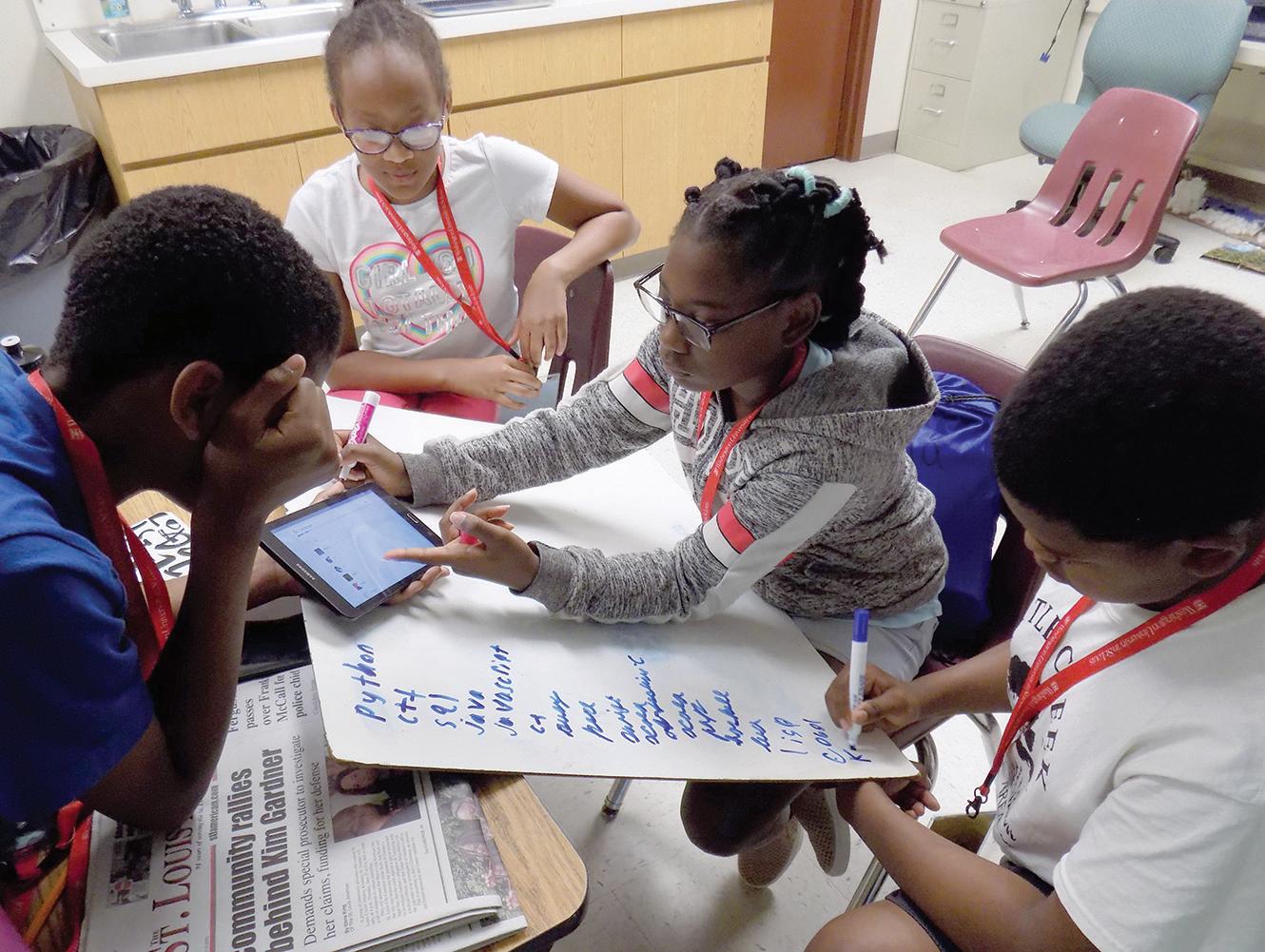

SCIENCE STARS
SCIENCE STARS
African American Meterologist William “Bill” Parker
Dr. Jessica Esquivel: Physicist and Particle Explorer
AFRICAN-AMERICAN MYCOLOGIST AND EDUCATOR:
Jeanette Jones
AFRICAN-AMERICAN MYCOLOGIST AND EDUCATOR: Jeanette Jones

William (Bill) Parker grew up in New Orleans. He graduated from JFK High School, which focused on math, science, and engineering. Parker was interested in hurricanes at a young age, but he became interested in the weather after a high school statistics class. In this class, he learned how to predict the chance of rain. Parker wanted to attend a historically black college/ university (HBCU), so he chose Jackson State University to study meteorology. He graduated with his bachelor’s degree, in 1994.
SCIENCE CORNER
A hurricane forms over tropical and subtropical ocean water. Warm water and cool, moist air combine to create strong winds that can gust up to 200 miles per hour! These winds create waves that bring the storm on shore. Hurricanes are very destructive. They can flip cars, sink boats, uproot trees, and demolish houses.
SCIENCE CORNER
Jeanette Jones was born on September 19, 1950, in Fort Valley, Georgia. Jones graduated from Fort Valley State University in 1972 with a bachelor’s degree in biology education. In 1973, Jones received her master’s degree in botany and mycology (a branch of biology that studies fungi) from The Ohio State University. In 1976, she received her doctorate (Ph.D.) degree.
Jeanette Jones was born on September 19, 1950, in Fort Valley, Georgia. Jones graduated from Fort Valley State University in 1972 with a bachelor’s degree in biology education. In 1973, Jones received her master’s degree in botany and mycology (a branch of biology that studies fungi) from The Ohio State University. In 1976, she received her doctorate (Ph.D.) degree.
SCIENCE CORNER

What Is Sickle
Cell Anemia?
What Are Fungi ?
Are Fungi ?
properly, they destroy them.
In addition to powerful winds, hurricanes bring a lot of rain. (Taiwan received 114 inches of rain in three days during a hurricane.) These rains can cause landslides and flash floods.

Fungi are organisms made of filaments (called hyphe) that are stacked together. Unlike plants, fungi do not have chlorophyll, so they cannot make their own food. Some fungi are parasites, which mean they live off of other organisms. Some fungi feed off of dead and decaying matter. Fungi are everywhere in the environment, including the soil, lakes, river and seas, air, and on plants and animals. Fungi (plural of fungus) help organic matter to decay and release carbon and oxygen into the environment. Unlike plants, fungi do not have
INVESTIGATION
In this experiment, you’ll create a replica of a hurricane and identify how the forces work together to create a hurricane. Materials Needed: •
SCIENCE INVESTIGATION
If you have seen a sickle, a rounded tool used for cutting wheat, then you can imagine the crescent shape of a sickle cell. In the body, red blood cells carry oxygen to all of your cells. Round is the best shape for red blood cells because they can move easily. Sometimes, the blood cells are shaped like a sickle. This particular shape does not travel well and often gets caught inside smaller blood vessels. When this happens, there is pain in the bones. It also affects other organs, such as the brain, heart, and kidneys. When the body recognizes that the sickle cells do not work
Fungi are organisms made of filaments (called hyphe) that are stacked together. Unlike plants, fungi do not have chlorophyll, so they cannot make their own food. Some fungi are parasites, which mean they live off of other organisms. Some fungi feed off of dead and decaying matter. Fungi are everywhere in the environment, including the soil, lakes, river and seas, air, and on plants and animals. Fungi (plural of fungus) help organic matter to decay and release carbon and oxygen into the environment. Unlike plants, fungi do not have
In this experiment, you will learn how mold grows best. Mold is an important fungus that has several uses, including breaking down dead organic material. Some purified molds are actually used as an antibiotic to treat illnesses.
SCIENCE INVESTIGATION
Procedure:
Materials Needed:
Materials Needed:
• 3 slices of bread • Water • 3 Ziploc bags
1 Plastic
• 3 slices of bread • Water • 3 Ziploc bags
•
In this experiment, you will learn how mold grows best. Mold is an important fungus that has several uses, including breaking down dead organic material. Some purified molds are
• 10x10 square centimeter grid • Ruler
q Fill one bottle with the paperclips, peanuts and sand. These represent the debris and help make the movement of water easier to see.
Process:
• 10x10 square centimeter grid • Ruler Process:
w Place the funnel in the mouth of the bottle and pour water into the bottle until it is 3/4 full, then remove the funnel.
q Wet one slice of bread enough to make it moist and place it in a bag. Seal the bag very tightly.
Disappearing
q Wet one slice of bread enough to make it moist and place it in a bag. Seal the bag very tightly.
Directions:
q
e Turn the second empty bottle upside down and hold it over the first bottle so that the mouths of the bottle are aligned. The bottles will look like an hourglass.
w Pl ace the two other slices of dry bread in two separate bags and seal them, as well.
w Place the two other slices of dry bread in two separate bags and seal them, as well.
r Tape the seam, pressing the duct tape firmly to
e Pl ace the bag with the wet slice of bread and one of the bags with a dry slice of bread in a dark place, such as a closed cabinet or closet.
e Place the bag with the wet slice of bread and one of the bags with a dry slice of bread in a dark place, such as a closed cabinet or closet.
w Leave the egg in the vinegar for 2 days, then take it out and wash off the vinegar. The egg is now shell-less and clear.
r Place the third bag with a dry slice

r Place the third bag with a dry slice of bread in the refrigerator.
Shrinking Egg Directions:
q Fill the Ziploc bag halfway with corn syrup.
z A hurricane has moved 456 miles in 6 hours. How many miles per hour is the hurricane traveling? ______ If it continues to travel at that speed, how far will it travel in 10 hours? ______ x Hurricane Frederick is traveling at 86 miles per hour. If the hurricane is 129 miles from the coast, how many hours will it take until the hurricane reaches the coast? ______
MATH CONNECTION
Hurricanes can last a few hours or several days. Most hurricanes occur during the fall months. How can you stay safe? Have an evacuation plan and an emergency kit prepared. Meteorologists can track these storms and keep you informed. For more hurricane facts, visit: http://www.sciencekids.co.nz/ sciencefacts/weather/hurricane.html.
leaves, stems, or roots. Fungi use spores to reproduce. One common type of fungus is the mushrooms you find on your pizza. Mold, yeasts, and mildew are also types of fungus.
leaves, stems, or roots. Fungi use spores to reproduce. One common type of fungus is the mushrooms you find on your pizza. Mold, yeasts, and mildew are also types of fungus.
Dr. Jessica Esquivel is a scientist called a physicist. She studies very tiny pieces of matter called particles to learn how the universe works. Some of the particles she studies are called muons, which are like electrons but a little heavier. By studying muons, Dr. Esquivel and other scientists can test if the rules of physics that we know are correct, or if there might be new rules about how the universe works that we haven’t discovered yet. Jessica grew up in Texas and loved science and space. She dreamed of being a scientist and joined science classes and summer camps to learn more. She earned her Bachelor of Science in electrical engineering and applied physics at St. Mary’s University, and later her PhD in physics at Syracuse University. While in school, she used computers and machine learning, a way for computers to learn from data to help understand how particles called neutrinos behave.
Unfortunately these cells are destroyed more quickly than new cells are made. Therefore, the body does not have enough red blood cells and the person becomes anemic. Since this particular cause of anemia is the sickle-shaped blood cell, it is called sickle cell anemia.
For More Information, Go to: https://kids.kiddle.co/Fungus
Learning Standards: I can read nonfiction text for main idea and supporting details.
For More Information, Go to: https://kids.kiddle.co/Fungus
For more information, visit: http://kidshealth.org/kid/health_ problems/blood/sickle_cell.html
Learning Standards: I can read nonfiction text to gain background information about fungi.
Learning Standards: I can read nonfiction text to gain background information about fungi.
Growing Mold!
Learning Standards: I can read nonfiction text for main idea and supporting detail.
create a watertight seal. Continue taping 1 to 2 inches above and below the seam.
Growing Mold!
t Hold the bottles by the middle and lift the jugs.
y Quickly, turn the bottles over so that the water-filled bottle is on top. Set the bottles on the table again.
u Observe the water as it drains into the bottle below. The water competes with the air from the empty bottle. Both substances push to pass through the neck.
t For five days, measure the square centimeters of mold on each piece of bread through the bag. Use a grid, if possible, or a ruler. If mold covers more than half a square centimeter, it is counted as one full centimeter. If it is less, it is counted as 0 centimeters. This will give you the area of mold on each slice of bread
t For five days, measure the square centimeters of mold on each piece of bread through the bag. Use a grid, if possible, or a ruler. If mold covers more than half a square centimeter, it is counted as one full centimeter. If it is less, it is counted as 0 centimeters. This will give you the area of mold on each slice of bread
support.
w Place the shell-less egg in the bag. Take careful note of the size of the egg. Now place the bag in the glass for
She also studied at the University of Nevada, the University of California Medical School, the National Center for Disease Control-Atlanta, and the Massachusetts Institute of Technology. After graduation, Alabama A&M University hired Jones as an assistant biology professor. In 1986, she served as an adjunct professor in the College of Pharmacy and Pharmaceutical Services at Florida Agricultural and Mechanical University and worked on a project with NASA. In 1991, Jones served as the first female vice president of research and development at Alabama A&M University. She also served as President of Alabama A&M University’s Faculty Senate from 2001 to 2006. In 1992, she was appointed to the U.S. Army Science Board by the U.S. Secretary of the Army, Togo West. Since 2004 Jones has been the director of the Center for Biomedical, Behavioral, and Environment Research at Alabama A&M University. She also worked as a consultant with federal agencies to help them develop training programs to attract women and minorities to STEM education and careers.
She also studied at the University of Nevada, the University of California Medical School, the National Center for Disease Control-Atlanta, and the Massachusetts Institute of Technology. After graduation, Alabama A&M University hired Jones as an assistant biology professor. In 1986, she served as an adjunct professor in the College of Pharmacy and Pharmaceutical Services at Florida Agricultural and Mechanical University and worked on a project with NASA. In 1991, Jones served as the first female vice president of research and development at Alabama A&M University. She also served as President of Alabama A&M University’s Faculty Senate from 2001 to 2006. In 1992, she was appointed to the U.S. Army Science Board by the U.S. Secretary of the Army, Togo West. Since 2004 Jones has been the director of the Center for Biomedical, Behavioral, and Environment Research at Alabama A&M University. She also worked as a consultant with federal agencies to help them develop training programs to attract women and minorities to STEM education and careers.
Today, Dr. Esquivel works at Fermi National Accelerator Laboratory (Fermilab). There, she studies muons as part of the Muon g-2 Experiment. Her work helps scientists understand whether the tiny building blocks of our universe follow the rules we expect or if there are surprises waiting to be discovered. She also works with other scientists to make physics fun, fair, and welcoming for everyone.
Dr. Esquivel knows that sometimes science can feel hard or different if you don’t see people like you in the field. She co-founded BlackInPhysics to help students of color feel included in science and shows that anyone can explore physics, no matter their background. She also encourages girls and young students to be curious and explore science. Her story teaches us that if you are curious about the world, you should follow your questions, work hard, and keep learning. You can also use your experiences to help others, just like Dr. Esquivel does. She shows that even tiny particles can teach us big ideas about the universe, and science is for everyone.
ELA Questions
In 1993, he began to gain experience in the field when he worked as a student meteorologist. One year later, he was a meteorologist intern at Shreveport. In 1998, Parker became a general forecaster, and ten years later, a lead forecaster. In 2012, he became a warning coordination meteorologist (WCM). There are only 122 people with this title in the United States, and Parker was the only African American. Parker is currently the meteorologist-in-charge (MIC) at the National Weather Service, leading a team of 26 weather professionals. Parker is also very active as a volunteer in his community. He is a member of the Shreveport-Bossier Mayors’ Prayer Breakfast Executive Committee, La Cima Bilingual Leadership Academy, Bossier Chamber of Commerce Education Committee, Volunteers for Youth Justice, and a coach for Bossier Parks and Recreation. Parker is also an associate minister at Elizabeth Baptist Church in Benton, where he has been serving the congregation since 1997.

y At the end of a week (5 days of measuring) or longer, use your final results to say what percentage of the bread was covered in mold. Make a table or graph to display the information.
i Turn the bottles over again. This time, shake the bottles in a circular motion. Be sure to keep the bottles vertical.
e Check the egg in a few hours, then again the next morning. Did it look bigger or smaller? Let the egg sit for 3 days, by now you should see a size difference.
y At the end of a week (5 days of measuring) or longer, use your final results to say what percentage of the bread was covered in mold. Make a table or graph to display the information.
o The water will form a vortex as it drains into the next bottle. The water will flow along the outside of the neck, while air moves quickly up through the center of the vortex. The water will drain much faster.
Analyze: How did water and air create a hurricane?
r Remove the egg from the corn syrup, and gently wash it. The egg should look shriveled, and you can feel the yolk.
In 1975, Jones was listed in the World’s Women’s Who’s Who and she was named an Outstanding Young Woman of America in 1978. Beta Beta Beta National Biological Honor Society awarded her the distinguished service award. Jones also received the Significant Service Award from the NASA Space Life Sciences Training Program and the Extramural Associate Research Development Award from the National Institute of Health. In 1990 and 2006, she was named Woman of the Year at Alabama A&M University and was given the Outstanding Leadership Award by the Faculty Senate. The U.S. Army presented Jones the Commander’s Award for Outstanding Civilian Service as a member of the Army Science Board.
In 1975, Jones was listed in the World’s Women’s Who’s Who and she was named an Outstanding Young Woman of America in 1978. Beta Beta Beta National Biological Honor Society awarded her the distinguished service award. Jones also received the Significant Service Award from the NASA Space Life Sciences Training Program and the Extramural Associate Research Development Award from the National Institute of Health. In 1990 and 2006, she was named Woman of the Year at Alabama A&M University and was given the Outstanding Leadership Award by the Faculty Senate. The U.S. Army presented Jones the Commander’s Award for Outstanding Civilian Service as a member of the Army Science Board.
What particles does Dr. Jessica Esquivel study, and why are they important for learning about the universe?
Discussion Questions: How much mold was on the bread? Which location had the most mold? Which had the least? What conclusions can you draw about the conditions in which mold grows? How can food manufacturers and restaurant owners use this information to help them?
Learning Standards: I can follow sequential directions to complete an experiment. I can make observations and draw conclusions.
Discussion Questions: How much mold was on the bread? Which location had the most mold? Which had the least? What conclusions can you draw about the conditions in which mold grows? How can food manufacturers and restaurant owners use this information to help them?
Learning Standards: I can follow sequential directions to complete an experiment.
Learning Standards: I can follow sequential directions to complete an experiment.
I can display my results, make observations, and draw conclusions.
t Fill another Ziploc bag halfway with water, and put the egg in it. Let it sit supported by the glass for a few days. Does it continue to shrink or does it grow back to normal?
Math Storms!
I can display my results, make observations, and draw conclusions.
Analyze: Look up the definition for osmosis. How do you think osmosis affected this process?
Analyzing
Scientists often use tables and graphs to display the results of their research. Looking at these displays, you can draw conclusions.
X has grown to have wind speeds of 48 miles per hour. How much faster will the winds have to become for Tropical Storm X to become Hurricane X? ______
Analyzing a Bar Graph
Scientists often use tables and graphs to display the results of their research. Looking at these displays, you can draw
As we approach spring weather (and increased rain), create a bar graph that displays the amount of rain that falls for several consecutive days or weeks. (Day 1: 1.5 inches, Day 2: 0 inches, Day 3: 1.5 inches, etc.)
a Bar Graph
Learning Standards: I can follow directions to complete a procedure. I can make predictions and analyze results.
As we approach spring weather (and increased rain), create a bar graph that displays the amount of rain that falls for several consecutive days or weeks. (Day 1: 1.5 inches, Day 2: 0 inches, Day 3: 1.5 inches, etc.)
v Upon landfall of a Category 4 hurricane, local officials ordered an evacuation. City A has a population of 9,613, City B has a population of 5,013 and City C has a population of 3,972. How many people were evacuated in all?
c A tropical storm takes on a hurricane status when the winds reach 74 miles per hour. After three days, Tropical Storm
DID YOU KNOW?


This special Newspaper In Education initiative is made possible, and delivered to classrooms through the St. Louis American Foundation and its NIE Corporate Partners:
x
you digest your
Discussion Questions: Which day had the most measured rainfall? Which day(s) had the least? Looking at the bar graph, what might you conclude about rain patterns in March/April? What other observations can you make?
Learning Standards: I can use a bar graph to display information. I
$115,264 in damage, City B reported $236,096 and City C reported $436,869 in damages. What was the total cost of damages rounded to the nearest thousand? ______ If the state and federal government promised $500,000 in aid, how much would the local people have to raise by themselves? ______
Discussion Questions: Which day had the most measured rainfall? Which day(s) had the least? Looking at the bar graph, what might you conclude about rain patterns in March/April? What other observations can you make?
Learning Standards: I can use a bar graph to display information. I can use the information to make deductions and inferences.
b After citizens returned to their houses after the evacuation, reports of damage were totaled. City A reported




Learning Standards: subtract, multiply, and divide to solve a



Discussion Questions: Dr. Jones received many awards and honors. How would you describe her achievements and her contributions to science? Dr. Jones is studying how fungi might be used as agents of war. What purpose do you think fungi serve in modern warfare? Are fungi beneficial or
Discussion Questions: Dr. Jones received many awards and honors. How would you describe her achievements and her contributions to science? Dr. Jones is studying how fungi might be used as agents of war. What purpose do you think fungi serve in modern warfare? Are fungi beneficial or harmful?

Use the newspaper to complete these activities:
How does Dr. Esquivel help make science fair and welcoming for everyone?
Learning Standards: I can read a biography to learn about an African American who has made contributions in science, math, technology, or engineering.
an African American who has made contributions in science, math, technology, or engineering.
Parker believes in serving as a role model to the youth and to recruiting African Americans in the STEM field. Personally, he has hired three African-American meteorologists. In addition, he has recruited minorities for summer intern positions. Parker has also mentored an Airline High School student for his senior project. Parker’s advice to students interested in meteorology is to take as many math and science classes as possible. Learn about summer opportunities in your community. If you are interested in meteorology, visit National Weather Service offices and serve as a volunteer or intern, and find leaders in your community to serve as your personal role models.
Activity One:
Look through the newspaper for pictures, stories, and advertisements that demonstrate how people change the environment.
Learning Standards: a person who has made contributions to the fields of science, technology,
MAP CORNER


Remember to identify the 5 Ws: who, what, when, where, earthquakes, wildfires, volcanic eruptions, floods, tornadoes, hurricanes. Look for a newspaper story or a picture about a natural hazard. Identify the natural hazard and its effect on people and places.
Use the newspaper to complete the following activities: Types of News: Use the front section of the newspaper to evaluate the types of news stories presented: local, national, and international. Sort the articles into the three categories and create a bar graph that displays the amount of coverage each type of news story received.
Use the newspaper to complete the following activities: Types of News: Use the front section of the newspaper to evaluate the types of news stories presented: local, national, and international. Sort the articles into the three categories and create a bar graph that displays the amount of coverage each type of news story received.
Enjoy these activities that help you get to know your St. Louis American newspaper. Activities — Who works where? a picture of a building in the newspaper and tell what kind of jobs people who work in that building could have.


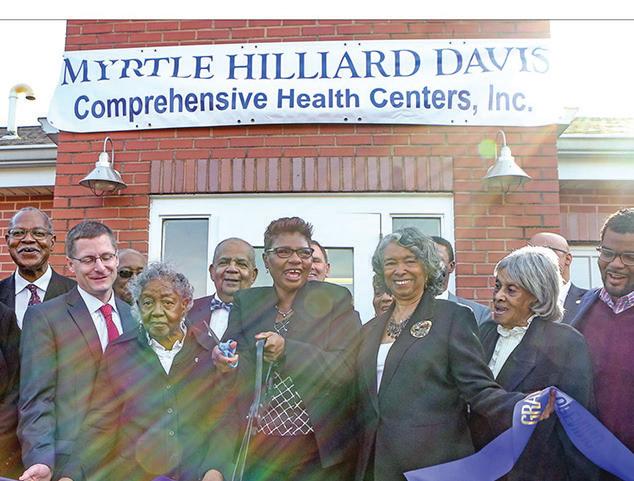

Learning Standards:
I can use a newspaper to locate information. I can summarize an article and recognize cause and effect.


Mystery Story: Cut out several pictures from the newspaper without reading the caption. Place the pictures in a bag, and without looking, pick your mystery picture from the bag. That’s your stimulus for writing. Construct a graphic organizer to identify the 5Ws (who, what, when, where, and why) of your story by looking at your picture. Then, continue the writing process.
Mystery Story: Cut out several pictures from the newspaper without reading the caption. Place the pictures in a bag, and without looking, pick your mystery picture from the bag. That’s your stimulus for writing. Construct a graphic organizer to identify the 5Ws (who, what, when, where, and why) of your story by looking at your picture. Then, continue the writing process.
Problem and Solution: Over a period of weeks, clip articles from newspapers that deal with problems and issues facing your local or county government. Discuss the reasons for these problems and how the government hopes to solve them.
Learning Standards: I can use the newspaper to locate information. I can categorize and summarize that information.
Learning Standards: I can use the newspaper to locate information. I can categorize and summarize that information.
Learning Standards: I can use the newspaper to locate information. I can discuss problems and solutions. I can identify types of jobs. I can make text-to-world connections.




Students Aariyah Thompson and Savannah Fisher, in Ms. Stovall’s firstgrade class at Gateway MST Elementary School,
Photo

MARKETING MANAGER
Ray of Eden LLC - O’Fallon, MO. Dev & execute a comp marketing strategy aligned w/ the company’s goals & objectives. Identify mrkt opptys, conduct mrkt research, & define product road maps to drive biz growth. Lead the end-to-end product dev life cycle, from conceptualization to launch & beyond. Work closely with engrg & design teams to prioritize features, define reqmts, & ensure timely delivery of high-quality products. Continuously analyze user feedback, conduct usability testing, & monitor key performance metrics to enhance the overall user exp. Implement data-driven strategies to improve conversion rates, retention, & customer satisfaction Collab w/ various teams incl mrktg, sales, customer support, & ops to ensure alignment & successful execution of product initiatives. Communicate product updates, milestones, & priorities effectively across the organization. Master’s in Biz Admin. $108,035/yr. Res: peniels0202@gmail.com
REQUEST FOR PROPOSALS
Hazelwood School District is seeking bid proposals to clean and repaint the roof at Barrington Elementary School.
Interested parties should submit their bid proposal through Bidnet via the district’s website at https://www. hazelwoodschools. org/Page/2238 on or before Tuesday, April 7, 2026 not later than 10:00 a.m.
REQUEST FOR PROPOSALS
Alberici Constructors, Kwame Building Group and the Saint Louis Zoo seek bids from qualified firms to submit proposals for a project at the Saint Louis Zoo WildCare Park. The project consists of assembly, erection and foundations for a motorized vertical lifting observation tower. To request bid documents, please send an E-mail to stlzoobids@alberici.com
REQUEST FOR PROPOSALS
Great Rivers Greenway is requesting proposals for Public Art for Brickline Greenway. Go to https://greatriv ers greenway.org/ven dors/ and submit by April 24, 2026.
CITY ADMINISTRATOR
The City of Normandy, MO (3rd class, population 4,300, budget 4.34 million) is seeking its next City Administrator. Incorporated in 1945, the City of Normandy is an inner ring suburb in North St. Louis County. The City of Normandy has an 8-member council and a mayor who appoints the City Administrator to run the City’s day-to-day operations. The successful candidate will have proven municipal experience in city administration, community development, economic development, and will be an excellent communicator who is committed to building relationships with citizens, elected officials and staff. Successful candidates will have at least 5 years of relevant experience, prefer a bachelor’s degree in public administration, political science, business, finance, or related field. Salary range based on qualifications and experience. Residency is not required. Resume must be submitted electronically to mcorcoran@cityofnormandy. gov.
PUBLIC NOTICE
Notice is hereby given that the Metropolitan St. Louis Sewer District Requests for Quotes, Bids and Proposals are posted online for public download. Please navigate to www.msdprojectclear.org > Doing Business With Us > View Bid Opportunities Metropolitan St. Louis Sewer District is an Equal Opportunity Employer.
REQUEST FOR BIDS
Great Rivers Greenway is requesting bids for the Replacement of Banners along Leonor K. Sullivan Blvd. Go to https://greatriv ersgreenway.org/ bids/ and apply by April 09, 2026.
CITY OF ST. LOUIS BOARD OF PUBLIC SERVICE
REQUEST FOR QUALIFICATIONS for CONSTRUCTION SUPERVISION AND MATERIAL TESTING FOR THE RECONSTRUCTION OF RECONSTRUCTION OF RUNWAY 12L30R FROM TAXIWAY SIERRA TO TAXIWAY LIMA AND RUNWAY 6-24-PROJECTS 1 AND 2 AT ST. LOUIS LAMBERT INTERNATIONAL
AIRPORT. Statements of Qualifications due by 5:00 PM CT, APRIL, 14, 2026 through the Bid Express online portal at https://www.bidexpress.com/ businesses/20618/home?agency=true. RFQ may be obtained from BPS website https://www.stlouis-mo.gov/ government/departments/ public-service/bps-online-planroom.cfm under On Line Plan Room-Plan Room, or call Board of Public Service at 314-589-6214.
SEALED BIDS
Bids for Troop I Headqrtrs & CDL Erosion Control, Pav. Repairs & Reno, Rolla, Project No. R2405-01 will be received by FMDC, State of MO, UNTIL 1:30 PM, April 23, 2026. Project information available at: http://oa.mo. gov/facilities
JANITORIAL SERVICES LOTTERY HEADQUARTERS
The Missouri Lottery is accepting bids for the purpose of establishing a contract for Janitorial Services at Lottery Headquarters. The bid document with the specifications can be obtained by going to https://www. molottery.com/about-us/ bid-opportunities.jsp or by contacting Melissa Blankenship at melissa. blankenship@molottery. com or 573-751-4050.
REQUEST FOR PROPOSALS
SEALED BIDS
Bids for Constructions Services –Central Region, Project No. IDIQMCA6008, will be received by FMDC, State of MO, UNTIL 1:30 PM, April 9, 2026. Project information available at: http://oa.mo.gov/ facilities
The St. Louis Economic Development Partnership (“SLEDP”) solicits proposals from qualified certified public accounting firms to conduct annual independent audits for multiple affiliated entities and to perform a Single Audit for one entity and for all related tax compliance services for up to a three-year contract period. The services shall include SLEDP and affiliate entities, including the Land Clearance for Redevelopment Authority, St. Louis County Port Authority, Industrial Development Authority, STL Partnership CDC, STLVentureWorks, and the World Trade Center –St. Louis. A copy of the full RFP is available at https:// stlpartnership.com/rfp-rfq/. Submissions should be received no later than 3:00 PM CT on Monday, April 27, 2026.
St. Louis Economic Development Partnership Equal Opportunity Employer
The City of University City must procure a Missouri Department of Natural Resources licensed asbestos inspector to complete asbestos inspections and provide a report on the findings for up to twelve (12) single-family residential structures, four (4) multi-family structures, and associated outbuildings as part of a flood buyout program. The City of University City reserves the right to reject any and all bids.
The bids must be received no later than 3 pm on April 6, 2026. More information on the City’s website at: https://www.ucitymo.org/Bids. aspx?BidID=457
The City of University City is an equal-opportunity employer and encourages submission of bids from minority firms. If you have questions, please contact Becky Ahlvin of the City of University City at bahlvin@ucitymo.org or 314-505-8516.


NOTICE OF ELECTION
MUNICIPAL ELECTION
GENERAL
CITY OF ST. LOUIS, MISSOURI
TUESDAY, APRIL 7, 2026
NOTICE IS HEREBY GIVEN that a General Municipal Election will be held at the designated polling place for each precinct in the City of St. Louis, State of Missouri, on Tuesday, April 7, 2026. The polls will be open between the hours of 6:00 A.M. and 7:00 P.M. for the purpose of voting on Proposition E which asks voters whether the earnings tax of 1% imposed by the City of St. Louis shall be continued for a period of five (5) years, commencing January 1, 2027. There are no candidates on the ballot.
The last day the Board of Election Commissioners can accept an application to vote an absentee ballot by mail in the April 7, 2026, General Municipal Election is 5:00 P.M. on Wednesday, March 25, 2026. Absentee voting in person will conclude at 5:00 P.M. on Monday, April 6, 2026. The office of the Board of Election Commissioners will be open on Saturday, April 4, 2026, from 9:00 A.M. until 1:00 P.M.
THE OFFICIAL BALLOT WILL BE SUBSTANTIALLY IN THE FOLLOWING FORM:
INSTRUCTIONS TO VOTERS: In today’s election, you will receive a paper ballot that contains the language of the proposition on which you may vote, regardless of your polling location. If you are in favor of the proposition, completely fill in the box to the left of the word “YES.” If you are opposed to the proposition, completely fill in the box to left of the word “NO.” When you finish marking your ballot, insert it into the scanner.
Do not try to punch through the ballot. Use only a black or blue ink pen to mark your ballot. If you tear, deface or make a mistake and incorrectly mark your ballot, return it to the Election Judges and obtain a new ballot.
PROPOSITION E
Shall the earnings tax of 1% imposed by the City of St. Louis be continued for a period of five (5) years commencing January 1 immediately following the date of this election?
YES – FOR THE PROPOSITION NO -- AGAINST THE PROPOSITION
YOU HAVE NOW COMPLETED VOTING.
IN TESTIMONY WHEREOF: The undersigned, comprising the Board of Election Commissioners for the City of St. Louis, State of Missouri, have caused this notice to be signed and the official seal of the office to be affixed at the office of the Board of Election Commissioners in St. Louis, Missouri, this 18th day of February, 2026.
BOARD OF ELECTION COMMISSIONERS FOR THE CITY OF ST. LOUIS
JERRY M. HUNTER Chairman/Member
SUSAN R. DIRAIMONDO Member
ANDREW L. SCHWARTZ Member (Seal) Attest: JOSEPH A. BARBAGLIA Secretary/Member

REQUEST FOR PROPOSALS
Hazelwood School District is seeking bid proposals for asphalt replacement at The Learning Center, Coldwater, West High, Northwest Middle, Opportunity Center, East High School.
Interested parties should submit their bid proposal through Vendor Registry via the district’s website at https:// www.hazelwood schools.org/Page/2238 on or before Tuesday, April 7, 2026 not later than 10:00 a.m.
REQUEST FOR PROPOSALS
DEVELOPMENT OF A PARTNERSHIP FOR REGIONAL ALIGNMENT
East-West Gateway is seeking submittals from consultants to facilitate the development of a Partnership for Regional Alignment. Submittals are due no later than 1:00 p.m. on April 14, 2026. Submittal details and specifications can be obtained at www.ewgateway.org
REQUEST FOR BIDS FOR THE GENERAL CONTRACTING SERVICES AT 6105 DR. MARTIN LUTHER KING DRIVE
ISSUED: MARCH 25, 2026
RESPONSES DUE: APRIL 15, 2026
The Land Reutilization Authority of the City of St. Louis (“LRA”) sealed proposals from General Contractors to complete the prescribed scope of services for historic stabilization and repairs of the structure located at 6105 Dr. Martin Luther King Drive, St. Louis, Missouri 63133.
Responses will be received at 1520 Market Street, Suite 2000, St. Louis, Missouri 63103 (Attention: LRA) and STL City Permits until 3:00 p.m. on April 15, 2026.
The services to be provided through this RFB will be funded by The Coronavirus State and Local Fiscal Recovery Fund allocated to the City of St. Louis by the United States Department of the Treasury and passed through the City’s Community Development Administration to LCRA. The full invitation and all other documents may be downloaded at: STLPermits.com and https://www.stlouis-mo.gov/government/ procurement.

BeBe Winans to bless St. Louis with Easter weekend concert
Grammy‑winning gospel favorite brings his signature sound to Friendly Temple
By Kenya Vaughn
The St. Louis American
For more than four decades, the Winans name has been stitched into the fabric of gospel music. So much so that when St. Louis Symphony Orchestra IN UNISON Chorus director Kevin McBeth referred to the Winans gospel royalty. He also introduced BeBe Winans as “the prince” of gospel”—during his 2024 featured soloist appearance with IN UNISON.
Now, on the eve of Resurrection Sunday, BeBe is returning to St. Louis — a city that has embraced him and his family from the very beginning — to headline a special pre‑Eas ter concert at Friendly Temple Missionary Baptist Church pre sented by Breakaway.
“I just love St. Louis,” BeBe told The St. Louis American back in 2011. “Me and my sister CeCe — and the Winans — St. Louis has always put your arms around us, and we want to say thank you for that support all through the years.”
BeBe’s older brothers — Carvin, Marvin, Michael, and Ronald — known collectively as The Winans, broke barriers by blending the message of the church with the polish of R&B. Their collaborations with Teddy
Riley, Anita Baker, and other mainstream artists made them as likely to appear on Video Soul as Bobby Jones Gospel. Long before contemporary gospel had a name, The Winans expanded what Black faith based music could be.
BeBe and CeCe carried that torch into a new era. When their album “Heaven” hit the airwaves 35 years ago, the title track shot to number one on urban adult contemporary radio and pushed the album into Billboard’s Top 10 R&B chart. The album’s ascent was something no inspi rational record had done since Aretha Franklin’s return to gos pel in 1972. Their easy‑listening gospel became a soundtrack for believers and seekers alike, with hits like “Addictive Love” and “Lost Without You” cementing their place in both gospel and mainstream music history. By the mid‑1990s, both siblings launched solo careers — and BeBe’s voice, song writing, and storytelling found new room to stretch. His solo catalog includes the Grammy‑winning album BeBe & CeCe Winans: Still, Dove Awards, NAACP Image Awards, and collaborations with artists across genres. He has written for film and stage, released memoirs, and even created the

‘Lift
Broadway‑bound musical Born for This, chronicling his and CeCe’s early years. Through it all, his music has remained root ed in testimony.
“You can’t help but realize the blessing this whole journey has been,” BeBe said. “Plenty have come and gone — some gone quicker than they came. The whole experience has been rewarding and is something we

don’t take for granted.” That lived experience is what audiences will feel when he steps onto the Friendly Temple stage.
“We’re not perfect,” he said.
“But it has been a joy to sing what we sing and say what we say — and live what we sing about.”
Breakaway presents “A Pre‑Easter Night with BeBe
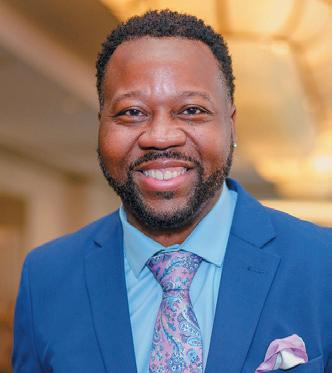
There comes a point in every leader’s journey when performance stops being fulfilling. You hit the targets. You exceed the metrics. You gain the title, the raise, the influence. You collect the badges that the world calls success.
And yet… something inside you still feels thin. Hollow. Unanchored.
That’s because performance can validate you — but it cannot fulfill you. Validation is external. Fulfillment is internal. And internal work demands more than accomplishments can deliver.
Fulfillment is a purpose question. The world teaches you to chase outcomes. Purpose teaches you to anchor identity. Performance focuses on what you do. Purpose focuses on who you’re becoming.
And leaders who never stop long enough to examine this disconnect eventually hit an emotional ceiling. Their body keeps moving, but their soul is exhausted.
This is when leaders start whispering questions they’ve never said out loud: Why am I doing all this?
Who am I becoming in the process?
Why doesn’t success feel like success anymore?
What am I sacrificing to maintain this image?
Why do I feel empty even while I’m winning?
These questions aren’t signs of weakness. They’re signs of awakening — a shift from grinding to grounding, from striving to listening, from chasing to aligning.
In The Thriver’s Path™, this is the moment you transition from external validation to internal alignment. It’s when the soul starts asking for more than performance can offer.
Winans” will take place on Saturday, April 4 at Friendly Temple Missionary Baptist Church, 5515 Dr. Martin Luther King Jr. Blvd. The concert begins at 7 p.m. Doors open at 6 p.m. For tickets, visit www.break away.ticketbud.com or stop by Vintage Vinyl, 6610 Delmar Blvd. For more information, call 314‑837‑3424.
Here’s what reclaiming purpose looks like — not theoretically, but practically, spiritually, emotionally:
1. Slow down long enough to feel your own life.
Busyness is the enemy of clarity. As long as you’re sprinting, you can’t hear your soul. Purpose requires presence. Presence requires pause.
2. Name what matters most — not what looks best. Purpose often contradicts popularity. It may require you to disappoint people, to shift priorities, to choose depth over applause. Your spirit knows what matters even when your résumé doesn’t.
3. Let go of roles, relationships, and rhythms that no longer fit. Growth requires shedding. There are seasons you must outgrow — and people, and patterns, and identities built for survival, not expansion. Shedding is not loss; it’s preparation.
4. Realign your work with your deeper calling. People cannot give you what only purpose can sustain. Your calling is not your job description — it’s your inner conviction. When you realign with it, energy returns, clarity sharpens, and confidence rises.
5. Redefine success in language that honors your soul.
Success without soul is erosion. It looks shiny on the outside but hollows you out on the inside. Redefining success allows you to experience achievement without abandoning yourself.
When performance isn’t enough, it’s not a sign that you’re failing — it’s a sign that you’re being invited
Invited into deeper leadership.
Invited into inner wholeness. Invited into purpose-filled living. Invited to rise with meaning, not just metrics.
Your next season requires a different anchor. Not the anchor of performance — but the anchor of purpose.
Choose purpose.
It will carry you further than performance ever could.
For more, visit OrvinKimbrough.com or
Photo by Wiley Price
BeBe Winans performs with the IN UNISON Chorus under the direction of Kevin McBeth during the annual
Every Voice’ Black History Month concert on Friday, Feb. 23, 2024, at the Stifel Theatre.