
St. LouiS AmericAn
Serving, empowering and advocating for equity in St. Louis
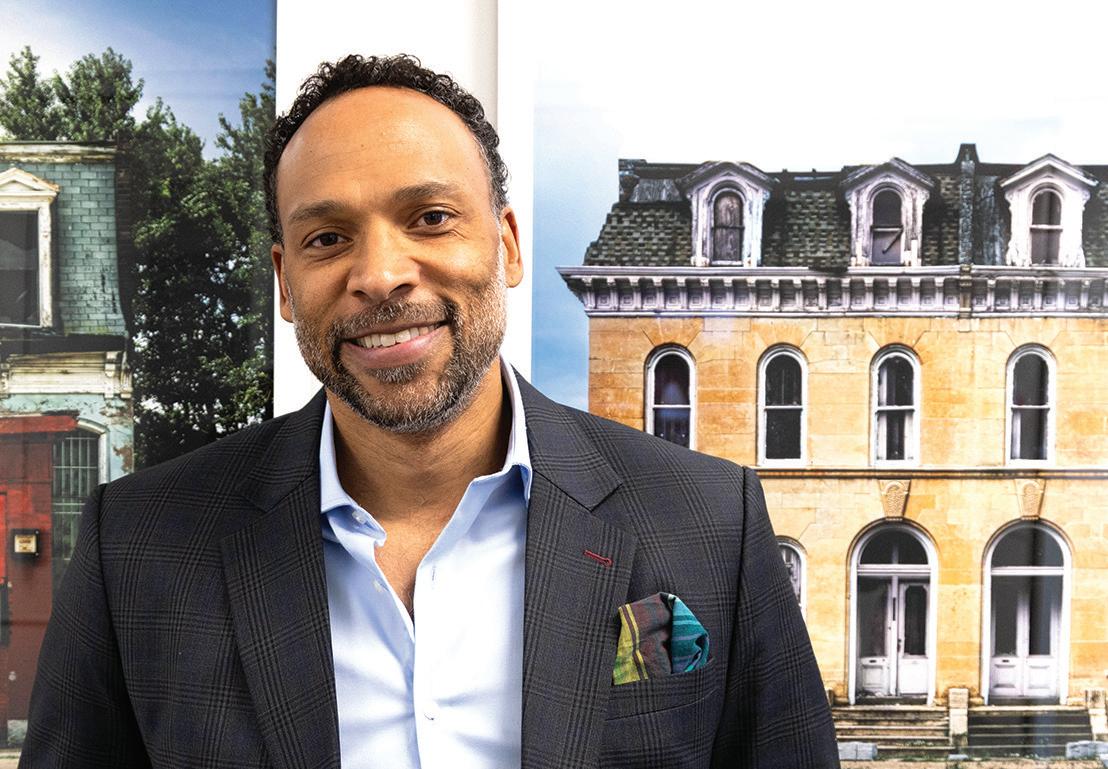
Stephen Westbrooks: Connecting capital and community needs
By Ashley Winters St. Louis American
In boardrooms where multimillion-dollar deals are debated and spreadsheets shape the future of neighborhoods, Stephen Westbrooks is often the one asking a different question: Who gets access?
Westbrooks is executive director of IFF’s Southern Region, part of a nonprofit Community Development Financial Institution that provides loans and financial consulting to nonprofits,
schools and community organizations. His role involves overseeing lending decisions, guiding investment strategy and advising organizations navigating complex real estate and development challenges across Missouri, Southern Illinois and Kansas. In St. Louis, that work frequently means structuring loans and helping early childhood centers, fresh food providers and human service orga-
See Westbrooks, A13
By Ashley Winters St. Louis American
“I am somebody.”

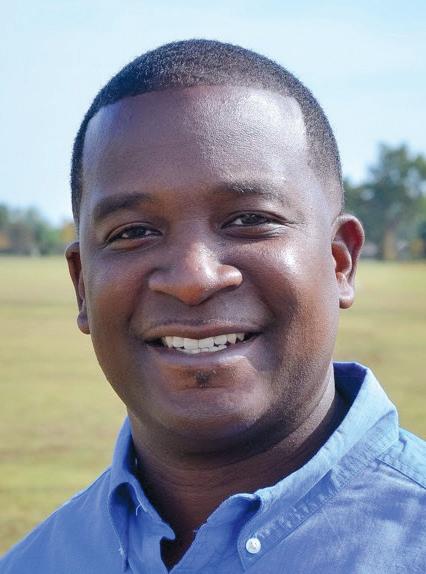
Stephen Westbrooks is executive director of IFF’s Southern Region, part of a nonprofit Community Development Financial Institution.

On a rainy Saturday afternoon, about 20 former residents of Robertson, Missouri gathered in the lower level of First Missionary Baptist Church of Robertson in Hazelwood, many carrying folders thick with documents.
Damp coats hung on a rack near the entrance. Fluorescent lights hummed softly overhead. At the tables, attendees compared notes, documents and worries accumulated over decades.
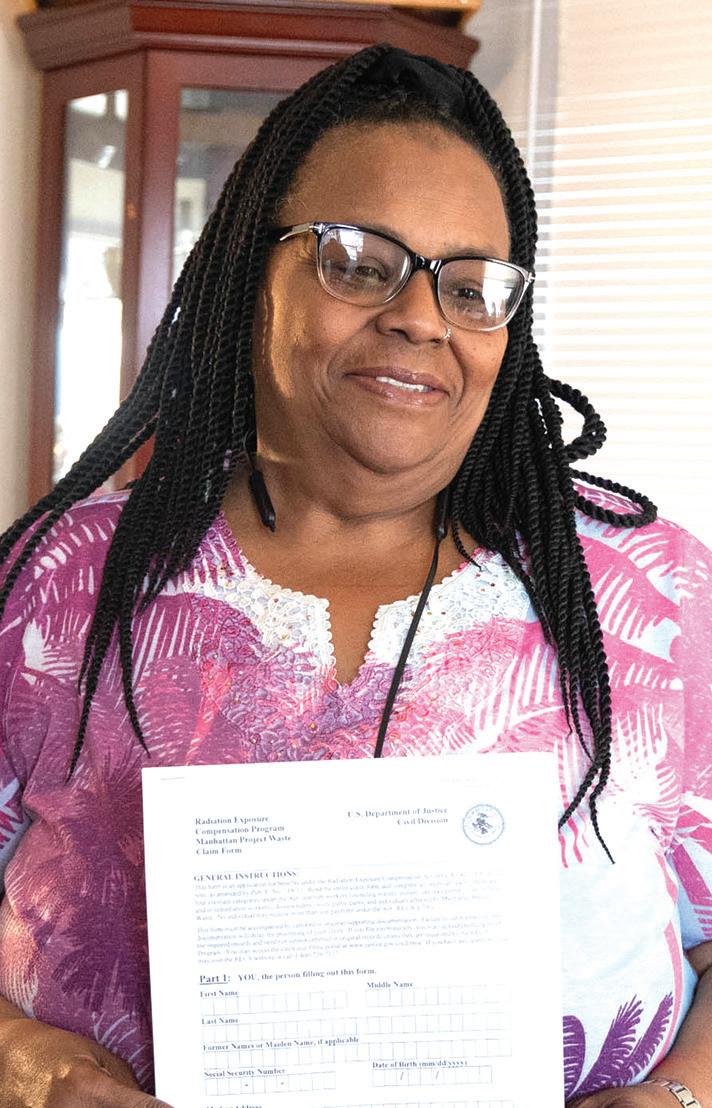
But the most important evidence in the room wasn’t paperwork. It was Dorothy Butler. Last month, Butler, 64, became one of the first known former Robertson residents to receive compensation through the


With those words, KSDK anchor Brent Solomon opened the St. Louis American Foundation’s sold-out 24th Annual Salute to Excellence in Business luncheon, invoking the late Rev. Jesse Jackson’s familiar affirmation of dignity and resilience. The event brought together business and civic leaders to recognize Black executives, entrepreneurs and nonprofit leaders whose work strengthens communities and expands opportunity. Proceeds support the foundation’s education, workforce development and community-impact initiatives.
Honorees were Keith Williamson, Lifetime Achiever in Business; Akberet Boykin-Farr, Corporate Executive of the Year; Eric Rhone, Entrepreneur of the Year; and Leslie Gill, Nonprofit Executive of the Year.
Gill, president and CEO of Rung for Women, recalled walking past The St. Louis American’s Lindell Boulevard office as a teenager.
“I consider it to be such an honor,” she said, crediting her team for the organization’s impact.
Boykin-Farr, vice president of human resources and corporate functions at Emerson, reflected on legacy, sharing a story about her mother overcoming discrimination while teaching overseas. Rhone traced his career to local comedy clubs before building a production company in Hollywood.
Williamson highlighted the shared responsibility of advancing sustainable prosperity.
The East St. Louis Flyers head into this week’s basketball playoffs with high aspirations after finishing with a 26-4 record and the
Photo by Lawrence Bryant / St. Louis American
By Sylvester Brown Jr. St. Louis American
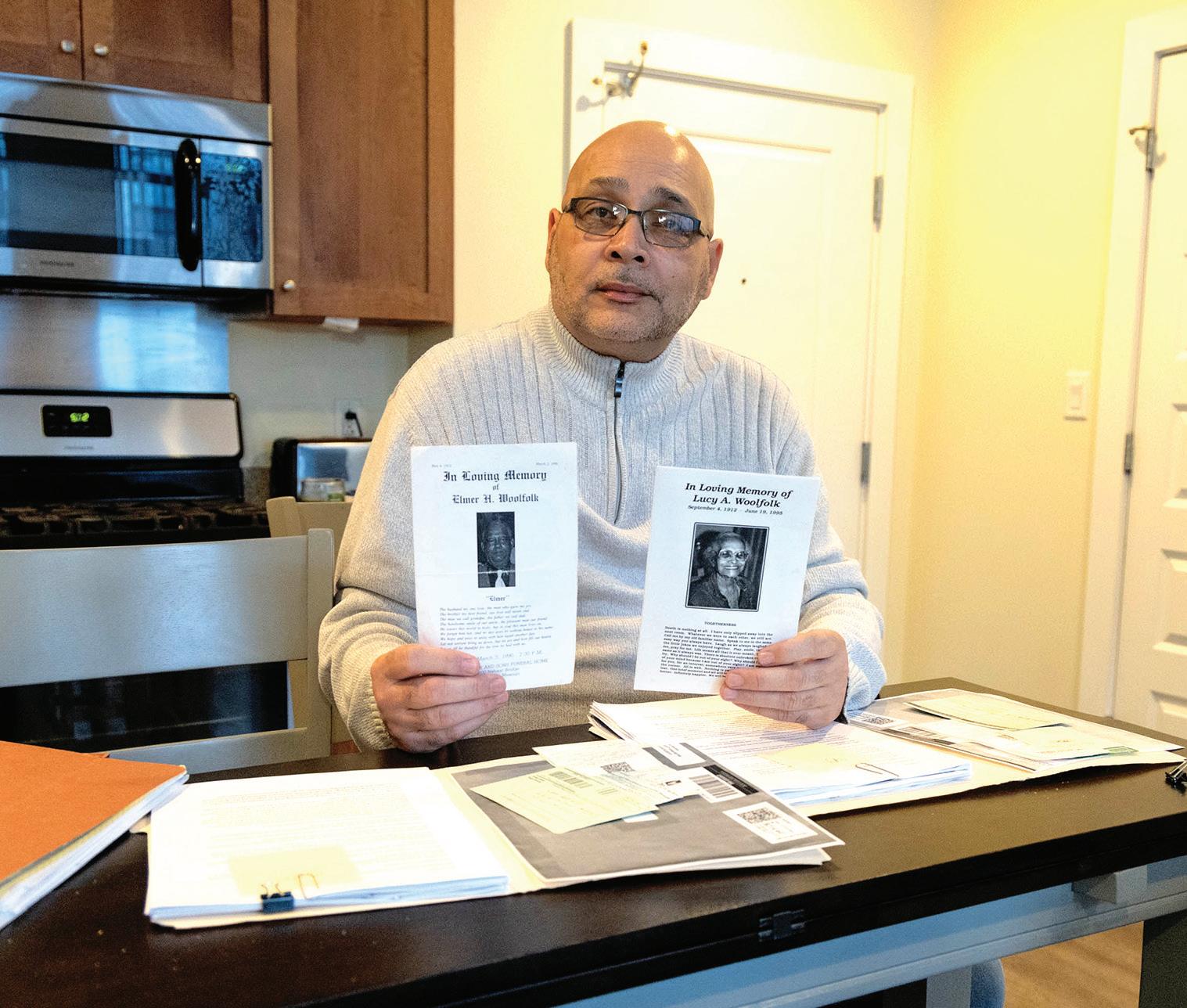
Lynn Woolfolk recently filed claims connected to his deceased parents. He said that retrieving the required documents cost him nearly $300.
Photo by Lawrence Bryant / St. Louis American
Dorothy Butler
Guest Editorial
Jesse Jackson altered the game
On Further Reflection
By Mike Jones
On Feb. 17, the ancestors requested the presence of the Rev. Jesse Jackson. In that moment, he transitioned from a man who made history to a man who is history. A page has turned in the story of Black America’s long journey.
Jesse Jackson was the last of a generation of national Black leaders forged in the furnace and shaped on the anvil of the civil rights movement and its more militant younger sibling, the Black Power movement. In any arena, the final measure of a player comes only after he leaves for the last time. Jesse Jackson has left the building.
When a figure of that magnitude exits, those still in the arena — spectators and participants alike — begin their evaluations. Who was he? What was his impact? Generational differences quickly emerge. The debate often reduces itself to statistics: What did he win? What did he fail to win? But the real division is usually about who actually saw him play.
Every field has elite performers. Occasionally, someone does more than excel — they alter the game itself. There is a clear before and after. Julius Erving did not simply play above the rim; he moved the game into the air. Stephen Curry does not merely shoot 3-pointers; he collapses distance as a governing principle of offense. These are transformational players. Politics has them as well.
broadened the electorate and insisted that the party reflect the people it claimed to represent. Jackson compelled Democrats to address racial disparities, economic inequality and inclusive leadership not as peripheral concerns but as central pillars.
This trajectory was consistent with Jackson’s earlier work as national director of Operation Breadbasket and later through Operation PUSH. He long linked political participation to economic empowerment. The presidential campaigns were an extension of that philosophy.
The beneficiaries of these structural shifts were often those who came after him. Bill Clinton operated within a party reshaped by Jackson’s reforms. Barack Obama’s path to the White House ran through terrain Jackson helped clear.
Bernie Sanders’ insurgent campaigns also relied on proportional delegate rules and coalition politics Jackson helped normalize decades earlier.
Jackson was also an orator of uncommon power. But eloquence alone does not sustain influence — substance does. His speeches at the Democratic National Conventions in 1984 and 1988 articulated a vision of a multiethnic coalition as both the future and necessity of the Democratic Party. The Rainbow Coalition was not rhetorical flourish; it was a governing theory.
A transformational political figure is not defined by holding office. He or she changes the mechanics of the system, expands what outcomes are possible and forces institutions to adjust. Peers recalibrate. The next generation assumes the new reality was always there. By that standard, Jesse Jackson was transformational. He reshaped Democratic Party politics and, by extension, American politics.
Before Jackson’s presidential campaigns in 1984 and 1988, Black participation in Democratic presidential politics at the national level was limited. Influence was largely confined to moral appeals, issue advocacy or internal bargaining. Jackson moved Black political ambition from the margins toward the center. He ran not as a symbolic candidate but as a contender.
His campaigns produced structural consequences. After 1984, the Democratic Party expanded the use of proportional representation in delegate allocation, moving away from winner-take-all contests. That change mattered. It opened space for insurgent and minority candidates to accumulate delegates and bargaining power. Jackson never secured the nomination, but he changed the rules governing how nominations were contested. His campaigns also drove significant increases in Black voter registration and turnout. The Rainbow Coalition strategy
At the 1984 convention, Jackson described America not as a single piece of unbroken cloth but as a quilt — many patches, many colors, many sizes, held together by a common thread. The metaphor endures because it captures structural reality rather than sentimental aspiration.
Like Frederick Douglass’ Fourth of July address and Martin Luther King Jr.’s “Letter from Birmingham Jail,” Jackson’s convention speeches retain relevance because, like Douglass and King, he diagnosed the American condition while insisting on a broader democratic possibility.
There are roughly 51 million Black Americans. Approximately 88% are under age 65. The median age is about 33. That means nearly 40 million Black Americans never saw Jesse Jackson in his political prime.
Transformational figures are often misunderstood in their moment. Their full impact becomes visible only after they exit the arena. Jesse Jackson did not simply compete within American politics; he altered its operating system.
Black History Month exists to remind us that historical literacy is not optional. Douglass’ Fourth of July speech and King’s “Letter from Birmingham Jail” merit annual rereading. Jackson’s 1984 and 1988 convention addresses belong in the same rotation — not out of obligation to him, but out of responsibility to ourselves.
Mike Jones is a political analyst, columnist and member of the St. Louis American Editorial Board.

Commentary Rev. Jackson inspired future leaders — including me
By Marc Morial
The nation has lost a giant of American history, a fearless freedom fighter, and one of the most consequential leaders of the modern civil rights movement.
For more than six decades, Rev. Jackson stood at the center of the struggle for civil rights, economic justice, voting rights, peace, and human dignity.
As a teenage protégé of Dr. Martin Luther King Jr., he bore witness to history at its most triumphant and its most tragic, including the assassination of Dr. King in 1968. In the aftermath of that unspeakable loss, when many wondered whether the movement could endure, Jesse Jackson’s voice thundered forth — undaunted, unapologetic, and unwavering — carrying the clarion call for justice into a new generation.
Rev. Jackson’s tireless advocacy reshaped America’s moral and political landscape. Through the founding of People United to Serve Humanity — Operation PUSH — in 1971, and later the Rainbow Coalition, he created enduring institutions dedicated to economic empowerment, corporate accountability, and multicultural coalition-building. The Rainbow PUSH Coalition became a blueprint for inclusive democracy, proving that progress is forged not in isolation, but through unity across race, class, faith, and geography.
bolic gestures — they were transformative movements that expanded the electorate, elevated progressive ideas, and shattered long-standing barriers. I was proud to serve as a delegate to the Democratic National Convention in both years and to cast my vote for Jesse Jackson.
His 1984 keynote address, calling on our nation to “feed the hungry, clothe the naked, house the homeless, teach the illiterate, and provide jobs for the jobless,” inspired a generation of leaders — including myself — and continues to resonate today.
By finishing third in 1984 and second in 1988, Rev. Jackson laid the groundwork for future leaders and future victories, helping to make possible what once seemed unimaginable. His impact is woven into the fabric of American democracy.
The National Urban League and Rainbow PUSH Coalition have long shared a common mission and a deep bond of purpose. Together, we have fought to expand opportunity, dismantle systemic barriers, and ensure that African Americans and other marginalized communities have a fair shot at the American dream.
Jesse Jackson understood, as we do, that elected office is not merely a seat of power, but a platform to advance justice and improve lives.
His historic presidential campaigns in 1984 and 1988 were watershed moments in American politics. They were not sym-
Of the generation that took up the mantle directly from Dr. King, Jesse Jackson stood among the last great standard-bearers — relentless in his pursuit of justice, fearless in speaking truth to power, and resolute in his belief that America could be better than it was. He created what he often called “productive tension,” forcing the nation to confront its conscience and act.
Rev. Jesse L. Jackson Sr. was more than a civil rights leader. He was a mentor, a movement builder, a coalition maker, and a moral compass for our nation. His extraordinary life and enduring legacy live on in the millions he inspired, the institutions he built, and the doors he helped open for generations to come.
On behalf of the National Urban League, we extend our deepest condolences to the Jackson family, the Rainbow PUSH Coalition, and all who were touched by his remarkable life.
As we honor his memory, let us recommit ourselves to the unfinished work he so powerfully advanced.
Marc Morial is president and CEO of the National Urban League.
Commentary
Rev. Jesse Jackson lifted us all
By Ben Jealous
One of the great strengths of our movement is that our leaders do more than inspire young people — they keep the door open for them. The leaders who carried forward the legacy of Dr. Martin Luther King Jr. understood that movements survive only when the next generation is welcomed in. Leaders like Joseph Lowery, Rev. James Orange, Rev. Earl Shinholster, Andrew Young, and many others lived that commitment.
Rev. Jesse Jackson carried it farther than most. He gave time — minutes, hours, sometimes days — to younger people trying to find their way.
When I first raised my hand to volunteer, I was 14. I was short for my age. I had a bad stutter. But I heard that a man who had taken risks alongside Dr. King was running for president, and I wanted to help.
look at me and say: “Flood rules. Eyes open. Mouth shut. Keep stepping forward.”
In Rockford, Illinois, we drove out together because we heard that threeyear-old girls who had witnessed a police shooting were losing their hair from trauma. We arrived from the funeral of a Black teenager beaten to death with two-by-fours in the streets of Chicago — some said for crossing into the wrong territory, others because hateful people believed he was gay. Rev. Jackson went where the pain was — to help people heal, to help them find their power to move forward, and to push all of us forward again.
I helped lead Youth for Jackson in my county. We registered voters. We believed we could change things. And while I was giving my stump speech around my county on his behalf, I decided I had to conquer my stutter. I set my mind to it until I figured it out.
He asked me to meet when he came to speak at Stanford University. He treated young organizers like we belonged in the room.
In my early 20s, after I had been kicked out of college for organizing protests, I walked into his home in Washington, D.C. He was serving as a shadow senator. The topic was winning voting rights for Washington, D.C. — a perennial yet always urgent battle. We talked strategy. He listened more than he spoke.
Years later, when the pressure mounted while I was leading the NAACP, he was still the person I would turn to first for advice and quiet moments. And when things got especially hot, he would just
When voting rights came under assault, he did the same. When immigrant rights came under attack, he did the same. When working people of any color came under attack, he did the same.
In my 50s, Dave Chappelle and I sat on either side of Rev. Jackson as we watched Kamala Harris, a Black woman, accept our party’s nomination for president of the United States. It felt more than appropriate that that moment — like President Obama accepting victory on election night years earlier — happened in Rev. Jackson’s hometown of Chicago.
Across every chapter, he was there. Not as a symbol. As a worker in the struggle. The lesson was simple: Show up. Keep going. Hold the door open for others. That is how movements are reborn and rebuilt — even after setbacks, even when the odds feel like they are mounting against us. That is how freedom moves forward.
Ben Jealous is a professor of practice at the University of Pennsylvania and former president and CEO of the NAACP.
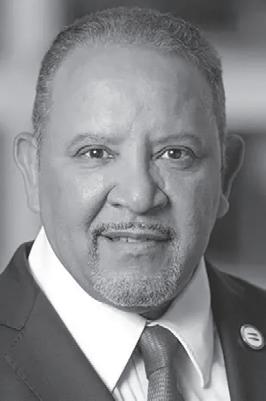
Columnist Marc Morial
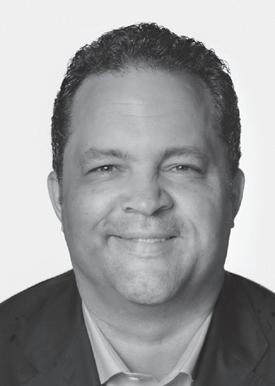
Guest Columnist Ben Jealous
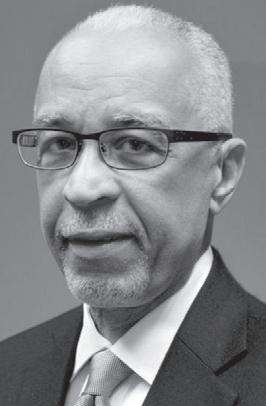
Columnist Mike Jones
“Judging from the expression on his face, he got the message.”
- Rep. Al Green on holding up a sign that read “Black People Aren’t Apes” during President Trump’s recent State of The Union Address
City SC opens season with energy, edge
By St. Louis American staff
The sun hung low over downtown Saturday afternoon, but inside Energizer Park the temperature felt a few degrees warmer — fueled by thousands of supporters ready to usher in another season of St. Louis City SC soccer.
Before a single ball was kicked, the day already carried a sense of history. City SC took the pitch wearing new Tina Turner tribute uniforms, known in soccer as kits — a bold, shimmering design honoring the global icon who graduated from Sumner High School and sharpened her voice and stage presence in St. Louis and East St. Louis. The jersey design marks the first Adidas collaboration with a female music artist.
For a club that prides itself on celebrating the city’s cultural legacy, opening the season in a uniform inspired by a Black woman who became one of the most electrifying performers of all time served as a proclamation that St. Louis stories matter on the world stage.
By the final whistle, City SC settled for a 1-1 draw against Charlotte FC. It wasn’t the three points it wanted, but it was a performance that hinted at promise.
“There are two sides to my feelings,” first-year head coach Yoann Damet said afterward. “A bit of disappointment not to get the result that we wanted, but also a lot of pride in the effort.”
From the opening kick, City SC dictated terms. St. Louis outshot Charlotte 10-3 in the first half and controlled possession with confidence.
“We set the tone from the beginning,” midfielder Marcel Hartel said. “We wanted control of the game, to create chances, to be aggressive. The result is not good enough, but the performance was good.”
The breakthrough came in the 60th minute. After Jaziel Orozco won the ball tightly against Wilfried Zaha, Daniel Edelman quickly turned play forward. Simon Becher slipped a sharp pass into space for Hartel, who struck a right-footed shot from outside the box into the bottom-left corner.
The strike continued Hartel’s strong run of form, marking his fifth goal in his last six league matches dating to last season.
“Cello puts the team first every single day,” Damet said. “He has a chip on his shoulder but also the humility of a great player. I’m happy he was rewarded.”
Becher, credited with his first assist of the season, praised the chemistry behind the play.
“As it was coming, I saw Cello make the run,” Becher said. “I knew the center back would track me, so I wanted to get it to him as quick as possible.”
For 13 minutes, Energizer Park felt ready to erupt.
Charlotte answered in the 73rd minute when Pep Biel

found space on the left side of the box and placed a low shot into the far corner.
In the final minutes — and deep into stoppage time — St. Louis pushed forward. By match’s end, City SC recorded 22 shots, 11 on target, forcing Charlotte goalkeeper Kristijan Kahlina into 10 saves.
“We were still on the front foot,” Damet said. “We didn’t think twice. We went for it. That’s what we owe the fans.”
The supporters responded throughout.
“It was an incredible atmosphere,” Edelman said in his
Primary Care for the Whole Family

With

City SC debut. “You could feel the energy. We were feeding off it.”
Roman Bürki, the club’s captain and steady presence in goal, quietly added another milestone. The match marked his 100th appearance for City SC across all competitions — the first player in club history to reach the century mark. Several players logged notable first appearances. Edelman notched an assist, Rafael Santos and Lukas MacNaughton saw their first action with the club, and Dante Polvara made his MLS debut in the starting lineup.
The final whistle brought applause mixed with unfinished business.
“We wanted three points,” Becher said. “But when teams come to Energizer Park this year, we want them to feel it.” Damet framed the performance as a foundation.
“This is the starting point,” he said. “We’re building. Now we learn and move forward.”
City SC remains unbeaten in home openers and season openers. Next up is a road match against San Diego FC on March 1.




Photo by Lawrence Bryant/St. Louis American
St. Louis City SC opened the season in gold and black uniforms inspired by a Tina Turner, a St. Louis legend who became one of the most electrifying performers of all time.
Commentary
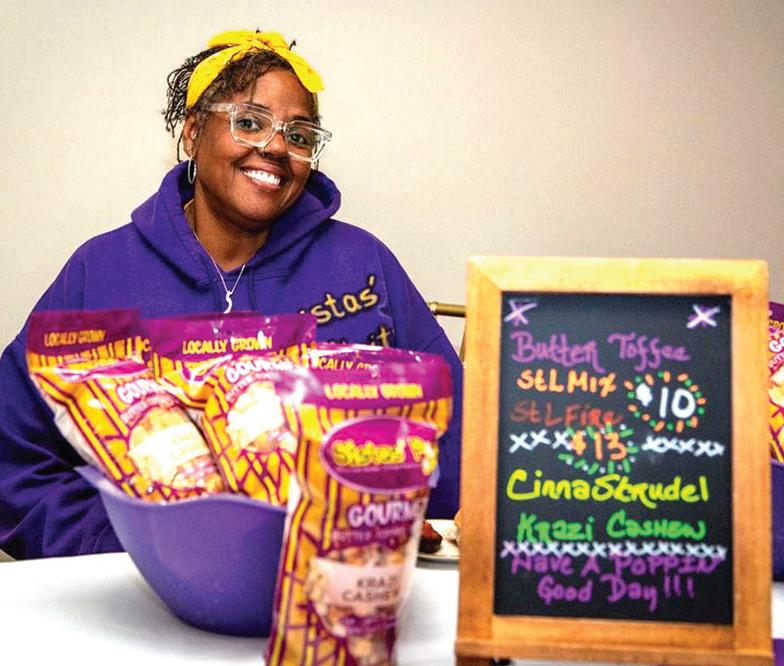
Legal Services lands $25K grant from Trio Foundation
The Trio Foundation of St. Louis has awarded Legal Services of Eastern Missouri’s Community Economic DevelopmentMicroenterprise Program a $25,000 grant.
The second-year grant will provide legal assistance to approximately 25 women entrepreneurs in disadvantaged communities.
Services include full legal representation to help clients start or stabilize small businesses, establish strong legal foundations and overcome barriers limiting access to capital and growth opportunities.
The program has assisted 954 businesses and entrepreneurs across Legal Services’ 21-county service area. In addition to direct legal assistance, it has reached 7,666 people through outreach events providing entrepreneurs with legal knowledge
to navigate business challenges.
“By removing legal barriers, we help our female clients achieve stability, growth and long-term economic empowerment,” said Marlene Elliott, managing attorney of the Legal Services Microenterprise Program. “We are grateful for this investment, which aligns with the Trio Foundation’s commitment to women’s economic empowerment.”
The Trio Foundation of St. Louis is a family foundation focused on community enhancement, human potential and ecological well-being, with an emphasis on equitable access and racial equity. Current funding priorities include women’s economic empowerment, the arts and the environment.
By strengthening women-owned startups and small businesses, the program supports local economic development, job creation and longterm community stability.
Time to address educational institutional racism
By Janice Ellis
Using snapshots of the history of Black people as a corrective and curative measure for one month is tantamount to applying a bandage to treat a virulent and stubborn disease.
Except for providing a minimal degree of comfort for Black Americans, what lasting meaning does it have for the rest of America?
There is a better idea whose acceptance is long past due.
In addition to trying to make up for omissions of the experiences and contributions of Black Americans in history books, we should focus on correcting the many disparities caused and perpetuated by institutionalized and systemic racism in education. That would be far more valuable and have long-lasting impact.
Institutionalized racism is prevalent and entrenched — even taken for granted — in schools from kindergarten through college.
We see the consequences year after year, decade after decade, generation after generation.
Inferior educational quality limits earning potential. When buying power is hampered, it breeds hopelessness, despair and often resignation to a diminished quality of life. Too often, it also contributes to cycles of crime.
These cycles persist across generations. They exist plainly within view. We see the impact of an educational system failing children when we drive through neighborhoods and observe lost faces and wandering souls on street corners, in alleyways and near storefronts. Yes, parents, neighbors, churches and community organizations play a role in keeping children engaged. But fundamentally, what happens once a child is inside the classroom?
At the primary and secondary levels, it is evident in many ways: how resources are allocated; how students are assigned to learning tracks and teachers; and how curricula continue to reflect a scarcity — or near absence — of Black authors, inventors, scientists and other contributors to American history.
That is, until Black History Month rolls around and a few highlights are selected.
No doubt during this month, Brown v. Board of Education — the U.S. Supreme Court decision intended to end segregated schools and provide Black children and other minorities equal access to quality education — is heralded.
In 1954, Black Americans believed they had secured that opportunity. In 2026, more than 70 years later, much remains unchanged.
Schools remain deeply segregated. Too many Black students and other minorities are not graduating — and too many who do leave without a quality education.
The looming question: At what point will America stop the charade and seriously address the institutionalized racism that continues to shape public education?
It is well known that school systems with reputations for poor educational outcomes contribute to urban flight. Families leave cities for suburbs.
New residents often choose where to live based on school quality.
Some businesses relocate or expand to neighboring suburbs to attract employees — decisions shaped in part by perceptions of struggling school systems.
The economic consequences extend further.
Poor educational systems continue to weigh down urban centers across America. Why isn’t quality education for Black students and other minorities — who disproportionately live in urban areas — higher on the list of national priorities more than 70 years later?
Is it because entrenched racism, stereotypes and biases continue to obstruct policies that would improve lives and communities?
Black History Month can function only as a temporary acknowledgment of past achievements.
Addressing educational disparities to bring about meaningful change is what remains necessary — beyond Black History Month.
Missouri Independent columnist Janice Ellis has been an executive in both government and the private sector.

St. Louis American staff
Uniti Hicks of Sistas’ Pop is among minority entrepreneurs assisted by Legal Services of Eastern Missouri’s Community Economic DevelopmentMicroenterprise Program, which has supported 954 businesses and entrepreneurs across the region.
Photo courtesy of Legal Services
Janice Ellis

Rising optimism among business leaders suggests growth for St. Louis
JPMorganChase
Business optimism is returning for small and midsize business leaders at the start of 2026, fueling confidence and growth plans.
The 2026 Business Leaders Outlook survey, released in January by JPMorganChase reveals a turnaround from last June, when economic headwinds and uncertainty about shifting policies and tariffs caused some leaders to put their business plans on hold.
Midsize companies, who
often find themselves more exposed to geopolitical shifts and policy changes, experienced a significant dip in business and economic confidence in June of 2025. As they have become more comfortable with the complexities of today’s environment, we are seeing optimism rebounding in the middle market nationwide – an encouraging sign for growth, hiring, and innovation. Small businesses, meanwhile, maintained steady optimism throughout 2025, but they aren’t shield-
ed from domestic concerns. Many cited inflation and wage pressures as the top challenges for 2026 and are taking steps to ensure their businesses are prepared for what’s ahead.
Overall, both small and midsize business leaders are feeling more confident to pursue growth opportunities, embrace emerging technologies and, in some cases, forge new strategic partnerships. That bodes well for entrepreneurs in St. Louis. Here are a few other key findings from the Business
Leaders Outlook about trends expected to drive activity in St. Louis this year:
1. Inflation remains the top concern for small business owners. Following the 2024 U.S. presidential election, many anticipated a favorable business environment. By June 2025, however, that feeling shifted amid concerns about political dynamics, tariffs, evolving regulations and global economic headwinds.
United Way reports $60 million raised for nonprofits
St. Louis American staff
United Way of Greater St. Louis raised $60 million through its annual community campaign to support social service programs across 16 counties in Missouri and Illinois, organization officials say. The funds will be distributed among roughly 160 nonprofit agencies that provide services related to housing, food access, early childhood education, workforce development, health care and crisis response. Among the organizations receiving United Way support are the Urban League of Metropolitan St. Louis and the St. Louis Area Foodbank.
“United Way’s partnership with us for nearly a century has been crucial to giving us the capacity to feed, shelter, and nurture the people we serve,” said Michael P. McMillan, president and CEO of the Urban League of
See United Way, A6
Clarke, Thompson honored by BAMSL


Anne-Marie Clarke will receive the Ronda F. Williams Community Awareness Award, and Mavis Thompson will receive the President’s Outstanding Service Award during the Bar Association of Metropolitan St. Louis Law Day Annual Meeting and Awards Ceremony on May 1, 2026. Clarke served as a hearing officer for the Family Court of the 22nd Judicial Circuit in St. Louis from 1986 until her appointment as family court commissioner in 1998, a position she held until retiring in 2019. She is being recognized for contributions to the community to improve diversity and awareness and for her role in BAMSL’s diversity initiatives.
Thompson, St. Louis license collector, is being honored for exceptional service to BAMSL over the past year, including leadership and efforts to build member participation and strengthen the organization’s programs.
Pastor B.T. Rice ordained as bishop
Booker T. Rice, pastor and founder of New Horizon 7th Day Christian Church, has been ordained as a bishop by the Christian Church.
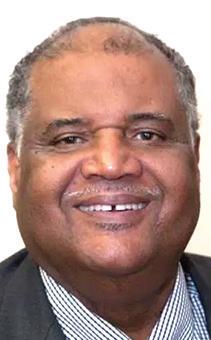
According to his certificate of ordination, Rice has “pastored, shepherded and conducted evangelistic services throughout the United States and Southern Africa.” He has been a spiritual and community leader within the St. Louis region. Rice is a member of the Clergy Coalition of Metropolitan St. Louis and has served on various boards and committees throughout the area.
and
Willis elected to Realtors commercial board

Ericca Willis, a broker with Evergreen Resimercial Realty, LLC in St. Louis, has been elected president-elect of the Realtors Commercial Division board. Willis holds designations as a National Commercial Real Estate Adviser and Certified Real Estate Investment Specialist. She previously served as chapter president of the Realists of Metropolitan St. Louis, a division of the National Association of Real Estate Brokers, whose mission focuses on promoting integrity, equity and advocacy in the real estate industry.
Promotion, board appointment, new hire, award... please submit your People on the Move item (including photo) to areid@stlamerican.com
Anne-Marie Clark
Photo courtesy of United Way of Greater St. Louis
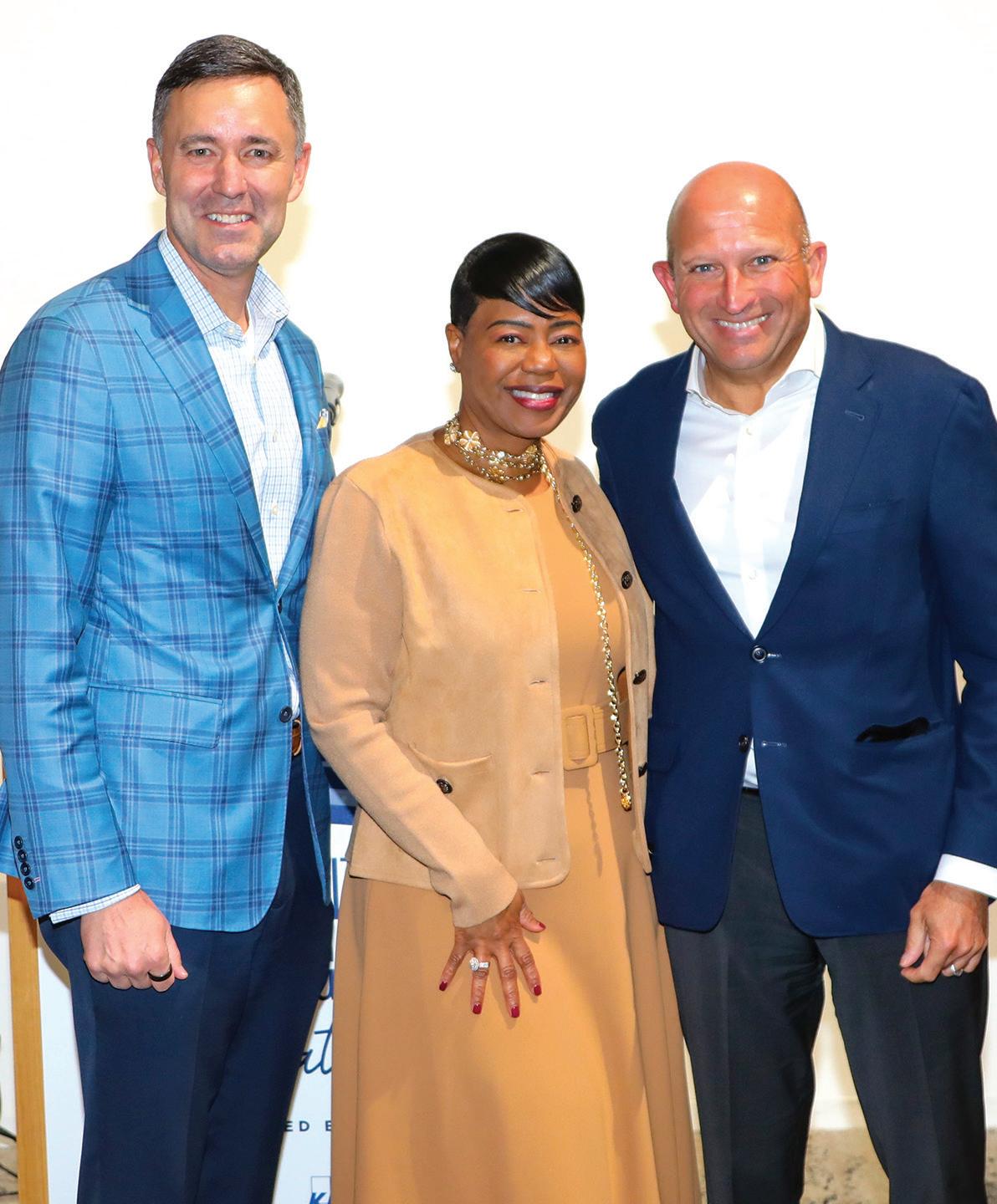
Michelle Tucker, president
CEO of United Way of Greater St. Louis, center, with 2025 campaign co-chair Andrew Davidson, managing partner at KPMG St. Louis, left, and campaign chair Lal Karsanbhai, president and
Photo courtesy of JPMorganChase
Ericca
Ericca Willis
Overall, both small and midsize business leaders are feeling more confident to pursue growth opportunities, embrace emerging technologies and, in some cases, forge new strategic partnerships.
Mavis Thompson
The slow strangulation of Black business opportunity
Black-owned businesses receive a sliver of federal contract dollars. Now the program designed to narrow that gap is being scaled back.
By Cantrell Dumas
In Washington, when a government program comes under scrutiny, the conversation often jumps too quickly from “this needs oversight” to “this should be eliminated.”
That instinct is now on display in the debate over the federal government’s 8(a) Business Development Program, a long-standing initiative designed to help small businesses owned by socially and economically disadvantaged individuals compete for federal contracts.
For many Black-owned businesses, 8(a) is often the primary pathway into federal contracting, providing access to capital, experience and credibility that would otherwise remain out of reach in a system shaped by longstanding racial inequities. Yet even with this program, equal access to opportunity remains elusive. The U.S. Department of Labor reported in 2021 that, despite representing 24% of eligible businesses, minority-owned firms accounted for only 3% of all contract awards.
Oversight or pretext? The politics around “DEI.”
Critics argue the
program is outdated, vulnerable to abuse and legally fragile. Some have gone further, calling for its dismantling. But this debate is unfolding amid a broader political effort to roll back diversity, equity and inclusion initiatives, particularly those that acknowledge race as a factor in unequal economic outcomes. In that context, enforcement risks being used not to strengthen the program, but to shrink it. That contraction is already visible. The Small Business Administration has admitted only 65 companies to the 8(a) program in 2025, compared with more than 2,000 admissions over the previous four years. It also suspended more than 1,000 of roughly 4,300 active firms in January for noncompliance.
The real question is not whether 8(a) is flawless. It is whether policymakers will do the harder work of governing it effectively or use enforcement as a pretext for eliminating one of the few federal tools designed to expand opportunity for disadvantaged entrepreneurs.
How 8(a) works and what it actually offers.
The 8(a) program is not
a permanent preference or a guaranteed pipeline of contracts. It is a time-limited business development initiative, typically lasting up to nine years, intended to help small businesses owned by socially and economically disadvantaged individuals build the capacity to compete in the federal marketplace. Participants receive contracting opportunities alongside business counseling, technical assistance and mentoring. The goal is graduation, not dependency.
The program exists because Congress recognized that socially and economically disadvantaged businesses, including many Black-owned firms, face documented barriers to capital, bonding and commercial networks. Federal contracting requires past performance, upfront financing and institutional relationships that many entrepreneurs have historically been denied. 8(a) attempts to narrow that gap.
The “preferential treatment” claim doesn’t match the numbers.
Yet labeling 8(a) as “DEI” distorts both its purpose and its results. Black-owned businesses


Photo by RDNE Stock project
Supporters say shrinking the Small Business Administration’s Business Development Program could further concentrate federal contracts among longtime government vendors. Opponents argue tighter enforcement is necessary to address risks and abuse.
still receive only about 1.5% of total federal contract dollars, a fraction of their share of the small business community and the population. Even with 8(a), the gains have been modest. If this is what critics call preferential treatment, it is a remarkably limited one.
The danger is that in the name of eliminating “DEI,” policymakers are dismantling one of the few structured entry points into federal contracting for disadvantaged small businesses without replacing it with anything stronger. That does not punish elites. It harms small firms that rely on federal contracts to build past performance, stabilize cash flow and create jobs.
Shrinking the program
United Way
Continued from A5
Metropolitan St. Louis. Meredith Knopp, CEO of the St. Louis Area Foodbank, said the campaign remains a major source of funding for hunger relief efforts in the region.
The 2025 campaign was chaired by Lal Karsanbhai, president and CEO of Emerson, with Andrew Davidson, managing partner of KPMG’s St. Louis office, serving as co-chair.
Optimism
Continued from A5
Going into 2026, 37% of respondents cited inflation as their top concern. Rising taxes came in second at 27% and the impact of tariffs was third at 22%. Other concerns included managing cash flow, hiring and labor costs.
2.For middle market leaders, uncertainty remains an issue. Almost half (49%) of all midsize business leaders surveyed cited “economic uncertainty” as their top concern – even with an improved outlook from a few months ago. Revenue and sales growth was second at 33%, while tariffs and labor both were third at 31%.
3.And tariffs are impacting businesses costs. Sixty-one percent of midsize business leaders said tariffs have had a negative impact on the cost of doing business.
4.Despite challenges, leaders are bullish on their own enterprises. Though the overall outlook is mixed, 74% of small business owners and 71% of middle market companies are optimistic about
issues deserve attention. But acknowledging risk is not the same as proving a program is beyond repair. Oversight bodies have consistently shown that targeted enforcement, better data and risk-based supervision work.
will not produce a more competitive marketplace. It will concentrate federal contracting further among established incumbents, reduce supplier diversity and weaken the resilience of federal supply chains. The result is not neutrality. It is consolidation, higher barriers to entry and potentially higher costs for taxpayers.
Reform is harder than scrapping it.
There is no serious dispute that the program faces risks. Problems can arise when a small business functions primarily as a pass-through, when large contracts are awarded without competition or when agencies fail to monitor performance. These
United Way officials said total fundraising for the year reached $78.4 million when additional grants and donations were included.
Several corporations accounted for multi-million-dollar contributions, including:
•Edward Jones and World Wide Technology at $5 million or more
•Ameren, Emerson and Enterprise Mobility at $3 million or more
•Bayer and Hunter Engineering at $2 million or more •BJC Healthcare,
their company’s prospects for 2026.
5.Adaption is the theme. For small business owners surveyed across the U.S., responding to continuing pressures is important in 2026. Building cash reserves (47%), renegotiating supplier terms (36%) and ramping up investments in marketing and technology are among the top priorities.
6.Big plans are on the horizon. A majority of midsized company leaders expect revenue growth this year, and nearly three out of five of (58%) plan to introduce new products or services in the coming year, while 53% look to expand into new domestic and/or international markets. Forty-nine percent say they’re pursuing strategic partnerships or investments.
The bottom line
Rebounding optimism among U.S. business leaders at the start of the year is setting the stage for an active 2026. With business leaders looking to implement ambitious growth plans that position themselves for the future, momentum in St. Louis could be beneficial future goals for leaders looking
The Department of Defense awarded more than $18 billion in contracts to 8(a) firms in 2024. A January memo indicates that the Defense Department is conducting an 8(a) review intended to eliminate what it describes as unconstitutional and non-merit-based DEI. Eliminating the program would require significant supply chain restructuring and would contradict Commerce Department findings emphasizing the importance of minority-owned businesses for supply chain resilience. The choice facing policymakers is not between oversight and abandonment. It is between dismantling a flawed but necessary tool or reforming it to deliver better results. A reformed and well-enforced 8(a) program is not a special favor. It is a practical mechanism to expand competition and strengthen the small-business ecosystem. Scrapping it may be politically convenient. Fixing it and demanding that it do more is far more valuable.
Cantrell Dumas is a senior researcher at the Joint Center for Political and Economic Studies.
Nestle Purina Petcare Company and Schnucks Markets, Inc. at $1 million or more The St. Louis Regional Business Council said its member companies collectively raised more than $23 million through the campaign. United Way officials said the funds will be allocated throughout the year to support partner agencies addressing poverty, housing instability, food insecurity and access to health and education services.
to launch, grow or scale their business this year.
For informational/ educational purposes only: Views and strategies described in this article or provided via links may not be appropriate for everyone and are not intended as specific advice/ recommendation for any business. Information has been obtained from sources believed to be reliable, but JPMorgan Chase & Co. or its affiliates and/ or subsidiaries do not warrant its completeness or accuracy. The material is not intended to provide legal, tax, or financial advice or to indicate the availability or suitability of any JPMorgan Chase Bank, N.A. product or service. You should carefully consider your needs and objectives before making any decisions and consult the appropriate professional(s). Outlooks and past performance are not guarantees of future results. JPMorgan Chase & Co. and its affiliates are not responsible for, and do not provide or endorse third party products, services, or other content. Deposit products provided by JPMorgan Chase Bank, N.A. Member FDIC. Equal Opportunity Lender. © 2026 JPMorgan Chase & Co.
HealthMattersHealthMattersHealthMatters
‘Taking Care of You’

data with members of
research
part of ongoing Alzheimer’s disease research February
Fighting the fat
WashU study links obesity to dementia risk
By Nia Hightower For The St. Louis American
lack Americans are nearly twice as likely as their white counterparts to develop dementia and also face some of the highest obesity rates in the nation — troubling numbers as St. Louis researchers say the two conditions may be more closely connected than once believed.
New findings from Dr. Cyrus Raji and his team at Washington University School of Medicine suggest obesity — long known to increase the risk of heart disease and diabetes — may also play a significant role in accelerating cognitive decline, raising urgent questions about prevention and health equity
By Bobby J. Smith II Word In Black
New findings suggest obesity — long known to increase the risk of heart disease and diabetes — may also play a significant role in accelerating cognitive decline.
in communities already disproportionately affected by both conditions.
More than 7 million Americans are living with Alzheimer’s disease, the most common form of dementia, and that number is expect-
See Dementia, A8
Living with sickle cell disease
J. Snow’s documentary “You Look Fine” reveals the unseen truth of living with sickle cell disease.
By Patrise Holden Word In Black

On a hospital bed, surrounded by white walls, beneath fluorescent lights, and a hum of medical machinery, filmmaker and comedian Jared “J.” Snow lifted his phone and pressed record. Hooked to an array of lifesustaining tubes and flanked by medical specialists, he did not yet know that this simple act of recording would be the act of bold courage that ultimately saved him.
“If my illness was going to be misunderstood by the world, I decided to start documenting the truth.”
– Jared ‘J’ Snow
“Honestly, I was in a low place when I started recording on my phone,” said Snow “My recordings were meant as a goodbye, something to leave behind in the event that the disease ultimately won.” Premiering at the Landmark Theatre in Hollywood, California, Feb. 20 and 23, “You Look Fine” is a groundbreaking new documentary, offering an intimate, first-person account of living with sickle cell disease. The documentary by Snow, co-produced by Marlon Wayans, is the first of its kind to turn the lens inward on sickle cell disease, giving viewers a vulnerable, never-before-seen look at a See Sickle Cell, A8
Food pyramid blind spots:
What supermarket civil rights teaches us
The recent release of the Dietary Guidelines for Americans, 2025–2030 by the U.S. Department of Health and Human Services poses a challenge for communities and individuals struggling with food insecurity. The new guidelines flip the traditional food pyramid on its head, recommending increased intake of costly red meat, whole dairy products, healthy fats, and whole grains. But these guidelines create several blind spots, overlooking the prevalence of poor-quality food and limited grocery store choices in low-income communities — a reality for the 18.3 million U.S. households facing food insecurity. For these Americans, the real question is not what to eat, but whether they have access to safe, high-quality food — a question of food justice This concern is not new.
The new guidelines flip the traditional food pyramid on its head, recommending increased intake of costly red meat, whole dairy products, healthy fats, and whole grains.
Expanding the meaning of Black protest
During the civil rights and Black power movements, Black communities across the country pushed to expand the meaning of Black protest to include access to a reliable, nutritious food supply. From the Student Nonviolent Coordinating Committee (SNCC) to the Black Panther Party, food emerged
See Food, A8

Photo by Lawrence Bryant / St. Louis American
Photo by Pexels
Cyrus Raji reviews brain imaging
his
team at Washington University School of Medicine in St. Louis as
2026.
HealthMattersHealthMattersHealthMatters
Dementia
Continued from A7
ed to climb sharply in the coming decades, according to the Alzheimer’s Association. In St. Louis, where the African American population is roughly 45% to 50%, the stakes are particularly high. “Our lab is about trying to optimize brain health,” said Raji, associate professor of radiology at Washington University. “Anything you can do to optimize all the different functions” of the brain and body matters, he said.
Raji leads the Neuroimaging Labs Research Center at the Mallinckrodt Institute of Radiology at WashU. It focuses not only on diagnosing Alzheimer’s disease, but also on understanding the broader health factors that may shape who develops it — and when.
Sickle Cell
Continued from A7
lifetime spent behind hospital curtains.
“If my illness was going to be misunderstood by the world, I decided to start documenting the truth,” Snow said.
In January 2025, before Hollywood took notice, Snow had built a following on YouTube and social media, crafting bold sketch comedies shaped by the era of Dave Chappelle.
“I’ve always needed to create,” Snow recounted. “I was the kid holding court at recess.”
But, at this critical juncture in 2025, medically, he was facing significant complications, financially, he was struggling, and emotionally, he was sinking.
Snow’s own revolution began with an email. Once he edited all his footage, he sent early drafts of the film everywhere, to friends, to major creators, to anyone who might listen.
One day, his phone rang. Wayans, calling from vacation in Italy, said: “This film is incredible. What do you need?”
The celebrated comedian then brought in producer Rick Alvarez, expanding the project’s reach.
Intimate life moments, recording his intense strug-
Continued from A7
as a critical site of social, political, and economic struggle.
In Chicago, food came into sharp focus through the work of the Women of Operation Breadbasket, the direct-action unit of Dr. Martin Luther King Jr.’s Southern Christian Leadership Conference’s (SCLC) Operation Breadbasket in the North. The team of Black women placed the quality of food available in grocery stores in their neighborhoods at the center of their fight for racial and economic justice.
Founded in 1967 by Rev. Willie T. Barrow a co-founder of Operation Breadbasket alongside Rev. Jesse L. Jackson Sr., the Women of Operation Breadbasket launched a Bad Meat Campaign that same year. Members included prominent figures such as civil rights activist and international labor leader Rev. Addie L. Wyatt, who helped mobi-
“You look at all the risk factors (for Alzheimer’s disease) — traumatic brain injury, depression, smoking, low educational attainment, air pollution,” he said. “Obesity is the most common one. If we can modify these risk factors, we can cut the burden of dementia.”
Raji’s research focuses on visceral fat, which is stored deep in the abdomen around internal organs and is more closely tied to diabetes, cardiovascular disease and metabolic dysfunction.
The WashU team uses abdominal MRI scans to measure visceral fat and compares those findings with brain imaging and PET scans that detect early Alzheimer’s-related changes.
“The brain pathology develops 20 to 25 years before the symptoms show up,” Raji said. “We have been able to identify the earliest link between obesity, particularly visceral obesity, and Alzheimer’s
pathology in individuals who are completely presymptomatic.”
Multiple studies have linked visceral fat to chronic stress. A 2025 study published in Alzheimer’s & Dementia found that structural racism, economic hardship, lower educational attainment and reduced access to health care contribute to higher risk and faster progression of dementia among Black residents in St. Louis.
Jill Cigliana, executive director of Memory Care Home Solutions, works with families caring for loved ones living with dementia by providing programs and access to resources.
“Families may come to us with or without a diagnosis, and we know African Americans are about 35% less likely to be diagnosed than their white counterparts,” she said. “What we often do is help people understand what dementia is, what the typ-
ical signs and symptoms are, and the functional changes and behaviors. We help link them with health care providers who can provide a clearer diagnosis.”
Raji’s preliminary findings also show that neighborhood disadvantage correlates with changes in certain brain biomarkers. The lab is expanding its work to gather more detailed data on childhood adversity, chronic stress and lifecourse factors to better understand how social conditions influence dementia risk.
“African American communities, particularly in the St. Louis area, have a higher risk of being located in food deserts, where proper nutrition and resources are not readily available,” Raji said. “It was very important that we factored that into consideration.”
Raji’s team measures neighborhood disadvantage to examine how
environment and health intersect. In St. Louis, the stark divide along Delmar Boulevard illustrates how geography can shape opportunity, access to food and long-term health outcomes. A critical dimension of Raji’s work is representation. Black Americans, he noted, remain significantly underrepresented in brain imaging research.
“African Americans comprise only about 7% of participants in studies using brain imaging to understand diseases of the human brain,” he said. “In the field of Alzheimer’s therapeutics, only about 2% of participants in clinical trials are African American.”
Senior research coordinator LaKisha Lloyd said building trust among research participants is essential — particularly in African American communities, where longstanding mistrust is rooted in unethical medical research practices.

gles, allowed Snow to tap into his creative skills as he pushed through painful treatment towards healing.
“Filming restored my will to live,” he said.
Nivia Charles, diagnosed with the most
lize Black mothers and community members on the South and West Sides in protests against grocers who sold rotten meat and inadequate produce in Black neighborhoods, transforming grocery aisles into battlegrounds for civil rights.
Supermarket civil rights
This campaign reveals what I call supermarket civil rights: a highly visible form of consumer activism through which Black communities challenged and exposed grocery stores as contested sites of power, where food access was routinely compromised and negotiated during the civil rights era.
Robert Culp’s 1969 documentary “Operation Breadbasket” provides footage of supermarket civil right. In the film, the Women of Operation Breadbasket confront a grocery store store owner and meat manager about hazardous conditions in the meat department at a D&S Super Markets store.
aggressive form of sickle cell disease at birth, calls the disease “relentless” and “wholly unpredictable.”
“It is excruciating to go through life having sickle cell disease. This disease
The documentary included a scene of Rev. Calvin Morris, Associate Director of Operation Breadbasket, giving a speech in front of the meat section, as the camera showed maggots flying around spoiled meat in brown boxes and on dirty floors, and unclean machinery with meat stuck in it.
The group’s campaign made clear that bad meat was a significant health concern at the intersection of race, economics, and community well-being. The supplying of bad meat in Black neighborhoods reflected how white grocers valued Black patrons: unsafe working conditions, heightened risk of food-borne illness, and the manipulation of Black purchasing power.
Food power politics
But the bad meat campaign offered Black neighborhoods a site to navigate what I call food power politics — the struggle over how food is weaponized in Black communities during times
can bring you to your knees in pain, in sorrow, in grief, in abject sadness,” she related.
“It feels like something is taking away your agency,” said Charles. The documentary’s
of social unrest and how they fight back. In one of the documentary’s final scenes, Barrow and Morris returned to tour the same D&S store months later. The transformation is unmistakable: high-quality meat, stocked meat display fridges, new machinery, updated cleaning systems, and cleaner aisles.
Although the Women of Operation Breadbasket’s Bad Meat campaign did not dismantle racism and food disparities in the city, it dramatized how Black women could fight for civil rights in the least likely of places — inside the supermarket. Operation Breadbasket closed in Chicago in 1971, and its founder, Jackson, converted it into Operation People United to Save Humanity — later changed from “Save” to “Serve” (PUSH) — which became the Rainbow PUSH Coalition in 1996, and is still operating. Many members of the Women of Operation Breadbasket continued their activism in this organization.
Those include the Tuskegee syphilis study, the use of Henrietta Lacks’ cells without her consent and the use of enslaved Black women to test early gynecological methods without anesthesia.
“With recruiting participants for any research study — whether Alzheimer’s or mental health — you have to gain the trust of the people you’ll be working with,” Lloyd said. “I tell participants I would never ask them to do anything I wouldn’t do myself.”
Lloyd said she and some of her family members participate in brain imaging research.
Raji believes the window for prevention opens decades before memory loss begins.
“If you can understand the risk factors that early, you’re more likely to develop interventions that can help prevent the disease in the future,” he said.
like BET and The Laugh Factory
Though the premieres are set for Hollywood during the Slamdance Film Festival, Snow’s vision stretches far beyond the February screenings in California. He hopes a global streaming platform will carry the documentary, placing it in the hands of those battling chronic illness, caregivers, and medical professionals worldwide.
“The dream,” he said, “is to sustain myself with storytelling. To wake up and get paid to figure out how to bring my next idea to life.”
For those living with sickle cell disease, Snow hopes the film strengthens their belief in themselves and the power to pursue their own unique purpose.
“You are part of a fraternity by DNA,” he said. “You ultimately have the power to choose how sickle cell is positioned in your life.”
power lies in that juxtaposition: life-sustaining restrictive tubing and skydiving; overwhelming sadness and Snow taking center stage as a comedian, fostering smiles and laughter on national stages
A right to safe, nutritious food
By demanding dignity in Black food experiences, the Women of Operation Breadbasket asserted the right to safe and nutritious food, a central pillar of today’s food justice movement. Learning from their practical actions expands the blueprint of methods that can help food justice activists and organizations today as they struggle to redress systematic inequity at the nexus of food disparities, poor diet quality, and environmental degradation. The Chicago Food Policy Action Council carries forward work of the Women of Operation Breadbasket, confronting food insecurity through several efforts such as the Metro Chicago Good Food Purchasing Initiative, that fosters a Chicagoland food system defined as “accessible, equitable, racially just, healthy, fair, local, humane, and sustainable” in the face of shifting SNAP policies and rising grocery costs
This reporter has genotype SS, the most aggressive form of sickle cell disease. She lectures and advocates nationally for inclusion of mental health support and holistic and alternative medicine as treatment for those with chronic illnesses. This article first appeared at The Washington Informer
Beyond Chicago, the National Black Food and Justice Alliance (NBFJA) offers a national infrastructure, rooted in Black food experiences, actively mobilizing farmers, organizers, policymakers, advocates, and related stakeholders to reshape how Black communities interface with U.S. foodscapes and imagine brighter, equitable food futures for all.
The history of Supermarket civil rights and its living legacies remind us that the food story of Black life matters. Food justice has always been built from the ground up, and remembering this history is essential to shaping what comes next.
Bobby J. Smith II is an associate professor of African American studies at the University of Illinois—Urbana-Champaign, author of the James Beard Award-nominated book Food Power Politics, and a Public Voices Fellow through The OpEd Project.
Premiering at the Landmark Theatre in Hollywood, California, Feb. 20 and 23, “You Look Fine” is a groundbreaking new documentary, offering an intimate, first-person account of living with sickle cell disease.
Courtesy photo
N-word shouted during Michael B. Jordan, Delroy Lindo BAFTA segment
The BAFTAs had an unexpected — and deeply uncomfortable — moment Sunday night. Tourette’s activist John Davidson shouted the N‑word while Michael B. Jordan and Delroy Lindo were onstage. Actor and host Alan Cumming immediately addressed the outbursts, reminding the audience that involuntary tics are a symptom of Tourette’s syn drome and asking for understanding as the ceremony continued.
“This can be part of how Tourette’s syn drome shows up for some people, as the film explores that experience,” Cumming explained. “Thanks for your under standing and helping create a respect ful space for everyone.”
“Asking for more grace for the person who shouted a racist slur instead of for Michael B. Jordan and Delroy Lindo, who had to push through being embarrassed in front of their peers,” journalist Jemele Hill said in response. “But that’s often the expectation — that Black people are just supposed to be OK with being disrespected and dehumanized so that other people don’t feel bad.”
just don’t have the mental capacity. My brain isn’t functioning to do something that heavy for every body else.”
He urged followers to take burnout seriously, add ing a caption that doubled as a warning and a bless ing: “Go recharge your emotional, social, and mental batteries while you still can enjoy full power.”
And for anyone tempted to blame the decision on old habits, he shut that down quickly — noting he’s nearly 50 days sober. “Don’t try to put this decision on alcohol,” he wrote. “I know exactly what I want.”
Floyd Mayweather Jr. heading back into the ring

The BAFTAs later issued a statement saying they had notified attendees in advance that Davidson would be present and that strong language or sudden noises could occur. Still, the organization apologized “unreservedly” to Jordan, Lindo, and anyone impact ed after the slur rang out early in the show.
T-Pain cites burnout for putting himself on the back burner
T-Pain is hitting pause. The hitmaker took to Instagram to announce that he’s canceling his planned 2026 tour — along with several other appearances and projects — after realizing he’s been running on empty.
In a candid video, T‑Pain said the burnout crept up on him after two straight years of saying yes to everything. “After Super Bowl, I realized that I acci dentally burnt myself out,” he told fans. “For two years now, I have not done anything for myself… I
Floyd Mayweather Jr. is lacing the gloves back up. Just days before turning 49, the undefeated champ announced he’s ending his retirement — again — and returning to professional boxing after his spring 2026 exhibition bout with Mike Mayweather has signed an exclusive deal with CSI Sports/Fight Sports to promote the next chapter of his career.
And in classic Money Mayweather fashion, he made it clear he expects to dominate the box office as much as the ring. “I still have what it takes to set more records,” he said in a statement to ESPN, adding that no one will generate a bigger gate or global audience than his events.
But the comeback news arrives as an upscale Miami jeweler recently filed a lawsuit claiming Mayweather owes more than $1.375 million. That case follows a New York suit alleging he owes $330,000 in unpaid rent and dam ages on a $24 million Manhattan penthouse.
Naomi Campbell claps back against renewed Epstein scrutiny
Supermodel Naomi Campbell is distancing her self from renewed chatter linking her to Jeffrey Epstein. Her attorney, Martin Singer, issued a state ment after Campbell’s name resurfaced in conversa tions surrounding the disgraced financier.
“Prior to Epstein’s 2019 arrest in New York, my client knew nothing about his appalling criminal conduct,” Singer said, according to Black Enterprise He added that Campbell would have intervened had she ever suspected anyone around Epstein was being harmed.
Singer also emphasized that Campbell was living in Moscow from 2008 to 2013 and “had no idea that Epstein was a registered sex offender.
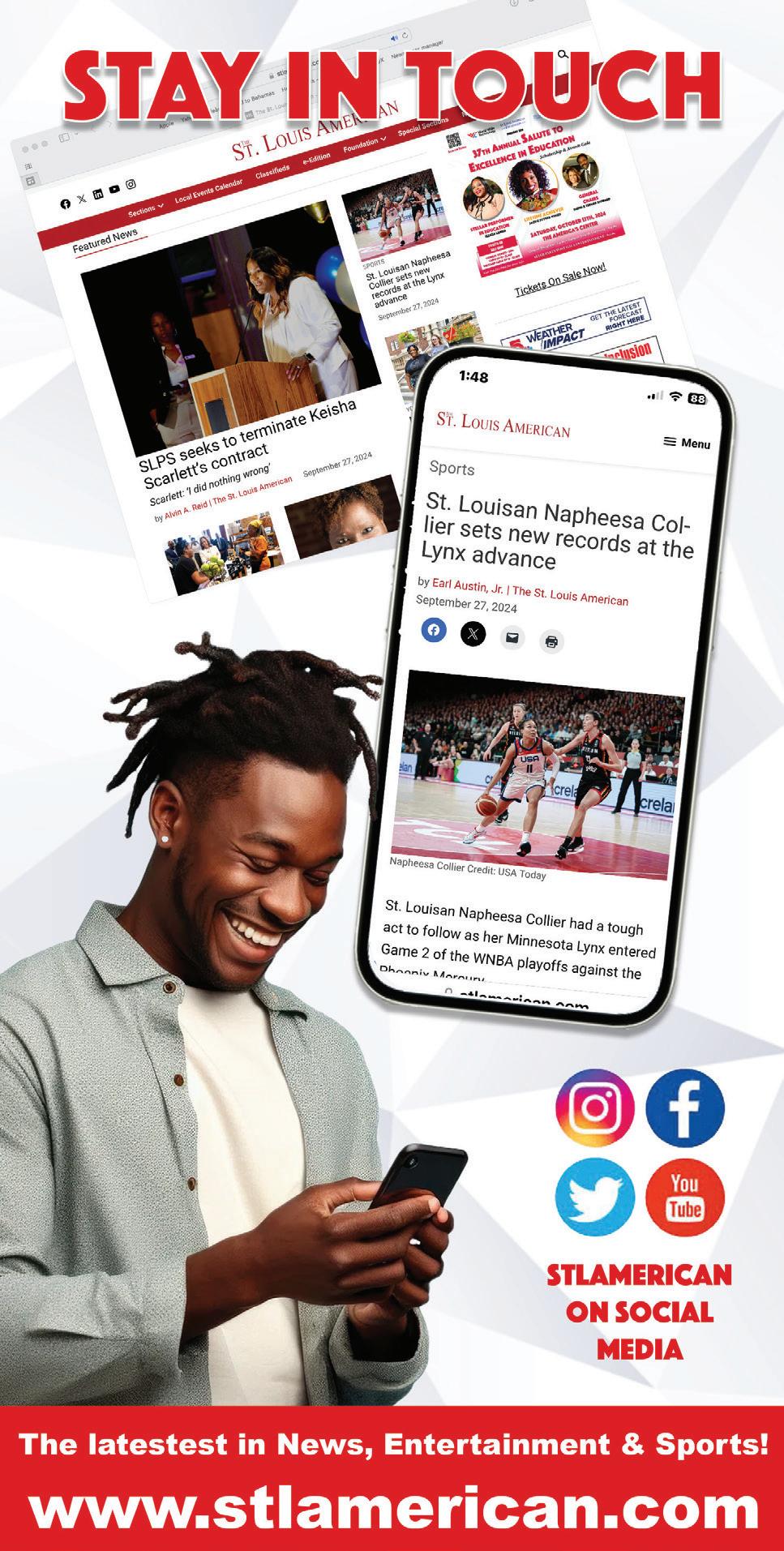

















The St. Louis American’s award winning NIE program provides newspapers and resources to more than 8,000 teachers and students each week throughout the school year, at no charge.
Louis American’s award winning NIE program offers newspapers and resources to St. Louis area teachers and students each week throughout the school year, at no charge.
Questions or comments? Contact us at nie@stlamerican.com or 314-533-8000
or 618-910-9551
Questions or comments? Contact Cathy Sewell csewell@stlamerican.com or 618-910-9551
FAMILY SPOTLIGHT

CLASSROOM SPOTLIGHT
CLASSROOM SPOTLIGHT


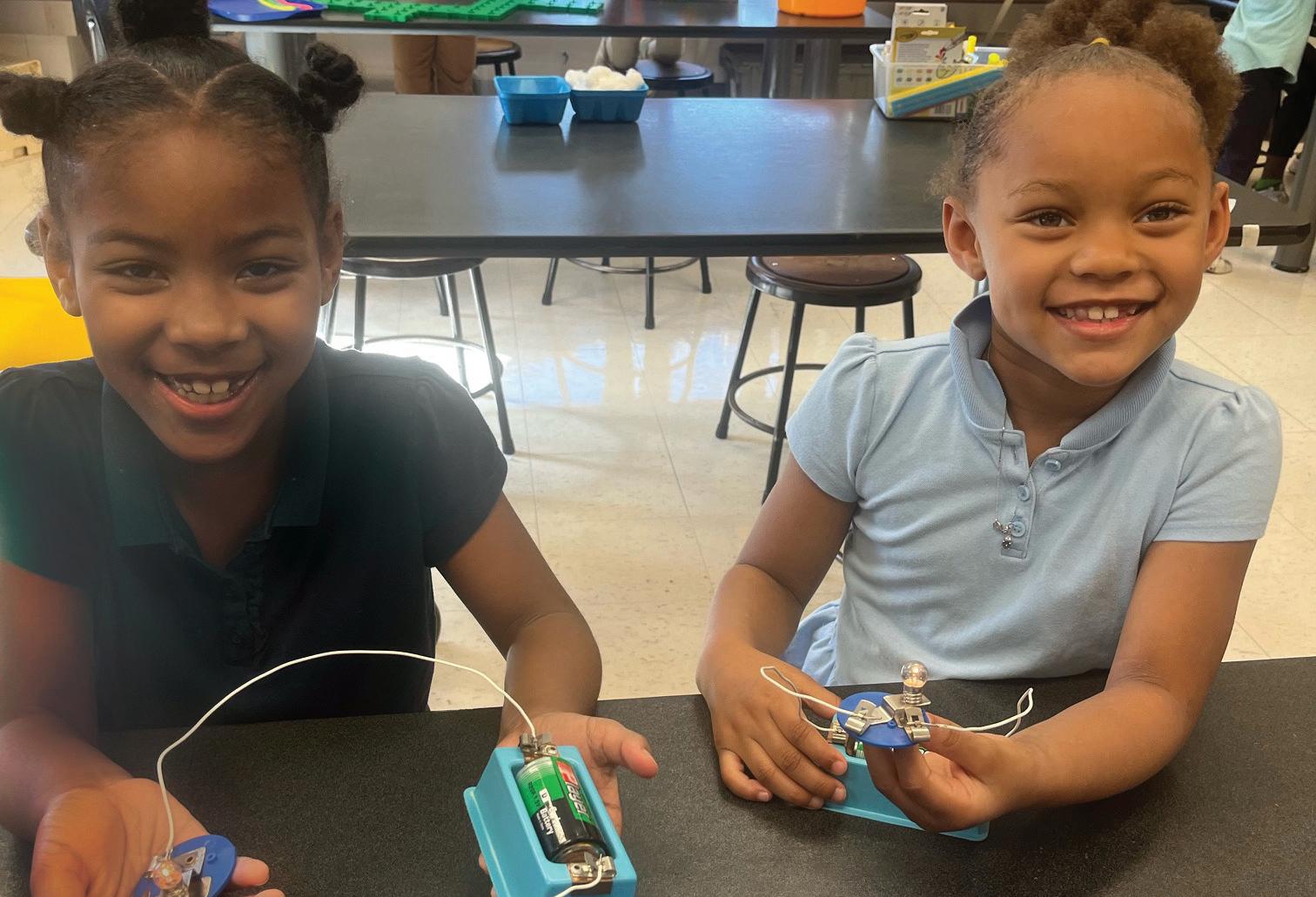
grade class at Gateway MST Elementary School, are learning how to construct a series circuit.
Photo by Ms. Stovall
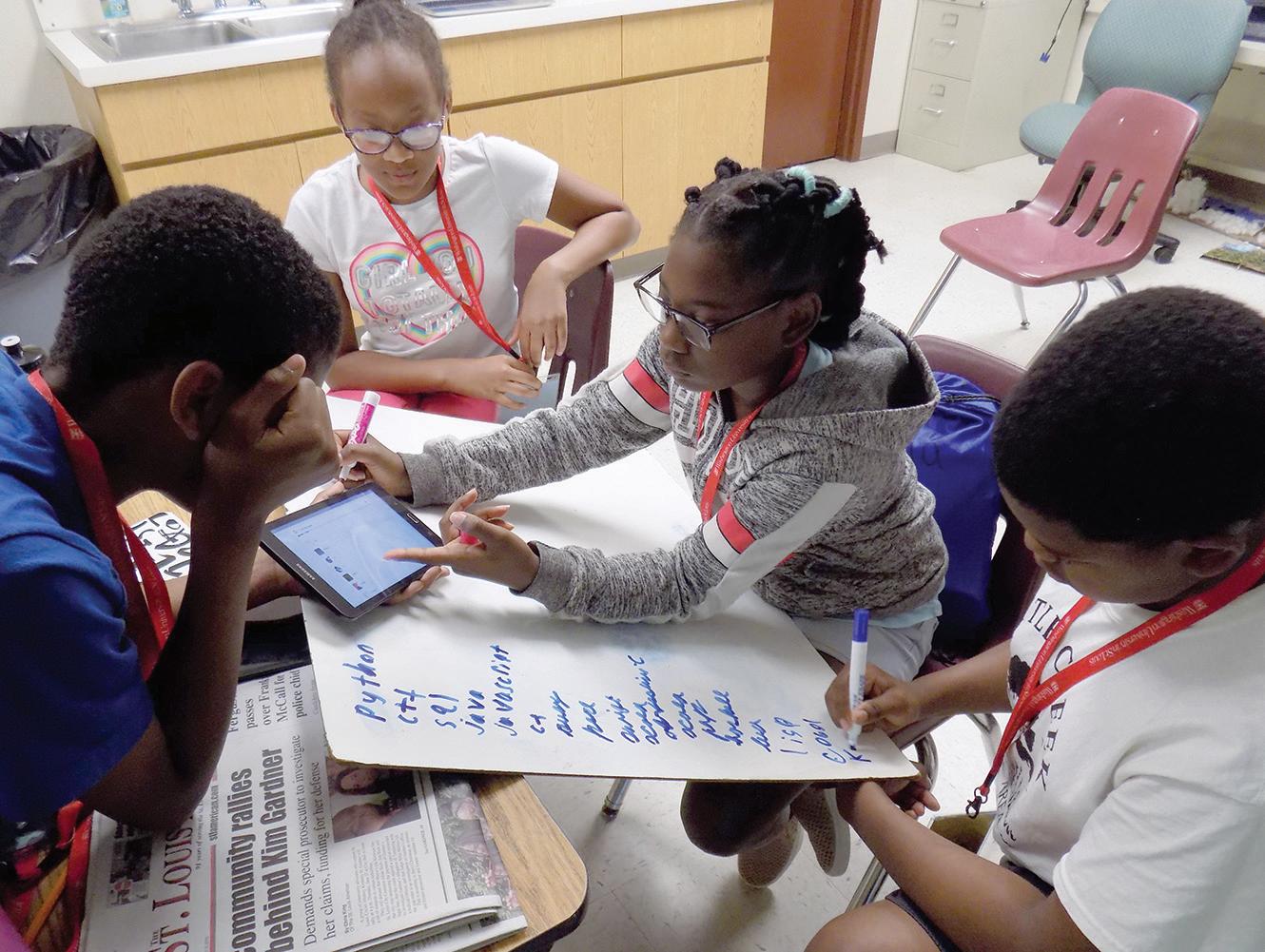
Students at The American’s Summer Science Academy work in teams to discover the many different computer programming languages.
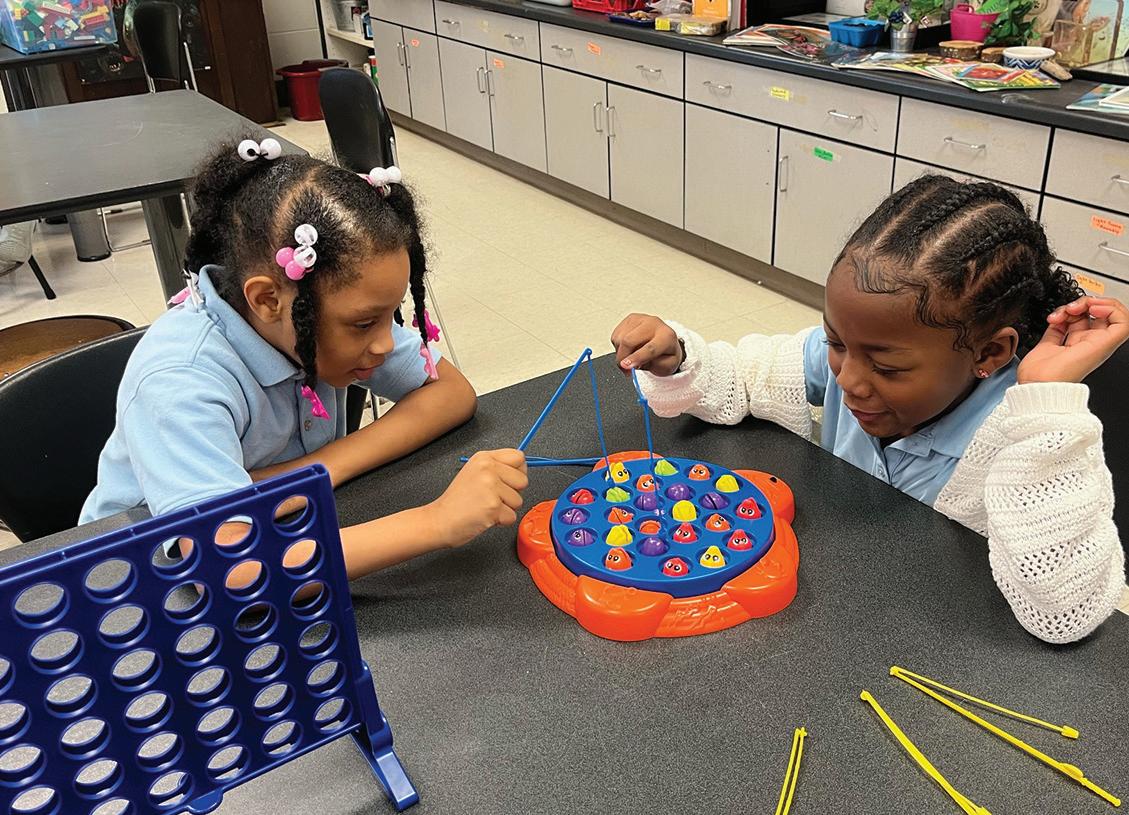
Students Milaysia White and Charleigh McFarland, in Ms. Stovall’s second-grade class at Gateway MST Elementary School, use pattern recognition and strategies to collect the
Students at The American’s Summer Science Academy work in teams to discover the many different computer programming languages.
by Ms. Stovall
Teachers, if you are using
Teachers, if you are
nominate your class for a Classroom Spotlight, please email: csewell@stlamerican. com

A hurricane forms over tropical and subtropical ocean water. Warm water and cool, moist air combine to create strong winds that can gust up to 200 miles per hour! These winds create waves that bring the storm on shore. Hurricanes are very destructive. They can flip cars, sink boats, uproot trees, and demolish houses.
SCIENCE CORNER
SCIENCE STARS
SCIENCE STARS


SCIENCE STARS
AFRICAN-AMERICAN MYCOLOGIST AND EDUCATOR:
Jeanette Jones
AFRICAN-AMERICAN MYCOLOGIST AND EDUCATOR: Jeanette Jones
African American Meterologist William “Bill” Parker
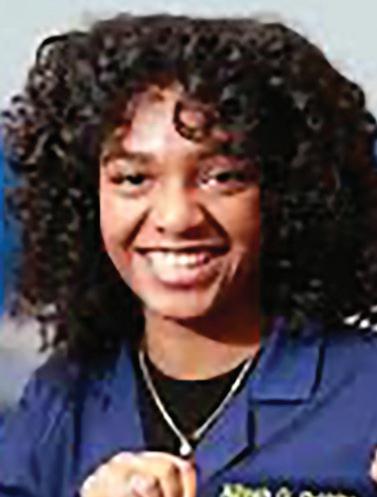
Aliyah Griffith: Ocean Explorer & Scientist
SCIENCE CORNER
Seventy percent of Earth’s surface is covered by oceans; therefore, oceanography is a very important topic to study!

What Are Fungi ?
In addition to powerful winds, hurricanes bring a lot of rain. (Taiwan received 114 inches of rain in three days during a hurricane.) These rains can cause landslides and flash floods.
SCIENCE INVESTIGATION

Fungi are organisms made of filaments (called hyphe) that are stacked together. Unlike plants, fungi do not have chlorophyll, so they cannot make their own food. Some fungi are parasites, which mean they live off of other organisms. Some fungi feed off of dead and decaying matter. Fungi are everywhere in the environment, including the soil, lakes, river and seas, air, and on plants and animals. Fungi (plural of fungus) help organic matter to decay and release carbon and oxygen into the environment. Unlike plants, fungi do not have
Fungi are organisms made of filaments (called hyphe) that are stacked together. Unlike plants, fungi do not have chlorophyll, so they cannot make their own food. Some fungi are parasites, which mean they live off of other organisms. Some fungi feed off of dead and decaying matter. Fungi are everywhere in the environment, including the soil, lakes, river and seas, air, and on plants and animals. Fungi (plural of fungus) help organic matter to decay and release carbon and oxygen into the environment. Unlike plants, fungi do not have
In this experiment, you’ll create a replica of a hurricane and identify how the forces work together to create a hurricane.
SCIENCE INVESTIGATION
Are Fungi ?
Hurricanes can last a few hours or several days. Most hurricanes occur during the fall months. How can you stay safe? Have an evacuation plan and an emergency kit prepared. Meteorologists can track these storms and keep you informed. For more hurricane facts, visit: http://www.sciencekids.co.nz/ sciencefacts/weather/hurricane.html.
leaves, stems, or roots. Fungi use spores to reproduce. One common type of fungus is the mushrooms you find on your pizza. Mold, yeasts, and mildew are also types of fungus.
SCIENCE INVESTIGATION
Materials Needed:
Oceanography is the study of the ocean and all of its living properties, including plant and animal life. Oceanography contains many different types of jobs, including engineers, zoologists, and marine biologists. Marine biologists focus on studying the living creatures in different types of water, such as seas, bays, and other large bodies of water. Chemical oceanographers, such as marine geochemists, study the chemical composition of the ocean waters. They investigate the effects of pollution on the water, study the chemicals found in certain ocean waters,
• 2 Soda Bottles • 3 Paper Clips
• 3 Peanuts
In this experiment, you will learn how mold grows best. Mold is an important fungus that has several uses, including breaking down dead organic material. Some purified molds are
SCIENCE INVESTIGATION
• Water Procedure:
q Fill one bottle with the paperclips, peanuts and sand. These represent the debris and help make the movement of water easier to see.
w Place the funnel in the mouth of the bottle and pour water into the bottle until it is 3/4 full, then remove the funnel.
e Turn the second empty bottle upside down and hold it over the first bottle so that the mouths of the bottle are aligned. The bottles will look like an hourglass.
r Tape the seam, pressing the duct tape firmly to

z A hurricane has moved 456 miles in 6 hours. How many miles per hour is the hurricane traveling? ______ If it continues to travel at that speed, how far will it travel in 10 hours? ______
leaves, stems, or roots. Fungi use spores to reproduce. One common type of fungus is the mushrooms you find on your pizza. Mold, yeasts, and mildew are also types of fungus.
Learning Standards: I can read nonfiction text for main idea and supporting details.
For More Information, Go to: https://kids.kiddle.co/Fungus Learning Standards: I can read nonfiction text to gain background information about fungi.
For More Information, Go to: https://kids.kiddle. co/Fungus Learning Standards: I can read nonfiction text to gain background information about fungi.
and study how ocean chemicals react to the air at the ocean’s surface. Oceanographers also include technicians who work on equipment used to study the oceans. These technicians work on boats, electronics, and other specialty equipment. Oceanographers can work in the lab and write technical reports, or they may travel and explore the oceans.
Growing Mold!
Growing Mold!
In this experiment, you will learn how mold grows best. Mold is an important fungus that has several uses, including breaking down dead organic material. Some purified molds are actually used as an antibiotic to treat illnesses.
t Hold the bottles by the middle and lift the jugs.
For more information, read: https://oceanservice.noaa.gov/kids/ Learning Standards: I can read nonfiction text to gain background information about oceanography.
create a watertight seal. Continue taping 1 to 2 inches above and below the seam.
t For five days, measure the square centimeters of mold on each piece of bread through the bag. Use a grid, if possible, or a ruler. If mold covers more than half a
William (Bill) Parker grew up in New Orleans. He graduated from JFK High School, which focused on math, science, and engineering. Parker was interested in hurricanes at a young age, but he became interested in the weather after a high school statistics class. In this class, he learned how to predict the chance of rain. Parker wanted to attend a historically black college/ university (HBCU), so he chose Jackson State University to study meteorology. He graduated with his bachelor’s degree, in 1994.
Dr. Aliyah Griffith is a scientist who studies the ocean. She is especially interested in coral reefs, the colorful underwater structures made by tiny animals called corals. Coral reefs are very important because they give homes to sea creatures, protect coastlines from waves, and help people who fish or rely on the ocean for their jobs.
Jeanette Jones was born on September 19, 1950, in Fort Valley, Georgia. Jones graduated from Fort Valley State University in 1972 with a bachelor’s degree in biology education. In 1973, Jones received her master’s degree in botany and mycology (a branch of biology that studies fungi) from The Ohio State University. In 1976, she received her doctorate (Ph.D.) degree.
Jeanette Jones was born on September 19, 1950, in Fort Valley, Georgia. Jones graduated from Fort Valley State University in 1972 with a bachelor’s degree in biology education. In 1973, Jones received her master’s degree in botany and mycology (a branch of biology that studies fungi) from The Ohio State University. In 1976, she received her doctorate (Ph.D.) degree.
She also studied at the University of Nevada, the University of California Medical School, the National Center for Disease Control-Atlanta, and the Massachusetts Institute of Technology. After graduation, Alabama A&M University hired Jones as an assistant biology professor. In 1986, she served as an adjunct professor in the College of Pharmacy and Pharmaceutical Services at Florida Agricultural and Mechanical University and worked on a project with NASA. In 1991, Jones served as the first female vice president of research and development at Alabama A&M University. She also served as President of Alabama A&M University’s Faculty Senate from 2001 to 2006. In 1992, she was appointed to the U.S. Army Science Board by the U.S. Secretary of the Army, Togo West. Since 2004 Jones has been the director of the Center for Biomedical, Behavioral, and Environment Research at Alabama A&M University. She also worked as a consultant with federal agencies to help them develop training programs to attract women and minorities to STEM education and careers.
Dr. Griffith studies how storms, like hurricanes, and changes in the ocean affect coral reefs and how they grow. She uses scuba diving, satellite images, and underwater robots to explore the ocean and understand how it changes over time.
Aliyah loved being near the water since she was a child. Her family comes from the Caribbean, and she spent a lot of time exploring the sea. This early love for the ocean inspired her to become a marine scientist. She went to Hampton University to study marine and environmental science. Later, she earned her Master’s degree and then a PhD at the University of North Carolina at Chapel Hill, becoming the first African-American person to earn a graduate degree in marine science there. Even though her studies were challenging, she worked hard and followed her passion for science.
She also studied at the University of Nevada, the University of California Medical School, the National Center for Disease Control-Atlanta, and the Massachusetts Institute of Technology. After graduation, Alabama A&M University hired Jones as an assistant biology professor. In 1986, she served as an adjunct professor in the College of Pharmacy and Pharmaceutical Services at Florida Agricultural and Mechanical University and worked on a project with NASA. In 1991, Jones served as the first female vice president of research and development at Alabama A&M University. She also served as President of Alabama A&M University’s Faculty Senate from 2001 to 2006. In 1992, she was appointed to the U.S. Army Science Board by the U.S. Secretary of the Army, Togo West. Since 2004 Jones has been the director of the Center for Biomedical, Behavioral, and Environment Research at Alabama A&M University. She also worked as a consultant with federal agencies to help them develop training programs to attract women and minorities to STEM education and careers.
Today, Dr. Griffith studies how hurricanes and storms change the shape and strength of coral reefs. She looks at how the tiny coral skeletons are built and how they survive big waves. Her work is important because it helps scientists and communities know how to protect coral reefs and the animals that live there. By studying the ocean, Dr. Griffith is helping people understand how to keep it healthy for the future.
y Quickly, turn the bottles over so that the water-filled bottle is on top. Set the bottles on the table again.
u Observe the water as it drains into the bottle below. The water

MATH CONNECTION
MATH CONNECTION
t For five days, measure the square centimeters of mold on each piece of bread through the bag. Use a grid, if possible, or a ruler. If mold covers more than half a square centimeter, it is counted as one full centimeter. Analyzing a Bar Graph
Analyzing
In 1993, he began to gain experience in the field when he worked as a student meteorologist. One year later, he was a meteorologist intern at Shreveport. In 1998, Parker became a general forecaster, and ten years later, a lead forecaster. In 2012, he became a warning coordination meteorologist (WCM). There are only 122 people with this title in the United States, and Parker was the only African American. Parker is currently the meteorologist-in-charge (MIC) at the National Weather Service, leading a team of 26 weather professionals. Parker is also very active as a volunteer in his community. He is a member of the Shreveport-Bossier Mayors’ Prayer Breakfast Executive Committee, La Cima Bilingual Leadership Academy, Bossier Chamber of Commerce Education Committee, Volunteers for Youth Justice, and a coach for Bossier Parks and Recreation. Parker is also an associate minister at Elizabeth Baptist Church in Benton, where he has been serving the congregation since 1997.

In 1975, Jones was listed in the World’s Women’s Who’s Who and she was named an Outstanding Young Woman of America in 1978. Beta Beta Beta National Biological Honor Society awarded her the distinguished service award. Jones also received the Significant Service Award from the NASA Space Life Sciences Training Program and the Extramural Associate Research Development Award from the National Institute of Health. In 1990 and 2006, she was named Woman of the Year at Alabama A&M University and was given the Outstanding Leadership Award by the Faculty Senate. The U.S. Army presented Jones the Commander’s Award for Outstanding Civilian Service as a member of the Army Science Board. Discussion Questions: Dr. Jones received many awards and honors. How would you describe her achievements and her contributions to science? Dr. Jones is studying how fungi might be used as agents of war. What purpose do you think fungi serve in modern warfare? Are fungi beneficial or harmful?
Dr. Griffith also inspires kids, especially children of color, to learn about the ocean. She started a nonprofit called Mahogany Mermaids, which gives young girls and other students opportunities to dive, explore the sea, and learn about marine science. Her story shows that anyone who loves science, works hard, and stays curious can explore amazing places even under the sea.
In 1975, Jones was listed in the World’s Women’s Who’s Who and she was named an Outstanding Young Woman of America in 1978. Beta Beta Beta National Biological Honor Society awarded her the distinguished service award. Jones also received the Significant Service Award from the NASA Space Life Sciences Training Program and the Extramural Associate Research Development Award from the National Institute of Health. In 1990 and 2006, she was named Woman of the Year at Alabama A&M University and was given the Outstanding Leadership Award by the Faculty Senate. The U.S. Army presented Jones the Commander’s Award for Outstanding Civilian Service as a member of the Army Science Board.
Dr. Griffith teaches us that curiosity and dedication are powerful. If you love the ocean or science, you can ask questions, explore, and make discoveries. You can also help others learn and enjoy science, just like Dr. Griffith does.
ELA Questions:
What kind of research does Dr. Griffith do, and why is it important for coral reefs and people?
Discussion Questions: Dr. Jones received many awards and honors. How would you describe her achievements and her contributions to science? Dr. Jones is studying how fungi might be used as agents of war. What purpose do you think fungi serve in modern warfare? Are fungi beneficial or harmful?
How does Dr. Griffith’s work with Mahogany Mermaids help kids and communities?
Learning Standards: I can read a biography to learn about an African American who has made contributions in science, math, technology, or engineering.
Learning Standards: I can read a biography to learn about an African American who has made contributions in science, math, technology, or engineering.
Parker believes in serving as a role model to the youth and to recruiting African Americans in the STEM field. Personally, he has hired three African-American meteorologists. In addition, he has recruited minorities for summer intern positions. Parker has also mentored an Airline High School student for his senior project. Parker’s advice to students interested in meteorology is to take as many math and science classes as possible. Learn about summer opportunities in your community. If you are interested in meteorology, visit National Weather Service offices and serve as a volunteer or intern, and find leaders in your community to serve as your personal role models.
Learning Standards:
MAP CORNER

Use the newspaper to complete the following activities:
a person who has made contributions to the fields of science, technology,
Use the newspaper to complete the following activities:
MAP CORNER
Scientists often use tables and graphs to display the results of their research. Looking at these displays, you can draw conclusions.
Scientists often use tables and graphs to display the results of their research. Looking at these displays, you can draw conclusions.
x Hurricane Frederick is traveling at 86 miles per hour. If the hurricane is 129 miles from the coast, how many hours will it take until the hurricane reaches the coast? ______
As we approach spring weather (and increased rain), create a bar graph that displays the amount of rain that falls for several consecutive days or weeks. (Day 1: 1.5 inches, Day 2: 0 inches, Day 3: 1.5 inches, etc.)
As we approach spring weather (and increased rain), create a bar graph that displays the amount of rain that falls for several consecutive days or weeks. (Day 1: 1.5 inches, Day 2: 0 inches, Day 3: 1.5 inches, etc.)
Oceanographers track the motion of waves. In this activity, you will become an oceanographer and use your math skills to solve the problems.
Questions:
q If a wave is traveling at 18.72 meters/second, how far will it travel in 10 seconds? ____________
c A tropical storm takes on a hurricane status when the winds reach 74 miles per hour. After three days, Tropical Storm miles per hour. How much faster will the winds have to become for Tropical Storm X to become Hurricane X? ______
a Bar Graph
v Upon landfall of a Category 4 hurricane, local officials ordered an evacuation. City A has a population of 9,613, City B has a population of 5,013 and City C has a population of 3,972. How many people were evacuated in all?
w How far will it travel in 20 seconds, if it is traveling at the same speed?______________
DID YOU KNOW?


Types of News:
Discussion Questions: Which day had the most measured rainfall? Which day(s) had the least? Looking at the bar graph, what might you conclude about rain patterns in March/April? What other observations can you make?
Discussion Questions: Which day had the most measured rainfall? Which day(s) had the least? Looking at the bar graph, what might you conclude about rain patterns in March/April? What other observations can you make?
Learning Standards: I can use a bar graph to display information. I can use the information to make deductions and inferences.
$236,096 and City C reported $436,869 in damages. What was the total cost of damages rounded to the nearest thousand? ______ If the state and federal government promised $500,000 in aid, how much would the local people have to raise by themselves? ______
Learning Standards: I can use a bar graph to display information. I can use the information to make deductions and inferences.
b After citizens returned to their houses after the evacuation, reports of damage were totaled. City A reported

This special Newspaper In Education initiative is made possible, and delivered to classrooms through the St. Louis American Foundation and its NIE Corporate Partners:

Enjoy these activities that help you get to know your St. Louis American newspaper.
The Math of Newspapers: Measure, in inches, a variety of pictures, pages, and ads in the newspaper. Convert these measurements from inches to centimeters.



Learning Standards: I can add, subtract, multiply, and divide to solve a problem.


Use the newspaper to complete the following activities: Types of News: Use the front section of the newspaper to evaluate the types of news stories presented: local, national, and international. Sort the articles into the three categories and create a bar graph that displays the amount of coverage each type of news story received.
Use the front section of the newspaper to evaluate the types of news stories presented: local, national, and international. Sort the articles into the three categories and create a bar graph that displays the amount of coverage each type of news story received.
Activities — Who works where? a picture of a building in the newspaper and tell what kind of jobs people who work in that building could have.
Practice Previewing Skills: Practice your previewing skills by scanning the front page of today’s newspaper. Read the headlines and lead paragraphs, take a look at the charts and graphs, and skim the photos and captions. Using this information, summarize the top news of the day.

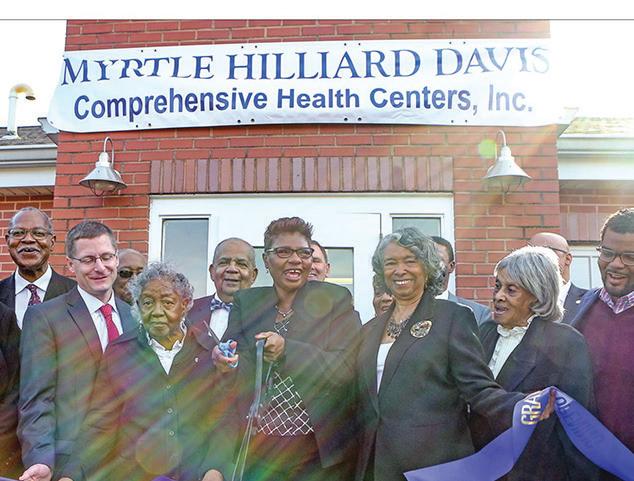


Mystery Story: Cut out several pictures from the newspaper without reading the caption. Place the pictures in a bag, and without looking, pick your mystery picture from the bag. That’s your stimulus for writing. Construct a graphic organizer to identify the 5Ws (who, what, when, where, and why) of your story by looking at your picture. Then, continue the writing process.

Mystery Story: Cut out several pictures from the newspaper without reading the caption. Place the pictures in a bag, and without looking, pick your mystery picture from the bag. That’s your stimulus for writing. Construct a graphic organizer to identify the 5Ws (who, what, when, where, and why) of your story by looking at your picture. Then, continue the writing process.
Problem and Solution: Over a period of weeks, clip articles from newspapers that deal with problems and issues facing your local or county government. Discuss the reasons for these problems and how the government hopes to solve them.
Learning Standards:
Learning Standards: I can use the newspaper to locate information. I can categorize and summarize that information.
Learning Standards: I can use the newspaper to locate infor mation. I can categorize and summarize that information.
Learning Standards: I can use the newspaper to locate information. I can calculate and convert measurements. I can scan, skim, make predictions, and summarize.
I can use the newspaper to locate information. I can discuss problems and solutions. I can identify types of jobs. I can make text-to-world connections.





SCIENCE CORNER
Students Aariyah Thompson and Savannah Fisher, in Ms. Stovall’s first-
Photo
American launches Reader’s Choice Awards with Presenting Sponsor St. Louis City SC
By Dawn Suggs St. Louis American
No matter how long you’ve lived in St. Louis, you may want to compare the businesses and services you use — your doctor, mechanic, barber or beauty salon — to businesses you’ve never visited.
The St. Louis American is launching its first Reader’s Choice Awards, which will allow readers to identify and recognize the local businesses they consider to
Radiation
Continued from A1
Radiation Exposure Compensation Act, known as RECA — a federal program expanded to include certain St. Louisarea ZIP codes impacted by radioactive contamination.
“I’m the first to get mine,” Butler told the group. “It’s real.”
RECA compensation for qualifying cancers often reaches tens of thousands of dollars, with some claimants receiving $50,000 or more depending on diagnosis and eligibility category. Butler’s settlement amount was $25,000 dollars.
For residents long skeptical that the federal government would actually pay claims tied to Cold War-era radiation exposure, Butler’s settlement offered something many said they had been waiting for: Proof.
Questions rooted in doubt — and hope
Around Butler, attendees raised questions reflecting both urgency and anxiety.
“Do I need birth certificates for all my loved ones?”
“What happens if I mess up my three chances?”
Some leaned forward in their chairs. Others stood as they spoke, gripping envelopes and manila folders.
The gathering was one of a series of RECA assistance meetings organized by former state Sen. Maria Chappelle-Nadal, who has worked for years with advocates pushing
Westbrooks
Continued from A1
nizations secure the capital needed to grow.
Westbrooks’ career has centered on using financial systems to expand opportunity. Colleagues say his ability to bridge technical finance and community priorities has made him a trusted voice in rooms where investment decisions are made.
“One of my most meaningful contributions in St. Louis is helping remove barriers to capital for community leaders who are already doing transformative work,” he said.
“When capital flows to great leaders, it accelerates impact in neighborhoods and strengthens the social infrastructure that communities rely on every day.”
That philosophy is reflected in projects Westbrooks points to, including Urban Sprouts Early Childhood Education Center. Over the past decade, IFF partnered with Executive Director Ellicia Lanier to support the center’s growth into what is widely regarded as one of
be the best. The American will focus the spotlight on businesses that have a track record of excellent consumer satisfaction, and employ, serve and welcome Black Americans and others who live, work or even visit the St. Louis area.
The St. Louis City SC is the presenting sponsor for these Reader’s Choice Awards which celebrate entrepreneurs, professionals and organizations that help power the region’s economy and strengthen its communities. Since the
arrival of the COVID-19 pandemic, the number of Black-owned businesses in the St. Louis metro area has increased by over 20%, with women leading the surge as the fastest-growing group of new entrepreneurs.
launch four years ago.

Publisher Donald Suggs welcomed City SC as the presenting sponsor.
“St. Louis City SC has developed strong community partnerships since its
The St. Louis American is excited to partner with this forward-thinking institution, which continues to intentionally build a wider audience for soccer and many great things happening in St. Louis,” Suggs said. “City SC and The St. Louis American want to see all of St. Louis included in the future growth and prosperity of our local
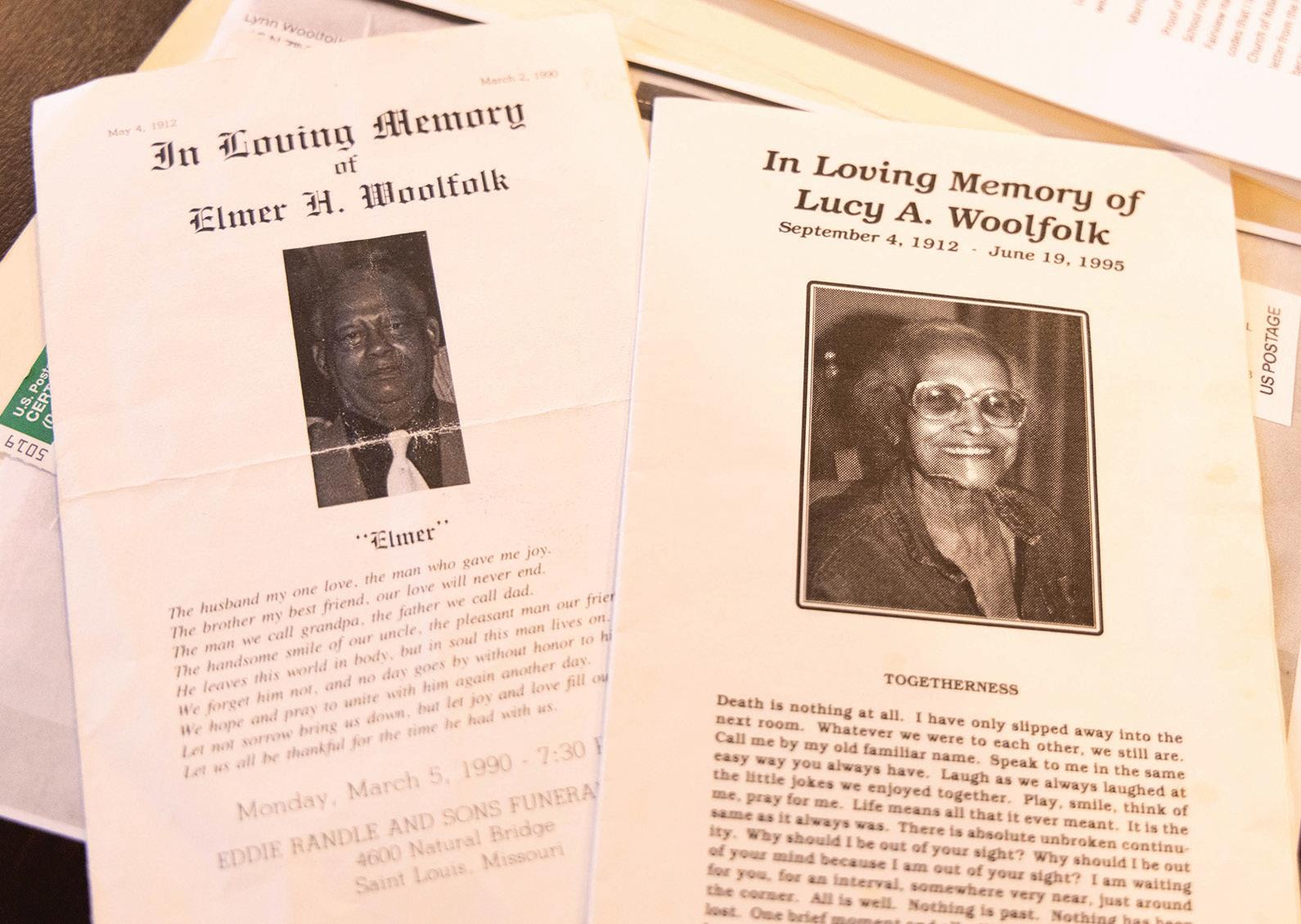
for compensation and cleanup tied to radioactive waste dumped in North St. Louis County. She said skepticism remains one of the largest barriers.
“People still ask if this is real money,” Chappelle-Nadal said. “They’ve lived with broken trust for decades.”
A program decades in the making
RECA was signed into law in 1990 to compensate individuals who developed certain cancers after radiation exposure from nuclear weapons testing and uranium industry work.
Despite St. Louis’ role in uranium processing during the Manhattan Project era, residents here were excluded until Congress expanded eligibility after years of lobbying by community
the nation’s highest-quality early childhood programs.
“Urban Sprouts stands out as an exemplar of why this work matters,” Westbrooks said. “When capital meets leadership and vision, the ripple effects for children, families and educators are profound.”
Emmet Pierson Jr., president and CEO of Community Builders of Kansas City, said Westbrooks’ background allows him to translate the mechanics of tax credits and underwriting into practical development strategies.
“Stephen’s unique background helps nonprofit developers understand the economic drivers for capital from a banking underwriter’s perspective through a community lens,” Pierson said. “The financial bottom line is not the only measure of success for Stephen.”
Before joining IFF in 2016, Westbrooks underwrote Low-Income Housing Tax Credit transactions and helped lead a New Markets Tax Credit program — experience that grounded him in the complexities of communi-
advocates and political leaders including Sen. Josh Hawley and former U.S. Rep. Cori Bush.
Robertson — a historically Black community near sites later confirmed to contain radioactive waste — falls within one of the newly eligible areas.
Government records show millions of dollars approved for Missouri claimants. Yet early data indicated that fewer than 1% of eligible residents had applied, due largely to lack of awareness, distrust and the complexity of the claims process.
“The work is tedious”
Chappelle-Nadal described the RECA application as document-intensive and often overwhelming.
“It’s extremely difficult. The work is tedious,” she said. “You have to
track down records from decades ago.”
That challenge was visible throughout the room.
Lynn Woolfolk, a former Robertson resident, moved from table to table, a thick, color-coded folder in hand, helping others organize birth certificates, death certificates and medical records.
Woolfolk recently filed claims connected to his deceased parents and said retrieving required documents cost him nearly $300.
“If you’re filing for someone who died 30 or 40 years ago, it can be a nightmare,” Woolfolk said.
He shook his head as he flipped through paperwork.
“They want proof, I understand that,” he said. “But some of those records don’t even exist anymore.”
ty finance.
“Many communities face barriers that are often invisible in traditional finance,” he said, citing appraisal gaps as one example. “Removing a barrier didn’t introduce risk — it revealed opportunity.”
That approach has shaped IFF’s work with organizations facing structural financing hurdles. When St. Mary’s High School sought to purchase its longtime building after separating from the Archdiocese of St. Louis, the newly independent nonprofit lacked both credit history and immediate capital. IFF structured a loan that allowed the school to acquire the property, stabilizing its future at a critical moment.
Westbrooks describes such transactions as emblematic of mission-driven lending.
“We’re not just evaluating numbers,” he said. “We’re evaluating community impact, leadership and long-term viability.”
His work has also intersected with broader regional initiatives. As conversations surrounding
economy.”
With Reader’s Choice, residents can nominate, vote and celebrate individuals, organizations and businesses of all sizes that are helping shape the future of the greater St. Louis area.
There are 12 categories for nominations: Arts, Culture and Entertainment; Business and Professional Services; Churches; Education; Food and Beverage; General Services; Health/ Medical Professionals; Home and Garden;
Unable to locate everything, Woolfolk submitted a cover letter explaining the gaps.
A different experience
Butler said her application process was smoother.
“My brother got a lawyer, but I said, ‘I can do this myself,’” she said.
Seated calmly at one of the tables, Butler described assembling her documents.
Butler was diagnosed with bladder cancer last year and has undergone multiple surgeries. With her Robertson birth certificate and medical documentation readily available, she applied in September.
Weeks later, she received compensation.
“It wasn’t difficult at all,” Butler said. “You read it and fill out what pertains to you.”
Her settlement has quickly become a focal point in conversations among former residents.
For many, Butler’s experience challenges a deeply ingrained belief that compensation promises tied to radioactive exposure would never materialize.
Why skepticism persists
Advocates say that doubt is understandable.
Radioactive contamination in the St. Louis region traces back to the early U.S. nuclear weapons program. Following World War II, uranium processed in St. Louis was stored, transported and, in some cases, improperly disposed of near Coldwater Creek, the West Lake Landfill and other North County sites.
Federal investigations later confirmed that government agencies and contractors were aware of
the Brickline Greenway raised concerns about displacement in historically disinvested neighborhoods, Westbrooks emphasized the importance of patient capital and community governance structures that allow residents to participate in redevelopment rather than be pushed aside.
“The stakes are much higher than a typical infrastructure project,” he said during a public panel discussion. “This is about who benefits from investment.”
Westbrooks’ path into community development finance began with curiosity. As a college student during the dot-com era, he studied economics to better understand how wealth was created. Over time, he became equally interested in who was excluded.
“I began to see that the benefits of economic growth were not evenly distributed,” he said. “Many people lacked access to the levers that create wealth.”
After moving to New York City in 2010, he discovered the Community
Lifestyle and Beauty; Shopping; Sports; and Vehicle Services. Nominations start Sunday, March 1, and will continue until March 31. Please go to stlamerican.com to find out how to nominate yourself or a favorite business or service for a Reader’s Choice Award. All business and services will be verified before voting begins in April. No nominations will be accepted after March 31, 2026.
contamination risks but failed for decades to adequately contain or remediate the waste.
Last year, the U.S. Army Corps of Engineers committed an additional $40 million for cleanup efforts tied to radioactive contamination in the region.
“For many families, trust was broken long ago,” Chappelle-Nadal said.
Momentum building
Butler’s payout is already influencing others.
Several attendees said they had delayed filing because they were unsure whether claims would be honored. Seeing someone they know receive compensation has shifted that calculation.
“It changes the conversation,” Chappelle-Nadal said. “People believe it when they see it.”
Deadline approaching
Residents who lived, worked or attended school for at least two years in eligible Missouri ZIP codes after Jan. 1, 1949, and later developed qualifying cancers have until Dec. 31, 2027, to file RECA claims. Compensation may also be available to surviving spouses and certain family members. Chappelle-Nadal urged residents not to let confusion or fear delay applications.
“This is money people are entitled to,” she said. Butler offered a more personal appeal.
“I know people are doubtful,” she said. “But it’s paying off.”
Sylvester Brown Jr. is the Deaconess Foundation Community Advocacy Fellow.
Development Financial Institution industry, a turning point that reframed his career.
“I realized the financial skills I had developed could be applied in a way that was both sophisticated and deeply meaningful,” he said. “Finance could be a powerful tool for advancing community aspirations.”
In addition to his leadership role at IFF, Westbrooks serves on the Federal Reserve Bank of St. Louis’ Community Development Advisory Council and has held leadership positions with Habitat for Humanity St. Louis and Tower Grove Park organizations.
“I feel a responsibility to bring honesty and lived perspective into spaces where decisions about capital and development are being made,” he said. “Progress requires not only resources, but imagination.” Pierson said representation and financial decision-making power matter.
“So few African Americans can say ‘Yes’ and then deliver the check,” he said. “To move a community forward, it
takes someone of and from the community to create economic opportunities with financial support to build thriving, not just surviving, communities.”
Stepping into executive leadership marked Westbrooks’ most challenging and rewarding professional transition. After years focused on individual transactions, he became responsible for shaping strategy and supporting the success of others.
“There was uncertainty in that transition,” he said. “But choosing to move forward anyway became a defining growth experience.” In a city still working to close racial wealth gaps and strengthen its social infrastructure, much of Westbrooks’ influence unfolds outside public view. There are no ribbon cuttings for removing appraisal barriers, nor headlines for restructuring loans or assembling patient capital. Yet across St. Louis — in classrooms, developments and expanding community institutions — the results are visible.
Memorial programs for Elmer H. Woolfolk and Lucy A. Woolfolk sit among the documents their son, Lynn Woolfolk, gathered to seek federal compensation tied to their exposure to radioactive waste.
Photo courtesy of the AP

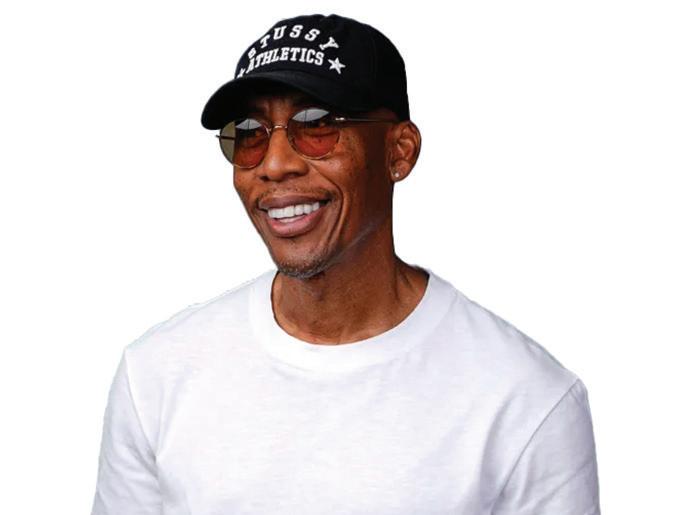
Living It
“Music was my safe place. My room was my safe place. And now as I’m older, my studio is like that small room that I [grew up] in. It’s now my safe space.”
- Raphael Saddiq
The soft power of being fully seen
‘Primary Trust’ offers a tender look at healing in action
By Kenya Vaughn Of The St. Louis American
The main character Kenneth is a reminder that Black men carry interior worlds that don’t match the stereotypes projected onto them.
There’s a particular kind of silence that lives inside people who’ve survived more than they ever say out loud. Eboni Booth’s Pulitzer Prize-winning play “Primary Trust” leans into that quiet —as a way of honoring it. Through its thoughtfully calibrated presentation, The Repertory Theatre of St. Louis offers in that silence the type of insight that becomes a place of revelation. At the center of it all is Kenneth, played with nuance by Gregory Fenner. Kenneth is a man who moves through the world gently, almost cautiously. It’s as if life has taught him that too much noise can be dangerous. Fenner doesn’t play him as fragile or broken –at least not when his character feels that people are watching. He plays him as specific. In doing so, he reinforces something at the heart of Booth’s intention –something that often gets flattened in American storytelling –the fact that Blackness is not a monolith. His Kenneth is tender, awkward, observant, and deeply human. He is a reminder that Black men carry interior worlds that don’t match the stereotypes projected onto them. And then there’s Bert — Kenneth’s imaginary friend, played by Ronald L. Conner. His Bert is cool. He is also warm and charismatic. Conner gives Bert the swagger of a best friend, the patience of a therapist, and the loyalty of someone who has walked with Kenneth through unimaginable loss. He’s funny without

being cartoonish, grounding without being overbearing. The audience understands immediately why Kenneth created him — and why letting him go is both terrifying and necessary. The play follows Kenneth as he navigates a life that has been shaped by trauma, routine, and the coping mechanisms that kept him afloat. When a sudden shift forces him out of his comfort zone, he begins to confront the memories and fears he’s long kept tucked away. Booth’s
A sanctified second line

Goines, Jazz St. Louis honor Dr. King with a sweeping and soulful musical portrait
By Kenya Vaughn The St. Louis American
Victor Goines writes music that feels lived in — like it carries the fingerprints of every porch, pew, second-line parade route, and jam session that shaped him. Bach built cathedrals. Mozart spun whimsical stories. But Goines, a son of New Orleans and now President and CEO of Jazz St. Louis, composes from the crossroads of Blackness itself. He delves into the blues that raised listeners, the gospel that steadied them, the jazz that frees them, and the soul that keeps them honest. This weekend, he brought all of that — and then some — to the sold-out big band
premiere of his MLK Suite at Jazz St. Louis. Across nine movements, Goines offered a musical meditation on the life, legacy, and emotional landscape of Rev. Dr. Martin Luther King Jr. The result was an 80-minute journey that felt both reverent and radically alive.
Each movement had its own personality. They began with “Michael, the Archangel” — a reference to Dr. King’s birth name. It shifted into “I Ain’t Gonna’ Stand fo’ This No Mo,’” a homage to Dr. King the reverend.
“Language of the Unheard” opened
writing is gentle but piercing, reminding us that people often carry entire histories behind their eyes — and that healing rarely looks dramatic from the outside. Director Tyrone Phillips leans into that intention with pacing. He resists the urge to rush Kenneth’s emotional journey or punch up the humor for easy laughs. Instead, Phillips allows the story
See Play, B3
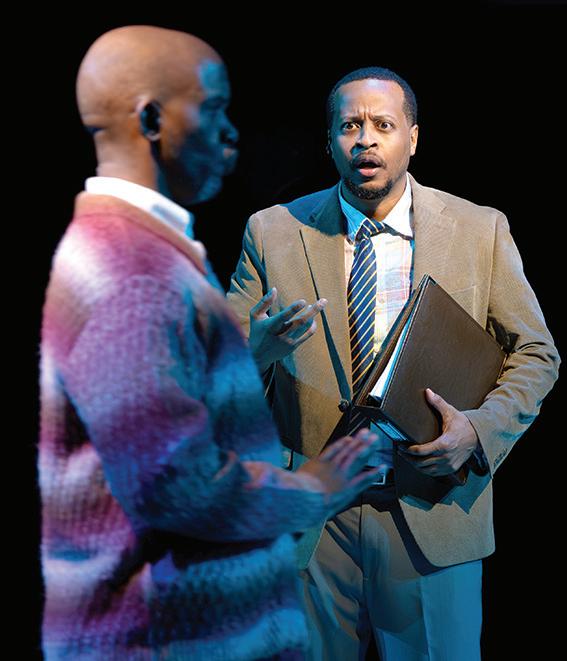
Pop-up exhibit rooted in Black History and St. Louis pride closes March 1
By Zaria Mac The St. Louis American
“Blessed by the Ancestors” isn’t just an exhibit — it’s a full-body reminder of how deeply Black St. Louis carries its history, its humor, and its heart. Curated by hometown creative Brock Seals, the Black History Month pop-up transforms a corner of the City Museum into a living archive of Black joy and memory. The exhibit is stitched together through color, texture, and the everyday moments that shape who we are. With the show closing March 1, visitors have one final chance to step inside this world.
Created in collaboration with local artists including 314RY and BriLynn Asia, the exhibit gathers visual stories that center Black experiences. Through acrylic portraits and snapshots of everyday life, Seals and his fellow artists offer representations of Black culture meant to inspire future generations while spreading awareness.
“Blessed by the Ancestors is a Black experience,” Seals said. “A lot of people don’t understand us or our culture, and this is a good way people can get to know it.”
From the moment visitors step inside
Beatnik Bob’s Café — the cozy spot on the third floor of the City Museum across from the Insectarium — they are immersed in a trove of Blackness that highlights beauty, joy, and creativity rather than violence or victimhood. One of the pieces that immediately resonates is “Taste Like Home” by BriLynn Asia. The acrylic painting depicts a plate of fried fish on a Dixie paper plate, paired with a heaping serving of spaghetti, plus pickles, onions, and bread. A Black woman’s hand, adorned with long black-and-white
Photo by Kenya Vaughn/St. Louis American Wycliffe Gordon was the featured soloist for the Jazz St. Louis Big Band premiere of Victor Goines’ ‘The MLK Suite’ Friday night at the Ferring Jazz Bistro inside of the Harold and Dorothy Steward Center For Jazz.
Photo by Taylor Marrie/St. Louis American Brock Seals, artist and curator of the
“Blessed by the Ancestors” art exhibition at The City Museum.
Photos by Jon Gitchoff/Courtesy of The Repertory Theatre of St. Louis Gregory Fenner, Kierra Bunch and Ronald L. Conner in The Repertory Theatre of St. Louis’ presentation of ‘Primary Trust,’ which continues through March 1 at The Loretto-Hilton.
Ronald L. Conner and Gregory Fenner
314 DAY Activities
Sun., Mar. 8, 5 p.m. STL Vs. Errbody produced by Second Sunday, Chevre, 1624 Delmar Blvd, St. Louis, MO 63103. For tickets visit, https://posh. vip/e/stl-vs-errbody.
Sat., Mar. 14, doors open at 7 p.m. 314 Day 20th Anniversary Celebration featuring Lil Webbie, Big Boogie, Murphy Lee and many more, The Pageant, 6161 Delmar Blvd, St. Louis, MO 63112. For more information, visit www.thepageant.com.
Sat., Mar. 14, 12 p.m. We All We Got: 314 Day Brunch produced by T.Moore Media, The Pennywell Hotel, 400 Olive St, St. Louis, MO 63102. For tickets visit https://posh. vip/e/314-day-brunch.
Sat., Mar. 14, 10 p.m. STL House Party produced by The Kickback Club, Treasures, 4517 Olive St, St. Louis, MO 63108. For tickets, visit https://posh. vip/e/the-house-party-12.
CONCERTS
Fri., Feb. 27, 7:30 p.m. St. Louis Symphony IN UNISON Chorus in Lift Every Voice - Black History Month Celebration, Powell Hall, 718 N. Grand Blvd., St. Louis, MO 63103. For more information, visit https://shop.slso.org.
Sat., Feb. 28, 7:30 p.m. The St. Louis Symphony Orchestra presents Coltrane 100: Legacy, Powell Hall, 718 N. Grand Blvd. St. Louis, MO 63103. For more information, visit https://shop.slso.org.
Fri., Mar. 20, 8 p.m. The 18th Annual Gateway Blues
STL Sites & Sounds
Festival, Chaifetz Arena, 1 South Compton Avenue St. Louis, MO 63103. For more information, visit www.chaifetzarena.com.
Fri., Mar. 27, 8 p.m. The New Edition Way Tour featuring New Edition, Boyz II Men and Toni Braxton, Enterprise Center, 1401 Clark Ave, St. Louis, MO 63103. For more information, visit www.enterprisecenter.com.
SPECIAL EVENTS
Fri., Feb. 27 - Mar. 1, 7:30 p.m. Saint Louis Dance Theatre Winter Series Catherine B. Berges Theatre at COCA, 6880 Washington Ave. St. Louis MO 63130. For more information, visit www.saintlouisdancetheatre.org.
Fri., Feb. 27, 7:30 p.m. Dancing with the Stars LIVE, Stifel Theatre, 1400 Market St, St. Louis, MO 63103. For more information, visit www.stifeltheatre.com.
Sat., Feb. 28, doors open at 6 p.m. The Magic House Trivia Night: Back to the 80s, The Magic House, 516 S. Kirkwood Rd, St. Louis, MO 63122. For more information visit www. magichouse.org.
Sat., Feb. 28 - Mar. 1, Totally Rad Vintage Fest! America Center, 701 Convention Plaza, St. Louis, MO 63101. For more information, visit www.ticketmaster.com.
Sun., Mar. 8, 7:45 a.m. Flow with the Fish a yoga experience, St. Louis Aquarium at Union Station, 201 S 18th St, St. Louis, MO 63103. For more information, visit www.stlouisaquarium.com.
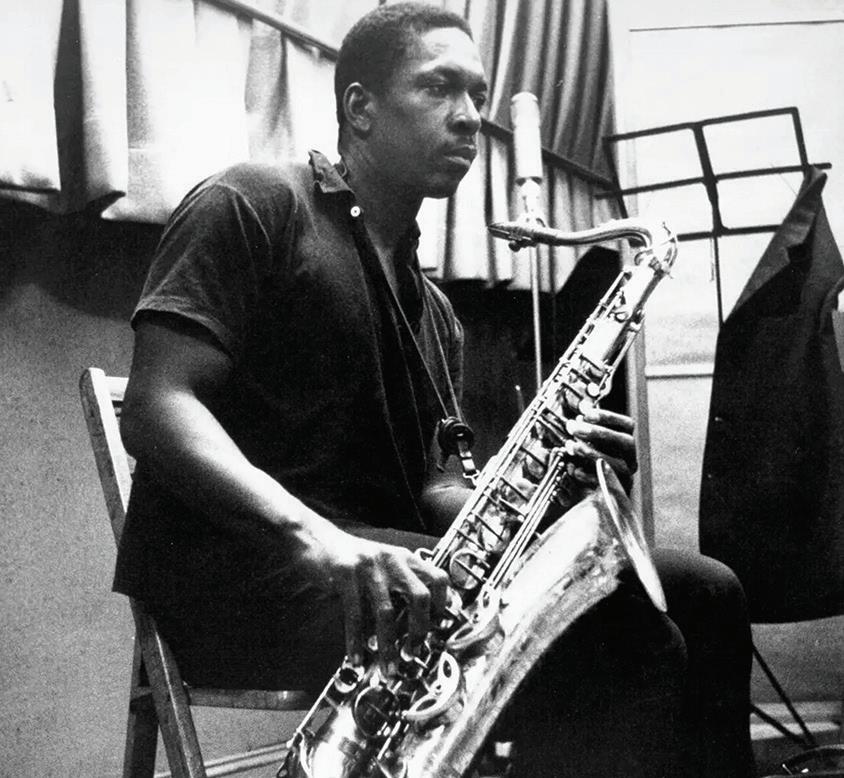
COMEDY
Thur., Mar. 5, 7:30 p.m. The Christi Show: Ms. Shirleen, City Winery St. Louis, 3730 Foundry Way, St. Louis 63110. For more information, visit https://tickets.citywinery.com.
Sat., Mar. 7, doors open at 6 p.m. Eddie Griffin: Live and Unleashed, The Factory, 17105 North Outer 40 Rd, Chesterfield, MO 63005. For more information, visit www.thefactorystl.com.
Fri., Mar. 13- 15, Special Event Tacarra Williams, Helium Comedy Club, 1151 St Louis Galleria St, St Louis MO 63117. For more information, visit https://st-louis. heliumcomedy.com.

ST. LOUIS MUSIC SPOTLIGHT
Thurs., Feb. 26, 6:30 p.m., The Jazz Edge Orchestra Celebrates Black American Music St. Louis Public Library – Schlafly Library, 225 N. Euclid Ave., St. Louis, MO 63108. For more information, visit www.slpl.org or call 314.367.4120.
Fri., Mar. 6, 6 p.m. Advisor Magazine & Rare Radar presents Rise a listening party and magazine cover reveal, Sophie’s Artist Lounge, 3333 Washington Ave, St. Louis, MO 63103. For more information, visit https:// kranzbergartsfoundation.org.
THEATRE
Through March 1, The Black Rep presents The Black Feminist Guide to the Human Body, Hotchner Studio Theatre, Washington University. For more information, visit www. theblackrep.org.
Through March 1, The Repertory Theatre of St. Louis presents Primary Trust, Loretto-Hilton Center, 130 Edgar Rd, Webster Groves, MO 63119. For more information, visit www.repstl.org.
March 11 – March 29, The Black Rep presents Pearl Cleage’s Flyin’ West, For more information, visit www.theblackrep.org.
ART
Fri., Feb. 27 - Mar. 1, Art in Bloom, St. Louis Art Museum, 1 Fine Arts Dr, Forest Park, St. Louis, MO 63110. For more information, visit www.slam.org.
Through Mar. 3, Blessed by the Ancestors, an art exhibition by Brock Seals, City Museum, 750 N 16th St. St. Louis, MO 63103. For more information, visit https://citymuseum.org.
Through June 2026, The Future Is Female, 21c Hotel and Museum Hotel St. Louis, 1528 Locust St, St. Louis, MO 63103. For more information, visit https://21cmuseumhotels.com.
Fri., Mar. 6, 9 p.m. Damenaii & The After Hours, The Dark Room, 3610 Grandel Sq, St. Louis, MO 63103. For more information visit https://kranzbergartsfoundation.org.

The St. Louis Symphony Orchestra closes out Black History Month with Coltrane 100: Legacy. See CONCERTS for more details.
with a defiant staccato — horns colliding in hard-bop bursts that echoed the righteous anger of a community pushed to the brink. It was the kind of musical dissonance that tells the truth without apology.
Then the Suite pivoted to the heart. “Mrs. King,” a movement added specifically for the St. Louis premiere, served as a love letter wrapped in melody. Before the band began, Goines told the audience, “Dr. King did great things, but he never would have done them without Coretta Scott King. I would never call him Martin, so I will never call her Coretta. We call this one ‘Mrs. King.’”
Guest soloist Wycliffe Gordon made his trombone deliver a tender ballad. The horns glowed softly, the piano whispered beneath them. It was an understated but haunting tribute to the woman behind the man behind a movement.
Throughout the Suite, Gordon’s horn became its own character — sometimes wailing like Mahalia Jackson, sometimes sighing like Billie Holiday, sometimes crooning with Sarah Vaughan’s velvet tone.
“Good Trouble,” inspired by the Selma marches, carried an upbeat gospel rhythm that gave the New Orleans-style horn lines a place to land. It was protest music with a second-line strut — the kind of groove that makes
Ancestors
Continued from B1
cheetah-print nails, reaches in for a forkful. The painting captures more than a meal — it speaks to shared traditions and unspoken cultural shorthand.
“I feel like this piece really speaks to St. Louis Black culture,” Seals said.
“The fish fry on Friday, going to Schnucks — you gotta have the bread, the onions, the pickles.” He laughed. “I like when art can relate to a niche audience. If you don’t know, you don’t know. And if you do, you love it because it’s what you’ve experienced and how you grew up.”
That sense of recognition carries throughout the exhibit. Seals’ own featured piece, “Tay Tay’s Beads,” is an acrylic portrait of a young girl wearing twists decorated with pink, yellow, and blue barrettes against a warm pink background. The portrait evokes childhood — being outside after Easter service, the soft clicking of beads marking every movement. Modeled after Seals’ cousin, the work reflects his own upbringing.
“Growing up, my mom would braid her hair and she always had those
Play
Continued from B1
to breathe. He gives the audience space to sit with Kenneth’s silences, his hesitations – and the small victories that feel monumental for someone rebuilding a life from the inside out.
Supporting Kenneth’s world are Kierra Bunch and Alan Knoll. They move through multiple roles with dexterity and clarity. They shift from bartenders, bookshop owners and bankers to background figures in Kenneth’s life with such ease that their presence becomes a kind of emotional scaffolding. Their performances help illu-
one nod while remembering why the fight mattered.
“Hold On, Save Us” shifted into something quieter but no less urgent. Gordon’s trombone voiced the exhaustion of a people forced to explain — again — why they deserve to feel at home in a country they helped build. It was civility wrapped around outrage, delivered with the kind of restraint that hits harder than shouting.
“The Long Hard Road” opened with the pluck of an upright bass — steady, intentional, like footsteps
Throughout the Suite, Gordon’s horn became its own character — sometimes wailing like Mahalia Jackson, sometimes sighing like Billie Holiday, sometimes crooning with Sarah Vaughan’s velvet tone.
on pavement as Goines’ musical interpretation of the 1963 March on Washington. The band joined with a purposeful cadence, touched with Afro-Cuban undertones, before the horns rose in a crescendo that reached toward the sky. Halfway through, the brass swelled into something almost symphonic before settling back into a gentle purr.
Then came the emotional apex: “When They Struck Him Down” flowing directly into “Yes, He
beads,” he said. “I want other girls at that age to see themselves in it, because growing up I saw art as European.”
For Seals, visibility matters. “I never saw a lot of Black art growing up,” he added. “So I want our people to know our life is art — and I want Black folks to see themselves throughout the artwork and feel proud and be inspired if you are an artist.”
That commitment to representation extends beyond individual pieces. Seals emphasizes the importance of having spaces where Black voices can be expressed authentically and fully. “It’s so important for us to have platforms to express our true voices,” he said. “It’s very important that we have our stories on display — future, past, and present — because our history is being erased to a certain extent.”
Another standout work is “XL 24” by 314RY. The piece features an old-school Chevy sedan paused at a stoplight, wrapped in an Imo’s logo and sitting on large chrome rims. A man leans out the window wearing a ski mask and a black-and-white SLT snapback. The image feels cinematic and familiar — a scene many in St. Louis have witnessed.
minate how Kenneth sees the world — and how the world sees him. They also help highlight Bert’s role as friend, counselor, and coping mechanism, showing how Kenneth’s internal and external realities collide.
Scenic designer Sotirios Livaditis gives the production a visual language that mirrors Kenneth’s complicated inner life. The set is both literal and symbolic — a space that feels familiar, but upside down. It echoes the way Kenneth navigates his days. Livaditis and costume designer Shevare Perry work in tandem to give the intimate cast the variety needed to fill the mainstage without overwhelming it. Their choices help the audience under-
Lives Forever.”
Goines explained the pairing: “In the New Orleans tradition, we mourn as we bury — but we celebrate because we know they’re going to a better place.”
The first movement opened with the type of percussion often associated with a military funeral, followed by somber horn lines that sounded like they belonged in a 1930s film at the moment a lover meets a tragic fate.
Gordon’s trombone delivered a grief-stricken wail — the kind that doubles someone over a casket.
Goines’ clarinet added texture, while Pops Jackson’s left hand on the piano kept the waltz of sorrow moving forward.
Then — a pivot. A bright, church-born organ chord. A bass line with bounce. A drum groove that said, “Get up — we march again.” “Yes, He Lives Forever” erupted into a jubilant second line, celebrating the eternal impact of Dr. King’s life.
Goines’ MLK Suite is quiet in its confidence but enormous in its emotional reach. It’s the kind of work that makes listeners imagine a film unfolding around it — not because it needs visuals, but because it paints them so vividly on its own. The piece reminds audiences that Dr. King’s legacy resonates far beyond the pages of history. Nearly 60 years after his assassination, Goines’ composition affirms that King’s life, message, and moral courage continue to move, challenge, and call people higher.
“As a kid I would see dudes riding down Kingshighway with big cars, rims super high, music blasting, TV in the car,” Seals said. “Someone who has a car like that might think, ‘Oh, this isn’t art,’ but as a kid that was art to me. That was an inspiration.”
Together, these works reframe everyday Black experiences as worthy of admiration and preservation. As the pop-up prepares to close, the exhibit leaves behind a powerful reminder that Black culture is worthy of celebration — not as a trend or stereotype, but as a lived reality layered with joy and creativity.
“Blessed by the Ancestors” is on display through Sunday, with all works available for purchase. Don’t miss the chance to uplift Black art and the artists who shape it.
“Blessed by the Ancestors,” curated by Brock Seals and featuring works by 314RY, BriLynn Asia, and others, is on view at Beatnik Bob’s Café inside the City Museum through March 1; artwork is available for purchase, regular museum admission applies, and more information is available at citymuseum.org or by calling 314-231-2489.
stand Kenneth’s emotional landscape long before he speaks it out loud.
“Primary Trust” is not a loud play. It doesn’t shout its themes or force its revelations. Instead, it invites the audience into a quiet, deeply personal journey. It is a reminder that one never truly knows what someone is carrying – and that healing often begins in the smallest, most private moments.
‘Primary Trust’ runs through March 1 at The Repertory Theatre of St. Louis on the Browning Mainstage of The LorettoHilton, 130 Edgar Rd, Webster Groves, MO 63119. Tickets and performance details are available at repstl.org or by calling 314-968-4925.

Black History is not behind us— it is beneath our feet
By Lyah B. LeFlore-Ituen, Missouri Historical Society
This February has been a month of breakthrough for me.
Not the kind that arrives loudly, asking to be witnessed. But the kind that settles into your spirit and whispers, “You are exactly where you are meant to be.”
Each morning, I walk through the doors of the Missouri History Museum and I hear Jill Scott in my spirit: “Feeling blessed, yes, yes.”
And I am.
Blessed to dream. Blessed to create. Blessed to connect with the people of St. Louis—my hometown. A city that raised me, shaped me, and now holds me again at a moment when purpose and place have met each other fully.
There is something sacred about returning home as the woman you have become.
Each morning as I drive in, I pass through neighborhoods still bearing the visible scars of the May 2025 tornado. Rooflines interrupted. Trees stripped down to their essence. Buildings standing in quiet testimony to what they have endured.
And yet, there is beauty.
Beauty in what remains. Beauty in the evidence of survival. Beauty in the simple, unshakable truth that we are still here.
Black people in this city know something about surviving storms.
of progress. Streets that had held decades of memory were replaced by highways, institutions, and absence.
But what could not be demolished was the truth. What could not be erased were the stories. Those stories live in photographs that refuse to let us forget. They live in oral histories carried in the voices of elders who remember the sound of life on those streets. They live in the artifacts people held onto when everything else was taken. They live in memory. They live in legacy. Mill Creek lives. It lives because the people lived. It lives because the people remember. It lives because history does not disappear simply because someone decides it should.
I see it every day. I see it in the elders who enter the exhibit and pause—not just to look, but to return. I see recognition rise in their eyes. I see the quiet affirmation that their lives, their families, their community mattered and still matter.
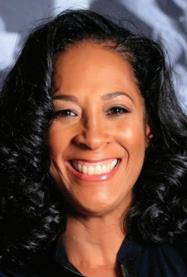
I see it in young people who begin to understand that their story did not begin in struggle alone, but in brilliance. In ownership. In creation. In community. This is what Black History Month reminds us, especially now, as it comes to a close. Black history is not behind us. It is beneath our feet.
We know something about rebuilding after devastation. We know something about holding grief and hope in the same hand and still choosing to move forward.
Inside the Museum, that truth lives powerfully in the Mill Creek: Black Metropolis exhibit. Mill Creek Valley was once the cultural and economic heartbeat of Black St. Louis. By the 1950s, more than 20,000 Black residents lived there. There were over 800 Black-owned businesses. Doctors, teachers, musicians, laborers, entrepreneurs, and families built lives rooted in dignity, ownership, and community. Churches anchored generations. Children walked to schools filled with promise. It was a neighborhood alive with possibility.
And then, between 1959 and 1965, it faced its systematic demise.
Under the language of “urban renewal,” more than 4,000 buildings were demolished. Families were displaced. Businesses were erased. A thriving Black community was cleared away in the name
It is in the ground we walk on. It is in the neighborhoods we rebuild. It is in the courage of those who came before us and the responsibility of those of us who remain.
This month, as I have stepped into this new role and soaked in these surroundings, I have felt embraced by this city in ways both profound and personal. I understand that this work is not simply about preserving history. It is about honoring the living presence of it. Because we are still here. We are still creating. We are still building. We are still telling the story.
Black history is St. Louis history. It is inseparable from the identity of this city. It is written into its foundation. It is carried in its people.
Mill Creek lives.
And as long as we remember, as long as we speak its name, as long as we continue to stand and create and bear witness— So do we.

Columnist Lyah B. LeFlore-Ituen

The (reader’s) choice is yours. By now y’all have heard the buzz, but let me go ahead and make it official. The inaugu ral St. Louis American Reader’s Choice Awards will be popping off next week with our nomina tions period.
I know there are a few unin formed folks who are saying, “Girl, what is the St. Louis American Reader’s Choice Awards? Get me in the loop!” Miss ma’am, I thought you would never ask!
Starting March 1, the faithful and beloved community who continually engage with our content will have the opportunity to celebrate indi viduals and institutions who, to steal the words of my girl Anita Baker, are giving us the best that they’ve got.
The twelve main categories are Arts, Culture and Entertainment; Business & Professional Services; Churches; Education; Food & Beverage; General Services; Health/ Medical Professionals; Home & Garden; Lifestyle & Beauty; Shopping; Sports; and Vehicle Services.
on the St. Louis Symphony Orchestra tribute concert. I was two‑weeks‑ago old and perched in Powell Hall when I realized that strings and woodwinds take “Proud Mary” to a whole new tier!
But let me stop burying the lead. St. Louis City SC is con tinuing to show that they are here for supporting the culture by helping us present the best of it through Reader’s Choice.
Stay tuned through stlameri can.com, our social media plat forms, and our print edition for details and next steps — but be prepared to show love to some of the best and bright est from March 1 through March 31 by casting your votes.
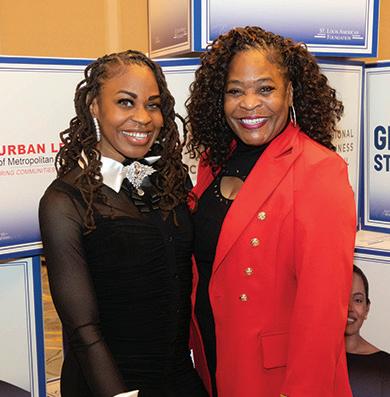
The IG video is already doing numbers as it promotes the game‑changing experience that will allow us to “nominate loud, vote proud, and celebrate excel lence.”
And while the awards are powered by the people, I get to be the first to tell you that our St. Louis American Reader’s Choice presenting sponsor is an absolute real one. They became cemented in my personal hall of fame by the way they gave my girl Tina Turner her flowers over the past few weeks with their kit (jersey) and related merch designed in her honor. And don’t get me started
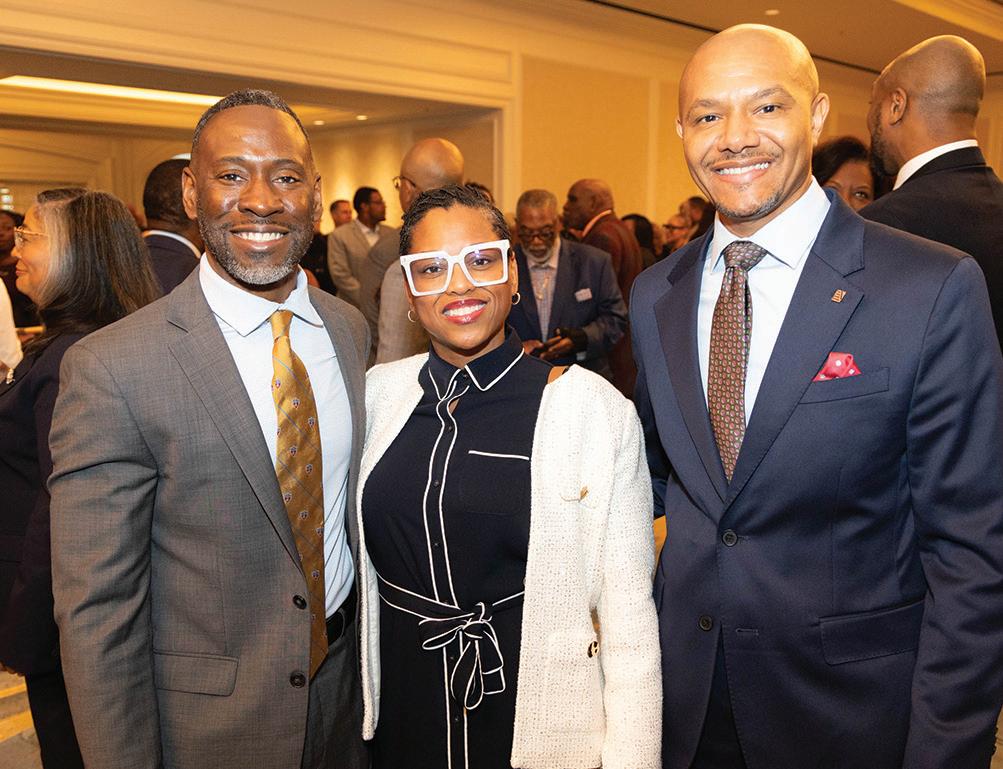
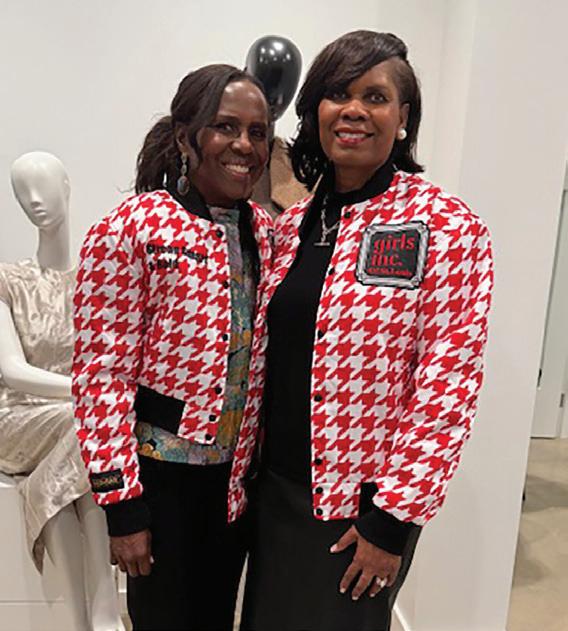
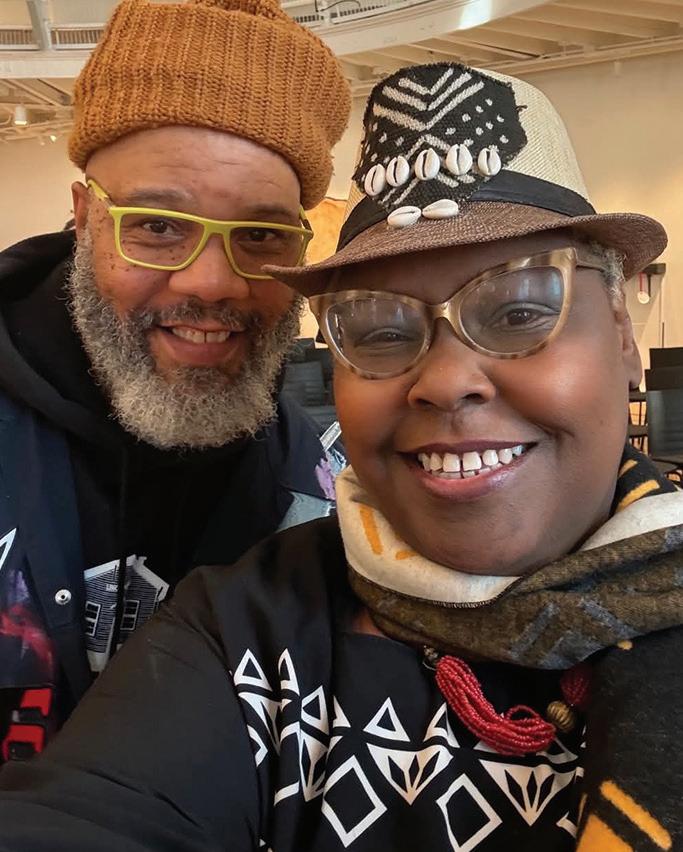
Standing on Business (Salute). Now y’all know that the corporate community is not necessarily my beat. However, it is my appointed duty to hip the folks to the can’t‑miss, must‑see, and place‑to‑be. When you keep that in mind, it would be grounds for dismissal if I didn’t let y’all know how everybody who is somebody — and anybody who even pretends to be somebody — had the 24th Annual Salute to Excellence in Business Awards Luncheon last Thursday at The Ritz‑Carlton, St. Louis filled to capacity.
And y’all are gonna accuse me of capping — and go right ahead so I can pull my receipts — but I haven’t been begged up on for tickets this bad since the last time Beyoncé came to town. I legit had to unplug my house phone, temporarily dis able my Facebook Messenger, and change my caller ID so that it doesn’t read “The St. Louis American.” And even after all that, folks were still on my neck asking for a comp or to be my
plus‑one.
One person even called me and said, “Look, I will buy a ticket if I have to.” I had to hit him with a, “Sir, that’s what you were supposed to do… and I couldn’t sell you one if I wanted to, unless you are willing to sit in a utility closet.” Folks found out the hard way that “sold‑out” is a real thing — and that a whole lot of stress and scram bling can be saved by buying tickets as soon as they go on sale. With all of that said, let me get into how I got my whole entire life from this year’s Business Salute. I went in there to happily celebrate Akberet Boykin‑Farr, Leslie Gill, Eric Rhone, and Keith Williamson. I left that room ready to conquer the world! The level of inspira tion after being in the room with the people who make it happen is bigger than words. I will miss some people, so I won’t get too deep into shout outs except to say that burgundy is absolutely Akberet’s color!

And what was not on my 2026 bingo card was for Lifetime Achievement Award recipient Keith Williamson to have me cackling like I was watching my favorite Netflix stand‑up special. Eric Rhone, if you ever decide to produce a “Corporate Kings of Comedy” tour, you already have your headliner. And since I’m already talking about a Rhone, let me show some love to Angela Rhone’s bob! Two words came to mind when I saw that precise cut with body for days: stiff where?
But seriously, a huge congrat ulations to the honorees, guests, and all parties involved for a Business Salute that people are still buzzing about!
The snow tried it, but the Deltas did that. I saw plenty of them at the Business Salute — including birthday girl Chalana Ferguson — but I made it my business to stop through Ryse Nightclub to celebrate with the Deltas for their delayed 100 Charter Kick‑Off celebration.
It was a whole entire vibe… and was sold out as well. The ladies were 1913’d down to the socks. Did I spy Jackie Joyner‑Kersee in the building? If not, she has a non‑celebrity twin soror.
I had my heart set on watch ing the devastating divas party hard a few weeks back, but the blizzard said “lies.” And don’t you just love it when a resched uled event still comes back swinging like it never missed a beat! The energy was high, the red was red‑ing, and the sister hood was showing out in full formation.
I can’t wait to see what the STL DSTs have in store for the rest of their centennial — because if this snow‑date kickoff was any indication, the rest of the year is about to be a nonstop vibe!
RIP Rell. At this point, I’m trying not to turn Partyline into an obit page, but if you are looking for someone to blame, charge it to 2026. I had to issue prayers and condolences to the family and friends of Hottest Host T Rell. If you ever went to a party when he was on the mic, you knew because of how he took the turnup to the next level.

1. Pam Simmons and Ashley Simmons at the 24th Annual Salute to Excellence in Business on Thursday at the Ritz-Carlton St. Louis
2. Andwele Jolly, April Mickens Jolly and Jason Ware at the 24th Annual Salute to Excellence in Business on Thursday at the RitzCarlton St. Louis
3. Deborah Roberts of ABC News represented for Girls Inc. alongside President and CEO Cheryl Jones Thursday at St. Louis County Library’s Clark Family Branch
4. Creatives Cbabi Bayoc and Monica following a conversation with Bayoc, Damon Davis and Harmonia Rosales about Blackness in art Sunday afternoon at 21c
“If they need me to play 40 minutes, I’ll play 40 minutes.”
— BYU freshman AJ Dybantsa, after playing every minute in a victory over Iowa State

InSIdE SportS
With Earl Austin Jr.
East St. Louis Flyers bring momentum — and firepower — to playoffs
The East St. Louis Flyers head into this week’s basketball playoffs with high aspirations after another terrific regular season.
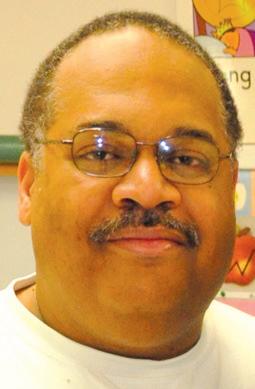
Head coach Mark Chambers directed the Flyers to a 26-4 record and the Southwestern Conference championship. East Side closed the regular season with a thrilling 70-66 victory over Collinsville on Senior Night last Friday at Southwestern Illinois College in Belleville. In addition to the conference title, the Flyers also won the Proviso West Tournament, one of the biggest Christmas tournaments in Illinois.
East St. Louis won its first state championship in 2019 behind standout forward Terrance Hargrove Jr. The Flyers have the pieces to make another deep postseason run with a talented unit.
The Flyers enter the playoffs as the No. 1 seed in the IHSA Class 3A regional at Mascoutah. The regional championship game will be held Friday at 7 p.m. The winners advance to next week’s sectional at Waterloo.
The Flyers’ top player is 6-foot-8 senior forward Jamison White, who was a member of the St. Louis American “Fab Five” All-Stars last season as a junior at Chaminade. White has been dominant in his one-year stint with the Flyers. The Penn State recruit is averaging 23
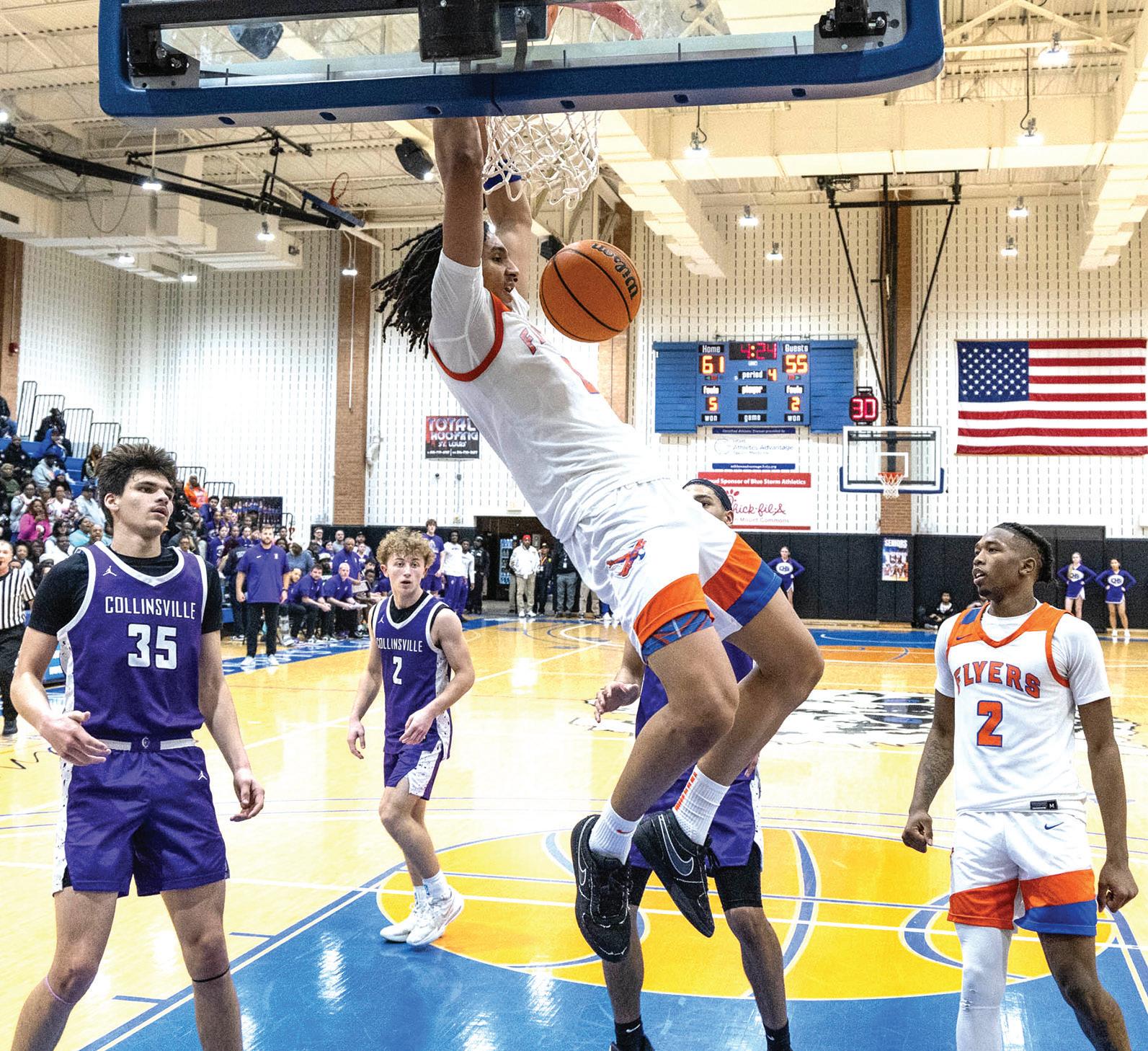
points and 13 rebounds per game.
There is plenty of talent around White. One is 6-foot-3 senior guard Alex Johnson, a standout for the past three seasons who is averaging 16.9 points, five rebounds and four assists per game.
6-foot-1 junior point guard Phillip Jones runs the offense and scores when needed. He is
averaging 11 points, 4.5 rebounds and 7.8 assists per game — among the best marks in the St. Louis area.
Senior guard Devin Houston, a 6-foot-1 power player, is averaging 11 points and four assists per game since becoming eligible at semester break after transferring from CBC.
The fifth starter is
6-foot-5 junior forward Terri’yon Webster, who averages eight points per game.
Alton, Belleville East girls win regional championships Southwestern Conference teams Alton and Belleville East won IHSA Class 4A regional championships last week.
SportS EyE
With Alvin A. Reid
Belleville East defeated O’Fallon 37-32 to win the regional title at Belleville West. It marked the Lancers’ 26th victory of the season. Sophomore guard Hailey Gray led East with 18 points, while sophomore forward Ramiyah Young added 10 points and six rebounds. Alton defeated Edwardsville 49-33 to win the Edwardsville regional.
The Redbirds secured their 28th victory, which included another Southwestern Conference championship. The winner of this week’s Alton-Belleville East sectional advances to Thursday night’s sectional championship game at Peoria Richwoods at 6 p.m. Alton won both regular-season meetings between the teams.
HBCU stars hope to catch some NFL eyes
When the 2025-26 NFL season began, there were 23 HBCU players on the rosters of 32 teams — less than one per team on average. That number grows to 26 when you include players who transferred from an HBCU and were then drafted.
Shedeur Sanders and Travis Hunter, who relocated from Jackson State University to Colorado with head coach Deion Sanders, are on that list.
By contrast, the 1969 Kansas City Chiefs had 12 HBCU players on their Super Bowlwinning roster. There were only 26 combined teams in the NFL and AFL that year, the final season before the league’s merger. Offensive tackle Carson Vinson, who played at Alabama A&M, was the only true HBCU player selected in the 2025 NFL draft. He was a fifth-round pick of the Baltimore Ravens. No HBCU players were drafted in 2024, and the average number of HBCU players selected in the draft dating back to 2022
is one. Keep in mind there were college football powers that remained segregated until later in the 1970s, and many schools limited the number of Black players. That institutional athletic racism guaranteed that some of the nation’s best football players attended HBCU schools.
Regardless, today’s HBCU programs still have outstanding talent, yet rating services and NFL scouts often bypass these players.
The NFL isn’t purposely ignoring HBCU players — at least not publicly. It has embraced the Allstate HBCU Legacy Bowl, which features top NFL draft-eligible players from HBCUs.
The teams, carrying the names of late Florida A&M coach Jake Gaither and Grambling coach Eddie Robinson, put on a dazzling display Feb. 21 in the 5th Annual Legacy Bowl at Tulane Stadium in New Orleans.
Team Gaither prevailed 27-23 over Team Robinson live on NFL

Network, and both teams topped their highest point totals in the game’s history.
Doug Williams, the first Black quarterback to start and win the Super Bowl, is co-founder of the Black College Football Hall of Fame and the HBCU Legacy Bowl. He told NFL Network reporter Sheree Burruss the contest “is all about an opportunity.”
“(The game is) a chance to be seen and give (HBCU players) an opportunity to go out there and perform. If you do that,
that’s all people ask for,” Williams said. Winston-Salem running back JaQuan Kelly was named the game’s Offensive MVP after rushing for 76 yards on 10 carries and two touchdowns for Team Gaither.
“What I took from this right here was opportunity,” Kelly said following the game. “I knew I wasn’t like the top dude in their lists and all that, but now I am. I’m coming.”
Defensive end
Michael Lunz II of South Carolina State, the game’s Defensive MVP, recorded
1.5 sacks and two tackles and consistently pressured Team Robinson’s backfield. When asked what he hopes he proved in the game, Lunz said, “That I can play football. That’s it.” The HBCU showcase has also paid dividends.
While undrafted, 2023 Legacy Bowl Offensive MVP Xavier Smith signed with the Los Angeles Rams, and the wide receiver and return specialist has played in 31 games over the past two seasons.
The days of NFL teams
having double-digit HBCU players have passed, but the total number could — and should — climb.
The Reid Roundup
Two Black women are returning from the MilanoCortina Winter Olympics with gold medals…Laila Edwards scored two goals for the U.S. women’s hockey team and played a pivotal role as a key defenseman as her squad went undefeated and topped Canada in overtime to claim the gold medal…In one of the most inspirational stories of the Winter Olympics, Black American Elana Meyers Taylor finally won a gold medal in the women’s monobob bobsled event. The 41-year-old Taylor had won respective bronze and silver medals at every Winter Games since 2010 in Vancouver, yet gold had eluded her — until Monday, Feb. 16. “This is definitely the top, not only the Olympic champion, but to be able to do this with both my kids; like it’s just incredible,” said Taylor, the oldest American to win a gold medal at the Winter Olympic Games.
Senior forward Jamison White of East St. Louis throws down a slam dunk in the Flyers’ 70-66 victory over Collinsville last Friday night at Southwestern Illinois College.
Alvin A. Reid
From left, Legacy Bowl co-founder Doug Williams, Offensive MVP JaQuan Kelly of Winston-Salem State (25), Defensive MVP Michael Lunz II (11) of South Carolina State and co-founder James Harris following the entertaining contest.
Photo courtesy of HBCU Legacy Bowl
Photo by Lawrence Bryant / St. Louis American
Earl Austin Jr.
Black History Month2026 Commentary
Students’ ‘Dream’ responses reveal hopes for safer neighborhoods
By Ashley Winters St. Louis American
Second graders at The Leadership School are still mastering spelling words and sentence structure. But when asked to finish one of the most famous lines in American history — “I have a dream that …” — their answers carried striking emotional weight.
For a Black History Month project, second-grade English language arts teacher Yolanda Jackson asked her students to complete Dr. Martin Luther King Jr.’s iconic phrase in their own words. Many responses reflected fears far beyond their years: “Stop shooting guns in neighborhoods.” “I wish all the killings would stop.” Jackson, who has taught second grade throughout her 10-year career, said Black history is often minimized in early elementary classrooms and believes lessons should feel both engaging and relevant.
Still, she was not prepared for the gravity of some of her students’ dreams.
“I was in awe about some of the responses,” Jackson said. “My students deal with a lot of trauma.”
She introduced the assignment shortly after winter break, when many children said they had heard gunfire during New Year’s celebrations. The most common theme in their writing was a wish for neighborhood shootings to end. Some students shared that when they hear gunshots, they drop to the floor.

Black history dares to challenge power
By Brittany Wilkins

Listening to her students’ experiences prompted Jackson to reflect on her own childhood.
“I started to think about the things I heard and saw — and to be honest, it’s gotten worse over the last 30 years,” she said. “These situations really impact their lives.”
Eight-year-old Mar’Layah Pittman


caring and dedicated clinicians providing highquality healthcare to our community.
wrote, “I wish people didn’t steal cars,” recalling the anger and sadness she felt after her mother’s car was taken. She even proposed a solution: adults should install cameras to deter theft.
Second graders are expected to have simple dreams. For these students, they were heavy.
Black history’s future will not be decided by hashtags. It will not be saved by vibes. And it will not survive on celebration alone. The future of Black history will be won at the intersection of culture, policy and power. Culture is currently doing much of the heavy lifting. Across the country, Black creators, historians, artists and educators are telling stories once erased or ignored. Podcasts, documentaries, books

Marian Middle School connects with Mill Creek
Students use poetry to honor Black History and their own stories
By Bridjes O’Neil For The St. Louis American
At Marian Middle School, Black History Month is a living, breathing curriculum. And on Friday, Feb. 27, that learning will take center stage as students present original work at the school’s second annual Poetry Slam, hosted at Power Creative. The program blends student-written pieces with selected works from celebrated poets, giving Marian girls the chance to honor the voices that shaped Black history while discovering the power in their own.
What began last year as a creative extension of Black History Month has quickly become a signature Marian tradition—one that transforms cultural study into lived experience. Principal Sierhah Price says that’s exactly the point.
“Nothing we do is generic or one-size-fits-all,” she said. “Our programming is rooted in the identities, stories, and the potential of our girls.”
The Poetry Slam grew out of Marian’s commitment to helping students experience culture through all five senses. Instead of memorizing facts about Black history, students are invited to feel it, question it, and connect it to their own lives. That immersive approach now shapes the school’s Black History Month and Hispanic Heritage Month programming, ensuring students see themselves reflected in the material they study—and understand the communities that came before them.
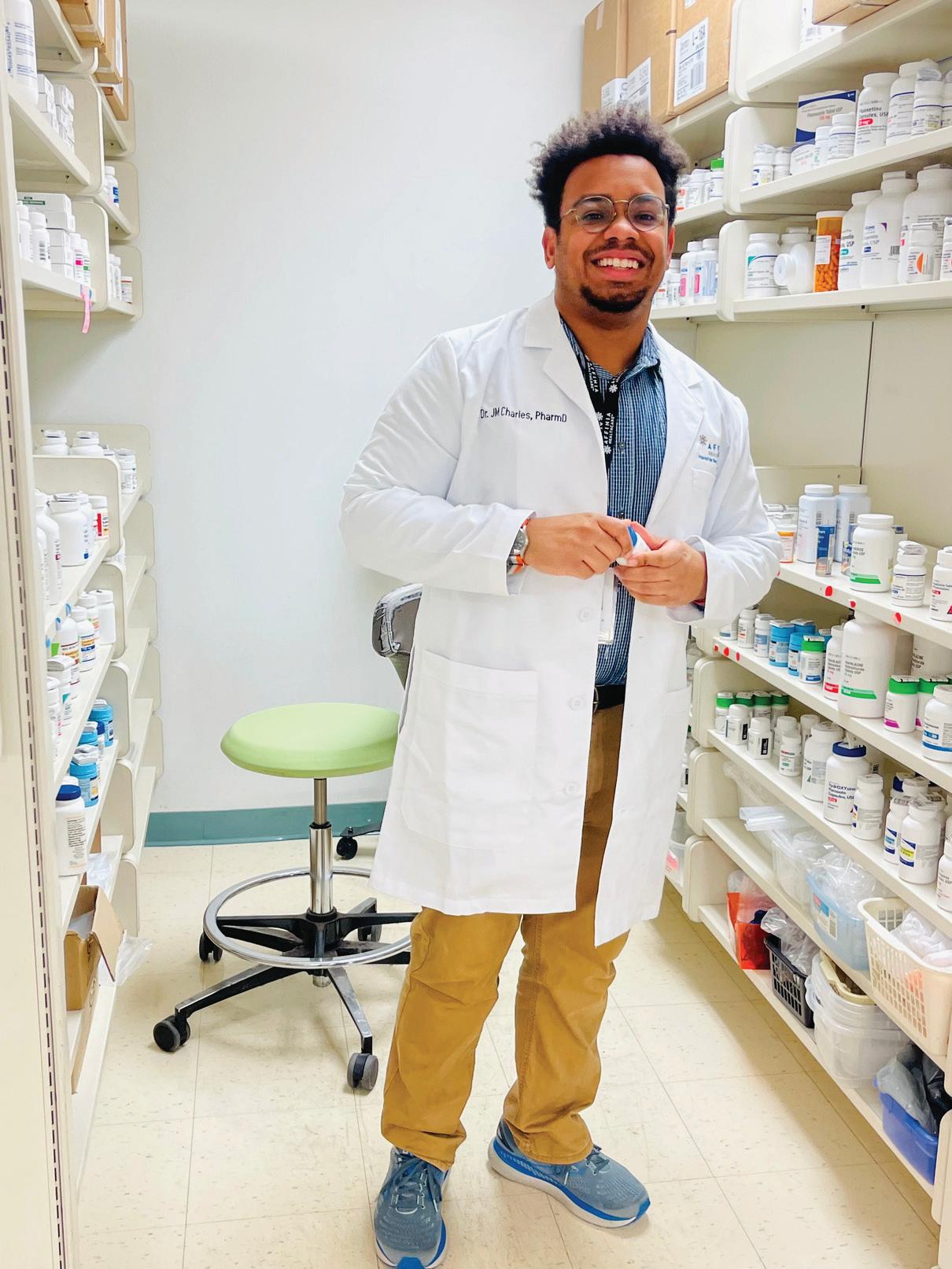
This year, that reflection is especially meaningful. The Poetry Slam is intentionally paired with a deeper exploration of Mill Creek Valley, the once-thriving Black neighborhood erased by urban renewal in the late 1950s. Students have been studying the community’s history in class, examining how a place so full of culture, activism, and everyday joy could be wiped from the city’s landscape.
The learning will culminate in a self-guided tour of the Missouri History Museum’s “Mill Creek: Black Metropolis” exhibition, followed by a
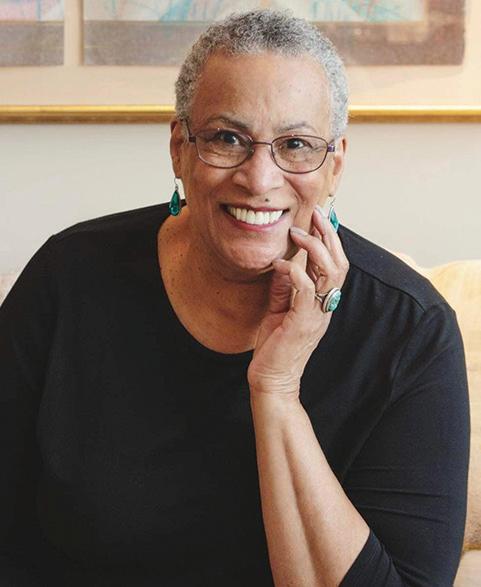
school visit from author Vivian Gibson. Her memoir, The Last Children of Mill Creek, chronicles her childhood in the neighborhood before it was razed. For Marian students—many of whom live in communities shaped by similar patterns of displacement and resilience—Gibson’s story offers both a mirror and a map.
The experience is made possible through Marian’s partnership with the St. Louis Chapter of The Links, Incorporated, which provided funding for student books and transportation. The collaboration, paired with the expertise of Marian’s English Language Arts teacher Zenique Gardner-Perry—an established writer with a personal connection to Gibson— ensures students can fully engage with Mill Creek’s legacy. For Gardner-Perry, the Poetry Slam and the Mill Creek study are two parts of the same lesson.
“Writing helps our girls understand who they are and where they come from,” she said. “When they learn about Mill Creek, they’re not just studying history— they’re learning how Black communities have always created, resisted, and rebuilt. Their poetry becomes part of that tradition.”
Photo by Lawrence Bryant/St. Louis American
Yolanda Jackson looks on as 2nd grader Mar’Layah Pittman points to her dream on a classroom hallway display at their school February 2026.
Courtesy photo
Author Vivian Gibson See History, B9
SponSored Content
Where you bank isn’t neutral
By Orvin T. Kimbrough
When I started at Midwest BankCentre eight years ago, I knew com munity banking was under attack. There was — and still is — tremendous pres sure on the segment, yet most of the public has no idea. Back then, and still today, I ask: Where do you bank? Why do you bank there? Do you understand how that decision aligns with your stated goals, your values and what you want to see show up in your community?
Out of those questions came a simple message: It Matters Where You Bank. Every year, the market gives us a very public reminder of who we are — and who we are not.
Goldman Sachs exiting the Apple Card business is one of those moments.
Goldman stumbled because consumer banking is operationally heavy, compliance intensive and margin thin. It demands relentless attention. The line that stuck with me:
“It was small, and it was distracting us from the things that can really cre ate significant market cap and value.” That’s not just a Wall Street realization. That’s a leadership one.
JPMorgan Chase step ping in makes sense. They have the balance sheet, the data, the infrastructure and the muscle memory to absorb $20 billion in card balances and keep moving. This is what scale banking looks like: large national institutions designed to serve millions of custom
History
Continued from B6
and community events are bringing long hidden narratives to the surface. These efforts matter. They shape identity, restore dig nity and reconnect com munities to their roots.
Culture is alive, but cul ture alone is not enough.
While communities celebrate Black history, policies are being written that quietly shape what future generations will learn. School curricula continue to be revised. Funding decisions are made. Museums and cultural institutions face budget cuts. Certain stories are labeled controversial, divisive or optional. In some cases, entire chapters of history are softened, shortened or removed.
Power does not argue with culture. Power waits it out. Those who control education systems, public funding and institution al narratives understand something important: If you control what is taught, you control what is remembered. If you con trol what is remembered, you shape what people believe is possible.
Marian
Continued from B6
Teachers have already seen that connection deep en students’ confidence.
The Poetry Slam blends curriculum expectations with creative freedom, giving students space to experiment with language, take risks, and support one another. The writing pro cess becomes less about perfection and more about discovery—an opportunity
ers through standardized products, centralized decision making and vol ume driven economics.
Community banks don’t need to chase Apple Cards to be relevant. In fact, try ing to do so would likely pull them away from the very thing that makes them valuable in the first place.
Apple Card is friction less. Community banking is context rich. Apple doesn’t know why some one missed a payment. A community bank often does. Apple doesn’t sit in church basements, non profit boardrooms or small business offices trying to figure out how credit can actually change outcomes instead of just generating transactions.
As national banks con tinue to consolidate con sumer products — cards, payments, digital wallets — it quietly widens the middle. It pushes com munity banks away from commodity offerings and toward something harder to copy: trust, proximity and purpose.
At Midwest BankCentre, we’ve never believed our future was about being the biggest or the flashiest. It’s about being present. It’s about knowing our customers beyond the data. It’s about designing products that recognize people don’t live in spreadsheets. They live in systems, families and communities.
Convenience is easy to replicate. Continuity is not. This year, Midwest BankCentre celebrates 120 years. Not because
That is why Black histo ry is always contested ter rain — not because it lacks value, but because it car ries power. The power to challenge national myths, expose economic injustice and reveal how resistance shaped this country long before modern movements existed.
When Black history is reduced to a single month, stripped of con text or reframed into feel good stories without consequence, that is not accidental. It is strate gic. Visibility without protection is temporary. Representation without institutional backing is reversible.
True preservation requires infrastructure.
The future of Black his tory will belong to those who build and protect systems that outlast trends: independent archives, protected curricula, fund ed cultural institutions, owned media platforms and digital preservation tools designed to safeguard truth rather than distort it. Celebration sparks aware ness, but policy locks it in. Power decides whether it lasts.
This matters at the local level too. Cities often are home to rich Black histo ries — from civil rights
to honor the past while shaping their own narra tives.
Marian Middle School is the only all‑girls pri vate middle school in St. Louis serving urban adolescent youth from lower‑income backgrounds in a faith‑based environ ment. Every experience is designed to help girls feel seen, supported, and empowered as they grow academically, socially, and spiritually. Price says that’s what makes pro grams like the Poetry Slam
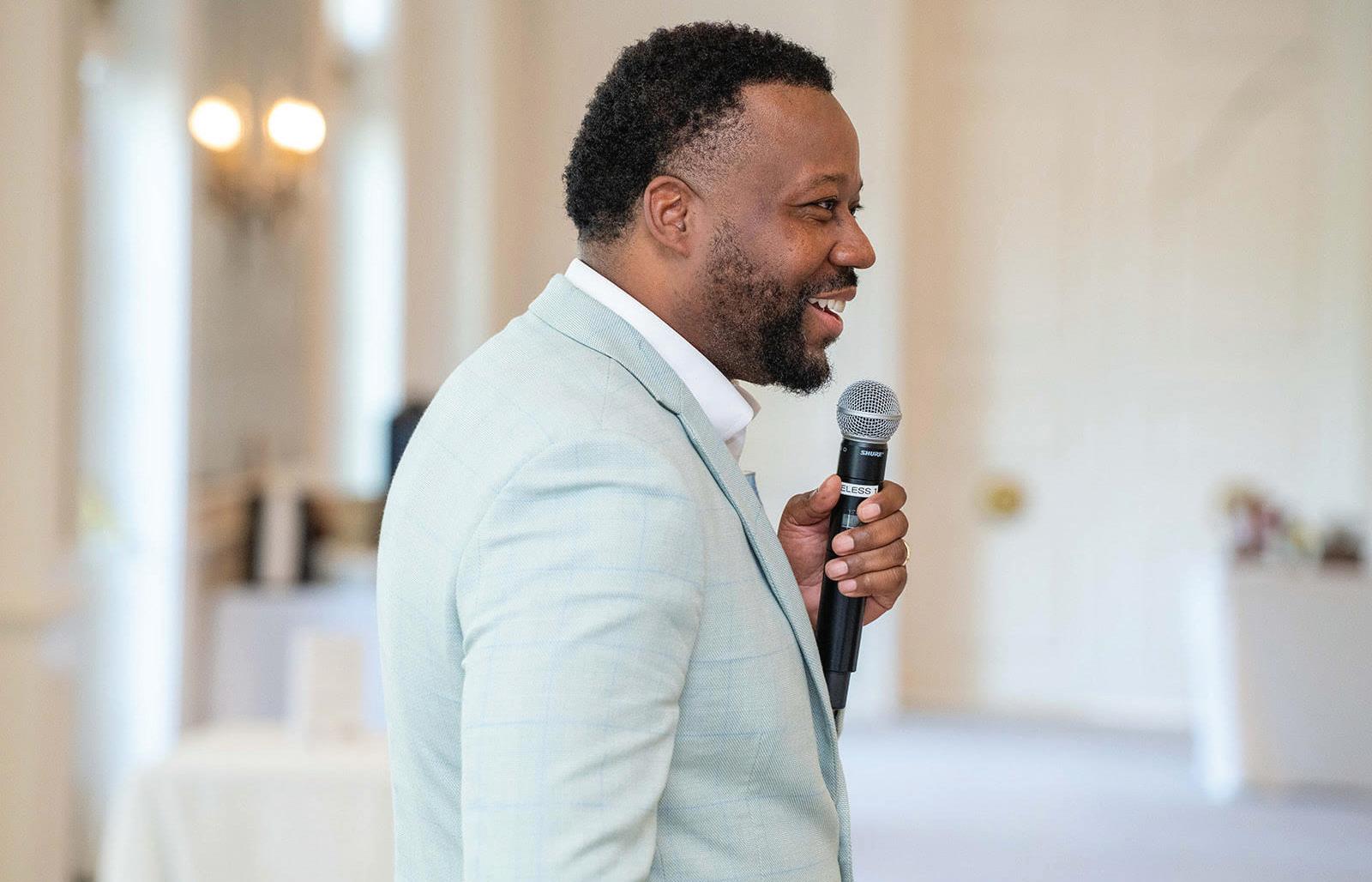
we’ve chased every trend, but because we’ve stayed anchored through cycles — economic, technolog ical and social. We’ve adapted, but we’ve never lost sight of who we serve or why we exist.
The future isn’t just about who can move money fastest. It’s about who stays when things slow down. Leadership decisions inside banks don’t stay inside banks. They shape the options communities have on the outside.
So what does any of this mean if you’re not a bank er? How does it matter where you bank?
Most people experience banking as a utility. You swipe a card. You check a balance. You deposit a check. And when the sys tem works, it’s easy to put it on autopilot.
But that choice isn’t
neutral.
When large national banks concentrate consum er products, they also con centrate decision making. Credit decisions get made farther away. Investment priorities shift toward scale, not place. Capital follows algorithms, not neighborhoods.
Community banks operate differently. When you bank with a commu nity bank, your deposits don’t disappear into a national pool. They stay local. They fund mortgag es, small businesses and nonprofits that serve real people in real places. They help determine whether a daycare opens, whether a grocery store survives, whether a developer chooses reinvestment over extraction.
For nonprofits and faith based organizations, this matters even more. Your
leadership to preservation of landmarks, entrepre neurship, education and cultural innovation. These stories deserve more than symbolic recognition. They deserve permanent space in classrooms, librar ies, museums and public memory.
The real question is not whether people care about Black history.
The real questions are: Who controls it? Who funds it? Who teaches it? Who decides when it is allowed to exist?
History that challenges power is always chal lenged.
Black history’s future will not be decided in February. It will be decid ed in school boards, bud gets, courts, platforms and ownership.
It will be decided at the intersection of culture, pol icy and power.
If we are not thinking at that level yet, we are already behind.
Brittany Wilkins is a historian and educator whose work with Historians Connect focuses on preservation and understanding of underrepresented Black histories.
so transformative.
“Students are encour aged to step into new environments, engage with different cultures, uplift their own, and feel grounded in who they are,” she said. “Experiences like the Poetry Slam and the Mill Creek partnership reflect the kind of learning Marian believes prepares young women not only for high school, but for leadership, service, and confidence well into adult hood.”
Orvin T. Kimbrough
work depends on more than grants and generosity. It depends on financial partners who understand your mission, cycles, con straints and communities.
For small businesses, the difference is often existential. A nation al lender sees a file. A community bank sees a founder. And when times get hard, the ability to pick up the phone and talk to someone who knows your story matters.
For everyday consum ers, the connection is qui eter but just as real. Your deposits help determine what kind of communi ty you live in five, ten, fifteen years from now. Whether capital circulates or extracts. Whether insti tutions stay or leave.
Big banks will continue to do what they’re built to do: scale nationally, standardize products and
optimize for volume. Community banks exist to do something else entirely: to anchor communities, support ecosystems and help regions remain resil ient.
Sustainable communi ties don’t happen by acci dent. They’re built through thousands of daily deci sions — by individuals, nonprofits, churches and businesses — choosing alignment over autopilot. So here’s the invita tion: think seriously about where you bank. Ask what your money is doing when you’re not watching it. Ask whether your financial choices reflect your values, your hopes for your com munity and the future you want to help shape. Where you bank won’t fix everything. But it does signal what you believe matters. And in a world that keeps moving faster, choosing institutions that stay rooted may be one of the most practical ways we invest in the long term health of our communities. Because sustainability isn’t just about balance sheets. It’s about whether the places we live can endure.
Communities don’t endure because of con venience. They endure because of commitment.
Orvin T. Kimbrough is chairman and CEO of Midwest BankCentre and author of “Twice Over a Man,” “More Than a Conqueror” and “Ward and the State.” For more information, visit OrvinKimbrough.com or MidwestBankCentre.com.

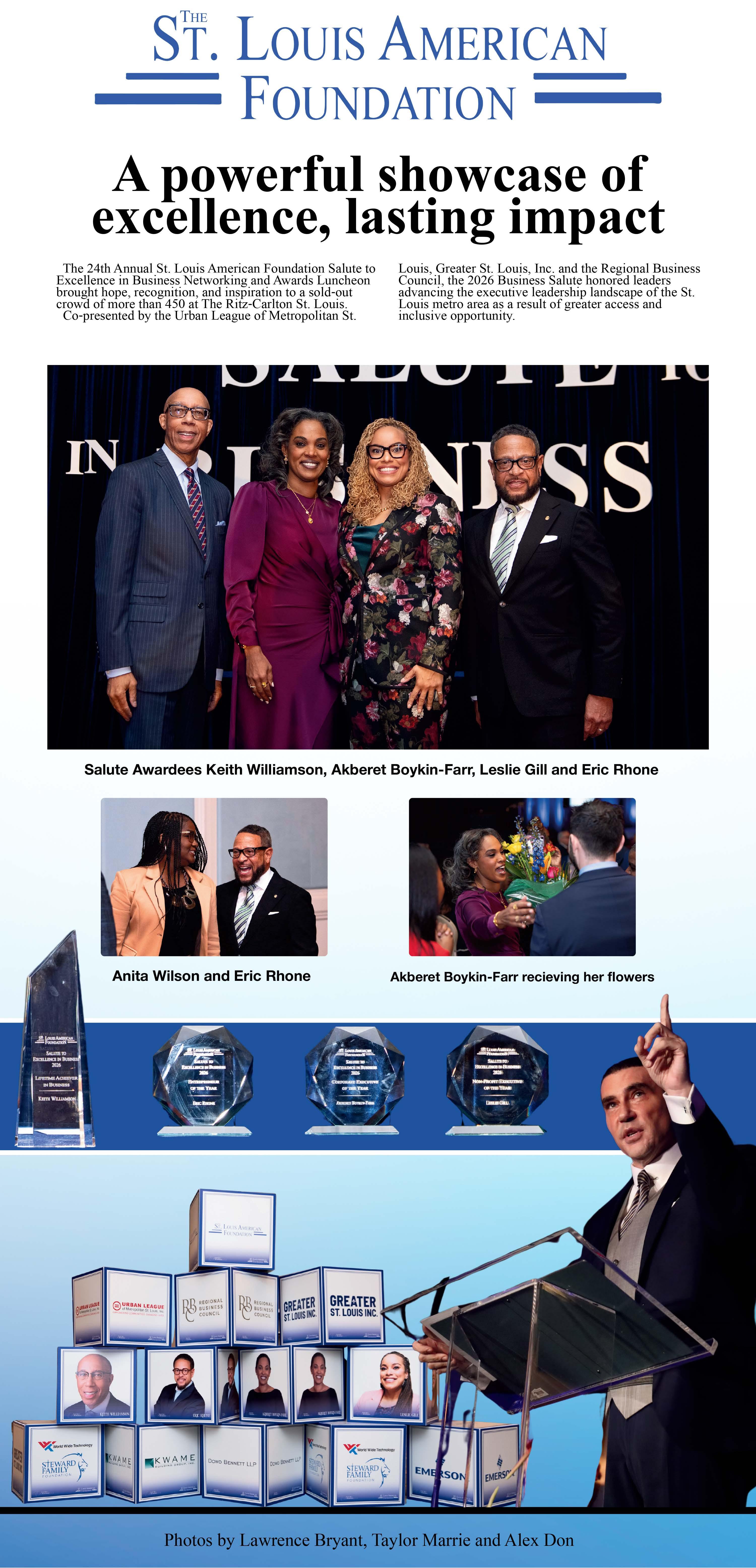
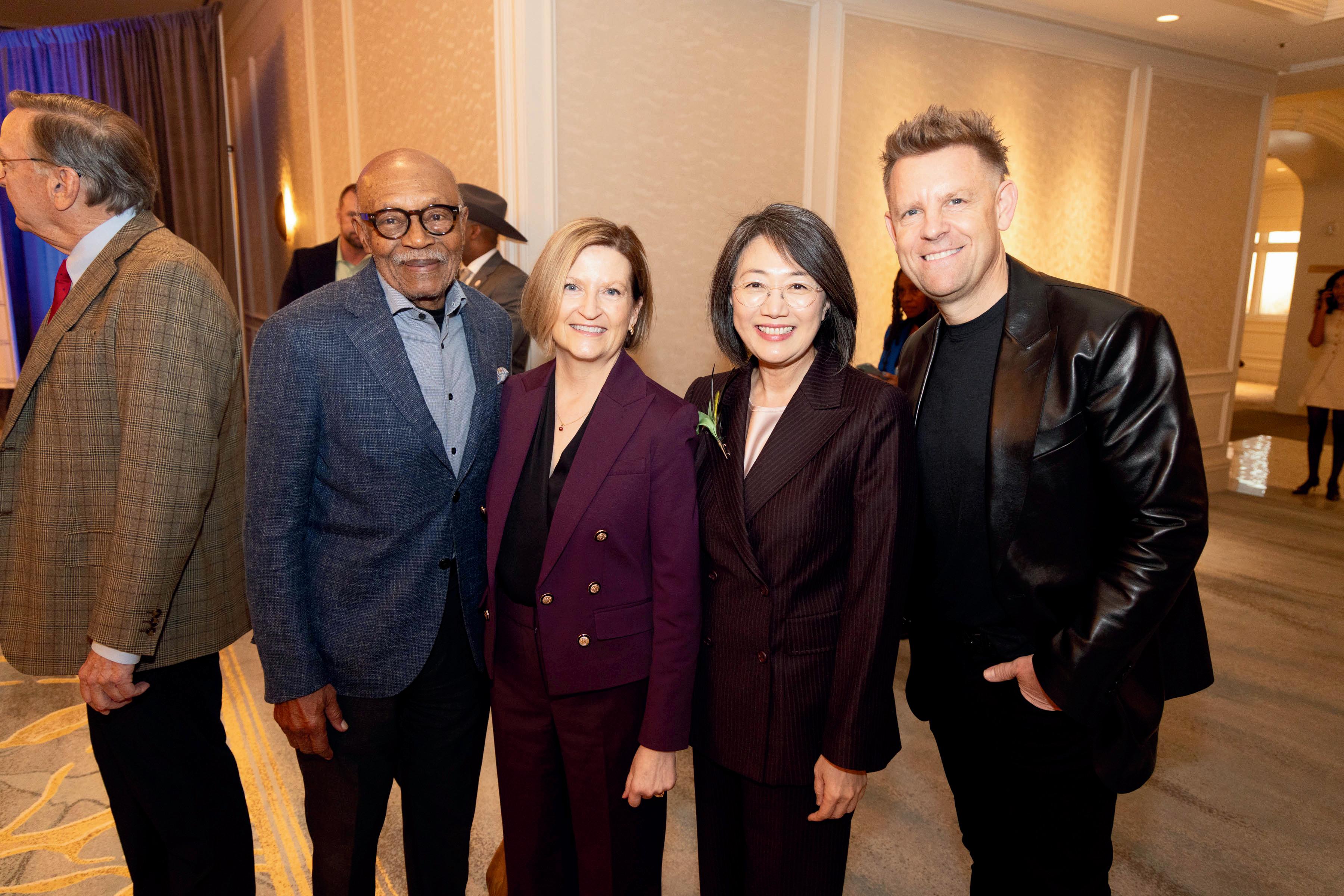

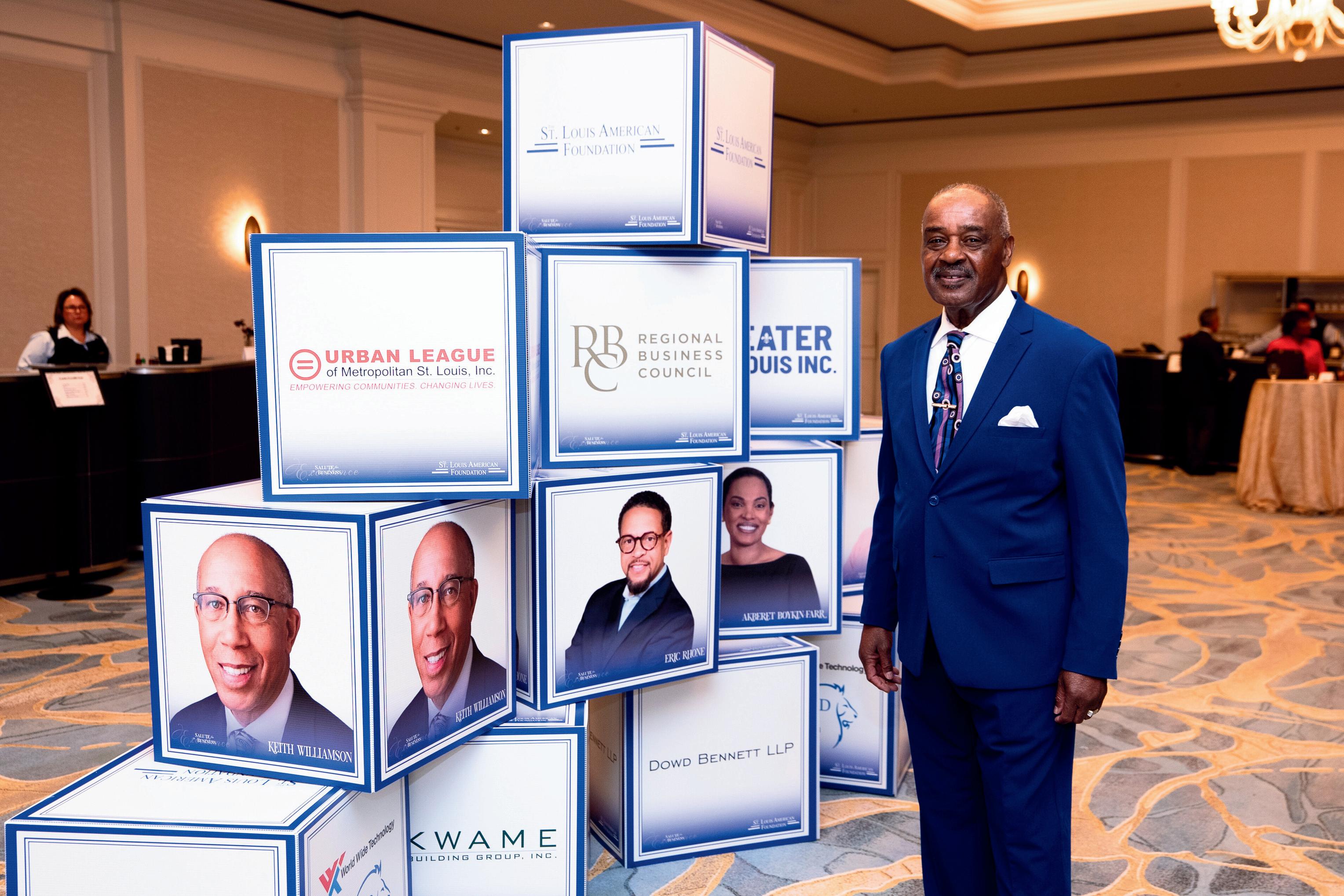
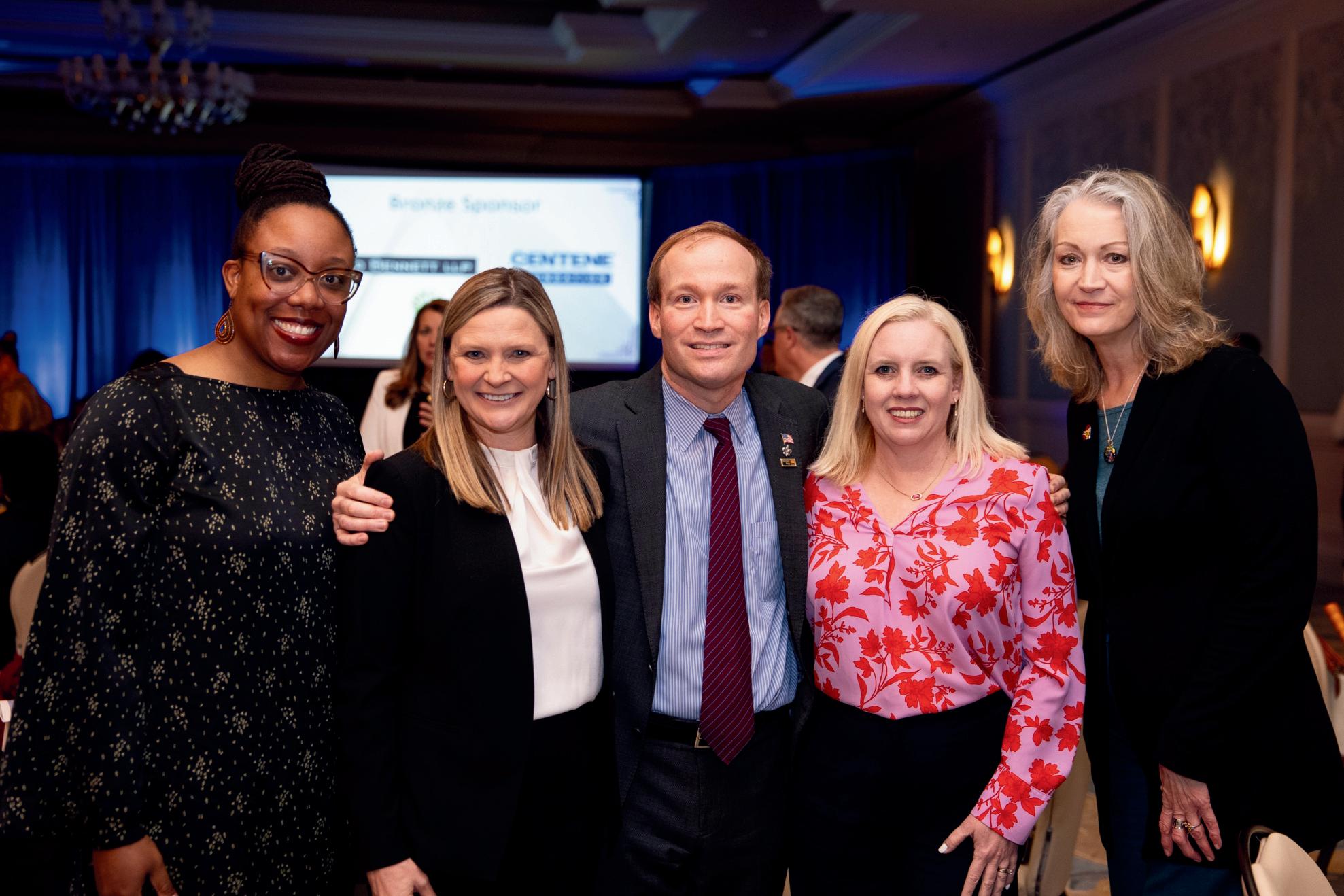
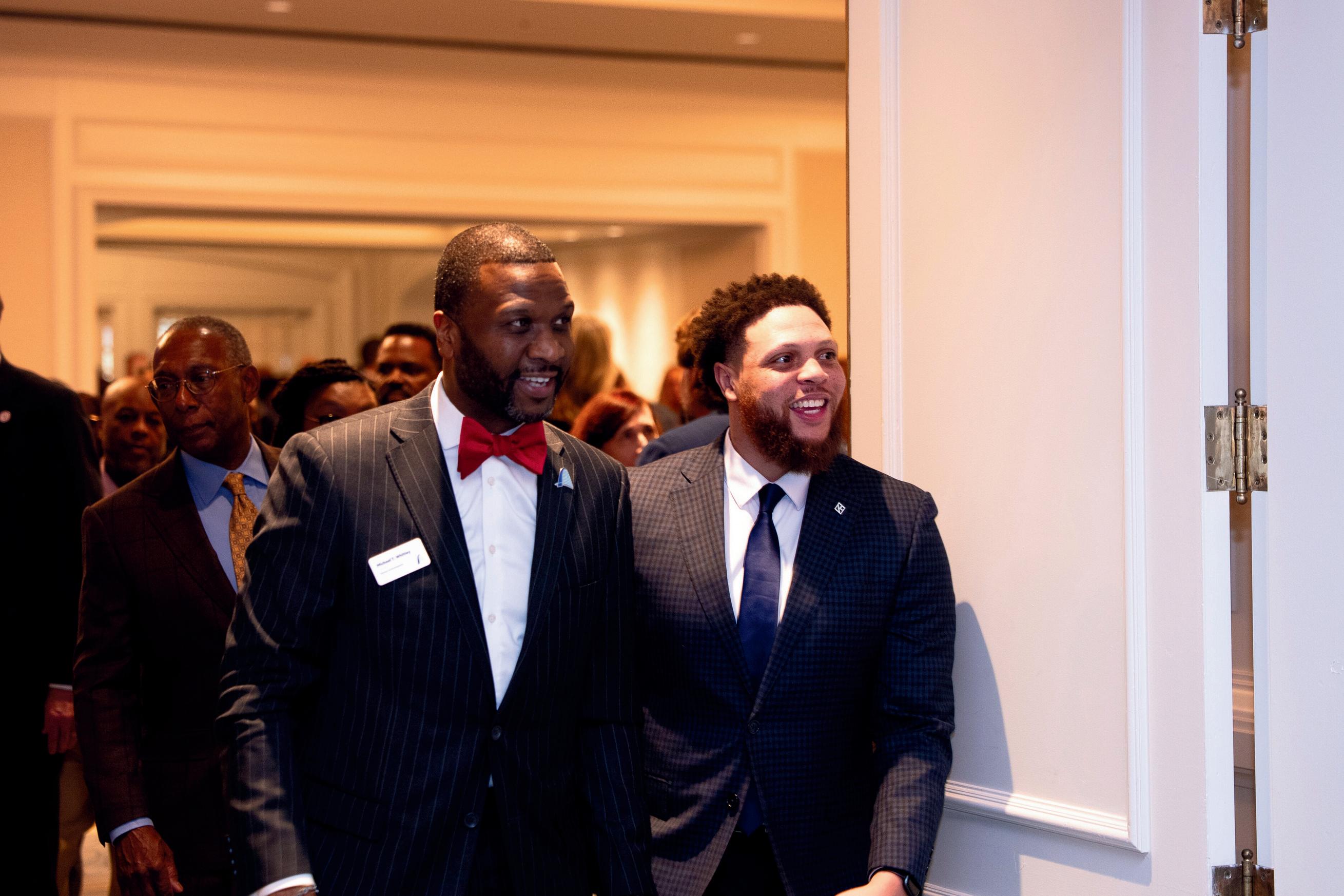
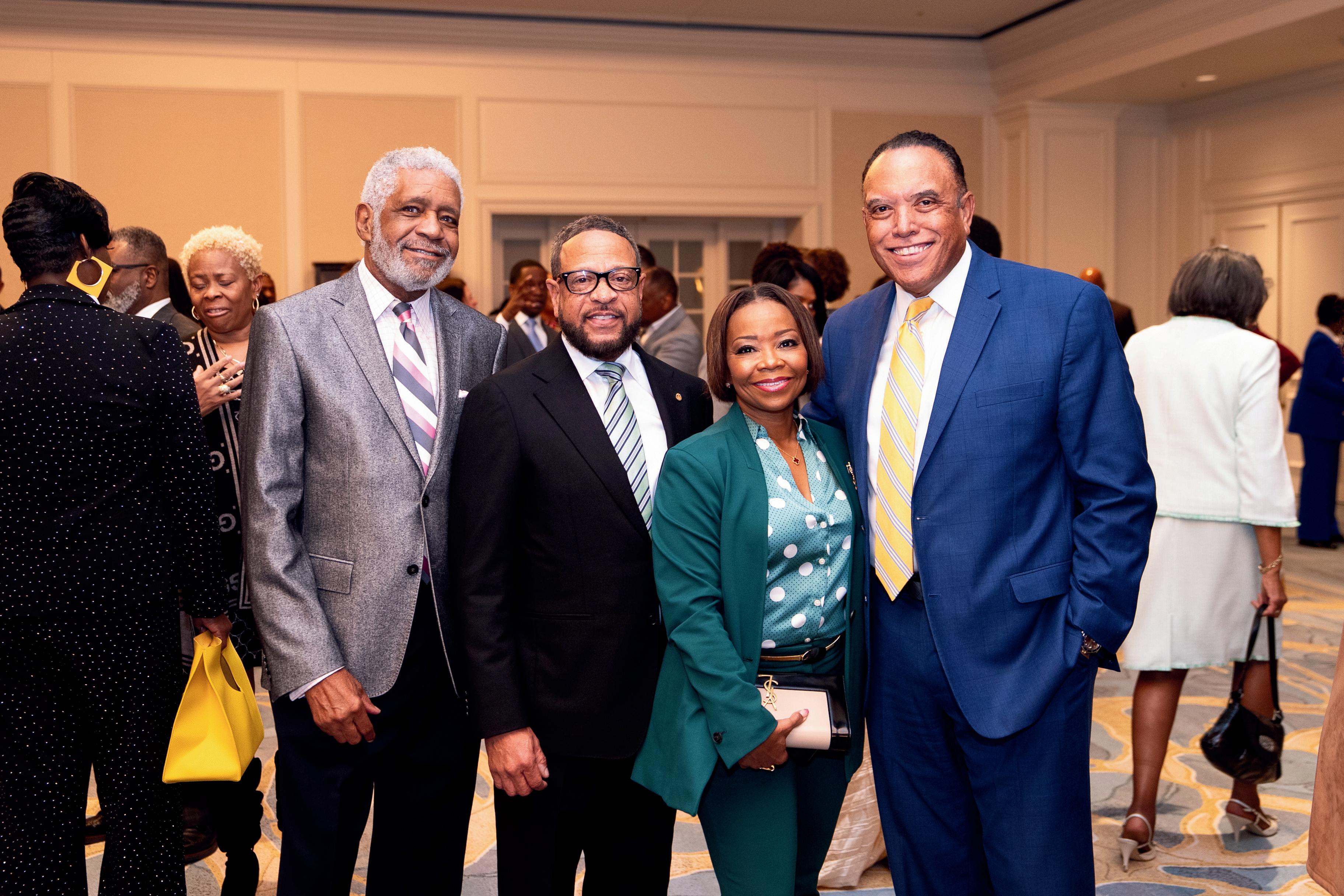
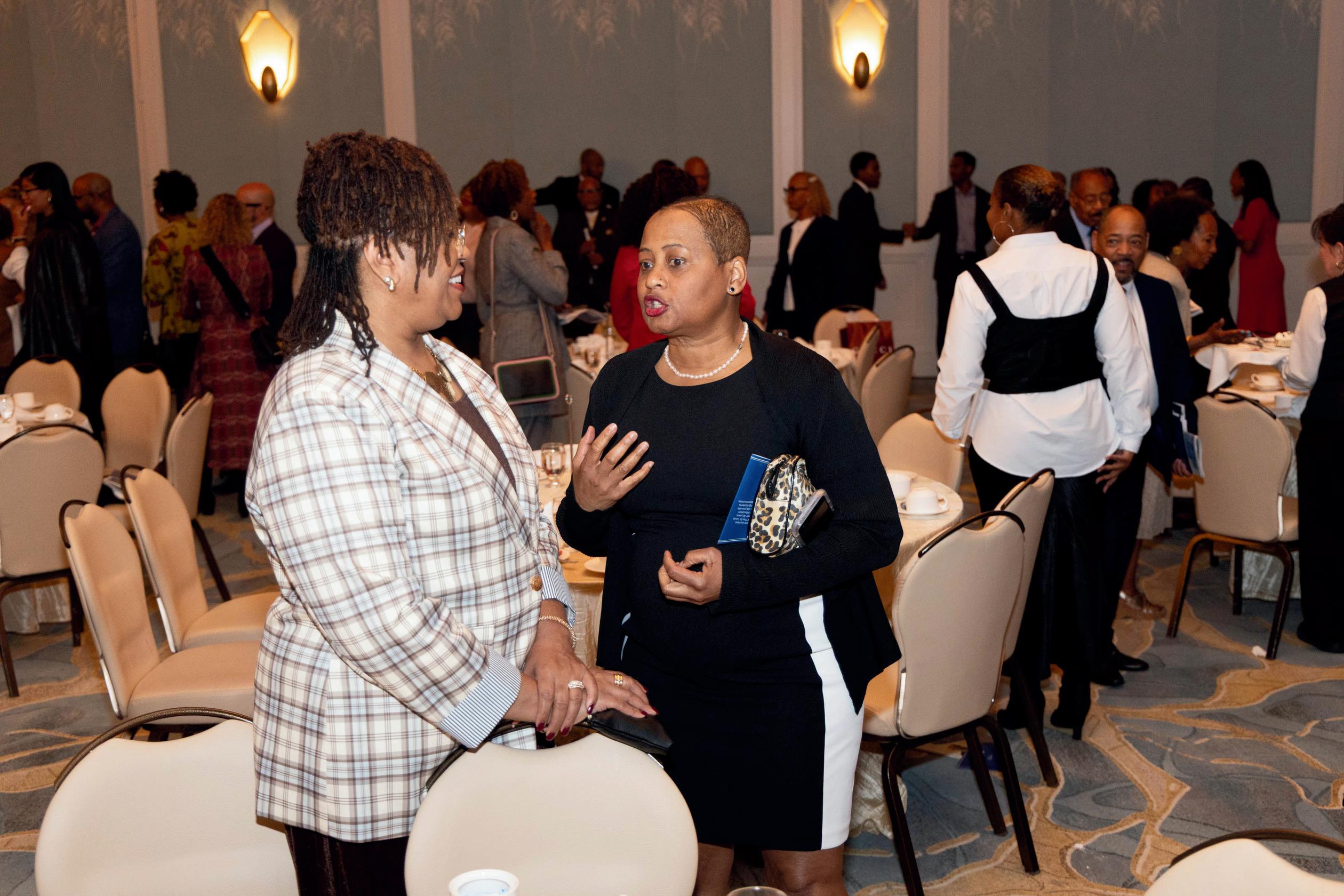
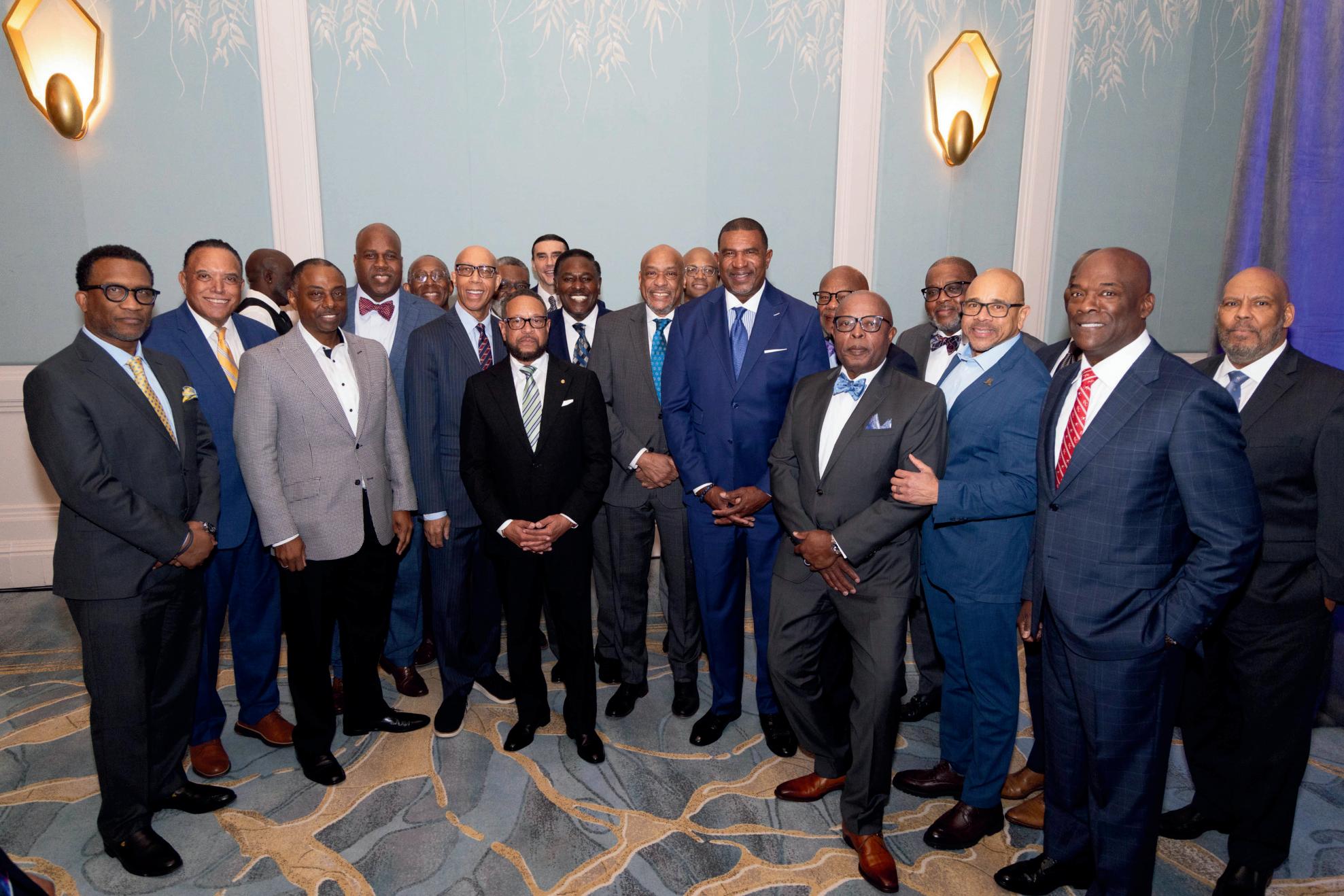

Donald M. Suggs, Lesley Hoffarth, Min Jung Kim, Lee Broughton Sherman Cain
Keisha Mabry and Julian Keaton
George Gipson, Eric Rhone, Angela Rhone, Richard Banks
Dara Taylor, Leslie Wilson, Peter Niedorff, Tina Duckett & Dawn Suggs
Michael Whitley and Eric Rhone II
The men of the St. Louis chapter of Sigma Pi Phi Fraternity, known as Eta Boule
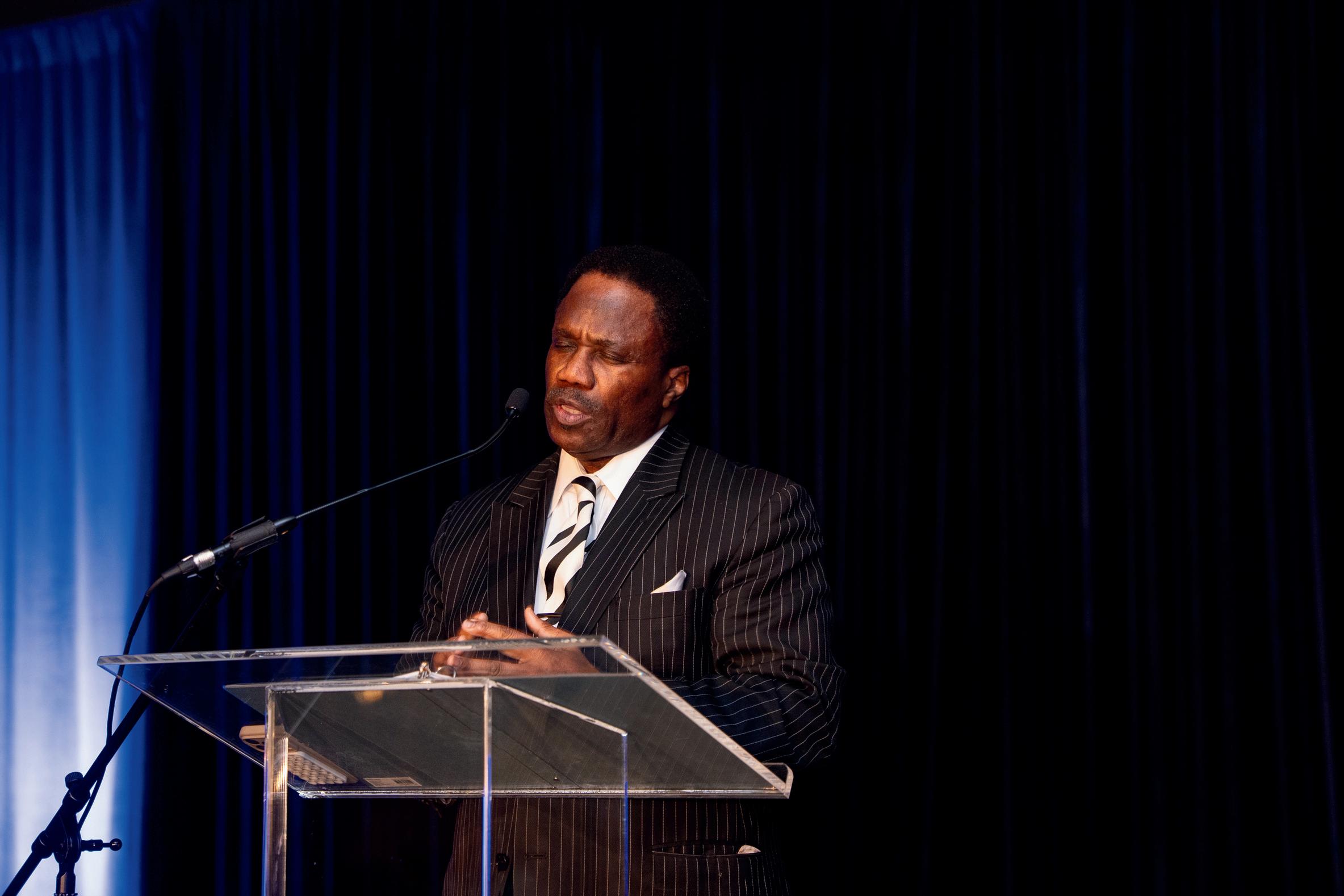


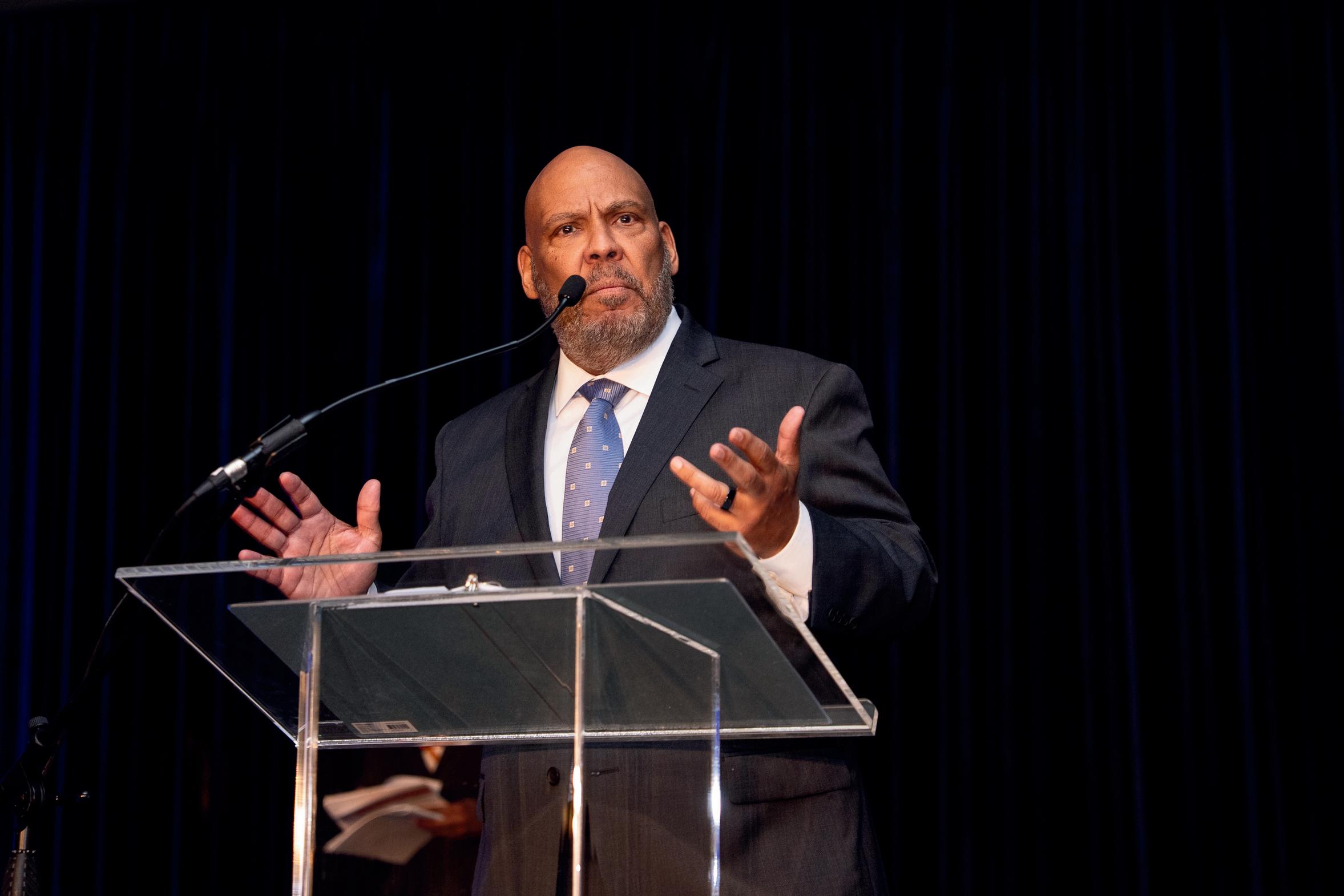

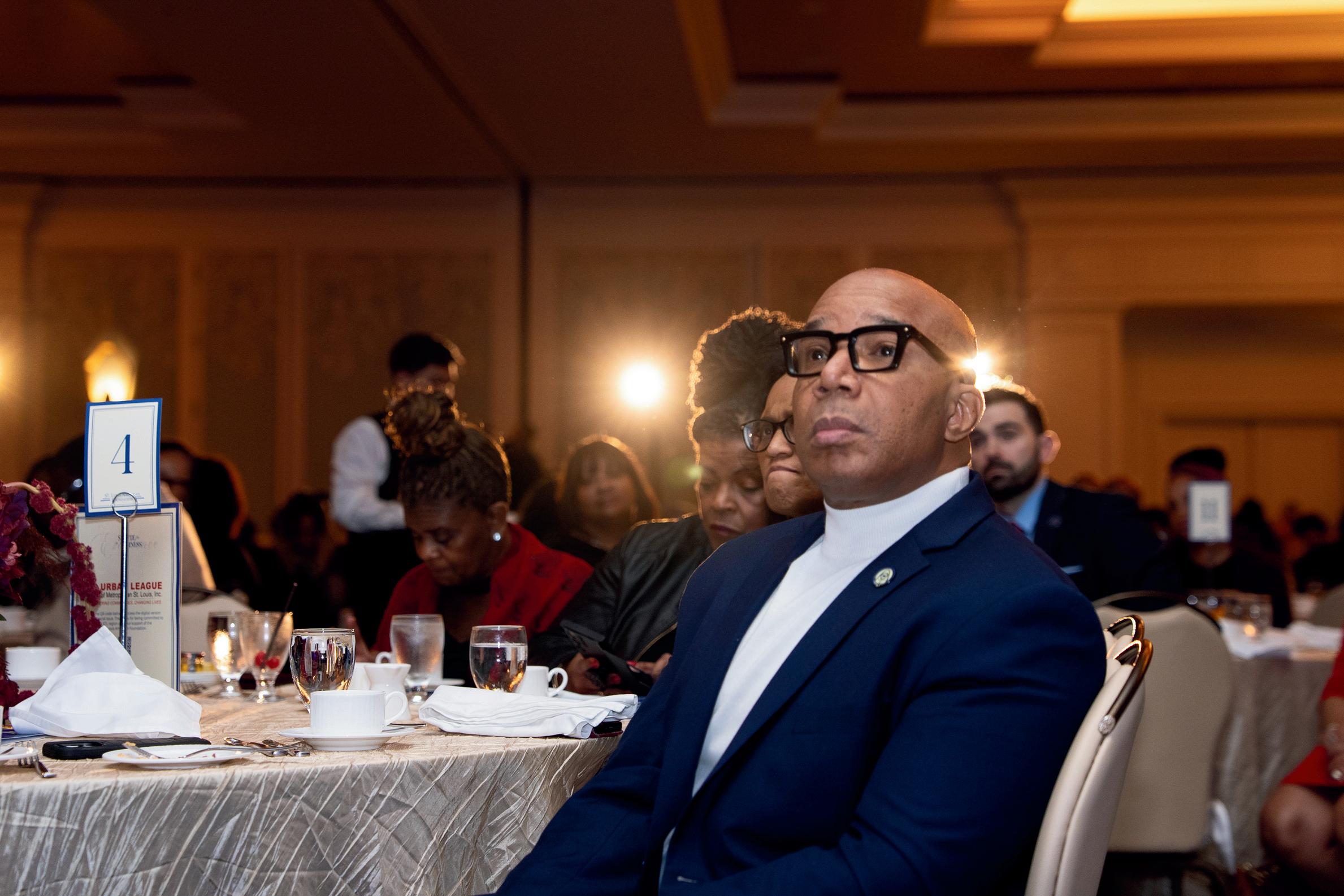

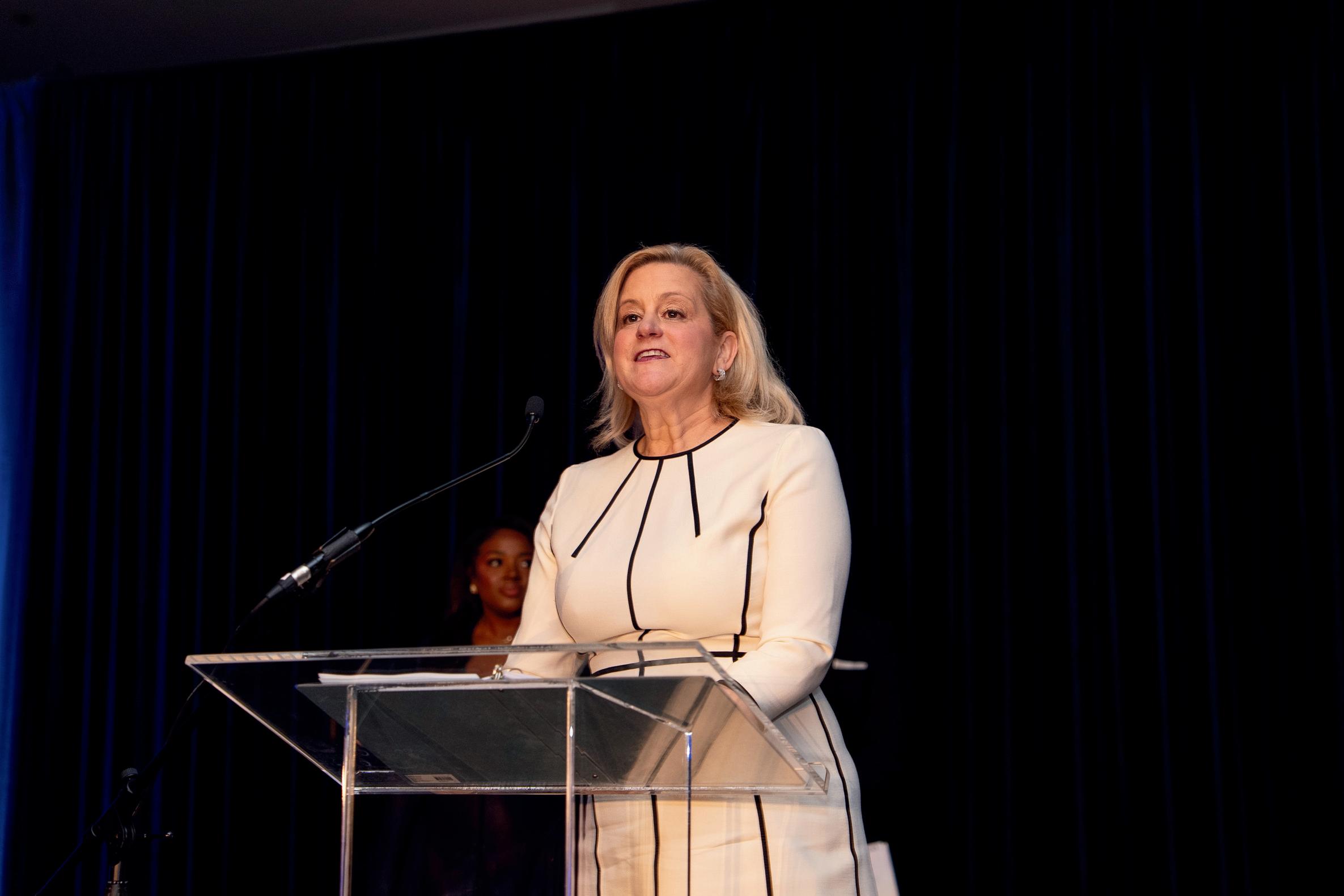
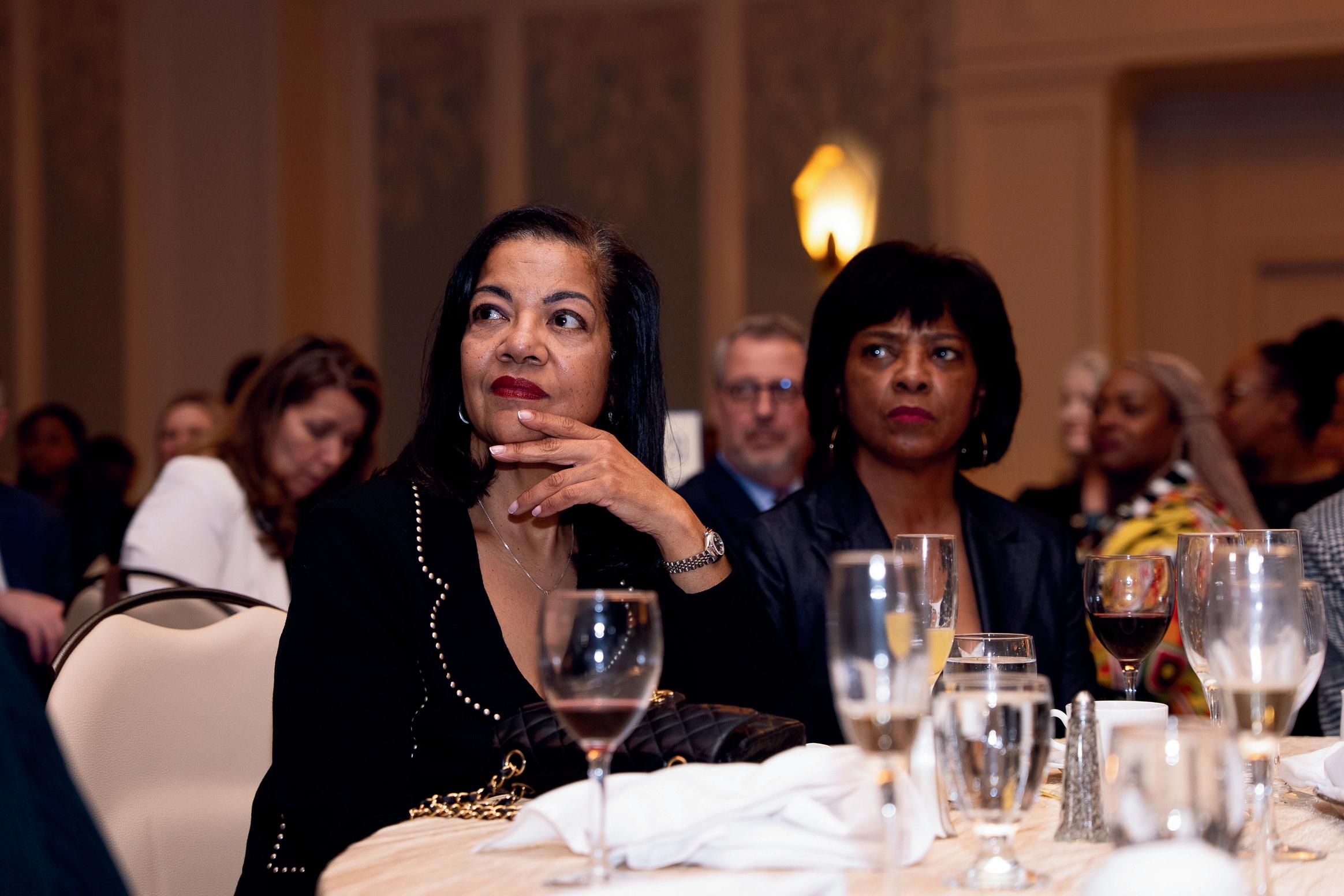


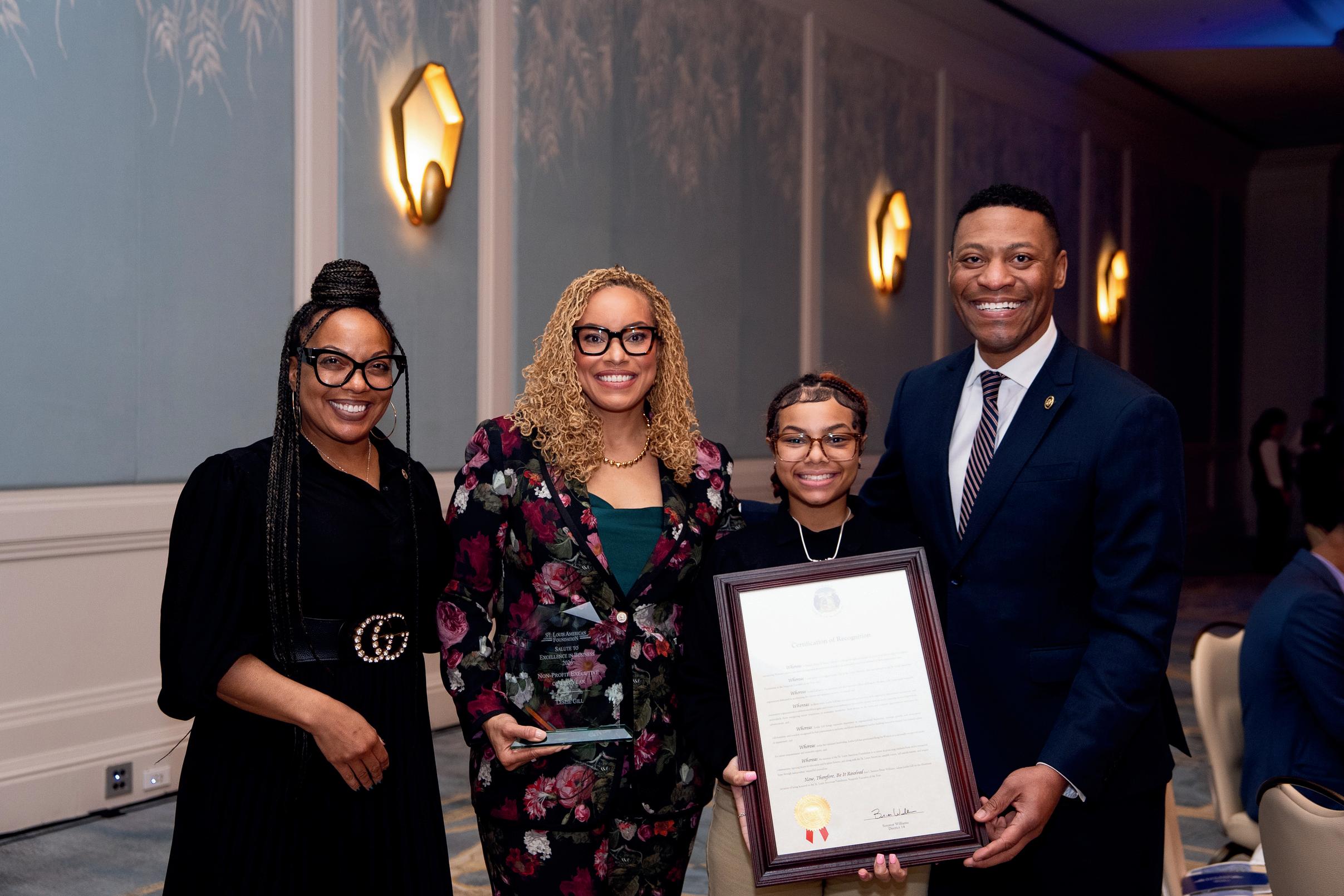
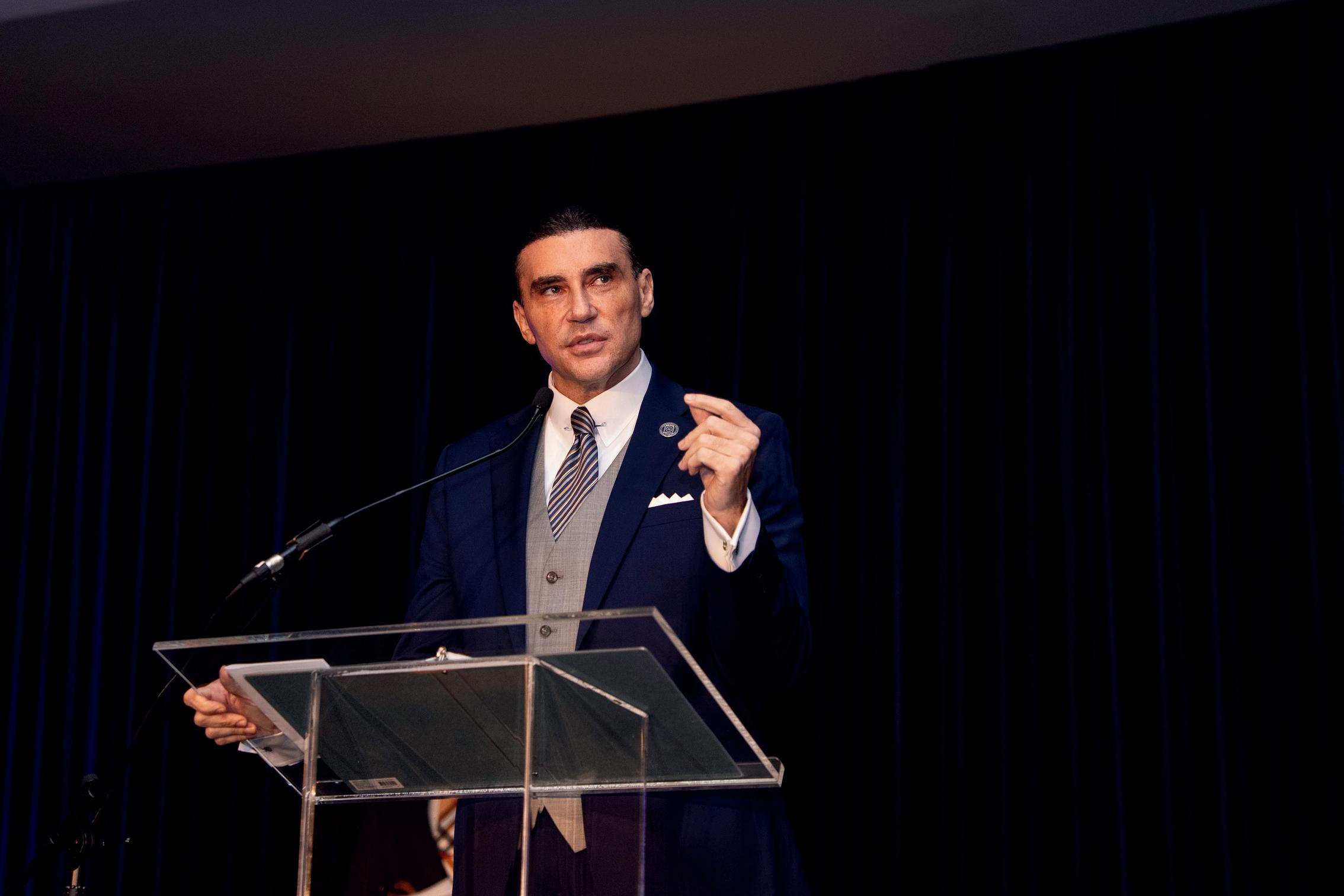
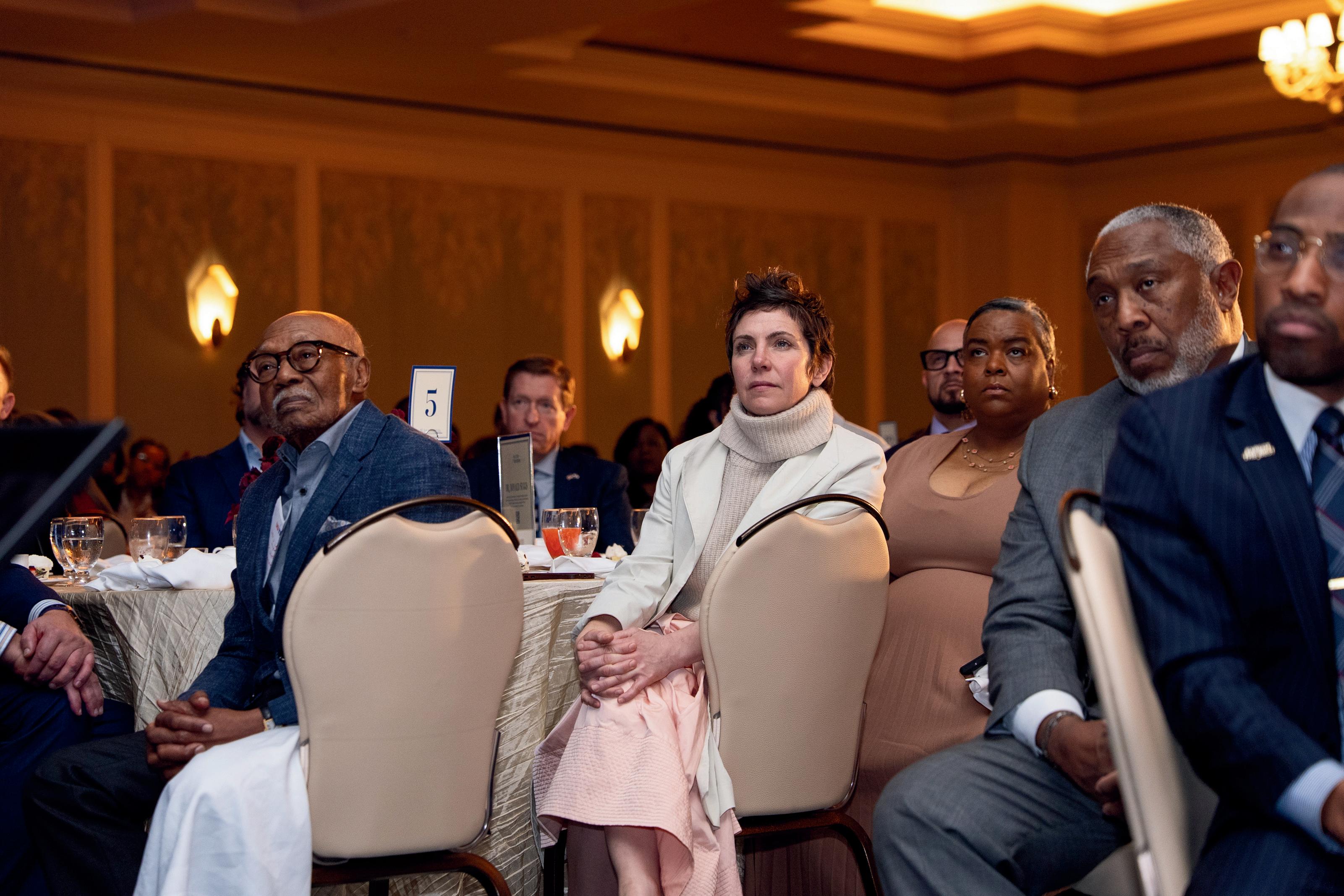


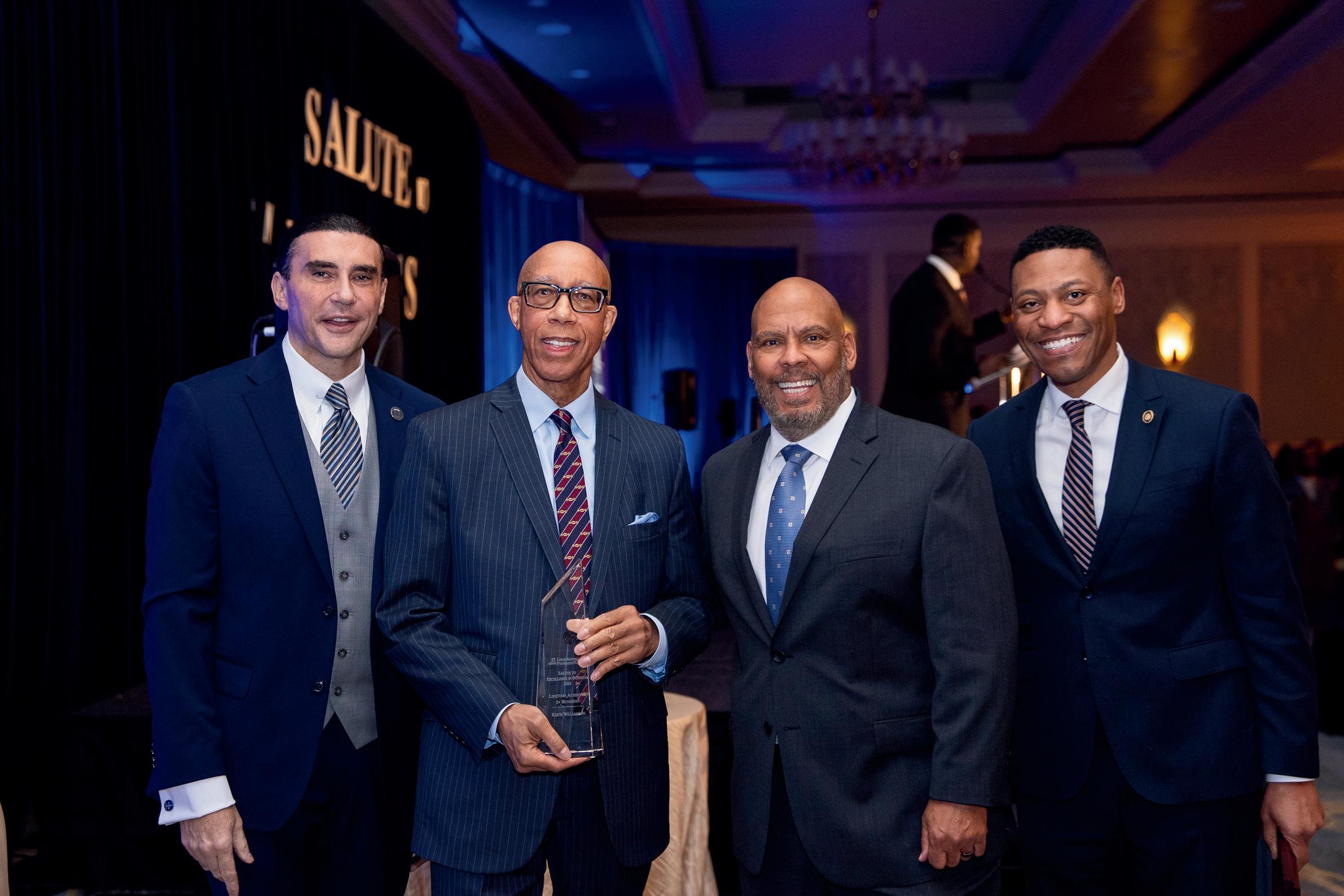
Bishop Michael F. Jones, Senior Pastor, Friendly Temple MB Church
Michael Holmes, Board Chairman of The St. Louis American Foundation
2026 Business Salute Master of Ceremonies Brent Solomon
Raven Whitener, Director of
The St. Louis American Foundation
Allison Roberts, SVP of Greater St. Louis, Inc.
Michael McMillan, President and CEO of The Urban League of Metropolitan St. Louis
James Clark
Susan Buford
St. Louis Mayor Cara Spencer
Brad Dean, Derek May, Kenny Powell
Micha Brown
Senator Brian Williams, Akberet Boykin-Farr and Raven Whitener
Alderwoman Shameem Clark Hubbard, Business Salute 2026 honoree Leslie Gill and her daughter Marley
Michael Holmes, Business Salute 2026 honoree Eric Rhone and Raven Whitener
Michael McMillan, Business Salute 2026 honoree Keith Williamson and Michael Holmes


FULL-TIME COURT
ADMINISTRATOR
The City of Bellefontaine Neighbors is seeking to hire a full-time Court Administrator. The duties entail managing the daily operations of the city’s Municipal Division, which includes planning, organizing, and directing all non-judicial activities of the municipal court, overseeing the court staff to ensure compliance with legal procedures, maintaining court records, budgets, and providing administrative support to the Municipal Judge. For more details regarding the job duties, visit our website: www.cityofbn.com
INVITATION TO BID
The Twenty-Second Judicial Circuit is currently soliciting proposal for Clyde S. Cahill Courts Building Ceiling Tile Replacement Project under the direction of the Circuits Court in the Clyde S. Cahill Courts Building, 10 N. Tucker Blvd., St. Louis, Missouri 63101; The Request for Proposal is available on the Court’s website http://www.stlcity circuitcourt.com, click on General Information, then Request for Proposals.
Proposals must be received no later than 10 a.m. on April 7, 2026
INVITATION TO BID
The Twenty-Second Judicial Circuit is currently soliciting proposals for the Cork Flooring Replacement in Divisions 13 at the Clyde S. Cahill Courts Building and Division 18 at the Carnahan Court House.
The Request for Proposal is available on the Court’s website http://www.stlcity circuitcourt.com, click on General Information, then Request for Proposals.
Proposals must be received no later than 10 a.m. on April 7, 2026.
BID REQUEST
CITY OF BELLEFONTAINE NEIGHBORS REQUEST FOR GRASS/VEGETATION REMOVAL SERVICES
The City of Bellefontaine Neighbors, MO is accepting bids for contract mowing services to cut vegetation in our three (3) City Parks (Tanglewood, St. Cyr and Bissell Hills). The City of Bellefontaine Neighbors recommends a visual walkthrough of all parks listed prior to presenting a bid proposal. Bid forms are available at www.cityofbn.com and can be picked up at city hall 9641 Bellefontaine Rd, St. Louis, MO 63137. Forms should be submitted to the attention of Marvin CrumerDir. Of Parks and Recreation at mcrumer@cityofbn.com . Please call (314) 882-0044 with any questions.
REQUEST FOR BIDS
Blackline Design & Construction would like to invite you to participate in the bidding process for the construction of a new 4,722 sf. community center building on the vacant lot at 4161 Maffitt Avenue, St. Louis, MO 63113. The work includes site clearing and grading, footings and foundations, CMU walls, steel joists and roof deck, wood framing, mechanical, electrical, plumbing, roofing, siding, insulation, and interior finishes.
Bidding will be done through our Construction Project Management Software, “Procore.” Procore helps to streamline the bidding process by allowing bid invitees to download relevant bid documents and submit their bids electronically. In this system, all electronic correspondence is tracked and archived, and bidders are provided with the most up to date information available for the project. We feel that this tool will simplify the bidding process for your project team by cutting down on the amount of filing and paperwork that typically accompanies bid management.
Please note that this project is subject to the City of St. Louis MWBE participation requirements. Non-MWBE certified bidders are encouraged to provide participation in their bids and will be taken into consideration when bids are reviewed.
Project Name: Northside Youth and Senior Services Center
Walkthrough Dates: N/A the site is open for viewing at the subcontractor’s convenience. A formal visit will not be held.)
Pre-Bid RFI Deadline: 3/2/26, 12:00 PM
Bid Deadline: 3/6/26, 12:00 PM
Contact: John Bicker: jbicker@blacklinestl.com or 314-391-8900 ext. 1014
Plans: https://www.dropbox.com/scl/fo/b9px88o1itp4tbn6e97ol/AHUp9TjLa3vYZY1jV3NNx4w?rlkey=fwd49soxsen1qxg2jbji0oz21&dl=0
SEALED BIDS
Renovate Office and Basement at Robert E. (Bob) Myers Building, M
Survey Rolla, P
W2501-01, will be received by FMDC, State of MO, UNTIL 1:30 PM, March 17, 2025. Project
available at: http:/ /oa.mo. gov/facilities
SEALED BIDS
Bids for Exterior Building Renov, Project No. R241601 will be received by FMDC, State of MO, UNTIL 1:30 PM, April 2, 2026. Project information available at: http://oa.mo. gov/facilities
SEALED BIDS
Bennett Springs St Park, Project No.X2506-01 will be received by FMDC, in March or April 2026. Project
available at: http:/ /oa.mo. gov/facilities
SEALED BIDS
Bids for New Sites/Cabins & Site Repairs/ Renovs, State Park, Lagrange, MO. Project No. X2410-01 will be received by FMDC, State of MO, UNTIL 1:30 PM, 3/17/2026. P
available at: http:/ /oa.mo. gov/facilities
REQUEST FOR PROPOSALS
The School District of University City is seeking sealed bids for the SDUC 2026 Roof Replacements. Bids are due by 2 PM on March 5, 2026. A pre-bid walkthrough will be held at 10:00 AM on February 24, 2026, at University City High School, located at 7401 Balson Ave, University City, MO 63130. For more information and the complete bid package, please contact Likitha Kaki at lkaki@ kwamebuildinggroup.com.
SOLICITING BID
Reinhardt Construction LLC is Soliciting Bids from MBE/WBE/DBE/ Veteran/SDVE for the following: CP260061 University Field-Bleacher Removal Contact: Mike Murray ; mikem@ reinhardtconstruc tionllc.com Phone: 573-682-5505
www.stlamerican.com
The St. Louis City Family Court is seeking proposals from service providers to address behaviors that have resulted in referrals to the Family Court. Proposals should be submitted no later than 4:00 p.m. on March 6, 2026. Interested service providers may obtain the Proposal Specifications by accessing www.stlcitycir cuitcourt.com and selecting Courts & Services, Court Administration, then Requests For Proposals.
RIVER CAMP ROOF REPLACEMENT RFP 2026
The Saint Louis Zoo seeks bids from qualified firms to submit proposals. Bid documents are available as of 2/25/26 on the Saint Louis Zoo website: stlzoo.org/vendor

MCMILLAN MANOR I & II
4503-4541 MCMILLAN AVE, ST. LOUIS, MO 63113
4543-4603 MCMILLAN AVE, ST. LOUIS, MO 63113
The St. Louis Housing Authority (SLHA) seeks bids to perform the following project:
The replacement and repair of all water damaged flooring, walls, ceilings, electrical, light fixtures, plumbing, HVAC, door and door hardware, windows, and attachment components as noted on the plans and specifications at the McMillan Manor I is located at 4503-4541 McMillan Ave, St. Louis, MO 63113. McMillan Manor II is located at 4543-4603 McMillan Ave, St. Louis, MO 63113. Performance period for each project will be 90 days.
A site visit will be held at 10:30 AM on Thursday, February 26, 2026 at the site, 1007 N. Taylor Ave., St. Louis, MO 63113.
Sealed bids are due at 1:00 PM on Thursday, March 12, 2026 via QuestCDN or hand delivered to the SLHA Main Office at 3520 Page Blvd, St. Louis, MO 63106.
Latasha Barnes
Executive Director & Contracting Officer
PUBLIC NOTICE
Notice is hereby given that the Metropolitan St. Louis Sewer District Requests for Quotes, Bids and Proposals are posted online for public download. Please navigate to www.msdprojectclear.org > Doing Business With Us > View Bid Opportunities
Metropolitan St. Louis Sewer District is an Equal Opportunity Employer.
REQUEST FOR BID
SLDC Development
Project Trash Transfer
Facility The City of St. Louis Port Authority
Will Receive Sealed Bids on 3/25/2026 For more Info. Visit https://www. stlouis-mo.gov/govern ment/departments/sldc/ procurement/index.cfm
Bid Docs Available on 3/2/2026

REQUEST FOR PROPOSALS
The City of University City, Missouri is soliciting proposals for moving services associated with the relocation of Police and Court operations from temporary trailers to the newly renovated Annex (AN) and Trinity (TR) Buildings. This is a Request for Proposal (RFP) and not a hard bid. The intent is to establish hourly and daily rates for moving technicians and equipment and to develop a non-binding estimated budget based on the scope described herein.
The relocation is anticipated to occur between late March and April 2026. Moves will occur in phases, generally involving four (4) to twelve (12) offices per move day, and may take place on non-consecutive days to accommodate IT coordination and operational needs. Final schedules will be provided in advance; however, ingress and access may be limited or temporarily paused due to ongoing police operations. Both buildings are equipped with elevators, though the Annex elevator is smaller than standard. Trailer access includes an ADA-compliant ramp and stairs.
Most furniture is already installed within the Annex and Trinity Buildings as part of the renovation project. The selected contractor will move boxed files, select furniture, file cabinets, safes, shelving, appliances, and miscellaneous equipment. Police and Court personnel will relocate computers, phones, printers, personal items, evidence, firearms, ammunition, and other controlled items. Certain materials may require escort by Police or Court staff. The contractor shall provide all labor, supervision, equipment, vehicles, moving boxes delivered in advance and retrieved after completion, moving tags, protective materials, and protection of floors, walls, elevators, doors, and finishes. Building conditions will be documented prior to move activities. The University City Police Department will conduct background checks on all moving personnel, and twenty-four (24) hour advance notice is requested.
The anticipated total duration of work is approximately seventeen (17) workdays, plus or minus. Phase 1 consists of Courts personnel, four (4) staff members relocating to the Trinity Building first floor over two (2) days. Phase 2 consists of the Detective Bureau, nine (9) staff members relocating to the Annex second floor over three (3) days. Phase 3 consists of the Bureau of Field Operations, six (6) staff members relocating to the Annex second floor over five (5) days. Phase 4 consists of Administrative Offices, four (4) staff members relocating to the Annex second and third floors over three (3) days. Phase 5 consists of the Bureau of Services, eight (8) staff members relocating to the Annex first floor over four (4) days. Predominant items include boxed files and multiple file cabinets per phase. Additional specialty items include small safes, gun safes (emptied prior to move), evidence safes and drying cabinets, ammunition storage cabinets, shelving relocation, mail slots, a magnetometer, x-ray machine, appliances including refrigerators and washer/dryer units, and related equipment.
Proposals shall separately identify the cost or fee structure for moving boxes, including ownership versus rental terms, the cost for moving tags, hourly rates by technician classification, and equipment rates. Respondents shall provide a non-binding summary estimate of total man-hours, box costs or usage fees, and equipment usage expressed as separate line items extended by the proposed rates to establish an estimated budget. A lump sum total shall not be provided.
Questions regarding the move scope may be directed to David C. Lowell with
NAVIGATE Building Services at david@NAVIGATEbuildingservices.com. Questions regarding University City purchasing requirements may be directed to Chris Crabel at ccrabel@ucitymo.org. The City of University City reserves the right to reject any or all proposals.
ST. LOUIS COUNTY DEPARTMENT OF HUMAN SERVICES
NOTICE OF 2025 DRAFT CAPER, PUBLIC COMMENT
PERIOD & PUBLIC HEARING
Persons with disabilities or who otherwise need assistance, including those with limited English proficiency, should contact the Department of Human Services at humanservices@ stlouiscountymo.gov or (314) 615-4405 at least 48 hours in advance of the hearing. Residents who are deaf, hard-of-hearing or have a speech disability may contact Relay Missouri at 711.
AGENCIES
St. Louis County is the “Lead Agency” for the St. Louis County HOME Consortium. The St. Louis County HOME Consortium is a group of contiguous units of local government that have joined together for the purpose of receiving HOME funds and administering a HOME Program as a single grantee. The members of the St. Louis County HOME Consortium include St. Louis County, Jefferson County, St. Charles County, and the cities of Florissant and O’Fallon.
PURPOSE
The 2025 Draft Consolidated Annual Performance Evaluation Report (CAPER), which summarizes the 2025 accomplishments of the Consortium, includes the following programs funded by HUD: Community Development Block Grant (CDBG), HOME Investment Partnerships (HOME), and Emergency Solutions Grant (ESG). The CAPER provides information on how funding received through the CDBG and ESG programs have been spent in St. Louis County as well as information on how HOME funds have been spent in St. Louis County and in the jurisdictions of the members of the Consortium.
ACTION Notice is hereby given that the Consortium is presently seeking public input on its 2025 Draft CAPER. The draft may receive several updates prior to submission to the U.S. Department of Housing and Urban Development (HUD).
PUBLIC HEARING
A public hearing to engage residents and stakeholders of St. Louis County will be held on March 11, 2026, beginning at 4:30 p.m. at the St. Louis County Library—Clark Family Branch, Meeting Room A, at 1640 South Lindbergh Boulevard, St. Louis, MO 63131. This meeting location is physically accessible to individuals with disabilities.
COMMENT PERIOD
Now that the 2025 Draft CAPER is published, there will be a 30-day comment period to allow residents and stakeholders additional opportunity to provide input.
Comments concerning the 2025 Draft CAPER can be made during the Public Hearing. Written comments will also be accepted until 4:00 p.m. on March 30, 2026, and may be submitted via email to humanservices@stlouiscountymo.gov or mailed to ATTN: 2025 Draft CAPER, St. Louis County Office of Community Development, 500 Northwest Plaza Drive, Suite 801, St. Ann, MO 63074.
The 2025 Draft CAPER is available online at: https://stlouiscountymo.gov/st-louis-county-departments/human-services/communitydevelopment/ Physical copies may be requested by calling 314-615-4405 EQUAL OPPORTUNITY EMPLOYER


Religion
5 books by Black authors to read during lent
These books by Black authors reflect on repentance, liberation, and renewal through Black Christian faith traditions
By Rev. Dorothy S. Boulware
Word In Black
For 40 days, many Christians fast, pray, and examine their lives in preparation for Easter. But for Black Christians — whose faith traditions were shaped by enslavement, migration, resistance, and communal survival — Lent can carry additional layers of meaning.
From repentance and renewal to liberation and embodied dignity, Black theologians and spiritual writers are offering new ways to approach the season. Their work connects ancient Christian practices to contemporary struggles and to the lived realities of Black communities.
Part of a series, “Fullness of Time,” that explores the seasons of the church calendar, this book declares that Lent “is inescapably about repenting,” but not about despair. The season, the author writes ”is about turning away from our sins and toward the living God. A season dedicated to repentance and renewal should not lead us to despair; it should cause us to praise God for his grace.”
2. “Tarry Awhile: Wisdom from Black Spirituality for People of Faith” by Selina Stone

Here are five books by African American authors that explore Lent through history, spirituality, and the enduring wisdom of Black faith traditions.
1. “Lent: The Season of Repentance and Renewal” by Esau
McCauley
Chosen as The Archbishop of Canterbury’s Lent Book for 2024, Churchtimes says Tarry Awhile “makes the wisdom of Black spiritualities and faith available for all people.” Focused on 7 themes — darkness as a place of encounter with the divine; the unity of all things; movement, belonging and migration — the book describes spirituality as moving “in unexpected ways; quiet contemplation as essential to spiritual growth; healing in com-

munity; and weeping that turns to joy.”
3. “Lent of Liberation: Confronting the Legacy of American Slavery” by Cheri L. Mills
In a bold pairing of Christianity and America’s original sin, Lent of Liberation offers a devotion for each of the 40 days of Lent, weaving the history of slavery into each one. The devotions are written in the voice of a formerly enslaved person who escaped through the Under-

ground Railroad.
4. “This Here Flesh: Spirituality, Liberation and the Stories That Make Us” by Cole Arthur Riley
The author assigns readings to highlighting the sacredness of Black embodiment. “From the womb, we must repeat with regularity that to love ourselves is to survive,” she writes. “I believe that is what my father wanted for me and knew I would so desperately need: a tool for
survival, the truth of my dignity named like a mercy new each morning.”
5. “Were You There?: Lenten Reflections on the Spirituals” by Luke Powery
The author harnesses the power of traditional African American spirituals to enrich the Lenten experience. Each selection includes the lyrics of a spiritual, the author’s reflection on its meaning, a relevant passage from scripture and a prayer.
The Leaders Who Don’t Take the Bait: How Emotional Restraint Becomes Influence
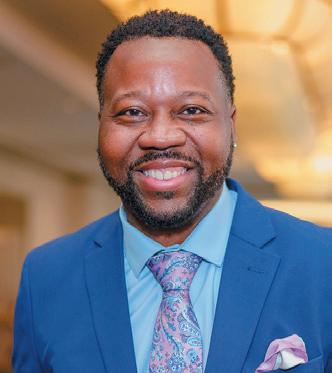
ORVIN T. KIMBROUGH
Chairman and CEO, Midwest BankCentre Author, Twice Over a Man, More Than a Conqueror, and Ward and the State
Every organization has bait — emotional traps designed, intentionally or not, to pull you out of your grounded place. And the bait doesn’t always look dramatic. Sometimes it’s subtle. Familiar. Predictable. It looks like: the email with a tone the colleague who knows your pressure points the public challenge meant to embarrass you
• the passive-aggressive comment that hits a tender spot the last-minute “urgent” demand that’s really someone else’s poor planning
• the person who knows exactly how to trigger the part of you that isn’t healed yet
Most leaders — even seasoned ones — take the bait. They react. They escalate. They defend. They retaliate. They internalize. They spiral. And in doing so, they trade influence for emotional reactivity.
Because the moment you take the bait, the other person isn’t leading you — your trigger is.
But the leaders who rise, especially in complex, political, or emotionally charged environments, are the leaders who do not take the bait.
These are the leaders who stay rooted when the moment tries to pull them into chaos. The ones who have trained their nervous system not to confuse inconvenience with threat. The ones who know the difference between disrespect and insecurity, urgency and manipulation, feedback and projection.
They understand something most leaders never learn: Not every moment deserves a response. And not every response deserves emotion.
This is the quiet superpower of emotionally mature leaders: They do not allow someone else’s instability to destabilize them.
And that restraint — that calm firmness, that grounded presence — is not weakness. It’s wisdom. It’s spiritual strength expressed through emotional discipline. It’s choosing alignment over ego, clarity over chaos, purpose over pettiness. It’s playing the long game of influence, not the short game of emotional satisfaction.
This is where The Triple R Method™ becomes strategic leadership armor:
Reframe:
“What else could this mean?”
What story might I be adding? Is this about me — or about something in them?
Reclaim: “What’s the leadership move here?” What response aligns with who I am and who I’m becoming?
Rename:
“How do I transform this moment instead of matching it?”
How do I elevate the energy instead of echoing the dysfunction?
Leaders who don’t take the bait shift cultures. They lower the emotional temperature in rooms. They model the restraint that strengthens everyone else’s courage. They create psychological safety without saying a word. They gain respect without chasing it. They demonstrate what centered leadership looks like in the wild.
Your leadership will be tested — not by the easy days, not by the metrics you hit, not by the wins you stack — but by the moments that tempt you to act out of character.
The real test is in how you respond when your ego is tugged, your patience is stretched, your dignity is poked, and your trigger is activated.
The rise doesn’t come from matching the moment. The rise comes from mastering it.
And leaders who don’t take the bait lead longer, lead deeper, and lead with a kind of influence that cannot be shaken.
For more, visit OrvinKimbrough.com or MidwestBankCentre.com.
The Next MOVE

BOARD OF EDUCATION OF THE CITY OF ST. LOUIS (ST. LOUIS PUBLIC SCHOOLS)
STATEMENT OF REVENUES,
For The Year Ended June 30, 2025
Excerpts from RubinBrown’s independent a uditors’ report dated January 31, 2026. Report On The Financial Statements
We have audited the accompanying financial statements of the governmental activities, each major fund, and the aggregate remaining fund information of the Board of Education of the City of St. Louis (the District) as of and for the year ended June 30, 2025, and the related notes to the financial statements, which collectively comprise the District’s basic financial statements as listed in the table of contents.
Opinions
In our opinion, based on our audit and the reports of other auditors, the financial statements referred to above present fairly, in all material respects, the respective financial position of the governmental activities, each major fund, and the aggregate remaining fund information of the Board of Education of the City of St. Louis as of June 30, 2025, and the respective changes in financial position and, where applicable, cash flows thereof for the year then ended in accordance with accounting principles generally accepted in the United States of America.
Questions concerning any of the information provided in this report or requests for additional information should be addressed to: