
St. LouiS AmericAn
19 – 25, 2026


Serving, empowering and advocating
Breaking barriers
Five Black women rise to captain at St. Louis Fire Department
By Ashley Winters St. Louis American
In a profession where women were once a rarity, six Black women now wear the bars of captain inside the St. Louis Fire Department. Licole McKinney, Jessica Jackson, Pamela Saunders-Isaac, Elizabeth McCormick and Cicely Tucker were promoted this month to fire captain — the first time five Black women have risen to the rank simultaneously. Alongside veteran Capt. Carolyn Moore, they bring the total number of Black female captains in the department to six.
The milestone comes nearly four decades after the department hired its first woman firefighter in 1987. Since then, 33 women have joined the ranks. Ten have
The milestone comes nearly four decades after the department hired its first woman firefighter in 1987. Since then, 33 women have joined the ranks.
been promoted to captain, and two have advanced to battalion chief. This year alone, 53 fire officers were promoted: 42 captains — 12 of them Black — and 11 battalion chiefs, none of whom were Black.


Educator Dannielle Davis blends STEM, culture and community
By Nia Hightower St. Louis American
Dr. Dannielle Joy Davis’ work in St. Louis spans university classrooms, community initiatives and conversations with families shaping how their children learn — even as her scholarship has created opportunities for students on international stages. Colleagues say that reach extends well beyond campus.
Rev. Jesse Jackson’s voice reshaped America — and echoed in St. Louis
By Kenya Vaughn St. Louis American
By the time Rev. Jesse Louis Jackson Sr.’s voice fell silent this week, it had already left an indel ible imprint on American history — and on St. Louis, where his words and presence intersected with defining chapters of the region’s struggle for justice. Jackson, the civil rights giant whose voice, presence and moral authority shaped generations of activism, politics and public life, died Tuesday at age 84.
“His unwavering commitment to jus tice, equality and human rights helped shape a global movement for freedom and dignity,” Jackson’s family said in a statement announcing his death. “A tireless change agent,
See Jackson, A12
and
early 1980s.
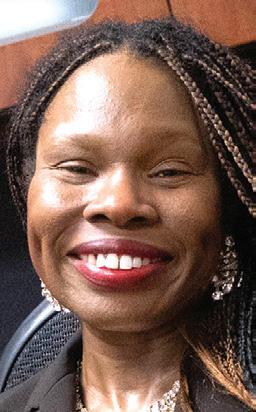
“She is absolutely a great connector,” said Jimmy Davies, founder and CEO of Every. Black and a longtime collaborator. “She has introduced me to different people over the years.” Davis, a professor of higher education at Saint Louis University, has built her career at the intersection of scholarship, community engagement and cultural responsibility.
Her work, she says, is guided by a global understanding of Black experiences.
“I think that looking at education through a diasporic lens has strengthened my practice as a leader in the community, as a scholar, as a scholar-activist,” Davis said.
That lens has shaped initiatives most visibly through the Circle of Excellence Network, a series of STEM-related programs Davis created to support underrepresented youth in grades 6-12, that also focuses on homeschooled students.
Through the network, Davis consults with more than 200 homeschooling families in the St. Louis region.
About 3% of K-12 students in the U.S. are homeschooled, according to the Pew Research Center. Of households that homeschool, 12% identify as Black, according to U.S. Census data. Davis believes many families choose
Front row, left to right, Fire captains Licole McKinney, Jessica Jackson and Pamela Saunders-Isaac. Second row, Fire captains Elizabeth McCormick and Cicely Tucker.
Photo by Lawrence Bryant / St. Louis American
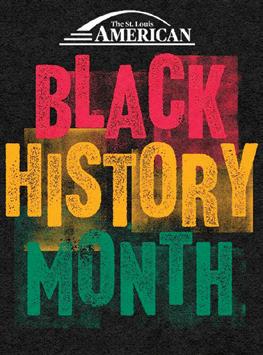
The Rev. Jesse Jackson waits while son Jesse Jackson Jr., introduces him to delegates at the United Center on Tuesday, Aug. 27, 1996, in Chicago during the Democratic National Convention.
Photo courtesy of the AP
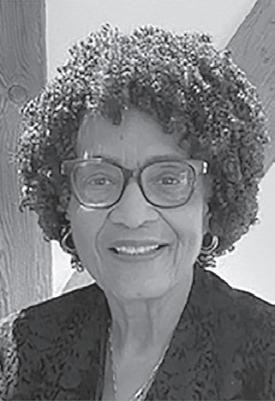
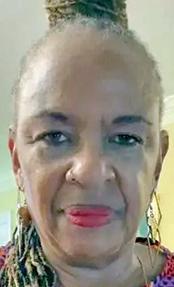
Dannielle Davis
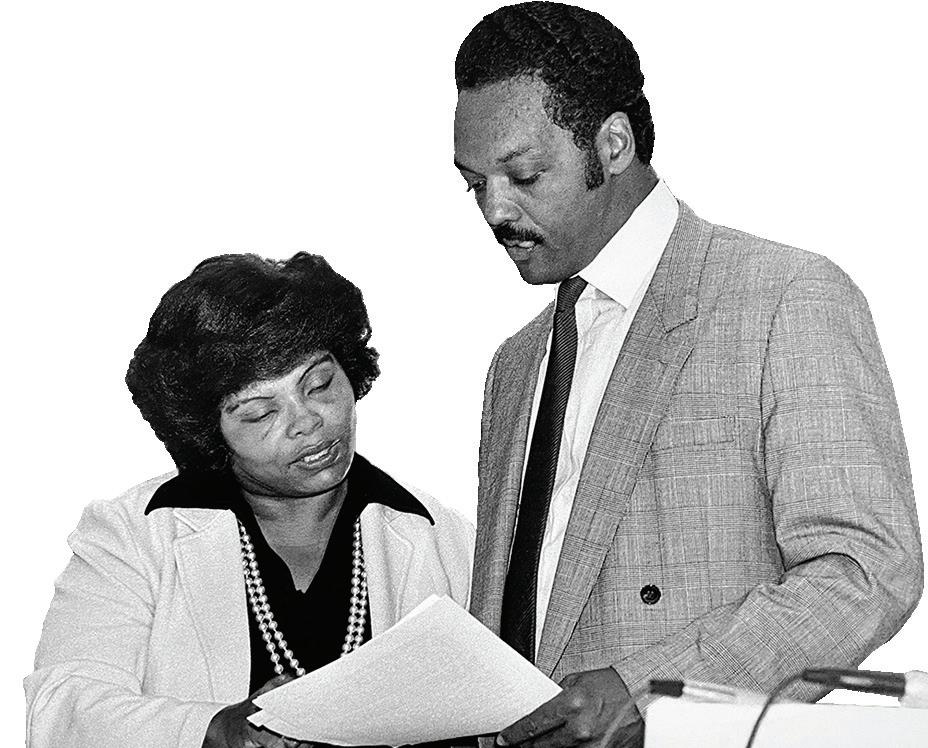
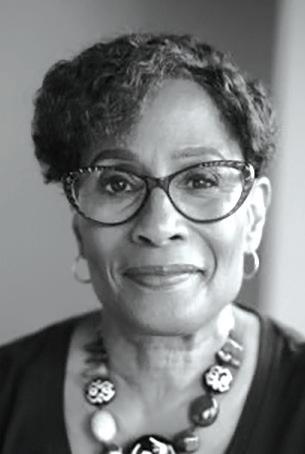
Betty Thompson
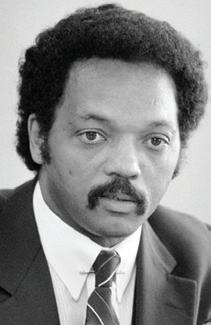
Rev. Jesse Jackson, circa
Guest Editorial Trump continues ‘race science’ dehumanization campaign
By Barbara Reynolds
There are moments in American history when cruelty is not accidental — it is strategic.
Recent reports that the president circulated or endorsed a video depicting former President Barack Obama and first lady Michelle Obama as monkeys, followed by a refusal to apologize or disavow the imagery, belong to a long and poisonous tradition in this country. It is the deliberate dehumanization of Black people to justify harm, exclusion and control.
Why monkeys?
Because in America, likening Black people to animals has never been random. It has been a tool. Enslavers used it to argue Africans were less than human. Scientists distorted it into “race science.” Politicians weaponized it to excuse chains, whips, lynch mobs, Jim Crow and voter suppression. When you deny someone’s humanity, you can deny their rights — and eventually their lives.
The same political figure launched his national career by pushing the birther lie — that Barack Obama was not a U.S. citizen, not legitimate, not truly American. Since then, we have heard immigrants from African nations dismissed as coming from “s—holes,” Somalis described as “garbage,” and Black-led initiatives branded as “tainted” under attacks on diversity, equity and inclusion — programs that were never about favoritism, but about access long denied.
and training Black students to excel in a profession that has rarely made room for them, my class discovered online images of the Obamas — and even their daughters — grotesquely depicted as monkeys. My students were shaken. I was shaken. And yet, I did what Black elders have always done: I taught history, resilience and brilliance. I reminded them that Black Americans survived slavery, Jim Crow, lynching, redlining and voter suppression — not alone, but alongside White Americans who refused to surrender their conscience.
But survival should not be the standard. Dignity should be.
The real scandal is not just the imagery — it is the silence surrounding it. Where is the outrage from business leaders who break bread with power while families struggle to afford food? Where is the sustained pressure from media institutions that soften coverage in pursuit of access, contracts or future ventures?
Where are politicians of all parties who understand that democracy cannot survive when hate is normalized at the top?
Dehumanization is never just rhetoric. It is rehearsal.
History teaches us that once a group is portrayed as less than human, violence — economic, psychological or physical — soon follows. Jobs are stripped. Contracts are canceled. Protections are erased. And the public is told this is efficiency, not cruelty.
Actions speak louder than words — but silence speaks, too.
Commentary When a Black newspaper falls silent
By Frances Murphy Draper
The closing of the Richmond Free Press marks more than the end of a newspaper. It marks the quieting of a civic institution.
Founded in 1992 by Raymond H. Boone Sr., the Richmond Free Press was created to provide independent, accountable journalism for Black Richmond. Boone brought deep professional grounding to that mission.
Before launching the Free Press, he served as editor and vice president of the Baltimore-based Afro-American Newspaper Group and later as a member of its board. He understood standards, governance and the responsibility that accompanies independent ownership.
The Free Press reflected that understanding. It was disciplined. It was careful. It did not chase spectacle. It practiced journalism.
After Boone’s passing in 2014, leadership continued under his wife, Jean Patterson Boone, who sustained the paper with steadiness and resolve. Their daughter, Regina H. Boone, an accomplished photojournalist, also contributed to the publication’s work. This was not merely a business. It was a family’s commitment to community accountability.
When a Black newspaper closes, the loss is distinct and profound.
erodes.
This moment arrives at a significant crossroads. In 2027, the Black Press will mark 200 years since the founding of Freedom’s Journal in 1827, the first Black-owned and operated newspaper in the United States. For two centuries, Black newspapers have functioned as record keepers, critics and civic watchdogs. The crisis facing journalism is broad. Thousands of local newspapers have shuttered over the past two decades. Entire communities now lack consistent local reporting.
Significant portions of local advertising have shifted to large digital platforms, reducing revenue available to community newsrooms. At the same time, corporate and philanthropic commitments to diversity, equity and inclusion have faced retrenchment. As DEI budgets contract or are restructured, Black-owned media often feel the impact directly.
Some suggest that in a digitally connected age, specialized media are less necessary. The evidence suggests the opposite. As media ownership consolidates and local reporting shrinks, independently owned Black newspapers remain among the few institutions with both proximity to community and the will to apply sustained pressure on power.
Words matter. Images matter more.
Psychologists will tell you that repeated dehumanizing imagery does measurable harm, especially to children. When a president traffics in such symbolism, it gives permission for bullying, employment discrimination and unfair mass incarceration. Young Black people do not experience these moments as abstract politics; they experience them in hallways, online spaces, classrooms and workplaces — where being called a “monkey” is not satire, but threatening dehumanization.
I have seen this damage up close. In 2017, while teaching journalism
This is a moment that demands more than statements. It demands refusal. Refusal by media to normalize hate. Refusal by corporations to profit from proximity to power while communities suffer. Refusal by citizens to accept that this is just “politics as usual.”
America has seen this road before. We know where it leads.
The question is whether we will once again pretend we don’t.
Barbara Reynolds worked for 13 years as a columnist and editorial board member for USA Today and has authored eight books.
Courageous state leaders stand against ICE
By Marc Morial
“If the federal government will not hold these rogue actors accountable, then Chicago will do everything in our power to bring these agents to justice.” — Chicago Mayor Brandon Johnson
There comes a point when euphemisms fail us. What ICE has done in Chicago and Minneapolis is not mere “overreach.” Agents did not make “missteps” or “tactical errors.” These are clear, documented violations of the law and abuses of power that demand a forceful reckoning. State and local leaders in Illinois and Minnesota have been forced into a role that should shame the federal government: defending the Constitution against the very agents sworn to uphold it.
In Chicago, a federal judge confirmed what communities have been shouting for years: ICE repeatedly conducted warrantless arrests in violation of a court-ordered consent decree, blatantly disregarding the most basic protections of the Fourth Amendment. These arrests were part of a pattern of unlawful detentions carried out by an agency operating with impunity.
began preparing legal action against the Trump administration over its deployment of ICE and Border Patrol agents into Chicago communities.
Meanwhile, Minnesota Gov. Tim Walz confronted the federal government headon, calling the ICE surge “a campaign of organized brutality” and demanding it end immediately.
These are not the words of timid officials. These are the words of leaders who believe their communities are under assault.
In Chicago, Mayor Brandon Johnson did what the federal government has refused to do: move to hold rogue federal agents accountable. His “ICE On Notice” executive order requires Chicago police to document alleged illegal ICE activity, secure body-camera evidence, and report potential violations of state and local law.
In Minneapolis, Mayor Jacob Frey has been equally direct, calling for a nationwide end to what he described as an “ICE siege” and condemning the agency for transforming his city into the epicenter of what he views as an unconstitutional crackdown.
Let’s be clear: ICE did not enforce the law — it violated it.
Communities lose coverage of church anniversaries and pastoral transitions — the spiritual infrastructure that holds neighborhoods together. They lose the social news documenting graduations, civic honors, small-business openings, fraternity and sorority milestones, neighborhood achievements and community triumphs that rarely appear elsewhere but define local life.
Guest Columnist Frances Murphy Draper
They lose coverage of Black Richmond that exists nowhere else.They lose journalists who understand the context beneath the headline — who know the history of a block, the arc of a congregation and the stakes of a zoning decision.
And they lose something even more consequential.
They lose sustained pressure on elected officials to craft, pass and enforce legislation that serves the entire community — not just the well-positioned few.
Black newspapers have long monitored school boards, city councils, housing authorities, development commissions, state legislatures and congressional offices with cultural competence and institutional memory. They have asked the follow-up question. They have returned after the cameras left. They have tracked whether commitments were honored.
When that scrutiny fades, accountability weakens.
When accountability weakens, equity
The Black Press is not relevant because it is historic. It is relevant because the conditions that required its founding have not disappeared. As the bicentennial of the Black Press approaches, this moment calls for clarity and commitment.
Advertisers must treat Black newspapers as essential civic partners.
Readers must subscribe, donate and engage with the understanding that journalism requires sustained investment. Philanthropy must support operational capacity, not only short-term initiatives. Black institutions — churches, fraternities, sororities, civic organizations and nonprofits — must intentionally strengthen the media platforms that document their work.
Publishers must continue adapting for a digital era while preserving editorial independence and mission integrity.
The Black Press has endured for two centuries not because it was sentimental, but because it was necessary. The conditions that required its founding have not disappeared. The question is not whether it has a future. The question is whether we are willing to invest in it.
Dr. Frances Murphy Draper is CEO and publisher of The Afro American Newspapers.

In Minnesota, federal agents went even further — storming homes without warrants, conducting stops without legal justification, and seizing people who had no criminal records, including children and U.S. citizens. ICE ignored the limits of its own authority. And then came the deaths: Renee Good and Alex Pretti, both killed by ICE agents in Minneapolis — killings that shocked the conscience of the nation and ignited statewide protests. These tragedies did not occur in isolation.
Illinois Gov. JB Pritzker immediately
And when federal leadership failed to deliver accountability, state and local officials — Pritzker, Walz, Johnson, and Frey — stepped forward.
America needs more leaders willing to confront federal power with clarity and resolve. Because if constitutional rights can be compromised in Chicago and Minneapolis today, they can be compromised in any American city tomorrow.
Marc Morial is National Urban League president and CEO.



Columnist Barbara Reynolds
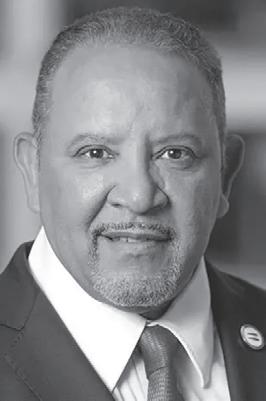
Columnist Marc Morial
Urban League launches free online program expanding career access in St. Louis
By Ashley Winters St. Louis American
For many adults across the St. Louis region, the path to a higher-paying career stalls at one checkpoint: a high school diploma.
The Urban League of Metropolitan St. Louis aims to remove that barrier through a new initiative offering adults the opportunity to earn a diploma at no cost. The program operates through a partnership with Ancora High School, an accredited, fully online institution.
The effort grew out of patterns Urban League staff observed in workforce development programs.
roughly 4,000 people each year.
Stevens said participants who indicate they need a diploma during intake may enroll as part of their workforce development plan.
The program arrives as many adult learners struggle with traditional alternatives. Stevens said difficulty passing the GED exam remains one of the most persistent obstacles. Others find classroom schedules incompatible with work and family demands.
Save Our Sons & Sisters operates at seven locations across the metropolitan area and serves roughly 4,000 people each year.
“The inspiration for this partnership came from seeing the high number of clients who want a high-paying career but do not currently have a high school diploma,” said Tydrell Stevens, regional vice president of the League’s Save Our Sons & Sisters program. “This has created a barrier in how we place them in the career of their choice. If we want to build the economic mobility of our communities, we must solve this issue immediately.”
The diploma pathway is now embedded within the Urban League’s workforce system. Save Our Sons & Sisters operates at seven locations across the metropolitan area and serves
“One of the biggest barriers we have seen is a person’s ability to pass the GED test, which is why we are offering the high school diploma,” Stevens said. “The other barrier is the ability to be committed to show up at a location for class days.
Family and work tend to be the priority, which is why this is 100 percent online at your own pace.”
Through Ancora’s online platform, participants complete coursework on their own schedules. Students may pause without penalty, flexibility Stevens said is essential for adult learners balancing competing responsibilities.
Participants also may use Urban League facilities during designated office hours if they need a quiet workspace or additional academic support.
Because students enroll through Save Our Sons &

Through a partnership with Ancora High School, an accredited, fully online institution, The Urban League of Metropolitan St.
is offering adults the opportunity to earn a diploma at no cost.
Sisters, they gain access to wraparound services, including transportation assistance and

drops out.
The initiative also addresses hiring challenges Urban League staff encounter with employer partners.
Stevens cited relationships with companies such as Boeing and Spire, which have hired Urban League clients into career-track positions. Still, some candidates are screened out early.
“We have had to deliver the news that you don’t qualify for these jobs because you don’t have a high school diploma,” Stevens said. “Companies love to hire homegrown talent. However, our talent pool of individuals who have their high school diploma needs to grow to meet the demand of the future workforce in St. Louis.”
Stevens said the diploma gap is especially visible in communities facing high unemployment and underemployment, where educational barriers can compound economic hardship.
“We see some of our underserved communities benefiting in amazing ways,” he said. “Individuals landing careers they never saw themselves in.”
emergency support. Stevens said those resources often determine whether a participant persists or
Graduates of the Ancora program also may continue their education through a discounted online college pathway with Lindenwood University, extending the pipeline from diploma completion to higher education. Enrollment is now open to eligible adults across the region. Urban League leaders describe the initiative as both an education effort and a workforce strategy aimed at expanding economic opportunity.

Photo by Lawrence Bryant/St. Louis American
Louis

Circuit Attorney’s Citizens Academy accepting applications
Circuit Attorney Gabe Gore said increasing public understanding of his office could help strengthen its relationship with St. Louis residents.
The Circuit Attorney’s Office is accepting applications for the spring session of its Citizens Academy through March 9. The program follows last year’s inaugural class.
The six-week educational initiative offers participants an overview of how cases move through St. Louis courts and how the office functions.
“The success of our first Citizens Academy shows the value of opening our doors and inviting the community in,” Gore said .
“The Academy allows residents to see firsthand how our office operates, how decisions are made, and the standards we uphold, while giving us invaluable insight by hearing directly from the people we serve. We look forward to continuing to build these connections and strengthen
trust.”
Classes will be held from 5 to 7 p.m.
Thursdays at the Circuit Attorney’s Office from April 9 through May 14. The program includes seminars, site visits and discussions with prosecutors and staff. Participants will learn about the progression of criminal cases, from investigation through trial and sentencing.
The Citizens Academy is free and open to community leaders, students, early-career professionals and residents of the St. Louis metropolitan area.
Gore said the program is designed to promote transparency and dialogue between the office and the community.
“Its mission to promote transparency, foster dialogue, and strengthen public trust. Community engagement is essential to our efforts to achieve a higher level of public safety for the St. Louis community,” said Gore.

Commentary
History has a way of circling back
By Maxine Bryant
As we observe Black History Month 2026, it is imperative to address two truths.
First, “they” did not give us the shortest month of the year. Carter G. Woodson started Negro History Week in 1926 and chose February to commemorate the birthdays of Abraham Lincoln and Frederick Douglass.
In 1976, under President Gerald Ford, the observance expanded to a month. During this time, we celebrate Black contributions to the world. This leads to the second truth I wish to address.
This country has long elevated Martin Luther King Jr. as the admirable voice of peace, while positioning Malcolm X as dangerous, divisive and radical. This contrast was never accidental.
progress. Malcolm X offered an alternative framework — one centered on self-definition, historical truth and urgency. His words warned that a people who do not control their own story risk becoming trapped inside someone else’s narrative.
One man was celebrated because his message could be softened, extracted from its urgency and folded neatly into the mythology of American progress. The other was feared because he spoke truths that refused to be delayed, diluted or controlled.
Yet history has a way of circling back. Many of the conditions Malcolm X warned about — misinformation, institutional control and generational oppression — are not relics of the past. They are realities we continue to experience today.
Integration placed Black children into white systems that were neither prepared nor willing to see them fully. Black students were taught by white institutions that did not understand their culture, their history or the realities they would face as Black adults in a white world. These systems could not teach Black children how to succeed as Black people — only how to approximate whiteness closely enough to survive. This was assimilation dressed up as
He explained why miseducation is so dangerous: when the wrong history is taught, the wrong conclusions are drawn and entire lives are misdirected. He cautioned that studying today without examining how yesterday was engineered obscures how oppression stretches across generations, evolving quietly while appearing patient. Malcolm X also spoke about power in ways this country did not want Black people to fully grasp. He argued that oppression survives on hesitation — that when people stop waiting, stop asking permission, power begins to shift. Systems do not fear resistance as much as they fear urgency. That is why patience is often preached to the oppressed while injustice continues moving forward uninterrupted.
Malcolm X warned that media messages can function as a weapon — misleading people to hate the oppressed and sympathize with the oppressor. In that confusion, the demand for justice can be reduced to a whisper.
However, he was clear: revolution is never a whisper. It is a demand. King expressed a similar warning: “Our lives begin to end the day we become silent about things that matter.”
Black History Month should be a time to use the past to propel us forward. To honor both King and Malcolm X honestly is to recognize that nonviolence without urgency becomes stagnation, and integration without self-awareness and determination becomes erasure.
Maxine Bryant is the founder of GriotSpeaks and an author.

Circuit Attorney Gabe Gore says the Citizens Academy is intended to improve public understanding of how the office operates.
Photo by Wiley Price / St. Louis AMerican
Maxine Bryant

Why we won’t talk about wills and what silence costs us
By ReShonda Tate Houston Defender
In many Black families, conversations about death are often avoided, shaped by superstition, faith and mistrust of legal systems that have historically failed to protect Black lives and property.
But attorneys and advocates say that silence carries consequences: lost homes, fractured families and wealth that never has a chance to take root.
“Everyone assumes that
when someone passes, everything will be okay,” said Shandrea Sellers, an estate planning attorney who focuses on probate, guardianship and legacy planning.
“But titles are usually not clear. Land ownership is sometimes uncertain. And that’s how families lose property.”
Sellers said the most common mistake is not having a plan at all. The second is believing estate planning is only for the wealthy.
Estate planning, experts say, remains an overlooked
tool for families seeking to protect their wishes and assets. Through wills or revocable living trusts, families can reduce legal uncertainty and help preserve generational wealth.
“A lot of people think they need to be rich in order to do a will,” said estate planner Sherwood Brown. “But a will can protect everything from who will get your house to who can access your bank account. Everyone over the age of 18 should have a last will and testament.”
Homes at risk
Homeownership — a key path to wealth-building — is especially vulnerable. When a homeowner dies without a will, property can become heirs’ property, often triggering probate, a costly and time-consuming legal process.
Probate expenses can range from 3% to 10% of an estate’s value. When a home cannot be divided, heirs may receive fractional ownership,
Board of Aldermen split on data center growth
By Kavahn Mansouri St. Louis Public Radio
The St. Louis Board of Aldermen appears divided on data center development in the city, after rejecting an attempt to pause new development on the projects until zoning rules are completed.
Ward 9 Alderman Michael Browning attempted to introduce the bill last week, co-sponsored by Ward 7 Alderwoman Alisha Sonnier, that would have paused development of any new data centers until zoning rules for the buildings are put into place.
Two days earlier, a more than four-hour public hearing took place on proposed zoning rules that would restrict where data centers can be built in the city and give the government tools to revoke permits when operators break the rules.
Browning said it’s important to hit pause, as he’s

Sheckles elected to Young Friends exec. committee
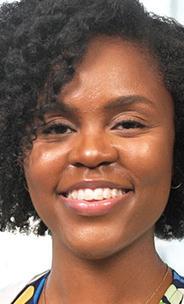
Ebony Sheckles
Ebony Sheckles, an attorney with the Metropolitan St. Louis Sewer District, has been elected secretary of the Young Friends of Legal Services of Eastern Missouri executive committee. Sheckles has served as a board member of Young Friends — a professional network supporting access to justice and the mission of Legal Services of Eastern Missouri — since 2024. She provides pro bono service through Legal Services’ Microenterprise Program and was the recipient of the organization’s 2023 Honorable John R. Essner Young Lawyer Award, which recognizes volunteer contributions.
Jackson among St. Louis Titan 100 recipients
executive director of the Center of Innovation & Entrepreneurship at Harris-Stowe State University’s Anheuser-Busch School of Business, is among the 2026 St. Louis Titan 100 recipients. The Titan 100 program recognizes top CEOs and C-suite executives in the St. Louis region.
During the center’s inaugural year, Jackson launched new entrepreneurial initiatives, including two early-stage accelerator programs and a facilitator training program.
Christian Williams honored as BET Scholar

Christian Williams, a Lincoln University senior majoring in marketing, was recently selected for the HBCU Honors Media Futures Fellowship, a program recognizing high-achieving students who contribute to their campuses and communities. Created by the HBCU Honors Foundation, the fellowship provides professional development and mentorship, offering experience in production, storytelling and marketing.
Williams, who is set to graduate in May, also participated in the 2025 BET HBCU Honors, a nationally televised program celebrating the achievements and cultural impact of Historically Black Colleges and Universities.
Promotion, board appointment, new hire, award...please submit your People on the Move item (including photo) to areid@stlamerican.com
Photo by Brian Munoz / St. Louis Public Radio
St. Louis Ward 7 Alderwoman Alisha Sonnier and Ward 9 Alderman Michael Browning attempted to introduce a bill pausing data center development.
Photo by Tierra Mallorca / Unsplash
Christian Williams
A legally prepared will can reduce confusion and conflict during an already emotional time, offering clear guidance on a
loved one’s wishes and allowing families to focus on grieving rather than disputes.
Kristy Jackson,
Kristy Jackson
Gomez named historic Labor Council appointee
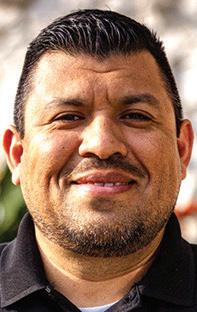
Jose Gomez
Ameren, STLCC spotlight scholarships at annual ‘Love’ gala
St. Louis American staff
The St. Louis Community College Foundation will host its 18th annual Falling in Love in Five Courses Gala at 6 p.m. Saturday, Feb. 21, at the Four Seasons Hotel St. Louis.
Gwen Mizell, Ameren’s senior vice president and chief sustainability officer, will serve as the event’s honorary chair. Foundation leaders said the gala supports scholar-
ships and student assistance programs across the college’s campuses.
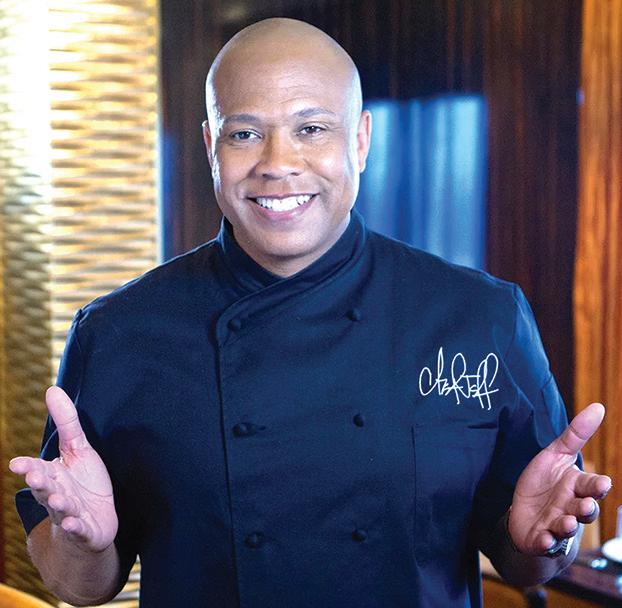
Chef Jeff Henderson of Food Network will prepare the evening’s meal. The program will include remarks from students and alumni, along with live and silent auctions.
Henderson is a chef, author and television personality. He previously served as executive chef at Caesars Palace and Café Bellagio in Las
Vegas. “The funds raised from this event will significantly impact the lives of our students, particularly those in our culinary and hospitality studies program,” said Jeff L. Pittman, chancellor of St. Louis Community College.
Founded in 1984, the St. Louis Community College Foundation provides financial support for tuition, books, supplies, transportation and emergency student needs.
Antwi, Aldridge propose plan to boost downtown activity
St. Louis American staff
Two St. Louis alderpersons representing the downtown area have introduced legislation aimed at supporting redevelopment and street-level activity.
Alderwoman Jami
Cox-Antwi and Alderman Rasheen Aldridge introduced an ordinance at last week’s Board of Aldermen meeting to establish the Downtown St. Louis Sports and Entertainment Community Improvement
Aldermen
Continued from A5
having ongoing conversations with developers eyeing new data center developments throughout the city. He said new data
District, commonly known as a CID.
Supporters say the proposed district would create a funding mechanism for infrastructure, safety and public space improvements.
“The creation of this district gives downtown access to new resources — for things like safer streets, better lighting, cleaner public spaces and long-term improvements,”
Cox-Antwi said. She described the pro-
center applications are on the horizon and the city risks some projects starting before new zoning rules are in place.
“Obviously, data centers have existed in the city, but there’s a real proliferation of them across the country right now,”
posal as “a smart and practical way to invest in downtown.”
The proposed CID would cover an area bounded by Cole and Carr streets to the north, the Mississippi River to the east, Interstate 64 to the south and Jefferson Avenue to the
Browning said. “And they come with some serious risks.”
Last Friday was the last day to introduce bills to the board until the next legislative session in April.
The bill needed 10 votes to be introduced from the floor and was voted down

west. Under the ordinance, the district would function as an independent political subdivision with the authority to issue bonds of up to 20 years to finance improvements.
“As one of the aldermen who represent downtown, I’ve witnessed first-
7-8.
Board members Browning, Sonnier, Anne Schweitzer, Daniela Velazquez, Sharon Tyus, Rasheen Aldrige and board President Megan Green voted yes to introduce the bill.
Thomas Oldenburg, Shane Cohn, Bret Narayan, Matt Devoti, Jami CoxAntwi, Shameem ClarkHubbard, Laura Keys and Pam Boyd voted no.
Clark-Hubbard said she had several concerns about the bill’s language and the speed at which it was introduced. She said she voted against it after many constituents urged her to do so.
She added she’s confident in the Planning Commission’s work to push the new zoning rules through.
Browning said the bill most likely will not return until the spring legislative session, and only if the zoning rules are not in place by then.
Will
Continued from A5 limiting access to loans, repairs, tax exemptions and protection from forced sales.
Research from the Urban Institute shows that nearly 70% of senior Black homeowners and 76% of senior Hispanic homeowners do not have a will or trust, compared with 35% of older white homeowners with children.
These gaps compound a racial wealth divide shaped by redlining, discriminatory lending and inequitable tax systems. Today, the typical Black family holds about 15% of the wealth of the typical white family.
The roots of this disparity stretch back generations. In the early 1900s, Black farmers owned an estimated 16 to 19 million acres of land. Today, fewer than 3 million acres remain under Black ownership — much of that loss linked to the absence of wills, deeds and clear titles.
Breaking the silence
Cultural beliefs also shape reluctance to discuss estate planning. Talking about death can feel morbid, unfaithful or like “speaking it into exis-
hand the incredible potential of this area,” Aldridge said. “This CID gives us focused tools to support long-term investment.”
Separately, state legislation introduced last week could create additional redevelopment tools.
Missouri state Sen. Brad Christ, a Republican from St. Louis County, introduced House Bill 3231, which proposes establishing “innovation districts” as part of a new statewide economic devel-
“We were trying to communicate to the public, which spoke very loudly at (last week’s) Planning Commission meeting, that we were hearing them and that we wanted to give room for our planning staff to put together thoughtful, practical applications that would protect our residents and still allow, you know, businesses and commerce to succeed in our city,” Browning said.
At that meeting, city residents expressed concerns about how data center development could impact electricity rates, environmental issues and more. Many called for an outright ban on data center development in the city, while a handful urged the commission to ease the draft rules to avoid turning away possible development.
Among those in favor of easing the zoning rules were many members of the development community, who worried the rules
tence.”
“I understand that hesitation,” Sellers said. “But when families don’t have to ask questions about what you wanted, it allows them to grieve instead of scrambling during one of the most painful moments of their lives.”
Sellers points to her own experience. When her mother died late last year, everything was already planned.
“There was never a moment of disagreement or confusion,” she said.
“We were simply following her instructions.”
Planning beyond property
Estate planning is also increasingly important as Black entrepreneurship grows. Without a plan, business assets and partnerships can be thrown into uncertainty when an owner dies.
“Vehicles, family keepsakes and other items should be willed,” said Rasheda Williams, whose family members died without wills. The probate process after her grandmother’s death took seven months and cost $700.
Experts warn that dying without a will can create unintended outcomes, particularly for families that do not fit traditional
opment program. Under the proposal, qualifying districts could retain up to 50% of new state sales tax revenues and income-tax withholdings generated within designated boundaries.
According to the bill, those funds could be used for police services, lighting, cameras, signage, sidewalks, streets, landscaping and other public safety or infrastructure-related needs.
they called “restrictive” might turn off developers eyeing the city for data center projects. Browning disagrees.
“There is this thought that we might scare the business community,” Browning said. “I think that the business community is understanding.”
Dani Kahn is a member of the Eco-Socialist Green Party of Eastern Missouri, a group leading the pushback against data center development in the region. She said she wasn’t surprised by the board’s vote.
“We did, however, today get confirmation that corporate interests are in charge of the city’s Board of Alders sufficiently enough to stomp out the will of the people,” she said. “It will take everyone calling their Alder, no matter what Ward they live in, to pressure them and tell them how they feel about data centers.”
structures.
A will, advocates say, helps ensure assets are distributed according to personal wishes rather than state law.
Access and affordability
Cost remains a barrier. Attorney fees often range from $500 to $1,500 for a basic will. Black attorneys make up about 5% of lawyers in the U.S., contributing to hesitation among some families. Organizations such as FreeWill offer free online tools that allow users to create or update a will in minutes, along with documents like financial powers of attorney and advance health care directives.
Advocates say the goal extends beyond protecting money.
“Estate planning is stewardship,” Sellers said. “It’s about making sure your family is protected and the things you worked for don’t disappear.”
As families continue to navigate the aftershocks of historical inequities, experts say breaking the silence around wills may be one of the most practical steps toward preserving homes, assets and legacy.
Chef Jeff Henderson
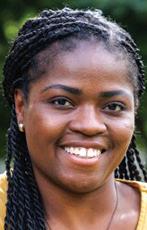
Jami Cox-Antwi
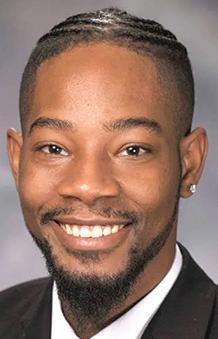
Rasheen Aldridge
HealthMattersHealthMattersHealthMatters
‘Taking Care of You’

Fight continues
Ruling could reshape abortion access in Missouri
By Sylvester Brown Jr. For The St. Louis American
M
issouri voters restored abortion rights in 2024, but a new court fight will decide whether those rights can actually be exercised inside the state.
Last month, attorneys for the Missouri Attorney General’s Office and Planned Parenthood faced off in a Jackson County courtroom over whether Missouri can continue enforcing abortion regulations that providers say still block access, even after voters approved a constitutional amendment protecting abortion rights.
At issue is a set of long-standing restric-
By Jennifer Porter Gore Word in Black
Missouri voters restored abortion rights in 2024, but a new court fight will decide whether those rights can actually be exercised inside the state.
tions known as Targeted Regulation of Abortion Providers, or TRAP, laws. While the amendment legalized abortion, it did not automatically repeal those rules. Planned
See Abortion, A8
Genetic testing for cancer becoming more common
By Dr. Graham A. Colditz
Of the many advances in science and technology over the past 25 years, genetic testing is arguably one of the most notable. Once a rare part of health care, it is now becoming much more common. It’s possible that someone you know — or maybe even you — has had it done. Most often, people pursue genetic testing to satisfy curiosity about their ancestry or to connect with relatives from other branches of their family tree. But genetic testing can also reveal important information about our health, including cancer risk.
“Genetic testing for cancer risk uses a saliva or blood sample to look for changes in specific genes...”
– Erin Linnenbringer
“Genetic testing for cancer risk uses a saliva or blood sample to look for changes in specific genes — or pieces of DNA — that are associated with an increased risk of certain types of cancer,” said Erin Linnenbringer, a board-certified genetic counselor and associate professor at Washington University School of Medicine in St. Louis. There are many genes linked to cancer. Two of the most well-known examples are BRCA1 and BRCA2, Linnenbringer said. Women with harmful changes — known as “variants” or “mutations” — in these genes have a much greater risk of developing breast, ovarian and pancreatic cancer. Men with these mutations also face elevated risks, including breast, pancreatic and See Colditz, A8
TrumpRx: Better prescription drug deals may already exist
At first glance, the website the Trump administration launched on Feb. 5 appears to be a solid effort to address the health care affordability crisis affecting millions of Americans. Dubbed “TrumpRx.gov,” the cost-free, government-run website is intended to help people without health insurance afford prescription drugs.
“You’re going to save a fortune,” President Donald Trump said at the site’s unveiling. “And this is also so good for overall health care.” Not quite.
A site with big claims — and major limits
Several health care advocates say TrumpRx resembles — though falls short of — more established discount drug platforms. Those sites, experts say, often provide lower prices on a broader range of medications, including generics, with
TrumpRx directs users to drugmakers’ websites offering direct-to-consumer pricing. Like those platforms, TrumpRx also provides coupons that consumers can use at pharmacies.
fewer restrictions. TrumpRx directs users to drugmakers’ websites offering direct-to-consumer pricing. Like those platforms, TrumpRx also provides coupons that consumers can use at pharmacies. Currently, individuals can purchase 43 medications, including weight-loss drugs such as Ozempic and Wegovy. The site also lists several fertility medications, See Drugs, A8

Photo by Lawrence Bryant / St. Louis American
Courtesy photo
Protesters march past a Planned Parenthood facility holding signs during a demonstration against abortion bans on June 24, 2022.
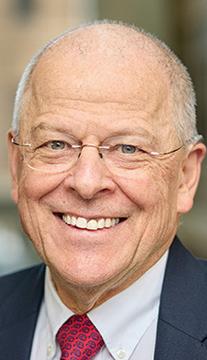
Dr. Graham A. Colditz
HealthMattersHealthMattersHealthMatters
Why you should be aware of glaucoma, the ‘sneak thief of sight’
By Heather M. Butts New York Amsterdam News
The early part of the year brings not only cold weather, but also awareness for the “sneak thief of sight,” glaucoma. The devastation that the disease can bring is particularly challenging for African Americans, who, along with Latino and Asian populations, have much greater risks of glaucoma, as well as faster onset of the disease and more rapid progression than European Americans. Glaucoma refers to a group of eye diseases that, in most cases, produce increased pressure within the eye.
The pressure is caused by the backup of fluid in the eye that damages the optic nerve.
“Glaucoma is often
Drugs
Continued from A7
insulin products, two brands of asthma rescue inhalers and others.
“Mostly, I think it’s just fuzzy math and no real benefit to the American public. There are 43 drugs on TrumpRx, and you have to purchase them with cash, without insurance,” said Dr. Ezekiel Emanuel, a professor at the University of Pennsylvania’s Perelman School of Medicine. Emanuel is an oncologist and a widely cited expert in health policy and bioethics.
Trump “championed the fact that we were reducing the prices on Wegovy and those GLP-1 drugs down to $199 per month,” Emanuel said during a press briefing Tuesday. “That actually works out to $2,400. Most Americans cannot afford
Abortion
Continued from A7
Parenthood and the American Civil Liberties Union of Missouri argue that some of the remaining requirements conflict with the amendment and make it impossible to provide care. The state says the rules are needed to protect patient safety.
Planned Parenthood told the court that Missouri’s abortion regulations have piled up over time, especially as anti-abortion lawmakers gained power, creating barriers that clinics cannot realistically overcome.
The state countered that abortion carries risks that justify continued oversight.
Colditz
Continued from A7
prostate cancer. While most gene mutations do not increase cancer risk as significantly as BRCA1 and BRCA2, they can still have an important impact. Knowing about these mutations can help guide risk management. Screening tests and health exams may begin at younger ages and occur more frequently, which can help find a cancer earlier when it’s more treat-
called the ‘sneak thief of sight’ because many people with glaucoma don’t know they have it. It causes no pain. It causes no redness, and there are no early warning signs,” Elena Sturman, president and CEO of The Glaucoma Foundation told the Amsterdam News
“In most cases with glaucoma, you can lose vision gradually, very slowly, and your brain compensates. So you don’t even notice changes until serious damage is done. That’s why going to an eye doctor is so important, because it could be diagnosed earlier and the progression of glaucoma could be prevented.”
The Glaucoma Foundation indicated numerous risk factors for the disease such as:
• People with diabetes
$2,400 a year on one drug.”
Uninsured patients should shop around
At the same time, “more than half of the drugs on TrumpRx are actually cheaper not going through TrumpRx, but getting them through GoodRx or Mark Cuban’s Cost Plus Drug program,” Emanuel said. That’s because many “are generics, and you can get them cheaper … so he’s cutting brand names when there’s already a cheaper alternative.”
An analysis by the medical news outlet STAT found that generic versions of at least 18 drugs cost less on GoodRx or Cost Plus Drugs than the brand-name versions listed through TrumpRx. In some cases, consumers using generics could save hundreds of dollars by choosing other platforms. Consumers with private insurance or govern-
“The risks associated with abortion don’t just exist in the abstract,” Assistant Solicitor General Alexandria Overcash said.
“Real women, Missouri women have suffered.”
Doctors and medical experts called by Planned Parenthood disputed that claim, testifying that abortion is safer than many common medical procedures, including childbirth.
“There’s nothing like sitting in your patient’s pool of blood as she’s bleeding out four liters of blood to realize that a healthy term pregnancy has a whole hell of a lot of risk,” testified Dr. Jennifer Smith, a St. Louis OB-GYN.
Most of Missouri’s abortion restrictions, including the state’s near-total ban, were
able. For some cancers, medication, surgery or enhanced screening may even help prevent disease.
Right now, this type of genetic testing is typically ordered through a health care professional and is most often recommended for individuals who have had cancer or who have a strong family history of cancer.
“People diagnosed with adult-onset cancers at a young age — such as breast cancer before age 40 — those with aggressive or late-stage cancers, or those with certain rare

are twice as likely to get glaucoma than people without diabetes.
• Asians are at an increased risk for the less common types of glaucoma: angle-closure glaucoma and normal-tension glaucoma.
• People over the age of 40 are at greater risk.
• People with extremely high or low blood pressure, thin corneas, and
nearsightedness are at greater risk.
Sturman notes the importance of regular eye exams. She says it’s important to go to your eye care provider, who can check the back of the eye, along with eye pressure.
“For certain groups with risk, we recommend doing it before age 40. If you have a risk factor, if you have somebody in a
African Americans, along with Latino and Asian populations, have much greater risks of glaucoma.
If diagnosed early enough, it can be treated.
family with glaucoma, if you have a sibling with glaucoma, if you belong to communities at higher risk, you should definitely start going to an eye doctor regularly before age (40).”
It is important for people to get this care, Sturman says.
“The good news about glaucoma, and it’s sort of a silver lining, (is that if) diagnosed early enough, it

ment-funded coverage, including Medicare, generally cannot use TrumpRx discounts. Users must con-
temporarily blocked by Jackson County Circuit Judge Jerri Zhang before the trial. But several requirements remain in force, including a mandate that providers maintain a state-approved complication plan and carry specialized insurance.
Planned Parenthood officials testified that those rules continue to prevent medication abortions from being offered in Missouri, despite the 2024 amendment.
“All these laws target abortion in a unique way — and also an unconstitutional way,” said Vanessa Pai-Thompson, an attorney with Planned Parenthood Federation of America.
Peter Donohue, deputy solicitor general for Missouri, argued that Planned Parenthood had
cancers, including ovarian or pancreatic cancer, should consider genetic testing,” Linnenbringer said. “The same is true for individuals with multiple relatives on either side of the family who have had cancer, or when a parent or sibling was diagnosed at a young age.”
If you have concerns about your family history and cancer risk, the first step is discussing them with your health care provider. “They may review your family history and order an appropriate genetic test, or refer you
firm they are not enrolled in government-funded medical or prescription programs and agree not
not met the legal standard to overturn the remaining regulations. He defended the laws as protections against unsafe providers, accusing abortion clinics of a history “fraught with harm to women.”
Evidence presented at trial showed that Missouri women have continued to seek abortions out of state. Over the past decade, more than 53,000 Missourians traveled to Illinois or Kansas for abortion care, according to state and regional health data.
Planned Parenthood officials pointed to that same data to argue the procedure is safe. They testified that the complication rate among those patients remained consistently low — about 1% — with no recorded
to a genetic counselor or specialist,” Linnenbringer said. “You can also search for a counselor near you at findageneticcounselor. nsgc.org.”
Genetic counselors are a valuable resource for thinking through the elements that go into deciding whether genetic testing is right for you. “They are health care professionals with specialized training in genetics as well as patient communication and counseling,” Linnenbringer said. In addition to assessing cancer risk, counselors help patients understand
can be treated.
“The progression could be slowed down, and you know there are a lot of new treatments,” Sturman continued. “There are eye drops, there are laser procedures, there are incisional procedures, but all of these could slow or prevent vision loss if the disease is found early enough.”
For more information about glaucoma resources, please visit the Glaucoma Foundation at https:// glaucoma.org/. Medicare provides annual eye exams for individuals to detect diseases such as glaucoma for those who are 65 years old and older with certain specific criteria. The National Eye Institute has details regarding additional resources: Glaucoma Resources | National Eye Institute
the administration’s Most Favored Nation drug pricing initiative. The policy aims to align certain U.S. drug prices with the lowest prices charged in other countries. The administration has also continued implementing a Biden-era law allowing Medicare to negotiate prices for select prescription drugs.
to apply purchases toward insurance deductibles or seek reimbursement.
TrumpRx is part of
cases requiring emergency transport from a clinic to a hospital.
“If they’re safe,” Donohue said, “these requirements don’t burden them.”
Planned Parenthood rejected that argument, saying the remaining rules do not improve safety and instead function as barriers to care.
The state was the only party to call women to testify about their abortion experiences. Most said they regretted having abortions. The state also relied on expert witnesses who oppose abortion — testimony that Pai-Thompson later described as advocacy rather than objective medical evidence.
Missourians could also weigh in again at the ballot box. Supporters are
implications of testing that might not immediately come to mind. These may include emotional considerations, potential effects on life insurance, and information relevant to family members who may share similar mutations.
For those uncertain about their family health history, holidays and gatherings can offer opportunities to ask relatives about past diagnoses. Learning which cancers occurred and the ages at diagnosis can provide important clues about inherited risk. While such conversations
Last year, the president issued an executive order calling on pharmaceutical companies to lower prices. Since then, several major drugmakers have reduced prices on some medications and expanded U.S. manufacturing operations. GoodRx and Cost Plus Drugs also offer programs for uninsured consumers. GoodRx allows users to compare pharmacy prices and use coupons. Cost Plus Drugs sells medications at the manufacturer’s price plus a small fee — often lower than traditional retail pricing, particularly for generics.
pushing a proposed constitutional amendment — often called the “Prohibit Abortion and Gender Transition” measure — that would repeal the 2024 abortion protections. The proposal is still in the signature-gathering and certification process for the November ballot.
Zhang is expected to rule in the case in the coming months.
Dr. Margaret Baum, chief medical officer for Planned Parenthood Great Rivers, testified that if the remaining abortion regulations are struck down, women would be able to access care earlier in pregnancy and closer to home.
Sylvester Brown Jr. is the Deaconess Foundation Community Advocacy Fellow.
are not always easy, they can offer valuable insight into whether genetic counseling or testing may be helpful.
Looking ahead, Linnenbringer said the benefits of genetic testing will likely grow as research expands and knowledge deepens.
Dr. Graham A. Colditz, an internationally recognized leader in cancer prevention, leads prevention research at Siteman Cancer Center at Barnes-Jewish Hospital and WashU Medicine in St. Louis
Courtesy photo
Photo by Antoni Shkraba Studio / Pexels

Miss J reveals in new Netflix doc that stroke has left him unable to walk
“America’s Next Top Model” icon Miss J Alexander is giving viewers an emotional update in Netflix’s new documentary about the groundbreaking reality series.
“I taught models how to walk,” Miss J said. “And now I can’t walk.”
Miss J, the runway coach whose walk, wit, and razor‑sharp reads helped define ANTM’s 18‑season run, shares in the film that he can no longer walk after suffering a stroke. When asked wheth er he thinks he’ll ever strut again, he offers a hopeful but heartbreaking answer: “Not yet.”
Miss J also reveals that Tyra Banks has not visited him since his stroke.
“Not yet,” Miss J said in response to a producer’s question about whether he had seen Banks following his health challenges.
Uncle Luke for Congress
According to Local10.com, Miami hip‑hop legend Luther “Uncle Luke” Campbell says he plans to run for Congress in the 2026 Midterm Election.
status quo and representing the communities that shaped him.
Todd claps back after Kandi accuses him of squatting
The split between Kandi Burruss and Todd Tucker is getting pettier by the filing, and the latest court docs show the gloves are officially off.
According to TMZ, Tucker is firing back at Burruss’ claim that he’s been living rent‑free in the guest house of their Atlanta property. He admits he’s staying there — but says it’s because Burruss kicked him out of the main house without warning. In his filing, Tucker says she “unilaterally removed” him by having family members move his belong ings while she was away in New York working on a Broadway project.

Campbell had previously hinted that he was eyeing Florida’s 20th Congressional District, the seat currently held by Rep. Sheila Cherfilus-McCormick. Now he’s saying the quiet part out loud.
The 2 Live Crew frontman — who made legal and cultural history in the ’90s by fighting for free‑speech protections after police labeled his music obscene — joined Glenna Milberg on This Week in South Florida to explain why he’s stepping into politics.
“I’m tired of sitting on the sidelines,” Campbell said in the interview. “If you want change, you have to get in the game.”
Campbell didn’t lay out a full platform yet, but he made it clear he’s serious about challenging the
Tucker also says he’s been the one in Georgia car ing for their children, Ace and Blaze. Burruss, meanwhile, accuses him of not paying rent, bills, or contributing to recent birthday party expenses.
He claims the couple previ ously shared a joint account for household costs, but after the split, Burruss told him she’d stop using it and would cover everything herself.
Jennifer Hudson joins producing team for Broadway’s revival of ‘Dreamgirls’
Jennifer Hudson, who won an Academy Award for her portrayal of Bill Condon’s 2006 film adaptation of the musical Dreamgirls, is join ing the producing team of the stage revival heading to Broadway this fall.
Directed and choreographed by Camille A. Brown, Dreamgirls features a book and lyrics by Tom Eyen and music by Henry Krieger.
“Twenty years ago, my life changed forever because of a film called Dreamgirls,” Hudson said in a statement, according to Deadline.com. “Inspired by the iconic stage musical, I was given the oppor tunity of a lifetime to portray the one and only Effie White – a woman whose story and voice remain an ever present force in my life. I am beyond honored to join the extraordinary producing team behind this special, newly reimagined Broadway revival, and to help bring Dreamgirls back to the stage through the visionary direction and choreography of Camille A. Brown. This fall cannot come soon enough.”
Sources: Deadline.com, Local10.com, Netflix.com, TMZ.com

















Jennifer Hudson


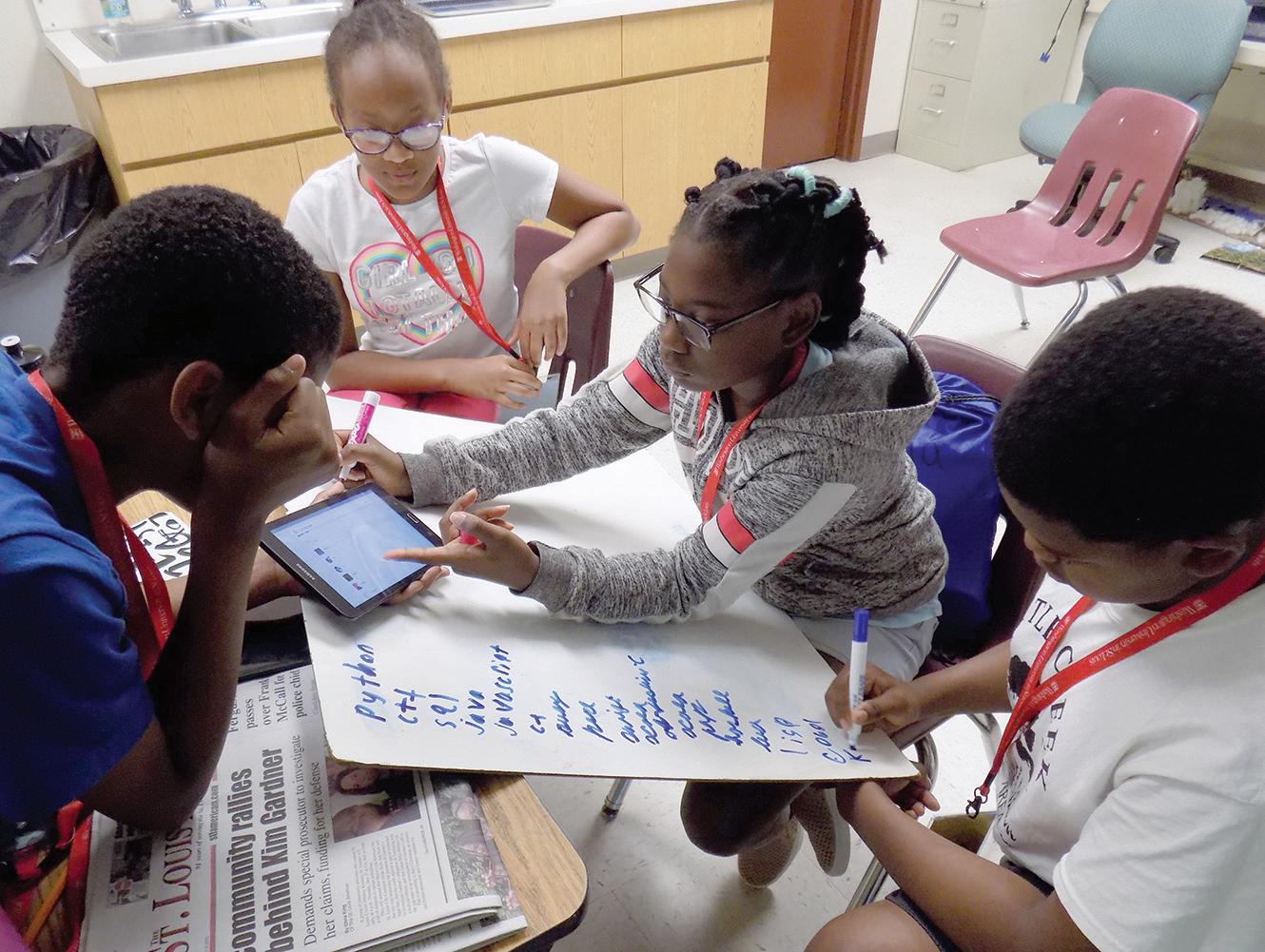
Students at The American’s Summer Science Academy work in teams to discover the many different computer programming languages. Teachers,

SCIENCE CORNER
A hurricane forms over tropical and subtropical ocean water. Warm water and cool, moist air combine to create strong winds that can gust up to 200 miles per hour! These winds create waves that bring the storm on shore. Hurricanes are very destructive. They can flip cars, sink boats, uproot trees, and demolish houses.
SCIENCE CORNER

SCIENCE INVESTIGATION

Is Sugar Bad For You ?

SCIENCE STARS
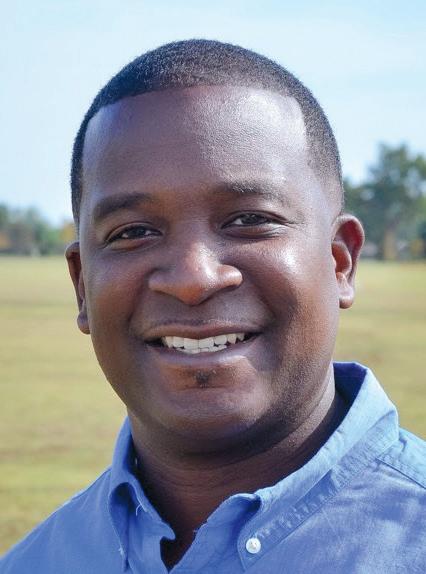
Dr. Tiara Moore
AFRICAN-AMERICAN MYCOLOGIST AND EDUCATOR:
African American Meterologist William “Bill” Parker
Are Fungi ?
In addition to powerful winds, hurricanes bring a lot of rain. (Taiwan received 114 inches of rain in three days during a hurricane.) These rains can cause landslides and flash floods.
In this experiment, you’ll create a replica of a hurricane and identify how the forces work together to create a hurricane.
SCIENCE INVESTIGATION
Materials Needed:
• 2 Soda Bottles • 3 Paper Clips
Although Americans of all ages are consuming more sugar than ever before in soft drinks and processed foods, children are more likely to choose sugar’s sweet temptation. Sugar has many forms including dextrose, fructose, corn syrup, honey, and molasses. Too much sugar can lead to health problems, such as obesity, tooth decay, hyperactivity, and more. Foods that contain a lot of sugar may taste good, but often they offer little nutritional value. When children substitute high-sugar beverages for milk and dairy products, they are at risk for lower bone density, which can lead to bone fractures. Sweetened soft drinks often have caffeine, which is a stimulant that can cause sleep issues and headaches. Finally, childhood consumption of excess sugar could be a contributing factor in the development of Type 2 Diabetes in adults. Does this mean you should completely eliminate sugar? Of
• 3 Peanuts • ¼ C. Sand • Funnel
• Water • Duct Tape
Fungi are organisms made of filaments (called hyphe) that are stacked together. Unlike plants, fungi do not have chlorophyll, so they cannot make their own food. Some fungi are parasites, which mean they live off of other organisms. Some fungi feed off of dead and decaying matter. Fungi are everywhere in the environment, including the soil, lakes, river and seas, air, and on plants and animals. Fungi (plural of fungus) help organic matter to decay and release carbon and oxygen into the environment. Unlike plants, fungi do not have
SCIENCE INVESTIGATION
Procedure:
q Fill one bottle with the paperclips, peanuts and sand. These represent the debris and help make the movement of water easier to see.
In this experiment, you will learn about solutions as you add sugar to water of different temperatures.
• 10x10 square centimeter grid • Ruler Process:
w Place the funnel in the mouth of the bottle and pour water into the bottle until it is 3/4 full, then remove the funnel.
Materials Needed:
q Wet one slice of bread enough to make it moist and place it in a bag. Seal the bag very tightly.
• Sugar cubes • Cold water in a glass • Hot water in a glass • Spoon for stirring
e Turn the second empty bottle upside down and hold it over the first bottle so that the mouths of the bottle are aligned. The bottles will look like an hourglass.
Procedure:
w Place the two other slices of dry bread in two separate bags and seal them, as well.
q Make sure the glasses have an equal amount of water
r Tape the seam, pressing the duct tape firmly to
e Place the bag with the wet slice of bread and one of the bags with a dry slice of bread in a dark place, such as a closed cabinet or closet.
Hurricanes can last a few hours or several days. Most hurricanes occur during the fall months. How can you stay safe? Have an evacuation plan and an emergency kit prepared. Meteorologists can track these storms and keep you informed. For more hurricane facts, visit: http://www.sciencekids.co.nz/ sciencefacts/weather/hurricane.html.
In this experiment, you will learn how mold grows best. Mold is an important fungus that has several uses, including breaking down dead organic material. Some purified molds are actually used as an antibiotic to treat illnesses.
r Place the third bag with a dry slice

z A hurricane has moved 456 miles in 6 hours. How many miles per hour is the hurricane traveling? ______ If it continues to travel at that speed, how far will it travel in 10 hours? ______
MATH CONNECTION
MATH CONNECTION
leaves, stems, or roots. Fungi use spores to reproduce. One common type of fungus is the mushrooms you find on your pizza. Mold, yeasts, and mildew are also types of fungus.
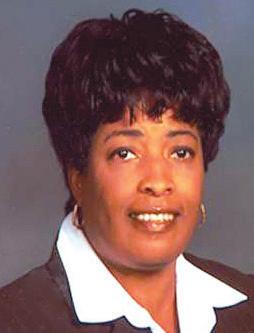
Jeanette Jones
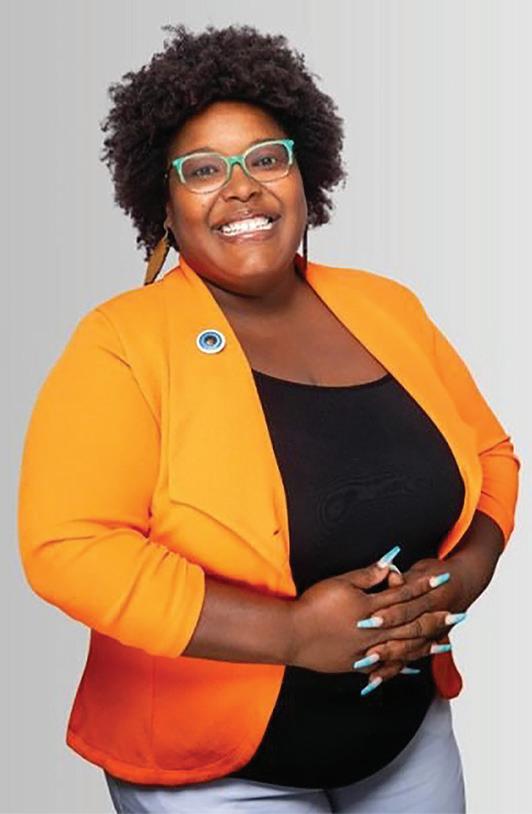
Dr. Tiara Moore is a scientist who explores the ocean and helps make sure everyone can be part of caring for it. She was born in Philadelphia, Pennsylvania, and grew up in Greenwood, South Carolina. She earned a B.S. in Biology from Winthrop University, then got her M.S. in Biology with a concentration in Environmental Science at Hampton University. Later, she earned her Ph.D. from the University of California, Los Angeles (UCLA).
William (Bill) Parker grew up in New Orleans. He graduated from JFK High School, which focused on math, science, and engineering. Parker was interested in hurricanes at a young age, but he became interested in the weather after a high school statistics class. In this class, he learned how to predict the chance of rain. Parker wanted to attend a historically black college/ university (HBCU), so he chose Jackson State University to study meteorology. He graduated with his bachelor’s degree, in 1994.
course not. Sugar is a form of energy. The key is to eat a balanced diet and limit the amount of added sugar. According to Family Education magazine, children are eating up to seven times the daily recommended amount of sugar. The American Heart Association recommends 6-8 grams of added sugar a day for a school aged child. Keep in mind that sugars are found naturally in fruits, dairy products, and whole grains. These sugars also offer many nutrients and health benefits. These are not added sugars. Beware of hidden sugars in fruit juices, cereal, yogurt, and flavored milk.
Learning Standards: I can read nonfiction text for main idea and supporting details.
For More Information, Go to: https://kids.kiddle.co/Fungus
Learning Standards: I can read nonfiction text to gain background information about fungi.
create a watertight seal. Continue taping 1 to 2 inches above and below the seam.
Growing Mold!
t Hold the bottles by the middle and lift the jugs.
Watch this video to see just how much sugar is in soda: www.sciencekids.co.nz/videos/experiments/sugarinsoda. html For more information, read: http://toneteen.com/tools/dessert.htm
Jeanette Jones was born on September 19, 1950, in Fort Valley, Georgia. Jones graduated from Fort Valley State University in 1972 with a bachelor’s degree in biology education. In 1973, Jones received her master’s degree in botany and mycology (a branch of biology that studies fungi) from The Ohio State University. In 1976, she received her doctorate (Ph.D.) degree. She also studied at the University of Nevada, the University of California Medical School, the National Center for Disease Control-Atlanta, and the Massachusetts Institute of Technology. After graduation, Alabama A&M University hired Jones as an assistant biology professor. In 1986, she served as an adjunct professor in the College of Pharmacy and Pharmaceutical Services at Florida Agricultural and Mechanical University and worked on a project with NASA. In 1991, Jones served as the first female vice president of research and development at Alabama A&M University. She also served as President of Alabama A&M University’s Faculty Senate from 2001 to 2006. In 1992, she was appointed to the U.S. Army Science Board by the U.S. Secretary of the Army, Togo West. Since 2004 Jones has been the director of the Center for Biomedical, Behavioral, and Environment Research at Alabama A&M University. She also worked as a consultant with federal agencies to help them develop training programs to attract women and minorities to STEM education and careers.
While she was studying, Tiara discovered that the ocean and the land around it have many hidden stories to tell. In her research, she looks at how too many nutrients, like from pollution, in the water create algal blooms, change the chemical life of sediments, and hurt the variety of life in coastal areas. For example, she used “environmental DNA” or eDNA to measure what kinds of living things are in soil or water just by testing the tiny bits of genetic material left behind.
Dissolving
w Put a sugar cube into the cold water and stir until the sugar disappears. Repeat this process until the sugar stops dissolving and gathers on the bottom of the glass. Be sure to count the number of sugar cubes you added.
e Write down how many sugar cubes you could dissolve in the cold water.
x Hurricane Frederick is traveling at 86 miles per hour. If the hurricane is 129 miles from the coast, how many hours will it take until the hurricane reaches the coast? ______
A soda may be a delicious and refreshing beverage, but did you ever stop to think about how much added sugar is in one 20 oz bottle of soda? Look at the nutritional information on a bottle of soda. Note: If the container has more than one serving, multiply the number of grams of sugar by the number of servings to get the total grams of sugar in the container. For example, 27 grams sugar x 2.5 total servings = 65 grams of sugar in the entire 20 oz bottle.
c A tropical storm takes on a hurricane status when the winds reach 74 miles per hour. After three days, Tropical Storm
Questions or comments? Contact Cathy Sewell csewell@stlamerican.com or 618-910-9551 DID YOU KNOW?
y Quickly, turn the bottles over so that the water-filled bottle is on top. Set the bottles on the table again.
Learning Standards: I can read nonfiction text to learn about the pros and cons of sugar.
u Observe the water as it drains into the bottle below. The water competes with the air from the empty bottle. Both substances push to pass through the neck.
sugar
at Different Heats!
t For five days, measure the square centimeters of mold on each piece of bread through the bag. Use a grid, if possible, or a ruler. If mold covers more than half a square centimeter, it is counted as one full centimeter. If it is less, it is counted as 0 centimeters. This will give you the area of mold on each slice of bread
In 1993, he began to gain experience in the field when he worked as a student meteorologist. One year later, he was a meteorologist intern at Shreveport. In 1998, Parker became a general forecaster, and ten years later, a lead forecaster. In 2012, he became a warning coordination meteorologist (WCM). There are only 122 people with this title in the United States, and Parker was the only African American. Parker is currently the meteorologist-in-charge (MIC) at the National Weather Service, leading a team of 26 weather professionals. Parker is also very active as a volunteer in his community. He is a member of the Shreveport-Bossier Mayors’ Prayer Breakfast Executive Committee, La Cima Bilingual Leadership Academy, Bossier Chamber of Commerce Education Committee, Volunteers for Youth Justice, and a coach for Bossier Parks and Recreation. Parker is also an associate minister at Elizabeth Baptist Church in Benton, where he has been serving the congregation since 1997.

y At the end of a week (5 days of measuring) or longer, use your final results to say what percentage of the bread was covered in mold. Make a table or graph to display the information.
i Turn the bottles over again. This time, shake the bottles in a circular motion. Be sure to keep the bottles vertical.
In 1975, Jones was listed in the World’s Women’s Who’s Who and she was named an Outstanding Young Woman of America in 1978. Beta Beta Beta National Biological Honor Society awarded her the distinguished service award. Jones also received the Significant Service Award from the NASA Space Life Sciences Training Program and the Extramural Associate Research Development Award from the National Institute of Health. In 1990 and 2006, she was named Woman of the Year at Alabama A&M University and was given the Outstanding Leadership Award by the Faculty Senate. The U.S. Army presented Jones the Commander’s Award for Outstanding Civilian Service as a member of the Army Science Board.
But Dr. Moore’s work is not just about lab research and field studies she is also a strong voice for inclusion. In 2020, she created the nonprofit organization Black In Marine Science (BIMS) to support Black scientists who work in marine and aquatic fields, and to welcome people from backgrounds that are often under-represented in ocean science. Her goal is to make the ocean a place where everyone belongs to study it, protect it, and enjoy it. For young students, Dr. Moore’s story shows how curiosity, courage, and community can lead to amazing things. She changed her mind during college from becoming a doctor treating people to becoming a scientist protecting nature and the oceans. She shows that even if you feel different or you don’t see many people who look like you in science yet, you can belong and you can help the planet. She encourages you to ask questions, dive into what you love, and share your ideas.
o The water will form a vortex as it drains into the next bottle. The water will flow along the outside of the neck, while air moves quickly up through the center of the vortex. The water will drain much faster.
r Repeat the same process for the hot water. t Compare the number of sugar cubes dissolved in each liquid. Which dissolved more?
Analyze: How did water and air create a hurricane?
ELA Questions:
Discussion Questions: Dr. Jones received many awards and honors. How would you describe her achievements and her contributions to science? Dr. Jones is studying how fungi might be used as agents of war. What purpose do you think fungi serve in modern warfare? Are fungi beneficial or harmful?
What helped Dr. Tiara Moore change her mind about how she wanted to use biology, and how did that choice shape her career?
Learning Standards: I can follow sequential directions to complete an experiment. I can make observations and draw conclusions.
Discussion Questions: How much mold was on the bread? Which location had the most mold? Which had the least? What conclusions can you draw about the conditions in which mold grows? How can food manufacturers and restaurant owners use this information to help them?
Discuss: When the cold water solution becomes “saturated,” sugar starts forming on the bottom of the glass. The hot water solution has faster moving molecules with bigger gaps. This allows more sugar molecules to fit in between.
Learning Standards: I can follow sequential directions to complete an experiment. I can make observations and deductions from the results.
Math Storms!
Learning Standards: I can follow sequential directions to complete an experiment. I can display my results, make observations, and draw conclusions.
X has grown to have wind speeds of 48 miles per hour. How much faster will the winds have to become for Tropical Storm X to become Hurricane X? ______
Analyzing a Bar Graph
Rethink your Drink!
Scientists often use tables and graphs to display the results of their research. Looking at these displays, you can draw conclusions.
As we approach spring weather (and increased rain), create a bar graph that displays the amount of rain that falls for several consecutive days or weeks. (Day 1: 1.5 inches, Day 2: 0 inches, Day 3: 1.5 inches, etc.)
v Upon landfall of a Category 4 hurricane, local officials ordered an evacuation. City A has a population of 9,613, City B has a population of 5,013 and City C has a population of 3,972. How many people were evacuated in all?
Calculation: Grams of sugar ÷ 4 = teaspoons of sugar. For example, if your drink has 65 grams of sugar (÷ 4), you are drinking 16.25 teaspoons of added sugar.

and

This special Newspaper In Education initiative is made possible, and delivered to classrooms through the St. Louis American Foundation and its NIE Corporate Partners:
Discussion Questions: Which day had the most measured rainfall? Which day(s) had the least? Looking at the bar graph, what might you conclude about rain patterns in March/April? What other observations can you make?
Activity: Bring in different drink labels to calculate added sugar: juices, flavored milk, lemonade, soda, etc. Calculate the number of teaspoons of added sugar.
$115,264 in damage, City B reported $236,096 and City C reported $436,869 in damages. What was the total cost of damages rounded to the nearest thousand? ______ If the state and federal government promised $500,000 in aid, how much would the local people have to raise by themselves? ______
Learning Standards: I can use a bar graph to display information. I can use the information to make deductions and inferences.
b After citizens returned to their houses after the evacuation, reports of damage were totaled. City A reported

Discussion Questions: Were you surprised at the amount of added sugar in drinks? What is a healthy choice to drink when you are thirsty?
Learning Standards: I can add, subtract, multiply and divide to solve a problem.

Learning Standards: I can add, subtract, multiply, and divide to solve a problem.



Learning Standards: I can read a biography to learn about an African American who has made contributions in science, math, technology, or engineering.
Parker believes in serving as a role model to the youth and to recruiting African Americans in the STEM field. Personally, he has hired three African-American meteorologists. In addition, he has recruited minorities for summer intern positions. Parker has also mentored an Airline High School student for his senior project. Parker’s advice to students interested in meteorology is to take as many math and science classes as possible. Learn about summer opportunities in your community. If you are interested in meteorology, visit National Weather Service offices and serve as a volunteer or intern, and find leaders in your community to serve as your personal role models.
How does Dr. Moore combine her interest in ocean research with making science more welcoming and inclusive for others?
Learning Standards:
a person who has made contributions to the fields of science, technology,

Use the newspaper to complete the following activities:
MAP CORNER

Types of News:
Enjoy these activities that help you get to know your St. Louis American newspaper.
Activities — Who works where?
Use the front section of the newspaper to evaluate the types of news stories presented: local, national, and international. Sort the articles into the three categories and create a bar graph that displays the amount of coverage each type of news story received.
Use the newspaper to complete the following activities: Types of News: Look through the newspaper’s advertisements for sports and fitness equipment. Judging from the ads, what are the most popular forms of exercise? Discuss the benefits of each type of exercise. Create a newspaper advertisement for the form of exercise that you enjoy most. Be sure to include the benefits of exercise in your advertisement.



a picture of a building in the newspaper and tell what kind of jobs people who work in that building could have.


Interview: As a class, interview the head of the school cafeteria to find out what guidelines are used in preparing healthy foods for lunch. Then, write a newspaper story based on your interview. Be sure to include a catchy headline.

Mystery Story: Cut out several pictures from the newspaper without reading the caption. Place the pictures in a bag, and without looking, pick your mystery picture from the bag. That’s your stimulus for writing. Construct a graphic organizer to identify the 5Ws (who, what, when, where, and why) of your story by looking at your picture. Then, continue the writing process.
Problem and Solution: Over a period of weeks, clip articles from newspapers that deal with problems and issues facing your local or county government. Discuss the reasons for these problems and how the government hopes to solve them.
Learning Standards:
Learning Standards: I can use the newspaper to locate infor mation. I can categorize and summarize that information.
I can use the newspaper to locate information. I can categorize and summarize that information.
Learning Standards: I can use the newspaper to locate information. I can discuss problems and solutions. I can identify types of jobs. I can make text-to-world connections.




Penicilllin mold commonly grows on fruit
SCIENCE CORNER
Students Aariyah Thompson and Savannah Fisher, in Ms. Stovall’s firstgrade class at Gateway MST Elementary School, are learning how to construct a series circuit.
Photo by Ms. Stovall
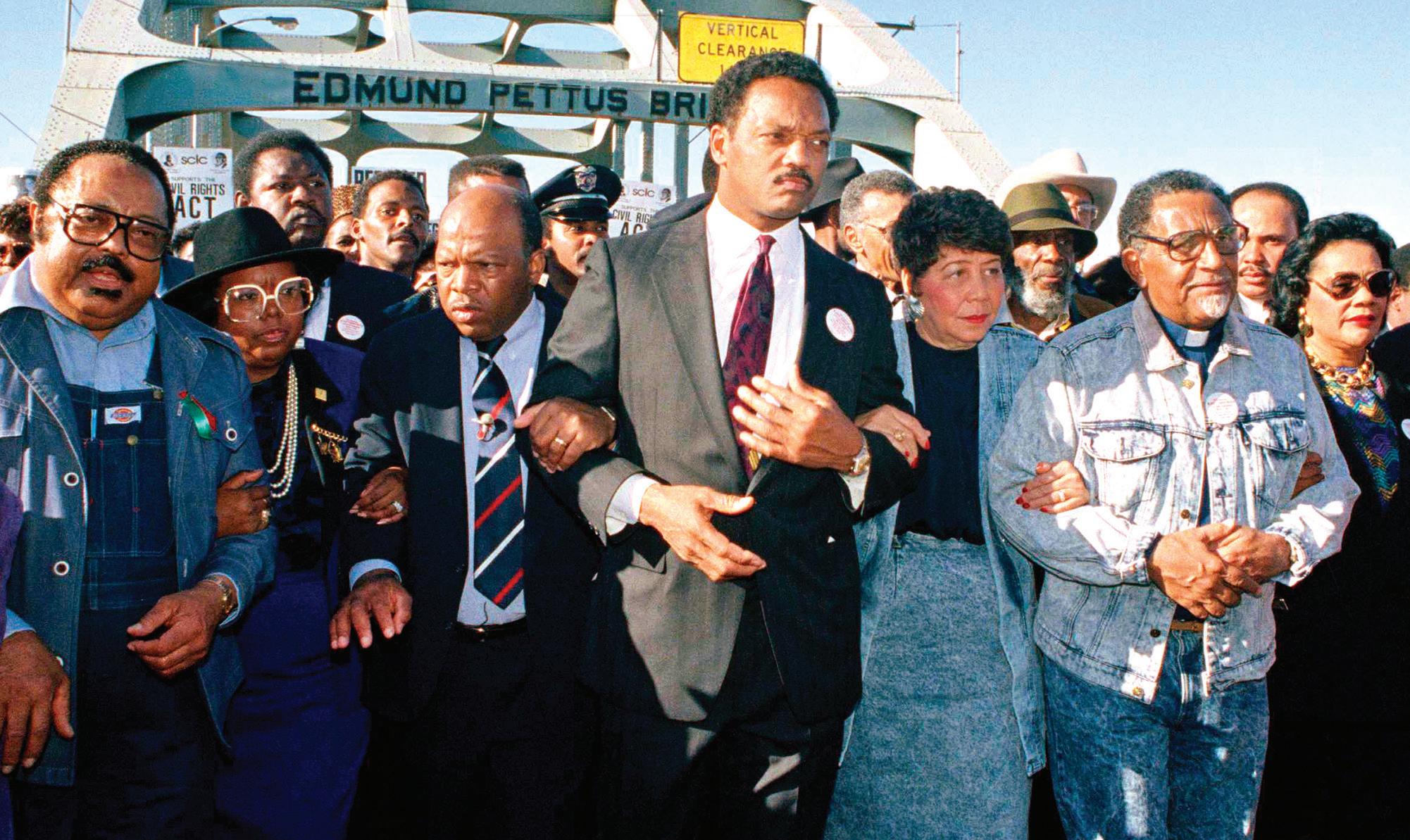
Jackson
he elevated the voices of the voiceless — from his presidential campaigns in the 1980s to mobilizing millions of new voters — leaving an indelible mark on history.”
Though a native of Greenville, South Carolina, Jackson made Chicago his home and political base. He rose to national prominence as one of the Rev. Dr. Martin Luther King Jr.’s most trusted lieutenants. He went on to build Operation PUSH and the Rainbow Coalition, help elect Chicago’s first Black mayor Harold Washington, and launch two groundbreaking presidential campaigns that expanded the political imagination of a nation.
“Keep hope alive,” his signature phrase, became embedded in American political culture — equal parts sermon, strategy and summons.
But in St. Louis, Jackson’s legacy carries an especially personal weight.
“He was a spellbinder — and a man who loved his people,” said Donald M. Suggs, publisher of The St. Louis American. “And he went well beyond lending his voice from afar. Over the decades, he showed up in St. Louis — physically, consistently — standing with our communities, marching for our causes. I know the world wants us to persevere in these difficult days, marked by a dismantling of hard-won civil and voting rights and the reversal of DEI programs.”
A transformational political force
Jackson’s impact on American politics reverberated across decades, but it also left unmistakable marks on St. Louis’ political memory.
On March 8, 1988, St. Louis voters made clear that Jackson’s support for the city was mutual.
On Super Tuesday, Jackson defeated Missouri’s “native son,” Richard Gephardt, within the city limits by an overwhelming margin. While Gephardt ultimately carried the state comfortably, Jackson secured roughly 54% of the vote in the City of St. Louis compared with Gephardt’s approximately 36% — a stunning and symbolic result that reflected Jackson’s resonance with the city’s Black electorate and progressive base.
Political strategist and St. Louis American col-
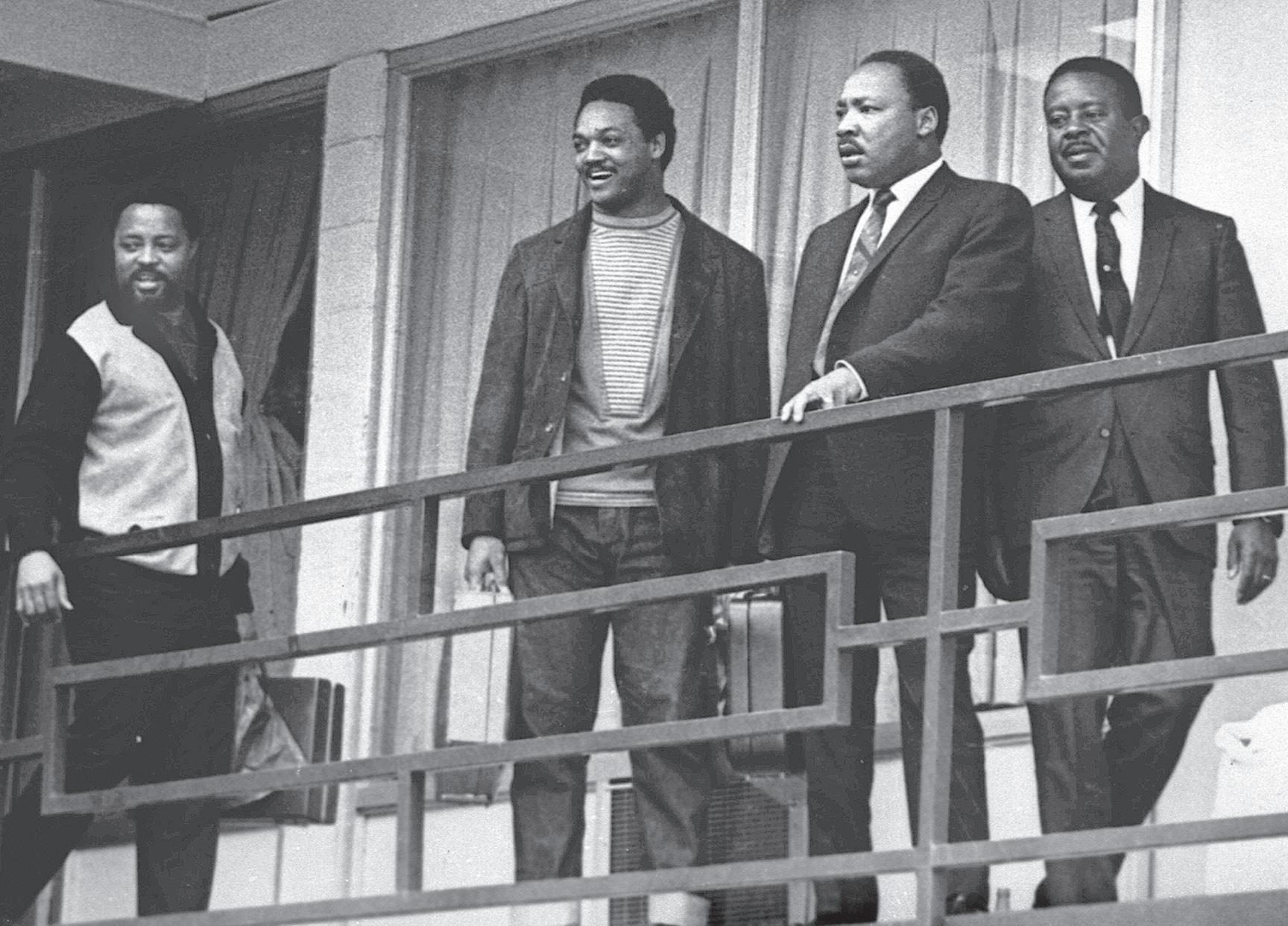
umnist Mike Jones said Jackson’s political influence cannot be overstated.
“I’ve heard Dizzy Gillespie say this about Louis Armstrong: ‘If it ain’t no him, ain’t no me,’” Jones said. “I’ve heard Kobe say the same thing about Michael Jordan. I will go ahead and say it for President Barack Obama: If there’s no Jesse, there’s no Barack.”
St. Louis voters made clear that support ran both ways.
“Not as a Black man speaking only to Black people, but as a Black man speaking to a broad base of America — and getting them to be with him,” Jones said. “The Rainbow Coalition was a real thing. Jesse Jackson is a transformational political figure in multiple ways. In many ways, he was the political evolution of Dr. King.”
Former St. Louis Mayor Freeman Bosley Jr. recalled witnessing Jackson’s political magnetism firsthand.
“He was larger than life,” Bosley said. “He would come in a room, and he never met a stranger.”
Bosley said Jackson’s presence carried lessons that extended beyond politics.
“I learned how to read a room from him, and then how to work a room,” Bosley said. “He could make everybody feel like they were part of something bigger.”
Born Oct. 8, 1941, Jackson’s earliest years
were shaped by the contradictions of the Jim Crow South.
He was the son of a teenage mother and a father who lived next door — a family structure that subjected him to stigma but also instilled a fierce sense of identity and resilience. Jackson often spoke of how those early experiences sharpened his awareness of injustice and fueled his determination to fight it.
By his teenage years, Jackson was already stepping into activism.
He led marches to integrate local libraries and theaters, and as a student at North Carolina
A&T State University, he became a campus organizer whose leadership caught the attention of national civil rights figures. That path led him to King, who brought Jackson into the Southern Christian Leadership Conference and entrusted him with key roles in the movement.
Jackson joined major campaigns of the 1960s, including the Selma-toMontgomery voting rights march.
He was in Memphis in 1968 when King was assassinated — a defining moment that reshaped the movement and propelled Jackson into national prominence.
A voice that blended sermon and strategy
In the years that followed, Jackson built organizations that fused activ-
ism with negotiation.
Through Operation PUSH, later the Rainbow PUSH Coalition, Jackson combined protest, voter registration drives and corporate pressure campaigns to demand expanded economic opportunity and political participation.
A gifted and rhythmic orator, Jackson became known for language that carried the moral urgency of the Black church into political institutions and boardrooms.
“Keep hope alive.”
“I am somebody.”
Those affirmations echoed across churches, convention halls and protest marches, offering a public vocabulary of dignity and possibility.
For St. Louis author and public speaker Denise Sneed Williams, Jackson’s voice carried deeply personal meaning.
She recalled a 2013 phone call shortly after her breast cancer diagnosis.
The voice sounded familiar.
“Who is this?” she demanded.
“This is Rev. Jesse Jackson,” the caller replied gently. “Mother, may I pray for you?”
“As he began to pray, I recognized that thundering strength,” Sneed Williams said. “Wrapped in fatherly care.”
Servant-leader beyond the spotlight
Jackson’s influence extended across sectors, including business and
corporate leadership.
David L. Steward Sr., founder and chairman of World Wide Technology, met with Jackson in Chicago several years ago.
At the time, NASCAR driver Bubba Wallace was working to establish himself at the sport’s highest level and was receiving support from World Wide Technology and the Steward Family Foundation.
“Rev. Jackson was all that Bubba and I could expect: full of grace, support, strength and encouragement,” Steward said. “Rev. Jackson was the very definition of servant-leader. He was selfless in his devotion and service to those in need — people who were overlooked or pushed aside.”
‘A national crisis manifested in Ferguson
Jackson’s commitment to St. Louis was perhaps most visible in 2014, after the fatal police shooting of Michael Brown in Ferguson.
He arrived during the earliest days of unrest — walking, praying and listening alongside residents as the world watched.
“This is a national crisis that has manifested in Ferguson,” Jackson told The American at the time. “These kids need education, skills, job training, jobs, scholarships to college.”
He stood beside Sharpton at Brown’s funeral, weeping openly as
the casket was loaded into the hearse.
“This is not a unique situation,” Jackson said then. “It’s a prototypical American situation.”
Michael McMillan, president and CEO of the Urban League of Metropolitan St. Louis, was on the frontlines with Jackson during those days.
“Getting a chance to interact with him was always a very special occasion,” McMillan said. “It was like having a moment in history — talking with a living legend who had done so much for so many for so long.” Even as illness weakened his voice, McMillan said Jackson remained steadfast.
“To know all that he had done in the ’60s and ’70s, and then to stand alongside him still being involved in 2014, it was inspirational,” McMillan said. “In Ferguson, we saw someone still willing to commit himself to social justice and to making a difference.”
In Ferguson, Jackson lent his presence to a community that had become the center of a national reckoning over race and policing — praying with residents and marching alongside demonstrators.
Legacy beyond a lifetime
Jackson’s influence extended far beyond U.S. borders through diplomatic and human rights efforts that expanded his stature as one of America’s most recognizable civil rights figures.
His presidential campaigns energized millions of voters, reshaped political conversations and expanded the perceived boundaries of Black political leadership. Even as illness limited his mobility, Jackson continued to appear at rallies and public events tied to voting rights and social justice.
Rev. Jesse Jackson’s story is woven into the fabric of American history — from the front lines of the Civil Rights Movement to the global stage, from Chicago’s City Hall to the streets of Ferguson. His voice rallied millions. His campaigns expanded democracy. His presence comforted the grieving and emboldened the marginalized. And even when his health faltered, he kept showing up.
Sylvester Brown Jr., Alvin
and
contributed to this report.
Continued from A1
Civil rights figures lead marchers across the Edmund Pettus Bridge during the recreation of the 1965 Selma to Montgomer y march in Selma, Alabama, on March 4, 1990. From left are Hosea Williams, U.S. Rep. John Lewis, Rev. Jesse Jackson, Evelyn Lowery, Dick Gregory, SCLC President Joseph Lowery and Coretta Scott King.
Photo courtesy of the AP
A. Reid
Nia Hightower
Rev. Martin Luther King Jr., second from right, stands with Hosea Williams, left, Jesse Jackson, second from left, and Ralph Abernathy, right, on the balcony of the Lorraine Motel in Memphis, Tenn., a day before he was assassinated at approximately the same place, April 3, 1968.
Photo courtesy of the AP
NFL halftime shows will never be the same
By Jamala Rogers
After witnessing Bad Bunny’s long-awaited performance, I wondered who could top this? Maybe that’s not the right question, because I wouldn’t say that Bad Bunny topped Kendrick Lamar. The last two half-time performances have been more than mere entertainment. Both have centered resistance to American colonialism and capitalism.
We’re still talking about Lamar’s 2025 halftime show, and we’ll be talking about Bad Bunny’s for months to come. Both artists have challenged our critical thinking with their use of symbolism and layered messages woven into the cultural moments that occurred between touchdowns. This was a
Davis
Continued from A1
homeschooling to ensure children learn history, identity and cultural narratives that may be underrepresented or misrepresented in traditional curricula. She also sees it as a way for families to embed spirituality, ethics and cultural traditions more intentionally.
“Being homeschooled by my own parents, I had my own type of Africancentered education at home,” Davis said. “It almost served as a healing balm to the racism and microaggressions I was getting at the all-girls high school that I attended.”
Today, Davis homeschools her own son.
Her service through the Circle of Excellence Network has also created opportunities beyond St. Louis.
Davis helped students from the African-centered Aya Education Institute in Atlanta present ethnographic research in Havana.
“I basically turned what they were doing in the classroom into research focusing on the decolo-
Captains
Continued from A1
For the women who earned the promotion, the moment is both historic and personal. The St. Louis American spoke to three of them.
For Capt. Licole McKinney, the title carries weight.
She describes the promotion not as recognition, but responsibility — the culmination of years spent preparing, training and mastering the craft. It represents trust: the trust to make decisions under pressure, lead firefighters through danger and serve the community with integrity.
McKinney’s path to leadership was far from linear. Years ago, she experienced homelessness while raising a toddler — an instability that reshaped her perspective. She later entered the fire service through EMS, where critical thinking and emotional control became daily requirements.
Those hardships grounded her leadership philosophy. “I’m firm but fair, disciplined but human. Circumstances do not define capability,” McKinney said.
For Capt. Jessica Jackson, the promotion represents validation.
She ranked in the top tier among roughly 2,000 applicants on the firefighter entrance exam. That
refreshing change from the mindless entertainment that we are often presented with daily.
The world recognized the genius of these performers long before they stepped onto the prestigious international halftime stage of the National Football League. Their brilliance was evident in every aspect of the productions, from the choreography to the song selection. They have elevated lyrical, visual, and sonic creativity to new heights. There is debate over which artist got the most views, but I think that’s a futile conversation. So is any debate that compares the two performances. A more relevant discussion is the political impact that these two cultural icons are having on global con-
nization of institutions and Black communities,” Davis said.
She recalled that when the students presented at the 2018 Caribbean Studies Association conference, they were among the youngest participants.
“Conference-goers were so intrigued that these African American high school students were presenting at a professional conference that there was standing room only,” she said.
Davis’ interdisciplinary research examines the experiences of marginalized groups, research ethics, STEM education, community engagement, AI use in pedagogy, home education and spirituality in the workplace and other learning environments.
A St. Louis native, Davis studied psychology at Webster University before completing a master’s degree in public administration at the University of MissouriKansas City. While pursuing a second master’s degree in higher education, she discovered her interest in developing STEM curriculum for middle and high school students.
“I was particularly interested in forming a
result built a confidence she didn’t realize she had. But the academy — and the job — transformed her perspective.
Firefighters, she says, are invited into people’s worst days. Bringing calm and skill to those scenes convinced her the work was more than employment — it was responsibility.
Jackson admits she once considered stepping away after the promotional process stalled.
“I had to separate politics from purpose. The citizens still needed service. The calling hadn’t changed,” Jackson said. Instead, she leaned in, taking additional classes and completing her bachelor’s degree in 2024.
Now, she says, the respect she’s received from fellow firefighters means more than the title itself. Respect, she notes, is earned.
Capt. Cicely Tucker’s journey reflects persistence.
She left college during a high-risk pregnancy but later balanced paramedic school with studying for a 2013 promotional exam. She passed in the top 15%, but it wasn’t enough to advance.
Retesting in 2024, she placed in the top 20 with support from family and a mentor. Today, her two children are in college — and Tucker sees her promotion as proof that preparation and faith eventually align.
sciousness.
Kendrick Lamar, who once struggled with stuttering, is now the most decorated rapper of all time. Not only has he won the most Grammys ever, but Kendrick has won many other music awards, from Emmys to MTV to BET.
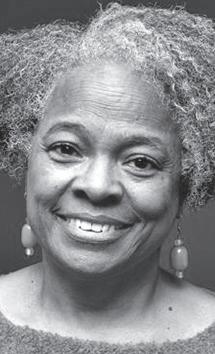
The Pulitzer Prize winner started his own independent recording label, helping other artists tap into their musical talents. Because of his humility, most people don’t know about his generosity in the community, both in time and money.
Born Benito Osario, Bad Bunny rose from humble beginnings to achieve extraordinary
success. His meteoric rise from grocery bagger to Grammy Award winner is unparalleled. He made Grammy history when his all-Spanish album Debí Tirar Más Fotos won Album of the Year. Bad Bunny continued to make history last year when his music reached nearly 20 billion streams. His unshakable ties to Puerto Rica and the love for his people inspire Bunny’s generous support for his people.
Kendrick and Bad Bunny are using their global status to raise consciousness among primarily Black and Brown people. They both use
their lived experiences and their respective cultures to expose racism and colonialism, while at the same time lifting the beauty and resilience of their communities.
Considering the icons’ global fan base, the NFL may be questioning whether they want to awaken sleeping giants despite the mega millions they generate from the Super Bowl. Lamar may be considered Black and subversive, but it’s Bad Bunny who has to wear a bulletproof vest and endure death threats. The music and its impact are dangerous. How will the corporate NFL approach next year’s Super Bowl entertainment for halftime? Will Trump and his MAGA monsters put pressure on the outspoken artists who are critical of
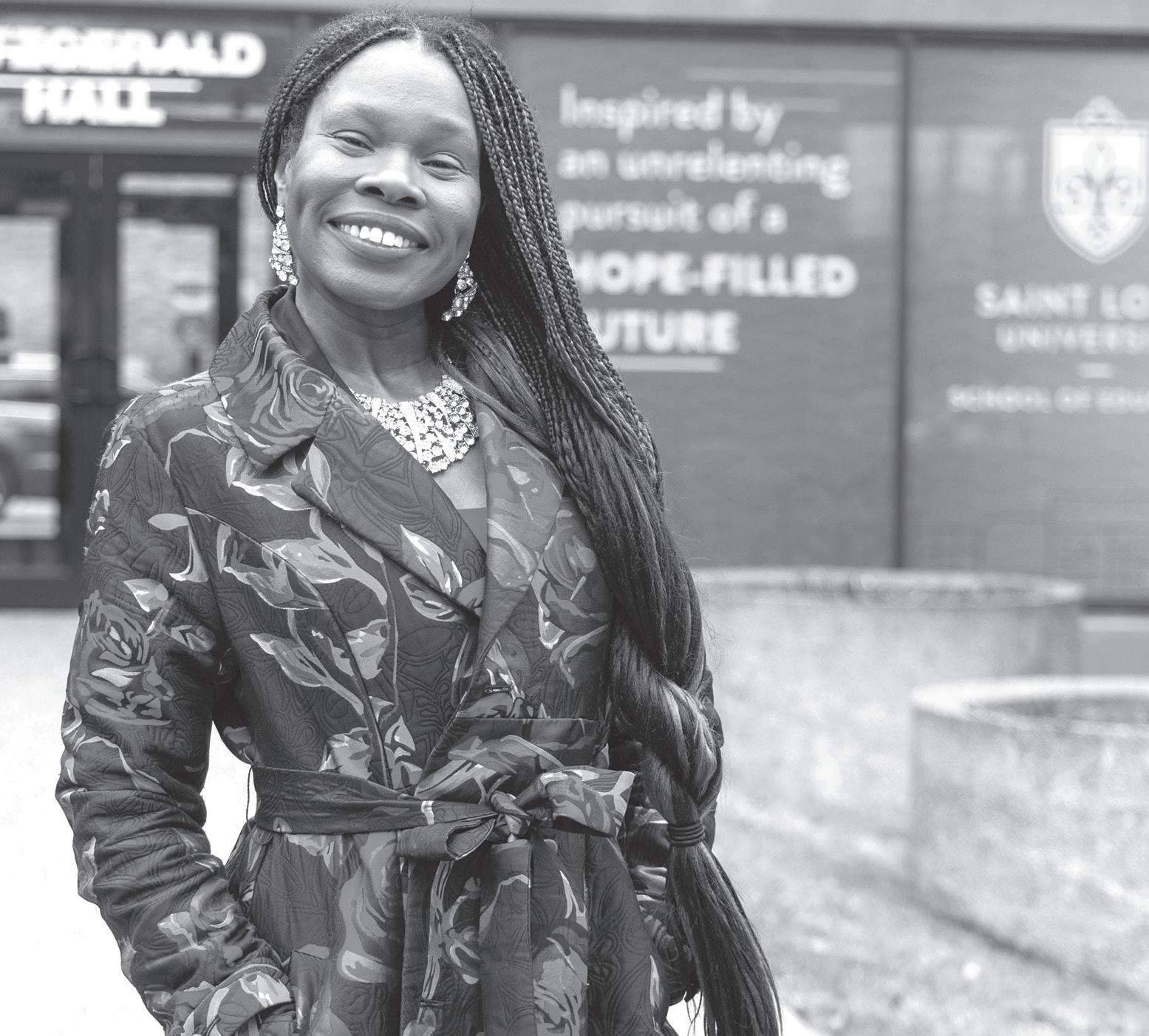
STEM curriculum for students that would make them more ready and successful in higher education,” Davis said. “I was really interested in bridging the gap between high school and higher education.”
Her mentor, the late Dr. Carolyn Thompson, encouraged her to pursue a doctorate.
“She basically said the master’s degree was a good start,” Davis
Her earlier service in the U.S. Navy shaped her leadership style.
“The Navy sharpened my focus, discipline and attention to detail,” Tucker said.
Since joining the department in 2007, Tucker says progress for women has been uneven. The number of active women firefighters has declined, accommodations in engine houses remain limited, and the perception that firefighting is “a man’s job” persists.
Even so, she believes these promotions highlight the value women bring.
“There’s no other job like it,” Tucker said. “I wouldn’t change my contribution or my role within the community.”
Across their stories runs a common thread: mentorship.
McKinney credits seasoned firefighters and organizations like the Firefighters Institute for Racial Equality. Jackson points to mentors and national networks where representation reinforced possibility. Tucker describes the fire service as a second family — bonds that endure through challenge and change.
This year’s promotions underscore both progress and unfinished work. While 12 Black captains advanced, no Black firefighters were promoted to battalion chief.The women say advancement at all levels remains
recalled. Davis went on to complete her Ph.D. in educational policy studies on full scholarship at the University of Illinois Urbana-Champaign.
The award-winning educator is believed to be the first African American woman to earn tenure and full professor rank in the history of SLU’s School of Education.
In addition to achieving tenure, Davis has pub-
imperative. Their paths could not be more different — from homelessness to command, from academic detours to
Dr. Dannielle Joy Davis stands outside Fitzgerald Hall at Saint Louis University’s School of Education on Feb. 17, 2026.
the U.S. government? Will the NFL owners whose names have turned up in the Epstein files have to bow to Trump and tame halftime? There are many questions about how this country will look and act in the year ahead. The current trajectory suggests more upheaval and suffering are ahead. Rhythmic, affirming music with powerful messages can help shape the resistance movement against racist oppression at home and imperialist exploitation abroad. We don’t have to learn Spanish; we just need to get more organized. Jamala Rogers is an opinion writer and one of the founding members of the Organization for Black Struggle, based in St. Louis.
“There’s so much that we can learn from our brothers and sisters on the continent of Africa,” Davis said.
Former students say Davis’ mentorship continues long after graduation.
“Dr. Davis really pours into her mentees,” said Hannah Rose, a 2023 Saint Louis University graduate. “She goes above and beyond to ensure every student she teaches feels valued and helps them realize their own potential.”
Rose, now working as a school psychologist while completing graduate studies at the University of Missouri–St. Louis, said Davis encouraged her to pursue research and remain confident in professional spaces.
lished more than 70 refereed journal articles, book chapters and academic volumes. She has served as editor or co-editor of volumes including Black Women in Leadership and Social Justice Issues and Race in the College Classroom.
Her research and collaborations have taken her to South Africa, Senegal, Egypt, Togo, Germany, the Netherlands, Sweden, Belgium, Cuba and Ghana.
For Davis, the role of a faculty member remains rooted in three pillars: teaching, research and service.
“We all have a responsibility to do what we can to improve things for the next generation,” she said.
“I really enjoy encouraging high school youth to think of science not just for science’s sake, but to ask, ‘What does my community need?’”

paramedic school, from Navy service to city leadership, from legal challenges to earned respect. Different routes. Same
rank. And for young girls watching — especially Black girls — the message is clear: You belong here.
Jamala Rogers
Photo by Lawrence Bryant / St. Louis American

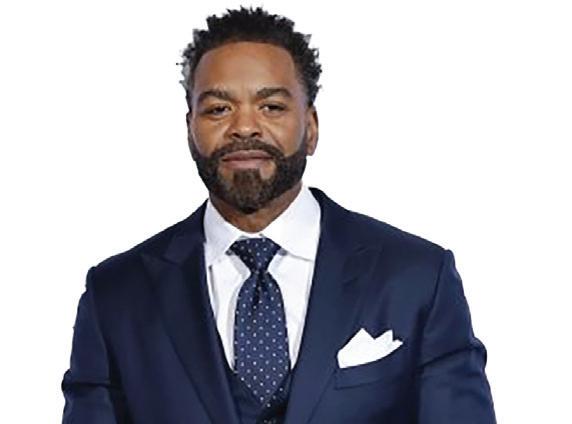
Living It
“I mean, I might rap a little bit, but you know, if Destiny’s Child needs a fourth member, I’m here.”
- Method Man on serenading Kelly Rowland in their new film “Relationship Goals.”
DJ Cuddy and BJ The DJ saved the Valentine’s Mixtape STL stop
St.
Louis’ veteran DJs kept the Chaifetz Arena crowd engaged despite delays
By Zaria Mac
The St. Louis American
The night before Valentine’s Day, fans packed Chaifetz Arena expecting a smooth, romantic ride through the Valentine’s Mixtape Tour — headlined by Ashanti and supported by Trey Songz, Boosie, Lloyd, Day 26, and more. But by 11:40 p.m., Ashanti still hadn’t taken the stage. Couples trickled out, irritation simmered, and the pacing of the show felt increasingly unpredictable.
Still, St. Louis refused to let the night fall flat — and much of that resilience came from DJ Cuddy and BJ the DJ, who kept the arena alive through every delay, transition, and a couple of missing acts. In the midst of artist absences and long gaps between performances, the DJs became the backbone of the night. DJ Cuddy’s extended set — well over an hour — turned the arena into a full‑blown party. He blended classic club anthems like “Round of Applause” and “I Think I Love Her” with newer hits such as Big Boogie’s “Pop Out,” Kevin Gates’ “Yonce Freestyle,” and DJ Khaled’s “Every Chance I Get.” At times, the Valentine’s Mixtape felt like a Cuddy takeover, and the crowd welcomed it. BJ the DJ added humor and nostalgia, joking about how to tell if you’re the “side piece” and leading the arena through sing‑alongs like Michel’le’s “Something in My Heart” and Jodeci’s “Freek’n You.” Their combined energy kept the audience engaged during moments when the show could have easily lost momentum.
The concert began on a high note with Day 26, who stormed the stage in match ing black sweatsuits and immediately


looked as youthful as he did two decades ago. He opened World,” bathing the arena in white strobes. Love then filled the air as the crowd
tapped into early‑2000s R&B nostalgia. “Imma Put It On Her” sent the crowd into a frenzy, and fans found themselves danc ing instinctively — even hitting the Nina Pop like they did in high school. They followed with “Exclusive (No Excuses),” a reminder of their “Making the Band” era, and delivered smooth har monies on “In My Bed” and “Are We in This Together.” Their performance showed why their talent has outlasted the

Costa Rica’s quiet magic
A winter escape turns into a sun‑soaked reset in the heart of Guanacaste
By Fred Sweets and Donald M. Suggs
The St. Louis American
When American Publisher Donald Suggs and I decided to hop down to Costa Rica in late January to visit our friend, former St. Louisan Bernard Jennings — now a part‑time local — we thought we were just sneaking away for a little sun shine. We had no idea we were stepping straight into the perfect antidote to St. Louis’ snow, ice, and single‑digit tem peratures back home.
Blue skies and hot sun greeted us the moment we stepped out of Daniel Oduber Quirós International Airport, named for the former Costa Rican president known for championing social welfare and envi ronmental protection. From there, we settled in for the hour‑long taxi ride ($70) along slow‑moving, often single‑lane roads to Bernard’s villa in Vista Ocotal. Costa Rica has two major airports. We chose LIR on the Pacific side to be closer to the quieter Guanacaste region. The other, SJO — Juan Santamaría International Airport — sits near the capi
tal of San José. It serves travelers heading toward the Caribbean coast and the Osa Peninsula, which The New York Times recently named one of the 52 places to visit in 2026.
Costa Rica contains 5 percent of the world’s flora and fauna within just 1/100th of the planet’s land mass — a fact that becomes real the moment you arrive. We woke each morning to the unmistakable roar of howler monkeys, one of the loudest land animals on Earth, whose calls can carry for three miles. Their presence, along with the vibrant birds and lush flowers surrounding us, reminded us daily that we were in one of
sang along to “You”, “Lay It Down” and “BedRock” by Young Money. He picked up the tempo with “Get It Shawty.” His set was polished, warm, and perfectly aligned with the Valentine’s theme. After Lloyd’s set, the show hit its longest pause. This slot likely belonged to either Plies or K. Michelle, but nei ther artist appeared. Instead, DJ Cuddy returned to the stage, refusing to let the energy dip. His ability to keep the crowd
See Valentine, B3
Black love matters
Brunch
will bring couples, singles together for a day of joy and community
By Zaria Mac The St. Louis American
Love is in the air — and the Fergusons are ready to make sure everyone feels it. Lathan and Chalana, the powerhouse couple behind Marriage Mastermynds and the Ferguson Family Foundation, are bringing their Black Love Matters Brunch back next Sunday, February 22, at the Ameristar Resort Casino Conference Center. The reception opens at noon, with the pro gram kicking off at 1 p.m.
The idea for the brunch was born during a couples retreat the Fergusons hosted to celebrate their wedding anni versary.
“The time that we spent with those couples, we recognized very soon that it was bigger than us,” Chalana said. “It was more than just an anniversary celebration; it was an opportunity to be transparent and vulnerable, to share hardships and ways to maintain mar riage, and to build a village of other married couples.”
Word of that retreat spread quickly on social media, and couples began ask ing how they could be part of the expe rience. By 2023, the Fergusons expand ed the gathering into a large‑scale celebration.
“This is an overall celebration of
Black love and excellence,” Chalana said. “One we do in conjunction with Valentine’s Day, Black Love Day, and Black History Month to capture our his tory and culture.”
Marriage Mastermynds itself was created during the couple’s 15th year of marriage, a moment when they were transitioning into empty‑nesting and watching other long‑term relationships around them shift. “We started looking at couples who were further ahead in parenting,” Chalana said. “Their chil dren were older and had left the house, and those marriages ended. We want ed to understand what happens when you get past the parenting phase and become a couple independent of raising
Photo by Fred Sweets /St. Louis American American Travels reporters Fred Sweets and Donald Suggs on Playa Ocotal in Costa Rica.
Photo by Nicholas Powell/Courtesy of Mastermynds Lathan and Chalana Ferguson at their Mastermynds 2023 Black Love Matters Brunch.
Photos by Lawrence Bryant/St. Louis American
The Valentine’s Mixtape Tour stopped in St. Louis on Friday, February 13 at Chaifetz Arena. The R&B and hip hop show was a montage of 2000s hip hop and R&B nostalgia that featured Day 26, Lloyd, Boosie, Trey Songz (below) and Ashanti (above.)
St. Louis American Calendar
STL Sites & Sounds
BLACK HISTORY MONTH ACTIVITIES
Feb. 20-21, 7:30 p.m., Jazz
St. Louis presents The MLK Suite, an original work by Victor Goines. The work will be performed by a jazz big band for the first time and feature Wycliffe Gordon, Ferring Jazz Bistro, Jazz St. Louis, 3536 Washington Avenue. For more information, visit jazzstl.org.
Fri., Feb. 27, 7:30 p.m. St. Louis Symphony IN UNISON Chorus in Lift Every Voice - Black History Month Celebration, Powell Hall, 718 N. Grand Blvd. St. Louis, MO 63103. For more information, visit https://shop.slso.org.
Through Mar. 3, Blessed by the Ancestors, an art exhibition by Brock Seals, City Museum, 750 N 16th St. St. Louis, MO 63103. For more information, visit https://citymuseum.org.
CONCERTS
Sat., Feb. 21, 7:30 p.m.
Playadors: An Evening of Jazz & Soul, Kirkwood Performing Arts Center, 210 E Monroe Ave, Kirkwood, MO 63122. For more information, visit www.thekpac.org.
Sat., Feb. 28, 7:30 p.m. The St. Louis Symphony Orchestra presents Coltrane 100: Legacy, Powell Hall, 718 N. Grand Blvd. St. Louis, MO 63103. For more information, visit https://shop.slso.org.
Sat., Mar. 14, 314 Day 20th Anniversary Celebration featuring Lil Webbie, Big Boogie, Murphy Lee and many more, The Pageant, 6161 Delmar Blvd, St. Louis, MO 63112. For more information, visit www.thepageant.com.
Fri., Mar. 20, 8 p.m. The 18th Annual Gateway Blues Festival, Chaifetz Arena, 1 South Compton Avenue St. Louis, MO 63103. For more information, visit www. chaifetzarena.com.
SPECIAL EVENTS
Sat., Feb. 21, 12 p.m.
OMNIMAX: Deep Sky, St. Louis Science Center, 5050 Oakland Ave, St. Louis, MO 63110. A recurring event, for more information visit www.slsc.org.
Sat., Feb. 21, 8 p.m. Smokus Pocus The World’s Dopest Magic Show, .ZACK, 3224 Locust St, St. Louis, MO 63103. For more information, visit www.smokuspocus.com.
Fri., Feb. 27, 7:30 p.m. Dancing with the Stars LIVE, Stifel Theatre, 1400 Market St, St. Louis, MO 63103. For more information, visit www. stifeltheatre.com.
Sat., Feb. 28, doors open at 6 p.m. The Magic House Trivia Night: Back to the 80s, The Magic House, 516 S. Kirkwood Rd, St. Louis, MO 63122. For more information visit www. magichouse.org.
COMEDY
Fri., Feb. 20, 7 p.m. Special Event: Shuler King, Helium Comedy Club, 1151 St Louis Galleria St, St. Louis, MO 63117. For more information, visit https://st-louis. heliumcomedy.com.
Fri., Feb. 20, 7:30 p.m. Damon Williams, City Winery St. Louis, 3730 Foundry Way, St. Louis, MO 63110. For more information, visit https://tickets. citywinery.com.
Fri., Feb. 20, 8 p.m. Legends of Laughter featuring Sommore, Earthquake, Lavell Crawford,

and Arnez J, Stifel Theatre, 1400 Market St. St. Louis, MO 63103. For more information visit www.stifeltheatre.com.
ST. LOUIS MUSIC SPOTLIGHT
Sun., Feb. 22, 6 p.m. Soul Sunday with Be.Be the NeoSoul, Broadway Oyster Bar, 736 S Broadway, St. Louis, MO 63102. For more information, visit www. broadwayoysterbar.com.
Thurs., Feb. 26, 6:30 p.m., The Jazz Edge Orchestra Celebrates Black American Music St. Louis Public Library – Schlafly Library, 225 N. Euclid Ave., St. Louis, MO 63108. For more information, visit www.slpl.org or call 314.367.4120.
THEATRE
Fri., Feb. 20, 7 p.m. A Brick and a Bible, Missouri History Museum, 5700 Lindell Blvd, St. Louis, MO 63112. For more information, visit https://cur8.com.
Through March 1, The Black Rep presents The Black Feminist Guide to the Human Body, Hotchner Studio Theatre, Washington University. For more information, visit www.theblackrep.org. Through March 1, The Repertory Theatre of St. Louis presents Primary Trust, Loretto-Hilton Center, 130 Edgar Rd, Webster Groves, MO 63119. For more information, visit www.repstl.org.
ART
Fri., Feb. 27 - Mar. 1, Art in Bloom, St. Louis Art Museum, 1 Fine Arts Dr, Forest Park, St. Louis, MO 63110. For more information, visit www.slam.org.
Through June 2026, The Future Is Female, 21c Hotel and Museum Hotel St. Louis, 1528 Locust St, St. Louis, MO 63103. For more information, visit https://21cmuseumhotels.com.

St. Louis’ own comedy star Lavell Crawford will be hitting the stage at home when the Legends of Laughter makes its way to the Stifel Theatre on Friday, February 20. The show also features Sommore, Arnez J and Earthquake. See COMEDY for more details.
the most biodiverse cor ners of the world.
What we did — and didn’t do
Determined to slow down from our usual breakneck pace, we turned to one of my favorite books, The Art of Doing Nothing by Veronique Vienne, and embraced its philosophy. We exer cised, swam in the Pacific, snorkeled, walked the beach, read books, and made a real effort to put our phones down and talk — actually talk — while limiting our television to ESPN and CNN. At one point, I recalled a favorite Paul Laurence Dunbar line: “Same old cronies, same old folks, same old cider, same old jokes.”
Costa Rica is synon ymous with zip lines, volcano hikes, sloths, rain forests, rare insects, and adrenaline‑packed adven tures. Full disclosure: we did none of that. We heard the howler monkeys, admired the flowers, and ate fresh fruit and fish — but this trip was about rest, not bucket‑list thrills.
Where we ate
Father Rooster Beachfront Bar & Grill
(Playa Ocotal)
Just a five‑minute walk from our villa, Father Rooster became our go‑to spot. With toes in the sand and drinks in hand,
Love
Continued from B1
kids.”
Lathan said that curi osity led them to study couples who were thriving not only in their relation ships but in family life and community impact. “We looked at couples who had not only been successful in their relationships but also successful in family life,” he said. “And those who have made an impact on the community as well as their chosen professions. Out of that, Marriage Mastermynds was born.”
Valentine
Continued from B1
moving through uncertain ty was one of the night’s biggest triumphs.
When Boosie finally emerged — dressed in Valentine’s red leath er — the audience was ready. His set was short but explosive, featuring “Wipe Me Down,” “Set It Off,” “Do the Most,” and “Crazy.” His songs weren’t romantic, but they brought the raw mixtape energy the night needed. Trey Songz shifted the tone back to romance with hot pink lighting and a string of fan favorites: “Can’t Help But Wait,” “Slow Motion,” and “I Invented Sex.” He sang along to a backing track, but it was very clear that his mic was on. His vocals were smooth and clearly live, drawing both men and women into full‑voice sing‑alongs. He kept the momentum going with “Dive In,” “Panty Droppa,” “Say Aah,” and “Bottoms Up,” delivering one of the strongest sets of the night.
we enjoyed fresh‑grilled seafood, the best patacon es we’ve ever had, and a relaxed beachfront atmo sphere perfect for lunch or dinner.
Corazón Café (Downtown Coco Beach)
Our favorite breakfast stop. Excellent coffee drinks, flawless service, and smoothies that set the tone for the day — all delivered with Costa Rica’s signature “Pura Vida” warmth.
Soda Mediterránea (Playa Coco)
Our best meal of the trip. We selected fresh fish from an ice boat in the center of the restau rant, enjoyed crisp salads, flavorful starters, strong cocktails, and a thoughtful wine list. My taste buds are already planning a return.
Getting there — and lodging
American, Delta, Southwest, and United all offer one stop flights from STL to either LIR or SJO. We recommend renting a sturdy 4 wheel drive vehi cle to explore beach towns, state parks, volcanoes and restaurants at your own pace. Costa Rica offers everything from glamp ing to luxury hotels. We stayed in a three bedroom, three bath villa rented through VRBO by our friend Bernard Jennings. Located in a secure gated community steps from the beach and one of the area’s top rated restau
Since then, the organi zation has hosted vision board events, paint parties, group date nights, and workshops designed to strengthen relationships at every stage. Lathan said the need for connection became clear as the work grew. “We didn’t realize at that moment that we had the need,” he said, “but we were beginning to recognize the need to connect with couples who have successfully navigat ed the various phases of marriage.”
Chalana added that the goal is to help couples become intentional about their growth. “Our goal is
rants, the villa sleeps six and includes a full kitchen, onsite parking, washer/ dryer, fitness center, air conditioning, and a large pool. Bernard also provides complimentary transportation to and from LIR. Search VRBO for host Bernard L. Jennings; prices vary by season.
The takeaway
Our days in Costa Rica reminded us that the best travel experiences aren’t always dictated by
to become masterminds of our relationships,” she said. “To be intentional, goal‑centered, and recog nize when we may not be on the right path — and identify solutions to get us back on track.”
This year’s Black Love Matters Brunch is open to both couples and singles, with a lively program hosted by Damon Arnold and live entertainment from The Phillip Graves Band, joined by Adrianne Felton‑King and Justin Hoskin. Keynote speaker Carol Daniel — a staple of the brunch since its inception — will return with a message rooted in

Past midnight, Ashanti finally took the stage in thigh‑high boots, a black‑and‑white fur coat, and a sleek ponytail. Her voice was angelic as she performed “Baby,” “I Found It in You,” and “Always on Time.” “Rain On Me,” which has recent ly gone viral again, had the women in the crowd singing with full emotion.
“Foolish”
itineraries — sometimes they’re built around slow ing down, reconnecting, and letting a place work its quiet magic. With its natural beauty, warm hos pitality, and easy access from St. Louis, Costa Rica offers the kind of restor ative escape many travel ers don’t realize they need until they’re already there. If you’re searching for a destination that blends serenity, scenery, and just enough adventure waiting in the wings, Costa Rica may be calling your name.
truth, wisdom, and lived experience. “She is bring ing a phenomenal con versation about marriage, love, career, challenges, and wins,” Lathan said. “It’s an opportunity to socialize and network with like‑minded individuals. Hopefully, people will walk away with a new connection.”
The brunch will also honor five couples with the Legacy of Love Award, recognizing fam ilies who model Black love and excellence in their homes, communities, and professional lives. Chalana said highlight ing these couples helps
counter the narratives that often overshadow Black relationships. “We want to show people something they may not believe in,” she said. “Young people weren’t able to celebrate it because they weren’t able to see it and had low expectations of love and relationships. So we want to debunk those myths, create an energy around hope, and let people know that they deserve more. Love never fails.” Lathan added that the brunch also creates space for men to engage in conversations they rare ly have. “Women have no problem talking with
themselves and friends about relationships and goals,” he said. “Men don’t have those conversa tions, so this is an oppor tunity not only for couples but for men who are inter ested in investing in their relationships.”
The Marriage Mastermynds Black Love Matters Brunch will take place at 1 p.m. (12 noon reception) on Sunday, February 22, at the Ameristar Resort Casino Conference Center. For tickets, visit www.zeffy. com.
She closed with
and “What’s Love,” then surprised fans by bringing out her husband Nelly. The cou ple performed “Body On
Me,” smiling and danc ing together as the arena erupted — a sweet, roman tic ending to a night that tested everyone’s patience but ultimately delivered.
Photos by Lawrence Bryant/St. Louis American Boosie’s set was short but brought the raw mixtape energy the night needed.
Above: Bernard Jennings, (left) with Veronica, the manager of Corazon Cafe in Coco, Costa Rica, and Donald Suggs.
Right: A weary hammock vendor along Playa Coco happens to be avoiding the sun with his favorite baseball cap.
Lance Harrison and Michelle Thomas of Plainfield, NJ have been enjoying the “Pura Vida” of Costa Rica for seven straight years.
Photos by Fred Sweets/ St. Louis American

RIP Rev. Jesse. Man I hate to start off so heavy again, but I would be downright lousy if I didn’t pay my respect to Rev. Jesse Jackson Sr. I know he faced all kinds of health challenges in the past several years and is no longer in pain – but that doesn’t make losing him any easier. When he said “I am somebody,” I believed him. The same goes for when he would say, “Keep Hope Alive!” Y’all, feel the same as I did when I lost my favorite granddaddy. Not surprised, but still super sad. I don’t even know where to start when it comes to giving Rev. Jesse his flowers for a life well served. I also would need the rest of Partyline – the whole paper if we are keeping it a buck – to finish. So what I will say is that the whole world owes him a debt for how he fought to level the playing field for not only Black Americans, but people in throes of disenfranchisement across the whole globe – Black, white, brown and other. I will leave it at that – and by asking y’all to please tell this girl 2026 to stop breaking my heart.
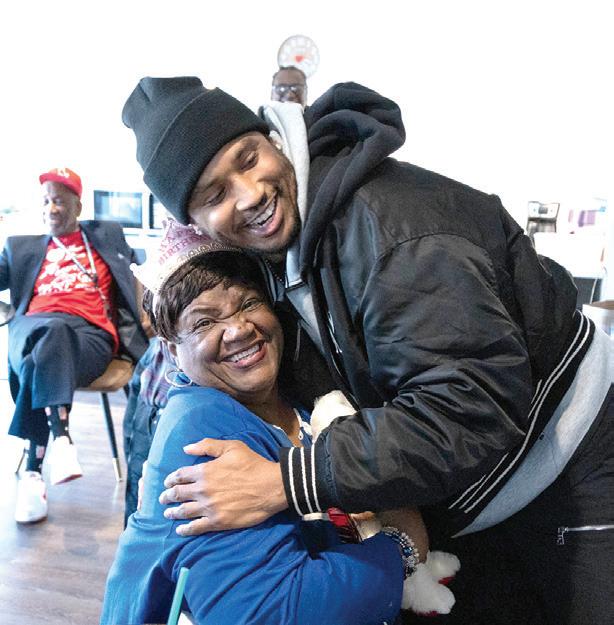
A skip in the Valentine’s Mixtape. In case you are wondering, the answer is “yes.” I am in fact writing this Partyline from my seat in Chaifetz Arena – still waiting, after all these days, to see if K. Michelle and Plies are gonna pop out and give me the rest of the show I came for. While I can’t speak for Plies, I can at least say that K. Michelle was in the building. How do I know? Because she was perched up on the Gram showing us. I even saw her with
my own eyes turning up back stage and vibing during Cuddy’s set – like the rest of us. I was excited, ready to do a lil two step to “V.S.O.P.” and sing my heart out with the crowd. I’m still waiting. The anticipation was real. Every time the lights dimmed or the DJ switched gears, I just knew that intro was about to hit and we’d hear her voice float through the speakers. But nope. Nothing. Cuddy cleared some things up for us about why K. Michelle didn’t give us at least a sip of some songs. I can’t say I blame her for not trying to power through if the sound wasn’t giving what it needed to give. What happened to you, Plies? But I won’t dive too deep into that, because as big granny used to say “celebrate the folks in your face instead of crying about who didn’t show up.” I’ll tell you who did show up – and showed out – Cuddy and BJ The DJ The night would have felt even longer had they not been doing what they do. I had time to cook a nice hearty brunch in the time between Lloyd and Boosie’s sets. When he did come out, Boosie gave us a sample instead of a full set. It hyped me up though. By the time Trey and Ashanti made their way to the stage, Valentine’s Day was looking us in the face. I got my life from Ashanti, especially when she brought Nelly out.
Eternal love for Tina. St. Louis City SC, St. Louis Symphony Orchestra and Purina did us a super solid when they put on Eternal: A Tribute to Tina Turner Sunday night at Powell Hall. The concert was held in connection to the
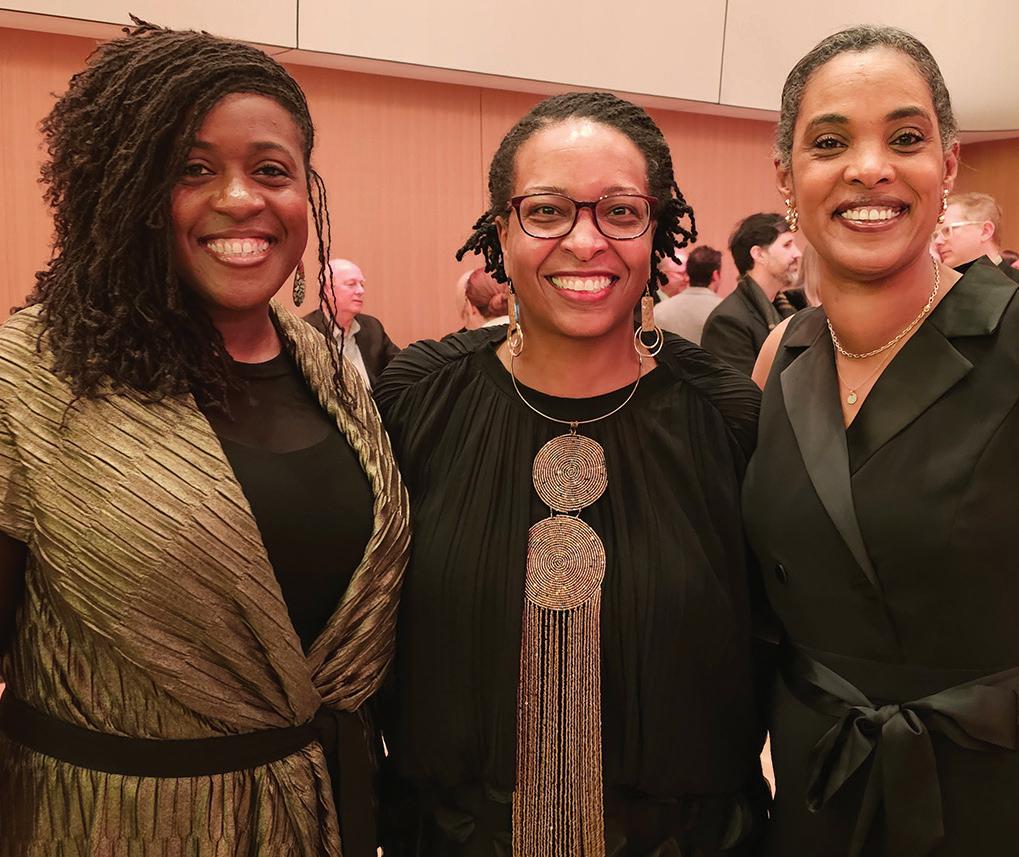
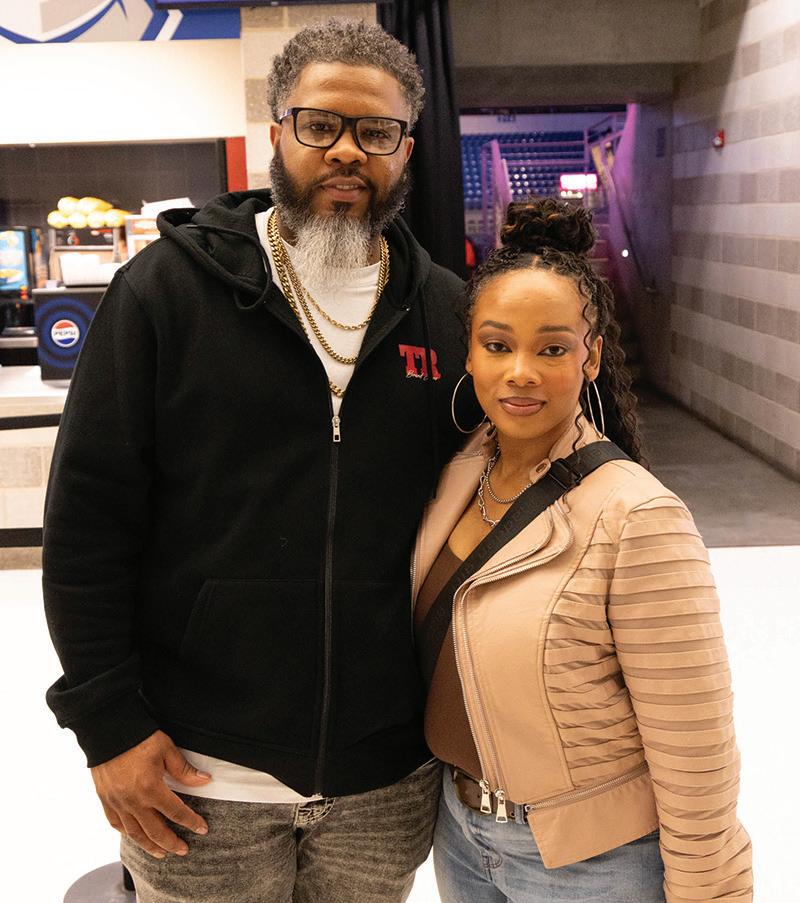

launch of their new kit (that’s jersey for the non-soccer folks –and by non-soccer folks, I mean me) designed in Ms. Tina’s honor. There is a whole line –and St. Louis City SC might get my whole refund tax check. But anyway, back to the show. It was absolutely everything! We know Kennedy Holmes has the voice. And she showed Sunday night that she also has the legs to carry Ms. Tina’s legacy forward. And can I tip my bun to Brittany Howard’s black and gold caftan. I feel like she gave me my Salute 2026 style inspo. And her hair was serving too. So imagine the joy I felt when I learned that my girl Marie Simone was the one who made that magic happen. Okay, back to the show, for real. Seeing singer Tamika Lawrence work that stage left me with one question: Why wasn’t she the star of that Broadway musical? Because

baby, she got all the way into her assignment of embodying one of the best to ever do it. It was official that she had the sauce when she had a man who looks like he does taxes for a living turning all the way up to “Disco Inferno!” And when she got to body rolling around that conductor booth and hit the floor with kicks and twists…I was like, “No shade, but were you a private dancer for real?”
Soggy Gras. If you’ve been a nervous wreck for the first part of the work week wondering if that one coworker who does the most at every work holiday party or happy hour is trying to give you The Rona or nephew norovirus, you can go ahead and relax. I’m willing to bet a winning Powerball ticket that all that hacking, sniffling, sneezing and coughing is a result of them saying “what’s rain got
to do with it,” and powering through Mardi Gras in Soulard on Saturday afternoon. It wasn’t as packed as it usually is, but more people than there should have been considering how the rain and wind decided to cut up. I wasn’t out there, but I saw all the footage, and a time was clearly still had. There were ponchos, rainbows and umbrellas out there, but not as many as there should have been. I guess they said, “The alky-hall will keep me nice and toasty.” While I was glad to see that St. Louis folks won’t always let the weather rain on their parade. Wait…y’all get what I’m saying. Anyway, those same folks had urgent cares across the St. Louis metro region filled to capacity Monday morning. I don’t have any reports to prove as much, but I know I’m right about based on the one near me. Hopefully the weather will cooperate with our Mardi Gras moment next year – but at least we know that even if Mother Nature decides to set trip there will still be some Mardi Gras ride or die folks on deck.

Photos by Lawrence Bryant/St. Louis American
“I thought it was impossible.”
— USA’s Elena Meyers Taylor after winning gold in the monobob at the Winter Olympic Games in Italy
InSIdE SportS
With Earl Austin Jr.
At Viking Hall, Vashon takes down Webster Groves
There are many beautiful high school basketball venues around the St. Louis metropolitan area. In my opinion, there is still no better place to watch a basketball game than historic Viking Hall at Normandy High School. It feels more like watching a game in a theater than a gymnasium, with the spotlight cast on the floor and the players.
Viking Hall was the setting for the Annual High School Hoops Basketball Showcase, held last Saturday on Valentine’s Day. The four-game event was presented by the Boys & Girls Clubs of Greater St. Louis.
McKinney finished with 18. Webster Groves was led by junior All-State guard Scottie Adkinson, who scored 27 points. Junior guard Jackson Tabash added 14 points, including four 3-pointers.
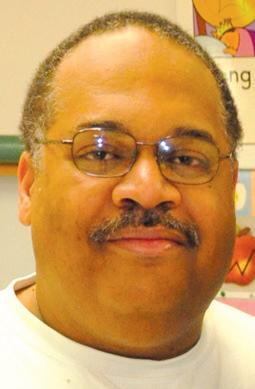
The marquee matchup featured Vashon and Webster Groves, two of the most successful prep programs in the state.
Vashon has won five consecutive Class 4 state championships, while Webster Groves has captured four state titles in the past seven years. Both teams claimed championships last season, with Vashon winning Class 4 and Webster Groves taking Class 5.
On this night, the Wolverines seized control early and secured an impressive 72-59 victory over Webster Groves.
Vashon’s big three — senior Kain McCaskill and juniors Jimmy McKinney III and Leon Powell Jr. — combined for 57 of the team’s 72 points. McCaskill led the Wolverines with 21 points. Powell added 19, and
The first game of the showcase was a girls contest between Hazelwood Central and Lutheran North. Central improved to 17-6 with a 44-40 victory. The Hawks feature one of the area’s top guards in senior Camirah Foster. In the second game, Lift for Life defeated University City 69-57. Lift for Life’s roster is loaded with talented freshmen and sophomores, suggesting a bright future. In the third game, Lutheran North defeated host Normandy 56-44. Head coach Dwayne Polk has the Crusaders trending upward in his second season.
Small-school district playoffs begin next week
District playoffs for Missouri schools begin next week in Classes 1-3. Defending Class 3 state champion Principia opens its title defense by hosting the District 5 tournament. The Panthers are heavy favorites to repeat and will enter postseason play ranked No. 1 in the latest Missouri Basketball Coaches Association poll.
The Principia girls are also among the leading Class 3 contenders. They

are the top seed in the District 5 tournament and are seeking their first state title after runner-up finishes in 2024 and 2025.
Miller Career Academy will host the Class 3 District 4 tournament.
Miller Career Academy features one of the area’s top scorers in senior guard C.J. Nelson. The Phoenix
moved down to Class 3 after competing for many years in Class 4. District playoff brackets are available at www. mshsaa.org
Mariah Coleman enjoys career night
Senior guard Mariah Coleman of McCluer
SportS EyE
With Alvin A. Reid
High School delivered one of the most remarkable individual performances in the St. Louis area this season. The 5-foot-8 Coleman scored a career-high 52 points in the Comets’ 62-52 victory over Jennings last Thursday.
The performance came on Senior Night at McCluer.
a layup attempt during Vashon’s 72-59 victory over Webster Groves on Valentine’s Day at Normandy’s Viking Hall. The game was a battle between two defending state champions. Vashon won the Class 4 title last season while Webster Groves took home the Class 5 state title.
Coleman is averaging more than 22 points per game this season. Prior to her 52-point outburst, she scored 35 points against Metro Academic and Classical High School, 32 against McCluer North, 29 against Affton and 28 against Pattonville.
KC’s ‘18th and Vine’ is looking fine these days
Kansas City continues showing St. Louis and other metro areas that it is possible to revitalize a long-neglected but historic Black neighborhood and business hub.
The Negro Leagues Baseball Museum opened in 1990 in the 18th and Vine district as a cornerstone of a prospective neighborhood turnaround. Time passed, but smaller businesses — including restaurants, barbershops and clothing boutiques — sprouted in abandoned properties. As the museum’s popularity grew, so did the neighborhood. Key to this positive momentum was a return of white Kansas City area residents. They may have known of the neighborhood’s historic past, but their support was needed.
Blues musicians in the world, is being renovated. Construction of three housing projects, including one in the nearby Parade Park neighborhood, has started or will begin this summer.
Is anything of this scale happening anywhere north of Delmar in St. Louis? Sadly, the answer is no. Last week, the Negro Leagues Baseball Museum, in partnership with Hall of Fame member Reggie Jackson, unveiled renderings for the $53 million expansion, which will include a new museum facility and hotel.
Fittingly, the press conference was held at the Paseo YMCA, where the Negro National League was created in 1920.
Several multimillion-dollar construction projects have started, and a major stretch of 18th Street is closed as the district is transformed.
The Boone Theater, an abandoned structure that once hosted the greatest
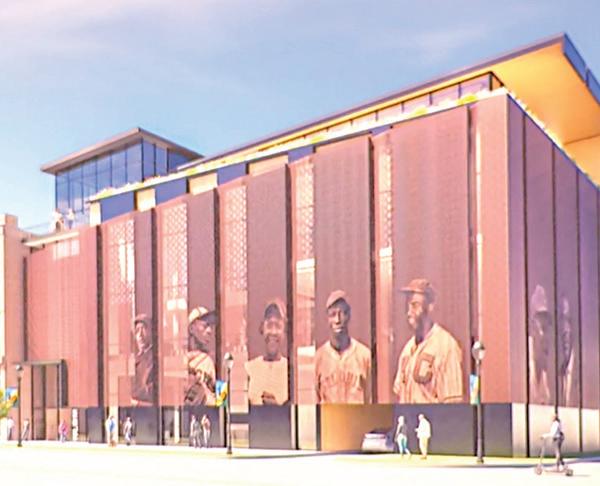
Paseo, was a beacon for Black travelers, performers and athletes.
The new museum will be constructed next to the Buck O’Neil Education and Research Center, which will be housed in the YMCA building.
The hotel is believed to be the first majority Blackowned hotel in Kansas City since the Street Hotel closed in 1960. The Street, which was at 18th and
The announcement was held on the 106th anniversary of Rube Foster’s founding of the Negro National League.
Mayor Quinton Lucas quoted Foster’s words: “We are the ship; all else the sea.”
“We are the ship in America, an America that represents and respects our differences, our cultures,
what makes us special. We are the ship that is investing and truly rebuilding our Black communities in Kansas City and around the world.”
Museum President Bob Kendrick said the project’s voyage to completion must include community support to avoid financial headwinds.
The museum has launched a $35 million capital campaign to help fund the 30,000-square-
foot expansion.
“The [Negro National League] would go on to operate for 40 years. It would not only change the game of baseball, it would help change this country,” Kendrick said.
“We are counting on each and every one of you … to help us get to this next phase.”
Michael Collins, founder and managing partner of Grayson Capital and project developer, said the Marriott Tribute Portfolio hotel will be called “The Pennant,” commemorating the Kansas City Monarchs’ first league title in the city.
Grayson is also building around a city-owned garage at 1819 Lydia Ave., near the new museum, a project that includes 150 luxury apartments and retail space.
Meanwhile in St. Louis, plans for Black neighborhood revitalization have taken a back seat to recovery from the May 16, 2025, tornado.
St. Louis is gathering ideas for growth near the National GeospatialIntelligence Agency West headquarters. Included is a proposed Negro Leagues Baseball Museum satellite
facility, which has the support of Bob Kendrick and museum leadership. Will it happen? It’s a long shot.
The Reid Roundup
Laila Edwards scored two goals during the U.S. women’s hockey team’s dominant march to the gold medal game on Thursday, Feb. 19, at the Milano-Cortina Winter Olympics. The U.S. will face rival Canada in the title game…Anthony Edwards of the Minnesota Timberwolves scored 32 points across three games in the revamped NBA All-Star Game and was named MVP. The games featured Team Stripes (established NBA players), Team Stars (younger NBA players) and Team World (international NBA players). It worked; the games were competitive… Following the Super Bowl, Seattle offensive coordinator Klint Kubiak was named head coach of the Las Vegas Raiders. Mike LaFleur was tabbed for the Arizona Cardinals job. Of the 10 open NFL head coaching positions, zero went to a Black coach.
Vashon junior guard Jimmy McKinney III blocks
Alvin A. Reid
Images of the Negro Leagues Baseball Museum’s future $53 million expansion, which includes a hotel, were unveiled last Friday at the historic Paseo YMCA in Kansas City, Missouri.
Image courtesy of Negro Leagues Baseball Museum
Photo by Lawrence Bryant / St. Louis American
Earl Austin Jr.
Black History Month2026
Interfaith march on MLK Bridge echoes earlier justice movements
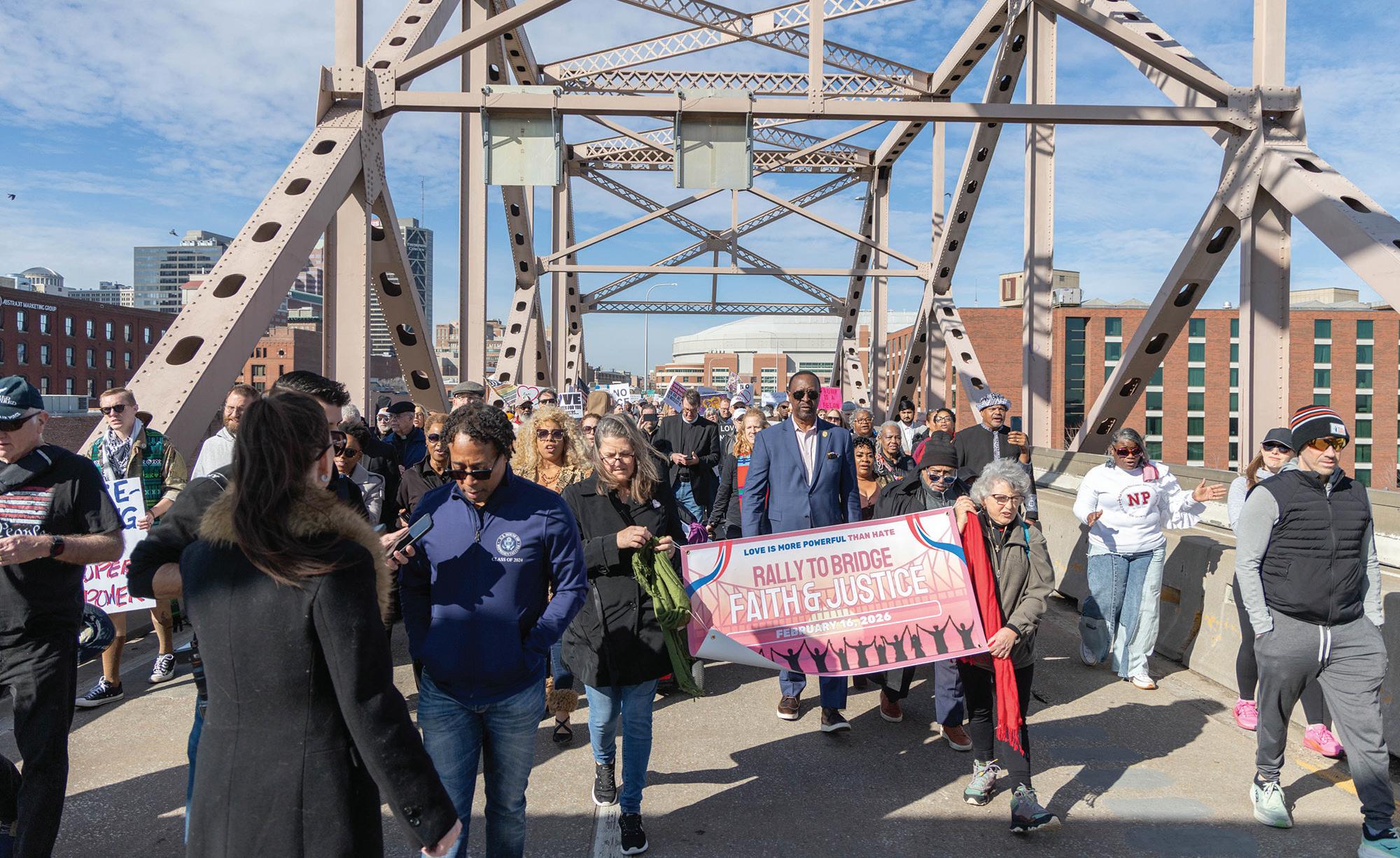
‘Unity is our strength. Together, we can make a difference.’
By Alvin A. Reid St. Louis American
As a contingent of East St. Louis clergy members and residents walked west toward the center of the Martin Luther King Bridge, they soon caught sight of hundreds of others approaching from St. Louis, two streams of demonstrators converging above the Mississippi River.
On a sunny Monday, Feb. 16, the scene carried echoes of an earlier era: faith leaders at the front, spiritual language filling the air, and a racially mixed crowd moving forward together in a public call for justice.
Herman Watson, pastor emeritus of Mount Sinai Missionary Baptist Church in East St. Louis, led the Illinois contingent. Participants joined clergy and faith leaders representing multiple traditions for the “Rally to Bridge Faith and Justice,” an interfaith demonstration denouncing
what speakers described as fear, harm and deaths associated with U.S. Immigration and Customs Enforcement operations.
Many attendees said they were protesting immigration enforcement policies
“We must speak up and speak out against fear. We are here to say, ‘Enough is enough,’ as we stand on this symbolic bridge.”
Rev. B.T. Rice
implemented under the Trump administration, which critics argue have led to increased detentions, deportations and family separations.
With the bridge closed to traffic, speakers emphasized the importance of public witness and collective action in
support of immigrant communities locally and nationwide — a message reminiscent of the role clergy and religious institutions played during historic civil rights demonstrations.
The Rev. Duane Burch, president of the St. Louis Metropolitan Clergy Coalition, urged those gathered to resist fear.
“We should not be afraid,” he said, drawing loud applause. “Unity is our strength. Together, we can make a difference.”
Rabbi Susan Talve, founding rabbi of Central Reform Congregation, presided over the rally. The program included prayer, spiritual songs and appeals for the safety and well-being of immigrants.
“We need to address the violence, fear and death. But we also must remember there is hope,” Talve said from a podium overlooking the river. “We all belong here, and we must make sure we are all safe. None of us can be free unless all of
See Protest, B9
St. Louis’ ‘borderland’ past shaped by slavery and contradiction
By Sylvester Brown Jr. St. Louis American
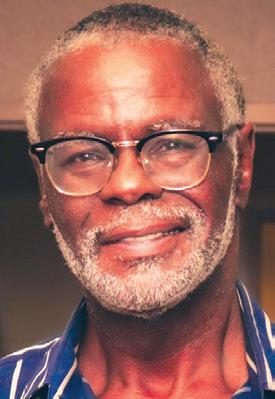
Joseph Heathcott, an urban-studies professor at New York’s New School who spent more than a decade studying and teaching in St. Louis, famously described the city as a “weird, borderland city.” He used the phrase to capture St. Louis as a place never fully North or South, yet deeply shaped by racial tension and contradiction. That characterization also applies to the city’s complex relationship with slavery. African captives were sold on the courthouse steps while “free” Blacks held trades, built neighborhoods and created what became a bourgeois Black aristocracy. Viewed through the cultural, political and spiritual trajectory of St. Louis at its founding, it is difficult to understand how the city veered so far from a path that once held the potential for more fluid racial interaction.
Black people were members of Pierre
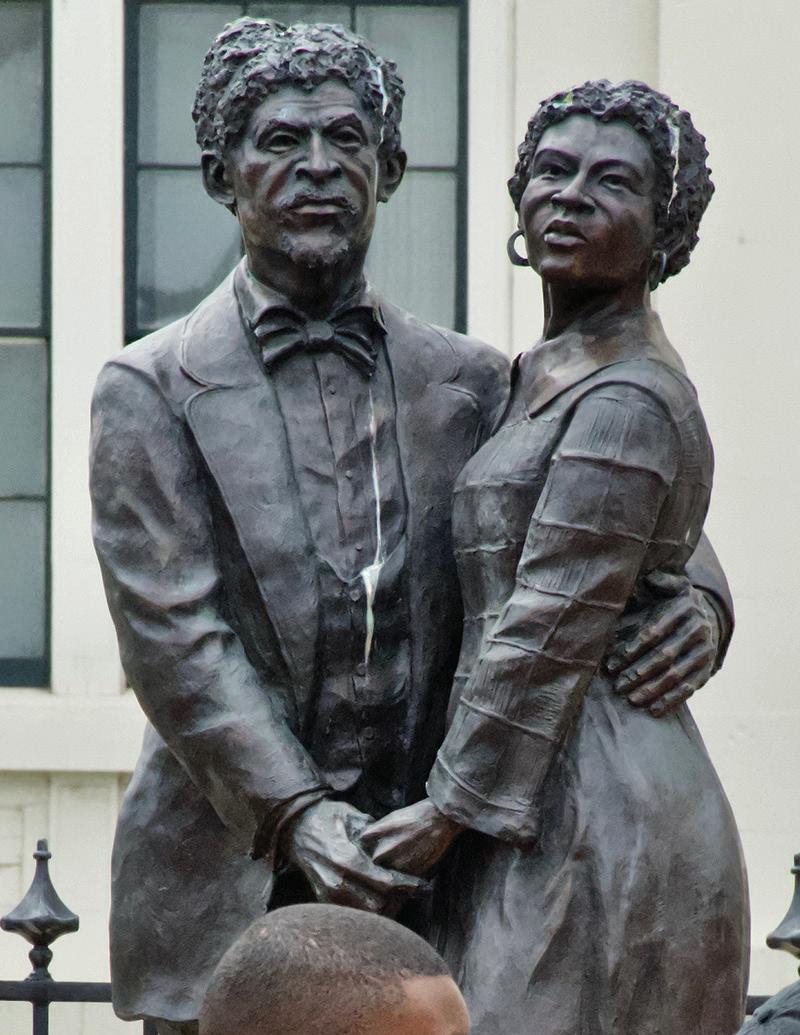
Laclède’s founding party in 1764, when he established the trading post and French village that would become St. Louis. Relations between enslaved Africans and their French masters were governed by France’s Code Noir, issued in 1685.
Heavily influenced by the Catholic Church, the code prohibited requiring slaves to work on Sundays and holidays, discouraged the separation of slave fam-
The man who shaped Black History
Month
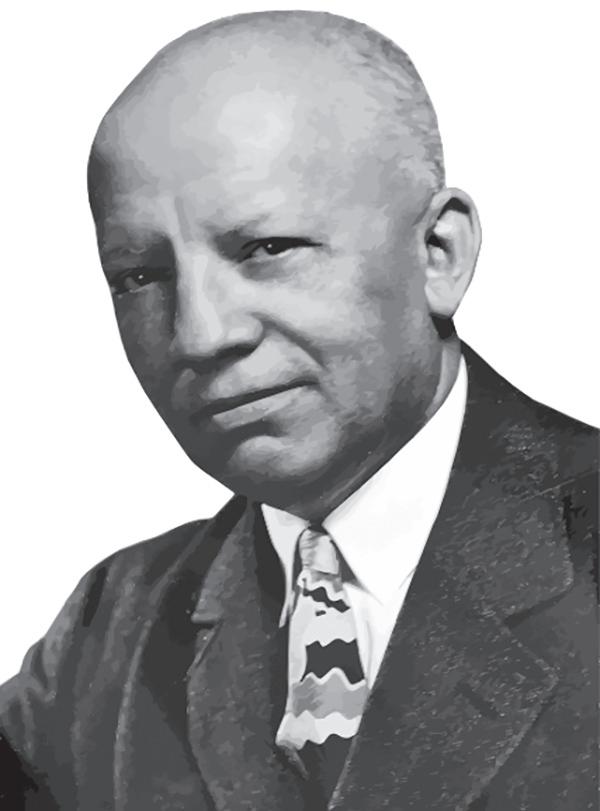
What you should know about Dr. Carter G. Woodson
By D. Kevin McNeir Word In Black
ilies and recognized a moral code that legitimized slave marriages. According to the 1799 census, St. Louis had 925 residents: 601 whites, 56 free Blacks and 268 enslaved Blacks. This unusual ratio persisted even after the United States acquired the Louisiana Territory in 1803. By 1850, St. Louis counted nearly 80,000 residents, including 2,656 enslaved people and 1,398 free persons of color. In most Southern states, enslaved people were prohibited from mingling with free Blacks. In St. Louis, however, enslaved and free Black residents often occupied the same spaces — walking the same streets, sharing news and sometimes worshipping in the same churches. Enslaved people with marketable skills were hired out by masters. Some used their own wages to buy their freedom.
See Slavery, B9
“For African Americans, Woodson, like DuBois, was a trailblazer for the Black intellectual community.”
Dr. Lionel Kimble
Within the chronicles of AfricanAmerican history, particularly within the last 100 years, many names come to the forefront: Ida B. Wells, Frederick Douglass, Booker T. Washington, W.E.B. DuBois and more. But based on the intellectual prowess and academic and professional achievements of two leading Black scholars, Dr. Daryl Michael Scott and Dr. Lionel Kimble, one name that must be included in the pantheon of great minds is Dr. Carter G. Woodson. Woodson, born December 19, 1875, in New Canton, Va., the son of former slaves, refused to allow his circumstances to define his future. His parents were illiterate, and his family was poor. But lessons learned from his father gave rise to a spirit of self-sufficiency that Woodson never abandoned.
“Woodson’s family owned a small plot of land, about five acres, which provided little more than the food you’d get from a small garden and is probably why he often talked about being hungry when he was a child,” said Scott, who retired from Howard University after 20 years of distinguished service. Scott is currently a professor of U.S. History at Morgan State University and chair of the Department of History, Geography and Museum Studies.
“Woodson’s father worked as a chimney mason to supplement his income and both Woodson and his brother, determined to pull their own weight, went to West Virginia to work in the mines,” Scott said.
“One could say that the family’s economic plight could have been alleviated had Woodson’s father been willing to perform certain tasks and act in a prescribed manner around whites. But he would not. He refused to ‘shuck and jive.’”
Kimble serves as associate professor of history and Africana studies at Chicago State University, and as executive director of the Research and Policy Center of the Chicago Urban League.
The Dred and Harriet Scott statue in front of the Old Court House in downtown st. Louis.
Photo by Wiley Price / St. Louis American
Photo by Lawrence Bryant /St. Louis American
Demonstrators march across the Martin Luther King Bridge carrying a Rally to the Bridge Faith and Justice banner as participants call for an end to ICE policies on Feb. 16, in downtown St. Louis.
Columnist
By Sylvester Brown Jr.
Courtesy photo
Dr. Carter G. Woodson

FULL-TIME COURT ADMINISTRATOR
The City of Bellefontaine Neighbors is seeking to hire a full-time Court Administrator. The duties entail managing the daily operations of the city’s Municipal Division, which includes planning, organizing, and directing all non-judicial activities of the municipal court, overseeing the court staff to ensure compliance with legal procedures, maintaining court records, budgets, and providing administrative support to the Municipal Judge. For more details regarding the job duties, visit our website: www.cityofbn.com
REQUEST FOR BIDS
The Village of Hillsdale MO seek bids for professional Park Planning services. Bids should be received by 2-20-26 at 6428 Jesse Jackson Ave. Contact Marvalda Jones @ 314-337-9581.
DIRECTOR OF FINANCE AND ADMINISTRATION
Great Rivers Greenway is hiring a Director of Finance and Administration. Go to www. greatriversgreen way.org/careers/ for details and to apply.
COTE BRILLIANTE PRESBYTERIAN CHURCH
A new Season A new Location. The Same Loving Church Family. In the wake of the devastating May 16th tornado that destroyed our church building. COTE BRILLIANTE PRESBYTERIAN CHURCH has continued to stand strong in Faith, Hope, and community. We are grateful to share that we have relocated and are now worshiping at: First Presbyterian Church of Ferguson 401 Darst Rd Ferguson, MO 63135
SEALED BIDS
Bids for Modify Campground
Loop 1, Project No. X25170 1 , L o n g Branch State Park, Macon, Missouri, will be received by FMDC, State of MO, UNTIL 1:30 PM, March 10, 2026. Project i n f o r m a t i o n available at: http:/ /oa.mo. gov/facilities
SEALED BIDS
B i d s f o r Re s t
a t i o n of Cannonball House, Joseph Benning House, Project No. X 2 5 0 4 - 0 1 , Battle of Athen State Historic Site, Revere, Missouri, will be received by FMDC, State of MO, UNTIL 1 : 3 0 PM, 3/10/26. Project
available at: http:/ /oa.mo. gov/facilities

LAND CLEARANCE FOR REDEVELOPMENT AUTHORITY
ADVERTISEMENT FOR BIDS
The Land Clearance for Redevelopment Authority for the County of St. Louis (the “LCRA”) will accept bids from qualified firms for a renovation project at the MET Center, located at 6347 Plymouth Avenue, Saint Louis, MO 63133 (the “Project”). The Project is funded in part by a federal grant from the American Rescue Plan Act (ARPA), a grant from the St. Louis County Port Authority and from the U.S. Department of Housing and Urban Development (HUD). Interested firms or joint ventures should submit one (1) original and two (2) copies of their fully completed and signed Bid Proposal, along with all required documentation, in a sealed envelope marked “CONFIDENTIAL: Proposal for MET Center Improvement Project” to the offices of the LCRA, 120 S. Central Ave., Suite 200, St. Louis, MO 63105, Attn: Josh Ayers, CFO, by MARCH 12, 2026 at 2:00pm (CST) at which time the bids will be opened and read aloud. There will be one (1) mandatory pre-bid meeting and site visit, scheduled for 10:00am (CST) on February 19, 2026 at the Project site. The Request for Proposals may be obtained at www.stlpartnership.com/ rfp-rfq/. Cross Rhodes Print & Technologies (http://www.x-rhodes. com), 2731 S. Jefferson, St. Louis, MO 63118 or viewed through SLDC On Line Plan Room, 1520 Market Street, Suite 2000, St. Louis, MO 63103. All questions shall be submitted via email simultaneously to Vera Cavato at vera.cavato@kai-db.com and Karen Huntington at karen.huntington@kai-db.com no later than March 04, 2026 at 5:00pm (CST). The LCRA actively encourages submission of proposals from disadvantaged business enterprises and companies owned by minorities, women, immigrants and veterans. The LCRA does not discriminate on the basis of race, color, religion, creed, sex, sexual orientation, gender identity, age, ancestry, national origin, disability or veteran status in consideration of this award. Equal Opportunity Employer.
SEALED BIDS
Bids for Campground Shower House Replacements, Montauk State Park, Salem, MO, Project No. X2530-01 will be received by FMDC, State of MO, UNTIL 1:30 PM, 3/12/26. Project information available at: http://oa.mo. gov/facilities The State of Missouri, OA-FMDC, hereby notifies all bidders that it will affirmatively ensure that in any contract entered into pursuant to this advertisement, businesses owned and controlled by socially and economically disadvantaged individuals will be afforded full opportunity to submit bids in response to this invitation and will not be discriminated against on the grounds of race, color, religion, creed, sex, age, ancestry or national origin in consideration for an award. Federal Land and Water Conservation Funds are being used in this project, and all relevant federal, state and local requirements apply.
REQUEST FOR PROPOSALS
The School District of University City is seeking sealed bids for the SDUC 2026 Roof Replacements. Bids are due by 2 PM on March 5, 2026. A pre-bid walkthrough will be held at 10:00 AM on February 24, 2026, at University City High School, located at 7401 Balson Ave, University City, MO 63130. For more information and the complete bid package, please contact Likitha Kaki atlkaki@ kwamebuildinggroup.com.
REQUEST FOR PROPOSALS
The St. Louis Economic Development Partnership requests proposals from qualified contractors to inspect the current HVAC system and implement a recommended approach for replacement or repair of the same for the Lemay Business Incubator located at 315 Lemay Ferry Road, St. Louis, MO 63125. A copy of the full RFP is available at https:// stlpartnership.com/rfprfq/. Proposals should be received no later than 3:00 PM CT on Friday, March 13, 2026.
St. Louis Economic Development Partnership Equal Opportunity Employer
SEALED BIDS
Bids for New Sites/Cabins & Site Repairs/ Renovs, State Park, Lagrange, MO. Project No. X2410-01 will be received by FMDC, State of MO, UNTIL 1:30 PM, 3/17/2026. P r o j e c t i n f o r m a t i o n available at: http:/ /oa.mo. gov/facilities
SEALED BIDS
B i d s f o r Pumphouse & Underground
R e s e r v o i r , Bennett Springs St Park, Project No.X2506-01 will be received by FMDC, in March or April 2026. Project i n f o r m a t i o n available at: http:/ /oa.mo. gov/facilities
REQUEST FOR PROPOSALS
The St. Louis City Family Court is seeking proposals from service providers to address behaviors that have resulted in referrals to the Family Court. Proposals should be submitted no later than 4:00 p.m. on March 6, 2026. Interested service providers may obtain the Proposal Specifications by accessing www.stlcitycir cuitcourt.com and selecting Courts & Services, Court Administration, then Requests For Proposals.
REQUEST FOR BIDS
The St. Louis Economic Development Partnership (“SLEDP”), in conjunction with the City of Kinloch, Missouri, solicits bids from firms to demolish various structures in Kinloch, Missouri, as more fully described in the request for bids. The work generally consists of abatement of hazardous material as needed, demolition of structures under wet conditions, removal of demolition debris, site clearing, and grading. SLEDP will accept sealed bids for the work until Friday, March 13, 2026, at 10 AM CT, at which time all bids will be opened and read publicly via Microsoft Teams. Bid documents and bid opening details are available at https://stlpartner ship.com/rfp-rfqs/. Electronic proposals should be sent to SKroner@stlpartnership. com. St. Louis Economic Development Partnership Equal Opportunity Employer
PUBLIC NOTICE
Notice is hereby given that the Metropolitan St. Louis Sewer District Requests for Quotes, Bids and Proposals are posted online for public download. Please navigate to www.msdprojectclear.org > Doing Business With Us > View Bid Opportunities Metropolitan St. Louis Sewer District is an Equal Opportunity Employer.