
Salute to Excellence In Business Awards Luncheon
February 19, 2026
St. LouiS AmericAn
A quiet street, a toxic past
Radioactive waste forces demolition
of Florissant homes
By Sylvester Brown Jr. and Lawrence Bryant St. Louis American
Six perfectly good homes on a quiet Florissant street are being torn down this week, beginning Monday when workers using an excavator ripped apart the first house on Cades Cove Drive.
The homes — once considered safe, livable and permanent — are not being demolished because they are structurally unsound, but because radioactive waste was found buried beneath them.
The demolition marks the start of the nation’s first residential teardown tied to radioactive contamination discovered under occupied properties, according to the U.S. Army Corps of Engineers. Federal officials say the contamination traces back to uranium processing for the Manhattan Project during World War II and was buried decades ago when a subdivision was built along Coldwater Creek
The cleanup is being conducted under the Corps’ Formerly Utilized Sites Remedial Action




City SC honors Tina Turner with shimmering soccer apparel
There are jerseys — and then there are statements.
On Tuesday evening inside City Foundry, St. Louis City SC unveiled a Tina Turner kit, featuring jerseys, shorts and other soccer apparel. Bathed in shimmering gold and anchored in unapologetic civic pride, the Adidas collaboration honors the Queen of Rock ’n’ Roll and the city where Anna Mae Bullock became Tina Turner.
The Tina Turner kit marks what City SC called the first Adidas collaboration with a female music artist on a soccer kit.
“Not only did Tina Turner change music, she impacted culture over decades and continues to permeate it today,” said Carolyn Kindle, CEO of St. Louis City SC. “We are so proud to honor the Queen of Rock ’n’ Roll and her deep ties to St. Louis.” Turner moved to St. Louis at age 16 and graduated from Sumner High School. It was here — in East St. Louis clubs and
“Not only did Tina Turner change music, she impacted culture over decades and continues to permeate it today.” – Carolyn Kindle
From intern to CEO, Indigo Sams put her mark on COCA
When Indigo Sams moved to St. Louis from the Bay Area at 17, she was hardly a stranger to the region. Her father, George Sams, is considered a regional treasure for his work with the Black Artists Group in the 1960s. Today, Sams stands as one of the region’s most prominent Black arts leaders, guiding the Center of Creative Arts as president and CEO. Her path — from student intern to chief executive — reflects both longevity and uncommon institutional knowledge.
After beginning her career at COCA as a college intern, Sams spent 17 years with the organization before taking on
City steps in after years of stalled North St. Louis development
By Sylvester Brown Jr. St. Louis American
City officials have moved to seize dozens of properties owned by longtime North St. Louis developer Paul McKee, escalating a yearslong standoff over stalled redevelopment near the National Geospatial-Intelligence Agency on Jefferson Avenue. Last month, Mayor Cara Spencer’s administration authorized the St. Louis Development Corporation to pursue eminent domain lawsuits against more than 80 parcels tied to McKee’s company,
See McKee, A10
Travis Wallace
Workers using an excavator ripped apart the first house on Cades Cove Drive in Florissant on Monday. The homes are being demolished because radioactive waste was found buried beneath them.
Photo by Lawrence Bryant / St. Louis American
By Kenya Vaughn St. Louis American
By Kenya Vaughn St. Louis American
St. Louis City SC unveiled its Tina Turner kit Tuesday at The Foundry, the first Adidas soccer jersey collaboration with a female music artist. The launch also highlighted upcoming Turner-themed programs with COCA and the St. Louis Symphony Orchestra.
Photo by Lawrence Bryant / St. Louis American
Indigo Sams
Guest Editorial
Immigration policy ignores public safety
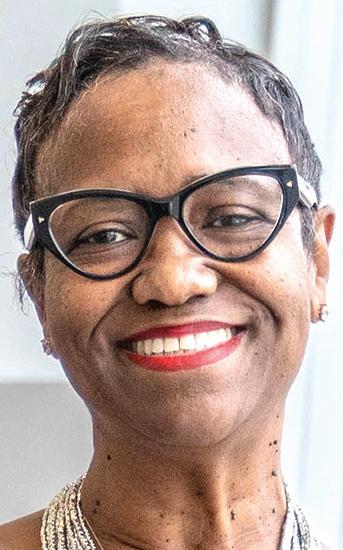
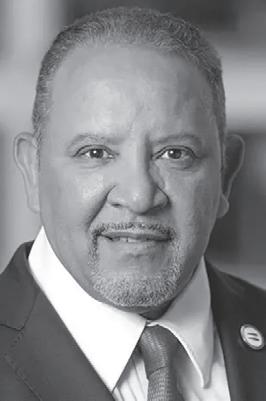
By Marc Morial
“Officers in unmarked cars and masks are indiscriminately arresting people based on the language they speak or the color of their skin. They’re detaining U.S. citizens! Even folks without criminal records. They’re disregarding Americans’ constitutional rights and throwing due process to the wind. This is NOT what a safe city looks like: Kids are terrified to go to school. Families can’t go to the grocery store. It’s horrifying.”
— Sen. John Hickenlooper
A violent death at the hands of law enforcement. An official account riddled with falsehoods, clearly contradicted by video evidence. A citizen uprising against injustice and brutality.
Nearly six years after the murder of George Floyd by Minneapolis police inspired a nationwide reckoning on civil and human rights, history appears to be repeating itself with the fatal shooting of Minnesota nurse Alex Pretti by immigration enforcement agents.
Law enforcement doesn’t have to look like this. In the wake of Floyd’s murder, the National Urban League developed “21 Pillars for Redefining Public Safety and Restoring Community Trust,” a framework for criminal justice advocacy.
Each of the 21 Pillars addresses one of five goals. These are the goals that current immigration enforcement agencies not only fail to meet but are actively undermining:
boards, body-worn cameras, mandatory officer identification and full public reporting of critical incidents would bring accountability to a far-too-opaque system.
Reform of divisive policies: In addition to the use of masks to conceal agents’ identities, immigration enforcement is further undermining public trust and community safety with the use of racial profiling, aggressive militarized tactics and indiscriminate use of excessive force. At least eight people have been killed by federal immigration agents or died in custody in the first month of 2026 alone. An overwhelming majority of Americans say it’s unacceptable for agents to use people’s appearance or the language they speak as a reason to check their immigration status, and a clear majority believe immigration enforcement is too aggressive. Increasingly, enforcement has focused on people who have no criminal history, diverting resources away from those who pose actual public-safety risks.
Collaboration: Programs that deputize local police as immigration agents damage longstanding trust-building strategies that help reduce crime. Fear of deportation deters immigrants from calling 911, seeking medical care or sending children to school. Local law enforcement authorities say this fear makes their jobs “harder” and compromises their ability to detect and prevent crime.
Law enforcement depends on cooperation from victims and witnesses. When that cooperation collapses, crime increases, offenders go unpunished and public safety declines for everyone.
Accountability: Immigration enforcement agents concealing their identities behind masks undermine due process and equal protection by preventing individuals from verifying the legitimacy of arrests and seeking justice for abuse. “21 Pillars” calls for robust policies and procedures to investigate misconduct and enforce disciplinary standards. The Trump administration has barred state and local authorities from reviewing evidence related to Pretti’s death and is, itself, conducting only a cursory review of the shooting. As outlined in “21 Pillars,” civilian review
Transparency, reporting and data collection: Federal immigration authorities have “a pattern of limited transparency … and slow or incomplete accountability around ICE use-of-force and public arrests,” while regularly withholding records, including use-of-force reports, requiring FOIA litigation to obtain even basic information. Only with complete and transparent data can policymakers and oversight agencies detect deviations, correct course and hold the agency accountable for both errors and abuses.
Improved hiring standards and training: A recent viral account of a journalist’s experience revealed just how lax hiring procedures are for immigration enforcement. The reporter was offered a job following a six-minute interview without “a single signature on agency paperwork.”
The Trump administration has relaxed hiring and training standards and even used white nationalist imagery and language in recruiting. Stringent background checks, higher recruiting standards and thorough training will result in fewer dangerous raids, unlawful arrests and unjustified incidents of excessive force.
The Homeland Security Act of 2002, following the Sept. 11 attacks, combined the functions of the Immigration and Naturalization Service and the United States Customs Service under a new agency, Immigration and Customs Enforcement. The current policies and practices of the agency serve only to endanger public safety and terrorize communities. Adoption of “21 Pillars” would allow the agency to fulfill its mission effectively, efficiently and humanely.
Marc Morial is president and CEO of the National Urban League.

(1914-2000)
On Further Reflection
Black History Month: Remembering forward
By Mike Jones
The last time I wrote in this space was November 2024. I wrote then about the demographic that would decide the presidential election — white women — and they did what they have done since 1968: most voted Republican, including for Donald Trump. They did so with full knowledge of who he is.
I’m writing now because I’ve spent the last year reflecting about us. The Us I’m talking about is the descendants of the African diaspora in the United States. If your first ancestor was not one of the more than 400,000 Africans brought to these shores as part of the transatlantic slave trade, you may continue reading, but know I am not talking to you.
I’m also writing this in February for four reasons. First, it is the 100th anniversary of Negro History Week, the precursor to Black History Month. Second, February is when we inflict the most crippling intellectual and psychological damage on ourselves. If it were possible for Carter G. Woodson to turn over in his grave, he’d do so every February.
We have never fully understood what I’ll call our Black intellectual pedigree and the pedagogy that comes with it. From Douglass to W.E.B. Du Bois to James Baldwin to Derrick Bell, Black thought has never primarily been about convincing America of anything. It has been about helping Black people understand ourselves under hostile conditions.
American contradictions — liberty and slavery, equality and hierarchy, E Pluribus Unum and segregation — are treated in the national myth as anomalies or moral failures in the process of being corrected. The Black intellectual tradition begins from the opposite premise: that contradictions are not errors in the system, but evidence of how the system actually works.
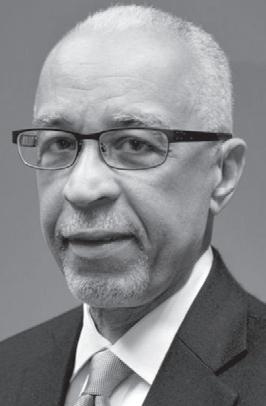
What do we get wrong every year? We start in January with the Martin Luther King Jr. birthday commemorations. With our complicity, Dr. King’s life and body of work is reduced to the improvised ending of a speech.
The third reason is that Donald Trump has now been president for a year. There is a Turkish proverb that fits this moment: When a clown moves into a palace, he doesn’t become a king. The palace becomes a circus. Enough said.
The last — and most important — reason is that in July the United States will commemorate the 250th anniversary of the Declaration of Independence. And we — the Us referenced earlier — will insist on being invited to the party despite what Frederick Douglass told us 164 years ago.
In July 1852, Douglass gave a speech to the Rochester Ladies’ Anti-Slavery Society called, “What to the Slave is the Fourth of July?” He gave it on July 5. I read this speech every July because I’m always struck by the fact that he gave it 164 years ago — and he could give it today, word for word.
That’s how little America has changed, protestations notwithstanding.
Black thought leaders are not writing to persuade, but to diagnose — not to reach consensus, but to discover truth — so we can know the difference between the American myth and the Black memory. One is fiction. The other is real.
I would posit that there is a Black canon that sits outside of, but adjacent to, America’s poor man’s Western epistemology — a way of knowing and understanding the world from the perspective of the lived Black experience in North America. It is that canon and perspective that should be the foundation of how we practice Black History Month. Woodson thought so. In 1927, he wrote in the Journal of Negro History: “We should emphasize not Negro history, but the Negro in history.” We do not study history to learn random facts about people and places. We study history for insight into the human condition. History does not repeat itself; there are conditions that produce recurring events. When new situations arise that mimic the past, people tend to react the same way they did before. You cannot predict the future, but you can recognize and understand the present by studying the past. Knowing what was can clarify what is.
America is at an inflection point. That is not a moral judgment, but an empirical declaration. Donald Trump and MAGA America are a symptom, not the cause.
Mike Jones is a political analyst, columnist and member of the St. Louis American Editorial Board.
Commentary
Black History Month helps us hold together
By Ben Jealous
Chicago’s Mayor Brandon Johnson has emerged as a clarion voice for American democracy in turbulent times.
The values he represents reflect the voters who elected him. They remind us of the power of the Black community and the white, Asian American, Latino and Native American voters who believe in multiracial democracy. Together, they help ensure our country remains a place defined by a deep commitment to freedom and opportunity for all.
Yet events at home and abroad show how fragile that path can be.
As Black History Month continues, let us rise to this moment again. Let us take stock of what has made the Black community the backbone of movements that strengthen democracy.
Our strength has never been our size. Our strength has been that we hang together. Since we first won the ballot, Black voters have stood remarkably united. Often, 80% or more have chosen the same candidate and the same vision of fairness. That unity has given us influence far beyond our numbers.
relatives we rarely saw were still close kin. Those bonds helped us resist the divisions that split others apart. That cohesiveness was not magic. It was history. The Black community remained confined to segregated towns and neighborhoods long after white America began to suburbanize. We built economically mixed communities out of necessity. In them, elders — especially grandmothers and great-grandmothers — kept the circle tight. They did it in church basements after service. They did it around kitchen tables late at night.
From coast to coast, Black children heard the same maxim: “To whom much is given, much is expected.” Elders organized the reunions. They made the long calls between holidays. They told the stories that reminded us who we were.
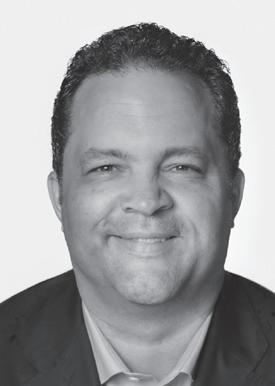
That love became political power. It lifted leaders from Shirley Chisholm to Jesse Jackson to Brandon Johnson — leaders who speak clearly for democracy and equality. But the elders who held us together are disappearing, one by one. Funeral after funeral.
It is no surprise that those who attack democratic rights try to break our voting bloc. They come for civil rights. They come for workers’ rights. They come for equal pay and fair treatment.
What keeps me up at night is quieter. It is the slow erosion of the cohesion that fuels our power.
Our political unity reflects our community life. For generations, we were held together by congregations, by family reunions, by Sunday phone calls that crossed state lines. Cousins recognized one another by a reunion T-shirt. Even
This Black History Month, let us hold our community together by holding our families together. Replicate the reunion. Make the phone calls the elders once made. Tell the stories they told us. Let us never forget that the elders we are burying have already shown us how to keep this country free — by keeping our families connected, in tough times and even across great distances.
Ben Jealous is a professor of practice at the University of Pennsylvania, former national president and CEO of the NAACP
Columnist Marc Morial
Columnist Mike Jones
Guest Columnist Ben Jealous
Valentine’s Day vigil honors lives lost to gun violence
By Sylvester Brown Jr.
St. Louis American
Valentine’s Day is often associated with romance and celebration. For a St. Louis nonprofit focused on peace and public safety, it has also become a day of remembrance.
On Saturday, the Peace Economy Project will hold its annual Valentine’s Day Vigil Against Gun Violence, bringing together survivors, advocates, faith leaders and community members to honor people lost to gun violence and reflect on its impact across the region.
The event, scheduled for noon at the Deaconess Foundation on North Vandeventer Avenue, is intended as both a memorial and a call for reflection on how violence shapes daily life in many communities, organizers said.
of linking personal loss to public decision-making.
The Peace Economy Project, formally known as the St. Louis Economic Conversion Project, was founded in 2002. The organization advocates for shifting public investment away from militarized responses to violence and toward community-based approaches that emphasize economic stability, health care, housing and social services.
“Because Valentine’s Day is seen as a day of love, we wanted to respond to violence with peace.”
Canyon
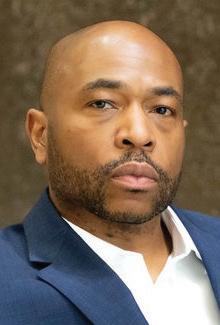
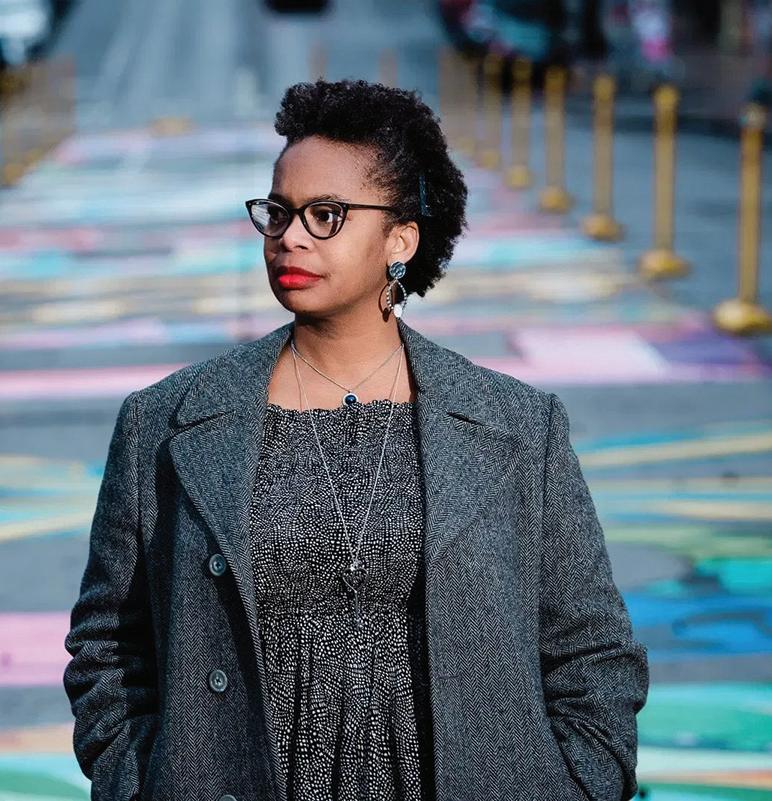
“Gun violence leaves lasting impacts on individuals, families and entire communities,” said Katerina Canyon, executive director of the Peace Economy Project. “Because Valentine’s Day is seen as a day of love, we wanted to respond to violence with peace.”
Participants will be invited to write Valentine’s cards to people in their lives who have been affected by gun violence. Those cards will later be sent to elected officials, Canyon said, as a way

Organizers say the vigil also reflects broader concerns about what they describe as the increasing militarization of domestic life, including the expanded use of military equipment, tactics and surveillance by law enforcement and federal agencies.
In a recent press release, the group pointed to examples such as armored vehicles in neighborhoods, the transfer of surplus military equipment to police departments and aggressive crowd-control tactics during protests.
Canyon said those practices can deepen mistrust between residents and public institutions and disproportionately affect communities of color, immigrants and low-income neighborhoods.
The Valentine’s Day campaign, she noted, began in 2020, following the killing of George Floyd by a Minneapolis police officer.
“At that time, people were
angry and hurting,” Canyon said. “My response was that we needed to find ways to respond to hate with love, not escalate the harm.”
This year’s vigil will include remarks from St. Louis Circuit Attorney Gabe Gore, along with clergy and representatives from
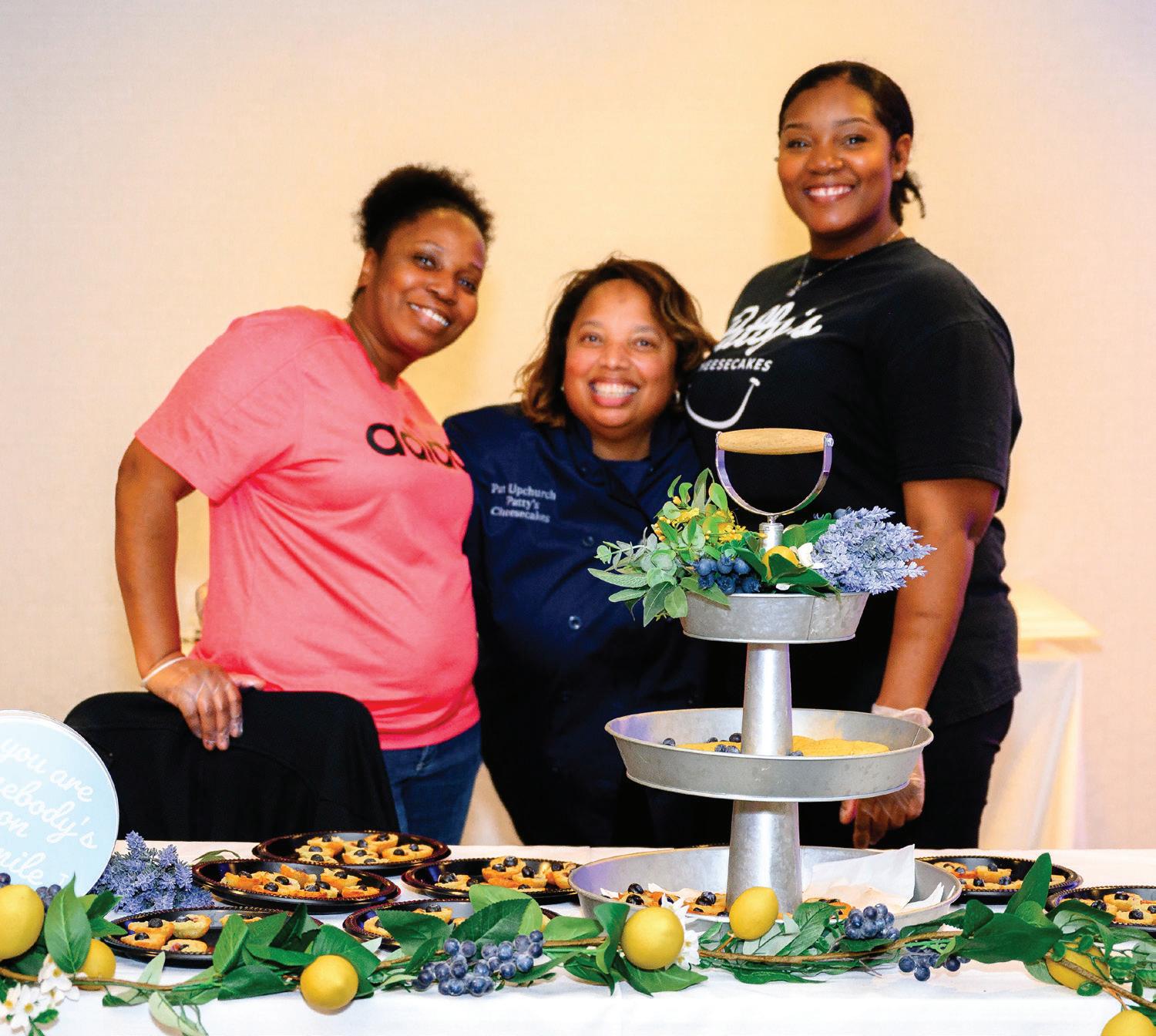

Join us for Girl Scouts of Eastern Missouri’s Dessert First, an unforgettable celebration featuring gourmet desserts inspired by Girl Scout Cookies, exceptional food, live auction experiences, music, and dancing.
Whether you attend, sponsor, or support the event, your participation strengthens programs that build courage, confidence, and character in thousands of girls across eastern Missouri.
Reserve your tickets, elevate your brand, and celebrate the next generation of leaders. Please visit:
organizations that work with crime victims and survivors of violence, including Unsung Angels, ALIVE (Alternatives to Living in Violent Environments) and the Crime Victim Center. The event will also mark the first time the organization has formally collected written
accounts from participants about their personal losses to gun violence, which PEP plans to share with lawmakers selected by those who attend.
Canyon said the vigil is intentionally designed to be reflective and nonpartisan, even as the organization continues to advocate for policy changes, including stronger gun safety laws, expanded domestic violence protections and greater investment in community-based services.
Recent public opinion polls suggest growing skepticism about aggressive enforcement tactics by federal immigration authorities and law enforcement agencies, a trend Canyon said is reflected in increased interest in the group’s work.
“I’ve heard from a lot of people who want to volunteer or get involved,” she said. “That tells me people are questioning whether the current approach is really keeping communities safe.”
For organizers, the vigil is less about offering solutions than creating space — for grief, for reflection and for community.
“If we slow down and think about how we show care for one another,” Canyon said, “that changes how we respond to violence in our communities.”
For more information about the Valentine’s Day vigil or other Peace Economy Project activities, visit peaceeconomyproject.org.
Sylvester Brown Jr. is the Deaconess Foundation Community Advocacy Fellow.
HAZELWOOD SCHOOL DISTRICT
TEACHER RECRUITMENT
FAIR
Saturday, Feb. 21, 2026
9 a.m. - 1 p.m.
Hazelwood East High School 11300 Dunn Road St. Louis, MO 63138
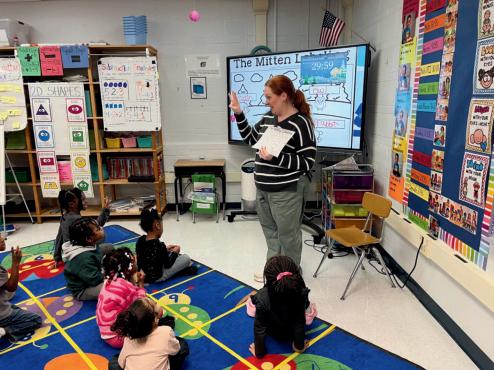
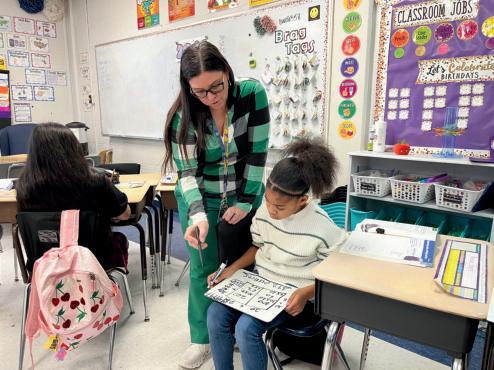
We are seeking motivated professionals to join our academic team! If you are committed to empowering students to reach their full potential, we encourage you to apply. Qualified candidates may even be hired on the spot!
TEACHERS COUNSELORS LIBRARIANS ADMINISTRATORS
To register, scan the QR code or visit bit.ly/WorkWithHSD and click on "Certified Recruitment Opportunities” All interested applicants must register by Feb. 20 Please bring copies of your resume, credentials, and other professional documentation. Walk-ins will be accepted. Virtual interviews are available. For additional inquiries, call (314) 953-5059



Photo by Rebecca Ellison
Katerina Canyon, executive director of the Peace Economy Project, helped organize a Valentine’s Day vigil in St. Louis to honor lives lost to gun violence and provide space for reflection and remembrance.
Katerina
Jaelyn, a member of the Boys & Girls Clubs of Greater St. Louis’ Bethalto Club, displays her ceremonial Super Bowl tickets after earning a trip to the game last Sunday in Santa Clara, California

Area Boys and Girls Club member earns trip to Super Bowl
By Kenya Vaughn St. Louis American
When 16-year-old Jaelyn walked into Levi’s Stadium on Sunday for Super Bowl LX, she did so not just as a fan, but as one of three teens nationwide recognized as a Champion of Change.
Jaelyn, a member of the Bethalto Club of the Boys & Girls Clubs of Greater St. Louis, was selected through the Inspire Change Badge Challenge, earning an all-expenses-paid trip to Super Bowl weekend in Santa Clara, including tickets to the game and access to NFL events. Youth representatives from the Boys & Girls Clubs of America also took part in the on-field coin toss.
“I was surprised when I won,” Jaelyn said. “I’m so excited to bring my mom.”
The recognition stemmed from a partnership between Boys & Girls Clubs of America and the NFL’s Inspire Change initiative, which encourages teens to identify communi-
ty issues and design projects that advocate for solutions.
In a video documenting her work, Jaelyn said, “My name is Jaelyn, and I am inspiring change in greater St. Louis.”
For Jaelyn, the issue was mental health.
“It’s something that people don’t talk about,” she said. “I just want people to know that if they are struggling, there are people to talk to.”
Her project, “Who You Are Matters,” focused on positive self-talk and mental-health awareness. Teens created a positive affirmation wall at the club, distributed mental-health bracelets and expanded the effort during summer camps.
“We want our community to know that if they’re struggling, there are people to talk,” Jaelyn said. “My favorite affirmation to tell myself is that I’m confident, which helps me be more outgoing.”
“It’s important for teens to speak up because we have a voice.”

Commentary
Taking back our rights as Americans
By E. Faye Williams
Most of us remember the time we had a few freedoms no matter who was president of the United States. The rights are found in our Bill of Rights. Now, we are not so sure what we have the right to do without standing up to the president and his minions who seem never to have read what those rights are.
Recently, the people in Minnesota and beyond have discovered that rights like assembly, free press, religion, association and petitioning the government are no longer guaranteed as taught in school, but they are willing to do what is necessary to bring them back and to the attention of those now governing without the slightest idea what those rights are. Minnesotans and those who are protesting are reminding them of what those rights are.
thrown to the ground, beaten and shot several times. He was murdered in cold blood by agents who falsely claimed he had brandished a gun. Video shows he was holding his phone. While Pretti did have a legally permitted firearm, it was in his pocket, not in his hand. Federal agents tried to hoodwink the entire world as we saw no gun in his hand.
Veteran journalist Don Lemon recently had his home invaded with an arrest warrant and was arrested while working as a member of the press — exercising his freedom of the press right.
Just over the past few weeks, we’ve looked closely at what has happened in Minnesota, but Minnesota is not the only place we must have our eyes and ears open with a plan on what we are prepared to do to stop the madness.
On Jan. 7, Renée Good was simply parked in the area where others were assembled and was shot to death in her face as she tried to move her car. A bystander doctor tried to do what doctors are charged with doing after Good was shot but was abruptly stopped by federal agents who blocked him from providing medical care.
Seventeen days later, Alex Pretti, a nurse, was killed as he tried to help a woman who’d been manhandled and brutally knocked to the ground by federal immigration agents. For that, he was attacked by agents,
Georgia Fort, another member of the press, was arrested at her home for a violation of her right to be a member of the press. We saw those federal agents sneaking around her house, looking through her windows and trying to arrest her with no regard for the children in her home.
This is not just Minnesota’s fight; it belongs to all of us, and we must be determined to find ways to stop the evil acts against our people.
These are our rights we are being asked to protect. So, think about the meaning for you and your family of the cold-blooded murders of Ms. Good and Mr. Pretti, and how the people of Minnesota are responding, then come up with an action you can and are willing to take if something similar were happening to your family.
Join the people across the country legally protesting to show Trump they are in solidarity with stopping the tyrannical government we now have, and they are standing against such action. We are Americans and our families fought to gain what the Constitution offers us, and “We ain’t gonna let nobody take them away.”
E. Faye Williams is president of The Dick Gregory Society (www. thedickgregorysociety.org).

Photo courtesy of Boys and Girls Clubs of St. Louis
E. Faye Williams
McDonald’s economic impact tops
$1.4
billion in Missouri
Jimmy Williams owns 26 area locations
By Alvin A. Reid
more than $1.4 billion in economic activity in Missouri last year, supporting tens of thousands of jobs and hundreds of millions of dollars in tax revenue — an impact driven in part by St. Louis-area owner-operator Jimmy Williams. Williams, president and
CEO of Estel Foods Inc., owns and operates 26 McDonald’s restaurants across the St. Louis region, including in the Metro East. Fifteen of his locations are in Missouri, including a St. Charles restaurant that opened in December 2024. According to an economic impact analysis by Oxford Economics, the McDonald’s system in Missouri accounted for more than $1.4 billion
By LaToya B. Parker and Dedrick Asante-Muhammad
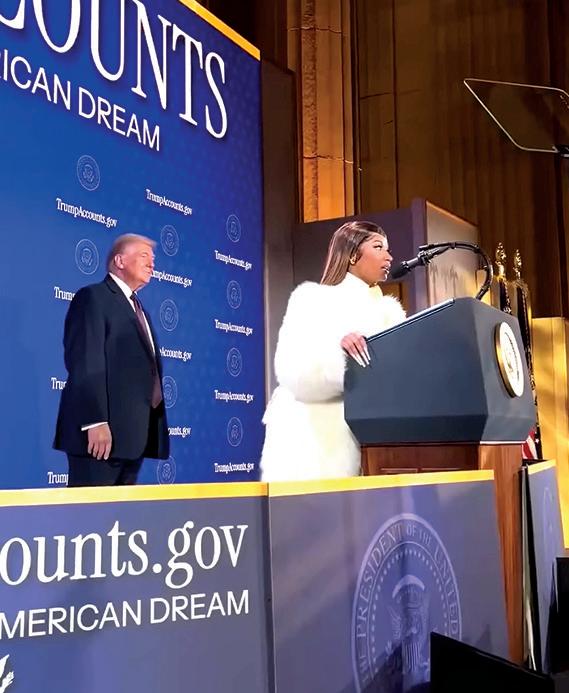
When President Donald Trump launched his new “Trump Accounts” for babies, he surrounded himself with billionaires, big banks and a surprise guest: rap star Nicki Minaj. Minaj has pledged hundreds of thousands of dollars, reported between $150,000 and $300,000, to fund Trump Accounts for her fans’ children, the so-called “Barbz babies.”
But Trump Accounts are political fool’s gold: shiny and celebrity-studded on the surface, structurally designed to leave most Black children with crumbs while channeling real gains to families who already have wealth. Every child born between 2025 and 2028 is eligible for a Trump Account, a tax-advantaged investment account seeded with $1,000 in public funds if parents opt in. Families, employers and donors can then contribute up
to $5,000 a year, invested in mutual funds and similar products. On paper, the goal is to give every child “skin in the game” and a nest egg for college, homeownership or retirement.
How inequality gets built in
But analysts warn that Trump Accounts are likely to widen, not close, the racial wealth gap. In 2022, the median wealth for Black families was about $44,900, compared with $285,000 for white families. In Trump Accounts, balances grow with both market returns and additional contributions, so the children who gain the most will be those whose families and employers can consistently add thousands of dollars a year. A child whose family maxes out contributions could hold a six-figure account by adulthood; one whose family
in gross domestic product contributions in 2024 and supported more than $377 million in federal, state and local tax revenue. The analysis reflects activity from franchise- and corporate-owned restaurants, suppliers and related industries, as well as workforce and education programs.
“Many of our employees are people of color who are gaining job skills, access to
education and pathways to long term careers,” Williams said. “My restaurants are places where members of the McDonald’s family can grow, support their families and invest back into the neighborhoods we call home.”
There are nearly 320 McDonald’s restaurants in Missouri, operated by about 45 owner-operators
On The Move
Eskridge on TIME ‘2026 Closers List’
Dara Eskridge, CEO of Invest STL, has been named to TIME’s 2026 Closers List, which recognizes Black leaders working to close racial equity gaps nationwide. Eskridge is one of 18 leaders selected for the list, which highlights individuals advancing equity through policy, investment and community development. She was also named to TIME’s 100 Next in 2025. An urban planner, architect and philanthropic leader, Eskridge works to expand opportunities for wealth building and community power in Black and other racially and economically marginalized neighborhoods. Under her leadership, more than $10 million has been aggregated and directed to St. Louis’ legacy Black neighborhoods.
SLATE announces 2026 board leadership team
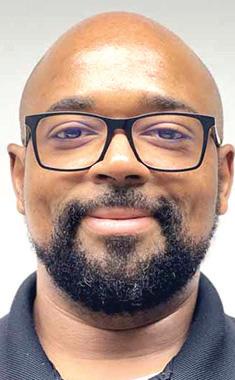
Charlotte Hammond, president and CEO of Challenge Unlimited, has been elected board chair of the St. Louis Agency on Training and Employment for 2026. Hammond brings more than two decades of experience in finance, operations and workforce development leadership. Since becoming CEO of Challenge Unlimited in 2016, she has overseen the nonprofit’s expansion from three to eight states, broadening employment opportunities for individuals with disabilities. Also elected to SLATE’s board leadership were Mary Lamie, executive vice president of multimodal enterprises at Bi-State Development, as vice chair, and William Bell, technology infrastructure coordinator for the Mid-America Carpenters Regional Council, as secretary. Lamie oversees regional transportation and logistics operations, including Gateway Arch operations, the St. Louis Downtown Airport and the St. Louis Regional Freightway. Bell focuses on workforce training, apprenticeship development and community outreach to expand access to skilled trades careers.
Whitener named to FOCUS St. Louis cohort
Raven Whitener, director of the St. Louis American Foundation, has been selected for the FOCUS St. Louis spring 2026 Women In Leadership cohort.

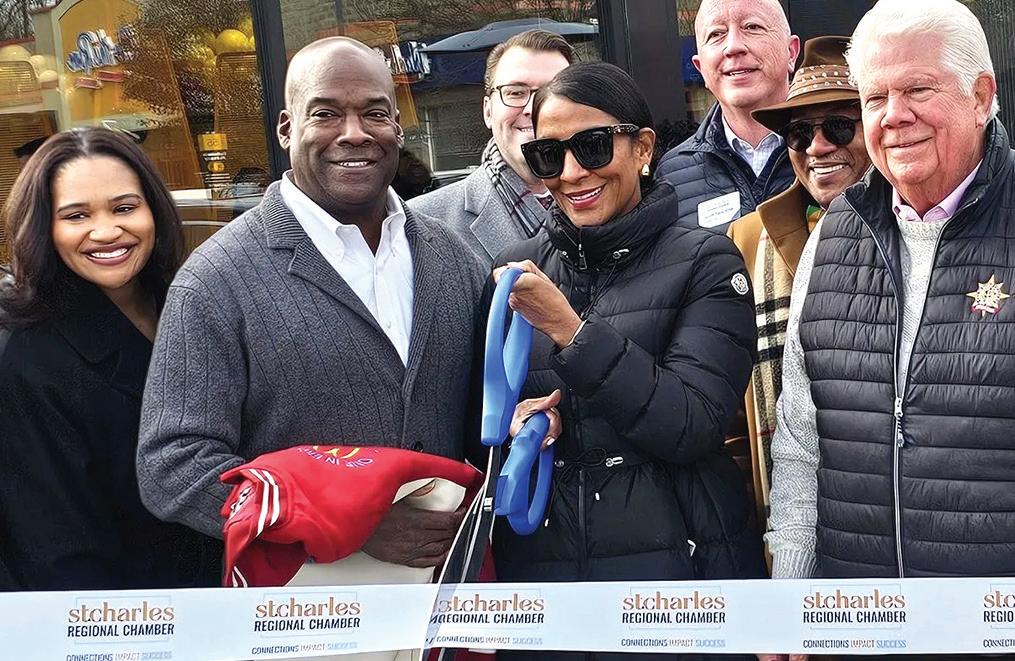
Raven Whitener
“I’m so excited to be a part of this phenomenal program alongside such inspiring women, can’t wait to experience all that’s in store,” said Whitener, who has been with the foundation for four years.
The Women In Leadership program, held each fall and spring, offers professionals opportunities to strengthen leadership skills, deepen their understanding of the St. Louis region and connect with women across sectors.
For a list of the 29 cohorts, visit https://focus-stl.org/
Promotion, board appointment, new hire, award...please submit your People on the Move item (including photo) to areid@stlamerican.com
Dara
Dara Eskridge
Photo courtesy of The White House
Nicki Minaj joins Donald Trump on stage during the Treasury Department’s Trump Accounts Summit.
Photo by Kenya Vaughn / St. Louis American
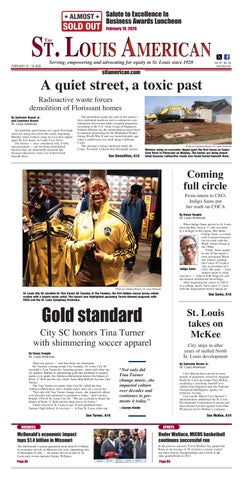
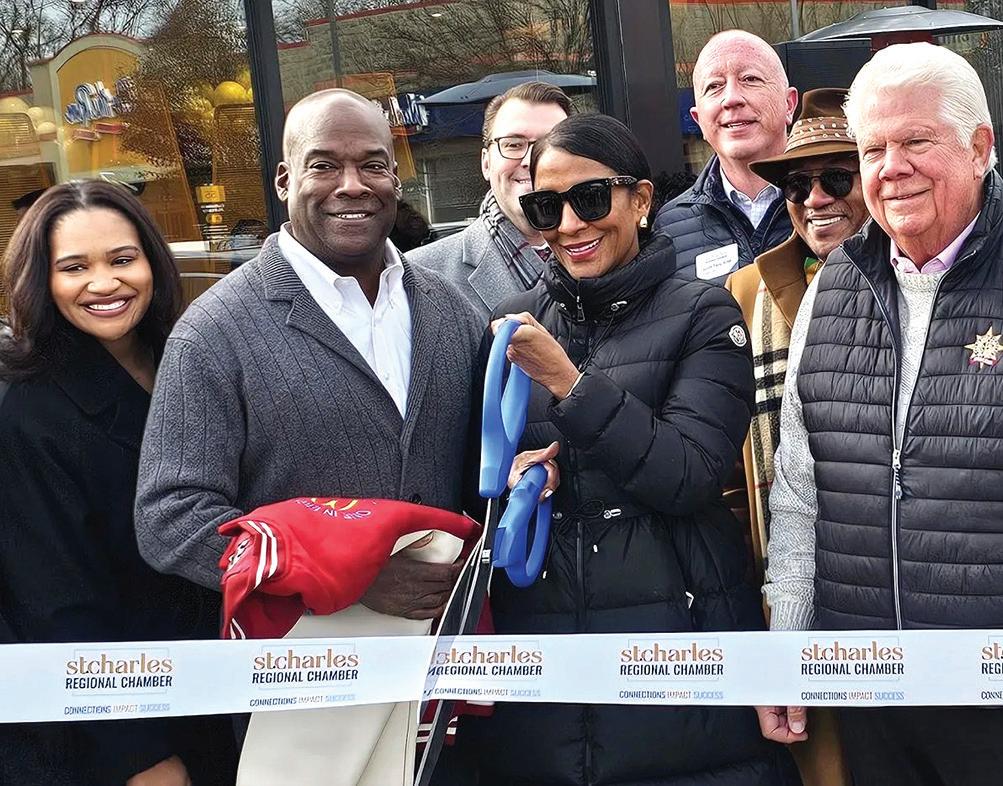
Jimmy Williams, president and CEO of Estel Foods Inc., his wife Janet Williams and St. Charles Mayor Dan Borgmeyer cut
the ribbon for the company’s 26th McDonald’s franchise in December 2024 in St. Charles.
Charlotte Hammond
William Bell
UMSL tops state’s colleges in online bachelor’s programs
Bachelor’s Programs
The university rose 96 places from last year, one of the biggest jumps in rating in the nation.
U.S. News & World Report has ranked the University of Missouri St. Louis No. 1 in the state and 11th nationally on its annual list of Best Online
Trump
Continued from A5
cannot add beyond the initial $1,000 deposit may end up with only a few thousand dollars.
Corporate America is already lining up to invest in these regressive investment accounts. As Politico recently reported, companies like Intel, SoFi, JPMorgan Chase, Bank of America and BlackRock are pledging to match the Treasury’s $1,000 deposit for their employees’ children. Venture capitalist Brad Gerstner plans to send $250 to young children in Indiana, while Dell CEO Michael Dell has promised a staggering $6.25 billion contribution.
Who actually benefits
Those are real dollars,
McDonald’s
Continued from A5 and staffed by more than 16,700 restaurant crew members and managers.
“We are committed to ensuring that a high-quality college education is accessible to all, and we appreciate U.S. News & World Report recognizing the strides we continue to make in our online programs so that our students balancing work, family and other responsibilities can continue pursuing and achieving their academic goals,” Steven J.
but they will flow first to families with steady jobs at large firms and access to financial institutions, not to low-wealth income parents least able to save on their own. In other words, corporate Trump Account dollars follow good jobs, not the communities with the greatest need.
For Black families, who are more likely to experience low wages, income volatility and far less family wealth than white households, that contribution structure is the policy’s fatal flaw. Trump Accounts effectively say:
“You, too, can have a big nest egg, if you and your employer can save like the rich.” That is the essence of fool’s gold.
Decades of data show that Black households hold only a fraction of the wealth of white households, even at similar incomes, because of long-
Roughly 140 of those restaurants are in the greater St. Louis metropolitan area, where owner-operators and restaurant teams are embedded in the communities they serve.
Beyond restaurant operations, Williams is active in philanthropy and civic leadership. He was named the St. Louis American’s 2024 Person of the Year and serves on several nonprofit and civic boards, including the Ronald McDonald House, Lessie Bates
standing discrimination in housing, labor markets, the tax code and the economy’s concentration of wealth over the last 40 years. On top of that, Trump Accounts are opt-in and require navigating banks, paperwork and investment choices, which policy experts warn will leave many low-income and Black and Brown families out.
If we truly want to close the racial wealth divide, we do not need more fool’s gold. We need policies that recognize how wealth is distributed now and invest most heavily in children starting with the least That is the idea behind Baby Bonds
A different model already exists
Economist Darrick Hamilton, alongside
Neighborhood House, One Hundred Black Men of Metropolitan St. Louis, Matthew Dickey Boys and Girls Club and the Herbert Hoover Boys and Girls Club.
Statewide, McDonald’s owner-operators, including Williams, directly created nearly 16,800 restaurant crew, management

Berberich, UMSL’s provost and vice chancellor for academic affairs, said in a release.
The U.S. News Best Online Programs rankings are now in their 14th year. The latest edition included evaluations of more than 1,800 online
William “Sandy” Darity and other scholars, began developing the Baby Bonds concept more than two decades ago, proposing government funded trust accounts for every U.S. newborn, with the largest deposits going to children from the lowest wealth families.
Today, Baby Bonds are no longer just an idea. States and jurisdictions, including Connecticut, California and Washington, D.C. have all enacted Baby Bonds-style programs that provide larger, automatic deposits for children in low-income families. Researchers estimate a robust national Baby Bond program could reduce the Black-white wealth gap among young adults by more than 90% at the median.
The contrast with Trump Accounts could
and field office jobs. The system’s activity also supported more than 6,600 additional jobs through supply-chain operations and household spending, bringing the total number of jobs supported directly and indirectly in Missouri to more than 23,400.
McDonald’s also has expanded educational pathways through its
bachelor›s and master›s degree programs from 350 accredited institutions using metrics specific to online learning, including class sizes, graduation rates, faculty credentials, peer assessments and student indebtedness.
UMSL offers more than
not be clearer. Trump Accounts give the same modest $1,000 to every child and then turbocharge the advantages of families who can afford to contribute thousands more each year. Baby Bonds invest far more in children whose parents cannot save, and they do it automatically, without complicated opt-ins or Wall Street gatekeepers. One accelerates existing inequality; the other is designed to repair it.
From fool’s gold to real investment
Congress should transform these Trump Accounts into progressive Baby Bonds. Policymakers should guarantee larger automatic public deposits for children in low-wealth or low-income households and shift from opt-in
Archways to Opportunity program, which provides education and career advising for restaurant employees. In Missouri, the program awarded more than $547,000 in tuition assistance in 2024 to 290 employees.
In addition, McDonald’s and its owner-operators continued their support of Ronald
20 bachelor’s degree programs 100% online, and students can choose from a range of disciplines, from business administration, communication and cybersecurity to nursing, psychology and public administration.
enrollment to automatic enrollment at birth.
To bridge growing wealth inequality, that is the lead cause of ongoing racial inequality, we need to embrace the original structure of Baby Bonds and broader structural reforms that move resources toward families who have been locked out of wealth for generations. These changes would move the program away from fool’s gold and toward something closer to genuine wealth-building for Black children.
Dedrick AsanteMuhammad is president of the Joint Center for Political and Economic Studies Dr. LaToya B. Parker is the senior researcher and leads the organization’s economic and tax policy programs.
McDonald House programs across Missouri, raising more than $4.9 million through fundraising initiatives. In 2024 alone, Ronald McDonald House chapters and programs in the state provided support to more than 22,000 families while children received medical care.

HealthMattersHealthMattersHealthMatters
Care of You’
Avery Kiekow, daughter of Anthony and Tosha Kiekow, was born prematurely after a ‘high-risk’ pregnancy on May 22, 2024, and has brought sunshine to her family as she nears her second birthday.

Six-figure baby
The hidden cost of a high-risk pregnancy
By Anthony J. Kiekow For The St. Louis American
In May 2024, two months before her due date, my wife’s water broke, beginning our daughter’s birth story with an introduction that led to a six-figure ending.
As we raced to the hospital, fear filled our hearts. Based on age and data showing Black women experience high rates of pregnancy complications, we knew this was a high-risk pregnancy—geriatric, doctors called it.
When we arrived at the hospital, doctors quickly ushered us to the high-risk delivery wing. A flurry of tests, specialist visits and scary conversations followed. Our questions were focused on health, we never asked how
Our questions were focused on health, we never asked how much anything would cost. Healthcare is one of the few purchases people routinely make without knowing the cost in advance.
much anything would cost. Healthcare is one of the few purchases people routinely make without knowing the cost in advance. Although Tosha’s water broke, she wasn’t
See Baby, page A8
‘Ghost’ Medicaid doctors leave patients waiting
New study finds nearly one-third of physicians enrolled in Medicaid don’t actually treat Medicaid patients.
By Jennifer Porter Gore Word in Black
Roughly 1 in 3 doctors who are enrolled to treat Medicaid patients didn’t treat a single one between 2019 and 2021, according to new research published Tuesday.
Roughly 1 in 3 doctors who are enrolled to treat Medicaid patients didn’t treat a single one between 2019 and 2021.
At the opposite end of the spectrum, a third of enrolled health care providers saw more than 150 Medicaid patients each year, a workload experts say may be stretching them too thinly. The doctors’ care load varied widely depending on their specialty and geographical location. A median of Cardiologists saw 81 Medicaid patients each year but primary care physicians treated 51 patients. However, the median for psychiatrists was just three Medicaid patients for the entire year.
The vast disparity between so-called “ghost” doctors with untreated Medicaid patients and doctors who treat far more Medicaid patients than most primary care physicians is more than a statistical mismatch. It means that the millions of predominantly See Medicaid, A8
Black HIV/AIDS Awareness Day defies persistent gaps in care, prevention
By Jennifer Porter Gore For The St. Louis American
Last weekend, communities
nationwide marked Black HIV/AIDS Awareness Day, or NBHAAD, during an urgent time for people living with the disease and those who support them.
More than four decades after the epidemic began, Black Americans continue to receive a disproportionate share of new HIV diagnoses. Despite lifesaving medical developments over the past 30 years, Black people still face structural and societal barriers that make prevention, testing, and treatment harder to access.
Each year on Feb. 7, activists, community leaders and health advocates use the day to spotlight inequities and to encourage people at risk to seek out testing, prevention, and community support. But advocates noted that this year, the Trump administration opted out of official observances.
In fact, unlike previous years, NBHAAD isn’t mentioned on the govern-
More than four decades after the epidemic began, Black Americans continue to receive a disproportionate share of new HIV diagnoses.
ment’s official hiv.gov website.
“The federal government wiped NBHAAD along with several other HIV/ AIDS awareness days, including Trans HIV/AIDS Testing Day and Gay Men’s HIV/AIDS Awareness Day,” the website for Equitas Health notes. Equitas Health is a nonprofit community healthcare system that’s been serving patients in Ohio, Texas, Kentucky, and West Virginia since 1984 — back when an HIV/AIDS diagnosis was tantamount to a See HIV/AIDS, A8

Policy
and persistent
Photo courtesy of the Kiekow family
Courtesy photo
changes, funding cuts,
inequities are colliding with ongoing disparities in HIV prevention, testing, and treatment for Black Americans— especially in the South.
HealthMattersHealthMattersHealthMatters
A8
Baby
Continued from A7 in labor. That was good news. Doctors said every moment the baby remained in the womb would help.
The one caveat was heart rate disruptions. Any sign of trouble and they would perform an emergency C-section.
The average cost for pregnancy, childbirth and postpartum care in the U.S. is about $20,000, with out-of-pocket costs averaging about $2,700, according to the Health Care Cost Institute.
Complications such as emergency surgery, extended hospital stays or NICU care can cause expenses to skyrocket.
The journey from conception to delivery can also be expensive. We said yes to pretty much every test we were offered from the moment we learned Tosha was pregnant. In the first trimester, a test revealed that Tosha had uterine synechiae, or scar tissue in her uterus, which could threaten the pregnancy. I can still remember the fear in Tosha’s voice when we discussed the news at our kitchen table. “We’re not
HIV.AIDS
Continued from A7
death sentence.
In 2023, Black Americans accounted for 39% of people living with HIV and 38% of new HIV diagnoses in the U.S., despite making up just 12% of the population. Black men and Black women had the highest rate of new HIV diagnoses among all races or ethnicities. Additionally, young Black people between ages 13 and 24 accounted for almost half of all new HIV diagnoses in that age group. The disparities are especially stark among Black gay and bisexual men, Black transgender women, and Black women in the South.
Real but uneven progress
Unlike in past decades, medical progress —
Medicaid
Continued from A7
low-income, disabled, and young enrollees’ health care access depends on a relatively small cadre of clinicians who accept Medicaid patients consistently.
Medicaid doctors in name only
And while the system appears robust on paper, covering roughly 96 million Americans, the findings — reported in Health Affairs, an online journal — indicate the healthcare system for low-income people is far more fragile in practice.
That’s a warning sign for Black Americans, who make up just over 21.4% of adult Medicaid beneficiaries ages 19 to 64. Almost 22% of children covered by Medicaid or the Children’s Health Insurance Program are Black, and Medicaid covers more than half of sickle cell disease patients nationwide.
Dr. Jane Zhu of Oregon Health & Science University, the study’s lead author, says that having a healthcare system
out of the woods,” she said as tears that were building behind her eyes began to fall.
The diagnosis led to a recommendation to see a specialist who wasn’t covered by insurance. We got the test and were told the synechiae would likely have little to no impact on the pregnancy.
Soon we forgot about the fear we felt at the kitchen table and the test. But the billing department at the specialist’s office remembered.
The remainder of the pregnancy was marked by typical occurrences—midnight cravings, back pain, and crib assembly.
Then, on a warm summer night, Tosha’s water broke at the same kitchen table—still stained with the tears from the first time we felt the fear of a pregnancy in peril.
On May 22, after Tosha spent two weeks tied to hospital monitors, doctors decided it was time to perform a C-section. Avery Kiekow entered the world and became our world the way the sun rises: slowly, and then all at once.
She weighed only 4 pounds. We didn’t get to hold her in the delivery room. She went straight to
including improved antiretroviral therapy and breakthrough drugs like pre-exposure prophylaxis, or PrEP — means HIV-positive patients can now expect nearnormal life spans, if they are diagnosed early and remain in care. Indeed, PrEP can reduce the risk of acquiring or transmitting HIV by more than 90% when taken consistently.
Although the Food and Drug Administration approved PrEP in 2012, Black Americans are less likely than whites to be prescribed PrEP, even when they meet clinical guidelines. They accounted for just 15% of PrEP users in 2024, according to AIDSVu, the interactive online mapping tool jointly created by Emory University and Gilead Sciences, Inc. Cost, lack of health insurance, and limited access to culturally competent medical care providers all play a role in blocking
that relies on a relatively small number of doctors to provide most of the care creates a problem that needs urgent attention.
“Low physician participation in Medicaid is a commonly cited reason for access gaps and unmet need in Medicaid,” she says. ‘If patients aren’t able to access the care they need, they may delay or forego care altogether, which is not only bad for patient outcomes but also bad for the health system overall.”
Researchers examined the most recent available Medicaid claims data. They analyzed administrative claims and provider enrollment data for primary care doctors and specialists in cardiology, dermatology, ophthalmology, and psychiatry. The gap was especially pronounced in psychiatry: more than 40% of psychiatrists enrolled in Medicaid during that period didn’t treat any Medicaid patients.
Also, federal data shows doctors have been less likely to accept new Medicaid patients than new patients covered by Medicare — the government health plan for seniors — or privately insured patients.
the NICU. When we finally got to hold our daughter, a feeding tube was wrapped around her tiny frame. Avery spent two weeks in the NICU, bringing our total time in the hospital to nearly a month. Still, we never discussed the cost. None of it ever felt like a choice.
In the end, our pregnancy price tag topped $200,000. Thankfully, insurance covered most of the cost, but some families aren’t as fortunate. Medical debt is a leading cause of bankruptcy in the U.S. Navigating a highrisk pregnancy and premature birth is a fast way for the bills to mount.
If you’re expecting a baby, prepare for the unexpected, including the cost. Research delivery costs at your hospital, understand your insurance plan and, most importantly, discuss the potential costs before you’re in the delivery room.
Aside from the scary start, our six-figure baby’s life has been pretty normal—first steps, first words and many moments that remind us why she’s priceless.
Anthony J. Kiekow is an Associated Press award-winning writer.
access. In many rural or Southern communities — particularly those with significant Black populations — there may be no nearby providers who regularly prescribe PrEP at all.
“These challenges are not parallel, they are cumulative,” Carl Baloney Jr., president and CEO of AIDS United, said in an interview with AIDSVu.
“I’ve seen people who are ready to start treatment or PrEP but cannot keep appointments because they are unhoused, working multiple jobs, or navigating systems that do not respect their dignity.”
Stigma and history
Shame about an HIVpositive diagnosis, often intertwined with homophobia, transphobia, and misconceptions about transmission, remains a barrier to treatment. Those feelings, coupled with a lack of support, discourages people from getting tested or staying in care.

“Despite decades of progress, HIV continues to disproportionately impact the Black community,” says Randevyn Piérre, head of US External Affairs for ViiV Healthcare. His organization, he says, is “working to change this reality not only through our innovative long-acting medicines that have transformed HIV care, but also through deep partnership with communities.”
Events tied to Black HIV/AIDS Awareness Day often aim to confront that legacy head-on.
Faith leaders, barbershops, community colleges, and historically Black fraternities and sororities increasingly host testing drives and educational forums. Health organizations like Equitas sponsor events and use social media to share personal stories, promote home testing kits, and explain prevention options in plain language.
“By strengthening

New research shows wide gaps in Medicaid access, with many enrolled doctors treating no Medicaid patients at all while a small share carry most of the workload — a disparity that leaves millions of low-income patients dependent on a limited pool of providers.
Separate data show that fewer than half of psychiatrists and dermatologists accepted new Medicaid patients, while just over 60% of internal medicine specialists did.
The situation worsens for low-income patients who need dental work, as only 1 in 3 dentists reported treating Medicaid patients. Zhu said the lack of access increases the risk of poor health outcomes, which ultimately raises costs and worsens outcomes. Over the long term, she said, delaying care can leave people sicker with more complex conditions that ultimately increase costs.
After her C-Section birth two months before her due date, Avery Kiekow weighed four pounds and spent two weeks in a hospital natal intensive care unit.
local networks, improving connections to care, and delivering culturally resonant programming, we confront stigma and misinformation headon,” says Pierre. “We are committed to acting with urgency to ensure that everyone impacted by HIV has access to the care and resources they need. This is the only way we can achieve our goal of ending the HIV epidemic for all.”
Southern crisis, national implications
In 2023, Southern states had the highest rate of people living with HIV/AIDS and Black communities there are disproportionately affected. The region accounted for 51% of all new HIV diagnoses and is home to eight of the nine states with the highest number of new diagnoses.
Many of these states have not expanded Medicaid, leaving thou-
Limited access likely to be even more restricted
Separate research has found a racial element to the situation: Black beneficiaries were less likely than white adult Medicaid beneficiaries to report having primary care visits and mental health care in the previous 12 months.
To treat Medicaid patients, physicians must enroll in their state’s program, meet licensing and credentialing requirements, and sign participation agreements to bill Medicaid. While the doctors gain access to a large pool of patients and steady reimbursement, they aren’t required to see a minimum number of Medicaid patients — or any at all.
In some cases, Zhu said, providers may be technically enrolled in Medicaid as part of their health system’s contracting or employment requirements. Or they have enrolled despite their clinical schedule being at capacity with patients covered by commercial insurance.
Created as part of President Lyndon B. Johnson’s Great Society program, Medicaid fills critical healthcare gaps for
sands of low-income adults — including people living with HIV — without consistent health coverage.
Public health experts say fallout from the “One Big Beautiful Bill Act” would hit hardest in Black communities, which are disproportionately affected by HIV and whose residents are more likely to rely on Medicaid for coverage. Advocates warn the nearly $1 trillion in cuts could disrupt treatment continuity and slow prevention efforts — outcomes that threaten recent progress in reducing HIV/AIDS transmission and among Black Americans. On February 7, clinics, community groups, and advocates continued their efforts to help people get tested, learn their status, and talk openly about HIV. Their goal is to make sure awareness leads to action that makes a difference long after the day has passed.
low-income people. For example, it covers more than 40% of births in the U.S., including more than half in Louisiana, Mississippi, New Mexico, and Oklahoma. It also pays out-of-pocket health costs for low-income retired Medicare recipients and provides nursing home and in-home care services for the elderly.
The Trump administration’s “One Big, Beautiful Bill Act” will cut Medicaid expenditures by almost $1 trillion. Experts say the cuts will force roughly 10 million Americans to lose their coverage.
“Maintaining access to care is a really big problem with increasing demand for services and workforce shortages,” Zhu said. “A clearer picture would help policymakers better spend public dollars on levers that meaningfully impact provider participation.” Either way, she said it’s important for policymakers to assess the actual experience of patients who can’t get access to a health care provider — rather than relying on enrollment figures that may not reflect reality.
Photo courtesy of the Kiekow family
Photo by Pexels

Authorities find body of Lil Jon’s son
The body of rapper Lil Jon’s 27‑year‑old son was found near his Georgia home days after he was reported missing, according to police and family members.
Nathan Smith, known professionally as DJ Young Slade, was reported missing Tuesday morn ing after he was last seen running out of his home in Milton. Police said his body was discovered Friday in a pond near the residence.
The medical examiner’s office will make the offi cial identification and determine the cause and man ner of death.
“We extend our deepest condolences to the Smith family during this difficult time,” police said in a statement. “The depart ment respectfully asks the community and members of the media to honor the family’s request for privacy as they grieve and navigate this tragedy.”
Lil Jon released a statement on Instagram following his son’s death.
“I am extremely heartbroken for the loss of our son, Nathan Smith. His mother and I are dev astated,” the post read. “Nathan was the kindest human being you would ever meet. He was immensely caring, thoughtful, polite, passionate and warm hearted.”
Country singers Morgan Wade and Carter Faith were also featured on the original lineup, but their names were removed shortly after Ludacris’ depar ture.
Artists still slated to perform at various stops include Jelly Roll, Kid Rock, Jason Aldean, Ella Langley, Brooks & Dunn, Jon Pardi, Brantley Gilbert, Nelly, and Hank Williams Jr.
T.K. Carter’s cause of death revealed
A cause of death has been confirmed for “The Thing” and “Punky Brewster” star T.K. Carter, who was found dead at his California home last month at age 69.
The actor, whose legal name was Thomas Kent Carter, died of systolic heart failure, according to a death certificate released by the L.A. County Department of Public Health and obtained by the New York Daily News.

South Carolina stop of ‘Rock the Country’ canceled after artist mass exodus
The Kid Rock–led “Rock the Country” music fes tival has canceled its South Carolina stop after mul tiple marquee artists dropped out of the “politically charged” event.
The two‑night show was scheduled for the Anderson Sports & Entertainment Center in Anderson, South Carolina.
Ludacris was the first major artist to exit the tour. The rapper was originally listed on the festival’s lineup announcement, but he reportedly told Rolling Stone that his name was added by mistake. A repre sentative for Ludacris told the publication the inclu sion was “a mix‑up. Lines got crossed, and he wasn’t supposed to be on there.” As of Feb. 8, his name is no longer on the tour roster.
The certificate listed atrial fibrillation and pulmo nary hypertension as contributing conditions. Following Carter’s death, his older brother Harold said he was found with an appar ent head injury beside a marble table. He noted that Carter had been bat tling diabetes and ongoing cardiac issues in recent months.
Louisiana Supreme Court refuses Corey Miller appeal
The Louisiana Supreme Court has declined to hear another appeal of rapper Corey Miller’s 2009 murder conviction.
Miller — known professionally as — has repeatedly challenged his second‑degree murder conviction and life sentence for the 2002 fatal shooting of 16‑year‑old Steven Thomas at a nightclub in Harvey, Louisiana.
According to Fox8Live.com, an appellate court and the state Supreme Court previously reviewed and upheld the conviction in 2011 and 2012.
Miller, the 54‑year‑old younger brother of rap mogul Percy “Master P” Miller, has argued that recanted witness testimony and questions surround ing DNA evidence warrant overturning his convic tion or at least granting a new hearing. His requests for post‑conviction relief have been repeatedly rejected.
On Tuesday, the seven Louisiana Supreme Court justices voted unanimously not to consider the appeal again.
“Applicant has previously exhausted his right to state collateral review and fails to show that any exception permits his successive filing,” the court wrote.
Sources: Fox8Live.com, Instagram.com, New York Daily
TMZ.com











T.K. Carter
McKee
Continued from A1
Northside Regeneration
LLC. Eminent domain allows governments to seize private property for public purposes, with compensation at fair market value.
The following day, SLDC announced plans to file a condemnation petition for 89 properties in the Jeff-Vander-Lou neighborhood, near the NGA campus.
Deion Broxton, spokesman for the Land Clearance and Redevelopment Authority, a subsidiary of SLDC, said the city also intends to begin eminent domain proceedings against 59 additional properties in Jeff-Vander-Lou and St. Louis Place.
The move follows a public dispute between SLDC and Northside Regeneration’s lender, the Bank of Washington, over the value of McKee’s holdings.
In a letter to bank CEO L.B. Eckelkamp Jr., SLDC
Interim President Otis Williams said the bank’s
Sams
Continued from A1
leadership roles elsewhere and ultimately returning to lead the institution during a milestone chapter in its history.
“Indigo is a trusted and inspiring leader whose innovative vision and dedication to St. Louis communities will further advance COCA’s leadership position in the arts and culture sector,” said Menon Dwarka, senior vice president at Arts Consulting Group, the firm that led the search.
Sams gives much credit to her father for the support he has always given her.
“My dad is my biggest cheerleader,” Sams said. “He is my biggest supporter, my biggest shoulder to lean on still to this day.”
Turner
Continued from A1 on local stages — that she found her voice.
“St. Louis is literally where she became Tina Turner,” said Matt Sebek, City SC’s Chief Experience Officer “It’s where she took the microphone. It’s where she found her voice.”
That origin story is woven into the jersey’s design.
Inspired by Turner’s electrifying stage presence, the kit shimmers in gold — a reinterpretation of
Demolition
Continued from A1
Program, a nationwide effort known as FUSRAP.
According to the Corps, a former channel of Coldwater Creek was filled in when the subdivision was built, burying radioactive material beneath the homes. The contamination remained undetected until recent testing.
A Corps spokesman said the six homeowners notified about the demolition have vacated their properties and moved into new homes. They will remain landowners and will be compensated for the value of their homes.
Once remediation is complete, the properties will be returned to the owners, according to the Corps.
As demolition began, Raymond Wilhite, a Florissant resident, stood nearby watching. Wilhite
estimate — placing some Northside-owned parcels at $116 million — far exceeded property values in some of the region’s wealthiest suburbs.
Williams said Northside’s valuation of its remaining 238 acres north of downtown was “so extreme that no amount of negotiation would be realistic.”
The bank and Northside Regeneration pushed back.
Attorney Paul Puricelli, who represents both, told the St. Louis Post-Dispatch that SLDC’s appraisal of about $20 million ignored the impact of the federal intelligence agency’s investment.
“If we understand the City’s position,” Puricelli said, “the presence of the NGA has reduced the value of McKee’s holdings, an unsustainable and absurd position seemingly designed to push the matter to litigation.”
McKee began assembling land in North St. Louis roughly two decades ago, years before the NGA announced in 2016 that it would build a 97-acre campus at the intersection of Jefferson and Cass avenues.
His purpose-driven creativity — as a jazz musician, visual artist, photographer and gallery owner — shaped her early understanding of how art can function as protest, pride and human connection.
“I come from a family of artists,” she said. That lineage extends beyond her father. Sams frequently references her grandmother, Ada Arnetta Whitt Sams, who balanced a career in education while singing opera and gospel and raising six children.
“I grew up around music and the arts and had an opportunity, like a lot of young people, to be touched and moved by the arts,” Sams said. “But my story as an arts professional started right here at COCA.”
After arriving in St. Louis — the city her father and grandmother
City SC’s original Energy Yellow and a nod to the gold standard Turner set throughout her career. Red piping along the jersey collar and cuffs mirrors her signature lipstick and nails. Her signature, rendered in City SC Red, stretches across the back, while a metallic gold silhouette rests near the hem. Accents in black frame founding partners Purina and BJC HealthCare, alongside the MLS and Apple TV patches.
The kit will serve as City SC’s secondary jersey for the 2026 and 2027 MLS seasons.
said he has leukemia and, although he is receiving compensation through the federal Radiation Exposure Compensation Act, he worries about neighbors who may be living atop contamination without knowing it.
“I need to get all the information I can on what’s going on here, because I hope they do the same thing in my neighborhood,” Wilhite told The American.
Ann Havens, who has lived for 11 years in the contaminated Florissant subdivision, said she was stunned to learn how little testing had been done when the neighborhood was built.
“The rumor is our entire subdivision was built atop contaminated soil. They didn’t test all over; they only tested back here by the creek,” Havens said, pointing toward a home slated for demolition.

Cass
The city later granted Northside Regeneration exclusive redevelopment rights to roughly 1,500 acres and approved $43 million in Missouri tax credits, along with about $360 million in local tax incentives, for plans that promised housing, offices and green space.
Most of those projects never materialized.
During a 2018 eminent domain trial involving another property, Northside was accused of abusing the state tax credit program. The Missouri
once called home — Sams graduated from Sumner High School before enrolling at Harris-Stowe State University. While a student, she became an intern for COCA’s founding executive director, Stephanie Riven.
The internship provided an introduction to the business side of the arts.
“I learned that the arts aren’t just about performance — there’s a whole business behind it,” she said. “Under her, I learned so many of those pieces.”
attorney general later sued the company for tax credit fraud.
The city ultimately canceled its development agreement with Northside Regeneration.
In his letter to the Bank of Washington, Williams pointed to the lack of progress.
“The only projects (NorthSide Regeneration) ever completed were a gas station, a grocery store and a three-bed hospital — two of which have since closed,” Williams wrote.
Local elected officials
gramming.
Sams’ leadership is often framed by her vision and deep institutional knowledge. But those closest to her point first to something less visible — her loyalty and generosity.

That experience led to a full-time position and eventually a 17-year tenure at COCA. Sams later joined the Boys & Girls Clubs of Greater St. Louis under the leadership of Dr. Flint Fowler, where she helped expand arts pro-
Kindle also shared a personal connection reflecting Turner’s generational reach. As a teenager, her mother and friends once piled into a hearse and drove to East St. Louis to see Ike and Tina perform. Kindle pointed to her mother in the audience Tuesday evening.
Wearing a windbreaker from the collection bearing Turner’s signature, Jo Ann Taylor Kindle waved with a broad grin.
“She’s here today to kick off this once-in-alifetime collaboration,” Kindle said.
“Indigo Sams was my anchor from the very beginning,” said Antonio Douthit-Boyd, recently named artistic director of Next Generation Ballet. “She offered me her couch when I had nothing but a dream. She cheered me on from the audience as I danced across the globe.”
Douthit-Boyd credits Sams’ unwavering support as instrumental in his evolution as an artist and educator — a journey that now includes another recent appointment as
City officials and club leaders framed Turner’s story as one that mirrors the resilience of St. Louis itself.
“We think her story parallels St. Louis,” Sebek said. “There were ups and downs, rough edges, but ultimately triumph.
It’s a fundamental belief that our best days are not behind us.”
The club announced a partnership with the Center of Creative Arts (COCA), with a portion of kit sales supporting a Tina Turner-focused curriculum allowing students to explore her music,
say the eminent domain push is aimed at clearing long-vacant land for new development.
Alderman Rasheen Aldridge, whose ward includes much of the NGA area, said residents have waited decades for change.
Spencer said frustration from neighbors drove the city’s decision.
“This is the first step and a very important process of revitalizing North St. Louis,” she said.
Puricelli told St. Louis Magazine that his clients were “disappointed by the City’s announcement” and argued the action would expand the city’s “inventory of distressed properties” rather than speed redevelopment.
Williams said negotiations had reached a dead end.
“We went through that, and we came to an agreement that we were too far apart to be able to finalize the negotiation,” he said.
If no settlement is reached, the dispute is expected to move to circuit court.
The Land Clearance and Redevelopment Authority has already sent notices to owners of 170
dance chair of the Patel Conservatory at the Straz Center in Tampa, Florida.
That same spirit of support would later shape Sams’ own return to COCA three years ago.
“Every day I walk through those double doors, I have the opportunity to inspire young people to find their voices, build on their potential, and access opportunities they might not find anywhere else,” she said. Her return coincided with a milestone period for the organization. Sams recently marked her third anniversary as CEO as COCA prepares to celebrate its 40th anniversary.
“For 40 years, COCA has built a reputation,” Sams said. “To come back home — because I do consider this my original home — and help ensure that more kids across St. Louis and beyond are cel-
choreography and cultural impact.
Indigo Sams, COCA’s president and CEO, called the initiative deeply personal. Sams shares a Sumner High School connection with Turner.
“Art heals,” Sams said. “Tina’s music healed people. That’s what we try to do here — help young people find their voice.
Tina deserves this time to be honored and lifted.”
The celebration continues with a Tina Turner pop-up shop at City Foundry from Feb. 11 through Feb. 20, featuring exclusive merchandise and
nearby properties — the first legal step in eminent domain proceedings — and plans to pursue additional parcels as funding becomes available, according to SLDC. The current effort is enabled by legislation Aldridge sponsored in 2024, which created the framework for condemning McKee-linked properties.
“I am proud that this legislation is now being put into action to benefit the residents who have waited far too long for meaningful change in their neighborhoods,” Aldridge said in a statement.
“This condemnation action represents our commitment to breaking the cycle of disinvestment that has plagued North St. Louis,” he said. “By acquiring these blighted parcels, we can finally move forward with real redevelopment that serves the people who live in these neighborhoods.
“Our residents have been patient. Now it is time for action.”
Sylvester Brown Jr. is the Deaconess Foundation Community Advocacy Fellow.
ebrated, trained and able to go out into the world to do beautiful things in the arts gives me a feeling I can’t even begin to describe.” She hopes students who train at COCA will one day return to contribute to the institution.
Sams points to Antonio Douthit-Boyd as one example. The former principal dancer with Alvin Ailey American Dance Theater spent nearly a decade as co-director of COCA’s dance department alongside his husband, Kirven Douthit-Boyd, who now serves as interim director.
“My hope is that people trained through COCA will continue to bring some of that talent and experience back,” Sams said. “We continue to open doors for young people to return here and work, because that’s just as important as training them.”
artifacts from Turner’s personal collection.
City SC will also host Tina Turner Night on Aug. 22 at Energizer Park when the club faces the Houston Dynamo. But perhaps the most powerful moment will come Feb. 21, when City SC players debut the kit during their first home match of the season.
“Our players have been blown away,” Sebek said. “From 18 to 28, everybody knows Tina Turner. They may not know her full backstory, but her music has never been more popular.”
“Nobody said anything about Coldwater Creek or this being a waste dump site back in the ’40s. They could have been honest with us,” Havens said. “I had a garden for about eight or nine years, then I found out last year when they told us, ‘Do not disturb the ground more than six inches’ or you’ll run into contaminated soil.
“My major concern now is, when they do the remediation over here, does that really stop the extent of the contamination? I don’t know,” she said.
Chantelle Jones, a former Missouri state representative, two-time breast cancer survivor and founder of the Pink Angels Foundation, said she shares the concerns raised by Wilhite and Havens.
“You can’t contain water. How far did the water go?” Havens said she knew nothing about Coldwater Creek contamination when she moved into the Cades Cove Drive subdivision.
Jones is also executive director of the North County Community Advisory Group, an organization of community leaders and advocates focused on Coldwater Creek contamination.
Late last year, after the Corps announced it had earmarked an additional $40.5 million for advanced cleanup operations near Coldwater Creek, Jones issued a statement outlining community expectations, including “environmental justice, sustained accountability, and long-term health protections” at every stage of the cleanup.
“While the newly announced funding represents meaningful progress, the residents of North County require — and deserve — transparent communication, faster remediation timelines, and consistent federal engagement until the cleanup is fully completed,” Jones
wrote. Jones said she appreciates the Corps’ remediation efforts, but said the loss of homes underscores the human cost of decadesold decisions.
“We knew about the radiation exposure on Cades Cove for a little over a year and a half or so, but we didn’t know what the remediation plan would look like until last week,” Jones said. “We are happy to see the visibility of the cleanup, but we are not happy at all about the six families losing their homes. Our hearts go out to them.”
Although the Corps has not released detailed information about the scope or timeline of its radiation cleanup in Florissant, Col. Andy Pannier, commander of the Corps’ St. Louis District, said the agency realizes the demolition work has frustrated and inconvenienced neighborhood residents.
“We understand the
disruption this work causes for the homeowners and community, and we deeply empathize with the challenges they face,” Pannier said. “Remediating this contamination is a difficult and complex process, but it is one we undertake with the utmost care and commitment to the residents of this community.”
Jones said the group has yet to receive answers to many questions residents have raised but is working to organize an open, informational meeting with Corps officials.
“This community is finally moving forward in demanding answers from the U.S. Army Corps, and we want to do it in an efficient, collaborative way,” Jones said. “I think if we move together, we will get more answers and more work done collaboratively.”
Sylvester Brown Jr. is the Deaconess Foundation Community Advocacy Fellow.
An aerial photo taken Feb. 1, 2026, shows Jefferson and
avenues in North St. Louis, where rows of deteriorating houses sit amid blocks of largely undeveloped land. Many of the properties are owned by longtime developer Paul McKee.
Photo by Lawrence Bryant / St. Louis American




Living It
“I never dreamed to be an actor or thought of playing him, but I knew it was a calling. “ -
on
A guide to healing through Black feminist joy
Lisa B. Thompson turns mind, body and soul into a shared journey
By Zaria Mac
The St. Louis American
Black joy takes center stage in “The Black Feminist Guide to the Human Body,” a work by playwright Lisa B. Thompson— a scholar‑artist known for satirical comedies and piercing dramas that challenge stereotypes and reframe Black womanhood. Thompson, whose work often blends humor with cultural critique, brings that same intellectu al sharpness to this production, which made its St. Louis debut this week at Washington University’s A.E. Hotchner Studio Theatre thanks to The Black Rep. Directed by Kathryn Ervin, an Emeritus Professor of Theatre Arts at California State University San Bernardino, the play arrives with a clear sense of purpose.
The experience begins before the first line is spoken. The set, designed by Reiko Huffman, meets audiences in the hallway. It signals immediately that this is a space where Black femininity is honored rather than explained. Walking in, they pass photographs and abstract paintings of Black women and historical figures like Angela Davis and Josephine Baker — a visual reminder that this story sits within a long lineage.
Stepping onto the set places the viewer directly inside the scattered workspace of Dr. Beatrice Free. Played by Velma Austin — an award‑winning actress familiar to many from “Chicago Fire” and “Empire” — Dr. Free represents the mind. She is a Black feminist scholar who unapologetically shares her “survivor’s log,” a collection of memoir‑like reflec tions on navigating race, age, and gender. It’s the foundation of what she calls The Black Feminist Guide to the Human Body. She is joined by Cee and Dee Dee.

Cee, portrayed by St. Louis native Janelle Grace, embodies Dr. Free’s body, while Dee Dee, played by fellow St. Louisan Ricki Franklin, reflects her soul. Together, the trio engages in layered conversations about trauma, healing, and the unexpected routes survival can take. As an audience member, this reporter was drawn into their rhythm — the way their dialogue moved between pain and play felt honest and deeply familiar. Thompson uses these mind‑body‑soul exchanges to show that healing isn’t always solemn. Sometimes it looks like
Seeing Dr. Free’s memories unfold made it clear how many forces can weigh on a Black woman’s body, but also how intentional release is necessary for thriving.
play. In one scene, Dr. Free recalls the hand games of her youth, reenacting them with her body and soul. Watching her recharge through some thing so simple remind ed me how often joy is treated as optional rath er than essential. She turns to the audience and makes that point plain: play is part of our survival toolkit.
The production frequently breaks the fourth wall, inviting the audience into the healing process. Cee leads visualization and body‑map ping exercises to help locate tension — a reminder that stress settles in places we
don’t always acknowledge. Seeing Dr. Free’s memories unfold made it clear how many forces can weigh on a Black woman’s body, but also how intentional release is necessary for thriving.
One of the most memorable moments comes when the audience is invited into a Soul Train line inside Dr. Free’s workspace. Set to throwback tracks like Marcia Griffiths’ “Electric Slide” and De La Soul’s “Me Myself and I,” the room shifts from observation to participation. People were hesitant at first, but eventual ly surrendered to the moment. Watching strangers dance together felt like witness ing joy in real time.
Tina Turner’s eternal flame A soundtrack for the struggle
SLSO and City SC join forces for a one‑night salute to a St. Louis musical giant
By Kenya Vaughn St. Louis American
The fire ignited by Tina Turner right here in St. Louis never stopped glowing. And on February 15, that flame will rise inside the newly renovated Powell Hall. This weekend, the St. Louis Symphony Orchestra and St. Louis City SC join forc es for Eternal: A Tribute to Tina Turner, presented by Purina. It’s a one‑night‑only celebration of a woman whose voice, power, and resilience shaped generations.
Anna Mae Bullock may have been born — and mostly raised — in Nutbush, Tennessee. But Tina Turner is a St. Louis original. It was in St. Louis and East St. Louis that she found her voice as a performer. By day, she was Ann Bullock, a quiet student at the historically Black Charles Sumner High School. By night, she was honing her craft as the lead singer in a band led by her future husband, Ike Turner. In the 1958 Sumner yearbook, beside her senior photo, she declared she would become an entertainer. In her relent less pursuit of that goal, she became an icon.


Turner passed away on May 24, 2023, at the age of 83, leaving behind a legacy that stretched across decades and contin ues to reverberate around the world. That spirit is what the SLSO and City SC hope to honor — not just the superstar, but the woman whose earliest dreams were shaped
Helping bring that vision to life is Grammy Award‑winning power house Brittany Howard, best known as the lead vocalist of Alabama
“Tina Turner has inspired me since I was a child,” Howard said. “Her
Goines’ ‘MLK Suite’ brings history, protest and praise to Jazz
St. Louis
By Kenya Vaughn The St. Louis American
Jazz has a long and storied his tory as a vessel for protest. There’s Billie Holiday’s haunting warning in “Strange Fruit” and Nina Simone’s unapologetic “Mississippi Goddam.”
From John Coltrane’s aching response to the Birmingham church bombing in “Alabama” to Max Roach’s defiant We Insist! Freedom Now Suite, jazz has long been a vessel for protest.
That lineage continues on Feb. 20 and 21, when Jazz St. Louis premieres
The MLK Suite, an original work by Victor Goines.
Originally composed in 2015 while Goines was at Northwestern University, The MLK Suite now arrives in St. Louis fully orchestrated for big band for the first time, featuring acclaimed trom bonist Wycliffe Gordon as the musical “minister” guiding the congregation –which includes the band and the audience. The performances coincide with Black History Month and Jazz St. Louis’ 30th anniversary season. “This piece gave me the opportunity to go much deeper than the surface lev el understanding most of us have of Dr. King’s life,” Goines said. “It’s a musical portrait of who he was, what he stood for, and why his voice still matters.”
What began as a seven‑movement suite has grown into nine movements — “and I hope we play it soon before it becomes 10,” Goines joked — each one tracing a chapter of Dr. Martin Luther King Jr.’s life, spirit and legacy. The expansion came through years of reflec‑ tion, encouragement from his wife, Cara Pearson and a renewed desire to
Grammy winner Brittany Howard and St. Louis’ own rising star Kennedy Holmes will join the St. Louis Symphony Orchestra for a one‑night tribute honor ing the musical legacy of Tina Turner on Sunday, February 15.
Photo courtesy of Jazz St. Louis
Composed by Victor Goines — world‑re nowned musician, cultural leader, and President & CEO of Jazz St. Louis — The MLK Suite will be performed for the first time in a big‑band setting by the Jazz St. Louis Big Band on Feb. 20–21.
Photos by Taylor Marrie | St. Louis American
The Black Rep’s presentation of ‘The Black Feminist Guide to the Human Body’ opened this weekend and continues through March 4.
Jaafar Jackson
porteaying his uncle Michael Jackson in the new biopic “Michael.”
BLACK HISTORY
MONTH ACTIVITIES
Fri., Feb. 13, 10 a.m. Metro
Theater Company presents Life Doesn’t Frighten Me, St. Louis Public Library – Carpenter Library, 3309 S. Grand Blvd., St. Louis, MO 63118. For more information, visit www.slpl.org or call 314.772.6586.
Feb. 20-21, 7:30 p.m., Jazz
St. Louis presents The MLK Suite, an original work by Victor Goines. The work will be performed by a jazz big band for the first time and feature Wycliffe Gordon, Ferring Jazz Bistro, Jazz St. Louis, 3536 Washington Avenue. For more information, visit jazzstl.org.
Through Mar. 3, Blessed by the Ancestors, an art exhibition by Brock Seals, City Museum, 750 N 16th St. St. Louis, MO 63103. For more information, visit https://citymuseum.org.
CONCERTS
Fri., Feb. 13, 8 p.m. Valentines
Mixtape Tour featuring Ashanti, Trey Songz, Plies, K Michelle and others, Chaifetz Arena, 1 S Compton Ave, St. Louis MO 63103. For more information, visit www.chaifetzarena.com.
Sat., Feb. 15, 7 p.m. Eternal: A
Tribute to Tina Turner, Powell Symphony Hall, 718 N. Grand Blvd, St. Louis, MO 63103. For more information, visit www.slso.org.
Sat., Feb. 21, 7:30 p.m.
STL Sites & Sounds

Playadors: An Evening of Jazz & Soul, Kirkwood Performing Arts Center, 210 E Monroe Ave, Kirkwood, MO 63122. For more information, visit www.thekpac.org.
Sun., Feb. 22, doors 6 p.m. Boys 4 Life Tour featuring B2K & Bow Wow, 1 S Compton Ave, St. Louis, MO 63103. For more information, visit www.chaifetzarena.com.
SPECIAL EVENTS
Sun., Feb. 15, 10 a.m. Show
Night: Back to the 80s, The Magic House, 516 S. Kirkwood Rd, St. Louis, MO 63122. For more information visit www.magichouse.org.
COMEDY
Fri., Feb. 13, 6 p.m. Leslie Jones: Live!, City Winery St. Louis, 3730 Foundry Way, St. Louis, MO 63110. Purchase ticket at https://tickets.citywinery. com.
Wed., Feb. 18, 7:30 p.m. Special Event: Gigi LeFlair, Helium Comedy Club, 1151 St. Louis Galleria St, St. Louis, MO 63117. For more information, visit https://st-louis.heliumcomedy.com/shows/353148.
Fri., Feb. 20, 8 p.m. Legends of Laughter featuring Sommore, Earthquake, Lavell Crawford, and Arnez J, Stifel Theatre, 1400 Market St. St. Louis, MO 63103. For more information visit www.stifeltheatre.com.
THEATRE
Fri., Feb. 20, 7 p.m. A Brick and a Bible, Missouri History Museum, 5700 Lindell Blvd, St. Louis, MO 63112. For more information, visit https://cur8.com.
Through March 1, The Black Rep presents The Black Feminist Guide to the Human Body, Hotchner Studio Theatre, Washington University. For more information, visit www.theblackrep.org.
Through March 1, The Repertory Theatre of St. Louis presents Primary Trust, Loretto-Hilton Center, 130 Edgar Rd, Webster Groves, MO 63119. For more information, visit www.repstl.org.
ART
Sat., Feb. 21, 8 p.m. Smokus
Pocus The World’s Dopest Magic Show, .ZACK, 3224 Locust St, St. Louis, MO 63103. For more information, visit www.smokuspocus.com.
Fri., Feb. 27, 7:30 p.m.
Dancing with the Stars LIVE, Stifel Theatre, 1400 Market St, St. Louis, MO 63103. For more information, visit www.stifeltheatre.com.
Sat., Feb. 28, doors open at 6 p.m. The Magic House Trivia
Me Reptiles Show and Expo, Machinists Hall, 12365 St. Charles Rock Rd, Bridgeton, MO 63044. For more information visit https://showmereptileshow.com.

ST. LOUIS MUSIC SPOTLIGHT
Wed., Feb. 18, 6 p.m.
Wednesday Night Jazz Jam featuring Christopher McBride, The Dark Room, 3610 Grandel Sq, St. Louis, MO 63103. For more information, visit https://kranzbergartsfoundation.org.
Thurs., Feb. 26, 6:30 p.m., The Jazz Edge Orchestra Celebrates Black American Music St. Louis Public Library – Schlafly Library, 225 N. Euclid Ave., St. Louis, MO 63108. For more information, visit www.slpl.org or call 314.367.4120.
Through February 14, Portfolio Inc. presents the All Colors Arts Invitation and Juried Exhibition, The St. Louis Artists Guild, 12 North Jackson Ave, Clayton, MO 63105. For more information, visit www.portfoliogallerystl.org.
Fri., Feb. 27 - Mar. 1, Art in Bloom, St. Louis Art Museum, 1 Fine Arts Dr, Forest Park, St. Louis, MO 63110. For more information, visit www.slam.org.
Through June 2026, The Future Is Female, 21c Hotel and Museum Hotel St. Louis, 1528 Locust St, St. Louis, MO 63103. For more information, visit https://21cmuseumhotels.com.

spirit and her strength are reflected in her songs, which have shaped my own sound and my jour ney as an artist. Joining St. Louis City SC and the St. Louis Symphony Orchestra in honoring her is personal for me.”
Howard’s presence alone would make this a major event. But the night also belongs to St. Louis — and to one of its brightest young stars.
Kennedy Holmes, the hometown vocalist who captured national attention as a finalist on The Voice, will join Howard onstage. Holmes has grown up per forming at Powell Hall, at The Muny, and in front of City SC fans.
“It is such an honor to join Brittany in paying tribute to one of the most iconic female musicians of all time,” Holmes said. “As a young artist who is also from St. Louis, I am in awe of Tina’s extraor dinary career. Honoring her here at Powell Hall is going to be an unforgetta ble night.”
The tribute will be led by SLSO Music Director
Stéphane Denève and guest conductor Anthony Parnther — whose work on major film soundtracks like Tenet and Black Panther: Wakanda Forever
Jazz
Continued from B1
do something meaningful for Black History Month.
“I figured I would tell what I learned about him historically into music,” Goines said. “No matter how much we know, we never know enough.”
The suite opens at the beginning, literally. The first movement, “Michael, the Archangel,” references a lesser known fact: Dr. King’s birth name was Michael, not Martin. His father later changed both of their names after being inspired by the philosophy of Martin Luther.
“With all I thought I knew about Dr. King, I didn’t know that,” Goines said. “So we always start at the beginning.”
From there, the suite moves into “I Ain’t Gonna Stand for This No More,” a sermon in fused declaration rooted in King’s identity as a minister. That urgency accelerates in movement three, “The Language of the Unheard,” inspired by King’s oft quoted line, “A riot is the language of the unheard.” Goines leans into bebop intensity here, using speed, tension and anxiety to mirror frustra tion with unresponsive systems of power.
Movement four, “Mrs. King,” shifts the emotion al center with a tender ballad honoring Coretta Scott King, featuring Gordon’s trombone as
has made him one of the most sought‑after conduc tors in the industry. They will guide the orchestra and a lineup of guest art ists including two‑time Grammy winner Tamika Lawrence, Broadway vocalist Shaleah Adkisson, and Emmy nominee Scott Coulter.
Together, they’ll take audiences on a symphonic journey through Turner’s catalog. Expect the clas sics — but expect them reimagined with orchestral depth that reveals new layers in songs audiences have known for decades.
“I’m especially excited for the orchestral interpre tation of ‘Proud Mary,’” said Turner’s widower, Erwin Bach.
For City SC, this tribute is part of a larger com mitment to celebrating St. Louis culture — not just the sports, but the stories, the music, and the people who shaped the city’s identity. Chief Experience Officer Matt Sebek said the collaboration felt like a natural extension of the club’s mission.
“It was really the per fect homage,” Sebek said. “We wanted to create something cinematic — a way to honor Tina’s early songs while bringing in modern talent who could reinterpret them with authenticity. It’s about celebrating St. Louis as homegrown and global at the same time.”
a lyrical, human voice.
“Good Trouble,” the fifth movement, draws from the March 25, 1965 Selma to Montgomery march, echoing King’s rhythmic cadence — “How long? Not long” — through call and response chants that evolve into a waltz, sym bolizing the march across the Edmund Pettus Bridge.
“There’s a melodic thing in his voice,” Goines said. “That movement really leans into that.”
Prayer arrives in move ment six, “Oh Lord, Save Us,” grounding the suite firmly in the Southern Black Baptist tradition.
Movement seven, “The Long Hard Road,” reflects the March on Washington and the extended struggle for civil and economic justice.
The final two move ments are inseparable.
“When They Struck Him Down” confronts King’s assassination at the Lorraine Motel, while “Yes, He Lives Forever” transforms mourning into celebration, drawing from the New Orleans tradition of honoring the dead while rejoicing in their transition.
“Even in his absence from his earthly body,” Goines said, “he still lives on.”
That spiritual arc is carried by Gordon, whose deep roots in the Southern Baptist church made him essential to the project.
“The minister delivers the message, the congregation listens, then responds,” Gordon said. “That’s exactly how this piece feels.”
Thompson’s play ulti mately encourages those who experience the work to check‑in with their own mind, body, and soul. She offers tools — play, dance, memory — as ways to confront trauma and move toward wholeness. By separating experience into these three parts, she shows how healing can be organized, understood, and reclaimed. And that, at its core, is the heart of “The Black Feminist Guide to the Human Body.”
The Black Rep’s pre
Turner was a home town girl who became an international phenomenon. A survivor who became a symbol of strength. A performer who turned pain into power — and power into joy.
For the SLSO, the trib ute also marks one of the first major events in the newly renovated Powell Hall — a space that now feels even more fitting for a celebration of Turner’s magnitude.
“You have the feeling that whatever your age, whatever your style, you will feel at home here,” Denève told The St. Louis American ahead of Powell Hall’s reopening as part of the Jack C. Taylor Music Center last fall.
And for St. Louis, the concert is a reminder that this city has always been a cradle for world‑changing talent — that its stages have launched legends, including Tina Turner, with all her fire, grit, and glory.
“St. Louis is a home coming for Tina,” Bach said. “It’s where she first felt the thrill of the stage and the joy of perform ing.”
Eternal: A Tribute to Tina Turner will take place at 7 p.m. on Sunday, February 15 at Powell Hall. Tickets are available at slso.org or by calling the SLSO Box Office at 314‑534‑1700.
Goines likens the big band itself to the move ment King led. “When they marched across that bridge, the success was how they moved together, not apart,” he said. “The power of being together is far greater than being an individual.”
The suite also honors sacrifices beyond King’s own, including civil rights martyr Viola Liuzzo, a white Detroit mother of five murdered by the Ku Klux Klan for supporting the Selma march. “A lot of people made sacrific es,” Goines said. “I hope this has a lasting effect on people who might take equality and civil rights for granted, especially in the times we’re in.”
In a moment when the world again feels frac tured, The MLK Suite insists on remembrance, responsibility and togeth erness, like the protest jazz that came before it.
“This is a communi ty cultural experience,” Goines said. “I hope peo ple leave inspired to know more about Dr. King than they did when they walked in.”
The MLK Suite: A Jazz St. Louis Big Band perfor mance featuring special guest trombonist Wycliffe Gordon will take place at 7:30 p.m. on Friday, February 20 and Saturday, February 21 at Jazz St. Louis, 3536 Washington Avenue. For tickets and additional information, visit www.jazzstl.org.
sentation of “The Black Feminist Guide to the Human Body” continues through Sunday, March 1 at Edison Theatre’s AE Hotchner Studio Theatre. For tickets and additional information, visit www. theblackrep.org or call 314.534.3807.

Why Black History matters — and why St. Louis must carry it forward
By Lyah LeFlore-Ituen, Missouri Historical Society
I am honored to introduce myself to St. Louis American readers as the new director of the African American History Initiative at the Missouri Historical Society. I step into this role with humility and hope, and with deep appreciation for the responsibility it carries—to steward history with care, clarity, and purpose. History is often described as something behind us. But in truth, it is always with us—shaping our communities, informing our choices, and helping us understand one another. In times of rapid change, his tory offers perspective. It grounds us. It reminds us that progress is built over time and that resilience is learned, practiced, and passed down.
The African American History Initiative exists to ensure that Black his tory in St. Louis is preserved, interpreted, and shared in its full complexity. This work is not limited to a single month or moment. It is about honoring a living legacy—one that includes struggle and triumph, pain and brilliance, loss and creativity. Black history is central to the American story, and in St. Louis, it is foundational to our civic and cultural life.
This work is also deeply personal. I am a native St. Louisan and the daughter of two cultural pioneers who taught me early that storytelling is power, that memory carries responsibility, and that culture is a living force. As a best selling author, executive, and cultural leader, I have devoted my career to translating history into spaces where people feel invited, connected, and seen.
That spirit is powerfully present in the Missouri History Museum’s Mill Creek: Black Metropolis exhibit. Mill Creek was once a thriving Black neighborhood— alive with businesses, music, families, and community—before it was disman tled through urban renewal. The exhibit does more than document loss. It restores memory. It names people. It honors cul ture. It reminds us that even when neigh borhoods are erased from maps, their influence endures.
I encourage everyone in St. Louis to experience this exhibit—not simply as a history lesson, but as a conversation. Mill Creek helps us understand how policy shapes lives, how communities respond to disruption, and how culture persists across generations. Supporting this work—by visiting, engaging, and advocating—helps ensure that Black history remains visible, valued, and cared for.
July 2025 marked the passing of one of St. Louis’s great civic leaders, Congressman William L. Clay Sr. As Missouri’s first African American mem ber of Congress, Clay’s legacy is rooted in service, persistence, and principled leadership. The 1963 Jefferson Bank boycott, led by Clay and other local leaders, challenged discriminatory hiring practices and—after sustained community action—resulted in the hiring of African Americans in positions previously denied to them. It stands as a powerful example of organized civic engagement and the
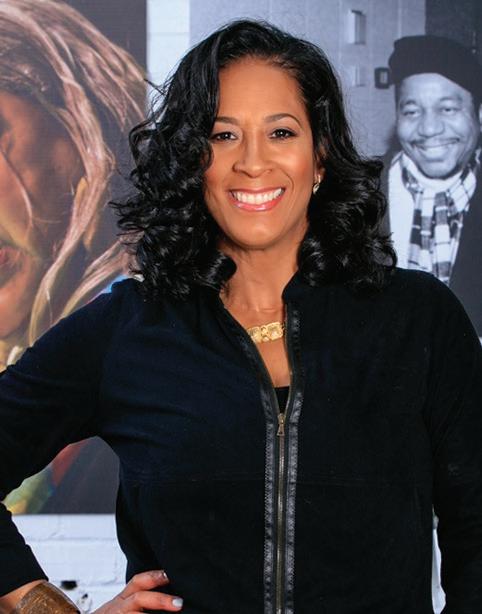
impact of collective resolve.
These are the stories the African American History Initiative is commit ted to lifting up—not only to remember them, but to ensure they remain part of our shared understanding. Going forward, I will continue to highlight notable St. Louisans—and figures from our sister city, East St. Louis—whose contributions in politics, the arts, education, and com munity leadership deserve recognition.
Throughout the remainder of Black History Month, the African American History Initiative will continue to host programs at the Missouri History Museum that explore Mill Creek’s cultur al legacy (Feb. 12), uplift Black women’s labor and leadership (Feb. 19–22), offer opportunities for families to connect with their own histories through genealogy and place based learning (Feb. 20–21), and examine disability and inclusion through a historical lens (Feb. 26). Visit mohisto ry.org/events for more details.
Celebrating Black history does not mean ignoring hardship. It means refusing to let hardship define the whole story. Black history is joy, innovation, faith, art istry, humor, and vision.
As I begin this fresh chapter at the Missouri Historical Society, I invite you to engage with the African American History Initiative—to visit the Museum, experience the exhibits, attend the pro grams, donate to the initiative, and sup port the work of preserving Black history as a shared civic responsibility.
I leave you with an excerpt from a piece I wrote, inspired by this once great River City and the work ahead: St. Louis is a city that remembers —even when the nation forgets. We carry stories carved into brick, breath, and blood. This city has been tested, s haken, reshaped— and still, we rise.
Because here, survival is not the end of the story. It is the beginning of our power.


Follow us
Lyah LeFlore-Ituen, director of the African American History Initiative.

RIP Marsha Evans. Somebody please give me some encouraging words that will ease my soul about 2026 not trying to outdo 2025 and 2020 put together. Because when I woke up and saw that my girl Marsha Evans had gone to glory, it was almost too much for me to take. Y’all she gives me one of my favorite Salute moments when she performs with The Jazz Edge Big Band. I don’t know the how, nor do I know the when as far as the services go, but I will definitely keep you posted. Miss Marsha was one of one and she definitely left her mark. I all but fell out when I learned that she was sam pled on Quavo’s record. Y’all remember that? I’ll never forget her and those big ole curls, or her even bigger smile. Condolences to all of the lives she touched, which is essentially this whole region! And 2026 needs to be put in check for all the folks it is snatching up out of here. As I was writing this, I found out that James Van Der Beek is no longer with us. I’m still shook about Deanne Lane and Catherine O’Hara, and now I have to find a way to live without Dawson!

for me by the way my auntie was on my neck the whole show with, “What he talkin’ ‘bout now?” “Aint that the little boy from Mneudo? He turned out to really look like something. What is he talkin’ about?” My family still treats me like I’m a certified ESOL translator, so I could barely enjoy the show. They’ve had me gassed up like I’m a full blown bilingual my whole life. I found out the hard way that I wasn’t. I made a trip to San Juan and almost got laughed off the island trying to order myself “hamburgo.” But Back to Super Tazon LX! Did anybody else not bother to watch the rest of the game. The minute I saw Benito in that straw hat with all that sugar cane ambience, I knew that he was going to give the girls some scenic design for the ages. And I was right. From the bodega scene until they merengued on up out the stadium, it was lit! I’m not sure why Lady Gaga was a part of the show, but she’s everybody’s ally, so I will give her a pass. I was so checked out after the performance that when somebody asked me who won the actual Super Bowl LX, I said, “Bad Bunny.” Was I wrong? I don’t think so.
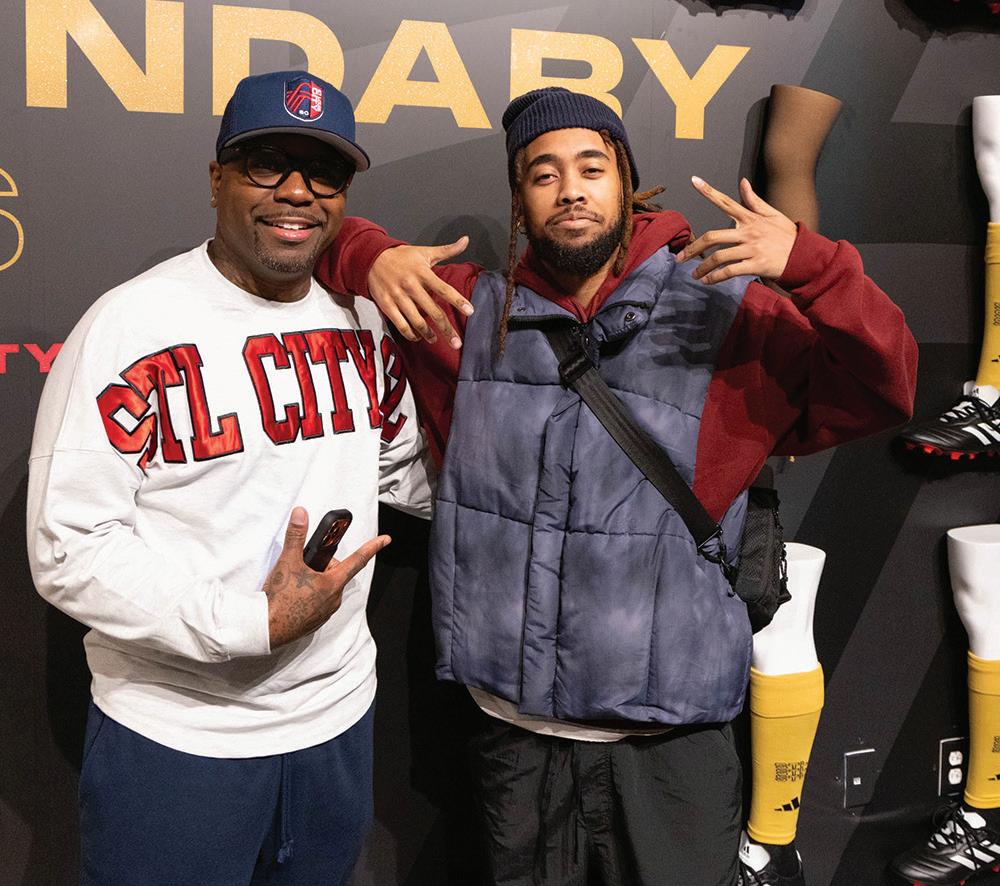

Bad Bunny Bowl. In the words of the legendary T.S. Madison, I was feelin’ real Puerto Rickkin (her pronunciation) after watching Bad Bunny’s Super Bowl LX halftime show. I got my whole entire life. Who would have thought that those Espanol Wednesdays on “Sesame Street” would have paid off all these years later. I won’t say how many years, because I’m older than y’all think I am. “Titi Me Pregunto” took on a whole new meaning
Singing the City Winery down. I got a double dose of good singing when I spun the block over at City Winery over the past few days. First off, if I drove to Indianapolis to see her throw down, you better know I had a seat near the front for Avery Sunshine’s weekend set. I’m absolutely loving her Joie Lee hair game with the honey blonde highlights. I don’t know the curriculum for the music program at Spelman. But what
I do know based on Avery and Denise Thimes that includes wearing a hot red lip and singing a stage to oblivion. And speaking of Denise, who else got their whole entire life from her soldout Nina Simone/Billie Holiday tribute set at City Winery last week? Wasn’t it everything your heart could desire? That’s a rhetorical question….but the answer is yes. Let me get back to her fellow Spelmanite, or whatever they call themselves. I love Avery to death – and, as always, she gave a show for the ages. But can anybody explain her stage attire mindset? From the neck up she was beat to the gods and slaying with the hair. But I guess she was like, “I’ll be sitting at the piano, so I’ll just leave this on. Nobody will notice my binge-watching outfit because of my hair, my makeup and this big glorious necklace.”


And if she hadn’t hopped up from behind that piano, she would have been absolutely right! But I wouldn’t allow as much Avery Sunshine slander as I’ve just served up from anybody else, so let me just get to what I came here for – telling y’all how she incredible she was for her latest visit to the STL. I promise, if she came to town every week I would be front and center watching her do her thing!
An intimate evening with El DeBarge. Before that title compels y’all start the rumors, no we are not Al B. Luenell 2.0. I’m talking about how he gave us mint condition El at City Winery Wednesday night. I know I’ve given the DeBarge siblings the blues here and there over the years for different reasons. But in all fairness to myself, when they came correct, I most cer-
tainly said so. And he came correct. I feel like he is still mad at me for telling y’all that he said he was in Detroit when he was actually in St. Louis that one time. Hopefully he will forgive me for what I’m about to say next. That voice is still intact! His falsetto is undefeated. It made me marinate on the fact that I have never once – in my 40-plus years of listening to him – have I ever heard El’s voice crack. Not once. And I still can’t after seeing him on Wednesday. I almost didn’t see him. If I hadn’t already been at The Foundry being nosy trying to see what those St. Louis City SC Tina Turner jerseys were talking about, I would have missed him altogether. Thank you St. Louis City SC! Not only did you honor my girl Tina with the type of adidas drip that has me ready to spend my whole income tax refund check on, but you had me in the vicinity of City Winery when I forgot El was even coming. I also owe a bun tip to all the bedazzled stiletto boots tipping through the parking garage that got me curious about where they were limping to.






















Photos by Lawrence Bryant/St. Louis
“I hope it shows the people that doubt running backs that running backs are important all around the league, not just here.”
– Seattle’s Kenneth Walker
InSIdE SportS
With Earl Austin Jr.
Under Wallace, MICDS basketball continues successful run
The MICDS Rams boys’ basketball team has put together an impressive run of success under the direction of head coach Travis Wallace.
In the past six seasons, Wallace has guided the Rams to an average of 20 victories a season, including three district championships and a berth in the state quarterfinals in 2023.
The winning ways have continued this season as the Rams are currently 15-3 and ranked No. 3 in the latest Missouri Basketball Coaches Association Class 5 state poll.
guard who does a little bit of everything. He is averaging 11 points, four rebounds, and two assists a game. Mims is a 6-foot4 guard who is one of the top defensive players in the St. Louis area. He averages six points and four rebounds a game.
The Rams look like one of the prime contenders in Class 5 this season with a veteran group of players who have been playing varsity basketball for three and four years. MICDS has played a strong schedule and has collected victories over the likes of Vianney, CBC, and outof-town schools such as Chicago Crane and Little Rock Christian.
The Rams’ top scorer is 6-foot-2 senior guard Brandon Clemens, who is averaging 15 points a game while shooting 46% from the field. Clemens has been a standout offensive player since his freshman year. He has signed with Missouri Southern University in Joplin.
Seniors Jason Stokes and Keshon Mims have also been mainstays since their freshman seasons. Stokes is a 6-foot-4
Junior forward Tyler Ray has emerged as one of the area’s top players in his class. The 6-foot-4 Ray is a versatile player who can play all five positions on the floor. He is currently averaging 13 points, nine rebounds, and two assists a game while shooting 51% from the field. In a 74-57 victory over Clayton last Friday night, Ray had 19 points, 14 rebounds, six assists, two steals, and two blocks.
The Rams’ fifth starter is 6-foot-7 senior forward Gabe Weaver. He is a football standout who is headed to the University of Minnesota to play on the gridiron. He has emerged as a force on the inside during his senior season. He scored a team-high 16 points in the Rams’ victory over Vianney on January 28. He is averaging eight points and four rebounds while shooting 63% from the field.
Providing support for the veteran starting five are three young players who will be future standouts. Preston Clemons and Asa Roberts are a pair of 5-foot-10 sophomore guards, while Nick Weaver is an athletic 6-foot-3 junior forward.

A matchup between local basketball powers Vashon and Webster Groves will highlight the annual High School Basketball Showcase on Saturday at Normandy High’s historic Viking
Hall. The four-game event is presented by the Boys and Girls Clubs of Greater St. Louis. Vashon and Webster Groves are scheduled to tip off at 7:15 p.m. in the finale of the event. Both teams won state championships last season, with Vashon winning Class
SportS EyE
With Alvin A. Reid
4 and Webster Groves winning Class 5. Both teams are led by standout juniors, with Webster Groves featuring future Missouri Tiger Scottie Adkinson and Vashon featuring shooting guard Jimmy McKinney III.
The first game of the event will be a girls matchup between
Lutheran North and Hazelwood Central at 2:30 p.m. Next on the schedule is a boys game between Lutheran North and host Normandy at 4 p.m. The third game of the event will feature University City vs. Lift for Life at 5:30 p.m.
Edwards ices her place in U.S. Olympic history
Laila Edwards made history last Thursday when she became the first Black woman to play for the U.S. Olympic women’s hockey team.
A native of Cleveland Heights, Ohio — the hometown of Jason and Travis Kelce — Edwards began playing hockey there with her brother Bobby and sister Shayla. Their younger brother, Colson, would later take up the sport as well.
“To have the opportunity to be an Olympian is crazy just to even say out loud,” Edwards said as the Olympic tournament began.
“There are a lot of people who helped me get here that I owe thanks to, and I want to give my best every day to make them proud.”
In a “SportsEye” profile published in April 2024, I detailed the family’s decision to enroll Edwards at Bishop Kearney Prep School in Rochester, New York. While there, she met and played alongside current U.S. teammate Caroline Harvey.
Both later starred at the University of Wisconsin, where they helped the Badgers win the 2023 NCAA championship. During her sophomore season, Edwards scored 21 goals and totaled 56 points in just 41 games, earning her a spot on the U.S. senior national team. Last spring, she won a second national championship with Wisconsin. At her first world championship tournament in 2024, Edwards became the youngest American to win the tournament’s MVP award, earning the honor even though Canada defeated the U.S. in the championship game.
Those international experiences included moments that went well beyond the ice.

“There was a mom with her two kids of color in Europe, and they came to every single game,” Edwards told the Associated Press. “She told me how cool it was for her kids to see people who look like them playing hockey. I was extremely emotional and honored by that.”
Black hockey players in the United States remain rare, and Edwards said she has dealt with challenges along the way.
“Walking into a rink and being told the basketball courts were that way was very annoying and tough,” she said. “Having experienced those micro-
aggressions at a younger age definitely taught me lessons and made me stronger.”
At 6-foot-1, Edwards plays forward at the collegiate level, but she willingly shifted to defense for the Olympics to help an American team dealing with injuries.
The position change did
not limit her impact.
In last week’s 5-1 preliminary-round win over Czechia, Edwards showcased her offensive instincts while skating on the power-play unit. She first set up forward Alex Carpenter for a scoring chance. After the Czech goaltender made the save, the rebound came back to Edwards, who delivered a precise pass to Megan Keller. Keller fired a shot that Carpenter redirected into the net.
Edwards earned an assist on the goal and logged 20 minutes, 46 seconds of ice time in her Olympic debut.
The Reid Roundup
Laila Edwards is the second Black player on a U.S. Olympic hockey team. Current Buffalo Sabres forward Jordan Greenway played in the 2018 PyeongChang Winter Olympics… Other Olympians of color include: Erin Jackson, long-track speed skating. She became the first Black woman to win gold in an individual Winter Olympic event at the Beijing Games…
Elana Meyers Taylor, bobsled and monobob. The four-time Olympic medalist seeks her first gold medal…Darryl Payne, Jr., skeleton.
Competitors race headfirst on a small sled. Payne is the first Black American to compete with the U.S. men’s team…Kaysha Love, bobsled and monobob. A former collegiate sprinter, Love is an accomplished bobsled pilot…Mystique Ro, skeleton. It is her first Olympics…Azaria Hill, bobsled. A former sprinter, Hill’s mother Denean Howard-Hill, is a three-time track Olympian and winner of a gold and two silver medals. Her father, Virgil Hill, is an Olympic silver medalist in boxing… Jasmine Jones, bobsled. She is also a former outstanding collegiate sprinter…Bryan Sosoo, bobsled. Born in Ghana, this is the first Olympics for the former track star…Kelly Curtis, skeleton. Four years ago, she became the first Black athlete to compete with the USA Olympic women’s skeleton team.
Vashon vs. Webster Groves highlights weekend showcase event
MICDS junior forward Tyler Ray drives the lane for a dunk against Clayton High. Ray has emerged as one of the area’s top players in his class.
Alvin A. Reid
Laila Edwards stood tall in the United States’ 5-1 win over Czechia in a Winter Olympics women’s hockey game on Feb. 5.
Photo courtesy of nbcolympics.com
Photo by Lawrence Bryant / St. Louis American
Earl Austin Jr.
St. Louis
and
St.
Questions or comments? Contact Cathy Sewell csewell@stlamerican.com or 618-910-9551


Students
Thompson and Savannah Fisher, in
Students at The American’s Summer Science Academy work in teams to discover the many different computer programming languages.
Photo by Cathy Sewell
csewell@stlamerican. com

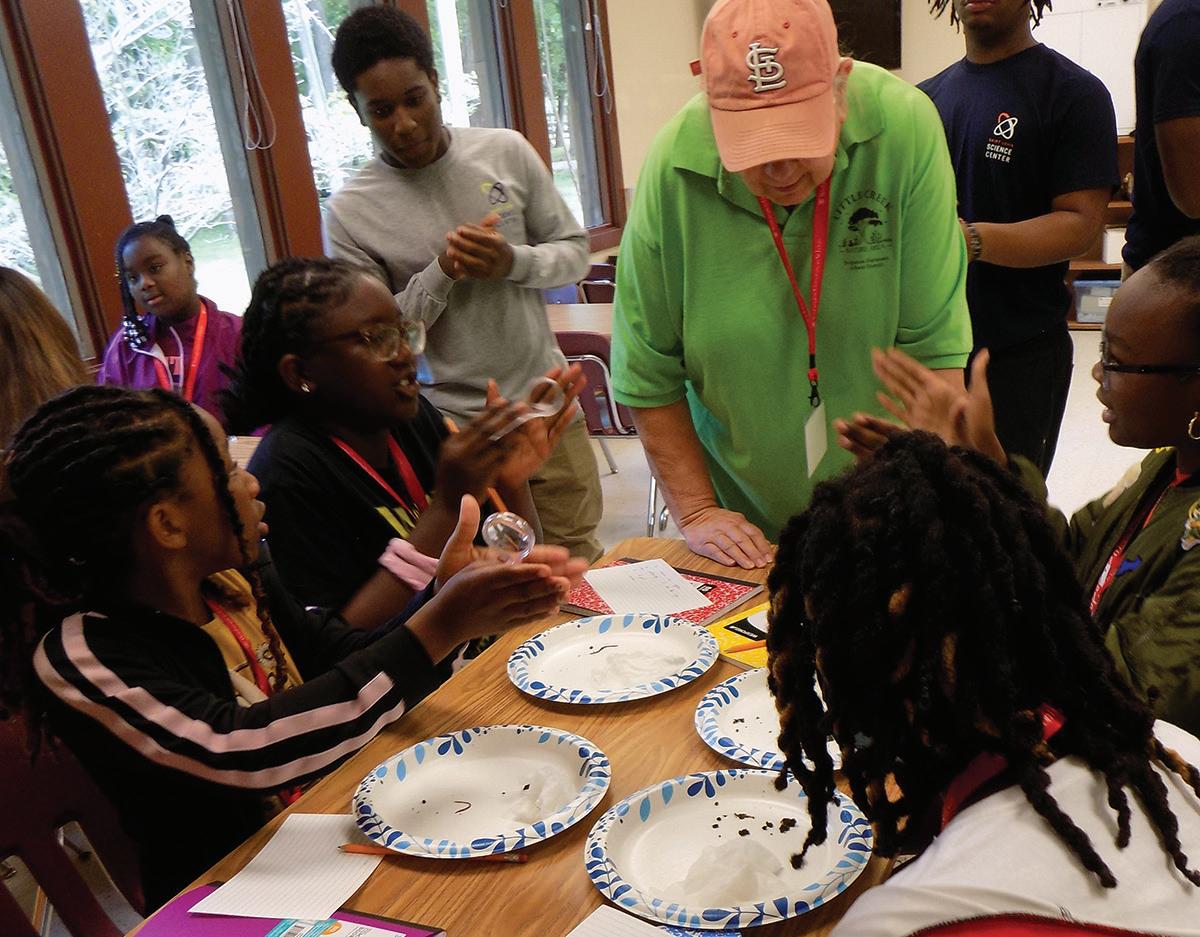

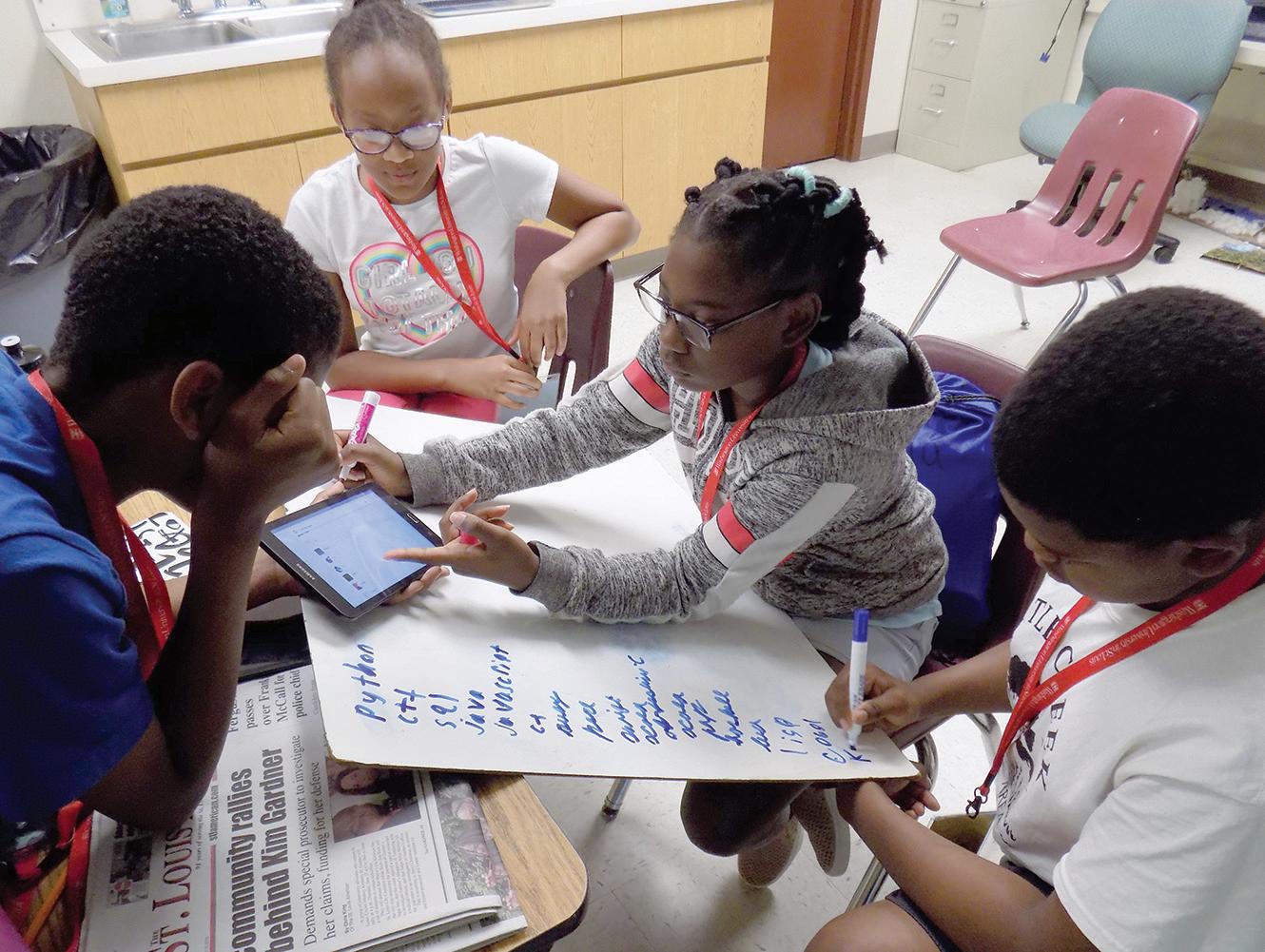
SCIENCE STARS

SCIENCE STARS
Dr. Mubarak Ayinla
African American Meterologist William “Bill” Parker
AFRICAN-AMERICAN MYCOLOGIST AND EDUCATOR: Jeanette Jones
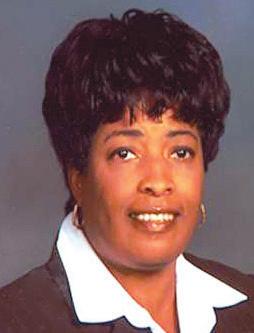
SCIENCE CORNER
A hurricane forms over tropical and subtropical ocean water. Warm water and cool, moist air combine to create strong winds that can gust up to 200 miles per hour! These winds create waves that bring the storm on shore. Hurricanes are very destructive. They can flip cars, sink boats, uproot trees, and demolish houses.
SCIENCE CORNER

What Is Density ?
Have you ever wondered why some small items weigh more than larger items? It’s all about the density. Density is the mass of an object relative to its volume. Objects with a lot of matter in a certain volume have a higher density, while objects with a small amount of matter in the same volume have a low density. Consider this example. If you have an empty milk gallon and fill the container with pennies, it will be quite heavy and will have a greater density. If you fill the same milk gallon with cotton balls, which are light, it will have a lower density.
Are Fungi ?
In addition to powerful winds, hurricanes bring a lot of rain. (Taiwan received 114 inches of rain in three days during a hurricane.) These rains can cause landslides and flash floods.
SCIENCE INVESTIGATION

Fungi are organisms made of filaments (called hyphe) that are stacked together. Unlike plants, fungi do not have chlorophyll, so they cannot make their own food. Some fungi are parasites, which mean they live off of other organisms. Some fungi feed off of dead and decaying matter. Fungi are everywhere in the environment, including the soil, lakes, river and seas, air, and on plants and animals. Fungi (plural of fungus) help organic matter to decay and release carbon and oxygen into the environment. Unlike plants, fungi do not have
In this experiment, you’ll create a replica of a hurricane and identify how the forces work together to create a hurricane.
Hurricanes can last a few hours or several days. Most hurricanes occur during the fall months. How can you stay safe? Have an evacuation plan and an emergency kit prepared. Meteorologists can track these storms and keep you informed. For more hurricane facts, visit: http://www.sciencekids.co.nz/ sciencefacts/weather/hurricane.html.
leaves, stems, or roots. Fungi use spores to reproduce. One common type of fungus is the mushrooms you find on your pizza. Mold, yeasts, and mildew are also types of fungus.
SCIENCE INVESTIGATION
If you have a bowl of water, you can try adding items, such as a quarter, a pencil, and an egg, to see if they sink or float. If
Materials Needed:
SCIENCE EXPERIMENT
• 2 Soda Bottles

• 3 Peanuts • ¼ C. Sand • Funnel
• Water • Duct Tape
In this experiment, you will learn how mold grows best. Mold is an important fungus that has several uses, including breaking down dead organic material. Some purified molds are actually used as an antibiotic to treat illnesses.
Materials Needed:
Procedure:
q Fill one bottle with the paperclips, peanuts and sand. These represent the debris and help make the movement of water easier to see.
In this experiment, you will observe density in motion. The colors placed in a jar will separate by density of the liquid. Different liquids have different densities (mass per volume) and therefore, different weights. The heaviest liquids will sink, the lighter liquids will rise to the top.
• 3 slices of bread • Water • 3 Ziploc bags
• 10x10 square centimeter grid • Ruler Process:
Materials Needed:
w Place the funnel in the mouth of the bottle and pour water into the bottle until it is 3/4 full, then remove the funnel.
• Food Coloring • Rubbing Alcohol • Water
q Wet one slice of bread enough to make it moist and place it in a bag. Seal the bag very tightly.
e Turn the second empty bottle upside down and hold it over the first bottle so that the mouths of the bottle are aligned. The bottles will look like an hourglass.
• Dish Soap (colored) • Canola or Vegetable Oil • Clean Jars or Glasses for Mixing • 1 Pint Canning Jar • Funnel
w Place the two other slices of dry bread in two separate bags and seal them, as well.
Procedure:
r Tape the seam, pressing the duct tape firmly to
e Place the bag with the wet slice of bread and one of the bags with a dry slice of bread in a dark place, such as a closed cabinet or closet.
q Make a prediction: which liquid has the greatest density: dish liquid, rubbing alcohol, water, or oil? Place them in order from heaviest to lightest. In this experiment, you will test your prediction.

r Place the third bag with a dry slice
z A hurricane has moved 456 miles in 6 hours. How many miles per hour is the hurricane traveling? ______ If it continues to travel at that speed, how far will it travel in 10 hours? ______ x Hurricane Frederick is traveling at 86 miles per hour. If the hurricane is 129 miles from the coast, how many hours will it take until the hurricane reaches the coast? ______
MATH CONNECTION
an item has a density greater than the water, it will sink. If the density is less than the water, it will float. If you add a teaspoon of salt to the water and stir it to dissolve it, you have increased the density of the water. If you have an item that did not float, keep adding salt to the bowl of water to see if you can make it float.
Learning Standards: I can read nonfiction text for main idea and supporting details.
For More Information, Go to: https://kids.kiddle.co/Fungus
Learning Standards: I can read nonfiction text to gain background information about fungi.
For More Information: Watch this video online—www.brainpop.com/science/ matterandchemistry/measuringmatter.
Learning Standards: I can read nonfiction text to gain background information about density.
create a watertight seal. Continue taping 1 to 2 inches above and below the seam.
Growing Mold!
t Hold the bottles by the middle and lift the jugs.
Liquid Density in Motion!
Using the funnel, slowly pour the water into the jar on top of the dish soap.
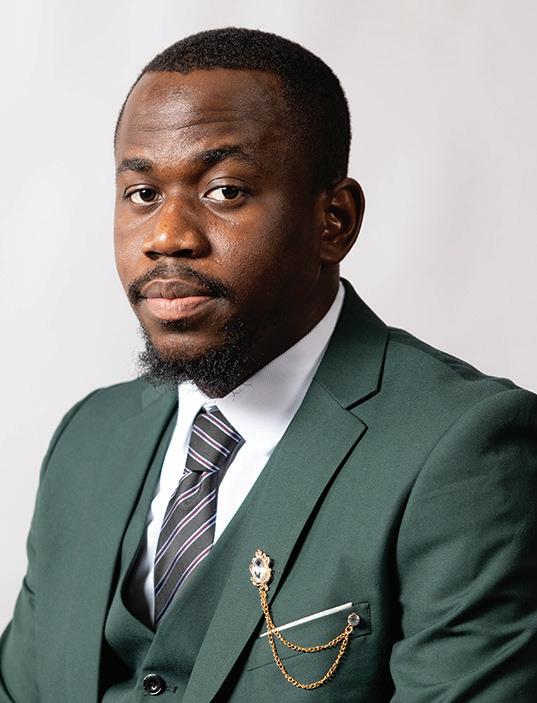
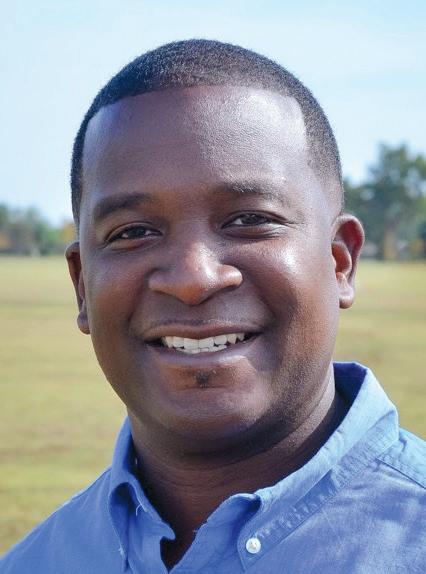
William (Bill) Parker grew up in New Orleans. He graduated from JFK High School, which focused on math, science, and engineering. Parker was interested in hurricanes at a young age, but he became interested in the weather after a high school statistics class. In this class, he learned how to predict the chance of rain. Parker wanted to attend a historically black college/ university (HBCU), so he chose Jackson State University to study meteorology. He graduated with his bachelor’s degree, in 1994.
Dr. Mubarak Ayinla is a scientist who loves to solve big problems with chemistry and materials. He began his journey in chemistry at the University of Lagos in Nigeria, where he studied hard and graduated among the best students in his class. Later, he moved to the United States and attended the University of Massachusetts Lowell, where he earned his Ph.D. and now works as a postdoctoral researcher.
In his research, Dr. Ayinla designs and makes special materials called “covalent organic frameworks” or COFs. These are like tiny scaffolds made of parts that link together in clever ways. He also works on “dynamic polymers” that can heal themselves or be reused for things like cleaning up pollution, storing gases, or helping with health-related uses.
Jeanette Jones was born on September 19, 1950, in Fort Valley, Georgia. Jones graduated from Fort Valley State University in 1972 with a bachelor’s degree in biology education. In 1973, Jones received her master’s degree in botany and mycology (a branch of biology that studies fungi) from The Ohio State University. In 1976, she received her doctorate (Ph.D.) degree. She also studied at the University of Nevada, the University of California Medical School, the National Center for Disease Control-Atlanta, and the Massachusetts Institute of Technology. After graduation, Alabama A&M University hired Jones as an assistant biology professor. In 1986, she served as an adjunct professor in the College of Pharmacy and Pharmaceutical Services at Florida Agricultural and Mechanical University and worked on a project with NASA. In 1991, Jones served as the first female vice president of research and development at Alabama A&M University. She also served as President of Alabama A&M University’s Faculty Senate from 2001 to 2006. In 1992, she was appointed to the U.S. Army Science Board by the U.S. Secretary of the Army, Togo West. Since 2004 Jones has been the director of the Center for Biomedical, Behavioral, and Environment Research at Alabama A&M University. She also worked as a consultant with federal agencies to help them develop training programs to attract women and minorities to STEM education and careers.
What makes Dr. Ayinla’s work extra interesting is that he combines creativity with careful planning. He not only designs new materials, but also thinks about how science is done, using smart methods to make labs run better and faster. This shows that being a good scientist is not just knowing chemistry it’s also thinking carefully, working responsibly, and solving problems in smart ways.

y Quickly, turn the bottles over so that the water-filled bottle is on top. Set the bottles on the table again.
u Observe the water as it drains into the bottle below. The water competes with the air from the empty bottle. Both substances push to pass through the neck.
t For five days, measure the square centimeters of mold on each piece of bread through the bag. Use a grid, if possible, or a ruler. If mold covers more than half a square centimeter, it is counted as one full centimeter. If it is less, it is counted as 0 centimeters. This will give you the area of mold on each slice of bread

At university, he was also a leader. He served as the president of the Graduate Student Association, helping other students succeed and grow. He spoke at his graduation ceremony and received a special medal for his work. His story shows that with curiosity, hard work, and helping others, you can do amazing things even if you move to a new country and face challenges along the way.
In 1993, he began to gain experience in the field when he worked as a student meteorologist. One year later, he was a meteorologist intern at Shreveport. In 1998, Parker became a general forecaster, and ten years later, a lead forecaster. In 2012, he became a warning coordination meteorologist (WCM). There are only 122 people with this title in the United States, and Parker was the only African American. Parker is currently the meteorologist-in-charge (MIC) at the National Weather Service, leading a team of 26 weather professionals. Parker is also very active as a volunteer in his community. He is a member of the Shreveport-Bossier Mayors’ Prayer Breakfast Executive Committee, La Cima Bilingual Leadership Academy, Bossier Chamber of Commerce Education Committee, Volunteers for Youth Justice, and a coach for Bossier Parks and Recreation. Parker is also an associate minister at Elizabeth Baptist Church in Benton, where he has been serving the congregation since 1997.
w Place 1/4 cup of dish soap in the one pint canning jar. Helpful tip: Pour liquids slowly and through a funnel. e Mix 1/4 cup of water with food coloring of your choice.
Scientists often use tables and graphs to display the results of their research. Looking at these displays, you can draw
Density is mass divided by volume. Therefore, mass is density multiplied by volume. Use these formulas to complete the questions.
c A tropical storm takes on a hurricane status when the winds reach 74 miles per hour. After three days, Tropical Storm
r Next pour 1/4 cup of vegetable oil into the jar on top of the water and soap. Pour this slowly and carefully so that you don’t disturb the other layers any more than necessary. The vegetable oil is difficult to mix color into, so leave it in its natural state.
y At the end of a week (5 days of measuring) or longer, use your final results to say what percentage of the bread was covered in mold. Make a table or graph to display the information.
i Turn the bottles over again. This time, shake the bottles in a circular motion. Be sure to keep the bottles vertical.
o The water will form a vortex as it drains into the next bottle. The water will flow along the outside of the neck, while air moves quickly up through the center of the vortex. The water will drain much faster.
Analyze: How did water and air create a hurricane?
In 1975, Jones was listed in the World’s Women’s Who’s Who and she was named an Outstanding Young Woman of America in 1978. Beta Beta Beta National Biological Honor Society awarded her the distinguished service award. Jones also received the Significant Service Award from the NASA Space Life Sciences Training Program and the Extramural Associate Research Development Award from the National Institute of Health. In 1990 and 2006, she was named Woman of the Year at Alabama A&M University and was given the Outstanding Leadership Award by the Faculty Senate. The U.S. Army presented Jones the Commander’s Award for Outstanding Civilian Service as a member of the Army Science Board.
For young students, Dr. Ayinla’s journey sends a strong message: keep asking questions, keep experimenting, and remember that science can help the planet, improve health, and make the future brighter. It also reminds you that your ideas matter, that you can lead and support others, and that your story is part of what makes the world better.
t Finish up by mixing red food coloring into 1/4 cup of rubbing alcohol and then carefully pouring this solution into the jar. This will leave you with four layers in the jar. They will be mixed up a bit from the pouring action, so set the jar aside in a well lit area where you can watch the layers begin to separate.
Discussion Questions: How much mold was on the bread? Which location had the most mold? Which had the least? What conclusions can you draw about the conditions in which mold grows? How can food manufacturers and restaurant owners use this information to help them?
ELA Questions:
Discussion Questions: Dr. Jones received many awards and honors. How would you describe her achievements and her contributions to science? Dr. Jones is studying how fungi might be used as agents of war. What purpose do you think fungi serve in modern warfare? Are fungi beneficial or harmful?
How did Dr. Mubarak Ayinla combine his love for chemistry with improving how science is done?
Learning Standards: I can follow sequential directions to complete an experiment. I can make observations and draw conclusions.
Learning Standards: I can read a biography to learn about an African American who has made contributions in science, math, technology, or engineering.
In what ways does Dr. Ayinla’s journey show that helping others and learning go together?
Parker believes in serving as a role model to the youth and to recruiting African Americans in the STEM field. Personally, he has hired three African-American meteorologists. In addition, he has recruited minorities for summer intern positions. Parker has also mentored an Airline High School student for his senior project. Parker’s advice to students interested in meteorology is to take as many math and science classes as possible. Learn about summer opportunities in your community. If you are interested in meteorology, visit National Weather Service offices and serve as a volunteer or intern, and find leaders in your community to serve as your personal role models.
Math Storms!
Learning Standards: I can follow sequential directions to complete an experiment. I can display my results, make observations, and draw conclusions.
Discussion Questions: Was your prediction correct? Which liquid had the greatest density? Which liquid had the lightest density?
Analyzing
Learning Standards: I can make a prediction and test the accuracy. I can follow sequential directions to complete a task.
X has grown to have wind speeds of 48 miles per hour. How much faster will the winds have to become for Tropical Storm X to become Hurricane X? ______
a Bar Graph
Learning Standards:
Calculating density
As we approach spring weather (and increased rain), create a bar graph that displays the amount of rain that falls for several consecutive days or weeks. (Day 1: 1.5 inches, Day 2: 0 inches, Day 3: 1.5 inches, etc.)
Upon landfall of a Category 4 hurricane, local officials ordered an evacuation. City A has a population of 9,613, City B has a population of 5,013 and City C has a population of 3,972. How many people were evacuated in all?
Problem 1: You have a rock with a volume of 15cm3 and a mass of 60g. What is its density?
Problem 2: You have a different rock with a volume of 20cm3 and a mass of 60g. What is its density?
Problem 3: In the two examples which rock is heavier?
DID YOU KNOW?

DID YOU KNOW?

This special Newspaper In Education initiative is made possible, and delivered to classrooms through the St. Louis American Foundation and its NIE Corporate Partners:
Discussion Questions: Which day had the most measured rainfall? Which day(s) had the least? Looking at the bar graph, what might you conclude about rain patterns in March/April? What other observations can you make?
Which is lighter?
$115,264 in damage, City B reported $236,096 and City C reported $436,869 in damages. What was the total cost of damages rounded to the nearest thousand? ______ If the state and federal government promised $500,000 in aid, how much would the local people have to raise by themselves? ______
Learning Standards: I can use a bar graph to display information. I can use the information to make deductions and inferences.
b After citizens returned to their houses after the evacuation, reports of damage were totaled. City A reported


Problem 4: In the two examples which rock is more dense? Which is

Learning Standards: I can add, subtract, multiply, and divide to solve a problem.




a person who has made contributions to the fields of science, technology,
Use the newspaper to complete the following activities:
The Shape of the Final Scores:
MAP CORNER

Locate the Sports section of your newspaper.
Types of News:
Record all of the final scores shown for a particular sport.
Enjoy these activities that help you get to know your St. Louis American newspaper.
Arrange the final scores in order from least to greatest.

Calculate the mean, median, mode, and range of the numbers. Discuss your results.
Use the front section of the newspaper to evaluate the types of news stories presented: local, national, and international. Sort the articles into the three categories and create a bar graph that displays the amount of coverage each type of news story received.
Activities — Who works where? a picture of a building in the newspaper and tell what kind of jobs people who work in that building could have.

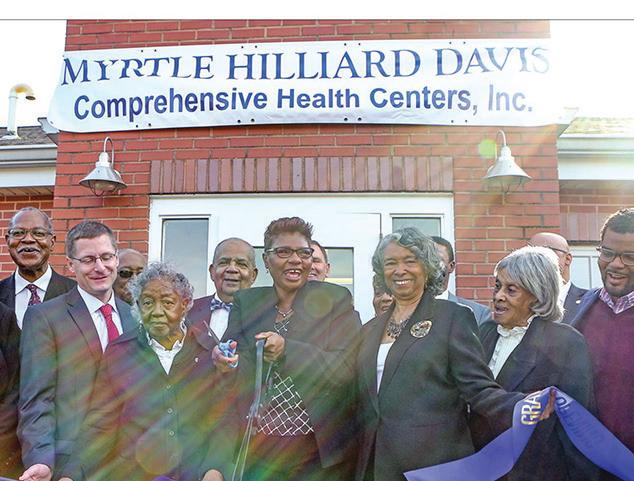


Relevant Information:
Find an interesting news story to evaluate. Read the story and identify the main ideas.
Number the main ideas in order of importance. Explain why you chose that order.
Mystery Story: Cut out several pictures from the newspaper without reading the caption. Place the pictures in a bag, and without looking, pick your mystery picture from the bag. That’s your stimulus for writing. Construct a graphic organizer to identify the 5Ws (who, what, when, where, and why) of your story by looking at your picture. Then, continue the writing process.
Problem and Solution: Over a period of weeks, clip articles from newspapers that deal with problems and issues facing your local or county government. Discuss the reasons for these problems and how the government hopes to solve them.
Learning Standards:
Learning Standards: I can use the newspaper to locate information. I can categorize and summarize that information.
Learning Standards: I can use the newspaper to locate information. I can discuss problems and solutions. I can identify types of jobs. I can make text-to-world connections.
I can add, subtract, multiply, and divide to solve a problem. I can determine the main idea. I can use specific details to defend my opinion.




Penicilllin mold commonly grows on fruit
SCIENCE CORNER
Aariyah
Ms. Stovall’s firstgrade class at Gateway MST Elementary School, are learning how to construct a series circuit.
Photo by Ms. Stovall
Black History Month2026
Shining a light on overlooked Black trailblazers
Zuka Artist Guild holds one day exhibit
By Zaria Mac The St. Louis American
To celebrate Black History Month, the Zuka Artist Guild — a multicultural organization based in north St. Louis — is honoring the Black historical figures we don’t often uplift with an exhibit titled “Unsung Black Hero.” The one‑day showcase will take place this Saturday at UrbArts Galleries from 2:30 p.m. to 5 p.m., and is open to all ages and back grounds.
The exhibit is curated by Janet Riehl, an award‑winning artist and longtime member of the Zuka Artist Guild, and will feature work from both Zuka artists and members of the St. Louis Artists’ Guild.
The Zuka Artist Guild operates under the umbrella of the 14th Street Artist Community. Since the 1970s, the organi zation has created a nurturing space for social and cultural outreach, enrichment, and artistic expression.
“At Zuka we always have a Black History Month exhibit,” said Riehl. “But this theme is something we’ve wanted to do for a long time, so I took up the reins.”
The artists will bring together portraits, sculptures, and poetry from storyteller and activist Cheeraz Gormon and St. Louis Poet Laureate Pacia Anderson for an afternoon celebrating Black contributions to art, entertainment, and science.
“This is just a really amazing oppor tunity to be in a multi‑sensation environ ment,” Riehl added. “To hear two of St. Louis’s finest poets — who are really her oines in the creative community — and be surrounded by 20 pieces of art.”
At Saturday’s “Unsung Black Hero” program, guests can tour the UrbArts gal lery and hear from each artist about the hero they chose, how that figure shaped society, and why their story resonates personally. The program will also feature sound from David Jackson, who often performs on drums but will take over the DJ booth for this event.
Bringing together music, poetry, and work from artists like Patricia Clark, David Lee, and Joseph LaMarque is espe cially meaningful for Riehl, who believes the program will offer an afternoon of reclamation and re‑education for all com munities.
“This exhibit speaks to the nation’s
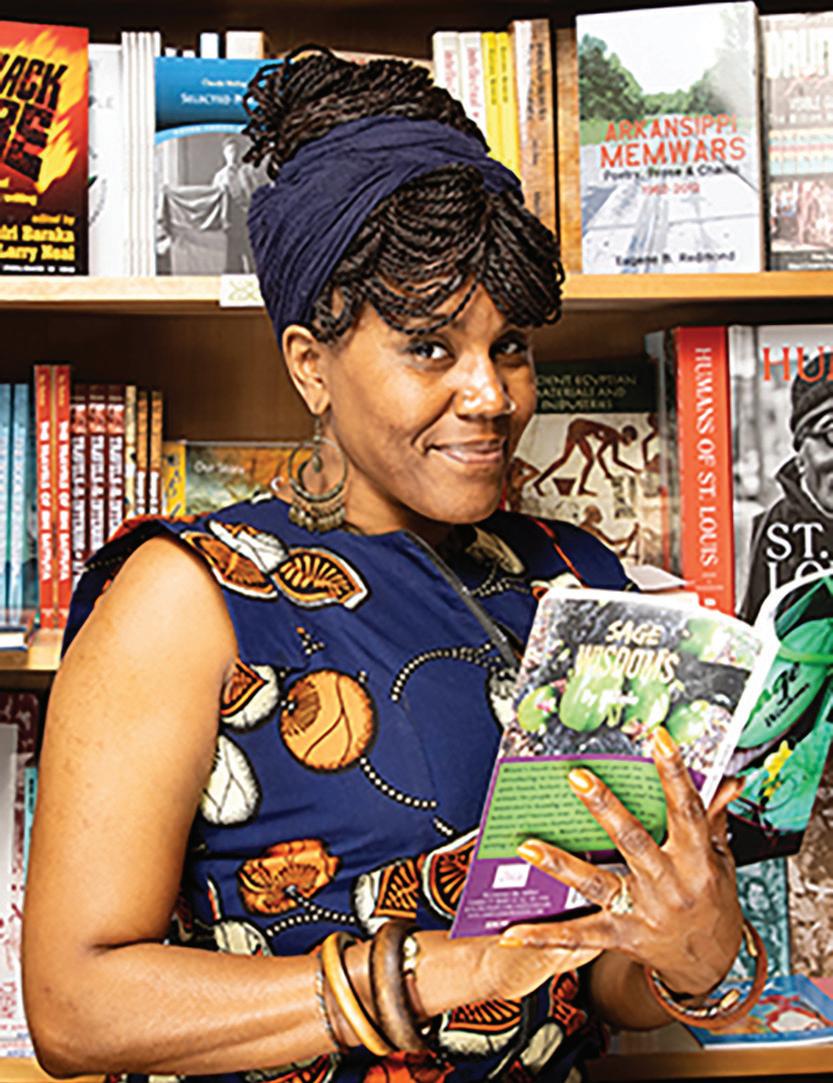
5 free teaching resources for Black history

From workshops to lesson plans, the Zinn Education Project helps educators
By Alvin Buyinza Word in Black
tragic history with slavery and our current struggles with racial justice and social inequality,” she said. “To fully claim the value and glory the Black community has brought to the U.S., it’s important to fore ground the stories people don’t know so we can reclaim history.”
Heroes highlighted in the exhibit include Bass Reeves, the deputy U.S. Marshal and gunfighter, and Cleora Hughes, a prominent journalist. The showcase will also uplift local heroes like Jordan Chambers, former mayor of Mill Creek Valley, and East St. Louis Poet Laureate Eugene Redmond.
Upon entering the exhibit, guests will see an elaborate installation honoring inventor and businessman Garrett Morgan — a figure many young people are unfa
miliar with. The installation includes a stoplight, his most well‑known invention, along with others he created throughout his career.
“This is one of the pieces you’ll see when you walk in, and it’s just a beautiful installation that can’t help but draw you in.”
This installation — and many others — will be waiting at the free, one‑night‑on ly “Unsung Black Heroes” exhibit this Saturday at UrbArts Galleries.
The “Unsung Black Hero” exhibition will be held Saturday, Feb. 8, from 2:30 to 5 p.m. at UrbArts Galleries, located at 2600 N. 14th Street in St. Louis. The event is free and open to all ages.
IN UNISON and Coltrane
SLSO concludes BHM with back‑to‑back tributes to Black musical genius
By Kenya Vaughn The St. Louis American
The St. Louis Symphony Orchestra is closing out Black History Month by lift ing up the legacy, brilliance, and global impact of Black music on two consecu tive nights at Powell Hall.
On Friday, February 27, the annual Lift Every Voice: Black History Month Celebration returns under the direction of Kevin McBeth, featuring the St. Louis Symphony IN UNISON Chorus and the SLSO debut of mezzo‑soprano Imara Ashton Miles. The next evening, the orchestra pivots from gospel and cho ral traditions to jazz with Coltrane 100: Legacy, a one‑night tribute to saxophone
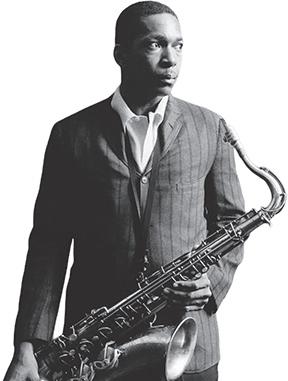
icon John Coltrane curated and arranged by composer Carlos Simon. For more than 30 years, the IN UNISON Chorus has served as a cul tural bridge between the SLSO and St. Louis’ Black community. Their annual Lift Every Voice concert has become a February tradition—one that honors the
The St. Louis Symphony Orchestra closes Black History Month with two nights honoring the power, beauty, and global impact of Black music. Jazz icon John Coltrane to be featured during a one night tribute.
Courtesy photo
spiritual, gospel, and choral traditions that shaped Black St. Louis. This year’s featured soloist, Imara Ashton Miles, steps into that legacy with a voice praised for its “expressiveness and lush sound.” A rising star with cred its from Opera Theatre of Saint Louis to Houston Grand Opera, Miles replaces Rosephanye Dunn Powell, who withdrew for personal reasons. The concert will instead honor Powell’s contributions as a composer whose work draws deeply from the African diaspora. If Friday’s program honors the roots, Saturday’s Coltrane 100: Legacy honors the revolution. John Coltrane’s influence on American music is immeasurable—but his connec tion to this region runs straight through one of East St. Louis’ most famous sons:
See SLSO, B9
Teaching the “I Have a Dream” speech, Rosa Parks’ refusal to give up her seat on a bus, and how George Washington Carver became known as “the Peanut Man” remain com mon Black History Month lessons in American schools — when Black his tory is acknowledged or taught at all. This year, however, the annual observance arrives at a moment when students are watching civil rights — including their own — debated, chal lenged and, in some cases, curtailed in real time. That context has raised renewed questions about how Black history is taught and whether students are given the tools to understand how past strug gles over rights, citizenship and power connect to the present. For many edu cators, that requires more than familiar lessons or surface level narratives. Organizations that focus on history education have expanded collections of classroom materials aimed at providing that broader context. Among them is the Zinn Education Project, a nonprofit that curates free teaching resources focused on social movements, labor history and civil rights. Its website includes hundreds of lesson plans addressing the African American expe rience, from Reconstruction through the civil rights movement and beyond, along with optional virtual workshops and study groups for educators.
Here are several approaches educa tors are using to deepen Black history instruction.
Teaching the origins of Black History Month
Harvard historian Jarvis Givens trac es the development of Black History Month in his book, “I’ll Make Me a World: The 100 Year Journey of Black History Month.” The book examines how the observance grew from Carter G. Woodson’s 1926 “Negro History Week” into a national tradition, high lighting the role of educators, activists and community members who pushed for broader recognition of Black his tory.
Examining Dr. King’s work beyond the South
Public memory of Dr. Martin Luther King Jr. often centers on his lead ership in the South. Historians have documented, however, that King also confronted housing discrimination, police brutality and economic inequali ty in northern cities, including Boston, Chicago and New York. Jeanne Theoharis explores that history in “King of the North: Martin Luther King’s Freedom Struggle
See Zinn, B9
Photo courtesy o Pacia Elaine Anderson f
St. Louis Poet Laureate Pacia Elaine Anderson will be presenting as part of the ‘Unsung Black Hero’ exhibit Saturday poduced by The Zuka Artist Guild at UrbARts.
Sister to sister
SLCL Black History
Celebration hosts ABC’s Deborah Roberts on Feb. 19
By Kenya Vaughn The St. Louis American
Veteran ABC News correspondent and 20/20
co anchor Deborah Roberts drew inspiration from her own family dynamic for her latest book.
“I grew up with a house full of them—six sisters,” Roberts said during a recent conversation on Good Morning America.
“I read a study that said sisters are good for your emotional well being, your optimism. They protect you. And I thought, my sisters… I never really thought that much about it.” She was on the show to discuss her new book, Sisters Loved and Treasured: Stories of Unbreakable Bonds. Roberts will be in town to discuss and sign the book on Thursday, February 19 at 7 p.m. at the St. Louis County Library’s Clark Family Branch. Her visit is part of the Library’s Black History Celebration, pre sented in partnership with Ameren. She’ll be joined in conversation by Gwen Mizell, Ameren’s vice president of sustainability and electrification.

and Barbara Bush, Arianna Huffington, Octavia Spencer, and everyday women whose names may not be famous but whose stories echo in households everywhere. Roberts’ own sisters are among them.

“There are people who told me, ‘I wouldn’t be friends with her if she wasn’t my sister,’” Roberts said. “But there is something there. There is a bond. I wanted to get at the root of that.”
The book doesn’t shy away from the complicated parts—distance, disagree ments, or the slow drift that adulthood can bring.
Deborah Roberts will discuss and sign her book “Sisters Loved and Treasured: Stories of Unbreakable Bonds” at 7 p.m. (6 p.m. doors) on Thursday, Feb 19 at St. Louis County Library’s Clark Family Branch.
Photo courtesy of SLCL
I’m not alone,” she said. “We’ve all had ups and downs. But I hope more than anything else, you cherish that relationship. You treasure it. And if you’ve had troubles, you can maybe repair it.”
Roberts is a New York Times bestselling author who has traveled the world reporting for ABC News. Her previous books include Lessons Learned and Cherished: The Teacher Who Changed My Life and Been There, Done That: Family Wisdom for Modern Times, co writ ten with her husband, Al Roker.
But this chapter in her literary career hits very close to home.
SLSO
Continued from B8
Miles Davis.
Coltrane joined Davis’ first great quintet in the mid‑1950s, and the two pushed each other into new artistic territory. Davis often spoke about the power and precision Coltrane brought to the band. “Trane was the most important saxophonist since Charlie Parker,” Davis wrote in Miles: The Autobiography, co‑writ ten with St. Louis native Quincy Troupe. “He was a great musician, a great artist.” That partnership
Zinn
Continued from B8
Outside of the South,” which focuses on King’s campaigns outside the region most commonly associated with his work.
Encouraging critical examination of the Constitution
In a period marked by debates over press freedom, immigration enforcement and the role of public institutions, some educators are asking stu dents to examine what the Constitution does — and does not — guarantee.
helped shape albums like Milestones and Kind of Blue, works that still define modern jazz.
Coltrane’s legacy returns to St. Louis through newly orchestrated arrangements by Carlos Simon, performed by the SLSO and featuring Grammy‑winning saxo phonist Joe Lovano. The program spans Coltrane’s early Prestige years through his 1960s spiritual explorations, offering a rare orchestral lens on his evolution—one sharpened, in part, through the genius he forged alongside an East St. Louis icon.
The St. Louis Symphony Orchestra IN UNISON
a Civil War to abolish slavery, and how the 13th Amendment continues to permit forced labor as pun ishment for a crime.
Participating in educator study groups
Chorus Lift Every Voice: Black History Month Celebration with guest soloist Imara Ashton Miles will take place at 7:30 p.m. on Friday, February 27 at Powell Symphony Hall. For tickets or additional information, visit www.slso.org or call 314.534.1700.
The St. Louis Symphony Orchestra’s presentation of Coltrane 100: Legacy will take place at 7:30 p.m. on Saturday, February 28, 7:30 p.m. at Powell Symphony Hall. For tickets or additional information, visit www.slso.org or call 314.534.1700.
The collection gathers more than 50 stories from women across generations and walks of life—Viola Davis, Jenna Bush Hager
“At the end of the day, they cherish who else grew up with them—who else knows all the trip wires in your life,” she said. “Even if it’s difficult, there’s something there that’s worth holding on to. And it is good for your life and your mental health.”
For Roberts, the project became both a revelation and a reminder.
“What I discovered is
“Sisters everywhere deserve to feel that love,” Roberts said. “I hope the book will inspire and inform—and just cele brate.”
Deborah Roberts will discuss and sign Sisters Loved and Treasured: Stories of Unbreakable Bonds at 7 p.m. (doors at 6 p.m.) on Thursday, Feb. 19 at St. Louis County Library’s Clark Family Branch, 1640 S. Lindbergh Blvd. For more informa tion, visit slcl.org or call 314 994 3300.
Classroom discussions often include questions about why the docu ment originally excluded large segments of the population, why it took
Professional develop ment opportunities tied to Black history instruc tion have also expanded. This summer, the Zinn Education Project is offering a free virtual study group for pre K through 12th grade teach ers focused on teaching about race, systemic inequality and resistance. Participation requires attendance at several scheduled sessions and completion of an evalua tion.
Teaching the history of access to education
For much of U.S. history, educating Black Americans was illegal, restricted or met with pun ishment. Historians and educators note a recurring pattern in which periods of expanded educational access were followed by legal and political back lash.
A lesson by educator Jesse Hagopian examines laws that limited access to learning and connects those policies to ongoing debates about curriculum and educational equity.
“This lesson reveals a pattern: When Black peo ple make significant edu cational gains — or score victories in their broader struggles for freedom — there is a corresponding white supremacist back lash that often includes legal restrictions and vio lence,” Hagopian wrote.
Black History Month 2026


Will Georgia’s Black male vote impact the 2026 election cycle?
“We have to counter the narrative that Black men are disengaged or apathetic”
By Donnell Suggs
The Atlanta Voice
There has been plenty of debate over how Black male voters influenced the 2024 presidential election — whether they helped shape the outcome in Georgia and other battleground states or hurt the previous vice president’s bid to become the nation’s first woman president. That conversation is far from over.
As the 2026 election cycle approaches, Black male voters are again drawing heightened attention, particularly in races where Black candidates are competing for top executive offices. Political strategists say the focus reflects both the size of the voting bloc and its potential to influence close elections when mobilized.
In Georgia, where Black voters make up a substantial share of the electorate, several Black men are running for governor in 2026. Their campaigns are offering a window into how candidates are attempting to engage Black male voters at a moment when questions of representation, economic opportunity and political trust remain central nationwide.
The event, held at a Blackowned business, brought together community leaders, organizers and potential voters for a conversation about policy priorities and political participation.
Before addressing the group, Esteves circulated through the room, greeting attendees and posing for photos. When asked about the role Black men play in elections, he emphasized their importance within Democratic coalitions.
“Black men have always had a significant impact on elections,” he said. “We are one of the most reliable blocs when it comes to Democratic voters.”
Nationally, Black women remain the most consistent Democratic voters, but analysts note that Black male turnout can be decisive in close statewide races.

One recent example came earlier this month when Jason Esteves, a former state legislator and Democratic gubernatorial candidate, hosted a roundtable discussion aimed at Black men.
That dynamic has fueled renewed outreach efforts, particularly as candidates attempt to assemble broad coalitions across race, age and geography.
“In order to build the kind of multigenerational, multiracial coalition it takes to win,” Esteves said, “Black men have to be an important part of that coalition.”
At the roundtable, Esteves outlined what he called a “Black Men’s Agenda,” focused on three broad areas: health, wealth and opportunity. He argued that those priorities are not limited to one demographic group, but resonate across communities.
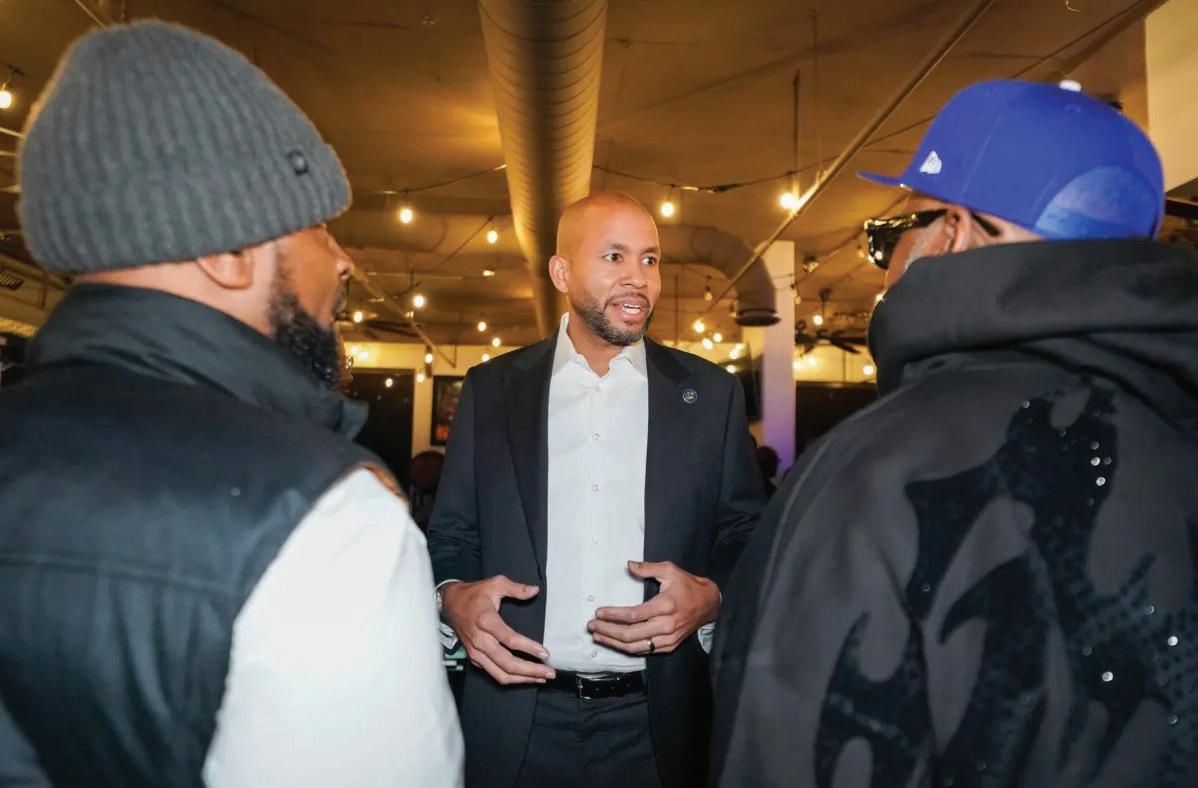
“No matter who you are, you care about those things,” he said. “For a long time, politicians ignored those issues.”
The discussion touched on policy areas that are familiar in political debates well beyond Georgia, including early childhood education, access to health care, small business support, food access and parental involvement. Several attendees asked questions about how such initiatives would be funded and implemented, reflecting a mix of skepticism and engagement common in voter forums.
Political observers say that kind of interaction matters as much as policy specifics.
“Black voters want to be heard,” said Tharon Johnson, a
Democratic strategist who has worked on statewide campaigns. “Candidates who take the time to listen and engage seriously are going to have an advantage.”
Johnson said Black male voters tend to support Democratic candidates in general elections, but added that turnout and enthusiasm depend on whether voters believe their concerns are being taken seriously. The focus on Black men comes amid broader national conversations about political participation, voter fatigue and trust in institutions. Surveys and turnout data from recent cycles show uneven engagement among younger voters and men of color, prompting campaigns to rethink traditional outreach strategies.
For candidates like Esteves, that means emphasizing visibility and sustained engagement rather than one-off appearances.
“We have to counter the narrative that Black men are disengaged or apathetic,” he said during the event. “That’s not what I see when I’m in rooms like this.”
As the 2026 election season unfolds, Georgia is likely to serve as a case study in how Black male voters are courted and how they respond — a dynamic that could carry implications far beyond one state.
“If people organize together and vote together,” Esteves said, “they can change what leadership looks like.”

Photo by Julia Beverly/The Atlanta Voice
Former State Senator and current gubernatorial candidate Jason Esteves (above) introduced his campaign’s Black Men’s Agenda during a roundtable event in Atlanta on Tuesday, February 3, 2026.


Washington University in St. Louis offers rewarding opportunities in various fields at all levels, with positions in engineering, nursing and health care, research, administration, technology, security and more.
WashU is recruiting a Vascular Lab Technologist in the Department of Surgery. This position includes a $20,000 sign-on bonus, paid over two years in quarterly installments. As part of our IAC-accredited lab, you’ll work alongside a dedicated sonography team to deliver outstanding patient care at a leading academic medical center.
We are seeking a skilled Sonographer with a specialization in vascular ultrasound to join our team as a Vascular Lab Technologist. In this critical role, you’ll contribute to the diagnosis of vascular diseases by performing high-quality non-invasive vascular ultrasound studies, assisting physicians in diagnostic procedures, and operating advanced ultrasound equipment in both inpatient and outpatient settings. As a member of our IAC-accredited lab, you’ll collaborate with a dedicated sonography team to deliver outstanding patient care.
This full-time position is 5 days per week, with 5 regular 8-hour shifts. The typical shift hours are either 8:30 AM to 5:00 PM or 8:00 AM to 4:30 PM. In addition to regular working hours, call coverage is an essential component of this role, ensuring that necessary studies are conducted during on-call periods. Please note that the department is closed on weekends, and studies are performed on an as-needed basis during on-call hours.
Up to 22 days of vacation, 10 recognized holidays, and sick time. Competitive health insurance packages with priority appointments and lower copays/coinsurance. Take advantage of our free Metro transit U-Pass for eligible employees. WashU provides eligible employees with a defined contribution (403(b)) Retirement Savings Plan, which combines employee contributions and university contributions starting at 7%.
For the full job description and to apply, visit jobs.washu.edu, JR91011.
We seek people from diverse backgrounds to join us in a supportive environment that encourages boldness, inclusion, and creativity. EEO/AA/VET/Disability Employer
REQUEST FOR QUALIFICATIONS
The St. Louis Economic Development Partnership and its affiliates (the “Partnership”) have issued multiple open Request for Qualifications (“RFQ”) from a wide variety of consultants for various projects initiated in 2026, including a separate RFQ for MWBE firms. These are “Open” RFQs to which the Partnership may refer as projects become available but shall not obligate the Partnership to issue a contract. The Partnership will accept submissions throughout 2026. The RFQs may be obtained at https://stlpartnership.com/rfp-rfq/.
St. Louis Economic Development Partnership Equal Opportunity Employer
REQUEST FOR PROPOSALS
The Heartland Regional Investment Fund, LLC (“HRIF”) issues this request for proposals for developers, business owners, consultants, and other stakeholders to submit qualified community development projects for HRIF’s consideration for its current New Market Tax Credit allocation. A copy of the RFP is available at https://stlpartnership.com/ rfp-rfq/. HRIF will accept proposals on a rolling basis throughout 2026. The initial review of projects will begin on Monday, March 9, 2026.
St. Louis Economic Development Partnership Equal Opportunity Employer

CÚRAM SOFTWARE DEVELOPER (St.
Louis, MO)
(NextGen Information Services, Inc. has an opening in St. Louis, MO) Cúram Software Developer: Design, dev., test & implement Cúram code by participating in the full s/w devt. life cycle. Will work in various unanticipated locations throughout the U.S. Req MS in Comp. Sci., Engr., or related & 1 yr exp OR BS in the same & 5 yrs prog. exp. 1 yr must include exp w/ development, testing, & implementation within the Java-IBM Curam environment, including leadership. Send resume & refer to job title to NextGen Information Services, Inc. 680 Craig Rd, Ste 305, St. Louis, MO 63141 or hr_applicant@nextgen-is.com.
REQUEST FOR PROPOSALS
FAMILY SUB-CONTRACTED SERVICES
The St. Louis City Family Court is seeking proposals from service providers to address behaviors that have resulted in referrals to the Family Court. Proposals should be submitted no later than 4:00 p.m. on March 6, 2026. Interested service providers may obtain the Proposal Specifications by accessing www.stlcitycir cuitcourt.com and selecting Courts & Services, Court Administration, then Requests For Proposals.
SEALED BIDS
Bids for Replace HVAC Units for 10 Group Homes, Project No. M2511-01 will be received by FMDC, State of MO, UNTIL 1:30 PM, 3/5/26 Project information available at: http:// oa.mo.gov/ facilities
SEALED BIDS
Bids for Marshall Readiness CenterRenovate Interior & Exterior, Project No.T2423-01 will be received by FMDC, State of MO, UNTIL 1:30 PM, March 5, 2026. Project information available at: http://oa.mo. gov/facilities
SEALED BIDS
Bids for Campground Shower House
Replacements, Montauk State Park, Salem, MO, Project No. X2530-01 will be received by FMDC, State of MO, UNTIL 1:30 PM, 3/12/26. Project information available at: http://oa.mo. gov/facilities The State of Missouri, OA-FMDC, hereby notifies all bidders that it will affirmatively ensure that in any contract entered into pursuant to this advertisement, businesses owned and controlled by socially and economically disadvantaged individuals will be afforded full opportunity to submit bids in response to this invitation and will not be discriminated against on the grounds of race, color, religion, creed, sex, age, ancestry or national origin in consideration for an award. Federal Land and Water Conservation Funds are being used in this project, and all relevant federal, state and local requirements apply.
REQUEST FOR BIDS QUALIFIED
ENVIRONMENTAL PROFESSIONAL (QEP)
Tabernacle Community Development Corporation is seeking bids from qualified firms or individuals to serve as a Qualified Environmental Professional (QEP). The selected QEP will provide technical, quality assurance, planning, reporting, and programmatic support for the full four-year period of performance. To request bid documents, please email vrobinson@tabdev.org.
ADVERTISEMENT FOR BIDS
Sealed proposals for Food Service Management will be received at Epworth Children & Family Services, Inc., 110 N. Elm Ave. St. Louis, Mo. 63119 until 9:00 am on Saturday, March 1st, 2026 and then publicly opened.
To receive copies of January 22, 2026, RFP or for more information contact Kimberly Mims at (314) 324-5966.
NOTICE OF VIRTUAL PUBLIC OPEN HOUSE
St. Louis County will hold a virtual open house for the Barrett Station Road-Big Bend to Dougherty Ferry, a resurfacing project, County Project No. AR-1896, Wednesday, March 4, 2026, from 5:30 to 6:30 p.m. You can access the virtual open house by following the link at the bottom of the page or scanning the QR code. You may also dial in from a mobile device by calling 1-408-418-9388, enter the access code: 28704034067, then the password: 12345678. We will discuss the resurfacing of this road, project timeline for resurfacing, and project costs. Time will be provided for public comment/questions.
The goal of this meeting is to inform the public and local stakeholders of St. Louis County’s plans for this corridor. The Barrett Station Road pavement has reached its useful lifecycle and needs repairs and maintenance. In addition to these pavement repairs and resurfacing, the crosswalks and traffic signals will be upgraded to be accessible by users of all abilities (ADA compliant), thereby improving traffic-and-pedestrian safety and providing better access to schools and neighborhoods. For more information, follow the QR code below:

SEALED BIDS
Request for Qualifications ( R F Q ) f o r Design/Build Services for OA Fleet Garage, Project No. O2548-01 will be received by FMDC, State of MO, February 2026. I n f o r m a t i o n available at http:/ /oa.mo. gov/facilities
REQUEST FOR PROPOSALS
The School District of University City is seeking sealed bids for the Multipurpose Athletic Field Stadium. Bids are due by 2 PM on February 26, 2026. A pre-bid walkthrough will be held at 10:00 AM on February 12, 2026, at University City High School, located at 7401 Balson Ave, University City, MO 63130. For more information and the complete bid package, please contact Likitha Kaki at lkaki@ kwamebuildinggroup.com.
NOTICE OF VIRTUAL PUBLIC OPEN HOUSE
St. Louis County will hold a virtual open house for the Baptist Church Road- Route 21-Tesson Ferry Road to Coral Ridge Drive, a resurfacing project, County Project No. AR-1750, Wednesday, March 11, 2026, from 5:30 to 6:30 p.m. You can access the virtual open house by following the link at the bottom of the page or scanning the QR code. You may also dial in from a mobile device by calling 1-408-418-9388, enter the access code: 26335091446, then the password: 12345678. We will discuss the resurfacing of this road, project timeline for resurfacing, and project costs. Time will be provided for public comment/questions.
The goal of this meeting is to inform the public and local stakeholders of St. Louis County’s plans for this corridor. The Baptist Church Road pavement has reached its useful lifecycle and needs repairs and maintenance. In addition to these pavement repairs and resurfacing, the curb ramps, and traffic signals will be upgraded to be accessible by users of all abilities (ADA compliant), thereby improving traffic-and-pedestrian safety, providing better access to schools and neighborhoods and enhance emergency service response time.
For more information, follow the QR code below:

NOTICE TO CONTRACTORS
Sealed bids for the ARS-CRS2 Improvement Program, Package 1 project, St. Louis County Project No. AR/CR-1939, will be received electronically thru the County’s Vendor Self Service portal at https:// stlouiscountymovendors. munisselfservice.com/ Vendors/default.aspx, until 2:00 PM on March 11, 2026
Plans and specifications will be available on February 9, 2026 from the St. Louis County Web Site (www.stlouiscounty mo.gov) or by contacting Cross Rhodes Print & Technologies, 2731 South Jefferson Avenue, St. Louis, MO 63118 (314) 678-0087.
DIRECTOR OF PROCUREMENT
ST. LOUIS COUNTY
PUBLIC NOTICE
Notice is hereby given that the Metropolitan St. Louis Sewer District Requests for Quotes, Bids and Proposals are posted online for public download. Please navigate to www.msdprojectclear.org > Doing Business With Us > View Bid Opportunities
Metropolitan St. Louis Sewer District is an Equal Opportunity Employer.
SOLICITING BID
Reinhardt Construction LLC is Soliciting Bids from MBE/WBE/DBE/ Veteran/SDVE for the following:
CP260131 Mizzou Arena – Main Court Floor Replacement Contact: Mike Murray; mikem@reinhardtcon structionllc.com
Phone: 573-682-5505
Date of Publication: 2/12/2026 City of St. Louis: Community Development Administration (CDA) 1520 Market Street St. Louis, Missouri 63103 314-657-3700 / 314-589-6000 (TDD)
SEALED BIDS
B i d s f o r Re s t o r a t i o n of Cannonball House, Joseph Benning House, Project No. X 2 5 0 4 - 0 1 , Battle of Athen State Historic Site, Revere, Missouri, will be received by FMDC, State of MO, UNTIL 1 : 3 0 PM, 3/10/26. Project i
n available at: http:/ /oa.mo. gov/facilities
These notices shall satisfy two separate but related procedural requirements for activities to be undertaken by the City of St. Louis (“The City.”)
REQUEST FOR RELEASE OF FUNDS
On or after 3/2/2026, the City will submit a request to the U.S. Dept. of Housing & Urban Development (HUD) for the release of Federal HOME Investment Partnerships ProgramAmerican Rescue Plan (HOME-ARP) funds under Section 3205 of the American Rescue Plan Act of 2021 (P.L. 117-2), as amended, to undertake the following project:
Project Title: Eliot School Redevelopment
Purpose: Rehabilitation and repurposing of former school to provide transitional living space and outpatient recovery services. It will also include a medical lab, pharmacy, classrooms, assembly spaces and cafeteria.
Project will provide forty (40) – two-bedroom units to individuals at or below thirty percent (30%) of the Area Median Income (AMI), limited to HOME-ARP qualifying populations, including persons experiencing homelessness; those at risk of homelessness; people fleeing domestic violence, dating violence, sexual assault, stalking, or human trafficking; and veterans or families that include a veteran who meet one of the fore going criteria.
Location: 4247 North Florissant Avenue, St. Louis, Missouri 63107
Estimated Cost: Total development cost of this project is approximately $21,556,548, with an estimated $2,500,000 of funding coming from St. Louis City’s Year 2021 Federal HOME-ARP Program Funds, Grant #M-21MP-29-0500.
FINDING OF NO SIGNIFICANT IMPACT
The City has determined that this project will have no significant impact on the human environment. Certain conditions will apply to this project. Therefore, an Environmental Impact Statement under the National Environmental Policy Act of 1969 (NEPA) is not required. Additional information for each project is contained in the Environmental Review Record (ERR) on file at the City CDA, at the above address, where the ERR is available for review and may be examined or copied, weekdays 8 A.M. to 4 P.M., or visit https://cpd.hud. gov/cpd-public/environmental-reviews to review the HUD ERR.
PUBLIC COMMENTS
Any individual, group, or agency may submit written comments on the ERR to Trey McCarter, Community Development Planner III, CDA, at the address listed above. All comments received by 3/1/2026 will be considered by the City prior to authorizing submission of a request for release of funds. Comments should specify which notice they are addressing.
RELEASE OF FUNDS
The City certifies to HUD that, Matt Moak, in his capacity as Executive Director, consents to accept the jurisdiction of the Federal Courts if an action is brought to enforce responsibilities in relation to the environmental review process and that these responsibilities have been satisfied. HUD’s approval of the certification satisfies its responsibilities under NEPA and related laws and authorities and allows the City to use the City’s abovereferenced HUD program funds.
OBJECTION TO RELEASE OF FUNDS
HUD will accept objections to its release of funds and the City’s certification for a period of 15 days following the anticipated submission date or its actual receipt of the request (whichever is later) only if they are on one of the following bases: a) the certification was not executed by the Certifying Officer of the City; b) the City has omitted a step or failed to make a decision or finding required by HUD regulations at 24 CFR Part 58; c) the grant recipient has committed funds or incurred costs not authorized by 24 CFR Part 58 before approval of the release of funds by HUD; or d) another Federal agency acting pursuant to 40 CFR Part 1504 has submitted a written finding that the project is unsatisfactory from the standpoint of environmental quality. Objections must be prepared and submitted in accordance with the required procedures (24 CFR Part 58.76) and shall be addressed to the HUD St. Louis Field Office, CPDRROFSTL@hud.gov. Potential objectors should contact HUD to verify the actual last day of the objection period. Matt Moak Certifying Officer

REQUEST FOR BIDS
The Village of Hillsdale MO seek bids for professional Park Planning services. Bids should be received by 2-20-26 at 6428 Jesse Jackson Ave. Contact Marvalda Jones @ 314-337-9581.

Religion
Holy Culture Radio Produces a Joyful Noise on the Radio
Many sensible adults are avoiding anything that smacks of news in this crazy age of things never expected to be seen on American shores. So it’s not surprising that young people have found a resource that not only nourishes their Christian faith but also encourages them to build their own community, based on the Holy Scripture.
Holy Culture Radio is a 24-hour Christian Hip-Hop and edutainment channel available on SiriusXM satellite radio.
Launched in 2022, the station features faith-themed rap and R&B music, talk shows, and cultural conversations designed to uplift, inspire and empower listeners nationwide.
It’s the realized vision of James ‘Trig’ Rosseau, a former rapper, music producer, author, business executive and founder of The Corelink Solution. Rousseau, who founded a nonprofit organization, calls Corelink a cultural bridge that engages youth where they are and connects them to the church’s mission.
a show, or I could help build a platform for shows, an artery into the community,” says Rosseau, who left a C-suite role in corporate America to become a conduit for faith-based content.
”Younger generations aren’t just looking for entertainment. They’re looking for meaning, connection and something that feeds their spirit instead of draining it.”
He says many of them didn’t start in communities and are now getting their first jobs, and unlike past generations, will move to a new position every 18 months.
“That’s normal for them. So different language, different perspective, different preferences, but it doesn’t mean they are not for the kingdom,” Rosseau says.

“We have to help them understand what the kingdom is and their role in the kingdom.”
”And that’s what we’ve done now. We did our first week and reached five million folks and we just went more from digital to starting doing local events again.”

Culture Radio is a
those listeners, nearly half say they are likely to attend a motivational or inspirational seminar within the next year, and they are 39% more likely to volunteer in their communities over the next 12 months. It signals that consuming Holy Culture radio doesn’t stop at listening; it translates into action.
Promoting Faith and Positivity
Meaning and Connection
“When I went from artist to producer, I thought I could do
Nearly 38% of Christian Culture Radio listeners are between ages 25 and 45, a demographic coveted by advertisers yet often associated with digital fatigue and content overload. Among
“Their musical interests range from Lecrae, who’s on his 10th album to Miles Minnick,” Rosseau says. Minnick, he says, “is on the West Coast. He’s created a nice movement he calls the GLO Movement and is really bringing people together in California and beyond to understand how they can impact culture.”
Holy Culture also launched a record label with a roster of

artists, including Craig Watson, a 21-year-old Philadelphian “who gave his life to the Lord three years ago and is just on fire,” Rosseau says. Meanwhile, he says, J Silas is a veteran performer who “can still get on stage and do what he does very well, and get the audience engaged.”
Rosseau says Christian Culture Radio succeeds because its listeners see the station as a place rooted in faith and positivity, powered by music and conversation. Rousseau believes he has created a channel that goes beyond entertainment.
For example, Holy Culture listeners and performers have held meetups periodically to foster a sense of belonging, including an upcoming gathering for artists and another for non-artists. Deepening their connection to the Holy Culture Radio community,
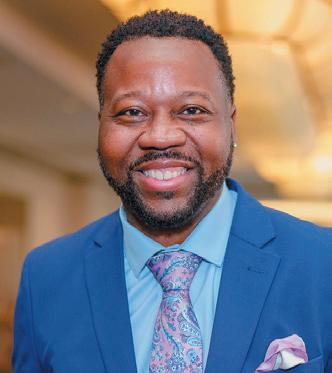
ORVIN T. KIMBROUGH Chairman and CEO, Midwest BankCentre Author, Twice Over a Man, More Than a Conqueror, and Ward and the State
Success rarely collapses because of a lack of talent.
It collapses because of habits
— especially the emotional ones we ignore, justify, or never slow down long enough to recognize.
Your rise will not be determined by your résumé.
It will be determined by the emotional habits you practice in private. Because the habits you strengthen behind the scenes shape the leader you reveal in public.
And here’s the irony: The emotional habits that make or break your rise are subtle. They sit underneath the surface, quietly interpreting the world for you… long before you speak or act.
Some emotional habits elevate you.
Others sabotage you. And the difference between those two categories is often the difference between rising consistently… or staying stuck in cycles you can’t explain.
Let’s start with the quiet habits that make leaders rise:
Emotional Habits That Elevate You
Pausing before reacting — giving your mind a moment to catch your heart.
Naming the emotion instead of denying it — because honesty is the beginning of mastery.
Asking questions before making assumptions — curiosity saves relationships that assumptions destroy.
• Choosing empathy before judgment
— understanding transforms more than correcting ever will.
Noticing your triggers and tending to them — not punishing others for wounds you haven’t healed.
• Owning your mistakes without spiraling into shame — humility without self-destruction.
Giving people context before giving them correction — clarity softens the blow and strengthens the bond.
Letting yourself rest without guilt
— understanding that restoration is strategic, not optional.
These habits don’t make headlines, but they build leaders people trust.
participants share ideas about faith and how their relationship with Jesus enhances their lives.
Those meetups have blossomed into “Reconnect,” a recurring gathering that encourages seeing the church as a resource rather than just an institution.
One such gathering in January drew roughly 300 attendees on the first night. The next morning, around 150 people attended a panel discussion on entrepreneurship, financial discipline, health, and a life of purpose.
Rosseau says it’s not surprising that Holy Culture Radio’s younger generations of fans are the ones building the Holy Culture community. The programming, he says, is filling a spiritual void for young people that is exacerbated by modern life: political turmoil, global warming, social media-induced isolation and stunted emotional growth.
Those are golden moments for Rosseau and his team, even when their struggle as a non-profit is real and poses many challenges.
“We’re struggling, but we’re joyful,” he says. “And God has kept us. We own our own building, so we’ve been blessed beyond measure. And I do believe this is a year for us to raise a lot more donors. I’m optimistic because I think people can see transformation more easily when we’re in community.”
As a result, “they’re looking for safe places, genuine conversations,” he says. Holy Culture Radio listeners, he adds, want “people they can look up to; but they can’t say words like, ‘I need a mentor, I need a sponsor, I want an apprenticeship.’ Instead, they’ll say they need a mental health day.”
He said it was overwhelming to watch the young people surround one of the group in prayer.
Now, here are the emotional habits that quietly break leaders:
Emotional Habits That Break You
Taking everything personally — turning neutral moments into emotional emergencies.
• Retaliating when you feel disrespected — confusing reaction with strength.
Avoiding hard conversations letting silence do the damage you’re afraid to confront.
• Interpreting feedback as threat — making growth impossible because insecurity is too loud.
Leading from comparison — losing yourself trying to win someone else’s race.
• Expecting people to read your mind — punishing others for needs you never articulated.
Carrying resentment because you won’t speak truth — bitterness disguised as professionalism. Using productivity to outrun your pain — mistaking motion for healing.
These habits form your emotional baseline. And your baseline determines your altitude. You will never rise higher than the habits you default to when you’re tired, stressed, or under pressure.
This is why The Thriver’s Path™ treats emotional habits as a core leadership competency. Because if you want to rise — sustainably, authentically, spiritually — you must build habits that support your evolution, not sabotage it.
Leadership maturity isn’t measured by how you perform when everything is calm. It’s measured by how you show up when your emotions surge. When the pressure tightens.
When insecurity whispers.
Your habits speak for you before you open your mouth. They shape your culture before you design a strategy. They determine whether people feel safe, seen, and supported — or guarded, cautious, and withdrawn.
So here’s the question that will tell you more about your leadership than any title ever will: What emotional habit is costing you the most right now?
Because your next level is rarely found in a new opportunity. It’s almost always found in your next habit. And when that habit shifts, your entire leadership begins to rise.
For more, visit OrvinKimbrough.com or MidwestBankCentre.com.
Holy
24-hour Christian Hip-Hop and edutainment channel available on SiriusXM satellite radio.
The Emotional Habits That Quietly Make or Break Your Rise
The Next MOVE