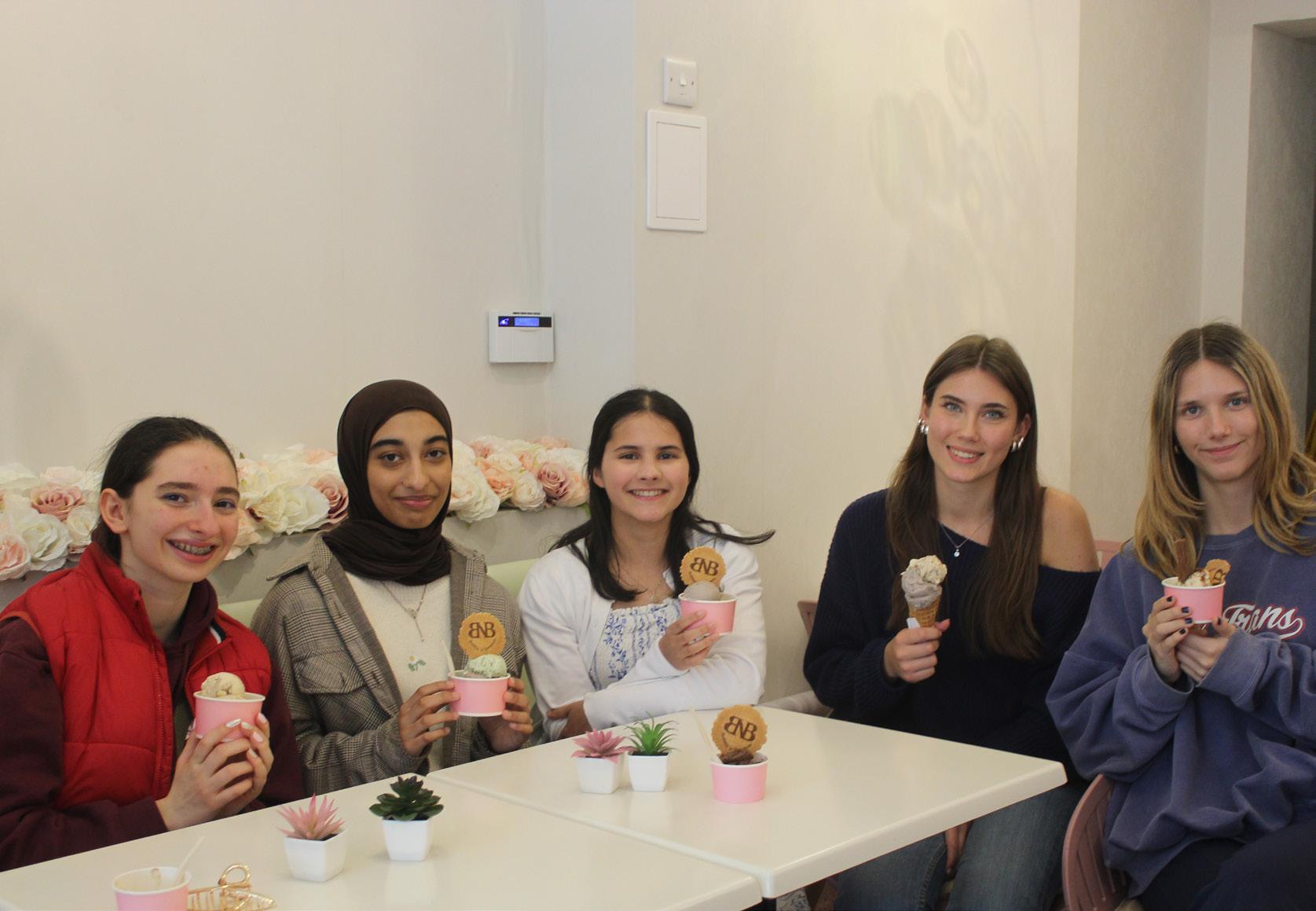
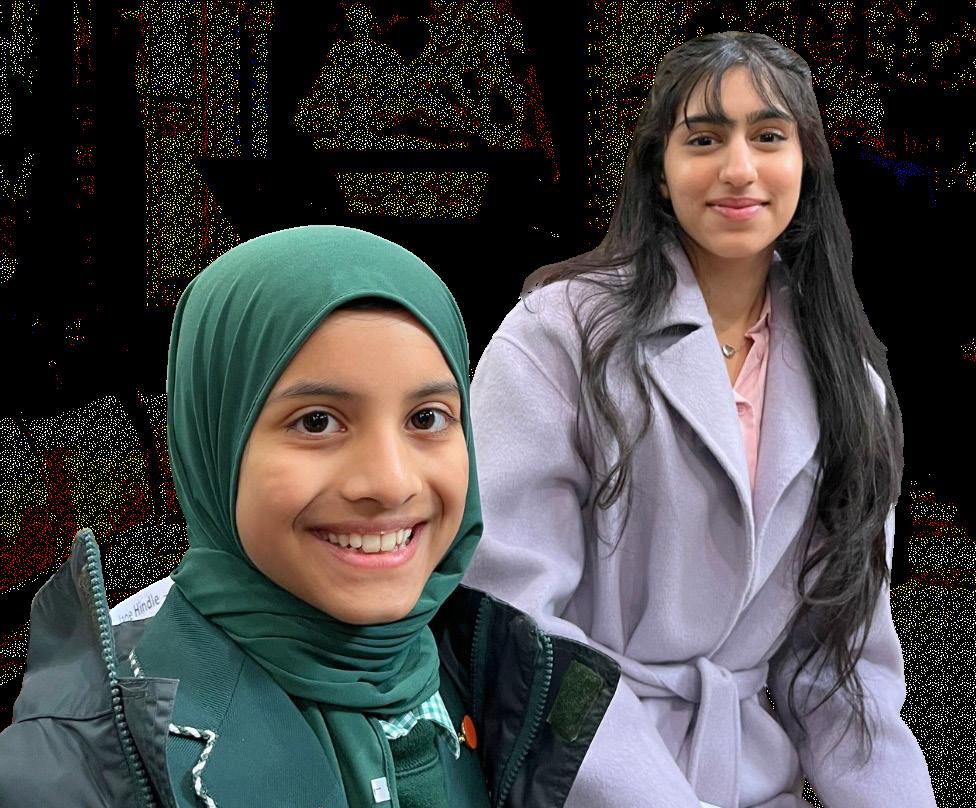
How much can choosing whether to have a cup or a cone for your ice cream tell us about a person? What about the ice cream flavours you choose? The Y12 Linkway editors valiantly decided to take on the tough task of going out for ice cream on a hot summer's day (what a challenge…). We recorded our flavour and topping combinations and came up with some palm-reading theories - ice cream style.
So, what can we infer about our editors' personalities?
13 | June 2025
"Cones are too stressful" "I like when it melts down"
Through our first-hand research, we found that choosing a cup indicates you like order and are stress averse - those who chose a cup did so because of the stress of melting ice cream that comes with having a cone. Those who opt for a cone, though, seem to like the excitement of eating a rapidly melting ice cream, as well as the melty mix of ice cream flavours which reach the bottom of the cone. Let's take a closer look at each editor:
Isabella
Cup or Cone?: Cup
Flavours: Tiramisu & Kinder Bueno
Topping: None
Isabella's combination of cup with no toppings conveys that she is someone who is selfassured: she knows exactly what she wants and is happy with simplicity (sometimes, less is more!). The flavour combinations of Tiramisu and Kinder Bueno strike a balance between a sophisticated palate and an effort to keep in touch with childhood nostalgia. She also just loves Tiramisu and Kinder Bueno.
Maryam
Cup or Cone?: Cup
Flavours: Mint Choc Chip & Oreo
Topping: Wafer
Maryam's ice cream choices imply a desire to balance both fun and practicality: these ice cream flavours are classically youthful, while her cup and wafer combo are more mature choices. She's here to show you can have the best of both worlds!
(continued)
Cup or cone?
"They have started selling mini cones on their own with chocolate in themthey're delicious"
Amina
Cup or Cone?: Cup
Flavours: Pistachio & Oreo
Topping: Wafer 2x (one of which was unwanted by another person)
Like Isabella and Maryam, Amina's flavour choices suggest she wants to maintain a sense of classiness, while not letting go of some favourite childhood memories. Her choice to take up the offer of an extra wafer suggests she's willing to take one for the team (or she just enjoys a good wafer to balance out the ice cream flavours).
Nina
Cup or Cone?: Cup
Flavours: Pistachio & Tiramisu
Topping: Flake
Nina's choice of a combo of classic Italian flavours, and her expert choice of a flake (implying a carefree and bold nature), suggests she's a pro at the ice cream game. Her refined palate (Pistachio) implies grace and elegance, as does her decision to go for cup over cone - Nina does not mess around!
Olivia
Cup or Cone?: Cone + Cup
Flavours: Tiramisu & 2x scoops of Oreo
Topping: Wafer
Olivia's singular combination of cup and cone not only came out of necessity (try balancing three scoops of ice cream on top of each other) but also suggests that she is someone whimsical, and someone who tries not to take things too seriously.
"We used to eat ice cream cones at my grandparents house"
"Me too!"
“Do all grandparents have boxes of plain ice-cream cones and no ice-cream?”
Have we possibly gone a bit overboard here and overanalysed our ice cream choices? Perhaps. But have we successfully got you in the mood for some ice cream?
Written by Amina, Year 12 with input from the other Year 12 editors
A Moment In Time:
St Helen’s during the War
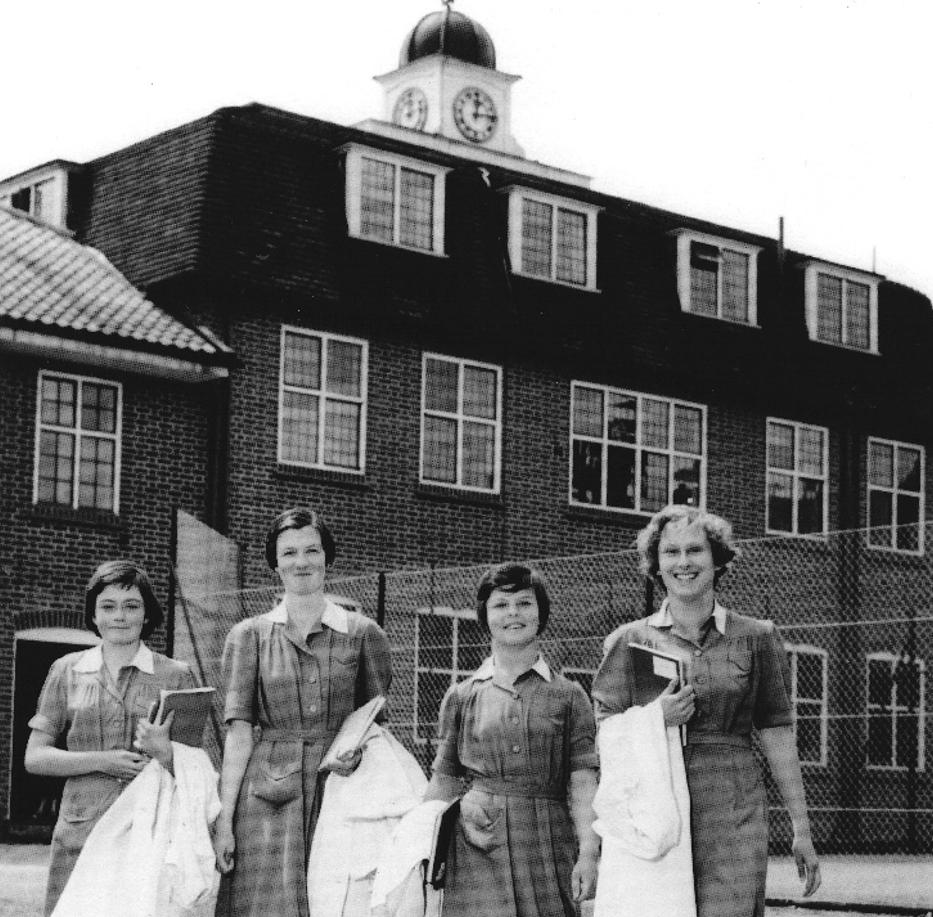
2025 marks 80 years since the end of the Second World War. In honour of this historic milestone, we thought it would be interesting to explore the experience of students who lived through the war years whilst attending St Helen's.
Until 2009, St Helen’s catered for both day students and boarders. In 1939, when war broke out, St Helen's students were split up and some were sent away temporarily to wait out the conflict. Generally, day students continued to attend the Northwood school, whereas boarders were relocated to a mansion house located in Powys, Mid Wales. However, quite a few students were also sent to Canada by their parents.
In Time: (continued)
St Helen’s during the War A Moment
Shelters
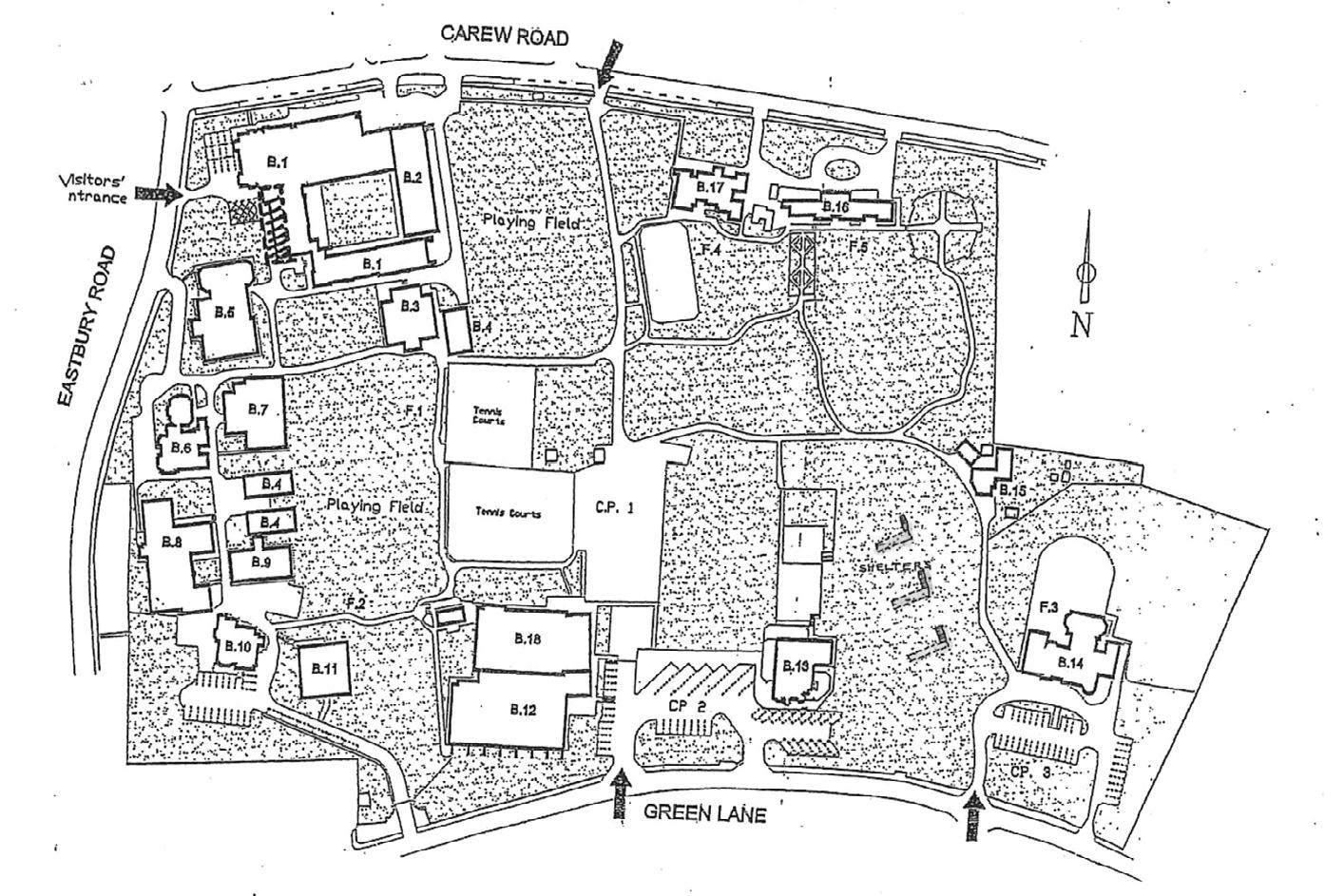
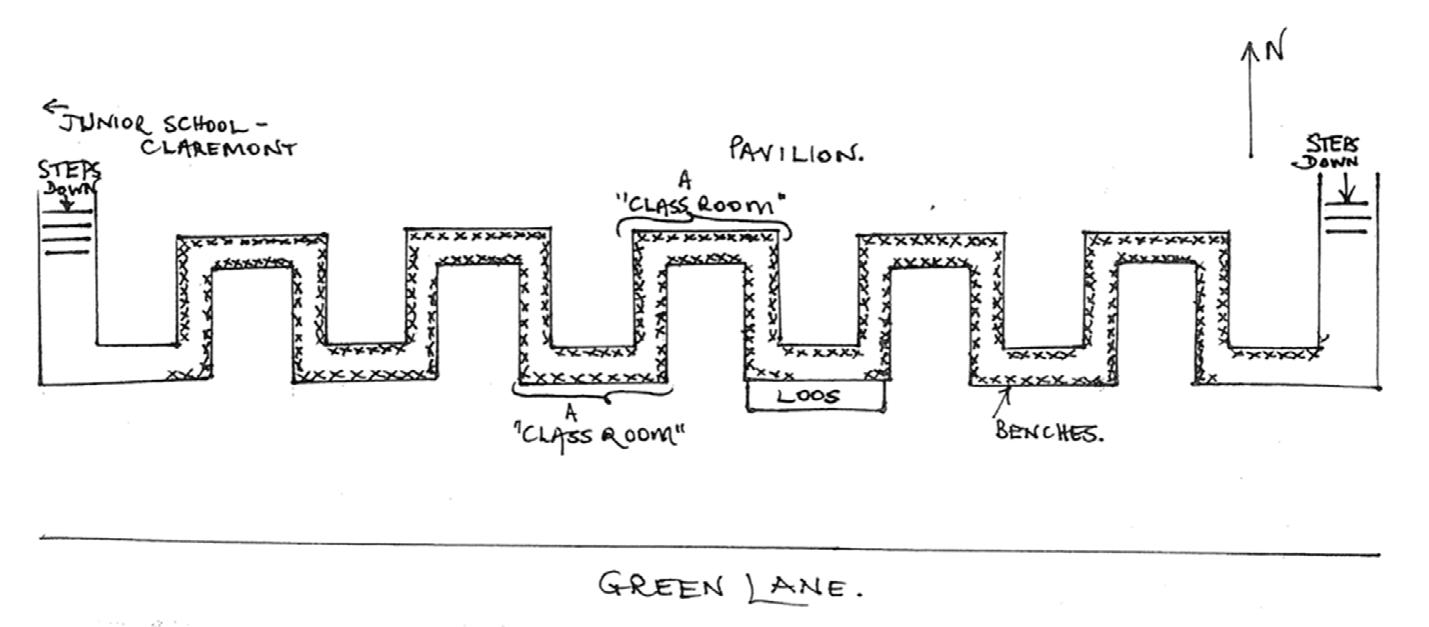
In 1938, with the threat of war looming, shelters were built on the school grounds, on the lawn situated between Prep School and Gables. They were constructed in a zigzag pattern, so that a single bomb could not penetrate the entire shelter. Students had to practise entering the shelters. This would be similar to the fire drills we have, especially since neither running nor talking were permitted! Equipped with gas masks, they were made to file into a damp, dark space where they were squashed together tightly like sardines.
Students did try to make the experience sweeter, though, by bringing treats and bonbons with them, which they were permitted to eat during air raids. However, due to wartime rations, these were a scarce commodity.
Former student, Felicity Yuille, reminisces that "one of the worst" experiences was an air raid siren occurring during a swimming lesson, meaning they had to get dressed quickly and had to trudge to the air raid shelter while sopping wet. They also dreaded having to use the shelter's toilets, which they describe as “eerie”, “horrid” and “damp”.
This difference in locations meant that students had very different experiences of the war years. Interestingly, the school grounds still contain evidence of the effect of WW2 with the bomb shelters located near the current Prep School building. Thanks to the help of Ms McPherson, who works in the School’s Development Office, I have managed to compile information about student life during this tumultuous and often terrifying period of our history.
Firstly, let’s explore the experiences of those who remained closer to home: the school's day students. WW2 forced students to adapt to civilian life during war, and the school was no different.
Each 'x' represents one student
(continued)
St Helen’s during the War A Moment In Time:
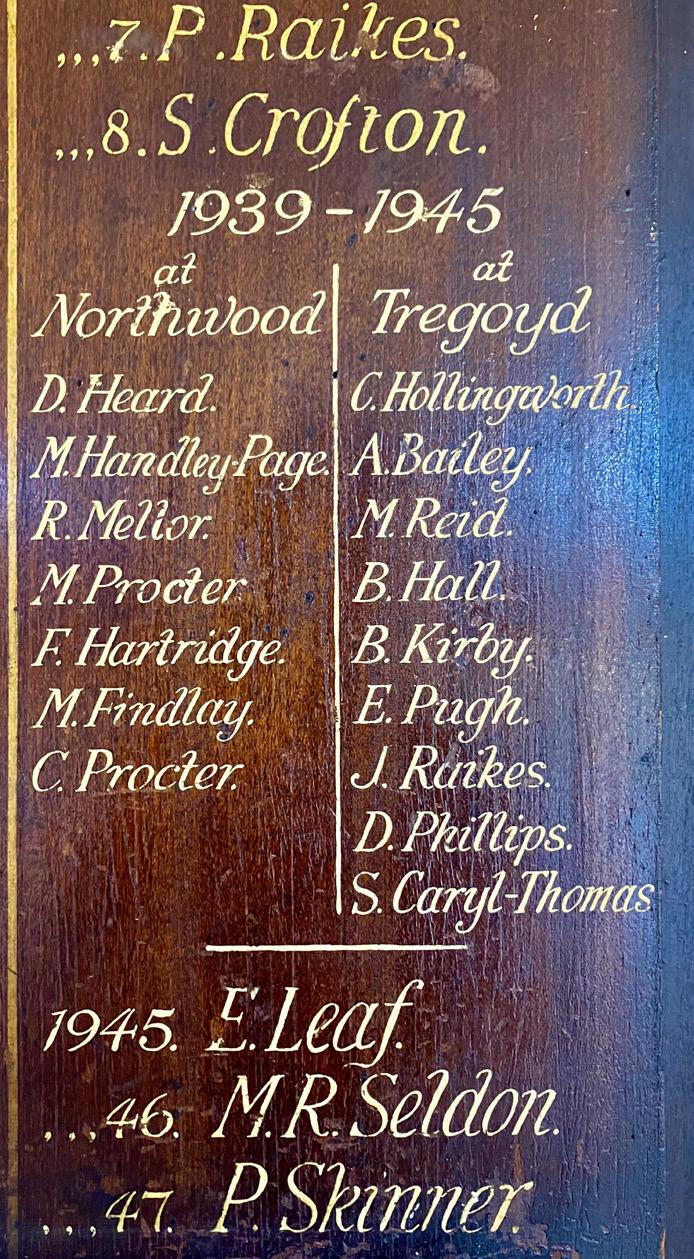
Head Girls' Board during the war/ ever wondered what 'at Tregoyd' means?
Felicity, along with another Old Girl, Jean Crump, recalls seeing a Doodlebug- described as essentially ‘a bomb with wings’- from out of the window during class.
Nonetheless, both women feel their experience of the war at school was "fun", exciting, even. The moment that the students discovered that the war was over was very dramatic for the girls who remained at Northwood. One girl remembers that it was during a biology lesson when a student whose father was in the Diplomatic Service burst into the classroom and announced that war was over. This happened the day before it was declared officially that a peace treaty would be signed, and the war had ended. Certainly, this must have been an immense relief and very exciting news!
St Helen's Northwood did not exclusively host day students. Many of the school’s buildings, some of which still exist today, were loaned out to working
professionals. These included billeted nurses (billeted means sent to live in temporary accommodation) from Mount Vernon Hospital, an insurance company, Irish Guards, Irish Nurses, who were housed in Fitzwalter's , the old music building, located where the STEM building is now.
On the whole, these tenants seem not to have caused any major disruptions to daily school life. However, Jean and Felicity do remember one “horrible” event involving some billeted Irish guards. They were practising how to use their bayonets, a blade attached to the end of a soldier's rifle used in close range combat. This rather gruesome training session, which involved enemy soldiers made of sacks of straw, not real people! - was perhaps not the most appropriate activity to be running outside a school.
On a more pleasant note, day students were given the opportunity to meet up
with boarders living in Wales. Despite the rationing of fuel, staff saved up enough diesel so that students could be driven to a location halfway between Wales and Northwood, allowing boarders and day students the opportunity to see each other, catch up, and share stories. Such meetings were perfect opportunities to bridge the gap between day students and boarders which had been formed since the outbreak of war.
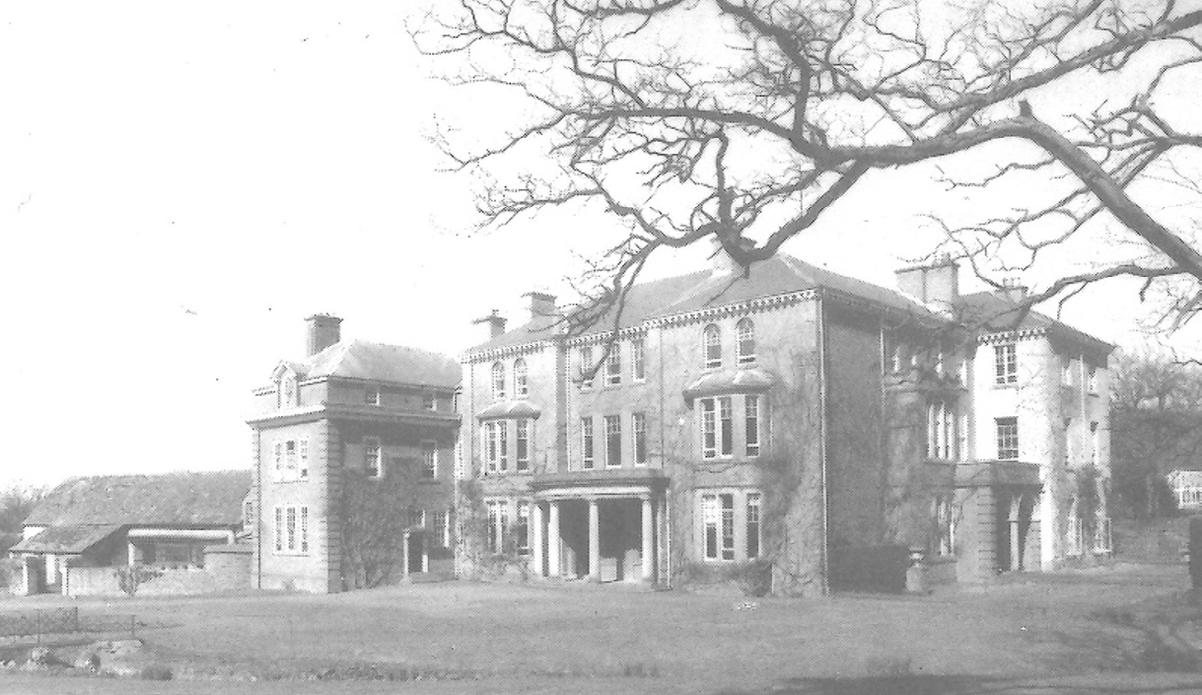
While day students lived through a volatile yet exciting war period, boarders had a more relaxed experience. Boarders and a few of their younger brothers resided in a manor house called Tregoyd, nestled in the pastoral idyll of the Powys countryside in Wales. Younger students were eventually moved to a nearby house, Llanthomas, which was used as a junior school as so many students were sent to Wales by their parents.
A Moment In Time: (continued)
St Helen’s during the War
narrowly escaped catastrophe when thirteen small bombs were dropped between the two buildings. Experiences such as these acted as shocking reminders that Britain was most definitely at war.
Tregoyd underwent a somewhat dramatic alteration: formerly a house designed for hunting, it was transformed into a building fit for learning. The gun room became a cloakroom, the “large billiard room” an assembly hall, and the butler's pantry a small laboratory. While at Tregoyd the rules of boarding life were maintained, nonetheless it acted as a reprieve from the suburban lifestyle for both the girls and teachers. The surrounding area was perfect for long walks, allowing students more freedom than they had experienced in Northwood.
In their spare time, girls would knit garments for the Forces. In total, over 2000 items were knitted by St Helen’s girls, and Calendar Sale also remained a steadfast highlight of the school calendar.
Despite its seemingly relaxed and protected way of life, students at Tregoyd experienced their own fair share of dramatic moments. One notable event was a mumps epidemic that plagued students and staff alike. Lessons were cancelled, which those of you who
have read Jane Eyre may liken it to the outbreak at Lowood, but the benefits of the cancellation of lessons were only felt by the three students who managed to escape infection.
In addition, staff member Edith Edwards recalls often seeing a red glow coming from the South. The light was due to the bombings on Cardiff and Swansea. Bomber planes were also sometimes heard flying overhead. One night, residents of Tregoyd and Llanthomas
Life during war was thrilling, turbulent, and often terrifying for St Helen's students - as was true for most living on the Home Front. The war provided an abrupt change from normality, which we might liken to our own experiences during the Pandemic. Despite the physical distance that existed between Wales and Northwood, the shared moments of fear, grief, and excitement, arguably brought the St Helen's community closer together than ever before.
By Amina, Year 12
Tregoyd – then
Tregoyd – now
Cultural Diversity Day 2025
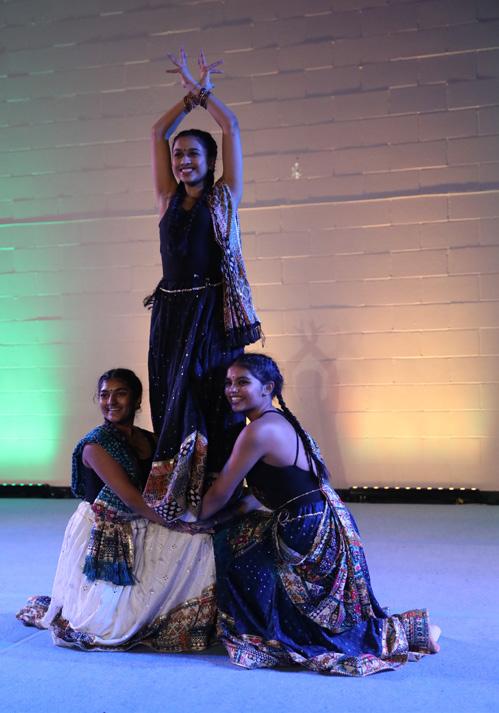
Cultural Diversity Day in the UK is on Friday 21st May and it is dedicated to celebrating cultures around the world. This year, St Helen’s recognised Cultural Diversity Day on Tuesday 18th March by inviting students to come into school wearing a traditional outfit from their culture, or colours associated with their culture’s flag. At lunchtime, a Cultural Exhibition was held, which included our first ever Cultural Diversity Day fashion show.
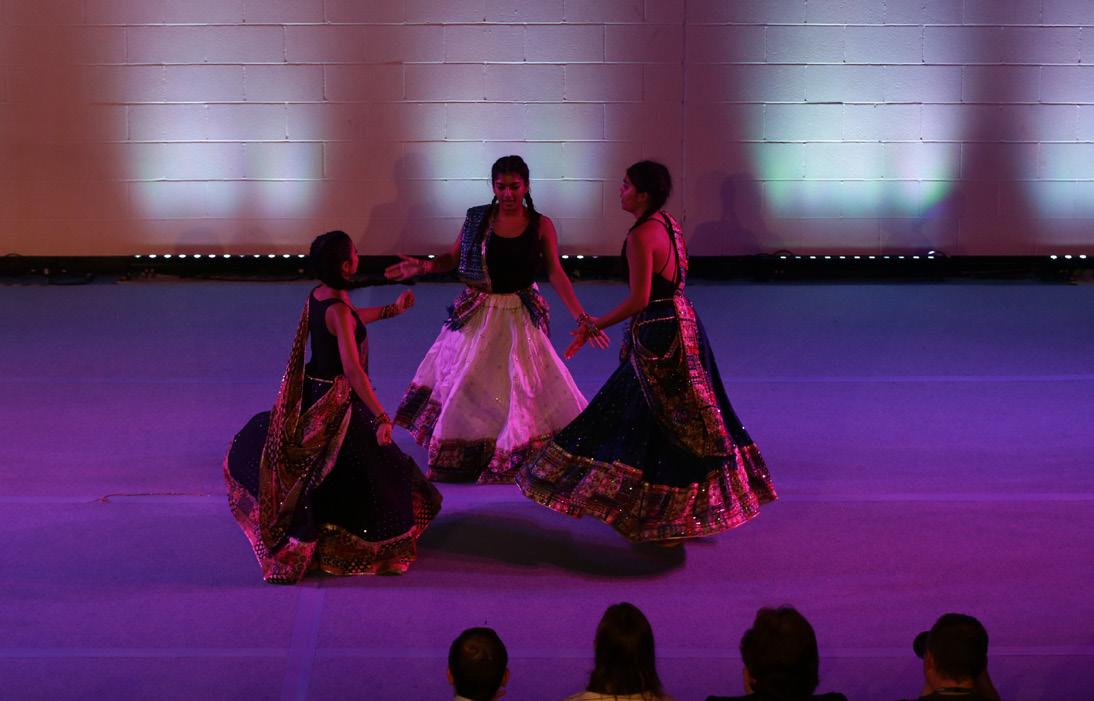
In the afternoon we took part in different activities, for example, cricket, garba and Irish dancing, as well as Brazilian Samba drumming. All of us enjoyed this incredible event and loved learning about different cultures from Indian and Icelandic to French and Japanese.
“I loved the buzz! There was so much energy everywhere. What stood out to me were the lovely little moments of student interaction I saw across the day — one Year 9 explaining the traditional pattern on her outfit to another, sixth formers leading a session on Norse mythology with some fantastic posters, two Y11 students in saris helping each other drape their pallu correctly. All these little moments of kindness and curiosity were brought about thanks to Cultural Diversity Day.”
Mrs Heyde
(continued)
Cultural Diversity Day 2025
“The energy around the school on Cultural Diversity Day was incredible, students were fully engaged, whether they were solving clues around the school in our Canadian Gold Rush treasure hunt or exploring the many other exciting activities. The enthusiasm, teamwork, and laughter made the day a fantastic celebration of learning and school spirit.” Mrs Henders
To continue celebrating each other’s cultures beyond Cultural Diversity Day, we thought we would share some book recommendations based around different cultures for students in the senior school.
Asha and The Spirit Bird by Jasbinder Bilan (India)
The Song Walker by Zillah Bethell (Australia)
Oranges in No Man’s Land by Elizabeth Laird (Lebanon)
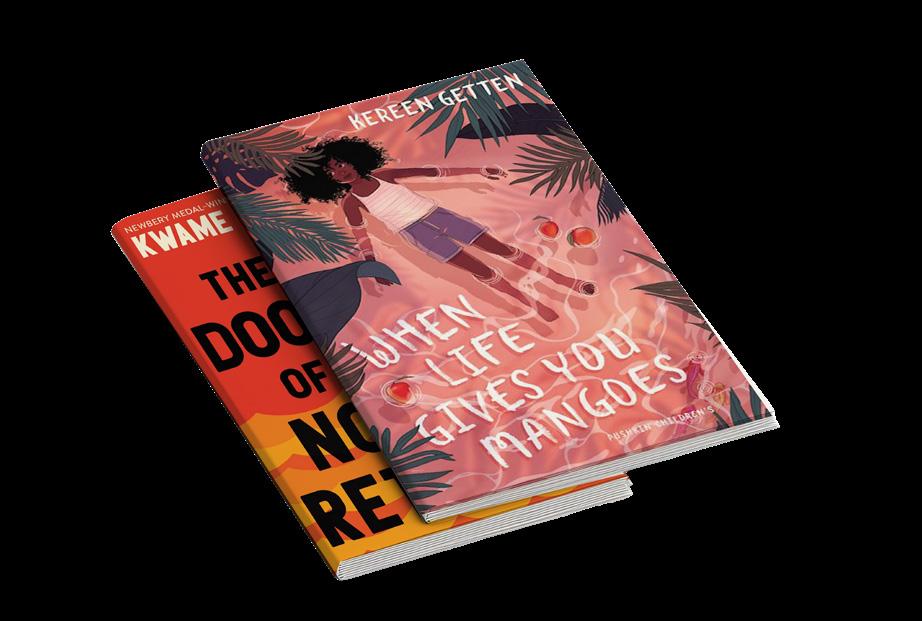
When Life Gives You Mangoes by Kereen Getten (Jamaica)
Safiyyah’s War by Hiba Noor Khan (France)
The Door of No Return by Kwame Alexander (Ghana)
You Don’t Know What War Is by Yeva Skalieska (Ukraine)
Iron Widow by Xiran Jay Zhao (China)
I Must Betray You by Ruta Sepetys (Romania)
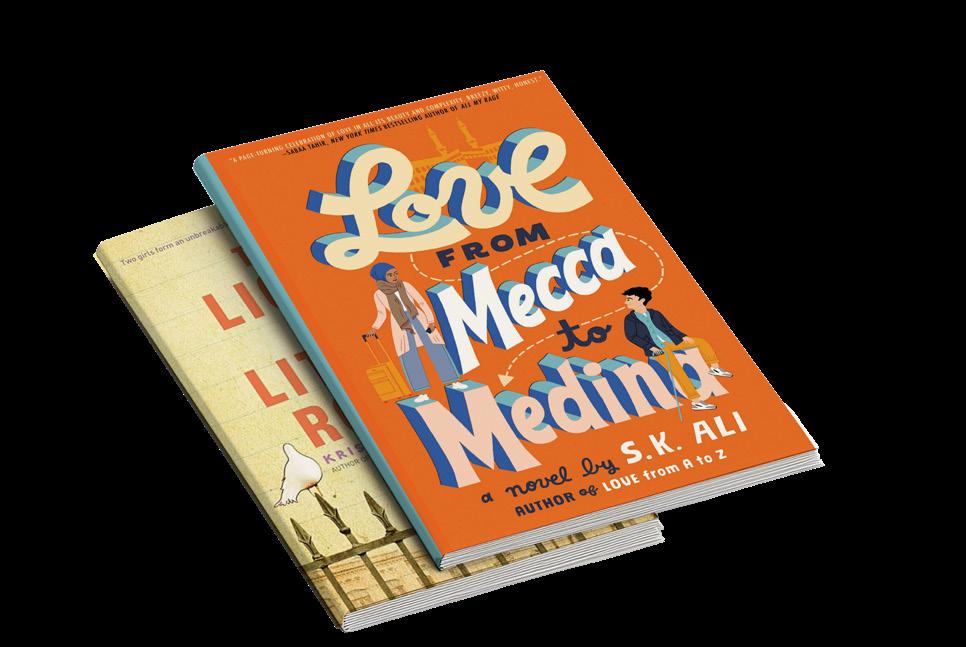
Love from Mecca to Medina by S. K. Ali (Saudi Arabia)
The Summer Book by Tove Jansson (Finland)
The Lions of Little Rock by Kristin Levine (America)
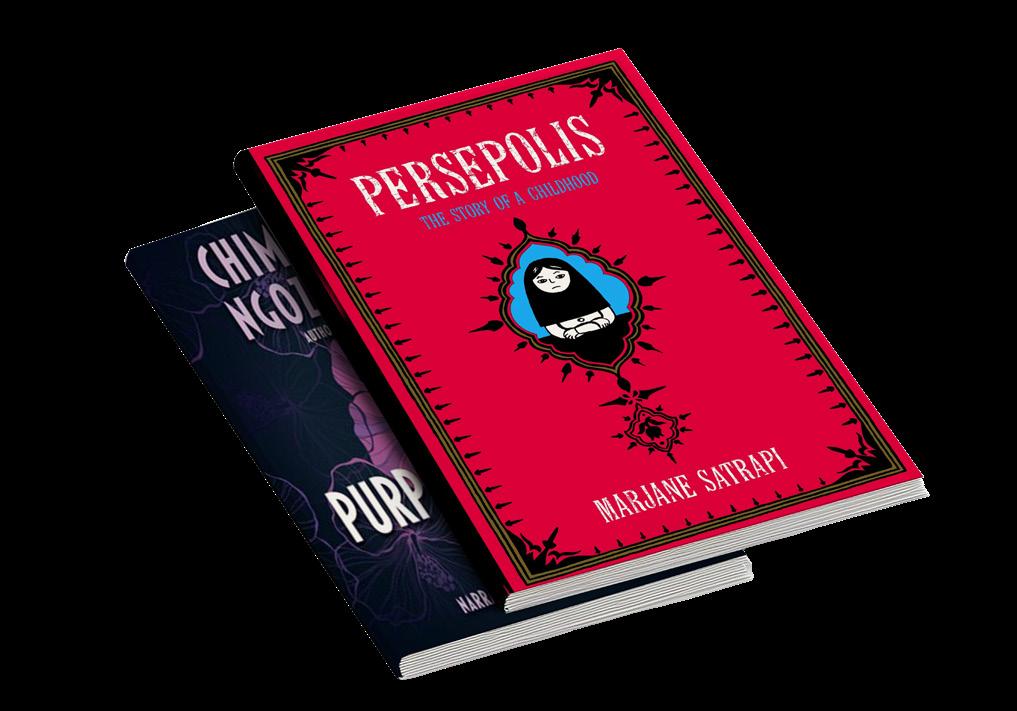
Purple Hibiscus by Chimamanda Ngozi Adichie (Nigeria)
The Shadow of the Wind by Carlos Ruiz Zafón (Spain)
The Makioka Sisters by Junichiro Tanizaki (Japan)
The Granta Book of African Short Stories by Helon Kabila (ed.)
Persepolis by Marjane Satrapi (Iran)
My Brilliant Friend by Elena Ferrante (Italy)
House of The Spirits by Isabel Allende
“On Cultural Diversity Day the Library introduced pupils to the wonderful world of manga and the surprising link between manga artwork, 18th century Japanese artist Hokusai’s Great Wave picture, and the mathematical concept of the Golden Ratio. Pupils had lots of fun creating their own characters and learning how to draw one of the most distinctive features of manga artworkthe oversize, cute eyes.”
Mrs De Cruz
By Ananya and Veeya, Year 7
Gym and dance showcase 2025
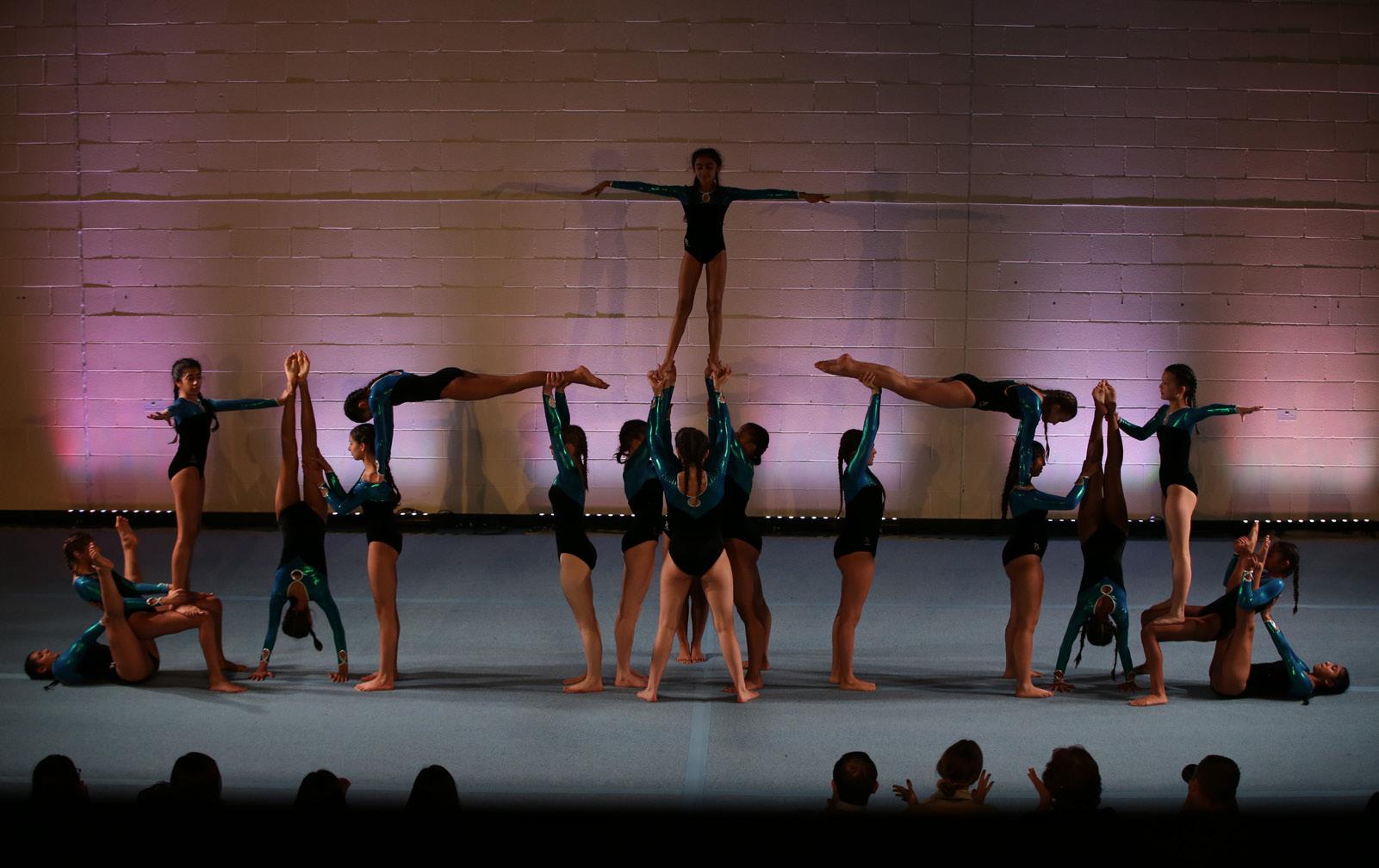
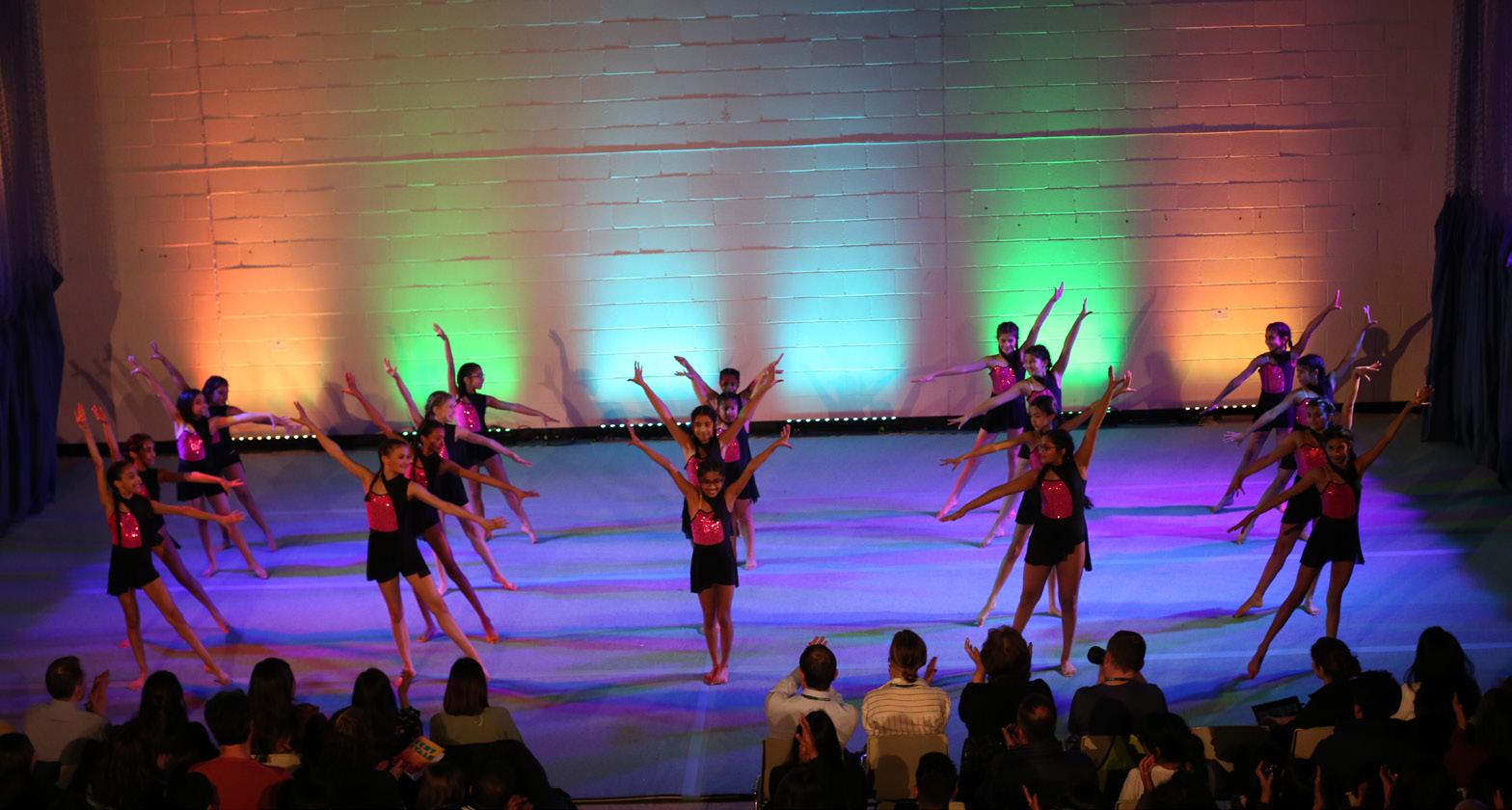
The St Helen's Gym and Dance showcase is one of the highlights of the school calendar.
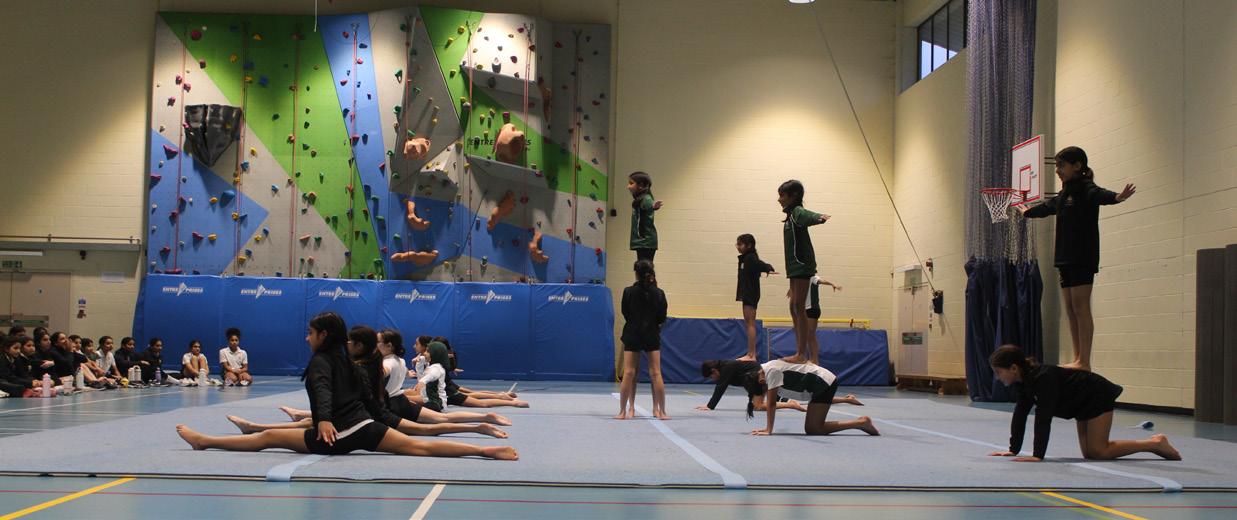
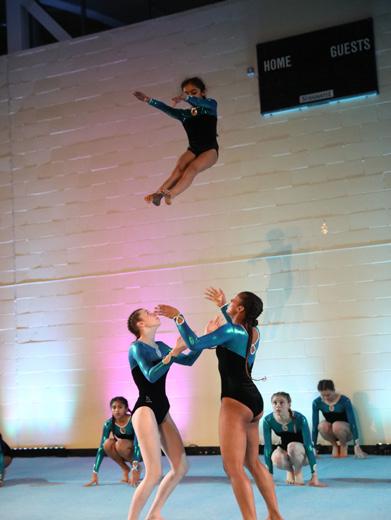
The highlight of this year’s showcase was the Year 10+ Dance Squad routine, which stunned the audience with its combination of fast-paced moves and sharp technique. All the other Gym and Dance squads work with their teachers to create performances that are thrilling and powerful. Years 5 to 8 do dances with their classes, which provide a wonderful opportunity for everyone, no matter their experience, to gain confidence and learn new skills.
“there was a really great stunt this year, called tick tock, where a Year 7 girl was lifted to quite a height and then she fell backwards and was lifted forwards and then backwards again like the pendulum of a clock”
“the throws are when the audience cheer the most”
“we rehearse the group balance, 19 of us in a balance, for ages to get it right”
(continued)
Gym and dance showcase 2025
“I have been in every Gym and Dance show since Year 3, it is a really special event in the St Helen’s calendar.”
Ava, Gym squad, Year 10
“the stress and the rehearsals help you to bond with your team mates, and I like it because we get to know other girls in different year groups.”
Isha, Dance squad, Year 10
“it is really cool to see the different performances that the students choose to do –especially the girls who do the individual shows.”
Louise, Gym squad, Year 10
“It is my favourite event of the year because we all share a passion for gym and dance. I also love the fact that we create a product that we are proud of. We spend five months rehearsing for one evening”
“In lots of the dances, students explore their own heritage and culture which is lovely to see.”
Ashnee, Dance squad, Year 10
“The best thing about the show is the fact that it creates a real sense of community”
“Participating in Gym and Dance shows over my time at St Helen’s, has given me so much confidence, incredible memories, and friendships that will last a lifetime.”
Libby, Year 13
“I am definitely going to miss the joy, the adrenaline and fun of the show and of course doing a duet with Libby which I have done for the last two years.
I just want to say a huge thank you to the PE department for making Gym and Dance show so much fun for the past 7 years.”
Olivia, Year 13
“It's really exciting to see the audience get hyped up and hearing the applause after working for so long on our performances makes it worth it!”
Louise, Year 10
How to get a top-level degree AND earn a five-figure salary
Dear Girls,
Picture the day on which you are about to start your life postSt Helen's. Instead of packing your car to drive up to university, you’re packing your Hermès bag to get on the train and set foot in a glass-windowed law office with a panoramic view of St Paul’s Cathedral and the River Thames. You look forward to the day, soon to come, where you will receive your annual pay of £30,000 with absolutely no worries about student debt. The following week, after a full-day of practical work, rather than falling asleep in lectures, you start making your way to the Michelin-star restaurant for your firm’s social, which includes everyone in your department, from the apprentices to senior partners.
Apprenticeships in the UK date back to the Middle Ages. While they were initially created to accommodate training in trade crafts by master’s for uneducated people but by the 16th century they had become a more formalized idea, supported by a legal framework.
“If you have great talents, industry will improve them: if you have but moderate abilities, industry will supply their deficiency”
Joshua Reynolds
Joshua Reynolds was an apprentice to the fashionable portrait painter, Thomas Hudson, from London, in 1740.
How to get a top-level degree AND earn a five-figure salary
There are many misconceptions floating around about degree apprenticeships, but with misconceptions comes correction, and that’s exactly what we’re here for! We took the opportunity to interview an old St Helen’s girl, Cassie Struc, who is currently doing an Engineering Apprenticeship at KPMG, who gave us some interesting insights into her experience.
Misconception One:
“Apprenticeships are less respectable than the traditional route of university” Degree Apprenticeships have been created by companies and sectors to act as an equal but separate pathway into careers.
Misconception Two:
“You will have no free time, as you will always have to work or study” This is far from the truth, Degree Apprenticeships are designed to enable you to have time to balance work and university studies, and keep this to the working hours of the week. Cassie said that she has ‘a lot of free time after work or on weekends, and she can just relax or watch TV’ as long as she stays organized with her work and studies, so once she finishes work around 4 or 5, she has plenty of time for socialising and other activities!
Misconception Three:
“You will have less of a social life with people your age”
Most apprenticeship programmes take on a cohort of apprentices each year, meaning that in your workplace you will likely be with at least a few other people of your age, and also in the years closely above or below you. Outside of your workplace, there are organisations such as ‘City Century’ where events are hosted to connect solicitor apprentices from many different firms across London, allowing you to form connections and friendships. Additionally, as long as you put yourself out there and reach out to people, you will never be limited in your social connections – just like at university. However, never discount friendships with different age groups to you, as they will always provide you a different and
interesting perspective, and you can learn so much from people you work with that are older than you!
However, recently, apprenticeships have faced a new challenge with the government cutting spending for Level 7 apprenticeships. We looked into what these cuts might mean for young people in the near future:
The reasoning behind Labour’s cutting of funding for the Level 7 apprenticeship, is to allocate more of the government levy to lowerlevel apprenticeships, such as those on the same educational level as GCSEs or A-levels. There are, however, concerns that this decision will
negatively impact three of the government’s missions: to grow the economy, reform the public sector and provide opportunity for all. Furthermore, it may have the unintended consequences of affecting those who are looking to improve their management and leadership skills which, down the line, will help to drive up productivity in the economy. It is important to note that the funding for Level 7 apprenticeships is being cut, industry recognises the monumental benefits these programmes have to both them and the youth taking up apprenticeships. This means that the majority of firms are willing to increase their contributions as they recognise the benefits that training young people can bring to them in the long-run.
For more information:
RateMyApprenticeship, GOV.UK, Not Going
To Uni, UCAS, Young Professionals
Do research widely as there are a wide range of options for those wishing to do a Degree Apprenticeship!
Overall, Degree Apprenticeships are a great opportunity to accrue plenty of work experience, an opportunity for networking, a chance to make a salary, and most of all to be a step ahead in your career. They are definitely an option to be considered!
By Olivia and Nina, Year 12
ADHD and Synaesthesia
How I experience the world
It starts off as a whisper, a faint and distant hum, murmuring thoughts that then grow into a drum. They circle and swirl, picking up speed. A rising storm, a desperate need. I'm clinging to tables and to chairs, to the ground, but they slip from my grasp, spinning around. The air is electric, my skin feels tight. Every sense heightened, every thought takes flight. The roar of the wind, the rush in my ears, I try to hold on, but it heightens my fears. Papers and books, lift and twist, caught in the current, impossible to resist. My vision blurs, and my focus is lost. Each fleeting thought, comes at a cost. I see the world, in fragmented flashes, swirling in chaos, torn into ashes. I clutch at the table, its edge in my hand, but it's pulled away, like shifting sand. My fingers, they scrape, as I try to stay, grounded and present, not whisked away. The tornado's eye, a calm deceiving, a moment of peace, before the heaving wind takes hold, of my fleeting mind, scattering pieces that I cannot find. Whispers to shouts, a deafening roar, thoughts like debris, I can't ignore. Skin prickles with static, heart beats like thunder, caught in this storm, pulled asunder. I try to focus, to steady my breath, but the storm inside, threatens with death.
Chairs are flying, books take flight. I'm losing my grip, and I'm losing the fight.
Then I surrender to the swirling din, letting the tornado pull me within. No more resistance, no more strain, I'm carried away, like drops in the rain.
Thoughts in a whirlwind, a cyclone's embrace, I close my eyes, let the storm erase the struggle, the fight, and as I yield, I'm carried away, to a different field.
In the heart of the storm, I find a strange calm, a place of surrender, a soothing balm.
The wind may rage, but I am free, drifting in chaos, just the storm and me \\\ \
Sofia, Year 11
Why are crocodiles pink?
Why aren’t crocodiles pink? Let’s find out together:
We’ll sound out the colours, primary and letter:
Do you see that ‘a’, so fresh and round-green?
It bursts across a word, spring, tart and clean.
As the ‘S’ hisses like sand along a stray dune, There too the warm, faded, colour ‘S’ is strewn.
Look out! Beware the long drop of the J: its depths are dark, dank: purple, black and grey.
Peer into J’s well to find the O: dismal hole without end, of the night as bats are, though subdued by the yellow ‘E’ as it rises, Leaving a sunflower sheen across everything.
(Do you ‘see’ the colours, though?)
Only as you ‘see’ this pink crocodile when I mention it.
(Why isn’t ‘A’ blue? Why isn’t ‘E’ red?)
Why aren’t crocodiles pink?
(Because they’re not.)
There you are, then.
Although, I confess: Rosy dawn holds the ‘c’, So, of course, they are pink to me.
Synaesthesia
Synaesthesia is defined as a neurological condition in which the stimulation of one sense triggers an involuntarily response of another sense. There are many different types of synaesthesia, such as seeing colours when one hears music or words, or when one feels a “physical sense of touch” when one witnesses someone touching “t other people or objects”. The poet here is talking about their own experience of seeing specific colours when they hear words.
Hear Her Voice
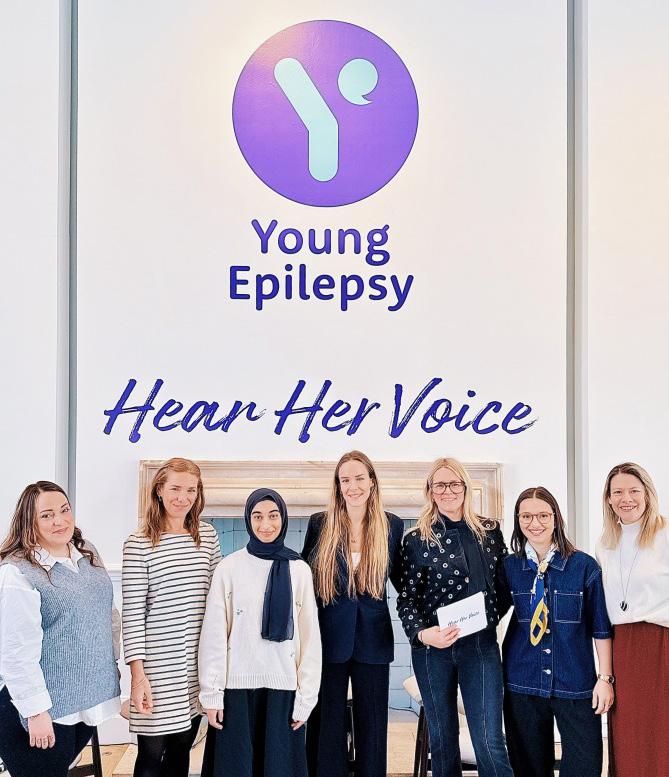
Young Epilepsy is a charity founded in 1897, its aim is to ‘inform, educate, inspire, and engage the nation, through young people with epilepsy living ambitious and fulfilled lives.’ This year, it hosted its inaugural Hear Her Voice brunch, an event to share the individual stories of women and girls with epilepsy, as well as the experiences of mothers of children with epilepsy.
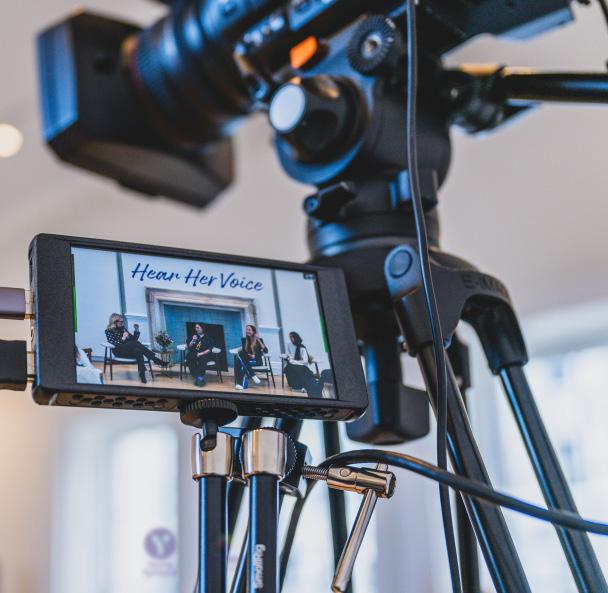
The brunch was held on February 14th, between International Women’s Day and World Epilepsy Day, in central London, and consisted of two panels, each interviewed by the television presenter Edith Bowman, who has previously interviewed the likes of Margot Robbie, Greta Gerwig, and Saoirse Ronan.
Hear Her Voice
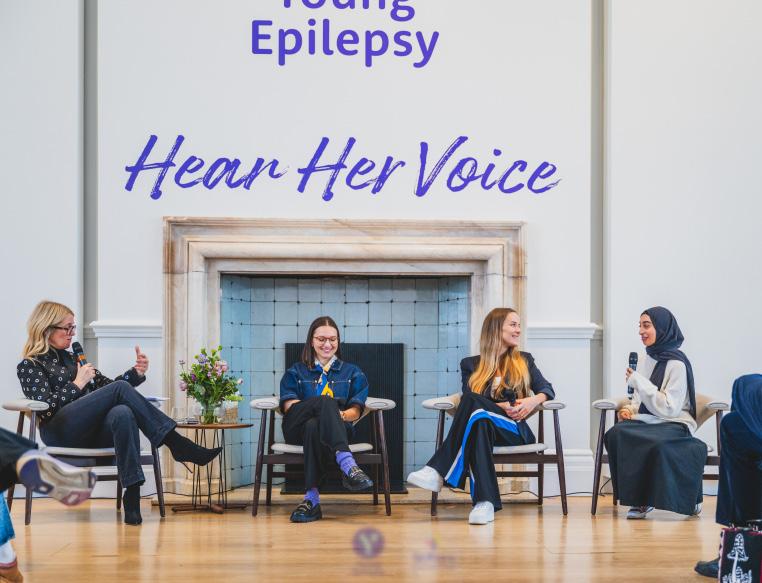
As a member of Young Epilepsy’s Youth Voice Network, I was invited to come and speak on the panel Courageous Voices: Redefining Life with Epilepsy. The Youth Voice Network facilitates young people with epilepsy to meet others with the same condition. Young Epilepsy also campaigns to create systematic change for young people with epilepsy, from facilitating school assemblies to training doctors’. The panel’s purpose was to showcase the fulfilling and successful lives of young women with epilepsy.
Aside from me, the panel consisted of actress Ellie Henry and fashion PR
consultant Hum Fleming. Ellie shared her story first. She was diagnosed with epilepsy at 18 years old while living away from home, and after 4 years seizure free, her seizures returned recently – this happened while she was working on a show with Netflix. Over the course of her career, Ellie has been disappointed by the lack of representation and awareness of epilepsy and she is often ashamed to tell people she works with about her condition and how to help her. Hum, who was diagnosed at the age of 15 after two years of undiagnosed seizures, agreed with this. She reflected on what it was like growing up with
an ‘invisible condition’ that not many people know about. I spoke about my journey with epilepsy over the past 3 years, and what life has been like for me since my diagnosis, especially at school, where I’ve sometimes felt like I am being perceived differently because of my epilepsy, or felt uncomfortable sharing my diagnosis and what it means for me on a day-to-day basis.
The second panel was entitled Unstoppable Women: Mothers Who Lead the Way, it featured three mothers of children with epilepsy, each of whom shared their story, as well as their children’s. An epilepsy diagnosis can take
a significant toll on parents as well as on the child, particularly on mothers, like Kelly Norford, who had to give up her career after all three of her children were diagnosed with epilepsy. Kelly was joined by Jennie Gow, a Formula 1 presenter for the BBC, and Dr Laura Cunnane, founder of the charity Hey Jude. Jennie’s young daughter was diagnosed with epilepsy recently, and she bravely shared her anxiety surrounding her daughter’s condition, which is not yet under control and has been a terrifying experience for the whole family. Laura’s son, Jude tragically died from SUDEP, Sudden Unexpected Death in Epilepsy, which is when
a person with epilepsy dies unexpectedly and without explanation, normally due to the consequences of a seizure, and she now runs a charity in his name to help others with chronic illnesses.
Hear Her Voice was an incredible event, not only for me because it gave me an opportunity to share my experience and feelings, but also to hear others’, and it gave everyone there a space to speak and be heard.
Epilepsy is a neurological condition where uncontrolled surges of electricity in the brain cause seizures. There are many different types of seizures including tonicclonic, where the person may jerk or shake, and absence, which may look as simple as someone losing focus. Approximately 630,000 people have epilepsy in the UK.
By
Maryam, Year 12
There is a prankster in the staffroom
Locked drawers. Fake spiders. Prank notes. It’s not only students who like to play jokes…
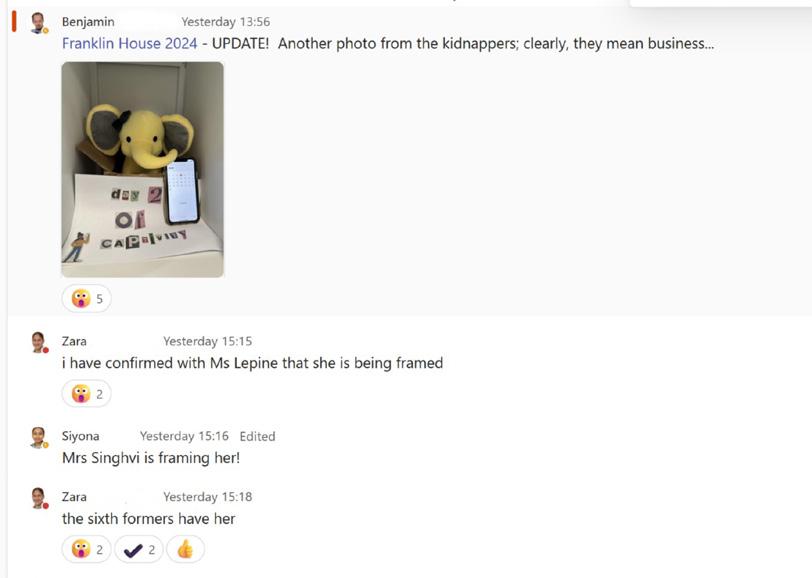
It’s come to our attention at The Linkway that the teachers in (and out of!) the staffroom seem to be getting up to an awful lot of mischief. And by mischief, we mean practical jokes that you would absolutely not expect from your Latin teacher- not that we’re naming any names.
The prank that’s created the biggest fuss? Tiny plastic spiders. Everywhere. In Ms Shohid’s coat. On Miss Shah’s desk. As a gift to Madame Alexander and
Mr Maddran. In Miss Lepine’s hair. The only person who seems to have not been affected by the infestation of plastic arachnids is a certain member of the classics department, who, it is alleged, has also been found guilty of teaming up with Mrs Zheng to prank Dr Berriman with a fake Christmas card from Dr Arnold.
But the other teachers are not taking this lying down. Miss Lepine locked the prankster’s desk drawers, and only unlocked them after being told there was ‘emergency medication’ inside, which wasn’t true at all. (We hate to break it to you, Miss Lepine, but she lied). After the vote in the staffroom against
Dr Goldstein’s dressing up costumes was rigged- by the same classics teacher, he threw Miss Sealvi’ at (or ‘Sealjamin’, depending on who you ask). For those who are not aware, Sealijamin is a soft toy – a cuddly seal. Again, we are not naming names. Apparently, Dr Goldstein also attempted to jump-scare her, but our sources do not reveal whether he succeeded or not.
Madame Alexander, despite being a victim of the aforementioned plastic spiders (and also, weirdly, mini cow and duck plastic figurines?) seems to be thoroughly enjoying this prank conflict and actually set up an entire scavenger hunt of pranks across the school for the only teacher in the classics department who used to share a form with Dr Goldstein.
Issue 13 | June 2025
Also, randomly, it is alleged that Mrs Heyde and Ms Courtney-Thompson have decided to try their hand at pranking too. Their victim? We only know one teacher with a bright floral rucksack and ‘funky’ socks. It is said that Mrs Heyde pranked the prankster by telling her that Dr Goldstein has been looking for her, and Ms Courtney-Thompson told her the same about Mrs Ward. I wonder how long she spent searching…
This is by no means, an exhaustive list. This is only one teacher’s account, and it only covers Senior School- who knows what’s going on in Prep! All that we can say after hearing about this collection of pranks is that there is most definitely a prankster in the staffroomkeep a lookout for what she does next!
Editorial note: for obvious reasons much of the reporting for this article was unverifiable and there may be more than a smattering of conjecture.
By Maryam, Year 12
In the Bag: Dr Berriman
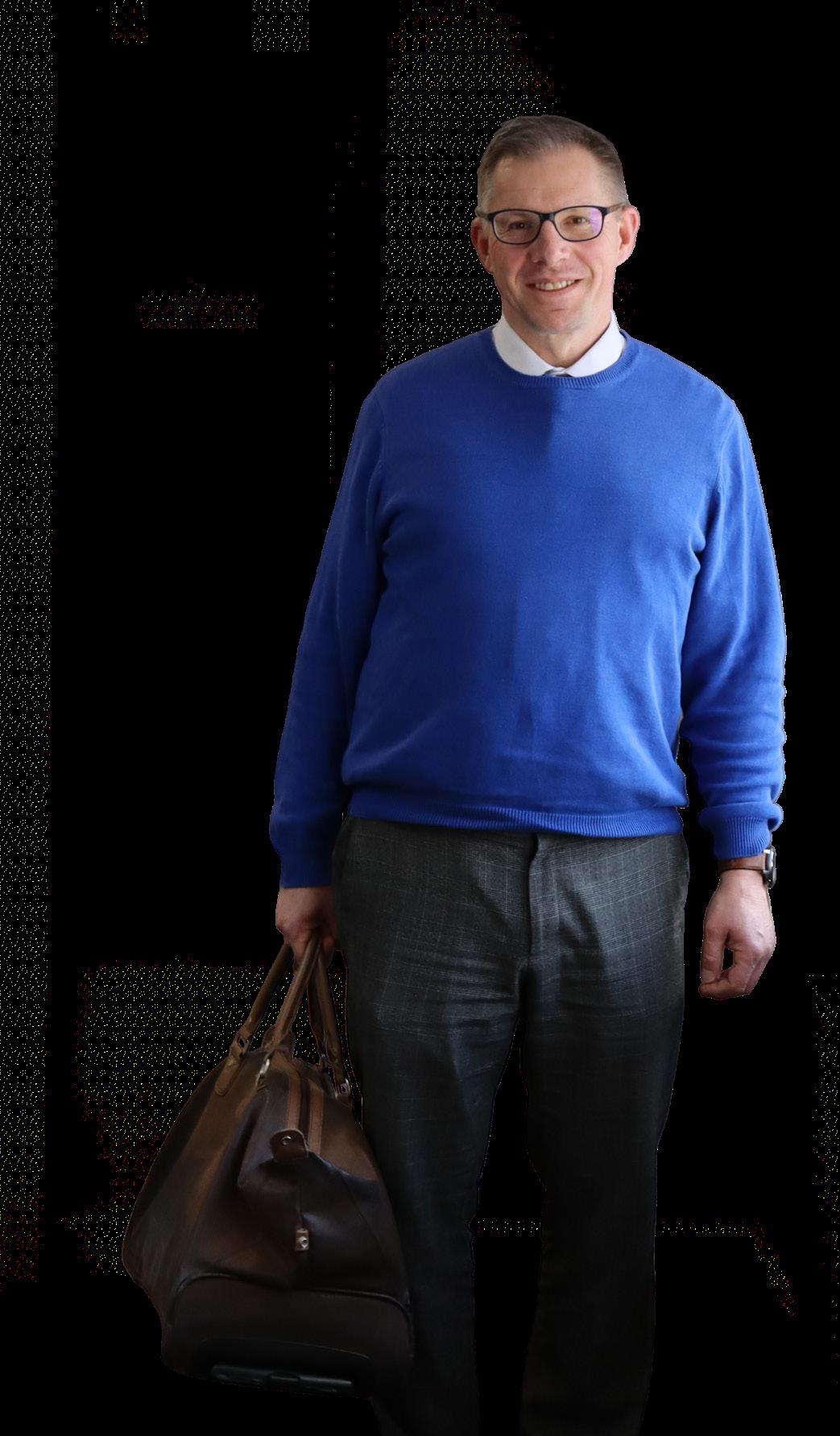
Most of us have seen Dr Berriman’s enormous bag around school during our time here, and everyone has noticed the peculiar size of it. So, inspired by Vogue magazine’s popular In the Bag, where celebrities reveal what they keep in their everyday bags, we seized the opportunity to find out what he is actually hiding in there, having been curious for so long.
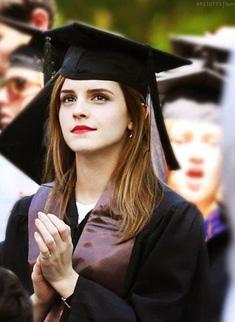
To help him prepare, I sent Dr Berriman a few example video clips of celebrities such as Emma Watson unfurling the contents of her bag, and admitted to him that some of these celebrities definitely had to be lying (Dua Lipa can’t seriously be carrying around hot sauce), and it was okay for him to stretch the truth a bit.
So, one day, we headed to Mackenzie to interview him, and it turns out his bag doesn’t contain a corpse and a whole shelf of Latin textbooks, complete with a collection of Ancient Greek statues and supplies for a week-long holiday...
Spoiler: no matter how much you think this bag can hold, there’s always more.
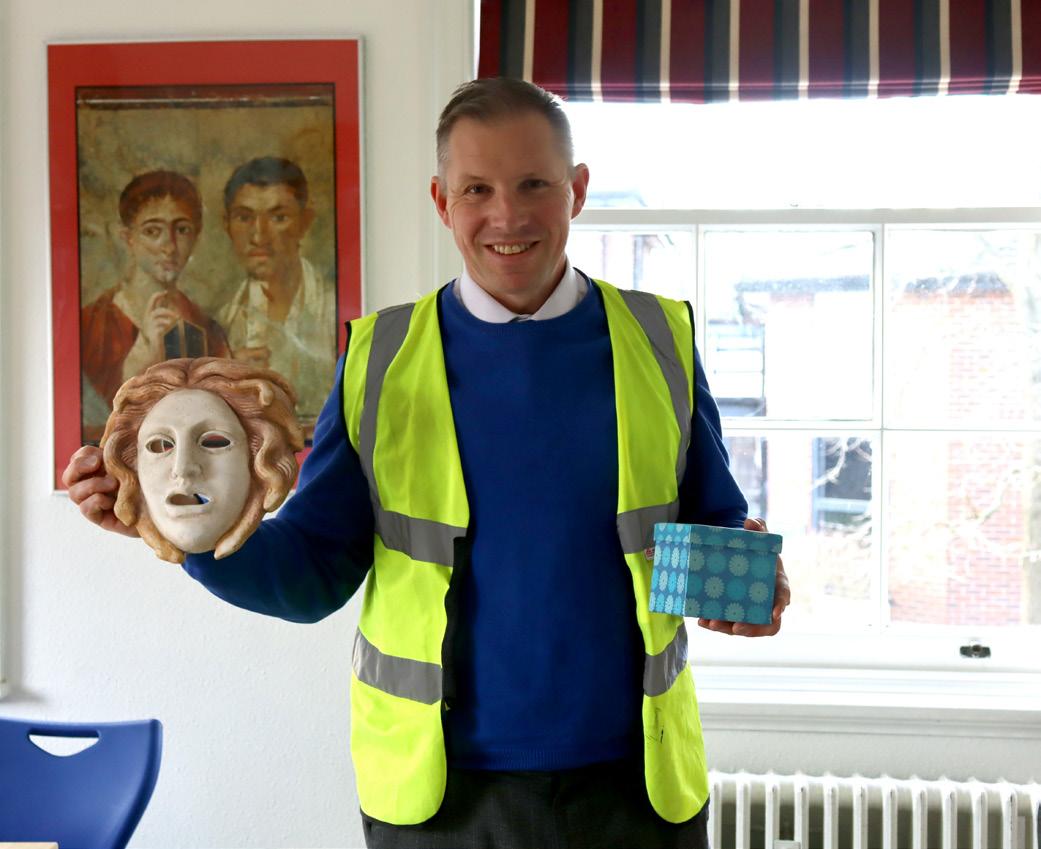
The first item in the bag is relatively normal: a high vis jacket. Dr Berriman enjoys walking and running, but at this time of year (winter at writing), it’s important to him to stay safe, and this is the ‘bare minimum’.
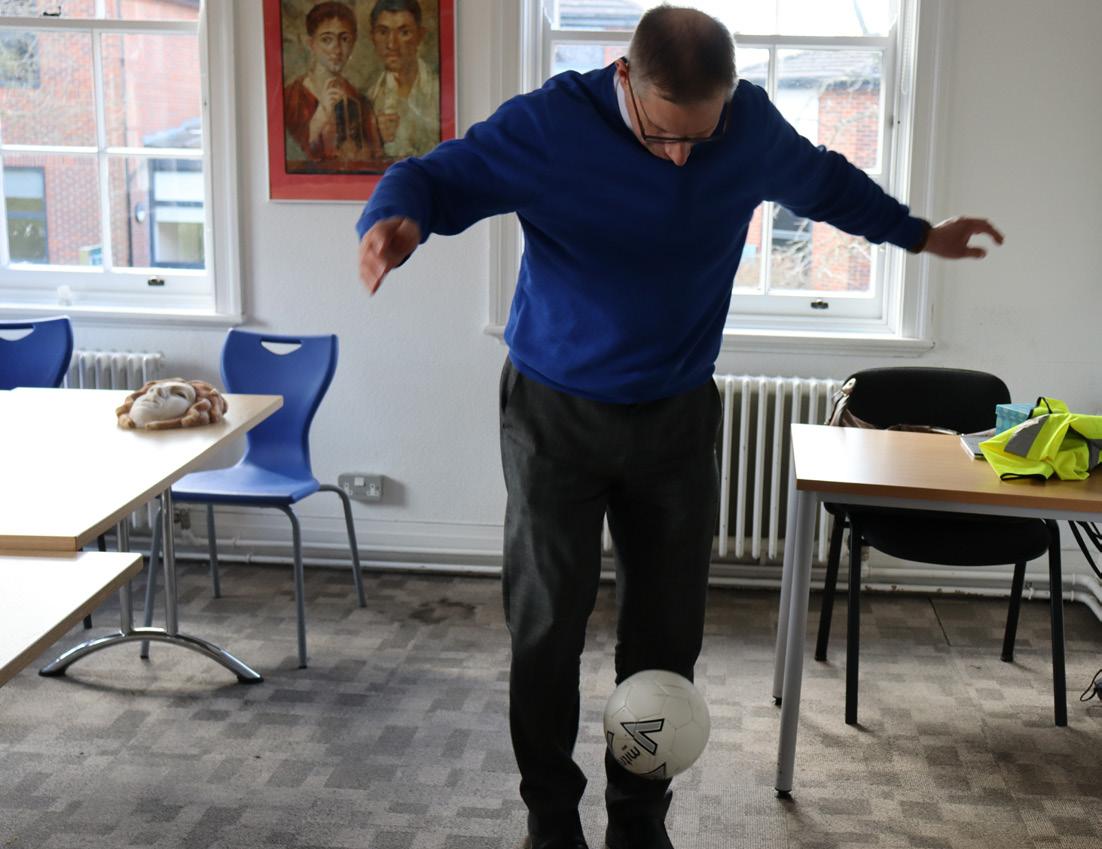
From here it gets more peculiar. The second item in Dr Berriman’s totally normal, casual, everyday school bag is a football. He doesn’t play a lot, but its spherical shape allows him to feel like ‘all is right with the world’ and is a reassuring presence.
Especially when he feels he must unwind, so, he plays ‘keepy-uppy’ with it.
The next thing in the bag is a lot smaller, but still, it holds immense meaning. It’s an empty gift box which he keeps on his desk as a reminder to focus on what he’s working on and be in the present. He’s had it with him for the whole 19 years he’s been at St Helen’s.
The fourth item may seem unusual: a dental kit. This is a result of a Year 7 class deciding that he was a dentist during a cover lesson (surprise for 7V, he’s actually head of the Classics department), and he now carries it so he doesn’t ‘disappoint’ anyone if this comes up again and he can ‘justify his existence (as a dentist)’.
(continued)
In the Bag: Dr Berriman
After this, he pulls out a Greek theatre mask of Medusa (although it does looks suspiciously like the one normally situated in M1) displaying his love for Greek myths; alongside a secret wish to be able to have Medusa’s head in his bag to turn people to stone
when needed. Apparently, it comes in handy…
That’s not the final whacky item that emerges from his bag. Next up is the first of many books he carries, The Two Towers by J.R.R. Tolkien. Dr Berriman is a big fan of Lord of the Rings
and sometimes opens a random page in any Tolkien book for some comfort.
The last three books are finally what you would expect of a classics teacher: an illustrated book on ancient civilisations, a book of Latin stories, and some teacher markbooks.
So, this was definitely not what we were expecting. Dr Berriman seems to have had the same take on In the Bag as many celebrities, leaving us still confused as to what he actually has In the Bag?
By Maryam, Year 12
First, if your bag was a person, who would it be?
Jabba the hut from Star Wars due to the ‘sheer capacity and power to scare people’.
Slightly disconcerting…
And, if you could swap bags with anyone for a day, who would it be?
Paddington bear because he has ‘always liked Paddington Bear’. And then, he declares he would switch bags with ‘whoever in Year 7 has got the largest rucksack where they carry absolutely everything’!
A submission for the Global Young Journalist Award
Society and Culture: How social media makes girls feel like
they are never
enough…
I was barely 10 when I first started noticing them – the girls that we all aspire to be, the ones that are effortlessly pretty on major social media websites such as TikTok and Instagram. Their skin was flawless, their outfits were just right, their smiles looked like something out of a movie. I remember thinking, “Is that who I want to be?”
It wasn’t long before I started comparing myself. The way that one strand of hair wouldn’t go in its place, the way my pictures never looked so polished and perfect. I’d delete the pictures that weren’t “good enough”. And soon, it wasn’t just what I looked like – it was who I was.
Social media makes everything seem trouble-free. The perfect routines and the perfect life. But what’s really the truth in this fictional world? It’s all carefully complied.
Filters erase flaws.
Lighting makes everything look like a dream.
Captions make even the toughest of days sound easy.
And girls – especially those who are exposed to these perfections at a young age – are expected to keep up. We feel like we have to post the “right” things, look the “right” way and be the “right” kind of
person. Because if we don’t follow these so called “rules”, it feels like we don’t belong.
The pressure isn’t just about looking good – it’s about feeling like we will never be good enough in a society like ours.
Perfectionism sneaks into our mind quietly. It makes us think that if we try harder- look better – pose better – be better – we’ll finally feel good enough. But perfectionism is a game that many can try, but no one can win.
Take a moment to think about this, what if we embraced the awkward pictures, the messy hair days, the moments where we aren’t the picture-perfect selves that we set our hearts on? What if we took the effort to realise that how we are born – how we were created – is enough just as it is?
Girls all over the world, even those who are reading this article today, are choosing to let go of perfectionism and to embrace their authenticity. They are choosing to
share the real moments in life, and they are starting to realise that it isn’t about fitting in – it’s about standing out in a group that would otherwise be flowing with the urge to be perfect.
This is a world where I hope to live: the kind where we wake up and know that we don’t have to perform today. That our worth isn’t tied to how many likes we get, or how people comment on our routine and our way of living. A world, a place, where we can just be ourselves and no one is out there to tell you to go and be someone you aren’t.
Because perfection keeps us in a small, uncontrollable world.
And imperfection lets us live our lives…
By Diya, Year 8
The rise of Brainrot
Brainrot
– the Oxford English dictionary word of the year in 2024 is defined as:
“the deterioration of a person’s mental or intellectual state, especially viewed as the result of overconsumption of material [now, particularly online content] considered to be trivial or unchallenging.”
The term brainrot first appeared in Henry David Thoreau’s 1854 book Walden, about his experience of simple living in the wilderness, and he described brain rot as “something characterised as likely to lead to such deterioration of the brain.”
But now, since the rise of meme culture, brainrot can also mean “internet content deemed to be of low quality or value, or the supposed negative psychological and cognitive effects caused by such material”according to the New York Times.
Brainrot is associated with being “chronically online”, which is when the majority of one’s life revolves around social media and an internet reality. It is associated often with Generation Alpha, those born between 2013 and 2024, who since the pandemic, have spent more and more time on their screens, particularly on YouTube Shorts, which receives approximately 70 billion views a day. YouTubers such as the Georgian animator Alexey Gerasimov, Kai Cenat, and KSI have been behind the creation of some of these absurd memes, such as the cartoon miniseries ‘skibidi toilet’, and the song
‘Thick of It’, which has become something of a brainrot anthem with its catchy lyrics chronicling KSI’s chequered career, from boxing to YouTube rapping, amassing him billions of UK streamers.
While it is evident that brainrot has increased due to the use of screens by children during and after the COVID-19 pandemic, the extreme overuse of memes isn’t anything particularly new. The way in which brainrot memes are referred to is reminiscent of quoting ‘vines’- short videos from the early 2010s shared on the app Vine. Some of these videos are still
quoted today, or even posted on YouTube by younger members of Gen Z (born between 1997-2012), who did not use the app growing up. Despite the fall of the app in 2017, Vines and similar 2010s videos (Annoying Orange, PotterPuppetPals, The Muffin Song… etc.) remain popular. While we might criticise brainrot as ridiculous and mindless, it has always been around – just by a different name as meme culture has evolved with our use of the internet.
(continued)
The rise of Brainrot
Amongst younger children, Brainrot has become a normalised way of talking. It’s perfectly normal to hear children in primary school tell each other to ‘stop fanum taxing (eating) my food!’, or to come home and hear siblings and cousins talk about how ‘skibidi’ (meaning unknown) their day was.
Interestingly, some of the children who use these words are unaware what they mean. One child told The Week Junior that he said ‘skibidi’ often in the playground ‘randomly’ just because it was ‘funny’, which is exactly the purpose of brainrot- memes becoming pointless and rambling, with little to no actual meaning.
So, this begs the question: is it fair to censor the way children talk, simply because we view it as stupid or unedifying? Throughout time, adults have been confused by the way younger generations use slang, from ‘spiffy’ in the 1920s to ‘selfie’ in the 2000s. Although we look down on how Gen Alpha talks, perhaps we are being unfair on them,
just as older generations were when their slang emerged and it confused them? It is futile to mock young people and attempt to stop them using this new vocabulary, which is exactly what many schools have attempted to do? Schools both locally and internationally have created lists of words that are banned in classrooms. Children are not allowed to say words like ‘rizz’ (short for charisma or flirting skill), ‘sus’ (suspicious), and ‘mewing’ (a technique to improve one’s jawline) in the classroom at many schools.
Indeed, the rise of brainrot is a clear sign that Gen Alpha are no longer the ‘iPad kids’ we once saw them as. Evidently, Gen Alpha may show us the vast impact that technology and the pandemic have had on young people and how it will shape the future that we will all share.
By Maryam, Year
12 Issue 13 | June 2025
St Helen's attends Commonwealth Day
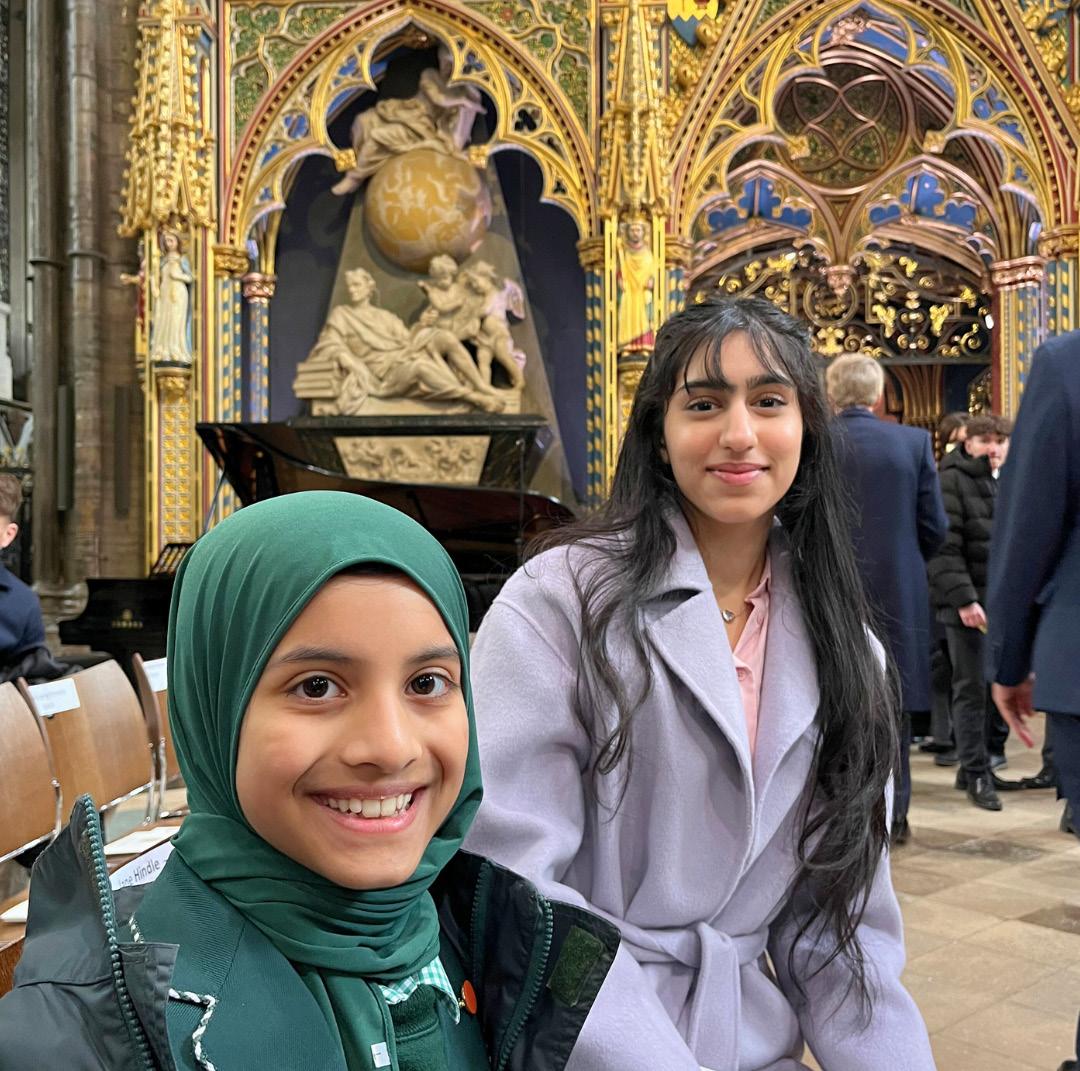
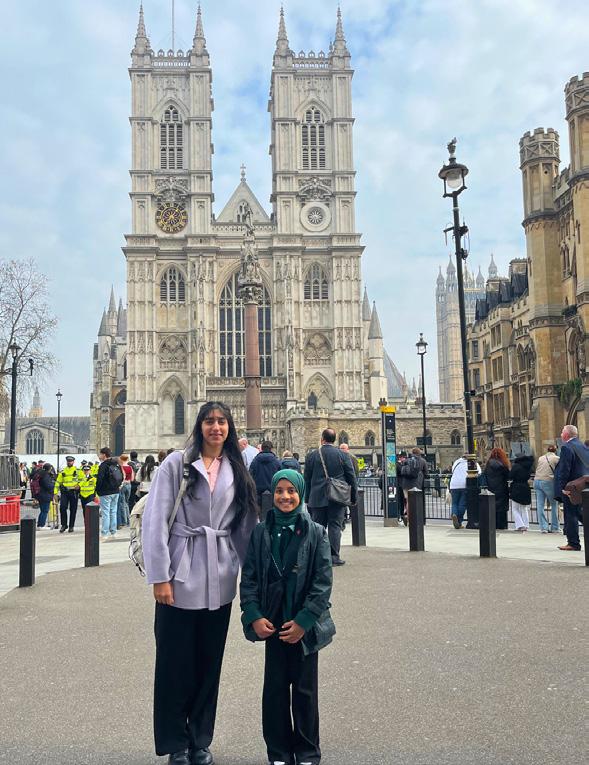
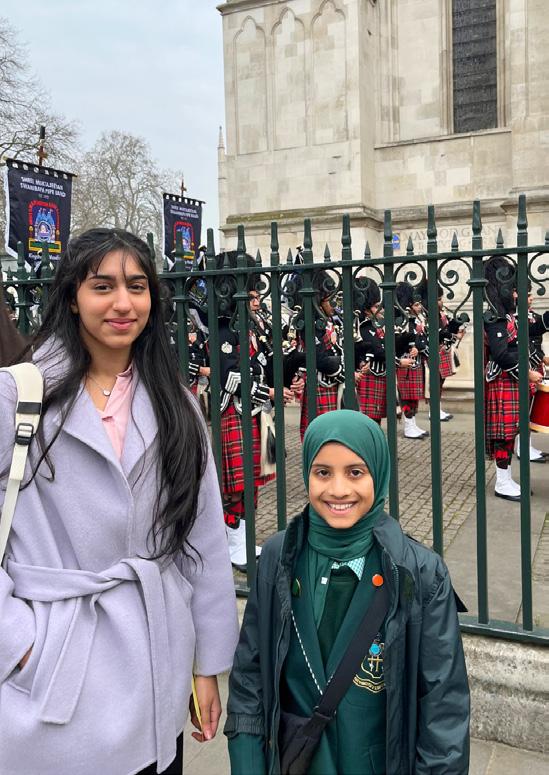
On the 10th of March 2025 at 9:00am, I was collected from my classroom by the head of English, Ms Hennah, and the head girl of senior school, Ana, to attend the Commonwealth commemoration service at Westminster Abbey.
Jennah, Year 6 (Head Girl of Prep school)
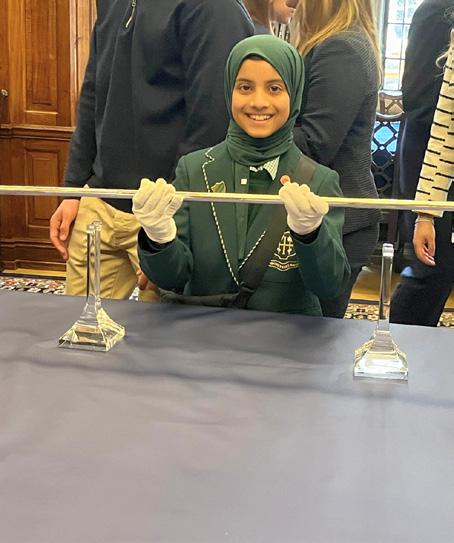
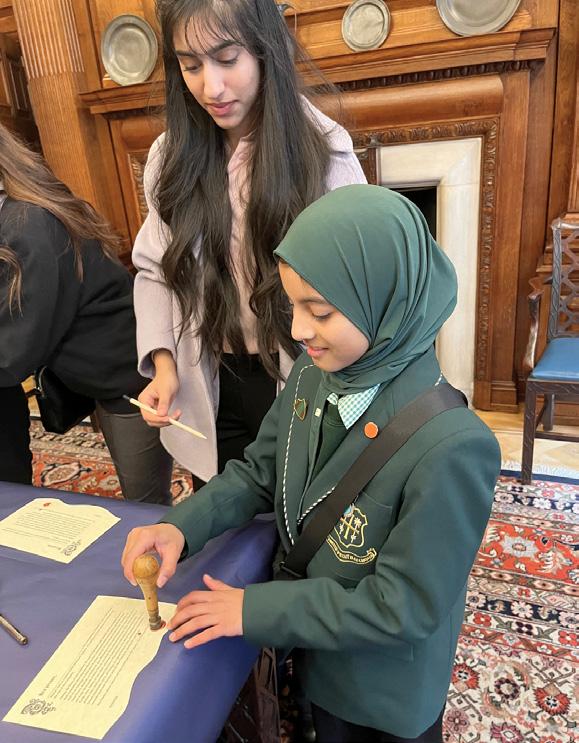
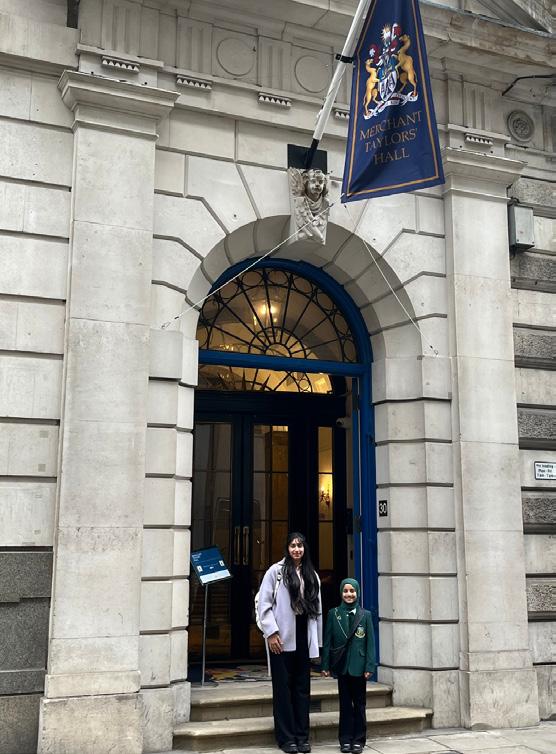
The three of us took a train and at 10:30am we arrived at Merchant Tailors’ Hall for an interesting tour, where we learned about its history before we were served a sumptuous afternoon tea. We were there for about two hours before leaving for Westminster Abbey.
Once we arrived at the Abbey, I gazed around the hall in amazement and my eyes went straight to the beautifully decorated doors that we were told the royal family would be walking through once everyone was seated. As I looked around, I could hear the drums playing in a repetitive beat making the atmosphere feel even more exciting.
I glanced at the abundance of seats put into neat rows and I secretly hoped we would get one of the best ones. And we did! We were seated in the front row, or as I would say the prime spot! I thought back
to when I was about to leave the car earlier that morning and my mum had said I would be unlikely to be anywhere near the Royal Family, and yet there I was, so excited and full of anticipation because they would soon walk past my seat! I couldn’t believe that within the next two minutes I could possibly be on T.V. and have the Royal Family be a metre away from me!
Then all the talking stopped and before I knew it, they were right in front of me. And yes, Princess Kate is as pretty as everyone says. That moment felt like it went too fast. After the service concluded, it was time to leave and head back to Northwood. As I boarded the train home, I thought to myself that this would be one of the most memorable days of my life and I hoped that if I made it on T.V that somebody recorded it! It was a tiring day but also one of the most amazing experiences I have ever had.
St Helen's attends Commonwealth Day (continued)
Ana, Year 13 (Head girl of senior school)
Attending the Commonwealth Day Service at Westminster Abbey has to be one of my highlights of Year 13. We started with a fantastic tour and lunch at Merchant Taylors’ Hall on Threadneedle Street, where we made our own wax seals and talked to a St Helen’s alumnus who works for the company. We got to know many of the ins and outs of record keeping and some more interesting information about the company’s history. However, nothing could beat the excitement of entering Westminster Abbey with the Indian British Company drummers accompanying everyone’s entrances. It was amazing to see all the different countries’ ambassadors with their respective flag pins and customised number plates! Seeing King Charles and the extended royal family was another big highlight, and it was especially nice to see the recognition of many different cultures through dance, songs, and readings across the service. Overall, it was an unforgettable day and a genuinely once in a lifetime experience.
Being a teacher, especially one at St Helen’s, is an extraordinary privilege — and few days have encapsulated that more than attending the Commonwealth Day Service at Westminster Abbey. Of course, seeing the Royal Family was a profound experience, but so too was witnessing Ana and Jennah experience the Abbey for the first time. On a day of celebrating enduring connections and communities, it was a delight to tour Merchant Taylors’ Hall ahead of the service, to meet teachers and students from the wider family of schools, and even reconnecting with Ellie Glasser, an alumna of St Helen’s (and our tour guide). All this, alongside the simultaneous event on post-colonialism back at school, made for a day of reflection, cultural awareness, and pride in our community – one that I am sure informed many entries to the Queen’s Commonwealth Essay Competition.
Look out for this next year
The Queen's Commonwealth Essay Competition
The Queen’s Commonwealth Essay Competition is the world’s oldest international writing competition for schools, which has been proudly delivered by the Royal Commonwealth Society since 1883.
Miss Hennah
Post-Colonial Conference
On Monday 10th March, St Helen’s hosted our second Post-Colonial Conference, where girls in Year 12, alongside some students from Pinner High School, spent a day exploring the history of colonialism and the ongoing impact it has on our society today. We were very excited because our special guest speaker was the Forward Poetry Prize winner Daljit Nagra (who some students may recognise from the GCSE AQA Poetry Love and Relationships anthology).
The day consisted of four workshops, which spanned different aspects of post-colonial theory. In one workshop, l ed by Ms Reidel-Fry and Ms Ahmed, we discussed post-colonialism and art - with a particular focus on the toppling of statues of people who profited from the slave trade, which occurred across the UK in the wake of the Black Lives Matter movement spurred by George Floyd’s murder in 2020. We discussed whether toppling these statues was right, and if not, what should be done with them?
In another workshop with Mr Whalley, we learnt about francophone Africa and the fact that even long after independence, a former colonising country continues to have power and influence. We also looked at a different form of colonisation: how the delivery of foreign aid by high income countries impacts lower-income countries especially because higher income countries often have control and influence in regions, such as the Middle East. Though this aid may be seen as altruistic, it can leave l ow-income countries in huge amounts of debt, and ultimately the financial aid given serves to economically benefit the already higher-income donor country.
We also investigated borders and migration with Mrs Sinclair, and the experiences of people leaving their homes in search of a new life. We discussed what borders really are, beyond lines on a map, which are often sloppily drawn in countries far from the actual area.
The fourth workshop was with Daljit Nagra himself. He helped us write our own poems in the style of his poem ‘Things that Don’t
13 | June 2025
Suck’, he encouraged us all to think about our own identities and suggested we include those ideas in our poems, which were lists of things that we like. We were also given the opportunity to speak to Daljit about poetry and literature, as well as to buy his books.
We spent the afternoon producing creative and critical responses to these workshops; we could either create a design for the fourth plinth in Trafalgar Square, an opinion piece, a poem, or a migration timeline for a fictional family. This produced some amazing pieces, such as a model of Admiral Nelson confronting a boat full of refugees with the slogan ‘Stop the boats’, and poems about empires and imperialism.
It was amazing to spend an entire day dedicated to a topic that goes beyond the school curriculum and to be encouraged to express our thoughts and reactions creatively, while working alongside an award-winning poet.
by Maryam, Year 12
"I feel very blessed and lucky to see so many knowledgeable speakers to teach us about such an important topic. It was highly enlightening and inspirational."
Rhea, Amal, and Natalie, Year 12
"It was informative and it urged me to expand and take interest in the politics behind colonialism."
Janae, Year 12
"It was a great opportunity and I had a wonderful time. Thank you so much for inviting us."
Pinner High students who came for the Post-Colonial Day
A special thanks to Ms Ahmed, Ms Courtenay Thompson and Mrs de Cruz for organising this special day.
Are minority subjects dying at St Helen’s?
One of the best things about St Helen’s is the range of subjects that are on offer to us here. There aren’t many schools in which you could try such a huge range of subjects from when you join the school in Year 7. And yet, in recent years, I have noticed that slowly and quietly, minority subjects have begun to drop off the radar.
If your interests lie in mainstream subjects like Science or English, you may not have noticed. But in recent years, students who are interested in languages or the arts are sure to have noticed that their options have diminished. Just a couple of years ago, Italian and Japanese were dropped as GCSE subject options, due to lack of interest. But is the school at fault for this? After all, teachers are the most expensive resource in the school and maybe it is just not financially viable to run all of these minority subjects. Or is it?
Speaking from personal experience – I was very disappointed to learn that I would not be able to take Classical Greek at A-Level, because I was the only person that had
put it down. I bugged the entire Classics department about it, but at the time, nothing could be done. But how did we end up in this situation? How did we get to the point where only one person out of a group of a hundred wanted to take Greek? The problem is this: if fewer students take a subject, there are fewer students there to promote it, which leads us back to the beginning. This vicious cycle continues until subjects like Greek, History of Art, DT and German have no A-Level students left, and the subjects therefore may die out.
This problem is also contributed to by the general attitude in wider society towards foreign languages, the most endangered group of subjects. In recent years, the Department for Education and schools have placed less and less value on the learning of languages. This is particularly evident when compared to most European countries, where much more emphasis is placed on learning at least one other language. Some people hold the stance that languages have no use, and you don’t need to speak another language to get hired. But you can
do a language in combination with so many other degrees at university and having that extra skill might get you a better career in the long run. Additionally, people often say that “everyone speaks English anyway,” and as a result, do not see the point in learning a foreign language. However, only 1.5 billion people in the world speak English, and while that is still a lot of people, it leaves 6.5 billion people that you are completely unable to communicate with. If you learn a language like Mandarin, with its 1.2 billion speakers, and that almost doubles the number of people you can communicate with. Finally, learning a language has been shown in studies to prevent dementia, or delay its onset by up to four years.
Knowing the merits of minority subjects makes it all the more frustrating that they’re being abandoned in favour of mainstream subjects. But the good news is, changes are afoot at St Helen’s. Having interviewed Mr Bown, our new Deputy Head Academic, I was comforted by his stance. Mr Bown has said that he believes that if the school has the staff, they should run the subject, even if it’s just one student.
BENVENUTO
YOKOSO
Are minority subjects dying at St Helen’s?
So, what is the school doing to encourage interest in minority subjects?
Well, more subject specific trips are being planned for Middle School, in order to foster interests that lie outside of the mainstream. Additionally, the school are working to have more conversations with Year 10 and 11 to make sure that students are informed about doing subjects they love and are good at. Mr Bown has said that he wishes to embed into GCSE students the benefit of doing something different.
One risk of running subjects for one student at A-Level is that the student might drop it (especially if it is a ‘fourth subject’), resulting in a waste of resources. However, to combat this and to protect the niche subjects, going forward, Mr Bown wishes to promote the three A-Levels plus EPQ model. This means that students will be more secure in their subject choices, making them less likely to drop a subject. It will also mean that students will be able
to focus on getting top grades in three subjects instead of four, particularly because the majority of universities only require three A-Levels.
Ultimately, Mr Bown emphasised the point that students should choose the subjects they enjoy and are talented at. However, complications arise when the subjects you feel you thrive the most in aren’t offered. Of course, if you’re really passionate, there’s always a way of pursuing subjects outside of school, but that takes a lot of time and dedication, which isn’t always possible for everyone. Which is why I think it’s good, then, that minority subjects are not in danger at St Helen’s. While it’s true, nationally, that languages and the arts are struggling, particularly compared to the rest of Europe, I think in our St Helen’s community the majority of these subjects are going to keep living for a very, very long time.
by Isabella, Year 12
Beyond the SMART Board: Dr Dolby and the St Helen’s Centre for Advanced Maths
Dr Dolby is known for his infectious passion for maths. Whether it be his innovative teaching, his unrelenting enthusiasm for seasonal maths challenges, or as the man behind the Centre for Advanced Maths (CAM). But what is CAM and what inspired Dr Dolby to start this project?
Well, when asked, he said that the spark for this idea started even before he had left industry, where he had worked as an actuary. He was headhunted by the Chief Executive of an Italian company who flew all the way to the UK with their head of HR to meet him just to ask him to join because they valued his mathematical ability so much.
Dr Dolby realised there was a problem when they asked him to decide his own salary. This moment led him to understand that hiring mathematicians was hard because they were scarce. As he watched the demand for mathematicians by industry go up, he also realised the vicious cycle whereby teacher salaries couldn’t compete, so they would leave teaching posts to join industry, which in turn depleted the next generation of mathematicians who would go on to be caught in the same self-perpetuating loop. He decided to help solve this problem by going into teaching and then setting up CAM.
CAM consists of five pillars: ‘Enrichment’, ‘Outreach’, ‘Maths Challenges and Masterclasses’, ‘Scholarships’ and ‘Exceptional teaching and Careers support’. These five pillars all aim to feed the same vision to grow the number of students who will choose maths careers to help relieve the aforementioned problem of a lack of mathematicians.
Dr Dolby’s vision for CAM is that St Helen's will develop even more specialised teaching methods so that even more girls choose to study Maths and Further Maths. These will facilitate even more girls to be able to choose maths-based careers. Dr Dolby’s main
way of achieving this, he says, is by making maths fun and accessible in earlier years, before students lose interest.
Dr Dolby explained how it is quite common to find that children in primary schools find maths fun, but as they move into secondary school, they begin to dislike it. This can stem from a genuine dislike or just peer pressure and because of this, it becomes harder to engage with students and encourage them to pick maths up as a subject later. This is where the first pillar of enrichment began.
Beyond the SMART Board: Dr Dolby and the St Helen’s Centre for Advanced Maths
The CAM team, which includes girls from years 5-11 and students who have chosen to study maths in years 12 and 13, advertises all its events, such as the seasonal treasure hunts, weekly clubs and house maths challenges.
They also create challenging ‘Problems-ofthe-week’ along with weekly ‘Maths-in-the-News' posts. Dr Dolby said ‘it has been amazing to see how eager students are to tell him their answers or even share their own maths stories and he is excited to establish such challenges in the prep school too’.
Other than extending to the prep school, CAM has also begun outreach in local primary and secondary
schools in conjunction with the Royal Institute of Advanced Maths and the Advanced Maths Support Programme. This includes three separate programmes providing engineering, maths and IMC masterclasses which reach 150 pupils across the borough. As well as this, CAM has hosted numerous career talks to local schools and is developing plans for additional offerings in the future.
Dr Dolby explained how the third pillar of CAM, Maths Challenges and Masterclasses, helps promote St Helen’s reputation because our students achieve record results each successive year. In fact, when masterclasses for challenges such as the Junior Maths Challenge, Intermediate Maths Challenge and Senior Maths Challenge started, results skyrocketed showing how a little practice can make a profound difference. After these results, the maths department began rolling out regular masterclasses and saw the next eight challenges in a row achieve even better results than the last! Although maintaining this trajectory is simply not realistic, Dr Dolby
still expects to maintain a gradual increase and this will mainly be due to the fact that students in years 8 and 9 will have gone through all the masterclasses, which are designed to follow on from one another.
CAM has also introduced the Advanced Maths Scholarship for students in the sixth form. With a number of scholarships already having been awarded, the scholarship aims to make St Helen’s more accessible for external students, who have a talent for mathematics, regardless of income. More details can be found on the CAM page on the St Helens website.
Through the fifth pillar, ‘Exceptional teaching and support’, Dr Dolby believes
that St Helen’s is more than an ‘exam-factory’ school because the teachers at St Helen’s focus on how to progress each student individually, to the best of their abilities whilst they are here, meaning girls have the potential to thrive here more than anywhere else.
Alongside all this, CAM organises career trips and events such as the trip to Imperial College for a conference about ‘preparing for STEM degrees’ where eleven year 12 students were able to learn about a range of maths rich degrees and were taught skills about preparing for entrance exams, writing personal statements and how to prepare for maths-based interviews.
The positive impact of CAM is reflected in the rise in uptake for A-Level and Further Maths, although this is not just at St Helens but nationally, with further maths exam entries growing by 20% last year, proving the recognition of the importance and popularity of maths.
So, CAM at St Helen’s takes on the broader societal mission, of supporting female students, making STEM subjects more inclusive and providing opportunities to all students, regardless of their ability. Dr Dolby’s project is not just a stronger maths department, but a blueprint for sustainable and inclusive excellent.
By
Jerusha, Year 12
Why Am I So Single? - A Big Fancy Musical
Some months ago, I found myself going to see a new musical with a friend. The premise – two friends who sit on their sofa and talk about their dating lives – it seemed refreshingly simple, yet intriguing.
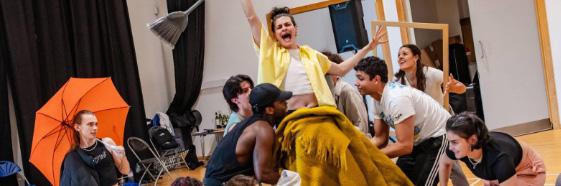
Rehearsals for the workshop of WAISS?
Perhaps it was a perfect way to have a musical that allowed character development, instead of wild plot twists and turns. A song from the musical had also gone viral on TikTok after its first public performance at West End Live and as I already loved it, I couldn’t wait to hear all the other songs. Why Am I So Single? (WAISS?) made me laugh with its incredible humour, but it also made me cry when it touched on difficult topics, like grief. I loved
it so much that I saw it a second time soon afterwards, and I convinced my mum to come with me.
We don’t think about what goes into the development of a new musical, as we file into the theatre to watch the polished end-result. But new shows must go through several iterations in the writers’ room, before a workshop can even been held for the show.
A workshop is normally when the writers will see the show performed for the first time, so that they can get an idea of how it will work on a larger scale. There are often props but no costumes and while they can be open to the public, tickets are usually quite cheap. The audience normally consists of potential production teams and theatre professionals, rather than the general public.
(continued)
Why Am I So Single? - A Big Fancy Musical
Workshops normally consist of an entirely different cast to the ones that will be in the show when it debuts, although, unusually, WAISS? did have cast members that took part in the workshop. The workshop for WAISS? took place from the 6th – 10th September 2023 and Jo Foster and Christina Bennington took on the lead roles of Oliver and Nancy respectively, and
Foster would go on to star as Oliver when the show debuted in the West End.
WAISS? was written by Toby Marlow and Lucy Moss, who wrote the Tony-award winning SIX (about Henry VIII’s six wives).
In addition, SIX made Moss, aged 27, the youngest woman to ever direct a show on Broadway. Following the roaring success of
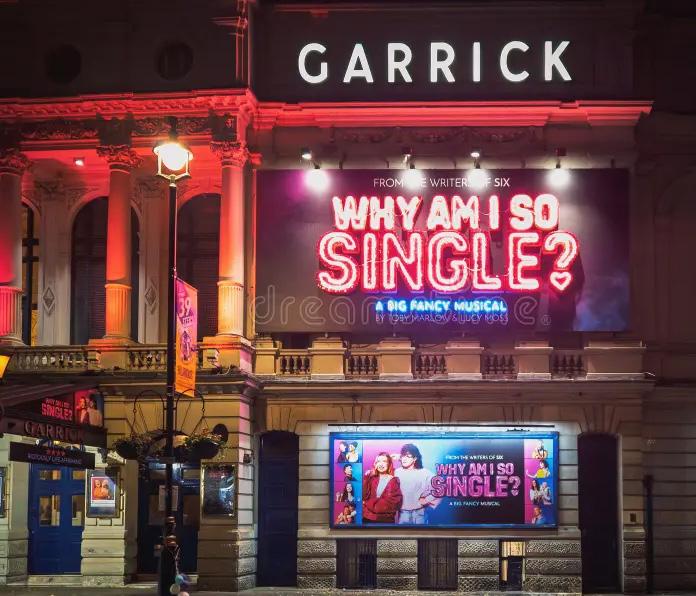
SIX, the pressure was on for Marlow and Moss to produce something as fabulous for their second joint venture. Dubbed “a big fancy musical” by Marlow and Moss, WAISS? did not have the same humble beginnings as SIX, which began in 2018 at the Edinburgh Fringe Festival. After its workshop, WAISS? went straight into the West End, finding its home at the Garrick Theatre.
WAISS? is semi-autobiographical and many elements of the story are taken from Marlow and Moss’s own lives, or the lives of their friends. It starts with
a prologue narrated by the two leads, which explains the premise of
the story: two musical theatre writers trying to write their next big hit
They explain that they have decided to write about their own dating lives, filling the show with flashy songs and musical numbers in the hopes that the audience will pay attention. The story begins with
Nancy (Leesa Tulley) telling Oliver (Jo Foster) about yet another failed date. As a result of this bad date, the two friends decide to spend their night figuring out why they are ‘so single’. The story dives into their personal traumas, but the entire show has a humorous undertone that keeps the audience laughing and prevents the atmosphere from getting too morose.
For me, the most enjoyable part of the show was its humour. It includes jokes where the actors ‘break the fourth wall’ (meaning they address the audience directly), as well as physical comedy and self-deprecating humour. The show also makes comedic use of the ensemble, who dress up as various furniture pieces that bring the set, Oliver’s flat, to life. Many jokes reference the musical Oliver! which is where the writers drew inspiration for the names of the leads, although Oliver and Nancy also happen to be Marlow and Moss’s middle names.
(continued)
Why Am I So Single? - A Big Fancy Musical
Something else I enjoyed about this show was the wide range of musical genres and dance styles that are used, so it lives us to being a “big fancy musical”. The song that slowly progresses into a tap number called ‘C U Never’ is one of my favourite moments from Act 1, as tap is a dance style is now rarely used in musical theatre. This means that the number is unexpected – a surprise that heightens the excitement of the scene.
Another thing about the show which I marvelled at was the cast. WAISS? won Best Casting Direction at the WhatsOnStage Awards, and to me, that is no surprise. I have
never seen a cast work so seamlessly together, while maintaining an authentic feel to the production. Foster and Tulley embodied their characters perfectly and with flawless chemistry. It can be difficult to show characters who are close emotionally without slipping into romantic undertones. Yet, as I watched, there was never a doubt in my mind about their friendship. Noah Thomas, who plays their friend Artie was also brilliant at providing a contrast to Oliver and Nancy’s respective instabilities, while still remaining fun and mischievous.
An aspect of the musical that I not only enjoyed, but found incredibly important was that Oliver is non-binary. Oliver is partially based on Toby Marlow, who is also non-binary, and much of Oliver’s journey with their gender is based on Marlow’s own life. Additionally, both Foster (Oliver), and Jordan Cambridge-Taylor (Alternate Oliver) are non-binary.
Despite the fact that, in recent years, we have seen a rise in awareness around queer and trans identities among the general public, representation of nonbinary people in theatre, television and film remains minimal at best. If there is non-binary representation in media, the character is very often a side character whose few scenes focus on
their non-binary identity, rather than fleshing out their personality. I could not name a single nonbinary character outside of WAISS? that leads the story and had their own character arc like Oliver does. One of the most important things a story can do is allow someone to see themselves in its characters and this is why I was so impressed with this aspect of the musical. The more representation we have, the more queer and non-binary people will feel like they belong anywhere in theatre, not just in a few small, niche roles.
Previews for WAISS? began on 27th August 2024 and the show officially began on 12th September. WAISS? was originally supposed to run until 13th February 2025, but closed a month early, finishing on 19th January.
(continued)
Why Am I So Single? - A Big Fancy Musical
Although I loved the show, some people thought that the humour of the show was too targeted towards one generation. However, reviews couldn’t seem to agree on whether it was too targeted towards Gen Z or Millennials. Marlow and Moss themselves are Millennials and while, as a Gen Z, some of the references did not hit the nostalgia intended, I felt they were explained well enough within the context of the show that I did not feel I was missing out.
I do not believe that it is for the above reason that WAISS? closed early and did not complete its run. I believe that it is because many people feel wary about taking a chance on new musicals. This is
evidenced by outcome of the WhatsOnStage award category “Best New Musical” for which WAISS? was nominated. The musical that ended up winning in the category, Mean Girls (Benjamin, Richmond, Fey), while new to the West End, is not an entirely new musical, having already found success on Broadway and of course, being based on an incredibly successful movie. This makes people much more inclined to see it as they are much more likely to have heard good things about it. No matter how good the marketing team of a new musical is, they’re never going to beat numerous positive word-of-mouth reviews.
So, what can be done to ensure the success of new musicals in the future?
New theatre shows do not get the chance to become a roaring success if they are closed because no one goes to see them. By far the best way to support a new musical is to go and watch it when you can. New musicals are often a cheaper entertainment option than established musicals like Hamilton, which can be incredibly expensive. And I wouldn’t be too worried about wasting your money, because if the show has
been nominated for an Olivier (Best New Musical), then a lot of people have to have enjoyed it on its path to the West End.
And who knows, maybe you’ll get a new musicalfavourite out of the experience? I did.
By Isabella, Year
12
Oscar Wilde A person I admire:
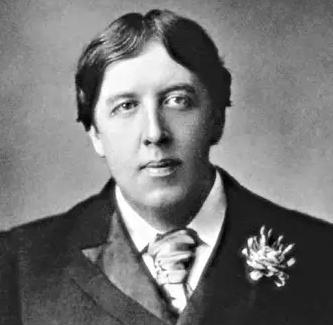
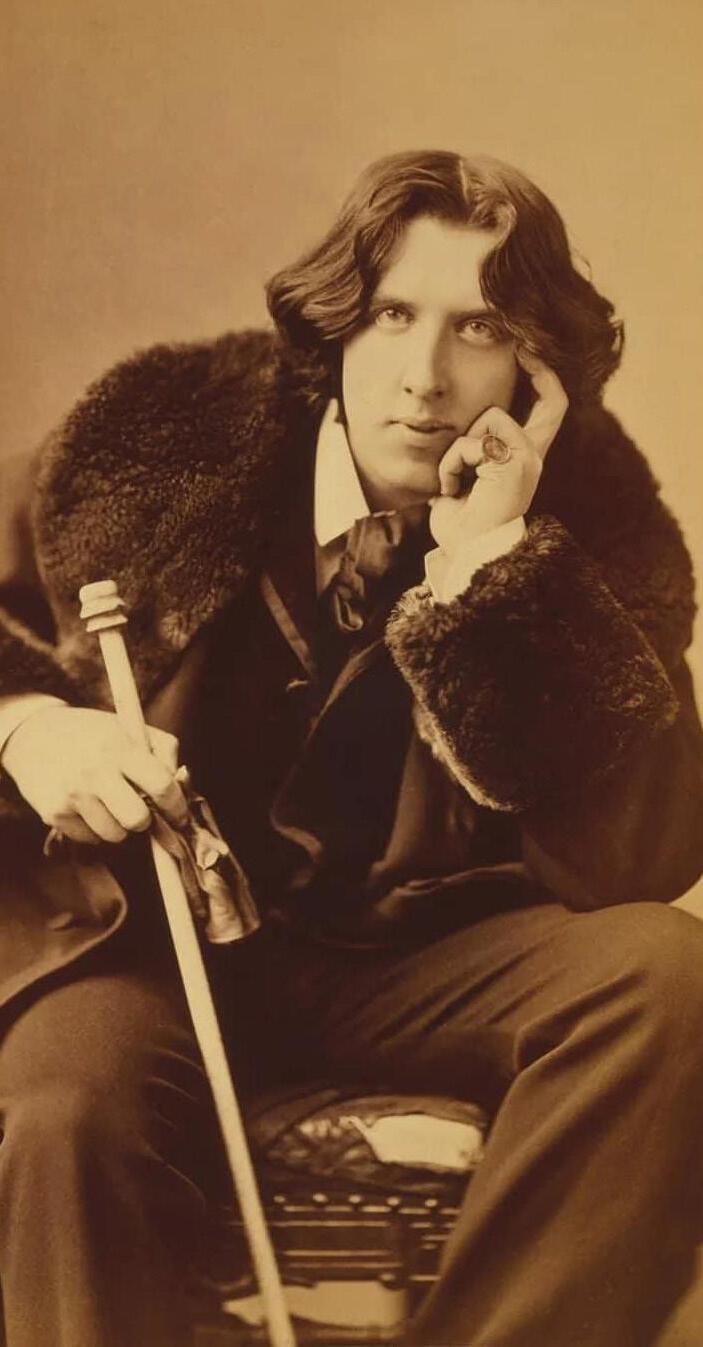
One of the most interesting things about Oscar Wilde is that he personified aestheticism.
Aestheticism was an art movement that began in the 1860s and continued until about 1900. It was based on the principle of “art for art’s sake” and promoted the creation of art and literature whose purpose was only to be enjoyed as itself, not to have a deeper meaning or purpose. Aestheticism was born as a means of escaping the ugliness of the Industrial Age. In the height of the Industrial Revolution in Britain, much like today, people looked at things only to see their purpose – How can we make money from this? How can we make an industry? Aestheticism sought to counter that, to bring a little more joy into things that many thought should be enjoyed for their own sake: art, literature and the creativity of others.
“I have nothing to declare but my genius.”
In the 1870s, the figure of an “Aesthete” would have been a young man, like Oscar Wilde, who had passionate responses to works of art. This figure was regarded warily by journalists and the wider public, as aestheticism was considered to be tainted by dangerous ‘foreign’ ideas. By the 1880s, this figure had transformed into a figure that represented Oscar Wilde almost exactly, with his self-proclaimed attachment to poetry. Furthermore, Wilde’s particular way of speaking came to be associated with the “aesthete”, which may be described as flowery or “over-educated”.
The popularity of the Aesthetic movement waned after Oscar Wilde was imprisoned for homosexuality in 1895. The scandal of the trials tainted aestheticism in the public eye even more than it already had been before, although, the styles and influences of it remained popular into the 20th century.
I admire: (continued)
Oscar Wilde A person
So, I suppose the question arises, why else do I admire Wilde? Why have I chosen him, above any other writer or artist to write about?
Wilde’s lasting impact on the literary world and on society is what makes him admirable to me. His quintessentially aesthetic novel, The Picture of Dorian Gray begins with a preface written by Wilde, of which the first sentence is, “The artist is the creator of beautiful things,” and the last sentence is, “All art is quite useless.”
While The Picture of Dorian Gray is a gothic horror, it defined a new genre, which has shaped many successful novels that have followed it, such as The Secret History by Donna Tartt. Many of you will have heard of “dark academia”, a literary aesthetic and subgenre which began with the rise of the internet; its popularity skyrocketed during the COVID-19 pandemic. This aesthetic consists of an idealised or romanticised view of higher education, the arts and
literature. What you may not know, is that this genre was heavily influenced and inspired by The Picture of Dorian Gray. As a result, dark academia as we know it today is reminiscent of the aesthetic movement of Wilde’s time. It is incredible to me that something that is so popular today is influenced by a movement that Oscar Wilde was a part of more than 120 years ago.
But Wilde’s novel would not have had the lasting impact and influence that it did, if it hadn’t been so well-written. Wilde was well-known for his wit, and it is one of the characteristics that makes his works so memorable. It is rare, even among the greats, to find a humour that is so clever yet so subtle and careful. The skill with which he managed to weave this into his writing is something for which I have endless admiration. Wilde’s wit and humour are what allowed his ideas about aestheticism to carry in to today’s world and for that reason, he is the person I have chosen to write about. In short, wit was Wilde’s art, and he painted it beautifully.
“Fashion is a form ugliness so intolerable that we have to alter it every six months.”
Oscar Wilde was born on 16th October 1854, in Dublin, Ireland and was most well-known for being a poet, playwright and novelist. Some of his famous works include his 1890 novel The Picture of Dorian Gray and his 1895 play The Importance of Being Earnest. In 1895, he took the Marquess of Queensbury to court after Queensbury accused him of homosexuality, something that was illegal at the time. Wilde was eventually convicted and sentenced to two years of hard labour in prison. These court cases became some of the first “celebrity trials” and cemented Wilde as a popular and controversial figure in history. And while you could pour over the details of Wilde’s trials for days, there are other equally interesting parts of his life that are never spoken about.
“There is no sin except stupidity.”
By Isabella, Year 12
A person I admire:
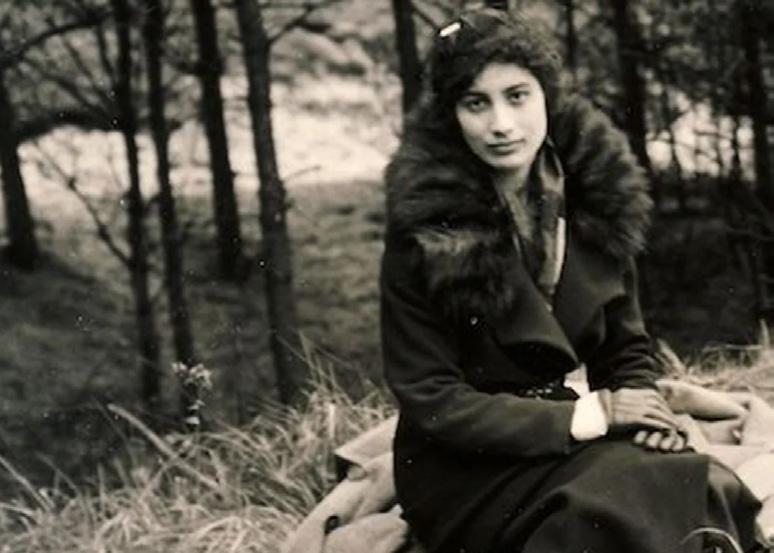
Noor Inayat Khan
A Forgotten Heroine of World War II
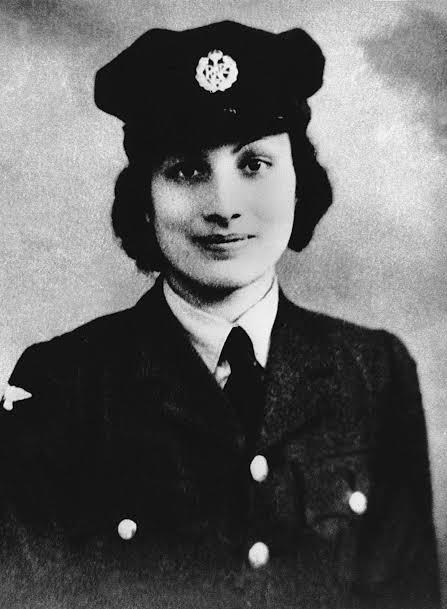
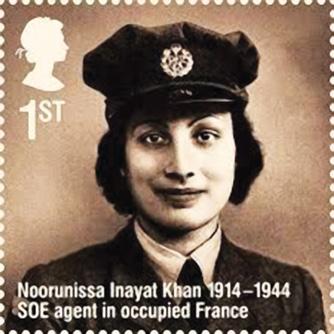
Noor Inayat Khan was not a conventional war hero—she was a poet, a dreamer, and a pacifist who abhorred violence. Yet, when the world was at war, she chose to fight without weapons, but with unwavering resolve and unshakable bravery.
Born in Moscow in 1914 to an American mother and an Indian father, who was a Sufi mystic, her childhood was steeped in the ideals of nonviolence. She grew up in France, playing the harp, composing poetry, and writing children’s stories. If there was anybody ill-suited for war, it was Noor Inayat Khan. But when the Nazis marched into France, Noor’s world changed.
She could have fled to safety, but instead, she joined the conflict. Escaping to Britain, she trained as a radio operator in the
Women’s Auxiliary Air Force. This alone was impressive—radio operators were the lifeline of wartime intelligence, but they were also the most hunted. The average lifespan of a field operator in occupied France was six weeks. Noor knew this but she went anyway.
Trained as a wireless operator, she caught the attention of the Special Operations Executive (SOE), a covert British organisation that conducted espionage and sabotage in occupied Europe. Noor, with her fluent French, was an ideal candidate. But there was one problem—she wasn’t a soldier by nature. She abhorred violence. The teachings of her father had instilled in her a deep belief in nonviolence and harmony. Yet, she couldn’t ignore what was happening in the world. Her pacifism didn’t mean inaction; it meant fighting in her own way, with her own weapons—bravery, intelligence, and an unbreakable spirit.
In June 1943, Noor was dropped into Nazi-occupied France as the first female wireless operator to be sent into the field,
codenamed “Madeleine”. The moment she set foot on enemy soil, she became the most wanted woman in Paris. The Gestapo, the Nazi secret police, knew that a new radio operator had arrived, and they were determined to find her. One by one, the resistance network she was part of was dismantled. Agents were arrested. Spies were tortured. London urged Noor to flee while she still could. She refused.
For months, she played a deadly game of cat and mouse with the Gestapo. She constantly moved locations, never transmitting from the same place twice. She changed her appearance, using disguises and false papers to evade capture. She was untrained in fieldwork—her SOE instructors had worried that she was too emotional, too easily flustered—but she proved them all wrong. She was fearless. She knew that every time she sent a message, she was one step closer to discovery, nevertheless she kept going, ensuring that vital intelligence reached London.
Noor Inayat Khan was not a conventional war hero— she was a poet, a dreamer, and a pacifist who abhorred violence.
A person I admire: (continued)
Noor Inayat Khan
She tracked and transported supplies to the French resistance, sent reports of Nazi activity back to London, and arranged safe passage for allied soldiers. She was the last radio operator in Paris, single-handedly doing the work of six radio operators and if she had left, the entire resistance network would have collapsed. Her work was essential to building the French resistance and Allied intelligence networks, and ultimately, ending the war.
There were countless times when her quick thinking saved her life. One day, a German officer stopped her on the street and demanded her papers. Noor, knowing full well that she was carrying radio codes and that a false move could be fatal, did not panic. With remarkable composure, she smiled warmly and convinced them she was an innocent young woman who had simply lost her way. She even charmed them into walking her back in the right direction, all while carrying the very equipment that would have sent her to her death. Another time, when an officer
spotted her hanging her aerial out to make the secret communications, she chatted about her passion for listening to music on the radio— and even charmed him into helping her set up the cable!
Her luck ran out in October 1943. Betrayed by a French collaborator, Noor was captured by the Gestapo. She fought fiercely, even as she was dragged away. The Nazis soon realised they had captured someone extraordinary. Even under brutal interrogation, she refused to break. She attempted escape not once, but twice. She sequestered a screwdriver away from the guards and was able to loosen a skylight and slip out into the night. However, just as she and the other prisoners began to run for their lives, an air raid siren alerted her captors to the escapees.
Noor, caught once again, was deemed too dangerous to keep in Paris and was transported to Germany. She was placed in solitary confinement and shackled in chains for ten months. The conditions were horrific.
She was starved, beaten, and subjected to relentless cruelty, but she never revealed a single name, a single code.
On the morning of 13 September 1944, Noor Inayat Khan was taken to Dachau concentration camp. The guards beat her mercilessly. Even in her final moments, she did not plead for her life. Her last word, before she was executed with a single bullet to the head, was one that defined her entire existence: "Liberté!" Freedom.
She was just 30 years old.
In the aftermath of the war, her story remained largely unknown. It was only decades later that her bravery was recognised. She was posthumously awarded the George Cross, Britain’s highest civilian honour for gallantry, and the French Croix de Guerre. In 2012, a statue of her was unveiled in London— Britain’s first memorial to a Muslim woman war hero. But beyond the medals and the
monuments, her legacy is something greater. She was a woman who defied expectations, a dreamer who became a fighter, a quiet soul who, when faced with unimaginable darkness, chose to stand and resist.
Her story is one of extraordinary courage, but it is also a reminder that heroism doesn’t always come in the form of the strongest or the loudest. Sometimes, it comes in the form of a young woman, raised on stories and music, who chose to risk everything for the sake of freedom. And even in her final moments, with death standing before her, she never stopped believing in it.
By Sofia, Year 11
A person I admire:
Emma Watson
Actress, Activist, and Advocate for Gender Equality
Emma Watson is an individual with a wide range of talents who has made a significant impact, both in the entertainment industry and in the realm of social activism. Best known for her iconic role as Hermione Granger in the Harry Potter film series, Watson’s portrayal of the intelligent and brave young witch earned her international fame and admiration. Her performance in the series, which spanned over a decade, showcased her talent and dedication to her craft.
These roles have allowed Watson to showcase her acting range and continue to captivate audiences.
However, Watson's contributions extend far beyond her acting career:
in 2014, she was appointed as a UN Women Goodwill Ambassador
– a role that catapulted her into the forefront of the global fight for gender equality and women's rights.
inspiring countless individuals to become advocates for change.
Moreover, Watson’s pursuit of education is another aspect of her multifaceted life. Despite her demanding career, she graduated from Brown University in the US with a bachelor's degree in English Literature in 2014. This achievement underscores her commitment to personal growth and intellectual development, and has undoubtedly influenced her activism and advocacy work.
Her versatility as an actress is evident through her diverse filmography. Beyond the Harry Potter series, she has starred in a range of films, including Beauty and the Beast, where she brought the beloved character of Belle to life, and in Little Women, in which she portrayed the strongwilled and compassionate Meg March.
One of her most notable initiatives as an ambassador is the #HeForShe campaign. This campaign encourages men and boys to join the conversation and act in support of gender equality, emphasizing that it is not solely a women's issue but a human rights issue. Watson’s eloquent and passionate speech at the UN headquarters garnered widespread attention and praise,
Watson's journey from a beloved young actress to a dedicated advocate for equality reflects her unwavering commitment to making a difference. Her efforts in promoting gender equality, women's rights, and sustainability have left an indelible mark on society, and she continues to inspire people around the world to strive for a positive change.
By
Parisha, Year 7
Quiz time!
(Answers on the back page!)
Lower/Middle School strands: Middle/Upper School strands: WOLF
Connections:
By Jerusha and Olivia, Year 12
Hint: Travelling on a shoestring Hint: Serpentine Style
Hot off the press: Prankster Strikes again
Many of you might have seen Franklin house’s mascot Elsie the elephant around school. She hides herself in random spots across the grounds, and the first person in Franklin to spot her wins a delicious prize in house assembly.
But recently, Elsie was taken, and we think we know who was behind it...
Linkway Editors: Year 12: Amina, Isabella, Olivia, Nina, Maryam, Jerusha.
The Linkway Cub editors: Year 7: Isla, Parisha, Priya, Emilia, Avery, Veeya, Ananya, Aarya Year 9: Maanya. Year 11: Sofia.
Quiz time answers!
ground, (under)rated
PINK (words that follow ‘Under’) – (uncer)cover, (under)dog, (under)
BLUE (parts of names of St Helen’s buildings) - Ken(nedy), Wolf(son), Mack(enzie), Long(worth)
(Julie) Porter, (Jo) Brew, (Natalie) Grange
GREEN (St Helen’s teacher’s last names) - (Steven) Holmes,
Queue (Q), Tea (T)
YELLOW (homophone words for letters) - Sea (C), Eye (I),