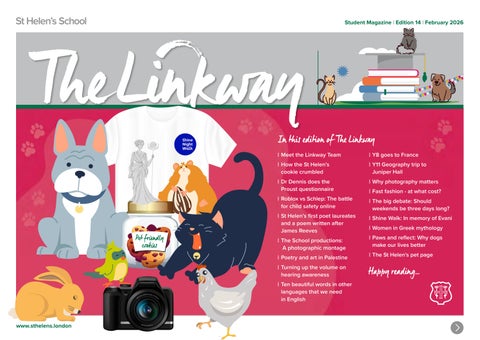
| Roblox vs Schlep: The battle for child safety online
| St Helen’s first poet laureates and a poem written after James Reeves
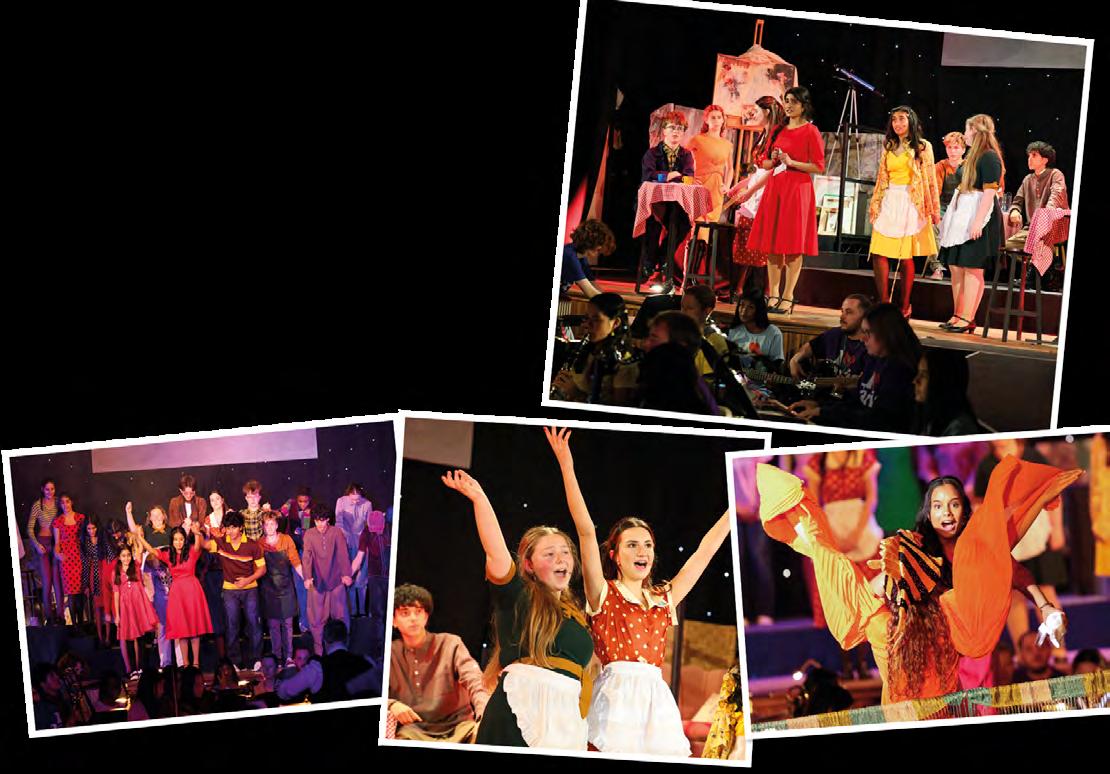
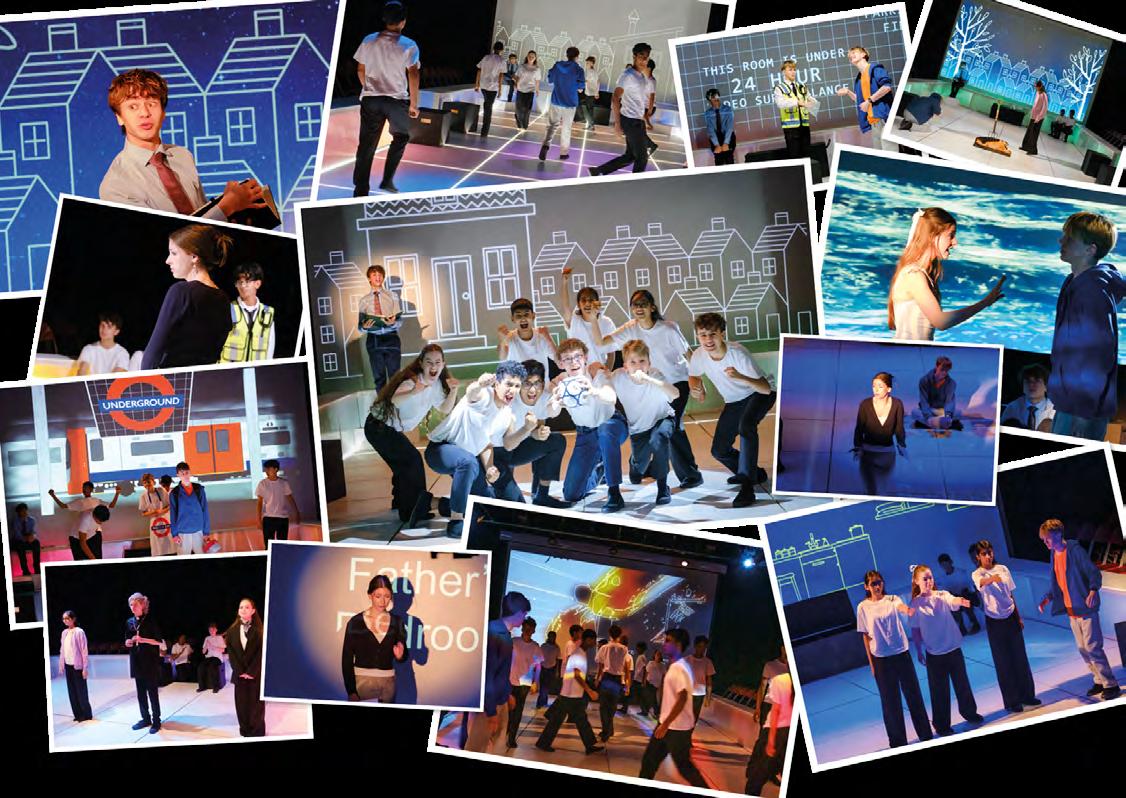
| The School productions:
A photographic montage
| Poetry and art in Palestine
| Turning up the volume on hearing awareness
| Ten beautiful words in other languages that we need in English
| Y8 goes to France
| Y11 Geography trip to Juniper Hall
| Why photography matters
| Fast fashion - at what cost?
| The big debate: Should weekends be three days long?
| Shine Walk: In memory of Evani
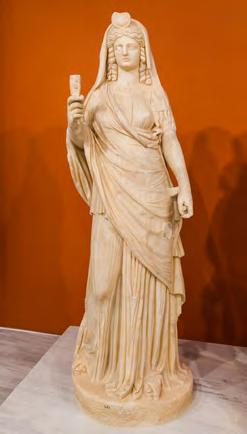
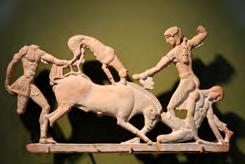
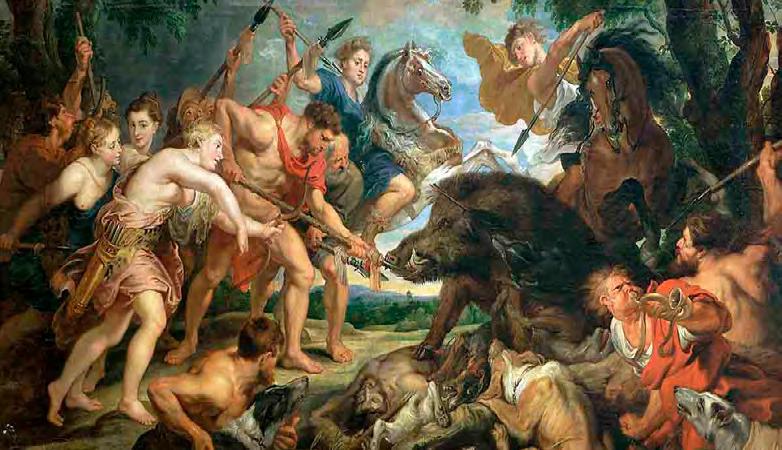
| Women in Greek mythology
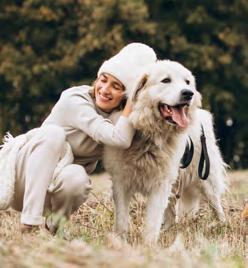
| Paws and reflect: Why dogs make our lives better
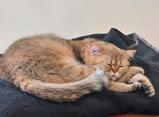
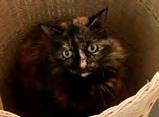
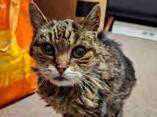
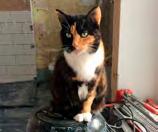
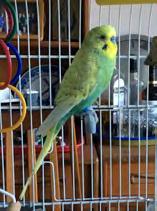
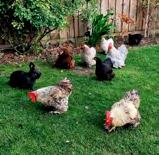
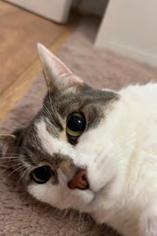
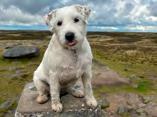
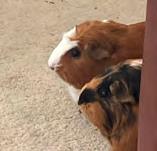
| The St Helen’s pet page
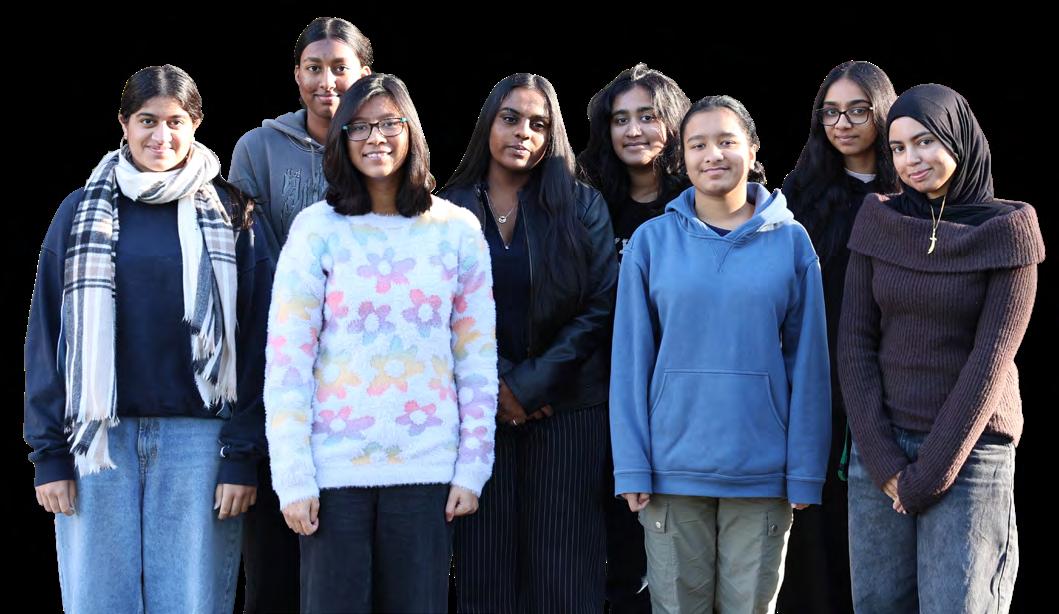
Meet editors
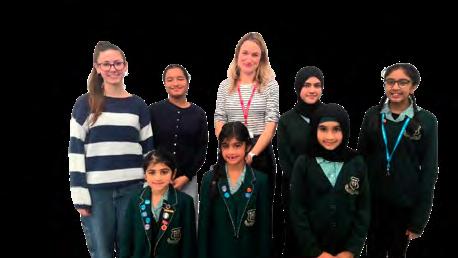
From left to right: Tanisha, Raya, Juliet, Mahathy, Meghna, Sofia, Harlene, Sakina
Sofia
I’m studying English Literature, Philosophy and Latin, which means I spend most of my time juggling essays, contemplating my existence and over analysing everything I read. When I’m not doing that, you’ll probably find me reading or writing books, playing video games, or drinking bubble tea with friends (chocolate milk tea with mango popping bubbles or brown sugar boba, if you’re wondering!) I’m a devoted fan of EPIC: The Musical, and I have two beautiful cats named Mochi and Oreo (featured on our Pet Page at the end!)
Tanisha
I take Geography, Economics and Psychology. I love watching TV, going out with my friends, football and Formula 1.
I am a food enthusiast – Japanese, Italian and Chinese food all being my favourite cuisines. My death row meal would consist of sushi, gyozas, chicken wings and tiramisu.
Juliet
When I was 10, I broke my toe by stubbing it against the sofa leg. This character development drove me to pursue English Literature, Philosophy and Classics. I drink unhealthy amounts of bubble-tea. My days (and nights) are spent speed running essays or playing random tunes on the piano, and I have watched practically every EPIC animatic ever posted on YouTube. My superpowers include (very slowly) writing a story I have been stuck on since year 7, playing Fortnite (badly) and attempting to copy the art style from the TV show Arcane. I have not yet succeeded.
Raya
I study English Literature, Geography and Politics and I hope to share articles about these subjects with you in the next edition. I love cuddling my pets, going on my iPad and getting a Hut Lunch from Pizza Hut with my friends. I enjoy watching television shows and I am currently obsessed with reality shows like Big Brother and The Traitors. Additionally, I love buying slushies and hot chocolates with whipped cream and marshmallows from Daises Café.
Mahathy
Harlene
I enjoy drama, dance (especially commercial) and love to read in my spare time. My subjects are Drama, English
Meghna
I’m studying Biology, Chemistry and Philosophy, which means I have no clue about what I want to do in the future. Either I’m doing lab research or I’m a wedding photographer or I’m still dissociating doing a philosophy degree. In my free time, I enjoy photography, tennis, woodworking and playing games like Rogue Company or Assassin’s Creed. When you leave the lunch hall you can still see my Year 8 photography hung up on the wall (don’t look at it for too long). I will forever rave on about Severance and the Residence, if you haven’t watched either of them go and bless your eyes. My music taste ranges from the Smiths to Dancehall to Aphex Twin so if you have any song recommendations let me know.
When I grow up I want to pursue my dream job, which is the real life version of building houses on Bloxburg i.e. Architecture. So, I study Maths, Geography and DT. I love going to concerts (I’ve seen over 30 bands!) and I have met members of my favourite bands before! My favourites songs are ‘Fabulous Disaster’ by Exodus and Dunwich by ‘Electric Wizard’. I love playing video games such as Cookie Run Kingdom, Stray, The Last of Us and so many more. I love to draw, and my favourite TV shows are the Star Wars animated shows, Metalocalypse and The Owl House.
Sakina
I like reading and crocheting in my free time. I do Biology, Chemistry and Maths and I want to be a dentist. My favourite movie is Spirited Away, my favourite TV show is Brooklyn 99 and my favourite drink is matcha.
How c kie crumbled
We all know that a rapid increase in the price of our beloved St Helen’s school cookie, comes as a bit of a nasty surprise. According to Craig, our Catering Manager, the short explanation for this price increase is it’s part of a “domino effect stemming from global food economics and operational realities”.
At St Helen’s School, our catering is provided by Holroyd Howe, a large contract catering company. As part of their operation, they have to manage complex supply chains for all the food that the team prepare for us, from fresh fruit and vegetables to bakery and meat products…. and that includes the ingredients for our unique St Helen’s cookie.
So, the price we pay at the till is the final piece of a large, evolving puzzle. Craig explained that, in recent years, he has consistently seen increases in food costs across the entire business. When the suppliers raise their prices for the raw ingredients required to bake our delicious cookies, it directly impacts the costs and food production budget, hence an increase in our cookie prices.
Who knew that the price of our beloved cookie is even affected by global warming?
Extreme weather conditions, like severe cold, drought, or heavy rain can dramatically affect the growth, yield, and seasons of crops, such as wheat –which as we all know, makes flour, a key ingredient of
When unforeseen weather events cause the production of food items to be lower than normal, the economic rule of supply and demand kicks in. Demand remains high, but supply is low, which inevitably drives the price of those ingredients up.
Increasing energy costs: when farmers and suppliers are paying more in costs, especially for energy to run their farms, factories, and transport networks, those costs have to be covered, and they are passed on to
The Cookie Cape r
Our investigation into the mysterious origins of the iconic St Helen’s cookie began, as all good quests do, with a whispered tip and a promise of something intriguing waiting behind the counter. In truth, no-one knows where the recipe comes from, only that it has achieved an almost mythic status.
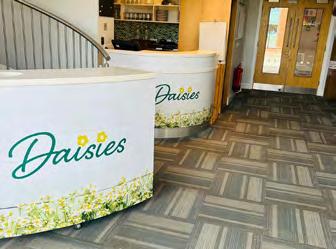
Our first stop: Daisies, the school café and the heart of student life.
Our source confessed uncertainty over the original inventor, but revealed one vital clue: the Head Chef has been at the school for eleven years, and the recipe has remained unchanged for the entirety of his tenure. At the very least, we are dealing with a recipe that has been at the school longer than us.
Next, we posed the query burning through the student body:
Before we could begin questioning the lady behind the counter (who wished to remain anonymous), we did what any responsible investigative journalists would do: we bought a cookie — purely for research purposes, of course — and took very serious, very scientific bites. With that crucial step completed, we wiped the crumbs from our notes and prepared ourselves for real inquiry. So, we began our investigation with the help of the anonymous member of the catering staff.
“How long has the cookie recipe been in circulation, and who originally created it?” was our opening question.
“Which ingredient gives it its distinctive flavour?”
Without hesitation, our insider pointed to salt. Not a huge amount, but just enough to cut through the dominant sweetness of the M&Ms and chocolate, giving the biscuit its trademark balanced taste.
Finally, we explored how the iconic St Helen’s cookie has evolved. As far as we could ascertain, though the flavour has stayed remarkably consistent, rising costs and shrinkflation have made the cookies smaller, firmer, and undeniably pricier.
The mystery of the original creator remains unsolved, but one truth stands firm:
The St Helen’s cookie has earned its status as a legend.
By Sofia, Year 12
Dr Dennis does the Proust questionnaire
Dr
Dennis very kindly agreed to spare some time to do the Proust Questionnaire for our magazine. The Proust questionnaire is a famous series of questions devised by the French philosopher and writer Marcel Proust. He believed that, in answering these questions, an individual reveals their true self.
What is your idea of perfect happiness?
There is a field near my house where my daughter and I would go during Covid, when we were allowed to go out for thirty minutes. There is a river there and there are always kingfishers. It’s the most amazing thing.
Which historical figure do you most identify with?
What is the trait you most deplore in yourself?
I would say impatience. I get frustrated with myself when others can’t see what feels obvious to me. I often think to myself, ‘Come on, let’s get there’.
What is the trait you most deplore in others?
What do you consider the most overrated virtue?
I think that being efficient is overrated, because in some cases people confuse it with wisdom. We talk about being efficient in a variety of ways, but sometimes it’s not the end goal, but it is the process that is really important.
On what occasion do you lie?
I think that all people are flawed, like humans are, so I wouldn’t say I identify with somebody specific. But one person I admire is Lin Zexu who was a Chinese official during the Opium Wars. He tried to stop the British opium trade. I don’t so much identify with him, but I feel sympathy towards him.
Which living person do you most admire?
Paul Gilroy, who is a professor of race at UCL, and he is a leading light in Cultural Studies. The work he has done has changed how we see ‘race’ and Britishness.
Complacency – it is more about just dismissing things or not wanting to do things without considering it. When it’s unvarnished, I find it harder to be charitable. Complacency is very hard to deal with.
What is your greatest extravagance?
I spend a ridiculous amount of money on books – my house is basically filled with them. I probably own more books than anything else. I read across many different eras, but if I had to choose a favourite book it would be Black Skin, White Masks by Frantz Fanon.
When the truth would wound people, I choose to be silent. It’s not about holding back my opinion – it’s that if I cannot add clarity with kindness, I’d rather not speak.
What is your greatest regret? When work expands so much that my family must fit around the edges. I am responsible for students and have to make sure they are looked after, and I take this responsibility very seriously. Doing this means I may not be able to do so with my own family, which is my biggest regret.
When and where are you happiest?
I’m happiest at home with my family, when there’s giggling, laughter and music playing. We normally have a family dance situation going on to 90s R&B.
What do you consider your greatest achievement?
I wouldn’t say I have one yet, but I am a very big believer in the idea that we are always becoming. I can’t say yet what my greatest achievement is because I haven’t reached that point yet. It is more about the process, about trying to be better rather than an achievement.
If you could choose to come back as something, what would it be?
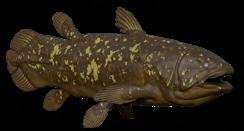
I’d come back as a coelacanth which is a prehistoric fish that still has the same design today, that it had millions of years ago.
What is your most treasured possession?
That’s easy. Definitely pictures or notes from my children and my wife. They challenge my view of the world because they see it in a different way. Seeing that codified in a picture is great.
What is your most marked characteristic?
My most marked characteristic is restlessness. I have this insatiable need to always understand, and to stay curious. I’m always drawn to new people and ideas and want to know more about things.
What do you most value in your friends?
Honesty and kindness I think, and the ability to talk about serious things in a light way. Also, talking about things that don’t seemingly matter in a serious way.
Who are your favourite writers?
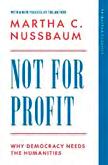
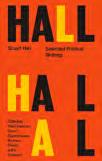
Some of my favourite writers are Maurice Merleau-Ponty, Paul Gilroy, Stuart Hall and Martha Nussbaum.
Who are your heroes in real life?
My grandmother, who was from Jamaica, and she came here as a single parent. She raised an enormous family and had such an immense impact on me growing up in Britain with a mixed heritage background.
Do you have any advice for your younger self?
It would be, ‘Don’t rush to prove yourself’. The best part of anything comes when you do it for yourself, not for others, and pushing yourself in that direction. I suppose this is why I would have taken a slightly different view if you had spoke to me twenty years ago when I started teaching, and I was much more focused on the results and various other things. Over the years, I have realised that the goal is not the thing – it’s the process.
When you focus on the process, the result will take care of itself. Especially when people are telling you to prioritise ‘important things.’ It’s about having that sense of self. As an older person, I have come to realise this, even though I don’t think my younger self would have listened!
‘pessimism of the intellect, optimism of the will’
What is your motto?
I have two. One is in Pride and Prejudice when Mr Darcy meets Elizabeth Bennet and says, ‘My good opinion once lost is lost forever!’ I try to minimise this view, but it persists! The second one is by Antonio Gramsci who lived in Italy in the 1930s, when fascism was on the rise. He has a quotation who inspired many writers –‘pessimism of the intellect, optimism of the will’. Essentially, it means that you should understand the situation you are in and also believe that you can change the situation too.
By Tanisha and Harlene, Year 12
Schlep
The battle for child safety online
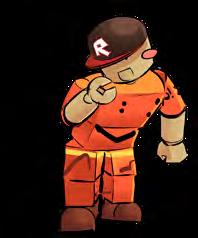
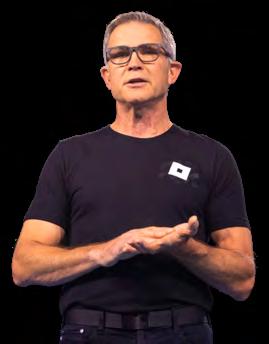
You may have seen it all over your social media feed: Roblox, the blocky online world millions of kids and teens live inside, is under fire again. More than 70 million people log in to the gaming site every day to build worlds, play games, and trade in digital outfits. But the question remains: how safe is it for children?
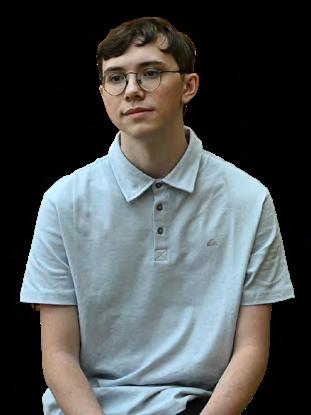
Enter Schlep. He is a 21-year-old content creator from the United States, who runs a YouTube channel dedicated to gathering evidence against alleged sexual predators that use the site; forwarding that to law enforcement and the Roblox Corporation. Using decoy accounts, he poses as teenagers inside Roblox and waits for the wrong kind of attention. Then he and his small team take things further, luring suspects into conversations, sometimes even meeting them offline to secretly record confessions.
According to Schlep, these stings have led to more than six real-life arrests in the US, five of which resulted in charges. He presents himself as a whistle-blower, forcing Roblox—and the wider gaming industry—to confront what many childsafety advocates describe as a longstanding issue within online gaming platforms: the risk of grooming and exploitation.
Roblox has faced similar criticism from campaigners and journalists who argue the company’s moderation systems fail to fully protect young users. Although the firm maintains that user safety remains its “top priority.”
But then comes the twist: on 8 August 2025, Roblox permanently banned Schlep, terminated all his accounts, and issued a cease-and-desist letter, threatening legal action if he continued his work.
In his response, Schlep published a copy of the cease-and-desist letter on social media, in which Roblox accuses him of violating their terms by ‘engaging in simulated child endangerment conversation’, interfering with their protocols, and failing to use “official channels” for reporting. Schlep rejects the accusations. He maintains that he always shared his evidence with both law enforcement and Roblox, and questions why the platform did not act faster.
WHAT ROBLOX SAYS AND WHERE THAT LEAVES US
According to Roblox, the ban and legal demand were justified because Schlep’s methods violated their rules and posed risks to users. In Roblox’s words: “Actions taken by vigilante groups increase the risk of more users being exposed to bad actors and can delay enforcement efforts by both Roblox and law enforcement.”
“We enforce our policies … Any account, including those of vigilante groups … violating our policies will face consequences up to and including removal and banning.”
Many observers saw the move as more about silencing a vocal critic than protecting users. Supporters launched the #FreeSchlep campaign online and accused Roblox of hypocrisy. Thus, the debate has widened: is Schlep a vigilante who overstepped legal bounds, or, as in his telling, is he the one that is actively protecting kids online?
Schlep has shared his deeply personal motivations for this work. He says that when he was a teenager, he was groomed on Roblox by a “popular developer.” In his telling, his mother reported the abuse to Roblox, but the company took no action for years. He claims that the developer remained active and was promoted within parts of the platform. According to Schlep, Roblox tried to suppress his account of events and downplay the developer’s wrongdoing.
Roblox maintains that vigilante investigations like Schlep’s breach its community guidelines and “put users at risk.” The company insists that all suspicious activity should be reported through “official channels” and not through public stings or off-platform exchanges. However, many critics find these responses weak or hypocritical. If, as Schlep claims, his mother reported grooming years ago without result, it raises doubts about the reliability of those “official channels.”
Long before the Schlep controversy exploded, Roblox CEO David Baszucki had already sparked concern among parents and safety advocates by suggesting that Roblox might one day include virtual dating features for fully verified adult users. According to company disclosures and podcast interviews, any such feature would be limited to 21+ users who pass ID verification.
However, critics argue that proposals like this are dangerous on a platform where huge numbers of users are minors, and the possibility of “adult zones” or datingexperiences, even if gated, risks blurring lines; they may let predators test the boundaries or find vulnerabilities where moderation is weak.
THE AFTERMATH
Rather than silencing dissent, Roblox’s decision to ban Schlep triggered an explosive backlash across both digital and real-world spaces. The hashtag #FreeSchlep quickly gained momentum, and petitions calling on Roblox to reinstate him and overhaul its safety infrastructure circulated widely. Legal pressure followed: U.S. Representative Ro Khanna publicly supported calls for accountability. The State of Louisiana also filed a lawsuit accusing Roblox of endangering children.
Several countries have moved to ban or block
Roblox outright: Turkey has blocked access citing concerns over child abuse and unsafe content. Indonesia, Oman, Qatar and Kuwait are among the nations restricting or planning to restrict the platform over similar concerns. On the creator side, a number of high-profile Roblox Video Star creators, including KreekCraft, CubeINC, Remainings, and SoyLuz, have publicly left the Star Program in protest.
Veteran crime journalist Chris Hansen (of To Catch a Predator fame) also joined the outcry, announcing a collaborative documentary project with Schlep. Hansen reports that he has interviewed Schlep, law enforcement officials and abuse survivors as part of his ongoing investigation.
The financial fallout was immense. Reports indicate that since banning Schlep,
ROBLOX HAS LOST OVER
US$12.7 BILLION
IN MARKET CAPITALISATION
Many voices demanded leadership accountability; calls grew for Roblox’s CEO David Baszucki to resign, as well as Matt Kaufman, the company’s Chief Safety Officer, accusing him of failing to act decisively to protect children and demanding his removal too.
In response to the overwhelming pressure from parents, users, attorneys, and regulators, the company has insisted
that it is rolling out new tools, tightening moderation, and shutting down harmful content faster than ever. Nevertheless, years of missed warnings and ignored reports have left a trust gap that a few updates can’t easily fix, and progress now doesn’t cancel the failures of before, nor does it guarantee safety tomorrow.
As a Roblox user myself, I think the wider conversation points to a deeper issue: platforms like Roblox have become spaces where millions of children spend huge parts of their lives, and that brings with it a serious responsibility. In my view, companies must do more than issue cautiously worded statements. They need moderation systems that work at scale, transparent processes for reporting harm, and clear accountability when safeguarding falls short. It also means listening to the voices of those who’ve been harmed, not brushing them aside.
If there is one conclusion I draw from the Schlep controversy, it is that silence rarely protects young users. Discussing these issues openly, loudly and repeatedly is what creates pressure for companies to change. Platforms will only take child safety seriously if we keep watching, keep questioning, and keep demanding improvements.
By Sofia, Year
12
St Helen’s poet laureate
Last term, we held the finals of our poetry competition to select the first St Helen’s student poet laureates. We were honoured to welcome published poet, Dr Hannah Copley to St Helen’s to lead our panel of judges. Thank you so much to all of you who entered poems; there really were such a wonderful selection of entries from across the entire school – senior and prep.
Our First Spring
By Sofia, Year 12
What names were in bark before ours grew?
Whose legacy lingers, locked in resin beneath the grain of those who came before? We knew the pulse of passing time, its tender, circling form; Arriving each year bright with sap, whisper-thin as stems, to listen for the lilting chorus of the canopy’s hymns.
In an ecosystem, balance is a fragile art: too much shadow, and the slim shoots shiver; too much light, and the roots forget the dark. Through slow exchange, harmony endures, each leaf lending life to each other.
Some bear the canopy, broad, steadfast; Others bloom briefly, yet their brightness feeds the rest. The ground softens when one sinks; shade shelters that which cannot yet endure. The earth whispers, weaving itself in green intention. Ambition winds within us, vine to vine;
We reach for light, for love, for the bloom prized by sunlight’s gaze. Roots restlessly braid— some shallow, some sure— all thirsting for the same unseen rain.
When there are seasons of storms, we bend to endure; and decay delivers, even fallen leaves teach strength in yielding, grace in what has been. For what is sisterhood, if not the vow of the forest— to shelter when the wind is sharp and cruel?
Years slip in soft concentric rings our roots recount; shining seeds, one by one, we loosen from the branch. We drift—unmapped, unmoored—scattering—
Still, beneath the sleeping soil; a murmur of memory, of mirth, of green: our beginning, our binding, our first spring.
Untitled
By Sadie, Year 13
Beneath this ground, the daisies grew, Their slender stems in morning dew. Before these walls were ever dreamed, The field was gold, the sunlight gleamed. And from that earth, our roots were laid, In green foundations, strong and staid. We learned to stand, to stretch, to lean, The roots below, the girls in green.
Through tender years, through joy and strain, Through sudden loss and steadfast gain, We found our colours, bright, serene, A thousand shades of living green. Each hue our own, yet side by side, We grew with grace; we grew with pride. Each shade distinct, yet all convene, In harmony, the girls in green.
Some green is soft, like sage and thyme, A gentle calm, a quiet climb. The hearts that bend but still sustain, Hold strength in quiet, subtle vein.
Some green is bright, like chartreuse shoots, With daring leaves and fresh pursuits. We push through stone, we claim the sun, Our courage shows what can be done.
Some green is deep, like forest pine, Or olive groves where shadows twine. We weather storms, endure the rain, Yet rise anew through loss and strain.
Now leaves reach for brighter skies, Our time to bloom before us lies.
Beyond these walls, our paths unfold, In hues of crimson, blue, and gold.
We’ll change our colours, as we must, But green will linger in our trust.
For though we flourish, far, unseen, Our hearts remain the girls in green.
WINNING POEM IN SENIOR SCHOOL RUNNER UP IN SENIOR SCHOOL
A line of words, to the Girls in Green
By Hana, Year 10
A line of words
I’ve tied with string
Took take one step
Hear the school bell ring
I wanted to learn
As a child must do
What stories were written
And which stories wrote whom
Painting out the path of life
We each walk in with a carving knife
And etch our future into the world
And to see what happens as it unfurls
Girls in Green - St Helen’s dream
By Puja, Year
7
Girls in green, with hearts that gleam, Upholding St Helen’s timeless dream. Through corridors of grace they stride, With intellect, courage, and quiet pride.
Their laughter shimmers, bright and clear, A melody that all can hear. Through challenge, triumph, loss, and gain, Their spirit steadfast shall remain.
The green they wear is more than hueIt’s heritage, honour, and promise too. A tapestry woven with hope unseen, The legacy lives in girls in green.
Olive, moss,
The girls in green
A valley of students
Each so keen
Brought up as one
But soon will bring
A life of love
We’d love to sing
To speak the words to withstand time
A melodic tune paved out in rhyme
A verse was written in every hall
With every student that grew the school
Girls in Green
FINALISTS FROM SENIOR SCHOOL FINALISTS FROM PREP
WINNING POEM IN PREP SCHOOL
By Piyali, Year 3, inspired by St Helen’s Learner Habits and Character Attributes
Have you ever seen a Girl in green?
As courageous as soldiers, With resilience as strong as boulders. Pursuit of knowledge shining on their blazers, Kindly asking others if they can offer a favour.
Creative ideas spilling out of each class, Solving problems by carefully considering tasks.
Facing challenges with integrity, And writing poems metacognitively.
Starting off as tiny seeds, Nurtured into Girls in green.
Learner Habits setting down strong roots, Reaching for the sky through Character Attributes.
They champion truth with voices strong, They stand for right, reject the wrong. With empathy their noble creed, They plant the seeds the future needs.
Resilient minds, compassionate hearts, They blend their brilliance with the arts. Through learning’s light, their souls conveneThe world transformed by girls in green. These are the girls in green.
The Girls in Green
By Alissa, Year 2
Standing tall with pride and grace. Together we learn in a happy place. Happy minds that inspire and grow. Everyday we read, play and throw.
Learning to get up when we fall. Everyone matters big or small. Never give up, we do our best. Spirit of St Helen’s will never rest.
The Girls in Green
By Iman, Year 6
Through all the change the world has seen, There’s always been the girls in green. Seasons change, and years go by, The girls in green stand heads held high.
In 1899, when autumn came, Emerald fields whispered our name.
Amber leaves began to fall, The world first saw, the girls in green stood tall.
A queen, four kings, Elizabeth then Charles, Prime Ministers men, then women at last.
A Victorian boater, a 2020s cap, The girls in green, still here, steadfast.
Loss and grief, bombs that shatter, The love of girls in green that matters.
Autumn brushes the trees with flame, And whispers softly, remember their names.
On years of war, snow fell white.
The girls in green held on, held tight. Through rationing and hardship, joy and fear, We stood together year after year.
The world grew faster, with clicks and screens, Our kindness stayed, for tots and teens.
From chalk and ink to computer dreams, Ever-changing, but always girls in green.
When lockdown came and hope felt small,
We couldn’t meet at school at all.
Our smiles and chatter exchanged through the screen,
We still continued, now girls in virtual green.
In my darkest moment, when I felt unseen, They stood beside me, my girls in green.
Steady as trees, brave as flame,
Proud to carry the St Helen’s name.
And as the future calls us by that same name, We’ll write new stories, find new fame.
For years to come, the world will see
That the girls in green are you and me.
And now the seasons change once more,
New footsteps walk across the corridors and floors.
The world keeps turning, as we’ve seen,
But forever we will be the girls in green.
Seasons will change, and years will go by,
The girls in green will always stand heads held high.
Whatever the change the world will see,
The girls in green, that’s who we’ll be.
A poemJamesafterReeves
Mr Johnston kindly shared this outstanding poem inspired by the poem ‘The Sea’ by James Reeves
The sea is a cat, a creature sleek and sly, That stretches out beneath the open sky.
Its depth of sapphire, grey and ocean blue, It pads the shore, fresh and new.
It purrs a soft and low, unending sound, As gentle waves lick the rocky ground.
When tempers rise and stormy winds do blow,
The great cat bristles with all its woe.
Its claws come out in foamy, furious spray, It shrieks and hisses at light of day.
It arches high and lashes with its tail,
A wild and untamed force that will prevail.
But see it sleep when evening starts to fall,
A peaceful creature, heeding nature's call.
It curls itself upon the silent sand,
And dreams the quiet dreams of sea and land.
So soft it breathes, a ripple and a sigh,
Beneath the watchful moon's all-seeing eye.
By Aria, Year 8
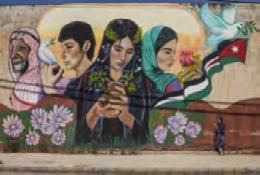
Poetry and art in Palestine
‘Here on the slopes of hills, facing the dusk and the cannon of time Close to the gardens of broken shadows, We do what prisoners do, And what the jobless do: We cultivate hope.’
Poetry and art have been long-standing mediums for self-expression, for resistance and for solidarity around the world, a vehicle for raising voices. In the words of Palestinian poet Abu al Sheikh- ‘Poets and writers give people hope and encourage them to endure the tragedies of war’. This will be the topic of this article: to shed light on Palestinian voices through poetry and creative writing at a time of unimaginably horrific conflict and suffering.
Few figures embody Palestinian literary identity as powerfully as Mahmoud Darwish. His poetry narrates a story of struggle. Darwish’s early poetry expresses the Palestinian resistance. His first volumes, ‘Leaves of the Olive Tree’ (1964), ‘A lover from Palestine’ (1966) and ‘End of the Night’ (1967) use imagery that relate intimately to Palestinian villagers. He wrote of olive groves and orchards, the rocks and plants, basil and thyme. However, despite the apparent simplicity of his short poems, there is a deep sense of anger, outrage and injustice, notably in his poem, the celebrated ‘Identity’, told in the voice of an Arab man giving his identity number:
Write down!
I am an Arab I have a name without a title Patient in a country
Where people are enraged My roots
Were entrenched before the birth of time
And before the opening of the eras Before the pines, and the olive trees
And before the
grass grew (1964)
The simplicity of these lines conveys their fury. The speaker asserts his humanity in the face of dehumanization, turning bureaucratic language (an ‘identity number’) into a declaration of power. Darwish’s poetry highlights how the everyday act of living becomes a form of resistance. Even after his death, Darwish has left a lasting impact on Palestinian Literature through his powerful and poignant role as the voice of the people. His legacy is marked in the Palestinian Declaration of Independence, because he was commissioned to write the official document which remains as an
enduring symbol of resistance. Darwish authored over thirty books of poetry and eight books of prose, winning the Lenin Peace Prize in 1983. His poems have been taught throughout the Arab world and some of his lines of poetry have become part of the fabric of modern Arabic culture.
Bringing our focus to the present, Darwish’s legacy finds new life through Mosab Abu Toha, who is a Palestinian poet, short story writer and essayist from Gaza. Abu Toha is the author of Things You May Find Hidden in My Ear: Poems from Gaza (2022, City Lights):
When you open my ear, touch it gently.
My mother’s voice lingers somewhere inside. Her voice is the echo that helps recover my equilibrium when I feel dizzy during my attentiveness.
This small excerpt explores the themes of memory and the sanctity of home life that he holds close to his heart.
Mahmoud Darwish Palestinian National poet.
Mosab Abu Toha was amongst the Pulitzer Prize winners of 2025 for a series of essays published in the New Yorker that document the lives of Palestinians in Gaza, where he has lived nearly all his life. According to the Pulitzer board, his essays portray the ‘physical and emotional carnage in Gaza that combine deep reporting with the intimacy of memoir to convey the Palestinian experience of more than a year and a half of conflict’. Abu Toha writes about the reality of everyday life within Gaza, for example, the struggle of his family members to find food, which are juxtaposed with memories of
to return to Gaza, sit at the kitchen table with my mother and father, and make tea for my sisters. I do not need to eat. I only want to look at them again.” Abu Toha does not romanticize suffering but rather documents it with devastating precision, finding meaning in the act of remembering. Abu Toha’s ’Things You May Find Hidden in My Ear’: Poems from Gaza won the Palestine Book Award in 2022.
Darwish’s and Abu Toha’s poetry and lyrical genius, communicate a struggle for hope. Their writing reveals that amongst devastating destruction, language can rebuild. Poetry carries memory, reminding the world that Palestinians are not statistics in news reports but storytellers, humans with voices. Through their words, they inspire us, reminding us of the enduring power and beautiful permanence of words.
By Sakina and Meghna, Year 12
Art from Palestine
Malak Mattar
Born in 2000 and raised in Gaza, at only thirteen years old she began painting her everyday reality to express her emotions and heal her trauma.
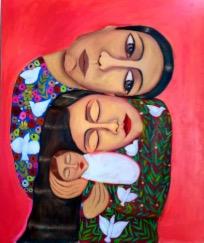
‘Mother Protecting Her Children’ 2021, Mattar produced this piece when there was no shelter or safe spaces except her mother’s embrace.
Laila Ajjawi
Ajjawi has been doodling, drawing, and painting since she was nine years old. Today, the 25-year-old artist uses graffiti to put public issues back in public spaces.
She has stated that, “I never cared at all about other’s opinions, no matter what. I have received many messages from girls telling me that they love to see a woman in a field dominated by men. I’m doing what I love, people shouldn’t even question my gender.”
Turning up the volume on hearing awareness
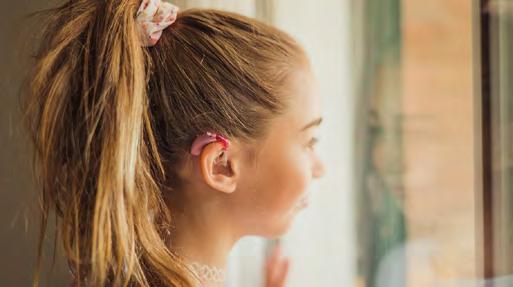
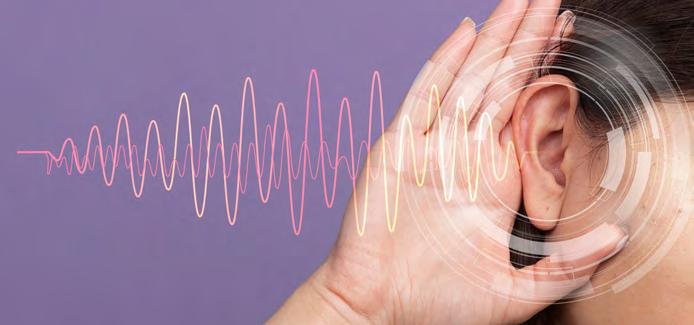
Have you ever knowingly had a conversation with someone with hearing loss or who is deaf? Perhaps you didn’t realise that they were deaf or hard of hearing until they brought your attention to it.
The truth is, as people who are deaf and hard of hearing, we are not always recognised. I cannot tell you how many conversations I have had with people, who say “You don’t look deaf”, but what they don’t realise is the struggle that we face in order to conceal who we really are and to try and “fit in” normal conversations and daily life.
So, to understand the struggles of hearing loss and deafness, we must first address misconceptions and understand what it is.
When people hear the words “hearing loss”, the most common misconception is that it is a just a generic thing, caused by one factor. Well, that’s wrong. The fact
is: there are different types of hearing loss, and the most common causes are sensorineural hearing loss and conductive hearing loss.
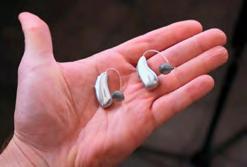
Sensorineural hearing loss is caused by damage to hair cells inside the inner ear, or damage to the hearing nerve, and in some cases, both. However, it is possible to be born with congenital sensorineural hearing loss. Sensorineural hearing loss makes it more difficult to hear certain quiet sounds and reduces the quality of the sound that you can hear. It is often permanent and can be treated with hearing aids, and in some severe cases, if the hearing loss is severe to profound, cochlear implants can be offered.
Conductive hearing loss occurs when there is a problem within the ear itself, which stops sound from passing through to the cochlea. These tend to be related to issues within the middle ear. This can be problems with the eardrum, eustachian tube or the ossicles (three middle ear bones). For people with conductive hearing loss, sounds will sound be muffled and quieter. Conductive hearing loss can be permanent or temporary, depending on the cause or severity of the cause. It is also possible to have both sensorineural and conductive hearing loss, in which case this is called mixed hearing loss.
Another common type of hearing loss is age related. As you grow older, your hearing levels are likely to change, which is normal. This type of hearing loss tends to affect both ears, and the severity increases as you get older. This is caused by gradual damage to the tiny sensory cells (also known as “hair cells”) in the cochlea.
Some symptoms are: thinking that other people are mumbling, asking for people to repeat things, having difficulty understanding what is being said in noisy places and exhaustion from having to concentrate so much. Many of you may recognise these symptoms from your older relatives.
As well as hearing loss, deafness also has different types and factors. For example, you can be born deaf (congenital), which may be caused by conditions affecting the mother during pregnancy, for example, infections such as rubella or certain harmful medications or toxins which are taken during pregnancy can cause deafness. As well as this, deafness can be inherited. Acquired deafness is when deafness develops after birth and can result from noise exposure as prolonged exposure to very loud environments can damage the delicate structures of the inner ear; also, infections such as meningitis, can also cause deafness.
Now you are aware of different types of hearing loss and deafness, let’s talk about the scale used to measure the severity of these two conditions. But first, a quick recap on what the normal hearing scale is supposed to be <= 20dBHL (less than or equal to 20 decibel hearing level). The next step after normal hearing (<=20dBHL) is mild hearing
loss, a level between 21-40dBHL, then moderate hearing loss, which is between 41-70dBHL, before moving onto the most severe cases of hearing loss which are severe and profound hearing loss. Severe hearing loss results in hearing loss of a level between 71-95dBHL and profound is hearing loss over 95dBHL.
You might be wondering, well what would you be able to hear if you have hearing loss or deafness at these levels? Well, for those with mild hearing loss, whispered or distant speech may be hard to hear, whilst quiet conversations would be easier to hear without background noise. For those with moderate hearing loss, everyday conversation and TV volumes may need to be louder. Severe hearing loss means that even the loudest sounds, such as airplanes and lawnmowers can be more challenging to hear without a listening device, whilst for those at the bottom of the hearing level, louder decibel sounds such as sirens may be felt (this varies for everybody) as vibrations instead of sound.
This causes many problems for those who are deaf and hard of hearing, as there is a constant worry and FOMO about something important, such as an important announcement, or key detail that they might have missed from the conversation. Or even worrying about not being able to hear a fire alarm or house alarm if it goes off whilst they’re asleep.
All of these are some of the challenges that those of us in the deaf and hard of hearing community face. One of the biggest problems that I have found as I have grown up is that I always have a nagging feeling that I am being left behind, or worry that someone will not repeat a point that they’ve had to repeat to me for the 10th time- yes I know it is frustrating to have to repeat the same point over and over again until I finally understand what you’re saying, believe me, it isn’t any fun on the other side!
Undoubtedly one of the best feelings for a person who has hearing loss is when someone understands your issues and
Useful tips
First tip
Get their attention- they may be distracted or busy or may just not have heard you. You can do this by tapping their shoulder or coming into their view so they can see you (you can do this as you say their name to get their attention of course).
goes out of their way to help you. Luckily, there are many new pieces of technology, such as the Oticon Edumic, which directly streams sound to hearing aids and cochlear implants- helping students particularly in classroom environments. Bluetooth is also enabled on many new hearing aids and cochlear implants, so you can stream phone calls and even your favourite videos and music straight to your ears, anytime. I am so grateful as a person who is hard of hearing to have such a wonderful support system in this school. I have a few tips on how to improve things for the lives of the deaf and hard of hearing.
Second tip
Speak normally. Speak how you would to your friends- talking slowly actually makes it a lot harder to process the sound and can also be a bit patronising, and it isn’t much fun to feel like you’re being spoken to in slow motion.
Third tip
Make sure they can see you when you talk. If they can’t see your lips, they cannot lip read, which is what they rely on to help understand the situation. And finally, if they don’t have their hearing device on them and you need to communicate with them and have tried all the above, perhaps try writing down what you are trying to say.
My story
I was diagnosed with hearing loss in Reception. Up until that point, I had never really noticed that I was struggling to hear differently than any other pupil in my class, or at home in conversations with my family.
When I had my hearing assessment at primary school, it was revealed that things were not as they should have been. Looking back, I now realise that I did have some symptoms of hearing loss, for instance if I heard certain lyrics in a song, I would often mishear them, or if I just even heard a word or sound, I often repeated it wrong.
However, I was very young, so it was probably a mixture of that and speaking nonsense and the underlying issue of my hearing loss which was undiagnosed at the time. I was finally diagnosed with sensorineural hearing loss at the age of 5 and started to wear hearing aids. When I started to wear my hearing aids, I could function with and without hearing aids, as my hearing level was mild to moderate.
Now, at age 16, my hearing loss is now severe, and I am now dealing with the greater impacts of being hard of hearing. I can no longer hear sounds or voices at a conversational level, and even with my hearing aids in, tasks such as hearing my parents’ or younger brother’s voices from another room is quite a struggle.
Occasionally, it does lead me to wonder if I should take more precautions to get the most out of my remaining hearing, which means we are currently (although not definitely) looking at the possibility of getting cochlear implants. Having hearing loss can also be incredibly
isolating, as sometimes you feel that nobody really understands you or the struggles you go through. (The exhaustion of struggling to hear for hours on end really is no joke - it can be so incredibly draining).
However, whenever I feel I need to take a break from hearing, I know that I have an incredibly supportive community ready to help me; my family, my friends at St Helen’s and my teachers, who have honestly been amazing at always making sure I never feel left out or isolated, and who are kind enough to repeat what I may have misheard and who make sure to wear my Edumic to help me hear the lesson more clearly. It’s times like this I take a step back and really appreciate how supported I am.
By Charlotte, Year 11
Ten beautiful words in other languages that we need in English
Last September, St Helen’s celebrated European Day of Languages with a range of quizzes, games, and activities across the school.
The day encouraged us to appreciate the richness of the world’s languages and to reflect on how they shape the way we think, feel, and connect.
Among the many ways to join in, one of the simplest is to explore the words that other languages offer. Because the English language, sprawling and versatile as it is, occasionally falls short. There are feelings we’ve all experienced— bittersweet nostalgia, the cosy thrill of rain tapping on windows, the guiltless pleasure of doing nothing—that English simply fails to express in a single, satisfying word. Other languages, however, have captured these elusive moments with elegance.
Here are ten beautiful, untranslatable words from around the world that deserve a place in our vocabulary.
(Tsundoku) Japanese
The habit of buying books, stacking them in piles, and never quite reading them. Anyone who’s wandered with glee through a bookshop only to leave with a heavy bag and a heavier conscience will recognise tsundoku. A silent promise to yourself that you’ll get round to it… eventually.
Fernweh
German (Kuchisabishii)
A deep, aching longing for far-off places you’ve never been. If wanderlust is the itch to travel, fernweh is the soul-deep longing for somewhere unknown. It’s the feeling you get when looking at a map, or staring at plane trails fading into sky.
Eating not because you’re hungry, but because your mouth is lonely. This lyrical word captures that peculiarly human craving for snacks when your heart feels a little empty.
Japanese (Nunchi) Korean
The subtle art of listening and gauging others’ moods to guide your behaviour. It’s emotional intelligence, instinct and awareness, all rolled into one. In Korea, to “have good nunchi” is to move gracefully through social life.
Mångata Tartle Jayus
Swedish Scottish Indonesian
The shimmering, road-like reflection of moonlight on water. Try describing this in English and you’ll end up with a paragraph. In Swedish, it’s mångata, a word that sounds as soft and luminous as the image itself.
The act of hesitating because you’ve forgotten someone’s name. This delightful little word captures a moment of social panic: that breath, that smile, that desperate mental scramble to remember the name of the person you’re speaking to. “Ah, sorry for the tartle!”
A joke so unfunny or badly told that you can’t help but laugh. We all know a jayus. The pun so awful it loops back around into brilliance.
(Viraha) Sanskrit (Firaq)
(Tárab)
Urdu
The realisation of love through separation. It’s deeper than missing someone. It is the profound ache that blossoms when distance makes the heart finally understand its devotion. Often found in ancient Indian poetry and film lyrics, it is love realised too late.
Arabic
A musically induced state of ecstasy or enchantment. Tárab is the trance that overcomes you when a song or voice moves you, transforms you, stirs the soul.
(Meraki) Greek
To do something with soul, creativity, or love; to invest part of yourself into your work. Whether it’s cooking a meal, writing a poem, or arranging your desk just right, meraki describes the magic of doing something wholeheartedly.
These words remind us how language shapes thought, and how other cultures have preserved feelings and ideas that we too often overlook. Perhaps we ought to borrow more generously, and give these orphaned emotions a home in English. Until then, next time your mouth feels lonely, you’re giggling over a jayus, or eyeing that unread novel with tsundoku guilt… just remember: there’s a word for it somewhere.
By
Sofia, Year 12
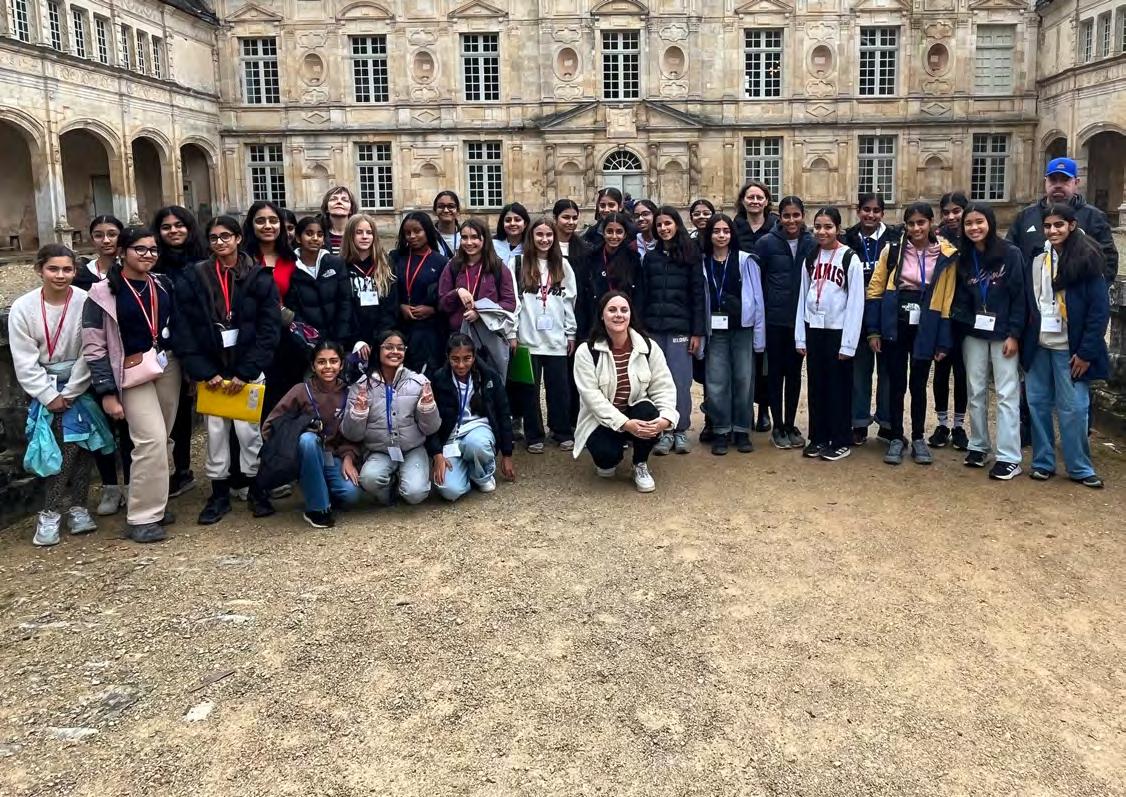
Year 8 goes to France
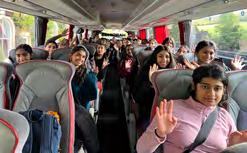
An unforgettable feeling of excitement and great anticipation filled our aspiring year 8 French students’ hearts, as we set off on a school coach destined for a phenomenal residential trip to Burgundy, France.
On previous school residential trips, we had not ventured outside of the UK, and travelling on the Eurotunnel to go to stay at a centre called ‘Maison Claire Fontaine’ was no disappointment, even in spite of being greeted by an absolute downpour of rain on the first two days.
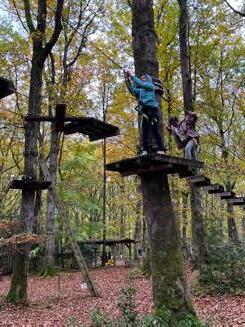
The climbing and ‘Go-Ape’ lovers amongst us would have considered the treetop high ropes activity a favourite and frankly, it was fantastique! The activity itself consisted of a high ropes obstacle course, deep in the wooded region around Avallon. I felt that this was a world away from one’s usual rock-climbing experience, particularly as the teachers were climbing alongside us!
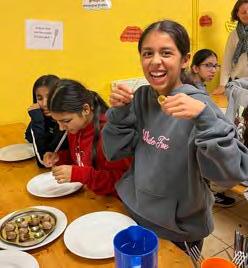
All our wonderful activities centred on us using French. Memorable activities included cooking lessons, mosaic making, a guided visit to the ‘Anis de Flavigny’ confectionery factory and going to the famous ‘Chateau de Bussy-Rabutin,’ amongst others. One of the most exciting experiences that we had was the novelty of trying the French delicacy ‘escargots’ (snails) which went down with varied sentiments.
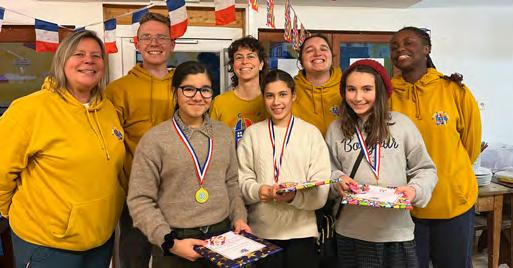
Each of these things, along with the feeling of being in France, encouraged us to use the French language more naturally. But for good measure, our accommodation centre ran French classes for us. As well as these instructor-run classes, we got lots of invaluable real life speaking experience, which I daresay improved our French speaking significantly.
This residential trip was a fantastic chance for us, as students, to deepen our friendships with each other and to get to know the teachers better.
The day before returning to London, the disco party held by the centre gave us an excuse to dress up, enjoy ourselves and have some fun! Songs like ‘Elizabeth Taylor’ got everyone on the dance floor – including Miss Chuykov, who is an amazing dancer!
We left Burgundy with many wonderful memories, and with the a new understanding of how far the French language can take us. Finally, the Year 8s would like to say a huge thank you to Ms Robillard, Ms Chuykov, Ms Gautier Lee, Mr Wilkinson, and everyone else involved in organising this lovely trip.
By Parisha, Year
8
Year 11 Geography trip to Juniper Hall
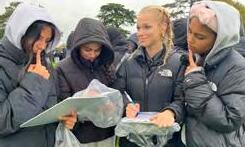
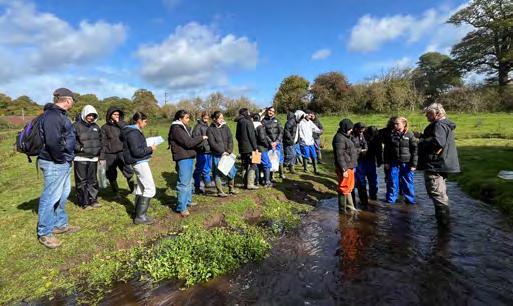
The year 11 Geographers swapped the classroom for the great outdoors on a two-day field trip to Juniper Hall. It was a brilliant opportunity to get some hands-on experience and collect the vital data we need for our GCSE.
Our first day was all about people and places, as we investigated the realworld impact of urban sprawl. After a morning session learning the theory, we headed out to see it for ourselves in the neighbouring towns of Brockham and Ashtead. Walking through these communities we noted the different types of shops and services in each town. Back in the classroom, we worked together to piece our findings together, annotating photos with evidence of how urban sprawl affects everything from traffic and emissions to community life.
After a packed day of learning, we were grateful for some downtime. The common rooms became our hub for relaxation, with some competitive foosball matches and music filling the air. For those seeking a quieter moment, the peaceful mindfulness area just outside the hall was the perfect spot to unwind and enjoy the evening.
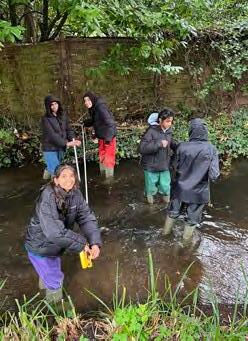
On our second day, we traded town maps for riverbanks, following the course of the River Tillingbourne. We visited three different sites: Crossways Farm, Abinger Hammer, and Gomshall - to see how the river changes as it flows downstream. Armed with equipment such as a hydroprop, we got to be scientists for the day, measuring the river’s speed and depth. It was fascinating to see the landscape change at each location. We documented it all through annotated photos and field sketches, noting everything, from natural processes like erosion and meanders, to human interventions like channel straightening.
The trip was not only incredibly useful for our forthcoming GCSE but also a fantastic experience. It brought textbook learning to life and gave us a chance to develop our skills as real geographers. A huge thank you to all the staff at Juniper Hall and our teachers for making it such a memorable and valuable trip.
By Bianca, Year 11
Seeing when others look away
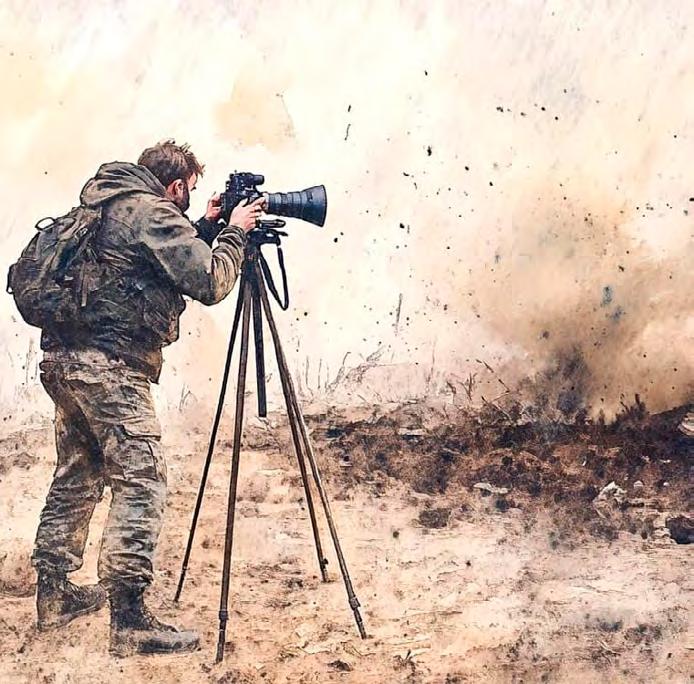
A single photograph can change everything. It can shift public opinion, expose injustice, and move governments to act. Some images never fade. A starving child in a dusty village, a worker bent over a dangerous machine, a mother staring at her empty fields. These are moments that demand to be seen, moments that words alone cannot capture.
Photojournalism turns fleeting seconds into stories that the world cannot ignore. It gives a voice to those who are often unheard and forces the viewer to confront uncomfortable truths. In this article, I will explore three photographers who did exactly that, using their cameras not only to witness history, but to change society.
Why photography matters
Jacob Riis
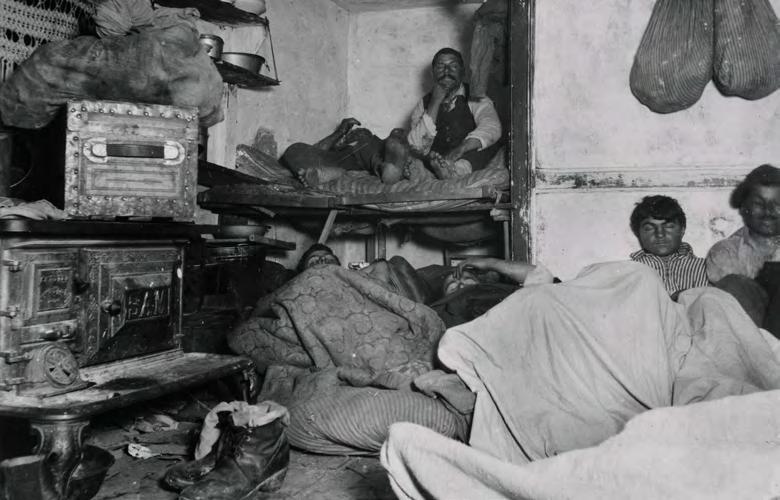
In the 1880s, New York was booming. Immigrants arrived from Europe in their thousands, chasing the promise of a better life. Yet the glittering city skyline hid a grim reality. Tenements were overcrowded and unsafe, disease spread quickly, and wages were low. Seeing this, Jacob Riis, a Danish-American journalist and social reformer, wanted to show what was being ignored. He entered the dark, airless rooms of the impoverished tenement blocks carrying a large-format camera and used magnesium flash powder to pierce the darkness.
The sudden white light revealed peeling walls, narrow staircases, and exhausted families packed into tiny spaces. Riis’ photographs were stark and direct. He did not stage his subjects but he did carefully compose his shots, filling the frame with faces and detail so that every
inch of the image spoke of the hardship. His work combined early forms of social documentary and realism, making the camera a tool of reform rather than art alone. When his photographs and writing were published in ‘How the Other Half Lives’ in 1890, the reaction was immediate and significant.
The New York Times described it as a powerful book, and the public could no longer deny the scale of the suffering in their city. Riis’s images helped drive the creation of the New York Tenement House Act of 1901, which transformed housing regulations and improved living conditions for thousands.
His photographs became visual evidence for lawmakers and social reformers, inspiring settlement houses and public health campaigns. In the years that followed, Riis’s work changed how Americans thought about poverty, he had made the unseen visible and impossible to ignore.
Raghu Rai
In the latter half of the twentieth century, Indian photographer Raghu Rai used documentary photography to confront injustice and reveal the human stories behind national crises.
As a photojournalist for The Statesman and later India Today, Rai developed a distinctive style rooted in realism and immediacy. He often worked in black and white, using natural light and spontaneous composition to capture moments of raw emotion without manipulation.
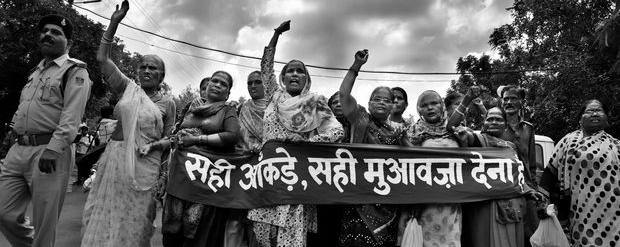
His most powerful series came after the Bhopal Gas Tragedy of 1984, when a chemical leak from a pesticide plant killed and injured thousands of innocent people.
While the authorities tried to minimize the scale of the disaster, Rai’s photographs showed the true human cost: bodies shrouded in white cloth, survivors with haunting eyes, and devastated families searching through rubble. These images circulated globally through Magnum and international newspapers, forcing both the Indian government and the world to confront the negligence and long-term consequences of the disaster.
Rai’s use of photo-documentary techniques transformed tragedy into testimony, giving voice to those silenced by corporate and political power. His work not only spurred greater public accountability but also solidified photojournalism’s role in humanitarian advocacy across South Asia.
Dorothea Lange
During the Great Depression of the 1930s, Dorothea Lange turned her camera toward the crisis unfolding in the Midwest. America was reeling from economic collapse and years of drought that had destroyed farmland. Families were uprooted, forced to travel in search of work, food, and dignity. Lange, working for the Farm Security Administration, travelled the country to document these displaced families.
Her photographs captured both the vast emptiness of the landscape and the quiet strength of the people suffering within it. She often framed her subjects within their surroundings so that environment and emotion blended into one story. Natural light played a central role in her work. She used soft focus and black-and-white tones to highlight the textures of skin, fabric, and soil.
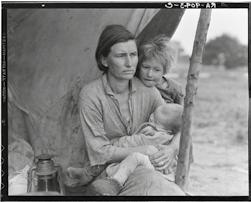
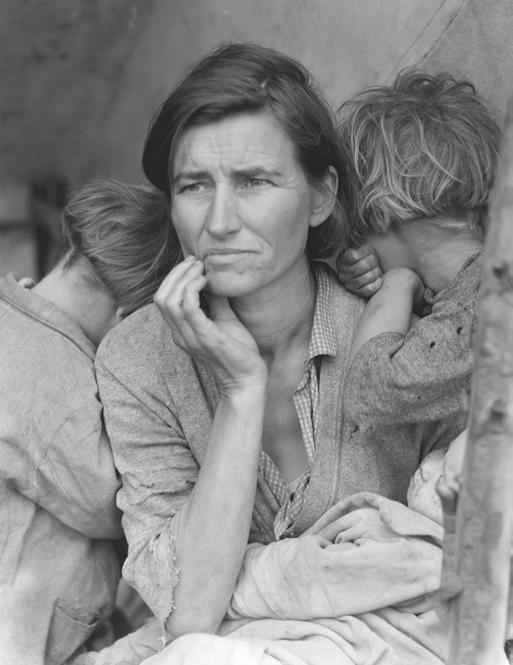
Her most famous image, Migrant Mother, portrays a woman with her children clinging to her. The mother’s face is marked with exhaustion and worry, yet her gaze is steady and strong.
When Migrant Mother was published, the response was immediate. Within days, government aid was sent to the migrant camp pictured, providing people with food and supplies. Lange’s images were later used to Justify federal relief programs and shaped how the public understood poverty during the Depression.
Her work did not just capture despair, it helped prompt empathy, drove action and humanized the statistics of those suffering for an entire nation.
Why photography matters
By documenting the lives of the poor, the displaced, and the vulnerable, these photographers reveal more than hardship and confront us with our own responsibility as observers. This tension between witnessing suffering and feeling powerless is also central to Carol Ann Duffy’s poem “War Photographer”.
In the poem, Duffy depicts a photographer developing images of conflict in the quiet of his darkroom, burdened by the agonies captured on film and by the fleeting attention of those who view them. The line “a hundred agonies in black and white” resonates for the work of Riis, Rai, and Lange, echoing the stark honesty of their photographs and the emotional weight carried by those who record injustice. The poem highlights the contrast between the distant comfort of the observer and the raw reality of suffering, like photojournalists face when exposing truths that society might prefer to ignore.
These photographers made deliberate choices about what to record and how to record it. Yet, each photograph is more than a record, it is a call for attention. Through their lenses of Riis, Hine, and Lange, we see not only people but entire systems that need to be questioned and changed.
Their photographs continue to shape how we see the world, proving that observation, empathy, and a wellpositioned camera can reveal the stories that truly matter and ensure that they are never forgotten.
By Mahathy, Year 12
War Photographer by Carol Ann Duffy
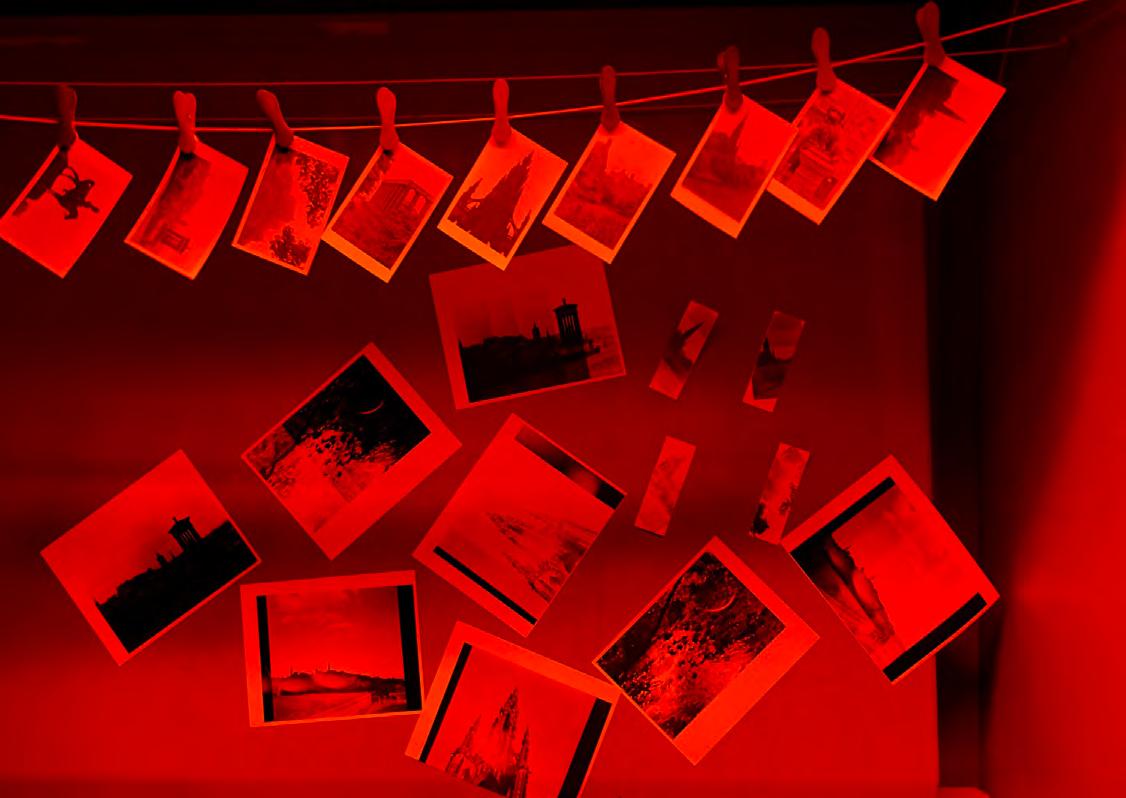
In his dark room he is finally alone with spools of suffering set out in ordered rows. The only light is red and softly glows, as though this were a church and he a priest preparing to intone a Mass. Belfast. Beirut. Phnom Penh. All flesh is grass. He has a job to do. Solutions slop in trays beneath his hands, which did not tremble then though seem to now. Rural England. Home again to ordinary pain which simple weather can dispel, to fields which don’t explode beneath the feet of running children in a nightmare heat. Something is happening. A stranger’s features faintly start to twist before his eyes, a half-formed ghost. He remembers the cries of this man’s wife, how he sought approval without words to do what someone must and how the blood stained into foreign dust.
A hundred agonies in black and white from which his editor will pick out five or six for Sunday’s supplement. The reader’s eyeballs prick with tears between the bath and pre-lunch beers. From the aeroplane he stares impassively at where he earns his living and they do not care.
Fast fashionat what cost? Fast fashionat what cost?
Would you still buy that £5 t-shirt from a shop like Shein, H&M or Primark if you knew that a 12-year-old child had worked 14 hours to make it? Have you ever thought about why some of our clothes are so cheap?
We live in a world that’s thriving on consumerism, where trends are often short-lived, and cheap clothing is more accessible than ever before. But this is only perpetuating the exploitation of young people in impoverished and developing countries.
According to Uniform Market (a uniform industry commerce platform) behind every single fast fashion shop there is a
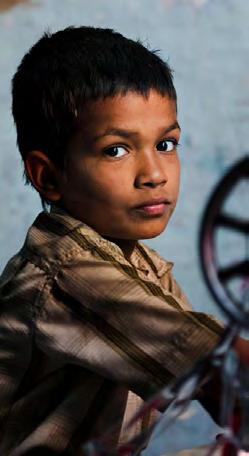
cost - a cost paid by 430 million workers, including children, who are trapped in terrible conditions to produce clothes which we will probably only wear once or twice. Our obsession with cheap fashion is forcing young people in poorer countries like Bangladesh, India and Cambodia to work in unsafe conditions.
children are being exploited
Over the last 20 years, the price of fast fashion has decreased, making it more affordable for consumers. However, the actual cost of producing these clothes — such as labour and capital—has continued to rise. To maintain profits, brands have exploited their workers, and use cheaper, lower-quality materials. As factories want business so desperately, they give in to these companies demands and agree to produce clothes for very cheap prices.
According to the Modern Slavery Act of 2015, in the UK it is illegal for companies to use child labour. However, a report in the Independent, published in 2025 revealed that these rules are often broken, due to incomplete regulations. fast fashion brands, like Shein and Temu, ship items directly to the consumer overseas, unlike slow, more ethical, fashion companies who send bulk items to UK based regional stores and warehouses. This allows fast fashion brands to utilise unethical production, as UK authority figures cannot legally intervene and prevent immoral labour. This results in fast fashion companies bypassing the laws and makes it easier for them to use unethical production, that exploits workers.
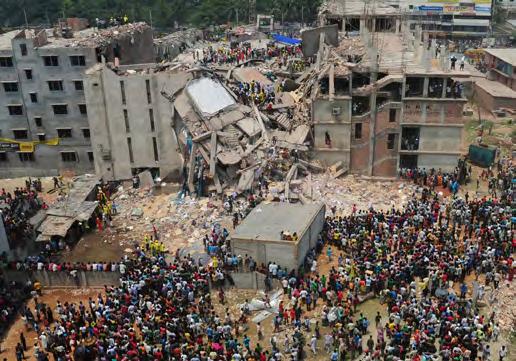
The Rana Plaza disaster, April 24, 2013, was a tragic example of the dangers resulting from fast fashion. The building manufactured clothing for major global fashion brands, such as Mango and Primark. The factory was located just
outside Dhaka in Bangladesh and the building collapsed, killing over 1129 people and injuring many more. Even though there were visible cracks in the building and workers repeatedly lodged concerns about their safety, the factory owners forced them to continue working in those dangerous conditions.
This was due to the immense pressure from fast fashion brands to produce large quantities of clothing at extremely low prices. This disaster highlights the brutal reality of the fast fashion industry, where human lives are sacrificed for the sake of profit.
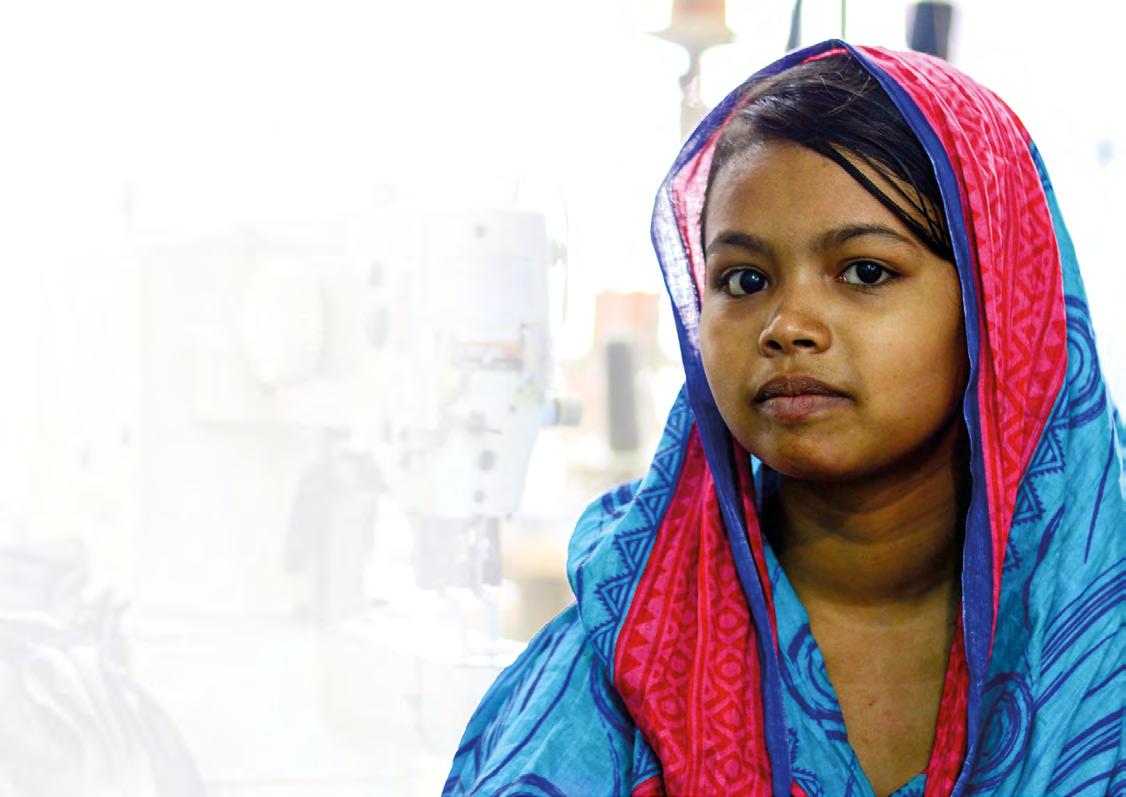
I want you to picture this, a girl no older than 14, wakes up each morning in a small poverty-stricken village. She walks miles to a clothing factory where she’ll spend the next 12 hours, her hands are calloused, she’s severely overworked, and yet, all she receives is a meagre wage.
As appalling as it seems, according to the International Labour Organisation (ILO), this is only a glimpse of the bleak reality faced by over 160 million children worldwide because of our growing addiction to fast fashion and our insatiable desire for affordable prices.
This horrifying truth is depicted in the documentary - ‘Made in Bangladesh –Inside the fast fashion factories where children work’, by Project Happiness. Juhi, a young girl working in a fast fashion factory in the film says, ‘my dream was to become a doctor, but since I can no longer do that, I work in clothing factories to pay for my sister’s education so she can become a doctor’.
Whilst we, children in high income countries, have the privilege of pursuing our dreams, children like Juhi are forced to sacrifice theirs to earn a pitiful £1.59 a day and work for over 75 hours a week. As well as working in bleak conditions, children who work in factories are exposed to toxic chemicals, which can lead to death by the age of 50. They endure hazardous conditions just to produce a jacket or a pair of shoes that we purchase for a few pounds and discard without a second thought.
Fast fashion also had a devastating impact on the environment. According to The Carbon Literacy Project,
‘The fast fashion industry is the second-largest industrial polluter, accounting for 10% of global pollution, ranking higher in emissions than air travel’.
These pollutants release greenhouse gases into the atmosphere, causing global temperatures to rise. By 2050 it is predicted that the fashion industry may use almost a quarter of the worlds carbon budget. This staggering statistic highlights the urgent need for a decrease in fast fashion production.
What do students at St Helen’s think about Fast Fashion?
I conducted a survey of 143 St Helen’s students and the results showed that: 23% 22% 20% shop at shop at shop at
clothing.’ 88% of the students who responded are somewhat wary of the dangers of fast fashion, yet we still support these brands. This highlights the need for an increase in education and awareness towards fast fashion, so as a community, we can make more mindful decisions regarding the brands that we wear.
According to Business of Fashion, these brands are renowned for offering a variety of clothes, at low prices, making them accessible. When asked to describe the defining features of fast fashion, 12% replied saying that they were ‘not sure’, and other students recognised that fast fashion production results in ‘child labour’, ‘mass production’ and ‘cheap
Clearly, fast fashion is beneficial due to its affordability, accessibility and variety. It delivers options for families and individuals from a lowincome background, who cannot afford to shop from higher end retailers. However, for most people in community, consumption exceeds need, so instead of buying ten cheap tops, we should invest in one or two which will last for longer and are made ethically and responsibly. We can also shop more from vintage and thrift stores which helps reduce waste. We don’t need to stop buying clothes, but we do need to stop buying them excessively. Happiness for a child should be playing, drawing and exploring – not being trapped in a factory, and treated as worthless.
By Tanisha, Year 12
The big debate:
Should weekends be three days long?
What you need to know
• The idea of a three-day weekend is being discussed in schools, workplaces, and even by government. Some companies have already tested shorter work weeks to see how the effect they have on employees.
• Supporters say it could improve mental health and productivity. Others worry it might cause problems for businesses and essential services.
Overview:
For many years, people have worked five days a week and rested for two. But now, some experts and members of the workforce are asking: is that the best way? A longer weekend would give people more time to relax, spend time with family, and enjoy hobbies. It might also help reduce stress and improve focus when people are at work or school.
However, not everyone agrees. Some worry that important services like hospitals, shops, and schools might struggle to keep up with demand. Others think it could be unfair to members of the workforce who are paid by the hour or have jobs that can’t be so flexible.
FOR:
Weekends should be three days long
Many people believe that having a threeday weekend would greatly improve our lives. With more time to rest, students and workers could return to school or work feeling refreshed and ready to focus. Research shows that shorter work weeks can lead to improved outcomes, because people are less tired and more productive and motivated.
A longer weekend also gives families more time to spend together, which helps build stronger relationships. In addition, having fewer workdays could reduced negative impacts on the environment, for example, less travelling means fewer cars on the road and less pollution. Overall, supporters say that a three-day weekend would make people happier, healthier, and more productive.
AGAINST:
Weekends should stay two days long
Some people think that changing to a three-day weekend could cause serious problems for society. Many jobs, like doctors, shop workers, and emergency services, need people to be available every day. If everyone had an extra day off, it might be harder to keep these services running smoothly.
Also, not all workers would benefit equally, people who are paid by the hour might lose money, and others might have to work longer hours during the week to make up for lost time. Some worry that trying to fit five days of work into four could lead to more stress, not less. For these reasons, critics believe that keeping weekends at two days is the better choice.
By Veeya, Year
8
Complete this form to give us your views:
Shine walk: In memory of Evani
Walking Through the Night for Cancer Research UK
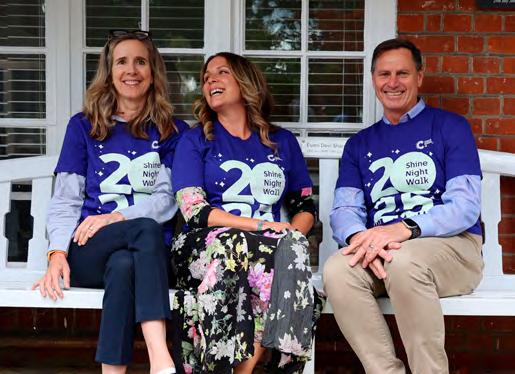
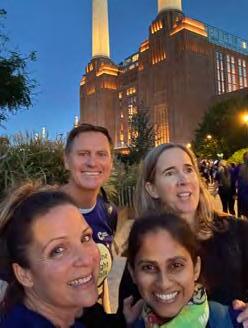
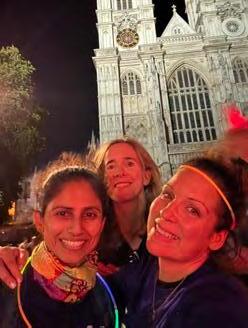
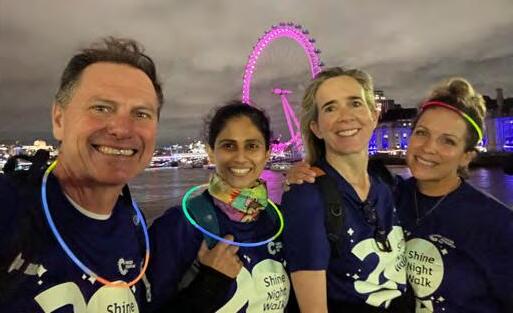
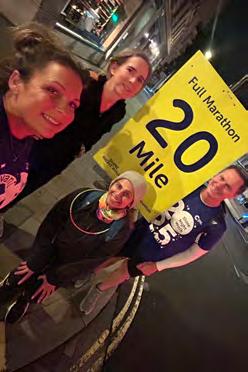
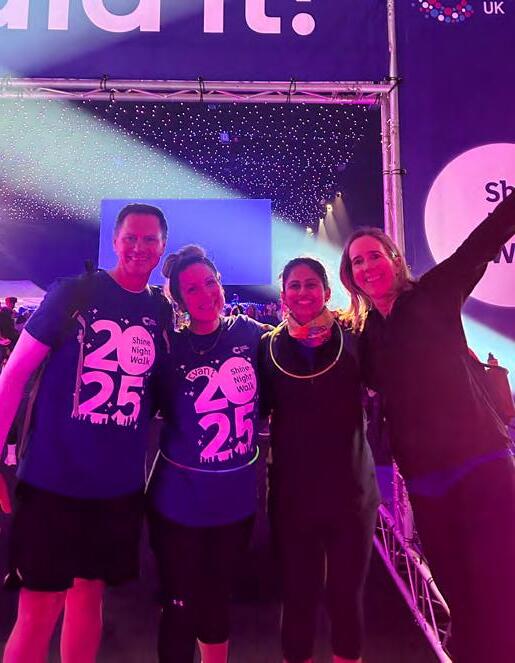
In September, Mrs Barton, Mr Hoffman and Ms Agnew took part in the Shine Night Walk, a marathon through the streets of London organised by Cancer Research UK. They were joined by Mrs Sharma, the mother of Evani, a muchloved St Helen’s pupil who sadly passed away. Together, they walked twentyseven miles through the night to raise money and awareness for cancer research. Their journey was filled with laughter, reflections and moments that none of them will ever forget.
Why did you decide to take part? Mr Hoffman smiled and admitted, “Do you want the honest truth? Well, I was minding my own business and an email popped up on my phone saying that I’d been signed up to the Shine Night Walk for Cancer Research. It was thanks to Mrs Barton and when she told me about it obviously, I was excited because of the good reasons we were doing it.”
Ms Agnew added, “Mrs Barton also suggested it to me as she and I were very close to Evani and Evani’s family and we wanted to do something a year later after Evani’s passing to commemorate her.”
It quickly became clear that not everyone had realised what they had signed up for. Mr Hoffman explained, “At that point I didn’t realise that there were different
options. You could do a 10k, a half marathon and a full marathon, and Mrs Barton signed us up for the full thing.”
Laughing, Ms Agnew said, “Twenty-seven miles! And I too only found out the day before that there was an option to do a 10k or a half marathon!”
When I asked Mrs Barton if she had known, she said unapologetically, “Yeah, I just didn’t tell them. No, we did the full thing.” Mr Hoffman joked, “You didn’t ask me if I was doing it or not.” Mrs Barton laughed, “No, I didn’t ask them or say anything. I just kept quiet and signed them up anyway.”
Ms Agnew confessed, “The day before, when I discovered there was a half marathon option, I messaged the group and said, ‘I’m thinking of doing the half marathon instead.’ And actually they were brilliant teachers because they just said that I should do whatever I could manage.” Mrs Barton smiled and said, “You just can’t not carry on.” Ms Agnew replied, “Yes, it was obvious. Mrs Barton would have given me a piggyback if I couldn’t manage.” Mrs Barton said, “You would have come with us whatever. I would have got a wheelbarrow one way or another and chucked you in there.”
The group began walking at 7pm Ms Agnew explained, “Yes, so Mr Hoffman and I spent a little bit of time figuring out what speed we had to walk at in order to meet our target to be at home by 4am” Mr Hoffman added with a grin, “We needed sleep.”
Ms Agnew continued, “It was the weekend of the Open Morning, so I said to him that we need to have finished by four. So, Mr Hoffman had a special watch to help figure out how fast we had to walk and it was around six kilometres an hour.” They ended up finishing earlier than expected. “Just after 3am,” said Mr Hoffman proudly. “We ended up doing really well,” confirmed Ms Agnew. “Yeah, we did really well, and we picked up the pace in the second half incredibly,” added Mr Hoffman. “In the first half we spent a lot of time chatting, reminiscing. I got to know Mrs Sharma so well. I had met her several times because of Mrs Barton.
I knew Evani but I only taught her for a year. But that night I got to know all about Mrs Sharma, all about her sons, her family, her husband and about what she does.”
Ms Agnew recalled, “In the middle of the night Mrs Sharma said, ‘No, no, no, we are going to pick up the pace now,’ and she started walking really fast and I’m not going to lie, I was the slowcoach of the group.” Mr Hoffman said, “And then in the end Mrs Barton decided to pick up a sprint. I’ve never seen her walk as fast.”
Mrs Barton laughed, “Only because I was desperate to get back!”
Mr Hoffman smiled, “Because at home we do walk a dog together and I’m normally the one who says, ‘Come on, we’ve got to walk a bit faster, and this time I couldn’t keep up with her.”
When I asked them about the most memorable moments, Mrs Barton shared this story: “So Kaya was a child at our school who was in Year 2, I believe, who sadly passed away, and right at the beginning of the event we were just waiting to start and Mrs Sharma said, ‘I’m sure that looks like Kaya,’ pointing at a picture of a small child on the back of one of a couple’s rucksacks.
I went up to have a look and I thought I read ‘Kaya’ and thought, no, it’s not her. But on mile 13 of the walk, the same people were in front of us and now they’re really close, and the picture was definitely little Kaya from St Helen’s. And there was this moment of complete disbelief. Amongst 14,000 people we were walking right behind this pair, and we asked if they were walking for Kaya from St Helen’s and they said yes. And they were her auntie and uncle and they were walking on the occasion of her 13th birthday, and it was just a really emotional moment. And for Mrs Sharma as well, having that connection with a family that has gone through something so similar, it was really touching.”
Mr Hoffman laughed as he shared another story. “I’ll tell you another story about Mrs Barton. Mrs Barton, to prepare for the walk, goes and buys a whole lot of snacks and she even buys a bigger rucksack to take everything in, and she obviously didn’t read up the information in advance. Because, we get to the first stop and there’s water, there’s cereal bars, there’s crisps, there is everything you need provided by the walk organisers. We never ever took anything out of our bag and I carried those snacks the whole way.” Mrs Barton smiled and said, “It was quite funny.”
They all described the atmosphere as something special and unforgettable. Mrs Barton said, “Being in London in the evening and then night, there were lots of contrasting moments.
There was quiet time and then when all the pubs and clubs finished there were drunk people walking around us on the street, it was kind of a bit surreal, wasn’t it? But it was magical being in London at that time together.” “It really was,” agreed Ms Agnew. Mr Hoffman recalled, “Do you recall the start? People were so happy, we went past the rock choir, it was just such a special celebratory occasion, everybody there to support a good cause.”
When I asked what the walk meant to them personally, Mrs Barton said, “I think it was really important for Mrs Sharma that Evani is still being remembered. I think that’s something she can’t believe, that we’re still remembering her, doing things for her. And I think it was a nice opportunity, because actually she quite liked talking and reminiscing about the memories we were lucky to have with Evani.”
Ms Agnew agreed, saying, “It really was. It’s great. I entirely recommend it to the girls or anyone, especially if you’ve lost someone to cancer. It’s a really lovely way to remember them. And you put a pin on your back with a little bit of paper saying
‘I am walking for…...’ It feels really binding. Everyone doing it is doing it for someone they’ve lost or someone who’s suffering from cancer, and that’s really special.”
Mrs Barton reflected on finishing the walk. “I couldn’t believe it really. It was a strange feeling. I thought I was going to really struggle. I’d never want to run a marathon, I’m not a runner, but I thought I’d really struggle. But actually, I really enjoyed every minute of it and crossing the line felt like a moment of disbelief that we’d finished a whole marathon.” Mr Hoffman said, “It took a while to cross the line actually because somebody was taking photos at the clock that measured our time. Was it you?” Mrs Barton laughed, “Oh yeah.”
Ms Agnew added, “It is quite amazing when you finish it, there is this incredible marquee, and it’s all covered in little stars. I was talking about a cup of tea quite a lot the whole night, I think.” Mr Hoffman said, “I wanted to stop for coffee but the only coffee place I could see was McDonald’s.” Mrs Barton laughed, “I was hoping for a champagne breakfast.”
Mrs Barton added, “It was a real team effort. We decided to get Evani’s name engraved on our medals and Mrs Sharma did that for us all.”
When I asked if they would do it again, all three answered enthusiastically. “Absolutely,” said Mrs Barton. “We’ve got to make this an every four-year tradition, or every two,” said Mr Hoffman. “I’m totally up for it,” said Ms Agnew. “I was thinking I was going to do it every year, the full marathon.” Mr Hoffman wondered, “Can we take a student with us?” I smiled and asked, “Am I allowed to come? I’d love to.” I replied. He added, “If you’ve got someone that you want to remember, or even if you know someone who survived cancer and has a lovely story, you can see people walking for that reason as well.”
Shine walk: In memory of Evani
This all reminded me of my own experience, “My dad has had cancer for the past thirteen years and he’s been working hard at being a dad at the same time, as well as keeping a household together. Even though cancer is a big part of your life, you try to enjoy every aspect of life alongside it, pushing through. And I think regardless of whether someone has passed away or is suffering or survived, it’s important to celebrate how someone has pushed through that and how they make the most of their lives, and it makes us appreciate our own health as well.
Mrs Barton nodded and said, “I think that’s it. I think I really learnt from Evani to remind ourselves of what we actually have.” Mr Hoffman added, “You’ve got to keep reminding yourself.” Mrs Barton said, “It’s
made me have a completely different lens on life.” Ms Agnew continued, “When we did the walk, a family member of mine was very sick and it really reframed that for me, to be positive. It was such a positive event, and in a sea of negativity that is a really important.”
Mrs Barton said, “If we were going to do it again, I’d want to be more lit up. I want to get more lights.” “Me too,” said Ms Agnew. Mrs Barton laughed, “The glow sticks didn’t do it for me, it needs to be a bit brighter.” Mr Hoffman said, “Yeah, just a bit more sparkling.” Ms Agnew added, “There was a super cool light-up skirt and I definitely want to get one of those.” Mr Hoffman said, “Yeah, we can get lights on and lose the snacks.” Mrs Barton laughed, “Yeah, we wouldn’t need a bag at all.”
As our conversation drew to a close, I realised that the Shine Night Walk was about much more than walking twentyseven miles for Cancer Research. It was a journey that carried with it stories of love, remembrance, and hope. For Mrs Barton, Mr Hoffman, and Ms Agnew, it was a way to honour Evani’s memory and to stand alongside her family in solidarity.
The Shine Night Walk shows that when people come together with compassion, they can turn loss into light and in doing so, remind us all that even in the darkest hours, there is always something worth walking for.
By Mahathy, Year 12
Women in greek mythology
In the deep and rich vein of Greek history and culture, Mythology is an unearthed ore. A tapestry of colourful legends passed down orally, Greek mythology details not only the origins of the world but the intricately interwoven lives of the gods, heroes, beasts and mortals.
Mythology was effortlessly embedded into the world of Ancient Greece, it shaped society’s values, and moulded the hierarchy of the indifferent Gods and the acquiescent Men. It has captivated an entire community of famous literary scholars, poets and authors in opinionated, dramatic retellings.
As the seasons change and the popularity of the Classics in Western media fluctuates, countless modern retellings have emerged to breath fresh ideas into the timeless tales; the most notable being the Percy Jackson series, The Song of Achilles, Circe, and even Epic the Musical – a concept album which details the events of Homer’s ‘The Odyssey’.
I’m sure you’re wondering why I chose to write this article? The answer is simple; To share some of my favourite characters in Greek mythology. And… why are they my favourites? Well. It’s because they don’t lay there and take what’s thrown at them. They don’t stick their heads in the sand and pretend it’s all fine, nothings happening. No. They stand up, and they rebel. They don’t apologise for existing. So as portrayal after portrayal of women in literature gain traction, new artists blend with the old to bring to light some unheard, forgotten voices. These are some of those voices:
Demeter’s Rage
Sprightly Persephone picks wildflowers in a wind-swept meadow. The sun shines. Clouds bloom. She doesn’t see the ground erupt beneath her feet, doesn’t register her uncle, Hades, as he seizes her by the waist, hauls her onto his chariot. All she has time to do is let out a single, desperate cry for help, before her abductor drags her – still screaming – down into the depths of the dreary Underworld. The ground seals over.
collapse into the dry soil silently. Zeus frowns from his throne on Olympus; the decline in the number of mortals means a worrying decrease in sacrifices to the gods, attention to the gods, devotion to the gods.
Her father, Zeus, turns a blind eye and ear as he sits on his throne up on Mount Olympus. Her mother, Demeter, does not. She wanders the earth, inconsolable and uncontrollable in her longing to see Persephone once more. Demeter holds the Olympians to ransom; either her daughter is returned, or she will wreak havoc on Man’s world, destroy crops, leave fields barren. Mortals starve, ravaged by disease, hunger gnawing
With no mortals, the gods as we know them will cease to exist.
Demeter’s rage and fury become a weapon, leaving Zeus in an impossible and unfavourable position. Her ultimatum forces him to prioritise between maintaining his reputation by not stooping to the whims of an inferior Olympian and preserving the lives of as many mortals as possible to protect the Olympians’ very existence.
Women in Greek mythology
Even when commanded by Zeus, the king of the gods himself, to cease and desist, Demeter reaches a grudging compromise with Hades. Persephone will stay on earth for the first two seasons, and in the dreary Underworld during the months of Winter.
The tale ends in Persephone’s marriage to Hades, thus adhering to the societal expectations imposed on young girls in Ancient Greece. From puberty, marriage was a given for young girls, and therefore it is unsurprising that even the goddesses were subjected to this custom.
The union between Hades and Persephone illuminates the hierarchy evident among the gods and goddesses and it acted as a reminder – women must bend to their husbands’ will, and Demeter is no exception. In fact, Zeus offers Persephone as a bride to Hades without even consulting Demeter; a mother’s decision over her child’s future was deemed irrelevant.
However, Zeus does not realise the force of Demeter’s enduring love for her daughter, and ultimately sends Hermes, the messenger god, to appeal to Hades for Persephone’s release from the Underworld. The tale of Persephone and Hades becomes a comforting tale to young girls awaiting marriage, and demonstrates the fierce, unwavering love between mother and daughter. Most importantly, it leaves us to ponder how far we are prepared to go for those we love.
Atalanta’s Boar Hunt. Atalanta inhales. The forest breathes around her. She knocks the arrow. Waits. Patience is a virtue, after all. The boar snuffles among the undergrowth, lulled into complacency by the sound of a nearby running waterfall, by the rustle of wild grass. Hold… hold… and attack.
The arrow flies. The boar roars, eyes sparking with agony. The arrow shaft spears silently from behind its ear. Atalanta smiles. She has drawn first blood. For that, she will win the head and hide of the Calydonian boar. For that, she will win recognition.
The Calydonian Boar Hunt, Paul Rubens Atalanta, the ‘swift-footed’, quick-witted huntress, is most remarkable for the unusual nature of her birth. Exposed to the elements as a baby by a father dismayed at the prospects of raising not a son but a girl, her cries went unheard.
However, a she-bear, drawn by her wails, found and raised Atalanta as her own (Coincidentally, the she-bear happens to be the symbol of the goddess Artemis; it could therefore be inferred that Atalanta’s saviour had been led to her on purpose by a certain deity). Atalanta developed exceptional hunting and athletic skills and
often surpassed both men and women at physical sports, evoking not only admiration but envy.
Atalanta displays resilience and determination, defying typical gender roles in a patriarchal society time and time again. One such example is in the Calydonian boar hunt; Artemis’ punishment sent in the form of a savage boar to Oeneus, the King of Calydon’s countryside, after he had neglected to offer her a sacrifice.
After sending pleas to any Greek hero who would listen, offering its hide as a reward for whoever managed to draw the boar’s first blood, Atalanta joined several heroes in this competition. Her participation, where she drew first blood of the boar, resulted in her being recognised by her male counterparts, and she obtained its hide as a symbol of honour.
Women in Greek mythology
Atalanta’s name became so eminent, that she was invited to become a member of The Argonauts by King Oeneus himself; and she accompanied Jason on his quest for the Golden Fleece of Colchis.
But Atalanta’s tale didn’t end there. Atalanta had gained fame. She was recognised and revered far across the lands. Her calculating father saw this, and hurriedly acknowledged her as his own child, before he remembered that as a father, he had the right to marry her off to the first wealthy suitor he could find.
No points for guessing what he decided to do. The quick-witted, and thoroughly enraged, Atalanta reluctantly accepted; but meanwhile, she devised a plan. She offered to marry anyone who could outrun her in a race. The catch? Those who couldn’t match her stride, she killed herself, using her signature weapon, the bow and arrow.
Her father shrugged and accepted. Young, old and wealthy men flocked like geese, squawking boastful words. Atalanta only smiled. She watched first shock, then dismay, then fear, paint their faces as she left them behind on the running track. Atalanta became a bringer of death. Suitor after suitor failed and fell.
Through this proposed challenge, Atalanta’s unwillingness to lose her autonomy and bow down to a passive role as a man’s wife defied both the typical gender restraints of Ancient Greece and confounded the same recurring
portrayal of women as submissive, dependent figures.
And now these tales end. But Demeter, Persephone and Atalanta’s voices continue. They echo, and they inspire.
We remember Brave Thalia and wise Annabeth, celebrate kind Briseis, hail the powerful Circe. We remember them, and we keep unearthing those ores, one at a time.
By Juliet, Year
12
Why dogs make our lives better Paws and reflect:
Don’t underestimate your little fluffball as just being cute! Sure, they chase their tails and make fools of themselves doing morning zoomies — but somehow, they always know exactly when we need a friend. Dogs have been called man’s best friend for centuries, and for good reason.
Spending time with our dogs isn’t just fun—it’s scientifically proven to make us feel happier. Giving cuddles, and mutual gazing, oxytocin is released in both humans and dogs. This “love hormone” helps us feel calm, safe, and connected, creating a powerful shared bond of affection.
Owning a dog also brings physical benefits. Daily walks and games of fetch increase physical activity, and studies show that dog owners generally have a lower risk of cardiovascular disease, with reduced blood pressure and stress levels. That’s why, if you’re struggling with anxiety, depression, or just feeling a bit blue, spending time with your dog can significantly boost your mood and overall well-being.
The companionship and unconditional love that a dog provides will always makes you feel like you have a friend, whatever the circumstances are. These beautiful creatures never judge or hold grudges they simply dedicate their love and loyalty to us. And that in itself is something truly special!
By Amara, Year 9
The St Helen’s pet page
Is there a better feeling than coming home to your pet(s) after school? That feeling inspired me to create our very own St Helen’s Pet Page! These pages celebrate the delightful range of pets in our school community – from curious cats and devoted dogs to clucking chickens and slithery snakes!
By Raya, Year
12
Bella – Raya, Year 12
“Bella’s favourite food is cheese. She barks at animals on the television, black balloons and sometimes her own reflection.”
Peanut – Mrs Heyde
“Peanut likes to sleep in the sink.”
Luna and Nova –Raya, Year 12
“Luna and Nova like to sleep in small crevices and meow for treats.”
Smash - Mme Robillard
“Smash loves stealing Crocs and tea towels.”
Milo – Mrs Haines
“Milo loves a sock, a slipper or a shoe of any type to be fair! He is full of energy and love and brightens up my day! He is partial to muddy puddles and he also has the waggiest tail in HA6!”
Trixie – Mrs Britton
“Trixie is trained to be a sniffer dog.”
Taddles – Maddie, Year 12 “Taddles’ favourite colour is yellow.”
Albertina – Dr Dolby “Albertina is named after Einstein.”
Olly – Mrs Britton “Olly likes popcorn.”
Chunky – Imogen, Year 12
“Chunky weighs twice the average weight of a cat.”
Coco – Yashvi, Year 9
“Coco sings in his sleep and can smile!”
Podge – Mrs Britton
“Podge does not like getting wet.”
Remy – Mr Boudoukha
“Remy likes to sneak out at night and play with the neighbourhood cats.”
Rodney – Miss Payne
“Rodney was a street dog from Qatar who travelled back with me to live a wonderful life in the UK! He hates rain and being close to water after growing up in a desert!”
Fluffy – Mrs Turnbull
“Fluffy is funny and fluffy!”
Toffeee – Arianna, Year 12
“Toffeee has one black foot and one pink foot.”
Mizu – Dr Goldstein
“Mizu is a (now elderly) cat who Dr Goldstein received from his neighbours many years ago after she was abandoned. She is a key feature of many of his A Level Philosophy lessons (it’s surprising how often cats are referenced in Philosophy) and is familiar to many of the older students through her appearances on Teams lessons during the COVID lockdown. She loves blueberry muffins!”
Tickle – Mrs Turnbull
“Tickle is curious and intellectual.”
Bertie – Mrs Williams
“Bertie loves treats, sunbathing and barking at any visitors!”
Charlie – Mrs Parkinson:
“Charlie, who Mrs Parkinson inherited, is very grumpy but does like singing along with Disney songs.”
Freddie – Mrs Wright:
“Freddie is a Basset Hound (the name basset comes from the French word ‘bas’ meaning low) and stubborn as a mule but very loveable with an incredible sense of smell.”
Rosie, Jackpot, Lazy –Harnee, Year 7
“Rosie, Jackpot and Lazy are fish which always play hide and seek but they always come when I open the fish tank lid.”
Lily and Bessie – Mrs Ward
“Lily is the sociable escape artist who loves to adventure and disappear after rabbits and squirrels. First born, so has to be tucked in at night and likes to vocalise her displeasure if matters are not quite right. Loves cheese and her human parents! Bessie is the shy, introverted guard dog. Protects her family first and foremost. Loves food. Loves food again, swimming and a ball! Led by her tummy, some squirrel and deer chasing. Takes a while to trust people but loves them when she does! Family is all that matters to her (and food).”
Ryder – Sherickaa, Year 7
“Ryder is a two-year-old German Shepherd who really loves the park and had surgery on his leg last year.”
Holly – Simran, Year 10
“Holly is a 5-month-old golden doodle and she is a big couch potato.”
Nala – Esme, Year 7 and Isla, Year 9
“Nala is a 5-year-old cockapoo and likes sleeping and chasing squirrels! She likes human food but not her own food!”
Bunsen and Burner –Ms Wise
“Bunsen and Burner are 7kg each (that’s 70 Newtons!).”
Seven – Mr Volkov
“Seven loves licking the sofa but absolutely hates loud sounds, especially drills.”
Coco – Amara, Year 9:
“Coco can understand English, French, Swahili and Gujarati.”
Rabbit and chickens –Thamira, Year 12:
“My chickens have grown from two to thirteen, one of which fortunately survived an encounter with a fox!”
Popcorn and Brownie –Amelia, Year 7
“Popcorn and Brownie are very friendly guinea pigs that can spin around, walk on two legs and climb really high.”
Coco – Prianna, Year 7:
“Coco is a mini-Maltese and she is older than me!”
Ivy – Sofia, Year 7
“Ivy is a domestic shorthair cat who is
Jack – Hailey, Year 7:
“Jack the tiny barking king Jack’s a Pomeranian, small and bright His fur is thin but gleams in white. He struts around like he’s the king. His tiny bark makes everything zing!
He barks at postmen, cats and bees, At rustling leaves and swaying trees. He spots himself- a fierce surprise! Then runs away with squeaky cries!”
Dottie – Mr Hoffman:
“Dottie loves swimming, travelling, treats (any food that humans are eating) and rolling. She is very nervous around any loud bangs.”
Cleo and Coco –Kira, Year 7
“Cleo knocks the pellet bowl and throws it around the cage when it is empty to get my attention. Coco eats all of the dust and is practically nocturnal.”