| School productions: West Side Story and Blood Wedding
| The Yondr pouch
| Diary of an Azores adventure
| Leadership conference
| A passionate educator: an interview with Ms Heyde
| How to succeed in Life
| More than just a TikTok trend
| The link between maths and medicine
| Quiz time!
Happy reading…
The Proust Questionnaire
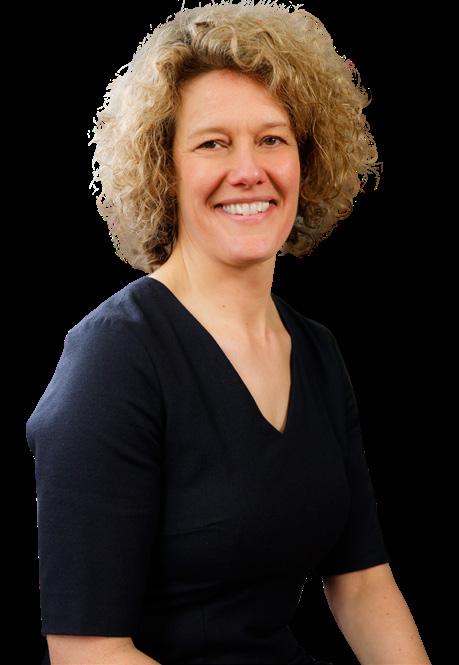
Our Head, Mrs Ward
Mrs Ward very kindly agreed to give us some time to do the Proust Questionnaire for our magazine. The Proust questionnaire has its origins in a parlour game popularised (though not devised) by Marcel Proust, the French 19th century essayist and novelist. He believed that, in answering these questions, an individual reveals their true nature.
Q. What is your idea of perfect happiness?
My idea of perfect happiness is being happy with myself – it’s important to know yourself and understand you can’t be happy all the time. When I think about happiness it’s something that is unconditional love, and the little things in life.
Q. Which historical figure do you most identify with?
Maya Angelou because of her take on life, which, through her poetry and writing can, hopefully, be reflected in society. I think she is such a powerful role model. Sporting figures as well, because I used to be an athlete, but I’m going to stick with Maya Angelou.
Q. Which living person do you most admire?
I don’t think I can say one, it’s the people I meet in school from day to day. I’m always astounded by human beings generally: pupils, staff, those who are so quiet and humble but are in fact rich and multi-faceted people. I can be inspired by the girls in nursery who have done something magical, or staff who have been here for years and
continue to inspire you. Daily interactions I feel most inspire me, and those who stay positive, throughout the challenges of life.
Q. What is the trait you most deplore in yourself?
Procrastination, sometimes. I just get myself to that point of leaving something to the very last moment. I hope that if I get something wrong in the way I act or speak to somebody, I’ve learned to apologise.
Q. What is the trait you most deplore in others?
I don’t like people who don’t try. I dislike the word no and I love the word yes.
Q. What is your greatest extravagance?
My dogs! Food or my dogs, I spend way too much money on new treats and collars for them. But food; I just love eating. I could live on chocolate, if I open the door to sugar, it doesn’t leave for the day.
The Proust Questionnaire (continued)
Our Head, Mrs Ward
Q. What do you consider the most overrated virtue?
Are any virtues overrated? Depending on your perspective, every virtue has a place, and you do place different emphasis on different ones throughout your life.
Q. On what occasion do you lie?
Do you know what, one of my pet peeves is lying. I’m a Scorpio and it’s a trait of ours. I don’t mind if something has gone wrong, just tell me and be open. I’m really conscious of that, I never want to lie. A lie is a lie, so if I catch myself about to say an untruth, I change that or apologise. I think I’ve got better at that as I’ve got older. I have been proactive in working on that.
Q. What is your greatest regret?
I don’t believe in regrets. Because I think everything is part of your journey and there is no such thing as a bad decision. I think you can make any decision right by the way you follow through. I’ve lost people close to me and I regret that they’re not here, but that’s not my regret. I have made some mistakes, but I’ve apologised, and I don’t
regret them. There’s something human about mistakes don’t you think?
Q. When and where are you happiest?
With my family and usually swimming in the ocean. My home is where my family is, but I have to say, I find this job and this school make me happy - I never once thought about not coming here, as a Head you get asked to apply for a lot of headships, and this school caught my attention, there is something very special here. So, if I can’t be with my family, this is the next best place, my second happy place, apart from the ocean!
Q. What do you consider your greatest achievement?
People might expect me to say being a Head or a professional athlete. I think my greatest achievement is that I’ve worked on myself, to understand myself better, to help people in my life. I think we sometimes think achievements are based on success in academics, and those are achievements, but I can only do that, because I’ve worked on myself to be a better person.
Q. If you could choose to come back as something, what would it be?
One of my dogs!! My dogs have a very lovely life with a bed cushioned with fluff, they get fed everything they want, and they go for walks. Or a cat, I can’t decide, but a dog gets more human interaction than a cat.
Q. What is your most treasured possession?
I have a bracelet, from my sister. Although that’s an object, I’m not keen on objects. If I were to lose that, I would probably be quite sad.
The Proust Questionnaire (continued)
Our Head, Mrs Ward
Q. What is your most marked characteristic?
People who I work with say I am very open, but I am very to the point, but not in a mean way, but I do mean what I say. I don’t want to be untruthful, so I am direct. People very close to me may hopefully say I have a genuine warmth and kindness!!
Q. What do you most value in your friends?
Same thing, openness, honesty, a good giggle. Transparency. I’m not very good with gossip. With true friends, you can say things and there’s no judgement, you might disagree, but you can talk about it.
Q. Who are your favourite writers?
Margaret Atwood, I’ve seen her perform, I went to a talk of hers at the Liverpool Philharmonic. I studied Shakespeare at school and did English A level and I still really enjoy going to his plays - I think he was ahead of his time. Maya Angelou and also other books like Eckhart Tolle’s The Power of Now, but Margaret Atwood if I had to choose one.
Q. Who are your heroes in real life?
My sister, who is no longer with us. She was phenomenal. She drove me mad, but she taught me to be a better person because she was so sociable, and she did lots of charity work. We had a really dynamic relationship which taught me to be a better person. But also, my wife; we’ve both lost people at different phases of our lives, so we can support each other. And my grandmother, she came over to England when she was 33 and didn’t speak English, she was Dutch. She got married really late in life, had five kids and taught herself English.
Q. What is your motto?
I think it’s “she believed she could, so she did,” or “we can do hard things,” or a mixture of those two. I think I used to say, “everything will be okay”. We can challenge ourselves, sometimes the world challenges us but we can get through it. I think it is a powerful statement. “Live your true self” – that’s hard, it’s easier to conform, but actually it’s good and exciting to be your true self, though it is hard.
Issue 12 | February 2025
Q. Do you have any advice for your younger self?
Be yourself. I’ve always been very independent and been myself, but when I was younger I felt more pressured by society and worried about what people thought of me, which is good for finding a moral compass but I think it’s still important to be true to yourself. You might feel the judgement telling you it’s wrong, but the judgment is telling you someone thinks it’s wrong. It’s about understanding; if it’s with the right intention, then it cannot be wrong. It probably did hold me back when I was younger, and as a Head you think lots of things are not right, but you’ve got to be true to your path. Also, conviction of character – don’t melt to other’s opinions, stay firm. The easiest thing is to conform. Be true to yourself. If you have a passion and a dream, you’re on the way. I go by the 80/20 rule. If you’re happy 80% of the time, then you’re doing okay.
Interview by Isabella and Priyesi, Year 12
“she believed she could, so she did"
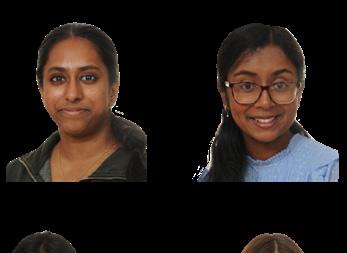
The new Linkway Editors
Isabella Amina
Maryam
Olivia
Jerusha
Priyesi
In Memoriam
Evani Devi Sharma
As many of you will be aware, we lost someone very important to us last summer. Her name was Evani Devi Sharma, and she brought something amazing into the lives of everyone she knew.
This article is one of the many ways that we are celebrating her life as a school community.
Evani joined St Helen’s in Nursery in 2011, and since that first day here she made many friends and happy memories. She developed her passions and pastimes while at St Helen’s, such as reading and singing. Reading was her primary passion – even from a young age she enjoyed spending hours and hours in the library, reading peacefully. She was also part of the school choir for many years and participated in many concerts both here and abroad. Another favourite hobby for her was ballet, which she started aged three and continued throughout her school career.
Her achievements were numerous and inspiring, especially given her illness. She passed all of her GCSEs, completed Grade 5 in ballet and won the Year 11 award for English at Prize-Giving last year.
She also had many incredible encounters and successes outside of academia.
When she was eleven, Evani co-interviewed Sir David Attenborough on Blue Peter. More recently Evani and her family had a very special encounter with some elephants (Evani’s favourite animal), organised by the amazing Mrs McGreal, and they also met Tom Holland.
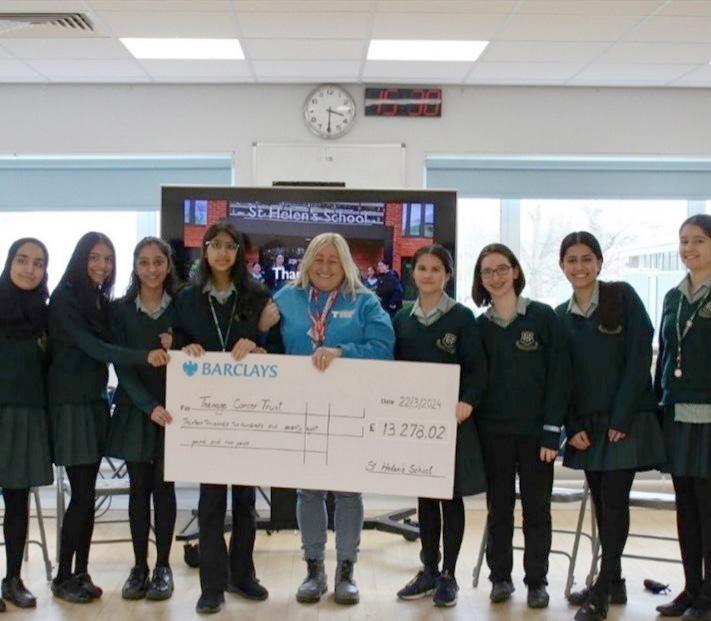
One achievement that was particularly special to Evani was the raising of money to donate to Teenage Cancer Trust (TCT) – a charity now close to all our hearts because of her.
In Memoriam (continued)
Evani Devi Sharma
When Evani was diagnosed with cancer two years ago, five days before her fourteenth birthday, she received support from TCT while she was in hospital and stayed on a ward funded by the charity. For Evani, one of the most valuable things that TCT did was treat her like a young adult first and a cancer
patient second. Despite everything she was going through, Evani always wanted to give back to those that had helped her and that was how the charity event that took place in July of 2023 was conceived.
In the lead up to the event, we, a group of Evani’s
other close friends, began to sell raffle tickets as a way to raise money for TCT. The wonderful raffle prizes were generously provided by Evani’s parents, Mr and Mrs Sharma, who were also a great help in organising the event. On the 5th July 2023, every girl in the school took part in a walk around the school grounds
in order to raise even more money for TCT. In addition, we had an online donation page where people could donate money to sponsor the walk. When it came the time came for our year group to walk, Evani led the march, surrounded and followed by the rest of our year group and several teachers in very interesting costumes (which involved tutus and fairy wings).
We would like to thank Mrs Arnot, who planned the entire event and made sure it ran smoothly and Mrs Barton, who helped conceive of the idea. This event was hugely meaningful for Evani and for the rest of us. I still have my “I walked for the TCT,” sticker stuck to my
bedframe, which reminds me of the walk and of Evani every time I go to sleep. We managed to raise a whopping £13,278.02 – far more than Evani’s target – and a representative from the charity came to accept the cheque at a special assembly in April 2023.
The loss of Evani has affected so many members of our community and since her passing, we have been finding ways to celebrate and pay tribute to what Evani meant to us. One thing we are doing, is having a plaque placed on the white bench outside of the Stone Hall doors. People walk past this bench daily and so it will always be there to remind
us of her. To honour Evani’s love of reading, we are also planning to create a cosy space in the library, named after her, where people will be able to relax and read their favourite books. There will also be an annual Literature prize in Evani’s name presented at Prize Giving.
We hope that in these small ways, we can, as a community, continue to remember Evani for many years to come.
In Memoriam (continued)
Evani Devi Sharma
Yet, it was not just the things Evani enjoyed doing that we will remember, it was also the people she enjoyed doing them with. We asked some of her friends and teachers to share some of our favourite memories of her:
For me, the greatest influence Evani had was her strength of personality. No matter what she was going through, she remained kind and generous and her brilliant sense of humour always shone through. Being friends with Evani taught me to be grateful for everything in my life, no matter how small. One memory of Evani that stands out to me, is when she came to watch the matinée performance of the Addams Family last year. I snuck up to see her on the balcony during the interval and she gave me a pack of Smarties. There is nothing particularly special about this memory, but the excitement she radiated during this moment, encapsulates Evani so
perfectly in my mind and as a result it will always be a special memory, to me. Isabella
I remember our form times spent together. In Year 9, Evani and I sat next to each other, and she would never fail to make me laugh. She had a devastating wit, and her comedic timing seemed almost effortless. Laughing and joking with her was a great way to start the day. However, for me, what I will be most grateful for was what Evani taught me. Her resilience was unlike any I have ever known: for many days she would go to hospital for treatment in the morning and then come to school in the afternoon. Evani was
also always grateful - she never stopped saying thank you, even for the smallest things. She lived in the present and looked to her future with positivity and determination. That is what I believe allowed her to keep moving forward. I hope one day to be like her in that regard. Amina
Perhaps it was all the literature that Evani had consumed that informed her wisdom, her intelligence, her capacity for empathy and her razorsharp wit – which belied her tender age. She had a rare appreciation for the beauty and complexity of language and its capacity to unlock deeply felt truths
- it is entirely fitting that we will have a Literature prize in her honour.
In lessons, she always answered questions with characteristic modesty and humility; but then what would emerge was often a completely brilliant insight. And when she learned something that resonated with her, her eyes would twinkle and she would smile that unforgettable smile: - ‘Oh, I hadn’t thought of it like that’ she would say – quietly absorbing it all. She was a complete joy to teach, and it was my honour to have had the pleasure to know her.
Ms Agnew
In Memoriam (continued)
Evani Devi Sharma
There is so much I could say about Evani. She was kind, caring, selfless, resilient, and truly the most wonderful friend I could ever ask for. Reflecting on the cherished memories I created at St Helen's, Evani was part of nearly all of them. While I have many favourites, two stand out the most for me: Our trip to Westfield during February half term. We explored the shops until our legs couldn’t take it anymore, we laughed at the silly things we found and even got matching shirts from Khadi. Evani shared her drink with me at lunch, and later, her rolled ice cream—a reflection of her kind and thoughtful nature.
Another vivid memory is the day we watched Uncharted together. We sat on the sofa talking about everything Tom Holland, and she thanked me for bringing doughnuts. Her constant gratitude is something I have always admired and something we could all learn to embrace in our lives. I am truly grateful that I was lucky enough to call Evani one of my best friends and to have someone as incredible as her in my life.
Samira
Evani’s time at St Helen’s included participating in the school’s ballet curriculum. She danced from her very first year at the school until Year 11. I had the pleasure of
teaching Evani from Year 4. She was dedicated and hardworking and enjoyed dancing with her friends at school. In June 2023, Evani took her Grade 5 assessment. It is a day I remember fondly and she danced beautifully. She was so proud of herself for completing it, and the ballet staff were even more proud of her. Evani smiled a lot that day. Her ballet cohort and the staff think of her a lot when we dance together – she will be a St Helen’s ballet girl forever.
Miss Henry
We would once again like to thank Mrs Barton and Ms Agnew as well as all other staff members who supported Evani and us over the last two years. Their unwavering support has been invaluable. Also, to Mr and Mrs Sharma, who were always kind and welcoming despite what they were going through themselves.
By Isabella and Amina, Year 12
Losing Evani has been one of the worst things imaginable and we miss her every day. But we are all so incredibly proud of who she was, what she achieved and how hard she fought. We are and always will be proud to celebrate her life.
“If you only say one prayer in a day, let it be thank you.”
Evani Devi Sharma
If you have been affected by this article and would like someone to talk to someone, the school’s pastoral network is always available. You can also access the school’s Whisper Service and Wellbeing Service.
Award winning short story Winners
We are very proud to share that in November last year, Maryam in Year 12, was the winner of the key stage 4 short story of the Young Muslim Writers’ Awards. As a result, she was invited to an award ceremony at Senate House in Central London, where she was presented with a trophy, a goodie bag and a cheque. We hope you enjoy her story, entitled ‘When Dania was Twelve’.
‘When Dania was Twelve’
When Dania was twelve, she wanted to be an artist. Growing up with three boisterous brothers, she spent most of her time playing football with them, but the moment she had time alone, she would run away with sketchpad and pencils, translating the world around her onto paper and canvas.
For the last 286 days, Dania has not had any more of these moments.
She has also not had time for football with her three brothers.
She only has two brothers now.
Her favourite thing to paint was the buildings. Tall, stretching far above her head. Each small window with its own unique story inside. Of a family, maybe like hers. Two newlyweds, smitten with love and hopeful for their futures.
A group of friends, excited for their plans the next day.
Most of these buildings have been destroyed.
Or at least, Dania assumes they have been.
She doesn’t live in her home anymore.
Winners (continued)
Award winning short story
She would wait eagerly for her art class at school every week. An hour every Friday, dedicated just to her art. Dania’s eyes would light up as she entered the classroom, an extra spring in her step. This was her space. The apron for paints was her wizard’s gown, and the brush was her wand. Every time the teacher held up Dania’s work to the other children, Dania dreamt of a future where her work would be held up to the world, and the name Dania Al Astal would be known by all.
Dania isn’t really known by her name to the world.
She’s just a number.
A forgotten ‘civilian’.
Dania was known within her family for her art. Whenever her work was put up on display, the entire family- aunts, uncles, cousins, grandparents, those random people who you don’t know but hug you at weddings- would go to see her art, and eat lunch at her house.
‘Dania, our brilliant artist’, her grandfather would call her, before adding a hasty ‘Masha’Allah’. Her younger cousins would beg her to teach them how to draw and paint and be like her. Even her brothers would feign interest for all of five minutes before running off to another game of football.
Dania hasn’t seen most of these relatives for a long time now.
They’ve fallen out of contact.
She doesn’t even know if they’re alive or dead.
But besides her art, Dania was also the bubbliest out of all her friends. She was always joking around. The moment she noticed someone was down, or not their usual self, Dania would be at their side with a smile and a joke, or a hug and a shoulder to cry on. It was hard not to like her, with her infectious laugh and kind eyes. Her classmates used to joke that she was like a cartoon character with her
never-ending optimism, but everyone at school had a soft spot for Dania.
School is now a thing of the past for Dania.
She and her friends have been scattered across the country.
They probably won’t speak again.
However, Dania’s best friend wasn’t another girl at school, or one of her brothers, but her cat. Dania’s cat was a tabby cat named Food. On her older brother’s fifth birthday, Dania’s father came back from work carefully carrying a nondescript cardboard box. He set it in front of Dania’s
brother, who opened it straight away, and the kitten jumped straight out. Her father explained that he’d seen it abandoned on his way home and couldn’t stop himself from picking it up. The kitten immediately took a liking to Dania,
Though not forever.
Dania has no idea where her cat is now.
She doesn’t have the luxury of worrying about him.
Winners (continued)
Award winning short story
Dania is thirteen now. Somewhere in the back of her mind is her dream of being an artist, but things have changed. It’s just her and two of her brothers now. She can’t draw the buildings of her hometown anymore, just the rubble they’ve been reduced to. She’s left that neighbourhood behind. Dania is supposed to be ‘safe’ now, though she feels anything but. It’s up to her to protect what’s left of her family. It’s Dania against the world now.
Now when she has a moment alone, she remembers what her life was like before everything changed. Sometimes she wonders what has become of all her ld art. If it was destroyed and burnt like
her home and school, or if it lies under the rubble, like her parents. She sees other girls her age in the camp, but ever since she had to leave her home, Dania has kept to herself. Letting another person into her heart gives her another person to lose. The kindness in her eyes has disappeared, replaced by desperation and fear.
Each day is harder than the last. Dania’s life is consumed with the difficult task of finding basic necessities for her and her brothers. It is easier to look to the sky now with all the buildings decimated, but when she glances up for some hope to get her through, all Dania can do is worry about the planes flying overhead. She
flinches at every sound they make, afraid that this plane will be the one that kills her. It hasn’t happened- yetbut every time the planes recede into the distance, a sickening feeling quashes Dania’s relief as she remembers that someone else will be killed this time.
Dania sometimes thinks there must be something wrong with her. Her brothers still play football. They don’t feel like they’re choking when they see the planes in the sky. Other girls her age laugh and chat together, but Dania can’t bring herself to do the same. When the camp is silent in the dead of night, she can hear her father’s final shouts of help. When she closes her eyes to imagine her old art classroom with a blank
canvas in front of her, the image of her classmates lying dead on the floor is all she can see. She wakes up, her breathing short and shallow, limbs flailing as she tries to escape the scene. She crawls outside the tent, so her brothers don’t hear her sobs.
One night, when Dania feels that the pain might never end, and is sure that her heart is literally breaking in her chest, she decides to walk around the camp. The walls of their tent are thin, and she knows the sound of her crying will destroy her brothers’ hope. Dania watches the night sky with fear, waiting for planes to destroy her moment of quiet, and force her to run. But instead, Dania trips and falls forward, her face
smashing into the dirt. She pushes herself to her feet and turns back to see what tripped her. A small piece of charcoal. Dania stares at it wonderingly, before she picks it up, enchanted. It stains her fingers, but she doesn’t care.
The camp is not an art class. There is hardly any paper, let alone canvases. Dania pulls up her sleeve and begins to sketch on her arm. The charcoal smudges, and her skills aren’t what they used to be, but it is still a chance to draw. A tiny sliver of hope in the darkness that Dania has been trapped in since she lost her parents.
Dania looks up to the sky again, and for the first time in months, she smiles. By Maryam, Year 12
Winners (continued)
A painting and a poem
Genocide Memorial Competition finalist
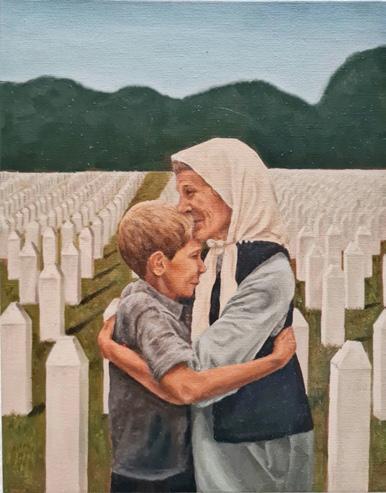
Students in Year 10 were invited to create an artwork for the Bosnia Memorial competition as part of Holocaust Memorial Day.
Entrants were tasked with creating a memorial design that reflected:
| an individual’s life story
| a community’s experience
| those murdered in the genocide
Here, Duru, Genocide Memorial Competition finalist, explains her entry:
For my memorial design, I felt that I should reflect the gravity of all aspects of the Srebrenica genocide. So, I wanted to paint s piece that highlights both the scale of the genocide (shown by the cemetery in the background) as well as the devastation caused for individuals (the mother and son in the foreground), for which, I was inspired by the Mothers of Srebrenica.
We are proud to announce that Dhyani, Year 8 recently won first place in the Calibre Audio Poetry/ Short story competition.
Unbound
In a world of printed words and ink,
There lived a soul who struggled, for what she sees is indistinct,
To read the pages as others would,
But in her heart, the love for stories stood.
Though paper and letters posed a fight,
Her spirit soared to find the light,
In braille, in audio, she sought her way,
To let the tales and poems have their say.
Through every challenge, she faced each day,
Her love for words would never fade away,
For in her mind, the stories danced free,
Unbound by the constraints that others could see.
She showed the world that, in different ways,
The beauty of words would always amaze,
In her world of unique artistry,
The power of literature found its diversity.
By Duru, Year 10
Calibre Audio is a charity that provides audiobooks for anyone who finds reading print difficult due to disability or illness. They set this competition to celebrate their 50th anniversary.
Poetry Winer
School productions
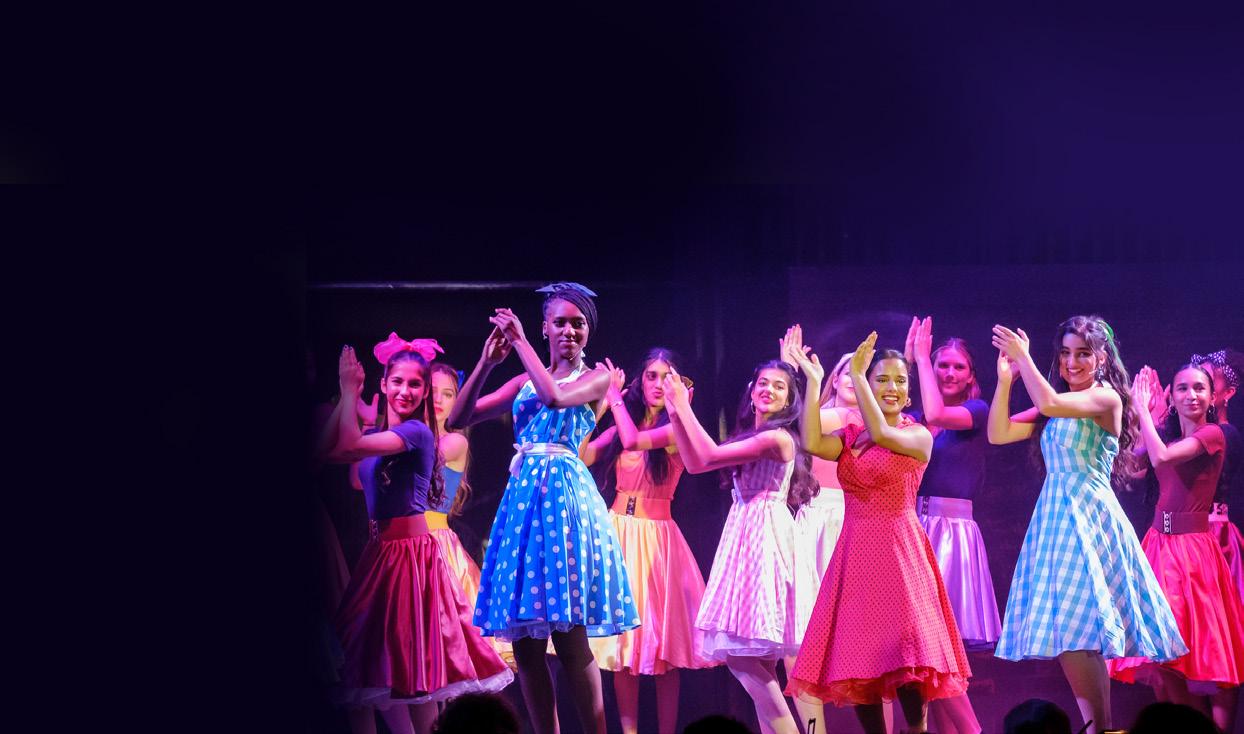
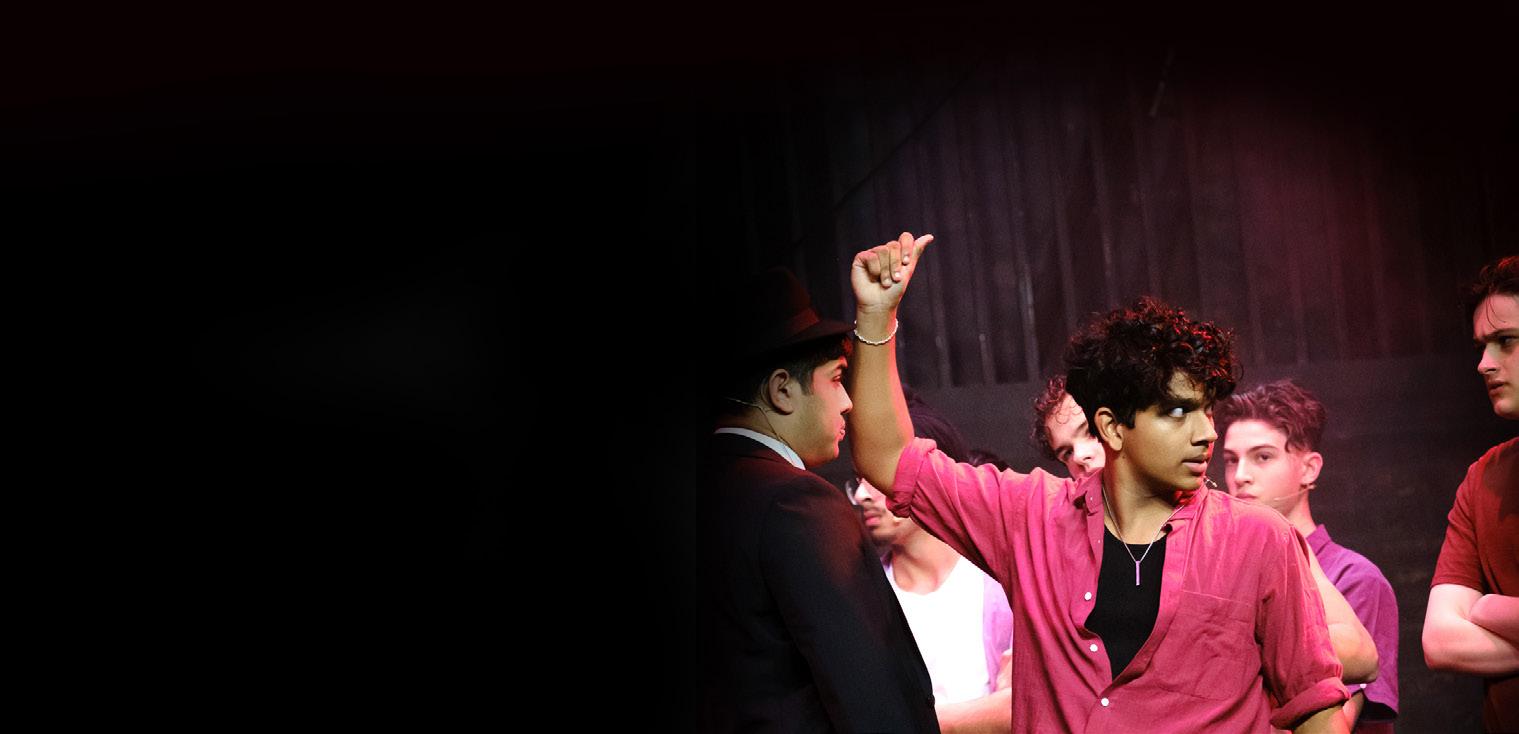
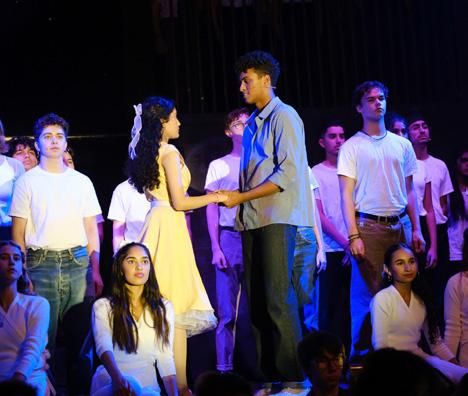
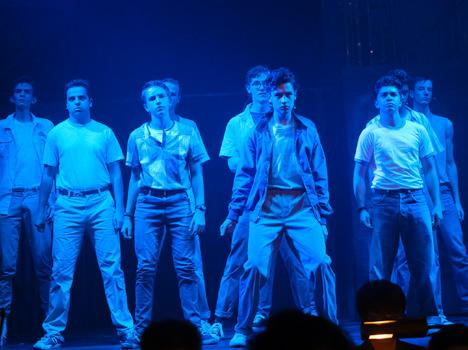
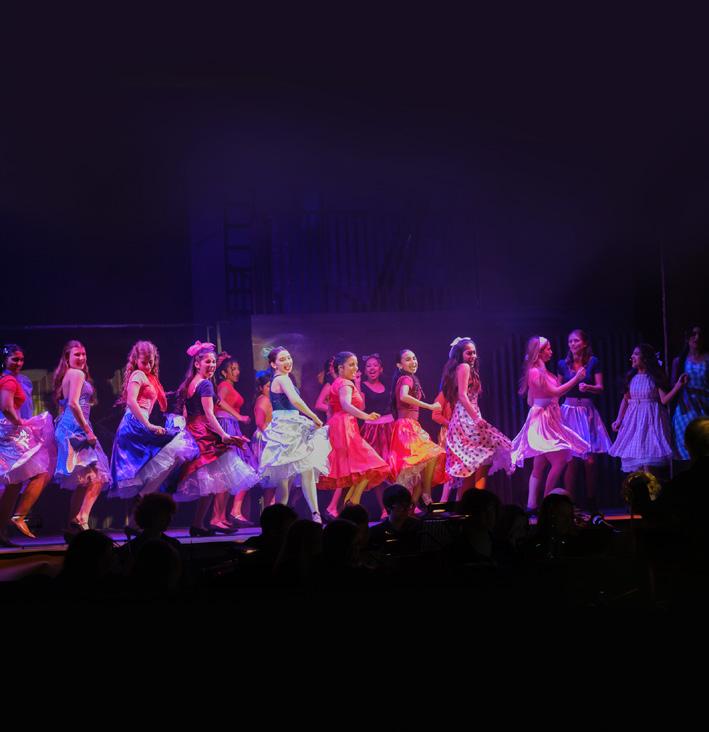
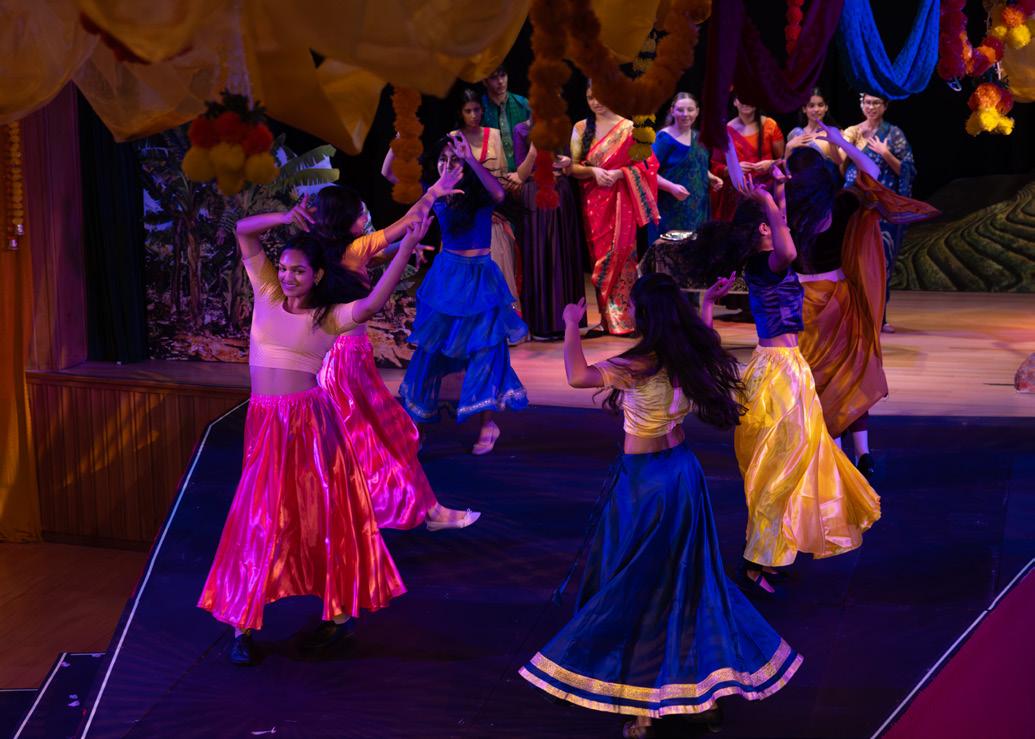
This year, the joint musical took place at Merchant Taylors’, and I was lucky enough to have been a part of it. This time, we put on West Side Story by Stephen Sondheim and Leonard Bernstein (the famous composer of the Oscar-nominated 2023 biopic Maestro).
West Side Story is based on Shakespeare’s play, ‘Romeo and Juliet’, but is set in 1950s New York; , and instead of two warring Puerto-Ricanrival families, it focuses on the racial tensions in the Upper West Side of Manhattan between the white Americans and the Puerto-Rican immigrants. Maria (Juliet), who is Puerto Rican, falls in love with
Tony (Romeo), who is white. This causes tension between the rival gangs (which are comprised of teenagers), the Jets (white) and the Sharks (Puerto Rican). This ultimately results in the deaths of Riff (Mercutio) and Bernardo (Tybalt), the leaders of the respective gangs.
Interview with the cast
School productions
During the rehearsal process, I interviewed members of the cast, including, Maahi (Y12), who played Antia, Jai, who played Tony, Ravin, who played Bernardo and Olivia (Y13), who played Velma and was co-dance captain for the advanced dance team.
Favourite aspect of your character/role?
Maahi: Her radiant personality. She is unapologetically herself: feisty, assertive, and cheeky. I have loved exploring her facets and how she is original to West Side Story, unlike many of the others e.g. Tony (Romeo), Maria (Juliet), Bernardo (Tybalt), and Riff (Mercutio).
Olivia: How much she loves to show off in the dances and how much she wants to “beat” the Sharks.
Favourite part of doing the musical?
Maahi: I love being a part of the musical every year for so many reasons. I love meeting new talented actors, singers and
dancers, I love exploring new characters, and genres, and most of all I love the thrill of performing!
Most difficult aspect of taking part in the musical?
Maahi: I have found it difficult to manage my schoolwork, co-curricular, and maintain a healthy sleep schedule because of rehearsals, especially during the weeks leading up to show week. However, the excitement of it all is intoxicating and I am incredibly sad that this will be my second last one.
Olivia: There are a lot of rehearsals, so it is quite time consuming and can be quite tiring. But when it all comes together it is definitely worth it!
Which movie adaptation 1961 or 2021 and why?
Maahi: I preferred the 2021 movie adaptation, because it was much better that they didn’t use brownface (used to refer to
Issue 12 | February 2025
the practice of wearing make-up to imitate the appearance of a non-white, especially South Asian or Latin American, person, typically as part of a performance. This practice is now regarded as offensive).
But in my opinion, Rita Moreno and Ariana
DeBose (both playing Anita) stole the show in their respective movies.
Olivia: Probably the 1961 one as it is a classic, which I watch with my family a lot. Also, nothing beats the original.
Interview with the cast (continued)
School productions
Favourite character that’s not your character?
Maahi: My favourite character is Consuelo as she has the funniest lines and Janae (Y12) executes them perfectly and with such flair.
Olivia: I think Sadie’s (Y12) character Anybody’s (Girl) is my favourite character as she is very strong willed and independent.
Favourite song?
Maahi: The ones at the top of my list are Gee, Officer Krupke – which the Jet boys perform and it is hilarious, Tonight – which is a classic love song between Tony and Maria, and finally America –
which is perhaps the most famous of them all!
Olivia: America is my favourite song as it is the most well-known and energetic song which includes all the girls.
Favourite non-musical scene?
Maahi: The bridal shop scene between Anita and Maria. Early on, the audience learn so much about their contrasting personalities and values. It has also been a very light-hearted and comedic scene to work on.
Favourite dance number?
Olivia: I think the Mambo is my favourite dance number as although it is one of
the hardest it really shows the animosity between the Sharks and Jets.
How do you get into character when preparing to perform?
Ravin: Well, for me, Bernardo has a Puerto Rican accent so that’s one thing I must work on. I try to listen to something Spanish, maybe some Spanish music or a TV clip. For me the rest flows from the accent. In terms of characterisation, Bernardo is quite a strong character and he’s a fighter, so I really need to bring that aggression to the fore and show the audience that side of him especially during fight scenes.
Why did you audition for West Side Story? What really excited you about the musical?
Jai: This is the first musical I’ve ever been in, but I have done quite a lot of singing and I really enjoy it. When I saw that this year’s joint musical was West Side Story, I got very excited. I know quite a few of the songs which I really love so I thought this would be the perfect opportunity to try a bit of acting and dancing.
Ravin: This is only my second year at the school so when auditions came back around, I was really keen to get involved. There is obviously the thrill of acting in front of an audience and your friends but also for the skills it will help me develop. All this got me really excited.
Interview with the Directors School productions
I also interviewed Miss Clarke, the Director, and Mr Couldridge, the Music Director:
Favourite song?
Miss Clarke: A difficult question in a show with so many brilliant songs! Probably America because it is such an energetic, vibrant number, and for girl power!
Mr Couldridge: Somewhere, I think. But I’m slightly biased because Bernstein did a concert version of some of the music of the show called Symphonic Dances. I’m a viola player and he gave the melody of Somewhere to the viola players, so I think it’s a beautiful tune.
Favourite non-musical scene?
Miss Clarke: Again, a favourite scene is hard to choose, but I think the scene with Doc and Tony towards the end of Act 2, when the usually calm Doc erupts and tells Tony to ‘wake up’ is a particularly poignant scene. He asks Tony ‘why do you always act like there’s a war on?’ and promotes the concept of looking for similarities with others, rather than differences, in the search for peace.
Favourite character?
Miss Clarke: There are so many lead characters with fantastic stories and relationships – I’m finding this question difficult (again!), so will have to go with a joint win for the supporting characters of Office Krupke and Consuelo
and the comedy these characters bring to the show.
What do you find most difficult about directing such a large musical?
Miss Clarke: West Side Story is one of the mostloved musicals of all time – a classic! It’s also a really challenging musical with such intricate music, acting and dance and we aim to do the themes of the play justice.
We have a huge cast for this one, so it’s taken a lot of planning to ensure we have everyone in the same place, at the same time! It is also all of the above that has made it a really rewarding musical to direct. Thank you to our wonderful cast and crew from MTS and St Helen’s for bringing it to life.
Being part of this show has been an amazing experience, which I would choose to do again. I thoroughly recommend taking part in school theatre performances, because it helps grow confidence, and you make so many great friends along the way. It’s definitely tiring, especially during performance week, but you get so much out of it and the buzz of performing is worth it.
If you came to see the show, I hope you enjoyed it and if you didn’t come, you should have.
By Isabella, Year 12
School productions BLOOD WEDDING
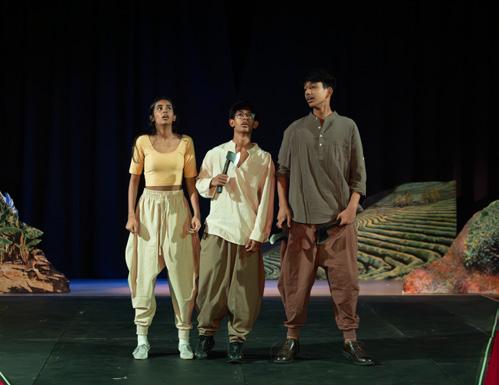
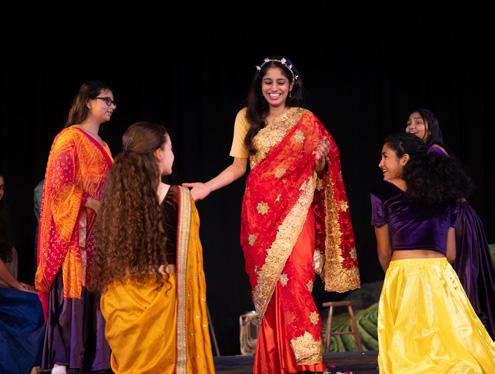
Blood Wedding was performed by students from year 9 and above from both St Helen’s and Merchant Taylors'.
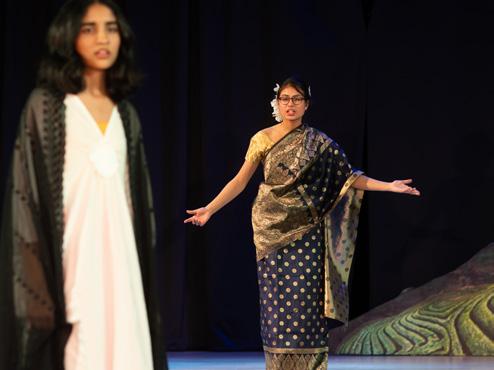
Blood Wedding was performed by students from year 9 and above from both St Helen’s and Merchant Taylors’. The original play Blood Wedding was inspired by a true story of a fatal feud between two families in Almería, in the mountains of Southern rural Spain. Spanish playwright Frederico Lorca took the story of a woman caught between two lovers and turned it into a Modernist spectacle, complete with a Greek-style chorus of woodcutters, a human Moon, and Death personified as a beggar woman. For our production, the play was transposed to 1930s Nepal.
Linkway editor, Priyesi interviewed some of the cast members about their experience.
Interview with the cast
School productions
What is your favourite part about being in the play?
Anya (Woodcutter, ensemble): It’s really fun, I enjoy rehearsal time and practising for the production, and I’ve made so many new friends.
Oscar (Leonardo): I really like Lorca’s plays;
I think it’s really interesting to dive into drama from a different time period and understand a different way of living. How do you get into character?
Shanti (Bride): It’s a very hard character to get into, this bride, she’s just really confused, all of the time – so a bit like me I guess!
She doesn’t know who to love, she doesn’t know who she loves more, or if she’s even ready for marriage!
Oscar (Leonardo): I generally try and think about what Leonardo wants, what he’s going to get, why he wants it and what’s in his way.
What was your opinion of the storyline?
Oscar (Leonardo): Tragic. I think it’s almost predictable because if anyone’s watched Romeo and Juliet, they know what’s going to happen; but the chemistry between Leonardo and the Bride is really great, to the point where it seems like their storyline is determined by fate, but at times you can’t tell what’s real, so that’s a really nice aspect.
Compared to other key characters in the play, Leonardo is the only named character? An interpretation of this is Leonardo is the protagonist who disturbs the smooth social workings in his community – what is your interpretation of Leonardo?
Oscar (Leonardo): I think it’s true, to a degree. You could say Leonardo is the protagonist who has a high social status by being a man, but he doesn’t have a high social status in class. I don’t think that Leonardo having a name makes him the most important character.
I think one of the really interesting themes of the play is how in Lorca’s time, because he was a socialist and gay, he wasn’t able to do what he wanted. He couldn’t love the men he wanted to, and the storyline is similar to that, it’s about being held back because of arbitrary prejudice. In this way, because of his class status, where Leonardo is unable to marry, it makes him more of a tragic hero, so maybe that is why he’s named.
What role would you want to play if you weren’t your character?
Sahana (Wife of Leonardo): the maid, because I think she has
BLOOD WEDDING
this charisma around her and she’s just so loving towards everyone else and she’s well put together.
Shivi (Death): The bride, because I think her character has so much development through the play, and you really see how she takes control of her life and feelings.
Anoushka (Girl): The moon, because she looks beautiful but is quite sinister underneath.
Anya (Woodcutter, ensemble): The mother, I love her role, narrating the whole story with confidence and she dominates the stage.
Interview with the Directors
BLOOD WEDDING School productions
How did you come to choose Blood Wedding as the play this year?
Mrs Connell: Not many people know, but Lorca did a trilogy; : Yerma, The House of Bernada Alba, and Blood Wedding. We performed Yerma years ago, in the RBH, which we actually set in Spain, with a Spanish guitarist and cultural costumes. We also studied The House of Bernarda Alba as a GCSE text for years, so we thought, let’s finish the trilogy off! Even though he’s a man, Lorca writes really well for women, and it’s really important that we had a strong female lead.
How did you cast the actors in this production?
Mrs Connell: As always, we put out an email to students in year 9 and above and students from both schools are given a synopsis and lines to learn for the auditions. We have a panel who give them a score then we make a shortlist and do a recall to make sure we have made the right decisions.
Were there any difficulties that you came across and how did you overcome them?
Ms Wine: Yes. Energy was really difficult. I think when you're looking at a whole school play, you need vibrancy, and you need the removal of inhibitions,
so that is always quite difficult to overcome in any production. Overcoming it came through positive praise and student-teacher examples, so that we could really encourage confidence, refinement, and expression.
Mrs Connell: We made a big decision by changing the location of the play, originally set in Spain, to Nepal. We went with Nepal, but kept it in the 1930s period and we consulted the Equalities Equity, Diversity and Inclusion team to discuss what we should or shouldn’t include. We wanted to make sure we were culturally respectful, and also pay homage to Spanish, Nepali and Greek influences. Music, costumes and set were all important as the
themes in the play were so dark, but we wanted to make it beautiful as well. Our talented staff and cast really helped us use light and lots of colours to celebrate the culture and richness of the text and context.
What is the best part about putting on a production?
Ms Wine: Watching you (the students) grow and watching you get so excited. Seeing those special moments on stage that we hadn't planned for; and every performance made it so much more emotional – our job is done. When you see it on the stage, it is the most magical thing ever.
New initiative
The Yondr pouch
Last year, the school announced a new initiative to introduce Yondr pouches at St Helen’s to combat excessive phone use during the school day and to improve overall student wellbeing.
Mrs Varma, the Deputy Head Pastoral, said that although we ‘already had a no-phone policy’, there were ‘several instances’ where students were breaking these rules, including in compromising spaces like changing rooms. Rules aside, Mrs Varma commented that the main impetus for introducing the Yondr Pouch scheme was to enhance student wellbeing. Indeed, studies show that some teenagers spend up to 9 hours per day on their phone, and this can cause a negative impact on sleep, mental health, academic performance, and even result in chronic neck and backaches.
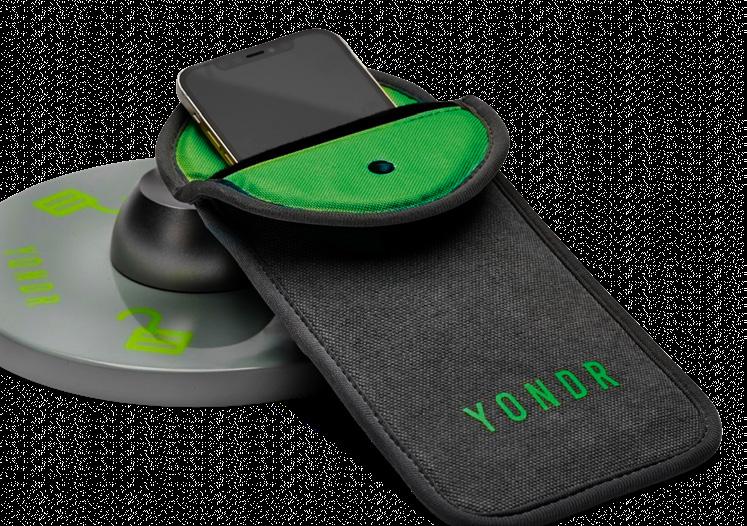
Dubbed ‘the new school essential’ by the American news site Axios, Yondr pouches were used by over 1 million people across 27 countries in 2023, with this number set to double by the start of 2025. Yondr is a company that focuses on creating an educational environment that is uninterrupted by technology, they are best known for their magnetic phone pouches, used by thousands of schools, which have
now come to St Helen’s. Girls in years 7-11 who choose to bring a phone to school now have to lock their phones securely in a pouch from 8.25 am until 4pm.
But some students are not happy: although one Upper School student who preferred to remain anonymous, said that ‘they are quite useful’ and ‘help us to be less reliant on our phones during the school day’, she also conceded that they have been inconvenient (especially at the start of term) as there was lots of congestion at the unlocking stations at the end of the school day.
Other concerns were around the cost of the scheme to the school and to parents. Parents pay £30 for the pouch. However, if it is not damaged and not misplaced, the pouch will last several years and should not need to be replaced throughout a student’s time at St Helen’s.
On the flip side, some students have welcomed the introduction of the pouches, reporting that they have helped them focus more during the day and made them less concerned with checking their phone frequently. One girl in Year 8 said “they are good to an extent as it ensures that we are focused on our learning and prevents all sorts of things such as taking inappropriate pictures, (for example, in changing rooms)”.
Although, there have been some teething problems with overcrowding around the school entrance as students were gathering to unlock their pouches after school, this has recently been addressed through the school council and Mrs Varma has organised a new unlocking station in the school Library.
We are one of 250 schools in the UK who are using Yondr pouches, which, according to the research, allows more ‘overall engagement’ in class and improves students’ learning, as well as promising ‘better academic results and
attainment’. We are currently in a transition period between students having full control over their phones and having more restrictions, so some adverse responses are to be expected. Mrs Varma explains that school does not think phones are ‘bad’, just that they ‘firmly’ believe that the pouches will aid students not just in their learning now, but in their ability to resist the ‘pull’ of checking them constantly in the future. This comes in the context of
the Department for Education declaring that they are ‘determined’ to reduce the negative impacts of phones in schools.
Mrs Varma reassured us that the scheme will be reviewed, and the school will continue to seek solutions to the difficulties that have arisen, and we have yet to see the long-term impact of their introduction on the students of St Helen’s.
12 | February 2025
Students have welcomed the introduction of the pouches, reporting that they have helped them focus more during the day and made them less concerned with checking their phones frequently. One girl in Year 8 said “they are good to an extent as it ensures that we are focused on our learning.
By Maryam,
Year 12
St Helen’s Geographers
Diary of an Azores adventure
Diary:
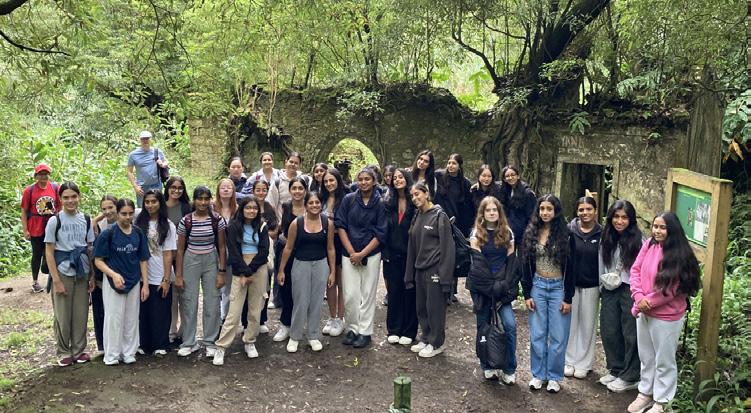
In October half term, 30 students from year 11, 12 and 13 visited Ponta Delgada, the capital of the Azores. This was led by the geography department and the purpose of the trip was for us to experience the natural wonders of the Island, especially its unique volcanic landscape.
Day 1 in the Azores: 24th October 2024
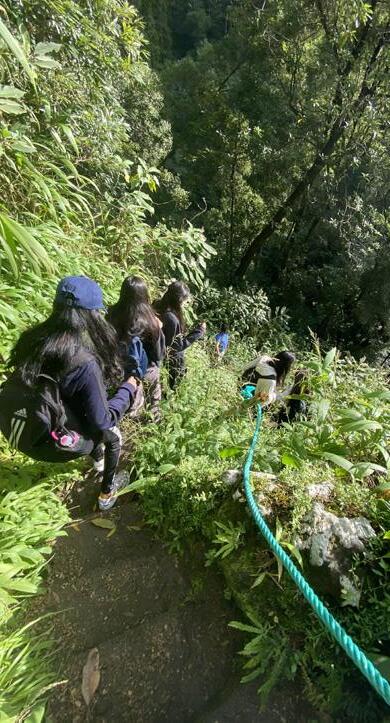
Our day started with a hike in the forest. We were told it would be a gentle and simple forest walk; but this was far from the reality. Perhaps it was partly my fault as my white Nike trainers
were a poor match for the steep and slippery terrain, and so I ended up feeling as if I had been thrown into the 'Hunger Games'. Nevertheless, It was exhilarating! The path was spectacular, surrounded by lush tropical vegetation and I was taken aback by the sheer biodiversity of the Azores.
We navigated our way through the forest towards the "Fabrica da Vila", an abandoned and decayed hydroelectric power plant. It had been in operation between 1904-1974 to provide electricity for the growing demands of the city of Ponta Delgada on Sao Miguel island.
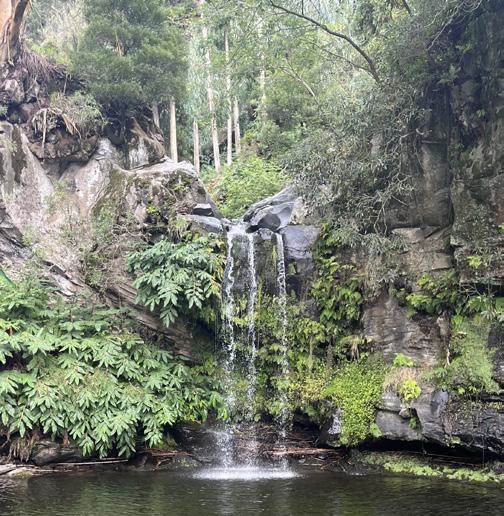
Nearby was the Salto do Cabrito Waterfall. We took a dip and some even ventured for a deeper swim in the bracing, icy water. I think the fact that every student on the trip would still be able to recite the perfect GCSE 6 marker on the formation of this landform is a real credit to our amazing geography teachers!
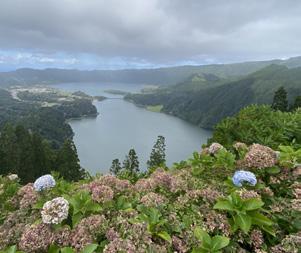
By this time, we were all hungry so were driven to an incredible viewpoint of Lagoa do Fogo to eat our packed lunch. There was a beautiful crater lake within the Agua de Pau Massif stratovolcano. Its azure colour was stunning and the serenity of the landscape was
truly remarkable – I will remember it for many years to come.
We then visited a pineapple plantation. I was shocked to learn that it takes roughly two years for a pineapple to grow. We were all then treated by the geography
department to a delicious pineapple ice-cream from the planation.
After dinner at a local restaurant, we all went bowling. I was ready to become champion, when to my dismay I realised there were no bumpers.
My normal tactic of hitting the ball from one side to the other sadly couldn't be implemented and my sheer inability to throw the ball in a straight-line landed me in second to last place.
St Helen’s Geographers (continued)
Diary of an Azores adventure
Day 2 in the Azores: 5th October 2024
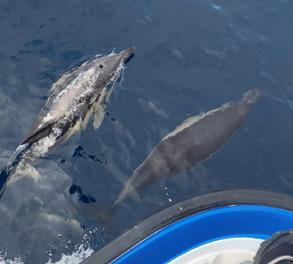
We woke up early and were all zipped up in our St Helen's waterproof jackets embossed with a tiny whale, prepared for our adventure at sea. The Azores is an archipelago in the middle of the Atlantic Ocean where there are many different species of whales, dolphins, sharks and turtles. Within 30 minutes of embarkation, we saw an amazing pod of short-beaked common dolphins (Delphinus delphis). I found it hilarious to watch them playfully doing backflips. I was one of the few lucky ones on board who did not feel seasick when the waves began to get very but those who did bravely fought it out.
Sadly, we didn't see any whales, but the dolphins made the trip completely worthwhile. Afterwards, we visited the Gruta do Carvão Lava Tube. These are natural tunnels formed by the flow of lava, in which the exterior layer solidifies to form basalt and the interior molten lava drains out into ocean leaving behind a hollow tube. It was fascinating that there were a range of different entities on the stalactites (solidified droplets) within the cave. There were canary yellow colonies of actinobacteria which our guide informed us are incredibly important as actinobacteria is used in two thirds of all antibiotics.
Additionally, there was a strange transparent coating on some of the stalactites called volcanic glass as well as orange oxidised iron. Despite feeling as though I had been transported into the 'Upside Down in Stranger Things', I had a lot of fun and I know Mr Matthews enjoyed his visit as the guide called him "a cool teacher" (I think Mr Matthews said he wanted to engrave that onto the door of his office.)
At dinner in the same local restaurant, we were given a surprise by the owner, who sang us a Portuguese song. He implored us to join in the chorus, so we all sang together despite not knowing the words.
I tried to search up the song on Spotify back in the hostel but unfortunately, I got the lyrics (rosquinha) wrong as on Google translate it said it translated to donut!
Diary of an Azores adventure
Day 3 in the Azores 26th October 2024
We visited the Furnas Lakeside Interpretation centre to learn about the volcanos and the significance they hold for the Azorean people. I learnt the importance of them in terms of tourism and soil fertility but also the challenges and social consequences of living in an area where dormant volcanos may become active and erupt. Our guide told us that despite having suitable adaptation schemes such as evacuations, these can have extremely negative effects on the local economy as it can mean tourism rapidly declines and unfortunately this has been a significant problem in St George.
At lunch, we were invited to a traditional Azorean meal which consisted of slow-cooked vegetables that had been heated underground for six hours by the volcano's heat. Personally, my Cozido stew could have done with a lot more seasoning and it had a desperate need for chilli!
We were then taken to one of Europe’s largest botanical gardens, Terra Nostra, (‘stunning and remarkable’ according to Ms Brew) which was filled with a plethora of different tropical plants and flowers. Next, we visited one of Europe's two only remaining operational tea plantations, Cha Gorreana. We learnt
how tea crops are grown, oxidised and placed in a dry machine, before being packaged and sold. As an avid tea drinker, I was able to stock up on some well needed green and pineapple tea.
Finally, after a long and tiring day, we finished our trip with a visit to a natural hot spring. The water was an eerie green and brown colour. However, we were told that it was actually filled with minerals including iron that are incredibly nourishing for our skin.
This geography trip to the Azores taught me so much about the natural characteristics of the Azores as well as its rich culture and history. On behalf of all of us, I want to say a huge thank you to Ms Brew for organising the whole expedition and also to Mrs Shah, Ms Shah and Mr Matthews for looking after all of us.
By Simran, Year 12
St Helen's delegation
Leadership conference
For the past three years, Wimbledon High School has hosted a Leadership conference for Sixth Formers to come together and discuss current, relevant topics. In an era where young people have become increasingly unwilling to speak and discuss challenging topics and confront opposing and contradictory views, the conference aimed to bring about a ‘better quality’ of ‘tough conversation’, allowing young people to listen to each other and acknowledge the perspectives of others.
Mr Turner, the Senior Deputy Head of Wimbledon High School, reminded us of this during his opening remarks; he emphasised how everyone’s stories are of equal importance, and rather than working against each other
and creating division, our stories intersect to create a ‘large tapestry, and a larger truth.’
The conference this year was based around ‘Leadership in Polarised Times’, following the riots across the UK over the summer, the rise of the far right in Europe, and conflict in the Middle East- all topics on which strong and varied opinions were expressed. The conference provided an inspiring space for us to be educated by speakers such as Anki Deo, the Senior Policy Officer at ‘HOPE Not Hate’, Rabbi Jonny Hughes, the founder of The Abraham Project, as well as Baroness Sayeeda Warsi, and Dr Sanam Vakil, who all aimed both to open up conversations between
students on these sensitive and controversial topics, as well as educate us on the respective backgrounds to the political situations we were discussing.
The content was at times very sensitive, and each speaker, as well as the students were encouraged to express their own personal perspectives. This did mean that the content was necessarily biased, and so we therefore feel it would not be impartial or correct to publish the content of what was said here, as it would not provide a balanced or fair view.
But more importantly than what was said and discussed (which can be found in a newspaper or online forum) was the impact the
conference had on the four of us that were fortunate enough to attend.
Jenani: ‘‘I found the leadership conference really interesting, as it allowed me to engage with and discuss important current issues with so many different people, each holding diverse viewpoints. The speakers, who were all really informative and engaging, were also varied in their perspectives, which enabled me to gain a balanced understanding of pressing issues before coming to my own judgments. The chance to discuss current political problems, such as freedom of speech on social media was particularly interesting given its relevance. Overall, I found this to be a great experience.’ problems, such
as freedom of speech on social media was particularly interesting given its relevance. Overall, I found this to be a great experience.’
Annie: ‘I thoroughly enjoyed our day at the Student Leadership Conference, where we joined students from across London to engage in meaningful discussions on one of today’s most pressing issues. Hearing from figures like Baroness Sayeeda Warsi was truly inspirational, the lecture from Dr Sanam Vakil was my highlight. She spoke on the history of the conflict in the Middle East and gave her perspective on its future, providing great insights and informed conversations later on in the day.’
Rose: ‘I really enjoyed being able to learn more about the history of the conflict in the Middle East and about the current rise of the Far Right. It was great to hear from many different people and hear a range of perspectives.’
Personally, afterwards I felt a lot more equipped to talk to those around me, especially those with different views and perspectives- which has become increasingly difficult in a time in which we do so less and less - perhaps due to the rise of cancel cultureand I am also very grateful for the opportunity to meet other young people with similar interests to me.
By Maryam, Year 12
In conversation
A passionate educator
A conversation with Ms Heyde and our new lower school Linkway editors.
In this issue, we are thrilled to feature an exclusive interview with one of St Helen’s’ most admired educators, Ms Heyde. Known for her enthusiasm, creativity, and deep love of English Literature, Ms Heyde has made a lasting impact on all her students. Read on to discover more about her journey, her challenges, and what makes teaching at St Helen’s truly special for her!
Good morning and thank you for joining us today! Can you start by telling us a bit about your background and what inspired you to become a teacher?
My mum used to work as a teacher, and I was inspired when I saw how much she helped her students. From that moment on, I knew that I wanted to be a teacher.
That’s wonderful. What subjects do you teach?
I teach English, English, and more English!
What do you find most rewarding about teaching?
I love it when my students gain knowledge about topics I haven’t even heard of and then share it with me.
It’s such a fulfilling experience to see students grow in unexpected ways.
On the flip side, what challenges do you face as a teacher?
When students don’t have enough faith in themselves, it disappoints me. I want them to believe in their abilities and reach their full potential.
What do you hope your students take away from your classes?
I hope that my students know that my classroom is an open and welcoming creative space, full of ideas and opportunities. I want them to feel comfortable sharing their thoughts.
In conversation (continued)
A passionate educator
Can you share what makes teaching at St Helenʼs special?
I love bringing my passions into the classroom and running extracurricular clubs. One of my favourites is Dungeons and Dragons club! It’s such a fun way to connect with students outside of lessons and see them thrive in a different environment.
Can you describe a particularly memorable moment you’ve had with your students?
One particularly memorable moment was when one of my students was so engaged in the Year 8 persuasive writing presentations and she gave such thoughtful feedback that we decided to call her "Lord Sugar!" It was a fun moment that really showed how involved and passionate our students can be.
If you could change one thing about the education system, what would it be?
I would add 100 hundreds more libraries to the schools! I think access to books and resources is so important for inspiring students to read and expand their knowledge.
What do you consider to be the most important qualities of an effective teacher?
Excellent jokes and drawing skills are a must! But in all seriousness, I think a love for the subject and a genuine connection with students is what makes a teacher truly effective. I just really love English!
What role do you think creativity plays in English?
Creativity is essential in English. Analysing texts with different parts of our brains, approaching them from new angles, and using our imagination really enhances the learning experience. It’s about thinking outside the box and exploring endless possibilities.
Issue 12 | February 2025
This heartwarming conversation with Ms Heyde gives us a glimpse into what makes her such a dedicated and inspiring educator. From the personal touch she brings to every lesson, to her passion for helping students discover new things, it’s clear that she makes a lasting
impact at St Helen’s. Thank you, Ms Heyde, for your commitment to education and for making our school a better place for all of us!
By
Avery and Parisha, Year 7 and Maanya, Year 9
A practical guide
How to succeed in life
Dear Girls, Going to a school as excellent as St Helen’s, means that many of us have ambitious dreams and aspirations for the future that may seem daunting at first. Because the first question on all your minds is probably, how will I get there? As someone who falls into this group of people, I have made several steps to find answers to this question.
“Lost time is never found again.”
Benjamin Franklin
This is not about looking backwards but instead looking forwards and asking yourself the question, what can I change to manage my time better?
One of the biggest barriers that I have found, particularly when I was preparing for my GCSE’s, is procrastination and how to find motivation. The first thing I had to discover, is that there are two types of motivation: extrinsic and intrinsic. Extrinsic motivation arises outside of the individual, to gain a reward. For example, doing extra schoolwork to get praise or practising hard in music or sport, to get a medal or prize. So then, intrinsic motivation is within the individual, doing something for your own satisfaction. Therefore, to stay motivated, you need to figure out which kind of motivation resonates with you. Are you working for an external benefit, or for your own satisfaction?
The second barrier is how to maintain focus once you have your motivation in place.
“We are what we repeatedly do. Excellence, then, is not an act, but a habit.”
Aristotle
We tend to find it easier to create habits that don’t hold much value, for example, social media or junk food. However, through intrinsic motivation, doing the things that satisfy you, you will begin to turn things that you may be less inclined to do, into habits. The first step is to create micro-habits: instead of saying to yourself “I will do more history revision”, say, “I’m going to do 15 minutes of history consolidation every day”. If you do this, it should eventually become a habit. Then you may even start to increase the amount that you do. The second step is to try habit stacking: say to yourself “after I do 15 minutes of history consolidation, I will then read up on the next topic”.
You may also want to try task pairing: this is where you pair a task, you’re not particularly willing to do with something you enjoy. You may already be subconsciously doing this if you listen to music while working. Another example is if you have a boring or difficult video or documentary to watch, you could watch it while eating your favourite food or snacks.
How to succeed in life A practical guide (continued)
Many of you may also know the Pomodoro technique. It focuses on regular breaks when working to prevent you losing momentum. First you identify the task, then set a 25-minute timer and do as much focused work as you can towards the specified task - in that time, then take a 5-minute break. Obviously, you can adjust as necessary to your attention span, but don’t go over an hour. Then, after 4 sets of this (2 hours in total), you would take a longer break but try not to go over an hour for the break.
For me, the most significant thing is planning.
“By
failing to prepare, you are preparing to fail.”
Benjamin Franklin
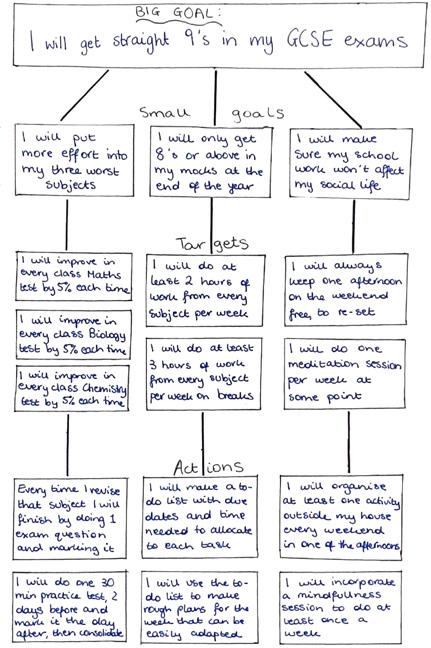
For those of us who are ambitious (most of you, I imagine), this is the best way to achieve your goals. You must work backwards, rather than forwards. Write down that big broad goal you want to achieve, then break down this big goal down into smaller goals, then split those into specific targets and finally, create a specific list of actions per target. Here, is an example of how this would look.
Lastly, you need to remember the importance of setting an achievable goal. Some of you may be tired of hearing about SMART goals but they are the keys of success.
Studies have shown that setting goals makes you 10 times more likely to succeed.
So, follow this and stay motivated and focused, so you can be one of those people who now knows the answer on how to succeed in life!
By Olivia, Year 12
More than just a TikTok trend
Girl Math. Girl Dinner.
For the girlies.
All phrases that are now used colloquially; but have you ever considered the drawbacks of these controversial phrases?
Let’s take Girl Math: an invented set of ‘rules’ and so-called internal feminine logic that justifies the reasoning behind decisions that girls make. It’s the perception that buying more on a website to earn free shipping is saving money, or that returning something for a refund
is profitable; timing your hair wash so that it lines up with your weekend plans, or planning your afternoon around an event so that you can figure out when to start getting ready.
Almost everyone reading this will recall times when they have made decisions based on these ‘rules.’
However, most of you will see these ‘rules’ for what they actually are: logical fallacies. When this is pointed out to ‘Girl Math’ believers, they often get quite upset, they seem to resent the attempt to ‘ruin their fun’. But the problem here isn’t that people are spending irrationally; the problem is the implication that irrational spending is intrinsically a female quality.
The fundamental problem with Girl Math is that it infantilises us. It reduces women to ’silly little girls’. This infantilisation belittles us and tells the world that we cannot use logic and reason. That we do not have the critical thinking skills or aptitude to manage our time properly. The reality is, whether you understand the concept of Girl Math or not, you shouldn’t use it to demean others. And for us girls, we shouldn’t have to justify the way we spend our time.
Following on from ‘Girl Math’, ‘Girl Dinner’ is also causing controversy. According to the newspaper, ‘USA Today’, a ‘Girl Dinner’ is an “often attractively presented
collection of snacks that involve little presentation.”
Trending videos showcase women who are ditching complex, pricey recipes for a meal comprised of various bits and pieces: like an artfully arranged mini charcuterie board of crackers and cheese. Some ‘Girl Dinners’ can be more chaotic and feature chicken nuggets and chocolate milk as a meal. Some even go so far as to suggest that a bowl of ice is Girl Dinner.
Joking or not, these seemingly ‘harmless’ videos serve to perpetuate the idea that women should be in pursuit of a thinner body, and that is the only route to social acceptance. This trend could have sparked harmless, light-hearted, and
funny conversations, but instead it spiralled into a dialogue about restrictive eating habits and the ‘ideal’ body. We’ve been obsessed with knowing other people’s diets for years, and the obsession has only grown more virulent and now, the ‘what I eat in a day’ tag on TikTok has over 17.7 billion views.
Arguably Girl Dinner is just ‘picky bits’. It’s a good concept for many women who, at the end of a busy day, just want a low effort meal. However, there are concerns with this too. This trend has glorified nutritionally deficient diets, and nutritionists are concerned.
Undereating can create serious health issues. By heavily restricting calorie intake, you can cause your metabolism to slow down. Therefore, you will burn less energy and it may become harder to lose weight. Except, it wouldn’t even be fat mass that would be broken down, it would be muscle mass – the healthy mass. In addition, the risk of nutritional deficiencies is significantly increased by constricting your diet. These can further impact your hormone function, skin health, hair health and immune systems, leading to slower recovery from injuries, poorer sleep and mental wellbeing.
More than just a TikTok trend
Like with ‘Girl Math’, the addition of the word ‘girl’ to the name of these dinners changes the trend from troubling to downright problematic. Women have been the targets of diet culture and body shaming for many years; food restriction and minimisation are erroneously considered a feminised behaviour. The trend of Girl Dinner begs the question: why are we celebrating women undereating, further instilling unhealthy body ideals?
You may think that no one is actually reading this far into these trends, that ‘Girl Math’ and ‘Girl Dinner’ are simply fun, cutesy quirks for girls to relate to. You may think that anyone viewing these videos would possess the critical thinking skills to know that these trends are not meant to be taken at face value. I would remind you that the minimum user age for TikTok is 13. I would also remind you that few stick to that restriction. There are pre-adolescent girls on TikTok consuming this content. And what does this content tell them? That women are responsible thinkers, mature, and able to do anything that men can? No. It tells them that women cannot handle money properly; it tells them that women cannot reason properly; it not only tells them that it is normal for women to have borderline eating disorders, it glorifies them!
So, the next time you watch a trending video outlining someone’s version of ‘girl dinner’ or someone justifying their decisions using ‘girl math’, perhaps think again.
By Rhea and Amy, Year 13
What's the link between
Maths and Medicine
How does mathematics affect medicine?
The concise medical dictionary defines medicine as “the science or practice of the diagnosis, treatment, and prevention of disease” whereas mathematics is defined as “the study of numbers and shapes”. Both are crucial matters - but are mathematics and medicine related?
While many people may suppose that medicine and mathematics are completely independent- especially in recent years, advancements in medicine have implemented the fundamentals of mathematics. From medical diagnosis and research, to combatting epidemicsmathematics has been instrumental in the developments in medicine.
Some principles of mathematics – such as the use of statistics, geometry, and topology - as well the mathematics used in technology, might be considered thoroughly unrelated to healthcare.
Perhaps due to the fact that we often relate medicine to the aspects of healthcare that we experience; we see doctors diagnosing and prescribing medications and navigating their patients towards an appropriate cure - but do we see them do algebra or calculus? Medicine goes beyond what we see, and most of the time it is what happens in the background that affects how doctors make their decisions. For instance, Magnetic Resonance Imaging (MRI) has been improved with a faster scanning process due to the mathematics of compressed sensing, as well as geometry. This is significant, due to the significance of MRI for cancer research– Professor Simon Robinson, Team Leader for Pre-Clinical MRI at the Institute of Cancer Research (ICR) explains, “with the MRI you can look at the whole tumour and see the response to treatment”.
What's the link between
Maths and Medicine (continued)
Considering the importance of cancer diagnosis in determining whether or not a doctor can find a cure for their patients – this undoubtedly showcases the fact that mathematics does indeed affect medicine.
In medical imaging, in addition to the advancements in MRI, the method for medical imaging uses calculus of variations; and local variance estimation by shaped windows has also helped assist the reduction in additive noise, using small patterns and edges of images. Therefore, mathematics has also helped improve the quality of medical images compared to other medical imaging methods which overall improves the capacity for medical diagnosis.
Furthermore, mathematics has also aided the prediction of cardiac defibrillation (using bidomain stimulations) and it has also significantly aided in the field
of pharmaceutical medicine. Using mathematical models in the drug design process, has not only provided a systematic approach but also serves as low-cost technique, compared to other preclinical studies. Mathematics has even been influential in screening treatments, which aid the testing for side effects, such as, the use of the Bayes theorem to draw statistical conclusions from medicinal data.
Moreover, mathematics has also been instrumental in psychological medicine, as more experimental evidence is being gathered in relation to “neuronal spikes” – events which involve a surge of electrochemical events – these are electrical impulses which occur when neurons communicate with each other. This data could help study behaviour and memory, and perhaps could lead to a greater understanding of neurodegenerative diseases such as Alzheimer’s disease, Huntington’s disease, and Parkinson’s disease.
In addition, the connection between medicine and mathematics was evident in the recent COVID-19 pandemicwhere mathematical modelling was important in predicting the trajectory and repercussions of the spread of COVID-19 virus. A very widely used tool for analysing the pandemic was the standard SIR model – which was derived as a special case of the Kermack-McKendrick theory from 1927.
Thus, the use of mathematics in medicine is growing and undeniably has potential for many more eventful discoveries. While, perhaps, medicine did not used to involve as much complex mathematics as medicine today- the increasing need for mathematics in medicine correlates with the advancements in medical technology.
Therefore, we can conclude that mathematics does affect medicine, and it is likely that this will be even more the case in the future.
By Akshi, Year 12
Quiz time!
Middle/Upper School strands:
(Answers on the back page!)
Lower/Middle School strands:
Connections:
By Jerusha and Olivia, Year 12
Hint: (A coastal Tasmanian town’s) (winter holiday)
Hint: Divine drama of ancient times
Fun facts
Did you know?
1. The last letter added to the English alphabet was 'J'. The letter dates back to 1524, and before that the letter 'i' was used for both the 'i' and 'j' sounds.
2. The Spanish national anthem has no words. The 'Marcha Real' is one of only four national anthems in the world to have no official lyrics.
3. There's a fruit that tastes like chocolate pudding. It’s called black sapote and is native to Central and South America. It tastes like chocolate and sweet custard.
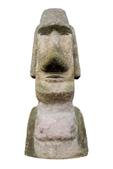
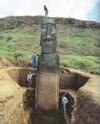
4. The Easter Island heads have bodies. In the 2010s, archaeologists found that two of the Pacific Island figures had bodies that measured as high as 33 feet!
5. The actors who voiced Mickey and Minnie mouse got married in real life. Russi Taylor (Minnie) and Wayne Allwine (Mickey) tied the knot in 1991.
6. In 2014, McDonald’s created bubble gum-flavoured broccoli to put in Happy Meals. (After taste tests with kids, the broccoli never made it onto the menu.)
7. Arithmophobia is the fear of numbers.
8. When cranberries are ripe, they can bounce like a ball.
9 Australia is wider than the moon. The width of Australia is around 4000km, whereas the width of the moon’s diameter is around 3476km.
By Avery, Year 7
1. The Turritopis jellyfish can potentially live forever by reverting to its juvenile form.
2. The Eiffel tower can grow over 6 inches in summer as the metal expands in the heat.
3. Sea otters hold hands while they sleep to avoid drifting apart in the water.
4. The inventor of the pringles can, Fred Baur, was buried with his ashes in one.
5. A ‘jiffy’ is an actual unit of time in physics, equivalent to 1/100th of a second.
6. The shortest war in history lasted just 38-minutes (the Anglo-Zanzibar war).
7. Lightning can reach 30,000 Kelvin making it up to 5x hotter than the Sun’s surface.
8. Your stomach lining renews every 3-4 days to prevent it from digesting itself.