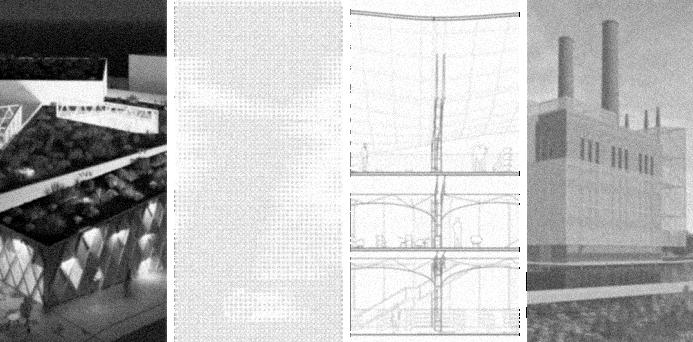
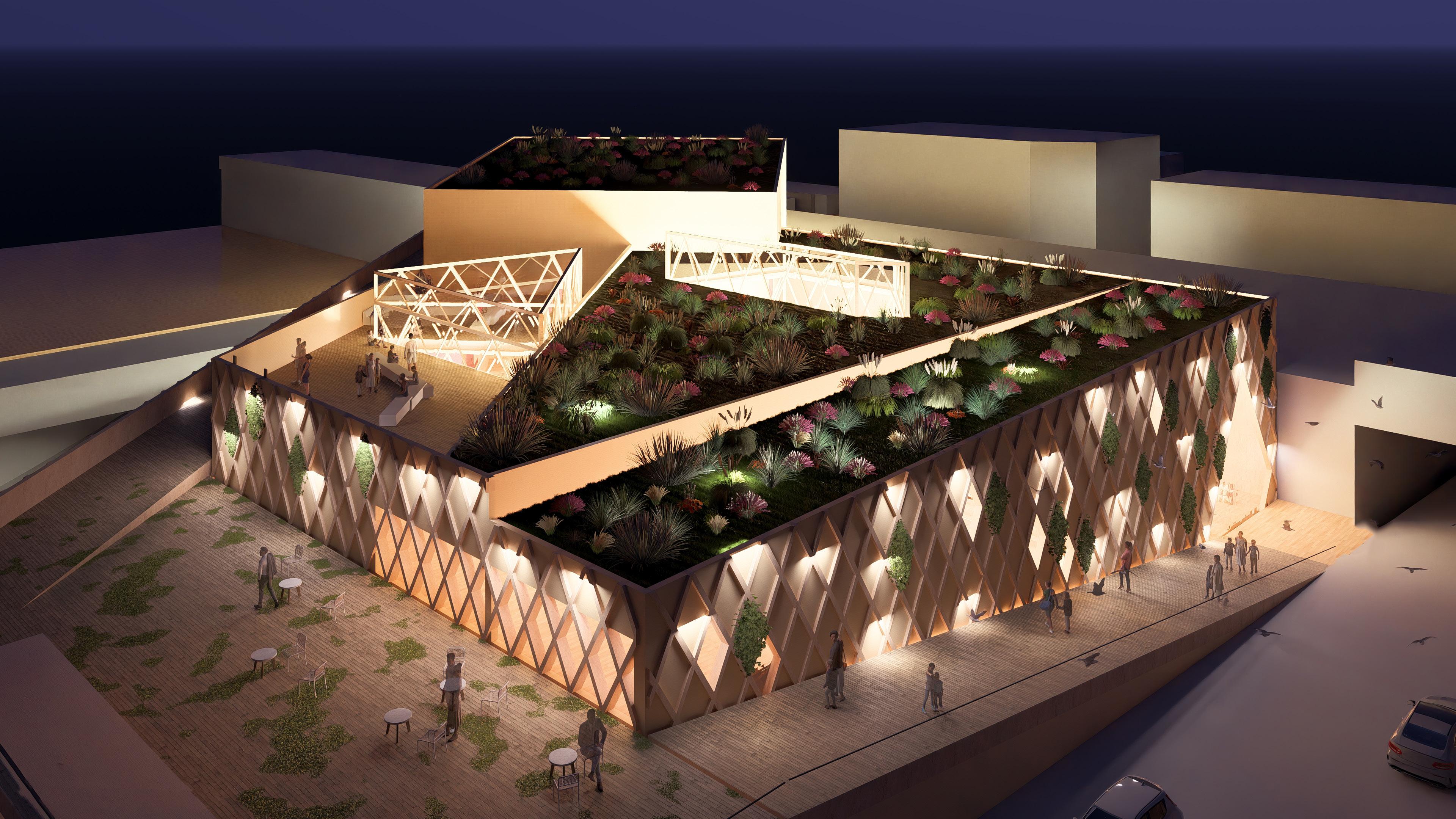
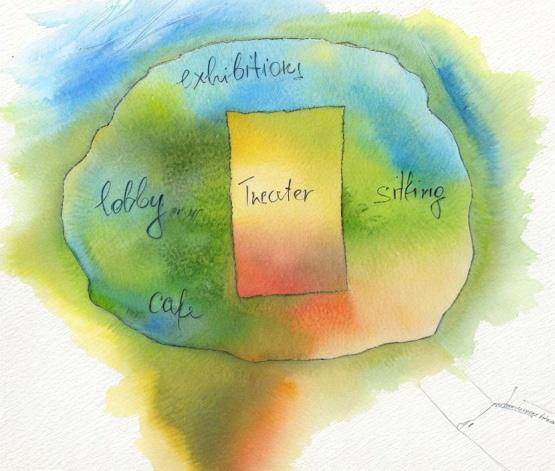
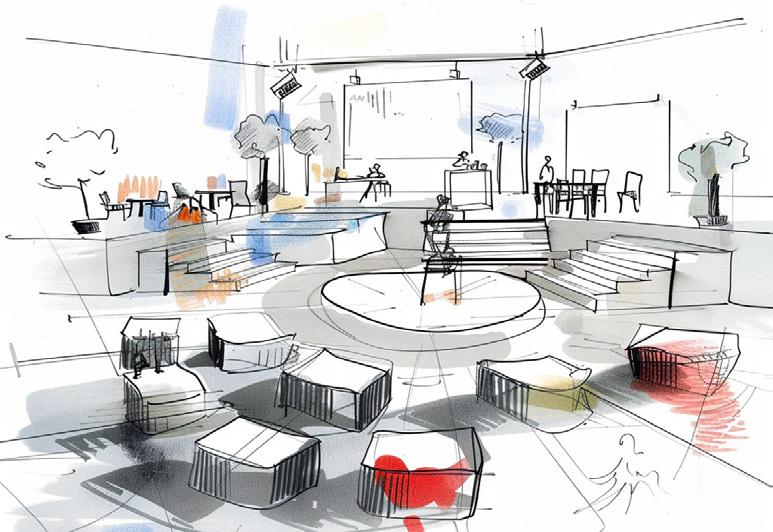
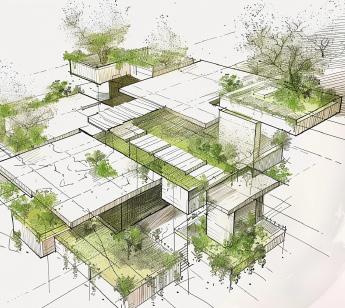
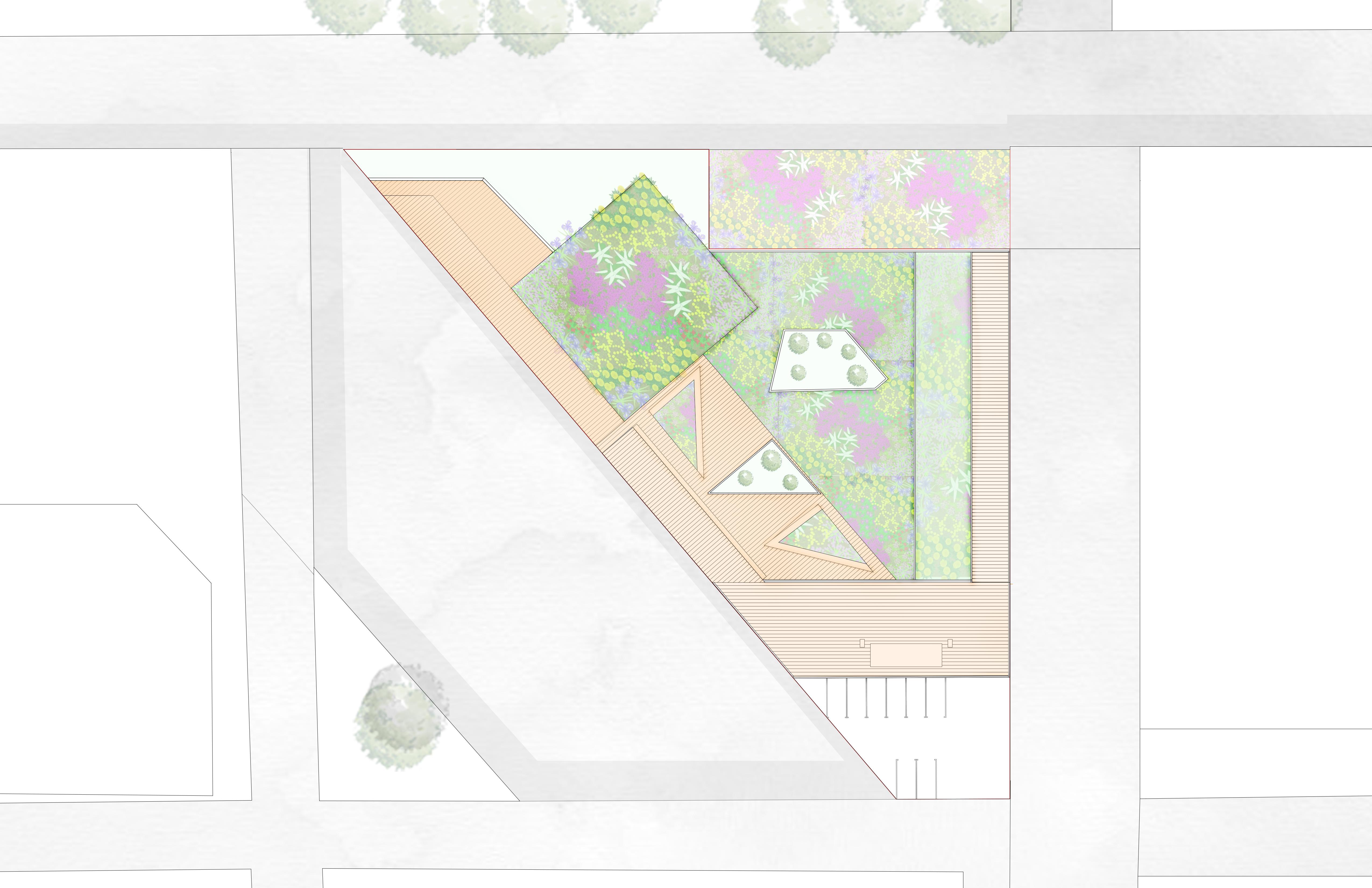
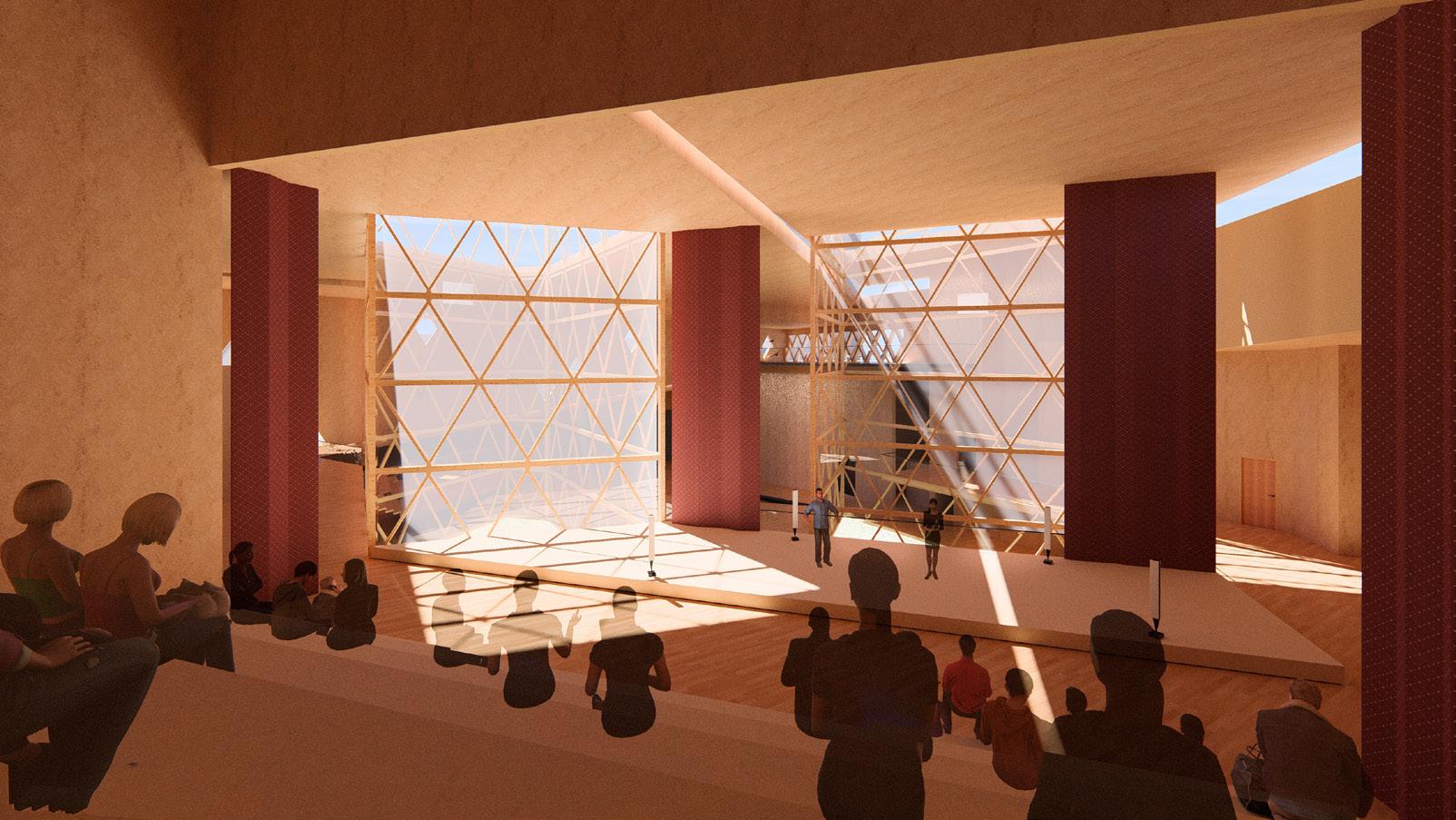
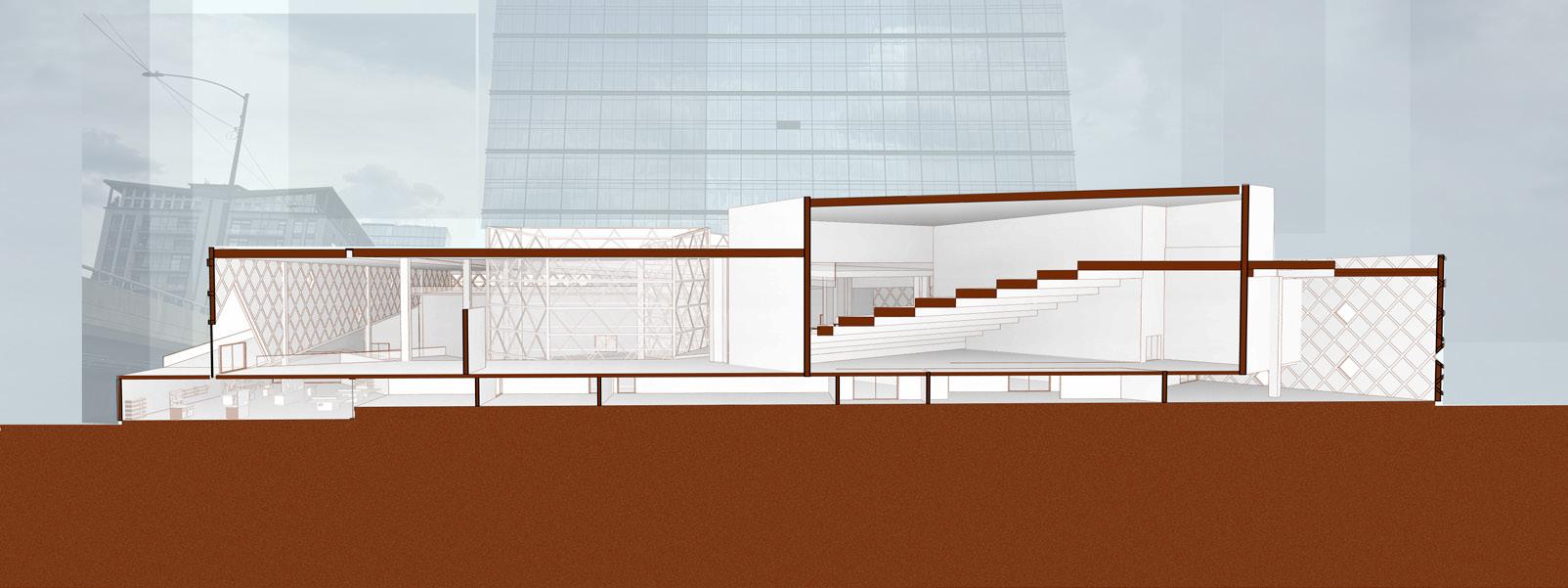
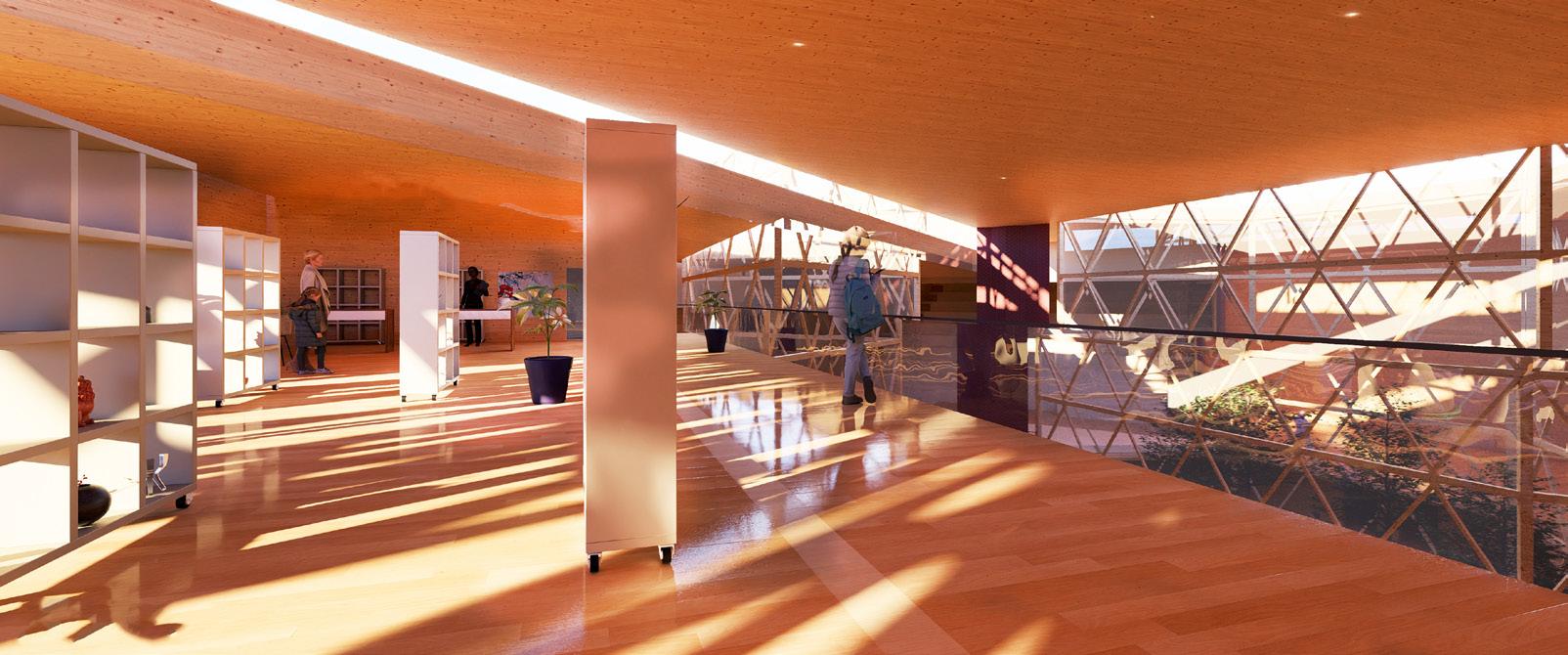
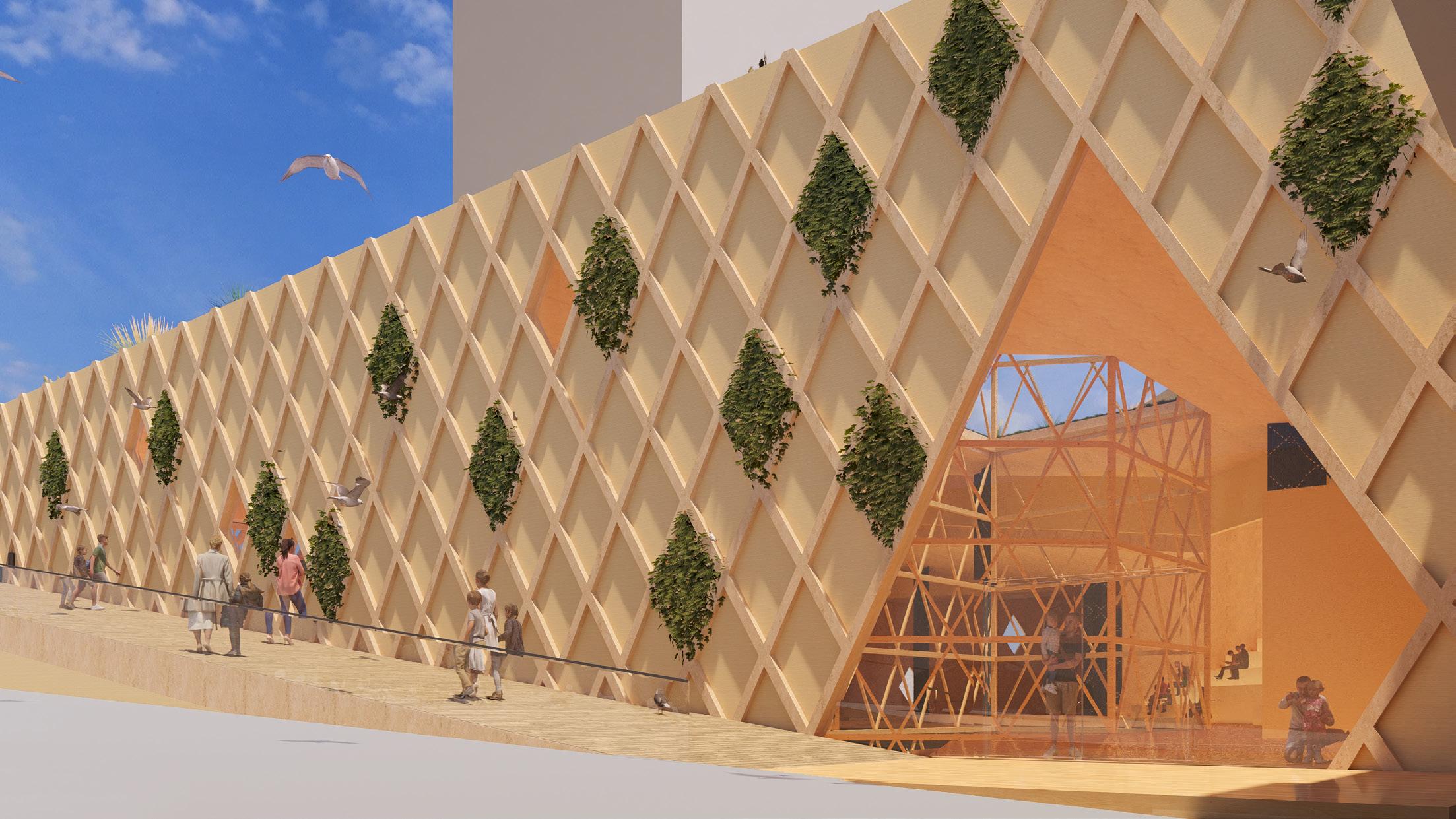
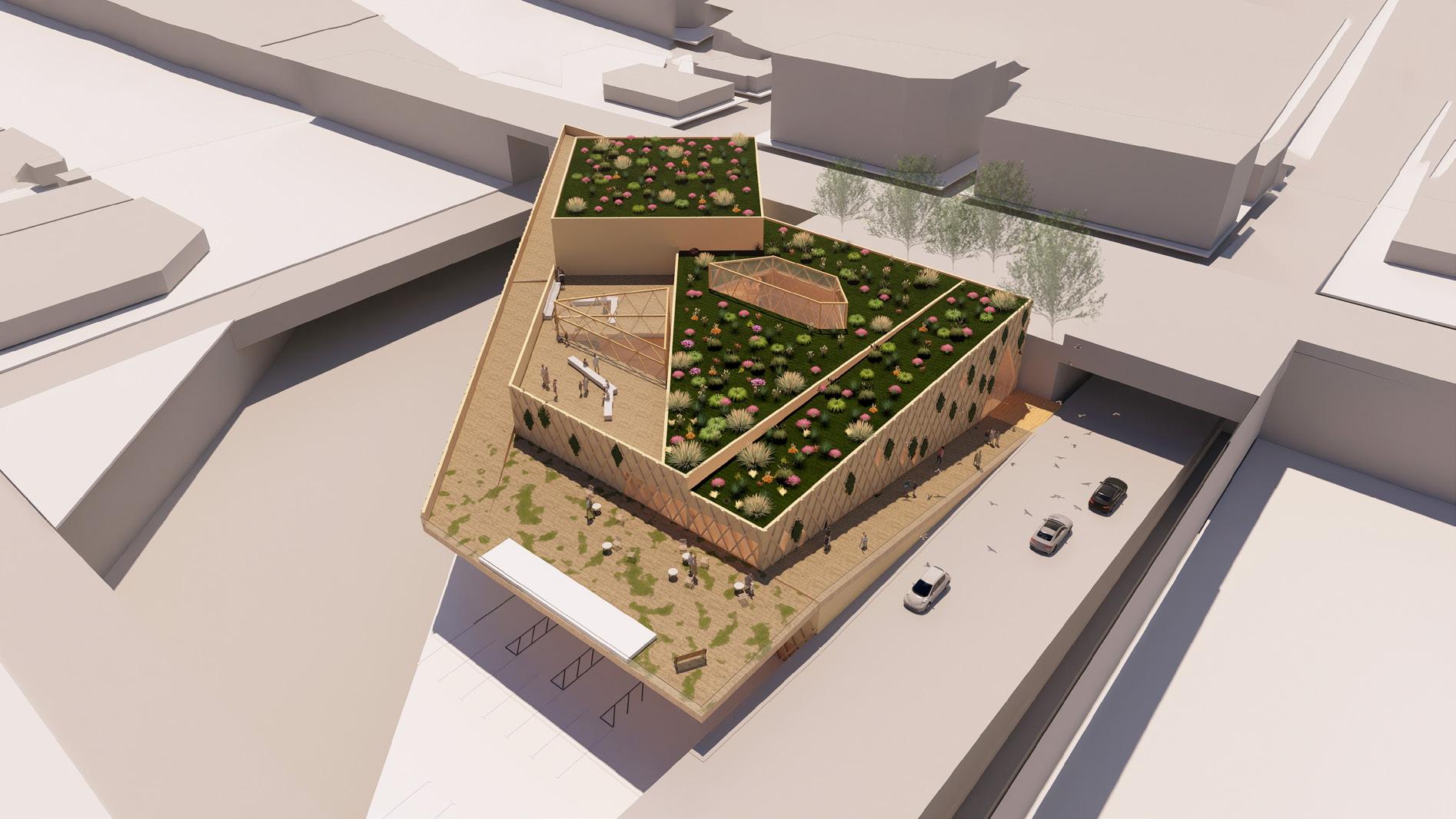
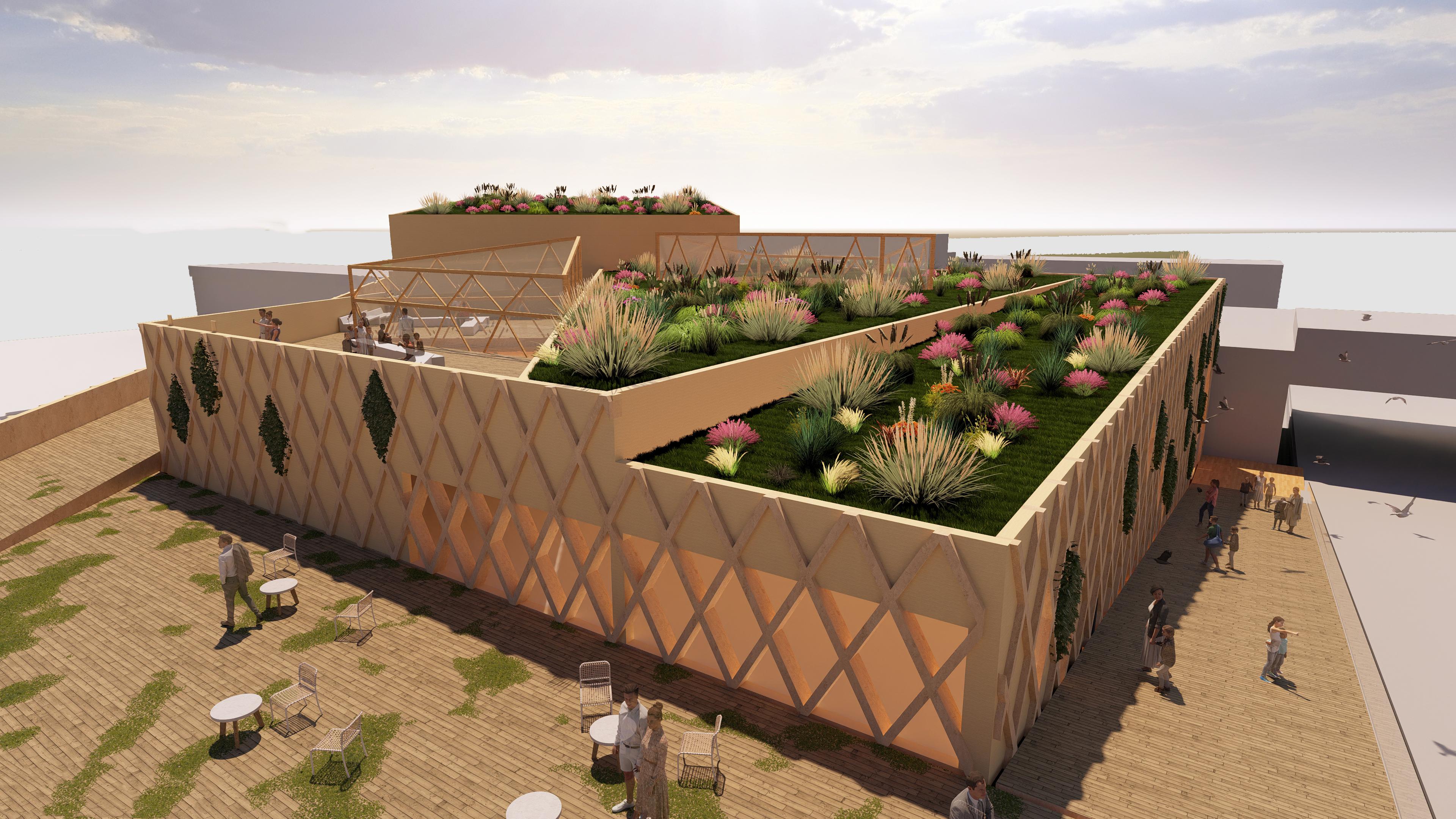
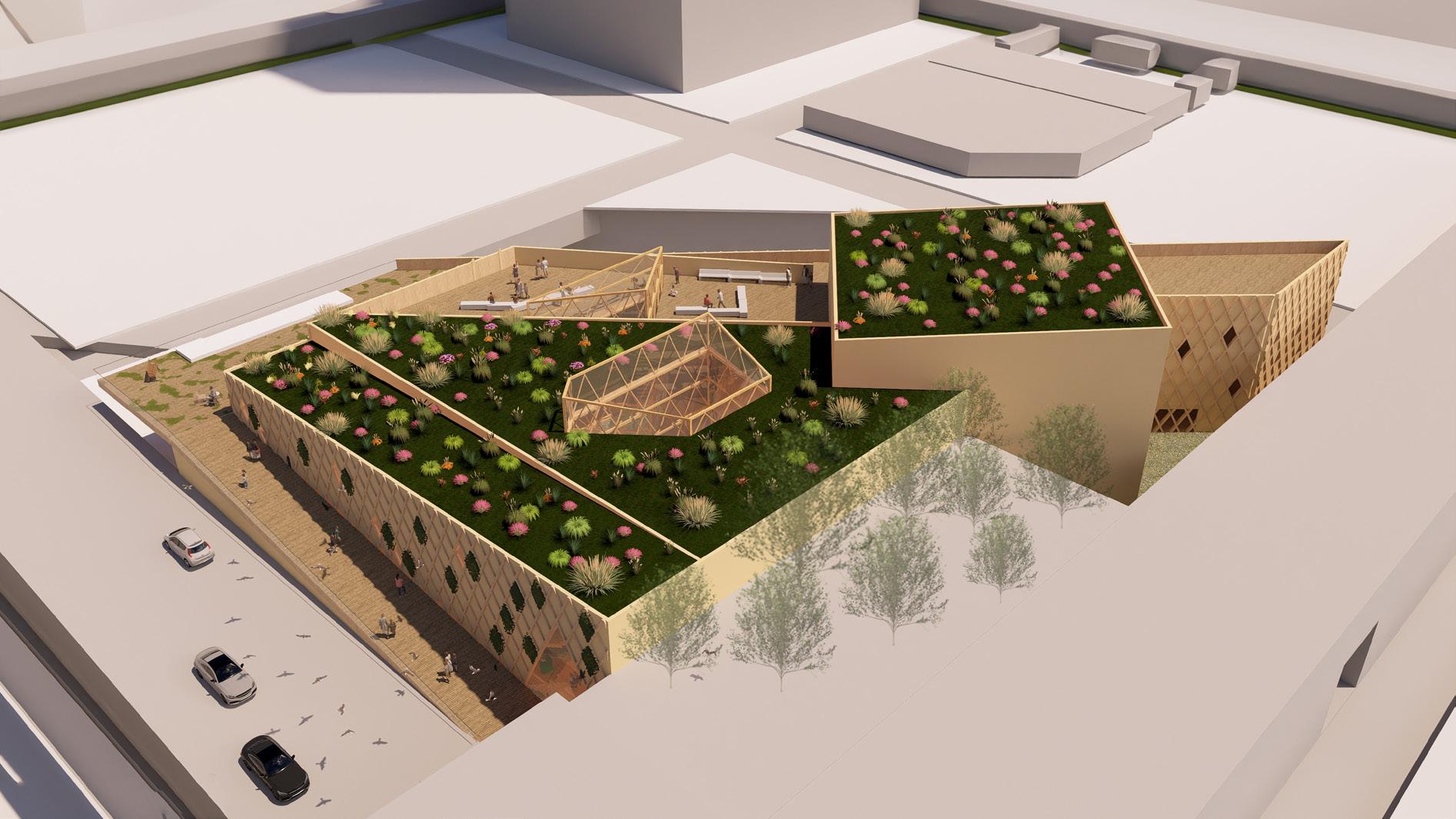
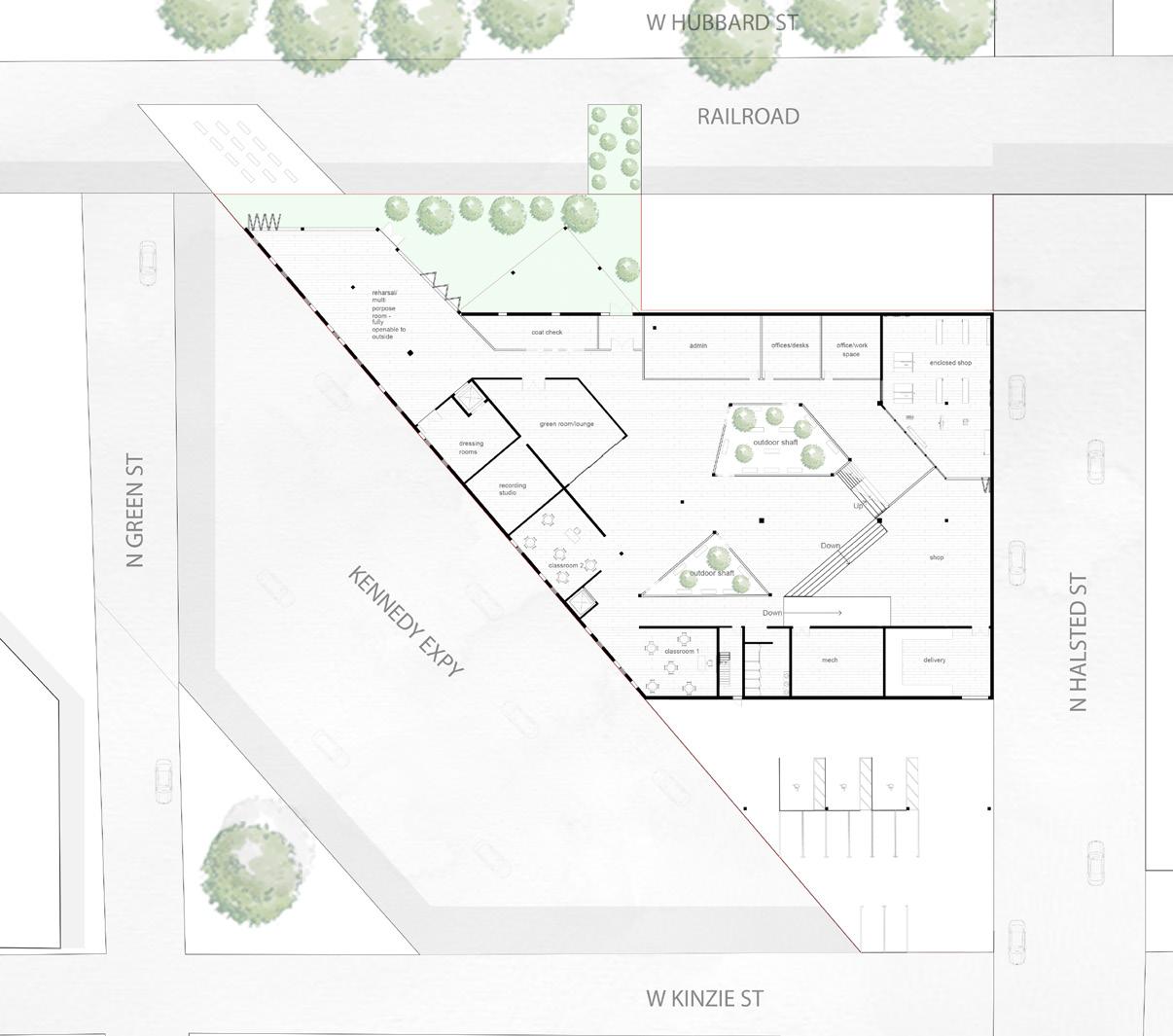
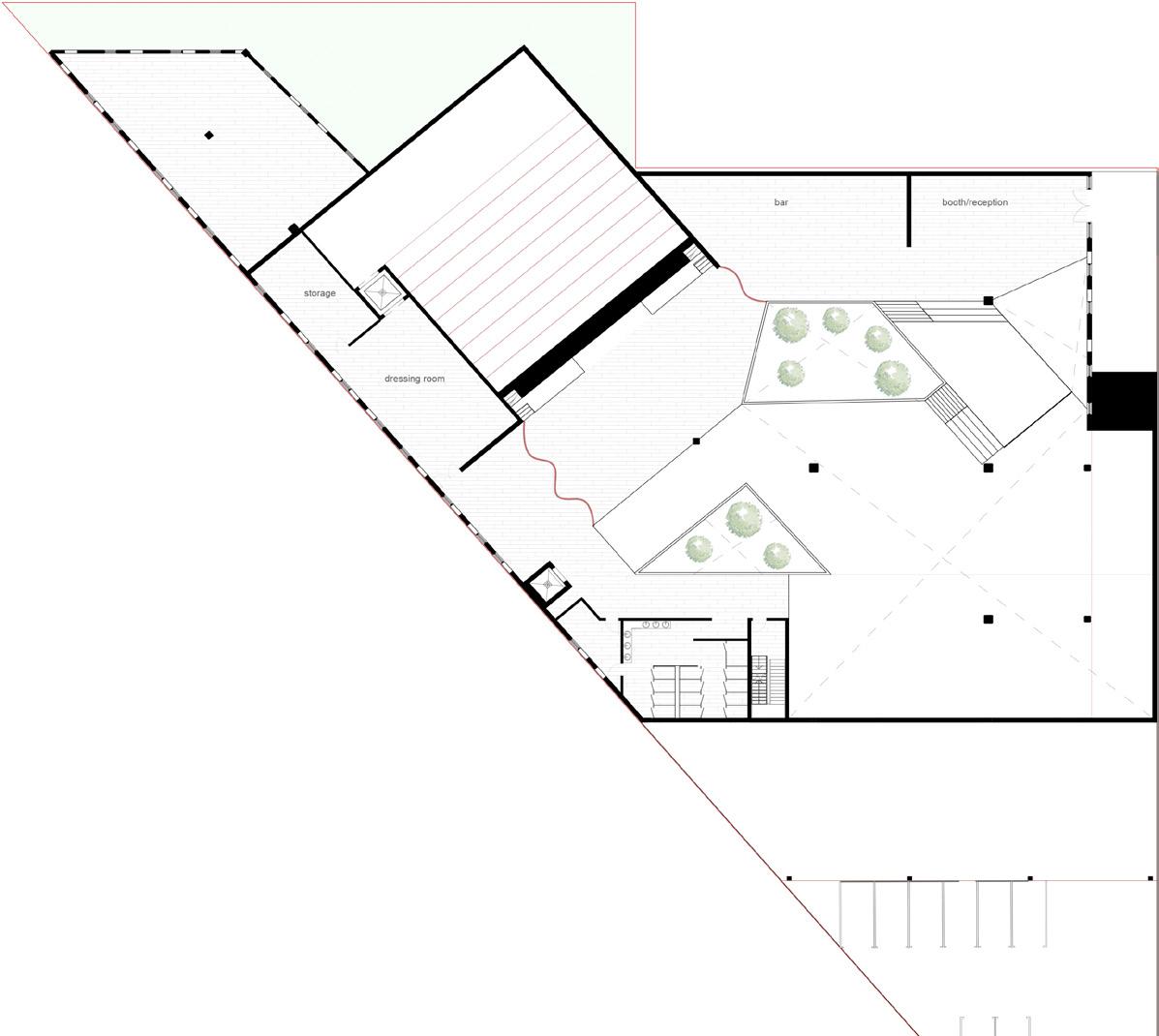
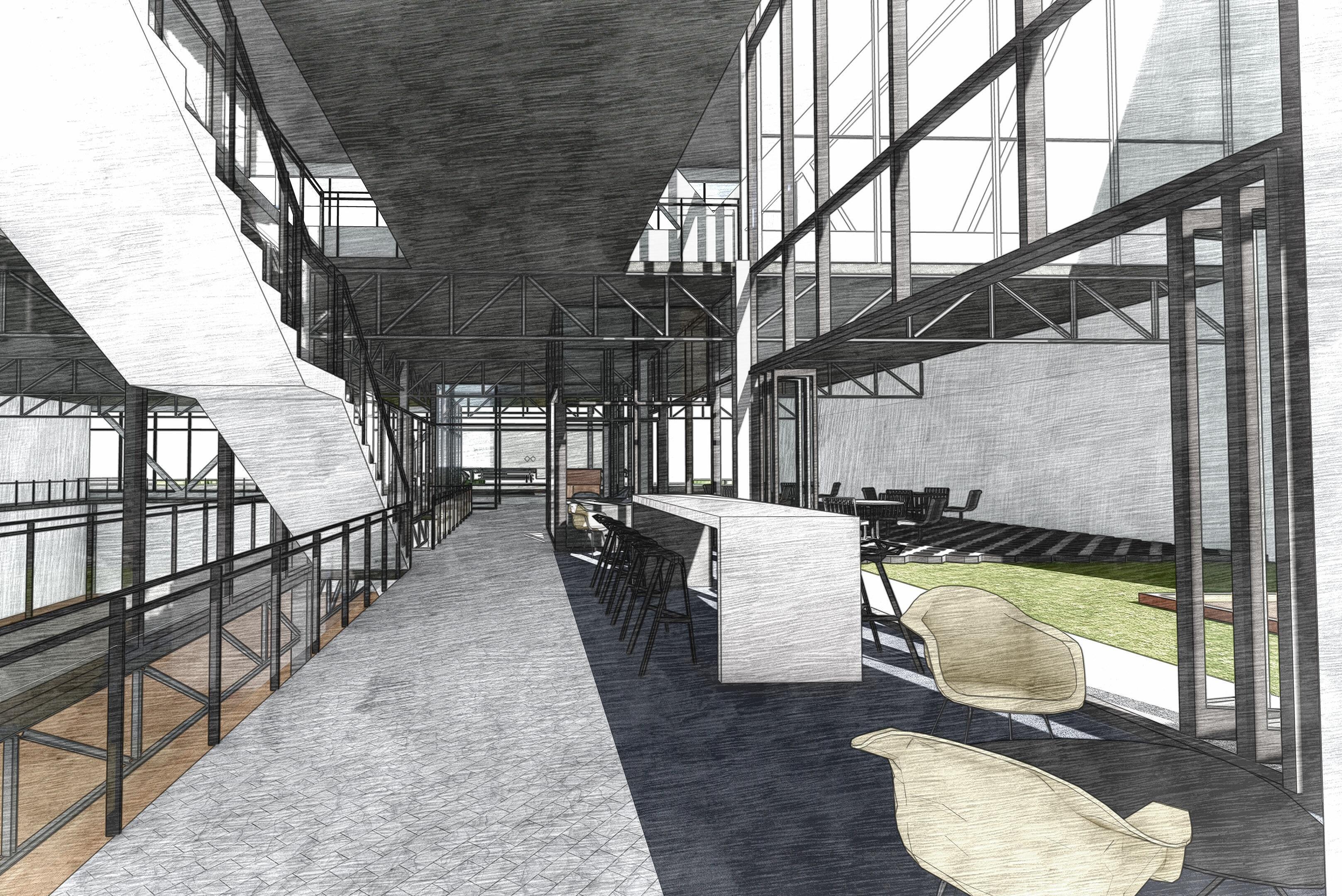
Redefining the American theater as an open, multifunctional community hub, the design centers around the concept of a “3rd space” where social and theatrical activities converge within a light-filled central area. Each program—from rehearsals to community events—can spill into and transform the core space. Inspired by a linear park, the architecture integrates biophilic elements to address the lack of green spaces in the surrounding area, fostering a dynamic environment for community engagement.
SCALE: 1/32”=1’0”

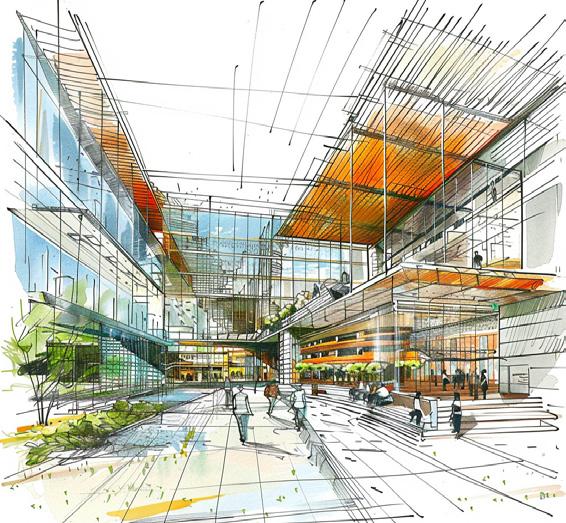
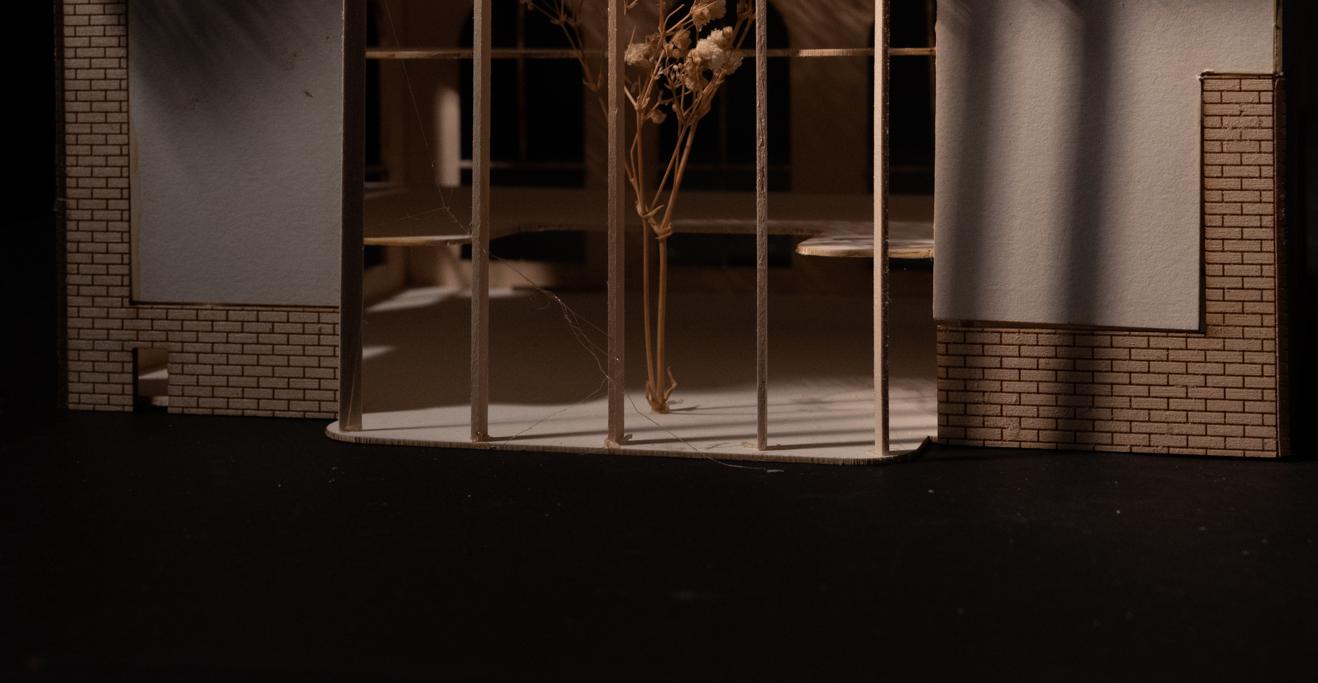
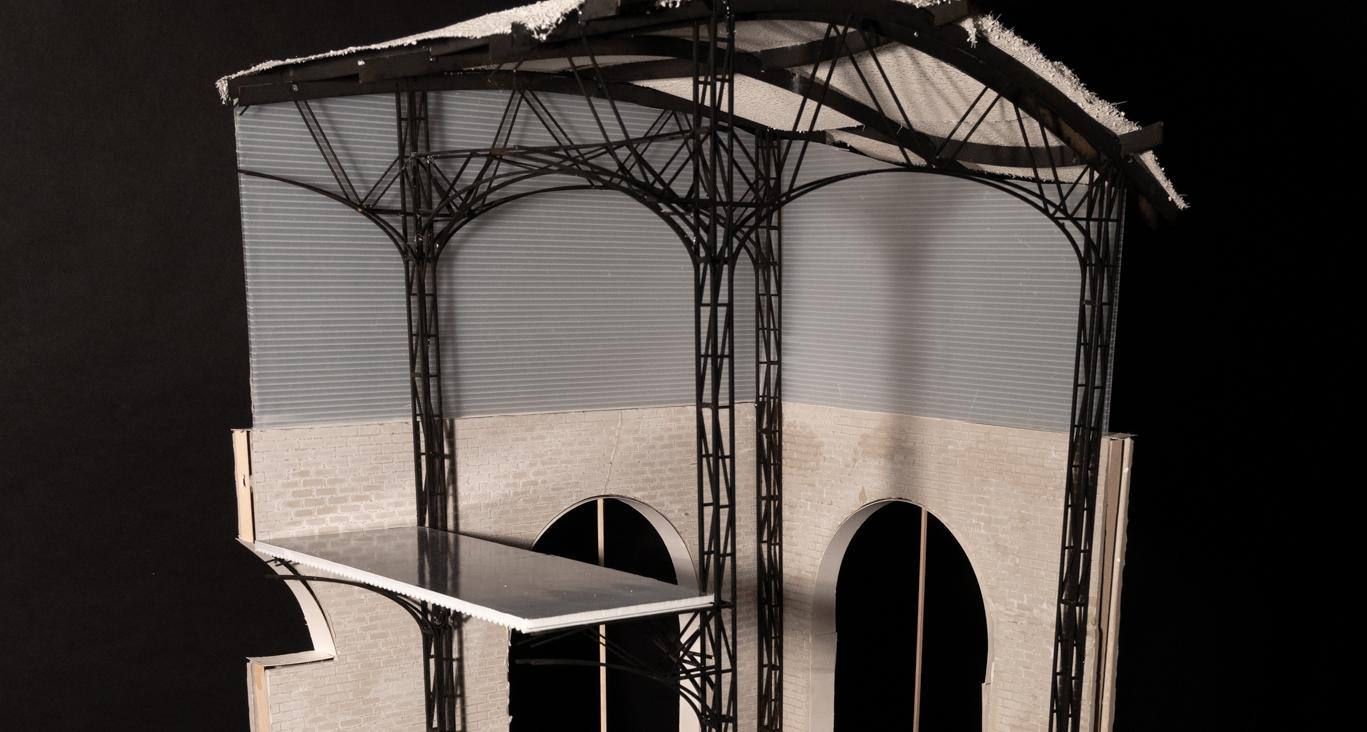
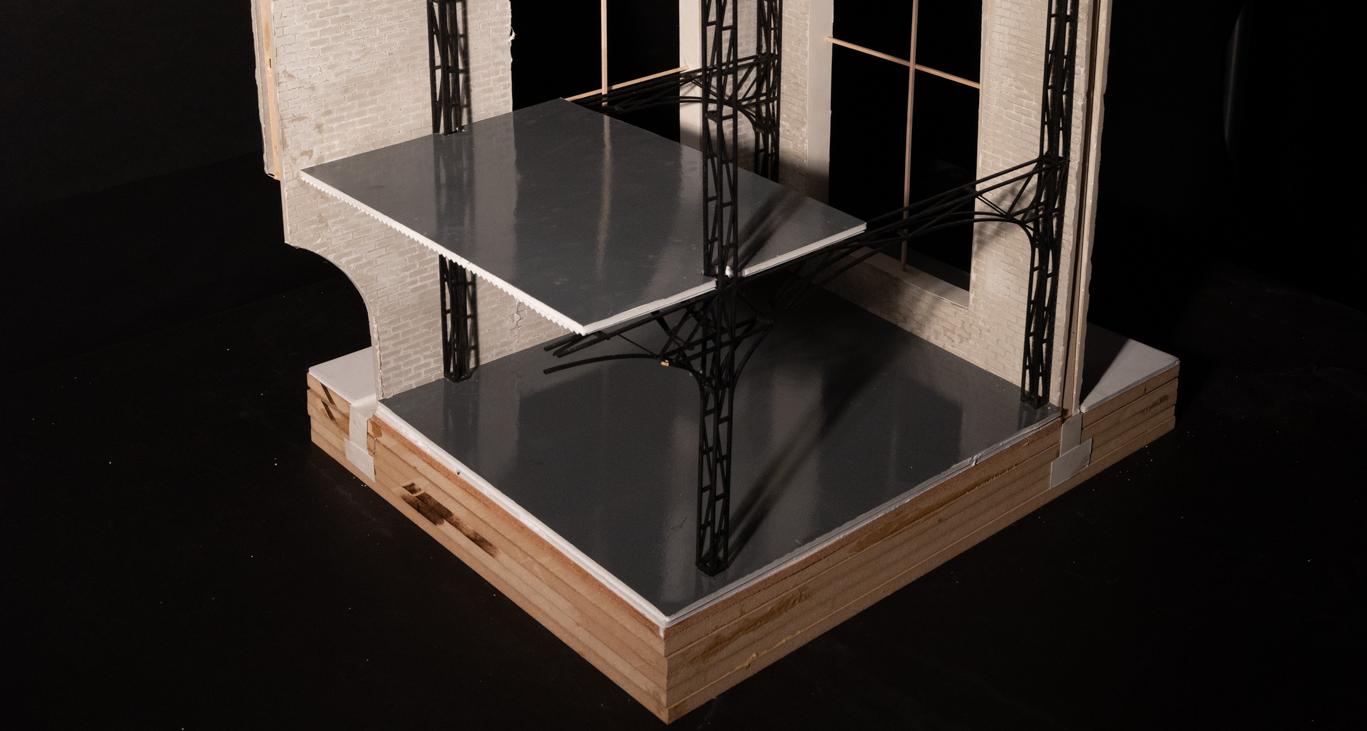
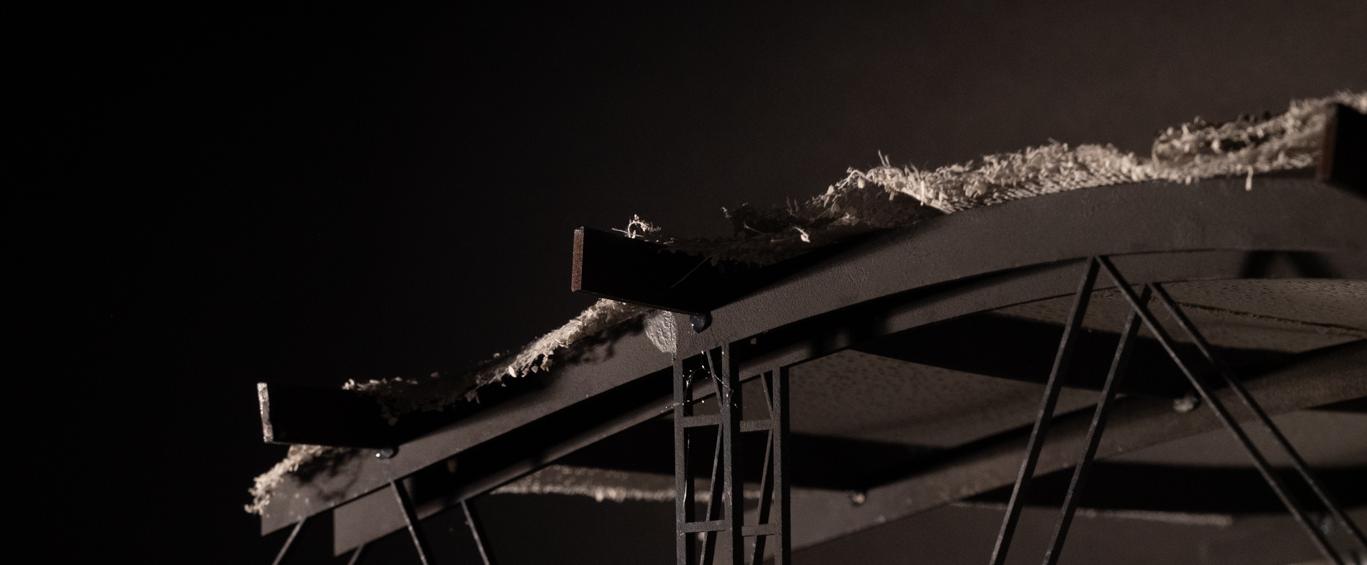
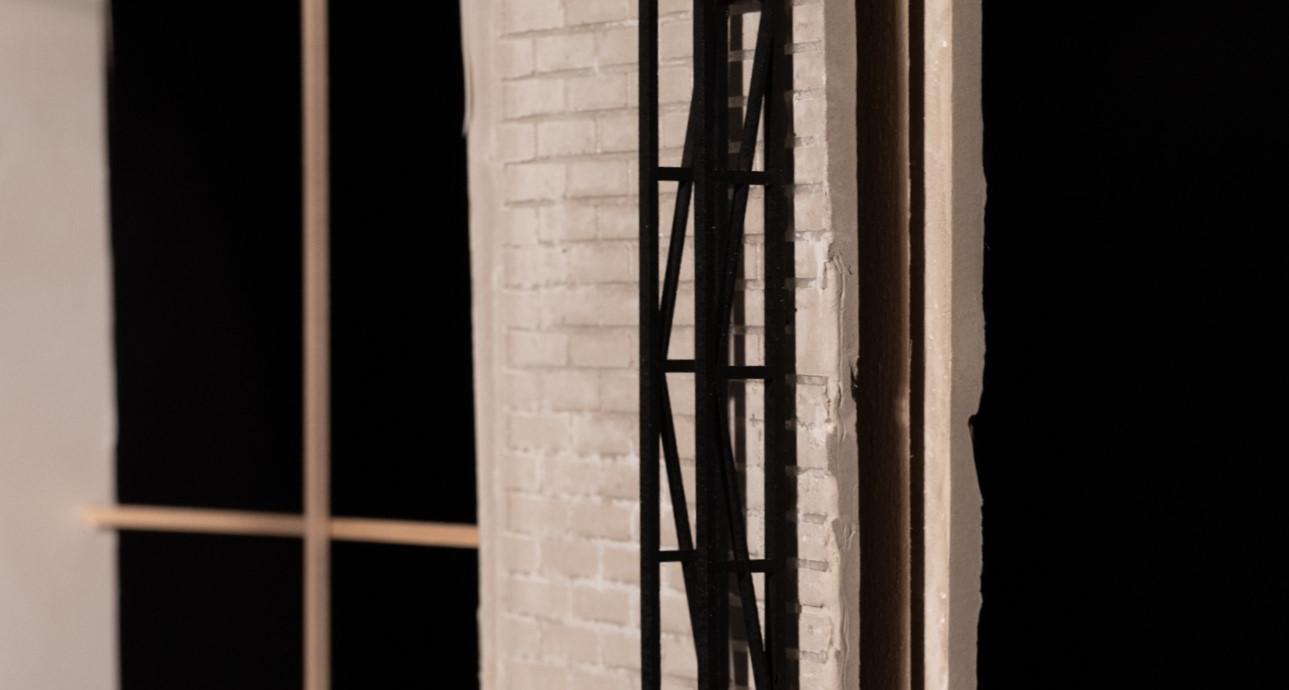
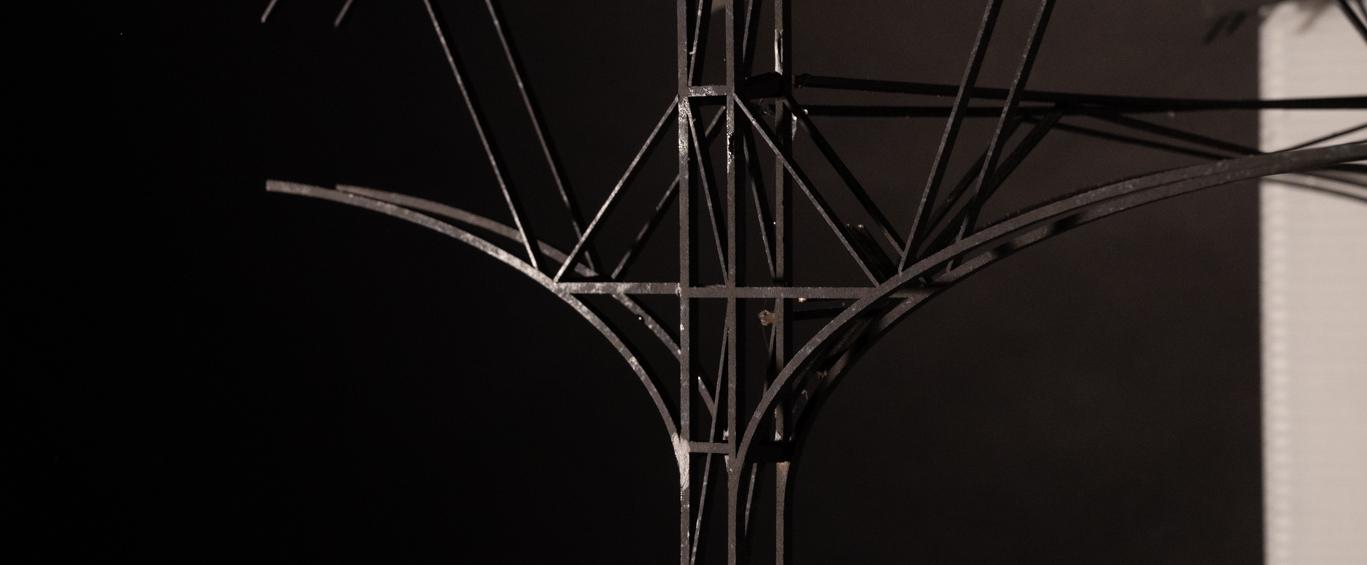
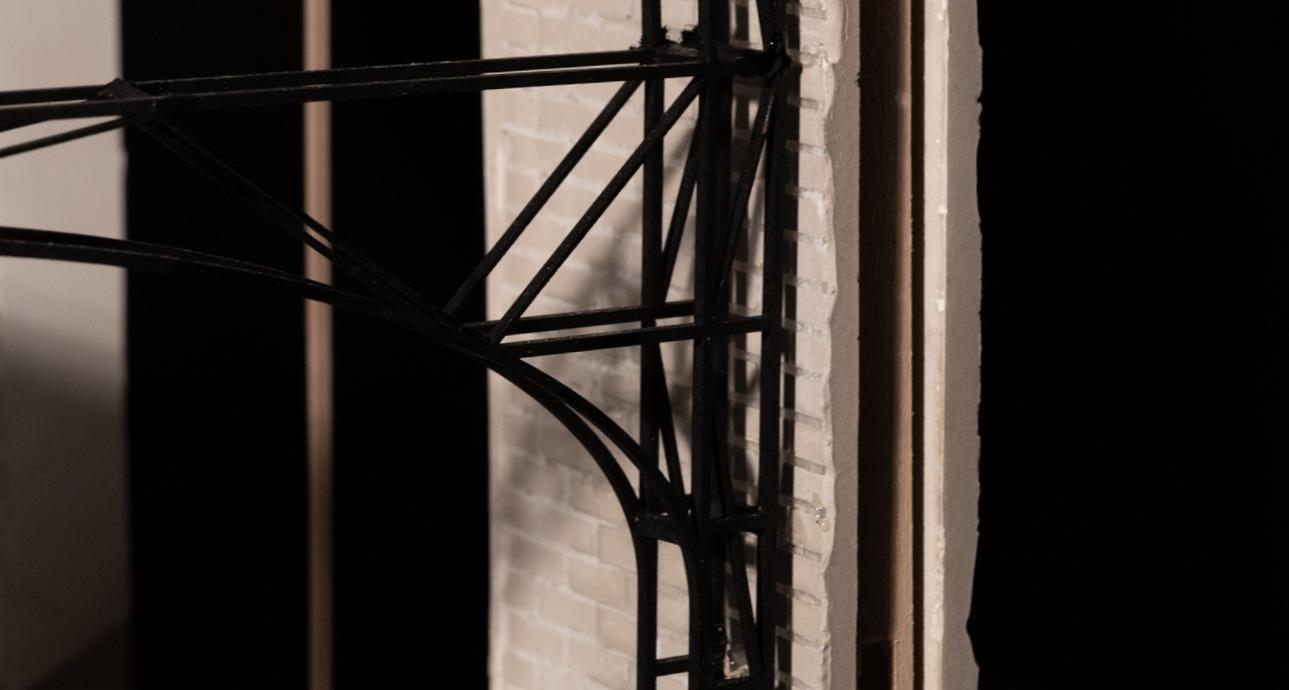
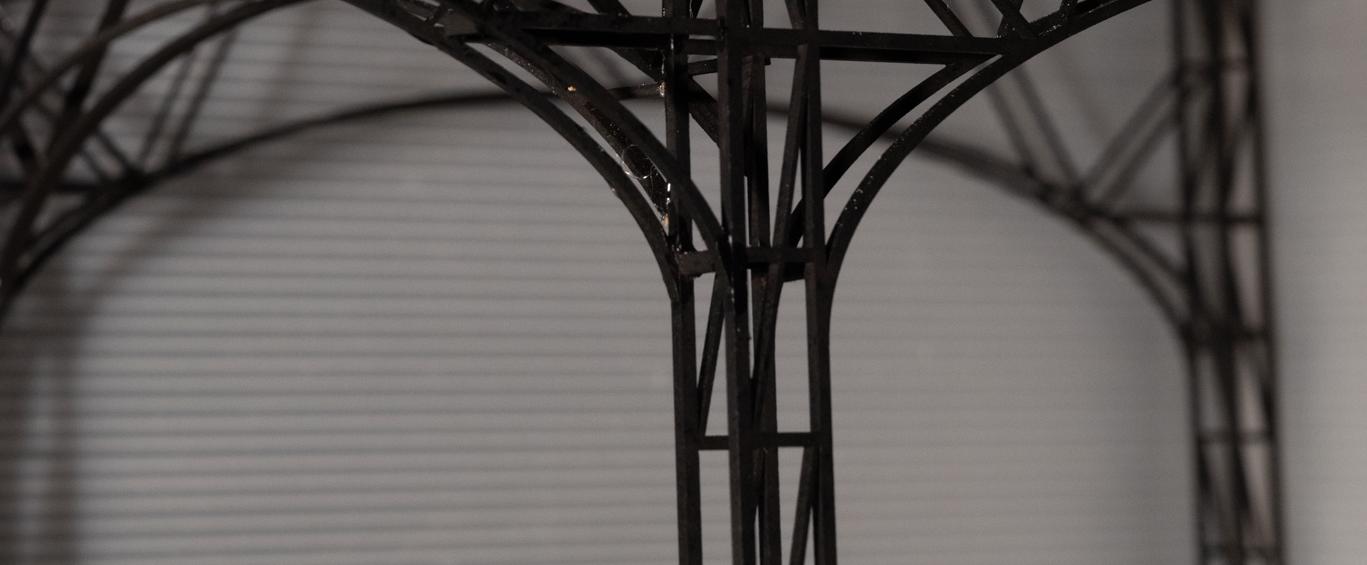
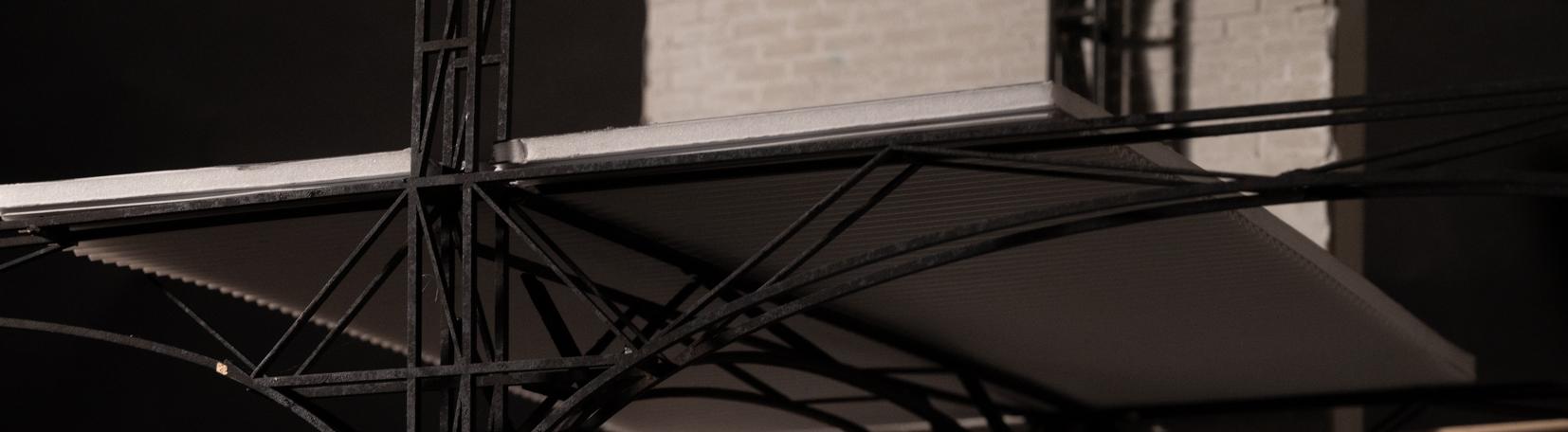
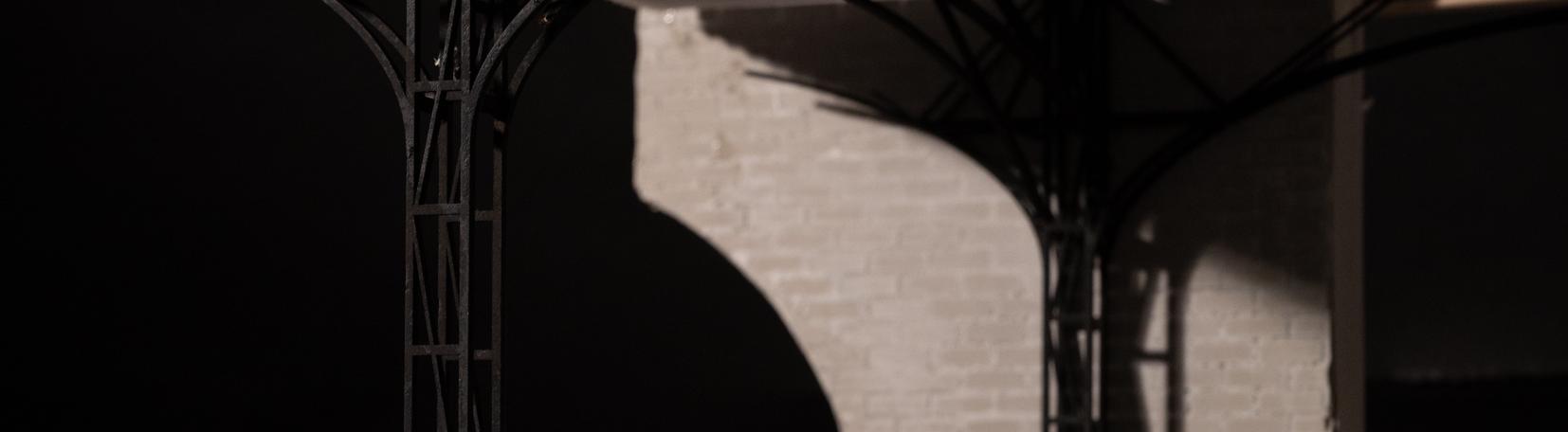
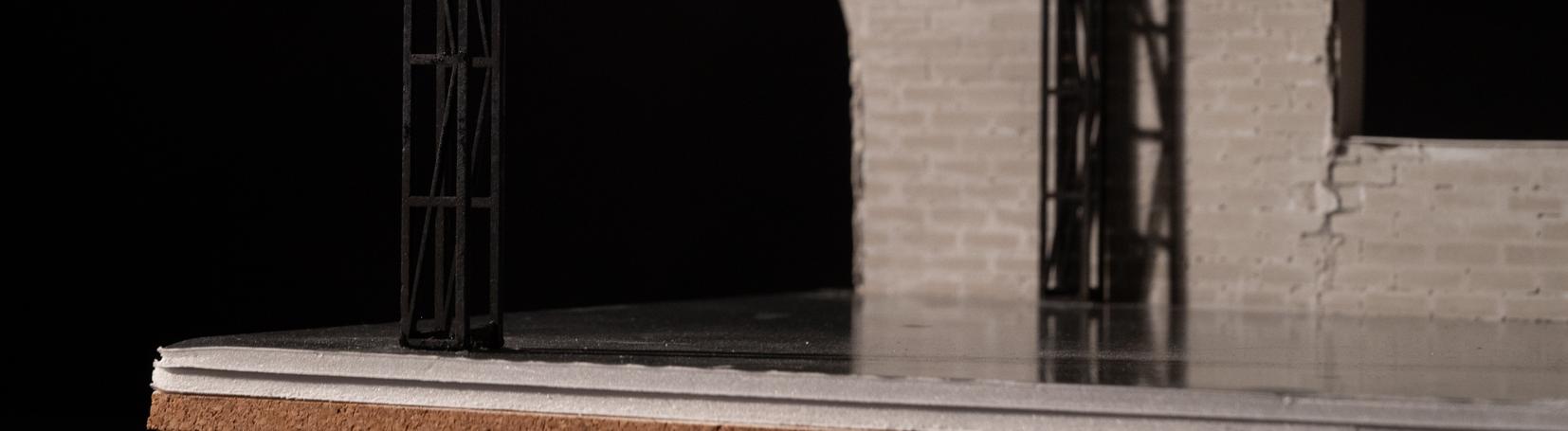
The proposal reimagines the Pilgrim Baptist Church as a three-story library with an integrated greenhouse, focusing on blurring the lines between indoor and outdoor spaces. Utilizing existing arched openings and new arched structures, the design frames views to create a strong connection with nature. The building’s form is divided into three distinct levels, with the topmost housing the greenhouse. Curved roofs break the rectangular form, while the greenhouse introduces a soft contrast to the grid and symmetry. At ground level, the greenhouse serves as a communal courtyard. Inside, hollow steel arches contrast with the brick and glass elements, enhanced by the presence of greenery, to evoke a sense of grandeur and tranquility. The design aspires to be the “La Brouste” of the 21st century.
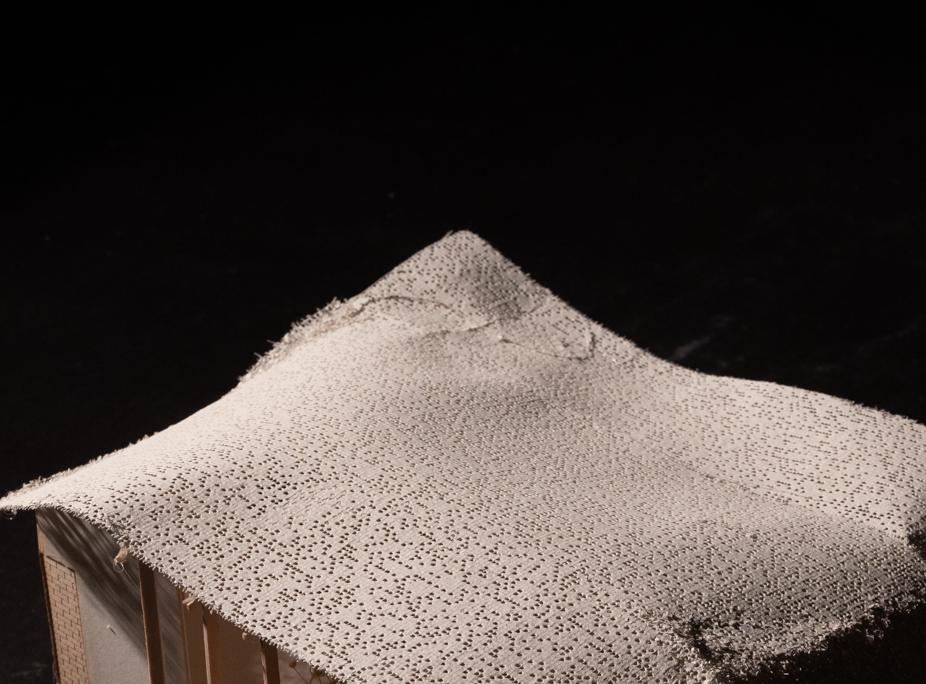
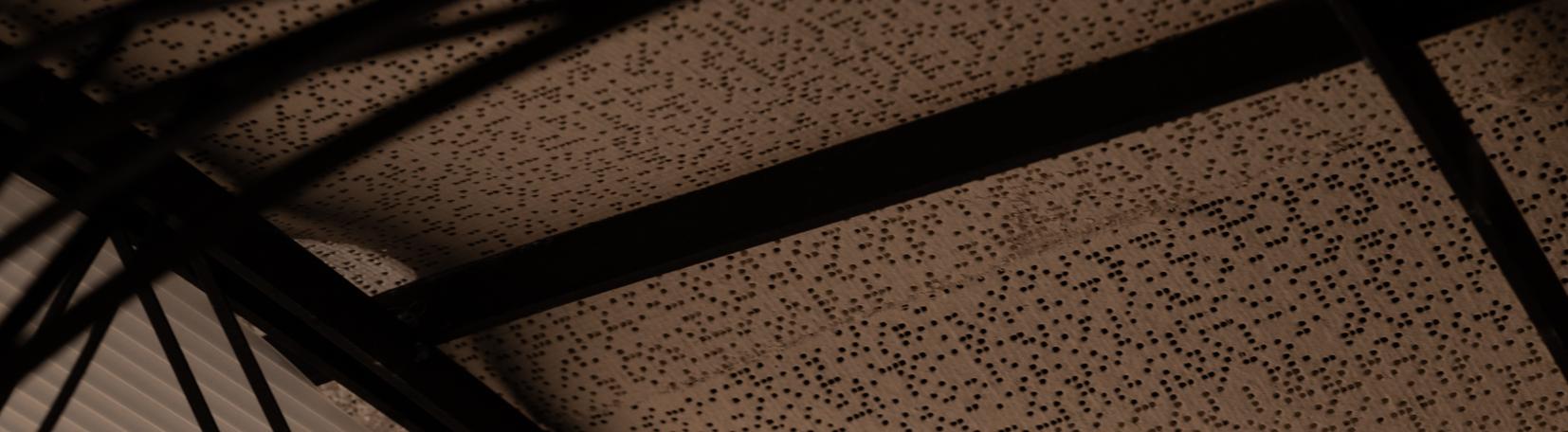
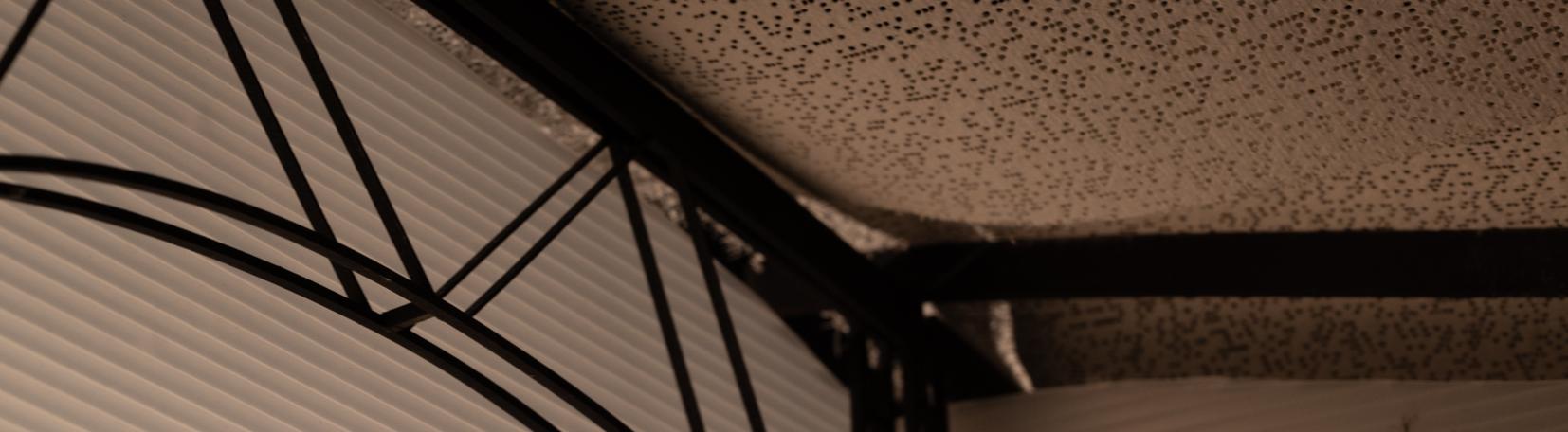
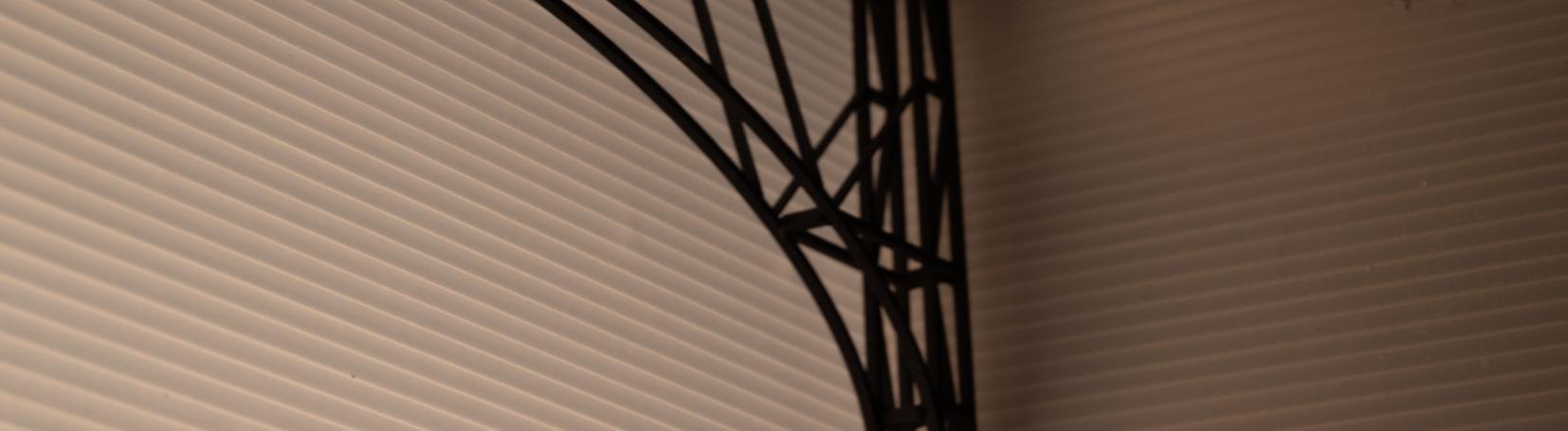
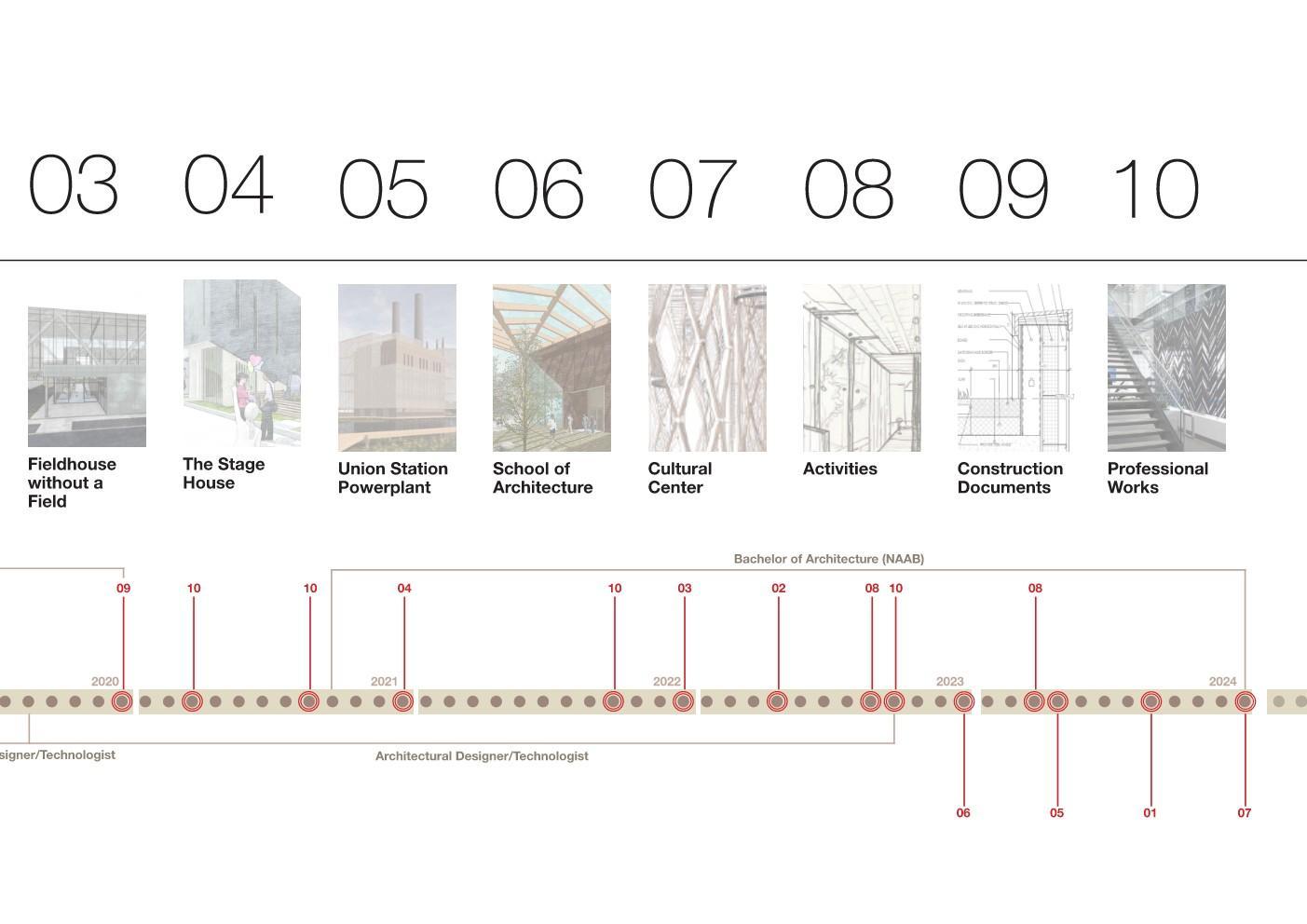
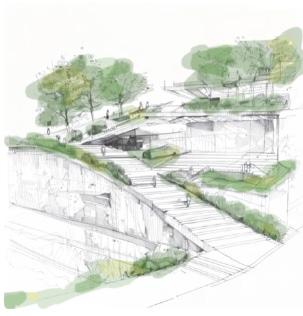
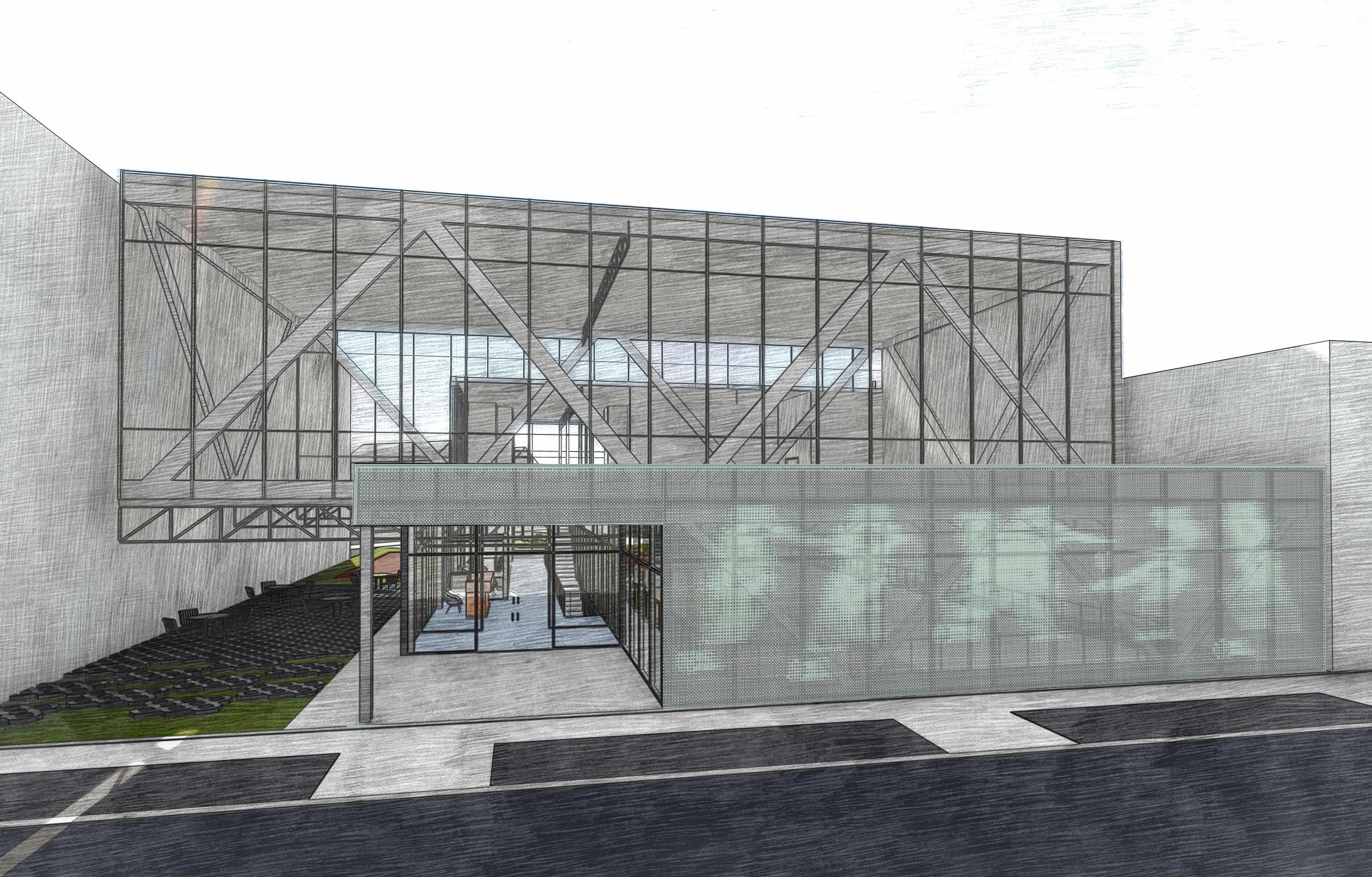
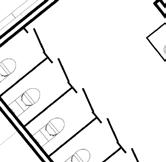
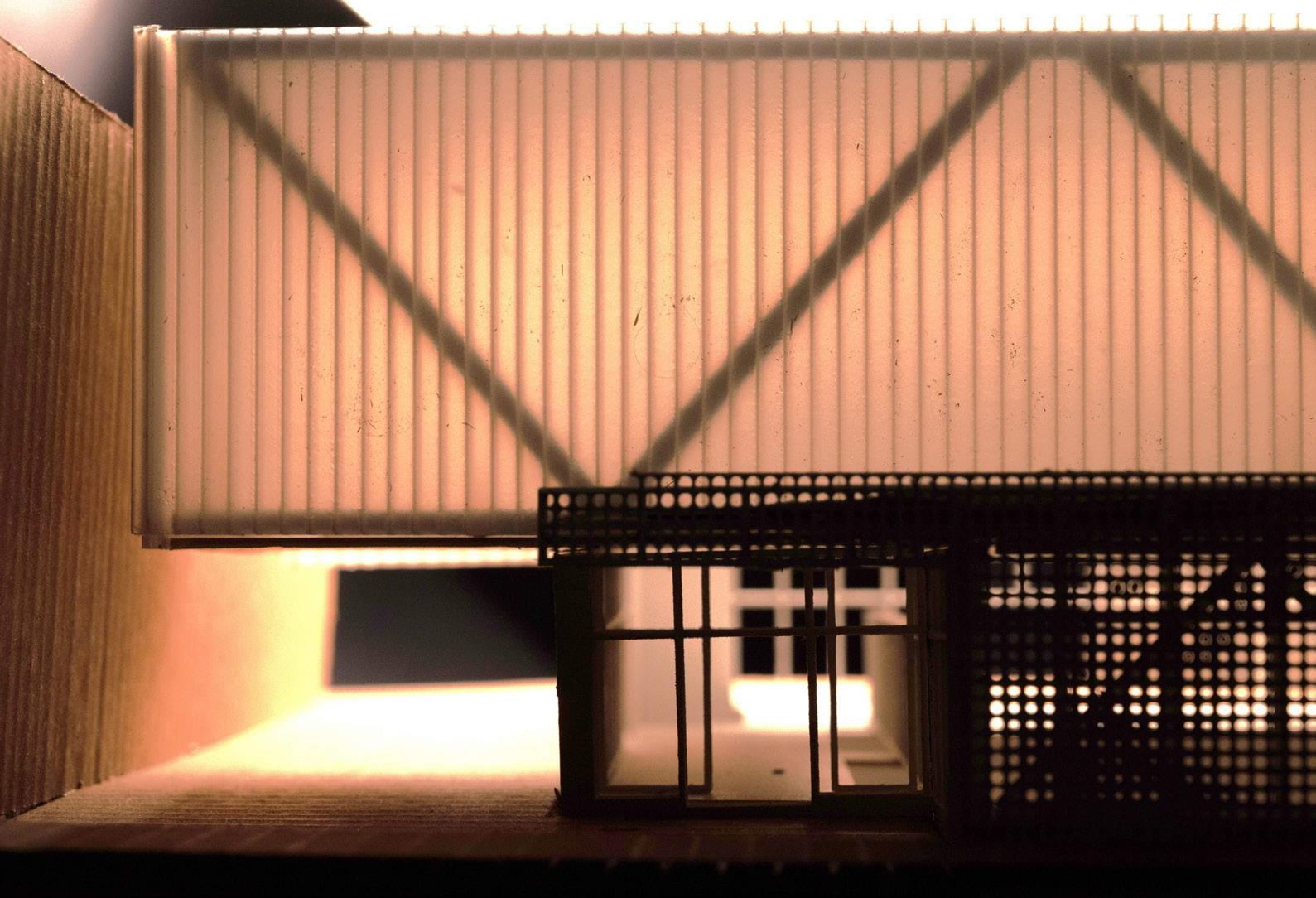
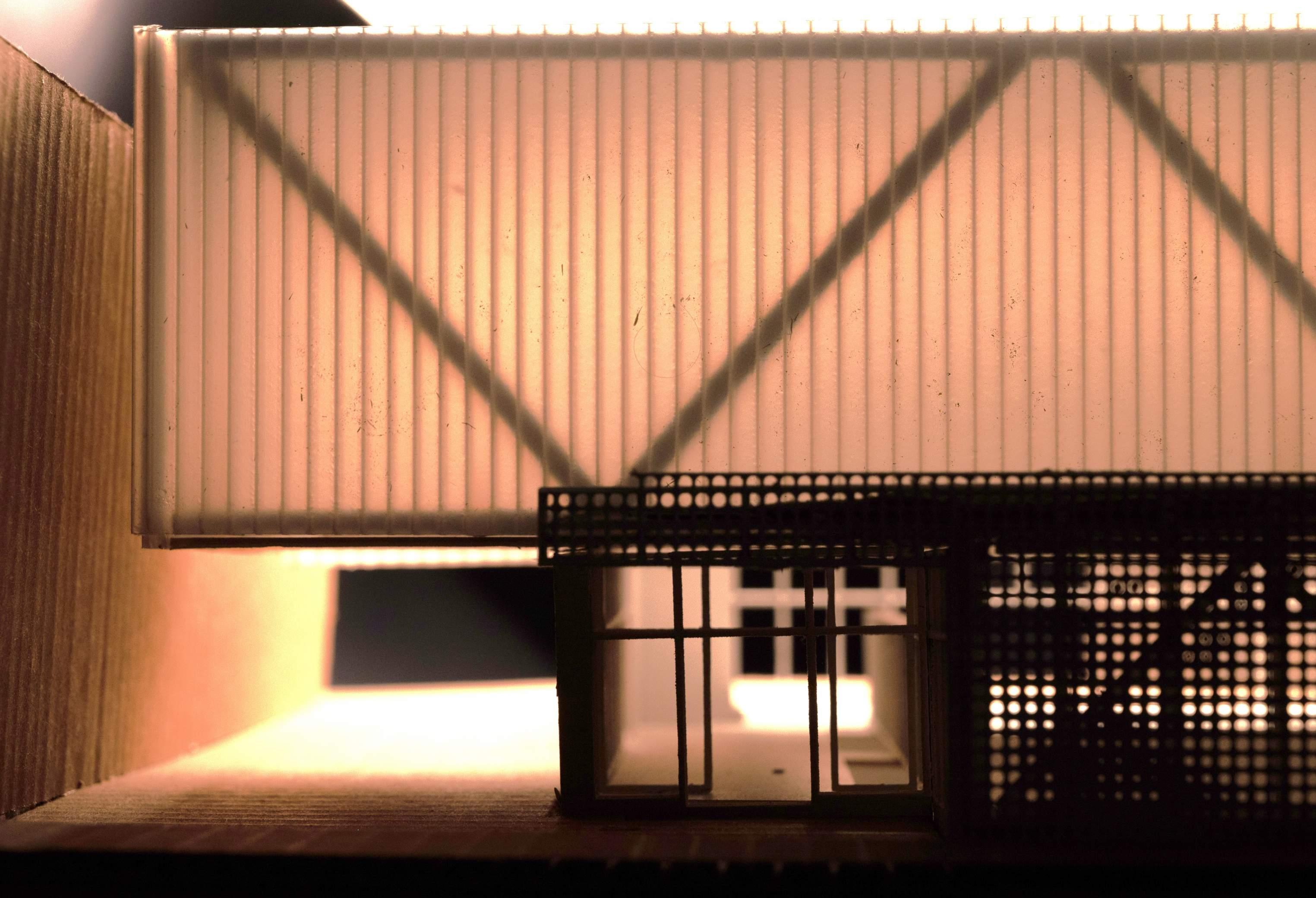
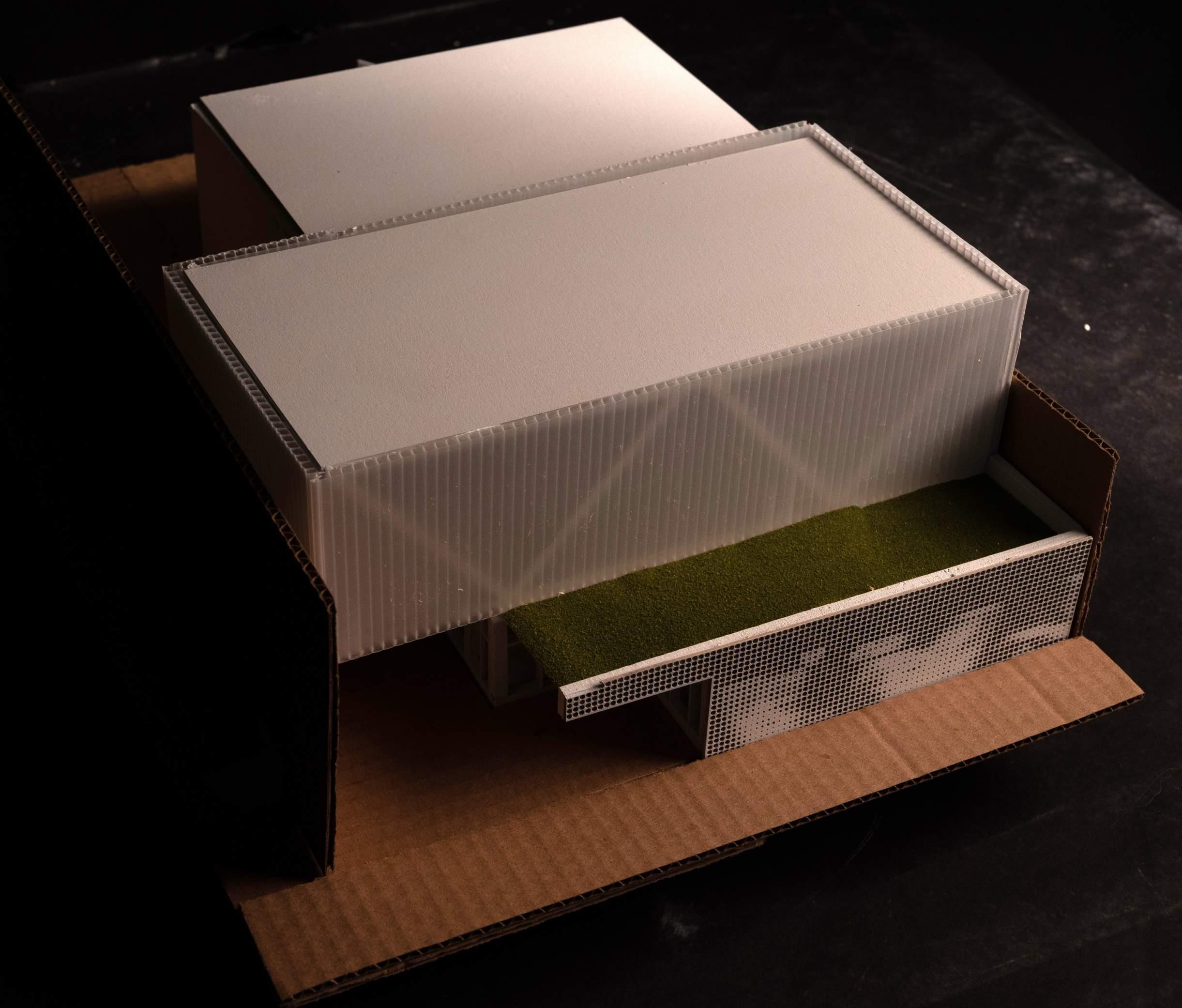
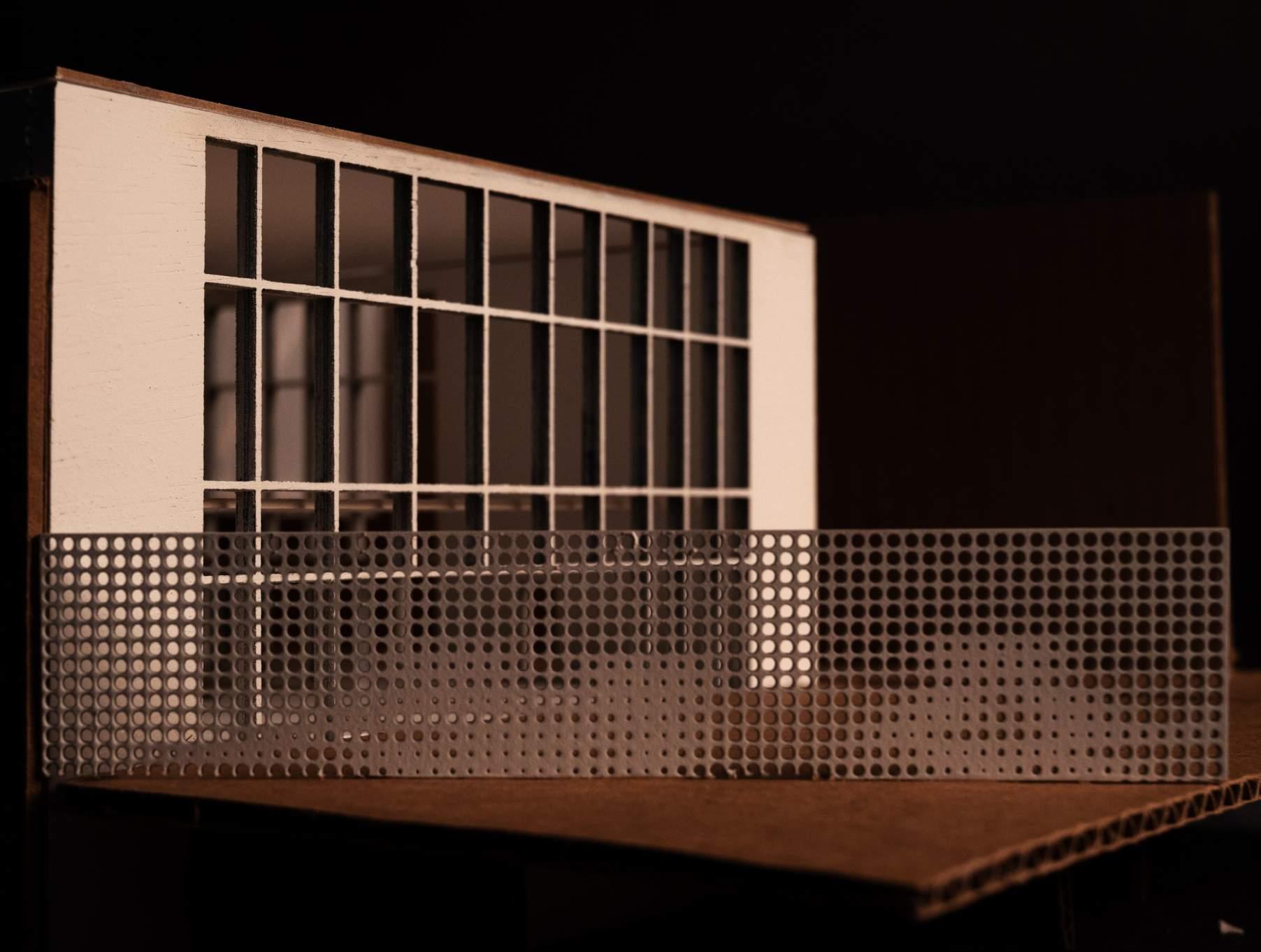
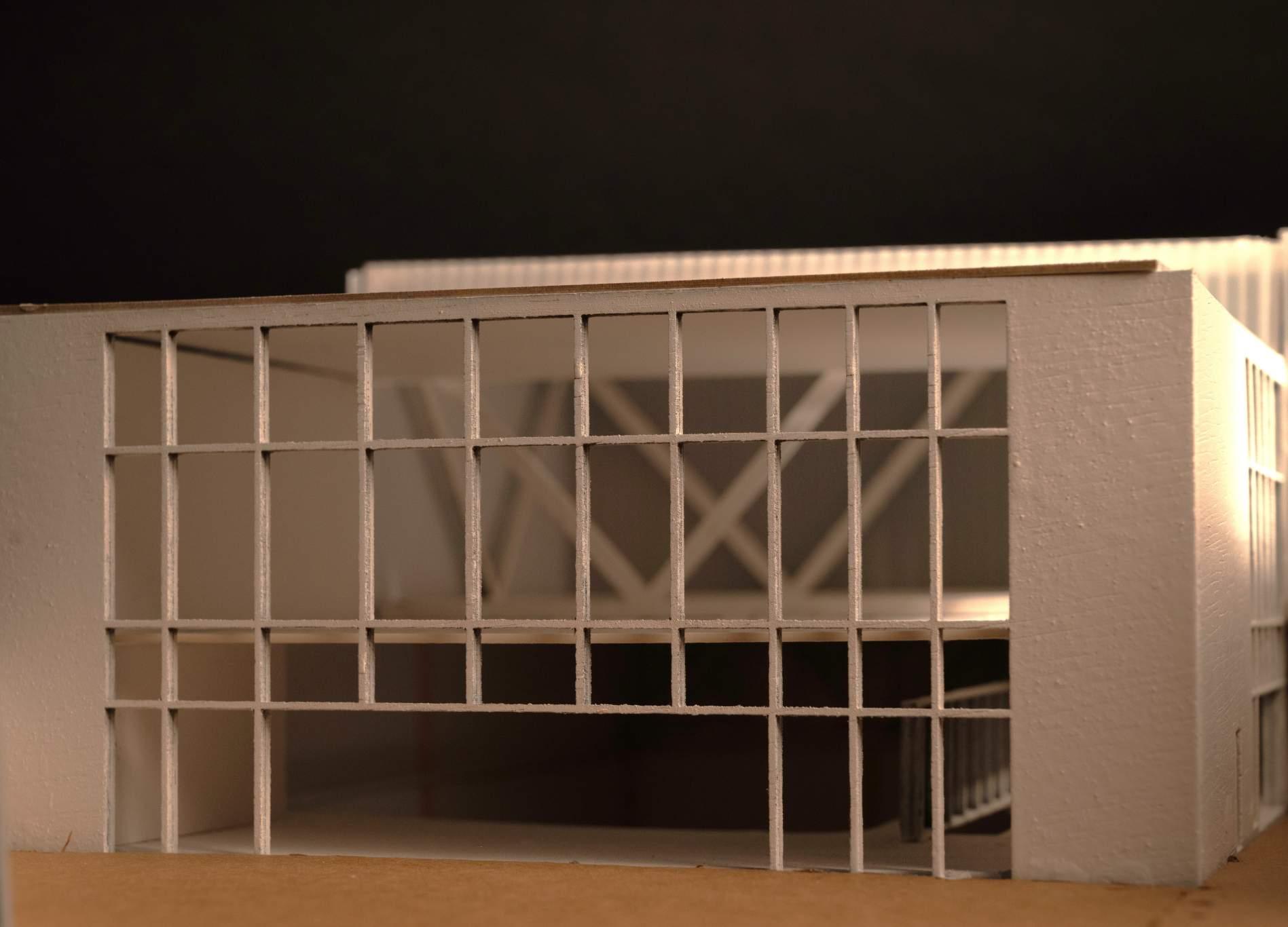
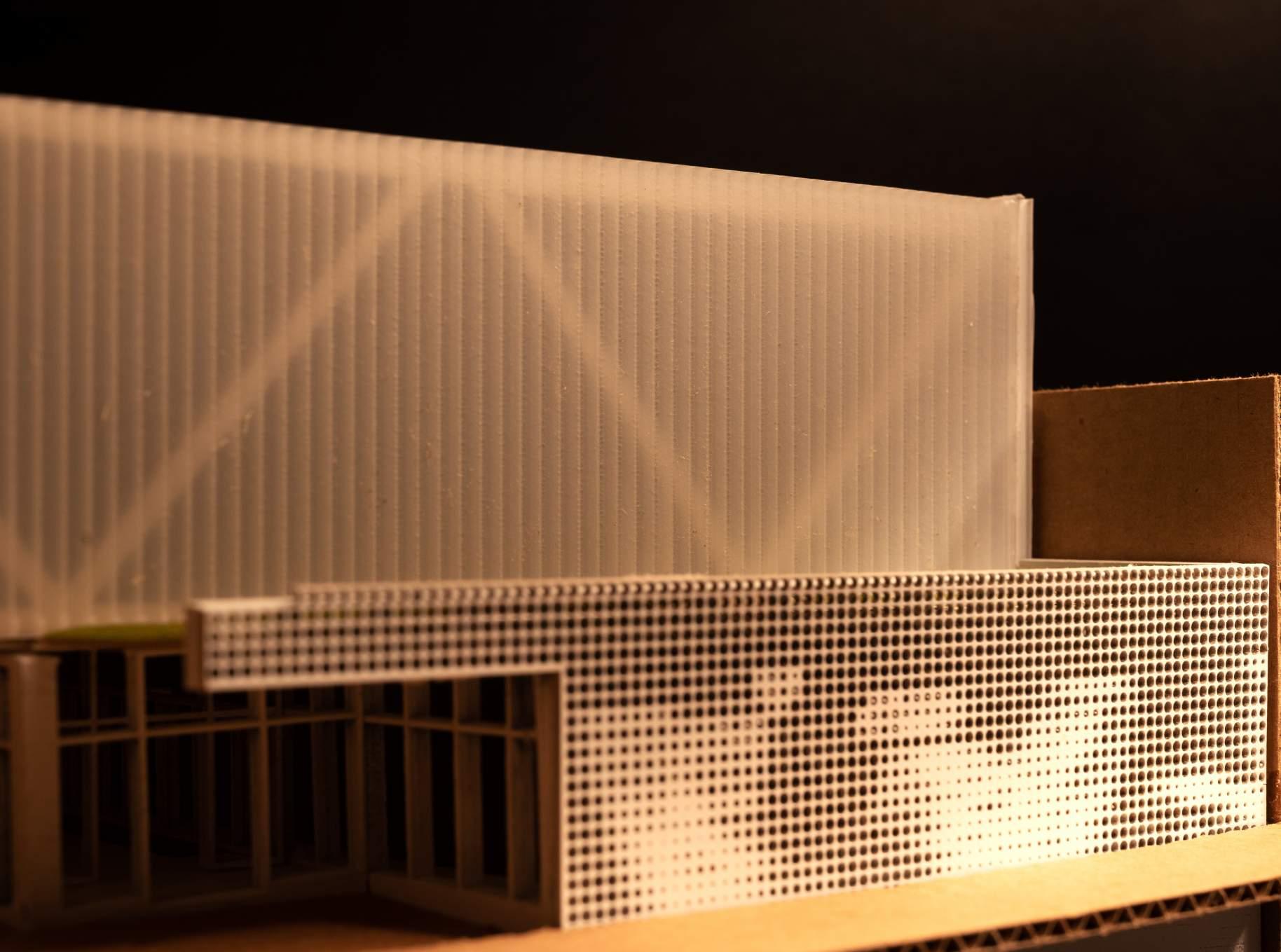
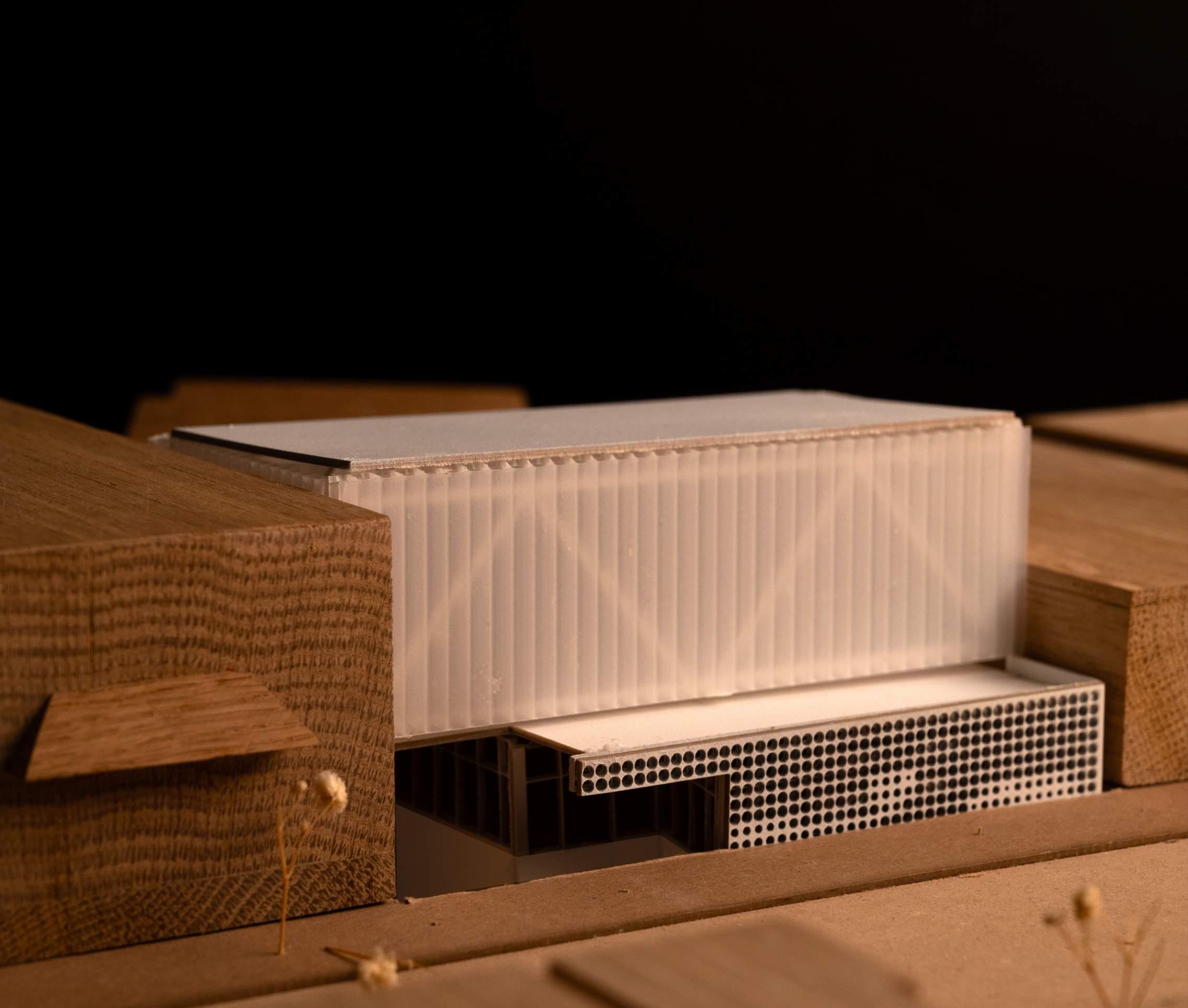
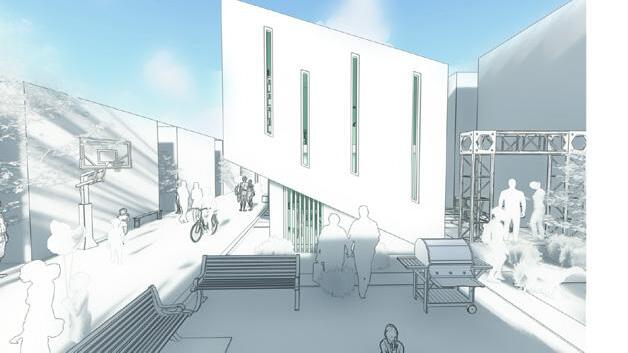
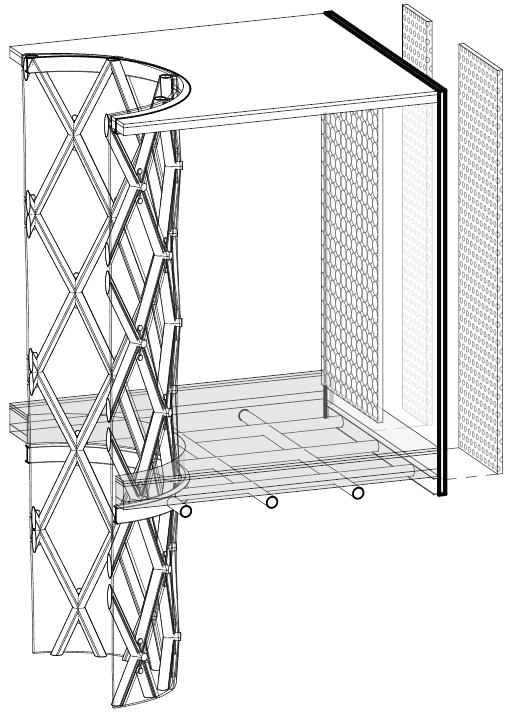
Conceived as a “fieldhouse without a field,” this project addresses the lack of green space in Brighton Park by providing two sports courts within a tight, irregular site. The design balances spaces for both kids and adults, ensuring availability for community even during school programs. The building is strategically placed to create a strip of green space and backyard area, enhancing the connection between two streets. Ground floor walls open to the outdoors, and an elevated running track above the sunken court offers dynamic views and interactions dedicated e-sports area is also included, with perforated panel graphics and polycarbonate materials chosen to reinforce the seamless blend of indoor and outdoor environments.











































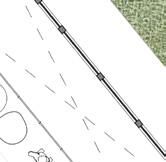
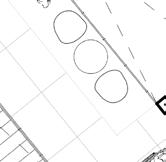
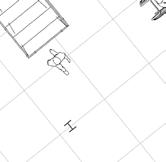
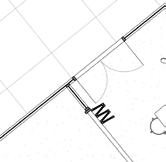









EXPOSED STRUCTURE

EXPOSED STRUCTURE
EXPOSED STRUCTURE
















SCALE: 1/8"=1'-0"
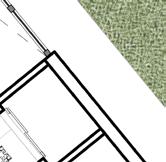
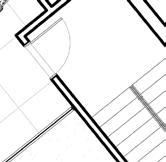
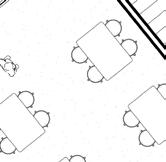
LOWER GROUND FLOOR PLAN
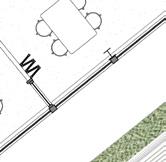
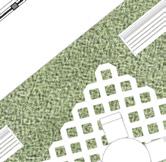

LOWER GROUND FLOOR PLAN
SCALE: 1/8"=1'-0"
SCALE: 1/8"=1'-0"


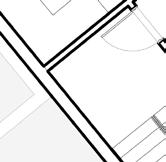


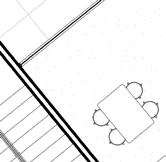
LOWER GROUND FLOOR PLAN
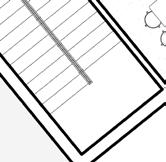


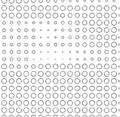
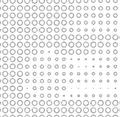
-MOTION
-MOTION
MOTION - PERFORATION

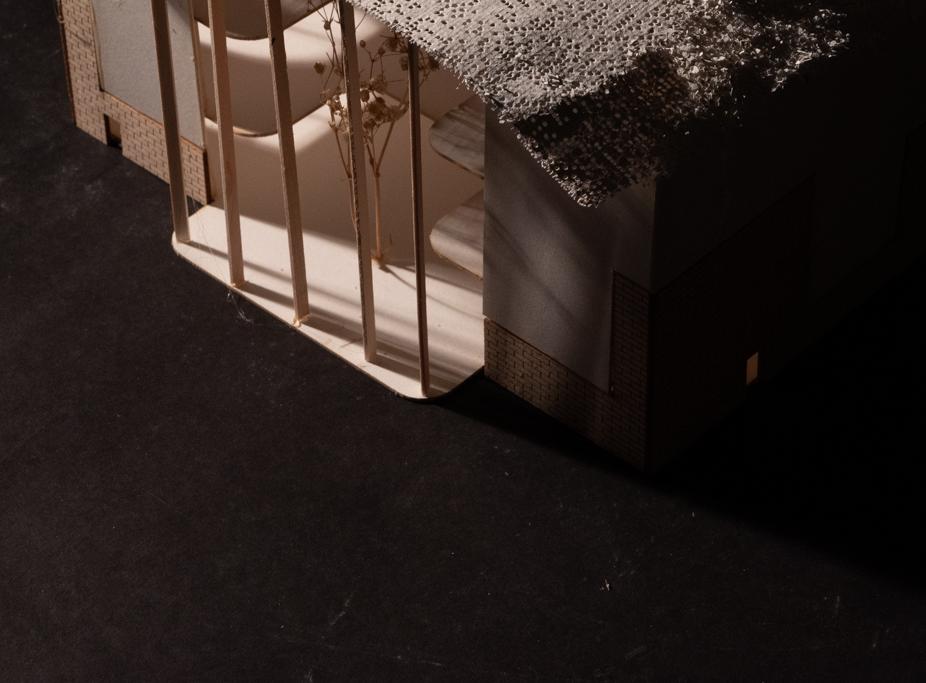
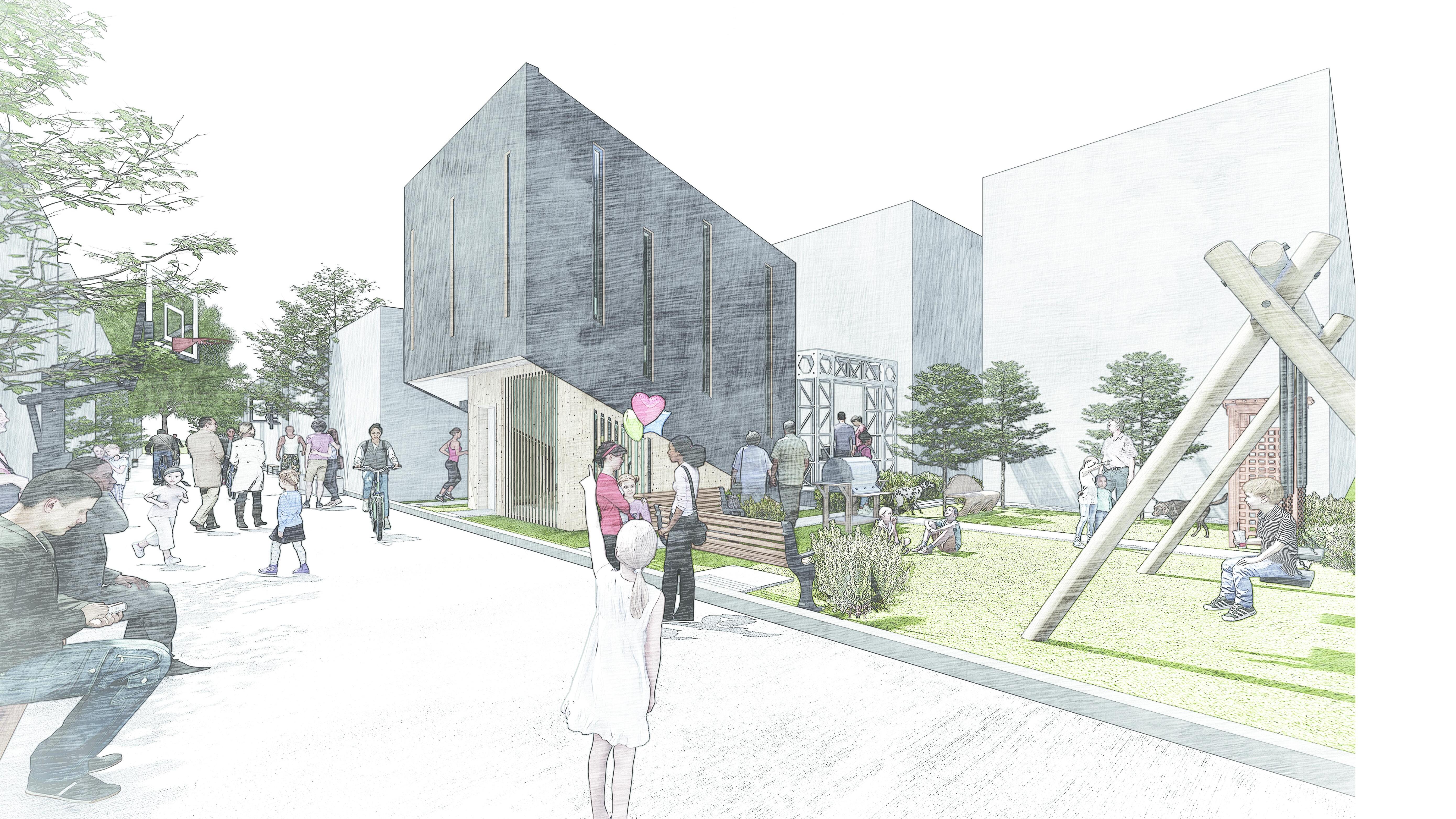
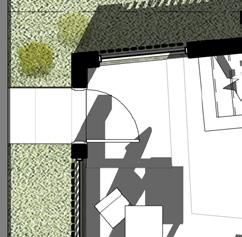
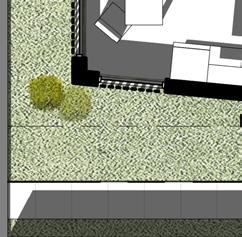
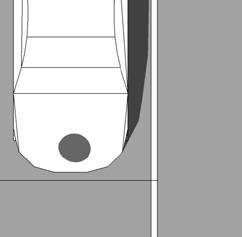
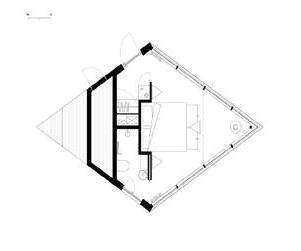
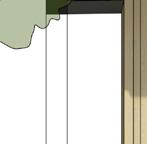
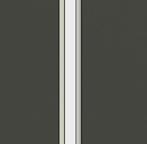
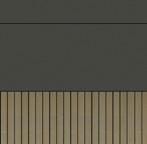
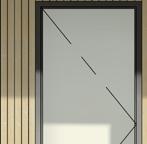
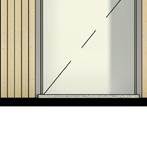
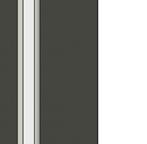
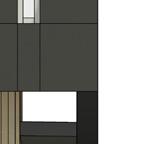
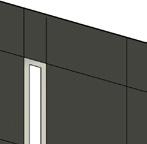
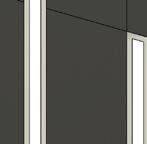
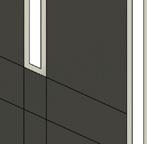
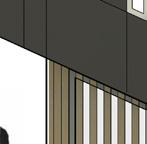
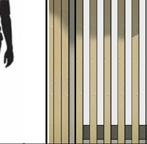
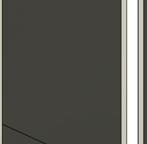
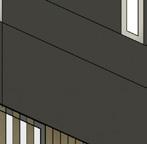
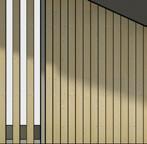
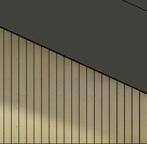
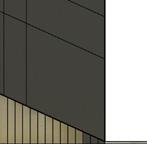
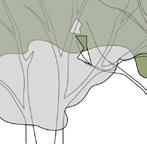
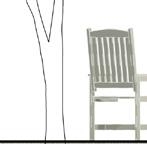
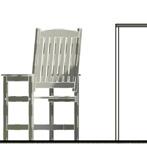
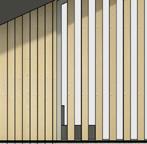
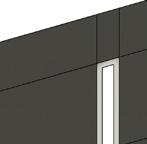
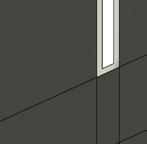
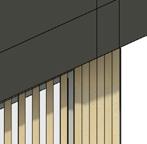
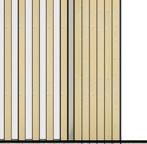
Designed to nurture the creative side of a tenant with a busy 9-5 job and a passion for music, The Stage House explores the concept of dependency through form, function, and site. The house features two distinct masses—a solid, closed-off top dependent on a transparent, open bottom—emphasized by black ACM panels above and knotted pine wood strips below. The interior is divided into spaces for creation and reflection, linked by a multilevel stage integrated into the floor plan, with an open-concept design and no interior walls. The bed is oriented to greet the rising sun, while shelving around the stairs creates a trickling light effect. The backyard stage serves as a social space where occupants of the coach house and the main house can gather and connect.











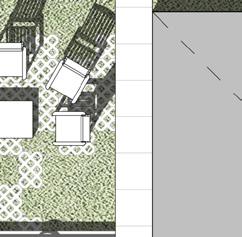
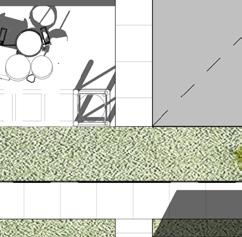

















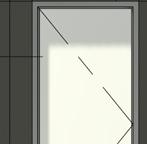

ELEVATION
ELEVATION
SCALE: 3/8"=1'-0"
SCALE: 3/8"=1'-0"
ELEVATION
ELEVATION
SCALE: 3/8"=1'-0"

ELEVATION
ELEVATION
SCALE: 3/8"=1'-0"
SCALE: 3/8"=1'-0"
SCALE: 3/8"=1'-0" ELEVATION

ELEVATION




ELEVATION
ELEVATION
SCALE: 3/8"=1'-0"
SCALE: 3/8"=1'-0"

ELEVATION SCALE: 3/8"=1'-0"
ELEVATION
SCALE: 3/8"=1'-0"

ELEVATION SCALE: 3/8"=1'-0" ELEVATION
3/8"=1'-0"
ELEVATION ELEVATION SCALE: 3/8"=1'-0"
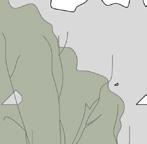
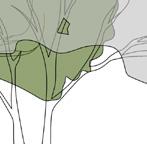
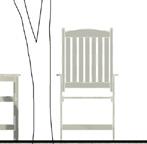




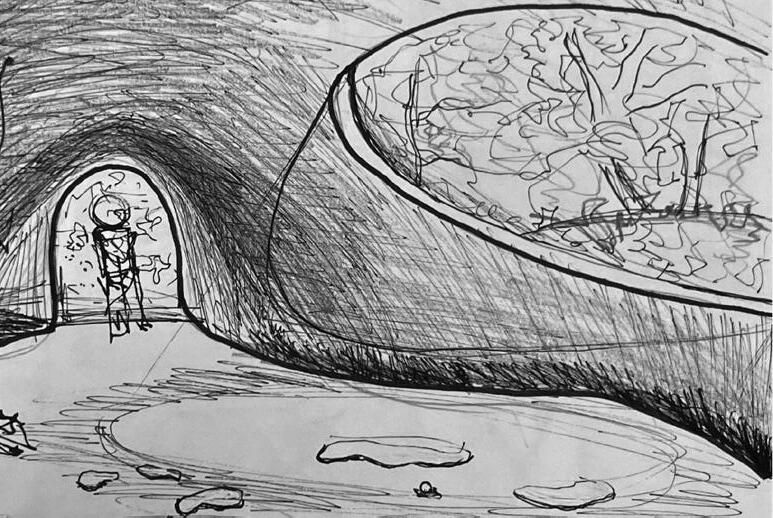
A river crawls slow, searching
Through elk dense prairie, Bison ridden plains
Black bears on oaks
Muddy soil and still water
A beaver’s construction
Parakeets, in vacant burrows
Till it ends at a lake.
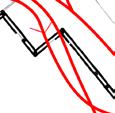
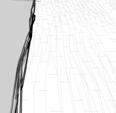
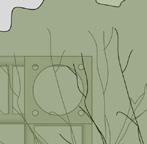
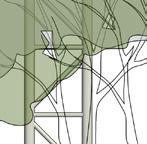
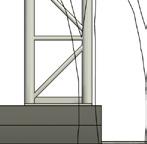
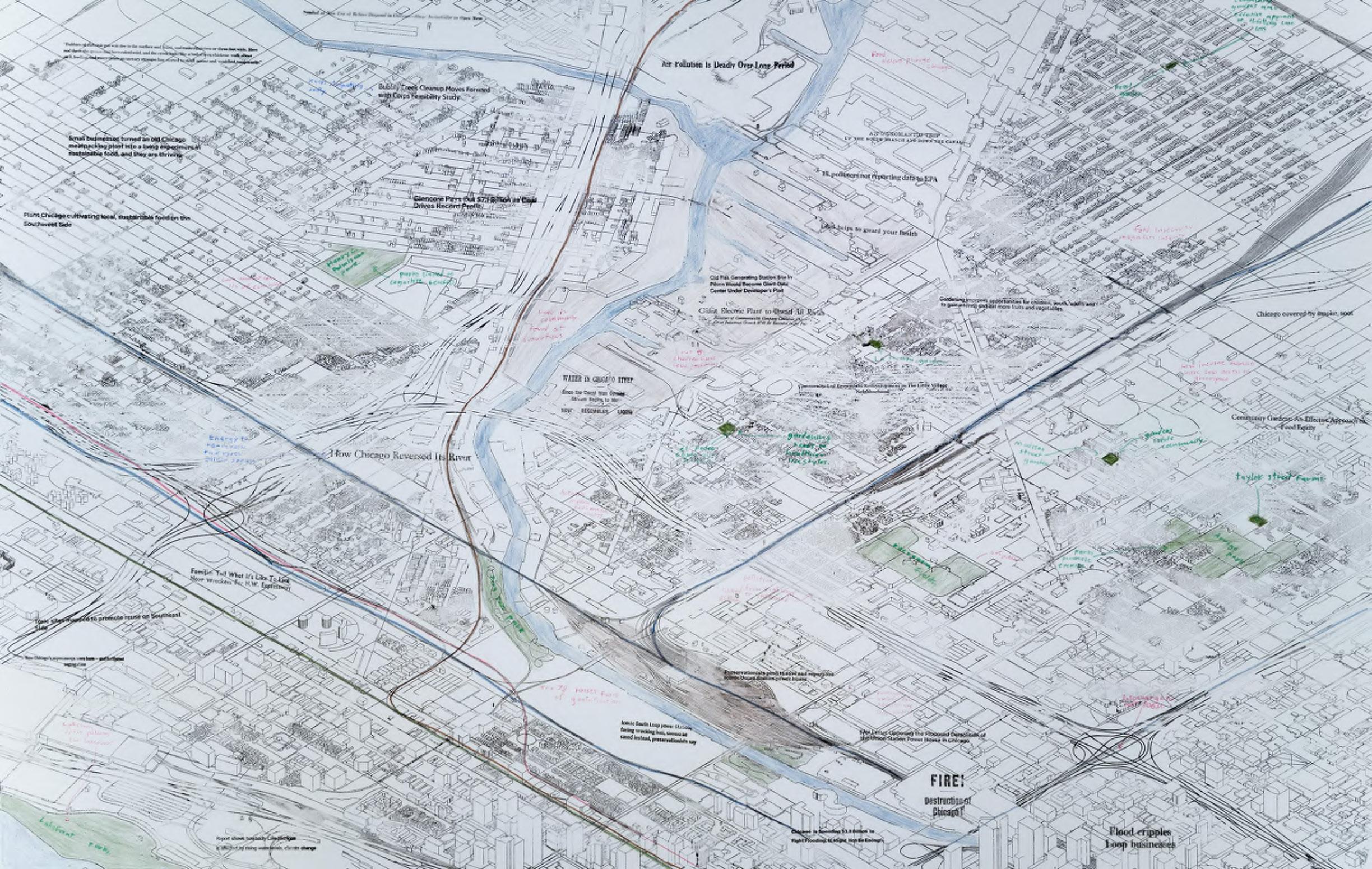
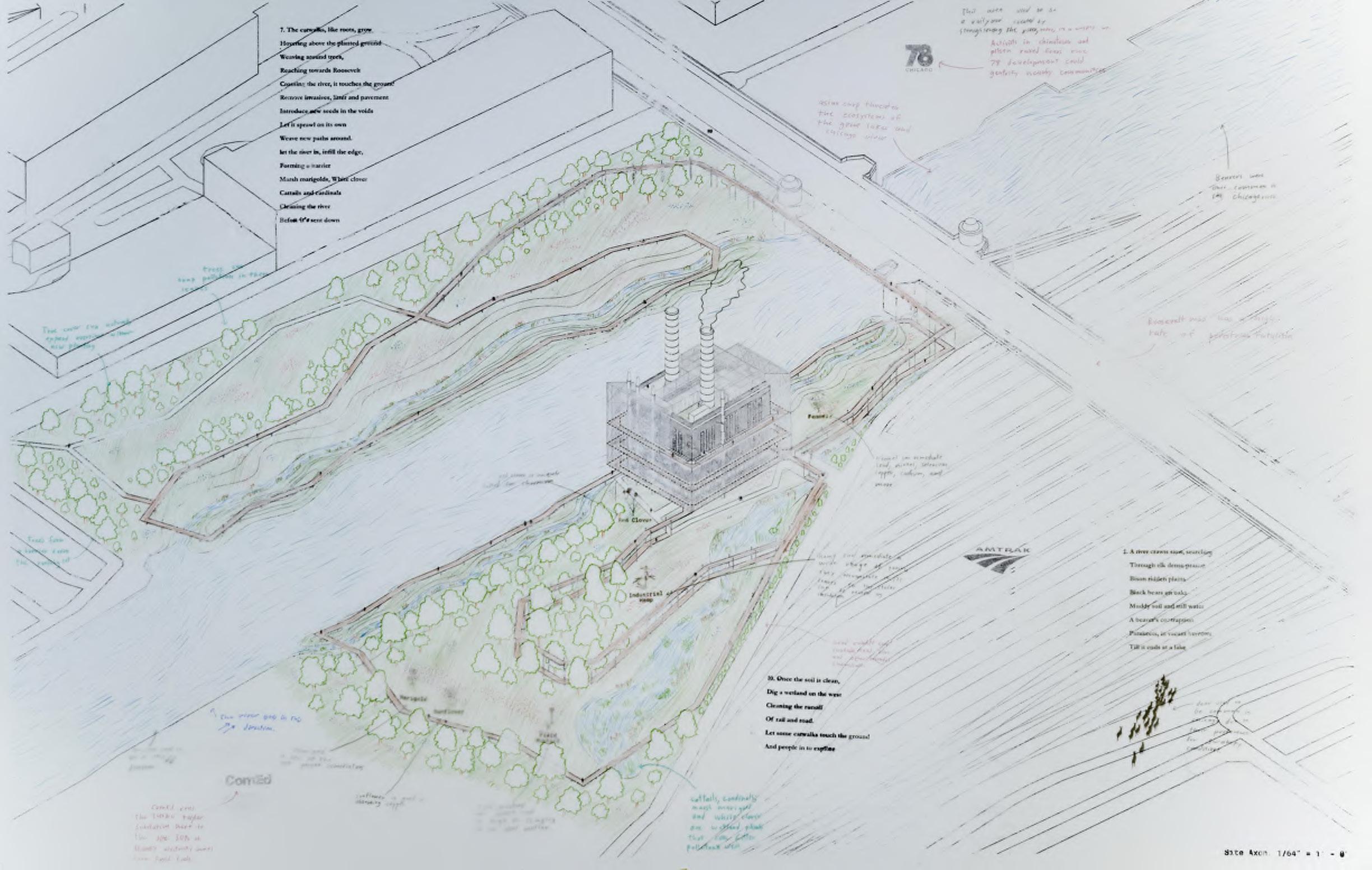
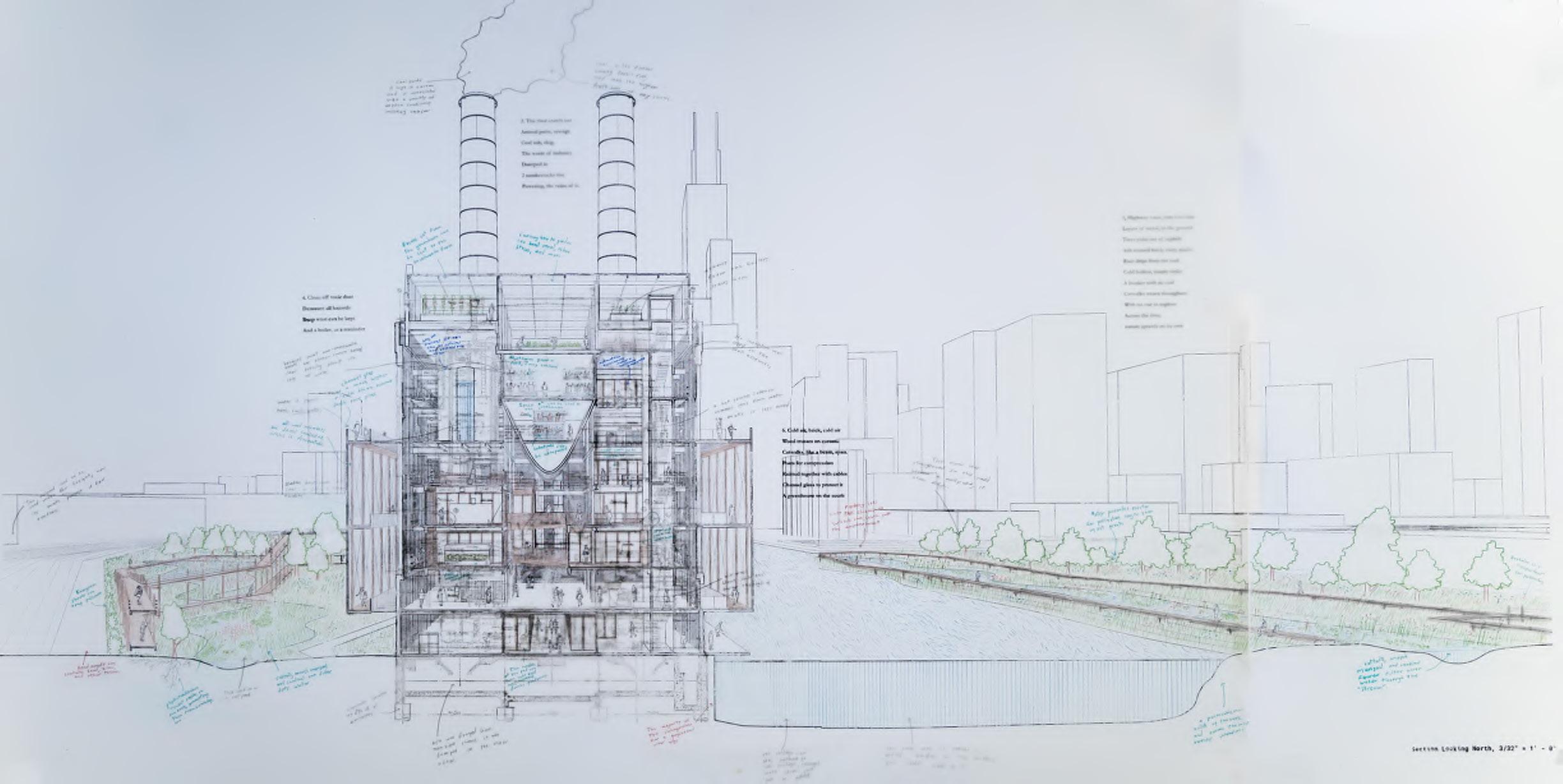
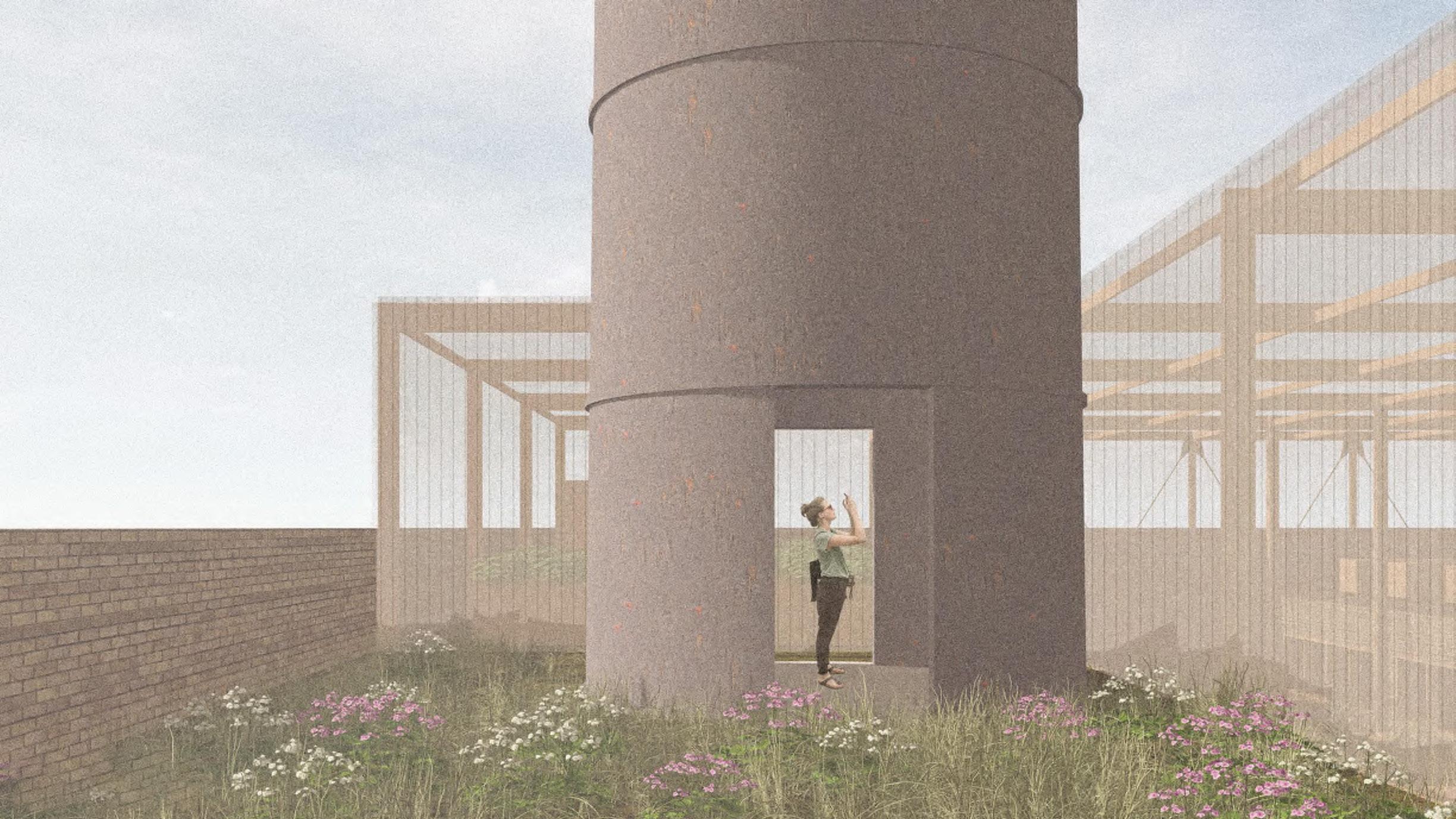
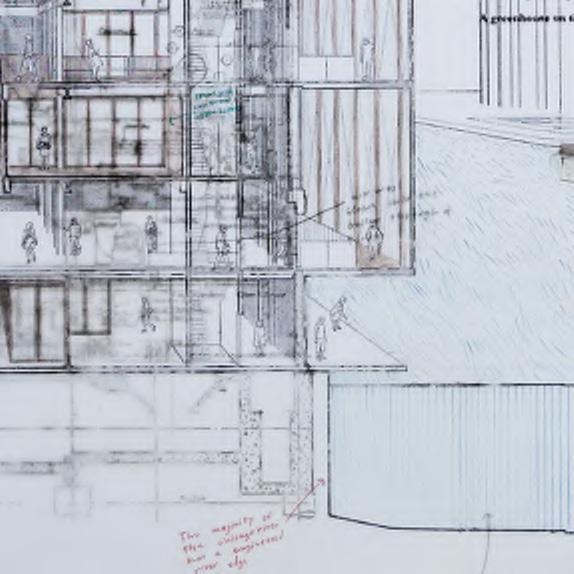
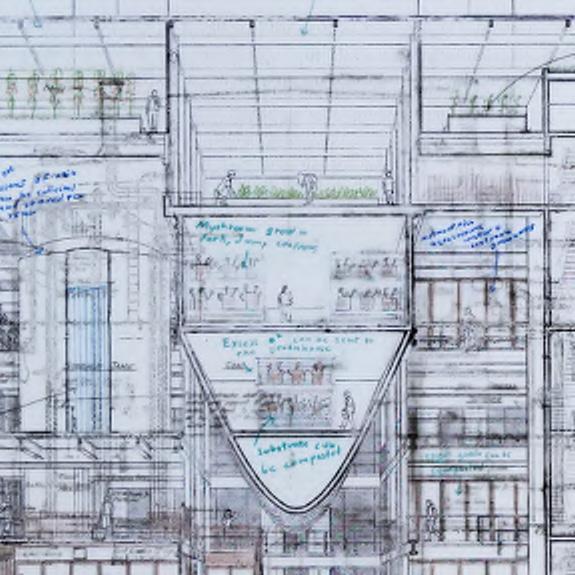
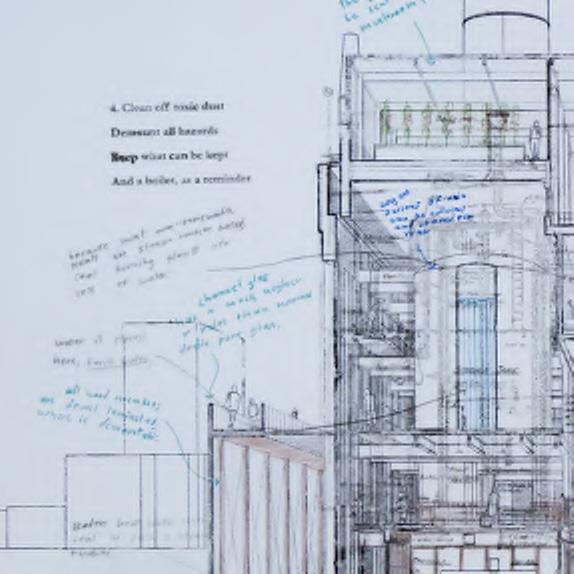
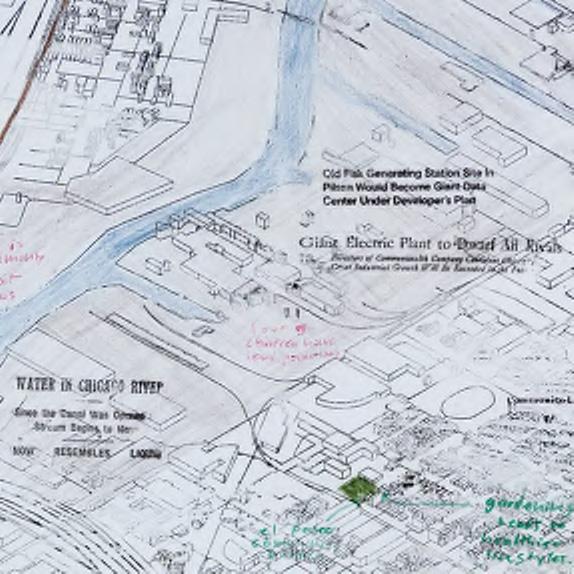
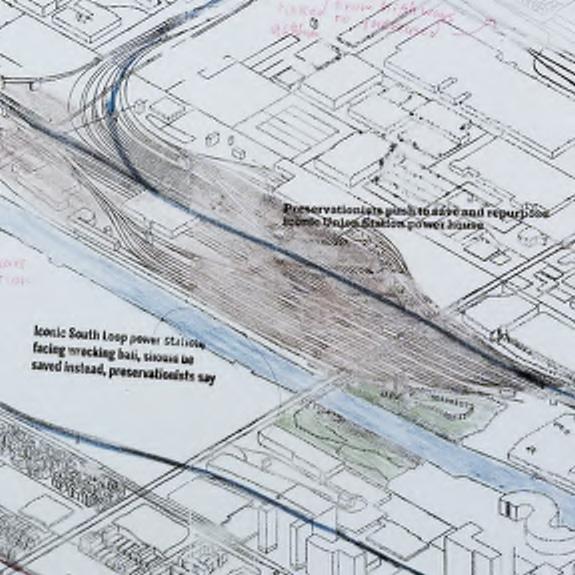
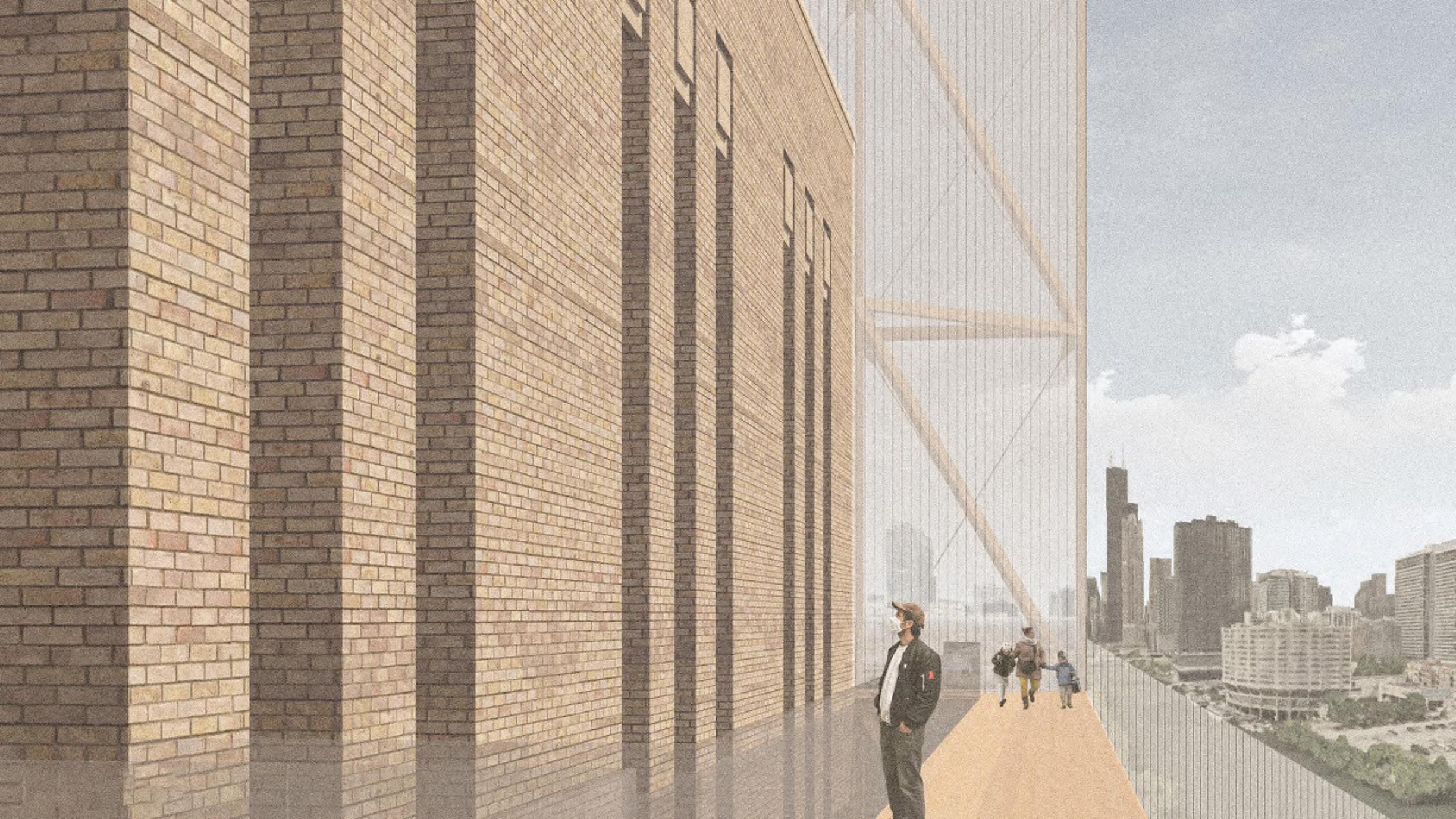
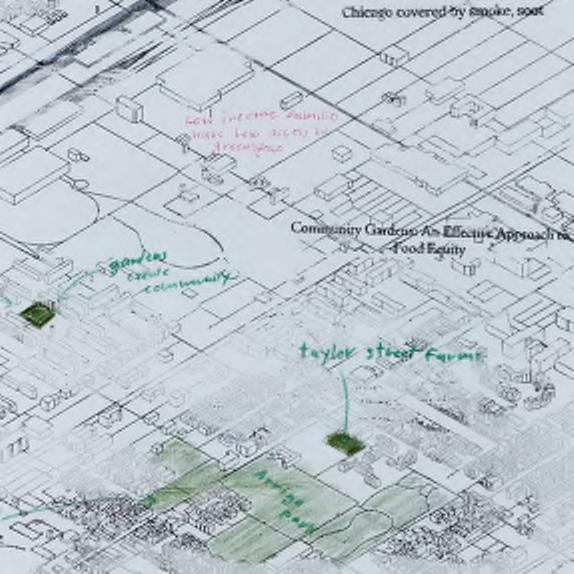
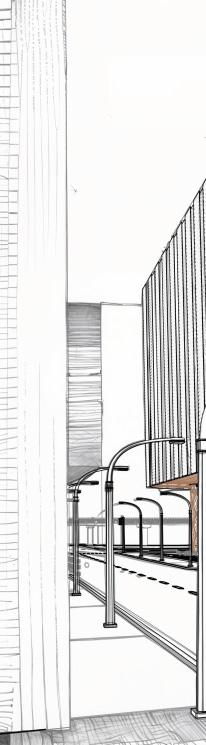
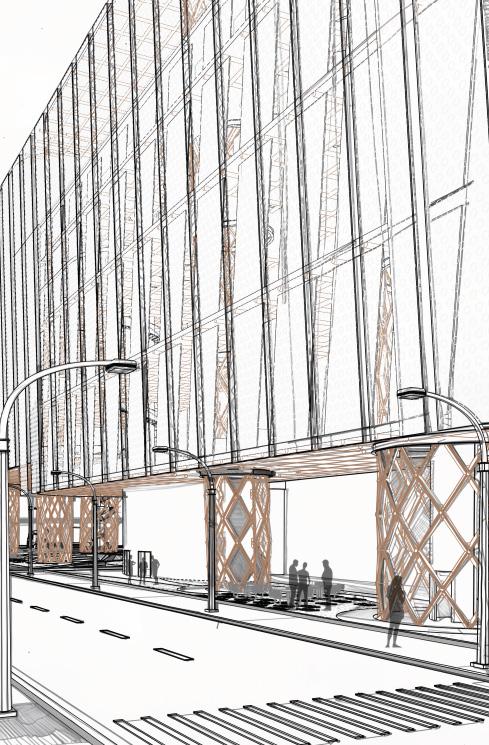
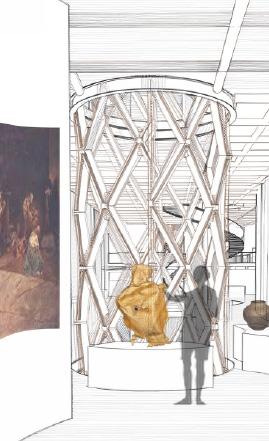
The Union Station Power Plant, built in 1932, powered Chicago’s rail system but has been inactive since 2011. This project envisions an adaptive reuse that contrasts the site’s industrial past with a sustainable future, emphasizing a circular economy with zero waste. The existing structure is preserved and repurposed using wood “production pods” for exhibits and community use, highlighting the flow of materials and resources.
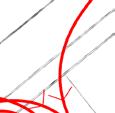
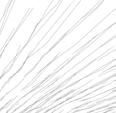
The drawings are ink transfered by hand on layered vellum sheets, with each layer representing a different time. This method visually connected the building’s transformation over time, emphasizing the evolving relationship between history, present conditions, and future possibilities.
Partner: Jlees Ahmed
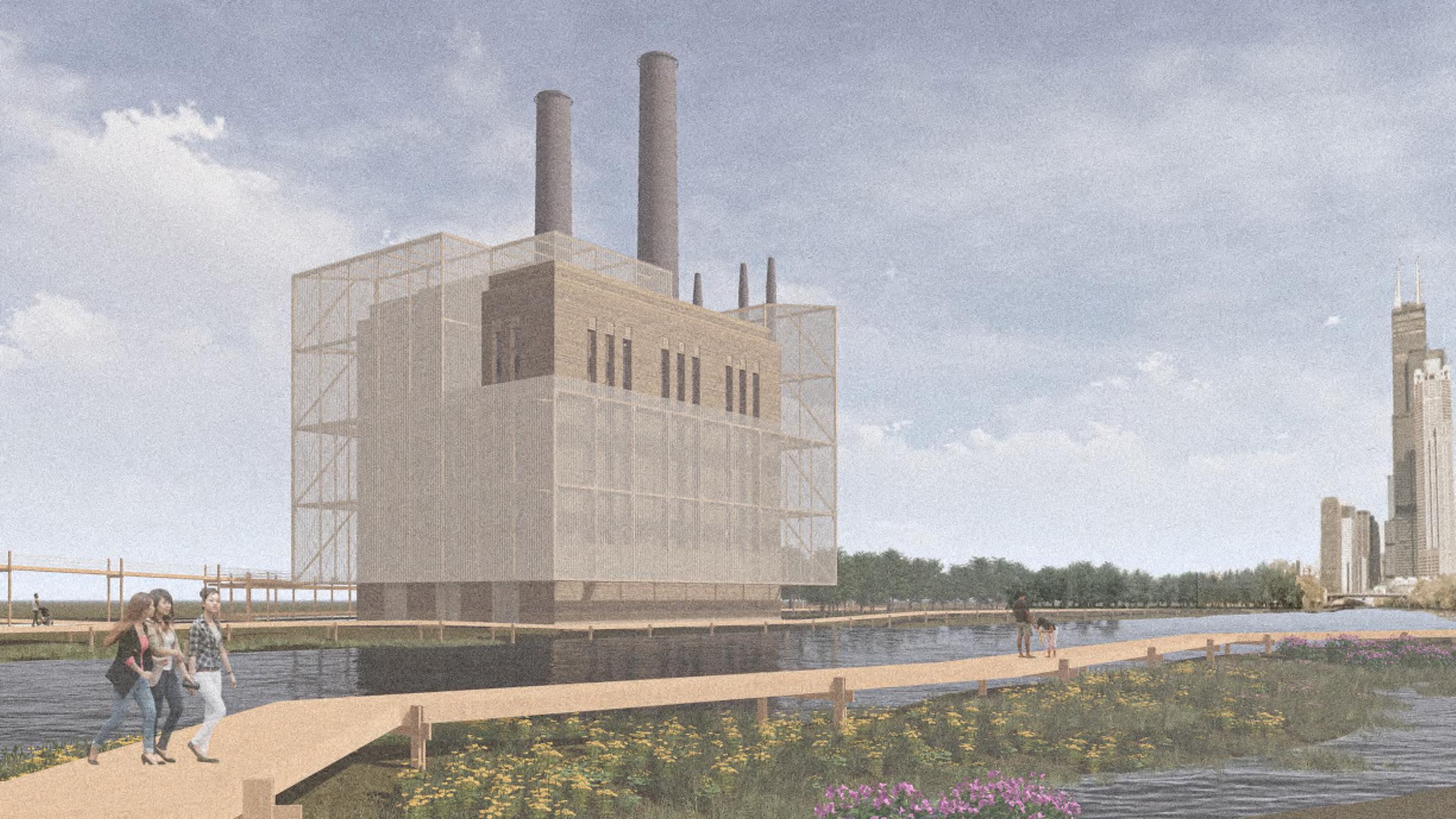
The river crawls out
Animal parts, sewage
Coal ash, slag,
The waste of industry
Dumped in 2 smokestacks rise
Powering, the veins of it.
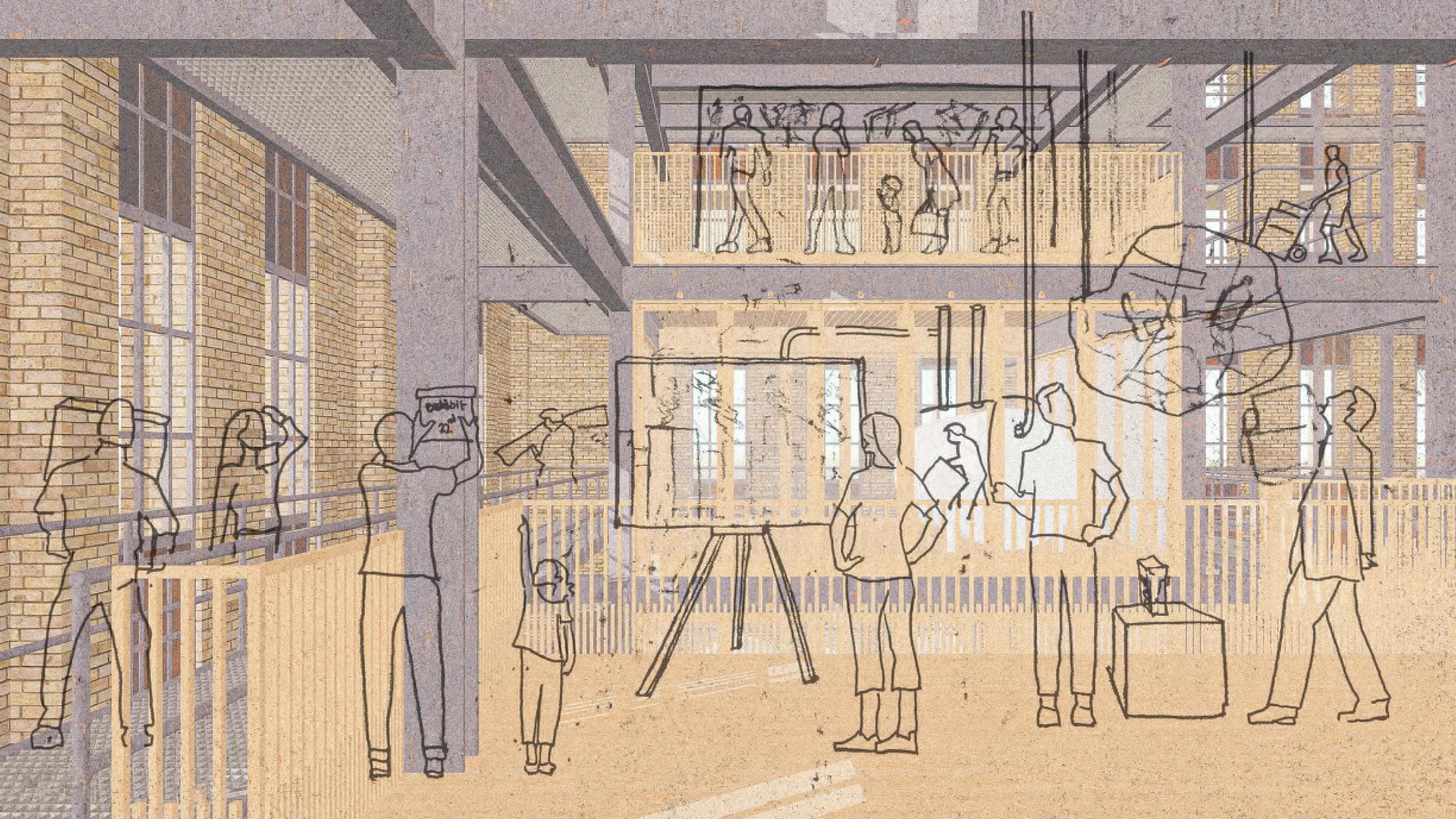
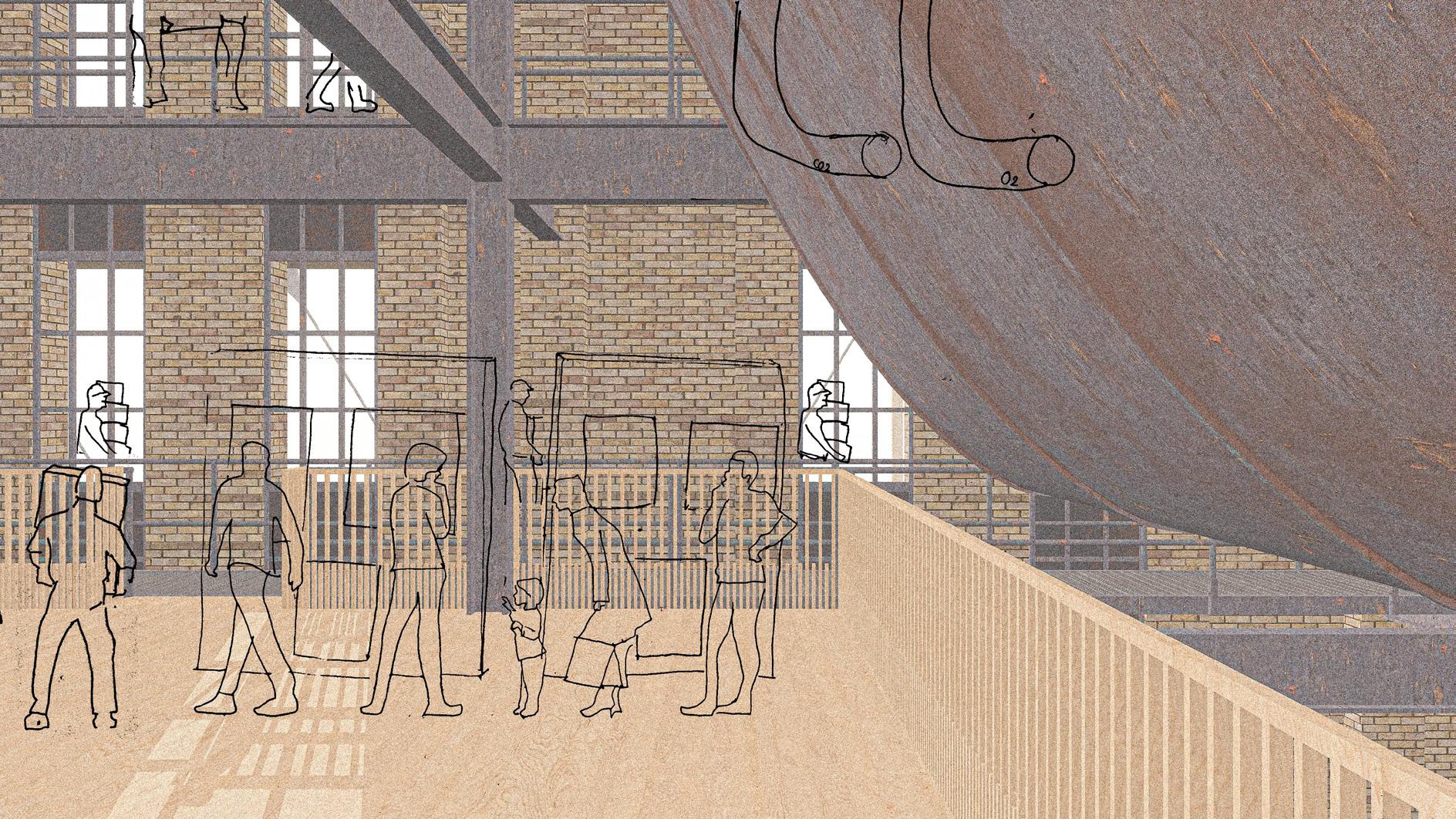
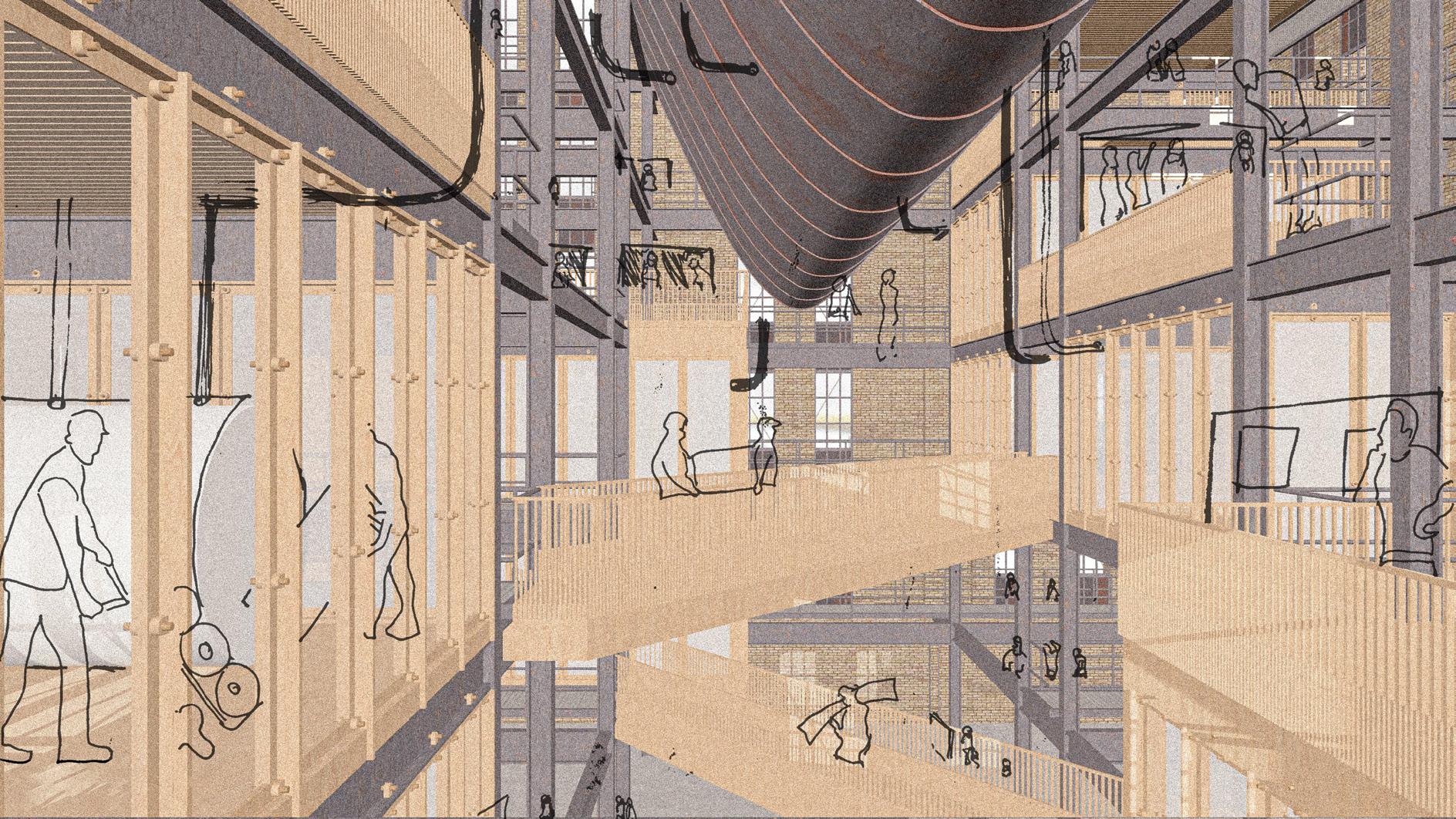
Pods and floors made of wood, Held together by dowels
Infilling voids between members
New catwalks span between
So the waste of industry
Can be used next door
Spent grain turned to compost, and substrate
Compost feeds fish, substrate grows mushrooms
Fish and plants trade water
Plants and mushrooms trade air
Put teaching spaces on top, So skills can be learned
Exhibits on the second
For artists and more
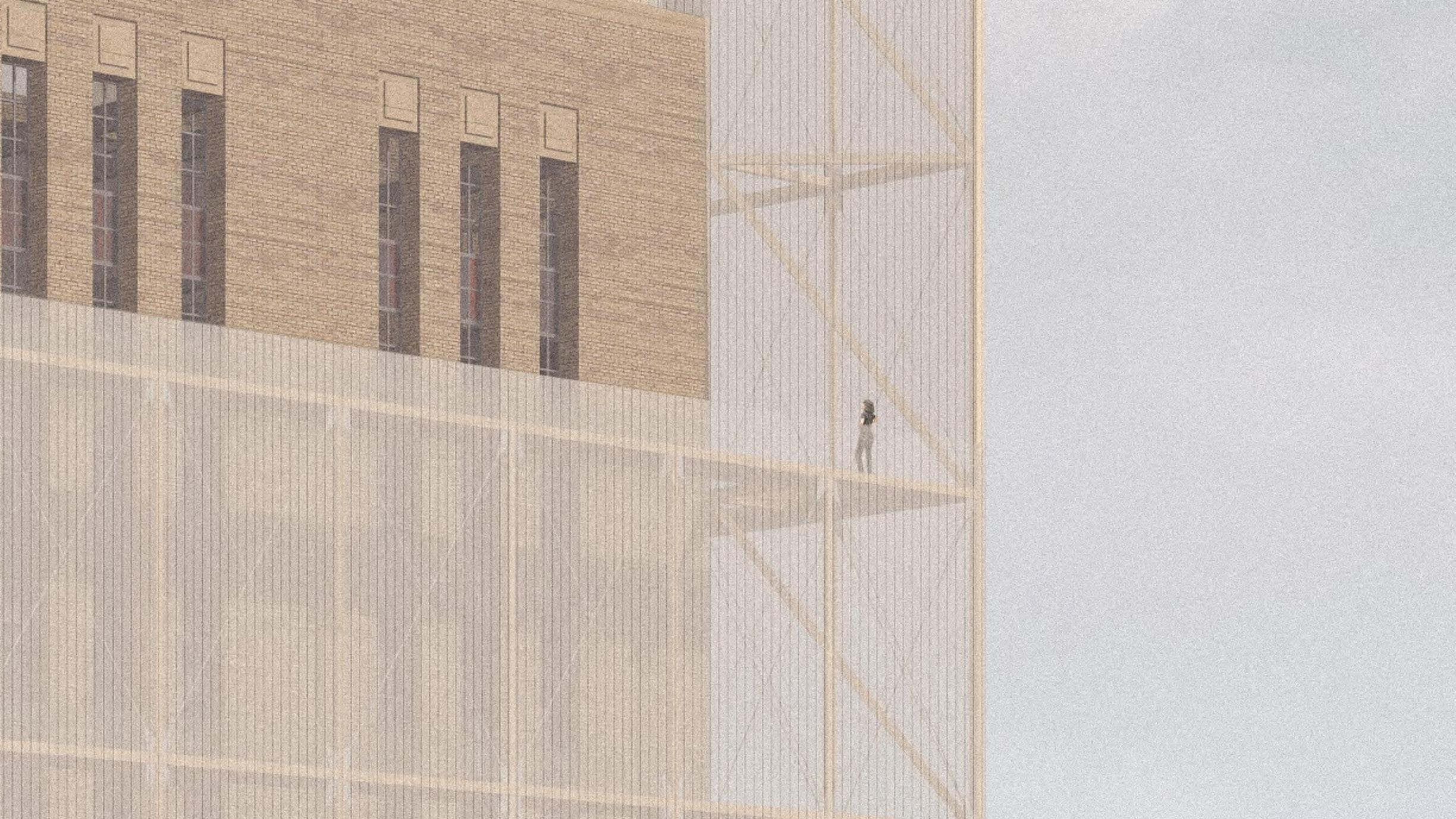
The catwalks, like roots, grow
Hovering above the planted ground
Weaving around trees,
Reaching towards Roosevelt
Crossing the river, it touches the ground
Remove invaders, litter and pavement
Introduce new seeds in the voids
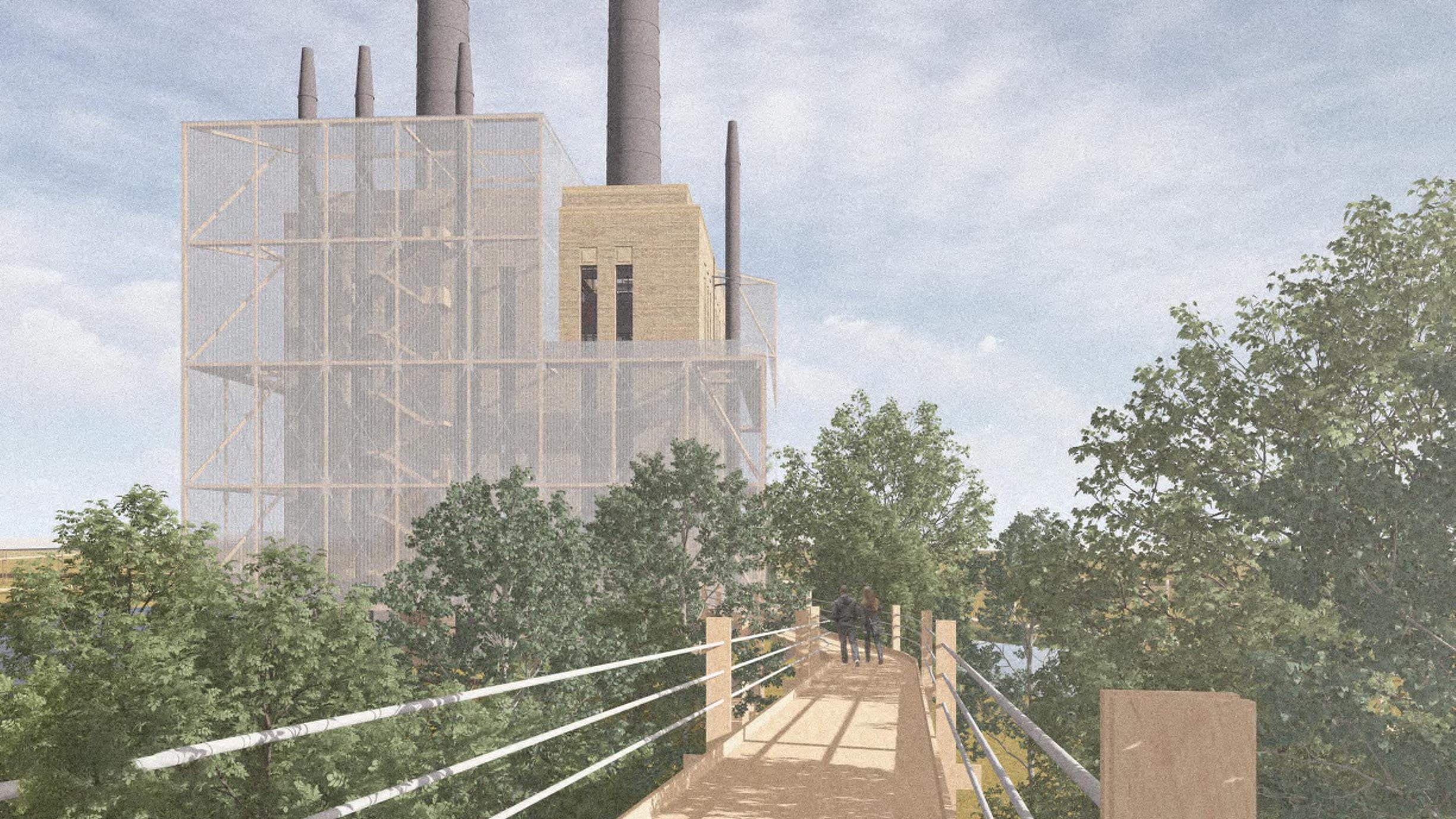
Rip asphalt from the ground
Plant seeds in old soil
Marigold starfire, industrial hemp, Field mustard, Fennel
Redclover and sunflower
With time, a brownfield can turn green.
Cold air, brick, cold air
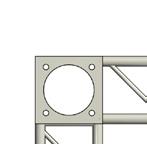
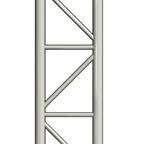
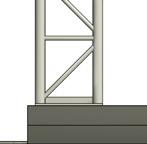
Wood trusses on corners
Catwalks, like a beam, span.
Posts in compression
Knitted together with cables
Channel glass to protect
A greenhouse on the south
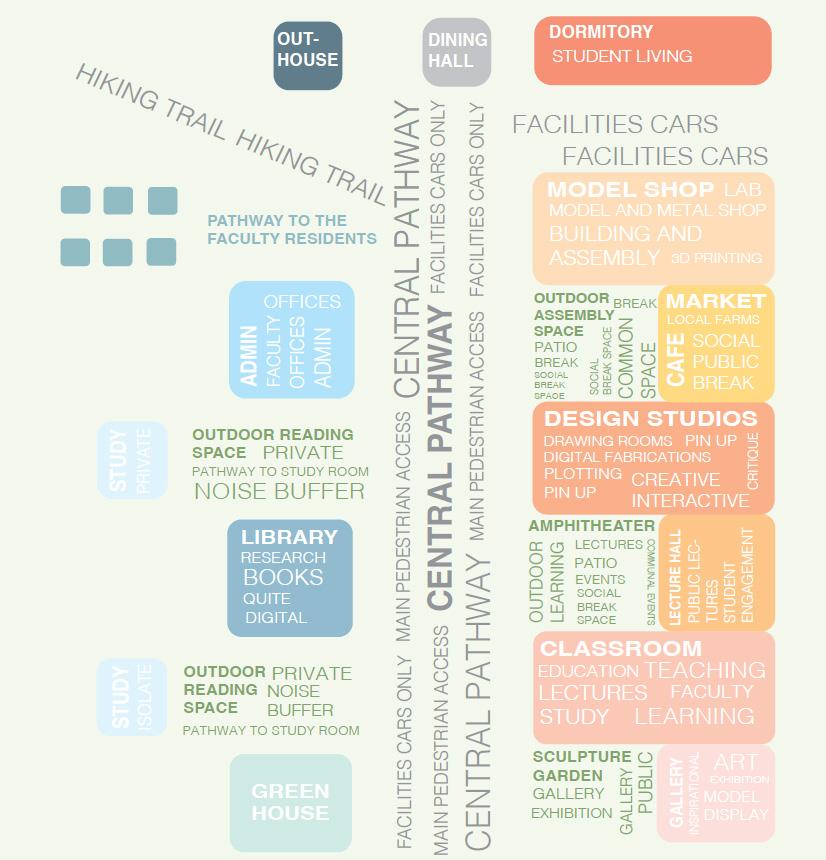
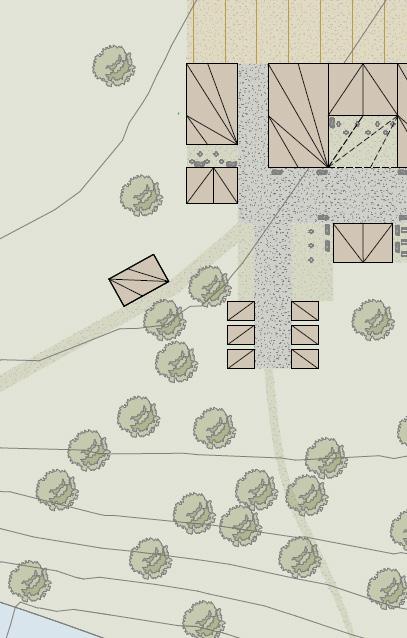
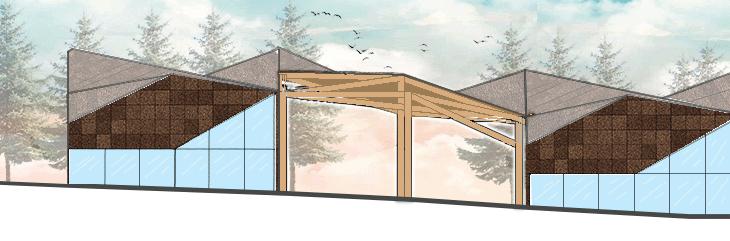
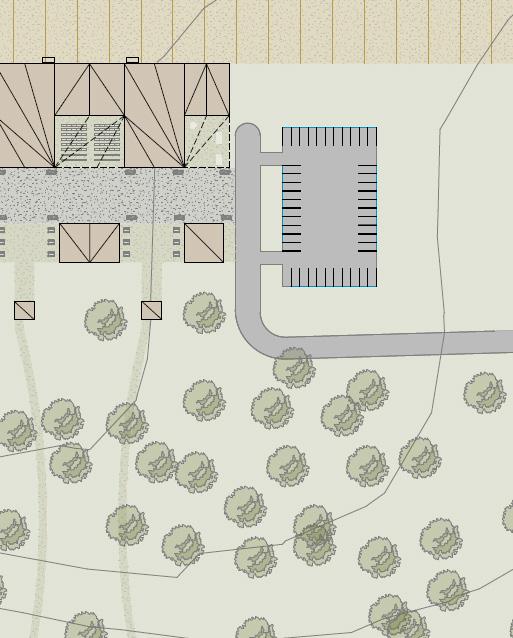
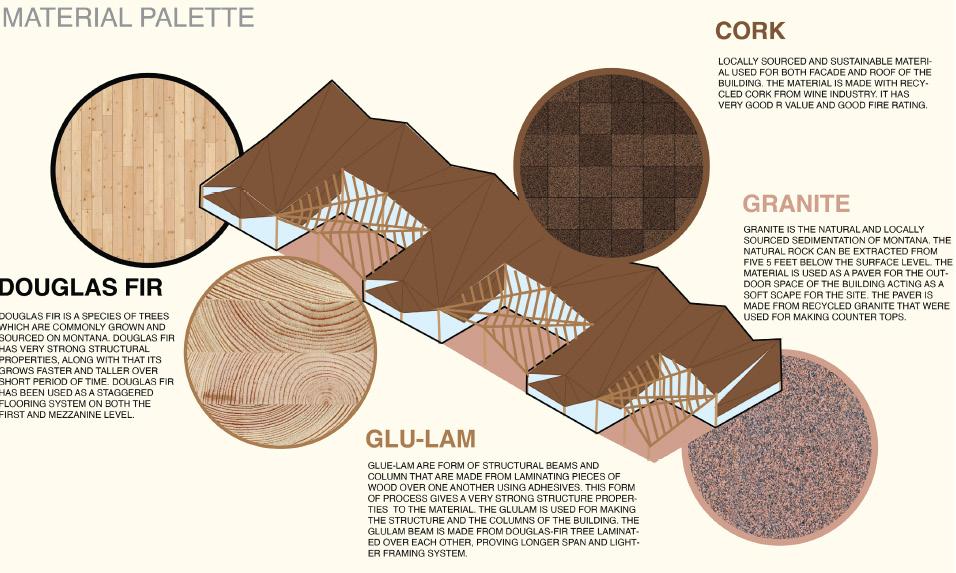
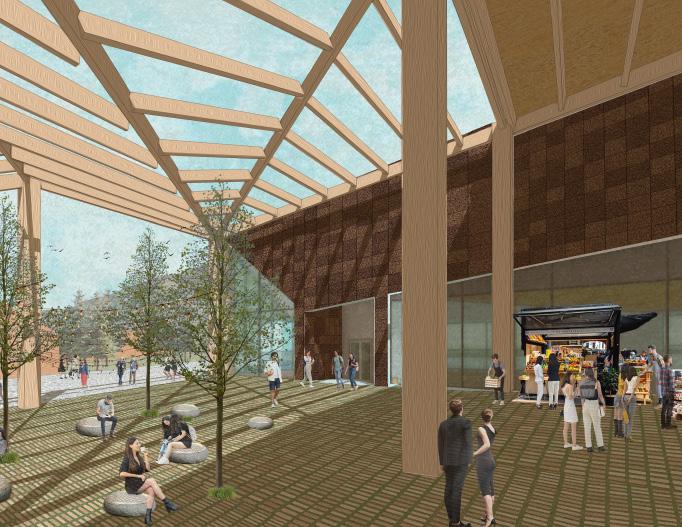
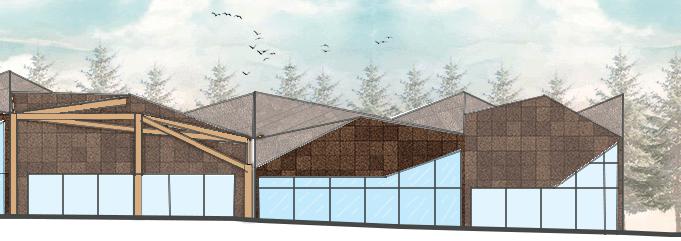
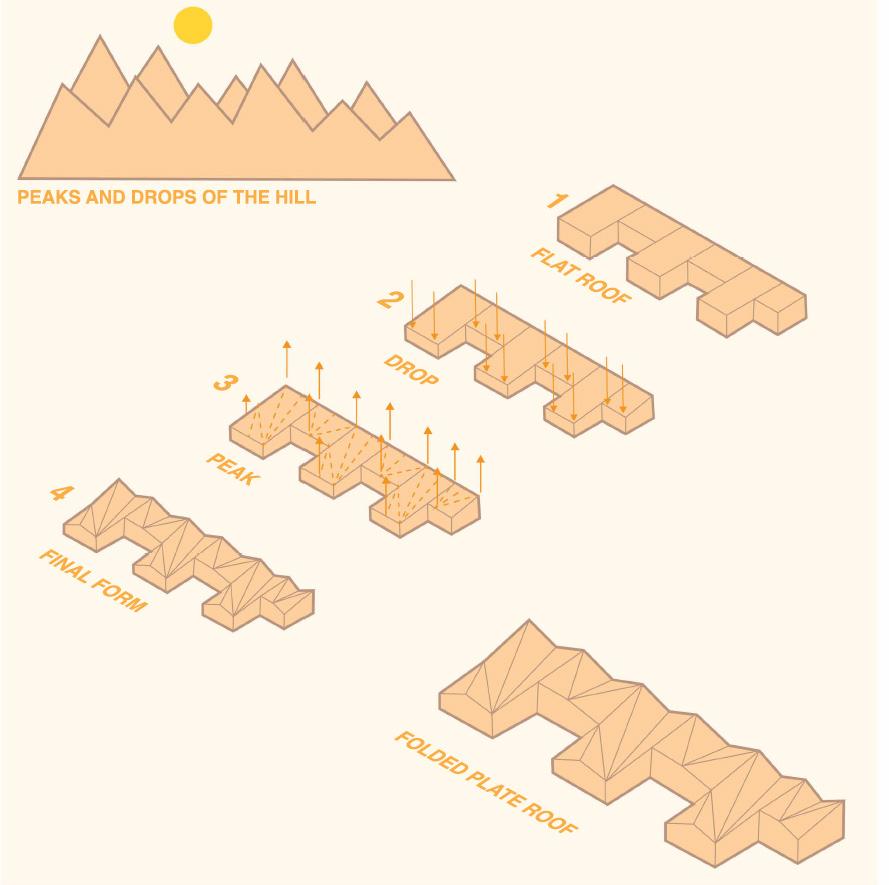
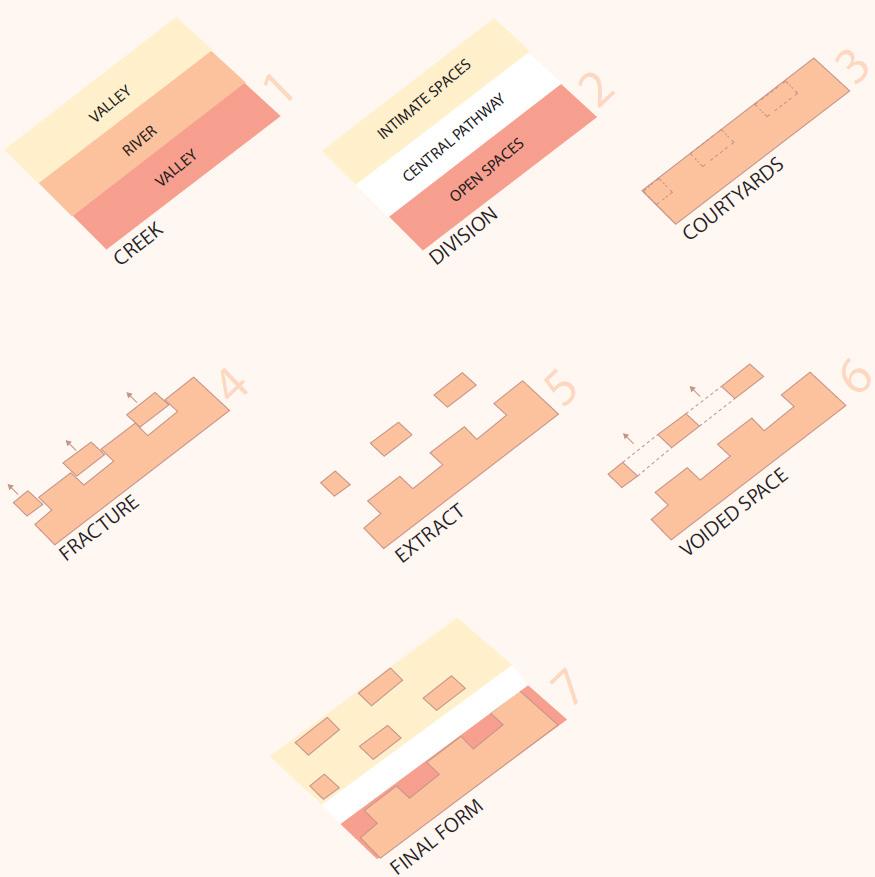
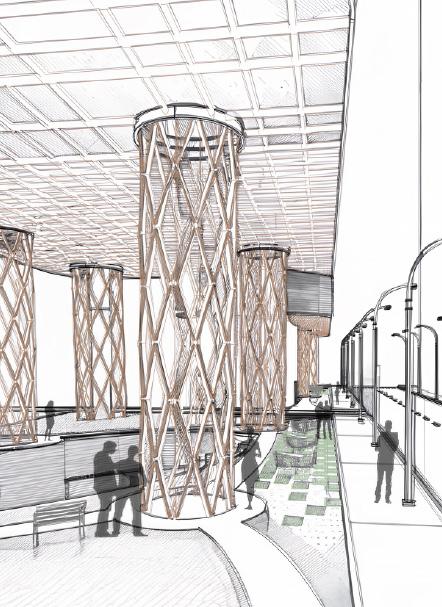
Set against the breathtaking backdrop of Stevensville, Montana, this campus design explores the seamless integration of architecture and nature through a personal lens. The linear arrangement of buildings guides a daily journey from the forestframed student residences in the north to the academic heart of the campus in the south. Along the central axis, outdoor gathering spaces, sunlit design studios, and a vibrant model shop foster creativity and community. This project captures a lived experience where architecture not only supports learning but also celebrates the rhythms of nature, reflection, and collaboration. The architecture is grounded in the use of glulam structural frames and cork finishes, chosen for their warmth, sustainability, and tactile connection to the landscape.
This project explores the evolving identity of diasporic communities through a design inspired by the Filipino nipa hut and shaped by Spanish, American, and Japanese influences. A suspended mass and vertical shafts create visual connections across a compact site, offering glimpses into the building’s layered programs.
Organized around the themes of Observing, Discovering, and Uniting, the center invites public engagement through a minimal footprint and open circulation. Interior spaces wrap a central void, reflecting a dialogue between tradition, transformation, and shared cultural experience.













































































































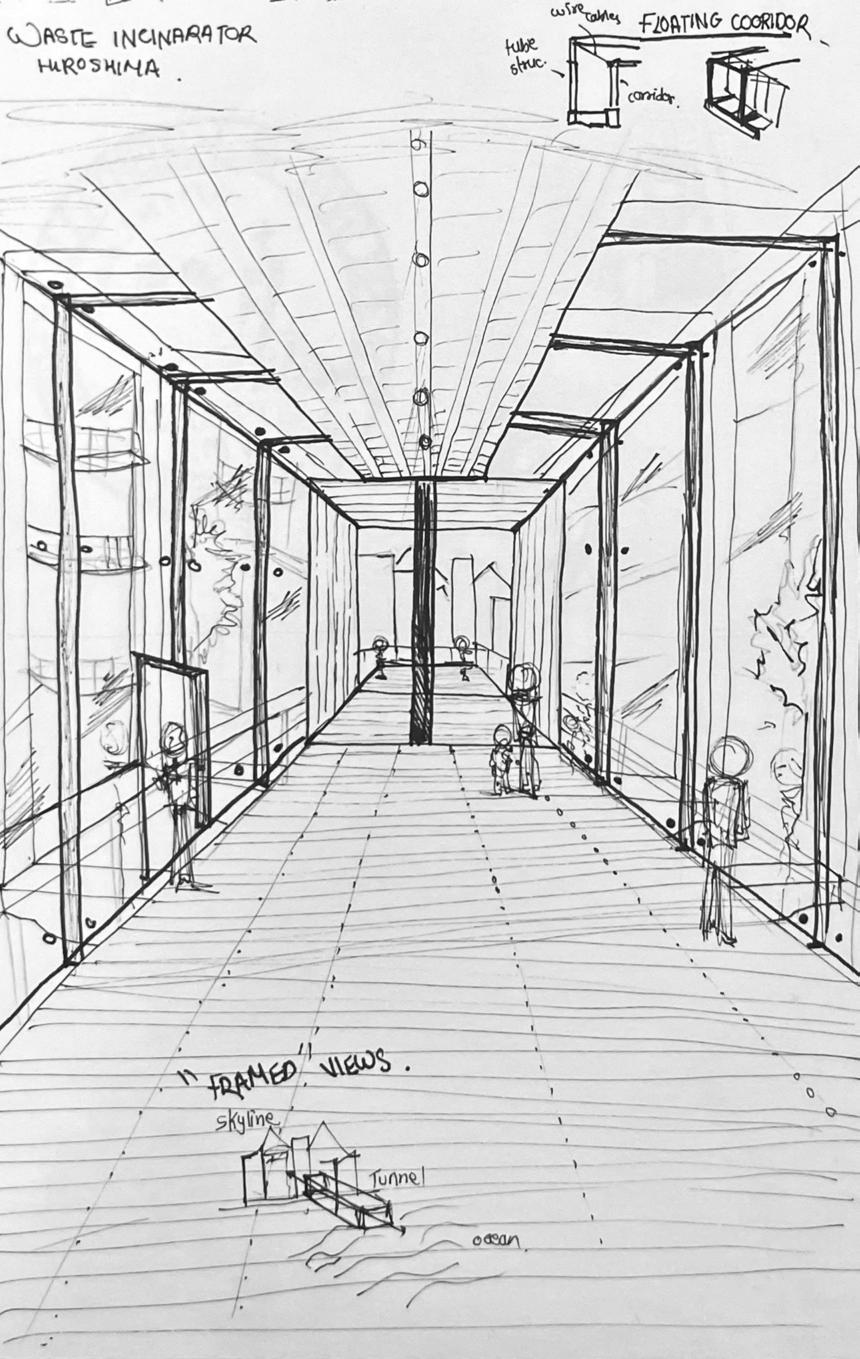
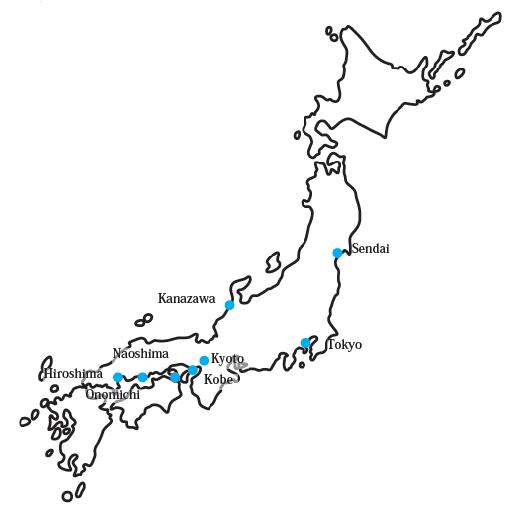
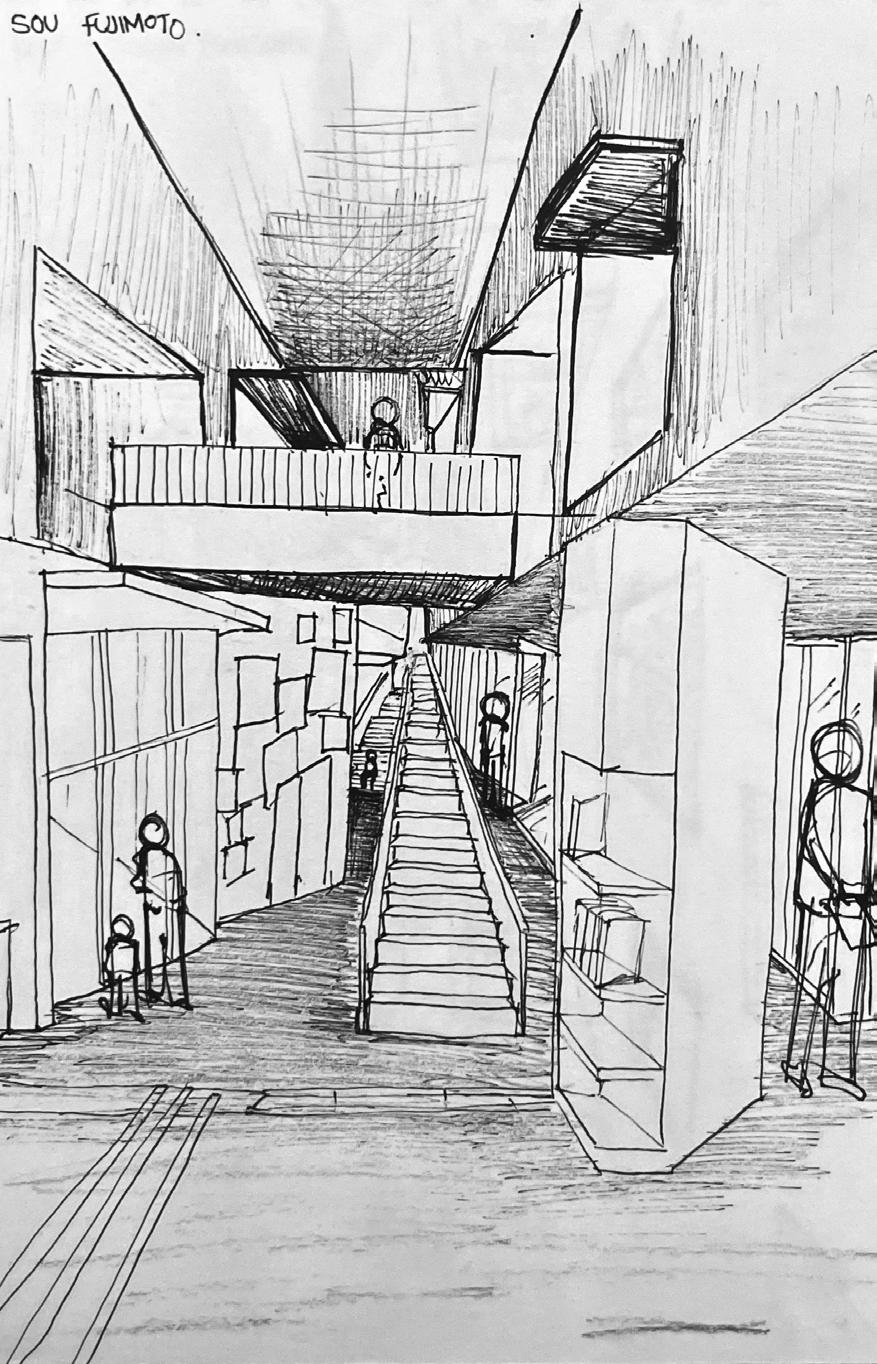
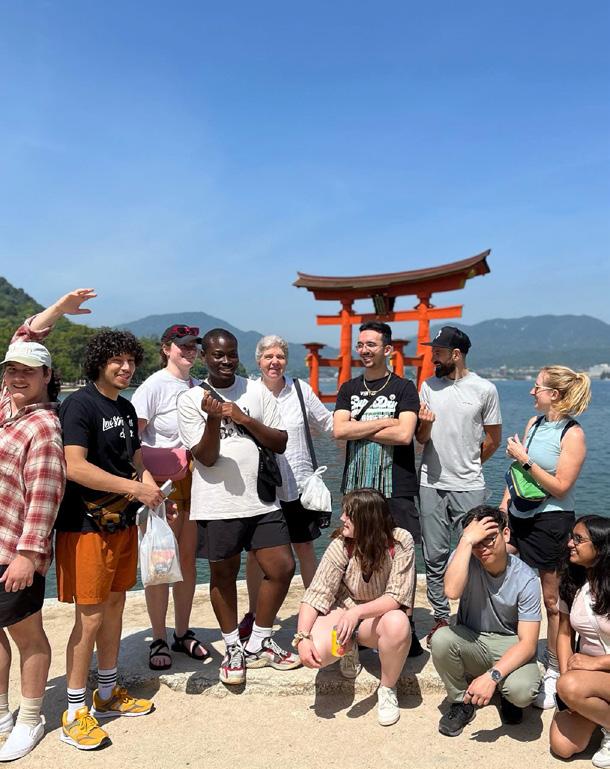
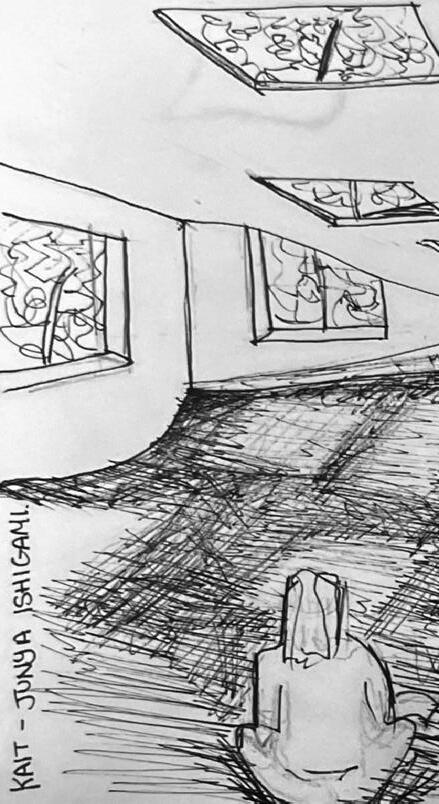
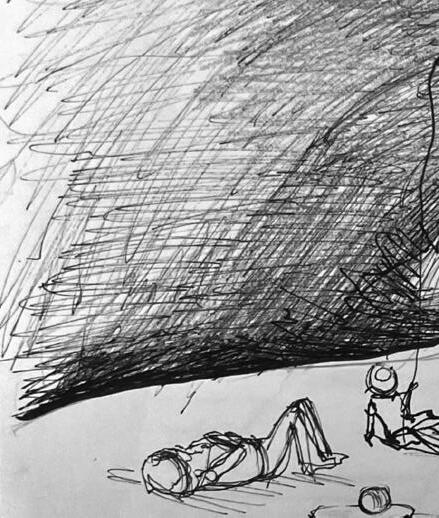
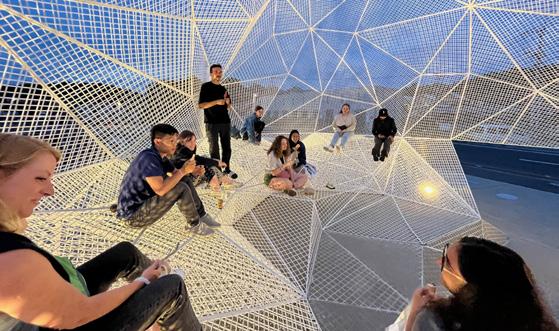
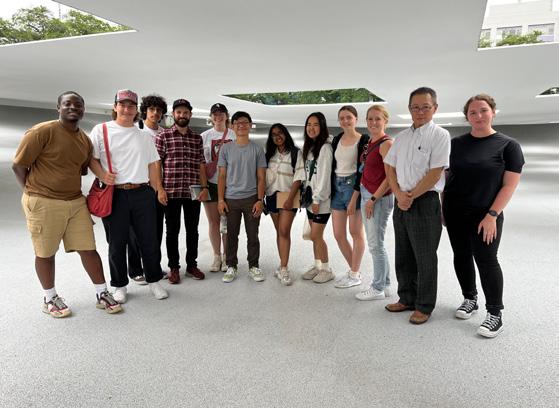
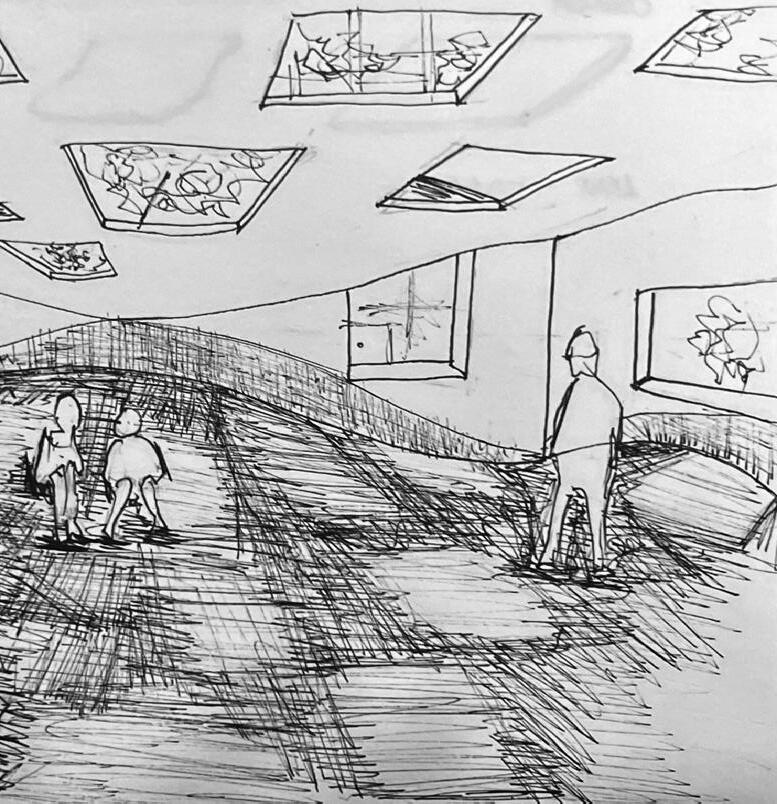
Japan Study Abroad: Participated in an intensive program in Japan, studying the integration of traditional and contemporary architecture. Conducted case studies and site visits to over 75 buildings, focusing on environmental adaptation and design innovation.
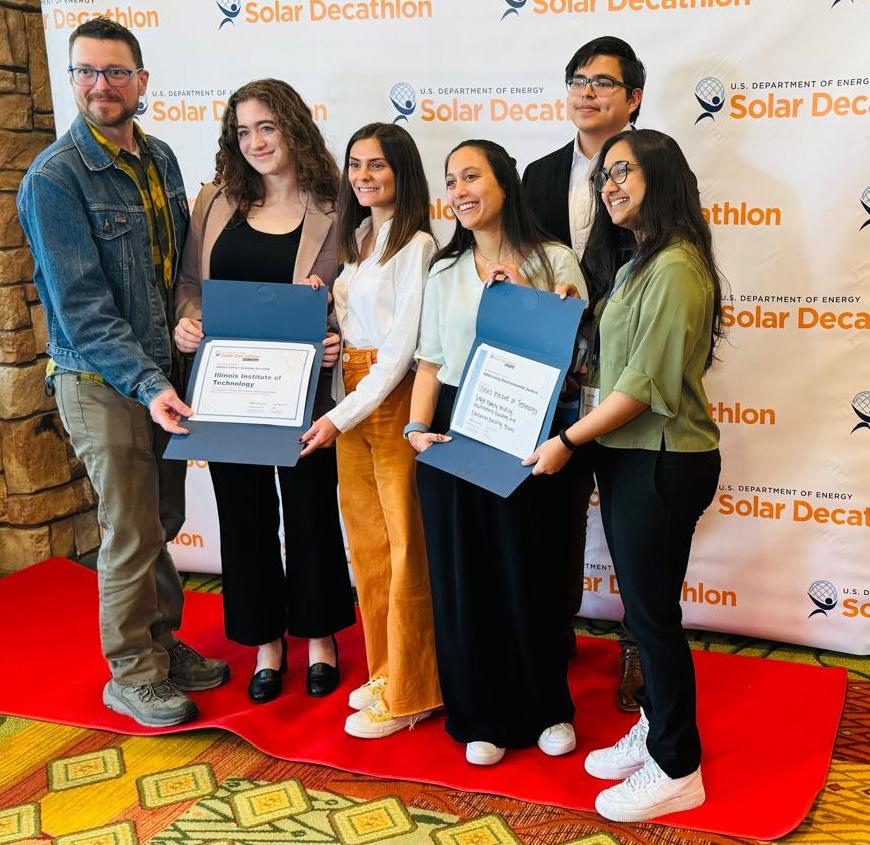
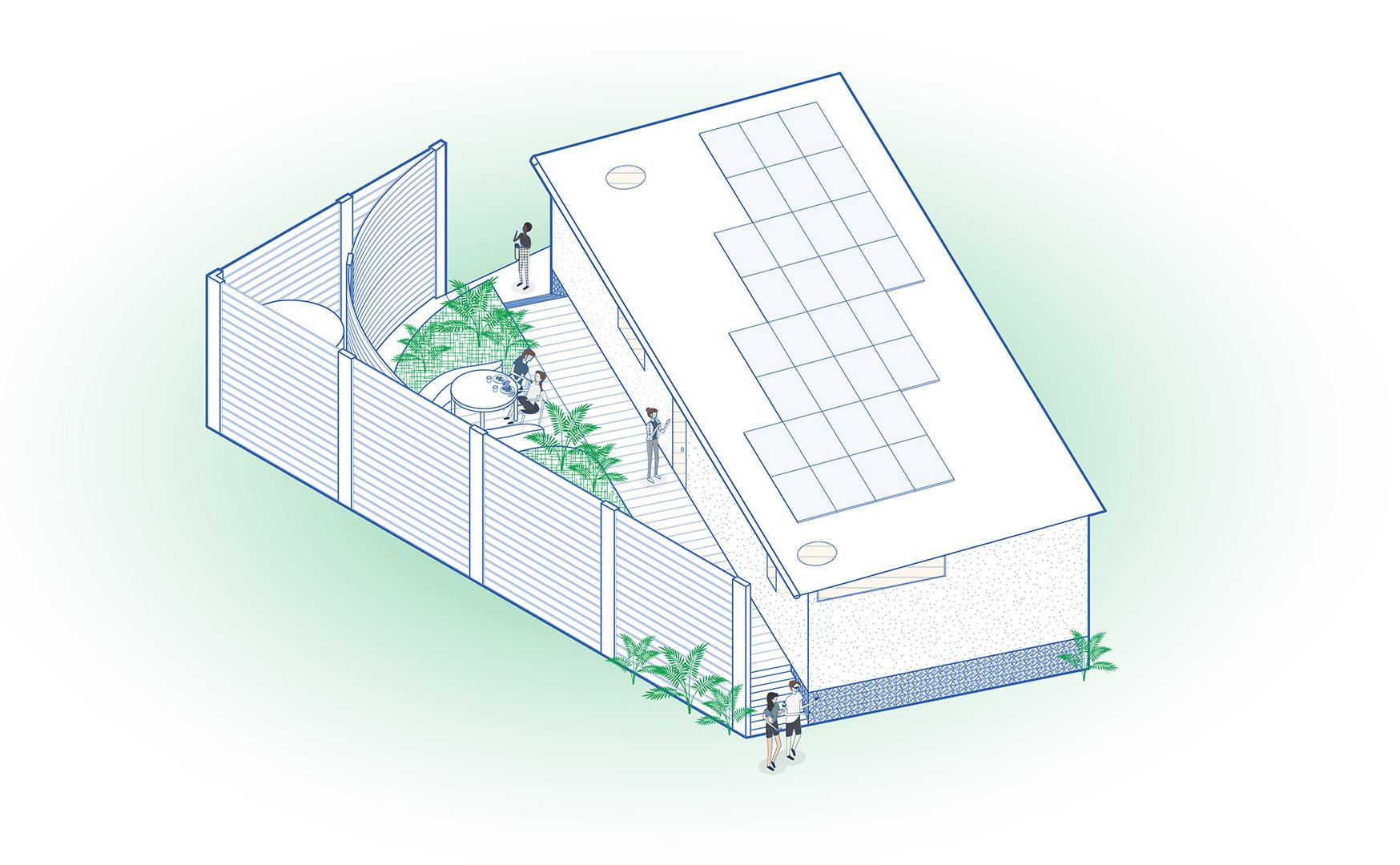
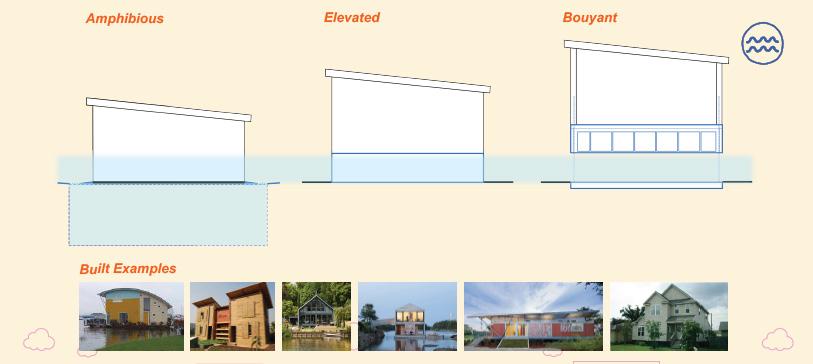
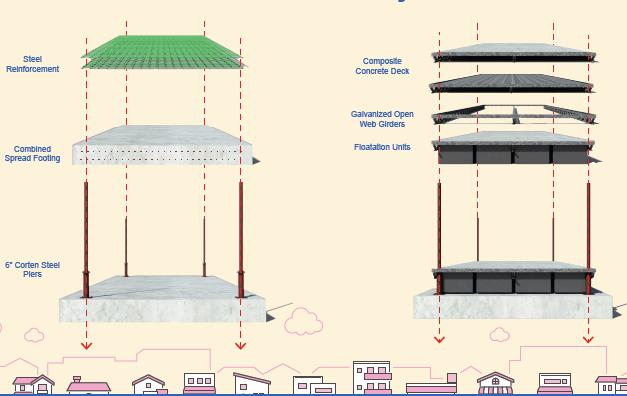
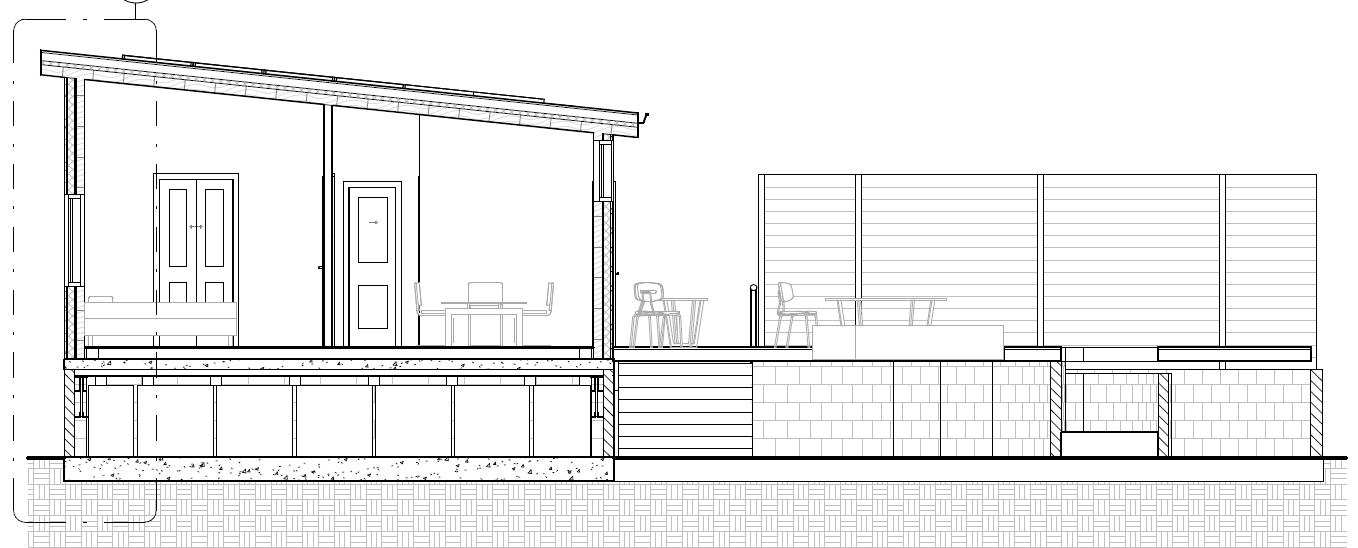
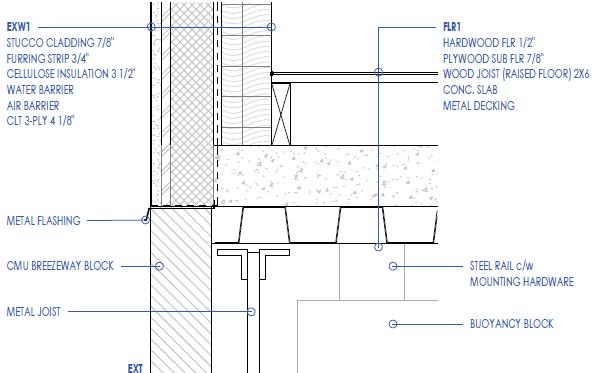
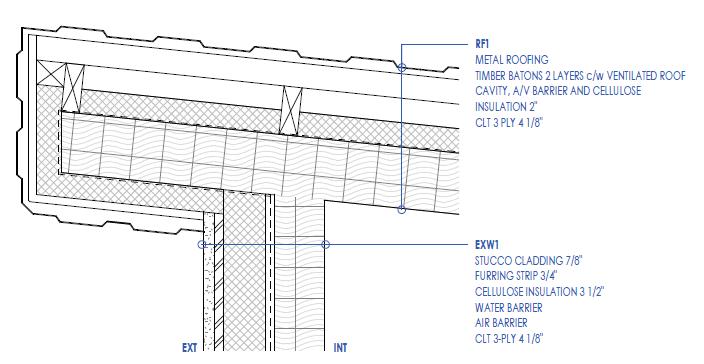
Solar Decathlon Design Challenge (Finalist): Designed a replicable, sustainable, energy-efficient building with solar energy integration and a buoyant foundation, emphasizing flood and hurricane resistance to address rising sea levels and extreme weather in Miami.

My Advanced Diploma in Architectural Technology at Fanshawe College in Canada was a 3 year program that focused on project-based learning in design, technical documentation, building systems and sciences, BIM applications, and project delivery.
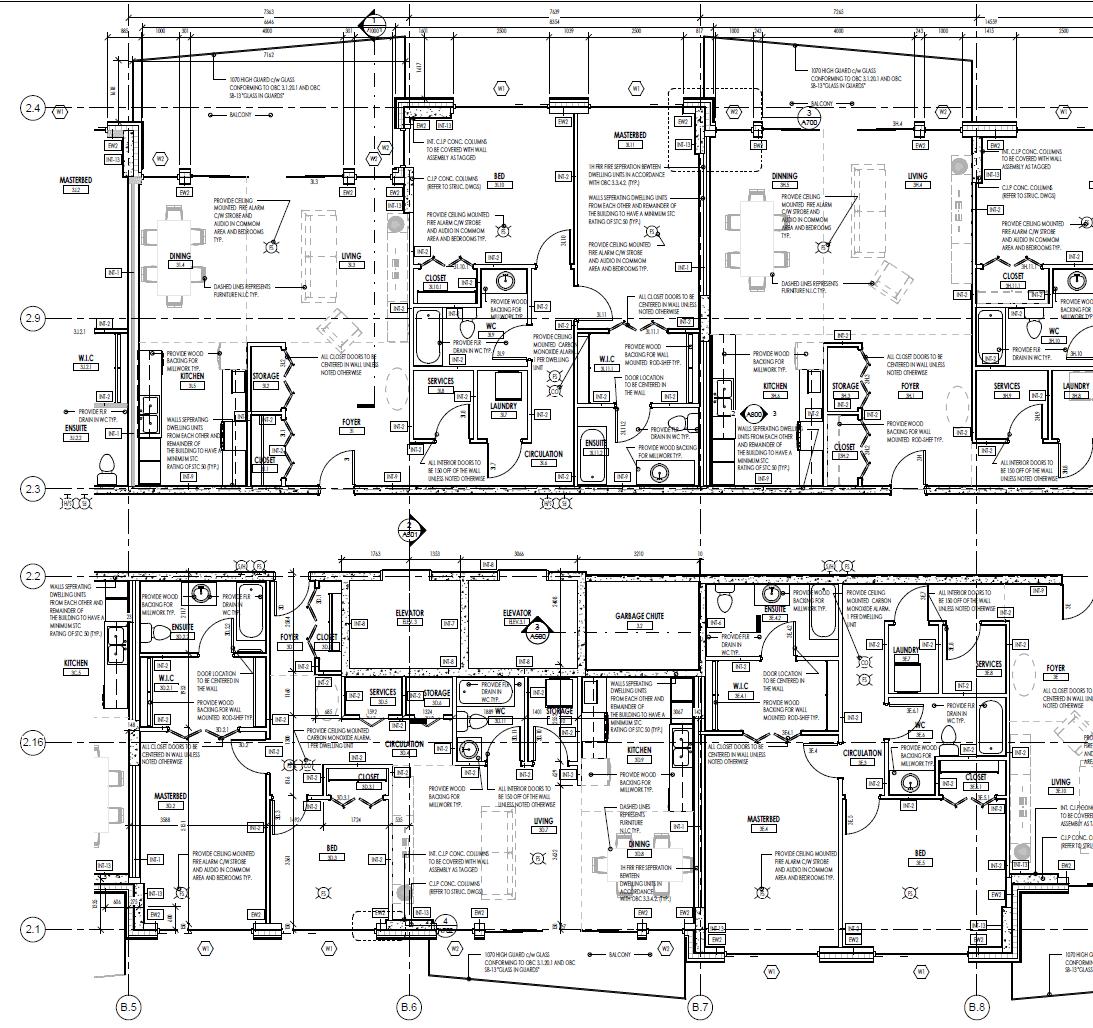
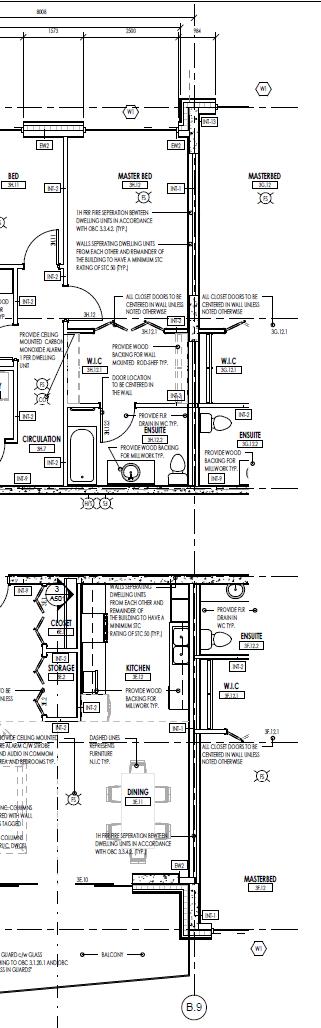
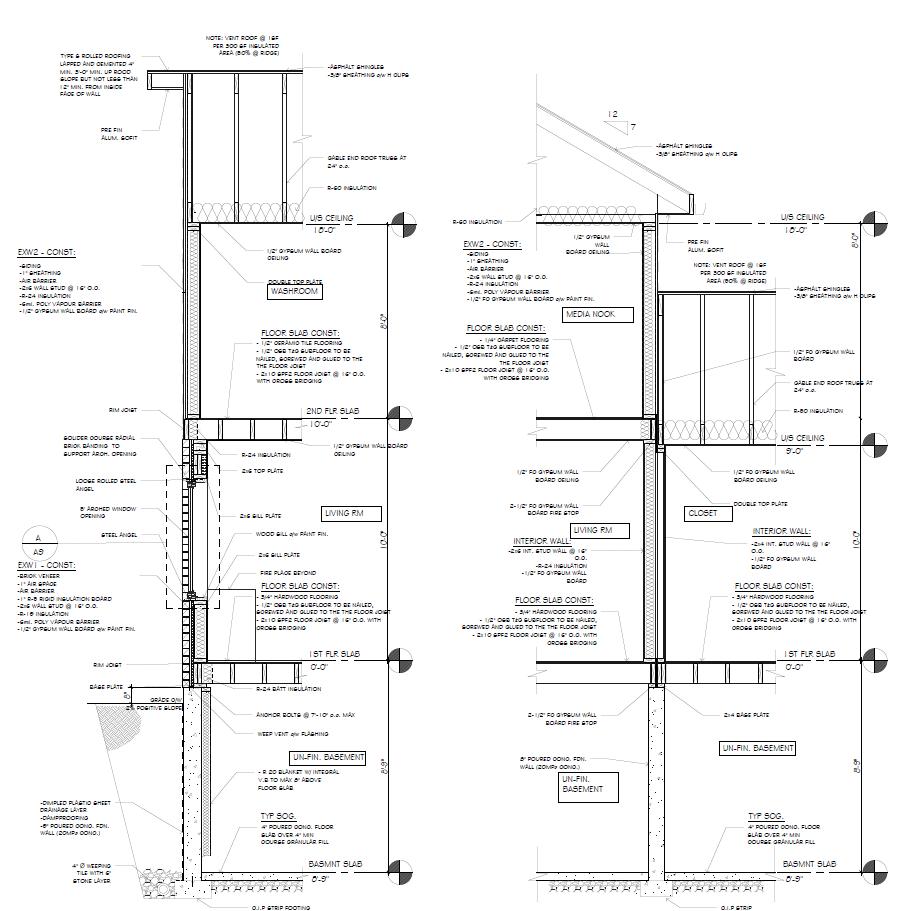
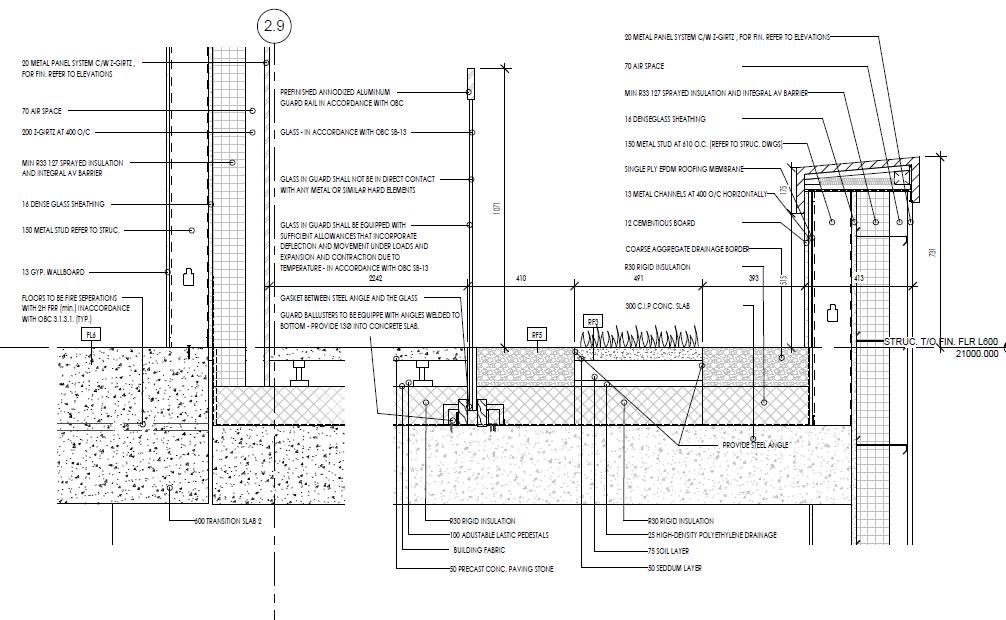
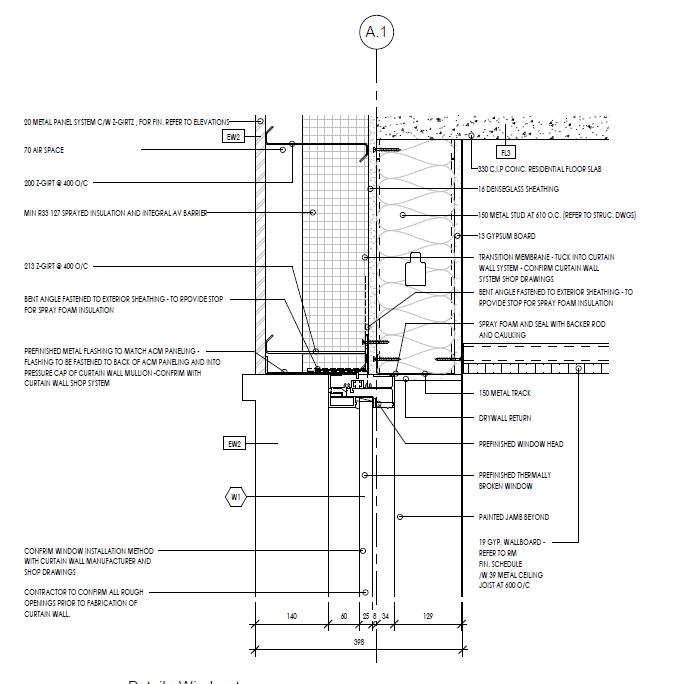
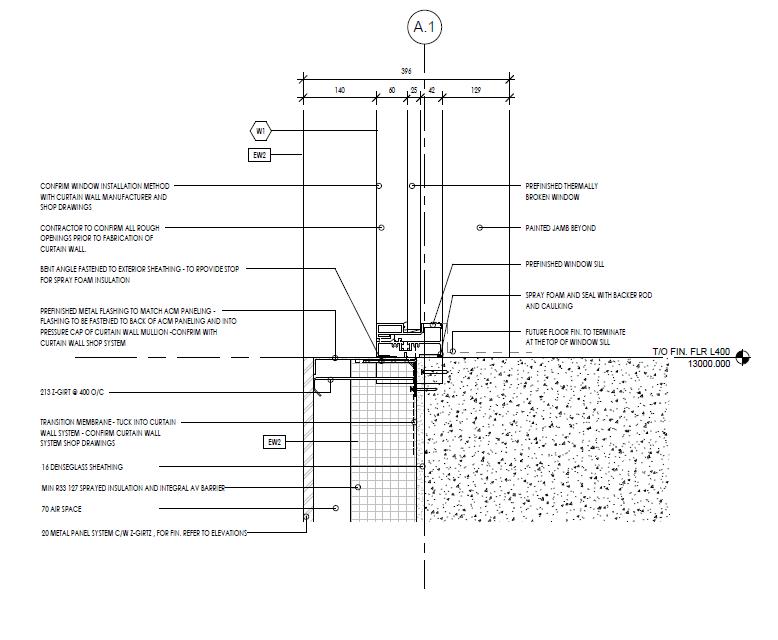
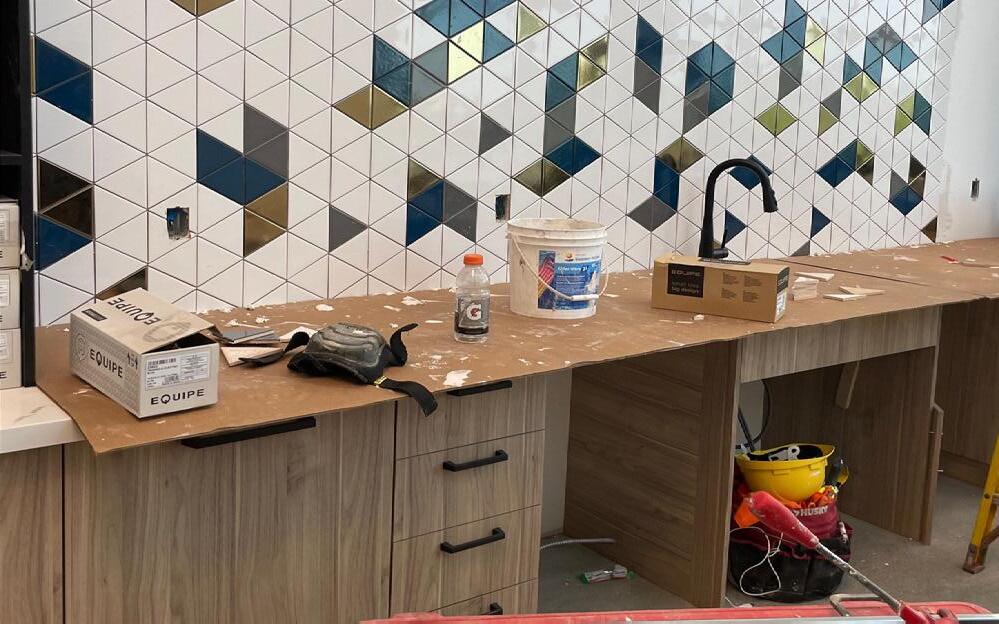
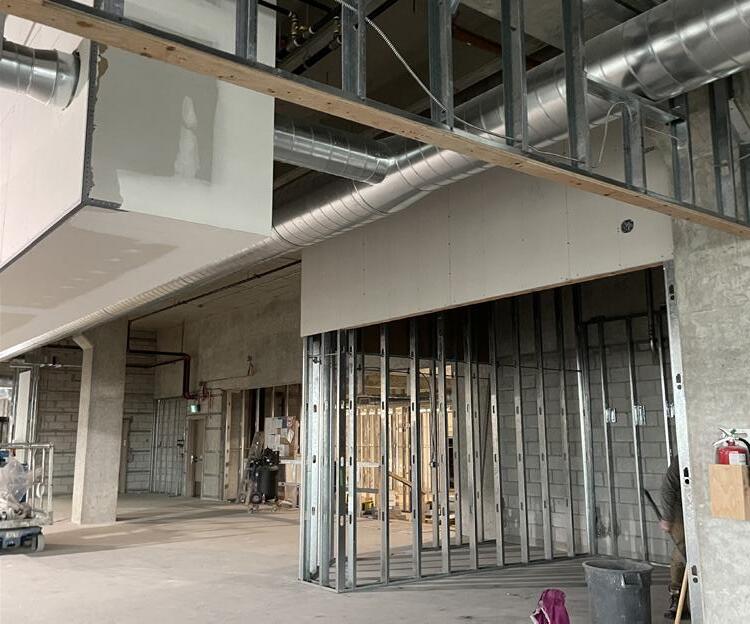
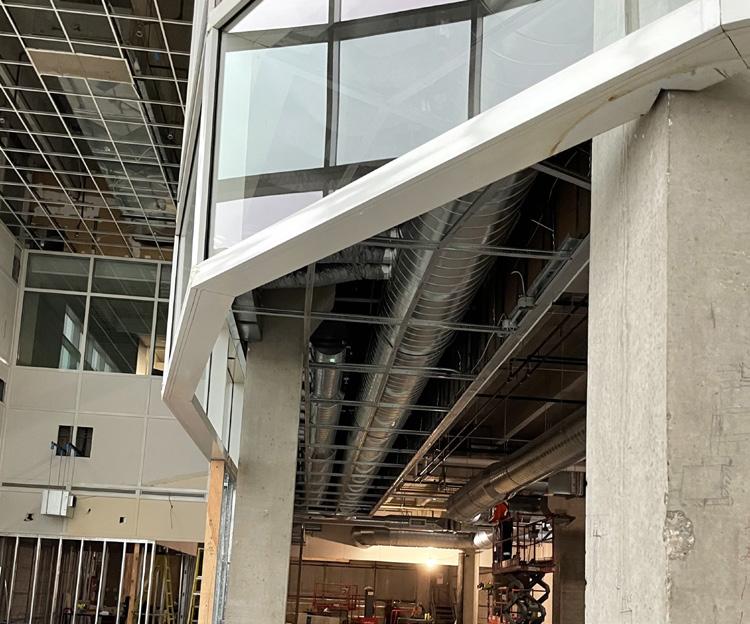
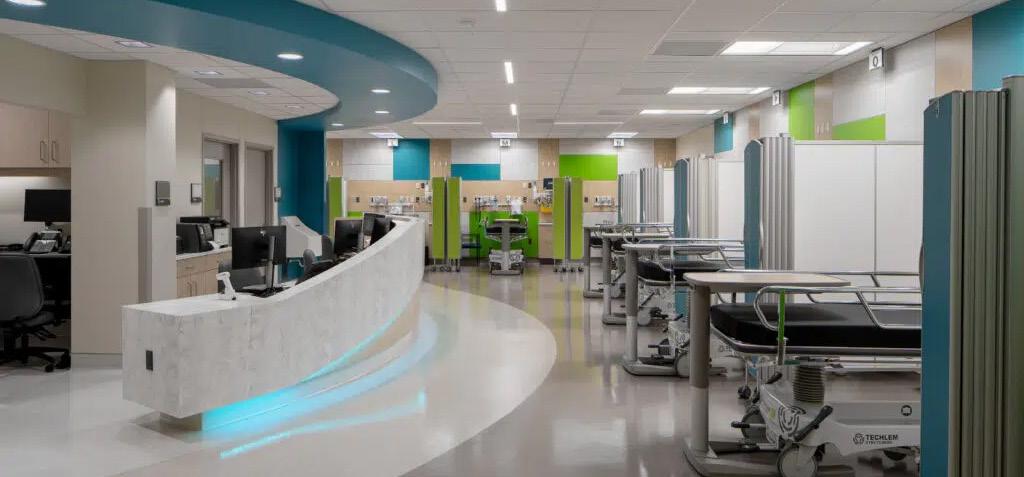
My position as Architectural Technologist and Designer at Matter Architectural Studio in Canada has exposed me to various project typologies like: interior office renovations, restaurants & event spaces, healthcare, education, comerical and residential work. This experience of over 3 years showcases my involvement through multiple project phases, from schematic design to construction adminstration.
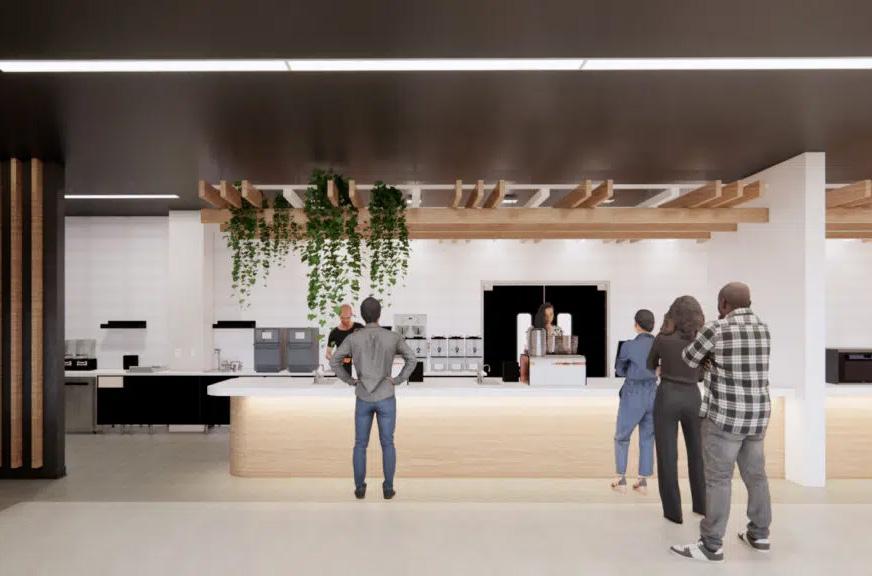
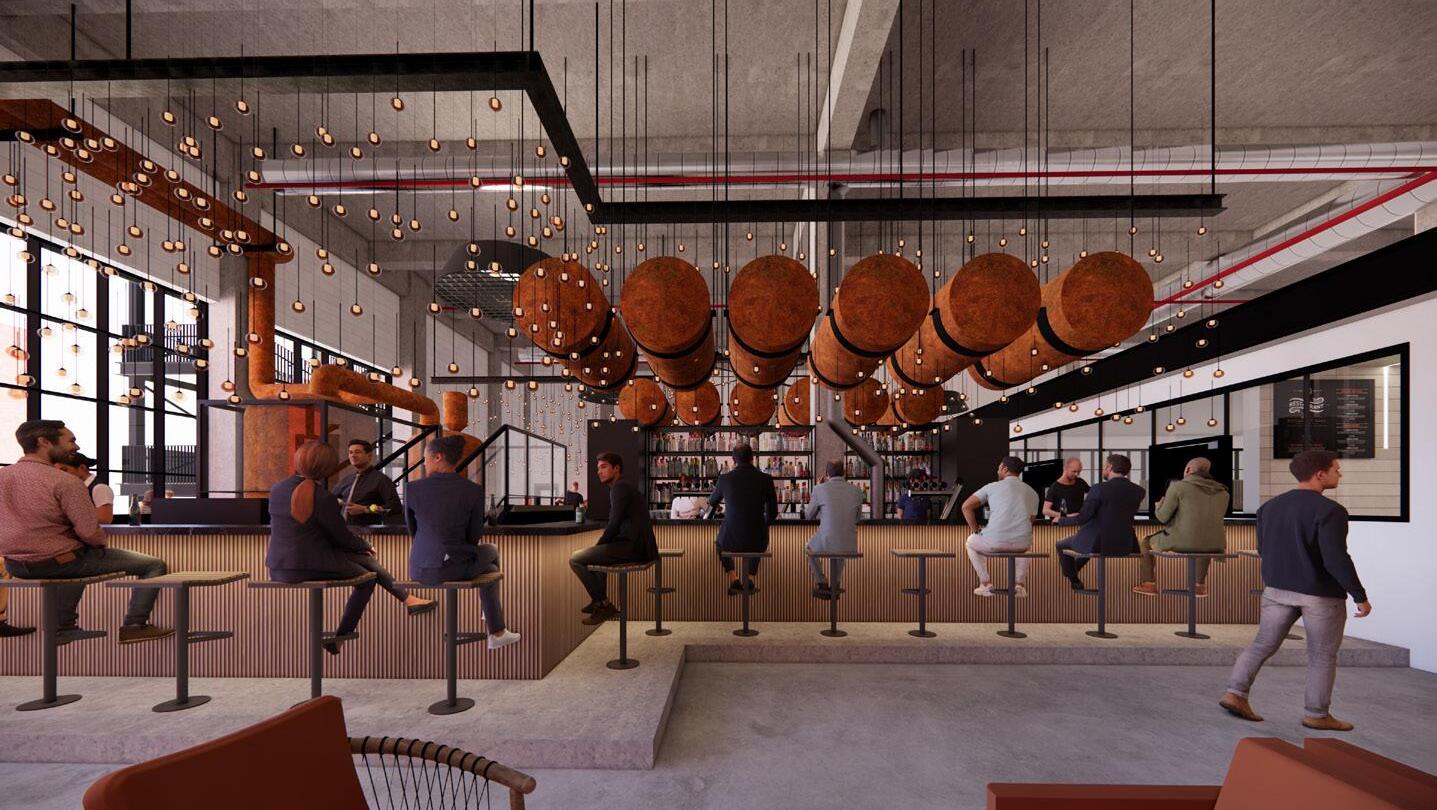
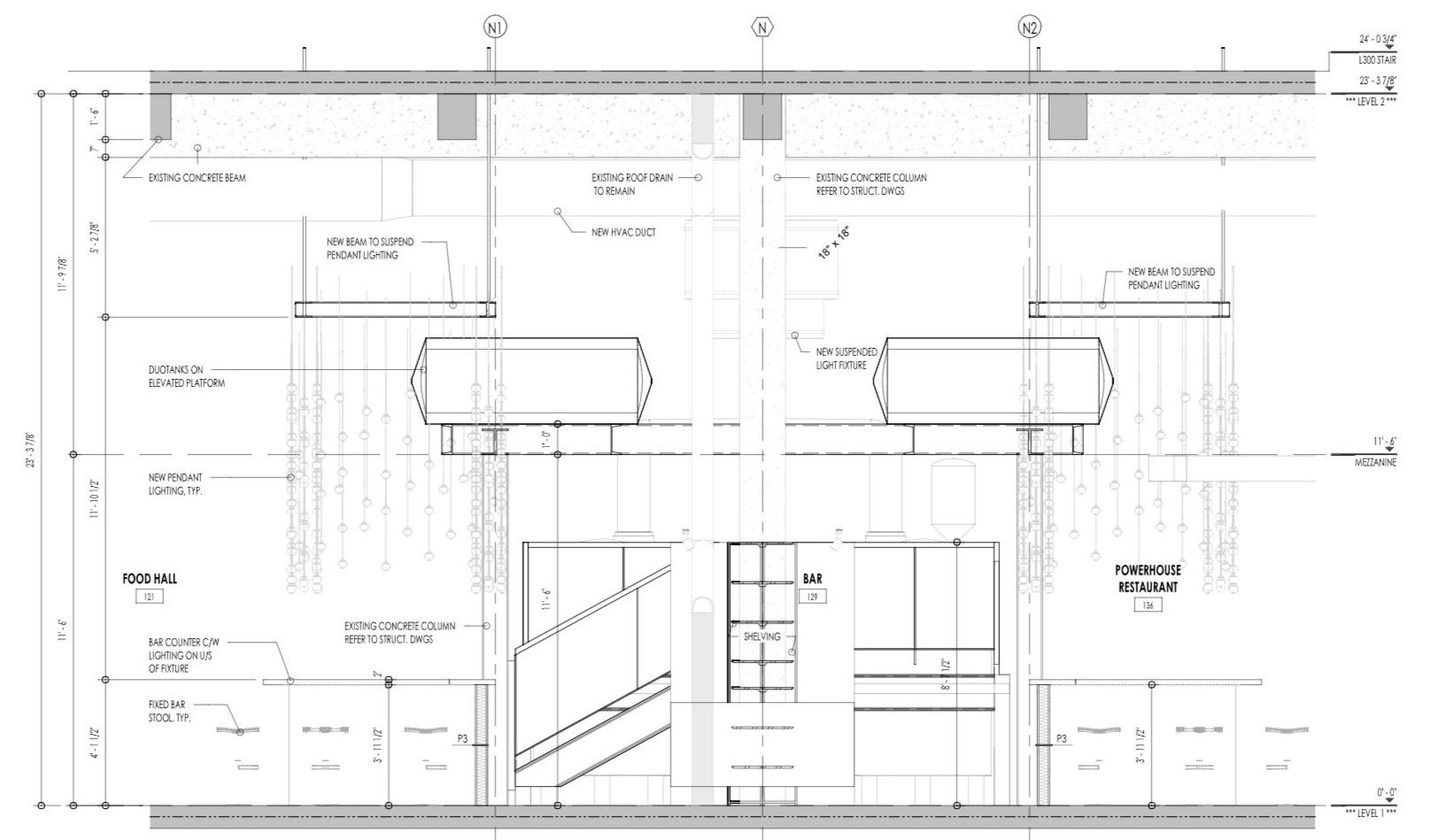
1. Food Hall and Event space, Size: 16,400 SF. Role: Assisted with Permit Drawings and Design Development.


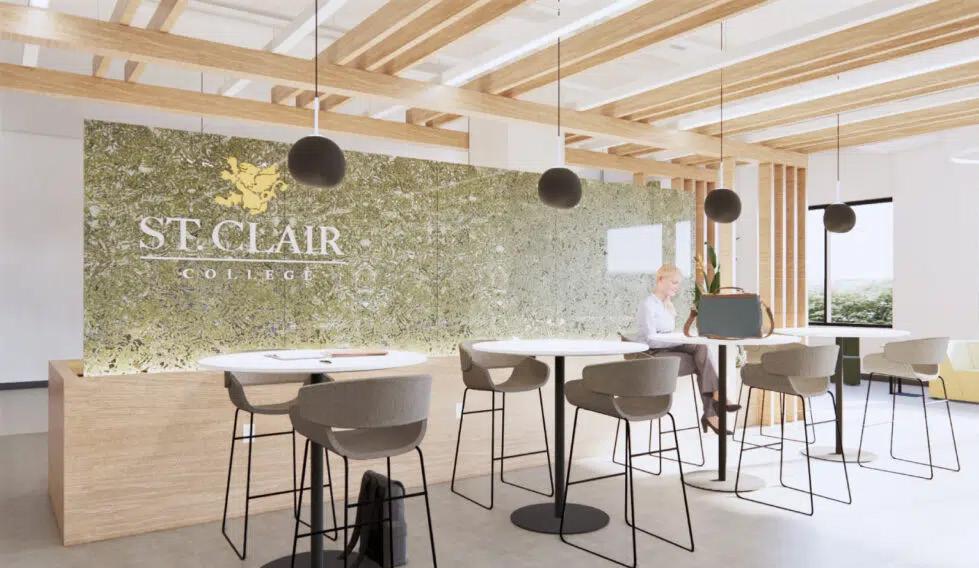
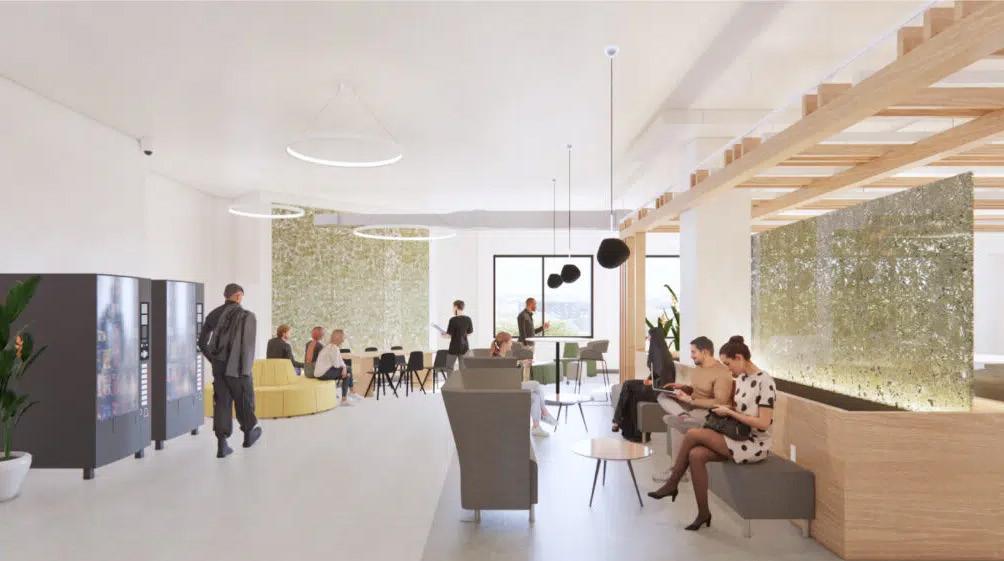
2. St. Clair College – Business School Interior Renovation, Size: 27,150 SF. Role: Assisted