01 Mount & Water Library
Public library with emphasize towards neighbourhood gathering
[Reflection of Purpose]
Derive enjoyment from making designs, empathizing people; always give pleasure through architecture, to amuse and to delight.
02 Urban Enclave
Mixed use residential complex in Detroit
03 Theater “Pathway”
Movie theater with bike paths & water space
04 Urban Playground
City park playful addition in Island Park
05 Under the Bridge
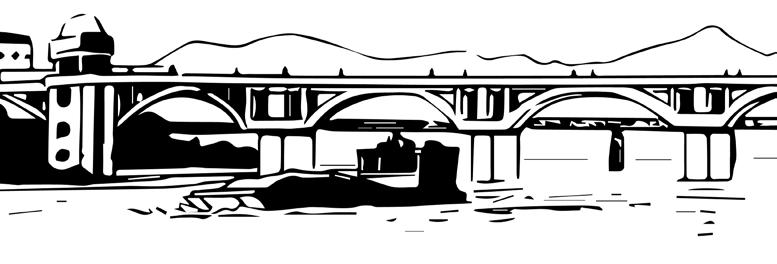
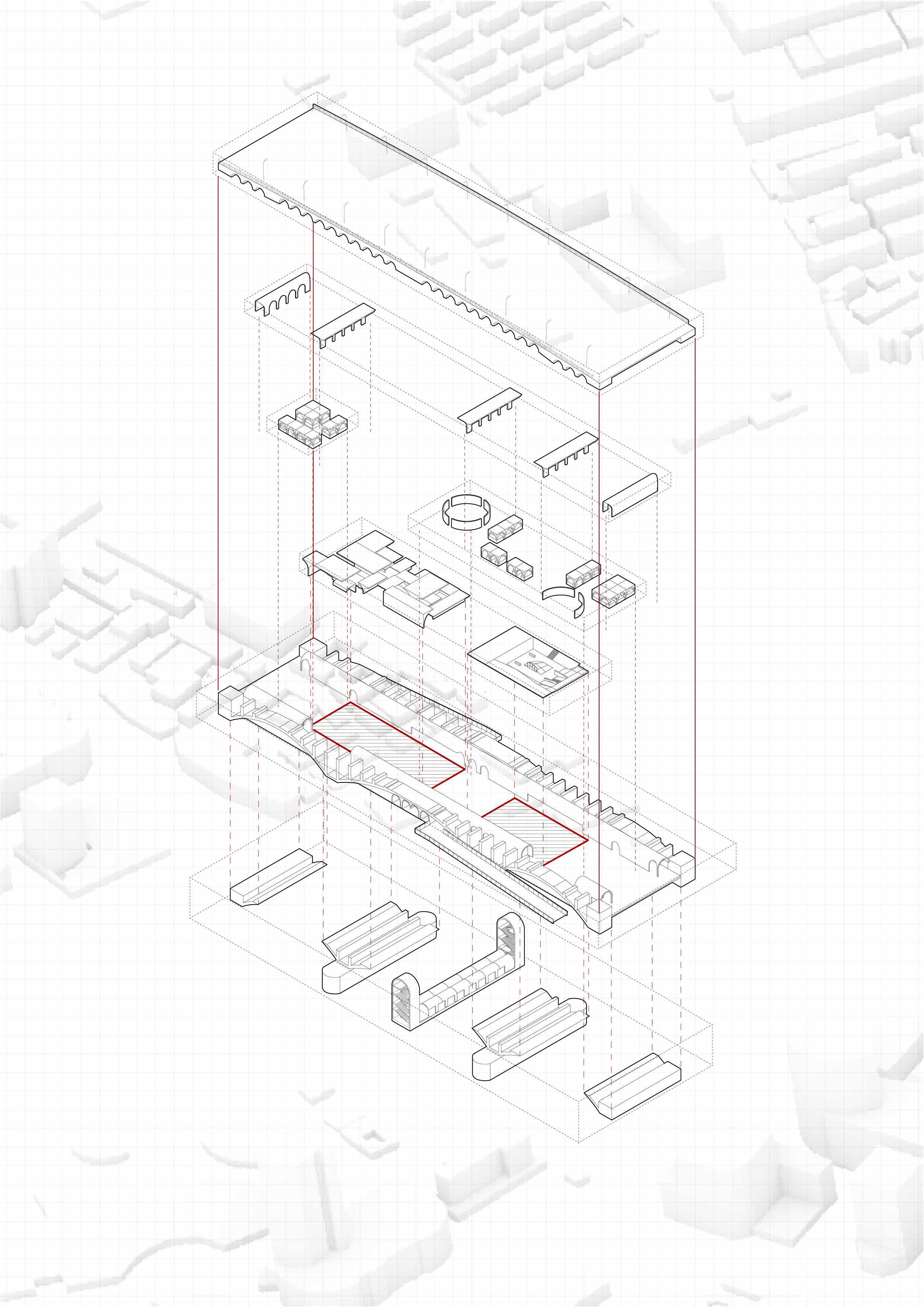
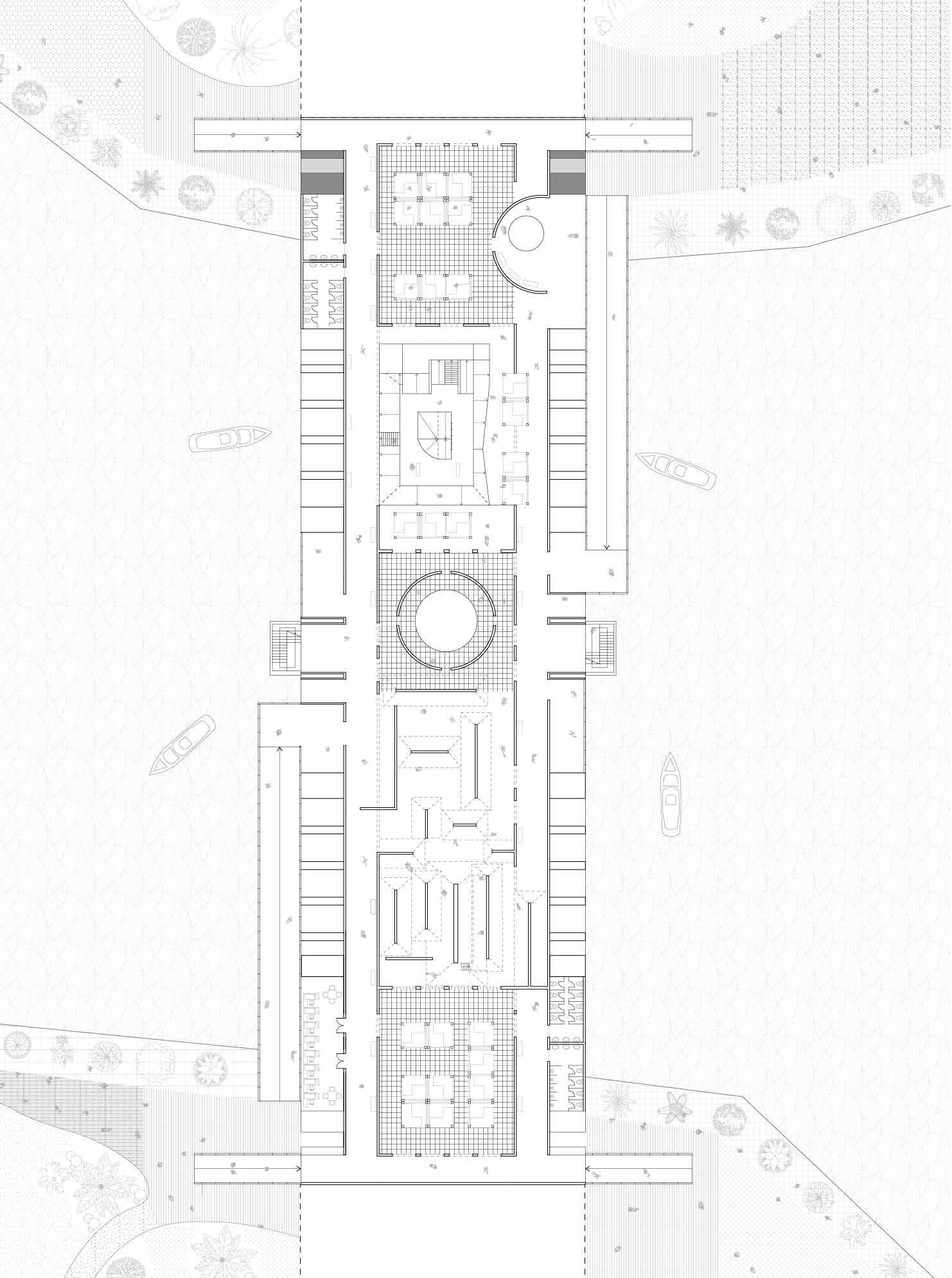
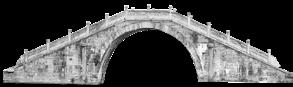
Cohesion through bridge in Ningbo, China
& Water” Library
Individual WorkLocation: Shanghai China
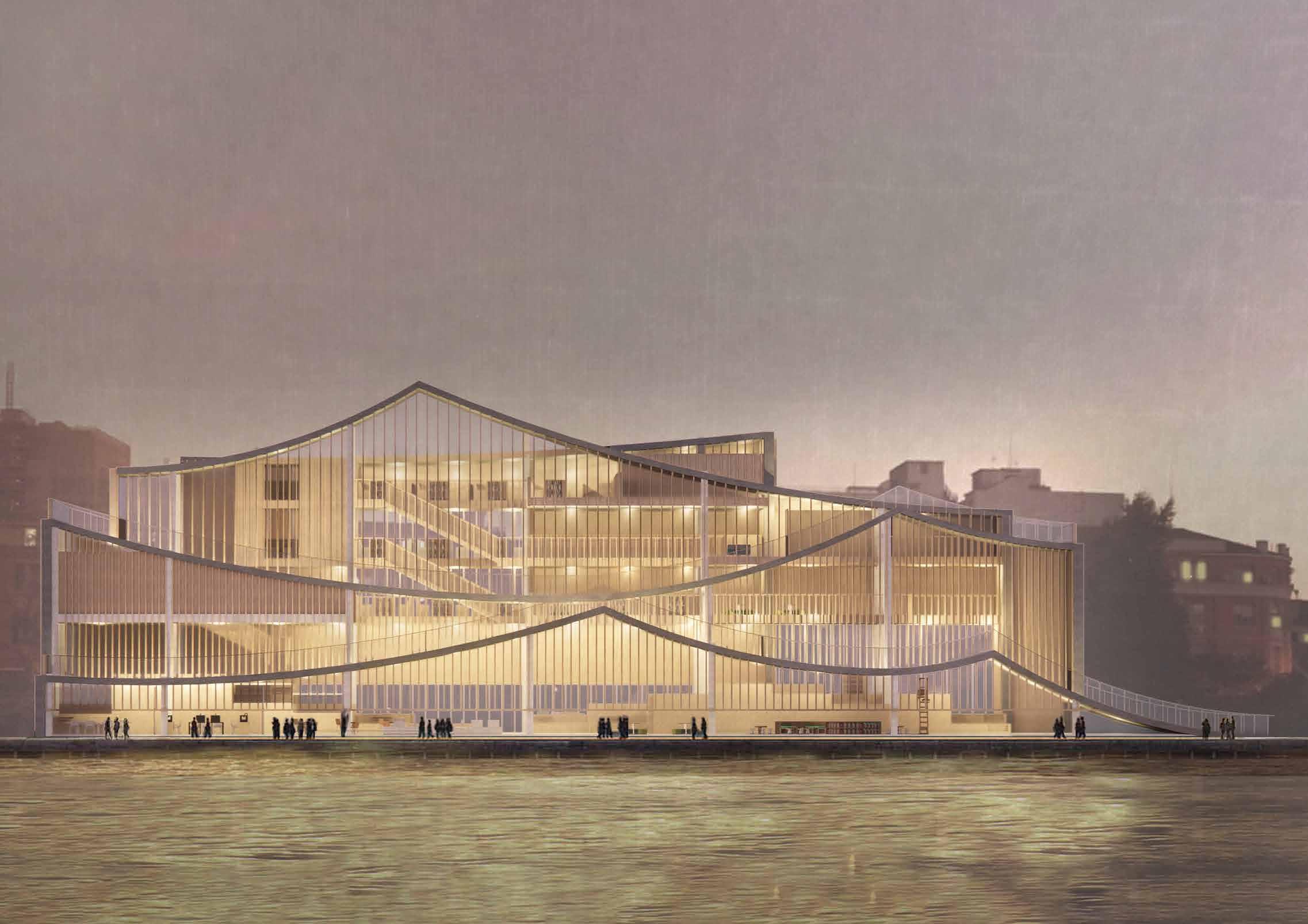
In the bustling heart of cities, there exists an innate human instinct to reconnect with nature and open spaces. As architects, it is our duty to redefine the urban landscape by crafting a vision for future cities that harmonizes the conveniences of modern life with our age-old affinity for the natural world. This library, positioned in the vibrant core of Shanghai, China, near the bustling Bund area, embodies this vision. It seeks to weave the fabric of daily urban life with the intrinsic human desire for spiritual refuge and connection with nature.
Through design, the library reintroduces nature into the urban environment by integrating form, organization, natural light, and green spaces. It stands as a testament to humanity’s deep-seated bond with nature and our ongoing quest for inner fulfillment, inspired by the Eastern philosophies of “Mount&Water.”
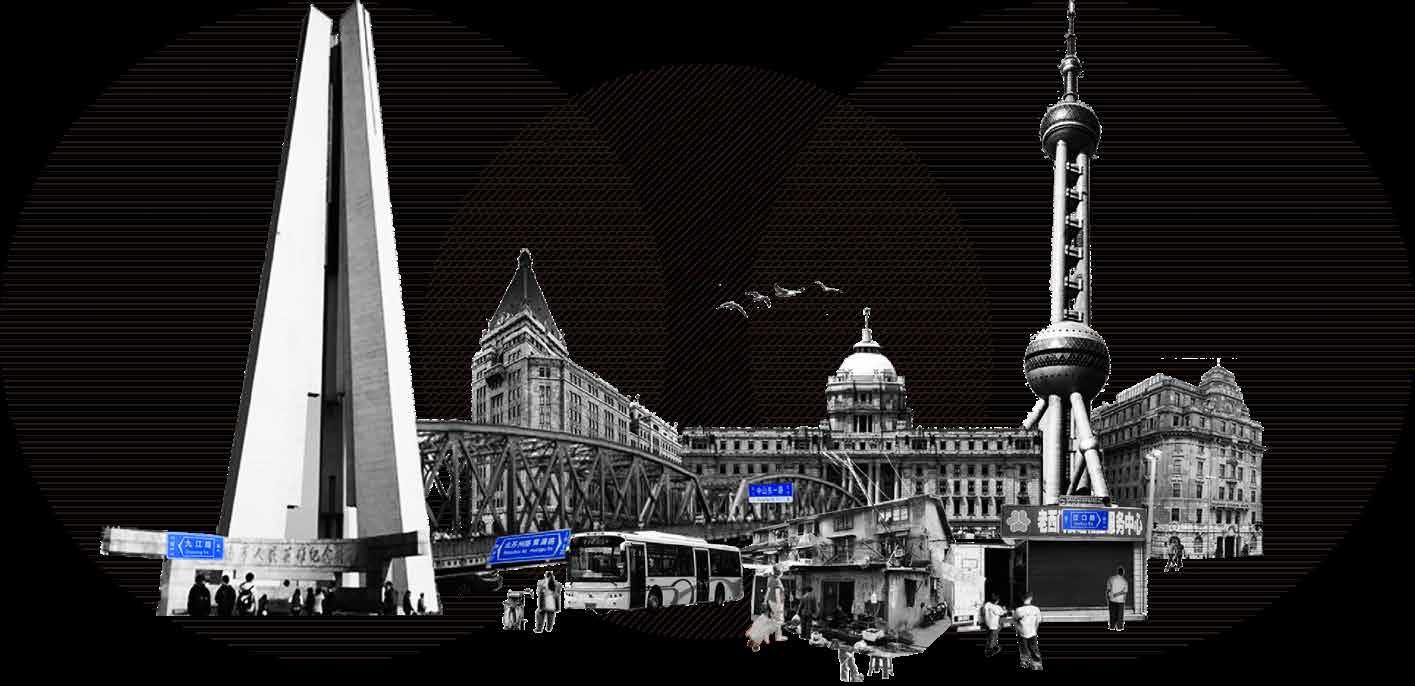
of brick and
buildings
the development of
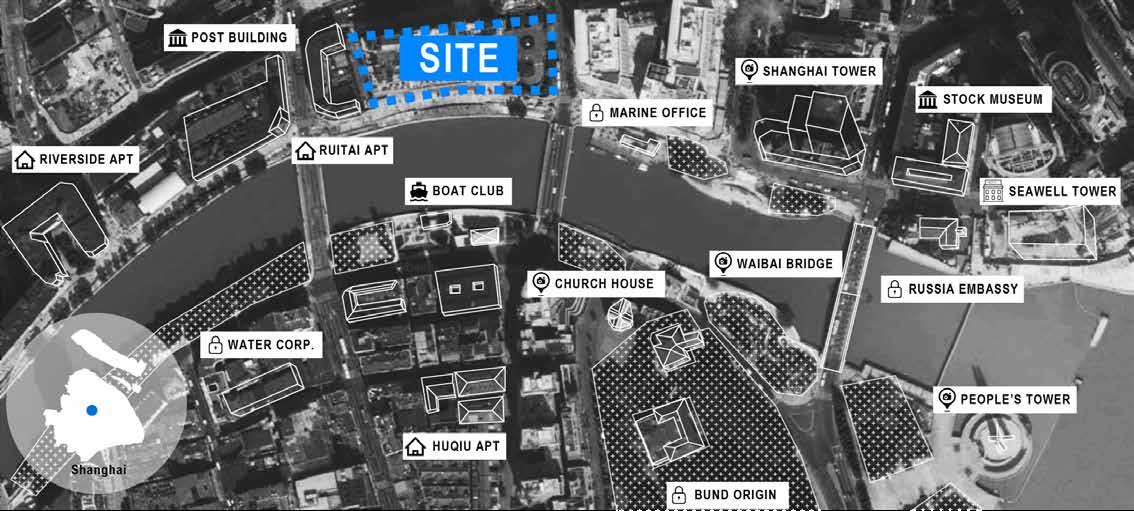
Historic and crowded site
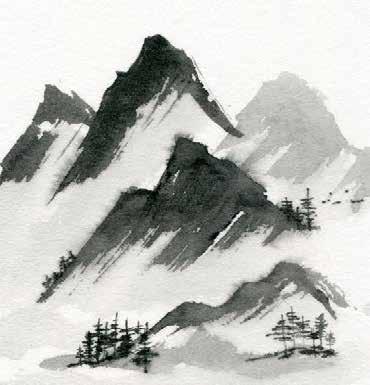
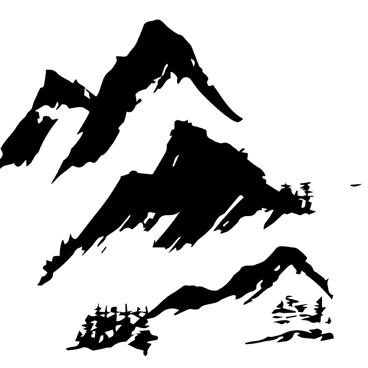
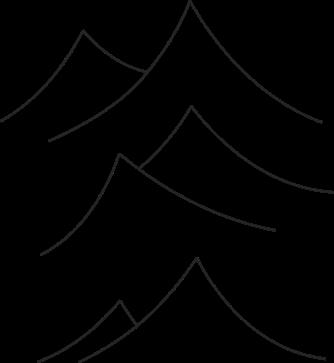
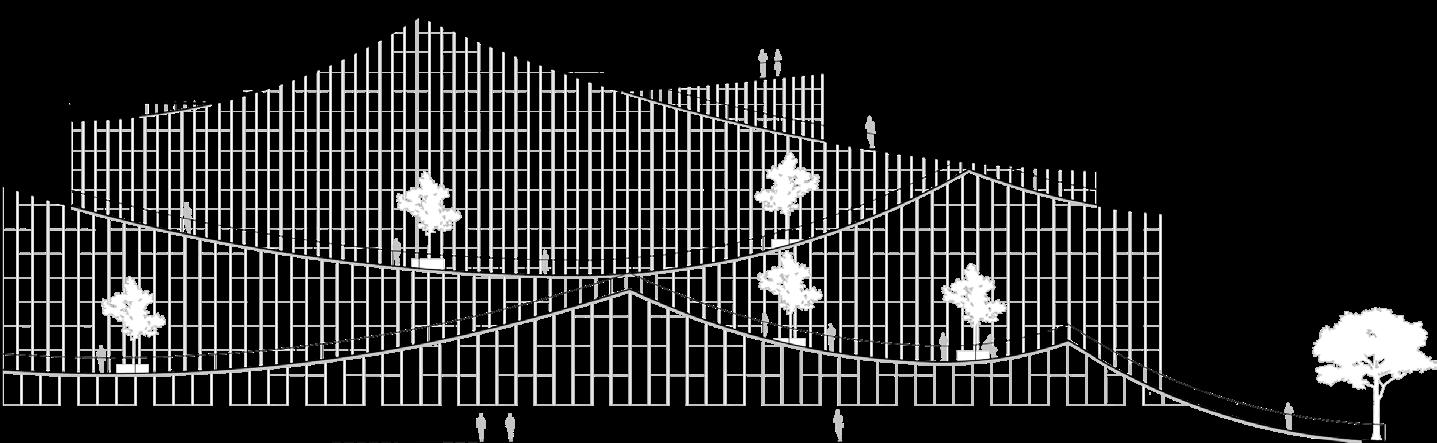
Generation of mountain form from traditional paintings
multiple
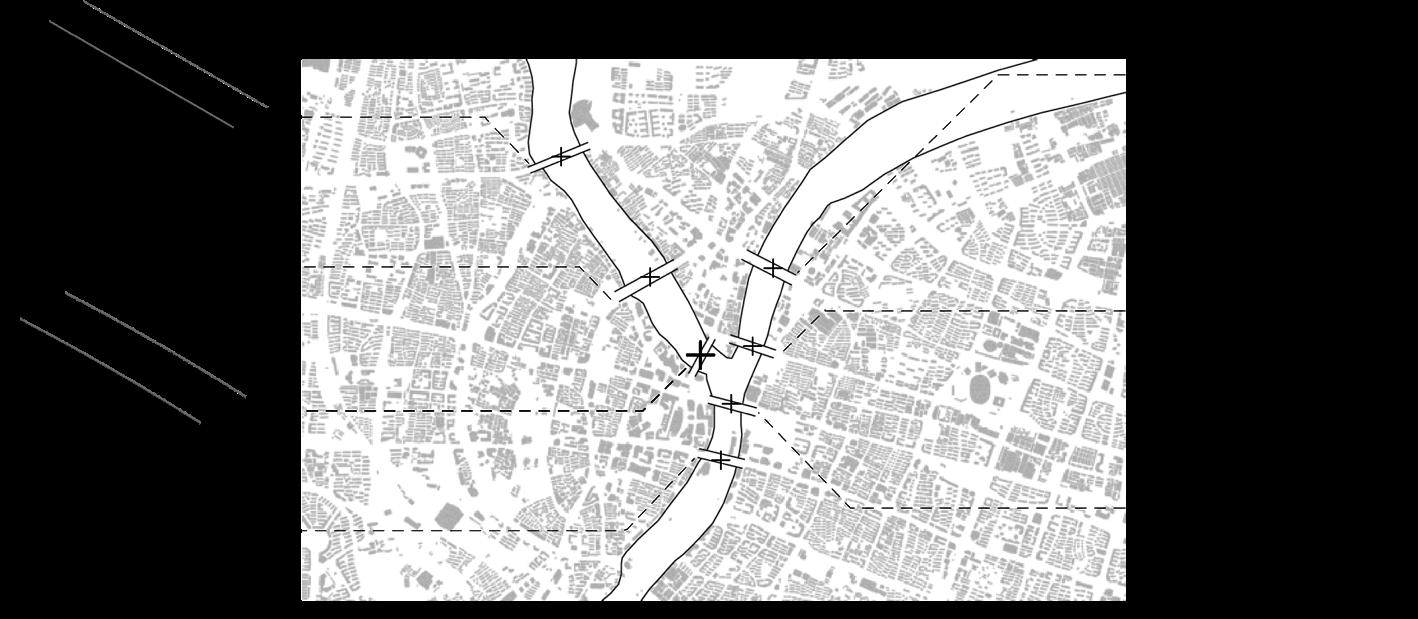
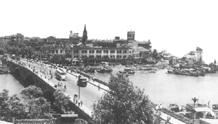
The site located on the north shore of the Suzhou River, with immediate closeness to the Bund area of Shanghai, is surrounded by residential neighborhoods and office complexes that are in desperate need of public space. The area is densely populated, filled with old residential buildings ranging from 30-70 years old surrounded by high-rises constructed in recent years.
The idea of “shangshui” (mountain and water) long exists in the culture of east Asian and often depicted in paintings. Paintings also carries the artist’s understanding of life in relation with nature
the
Mountain Form as resemble of natural spirit
The idea of mountain as the dominant form originates from traditional Chinese paintings, the painting resembles the people’s natural intention of getting close to and embraced by nature. Through the process of bringing nature back to the city, the mountain is chosen as a form language to remind people about their inner desire.
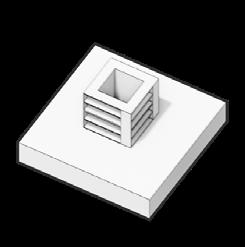
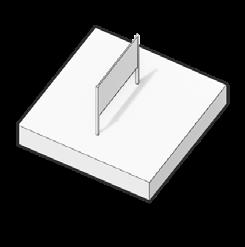
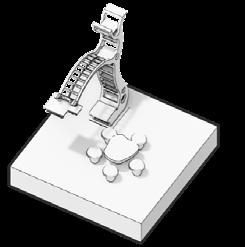

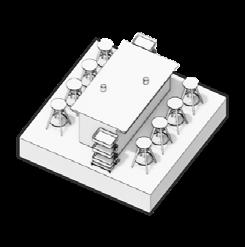
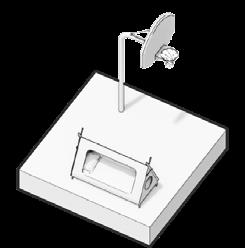
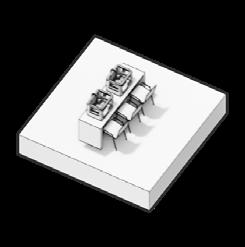
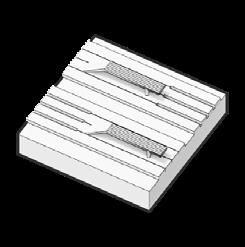
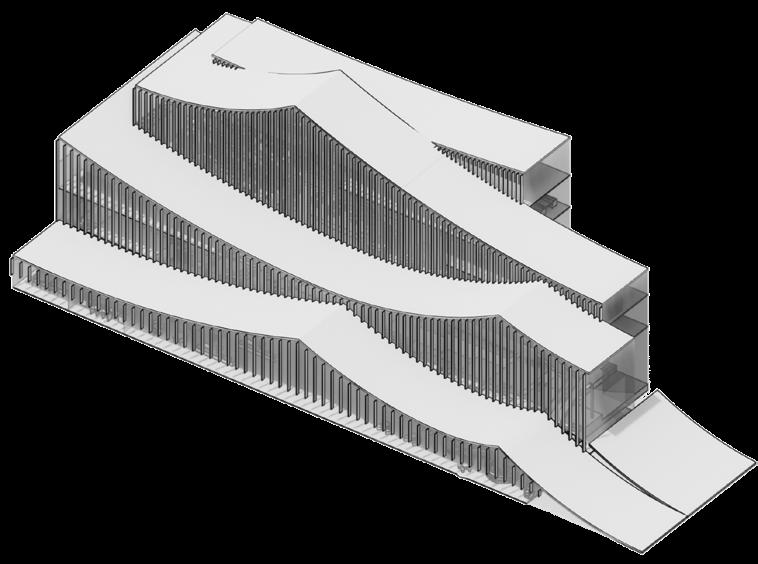
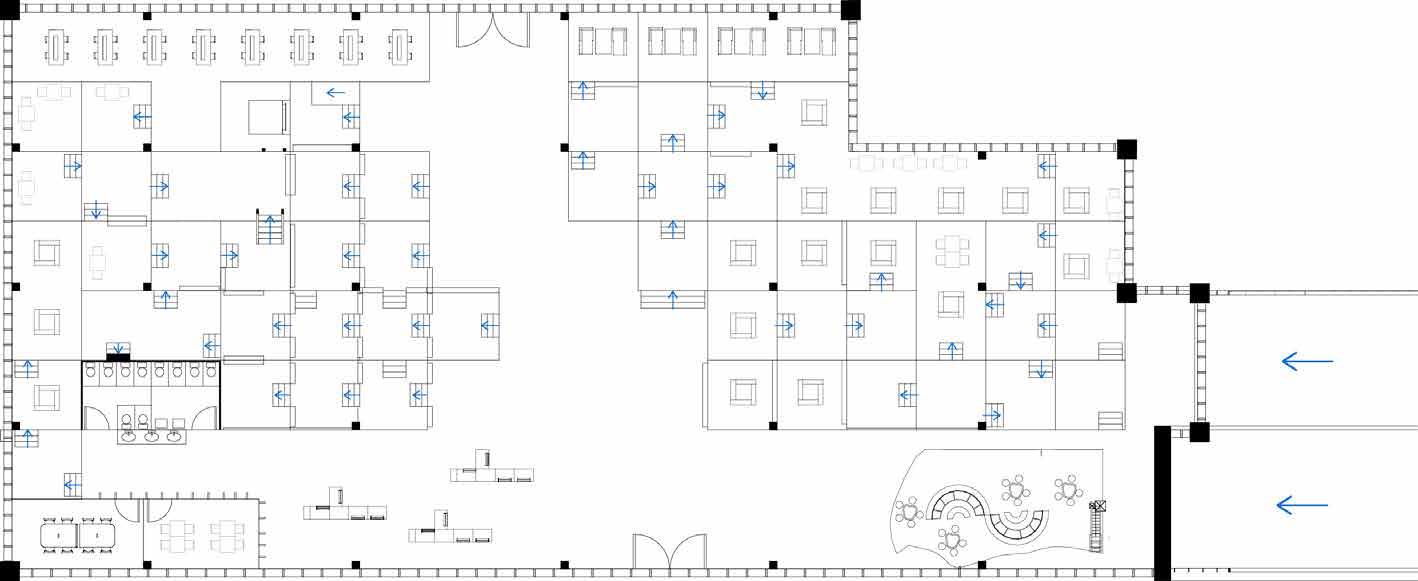
Program based on modular unit
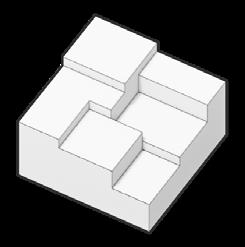
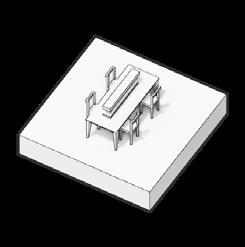
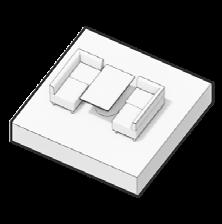
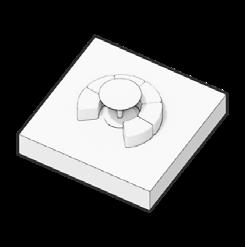
Each of the twelve modular unit represents a type of programs to be implemented in the building. They reflect the needs according to researches.
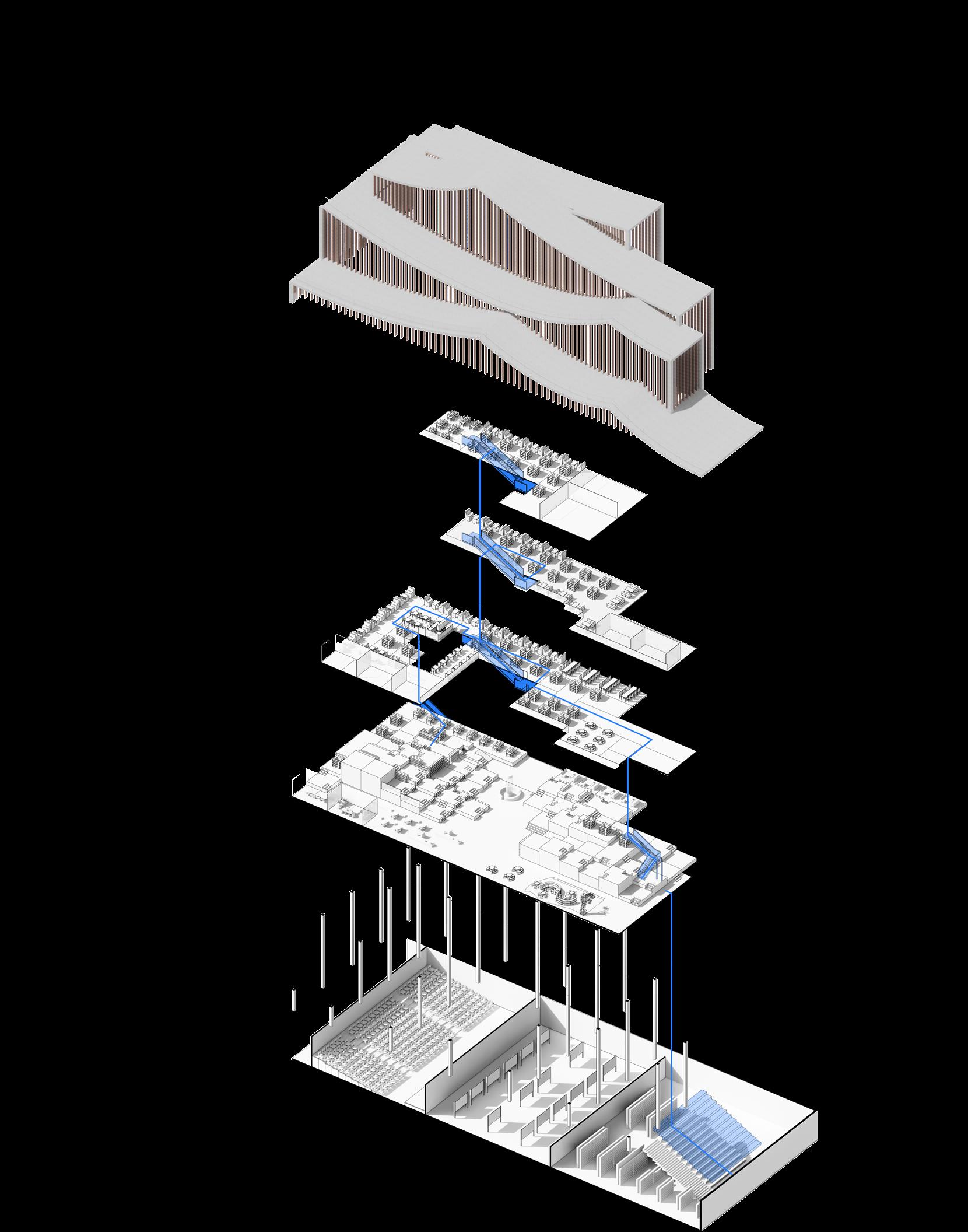
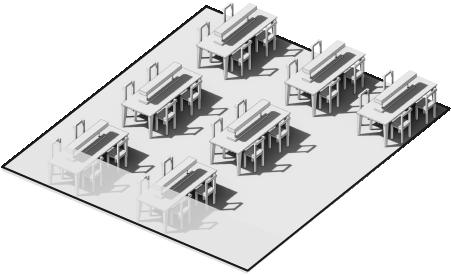
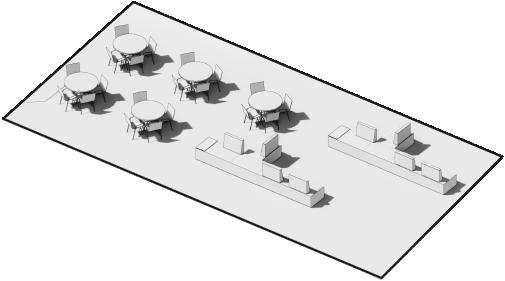
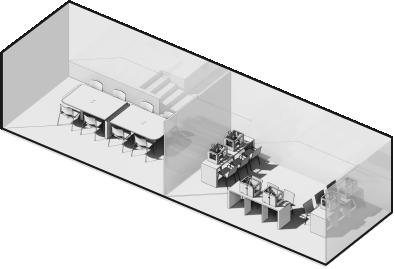
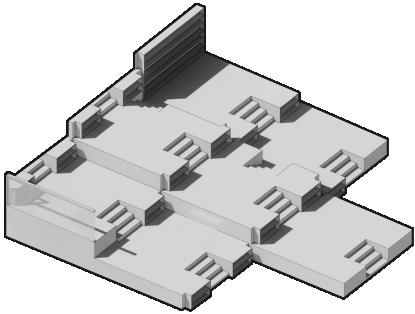
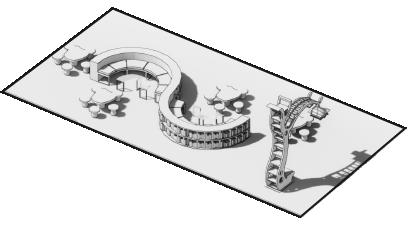
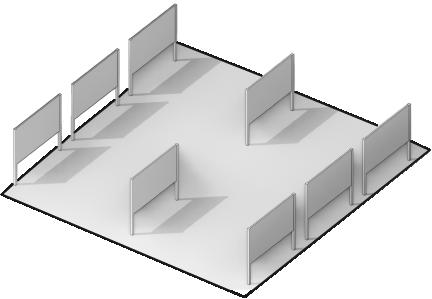
Diverse programs filled the space
All the programs filled the space make the library to accomodate the needs from various users group and adopt to use conditions day and night.

Spacious Atrium Welcoming Vistors
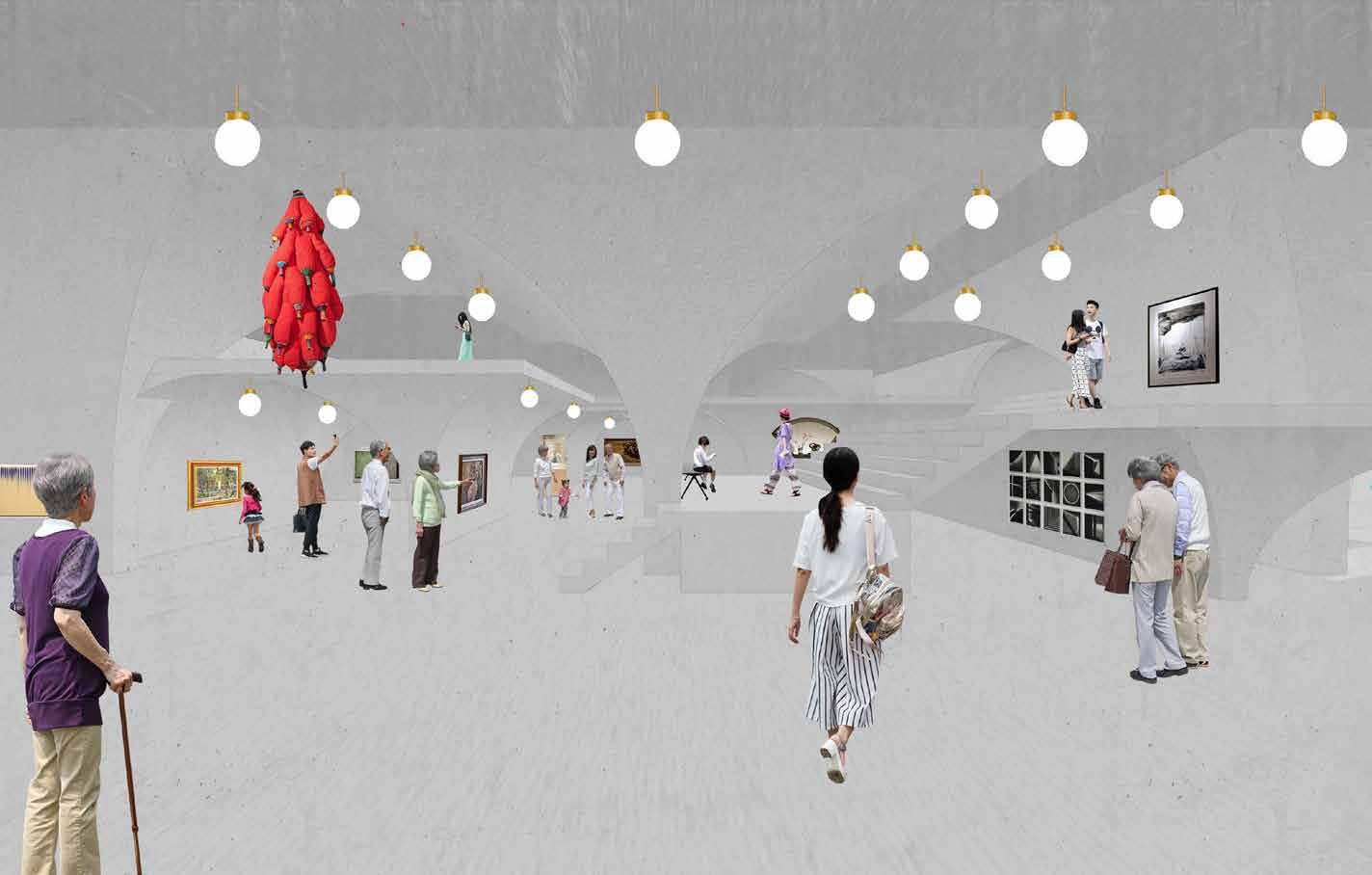
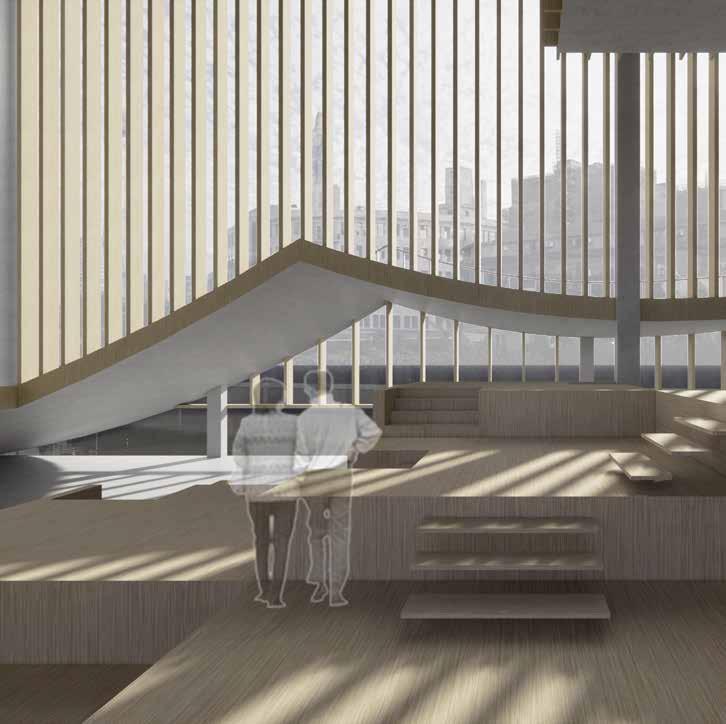
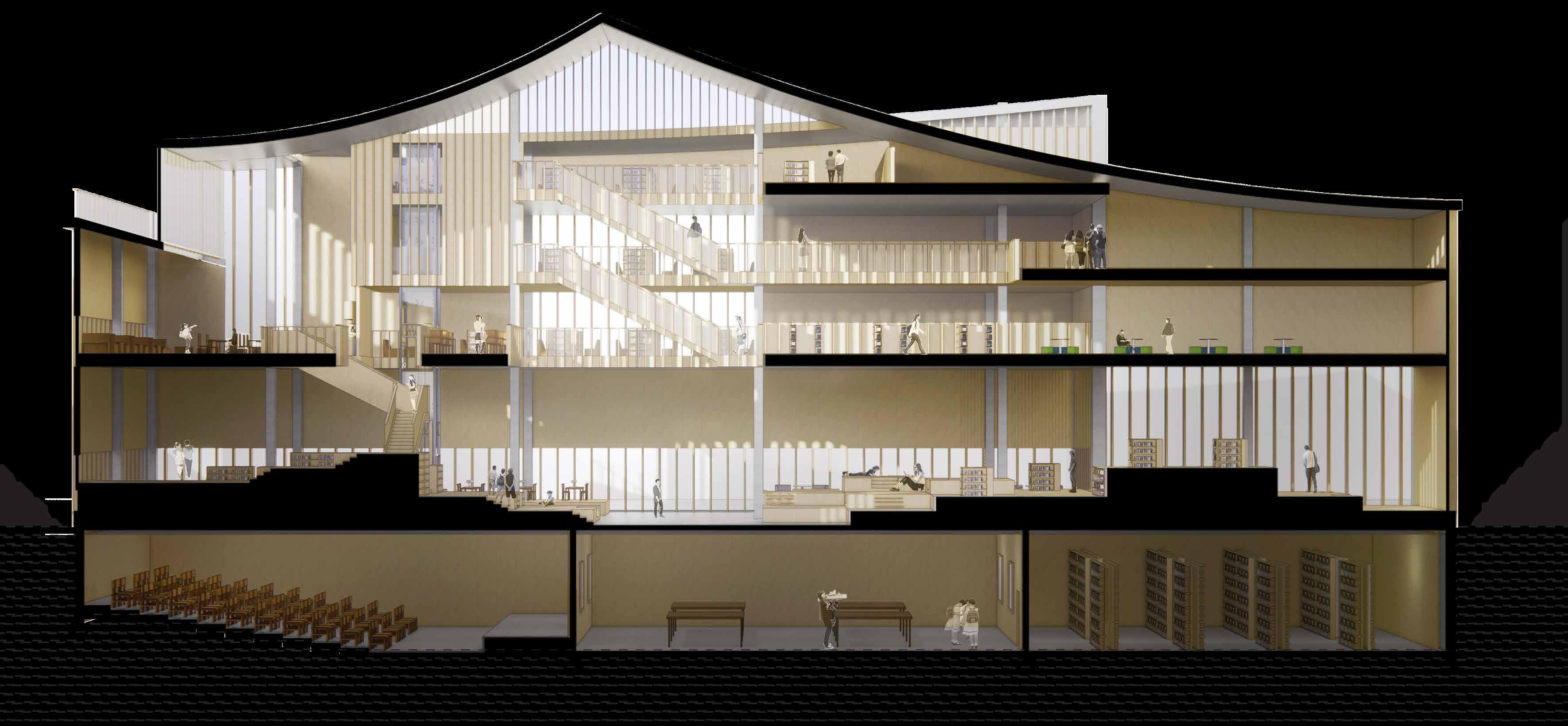
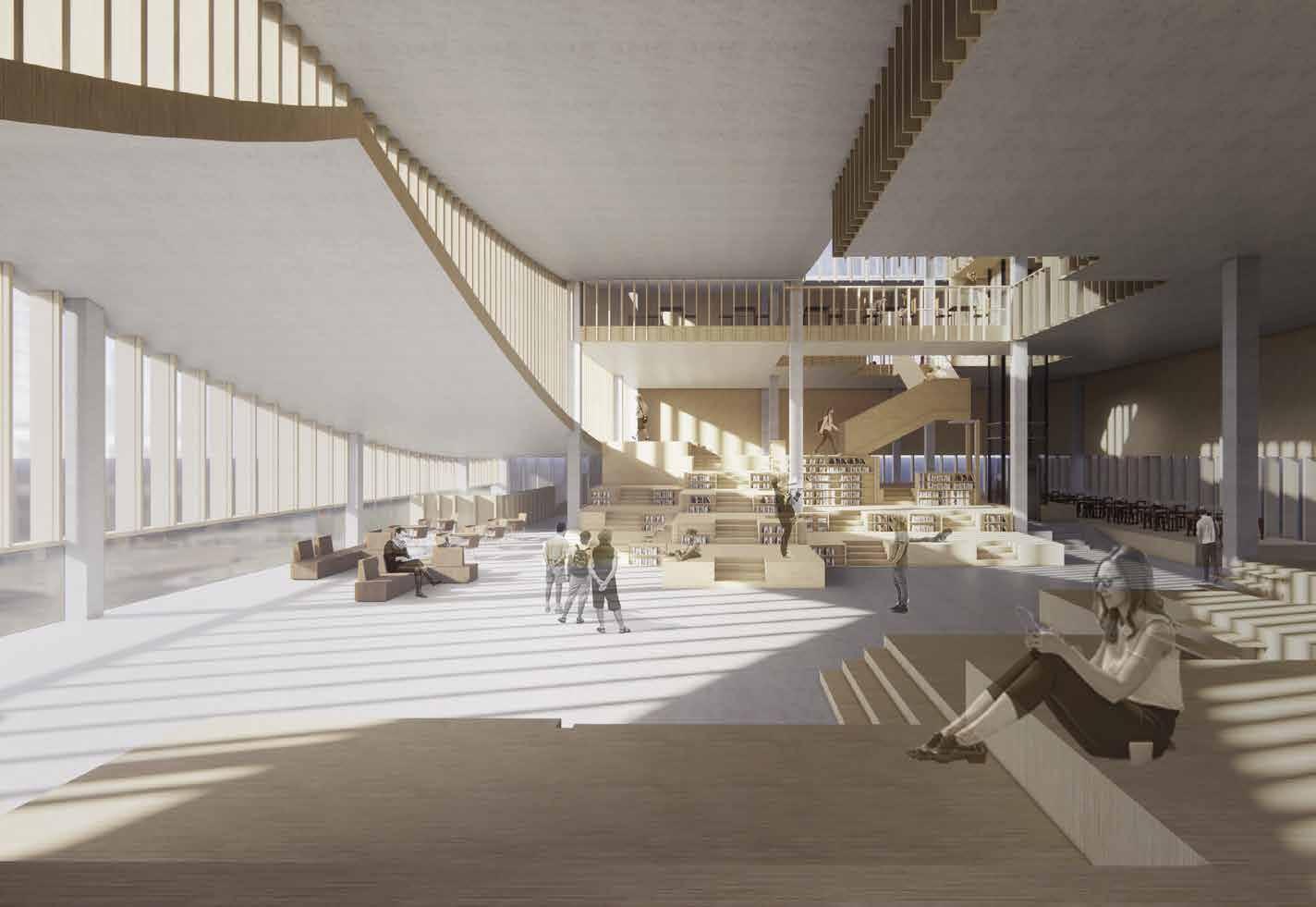
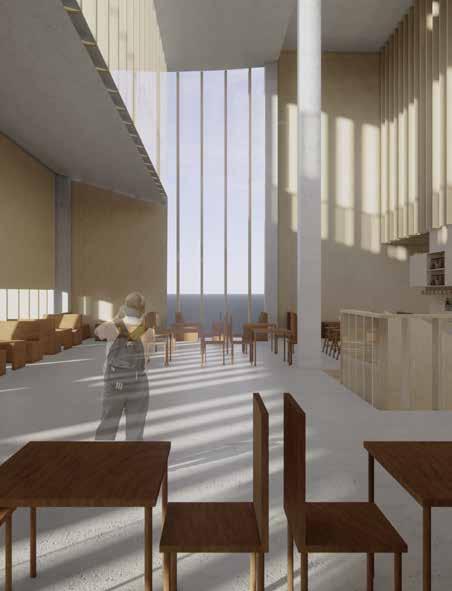
To make the library a people’s place, it provide people a sense of comfort and belongingness to the neighborhood they live in. Large two story high artrium on the first level enhances some the quality principles: light, space, gather, reading, leisure. These are people in the crowded North Bund region desire and the library aims to provide through its five-story structure.
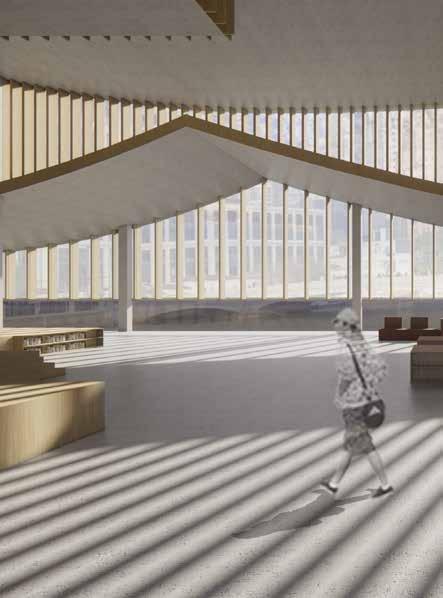
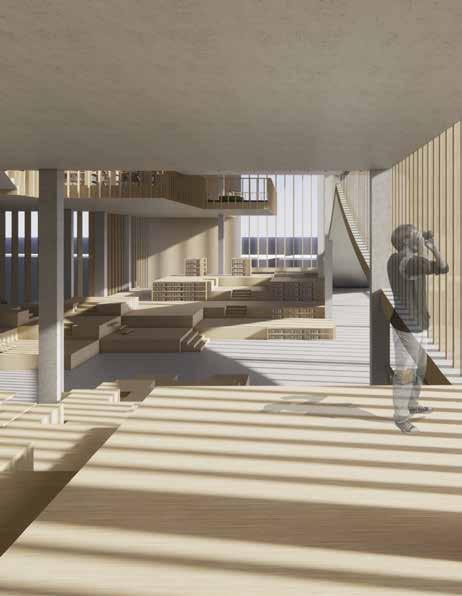
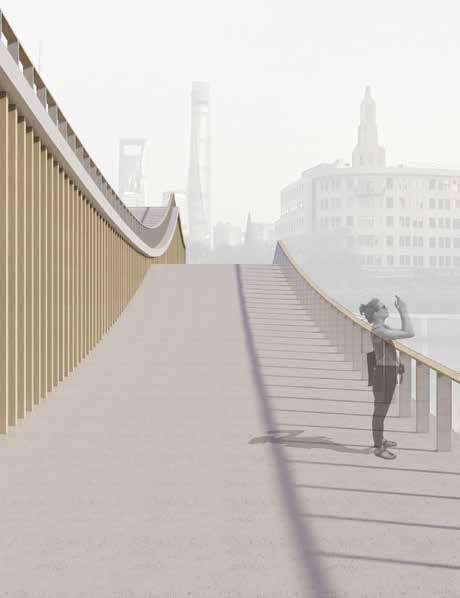
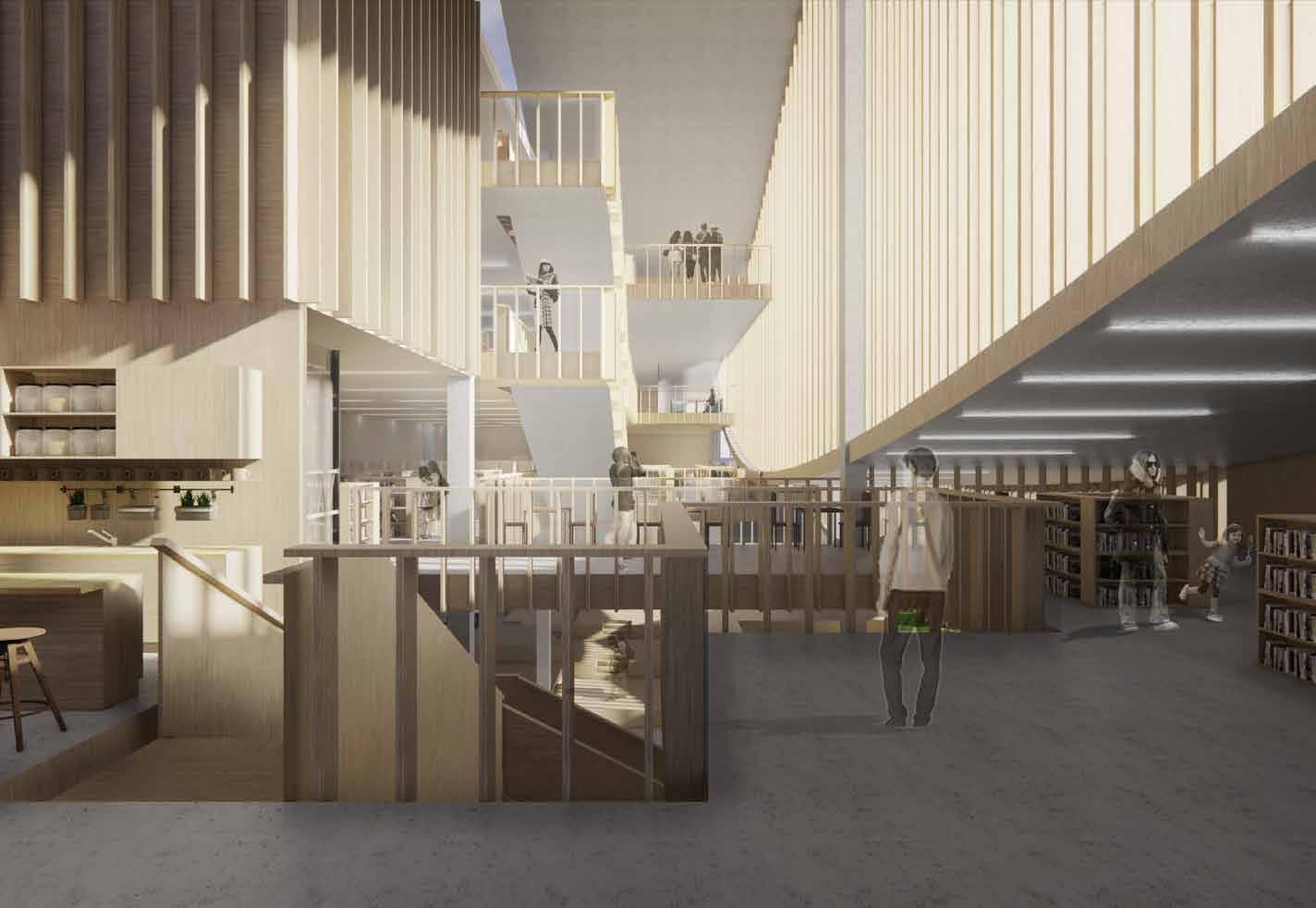
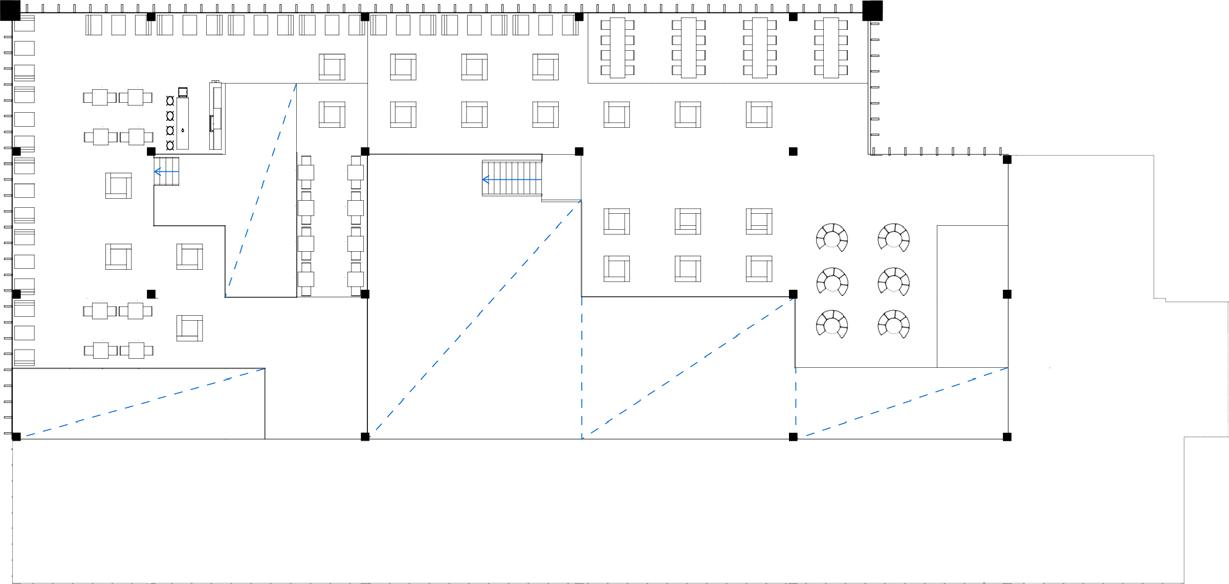
Various Program Caring for Needs
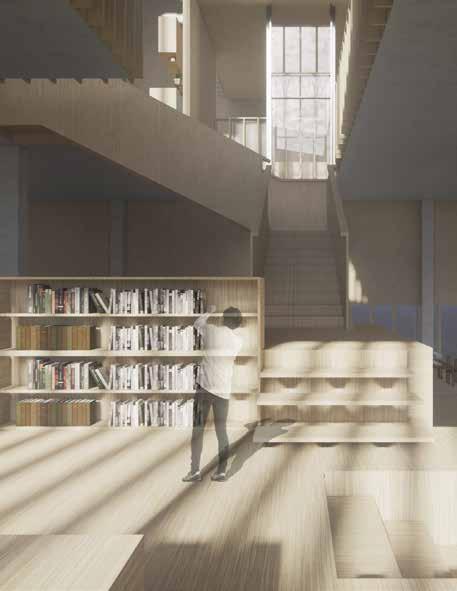
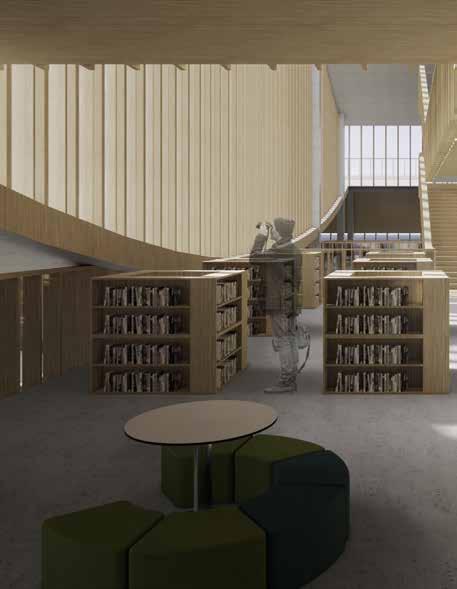
The first floor Mountain of Books invites people to walk through, immerse, and discover the interesting of books. It’s like a journey in nature while we climb up a hill to get amazed by something different. The 2nd to 5th floor offer programs like cafe, reading room, conference, leisure, as well as large stock of books. The gentle concrete and wood design is intended to offer a realm for visitors to relieve from urban routines.
02 Urban Enclaves
Mixed use Residential Building
Class work in Arch562 Housing Collective
Team
Second Ave, Detroit, MI
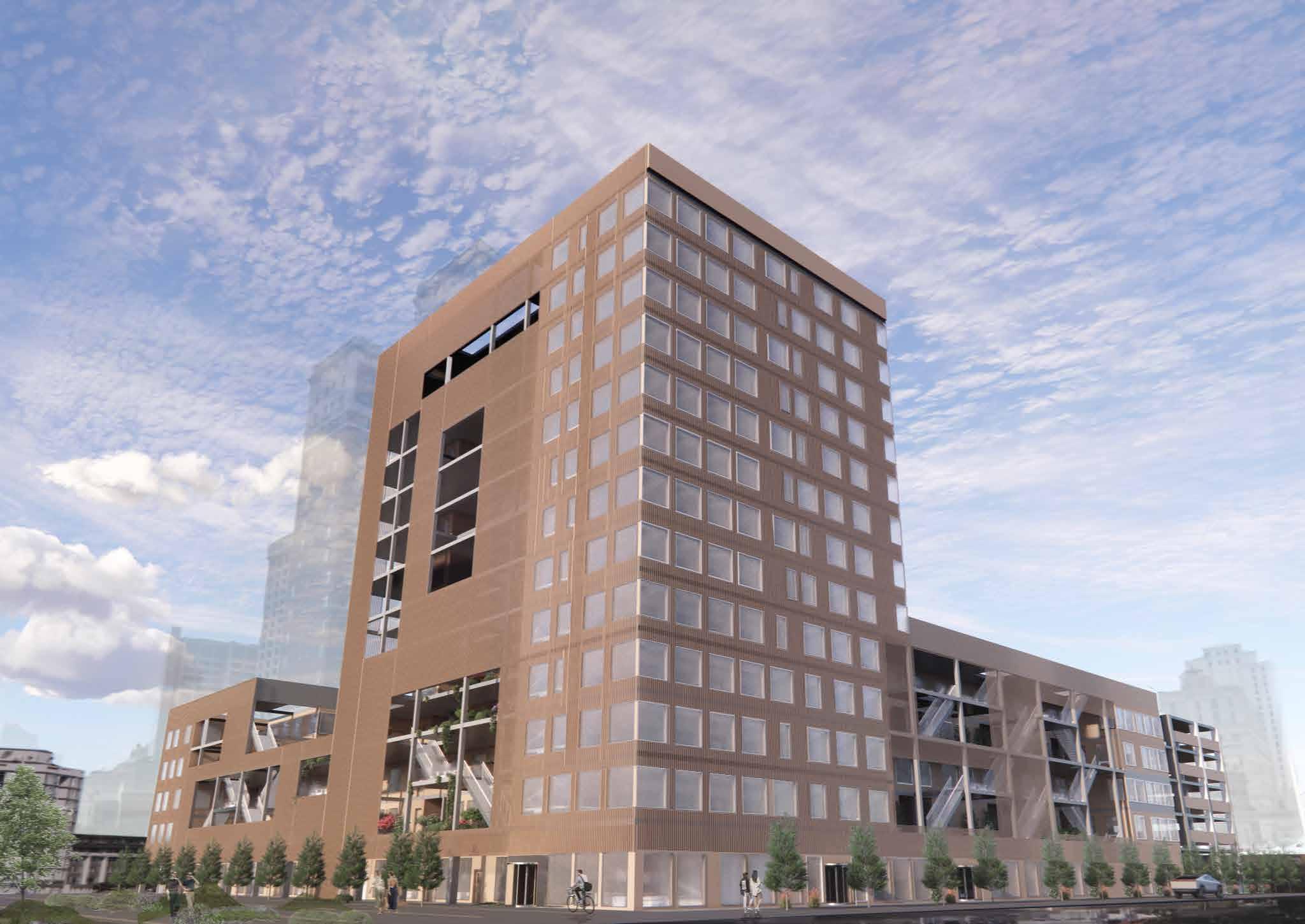
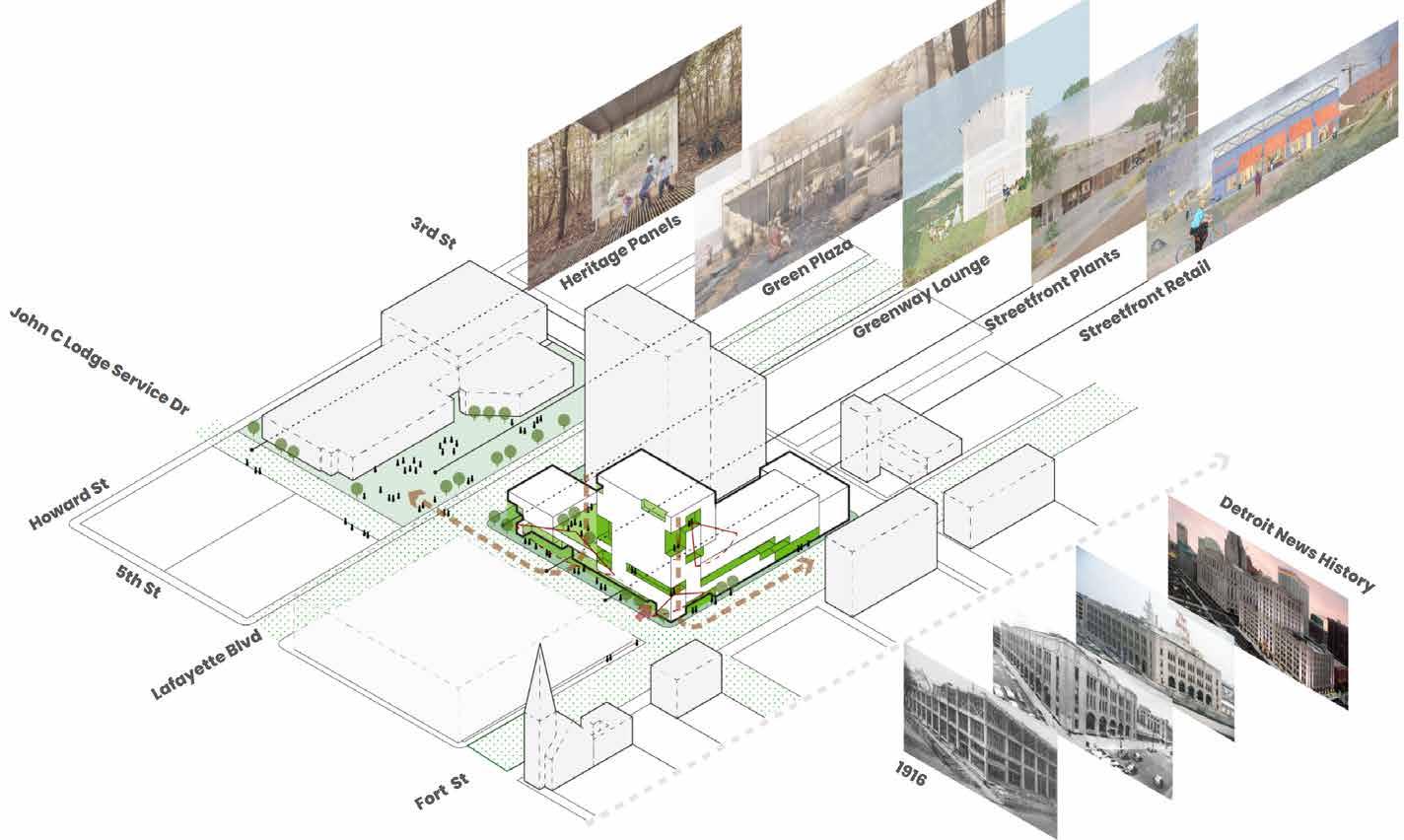
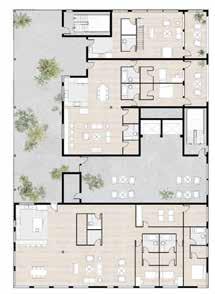
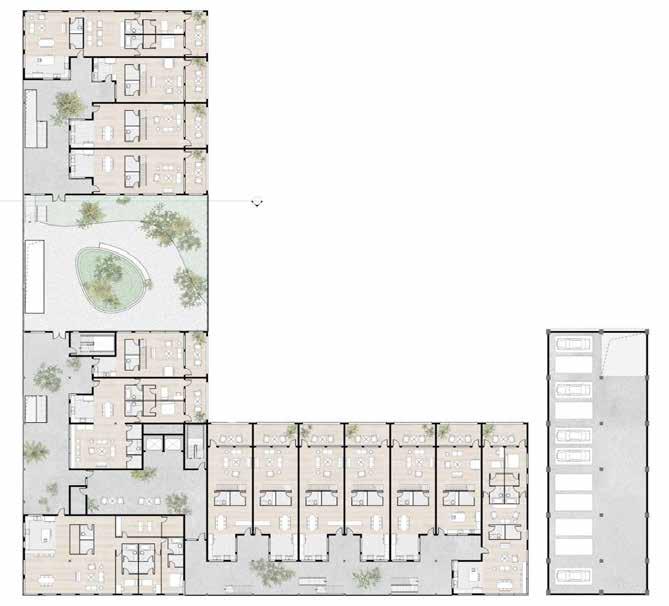
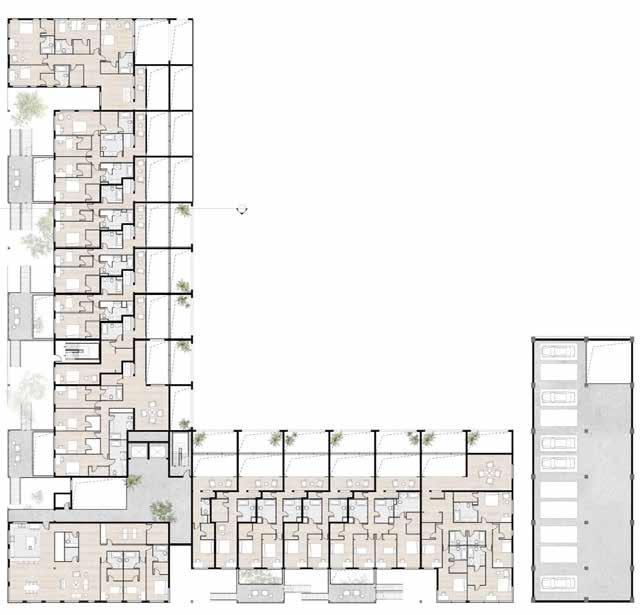
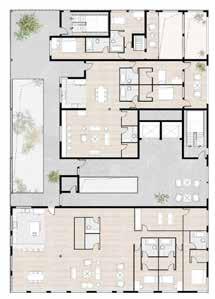
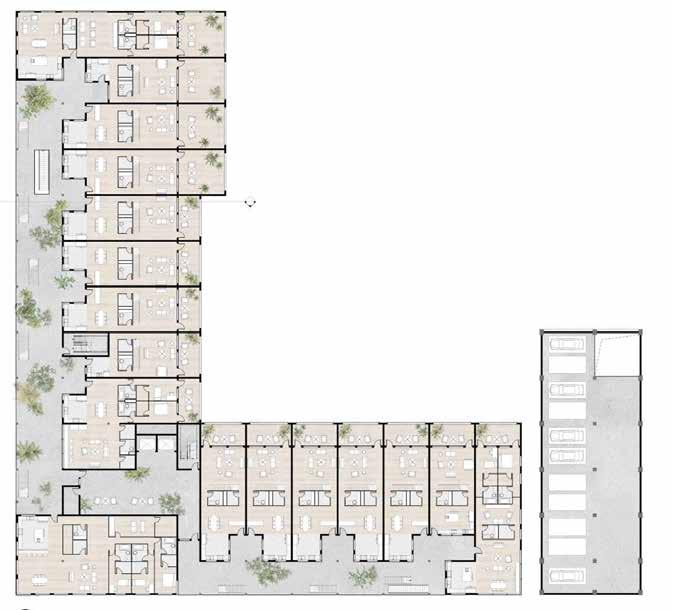
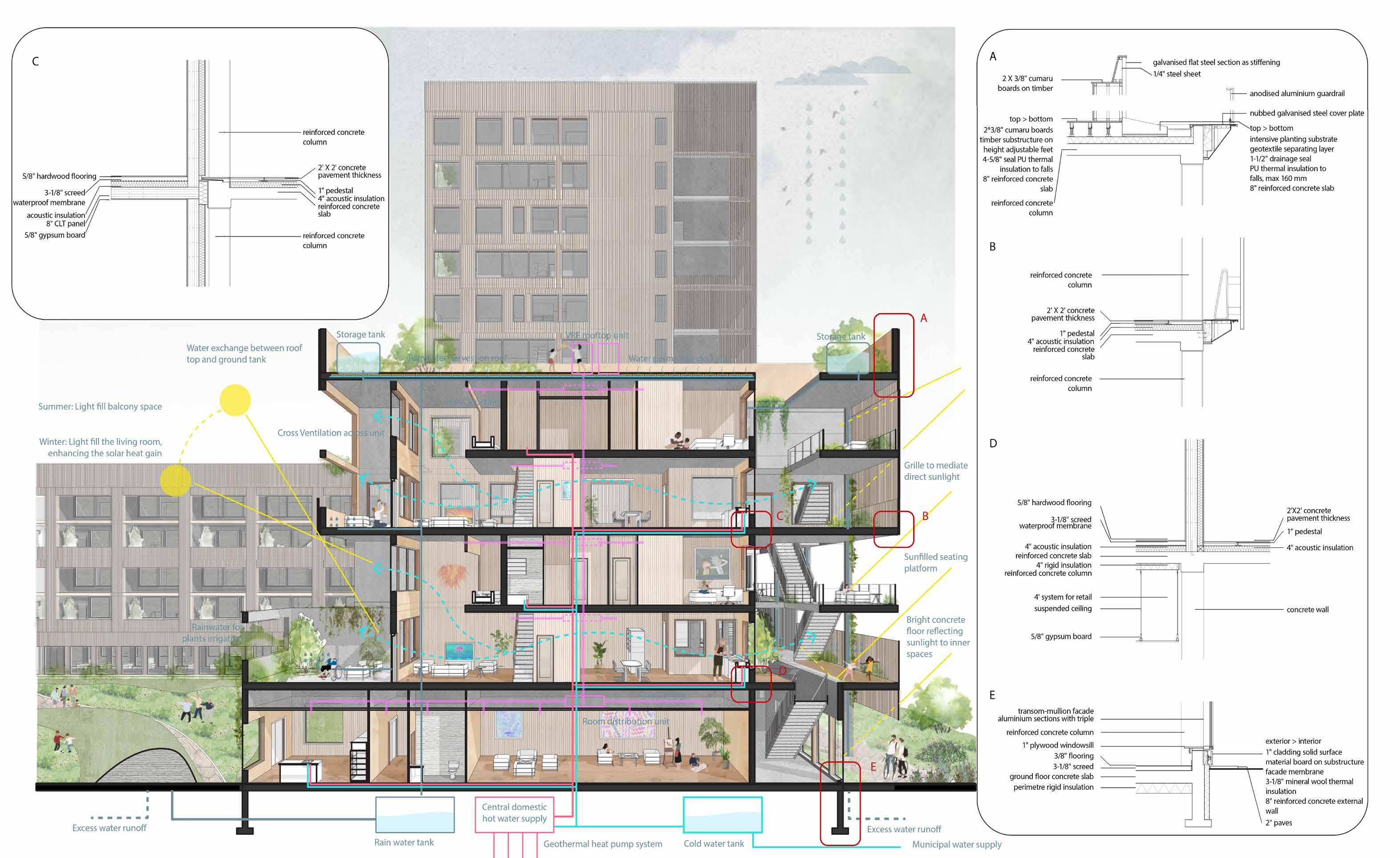
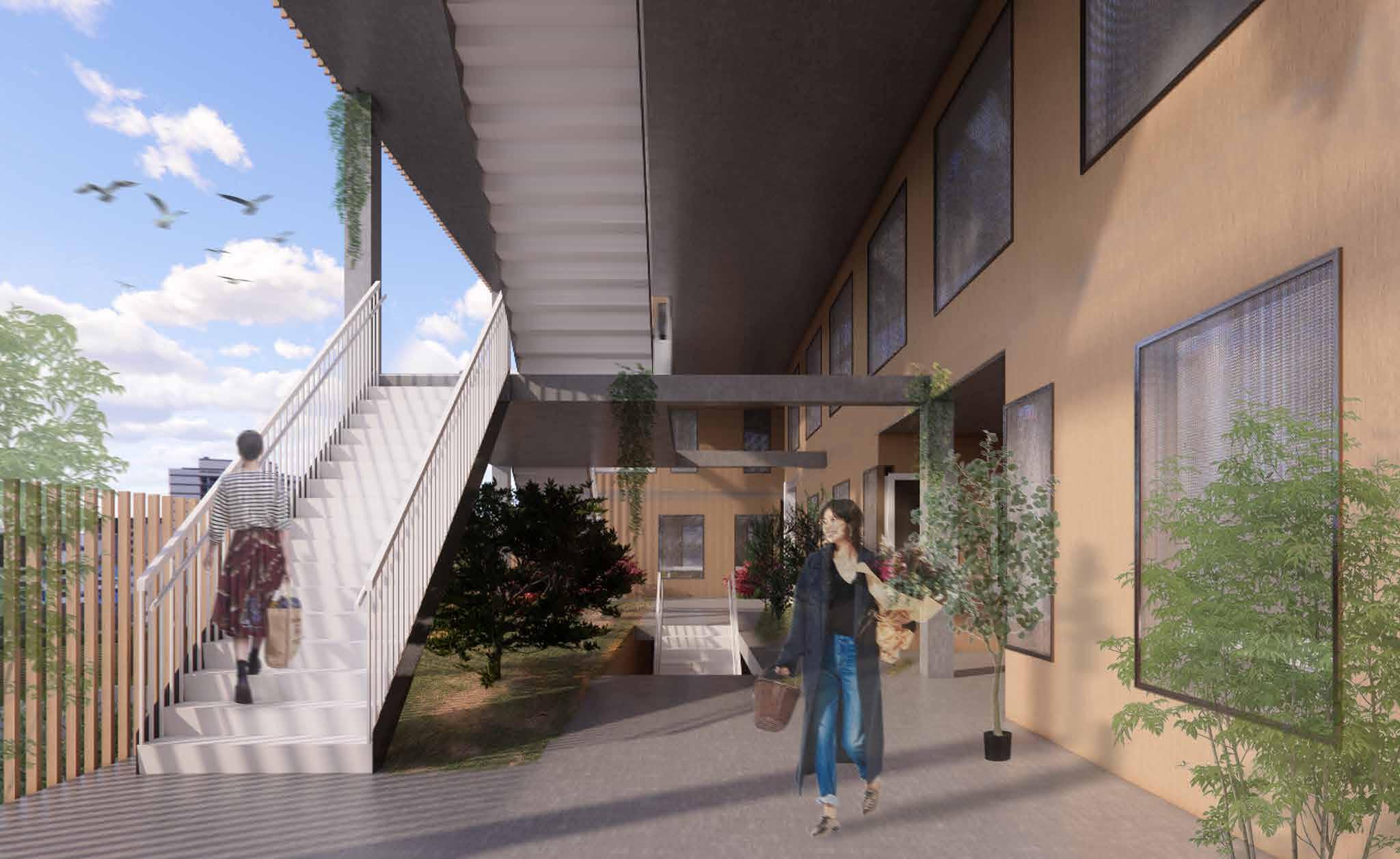
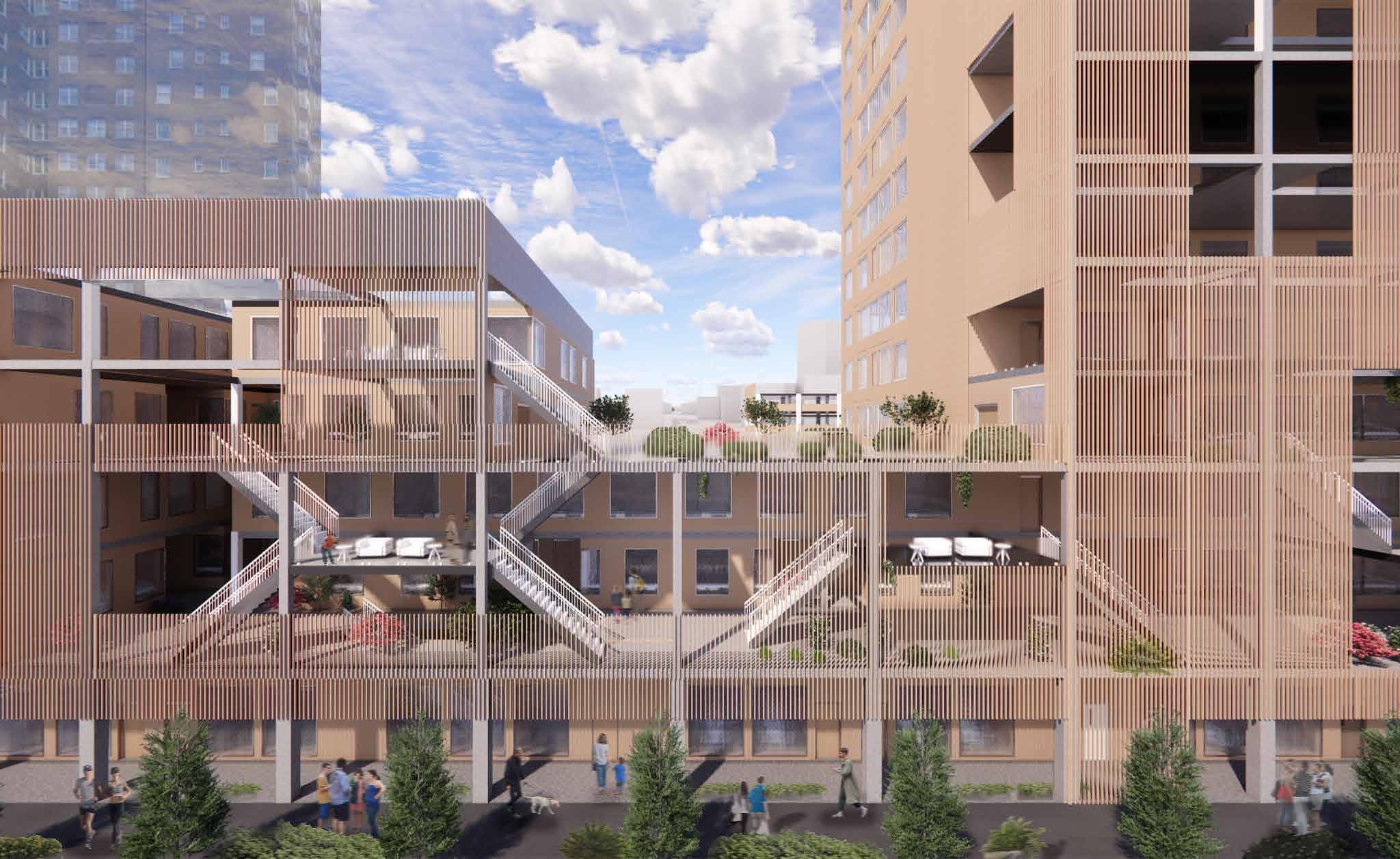
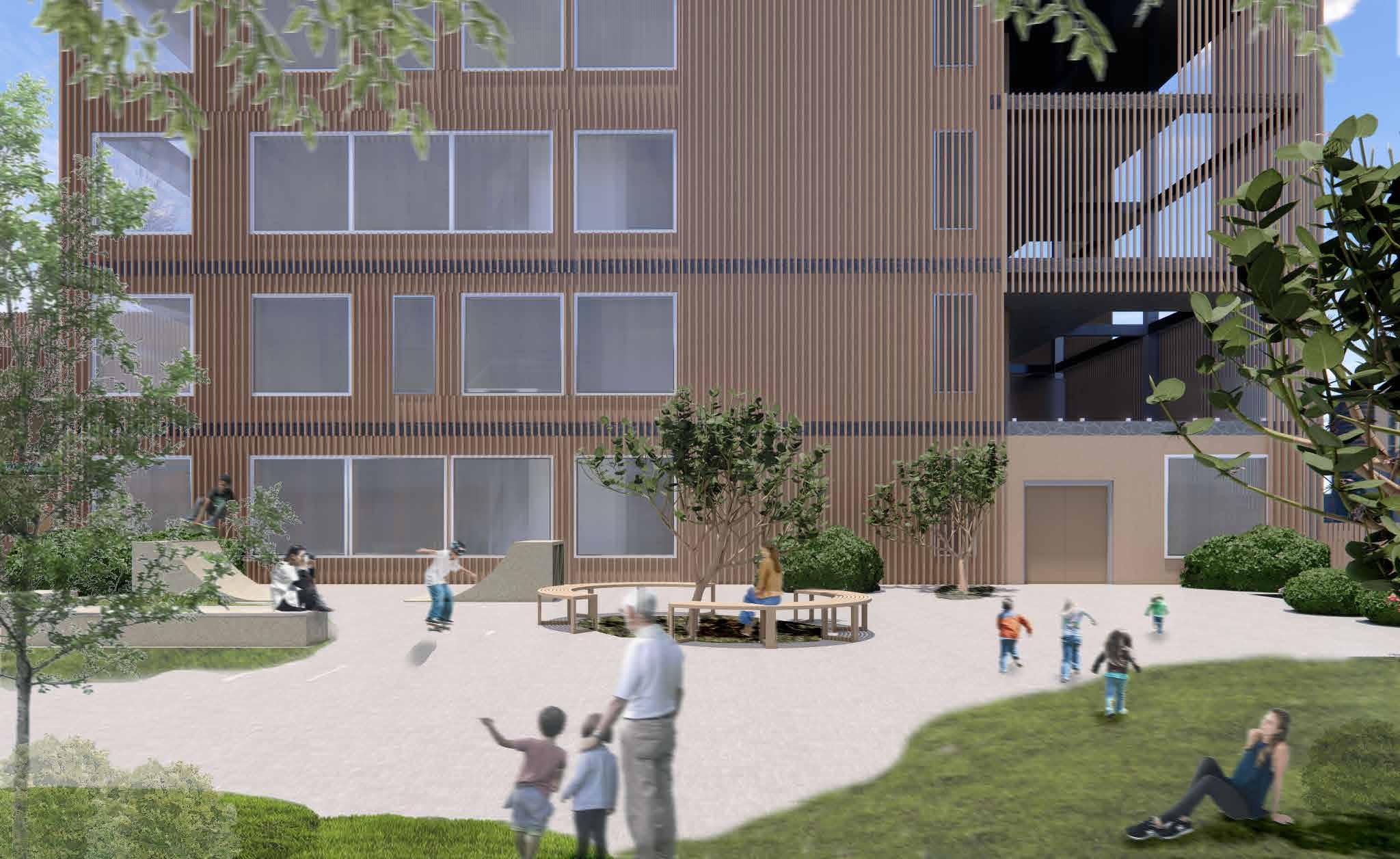
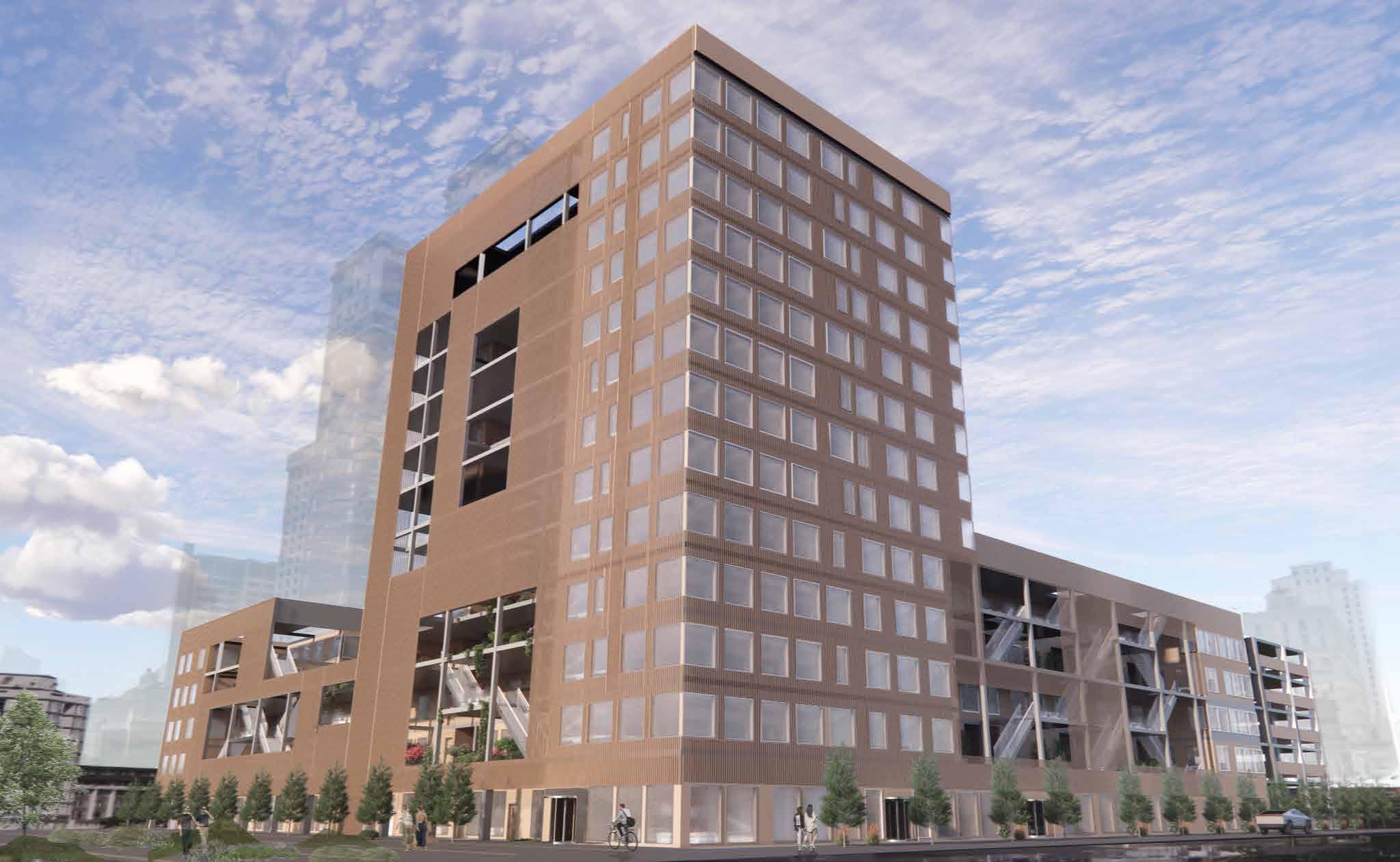
The project redefines urban living by integrating suburban charm— porches and gardens into the city. By translating these features into vertical semi-private porches and semipublic courtyards, the design merges suburban tranquility with urban convenience. This approach fosters community, enhances access to amenities, and promotes a balanced urban lifestyle that encourages residents to stay in the city.
A Blend of dynamic and urbanism
Site adjacency
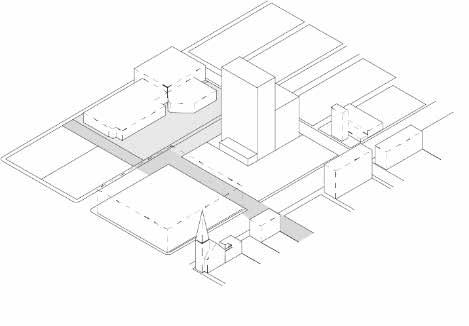
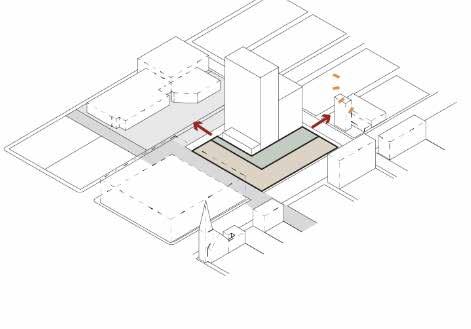
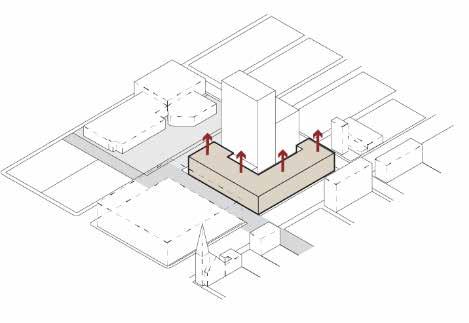
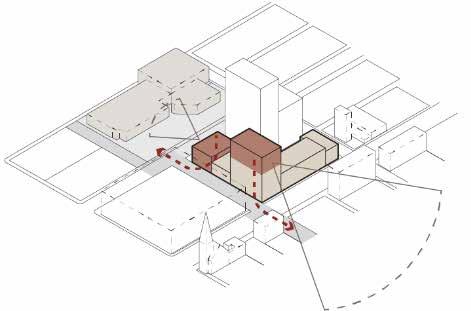
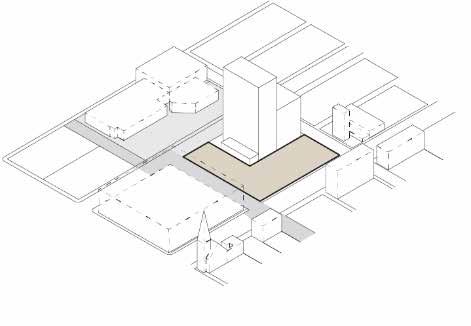
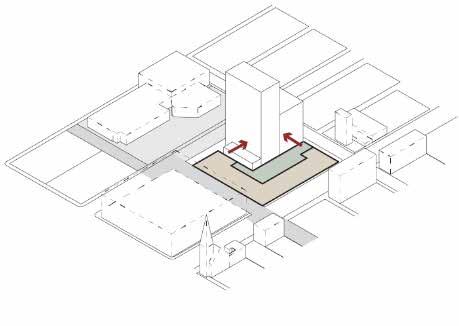
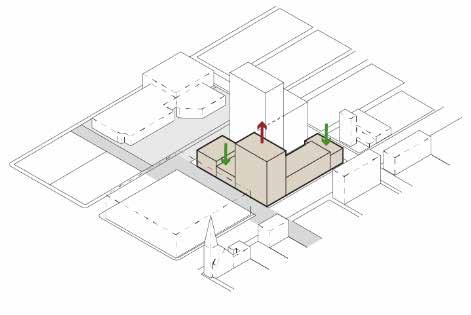
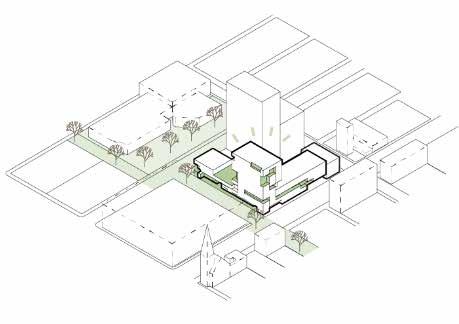
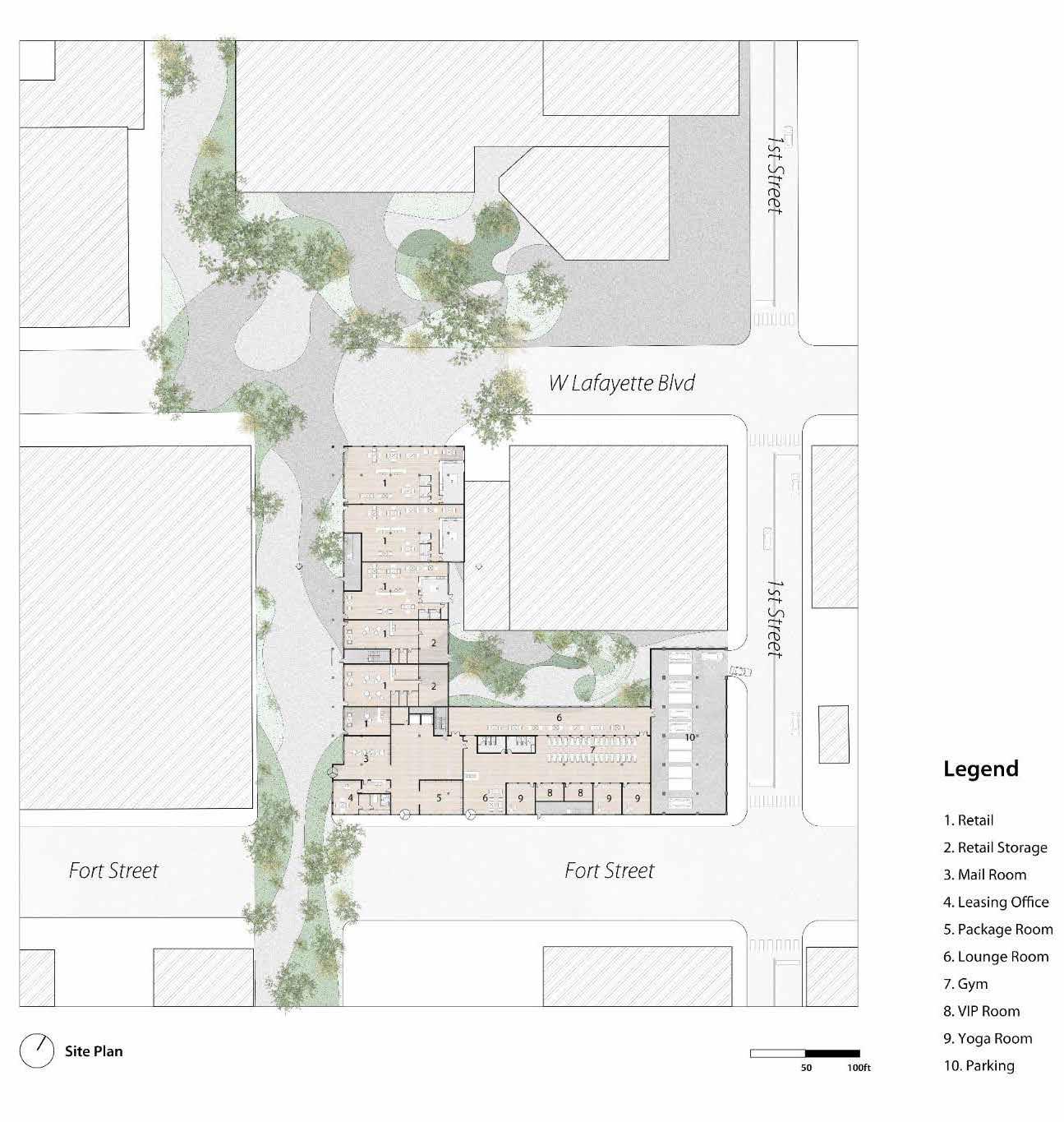
Situated on a compact site with an existing high-rise hotel, the proposed building adopts an L-shaped configuration. This layout defines the building’s boundary while creating an inward-facing courtyard that provides residents with a secluded communal space. The design strategically sets back from the adjacent hotel, ensuring both privacy and ample daylight penetration.
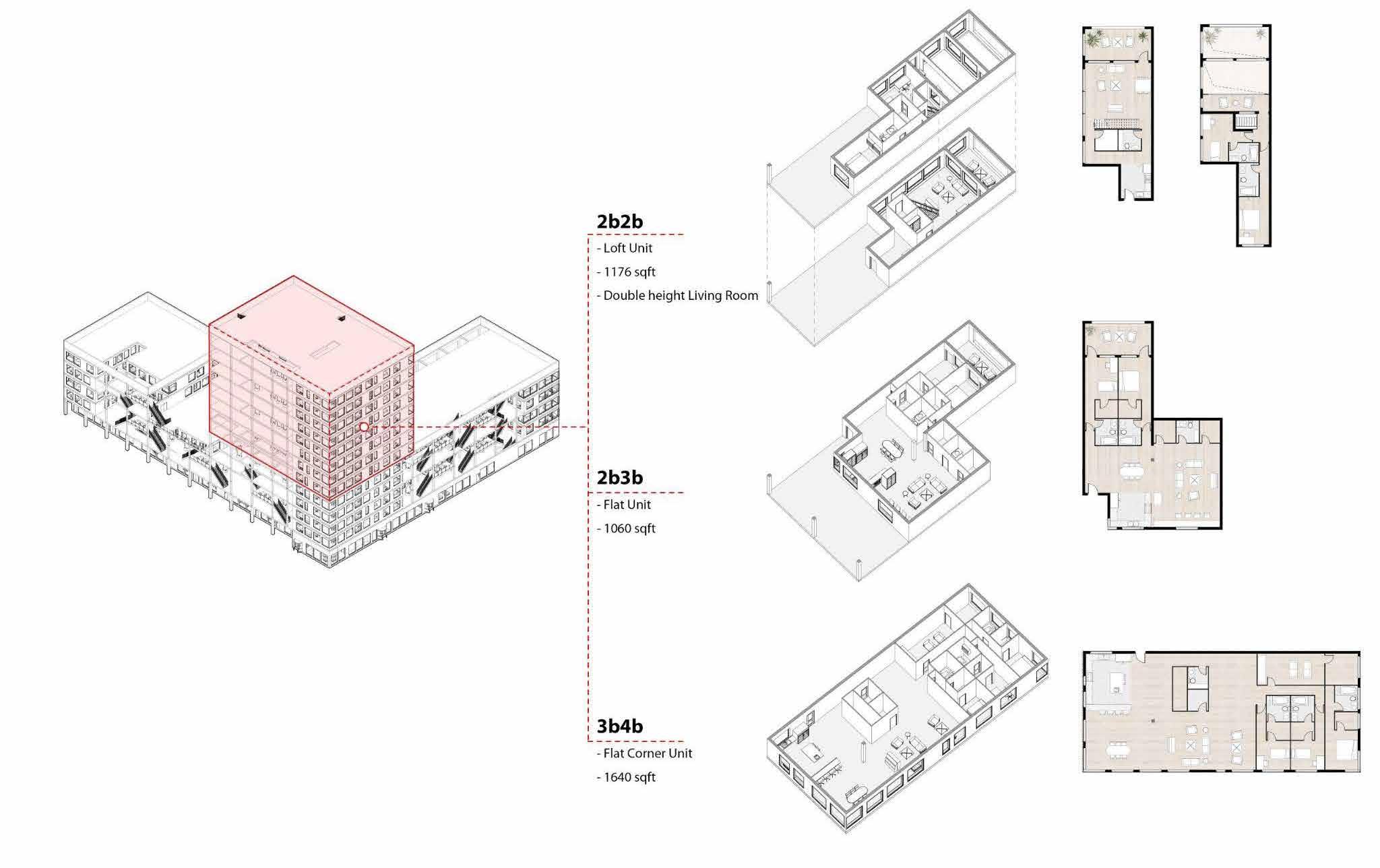
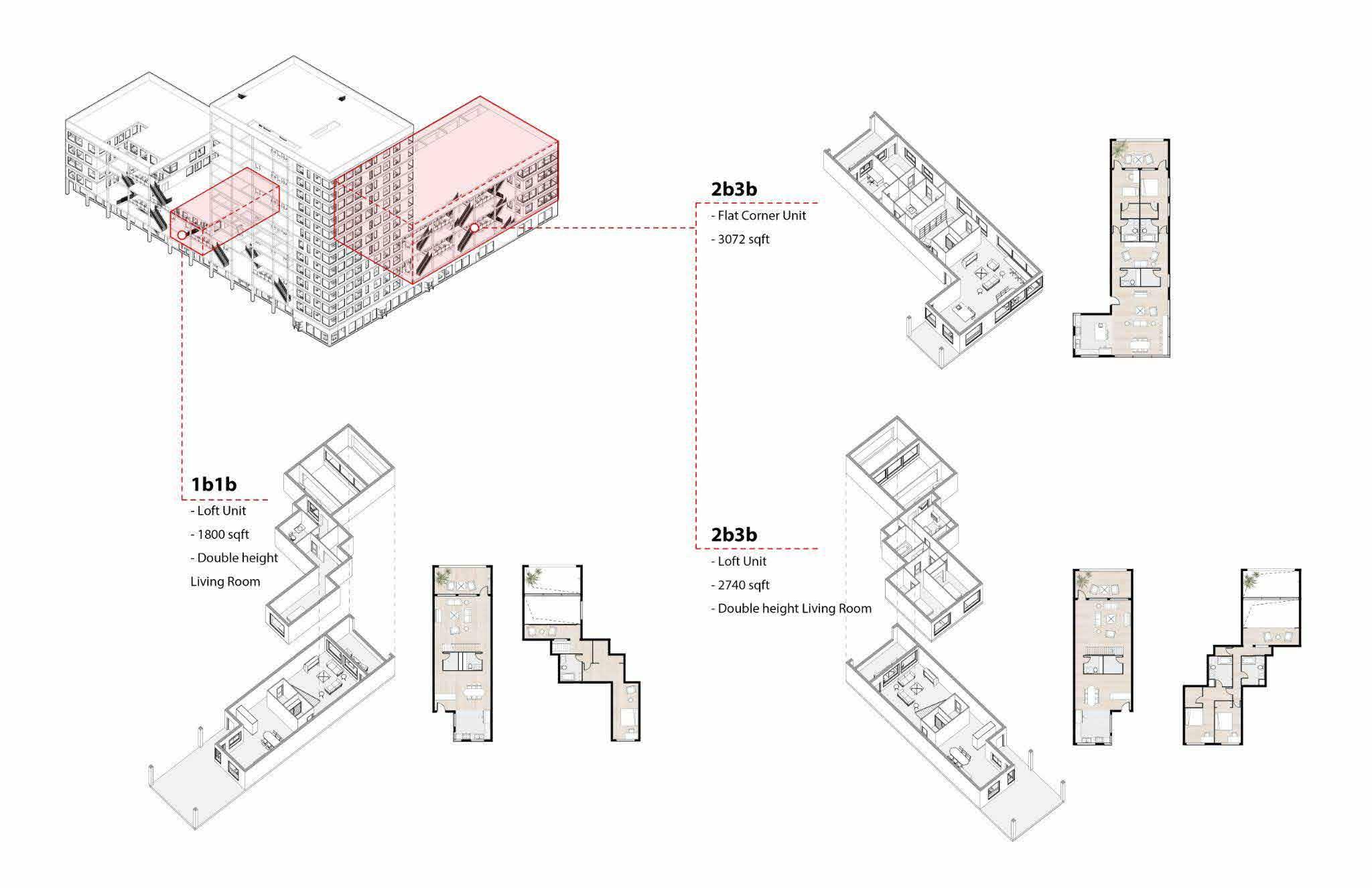
The housing complex features a diverse range of unit types to accommodate different age groups and family needs, allowing residents to spend extended periods of their lives here—from new graduates to married couples and families with children. The options include 1-bedroom, 1-bathroom units for singles, traditional 2-bedroom, 2-bathroom flats, loft-style 2-bedroom, 2-bathroom units, and larger units for bigger families. Each unit is designed with a southern view and a semi-private entrance, providing the feel of suburban living within an urban environment.
House B/ Line
Towards Living
The house becomes a welcoming haven, with its distinct programs and amenities making visitors feel at home. Guests are encouraged to come in, relax, chat, and soak in the stunning views of the nearby river.
House C/ Surface
Sitting in a quiet, serene grassland, the Plate introduces a unique vibrancy to the landscape. It functions as a mini-maze, inviting people to explore and experience the shifting play of light and shadow throughout the day.
House A/ Volume Towards Viewing
Towards Playing
The Volume offers the visitors a dichotomous experience of the island and river. The essential quality is its organic shape that not only invite people to play, but also to experience the surrounding views.
03 Urban Playground
Developed from Arch412 “Form” Studio Instructor: Adam Fure Island Park, Ann Arbor, MI
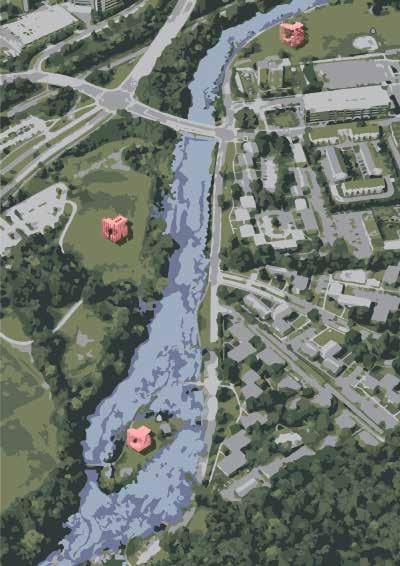
This project explores the transformation between Volume, Line, and Surface through three models that maintain spatial continuity. The first model involves cutting a foam cube to understand volumetric form. The second uses wood sticks to represent the structure through linear elements. The third involves creating enclosing spaces with plates. These concepts are then applied in real-world settings across three parks along the Huron River in Ann Arbor, MI, showcasing their potential in transforming physical spaces.
The Foam Cube
The concept began with an exploration of foam’s potential beyond its conventional use in architectural models and artistic projects. Known for its versatility and ease of shaping with tools like knives, hot wires, or machines, foam is typically seen as a “massing” material. However, this project reimagines foam cubes as sculptural mediums, akin to stone. By experimenting with its formal and spatial qualities, the project highlights the striking contrast between its smooth surfaces and defined edges and corners, unlocking new creative possibilities.
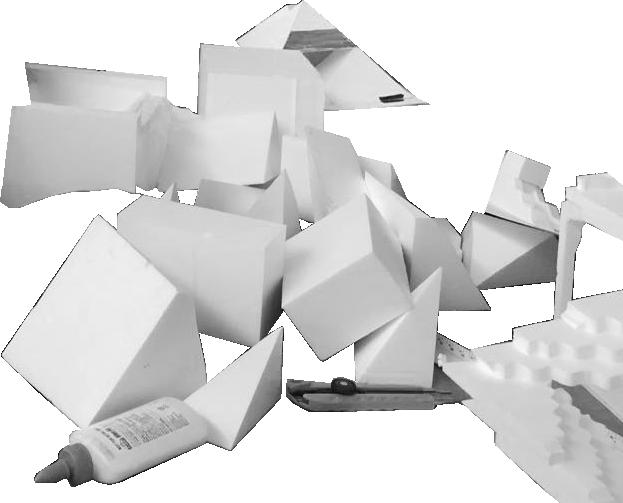
Foam commonly used as small massing element
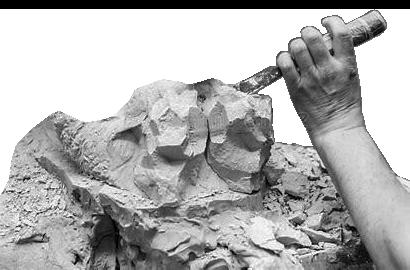
The experiments begin with a 8’’ by 8’’ foam cube, leading to various test models. The final concept emerges from the idea of carving the cube to showcase the intersections of its six surfaces, resulting in sharp edges, smooth curves, and tunnel-like forms.
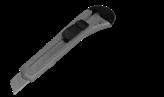
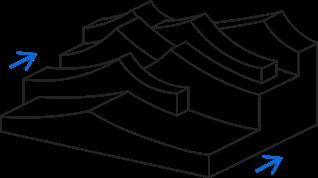
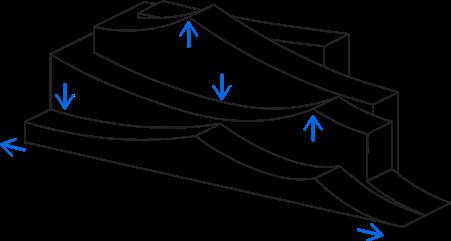
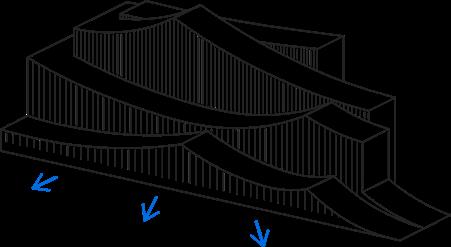
Step 1: The cutting of corners to make connections between surfaces.
Step 2: The alternation of straight intersection using wave, hole, and tunnel.
Step 3: Further smoothing and expanding relations among surfaces.
Step 4: Enlarge of holes & openings and final polish using sanding paper
The 1D, 2D, and 3D representation of the volume
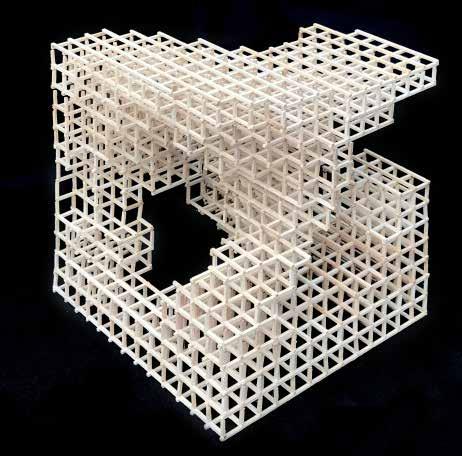
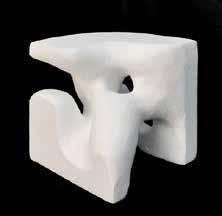
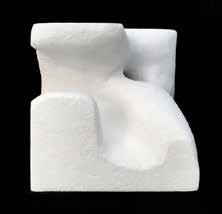
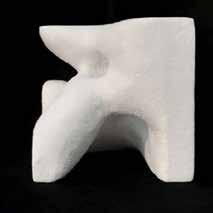
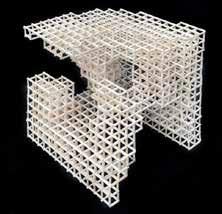
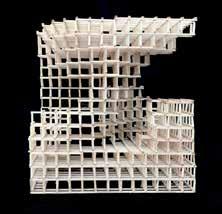
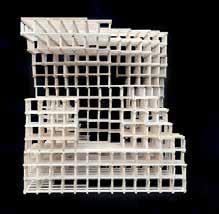
Foam, often considered simply as massing, can actually be viewed as a volume defined by 3D elements. To explore alternative representations, two additional models were constructed: one using wood sticks for linear manipulation and the other using museum board for planar manipulation. Together, these three models highlight different material qualities while maintaining a consistent volumetric presence.
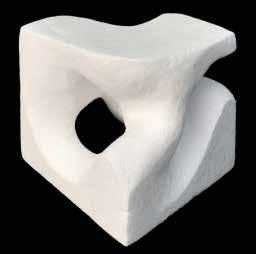
3D Representation - Foam
Carved from a 8’’ x 8’’ foam cube, this model demonstrates the untapped potential of using foam as a unified sculptural medium. The contrast between sharp and smooth, light and shadow reflects its materiality.material qualities.
1D Representation - Wood Stick
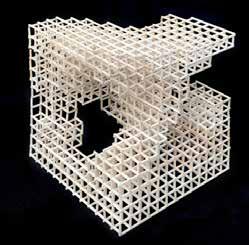
Assembled from over 1,000 individual sticks, this model offers a pixel-style interpretation of the original form. The natural material and its meticulous arrangement convey a distinctive quality, capturing the essence through its textured grid.
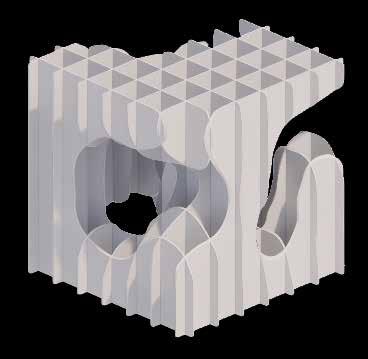
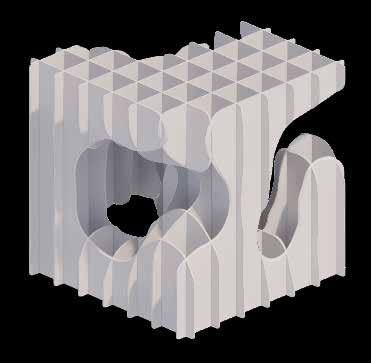
2D Representation - Museum Board
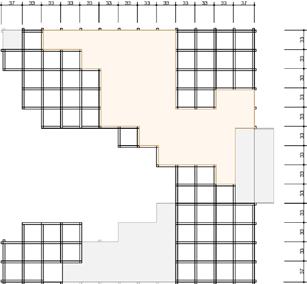
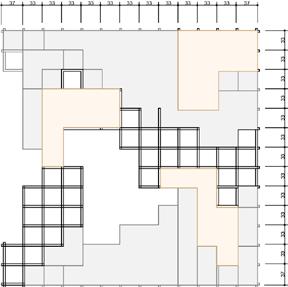
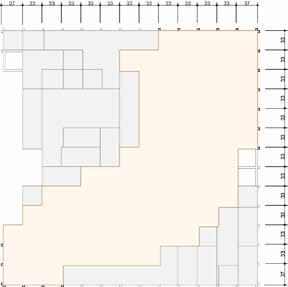
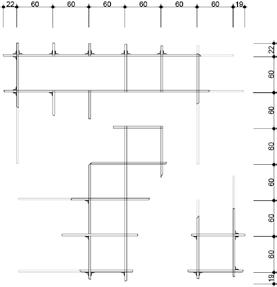
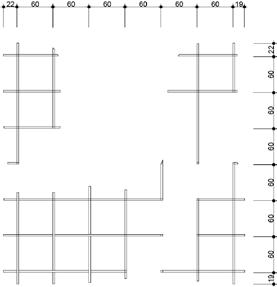
Composed of boards along the x-z and y-z planes, this model offers a 2D abstraction of the original form. Its distinctive approach to abstraction introduces various curvatures, inviting viewers to engage in spatial thinking.
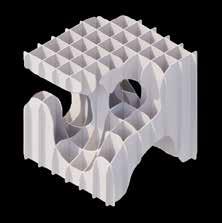
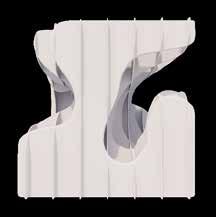
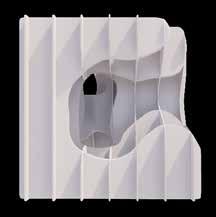
The next step is to examine their geometric significance and potential application to the real-world. All three models are expanded and given a scale of roughly 14’ by 14’ to become an occupiable space. Considering their potential usages corresponding to each formal logic, they are placed among the river parks in Ann Arbor along the Huron river shore.
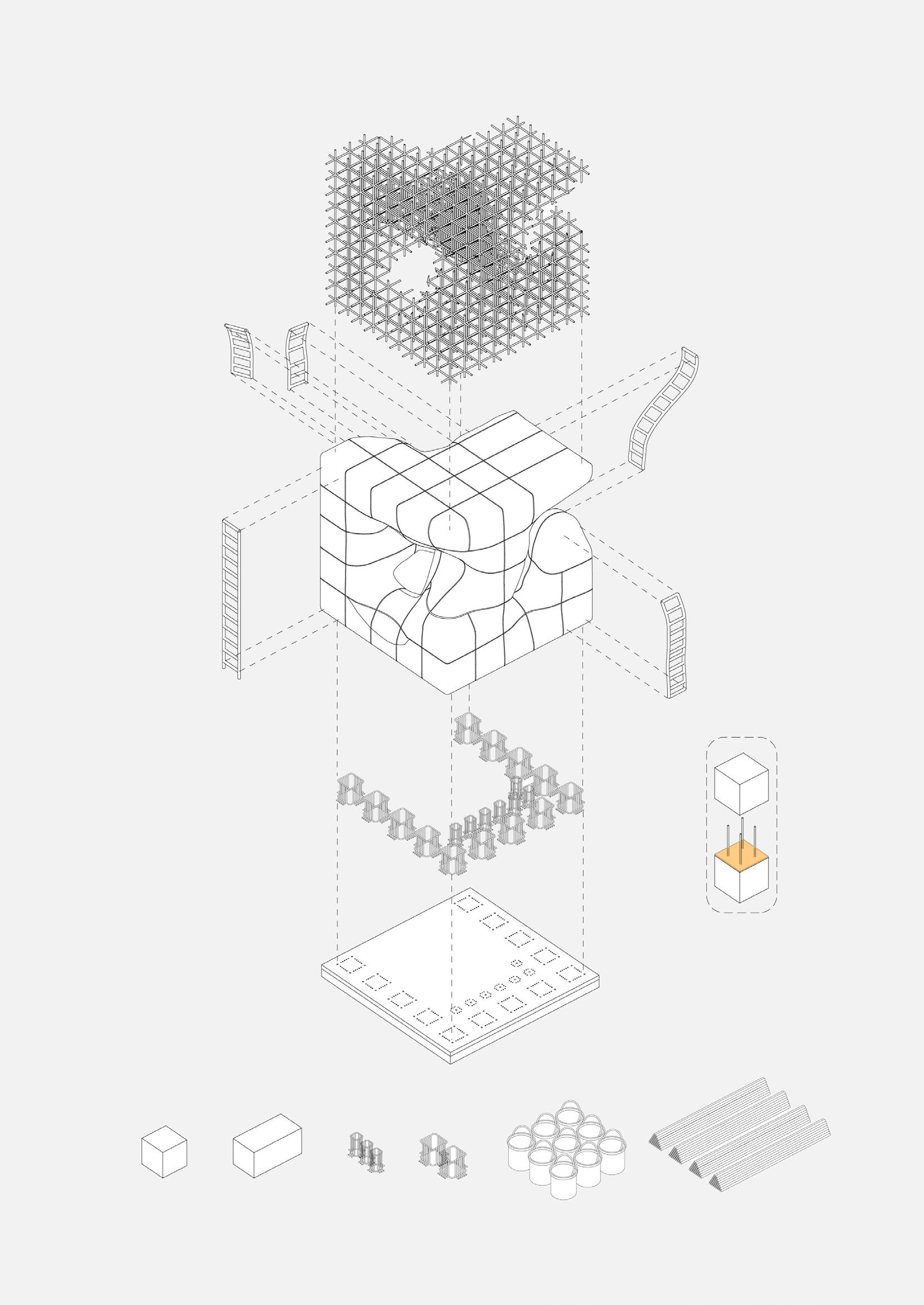
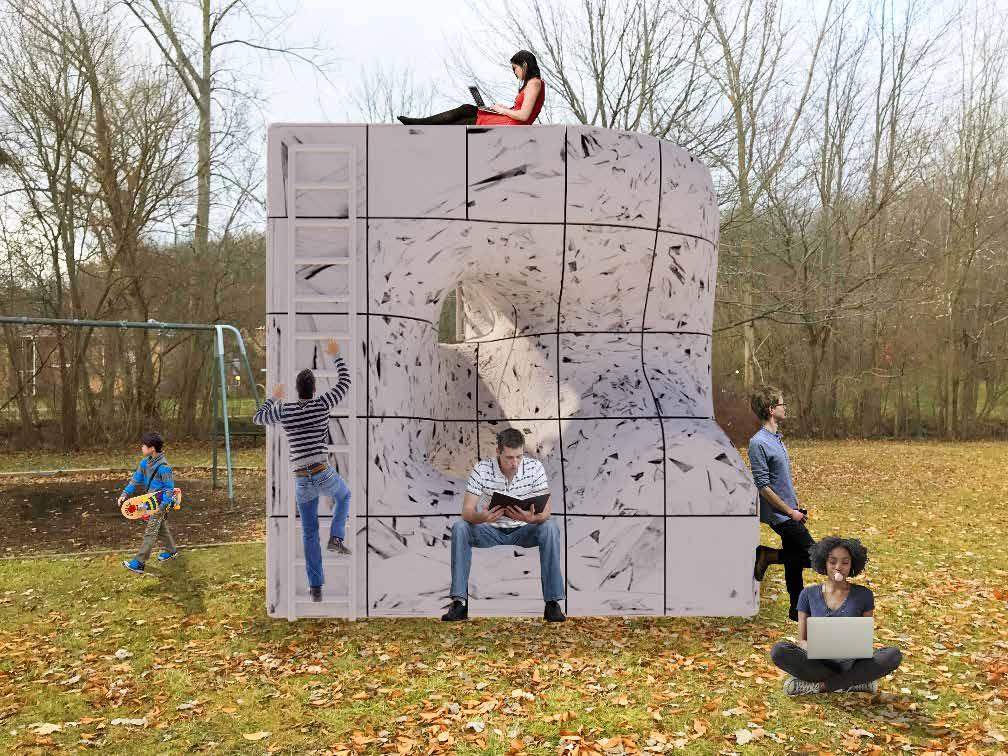
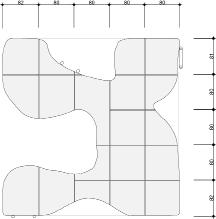
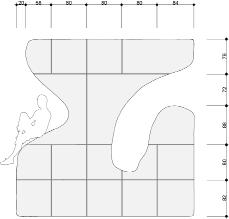
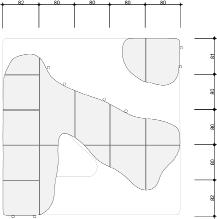
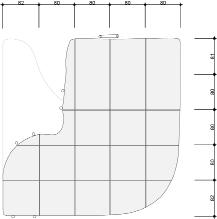
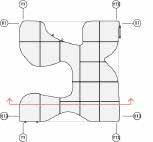
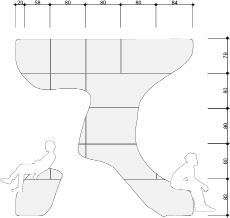
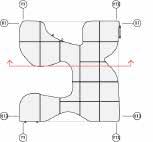
Inspired by the foam cube, this volume is built from 14’x14’ and 14’x28’ marble blocks, with a ladder for accessing different levels. Preserving smooth surfaces and sharp edges, it serves as a playground addition to the island park. The organic shape invites visitors to play, climb, and relax, enjoying the light and shadow effects from its various openings.
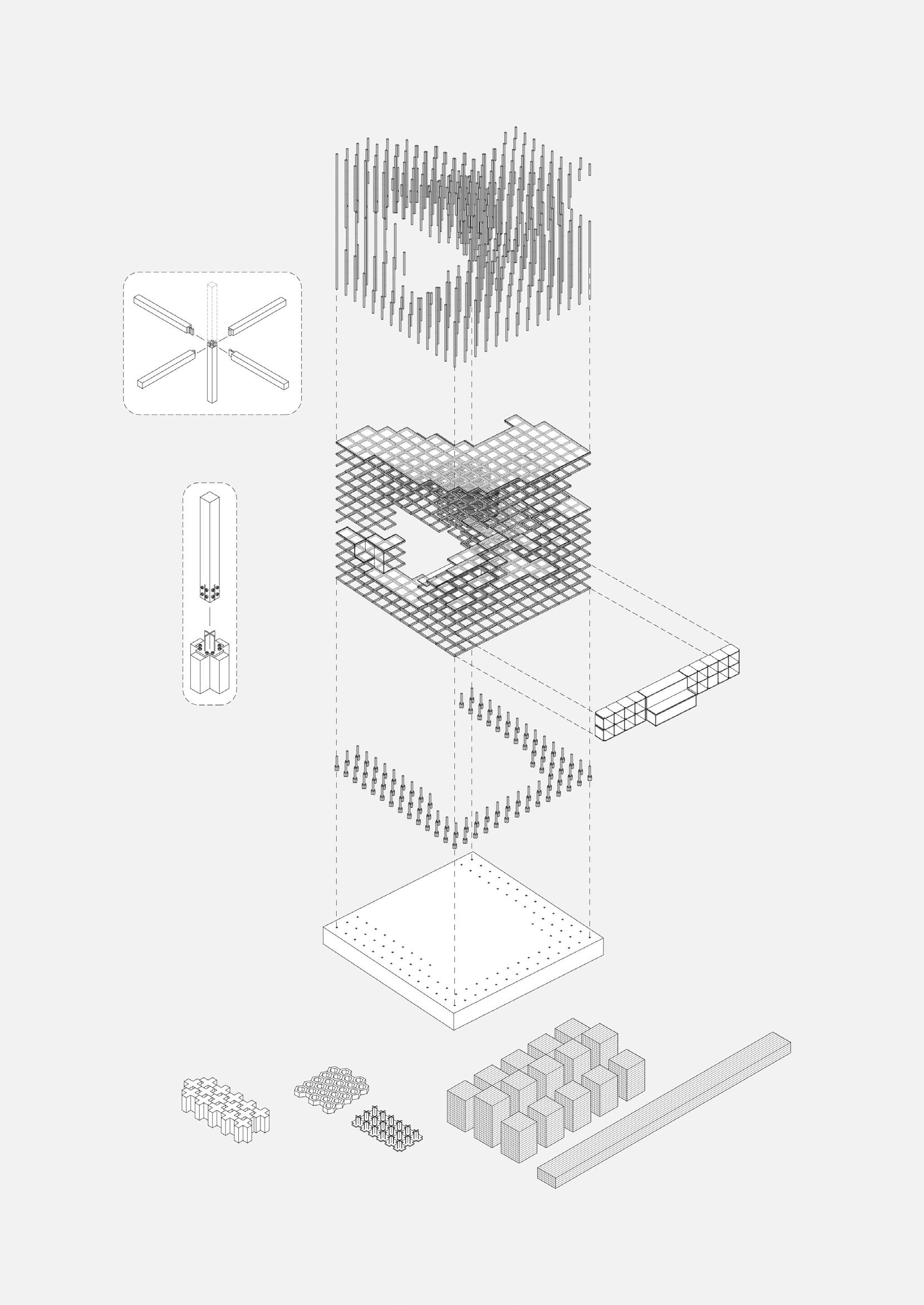
Foundation Footing
Steel Connector
Hexagon Screw
Wood beam (short)
Wood beam (long)
Beam to Footing
Mortise & Tenon joinery
Foundation Plate
Footing
Storage & Stair
Horizontal Beams
Vertical Beams
Floor Plates
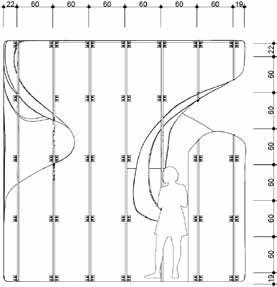
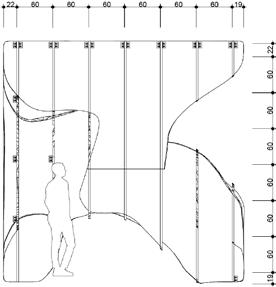
2 The Wood Home
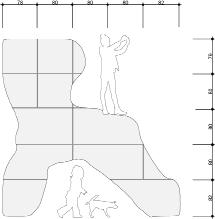
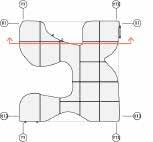
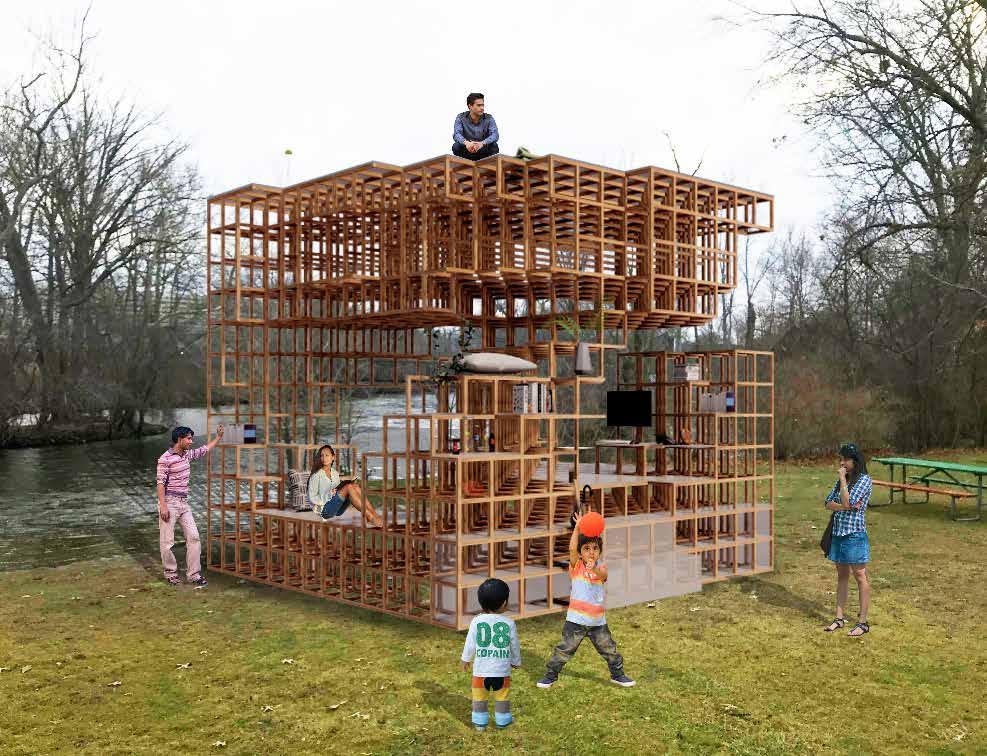
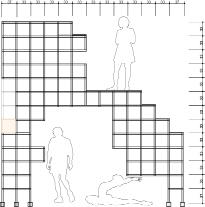
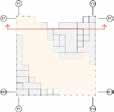
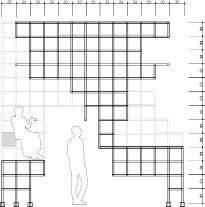
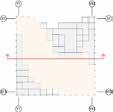
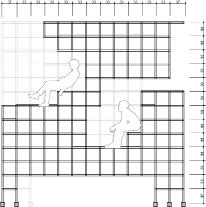
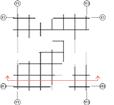
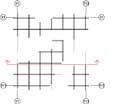
This line house is designed as a livable unit, with wood sticks maintaining the general outline of the foam massing while creating larger spatial opportunities. The orthogonal orientations enhance the usability of the interior spaces. Functional elements like stairs, shelves, and storage are thoughtfully integrated to optimize functionality. Overall, it creates an inviting environment where people can sit, relax, chat, and feel at home.
Glues
Steel Fastener
Hardwood floorplate
Foundation joist
Panel (0.5m x 2m)
Panel (1m x 2m)
Panel Interlocking Foundation Plate Foundation Frame
Panel House
Floorplate & Stair
Vertical Beams
Floor Plates
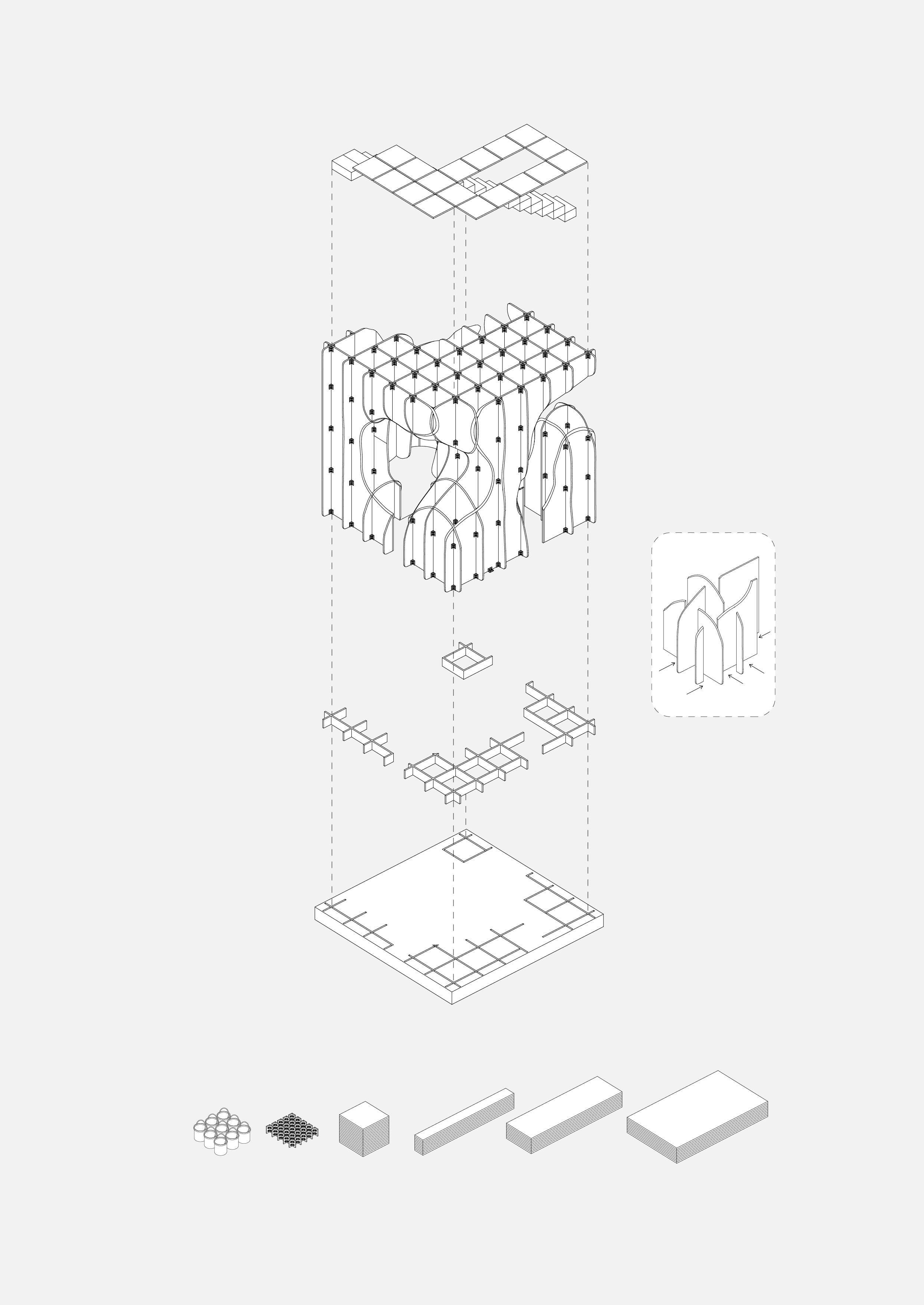
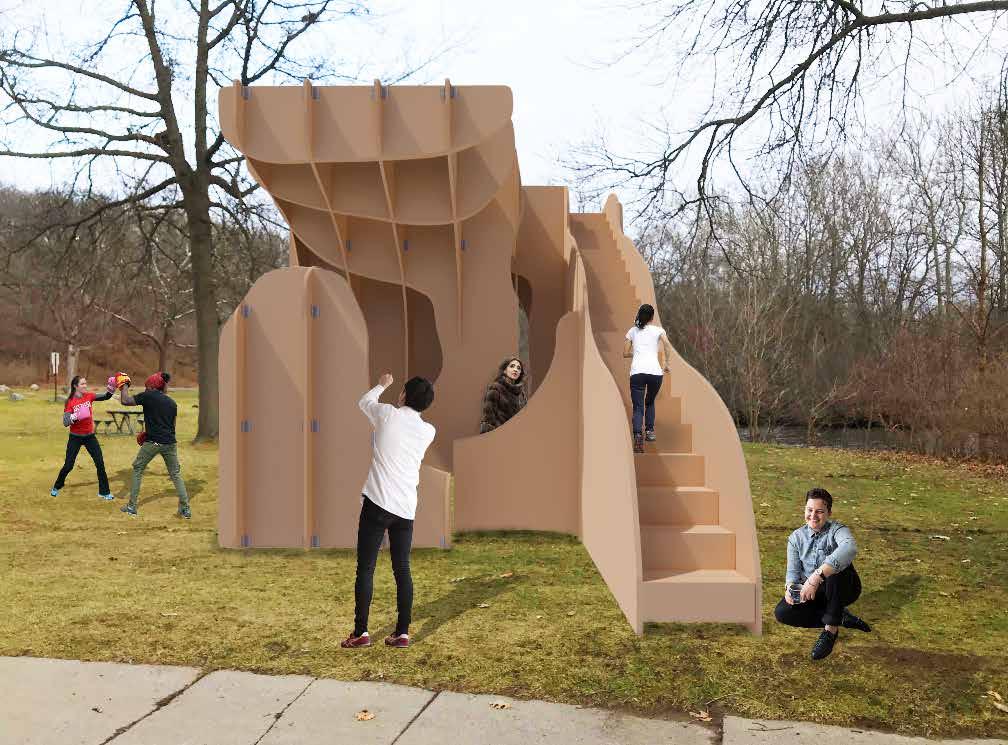
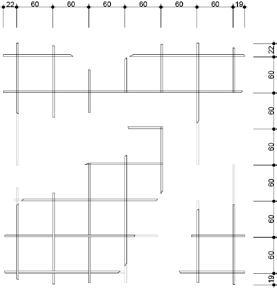
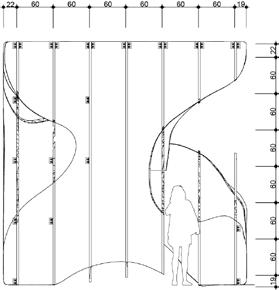
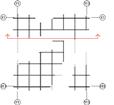
The panel-constructed space initially appears complex and difficult to navigate. However, by strategically removing some panels and creating openings, it transforms into an engaging small maze. Inside, visitors can enjoy the dynamic interplay of light and shadow throughout the day. A stairway offers access to a top platform, providing a scenic view of the river.
04 Theater “Pathway”
Class Work in Arch552 “Institution” Studio
Instructor: Gina Reichart
Ann Arbor, MI
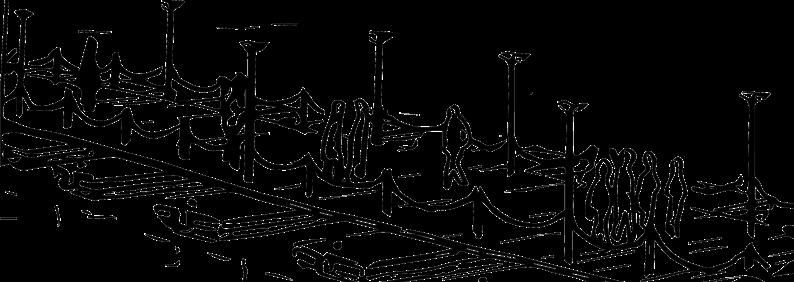
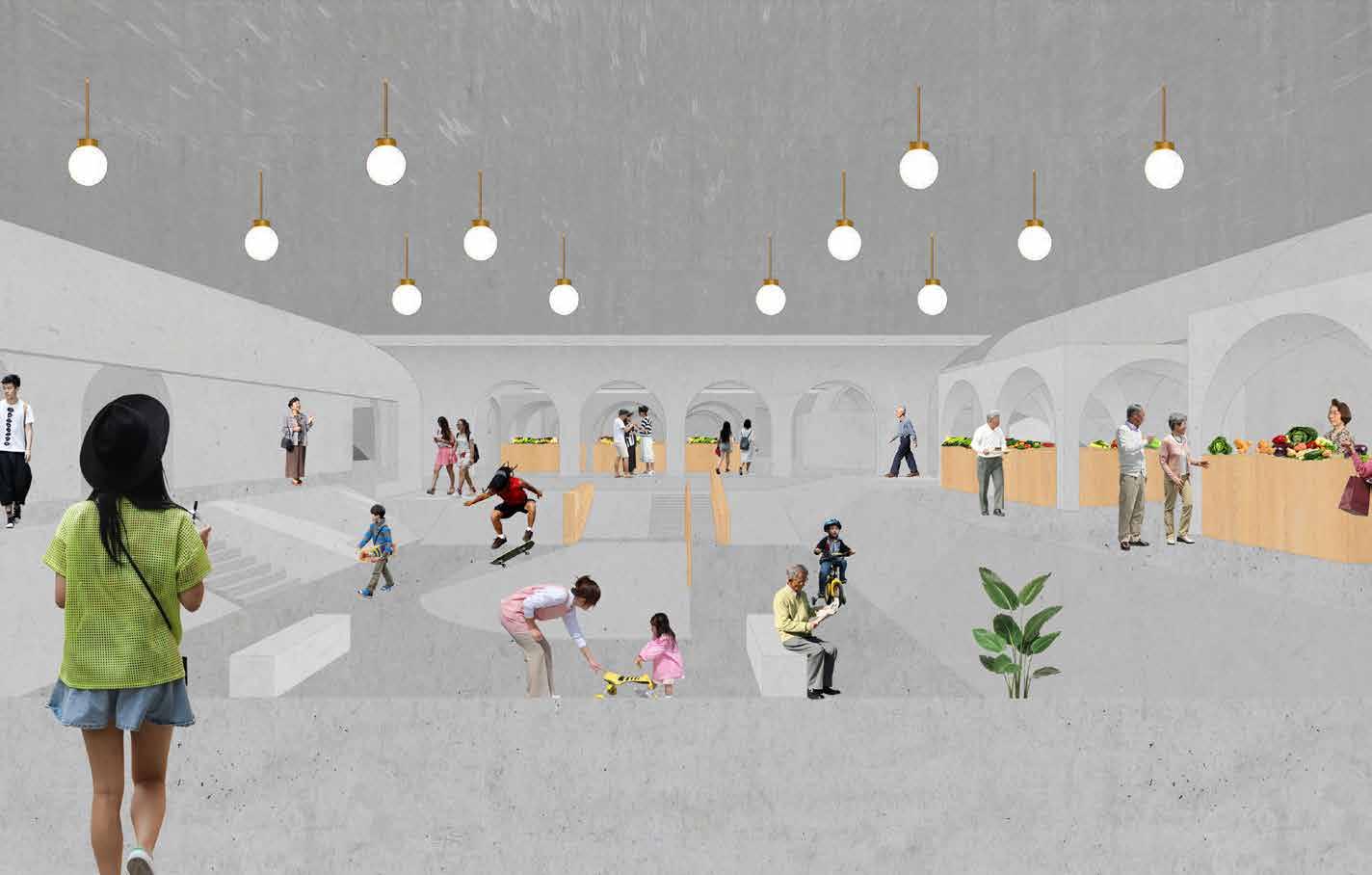
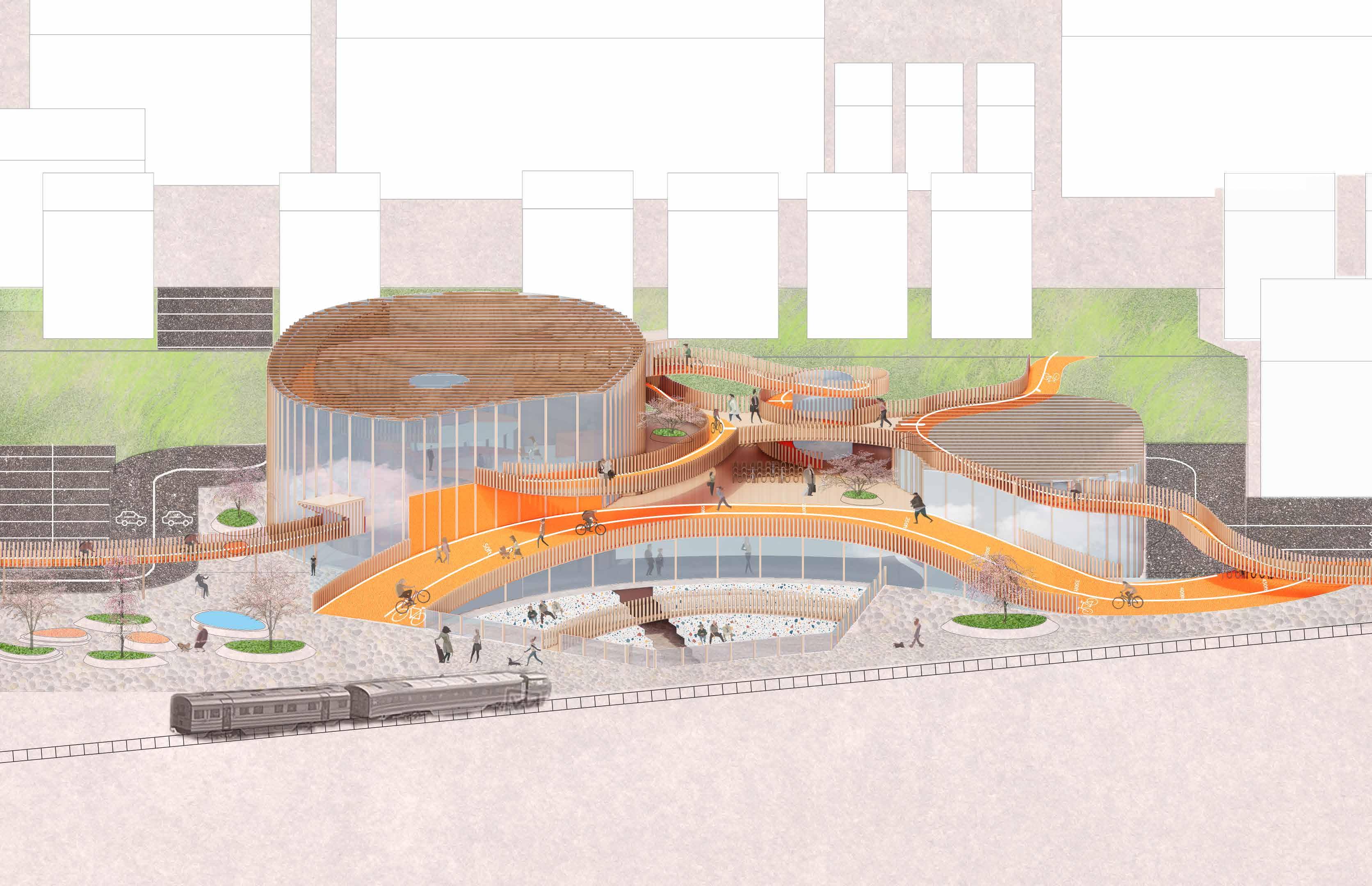
Located at the bustling southeast corner of Liberty and First Street, the site and cinema building are designed to be porous, facilitating pedestrian and bicycle movement throughout. Ramps are strategically used to navigate the 20-foot height difference from west to east, ensuring seamless access and connectivity for all visitors.
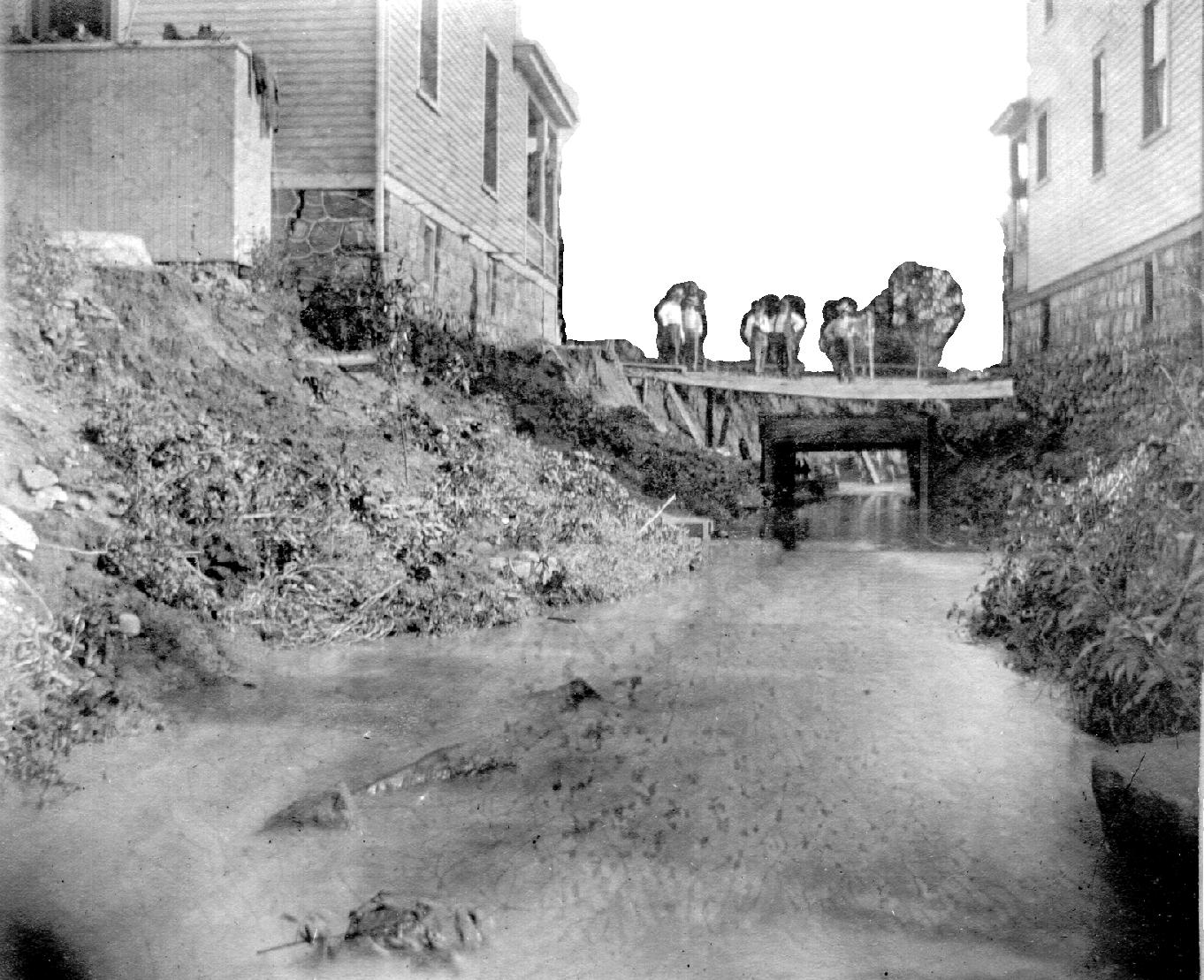
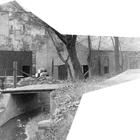
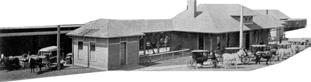
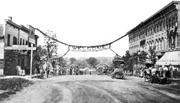
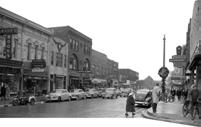
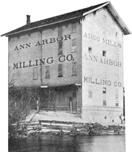


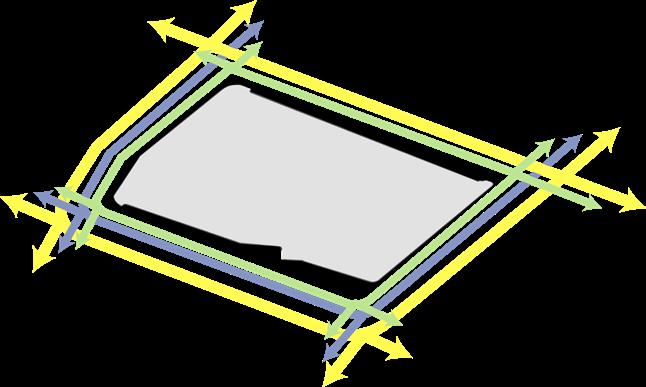

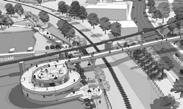
The current layout of the building block forces cyclists to navigate around it, sharing lanes with motor vehicles, which can be challenging and unsafe. The significant elevation change between First and Ashley Streets complicates navigation. Pedestrians are also restricted to the sidewalks, resulting in a less engaging and enjoyable experience.
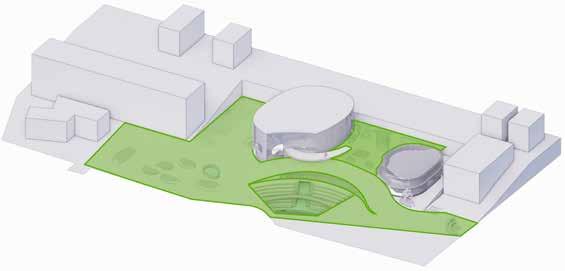
The building features large open spaces that allow people to pass through easily, seamlessly connecting residential areas with the urban environment.
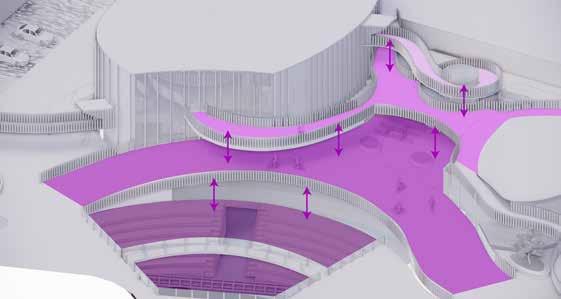
The site’s height differences are pivotal, and the layout adapts to these topographical shifts by creating varied levels for seating and viewing, allowing visitors to engage with environment in multiple ways
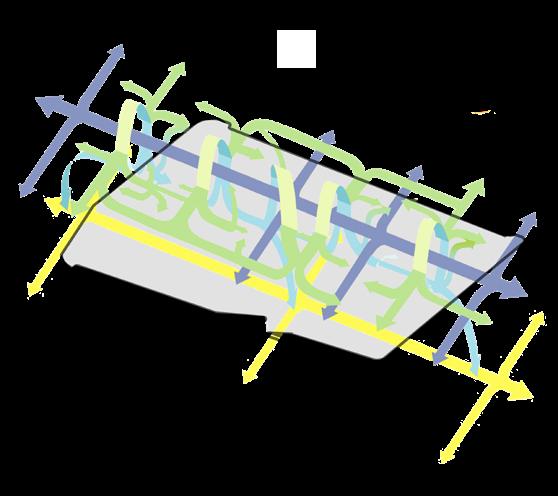
The vision for the site and cinema building is to create a more porous environment that encourages movement through it. Cyclists and pedestrians can engage directly with the site, traveling through its spaces. This increased interaction not only enhances the vibrancy of the area but also has the potential to boost cinema attendance.
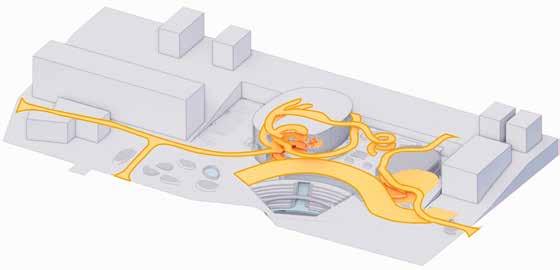
Numerous bike paths weave through the site, aligning with existing bike lanes and engaging with both the courtyard and the building.
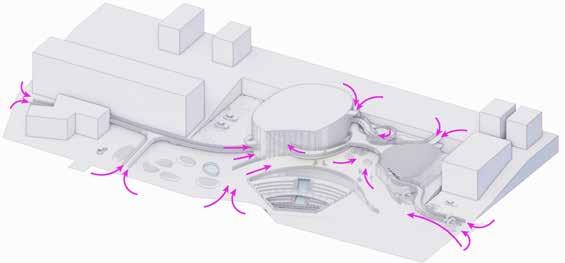
The plan’s layout provides entrances on all four sides of the block, encouraging greater interaction and encounters as people move through the space.
Ticketing
Restroom
Cinema
Cinema
Green
Bike
Screen
Elavator
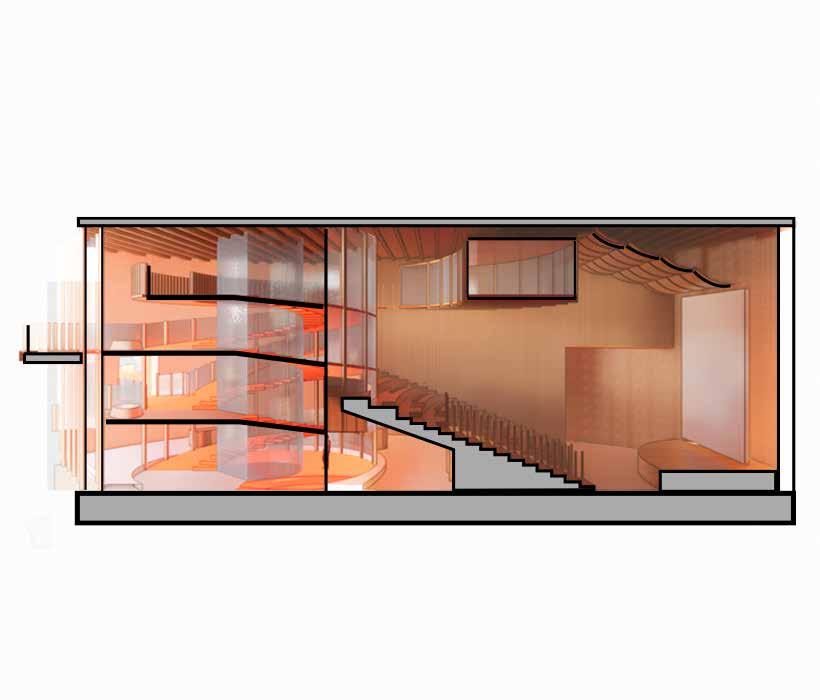
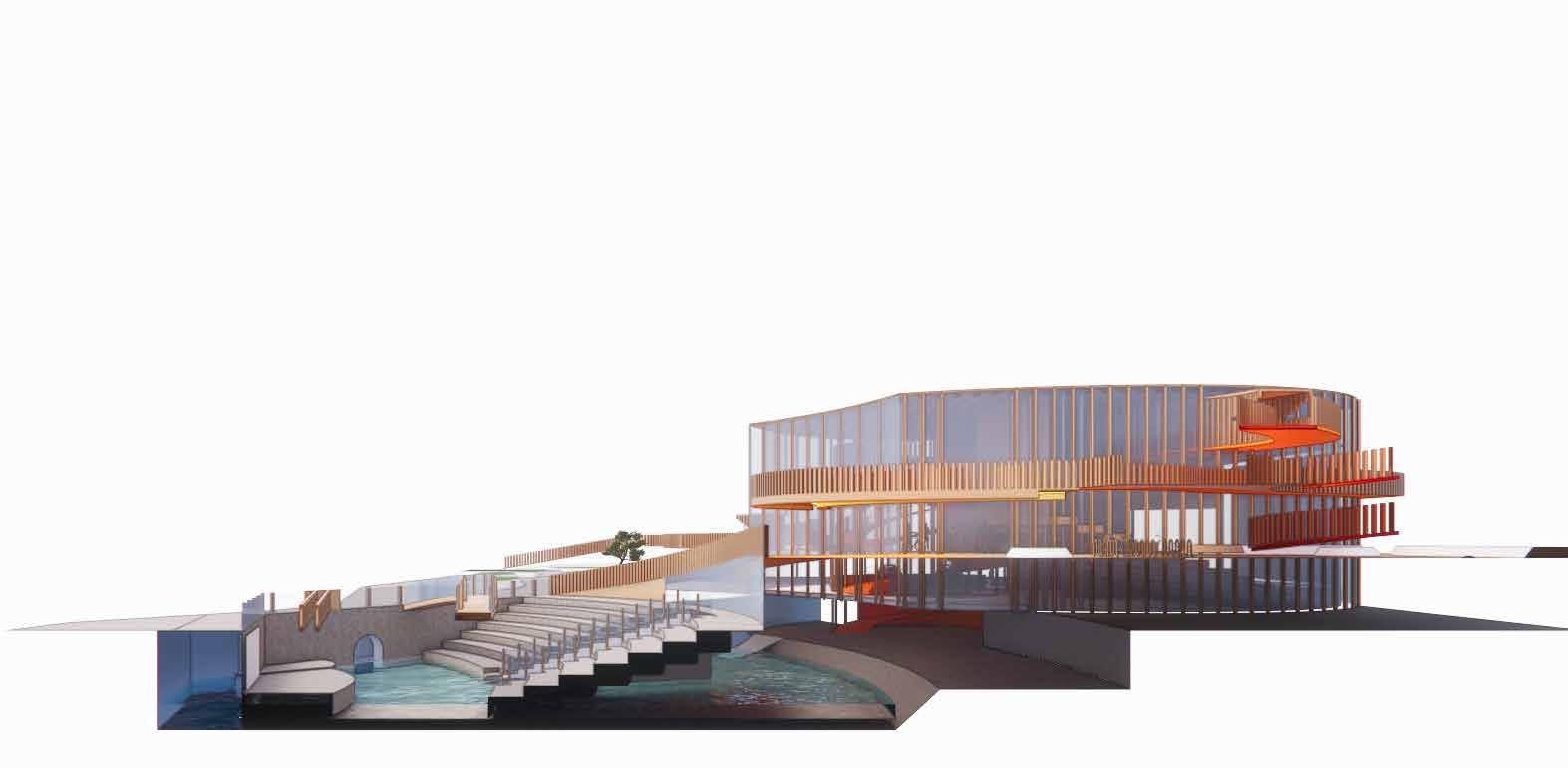
The Ramps: Urban exercise ground
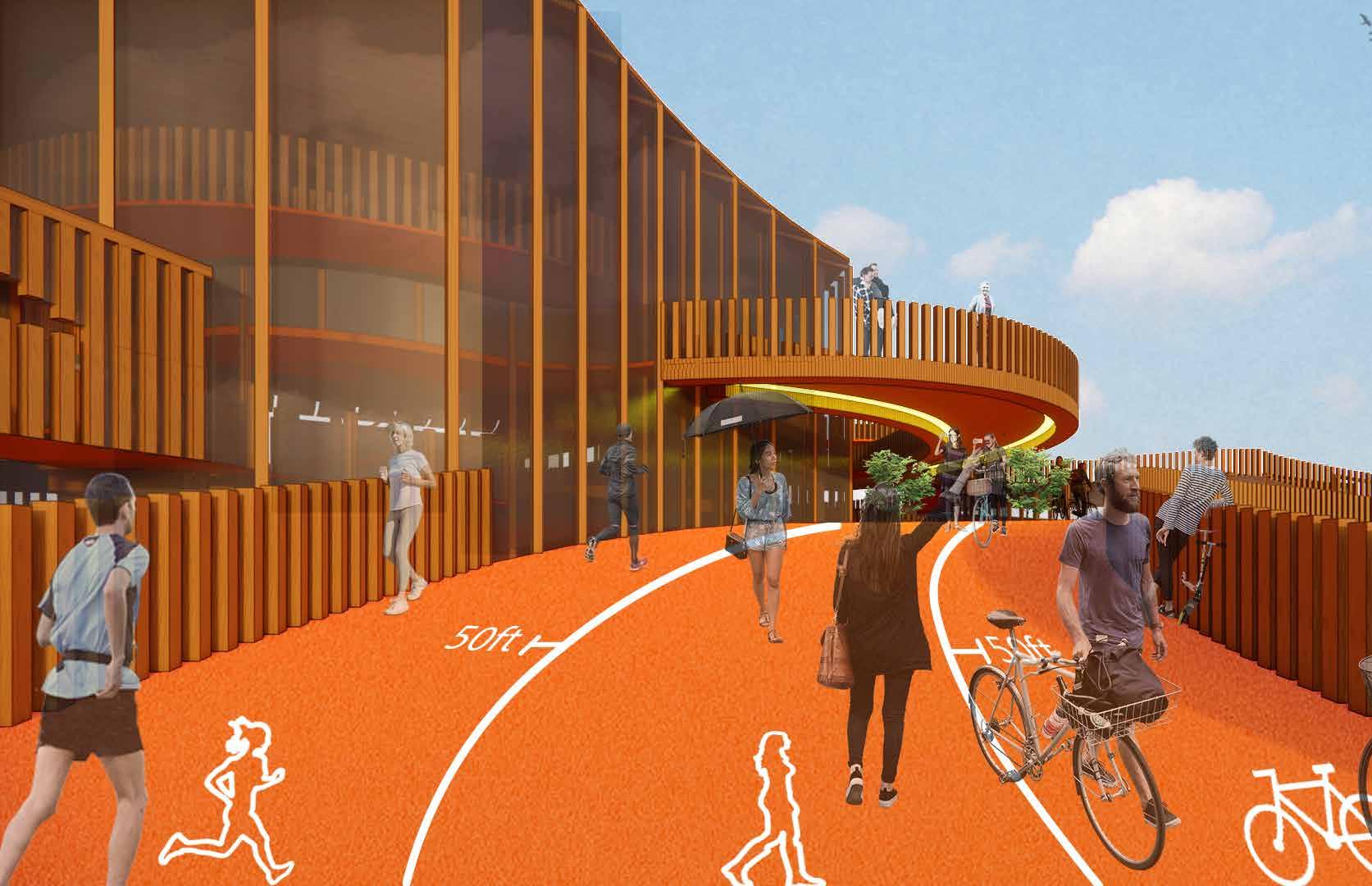
Various building components are seamlessly connected via ramps, catering to cyclists, runners, pedestrians, and wheelchair users alike.
Serving as a pathway between First Street and Ashley Street, the ramps engage with multiple areas such as the theater, plaza, and landscape. As people pass by, they can catch glimpses of movies, choosing whether to pause and watch or continue on their way.
The ramps feature rubber paving for slip resistance and comfort, while wooden railings echo the nearby wooded landscape.
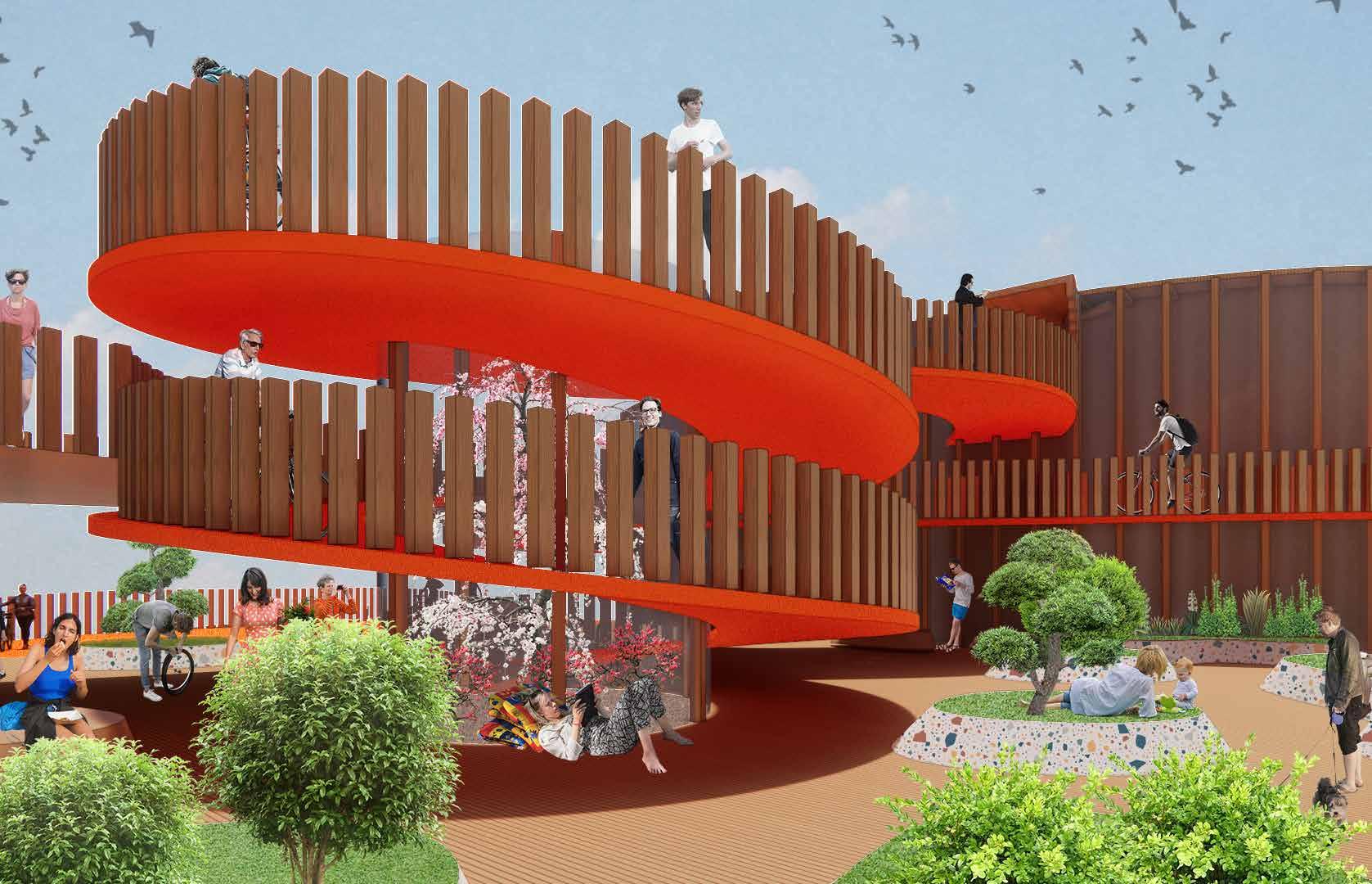
The
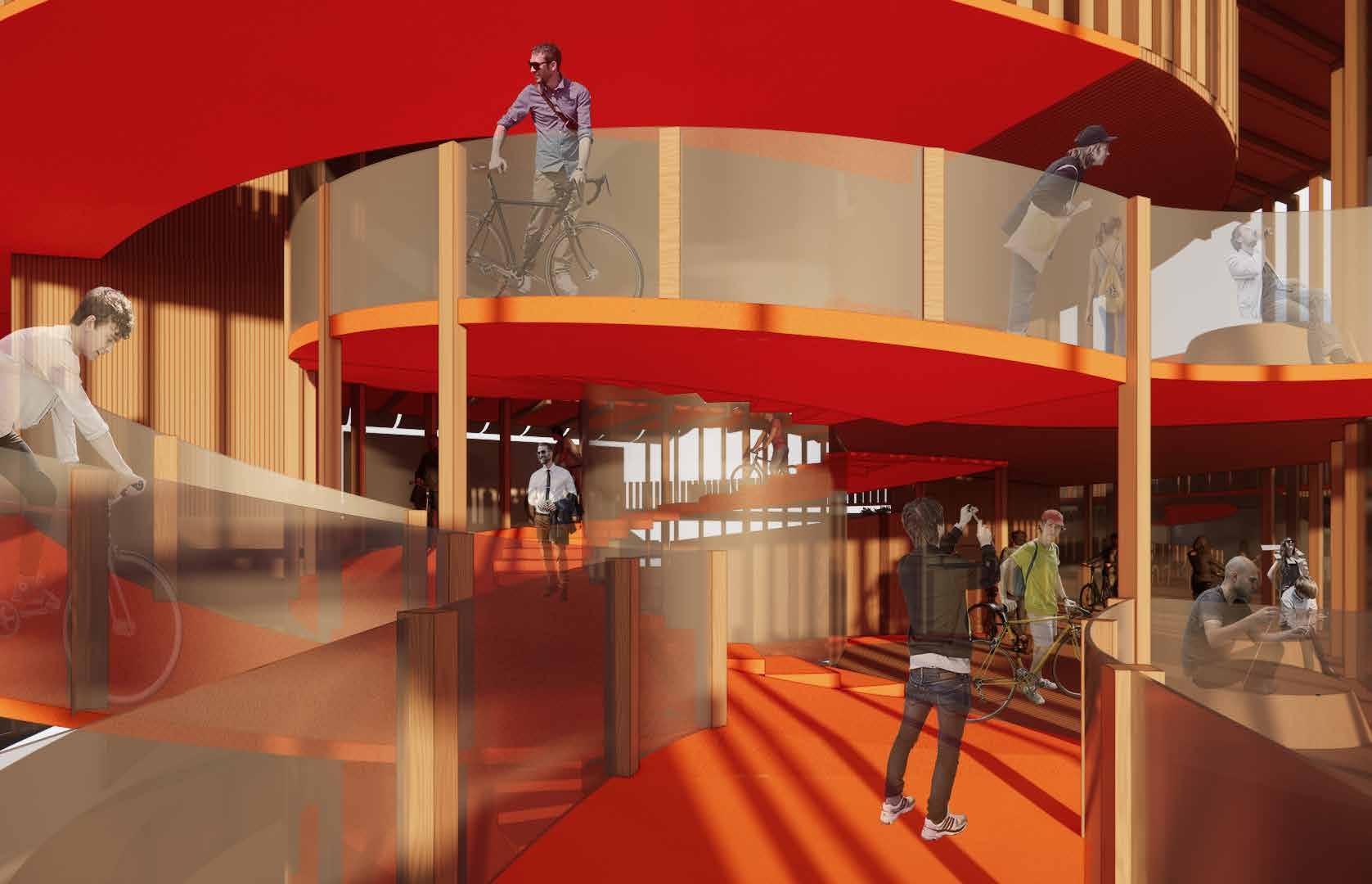
Cinema: Promoting extraordinary interactions
The complex features two theaters, both designed to encourage casual interactions as visitors move through the site, allowing them to catch glimpses of movies on the go.
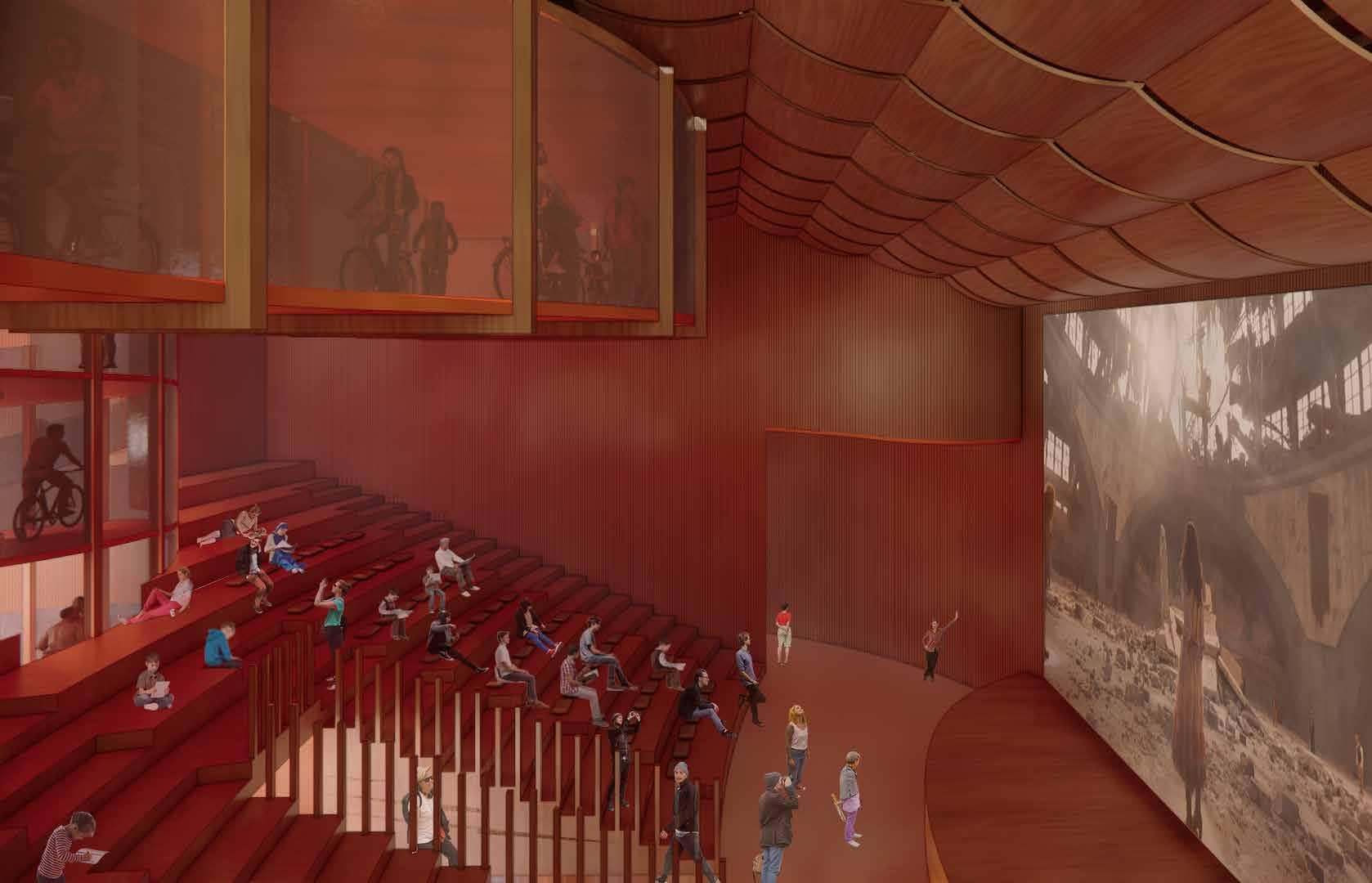
The indoor theater abandons traditional fixed seating, fostering a versatile space for activities like reading, resting, and walking by. Indoor bike paths invite moviegoers to watch films while seated on their bikes.
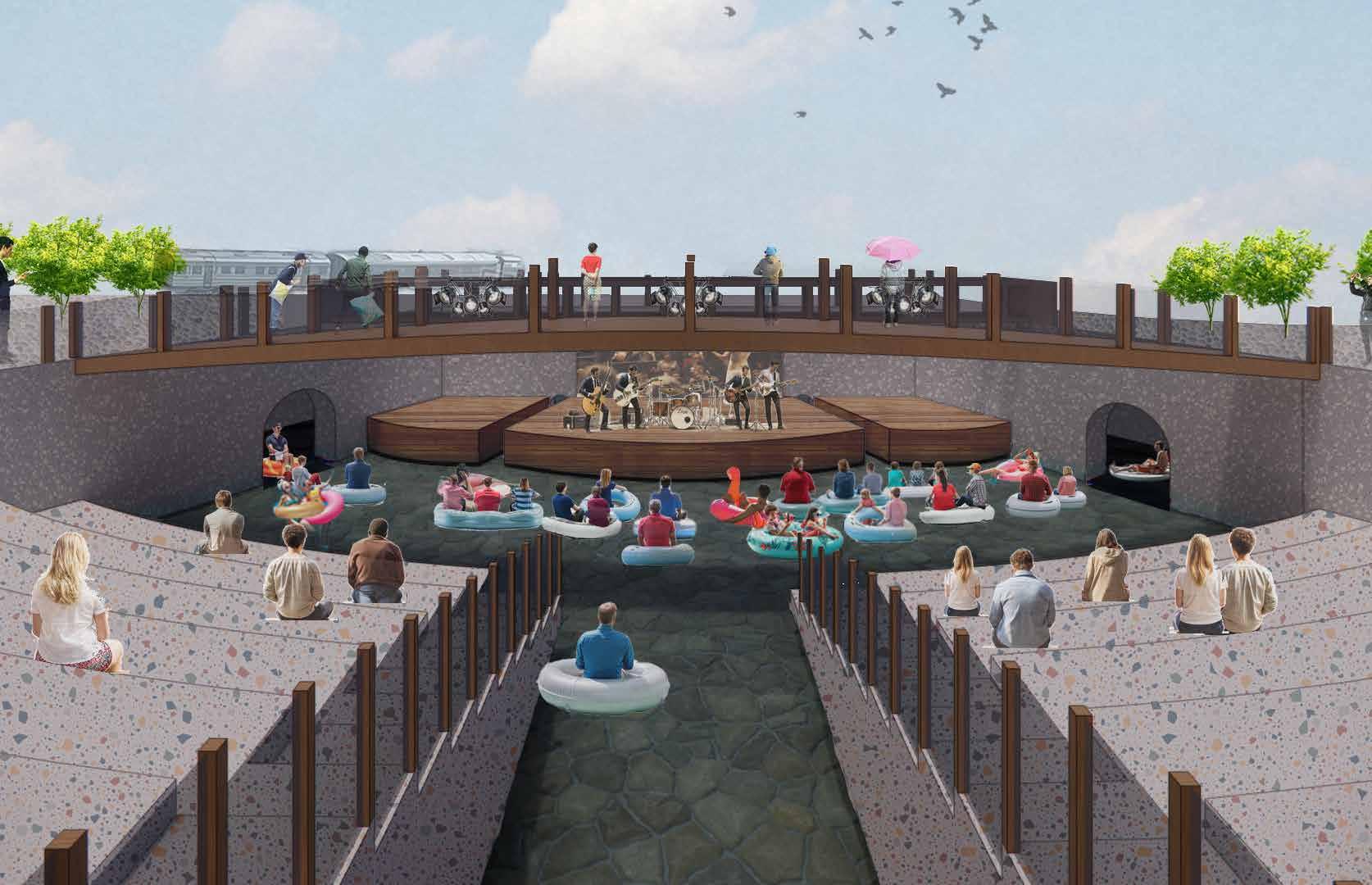
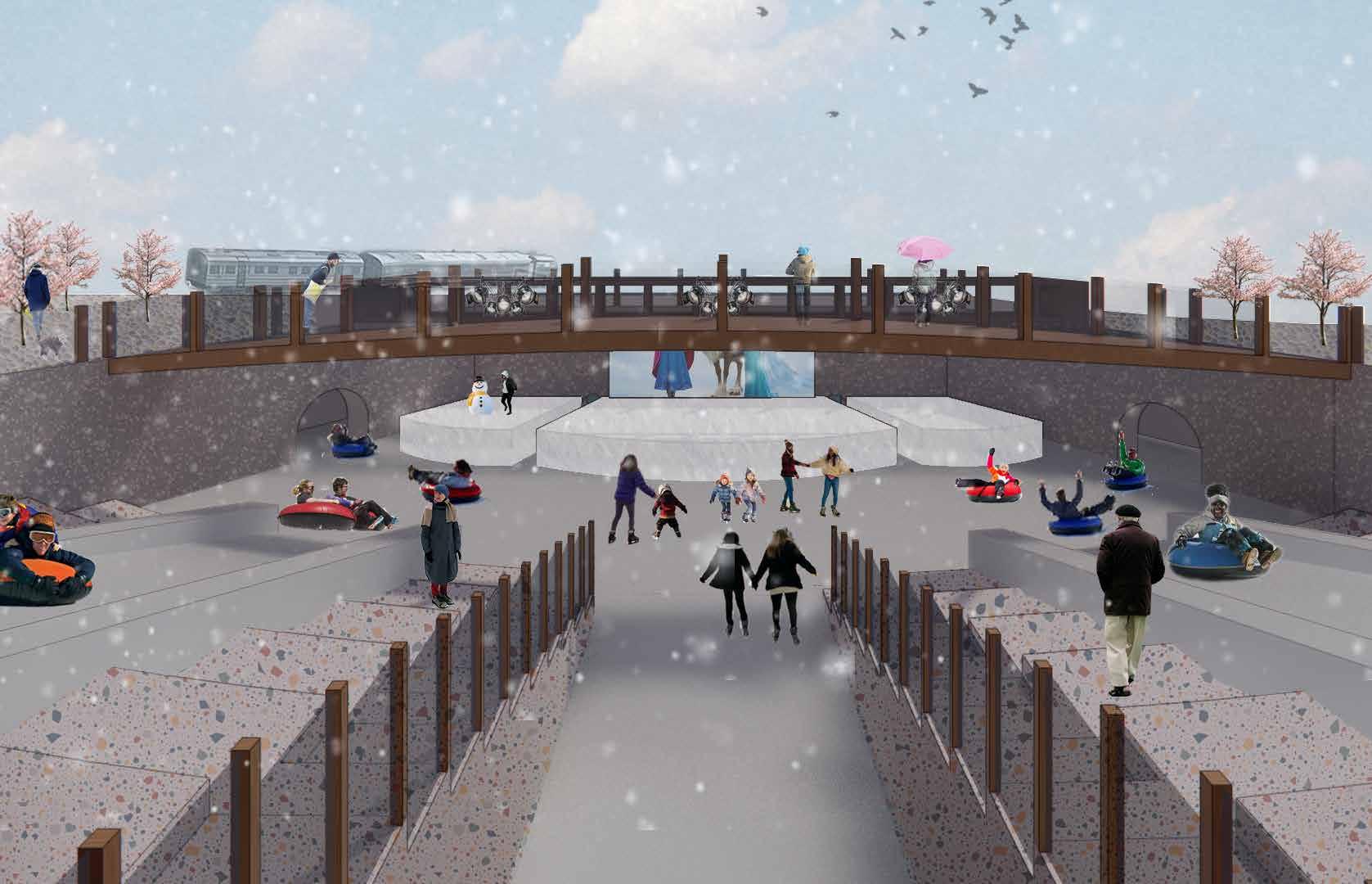
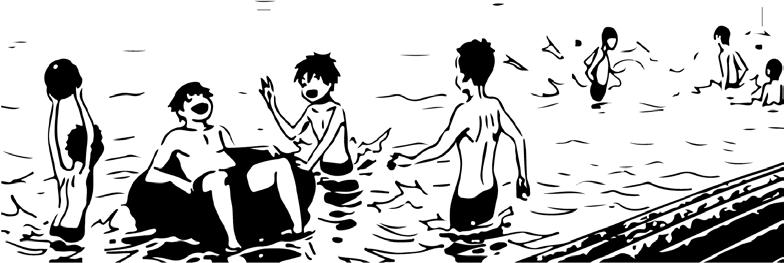
Historically, Allen Creek once flowed through this area, now buried underground with a water level depth of around 12 feet. By excavating, the outdoor theater can be flooded with creek water, enabling summer visitors to enjoy movies while floating on tubes. In winter, the space transforms into a vibrant playground for various ice activities.