

Environmentally Responsible Food Waste Depackaging Equipment
Intact Separation Technologies for Eco-Friendly Food Waste Depackagers
IPPTS Associates - Steve Last



Environmentally Responsible Food Waste Depackaging Equipment
Intact Separation Technologies for Eco-Friendly Food Waste Depackagers
IPPTS Associates - Steve Last
Did you know that as much as That's why eective depackaging equipment has become crucial for modern organic waste management. 40% of food waste arrives at processing facilities in plastic bags and often untouched in its original packaging?
In this comprehensive guide about . From technical specications to manufacturer comparisons, we'll explore , I'll walk you through everything you need to know selecting and implementing sustainable food waste depackaging solutions how these innovative systems can revolutionize organic waste processing!
For facilities processing packaged , for both operational eciency and environmental protection. Modern while eectively separating organic waste represent a signicant advance in . food waste selecting the right depackager technology is crucial depackaging systems that preserve packaging integrity sustainable waste management
An Overview of Intact Separation Technologies for Eco-Friendly Food Waste Depackagers (2025)
Key Technologies for Intact Packaging Separation
List of Leading Manufacturers of Environmentally Responsible Food Waste Depackagers and Equipment Analysis
Leading Technologies
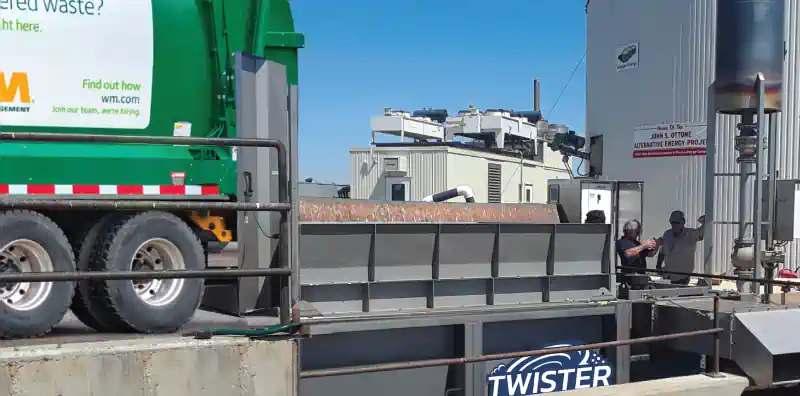
1. Drycake Twister System
2. Scott Equipment Product Line
3. Veolia ECRUSOR
Performance Metrics and Environmental Impact
Facility Integration and Implementation
Operational Considerations
Future Trends and Research Directions in Environmentally Responsible Food Waste Depackagers

The most environmentally responsible depackagers utilize while maximizing organic waste recovery. several core technologies that minimize packaging breakdown
The most common are variations on the concept of , exemplied by which operates at around 400 rpm –signicantly lower than conventional shredders. system runs at up to 800 rpm is similarly horizontal. low-rpm paddle and ail systemsScott Equipment's THOR series, Mavitec's
Another is the with its rotational squeezing action. The reduced speed allows packages to be opened while keeping them largely intact, minimising the creation of micro and nanoplastics.
Drycake Twister ingenious use of cyclonic separation
The stands apart for its that by introducing air allows simultaneous knocking and bashing action to dislodge sticky food from the plastic surface while also providing a drying action.
These systems use , or in the case of the Twister without shredding, milling, or grinding. mechanical force to squeeze to knock, bash, and vibrate, organic material from packaging
Doppstadt BioPress
The is another system demonstrates this technology's eectiveness with 99.2% recovery and 99.5% purity rates.
Added water-based separation systems are another variation that oers . The system utilizes that from packaging while achieving 99.9% purity in recovered organics. This technology is particularly into their operations. gentle depackaging Gemidan Ecogia pulping process eectively separates food waste eective for facilities that can incorporate water-based processes
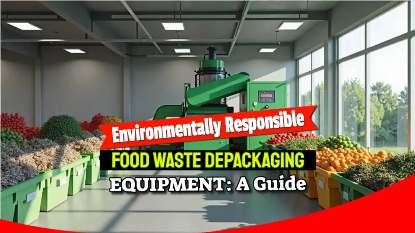

List of Leading Manufacturers of Environmentally Responsible Food Waste Depackagers and Equipment Analysis
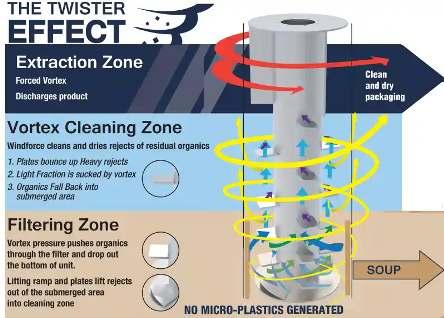
Drycake Twister vertical cyclonic separation system
Seditank
employs with a patented debagger with the optional , eectively also removing any microplastics entering the depackager pulp, silt, sand, and grit from the organic output for the . This unique approach provides
highest quality biogas plant feedstock excellent separation while maintaining environmental responsibility.
Diagram showing how the Twister Depackager Works
The is popular in the industry for its . With energy consumption varying between 47 and 173 kW depending on the model, their systems oer
THOR Turbo Separator low-rpm depackager technology ecient separation while minimizing environmental impact
. The product line includes:
TS-20:Entry-levelsystemsuitablefor smalleroperations
TS-30:Mid-rangecapacityfor medium-sizedfacilities
TS-40:High-capacitysystemfor large-scaleprocessing
MEGA-THOR:Maximumthroughput forindustrial-scaleoperations
The horizontal conguration of these machines with their allows packages to be opened while .
As Kevin Pedretti, Business Development Manager for Scott Equipment, explains: paddles or ails rotating at 400 rpm, maintaining their structural integrity
“Once
the package is empty, it is carried along the top of the processing chamber by the rotating paddles or ails so that the packaging leaves the chamber virtually whole.”
utilizes working in conjunction This system punctures packaging to release organic content while , demonstrating another eective approach to Veolia ECRUSOR two shaftless screw augerswith a toothed plate. keeping packaging materials largely intact environmentally conscious depackagers.
Modern depackagers achieve impressive performance metrics while prioritizing environmental protection. Key performance indicators include:


RecoveryRates:
Leadingsystems achieveover99%recoveryoforganic material
PurityLevels:
Outputpurityrangingfrom 99.2%to99.9%
ProcessingCapacity:
2to40tons per hourdependingon systemsize
EnergyEciency:Twisteravoids the energydrain
The ofprocessingin thehigh viscosityofwaterentirelythroughits use ofan air-vortex.TheTHORseries minimizes energyconsumption through low-rpmoperation
PhysicalFootprint:
Requirements rangingfrom400to1,250squarefeet


Successful implementation of depackaging technology requires careful consideration of facility requirements and operational parameters. Critical factors include:
Spacerequirements mustaccommodateboththeequipmentfootprintandassociated processingareas.Systems rangingfrom400to1,250squarefeetoerexibilityfordierent facilitysizes.
Processingcapacityshouldmatchfacilitythroughputneeds,withoptions availablefrom2to 40tons perhour.This widerangeallows facilities toselectequipmentthataligns withtheir specic volumerequirements.
Utility requirements vary by technology type, with some systems operating independently while others require water treatment systems integration. This consideration aects both operational costs and facility infrastructure needs.
Regular maintenance and proper operation are essential for optimal performance. Sta training programs should emphasize proper feeding techniques to maintain packaging integrity during processing. Safety protocols must address both mechanical operation and material handling procedures.
Cost analysis should consider:
Initialcapitalinvestment
Operatingcosts includingenergyandwaterconsumption
Maintenancerequirements
Labourcosts
Potentialrevenuefromhigher-qualityrecoveredmaterials
A

The depackaging industry continues to evolve, with emerging technologies focusing on and . Research into new materials recovery methods and enhanced while . increased automation improved separation techniques promise to further improve separation eciency smart sorting capabilities maintaining environmental responsibility are driving , with a continued focus on . This aligns with broader initiatives and increasingly Industry sustainability goals innovation in packaging preservation during separation preventing microplastic generation circular economy stringent environmental regulations.
By that maintain packaging integrity while achieving high separation eciency, facilities can position themselves
. The investment in responsible technology not only benets the environment but also provides long-term operational advantages through selecting depackagers at the forefront of sustainable waste management improved material recovery and reduced contamination. The choice of for both operational success and environmental stewardship. depackaging technology has farreaching implications


Not least is the to convert waste into , and at today's cost incentive the best of these systems can provide avaluable premium anaerobic digestion plant feedrejected materials no longer destined for landllsky-high landll gate fees.
As the industry continues to advance, while eectively separating organic waste systems that preserve packaging integrity will play an increasingly crucial role in sustainable waste management practices.


Steve Last is a Chartered Waste Manager with over 30 years of experience in the waste management industry. He oers a Waste Management Consultancy Service through IPPTS Associates and has worked on projects around the world. Steve is passionate about educating the public about waste management, including depackaging equipment, and promoting sustainable practices.