What is SDLC?
An Introduction to Software Development Life Cycle
 by Abhijeet Ghosh

by Abhijeet Ghosh
SDLC, or Software Development Life Cycle, is a systematic process used by software developers to design, develop, test, and deploy software applications. It provides a framework for efficiently managing the creation of high-quality software while ensuring adherence to project timelines and budgets.
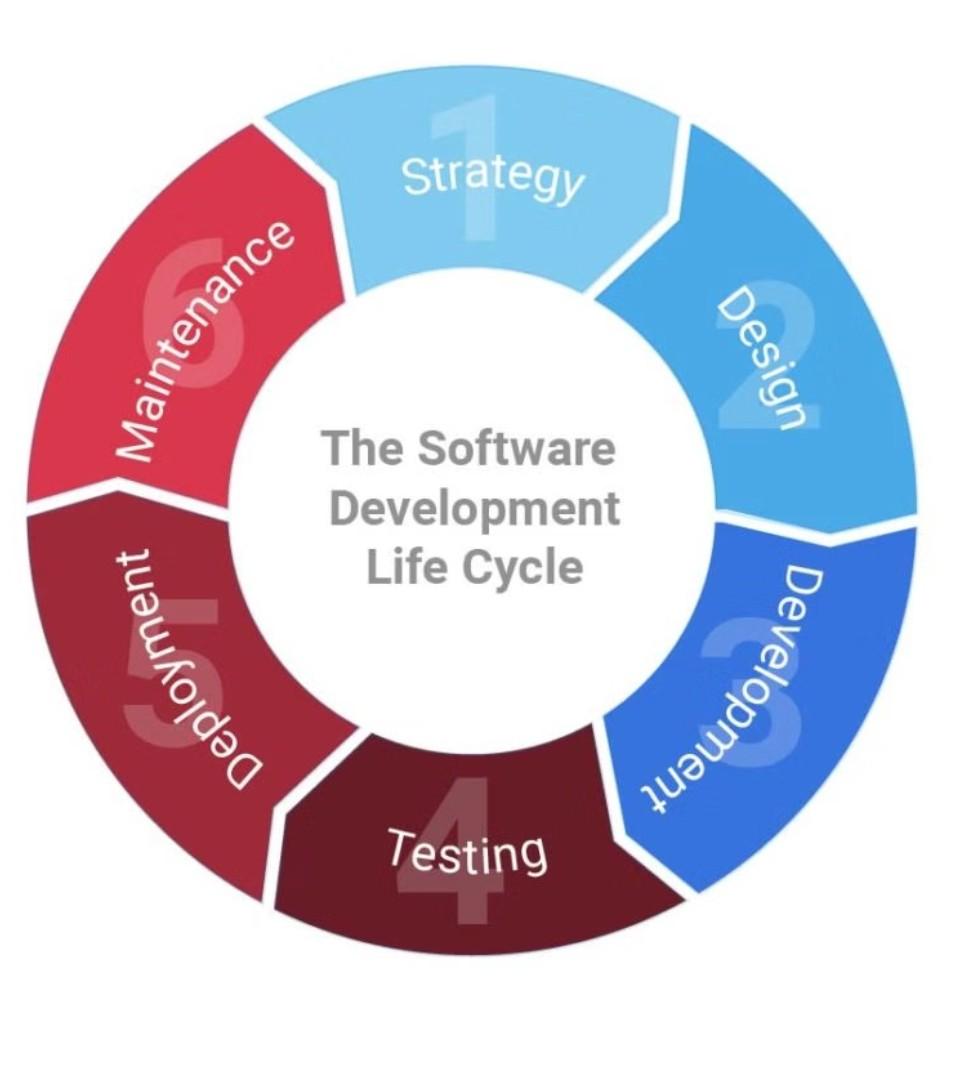
SDLC provides a structured framework for organizing, planning, and controlling the entire software development process.
It helps in identifying and mitigating risks early in the development cycle, reducing the chances of project failure or costly rework.
Proper planning and evaluation in each phase of SDLC help in minimizing costs associated with rework, delays, and maintenance.
SDLC ensures alignment with client expectations by involving stakeholders throughout the process, resulting in a product that meets their needs and specifications.
By incorporating testing phases throughout the development lifecycle, SDLC ensures that the final product meets quality standards and user requirements.
SDLC fosters communication and collaboration among team members, leading to better coordination and understanding of project goals.
The Software Development Life Cycle (SDLC) consists of several distinct phases, each with its own set of activities and objectives. Understanding these phases is crucial for effectively managing and executing software development projects.
• Goal setting and project scope definition
• Requirement gathering from stakeholders
• Feasibility analysis to assess project viability
• Understanding user needs and expectations
• Defining system requirements based on gathered information
• Creating detailed specifications for the system
• Architectural design to define system structure and components
• High-level design to outline system behavior and interactions
• Detailed design specifying implementation details for developers
• Writing code based on design specifications
• Conducting unit testing to ensure individual components work as expected
• Integrating developed components into a cohesive system
• Conducting system testing to validate system functionality and performance
• Performing acceptance testing to ensure the system meets user requirements
• Identifying and fixing any defects or issues discovered during testing
• Planning for system deployment, including hardware and software requirements
• Conducting user training to ensure effective system adoption
• Establishing ongoing maintenance processes to support the deployed system
• Linear sequential approach
• Phases: Requirements, Design, Implementation, Testing, Deployment, Maintenance
• Advantages: Simple, easy to understand, well-suited for small projects with clear requirements
• Disadvantages: Lack of flexibility, late detection of defects
• Iterative and incremental approach
• Emphasizes adaptive planning, evolutionary development, early delivery, and continuous improvement
• Advantages: Flexibility, customer involvement, rapid feedback, better adaptation to changes
• Disadvantages: Requires experienced team, challenges in documentation, may lack predictability
• Combines iterative development with elements of the waterfall model
• Phases: Planning, Risk Analysis, Engineering, Evaluation
• Advantages: Risk management, flexibility, accommodate changes, early development of a prototype
• Disadvantages: Complex, requires expertise in risk management, costly
• Incremental approach with repeated cycles (iterations) of the SDLC phases
• Each iteration produces a deliverable "increment" of the software
• Advantages: Early delivery of working software, flexibility, continuous improvement
• Disadvantages: Requires clear understanding of requirements, can be time-consuming
• Simple and easy to understand.
• Well-structured and easy to manage due to its linear nature.
• Clear milestones and deliverables.
• Suitable for projects with well-defined requirements.
• Lack of flexibility; difficult to accommodate changes once the project is in the testing phase.
• Requires extensive planning upfront, which may lead to delays.
• High risk of customer dissatisfaction if requirements change during development.
• Use when requirements are well-defined and unlikely to change.
• Suitable for small to medium-sized projects with clear objectives.
• Highly flexible and adaptive to changing requirements.
• Continuous delivery of working software.
• Customer involvement throughout the development process.
• Faster time-to-market and early ROI.
• Requires a high level of collaboration and communication.
• May lack documentation, which can be challenging for maintenance and future development.
• Not suitable for projects with fixed requirements or strict regulatory compliance.
• Use when requirements are expected to evolve and change frequently.
• Suitable for projects requiring flexibility, rapid development, and continuous feedback.
• Incorporates risk management throughout the development process.
• Iterative nature allows for early identification and mitigation of risks.
• Flexibility to accommodate changes during development.
• Suitable for large and complex projects.
• More complex than other models, leading to higher development costs.
• Requires extensive expertise in risk analysis and management.
• Can be time-consuming due to multiple iterations.
• Use for large-scale projects with high-risk factors that require constant risk assessment and mitigation.
• Suitable for projects where requirements are not fully understood initially.
• Allows for incremental development and testing.
• Early feedback from stakeholders.
• Easier to manage changes compared to the waterfall model.
• Suitable for projects where requirements are not fully known upfront.
• Requires thorough planning and coordination to ensure each iteration adds value.
• Risk of scope creep if not properly managed.
• May lead to increased development time and cost if iterations are not well-defined.
• Use when the project scope is not clearly defined and needs continuous refinement.
• Suitable for projects requiring rapid prototyping and constant stakeholder feedback.
• Different projects have different requirements and constraints.
• Choosing the appropriate SDLC model ensures that the development process aligns with these specific needs.
• Projects may evolve or encounter unforeseen changes during development.
• Choosing a flexible SDLC model allows for adaptation to changing requirements, ensuring project success in dynamic environments.
• Each SDLC model has its own resource requirements in terms of time, money, and personnel.
• Selecting the right model helps optimize resource allocation, preventing unnecessary expenditure and delays.
• The skills and experience of the development team play a crucial role in selecting the appropriate SDLC model.
• Matching the model to the team's expertise enhances productivity and reduces learning curves.
• Some SDLC models are better suited for managing risks inherent in certain projects.
• The right model can help identify and mitigate potential risks throughout the development lifecycle.
• Some SDLC models emphasize client involvement and feedback, while others have less frequent client interactions.
• The right model facilitates effective collaboration with clients and stakeholders, leading to higher satisfaction and better outcomes.
We hope you found this presentation informative and engaging. If you would like to learn more, please click here. We appreciate your time and consideration.