
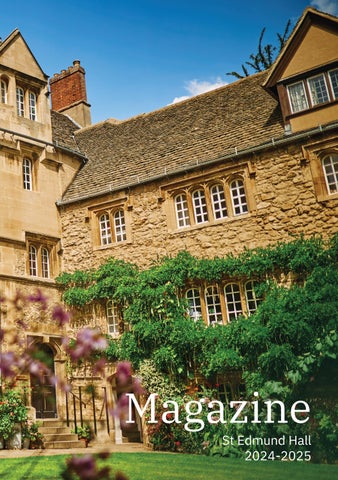
Edmund Hall Magazine
Editor:
James Howarth (Librarian and Fellow by Special Election)
Deputy
Editor:
Laura Ellis
With many thanks to all the contributors to this year’s edition. Unnumbered thanks to Laura Ellis for stepping in as Deputy Editor for the last six months and without whose unceasing work this issue would not have been possible, and, as ever, much gratitude to Emma Carter and Jake Banyard in the Library and Communications Manager Claire Parfitt for their eagle eyes and wise suggestions throughout production. Huge thanks also to our designer, Katy Dawkins, for her wonderful design work on this and recent issues.
magazine.editor@seh.ox.ac.uk
All the photographs in this issue are from Hall records unless otherwise stated. Special thanks to the Hall’s Photo Interns for 2024–2025 for their wonderful contributions: Chenyu Zhu (2024, MSc Theoretical and Computational Chemistry), Lily Thompson-Mouton (2022, Experimental Psychology) and Lottie Newell (2022, History).
Cover: Wisteria in the Front Quad by Fisher Studios Ltd
Topping-out ceremony: SDC Photography
Section 3 divider: Hufton+Crow
Pontigny Choir tour: Luc Feillée
University Challenge team: Ric Lowe/Lifted Entertainment/ITV Studios
Life reconstruction of Lomankus edgecombei: Xiaodong Wang
Medieval Mystery Plays: Ben Arthur
All-Innovate competition: Fisher Studios Ltd
Consolidated B-24 Liberator: IWM (CF 688)
Section 7 divider: NASA
Asteroid Donaldjohanson: NASA/Goddard/SwRI/Johns Hopkins APL/NOIRLab
Commander Amy Gilmore: Royal Navy
Matriculation: Gillman & Soame
Magazine 2023–2024 Erratum
Section 7, p. 179: In ‘Three Generations of Aularians’ by Emily Coates, the names Andrew Middleton and Richard Baker were erroneously transposed. We apologise deeply for the mistake.
St Edmund Hall, Queen’s Lane, Oxford, OX1 4AR
01865 279000 | www.seh.ox.ac.uk alumni@seh.ox.ac.uk
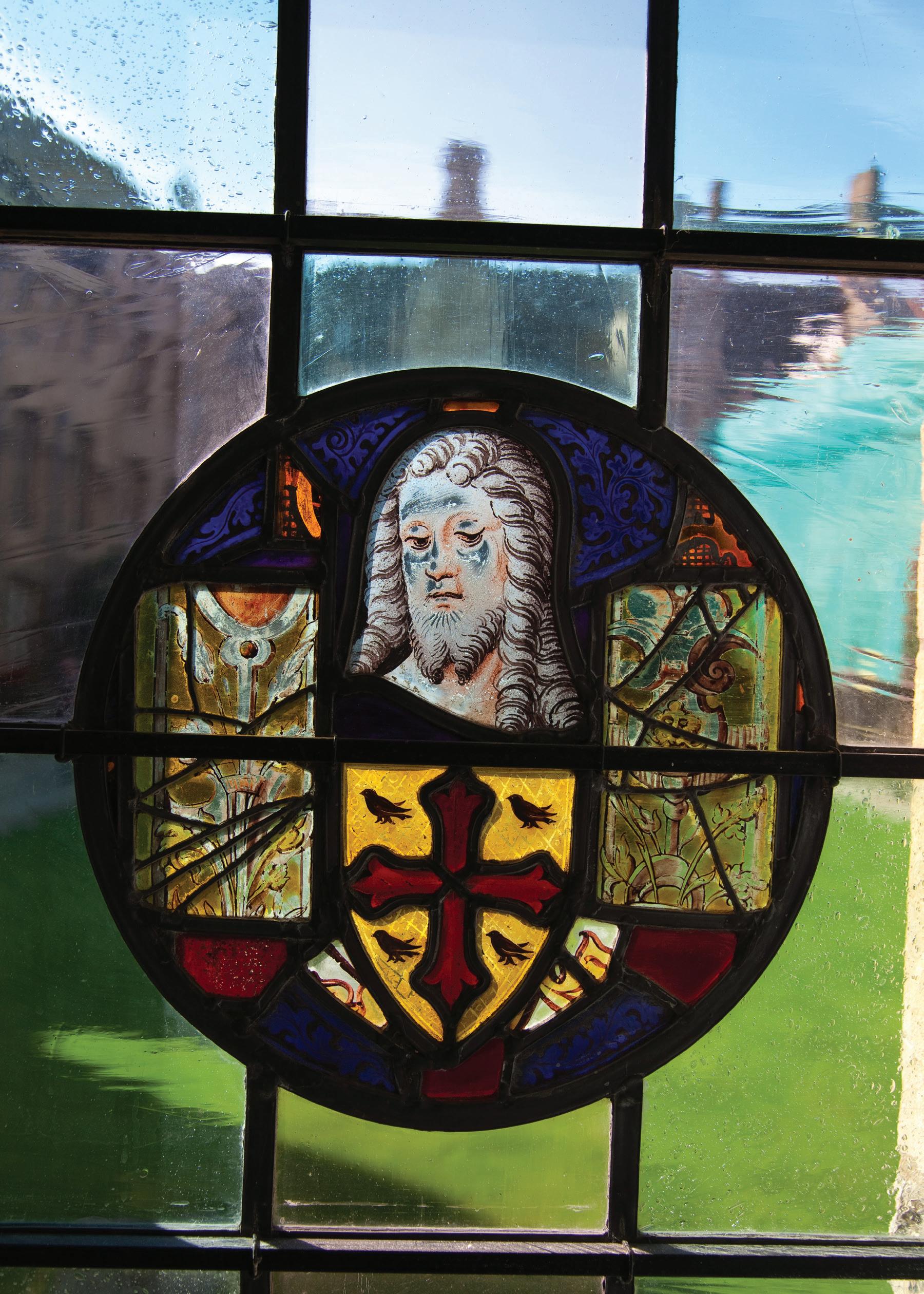
The College List 2024–2025
GB denotes a member of the Governing Body
The Rt Hon the Lord Hague of Richmond, MA (MBA INSEAD) PC, FRSL Chancellor of the University Principal
Willis, Katherine Jane, Baroness Willis of Summertown, CBE, MA (BSc S’ton; PhD
Camb; Hon DSc Bergen, UEA), FGS, FLS, FRSB
Professor of Biodiversity, Pro-Vice-Chancellor without portfolio Fellows
Priestland, David Rutherford, MA, DPhil
Professor of Modern History, Tutor in Modern History, Vice-Principal GB
Kahn, Andrew Steven, MA, DPhil (BA Amherst; MA Harvard), FBA
Professor of Russian Literature, Fellow and Tutor in Modern Languages (Russian), Library Fellow and Old Library Fellow, Archives Fellow GB
Manolopoulos, David Eusthatios, MA (BA, PhD Camb), FRS
Professor of Theoretical Chemistry, Tutor in Chemistry, Tutor for Admissions GB
Zavatsky, Amy Beth, MA, DPhil (BSc Pennsylvania)
Associate Professor and University Reader in Engineering Science, Tutor in Engineering Science GB
Matthews, Paul McMahan, OBE, MA, DPhil (MD Stanford), FRCPC, FRCP, FMedSci
Professor of Neurology, Director of the Rosalind Franklin Institute, Fellow by Special Election
Barclay, Joseph Gurney, MA
Fellow by Special Election
Johnson, Paul Robert Vellacott, MA (MB ChB Edin; MD Leic), FRCS, FRCS (Edin), FRCS (Paed Surg), FAAP
Professor of Paediatric Surgery, Fellow by Special Election GB
Tsomocos, Dimitrios P, MA (MA, MPhil, PhD Yale)
Professor of Financial Economics, Fellow by Special Election GB
Johansen-Berg, Heidi, BA, MSc, DPhil, FMedSci, FRS
Professor of Cognitive Neuroscience and Wellcome Trust Research Centre Principal Research Fellow, Pro-Vice-Chancellor (Strategic Initiatives), Senior Research Fellow GB
Tseng, Jeffrey, MA (BS CalTech; MA, PhD Johns Hopkins)
Professor of Physics and Tutorial Fellow, Chapel Overseeing Fellow GB
Wilkins, Robert James, MA, DPhil
Professor of Medical Education, American Fellow and Tutor in Physiology, Senior Tutor GB
Nabulsi, Karma, MA, DPhil
Senior Research Fellow
Williams, Christopher Wesley Charles, MA, DPhil
Professor of French Literature, Tutor in Modern Languages (French) GB
Riordan, Oliver Maxim, MA (BA, PhD Camb)
Professor of Discrete Mathematics, Tutor in Mathematics, Secretary to Governing Body GB
Yueh, Linda Yi-Chuang, CBE, MA, DPhil (BA Yale; MPP Harvard; JD NYU), FREcon Research Lecturer in Economics, Fellow by Special Election GB
Yates, Jonathan Robert, MA (MA, MSci, PhD Camb)
Professor of Materials Modelling, Tutor in Materials Science, Chattels & Pictures Fellow GB
Dupret, David, (MSc, PhD Bordeaux)
Professor of Neuroscience and MRC Investigator, River Farm Foundation Tutorial Fellow in Neuroscience GB
Edwards, Claire Margaret, (BSc, PhD Sheff)
Professor of Bone Oncology, Fellow by Special Election
Gaiger, Jason Matthew, (MA St And; MA, PhD Essex)
Professor of Aesthetics and Art Theory, Fellow by Special Election GB
Thompson, Ian Patrick, (BSc, PhD Essex), FRSA
Professor of Engineering Science, Fellow by Special Election
McCartney, David Edward, BM BCh, MRCP, MRCGP
Director of Graduate Entry Medicine, Medical Sciences Division, Fellow by Special Election
Willden, Richard Henry James, (MEng, PhD Imp)
Professor of Engineering Science, Fellow by Special Election
Wild, Lorraine Sylvia, MA, DPhil
College Lecturer in Geography, Fellow by Special Election
Lozano-Perez, Sergio, DPhil, PGDipLaTHE (BSc, MSc, PGCE Seville), AMInstP, FRMS Professor of Materials Science, George Kelley Senior Research Fellow in Materials
Taylor, Jenny Cameron, BA, DPhil
Professor of Translational Genomics, Fellow by Special Election
Nguyen, Luc Le, (BSc Ho Chi Minh City, Vietnam; PhD Rutgers)
Professor of Mathematics, Tutor in Applied Mathematics, Tutor for Graduates GB
Rothwell, Peter Malcolm, MA (MB ChB, MD, PhD Edin), FMedSci
Action Research Professor of Clinical Neurology, Professorial Fellow
Goldberg, Leslie Ann, MA (BA Rice; PhD Edin)
Professor of Computer Science, Senior Research Fellow GB
Pavord, Ian Douglas, (MB BS Lond; DM Nott), FRCP, FMedSci
Professor of Respiratory Medicine, Professorial Fellow GB
Bruce, Sir Peter George, Kt (BSc, PhD Aberd), FRS, FRSE, FRSC
Wolfson Professor of Materials, Professorial Fellow
Karastergiou, Aris, (PhD Bonn)
Associate Professor in Astrophysics, Senior Research Fellow in Astrophysics
Goulart, Paul James, (MSc MIT; PhD Camb)
Professor of Engineering Science, Tutor in Engineering Science GB
Lähnemann, Henrike, MA (MA, PhD Bamberg)
Professor of Medieval German Literature and Linguistics, Professorial Fellow GB
Chankseliani, Maia, (BA, MA Tbilisi State University; MA Warw; EdM Harvard; PhD Camb)
Professor of Comparative & International Education, Fellow by Special Election GB
Zondervan, Krina, DPhil (BA, MSc Leiden; MSc Erasmus), FRCOG, FMedSci
Professor of Reproductive & Genomic Epidemiology, Head of the Nuffield Department of Women’s & Reproductive Health, Co-Director of Oxford Endometriosis CaRe Centre, Fellow by Special Election
Al-Mossawi, Hussein, MA, BM BCh, DPhil, MRCP (UK)
Honorary Research Associate, Nuffield Department of Orthopaedics, Rheumatology and Musculoskeletal Sciences, College Lecturer in Medical Sciences, Fellow by Special Election
Huang, Wei, (BA Qingdao; MSc Tsinghua; PhD Sheff)
Professor of Biological Engineering, Fellow by Special Election
McAlpine, Erica Levy, (BA Harvard; MPhil Camb; PhD Yale)
Associate Professor of English Language & Literature, A C Cooper Fellow and Tutor in English Language & Literature GB
Gill, Michael, DPhil (BSc Bath; MA Warw)
Associate Professor of Organisational Studies, Tutorial Fellow in Management GB
Skokowski, Paul Gregory, MA (PhD Stanford)
Professor of Symbolic Systems and Director, Center for the Explanation of Consciousness, Stanford University, Fellow by Special Election
Bannerman, David MacKenzie, (BSc Brist; PhD Edin), FRS
Professor of Behavioural Neuroscience, William R Miller Fellow and Tutor in Neuroscience and Experimental Psychology GB
Stride, Eleanor Phoebe Jane, OBE, MA (BEng, PhD UCL), FREng, HonFEIT
Professor of Engineering Science, Professorial Fellow
Williams, Mark Andrew, BA, MPhil, DPhil
Associate Professor of Global Medieval Literature, Fellow and Tutor in English Language & Literature, Garden Fellow, Tutor for Undergraduates GB
Bell, Joanna Rachel, BA, BCL, DPhil
Associate Professor in Law, Jeffrey Hackney Fellow and Tutor in Law GB
Lloyd, Alexandra, BA, PGCE, MSt, DPhil, FHEA
College Lecturer in German, Fellow by Special Election, Senior Dean, Tutor for Visiting Students GB
Burnett, Eleanor, (LLB Leeds), FCA
Finance Bursar and Official Fellow GB
MacFaul, Thomas, DPhil (BA Camb)
Lecturer in English, Fellow by Special Election, Deputy Dean of Degrees
Parry, Luke, MSc (PhD Brist)
Associate Professor of Paleobiology, Tutorial Fellow in Earth Sciences GB
Prentice, Joseph, MPhys (PhD Camb)
Fellow by Special Election
Jansen, Lars Erwin Theodoor Domingos, (MSc Hogeschool West-Brabant; PhD Leiden)
Professor of Molecular Genetics, William R Miller Fellow and Tutor in Biochemistry GB
Tan, Jack, DPhil (BSc USM)
Principal Investigator at the MRC Weatherall Institute of Molecular Medicine, Fellow by Special Election
Slezkine, Yuri, (MA Mosc; PhD Texas)
Professor of the Graduate School and Jane K. Sather Professor of History Emeritus, University of California, Berkley, Senior Research Fellow
Howett, Carly Jacqueline Amy, DPhil (BSc Essex; MSc UCL)
Associate Professor of Space Instrumentation, Tutorial Fellow in Physics GB
Crawford, Thomas Joseph, BA (PhD Camb)
Lecturer in Mathematics, Fellow by Special Election
Thomas, Rhys Llewellyn, (BSc, MSc, PhD S’ton)
Fellow by Special Election
de Vivo, Filippo Luciano Carlo Guido, (BA Milan; MA, PhD Camb; DEA Paris)
Professor of Early Modern History, River Farm Foundation Tutorial Fellow in History GB
Lazar-Gillard, Orlando, DPhil (BA, MPhil Camb)
Early Career Research and Teaching Fellow in Politics
Nichols, Claire Isobel O’Bryen, (MSci, PhD Camb)
Associate Professor of the Geology of Planetary Processes, Tutorial Fellow in Earth Sciences GB
Munday, Callum, BA, DPhil
Fellow by Special Election
Howarth, James Alexander, MA (MA York; MA Lond)
Librarian and Fellow by Special Election
Vivian, Andrew, (BA Bourne; PGCE Birkbeck; PGDip UCL)
Director of Development and Fellow by Special Election GB
Kohlhas, Alexandre, (BSc Copenhagen; MPhil, PhD Camb)
Associate Professor of Economics, William R Miller Fellow and Tutorial Fellow in Economics GB
Farrell, Zoe, (BA Warw; MPhil, PhD Camb)
Junior Research Fellow in History
Hollingsworth, Déirdre, BA, MSc (MMus Reading; PhD Camb), FIMA
Professor of Infectious Disease Epidemiology, Senior Research Fellow in Mathematics
Saunders, Kate Eleanor Anne, BA, BM BCh, DPhil, MRCPsych, FHEA
Associate Professor of Psychiatry, Senior Research Fellow in Medicine
Smith, Steve, BSc (PhD Imp), FRMetS
Arnell Associate Professor of Greenhouse Gas Removal, Senior Research Fellow in Geography, Equality, Diversity and Inclusion Fellow
McMeekin, David, DPhil (BSc Ottawa; MSc École Polytechnique de Lausanne (EPLF))
Junior Research Fellow in Physics
Koutsika, Gina, (MA UCL; MBA Open)
Director of Audiences and Content, Ashmolean Museum of Art and Archaeology, Fellow by Special Election
Dvornichenko, Daryna, (BA, MA, PhD Odesa I. Mechnikov National University)
Visting Fellow
Blandford-Baker, Mark Rivers, Domestic Bursar and Official Fellow, Senior Treasurer of Amalgamated Clubs GB
Morsing, Mette, (MBA, PhD CBS)
Director of the Smith School of Enterprise and the Environment, Professor of Enterprise and the Environment, Professor of Business Sustainability, Fellow by Special Election
Marquardt, Katharina, (MSc Eberhard-Karls University Tübingen; PhD Technical University Berlin)
Associate Professor in Materials and Tutorial Fellow in Materials GB
Moreno-Mateos, David, (BEng Universidad Politécnica de Madrid; PhD CSIC & Universidad de Alcalá)
Associate Professor in Physical Geography and Tutorial Fellow in Geography GB
Marshall, Brooke, (BA, LLB (Hons) Queensland; PGDipLP ANU; Dr iur Hamburg)
Associate Professor of Law, Sir Richard Gozney Fellow and Tutor in Law GB
Violaris, Elena, (BA, MPhil, PhD Camb)
Junior Research Fellow in English
Pitt-Francis, Joe, MA, DPhil (BSc Lond)
Associate Professor of Computer Science, Tutorial Fellow in Computer Science GB
Regoutz, Anna, DPhil (BSc, DI TU Graz)
Associate Professor of Experimental Inorganic Chemistry, Tutorial Fellow in Inorganic Chemistry GB
Younis, Musab, MPhil, DPhil (BA Nott)
Associate Professor of Political Theory, Tutorial Fellow in Politics GB
Vardi, Reut, (BSc Hebrew University of Jerusalem; MSc, PhD Ben-Gurion University of the Negev)
Junior Research Fellow in Environmental Sustainability
Pieters, Chloë, (BSc LSE; MA Birkbeck; PhD UCL)
River Farm Foundation Early Career Teaching and Research Fellow in History
Peterson, Katie, (BA Stanford; PhD Harvard)
Visiting Fellow
Evans, Jenyth, BA, MSt
Junior Research Fellow in English
Langstaff, Holly, (BA, MPhil Camb; PhD Warw)
Lecturer in French and Fellow by Special Election
Hess, Benjamin, (BS Wheaton; PhD Yale)
Early Career Teaching and Research Fellow in Earth Sciences
Wenzel, Andreas, (BA Hamburg; MTh Durh)
Senior Research Fellow, Chaplain
Dmitrieva, Sofya, (MLitt, PhD St And)
Junior Research Fellow in European Languages
Keohane, Kate, (MA, PhD St And; MA UCL)
Career Development Fellow in Fine Art and Wellbeing
Rodríguez Otero, Carlos, (MA, MPhil Camb)
Director of Music and Fellow by Special Election
Honorary Fellows
Oxburgh, Ernest Ronald, the Lord Oxburgh, KBE, MA (PhD Princeton; Hon DSc Paris, Leic, Lough, Edin, Birm, Liv, S’ton, Liv J Moores, Lingnan Hong Kong, Newc, Leeds, Wyoming, St And), FRS, FIC, Hon FIMechE, Hon FCGI, Hon FREng; Officier, Ordre des Palmes académiques (France)
Tindle, David, MA, RA, Hon RSBA
Daniel, Sir John Sagar, Kt, OC, MA (DSc Paris; Hon DLitt Deakin Australia, Lincolnshire, Humberside, Athabasca Canada, Indira Gandhi Nat Open University India, McGill Canada; Hon DHumLitt Thomas Edison State Coll USA, Richmond Coll London; Hon DSc Royal Military Coll St Jean Canada, Open Univ, Sri Lanka, Paris VI, Univ of Education
Winneba Ghana; Hon DEd CNAA, Sukhothai Thammathirat Open Univ Thailand, Open Univ Malaysia; Hon LLD Univ of Waterloo Canada, Wales, Laurentian Canada, Canada West, Ghana; DUni Aberta Portugal, Anadolu Turkey, Quebec, Derby, New Bulgarian, Open Univ, Hong Kong, Stirling, Montreal; Hon DLitt & DPhil South Africa; Hon LittD State Univ NY), CCMI, Hon FCP; Officier, Ordre des Palmes académiques (France)
Smethurst, Richard Good, MA
Cox, John, MA
Rose, General Sir (Hugh) Michael, KCB, CBE, DSO, QGM, MA (Hon DLitt Nott); Comdr, Ordre national de la Legion d’honneur (France)
Nazir-Ali, Revd Monsignor Michael James, MLitt (BA Karachi; PGCTh, MLitt Camb; ThD Aust Coll of Theol, NSW; DHLitt Westminster Coll, Penn; DD Lambeth; Hon DLitt Bath, Greenwich; Hon DD Kent & Nashotah)
Roberts, Gareth, MA
Crossley-Holland, Kevin John William, MA (Hon DLitt Ang Rus, Worc), FRSL
Graham, Andrew Winston Mawdsley, MA, Hon DCL
Edwards, Steven Lloyd, OBE, BA
Morris, Sir Derek James, Kt, MA, DPhil (Hon DCL UC Dublin & UEA; Hon DSc Cranfield)
Bowen, David Keith, MA, DPhil (Dip Music; MA Open Univ; PhD RCM), FRS, FIMMM, FInstP, FREng
Byatt, Sir Ian Charles Rayner, Kt, MA, DPhil (DUniv Brun, Central England; Hon DSc Aston, Birm), FCIWEM, FCIPS, CCMI
Burnton, The Rt Hon Sir Stanley Jeffrey, Kt, PC, MA
Mingos, David Michael Patrick, MA (BSc Manc; DPhil Sus), CChem, FRS, FRSC
Josipovici, Gabriel David, BA, FRSL, FBA
Macdonald, Kenneth Donald John, the Lord Macdonald of River Glaven, Kt, BA, KC
Starmer, The Rt Hon Sir Keir Rodney, PC, KCB, MP, BCL (LLB, Hon LLD Leeds; DU Essex, Worc; Hon LLD East Lon, LSE, Reading), KC
Shortridge, Sir Jon Deacon, KCB, MA (MSc Edin; Hon DUniv Glam)
Lee, Stewart Graham, BA
Khurshid, Salman, BCL (BA St Stephen’s College, Delhi)
Banks, Samuel Andrew, MA (BA Florida)
Hawkesworth, Christopher John, DPhil (BA Trin Coll Dublin; Hon DSc Copenhagen), FRS, FRSE
Wainwright, Faith Helen, CBE, BA (Hon DEng Bath), FIStructE, FREng, FICE, FRSA
Hollingworth, The Hon Justice Jane Elizabeth, BCL (BJuris, LLB Univ of Western Australia)
Fletcher, Amelia, CBE, BA, MPhil, DPhil
Ahmed, Samira, BA (MA, Hon DA City Lond; Hon DLitt Kingston, Winc; Hon DCL UEL)
Asplin, Sarah Jane, DBE, BCL (MA Camb)
Dhillon, Sundeep, MBE, BM BCh, MA
Gauke, The Rt Hon David Michael, PC, BA
Haworth, Mark Derek, MA
Morris, Mervyn Eustace, OM (Jamaica) (BA London-UCWI)
Gull, Keith, CBE (BSc, PhD, DSc Lond; Hon DSc Kent), FRS, FMedSci, FRSB
Krull, Wilhelm, (PhD Philipps University of Marburg; Hon Dr Ilia State University, Tbilisi)
Venables, Robert, MA (LLM Lond), KC
Sedwill, Mark, the Lord Sedwill, GCMG, MPhil (BSc St And), FRGS
White, Catherine, MSt (BA Warw)
St Edmund Fellows
Laing, Ian Michael, CBE, DL, MA (MSc London Business School)
Smith, Sir Martin Gregory, Kt, MA (MBA, AM Econ Stanford), Hon FRAM, FRGS
Cansdale, Michael John, MA
Pocock, Francis John, MA, DPhil
Armitage, Christopher Mead, MA (MA Western Ontario; PhD Duke)
Best, Anthony John, BA
Xie, Heping, (BEng, PhD China University of Mining & Technology; Hon DEng Hong Kong Polytechnic University; Hon DSc Nottingham Ningbo University, China)
Broadley, Philip Arthur John, MA (MSc LSE)
Busby, Ian Christopher, BA
Ruvigny, Rupert Francis James Henry, BA
Hwang, Frank
Chairman of the Oxford Chinese Economy Programme (OXCEP)
Johnson, Peter, BA, BPhil
Charles, Jeremy, BA
Emeritus Fellows
Hackney, Jeffrey, BCL, MA
Hirsch, Sir Peter Bernhard, Kt, MA, DPhil (MA, PhD Camb), FRS † 12.09.25
Segar, Kenneth Henry, MA, DPhil
Child, Mark Sheard, MA (MA, PhD Camb), FRS
Worden, Alastair Blair, MA, DPhil (MA, PhD Camb), FBA
Scargill, David Ian, MA, DPhil, JP
Farthing, Stephen, MA (MA Royal College of Art), RA
Dunbabin, John Paul Delacour, MA
Stone, Nicholas James, MA, DPhil
Reed, George Michael, MA, DPhil (BSc, MS, PhD Auburn)
Crampton, Richard John, MA (BA Dub; PhD Lond; Hon Dr Sofia)
Wells, Christopher Jon, MA
Wyatt, Derrick Arthur, MA (LLB, MA Camb; JD Chicago), KC
Borthwick, Alistair George Liam, MA, DSc (BEng, PhD Liv; Hon Dr Budapest University of Technology & Economics), FREng, CEng, FICE, FRSE
Collins, Peter Jack, MA, DPhil
Phillips, David George, MA, DPhil, FAcSS, FRHistS
Slater, Martin Daniel Edward, MA, MPhil
Jenkyns, Hugh Crawford, MA (BSc S’ton; MA Camb; PhD Leic)
Kouvaritakis, Basil, MA (BSc, MSc, PhD Manc)
Roberts, Steven George, MA (BA, PhD Camb)
Newlyn, Lucy Ann, MA, DPhil
Blamey, Stephen Richard, BPhil, MA, DPhil
Martin, Rose Mary Anne, MA, DPhil (BSc Newc)
Cronk, Nicholas, MA, DPhil (Hon DLitt McGill); Chevalier des Arts et des Lettres; Officier, Ordre des Palmes académiques (France)
Podsiadlowski, Philipp, MA (PhD MIT)
Briggs, Adrian, BCL, MA, KC (Hon)
Davidson, Nicholas Sinclair, MA (MA Camb)
Mountford, Philip, MA, DPhil (BSc CNAA), CChem, FRSC
Whittaker, Robert James, MA (BSc Hull; MSc, PhD Wales)
Lecturers
Alexeeva, Iana, MSc, DPhil (BA Calgary) Psychology
Anil, Pratinav, DPhil (BA Institut d’Études Politiques (IEP) de Paris; MSc LSE) History
Ashbourn, Joanna Maria Antonia, MA (MA Camb; PhD Lond SB) Physics
Baines, Jennifer Christine Ann, MA, DPhil Russian
Bhimnathwala, Talav Laher, BA, MPhil Economics
Bogacz, Rafal, (MSc Wroclaw Univ of Technology; PhD Brist) Clinical Medicine
Bradburn, Rebecca, MSt (BA Camb) English
Brain, Susannah, BM BCh (BA, MPhil Camb), MRCP, MRCPysch Clinical Medicine
Buchmann, Nadine, (MA Geneva) German
Chitnis, Rajendra Anand, (BA Sheff; MA, PhD Lond) Czech
Convey, Alison, BM (PGCertMedEd, UCL) Pre-Clinical Medicine
Cosimetti, Antonio, (MB, CHB Brist) Clinical Medicine
Cotton, Daniele, (BEng Imp) Study Skills
Cruz Walma, David, DPhil (DMSc Harvard; DMD Alabama) Study Skills
Di Dodo, Emily, BA, MSt, DPhil Spanish
Dresvina, Juliana, (BA Moscow State; PhD Camb) Study Skills
Elven, Marie, (DEA Paris) French Language
Fanthorpe, Eimear, MPhil (LLB Lond) Law
Fontana, Niccolò, (MSc Warw) Physics
Fountain, Daniel, (BM Camb) Pre-Clinical Medicine
Gilday, Lydia, MChem, DPhil Chemistry
Gundle, Roger, MA, BM BCh, DPhil (MA Camb), FRCS (Eng), FRCS Orth Medicine
Herring, Jonathan, BCL, MA Law
Holcroft-Emmess, Natasha, BA, BCL, MPhil Law
Hurst, Tara, (BSc Bishop’s University; MSc Dalhousiey; PhD Dub; PGCHE Nott Trent; BA, LLB Lond) Biochemistry
Jagger, Ben, MEng Materials
Kehoe, Niamh, (BA, MA NUI; PhD Cork) English
Laird, Karl, BCL (LLB Lond) Law
Laskaridis, Christina, (BA York; MSc, PhD SOAS) Economics
L
éger, Marie Andrea, (Lic, MRes Stendhal Grenoble) French
Littleton, Suellen Marie, (BSc California; MBA Lond) Management
McIntosh, Jonathan, MA (MA, MPhil Lond) Philosophy
Nicholls, Rebecca, DPhil (MSci Camb) Earth Sciences and Materials Science
Noe, Debrah Pozsony, (BS, PhD Ohio State) Finance
Patterson, Jonathan, (BA, MPhil, PhD Camb) French
Peterson, Scot, DPhil (BA Colorado Boulder; MA Chicago; JD UC Berkley) Politics
Pineau, Jon, (BSc, MSc Colorado Boulder) Physics
Ready, Oliver, BA, DPhil (MA UCL) Russian
Roberts, Paul, MChem, DPhil Chemistry
Shine, Brian, (MB ChB, MD Birm; MSc Lond), MRCPath, FRCPath Medical Sciences
Sytsema, Johanneke, (PhD Free Univ, Amsterdam) Linguistics
Wilk, James, MA, MSc (PhD Brun), FCybS Philosophy
Winkler, Emily Anne, MSt, DPhil (AB Dartmouth) History
Yang, Bob, (BSc, MBBS Imp) FRCS (Urol) Clinical Medicine
Zilic de Arcos, Federico, DPhil (MEng Universidad Austral de Chile) Engineering
Chaplain
Ifode-Blease, Mariama, (MA St And; MPhil, PhD Camb; MA Derby) (until 09.02.25)
Wenzel, Andreas, (BA Hamburg; MTh Durh) (from 01.02.25)
Librarian
Howarth, James Alexander, MA (MA York; MA Lond)
Archivist
Petre, Robert Douglas, (BA York; MArAd Liv)
Dean of Degrees
Gasser, Brian, DPhil (BA Sheff)
College Registrar
Njoki, Melody, (BSc Card)
Director of Music
Rodríguez Otero, Carlos, (MA, MPhil Camb)
Director of Catering
White, Samuel
Lodge Manager (Head Porter)
Guildea, Martin
Decanal Staff
Lloyd, Alexandra, BA, PGCE, MSt, DPhil, FHEA Senior Dean
Woolcott, Clare, (BSc Oxford Brookes) Welfare Dean & Nurse
Charret, Antonin, MSc, DPhil (BA, MA KCL) Junior (Discipline) Dean
Aggarwal, Aneesh, MSc (BA, MB BChir Camb) Assistant Junior Dean, Queen’s Lane
Cotton, Daniele, (BEng Imp) Assistant Junior Dean, William R Miller (until 31.08.25)
Baglieri, Vittoria, MPhil (BSc Bocconi University) Assistant Junior Dean, William R Miller (from 01.09.25)
Allen, Sam, (BA, MPhil Camb) Assistant Junior Dean, Tamesis
Stamoulis, Zoe, (MSc Imp) Assistant Junior Dean, Norham St Edmund
College Staff
Archives
Robert Petre, Archivist Bursary
Mark Blandford-Baker, Domestic Bursar
Susan McCarthy, Conference Manager
Chiara Campioni, Conference & Catering Officer (from 02.06.25)
Belinda Huse, Accommodation Manager
Sunny Pagani, Bursary Administrator & PA to the Domestic Bursar
Clare Woolcott, Welfare Dean & Nurse
Jane Armstrong, Senior Welfare Officer
Beenish Chaudhry, College Counsellor
College Office
Robert Wilkins, Senior Tutor
Melody Njoki, College Registrar
Alena Nemeckova, Deputy College Registrar
Melanie Brickell, Academic Records Manager
Luke Maw, Outreach & Admissions Manager
Scarlett Short, Admissions Officer
Calum Stewart, Access & Outreach Coordinator (until 22.08.25)
Elisha Ainsworth, Access & Outreach Coordinator (from 11.09.25)
Communications
Claire Parfitt, Communications Manager
Laura Ellis, Communications Manager (maternity cover until 20.06.25)
Development & Alumni Relations Office
Andrew Vivian, Director of Development
Thomas Sprent, Deputy Director of Development
Emily Bruce, Head of Alumni Relations
Lydia Smith, Regular Giving Officer; Head of Alumni Relations (maternity cover from 21.07.25)
Andrea Diss, College Events Officer
Rebecca Rainey, Development Operations Officer
Sophie Madden, Regular Giving Officer (from 04.08.25)
Estates
Stephen Lloyd, Estates Manager
Alex Grant, Deputy Estates Manager
Jose Hernandez Morales, Warden, East Oxford
Grzegorz Zbylut, Warden, Norham St Edmund
Lionel Knight, Estates & Compliance Administrator
James Ronaldson, Boatman (until 30.06.25)
Phillip Didcock, Plumber
Thomas Leach, Carpenter (until 09.11.24)
Liam Scott, Carpenter (from 25.11.24)
Roberto Costa, General Maintenance Assistant (until 20.05.25)
William Dallimore, General Maintenance Assistant
Vahid Kordbacheh, General Maintenance Assistant (until 25.10.24)
Gerald McGrath, General Maintenance Assistant
Simon Smith, General Maintenance Assistant
Liam Webb, General Maintenance Assistant Finance
Eleanor Burnett, Finance Bursar
Stephanie Hanks, Accountant
Sophia McMinn, Deputy Accountant
Yuliia Kushnirenko, Accounts Assistant
Sharon Stansfield, Purchase Ledger Assistant (until 31.10.24)
Alberto Munoz, Purchase Ledger Assistant (from 13.01.25)
Diogo Mendes Campos, Payroll & Finance Officer (until 29.08.25)
Harriet Downes, Payroll Officer (from 04.08.25)
Governance
Radhika Thiagarajan, Governance Officer (until 07.11.24)
Pamela Fortescue, Executive Assistant to the Finance Bursar & Committee Secretary (from 31.10.24)
Housekeeping
Michelle O’Keefe, Housekeeper
Elaine Kavanagh, Housekeeping Supervisor
Lisa Thomas, Housekeeping Supervisor
Edite Alencar, Scout (from 12.05.25)
Zito Araujo, Scout
Beata Bartnik, Scout
Gil Da Costa, Scout
Dulcia Da Costa Portela, Scout
Sandro Da Costa Soares da Silva, Scout (from 21.10.24)
Francisco Da Sousa Guterres, Scout (until 02.05.25)
Minerva Evio, Scout
Lena Fiddes, Scout (until 11.02.25)
Dorota Gawronska, Scout
Erica Hanlon, Scout
Susan Hatt, Scout (from 16.06.25)
Chloe Knight, Scout
Marta Kowalska, Scout (from 06.05.25)
Pedro Magno, Scout
Rhian Minns, Scout (from 17.02.25)
Mario Moniz, Scout (from 01.10.24)
Anita Okpeke-Victor, Scout
Aneta Palar, Scout
Sitarani Rai Jabegu, Scout
Dragana Rnic, Scout
Marija Sarac, Scout
Hardeep Singh, Scout
Pruang Stephenson, Scout
Michele Stroudley, Scout
Bosiljka Tetek, Scout
Suzana Venkova, Scout (until 29.04.25)
Human Resources
Mandy Estall, HR Manager
Emily Craven, HR Administrator
IT Office
Andrew Breakspear, IT Manager
Ryan Trehearne, IT Officer
Kitchen and Servery
Samuel White, Director of Catering
Daniel Field, Head Chef
Donatella Inchingolo, Pastry Chef
Kate Feeley, Second Pastry Chef
Francisco Perez Castro, Senior Sous Chef
Andrea Calia, Sous Chef
Juan Ramirez, Sous Chef
Aaron Platt, Junior Sous Chef (from 01.07.25)
Dylan Rampton, Junior Sous Chef
Peter Malone, Chef de Partie
Gonsalo Pereira, Chef de Partie
Barry Wixey, Chef de Partie (until 31.08.25)
Floriano Pereira, Commis Chef
Filomeno Da Costa Napoleao, Kitchen Porter
Jaime De Axis, Kitchen Porter
Rodolfo Fernandes, Kitchen Porter
Molly Higgins, Head Butler
Craig Hughes, Deputy Head Butler & Cellar Manager (until 30.09.25)
Dylan Warwick-Smith, Assistant Butler
Freya Steers, Catering Supervisor (until 29.04.25)
Dido Reynolds, Catering Supervisor (from 24.04.25)
Ellie Campbell, Catering Supervisor (from 08.09.25)
Cherry Kau, Senior Common Room Assistant
Sinead Lambe, Catering Assistant (from 14.04.25)
Zoe Schroeder, Catering Assistant (from 01.09.25)
Aida Amarel, Servery Assistant (until 18.07.25)
Nigel Buckle, Servery Assistant
Filemon Da Costa Ribeiro, Servery Assistant (until 29.04.25)
Benigno Bonifacio Dos Santos, Servery Assistant
Amelio Pinto, Servery Assistant (until 11.04.25)
Hayley Goodgame, Bar Manager
Library
James Howarth, Librarian
Emma Carter, Deputy Librarian
Jake Banyard, Early Career Graduate Trainee Library Assistant
Laura Ellis, Deputy Magazine Editor & Library Assistant (from 23.06.25)
Lodge
Martin Guildea, Lodge Manager
Tom Stringer, Deputy Lodge Manager
Toyin Atalabi, Lodge Porter (until 18.03.25)
Willow Booker, Weekend Lodge Porter (from 03.09.25)
Nick Cosford, Lodge Porter
Javad Ehsani, Lodge Porter (from 21.10.24)
Agnieszka Leiewicz Saine, Lodge Porter
Amine Madaci, Lodge Porter (from 22.04.25)
Ketrina Petrova, Weekend Lodge Porter (until 24.08.25)
Maria Pouridi, Weekend Lodge Porter (from 23.10.24)
Principal’s Office
Maxine Osborne-Jones, Executive Assistant to the Principal
In August, we had one of the largest graduation days that I can remember in my eight years as Principal. The sun was shining and the Front Quad was packed with happy individuals. I greatly enjoy these large events, but they represent a bittersweet moment for me and everyone who has been involved in nurturing these graduates during some of their most formative years at the Hall.
Each cohort represents an exceptional group of individuals that I have come to realise over my time as Principal is a trademark of Teddy Hall. I am always genuinely sad to see them go. But leave they must, not least to go out into the world and do all the incredible things that I often hear about when I meet alumni at our events. However, the point I always make at graduation is to never forget: once an Aularian, always an Aularian. We now have over 11,000 Aularians around the world, and even though you have graduated, you are always part of the College and we are always here to help you, if we can, and provide advice. And so the cycle of the academic year starts once again. As I write, we are at the end of the third week of Michaelmas. The Freshers are all in situ and the College is once again buzzing with student life. I reflected on this last Thursday evening
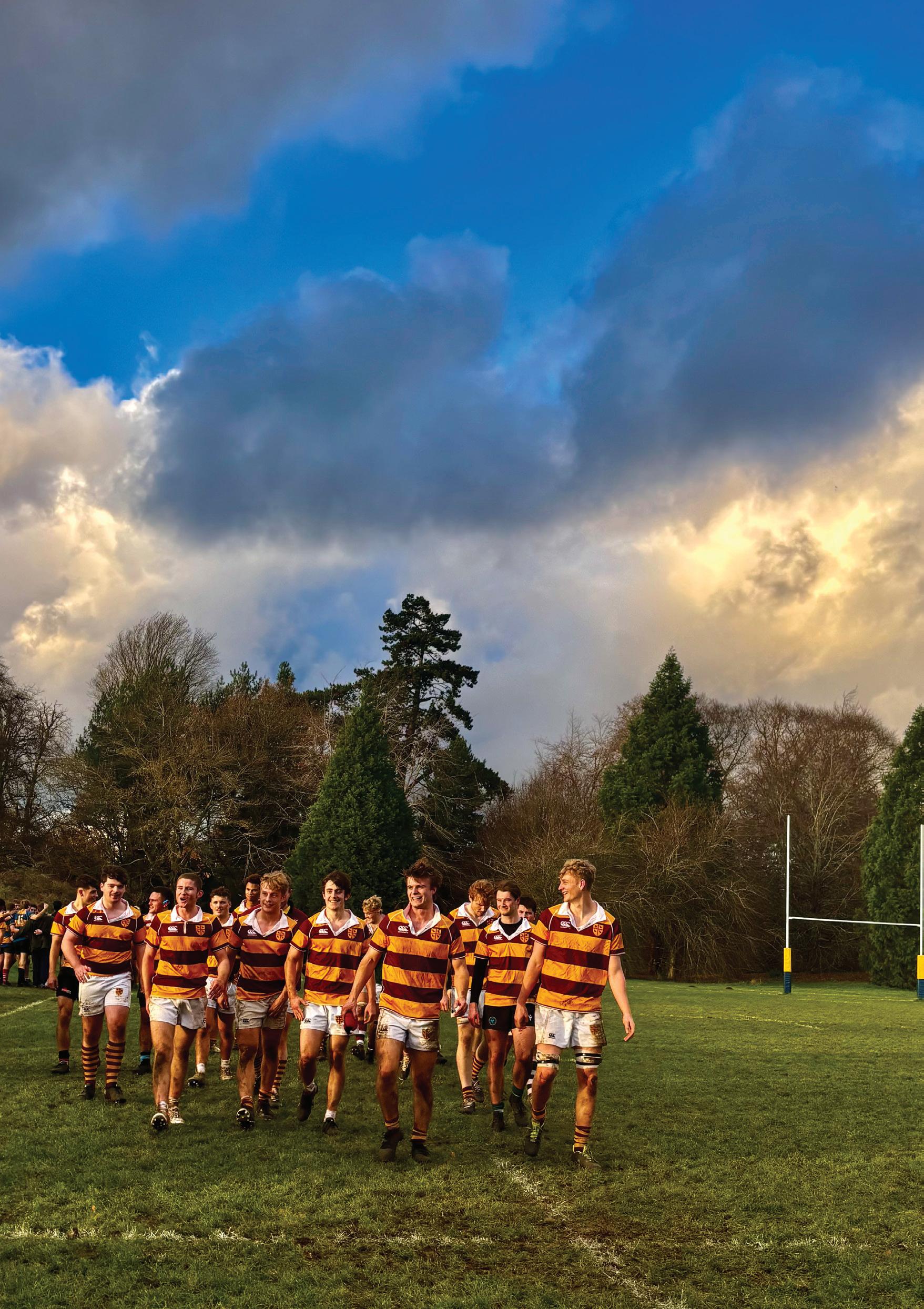
as I left a Formal Hall celebrating Diwali, with students reading Sanskrit verses and performing a song during the meal. It was wonderful. But as I came out into the Front Quad, I could hear another type of singing – equally joyful, possibly a bit louder, but also celebrating another aspect of Hall life: it was the Football and Rugby Clubs’ evening in the Buttery! And then, as I looked into the Old Dining Hall, there was yet another activity taking place – this time a group of students trying their hand at oil painting, and also enjoying the singing coming from the Bar (or so they told me!). When students are around, the Hall is alive – long may it last.
I am delighted to report that the cohort of undergraduate Freshers we have just welcomed represents a milestone for the College – they are the first group in the Hall’s history, or at least in the past 100 years, that will be able to live in College accommodation for the duration of their course. Norham St Edmund (NSE) is 76% complete, on schedule and to budget, and if it continues this way, it will be complete in April and ready to welcome students this time next year. We plan to celebrate the NSE opening with as many Aularians past and present as possible, not least because it is thanks to so many of you and your generosity that this ambition to accommodate all undergraduates for the duration of their course will finally be realised.
You will read about many other causes for celebration in the pages of this year’s Magazine, with numerous successes in sports, music and drama, including the biennial Medieval Mystery Plays (pp. 93–4) which are co-directed by our Professor of Medieval German Literature and Linguistics, Henrike Lähnemann. Around 350 people attended this day-long event
in April with 150 students and staff taking part, both from within the College and across the University.
Over the past year, Hall students involved in a wide range of extracurricular activities have also made full use of every available space in College, from the Crypt to the recently opened Tower Room in the Library (which those of you who had PPE tutorials with Professor John Dunbabin will remember only too well from climbing the 88 steps for your tutorials!). The Tower Room is no longer used as a tutor’s study, but is instead a bookable space for Hall members and it has already hosted reading groups, small drinks parties and music ensembles playing as part of May Morning celebrations. This room, and the views afforded by its four large windows of the Oxford skyline, is, I think, one of the hidden gems in Oxford.
We have also celebrated some excellent academic successes. Three of our Fellows were recognised in this year’s Recognition of Distinction exercise and have been awarded Full Professorships: Luc Nguyen, Maia Chankseliani and Robert Wilkins (pp. 104–5). Both of our Tutors in Engineering – Professor Paul Goulart and Associate Professor Amy Zavatsky – were awarded teaching excellence awards and, most recently, our River Farm Foundation Tutorial Fellow in Neurosciences, Professor David Dupret, was appointed Chevalier dans l’Ordre des Palmes Académiques by the French Republic.
We welcomed this past year our first Aularian Prime Minister, Sir Keir Starmer (1985, BCL), to the Hall for a short visit as well as two other alumni who are currently holding senior political positions: Nick Thomas-Symonds (1998, PPE) and Sir Mel Stride (1981, PPE). They were both recently sworn in as Honorary Fellows alongside a number of other notable
Aularians elected as St Edmund Fellows – you can find out more on the Hall’s website at www.seh.ox.ac.uk/news
As well as highs, there have also been some lows, especially in the tragic passing of one of our second-year students. Deaths are always very hard and felt by the whole college community, but none more so than those just starting out in life. We will always remember this student and support their family in the same way as if they had graduated with us. Losing someone of an older age is also extremely sad and a shock to the community. Last month, the death of Emeritus Fellow Sir Peter Hirsch was another sad announcement I had to make to the Hall. Peter had only recently celebrated his 100th birthday in College. Details of a memorial service to celebrate his life will be shared in due course.
Reading the Magazine, and the richness contained within, always gives me a great sense of pride in the Hall and provides an impactful reminder of how lucky I am to work in such a vibrant and supportive environment, thanks in no small part to the excellent Governing Body and our staff. However, if I had to choose one person in the Hall that I would most like to thank this year, it would be our Garden Fellow and Tutor in English Language and Literature, Associate Professor Mark Williams. Mark has transformed the gardens into a hive of colour and biodiversity, and a place of beauty. Building on the excellent stewardship of our previous Garden Fellows, he has taken our green spaces to a new level. The Hall is flourishing, both metaphorically and literally!
Floreat Aula!
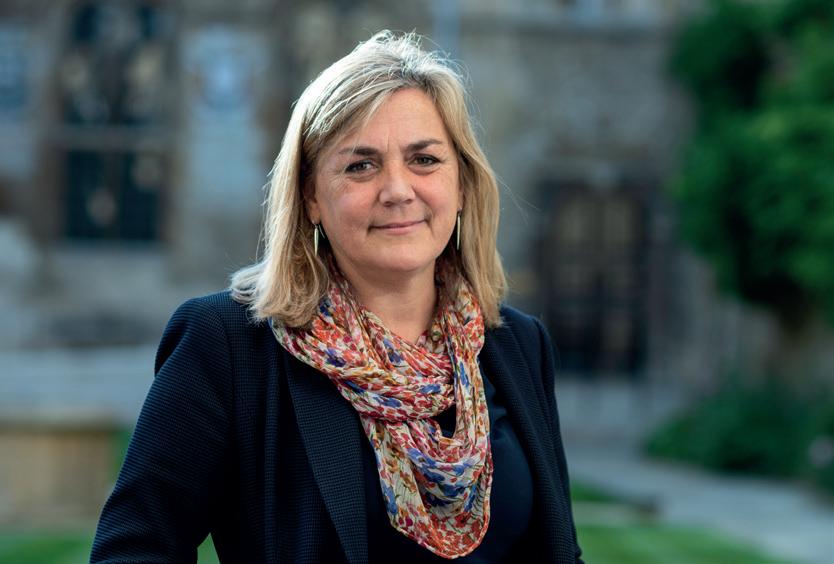
Professor Katherine J. Willis CBE, Baroness Willis of Summertown, Principal
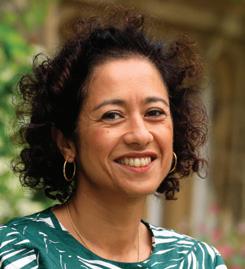
Honorary Fellow Samira Ahmed was elected President of the Twentieth Century Society in July 2025. The charity campaigns to protect Britain’s post-1914 modern architectural design heritage. Find out more at: c20society.org.uk/news/samira-ahmedelected-as-new-c20-president.
Her BFI Classics book on A Hard Day’s Night is due to be published by Bloomsbury Books in April 2026.
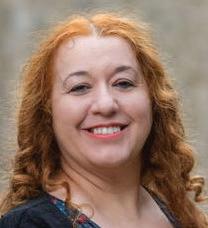
College Lecturer in Physics Jo Ashbourn reports: “In addition to my teaching as a Lecturer in Physics at Teddy Hall, during this past year I have continued as the Director of the St Cross Centre for the History and Philosophy of Physics (HAPP), which aims to not just focus on chronicling the history of the discipline as a retrospective exercise, but to also critically engage with the philosophy and methodologies which inform how current research in physics is undertaken. The HAPP Centre celebrated its tenth anniversary in 2024 and I edited the commemorative volume, which is structured around four key overarching themes and has been published by the Institute of Physics as a special issue of The Journal of Physics under open access at iopscience.iop.org/ issue/1742-6596/2877/1.
The HAPP Centre continues to flourish and alongside its in-person events in Oxford, it also livestreams one-day conferences to global audiences of up to 1,000 people. Topics over the past year were ‘Paradoxes in Physics’, ‘Physical Origins from the Big Bang to Earth’ and ‘Measure for Measure:
A History of Measurement’. Details of these events with videos of all the talks plus forthcoming events for 2025–2026 can be seen at www.stx.ox.ac.uk/thehapp-centre.”
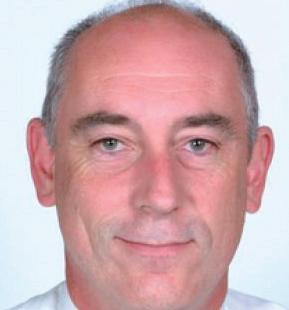
Over the past year, Emeritus Fellow
Alistair Borthwick has continued to carry out research on offshore and environmental engineering, notably: origami-type wave energy converters; hybrid wind-wave floating offshore platforms; marine cables; hydroelastic plates in waves; Faraday waves; river ice-water flows; the effect of permafrost degradation on the Lena River; sediment flux trends on the Qinghai–Tibet Plateau; the evolution of the Yangtze Estuary; and flooding in Kathmandu, Nepal (the subject of a Commentary in News & Views, Nature, 636: 47–48).
Alistair again chaired the Scientific Advisory Committee of the Centre for Marine and Renewable Energy Ireland and contributed to the External Advisory Board to the President of University College Cork, Ireland. Along with Honorary Fellow Keith Gull, he was a member of a Senior Promotions Committee at Trinity College Dublin.
Alistair made several visits to China, where he gave keynote lectures at a symposium at Peking University to celebrate 30 years of environmental engineering there. He also gave keynote lectures at conferences at Zhejiang University and Ludong University. While he was at Peking University, it was announced that ‘Old Brother Bo’ was to be given the Zhongguancun Award for International Cooperation by the Beijing Municipal Science and Technology Commission.
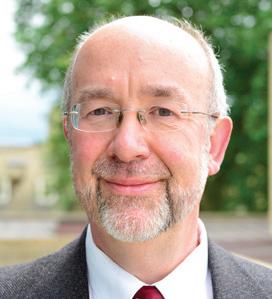
Emeritus Fellow Adrian Briggs carried on writing about Private International Law; the eighth edition of Civil Jurisdiction and Judgments was handed up, in its ‘back to the past’ form, in March. After four decades of facing forwards, this corner of the law has catapulted back to the way it was in 1986. If there was a soundtrack to accompany the dreary work, the first and last tracks would be the Grand Old Duke of York.
A sojourn in HKU Law School, as Visiting Professor, happily coincided with the Principal’s meetings with the Aularian community in Hong Kong. The chance to gatecrash the events, and to observe how the Hall’s lawyers, and all of them, appear to be thriving, was an uncovenanted benefit, and great fun. Otherwise, he was called to the Bench of the Middle Temple in November. Call Night was rather moving, and it was especially touching that a number of old members were there to witness the event.
Even so, the absence of Paul Darling (1978, Jurisprudence; whose appreciation is at pp. 235–8), who had – and who alone could have – persuaded him to accept the election was a reminder that the sands of time don’t always run out steadily. Sometimes they sprint.
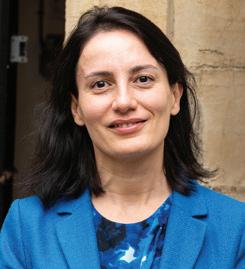
Special Election
This academic year marked the completion of a major global study led by Maia
Chankseliani, Professor of Comparative and International Education and Fellow
by
, on how international mobility influences world development. Drawing on 704 interviews across 70 countries and quantitative data from 134
countries, the final report – International Mobility and World Development, 2025 (ora.ox.ac.uk/objects/uuid:9d767f5ab819-4993-bb65-ed39f6076994/ files/rsq87bw11r) – offers the first global analysis of how returnees translate overseas learning into systemic contributions across sectors like health, education, justice and poverty reduction. The findings call into question narrow economic framings of mobility, revealing instead how international study nurtures forms of critical agency, civic understanding and transnational collaboration. These capacities often translate into institutional innovation, policy reform and social change –sometimes in highly constrained settings.
One strand of the project, published in the International Journal of Educational Research (www. sciencedirect.com/science/article/ pii/S0883035524001435), shows that outbound student mobility is linked to long-term reductions in poverty in lowand middle-income countries, highlighting the broader developmental value of mobility beyond the individual.
In an age of rising geopolitical fragmentation, the study demonstrates that international education is not simply a private good but a potential driver of inclusive development. Publications and future updates are available at: www.education.ox.ac.uk/project/ international-student-mobility-andworld-development.
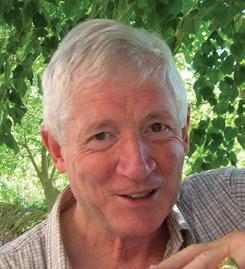
Honorary Fellow Kevin Crossley-Holland reports: “I delighted in opening once more my battered copy of Sweet’s AngloSaxon Primer before retelling Wulfstan’s
account of his thrilling adventures in King Alfred and the Ice Coffin, superbly illustrated by Chris Riddlell. Walker Books also published my final historical novel for children, Kata and Tor, and the audio version was recorded by my prize-winning son-in-law, Nathaniel Priestley. It’s a love story set during the weeks before the battle at Stamford Bridge.
My third publication during this past year was Spring, a limited edition of lighthearted verse celebrating both the word and the season, illustrated by Rosamond Ulph and published by the Orphean Press. Cecilia McDowall’s and my cantata, The Girl from Aleppo, has been performed widely throughout Europe and the USA, while the Norwegians are leading the way in the reissue of my Arthur trilogy 25 years after first publication.”
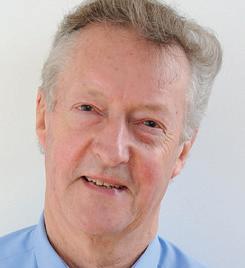
Honorary Fellow Sir John Daniel has contributed a chapter, ‘Reflections of a Scholar Gypsy’, on his varied academic career to Portraits of Academic Life within Higher Education: From Hiring to Retiring (eds. Dianne Conrad and Walter Archer; Brill, 2025): sirjohn.ca/ wp-content/uploads/2023/08/daniel_reflections_scholar_gypsy_20230805.pdf
Sir John has also written the opening chapter to the Handbook of Open Universities Around the World (Routledge, 2025) in which 100 authors trace the evolution of these institutions over 50 years. He also provided the foreword to Mega-universities and Opening Education by Design. This book, launched in New Zealand at the 2025 World Conference of the International Council for Open and Distance Education, presents contributions from 15 scholars who revisit, after 30 years, Sir John’s seminal book Mega-universities and Knowledge Media:
Technology Strategies for Higher Education (Kogan Page, 1996).
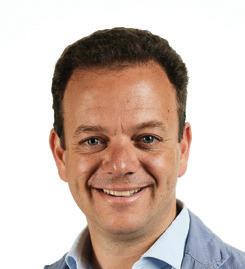
From Filippo de Vivo, Professor of Early Modern History and River Farm Foundation Tutorial Fellow in History:
“This was a rewarding year. I was working on the final section of my forthcoming book, an edition of newsletters concerning the Thirty Years’ War and spanning from the Ottoman Empire to the Iberian peninsula, 1615–1628. The letters were translated from the original Italian by Thomas Hobbes for circulation in England, and I argue that they made an important contribution to the development of his political ideas in a period of his life for which we have relatively little other evidence of his thought. The book will be published as part of the Clarendon Edition of the works of Hobbes.
I published an essay on the comparative history of political communication in early modern Venice and Istanbul, the subject of my talk for the Floreat Aula Legacy Society. It was a very fun subject to research, from information to secrecy to rumours. I also had a short article published about a rare case of an insulting libel found in Venice in 1569 and directed at a future pope. While the subject matter is too scurrilous for the ‘News from the SCR’, anyone interested may ask me about it.
I have continued hosting and jointly running the seminar on the early modern Italian world at St Edmund Hall, mostly in the beautiful surroundings of the Old Dining Hall with colleagues from History, Medieval and Modern Languages, Music and Art History. The seminar is a success, and we also had an end-of-year workshop organised by graduate students.”
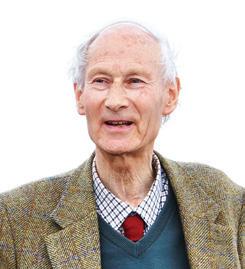
Emeritus Fellow John Dunbabin stayed in the Shetlands for five days in the Assistant Lighthouse Keepers’ Room of the old Sumburgh Head Lighthouse, which is perched on a cliff full of puffin burrows (the birds dislike fine weather but pour out when it rains). He has also canoed for 12 miles down the Severn into Shrewsbury, admittedly partly propelled by the stream and partly by his daughter.
His two-volume historical study, The Longest Boundary: How the US–Canadian Border’s Line Came to Be Where It Is, has been presented to the Prime Minister of Canada, hopefully for keeping in the 24 Sussex official residence.
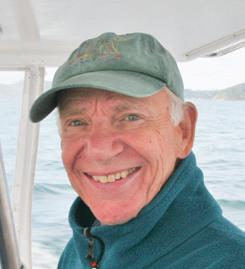
In December 2024, Honorary Fellow Andrew Graham was appointed as the Chair of the Board of Trustees for the Europaeum, succeeding Lord Patten of Barnes. Founded in 1992, the Europaeum is a network of leading universities across Europe with a mission to bring together students, scholars and practitioners to address critical European issues and promote shared European values. Read more on p. 106.
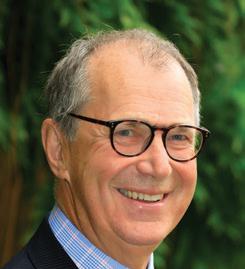
Honorary Fellow Keith Gull continues his research with ex-members of his laboratory around the UK to understand antigenic variation in the African trypanosome and has given research seminars in Dublin and Geneva. Since early 2023, he has also been leading the research of a group at Imperial College London, after the tragic death of their supervisor, Professor Gloria Rudenko. A discovery of significance has been made
in understanding how the trypanosome parasite undergoes antigenic variation to outwit the human immune system.
He continued as a trustee of the Leverhulme Trust but in 2024, after 15 years, finished chairing the Advisory Board of the West African Centre for Cell Biology of Infectious Pathogens in Ghana.
He visited Prague as a member of the International Advisory Panel of Charles University in addition to acting as a member of the small group advising the Provost of Trinity College Dublin on promotion of Senior Faculty.
This year he will intensify his research into piscatorial opportunities around 660 North in a remote area of Iceland with a series of expeditions, hopefully with continuing success with larger sizes of anadromous salmonids.
Read more about how Keith Gull found Destiny in Iceland on pp. 178–9.
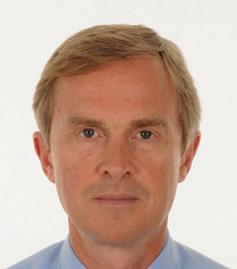
From Roger Gundle, College Lecturer in Medicine:
“Although now retired from clinical practice, I am keeping busy teaching undergraduate medical students at St Edmund Hall as well as University and St Catherine’s Colleges. I examine regularly for the Royal College of Surgeons of England (RCSEng), mostly in London but recently also in Sri Lanka where a Memorandum of Understanding was signed between the College of Surgeons of Sri Lanka and the RCSEng.
Some projects have come to fruition of late including publication of a multicentre trial in the New England Journal of Medicine showing that most complex musculoskeletal infections can be treated with oral antibiotics in addition to surgery
rather than the current normal practice which is long courses of intravenous antibiotics: this has the potential to save the NHS large sums of money and resources.
A collaboration with the haematologists has been fruitful: ‘Selective advantage of mutant stem cells in human clonal hematopoiesis is associated with attenuated response to inflammation and aging’ has been published in Cell Stem Cell and ‘Detecting and quantifying clonal selection in somatic stem cells’ has been published in Nature Genetics in July 2025.”
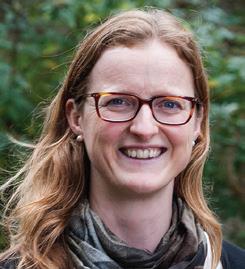
In 2025, Heidi JohansenBerg, Professor of Cognitive Neuroscience and Senior Research Fellow, took up the post of Pro-Vice-Chancellor for Strategic Initiatives. In this role, she leads the development, implementation and monitoring of strategic initiatives that bridge functional boundaries and drive transformation within the University.
Professor Johansen-Berg also serves as the Associate Head (Research and Innovation) in the Medical Sciences Division and continues to lead her research group, which investigates brain plasticity in the context of learning and recovery from brain damage.
In 2025, Heidi was also appointed to a national role as part of the Research Excellence Framework (REF 29) as Chair of Sub-Panel 4: Psychology, Psychiatry and Neuroscience.
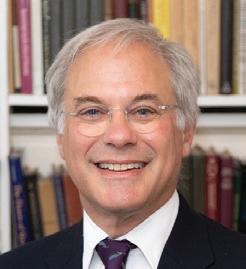
Andrew Kahn, Fellow and Tutor in Modern Languages (Russian), is looking forward to a book launch for his and
Mark Lipovetsky’s All the World on a Page (Princeton) at the Harriman Institute in New York in the autumn. Other publishing highlights of the past year included essays on Maria Stepanova, late Tolstoy and Turgenev, and he is now looking forward to moving back to the eighteenth century.
Most fun has been a collaboration with colleagues at the University of Chicago and large language model data scientists at Helsinki on a new digital humanities project that, he hopes, will transform the work he can do on intellectual history in the period. It’s good to try to remember Russia in the age of reason at this time.
Some highlights from Fellow by Special Election Gina Koutsika’s year in her role as Director of Audiences and Content at the Ashmolean:
“Edmund de Waal had written a new piece on fragments and brokenness, specifically for the Ashmolean Museum and Cultural Programme, and it was truly poetic and poignant. At the event, after the reading and experiencing handling porcelain fragments, participants followed musical performances around the museum by Bette Zhaoyi Yan and Yuchen Zhang, with a repertoire of Chinese art songs and indigenous melodies; Lekan Babalola, Samuel Boateng, Luke Lewis, Kate Luxmorre and Asha Parkinson, who are an improvising collective of musicians from different global traditions and styles; and the Choir of Merton College, directed by Ben Nicholas.
Two new permanent galleries opened in May 2025. ‘Italy before Rome’ focuses on the Italian peninsula, before its domination by Romans, when it was a mixture of cultures including Latin, Samnite and Etruscan. These peoples occupied an area rich in metal ores,
timber and fertile land, and contributed significantly to urbanisation, law and trade, as well as to the transmission of certain aspects of Greek culture. ‘Rome and the Roman Empire’ sees the empire at the peak of its power, in the first and second centuries, presenting the Romans, from emperors to the enslaved, and journeying through the empire from Oxfordshire to Syria, as well as exploring Roman Britain, the city of Rome and Roman homes, and many other areas of Roman life.
Beyond offering a warm and inclusive welcome, Visitor Experience Assistants are central to our mission of making the Ashmolean accessible to all. Following a light-touch external review, Gina and the Visitor Experience Management team launched an inclusive recruitment process and a pioneering 18-month pilot training programme: the team is split into two groups, each with alternate Tuesdays off the floor which provides two dedicated days per month for professional development. These sessions support collaboration across the Museum (and beyond) and empower the team to co-develop projects that reflect their strengths, support institutional priorities and enrich the visitor experience. This is an evolving journey of learning and experimentation – grounded in equity, driven by purpose and fuelled by the creativity of our front-line colleagues.”
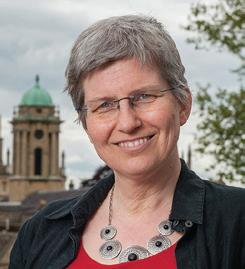
As ever, a busy year is enthusiastically recounted by Henrike Lähnemann, Professor
of Medieval
German Literature and Linguistic Studies: “It has become quite a tradition: every year I report on a nuntastic publication and a Reformation pamphlet. This year, there are actually two titles in the nun section: the extended paperback
of Unerhörte Frauen (medingen.seh. ox.ac.uk/index.php/2023/06/03/ unerhorte-frauen/) but much more weighty, and to my immense relief, finally the scholarly edition of the first of the three letterbooks compiled by the nuns of Lüne (weighing a kilo and comprising nearly a thousand pages in total). The Netzwerke der Nonnen (www. mohrsiebeck.com/buch/netzwerke-dernonnen-9783161608988/) is available via open access from the venerable Tübingen theology publisher MohrSiebeck, and our project team is deep into the second volume.
This year’s Reformation pamphlet was the highly enjoyable Dialogue between Canon and Cobbler, by the alter ego of the Nuremberg poet and shoe-maker Hans Sachs, first published in 1524. The witty and sharp exchange made for perfect performance material, both in the original and in contemporary translations into Early Modern Dutch and English. Our cast consisted of a number of students and colleagues from St Edmund Hall, not only Germanists but also a Dutch biochemist and a linguistics lecturer.
The performance of the dialogue was the perfect training ground for the biggest medieval event of the University calendar – the Medieval Mystery Plays. This year, in honour of the #1317Challenge for Community & Giving Week, the cycle featured thirteen plays, including an Adam and Eve play by the aforementioned Hans Sachs but also featuring the whole of the Choir as a host of angels. While I counted the dozens of actors and 300 spectators, I did not count the number of times I blew the trumpet this year, but the literal highlight was certainly heralding our Visitor The Rt Hon the Lord Hague of Richmond on the top of the Villa building for the NSE topping-out ceremony. I hope
to blow the fanfare next time for him from the top of St Peter-in-the-East where he used to go for his tutorials with John Dunbabin.”
Read more about the 2025 Mystery Cycle on pp. 93–4.
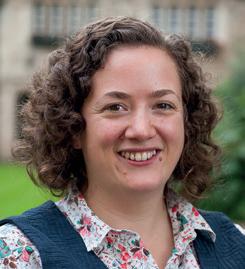
This year Alexandra Lloyd, Fellow by Special Election in German, continued her research and engagement work on the White Rose resistance circle and post-war German memory culture. She appeared as a guest on the BBC Radio 4 series History’s Youngest Heroes and gave the opening keynote at the Europaeum Spring School on Resistance and Resilience. She also took part in a roundtable discussion as part of the ‘Holocaust Studies: Navigating the Field’ networking day at the Imperial War Museum, London, and was interviewed about her research for the Life and Faith podcast hosted by the Centre for Public Christianity, Australia.
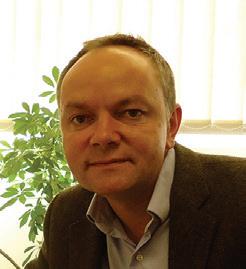
David Manolopoulos, Professor of Theoretical Chemistry and Tutor in Chemistry, has very much enjoyed his travels again this year. He has been to conferences in Okazaki, Madrid and Telluride, Colorado, and given a Chemical Society Lecture at the University of Heidelberg. He has also published a paper in Science Advances with his former postdoc Johan Runeson which shows that quantum mechanical effects in the motion of the chromophores actually slow down biological photosynthesis rather than enhance it. A great deal has been written in the popular press about ‘quantum biology’ but the majority of it is “utter rubbish”.
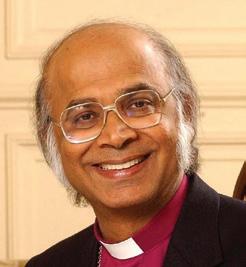
From Honorary Fellow
Monsignor Michael NazirAli: “At the beginning of the last academic year, I was deeply honoured to have the opportunity of addressing a wide cross-section of judges, politicians and civic and community leaders in Manchester on the role of religion (both positive and negative) in society and, later on, the Knights of Malta on the making of moral decisions.
There was teaching last year at Blackfriars in Oxford and the beginning of the fifth series of the All Souls’ Seminars, held this year at the Faculty of Asian and Middle Eastern Studies. The subject was the life and work of R C Zaehner, Fellow of All Souls and Spalding Professor of Eastern Religions and Ethics, and my supervisor at Oxford. I was also privileged to teach again at the Angelicum, the Pontifical University of St Thomas Aquinas. It was good also to teach remotely for the Centre for Muslim–Christian Relations, based in Oxford, of which I am an advisor.
I have continued involvement with SOPHOS Africa, an organisation working with young graduates in Ethiopia, encouraging them to resist endemic corruption and ethnic conflict so that they can achieve the goals they are setting for themselves and their country.
This being the 1,700th anniversary of the Nicene Creed, I was asked to lecture on this at Forman Christian University, Lahore. The lecture was attended by Muslim and Christian faculty and students.
Sadly, the Amman Conference, hosted by Prince Hassan of Jordan, on cooperation between Christian and Muslim research centres, had to be postponed sine die because of the situation in the Middle East. We are hoping Deo volente to
reconvene next year. I was, however, able to attend a conference arranged by the University of Notre Dame in the USA on freedom of religion and belief both in the West and in other parts of the world.
I continue to supervise a number of research students and share in their sense of achievement when they complete their research projects. I write both for ‘learned’ journals and for the popular press. I am on the Editorial Board of Round Table, the Commonwealth Journal for International Affairs, and contribute to its issues. This year, I also contributed to a publication by the Common Good Foundation on the educational and cultural aspects of rapid demographic change.
This year, our small scholarships fund was able to help 45 students, in challenging contexts, to achieve qualifications they would otherwise not have been able to achieve.
With the teaching in Oxford, I have valued having a base at SEH, as sometimes an overnight stay has been necessary. Floreat Aula, indeed!”
In September 2025, Visiting Fellow Katie Peterson will be a Resident at the James Merrill House in Stonington, Connecticut, a writer’s residency that allows the recipient to live adjacent to poet James Merrill’s apartment and explore his library.
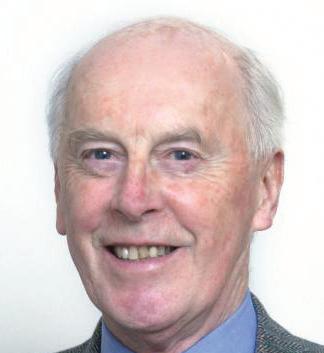
Emeritus Fellow Ian Scargill reports that it is now 25 years since he retired, so quite a drain on the USS pension fund. He and his wife, Mary, celebrated their diamond wedding anniversary in August 2024, and
later that year he was delighted to be a guest at Emeritus Fellow Rob Whittaker’s retirement dinner and to have the opportunity of meeting former pupils. He and Mary continue to live in Summertown where he celebrated (if that is the right word) his 90th birthday in March 2025 with a family party. He no longer defends the Green Belt in the face of concerted efforts to build all over it.
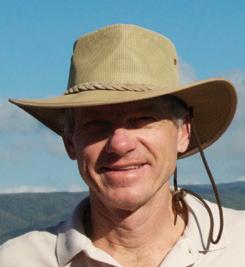
Paul Skokowski, Fellow by Special Election in Philosophy, is putting the final touches to a new book entitled Sensing Qualia: Solving the Hard Problem of Consciousness. Qualia are the ‘raw feels’ of consciousness and comprise the contents of our sensory experience. These include colours, tastes, pains, smells and other sensory phenomena. Accounting for qualia in the natural world has rightfully come to be known as the hard problem of consciousness. The book uses an interdisciplinary approach, drawing on developments from neuroscience, physics, cognitive science and philosophy to understand the function of our sensory modalities. This analysis provides a framework for studying qualia in the physical world including in androids and AI. Sensing Qualia is written for students and specialists who wish to better appreciate vexing issues about the mind. The first section of the book – ‘A Brief History of the Mind’ – assumes no background knowledge in philosophy. These early chapters bring readers up to speed with the problem of qualia by examining a sampling of the most influential theories of mind since Descartes. The reader is then equipped for the interdisciplinary arguments surrounding qualia and conscious experience in the remaining chapters. Sensing Qualia will be published
by the University of Chicago Press in December 2025.
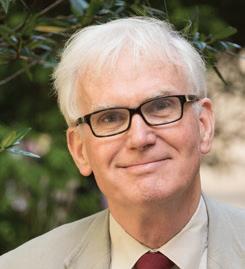
Emeritus Fellow Martin
Slater’s book The National Debt: A Short History has been updated and reissued in paperback. Martin gave an online talk on the subject to the York University Festival of Ideas 2025 (available on YouTube: youtu.be/7ebeI01QUSU? si=dT580RhhMPjFSyrH).
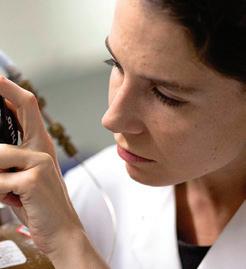
Professorial Fellow
Eleanor Stride was one of three biomedical engineers who joined presenter Caroline Steel and an audience at a special event staged with the Royal Commission for the Exhibition of 1851; it was also broadcast on Radio 4 as The Engineers: Exploring the Human
Listen to the programme: www.bbc.co.uk/ programmes/w3ct812c.
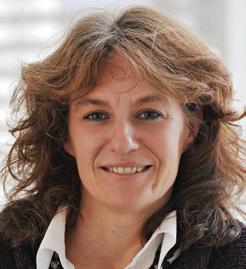
Jenny Taylor, Fellow by Special Election and Professor of Translational Geonomics, continues in her role as Head of the Translational Genomics group at the University’s Centre for Human Genetics and as Co-Theme Leader of the Oxford NIHR Biomedical Research Centre’s Genomic Medicine Theme.
Her research group focuses primarily on the discovery of novel rare disease genes through the analysis of genome sequencing data from patients in cohorts such as the 100,000 Genomes Project and the NHS Genome Medicine Service. Recent results, published in Genome Medicine (10.1186/s13073-023-012400) and American Journal of Human
Genetics (10.1016/j.ajhg.2024.04.018), highlight the importance of investigating all genetic variants in the genome for potential pathogenicity. More recently, she has turned her attention to the opportunities for genetic diagnoses to inform the development of novel, nucleic acid-based therapeutics and has been a member of the Rare Therapies Launch Pad (10.1038/s41591-025-03547-4), an initiative announced in the Chancellor’s Autumn Statement in November 2023, since its inception. Her group also continues to work in the cancer arena, focusing on circulating tumour DNA and polygenic risk scores for improved diagnosis and prediction of cancers (10.1016/j.ejca.2025.115626).
Out of the lab, Jenny has organised the Oxford Women’s alumnae rowers since the beginning of the Women’s Veterans race just four years ago. The Oxford–Cambridge Alumni Boat Races are held on the Tideway in London, the day before the main Boat Race. With the scores being level after a nerve-racking ‘dead heat to Oxford’ last year, the crew was delighted to record a convincing 4.5 length victory this year. Jenny has also just climbed Kilimanjaro, raising funds for educational improvements in an impoverished community in Tanzania.
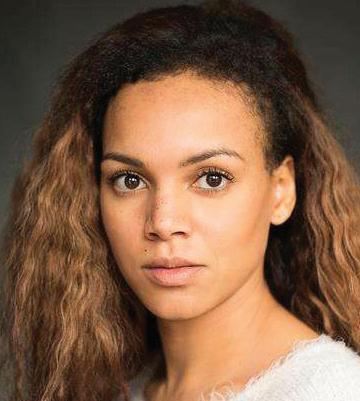
This past academic year has been a busy one for Honorary Fellow Catherine Joy White, spanning screen, publishing and international advocacy. On screen, she secured roles in a (still undisclosed!) major forthcoming Netflix series, a guest star appearance in the US show The Librarians: The Next Chapter, and a small part in The Capture (BBC/ Netflix).
As a filmmaker, she recently finished her debut documentary, Swim Sistas, featuring Great Britain’s first Black female Olympic swimmer and narrated by Oscarnominated Naomie Harris, set to premiere at Oscar-qualifying DOC NYC. She is also in pre-production on her debut feature, Black Samphire, a folk-horror exploration of water pollution starring BAFTA winners Cathy Tyson and Stephen Fry.
In publishing, Catherine’s debut book, This Thread of Gold, was nominated for the prestigious Zora awards, while her second title, Rebel Takes: On the Future of Food, was published at the end of 2024.
Beyond her creative work, Catherine continues her role as UN Gender Advisor, leading the next phase of Changemakers, a partnership with the United Nations Institute for Training and Research and the Premier League that has empowered more than 5,000 young women worldwide through sport, gender equality and leadership training.
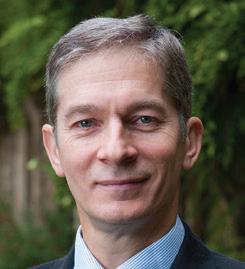
Emeritus Fellow Rob Whittaker has been working on a number of island-focused research projects and papers over the last year.
In September he was a participant in a meeting in Fuglsang (a particularly flat area of Denmark), which focused on the topic of species extinctions from islands globally. In October he spent a week at the
Jersey International Centre for Advanced Studies teaching for the Island Biodiversity and Conservation MSc. A second teaching week followed in May, in the form of a field course to Tenerife on the theme of conservation action in islands.
He has been a co-author on recently published papers examining the validity of the biogeographical region of Macaronesia, and on anthropogenic extinction across the region, as well as on the loss of functional diversity as a result of human action from island systems across the globe.
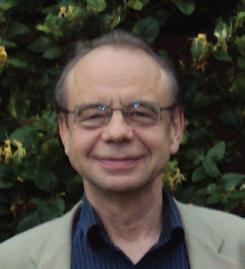
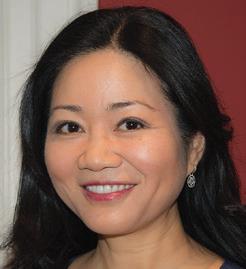
Emeritus Fellow Blair Worden was delighted to see so many of his former pupils at a historical conference in April to celebrate his 80th birthday.
Research Lecturer in Economics and Fellow by Special Election Dr Linda Yueh CBE FREcon has been appointed a Founding Fellow of the Royal Economic Society.
Dr Yueh was appointed in recognition of her significant contributions to the field of economics. This honour recognises individuals who have made a significant impact on the discipline through research, teaching, policy and leadership.
Jeremy Charles was sworn in as a St Edmund Fellow in March 2024.
Jeremy came up to the Hall in 1975 to both study PPE and have the pleasure
of representing the University at various levels in cricket, rugby, swimming and water polo.
After university and having trained as a Chartered Accountant at Coopers & Lybrand, he moved into senior roles
within the investment industry, helping to manage businesses including Hoare Govett, James Capel, Coutts NatWest, Thames River Capital, and F&C, finishing at Old Mutual Wealth (Quilter) in 2016.
While employed, he also helped in the charity sector, in particular chairing Sense International for many years, focusing on assisting children with deafblindness in low- and middle-income countries.
Since retirement, Jeremy has continued to help manage various charities, while also mentoring individuals and businesses, but also coming on to the Hall’s Investment Committee in 2018 and the Development Committee after that. In addition, he takes an active role in advising senior Fellows in the general management of the Hall.
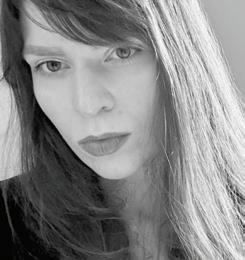
Sofya Dmitrieva joined the Hall this year as a Non-Stipendiary Junior Research Fellow in European Languages. Sofya is a historian of art and visual culture, specialising in eighteenth-century France. Her research interests span genre theory, perception studies and the history of collections.
Sofya is also the Astra Foundation Research Assistant in Digital Iconography at the Voltaire Foundation. Building on an extensive collection generously donated to the Foundation by Professor Samuel Taylor, she is developing an open-access digital archive of visual representations of Voltaire. The resulting database will feature high-quality reproductions of Voltaire’s portraits in a variety of media, accompanied by art historical commentary, and offer advanced tools for tracing the evolution of his image. Before joining the Voltaire Foundation and St Edmund Hall, Sofya worked at the Deutsches Forum für Kunstgeschichte (DFK Paris), where she was responsible for
devising and creating The Art Collection of the French Royal Academy of Painting and Sculpture database. She holds a PhD and an MLitt in Art History from the University of St Andrews.
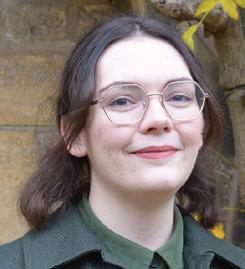
Jenyth Evans is a Junior Research Fellow in English at St Edmund Hall and a Departmental Lecturer in Medieval Irish Language and Literature. She read Classics as an undergraduate at Jesus College, Oxford, from 2015 to 2019. She then completed a Master’s in Medieval Studies in 2020, also at Jesus College, before moving to St Edmund Hall for her DPhil in English from 2020 to 2025.
Jenyth’s DPhil research examined two pseudohistorical texts in tandem – the Irish Lebor Gabála Érenn (‘The book of the taking of Ireland’; earliest version composed c. 1025) and Geoffrey of Monmouth’s De Gestis Britonum (‘On the deeds of the Britons’, first circulated c. 1123–1139). She argued in her thesis that these texts were often read together for centuries after their original composition, and that understanding this offers new readings of works written by, for example, Gerald of Wales, Edmund Spenser and the Welsh author Theophilus Evans. Her thesis also examined how unbelievable material within both texts was assessed, criticised or defended by various authors from the medieval period to the modern.
Stemming from this research, her next project will examine frauds and forgeries created in Celtic-speaking contexts. She is also interested in classical reception in the medieval period.
Jenyth teaches on various aspects of medieval Irish and Welsh literature and language. She runs an introductory course to the Old Irish language, available to English undergraduate students as a
special subject option, or to graduate students with relevant research interests in medieval Irish language, history or literature.
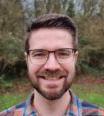
Benjamin Hess is an Early Career Teaching and Research Fellow in Earth Sciences. He joined the Hall in January 2025.
Benjamin has always had a love of rocks, minerals and nature, inspiring him to study geology for his undergraduate degree at Wheaton College, Illinois. During this time, he had the opportunity to investigate a glass created by a lightning strike called a fulgurite. It was found to contain rare phosphide minerals that are thought to be important for forming prebiotic biomolecules, suggesting that lightning strikes may be a key source of phosphorus needed for the origins of life.
He went on to complete his PhD in Earth and Planetary Sciences at Yale University where he investigated metamorphic processes that shape Earth’s lithosphere. His research included studies of fluid flow and pulsed magmatic heating during subduction and mountain building events. He has studied rocks from all over the world and has undertaken field work in Norway and the Greek islands.
Benjamin’s work combines field and laboratory methods with mathematical modelling to understand both how physical stresses in the Earth drive chemical reactions and how reactions in turn affect the stresses and physical evolution of the Earth. Examples of Benjamin’s current research include: studying the role of the hydration of oceanic lithosphere in initiating plate tectonics on Earth and Earth-like planets; modelling how hydration reactions can be used to generate hydrogen gas; applying
new methods for using chemically zoned minerals known as ‘crystal clocks’ to estimate timescales of igneous and metamorphic processes; and developing and testing methods to estimate stress magnitudes using mineral chemistry.
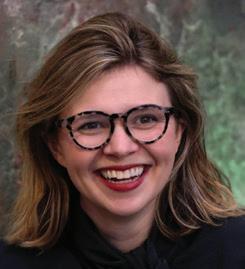
Kate Keohane joined St Edmund Hall this year as a Career Development Fellow in History of Art and Wellbeing
Kate is an art historian whose research explores how storytelling, image-making and collective practice shape ways of living, remembering and imagining otherwise.
Her current project, ‘Magic and Medicine: Art as Remedy’, centres on artists who create spaces of care and resistance, weaving connections across bodies, histories and environments. She is particularly interested in how small-island poetics and collaborative intersectional methodologies can expand the interpretive possibilities of art history. Alongside her research at Oxford, Kate is Co-Director of Art Hx, a platform led by Professor Anna Arabindan-Kesson at Princeton University that explores the convergences of health, colonial legacies and practices of radical care.
Her first monograph, Common-Places: Édouard Glissant, the Caribbean and Contemporary Art (under review), develops a geo-poetic method for understanding how artists narrate entangled, placesensitive globalities. She has published in Art History, Afterimage, ICOM Routledge, Wasafiri and Tate, and has contributed writing for the International Curators Forum. With Dr Giulia Smith and curator Daniella Rose King, she is co-editor of Caribbean Eco-Aesthetics: Artistic Strategies for Planetary Survival (Manchester
University Press, forthcoming 2025), a volume that emerged from the online research series ‘Biotic Resistance’ (2021).
She was previously a Leverhulme Early Career Fellow at the Ruskin School of Art (2021–2024), an Associate Lecturer at the University of St Andrews (2020–2021) and St Anne’s College, Oxford (2023–2025), and a Research Fellow in the studio of Sir Frank Bowling OBE (2024–2025).
Kate completed her PhD at the University of St Andrews in 2020, funded by the Horizon 2020 EU–LAC Museums project.
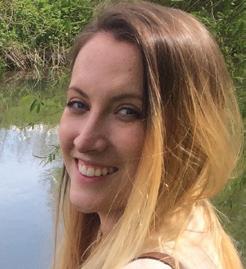
Holly Langstaff was sworn in as a Fellow by Special Election in Modern Languages during Michaelmas term 2024. She is interested in modern and contemporary literature and thought. Her current research project reframes French literature of the last 150 years according to new paradigms and new centres of interest based around working-class experiences and workingclass expression. She has been awarded a British Academy Small Grant to run a workshop as part of the first stage of this project.
Holly’s first monograph, Art and Technology in Maurice Blanchot, was published by Edinburgh University Press in 2023. This book reappraises the influential French thinker Maurice Blanchot’s writing from the 1940s to his late work in the 1980s, demonstrating how Blanchot’s exploration of the question of technology remains decisive throughout his career. It situates Blanchot’s fictional and critical work in the context of his thinking of art as techne – the Greek root of ‘technology’ meaning both craft and art – as it develops out of Martin Heidegger’s philosophy. The book was one of four titles
shortlisted in 2025 for the R. Gapper Prize run by the Society for French Studies. She project-manages the Warwick Prize for Women in Translation and is the codirector, with Ros Schwartz, of Bristol Translates Summer School. Holly is also a regular tutor at the Oxford UNIQ Summer School as well as being involved in several outreach initiatives at the Hall, including the Language Miracles workshops, the Big Think competition, and the Unlock Oxford panels.
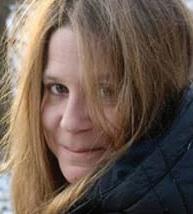
Katie Peterson joined the Hall in October 2024 as Visiting Fellow in Poetry. Katie is the author of seven books of poetry, including Fog and Smoke and Douceur en plein visage (selected poems in French with an introduction by Louise Glück), both published in 2024. Her poetry has appeared in the Atlantic, the New Republic, the New York Review of Books, Poetry London and the Yale Review Her edition of the New Selected Poems of Robert Lowell was published by FSG in 2017.
Katie’s work has been recognised with awards and fellowships, including the Rilke Prize from the University of North Texas; a Literature award from the American Academy of Arts and Letters; a grant from the Foundation for Contemporary Arts; and a fellowship from the Radcliffe Institute for Advanced Study.
Her collaborations with her husband, the photographer Young Suh, have been shown in museums and galleries in the United States and South Korea; their collaborative book, Life in a Field, was published by Omnidawn Books in 2021. When she is not a Visiting Fellow at Oxford, she is Professor of English at the University of California, Davis.

Chloë Pieters is the River Farm Foundation Early Career Teaching and Research Fellow in History, joining the Hall in Michaelmas 2024. She completed her PhD at University College London before becoming a Stipendiary Lecturer in Modern British and European History at Somerville and Exeter College.
Chloë is a social and cultural historian of the European family in wartime, focusing on Belgium and Great Britain. Her doctoral work investigated the relationship between the institution of the family and the state in Belgium and Great Britain during the First World War, considering how the family is centred, in rhetoric and in practice, as a keystone of social, economic and moral life, and how the crucible of war affected this. Her research therefore examines how states have ceded and retained their cultural and material power over families in order to serve their changing wartime and post-war interests, and how families have exercised agency to accept and resist these forces.
Her postdoctoral project investigates social reconstruction in Belgium and Britain, and the attempt to recover from the political, economic, social and emotional impact of war (– both states sought to shape the family to suit the needs of the state and to establish a sense of national unity in the fragmented postwar era). The project will consider not just how the Belgian and British states sought to manage the institution of the family, but how families themselves responded to these interventions, whether supporting, accepting, acquiescing or resisting.
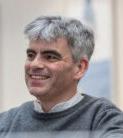
In October 2024, Joe PittFrancis was sworn in as a Tutorial Fellow.
Joe is an Associate Professor of Computer
Science and has been tutoring Oxford Computer Science students since 1999. He works in computational and mathematical biology, and is interested in models of the heart, cancer and blood flow. Joe is active in software development and works with Chaste, a large C++ software library for computational models of biology.
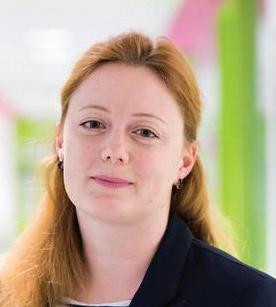
Anna Regoutz has been elected as Associate Professor in Experimental Inorganic Chemistry and Tutorial Fellow in Inorganic Chemistry
Anna leads an interdisciplinary team of experimentalists with key expertise in thin film synthesis, surface and interface chemistry, and X-ray photoelectron spectroscopy in the Inorganic Chemistry Laboratory. The group’s research vision is to explore the relationship between the structure and electronic structure of inorganic solids and how this manifests in their overall physicochemical characteristics, with the aim of integrating them into optoelectronic devices.
Anna received her BSc (2009) and Dipl. Ing. (2010) in Chemistry (Technische Chemie) from the Graz University of Technology, Austria. She conducted her DPhil on the structural and electronic properties of metal oxides under the supervision of Professor Russell Egdell at Trinity College, Oxford, in 2010–2014. During this time, she was awarded the Stirling Boyd Prize and a graduate scholarship by Trinity College and served as President of its Middle Common Room for two consecutive years, from 2011 to 2013. Following her DPhil, Anna spent time as a postdoctoral researcher at the University of Southampton and Imperial College London, before starting her independent career as an Imperial College Research Fellow in 2017. Between 2019
and 2024, she was a Lecturer in Materials Chemistry in the Department of Chemistry at University College London.
Anna’s work has received national and international recognition, including the award of the 2025 International Union of Pure and Applied Chemistry (IUPAC) Emerging Innovator Award in Analytical Chemistry, the 2020 Royal Society of Chemistry’s Joseph Black Award, and, in 2019, the element Praseodymium in the Periodic Table of Chemists by the IUPAC.
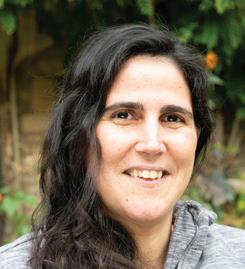
Reut Vardi joined the Hall as Junior Research Fellow in Environmental Sustainability in October 2024. Reut is an ecologist and conservation scientist. Prior to joining the University of Oxford and St Edmund Hall, she was a postdoctoral researcher at Tel Aviv University under the Alexander and Eva Lester and the George S. Wise post-doctoral fellowships. She completed her PhD from BenGurion University, exploring the effects of environmental variability on animal behaviour.
Reut’s research interests are mostly behavioural ecology and conservation culturomics, centring around environmental and anthropogenic changes, the effects on animals and challenges for biodiversity. From an ecological point of view, she explores animals’ behavioural and physiological responses to their environments, as well as how future anthropogenic changes will affect animal distribution. From a social point of view, she explores digital human–nature interactions and how novel online platforms can inform conservation science and actions, as well as help reconnect people to nature.
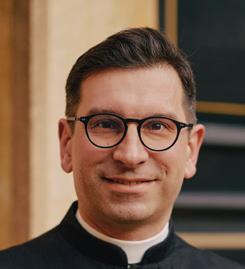
The Revd Andreas Wenzel joined the Hall in February as Chaplain and a Fellow by Special Election.
Andreas is currently Vice-Principal and Director of Pastoral Studies at St Stephen’s House, Oxford, a theological foundation affiliated with the University. He is a graduate of the Universities of Hamburg and Oxford, and is currently pursuing doctoral studies at the University of Erfurt on a commentary on the Mass from the Renaissance.
Catherine Joy White was sworn in as an Honorary Fellow in October 2024.
Catherine (2016, MSt Women’s Studies) is an award-winning author, actor, filmmaker, activist, gender equality expert and CEO of Kusini Productions.
Catherine has been honoured as a member of the Forbes 30 Under 30 Class of 2022, longlisted for AllBright’s Innovative Trailblazer Award and heralded as one of ‘Five Activists to Watch’ by the Trouble Club (previous speakers include Gloria Steneim and Margaret Atwood).
Her debut book, This Thread of Gold: A Celebration of Black Womanhood, was published to critical acclaim in the UK in June 2023 by Dialogue Books. Through Kusini Productions she has also produced a slate of multi-award-winning films including Fifty-Four Days, which she also wrote, directed and starred in alongside iconic British actress Celia Imrie. FiftyFour Days was selected for over 50 film festivals worldwide and received BAFTA and Oscar acclaim before being sold to American Airlines.
As a UN Gender Expert, Catherine established Changemakers – a partnership between the United Nations Institute for Training and Research and the Premier League. The initiative combined a leadership, gender equality and mental health programme with sport to empower more than 5,000 young women and girls worldwide. She is also a proud ambassador for PAPYRUS, the UK’s national charity for the prevention of young suicide, and a proud mentor on The Page One Project.
On being sworn in as an Honorary Fellow, Catherine commented:
“Accepting the Honorary Fellowship is the greatest honour of my life so far. I arrived at Teddy Hall – and Oxford – with big dreams. The fact that I was a young Black woman from a state school in the East Midlands did not deter me. I knew that the chance to study at Oxford was going to present me with opportunities that I would never encounter otherwise. I leapt in and did not look back.
It was the first place I explored my love for performing and especially for combining art with activism. It was the first place that I felt I was truly taken seriously with each of my many hats. It was also a time of unadulterated joy, friends for life and the sort of experiences that have imbued me with the confidence I now carry with me wherever I go. My promise, to myself, and to my College, is that I will never stop seeing this as an opportunity. I will treasure this moment, lifting others with me as I climb, for the rest of my life.”
Musab Younis, has been elected Jarvis Doctorow Tutorial Fellow in Politics and Associate Professor in Political Theory
Musab did his DPhil at St Catherine’s College, Oxford. He then worked for six years at Queen Mary University of London, where he was a Senior Lecturer in Politics and International Relations, before returning to Oxford in September 2024. He has held visiting positions at the European University Institute and at the University of London Institute in Paris.
Musab’s research lies at the intersection of the history of political thought and critical theory, with a focus on the politics of race and empire. His work has explored Black and African anticolonial thought; histories of thinking about race and racism; and the politics of space, scale and globality. His first book, On the Scale of the World: The Formation of Black Anticolonial Thought, was awarded the Sussex International Theory Prize in 2023, received an Honourable Mention for the LHM Ling Outstanding First Book Prize, and was named as one of the best academic books of 2023 by the New Statesman
In addition to his academic research, Musab is a regular contributor to the London Review of Books and he has also written essays for Baffler, The Guardian, n+1, Prospect and The Criterion Collection on topics including riots, humanitarianism, Caribbean literature and Japanese cinema.
Sir Winston Churchill is credited with the phrase “sunlit uplands”; it’s one I like to use occasionally in the summer. This year we have had almost constant sunshine, or at least very little rain, since the beginning of March. I write as the end of Trinity term approaches and the phrase gathers a sense of the Long Vacation. For me, that means medium-sized project work, no committees, time to do what the committees decided, and at some stage a bit of holiday.
The staff team has continued to evolve and adapt. Sam White, our Executive Head Chef, has been made Director of Catering and will now oversee not only the Kitchen but also the catering frontof-house team and the Bar. This builds on Sam’s experience prior to Teddy Hall and supports the Head Butler and the Bar Manager. I hope that, in due course, he will also take charge of the café in the Churchyard – more of that below.
The growth of our conference and events work has led us to create a new post supporting Sue McCarthy, Conference Manager, and we were delighted to welcome Chiara Campioni as Conference & Catering Officer. Chiara joins us from St Hilda’s where she gained a lot of experience in the busy world of providing events, summer schools and conferences. Not strictly related to that new role, but as part of a wish to streamline and de-risk our operations, we are changing our software platform for student accommodation so that it is the same provider and database as we have used for some time for commercial business and public room bookings. I should no longer need to hear staff asking each other if a particular room is available – all will be looking at the same system. This has
involved a lot of planning and training, and I am delighted by the way the team has grasped this challenge.
The Norham Project is full steam ahead. On 20 June we had a topping-out ceremony with the Chancellor present. A plaque was signed and inserted into the top of the Villa building, with a number of guests watching on a video screen and enjoying refreshments in the common room. This marks a significant moment in the project, coming between the groundbreaking ceremony and the day we open the buildings for use.
Construction is ahead of target and going really well. We have excellent main contractors who are doing a great job of using the advantage of the persistent good weather over the spring and into Trinity term. I am confident that we will be completed on time in early April 2026. Indeed, we are hoping the furniture contractor will be able to begin installing in January to minimise the time needed post-construction and before use. To do this requires the co-operation of the main contractor as the furniture has been commissioned by the College direct from the supplier, one whose sustainability credentials have been examined as closely
as we have the building materials.
As part of our decarbonisation plan, this summer will see the rest of the William R Miller building fitted with Sunamp heat batteries to generate the hot water requirements and thus remove gas from the site. Other areas of our work on sustainability include trialling some new secondary glazing on the Emden building which, if successful, would allow us to make the improvement to that building and to Kelly without the need for scaffolding. We are also starting to secondary-glaze the Library which, once complete, will have a huge impact on heat loss from the building where there is almost more glass than wall.
The plan to convert the old garden office and store into a café that I mentioned last year is grinding very slowly through the dual channels of local authority consent and diocesan permission. As I write, the latter has finally come through, but the routing of the small waste pipe under the outer wall is still not finalised. I hope we might have the conversion works done and the café open for business in early 2026. It will be serving barista-made coffee and other hot drinks as well as items made by the great team in the pastry section of the College Kitchen. Expect cakes, cookies and more! It will be open to all members of College and visitors.
Planning for a ball on Saturday 2 May 2026 is at an advanced stage. The committee has been extremely efficient in putting together a plan and budget and so, by the time you read this, tickets should be on sale. It is a delight to have such an organised and committed student team to work with. They are well ahead of the standard timetable and I am confident that will show through on the night.
We have said farewell to a number of staff members in the last year. Those with longer service are listed below, but we would like to extend our thanks to all leavers and wish them well for the future:
Diogo Mendes Campos, Payroll & Finance Officer
Vahid Kordbacheh (VK), General Maintenance Assistant
Amelio Pinto, Servery Assistant
Jim Ronaldson, Boatman
Sharon Stansfield, Purchase Ledger Assistant
Barry Wixey, Chef de Partie.
Sadly, Nada Milkovic passed away in April. Nada retired from the Hall in May 2022 following 27 years as our Deputy Hall Butler and she is greatly missed across the Hall. An obituary for Nada can be found on p. 229.
It has been another busy year for recruitment, and we are delighted to have welcomed the following new staff members to the Hall:
Elisha Ainsworth, Access & Outreach Coordinator
Edite Alencar, Scout at Norham St Edmund
Vittoria Baglieri, Assistant Junior Dean at William R Miller
Willow Booker, Weekend Lodge Porter
Ellie Campbell, Catering Supervisor
Chiara Campioni, Conference & Catering Officer
Sandro Da Costa Soares da Silva, Scout at Queen’s Lane
Harriet Downes, Payroll Officer
Javad Ehsani, Lodge Porter
Pam Fortescue, Executive Assistant to the Finance Bursar & Committee Secretary
Susan Hatt, Scout at Queen’s Lane
Marta Kowalska, Scout at Queen’s Lane
Sinead Lambe, Catering Assistant
Amine Madaci, Lodge Porter
Sophie Madden, Regular Giving Officer
Rhian Minns, Scout at East Oxford
Alberto Munoz, Purchase Ledger Assistant
Aaron Platt, Junior Sous Chef
Maria Pouridi, Weekend Lodge Porter
Dido Reynolds, Catering Supervisor
Zoe Schroeder, Catering Assistant
Liam Scott, Carpenter
Simon Smith, General Maintenance Assistant at Norham St Edmund
Dylan Warwick-Smith, Assistant Butler
The Revd Andreas Wenzel, Chaplain. Milestones
We have had many reasons to celebrate our staff this year, including the long service of Elaine Kavanagh
The Hall has made good financial progress in the 2024–2025 financial year and a small surplus is likely to be achieved. This is in no small part due to the efforts of the staff at St Edmund Hall to maximise our income out of term time by ensuring the use of facilities to their fullest extent, with conference and summer school income this year continuing to surpass previous years’ income. From 2026, we will also need to work hard to expand our operations to include the new Norham Gardens
(Housekeeping Supervisor; 40 years), Marija Sarac (Scout; 20 years) and Nina Stephenson (Scout; 20 years).
We have also celebrated several marriages, including those of Tutor in Materials Science Jonathan Yates and Lecturer in History Emily Winkler; Outreach & Admissions Manager Luke Maw; Fellow by Special Election Dimitrios Tsomocos; and Head Butler Molly Higgins (née McCarthy). We would also like to congratulate Head of Alumni Relations (maternity cover) Lydia Smith on her recent engagement.
Lastly, our staff have welcomed nine new babies this year: Head of Alumni Relations
Emily Bruce (baby Izzy); Deputy Librarian
Emma Carter (Eric); Junior Research Fellow in History Zoe Farrell (Theodore); Career Development Fellow in Fine Art and Wellbeing Kate Keohane (Arlo); Jeffrey Hackney Fellow and Tutor in Law Joanna Bell (Emily); Sous Chef Andrea Calia (Martina); Sous Chef Juan Ramirez (Teo); and Dimitrios Tsomocos (twin baby boys). Many congratulations to all.
Mark Blandford Baker, Domestic Bursar and Fellow
accommodation which will be perfect for conferences over the summer. Surpluses are vital as they enable us to build reserves for the future, which can be used for our core purpose of academic learning and research, and to also enhance and update our ageing estate, which is a continuous draw on resources.
In addition to the day-to-day financial running of the College, the Norham Gardens student accommodation project has continued to keep us busy, with now only nine months to go until completion in April 2026. The £40 million project is being funded both through philanthropy and College funds and from the proceeds of the Private Placement that was taken out in 2017. Fundraising for the Norham Project continued to be a focal point this year and we remain grateful to those alumni who have been so supportive, with £10 million in donations being pledged or received by summer 2025. It is very pleasing to know that all undergraduates who start their course this Michaelmas term will have the opportunity to live in College accommodation for their entire degree should they wish to do so, which will make such a significant difference to both their finances and sense of inclusion within the Hall community.
Each year the Hall makes an application to the University’s College Contributions Committee (CCC), which distributes income grants to the less wealthy colleges, financed by wealthier colleges. This year, we made another successful bid, being awarded £236,250, all of which is to be used for maintenance projects, including new fire doors to the student bedrooms in Staircase 8 and Whitehall, together with new windows in Whitehall, electric boilers in the William R Miller building (removing the need for gas), and improving the
thermal envelope of the 26 Norham Gardens student flats. The College match-funds most of these awards from its general reserves. This award brings our total income from CCC over the past ten years to £2.7 million.
The Hall’s endowment funds were valued at £72 million at 31 July 2024. The final valuation of the endowment funds at 31 July 2025 is not yet finalised, but initial indications suggest a final valuation of circa £79 million after taking into account the transfer to income of £2.5 million under the Hall’s agreed 3.5% spend rule and after receiving £2.7 million in endowment donations, £1.25 million of which was given to endow an Early Career Fellowship in Philosophy and £1.1 million to fund a graduate scholarship. I am grateful to the members of the Investment Sub-Committee, especially the external members, for their support. The College holds its investment funds mainly within the Oxford Endowment Fund with a small portion held in an environmental, social and governance (ESG) tracker fund. The Hall’s investment policy can be found on the College website and was recently reviewed and updated, with the key aim to manage and invest the entire portfolio in holdings that meet agreed ESG criteria.
The timing of the Magazine’s publication means that the 2024–2025 accounts are still three months away from being completed, but previous sets of accounts can be found on the website.
Finally, my thanks go to Stephanie Hanks, our College Accountant, and the rest of the Finance Department who continue to perform an exceptional service behind the scenes.
Eleanor Burnett, Finance Bursar and Fellow
The Library has continued to be in heavy use this year: at the height of exam season in Trinity term, 166 students were using the Library every day. We’ve also added more than 1,500 books to the working collection, many at student request and sometimes fetched from Blackwell’s 20 minutes or less from the asking.
However, we don’t just provide books and study space to students – we also have board games, jigsaws, cushions, blankets (just returned from the laundry in time for Michaelmas, as I write this) and stress balls. This year our Trinity term ‘squash and biscuit breaks’ in the Graveyard have been enlivened with a selection of lawn games including boules and giant Jenga. We have continued our termly ‘blind date with a book’ event where, on request, we supply a mystery wrapped book to the pigeonholes of staff, students and Fellows.
The office at the top of the Library tower, formerly occupied by John Dunbabin
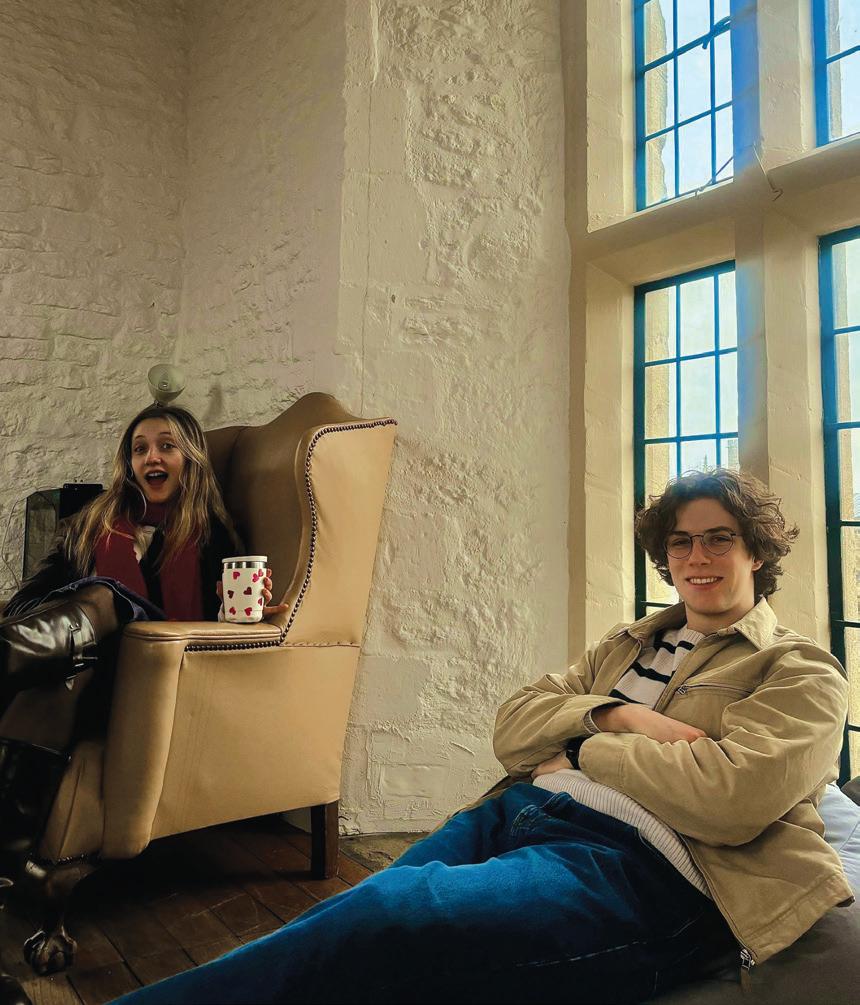
and Karma Nabulsi, is now a space used for multiple purposes. It has hosted art exhibitions and rather bijou drinks receptions, and been used by Junior Fellows for tutorials. But on Thursday afternoons it is open to students as a relaxation space where they can sit and enjoy the marvellous views out across Radcliffe Square and New College’s grounds. ‘An hour in the Tower’ has proved a very popular event and firmly established itself in the life of the Hall.
Last summer, the Main Library was briefly closed to readers to allow for an update to the Library’s power supply. In addition to safety and efficiency improvements, a full mains power supply was extended to all desks and USB sockets have been installed at all workspaces.
Thanks to the continuing generosity of Honorary Fellow John Cox (1955, English), a major accession has been
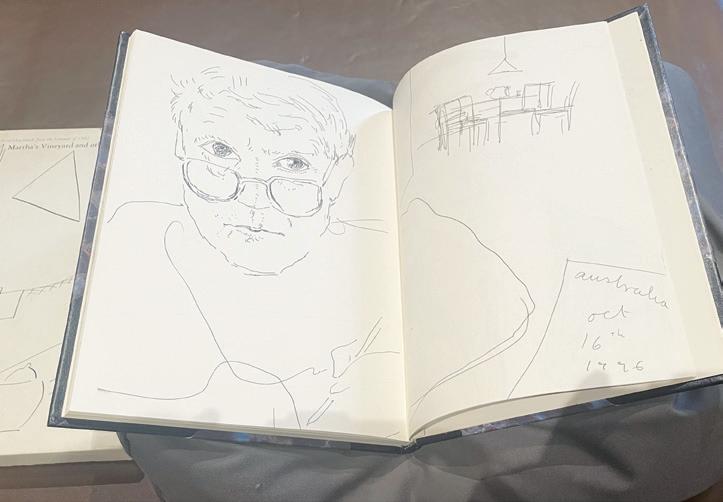
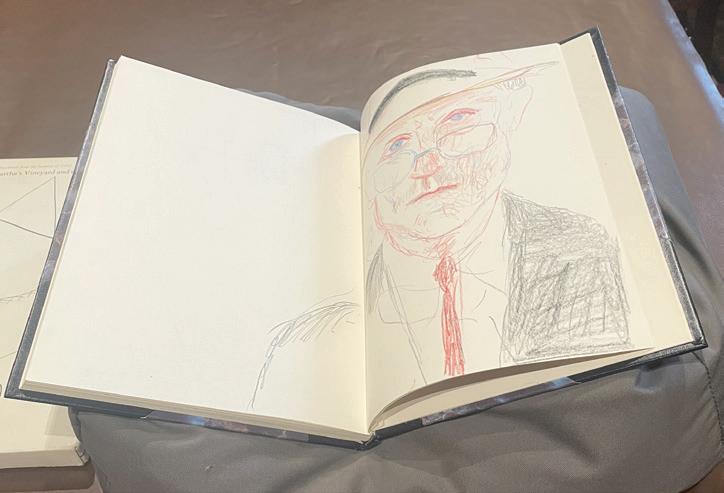
made to collections held in the Old Library.
In October, John donated a unique copy of David Hockney’s Martha’s Vineyard and Other Places (London, 1985) which has three original drawings by Hockney, including two self-portraits.
In Trinity term, a 1799 eighth edition of Samuel Johnson’s Dictionary was donated by David Kiggell on behalf of his brother-in-law Alexander Kirk-Wilson (1963, Philosophy). Another notable donation was a ten-volume set of The War Illustrated (1939–1946) donated by Robin Stephenson (1972, Jurisprudence) in memory of his father-in-law Douglas Frederick Cochrane, a veteran of the D-Day landings.
We have continued our programme of public openings and exhibitions showcasing treasures not only from the Old Library but also the Archives and Chattel collections. Subjects of our exhibitions this year have included the Olympic Games, Aularian MPs, ancient Egypt and the history of the Boat Club and boating in Oxford. We have welcomed
more than 3,000 people to the Old Library this year, including opening for the first time for the University Open Days. Even the Prime Minister (Honorary Fellow, 1985, BCL) popped in in February! If you are visiting College, especially with friends and family, and get in touch with us beforehand, we’ll be really happy to arrange a visit to the collection as part of your time in Oxford.
We have, as always, been fortunate to receive many donations to the Aularian, Fellows and working collections, for which we are deeply grateful. The Library received some 420 books in 2024–25. We remain particularly keen to receive works written by alumni – our special collection of Aularian authors is a really important part of our holdings and of the Hall’s heritage.
Jake Banyard, our new Early Career Graduate Trainee Library Assistant, has completed his first year with us, taking part
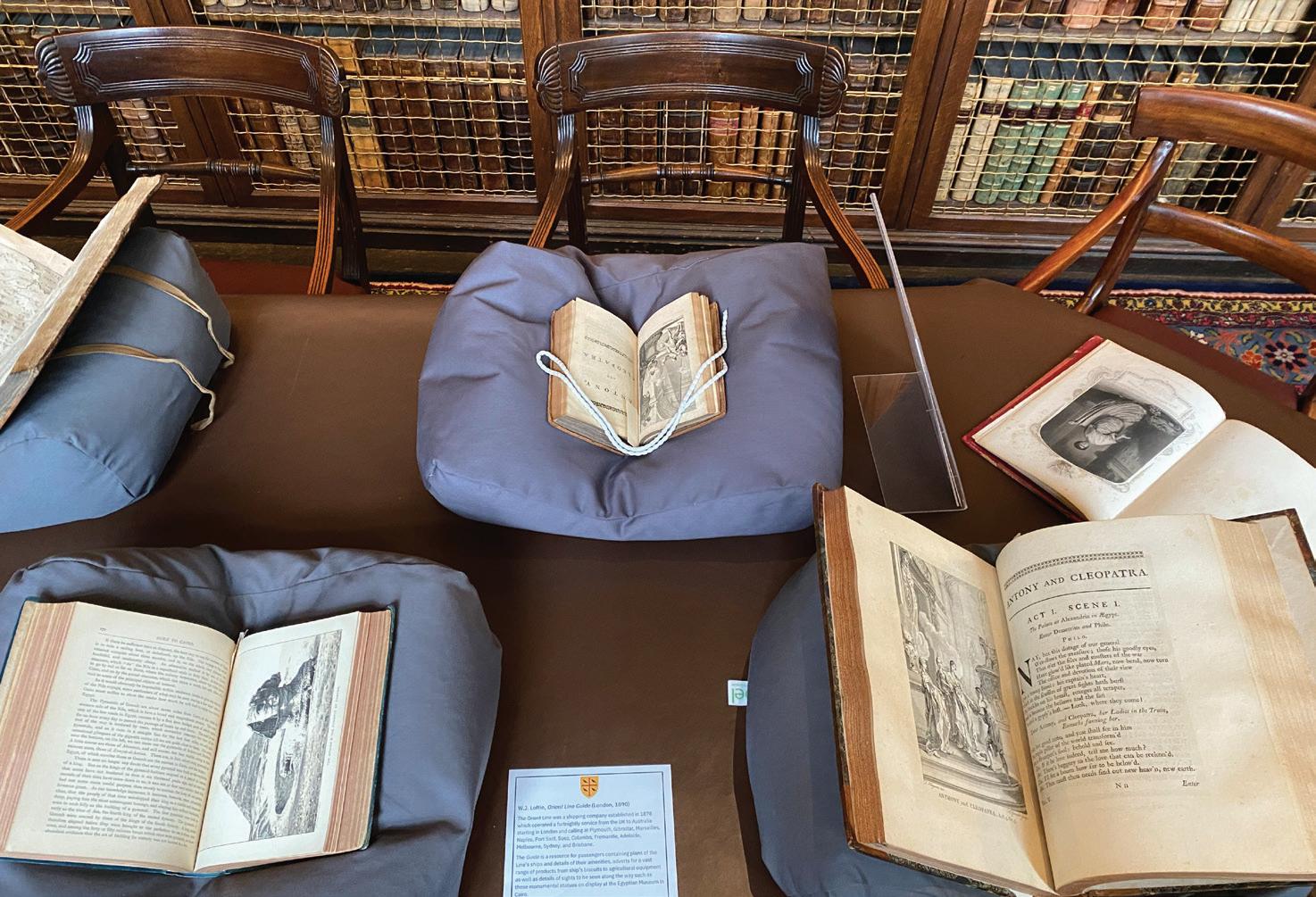
in the Bodleian Library’s long-established trainee programme. In September, Jake will begin a part-time Library Master’s degree at UCL, which will be fully supported by the College as part of his role.
During Trinity term and the Long Vacation, Laura Ellis joined to help us in the Library and also serve as Deputy Editor of this issue, for which we, and the Librarian and Editor in particular, are deeply grateful.
We are also grateful for the firm support and wise counsel of our Library Fellow, Professor Andrew Kahn, who has continued this year despite being on sabbatical – which is above and beyond the call of duty.
Finally, many, many congratulations to Deputy Librarian Emma Carter and her husband, Ben, on the birth of their son, Eric Henry Blacklee, on 7 July.
Over the year the Library was the beneficiary of many gifts for the Aularian Collection, which are listed below:
AKANBI, Gold (2021, MFA)
Source: A Voice for the Voiceless Gold Akanbi, 2001
30 ; 34 : Le Petit Mort Gold Akanbi, 2023
The Art of Overcoming the 600+1 Gold Akanbi, 2023
Nought the Fool Gold Akanbi, 2024
Orion’s Belt
Gold Akanbi, 2024
DIEPPE, Tim (1989, Mathematics)
The Challenge of Islam Wilberforce Publications, 2025
FOX, Jeremy (1964, French)
Scenes from Life Bubok Editorial, 2024
GORDON, Keith (1988, Mathematics)
Closure Notices: Ending HRMC Enquiries
Claritax, 2024
Schedule 36 notices: HMRC Information Requests Claritax, 2025
HAWKINS, John (1970, Physics)
Free Masonry and Christian Canon Law
Unpublished LL.M. Dissertation, Cardiff University, 2024
The Royal Family and the Masonic Charities: The Third Canon Portal Memorial Lecture
John Hawkins, 2024
KAHN, Andrew (Fellow and Tutor in Modern Languages (Russian)), Lipovetskiĭ, Mark Naumovich (eds.)
All the World on a Page: A Critical Anthology of Modern Russian Poetry
Princeton University Press, 2025
LARKIN, Fiona (1983, English)
Rope of Sand Pindrop Press, 2023
Vital Capacity
Broken Sleep Books, 2022
National Poetry Competition Winners’ Anthology 2024
National Poetry Society, 2025
LYNCH, Michael (1961, English)
Dickens and the Law
Acropolis Publishing, 2025
MALIN, Peter (1970, English)
Being Rich in Will: Encounters with Shakespeare and Other Dramatists
Quaint Device Books, 2025
MCALPINE, Erica (A C Cooper Fellow and Tutor in English Language & Literature)
Small Pointed Things
Carcanet, 2025
MUNDAY, Rodney (1967, English)
The Road to Emmaus: A Sculptor’s Journey
SLG Press, 2024
NEWLYN, Lucy (Emeritus Fellow) (ed.)
Edward Thomas: Prose Writings Volume IV – Selected Writings on Poetry
OUP, 2023
The Forum
Lucy Newlyn, 2024
SLATER, Martin (Emeritus Fellow)
The National Debt: A Short History
Hurst, 2025
TRUELOVE, Roger (1963, History)
Inside Left
The Conrad Press, 2024
TYTLER, Graeme (1954, French and German)
Further Facets of Wuthering Heights: Selected Essays
Troubadour Publishing, 2025
WALMSLEY, Roy (1959, Literae Humaniores)
‘Indecency between Males and the Sexual Offences Act 1967’, pp. 400–7 in The Criminal Law Review, July 1978
with White, Karen Sexual Offences, Consent and Sentencing
Home Office Research Study No. 54, 1979
Personal Violence
Home Office Research Study No. 89, 1986
with Charles Lloyd
Changes in Rape Offences and Sentencing
Home Office Research Study No. 105, 1989
Special Security Units
Home Office Research Study No. 109, 1989
with Howard, Liz and White, Shelia
The National Prison Survey 1991: Main Findings
Home Office Research Study No. 128, 1992
Prison Systems in Central and Eastern Europe: Progress, Problems and the International Standards.
HEUNI (European Institute for Crime Prevention and Control) Publication Series No. 29, 1996
with Kriznik, Irena
Bosnia & Herzegovina: Co-operation Visit to the Federation of Bosnia and Herzegovina on Behalf of Council of Europe, February 1998 Council of Europe, 1998
with Nestorovic, Dragan
Bosnia & Herzegovina: Co-operation Visit to Republika Srpska on Behalf of Council of Europe, November/December 1998 Council of Europe, 1999
Further Developments in the Prison Systems of Central and Eastern Europe: Achievements, Problems and Objectives
HEUNI Publication Series No. 41, 2003
With Coyle, Andrew, Fair, Helen and Jacobson, Jessica (eds.)
Imprisonment Worldwide Policy Press, 2016
WARWICK, Genevieve (1979, History) (ed.)
Art History Special Issue: Art and Technology in Early Modern Europe
John Wiley & Sons, 2016
Art History Special Issue: Art History 40: Image and History
John Wiley & Sons, 2017
Cinderella’s Glass Slipper CUP, 2022
Bernini Ephemeral and Preparatory Sculpture Routledge, 2025
WATSON, Andy (1985, Modern Languages)
Letters from Paris, 2020–2024 Andy Watson, 2024
WILLIS, Rebecca (1980, English)
Life, Death & Getting Dressed: How to Love Your Clothes and Yourself
New River Books, 2024
There were also many gifts of texts for the working collection from Fellows, alumni, student members and others. This year
Over the last year the careful transformation of the College gardens on the Queen’s Lane site has continued. Building on the dramatic planting of the Forum Garden – now something between a subtropical thicket and a film set, with its shimmering birch, brooding tree-ferns and two romping, huge-leaved Tetrapanax – we’ve begun working our way further around the site.
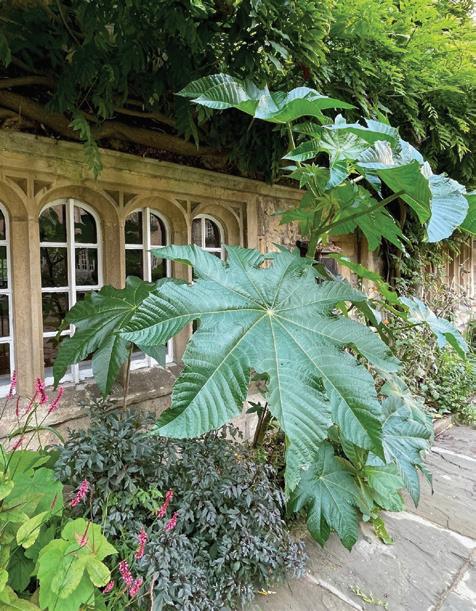
This year’s focus has been the Broadbent Garden and the graveyard area adjacent to St Peter-in-theEast. The olive tree has shot up to over ten feet, its silvery crown providing a striking focal point for the blue geraniums
particular mention must be made of the donations received from: the estate of Eric Caines (2005, History), Henrike Lähnemann (Professorial Fellow), Holly Langstaff (Fellow by Special Election), Stephen Leonard (1978, Jurisprudence) and Dave Fogg Postles (1967, History).
Gifts were also received from: Isabel Ambrose (2021, Jurisprudence), Kristiana Dahl, Eimear Fanthorpe (Lecturer in Law) and students from the Florida State University Law Summer School, amongst many others.
Thanks to everyone who has remembered the Library. We are grateful for the continued support we receive in this way.
James Howarth, Librarian and Fellow by Special Election
and agapanthus around it. The roses have been particularly good this year, and the beds have been underplanted with scented geraniums and – of all things – tomatoes, which are a favourite filler plant, thickening out tired borders in high summer with a fresh, unassuming green.
Meanwhile, the Graveyard is beginning a quiet shift towards something wilder and more wildlife friendly. A long mown central path is now flanked by areas left
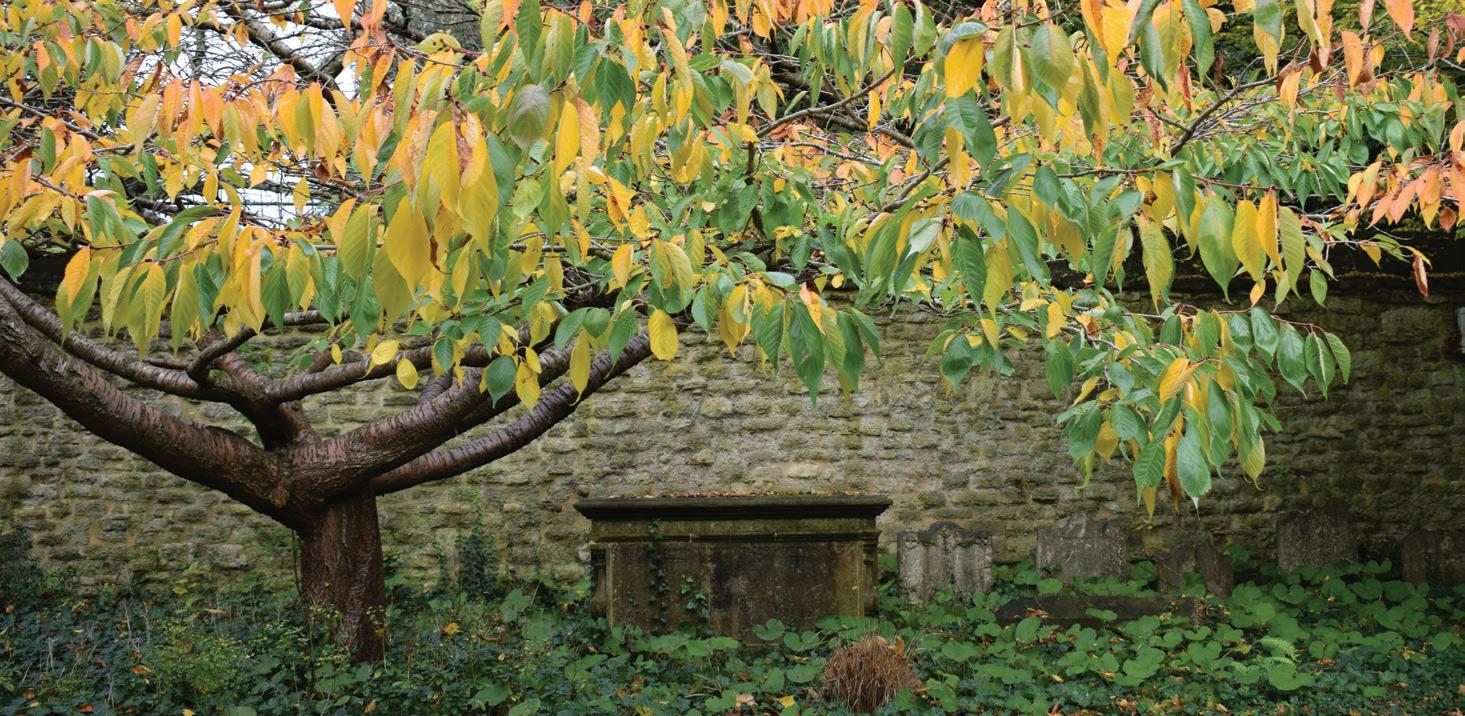
to grow into meadow through the summer months – an experiment to encourage pollinators and bring a different rhythm to the space. Wild plants and old-fashioned fodder plants like sainfoin (Onobrychis viciifolia) have been sown in pots and are growing on for planting out next summer. It is hoped that the sainfoin will be really impressive: an upright, pale pink vetchlike plant, it should fill the Graveyard in waves together with ox-eye daisies, fennel, lady’s bedstraw and knapweed. So far, so promising: wild marjoram and the parasitic yellow rattle are spreading. A major success was the removal – at long last – of the collapsed Thuja (white cedar) near the main college building: this had overshadowed the Graveyard for too long, adding little to its biodiversity in the process.
Elsewhere, the Front Quad continues to evolve after the heavy reworking in 2023–2024. The tulips were dazzling again this year – dense waves of fiery orange and wine-red in March and April – and have been followed by wine-coloured opium poppies. Then came airy clouds of Verbena bonariensis, scarlet Persicaria, red and orange dahlias, and the snazzy, embercoloured Tithonia rotundifolia ‘Torch’.
Two large metal tubs by the doors of the Chapel contain a sinister but beautiful pair of Brugmansia, the long yellow and red flowers of which have breathed out a faintly narcotic-seeming scent on summer nights. The planting on the shadier side remains a puzzle: astilbes and ferns have been trialled here, with mixed success, though Nicotiana sylvestris has once again added height and fragrance.
No garden ever fully behaves itself, though this year has thrown up fewer surprises than last. But the momentum of change is there, and it’s been a pleasure to hear from students and Fellows who have noticed and appreciated the shifts – especially from those pausing to sit or read near the olive tree or enjoy the planting in the metal troughs along the Old
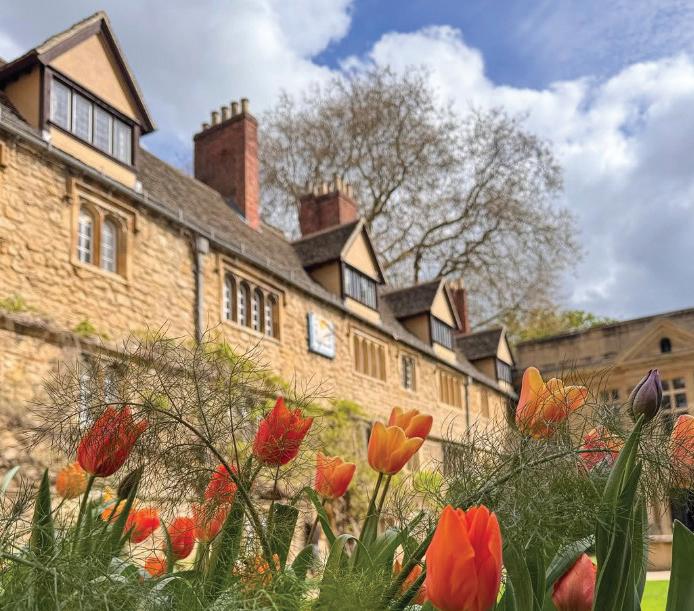
Dining Hall end of the Front Quad. Those who ask have usually found we have some spare seedlings going free, so that people can take a bit of the gardens home. We hope the work ahead will continue to bring the College gardens into new and richer life.
Mark Williams, Garden Fellow and Fellow and Tutor in English Language & Literature
A year of highs and lows, starting with three memorial services in Michaelmas 2024 and ending on a celebratory note with a joined colourful Corpus Christi celebration together with St Stephen’s House, Oxford.
I am grateful to Mariama Ifode-Blease who steered the life of Chapel for one year as Chaplain from February 2024 to February 2025, and who supported the Choir and College community warmly and prayerfully at a time of bereavements and transitions. Mariama continues her ministry at St James’s Picadilly, and pastoral work with the England women’s teams at the Football Association. Congratulations to the Lionesses!
About the new Chaplain: I am VicePrincipal and Director of Pastoral Studies at St Stephen’s House, an Anglican
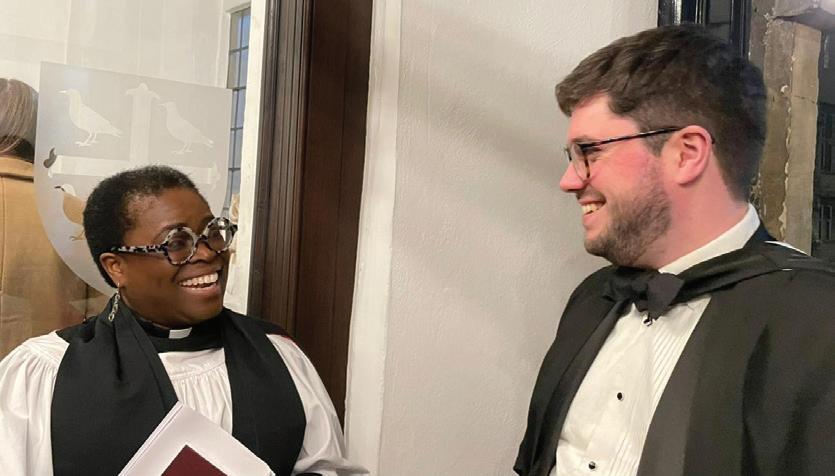
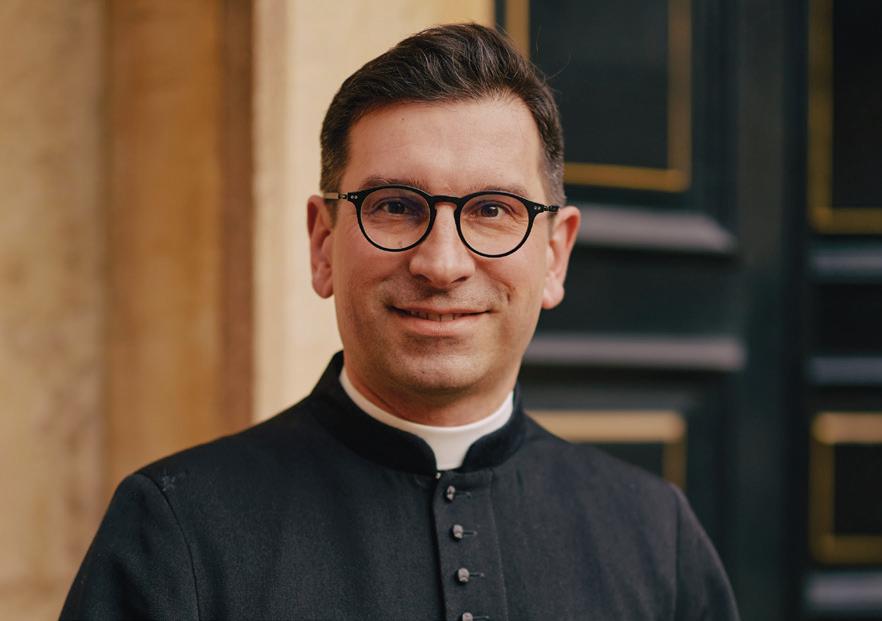
theological college in Oxford where those preparing for ministry in the Church of England receive formational training and theological education. Interactions and collaborations between the ordinand body and the Choir and Chapel team of St Edmund Hall are and will be high on my agenda. Together with the Institute of Sacred Music, Oxford (ISMO) and the Choir of St Edmund Hall, we are planning some exciting musical adventures, including a Sung Requiem Mass at St John the Evangelist in November 2025. I will be accompanying the Choir on their annual tour to Pontigny Abbey, France.
At my first Evensong, I was taking my cue from the consecration prayer of our Chapel
from the year 1682 which acknowledges that our human efforts to confine God in time and space are futile. Yet, the prayer also states that we, following the pious example of the servants of God in all ages, have erected and dedicated houses for his service and in all humility, and with readiness of heart “devote and offer up this place, this day, for ever unto thee, and utterly separating it from all profane and common uses, doe desire to Consecrate it to thy Service only, for hearing thy Word, Celebrating thy Sacraments, and offering up the Sacrifices both of Prayer and Thanksgiving; As alsoe for the Costody of the Bodyes of thy servants that shall depart this life…”
Now, at the end of my first full term as Chaplain at St Edmund Hall, I see the role as a great gift to be shared with the wider College community. Our Chapel provides a physical place in this college to step out of the ordinary routines and pressures of life and to enter into silence and connect with our inner selves and one another. At Evensong during Trinity term 2025, we explored themes inspired by the 1,700th anniversary of the Nicene Creed. It was enjoyable to see, for example, how Sr Clare-Louise from the Sisters of the Love of God brought her perspective as nun
to bear on the birth of Christ, and to be able to discuss with her and members of College community after Evensong and over meals in the Hall.
One particularly noticeable feature was the celebration with students and alumni, including the baptism of a daughter of Aularians in the underground Crypt and two marriages in Chapel, one of which featured the Hall’s first-ever simultaneous reading of the gospel in Mandarin Chinese by the parents of the groom! There were lots of opportunities to bring out the magnificent St Edmund cope. The last event of the year saw a dazzling display of liturgical vestments and even a monstrance in Chapel as we celebrated Corpus Christi together with ordinands and staff from St Stephen’s House. More joint events are planned for the coming year, so watch this space!
During Michaelmas, we will be exploring all the parts and fascinating facets of Evensong itself, including reflections on psalms, canticles, music, silence and prayers as ways of sanctifying time and space. All are welcome to attend Evensong followed by drinks on Sundays in term time, at 6.15pm.
The Revd Andreas Wenzel, Chaplain and Fellow by Special Election
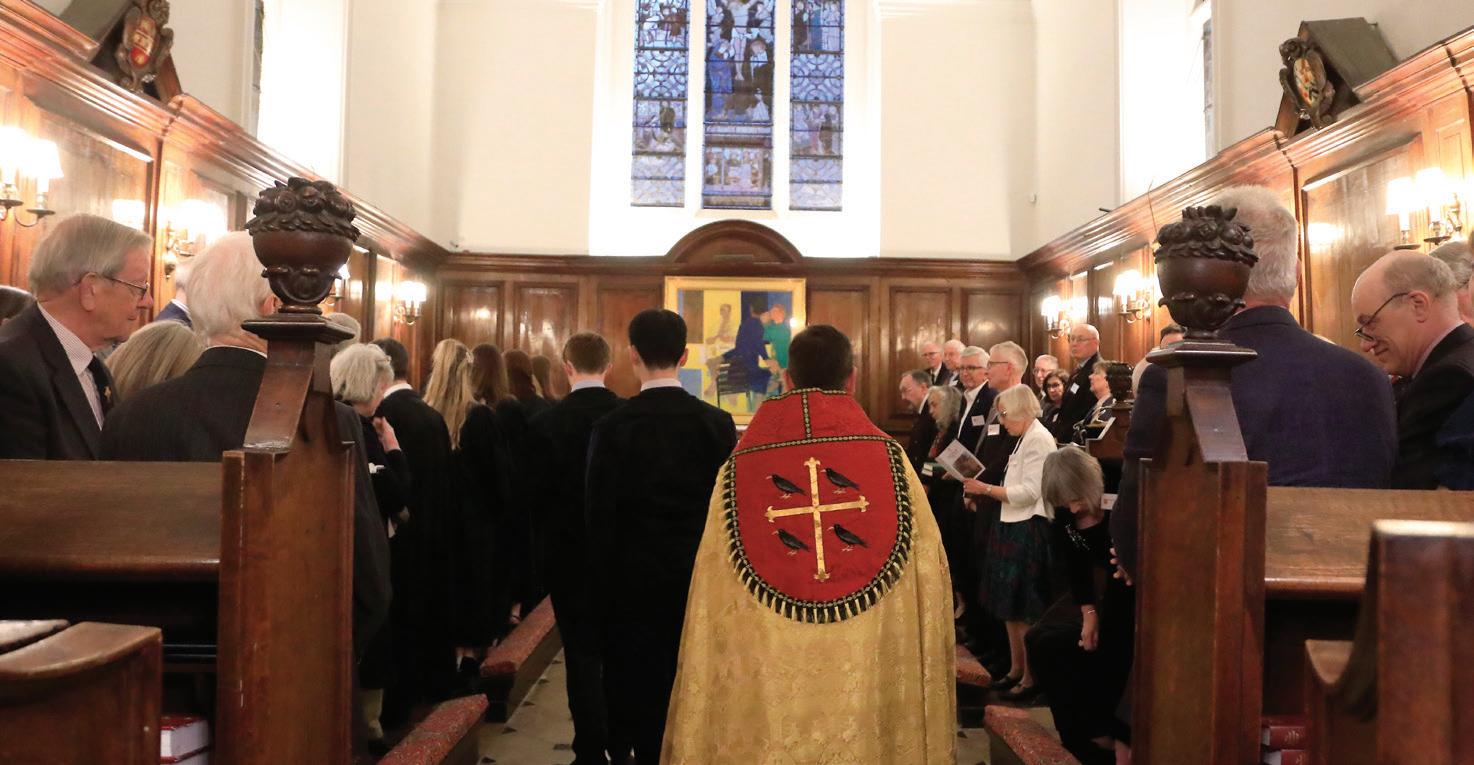
Wandering through the Hall this year, you may well have heard music in unexpected corners: the College Choir rehearsing for Compline in the Crypt, a lunchtime recital in the Old Dining Hall, or jazz over breakfast in the Wolfson Hall to cure the ‘Fifth Week Blues’. After the sad loss of my esteemed predecessor, Dr James Whitbourn, music at the Hall has returned with renewed energy and spirit. As a newcomer to the Hall, it has been a joy to see (and hear) our community’s strong commitment to music in many forms, building on the foundations so excellently set up by Dr Whitbourn, while also striking out in new directions.
Of primary importance has been to revive the Music Society, giving our students the structure and support to pursue their own musical interests in College. Under the leadership of clarinettist and student David Hrushovski (2023, Philosophy and Modern Languages), the new committee have shown indefatigable creativity and gusto, organising their own agenda and meetings, elections and a host of events that weave music into daily life. Our lunchtime recitals, launched as a fortnightly experiment, quickly became a weekly highlight, filling the Old Dining Hall or Chapel with junior, middle and senior
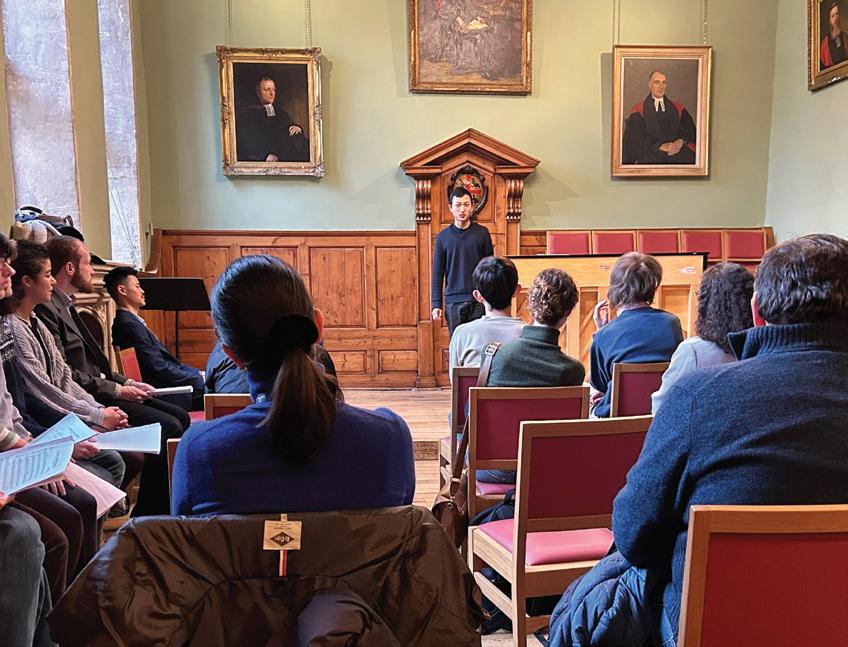
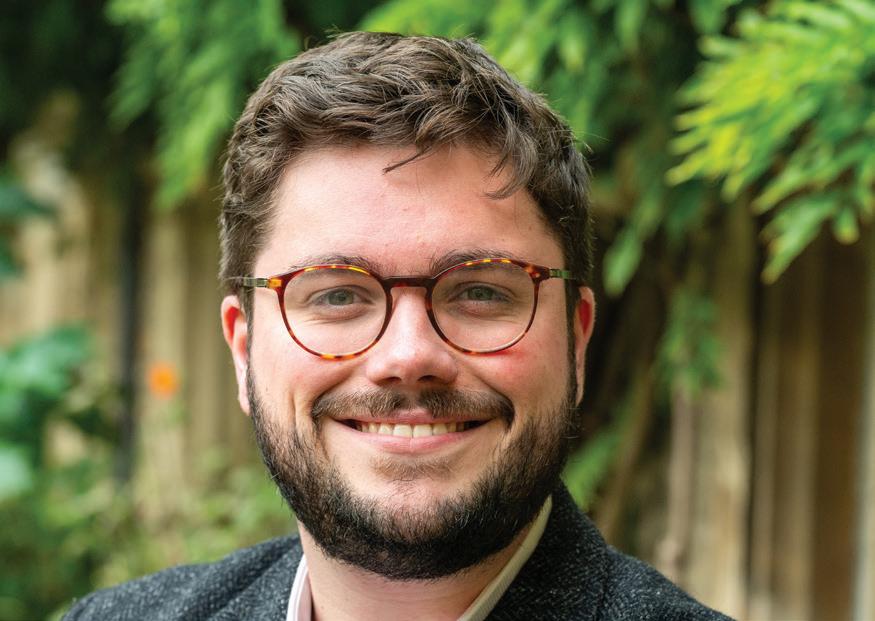
members of the Hall, as well as visitors and friends. The sheer range of talent has been astonishing, especially in a college where music is not currently offered as a degree subject.
Beyond formal recitals, the Music Society have also supported informal initiatives, including the successful ‘Week 5 Blues at Breakfast’, headlined by a student jazz band, and several social events including an open mic night. The Society’s continued development will be central to sustaining the broader musical culture that is now flourishing at the Hall, with future plans including a College-wide concert, more social events, joint initiatives with other college music societies and (if rumours prove true) a Teddy Hall musical.
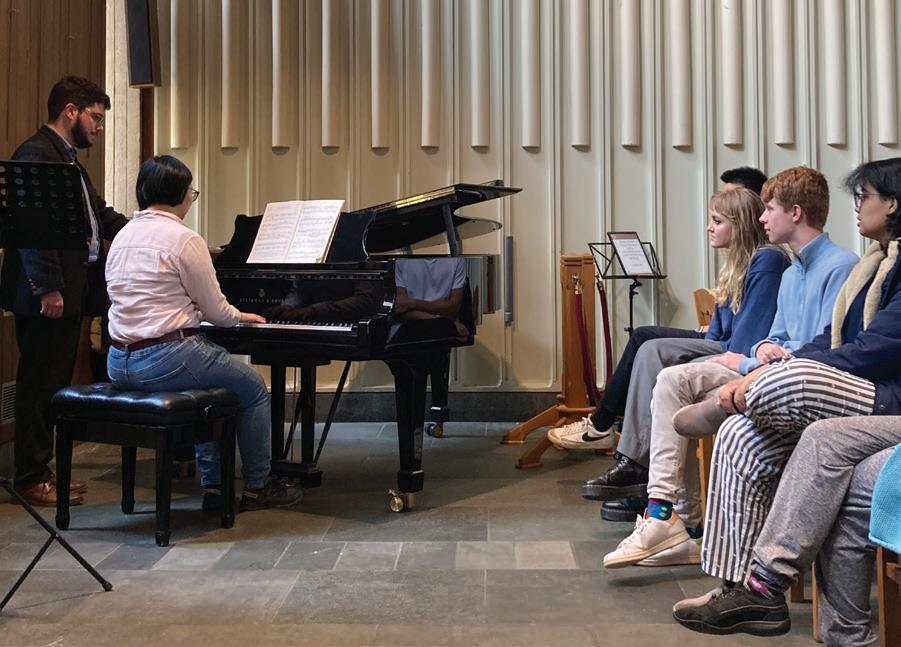
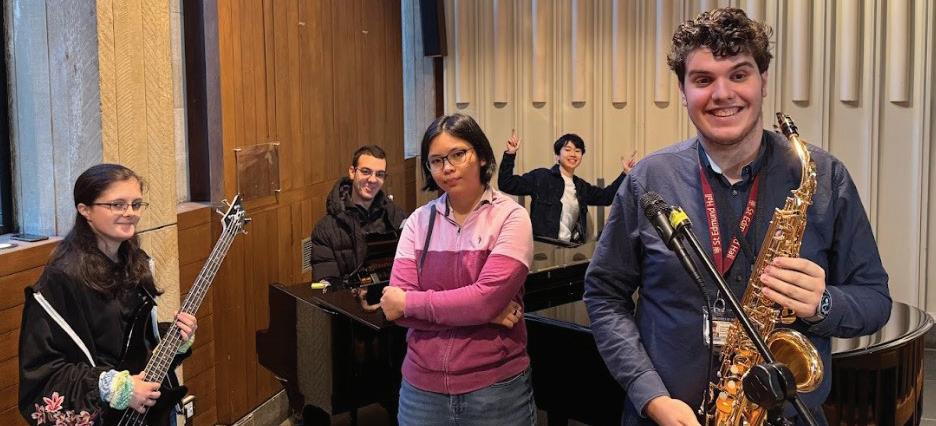
At the heart of this continued growth stands the College Choir. They continue to sing Evensong every Sunday, offering an ambitious mix of music from the choral tradition, balancing well-known pillars of the repertory with modern compositions and rediscovered treasures. For the first time, we now offer individual singing lessons to every member, under the expert teaching of Julie Cooper and, as of last year, Carys Lane. The improvement has been remarkable, not just in terms of the Choir’s vocal development and their improved group sonority, but also their individual and collective confidence and commitment.
The Choir’s weekly schedule has expanded to include candlelit Compline in the Crypt. This popular nighttime service draws in significant numbers of students and members of the public, who find in it a calm and reflective close of the day – helped, no doubt, by port and hot chocolate afterwards. Their busy year has also included participation in the biennial Medieval Mystery Play Cycle; the yearly joint Eucharist in the University Church for Ash Wednesday with the choirs of University, Brasenose and Balliol Colleges, which included a performance
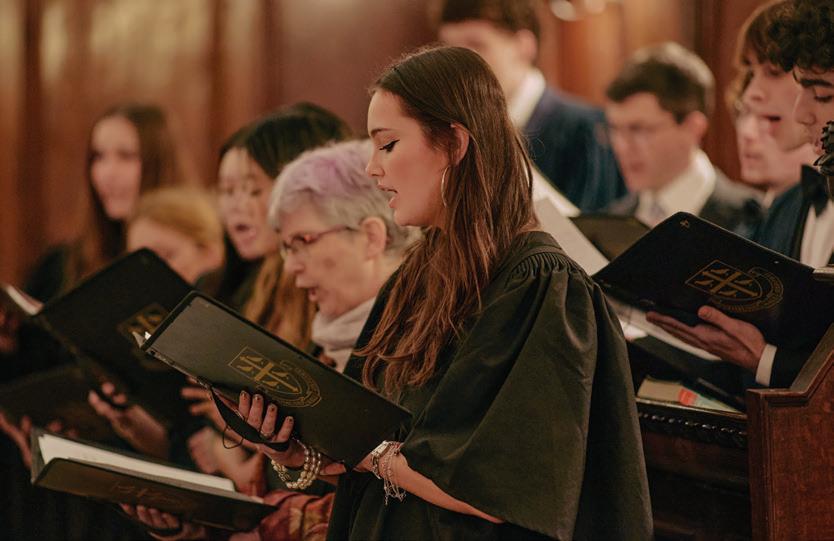
of Sir James MacMillan’s extremely difficult Miserere; and, of course, Carols in the Quad (with a student brass band). They also sang at the memorial services for Professors John Knight and Stuart Ferguson, in representation, and service, of the Hall community.
In Hilary term we welcomed the new Chaplain, Andreas Wenzel, who with his profound liturgical understanding, thoughtful guest preachers and his opening sermon on the symbolism of our Chapel, set the tone for a chaplaincy rooted in deep engagement with Hall life. Evensong attendance has risen significantly, due in no small part to the Choir’s growing musical excellence as well, with members of the congregation
– increasingly drawn from the public –often requiring additional seating in the antechapel.
We welcomed nine new members into the Choir, all but one drawn from across students at the Hall. As Dr Whitbourn wrote here previously, the fact that our choir is almost exclusively comprised of students (and Fellows) from our community is a testament to the importance of music and the Chapel at the Hall, and its impact on our students.
Last year also brought with it some farewells. We said goodbye to Chaplain Dr Mariama Ifode-Blease in Hilary term, with a performance of If ye Love Me by Thomas Tallis (Mariama’s favourite composer), followed by speeches from the Principal and myself. And of course, the final Evensong of Trinity term was not without some tears, with the Choir performing maturely, confidently and generously in an overflowing Chapel. Over dessert in the SCR, I offered some words of farewell to each of our 11(!) Choir leavers individually, with the Principal handing out Teddy Hall bears, and all saying the College toast together – a bittersweet moment of celebration tinged with Hall Spirit. Among them, Senior Organ Scholar Alyssa Chan (2021, Engineering)
leaves for the Birmingham Conservatoire, to continue her musical studies on the prestigious postgraduate course in Organ Performance.
The Hall now boasts not one but three choirs. Alongside the College Choir, the non-auditioned Teddy Hall Chorus, directed by Abigail FernándezArias (2024, Modern Languages and Linguistics) and Luke Mably (2024, Modern Languages), offers a welcoming entry point into music-making. They sang outdoors before Formal Hall in Michaelmas and gave a full recital in Hilary. The St Edmund Consort, led by Professor Henrike Lähnemann, continues to sing two Complines each term in multiple languages, blending scholarship with performance.
Music has also been integral to College celebrations. At the St Edmund Day Feast, Luke Boulton (2022, Medicine), Ekaterina Rahr-Bohr (2021, Modern Languages) and Aaron Rambow Czarny (2023, Mathematics) played an ebullient Beethoven Piano Trio. At the Diwali formal, Manjistha Datta (2024, DPhil Psychiatry) sang a piece of Indian classical music. For Chinese New Year, one of our Organ Scholars, Michelle Ng (2021, Mathematics), played an arrangement of
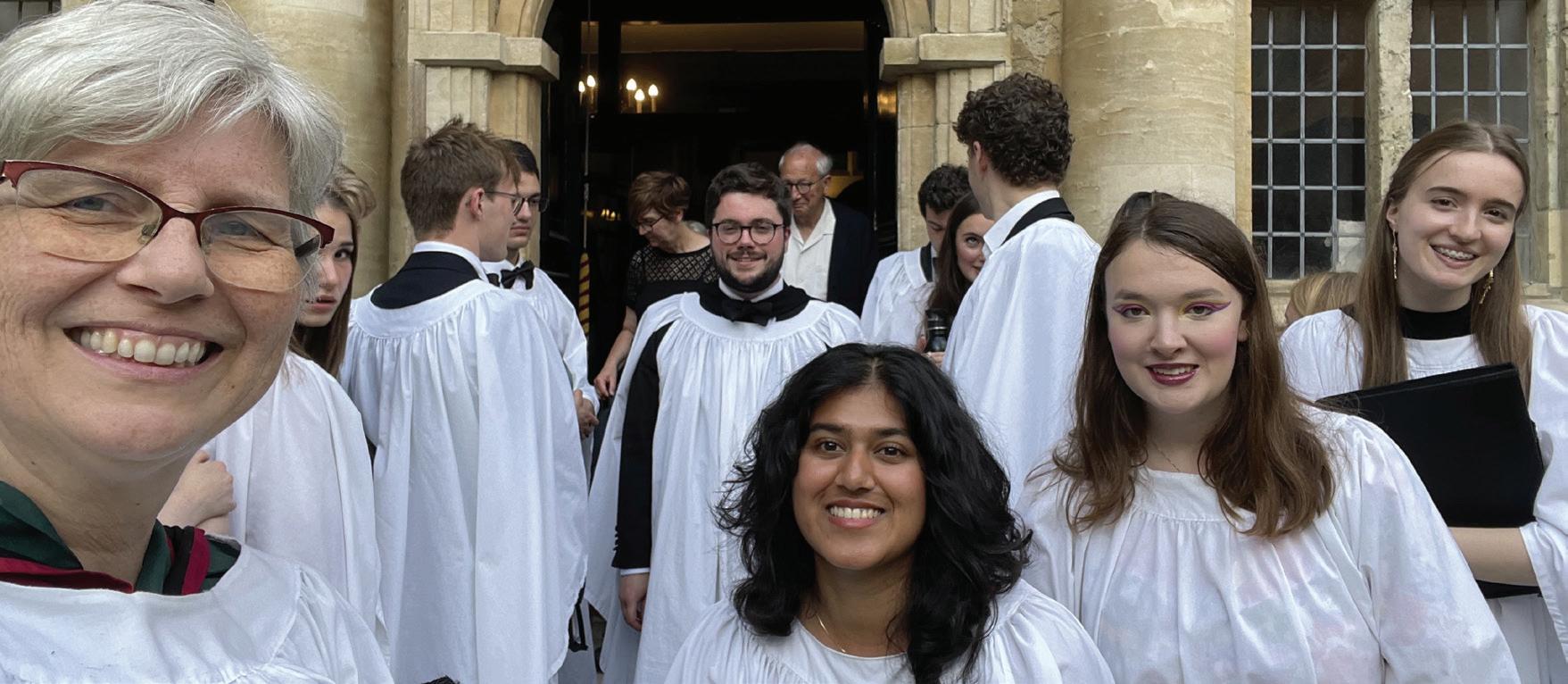
a traditional Chinese song on the Hall’s magnificent Steinway B. And at the Charter Dinner, alumna and violinist Gabriele Brasaite (2019, Chemistry), now studying at the Royal College of Music, came back to perform a piece of Clara Schumann – on a violin belonging to Professor Lähnemann’s family!
Behind the scenes, quiet improvements have supported this flourishing. The damp Andrew Garlick harpsichord was moved to the Music Room, tuned and restored, and the Choir Vestry has been fitted with new robe pigeonholes and a practice keyboard. The Music Room now has an electric drum kit (generously donated by Theo Breakspear) and new equipment, and will benefit from the installation of some artwork, curated by our Chattels & Pictures Fellow, Professor Jonathan Yates
Looking ahead, next term will see the
launch of Music at St Edmund Hall, a new programme of concerts, workshops and talks that will open our doors wider to the public while giving our students new opportunities to shine. The Choir will return to Pontigny Abbey in September, with the added adventure of performing in the nearby town of Noyers for the very first time. And there are early conversations about bringing music into the classrooms of Orchard Meadow Primary, our twinned school – a chance for Teddy Hall students to share their skills and inspire the next generation.
After a year of transition, musical life at Teddy Hall is once again thriving, built on strong foundations, fuelled by student creativity and set to flourish in the years ahead.
Carlos Rodríguez Otero, Director of Music and Fellow by Special Election
This year marked another successful chapter for outreach at St Edmund Hall. There has been change in the Access & Outreach Coordinator role – Rebecca Smithson sadly left the College in August 2024, after two years of valuable contributions to the outreach programme. Following Rebecca’s departure, Calum Stewart took the role for the academic year 2024–2025, before taking up a teaching position in September 2025. Despite a quieter Michaelmas due to staff absence, our programmes bounced back to life in Hilary, enabling us to engage with over 2,500 prospective students across Leicestershire and Derbyshire.
The Unlock Oxford programme continues to go from strength to strength. The urban stream welcomed over 200 targeted
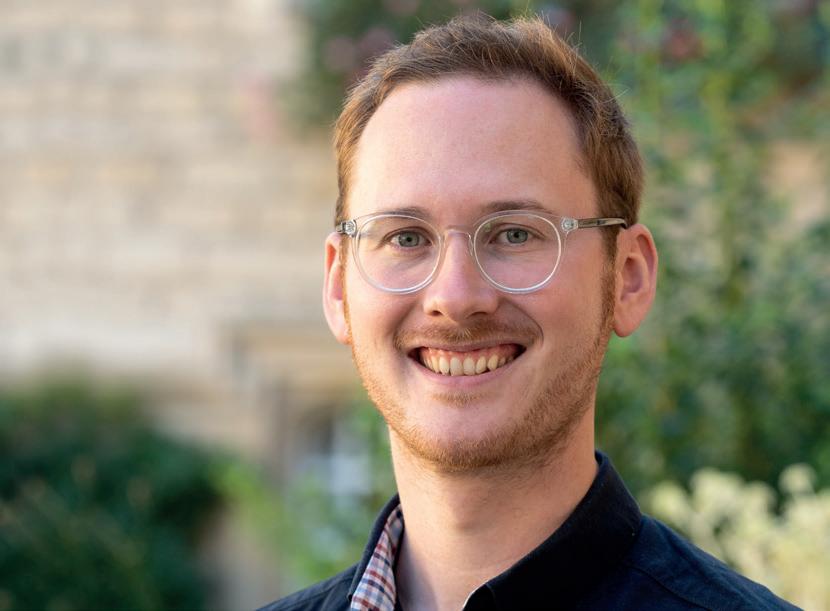
students from inner-city schools in Derby and Leicester across four residentials in March and April. Students took part in academic taster sessions, tackled Oxbridge myths and gained confidence in their future aspirations, with 82% saying
they are now likely to apply to Oxford. Meanwhile, the rural stream worked with over 220 students from across the two counties, offering guidance on A-level choices, university applications and student finance. Plans are underway to expand the provision for targeted rural schools by hosting enhanced school visits to Oxford, featuring broader content and a more in-depth experience.
Our work as part of the Oxford for East Midlands consortium continues into its fifth year, and through Oxford NextGen we led in-school visits and hosted five college days for our eight partner schools. The highlight for students completing the four-year programme is a residential focused on crafting the most competitive application possible. The residential combines application workshops and leads directly into the University Open Day and a chance to explore the wider university.
The Big Think competition saw more applications than ever before, with over 270 students submitting five-minute video answers on a range of big questions set by tutors at the Hall. You can read more about the competition in Calum’s report on p. 97.
In recent years, the College has partnered with Orchard Meadow Primary School in Blackbird Leys, as part of a ‘twinning’ initiative led by Trinity College and the
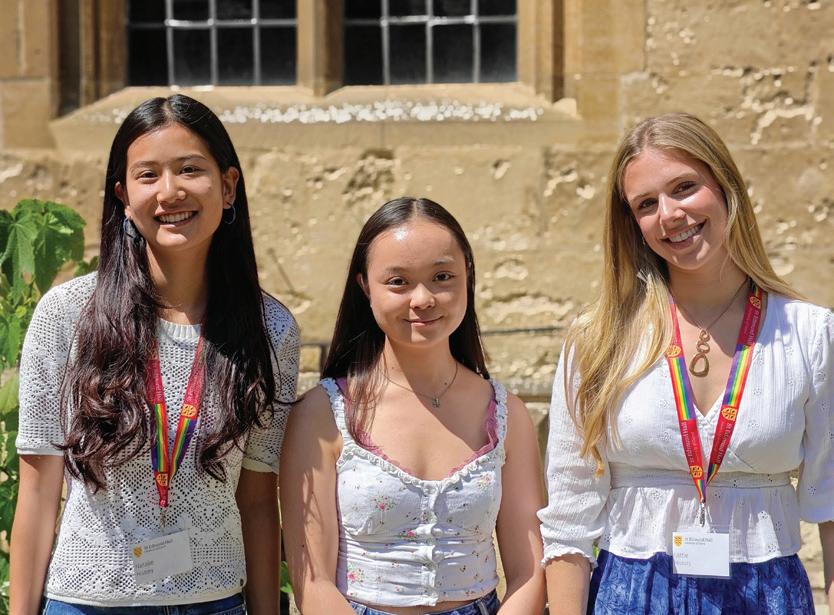
Oxford Hub. The school serves an area of high socioeconomic disadvantage, with many pupils having never left the estate where they live. The twinning programme works in-school with pupils and hosts enrichment visits to St Edmund Hall. Students from the undergraduate and postgraduate communities have signed up to deliver mentoring sessions at Orchard Meadow, with 96 of these taking place over the 2024–2025 academic year. In May, a group of Year 3 students visited the Hall and enjoyed a treasure hunt, an engaging talk on fossils from Dr Luke Parry, Tutorial Fellow in Earth Sciences, and then headed over the road to explore the Botanic Garden. It was a ‘five-star trip’ according to one of the pupils and was very well received by senior staff at the school. Many thanks to the Director of Development, Andrew Vivian, and the JCR, who led the visit. We look forward to continuing our partnership in the coming years.
Our Offer-Holders’ Day in February continues to be rewarding and wholesome, and this year saw 80 offerholders welcomed to the Hall to meet current staff and students and get to know the College they may soon call home. From feedback, encouragingly, all attendees left with a positive impression of Teddy Hall, and 84% felt more likely to accept their offer after attending.
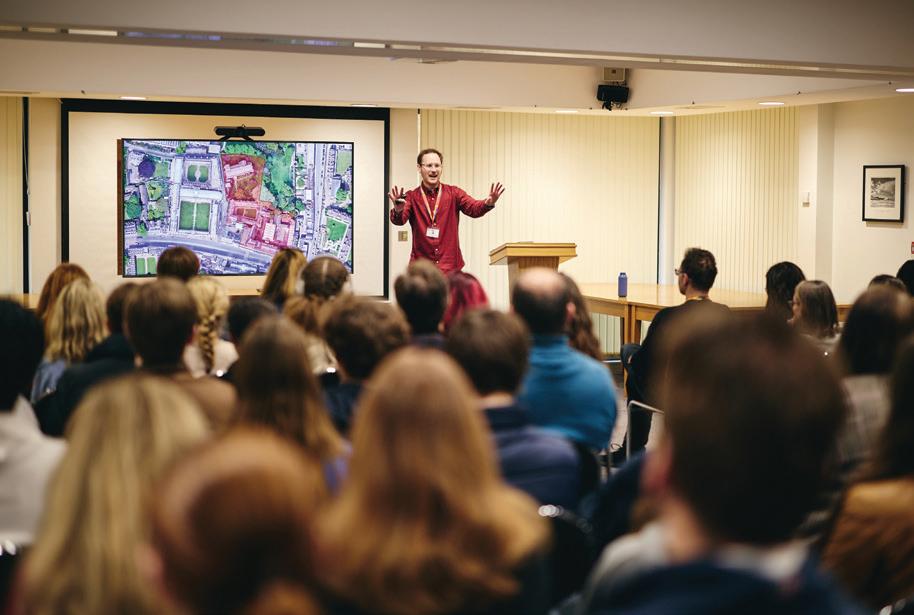
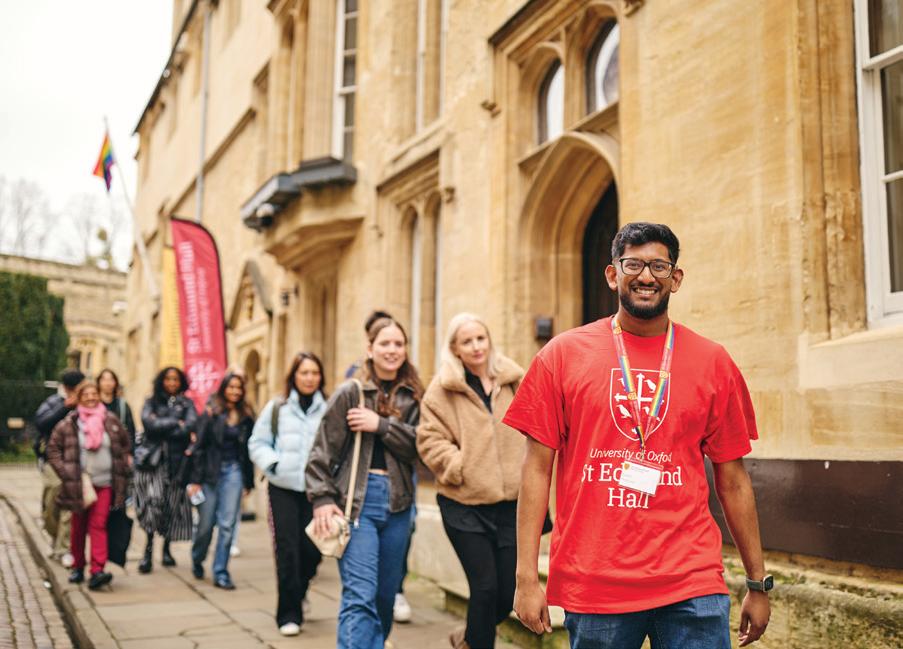
Direct engagement with schools remains at the heart of our work. We hosted 38 school visits to the College and delivered 62 in-school sessions, including a roadshow week in October alongside four student ambassadors that reached over 600 students.
Our outreach work wouldn’t be nearly as effective without the energy and commitment of our student ambassadors. We are lucky enough to have a team of over 60 enthusiastic and engaging student ambassadors who welcome school groups to the College, provide insightful tours
and run small group discussion exercises intended to emulate Oxford’s tutorial teaching. The calibre of our ambassadors is well reflected in a quote from the Executive Director of Post-16 Education at a trust in Derby: “In 20 years of school visits to Oxford, these are the best student ambassadors that I have encountered.”
Our JCR Access Officers, Jade Vohra (2023, Physics) and Alex Berresford (2022, Engineering), also piloted a STEM Study Day in Loughborough, offering subject-specific workshops on admissions tests and interview questions for students looking to apply to subjects in the sciences. This was well received, and we will look to make it a regular fixture in future.
It’s been another rewarding year for outreach at Teddy Hall, and we look forward to building on this momentum in the year ahead. With new ideas, strengthened partnerships and the continued enthusiasm of our students and staff, we’re excited to see our work grow even further in 2025–2026.
Luke Maw, Outreach & Admissions Manager
This academic year we had 47 Visiting Students at the Hall, studying a wide range of subjects alongside our matriculated undergraduate cohort. I was impressed, as always, by their enthusiasm, and their willingness to navigate new academic systems and the challenges of living and learning at Oxford. Our Visiting Students benefit from the expertise and care of our College tutors and staff, and the warmth and supportive atmosphere of the College community. While our academic programme is rigorous and demanding,
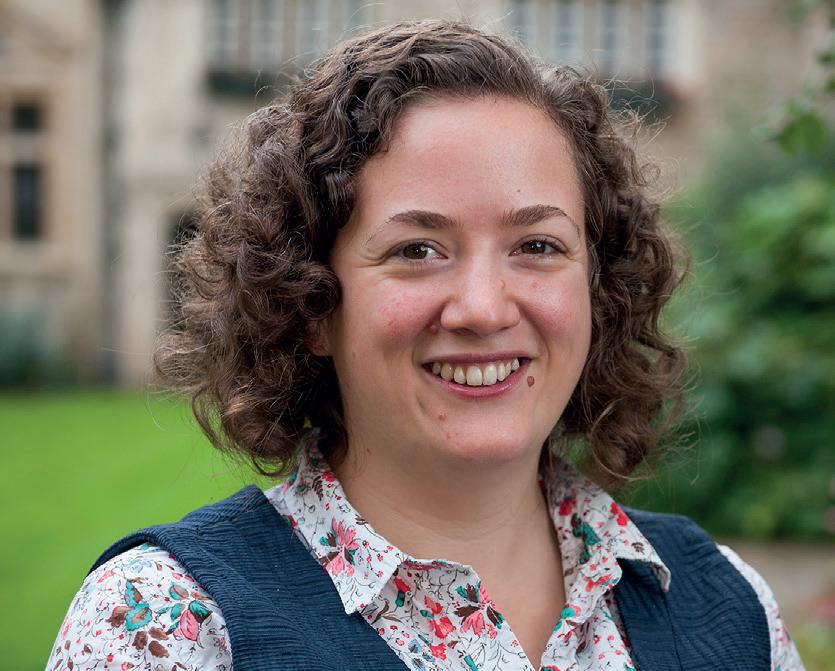
the majority of Visiting Students found time this year to pursue extracurricular activities, including music, sports, drama, and other clubs and societies.
In most practical matters, the Visiting Students engage with the College’s structures in the same way as our matriculated undergraduates, including the Welfare team, College Office and Bursary. This year’s Visiting Students have praised the College staff, the city, the tutorial system, their accommodation and the Teddy Hall community at large. It almost goes without saying that one of their favourite things has been the high quality of our food.
As in previous years, I had the privilege of teaching several students for Comparative Literature and Film Studies. Our Visiting Students have brought a broad base of knowledge to bear on their studies, and it has been a joy to see them getting to grips with the tutorial system and becoming increasingly confident in their analyses and arguments. Whether they are here for a term, two terms or the whole academic
year, our Visiting Students come prepared to get the most out of their experience.
The Visiting Students also benefitted from the guidance of our two Visiting Student Junior Advisers, James Altunkaya (2022, DPhil Population Health) and Shivani Suresh (2023, DPhil Psychiatry). They play an important role in supporting the Visiting Students, welcoming them upon arrival, hosting informal drop-in sessions and providing a source of advice. We bid both James and Shivani farewell this year, and I would like to commend them for their superb work in this role.
Finally, the Visiting Student programme could not function without the outstanding work of colleagues in the College Office, in particular Admissions Officer Scarlett Short and Academic Records Manager Melanie Brickell.
I look forward to the arrival of our new cohort of Visiting Students in October 2025.
Alexandra Lloyd, Fellow by Special Election in German, Senior Dean and Tutor for Visiting Students
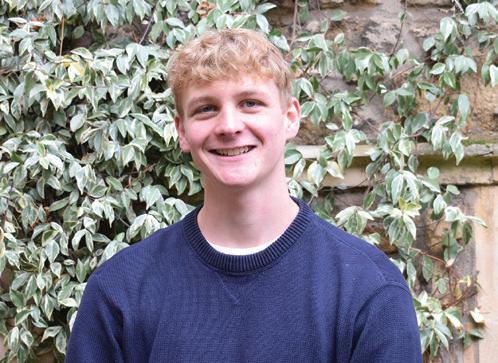
It is my pleasure to report on another fantastic year for the JCR. Enthusiasm and Hall Spirit have long been mainstays within the undergrad community and they were once again on display with many members getting involved in a huge array of activities.
Freshers’ Week was, as always, packed with events, excitement and activity as Teddy veterans helped new faces settle
seamlessly into College life. Our Entz Officers, Harriet Humfress (2023, Fine Art) and Tiffany You (2023, PPE), came back from the summer vac with the perfect social calendar prepared with events and activities spanning all the best places across town, whether that be the ice cream parlour, the ice skating rink or iced drinks at the karaoke bar. It was so lovely to see new friendships form and memories made.
Michaelmas term culminated in the annual Oxmas festivities, as the beautifully decorated Front Quad, equipped with Christmas tree and glistening fairy lights,
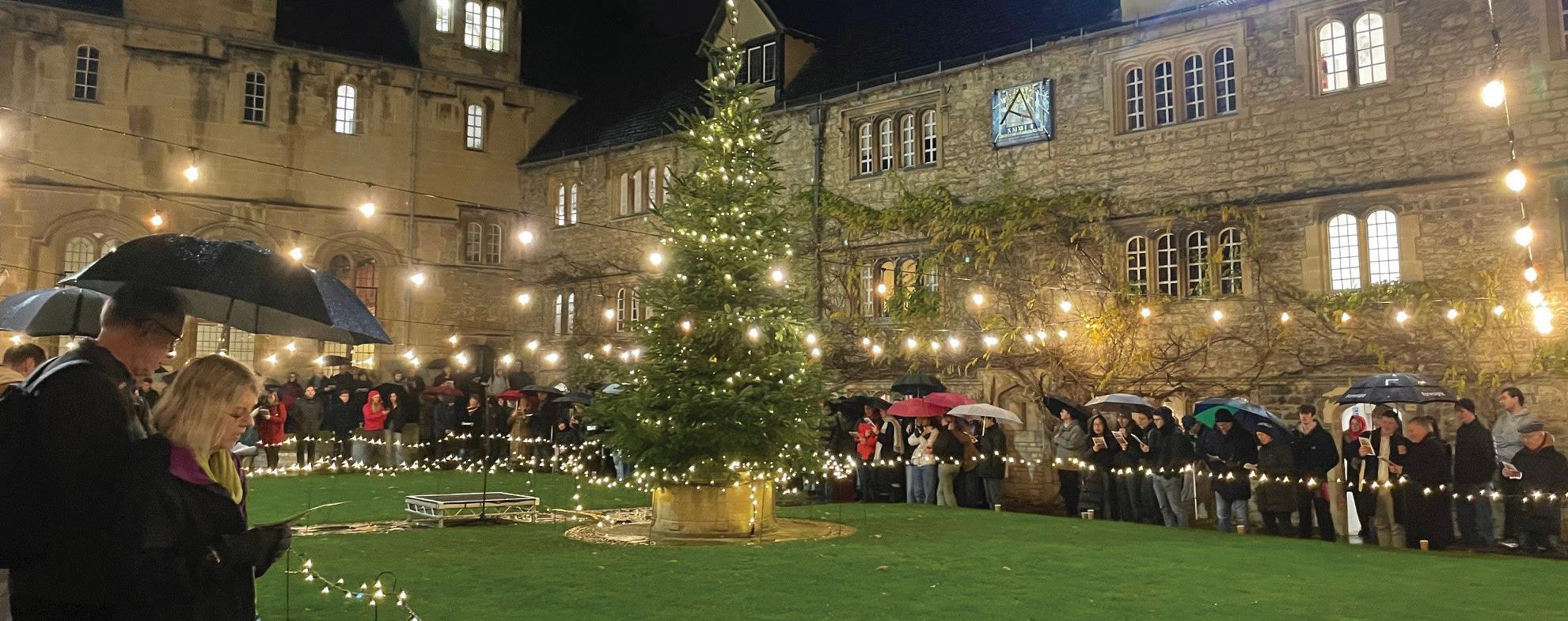
was the scene for song and poetry during Carols in the Quad. The Christmas spirit reached a climax with the JCR’s Christmas Dinner in the Wolfson, which concluded with speeches from our beloved outgoing JCR President Fizza Zaidi (2022, English) and Chairman Euan Simmonds (2022, Engineering), followed by the not-sotraditional rendition of WonderHall. Our return in January was marked by the same old Hilary weather. On the other hand, we had a new JCR Committee packed with new talent from our Fresher intake. A particular highlight of Hilary for second years, such as myself, has always been Halfway Hall. This event marks the halfway point for many undergrad degrees and is celebrated with formal dinner at College before a big social.
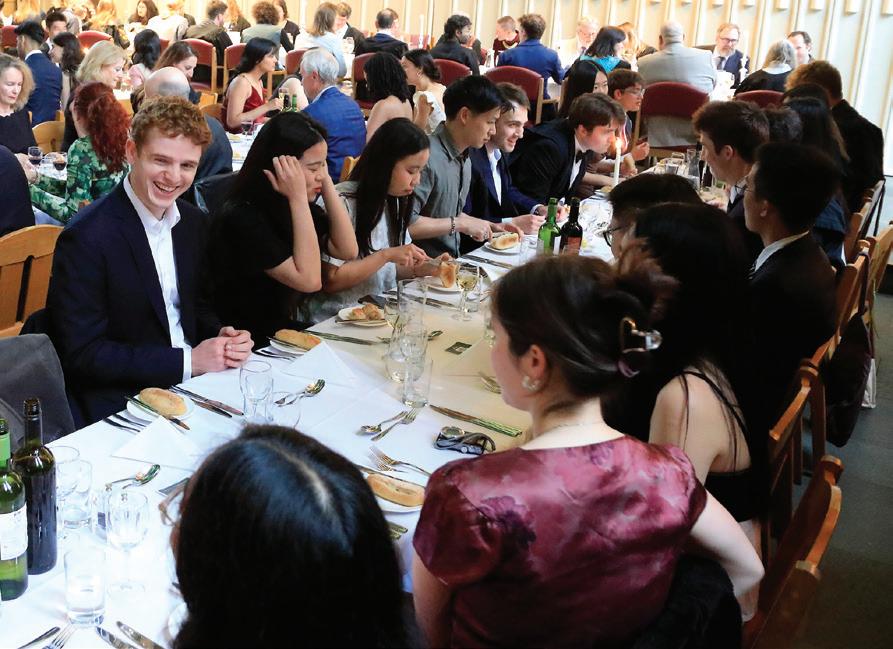
The high point of the evening is always the ‘most likely to’ section where we as a cohort hold an award ceremony with some weird and wacky criteria. This is an evening filled with nostalgia for how quickly our degrees fly by but also such a wonderful celebration of our beloved Teddy community.
Trinity term also saw the long-awaited Charity Formal, organised by our everdiligent Charity Rep, Nyle Parvez (2023, Experimental Psychology). The evening saw many ways to donate to our chosen charity, Macmillan Cancer Support, including a post-dinner raffle boasting a cheese board, a fruit hamper and fine wine amongst the prizes. Hopefully, as with my predecessor Fizza’s work on the International Women’s Day Formal (which was once again a huge success), this marks the start of a new event in the calendar to celebrate and promote what we love and appreciate at the Hall.
While we’re on the topic of charity work, I am also very proud to report on the ever-strengthening bond we are forging with Oxford Mutual Aid through termly donations and volunteering work. It is so amazing to build strong links with the local community, helping us support and appreciate the people of Oxford.
As May rolled around once more, we experienced the emergence of the sun in all its glory. As a JCR we enjoyed the huge array of lovely green spaces which Oxford has to offer, whether that be University Parks, Christ Church Meadow, or even dips in the lake at Hinksey (for those willing to risk the waterborne diseases). The summer at Oxford is of course not better encapsulated than at Summer VIIIs where we sent a flotilla of boats out onto the water. While our fortunes were mixed on the river, the atmosphere was wonderful and the boathouse BBQ tasty as ever.
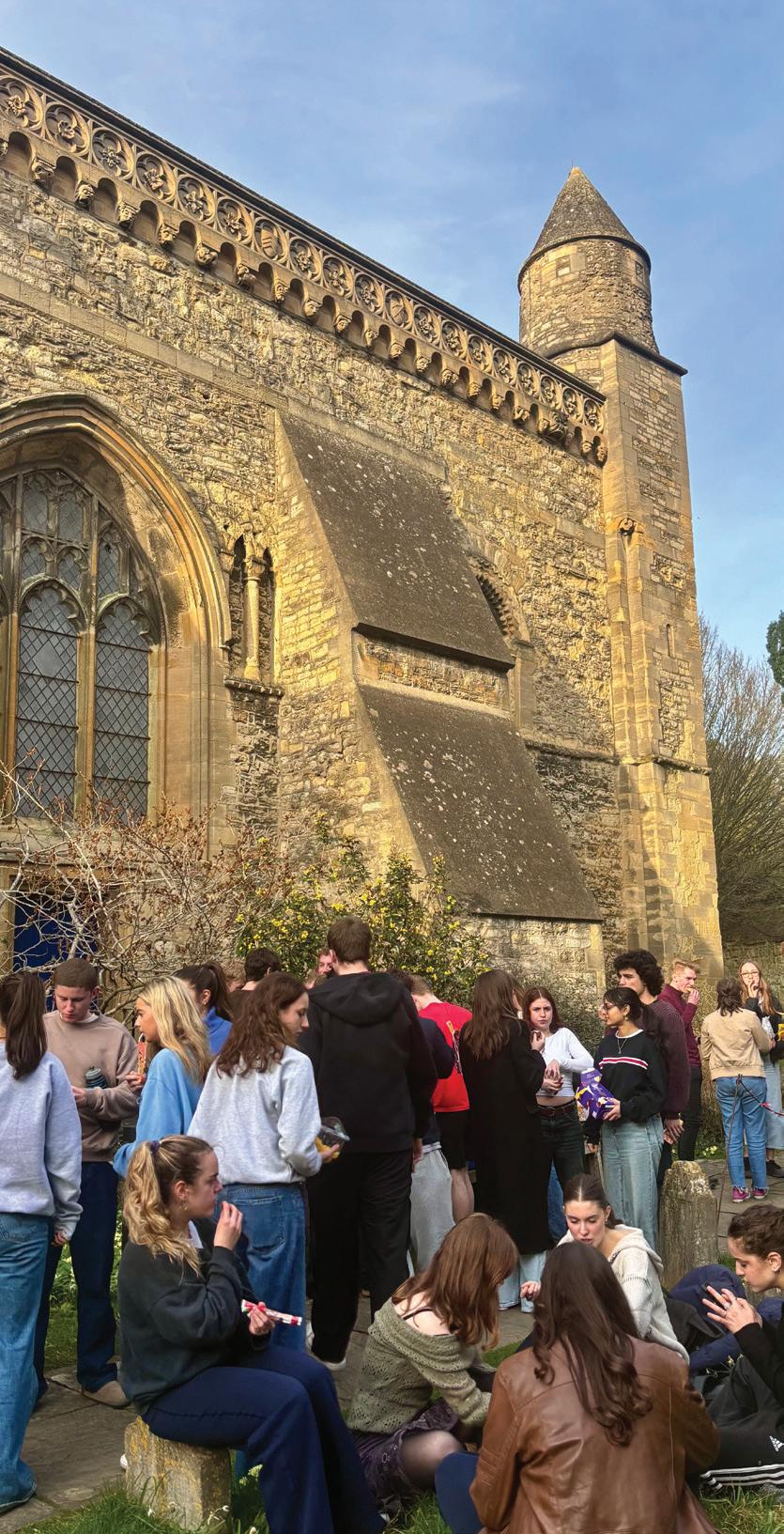
What is undoubtedly the focal point of JCR life for many is the sporting side of things. Teddy Hall has a reputation to uphold as the sportiest place around town and we did our best to enter into every Cuppers possible, from the most run-of-the-mill sports to events the mind can scarcely even compute. We had teams in rugby, rowing, netball, cricket, football and swimming while at the same time sending brave souls off to octopush, lifesaving, go-karting and sailing. While our big team sports had less success this year than normal (to our collective sadness), there were some silver linings which must be mentioned. It would be amiss to leave out our glorious Hockey Cuppers win at Iffley Road Sports Centre where a last-second, whistle-beating goal propelled us to glory – another year, another trophy.
Other aspects of social life at the Hall have also been thriving – our artistic side has seen both the regular ‘Knit and Knatter’ and flower-crown making for May Day take place. Welfare drop-in sessions went alongside Bops, WOTH/QUOTH and JCRT (tea). I just want to say a heartfelt thank you to the JCR Committee for doing such a crucial job keeping us entertained, together and fed.
Already we have begun planning to welcome our new crop of eager faces into the Hall. At the very same time we gear up for our final exams and the looming venture out into the big wide world. What remains a constant at the Hall, though, is a great sense of community and togetherness. I also want to wholeheartedly thank everyone who has organised or participated in the many events and activities we have put on over the past 12 months. I can’t wait to do it all again next year.
Jake Tommasi (2023, History)
As the St Edmund Hall MCR, our mission continues to be the unwavering support of our postgraduate members in all aspects of their College experience –academic, social and personal. This year has been one of transition, renewal and consolidation, marked by both challenges and remarkable progress across our community.
At the heart of our efforts has remained our commitment to ensuring that the MCR is a safe, welcoming and inclusive space for all members. The ongoing conflicts in Gaza, Ukraine and other parts of the world, and their global reverberations, have profoundly affected many within our community. We have sought to respond with empathy and understanding, by fostering dialogue, offering mutual support and reaffirming the MCR’s role as a space where all voices feel heard and valued.
This year also witnessed steady progress on the Norham Project, which is now nearing completion. The prospect of our graduate community returning to an improved and modernised Norham Gardens site marks a defining step forward
for the Hall’s postgraduate life. We look forward to the reopening of this dedicated space, which will further strengthen the sense of belonging and continuity that lies at the core of the Teddy Hall MCR.
On a lighter note, the College punt was officially back in service this year, a small but much-missed symbol of Hall life that once again found its way to the Cherwell under the expert hands (and occasional missteps) of our members. Beyond the riverbanks, the MCR has seen a vibrant surge of activity in co-curricular areas, with Teddy Hall students excelling in dance, music and drama, continuing to bring energy and creativity to the wider University scene.
The success of this year would not have been possible without the dedication of our committee and the collaboration of the wider college community. In particular, I wish to express my deepest gratitude to Duncan Lyster (2023, DPhil Atmospheric, Oceanic and Planetary Physics), who has been instrumental in supporting the MCR during my absence. His calm leadership, thoughtfulness and commitment to the Hall Spirit have been invaluable, and I am confident that he will lead the MCR with distinction in the coming year.
As we look ahead, we remain guided by the same ethos that has defined our community for nearly six decades – to foster inclusivity, compassion and excellence, and to ensure that every postgraduate member of Teddy Hall finds not just a place to study, but a place to belong.
(H)all the love, Siddhant Dhingra (2021, DPhil Organic Chemistry)
Mark
Blandford-Baker
, Domestic Bursar, writes as Senior Treasurer of the Amalgamated Clubs
:
The quantity and quality of the various reports below is testament to a thriving level of participation in sports this past year. Many others have been training and competing, or enjoying a recreational approach in many other sports outside of the college club environment. We have also had large numbers winning Blues and Half-Blues at Varsity level, as the list of recipients shows. Taking part in activities like these is great for mental and physical health as well as enjoyable. Time studying in Oxford is also an opportunity to learn new sporting skills or to develop ones learnt at school, including activities not always universally available. The bond of friendship formed in the sporting environment is often one of the strongest throughout life.
The same is true for the various societies
Men’s Association Football
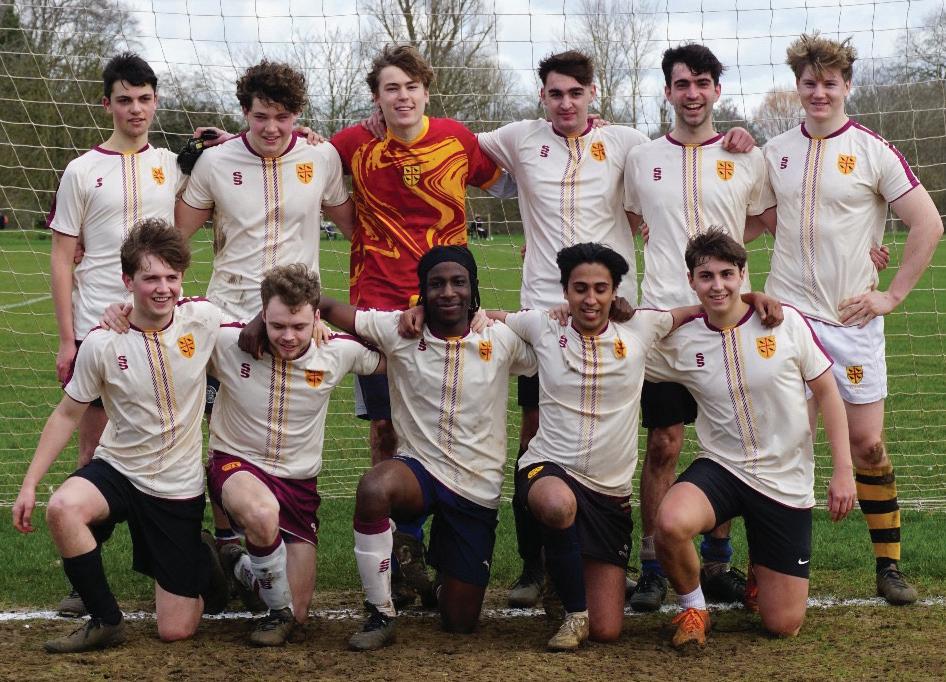
Captains: Xandy Feldman and Ishaan
Choudhary
Teddy Hall enjoyed another successful and exciting football campaign in the 2024–2025 season. The 1s, following successive
– it is really heartening to see the revival of a Music Society in College, bringing together a range of talents both choral and instrumental. The ever-increasing demand for yoga and salsa has been met with additional support, and the provision in the Pontigny Room of wall mirrors and a barre. Knit and Knatter was among one of the new societies in the year, and creative writing, social running and art have all been busy. We now give the window of the Staff Room (former shop front) to the Fine Art students to show their work on a rotational basis.
I write as the new academic year is about to begin. It is very encouraging to see so many clubs and societies being registered, including new ones. During this term I am seeking to further improve our access to sports facilities in the city; we already now have a membership for all Hall students to use the Iffley Road gym and swimming pool without cost to the individual.
promotions in the last two years, played in the Premier division, testing ourselves against the very best of the college football scene. The season started solidly with an exciting 2-2 draw against rivals Keble – there were many promising signs of what was to come. Then came Cuppers. Unfortunately, after the huge excitement of last year and reaching the final, the 1s were not able to replicate the same form and suffered a devastating loss at the hands of the eventual winners, St Catz.
The league season continued largely successfully and, after two rounds of fixtures had been played, we had beaten Keble, St Catz and St Peter’s (three of the
four Cuppers semi-finalists) in league matches, giving us plenty of positives to work with next season. Two games that stick in the memory particularly were St Peter’s at home and Keble away. We inflicted a crushing 3-1 defeat on St Peter’s, exhibiting some classy football and some fine goals. The Keble victory was an absolute thriller, ultimately finishing 5-4 to the Hall. Having raced into a lead starting the game with only ten players, a topsy-turvy affair eventually ended in a huge victory, going some way to avenging the Cuppers heartbreak of the previous season. Despite Keble’s all-star line-up, the men of the Hall fought valiantly to come out on top.
The 2s also enjoyed another exciting campaign, reaching the Reserves Cuppers final and finishing runners-up. Overall, another good season for the footballers of the Hall and we are looking forward greatly to what next year will bring, as our 1s head into the season captained by Oli Williams (2024, Modern Languages and Linguistics) and Rory Lewis (2024, Jurisprudence) – two standout performers from this year who will both be in the second year at the start of next season.
Xandy Feldman (2023, Medicine)
Women’s Association Football
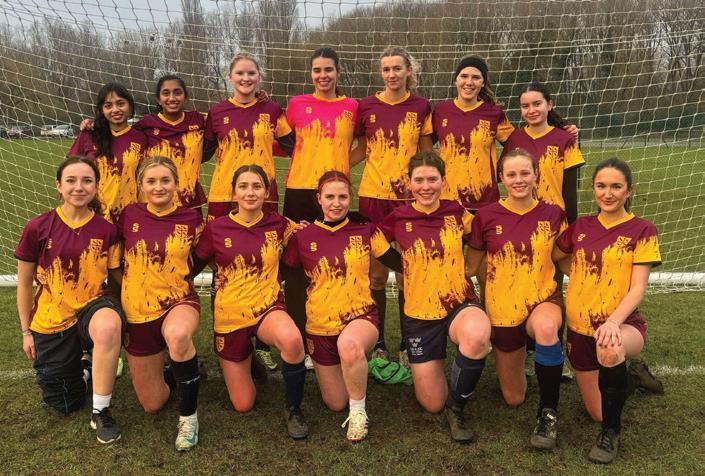
Captains: Mara Wuelfing and Assia Storey
Women’s football has had another great season, with members across the College getting involved regardless of prior football experience. The players themselves and the fans who came to spectate brought a buzzing atmosphere which was really positive to see as a progression for women’s football!
Our Cuppers run was noteworthy: we made it to the semi-final, one of the best runs the Teddy women’s team has made over the years. It started off with an easy forfeit from the opposition to take us into the quarter-final. The quarter-finals were against Heaters (St Peter’s and St Hilda’s), opposition we had encountered in the Plate semi-finals last year. This sparked confidence in the squad as we knew we had beaten this team before and we were stronger this year with one Blues player and four University 2s players. There was hope a second Blue, our new Irish national team striker Kate Parsons (2024, Medicine), would be able to join us for our matches. Alas, she was injured for the season so we had to make do without her. And that we did! We comfortably won against Heaters with a 4-1 scoreline putting us on the fast track to the semifinals.
In the semi-finals we faced MMW (Merton, Mansfield, Wadham), the team we beat on penalties last year to win the Plate final. However, this year they had the Blues keeper in goal which made them a difficult opponent. At half-time we were down 0-1, but persistence from the Teddy side meant that after full-time it was 1-1. Extra time followed, which was felt by tired legs. Unfortunately, MMW were able to score another goal in the second half of extra time. It was a valiant effort from the Teddy Football team, but MMW played well and so were able to make it to the final. Regardless of the result, we had lots of spectators to support us and the team was
still proud of how far we had come.
There is lots of promise looking forward to next season, when Assia (2022, Geography) and I pass on captaincy to Kate Parsons (2024, Medicine) and Aoife Reynolds (2024, Jurisprudence).
Mara Wuelfing (2022, Neuroscience)
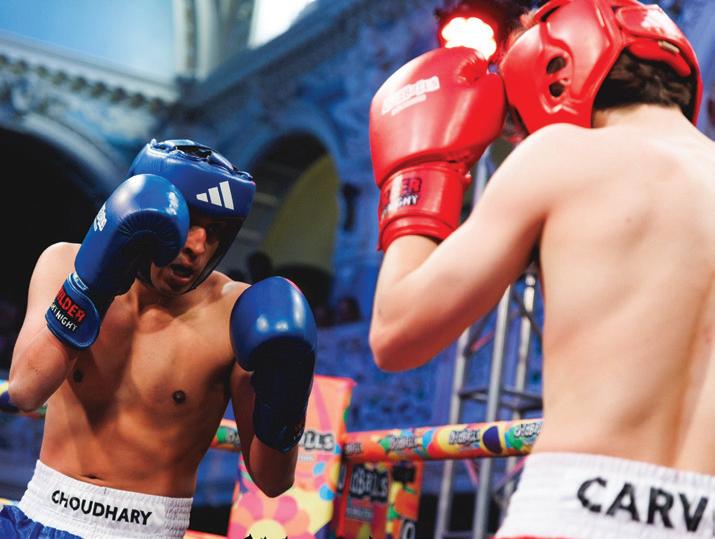
This year brought a brand-new sporting spectacle to the Hall. In early Hilary, Ben Carvin (2024, Physics and Philosophy) and I decided to take the plunge and take part in Oxford’s first official Wilder Fight Night. Being the inaugural event, we had no clue what the next few weeks would have in store for us but that was exactly the type of excitement I was looking for by signing up.
We embarked on over 12 weeks of intense boxing training at Oxford Science Fitness & Boxing Gym with a dedicated coach in preparation for the big night. For me, those 12 weeks consisted of rigorous training (sparring and general gym work) and a strict diet plan to make sure I was in peak condition when I laced up my gloves. There was no other choice; there is simply no hiding in the ring.
I had never so much as thrown a punch before, let alone participated in a combat sport, so I knew just how much of a challenge I had set myself. I still remember getting reprimanded for my first feeble jab or my first wayward cross.
We trained with students from other Oxford colleges and from Oxford Brookes University. It was such a strange feeling knowing that you would eventually be fighting someone you had been training alongside, week in, week out.
Despite being an individual sport, I had never seen such camaraderie and closeness before. We were all thrown into the deep end together and the only way to succeed was to push each other to our absolute limits. There were plenty of setbacks along the way. Fellow Aularian Dhaksha Vivekanandan (2024, Economics and Management) was also meant to fight and was with us for much of the training before a leg injury devastatingly ruled her out.
By sheer coincidence, Ben Carvin and I were paired up to fight each other on the night. It was a battle of the Hall. Kwame Appafram (2023, PPE) organised an impromptu press conference a week before the fight, which took place after a JCR meeting. Members of the JCR bombarded us with probing questions that were met with elusive answers, creating a palpable tension in the build-up.
The night itself was a huge success. Oxford Town Hall’s elegance was on full display as the backdrop to our canvas. The event was sold out and the crowd were itching to see some excellent boxing on display. Whilst they did not get that all night, every fighter showed an unbelievable amount of courage and tenacity that only someone who has been in the ring can understand.
Our fight was the first of the night and so the crowd were truly gripped by the suspense. We both had brought fellow students and friends from home to cheer us on. I chose fellow Aularian Joseph Omoluogbe (2023, Economics and Management) to be in my corner and
shout words of encouragement to keep me going, which he did excellently. After some theatrical walkouts, we both took our spots in our respective corners and stared each other down. Much of the fight after the first bell is a blur. In that type of situation, your instincts kick in and you rely on all your training to get you through the fight. Any semblance of a game plan is difficult to stick to.
The Colosseum-like atmosphere is something I will never forget. The crowd roared at every heavy exchange or near miss. We could just about hear the rallying cries of motivation from our friends penetrate the general clamour which seized the Town Hall. In the end, after three exhausting rounds and a very close fight, Ben was declared the winner.
This whole event was really about something much bigger. Oxford Fight Night raised over £6.5k for the OddBalls Foundation. This is a charity that focuses on raising awareness of testicular cancer. This included a generous £500 donation from St Edmund Hall JCR to support us as fighters. After every hard gym or sparring session where I started to doubt myself, I remembered what I was fighting for and it made me push on. I now have an unwavering respect for the sport – it has taught me so much about myself and has allowed me to grow as a person.
Ishaan Choudhary (2023, Jurisprudence)
Chess
Captain: Rick Chen
This has been a monumental year for the Teddy Hall Chess team. With almost all existing members graduating last year, nerves were in the air at the start of the year as we waited for new people to join. The Freshers did not disappoint: Elizabeth Finn (2024, Mathematics and Statistics), Zexuan Huang (2024, Mathematics and Statistics) and Benjamin Lemkin (Visiting Student) all answered the Hall’s call. Led by Captain Rick Chen (2022, Mathematics) and Treasurer Aaron McKenzie (2022, Mathematics), the team headed for the prize of every Oxford chess player’s dream – the Chess Cuppers.
To bring ultimate glory home, every college chess team must battle through an eight-round group stage before the final round. Chess may not be a physical game, but its intensity can be overlooked. With each game taking as much as 30 minutes, the whole event typically lasts seven hours, making it easily one of the longest sport competitions at the University.
The team was off to a fantastic start as we entered the playing hall with an extra player, a feat few other colleges had achieved. This victory was short-lived, however, as the organisers soon requested for one of our members to fill the gap in another team. Reluctant to leave anyone behind, we ultimately decided to roll the wheel of fate. Aaron ended up being the one to leave the team.
Unfortunately, memory gets blurred once the games started. It is hard to put the actual games into words. For me, Chess Cuppers is not only a battle of wits, but also more importantly an emotional rollercoaster. Every handshake, every eye contact, every exchange of words plays a part. What makes the competition so special is not the games themselves, but the fact that every win and every loss was shared by fellow teammates. One highlight of the day was when the team grabbed
sandwiches from Taylor’s and had lunch together in the Front Quad. After nine rounds of tough battles, Hall members returned with a solid overall placement. A special shout out to Aaron who got second place as part of the formidable team of substitutes!
Next year, we are looking forward to further expansions of the team (hopefully with some non-mathematicians joining). With the fresh talents we got this year, the future of chess at Teddy Hall is surely secured.
Croquet
President: Jasper Singh
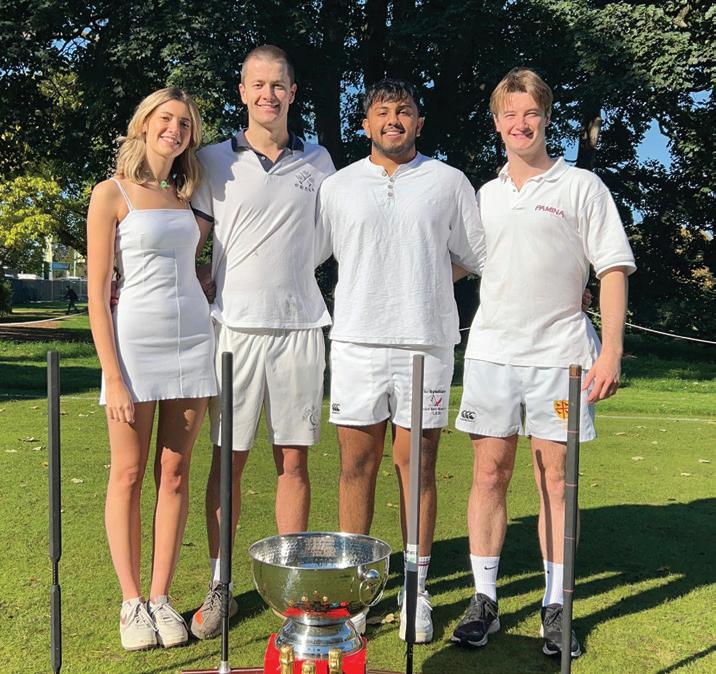
On the back of an extraordinary Cuppers campaign last year, winning at the final bell, the confidence in this young and vibrant group this year was ‘bubbling’, to put it succinctly. As a result, the team saw a straight triple bypass, placing us directly into the round of 16 for our first match. The squad made the most of these three back-to-back-to-back byes by practicing their croquets, roquets and, most importantly, continuations. The first training session saw many familiar faces,
and also many old ones. World-renowned Australian International Charles Sharpe (2023, DPhil Astrophysics) rallied the troops as SEHACC welcomed the likes of Cassandra (Tatenda) Mbanje (2024, MSc Global Health Science and Epidemiology) and James Bacon (2024, DPhil Clinical Neurosciences) into the squad. Unfortunately, the expertise of Edward Blackman (2023, Environmental Research (NERC DTP)) was greatly missed this year, with him out for the season.
They say you should never meet your heroes. Keble College Association Croquet Club met Oliver Ogden (2019, Engineering) and Jasper Singh (2021, DPhil Materials) in the fourth round. 26-0.
Charles and Daisy Bressington (2022, DPhil History) tidied the corners, 1-0, whoomph.
Off the back of this win and the victory last year, the group decided to take things up a notch. A big change in preparation followed – from low-intensity-interval training (LIIT) to a high-intensityinterval training (HIIT) approach – a true testament to the squad’s dedication to raising their standards once again this year. However, it soon became clear the squad was most definitely not in HIIT condition.
A messy mismatch saw SEHACC pitted against a Blues-squad-filled Pembroke side. Daisy and Jasper were unfortunately unavailable to participate in the match due to academic commitments, however, once again, Ronald Cvek (2023, CDT SABS) stepped in to fill the gaps alongside household name, Charles Sharpe. Tatenda and Kevin also took off the training wheels in what was an exhilarating match.
Unfortunately, after a tale filled with twists, turns and fumbles, a few indecisive calls, and some inconsistent officiating, SEHACC were knocked out by the underdogs
PCACC. Not the season the squad hoped for, however, many lessons were learned. Until next year – SEHACC will be back.
Floreat Aula!
Jasper Singh (2021, DPhil Materials)
Hockey
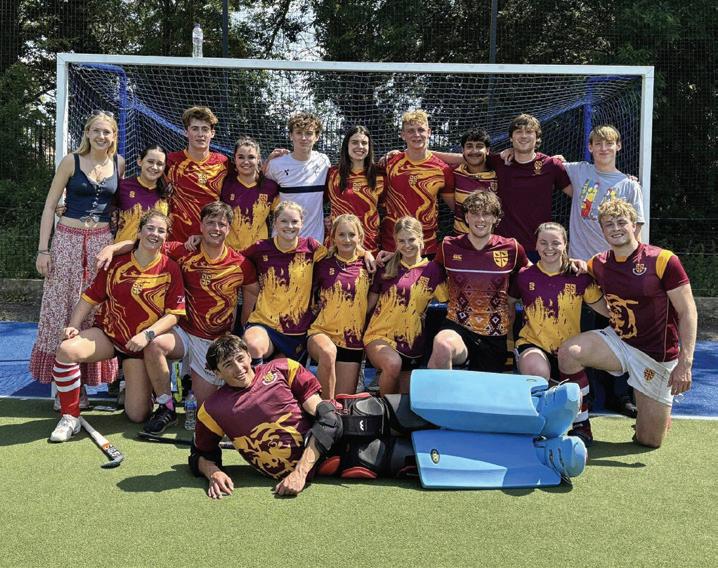
Captains: Alex Adair and Sara Riolo
SEHHC has enjoyed a truly remarkable season, capped off with an historic victory in the Mixed College Hockey Cuppers final against LMH/Lincoln/Corpus Christi.
The final was nothing short of a thriller. In the sweltering heat, the prospect of an umpired 70-minute game appeared an almost Herculean task, but the Hall produced a performance full of grit, flair and determination.
An early strike from Alex Burson (2022, Geography) gave Teddy a deserved lead, before goalkeeper Ollie Monblat (2023, PPE) was called into action, pulling off a crucial penalty flick save to keep us ahead at the break. Fuelled by JCRfunded refreshments and the unwavering support of the Hall ultras on the touchline, it was all to play for. However, as legs tired and the heat grew oppressive, the Hall fell firmly under the cosh. Unable to escape our own half, even with Fresher Henry Henderson (2024, Medicine) bombing aerials downfield, Teddy’s stoic
defence was forced to hold firm for what seemed like hours. Heartbreakingly, with just two minutes to go, LMH/Lincoln/ Corpus Christi equalised. Yet Teddy never wavered. As the final seconds fell off the clock, Fresher Jess Cottee (2024, Geography) intercepted on the halfway line, and danced through the midfield with a weaving run, before finding Tom Rawlinson (2023, Earth Sciences) at the far post to smash home a winner with what would be the very final touch of the game. Jubilant pandemonium rightfully ensued.
Our road to the Cuppers final had been equally memorable. A feisty draw against Hertford, and a hard-fought victory over St Catz/Somerville saw us win our group. Having then dispatched Brasenose/St Anne’s in the quarters, we were confronted by a formidable Trinity/ Wadham/Queen’s team composed almost entirely of Men’s University players in the semis. The Hall emerged victorious in characteristically dramatic fashion thanks to the return of ex-Vice-Captain Poppy Buckley (2021, Cell and Systems Biology), who rocketed a late winner from the tightest of angles.
Huge credit goes to the entire extended squad. From past Captains Leo Brake (2021, Mathematics) and Bella Brown (2022, English) to the extremely skilful cohort of Freshers, every member of SEHHC was incredibly enthusiastic and committed. Much is owed to our weekly team brunches too, which fuelled performance and amended hangovers alike.
Best of luck to new Captains Agi Crowther (2024, English) and Evie Chappell (2024, Molecular and Cellular Biochemistry): back-to-back Cuppers titles pending… Alex Adair (2023, English)
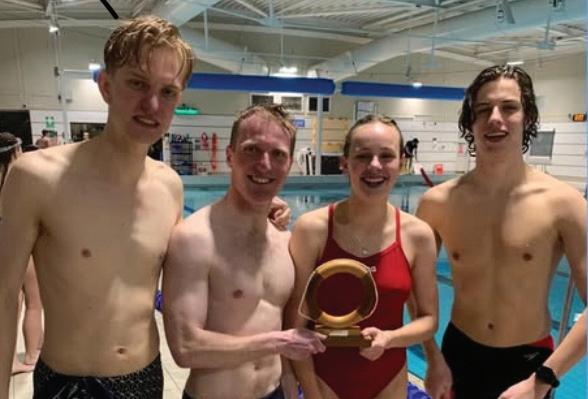
It is safe to say that the Hall was not the favourite in Lifesaving Cuppers, with no members of the team actively training in the sport. However, closer inspection of the scratch team revealed that they were not to be underestimated: aside from possessing bags of Hall Spirit, Erin FraserSmith (2023, Medicine) brought twelve years of competitive lifesaving experience to the team, while Jack Gillespie (2022, Geography) was an active beach lifeguard. Blues swimmer Tobias Lloyd (2022, Chemistry) and triathlete Luke Nijkamp (2022, Engineering) rounded out the team, supplying the necessary aquatic ability.
After having the ruleset explained to us several times by the eternally patient Oxford University Lifesaving Society, we learned that the contest consisted of relays in throw-line and swimming rescues, and in completion of an entertaining underwater obstacle course. Taking to the course with enthusiasm if not expectation, we set a good time in what we considered to be our strongest event: the obstacle course. This was followed by a surprisingly good performance in the throw-line event, despite occasional fumbles. This left us head-to-head with the favourites, Balliol, for the swim rescue, where we alternated between acting as the ‘rescuer’ and as
the world’s most cooperative casualties. By the third leg, it was apparent that our technical inexperience was outweighed by a combination of swimming skill and the ability to be very streamlined ‘unconscious casualties’.
After an anxious and very cold wait to receive the results generated through lifesaving’s infamously arcane scoring system, it was revealed that Teddy had unexpectedly claimed victory in every event, as well as winning overall. The surprising win against supposedly superior opponents surely reaffirms the fundamental superiority of Hall students compared with those from all other colleges.
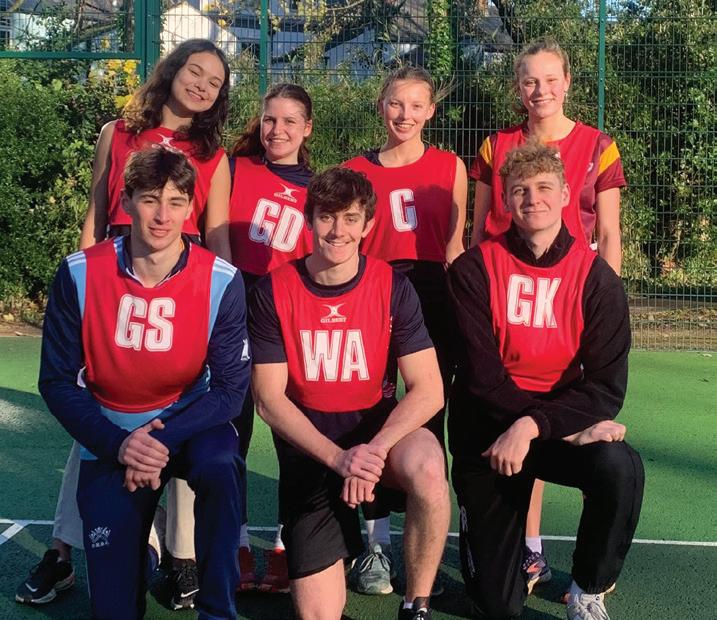
SEHNC has had an incredible year, full of perseverance and team spirit. We played weekly matches in the Michaelmas League and, despite occasionally being short on players, we finished joint fifth – just ahead of Christ Church and St Anne’s. It’s been fantastic to welcome back returning players while also seeing lots of new faces getting involved in college fixtures and Saturday training at Magdalen College School (MCS).
Saturday sessions at MCS were a huge
success, with strong attendance and amazing enthusiasm. These sessions not only improved our skills but also helped strengthen team spirit on the court.
One of the real highlights of the season was Women’s Cuppers. We put in an outstanding performance, winning three out of four pool matches and only narrowly missing out on a semi-final spot on goal difference. The team played brilliantly throughout, showing resilience and determination, particularly in our final match against Balliol. Unfortunately, during that game, our star player Annie Oakes (2023, Jurisprudence) suffered a knee injury, which ultimately contributed to our loss. We’re wishing Annie a speedy recovery and can’t wait to have her back on court soon!
After the success of Women’s Cuppers, we were hopeful for Mixed Cuppers. But, despite some fantastic games resulting in one win, one draw and one loss, it wasn’t quite enough to make it to the quarterfinals. All of the team played valiantly until the final whistle blew – it was a great effort from everyone who played and it was great to have some sideline support!
A huge thanks to everyone who has played this year. It’s been an exciting and rewarding season for SEHNC and hopefully we can continue this into next year!
Lydia Pedley (2023, Molecular and Cellular Biochemistry)
Octopush
Captain: Thomas Early
After a year’s hiatus, Teddy Hall Octopush returned to the Rosenblatt Pool in force, determined to reclaim the title. Indeed, the team were so focused that hitherto unheard-of measures such as ‘practice’ and ‘organisation’ were implemented. The team consisted of star forward Felix Mottram (2022, History), aquatic
sports stalwart Jack Gillespie (2022, Geography), breath-holding specialist Dean Freeley (Visiting Student), and first-time octopushers Thomas Early (2022, Mathematics) and Abi LovelockBlair (2024, Geography) bolstered by two international transfers, Akaraseth Puranasamriddhi (2022, DPhil Geography and the Environment) and Arnaud Bedrossian (Visiting Student), both hailing from the octopush superpower of Canada. The tournament was intense, with a second place finish in the round robin leaving an uphill struggle in the elimination rounds. A hard-fought semi-final resulted in a narrow 7-5 victory against a skilled and very physical chimera team comprised entirely of Blues water polo players. Exhausted and coming up against their round-robin nemesis, Merton/Brasenose, the Hall team were very much underdogs going into the final.
Sustained positional play prevented Merton/Brasenose from building too much of a lead against the exhausted Teddy side, while slowly grinding down the opposition until we could bring our underwater advantage to bear, eventually resulted in several brilliant line-breaks allowing for us to equalise. With the match now in added time, the golden goal was scored after an extended underwater battle by Felix, securing his status as perhaps the Hall’s greatest ever octopush player. The departure of a number of core players next year leaves a large gap in the team, but we have complete confidence that incoming Freshers will quickly be trained up in the vital octopush skills of mild violence, butterknife-control and, most importantly, a willingness to half drown yourself for the Hall.
Thomas Early (2022, Mathematics) and Jack Gillespie (2022, Geography)
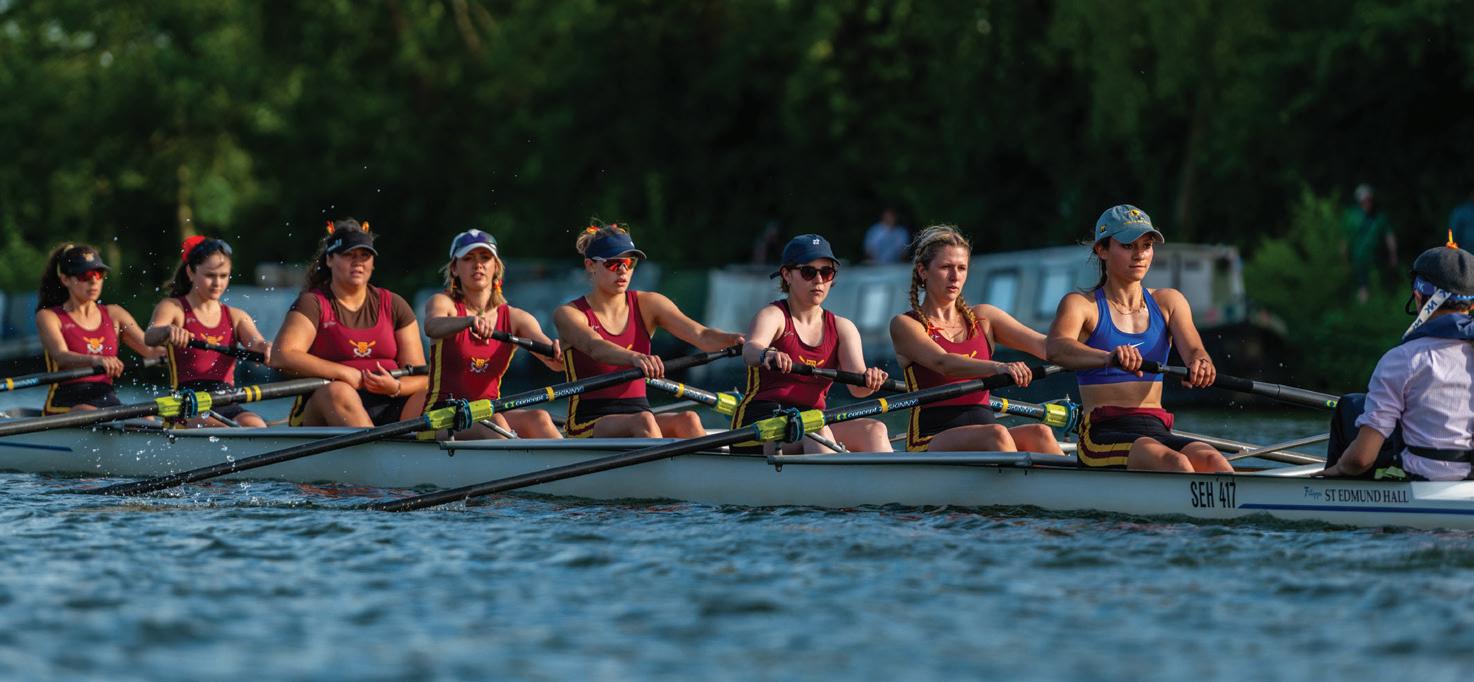
President: Q Sun
Vice-President: Diana Jaramillo
Women*’s Captaincy team: Cat Dillman and Sabi Sulik; Angelica Rossi-Hawkins (Vice)
Men*’s Captaincy team: Will Randell; Rohit Sahasrabuddhe and Felix ClaytonMcClure (Vice)
Captain of Coxes: Ben Keates
Treasurer: Cyril Schroeder
Secretary: Ben Keates (interim)
Water Safety Officer: George Lister
Social Secretaries: Erin Fraser-Smith and Lucy Robinson
Communications Officer: Verity Black
The Boat Club, in its 164th year, found itself blasting past expectations for both the Torpids and the VIIIs, despite the challenges of poor weather, cancelled events and a large turnover of 1st boat rowers. 2024–2025 was a year full of historic happenings: a historic flood in Michaelmas, a historic win for the Women’s 4+ and a historic rise for the Men’s 3rd VIII.
As the year began, extreme rainfall
upstream of Oxford led to the Isis breaking its banks and providing an unrowable river for the beginning and the end of Michaelmas term, hampering recruitment and training, alongside cancelling the much-anticipated Tamesis Regatta (the regatta for novices). Despite this, the senior rowers rose to the challenge in the period when the river was rowable and Women’s and Men’s seniors entered a coxed four (4+) to compete in Autumn IVs, a side-by-side regatta held on 10 November on the Isis. The Men’s 4+ was, unfortunately, defeated by an extremely strong Jesus crew in the first round. The Women’s 4+ powered through the heats, beating their opponents with ease, emerging victorious from the semi-final and beating Balliol’s 4+ in the final by “not very much at all”. This was the first Autumn IVs win for SEHBC since the event’s revival in the early 2000s, constituting a historic win for the side and for the Club!
As the rains returned in Hilary term, Torpids was cut into half divisions and, thus, only our 1st Women’s and Men’s Torpids were able to race. Over a gruelling four days in Sixth Week, both the W1
and M1 tested their mettle against other college crews with an assortment of coxswains from different clubs who could navigate the stream conditions. On the Saturday, however, the W1 were able to return James O’Neill (2022, PPE) to his rightful coxing seat! Due to substantially less water time than the crews around them and a good number of rowers training for The Boat Race (Oxford University Boat Club [OUBC] triallist rowers cannot row in Torpids), both crews emerged from Torpids with steep falls: the W1 down 4 places (-1, -1, -2, RO) and the M1 down 8 places (-3, -3, -1, -1). A disappointing result for this event, however, the Club will hopefully achieve terminal velocity in the race back up the charts next year!
The Club was proud to see several current and former members participate at the OUBC Trial VIIIs in December and to represent Oxford at The Boat Race. We are particularly proud of current SEHBC members Sebastian Harker (2024, Earth Sciences), Will Randell (2023, DPhil English), Sabi Sulikova (2022, DPhil Earth Sciences), Erika Dutton (2020, Medicine), Verity Black (2020, Medicine), and alumna Tara Sallaba (2021, History), who all bled dark blue for OUBC from September until April.
After The Boat Race, and as conditions improved before Trinity term, the Captains organised the Easter training camp on the Isis, training up novice athletes, and providing empty waters for seniors to hone their technical abilities in time for VIIIs. The camp culminated in a huge row down to Abingdon and back, followed by a whole club barbecue! Once term began anew, all five boats were hard at work, with the Men’s 1st VIII having a taste of side-by-side racing at Bedford Regatta, with all crew training at least every other
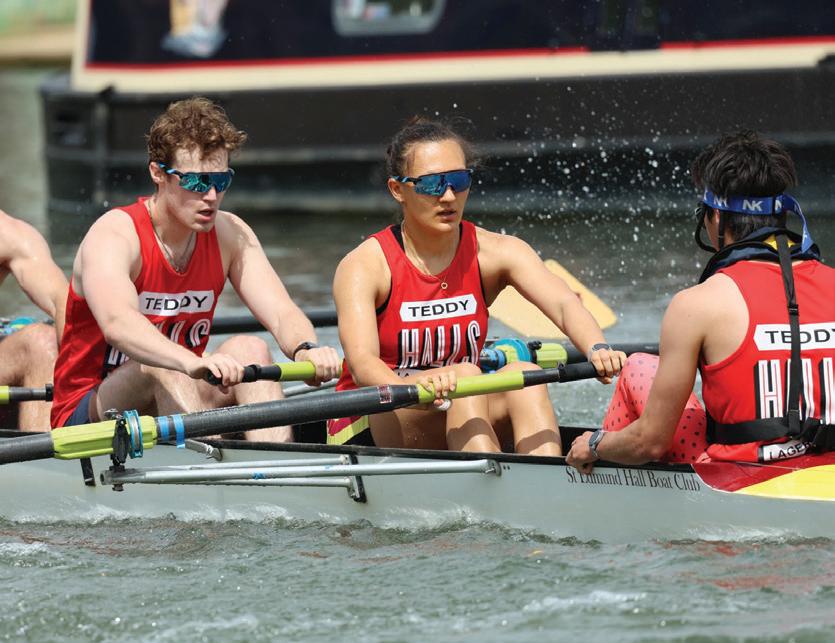
day until Fifth Week, when Summer VIIIs was underway.
The competition saw a meteoric rise of the Men’s 3rd VIII, the crew achieving a triple overbump on Balliol M3, and bumping Linacre M2, Oriel M3, St Hugh’s M2 and New College M3, achieving 11 bumps (+7, +1, +2, +1), and gaining the record for the greatest rise in one VIIIs, shared with only three other crews since the event’s inception in 1815. The Hall’s M3 now sits as the third highest M3 on the river.
The Women’s 2nd VIII bumped St Hugh’s and Hertford, going +2 (+1, 0, 0, +1), and there was a valiant effort from the Men’s 2nd VIII, who succumbed to Brasenose, Hertford and Reuben (their 1st VIII) but held off Merton’s 2nd VIII and Exeter’s 2nd VIII on Saturday, with a net change of -3 (-1, -1, -1, 0).
The Women’s 1st VIII, with half the original crew injured, ill or unavailable, was the Club’s latest recipient of spoons, being bumped by Wolfson, Balliol, Keble and Magdalen, going -4 (-1, -1, -1, -1). The Men’s 1st VIII were caught by extremely strong New College, Trinity and Merton crews, going -3 (-1, 0, -1, -1). As the saying goes: “spoons one year, blades the next!”
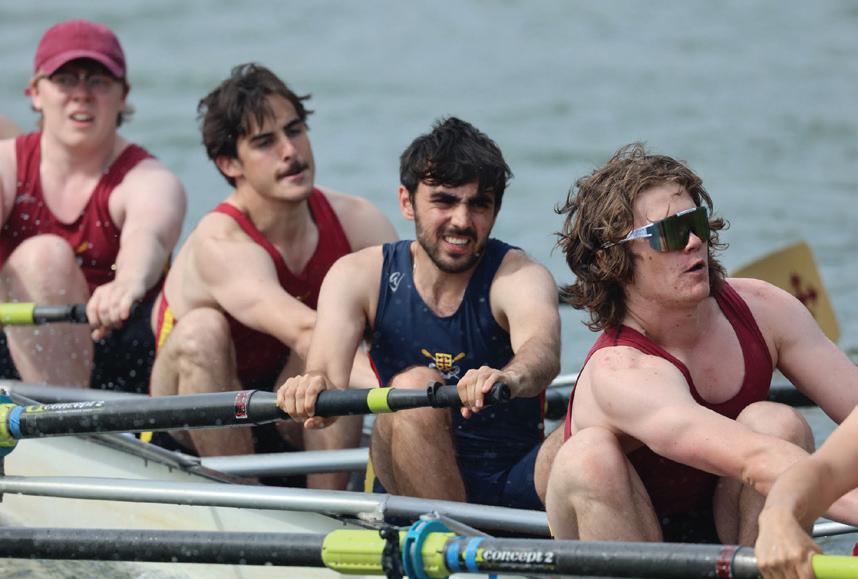
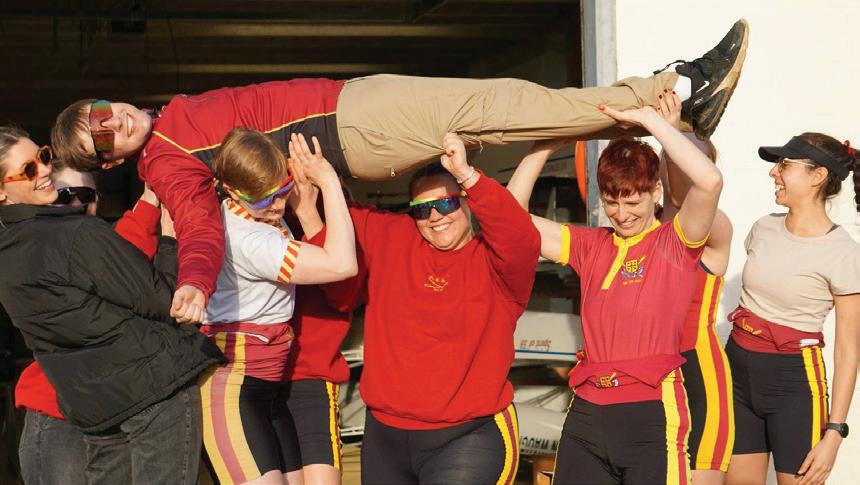
As the season drew to a close, the Club had an enjoyable few races at the not-soserious Oriel Regatta in Seventh Week, capping off a year of great Hall rowing. With the Long Vacation, the Club continues to put boats out in preparation for the next season, while hoping to enter some regattas, such as Henley Town and Visitors and Molesey, after watching world-class rowing at Henley Royal Regatta, of course!
Throughout a difficult year, a spirit of pure resilience and determination has been championed by the entire SEHBC Committee. They excel in their roles without much witness or reward. The Club is especially indebted to Diana Jaramillo (2023, DPhil Geography and the Environment), our Vice-President, who will be leading the charge as President for next year, alongside our thankless Captains: Sabi Sulikova, Cat Dillman (2023, MPhil Global and Area Studies), Will Randell, Angelica Rossi-Hawkins (2023, DPhil
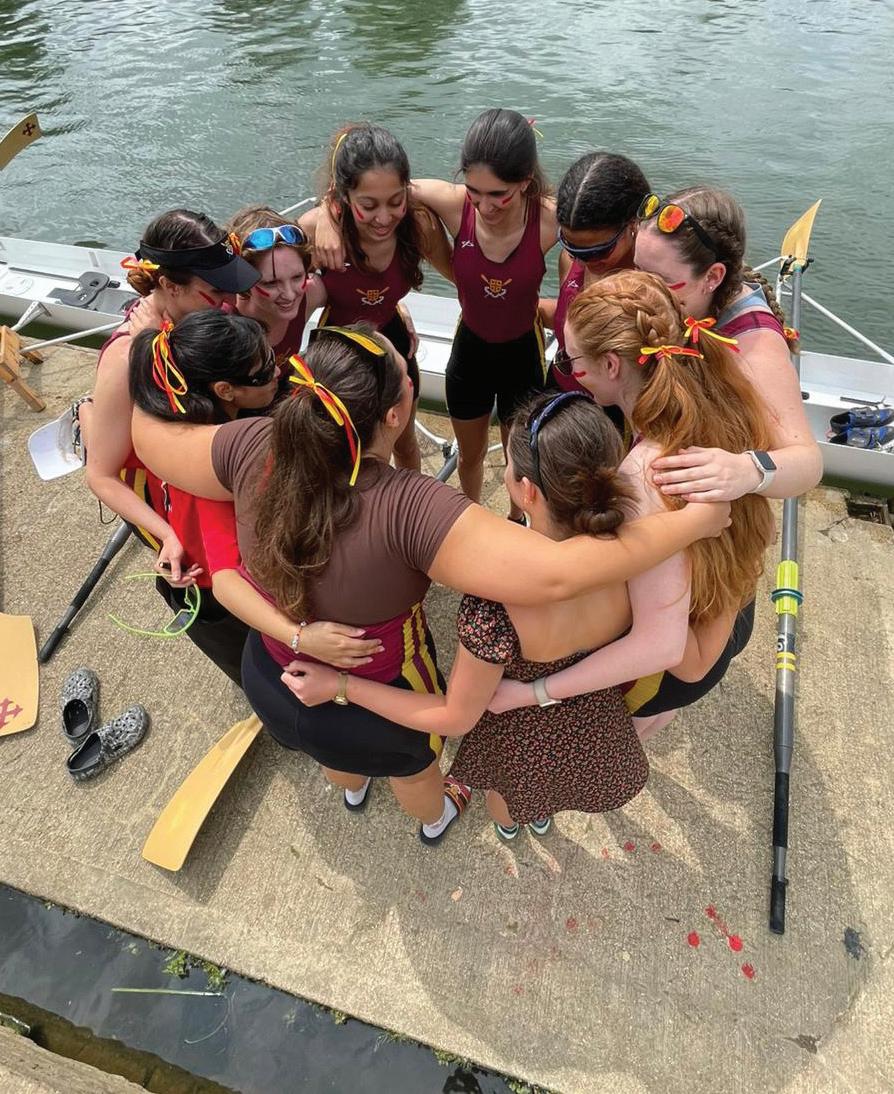
History), Rohit Sahasrabuddhe (2022, DPhil Mathematics), Felix Clayton McClure (2021, Modern Languages) and Ben Keates (2021, Materials). It is the commitment of these Aularians that allows SEHBC to excel.
The Club continues to owe a great amount to Claire Nichols, our Senior Member and Tutorial Fellow in Earth Sciences, and Domestic Bursar Mark Blandford-Baker, our Senior Treasurer, who are invaluable in their advice, assistance and support throughout the year. Ultimately, we must also thank our alumni society, the Friends of SEHBC, for their experience and support of the Club for countless years.
I have full faith that, under the leadership of our strong Committee and Captaincy team, SEHBC will find immense strength and growth in the 2025–2026 season.
Floreat Aula!
Q Sun (2021, Materials)
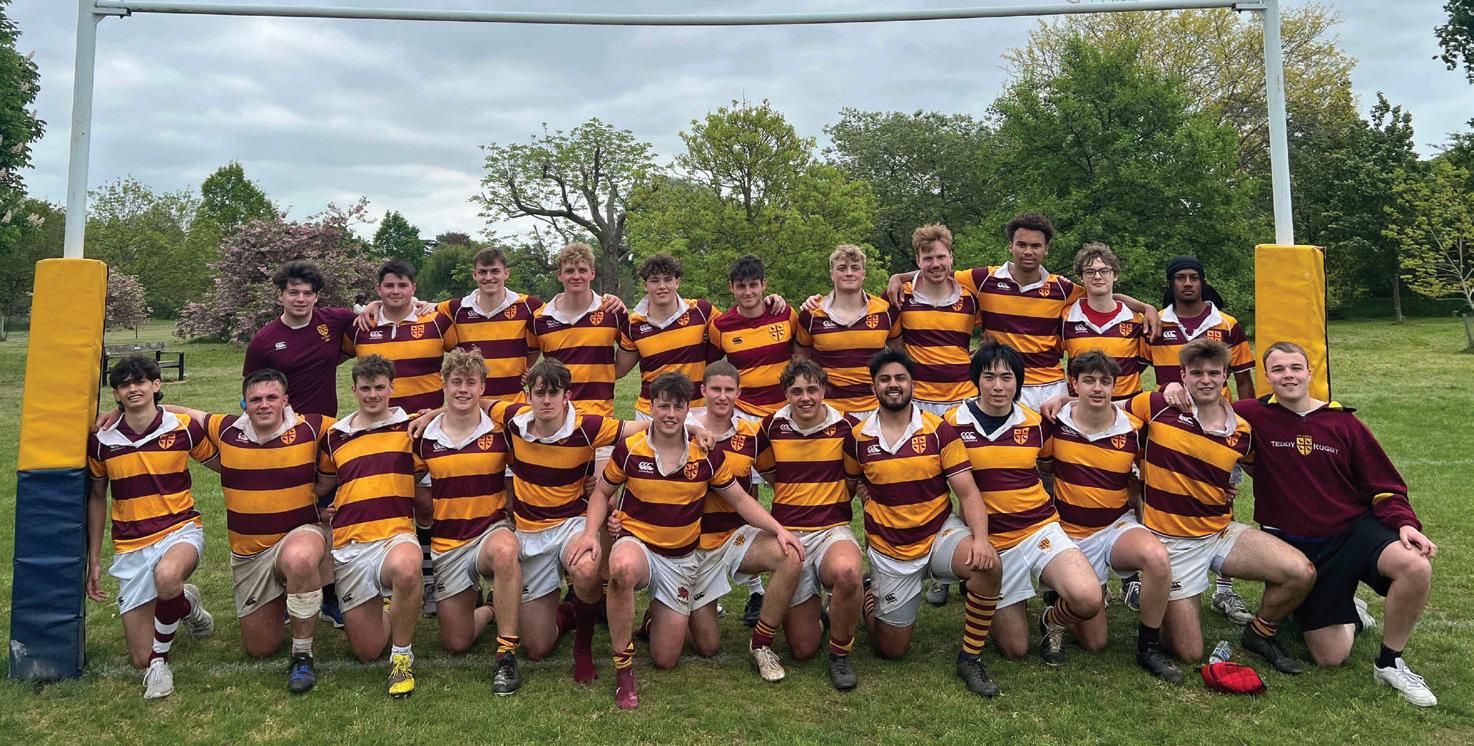
After the short Cuppers run last year, with the team falling at the quarter-final stage, the boys arrived in Oxford with a chip on their shoulder and the bit between their teeth. Having lost some of the finest players to ever don the maroon and gold jersey, such as Hector Skipworth (2020, Earth Sciences), Seth Dockery (2021, Geography), Teddy Thomson (2021, Economics and Management) and Harry Mehta (2020, Chemistry), all Cuppers winners themselves, the odds seemed stacked against us for the 2024–2025 season. However, as if the rugby gods answered our prayers, we were delivered a new batch of talented, hungry and gnarly players, undergrad and postgrad.
As is the tradition, the year began with the famous Old Boys’ fixture, a game in which victory has eluded the Teddy Hall XV for one too many years. Not this year though. A close physical clash saw us come out on top 12-10 with a late conversion miss from the Old Boys. The dinner at Vincent’s Club followed, everyone buzzing with positivity from the team’s performance after only having been back in Oxford for a week – it was the perfect start for the
season to come.
With games fast approaching, the team knuckled down in training and early morning fitness sessions. Something unique to Teddy is the bond between the undergrads and postgrads. With players like John ‘Jock’ Dearlove (2024, DPhil Materials), John ‘Burp/Meatball/Belch/ Troll’ Belcher-Heath (2024, Autonomous Intelligent Machines and Systems (EPSRC CDT)) and James ‘Kev’ Bacon (2024, DPhil Clinical Neurosciences) joining the team during their postgraduate studies, it boosted our skill level and, despite it being their first year in the club, helped to fill a gap of experience which the team needed having lost some great players and leaders.
The first game was against the old foe: New College. With both teams not at their full strength due to university commitments, it was a great opportunity to blood some new players into the team. In miserable conditions and a game riddled with handling errors, we won with huge shots and a solid defence. The game ended 13-12, with New College battering away at our try line for the last five minutes of the game, but to no avail.
Although it was not our finest performance with some key areas clearly needing work, it was a step in the right direction.
A few weeks later was our first Cuppers game against Trinity/Exeter/Univ. The training over the previous few weeks or so had clearly worked with the team dominating possession, collisions and territory, but errors in the final third saw us only come into half-time with a 14-5 lead. Some great individual displays from Alex Burson (2022, Geography), Henry Henderson (2024, Medicine) and James Bacon saw the game finish 31-15 to the Hall. Chaos in the Buttery followed.
Games against Keble and Saints (St Anne’s/St John’s) allowed the team to add to our tally of victories. The quarter-final stage of Cuppers was a breeze with Teddy Hall racking up around 50 points to 0. The semi-final was against Magdalen/St Hilda’s, a game which would prove much more of a contest. Despite having most of the possession, the opposition’s defence held out well in the beginning. The smaller pitch combined with some nervous hands led to lots of unforced errors in the final third and, crucially, in our own twenty-two, with Magdalen/St Hilda’s gaining the first score. Unable to convert in the first half, we went in 14-0 down at half-time.
The boys regrouped with senior members calming the team and reminding them that Cuppers-winning Hall teams have overcome worse deficits in the past, most recently in the 2023 final. The message clearly worked – it was as if a new team had taken the field in the second half. We were more aggressive, carried with intent and didn’t give an inch in defence.
Two tries deservedly came our way, one in the corner with a difficult conversion and one under the posts. Unfortunately, a rare error from our kicker, who had an immaculate season from the tee, saw
us miss both conversions. We attacked relentlessly for the final 15 minutes with the opposition hardly touching the ball. We came agonisingly close to scoring multiple times, with two held-up tries and a knockon on the five-metre line. The final whistle blew. The team was distraught – it was meant to be a Cuppers final year but we fell painfully short.
Despite the pain of this loss and losing a player – Alex Burson, who has given everything he could in his three years in the maroon and gold jersey and who was instrumental in this year’s campaign – the team knew that this was just the beginning. Aims are even higher for next year and I’m confident the new committee, led by Captain Hugo Walsh (2024, Experimental Psychology), will deliver to an elite standard.
It has been one of the greatest honours to lead the Teddy Hall team this year, one that I will cherish forever. The journey we have been on this season has been one of my favourite experiences: the early morning conditioning sessions; little talks about game plans with Alex Burson and James Maddocks (2023, Physics) over food in Wolfson; Archie Powell (2022, Modern Languages) regularly returning from his year abroad in Prague to support us; and of course the raucous drinks in the Buttery. Floreat Aula!
Tommy Bromage (2023, Engineering)
Sailing
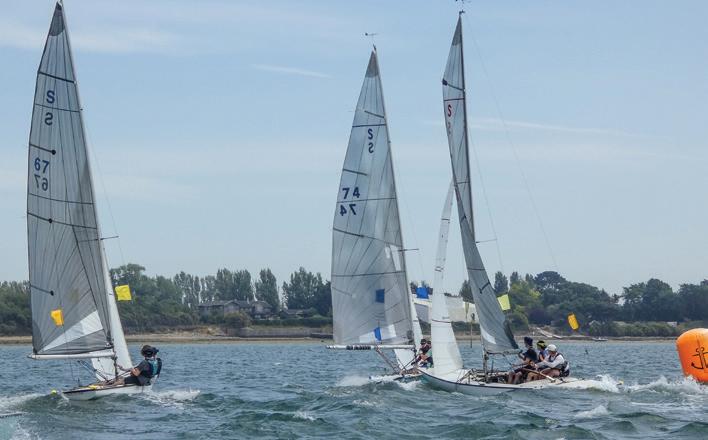
After achieving a respectable ninth place finish at university national finals, a sunny June weekend saw the Oxford University Yacht Club dinghy sailing squad take to Itchenor Sailing Club near Portsmouth for the annual Varsity match against Cambridge.
The three-day event consisted of two team racing matches – mixed and women’s – in Chichester Harbour with three Swallowclass keelboats per team. Each boat was crewed by a group of three sailors and the handling of these boats was unfamiliar to us all, in an effort to level the playing field. After sailing around the course, whilst attempting to slow the opposition and give them penalties, the team with their three boats in the lowest total positions wins the race. First to four race wins won each match.
Oxford ended the practice day optimistic after sailing far ahead of the Cambridge crews in every race. Unfortunately for us, the Cambridge mixed team appeared to learn the ropes overnight and, although it was never plain sailing for them, they ended the first race day 3-1 up. On the last day, some close quarters racing and dramatic collisions resulted in Oxford penalties for rule infringements and Cambridge came away with a 4-1 victory. All was not lost, though, as the Oxford women’s team held on to the bitter end to beat Cambridge 4-3.
That night saw Blues sailors from as far back as the 1960s attend the annual Varsity Dinner. Speeches were made by former Oxbridge Olympians, pints were enjoyed in the sun and everyone left in high spirits. All sailors selected for the match were awarded a Half-Blue for their efforts.
Thomas Farnsworth (2021, Engineering)
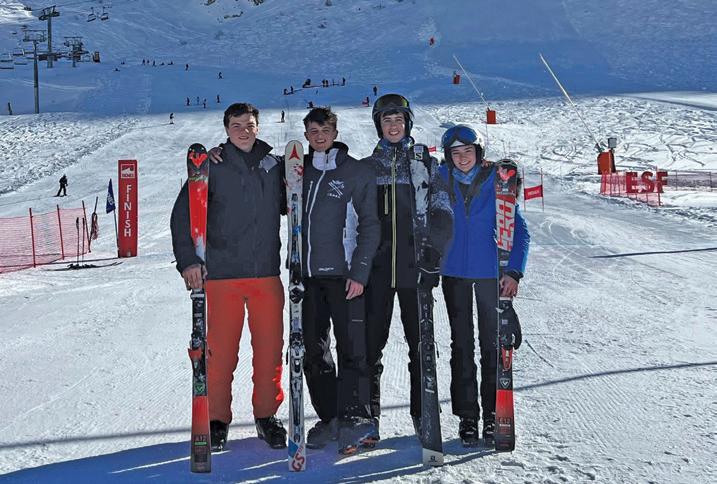
Teddy Hall once again claimed victory at the 101st Varsity trip, extending our winning run which began in 2020. This year’s event took place in Tignes, France, with perfect conditions making for a great day of racing.
Representing the Hall were Stefan Martin (2020, Geography), Adélaïde BoucherFerté (2024, Engineering), Lorenzo Usai (2022, Engineering) and Ned Finney (2023, Geography). The competition this year was exceptionally strong, with Somerville fielding an impressive team that included three University Blues. The early rounds delivered some tense, closely fought finishes which provided great entertainment for spectators. The first round was especially close, with the team beating New College by just half a gate. Following two more races, we made it through to the semi-finals where we faced Christ Church who fielded a very strong team. We were slightly surprised to beat them by over half a course length to make it into the final.
Whilst the final was meant to be a headto-head race, some inconsistencies on the slope meant that it was converted into a time trial against Queen’s College. The Queen’s team were very strong and the times looked so close that both teams were left in suspense for the afternoon
while we waited for the results. When the prize-giving finally arrived it was announced that we won by just under half a second (in a two-minute race) highlighting the skiing talent at the Hall.
Special recognition goes to Stefan, who returned to compete even after completing his time at Teddy, and to Adelaide, who competed just a day after racing in the Varsity match against Cambridge. Congratulations also go to Lorenzo who delivered the winning run in the quarter-finals despite not having raced for ten years.
While we are sad to bid farewell to Stefan next season, we hope to keep the Teddy Hall Cuppers legacy alive into 2025. We continue to look for future members of the squad in the hope of having two teams for the 2025 races in Val Thorens, France.
Ned Finney (2023, Geography)
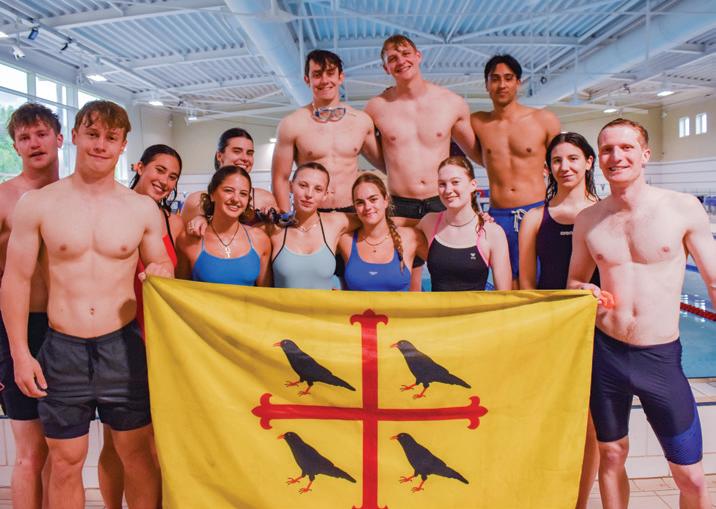
Annie Oakes
The St Edmund Hall Aquatics Club, led by Captain Annie Oakes (2023, Jurisprudence), had yet another fantastic year at the annual Swimming Cuppers competition. The Hall fielded three teams (out of 11 entered in total!) with Teddy Hall ‘A’ finishing in second place.
The competition followed the same format as in recent years: 30 minutes to swim as many lengths as possible, as a
relay, in teams of eight. The first half of the competition saw Teddy Hall ‘B’ and ‘C’ teams take to the water. The teams showed great grit and determination completing 93 and 90 lengths of the 25-metre pool respectively, beating Merton College A team.
After a short break and warm-up the Teddy Hall A team were ready and raring to go. It was clear from the start that this was the strongest team that the College had produced in recent years and the energy and excitement on poolside was immense. After a gruelling 30 minutes for the swimmers, the results were in: we had swum an incredible 116 lengths, four lengths up on last year. However, a composite team from Oriel and Corpus had beaten us by just three lengths leaving us runners-up.
Whilst we will strive to deliver a win next year, we remain incredibly proud of having the largest and most inclusive team of all the Oxford colleges, a testament to our Hall Spirit.
Tobias Lloyd (2022, Chemistry)
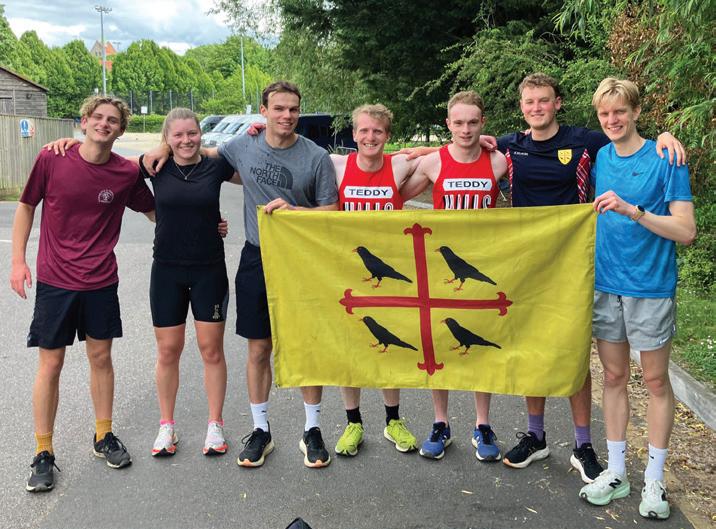
Following some excellent individual performances in Varsity, especially by Luke Nijkamp (2022, Engineering) and Non Watts (2023, Modern Languages),
Teddy undertook a Cuppers title defence with a team almost double the size of the previous year’s team and despite some unfortunate absences. The team featured two returning triathletes, Jack Gillespie (2022, Geography) and Luke Nijkamp, joined by recent convert Thomas Early (2022, Mathematics), Harvey Gorman (2023, Chemistry), Samuel Wareham (2023, Physics), Noah Allwicher (Visiting Student), and Half-Ironman completionist Lottie Waldron (2023, Earth Sciences).
With restrictions at Iffley again rendering a full triathlon impractical, the race was conducted in a sprint format consisting of a 200m swim section followed by a 3km run. Competition was stiff this year, with many colleges entering large teams, some bristling with Blues athletes. Rumours of a Corpus team featuring two Olympians failed to materialise, leaving the door open for another Hall win.
Scoring was again based on the combined times of the fastest three competitors in a
Arts and Culture
JCR Arts and Culture Representatives: Kayla Helsby and Isabella SpencerMcDaniel
The Hall was abuzz with excitement for
team – this year Luke, Jack and Thomas, totalling 38 minutes and 6 seconds. This was enough to clinch a narrow victory and an improvement on last year’s time by 6 minutes and 30 seconds – testament not only to the rapidly rising standards of the event but also to the dedication of the team and to the effectiveness of the training programme offered by the University Triathlon Club. Special mentions are due once again to Luke and to Lottie, both for coming third in their respective individual categories.
Having retained the coveted Cuppers title, the team looks forward with confidence to next year as it continues to grow and improve to meet the rising standard of competition in this increasingly popular sport. I wish them every success with this as I sadly depart the team and note that another win next year would make Teddy the most successful college triathlon club since Cuppers began – no pressure then!
Jack Gillespie (2022, Geography)
May Morning this year. The incoming JCR Arts and Culture Representatives, Kayla Helsby (2024, Materials) and Isabella Spencer-McDaniel (2024, Materials), hosted a very well-received May crownmaking workshop in the JCR the evening before the big morning. Many beautiful stems of flowers were provided for students across all years to bind together with wire into beautiful accessories. Those brave enough to wake up early for the singing atop Magdalen Tower were spotted wearing their Hall-made crowns up and down the High Street. Teddy students also enjoyed taking part in the Morris dancing, helping to keep this glorious tradition alive!
The Arts and Culture Reps also organised a Eurovision 2025 watch party in the JCR. Around 20 students enjoyed watching the acts battling it out to win the crown. Almost unanimously the students’ favourite act was Estonia’s Tommy Cash singing ‘Espresso Macchiato’.
Isabella Spencer-McDaniel (2024, Materials)
Christian Union
Christian Union Representatives:
Abi FernàndezArias and Margaret McLean
Since Trinity term of 2025, the Teddy Hall Christian Union, newly joint with Queen’s College, has hosted several events offering spaces for Christians in the two colleges to connect with each other and share their faith with fellow students. Our events have included Bible studies, socials, prayer meetings and college outreach, allowing us to spend time learning more about the Bible, have fun together over food, talk about our experiences of Christian living and invite our friends and peers to discover and investigate Christianity along with us.
In our small Bible studies group in Trinity term, we looked at three passages from the Gospel of John, in which Christ encounters three different people with very different problems. Spending time thinking about Christ’s answers to these problems of suffering, dissatisfaction and our need of salvation helps equip us to better love and care for the people around us, but ultimately to remind us of our identities as sons and daughters of God.
As well as supporting the needs of the Christians at Teddy and Queen’s, we also
welcome anyone interested in learning more about the good news of the Gospel, the teachings of the Bible, the basis of our belief in God and everything else. Our social and outreach events are aimed at inviting the whole college to get to know us as a community and to get involved. None of our events are formal and no form of commitment is ever required from our members. Our meetings are casual, meaning anyone can feel comfortable joining in, observing or simply popping by.
Led by myself and Abi FernàndezArias (2024, Modern Languages and Linguistics), representatives of the Oxford Inter-Collegiate Christian Union, the Teddy x Queen’s Christian Union’s main focus is to provide enjoyable and safe opportunities for all members of the colleges to discuss, explore and even question the Christian faith together in an honest and friendly environment. As we look forward to another year, we hope to encourage both Christians and non-Christians alike to consider how the message of Jesus Christ can make us better students, better contributors to our college communities, better friends and better representatives of Christ’s amazing love for us.
Margaret McLean (2024, English)
Creative Writing
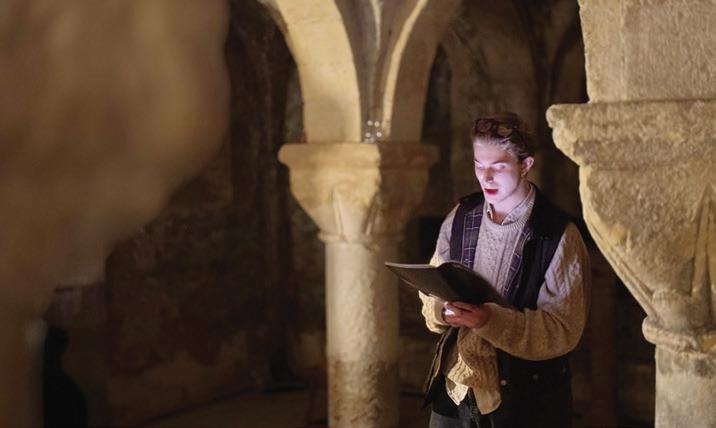
At creative writing this year, we’ve had a lot of firsts: our first sessions in the Crypt; the first edition of a new publication called
Disaster! which included pieces by several Teddy students (+1 Wadhamite) and should hopefully be followed by a second edition next year; and even the first time (to my memory, at least) that someone has brought a play script.
We have also had dozens of poems and plenty of prose (including a lot of material that falls somewhere in between), which we’ve read, discussed and drawn some pretty lasting in-jokes from, in locations varying from the Old Dining Hall to the Welfare Room.
Creative writing at Teddy encourages anyone to bring anything they might have written, in whatever form it might take (poetry or prose, a first draft or something you’ve been working on for a long time), to share with everyone else who has come along to a Wednesday evening session and allow for a discussion of its merits and weak points. It also provides a great opportunity to hang out with people with similar interests in writing and the arts.
This Trinity, we’re saying goodbye to a couple of long-term members who are leaving us (to the wide world and a year abroad), so we’d love to see some new faces coming along in Michaelmas!
Laura van Heijnsbergen (2023, English)
Poems from Disaster! appear on pp. 198–202.
Music Society
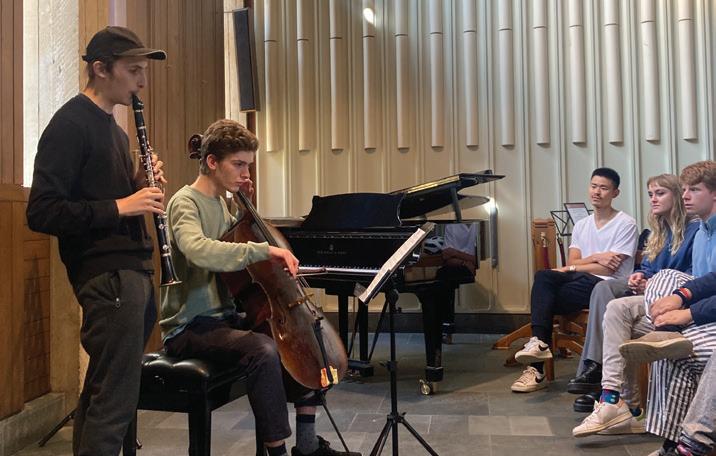
President: David Hrushovski
When the St Edmund Hall Music Society returned to College life this year after a period of dormancy, it brought with it a programme of regular music-making for the enjoyment of all members of the Hall. The Society was reinstated with David Hrushovski (2023, Philosophy and Modern Languages) as its President and Recitals Manager, Abhipsa Panda (2024, Economics and Management) as Treasurer, and Tobias Heath (2022, Modern Languages) and Kayla Helsby (2024, Materials) as Events, Outreach and Accessibility Managers.
The Society’s weekly Saturday lunchtime recital series, which began in Michaelmas and ran all through the year, became a regular attraction for students, Fellows and tourists alike. The musical offerings were varied – from Baroque chamber music to electric guitar – and gave students the perfect platform to showcase their musical talents in an open and welcoming environment. Most recitals were held in the Old Dining Hall, with some also taking place in the Chapel, and, as the Society’s publicity efforts expanded throughout the year, so too did more and more listeners flock to fill these cherished spaces.
While the recitals have been the Society’s most prominent and frequent events, they were hardly the only ones. An open mic night, a karaoke night and many social events for musicians were among the other activities organised. As well as these events, the renascent Music Society led several internal processes aimed at revitalising the music scene at College. An inventory of the Music Room was taken so that it could be restocked with more equipment and a database was compiled of Teddy Hall musicians, so that students would be able to more easily form ensembles or bands. Both of these
efforts constitute the first steps in longterm projects for music at the Hall which the Society eagerly anticipates continuing in the coming years.
The activities of the Music Society over the past year have been a testament to the value of having an active, student-run society to support the musical flourishing of Hall musicians and music-lovers alike. As the Society learns and develops over the future years, the benefits it will bring to all members of College can only increase.
David Hrushovski (2023, Philosophy and Modern Languages)
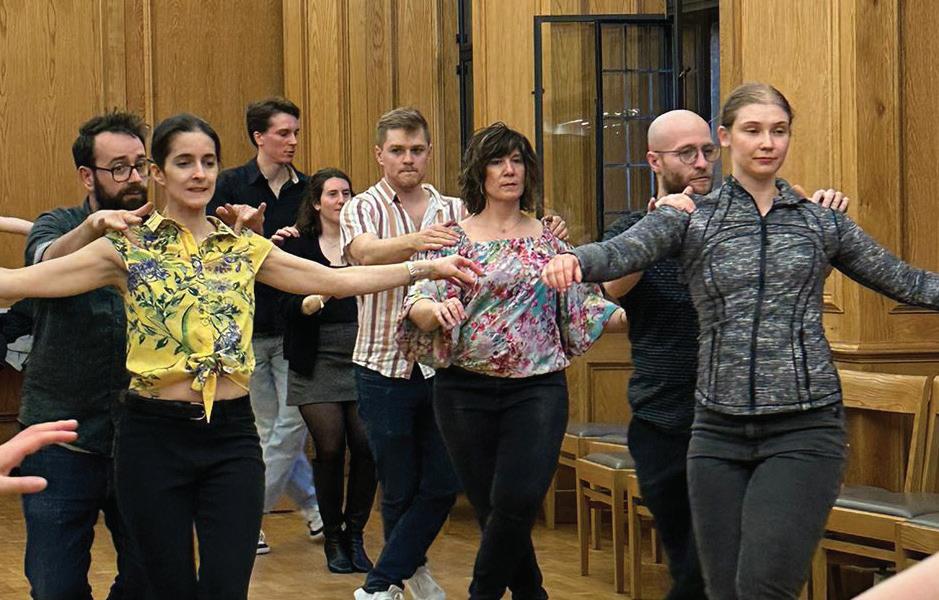
Salsa has grown into one of Teddy Hall’s most distinctive activities, and this year the programme was upscaled in an important way. What began only a few years ago as a small collaboration with Lincoln College has now expanded to include Kellogg, St Catz, New College and Harris Manchester. This broader partnership has allowed students to connect not only within Teddy Hall but across a network of colleges, building friendships and a shared community through dance.
The results have been remarkable. More than 100 students took part in the sessions this year, reflecting the popularity of salsa as both a social and cultural activity. Many of those
who first stepped into the class at Hall have since gone on to become part of Oxford’s wider salsa scene: joining the University’s performance teams, dancing regularly at local socials or even attending international salsa congresses.
The idea of introducing salsa to Teddy Hall was first inspired by a wish to diversify extracurricular life and give students a creative outlet beyond the lecture hall. Salsa, with its infectious energy and openness to beginners, proved an ideal choice. The programme has always been inclusive, welcoming students with no prior dance experience alongside those with a background in dance. The expertise and enthusiasm of the instructors have been vital to the success of the project, creating a welcoming environment in which students could challenge themselves and grow.
Over time, the classes have evolved beyond weekly practices. They have become lively, social spaces where students can relax, support each other and steadily improve their skills. More advanced techniques have been introduced as dancers gained confidence, while the atmosphere has remained light-hearted and encouraging. Above all, the sessions have nurtured a growing intercollegiate community centred on a shared love of salsa.
Now firmly established, salsa has become a hallmark of student life at Teddy Hall. It combines physical activity, cultural appreciation and the chance to belong to something larger than oneself. Looking ahead, the programme will continue to expand, with an introductory session planned for Freshers’ Week, followed by a Latin Dance night where new students can showcase their first steps and join this flourishing tradition.
Antonin Charret (2020, DPhil Education)
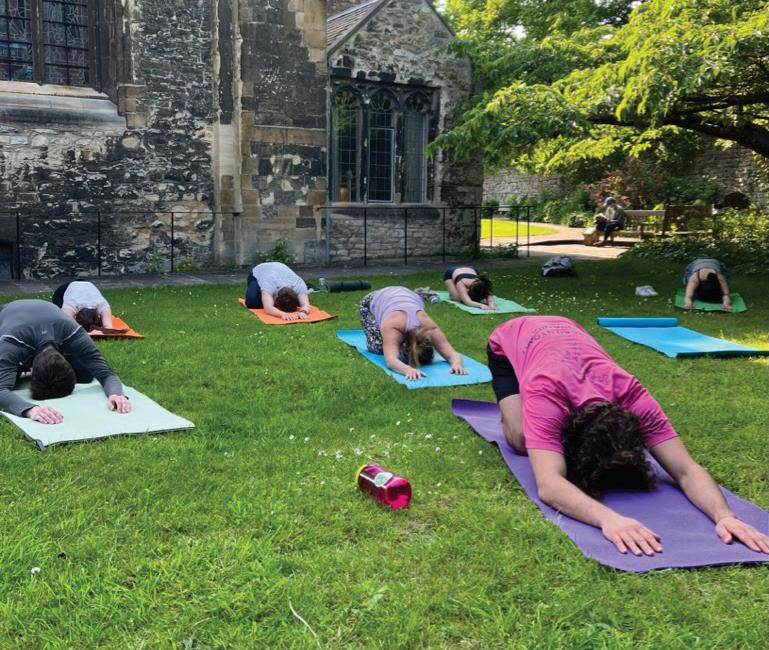
Another year teaching yoga at the Hall has been a joy. Holding most sessions on Monday evenings provided students and myself with an opportunity to unwind from the weekend that had passed and prepare for the new week ahead. The final session of the academic year was held in the Broadbent Garden, behind the Library. The weather being on our side made it a tranquil end to the yoga season.
I have thoroughly enjoyed being able to teach Teddy Hall students yoga over the past three years. With so many new and old faces attending over the weeks, it is a great testament to the close-knit and inclusive community the Hall fosters. Having a nice mix of JCR and MCR members attending each week was also encouraging to see.
This year, my aim was to curate classes that contained a mixture of meditation and stretching at the beginning and end,
and the opportunity to challenge oneself through learning new poses and flows in the middle. The addition of meditation and reflection was well received by attending students, highlighting the importance of slowing down and taking inventory of one’s emotions, thoughts, physical sensations, gratitudes and aspirations. I too enjoyed the meditations, as it can be so easy to be swept up in the excitement and fast-paced lifestyle that Oxford offers; any chance to unwind and slow down is always welcome. Practising yoga has many benefits. From a physical standpoint, studies have shown that regularly practising yoga improves heart health, sleep, balance issues, chronic pain, arthritis and women’s health issues. Yoga has also been found to be associated with many psychological benefits like reduced stress, better selfcare, improved mood and greater energy and alertness. Lastly, yoga is a great equaliser and a vessel for connection and community. I have personally felt the benefits of practising yoga regularly over the years and am grateful that I can share these benefits with others, through the support of the Hall.
Entering my final year as a DPhil student at the Hall will also mark the final year of teaching yoga here. During the year, I look forward to meeting more new faces, creating space for students to come together and connect, and sharing the magic of yoga.
Jasmine Laing (2023, DPhil Experimental Psychology)
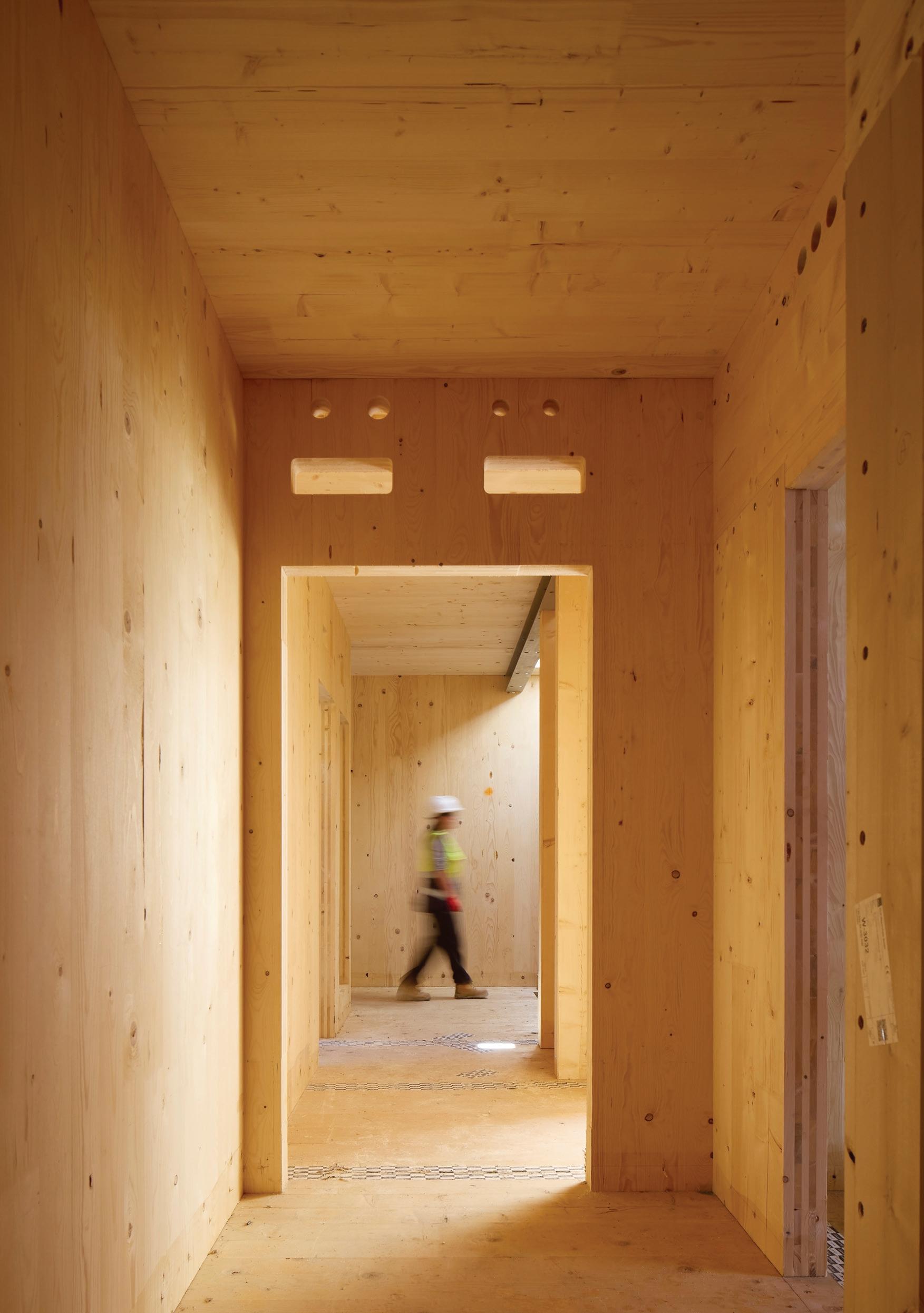
As of summer 2024, the College Kitchen officially became gas-free, replacing the gas chargrill – the last piece of equipment fuelled by gas – with a brand-new electric version. The equipment upgrade provides the College with multiple important benefits such as improving the working environment for Kitchen staff and reducing our carbon footprint and energy consumption.
In particular, gasless cooking reduces air pollution for both our staff and diners. Cooking with a gas stove produces nitrogen dioxide and fine airborne particles that can irritate the lungs, while gas-free solutions also help reduce streetlevel air pollution around commercial kitchens.
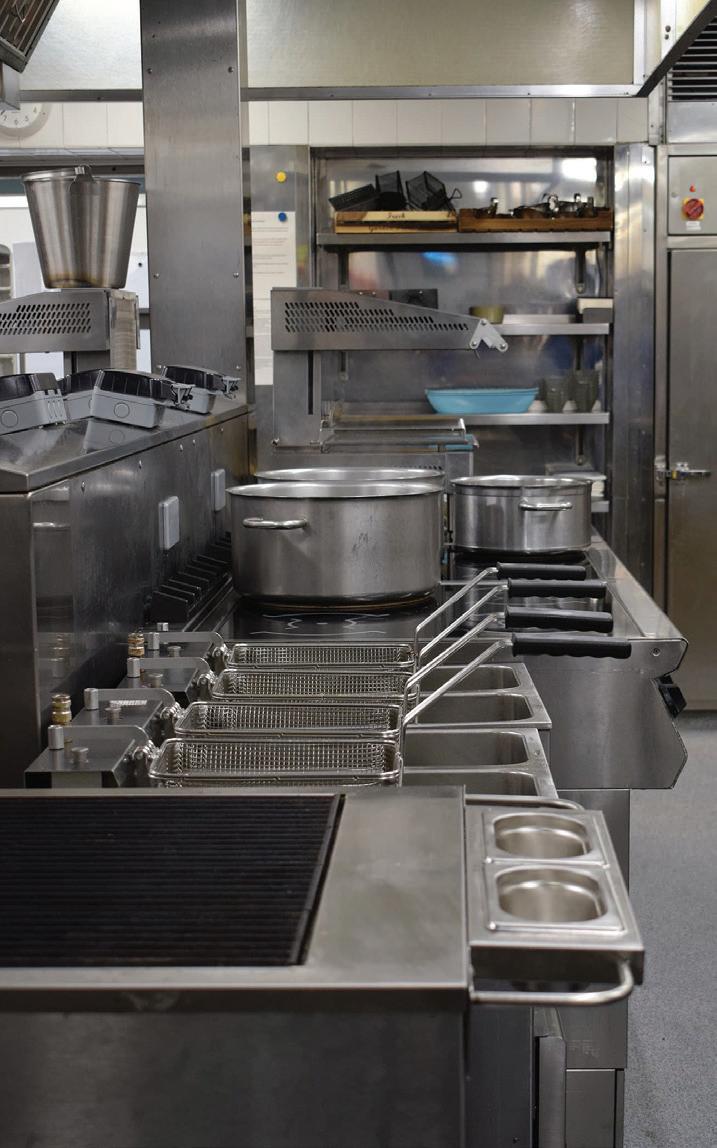
We were proud to take part in the Great Big Green Lunch this June – a sustainability challenge organised by Good Food Oxfordshire. Across the week, the Hall lunch menu focussed on plant-based and locally sourced ingredients, served to our students, staff, Fellows and guests.
Some of the highlights included:
• Fraisier macarons
• Chilli nachos with guacamole and salsa
• Berliner doughnuts with local strawberries
• Thai red tofu curry with fragrant rice
• Pear and jasmine panna cotta, with pistachio shortbread.
Every bite helped make a difference to our planet and reflects the College’s ongoing commitment to climate action and sustainability.
Claire Parfitt, Communications Manager
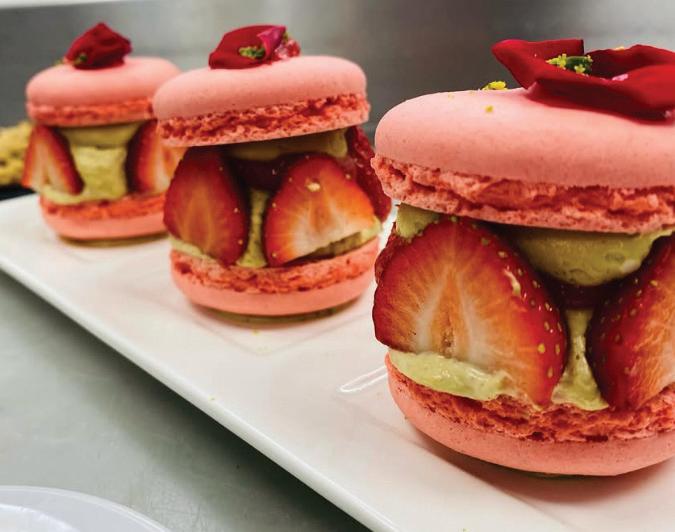
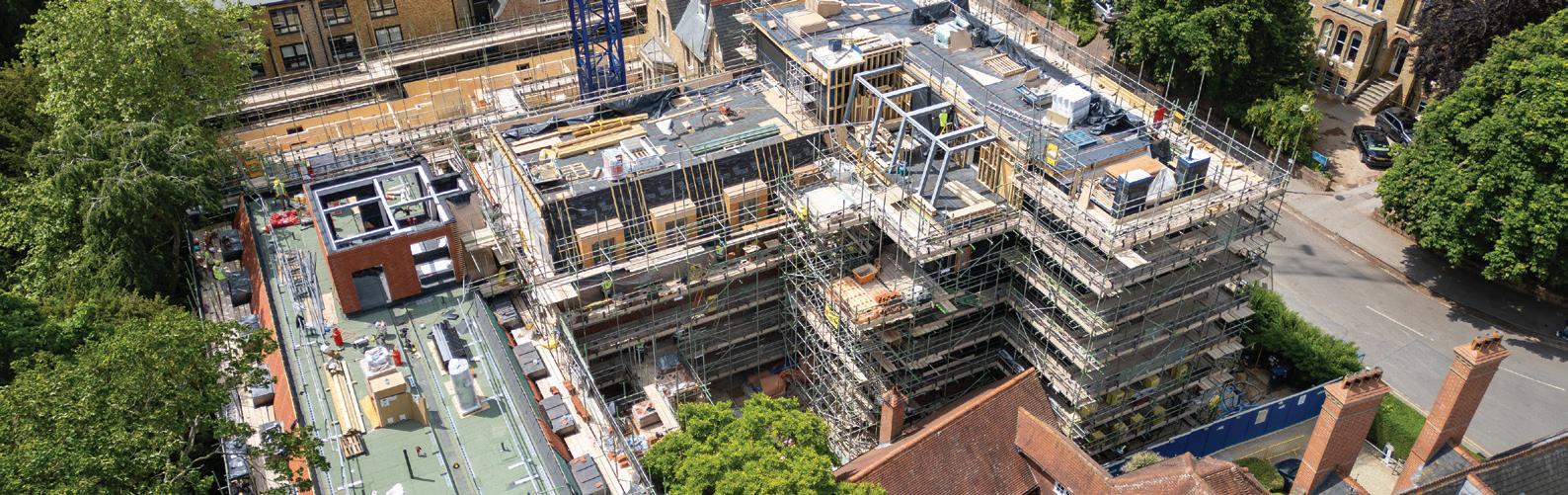
On schedule to complete in April 2026, the Norham St Edmund (NSE) project includes 127 ensuite study bedrooms and spacious communal facilities, comprising three new buildings constructed to Passivhaus standards and a refurbishment of 17 Norham Gardens. The design prioritises sustainably sourced materials and low-embodied carbon, with a prefabricated cross-laminated timber (CLT) frame forming the superstructure.
The NSE site has transformed over the last year. Completion of excavations and piling work over the summer months was followed by the arrival of CLT structures on site, with the new buildings then quickly beginning to take shape and gain height during Michaelmas term. Despite the seasonal weather, development continued at an impressive pace and from spring, students, Fellows, staff, alumni and friends of the Hall joined tours of the site to see the progress in person.
On 20 June, the Hall community and NSE project partners came together to celebrate the topping-out of the development, a traditional milestone that marks a building reaching the highest point of construction.
To mark the occasion, representatives of the College, including Principal Professor Baroness Willis and The Rt Hon the Lord Hague of Richmond, the University’s Chancellor and Hall Visitor, secured a commemorative plaque on the roof of the tallest building – the Villa. The proceedings were livestreamed to a reception hosted in the new NSE common room, together with musical accompaniment provided by Professor Henrike Lähnemann.
During the reception, the gathered Aularians also heard from the Principal, the Chancellor and Carl Bennett, the Director of SDC, the firm in charge of construction. The Principal welcomed everyone to the milestone event and concluded with many heartfelt thanks to the Hall’s Governing Body Fellows, staff, project partners and Aularians who have so generously supported the development.
A highlights reel from the day can be viewed at youtu.be/WGvEWTh03Nc.
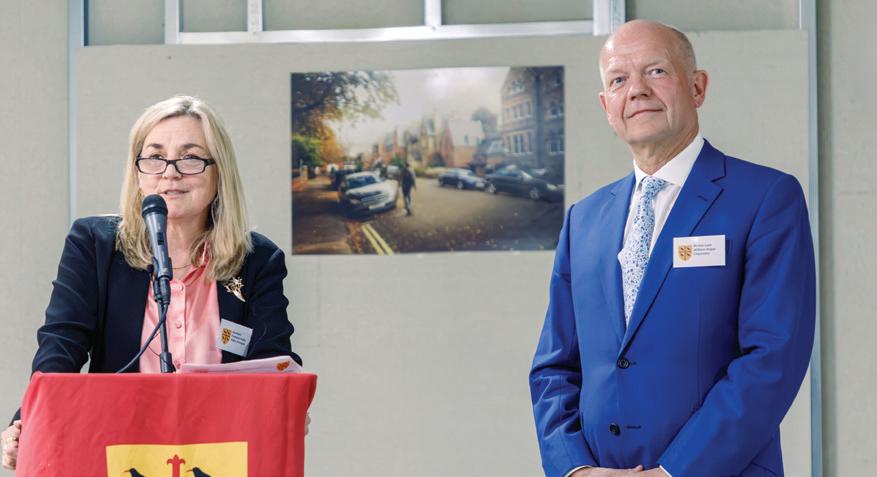
This transformative project marks a major step towards supporting Hall students from lower-income backgrounds by enabling all undergraduates to live in College accommodation for the duration of their course. With a strong focus on inclusion and sustainability, it reflects a shared commitment to a more equal
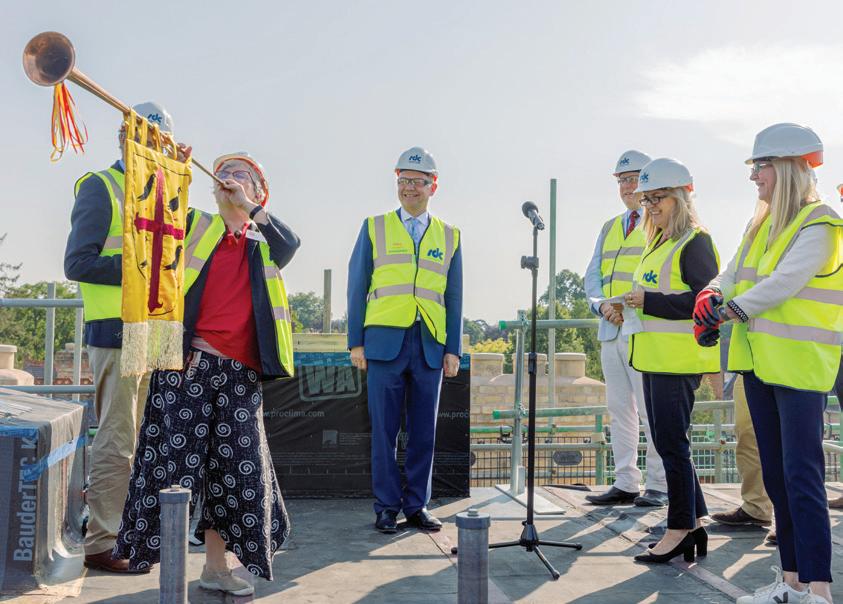
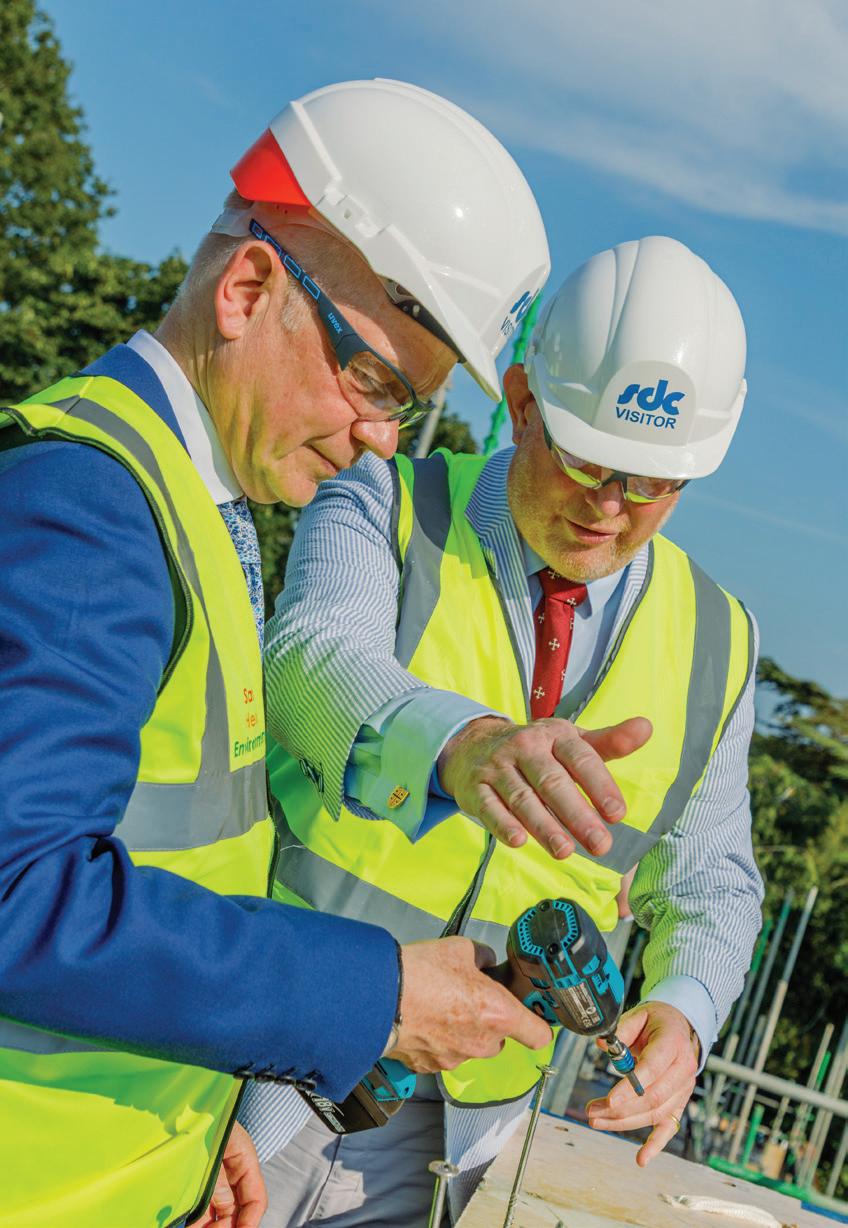
and environmentally responsible future. Following completion in the spring, NSE will welcome its first cohort of students in Autumn 2026.
Find out more about the development and the latest progress on site at hallmarkscampaign.seh.ox.ac.uk/latestprogress.
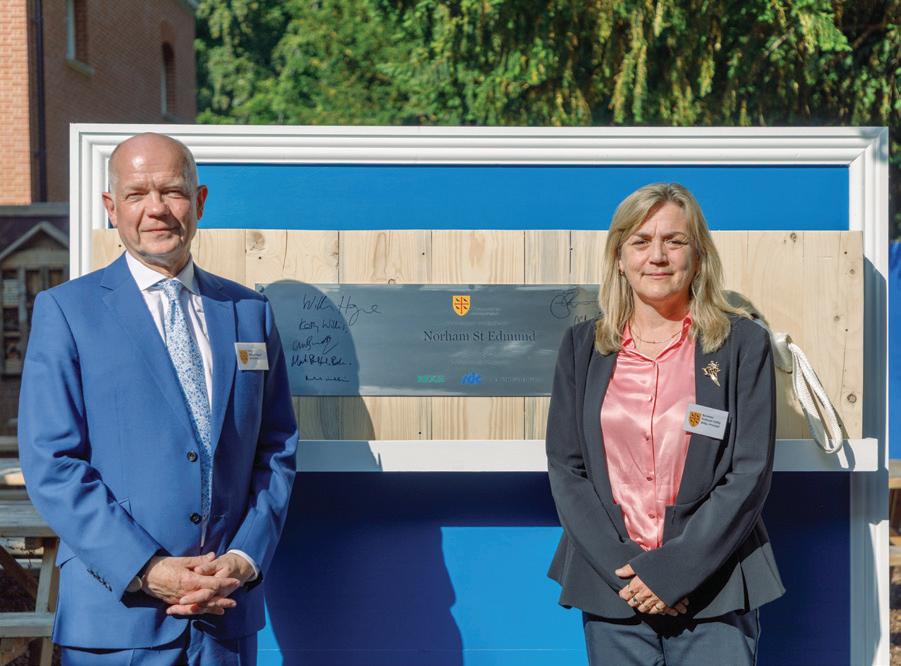

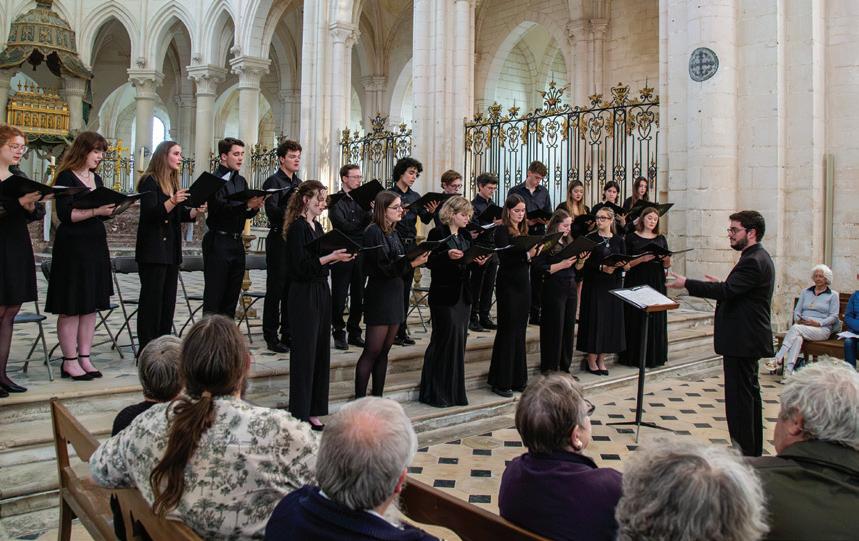
Last September, the Choir of St Edmund Hall returned from their annual tour to Pontigny, France, led by new Director of Music Carlos Rodríguez Otero. The trip involved two public performances, the first of which was a late evening service of Compline. This primarily featured plainchant, as well as pieces by Thomas Tallis and Eric Whitacre.
On 6 September, the Choir gave their main concert to a large and enthusiastic audience in Pontigny Abbey. Music for the concert included works by Taverner, Stainer and Byrd, as well as contemporary pieces by Eleanor Daley and Joanna
Forbes L’Estrange. The concert also featured performances on the newly restored organ by the College’s Organ Scholars.
The concert was part of an ongoing relationship between the College and the Abbey, where the remains of St Edmund of Abingdon, after whom the College is named, rest in a stunning golden casket above the High Altar.
On another successful tour to Pontigny, Carlos commented:
“This year’s tour to Pontigny was a fantastic showcase of our Choir’s talent and dedication. We enjoyed spending six days together, preparing a challenging and varied programme of music and enjoying each other’s company in the beautiful Burgundy region of France. It was certainly a baptism of fire for me, it being my first time meeting the Choir! But I couldn’t have hoped for a better start than two extraordinary performances (the audience asked for two encores after the Friday concert!) and the opportunity to sing in the amazing acoustic of Pontigny Abbey.”
In late October, Mark Blandford-Baker, Domestic Bursar, umpired at the Head of the Charles – the world’s largest head race event. During the event, crews are timed over the course and ranked, across 80 or so different boat classes, and age categories, for men, women, and mixed crews. The weather was glorious – New England in the fall. Oxford was represented through the OUBC.
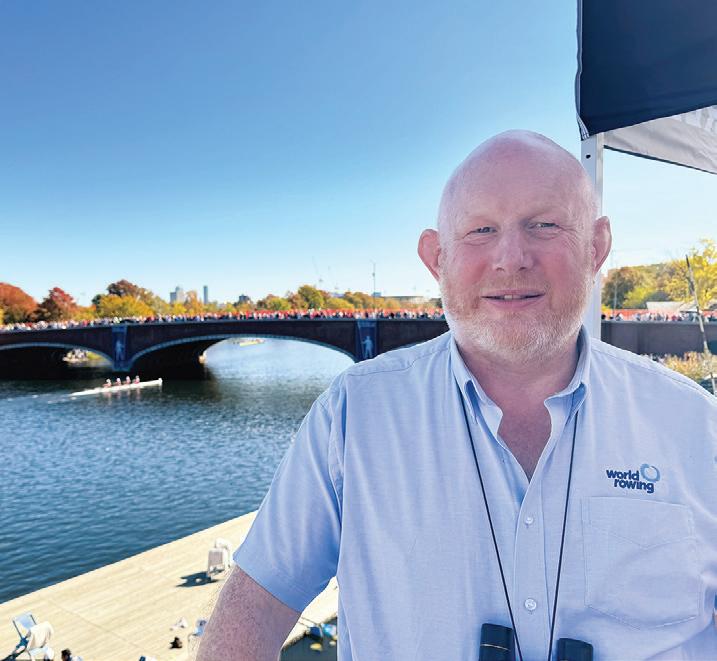
The 2024 St Edmund Hall Roadshow took the Outreach team from Buxton to Leicester, engaging with over 600 students across 11 schools. Four enthusiastic Student Ambassadors accompanied Luke Maw, the Hall’s Admissions & Outreach Manager: Finn Galway (2023, Medicine), Jack Gillespie (2022, Geography), Jade Vohra (2023, Physics), and Molly Hill (2022, German and Russian).
Together, they delivered interactive workshops to Key Stage 5 students, focusing on the Oxford application process. Luke also gave talks to Key Stage 4 and 5 students to help demystify Oxford and offer guidance on how to submit competitive applications. Luke commented:
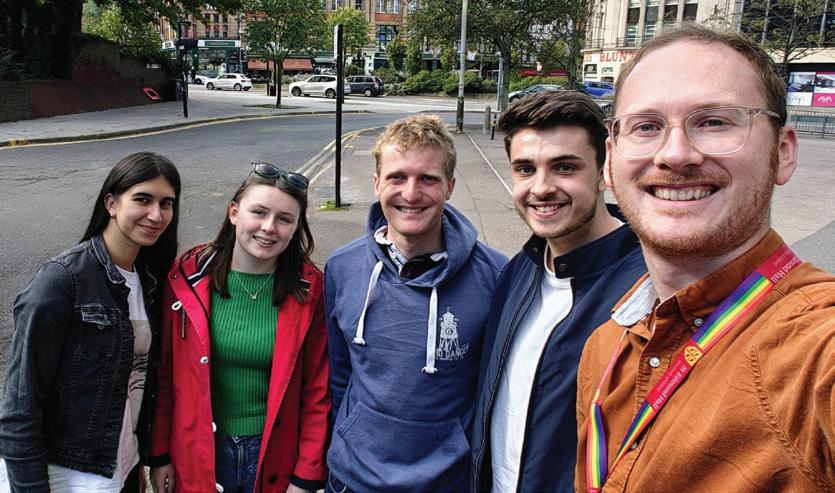
“The roadshow is a fantastic opportunity to connect with students who might not have had the chance to visit Oxford. It allows us to bring Oxford directly to them, especially in more remote areas. Our Student Ambassadors share their own experiences and subject-specific tips, giving KS5 students the tools they need to approach their applications with confidence.”
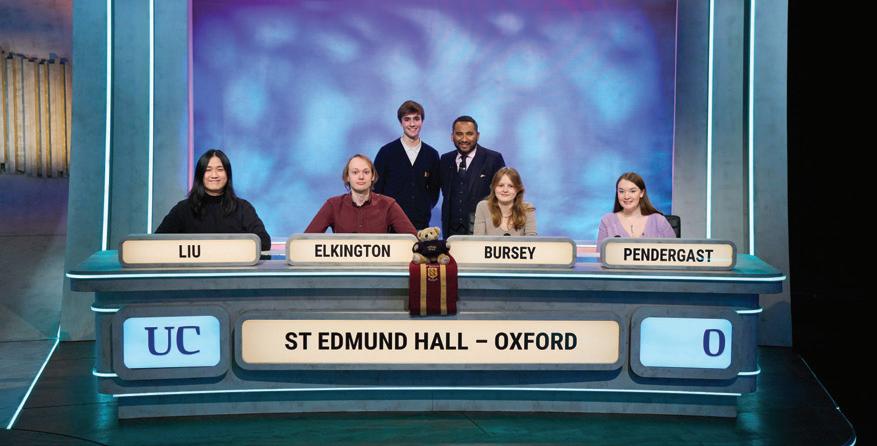
At the end of last year, the Hall once again competed in University Challenge, the longrunning quiz show hosted by Amol Rajan. The team consisted of captain Sophia Bursey (2022, English) alongside team members Jeffrey Liu (2023, DPhil Politics), Daisy Pendergast (2021, Molecular and Cellular Biochemistry), Robert Elkington (2018, Modern Languages and Linguistics), and James O’Neill (2022, PPE; in reserve).
The eagerly awaited first-round match aired on 11 November 2024, with the Hall team taking on SOAS University of London and winning the match 195-155. The second round followed on 20 January, against Christ’s College, Cambridge, and despite a solid performance, the match went to the opponents who eventually won the series.
Reflecting on the match, Sophia commented: “While the outcome of the second round wasn’t quite what we would have hoped, it was still really fun to film. There were quite a few moments where we had the answers but buzzed in a split second too late, and unfortunately the bonuses fell so that lots of our specialisms went to the other team while we had some really tricky ones. […] We lost to a really strong team in Christ’s and they were very gracious winners!”
The Conversations in Environmental Sustainability series brings together leading thinkers and decision-makers from academia, business, government and NGOs to examine a specific topic related to environmental sustainability.
In November, the Hall welcomed a panel of expert speakers for a lively debate on ‘Lab-grown, real, or plant/fungi-based meat – which is best for the environment?’
Hosted by the Principal, the event included presentations from Professor Sir Charles Godfray, Professor of Population Biology and Director of the Oxford Martin School; Dr Ivan Wall, Co-Founder and CEO at Quest, which is working to make cultivated meat affordable through lowcost cell culture ingredients; Rose Dale from Rose Dale’s Organic Farm, producing organic, grass-fed meat; and Jim Laird, Co-Founder and CEO at ENOUGH, which has developed a versatile mycoprotein as a sustainable alternative to meat.
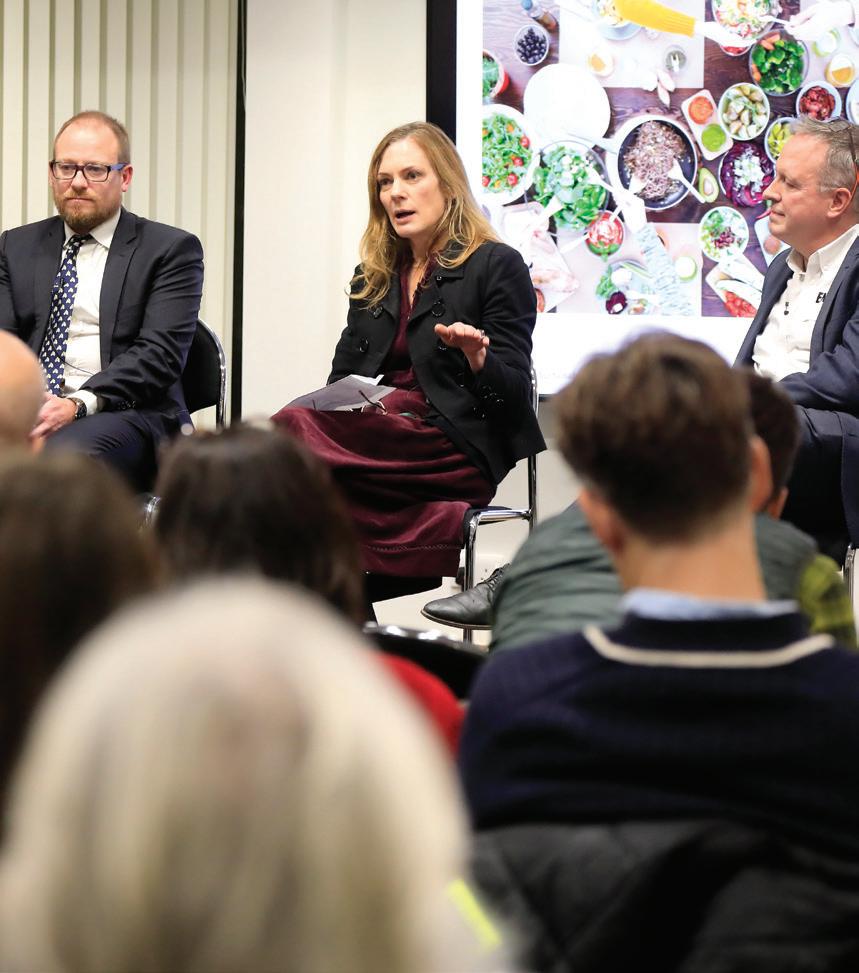
The next event followed in May with a focus on the future of river deltas. The audience heard from guest speakers Professor Jim Hall, Professor of Climate and Environmental Risks at Oxford’s Environmental Change Institute; Professor Veronica Strang from the School of Anthropology and Museum Ethnography; architect Dilip da Cunha; and Professor Katherine Ibbett from the Faculty of Medieval and Modern Languages. Together, the speakers explored the past and present of deltas, and how we can ensure a sustainable future for their communities, biodiversity and entire ecosystems.
Find out more about the series and access recordings and event summaries at www.seh.ox.ac.uk/discover/ces.
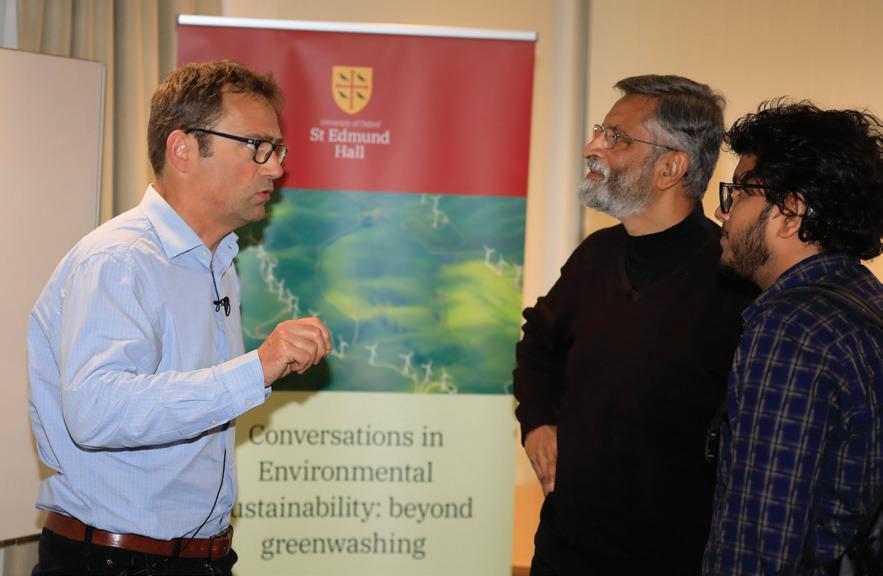
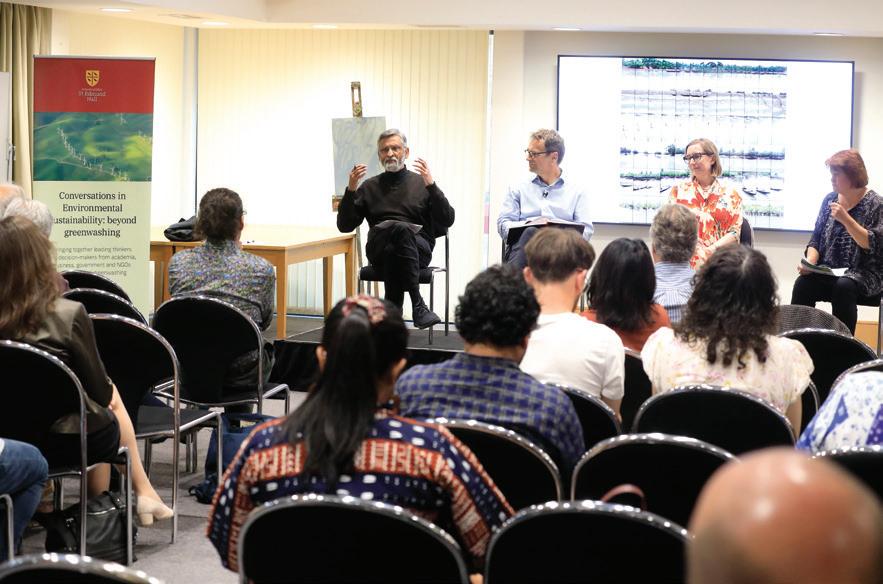
Professor Nicholas Cronk, Emeritus Fellow and Director of the Voltaire Foundation, has been presented with a Festschrift honouring his work on Voltaire and the French Enlightenment.
The volume, published by Liverpool University Press last November, was edited by two of Nicholas’ former graduate students: Dr Gillian Pink (Oxford) and Professor Thomas Wynn (Durham). The title – L’Écriture est la peinture de la voix (translation: Writing is the Painting of Voice) – is a quotation from Voltaire’s Questions sur l’Encyclopédie, a work edited by Nicholas as part of the Complete Works of Voltaire published by the Voltaire Foundation.
The Festschrift, which comprises essays by internationally eminent scholars, is a fitting tribute to the esteem and affection in which Nicholas is held as a colleague, teacher and mentor, and reflects the invaluable contributions he has made to 18th-century studies and our knowledge of Voltaire.
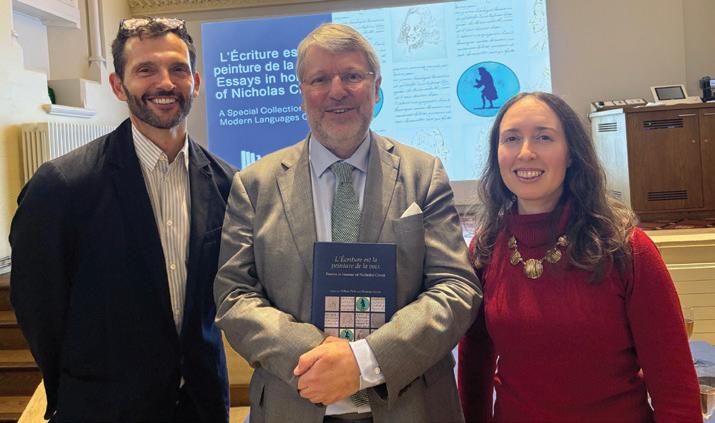
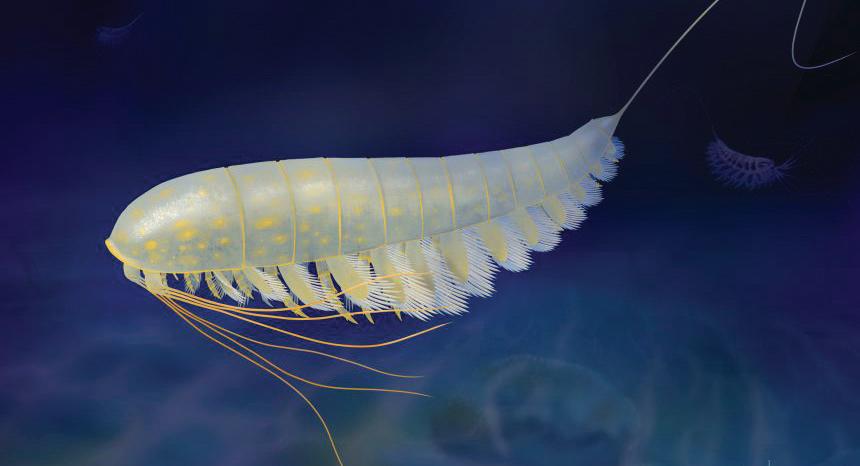
A team of researchers led by Associate Professor Luke Parry, Tutorial Fellow in Earth Sciences, unveiled a spectacular new 450-million-year-old fossil arthropod (the group that contains spiders, centipedes and insects). Besides being an extraordinary-looking new scientific species, the specimens are entirely preserved by fool’s gold.
The new fossil, named Lomankus edgecombei, after arthropod expert
Greg Edgecombe of London’s Natural History Museum, belongs to a group called megacheirans, an iconic group of arthropods with a large, modified leg (called a ‘great appendage’) at the front of their bodies that was used to capture prey. Megacheirans like Lomankus were very diverse during the Cambrian Period (538–485 million years ago) but were thought to be largely extinct by the Ordovician Period (485–443 million years ago).
This discovery offers important new clues towards solving the long-standing riddle of how arthropods evolved the appendages on their heads: one or more pairs of legs at the front of their bodies modified for specialised functions like sensing the environment and capturing prey. Such appendages include the antennae of insects and crustaceans, and the pincers and fangs of spiders and scorpions.
In Michaelmas, American poet and critic Ange Mlinko treated a large audience in the Old Dining Hall to the first Meet the Poet reading of the academic year. She read from her new collection Foxglovewise, which was published in January by Faber. Ange also generously answered questions from the audience on topics including poetry’s relation to the visual arts and the necessities of form, especially rhyme and stanza.
The next event of the series followed in Trinity term, with a reading by Katie Peterson, Professor of English at UC Davis and Visiting Fellow in Poetry at the Hall. Katie is the author of seven books of poetry, including Fog and Smoke, which was published in 2024 and named a Book of the Year by the Times Literary Supplement. Booklist notes that the collection “is a triumph of observation and intimacy that invigorates the reader to act for the natural world.”
‘Magnifying Glass’, a poem by Katie Peterson, can be found on pp. 205–6.
On Friday 24 January, the Hall was delighted to welcome Professor Catherine Hall, Emerita Professor of History and Chair of the Centre for the Study of the Legacies of British Slavery, University College London, to deliver this year’s A B Emden Lecture.
Catherine’s well-received lecture –‘Slavery and capitalism across the C18 Atlantic world’ – focussed on the history of racial capitalism with particular reference to the 1774 History of Jamaica by contemporary historian Edward Long. Long’s work provides a detailed account of the intricate interconnections of the plantation economy, the slavery business as it operated across the Atlantic, and the forms of racialisation on which the system depended. During the lecture, Catherine explored the impact of this source in the
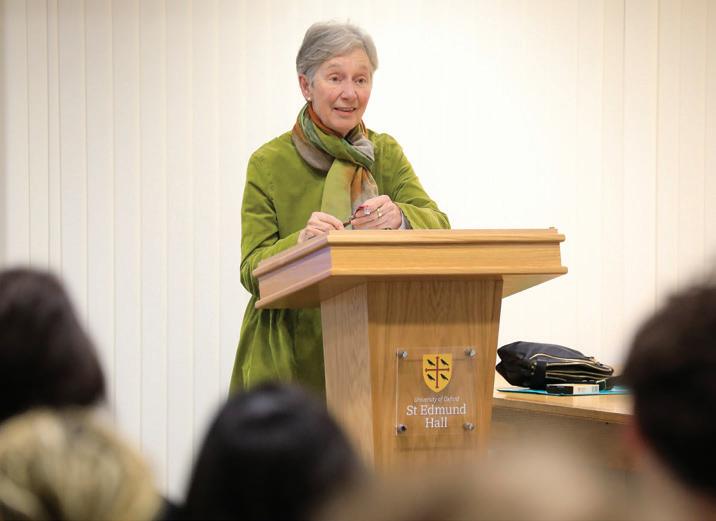
18th-century Atlantic world and how the insidious myths and stereotypes it contains have shaped our present and continue to affect contemporary society. Catherine has written extensively on the history of Britain, gender and empire, and from 2009 to 2016 she was principal investigator on the Legacies of British
Slavery project (www.ucl.ac.uk/lbs).
In 2021, she was awarded the highly prestigious Leverhulme Medal and Prize in recognition of her ground-breaking work. Her latest book is Lucky Valley: Edward Long and the History of Racial Capitalism (2024), which tells the story behind the history of a slave-owning family that prospered across generations together with the destruction of such possibilities for enslaved people.
The lecture is part of an annual series in
memory of A B Emden, a distinguished medievalist and historian of universities who was Principal of the Hall from 1929 to 1951. Established in 1992, the Emden Lecture attracts eminent historians from around the UK and beyond to speak on topics of particular contemporary relevance to a non-specialist audience. The 2025 lecture is available to watch on the St Edmund Hall YouTube channel: www.youtube.com/ watch?v=rNc70beqygM.
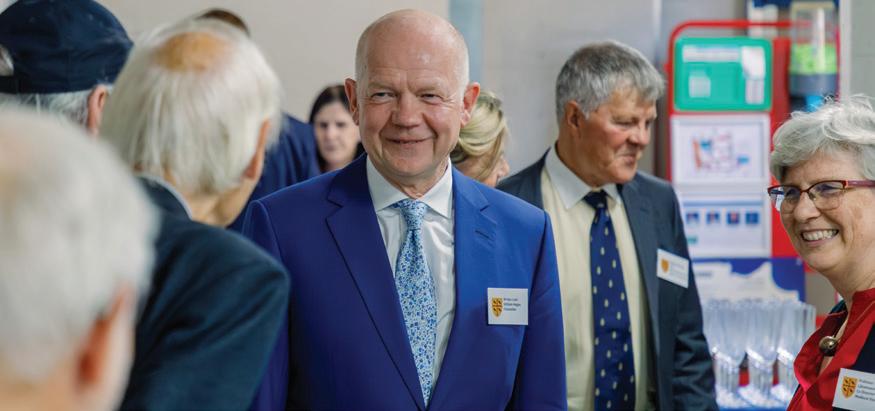
Lord Hague was officially admitted as Oxford’s 160th Chancellor on 19 February, in a ceremony at the Sheldonian Theatre. During his inaugural address, he expressed heartfelt gratitude for the warm welcome he received:
Dr Tom Crawford, Fellow by Special Election in Maths, joined Countdown – the UK’s longest running game show – for a three-week stint in February.
Tom, who is already known to the internet via his Tom Rocks Maths YouTube channel, joined the programme while Rachel Riley MBE took a short break to work on another
“I thank all of you, the Convocation, for electing me as your Chancellor and for your enthusiastic welcome in recent weeks. Every visit I have made so far and every conversation has deepened my excitement about the years to come. I happily dedicate myself today to working with you and for you.”
Following the inauguration, Lord Hague has joined St Edmund Hall as Visitor and took part in the celebrations at the NSE topping-out ceremony in June.
Read more about the NSE topping-out ceremony on p. 78.
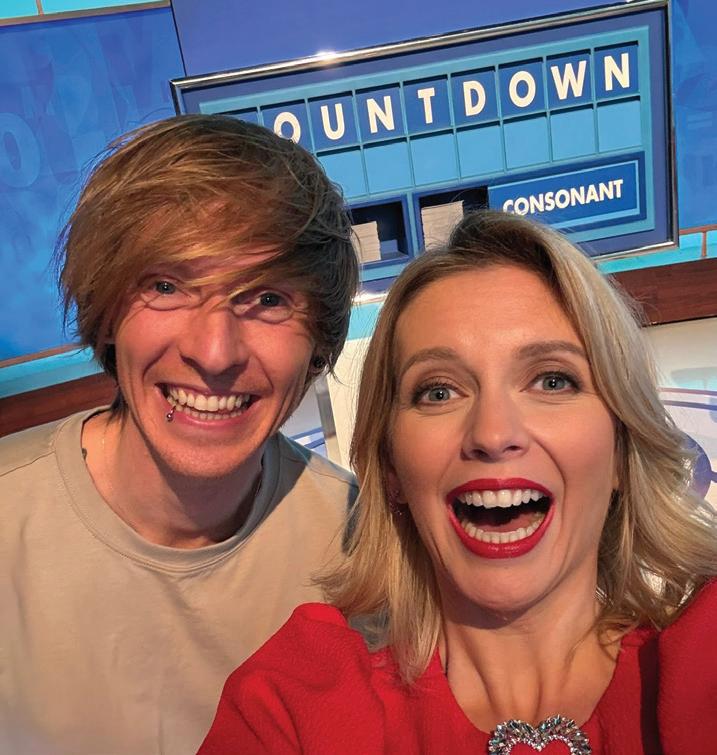
project. Alongside lexicographer Susie Dent, Sir Stephen Fry was in Dictionary Corner for Tom’s first show, with other guests including Jenny Powell and Vick Hope on screen over the following weeks. Before joining the show, Tom commented:
“All of my work online is about sharing my love of Maths with the world whilst trying to make it accessible for everyone. Countdown has been doing that for a generation, so it really is a dream come true to be joining this iconic show to cover Rachel.”
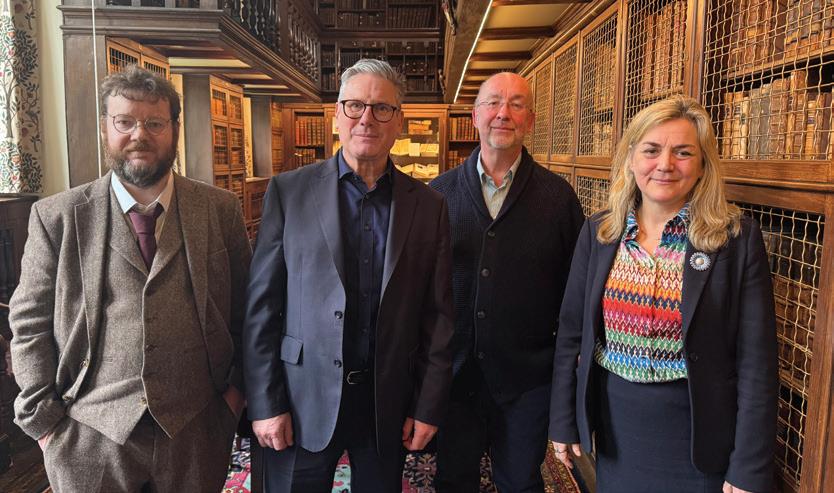
At the end of February, the Hall welcomed back Prime Minister and Honorary Fellow The Rt Hon Sir Keir Starmer (1985, BCL).
During his visit, Sir Keir had a tour of the Hall, accompanied by the Principal and Emeritus Fellow Professor Adrian Briggs, and met with members of the Fellowship, staff and students. His tour included a visit to the Library and Old Library as well as to student accommodation.
On Friday 7 March, the Geddes Trust and St Edmund Hall held the annual Philip Geddes Memorial Lecture and prizegiving, with the lecture delivered by award-winning journalist and podcaster Gabriel Gatehouse.
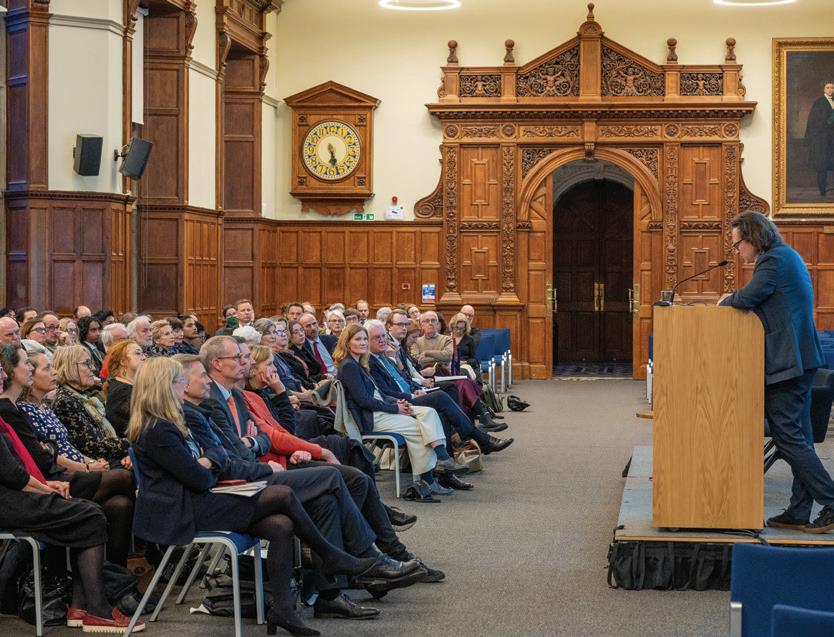
Gabriel has reported from almost every recent conflict around the world, winning numerous awards for his journalism, including the 2023 Broadcasting Press Guild Award for Best Podcast (The Coming Storm) and a 2020 Foreign Press Association award for his coverage of the Hong Kong protests. He has also reported extensively from the USA on Donald Trump’s presidency.
The thought-provoking lecture entitled ‘Trump 2.0. What America’s rabbit holes tell us about the future’ examined how cultural, societal and political changes in America over the past four years will shape the future. Gabriel asked what constitutes “a fact” and examined the role “alternative facts” have in news coverage and politics. Journalists should not, he warned, “ignore the weird guy” – they
will have stories to tell that are “pearls of truth”. Chris Wilson, the founder of the Geddes Trust and a colleague of Philip Geddes (1977, English) who was sadly killed by an IRA bomb in 1983, described the evening as “spectacularly successful, brilliant, heartwarming”.
A recording of the lecture is accessible online via the Hall’s YouTube channel: www.youtube.com/ watch?v=TSy6RtseUq0.
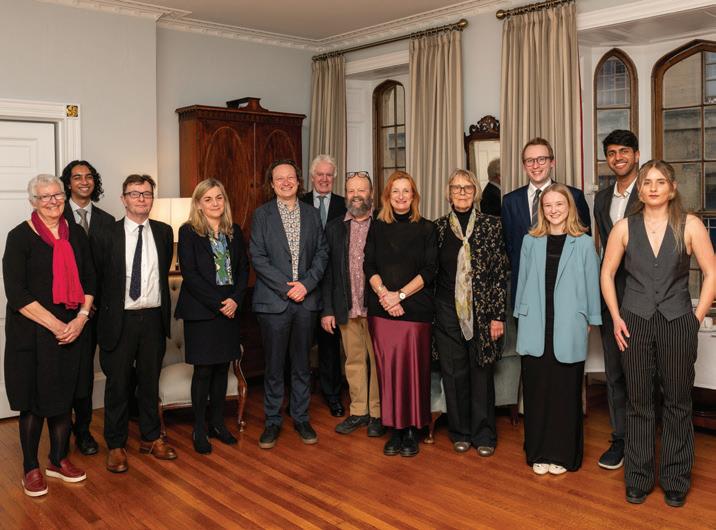
Shortly before the lecture, a prizegiving reception was held for this year’s recipients of the Geddes Student Journalism Prizes. The prizes recognise and support emerging journalistic talent, with the awards contributing towards a media project or expenses needed to support an internship in the media.
In addition to the existing prizes, the Paddy Coulter Prize for Opinion Journalism was awarded for the first time in memory of Paddy Coulter, a highly committed board member of the Trust and trailblazing journalist turned activist who sadly died last year.
Philip Geddes Memorial Prize: Anuj Mishra
Anuj is a final-year English Literature student at Exeter College.
Anuj has already notched up significant journalistic experience with stints as Editor-in-Chief, Culture Deputy Editorin-Chief and Stage Section Editor at the Cherwell.
His internships have included the Manchester Evening News, MyLondon, and The Bolton News
His winning project is to travel to America to explore the influence Indian Americans are having on politics in the United States and the links between India’s BJP party and the Republican party.
Ronnie Payne Prize: Simar Bajaj
Simar is a first-year Master’s in Health Science student at St Anne’s.
Simar has substantial freelance experience that includes writing for The Washington Post, Scientific American, TIME, The Atlantic and STAT News, the medical arm of The Boston Globe newspaper.
He will report on the issue of stigma in contemporary society. He plans to spend two weeks travelling across rural America, investigating stigma in healthcare and speaking to patients whose stories have gone untold.
Clive Taylor Prize: Samantha Martin Samantha is a second-year History student at Somerville.
Samatha, a horse racing fan, wrote a couple of hard-hitting pieces for The Times last year that captured the chaos of the Cheltenham Festival.
She will spend the Geddes prize money reporting from France on the sporting and cultural differences between France’s top race, the Prix de l’Arc de Triomphe in Paris, and Britain’s Grand National at Aintree. She hopes to place the report in The Times in October.
Paddy Coulter Prize: Flora Prideaux Flora is a third-year History student at Somerville.
Flora has already chaired Oxford Student Publishing Limited and The Oxford Blue along with work experience at the Daily Mail
Flora will travel to the next UN Climate Change Conference – COP30 in Brazil – to report on how the proceedings can be made more relevant to people experiencing the climate crisis around the planet.
Two Geddes Masterclasses were held over the last academic year for student journalists across the University. On 20 November, Ed Conway, Sky News Economic and Data Editor, author and Times columnist, addressed the topic ‘There is no such thing as data journalism’. This was followed on 31 January by a talk entitled ‘It’s social media’s world and we’re all just living in it’, delivered
by Marianna Spring, the BBC’s first disinformation specialist and social media investigations correspondent. Both events were well-attended and provided valuable insights into the speakers’ work at this critical time for journalism.
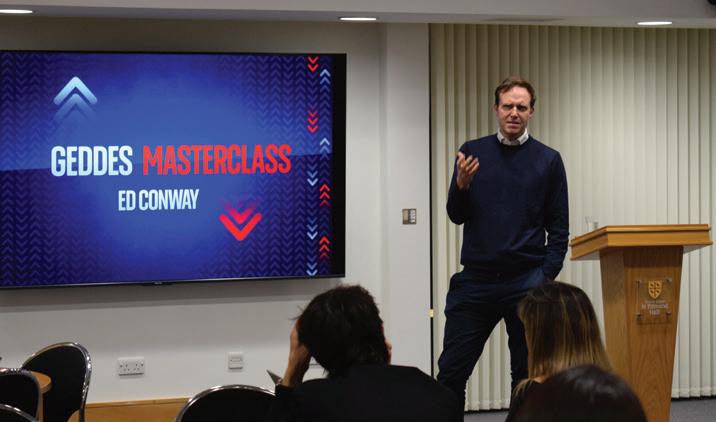
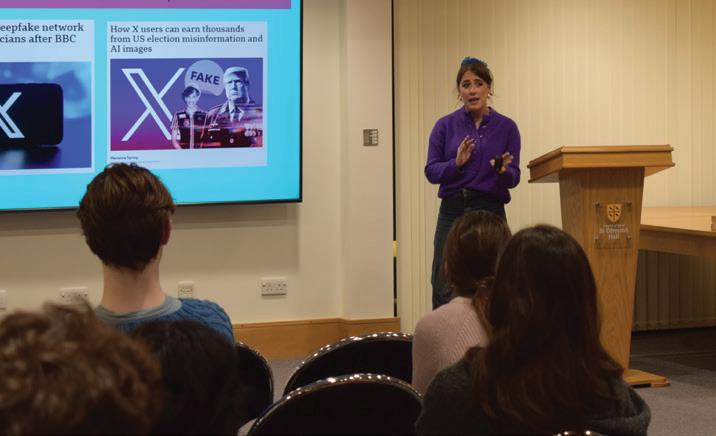
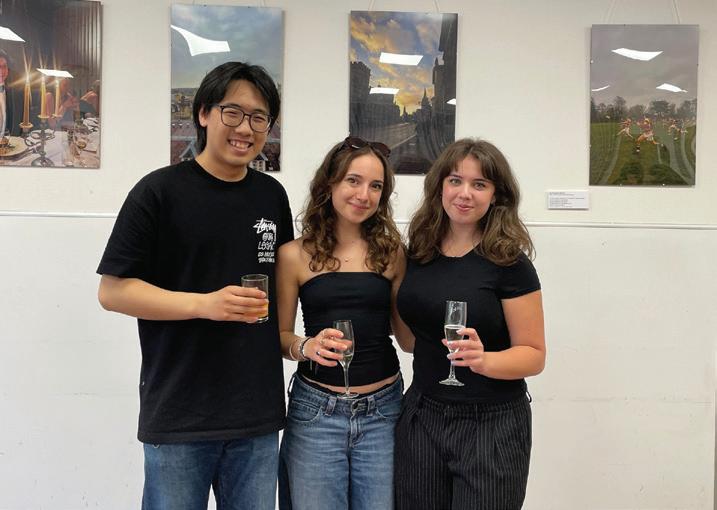
Following on from last year’s success, Hilary term saw a re-run of the popular student #HallLife campaign, with three photography interns tasked with capturing all aspects of student life at St Edmund Hall.
Chenyu Zhu (2024, MSc Theoretical and Computational Chemistry), Lily ThompsonMouton (2022, Experimental Psychology) and Lottie Newell (2022, History) were selected as this year’s interns. Their weekly updates were shared on the Hall’s social media channels to give prospective students an insight into what it is really like to live and study in Oxford, with the images covering a broad range from daily Hall and Oxford life – including studying and social events – to sports and cultural events, around Oxford and further afield.
The internship culminated in an exhibition of their photos in the Pontigny Room, running from Trinity term and throughout the Long Vacation.
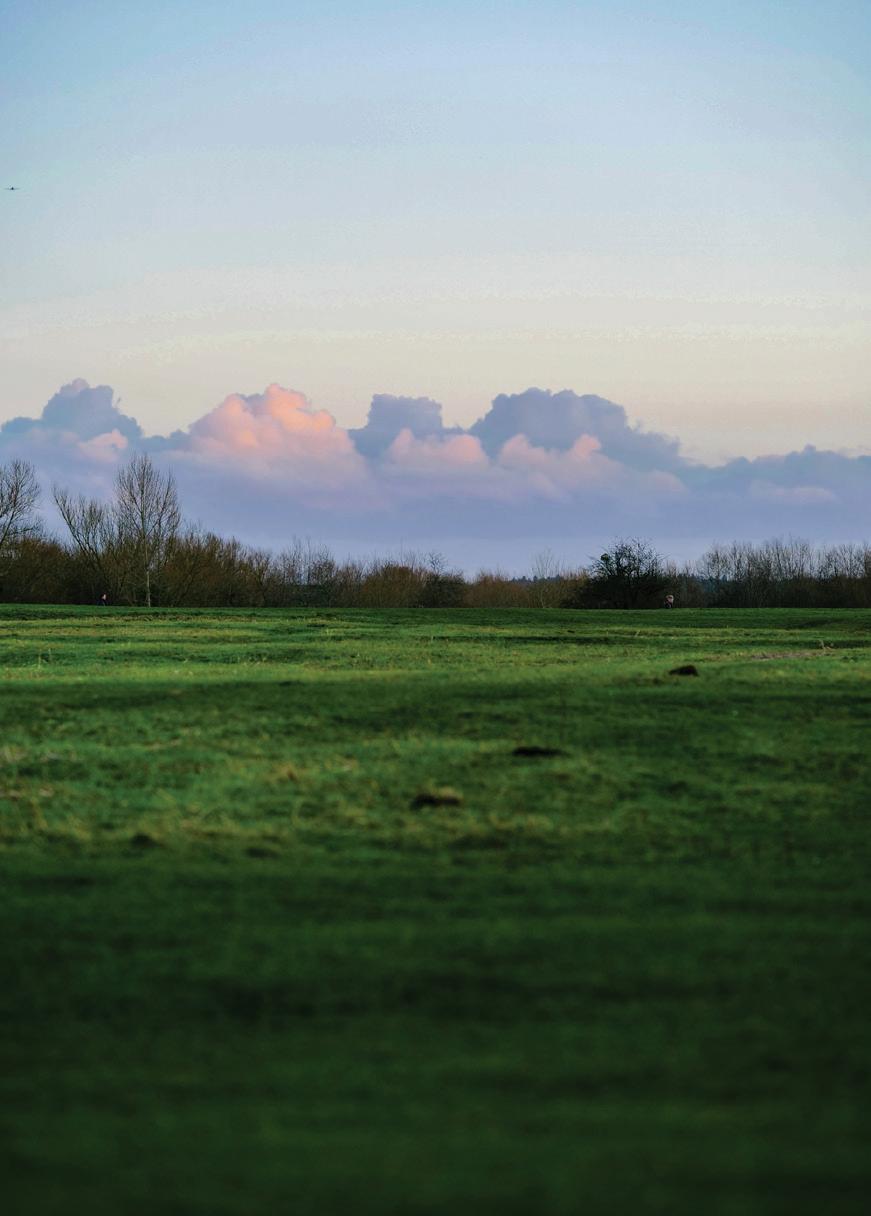
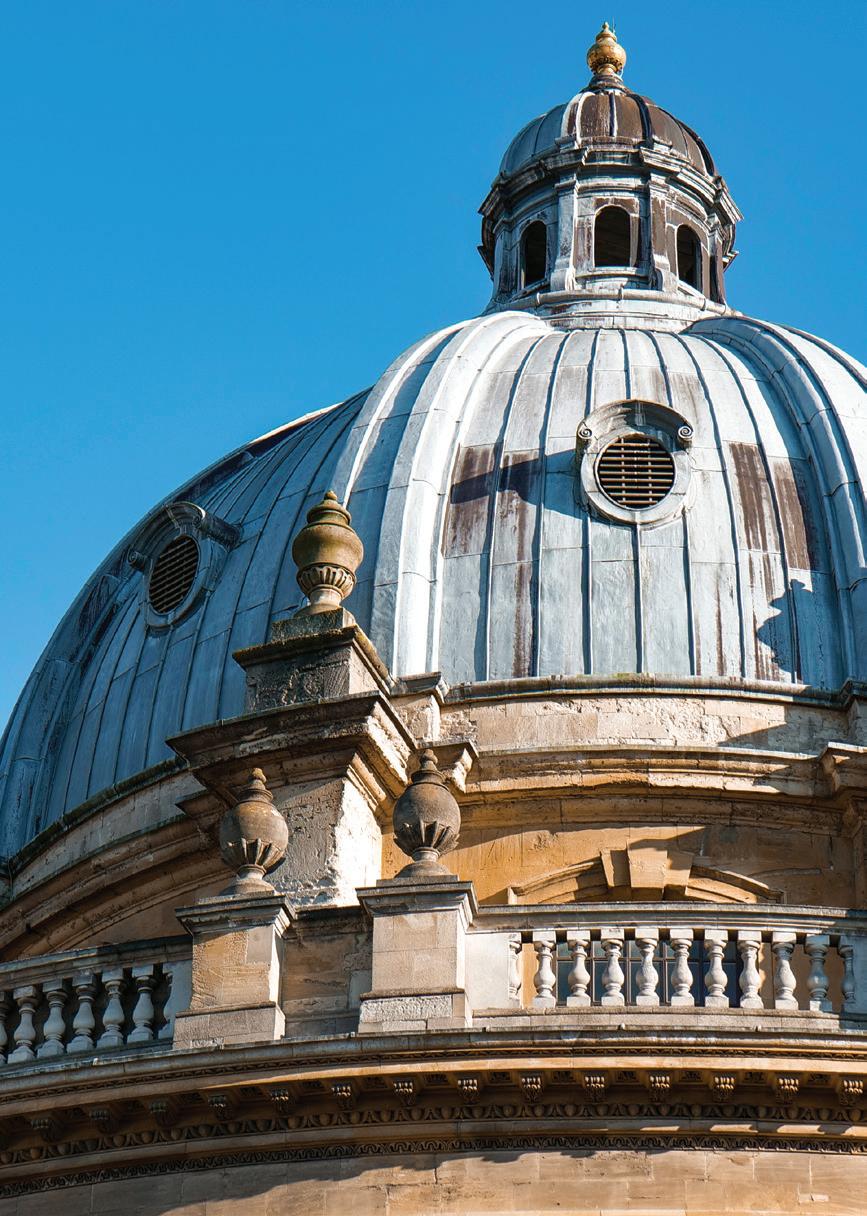
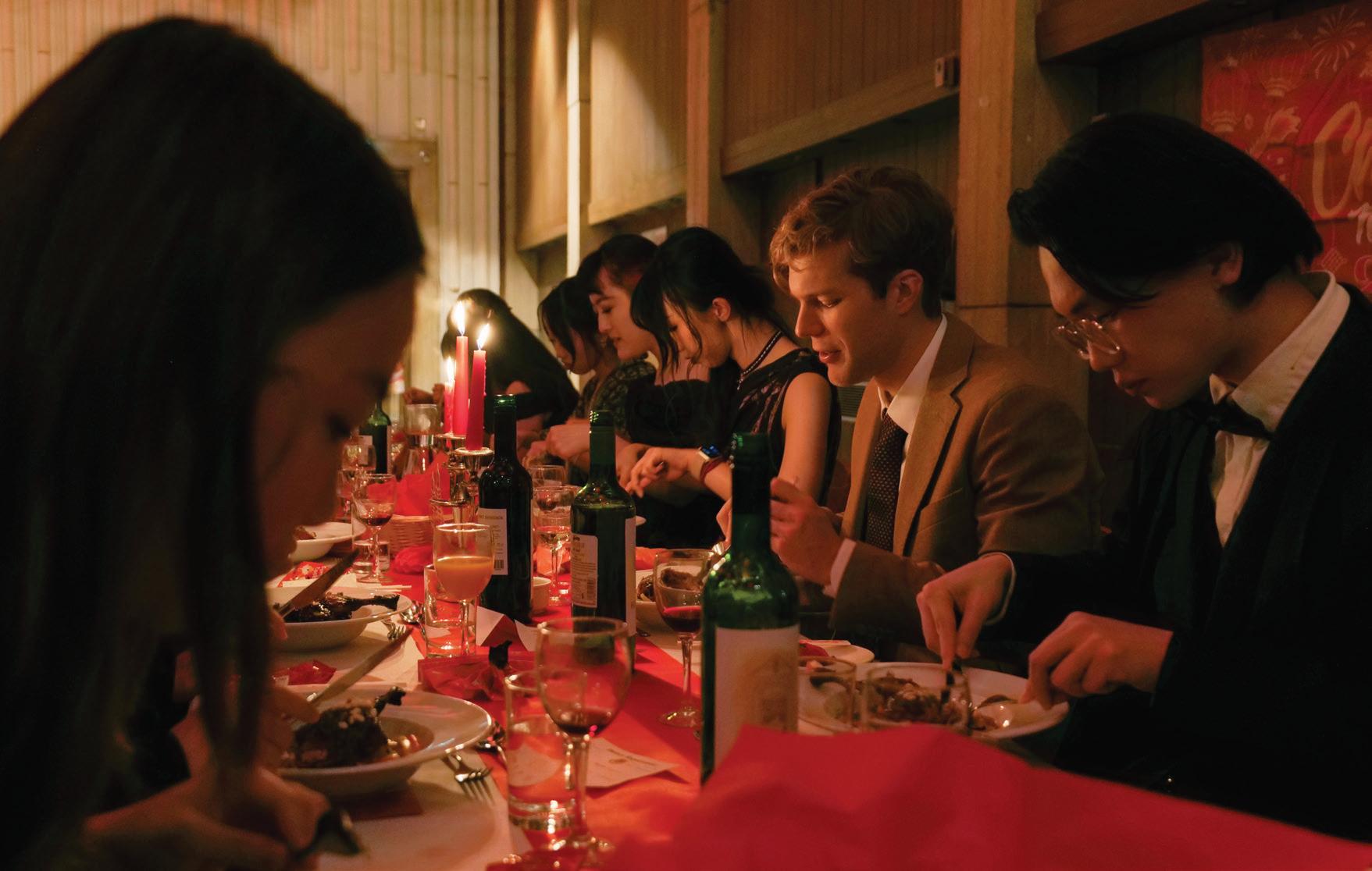
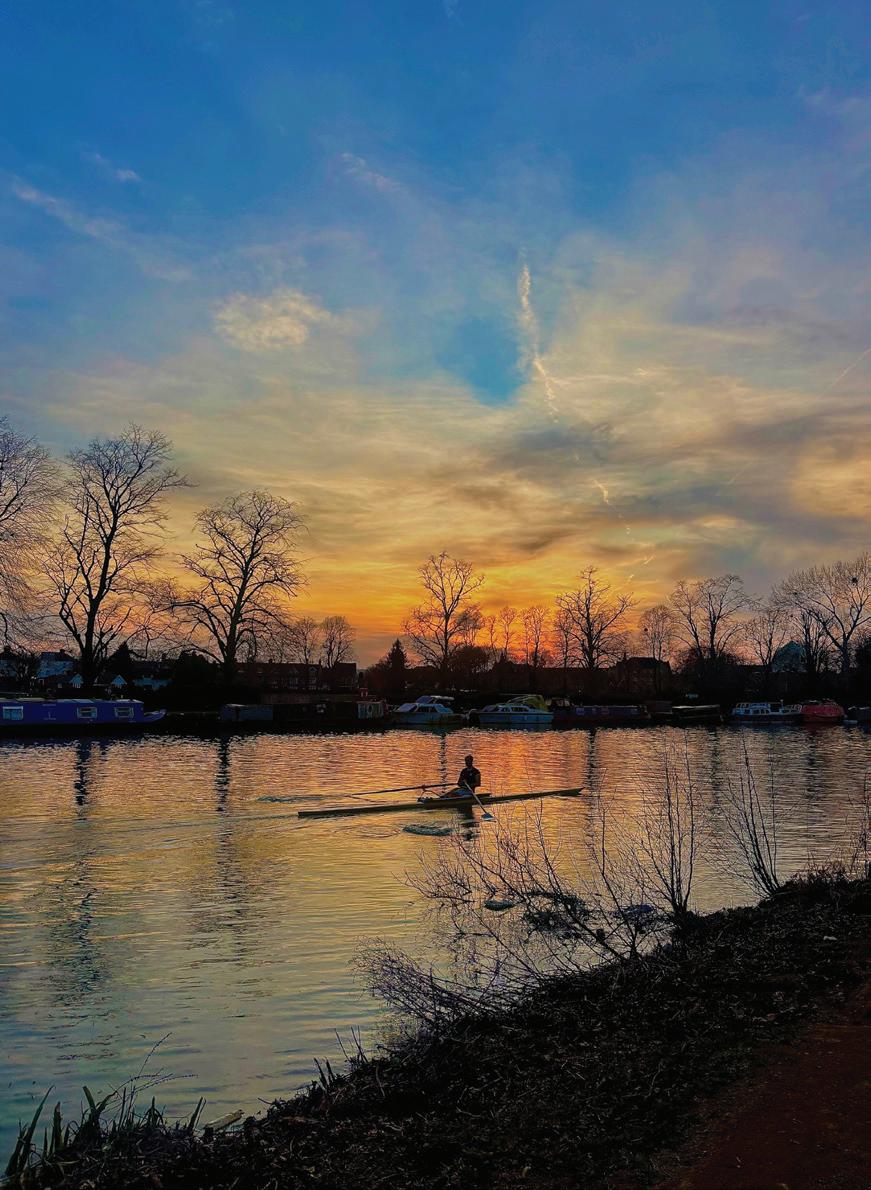
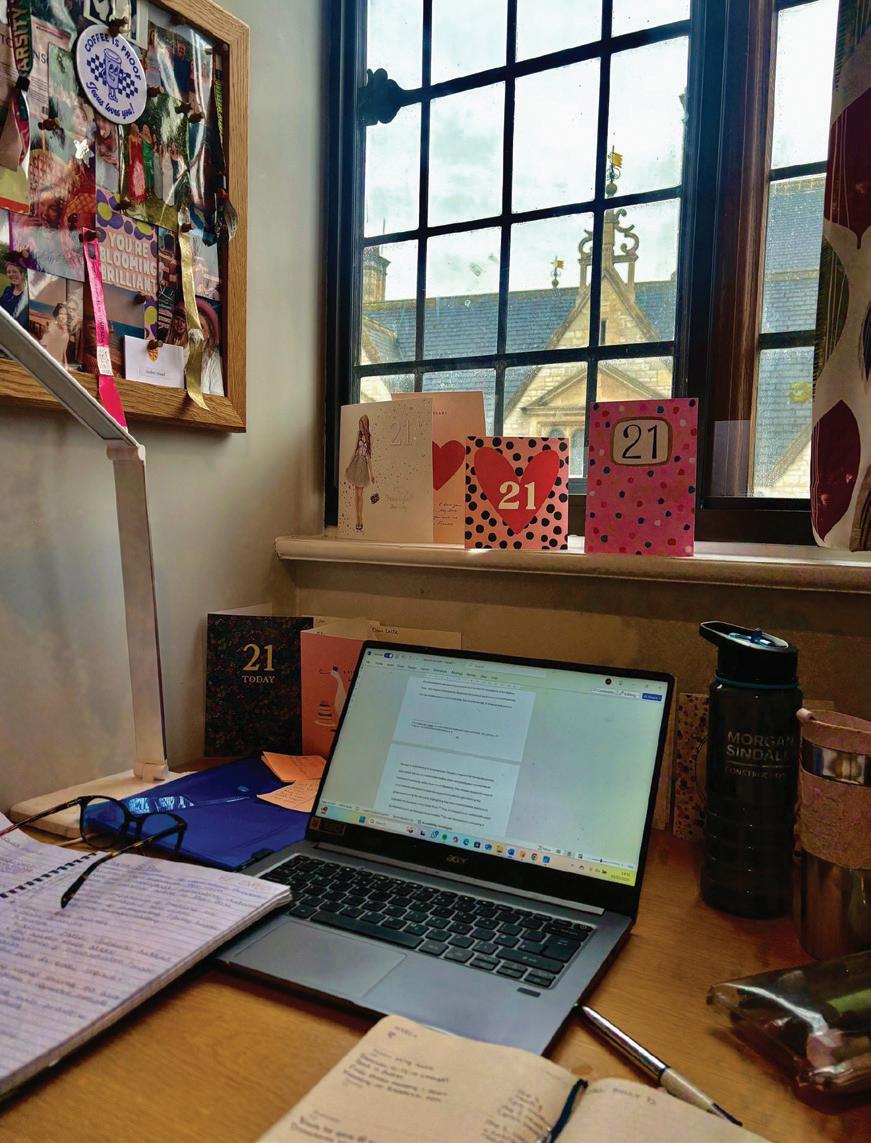
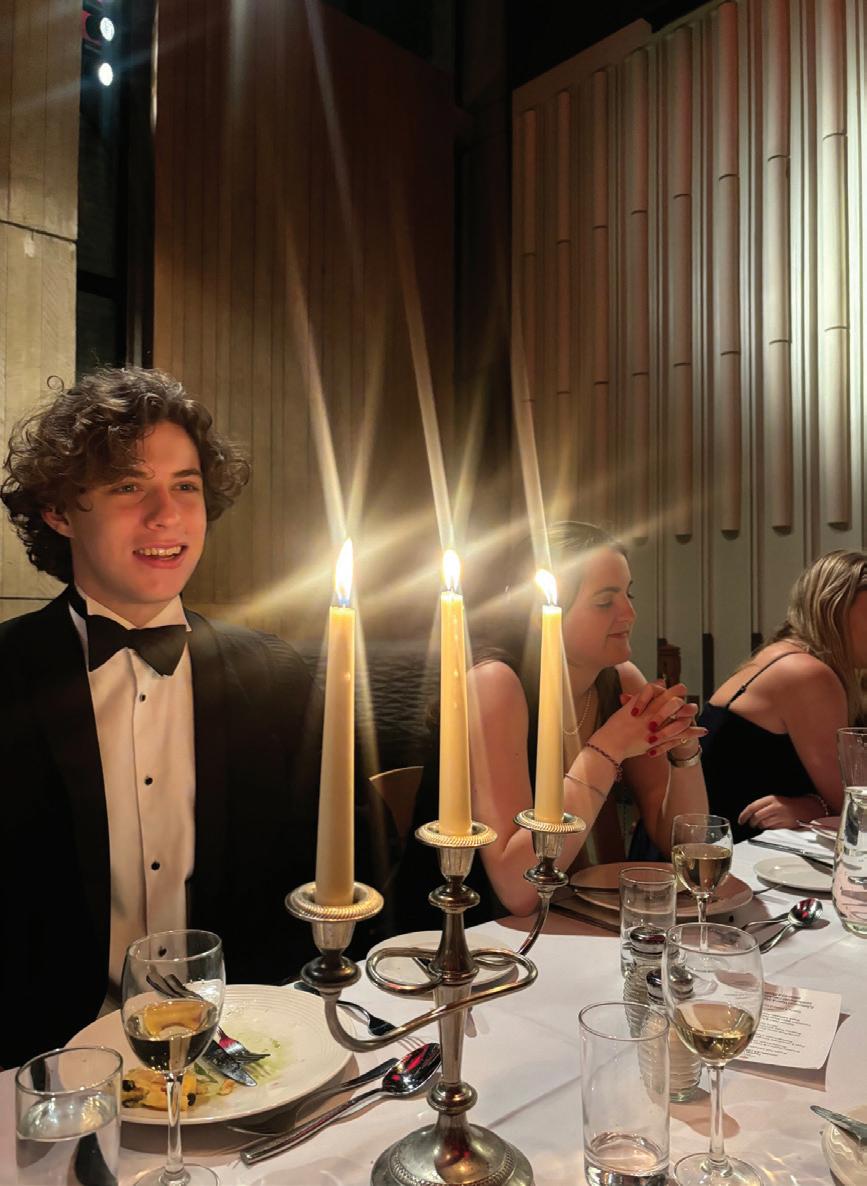
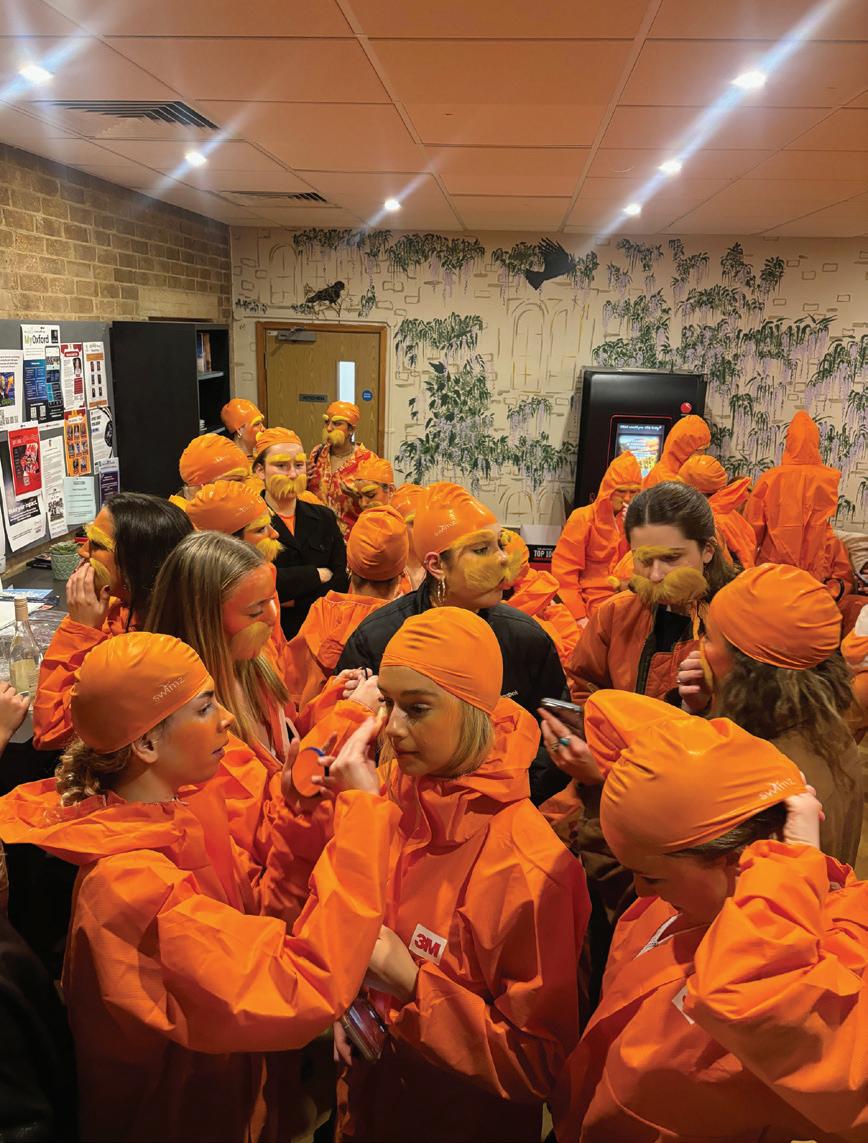
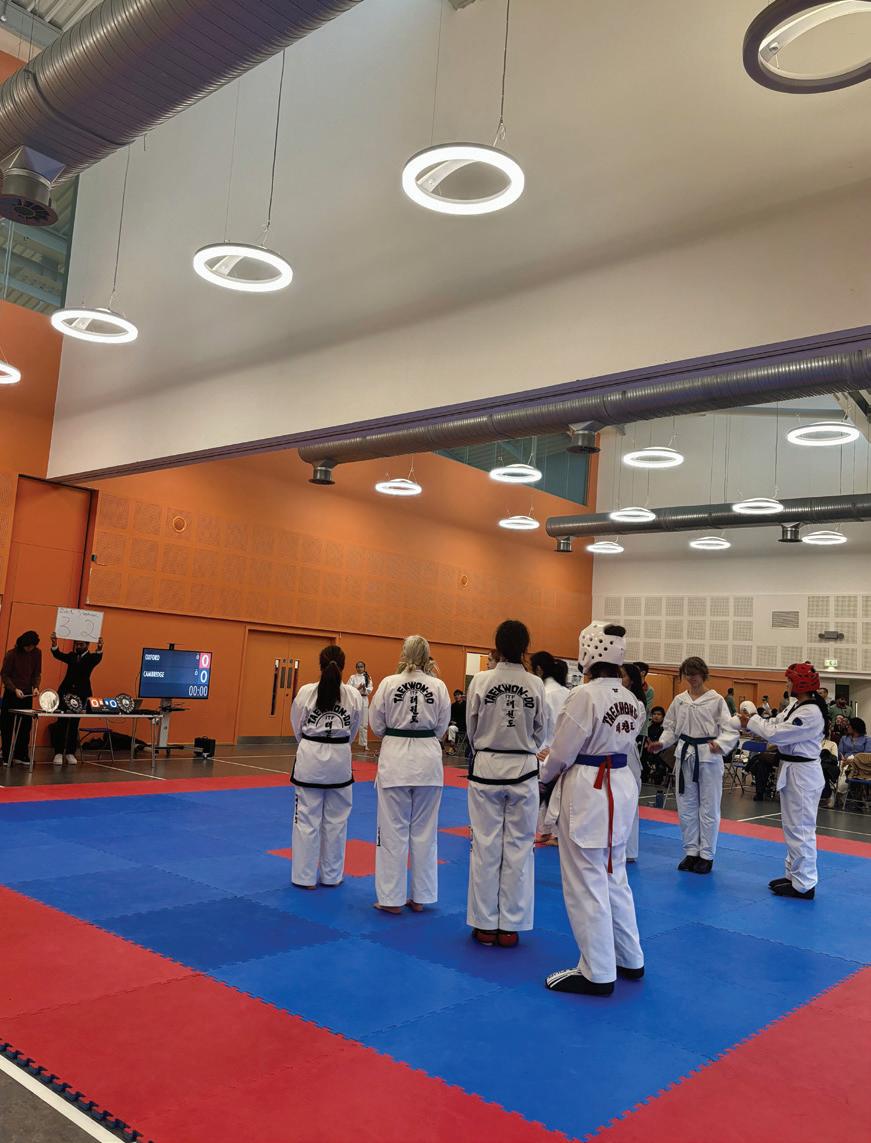
From 25 April to 2 May, the inaugural Community & Giving Week took place in College, bringing together students, Fellows, staff, alumni and friends in a week-long celebration of community, growth and giving.
The main focus of the week was the 1317 Challenge. Inspired by the first documented reference to the Hall in 1317, Aularians around the world were asked to take part in a range of exciting activities with a focus on the College and the number 1317.
The Aularian community responded with enthusiasm, sending in a wide range of creative and exciting challenges, including hikes, poetry, baked goods, rowing challenges, and musical and theatrical arrangements. A notable highlight was a performance by current student Luke Boulton (2022, Medicine) of an original piano composition which was written by alumnus James Harpham (1959, History) especially for the 1317 Challenge.
Across the week, the College raised funds in support of four key areas: Student Support, Access and Outreach, Sports
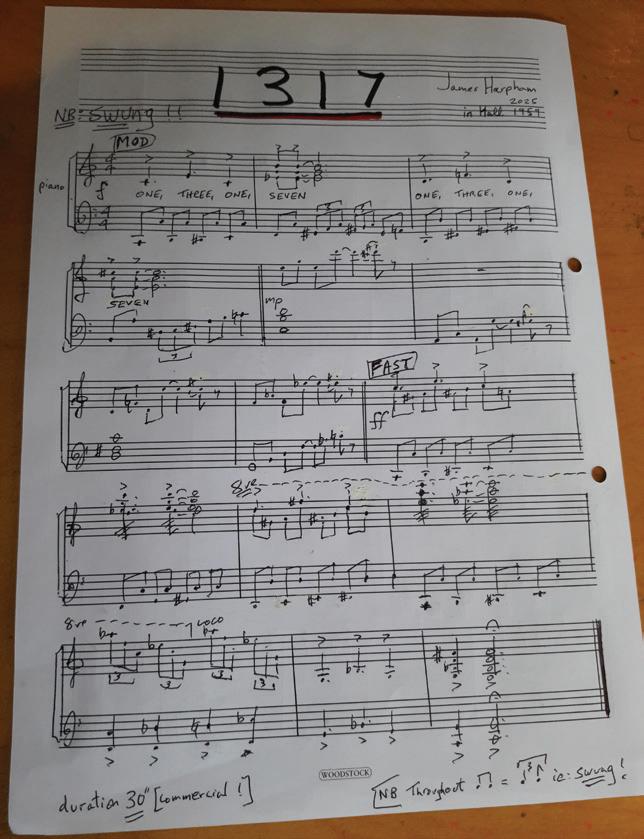
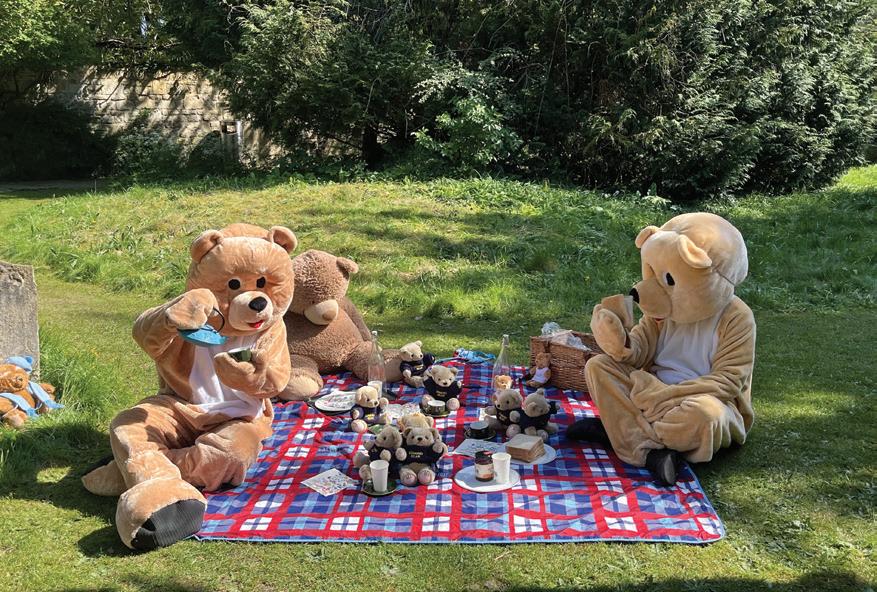
Clubs, and Music, Arts and Culture. The fundraising campaign exceeded all expectations with over £140,000 raised in total, surpassing the original goal of £131,700.
More than 200 Aularians participated, spanning generations from matriculands of 1951 to current students, Fellows and staff. This collective effort is a demonstration of the enduring strength, enthusiasm and generosity of our Hall community.
A full summary of the week and completed challenges can be viewed at hallmarkscampaign.seh.ox.ac.uk/home/ sehcommunityandgivingweek/.
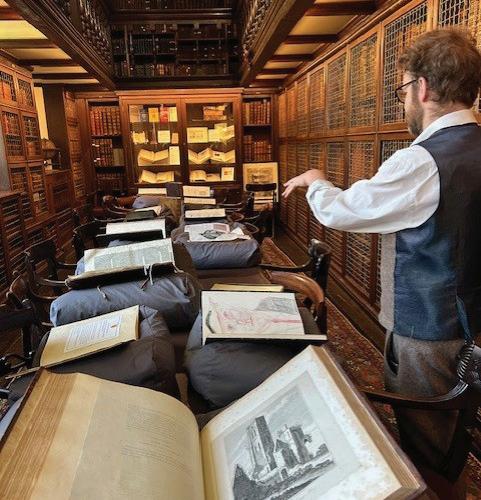
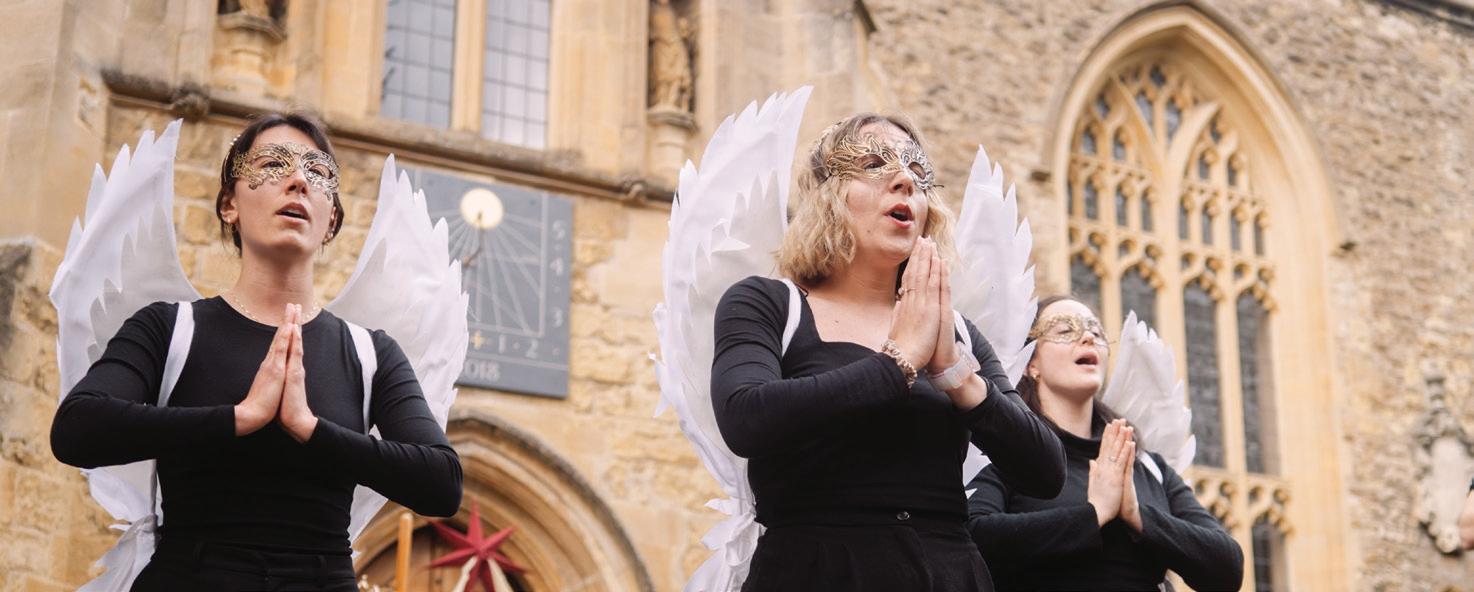
The fourth iteration of the Oxford Medieval Mystery Plays took place on 26 April, performed to an enthusiastic audience of around 350 members of the College, University and public across the day.
The programme included 13 short plays staged by 150 participants – actors, directors, singers, costume designers and musicians – at various locations around the Hall. Led by 17 directors, the plays were delivered in medieval English, Dutch, German, French, and Latin, with prologues in modern English.
The plays were a very popular form of drama in the Middle Ages, with different
groups performing short plays telling stories from the Bible. Together, they provide a whistlestop tour from Creation to Last Judgement, featuring devils, angels and a whole ark full of animals.
The play cycle was first performed at the Hall five years ago and it has since become a firm Oxford tradition, co-directed by Henrike Lähnemann, Professor of Medieval German Literature and Linguistics.
Find out more about this year’s cycle and watch recordings from the day at www.seh.ox.ac.uk/mystery-cycle/ mystery-cycle-2025.
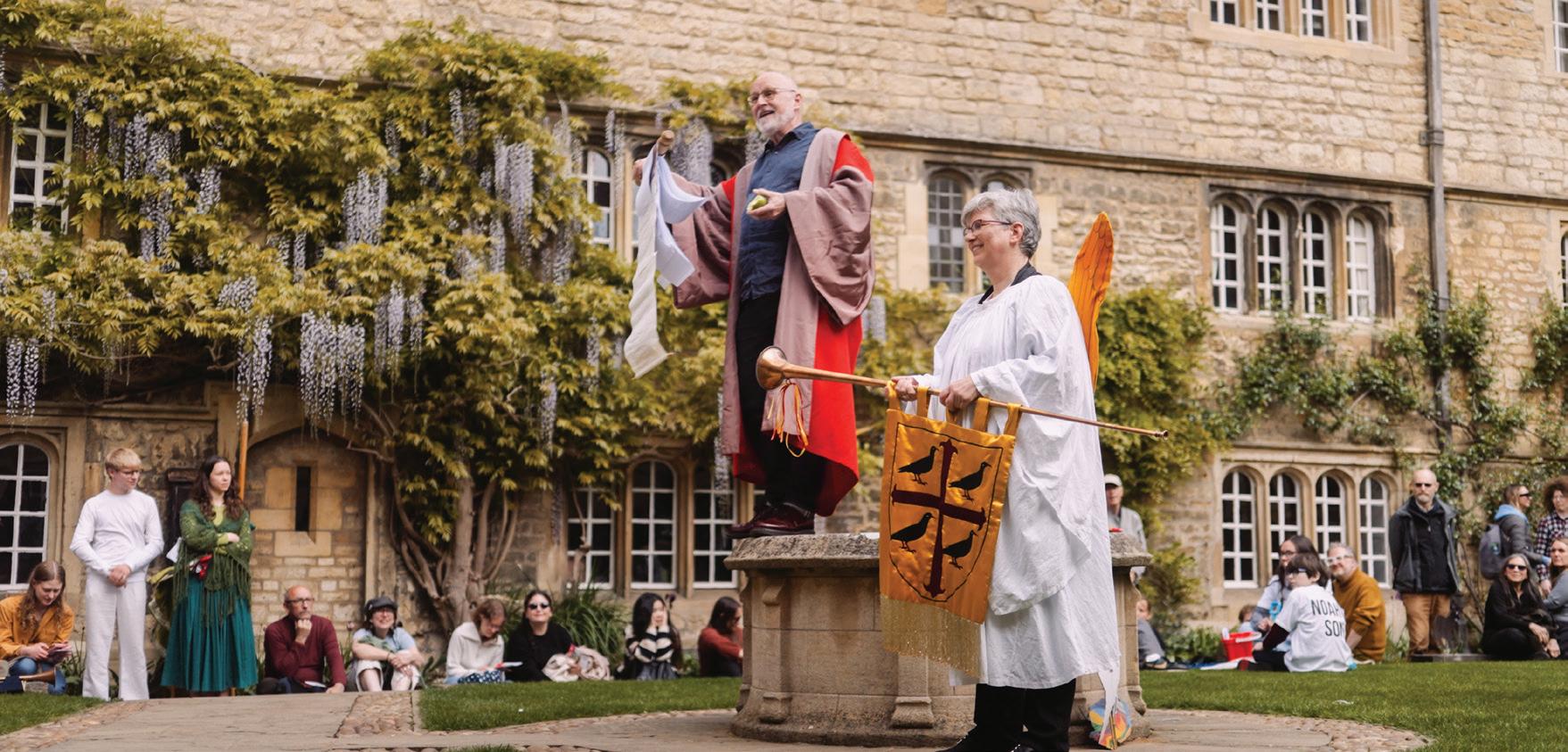
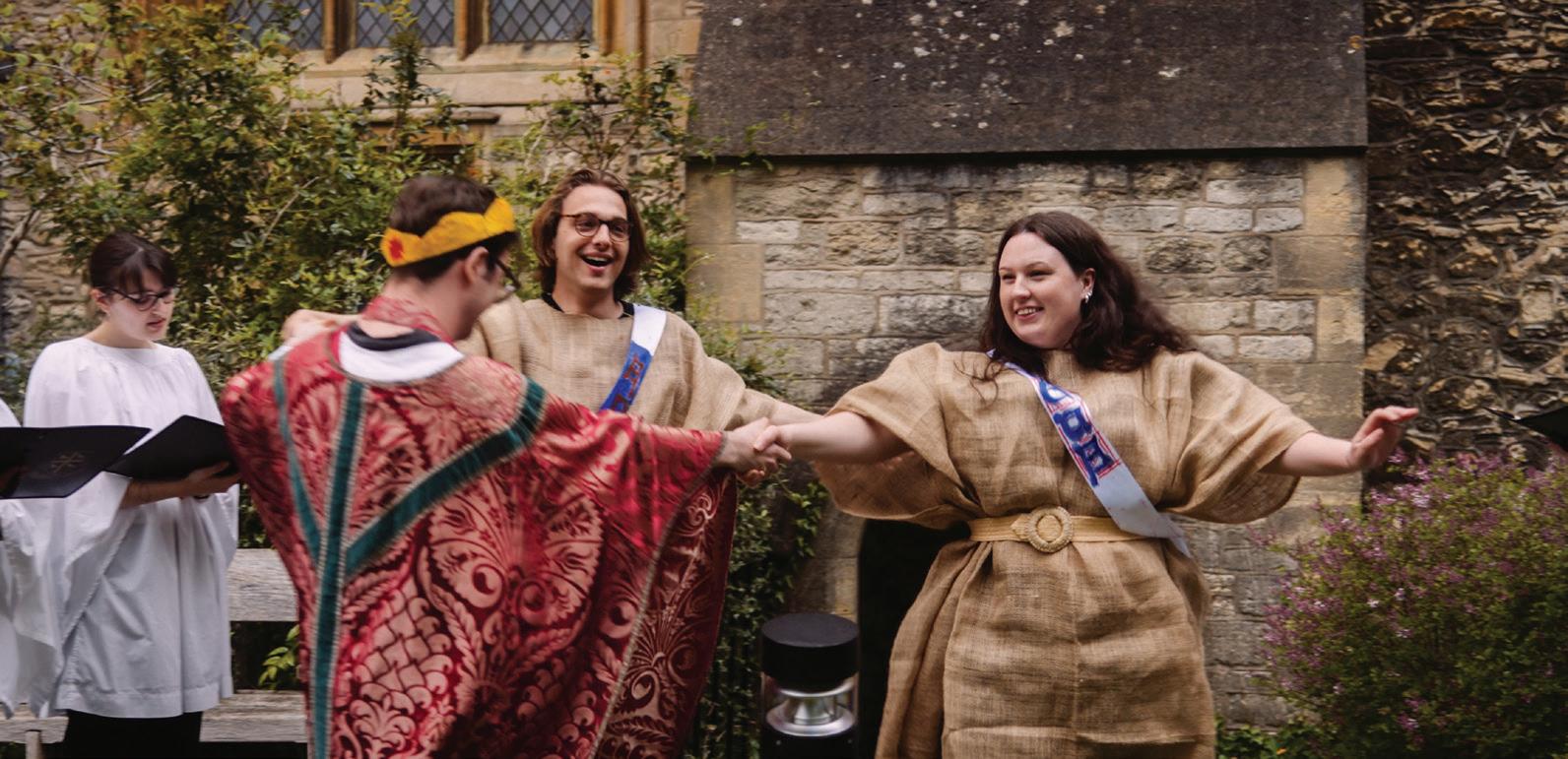
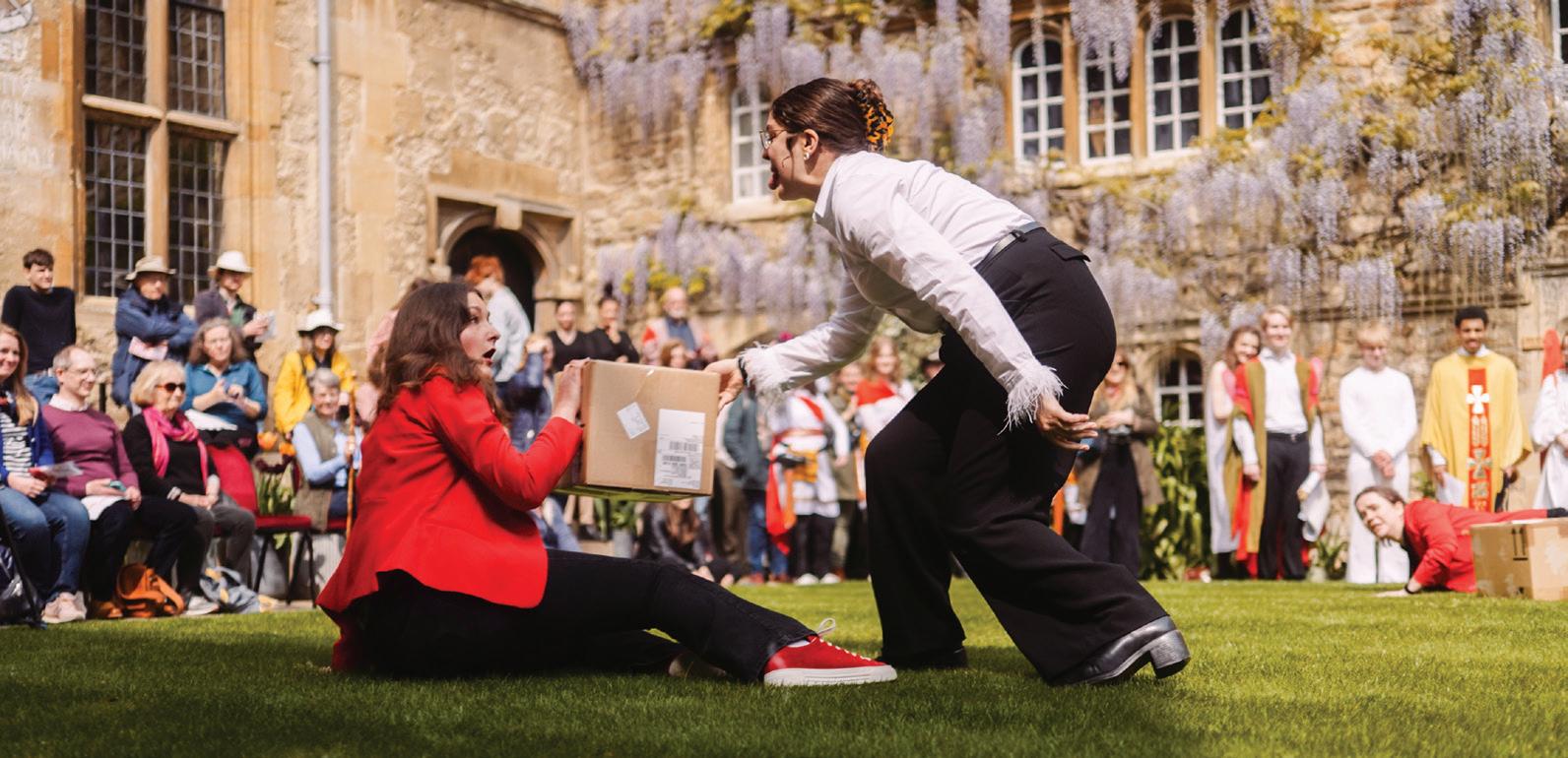
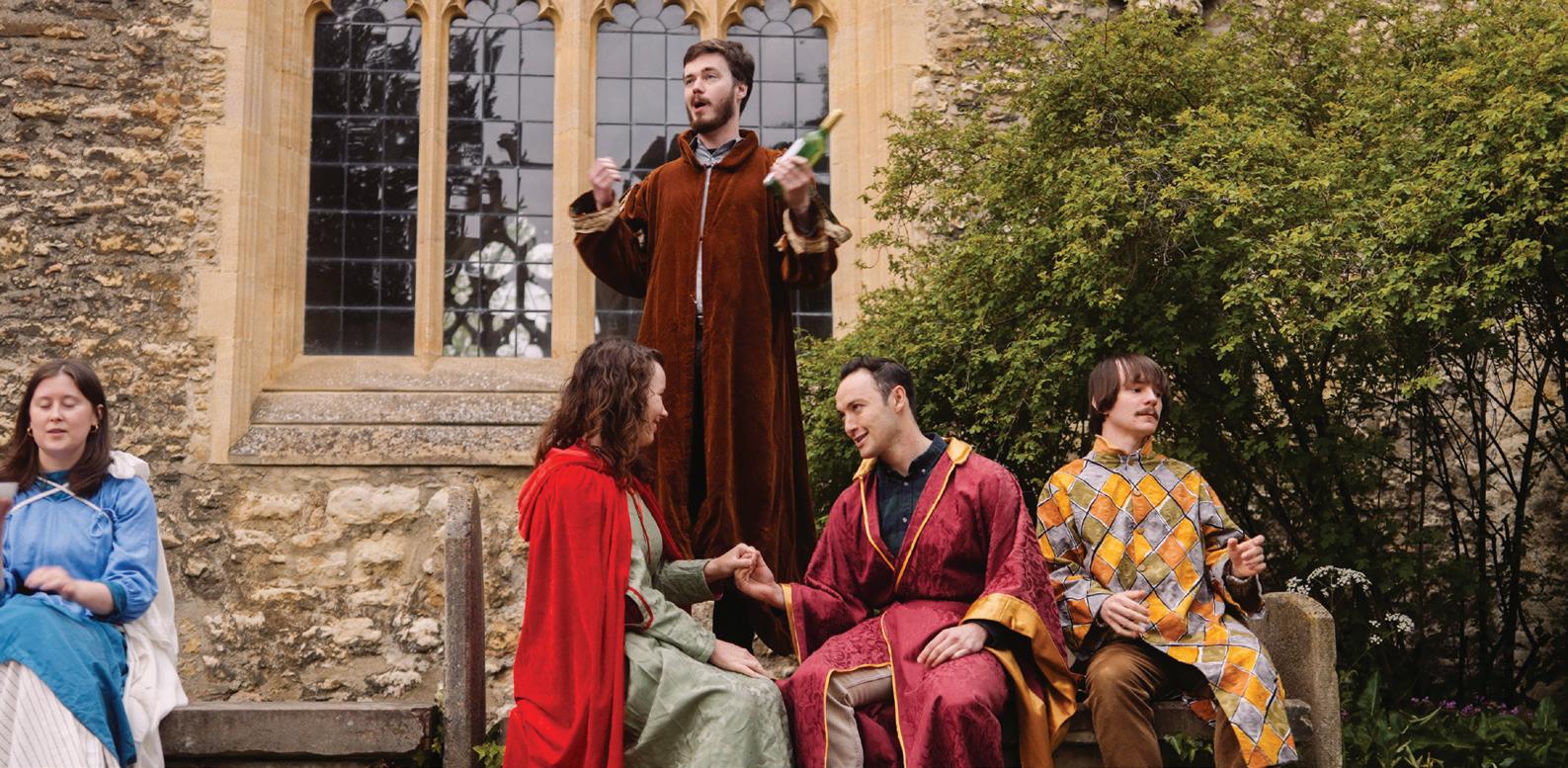
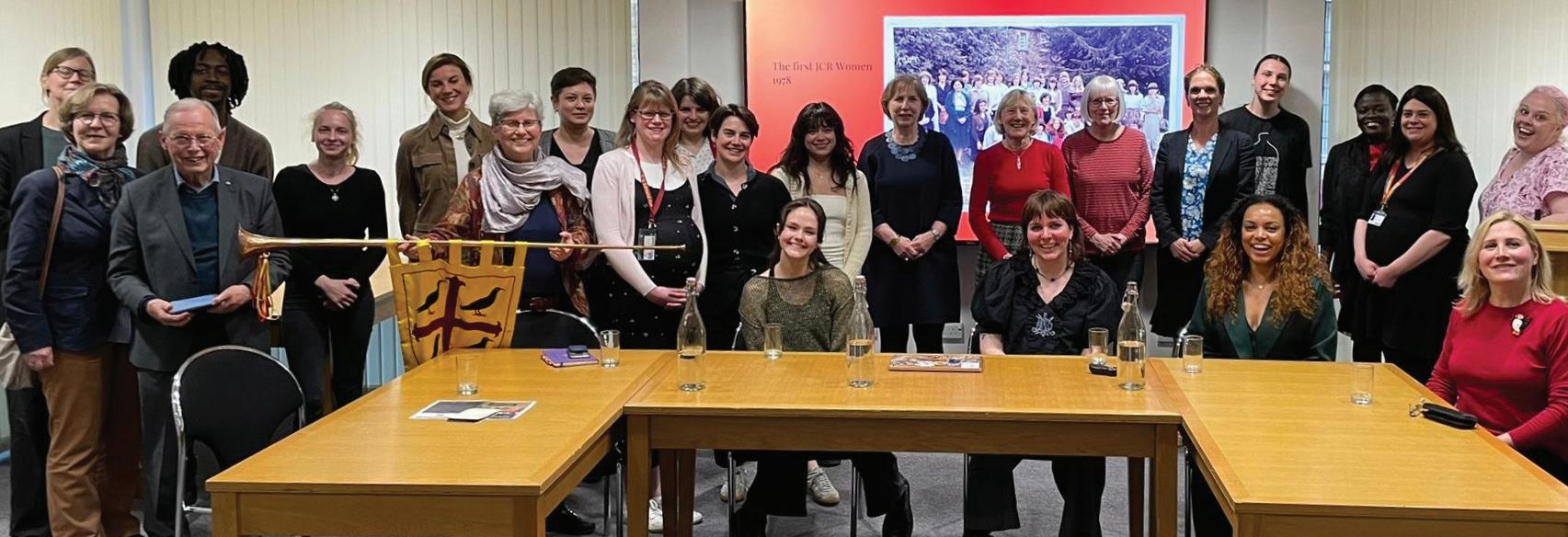
On 8 May, Maeve Hagerty (2024, MPhil History), the MCR Women’s and Gender Equality Rep, hosted a panel discussion celebrating the contributions and experiences of women at St Edmund Hall – past, present and future.
Maeve was joined by an inspiring panel including Lucy Robinson (2023, Biomedical Sciences; JCR Women’s Rep); Cat White (2016, Women’s Studies; writer, actor, Gender Advisor to the UN and Honorary Fellow); Emma Carter (Deputy Librarian); Donatella Inchingolo
(Pastry Chef); and Professor Henrike Lähnemann (Fellow and Professor of Medieval German Literature and Linguistics).
The audience was especially honoured by the presence of women from the College’s first cohort of female undergraduates, who came up to the Hall in 1979. Following the discussion, Maeve hosted a drinks reception to foster community and networking. The evening concluded with a special Compline service in the Crypt.
On 9 May, the Principal was joined for tea by His Excellency Chief Olusegun Obasanjo, former President of Nigeria (1999–2007), His Excellency Bala Mohammed, Governor of Bauchi State, Nigeria, and other dignitaries. The delegation was in Oxford for the West Africa in Transition conference, marking the 50th anniversary of the Economic Community of West African States. Both President Obasanjo and Governor Mohammed are deeply involved in sustainable development, environmental
governance and natural capital in Africa –areas that were discussed during tea with the Principal.
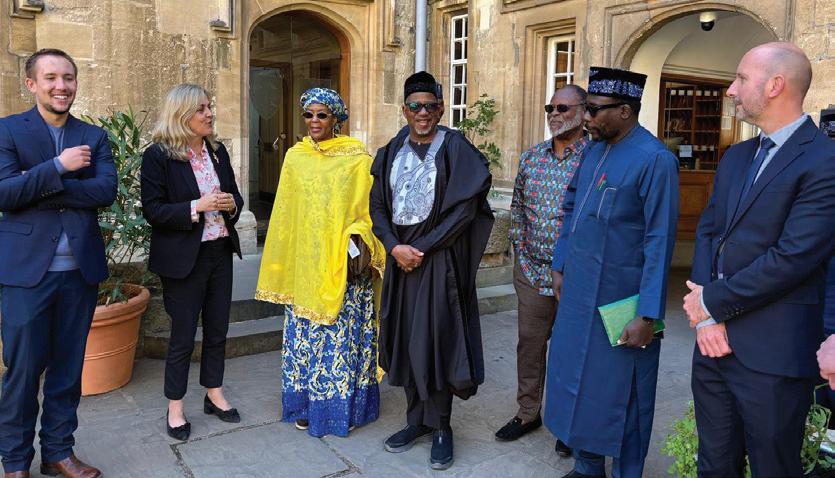
The World Health Assembly is an annual event that brings together global health leaders from the private sector, governments, development partners and civil society organisations to discuss and shape priorities for multilateral collaboration that strengthens health systems globally. This year, with the backdrop of ongoing geopolitical tensions, the main discussion centred on funding for global health challenges, ranging from climate change and antimicrobial resistance to youth mental health.
Two Hall students attended this year’s assembly in Geneva in late May: Cassandra Mbanje (2024, MSc Global Health Science and Epidemiology) and David Odhiambo (2024, MBA). Cassandra hosted a youth-led and centred meeting session for the Global Alliance for Surgical,
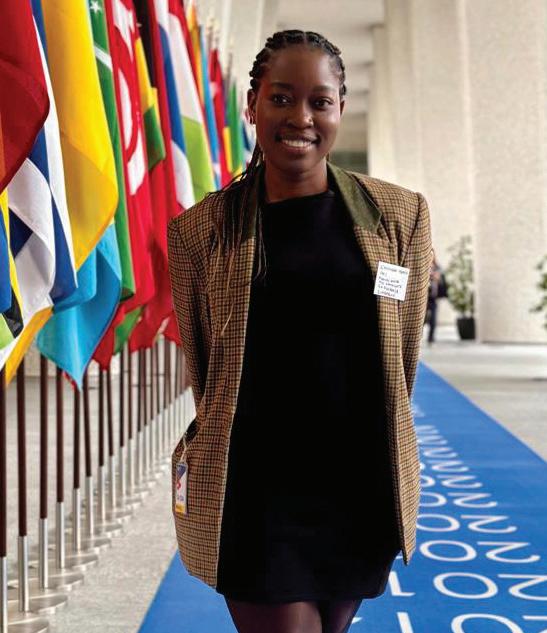
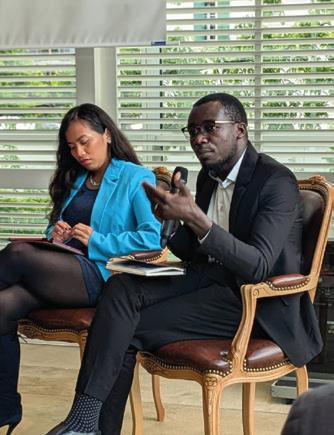
Obstetric, Trauma and Anaesthesia Care (G4 Alliance) as well as supporting G4 Alliance’s official in-person side events during the assembly. David participated as a Global Youth Advisor for the Being Initiative, a youth-focused organisation working to promote mental health and wellbeing. As part of his role, David joined a panel on community-based mental health interventions and the need to mainstream mental health in climate change mitigation and adaptation strategies.
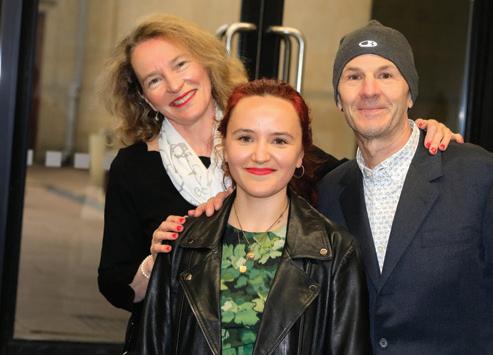
Third Week of
Trinity term saw the return of the annual St Edmund Hall Charity Formal, this time in support of Macmillan Cancer Support. The event raised a generous sum from raffle sales alone, with the Cellar and Servery’s suppliers kindly donating a bottle of champagne and hampers of cheese and fruit, respectively.
Throughout the year, a range of themed Formal Halls celebrated the diversity
of the College community, including Diwali, Thanksgiving, Christmas, Burns Night, International Women’s Day – with guest speaker Air Commodore Victoria McPhaden CBE (1998, Geography) –and an Iftar buffet during Ramadan. The events have continued to grow in popularity and are such a success thanks to the support of the Kitchen, Servery and Bursary teams who provide a delicious menu and ensure the evenings run smoothly.
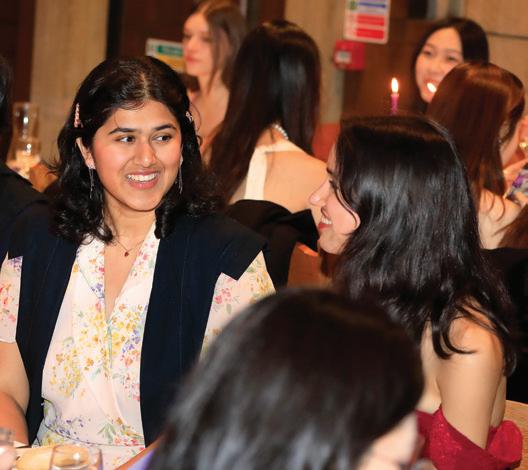
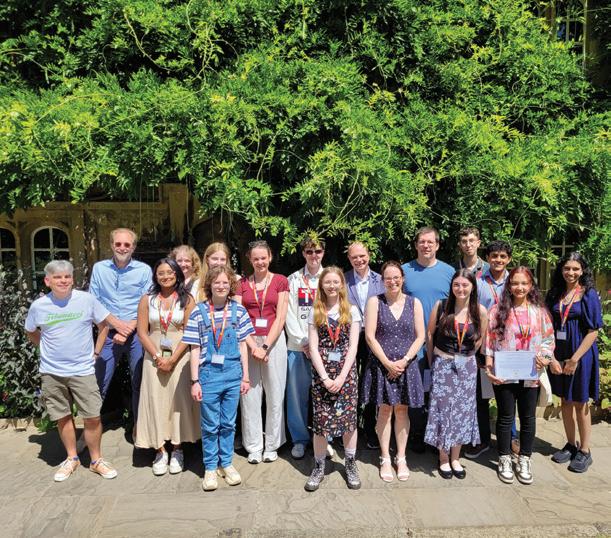
The 2025 Big Think competition saw a recordbreaking 272 entries, each responding to one of our tutors’ ‘big’ tutorial-style questions in a five-minute video essay. This year’s prompts included ‘Does intelligence guarantee success?’, ‘What can literature do that AI probably never will?’, and ‘Should we send people to Mars?’
We are thrilled to report that Alana Cunnane (for English) won first prize in this year’s competition, with Sahana Sethuraman (for Physics) taking second place overall. In addition, 13 students were awarded a subject-specific prize across the 13 disciplines represented in the competition, and a further 30 students were recognised with a commendation for their high-quality work.
In June, we welcomed Alana, Sahana, and the subject prize-winners to Teddy Hall, where they met the tutors who marked their entries and toured the College with current students.
Beyond the competition itself, we continue to see strong numbers of Oxford applications from participants. We are delighted that of the 224 Year 12 and Year 13 participants in last year’s competition, 84 participants applied to Oxford for 2025 entry (38%). Of these, 29 were made an offer, representing 35% of applicants and 58% of those shortlisted for interview. For comparison, the University-wide UK offer rate for 2025 entry was 20%, underlining the continued high calibre of Big Think participants from state schools across the UK.
A full list of winners and commendations, and their fantastic entries, are available on the College website at www.seh. ox.ac.uk/study/outreach/events-andcompetitions/big-think-2025-winners.
Calum Stewart, Access & Outreach Coordinator
Over the summer, a photographic exhibition depicting various Teddy Hall locations at night was installed in Wolfson Hall. Photographer Sarah Savić Kallesøe (2022, DPhil Population Health) explains the inspiration behind her work and how she produces these striking images:
When I first began experimenting with astrophotography ten years ago, I was captivated by the idea that a camera could reveal what the eye alone cannot. Long exposures gather starlight over hours, unveiling constellations, galaxies
and colours invisible to the naked eye. The process requires patience, planning, hours beneath the stars and meticulous editing, but the reward is a glimpse into the vastness of the night sky.
Although my academic work is in public health and bioethics, I continued to moonlight as an astronomer. During my undergraduate studies at Simon Fraser University in Canada and my master’s at Cambridge, I had access to observatories where I practiced capturing images of deep space. Arriving at Oxford, I could
not find my way into an observatory, which proved a blessing in disguise. It encouraged me to adapt my skills and explore wide-field photography with more accessible equipment. Using a phone camera, tripod and editing software, I learned to create something new: images of historic buildings framed by star trails. This fascination became the foundation of a new permanent exhibition now on display in the Hall. Since February 2025, I have been working with Dr Jonathan Yates, Chattels & Pictures Fellow, to co-create a ten-piece collection featuring Teddy Hall under the night sky. Each photograph captures a different facet of College life, from the Front Quad and quiet Library nights to the main entrance and off-site accommodation, all woven
together with the stars above.
My process is part art, part science. Each image begins with research: scouting locations in daylight, checking forecasts and planning around the Moon’s brightness. When conditions align, I spend hours on site capturing hundreds of exposures of both sky and foreground. Editing is then the work of weaving these layers together into a balanced image, ensuring the stars shine clearly while the College remains warmly illuminated.
This collection aims to place Teddy Hall in perspective: a reminder that our community, though rooted in history and tradition, is also part of something far larger and more enduring.
Sarah Savić Kallesøe (2022, DPhil Population Health)
Wisteria in the Front Quad The wisteria on the north range blooms in May/June. There has been a wisteria here since the second half of the 19th century.
Opposite: Queen’s Lane Polaris, the North Star, shines above the Library Tower.
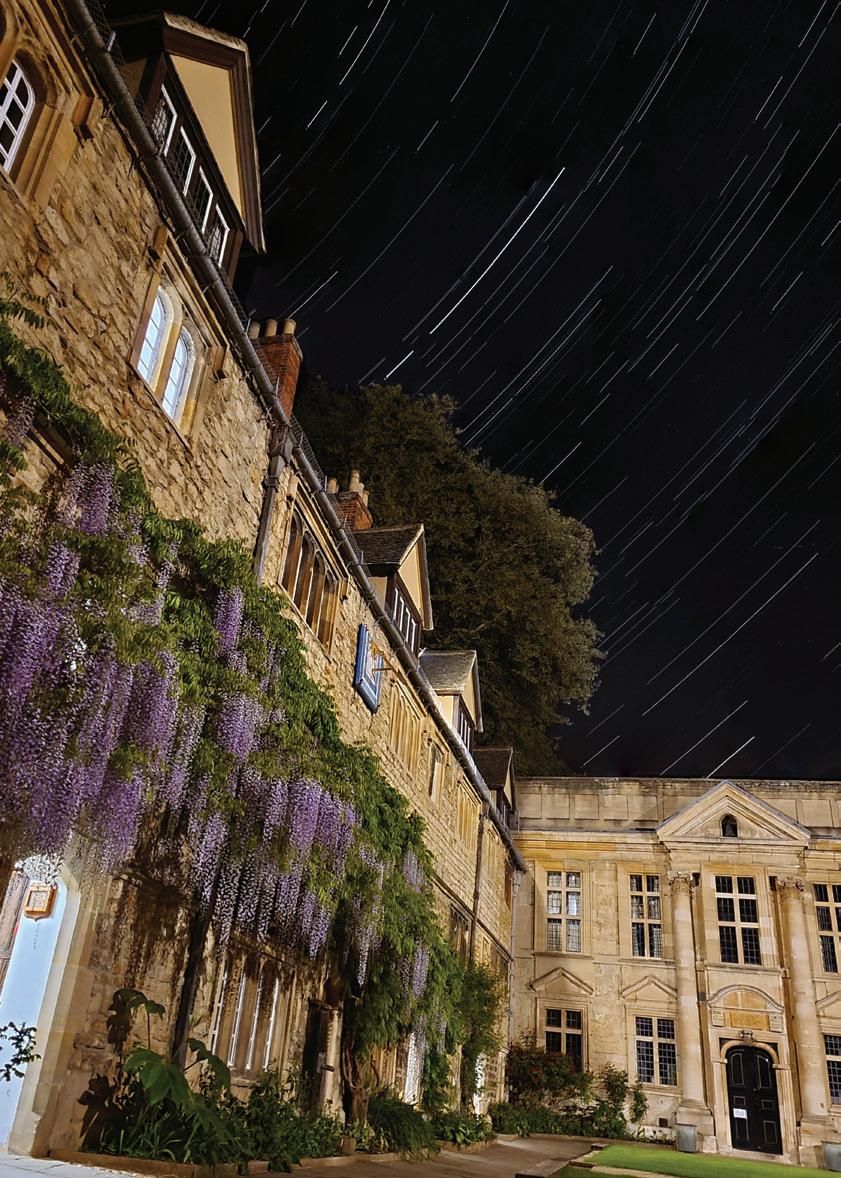
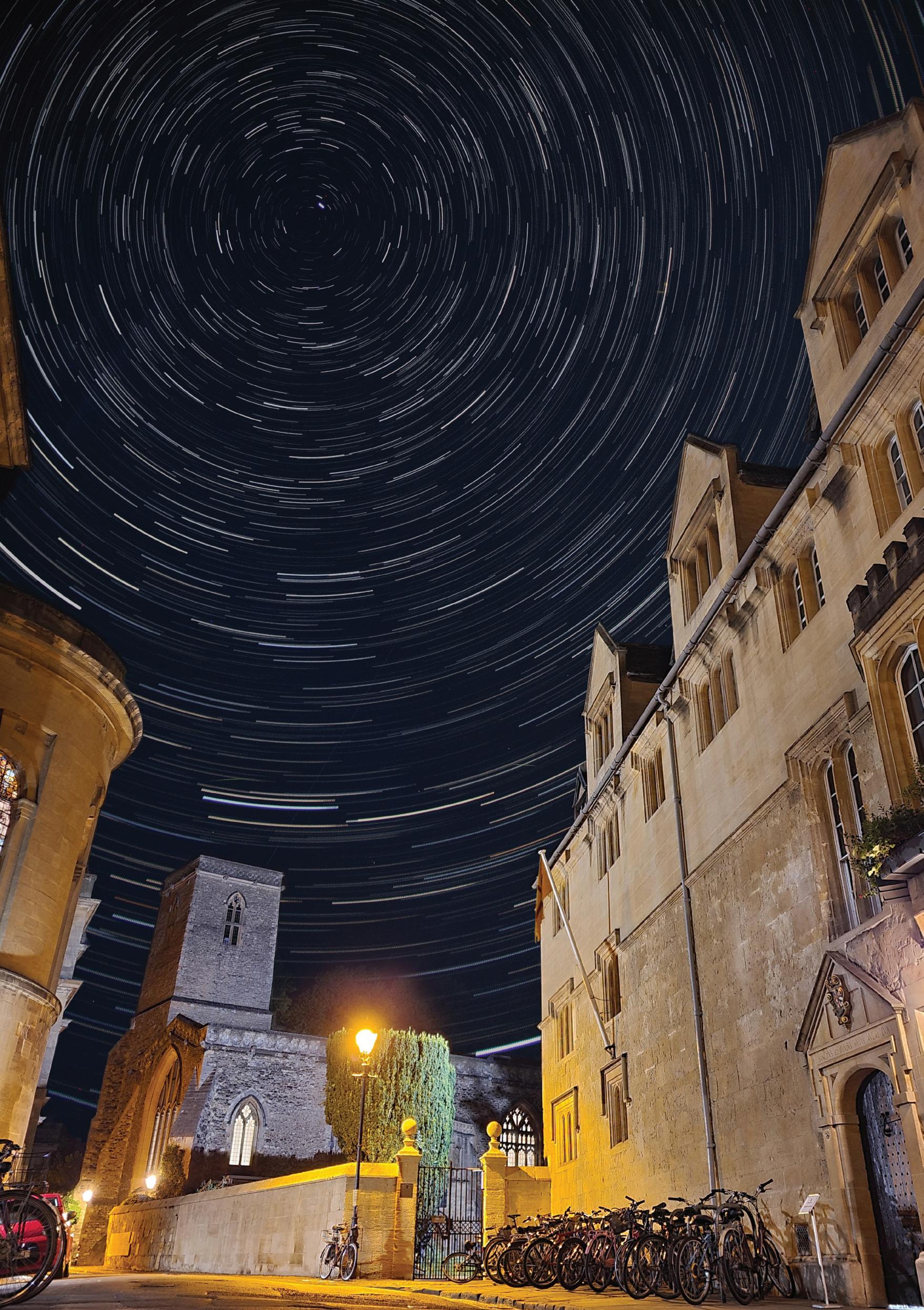
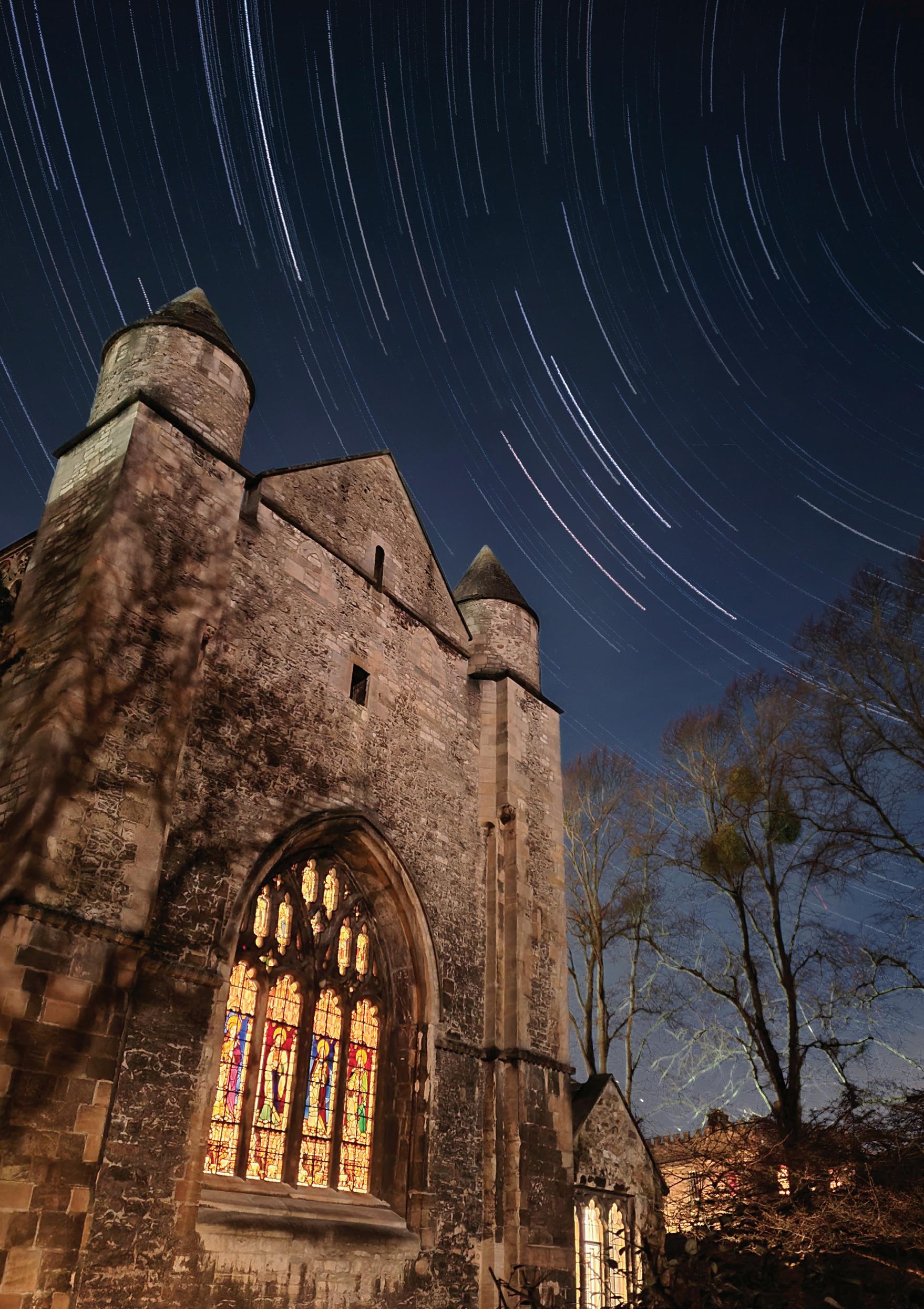
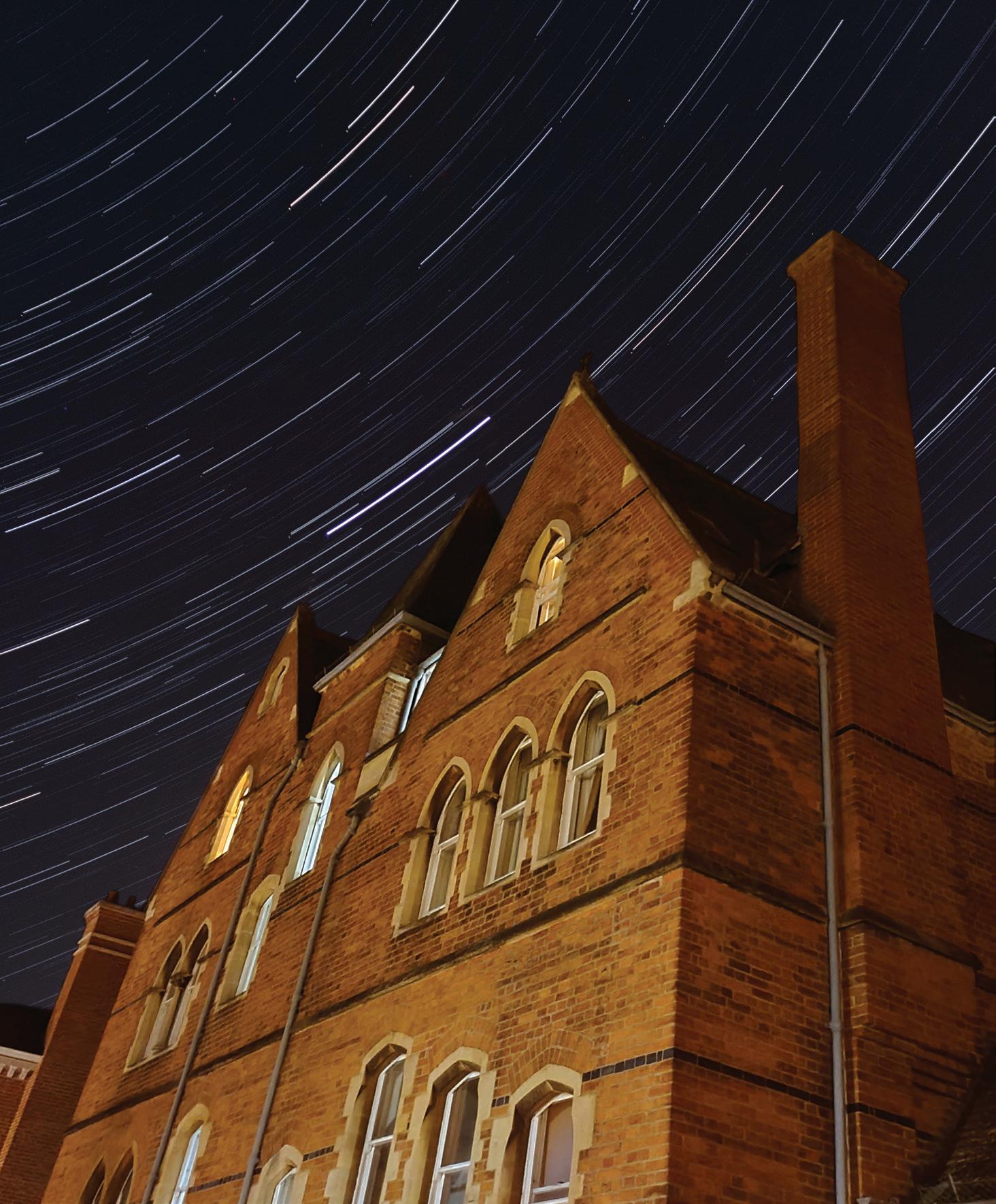
Above: 19 Norham Gardens
Built in 1877 by the architect Frederick Codd in the Gothic Revivalist style. It is Grade II listed.
Opposite: St Peter-in-the-East, College Library
The church was built during the 12th century. In the 13th century the nave was extended further south, and the tower added. The church was deconsecrated and since 1970 has served as the College Library.
From Teddy Hall under the Stars, a bespoke astrophotography collection by Sarah Savić Kallesøe. See more at oxfordbynight.square.site or on Instagram at www.instagram. com/oxford_by_night
A host of overseas events were held last year, attended by more alumni than ever. These events provided a wonderful opportunity for guests to catch up with Aularian friends old and new, and to hear the latest updates from the Hall.
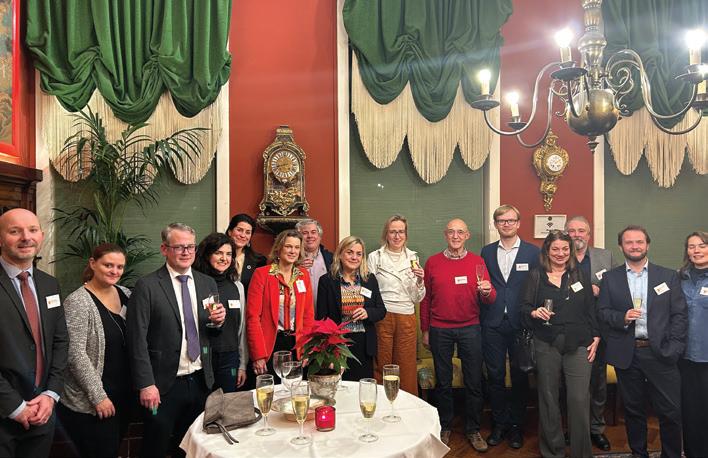
On 28 November, the Principal and the Director of Development, Andrew Vivian, hosted a drinks reception for Aularians at the Fondation Universitaire, Brussels. The event was advertised across the Benelux countries and brought together nearly 20 alumni from not only Brussels but also The Hague, Amsterdam and Luxembourg.
The same day, just over 40 Aularians met for an informal drinks reception at Fountain & Ink in Southbank, London. The casual pub setting encouraged alumni of all ages to attend – matriculands from 1960 up to as recently as 2021 –including several attendees joining for their first alumni event. Dr Alex Lloyd, Fellow by Special Election in German and Senior Dean, also hosted a small gathering of alumni in Vienna while she was in the city for research purposes.
At the end of Michaelmas term, the Principal, accompanied by Senior Tutor Professor Robert Wilkins and colleagues from the Development and Alumni Relations Office, attended a drinks reception and dinner in New York to meet with Aularians from across North America.
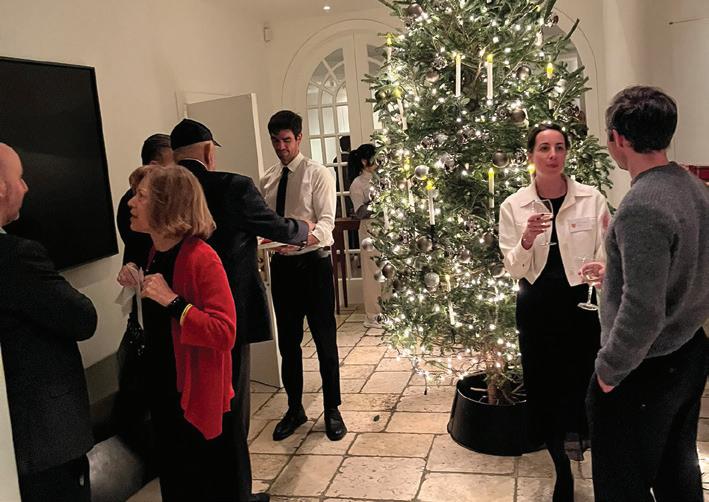
Tai-Heng Cheng (1996, Jurisprudence) kindly hosted drinks and canapés on 12 December, as well as a ‘fireside chat’ with panellists Congressman Jim Himes (1988, MPhil Latin American Studies), who represents Connecticut’s 4th District in the House of Representatives, and MacKenzie Sigalos (2010, MSc Education), an awardwinning journalist who is a cross-platform contributor to CNBC, NBC and MSNBC.
The 39th Annual New York Dinner took place on the following evening at the Links Club, generously hosted by Justus O’Brien (1979, PPE).
Shortly before the start of Trinity term, the Principal together with the Finance Bursar, Eleanor Burnett, and the Director of Development travelled to Hong Kong and Singapore to meet with Hall alumni. Following a similar successful visit last year, the trip aimed to further strengthen the Aularian community in Asia, highlight the HALLmarks fundraising campaign and report on the latest progress at the Hall’s NSE development.
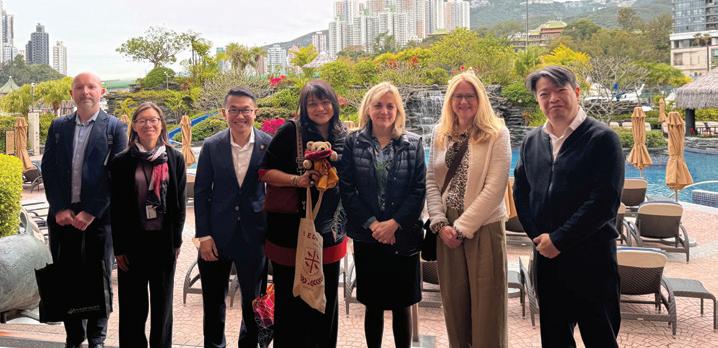
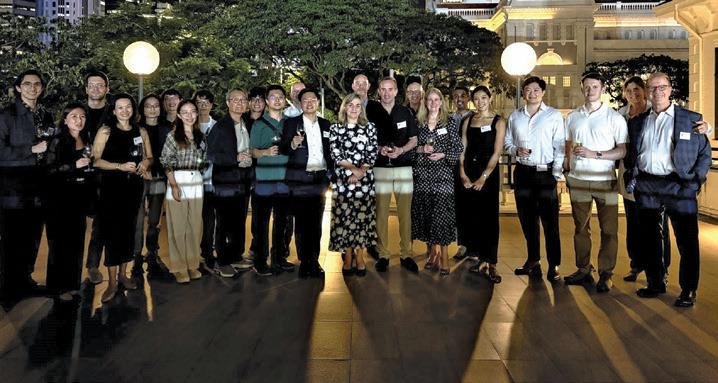
The event in Hong Kong was held in the beautiful setting of the Library at the China Club and was kindly hosted by Aaron Yeo (PPE, 1995). Emeritus Fellow Professor Adrian Briggs also joined the event where several Jurisprudence and BCL alumni had the chance to catch up with their former tutor.
This was followed a few days later by another alumni event in Singapore, held in the heart of the city at the Cricket Club, which had incredible views of the skyline and was kindly hosted by Mark Fisher (1992, Geography).
Towards the end of the academic year,
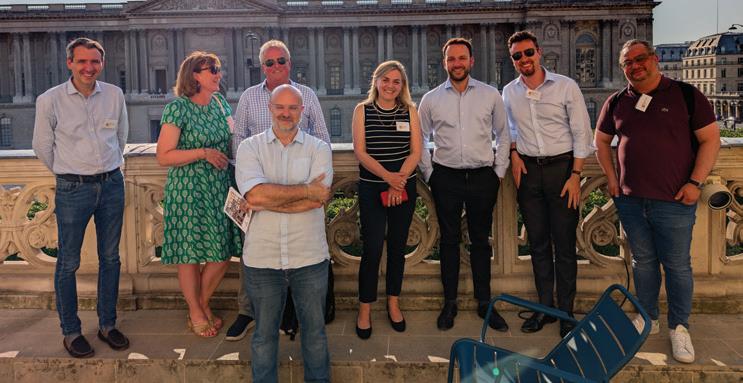
the Principal and Deputy Development Director, Tom Sprent, co-hosted an alumni drinks reception in Paris, together with Aularian Andy Watson (1985, Modern Languages and Linguistics). They enjoyed meeting alumni from 1975 all the way to recent graduates from 2016 in the historic setting of Quartier Jeunes, immediately opposite the Louvre.
Drinks in Tokyo and New York rounded off the year, with the New York event kindly hosted by Bob Gaffey (1975, Jurisprudence) and coinciding with a visit from Professor Leslie Ann Goldberg, Senior Research Fellow and Professor of Computer Science
As ever there have been many admirable achievements of SCR members, current students and worldwide alumni during 2024–2025. These are chronicled in Sections 2, 4 and 9 of this magazine. Here, special mention is made of some of these awards and prizes, and of other successes deserving to be placed on record.
Many congratulations to the alumni recognised in the New Year Honours List and King’s Birthday Honours List this year: Air Commodore Victoria McPhaden (1998, Geography), Honorary Fellow Faith Wainwright (1980, Engineering Science), Lyssa McGowan (1996, Geography) and Robin Osterely (1975, Human Sciences).
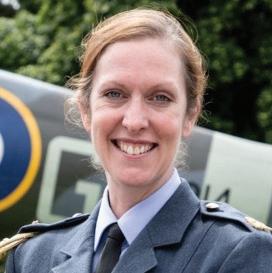
Victoria received a CBE in the Military Division of the New Year Honours. She is currently Head of People Services for the
Royal Air Force (RAF). Much of her early career focussed on infrastructure delivery, programming and planning at the RAF Infrastructure Branch, on station at RAF Leuchars and as a Wing Commander in the Defence Infrastructure Organisation. The Hall was delighted to welcome Victoria as guest of honour at this year’s International Women’s Day Formal Hall.
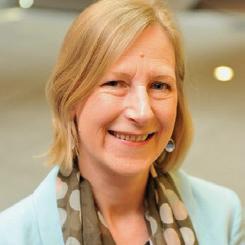
Faith has been awarded a CBE for services to engineering. With a distinguished career spanning more than
four decades, she is also a Fellow of the Royal Academy of Engineering and a former Director of Arup. Faith writes: “For everyone starting out on a career in Engineering, I hope this award is an inspiration for the impact that engineers have in the world, and the wonderful and diverse careers open to them. Teddy Hall gave me a brilliant start, studying structural engineering under the wonderful late Joe Todd, and building life-long friendships.”
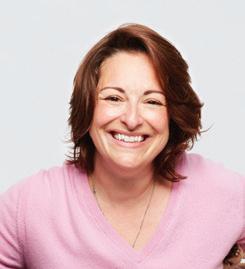
Lyssa received an OBE for services to retail in recognition of her transformational work as CEO of Pets at Home since 2022. In the role, she has created an integrated petcare business providing veterinary, retail and grooming services, which has driven strong growth, with consumer revenue rising to nearly £2 billion in 2025.
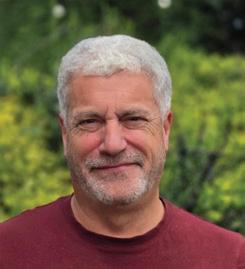
Robin has been awarded an OBE for services to charity. Robin is the Chief Executive of the Charity Retail Association and has carried out wonderful work to raise the profile of charity retailing in government, media and among the general public since 2015.
St Edmund Hall extends congratulations to the following Governing Body Fellows who have been awarded Professorships at the University of Oxford in recent Recognition of Distinction exercises:
Paul Goulart was conferred the title Professor of Engineering Science last summer and has also recently received a Departmental Teaching
Award for his excellent lectures; Maia Chankseliani has become Professor of Comparative and International Education;
Luc Nguyen is awarded the title of Professor of Mathematics;
Robert Wilkins has been conferred the title Professor of Medical Education.
They commented on this prestigious achievement:
“I am grateful for this recognition of work that spans borders and disciplines. Comparative and international education is not only about studying systems elsewhere; it is also a way of rethinking what is possible in our own. Becoming Professor is a moment to reaffirm the importance of rigorous, socially engaged scholarship that asks public questions – how universities matter, for whom and under what conditions – and to continue asking what responsibilities universities carry in a changing world, and how they might live up to them.” – Professor Maia Chankseliani
“I’m very honoured to have been awarded the title of Professor of Mathematics. Special thanks go to my students, collaborators and mentors, without whom this recognition would not make any sense. I’m also much indebted to the wonderful colleagues at the Mathematical Institute and at St Edmund Hall for their continued support and inspiration.” – Professor Luc Nguyen
“I am delighted to have been awarded this title and very grateful to all of the colleagues who have supported me over the years as my career has progressed.” – Professor Robert Wilkins.
Professor Dimitrios Tsomocos
Elected to Prestigious Fellowship
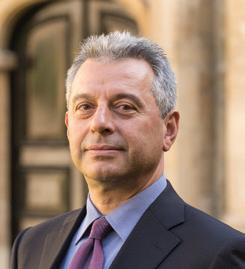
Dimitrios Tsomocos, Professor of Financial Economics at the Saïd Business School and Fellow by Special Election, has been elected as an Economic Theory Fellow at the internationally renowned Society for the Advancement of Economic Theory (SAET) – one of the highest honours in the field.
Economic Theory Fellows are selected for their scientific excellence, originality and leadership, high ethical standards, and scholarly and creative achievement. The research contributions of fellows may exist in many areas of theoretical economics, including pure and applied research, and government service. The primary qualification for fellowship is to have substantially advanced economic theory work.
Besides Dimitrios’ work on macro-finance and financial stability, he is currently working on economic research into climate finance and its ramifications for financial stability, monetary policy and wealth inequality.
Professor Claire Nichols
Receives MPLS Award for Outstanding Research Supervision
Each year, the Mathematical, Physical and Life Sciences (MPLS) Division celebrates exceptional commitment to mentoring and supporting colleagues through the Awards for Outstanding Research Supervision.
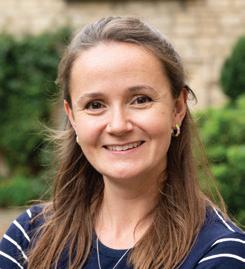
Claire Nichols, Associate Professor of the Geology of Planetary Processes and Tutorial Fellow in Earth Sciences, is among this year’s recipients in recognition of her ability to inspire confidence, foster collaboration and support her students both academically and personally, enabling them to flourish during their time at Oxford and beyond.
Read more about the MPLS awards: www.mpls.ox.ac.uk/latest/news/ winners-of-the-2024-25-mpls-awardsfor-outstanding-research-supervisionannounced.
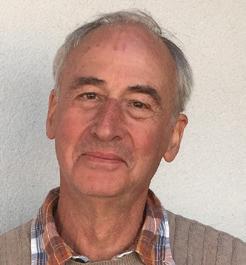
Professor Hugh Jenkyns, Emeritus Fellow and former Vice-Principal, is the recipient of the 2025 Lyell Medal, awarded by the Geological Society of London for his pioneering research.
The Lyell Medal is awarded annually for contributions to soft-rock studies and is among the Society’s most prestigious awards. It was established under the will and codicil of Sir Charles Lyell (1797–1875), the author of Principles of Geology, which popularised the idea of uniformitarianism.
Hugh is an internationally recognised sedimentary geologist, stratigrapher and palaeoceanographer. His pioneering research centres around understanding major global events in Earth history by examining their sedimentary and geochemical records, with a focus on Jurassic and Cretaceous marine and lacustrine sediments.
Maia Chankseliani Appointed Chair of UKFIET Executive Committee
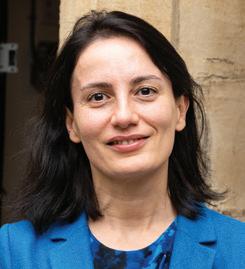
Professor Maia Chankseliani, Fellow by Special Election in Comparative and International Education, has been appointed as the Chair of the Executive Committee of the Education and Development Forum (UKFIET), a leading organisation in the UK committed to promoting and strengthening international education and development for all. Having served as a member of the Executive Committee since April 2021, she now leads UKFIET’s initiatives, enhancing Oxford’s influence in the field.
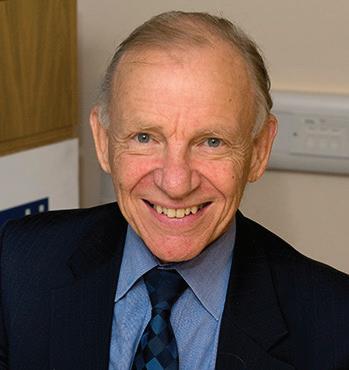
Honorary Fellow Dr Andrew Graham has recently been appointed as the Chair of the Board of Trustees for the Europaeum. Founded in 1992, the Europaeum is a network of leading universities across Europe with a mission to bring together students, scholars and practitioners to address critical European issues and promote shared European values. On the appointment, Andrew commented, “I am honoured to take this position at such a pivotal time for Europe and higher education. The Europaeum is a thriving network, well placed to make an even greater impact now than in the past.”
Arnell Associate Professor of Greenhouse Gas Removal
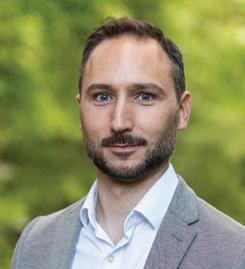
Dr Steve Smith, Senior Research Fellow, has been appointed Arnell Associate Professor of Greenhouse Gas Removal. The new title was created courtesy of a generous gift from Jamie Arnell and family to support a decade of research into greenhouse gas removal at the University, beginning in 2026. Steve is also the Executive Director of two research initiatives (CO2RE and Oxford Net Zero) and lead author of the international State of Carbon Dioxide Removal reports.
Chris Hawkesworth Receives 2025 Victor M. Goldschmidt Award
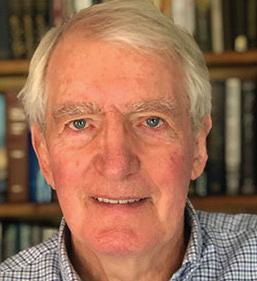
Chris Hawkesworth, Honorary Fellow and Professor Emeritus at the University of Bristol, received the 2025 Victor M. Goldschmidt Award of the Geochemical Society in July. The award is presented annually for major achievements in geochemistry over a whole career. His work has helped transform geochemistry by emphasising its applicability to understanding the processes operating over the entirety of Earth’s existence.
Dr Linda Yueh Becomes a Fellow of the Royal Economic Society and Joins Newly Created UK Soft Power Council
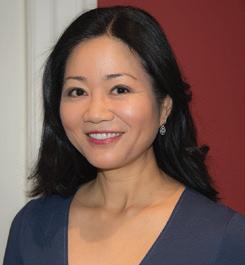
Dr Linda Yueh CBE, Fellow by Special Election in Economics, has recently been recognised as an inaugural Fellow of the
Royal Economic Society. It is professional recognition for those who have made a significant contribution to the discipline.
Earlier in the year, Linda was also appointed to the UK Soft Power Council. Co-chaired by the Foreign Secretary and Culture Secretary, the newly established Council brings together those with expertise in growth, security, climate and nature, and development to help the Government deploy the UK’s soft power assets more effectively on the global stage.
Core to the Council’s mission is the pursuit of economic growth, ensuring that the renewed approach to soft power will bring tangible economic benefits to the people of the UK. The Council will also identify opportunities to strengthen our reach and reputation by building partnerships at home and abroad.
Professor Nicholas Cronk
Elected to the American Philosophical Society
Emeritus Fellow
Professor Nicholas Cronk has been elected as a member of the American Philosophical Society (APS). The APS is the oldest and most distinguished learned society in North America; it was founded in 1743 by Benjamin Franklin to bring together creative thinkers in the sciences and other fields of study for the broad purpose of “promoting useful knowledge”
This year’s new members represent outstanding achievement in the sciences, humanities, social sciences and technology, as well as leadership in industry, higher education and nonprofit administration.
Professor Anna Regoutz Receives IUPAC Emerging Innovator Award
Professor Anna Regoutz, Tutorial Fellow in Inorganic Chemistry, has been awarded the IUPAC Emerging Innovator Award in Analytical Chemistry for 2025.
The award is given for her leadership of an interdisciplinary team of researchers exploring the structure-electronic structure relationship in inorganic solids with a goal of integrating such materials into opto-electronic devices.
Every two years the Analytical Chemistry Division presents two awards for outstanding contributions to the field of analytical chemistry. The IUPAC Emerging Innovator Award in Analytical Chemistry recognises outstanding research achievements by an early career stage scientist in the field of analytical chemistry.
Hall Fellow Appointed Pro-ViceChancellor
Governing Body Fellow
Professor Heidi Johansen-Berg took up the post of Pro-Vice Chancellor for Strategic Initiatives in 2025. In this role, she leads the development, implementation and monitoring of strategic initiatives that bridge functional boundaries and drive transformation within the University. Heidi also serves as the Associate Head (Research and Innovation) in the Medical Sciences Division. She is a Professor of Cognitive Neuroscience in the Nuffield Department of Clinical Neurosciences where her
research group investigates brain plasticity in the context of learning and recovery from brain damage.
Professor Andrew Kahn, Fellow and Tutor in Modern Languages (Russian), has been awarded a Mercator Fellowship by the Federal Government of Germany. The award will enable a collaboration with the Interdisciplinary Centre for the Study of the European Enlightenment (IZEA) in Halle, Germany, which has received substantial funding.
Hall Student
Aiden Lerch (2021, DPhil Law) has been awarded the Subedi Prize for the Best Doctoral Dissertation by the Faculty of Law. The annual Subedi Prize is awarded for the thesis that makes the most exciting and original contribution to the relevant field of scholarship and is best-crafted in terms of organisation, style and presentation. Aiden’s thesis focused on ‘Injunctive Relief in Tort Law’.
Aiden spent two years at the Hall pursuing his doctoral studies. After completing his thesis, he worked as an Associate at the High Court of Australia for the Honourable Justice Jacqueline Gleeson. He currently works as a solicitor in commercial litigation at Arnold Bloch Leibler in Sydney, and his thesis is being published as a monograph by Hart Publishing later this year.
Warm congratulations go to the following students who were recognised this year for their participation at University level:
Alex Adair (2023 English) Hockey, Blue
Sam Allen (2023, DPhil Geography) Lacrosse, Half Blue
Evie Chappell (2024, Biochemistry) Hockey, Blue
Jessica Cottee (2024, Geography) Hockey, Blue
Daniel Cryer (2022, Engineering) Hockey, Blue
George Davison (2024, Chemistry) Hockey, Blue
Thomas Early (2022, Mathematics) Canoe Polo, Half Blue
Thomas Farnsworth (2021, Engineering) Dinghy Sailing, Half Blue
Christopher Gallagher (2021, DPhil
Sustainable Approaches to Biomedical Science: Responsible and Reproducible Research) Water Polo, Half Blue
Robert Hardwick (2020, Medicine) Cricket, Blue
Sebastian Harker (2024, Earth Science) Lightweight Rowing, Blue
Maisy Heggie (2024, French and Spanish) Athletics, Half Blue
Sergey Ichtchenko (2024, MSc Mathematics and Foundations of Computer Science) Gliding, Half Blue
Madelyn Letendre (2024, MSc Clinical and Translational Neuroscience) Swimming, Blue
Caleb McKenna (2024, DPhil Engineering)
Australian Rules Football, Half Blue
Sama Malik (2021, Engineering) Tennis, Blue
Evie Mayhew (2023, Earth Sciences) Cricket, Blue
Nanami Mizoshita (2023, PPE) Kendo, Half Blue
Matthew Morgan (2023, Geography)
Taekwondo, Half Blue
Luke Nijkamp (2022, Engineering) Triathlon, Half Blue
Annie Oakes (2023, Jurisprudence) Swimming, Half Blue
Katherine Parsons (2024, Medicine) Football, Blue
George Prior (2021, Physics) Basketball, Blue
Aoife Reynolds (2024, Jurisprudence) Football, Half Blue
Sara Riolo (2023, PPE) Netball, Blue
Lucas Rollinson (2022, Economics and Management) Volleyball, Half Blue
Sophie Shams (2022, DPhil Earth Sciences) Rugby, Blue
Anna Marie Stankova (2021, Engineering) Golf, Blue
Anastasia Storey (2022, Geography) Football, Blue
Leah Tavasi (2023, Environmental Research (NERC DTP)) Sailing, Half Blue
Lily Thompson Mouton (2022, Experimental Psychology) Taekwondo, Half Blue
Jake Tommasi (2023, History) Karate, Half Blue
Edwin Walker (2024, Jurisprudence) Water Polo, Half Blue
The Hall’s Amalgamated Clubs gives awards to Hall members for obtaining the distinction of a Blue (£200) or Half Blue (£100). Thanks to the continuing
generosity of Richard Luddington (1978, Modern History), the Luddington Prize was awarded to Sama Malik (2021, Engineering) and George Prior (2021, Physics) for having achieved both a First in Finals and a Blue during their undergraduate careers.
Simonian
Thanks to the continuing generosity of Aularian Professor Simon J Simonian (1962, Animal Physiology) and his family, the Simonian Prizes for Excellence in Leadership went to:
Cassandra Mbanje (2024, MSc Global Health Science and Epidemiology)
James O’Neill (2022, PPE)
The aim of these awards of up to £1,000 is to facilitate further development and achievement for individual students. This year, 17 awards were given to the following students to help them pursue advanced training in the extracurricular activities – creative or sporting – in which they excelled:
Olivia Allen (2021, Earth Sciences) –Cheerleading
Nayantara Arora (2024, DPhil Clinical Medicine) – Violin
I-Ting Chou (2021, Chemistry) –Powerlifting
Frances Hand (2022, DPhil Law) – Sports coaching
Sergey Ichtchenko (2024, MSc Mathematics and Foundations of Computer Science) – Flying
Sarah Savić Kallesøe (2022, DPhil Population Health) – Skiing
Christina Kassab (2022, DPhil Engineering Science) – Bookbinding
Helena McCormick Paice (2022, Engineering Science) – Painting
Anna Oakes (2023, Jurisprudence) –Swimming
Emma Pardo (2023, Psychology and Philosophy) – Dancesport
Daisy Pendergast (2021, Molecular and Cellular Biochemistry) – Singing
Hugh Simmons (2023, DPhil Clinical Neurosciences) – Singing
Jasper Singh (2021, DPhil Materials) –Rugby
Vincent Straub (2023, DPhil Population Health) – Writing for public audiences
Sophia Suganuma (2022, PPE) – Public speaking
Joseph Walford (2023, Modern Languages) – Volunteering
Katja Rose Worth (2022, DPhil Oncology) – Cheerleading
The Hall remains extremely grateful for the sponsorship which supports this successful Masterclass Fund Awards scheme.
Introduced for the 2024–2025 academic year, the Culture Fund supports the development of cross-cultural activities within the Hall, combining a mixture of performances, writing, painting, music, literature, film and sport. Individual students are eligible to apply for up to £500 per project per term.
Caeli Colgan (2024, English) – Production of Blood Wedding
Tom Meldrum (2023, Fine Art) – Art supplies
David Odhiambo (2024, MBA) – Africa Night event
Vincent Straub (2023, DPhil Population Health) – Photo Oxford entry
The Keith Gull fund is used at the discretion of the Principal to provide direct support to current Hall students who wish to undertake special projects such as charitable work, choral and drama tours, travel for unusual academic opportunities and to assist others. Keith Gull initiated this fund during his tenure as Principal at the Hall (2009–2018), reflecting his commitment to both ‘Hall Spirit’ and supporting student ambition.
Emily Garratt (2023, Biochemistry)
Eliza Hogermeer (2021, Modern Languages)
Xuan Li (2023, PPE)
Cole Mason (2024, MSc in Nature, Society, and Environmental Governance)
Ewan Messenger (2023, Geography)
Nanami Mizoshita (2023, PPE)
Samuel North (2024, Chemistry)
Maria Nozdrina (2021, Medicine)
Yash Suribhatla (2022, Medicine)
Hall student Tiffany Truong (2023, DPhil Primary Health Care) was among the winners of this year’s All-Innovate competition, hosted by EnSpire, the University’s entrepreneurship hub. The competition is designed to foster earlystage entrepreneurial thinking and it provides participants with the opportunity to develop, refine and present their innovative ideas.
Together with fellow student Yanni Zhou (2022, Wolfson College, MPhil Islamic Art and Architecture), Tiffany has founded winning start-up Oeuvre, which aims to use tokenisation and decentralised autonomous organisations to facilitate
fractionalised ownership and communal collecting of artworks and, in the future, other high-barrier assets.
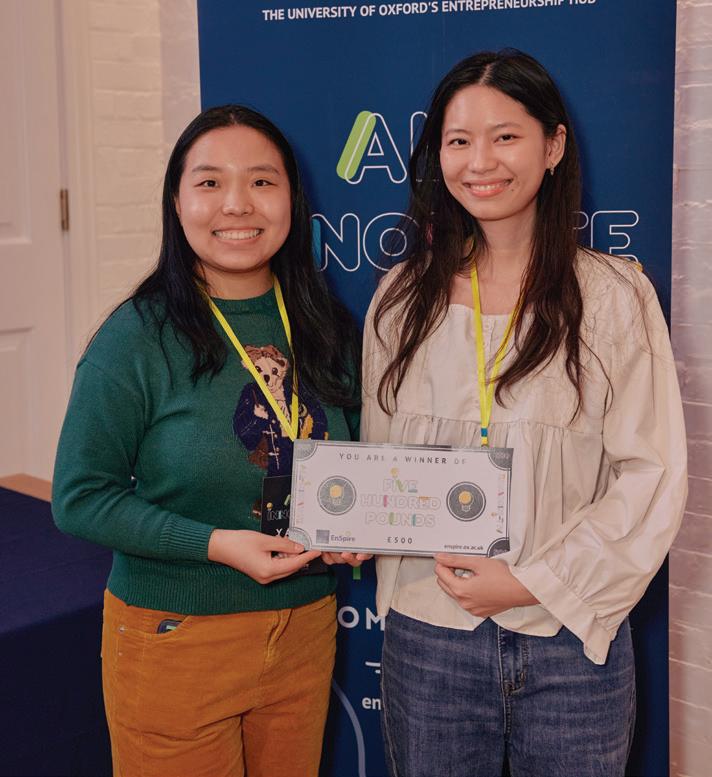
Many congratulations to Mark Simmons (2021, Engineering), who won this year’s Hall undergraduate engineering ThreeMinute Fourth-Year Project (3M-4YP) competition with his presentation on machine learning for double-dot tuning in quantum technologies.
There was a tie for runner-up between Alyssa Chan (2021, Engineering) and Thomas Farnsworth (2021, Engineering). Alyssa’s project concerned ways to recognise British Sign Language in video using deep learning, while Thomas’ project involved the design of a novel 3D-printed gripper.
The prizes for the competition were provided by the Joe Todd Award fund.
Nick Sidwell (2024, DPhil Geography and the Environment) has been awarded an Advance HE Associate Fellowship.
As a charity, Advance HE works across universities to help develop and promote the highest standards in higher education teaching and learning. Nick’s Associate Fellowship follows teaching work over the last year with the University of Bristol. He is hoping to find more opportunities to teach in Oxford now he is at Teddy Hall.
Sruthi Viswanathan (2022, DPhil Computer Science) has been named in the 2025 100 Women in AI list compiled by Flybridge and Xfactor Ventures. She is a computer scientist specialising in human–AI interaction. As Co-Founder and Chief Technology Officer of The Spaceship AI, she leads the development of AI trainers for sustainability across energy, fashion, travel and business. Her research journey spans roles at Google, INRIA, Signal Ocean, Naver Labs Europe and Limbic AI.
Sruthi comments: “Truly humbled to be named among the greats and honoured to represent the Human–Computer Interaction (HCI) community, and to keep pushing for AI that is understandable, controllable, and keeps improving in alignment with humans.”
Craig Hughes joined the Hall in 2023 as Deputy Head Butler, having previously worked at New College and Wadham. We recently interviewed Craig to find out more about his role including the project to reorganise the Hall’s cellar, which took place earlier this year.
Could you tell us about your role here at St Edmund Hall?
My role involves assisting Head Butler Molly Higgins in the day-to-day catering function at the Hall, both during and outside of term, as well as overseeing the silverware collection – this includes cleaning, organising the silver safe, and helping Chattels & Pictures Fellow Professor Jonathan Yates to catalogue all of the pieces. About a year ago now I also took over the day-to-day running of the wine cellar so I assist Professor Robert Wilkins, Senior Tutor and Cellarer, with ordering and tastings.
What does a typical day look like?
I arrive at College nice and early to get a good grasp of what’s happening that day. First, I go through the daily operations to get an idea of how to organise my team. Typically, I will also be returning wine from a previous function and collecting for another. It’s very important that the front of house team works closely and in harmony with the Kitchen team as we all need to be on the same page, so we organise meetings in the morning and afternoon to ensure smooth running of the department. New wine deliveries come in weekly, so I am always having to keep up with the housekeeping in the cellar to make space for more of the good stuff coming in. I am also always conducting regular checks in
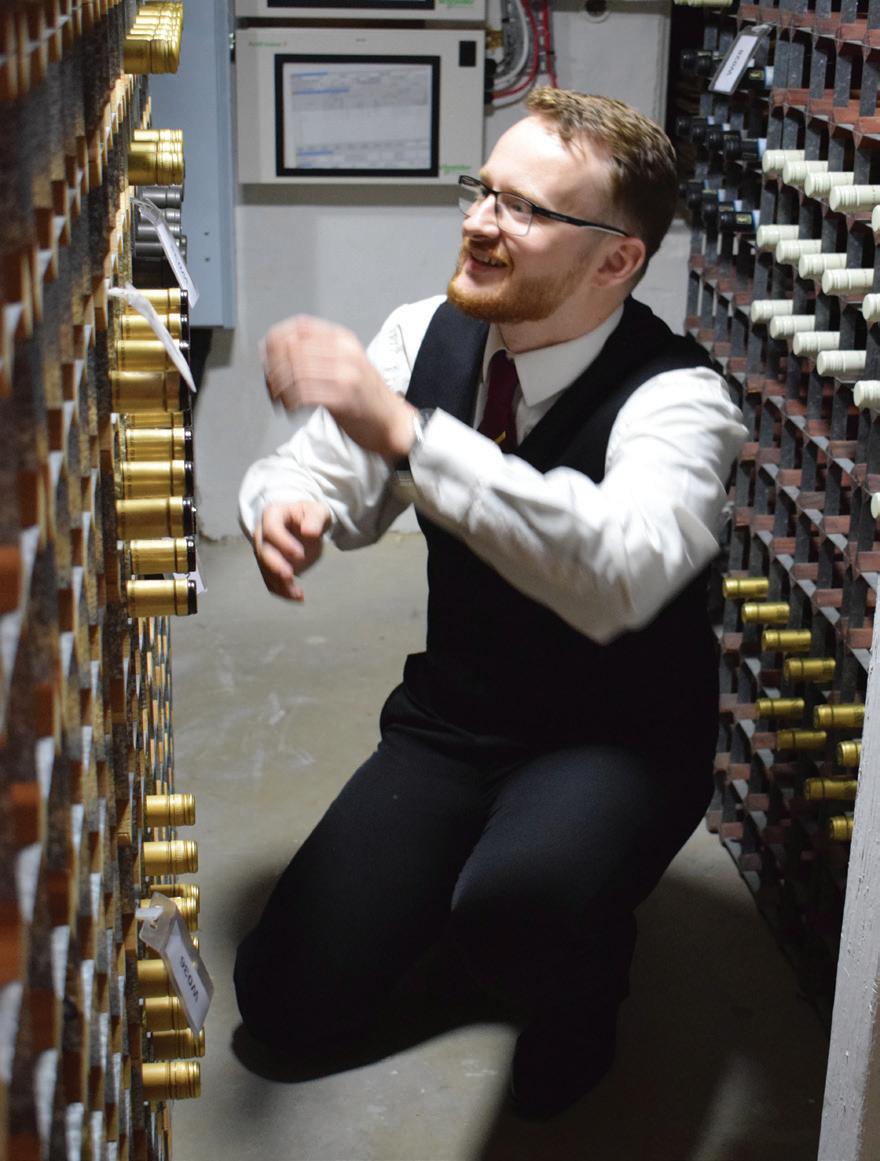
the silver safe to make sure all items are cleaned and ready for use on the tables.
Where did you work before joining the Hall?
Before joining the Hall, I worked at New College, from 2015 until 2020, then at Wadham from 2021 to 2023. While working at New College, the Head Butler sparked my interest in wine – I really enjoyed hearing him talk about the industry and where particular wines originated. I now really enjoy learning more about the science behind the taste – how the grapes are grown and harvested, what affects the grape/production, biodynamics, and of course the end product. I recently completed the WSET Level 3 Award in
Wines to help support my work in the wine cellar and I hope to move on to a diploma in the future.
What do you enjoy most about working here?
I enjoy all aspects, especially front of house and handling the wine. It is wonderful to combine my interests with event hosting at the Hall, and seeing how it brings people together, for example discussing wine with Fellows and guests at Formals or graduation, and discovering new wines together.
Could you tell us about the recent project to reorganise the cellar?
We used the recent cellar renovations as an opportunity to remove everything, reorganise the space, value the collection and implement a new system for wine ordering and stock-checking. The system – kindly built by IT Manager Andrew Breakspear – enables us to manage the cellar more efficiently. We use it to catalogue what we have, and can include useful information such as cost, year, tasting notes and label imagery, all of which is really helpful for the wider team
when they need the information quickly. The reorganisation was a very physically demanding process which took six months, and we needed to ensure the wine was stored appropriately in the meantime. Once complete, all of the stock had to be moved back into place – we managed to achieve this without any breakages!
Robert and I will routinely evaluate older wines in the cellar to get a better understanding of what can still be cellared and how we can best use wines reaching the end of their drinking window. This helps with determining the true value of the cellar and space management, but can also offer some pleasant surprises when we suspect something might be past its best but it has actually managed to hold up and be of good quality.
Lastly, any wine recommendations to share?
Everyone has different tastes but, most importantly, different occasions call for different wine. Personally one of my favourites is Viña Ardanza Reserva, La Rioja Alta.
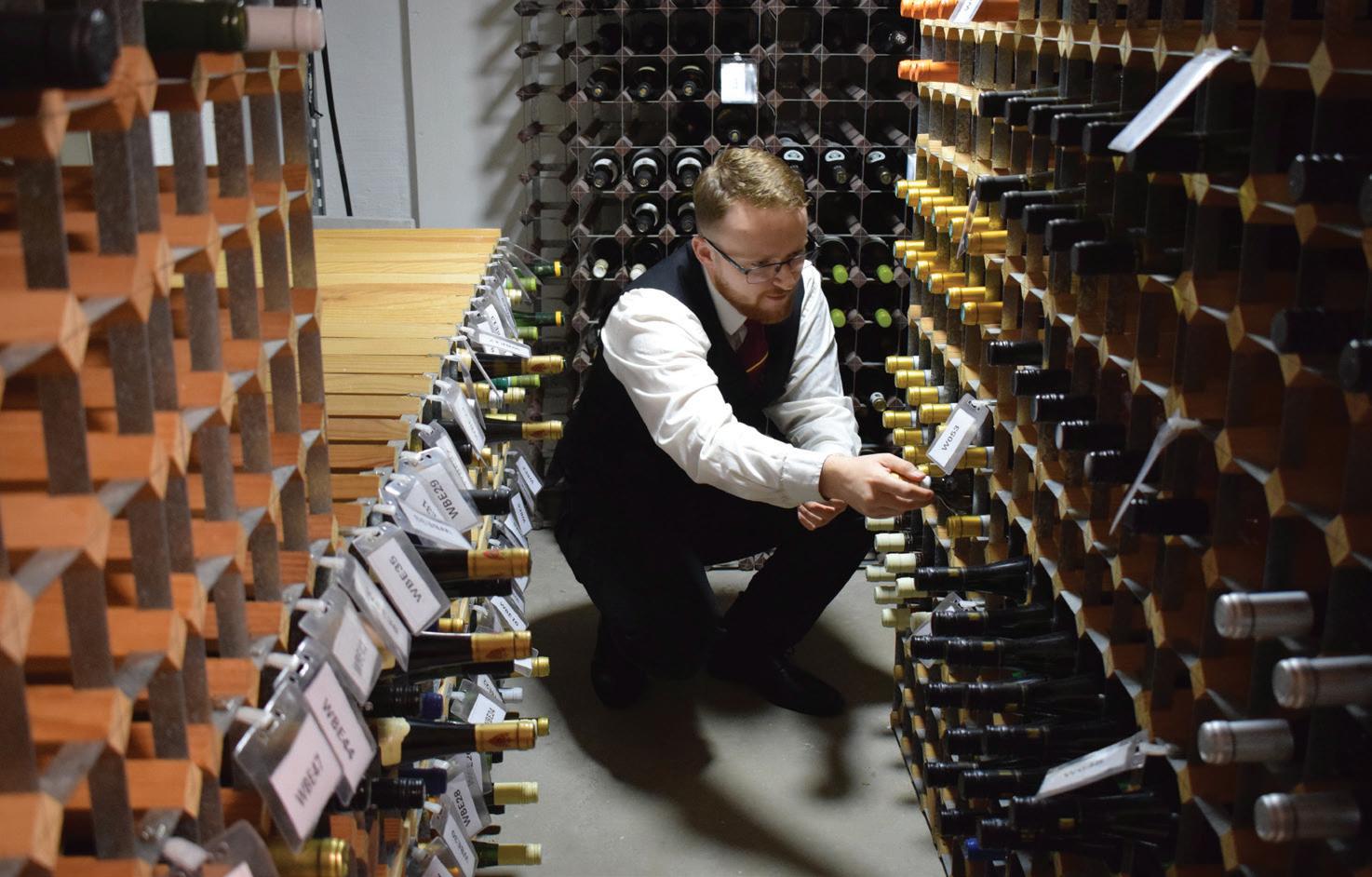
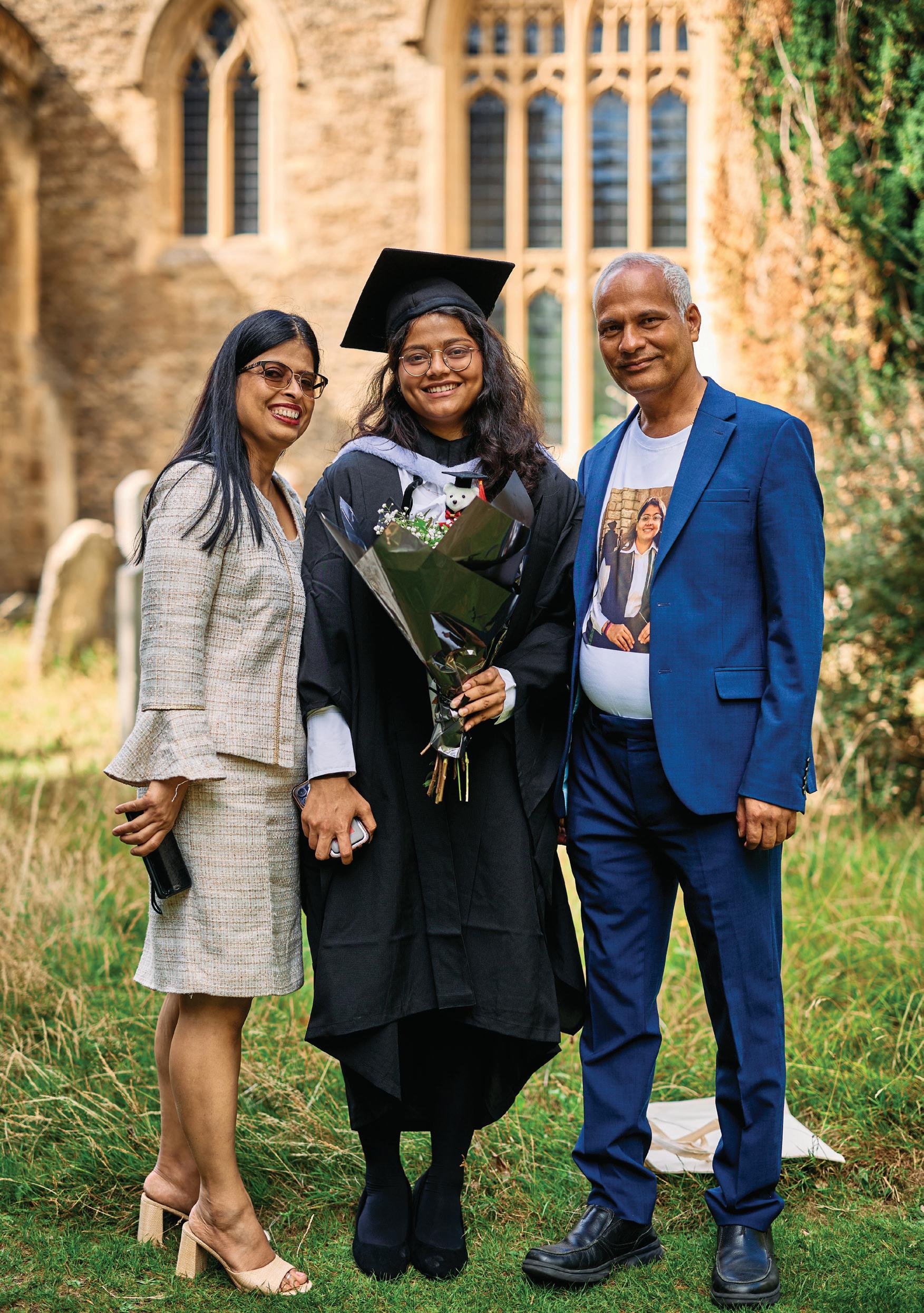
October 2024 saw over 200 new students arrive at the Hall. 107 undergraduates were joined by 97 graduate students, undertaking taught Masters or doctoral study. In addition, during the academic year, 49 Visiting Students joined our undergraduates, studying at the Hall for one or more terms.
These students came from far and wide. In addition to 110 students from the United Kingdom, we welcomed 25 from across Europe, along with 58 from North America, 48 from Asia, 7 from Africa and 6 from Australia. The Hall truly is an internationally diverse college.
As you will read elsewhere in this issue (pp. 49–51), the College’s outreach work goes from strength to strength under the direction of Luke Maw, working to encourage high numbers of direct applications from highly qualified, wellinformed students. Our regional work with schools in the east Midlands is now well-established and is starting to bear fruit in terms of application numbers and successful outcomes both to the College specifically and more generally across the University.
Last year, I related that we had appointed a Tutorial Fellow in Computer Science in readiness to restart admissions in the subject and its Joint Schools in October 2025 after a more than 15-year hiatus.
I am very pleased to report that the first students were selected last December and arrived at the Hall earlier this month. The subject will now build year-on-year as successive admissions exercises give us a full cohort in three years’ time.
I am also delighted to report that the College has now joined the University’s Astrophoria Foundation Year Programme. This is a one-year foundation programme
for UK state school students. It is aimed at those with significant academic potential, who have experienced severe personal disadvantage or disrupted education which has resulted in them being unable to apply directly for an Oxford undergraduate degree programme. During 2024–2025, the College made offers to foundation courses that will prepare students for the undergraduate English and Materials Science courses. Students who successfully complete the programme will enter the first year of those courses in October 2026.
We have also bolstered our study skills provision for undergraduates. In addition to providing graduate teaching assistant support to help individual students hone their skills, we have appointed a College Lecturer to lead the development of a range of resources to address common difficulties that students encounter when making the transition from school to the University.
In addition to those Fellows whose appointments I recorded last year, we welcomed a number of other new colleagues during the academic year. Dr Benjamin Hess joined us as an Early Career Teaching and Research Fellow in Earth Sciences, Dr Kate Keohane took up a Career Development Fellowship in History of Art and Wellbeing, while Dr Sofya Dmitrieva and Jenyth Evans took up Junior Research Fellowships in European Languages and English, respectively. Professor Katie Peterson, Professor of English at the University of California, Davis, also joined us for the academic year as a Visiting Fellow in Poetry, collaborating with Professor Erica McAlpine.
I am pleased to report that three colleagues already at the Hall were also elected to Fellowships. Carlos Rodríguez Otero, the Director of Music, and Dr Holly Langstaff, College Lecturer in French, became Fellows by Special Election, while Dr Antonin Charret, Junior (Discipline)
Dean, was elected as a Junior Research Fellow. In addition, The Revd Andreas Wenzel took up the role of Chaplain early in 2025 and was elected to a Fellowship by Special Election.
Two further appointments to Early Career Fellowships were made during the academic year: Dr Dahab Aglan (Economics) and Dr Aisha Djelid (American History) took up their roles earlier this month.
We bid farewell at the end of the year to Dr Callum Munday (Fellow by Special Election in Geography), who left to take up a Tutorial Fellowship at St John’s College, and to Dr Orlando Lazar-Gillard (Politics) and Dr David McMeekin (Physics) whose fixed-term Fellowships came to an end. Finally, it is with great sadness that I must record the death of Emeritus Fellow Sir Peter Hirsch, Isaac Wolfson Professor of Metallurgy and Professorial Fellow from 1966 until 1992.
Professor Robert Wilkins, Senior Tutor
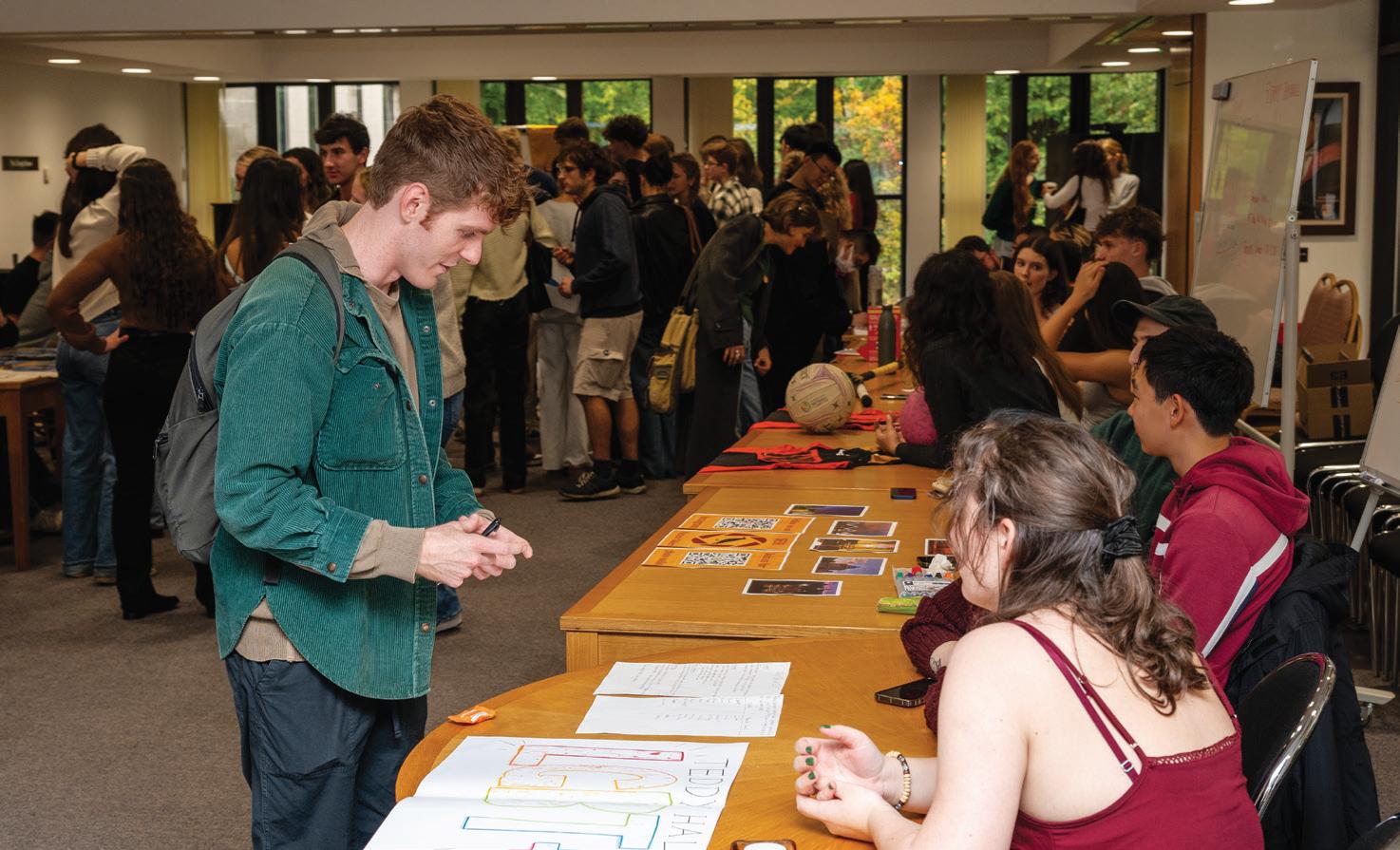
On the College register at the start of Trinity term 2025 were 414 undergraduates, 333 postgraduates and 42 Visiting Students.
New Students 2024–2025
Undergraduates
In the 2024–2025 academic year, 107 students joined the College as undergraduates from the following schools, colleges and universities:
Acton Cerys Arthur Terry School
Ali Zain Wesgreen International School
Applebaum-Kahn Zohar Woodhouse College, Finchley
Balkrishna Rohit Queen Elizabeth's School, Barnet
Batt Rex Canford School
Begum Iqra Rochdale Sixth Form College
Boucher-Ferté Adélaïde St Mary's School, Ascot
Bridge Samuel The Perse School
Burn Samuel Northampton Academy
Carr Phoebe Westminster Kingsway College
Carvin Ben JFS School
Chappell Genevieve St Marys School, Ascot
Chen Tianyu Shanghai Guanghua Qidi College
Christie Dylan Bexley Grammar School
Clarke Ben King's College School
Colgan Caeli European School Luxembourg I
Cottee Jessica Royal Grammar School, Newcastle-upon-Tyne
Crowther Agatha Latymer Upper School
Danovaro Alessandro Maiden Erlegh School
Durston Jasmine The Blue School
Eagleson Fiona Brampton Manor Academy
Edwards Cormac St David's Catholic College
Egan Ptolemy Eton College
Elrayess Arwa Doha College
Eren Elif The Koç School
Fernández-Arias Abigail Urmston Grammar
Finn Elizabeth Bexhill College
Fong Seng Junn Kolej Tuanku Ja'afar
Forbes Lola Bristol Cathedral Choir School
Fu Zichen Ulink College of Shanghai
Garner Grace Lord Williams's School
Glazebrook Haniya St Paul's Girls' School
Griffiths Eve University of the Arts London
Hardwick Eli The Skinners' School
Harker Sebastian St Paul's School, London
Harris Alexander Poole High School
Hay Finley Churchill Academy & Sixth Form
Heggie Maisy Silverdale School
Helsby Kayla Wheatley Park School
Henderson Henry Rugby School
Herbert Sophie Hinchingbrooke School
Hill Clara Brighton Metropolitan College
Hilton Charlotte Hitchin Girls School
Hong Yilun Guangdong Country Garden School
Huang Zexuan Colegio Mas Camarena SL
Huang Zhuoer Wuhan Britain-China School
Hudson Alexandrina Magdalen College School, Oxford
Jiang Letian Ulink College of Shanghai
John Lottie Dame Alice Owen's School
Julius Carolina Francis Holland School
Kajal Jasmine Barnsley College Higher Education
Ketheeswaran Abhinaya Brampton Manor Academy
Keung Cheuk Yin HKBU College of International Education
Kim Tae Hwan Ivy Collegiate School
Kumar Anvi Tanglin Trust School, Singapore
Lee Katherine Stafford College Careers Centre
Lejietis Valters European School Brussels
Lewis Edward Manchester Grammar School
Lewis Rory King Edward VI Grammar School, Chelmsford
Lovelock-Blair Abigail Royal High School, Bath
Mably Luke Freman College
Malik Ruhan Elthorne Park High School
Martins Simone St Dominic's Sixth Form College
McLean Margaret Eirias High School
Moon Chaehyeon Korean Minjok Leadership Academy
Mynors-Wallis Harry Poole Grammar School
Ng Hong Wei Hwa Chong Institution
North Samuel Monmouth Comprehensive School
Orledge Alexander Monmouth Comprehensive School
Panda Abhipsa Indian Education School, Kuwait
Park Eren The Kings Priory School
Parry Maya Latymer Upper School
Parsons Katherine North London Collegiate School
Pejhan-Sykes Ethan Penistone Grammar School
Pendlebury Rosalia Channing School
Peng Shushen Changwai Bilingual School
Petipher Molly HSDC Havant
Postins Natasha International School Basel
Quintin Alex The John Warner School
Rainbow Nina Greenhead College, Huddersfield
Rana Krish Harrow School
Reynolds Aoife The Becket School
Rimmer Stanley Exeter Mathematics School
Shepherd Madeleine Harington School
Simpson Josephine Ilkley Grammar School
Smith Elsa Shanghai Guanghua College
Spencer-McDaniel Isabella Highcliffe School, Christchurch
Staff Emily The Sixth Form College Colchester
Stenings Luke Norton Knatchbull School, Ashford
Streets Hugo Tonbridge School
Taborn Bonnie Alleyn's School, Dulwich
Vasquez Montoya Carlota Lycée Français Louis Pasteur, Bogotá
Vere Luca London Academy of Excellence Tottenham
Vivekanandan Dhaksha King Edward VI High School for Girls
Von Sponeck Iris The Godolphin and Latymer School
Vora Tara Peponi Secondary School, Kenya
Walker Edwin Falkirk High School, Falkirk
Walsh Hugo Cranbrook School, Australia
Wang Yurun Scots College
Watremetz Oliver Barton Peveril College
Widuch Julia Akademeia High School
Wijnne Guus Hillhead High School
Williams Oliver Royal Alexandra and Albert School
Williams Tycho The London Oratory School
Wu Shulin Dipont Education Management Group
Yuan Yuze
Kingston University
Zhou Zibo Radley College
In the 2024–2025 academic year, 97 students joined the College as postgraduates from the following schools, colleges and universities:
Abdulkareem Madinat University of Ilorin
Abedin Zaynul University of Dhaka
Armero Piñeiro Maria
Imperial College of Science, Technology & Medicine
Arora Nayantara University of Oregon
Bacon James University of Cambridge
Bratton Elizabeth University of Cambridge
Bruce Thomas University of Manchester
Bui Hai Yen
Caballero Cardozo Bruno
University College London
Universidad Católica Nuestra Señora de la Asunción
Campanile Simona University of Exeter
Chandrasekera Dhammitha School of Pharmacy, University of London
Chen Yingye University College London
Clare-Hunt Charlotte University College London
Cook John University of Oxford
Coutu Philippe École des Hautes Études Commerciales (HEC), Montréal
Cox Amy Trinity College Dublin
Crestani Dominic University of Durham
Crowther Polly Imperial College of Science, Technology & Medicine
Dağlar Ali Emir
Dartmouth College
Datta Manjistha King George’s Medical University, Lucknow de la Torre García Daniela La Esmeralda National School of Painting, Sculpture and Engraving
Dearlove Jonathan University of Queensland
Despositos Isabella University of Cambridge
Draycott Alice George Washington University
Drexler Alexandra University of Essex
Dugan Gabrielle Virginia Polytechnic Institute and State University
Foster Samantha University of Southampton
French Conrad Yale University
Fu Hao-Lun
National Cheng Kung University Taiwan
Gan Junyu University of Warwick
Guckenberger Melissa University of Colorado Boulder
Guo Yaxin
London School of Economics and Political Science
Hagerty Maeve Tufts University
Houghton Georgia University of Kent
Ibrahim Nada University College London
Ichtchenko Sergey University of Helsinki
Jenman Natasha University of Durham
Kalinina Melaniia State University – Higher School of Economics
Kaufmann Anna-Lena Albert-Ludwigs-Universität Freiburg
Kennedy Lewis University of Strathclyde
Kowalska Aleksandra University of Cambridge
Kraitem Celine Lebanese American University
Krull Hannah University of York
Kulkarni Akshara Ashoka University
Kurillová Martina University of Amsterdam
Kwong Benjamin University of Oxford
Lai Vy Wien Imperial College of Science, Technology & Medicine
Letendre Madelyn US Air Force Academy
Li Haoyuan Imperial College of Science, Technology & Medicine
Li Liangxiao University of Nottingham
Li Xuan Tsinghua University
Lu Shiyang University College London
Magwood Katharine Queen’s University Belfast
Mason Cole Williams College, MA
Mason Sophie Imperial College of Science, Technology & Medicine
Mbanje Cassandra University of the Witwatersrand
McKenna Caleb University of Western Australia Nedlands
Meehan Padraig University of Oxford
Mól Wiktoria University of Cambridge
Muraoka Yuta University of Tokyo
N. M. Abushahla Alaa Al-Quds University
Nakate Vanessa Makerere University Business School
Neal Abigail University of Oxford
Nguyen May Asian University for Women, Chattogram, Bangladesh
Odhiambo David Jomo Kenyatta University of Agriculture and Technology
Ostrov Daniela University of Illinois Chicago
Pattaruveettil Meera Menon University College London
Perry Mia University of Cambridge
Petraro Hope Brown University
Pirani Alykhan Columbia University
Powell Timothy University of Oxford
Qiu Shengkun Peking University
Quarsie Jeffrie Queen Mary University of London
Rhéaume Michel University of Montreal
Rice Alexandra Johns Hopkins University
Sahai Shubh Jindal Global University
Saul William Berklee College of Music
Sidwell Nick University of Bristol
Simon Ruben University College London
Steinfeld Leonardo London School of Economics and Political Science
Storer Kieran University of Oxford
Tramsen Fenja Swarthmore College
Tudose Maria-Alexa University of Oxford
Umaraliev Alisher University of Warsaw
Veale Colin University of Oxford
Villiers Lucy King's College London
Walsh Coleman Stanford University
Wang Yizhen University of Cambridge
Wanyama Conrad University of South Wales
Wright Lucy University College London
Xing Zheng National University of Singapore
Yorke Charlotte University of Durham
Young Emily University of the West of England
Zhou Hongjian University of Oxford
Zhou Jin University of California, San Diego
Zhu Chenyu University of Leicester
Žižková Anna University of Amsterdam
Allen Alexandra Cornell University
Bayazitoglu Osman Princeton University
Bedrossian Arnaud École des Hautes Études Commerciales (HEC), Montréal
Bell Makayla Columbia University
Bhattacharjee Riya Wellesley College
Boulos Samuel Northwestern University
Castleman Sagar Columbia University
Chandrasekar Priyanka Bryn Mawr College
Chen Oscar University of Sydney
Dexter Nathaniel Vassar College
Dumortier Chloe Cornell University
Duong Thi Thao Vy Trinity College, Hartford
Edwards Annette Northwestern University
Freeley Dean Holy Cross College
Garg Sara Emory University
Hessler Noam Vassar College
Hopkins Milly Columbia University
Hughes Gabrielle Swarthmore College
Iboshi Will University of Richmond
Imamberdieva Nika Harvard University
Jessen Anne Holy Cross College
Kamal Sreenidhi Bates College
Karaganis Joseph Columbia University
Kim Katelyn Bryn Mawr College
Knightly Kyle Rice University
Lemkin Benjamin Princeton University
Liang Yuwen Hamilton College
Ma Qikai University of North Carolina at Chapel Hill
Mirick Benjamin Amherst College
Muthusamy Ved Northwestern University
Nguyen To Nhu Trinity College, Hartford
Ratcliffe Talulah Harvard University
Schwier Jacob University of North Carolina at Chapel Hill
Shapovalova Sofiia Princeton University
Siegel Emily Porter Rider University
Sponiarová Anna Ostrava University
Stauff Marissa Rider University
Walton Satchel University of North Carolina at Chapel Hill
Wang Hongrui The Chinese University of Hong Kong
Wang Madeline Swarthmore College
Ware Mary Lawrence Columbia University
Weiner Zackary Cornell University
Wood Georgia University of Richmond
Yan Phillip Columbia University
Yang Zhuojian University of Chinese Academy of Sciences
Yang Ziyang University of Chinese Academy of Sciences
Zhai Zihan University of North Carolina at Chapel Hill
Zhang Ruoyao University of Chinese Academy of Sciences
Zhou Emma Wellesley College
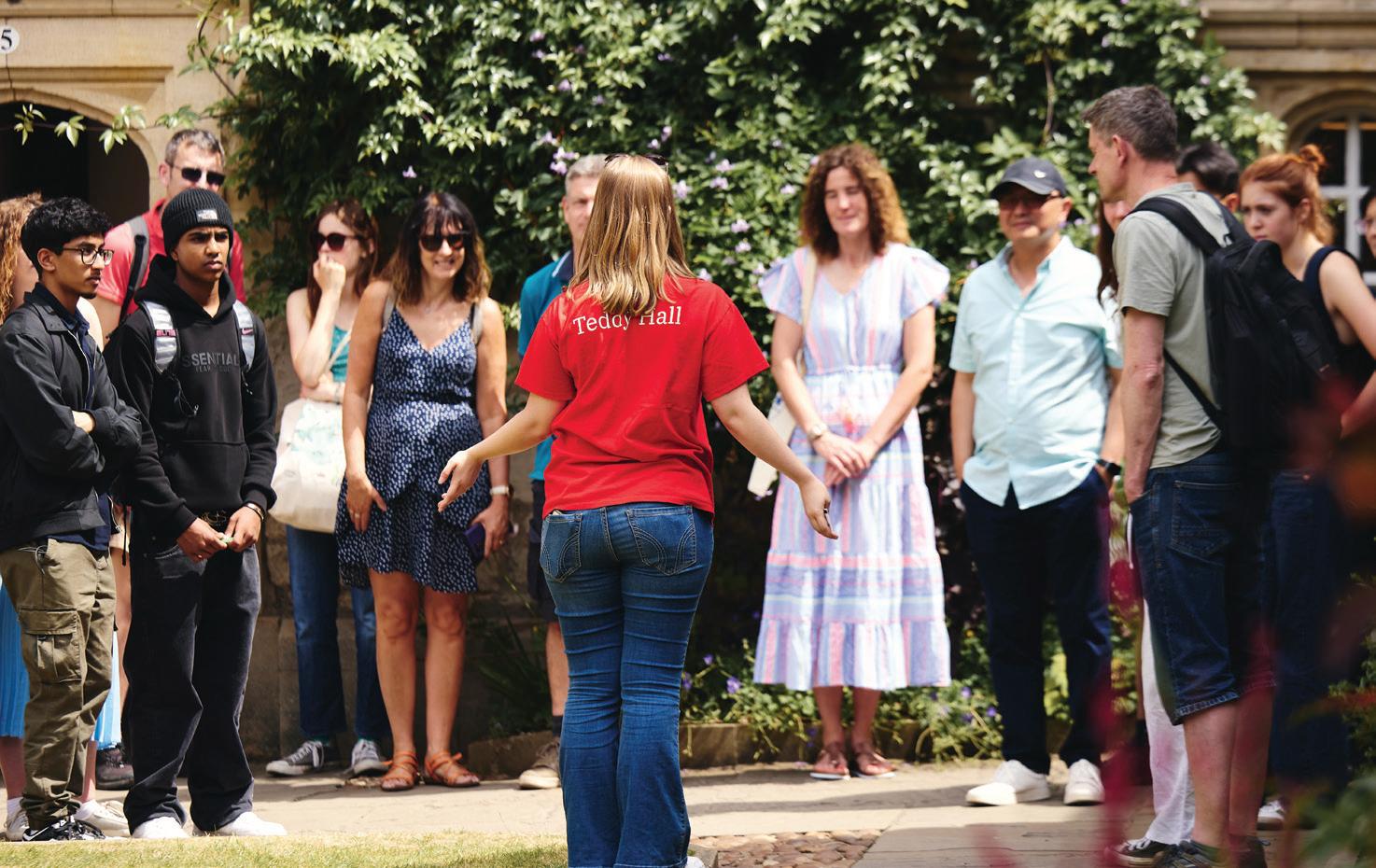
In the Undergraduate Admissions exercise 2023, St Edmund Hall received 627 applications for entry in 2024 and beyond. Nearly 300 of these applicants were invited to interview. All applicants were interviewed online via Teams.
Following the conclusion of December’s interview period, the Hall made a total of 122 offers of undergraduate places for entry in 2024 (compared to 121 offers the previous year). Eleven of these were open offers. In addition, five deferred offers of places were made, for entry in Michaelmas term 2025. The Hall also ‘exported’ a small number of applicants, for offers of places at other colleges.
In terms of gender, 49% of offers of undergraduate places were made to applicants who identified as male and 51% to female. The applicants receiving
offers comprised 70% UK nationals and 30% of students from overseas, including from EU countries. In respect of previous education, of the 88 offers made to UK applicants, 69% were to state-educated applicants and 31% to students attending an independent school (2022: 56% state, 44% independent).
Graduate offer-holders for entry in 2024–2025 represent over 40 nationalities: they will be undertaking a range of taught and research programmes in disciplines from across all four of the University’s academic divisions. The expected eventual intake of new graduate students in Michaelmas term 2025 is approximately 110.
At the time of writing, this year’s Graduate Admissions exercise had so far seen the Hall consider over 300 applications.
College Scholars 2024–2025
Alexander Adair
Olivia Allen
Bliss Ashley
Aryaman Babbar
Matthew Bartlett
Alexander Burson
Lucy Cade
Isaac Chan
Rick Chen
Rachel Chia
Felix Clayton McClure
Ben Colleran
Alexandra Dawson
Julia Domaracka
Thomas Early
Gideon Futerman
Weijia Gao
Suchir Gella
Jack Gillespie
Catherine Gower
Sophie Griffith
Xilin Gu
Tobias Heath
Benjamin Holland
Toby Holmes
David Hrushovski
Harriet Humfress
Mehmet Efe Kiliç
Chengyu Kuang
Joseph Lacey
Cheuk Lai
Hei Shun Lam
Tobias Lloyd
Sama Malik
Evie Mayhew
Haojun Miao
Niamh Murfin
Iris Murphy
Charlotte Newell
Kelvin Zhu Hao Ngu
Luke Nijkamp
Osaruonamen Osifo
Daisy Pendergast
George Prior
Dylan Radford
Rathi Ramakrishnan
College Exhibitioners 2024–2025
Misha Behrens
Daniel Cryer
Thomas Farnsworth
Alexander Feldman
Devaassenan Mahenthiran
Toby Mann
Lydia Pedley
Madeleine Rodriguez
Mark Simmons
Stanley Smith
Academic Progress Prize 2024–2025
Rex Batt
Rick Chen
Felix Clayton McClure
Jena Curtis
Jasmine Durston
Molly Hill
David Hrushovski
Zexuan Huang
James Maddocks
Hong Ng
Samuel North
Maya Parry
Lydia Pedley
Aaron Rambow Czarny
Stanley Smith
Lili Sreter
Aaron Rambow Czarny
Daniel Record
Shuzhe Ren
Lucas Rollinson
Ella Soni
Qianyi Sun
Sidharth Thapliyal
Jake Tommasi
Zachary Turinsky
Eric Ji Da Wang
Matilda White
Ioan Whomsley
Yu Ming Alexis Wong
Mara Wuelfing
Shaojing Xie
Xingcan Yi
Jincheng You
Henry Zhao
Yihan Zhao
Hongyi Zheng
Zihan Zhuang
Oliver Spencer
Yash Suribhatla
Jessica Taal
Lily Thompson-Mouton
Carlota Vasquez Montoya
Jade Vohra
Iris Von Sponeck
Joseph Walford
Oliver Watremetz
Gus Wijnne
Xingcan Yi
Antunes da Silva Politics Award
Anandita Abraham
Nanami Mizoshita
Bendhem Fine Art Bursary
Eve Aspland
Daniela de la Torre García
Freya Foster
Ella Soni
Olivia Stevenson
Yu Ming Alexis Wong
Bernard Bewlay Science and Engineering Bursary
Daniel Cryer
Thomas Early
Luke Nijkamp
Aoife Taylor-Torney
David J Cox Prize
Lenny Bailleux
Gareth Roberts Award
2023–2024
Max Challener
Joseph Lacey
George Series Prize
Matilda White
Proxime accessit
Olivia Allen
Julia Domaracka
Kim George
Toby Holmes
Niamh Murfin
Michelle Ng
Graham Midgley Memorial Prize for Poetry
Celine Gu
Proxime accessit
Sophia Bursey
Lola Forbes
David Hrushovski
J R Hughes Book Prize
Grace Garner
Joe Todd Award
Yat Kam
Euan Simmonds
Ogilvie-Thompson English Prize
Caeli Colgan
Proxime accessit
Laura van Heijnsbergen
Peel Award
Rick Chen
Aaron Rambow Czarny
Undergraduate English Award
Laura van Heijnsbergen
Cochrane Scholarship
Eve Aspland
Graham Hamilton Travel Award
Conrad French
Theana Johnson
Duncan Lyster
Matt Greenwood Travel
Scholarship
Agatha Crowther
Michael Pike Travel Fund
Anastasia Storey
Luke Tamblin
Richard Fargher Bursary
Anandita Abraham
Cormac Edwards
Indigo Haynes
Michelle Ng
Elena O’Connor
Joseph Walford
Non Watts
Richard Luddington Prize for Outstanding Academic and Sporting Achievement
Sama Malik
George Prior
Choral Scholarship
Luke Boulton
Edmund Finney
Elsa Giles
Omer Mihovic
Isabella Nichols
Daisy Pendergast
Ekaterina Rahr-Bohr
Organ Scholarship
Alyssa Chan
Michelle Ng
Tiffany You
Choral Exhibition
Oscar Chen
Abigail Fernández-Arias
Julia Hackler
Tobias Heath
Antonia Horan
Harriet Humfress
Mehmet Efe Kiliç
Samuel North
Edward Taylor
James Wright
A total of 34 students received the income-related Oxford Bursary. The College components of these bursaries were supported by: 1971 and 1972 Aularians; Adrian Briggs Bursary, supported by a number of generous Aularians in honour of Professor Adrian Briggs; Ann Taylor Bursary, set up in memory of Dr Taylor; Aularians Mr Chris Ashton and Mrs Natasha Ashton; Buttery Bursary; many Aularians in memory of Carol McClure; Aularian Chris Armitage in honour of his parents Charles and Edith Armitage; Thomas Peel and the Charles Peel Charitable Trust; Aularian David Harding and Mrs Gale Harding; Derek Statham Scholarship, funded by Chris Statham in honour of his father; Dr Francis Rossotti’s benefaction; George Bull Bursary; Aularian Tony Laughton; the Lipsig Family Scholarship, funded by Ethan Lipsig; Lotus Foundation Bursary; Maureen and Neville Haile Bursary; Aularian Mr Peter Johnson; Mrs Dorothy Pooley, Mrs Lucy Webber and Mrs Frances Georgel in memory of their father, Aularian Mr Philip Saul; River Farm Foundation; many Aularians in memory of Sir David Yardley; Bernard Bewlay in honour of Sir Peter Hirsch; the Noel Bater Bursary; Aularian Mr Tony Best in honour of his parents Mr and Mrs Ron Best; Tony Doyle; the generous bequest of Aularian Mr William Asbrey.
A further 16 students received the University’s income-related Crankstart Scholarship, Reuben Bursary and Santander Bursary.
Armourers and Brasiers’ Prize for Year 2 Business Plan Team Presentation: 2024–2025
Yizhou Gu
Rohan Iyengar
Rohan Patel
Daniel Record
Prize for Best Team Design Project: 2024–2025
Kelvin Zhu Hao Ngu
Lili Sreter
Emden-Doctorow Scholarship
Zhouhan Chen
Gao & Ning DPhil
Chemistry Conference Award
Siddhant Dhingra
Harriet and Joan Neal Graduate Research Scholarship into Amyloid Angiopathy
Samantha Foster
Mitchell Scholarship
May Nguyen
Postgraduate Writing-up Grant
Siddhant Dhingra
Isaac Holmberg
Yinghan Li
Routledge Scholarship
Alexandra Drexler
Tony Doyle Graduate Science Prize
Kit Gallagher
Duncan Lyster
Nicole Mitchell
Piya Rajendra
Haopeng Xu
William Asbrey BCL Scholarship
Simon Ruben
William R Miller Scholarship
Duncan Lyster
Clarendon and Badman Scholarship
Monica Perri
Clarendon Fund and Besse Scholarship
Zaynul Abedin
Clarendon Fund and Brockhues Scholarship
Hongjian Zhou
Weidenfeld-Hoffmann
Oxford-Hoffman – Julius Baer Scholarships
Vanessa Nakate
David Odhiambo
Alisher Umaraliev
Clarendon Fund and Bruce Mitchell Scholarship
Ali Emir Dağlar
Clarendon Fund and St Edmund Hall Scholarship
Samuel Allen
Clarendon Fund and E P A Cephalosporin Scholarship
Carla Nel
Oxford-Hoffman – Shuaib
Chaudhary Scholarship
Alaa Abushahla
Clarendon Fund and Justin Gosling Scholarship
Sarah Savić Kallesøe
Clarendon Fund and KerrMuir Scholarship
Sophia Abusamra
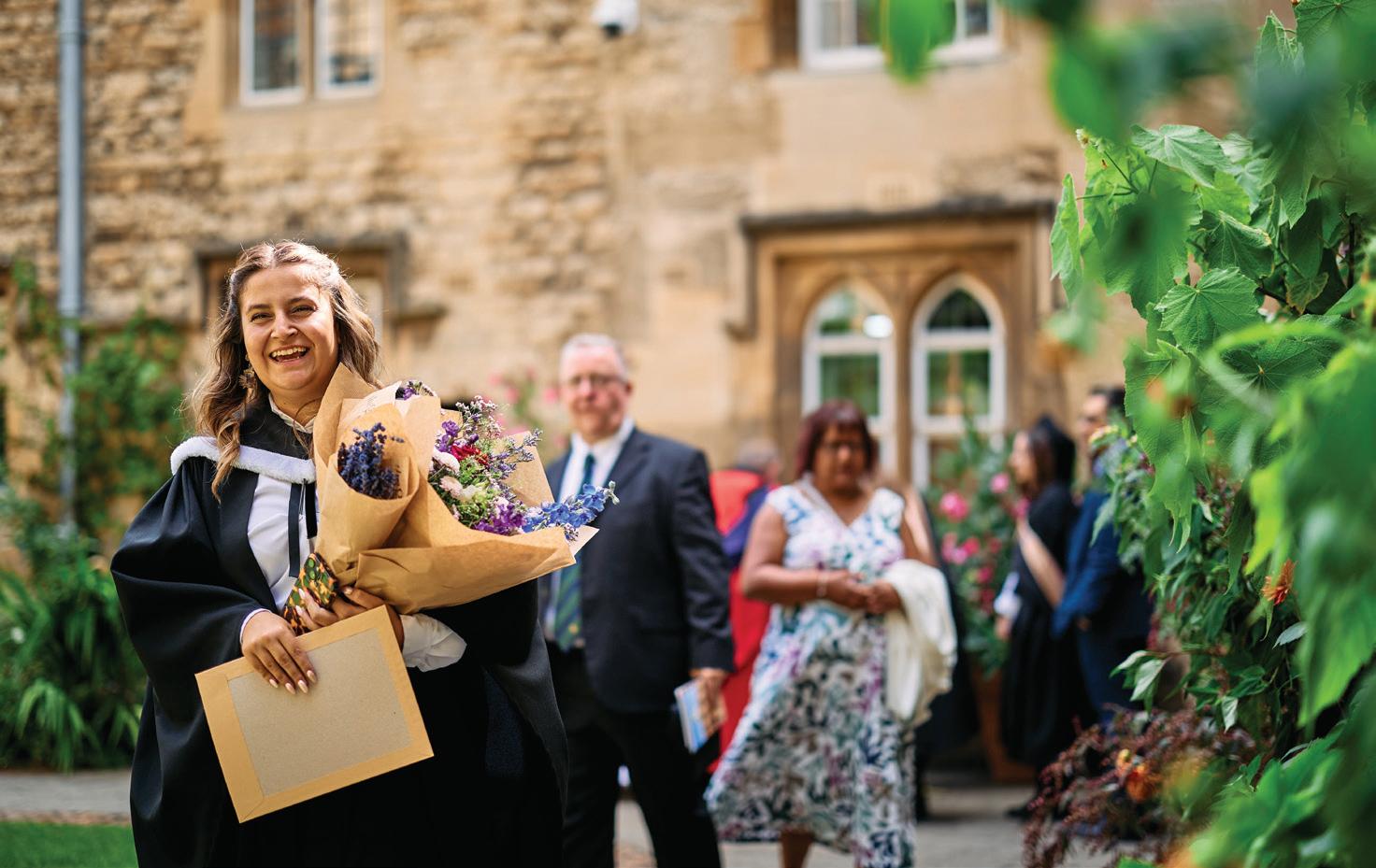
These are the Finalists who agreed to the publication of their exam results.
Biochemistry
Class I Isaac Chan, Weijia Gao, Daisy Pendergast, Eric Ji Da Wang
Class II i Chloe Abraham
Class II ii Edward Robinson
Cell and Systems Biology
Class II i Katie Booth, Poppy Buckley
Chemistry
Classs I I-Ting Chou, Daniel Espanhol
Class II i Cherry Marsh
Class II ii Harkiran Kaur, Harry McWilliam
Earth Sciences
Class I Olivia Allen, Catherine Gower, Sophie Griffith, Joseph Lacey
Class II i Max Challener, Erica Harrison-Scott, Caspar Soyoye
Economics and Management
Class I Usmaan Nadeem, Osaruonamen Osifo
Class II i Xilin Gu, Tinu Reji, Lucas Rollinson
Class II ii Fengzhuoyang Zhu
Engineering Science
Class I Sama Malik, Ioan Whomsley, Jincheng You
Class II i Alyssa Chan, Thomas Farnsworth, Madeleine Rodriguez, Mark Simmons, Anna Stankova
Class II ii Chili Dai
English Language and Literature
Class I Sophia Bursey, Tom Kennedy, Freya McCauley-Wright
Class II i Isabella Brown, James Sambrook, Fizza Zaidi
Experimental Psychology BA
Class II i Sophie Cumberpatch
Fine Art
Class I Eve Aspland, Ella Soni, Olivia Stevenson, Alexis Wong
Class II i Freya Foster
Geography
Class II i Lenny Bailleux, Alexander Burson, Jack Gillespie, Stefan Martin, Rathi Ramakrishnan, Anastasia Storey
Geology
Class I Gideon Futerman
Class II i Shaojing Xie
History
Class I Rachel Chia, Cheuk Lai, Conrad Moe
Class II i Zev Bitel, Anisha Das, Felix Mottram, William Murphy, Charlotte Newell
History and Modern Languages
Class II i Elsa Giles
Jurisprudence
Class II i Mikail Ashraf, Stephanie Goreli, Madison Read, Maha Waqar
Jurisprudence (with Law in Europe)
Class II i Isabel Ambrose
Materials Science
Class I Qianyi Sun
Class II i Isabel FernandezVictorio
Class II ii Benedict Keates, Lin Zhu
Mathematics and Philosophy BA
Class II ii Freyr Tulloch
Mathematical and Theoretical Physics
MMathPhys
Distinction Aryaman Babbar
Mathematics BA
Class II i Yating Zhang
Mathematics MMath
Distinction Luke Tamblin
Medical Sciences
Class II i Jemima Begum, Luke Boulton, Finn Galway, Suchir Gella
Modern Languages
Class I
Tomas Dwyer, Yasmin Sinha
Class II i Sarah Beard, Jena Curtis, Atticus Evans-Lombe, Taerim Lee, Ekaterina Rahr-Bohr
Modern Languages and Linguistics
Class I Felix Clayton McClure
Class II i Chaia McQuail
Neuroscience
Class II i Mya Hesketh-Bream, Reuben Kyne
Philosophy, Politics and Economics
Class II i Anandita Abraham, James O’Neill, Samuel White
Doctor of Philosophy (DPhil)
2024
Astrophysics – Connar Rowan
Atomic and Laser Physics – Aleksei
Malyshev
Engineering Science – Weiming Tu, Yufan
Wang
Environmental Research (NERC DTP) –
Oliver Tooth
Geography and the Environment – Kenta
Sayama
Law – Elinor Buys
Medical Sciences – Aimee Paterson
Molecular and Cellular Medicine – Linda Mies
Science and Technology of Fusion Energy (EPSRC CDT) – Benjamin Evans
2025
Anthropology – Laura Bergin
Astrophysics – Sean Barrett
Biochemistry – Xinyi Feng
Chemical Biology – Sheung Hei Ng
Clinical Medicine – Sarah Andrews, Yuqing Long
Clinical Neurosciences – Camille
Lasbareilles
Computer Science – Joar Skalse
Earth Sciences – Stephanie Lechki
Economics – Momo Komatsu, Akshat
Singh
Education – Antonin Charret, Shuo-Fang
Liang, Amanda Lyons
Engineering Science – Sara Abdelaziz, Joel
Balkaran, Xiaotong Li
Physics
Class I George Prior
Class II i William Lambern
Physics and Philosophy MPhysPhil
Class II i James Wright
English – Jasmine Jones
Environmental Research (NERC DTP)
Zoology – Sumali Bajaj, Alice Edney
Geography and the Environment – Nurul
Amillin Hussain, Joris Bücker
History – Abhimanyu Arni, Rebecca Brown
International Development – Pratim Ghosal
Materials – Liwei Dai, Po-Yuan Huang, Ben Jagger, Xinlei Liu
Medical Sciences (Part-time) – Aideen O’Neill
Medieval and Modern Languages (Parttime) – Nicholas Stedman
Molecular and Cellular Medicine –
Christopher Campbell
Neuroscience – Sarah Armstrong
Psychiatry – Alessandro Mancari
Wind and Marine Energy Systems and Structures (EPSRC CDT) – Daniel Rowe, Gerard Ryan
Women’s and Reproductive Health –Faheem Seedat
Zoology – Nancy Burrell
Master of Business Administration (MBA)
2024
Khalid Abdelgadir, Mathieu Lizotte (Distinction)
2025
Onat Topal
Master of Fine Art (MFA)
Daniela de la Torre García (Distinction)
Master of Philosophy (MPhil)
Global and Area Studies – Catherine Dillman
International Relations – Michael Levinson (Distinction)
Linguistics, Philology and Phonetics –Olivia Nutt
Modern Languages – Arianna Covin, Julia
Hackler (Distinction)
Modern Middle Eastern Studies – Anna Gassó Duocastella
Russian and East European Studies –Isaac Holmberg (Distinction)
Master of Public Policy (MPP)
2024
June Arvin Gudoy, Shawntel Nieto
Master of Science (MSc)
2024
Advanced Computer Science – Claas
Thesing (Distinction)
Biodiversity, Conservation and Management – Melissa Guckenberger
Financial Economics – Pierre-Hugues
Forest-Le Sieur
Learning and Teaching – Serena Eggers (Distinction)
Water Science, Policy and Management –
Sherry Da
2025
Clinical Embryology – Georgia Houghton, Daniela Ostrov
Clinical Medicine – Haopeng Xu
Clinical Neurosciences – Sophia Basarrate
Clinical and Therapeutic Neuroscience –
Hai Yen Bui (Distinction), Madelyn Letendre
Economics – Tom Schwantje
Financial Economics – Philippe Coutu (Distinction)
Global Governance and Diplomacy – Fenja Tramsen
Integrated Immunology – Akshara Kulkarni (Distinction)
Law and Finance – Yuta Muraoka, Shengkun Qiu
Mathematical and Computational Finance –
Thomas Bruce (Distinction)
Migration Studies – Alykhan Pirani
Neuroscience – Jack Cook
Pharmacology – Charlotte Yorke (Distinction)
Radiation Biology – Alice Liu
Theoretical and Computational Chemistry –Chenyu Zhu
Master of Science by Research (MSc Res)
Organic Chemistry – Zhiheng Zhang
Master of Studies (MSt)
Diplomatic Studies – Marie Kato
English – Simona Campanile (Distinction)
History – Polly Crowther
Modern Languages – Elizabeth Bratton (Distinction), Anna-Lena Kaufmann (Distinction)
Music – William Saul (Distinction)
Bachelor of Civil Law (BCL)
Shubh Sahai, Ruben Simon
Bachelor of Medicine (BM BCh)
Medicine, Clinical – Thomas Henning, Maximilian Hess, Hannah Riches, Archie Watt
Magister Juris (MJur)
Bruno Caballero Cardozo
Postgraduate Certificate in Education (PGCE)
2024
Josephine Arnold
2025
Dhammitha Chandrasekera, Isabella
Despositos, Katharine Magwood, Wiktoria
Mól, Mia Perry
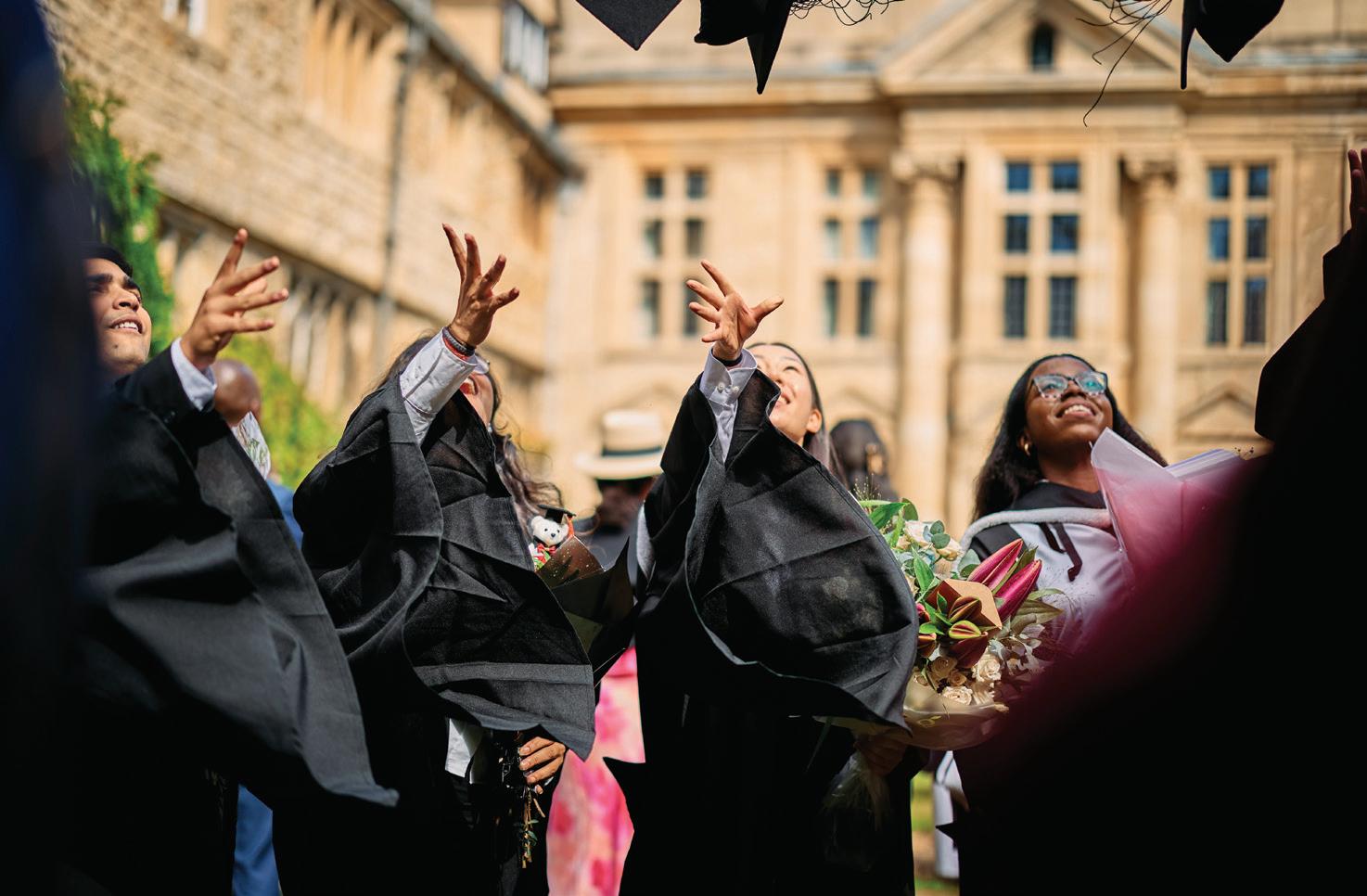
Information about the procedure for signing up to a degree ceremony can be found on the College website. Dates of degree ceremonies in 2025–2026 will be published on the College website as and when they are confirmed (usually in Michaelmas term).
Taught course students who are due to finish their degrees in the 2025–2026 academic year will be invited by the Degree Conferrals Office in Michaelmas term of their final year to attend the ceremony date relevant to their degree.
Research students will be invited to book a ceremony date once they have been granted Leave to Supplicate.
Historic graduands (pre-October 2025) or those wishing to have their MAs conferred in person at a ceremony will need to request that their name be put on a ‘holding list’ (waiting list) for a ceremony date, and will be contacted should a place become available. Further information detailing the booking process for historic graduands is available on the College website.
The 2024–2025 academic year marks the fourth year of our HALLmarks campaign in support of the Hall’s ten-year strategy (2019–2029). I am delighted to share that, thanks to the extraordinary generosity of Aularians and our supporters, we have now raised £20 million since the strategy’s launch in October 2019, keeping us on course for our £50 million target by 2030. A key focus of this campaign remains the redevelopment of the Norham St Edmund student accommodation buildings, and it was a real pleasure to welcome some of our alumni donors back to the site for the topping-out ceremony, hosted by the Chancellor and College Visitor, The Rt Hon the Lord Hague of Richmond, on 20 June 2025 to see the remarkable progress that has been made. When completed in spring 2026, this new ‘quadrangle’ will enable us to house all our undergraduate students in a supportive, collegiate environment – an achievement only possible through the generosity of Aularians.
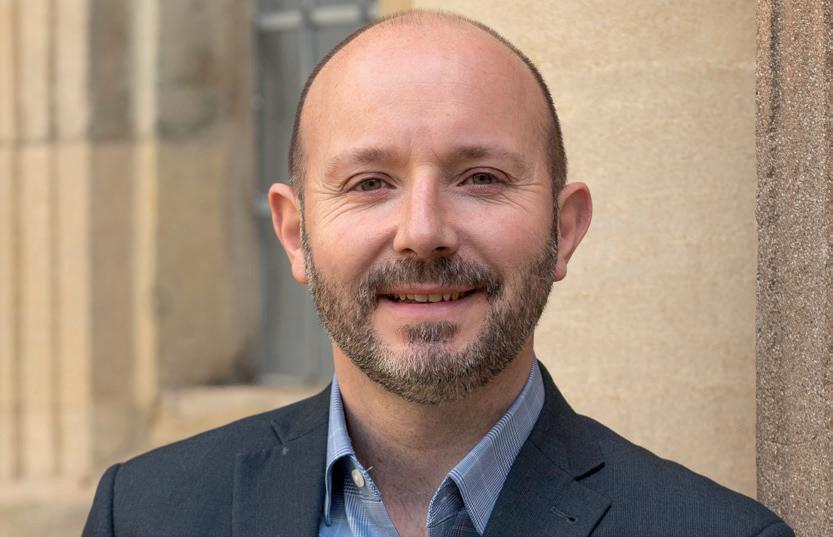
As always, the year was filled with memorable occasions that brought Aularians, students, Fellows and friends of the Hall together. On 13 September 2024, we celebrated a joyful gaudy for our 1990–1993 matriculands, with over 150 alumni in attendance; this was followed during the week by a 60th anniversary lunch for 1964 matriculands and by a warm alumni reception during the University’s Alumni Weekend on 20 September with drinks in the Front Quad. On 24 September, we held an event for donors at the House of Commons, hosted by the Principal, Professor Baroness
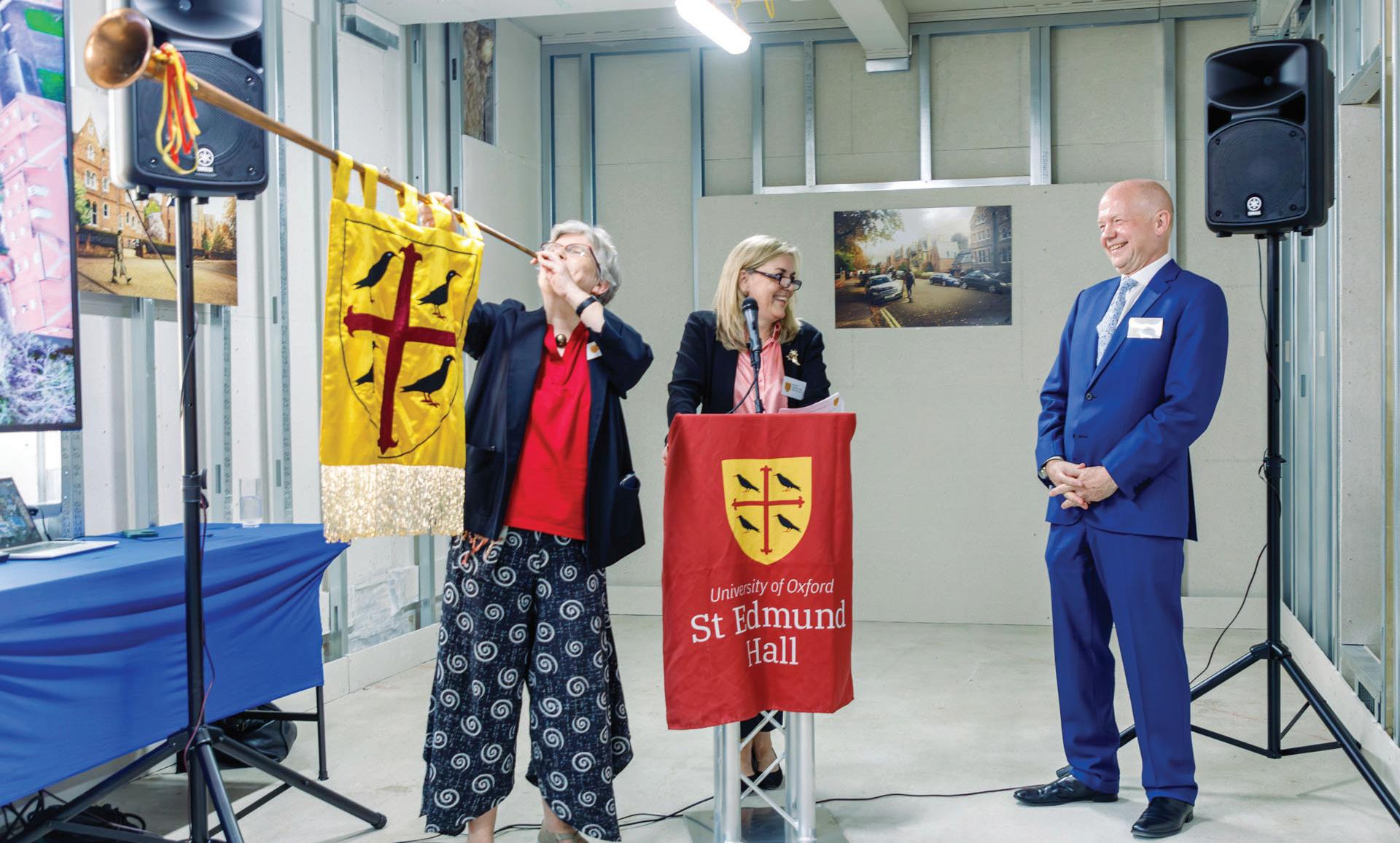
Willis. The autumn also saw the Principal and members of the Development and Alumni Relations Office travel to Brussels in November, part of our renewed effort to strengthen European alumni networks.
On 15 November, the Hall hosted the fourth edition of the Conversations in Environmental Sustainability seminar, which explored which protein sources are most environmentally sustainable. A week later, on 22 November, the annual St Edmund Hall Association London Lunch took place once again at the Army & Navy Club in Pall Mall. This long-standing tradition remains one of the highlights in the Aularian calendar, providing an elegant setting for alumni to re-connect. The Michaelmas term concluded with studentand alumni-led celebrations, including Carols in the Quad, poetry readings and a colourful Diwali Formal Hall, all of which highlighted the vibrancy of our community. In December, we were delighted to return to the United States for the 39th Annual New York Drinks Reception and Dinner. This enduring gathering continues to be one of the most significant in the life of the Hall, reaffirming our strong ties with alumni in North America. Once again alumni generously hosted us, this year
Tai-Heng Cheng (1996, Jurisprudence), for a drinks event at his home in Manhattan, and Justus O’ Brien (1979, PPE), for the dinner at the Links Club.
The annual St Edmund Hall Association Dinner was held on 4 February 2025 at 100 Wardour Street, which was typically enjoyable and lively, hosted by the President of the St Edmund Hall Association, Chris Elston (1976, Engineering).
In April, the Principal and I visited Aularians in Asia for the second time in recent years and attended events in Hong Kong and Singapore, generously hosted by Aaron Yeo (1995, PPE) at the China Club in Hong Kong, and at the Singapore Cricket Club, we were generously hosted by Mark Fisher (1992, Geography). We are growing our ‘Aularians in Asia’ network by making this annual visit a firm date in the calendar to build our community here and provide opportunities for alumni in the region to connect with one another and their College.
The start of Trinity term saw our inaugural Community & Giving Week from 25 April to 2 May. This led to over £140,000 raised or pledged from 179 unique donors and
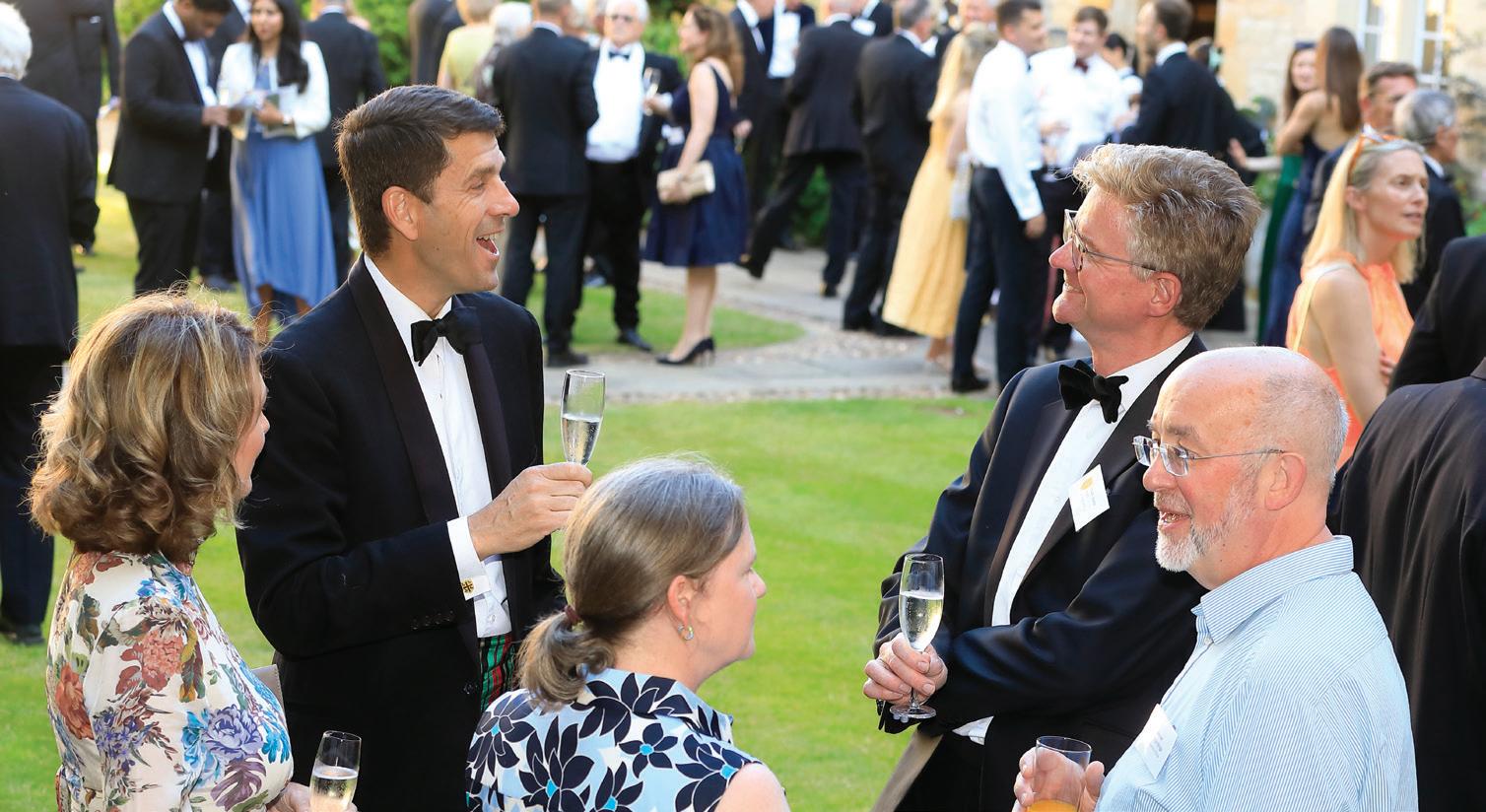
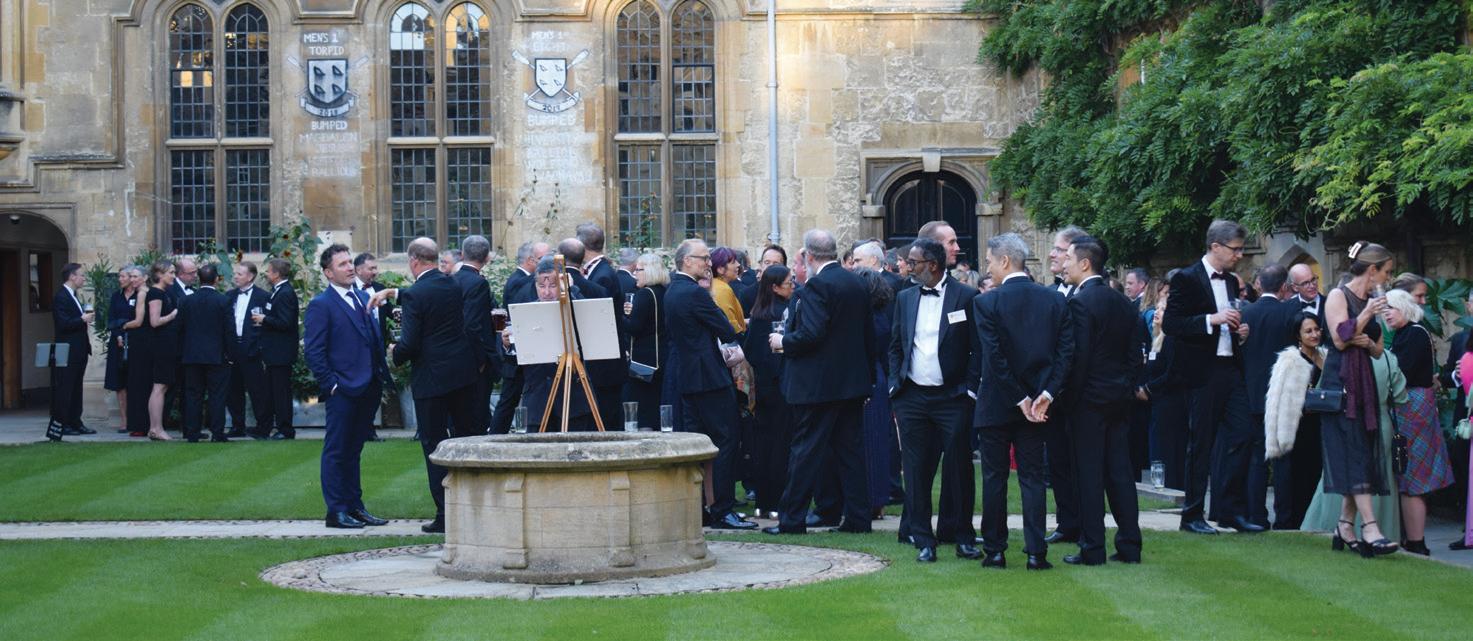
28 first-time donors during the week. The event brought together alumni, students and friends in celebration of the generosity and shared spirit that define our community.
The year then drew to a close with a drinks reception on 19 June in Paris for alumni in France, followed immediately a day later by the topping-out ceremony for Norham St Edmund. The HALLmarks Gala Summer Reunion was held on 28 June, when Aularians gathered for a Boat Club exhibition in the Old Library, a drinks reception in the Front Quad and a splendid black-tie dinner in Wolfson Hall. Lastly, on 15 July, the Principal held an event at the House of Lords for major supporters to the campaign, with a keynote speech by The Rt Hon Sir Mel Stride (1981, PPE), Shadow Chancellor of the Exchequer, which was a fitting finale to a memorable year.
Alongside these gatherings, we have helped arrange several smaller, informal ‘pop-up’ Aularian get-togethers, including in Tokyo, Munich, Prague and Toronto, and we hope to continue these more informal gatherings into 2026 and beyond.
Bequests to the Hall continue to provide invaluable support. This year we were honoured by the generosity of several Aularians who have remembered Teddy
Hall in their wills, and we look forward to welcoming members of the Floreat Aula Legacy Society back to College for their next biannual dinner in March 2027. We are incredibly grateful to those Aularians who responded to our campaign this year to grow the Society’s membership.
Looking ahead, we remain committed to the ambitious goals of the HALLmarks campaign. With Norham St Edmund on track for completion in spring 2026, we look forward with excitement to welcoming the first student residents from the 2026–2027 academic year. Continuing support from Aularians is not only enabling this transformative project but also creating new scholarships, enriching student life through music, sport and culture, supporting world-leading research, and sustaining Oxford’s unique tutorial system.
Thank you to all our alumni and supporters for your unwavering generosity and for being such an integral part of the Hall’s ongoing story. I look forward to the year ahead, and many more opportunities to help foster and support our valued Aularian community.
Floreat Aula!
Andrew Vivian, Director of Development and Fellow by Special Election
I am delighted to be able to say that the Association has again run a full programme of activities this year, but first I’d like to say a few words about the Association as we have new students and academics who may be unaware of our activities. The St Edmund Hall Association was formed in 1925 with the principal objective of being a ‘friend raising’ body that will encourage all Aularians to maintain contact with the Hall, its Fellows and other alumni. All alumni are members of the Association – you may remember a small fee being added to your termly battels when you were a student to pay for your lifetime membership. All alumni are therefore welcome and encouraged to participate in and indeed help with the organisation of our events.
This year, we began our social calendar with our fourth London lunch in November 2024 with another record being set at 69 tickets sold. We were updated on the latest developments in the Hall by the Principal and one of the new Fellows, Tutorial Fellow in Inorganic Chemistry Professor Anna Regoutz, who told us
about her research in inorganic chemistry and her pathway to the Hall. A fifth lunch is planned for 14 November 2025.
The 39th annual New York Dinner followed in December 2024 in New York City, attended by a Hall delegation led by the Principal. Many thanks to Bob Gaffey (1975, Jurisprudence) for continuing to be the organiser of this event and to Justus O’Brien (1979, PPE) for hosting the event at the Links Club. The evening before the dinner, there was a drinks reception attended by about 40 people hosted at the home of Tai-Heng Cheng (1996, Jurisprudence), where he moderated a discussion about the mysteries of cryptocurrency between Congressman Jim Himes (1988, Latin American Studies) and financial journalist MacKenzie Sigalos (2010, MSc Education). Other North American events have included drinks events in NYC, Pasadena CA, Boston MA and Toronto. Thanks to all the organisers.
In February 2025, we again held our London dinner at 100 Wardour Street. This lively and convivial event was attended by 157 guests. We will be holding another dinner there on 3 February 2026. In 2025 we subsidised tickets for those who hadn’t attended in the past ten years and this drew out 55 ‘new’ diners. We hope to do something similar next year. I would particularly encourage all Aularians to attend Association and Hall events, even if your particular friends are not able to be there. You will always find you are in excellent company, no matter whom you are seated with, and you’ll have plenty to talk about.
Our annual Teddy Talk took place on 5 March. We were delighted to have Ian Smith (1972, Geography) as our guest speaker. Ian’s astonishingly diverse range
of expertise enabled him to speak on both the NHS and the future of British defence. My thanks to Association Committee member Polly Cowan (2002, Jurisprudence) who organised and led the event.
We again awarded two Aularian Prizes to students who demonstrated an exceptional enterprise or voluntary commitment in an activity which has a clear community benefit, raises the profile of the Hall and falls outside established College or University pursuits. One prize was awarded to a JCR member and one to an MCR member, both at a value of £600. The number of applicants from both common rooms increased this year and the quality seen in previous years was maintained. We awarded prizes to Henrietta Bolchover (2023, Engineering), who taught Maths and Physics to a small community in Uganda, and to Natasha Jenman (2024, DPhil History), for her work with Campus, a charity that provides holidays for young people with difficult home lives. A report from Henrietta on her time in Uganda can be read elsewhere in this issue (pp. 182–3).
Our podcast, Spirit of the Hall, has now entered its fifth series. Guests so far this year have been Al Murray (1987, Modern History), aka the Pub Landlord, and
Jools Simner (1990, French), Professor of Neuropsychology at the University of Sussex. The series continues to be organised and hosted by past Association President Olly Belcher (née Donnelly) (1999, Geography). Thanks to Olly for her sterling efforts!
I would like to thank my Deputy President, David Jordan (1990, Modern History); the Committee for their dedication to the Association; and also the Principal and the Development and Alumni Relations Office for their support and encouragement, particularly Head of Alumni Relations
Emily Bruce for her work on our London social events. I would also like to thank our whole Aularian community for your enthusiasm over our various initiatives – I hope we can provide events and activities over the coming years that will maintain your engagement. As always, your suggestions are welcome. The Hall and the Association have jointly decided to discontinue Aularian Connect and I would advise Aularians to continue to keep in touch and seek out opportunities via the alumni LinkedIn page, which has over 2,000 members. You can also reach me at elstonc@sky.com.
Chris Elston (1976, Engineering Science)
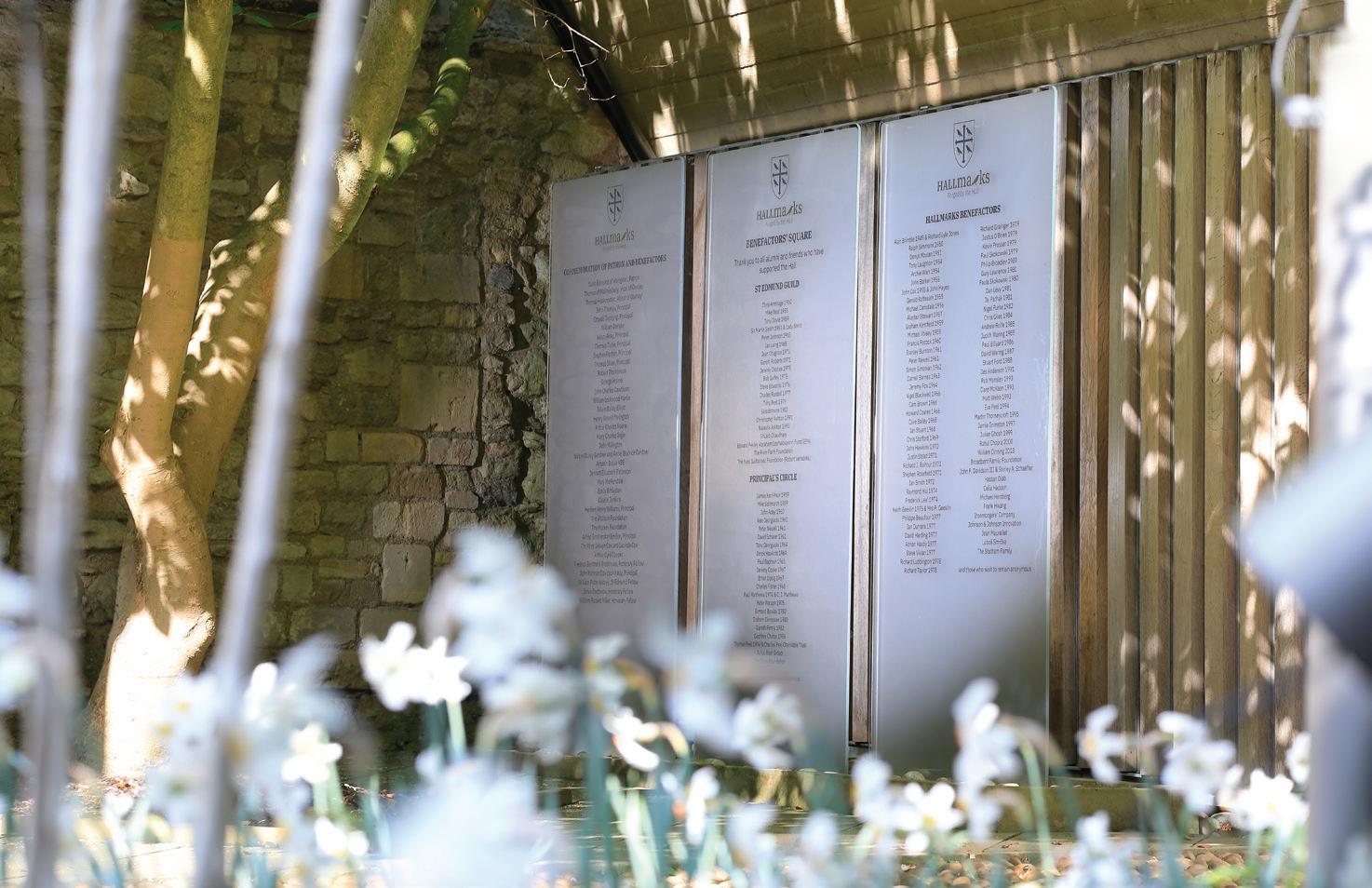
The Principal, Fellows and students are all extremely grateful for the support of the 1,066 alumni, parents of students and Friends of the Hall who have donated in the last year and whose names are recorded on the following pages.
Although the donor list only includes gifts received between 1 August 2024 and 31 July 2025, we are equally grateful to all supporters who have given to the Hall outside of this timeframe. If you donated after 31 July 2025, your gift will appear in next year’s Magazine.
We record by matriculation date the names of all who have made a donation during this period, including the participation rate (the percentage of people in each year who have given), and the total amount received per matriculation year. Where there are small numbers of donors in a particular year we have not listed the amount given in order to preserve confidentiality.
*denotes deceased
1944
David Shears*
1946 (33%)
David Dunsmore*
1949 (15%)
Bob Breese*
Tony Shepherd*
1950 (27%, £8,959)
Raymond John Lee*
Jack Preger
Ralph Simmons
Ray Waddington-Jones*
Jack Wheeler
1951 (14%, £4,600)
Allan Jay*
Kenneth Lund
Plus 2 anonymous donors
1952 (11%, £813)
Ian Byatt
Royston Taylor
Neville Teller
David Wright
1953 (17%, £7,419)
Ian Jackson*
David Picksley
Bob Rednall
Dick Turner
Brian Venner
Brian Wakefield
1954 (15%, £25,788)
Jeremy Cleverley*
Michael Duffy
Tony Laughton
Brian Shepherd*
Keith Suddaby
Raymond Thornton
1955 (17%, £40,031)
John Billington
Tony Cooper
John Dellar
David Frayne
David Hare
Michael Hilt
Tony Pearson
Bill Weston
Richard Williams
1956 (28%, £5,050)
Roy Caddick
Michael Cansdale
Fred Farrell
John French
Michael Hickey
Basil Kingstone
Chris Machen
Martin Reynolds
Michael Rider
David Short
Peter Whurr
1957 (13%, £5,113)
Michael Archer
Robin Blackburn
David Bolton
Blake Bromley
Duncan Dormor
Tony Ford
Alastair Stewart
Gerry Williams
1958 (16%, £4,128)
Jim Amos
David Harrison
John Haydon
Ronnie Irving
Michael Jarman
Pete Kite
Tony Nial
Bill Patterson
Michael Pelham
David Phillips
Philip Rabbetts
1959 (23%, £305,378)
Ian Alexander
Ewan Anderson
Hinton Bird
Keith Bowen
D C Coleman
John Collingwood
David Cooksey*
Tony Doyle
Ian Hepburn
Graham Kentfield
Culain Morris
Mike Oakley
Alan Rowland
Mike Saltmarsh
John Spires
David Stedman
Michael Voisey
Stewart Walduck
Ian Walker
Roy Walmsley
John Walters
1960 (37%, £9,705)
Nick Alldrit
Chris Atkinson
David Baines
Terence Bell
Adam Butcher
Robert Clark
Terence Coghlin
Jeremy Cook
Robin Cox
Ian Evans
Brian Fyfield-Shayler
Jeff Goddard
Peter Hayes
Kenneth Heard
Robin Hogg
Chris Long
Yann Lovelock
David Mash
Melvyn Matthews
Francis Pocock
George Ritchie
Ted Rose
Patric Sankey-Barker
John Sherman
George Smith
Roger Sparrow
John Thorogood
Andrew Tod
Alan Wilding
Plus 1 anonymous donor
1961 (21%, £48,220)
Don Anderson
David Brown
Martin Buckley
Stanley Burnton
Bob Chard
Sidney Donald
Alex Georgiadis
Rex Harrison
Michael Hornsby
Malcolm Inglis*
John Long
Jim Marsh
Jonathan Martin
Peter Newell
Hugh Redington
Anthony Rentoul
David Scharer
Stephen White
1962 (26%, £10,235)
Bill Best
David Buckingham
James Burnett-Hitchcock
Michael Buttler
Chris Cowles*
John Cunningham*
Jim de Rennes
Sean Duncan
Michael Eames
Cynthia Graae
Bill Gulland
Handley Hammond
Ant Hawkes
David Hicks
Arwyn Hughes*
Roger Miller
Tony Moore
Sean Morris
Nigel Pegram
Richard Phillippo
Hugh Thomas
Roger Wardle
John Williams
Plus 1 anonymous donor
1963 (18%, £26,665)
Darrell Barnes
Steve Benson
Bob Brewer
Bob Broughton
Nicholas Bulmer
Keith Bywater
Bob Clarke
David Cox
John Crawshaw
Geoff Day
Edward Gould
Michael Harrison
Clive Sneddon
John Still
John Taylor
Plus 3 anonymous donors
1964 (15%, £16,770)
John Bunney
Martin Butcher
Bob Clarke
Steve Copley*
Jeremy Fox
Bill Hartley
Derek Hawkins
John Hughes
Tony Lemon
Tim Machin
Derek Morris
James Pitt
Michael Powis
Stephen Sherbourne
Hugh Simpson
Peter Smerd, in memory of Nicholas Boucher (1962)
David Tearle
Edward Trippe
1965 (25%, £24,234)
Christopher Allen
Paul Badman
Joe Barclay
Robert Beckham
Jeff Creek
John Dennis
Paul Fickling
Simon Gatrell
Derek Harrison
Colin Hewitt
Ken Hobbs
Ron McDonald
Andy Morgan
Thomas Mulvey
Brian North
Maurice Pannell
Stephen Patrick
Billett Potter
David Powell
John Rea
David Reed
Guy Richardson
Ted Roskell
John Sayer
Philip Spray
Chas Stansfield
Bill Walker
Frank Webster
Richard White
Richard Wycherley
1966 (19%, £15,108)
Cam Brown
Nigel Clarke
Bob Darby
Guy Fisher
Roger Frankland*
David Garvie
David Hansom
Ian Hewitt
Linn Hobbs
Ted Hodgson
Peter Jenkins
John Kilbee
David Knight
Jon Shortridge
David Stewart
Michael Stone
Geoffrey Summers
George Syrpis
Brian Walker
1967 (23%, £43,082)
Robert Breckles
Peter Burnell
Jeremy Cooke
Nigel Derrett
Lawrence Downey
Colin Hawksworth
Roger Kenworthy
Mike Kerrigan
Ethan Lipsig
John Mabbett
Peter Mitchell
Jim Mosley
John Orton
Dave Postles
Philip Robinson
Graham Salter
Mark Spencer Ellis
David Tabraham-Palmer
Keith Walmsley
Rob Weinberg
Peter Wilson
Georges Zbyszewski
Plus 1 anonymous donor
1968 (17%, £46,772)
Clive Bailey
Andrew Barnes
John Berryman
David Blezard
Charles Fisher
Peter Harris
James Hunt
Laurence Jackson
Alan Jones
Stuart Kenner
Geoff May
Tony Moore
John Penfield
Mike Pike
Chris Pote
Ian Ridgwell
Martin Slater
Michael Spilberg
Ian Stuart
David Theobald
1969 (11%, £13,422)
Brian Battye
Mick Birks
Roger Callan
Paul Clemence
Bryan Dawson*
Steve Dempsey
Dick Ford
Clive Kerridge
David Monkcom
Paul Parker
Peter Ramell
Bruce Spaven
Chris Stafford
1970 (13%, £17,964)
Nigel Coles
Julian Currall
Will David
Richard Gozney
Chris Hawkesworth
John Hawkins
Chris Lewis
David Morgan
Richard Ormerod
Peter Raspin
Colin Richmond-Watson
Richard Robinson
Paul Silk
Mike Skelding
Chris Sutton-Mattocks
Plus 2 anonymous donors
1971 (18%, £160,794)
David Audsley
Richard J. Balfour
Peter Balmer
George Bishop III
Mark Booker
Jean Chagnon
Roger Chaplin
Ian Cheffy
Lawrie Coupland
Lawrence Cummings
Yves Desgouttes
John Fazackerley
Rick Henshaw
Richard Hoyle
Dave Leggett
Peter Lever
John Parr
Roger Pawson
Douglas Robertson
Stephen Rosefield
Steve Russell
Greg Salter
John Sloan
Justin Stead
Plus 1 anonymous donor
1972 (16%, £15,126)
Jim Boff
George Bull
Steve Chandler
William Clark
Anthony Deakin
Tony Downes
Andy Hall
Andrew Lowenthal
Howard Mason
Paul Mounsey*
Peter Osborn
Andrew Peacock
Gareth Price
Peter Rogers
David Rosen
Ian Smith
Robin Stephenson
Steve Taylor
John Trotman
Allan Walker
Martin Winter
1973 (18%, £8,644)
Chris Bamber
David Beckett
Colin Bullett
Sean Butler
Robert Godden
Roger Golland
Richard Gretton
David Grice
Richard Harandon
David Holmes
Nick Jones
Anthony Jordan
Dave Knight
Nigel Laing
Colin Lizieri
Toby Lucas
Ian Midgley
Mark Patterson
Nic Peeling
Christopher Pretty
John Roberts
Tom Schneider
Mike Wood
Plus 1 anonymous donor
1974 (20%, £101,017)
Keith Albans
Lionel Barber
Phil Budden
Graham Clark
Peter Desmond
Steve Edrich
Andy Eggleston
Mark Handsley
Andrew Hargreaves
Charles Hind
Doug Imeson
Bob Jeavons
Frederick Leaf
Paul Matthews
Charles Murray
Jeremy Nason
David Neuhaus
John Ormiston
Andy Patterson
Tim Robinson
Gerard Rocks
Trevor Ryder
Dick Sands
Kim Swain
Graham Wareing
John Wisdom
Plus 1 anonymous donor
1975 (17%, £108,771)
Tim Bryan
Jeremy Charles
Philip Congdon
Ken Davies
Bob Gaffey
Brian Gasser
Graeme Gibbs
Ed Gray
David Heaver
Dan Hegarty
Chris Hockey
Roy Hoolahan
Gordon Hurst
Alan Kerr
Graham Ketley
Robin Osterley
Justin Samuel
Ces Shaw
Nigel Smith
Alan Stansfield
Anthony Stopyra
Peter Watson
David Way
1976 (18%, £820,196)
Bill Baker Jr
Robin Beckley
Paul Campbell
Hora den Dulk
Brian Denton
Chris Elston
Richard Finch
Anson Jack
Stephen Moore
Trevor Payne
Jonathan Reynolds
Jamie Robertson
Martin Saunders
Paul Sutton
Ian Taylor
Stephen Tetley
Peter Trowles
Andrew Wathey
Robert Wilson
Neil Worthington
Plus 1 anonymous donor
1977 (14%, £13,789)
Philippe Beaufour
David Blakey
Charles Blount
Andrew Brown
Steve Clark
David Cooper
Ian Doherty
Peter Foster
Oliver Grundy
Nick Hamilton
David Harding
Chris Horner
Roger Keeley
David McKenna
Peter Rogers
Jeremy Tullett
David Van Roijen
Steve Vivian
Paul Walker
1978 (11%, £3,962)
Doug Ansley
John Armitstead
Hamish Cameron
Ian Coleman
Richard Collins
Simon Heilbron
Ian Hutchinson
Lloyd Illingworth
Stephen Leonard
Brian Livesey
Richard Luddington
Gideon Nissen
Nicholas Rowe
Brian Worsfold
1979 (13%, £12,929)
Stephen Coulson
David Cox
Gail Davies
Davina Dwyer
Mark Earls
John Hodgson
Paul Littlechild
Ian Lupson
Phil Martin
Caroline Morgan
Janet Nevin
Robert Quain
Michael Robinson
Ingrid Sharp
Paul Skokowski
Duncan Talbert
Robert Vollum
David West
1980 (22%, £118,347)
John Ayton
Bernard Bewlay
Philip Broadley
Nick Caddick
William Carver
Graham Clempson
Paul Cubbon
Jonathan Davies
Anthony Farrand
Jon French
Alison Girling
Alistair Graham
Jonathan Hofstetter
Simon Kelly
Steve King
Gary Lawrence
John Madgwick
Hugo Minney
Tim Mottishaw
Zahid Nawaz
James Newman
David Preston
Simon Ramage
Jonathan Scott
Nick Senechal
Paula Skokowski
Joanna Smith
Neil Stevenson
Brigitte Stollmaier
Frank Strang
Christina Tracey
Faith Wainwright
Rebecca Willis
1981 (13%, £48,926)
David Brown
Andrew Burns
Sandy Findlay
Julian Hammond
Richard Lambert
Neil Maidment
Jim McAleer
Paul McCarthy
Tim Miles
Andrew Miller
Sallie Nicholas
Tim Parkinson
Maria Queenan
David Stokes
Paul Stowers
Jenny Turner
Mark Walters
Plus 1 anonymous donor
1982 (17%, £12,699)
Maggie Carver
Tom Christopherson
Anna Cochrane
Catherine Dale
Linda Davies
Simon Ffitch
Guy Franks
David Heaps
Dan Johnson
Richard Kent
Peter Murray
Divya Nicholls
Gareth Penny
Nigel Purse
Marco Rimini
Kevin Sealy
Shona Tatchell
Junior Williamson
Stuart Worthington
Plus 3 anonymous donors
1983 (12%, £1,080,729)
Sara Browne
Chris Coleman
Kate Coleman
William Connolley
Tim Fallowfield
Siân Henderson
Mike Iddon
Max Irwin
Josephine Kent
Peter Magyar
Phil Moody
Christine Muskett
Kevan Rees
Helen Saunders
Andrew Sumnall
Andrew Till
Belinda Worsfold
Plus 1 anonymous donor
1984 (9%, £4,948)
Dan Abnett
John Bloomer
Will Coleman
Steve Crummett
Julian Day
Alison Fallowfield
Chris Giles
Tom Learner
Tesula Mohindra
John Risman
Anthony Rossiter
Harvey Wheaton
Sarah Wright
1985 (8%, £5,113)
Stephen Bartlett
Deborah Booth
Andy Brown
Clare Coleman
Neil Crabb
Nicolas Greensmith
Jon Gulley
Michael Hill
Julia Little
Mark Little
Nicholas Peacock
Susan Peacock
Clive Sentance
Will Shaw
Julia Weiner
1986 (18%, £31,639)
Mary Betley
Jim Charles
Geoffrey Chatas
David Denholm
Tim Dudley
Gavin Flook
David Gillett
Andrew Harrison
Brian Hepworth
Simon Hodgson
Claire Horacek
Neil Jacob
Rachel Kiddey
Stewart Lee
Iain Mackie
Sally McKone
John Myhill
Nana Okada
Phil Richards
Mike Stanislawski
Jacqui Thornton
Sharon von Simson
Catherine Ysrael-Gomez
Plus 5 anonymous donors
1987 (8%, £20,357)
Dan Bayley
Helen Fox
David Gomez
Jeremy Harrison
Roger Nixon
Peter O’Connell
Clare Rhodes James
Mark Sedwill
Richard Smalman-Smith
Sarah Smith
Philip Waldner
David Waring
Tim Wingfield
1988 (11%, £21,019)
James Brace
Marcus Browning
Leon Ferera
James Ferguson
Christopher Garrison
Jim Himes
Duncan Holden
Susanna Mann
Peter Matthews
Peter Michaelis
Peter Othen
James Rudd
Giles Sanders
Lucy Shaw
Plus 2 anonymous donors
1989 (10%, £12,068)
Tom Argles
Jonathan Cotton
Rob de Rennes
Jennifer Doran
Suzie Hobart
Mark Lauder
Tom Leman
Alex McLean
Richard Rednall
Ruth Roberts
Edward Rose
Chris Sawyer
Fiona Sawyer
Aktar Somalya
Terry Spitz
Natalie Tydeman
Darren Walker
1990 (13%, £8,573)
Marcus Bailey
Emma Barnett
Stephen Barnett
Paul Brady
Paul Brandon
Hew Bruce-Gardyne
Carolyn Drury-Burroughs
Vanessa Fieve Willett
David Gauke
Andrew Green
Graham Hinton
Adrian Jones
David Jordan
Kevin Knibbs
Gill La Valette
Chris Manby
John Milloy
Stephen Noone
Kirsteen Rowlands
Rob Salter
Ed Shelton
Natasha Walker
Andrew Williams
1991 (11%, £161,329)
Balakumar Arumugam
Christopher Ashton
Carol Atherton
Duncan Barker
Nick Byrne
Julian Cater
Tessa Evans
Tim Houghton
Anneli Howard
Lee Howgate
Nicholas Lane
David Liversidge
David McGill
Luke Powell
Kate Tilling
1992 (9%, £8,120)
Carla Antunes da Silva
Thomas Dennis
Matt Elliott
Lucy Heaven
Karsten Heeger
Jane Mann
Sarah Morrison
Sarah O’Neill
Jules Plumstead
Claire Pugh
Matt Purcell
Gareth Scholey
Wayne Smith
Matthew Weaver
1993 (10%, £31,819)
Natasha Ashton
Howard Cazin
Dan Edwards
Nick Gradel
Alexis Hughes
Tim Jackson
Kieren Johnson
Rob Mansley
Tom McClelland
Al Mordaunt
Geoff Mortimer
Henry Mullin
Lucy Newlove
James Owens
Richard Tufft
Matt Webb
Plus 1 anonymous donor
1994 (12%, £23,065)
Jeremy Badman
David Hambler
Luke Haynes
Genevieve Holland
James Holland
Choon Wai Hui
Richard Jackson
Ed Knight
Gareth McKeever
Kiran Mehta
Caroline Mitchelson
James Mushin
Harry Oliver
Thomas Peel
Amy Poole
Piers Prichard Jones
Jeremy Robst
Cary Rubinstein
Bernard Teo
David Wilkes
Gerard Yuen
Plus 1 anonymous donor
1995 (7%, £4,636)
Robert Dryburgh
David Howes
Chet Lad
David Lewis
Richard Martin
James McConnel
Hugh Miller
Koo-Yong Park
Chris Ruse
Martin Thorneycroft
Vladka Thwaites
Dominic Walley
Alison Waterfall
1996 (9%, £39,611)
Paul Boon
Claire Burton
Tai-Heng Cheng
James Cookson
Phil Duffield
John Houghton
Tom Long
Jose-Antonio Maurellet
Richard O’Donoghue
Roland Partridge
Maya Portolan
Zachary Segal
Roman Streitberger
Duncan Wallace
Edward Watson
1997 (10%, £18,831)
Christopher Armitage
Marko Bacic
Holly Bristow
Nat Copsey
Saurabh Das
Chris Eden
Natalie Gey van Pittius
Nicholas Hamilton
Heidi Johansen-Berg
Ali Mack
Dean O’Connell
George Palmer
Claire Pointing
Lucy Reynolds
Anthony Shackleton
Chris Tinson
Guofang Xiao
Plus 2 anonymous donors
1998 (5%, £3,122)
Michael Bird
Alan Dunford
Nick Hirst
Marcin Marchewka
James Matthews
Clare Murray
Ann-Marie Myhill
Alina Saranti-Kuzum
Carl Wells
1999 (11%, £3,900)
Olly Belcher
Bjorn Benckert
Mark Bolton-Maggs
Caroline Court
Jonathan Crawshaw
Oliver Deacon
Kieron Galliard
Zoe Noonan
Jenny Pescod
Alex Prideaux
Hanna Richardson
Sean Sullivan
Elizabeth Taylor
Rosalind Wall
David Williams
Plus 2 anonymous donors
2000 (5%, £95,579)
Rahul Chopra
Miles Clapham
Simon Dambe
Harriet Hungerford
Malcolm Lee
Akira Mitsumasu
Richard Povey
Brian Raines
Charlie Ramsay
Chris Statham
2001 (5%, £4,432)
Catherine Blair
Christian Figge
Charles Hotham
Clem Hutton-Mills
Katie Moran
Alevtina Nepomniachtchikh
Patrick Schneider-Sikorsky
Jen Sugden
Plus 1 anonymous donor
2002 (3%, £806)
Rachel Adams
Jackie Colburn
Ruth Evans
Jonathan Lonsdale
Leon Marshall
Felicia Shaw
Rupert Snuggs
Sarah Snuggs
2003 (4%, £8,421)
Nicolai Boserup
Jennifer Chung
Robert Hamilton Kelly
Heather Mack
David McCartney
Simone Wilson
Hongjie Zhu
Plus 1 anonymous donor
2004 (3%, £795)
Robin Fellerman
Stephanie Hardy
Cara Krmpotich
Fiona Moss
Scot Peterson
Tino Wendisch
Plus 1 anonymous donor
2005 (3%, £1,695)
Will Brownscombe
Will Herbert
Paisley Kadison
Anna Lambourn
Alex Morel
Lucinda O’Connor
Ed Reynolds
Rich Reynolds
2006 (6%, £2,258)
Jennifer Ayers
Sophie Brice
Henry Carter
Siobhan Chapman
Justin Furuta
Sam Juthani
Serena Lee
Qingxiang Li
Daniel Lowe
Robert Pearce
Xu Song
Sandamali Sutton
Amrik Thomas
Max Thompson
2007 (2%, £325)
Michael Helmers
Edward Mortimore
Iain Parr
Plus 1 anonymous donor
2008 (6%, £2,655)
Sam Andrews
Chris Clasper
Mark Godden
Katie Hill
Gurnam Johal
Bryony Morgan
Joanne Pearce
Tom Pope
Bartosz Redlicki
David Robinson
Adam Sealey
Charlie Wilson
2009 (6%, £2,802)
Benjamin Clough
Josh Coulson
Fraser Davies
James Duffell
Lucy Durrans
Chris Freeman
Michael Graham
Charlotte Howell
Adam Jordan
George Lake
Eric Lukas
Frances Reed
Xiao Tan
Huijuan Wu
2010 (5%, £1,325)
Jason Bell
Bhaskar Bhushan
Andrew Gray
William Gunson
Alex King
Duncan Littlejohns
Gabriel May
Mutsa Mutembwa
Michael Nairn
Sam Parkinson
Michael Sprague
Aran Uppal
2011 (4%, £683)
Thomas Bailey
Michael Cary
Olivier Cédelle
Hannah Dickinson
Melanie Heywood
Amy Kenyon
Abi Lovell
Kirsten Pontalti
Plus 1 anonymous donor
2012 (5%, £1,087)
Nicholas Angelides
Jack Calvert
Thomas Davis
Sarah Grant
William Hak
Matthew Jordan
Benjamin Kelsey
Nathan King
Fiona Maudslay
Zach Rotter
Emily Russell
Ben Valentine
Gemma Wardle
2013 (5%, £9,435)
Edward Benson
Kunz Chow
Josephine Clarke
William Dinning
Matt Jacobs
Jaydip Jani
Takashi Lawson
Dylan Lewis
Steven Pilley
Lara Shahnavaz
Alistair Swallow
Plus 1 anonymous donor
2014 (5%, £2,277)
Grace Clements
Thomas Cosnahan
John DeVoy IV
George Fulton
Zhenbo Gao
Kathryn Tierney
Hutchinson
Caitlin Johnson
Josh Mahir
Gianfranco Messina
Rachael Morris
Yekuan Shentu
Joel Straker
2015 (1%)
Amelia Gabaldoni
Jack Gavin
Charlotte Xu
2016 (2%, £683)
Yufan Du
Tegan Gears
Rebecca Hilton
Justyna Todd-Frankowska
Tom Zhou
2017 (2%, £1,033)
Gabriella Barnes
Terence Cudbird
Ioana Grigoras
Yusuf Oldaç
Jia shian Wang
2018 (2%)
Chen Gong
Ollie Ormiston
Simon Pressinger
2019 (1%)
Brittany Ellis
2020 (1%)
Sophie Richardson
2021 (2%)
Dustin Bischoff
Jordana Irzyk
Wilsona Jalloh
2022 (1%)
Tinius Bentsen Dragland
Parent Donors
Lisa Blatch
Friends of the Hall
(£1,308,857)
Alex & Christine King
Charitable Fund
Alligator Trust
Capital Group
Cascia Trust
Ros Charles
Charles Peel Charitable
Trust
Cissie Rosefield Charitable
Trust
Gloria Clutton-Williams
Jack Cox
GE Aerospace Foundation
Janet Heath
HEC Montréal
Infrapreneur Ltd
Pat Lewis*
Mary Ann Lutyens
Macquarie Capital
Mike Mingos
David Moltow
Katie Peterson
Shirley Powell
River Farm Foundation
Karol Roberts
Deirdre Schnaar
Luboš Smrčka
Society of St Edmund, USA
David Staniforth
Taylor & Francis Group
Ron Teather
Simon Thwaites
Andrew Vivian
Plus 5 anonymous donors
Thank you to all of the generous donors who supported the Hall’s historic Norham St
Edmund redevelopment project.
*denotes deceased
Christopher Allen
Christopher Ashton
Natasha Ashton
Paul Badman
Jeremy Badman
Clive Bailey
Bill Best
Bernard Bewlay
Dustin Bischoff
John Bloomer
Bob Breese*
Cam Brown
Tim Bryan
David Buckingham
Stanley Burnton
Roy Caddick
Paul Campbell
Michael Cansdale
Olivier Cédelle
Jean Chagnon
Bob Chard
Jeremy Charles
Ros Charles
William Clark
Bob Clarke
Anna Cochrane
Philip Congdon
Ken Davies
Julian Day
William Dinning
Tinius Bentsen Dragland
Tim Dudley
Sean Duncan
Andy Eggleston
Guy Fisher
Gavin Flook
Peter Foster
Guy Franks
Walter Fraser
Bob Gaffey
David Garvie
GE Aerospace Foundation
David Gomez
Chen Gong
Edward Gould
Ed Gray
Jon Gulley
Andy Hall
David Hambler
Ant Hawkes
John Hawkins
David Heaver
Dan Hegarty
Michael Helmers
Colin Hewitt
Ken Hobbs
Chris Hockey
Roy Hoolahan
Richard Hoyle
Max Irwin
Richard Jackson
Matt Jacobs
Wilsona Jalloh
Peter Jenkins
Clive Kerridge
Tony Laughton
Peter Lever
Andrew Lowenthal
Kenneth Lund
Iain Mackie
Macquarie Capital
Chris Manby
Rob Mansley
David McGill
Peter Michaelis
John Milloy
Mike Mingos
Akira Mitsumasu
David Monkcom
Tony Moore
Geoff Mortimer
Zahid Nawaz
Janet Nevin
Peter Newell
Lucy Newlove
Roger Nixon
Ollie Ormiston
John Orton
Maurice Pannell
Bill Patterson
David Picksley
Francis Pocock
Amy Poole
Dave Postles
Michael Powis
Alex Prideaux
Ed Reynolds
Rich Reynolds
Sophie Richardson
Michael Rider
Richard Robinson
Edward Rose
Alan Rowland
Cary Rubinstein
Mike Saltmarsh
Justin Samuel
Alina Saranti-Kuzum
Clive Sentance
Ces Shaw
Paul Skokowski
Paula Skokowski
Ian Smith
Nigel Smith
Aktar Somalya
Chris Stafford
Justin Stead
Alastair Stewart
Ian Stuart
Steve Vivian
Faith Wainwright
Roger Wardle
David Waring
Peter Watson
David Way
Matt Webb
Harvey Wheaton
Rebecca Willis
Martin Winter
Stuart Worthington
Guofang Xiao
Hongjie Zhu
Plus 3 anonymous donors
Members of the Floreat Aula Legacy Society (FALS) have pledged to remember the Hall in their wills, and we are extremely grateful to the 279 members for their committed support. Our thanks also go out to the additional 16 Aularians who have pledged a bequest to the College without joining FALS.
Other Aularians who are interested in joining FALS or pledging a bequest to the Hall are invited to contact the Development and Alumni Relations Office for more information.
Members of FALS are invited back to the Hall for a biennial dinner and drinks reception, and the opportunity to revisit the College and meet Aularians of all generations. They also receive an exclusive lapel badge.
The Society’s current membership is listed below (the Aularians who joined in 2024–2025 are given in bold).
1942
Ken Palk
1945
John Snelling
1949
Alan Brimble
1950
John Allchurch
Chris Armitage
John Scott
1951
Desmond Day
Kenneth Lund
Denys Moylan
Dudley Wood
1952
Bruce Nixon
1953
David Giles
David Picksley
Bob Rednall
1954
Keith Hounslow
Norman Isaacs
Tony Laughton
Archie Warr
John Wilkinson
1955
John Barker
Martin Bates
John Billington
Tony Cooper
John Cox
John Dellar
Derek Ford
Peter Mercer
David Nelson
1956
Michael Cansdale
Stewart Douglas-Mann
John Ducker
John Dunbabin
John French
David Johnson
Andrew Page
Martin Reynolds
Roger Sutton
Gordon Woods
1957
Geoff Brown
Alastair Stewart
James Webster
1958
John Bean
Bob Bishop
Peter Davies
David Harrison
Philip Rabbetts
1959
Hinton Bird
Paul Brett
Kevin Crossley-Holland
David Harding
James Kerr-Muir
David Summers
1960
John Adey
Chris Atkinson
Ian Beesley
Robert Clark
Terence Coghlin
Ken Hinkley-Smith
Yann Lovelock
Michael Rose
Alan Wilding
Plus 1 anonymous member
1961
Don Anderson
David Aukin
Stanley Burnton
Rex Harrison
Ian Heggie
John Long
George Marsh
Peter Newell
Anthony Rentoul
Martin Smith
Timothy St George Byng
Mike Statham
1962
Bill Best
James Burnett-Hitchcock
Arthur Davis
Bertie Harmer
David Hicks
Nigel Pegram
1963
Darrell Barnes
Ian Bowers
Bob Clarke
David Cox
John Crawshaw
Rod Offer
Mike Simmie
John Taylor
1964
David Ashworth
Andy Barker
Anthony Bucknall
Campbell Dunford
Alan Graham
Tony Lemon
David Meredith
Keith Wiseman
Plus 1 anonymous member
1965
Paul Badman
Nigel Barak
John Clarembaux
Bill Foy
Peter Johnson
Andy Morgan
Humphrey Nicholls
Ted Roskell
John Sayer
1966
Cam Brown
Tony Fisher
Ted Hodgson
Jon Shortridge
Alan Vasa
Plus 1 anonymous member
1967
David Hexter
Roger Kenworthy
Ethan Lipsig
John Mabbett
Philip Robinson
Graham Salter
Rob Weinberg
1968
Clive Bailey
Peter Brown
Martin Daniels
Charles Fisher
Alan Jones
Martin Slater
1969
Peter Jones
Robert Mathews
Tim Statham
1970
John Hawkins
Richard Miller
Geoff Sambrook
Frank Spooner
1971
Richard Balfour
Mark Booker
Ian Brimecome
Lawrence Cummings
Yves Desgouttes
John Fazackerley
Malcolm Hawthorne
Roger Pawson
Douglas Robertson
Malcolm Sibson
Lyn Williams
1972
George Bull
Steve Chandler
Plus 1 anonymous member
1973
Christopher Amor
Robert Cawthorne
Stephen McNulty
1974
Brian Austin
Phil Budden
Richard Gillingwater
Jerry Gray
Charles Hind
Charles Murray
Jeremy Nason
Graham Wareing
Plus 1 anonymous member
1975
Andrew Cordell
Milan Cvetkovic
Alex Davids
Brian Gasser
Alan Kerr
Ian Rushton
Nigel Smith
1976
Bill Cogar
Chris Elston
Richard Finch
Anson Jack
Chris Latimer
Keith Scott
Simon Staite
Ian Taylor
Stephen Tetley
Plus 2 anonymous members
1977
Peter Foster
Jeremy Tullett
Steve Vivian
1978
John Armitstead
Patrick Brooks
Andrew Curtis
Paul Goulding
Richard Luddington
Robert Pay
Richard Taylor
1979
Tony Best
James Catmur
Davina Dwyer
John Hodgson
Ian Lupson
Janet Nevin
Robert Quain
Paul Skokowski
David West
Russell Withington
1980
Bernard Bewlay
Philip Broadley
Nick Caddick
William Carver
Alistair Graham
Graeme Hall
Steve King
James Lyle
Paula Skokowski
1981
Alasdair Blain
Claire Ivins
David Stokes
1982
Maggie Carver
Tom Christopherson
Linda Davies
Guy Franks
Nigel Purse
Adrian Sandbach
Stuart Worthington
1983
Simon Baker
Max Irwin
Christine Muskett
1984
Julian Day
Pete Mott
1985
Doug McCallum
Will Shaw
Tanya Spilsbury
Betsy Tyler Bell
Judith Waring
1986
Geoffrey Chatas
Simon Costa
David Gillett
1987
Christine Kelleher
Poppy Psillos
David Waring
1988
James Ferguson
Duncan Holden
1989
Luke Jones
Ian Sandles
1990
Carol Buchanan
Chris Manby
Plus 1 anonymous member
1991
1 anonymous member
1993
Nick Gradel
Jules Mort
Geoff Mortimer
James Parkin
Plus 1 anonymous member
1995
Charlie Robinson
1996
Michael EvangelistaYsasaga
1997
Andrew Hook
Claire Pointing
1999
Olly Belcher
2000
Charlie Ramsay
2006
Henry Carter
2008
Ruth Shaw
2010
Wilson Chen
William Gunson
2011
Charlotte Cooper-Davis
Pete Cooper-Davis
Friends of the Hall
Hilary Baker
Olivia Band
Olive Baxter
Geoffrey Bourne-Taylor
Gloria Clutton-Williams
Dianne Gull
Keith Gull
Robert Houston
Judy Jones
Elizabeth Marriott
Caroline Millward
Mike Mingos
Gwen Titcombe
Plus 3 anonymous members.
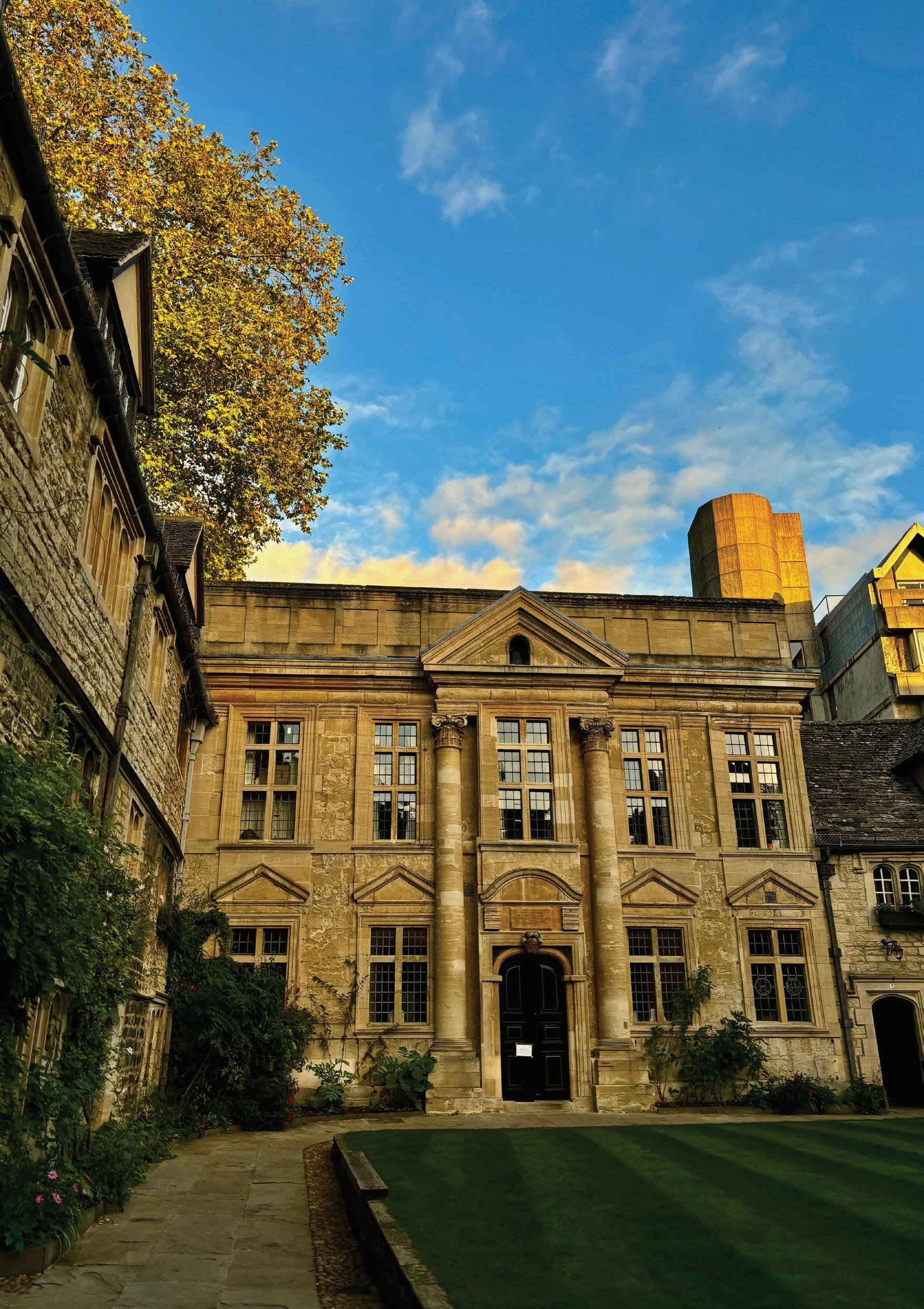
Jordan
St Edmund Hall alumnus John Edwin
Hosking Steele (1941) has recently been added to the College’s World War Two memorial in recognition of his service as a Royal Air Force (RAF) Officer who was killed delivering aid to a prisoner of war (POW) camp in Indonesia on 1 September 1945. His fate was unknown to the Hall until Aularian David Jordan (1990, Modern History) discovered that John was our ‘lost Aularian’ and has assisted us in rightfully acknowledging Steele’s place in history.
By the late summer of 1939, it was clear that there was likely to be another major European war. The University authorities made plans for wartime life and, after carefully analysing the various legislation passed by parliament to enable conscription, assumed this would apply to all men aged 18 and above. This meant that apart from those medically exempted, the University would rapidly empty. It was decided that college buildings would be given over to other purposes, and the Hall
was identified as the new base for the members of Westfield College, University of London, an all-female establishment which was to be evacuated to Oxford. It was thus an unpleasant surprise when the government announced that conscription would apply to those aged over 20, and that medics, engineers and some scientists would not be called up until they’d finished their degrees. This meant that there would be an intake of Freshers and a return of many other students to the Hall that Michaelmas. The members of Westfield College were packed off to St Peter’s. As it was operating as normally as could be expected in the circumstances, the Hall became a key location for a new scheme from 1941 onwards where men called up for the Navy, Royal Signals and the RAF and who had been identified as ‘potential university material’ would be sent on a short six-month university course while they awaited their summons for service training.
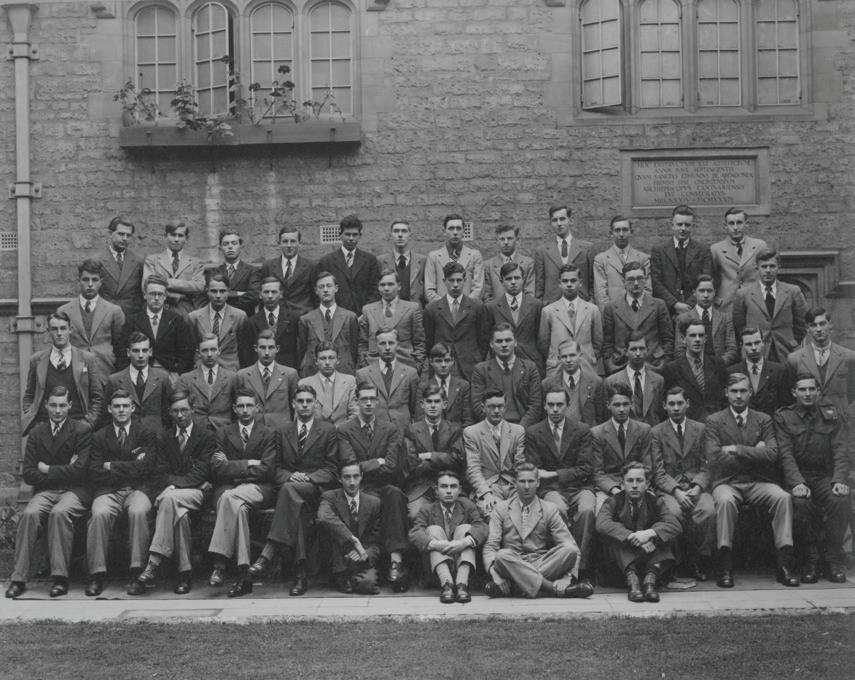
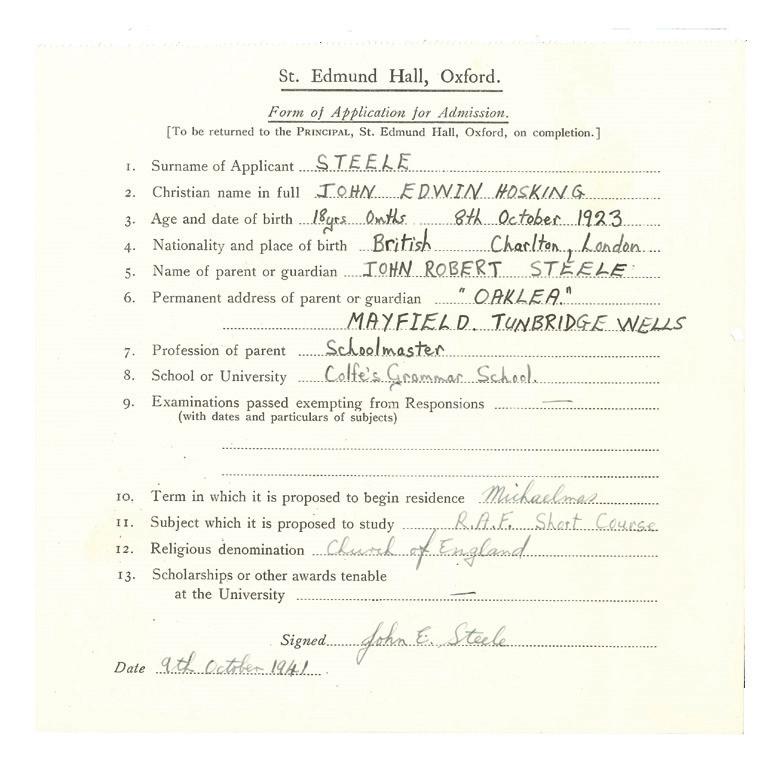
One of these young men was John Edwin Hosking Steele from Catford. John matriculated in October 1941, part of the RAF contingent. He left at the end of his six months for flying training in Canada, and once this was over found himself posted to the RAF in the Far East, the so-called ‘Forgotten Air Force’. John joined 99 Squadron in 1945. The squadron is now renowned for its role as part of the RAF’s Air Mobility Force, flying the C-17 from Brize Norton, but was then a bomber unit, equipped with the American-made Consolidated B-24 Liberator. The squadron carried out longdistance raids against Japanese targets through the China–Burma–India Theatre of Operations as part of the preparations for the liberation of Japanese-occupied Southeast Asia. The atom bombing of Hiroshima and Nagasaki broke Japanese resistance, and they declared their capitulation on 15 August, VJ Day. This, though, was not the formal end of the war.
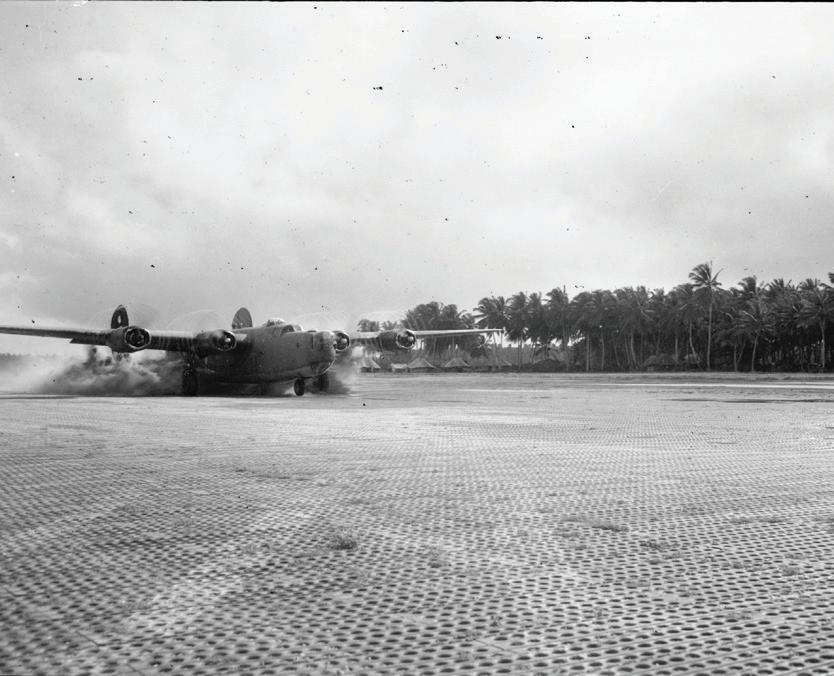
recognition that there was a real risk of many POWs dying from ill health and starvation led to the squadrons being used to drop emergency supplies to the POW camps as well as information leaflets informing the recipients that the war was over. The next stage of the operation would see the delivery of small teams from the Special Operations Executive’s Force 136 who would enter and take over the running of the camps, and then there would be extensive airdropping of supplies. Once POWs had been fed properly, treated for ailments and in good enough health, they could start to be repatriated.
John Steele and 99 Squadron had moved to the Cocos Islands just days before the atom bombs were dropped. The squadron was given the job of aiding POW camps in what is now Indonesia.
As well as dropping emergency supplies and leaflets, the aircrews prepared bundles of magazines, sweets from their ration packs and letters wishing the POWs well and giving general news about the outside world, something greatly appreciated by the recipients.
That came on 2 September 1945 with the signing of the Japanese surrender at a ceremony in Tokyo Bay. In the interim, the role of the RAF bomber squadrons changed from destruction to salvation:
On 1 September, John Steele’s crew set out to deliver leaflets and their extra contributions to prisoner morale to the Sungei Ron POW camp at Palembang. This was not easy – the drop zone was small, and it required the large bomber to be flown low and just above its stalling speed to deliver supplies accurately. The first drop was a success, with a mixture of magazines, letters and small items falling amongst the prisoners. As John manoeuvred for a second drop, something went wrong. The Liberator’s speed fell away and before John could control it, the aircraft side-slipped into the ground and exploded. There were no survivors.
Reports from the POWs later said that one – and only one – Japanese guard laughed at the tragic spectacle and was promptly knocked out by an enraged prisoner. This sort of behaviour would normally have brought instant and brutal retribution, but this time, the shocked guards did nothing. One POW recalled that this was the turning point and they in effect took control of the camp, allowing them to gain supplies from locals ‘outside the wire’ and alleviate the hunger of many who might otherwise have died had their captors remained in full control even if only for a few more days.
John and his crew were buried with full honours in the grounds of a nearby church, and a number of Japanese officers, after pleading to be allowed to pay their respects, attended the funeral. John was 21 years of age and, as the formal surrender had not been signed, the last Aularian to die in the Second World War.
The Hall was, of course, much smaller than it is now, and Principal Emden attempted to keep in contact with as many
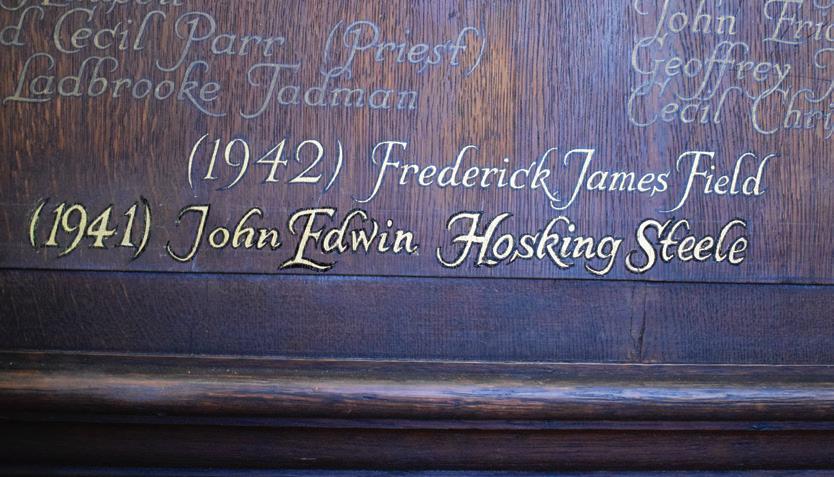
serving Aularians as he could and with their friends and families. This wasn’t always possible, and news of John Steele’s death seems to have never reached the Hall. This meant that when the names of the Aularians who’d fallen during the Second World War were added to the memorial in the Chapel, John’s name was not amongst them.
Now, 80 years after he died, this has been rectified and John Steele is rightfully remembered alongside all those other Aularians who gave their lives during the Second World War.
David Jordan (1990, History)
Allen Walker Read (1906–2002) grew up in Iowa, where he took undergraduate and master’s degrees, taught briefly at the University of Missouri, and then, in 1929, entered St Edmund Hall as a Rhodes Scholar in pursuit of a BLitt, which he earned in 1933, with a thesis titled The Place of Johnson’s Dictionary in the History of English Lexicography. In 1988, the University of Oxford awarded him a DLitt, for a career of teaching and writing about the English language, mostly at Columbia University, and a considerable amount of lexicography, including work on the Dictionary of American English
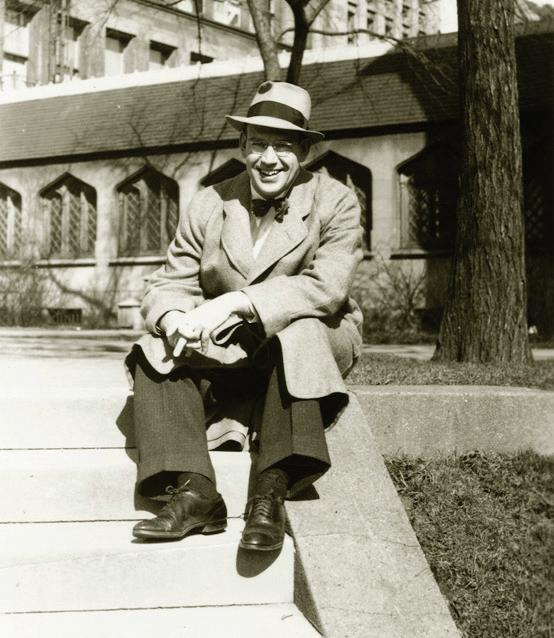
(1936–1944) and the Dictionary of United States Army Terms (1944), the latter while in uniform during the Second World War.
Read wrote a sketch of his first experience of the University, titled ‘Rhodes Scholar’, which was published in American Oxonian in 1930, and subsequently reprinted in The Best Short Stories of 1931 and several other venues. By the time he had submitted his BLitt thesis, he had published 16 articles in various journals. A B Emden, Principal during Read’s residence in the Hall, reviewed two of them generously in the Hall Magazine (1929 and 1931), and Read was grateful for the attention and praise. He identified himself as a proud Aularian, the last public instance of which was ‘My Years at St Edmund Hall: Experiences of One Yank at Oxford’, presented to the Aularian Society of New York, on 9 November 1990.
Read studied words deeply and was noted for his series of articles on ‘OK’ and, before and during his years in Oxford, historical articles on ‘blizzard’ and on ‘liberty’ in Iowa place names, for which he scoured every available source. His work on early English lexicography was similarly thorough, and one wonders how he could write so definitively in a pre-digital age. Since English lexicography began in the sixteenth and seventeenth centuries, he
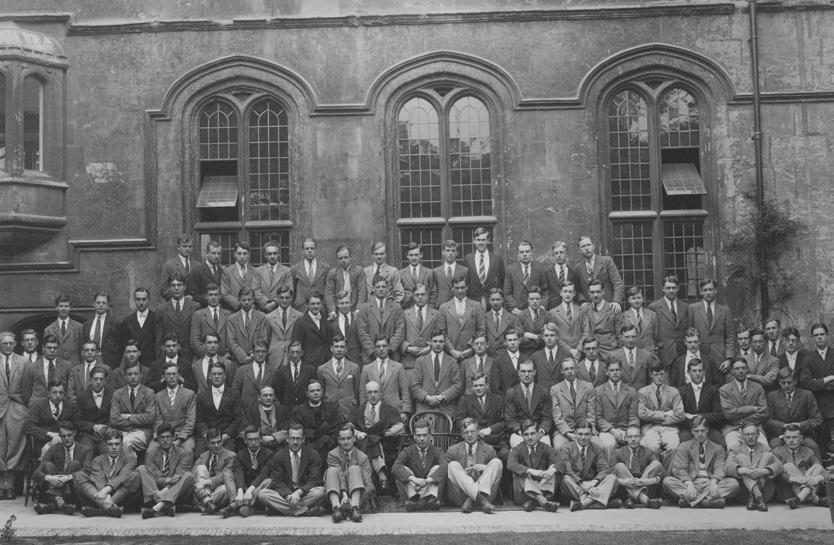
read widely as well as deeply in Early Modern works, not just dictionaries, but literature in its broadest sense. This explains how he came across what we usually call Aubrey’s Lives, the short biographies written by John Aubrey, the manuscript of which was deposited first at the Ashmolean Museum and, by Read’s time, in the Bodleian Library, as it is now, finding its way into print at last in 1813. But one sees, too, that Read sometimes personalised his curiosity and shared it, for instance, in ‘Rhodes Scholar’, but also in an unpublished note about Aubrey’s life of St Edmund, which he wrote for the Hall Magazine in 1929. Having found it in his archives, which are housed at the State Historical Society of Missouri (Allen Walker Read Papers, C4033, f. 926), I thought to share it now, as follows:
John Aubrey (1626–1697) preserved for us a great many incidents and bits of information, some important and some merely curious, that otherwise would have been lost. He has often been referred to as ‘the gossip Aubrey’, and the epithet sums up much of his character. After losing his fortune early in life he spent his time in visiting friends and in making the rambling antiquarian collections for which he is remembered. In his own phrase, he spent his life in “a happy delitescency” He saw only one book through the press, a collection of ghost stories, but his manuscripts were preserved in
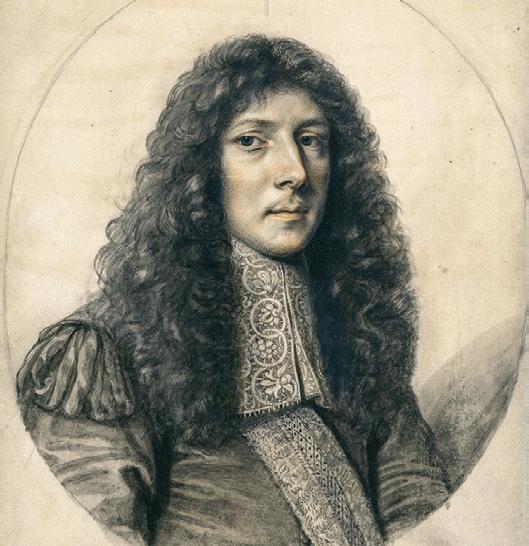
the Bodleian and consulted as source material by many writers. His Minutes of Lives, most important among his works, were assembled for the use of Anthony à Wood, and remained unprinted until 1813. Of interest to Aularians are the two paragraphs about St Edmund –typical of Aubrey’s gossipry in their wandering excursiveness. From the printing of 1813, vol. 2, pp. 338, 339:
“Seth Lord Bishop of Sarum tells me, that he finds St Edmund was born at Abington. He was A. Bp. of Cant. He built the college at Sarum, by St Edmund’s church. It is now Judge Wyndham’s sonne’s house. He resigned his archbishoprick, and came and retired hither.1 In St Edmund’s church here, were windows of great value. Gundamore offered a good summe for them; I have forgott [what]. In one of them was the picture of God the Father, like an old man (as the fashion was), wch much offended Mr. Shervill, the recorder, who in zeale (but without knowledge) clambered upon the pewes to breake the windowe, and fell down and broke his legg (about 1629), but that did not excuse him, for being questioned in the Star-chamber for it, Mr. Attorney Noy was his great friend, and showed his friendship there. But what Mr. Shervill left undone, the soldiers since have gonne through with, that there is not a piece of the glass painting left. ‘Edmundus Cant. A. B. primus legit Elementa Euclidis Oxoniæ, 1290. Mr. Hugo perlegit Lib. Aristotelis Analytic. Oxon. Rogerus Bacon vixit A. D. 1292.’ This is out of an old booke in the Library of University college, Oxon.”
This minute is admittedly a failure as an effort in biography – like a firecracker that only fizzes – unless it shows in the fate of the unfortunate Mr Shervill that the era of miracle in the afflatus of St Edmund continued for many centuries. A minor miracle of St Edmund is that of the coincidence recorded by the Dictionary of National Biography. St Edmund, according to this authority, had the good fortune to be born on St Edmund’s Day.
Read’s squib on Aubrey did not appear in the Hall Magazine, because Emden rejected it on what Read thought privately were dubious terms: “Back at the Hall,” he wrote in his journal on 17 December 1929, “I bumped into Emden and he greeted me, ‘Well, Read, I fear that Aubrey has tricked you.’ Fancy that nasty way of putting it! Of course, I knew that Aubrey was inaccurate and the note didn’t amount to a row of beans. Emden can’t stomach my audacity of making an essay in the field of history, even though I meant it as a light shaft at human nature” (‘Book of Days’, Allen Walker Read Papers, C4033, f. 196). Taking Aubrey’s biography, Read’s note about it, Emden’s rejection, and Read’s response to it into account, some light is indeed cast on human nature, but perhaps Read’s intention had been more modest than he claimed, simply to share what he’d seen with Aularians, old and new, as an act of belonging to a place rooted more deeply in history than any Yank could claim of home.
Michael Adams, Provost Professor of English, Indiana University Bloomington
1 As many readers will know, this is a major error on Aubrey’s part. Edmund of Abingdon died, while still serving as Archbishop of Canterbury, at the village of Soisy in France on 16 November 1240. His body was taken to the Cistercian Abbey at Pontingy where it remains entombed [Editor’s note].
The nameplate from the old Great Western Railway (GWR)
steam locomotive numbered 5960 and named ‘Saint Edmund Hall’ is currently on show in the Chough Room, just above the Junior Common Room at the Hall. There is a model of the original engine displayed near the entrance to the Bursary, ready to greet students.
The locomotive was built in January 1936, one of over 300 mixed-traffic engines of the Hall class built by the GWR. They were almost all named after country houses, named ‘something Hall’. There were at least four exceptions: these were named after educational establishments
From the Magazine archives:
in Oxford. Besides 5960, there were Saint Peter Hall, Lady Margaret Hall and Saint Benet Hall. Designed by Charles Collett in the late 1920s, the mixed traffic 4-6-0 engines could be seen all over the GWR system. St Edmund Hall 5960 was based in Oxford, though in 1951, after maintenance in Swindon, it was sent elsewhere. The Hall complained and it was soon returned to its rightful base, remaining there until it was scrapped in Norwich in September 1962.
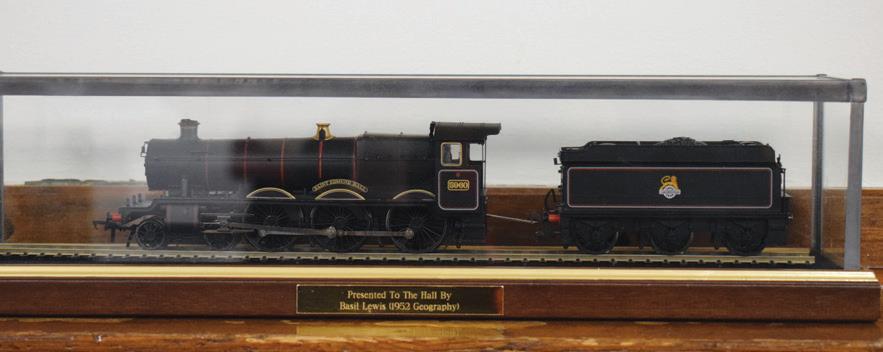
The ‘Saint Edmund Hall’: Hall Magazine 1936, pp. 15–16
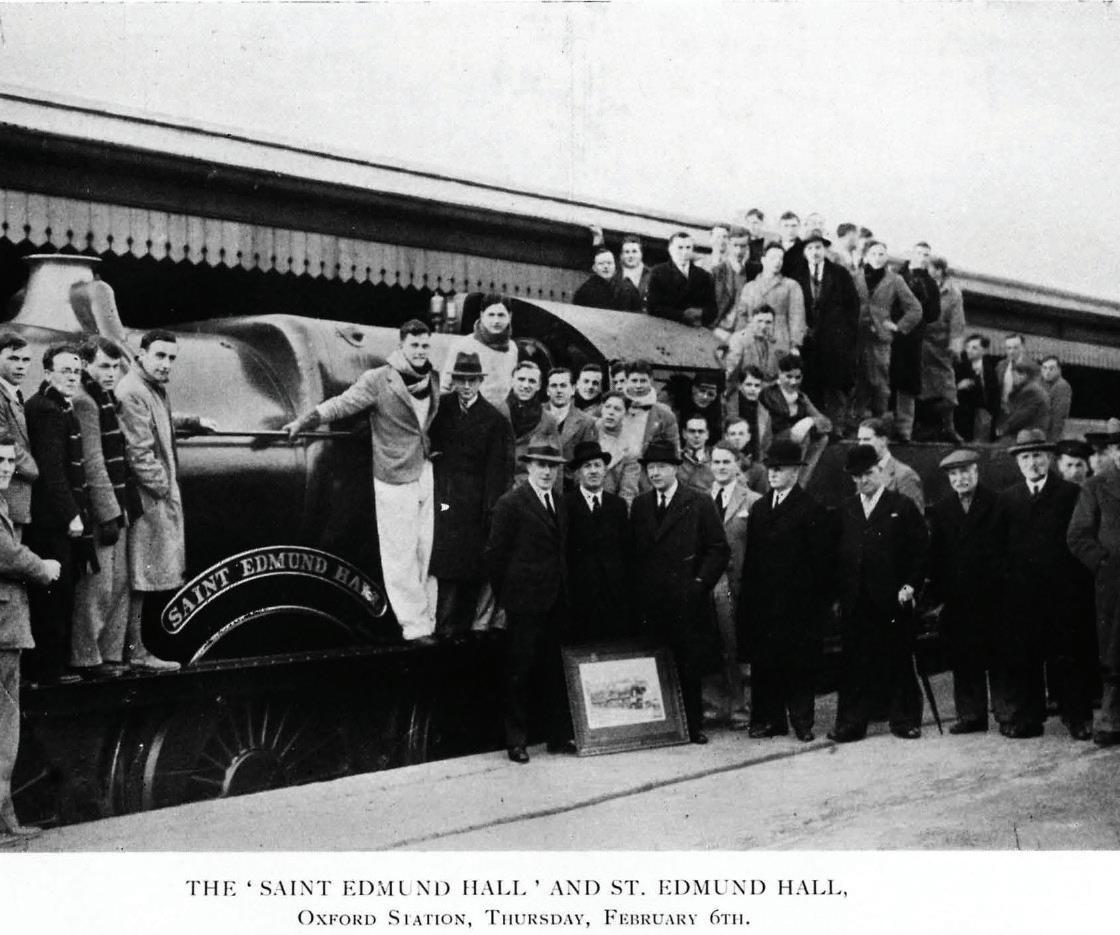
On Thursday afternoon, February 6, the ‘Saint Edmund Hall’, the latest engine of the ‘Hall’ class to be constructed at the G. W. R. Works at Swindon, came to Oxford, and, in the presence of Mr. J. A. Kislingbury, Locomotive Divisional Superintendent, Mr. W. Floyd, Chief Mechanical Inspector, Mr. Allan Davies, Locomotive Inspector, and a large gathering of members of the Hall, was inaugurated by the Principal by the sounding of three blasts on its whistle. Presentation was made of a framed photograph of the new engine to the Principal. A shield bearing the arms of the Hall was handed by the Principal to Mr. Samsworth, the Locomotive Foreman in charge of the Engine Shed at Oxford
Station, where, appropriately enough, the ‘Saint Edmund Hall’ was to take up its residence. The driver of the engine was given an ashtray bearing the arms of the Hall. The Hall owes it to the initiative of Mr. W. Floyd that this engine should bear its name. Who is there who would not feel gratified if a railway-engine were to be named after him? Tam Aulae quam aliis.
The ‘Saint Edmund Hall’ is an engine of the two-cylinder 4-6-0 type. It is fitted with outside cylinders, 18½ in. diameter by 30 in. stroke, and piston valves. The coupled wheels are 6 ft. diameter, and the bogie wheels 3 ft. diameter. It has a standard No. 1 boiler with conical barrel and a Belpaire firebox, the working pressure being 225 lbs. a square inch, and, at 85 per cent. of the boiler pressure, the tractive
effort equals 27,275 lbs., as compared to 24,395 lbs. of the ‘Saint’ class. The cab is similar in pattern to those fitted to the ‘Kind’ and ‘Castle’ classes, being provided with side windows and extended roof. The total weight of the engine when it is empty is 69 tons. The tender is of the standard Great Western six-wheel pattern, equipped with water pick-up apparatus. The water capacity is 3,500 gallons and the coal capacity six tons. The tender, when it is empty, weighs 22 tons. 10 cwt. The engines of the ‘Hall’ class are designed to work secondary express passenger and express goods trains. For these technical particulars I am indebted to the editor of the Great Western Railway Magazine and to the Rev. R. G. R. Calvert.
A B Emden
An Errant Engine Returns: Hall Magazine 1951, pp. 18–19
Many will recall the pleasant ceremony at the G.W.R. Station, Oxford, on 6 February, 1936, when the latest locomotive of the Hall class, the ‘Saint Edmund Hall’, was inaugurated by the Principal in the presence of several highly placed railway officials and a large gathering of Aularians.
In November the new Principal was informed that the engine, for many years a familiar and useful ornament of the Oxford-Paddington line, had been removed from Oxford to Bristol. He at once wrote to the Motive Power Superintendent, Paddington, pointing out the distress which members of the Hall must feel at the transference of a locomotive so deeply established in their affections, and so closely linked by its name and its historic inauguration to the University, from what might, in American parlance, be termed its proper stamping-ground. Their distress was, he pointed out, if anything heightened by the discovery that two much more
youthful locomotives bearing the names ‘Lady Margaret Hall’ and ‘Saint Peter’s Hall’ were still to be seen in the vicinity of Oxford.
Dr Kelly did not feel it appropriate to dwell on the feelings of the displaced engine itself, although he might have waxed eloquent on the melancholy plight of those who are uprooted from their natural habitat and have to hang up their harps, as it were, in an alien land. Even so, we are glad to report the entire success of his démarche. The Motive Power Superintendent of Paddington immediately made contact with the even more influential Regional Motive Power Superintendent at Swindon, and in a few days the latter informed the Principal that orders had been given for the return of the ‘Saint Edmund Hall’ at the earliest possible date to the Oxford Engine Depot. His prompt and considerate action reflects great credit on the courtesy of British Railways.
I recently received a call via the Porters’ Lodge: “I believe I have a portrait of one of your Principals in my attic, would you be interested in him?” On further investigation, this turned out to be a portrait of William Dowson, Principal of St Edmund Hall from 1787 until his death in 1800.
William Dowson was born in 1748 in the village of Greystoke, at the northern end of the Lake District, four miles west of Penrith. There are several memorials to the Dowson family in Greystoke parish church. William matriculated at The Queen’s College in October 1765, aged 17. His younger brother Thomas would follow him there in 1771. William was later appointed Principal of St Edmund Hall in 1787. He had married his wife, Ann, a few years previously. He died in office on either 9 or 10 January 1800 (records differ), and was buried in the churchyard at St Peterin-the-East; Ann died two years later and was also buried in the churchyard.
Dowson’s tenure as Principal was unremarkable. It is likely that he left the day-to-day running of the Hall to the long-serving Vice-Principal, Isaac Crouch (Vice-Principal 1783–1807). However, Dowson’s Principalship did have a longterm impact on the silver used day-to-day on our dining tables. During the 1790s, the Hall acquired, through both exchange and new purchase, a variety of practical silver items: candlesticks, salts, serving spoons and tablespoons – all in the very elegant, neoclassical Adamesque style, popular in the late 18th century. These would have been essential items for the student dining experience at the time.
In 1793 the Hall exchanged several worn-out silver items for a set of four candlesticks. The original items had been
given by students in the late 17th century. The names of the students, and the dates of their gifts, were transferred to the new candlesticks. These candlesticks are still used at almost all formal dinners. Several new items were also purchased, including eight oval table salts. These originally had gilding on the interior (to prevent corrosion caused by the salt), but this has worn off due to several centuries of cleaning. Unusually, the spoons and salts do not bear the name of a donor – they are engraved only with the name of the Hall and the year of acquisition: “Aula Sancti Edmundi, 1792”. Their gift is not recorded in our Benefactors’ Book, and the Principal’s silver inventory of 1800 (signed by Dowson’s widow, Ann) lists the items but gives no donor. My conclusion is that Dowson himself may have paid for these silver items.
So why was William Dowson’s portrait in an attic in Gloucestershire? Its owner believed that it had been passed down through generations of her family, and that Dowson was a distant relative. The portrait is identified by a small, contemporary label on the reverse. The owner has kindly gifted it to the Hall and Dowson’s portrait returned to the Hall earlier this year. It is in need of some repair: the wooden stretcher is worm-eaten, there are some tears in the canvas (thankfully in unimportant areas) and it has suffered from being in the company of pigeons in recent years. However, it is a strong portrait and gives a kind and gentle impression of the sitter. I hope, in time, to be able to hang the portrait in the Old Dining Hall, where Dowson can watch over dinners, illuminated by the candlesticks he would have known.
Jonathan Yates, Tutor in Materials Science, Chattels & Pictures Fellow
White Kennett (mat. 1678) is one of the most distinguished of Aularians of the 17th and 18th century. After his degree he was ordained and appointed to livings in the gift of two of his Hall friends, William Glynne (mat. 1679) and Francis Cherry (mat. 1682). He returned to the Hall as the Vice-Principal in 1691 and served as the University Public Lecturer and ProProctor. He was subsequently a curate at St Botolph’s in London, Archdeacon of Huntingdon and successively Dean then Bishop of Peterborough.
He was renowned both for his antiquarian and historical studies, his preaching and his partisanship for the Whigs in politics and the low-church faction of the Church of England. The Oxford Dictionary of National Biography sums him up thus: “He had firm convictions and harboured few doubts about his personal worth. He was outspoken, combative, and tactless… But he was also empathetic, generous, and not without charm.”1
A number of his papers survive amongst the Lansdowne manuscripts in the British Library including a notebook2 he used when Vice-Principal of the Hall in the 1690s and another3 containing English and Latin poems composed while he was an undergraduate. Some are addressed to Stephen Penton, the Principal of the Hall from 1675 to 1685, and to Andrew Allam, who was Vice-Principal and Kennett’s Tutor.
There is also this poem in support of Penton’s campaign to raise money from Aularians and other friends of the Hall for the building of a chapel and library. The poem was first recited on 8 June 1680 or 81 in the Old Dining Hall (where in 2022 the current HALLmarks campaign for the new building at Norham St Edmund was also launched). While his enthusiasm is commendable, it is perhaps obvious why he is remembered as a scholar and a preacher, not as a poet…
James Howarth, Librarian and Fellow by Special Election
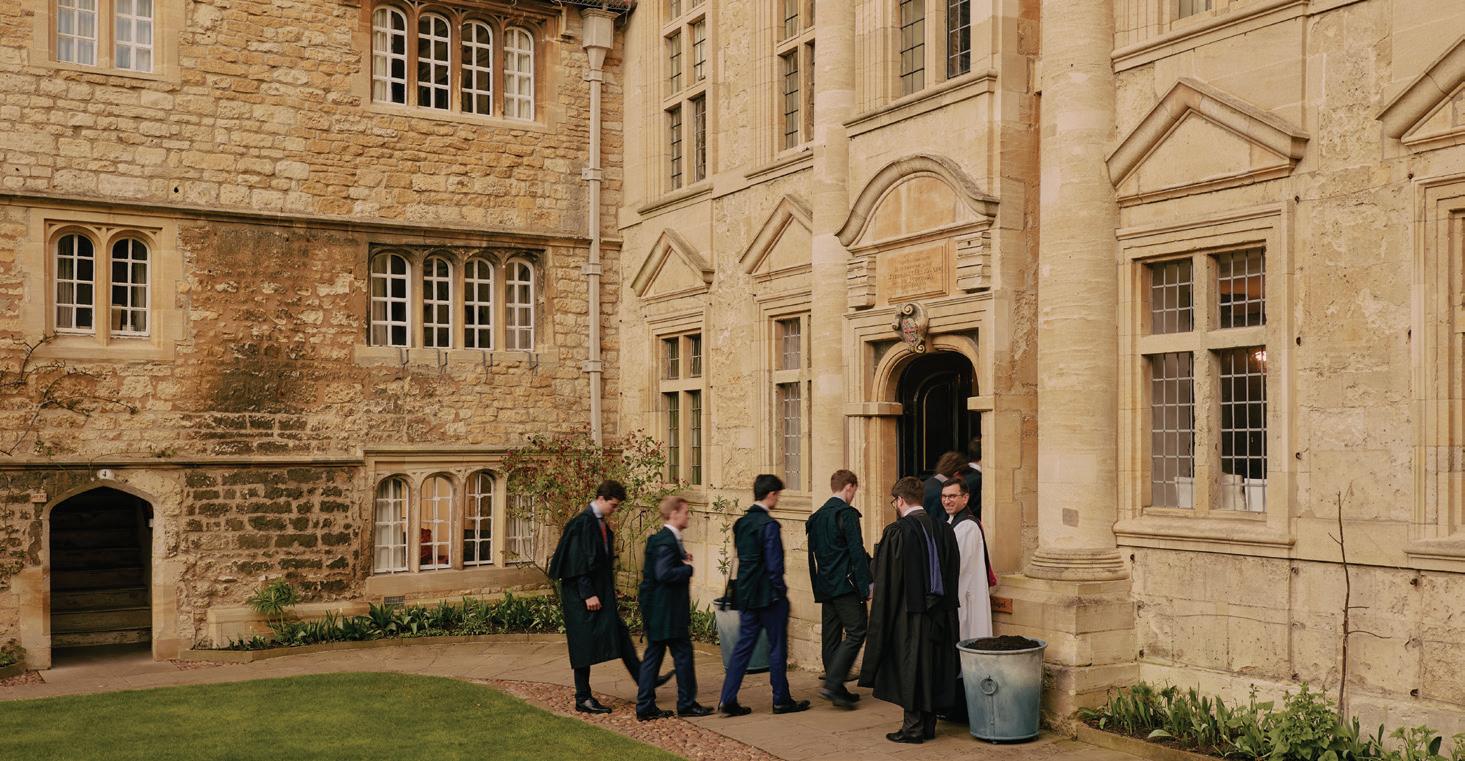
1 Laird Okie, ‘Kennett, White’, ODNB doi.org/10.1093/ref:odnb/15402.
2 MS Lansdowne 697.
3 MS Lansdowne 937.
On ye building of our Chappele
Recited in ye hall June 8th/
Thus goes it on, & pittie ‘twere indeed
If once begun it should not thus proceed.
Your bounty too’t Religion does command Religion does on such foundations stand. The heathen not content a sordid way
In private corners sacred rites to pray
As fast their temples as their homes they built.
And as ymselves, their gods in cedars dwelt.
Nay statelier too, ye thund’rer4 cas’d in gold
Lately his ransome held his reskued hold.
Bright Phœbus’s gilt beams outglared his own
And in white mettal silver Phœbe shone, Old Saturn sentinel sate on golden barrs
Queen Juno’s roof (like heaven) was ceiled with starrs
Snakes seald with pearl ye virgin champion5 bore
And Venus was as fine as she was faire.
And shall not we a nobler zealousness
Since more our light, why should our love be less
Shame on our baseness, if these dunghill gods
With great Jehovah vie, & have ye odds.
If beastly Jove do heavens Lord excess
And the true thundrer more obscurely dressed.
Say not the eternal mind delight to come
Unto th’ pure heart not ye gaudy room
That th’ Who in worship sanctifie ye Where
And make a barn or hall a house of praier
Thus Satan in a Samuells mantle sneaks
While Avarice religions language speaks
Let wranglers learn he will in both reside
Who equally removd from need and pride
Expects ye best scorns not ye meanest treat
Valuing in both ye welcome not in ye meat.
Gifts by ye mind, ye mind by ym he weighs
Let now your hearts a noble zeal inspire
So great a work does a great cost require
You then on whom your birth, & kinder fate
Entails ye income of a faire estate
Bestow your Charity, you’l soon confess
A part thus spent did ye remainder bless
While we whose meaner fortunes can’t allow
So large a contribution as you
Will cast our Widows mite, & how much less
We give, we’l pay in praying for success.
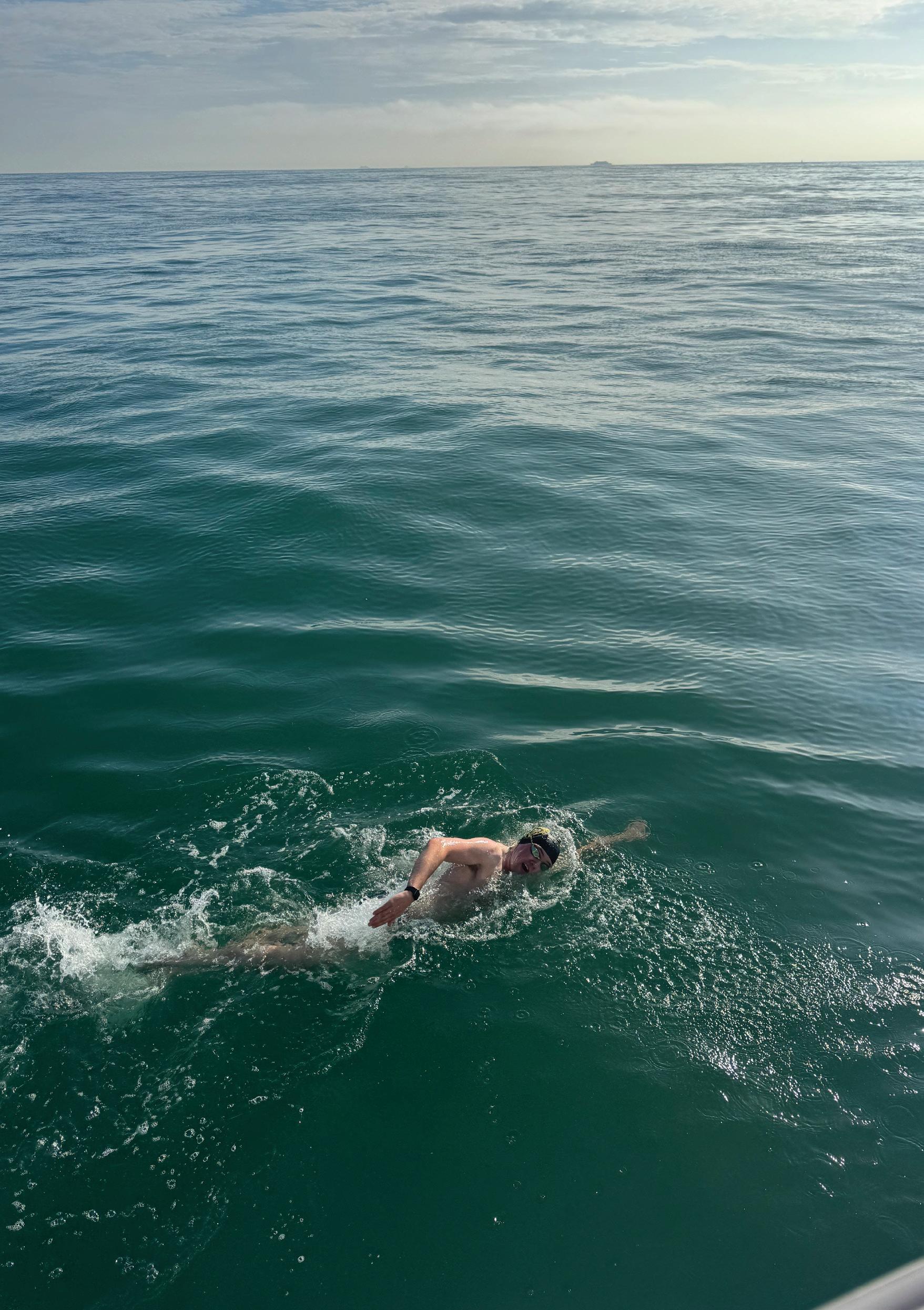
In early 2025 I was privileged to have the opportunity to exhibit my photo essay ‘DAKAR’. The exhibition included a collection of images I had taken in West Africa, which were merged with a series of captions inspired by what I had learnt throughout my degree in Geography. Informed by postcolonial critique, critical visual culture and decolonial theory, the exhibition was conceived with a view to go beyond a straightforward documentary project – and to critically explore photography itself – by focusing on its ethics and philosophical roots in colonial modernity. I sought to engender a debate concerning the politics of representation and the assumptions inherent in mainstream photographic practice.
The capital city of Senegal, Dakar – after which the exhibition was titled – is a city that represents my wider relationship with a continent that has played a large role in my life, having a father who has lived in Western and Central Africa since I was a young child. The series of photographs exhibited are from the year before I arrived in Oxford, during which I spent five months across Senegal, Benin and Ghana.
Carrying a camera played a key part in my encounters as I walked through an array of diverse locations. It became a natural conversation starter and would inevitably shape the flavour and direction of our interactions. Where I could, I followed up by sending my interlocutor a copy of their portrait.
This exhibition was only possible because of the Farmer Fund offered by the College, which I am deeply grateful to have received. In curating this exhibition, I
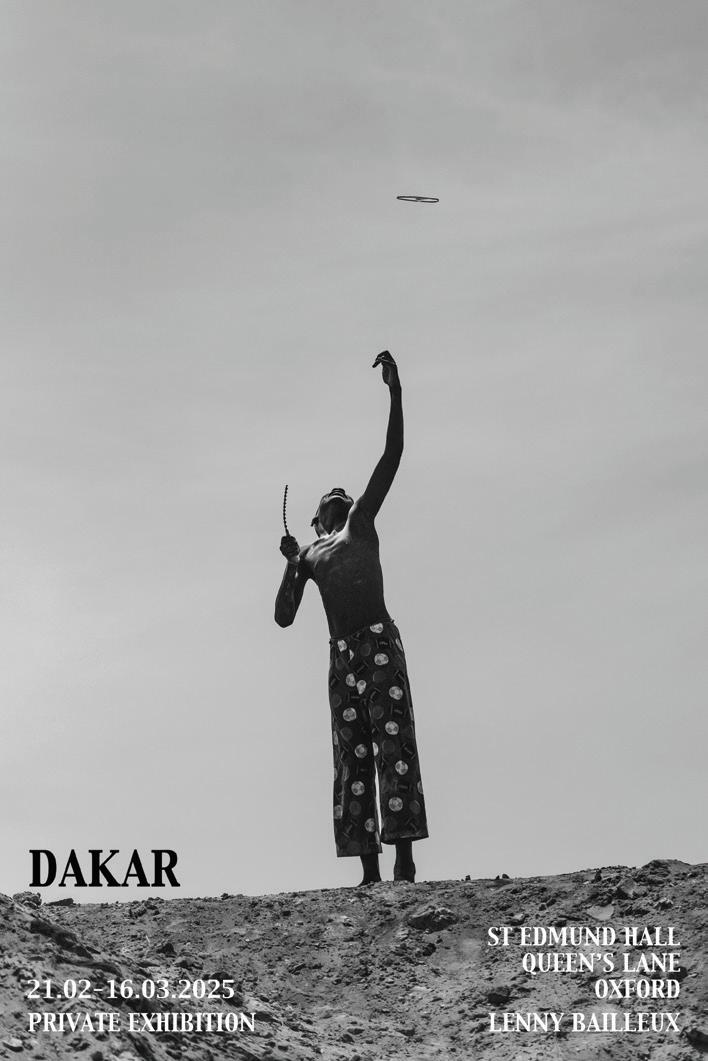
Yoff beach, Parcelles Assinies, Dakar, Senegal. This image was taken on one of the days I volunteered with the NGO Janghi, for which the poster sales from the exhibition raised over £200. On the day captured, there had been a delivery of these spiral-launcher toys, to be flung into the air to later catch. This photograph captures Cheikh’s initial ecstasy.
have been afforded the privilege to neatly grasp the complexities of my relationship with photography, and delineate the contours of a potential future practice that is congruent to the values and ideals that I hold closely. I hope you enjoy the rest of this article – what follows is an adapted version of the captions that accompanied the prints in March, as well as a choice selection of the original 18 images.
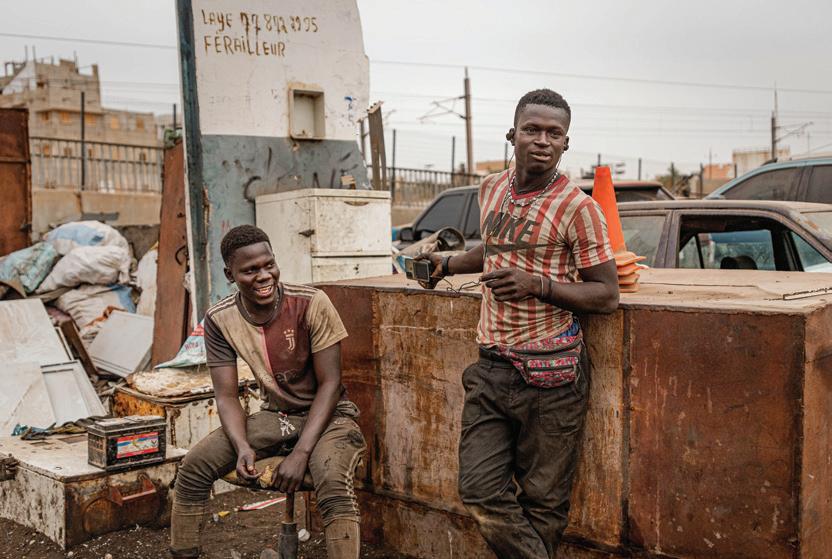
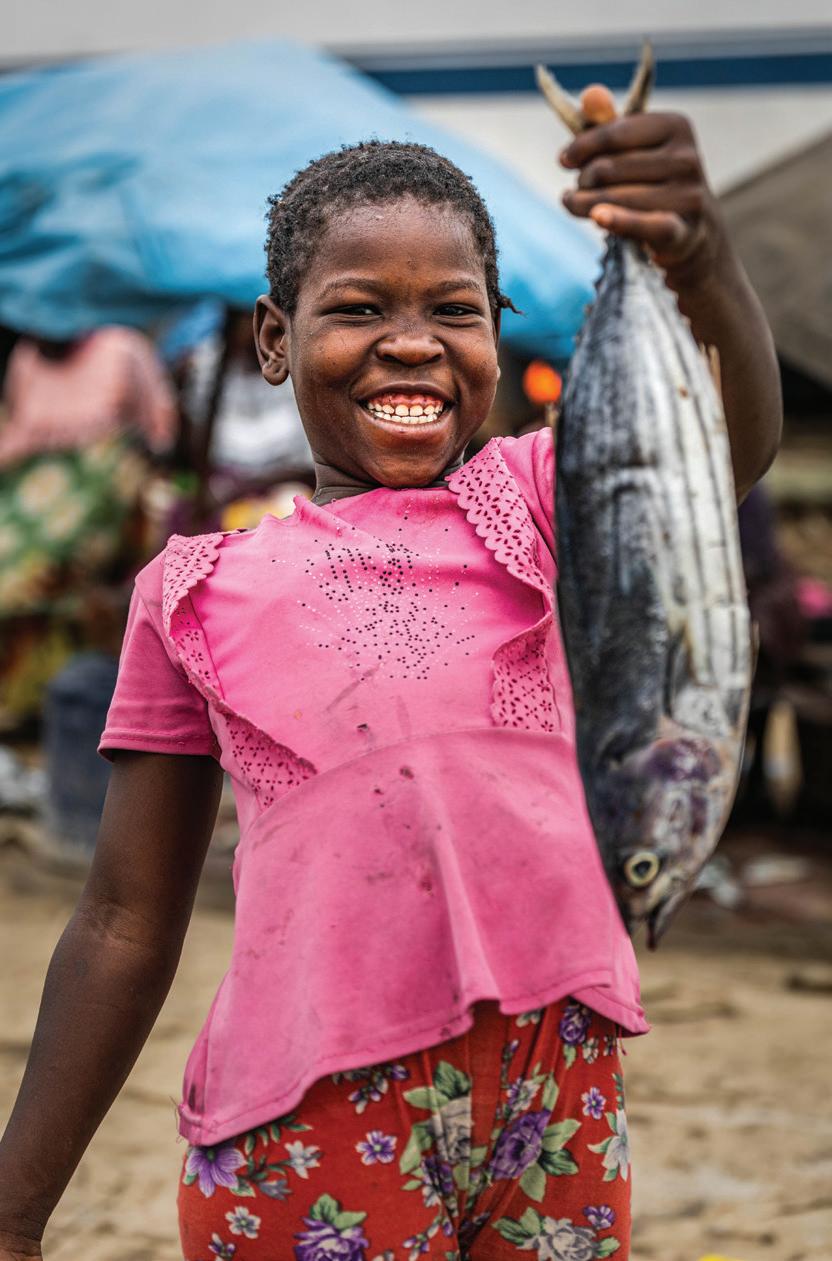
Hann-Bel-Air, Dakar, Senegal.
Bottom: Catch of the day
Hann-Bel-Air, Dakar, Senegal. While walking through the fish market, I turned around to a giggle behind me.
Despite how it is often presented, photography is never neutral. Any act of representation is entangled in (often unequal) histories of power. The exhibition of West African people in Oxford undoubtedly risks participating in the long-standing dynamic of displaying ‘other’ cultures to a Western audience. With this in mind, I hoped the exhibition would serve as a platform to question –rather than passively accept – the role of photography in shaping our world.
In recent years, I have found the extractive and exploitative nature of photography increasingly problematic. For instance, it is understood as standard practice to be able to walk down a street, take a photograph and later display it for my own benefit, without any recompense for the person (or even place) photographed. Fortunately, my degree has recently provided me the space to engage critically with these issues. The subsequent paragraphs aim to articulate my findings so far.
Born in the era of empire and industrial capitalism, photography as a technology and practice was shaped to reinforce an uneven, and enduring, world-system. Its division between the photographer and photographed, which places the latter under the control of the former, is no accident. These divides – of self/other, society/nature, developed/developing – that permeate our Western way of seeing are not just abstract concepts, but structures that continue to sustain exploitation. By constructing a sense of distance and detachment, these divides legitimise the systems of extraction and exploitation required to uphold our socioeconomic systems.
Colonial histories make this particularly stark. Photography played a critical role in the racialised classification of people,
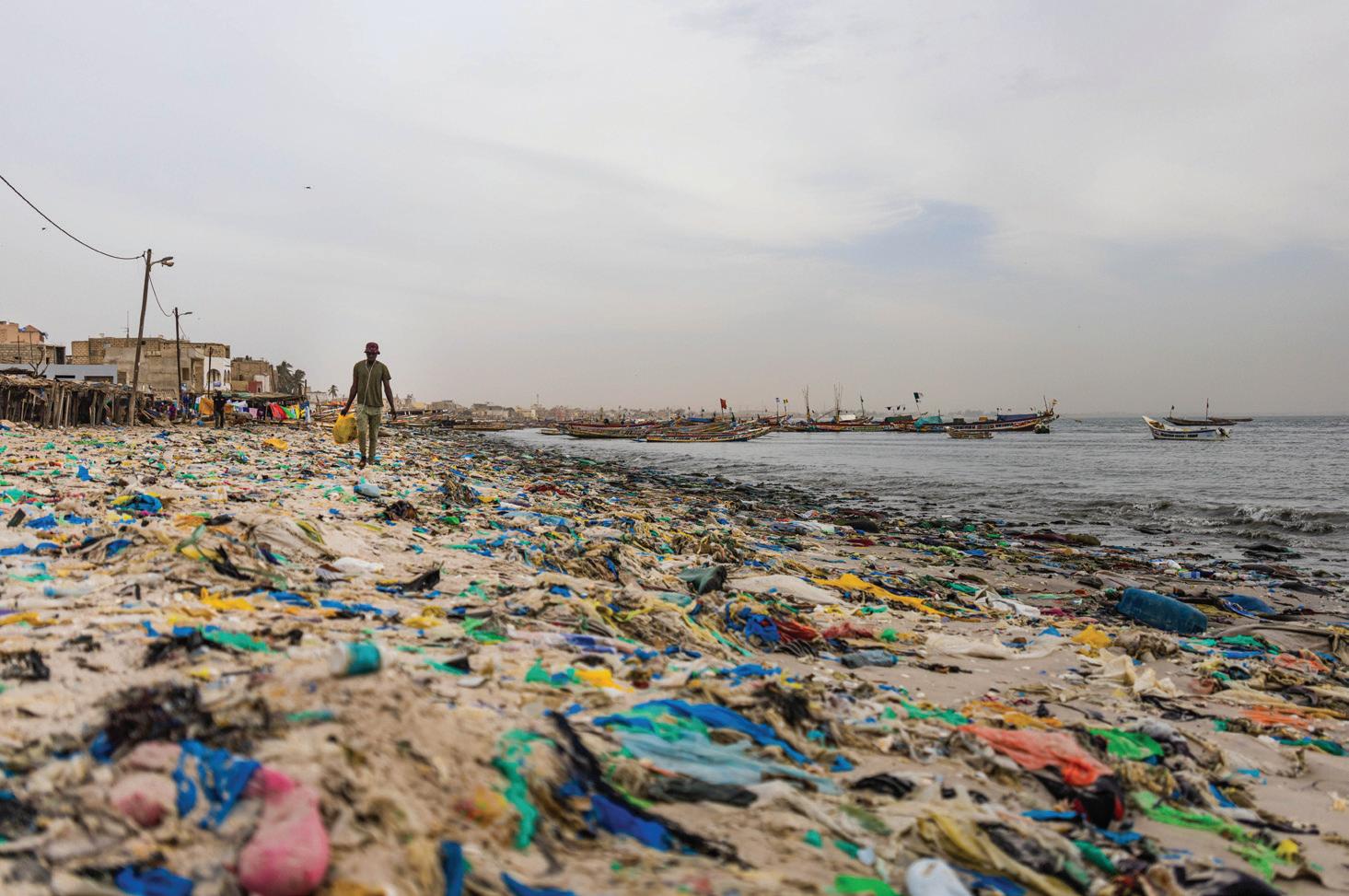
Yirra Beach, Hann-Bel-Air, Dakar, Senegal. The sheer prevalence of single-use plastics during my time in West Africa left me with a quiet sense of despair. The scale of environmental pollution made me reflect that these issues are not nearly as individual as we are led to believe, but rather rooted in systemic neglect and the prioritisation of profit.
framing certain bodies as objects of study, curiosity or control. These visual legacies have not disappeared; and they continue to shape how we see the world today. Beyond the fascination of the ‘exotic’ and orientalised ‘other’ in popular culture, one only needs to look so far as the humanitarian and development industries to find images of distant subjects ‘in need’ of intervention. Such representations reinforce narratives that obscure the historical and economic forces underpinning global inequalities, while prioritising governance structures that maintain Western hegemony.
My Photography
I publicise these images with a sense of reluctance and inner tension. The people
pictured know nothing of this exhibition (and article), yet I stand to benefit from their time and labour. It is for this reason I termed the exhibition as private, as the question of consent in photography unsettles me. While the direct portraits were taken with permission, does that alone justify their display? And what about the children who eagerly crowded my camera, or the candid shots taken in passing, where subjects were less aware of being photographed?
I feel the dominant practice of photography often neglects such questions, largely due to its foundations in a particular spatio-temporal moment, during which extraction and primitive accumulation became naturalised. Yet, I
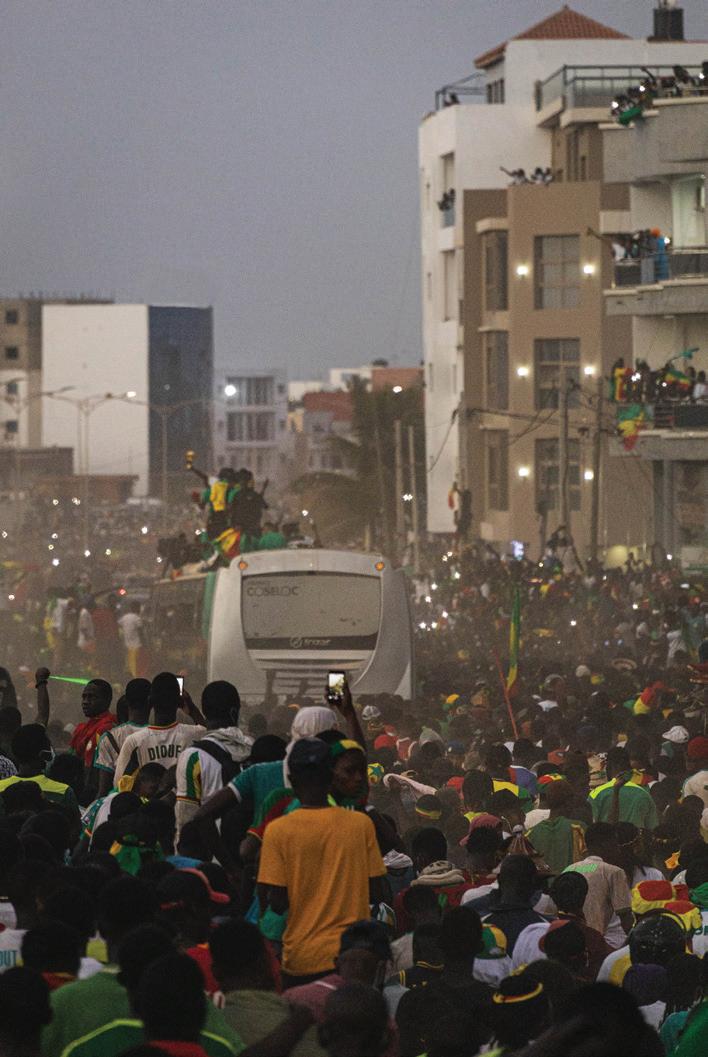
don’t blame my younger self for following these accepted norms at 18, when the camera was a tool of curiosity and way to engage with the world.
Due to these concerns, were it not for the encouragement of friends and family, and my desire to appease them, these photos would likely have remained hidden on my hard drive. So, to justify this exhibition, I settled on a compromise: to share these images alongside my thoughts, in the hope that they inspire you, or make you think differently about the often-unquestioned values and norms that shape our world.
This leads to a crucial task: to deconstruct what I present before you. I want to believe that these images offer an honest portrayal of these places, but I must interrogate this assumption for two reasons.
First, the camera is never a passive observer. Rather than capturing an unfiltered reality, photography inevitably
Cup celebrations Route de l’Aeroport, Yoff, Dakar, Senegal. I was lucky enough to have been in Senegal while the national football team cruised through the African Cup of Nations tournament to bring the trophy home. The photo shows the beginning of the team’s victory parade over the city on what is normally a busy four-lane highway. Pictured is the team bus and the captain, Kalidou Koulibaly, lifting the cup to a rapturous crowd. Any other day, a photo from the same place would show a busy four-lane highway; this day it was overtaken by a sea of people – and total chaos.
interrupts and reshapes it. The camera’s presence always draws attention, shifts behaviour or often invites a performance –such as a particular smile or pose.
Second, every image reflects my own subjectivity. These photos are filtered through my lens – both literally and figuratively – as an 18-year-old white boy navigating unfamiliar streets, camera in hand. They are further shaped by my aesthetic choices: the framing and focus of the shot, and the colours and light emphasised in editing. No photograph is ever just a window; it is always a perspective.
A note on colour: I have used both colour and black and white photographs to capture the best of both worlds. While black and white photography offers a unique depth and seriousness, I find that there are moments where colour brings a vibrancy that feels truer to the richness of life around us. Although colour photography is sometimes met with mixed opinions, I mainly used it in an attempt to reveal the everyday beauty we might otherwise overlook.
Assembling this exhibition reinforced my view that achieving meaningful change requires careful consideration of how our methods shape the outcomes we
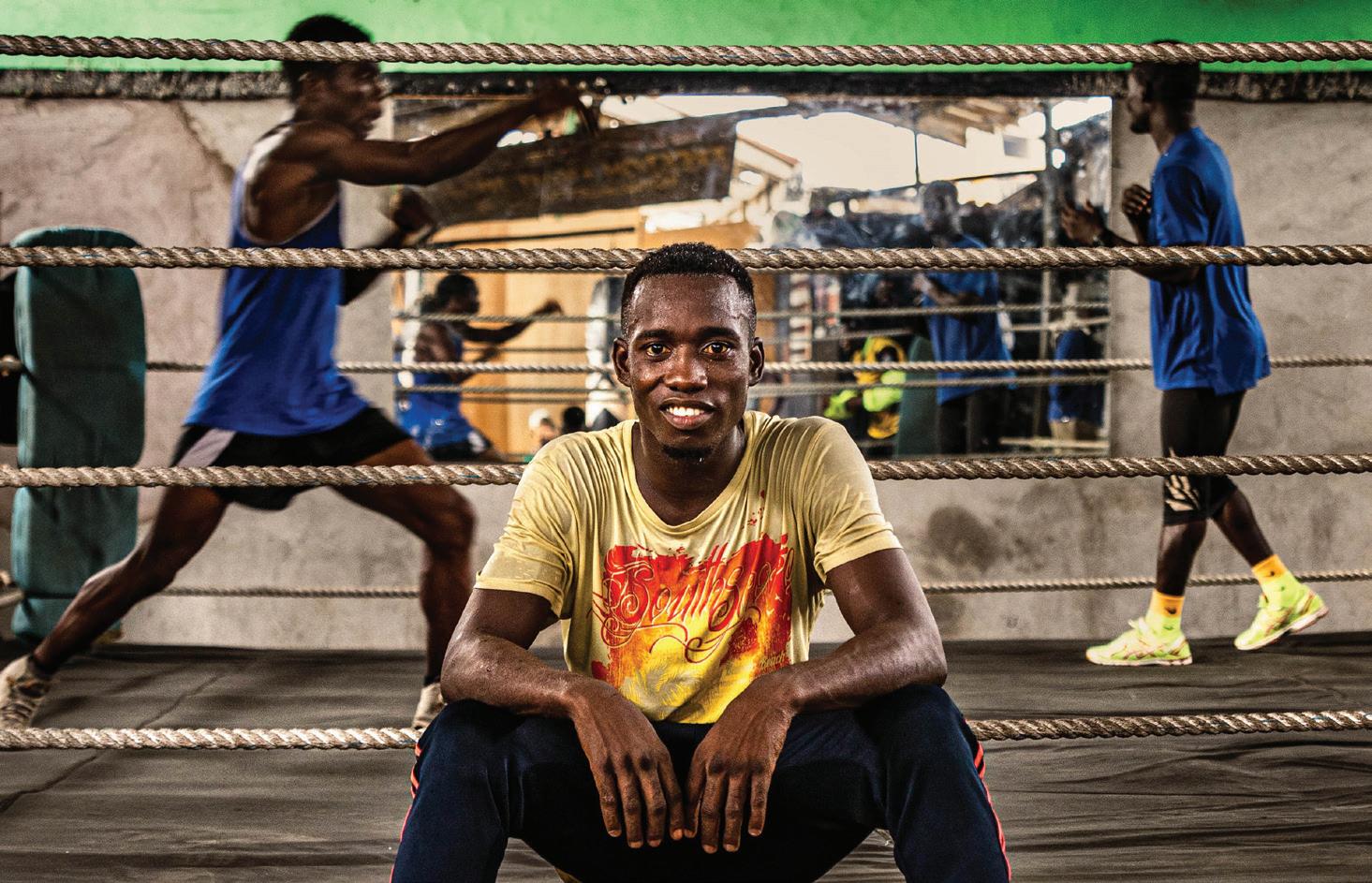
Boxer
Bronx Boxing Gym, Jamestown, Accra, Ghana. While my friend’s support and curiosity in the local boxing scene delivered delight to the club’s coach, I think my camera provided me kudos from the boxers themselves.
seek. Reflecting on the questions posed here, the way forward seems to involve a photographic practice that is more collaborative, participatory and engaged. Centred on justice and respect, such a practice must situate images within their context and ensure that a project’s goals are clearly identified and shared by all participants.
Photography and I have been on a break lately, though I hope to return to it with fresh energy before long. To remain updated, your best bet would be to find me on Instagram @bailleuxlenny.
Lenny Bailleux (2022, Geography)
Waiting for noodles
Cape Coast, Ghana. While their mother prepared our lunch, we endeavoured to entertain her children. I can’t quite remember what my friends were doing at the time, but they sure did a fine job at arousing curiosity – or concern..!
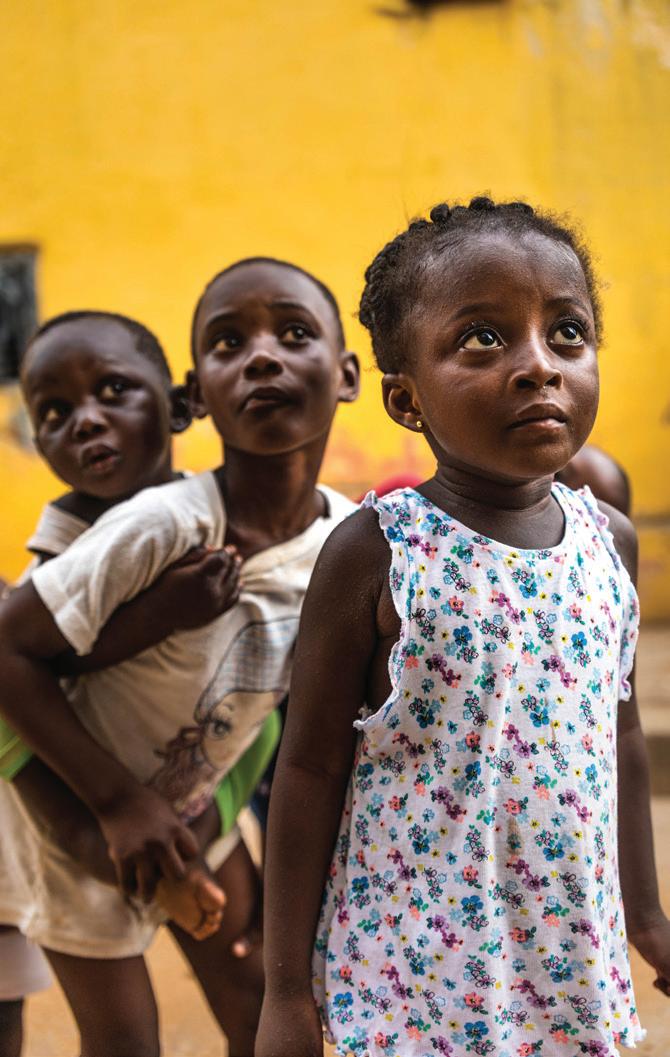
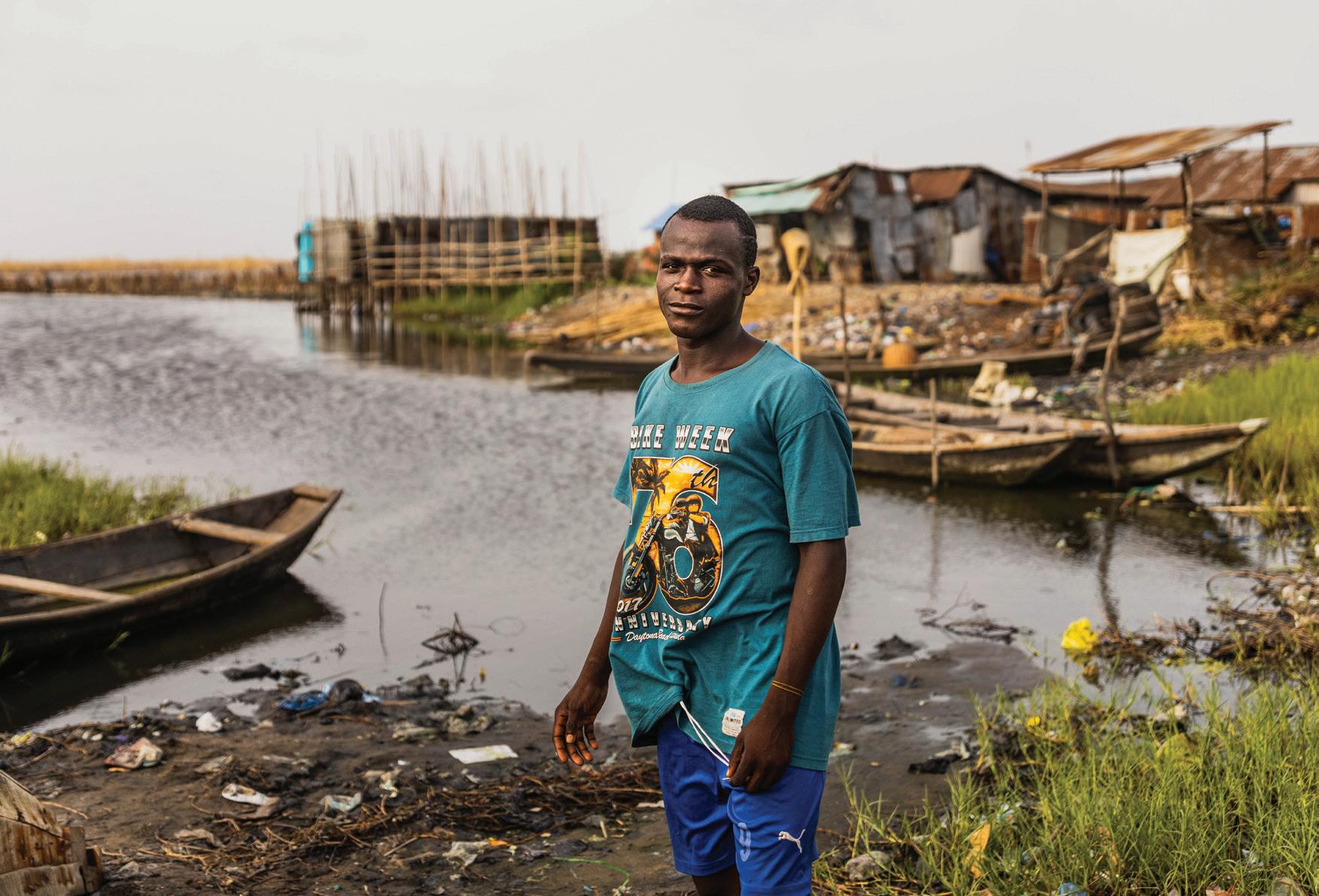
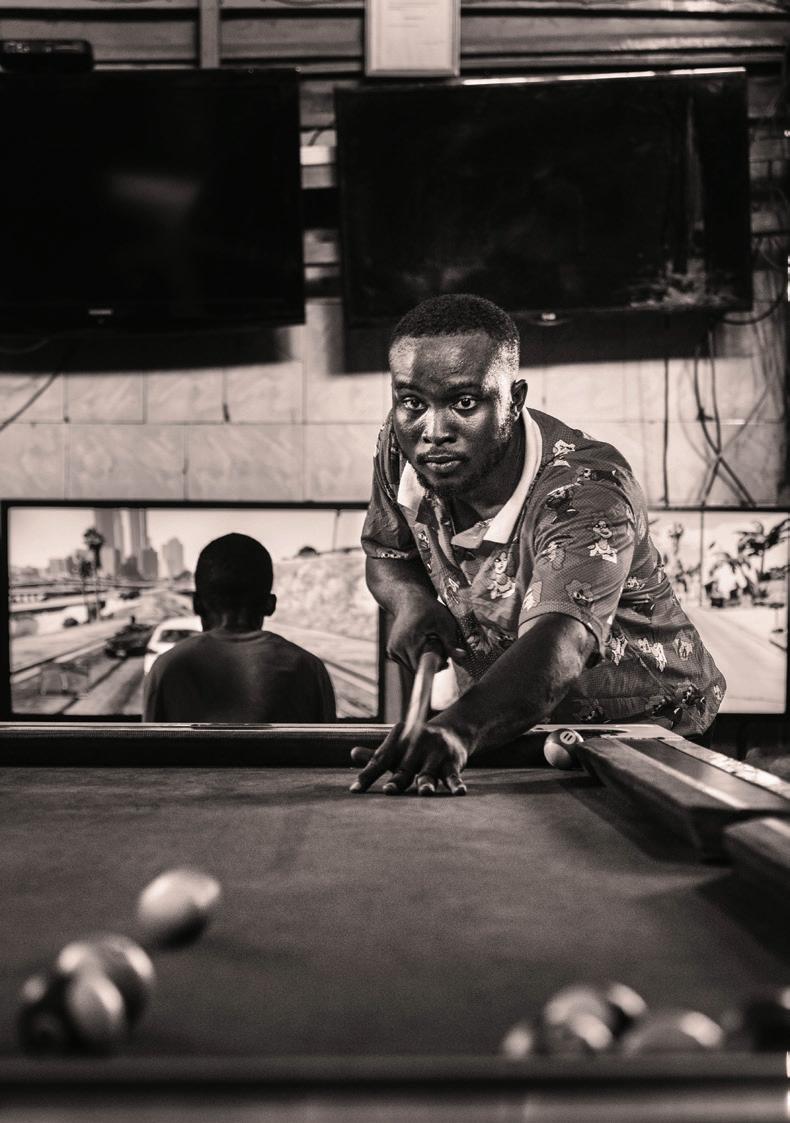
Top: Wisdom
A portrait of Wisdom during a tour of his neighbourhood.
It was quite a surprise to stumble upon a small games room tucked away in a small corner of Accra’s largest market. My friends and I had to take advantage of this – of course – to the detriment of a chunk of our afternoon.
Duncan Lyster (2023, DPhil Atmospheric, Oceanic and Planetary Physics) gives an account of his trip to the US to take part in a key moment of a NASA mission, supported by the Tony Doyle Graduate Science Prize. The prize was established by alumnus Tony Doyle (1959, Chemistry). It provides an award of up to £1,000 for a research student (DPhil or MSc by research) in the sciences to engage in an academic-related activity additional to those funded by external or departmental funding.
NASA’s Lucy Mission is currently somewhere between the orbits of Mars and Jupiter, on its way to become the first mission to visit the Trojan asteroids, the leftover relics of the early Solar System which orbit ahead of and behind Jupiter. Earlier this year, on Easter Sunday, it passed its second asteroid –Donaldjohanson, a body named after the archaeologist who, in 1974, discovered the Lucy fossil which later gave the spacecraft its name. The flyby was both a rehearsal and a scientific opportunity: Donaldjohanson is a main-belt asteroid, smaller than the Trojans Lucy will reach in 2027, but it provided a valuable opportunity to test the spacecraft’s instruments. So far, only 17 asteroids have been seen close-up by spacecraft, and each one has been full of surprises, with geology, terrain and craters that can reveal more about how these bodies form and evolve over time, and offer insights to a time in the early Solar System when the planets were still forming.
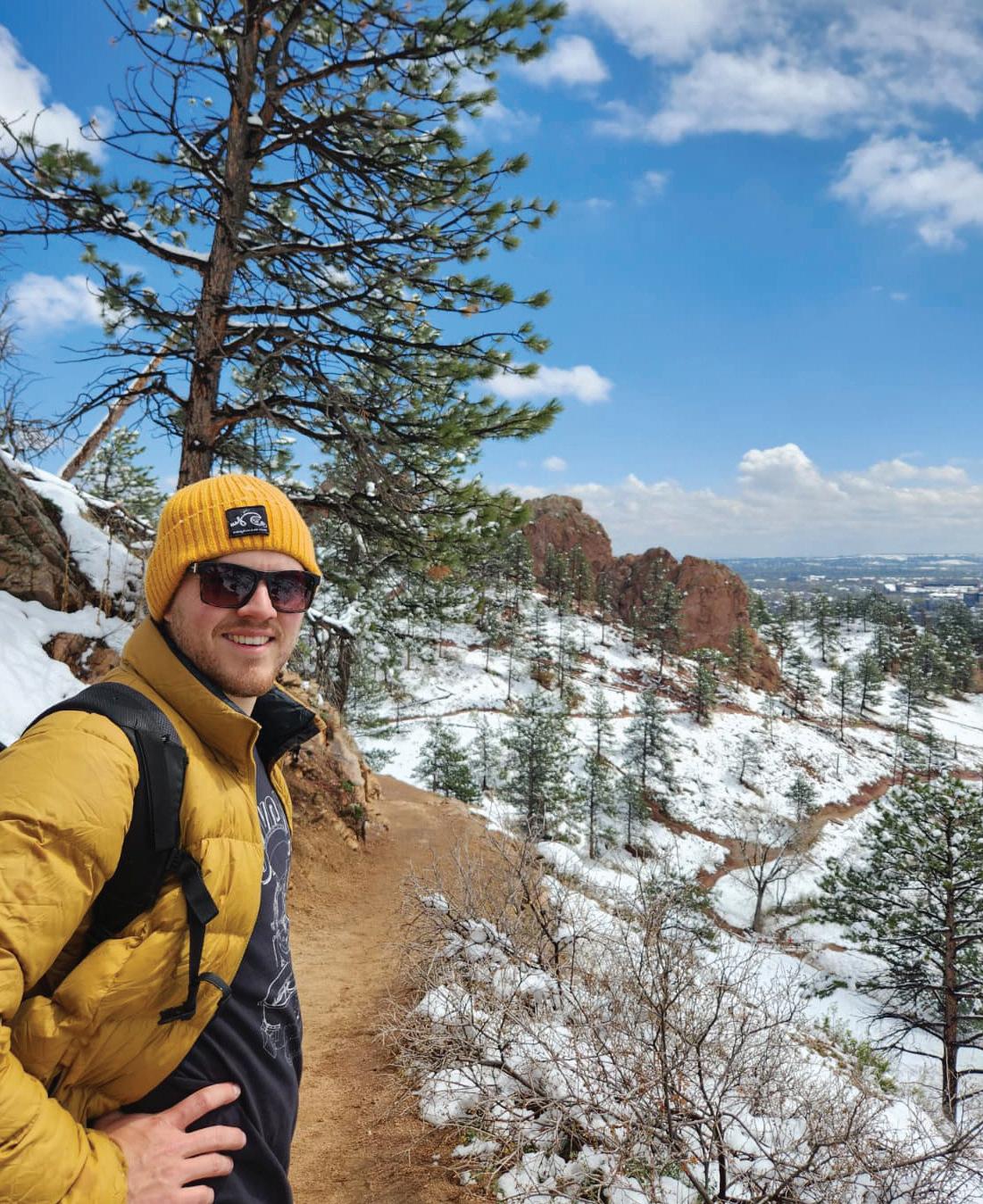
Thanks in part to the Tony Doyle Graduate Science Prize, I was able to travel to the Southwest Research Institute (SwRI) in Boulder, Colorado, to be part of the flyby team. For two weeks I worked at the Science Operations Centre, surrounded by people whose research I had followed for years. As the only PhD student there, I was one of the most junior people to take part in the event, and to get the first look at the images as they came in from the spacecraft.
In the run-up to closest approach, the atmosphere in the science room was a mix of tension and excitement. We had occasional updates from the engineers
who were across town at the operations centre monitoring the incoming signals from Lucy. Each confirmation that the spacecraft was behaving as expected was met with a sense of relief. When the first images arrived (a few hours after the actual flyby), the room quickly became animated with everyone trying to get a good look at the screens. There’s something quite special about being one of the first to see the surface of a new world, and after a few days of speculating about the shape of the body it was exciting to see this distant speck of light turned into a series of detailed images, each better than the last (for the record, I guessed it would look like a flattened snowman – not too far off if you squint a bit!).
After the flyby itself everyone settled into their more detailed scientific investigations. Counting craters, identifying geological features in the images and, for me, building a rough digital 3D model that I could use for the thermal simulation I had planned to do from the start. Over the next few days, I
Asteroid Donaldjohanson as viewed by the Lucy spacecraft near its closest approach. In the Solar System, objects with more craters are usually older, so as soon as this image came up scientists were trying to work out how you could have young terrain (the smooth area on the left) next to the much olderlooking terrain (the heavily cratered area on the right) on the same body.
Image credit: NASA/Goddard/ SwRI/Johns Hopkins APL/ NOIRLab
was able to talk at length about my own modelling work with other scientists and get advice and feedback that will influence my project for years to come. Conversations during coffee breaks and dinners were often just as important as the ones that took place in the science operations room. Those discussions gave me the chance to think through how my research connects with Lucy’s broader goals, and to get a sense of how senior scientists approach the same problems. I also really appreciated having the opportunity to spend some more time with my supervisor on a trip like this.
Professor Carly Howett (Tutorial Fellow in Physics) lived and worked in Colorado before coming back to Oxford as an Associate Professor, so she was a fantastic local guide, giving me ideas for what to do in my evenings and making valuable introductions to members of the science team.
There were a few slightly surreal parts to the trip. Donald Johanson himself
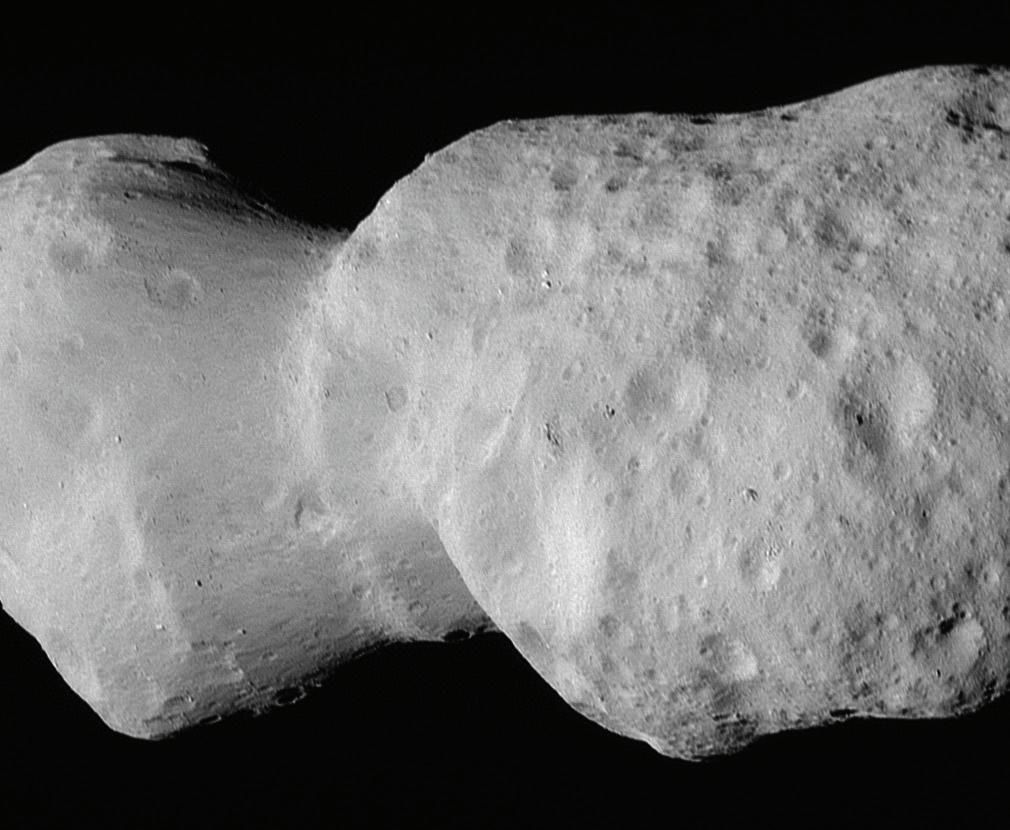
was present, linking the spacecraft back to the fossil that inspired its name. And Brian May (of the band Queen) was also in Boulder (having come straight from a performance at Coachella): an astrophysicist himself, he was working on 3D visualisations of Donaldjohanson. I spent a few days working alongside him and, in a moment I didn’t see coming during my PhD, I ended up buying him a pint. That encounter has become a great pub story, but what really stayed with me was the sense of being welcomed into a community of scientists who have been working on these missions for decades.
The trip changed how I think about my own work. My PhD involves building models to understand how the surfaces of small bodies heat up and cool down. After the discussions in Boulder, I decided to add two new elements: surface roughness and the ability to model bodies that have complex tumbling rotation (like Donaldjohanson). These details might sound minor but they make a big
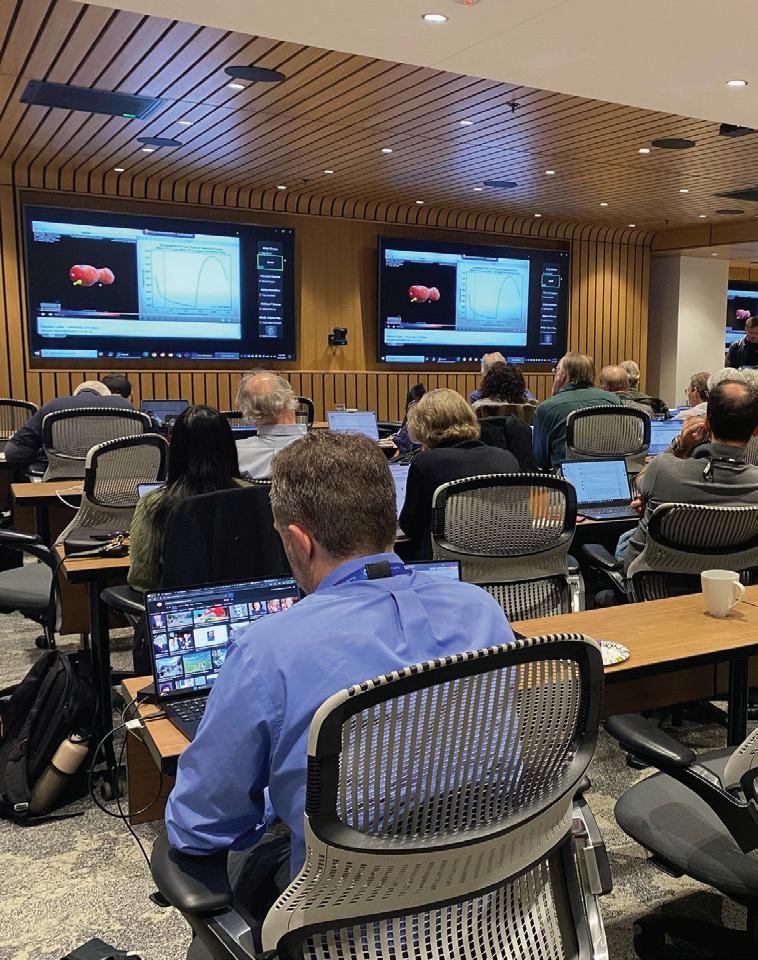
difference to how we interpret data from spacecraft like Lucy. They will also form a major part of my upcoming Confirmation of Status report at Oxford.
The trip also gave me a chance to share the story of Lucy more widely. Soon after the flyby I was interviewed by BBC Hereford & Worcester, my local station. That interview was later featured online, reaching a larger audience. It showed me how much interest there is in these kinds of missions, and how powerful it can be when scientists take the time to explain what they are doing and why it matters. Looking back, I’m hugely grateful for the award of the Tony Doyle Graduate Science Prize. Without it, I wouldn’t have been able to travel to Boulder and take part in the flyby. The experience gave me direction for my research, confidence in my ideas and memories that I will carry well beyond my PhD.
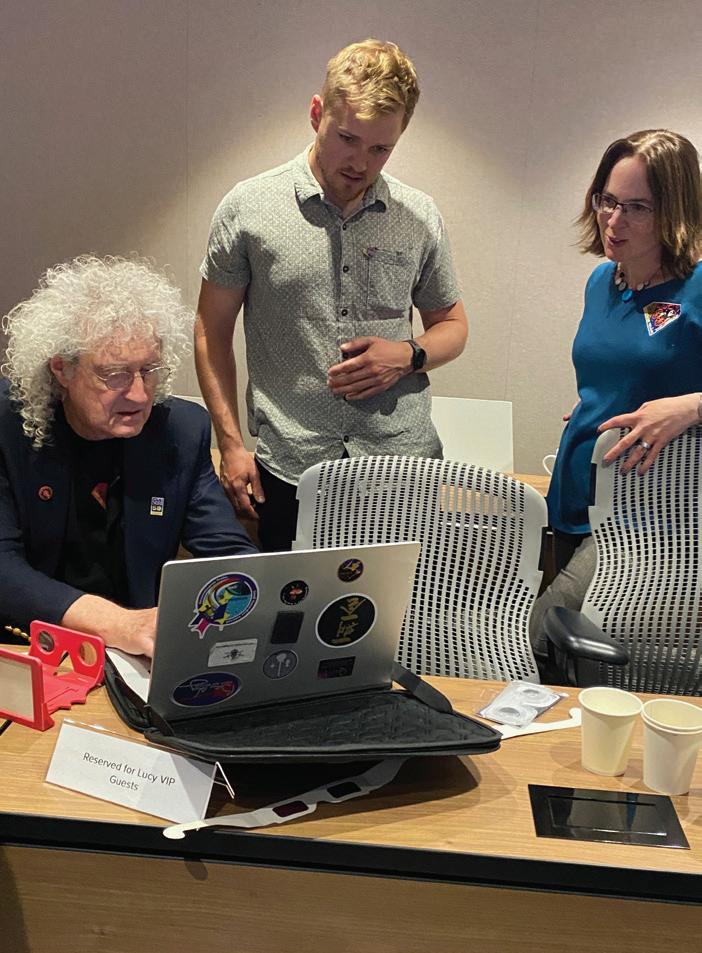
Professor Carly Howett and Duncan looking at his thermal modelling results with Brian May.
In September 2024, during his annual fly-fishing expedition to Northern Iceland, Honorary Fellow and former Hall Principal Keith Gull fortuitously became part of an outreach project connecting people to the Arctic Ocean.
This area of Iceland is well known to Keith who has visited for over 15 years. During the trip, and after a very strong northerly gale, he was fishing for sea trout on Krossos Bay on the Langanes peninsula when he noticed a small wooden boat. The boat – decorated with the wording “Destiny for Everyone” – had apparently been launched as part of the Float Your Boat programme.
Following the legacy of the early Arctic explorers, the programme is a “unique and fun outreach program that provides a novel opportunity for students and the public to learn about the Arctic Ocean.” It is supported by the International Arctic Buoy Programme, which maintains a network of drifting buoys in the Arctic Ocean to provide meteorological and oceanographic data for forecasting, research, satellite validation and a range of other operational uses.
As part of the programme, Float Your Boat participants – typically school or college children – decorate small wooden boats which are then deployed on Arctic Ocean ice floes from icebreaker ships.
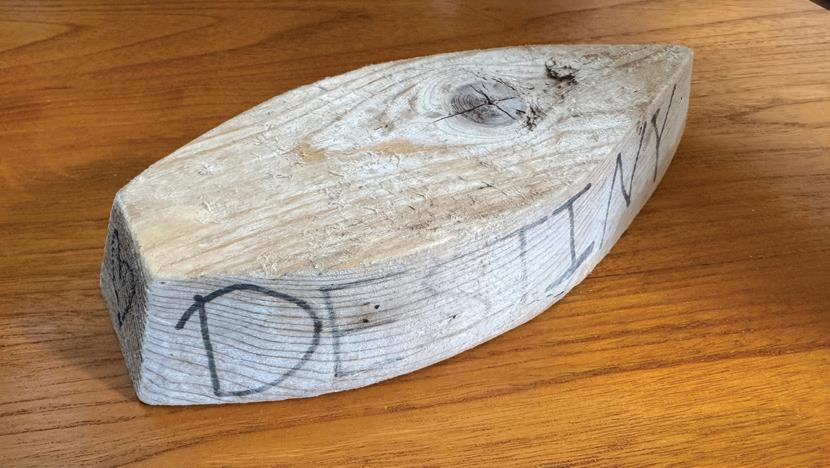
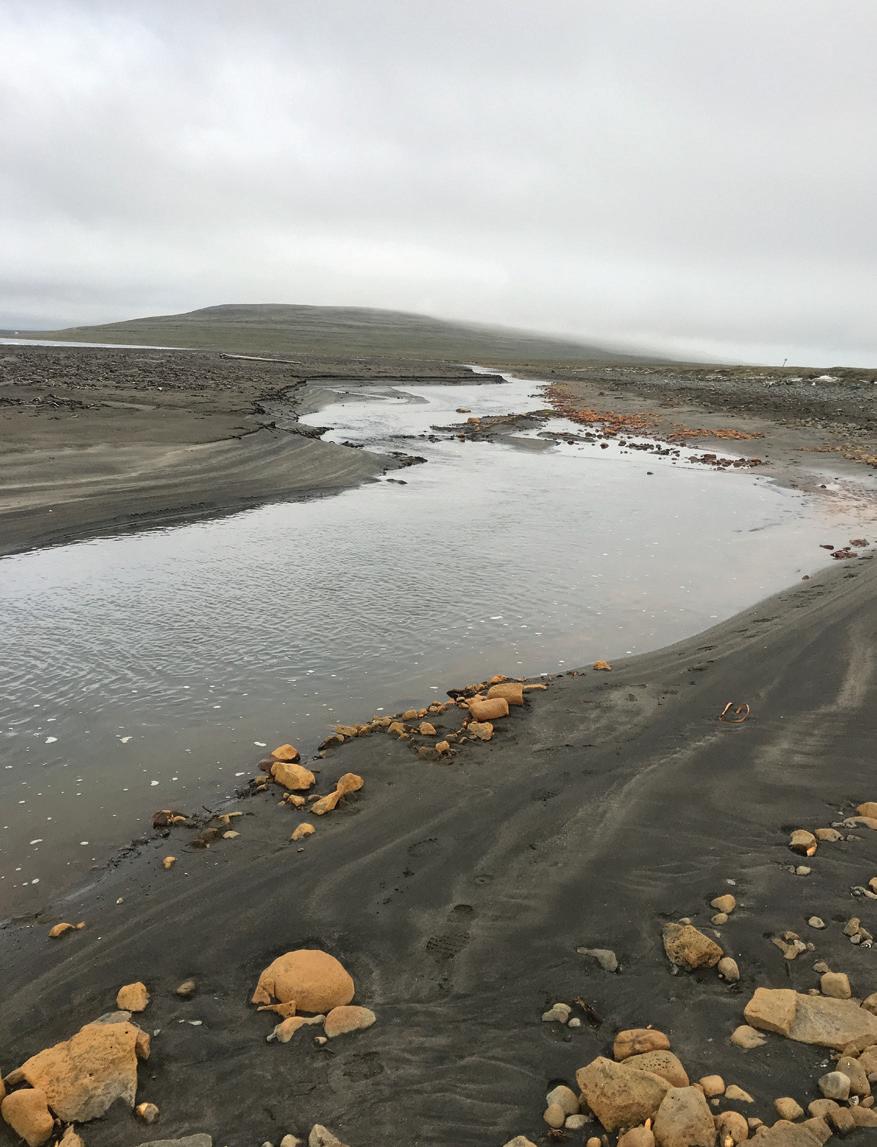
The programme also provides educators with resources to teach their students about Arctic Ocean circulation and sea ice, and how it is changing, bringing climate change and environmental awareness into the classroom in a tangible way. It is hoped that personal connections to the Arctic develop with both the creation of the boats and their discovery on distant shores, often many years later.
As well as individual decoration, each wooden boat is branded with the programme’s web address, enabling beachcombers to register their finds online. The boat discovered by Keith is the fourth Float Your Boat to be found on the Langanes peninsula in recent summers, and the project has a wider history of success, with boats travelling
from Iceland to Shetland and beyond, revealing critical data about sea currents. The boats also typically have a serial number that links to the school and date and place of deployment – unfortunately Keith’s boat is lacking that information, but the programme team have nevertheless been able to trace the boat to a school in Houston, Texas.
Find out more about the Float Your Boat initiative: www.floatboat.org/about
Last summer, Hall student Jack Gillespie (2022, Geography) and Professor David Moreno-Mateos, Tutorial Fellow in Geography, undertook a month-long research trip to the central Amazon as part of a project to gather samples from pre-Columbian agricultural sites on the Rio Negro basin. Jack has kindly shared the following report:
At the end of Trinity 2024, we set out on a scientific expedition to the central Amazon rainforest to study the recovery of post-agricultural forests which have been abandoned for between 400 and 2,000 years. Funded primarily by the Fundação de Amparo à Pesquisa do Estado de São Paulo, the trip was coordinated by Professor Flaviane Malaquias-Costa of the University of São Paulo and Professor David Moreno-Mateos, our own Tutorial Fellow in Geography. The group also included Dr Carlos Zimpel of the Federal University of Rondônia, a specialist in Amazonian prehistory, and local guides Roberto and Orival. My participation was additionally enabled by the provision of generous grants from the prestigious Explorers Club.
The research team assembled in
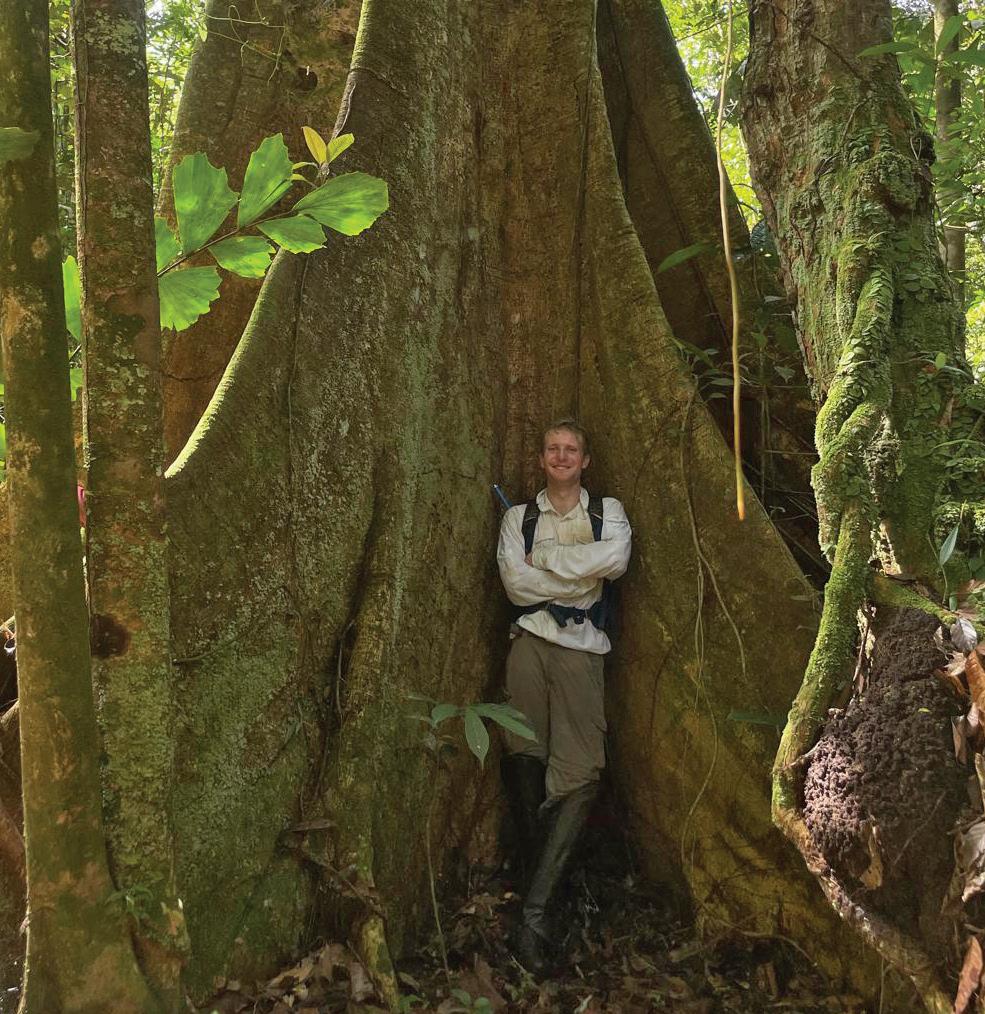
Manaus on 18 June and spent several days gathering supplies. Once suitably equipped, we sailed for five days on the Amazon, Rio Negro and Rio Jaú until reaching the navigable limit of the Jaú at 2o40’7”S, 62o58’33”W, picking up local guides at Tambor and Cashueira along the way. Guided by the local knowledge of Roberto and Orival, we were able to identify ten castanhais – stands of Brazil nut trees once cultivated by indigenous Amazonians – and two other abandoned agricultural sites.
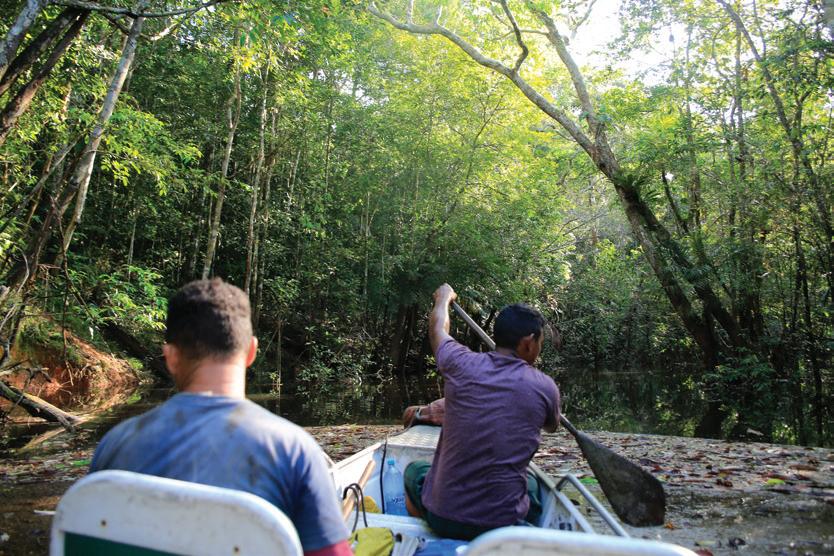
Samples from all parts of these sites were gathered – from underground archaeological evidence of the sites’ original occupation by indigenous peoples through to the trees’ youngest and highest leaves, which were retrieved by knocking them down with a slingshot (no easy task, as Brazil nut trees can grow to 50 metres!). DNA from the trees and microorganisms found in the soil surrounding the roots was sequenced using relatively novel wholegenome sequencing techniques to allow for an assessment of changes in both individual species’ genetic diversity and in the functional diversity of the ecosystem as a whole.
Meanwhile, tree cores were extracted by hand to allow for dendrochronological
assessment of the sites and aging of the trees. Carbon and optically stimulated luminescence (OSL) dating was conducted on bands of terra preta, the mysterious self-regenerating Amazonian dark earth produced by indigenous agriculture, which can be used to approximate the length of time that a site has been abandoned.
Digging for these samples also resulted in a number of archaeological finds (including an 800-year-old stone axehead) which were placed into the care of Dr Zimpel.
This work was not without difficulty: spending almost a month onboard the Ferreira Filho, the vessel chartered for the trip, the team faced intense heat and the Amazon’s infamous thunderstorms. We started work at first light in an attempt –not always successful – to avoid the worst of the day’s weather, which tends to occur in the mid-afternoon. The Jaú’s support of large populations of mosquitoes, ants and other insects made staying still for any length of time extremely unpleasant, a difficulty compounded by the necessarily slow pace of hacking through dense rainforest. Nonetheless, there were also moments of immense joy and camaraderie, from a cross-cultural dancing exchange, featuring traditional dances from Amazonas, Minas Gerais and the Highlands of Scotland, to the more relaxed
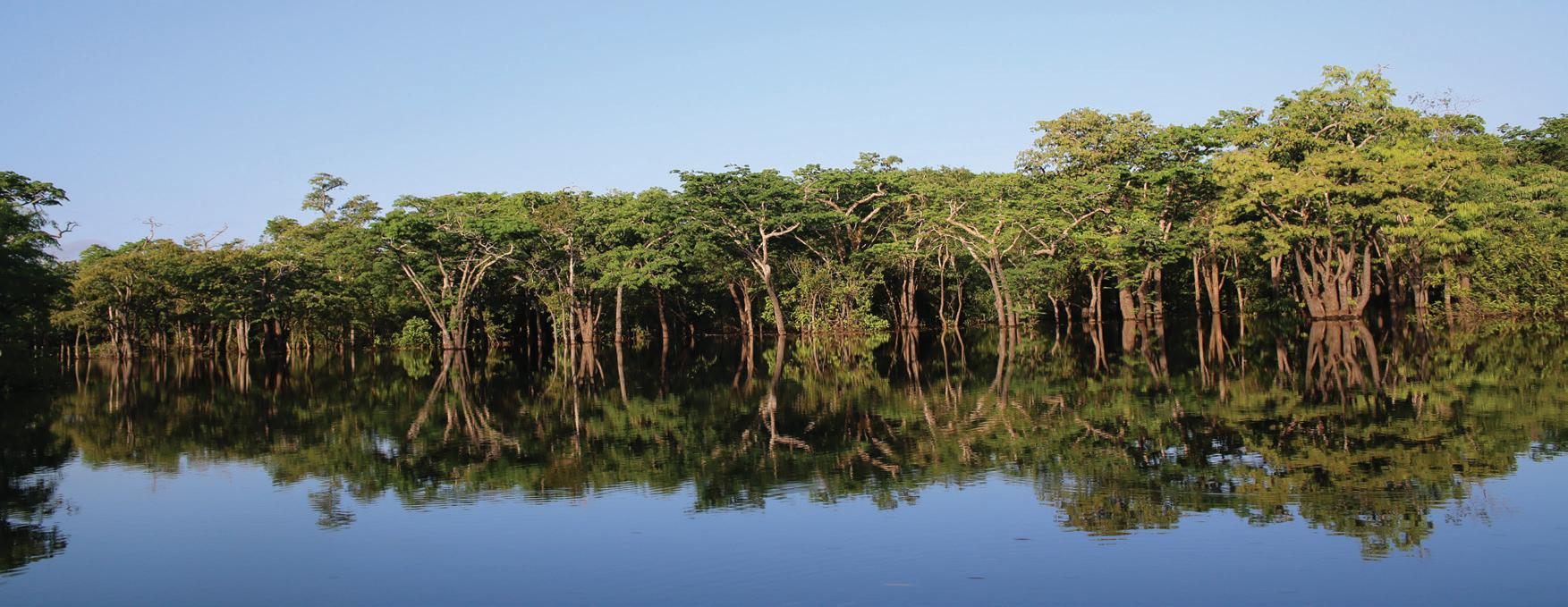
pleasure of sipping a caipirinha under the Southern Cross in the cool evening breeze. A Starlink connection, coupled with a helpful time difference, even enabled real-time footage of the election of the first Aularian Prime Minister, an event thoroughly overshadowed by Brazil’s quarter-final match in the Copa América the following day.
Although not the purpose of the study, the expedition encountered a huge range of local wildlife. Indeed, it is difficult to convey in words the variety and sheer volume of life in the Amazon. While it seems that a great deal of it is very small, unpleasant and potentially malarial, this was more than made up for by the incredible range of birds, butterflies and riverine life that we encountered. Particularly memorable encounters include large and scarily numerous caimans, several pods of river dolphins and an immense stingray – none of which seemed to deter an unhurried sloth encountered swimming across the Jaú, or a pair of bizarre hoatzin swinging from branches along the riverbank.
The team also conducted several days of outreach with the local Quilombo communities, which attracted much interest: the team’s archaeological research is of particular relevance for their attempts to gain recognition from the Brazilian government as the indigenous custodians of the land they inhabit. These
visits also provided a welcome opportunity to resupply, meaning the only significant shortage experienced – fruit (ironic in the midst of the rainforest!) – was merely an inconvenience rather than a genuine concern, and to relax. In Brazil, that means football. Sadly, I must report a crushing 7-1 defeat against the children of Tambor in a series of six-a-side friendlies, which I can only hope that followers of SEHAFC’s fortunes will overlook.
The team eventually arrived back in Manaus on 13 July dusty, sweaty and tired, but with a fridge full of samples, much improved slingshot skills and excitement for the laboratory and statistical components of the research project. Preliminary results seem to confirm initial theories that the genetic and functional biodiversity of exagricultural sites does increase the longer they have been abandoned, but further research is needed to confirm and clarify these results, and to investigate the degree to which they can be generalised to other species and ecosystems (I hear that Greenland may be on the cards in future). Of course, this means that further expeditions will be required: an excellent opportunity for future Aularians, and one which I would very much encourage them to take up.
Jack Gillespie (2022, Geography)

The St Edmund Hall Association (SEHA) awards two prizes of up to £600 each year, one for an MCR member and one for a JCR member, to help fund an activity involving a combination of personal development, community service and promoting the Hall. Henrietta Bolchover (2023, Engineering) was one of this year’s prize-winners – here she covers her experiences in Uganda, supported by the prize money.
Dirt roads, grazing goats and clusters of mud huts surrounded the village near Mbale, Uganda, where I spent several weeks teaching Maths and Physics. I had agreed to support both the local primary and secondary schools, where students, aged anywhere from four to twenty-two, were studying up to O Level (equivalent to GCSEs in the UK).
Since Uganda’s independence in the early 1960s, its education system has largely
mirrored that of the UK. The curriculum closely follows British syllabuses and much of the material will feel familiar to any UK student. But the reality of teaching there was a world apart from anything I had experienced at home.
The school consisted of just four classrooms set out on an open field. Lessons were interrupted by the occasional goat poking its head around a doorway, and initially my only teaching tools were a blackboard and a piece of chalk. On my first day, I was left alone to teach two-hour Maths lessons to classes filled with students my own age who sat empty handed.
Resources were extremely limited. There weren’t enough textbooks or stationery to go around, so much of the lesson time was spent copying problems from the board and handing around calculators. With the generous support of the Aularian Prize,
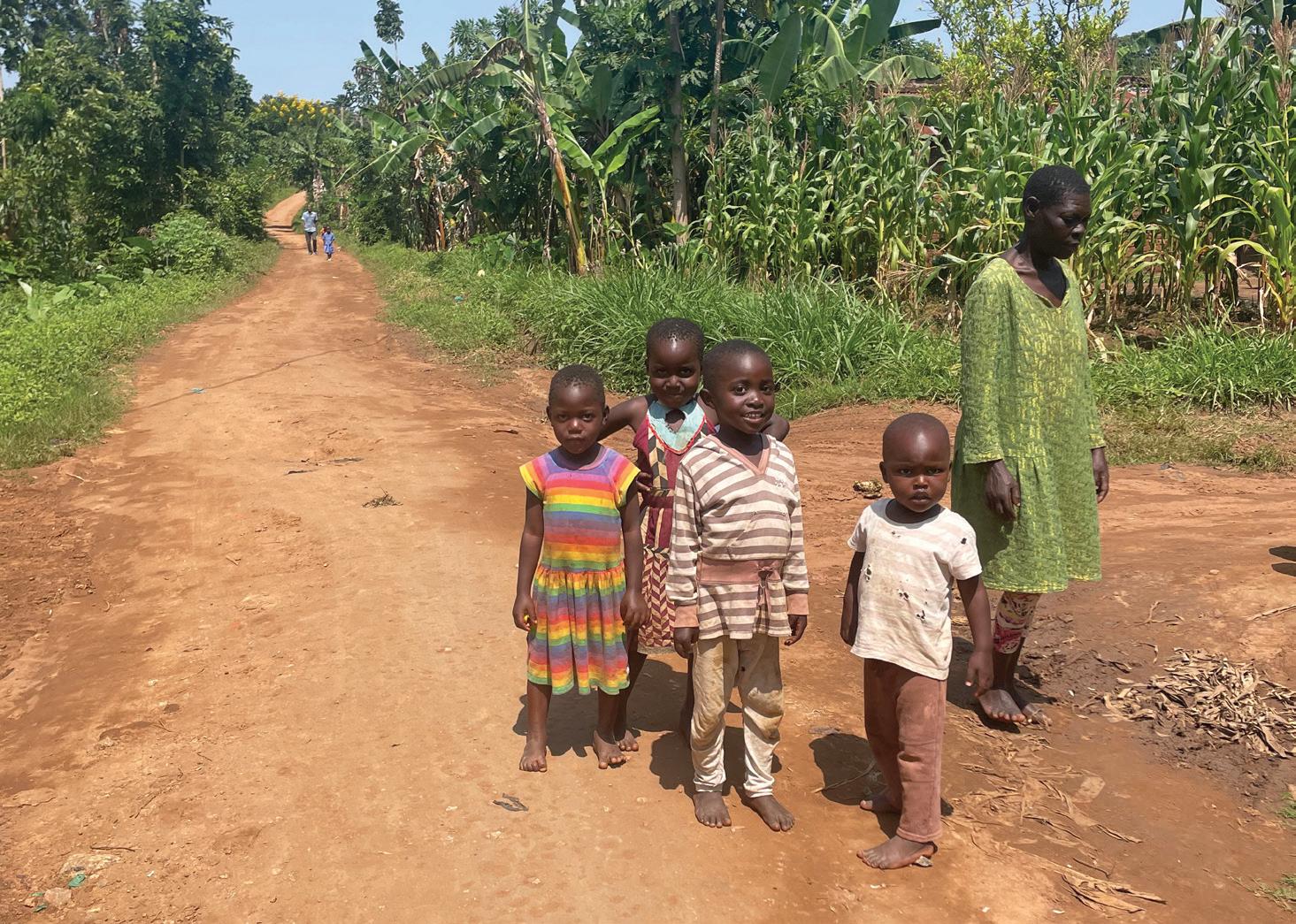
however, I was able to donate essential resources such as UK textbooks, revision guides, calculators and rulers, all of which made a noticeable difference to the students’ learning and confidence.
One of the biggest challenges the students faced was inconsistency in their education. If a family couldn’t afford the termly school fees (around £6) the student would have to wait until they had the funds to return, without any structured way to catch up on what they’d missed. I met several students who had dropped out entirely after primary school, so I made it a point to provide them with notes and textbooks in the hope they could continue learning independently until their families could support them again.
Governance issues and economic hardship have made many families sceptical of education’s power to change their children’s futures. For many, subsistence farming feels like the only path. Yet, what struck me most was the unwavering
ambition I encountered. Many students still dream of becoming doctors, teachers and business owners, with some younger members of the community already turning those dreams into reality. In a place where opportunity is scarce, even one family member securing a job beyond agriculture can lift not just their household, but the wider community as well.
My time in Uganda gave me far more than I gave in return. It deepened my appreciation for education, for resilience and for the quiet power of hope in the face of hardship. Along with the school staff and pupils, I am extremely grateful for the money provided by the SEHA, which was used to help fund textbooks, stationery and much-needed sanitary products. I also bought chemicals to enable students to see first-hand science experiments that they could have only pictured on a chalkboard previously.
Henrietta Bolchover (2023, Engineering)
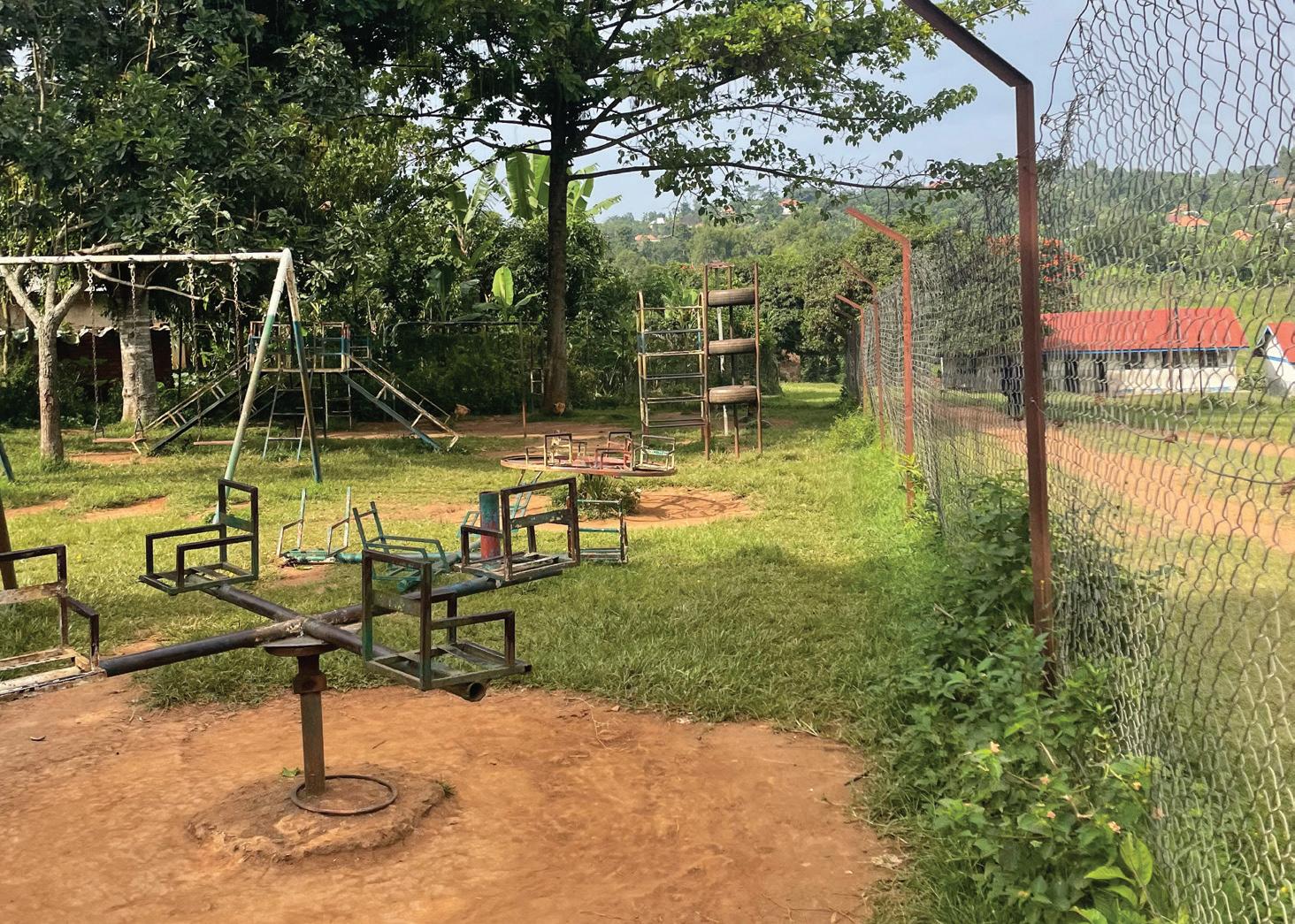
In the late-night hours of 11 July, the Anastasia left the docks at Dover with sights set on Calais, carrying six Oxford swimmers and two Teddy Hall postgraduates. Madelyn Letendre (2024, MSc Therapeutic and Translational Neuroscience) and Cole Mason (2024, MSc Nature, Society and Environmental Governance) represented Teddy Hall for the biennial Oxford vs. Cambridge relay across the English Channel.
Founded in 1998, this year marked the 14th time the event has been held. Six swimmers per university pledge to alternate swimming one-hour lengths through the cold waters until the coast of France is underfoot, in addition to committing to raising funds for charity in the preceding months. This year was swum in support of the Ocean Conservation Trust, an organisation pursuing a positive, people-centred
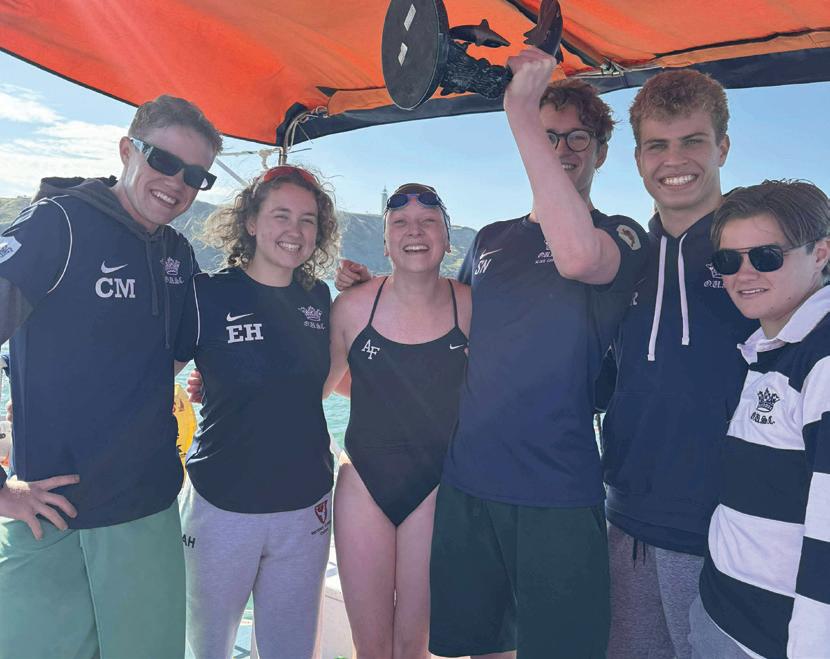
The 2025 Oxford English Channel relay team. From left to right: Cole Mason (St Edmund Hall), Eve Hewett (Hertford), Madelyn Letendre (St Edmund Hall), Sam Nicholls (Corpus Christi), Joshua Robinson (Magdalen), Milo Holland (Magdalen).
approach toward ocean restoration and protection. The team was gratefully supported by the crew of the Anastasia, who assured a safe passage, diligently logged the group’s swim and made sure the attempt conformed to regulations.
A longtime swimmer, Madelyn hails from Colorado Springs, Colorado, where she specialised in long-distance freestyle. She attended the United States Air Force Academy where she continued her swimming career and developed an interest in the mental health of military servicepeople. Cole Mason of Fort Collins, Colorado, grew up swimming and continued his athletic career at Williams College, focusing primarily on long-distance freestyle and individual medley. Both will be staying at Teddy Hall for a second year, pursuing the Master of Public Policy and continuing to swim for the Oxford Blues. Their relay team was rounded out by fellow Oxford University Swim Club members: Eve Hewett (Hertford), Joshua Robinson (Magdalen), Milo Holland (Magdalen) and Sam Nicholls (Corpus Christi).
At 11:42pm, Joshua ran down Dover Beach against his Cambridge opponent to kick off the long swim. With a full moon and calm seas, the conditions were ripe for a speedy crossing. By the end of the first hour, he had established a solid lead against Cambridge and Milo was set to swim. The duo faced the team’s first swarm of jellyfish upon their transition, Joshua taking the brunt of the stings. Milo took over with a high-tempo swim as the team on deck began alternating between taking naps and cheering him on as he passed the 15-, 30- and 45-minute marks. Cole took on the third leg in the choppy,
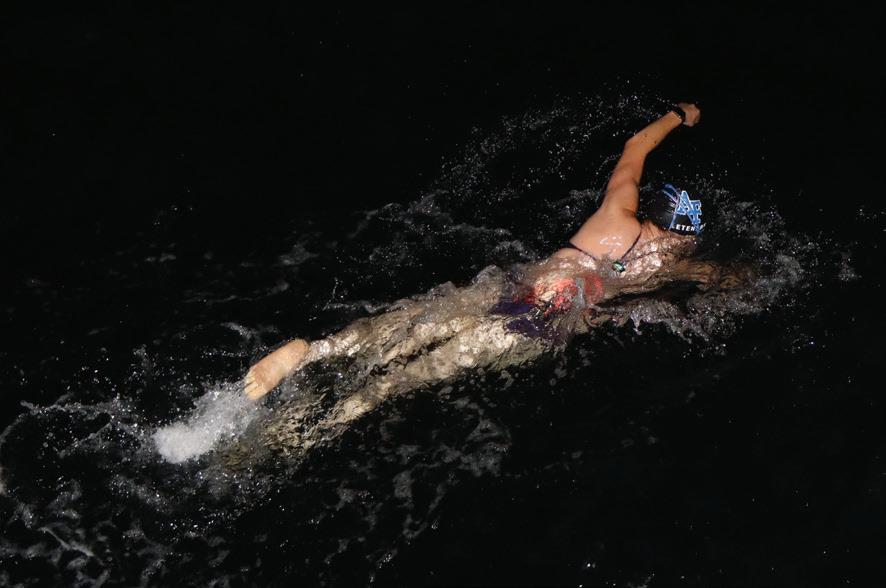
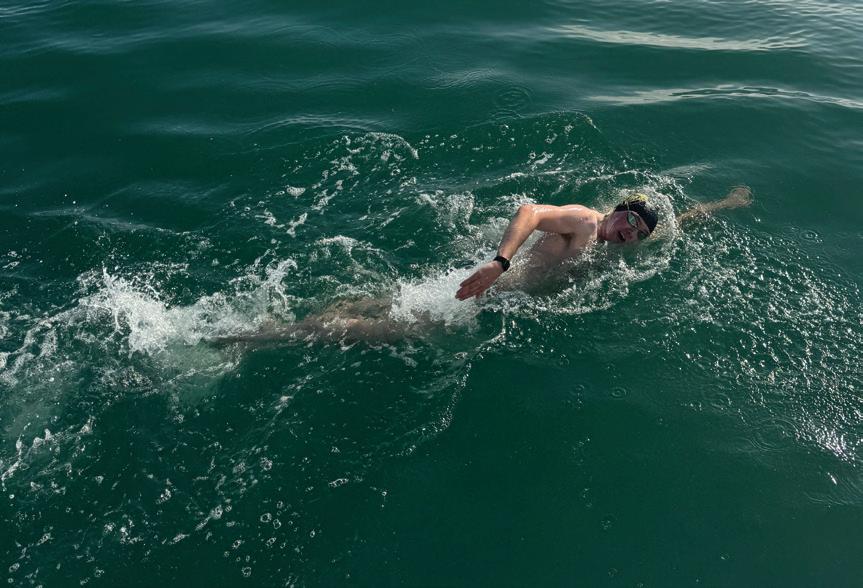
dark waters of the central channel, leaning heavily on his years of distance training, and keeping his eyes locked on the boat light with each breath. At 2:42am, Madelyn jumped in behind Cole to take over, swimming strongly as the first glimpses of dawn textured the sky:
“Madelyn is swimming well, she has found her sweet spot besides Anastasia... The sky is starting to lighten up, sunrise is still a way off but the moon is amazing.” (Observer Liaison notes in the Swim Log)
Sam swam a strong, sustained leg as he pulled the group further ahead of Cambridge, a lead the team would look to hold as they passed the halfway point. At the end of his hour, Eve’s long-awaited swim came as the sun crested the horizon. She was the last member of the team to hit the water, her steady pace pulling the sun further into the sky. It was the end of the sixth hour which meant the first swimmers of the relay were gearing up for a second swim. Joshua and Milo put in two more good efforts, with Cole taking on what would be the last full hour. Working hard to put the team in a good position to finish, Madelyn prepared for the last dash up the rocky shore of France:
“Cole is done in, he has given it his all. Brilliant swim. Madelyn is going down the ladder to the platform. Madelyn in, Cole out so slick, and she is off!”
After 14 minutes of hard swimming, Madelyn came in with the waves at Cap Gris-Nez. From the safe depths of the water, the team cheered as she triumphantly mounted a rock and enthusiastically pumped her fists in the air. Our total time was 9 hours and 14 minutes – the fastest relay crossing of the Channel recorded this year.
Madelyn, Cole and their teammates celebrated the crossing with sun-bathed naps on the return boat trip, and are grateful for a safe passage and excellent support crew. Swimming across the Channel was a memorable experience and an achievement the six swimmers are proud of and, of course, they are beyond pleased to keep the trophy safe in Oxford for the next two years. In total, the group were able to donate just over £2,800 to the Ocean Conservation Trust and they share this victory with all those who supported the relay and their fundraising effort. Happy swimming!
Cole Mason (2024, MSc Nature, Society and Environmental Governance)
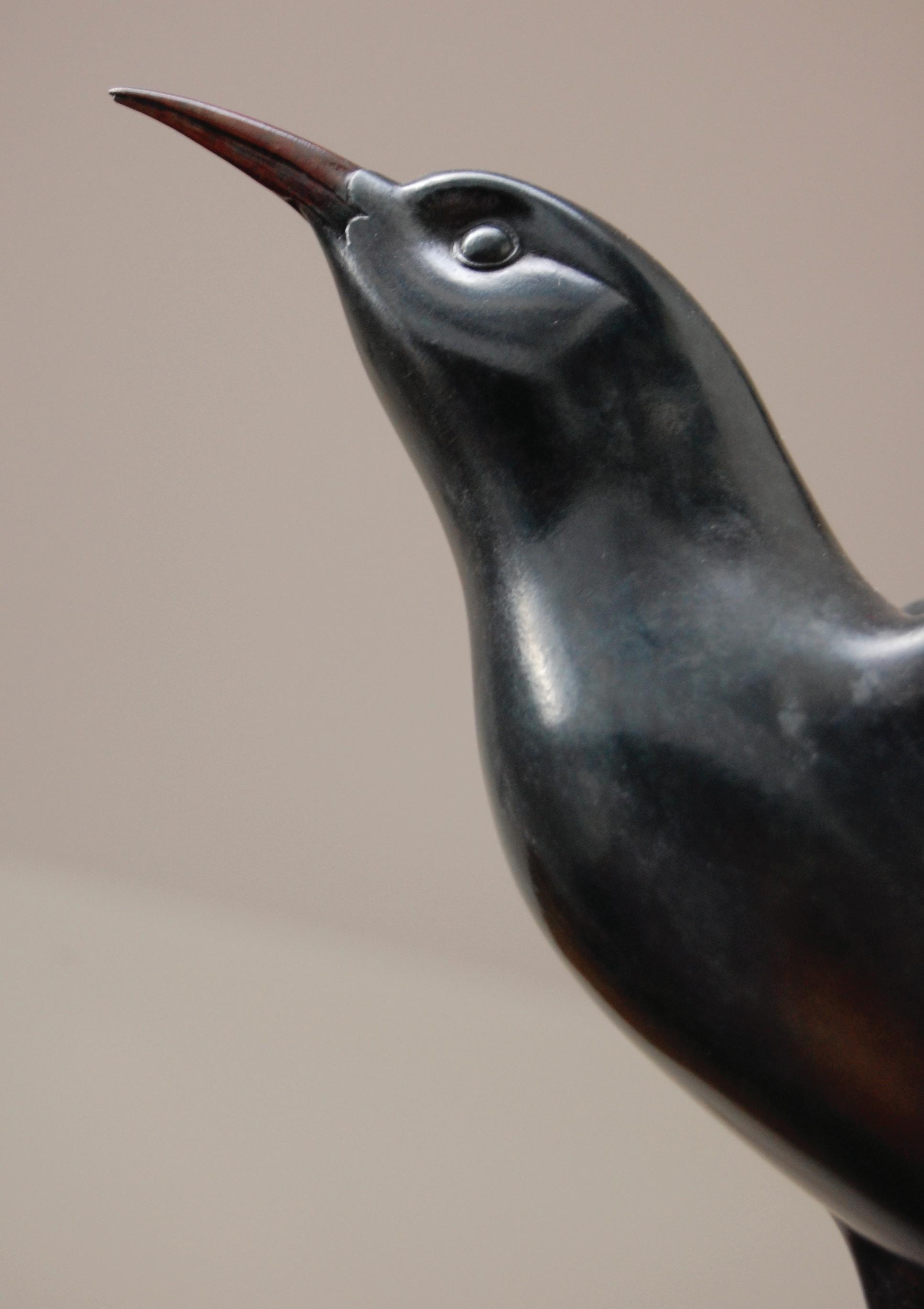
‘Absence has a grammar’ won first prize in the National Poetry Competition 2024, organised by The Poetry Society.
I am learning to use the abessive case as if I were Finnish, to indicate that what I miss is so much a part of me that its loss is structural.
The suffix -tta turns a word into a shadow of itself. Emptied of substance, light blows through it. I think of moonshine, of a bottle of Koskenkorva, the Finns’ national liquor, renamed Koskenkorvatta when there’s none left. Koskenkorvatta, I howl.
Itkin syyttä means ‘I cried without reason,’ but when a child is away there is reason enough. Tonight itkin syyttä
If I join -tta to son it impels me to write this –not a sonata, nor sonnet, but still, of course, a little song of longing.
With thanks to Diego Marani for Koskenkorvatta
Fiona Larkin (1983, English)
Listen to Fiona read the poem on the National Poetry Society website: poetrysociety.org.uk/poems/absence-has-a-grammar.
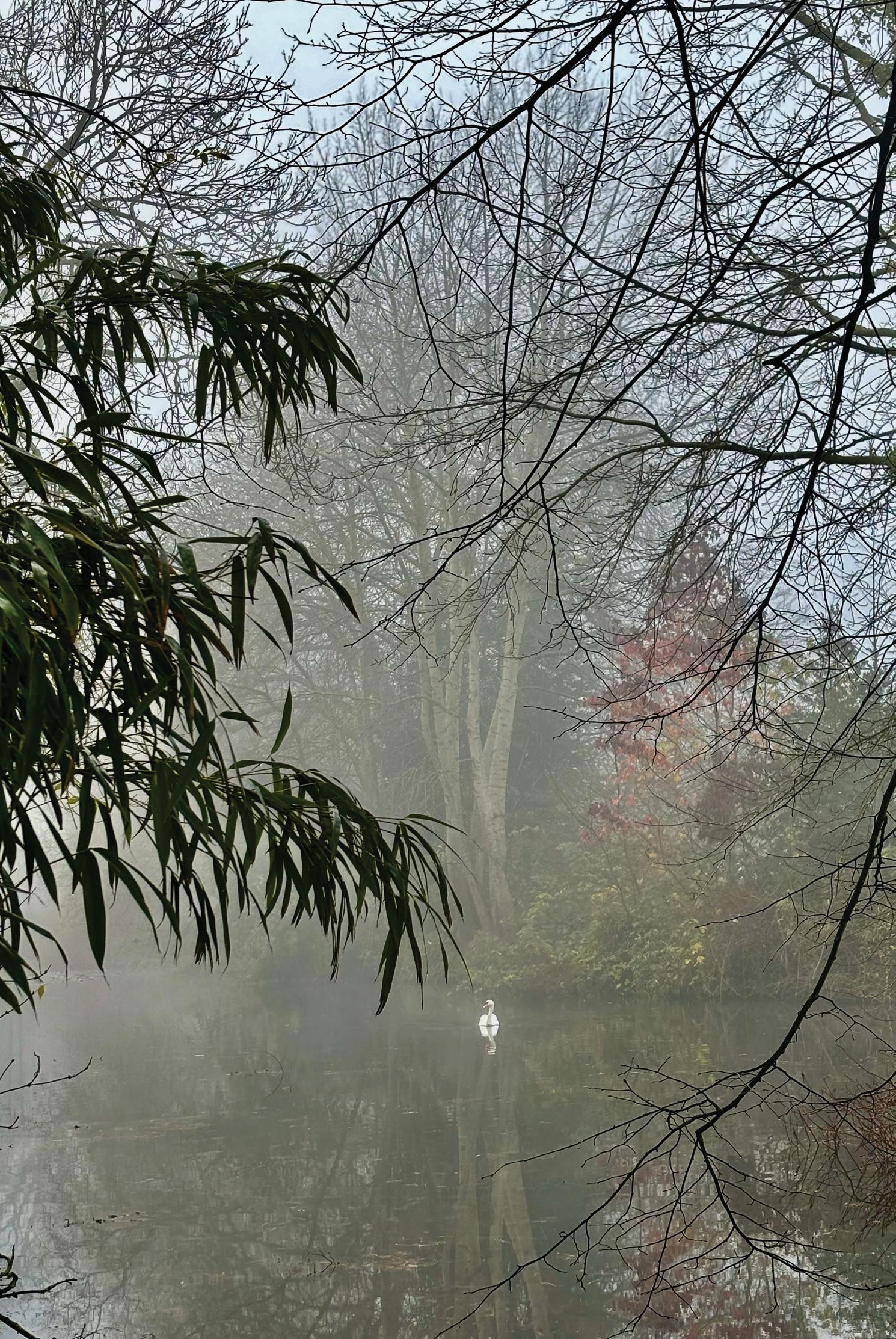
During his long career at the Hall, The Revd Graham Midgley served as Dean from 1956 to 1978, as Vice-Principal from 1969 to 1978 and as Chaplain from 1978 to 1985. On retirement as Tutor in English in 1984, he became an Emeritus Fellow.
After his death in 1999, the College received a generous donation to fund the annual Graham Midgley Memorial Prize for poetry. The prize is awarded to an undergraduate for a single outstanding poem in English of no more than 40 lines. It has been won by a series of gifted students, several of whom have gone on to become published poets.
Prize-winner
Apricot Jam
My mother said the fruit had to be soft not bruised, just willing. She held them one by one, cupped like eggs, pressing her thumb gently into their sun-warmed skin.
We boiled the halves until they slackened, their flesh yielding. She let me stir, wooden spoon carving slow loops through sugar and fog.
She never mentioned how she learned to cook but once said her mother used to stand at the sink peeling fruit, facing the wall as if memory lived there.
We poured the jam into glass jars and left them lined along the sill. The kitchen smelled of the sun, even after the moon had climbed the cabinets.
Celine Gu (2022, Economics and Management)
Proxime accessit
Then again, the man only failed to make the deal because he was befuddled; He was only befuddled because his wife had betrayed him; His wife had only betrayed him because their shared life proved a disappointment; Their shared life only proved a disappointment because he suffered from an aromantic lethargy;
He suffered from an aromantic lethargy only because he felt dissatisfied with her shows of care;
He began to feel dissatisfied with her shows of care only since she had missed their anniversary;
She had only missed their anniversary because her train was cancelled; Her train was only cancelled because the conductor was off striking; The conductor was only off striking because his contract hadn’t been renewed; His contract hadn’t been renewed only because the man failed to make the deal… (“And all for the want of a horseshoe nail”—we have heard this all before.)
Alright. But have you also heard that there are strikes only because there is dissatisfaction; dissatisfaction only because there is lethargy; lethargy only because there is disappointment; disappointment only because there is betrayal; betrayal only because there are deals; deals only because there are men; men, only because…
But enough!—Let us not behave like gluttons. Or will no amount of reasons ever satiate your appetite?
David Hrushovski (2023, Philosophy and Modern Languages)
A blurry camera lens shows the heavy saturation of childhood slowly dispersing, seeping into every version of me that I’ve madelike candle wax dripping into icing, because I took too long to make a wish.
Lola Forbes (2024, English)
Toads
My mother loves to look for toads in the garden. They took a few years to get used to the pond; Years to come out during the daytime, too, And to start laying their spawn there (because raising a child isn’t so easy around here) And maybe they didn’t want to be seen for a while. It took years for them to find they were home. During those years my mother waited patiently: She listened after dark and told my father and I when she heard the croaks And he came running, and I didn’t. They sat with the window open into the night and smiled at the sounds of the toads –
Just to know they were there was enough.
Now I ask whether they’re out yet, What time of year they’ll be there, Whether they’ve laid yet, and they tell me as eagerly as if they’d raised the things themselves.
And I’ve caught sight of a couple, too, Knelt down with my father to watch them move, freely and unselfconsciously, And seen my mother’s excitement at being able to love something Openly and with abandon. My mother’s manifesto, or how to look after toads, or how to forgive your children when they don’t seem to be yours anymore: Take the time to watch the surface for ripples, And to find the right sort of weeds for growth, And to tell everyone about the toads, and bring them out in their socks to look. Most importantly, listen to them croak, and see their skinny legs kick And love them as if they were your own.
Sophia Bursey (2022, English)
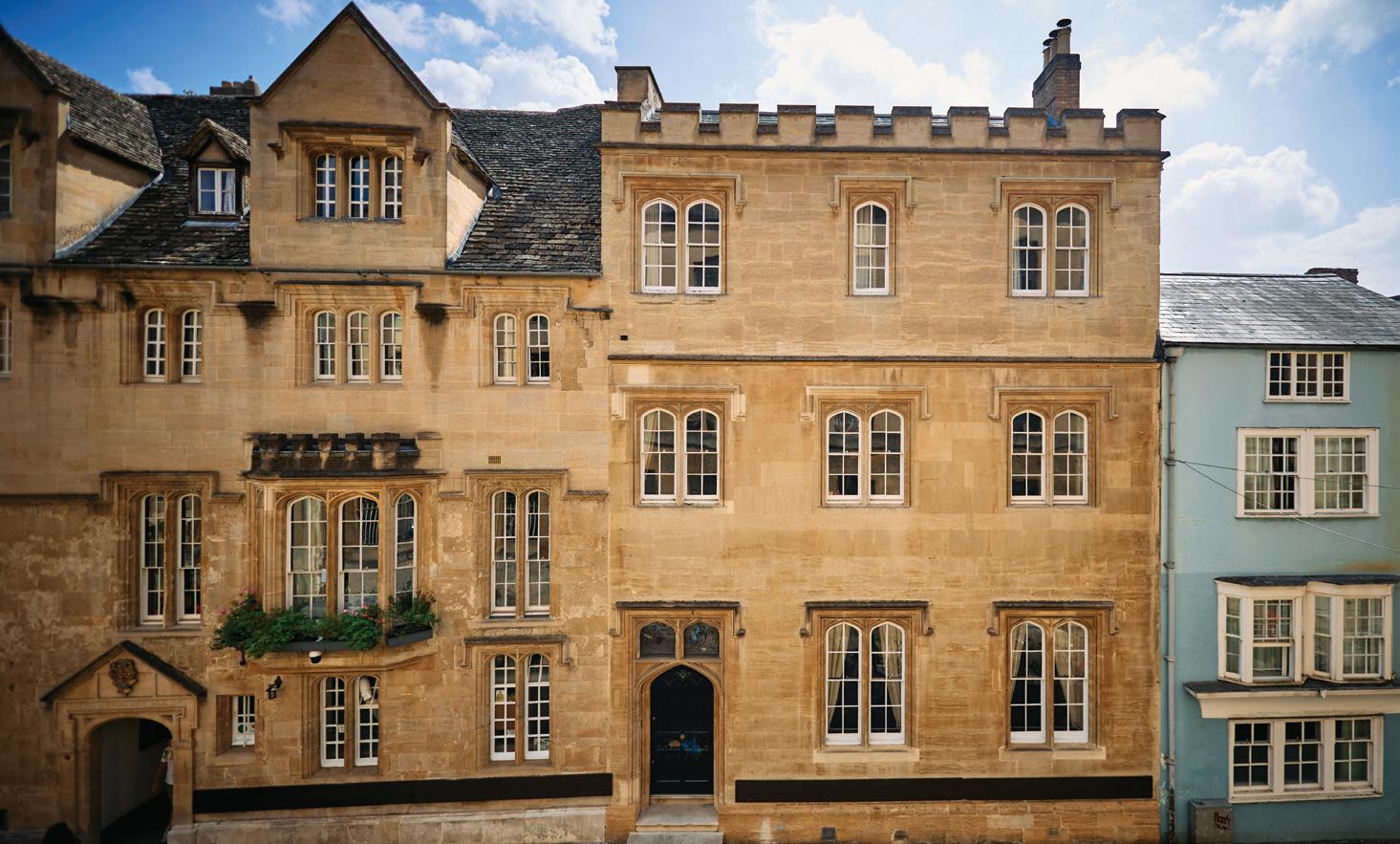
The George Series Prize was created by a bequest from George Series, the first Fellow in Physics at St Edmund Hall. George felt deeply the tendency of undergraduate science courses to play down the importance of the ability to write well on either scientific or non-scientific subjects.
Accordingly, he made a bequest to fund an annual prize, open to students in all Natural Science and Biological Science subjects and Mathematics, to be awarded for the best piece of creative writing.
The piece can take any form: story, essay, poem. The subject may be purely fictional but may also relate to broad discussion of any nonfictional subject not directly included in the regular science curriculum followed by the entrant.
Our Soils
What do you imagine when you picture the environment? Is it illusions of bouquets of greens, leaves floating through the wind, washes of limes and sages carpeting the floor? Or maybe you daydream through flowing waves of azure that cascade and shine, cool gradients that give life and protect a myriad of secrets stored within citadels of coral. Even the cynic may imagine bursts of crimson, headlines of warming and imminent destruction, danger scorching from behind. These colours swirl around our imagination and yet not a single one is brown, the colour that we associate with soil.
Our conception of soil as a society is bleak. It is the brown, dirty stuff that lurks in the garden. It crumbles and hardens in the heat, yet sloshes about in the rain, making
a mess. It is too difficult, too unruly, too sensitive. We try to control it, attempt to force life from its depths and yet all our beloved flowers eventually die from the soil’s melodramatics. But what would happen if we stopped our greed for control? What if we could appreciate the soil for more than the flowers it can produce? Whilst as adults we treat soil as dirty and disease-ridden, to be avoided at all costs, as children many of us were fascinated with the mud in our gardens. We ran outside, rolling around in the grass and the soil. We trekked through jungles, jumping and skulking through the swamps that coated the earth in the rain. We played as witches, brewing magic potions, mixing all of nature’s ingredients to create powerful love spells or evil curses. Not to mention the mud pies we’d bake, and how we picked and prodded the mole hills to admire the wildlife inside. We got our hands dirty. We believed in the magic.
But what if I was to tell you that magic, now forgotten, still exists. Soil is alive, it is teeming with biodiversity from billions of microorganisms to thousands of worms. Take a teaspoon of soil and you cannot imagine the millions of metabolic and chemical reactions occurring. Carbon being squirreled away for storage, organic matter transformed in milliseconds and flashes of energy darting back and forth. The soil is brimming with nutrients, connected in a complicated maze of mycorrhizal fungi, confounding any onlooker. Secret messages, packages of nutrients and love, all hidden away from the human eye, the soil as their secret keeper. Soil is not just alive, it is thriving.
Nevertheless, what if I were to tell you that this source of life is slowly being stripped away. Soil, like the trees, like the oceans, like the atmosphere, is under a barrage of anthropogenic destruction. As trees are ripped up, the soil is torn apart. Branch ripped from friend’s branch, root split from root. Whole civilisations collapse and tumble into a barrage of soil swept away in a downpour. Heat sucks every drop of water, rinsing the soils dry. They are left cracked and blistering, caked in the salt that was left behind. We sterilise our soils. Chemicals purge the living, claw out the nutrients and choke the soils with an artificial sludge. Our soils are dying and we are the ones at fault.
This is not inevitable. Take off your blindfolds and see. Tear through the tinted glasses and open your heart to the world around you. Feel the magic. Embrace the worms that coil around your fingers and the mites that wander across your palm. Demand change, be the change. Give voice to the soils we silenced in our maturity. Save our soils, save the magic.
Matilda White (2023, Geography)
Proxime accessit
Life as We Don’t Know It
Everyone talks about life as we know it. It is, after all, all that we know. The life that we study, with its carbon and water. Our proteins, our fats, our legs and our arms, our gills and our fins. Living in our forests and our oceans, flying through our skies, building nests and skyscrapers, eating, breathing, and doing what we think life must do.
This century, we have begun to look up – to look out into the dark vastness of space. To search for life beyond Earth. To send missions, land rovers, build models, and speculate. The Dragonfly Mission to Titan, Europa Clipper and JUICE on their way to the Jovian system – all sent to look for any sign of beings beyond. But what if life out there isn’t what we’re searching for? What if life out there isn’t the same?
The NASA definition of life – a self-sustaining system capable of Darwinian evolution – has led us to scan the seas of Europa and the subsurface of Mars for the microbes we know and love. It’s all we think could survive the hostilities of a non-Earth. We assume life needs water. We assume it needs carbon. And oxygen, sulphur, phosphorus, nitrogen, hydrogen. But what if life out there does not?
A square of silica, blobbing about in an ocean of methane – Titan could be the key to life as we don’t know it. Life could thrive off the energy of lightning strikes, drink the diamond rain on Uranus and Neptune, breathe the sulphuric acid atmosphere of Venus, watch the view from mountains as large as Mars’ Olympus Mons. And that’s just within reach of our sun.
Beyond the solar system – who knows what we could find? What dwells on the hot Jupiters and super-Earths of systems as close as Proxima Centauri and as far as OGLE2005-BLG-390Lb, too distant and strange to warrant a readable name? What lurks beyond the branches of the Milky Way? Are there thoughts out there in the far reaches of Andromeda? Are they watching us, listening to our signals, observing our petty attempts to escape the gravity of our planet? Voyager 1, gliding through interstellar space – has it been spotted? Is it being tracked?
It makes sense to look for life as we know it. To focus our search on ocean worlds with water to act as solvent, and the elements we know Earth-beings need to survive. Scientists like to do what makes sense – to search for the known that could possibly exist in the unknown. But what makes sense here may be the opposite of what we need to do. Life out there probably does not look like us. It must follow the same laws of physics and chemistry – probably – but in a fundamentally different setting. Change the things we take for granted: our gravity, our atmosphere, our ‘protection’ from solar radiation, even the size of our star.
Life as we know it is life here on Earth. Life as we don’t know it – and will we ever really know it? – is what’s out there. I long for a day that may never come. A day when we find out what lurks beyond.
Olivia Allen (2021, Earth Sciences)
‘She is brown,’ I said to you, less in annoyance than wonder when she flew past us with a certain flamboyance not over but under our gate to settle down into the tree beside her mate.
‘But he is black,’ you replied, ‘and the name is his.’ ‘As it always is,’ I poked. ‘I was your bride And took your name, Yet we are not the same.’ You’d have joked back.
but couldn’t deny it. We grew quiet when we heard the blackbirds sharing words between them. Whose song it was we would never know, not having seen them sing. But it would be wrong to say, even if we could.
Erica McAlpine, A C Cooper Fellow and Tutor in English Language & Literature
Erica’s new collection Small Pointed Things is published by Carcanet, www.carcanet. co.uk/9781800174771/small-pointed-things/. ‘Blackbirds’ first appeared in the journal Liberties.
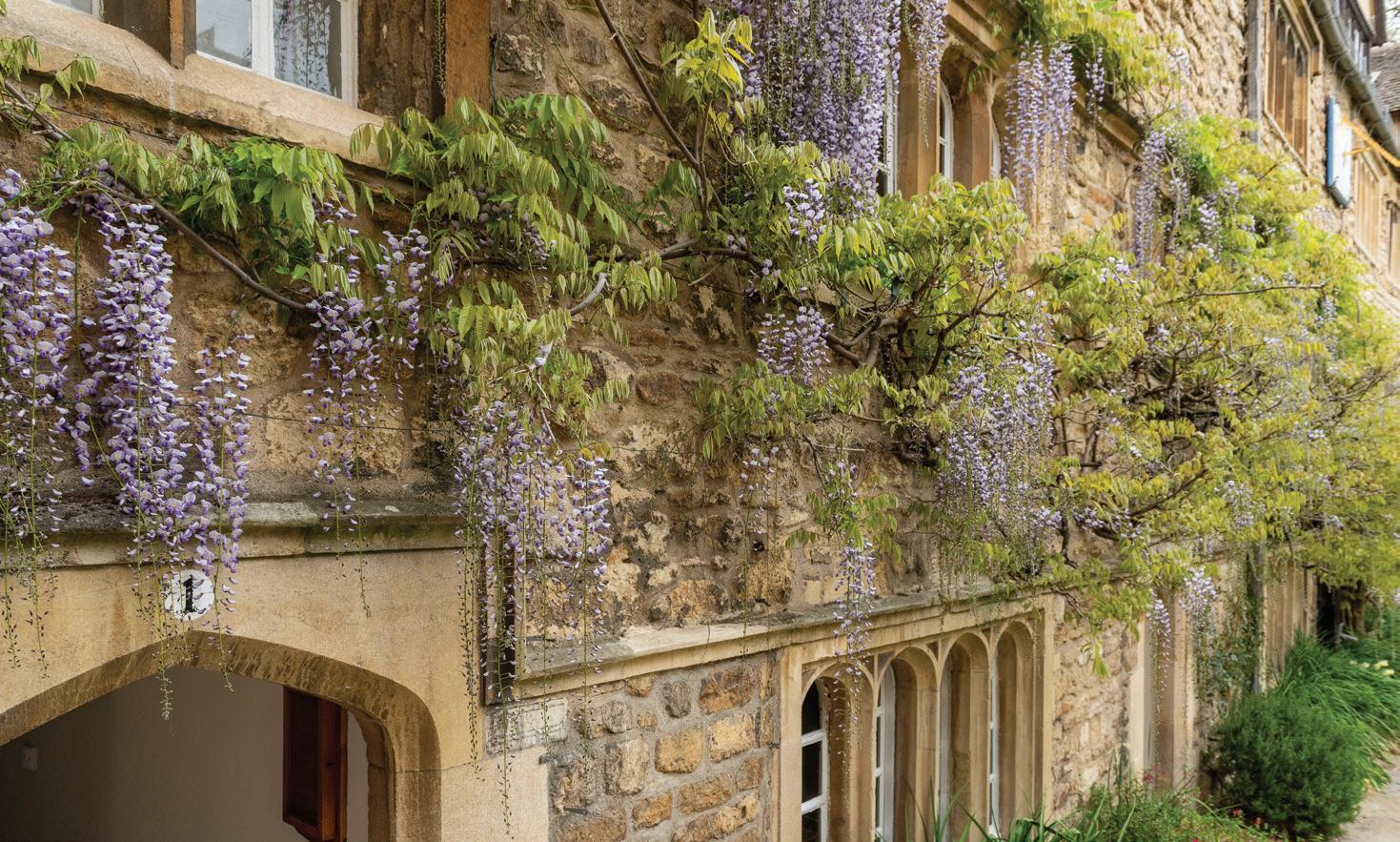
Not Quite Midsummer
Mervyn1 was my partner. He played doubles at Wimbledon and could leap backwards. We demolished all three pairs, then the mandatory cream tea, and with minutes in hand, I ran across to the august school for girls.
Who’s this? And interrupts our fairy feast?
In full fig, Cobweb and Mustardseed, munching pears, were standing at the huge sash-window they helped me to haul open. Peaseblossom hared upstairs, screeching, pursued by stumbling Bottom.
What angel wakes me from my flowr’y bed?
Too long. Too late. Our green-eyed queen was a world away. Cursing my ill fortune, I had to leave that middle summer’s spring, only to turn one last time, and see her at the crystal wall, hands raised, and helpless.
Never harm nor spell nor charm come our lovely lady nigh.
1 Mervyn Morris (Honorary Fellow, 1958, English) OM Jamaica and former Poet Laurate of Jamaica [Editor’s note].
Strigil
Rough-tongued bathtowels are seldom rough enough. Doubtless a number of strigil-makers are still in business but if not, I shall blunt our kitchen knives and fashion my own.
So what’s up this morning?
Those teenagers - life sentences. That bishop on the run; both more newsworthy than Ivano, Sudan, Gaza, the volcanoes in Iceland and Indonesia...
Self-deceivers, tricksters and the outright treacherous are touting their practises - oily words, nonsensical promisesand profiteers blathering and lathering us, and the spirits of all we deny are swimming home to haunt us...
All those summer nights when I never opened my gob. I might as well have been a torpid poorwill. When I scroll up the blind, the little farmhouse tucked under the shoulder of Gallow Hill is flanked now by two mighty hangars, and in our valley rears a kind of Alcatraz, foursquare, slit-eyed, floodlit day and night.
It’s no good blaming the blind. I blame myself. I blame my own kind.
On each page of hours, filth, garbage, fly-tips; another fleet of sky-growlers, hoarse and roaring. We’re a waymarker for their daily death-gifts.
How I long to come to these late mornings armed not with anger or despair but clean of all leavings, all detritus; to hear around me each sweet song, and witness each thing, every thing, for the first wild time.
Kevin Crossley-Holland, Honorary Fellow
Kevin’s Collected Poems 1972–2024 are published by Arc Publications: www.arcpublications.co.uk/books/kevin-crossley-holland-collectedpoems-1972-2024-701.
Every week, at 8:00pm on a Wednesday in some College venue or another, a group of Teddy Hall students meet in order to read and discuss pieces of creative writing which they have composed. Having long spoken of compiling these writings into one document, this prospect was eventually actualised through the magazine which came to be called Disaster! (readers should consult the magazine’s foreword for an explanation of its disquieting name). The magazine brought together not only poetry and prose writing, but also student artwork and photography to accompany the creative writing pieces. Printing costs were generously funded by the College, and it is hoped that more instalments of Disaster! will appear next year.
David Hrushovski (2023, Philosophy and Modern Languages), Editor of Disaster!
Old Crow Street
In number seven, Old Crow Street, There lived a Mademoiselle, Who had been young in older days –How old she was, one could not tell. Her skin was stretched over her face
Like a drum’s batterhead,
But her long hair, hospital-white, Fell limp over the red
Of the leather coat she wore; They said it was a gift
From a dragon she had loved, Whom she had hurt and left adrift.
The other houses on the street Stood empty in the rain –
The neighbors who’d known Mademoiselle Had never come again. The cigarette stains on her nails, And on her teeth, and on her walls, Attracted all the gutter-things That Satan could recall:
The mice and rats, the foul racoons, The possums with no tails or teeth,
The cockroach king, who left His subjects wriggling beneath The wooden floorboards, painted brown, To come upstairs for tea.
And once upon a time, there was
A seat she saved for me.
Carlota Vasquez (2024, English and Modern Languages)
Magdalen Bridge
The boats lull low in the water beneath the drive Of feet on the bridge overhead, and in the sighing Of the waves they whisper, what, who, when Is drumming their way up there – what future Is spelled out in the uniform black Of this found generation – what past will be Laid to rest as the foundation for a world that Doesn’t want to look back and struggles to Look forward? The low hulls think they know The answer – drawing lots on their manoeuvres Through those tight waterways, reflecting back at the Rolling dice of the upper world, the chop and Change of a thousand shifting powers and protests And provincial minds opening onto new horizons –They think they’ve found in the endless roll of The river to the coast, something that is deeply Ingrained as the glow of the old sandstone, a truth That doesn’t wash and wear away.
But they’ll keep it to themselves, for now –It’s not an answer, perhaps, that we have merited In all our predictions and predilections – not an Answer we have a right to, mired as it is In the world we have left behind.
Laura van Heijnsbergen (2023, English)
We were sat outside, the sun somewhere between overhead and thinking it should set, somewhere behind the trees, red leaves and the breaking bark grown in a better year.
This time, perhaps was late, At any rate, late enough to drink.
And his legs, hirsute for he never liked to shave them were long and pale (and to my chagrin), bare.
I said wear stockings, he said hide that hem; the tint of tights’d bring out the dark of your hair, I said. ‘Whatever’, replied he, and the light caught his lashes and the rouge on his lids quite like twilight poured on a Persian rug. He stretched and yawned, a leonine yawn, riding skirts and frail limbs, a shot deer. His eyes were the colour of poet’s agony, and it made me sick.
You’re beautiful, said I; he responded: ‘I know’, which made me sicker. I called him Narcissus thinking I was wise, but his eyes gave no flicker; his heart-beat no quicker.
‘Sycophant’, said he.
I said you’re a Machiavelli, Italianate and intelligent. ‘Sycophant.’
Then I lied him supine, his neck upon my knee, And cast his head upwards so it gazed at me. This lion on my lap, a great big purring thing, Beautiful creature, a fawnlike tragedy.
Perhaps, the time was late, The sun was lower at any rate.
I poured the wine and my hand slightly shook, He gave his wheelchair an odd sideways look. What is it? You wish to go? Said I.
‘No’, said he, ‘just a strange thing, isn’t it?’
Yesterfortnight I met a girl. A girl With pin-straight hair and hell-like eyes
A blue the same hue as the light of my computer. She was blond in the way that maimed me, A painting on the prowl, never she with a scowl, demure (one can’t really say that any more) with a soft-spoken voice so soft it often wilts …Baroque lilywhite darling – Oh! Said is pained, Wollstonecraft ashamed, Sordid wreck. Why hasn’t the sun set?
I tell you, some nights ago, I met a girl whom I might love, though “met” is generous. She is beautiful and I like that, just as I like him –Why does that sound so lecherous? Why does my verse submerge everything in sin? (Is there any more wine?)
The time, perhaps, was too late, at any rate, the fault is mine.
To you I say yesterday I met a girl and tomorrow I will meet another and men and women will come and go Talking of Michelangelo with each other Without me. And that’s fine for the fault is mine, painter-spinster locked up in their chamber fretting always of some made-up danger spinning Liebesträume and odes never seen for they seem to make such a Debussy Out of me.
Dani Agiri (2023, English)
Silvio
You may desire it, if you will –Your fill of fauns that pipe in Arcady –A painterly garden picture – me, With bare feet & sportsman’s physique, All contrapposto, with a sculptor’s thrill & the hunter’s skill that killed Dorinda!
Perhaps, I, who strut to where she lies –Though she bleeds – am struck with like Surprise – at how she charms in wolfskin!
Then how she moves – & then throughout Her agony does the calm air quiver with Pan flutes! Dorinda, figura serpentinata,
Stretch out a long & shaking finger & I’ll
Just sketch the scene – the lingering antiquity Of a dream – the hill where Amarillo dashes
To a one-night cave – you may desire it, If you will – or the hollow where the fauns Still pipe like all is well. Such composition
Of singular sinuous grace will be outdone Only by one who frames it in gilt, Till not a leaf stirs. Then shall I desire it.
James Sambrook (2022, English)
In 1962, Norwegian-Shetlandic poet, Kristján Norge, purportedly vanished from the Hebridean Eilean a’ Bhàis (Isle of the Dead). He was instead taken into the subterranean world of the Sluagh Sìth. Developing his research into celestial metre, (see Ravage: An Astonishment of Fire, Bloodaxe Books) he realised the ten island sites he had been mapping were in fact a constellation and broke it down into stones and ogam staves from which he evolved the compass points of a Pictish eagle. These points were then transposed directly into a Gaelic charm for his release: “The enclosed word of the poet, visible - now invisible -/ as transformed into a stag, as ringed in the firmament,/ enfolded in the bind.” The charm is to be spoken walking deiseal (or clockwise) around the ninth throw of rowan, alder, ash and birch twigs which must fall in the exact configuration of the eagle. According to his final notebook, Until the Twilight Fails, the island is now become a neolithic elf-shot kept in his pocket and Norge himself is trapped within the pages of the book – trapped in a perpetual twilight, norranta, or asleep within his vision of the dream, there destined to stay until the ninth throw of the eagle carden, or until that twilight fails.
Gated malts of Pictish fire, fisted sea grass and the soiled moon, dank in a disused well, is devouréd by dream. In sharp descent, the eye regrets daylight, the living mould of dying day, discarded as a cast for twilight, dream-devouréd, moon-fusted, blinks in dwindling salt, a silence of decay. And the angel, with its pinch of dream, devours the kind called fey in muscular sense, corroded providence, the battered swell of quill on quill, pluming the air, faa-vanished, still
bright the wounded swan, bled in the reeds, a gloaming form, devouréd with dream, of snapped, seraphic twigs and sodden leaves, discomposed. I lie between them, heart to bitter heart of time. Feel the sedge-work in the brain, in volatile, devouring dream,
think the flight-sense in the fingers, lifted to sky and back again, toiling in the flag of numbers, elf-marked with a diminishing grain.
MacGillivray is the matrilineal pen and performance name of poet, musician and artist Kirsten Norrie (1997, Fine Art). She is the Judith E. Wilson Poetry Fellow at Cambridge University in 2024–2025.
(Written in Sprung Rhythm, following Gerard Manley Hopkins’ pattern for the ‘May Magnificat’.)
Mother remember the Spring? When the fresh flowers do their thing open into the light and shut up at night
Tell me from your berth of death how to hold on underneath— a panicle of lilac luscious as Moses in bullrushes
breaks from the branch climbing the wall tumbles down the terse canal oared into the dark, goes upward like a spark.
Grasses merge into a meadow. Roses rue both sun and shadow. They’ll be cut again. Girls grab the cyclamen.
Nectaring out by ant and thrip, a peony wrecks like a ship and corolla-capitulates, a deposed head of state.
Does Spring sound golder gilded as a girl grows older?
Alder, birch, pine, Tell, is time a line?
The speed of swans deals no delight. Water wakes into white.
Wilding towards a mate a beak won’t negotiate.
The nest equals a dinner plate the fresh air finds to vulnerate.
An egg cracks like an eye half-tearing into cry.
Winged creatures are made to break, migrate, metamorphose, and make mischief, maraud, they move agitating after love.
Aliveness steals a page from truth asking after further proof— Can Spring exist If no one’s kissed?
Bones and bodies both need dresses, engaged in earthly sexual messes.
Clouds rip and thin. Sky suggests skin.
Mother send me milder weather
Forgiveness as a form of pleasure
Life so lush and sweet And make it repeat
Katie Peterson, Visiting Fellow
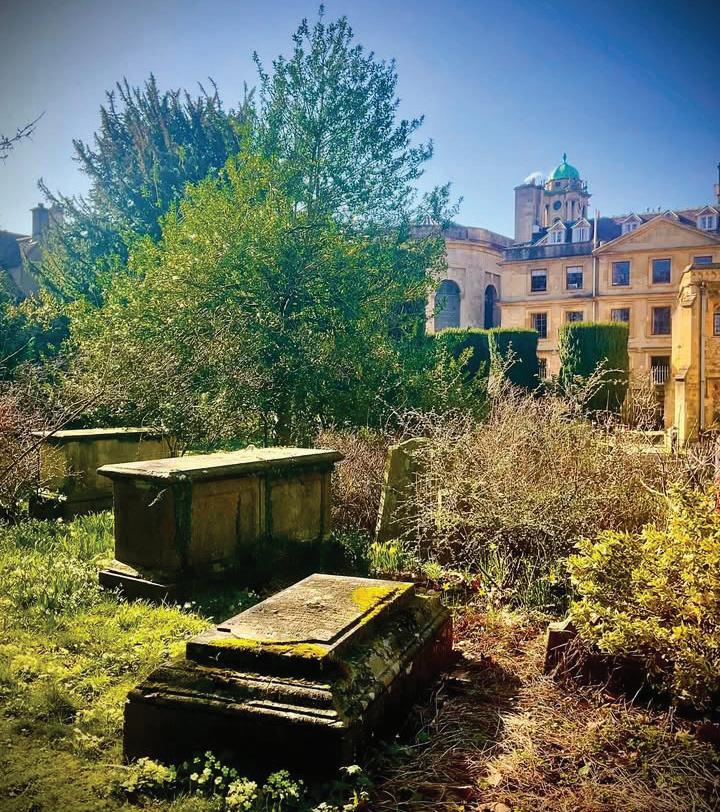
For Guy Cuthbertson, a fellow scholar with a deep knowledge of Edward Thomas.
“It is sweet to enter that peacefullest and homeliest of churchyards, St Peter’s in the East, overlooked by St Edmund Hall and Queen’s College and the old city wall. There is a peace which only the thrush and blackbird break, and even their singing is at length merely the most easily distinguishable part of the great melody of the place. Most of the graves are so old or so forgotten that it is easy – and in Spring it is difficult not – to perceive a kind of dim reviving life among the stones, where, as in some old, quiet books, the names live again a purged and untroubled existence.” – Edward Thomas, Oxford.
Rain on mottled graves and among long soft fingers of yew. Rain bending grasses, darkening stones, pocking grainy lichened tombs.
Often, he’d wander in alone – conjuring the shades of Aubrey, Browne and Hearne –his half-Welsh soul probing deep into English soil.
Along the wall the ivy leaved toadflax hangs its delicate bells. Fern fronds, heavy with rain weight, lie bowed down low.
On the path, hurrying the other way, a young man his age: head bent, hand raised, listening to his cell-phone, like a traveller from afar.
High on the air waves, signals weave and dance. A lone blackbird flicks between gables, quick and random as the stray shell that buried him – in France.
Lucy Newlyn, Emeritus Fellow
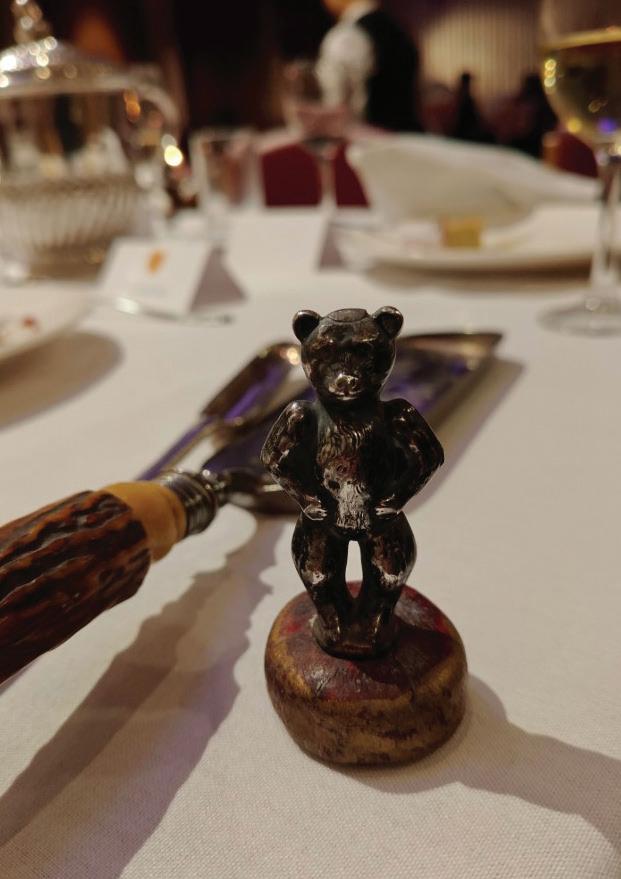
From a toast proposed at a reunion dinner for the matriculating class of 1960, held in the Old Dining Hall on 17 September 2025.
Distinguished Aularians, fellow 1960 survivors, it’s down to me to propose the Hall toast… It was in early October 1960, some 65 years ago, that we made our way through the modest Hall entrance for the first time. I venture to suggest that we may not have realised then how fortunate we were to have selected this great College…
The Hall was always one of the friendliest colleges. Our intimate Front Quad made it easy to get to know people. It generated easy familiarity and camaraderie across all years, all disciplines and all interests. There you could not help but encounter
most of the Hall population, whether spilling out from this dining hall, the adjacent Buttery or surrounding rooms, or just strolling to and from the main entrance.
Now is not the time to reflect on whether we have made the most of our lives after the Hall – bolstered as we were by the splendid springboard that the Hall gave us.
It is time to formally acknowledge how fortunate we were to be up at the Hall at a halcyon time all those years ago. We are now in our twilight, and whatever we have done or not done, we can all be truly grateful that our privileged dawn was at this unique College – indeed like no other. Please rise for the Floreat Aula toast.
Guy Warner (1960, Mathematics)
The Hall’s many successes on the river and across the sports fields of Oxford are, for many Aularians, a highlight of their time at the College. And of course, many of us retain that passion for sport – the camaraderie, the excitement of a competitive game and, hopefully, the satisfaction of a victory.
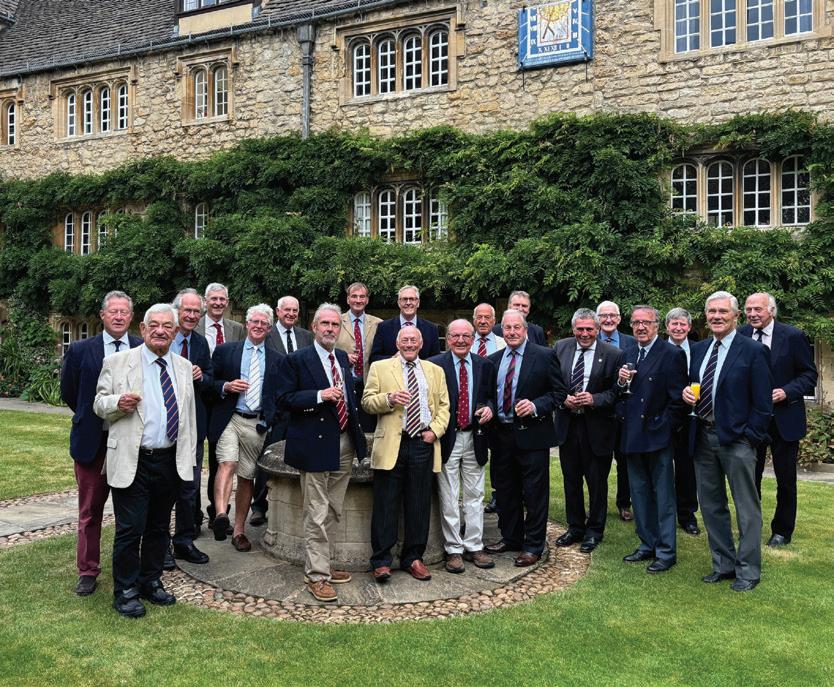
That the Aularian Golfing Society is so strongly supported, 20 years after its inception, is no doubt a testament to that passion. Or perhaps it is just because Hall alumni know how to enjoy themselves.
The Society certainly offers the best of golf courses for Hall alumni (including the Golf World Top 100 courses, Huntercombe and The Berkshire), and competitions throughout the season. But it is the Hall Spirit that makes every event an enjoyable one, whatever the result on the course. Alumni from a wide span of year groups find the Aularian Golfing Society an excellent way to maintain a link with the Hall, reconnect regularly with friends from their College days and make new Hall friends with a common interest.
Of course, many of us still enjoy the pursuit of victory, and our annual programme includes matches against colleges from both Oxford and Cambridge
to allow this competitive urge to be unleashed. However, our programme also includes golf days which appeal to the whole spectrum of golfers amongst the Hall alumni, and which provide the opportunity for a fun day of play, all at excellent courses.
Over the season, we would typically hold eight golf days, at venues within 50 miles of Oxford. This includes three matches against alumni societies, including St John’s and Fitzwilliam, Cambridge, and St Catherine’s, Pembroke and Worcester from Oxford. Our internal society days include our Annual Meeting held at Studley Wood Golf Club and followed by
dinner at the Hall.
The Society is always delighted to welcome new members, and with no need to commit to the full schedule of golf days. All alumni will receive a very warm welcome, regardless of handicap, and whether they decide to join the Society for just one event or for the whole programme.
If you think you might be interested in joining us, please do get in touch with our Membership Secretary, Neil James (1984, Metallurgy), at aulariangolf@gmail.com Floreat Aula!
Neil James (1984, Metallurgy)
1940s
1948 Professor John Chadwick-Jones and Dr Araceli Carceller celebrated their 60th wedding anniversary in July 2025 with a reception and lunch at Darwin College, Cambridge.
John’s book Developing a Social Psychology of Monkeys and Apes, which was first published in 1998, has now been published again by Routledge in hardback, paperback and e-book, in 2025.
1950s
1953 David Picksley this year passed his milestone 25th Parkrun walk in the VM90-94 age category and continues to participate regularly.
1956 David Short was winner of first and second prizes for poetry in the 2024 Yeovil International Literary Competition. He also won the Western Gazette Award for being the best writer in the competition.
1957 Ian McLachlan is still teaching in the undergraduate and graduate departments of Cultural Studies at Trent University in Ontario. His latest play, The Housekeeper, was performed for large, enthusiastic audiences at 4th Line Theatre this past summer. And for part of each year, he continues to work on his farm in northeastern Thailand.
1959 Throughout his career in town and country planning based in the Bristol area, principally for Bristol City Council and Avon County Council, and during nearly 30 years of retirement, Michael Oakley was also a volunteer on the Committee of the Royal Town Planning Institute (RTPI) South West Region. He served in 1972 as Chair and during three periods over 18 years as Honorary Secretary. At the end of 2024 he stood down after 50 years on the Committee. In recognition of this,
in June 2024 at the RTPI SW Region summer reception, the 2024 RTPI National President Lindsey Richards presented Mike with a clock engraved with the words “50 years of volunteering”.
1960 Jeremy Cook has written his own Austenesque novels, inspired by the work of Jane Austen. The first is Speculation, now available on Amazon, and the second, Courtship & Court Martial, is in its final edit. Find out more at www.austenesque. com.
1960 Terence Daintith has published Executive Self-Government and the Constitution (OUP 2025, with Alan Page), tracing the evolution of the UK Government’s internal rules and practices over the 25 years since they published The Executive in the Constitution (OUP 1999). He cannot promise that there will be a further update in 2050.
1960 Peter Hayes has recently published his fourth book revolutionising fly fishing: The Flies that Trout Prefer (– vulnerable ones, not perfect ones!). This is the culmination of ten years of two-man research using high-end cameras and slowmotion video above and under water to evidence for the first time exactly what happens when trout target and consume flies, both natural and artificial. Peter and Di have just celebrated their 60th anniversary.
1960 In retirement Anthony Lewis is writing satirical legal short stories in the style of AP Herbert (of Uncommon Law fame). So far they have been broadcast on Cotswolds Radio. Featuring bent lawyers, dogs in court, judgement in the afterlife, etc. Great fun and keeps the grey cells alive.
1960 After moving to the Worcestershire village of Hagley in 2017, Yann Lovelock joined its non-aligned Parish Council, where he currently serves as Joint Lead for the Environment. Ann, his wife of 63 years, died in October 2024; following her cremation, an interfaith service of remembrance was held at the Dhamma Talaka Buddhist Pagoda in Birmingham, where she had been Treasurer for 42 years and later Chair of Trustees.
1960 Canon Melvyn Matthews, who is Chancellor Emeritus of Wells Cathedral, has decided to relinquish his Permission to Officiate in the Diocese of Bath and Wells at the age of 84 after 38 years’ service as a priest in the diocese. Prior to that he served in the Dioceses of London, Winchester and Nairobi. He graduated from the Hall in Modern Languages in 1963. His wife, June (who is known to some Aularians), is in a care home near Wells afflicted with dementia.
1961 Jonathan Martin recently celebrated with grandson Stefan (2020) who received his BA in Geography and the next day won his age group in the 1,500 metres at the British Transplant Games.
1962 Robert Hall commissioned two pieces of statuary in the City of London recording the lives of two major English poets. Each was born, lived and worked in the City: John Donne at the south-eastern corner of St Paul’s Cathedral (2012, sculptor: Nigel Boonham) and John Keats at the north-western corner of the junction of London Wall and Moorgate (2024, sculptor: Martin Jennings). The statues are
located very close to the places of their respective births and are recognition in the public realm in the City of the life and works of these two renowned writers in the English language.
1963 After 30 years in local government, Roger Truelove stood down in 2023. He led Swale Council in Kent during the pandemic when his community was the worst affected in the country. He has published an autobiography called Inside Left which has a chapter on Teddy Hall as well as his time in youth cricket, in Africa, teaching and finally his despair at today’s politics.
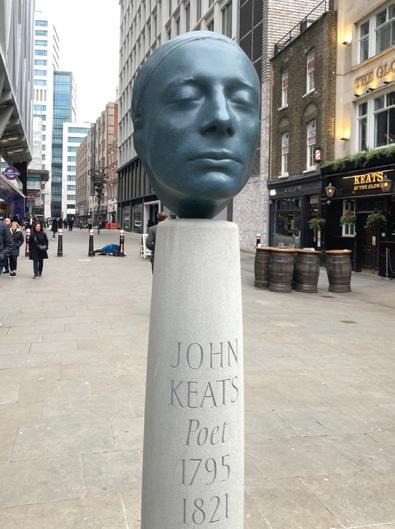
1965 Alan Cowell’s latest novel, Last Writes, or, The Obituarist, is being published under his own imprint, Undated Books. It is the final in the Joe Shelby trilogy, chronicling the veteran correspondent’s confrontation with AI.
1965 Michael Tanner’s new novel, Crossing Magdalen Bridge: A Story of Town and Gown, was published in 2024.
Michael is a critically acclaimed sports writer, specialising in horse-racing. Among his 31 titles are The Spotted Wonder, The Suffragette Derby and The Legend of Mick the Miller. He also has two volumes of history to his credit, with one on film –Troubled Epic: On Location with Ryan’s Daughter Crossing Magdalen Bridge is his fourth novel; the first, a racing thriller entitled The Tinman’s Farewell, appeared in 2010.
1965 On 23 June, Michael Tanner and John Dennis became the first recipients of a new retrospective OURFC award aimed at players who would have won their Blue off the replacements bench had one existed in their day. Having played numerous games for the Blues, Mike (scrum-half) and John (second row) were presented with special Colours Caps at Iffley Road by their OURFC Captain Bob Phillips.
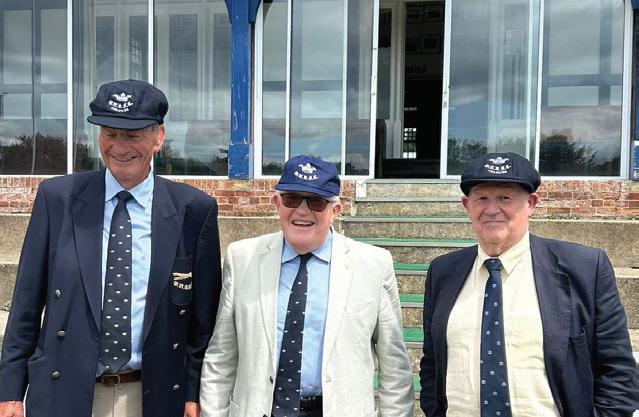
1966 Cam Brown’s new book was published in April 2025 by Unicorn Publishing in association with the Bate Collection, University of Oxford – German Jazz Guitars, The Archtop Guitar in Post War Central Europe.
He has donated his collection of German guitars to the Bate Collection whose new museum opens at the Stephen A. Schwarzman Centre for the Humanities in Jericho, Oxford, in 2026.
1966 John Spellar stood down as Member of Parliament at the General Election after 32 years. He has subsequently joined the House of Lords as Lord Spellar of Smethwick and also been appointed as HMG Trade Envoy to Australia.
1967 Hugh Anderson is still retired, still painting, still trying to rebuild a ‘collapsed’ school in South Africa, and still trying to regenerate his adoptive home city, Glasgow.
1967 Rodney Munday, sculptor of the Hall’s St Edmund, had a book published at the end of last year by SLG Press. The Road to Emmaus: A Sculptor’s Journey through Time is the expansion of a talk he gave at the end of his public commission for the tower of Cirencester church, when he was asked to speak about where he saw his work within the context of Christian art across the centuries.
During the past year, he has written a number of articles for The Jackdaw art magazine and reviewed Charles Miller’s book, The Spiritual Adventure of Henri Matisse, for the Fairacres Chronicle. He has also been asked to contribute a marginal note about the use of bronze in Solomon’s Temple for a new annotated edition of the Bible to be published by the London Institute for Contemporary Christianity in 2026. He is currently producing a sculpture for the parish church of Much Hadham in Hertfordshire, which contains work by Henry Moore.
1967 Dave Postles published his most recent article ‘New lives? Flows of people into and out of Loughborough in the middle of the nineteenth century’ in Local Population Studies 114 (2025).
1968 Martin Brooks, with Stephanie, now have a granddaughter, Loveday, and he continues to be a director of a Dubai security company and an advisor to Cityforum, a public policy seminar organisation. He remains a trustee of the Royal Institution of Cornwall, which has recently modernised the Truro Museum. As a former Gurkha officer, he chairs the Gurkha Museum in Winchester, where he is leading the charge on a major redevelopment and associated £5.2 million fundraising.
1969 John Landaw wrote a memoir for a Holocaust survivor, published in 2000: Living with the Enemy: My Secret Life on the Run from the Nazis was launched at the Imperial War Museum. A BBC documentary followed publication, and now a motion picture has been filmed, including Steven Berkoff in its cast, to be premiered later this year. John was engaged in an advisory capacity throughout.
1969 Nicholas McGuinn’s latest co-edited book, Engaging with Environmental Education through the Language Arts, was published by Routledge in 2025.
1969 Peter Scott-Presland (previously Eric Presland) is running writing workshops for young and inexperienced LGBT+ writers in Central London. Flash Dances, an anthology of the stories produced, appeared in November 2024, with a new one promised before Christmas.
1970 From Gordon Alexander: “1970 isn’t as distant as the calendar suggests – or at least that’s how it felt when seven Hall classmates from that year met in London this June for a rare reunion. For most, it was the first time seeing at least one of the others in over half a century. Over dinner in Battersea, life stories unfolded –unexpected journeys, surprising overlaps – and time seemed to melt away.”
Please get in touch with Gordon directly if you would like to join a future 1970 reunion: gordon.alexander2025@gmail.com
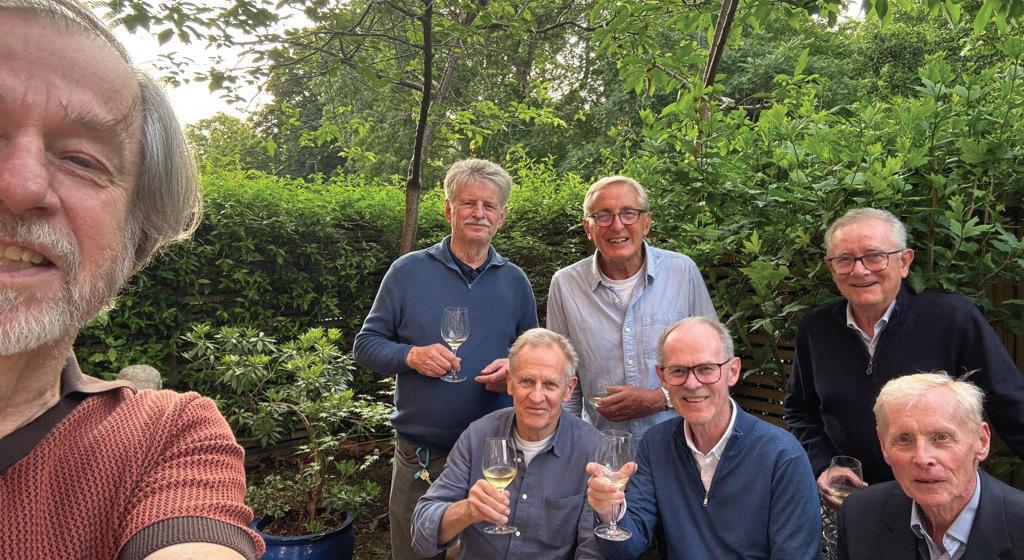
1970 Dorian Haskard’s The Gout: A Medical Microcosm in a Changing World has been published by World Scientific. Advancements over some 350 years have condensed the historical concept of ‘the Gout’ into a well-understood disease. The book traces how this process enabled an eventual transition from ineffective to effective therapies, addresses the age-old nature versus nurture conundrum of susceptibility, and considers how ordinary people would have been (mis)informed by doctors, scientists, newspapers and advertisements.
1970 John Hawkins has been awarded an LLM in Canon Law with Distinction by the Cardiff University School of Law and Politics.
1970 Christopher Merrett’s latest book is published by the South African Human Sciences Research Council and entitled Myth & Reality in South Africa’s History. It is a collection of over 80 newspaper opinion pieces and feature articles, written over a period of 30 years and selected to challenge a monochrome version of the country’s past. Underlying themes are continuity of faith in universal human rights, individual empowerment and psychological liberation, under and after apartheid.
1970 Proud Yorkshireman Bill Wallis now lives in the Weald of Kent, so was honoured (although somewhat conflicted) when approached recently regarding selection for the Kent Over-70s cricket team. He still supports Sheffield Wednesday, for reasons unfathomable, and occasionally exhibits watercolours.
1970 John Webster celebrated his golden wedding anniversary a few months ago –still very much on the same map with Shirley after 50 years. Having once been a reserve for the Hall’s University Challenge squad, John was delighted to lead his ‘Pintohontas’ pub quiz team when only narrowly failing to secure third place in the Gravesend 2025 trophy.
1972 George Bull has been elected a Trustee of the Linnean Society which is the world’s oldest active society devoted to “the cultivation of the science of natural history in all its branches.”
1972 John Calvert and his partner Lorraine continue to live in West London. He recently stood down, after ten years, as a charity Trustee and Treasurer of Feltham Food Bank. He is now taking it easy with a weekly Parkrun, cycling and weightlifting.
1973 From David Holmes: “After 46 years of living in Guildford, we have moved about ten miles to the more rural Cranleigh. Most people our age downsize. We upsized, to provide more space for our 11 grandchildren and their families, making visits and stays more comfortable. A much bigger garden is great but the deer that seems to want to eat it all isn’t!”
1974 Peter Desmond celebrated his 70th birthday in 2025 by announcing his retirement from paid work, which was mostly spent as a strategic sustainability adviser. He continues to volunteer with Fairer World Lindfield and the African Circular Economy Network; along with other 1974 alumni, he is also a founding member of It’s Up To Us (itsuptous.earth), an inter-generational non-profit organisation where retirees donate time and energy to provide practical support to younger generations battling the climate crisis.
1974 Andy Eggleston is the initiator and a co-founder of It’s Up To Us (IUTU) along with 16 other Aularians. IUTU is an inter-generational project mobilising the vast dormant resource of time-rich retirees to support those engaged in combatting the climate crisis. We are grateful for the practical and moral support of Principal Kathy Willis and Director of Development Andrew Vivian. Hope for the young, purpose for the sen-agers, progress for the planet. Visit itsuptous.earth for more information.
1974 Clive Penwarden has bought a converted barn in Bagstone, South Gloucestershire, with his partner, Ann Underwood. It’s quite a change from his previous life in Surrey but he continues to enjoy frequent rounds of golf, tennis and travel, both golfing holidays and rather more cultural holidays to the likes of Morocco, Sri Lanka, and Vietnam.
1974 Sunok and Phil Phillips are delighted to announce the marriage of their daughter Elizabeth to Michael Geraghty in August 2024 in London and the birth in February 2025 of their first grandchild, Giles Benjamin Lee Phillips, in Sydney, Australia, to their son, Jason, and daughter-in-Law, Willa.
1974 After almost 48 years trading steel, Dick Sands retired this April. Together with a group of fellow ‘74 Teddy Hall alumni, Dick is a founding member of It’s Up To Us, supporting those battling to meet the climate challenge.
1974 Barry Spurr has written a new book: Language in the Liturgy: Past, Present, Future Reviewing the work in the Church Times, former Hall Chaplain Chris Irvine noted its “considerable expertise in the fields of English language and poetics….”
Having retired as Australia’s first Professor of Poetry, he is currently Literary Editor of Quadrant, Australia’s longstanding current affairs and literary journal, publishing some 300 new poems every year.
1975 Andrew Baldwin has finally managed to complete a Master of Theological Studies degree at the Melbourne School of Theology (MTS@MST!), including attempts at scaling the rocky heights of Biblical Hebrew, New Testament Greek, and Qur’anic Arabic, and a research project on a former SEH Vice-Principal! What next?
Together with son, daughter-in-law and grandson, they are now three generations in Istanbul (the remaining family – including four grandchildren – being in The Other Place). Visiting Aularians would be welcome!
1975 Having spent his working life in the media business, Jim Bilton is deep into the research (aided by an army of bots) for a book charting the history and future of media through the lives of the powerful moguls who have shaped the industry.
1975 Paul Boothroyd and Monika are now proud grandparents to Matilda (7), EveJean (5) and Malte (3). Last year, Paul published the follow-up to George and the Golden Letterseed in the shape of George and the Poison Arrow, and is working sporadically on the final volume in the trilogy. The couple continue to translate for selected clients who do not believe in the omniscience of AI.
1975 Martin Garrett’s The Palgrave Literary Dictionary of Robert Browning was published in 2025.
1975 Tim Jones (IBM Fellow 1975–1977) was appointed a Fellow of the Learned Society of Wales in 2023.
1975 John Pedersen has retired from medical practice and has created a new black breed of sheep that sheds its own wool, in preparation for climate change.
1976 Ophelia, born 13 November 2024, is the first granddaughter of Mark Hockey.
1976 Mike Power FBA celebrated 38 years at the London School of Economics and Political Science in 2025. His latest book, Economy of Traces: Traceability, Tracking and the Accounts We Live By, will be published by Oxford University Press in 2026.
1977 To Steve Vivian a second grandson – William Thomas Vivian – born on 5 February 2025.
1979 Alan Smale retired in 2023 after 35 years in astrophysics research and mission support at the NASA/Goddard Space Flight Center and NASA HQ. He has also written several science fiction novels including the Clash of Eagles trilogy from Random House/Del Rey and Titan UK, and the Apollo Rising series from CAEZIK, and sold over 50 short stories to Asimov’s, Realms of Fantasy, Galaxy’s Edge and other magazines and anthologies.
1979 David West has completed the first draft of the fifth book in The Sir Anthony Standen Adventures. Standen was an Elizabethan spy providing Walsingham with detailed intelligence on the Spanish Armada. Kirkus Reviews say of the fourth book, Called to Account, “with the discovery of the Bamberger murders, the narrative accelerates and moves into the realms of meticulous investigation, espionage, and high action that are the hallmarks of the Standen Adventures.” www.kirkusreviews.com/book-reviews/--142/called-to-account/
1981 Martin Ridal is retiring at Christmas after more than 40 years working in safety engineering in the Nuclear Energy industry and then on the UK railways on the design and management of trains in passenger service at Alstom Transport, Derby. He continues to live in Sutton Coldfield with his wife, Sue, and they have three grandchildren.
1982 After nearly 40 years working in the IT industry with Mobil, PwC, IBM and Korn Ferry, Kevin Sealy retired from full time work in 2024.
1983 Kari Hale retired as a partner in Deloitte at the end of 2020 and has gone ‘plural’. He is now a non-executive director and audit committee chair at both AXA UK and Close Brothers.
1983 Fiona Larkin won first prize in the National Poetry Competition 2024, organised by the Poetry Society, with her poem ‘Absence has a grammar’. Read Fiona’s poem on p. 187.
1983 Yair Meshoulam continues to make and exhibit artwork, work on collaborative ongoing publications (Textures of Consciousness Vols 1–3) as well as install wallcoverings (www.wallpaperhangers.org.uk), based in West Norwood, South London. Yair has recently shown sculptures ‘Soft Verge’ at Theycome.Theysit. Theygo Gallery at London Fields, Hackney, curated by Jane Millar, and Kaballahinspired artwork at the Infinity Ein Sof Gallery, Islington Green, curated by Aurelie Freoua. Photos on Instagram: @yairmeshoulam; @yair_meshoulam; @texturesofconsciousness.
1985 From Catherine Mackay: “Mark Wood (1985) passed away on 4 March after a 20-year battle with Huntington’s disease. Many Teddy Hall friends gathered in person and online to celebrate his life, remembering Mark prior to the onset of his terrible disease. Simone Cunliffe, Mark’s wife, delivered a beautiful eulogy recalling Mark’s love of history and sport, his sense of adventure, fashion and humour, his impressive career in finance, and his subsequent wide-ranging travels to many parts of the world.”
1985 Andy Watson has published a second book, Letters From Paris 2020–2024, a compilation of 26 articles from The Property Chronicle magazine. In 2025, he celebrated 30 years in Paris and organised the inaugural event for SEH Alumni in France.
1987 Dr Claire Craig has been appointed Professor of Inclusive Design in Ageing and Co-Chair of the Helen Hamlyn Centre for Design at the Royal College of Art. She is Professor of Design and Creative Practice in Health at Sheffield Hallam University and Visiting Professor at Northumbria University and Bradford University. She lives in Yorkshire with her husband, Neil, and their rescue dog, Milo.
1987 Stuart Hopper is going back to school again… This time at St Antony’s College, starting a DPhil in History to research cultural norms and perceptions of corruption. He has also started a new consultancy business, Table13 Consulting, so will be busy!
1988 Roz Shafran has been elected as a Fellow of The Academy of Medical Sciences.
1988 Elizabeth Vibert, Professor of History at the University of Victoria, has moved into documentary filmmaking as a key research output. Her latest film, Aisha’s Story, tells the story of Palestinian dispossession and steadfastness (sumud) through the life of a grain miller keeping the food culture alive in a refugee camp. Aisha’s Story, produced by a Palestinian and Canadian team, has received audience favourite awards and best director nominations and is currently touring international festivals. aishasstory.com
1989 After 27 years of teaching refugees in an inner-city FE college, Richard Goodson took early retirement, and now works in private practice as a psychotherapist, both in person in Belper, Derbyshire, and on Zoom. He also leads ‘stress-buster’ meditation workshops for employees in schools, colleges and large companies. More at www.richgoodsontherapy.com
1989 In November 2024, Jo Senior Howat published her first novel, Crescendo, under her maiden name Joanna Howat. Set in 1990s Yorkshire, Crescendo is a darkly funny tale of families, loss, redemption – and a broken grand piano.
1990s
1990 Maintaining his tradition of overstaying his welcome, David Jordan has completed 25 years at the Defence Studies Department, King’s College London, where he’s currently the Deputy Head of Department and a Director of the Freeman Air & Space Institute. Outside work, he’s sometimes found ignoring the protests of his knees, back and basic common sense by playing hockey or golf. He remains an enthusiastic member of the Hall Association committee.
1990 Akaash Maharaj was decorated in Canada’s national honours with the King Charles III Coronation Medal, for services to the exploration, conservation and protection of the natural world. As a Governor of the Royal Canadian Geographical Society, he was engaged with arctic and deepsea expeditions. As Head of Policy for Nature Canada, he was also intimately involved in negotiations for the UN Convention on Biological Diversity and the UN High Seas Treaty.
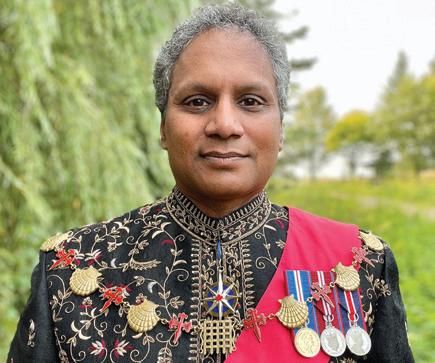
1990 Chris Manby published Bad Influence, her second comic novel as C J Wray in May 2025. It follows Jennifer ‘Jinx’ Sullivan, who survived Japanese internment as a child in WW2. After a life of crime, Jinx has retired to the Cotswolds but she’s planning one final adventure: a trip to Florence in search of stolen treasure. Only problem is, she has to get there on a coach trip with her recalcitrant teenage carer in tow.
1991 Andrew Peach hosts business events and offers coaching in communication and leadership skills with clients including the University of Oxford, NFU Mutual and Thames Valley Chamber of Commerce. He has a 30-year career hosting BBC News and business programmes such as Newshour and World Business Report on BBC World Service and Saturday PM and Pick of the Week on Radio 4.
Andrew’s work has been nominated for 18 Radio Academy Awards including UK Speech Broadcaster of the Year, with the judges describing him as “an assured host, balancing great seriousness and warmth and displaying a strong bond with his audience.” In May 2025, Andrew was invited to a Royal Garden Party at Buckingham Palace to recognise outstanding services to broadcasting.
1992 Marc Biver published a large experimental study of the stability of aqueous germanium complexes, comprising some 50 systems involving low molecular weight N- or O-donor ligands (Inorganic Chemistry 2024, 63:5, pp. 2470–85, doi 10.1021/acs.inorgchem.3c03640), and a paper specifically dealing with inert Ge(IV) complexes containing (poly-)hydroxy- and/or amino(poly-) carboxylate ligands (Journal of Solution Chemistry 2025, Special issue in honour of Professor Balarew, doi 10.1007/s10953-025-01459-y).
He also edited and contributed to a book dedicated to the memory of Jean-Pierre Pescatore, a 19th-century banker and philanthropist who became famous for his orchid collection, allegedly the largest collection in the world at the time. The book contains a full reprint of the 19th-century periodical which bears Pescatore’s name (Pescatorea), known for its magnificent chromolithographs of 48 neotropical orchid species, along with chapters on orchid biology, the Victorian era’s ‘orchidelirium’ or ‘orchidmania’, and chapters on the role of the Orchidaceae in medicine, literature, poetry and the fine arts (Jean-Pierre Pescatore: Sa Vie, Son Oeuvre, Ses Orchidées, ed. Marc Biver and Claude D. Conter, Bibliothèque Nationale du Luxembourg, 2025, ISBN 978-99987-806-3-7).
1992 Xen Gladstone is living in Hampshire with his family and having fun and winning awards running Triple fff Brewery. He loved the September 2024 Gaudy and can’t recommend it highly enough to other Aularians!
1992 Deborah Greaves was awarded an Honorary Professorship by Tsinghua University, China, in early November 2024. Deborah was a student at Teddy Hall from 1992 to 1995, collecting her DPhil in 1998. Tsinghua University is ranked in the top 20 of world universities, and its alumni include President Xi Jinping and former President Hu Jintao. The ‘Honorary Professorship’ is equivalent to an honorary degree.
1992 Michael Liggins has been appointed as Director of Community Engagement at Downe House School in West Berkshire. He has also become a Governor of the iCollege. This is the Pupil Referral Service for West Berkshire, helping to support and reintegrate students excluded from state schools.
1996 Deograsias Paul Mushi is currently an Associate Professor of Economics at the University of Dar es Salaam, Tanzania. His research areas include health issues, natural gas, taxation and informal economies, among others. He is based at the University’s School of Economics with 43 other members of academic staff.
1998 Jacquetta Blacker and her husband, Charles Lewis, welcomed their first-born son, Peter James Lewis, in late 2024. Both parents are currently working as academic psychiatrists at the University of Minnesota.
1998 Jenny Lewis’ fourth collection, Gilgamesh Retold (Carcanet Classics, 2018), was part of a PhD from Goldsmiths, University of London, on ‘Translating epic poetry
from an unfamiliar language.’ It was a New Statesman Book of the Year and Carcanet’s first audiobook, narrated by Jenny. Her fifth collection is From Base Materials (Carcanet, 2024) and, in 2024, she also wrote a series of eco poems for Seed Guardians, a play by the Mandala Theatre Company supported by the Joseph Rowntree Foundation’s Storytellers Fund. Her micro-publishing company, Poets House Pamphlets, has just published its eighth poetry pamphlet.
1998 Dr Siddharth Malu has joined the Shiv Nadar University, an Institution of Eminence in Delhi, India, as the Director of the AI Centre of Excellence. In his previous position at IIT Indore, India, Siddharth built a Radio Interferometer, founded a new department of Astronomy, Astrophysics and Space Engineering, and revamped the curriculum for greater industry relevance.
2000 Adam R Q Ismail was born July 2025 to Drs Raveem & Zeena Ismail in Oxford.
2000 Charlie Ramsay is living in Suffolk near Bury St Edmunds with his family. He is running Fortingall Ventures, a group of small companies, and has recently reopened The Fortingall, a luxury hotel in Perthshire.
2001 Eugene Kogan has joined KPMG US as a manager in negotiation, strategy and coaching.
2001 Jen Sugden (née Nicholson) and her husband, Chris, published their debut novel High Vaultage with Gollancz. The Neo-Victorian detective comedy became an instant Sunday Times bestseller, was praised as “joyously funny” by The Financial Times, and shortlisted for the Bollinger Everyman Wodehouse Prize for Comic Fiction 2024 alongside Ferdia Lennon, Dolly Alderton and David Nicholls. The novel is available in all good bookstores and online now.
2003 In March, John Hogarth and his partner, Victoria Cullum, were thrilled to welcome a second child into their family, Robin Andrew Richard. Their daughter, Isla Rose, has delighted in becoming a big sister to her new baby brother.
2005 Aisi Li was appointed Vice-Rector for International Affairs at Wekerle International University, Budapest, Hungary. She is also an Associate Professor at the same university.
2005 In May 2024, Ed Reynolds graduated from Georgetown University Law Center as a Business Law Scholar and with Exceptional Pro Bono Pledge Recognition. Ed was sworn into the Massachusetts Bar this past November and is an Associate at Latham & Watkins.
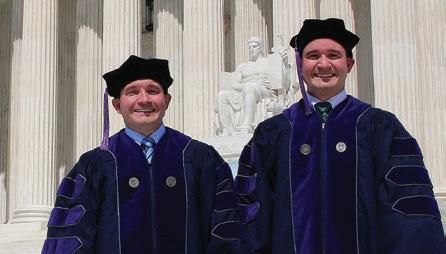
2005 Dan Townley and his wife, Betsy, welcomed William Arthur Mathieson Townley on the 27 January 2025 at Frimley Park Hospital. A brother for Isla.
2006 Emily MacGregor is delighted to announce the publication of While the Music Lasts: A Memoir of Music, Grief, and Joy (Duckworth Books). A writer, broadcaster and music historian, Emily has recently taken up the position of Classical Music Editor-at-Large at Faber & Faber. linktr.ee/whilethemusiclasts
2007 In January 2025, Rachel Fraser was appointed Associate Professor of Philosophy at MIT.
2008 Shannon Walsh Burrows launched Get Uncomfy, a personalised travel-planning company that designs off-the-beaten-path itineraries for curious travellers. After over a decade in financial services in New York, and inspired by her time abroad at Teddy Hall and an extended honeymoon across 12 countries, she’s now thrilled to help others experience meaningful travel that blends local culture, comfort and adventure. More at getuncomfy.com.
2012 Dr Biswanath Ghosh Dastidar was appointed Assistant Professor of Obstetrics and Gynaecology at the Institute of Post-Graduate Medical Education and Research (IPGMER), SSKM Hospital, Kolkata, India, in July 2024.
He led efforts to set up the Centre of Excellence in Assisted Reproductive Technology at IPGMER in 2022 – the first public-private-partnered, fully funded IVF unit in India, which delivered the first baby in October 2024.
In collaboration with Fellows of the Oxford India Centre for Sustainable Development, Somerville College, he published an important paper, ‘Reimagining India’s national telemedicine service to improve access to care’, in The Lancet Regional Health-Southeast Asia, in November 2024. The paper proposed a re-design of India’s national telemedicine service – eSanjeevani – to improve access to healthcare nationally.
2012 Antonin De Laever and his wife, Solène, joyfully announce the birth of their son, Achilles, born on 25 December 2024.
2012 Gareth Evans was appointed Tutorial Fellow in English of St John’s College and Associate Professor of Old Norse at the Faculty of English.
2012 Erik Magnusson recently published a book on the morality of procreation that builds on his DPhil research undertaken while at St Edmund Hall.
Details at: www.routledge.com/Procreative-Justice-Balancing-the-Interestsof-Parents-Children-and-Society/Magnusson/p/book/9780367756963.
2012 In April 2024, Josephine Smith Jackson married Edward Smith at St Anthony of Padua Catholic Church, Oxford, and danced the night away at the Isis Farmhouse. In February 2025, they welcomed their first daughter into the world with great joy.
2013 Kunz Chow and Nicole hosted their wedding back at Teddy Hall in August. Nicole, Kunz and their guests had the most wonderful time thanks to the great hospitality from all the staff at the Hall.
2013 Dr James King married Naomi Shammas on 14 June 2024 in Harome, North Yorkshire, and is now James Shammas-King.
2014 Zafar Khurshid was honoured to be felicitated by the UK India Legal Partnership (UKILP) at their Annual Awards Dinner at the Taj Mahal Hotel, Man Singh Road, in New Delhi in 2024 in the category of Rising Star in the field of Law. It was a privilege to be presented the award by the Honourable Union Minister for Law and Justice, Shri Arjun Ram Meghwal, and in the presence of two esteemed former Law Ministers, Shri Salman Khurshid (1974, Jurisprudence, Honorary Fellow) and Shri Ravi Shankar Prasad.
He was also very privileged to be empanelled this year with the Supreme Court Legal Services Committee of the Honourable Supreme Court of India.
2014 Dr Daisy Ogembo has joined the International Centre for Tax and Development at the Institute of Development Studies as a Research Fellow, continuing her long-term commitment to building tax systems that serve and empower citizens. She holds a DPhil in law and has received honours including the British Academy Postdoctoral Fellowship. Formerly an Assistant Professor at the University of Birmingham, Daisy’s research covers taxation of hard-to-tax groups, constitutional issues in taxation and challenges with digitising tax administration.
2014 After marrying in 2024, Olivia O’Grady (née Brown) and Hugo O’Grady (2015) were delighted to welcome their first son, Archibald Charles O’Grady, on 11 July 2025. Olivia and Hugo met at Teddy Hall in 2016 and look forward to showing Archie around as he grows up.
2015 Karim Pal and Lisa Pal (née Haseldine) (2014) celebrated their marriage on 25 July 2025 at the University Church of St Mary the Virgin. They met in their respective final years when they were neighbours on Besse 3.
2016 Terence Cudbird, former Hall Development Director and postgraduate student, is publishing a book based on his thesis. The Origins of Economic Regions in France 1918–1940 will appear later in 2025 under the Palgrave MacMillan imprint.
2017 During a degree ceremony on 26 September 2025, the University posthumously recognised Matthew Kilford. Matthew successfully completed his English Finals in 2020 but became ill and, very sadly, died in May 2022 without having been admitted to his BA degree. His family can now receive a certificate of Matthew’s academic achievement.
2019 Nearly six years after they met at an orientation event in 19 Norham Gardens, Brittany Ellis married fellow Aularian Will Cochrane-Dyet in Oxford on 25 May, surrounded by their friends and family.
2021 Emilie Paterson is currently a PhD candidate at Imperial College London in clinical medicine, researching the initiation of labour in humans, which she began very shortly after graduating from the Clinical Embryology MSc at Oxford. This year, she published an article in the journal Trends in Molecular Medicine. The article discusses the potential of decidual macrophages as therapeutic targets in preterm labour.
2021 Together with family and friends, James Rigby and Antonia Bellas (2023, Newnham College, Cambridge) were married at St Thomas Aquinas Church, Brisbane, Australia, on 26 April 2025.
2023 June Arvin Gudoy has been appointed as Vice President for Corporate Affairs of the Development Academy of the Philippines in January 2025.
We record with sadness the passing of fellow Aularians, and salute them. Sincere condolences are offered to their families and friends.
The Revd Dr Rex Adlington Mason MA, BD, PhD, 17 February 2025, aged 98, Surrey. 1944, English
Mr John Edmund Durling MA, BCL, 24 October 2024, aged 97, South Yorkshire. 1945, Jurisprudence; 1949, BCL
Dr Peter Hugh Phizackerley BSc, MA, DPhil, 14 September 2024, aged 97, Warwickshire. 1945, Geology; DPhil Geology
The Revd Canon Michael Arthur Halliwell MA, 4 August 2024, aged 96, Hampshire. 1946, Modern Languages
The Very Revd Christopher Russell Campling MA, 9 December 2020, aged 95, West Sussex. 1947, Theology
Mr John Witney Vail BA, Port Elizabeth, South Africa. 1947, Chemistry
Mr Percy John Frankis MA, BLitt, 12 January 2025, aged 98, Tyne and Wear. 1948, English; 1955, BLitt English
Mr Ronald William Hall MA, 18 November 2024, aged 95, Málaga, Spain. 1949, History
The Revd Canon Robert David Strapps MA, 26 February 2025, aged 96, Gloucestershire. 1949, English
1950s
The Revd John Jameson Congdon MA, 23 April 2021, aged 90, Middlesex. 1950, Theology
The Revd Canon Raymond John Lee MA, 22 January 2025, aged 94, Merseyside. 1950, Modern Languages
Mr Raymond Elliott Waddington-Jones MA, PGCE, AcDipEd, MA(Ed), September 2024, aged 93, Middlesex. 1950, History
Mr Alan Geoffrey Poynter MA, 28 March 2024, aged 93, Buckinghamshire. 1951, Geography
Mr John Richard Martin Branston MA, CertEd, PGDip, 10 September 2023, aged 91, Surrey. 1952, Modern Languages
Mr Philip Anthony Housden Currah MA, 16 February 2025, aged 93, Vancouver, Canada. 1952, History
Mr Michael Warburton Wood MA, 29 October 2022, aged 88, Nottinghamshire. 1952, Mathematics
Mr John Roger Woodhead BA, South Yorkshire. 1952, History
Mr Michael Lloyd Burgess BA, DPhil, PGDip, 15 December 2024, aged 91, Worcestershire. 1953, Geography; DPhil Education
Mr Nicholas Henry Holdway Osmond BA, 27 March 2022, aged 88. 1953, Modern Languages
Dr Malcolm Henry Trevor MA, PhD, Hertfordshire. 1953, Modern Languages
Captain Jeremy Mountain Cleverley MA, 4 April 2025, aged 91, Cheshire. 1954, English
Mr Colin Roy James Millar BA, December 2022, aged 89. 1954, Geography
Mr Alan Norman Monnery Preston BA, 2 September 2021, West Midlands. 1954, Jurisprudence
The Revd John Phillips Robson LVO, 2 February 2025, aged 92, London. 1954, Geography
Mr John Brian Shepherd MA, 9 November 2024, aged 90, Hertfordshire. 1954, English
Mr David Malcolm Sutcliffe BA, 21 April 2025, aged 92, East Sussex. 1954, Modern Languages
Mr David Richard Thomas OBE MA, 9 August 2025, aged 91, Surrey. 1954, English
Mr John Ballard Davies MA, 11 October 2024, aged 87, Surrey. 1955, Philosophy, Politics and Economics
Mr Edgar Ward Entwistle MA, 29 August 2024, aged 89, Nottinghamshire. 1955, Geography
Mr Robert Knowles MA, MEd, London. 1955, Geography
Mr John Colin Atkinson BA, PGCE, 8 May 2018, aged 82, Hertfordshire. 1956, Theology
Mr Francis Henri Maurice Busson, 26 January 2016, aged 82, Paris, France. 1956, Modern Languages
Mr Silvester Thomas Joseph Mazzarella BA, 17 January 2025, aged 88, Kent. 1956, English
Mr Michael Lawrence Somers MA, 3 March 2025, aged 87, Cornwall. 1957, Physics
Mr Anthony John Goddard MA, 9 July 2025, aged 85. 1958, Jurisprudence
Mr Derek Christopher William Jones BA, 7 March 2025, aged 87, Somerset. 1958, Modern Languages
Mr John Arthur Hugh Curry CBE MA, MBA, 19 October 2024, aged 86, Hampshire. 1959, Philosophy, Politics and Economics
Mr Patrick Douglas Frost MA, 10 September 2025, aged 85, Barbados. 1959, English 1960s
Professor Christopher Forbes Graham FRS, MA, DPhil, 22 May 2025, aged 84, Oxfordshire. 1960, Zoology; 1963, DPhil Zoology
Mr Michael John Grocott MA, 28 October 2024, aged 81, Leicestershire. 1961, English
Mr John Douglas Martin BA, 6 July 2024, aged 82, Berkshire. 1961, Geography
Mr Alan John Cowan MA, Herefordshire. 1962, Chemistry
Mr Chris John Stephen Cowles BA, CertEd, 18 September 2024, aged 80, Devon. 1962, History
Mr Michael Bruce Gardner MA, 2025, Somerset. 1962, Physics
Mr Arwyn Hughes MA, 21 December 2024, aged 81, Surrey. 1962, Physics
Mr Christopher Grahame Erwin MA, 20 December 2024, aged 80, Norfolk. 1963, History
Mr John Anthony Cawood Hey BA, DipEd, 9 January 2025, aged 83, Norfolk. 1963, Cert Educational Studies
Mr Charles Richard Holdsworth BA, 4 April 2024, aged 79, Leicestershire. 1963, History
Mr Stephen Philip Copley BA, West Midlands. 1964, Engineering
Dr Richard Alexander Gordon DPhil, 21 September 2024, aged 81. 1966, History of Art
Mr Thomas Richard Peter Irvin BA, 16 October 2021, aged 74, London. 1966, English
Mr Paul Lucien Richard Maison BA, April 2023, aged 76, Bedfordshire. 1966, Geography
Mr Douglas Hamilton Blyth Slade BA, Norfolk. 1966, Modern Languages
Mr Roland Martin Jermyn, 9 October 2024, aged 82, Pennsylvania, USA. 1967, Dip Politics and Economics
Mr Zareer Minoo Masani BA, 9 August 2024, aged 76, New Delhi, India. 1967, History
Mr David Richard Preston MA, Lincolnshire. 1968, Geography
Dr Ian Russell Cox MA, DPhil, 5 January 2025, aged 75, Avon. 1969, Chemistry; DPhil Chemistry
Mr Bryan Philip Dawson BA, 3 January 2025, aged 74, Derbyshire. 1969, Modern Languages
1970s
Mr Lindsay Neil Kaye MA, Surrey. 1970, Geology
Mr Graham Bull BA, December 2024, Norfolk. 1971, Jurisprudence
Mr Terence John Donovan PGCE, 19 February 2024, aged 74, West Yorkshire. 1971, PGCE
Mr Paul Nichol Mounsey MA, 29 May 2025, aged 71, Cambridgeshire. 1972, Chemistry
Mr William Rupert Cooke MA, 1 November 2024, aged 70, Travaco’ Siccomario, Italy. 1973, English
Mr Martin Andrew Hyde, North Yorkshire. 1973, Engineering
Mr James Marshall Newey BA, 10 November 2024, aged 65, London. 1977, History
Mr Nicholas John Charles Gandon CertEd, 28 February 2025, aged 68, Hertfordshire. 1978, PGCE
1980s
Mr Mark Robert Wood BA, 4 March 2025, aged 58, West Yorkshire. 1985, History
Mr Stephen Paul Haslehurst BA, Dover. 1986, History
1990s
Dr Benjamin Rippin BA, MBBS, 16 July 2025, aged 47, West Yorkshire. 1996, Physiological Sciences
2000s
Mr Anthony John Brignull BA, 8 December 2024, aged 87, Buckinghamshire. 2002, English
Commander Amy Francesca Gilmore MBE BA, 12 July 2025, aged 41, Dorset. 2003, Geography
2020s
Mr James Sugrue, 17 May 2025, aged 20, Oxford. 2023, Mathematics
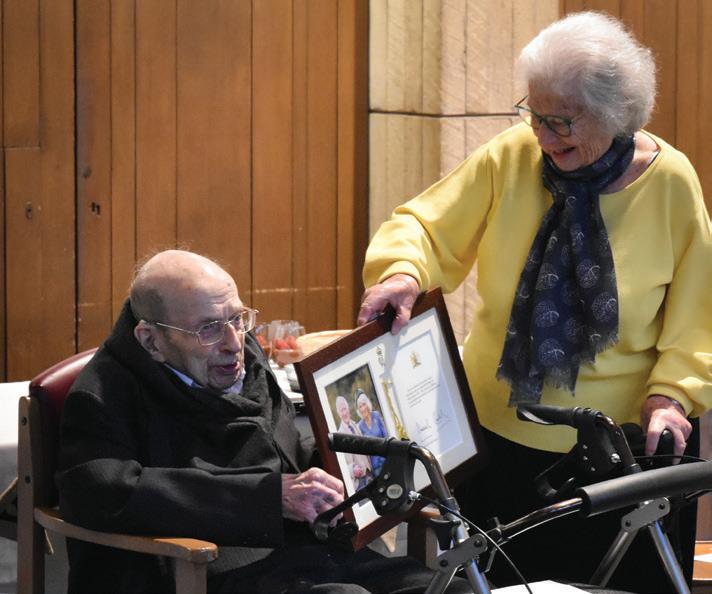
St Edmund Hall was sad to announce that Emeritus Fellow Sir Peter Hirsch passed away on Friday 12 September at the age of 100. Peter joined the Hall in 1966 as the Head of the Department of Metallurgy and Materials, and Isaac Wolfson Professor of Metallurgy, and he became one of Oxford’s most influential scientists. Upon retirement in 1992, he was elected to the Hall’s Emeritus Fellowship.
Professor Hirsch received many awards for his fundamental contribution to physics, including the Franklin J. Clamer Medal (1970), Hughes Medal (1973), Royal Medal (1977), Wolf Foundation Prize in Physics (1983/4), as well as the Lomonosov Gold Medal of the Russian Academy of Sciences (2005). In addition, he was elected to the Royal Society in 1963 and knighted in 1975. From 1982 to 1984, Peter was Chairman of the UK Atomic Energy Authority and he was founding Chairman of Oxford University Innovation (formerly known as Isis Innovation), the technology transfer company of the University of Oxford.
The undergraduate Sir Peter Hirsch Bursary was set up in 2019 by one of Peter’s former students, Dr Bernard Bewlay (1980, Metallurgy), as a tribute to his former tutor and the impact that he had, both on his students and academia more widely.
Peter was welcomed back to the Hall in March of this year to celebrate his 100th birthday with a lunch and a scientific symposium. He spoke then about his “charmed life” beginning with his arrival in England in 1938 as part of the Kindertransport from Germany. Despite initially not knowing English, he went on to win a grant from London County Council to study at St Catharine’s College, Cambridge. Working at Cambridge’s Cavendish Laboratory, he gained a PhD and enjoyed a distinguished scientific career. In his speech he described his pioneering work in transmission electron microscopy (TEM) in the post-war years, and its application to the study of materials, particularly metals and alloys. Peter remembered his many colleagues and collaborators, some of whom were at the dinner.
He closed by celebrating “the warmth, friendliness and informality of this College” and recalling the friendly welcome he and his wife had received when they arrived at Teddy Hall in 1966.
Peter will be deeply missed, both by all who knew him at the Hall and across the wider University.
A full obituary recording Peter’s achievements will appear in next year’s issue of the Magazine.
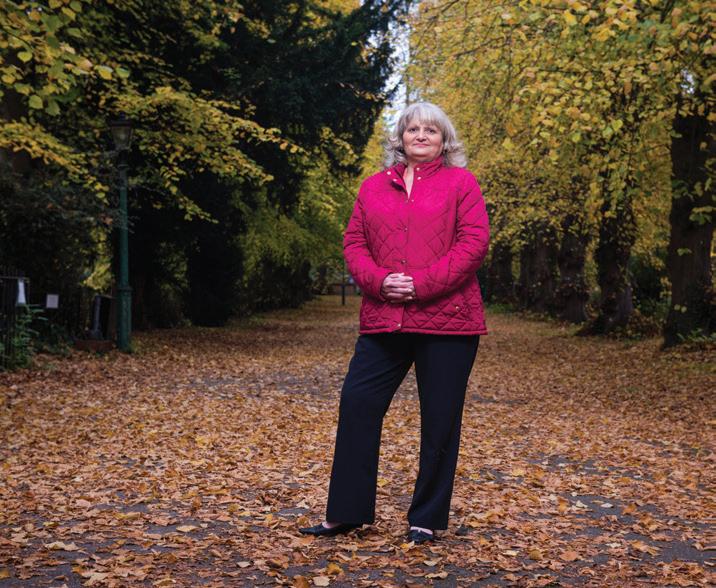
Nada Milkovic sadly passed away on Thursday 3 April 2025. Nada started work in the Hall as a Servery Assistant in 1995 and worked here until her retirement in 2022, being promoted to Deputy Hall Butler during this time.
She was known to many cohorts of students for her friendly and welcoming manner. She always loved seeing students return for reunions and special occasions, and sharing memories of their time at the Hall.
Over the summer of 2015, we invited nominations of inspirational women with a connection to St Edmund Hall to be represented in a series of portrait photographs. Nada was delighted to be nominated by members across the College community and to have her portrait displayed in the Wolfson for several years. This is testament to how much she was loved and valued by all at the Hall.
Outside of work, Nada was an active member of her community and church, and enjoyed spending time with friends and family.
She is greatly missed by all at Teddy Hall. Sue McCarthy (Conference Manager) and Molly Higgins (Head Butler)
In 2015, Nada spoke about her time at the Hall as part of the ‘Women Inspire’ exhibition when her portrait was hung in the Wolfson Hall:
“Flicking through the Oxford Mail in 1995, I spotted a job advertisement for a Servery Assistant at St Edmund Hall and thought I would apply. An anxiously awaited week passed and the next thing I knew I was stood in an overall looking at this coffee machine which looked like something out of the future. Now and again, I would have to take a hasty swipe at the lever so it wouldn’t overflow. There was no indication of when it was full! I was greeted by friendly faces and remember feeling instantly at home.
20 years have passed and that warm friendly feel as I walk through the entrance of Teddy Hall is still here. Teddy Hall, for me, is a place where everyone comes together. A place of celebration and happiness, where graduations, marriages, anniversaries and birthdays leave an affectionate scent all around the College. I have fond memories of my 50th birthday and my husband’s 60th birthday in the Old Dining Hall; it was wonderful that I was able to share Teddy Hall with my family and friends. I was even lucky enough to have a student serenade me with their guitar on my birthday! It is memories like this that will always bring a smile to my face.
If I could go back to my first day at Teddy Hall and look into the future I would always choose this path. Seeing students grow from their first days at dinner to their final year. Preparing the Hall for their Ball or Graduation Ceremony has been a pleasure, and I hope will be for many more years to come.”
This obituary originally appeared in The Guardian on 13 January 2025.
Tony Brignull, who has died aged 87 of lymphoma, was an advertising copywriter and creative director whose motto was that a good ad, in print or on screen, must “speak to people”. He was widely regarded as one of the best in the business during a quarter of a century (1967–92) at the influential agency Collett Dickenson Pearce (CDP).
Literate and blessed with an imagination that brought ‘personality’ to products, Brignull regarded himself at his best writing for the press and for posters, but he showed just as much talent in some of his screen work.
When the trade magazine Campaign celebrated its 50th anniversary in 2018 by asking readers to vote for the best TV ads, one of Brignull’s 1979 Cinzano commercials, titled Airliner, came first. It was directed by Hugh Hudson shortly before he switched to feature films and won an Oscar with Chariots of Fire Brignull took over as copywriter for the Cinzano vermouth ‘mini-dramas’ after the departure of Ron Collins, the man who had overseen their screen debut the previous year, with Alan Parker directing.
The commercials were intended to parody the rival Martini brand’s campaign based around trendy, sophisticated jetsetters. For Cinzano, Joan Collins, portraying elegance and glamour, was teamed with Leonard Rossiter, the actor best known for playing the seedy landlord Rigsby in the TV sitcom Rising Damp. Rossiter had suggested to Parker a running gag based on an old music-hall routine where the comedian looks at his watch and spills his drink – over Collins in the initial ads.
Brignull and Neil Godfrey, the art director with whom he forged a long, successful partnership – although mainly in print –decided the theme should continue, with variations. For their poll-topping Airliner ad, the oafish Rossiter and refined Collins are seen on a plane where he accidentally pushes the seat recline button as she is about to sip her drink. “Getting your head down, sweetie?” Rossiter asks, oblivious to her predicament. “Jolly good idea.”
Brignull, Godfrey and Hudson also made that year’s other Cinzano ad, titled Ski Lodge, set in the Alps.
Among Brignull and Godfrey’s impressive print advertisements were several for Parker pens that satisfied the copywriter’s desire for longer-form, factual prose. One pictured a rival pen with the words: “I am a cheap fibre-tip pen. My owner left my top off over lunch.” Below it was a Parker pen: “I am a Parker fibre-tip pen. My owner left my top off overnight.” Then followed almost 100 words of text boasting of its qualities.
Words were also at the heart of Brignull’s 1987 Wishing Well campaign to renovate and rebuild Great Ormond Street hospital. Double-page spreads in newspapers and magazines bore the headline: “We have every doctor a child needs under one
roof…the trouble is the roof’s falling in.”
Underneath, 500 words spelled out the urgent need for £50m – a sum raised in the largest appeal of its kind at the time. It was Brignull’s proudest achievement.
Earlier in his career, during a stint at the Doyle Dane Bernbach (DDB) agency in 1969, another of his inspired ads featured the single-word headline “When” alongside a picture of a glass of Chivas Regal Scotch whisky filled to the brim and seven paragraphs of finely honed text.
While at CDP in 1980, he made three Shredded Wheat TV commercials, including one featuring Richard Kiel (who played Jaws in two James Bond films). “I read in research that the average serving was something like 2.4 servings,” recalled Brignull. “This sparked a thought in my mind that three Shredded Wheat would be too much to eat.” But he abandoned thoughts of adding the slogan “Bet you can’t eat three” at the end, believing it to be too close to a peanuts campaign in the US.
A year later, however, his colleague Lynda McDonnell coincidentally came up with the same line for Shredded Wheat posters and TV commercials featuring the cricketer Ian Botham – and, as creative director, Brignull approved it, with the phrase becoming associated with the cereal ever after.
Earlier, in 1973, another slogan attributed to Brignull, “Heineken refreshes the parts other beers cannot reach”, was similarly approved by him, but actually written by Terry Lovelock, who worked on the later Cinzano commercials.
Brignull himself used it on a triptych cartoon-like poster of Star Trek’s Mr Spock (Leonard Nimoy), whose drooping pointy ears are revived by the Dutch lager. The art director Paul Smith added the thought bubble “Illogical!” and the striking billboard poster won the Design and Art
Direction silver award in 1975, one of 20 awards Brignull received from D&AD in his career.
The younger of two brothers, Brignull was born in London to Violet (née Moss) and Harry, a lorry driver, who later ran a pub together. On leaving Tollington grammar school in Muswell Hill, he worked for an insurance company before doing national service with an RAF air traffic control unit in Germany (1956–58), then taking a job as a teacher in Dalston, east London.
Switching to the advertising industry, he became a trainee with J Walter Thompson in 1959, moved on after three years to Mather & Crowther, then spent a year at CDP, to which he returned in 1970 after working for DDB and as creative director of Vernons.
One of his TV commercials, for Clarks shoes in 1976, won gold in the British Arrows (formerly British Television Advertising Awards). But he was most successful writing for print. In 2012, D&AD presented him with a special award as Britain’s most-honoured copywriter, noting that he and Godfrey (who also received one) were “considered the most successful creative team in history”, while CDP was once “the ad agency that ruled the planet” Brignull had spells away from CDP to form Brignull Le Bas in 1981 and become creative director at D’Arcy Masius Benton & Bowles in 1988. On finally leaving CDP in 1992, he spent two years at Abbott Mead Vickers.
He retired from the advertising industry in 1994 and later contributed articles to Campaign magazine. He also wrote two books of poetry, Where the Rail Ends (2002) and The Watercolourist (2023), and in 2002 graduated in English as a mature student from St Edmund Hall, Oxford, where he won the college’s Graham Midgley memorial prize for poetry.
In 1969, Brignull married Voula Tavoulari. She survives him, along with their daughters, Irena and Rosie, their son, Harry, and six grandchildren.
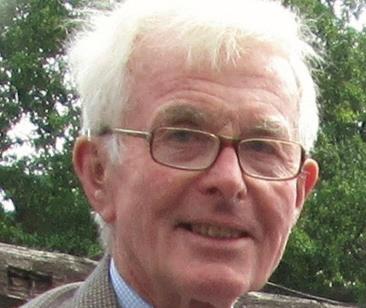
Anthony Hayward
Copyright Guardian News & Media Ltd 2025. Reproduced with permission.
This obituary has been provided by Jeremy’s granddaughter Hope.
Jeremy Mountain Cleverley, born on 15 July 1933, was the beloved husband of Angela, devoted father of Virginia and Simon, and adored Poppa to grandchildren Hope, Lydia and Cecily. Jeremy loved his time at the Hall and always spoke about it with great fondness. He died peacefully on 4 April 2025.
Hope James
This obituary has been provided by John’s son Philip.
John Jameson Congdon passed away on 23 April 2021.
He was born on 8 May 1930 in Gloucester and was brought up in the Forest of Dean.
He was educated at Oakley Hall in Cirencester and then Eastbourne College. He did his national service in 1948–1950 and, after training in Aldershot and Catterick, he was sent to Egypt as part of a force protecting the Suez Canal. He spent over a year there, working with troops from Mauritius.
He then went to Teddy Hall to read Theology (he always talked about the mice in his room in the Front Quad) and afterwards studied for ordination at Wycliffe Hall, Oxford. It was during this time that he met and later married Mary Hammond. They remained happily married for 66 years.
He then spent a long period as a parish priest, first in two parishes in Nottingham, including building a brand-new church in Woodthorpe, then moving to London as vicar of St Mary’s, Osterley. Finally, he
moved to St John’s, Woodley, in Reading, before finishing his career as the Church of England Chaplain at West Middlesex Hospital in Isleworth, London.
In later life he lived in Bedfont, Middlesex, continued to help in several local churches and enjoyed travelling with his caravan to
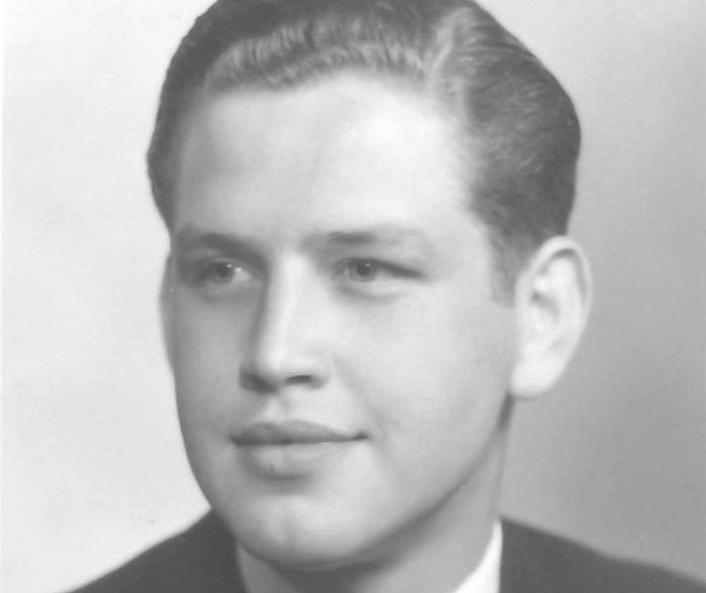
JOHN ARTHUR HUGH CURRY CBE (1959)
This obituary originally appeared in The Times on 15 November 2024.
It was shortly after dawn and John Curry was mingling with the diehard tennis fans queueing outside the All England Club, desperate for Wimbledon tickets. Although he was club chairman, he stayed incognito, chatting informally to many of the fans to find out how they felt about the system and how the club could do things better.
One middle-aged couple, lifelong tennis aficionados who had camped out overnight, were hugely excited, hoping for tickets for a particular Centre Court match, but Curry had to tell them that all the tickets had been sold in advance. They were devastated but stayed in the queue to see what they could get. To their delight and amazement, Curry’s driver pulled up soon afterwards and presented them with complimentary tickets for the match.
France as well as attending concerts in London.
He and Mary had three children, Philip, Peter, who sadly passed away in 2018, and David.
Philip Congdon (1975, Modern Languages)
Curry was a popular and highly effective All England chairman throughout the 1990s, and brought this attention to detail and thoughtfulness to all aspects of his life. Through his work ethic and drive he even managed to combine the chairmanship with running two leading electronics firms. When Chris Gorringe, the All England’s chief executive, initially questioned whether his business affairs would allow him to devote enough time to the club and the championships, he simply declared: “If you need me at the club for a meeting, I’ll be there,” and he was true to his word.
John Arthur Hugh Curry was born in Burma in 1938, the youngest of three sons of Alfred Curry, who as an impoverished plumber from east London had moved to the Far East to find work and had become a successful engineer. Alfred’s marriage to Mercia Friedlander, an upper-class South African related to the Boer statesman Jan Smuts, boosted his social status, and despite her parents’ disapproval it proved a stable union.
At the start of the Second World War, Alfred was commissioned into the Burma Sappers and Miners, which blew up numerous roads and bridges around Rangoon to try to slow the progress of the advancing Japanese troops. He got out just in time before the fall of Rangoon in 1942, aboard a sampan sailing down the Irrawaddy, before being picked up by an Allied troop ship. He finished his
army career as a lieutenant colonel and the family returned to Burma, where he helped to rebuild postwar Rangoon.
John and his two elder brothers were sent to board at King’s College School, Wimbledon, southwest London, where he excelled at sport, particularly tennis, hockey and rugby, reaching the quarterfinals of Junior Wimbledon and winning the Public Schools Singles Championship. He also played rugby for Surrey Schools and Richmond.
In 1956 John learnt he was to be head boy the following year, shortly before a girlfriend’s father offered him two tickets to the Wimbledon men’s final. This would involve playing truant from school, possibly jeopardising his chances of becoming head boy, but the lure of the tickets proved overwhelming and he ‘cut’ school and witnessed the electrifying spectacle of Lew Hoad beating his fellow Australian Ken Rosewall. Luckily Curry’s absence went undetected and he duly finished his schooling as head boy before reading PPE at St Edmund Hall, Oxford.
There he captained the university tennis side, got a rugby blue and met his future wife Anne Lewis, a nurse in Oxford. They married in 1962 and their partnership lasted for the next 62 years. The couple had four children and lived in some style, first in Berkshire and latterly on a picturesque 300-acre estate in Droxford, Hampshire. Her one nod to Curry’s passion for tennis was to name the family’s two dogs Boris and Stefan.
Convinced that financial literacy was crucial to business success, Curry qualified as a chartered accountant then took an MBA at Harvard. Back home, he often played at the All England Club, becoming a full member in 1971.
His brother Peter had founded the
electronics company Unitech and in 1966 Curry became its finance director, playing a crucial part in its rapid growth and influence on British industrial electronics. Spotting a gap in the market, in 1986 Curry launched Acal, a pan-European technology distribution company, and his shrewd selection of profitable acquisitions paid dividends. Within a decade Acal was listed publicly and had become one of the top distributors in the sector.
When Curry succeeded Buzzer Hadingham as All England chairman in 1989, he introduced several innovations, allowing play on Middle Sunday for the first time in 1991 and again in 1997, because of serious backlogs from torrential rain. In 1995 the strict regulations on players’ outfits were tightened up when the “predominantly white” clothing rule was replaced by the diktat that on-court wear should be “almost entirely white” He masterminded a redevelopment transforming the club and the championships’ facilities while restoring its Edwardian garden party atmosphere by siting many of the retail and hospitality outlets in unobtrusive areas. He also introduced the sliding roof on Centre Court and the new, more spacious No 1 Court, ensuring that whatever the weather, play was always possible.
He recruited his longstanding friend, the property tycoon John Dunningham, to oversee all the construction, giving him considerable autonomy to avoid long delays. The colossal project often involved 500 workmen on site each day, but it came in on time and under budget, winning plaudits for the high quality of its workmanship. Dunningham, amazed at his friend’s capacity to juggle several jobs, asked him: “John, you’re running two public companies and doing all this work as All England chairman. How on earth do
you do it?” Curry replied modestly, though inaccurately, “It’s simple. I do all three badly.”
Thanks to his far-sighted approach, the club bought the freeholds of the neighbouring Wimbledon Park Golf Club, plus the nearby Southlands College site, now the venue for the club’s croquet lawns. Another purchase, the site at Raynes Park, is now the club’s Community Tennis Centre, where hundreds of local youngsters get their first taste of tennis. His careful balancing of the books and canny management of the huge sums generated by the championships’ media rights, merchandising, hospitality and retail offering proved highly profitable. During the two decades of his tenure, as a committee member, then as chairman, the championships’ surplus ballooned from about £300,000 to more than £30 million a year.
“He was a ferocious debater, and a really strong character,” recalled Dunningham. “He certainly didn’t suffer fools gladly and
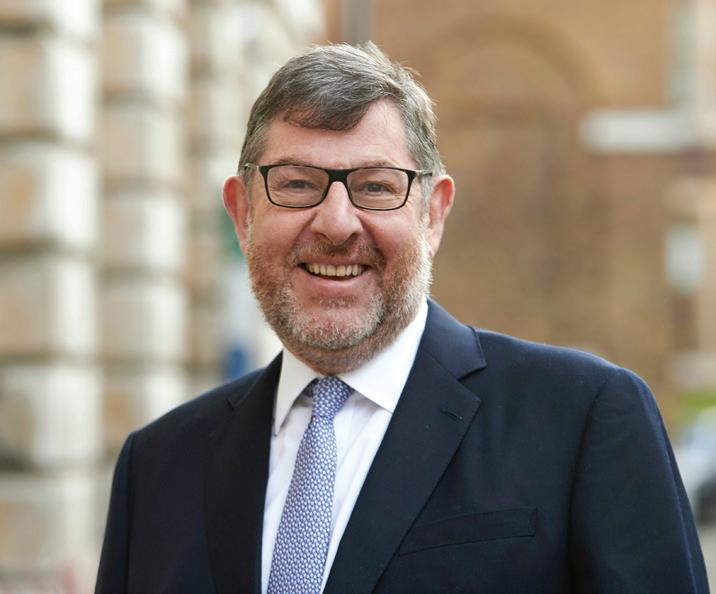
This obituary originally appeared in The Times on 6 August 2024.
Although at 6ft 5in Paul Darling KC cut a commanding figure in court, he
people didn’t argue with him, but despite that he was tremendously good company, with a marvellous sense of humour.”
Curry, who is survived by his wife and four children, was appointed CBE in 1997. He continued playing tennis well into his seventies and one of his proudest moments was partnering Gorringe in a mixed doubles in Tokyo in the 1990s against the sporting agent Mark McCormack and former Wimbledon champion Virginia Wade.
“McCormack challenged us,” remembered Gorringe. “He was very keen but not a great player, so we both knew which side of the court was the weaker – and we just managed to beat them. Funnily enough, John always refused a rematch.”
John Curry CBE, chairman of the All England Club and electronics entrepreneur, was born on 7 June, 1938. He died of prostate cancer on 19 October, 2024, aged 86.
Reproduced by kind permission of The Times Register pages.
did not enjoy a reputation for knowing precisely where, in a small continent of paperwork, something was to be found. In one arbitration he pinned a witness to an assertion, took him to bundle 482, tab Z, page 291, second line up from the top holepunch, and showed him the complete opposite of his evidence. The witness crumbled. After a pause, John Marrin KC, the arbitrator, who knew Darling well, said with some astonishment: “Who are you? And what have you done with Mr Darling?”
Growing up in the northeast of the 1970s, Darling learnt that “you either became a lawyer or bought a nightclub”. He was inspired to opt for the legal route by Peter Taylor, a fellow Geordie and sports enthusiast who went on to become Lord
Taylor of Gosforth, the lord chief justice. With some understatement, Darling described him as a “good role model”.
That choice enabled Darling to combine a love of debate and argument with his passion for racing – reaching the top of his game in both professional life and outside it: he rose to become an internationally renowned KC in commercial, construction and energy disputes as well as a leading name in the horse racing industry, most recently as chairman of the Horserace Betting Levy Board.
When the pandemic hit racecourses, Darling as chairman was instrumental in ensuring not only that racing resumed but that there was also provision of extra prize funds when racecourse finances were hit by a lack of visitors. His strong commitment at that time to the wellbeing of the board, to racing and the industry, made “an enormous difference” to getting through Covid, according to one colleague. It also brought back muchneeded confidence to the board and to the industry. “The sport took great comfort from his being there.”
Convivial and charismatic, Darling chaired the Association of British Bookmakers as well as the Tote and he owned or partowned horses, including, as a member of the Royal Ascot Racing Club, the 2005 Derby winner, Motivator. Beyond his enjoyment of the turf, though, he took seriously the need to maintain high standards in the industry and was appointed OBE in 2015 for services to sport safety and the racing industry, a hattrick of honours for his family – his parents having been similarly honoured.
Newcastle United was another passion. Darling was proud of his grandfather, Jack Allen, who scored twice for Newcastle United in the 1932 FA Cup final against Arsenal. His devotion was graphically
demonstrated at a Cheltenham race meeting when the Levy Board returned to their box to be told that Darling had just dropped his trousers. He wanted friends to see a tattoo on his thigh of the exact date in 1932 when those goals were scored. Like Lord Taylor, his role model, he was active in sports safety and chaired the Football Licensing Authority (now the Sports Ground Safety Authority).
But his first love was the legal world: as well as building his own highly successful practice in both litigation and arbitration, he was heavily involved as chairman of Tecbar (the specialist group for construction and technology barristers) along with Lord Dyson and Lord Justice Jackson in seeing reforms through to the Technology and Construction Court, greatly boosting its status and raising the quality of judges to become a world-class court.
Persuasive and personable, he loved networking and always knew who was doing what, something he used to good effect as treasurer of Middle Temple. His knowledge was such that one year he was told the number of applicants for the High Court and asked how many he could name. He named all 23 as well as all those shortlisted and those finally appointed. The next year he repeated the exercise. Colleagues joked that the nation could save hundreds of thousands of pounds on appointing judges by “just asking Paul”. When in 2008 Ian Burnett KC was appointed to the High Court, Darling said: “There’s the next but one lord chief justice” In 2017 he was proved correct.
Paul Antony Darling was born in South Shields, Tyne and Wear, in 1960 and grew up in Cleadon, County Durham. He attended Tonstall School in Sunderland before heading to Winchester College and then to St Edmund Hall, Oxford. His
family were steeped in public service. His father, William Darling, a pharmacist in South Shields, was influential in improving regulation and training of pharmacists and led the committee that set the strategy for child-proof medicine containers. His mother, Ann, was a magistrate for some 20 years.
Darling was called to the Bar in 1983, took silk in 1999 and joined Keating Chambers, a leading construction law set, becoming head of chambers between 2010 and 2015. Having conducted arbitrations in Hong Kong, Singapore and the Middle East since the early 1990s, his tactical and strategic strengths now took his practice worldwide. As one colleague noted: “He had an ability to get to the nub of a case and find the killer key fact.”
Unlike his younger brother, Ian, a circuit judge, Darling never aspired to the bench. Lord Judge, then lord chief justice, once asked him whether he had thought of being a High Court judge. Darling politely declined. Judge persevered. Darling said: “Igor, can you envisage me sitting still and quiet for two and a half hours while someone talks at me?” Judge replied: “Well, now you put it like that…”
Darling could be physically and intellectually intimidating when arguing a point. When chairing the Levy Board his strong views on how the money accrued from betting should be spent brought rigour to the process, but not without some tensions and conflicts. He argued forcefully and could seem pugnacious at times.
In 2017, he took the unusual step of moving to 39 Essex Chambers to broaden his practice where he led the construction and commercial team, handling complex cases with multiple parties, large teams and high volumes of material. Darling was hugely popular with clients and his many high-profile construction cases
included McAlpine v Panatown, which became a leading case on the rights of third parties, the well-documented case of Walter Lilly v McKay, and the collapse of the Holbeck Hall hotel in Scarborough. He wrote and edited several publications on construction law and was heavily involved on the fifth edition of Keating on Construction Contracts and, with Richard Wilmot-Smith KC, on Wilmot-Smith on Construction Contracts. He was also keen on social media and was an early producer of podcasts.
Darling was at home in the Temple, heart of legal London, or dining at the Garrick, where he was a member and tipped as a future chairman. So when the Levy Board relocated to Canary Wharf, he struggled with the new venue: often getting lost on the way to meetings, missing trains and arriving late, railing against the difficulties. At one meeting the board aimed to predict how many minutes he would be late, as well as his opening remarks. He arrived his customary ten minutes late, snarling: “I hate this bloody place.”
Darling was known for his generosity of spirit, mentoring and supporting junior colleagues and aspiring lawyers. He was also the chairman of Darling’s Pharmacy, the family business, established in 1905 by John Darling, in which he took an active interest.
In 2013 he married Camilla Barker, who works in higher education and is the daughter of Brian Barker CBE KC, the former recorder of London, and Dame Anne Rafferty DBE, a former lady justice of appeal. There had been two brief marriages (before his mid-thirties) but it was because of Camilla, he would say, that he became the man he was, weeping with emotion when talking of her. His great friend Lord Justice (Peter) Coulson said that she was the only woman who truly
loved him and whose intellect could stand up to him. He did not get away with sloppy thinking or careless conjecture and he regularly thanked her for it.
At his wedding breakfast in Middle Temple Hall, he told 250 guests that he had recently celebrated the anniversary of meeting Camilla. He paused, then added: “Camilla will celebrate in four years’ time. That is how long it took her to notice me.” She survives him.
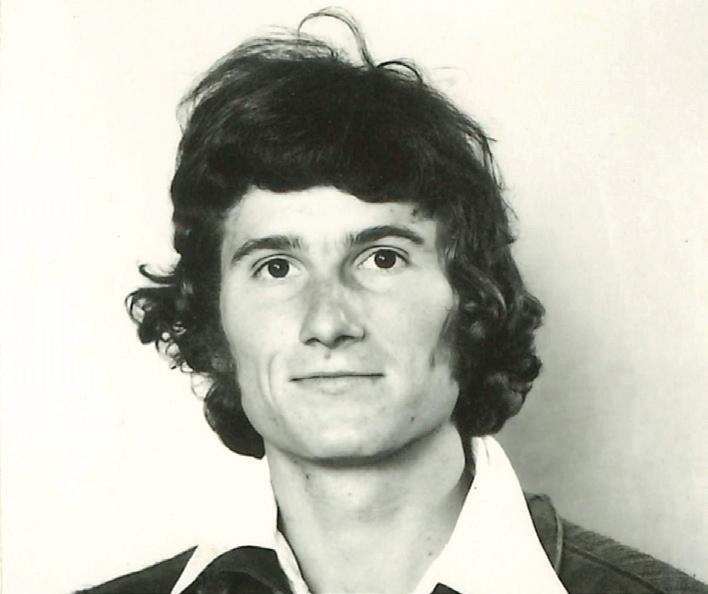
This obituary originally appeared in The Times on 3 March 2025.
Nick Gandon was posed an unexpected question at the start of his interview by the master of Haileybury, the private school in Hertfordshire. He was seeking to become the registrar and was asked which horse he fancied to win the Derby, which was about to start. David Jewell then led him into his study and, eschewing any formal discussion, turned on the television, anticipating that his potential new member of staff would guide him through the runners and riders.
Gandon knew nothing about horse racing but had overheard that June
There were no children but Darling adored his nephew Monty Tann, now four. Since his birth Darling provided him – in Newcastle colours – Babygros, pyjamas, towels, dressing gowns, shorts, T-shirts and long socks. He also spent hours teaching Monty how to reply politely when greeted by a grown-up: “Hello Monty” would be met, to their surprise, with “Up the Toon”.
Reproduced by kind permission of The Times Register pages.
morning in 1992 an informed colleague at Uppingham School in Rutland talking favourably about the prospects of Dr Devious. So that was his firm suggestion. It won comfortably while the favourite, Rodrigo de Triano, finished ninth. Gandon was offered a job on the spot.
After 24 years as a teacher Gandon left the profession, having become a housemaster at Uppingham at the age of 31 and boosted the number of pupils at Haileybury, to become director of the Cricket Foundation at Lord’s. This was in part because he felt attainment in exams and league tables was being pursued more vigorously than the development of pupils in the round.
He preferred a holistic approach to teaching in which extracurricular pursuits such as sport and acting were valued. Gandon concentrated on charitable work, some of this linked to education, for the rest of his career. He launched Chance to Shine, an initiative to make up for a lack of cricket in state schools, through his position at Lord’s, and set up the Gandon Prodger Legacy Fund after he was diagnosed with incurable cancer.
At Lord’s Gandon served on MCC’s committee, having instigated a special general meeting of members over the
redevelopment of the ground. “The MCC Reform Group”, as it styled itself, wanted an independent inquiry into matters including why the club had failed to buy the freehold of the strip of land inside Wellington Road at the Nursery End. In a letter to Derek Brewer, the club’s secretary, Gandon and his fellow requisitionists wrote: “A financial windfall of £110 million (from the property developer who had acquired the head lease on the disused railway tunnels under the Nursery ground) is a ‘game changer’ for MCC. This would provide the capital necessary not only to fund the redevelopment of stands and facilities, but also procure a club unencumbered with debt for the benefit of current and future generations of members.”
The group was also perturbed by the resignation from the committee of Sir John Major, the former prime minister, over the issue. Cricket was Gandon’s foremost enthusiasm but this tilt at the club’s hierarchy over what he saw as a missed opportunity proved unsuccessful.
He decided he would have more influence through joining it, yet whether bound by collective responsibility or less willing to be outspoken, this did not occur. In his three years on MCC’s committee he was not enamoured by the outlook of some of his colleagues. Along with them he was forced by the membership into an embarrassing climbdown over a decision in 2022 to drop the longstanding Oxford v Cambridge and Eton v Harrow fixtures. He also served on MCC’s membership and general purposes sub-committee. “Nick was a very active participant,” said Nigel Peters KC, its chairman. “And there was no animosity from him if one disagreed with him.”
Nicholas John Charles Gandon was the son of The Revd Percy Gandon, a
missionary, and his wife, Margaret (née Bedford). Born in Leicester, Gandon spent the first six and a half years of his life in Uganda before being sent to board at Dean Close preparatory school in Cheltenham. “I do have a defiant streak for good or ill and I’ve fought battles – sometimes foolishly,” he said in adult life. One such occasion came when he lost his school cap and, fearing a slippering, told the matron he would not be able to go on the crocodile walk (when caps had to be worn) because he was feeling unwell. This fib backfired spectacularly. The matron sent for an ambulance and Gandon was carted off to Cheltenham General Hospital, where the doctor decided the best remedy was to take his appendix out.
Gandon went on to Haileybury through a bursary offered for sons of clergymen. He captained the cricket and hockey first XIs but confessed he was “a shocking student, lazy as heck”. Nonetheless, he was given a place at the University of Durham to read English and underwent teacher training for a year at St Edmund Hall, Oxford, breaking a thumb a week before the Varsity match and hence not being awarded a blue. In his eight first-class matches he scored 170 runs at an average of 14.16. He represented Hertfordshire and then Lincolnshire in minor counties cricket from 1975 to 1993.
He joined the teaching staff at Uppingham yet as a notably young housemaster felt he was insufficiently empathetic towards teenagers. “But if one goes through life without making mistakes one is not trying hard enough. We shouldn’t be afraid of making mistakes so long as we learn from them. My biggest regret is that it took me a very long time to work out one can deal with mistakes rather than be confrontational.”
In launching Chance to Shine in 2005
Gandon teamed up with Mervyn King, then governor of the Bank of England, and Mark Nicholas, the cricket commentator who would become chairman of MCC. In 2009 he launched a fundraising company, Cause4, and in 2013 he founded Aureus Social Ventures, which offered consultancy services to charities, social enterprises and socially driven businesses. He became chairman of Hoddesdon Cricket Club in Hertfordshire as well as of a homelessness charity. He was also a trustee of a prison mentoring charity. Gandon had little interest in remuneration beyond providing adequately for his family, and in buying cars and clothes.
He is survived by his wife, Carole (née Wilson), a fellow teacher at Uppingham and then Haileybury, and his two daughters, Jo, who works in the car industry, and Amy, a consultant in social education. At home he was a keen cook: “I’d like to be remembered as someone
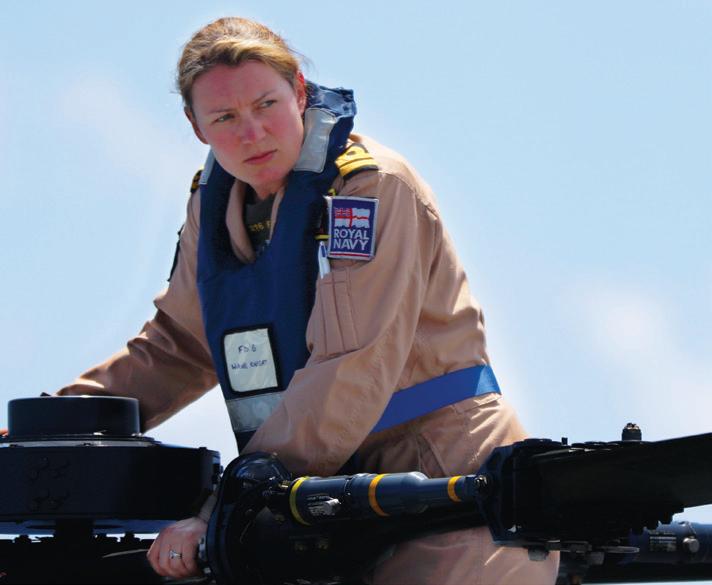
GILMORE MBE (2003)
This obituary originally appeared in the Navy News on 22 July 2025.
Outstanding. Amazing. Caring. Inspiration. Trusted. Beloved. Just some
who could make a mean Yorkshire pudding.” His ideal dinner party guests, he said, would be the cricketer Mike Brearley, the politician Ken Clarke (whose centrist politics were in line with his), the actor Stephen Fry and the television interviewer Emily Maitlis.
Gandon had a good relationship with his father, adhered to the church’s doctrine of supporting those in need and enjoyed singing hymns, but felt his own Christian faith was “flaky and wobbly”. He did not enjoy compulsory attendance when young and even managed to cause a commotion by willing himself to faint during one service. “I was a teacher but I was never good with rules,” he said.
Nick Gandon, teacher and charity administrator, was born on 7 July, 1956. He died of cancer on 28 February, 2025, aged 68.
Reproduced by kind permission of The Times Register pages.
of the words used to describe naval aviator Commander Amy Gilmore who has died after a hard-fought battle with cancer.
The Fleet Air Arm community will celebrate and honour the life of the hugely-popular Wildcat helicopter observer/warfare officer today in Yeovilton, Somerset, where Amy spent the bulk of her career.
“Commander Amy Gilmore was an outstanding naval officer and an amazing person who was greatly admired across RNAS Yeovilton, the Fleet Air Arm and the Royal Navy,” said Captain Duncan Thomas, Commanding Officer of RNAS Yeovilton.
“She was one of life’s best, always willing to go the extra mile to look out for others. She will always be remembered. Our
thoughts are with her family and close friends at this difficult time.”
His deputy, Commander Colin Kiernan, described Amy as “a truly amazing woman, legend, caring, loving, funny, honest and a fine Naval officer. She delivered on operations and in everything she committed to. Her fortitude and strength in adversity was simply unparalleled. One can only aspire to be as good as her and we will miss her greatly.”
And Amy’s friend and colleague Commander Anna Misiak, who works at the Navy’s headquarters in Portsmouth, said that the aviator had “inspired everyone who was lucky enough to work with and know her.”
She continued: “A trusted colleague, and beloved friend, she loved the Royal Navy and her selfless commitment to her work coupled with a wonderful sense of humour and a genuine love for her team epitomised her career.
She will be desperately missed by so many but her legacy will continue with the development of her last project, The Lookout, to support the RNAS Yeovilton community.”
Amy joined the Royal Navy in September 2002 as a University Cadet Entrant, graduating from Oxford University four years later.
She began her career as a warfare officer in frigate HMS Iron Duke and aircraft carrier HMS Ark Royal before transferring to the Fleet Air Arm to become an observer – navigator/sensors and weapons specialist – initially on Lynx helicopters and then their successors, the Wildcat.
The pinnacle of her flying career came in response to double hurricanes Irma and Maria in the Caribbean in 2017.
The then lieutenant received a Queen’s Commendation for Valuable Service for her efforts in leading her flight in delivering humanitarian aid to the islands and a daring rescue of one adult and two children from a capsized boat.
There was further recognition through the award of the MBE for Amy’s work ensuring the success of introducing the Future Anti-Surface Guided Weapon – known as Martlet – into service with the Wildcat. She returned to her warfare roots as operations officer of flagship HMS Queen Elizabeth where as well as her professionalism, she earned a reputation for consistently going the extra mile to help her fellow officers and sailors.
Away from work, she loved time with her husband Steve, also a naval officer, and the couple’s dog, Shackleton, and embraced the sporting opportunities Service life offered, especially mountain climbing, cycling and skiing.
“Our family have always known how much Amy loved her career in the Royal Navy, not just achieving every challenge she set her mind to, but also fulfilling her tremendous sense of purpose and making countless great friendships along the way,” Steve said.
“Throughout Amy’s tough five-year battle against cancer, the Royal Navy has stood by us and looked after both of us phenomenally well and I know Amy was as grateful for that as I am.
Her true grit and passion for sport were shown when on her final day of radiotherapy she signed up for Ironman Estonia post initial diagnosis and remission with breast cancer, raising money for breast cancer charities.”
Amy died peacefully and with dignity on 12 July after a fierce and determined fight with cancer.
Following a service of thanksgiving for her life at Sherborne Abbey, Amy was buried in the cemetery at St Bartholomew’s, the Fleet Air Arm Memorial Church in Yeovilton. The interment was accompanied by the
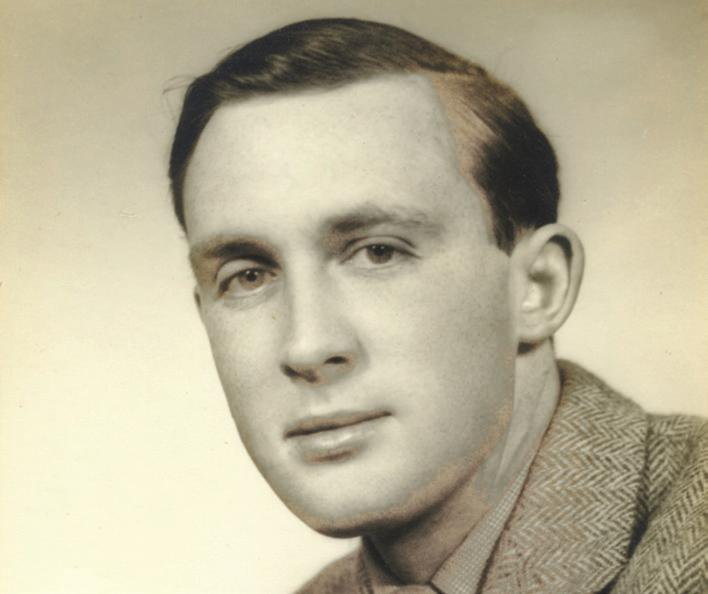
This obituary has been provided by Tony’s brother, Jeff.
Tony Goddard died at home in Modbury, South Devon, on Wednesday 9 July 2025, from kidney disease, after a long illness, aged 85. His funeral was held in Thurlestone Church nearby, on 8 August.
Tony was born in Bristol on 23 August 1939, a week before the start of the Second World War. His father, Glyn, saw war service as a transport staff officer in North Africa and through the long Italian campaign, while his mother, Winnie, a teacher, with two young sons, survived the war in Bristol and Dorset. After the war, Glyn joined the Colonial Service, and was posted at short notice to Northern Rhodesia (Zambia), the family following in troopship conditions. In the initial three years in Zambia, Tony started school in Lusaka, then spent a year at Grahamstown (now Makhanda) in South Africa. On the family’s first home leave, he was entered at prep school in Cirencester, and thence to Radley College near Oxford, where he
Last Post, minute’s silence, a gun salute and a fly past by her colleagues in the Wildcat Maritime Force.
Reproduced with permission from the Royal Navy.
shone in rugby, rowing and boxing. These sporting achievements, and a strong school record, supported his entrance to the Hall, in Michaelmas term 1958, to read Jurisprudence.
At the Hall, Tony concentrated his sporting efforts on rowing, in the 2nd VIII for 1959, and 1st VIII for 1960 and 61, rowing over at Head of the River in both those years, and at Henley Regatta. He managed to combine this with an active social life, learning to drive and to parachute with the Oxford University Officers’ Training Corps, and sufficient study to earn his degree. He also met and became engaged to his first wife, Ursula.
During a Long Vac holiday with his parents in Zambia, Tony decided to apply for employment in Zambia with the Colonial Service. This entailed a year’s training on the Overseas Service Course, based at Peterhouse in Cambridge. In pursuance of a longer-term ambition to be a barrister, he also joined Gray’s Inn and sat the initial Bar exams. In August 1962, he married Ursula, and they took ship to Zambia, and a first posting as a Cadet, later District Officer, in the Eastern Province, working with the Kunda people in the lower Luangwa Valley. In 1963, he was involved at the start of the brief but bloody uprising by the Lumpa Church in the Lundazi District. The following year his Law degree qualified him for a posting as Resident Magistrate in Western Province.
Zambia became independent in October 1964, and Tony’s employment there
ceased at the end of his three-year tour in mid-1965. His plans for the Bar proved infeasible, following his father’s death the previous year, so he took articles as a solicitor, with a firm in Abingdon, qualifying in January 1969.
Tony looked for a partnership in the West Country and soon found a suitable place with a firm in Kingsbridge in South Devon, where he covered the litigation and allied aspects of the business. He took advantage of the opportunities in the area to renew his youthful love of riding, owning a succession of horses and hunting with the local harriers and the South Devon and Dartmoor Foxhounds. His son Glyn was born in Kingsbridge in 1972. In 1978, he set up his own practice in nearby Totnes, with a wide-ranging business, and a continuing focus on court and planning work.
In 1981, Tony’s first marriage to Ursula broke down, and he left to live with and later marry Gill, moving to the coast at Bantham, where her family had an estate.
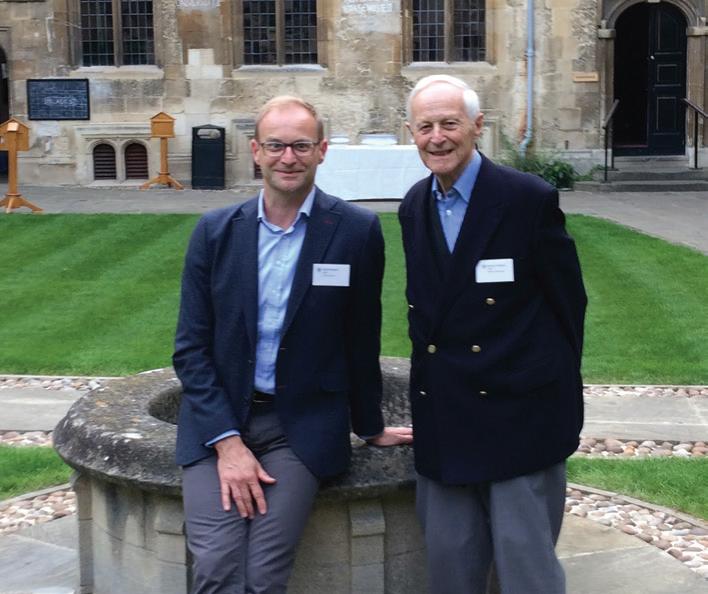
The couple enjoyed an active social life and travelled widely, until Gill’s death in 2013. Latterly, after his practice closed, Tony continued to work for some years as a consultant in a colleague’s practice in Ivybridge. He also spent time in retirement writing an amusing memoir of his time in Zambia, published privately as My African Stories. In 2019, aged over 80, he married Margaret, moving with her to Modbury, continuing to enjoy a series of cruises and composing another memoir, Tales of a Country Solicitor
Tony’s early years at school and university were important to him, and he relished reunions with contemporaries. His three years working in Zambia also did much to shape his character, as did his adopted home in the South Hams in Devon, where he lived for 55 years. Tony was sociable, self-assured, articulate and enterprising in his chosen profession, and a noted raconteur; most importantly, he valued and enjoyed life and his family, and he will be much missed.
Jeff Goddard
This obituary has been provided by Michael’s son David.
“One must, says Jesus, be a peacemaker. An important word this ‘peacemaker’: it reminds us that peace is not the absence of war, a state which exists when there are no hostilities. No, peace must be made. And for it to be made there is need for peacemakers... Some men are called to be specialists in it, to give their lives to it. But we do not need to hold high office to be peacemakers. Indeed, we are wrong if we leave it to those who do. We can all be peacemakers. And we can make peace in many unseen, little ways.”
These words are from a sermon preached in both English and German by The Revd Canon Michael Halliwell in 1966 at the memorial in the Hindenburg Park to the fallen soldiers of Cologne, marking a wreath-laying ceremony during the joint operations of German and British naval servicemen as part of regular friendship days.
The words and the occasion epitomise Revd Halliwell’s life’s work, dedicated to reconciliation through his ministry, often in unseen, little ways. A few days before his death on 4 August 2024, he was awarded the Bailiff of his beloved island Jersey’s Silver Seal, and the German Embassy’s German–British Friendship award, for his devotion to reconciliation between Jersey, the United Kingdom and Germany.
Michael Arthur Halliwell was born on 8 May 1928 to Arthur and Dorothea Halliwell. His parents had met at St Thomas’ Hospital in London, and moved to Jersey in 1927, where Arthur was appointed surgeon at the General Hospital. He was the oldest of four – three boys and a girl – growing up in a large house his father built on the island.
Their idyllic childhood was shattered in 1940, as the Germans surged through France to the channel coast, and on 18 June the children and their mother were evacuated on the Hantonia, one of the last boats out of the island, for them to spend the rest of the war with her family in Somerset. His father felt duty-bound to stay on the island to support the hospital. He continued to write to the family for the next ten days, describing the build-up to the German invasion, but once the Germans arrived on 1 July, communications were cut off for the next four years except for occasional and much delayed (and censored) short letters delivered by the Red Cross. These told in
scant and necessarily positive terms how life was progressing on either side of the Channel.
While in Somerset, Michael and his eldest brother, Anthony, experienced the rhythms of country life, helping bring in the harvests. While there, Michael was able to further his love of riding, a passion which lasted his whole life, riding into his 80s. Life was mostly very peaceful, except for hearing and seeing the German bombers overhead on their way to Bristol and Cardiff. He had a near miss, when boating near Salcombe, and a Focke-Wulf 109 fighter-bomber dropped a bomb where they had been moments earlier. He joined the Home Guard and went up to St Edward’s school in Oxford in 1942. The strong Christian background and regular chapel services built on his longheld spiritual approach to life, which had been fostered by his mother. Although he dreaded the annual ‘standards’, where each boy had to attain certain times or distances in athletic events over a threeweek period, he did well academically, particularly in languages. His love of German was not affected by the war underway, and was inspired particularly by his tutor, Reginald Maxse, a ‘true European’, who may have been a spy and had apparently been on the staff of Kaiser Wilhelm II.
Further news from Jersey came in November 1944, when he was called to Exeter College to meet Peter Crill, who had escaped from the island by boat. Michael’s father had a pass for the beaches and had taken an outboard motor down to the coast for Peter. He passed on good news about Arthur and described life on the island. Peter went on to become Bailiff of Jersey. On 8 May 1945, his 17th birthday, Michael was in his headmaster’s study to hear Churchill announce the liberation of
the Channel Islands, which took place the next day. He returned to the island soon after, reunited with his father but rather unsettled by the transformation by the occupying forces, with fortifications all over the coast.
In 1946 he went up to St Edmund Hall to study Modern Languages, French and German. His fellow students were a mixture of 18-year-olds fresh from school like himself, and demobbed servicemen, who railed against the strict curfews in place. Even Michael had to use the grill on the High Street which gave access to the basement used by late revellers. He was rebuked by his father for not writing to describe his experiences at Oxford –“all we get is a list of ballet dancers and a remark that there isn’t much news”. He resolved to do better. He joined and was later President of the French Club, and went to services at Pusey House, where he once sat next to T S Eliot for dinner.
His first winter in the Hall was one of the hardest of the century, worsened by the lack of coal both for heating and for the power stations. The water and milk in his sitting room froze, and his towel was as stiff as a board.
In 1947, he visited Germany as part of a group of students visiting German universities to pioneer a movement of reconciliation between former enemies. Arriving in Cologne he was shattered to see the destruction visited upon the city and the poverty-stricken state of the surviving residents. He had intended to exploit the black market by trading coffee for a Leica camera, but on his way to conduct the deal experienced “a heavenly voice” telling him he was not there to trade, but to work for Anglo–German reconciliation. The trip had a profound impact on all that followed for him.
While in Oxford, he had struggled to know
what to do next. He considered joining the Franciscan order, but was encouraged by his father to try for the Foreign Service. Instead, he started as an assistant teacher at Holmewood House outside Tunbridge Wells. While there, he resolved to be ordained after much debate with his sceptical and non-believing father. As he left the school in a taxi to go to Ely Theological College, fellow teacher and future TV astronomer Patrick Moore ran after it, calling out that it was not too late to change his mind.
While at Ely, Michael furthered his connection with the Anglican Council for Inter-Church relations, which had started with a 1951 visit to the Benedictine Abbey of Le Bec-Hellouin (he maintained a lifelong relationship with the Abbey and was admitted as an oblate in 1986). He was ordained a deacon at Southwark Cathedral in September 1954 and as a priest in 1955 and immediately started his ministry at St Mary the Virgin, Welling, where he supported the building of a new church. In 1957, he joined family friend from Jersey The Revd Lawrence Hibbs to be curate at St Alban’s, Bournemouth. There he met Susan Nicholson, daughter of the widow of a local GP. It was the proverbial coup de foudre for them both, and their wedding in 1961 was the start of nearly 61 years of marriage, with five children, 12 grandchildren and three great-grandsons.
By then, he had moved to Lambeth, having taken up an invitation to apply for a position with the Council for InterChurch relations. There he worked in the Palace with first Archbishop Fisher, and then to greater effect with Archbishop Ramsey, as Assistant General Secretary of the Council for Foreign Relations, with special responsibility for relations with the Lutheran and Reformed Churches, and served for three years.
In 1962 he took the chance to move to Bonn as chaplain to the British Embassy, bringing Susan and young daughter Katharine with him. There he ministered not only to the expat British community and supported visitors, but also to the wider diplomatic family across the nations present. This was the height of the Cold War, and he worked with future Head of the Secret Intelligence Service (now MI6) Dickie Franks and his family, and also with a spy named David Cornwell. David told him he was thinking of becoming a writer, a course of action Michael strongly advised against. David ignored him, adopting the non de plume John le Carré, and worldwide success ensued. The sermon at the Hindenburg monument took place during this period.
In 1967, now with three children in tow, the family moved back to the UK to St Andrew’s, Croydon. Before long, though, the dream posting back to Jersey, to St Brelade’s, came up and the family (now of seven) moved over to the island in 1971. The parish that was their home for the next 25 years even had a Rectory for a family home and stables for his beloved horses. Michael led a modernisation of the whole parish infrastructure, including restoration works on the Fishermen’s Chapel next to the church which dated back to the 9th or 10th century, and his enthusiastic support for the building of a community centre, Communicare.
St Brelade’s cemetery was the place chosen by the Germans for their burials during the Occupation. Subsequently, the bodies had been removed to a central mausoleum near Saint-Malo. From time to time relatives of those who had been buried here would call at the Rectory asking to see a grave. They were very pleased to be welcomed in their own language and invited in for a cup of coffee
for an explanation. The connections with Germany grew when, in 1975 – the 30th anniversary of the Nuremberg war crimes trials – Michael led a party of islanders to a community in the city and helped them build a church.
In September 1979, the Channel Islands Occupation Society (CIOS) arranged a reunion for Allied and German naval veterans who had served in the coastal forces, with a special service at St Brelade’s. There was a large contingent of British, American and German naval personnel, including one who had heard the sermon at the Hindenburg memorial. The fact that the German ribbon was subsequently removed from the wreath that had been laid did nothing to deter further progress or further commemorations, which culminated in a plaque marking the former German graveyard.
A large number of Islanders were removed by the Germans during the Occupation to Bad Wurzach, where they were interned but otherwise well-treated. The Bürgermeister was keen to form a modern connection through twinning, but the ground in Jersey was not yet ready. In 1990, Michael and Susan visited him there and tried to progress matters, but it took the initiative of the CIOS, the Ex-Internees Association and people such as Michael Ginns to lead to the formal twinning of Bad Wurzach with St Helier in 2002.
In 1996, Michael and Susan took a wellearned retirement after 40 years of joint service to communities across Europe. Michael dedicated much of his early retirement to tracing his family history, and writing and publishing an account of his father’s experiences, Operating under Occupation with the CIOS.
Later, they moved to Romsey near Winchester to be in the UK near their
family, and then to Church of England supported housing at Manormead near Guildford in 2020, where Michael cared for Susan through her illness until she died in 2022, and where Michael stayed until
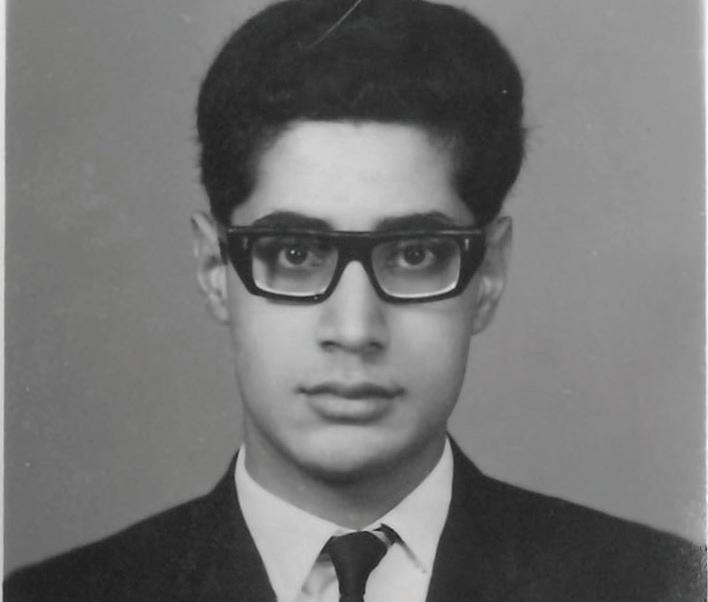
This obituary originally appeared in The Times on 19 November 2024.
There was never any mistaking Zareer Masani’s meaning. Precise in his diction, always courteous in his delivery, what he had to say was nonetheless for some controversial. A public thinker and Oxfordtrained historian, he had an ambivalent relationship with his native India and came to challenge the modish view that it had gained nothing from the Raj.
While accepting empire had been at the outset a commercial enterprise for Britain, he saw also the development of a nuanced relationship that depended on the collaboration of local elites and an intention in time to prepare the country for self-rule. British imperialism had not perhaps been benevolent, but it had been more benign than that of many other nations.
Masani had in recent years written regularly on these topics for publications
diagnosed with a brain tumour in June 2024. He saw his whole family in his last few weeks, before dying peacefully on 4 August 2024.
such as The Spectator and The Daily Telegraph. He also contributed to History Reclaimed and to the think tank Policy Exchange and took part in high-profile debates at the Jaipur Literature Festival and the Oxford Union.
When, in 2017, Professor Nigel Biggar’s Ethics & Empire project at Oxford University came under fire from other scholars, after publication in The Times of an article by him entitled ‘Don’t feel guilty about our colonial history’, Masani was the first historian to agree to replace those who withdrew.
Masani was a critic of Hindu nationalism, which brought him into conflict with many conservatives in Indian politics. He opposed the destruction of colonialera monuments and the restitution of treasure such as the Koh-i-Noor diamond, now among the Crown Jewels, and the British Museum’s Amaravati Marbles. Yet while his trajectory had taken him rightwards from youthful Marxist leanings, his voting habits did not always reflect that. Languid to the tips of his long fingers, never one to lose his temper, he was also touchy, stubborn and defiant. He relished argument.
He was a pragmatist, pro-Israel, profoundly anti-Russia and China, and an atheist with little time for religious conservatism. “An unusual brand of ideology,” observed a friend, “but then an unusual man.” As Masani contemplated in his fine memoir of his early life, And All Is Said (2012), it was a mindset shaped by his parents’ place in public life and by their
complex relationship with him and each other.
An only child, he was born in Bombay, as he always called it long after it became Mumbai, in 1947. India had gained independence three months before. Minoo, his father, came of Parsi intellectual stock. His own father, Sir Rustom Masani, had been vice-chancellor of Bombay University and a leader of the National War Front, which roused support from Indians for the Allies’ cause in the Second World War.
Rebelling at first against his father’s moderation, Minoo had helped to found the Congress Socialist Party, before turning away in the 1940s from its procommunist tendencies and friends such as Jawaharlal Nehru, by then prime minister. He was already twice divorced – his second wife had been married to the man for whom his first wife had left him – when he met the graceful but mercurial Shakuntala Srivastava, a Hindu. Masani had recently been mayor of Bombay, yet he was 15 years older than her and there was parental opposition to their match, not least from her father.
Sir JP Srivastava had revived his family fortunes in the textile industry of Kanpur (Cawnpore). A loyalist to the Raj, he sat on the Viceroy’s council. He could not prevent, however, his daughter, who had joined the anti-British Quit India movement, from obtaining a special licence to marry Masani.
Their son was sent to the prestigious Cathedral School and at 16 began university at Elphinstone College. By then, however, Zareer was wrestling with the implications of his sexuality in homophobic Bombay and felt conflicted by his role as moderator and confidant in
his parents’ often unhappy marriage and protracted divorce. In the late 1960s, he took flight for St Edmund Hall, Oxford, where his mother pressed him on friends such as Isaiah Berlin and Arthur Koestler. His own would come to include Salman Rushdie and the Harvard scholar, Homi Bhabha.
Finding a Britain on the cusp of gay liberation a more congenial home, Masani embarked on a doctorate at St Antony’s College, Oxford. The war in Vietnam helped to radicalise his political beliefs. Contemporaries including the historian Margaret MacMillan remember him cutting an exotic figure, even for the times, in red velvet trousers. He was a good cook, a lover of music and a staunch ally of dogs in need.
In 1959, his father had co-founded a freemarket and pro-West party, Swatantra. By 1971, it was the largest single opposition party to Indira Gandhi’s government. It sought to oust her at that year’s election, but Shakuntala Masani made headlines by campaigning for Mrs Gandhi, alongside Zareer. Both were shocked when Congress won by a landslide, with Minoo Masani forfeiting his seat.
Zareer Masani’s admiration for Indira Gandhi extended to writing a biography of her, but by the time this was published in 1974, she had begun a draconian clampdown on her opponents. After Masani incorporated into the book criticism of her suppression of dissent, he was advised he could be arrested if he visited India. Accordingly, he made his career in Britain as a freelance journalist and then for 20 years as a producer of current affairs programmes for BBC radio. He worked on The World Tonight and Analysis, with presenters such as Frances Cairncross and Peter Hennessy. Masani
could be relied on to deliver a thoughtful, accessible broadcast in record time, remaining calm (often in a silk scarf), no matter the pressures.
It was an approach that later became less admired at the corporation. He had, however, kept up his writing, publishing a companion volume to Charles Allen’s stories of British India. Indian Tales of the Raj (1987) recounted the perspective of those who had co-operated with Britain, sometimes tweaking noses, for instance dressing their wives in ridiculous outfits when memsahibs wanted to meet women in purdah.
Masani made several documentaries with Mark Tully, the BBC’s India correspondent, and together they published From Raj to Rajiv: Forty Years of Indian Independence
This obituary originally appeared on the King’s Club website.
James Newey died on 10 November 2024 suddenly and unexpectedly, aged 65. He arrived at King’s College School in
(1988). His principal work, however, was Macaulay: Britain’s Liberal Imperialist (2013), his biography of the Whig historian and politician. Macaulay spent four years in India in the 1830s and was responsible for the introduction of western education there and for the teaching of it in English. For all Macaulay’s own prejudices about India, Masani regarded this as ultimately central to India’s modernisation. He had hoped to write a biography of Robert Clive but was prevented by increasing ill health. Dignified to the last, he died in Switzerland.
Zareer Masani, historian and journalist, was born on 12 November, 1947. He died on 9 August, 2024, aged 76.
Reproduced by kind permission of The Times Register pages.
the first form, in 1966, and attended the school through to 1976. He went on to read history at St Edmund Hall, Oxford, and then law at King’s College London. His deep-rooted commitment to social justice (which was shared by his long-term partner, Amanda) led him to a career in the public sector, initially as a legal advocate in the areas of housing and welfare, and subsequently as a tribunal judge.
Jim was also a passionate and talented musician. At King’s he played cello in the school orchestra and also formed his first band, playing guitar and bass. He later became an accomplished jazz pianist, and in recent years he was an enthusiastic member of the Cambria Community Choir.
He is survived by his wife, Amanda, and their son, Thad, and by his sister, Alison.
This obituary has been provided by Nick’s son, Joe.
Nick Osmond passed away on 27 March 2022 after a short stay at the Pines Nursing Home in Hove. He had heart
This obituary has been provided by Ben’s mother, Jackie, and his friend Roland Partridge FRCS.
Dr Benjamin Rippin sadly passed away on Wednesday 16 July. Ben joined the Hall in October 1996 to study Medicine and Physiological Sciences.
Ben graduated with a BA from SEH in
failure with some cognitive changes but didn’t succumb to full dementia. He complained that his beloved words had become elusive!
He was survived by his wife, Clare (my stepmother), my sister, Zoë, and myself. Between us we gave him four grandchildren.
After his academic career, he entered the world of community publishing, helping to produce oral histories of the Brighton fishing families and the Brighton gay/ lesbian community.
He also taught film and literature courses for the University of the Third Age.
His passion later in life was the life and work of the Brontë sisters.
Joe Osmond
1999. He continued his education at Guy’s, King’s and St Thomas’ Hospital, and was awarded his MBBS in 2001. He started his clinical career in the Kent and Canterbury Hospital Trust then worked in several other hospitals including the John Radcliffe in Oxford and The Royal Hospital, Melbourne. Realising it is in fact “glorious up North” Ben commenced his career in the art of anaesthesia in the North East, serving the communities of Newcastle, Durham and South Shields. He completed his anaesthetic training at The Leeds Teaching Hospital NHS Trust and was awarded the FRCA in 2010. He spent the majority of his career in Leeds where he lived with his wife, Louise, and children, Conall and Ffion.
The following is a tribute to Ben written by a fellow medical student at SEH, Roland Partridge FRCS.
Ben met many of his lifelong friends from Teddy Hall at interview – his quiet calm
confidence mixed with a sense of fun was obvious right from the off. He famously did a little dance after his interview because he knew he’d aced it. That mental image can still be pictured, even though in the years that followed there were many, many, other times dance floors, balls and bops were graced with his free-flowing rhythmic shape-throwing.
If his dancing was impressive, his seemingly endless supply of jokes was truly legendary. The daily walk down Queen’s Lane to lectures provided his tute partners with a captive but always willing audience, as Ben unveiled a smorgasbord of new material each day. He never revealed his sources – and in the pre-internet era, many of us believed they were indeed ‘Rippin originals’.
Academically, his relaxed but assured approach shone from the very beginning. His first essay in his first week of term was so good that his tutor photocopied it and handed it to his tute partners, with the instruction: “this is what a proper essay looks like.” From there, he never looked back.
Alongside this diligence and talent, Ben
was a knowledgeable and enthusiastic supporter of seemingly all forms of sport, whether broadcast into the JCR, or supporting from the river or pitch side, and especially passionate if his beloved Wales were involved.
Through it all, Ben showed not only an easy grasp of anatomy, physiology and biochemistry, but also the clear, gentle bedside manner that would go on to serve him – and his patients – so well. In time he became a Consultant Anaesthetist. His calm, reassuring face and voice in the mind of thousands of people as they underwent anaesthetic, and one of his innumerable jokes making them smile as they drifted off. Those patients were better not only for his skill, but for his calm presence – steady in normal times, and measured but swift in a crisis.
In many ways that is a metaphor for Ben’s life: a steady, ever-present force of calm, kindness and fun. He enriched the lives of all who knew him, and that inspiration and enrichment will live on.
Jackie Rippin and Roland Partridge FRCS (1996, Medicine)
JAMES SUGRUE (2023)
The following tribute has been kindly provided by James’ friends and housemates.
In the beginning, it was James who brought us together for a game of Texas hold ‘em poker. We were all Freshers and knew nothing of each other, but because of him, we still had the best fun. Soon, James’ Poker Fridays in the Chough Room were an institution, bringing people together from across College to have a good time, and encouraging connection in even the most introverted.
Over the course of two years, as we grew closer as a group of friends and eventually housemates, James was the spark that lit the flame of excitement and mischief, never running out of ideas of how to spend our nights and our weekends. Some of our favourites include dropping random items down the middle of the Kelly staircase, swapping the second and third floor signs (on BOTH staircases), and blocking Aaron’s doorway with stranger and stranger objects, including a wooden bench from the Upper Quad. Fond memories we have are the times we’d spend at the end of first year, venturing to other colleges’ common rooms just for the sake of novelty, in between revising for exams. We’d be joined by whoever else was available, but James was always the first person to go to. You could knock on his door at any time, even waking him up, but he never minded.
More of our best stories with James were inscribed in the places we visited together in the summer when we interrailed across Europe. While we enjoyed exploring cities and relaxing on beaches, the highlights were still late-night poker sessions and joke breaks on balconies. It was our tradition brought to us by James’ unwavering creativity and appetite for fun. And it is these that coloured our time spent as housemates on St Clement’s Street. We spent countless hours playing board games, watching movies, or ‘just’ talking. Even when deceptively uneventful, anything in James’ company was fun.
There are few who value friendship as much as James, and he was a close friend to so many at home and at university. It was always so easy to spend good quality time with him. Trivialities like ‘sitting on the bench’ were elevated to the status of an activity with James, rather than just an idle way to pass the time. He’d pose ridiculous hypotheticals, constantly entertaining us all. He was always a reliable confidant, willing to spend entire nights until sunrise in deep conversation about anything on our minds.
As our friendship with James grew deeper, it is natural that we began to see each other at some of our best and worst moments, but he would never pass judgement. We had a lot in common with James, but where our differences became apparent, he would understand. He was unpretending and human, never afraid to admit that there were aspects of life that he found challenging. But when you find yourself in the same boat as James, suddenly the seas aren’t so rough anymore.
James was a multifaceted person –sometimes stoic, sometimes intense and magnetically charismatic, but his kindness and sensitivity always shone through. He left a blazing trail of memories in his path, and will be impossible to forget.
Henry Zhao (2023, Experimental Psychology), Aaron Rambow Czarny (2023, Mathematics), Sidharth Thapliyal (2023, Physics and Philosophy) and Ethan Yin (2023, Engineering)
James’ tutors also reflected on their time with him:
“James was a talented mathematician, who clearly loved the subject. He often approached questions in creative ways, several times finding solutions that his tutors hadn’t thought of.”
Oliver Riordan, Professor of Discrete Mathematics and Tutor in Mathematics
A representation of James’ first tutorial in Dynamics during Hilary term 2024 with Luc Nguyen, Professor of Mathematics and Tutorial Fellow in Mathematics:
JSandX’sfirsttutorialinDynamics(HT2024)withLN