

Meet Your STAWA Primary Science Committee
Investigating the Best Potting Mix for
Growing Potatoes with Pre-Primary
Children: A Whole Class Investigation
My Favourite Resource: The iScope
Stand
TALK LIKE A SCIENTIST
Checking Out the Science Curriculum
Changes for 2026
Piara Waters Celebrates Science
Science Talent Search 2025 Results
UPCOMING EVENTS
ConSTAWA 43 (WA Conference)
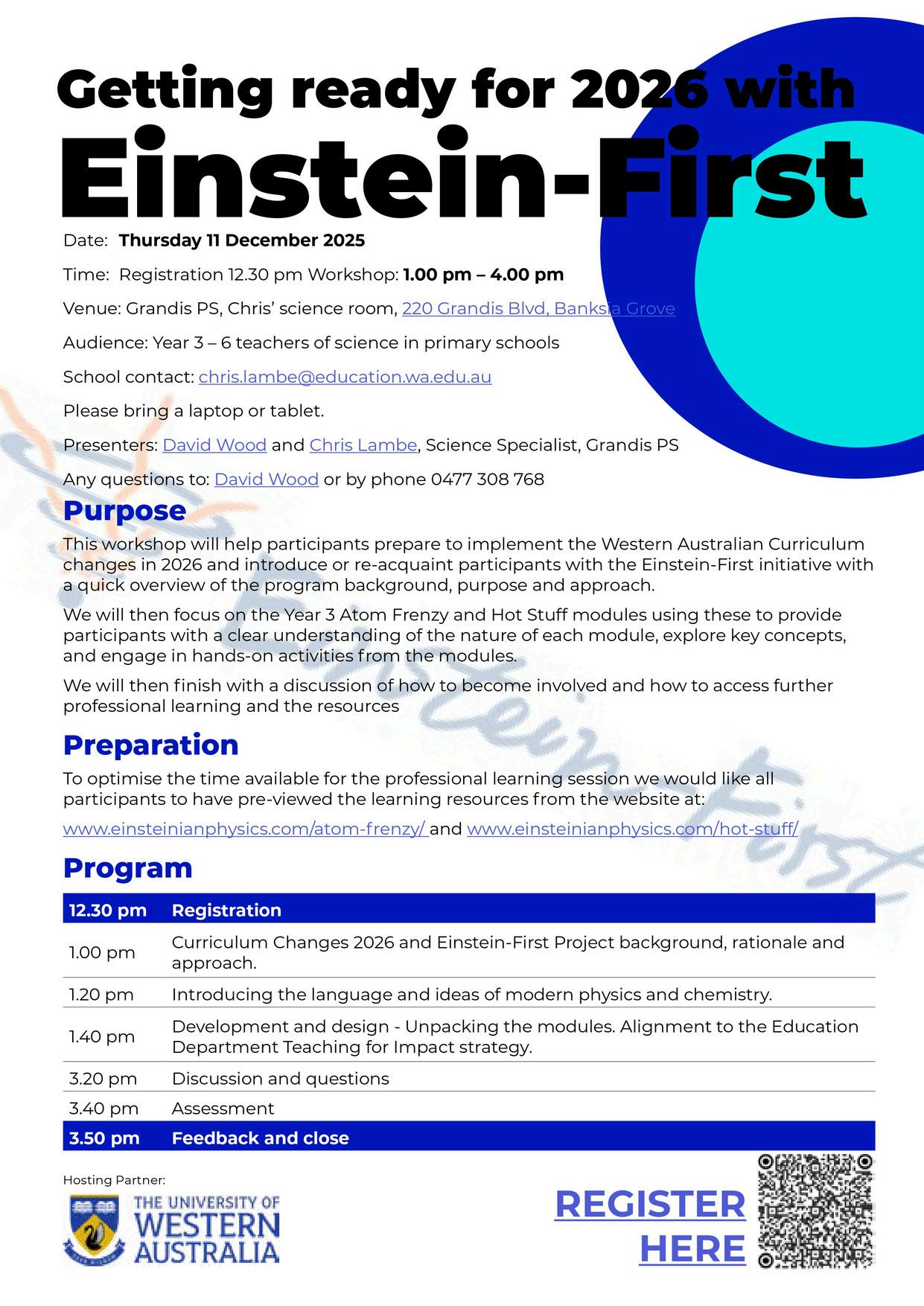
Getting Ready for 2026 with EinsteinFirst at Grandis Primary School
Science Talent Search
Synergy Schools Solar Car Challenge
ConASTA 73 (National Conference)
Hi everyone - and welcome to the end of the year – almost!
Our sincere thanks to all who have hosted or attended an Open Lab this year We receive wonderful feedback on how this allows teachers to share and network – and meet others of the ‘same species’!
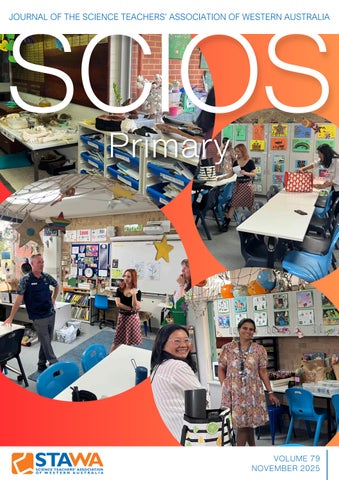
The front cover is from the recent Open Lab at Rossmoyne Primary School Thanks to Nousha for hosting for a second time! Ailsa Wooden from Illawarra Primary School also hosted an Open
Lab for this term Sorry but no photos were taken as they were engrossed in discussion, and she forgot to take any! Many thanks also to Vanitha Ram and the Science teachers from Piara Waters Primary School for hosting a session in Term 3 Please offer your lab for 2026 and share your interests and expertise
One conference ends and the next one begins! Planning has already started for ConSTAWA –our state conference - for 2026 It will be at Willetton Senior High School on Tuesday, April 14 in the Term 1 school holidays We have had overwhelming feedback that the holiday timing works for the majority - especially regional teachers who might be heading to Perth Please consider presenting a hands-on workshop to share with other primary teachers th
The other main feedback we receive each year is workshops presented ‘by teachers for teachers’ are the most desired – so what can you share? Maybe collaborate with another teacher? The workshops are usually one hour but can be allocated 2 hours if needed
Not sure about ConSTAWA? Head to the STAWA website and look under Conferences for an outline of what the day holds – then lodge your paragraph outlining YOUR workshop! In 2024, we had over 90 primary teachers attend ConSTAWA 42 – let’s go even bigger this time!
We would like to congratulate the following teachers for their recent awards this year:
Chris Lambe of Grandis Primary School for winning the Minister’s Teacher of the Year Award
at the 2025 WA Education Awards
Anne Poustie of Carmel School for winning the Outstanding Professional Service Award at the Professional Teaching Council of WA (PTCWA) Awards last October 2025
Nathan Curnow of Willetton Senior High School for winning the STEM Educator of the Year (Schools) at the Premier’s Science Awards last Monday, 17 November 2025
Congratulations to Chris Lambe and Janene Sproul for also being finalists at the Premier’s Science Awards 2025
All the best for the rest of the term, a wonderful festive season and a terrific holiday! See you in 2026
Mady Colquhoun
Chair STAWA Primary Science Committee

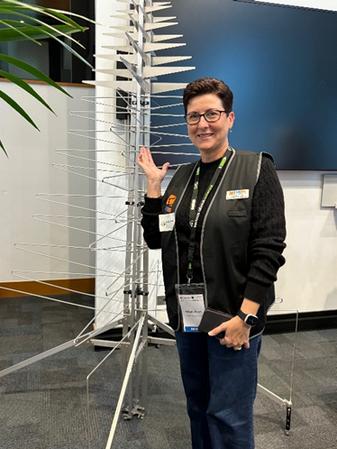
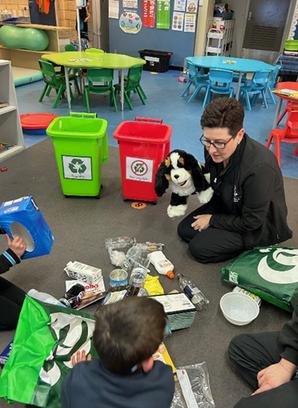
For the past 25 years, I’ve been part of the STAWA Primary Science Committee, working alongside many passionate and dedicated science educators from across all
sectors It’s been a wonderful journey of sharing ideas, developing resources, and creating opportunities for teachers to connect and learn from one another. Together, we’ve planned and coordinated many Primary Science conferences that provide valuable professional learning experiences for teachers right across the state.
Science in the early years has always been my passion I believe that every child
should have the chance to explore, question, and discover in ways that are fun, hands-on, and meaningful With over 35 years of experience as a senior teacher and early childhood educator, I love designing science programs that blend play-based learning with literacy helping children build their understanding of the world while nurturing their natural curiosity and sense of wonder
For me, the best part of teaching science is watching children’s eyes light up when they make a discovery or see something new for the first time Those moments remind me why I do what I do to help every child see themselves as capable, curious, and confident young scientists
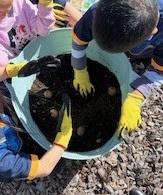
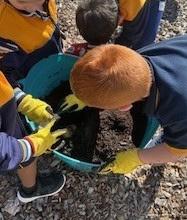
Engaging five-year-olds in hands-on science investigations offers rich opportunities for developing curiosity, observation, and problem-solving skills After discussing our
favourite food, a little one asked where chips came from This then led to further questions and eventually to our inquiry question: Which potting mix grows the best potatoes?
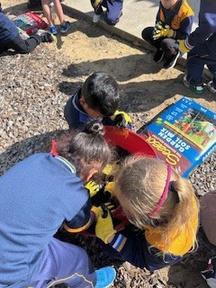
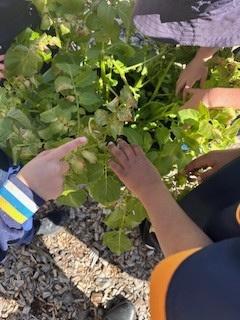
Students planted seed potatoes in four different potting mixes - budget, two types of midrange, and premium - to test which produced the greatest yield They made predictions, drew observations, and carefully tended their plants over many weeks. Growing potatoes proved to be a lesson in patience, as the plants took much longer than expected to sprout and mature This allowed for meaningful discussions about the needs of living things, plant growth cycles, and perseverance in science
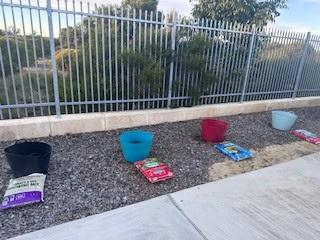
When harvest time arrived, excitement filled the classroom Surprisingly, the most expensive potting mix did not produce the most potatoes. Instead, the midrange mix yielded the greatest number and size of potatoes, leading to wonderful conversations about how cost doesn’t always equal quality
My current (and long-time) favourite thing to use in my Science Room is
the iScope stand This innovative platform for the iPad device was designed by artist and biodiversity educator Angela Rossen
The iScope stand is a great compact ‘device’ that allows us to use the iPad (or iPhone) camera to magnify objects and capture the images for later use
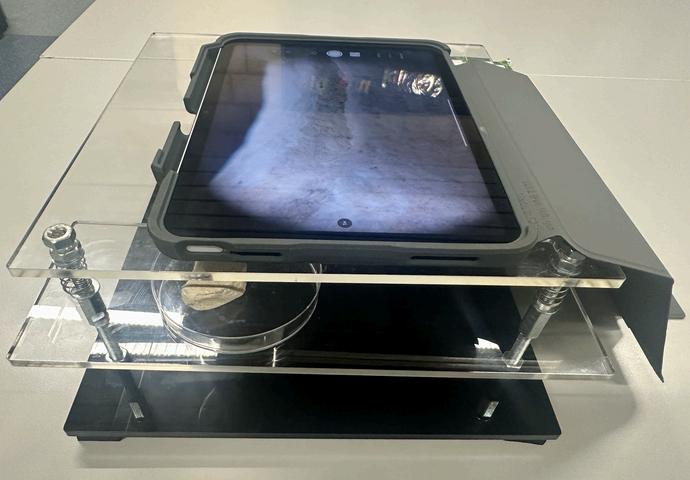
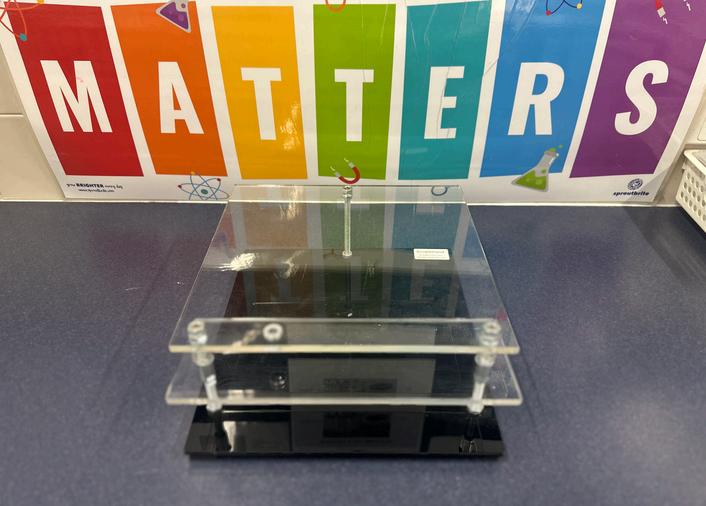
Since it is cordless and relatively lightweight, it is ideal for use in a primary school
The main advantage of this stand is its large clear platform on the top that allows the entire iPad to rest Now, all that need to be done is to align the camera lens with the lens on the stand This allows students to easily place the specimen to examined on a petri
dish on the stage below Then, they can use both hands to adjust the spring controlled stage without worrying about dropping the iPad. Once they have magnified and focused the image, they can very easily take the photos of the specimen
Even though we have microscopes, I find these stands are far more accessible and convenient for students. With the ten stands that we have, I am able to assign one stand per group and allow students the opportunity to use the stand collaboratively It is also a great teaching tool as the iPad screen can be mirrored on to the television to share the image, but also explain how to use the stand
In recent times, these are some instances of when I have used the iScope stand:
Year 4 Biological Science: to zoom into parts of flowers
Year 4 Earth and Space Science: to look at differences between rocks
Year 6 Biological Science: to zoom into a slice of bread to look at the air pocket in
the soft centre
While I would love the time to use the stands more frequently, I am glad that sometimes students request to use it when doing their own Science investigations
These are some photos taken by students in their Science projects
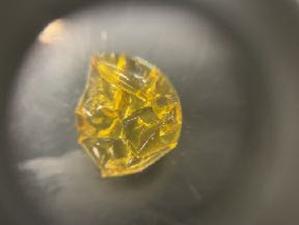
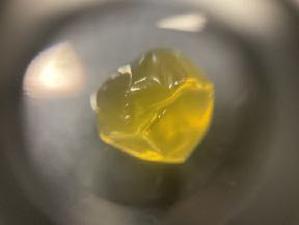
Comparing the changes to the membrane of popping pearls that have been left at different temperature
Photos taken by Ashlyn & Navi, 2025
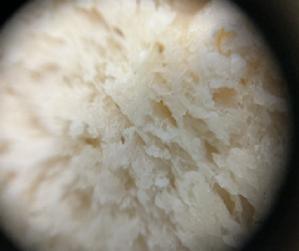
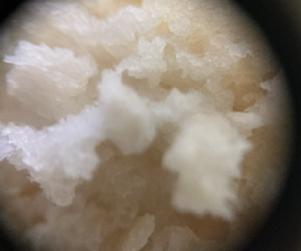
Comparing the air pockets in soft centre of bread that was baked using different types sugar to ferment the yeast
Photos taken by Emi & Siya, 2025
Do you have a favourite resource? Please share!
Is there something in your science laboratory that you and your students really enjoying using which supports the primary science curriculum Teachers often like to see resources that have been tried and tested by others before purchasing
All contributions welcome with a photo and a short text Please ensure that you relate it to the curriculum
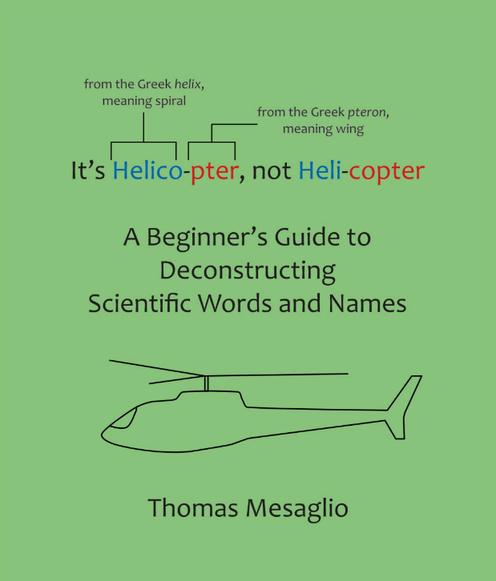
Thomas Mesaglio from The Centre for Ecosystem Science | Evolution & Ecology
Research Centre, UNSW Biological, Earth & Environmental Sciences, has kindly given
us permission to share this resource regarding the language origins of scientific terms
Fascinating reading and presented in a fun way!
Encourage your students to use this book – it will help them understand why science
uses such specific and sometime complicated words
About the Author
Thomas is extremely passionate about
citizen science, especially the biodiversity citizen science platform iNaturalist, where he is a curator and forum moderator He is
also a great proponent of BioBlitzes, and has organised, co-organised, participated in, and led surveys for a range of events, including the City Nature Challenge, Great
Southern BioBlitz, Big Bushfire BioBlitzes, and a Desert Discovery expedition
His main interests include urban ecology, Australian plants, beachcombing, invertebrates, and taxonomy
Link: A Beginner’s Guide to Deconstructing Scientific Words and Names
Chris Lambe
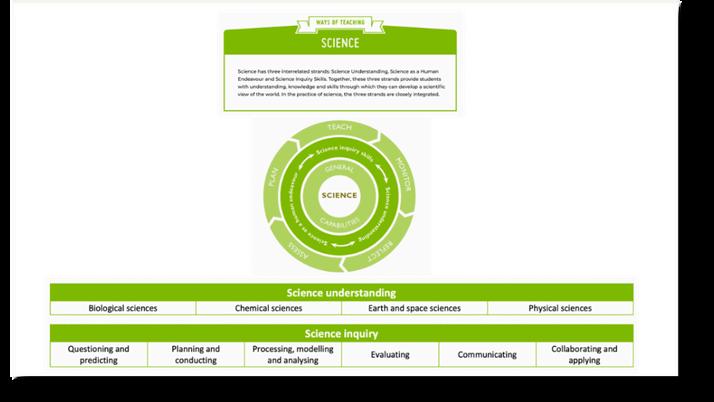
Chris has kindly shared his overview of the changes from the current curriculum to the new curriculum beginning next year He has highlighted the changes in each SU and added in some possible resources and ideas that might help you to get started with your planning
As it is a mighty 117 pages – because he has added some fabulous visuals for each SU in each year level at the end – we are providing the link only!
2026 WA Curriculum Science Ideas and Word Wall
Stalley
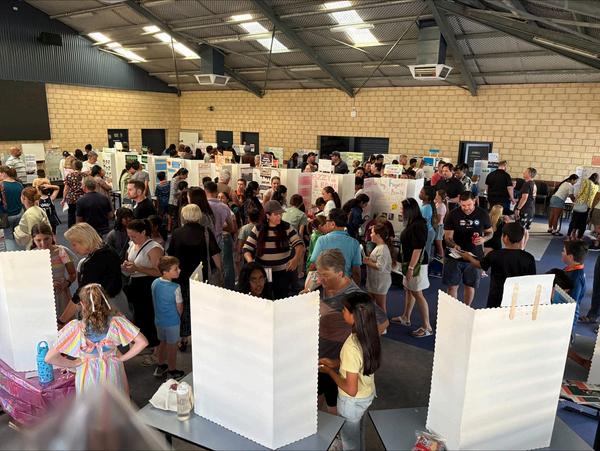
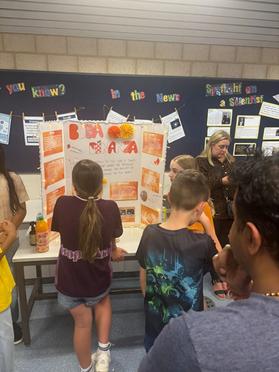
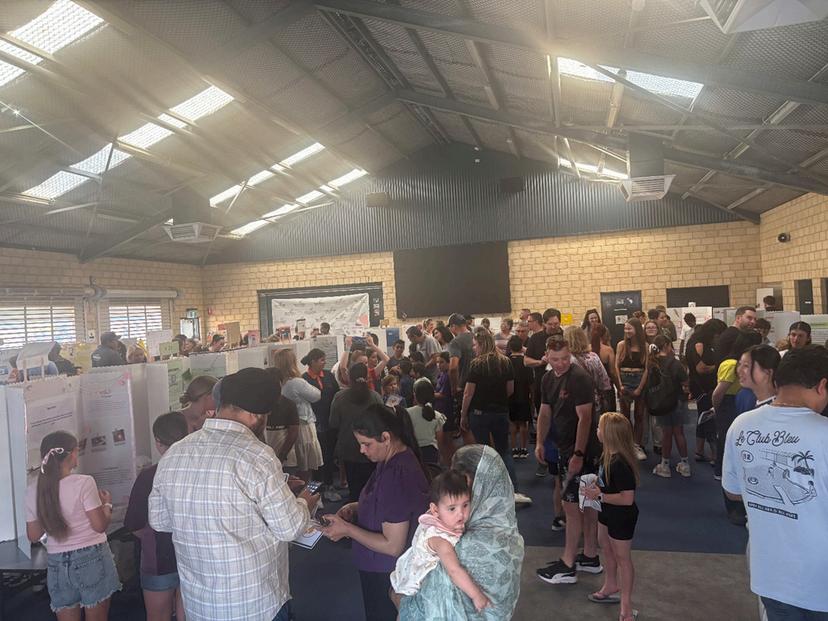
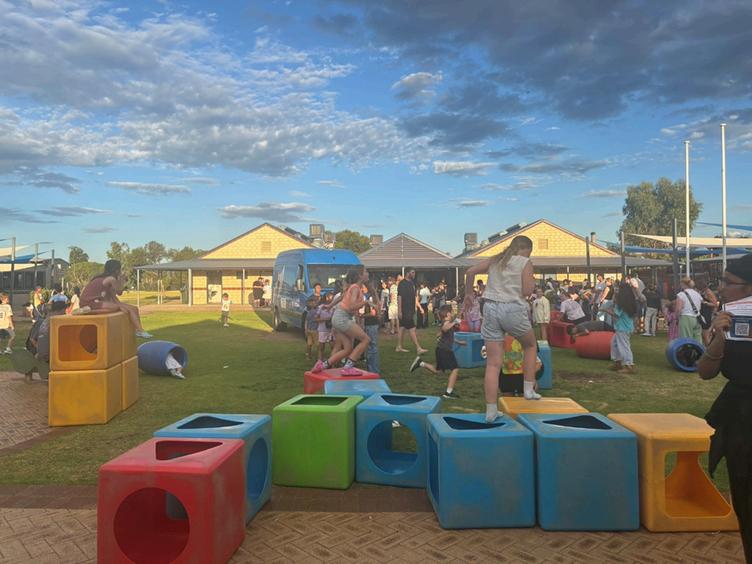
On Thursday 20 November 2025, Piara Waters Primary School hosted a Science Expo that could only be described as buzzing With 1,051 students at the school, the evening drew a huge crowd of families and friends, turning the school into a lively hub of discovery The fair showcased work from Pre-primary to Year 6, with Year 6 students proudly sharing their investigations and, just as importantly, their excitement The Science Expo has grown over six years, starting with an opt-in model, progressing to all Year 6s the following year and the evening community event for the past three years
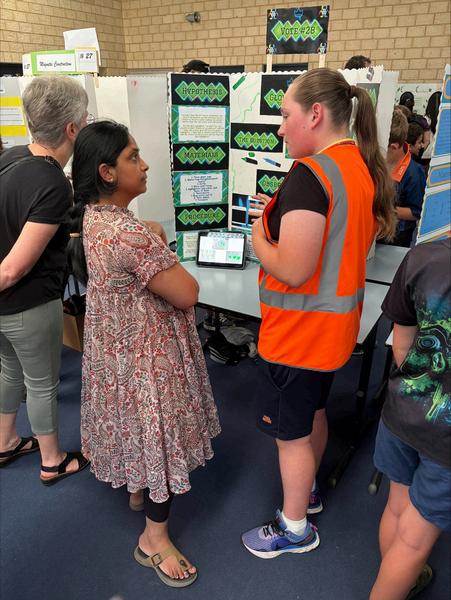
Principal Miss Alison Ramm attributes events like this to the school’s strong science program Every student participates in two hours of science each week: one hour dedicated to building content knowledge and concepts, and a second hour reserved for inquiry skills - designing investigations, testing ideas, analysing results, and reflecting on findings Extension classes offer further enrichment for students
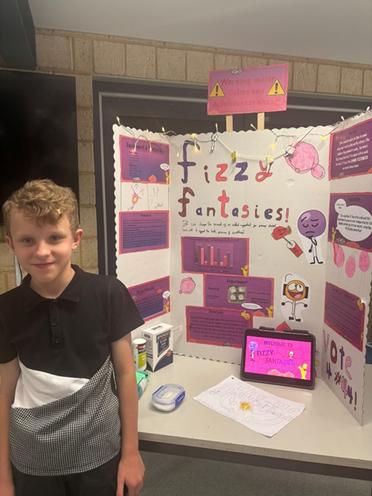
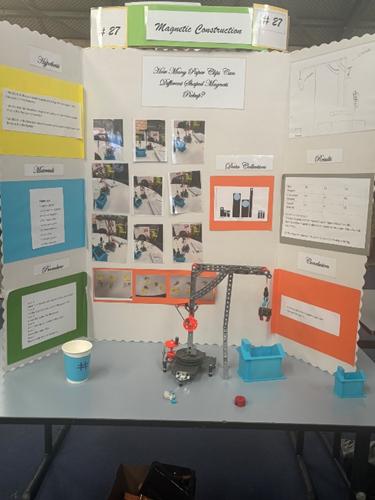
These foundations come together most visibly in the Year 6 Science Expo The Expo not only serves as a summative assessment of students’ inquiry skills but also a chance for them to choose projects that genuinely interest them The result is an exhibition that spans everything from chemistry and biology to engineering and environmental science - evidence that students see science as something that extends well beyond the classroom
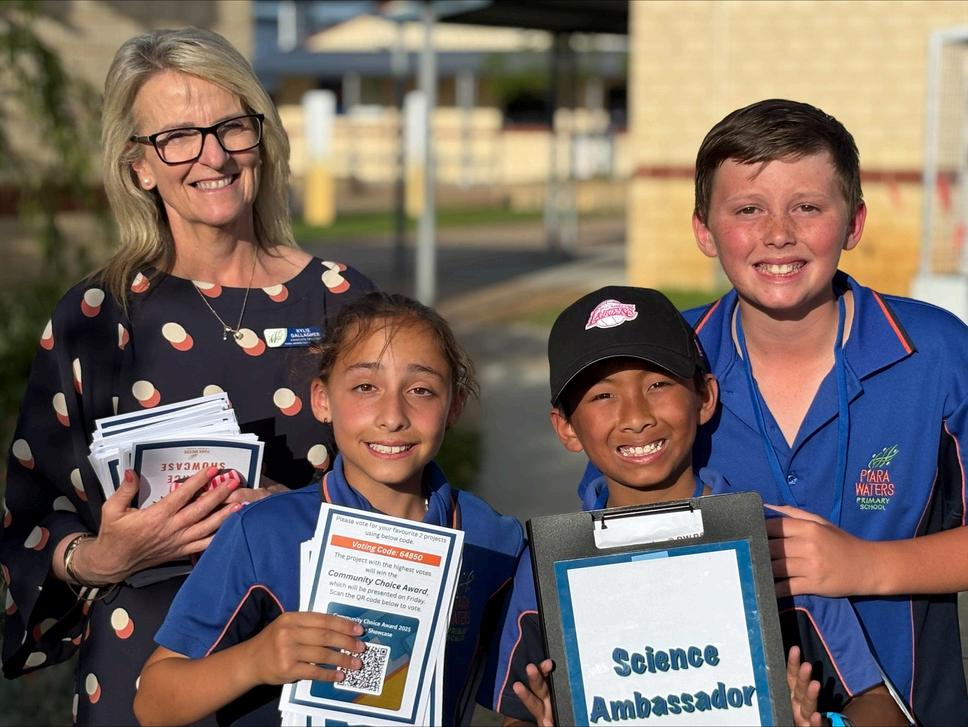
Sue Cuneo, Director of Education, South Metropolitan Region, attended the evening, spending time with students as they explained their projects and the thinking behind them Community members played a central role too, voting for two projects on the
night, which add to a range of awards announced at the following day’s assembly The judging process reinforces that communication - being able to clearly explain a scientific idea - is just as important as the investigation itself
This strong culture of inquiry and communication was also reflected beyond the school
grounds Piara Waters Primary School once again entered STAWA’s annual Science
Talent Search (STS), with outstanding results The 67th STS, held on Monday 20
October 2025 at Scitech, brought together 348 entries from 480 students representing
29 schools across Western Australia Entries spanned engineering, science investigations, and science communication (video, poster, photography), from Preprimary through to Year 12.
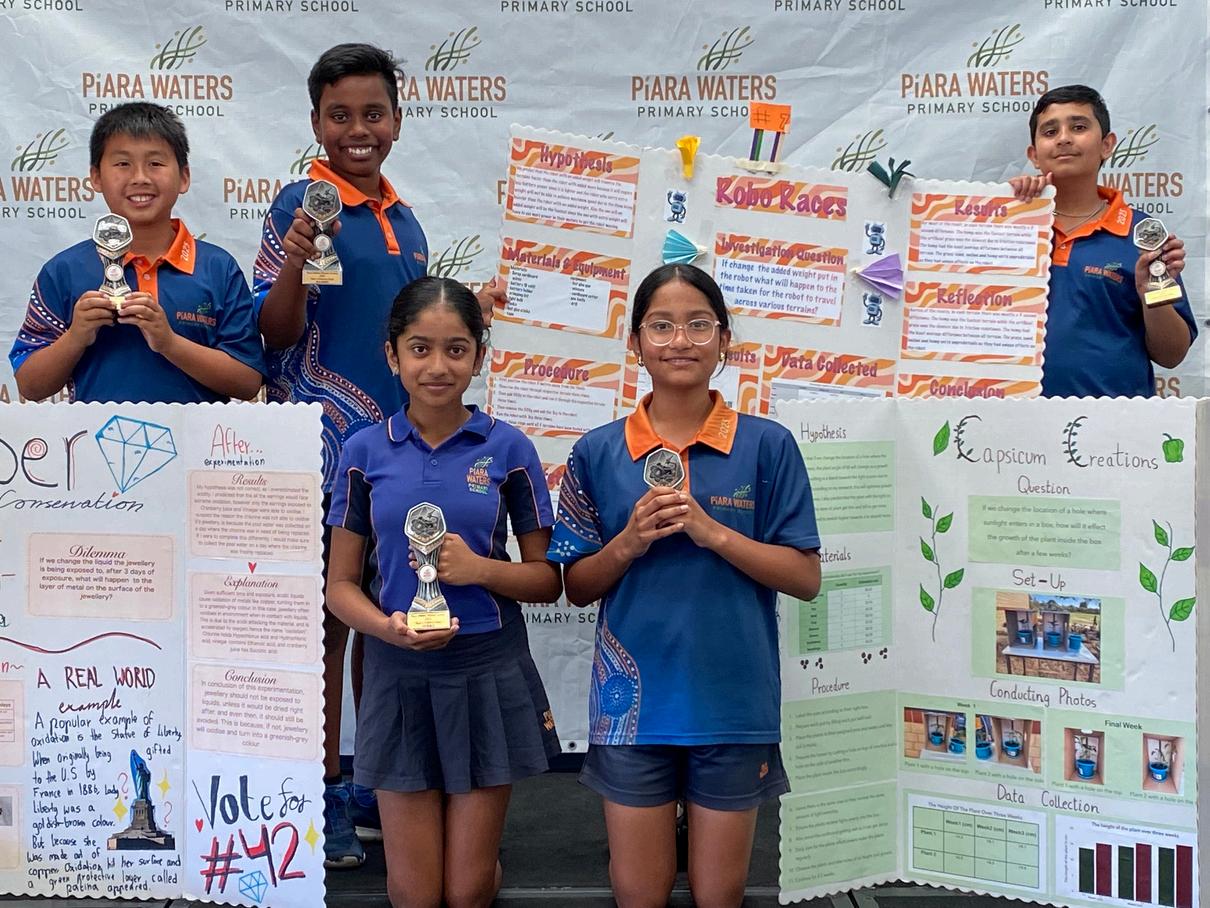
Piara Waters Primary School received the STS School Award for Primary, recognising its exceptional performance across categories The school achieved:
Three finalists in Science Communication – Posters (K–2)
Five winners in Science Communication – Video (K–6)
Two winners in Science Communication – Photography (3–6)
Three winners in Science Investigations (K–6)
And the prestigious STAWA Young Communicator of the Year - Primary
These achievements speak not only to the students’ effort but also to the consistency of the school’s science program - from weekly lessons and extension opportunities to major community events like the Science Fair - and the dedication and passion of the science teaching team: Mrs Ashlee Steel, Mrs Emily Hoareau and Ms Alanna Padua (Science teachers for Pre-primary and Year 1), Mrs Katherine Nelson (Science teacher Room 31), Ms Emma Boyd and Miss Skye Kearney (Science teachers for Years 2, 3, and 4), and Ms Vanitha Ram (Science teacher for Years 5 and 6)
What makes the Piara Waters Science Fair particularly special is how it brings everyone together Families weren’t just observers - they were active participants, talking with students about their work, asking questions, and sharing their own experiences with science For students, it sends a clear message: science is not something that begins and ends with a school bell It is part of everyday life, and their community is filled with people who use scientific thinking in meaningful ways
Piara Waters Primary School shows what can happen when curiosity is supported, celebrated, and shared
Voices from the Piara Waters Community:
“Science at Piara Waters isn’t just a lesson - it’s part of our community ”
“Our students don’t just learn science; they investigate, communicate, and share it ”
“The Science Fair shows students that science lives far beyond the classroom ”
“When families join the learning, students see themselves as real scientists ”
Pamela Getalado
It’s a wrap for this year’s Science Talent Search!
With over 500 entries received from students across WA, this year’s competition
demonstrated the growing passion for research, creativity, and problem solving among emerging young scientists
The competition continues to serve as a platform for aspiring researchers to showcase their
work, exchange ideas, and contribute to the advancement of science and technology
The winners were announced last Monday, 20 October 2025 at Scitech th
Congratulations to the winners in the following categories:
Years K-2 - Finalists
Student Names School
Josephine Crane, Mehreen Kaur Sidhu, Obaidur Rahman Khaja
Ella Tung, Hendrix Molloy, Tristan Toutountzis
Zaxson Bourne
Abigail Newton & Emerson Boudville
Marcus Lin
Sri Vishnu Karthika Lade
Diva Shrestha
Klarissa Pui
Piara Waters Primary School
Piara Waters Primary School
Entry Title
The Playground is Fun for everyone
All About Light
Rangeway Primary School Symmetry in Nature
Piara Waters Primary School
Gravity and Air Forces
North Harrisdale Primary School Airplanes
The Magic of Push and Pull
Aspiri Primary School
Carlisle Primary School
West Leeming Primary School
Forces
Amazing Lifecycle of a Butterfly
Patterns
Class of Kambarang 3
YEARS 3-4 Award Student Names School
Place
2 Place nd
3 Place
Samala
Deka
Lohas Mapa, Senudhi Hewa Alankarage, Manuka Senanayake
YEARS 5-6
Award Student Names School Entry Title
1 Place st Noor Naji
Rowe Scientific Encouragement Awardee
“Decoding the Colour Spectrum”
Isabel Reid
Carlisle Primary School
Abstract: Isabel’s project explores the science of light dispersion through the colour spectrum, inspired by the natural formation of rainbows The project highlights how different wavelengths of light create colours and how this principle is applied in astronomy to determine the composition, temperature, and motion of celestial bodies Through understanding light and its interaction with matter, we gain deeper insight into both our world and the universe beyond
Rowe Scientific Emerging Talent Awardee
“Automatic Fish Feeder”
Leni Fox & Romilly Anderson Applecross Primary School
Abstract: Two 11-year-old students designed and built a Wi-Fi-enabled automatic fish feeder
that is inspired by a friend’s experience The prototype uses safe, low-voltage components and focuses on automation, adaptability, and affordability Future improvements include solar power and additional features to enhance functionality
STAWA Young Communicator Award
“Evan Tan the Science Man: Static Electricity”
Evan Tan, Logan Christensen, Syarif Azlany
Piara Waters Primary School
Abstract: This project explores the concept of static electricity and how it works In the video, the lead character, Evan Tan, explains the causes and effects of static electricity through clear demonstrations and examples
STAWA Young Scientist of the Year
“Fluoride vs Non-fluoride toothpaste”
Noor Naji
Applecross Primary School
Abstract: This project tested whether fluoride or non-fluoride toothpaste better protects teeth Using eggshells as a model, Noor found that fluoride toothpaste provided stronger
protection against acid damage, making it the healthier option for teeth


Shareyourexpertise.Inspireyourpeers.Shapethefutureof scienceeducation.
If you would like to become part of next year’s Science Talent Search Competition, expressions of interest are now open!
Visit the STAWA Website to register your interest.
The Synergy Schools Solar Challenge is an exciting hands-on program designed to spark student interest in STEM by engaging Year 6 and Year 8 students in the science of solar energy.
A joint initiative between Synergy and the Science Teachers Association of Western Australia (STAWA), the challenge aims to address the low uptake of Science, Technology, Engineering, and Maths subjects by providing a fun, practical learning experience that brings STEM to life in the classroom.
Registrations for the 2026 Solar Car Challenge are now open!
Visit the Synergy Solar Car Challenge website to register your school!


Here are just some of the benefits and opportunities for STAWA Members Please
check our website for details, and to find out what else STAWA does - PLUS what
STAWA can offer you! (www stawa net)
SERVICES AND SUPPORT
Resources
A range of resources for Primary teachers is available on the website Look for the
Resources Tab There are resources available to members and non-members
Members can also share resources through the STAWA website You can download
resources directly from the website or request to upload resources by contacting the
Office (admin@stawa net)
Australian Science Teachers’ Association (ASTA) Affiliation
Full fee-paying members enjoy the benefits of affiliated membership to the national
association This includes access to ASTA’s online journal, Teaching Science, and the
Chrysalis online learning community
STAWA Primary Members receive:
SCIOS Primary (STAWA online journal)
Teaching Science (ASTA journal),
Information about Science activities for students and teachers
Professional Development & Conference programs
Members receive discounts for STAWA Professional Development Workshops, a range of services and attractions, STAWA texts and resources, plus attendance at
STAWA Conferences and events, including ConSTAWA and ConASTA
PROFESSIONAL RECOGNITION
STAWA recognition of teacher achievement and service through the STAWA Early
Career Primary Science Scholarship
OPPORTUNITIES
Teaching employment opportunities, curriculum review and development, government policy input, science equipment advice and professional development
An independent voice through STAWA’s representatives on many education bodies and committees
STAWA LIFE MEMBERSHIP
Each nomination for STAWA Life Membership is considered on its individual merits
Nominations, accompanied by relevant supportive evidence, must be submitted to the
President of STAWA Life Membership, if awarded, is bestowed at the AGM Please
refer to the specific details on the STAWA website
STUDENT OPPORTUNITIES
Science Talent Search
Synergy Schools Solar Challenge
MEMBERSHIP QUERIES
If you have any queries with regards to your membership, please email us at
admin@stawa net
Send the following to the editor:
1. Please send your document as a word file with photographs and other images embedded where you need them to be
2. Photographs and other images (e g diagrams) should be sent as separate files
3 Photographs often increase the clarity and interest level of your work Send your photographs as tiff or highest quality jpeg files with a resolution of at least 300 dot per inch (dpi) Note to teachers: a signed parent permission slip must be obtained for any photographs of students to be included in SCIOS.
4 Copyright for any part of your contribution that is copyright of a third party needs to be obtained in writing (email acceptable)
COPYRIGHT
No other publisher should have published your manuscript, nor should you submit for publication elsewhere If SCIOS Primary publishes your manuscript then your text and graphics will become copyright of STAWA STAWA will, however, agree to your use of the contents of your paper for most reasonable non-commercial purposes
Contact primaryscience@stawa net to submit your articles