FEATURED ARTICLES
My Favourite Resource ! - Catherine Burns
Meet your STAWA Primary Science Committee
Synergy Solar Car Challenge Roundup for 2026
Hello everyone - and welcome to Term Two !
So much is happening in the primary science space, and it was great to catch up with so many primary teachers at CONSTAWA. See a round up in this issue.
STAWA is running PL workshops again – keep an eye out on the website and through our new social media including Instagram and Tiktok You can find our new platforms @stawasocials. But also as a member you will receive emails.
Both members and non-members are welcome to attend but there is definitely an advantage to being a STAWA member!
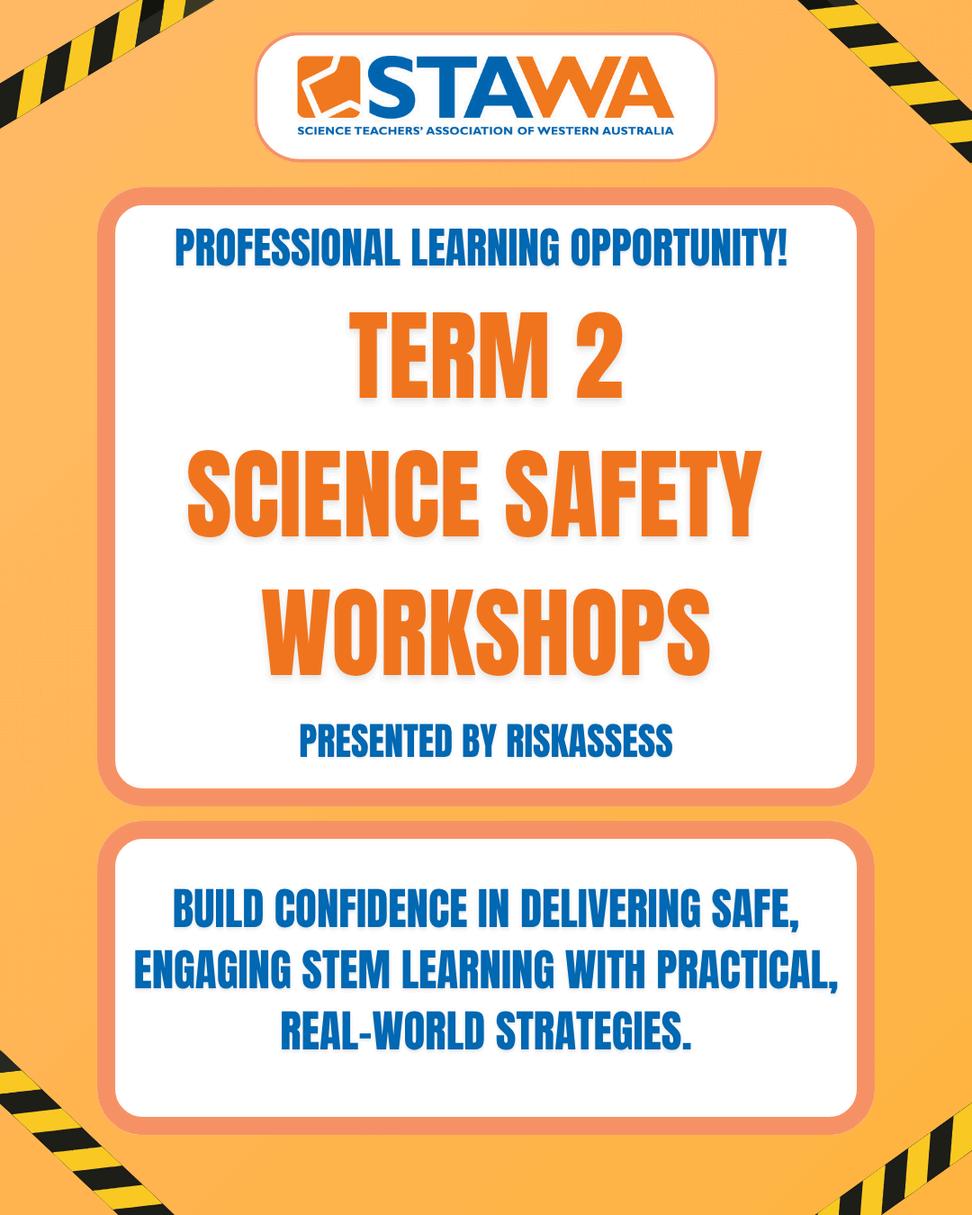
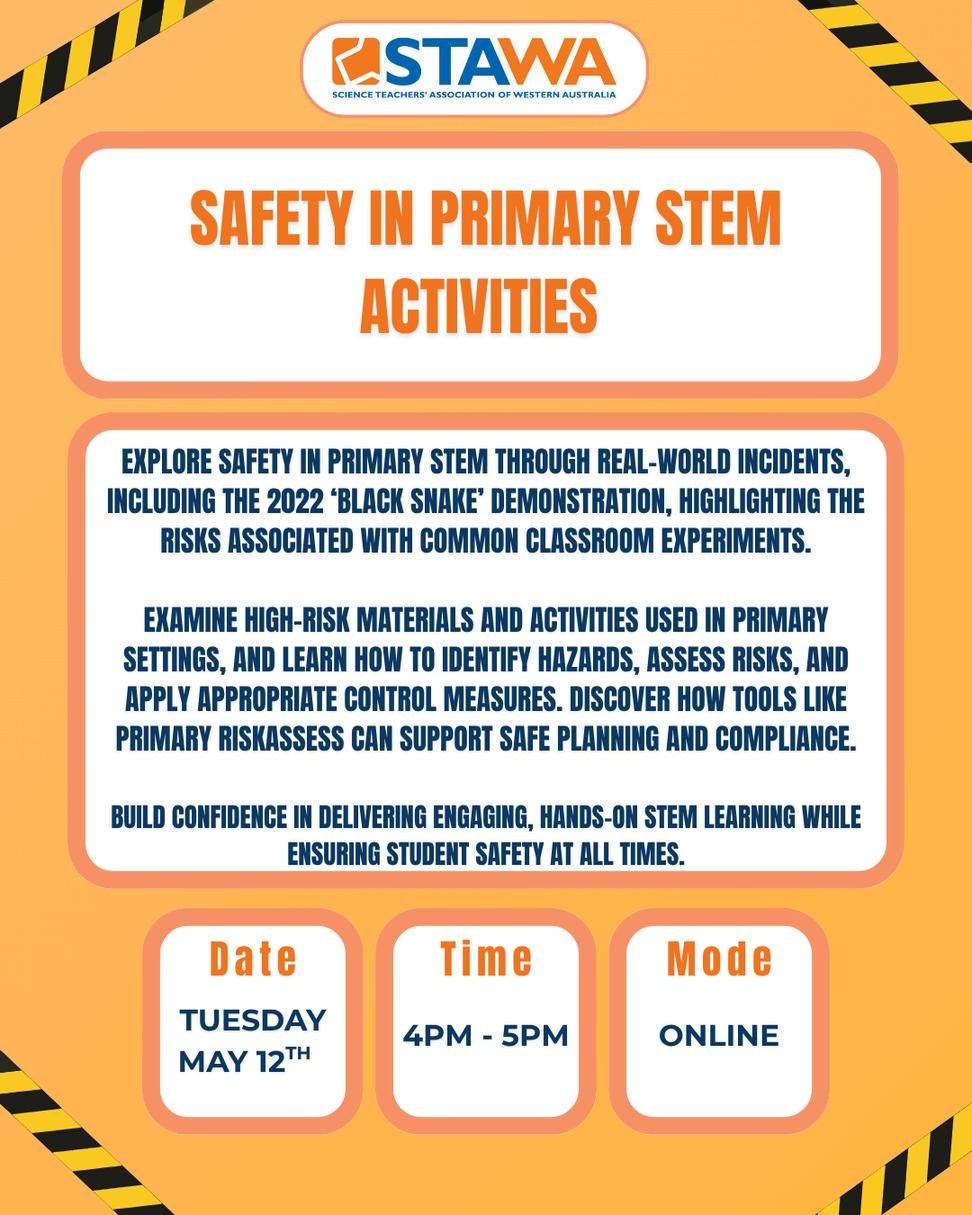
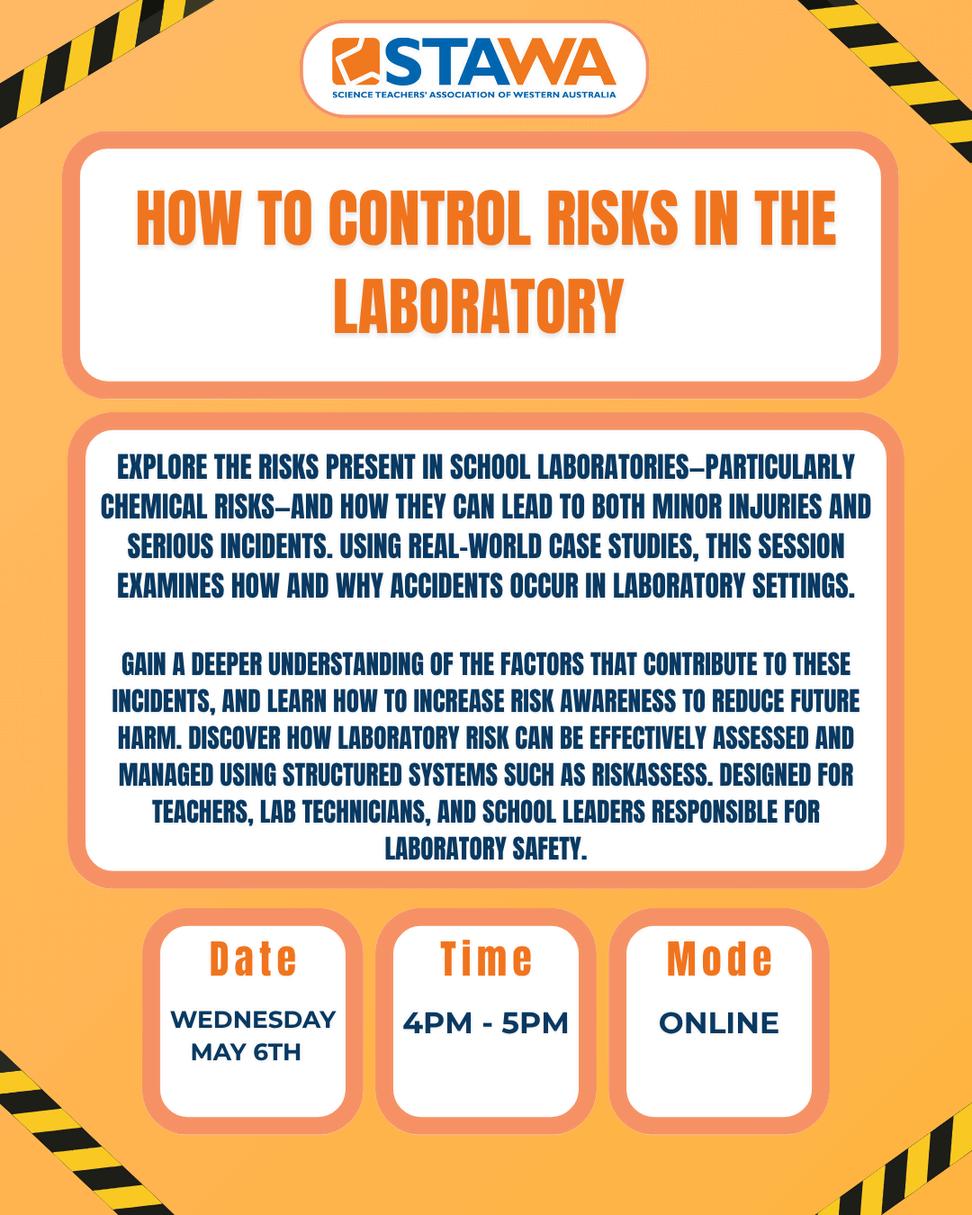
You asked for moderation workshops – there are 2 scheduled in term 2 – see the promo in this issue
There is an amazing piece of science equipment shared in ‘My favourite resource’ – you will all want to access this one
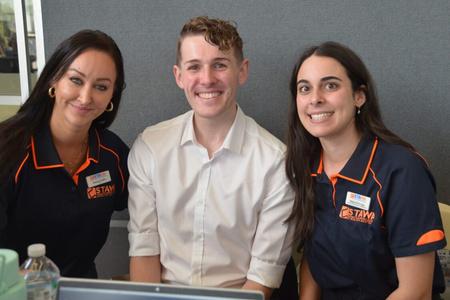
Meet Kaye, another of our wonderful primary committee, who is working hard to support primary Science in WA
The Science Talent Search is on again – check the website and register your school
The Bickley Observatory has a new program for primary schools - and it is free!
As I said – so much happening – I hope you enjoy this issue Grab a glass of wine or a cuppa and relax for a few minutes
Mady Colquhoun
Chair STAWA Primary Science Committee
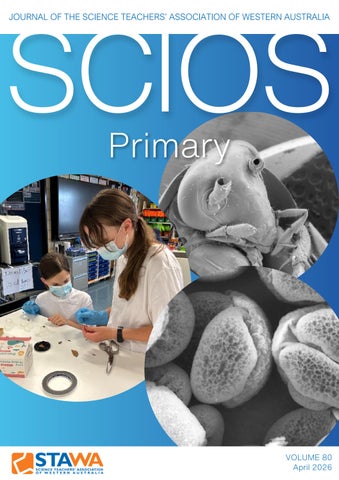
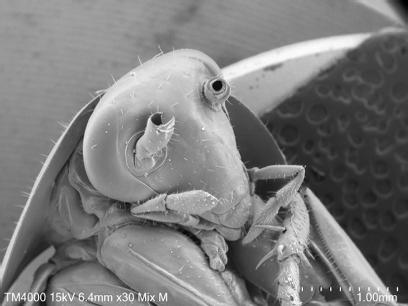
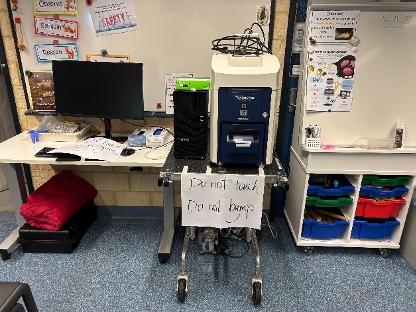
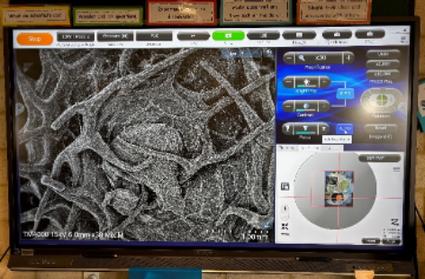
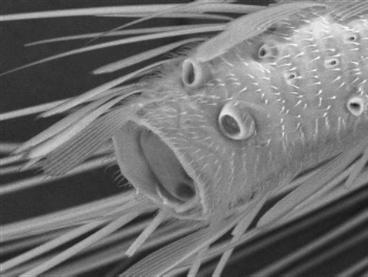
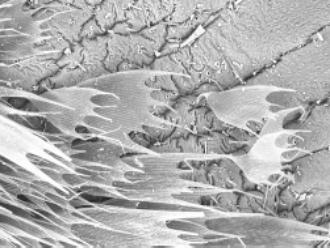
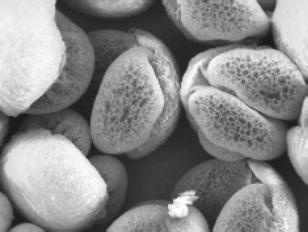
What is it? This is a tabletop SEM - just look
at the photos and you will see what it can do!
How did I approach this amazing
opportunity within my Science lessons?
At Melville Primary School there are 17
classes with over 437 students.
Yr 2-4 – 277 students
Yr 5-6 – 160 students
Most classes were able to participate in one session with the SEM
The Week Prior to Using the SEM
I decided to cover the nano and micro
worlds in the Science lesson during the
week prior to the SEM experience During
that week we also viewed a video about the
nano world, and a second video about the
SEM and how it worked. Access these
videos via the links below
Nanoworld video
https://youtu be/EYzO9OcBxNg
(1 22min)
Junior video https://youtu be/U-
WJKM0p2xI (10+mins but STOP at 1 17min)
Middle and Senior video
https://youtu be/uEpDmoKjd U
(2 26min)
Video - 15 examples of electron microscope images in colourhttps://youtu be/h7ZZTw93fc4 (2 57min)
I downloaded several images from the Australia
Museum website, photographed by Sue Lindsay
using a SEM I printed these off A4 size with the
names on strips In groups the students tried to
match the label with the photo As I moved
between groups, I would remove any incorrect
labels and place them back in the centre of the
desk This gave the students another
opportunity
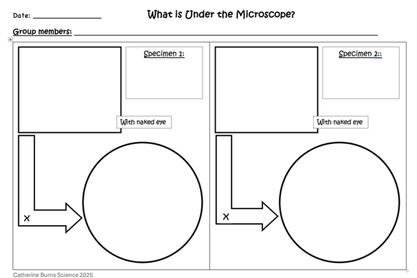
Students then selected an image, chose an area
about as large as a 5c coin and drew what they
could see with the naked eye
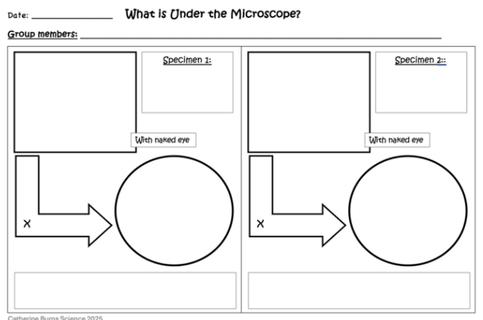
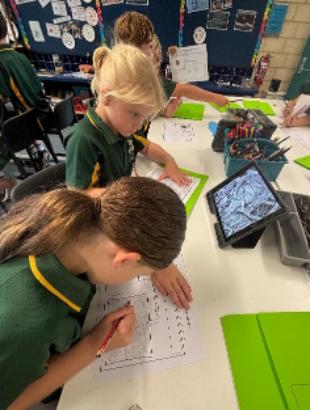
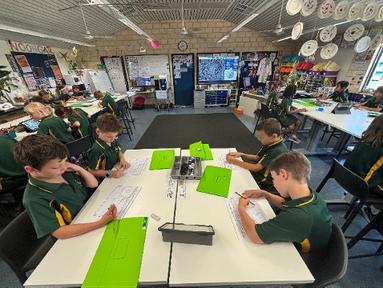
They then used an MG 10085 illuminated hand-held microscope to view the same area at 100x magnification This was recorded on the same sheet as the naked eye diagram
Both activities worked well for all year groups, generating both interest and discussions
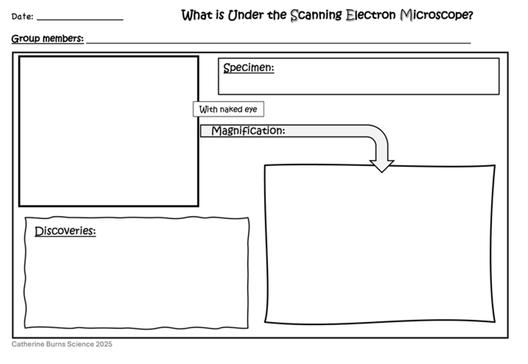
Year 2-3 Recording Sheet
Using the SEM
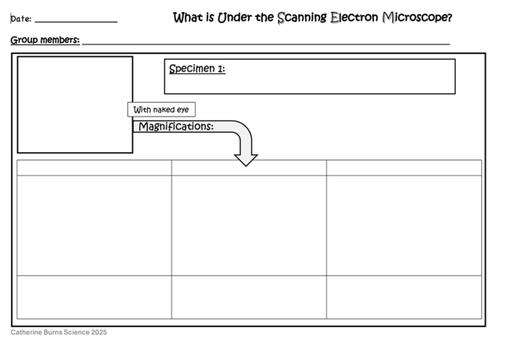
Year 4-6 Recording Sheet
As this was my first experience with the SEM, I developed my skills and understandings with each lesson and found I needed to adapt my planning The scanning of each specimen takes a little longer than expected and once completed we had some wonderful discussions, and in some cases the responses gave me goosebumps! This meant the number of specimen images I had planned for the older students to record was reduced to one specimen viewed 4 times: naked-eye, and 3 different magnifications
I found if a student from each group took a photo using an iPad, then I could commence the next magnification scan while the groups observed the image and discussed differences, what it reminded them of, what they were surprised by etc
Year 2-3 Recording Sheet
Year 4-6 Recording Sheet
The most verbal and expressive responses were from the younger students who are still wowed by the world I even had students bringing in their parents after school to look at the SEM and talk about the images we had saved That is always a rewarding and encouraging experience SCIOS PRIMARY 5
Specimens
I purchased:
1 roll of the double-sided 200 aluminium stubs
Roll of double sided carbon tape
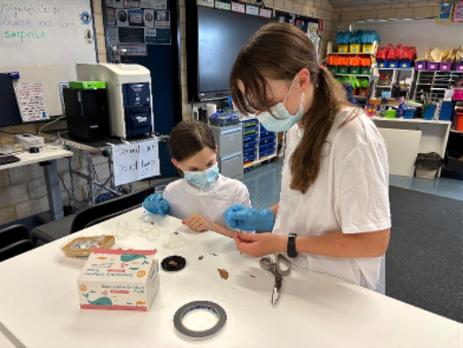
We created about 20 different specimens and viewed them using the SEM The specimens which were the most descriptive and the students enjoyed the most were the ones we spent more time on (*)
Mosquito and soil gnat
Snake skin (this wasn’t as effective as I had
hoped, the scales were too large)
Conifer pollen **
Silkworm moth wing **
Young eucalyptus leaf *
Silkworm silk threads *
Cobweb **
Human hair
Bindi prickle ***
Mould growing on a tortilla (all safety precautions taken) ***
Exo-skeleton of spiny stick insect
Sand
Rubbings of white eraser **
Bark
Cocoon fibres (empty cocoon found by students)
Metallic look crochet cotton (the shine of this distorted the image - wouldn’t use a shiny surface again)
Microchip
Final Thoughts
The whole experience was a wonderful opportunity to
show students beyond our usual world scale We
experienced a lot of, “WOW!!” responses, especially
with the younger students
I feel so grateful for this amazing and valuable
opportunity From what I have observed, I believe
students will be recalling and drawing on this
experience and learning for many years
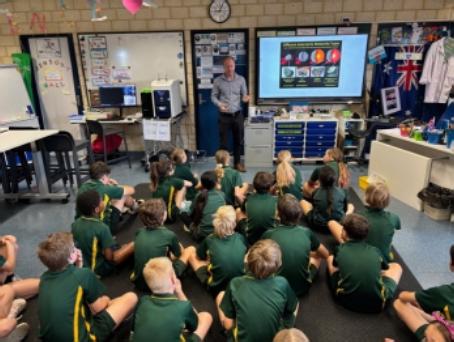
William Rickard from John de Lester Centre, Curtin University joined us for a presentation !
HAVE YOU HEARD ?
NEW STAWA SOCIALS ARE OFFICIALLY LIVE
Kaye Henning
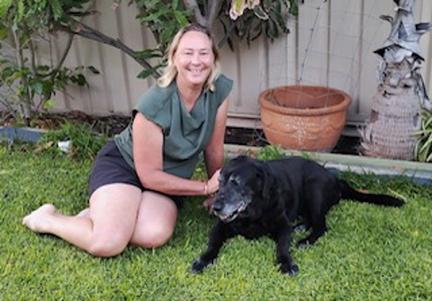
Introducing Kaye Henning,
I joined the STAWA Primary Science Committee in 2024 to connect and collaborate with fellow educators who share a deep commitment to quality science education After 27 years in the classroom most of that time as a generalist primary teacher I continue to feel inspired by the important role we play in shaping children’s understanding of the world around them Supporting early career teachers is something I care about deeply I know how rewarding and, at times, overwhelming those first years can be, and I am passionate about offering
encouragement, practical support, and opportunities for professional growth Creating spaces where teachers feel confident to ask questions, try new approaches, and reflect on their practice
is incredibly important to me
Inquiry-based learning has always been at the heart of my teaching, particularly within Science and the broader STEM landscape I strongly believe that children learn best when they are actively involved questioning, investigating, designing, testing, and reflecting There is something powerful about watching students move from curiosity to understanding through hands-on exploration I intentionally design purposeful investigations that build deep conceptual understanding while also strengthening students’ confidence in using scientific language and processes
Above all, it’s the moments when a child suddenly makes a connection when the “penny drops” and their eyes light up with understanding that continue to inspire me Those moments remind me why I remain so passionate about science education My goal is to empower both students and colleagues to see themselves as capable, curious, and reflective learners, ready to thrive in an ever-evolving STEM world
I am excited to have recently been accepted as STAWA’s representative on the Curriculum
Advisory Committee for Early Childhood (K – 2) where I will work with other teachers to support implementation of the WA Curriculum vis SCSA I look forward to this new role
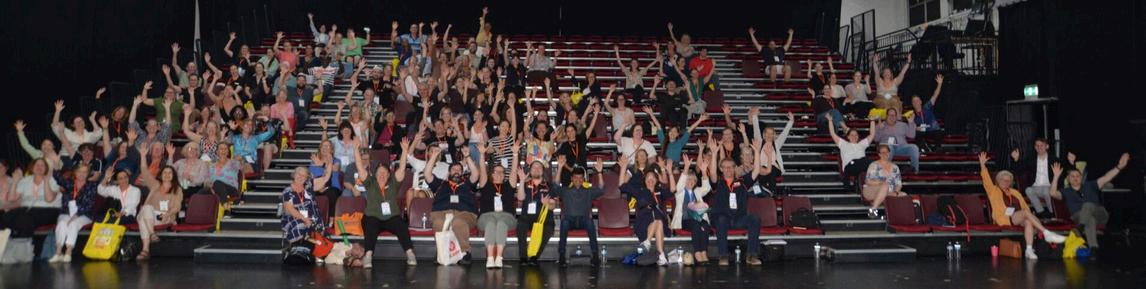
‘A picture paints a thousand words’ – so check out these photos!
What a brilliant day with so many amazing workshops and inspirational events Lyn Beazley, our wonderful
Patron, shared ideas regarding various Science roles that are part of the new era of space exploration She also celebrated our 2 pre-service scholarship recipients
Congratulations to Melissa Den Boer and Jamie King –both from Curtin University – we were excited to have you join us
Our Chief Scientist of WA, Sharath Sriram, shared insights about his current responsibilities and how he came to be in this exciting and often challenging role He then took questions from the floor and clearly indicated he is keen support teachers as we work to improve all levels of Science education
A sincere thank you to Willetton Senior High School and in particular Nathan Curnow for all his behind-the-scenes work
We were also delighted to have the year 11 Catering Group serving us a delicious morning tea and lunch
We really appreciate the variety of trades
representatives that supported us at ConSTAWA as
they bring us in contact with interesting and new Science resources
Special thanks to Jo (our CEO), Mikayla (our Events and Engagement Coordinator), Tullulah (our new Professional Learning and Engagement Officer) and Matt (our new Admin staff) for all their hard work both before and on the day Their commitment to creating a wonderful learning experience for us is amazing Finally, the ConSTAWA Working Group also put in many hours to make ConSTAWA the great day it is – thank you
If you missed ConSTAWA 43 – then why not join us next year for ConSTAWA 44!
A bit different this time. No explanations - just a list of terms you may like to use in Science Inquiry ! Amount Analyse Average Axis/Axes
Change Chart Clarify Classify Collect Column Column Graph Conduct Control
Data Decrease Demonstrate Dependent Describe Diagram Digital Discuss Display
Evaluate Evidence Explain Explore Fair Test Graph Heading
Identify Increase Independent Interpret Investigate Investigation Investigable Question
Journal Label Line Graph Locate Measure Number
Observe Observation Outlier Pattern Plan Predict Procedure
Question Range Ratio Record Relationship Row Safety Science Scientific Process Summarise
Table Terminology Testable Question Title Trend Variable
Note:
Words in italics are linked terms
You will note that hypothesis and experiment are not included
Hypothesis is a higher level thought process compared with prediction and is introduced in secondary school science This was fully explored and explained in a previous issue of SCIOS Primary
The term ‘investigation’ covers different types of science inquiry including Fair Test investigations, use of second-hand data, observing something over time and classifying Investigation is used in primary science in preference to experiment as it embraces the scientific process rather than a more arbitrary approach.
Hello Teachers,
We know your Term 1 will have been busy, but we hope it has been fantastic!
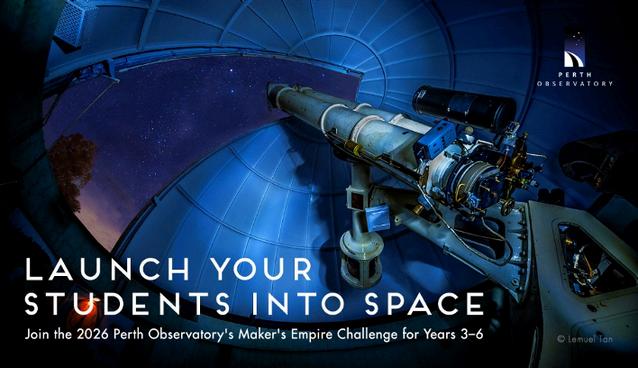
We are thrilled to invite your school to participate in the Perth Observatory challenge, an
exclusive opportunity for Western Australian schools. This is an opportunity to engage your students in space exploration, understanding and awareness of the history and heritage of the local WA space industry
For the second-year running, has partnered with Makers Empire and is now taking applications for this free Term 2, 2026, online managed project, specifically designed for years 3-6
This project includes:
Exclusive Perth Observatory challenge course within the Makers Empire 3D app
comprising videos, quizzes, design tutorials and Design Thinking challenges.
Comprehensive Teacher Guide to support classroom learning
Teacher Webinars and weekly emails providing support and scaffolding
Online exhibition showcasing selected student designs.
No face-to-face PD or showcase day - flexible and easy to integrate into your schedule
Interested in this out of this world opportunity? Learn more and register now by clicking this link.
We’d love to see your students take part in this fantastic opporutnity. Feel free to reach out with any questions by contacting STEM Outreach Officer Joanne Ludlow
2026 Roundup
It has been yet again, another successful year for the Synergy Solar Car Challenge in 2026
After a busy term of preparation, construction, and strategic planning, Year 6 and Year 8 students from Bunbury, Collie, Albany, Geraldton, Kalgoorlie, North Metro and South Metro competitions arrived for the Grand Final, taking place at Murdoch University
The day was filled with excitement as speed, innovation and serious STEM skills were all on display
We would like to give a big congratulations to the following Grand Final winners: Year 6 Competition
1 Place st Burrendah Primary School
2 Place nd St Francis of Assisi Catholic Primary School
3 Place rd St Brigid’s School - Collie A
Year 8 Competition
1 Place st Hope Christian College
2 Place nd Al Ameen College
3 Place rd Busselton Senior High School
You can now register your interest for the 2027 competition by clicking the link We cannot wait for next years competition !
Register Now
If you would like to be part of this year’s Science Talent Search Competition, registrations are now open!
Visit the STAWA Website to register your interest.
Here are just some of the benefits and opportunities for STAWA Members Please
check our website for details, and to find out what else STAWA does - PLUS what
STAWA can offer you! (www stawa net)
SERVICES AND SUPPORT
Resources
A range of resources for Primary teachers is available on the website Look for the
Resources Tab There are resources available to members and non-members
Members can also share resources through the STAWA website You can download
resources directly from the website or request to upload resources by contacting the
Office (admin@stawa net)
Australian Science Teachers’ Association (ASTA) Affiliation
Full fee-paying members enjoy the benefits of affiliated membership to the national association This includes access to ASTA’s online journal, Teaching Science, and the Chrysalis online learning community
PUBLICATIONS
STAWA Primary Members receive:
SCIOS Primary (STAWA online journal)
Teaching Science (ASTA journal),
Information about Science activities for students and teachers
Professional Development & Conference programs
MEMBER DISCOUNTS
Members receive discounts for STAWA Professional Development Workshops, a range of services and attractions, plus attendance at STAWA Conferences and events, including ConSTAWA and ConASTA
PROFESSIONAL RECOGNITION
STAWA recognition of teacher achievement and service through the STAWA Early
Career Primary Science Scholarship
OPPORTUNITIES
Teaching employment opportunities, curriculum review and development, government policy input, science equipment advice and professional development
An independent voice through STAWA’s representatives on many education bodies and committees
STAWA LIFE MEMBERSHIP
Each nomination for STAWA Life Membership is considered on its individual merits
Nominations, accompanied by relevant supportive evidence, must be submitted to the
President of STAWA Life Membership, if awarded, is bestowed at the AGM Please
refer to the specific details on the STAWA website
STUDENT OPPORTUNITIES
Science Talent Search
Synergy Schools Solar Challenge
MEMBERSHIP QUERIES
If you have any queries with regards to your membership, please email us at
admin@stawa net
Send the following to the editor:
1. Please send your document as a word file with photographs and other images embedded where you need them to be
2. Photographs and other images (e g diagrams) should be sent as separate files
3 Photographs often increase the clarity and interest level of your work Send your photographs as high-quality JPEG files (300 dpi or higher) TIFF files are also
accepted Digital permission for students in photographs must be confirmed by the submitting teacher (email acceptable)
4 Copyright for any part of your contribution that is copyright of a third party needs to be obtained in writing (email acceptable)
COPYRIGHT
No other publisher should have published your manuscript, nor should you submit for publication elsewhere If SCIOS Primary publishes your manuscript then your text and graphics will become copyright of STAWA STAWA will, however, agree to your use of the contents of your paper for most reasonable non-commercial purposes
Contact primaryscience@stawa net to submit your articles
2026
©
The Science Teachers’ Association of Western Australia (STAWA)