Click On “READ TIDBITS ONLINE”
PHRASE FACTS
• During the Revolutionary War, when soldiers said, “lock, stock, and barrel” they were referring to an entire gun.
• Hounds are used to hunt raccoons and chase them up a tree. It’s a very stupid hound indeed who goes around “barking up the wrong tree.”
• In the 1600s when craftsmen finished making a pitcher, they filled it with water to see if it held water. Nowadays we speak of an idea that doesn’t hold water.
• In sports, the beginning line of a race was scratched into the dirt and thus became known as scratch. When you make something from scratch, you are starting at the very beginning. Likewise when you “toe the mark,” you have your foot against the scratch mark and are ready to start the race.
• Is your house as clean as a whistle? A whistle must be clean and dry inside to produce a clear tone.
• Some Indian tribes had a ritual where, when peace was declared between two tribes, they would ceremoniously “bury the hatchet.”
• The two ventricles of the human heart resemble the two valves of a mollusk known as a cockle; thus, something pleasing “warms the cockles of our hearts.”
• When rivers were the highways, each spring, townfolk would have to go out and break the ice on the water so that boats could easily pass. Now “breaking the ice” makes it easy for conversation to flow.
• In cock fights, a rooster which has an artificial spur attached to its heel to fight with is said to be “wellheeled.” When people armed themselves before entering a dangerous place, they were also said to be well-heeled. Now, perhaps because money can make many dangers disappear, any wealthy person is wellheeled.
• Witches on secret errands for the devil would depart from their homes on a broomstick after dark so they wouldn’t be detected. This gave us the expression “flyby-night.”
• When we clear our throats politely, it is called a “hem,” as in, “ahem.” When we clear our throats rather more vigorously with a choking effort, it’s called a “haw.” When we can say nothing and only manage to clear our throats politely, we are hemming and hawing.
• Punch and Judy were a popular puppet duet that came into being in the 1600s. Punch was a cheerful, extroverted, and self-satisfied type of puppet while his wife was a shrew. That’s why today you might be “pleased as Punch.”
• In Shakespeare’s time, the word “cap” was used as a synonym for head because it was worn on the head. Someone who was described as being “madcap” was obviously crazy in the head.
• There’s an old English expression that warns of “selling the bearskin before the bear is caught” indicating the risky practice of selling an object that isn’t really owned yet, hoping the price will fall so it can then be bought back at a lower price for a greater profit. This is the origin of the Wall Street expression “bear market.” It’s possible that the “bull market” originated with a bulletin board where traders would post bulletins, shortened to “bulls” during times of volatile trading, while the bulletin board would be bare during slow markets.
• “Suits me to a T” means to fit exactly, like the T-square fits the surface of a board or block.
• Special holidays were originally marked on the calendars using red ink, for what are now called “red letter days.”
Text by Tidbits©
(c) 2024 King Features Synd., Inc.
BREAD
(CONTINUED FROM COVER)
windmills in England. 1300 there were about 4,000.
• Mills could also be turned by horsepower. When James Watt invented the steam engine, the term “horsepower” was coined to denote how many horses were made redundant by the use of a single engine. The 142 steam-powered mills built in England between 1779 and 1821 made over 10,000 windmills- and a whole lot of horses- obsolete.
• Wheat became a more prominent crop as the population of the U.S. began to move west with the homestead era. Between 1860 and 1900, about 400 million acres of cultivated agricultural land was added to the U.S. Consider that the entire area of England is just under 60 million acres.
• Illinois was the top wheat-producing state between 1859 and 1879. Then Montana took over, but North Dakota claimed the title in 1909 and has held it ever since. Kansas is in 2nd place, Montana is in 3rd place. Illinois, which now grows more corn and soybeans than wheat, is in 10th place.
• The advent of the railroad made it easy to ship crops cross-country, while newly invented steam ships hauled wheat from the U.S. to England, returning to the U.S. with loads of immigrant passengers.
• Until the 1870s, bread was baked in ovens heated by coal, wood, or peat. Loaves were shoved in with long paddles. Then Jacob Perkins invented steam heat for the home. A man named Loftus Perkins modified that and invented the steam-heated oven in 1865.
• In 1866, A.J. Weighost designed the drawplate oven so that the entire metal bottom of the oven slid out, allowing access to dozens of loaves at a time. The steam tube draw-plate oven could be used on an individual scale or an industrial scale. They were built onto horsedrawn wagons to feed troops. Every ship in the Russian fleet had one.
• The next great advancement came in 1878 when Henry Simon installed the world’s first roller mill in England. This method used gigantic revolving cylinders to crush the wheat, which left the germ intact. His first model turned out three sacks of flour per hour, a vast improvement over stone mills. Within 20 years, Simon’s biggest machines were turning out 100 sacks per hour.
• In 1901 in Manchester, England, the first fully automated bakery opened. Wheat went in one end, moved through a system of conveyor belts in an assembly line, and bread came out the other end. A similar factory-style bakery built in 1907 in Quebec, Canada, turned out 3,300 loaves its very first day, and doubled production every year for the next seven years. By now these massive automated
bakeries were powered by gas. Electricity wasn’t commonly used until the 1920s.
• Next there were experiments with improving the seed stock and creating new, improved wheat hybrids. In this way, Mexico’s wheat harvest was six times greater in 1963 than it had been in 1944. India’s wheat production doubled, making it one of the biggest wheat producers in the world. In Britain, yields rose from 2.27 tons per 100 acres in 1935, to 7.71 tons per 100 acres in 1984.
• Bread slicing became the norm in 1923, with the invention of automated slicers where numerous blades cut in opposite directions to avoid squashing the loaf. In 1923, bread wrappers were added, generally made out of waxed paper which was heat sealed.
• By now bread was whiter, cheaper, and unadulterated. However, when Sylvester Graham (now remembered for the Graham cracker) began advocating whole-grain products, brown bread came into fashion and white bread began to fall out of favor.
Text By Tidbits©
1. ANATOMY: Where is the glabella located in the human body?
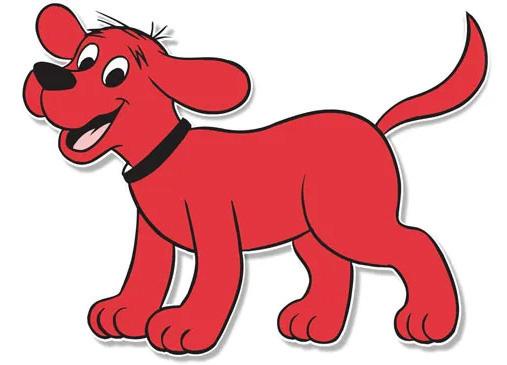
2. LITERATURE: In children’s books, what is the name of the Big Red Dog?
3. GEOGRAPHY: In which country would you find the 98-foot-tall Christ the Redeemer figure?
4. GAMES: What number is represented by the phrase “two little ducks” in bingo?
5. SCIENCE: What percentage of air is nitrogen gas?
6. MUSIC: When did Rock the Vote, an organization that encourages young people to vote, come into being?
8. GENERAL KNOWLEDGE: Which month of the year has the least number of letters?
7. TELEVISION: Which 1970s comedy show features the theme song “Come On Get Happy”?
9. U.S. STATES: Which state is first alphabetically?
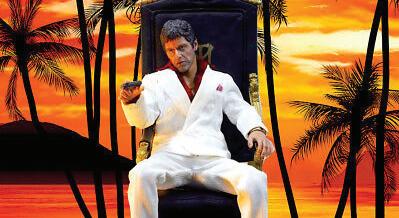
10. MOVIES: Which 1983 movie features a character named Tony Montana?
• On Dec. 16, 1938, Adolf Hitler instituted the Mother's Cross, a medal awarded as part of an initiative designed to encourage women of "pure" German origin to grow the Third Reich's population. Each year between 1938 and 1944, gold medals were given to women with eight or more children, silver medals to women with six to seven, and bronze medals to women with five.
• On Dec. 17, 2010, a struggling street vendor named Mohamed Bouazizi set himself on fire outside the governor's office in Sidi Bouzid, Tunisia. That morning, his merchandise had been confiscated by a municipal inspector, as Bouazizi was operating without a government permit. His act was considered the start of the Arab Spring, a period of pro-democracy uprisings throughout North Africa and the Middle East.
By Lucie Winborne
• The "Ding" bowl, purchased for $3 at a New York garage sale, turned out to be a 1,000-year-old Chinese bowl from the Northern Song Dynasty. It later sold at auction for $2.2 million.
• Big League Chew bubblegum created its biggest-ever pouch for Shaquille O'Neal, at an impressive 24 inches by 18 inches, more than 15 times the size of a regular pouch.
• On Dec. 18, 1972, future American president Joe Biden's first wife, Neilia, and 13-monthold daughter, Naomi, were killed in a car accident while shopping for a Christmas tree when their car was struck by a tractor-trailer.
• On Dec. 19, 1843, Charles Dickens' beloved classic novella "A Christmas Carol" was published in London by Chapman and Hall. The first edition sold out in just five days, and the book not only has been adapted countless times in multiple media, but it has never gone out of print.
• In cities like
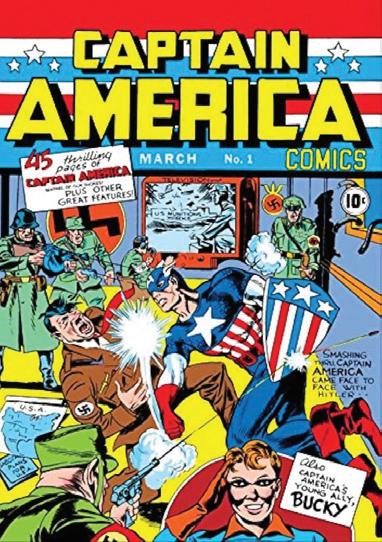
• On Dec. 20, 1940, superhero Captain America, aka Steven "Steve" Rogers, a frail man enhanced to physical perfection after drinking an experimental serum, made his debut in "Captain America Comics" No. 1.
and
the
• Spiked and studded dog collars derive from the days of the ancient Greeks, who would give their sheepdogs sharply spiked collars to protect their necks from wolves while they watched over
•
KI nG Crosswor D
• On Dec. 21, 2012, Korean rapper Psy's music video for "Gangnam Style" became the first YouTube video to garner a billion views.
• On Dec. 22, 2001, British citizen and alQaida member Richard Reid attempted to detonate homemade bombs in his shoes while aboard American Airlines Flight 63 headed to Miami from Paris. A flight attendant smelled sulfur and saw what he was doing, and fellow crew members and passengers restrained him until he could be sedated and strapped down with belts, after which the plane was diverted to Boston's Logan International Airport, where he was taken into custody.
©2020 King Features Syndicate, inc.
(c) 2024 King Features Synd., Inc.
(c) 2024 King Features Synd., Inc.
• Around 100 B.C., an ancient Roman engineer named Vitruvius designed the first vertical waterwheel, powered by a stream, which turned a horizontal millstone. This design remained unchanged for the next two thousand years. By 800 A.D. there were around 6,000 water-powered mills throughout England. The River Lee, which empties into the Thames, had over 50 of them.
• In areas that were flat, or that had few rivers, windmills became popular. This includes eastern England as well as the Netherlands. Windmills were used not only for grinding grain but also crushing seeds to extract their oil, and for drawing water. By the year
(CONTINUED ON PAGE 3)
• In the year 1155, bakers in London formed guilds and split themselves into bakers of white bread and bakers of brown bread.
HISTORY OF BREAD
• When agriculture was in its infancy, millet and barley were the first grains commonly grown. The first unleavened breads were cooked on flat rocks that straddled a campfire underneath. Grain was milled by placing it on a concave rock and grinding it with an oblong stone. An industrious human could produce about four pounds of flour per hour this way.
• Barley is inferior for making bread because it’s hard to separate the grain from the husk. It was not until the 11th century that wheat overtook barley as the most popular grain for bread. White bread made of refined wheat was easier to chew and nicer to look at, making it more expensive. People with bad teeth preferred it. Barley bread and rye bread were for paupers. White bread was a status symbol.
by Janet Spencer
Before the first loaf of bread could be baked, humans had to master sowing, reaping, threshing, winnowing, milling, and baking. This all began about 10,000 years ago, when humans first began growing crops and domesticating animals. Come along with Tidbits as we eat bread!