The Love


PHOTO CREDITS: LAVANYA PALIWAL
CREDITS: LAVANYA PALIWAL
PHOTO
CREDITS: LAVANYA PALIWAL
EXECUTIVE EDITOR
Katrina Michalak
EDITOR-IN-CHIEF
Leah Mesquita
MANAGING EDITORS
Abigail Wilt
Natalia Jarrett
DESIGN EDITORS
Lavanya Paliwal
Paulina Soto
ENGAGEMENT EDITOR
Wendy Maddox
WRITERS
Jude Banihani
Aleisha Paulick
Evan Silverberg
Aleah Steinle
Keyanee Walls
Lucia Zettler
ILLUSTRATOR
Kormac Moore
COVER BY: Lavanya Paliwal

Editor’s letter
An entire magazine issue dedicated to love in February would, to most, feel cliché — and for good reason. Love is perhaps the most overused, overcommercialized and complicated human emotion, yet we still spend much of our lives searching for it wherever we can. That complexity is exactly why we chose this theme — not for the positivity love is meant to represent, but for how scarce the word has become at a time when it shouldn’t be.
In this issue, some writers gravitated toward the connections love fosters, both romantically and culturally. One writer tackled our desire for overconsumption, while another delved into the current conversation around immigration enforcement. Two writers reflected inward, sharing personal anecdotes about grief and mental health. Another writer investigated the ongoing closure of a beloved safe space, whereas our feature story explored the evolution of intimacy in film.
By Jude Banihani
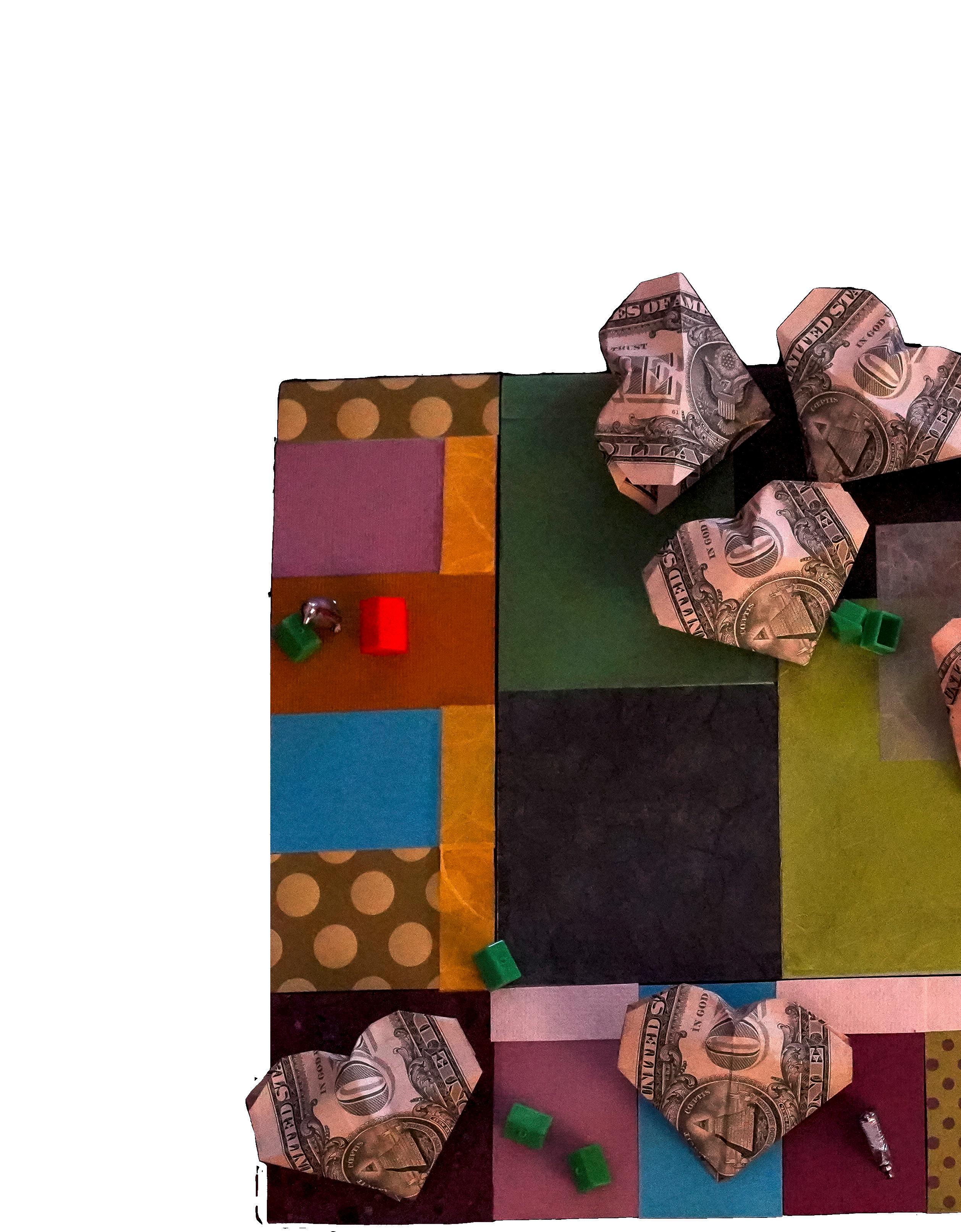
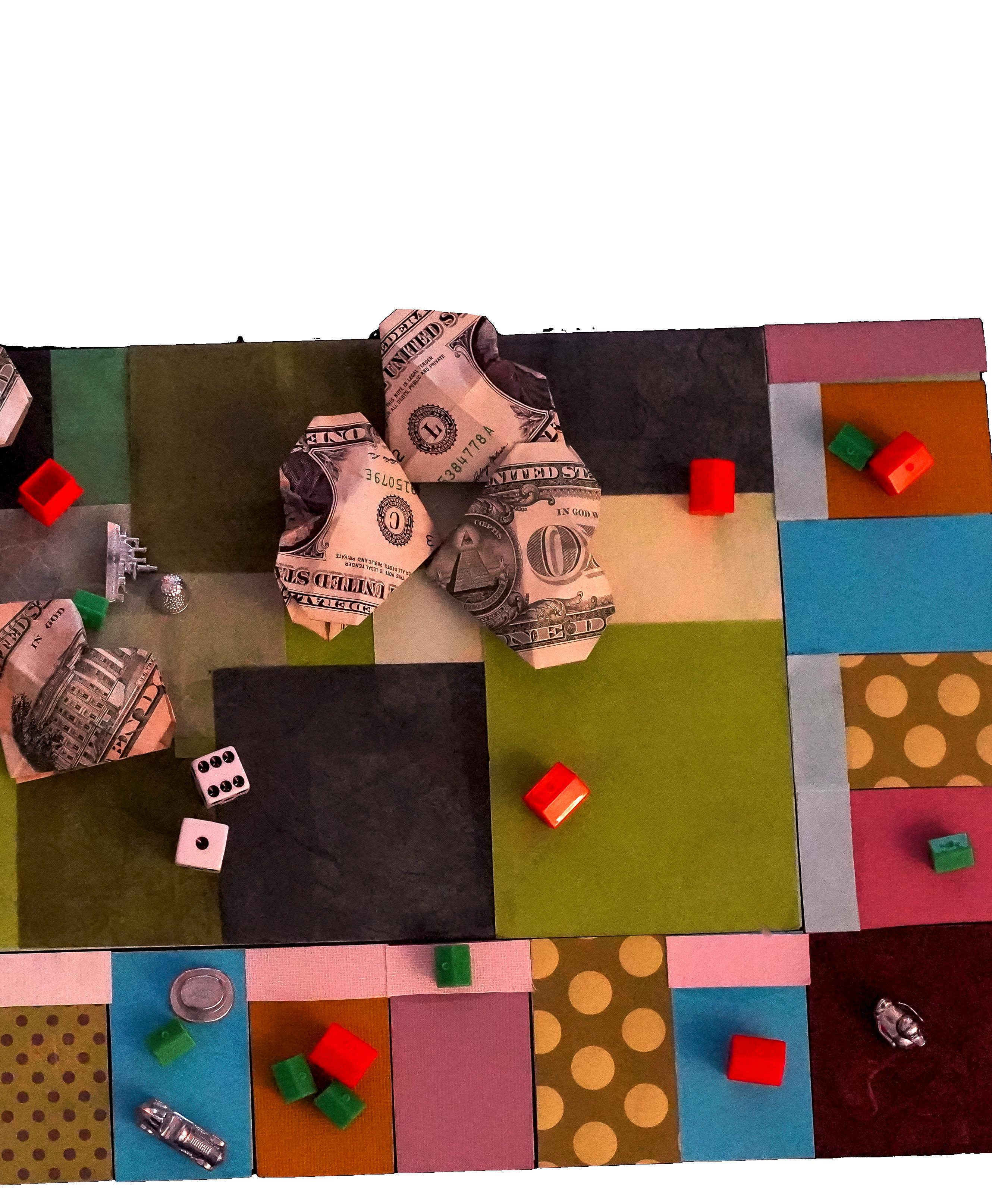
Isabela Heredia remembers growing up with her grandmother’s constant Princess House deliveries. Weekly shipments would arrive at her family’s front door, although their house already had far more silverware than they needed. Even in her childhood, Heredia knew there was no way her grandmother’s large tableware collection was unnecessary.
“I basically grew up with overconsumerism since day one,” she said.
Heredia attributes her grandmother’s shopping habit as her first experience with overconsumption.
“My grandma is the biggest hoarder you will ever meet. If you go into her bedroom, I swear there’s things from the 80’s in there. She does not let anything go,” Heredia said.
Reflecting on her own habits of consumption, Heredia described a feeling of “need” to own material objects from an early age, even recalling a specific desire for the “Wubble Bubble,” a viral translucent ball from the 2010s.
But Heredia isn’t alone in her relationship to consumption. Across the nation, no matter the economy’s fluctuations, Americans continue to indulge in shopping. Older generations had Sears catalogs, millennials had infomercials and Gen Z had massive retail hauls on YouTube.
The pressure to shop and keep up with overconsumption is overwhelming for many, and can lead people into debt and dissatisfaction.
It’s not sustainable
Morgan Marquette, a senior studying sustainability, recalled caring for the en-
vironment and sustainable living from an early age — two things that drew her to her major.
Marquette said when she thinks of the
term overconsumption, she thinks of how society has commodified everything, almost as a form of therapy.
“You can never be fulfilled from physical things and that’s why it’s an issue because you keep going back for more and more,” she said.
Aside from personal fulfillment, Marquette emphasized that overconsumption contributes significantly to environmental degradation: “It’s just infinite extraction and infinite consumption, so none of it is sustainable,”
she said.
Take thrifting, for example — a cheaper alternative to buying new clothes that has gained online traction in recent years. Marquette said that thrifting was originally a way for people to buy clothes if they couldn’t afford “fresh out of the factory stuff.” It was also a way for people to get rid of their old clothes without throwing them away.
Today, thrifting has strayed from its original purpose and Marquette noted
that over 60% of the clothing items donated to thrift stores end up in landfills.
“A lot of the stuff people are donating doesn’t even get to be used second hand,” she said.
Goodwill is viewed by many as a donation junkyard. Marquette said that a disproportionate number of people do not take the time to sort through their donations, instead treating them like garbage.
“You will literally see people bring their garbage to Goodwill and be like, ‘Oh, I’m donating this,’” she said. “And I think that’s part of the reason why Goodwill has such high landfill rates is because they’re throwing away stuff that people should have thrown away in the first place.”
Marquette believes many people are stuck in an overconsumption cycle, like new year cleanouts or buying items to fill the space of donations.
“Why are you spring cleaning every single year? You shouldn’t have all of this stuff that you’re going to be throwing away every year,” she said.
Marquette advocates for students to be more aware of their consumption, saying that a good first step is to avoid “easy access stores” like Target and Amazon.
“They’re just selling junk, straight up junk, especially [like] Amazon where it’ll come the next day. That’s a waste of emissions and packaging and time and money,” she said.
She also suggested increasing your
awareness of spending and budgeting, as this helps to consume less.
“Delete Shein and delete all th[o]se crummy polyester apps,” Marquette said. “Just put those literal barriers between unsustainable consumption.”
Kara Keene is a senior studying media arts and sciences and a member of the Fashion Collective, an ASU student organization involved in fashion business. Keene noted that undisclosed advertisements are prevalent on social media, especially TikTok. While users may think they are watching an honest review of an item on the app, in reality, it’s an undisclosed ad and the creator is receiving compensation. Keene said that “your subconscious is being trained to be a consumer without your knowledge.”
Keene believes that influencer partnerships such as Molly Mae’s recent Adidas collab, take away from artistry. Companies will work with influencers or celebrities over fashion designers and creatives because of the publicity and sales that celebrity names provide.


“Companies are going to choose that person [influencers] over somebody who’s actually more passionate about fashion and has been working really hard to create unique and innovative designs,” Keene said.
Ayla Kessary is a sophomore studying creative writing. Also a member of the Fashion Collective, she appreciates the art and creativity of the fashion and beauty industries.
Kessary said the competitive nature of many advertisements confuses consumers and leads to overconsumption. For example, many skincare advertisements contain persuasive claims rooted in data, such as “98% of people found their skin to be improved.” When more ads look like this or claim to be the “No. 1 product,” consumers feel fatigued and the ads lose their meaning.
“It isn’t always rooted in truth, which is the main problem. The main problem isn’t that there is all this advertising for all this stuff, it’s that [brands] are focused on volume and quantity rather than the quality of the products that they’re consuming and selling,” she said.
The overconsumption of skincare and makeup could also be attributed largely to influencer and celebrity culture. For example, many celebrities in the early 2000s launched signature perfumes and body sprays. Fans often purchased the products not because they truly loved the scent, but because they felt they got to share a piece of their favorite artist. While today’s social media stars don’t launch many perfumes, they often launch their own lines of makeup or skincare brands instead.
Kessary has loved makeup since she was 11 years old. Seeing makeup as a form of art and a tool for self-expression, she didn’t care to keep up with purchasing the newest products or what influencers were touting on YouTube. Kessary felt that makeup consumption has changed a lot in the past 10 years. Rather than makeup representing creativity, it now represents a trend.
“People will plug a lip oil that looks exactly like a CVS chapstick and it will be $72,” Kessary said. “It’s so expensive to use all these makeup products and then there’s no creativity in it. People will slander the makeup of the past, but at least it was creative, and that’s my main problem with it, it’s become more about the product than the art or the expression of makeup itself.”
Keene questions the authenticity of celebrity makeup brands and feels that many celebrities who release makeup products may not be using them regularly.

“If you were to look in their makeup bag, would they actually be using all their own brand?” Keene said. “I am assuming there’s a whole other team of completely separate people that are making the majority of these decisions, and the artist is just sort of the face of the brand for advertising to get more views and to get more people to buy it.”
She also feels that the creativity in the beauty industry has been replaced by the “clean girl aesthetic” as a marketing tactic to sell more products.
“They’re [brands] trying to sell this idea of luxury in that simplicity is more luxurious, is more sophisticated, and if you buy these fancy look-
ing bottles and these simple clean products, it will make you feel like you’re richer,” Keene said.
Can’t live without my “Starbies”
Liliana Silverio is a junior majoring in justice studies. She also works at an on-campus Starbucks operated by Aramark.
Silverio believes that food and beverages are overconsumed on both an individual and corporate level. She said the food waste at Starbucks could easily be prevented if less was ordered.
“They [Aramark] would rather us have a bunch of leftover food than run out of food. So, sometimes the managers will have to order more, not because we know it’s gonna sell, [but] because otherwise, the people above us, corporate, will come and yell at us,” she said.
On an individual level, Silverio believes that social media has created a false reality that getting coffee out is a “normal” daily occurrence.
“The first thing that comes to my
mind is exclusivity. I always viewed Starbucks as something that’s a luxury. It was never something that I’d go and get with my family,” she said.
She believes that more people should make their coffees at home to save time and money.
“I do think that some people really do look forward to it at the beginning of the day, getting their drinks and everything, but I think that’s because Americans are naturally lazy and don’t want to [make their coffee at home],” Silverio said.
Consuming for the sake of consuming can lead to dissatisfaction in the long term. Replacing meaningful relationships, experiences, art and other modes of self-expression with consumption won’t leave you feeling happy, according to Keene.
“When you buy something just because somebody else told you to, or because it’s the most popular, or because you think you need it because everybody has it, that dopamine hit doesn’t last, because you’re not buying something that you actually individually enjoy,” she said.
By Aleisha Paulick
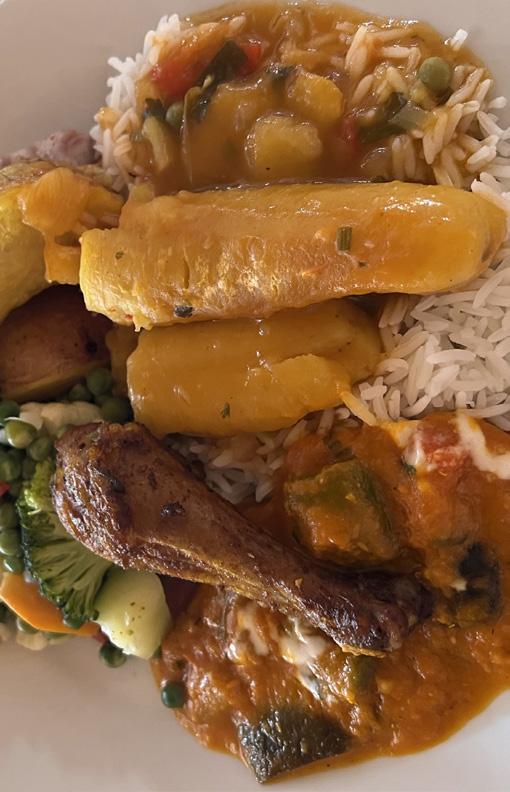
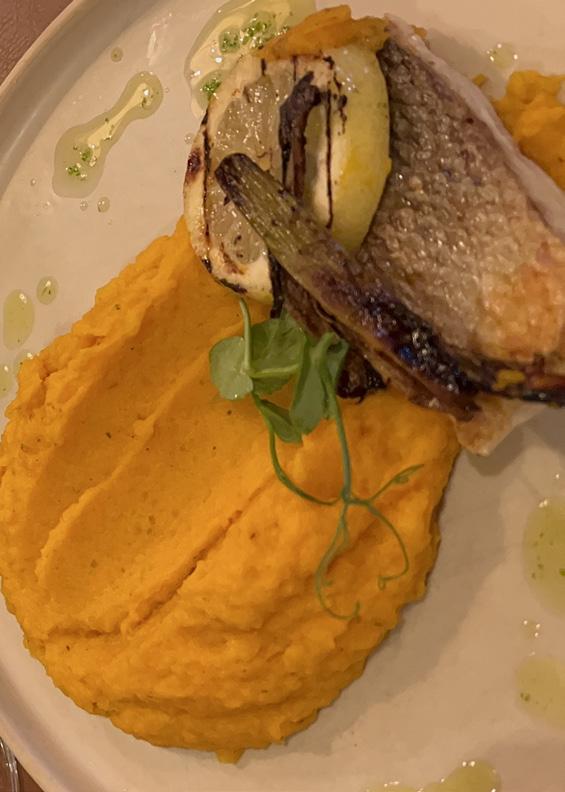
Every morning, it was the same routine. Rose Jacket’s grandparents awoke before the sunrise to prepare ingredients to make dough for fried bread, and mince various vegetables for mutton sandwiches and stews to sell. Jacket and her younger brother often assisted them in these preparations before heading off to school. As they loaded the car, pots clanged and clattered as they started their hourslong drive to the reservation.
While Jacket, a senior studying English linguistics, and her brother were at school, her grandparents sold food, beadwork and Kachina dolls — carved figures representing Katsina spirits and often given to girls as a gift — at their flea market stall in Shiprock, New Mexico. Sometimes they’d come home just before sunset, which occasionally worried Jacket due to their old age.
“It’s hard to see at night.” Jacket said. “It’s like ‘Are they going to be okay when they get home?,’ ‘Am I gonna see them again?’”
While most kids spent their newfound time playing games or relaxing during the summer, Jacket spent that time helping her grandparents. Although she’d been assisting them with work for as long as she could remember, she never felt forced or discouraged.
“That feeling of wanting to help and put in my own effort and work, that was what brought it [curiosity],” Jacket said. “They never forced us into it, they never told us to stop doing it, they just let us be. They trusted us, that we would make the right decisions.”
Although the flea market occurred daily, profits varied. Sometimes, Jacket’s grandparents made enough to cover basic living expenses like rent and utilities. Other times — when they
earned more — they’d spend it going out to share a meal. However, these markets were periodically a financial burden due to the cost of gas and the risk of wasting food from low sales.
“Grandma’s such a sweetheart, she would always try to give it [leftover food] away to people who need[ed] it,” Jacket said. “If they couldn’t pay for things, she would tell them, ‘Do you have something to trade for, like jewelry?’”
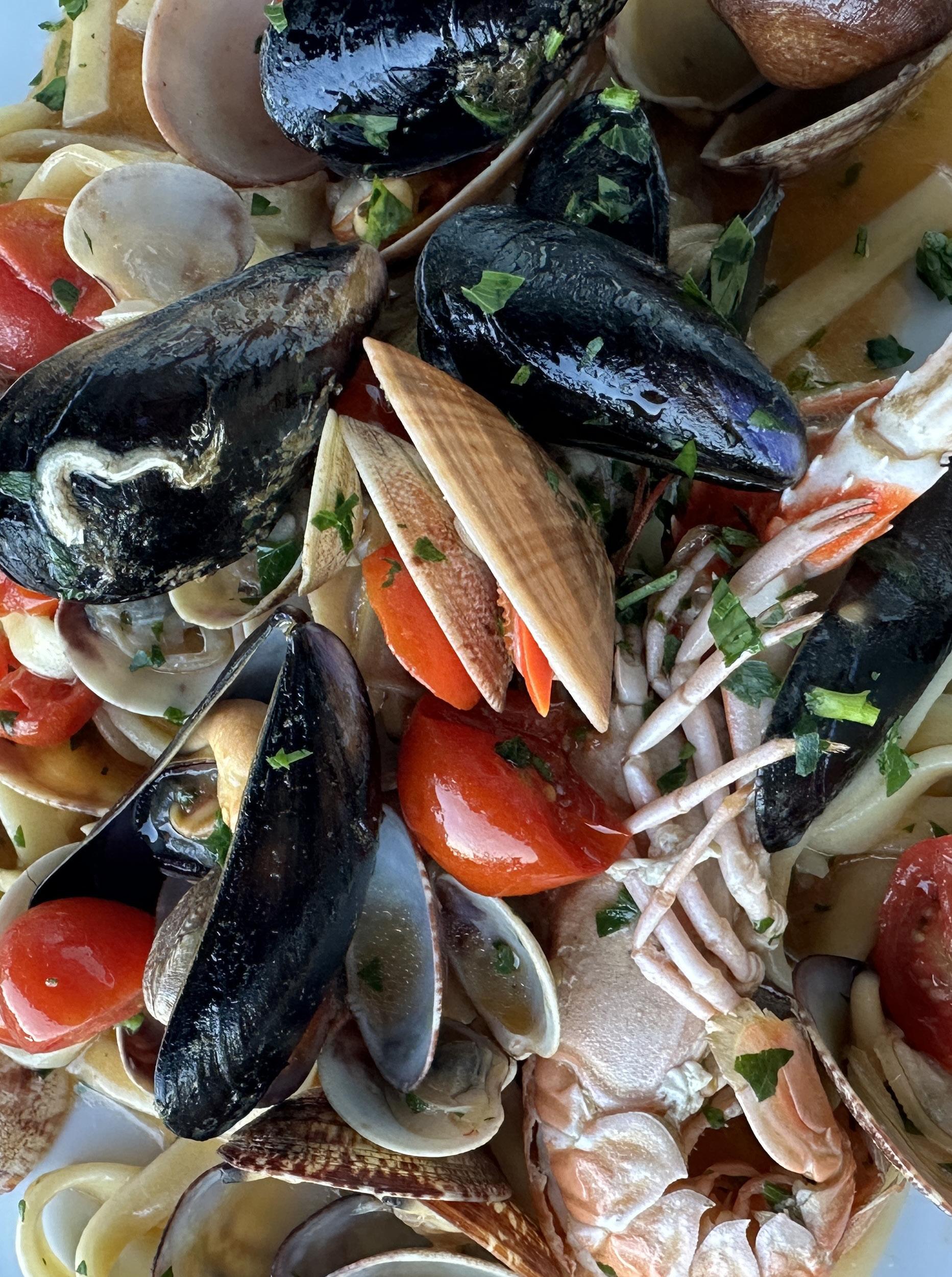
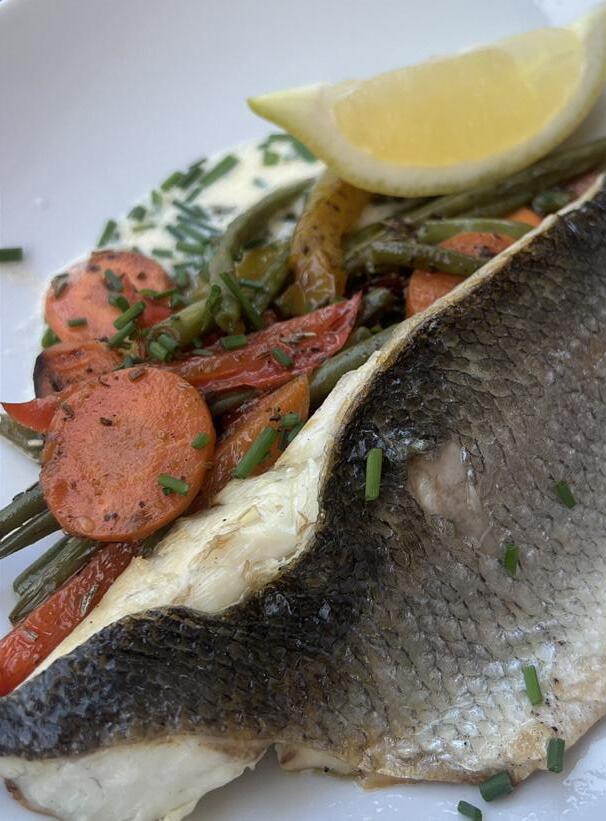
This is one memory Jacket often revisits through the Native Narratives programs’ bi-weekly Friday lunches. These are gatherings with other students in the program, where the coordinators cater food and occasionally, other, unfamiliar cuisines. Jacket said the food became a tool to share and converse over, adding that it’s an opportunity to learn about other Native American cultures.
“It brings people together,” Jacket said. “Rather than sitting there and staring at each other awkwardly, it’s like let’s start with the food, ‘What do you like about it?’ And it starts to open those side conversations.”
Like in Jacket’s experience, food goes beyond nourishment — it bridges the gap between people and culture, connects us to our past and sparks conversation.
Asian Routes and Cuisines is a newly-established club that introduces Asian cultures through food experiences. Yenigalla Gopikarani, a sophomore studying computer science and the club’s events lead, described food as a natural method to bring people together.
“When you eat food, you’re not just eating a dish, it’s like you’re explor-
ing, experiencing a history and an identity,” Gopikarani said. “We want people to have the same feeling, so we believe that gatherings are one of the most important ways people form connections.”
In the United Kingdom, there is an education charity and social enterprise called the Eden Project. Since 2009, they’ve hosted an annual event called The Big Lunch, where members of the public are invited to get together and share meals. The purpose of this is to foster a sense of community, create safer neighbourhoods and decrease isolation.
In 2025, The Big Lunch hosted approximately 10.5 million people and as a result, the Eden Project research noted that 85% of the attendees said it helped them understand individuals with different cultural backgrounds. Additionally, 82% of the participants said it positively affected their mental health, while three in four people said this event decreased their loneliness.
Gopikarani founded ARC in November 2025 after realizing most clubs at ASU focused on a distinct culture, rather than multiple. There also weren’t pre-existing clubs that specifically utilized food to explore Asian cultures.
“We wanted people to explore all the Asian taste buds and recipes in one single club so that they can know the difference,” Gopikarani said.
For their first event on Feb. 6, Gopikarani said they’ll have three food stalls representing different regions of Asia. One will contain South Asian cuisines from countries such as Pakistan and India. The second, East and Southeast Asian countries like China and Vietnam, and the last will strictly contain East Asian dishes from countries like South Korea and Japan.
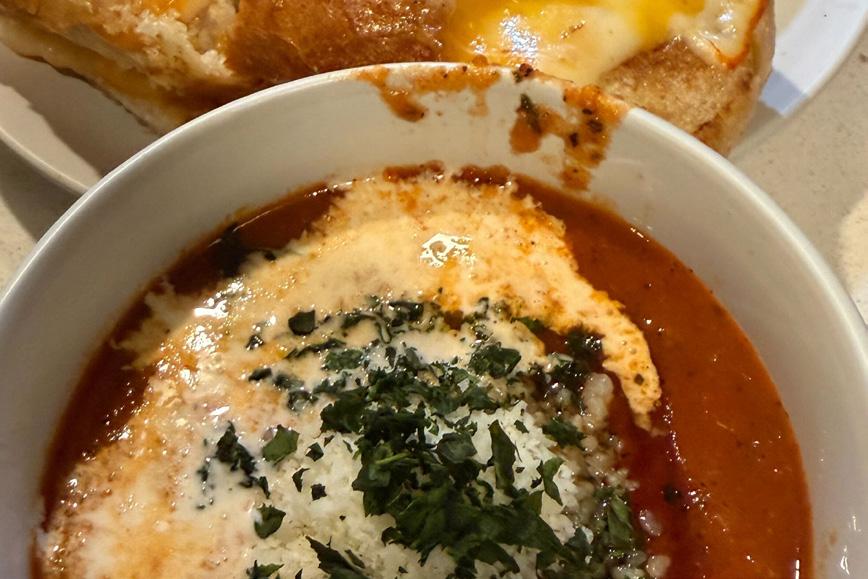

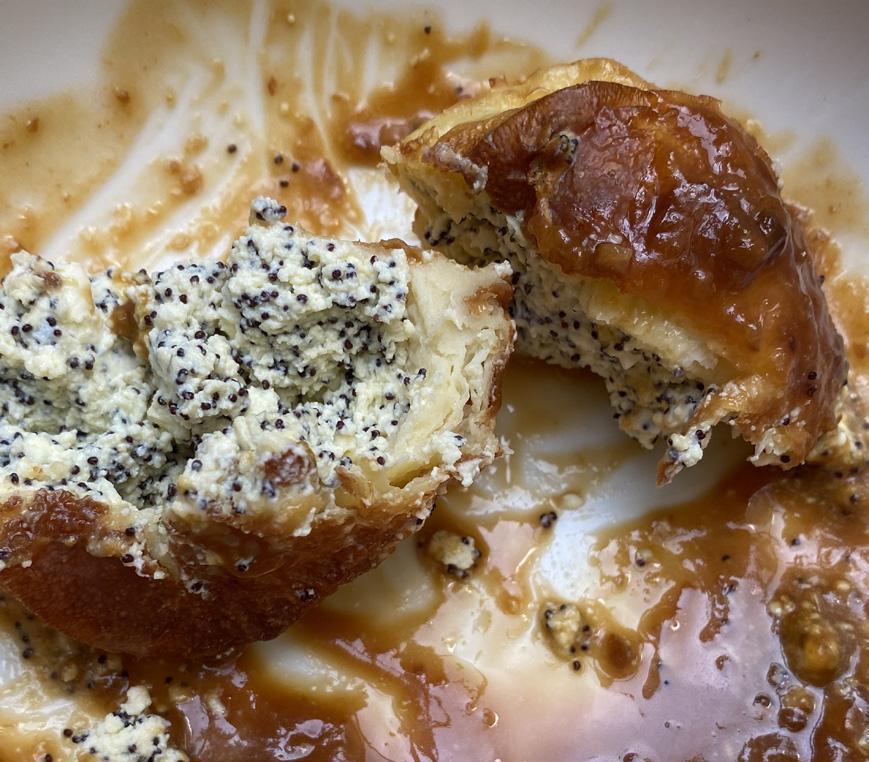
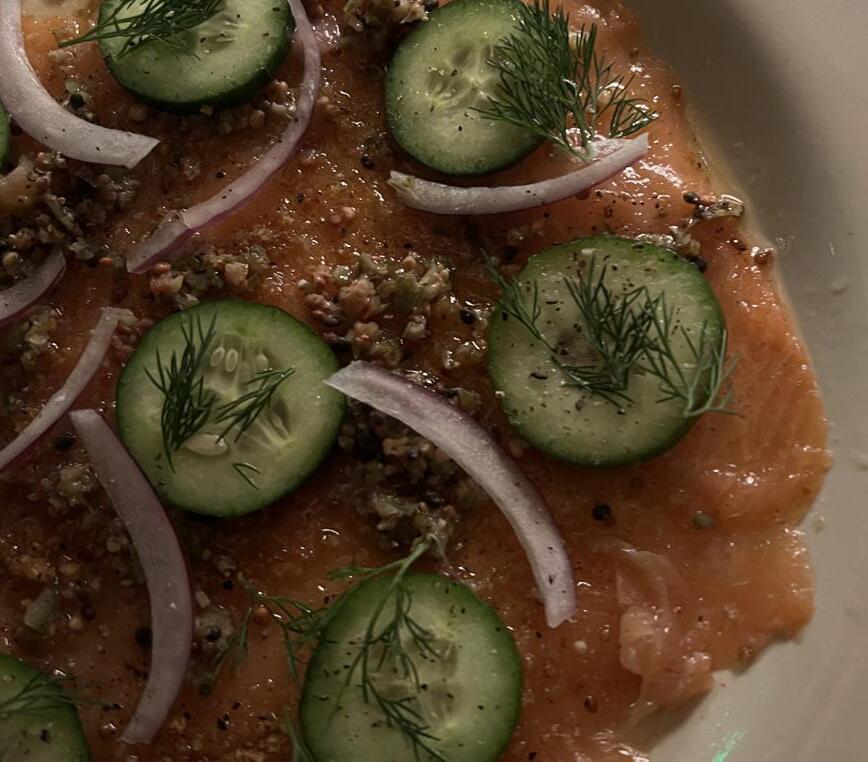
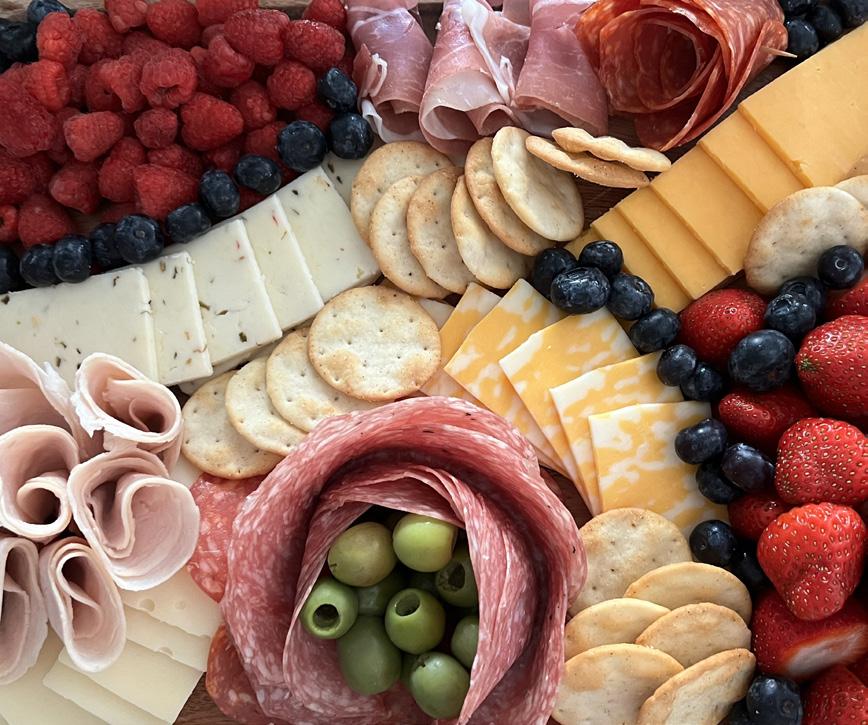
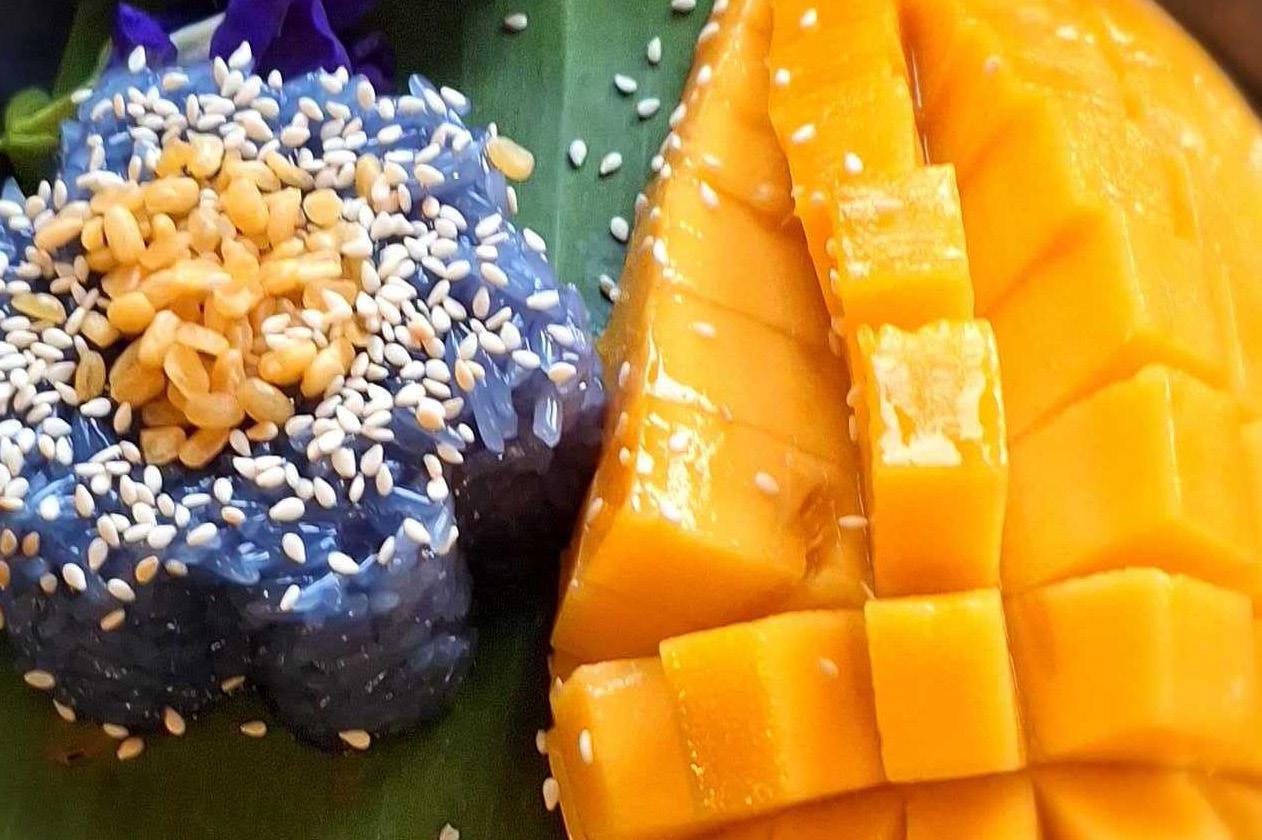
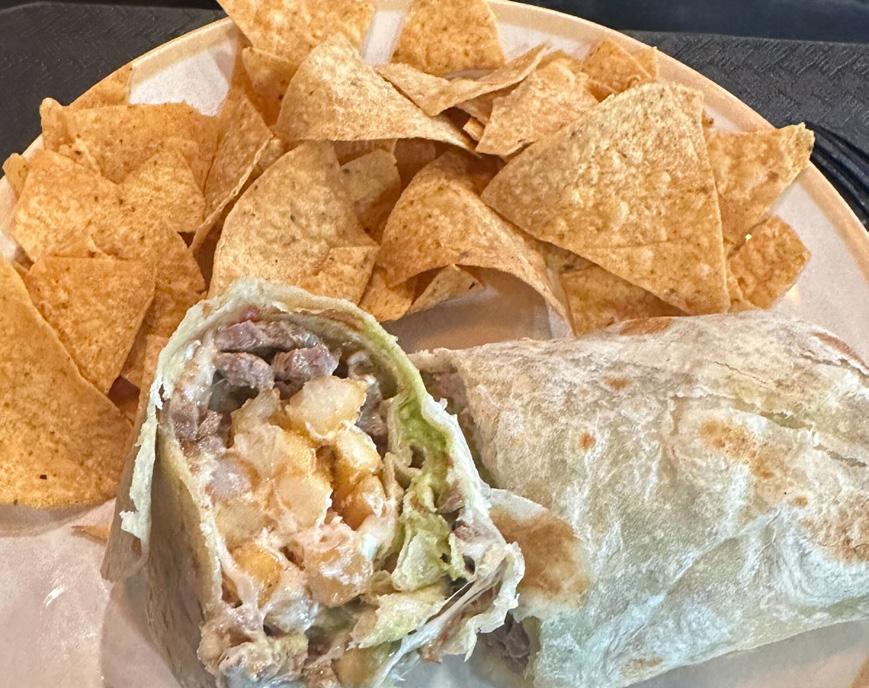

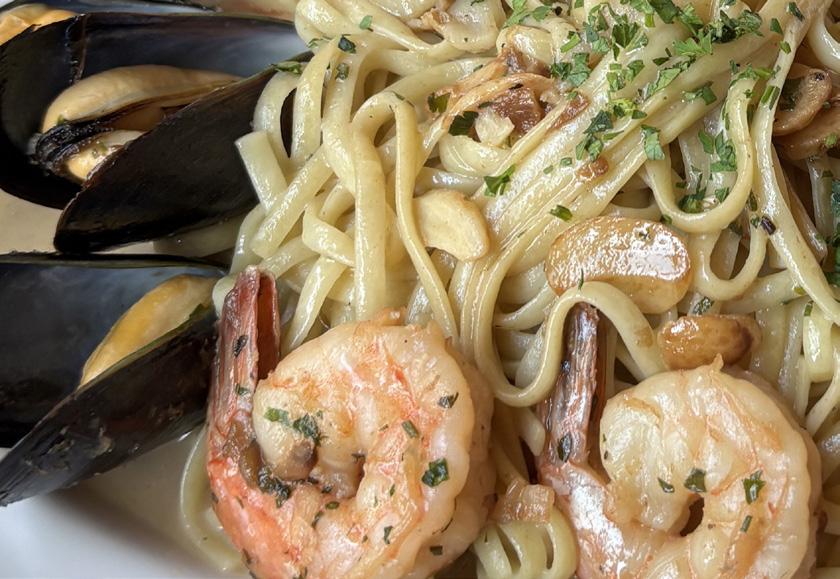
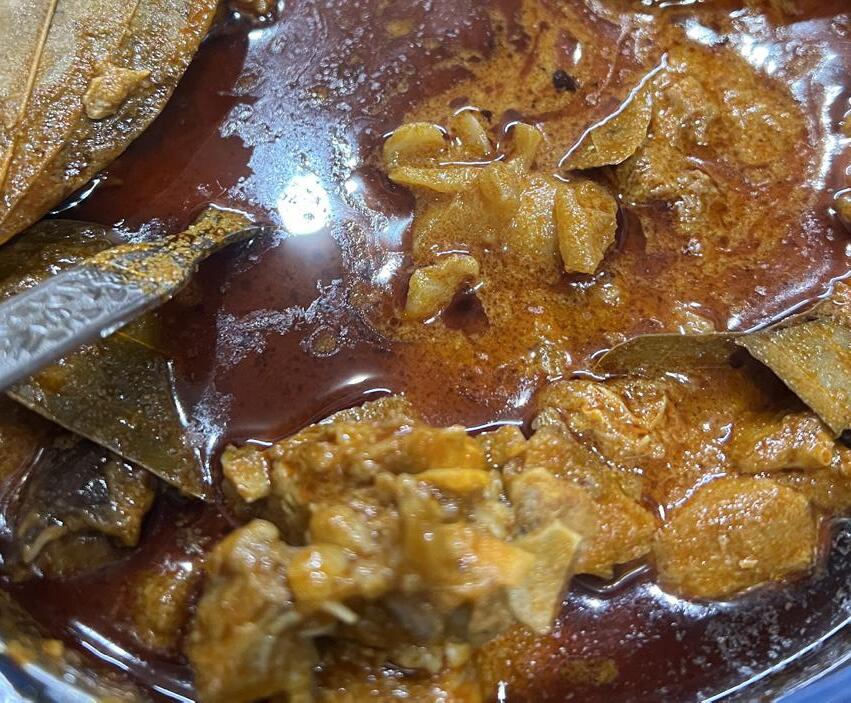
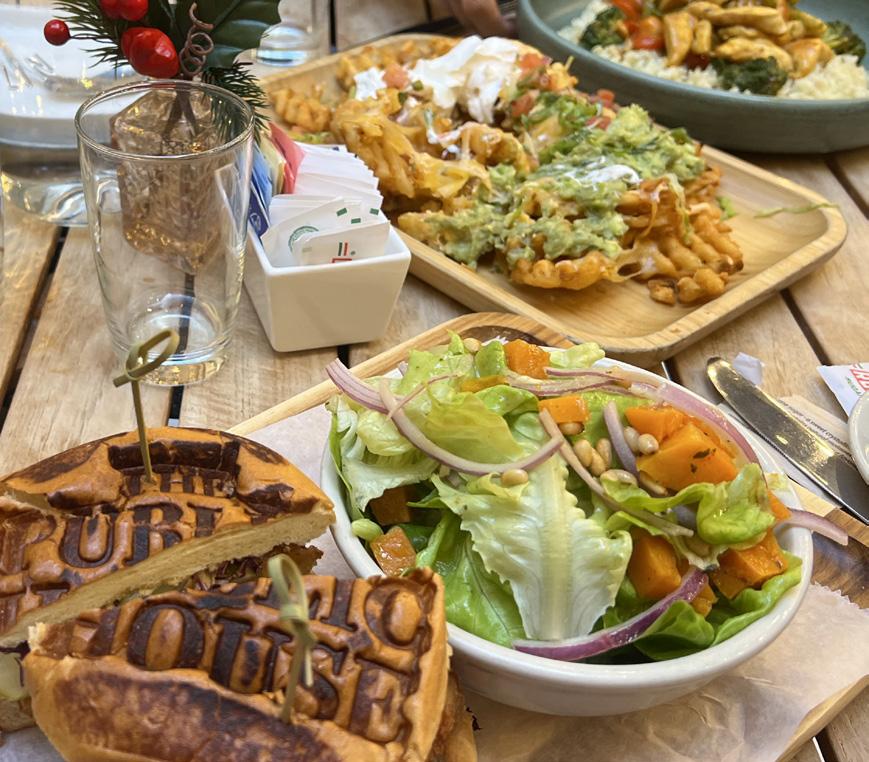
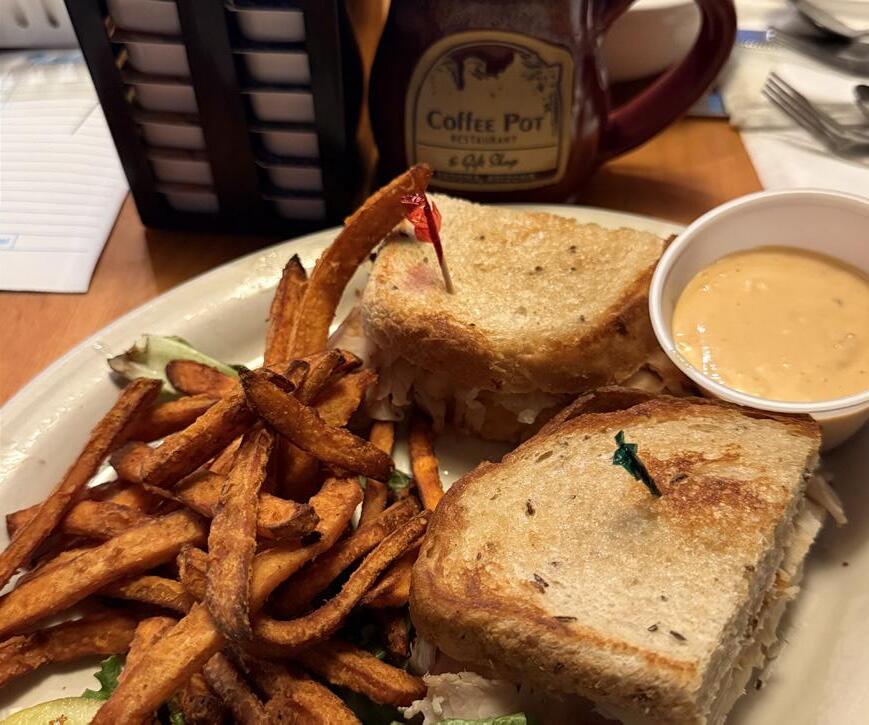
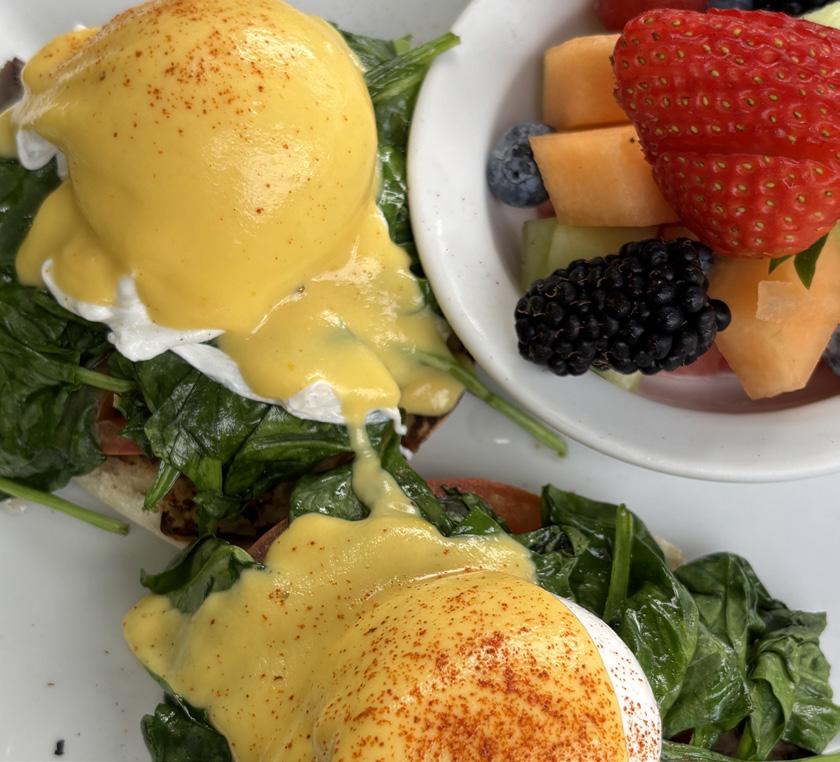


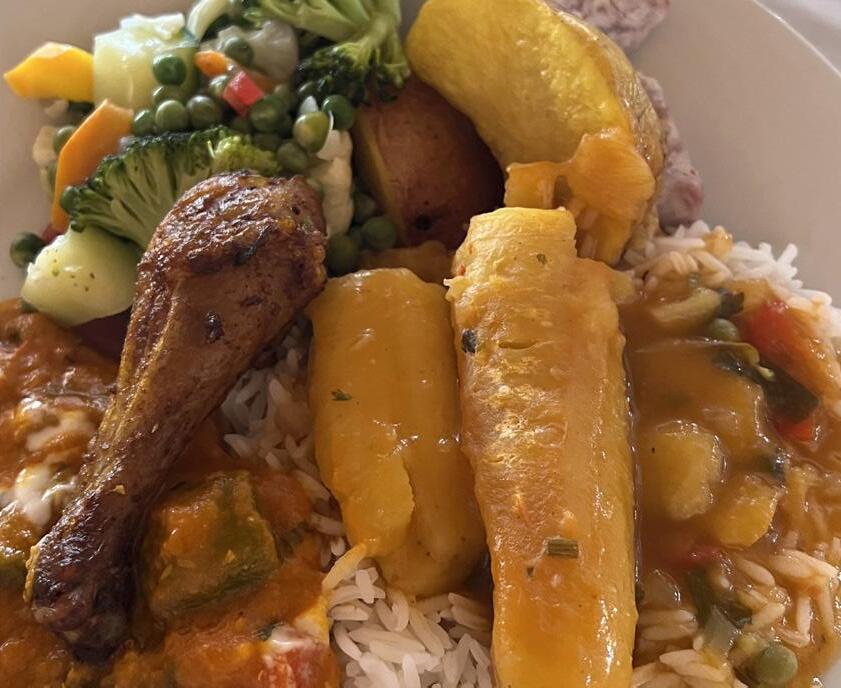
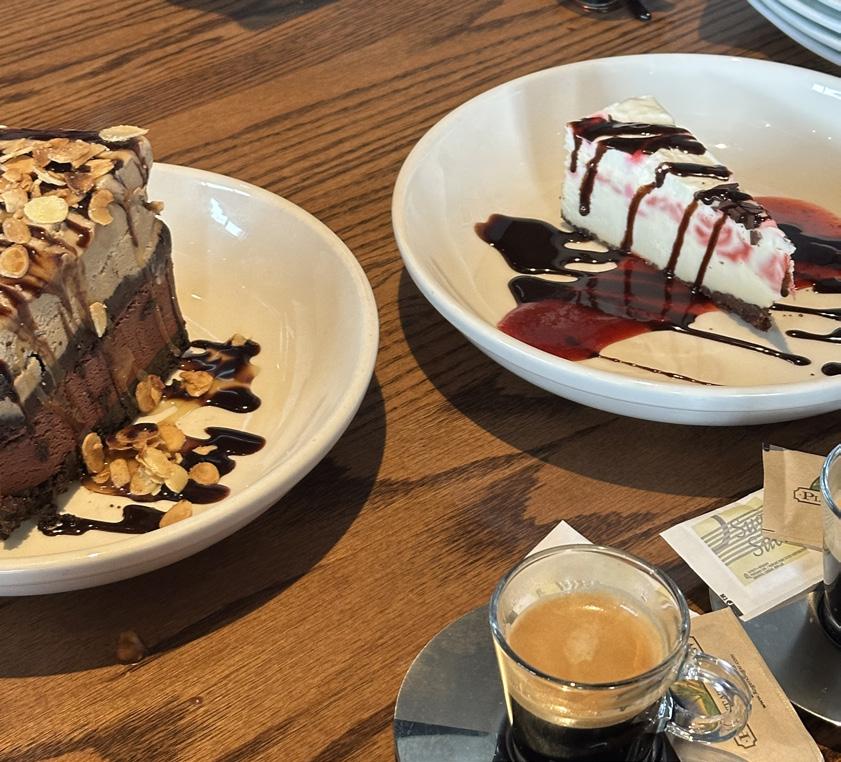
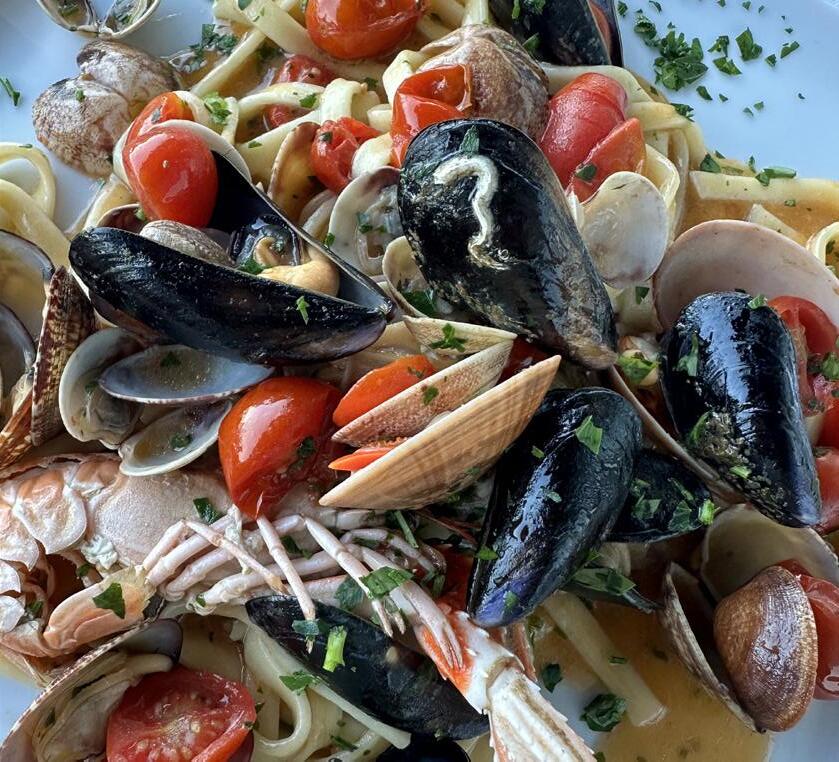

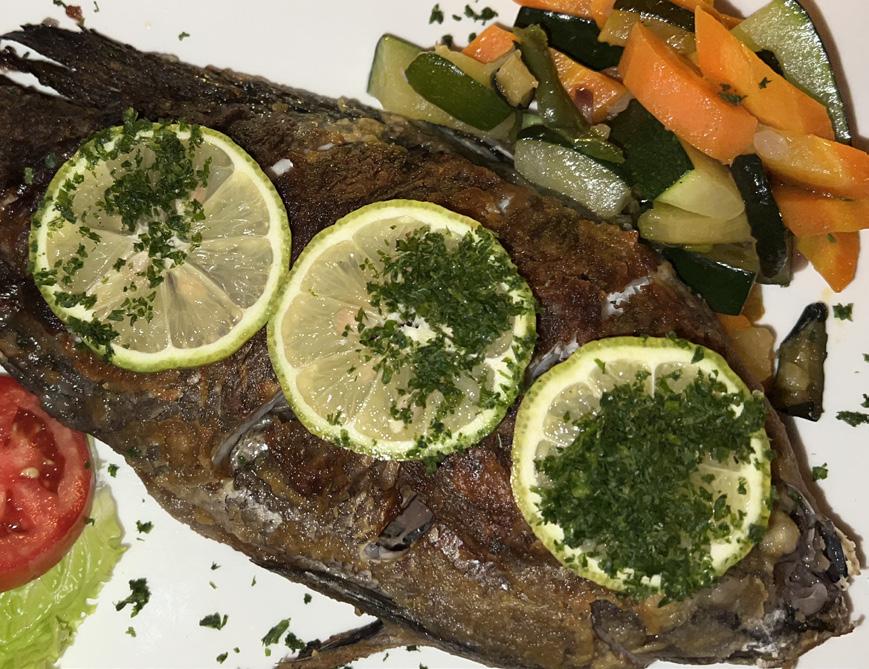
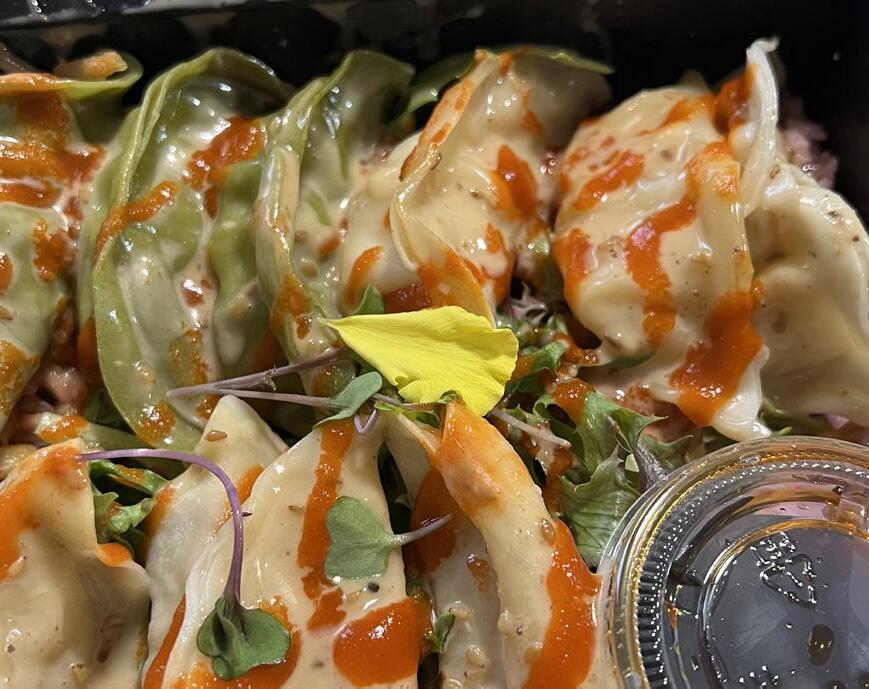




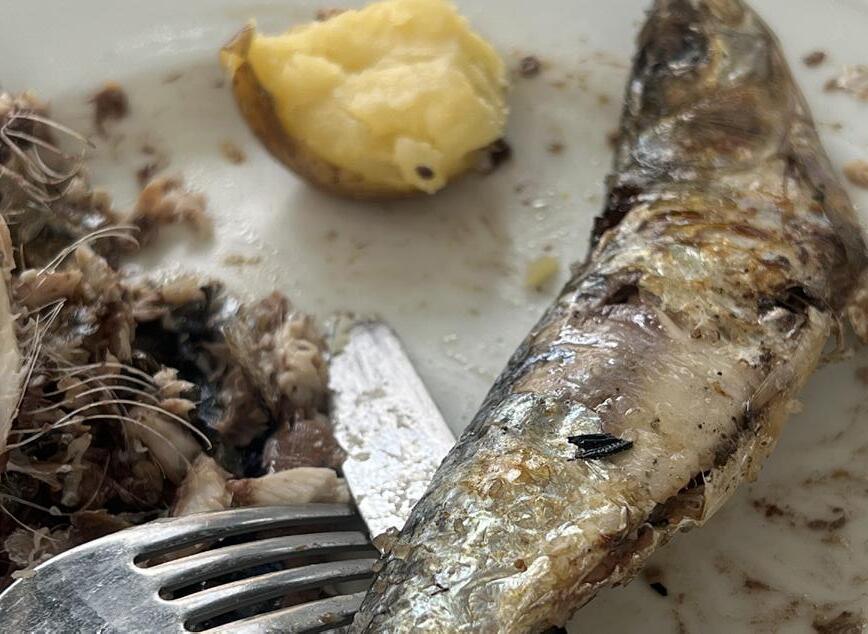
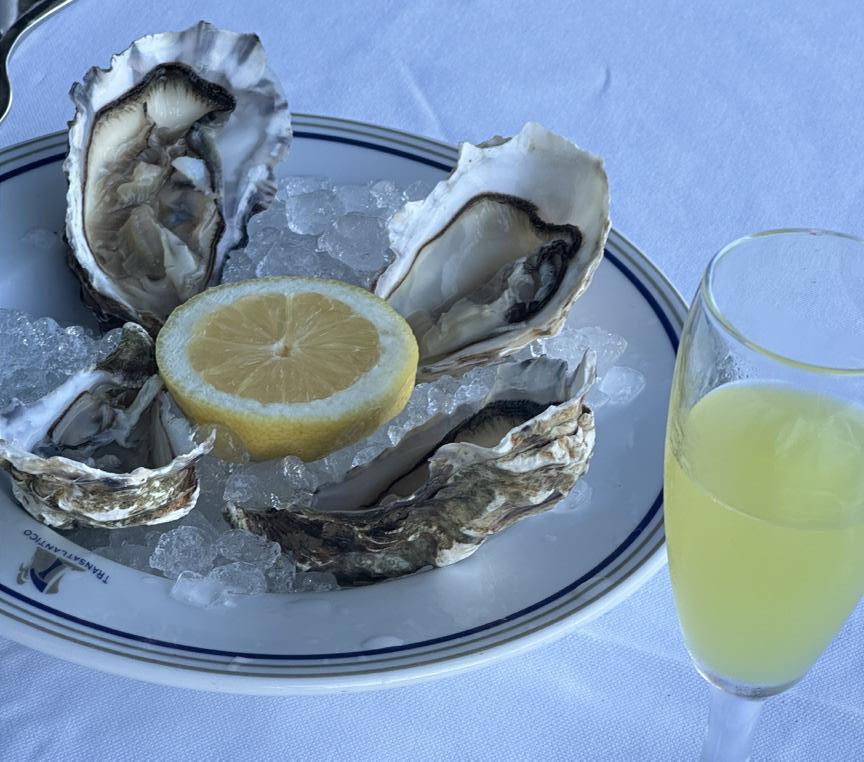
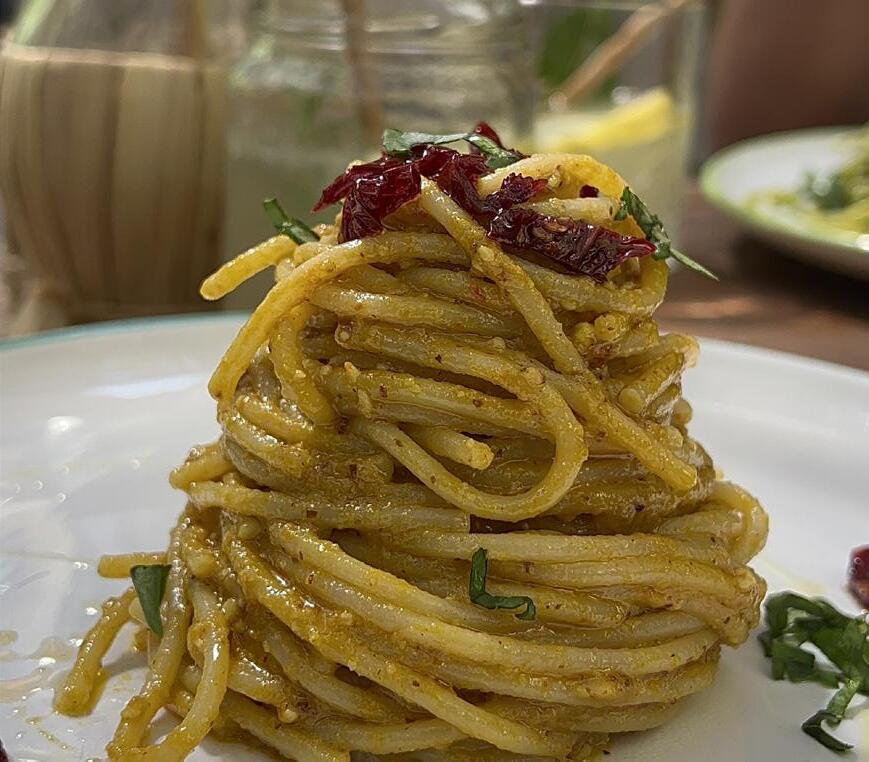


Similar to the stalls for ARC’s event and Jacket’s memories from selling at flea markets, Gopikarani recalls visiting the local food stalls of her home Hyderabad, South India, to get her favorite bite; Panipuri, a popular South Asian street-style snack. Every day, the smell of fried, hollowed out discs of dough filled with a combination of spiced chickpeas, curry and a sweet, spicy and tangy flavored water attracted the senses of Gopikarani and her friend.
“Every single day we used to go there and eat it even if our parents won’t allow us,” Gopikarani said. “It used to be so fun eating it and I could eat it for breakfast, lunch and dinner.”
Along with being raised in South India, it exposed Gopikarani to many food traditions as India is often referred to as a subcontinent due its vast amounts of cultures within its territory. As a result, it shaped her view of food as it’s considered a spiritual experience that represents belief, gratitude and community rather than simply for nourishment.
In the spiritual aspect, Gopikarani said in India, there is a tradition called “prasadam” or “prasada” where people serve food to deities during Puja, a ceremonial worship; the food is then shared with the people. One dish that’s served is called pulihora, a South Indian rice dish made with turmeric, tamarind, peanuts and other spices.
“Whenever we do prayers for the god, we serve that food to the god and then serve it to people,” Gopikarani said. “It’s like God’s blessing.”
Food’s connection to culture
Suyash Malepati, a sophomore studying biomedical sciences and ARC’s treasurer, said their other goal with the club is to help international students adjust to their life away from home by sharing cultural dishes. Malepati, who is an international student like Gopikarani, recalled his first year at ASU and not being able to find enough Indian cuisines. However, he would use food to start a conversation if he found a fellow individual from Bengaluru, India
— his home city.
“After moving to the U.S., I genuinely missed my cuisine,” Malepati said. “Instead of just randomly talking, include food too, you’re from the same place so I feel that you should include food also with the conversation.”
Not only did Malepati miss his cultural dishes, but had to adjust to American dining customs. For example, in India, Malepati said when eating out, one person pays for everyone and the check is later split. However in the U.S., it’s typical for everyone to just pay for themselves.
“[At] fast food restaurants in the U.S., first you order, you pay for your food and then you get to eat,” Malepati said. “Whereas in India, you get to order first, you eat and then pay.”
Pulani Harper, a junior studying health sciences and family human development, was raised in Guam and has a Chuukese background. Similar to Malepti, she also experienced cultural differences like individuality as she grew up in a family-oriented environment.
“[When] cooking for people, I always ask [if they want to share the meal],” Harper said. “Whenever they cook, they don’t ask, I don’t expect people to give if they don’t want to. I was used to that, so I would expect people to also have that same mentality.”
In Harper’s home, making Kon, a traditional Chuukese dish made from pounded breadfruit paired with coconut milk, is a family ordeal. After preparation, it is used as an offering symbolizing peace, love and hospitality. Harper said it’s also typically used to celebrate Asian Pacific Islander Month.
“We all cook it together,” Harper said. “The women and the girls will cook it but the men after that will do the pounding [of the dough] and we watch or they’ll tell stories.”
As Harper watched the women cook the breadfruit, her mother often revisited old memories and stories
from her youth.
“It’s like the mother and daughter moment where you’re in the kitchen just cooking and preparing,” Harper said. “She would tell us about how she grew up making it [Kon] but sometimes it would be her telling us stories about myths or folklore.”
Although food is a gateway to a culture, Natalia Velador Carrillo, a sophomore studying journalism and mass communications, said it can also reveal how the people have adapted to matters like economic conditions.
Velador Carrillo, who studied abroad in Cuba, touched on the frequent power outages and scarcity of food. Cuba is undergoing a potential humanitarian crisis following the U.S.’s threats to impose tariffs on countries that supply oil, according to the United Nations.
“You can go to any store [in the U.S.] and you’ll find a pomegranate in season when it’s not in season,” Velador Carrillo said. “Over there, it’s not like that. I would order something and they wouldn’t have it because they didn’t have the product even if it was seasonal.”
If a dish is available, Velador Carrillo noted tasting peculiar flavors with ingredients like cheese as they were frequently substituted with other affordable alternatives. Additionally, in convenience or grocery stores, while she could buy multiples of a product, locals only bought necessities.
Although Velador Carrillo said certain dishes they ate weren’t the best, she also added that it’s not a reflection of the culture, but a testament of what the people are able to do with the resources they have. She also said that food can be a tool to learn about a country or culture’s affairs.
“We missed out on a lot of good cultural dishes that they were really proud of making and creating because they just couldn’t afford the ingredients,” Velador Carrillo said. “That in itself shows where they are … you have to question, ‘Why can’t they afford this?’, ‘Why
Everyone is connected to food as it’s a necessity for nourishment; however, it’s also a tool to learn about both another individual and culture. That said, Velador Carrillo expressed the importance of an open mind and willingness to learn and understand because everyone’s palate is different depending on where they’re from.
“Dig a little deeper and understand why something is the way it is,” Velador Carrillo said. “Food doesn’t just happen, it takes a lot for it to be made. People just don’t really think about food as such an important thing but it really is.”





‘This isn’t goodbye’
Content warning: This story contains subject matter that may be disturbing or upsetting to some readers, including suicide and death. Please proceed with caution.
By Abigail Wilt
Photos by Abigail Wilt
Aday adorned with toppling gifts wrapped in red paper and strings of gold tinsel. The radio always played the same songs. “Last Christmas” by Wham! was especially loud this year.
But this Christmas Eve, I saw red wrapping in a crimson stripe under a fingernail. Gold tinsel was the charm I compulsively slipped across the delicate chain hugging my neck. Holiday jingles echoed in a metronomic beeping that rolled through stretches of antiseptic hallway.
When someone takes their own life, the act always leaves devastation in its wake. When my boyfriend took his own life on Christmas Eve, I felt an unimaginable pain I will carry for the rest of my life.
A week earlier, we drove to Long Beach. He explained that soon, he had to move back to New Jersey to be with his family, who were struggling. We were ending things to save ourselves the agony of maintaining a long-distance relationship with no clear end in sight. I was on the precipice of opportunities awaiting me post-grad. He didn’t want to limit my options by asking me to move to his part of New Jersey, where there wasn’t much. I understood
and I wasn’t upset. In his decision, the last person he considered was himself and that was one of the reasons I loved him, so to soak up every last second together, we took one final trip — to Long Beach.
The place we were staying was a five-minute walk from the beach. We wanted to catch the sunset when we arrived, but it set too quickly. Though, it didn’t stop us from going later that night.
The cold sand swallowed our feet as we followed the sound of crashing waves, rushing in and drawing back in its predictable way. I skipped balletically to the water like a little girl eager to feel its cool shock. It was icy, but tolerable once I wiggled my toes a few flexes. I pulled him to me, letting him feel the chill of the ocean, too. He held me, kissing me warmly on my cheek and then my forehead before raising my hand to his lips. I slung my arms around his neck as we swayed, a soft glow from the moonlight cast overhead. I could see his eyes just enough. They said the usual things, but melted into me more that night.
“There’s no way this is it,” I said. “You don’t just say goodbye to a love like this. We will find each other again.”

“A true love,” he said. “This isn’t goodbye.”
We caught the sunset the next couple of evenings. Sometimes, we walked the swath of shore while it set, chasing flocks of preying birds or searching for untarnished shells as keepsakes. After the sun set on our last day, we drove back to Phoenix and said goodbye to each other a few hours later.
I cried in his arms, creating wet blots on his shirt. I held his face and kissed him as we sauntered to my front door.
“How many kisses can I give you?” he said.
“Never enough,” I choked.
He kissed me one last time, holding me tight and then slipped out the door. Though he was gone, I knew he would return, whether it was a few months later or a year. The next week came and went. I called him and sent a text, no response. He must have wanted space.
Then, I got a message from his brother. He explained that my boyfriend wasn’t returning anyone’s calls or texts and asked if I’d heard from him. I said I hadn’t. I became worried and confused. He was supposed to get on a plane on
Monday. This wasn’t like him.
I called and texted again — no response. I tried persistently over the next 24 hours and would receive nothing. Concern tumulted into actionable fear until his brother relayed an email he had sent to his mother explaining he was ending his life today — Dec. 24.
Dread ravaged my body. I was clawing at every corner trying to find him before anything happened. I sent my family sprawling across Phoenix, checking every location we’d been together. As I was on the way to our first date spot, I got another text from his brother saying that he was at the hospital in critical condition.
I convulsed, my body intractably trembling. We swung the car around and sped to the hospital. My vision narrowed. I was gasping for air. Every muscle in my body braced until we pulled into the hospital. I jumped out of the car and barreled toward the emergency room. They directed me to the ICU and said he was there. It felt like I wasn’t moving fast enough.
A nurse confirmed what his brother already told me, but said I couldn’t see him because I wasn’t family. I insisted that I was the only person he knew in Phoenix, but legally, they couldn’t budge. I felt helpless. He was alone just like he was when he made this decision and I was marooned on the other side of the wall.
After pleading with his family to allow me to be with him, they granted permission. I was escorted to his room — 285.
I clung to disbelief until I rounded the corner. It was him, the man I loved, lying unconscious, his head wrapped in a bloody gauze. A circus of tubes and wires extended from all parts of his body, and a machine was breathing for him. I blinked away streams of tears and reached for his hand, weaving his fingers through mine. Just last week, this hand was resting warmly on my thigh.
I traced the back of his hand with my thumb. I told him that I was there and that I loved him and that I wasn’t going to leave. For eight hours, I sat be-
side him, holding his hand for as long as I could. I ran my eyes over every detail: his hairs, his creases, the shape of his fingernails, which were now crusted with blood. I didn’t want to forget.
On Christmas, his family arrived, assessed his condition and decided to let him pass.
On Dec. 26, they tested his organs and deemed them viable for donation.
On Dec. 28, he died.
During one evening in Long Beach, we laid on the shore, side by side, our hands intertwined. The molten hues from the setting sun shrouded us. They contrasted his blue eyes. It felt like they were reaching for me. He placed his palm on my face.
“We will be on this beach, together, again. I know that,” he said.
“I do too,” I whispered. “I love you.”
“I love you,” he said.

If you or someone you know is struggling with mental health, visit 988lifeline.org or text 988 for help. For campus resources available 24/7, visit https://eoss.asu.edu/counseling. ASU’s EMPACT line is 480-921-1006 and is available 24/7.

Over a year after the Memorial Union’s MECHA room was locked indefinitely, its supporters are arguing for the space’s return
By Evan Silverberg
Illustrations by Kormac Moore
The MECHA room, located in the basement of the Memorial Union, has been locked for over a year.
The quiet, mural-adorned space gained notoriety among many on campus for its rare comfortability and distinctive artwork honoring Chicano history. Several organizations used the room, and many individuals saw it as a unique and multicultural safe space for all students.
Nico Altamira was a Mechista (or member of MECHA) for two years. “Towards the end of September [2024], somebody had just kind of one day found it locked,” she said. “There was no notice that the room would be locked.”
According to Altamira, MU employees didn’t even realize what had happened until they answered requests to unlock the door, only to find the key no longer worked. She also said that MU employees hadn’t been told the room was locked.
Shortly afterward, ASU hung a piece of paper outside the MECHA room with a QR code leading to an online form to fill out, which was supposed to help get back any personal items left in the room, according to Altamira.
“To our knowledge, anybody we’d been in contact with who has filled out that form and tried to get stuff out of the room … there’s been no response,” she said. “When ASU finally communicated with one of our partner groups, they were told that that form is really just for people if their phone or laptop was in the room.”
Though the room’s closure was a deci-
sion the ASU administration first made in the aftermath of Chicano advocacy organization MECHA de ASU’s ban from campus, some are now calling for the space to make a return amid increasing immigration raids.
In February 2024, MECHA de ASU was temporarily suspended as an organization after posting two videos of police body camera footage with a caption saying “Death to the boer. Death to the Pilgrim. Death to the zionist. Death to the settler.” ASU ruled that the post’s language qualified as a death threat.
In September of the same year, MECHA’s suspension was changed to indefinite and ASU locked the room shortly thereafter.
However, MECHA was not the only group that used the room. Organizations like Zen Devils — a club teaching Zen Buddhism — the Sudanese American Association and briefly Students for Socialism also occupied the space.
Individual students used it as well. “A lot of people gravitated to the room,” Altamira said. “I think it was comfortable for a lot of people who would not necessarily have been comfortable everywhere else on campus.”
“There are a lot of students who want to be involved in spaces but are aware that in those spaces they may meet homophobia, they may meet racism, et cetera,” said Mia Bazbaz, a graduate student studying justice studies and a former Mechista. “In the MECHA room, that wasn’t the case … From the second you stepped in the door, it was
about safety, it was about norms we agreed on.”

“It’s a relaxing place where people do a little homework or take a call,” Altamira said. “There’s always a group of people who are just casually talking and having a good time … There are custodians who take their breaks in the room.”
Part of the MECHA room’s appeal was its atmosphere. Bazbaz said the room was filled with murals, protest signs and other artwork depicting Latin American resistance as well as a mini-library, comfortable sofas with blankets and often free food.
“It’s a totally unique room, totally different vibe than anywhere on campus,” Altamira said.
“Everything that was there was not ASU stuff,” Bazbaz said. “It was student art, student-provided furniture, students cleaning the space, students keeping their stuff there.”
The space also had several beautiful Chicano altars that Altamira didn’t want to leave behind.
“There are altars in the room that are culturally significant, that should be protected, should be tended to,” she said. “If they’re just gathering dust in a dark room, that doesn’t feel right.”
According to Altamira, ASU administration argued in a meeting with activists that they locked the MECHA room to protect the property inside. But with no way for people or organizations to retrieve most of their belongings, those items were irrecoverable.
“If that were the case, there would definitely be a better way to go about that,” Altamira said on the University’s logic.
The University told organizers the room will not be unlocked until MECHA is reinstated. With MECHA still in limbo ever since its ban, and many of its leaders having graduated and wanting no involvement in negotiations with ASU, this is a lofty goal.
“Even if [MECHA] doesn’t get reinstated, that room has other uses and that room is important to other people,” Altamira said.
Bazbaz highlighted the room as a place where students experiencing food insecurity could find something to eat and a place where students could rest safely and comfortably. “It was financial support, it was rest, it was safety,” they said. “It was a lot of things, so a lot of students really feel the loss of the room, even if they weren’t in MECHA.”
This is not the first time organizers at ASU have had to fight for the MECHA room’s existence. After the original room burned down in a fire at the MU in 2007, it took years for the University to establish a new one.
“There has always been a fight for the room,” Altamira said. “It’s always had to be a struggle, and so it’ll have to be again.”
Immigration and Customs Enforcement was set to recruit students at the Sandra Day O’Connor School of Law on Jan. 22, which led to opposition led by the Chicano/Latino Law Student Association. ICE backed out of the event, but no further information was provided as to why they canceled.
“For our community, ICE is not just an employer,” a statement put out by the organization said. “It represents family separation, detention, and fear. Allowing ICE to recruit students in a space that should be reserved for collaboration and learning sends a message that these harms are disconnected from the lived realities of our students.”
Four days later, ICE agents contributed to the searches of 15 Zipps Sports Grill locations across the Valley, arresting 39 people. Zipps restaurants close to both the Tempe and Downtown Phoenix campuses experienced searches.
Maya Dominguez is a graduate student studying law and is the vice president of external affairs for the CLLSA. “That’s about a seven-minute drive from Downtown campus,” she said of the raid at a Zipps near Central Ave and Thomas Road. “I know that brought up a lot of anxiety for a lot of students, especially the Latino community on campus and other POC communities as well. It flagged for us that ICE is here, they are close by.”

Bazbaz said the MECHA room returning could also help increase safety by providing a safe space, claiming many students don’t feel protected by ASU. “The combination of the things [ASU] admin has done in the past few years, the kind of speech that flourishes under Trump and the crackdowns that they’ve implemented at other institutions really points to the need for a space where students are in charge and can establish their presence, their voice, their conversation, their history,” they said.
However, it took years of lobbying on behalf of student activists for the University to agree to create the Multicultural Communities of Excellence, ASU’s lone, school-sanctioned safe spaces on each of its four campuses. The University has also overlooked requests for an LGBTQ+ resource center on campus for two decades, drawing ire from much of the school’s queer community.
“ASU is supposed to be a place that measures itself not by whom it excludes, but by whom it includes — which means students, whatever their status might be,” Dominguez said, referencing the University’s charter. “The administration can do more and should be speaking up louder to protect all students, but especially those students who might not have a status here in this country.”
The University did not respond in time for comment.




The evolution of intimacy in film and what our generation is doing differently
By Keyanee Walls
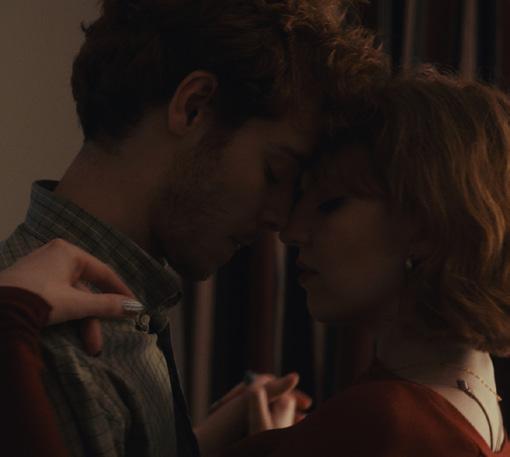
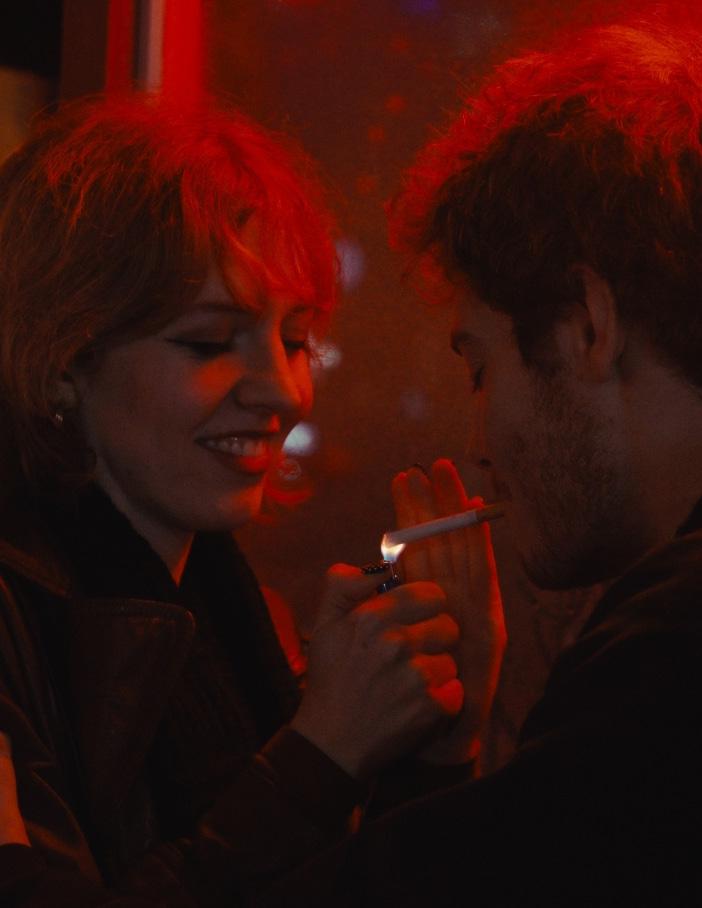
We’ve all been there. It’s family movie night and everyone is curled up on the couch. After finally deciding what to watch, you all quiet down and hit play. For a while, there’s not much going on — but you begin to sense some tension between two characters on screen, and start to pray that nothing comes of it. The movie was PG-13, they couldn’t possibly go there, right?
Wrong. Soon thereafter, the characters find themselves alone, and your living room goes still. You either get up and pretend to use the bathroom as soon as you realize what’s about to happen, open your phone and try to nonchalantly scroll through an app until it’s over, or you bite the bullet and let it run its course.
Sitting through an intimate scene of any kind while in the same room as your parents is a less-than-ideal situation and yet, this uncomfortable scenario is an almost universal experience in modern households.
Sex scenes in film and TV as we know them now can range anywhere from a subtle innuendo to a quick cut between a couple kissing then lying in bed to several-minute-long sequences that leave nothing to the imagination.
There was a time, however, when the imagery of a train driving through a tunnel was just about the most explicit depiction of sex you’d see on screen — no bathroom pass required.
Pre-code Hollywood
The 1920s marked the beginning of a new era for film. Following the release of “The Jazz Singer” in 1927, a new type of movie was captivating audiences: “the talkie.”
With the commercial success of these new talking motion pictures, filmmakers were able to expand their storytelling through active dialogue and create deeper emotional resonance with audiences through hearing the actors’ voices.
This depth, however, brought about new concerns from critics surrounding the intensity of “immoral” depictions on screen. Filmmakers turned to
bawdy and oftentimes violent narratives as an escapist medium amid the hardships of the Great Depression, and conservative religious groups around the country were not pleased.
Public outcry and calls for government intervention in Hollywood resulted in the creation of the Hays Code in 1934 — a self-imposed set of guidelines prohibiting the use of profanity, glorifications of organized crime and violence, explicit portrayals of sex and more. The code, also referred to as the Motion Picture Production Code, was born out of cultural pressures to instill “morality” in film.
Before the code went into effect, filmmakers left no stone unturned in their depictions of these “immoral” vices. This period, from 1929 to 1934, is known today as Pre-Code Hollywood. During this time, films like “Red-Headed Woman” and “Baby Face” made waves for their unabashed approach to sex on screen.
“Red-Headed Woman,” released in 1932, was a particularly scandal-ridden film right before the code was placed. This movie depicted its leading woman, Lillian (played by Jean Harlow), using her sexuality to make her way into high society. Nudity, adultery and strong innuendo without punishment for the protagonist were some of the defining aspects of this film that eventually led to a demand of 17 cuts after the implementation of the Hays Code.
“Morocco” is a film that explores sexuality in a different way. This picture from 1930 featured cross-dressing, an on-screen kiss between two women and a general challenge of traditional gender roles, similarly placing its leading female character in a sexually liberated and powerful role.
Lilli Danseglio, a junior studying film and media production, noted another significant film of this period: “Ecstasy.” Though this was not an American-made picture, it became the first film banned from entering the U.S. for being “obscene and immoral” in 1935. The obscenity in question is based on the film’s inclusion of full-frontal nudity and a scene regarded as the first depiction of a female orgasm in a
feature film.
By modern standards, many pre-code portrayals of sex were fairly mild, and following the dissolution of the Hays Code in 1968, there has been no shortage of these depictions on screen.
According to UCLA’s Teens and Screens report from 2025, 48.4% of adolescents between the ages of 14 and 24 feel that there’s “too much sex and sexual content in TV and movies.”
“I just really dislike all the sex scenes in movies and TV shows and I think they could do a lot better with that cause they’re really pointless,” a 19-year-old respondent said.
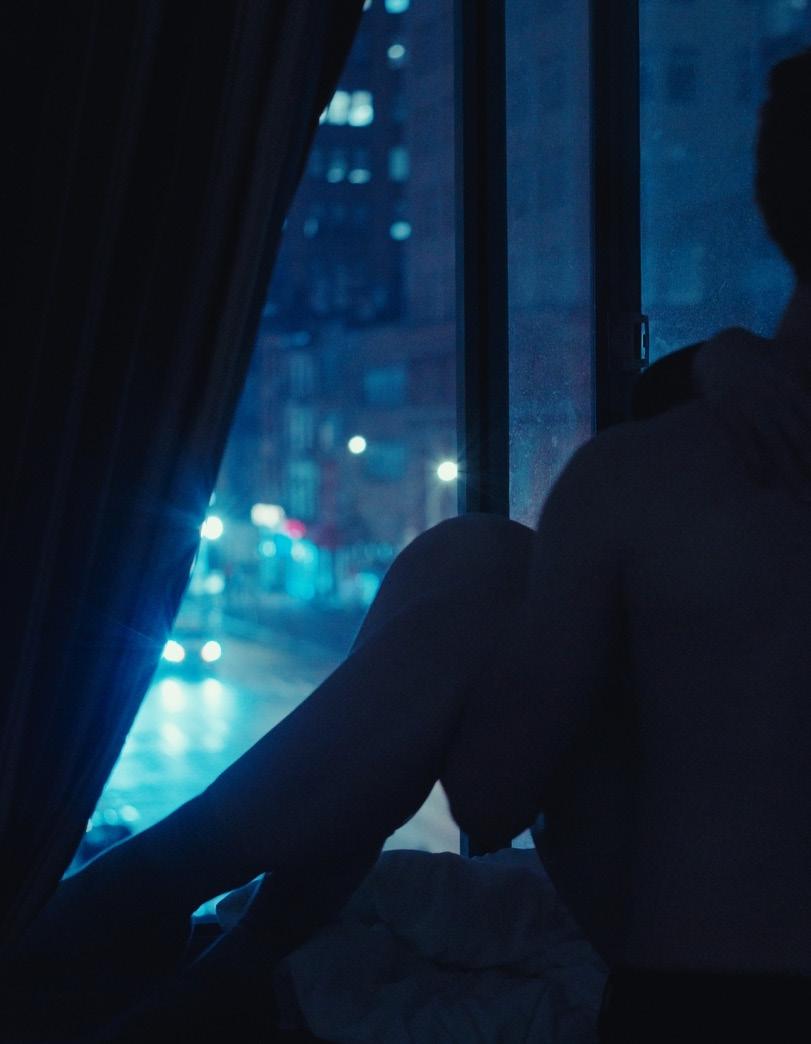
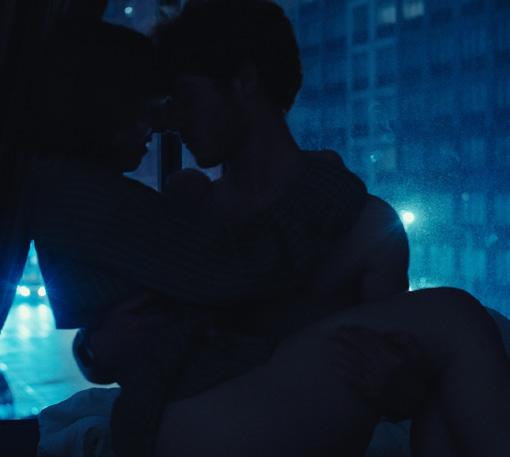
These findings are indeed reflective of the current media landscape for this age group. One of the most popular shows on television right now, “Heated Rivalry,” has become a pop-culture osmosis. If you haven’t watched it yet, chances are you’ve already heard about it.
This show has become famous for its groundbreaking approach to masculinity and queer relationships. In a 2025 Associated Press article, show creator Jacob Tierney described the program as a harlequin romance and stated: “This is about two boys in love and a lot of sex.”
“Heated Rivalry” is one of many sexually explicit films and TV shows available on HBO Max, a platform famous for this very content. As a premium cable network, HBO Max was able to feature adult programming and became known for this risqué material in the 90s and 2000s.
Today, this identity is still largely present, and through streaming, younger audiences now have more access than ever to this content.
“Nowadays, especially with streaming [and shows like] ‘Euphoria’ and [others] within that realm, it’s becoming more normalized [with] younger audiences, and especially through the social media aspect, it’s almost kind of like a desensitization,” Zach McGhee, who graduated from ASU in 2025,
With this access, some audiences are understandably discontented with the volume of sexual depictions on their screens. Recently, discussion surrounding the value of intimate scenes in film and television have surfaced.
“Because we’ve gotten used to a lot of stories being told without sex, when sex appears, it can feel a little more like spectacle, and like it’s interrupting the narrative,” Katherine Morrissey, a film and media studies professor, said.
Commentary online has illustrated a variety of differing opinions on whether or not sex offers a necessary narrative utility in film. Greta Moore, a sophomore studying film and media production, expressed her own thoughts on this discourse, “Intimacy happens in real life, so I think it’s really important to have that exposure.”
Stewart Bassett, an ASU alum, shared a similar perspective: “Sexuality in film is a powerful narrative device, if done right and carefully.”
In exploring this conversation, it’s also important to note the many strides taken in recent years on the production of intimate scenes. In 2018, following the #MeToo Movement, concerns surrounding protections for actors involved in these scenes garnered attention.
Moore touched on this progress and expressed concern for the pressures many actresses on set can face when performing in narratives that are driven by the male gaze — a concept that refers to the depiction of women in visual stories from an objectifying and sexualized heterosexual male perspective.
While commentary surrounding the narrative implications of intimacy in film has emerged among younger generations, another pressing conversation is being conducted about the processes behind them.
According to Bassett, “We’re less conservative about what’s in the product and more conservative about how you go about getting that product.”
A new understanding
McGhee and Bassett recently produced their own film, “With Time,” and shared their experiences creating an intimate scene while respecting their actors’ boundaries.
“We were trying to make that very intimate scene feel intimate. We decided, as a collective [between] the actors and me, that instead of showing the actual intimacy process, we [would] do a dance, because dancing is very intimate in itself,” McGhee said.
“We’re seeing them finally have human connection and sit there in their own world and be together in this moment. [It] felt more intimate than actually showing [the] act of kissing. Initially we had that scene written out as
a kiss and we took a pivot so everybody [would be] comfortable.”
McGhee and Bassett’s process in creating this scene, reflects a greater movement occurring right now in the film industry. According to Morrissey, “We’re having a much more productive open conversation about consent and what’s acceptable in films and other kinds of media. But also what that looks like to ensure consent, and how you make that part of a story.”
Today, intimacy coordinators play a crucial role in the production of these scenes and establishing said standard of consent and comfort on film sets. This role requires acting as a liaison between actors and production crews, ensuring safety and consent while choreographing intimate scenes.
While this position has become an industry standard for films produced within SAG-AFTRA, it is not entirely mandatory. Some actors and filmmakers have foregone using coordinators on their sets, a recent example being actress Mikey Madison on the set of “Anora.”
Madison stated in a conversation on Variety’s “Actors on Actors,” that she declined offers from producers to bring in an intimacy coordinator, noting the film director Sean Baker’s “dedication to authenticity.” This decision triggered outrage online with many fans concerned about the lack of absolute requirement of coordinators on sets.
“Intimacy coordinators are doing what the Hays Code pretended to do,” Bassett said, “The Hays Code was about controlling art, whereas intimacy coordinators are about keeping art safe for the people that are practicing it.”
The strict limitations enforced by the Hays Code almost 100 years ago were based in moral policing and fear. While current discourse surrounding intimacy in film is, in part, focused on how these depictions aid in narrative progression, the broader discussion centering on the process of the art itself has seemingly taken paramount with younger audiences.
This generation is learning from mistakes made by the Hays Code, which dealt with sex by eliminating it entirely. By shifting focus to protection in the production of films, modern pictures are able to explore this subject in a more intentional way. When actors are able to advocate for themselves and their characters, their stories are less likely to be harmfully depicted.
“It’s even more important now to push those boundaries,” Bassett said, “To tell authentic stories from all different groups of people and to not shy away from it in a time where that might be the safe thing to do, but to be bold about it.”
By Lucia Zettler
Illustration by Kormac Moore
Ilay in bed, curled up with my knees almost brushing my chin, mindless ly scrolling Instagram, when I came across a trending phrase: “My girl’s going to ASU”.
The comments were flooded with hate, smearing the couple and confirming their inevitable downfall. I rolled my eyes.
The existence of so many videos like this, and the confidence from people online to completely dismiss commit ment, made me wonder: Why is com mitment often regarded as trivial at ASU, and is moving from endless flings to true connection really possible?
In the past, dating followed a familiar set of rules: meet someone, get to know them, then decide whether to move for ward. Today, the goalposts have been moved and many find achieving com mitment to be a challenge.
For some couples, relationships flour ish, transitioning quickly from dating to an official title. Others find them selves stuck in an endless cycle of un certainty — searching for meaning in relationships often devoid of emotional connection and situational clarity.
In current times, many undefined re lationships coexist and often overlap as the internet and changes in culture mark a new era for dating.
As relationships have developed over time, a new term has been coined: “sit uationship.” Making its way through pop culture in the late 2000s, this phrase has grown to symbolize the lack of commitment in modern dating. Complicating, frustrating and often di sastrous, these relationships are now commonplace.
When confronted with ambiguous re lationship questions in his classrooms, Paul Mongeau, a professor at the Hugh


“The problem is everybody knows what it is, but everybody’s understanding is different. We both agree we’re in a friends with benefits relationship, but my goal might be to have fun and hang out, while your goal might be to turn this into something more,” Mongeau said.
Jaager Howell, a senior studying psychology and counseling, finds that he uses the term situationship as a placeholder for uncertainty. Often, two people in a situationship are ready for physical and emotional connection, but are unclear when and how to turn it into a relationship.
“I’ve been in two situationships. It’s all about intention. When I wasn’t clear on what I wanted, that’s when I used the term,” Howell said. “Saying situationship was an easy way to label something neither of us understood.”
To remedy the murkiness of situationships, Mongeau set out to differentiate these relationships, separating them into categories based on a variety of factors, primarily, the level of emotional support expected and subsequently provided.
“People are describing fundamentally different kinds of relationships all under this friends with benefits label, and so if we do have these different types, then the communication between partners should differ in some fundamental ways. And that’s where the idea of support came in,” he said.
The struggle that makes these relationships uniquely challenging is the lack of communication and boundaries established between individuals.
“You can stumble into a situation that works really well for you, that it just happens that you have the same goals and that you’re interpreting each other’s behaviors in a way that’s coordinated, right? ... The problem is, if you’re not talking, then coordination is going to split,” Mongeau said.
When coordination splits, the situationship falls apart.
“That’s in part why situationships, for
example, and friends with benefits, too, are so hard sometimes because people are looking at the relationships in fundamentally different ways,” Mongeau said.
Often, students recognize the importance of communication, yet still fail to prioritize it. But if communication is so central to healthy relationships, why is it avoided? Mongeau attributes this avoidance, in part, to the ego, which stems from the avoidance of any information that might deflate their sense of self.
Although ego can contribute to breakdowns in communication, Howell doesn’t regard it as a negative emotion because it represents what someone is trying to protect about themselves. Problems arise when ego hardens into pride and individuals fail to look introspectively.
“When your ego is hurt, pride comes up as defense. Everything feels logical when you’re defending yourself, but you miss the emotions of the other person,” Howell said, “I think a lot of people struggle to take a critical look at themselves.”
Lee Naea, a junior at Ottawa University, and Prescilla Pascua, a junior studying psychology at ASU, found their transition from situationship to relationship fairly simple.
They met in Hawaii while working together at an after-school program.
“I saw her and I was like, ‘I gotta try,’” Naea said, “One day we told our coworkers to just go to the beach. We spent the whole day there and that’s kind of how it started.”
During the start of their relationship, Pascua took steps to ensure clarity.
“I was pretty direct from the start. I made it clear I wasn’t here for a onetime fling. If you want something serious, let me know, because I do too,” Pascua said.
She found that this method differed from the way many approach situationships, which often lack
clear boundaries.
“One of the biggest issues is the lack of a label. If one partner wants something serious and the other doesn’t, it’s hard to communicate that,” she said.
Naea and Pascua argue that situationships often fail because they rely solely on the highs, rather than embracing the challenges that will inevitably come in a relationship. For a relationship to be successful, it needs to cultivate compromise, growth and mutual effort.
“Relationships aren’t always easy going, there will be bumps in the road and that happens in every relationship,” Pascua said, “It’s about the effort and fixing those problems and making sure you both recover from that so you can continue growing together.”
For Naea and Pascua, a successful relationship means showing up every day for each other. They compare this to a trust fall where one person falls back and trusts the other to be there for them, even when effort isn’t evenly split.
“A relationship isn’t always 50/50,” Naea said, “If you give in this much, I’ll give in this much for today like, I got you. So it’s just about having each other’s backs.”
Although relationships are ever-changing, new technology has played a unique role in their evolution. The flood of opinions, advice and expectations circulating through social media greatly impacts romantic relationships, often amplifying uncertainty.
“There’s more voices speaking to you than there would have been nearly 50 years ago or 40 years ago,” Mongeau said, “And if you’re listening to other people and not your partner, that’s really problematic.”
For Howell, he finds that, despite following verified therapists, his algorithm often contains a lot of “red pill” content that perpetuates misogyny.
“It feels like social media is always trying to push me toward this idea that women are property. It’s very odd. It’s always there,” he said.
Researchers at the ASU @HEART lab, or Healthy Experiences Across Relationships and Transitions, study how experiences like Howells’ shape young adults’ relationships. The lab focuses on how adolescents build, maintain and sometimes struggle as they navigate romantic experiences, as well as how these experiences impact their emotional well-being and long-term adjustment. By integrating perspectives from a variety of individuals, the lab works to facilitate healthy relationships as they evolve.
Taren McGray, a Ph.D. student and researcher at the @HEART lab, calls the change in communication caused by social media the “digital affordance.” This is a fundamental difference in communication from the past and she believes it may be contributing to the struggles students often face in relationships.
“If you’re DMing or texting someone, you’re not seeing their face, you’re not hearing their tone, you’re not getting those interpersonal cues, so it totally changes the meaning,” McGray said.
McGray explained how the lack of face-to-face communication caused by social media introduces a new dimen sion when it comes to harmful relation ships. Because of digital affordance, this harm can cause a larger and pos sibly more damaging psychological impact.
“It’s easier to type out a really mean message if you can’t see their face and see how hurt they are,” McGray said.
Maggie Auza, a graduate student work ing at the @HEART lab, stresses how online dating has introduced a new element to relationships as well, ex panding what was once a small pool of potential partners to far more than that. The dating scene now primarily exists online and in person “meet-cutes” have become less prevalent. She attributes this to fear of rejection — rejection on
line feels less personal.
“That changes how people think about conflict too. Instead of asking ‘How do we fix this?’ it becomes ‘Do I stay?’ be cause there are so many other options [to date],” Auza said.
Despite the obstacles social media brings, there are ways to cultivate healthy relationships that exist in har mony with new technology. This in cludes education and recognizing the challenges that social media can cause.
“Everyone is really struggling with just recognizing these forms of harm as harm, not minimizing it. It’s not a normal part of teen love, to be feeling controlled, to be feeling hurt,” McGray said.

Because of this, Auza believes that the conflict presented by these relation ships isn’t always negative — instead it can be used as an opportunity to grow.
“I wish students understood that they’re building relationship skills as they go,” she said. “Conflict doesn’t mean with drawal. If anything, it means you need to come together and talk more.”
Relationships today provide a unique opportunity for self-discovery and growth, allowing individuals to blos som as they explore romantic connec


Choosing recovery, again and again
By Aleah Steinle Illustrations by Paulina Soto
Content warning: This story contains subject matter that may be disturbing or upsetting to some readers, including eating disorders. Please proceed with caution.
Costco on a Sunday afternoon is a wash of fluorescent light with endless lines, crying kids, impatient parents and carts lingering in the aisles you stroll.
It’s the errand everyone dreads, for whatever reason it may be. So, my boyfriend and I usually divide and conquer.
My mission today: frozen fruit.
I scan the freezer doors, moving fast. A mother and daughter argue over ice cream flavors a few steps away, their voices echoing down the aisle.
The hum of the freezer units drown them out as I finally lock my sights on the strawberries.
I flip the bag in my hands and let the label meet my eyes.
50 calories for 13 strawberries.
Labels used to mean everything. A
thought that once followed every piece of food I touched, but an idea that means nothing now.
I look up to close the freezer door, but my reflection in the glass refuses to let me.
I never miss a reflection. I never miss a chance to take inventory, to pull apart the silhouette in front of me.
The buzzing in my ears tries to silence the only honest thought I have: that no version of this image has ever brought me peace.
I still see the body that once held me.
The one that mourns the way I live now, yet stands as proof of something I once had — and maybe could have again.
Those old reflections didn’t reveal a body broken into evidence. I couldn’t see the collarbones like handles I could carry myself by. I couldn’t see my ster-
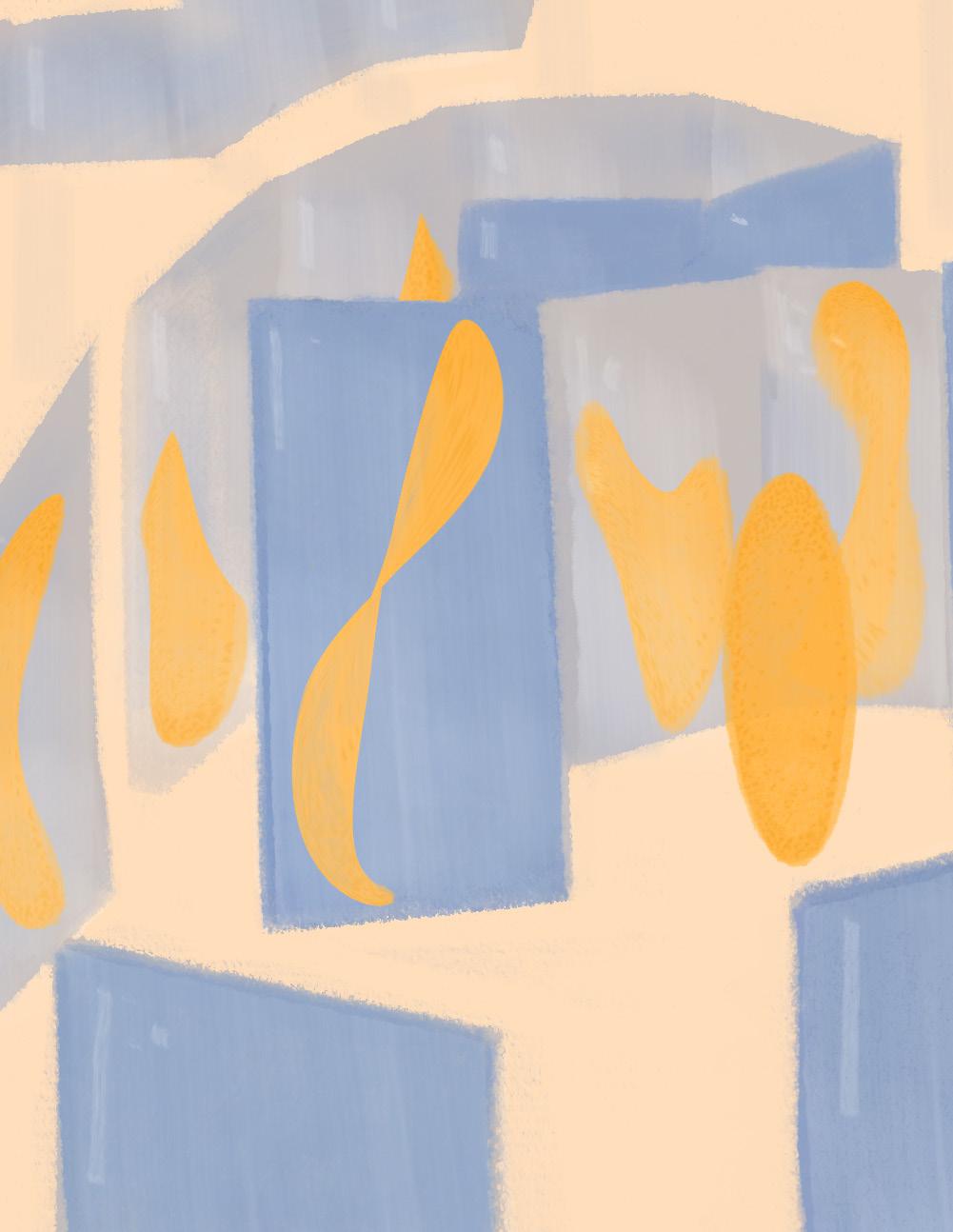
num reaching for escape. I couldn’t see a head too heavy for the frame beneath it, just skin that still folded and a number on my scale that stayed obedient.
But I eat now. And I tell myself that means I’ve worked through it.
Yet every meal still feels like a negotiation with the part of me that still remembers how easy it was to disappear.
And when I almost give in, it feels like a relief — until it isn’t.
Purging a meal was like brushing my teeth, a rhythm I followed even when I didn’t understand why.
During that time, I didn’t know I was sick. I didn’t even know there was a word for what I was doing.
It wasn’t a disorder; it was routine.
So when I was told to eat a cheeseburger, to put meat on my bones, it felt like an insult to all of the work I had done.
And sometimes I still feel like that 16-year-old girl, living in a body she would’ve hated. What’s supposed to feel like healing still feels like something I have to forgive myself for.
Recovery changes the body faster than it changes the mind.
That made me wonder when I actually decided that recovery tasted better than skinny felt. I couldn’t find a moment when it became clear. No single day, no dramatic shift.
I’d always thought that recovery was a one and done, not a life sentence.
My body still yearns for what it knows. The longing never truly leaves, or at least it hasn’t yet. It waits in the quiet. It shows up in conversations, in the space between bites and in the seconds before I decide what I deserve.
It tries to convince me this is the one
thing I can control, that if the rest of my life feels too loud, this can make me small enough to survive it.
Some days, it’s the only thing that feels constant.
When I reflect on my old reality, I ache for the 16-year-old girl who felt like she had to earn each meal, for the 12-year-old girl measuring herself against everyone else in dance class and for the 7-year-old girl who didn’t understand the depths of these emotions, yet still felt sad in a bathing suit.
I think back to the moments I’d try to justify these actions, and each time I’d respond with:
“Because I love you.”
Love might’ve felt ugly, but at least it made me look pretty.
My disgust became familiar. So famil-

iar it felt normal.
“Baby, are you ready to go?” my boyfriend shouts from the end of the aisle.
As I walk down to meet him, I hear the mother and daughter decided on mint chocolate chip.
Maybe one day, I’ll have a daughter of my own. And I’ll tell her she’s beautiful — not for how little space she takes up, but for how much of the world she deserves to have.
And if she ever asks why, I’ll always tell her:
“Because I love you.”
The National Eating Disorders Association in the U.S. can be reached by phone at 1-800-931-2237 or online via chat.
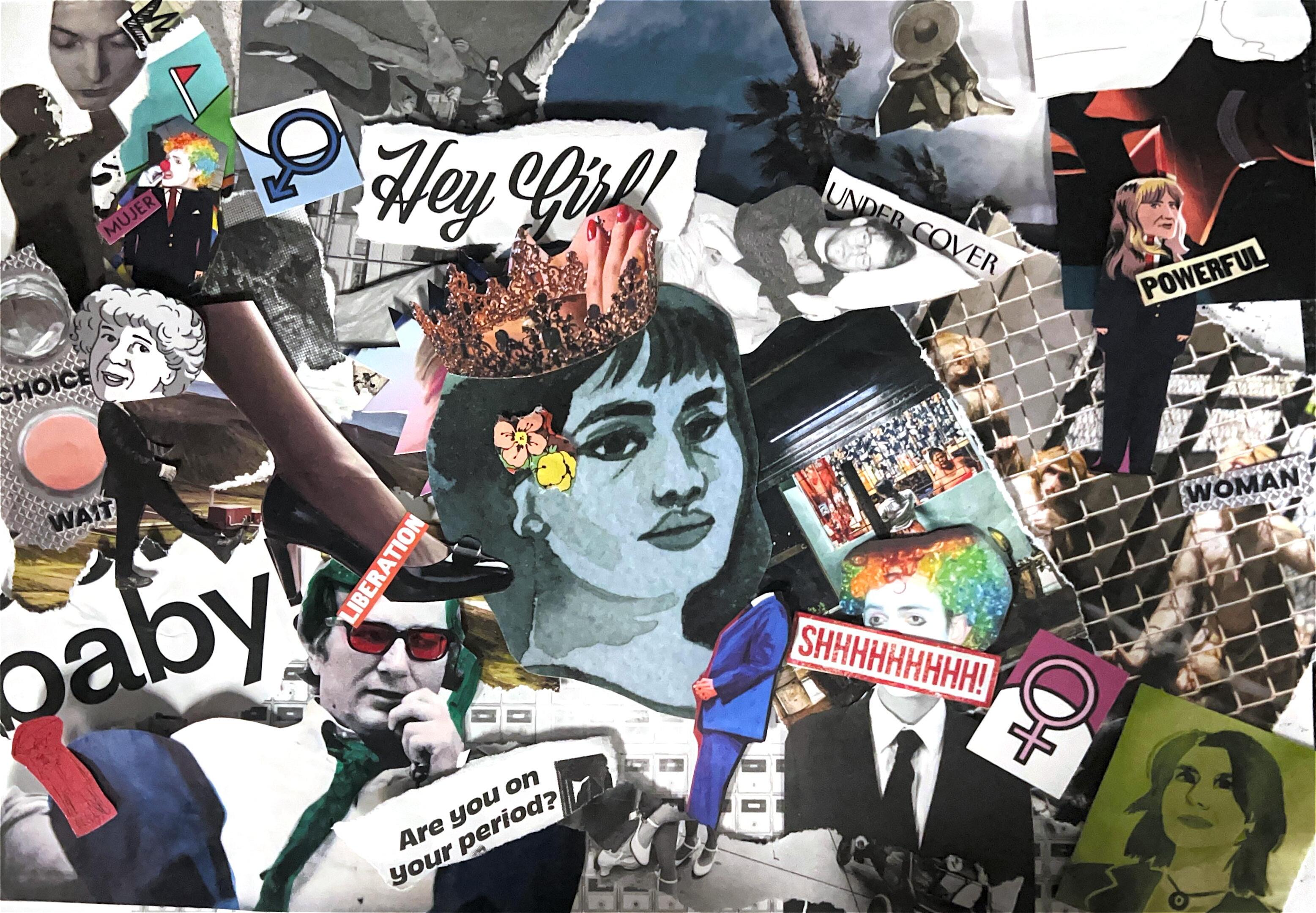
the growing movement of women decentering men
By Jude Banihani
Picture this: You are walking down the street. There are no deep voices, no swarms of dark suits bunching together. The smell of suffocating cologne doesn’t waft through the air. There are no aggressive commuters pushing their way through the busy crowd.
You feel safe with your earbuds in, and the need to look over your shoulder is no longer there. Only trails of floral perfume, flashes of lively colors and comforting tones surround you.
While this may seem like the beginning of an apocalyptic novel, this is a real society that many women are already pursuing.
It’s called the 4B movement, and it gained popularity in 2015 for its “four boycotts:” marriage, childbirth, dating and sex with men. Beginning in South Korea, the movement emerged following an increased interest in feminism. As systemic gender inequality and economic insecurity continued, the traditional feminine roles like motherhood, homemaking and marriage became less appealing.
Although American women haven’t started an official boycott of their own, there is a growing trend of women beginning to decenter men from their lives. In fact, 51% of American women 65 and older are currently unpartnered, and Morgan Stanley predicted that by 2030, 45% of women will be single.
As the United States experiences similar trends — including reaching the lowest ever fertility rate in history — men’s value in American society is already being challenged by women.
Growing apathetic
Women cite different reasons for choosing to stay single. Some feel
that today’s men are lagging behind women in academia and the workforce. Others feel the cost of living raises concerns when it comes to marriage and childbirth.
Breanne Fahs is a professor of women and gender studies in the School of Humanities, Arts and Cultural Studies. Fahs believes that many women in America experienced a panic after the reelection of President Donald Trump in November 2024. For example, when far-right political commentator Nicholas Fuentes addressed women in a post following Trump’s win saying: “Your body, my choice. Forever,” many female users replied expressing fear over their autonomy.
She also said the declining birth rate over the last few years has involved a lot of blame being placed onto women. When women shared an interest in “boycotting” dating, there was a “moral panic” about how society will function without women centering men.
Beyond the growing rhetoric of declining birth rates, Fahs expressed that America is in a “peak moment of misogyny.” The political climate in the country has made women question their interest in men.
“People are very threatened by the idea of women not prioritizing dating and marriage and children,” Fahs said.
According to Fahs, people still believe women must comply with traditional “social conventions” instead of exploring options for their own life paths. Therefore, she said, there is an association between women decentering men and societal collapse.
“What goes on in the public sphere, what goes on in the political world deeply affects people’s personal lives.
And so women are reacting in what seems to me a very rational way by looking around and saying, ‘You know, I’m seeing this like hyper-misogynistic, hyper-patriarchal moment, I don’t have access to abortion, I’m gonna think about my relationship to men a bit differently,’” Fahs said.
In June 2022, the Supreme Court overturned Roe v. Wade, reversing Constitutional abortion protections in place since 1973. Since then, 13 states have outright banned abortion and 12 have become “hostile” to it, according to the Center for Reproductive Rights.
Fahs said that limited abortion access further affected women in their decisions about men. “What does it mean if women lose the ability to choose whether they want to be pregnant? That has drastic implications for people’s ability to see themselves as autonomous or not,” she said.
Quynh Le, a junior studying psychology, said she feels like there is an “unspoken trend” of women not focusing on men while in college. Rather than spend time dating men, women are finding their passions, interests and boundaries.
“It’s just way more refreshing and I get to choose what kind of direction I want to go,” Le said.
Le described men’s behavior in talking stages as “low effort communication.” When she decentered men and prioritized herself first, she felt like she had more control in her life.
“I get to do more inner work, reflecting and going to therapy, even working on myself or talking to my family more,” Le said. “I’m tabling, I’m volunteering, I get to learn and study more in my own time too.”
She also said relationships with men involve compromises in order to maintain the relationship. While always a dedicated student, Le felt that the time commitment needed to be in a relationship would take away from time with herself.
By decentering men, women can spend more time focusing on not only their academics, but also their careers. Le felt that choosing to stay single during the early career stages allowed women to explore more of their options without having to accommodate a second person into their plan. When women do involve their partner in their decision making, they may often push aside what they want in order to accommodate their partner.
“Why does the man have a new job and the woman goes with him, but never, she has a new job and then he goes with her?” Le said.
Le said she believes women see education as “a key to freedom,” causing them to take their performance in university very seriously and allowing less time to place a focus on men. “I’m happy that we are now realizing that we need to pick ourselves up and have our own life and make ourselves more interesting,” she said.
Gabriella Haavaldsen, a junior studying sociology, said relationships were never a priority for her throughout college.
When women decenter men from their lives, Haavaldsen said women place more focus on their education and self-fulfillment. “I
think people should have it [relationships] if they want to, but I also think that’s not the main goal here,” she said.
She feels that the traditional approach to relationships was no longer as common as it was in the past.
“I think that they’re [women] taking the approach of, ‘Okay, maybe, let me try this. Let me try that. Let me see what I can do to maximize the amount of happiness and security and stability that I can have in my life and be independent and happy,’” Haavaldsen said.
Haavaldsen described her own experience with seeing women compromise for men in a way that is not always reciprocated. When Haavaldsen’s mother lived in London and met her husband, she picked up her belongings to move to Norway with him. “Women are made to compromise, to sacrifice something in order to seem valuable,” she said.
Haavaldsen said that even in parenthood, women are expected to “put everything aside” in order to become mothers. “We give too much power and credit to men,” she said.
While some women believe that decentering men is done in the form of cutting them off completely, others believe decentering can be achieved differently. Mary Williams is a senior studying architecture and the vice president of Boss Up — a student organization focused on minori-
ty women’s empowerment. Williams believes that women need a support system of other women in their lives, whether it be sisters, mentors or friends.
“As a woman, I know how important it is to have people to look up to, people to support you and a community in every aspect of the word,” she said.
Williams believes that “decentering men” looks different for every woman, saying that women can have important male figures in their lives and “it’s more so about removing them from the center of your identity.”
She is in a relationship with a male partner and feels like women can pursue relationships without centering their lives around men.
“Because I am personally in a healthy relationship, I feel like being a little centered around myself actually makes my relationship stronger because my partner supports my dreams because they were already mine before him,” Williams said.
To her, relationships that decenter men involve “two whole people choosing each other, not one person shrinking the other.” She also said women should build and focus their goals and routines before they seek relationships.
“I feel like decentering men sometimes has an anti-men type of negative sound, but I feel like it can be so empowering for women and girls because I don’t see self-centering as anti-men at all,” Williams said.

Division between Black and Latino communities amid ICE raids is detrimental to the progression of both groups
By Keyanee Walls Collage by the Multimedia team at SPM
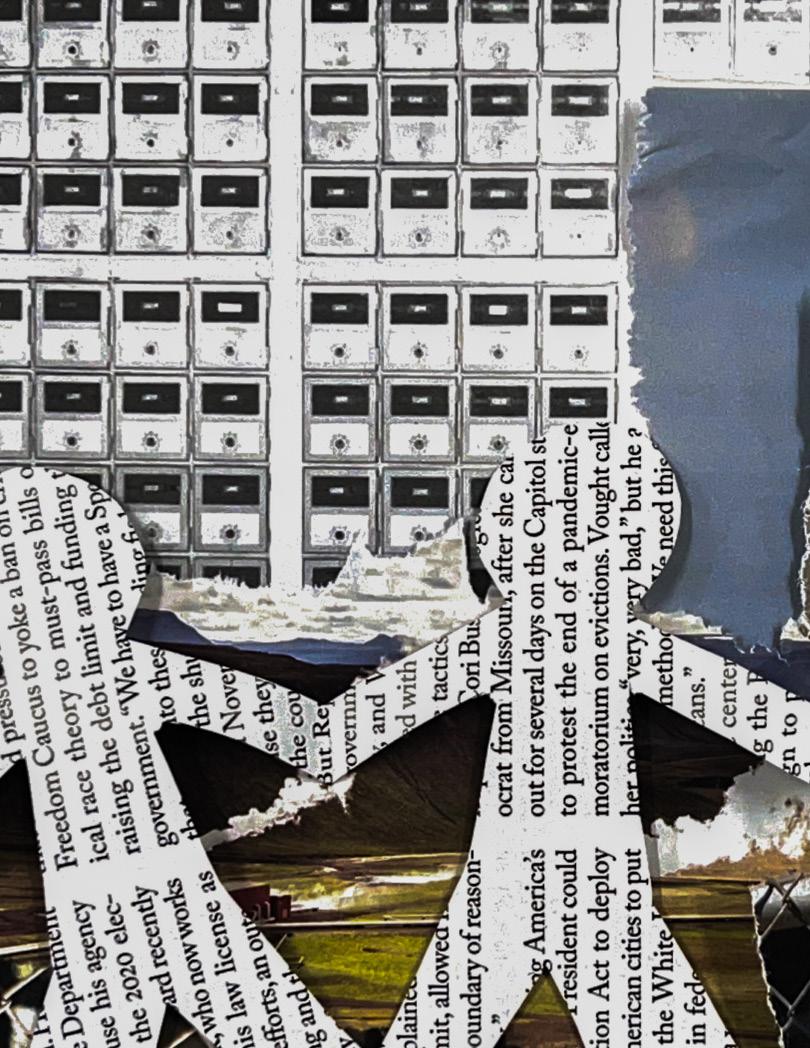
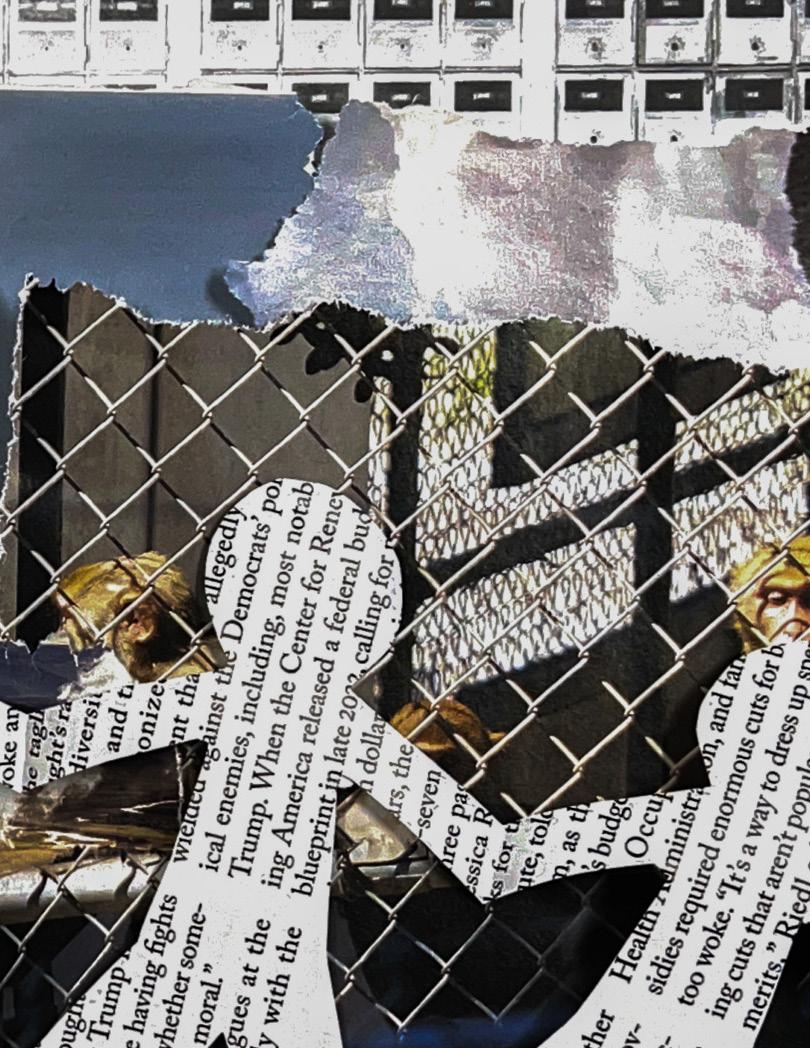
The pitfalls of solidarity are not lost on me. At times, this idea can feel like a chimeric ambition, especially while this administration’s political rhetoric appears determined to propagate fear and dissension among its people. But now, as cities around the country are being targeted and assaulted by government agents, I’ve considered how solidarity could be a lasting stronghold in an imminent crusade against despotism.
Writer and activist Audre Lorde said that “Without community there is no liberation, only the most vulnerable and temporary armistice between an individual and her oppression.”
In this 1979 speech called “The Master’s Tools Will Never Dismantle the Master’s House,” Lorde illustrated a key component in the progression of liberation among marginalized groups; collective action with consideration for and celebration of intersectional differences.
This message has lingered in my mind for the past couple of months as I’ve watched individuals in the Black community choose to withdraw from action amid an onslaught of state-sanctioned violence against immigrants and the Latino community.
As a Black and Mexican woman, witnessing this discord between two communities that I’m a part of has been incredibly disheartening. I’ve grown more frustrated as daily headlines are churned out, detailing the tragedies occurring at the hands of Immigration and Customs Enforcement. Urgency is increasing and there isn’t time for inaction because, as Lorde put it, progress is stunted by division.
The first time I took note of this specific discussion was in June of last year.
“Black people be warned. Go home. This is not your battle to fight.”
An X user quote responded with this message to a video depicting Border Patrol Agents unloading a massive shipment of ammunition and non-lethal weapons from a Black Hawk helicopter, seemingly preparing for confrontation with protesters in Los Angeles.
In the subsequent months, this rhetoric escalated as individuals took to platforms like X and TikTok urging Black Americans to take a step back in advocacy for immigrants and Latinos.
Much of this reasoning stems from larger issues between Black and Latino communities in the United States. A major factor in this decision from some Black Americans is claims of a lack of support from Latino communities during the Black Lives Matter demonstrations in 2020.
Creator and musician ADIV expanded on this line of reasoning in a TikTok from June 2025, citing the Latino vote in the 2024 presidential election and anti-Black sentiment within the community as a major point of frustration.
For many, this withdrawal is an act of protest in and of itself. Black Americans have been at the forefront of major political and social movements in the U.S., and this consistency has given way to a sense of fatigue among the community.
Black Americans are tired of fighting
for liberation without the assurance of solidarity from other minority groups. The 2024 election in many ways solidified this grievance.
A Pew Research Center survey from 2025 illustrated voting patterns among different groups during this election. According to the survey, 83% of Black voters supported Kamala Harris, while Hispanic voters were almost evenly divided.
Writer Toni Crowe illustrated this in her 2025 article, “Why Aren’t Black People Protesting?” In the piece, Crowe explains how Black Americans anticipated the actions being carried out by the Trump administration, and their vote reflected this. However, the split in votes from other groups felt almost like a betrayal.
The violence we are witnessing from law and immigration enforcement right now is not new to Black Americans. For more than a decade, state violence against Black people has inundated our screens and this brutality has persisted for centuries longer. In this, many feel that current outrage is severely delayed.
But should all of this mean that we bow out of action completely?
Chantel Apodaca, an ASU alum who graduated in May 2025, expressed her thoughts on this stance, “We’ve seen that pain, we’ve seen that struggle [and] we’re familiar with it. But that doesn’t mean we [should] take a step back and let other people experience that [too].”
Apodaca shared her perspective as a Black woman who grew up in an adoptive Hispanic household. According to Apodaca, amid the BLM protests in
2020, “It felt like there was some type of disengagement [between me and my mom]. What pushed us out of that was [recognizing] that we don’t need to fight against each other. The problem is the systems in place. The problem is the government [and] how [it’s] structured and systematic racism … When we disengage and we fight each other instead of against those negative things. That’s where more consequences lie.”
Last month, Apodaca attended the Sundance Film Festival in Park City, Utah, as a representative for ASU. While at the festival, Apodaca and her friends learned about an anti-ICE protest happening downtown, and immediately joined in.
“I wanted to be there in solidarity and do whatever I could in my power to speak up about this, and [the same goes for] my friends as well. We didn’t even have to talk about it. We just were like ‘we know what’s happening, we will be there,’” she said.
While in attendance, Apodaca and her group created a makeshift sign using a bag from the festival and lipstick she had on hand saying “Fuck ICE.”
Apodaca summarized her experience taking part in this demonstration, “It was amazing to see, it just felt so uniting.”
While I understand many of the frustrations Black Americans are feeling, it’s difficult for me to rationalize the mentality that what’s happening right now is “not our fight,” especially when both of these communities’ struggles are so
closely linked.
Black and brown liberation initiatives have long been aligned in U.S. history. A notable example of this is the partnership between the Black Panther Party and The Brown Beret Organization in the 1960s.
Both of these organizations, rooted in civil-rights-era California, sought liberation for their respective communities, and did so through community outreach and service. The core tenants of these groups mirrored one another, emphasizing freedom from their shared struggle under systemic oppression.
Today, we’re seeing even more overlap between these common adversaries. “In terms of surveillance, Black communities have always been overly surveilled and that’s what’s happening now with immigration and enforcement,” Eileen Díaz McConnell, a President’s Professor in the School of Transborder Studies, said, also noting shared histories of labor exploitation, wage theft and general institutional mistreatment.
In examining how these policies have shaped relationships between the two communities, Díaz McConnell said, “There are a lot of things related to the structure of the economy in the United States in which there’s been this pitting between immigrants and African Americans.”
Instilling division between these groups through the myth of economic competition is a scapegoating tactic that benefits neither community and only gives power to institutions seeking to suppress labor solidarity. This idea goes beyond economic conflict and can be
applied to the dissonance we’re seeing today.
“The power that we have in numbers and the power we have in being genuinely united, that is what can [ignite] change,”Apodaca said.
On-campus student organizations like El Concilio and the Black African Coalition have joined in partnerships and aided in bridging this gap, sustaining the importance of connection between these groups.
According to Díaz McConnell, “Young people of color absolutely do see the value in coalition’s moving forward. They are very overt about the necessity of that to make systemic change.”
Oppressive systems require division in order to thrive. We’ve seen the work that can be done when coalitions organize, and I believe it can be done again.
I’ve seen what’s happening now being described as a sort of trickle down effect, where the current crackdown is essentially an inevitable result of neglected issues that Black Americans have been speaking about and experiencing for decades. But in reality, nothing has trickled “down.”
Black Americans are still targets, and choosing passivity and indifference will not protect us.
The violence we are witnessing is not isolated to any one group or race. In the past month alone we’ve watched this administration continuously move the line and blur the scope of their objectives. Under these circumstances, there is no room or time for inaction.