Efforts to mitigate the rise in the global average temperature and keep it well below 2°C demand rapid reductions of CO2 emissions and the deployment of new solutions for hard-to-abate sectors.
Carbon capture, utilisation, and storage (CCUS) is one such solution, enabling both deep emission cuts and negative emissions when combined with biogenic CO₂. Acknowledging this, the Intergovernmental Panel on Climate Change (IPCC) recognises CCUS as an essential pathway for meeting global climate goals.
A stable framework and clear commitment
Denmark has quickly moved CCUS from an idea to an emerging value chain. With broad political backing, national strategies for both CO2 storage and Power-to-X (PtX), and more than EUR 5 billion in dedicated funding, the foundation for a new market is in place. Regulation under the Subsurface Act and Environmental Assessment Act ensures safe and responsible storage, while tenders create the conditions for scaling the full value chain.
From storage potential to new opportunities
With the potential to store several hundred years’ worth of Denmark’s current emissions onshore and offshore, Denmark is well positioned to become a hub for CO₂ storage. Building on decades of oil and gas expertise, depleted fields are beginning to be repurposed for the storage of CO2. New areas are investigated as potential storage sites. To connect capture to storage sites or utilisation facilities, the Danish government, together with national and international companies, supports the development of transportation solutions like pipelines, trucks, trains, and shipping. The aim is supporting the establishment of a thriving CO2 market operating on commercial terms. This is paired with strong PtX ambitions, enabling the utilisation of captured CO₂ as a feedstock for several green fuels. Together, storage and utilisation create both climate impact and new business opportunities.
Partnerships across borders and sectors
Progress is driven by international cooperation and public–private partnerships. Denmark works closely with neighbouring countries to align regulation and build a regional CO₂ market. At home, collaboration between government, industry, and researchers ensures that risks are shared and investments are attracted, and technologies are advanced from pilot projects to full deployment. Cross-border cooperation on CO₂ is also key to scaling carbon storage and green fuel production, supporting Europe’s energy independence by reducing its reliance on imported fossil fuels.
About this white paper
This white paper takes the reader through Denmark’s emerging CCUS value chain, covering capture, transport, utilisation, and storage. It highlights the policies, partnerships, and projects that are turning ambition into action, showing how CCUS can support Denmark’s climate goals while contributing to the global green transition. It also explores how continued innovation can lower costs and increase the prospects for job creation.
Industrial carbon management — A key to Europe’s climate ambitions
BY DAN JØRGENSEN, COMMISSIONER FOR ENERGY AND HOUSING, EUROPEAN COMMISSION
In her 2025 State of the Union address, President von der Leyen put it bluntly: “Europe is in a fight.” For our voice, our values, and our future. A key battleground in this fight is climate change. For Europe to win this battle, we need to boost clean energy. We need to accelerate energy efficiency. And we need to capture more carbon.
In the Net-Zero Industry Act, we set an ambitious target: to make at least 50 million tonnes of CO₂ storage capacity available annually by 2030. This is the ambition on paper –but is it achievable in practice? The ACCSION project, developed in Denmark and supported by the EU Innovation Fund, shows what’s possible. By 2029, Aalborg Portland Cement is expected to capture and store 1.4 million tonnes of CO₂ every year, representing approximately 4% of a reduction in Denmark's annual CO₂ emissions.
This is the scale of ambition we need. But what else can we do to translate our ambition into action?
First of all, we know that far-reaching initiatives involve risks. Therefore, the EU is committed to mitigating these risks
through financial support and by ensuring a predictable, long-term regulatory framework.
Secondly, to unlock the full potential of our technologies, we need a robust CO2 market and transport infrastructure. Therefore, in the second half of 2026, I will put forward a legislative package to facilitate cross-border CO₂ transport, foster a competitive CO2 value chain, and ensure regulatory certainty across the board.
Finally, we know that cooperation among Member States, stakeholders, and international partners is essential. The Commission is therefore committed to enhancing collaboration through knowledge sharing and mutual learning. As part of these efforts, we co-hosted 2025s Industrial Carbon Management Forum the 8 and 9 December in Athens.
When it comes to climate change, we face not only a fight for our future, but also a race against time. So, let’s pool our resources, accelerate our efforts, and deliver the full potential of carbon capture for a clean and competitive Europe.
Dan Jørgensen Commissioner for Energy and Housing, European Commission
Towards a robust carbon market
BY LARS AAGAARD, MINISTER FOR CLIMATE, ENERGY AND UTILITIES, DENMARK
What does it take to raise a green industry from the ground and create a growing market for carbon handling? We are doing our best to answer that question in Denmark.
In the past couple of years, we have made great strides towards establishing a market for CCUS, and as this white paper shows, the effort is paying off. Our strategy combines a few key elements that lay the foundation for growth. First off, we have maintained a clear political direction and committed sizeable economic resources. Secondly, Danish companies have shown great innovative capabilities and high levels of climate ambition. Thirdly, the dialogue between industry and government has been open and honest. When you start from scratch, you don’t know what you don’t know. Therefore, keeping a constructive conversation with experts and industry flowing has been a strategic focal point.
The results continue to show, and some of them are included in the white paper as case studies. The scale of the projects is growing rapidly, and thus, the ambition is that the price will eventually go down. Utilising the market forces is key to building a robust value chain, and although we are a long way from a subsidy-free market, that remains the end goal. Therefore, we are continuously working to strike the perfect balance between ambitious climate action and competitiveness.
According to science, reaching our climate goals without CCUS will be very hard, if not impossible. For this reason, I closely follow developments in CCUS with great anticipation. This white paper illustrates the remarkable progress Denmark has made in just a few years: transforming what was once a mere concept into concrete projects, infrastructure, and regulation. That gives me hope, and hope is needed. Global emissions are still rising, so we will need all the tools at our disposal to combat climate change. My hope is not based on wishful thinking, but on tangible progress across multiple sectors in Denmark, including cement production, power and heating plants, waste incineration, and biogas.
In the coming years, we will need to keep the momentum going, both globally and in Denmark. The intention of this white paper is to inspire readers worldwide and across every part of the value chain. Developing new technologies is a team effort that requires all actors to lean in: ground-breaking researchers, innovative companies, and forward-thinking regulators. By working together, we can continue to make progress.
Lars Aagaard Minister for Climate, Energy and Utilities, Denmark
Carbon capture, utilisation, and storage
CCUS involves the capture of CO2 from point sources, such as power generation or industrial facilities. Examples of industrial facilities include cement production, waste incineration, biogas, or iron and steel manufacturing. If the captured CO₂ is not used on-site, it is first compressed, and then transported by pipeline, ship, rail, or truck to be used in a range of applications. The CO2 can also be injected into deep geological formations trapping the CO2 for permanent storage.
Explaining carbon capture, utilisation, and storage in a Danish context
CCUS is the process of capturing (C) carbon dioxide (C) and transporting it to a site where it is either utilised (U) or geologically stored (S).
The purpose of CCUS is to prevent large amounts of carbon dioxide (CO₂) from being released into the atmosphere. Capturing CO2 is also essential to achieve negative emissions which is done by storing CO₂ captured from biological sources like biomass or biogas. This type of CO2 is referred to as biogenic CO₂, and it is considered net-zero since it is part of the natural carbon cycle. Biogenic CO2 is also used to produce green fuels for e.g., aviation and shipping.
Today, carbon can be captured from the flue gas of industrial facilities and heat and power plants, or separated from biogas. In either case, the captured CO₂ can be used or stored rather than released into the atmosphere. This makes CCUS a key enabler for decarbonising hard-to-abate sectors, where electrification, energy efficiency, or green fuels are not technically or economically viable.
Denmark is actively working towards making CCUS a viable solution, with several pilot and commercial projects already underway. By capturing both fossil and biogenic CO₂, Denmark aims to reduce emissions, support new green industries, and mitigate the effects of climate change. This also helps inspire a global green transition.
Capturing CO₂
CO₂ capture is the process of separating carbon dioxide from other gases, such as industrial exhaust gases or biogas. It is done by chemically treating the hot gases released during combustion. In these industries, the high CO₂ concentrations make it easier to separate CO₂ from other
substances in the gas stream. In a similar way, biogas can be upgraded using various technologies to remove its CO₂ content. The CO₂ from biogas can be used directly on-site or collected for later use or storage. Although more difficult, CO2 can also be captured directly from the atmosphere, a process known as Direct Air Capture.
Storing CO₂
Storing CO₂ involves injecting the carbon into a suitable reservoir deep in the subsoil, while an impermeable layer above, such as clay, acts as a cap. A reservoir fit for CO₂ storage must be made up of porous rock with many well-connected cavities of a certain size, allowing the CO₂ to spread throughout the formation, and at a depth deeper than 800 metres. Sandstone, which is abundant in the Danish subsoil, is one such type of rock well-suited for CO₂ storage.
CO₂ utilisation
Captured CO₂ can also be used in various ways. E.g., biogenic CO₂ is essential in the production of green fuels such as e-methanol and e-kerosene. E-methanol is produced by combining biogenic CO₂ with green hydrogen. E-methanol can be used to fuel heavy transport such as shipping and serves as a key ingredient in the chemical industry for producing plastics and other materials. The green fuel e-kerosene is often referred to as sustainable aviation fuel (SAF or e-SAF) which can be used to decarbonise aviation. By using captured CO₂, carbon is effectively recycled, helping to avoid emissions from new fossil fuels.
Denmark’s emissions and CO₂ uptake by sector
To meet its goal of climate neutrality by 2050, Denmark is reducing emissions across all major sectors. Carbon capture, whether for storage or utilisation, will play an increasingly important role.
Capturing and permanently storing CO₂ strengthens Denmark’s pathway to net-zero and paves the way for net-negative emissions in the future. In parallel, utilisation of CO₂ allows captured CO₂ to be reused in products, reducing the need for new fossil fuels in hard-to-abate sectors.
Source: Danish Ministry of Climate, Energy and Utilities, 2025
FIGURE 2
Building the CCUS value chain
From ambitious targets to specific projects, Denmark is rapidly building the full CCUS value chain. The momentum is driven by political backing, international cooperation, and public–private partnerships.
In just a few years, CCUS has moved from a vision to an emerging value chain. Supported by strong political commitment, cross-border collaboration, and close cooperation between government and industry, Denmark is establishing the regulatory framework, infrastructure, and large-scale projects needed to make CCUS a central pillar of its climate strategy.
A strong political commitment and stable framework
With broad parliamentary backing, Denmark has established a strong political mandate for CCUS. A national CCS strategy introduced new legislation under the Subsurface and Environmental Assessment Acts, ensuring safe and responsible storage while increasing investors’ confidence in long-term stability.
Since then, more than 10 political agreements and approximately EUR 5 billion in support has been allocated to develop the market. Following this, the National Strategy on PtX introduced a PtX task force to support the development of a Danish PtX market and infrastructure.
In addition, three subsequent agreements have been concluded regarding hydrogen infrastructure, the latest of which has deviated from the approach of expanding the hydrogen infrastructure on market terms, instead providing approximately EUR 925 million in loans and up to EUR 1.42 billion in state subsidies towards the development of a hydrogen pipeline connecting Danish hydrogen production with German offtakers. The final investment decision of the pipeline is contingent on the capacity sale in 2026.
Significant milestones on CCUS in Denmark
This approach has already reached significant milestones. In 2023, Project Greensand’s pilot project in the Danish North Sea became one of the first in the EU to
demonstrate cross-border CO₂ storage, safely transporting and injecting CO₂ from Belgium into a depleted oil field in the Danish part of the North Sea. In 2025, the world’s largest commercial e-methanol plant, Kassø, owned by European Energy, opened. At the same time, the Danish energy company Ørsted is developing large-scale capture facilities at two combined heat and power plants. Step by step, Denmark is developing a complete value chain with capture at industrial point sources, transportation by ship, truck or pipeline, before either using or storing the CO2
Cross-border cooperation for CO₂ storage
International collaboration is central to Denmark’s strategy. By working to align frameworks with neighbouring countries, Denmark is helping to build a regional market for CO₂ storage and transport. This cross-border cooperation will reduce costs through economies of scale and strengthen Europe’s collective ability to meet its climate targets.
Public-private partnerships driving CCUS
Public-private partnerships are central to Denmark’s model, ensuring that climate measures turn into tangible climate action. The progress of CCUS in Denmark is built on close collaboration between government and industry, ensuring new technologies move from pilot stage to fullscale deployment. By fostering strong partnerships, Denmark accelerates the scale-up of CCUS while keeping the market oriented towards long-term commercial viability.
In a few years, the development of CCUS has advanced significantly in Denmark. This once novel technology has seen traction fuelled by clear commitments such as Denmark’s climate goals, parliamentary backing, international cooperation, and public-private partnerships.
Timeline of CCUS development i Denmark
Policy framework
Denmark’s Climate Act
2030 and 2050 targets on CO₂ emissions
National PtX strategy
Adresses CO₂ for green hydrogen solutions
Climate Agreement for Energy and Industry
Introduced CCS subsidy schemes
National CCS strategy
Regulatory changes and CCS framework
National PtX agreement
Introduced the PtX task force, to develop the market
Strengthened framework conditions for CCS
Introduced CO2pipeline law, fixed state ownership etc.
Act on Pipeline Transport of CO₂
Framework for pipelines to transport CO₂
Agreement on hydrogen pipeline to Germany
Providing loans and subsidies for establishment
Funds and licensing
NECCS fund established
Awarded in 2024 to three bioenergy companies
CCUS fund tendered
Awarded in 2023 to Ørsted
PtX fund tendered
Awarded in 2023 to five projects
CCS fund tendered
Will be awarded in 2026
Fourth exploration licensing round (nearshore)
Will be awarded in 2026
First exploration licensing round (offshore)
Awarded in 2023 to TotalEnergies and INEOS
Second exploration licensing round (onshore)
Awarded in 2024 to three projects
Third exploration licensing round (onshore)
Awarded in 2025 to Norne Thorning Storage
Capture: Getting the CO₂ from emitters
Even though the technology behind carbon capture has existed for decades, it is only recently that it has been considered a necessary solution for reducing CO₂ emissions in countries like Denmark.
The technology behind capturing CO₂ was originally developed in the 1930s to purify natural gas. Only in recent years has it been recognised as essential for meeting the Paris Agreement goal of limiting global warming.
While some action has already been taken to mitigate climate change, most efforts have focused on reducing emissions, e.g., by improving energy efficiency or electrifying processes with renewable electricity. However, to achieve the goal of climate neutrality, substantial amounts (gigatonnes) of CO₂ need to be removed from the atmosphere every year for decades to come.
CO₂ from hard-to-abate sectors
In some sectors, often referred to as hard-to-abate sectors, it can be technically or economically challenging to fully decarbonise, as they currently rely heavily on fossil fuels for energy-intensive processes. Emissions from these industries are typically related to the physical processes themselves, such as cement production. By capturing CO₂ from these processes, it becomes possible to significantly reduce companies’ and sectors’ emissions, in some cases making them climate-neutral. Because many of these sectors heavily rely on fossil fuels for energy-intensive processes, green fuels can also play a central role in driving their decarbonisation.
CO₂ from biogenic sources
Biogenic CO₂ comes from natural sources such as sustainable biomass, biogas, and organic waste. Since it is part of the natural carbon cycle, it does not add new CO₂ to the atmosphere. This makes biogenic CO₂ a valuable resource. It can be reused to produce climate-neutral products, thereby helping to reduce emissions in other sectors by avoiding extraction and use of fossil fuels. Alternatively, biogenic CO₂ can be permanently stored underground, creating negative emissions by removing CO₂ from the atmosphere.
Denmark is well-positioned to lead the development and implementation of carbon capture due to many years of experience with bioenergy. In 2023, biomass and biogas together constituted 19% of the country’s electricity production. However, as demand for biogenic CO₂ grows, a future shortage could arise.
Capturing CO₂ directly at the source is an important step towards climate neutrality and ultimately net-negative emissions. However, it is not enough on its own. New methods for removing CO₂ directly from the atmosphere must be developed and scaled within the next decade to supplement capture from emitters. Some of these emerging solutions will be explored in a later chapter.
Asnæs and Avedøre Power Stations: A cornerstone of Denmark’s efforts to become net-negative
Ørsted is taking a major step in large-scale carbon removal by capturing and storing 430,000 tonnes of CO₂ annually from 2026. The CO₂ is captured from its two biomass-fired power plants: Asnæs in Kalundborg and Avedøre in Greater Copenhagen.
At Asnæs Power Station, 280,000 tonnes of CO₂ will be captured annually using units supplied by SLB Capturi, while Avedøre Power Station is expected to capture around 150,000 tonnes per year. All removals are certified by an independent third party. The capture units use amine-based technology to absorb CO₂ from flue gas.
The project includes the first large-scale carbon removal agreement with Microsoft, covering 3.67 million tonnes of certified carbon removals. CO₂ captured at Avedøre will be transported by truck to the Ørsted Kalundborg CO₂ Hub, located at the Asnæs site. The hub will serve as a shipping point for Ørsted’s CO2
From Kalundborg, the CO2 will be shipped by Ørsted’s partner Northern Lights to its onshore terminal in Øygarden, Norway. The CO2 will then be pumped through a subsea pipeline to the Aurora storage complex, located approximately 100 km offshore. There, the CO2 will be injected into a saline aquifer 2.6 km below the seabed for safe, permanent storage.
The Danish Energy Agency has awarded Ørsted a 20-year subsidy contract for the project, which contributes directly to Denmark’s national climate targets. The Ørsted Kalundborg CO₂ Hub shows how cross-sector collaboration can accelerate decarbonisation by reducing both costs and time to market.
Capture: How tenders and regulation support a new market
Denmark is on track to capture and store 2.9 million tonnes of CO2 by 2030. To achieve this, Denmark is quickly advancing the development of CCUS through new regulation and a stable framework.
Since the Danish Climate Agreement for Energy and Industry of June 2020, Denmark has made CCUS a key pillar of its climate policy. One of the ways Denmark drives technology development and the scale-up of CCUS is with stable framework conditions and new subsidy funds.
Strong political commitment and stable framework
In 2021, Denmark presented its strategy for the capture, transport, and storage of CO2, called the CCS strategy. This was backed by almost all political parties in the Danish Parliament. The CCS strategy outlines central conditions for CO₂ capture, transport and storage, separating utilisation for a later strategy on PtX, which was introduced in 2022. The PtX strategy addresses the use of CO₂ for developing solutions based on green hydrogen.
• The PtX fund was tendered in 2023, allocating around EUR 188 million to support green hydrogen production. The fund attracted strong interest and awarded
contracts to five projects from three companies, European Energy (Vindtestcenter Måde, Padborg PtX, and the Kassø expansion), Electrochaea (Biocat Roslev), and HyProDenmark (Everfuel). Together, these projects will deliver more than 200 MW of electrolysis capacity.
The PtX fund complements schemes on carbon capture by creating potential demand for captured CO₂ as a feedstock in green fuels, further strengthening the business case for both sectors.
The CCS strategy aims to ensure that the market for CO2 storage develops and operates on market-based terms. Regulation was updated to allow CO₂ storage and ensure all projects are covered by Denmark’s Environmental Assessment Act. It also involves state co-ownership of storage sites. These adjustments to regulation have two main benefits, first, establishing a solid legal foundation
for potential investors. Second, responsible operation for both environment and people. Alongside allocations from the Green Tax Reform and dedicated funding for CO₂ capture from biogenic sources, the CCS strategy paves the way for deploying subsidies of over EUR 5 billion.
Currently, Denmark has launched three main subsidy funds to kick-start the capture, transport, and storage of CO2 to secure emission reductions and removals. All funds are developed and administered by the Danish Energy Agency.
• The CCUS fund, totalling little more than EUR 1 billion, was awarded to Ørsted for projects at Asnæs and Avedøre power stations, aiming for full capture and storage of 430,000 tonnes of CO₂ annually from 2026.
• The NECCS fund (negative emissions via carbon capture and storage) focuses on biogenic CO₂, securing
the capture and storage of 0.16 million tonnes of CO₂ annually from 2026 to 2032. The three companies granted support are BioCirc CO₂, Bioman, and Carbon Capture Scotland Limited (now The Carbon Removers). The projects are located at several plants across Denmark.
• The CCS fund is the largest of the three schemes, tendering around EUR 3.85 billion over 15 years. The scheme expects to reduce emissions by 2.3 million tonnes of CO₂ annually from 2030 by offering contracts per tonne of CO₂ captured and stored. The tender is ongoing, with a final decision to be announced in the spring of 2026.
Besides the subsidy funds, Denmark focuses on building out storage and cross-border transport, which will be elaborated in the upcoming chapters.
ACCSION: The world’s first CO2-neutral cement production is within reach
The cement industry accounts for roughly 7 percent of global CO2 emissions and is considered one of the hardest sectors to decarbonise. A significant part of the emissions comes from the chemical process of heating limestone, which naturally releases CO2
Aalborg Portland has already cut its CO2 emissions by 36 percent during a three-year period from 2021 to 2024, but to reach CO2 neutrality by 2030, carbon capture is essential for Aalborg Portland to cross the finish line. Its success depends on large-scale investments, strong partnerships, and public support.
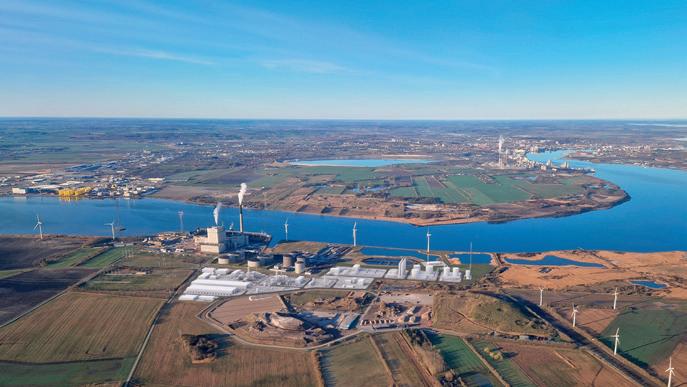
Together with Air Liquide, Aalborg Portland launched the ACCSION project (Aalborg CCS using Infrastructure Onshore in Northern Denmark). The project will establish one of Europe’s first fully integrated onshore CO2 value chains. Using Air Liquide’s Cryocap™ technology, around 95 percent of CO2 emissions from the cement kilns will be captured, purified, and liquefied. The CO2 will then be transported via new pipeline infrastructure to a dedicated onshore storage site.
Expected to be operational in 2029, ACCSION will enable Aalborg Portland to reduce its CO2 emissions by 1.4 million tonnes annually. The captured CO2 includes emissions from both grey and white cement production lines. This will make Aalborg Portland the first cement producer in the EU capable of delivering CO2-neutral cement at scale.
These measures mark the largest single CO₂ reduction effort in Danish history and set a new benchmark for carbon capture in hard-to-abate sectors. The ACCSION project will receive EUR 220 million in funding from the EU Innovation Fund, which has been instrumental in turning the ambition into reality.
Furthermore, surplus heat from the capture process will supply district heating to 20,000 additional households in Aalborg Municipality. This adds to the 25,000 homes already heated by Aalborg Portland today.
CONTRIBUTORS
Aalborg Portland Air Liquide LOCATION
Aalborg, Northern Denmark
Photo credit: Aalborg Portland
Gaia: Creating a new standard for clean incineration
Gaia is a joint venture between Vestforbrænding and Copenhagen Infrastructure Partners (CIP), created to show how carbon capture can transform the waste-to-energy sector.
The waste-to-energy sector stands at the intersection of three pressing global challenges: resources, security of supply, and climate. Vestforbrænding is already addressing the resource challenge through reuse and recycling. The incineration process also contributes to security of supply through district heating. However, one challenge remains: the climate impact of incineration.
The Gaia project pioneers a model for carbon-neutral waste incineration, transforming a traditionally hardto-abate sector into a climate-aligned solution. At the core of the solution is an integrated carbon capture system that is expected to capture up to 95 percent of CO₂ emissions from flue gas. Using amine-based absorption, CO₂ is chemically bound in an absorption tower and separated from the remaining flue gas. The pure CO₂ is then released through a regeneration process. The amine solvent is continuously recycled in a closed-loop system, ensuring efficiency and minimal waste.
To ensure the captured CO₂ is handled responsibly, the Gaia project is developing a full low-carbon value chain. This includes transport via electric trucks to an intermediate storage facility, followed by permanent offshore storage. Each step is evaluated for transparency, climate impact, and cost-effectiveness.
The project’s goal is to demonstrate how carbon capture can be applied in waste-to-energy and scaled to support broader decarbonisation goals.
Although the CO₂ capture facility is not expected to be operational until the end of 2029, the Gaia project has already reached several important milestones. These include a long-term offtake agreement with Microsoft for up to 2.95 million tonnes of permanent carbon removals, an approved Environmental Impact Assessment, and a completed Front-End Engineering Design study.
Together, the achievements demonstrate the Gaia project’s maturity and readiness for implementation.
CONTRIBUTORS
CIP
Vestforbrænding
Microsoft LOCATION
Glostrup, Greater Copenhagen
Photo credit: Vestforbrænding
CHAPTER 5
Storage: A match made in the Danish subsoil
The
Danish subsoil has great potential for CO₂ storage, with a potential to store billion tonnes of CO2. Much of this lies beneath the Danish part of the North Sea, positioning Denmark as a strategic location for CO₂ storage, both domestically and for neighbouring countries.
The conditions of Denmark’s subsoil are considered ideal for storing CO₂ onshore and offshore. Suitable reservoirs with a natural sealing layer are found in many areas of the Danish subsoil, and at the right depth interval. This natural advantage allows Denmark to tap into a vast storage potential. A large part of this is in the North Sea, where decades of oil and gas production have provided Denmark with the knowledge and infrastructure to safely and permanently store CO₂.
According to the Geological Survey of Denmark and Greenland, the Danish subsoil holds the potential to safely store the CO2 of many generations. With such abundant space available, Denmark can act as a hub for storing CO₂ from neighbouring countries. By permanently storing CO₂, emissions can be significantly reduced, supporting both Danish and international climate goals.
How CO₂
is safely stored deep underground
To ensure safe and permanent storage, the captured CO2 needs to be injected into geological formations deep underground. The CO2 is typically stored 800 and 3,000 metres below the surface. At this depth, the high pressure turns the CO₂ from gas into liquid, making it easier to store. The subsoil must consist of rock types with enough pore space to allow the CO₂ to spread evenly throughout the structure. Typically, a suitable reservoir will have at least 20 percent porosity to ensure effective storage. Above the formation, a thick layer of impermeable claystone acts as a natural seal, preventing the CO₂ from escaping. This claystone layer needs to be at least 20 metres thick to ensure secure storage.
Sandstone, which is abundant in the Danish subsoil, is a particularly well-suited type of rock for this purpose. The porous space is typically filled with brine, a concentrated solution of salt water. Injected CO2 will displace and mix with the brine to stay trapped in the porous space, while a small portion will mineralise or dissolve in the brine. However, the formation must have sufficient capacity before it can be used as a reservoir for CO2 storage.
Storing CO₂ in former oil and gas fields
As Denmark moves towards phasing out oil production by 2050, existing fossil infrastructure and decades of expertise are being repurposed. Depleted oil and gas fields in the North Sea are well-mapped and understood, and they often have the ideal geological conditions for CO₂ storage. In fact, CO₂ can be stored much like oil and gas, which remained naturally trapped underground for millions of years. Using pipelines or ships, CO₂ can be transported to depleted oil and gas fields in the North Sea, transforming them from sources of emissions into long-term climate assets.
Denmark is a co-founder and part of the GONE alliance
The purpose of the Group of Negative Emitters (GONE) is to promote global collaboration on net-negative emissions with the ambition to gather more countries with negative emission targets in the future. The alliance currently consists of founding partners Denmark, Panama, Finland, as well as the new members Suriname, Ethiopia, Sweden, the Netherlands, Kenya, and the initiative CityCDR with its 20 member cities.
Sound of Green: A world’s first in CO2 storage
From green technology breakthroughs to international climate partnerships, Sound of Green explores how Denmark transforms climate challenges into new opportunities.
The episode ‘A world’s first in CO2 storage’ dives into the growing potential of capturing and storing CO₂. Through interviews with experts such as Professor Philip Fosbøl from the Technical University of Denmark and Director Thomas Sylvest from Danish Shipping, the podcast unpacks how CO2 storage works. It dives into the importance of CO2 storage, alongside renewables, and energy efficiency, is for decarbonisation, and how Denmark’s shipping industry is helping to lead the way in safe CO2 transport.
The episode also takes the listener to visit Project Greensand, the first cross-border offshore CO₂ storage project in the North Sea. This Danish-led initiative repurposes old oil and gas infrastructure in the North Sea to permanently store CO₂ in depleted reservoirs.
This deep dive offers insight into how Denmark’s long-standing expertise and cross-sector collaboration contribute to developing scalable climate solutions.
Listen to the episode of Sound of Green
Overview of Denmark’s emerging network for capturing and storing CO₂
This map displays the locations of potential CO₂ storage sites currently under investigation, as well as confirmed capture projects and storage hubs for maritime transportation.
These sites and projects play a crucial role in Denmark’s strategy to reduce emissions and pave the way for climate neutrality. By identifying and developing these areas, Denmark is creating the full CCUS value chain.
Structures selected for maturation
Other mapped structures
Con rmed capture projects
Con rmed storage hubs for maritime transportation
Con rmed storage projects
Inez
Greensand Future
Lisa
Jammerbugt
BioCirc Vesthimmerland
BioCirc Vinkel Biogas
BioCirc Grønhøj Biogas
Thorning
Port of Aalborg
Gassum
BioCirc Favrskov Biogas
Port of Grenaa
Ørsted Asnæs Power Station
Bigadan Kalundborg Bioenergi
Ørsted Kalundborg CO₂ Hub Port of Esbjerg
Odense Port
BioCirc Haderslev Biogas
Ørsted Avedøre Power Station
Havnsø Stenlille
Rødby
Greensand Future: Contributing to the EU’s reduction target by establishing critical storage capacity
The storage of carbon is considered a viable solution to decarbonise hard-to-abate sectors, making it an important technology on the road to global net-zero.
Greensand Future addresses this. In its first phase, the project aims to permanently store 2.4 million tonnes of captured CO2. This will be done by injecting 300,000 tonnes of CO2 annually, potentially more, for eight years into a depleted oil field in the Danish North Sea.
On 9 December 2024, the partners behind Greensand Future (INEOS, Harbour Energy, and Nordsøfonden) made the final investment decision for the first commercial phase, with plans to be operational by the start of 2026.
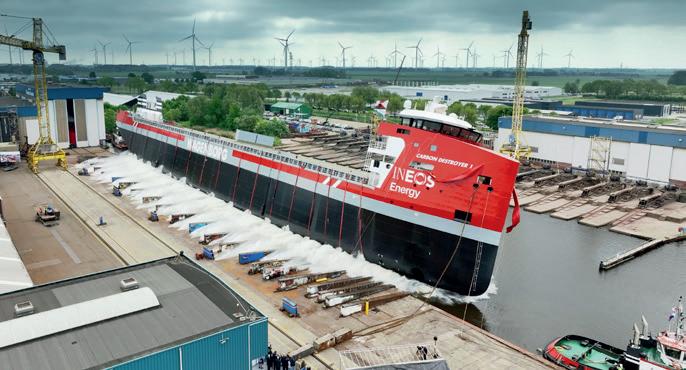
In the first phase of Greensand Future, biogenic CO2 will be sourced from Danish biomethane producers and transported to the port of Esbjerg for temporary storage. From the Port of Esbjerg, the CO2 will be transported to the depleted oil field Nini West for permanent storage. The CO2 will be transported by the world’s first dedicated offshore CO2 carrier, Carbon Destroyer 1, built by Royal Wagenborg.
The first phase of Greensand Future contributes to storing approximately 2,250,000 tonnes of CO2, and is expected to avoid 94 percent of greenhouse gas emissions compared with the reference scenario where CO2 is released into the atmosphere.
From 2030, Greensand future has the potential for safe and permanent storage of up to 2 million tonnes of CO₂ annually. This equals the yearly emissions of approximately 275,000 Danish residents.
With the aim of initiating storage operations into the INEOS-operated Nini field in early 2026, Greensand Future is expected to be the first storage facility in operation within the EU, showing the way for safe and efficient CO2 storage. Building on experience gained from its pilot project, Greensand Future actively works on addressing public perception and developing a European market for carbon capture.
CONTRIBUTORS
INEOS
Harbour Energy
Nordsøfonden
Port of Esbjerg
LOCATION
Royal Wagenborg
The North Sea
Photo credit: INEOS
Project Bifrost: Pioneering the Danish North Sea in becoming a European CO₂ storage hub
Located off the west coast of Jutland and spanning an area of 3,168 km², Project Bifrost stands as TotalEnergies’ flagship CO₂ storage initiative in the Danish North Sea. The first two licenses, Harald and Dagny, awarded in 2023 are co-owned by TotalEnergies (45 percent, operator), Schwenk via CarbonVault (35 percent), and Nordsøfonden (20 percent), while the latest license, Inez, awarded in 2026, brings the partnership of TotalEnergies (65 percent, operator), Nordsøfonden (20 percent), and Mitsui (15 percent).
The project aims to facilitate the transportation of CO₂ collected from industrial emitters for permanent storage beneath the seabed. It is currently undergoing evaluation and appraisal work before transport and storage operations can begin.
Project Bifrost expects to begin CO₂ injection as early as 2030, developing over time an annual storage capacity of over 15 million tonnes of CO₂. This will significantly contribute to the decarbonisation of Danish and European emitters.
Project Bifrost also pioneers advanced monitoring technologies and explores the socioeconomic dimensions of CO₂ storage. In doing so, it supports Denmark’s climate goals and creates new opportunities for the offshore workforce.
The project leverages existing infrastructure operated by Nordsøfonden and other key energy players, such as owners of offshore fields, facilities, and pipeline networks. This ensures a scalable, long-term solution to unlock the Danish North Sea’s CO₂ storage potential.
CONTRIBUTORS
TotalEnergies
Nordsøfonden
LOCATION
Schwenk via CarbonVault Mitsui
The North Sea
Photo credit: TotalEnergies
Utilisation: Opening for new opportunities
Captured CO2 has a wide array of uses, from fuels and plastics to carbonated drinks. This makes biogenic CO₂ a necessary feedstock for certain types of green fuels, reducing emissions in sectors currently dependent on fossil fuels.
Emitted CO₂ has traditionally been treated as a form of waste. When captured, the CO₂ was used in the production of fossil fuels to maximise output. However, CCUS technologies enable us to turn CO₂ into valuable products. CO2 of biogenic origin is key to making the products climate-neutral by substituting the use of fossil-based products.
The many uses of CO2
CO2 is used for a wide range of commercial and industrial purposes. When CO2 is combined with hydrogen it can produce, e.g., e-methanol and e-kerosene. These fuels can be used in plastic production, in the chemical industry, or as fuels for shipping and aviation. Utilisation of CO2 plays an important role in securing the green transition of these sectors. Industrially and commercially, CO2 can also be used for carbonation of beverages, dry ice for refrigeration, and in fire extinguishers. In agriculture, CO2 is often used as a fertiliser in greenhouses and for treating grain to protect it from insects.
Producing green fuels with biogenic CO2
Green carbon-based fuels are produced when biogenic CO₂ is combined with green hydrogen. Green hydrogen is produced via electrolysis powered by electricity from renewable sources. To qualify as green fuel, the electricity used in the process must come from renewable sources, e.g., from wind and solar, and comply with EU requirements for Renewable Fuels of Non-Biological Origin. These fuels are referred to as “e-fuels”, where “e” stands for electric. Chemically, they are identical to fossil-based counterparts. Green fuels can therefore directly replace fossil fuels in aviation, shipping, and other energy-intensive industries. This makes e-fuels essential in decarbonising hard-to-abate sectors that rely heavily on fossil fuels.
Green fuels play a crucial role in reducing the world’s reliance on fossil fuels, securing energy resilience both within Denmark and across its borders. Moreover, Danish production of green fuels will increase European energy independence, as Europe is currently importing most fossil fuels from third countries. Green fuels will also assist in a diversified energy mix, supporting Denmark’s goal of becoming 100 percent independent from fossil fuels by 2050.
Building a market for green fuels and hydrogen in Denmark Denmark has great ambitions for producing green fuels. The government has allocated approximately EUR 456 million for green aviation, and a new green domestic route between Copenhagen and Aalborg will open in 2026. By 2030, the Danish government aims to have all domestic flights use SAF.
In addition, a hydrogen pipeline is being planned to transport green hydrogen from production plants to key industrial clusters, laying the foundation for a competitive and integrated market. The hydrogen pipeline will connect Denmark to the German border. To support the pipeline, the government has committed approximately EUR 2.3 billion in loans and operational subsidies.
Great conditions for sector coupling
With a highly integrated energy system, Denmark can combine sectors to accelerate the green transition. Excess heat from electrolysis, synthesis, and capture processes can be reused in district heating, while large volumes of renewable electricity can be used to produce green fuels. Renewable energy and the development of PtX are therefore closely linked. Building on this strong foundation, Denmark also benefits from steady access to biogenic CO₂, making Denmark an ideal location for advancing CO2 utilisation.
Towards zero: Pathways to decarbonise global shipping
The shipping industry is at a turning point. With the sector committed to achieving climate neutrality by 2050, global shipping must undergo a significant transformation. Denmark, as one of the world’s leading shipping nations, is playing a central role in driving this change.
The publication, Towards zero: Pathways to decarbonise global shipping, highlights how reaching the net-zero goal is not only achievable but already underway. Tangible solutions are emerging from Denmark’s green shipping initiatives. As the sector evolves, green fuels are becoming a cornerstone of the strategy to decarbonise shipping.
The publication outlines, among other things, how green fuels are gaining ground and how shipping supports offshore wind development. It also explores the role of CCUS as a climate solution, the need for reskilling, and the importance of ensuring a just transition.
Offering valuable insight, this publication examines how the shipping sector is evolving to meet its climate objectives and shape a sustainable future, with Denmark at the forefront.
The link between green hydrogen and biogenic CO2
adapted from Rambøll
RENEWABLE ENERGY
RE-ELECTRIFICATION
ELECTROLYSIS
Excess heat
Figure
SYNTHESIS
E-fuels and chemicals
Fjord PtX: Creating sustainable aviation through sector coupling
Fjord PtX is a Danish e-SAF project, designed to produce SAF from renewable electricity and locally sourced CO₂. The plant is a model of sector coupling and regional collaboration.
Aviation remains one of the most challenging sectors to decarbonise due to its reliance on high-energy-density fuels. While electrification and hydrogen-powered aircraft are long-term possibilities, SAF offers an immediate and scalable solution that can be used in existing aircraft engines and airport infrastructure. However, SAF production is still limited, and the industry needs more solutions to further decarbonise aviation.
Fjord PtX addresses this challenge by producing e-SAF through a locally integrated system that couples renewable energy, carbon capture, and district heating. Located in Aalborg, the project builds on strong municipal partnerships to create a circular and integrated energy system. The CO₂ will be sourced from Nordværk’s waste-to-energy operations, turning local emissions into a valuable feedstock.
Aalborg Forsyning, Aalborg Municipality’s utility company, will provide both land and technical water, in turn receiving surplus heat from the plant, feeding directly into the district heating network. This level of sector coupling, linking waste, energy, heating, and transport, is essential to making SAF production both sustainable and scalable.
By 2030, Fjord PtX will produce up to 90,000 tonnes of e-SAF annually, enough to cover either approximately 15 percent of the projected European demand for e-SAF or unlock Danish ambitions for fully renewable domestic aviation. The production will utilise up to 330,000 tonnes of CO2 annually and is expected to reduce life-cycle emissions by up to 90 percent, compared to fossil jet fuel. The project will support European and Danish climate ambitions, while also creating local jobs.
The final funding decision for the Fjord PtX project is not made yet, but it stands to showcase how municipal partnerships and sector coupling can unlock scalable climate solutions for aviation globally.
CONTRIBUTORS
Aalborg Municipality
Nordværk
CIP
LOCATION
Aalborg, Northern Denmark
Photo credit: Nordværk
Kassø: Transforming CO₂ into green fuels for shipping and industry
In the coming years, sectors like shipping and industries reliant on plastics need to significantly reduce their CO2 emissions. Several companies, including the Danish shipping giant Maersk, pharmaceutical company Novo Nordisk, and toy manufacturer LEGO, are investing in green fuels, with e-methanol emerging as one of the most promising solutions.
Kassø, placed in Southern Denmark, is the world’s first large-scale commercial e-methanol plant. Powered by a nearby solar park, the facility converts renewable electricity into e-methanol through a combination of green hydrogen and biogenic CO₂. The plant is equipped with three 17.5 MW electrolysers that produce 6,000 tonnes of hydrogen annually from 90,000 tonnes of water supplied by local boreholes and water companies. This hydrogen is then combined with captured CO₂ and processed using an in-house methanol synthesis method to produce up to 42,000 tonnes of e-methanol per year.
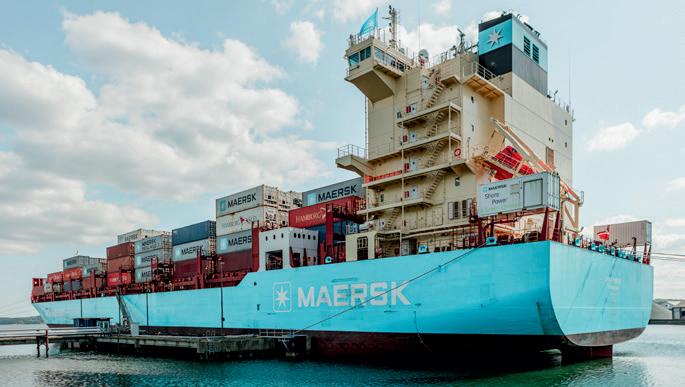
The e-methanol is used by Maersk to power its new fleet of methanol-ready vessels. It is also used by LEGO and Novo Nordisk to produce climate-neutral plastic, showing how utilisation of CO₂ can accelerate the green transition across sectors.
Beyond producing green fuels, the plant is designed with efficient energy use in mind. Excess heat generated during production is recovered and directed into the local district heating network, providing heat for up to 3,300 households. This ensures that valuable energy is not wasted but instead supports the wider community.
The Kassø e-methanol plant illustrates how innovative technologies, strong partnerships, and sector coupling can transform CO₂ from a waste product into a resource that drives decarbonisation of hard-to-abate sectors.
CONTRIBUTORS
Novo Nordisk LOCATION
Kassø, Southern Denmark
Photo credit: Emil Vikjaer-Andresen / European Energy
Transport: The key to developing a CO₂ market
Moving CO₂ from capture to utilisation or storage requires an integrated infrastructure. Such infrastructure is not only the backbone connecting the Danish value chain with global partners, but also the key to developing a functioning CO₂ market.
Denmark supports a market-driven development and roll-out of CCUS. A major component for developing a CO2 market is an integrated, cross-border infrastructure, as well as a clear legislative framework for transporting CO2 across borders.
Shaping regulation to enable CO2 transport
Denmark is already working on shaping regulations to support the transportation of CO2. In 2024, the Act on Pipeline Transport of CO₂ was passed, providing the legal framework for developing and operating pipelines for CO₂ transport in Denmark. By setting transparent rules for permitting, safety, and access, the act reduces uncertainty for project developers while ensuring infrastructure can be shared across industries and integrated into a broader European network.
Denmark has signed agreements with Belgium, Finland, France, the Netherlands, Norway, Switzerland, and Sweden to enable CO₂ transport for storage beneath the seabed. However, to prevent transport infrastructure from becoming a bottleneck, a coherent European framework will be crucial to scale CCUS and create a well-functioning market.
Transport solutions to scale CCUS
Ultimately, a mix of transport solutions will be needed to develop a fully functioning CO₂ market and ensure that captured CO₂ can move efficiently from source to either storage or utilisation. CHAPTER 7
CO₂ can be transported by rail, truck, ship, or pipeline. The choice of method depends on factors such as price, time, and flexibility. Pipelines are often a safe and efficient solution, but they take a long time to establish with a high cost upfront. Trucks, by contrast, offer flexibility and can be deployed quickly, making them well-suited for smaller volumes or early-stage projects. Ships and railways provide options for larger-scale transport across longer distances, particularly in international contexts where connecting emitters with storage sites or utilisation hubs requires cross-border infrastructure.
While several modes of transport, especially shipping and CO₂ terminals, can help mature the CO₂ market in the early phase, cross-border pipelines are expected to be essential over time. By moving large volumes of CO2 at lower cost, pipelines can be central to scaling up CCUS.
Denmark as a hub for shipping CO₂
In the Danish part of the North Sea, ships will be the primary method for transporting CO2 to storage in the early phase of developing the market. Shipping also makes it possible to ship CO₂ from neighbouring countries directly to storage. In other cases, CO2 might be shipped to other countries for utilisation.
Denmark is well positioned to serve as an international hub, being well connected to European countries, from France to Finland. East of the North Sea, Denmark will be a convenient storage partner for large emitters from countries around the Baltic Sea and North Sea, such as Germany, the Netherlands, and Belgium. Countries west of the North Sea, such as the United Kingdom and France, can also reach the storage sites directly.
To support this role, several CO2 hubs are being developed across Denmark. The hubs will act as collection points where captured CO₂ is gathered, processed, and then transported, often by ship, for storage or utilisation. Among them is The Carbon Destroyer 1, operated by INEOS, which is Europe’s first offshore vessel specifically designed to transport liquefied CO2 for permanent storage.
Navigator Gas: Accelerating the development of CO2 shipping
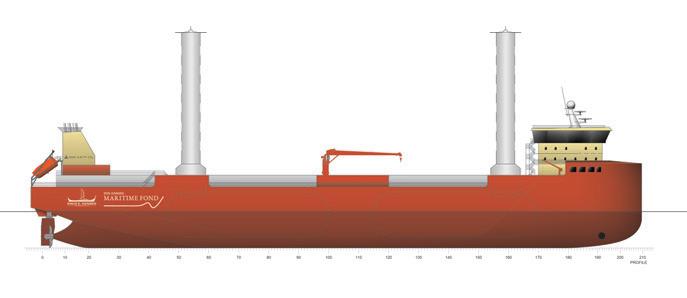
Navigator Gas is a market leader in the most complex segment of the gas carrier sector, operating the world’s largest fleet of handysize vessels. In recent years, the company has also taken a pioneering role in advancing liquefied CO2 transportation by ship. Both technically and commercially, Navigator Gas has advised numerous stakeholders on feasibility and best practices for developing this emerging field.
Decarbonisation targets are pushing many emitters to reduce their emissions. For some, CCUS is the most viable option. However, not all emitters are located close to large pipeline infrastructure, and many are new to the shipping industry. As a result, there has been a strong need to share knowledge on how CO₂ can be transported by ship, from existing commercial shipping precedents and logistics across the entire CCUS value chain, to technical areas such as ship design, impurity control, and pressure management.
Navigator Gas has been able to propose a range of commercial and technical solutions to emitters in various development phases. This includes temperature and pressure, vessel optimisation, intermediate floating, or onshore storage, as well as in-depth economics to maximise value for money. With a large presence in the shipping industry, Navigator Gas benefits from access to worldwide shipyards for the construction of liquefied CO2 carriers. Navigator Gas’s aim is to emphasise safety and reliability while providing flexible liquefied CO2 carriage, including commercial and technical expertise.
Navigator Gas plays an active role in developing the liquefied CO2 shipping industry and has engaged in a wide range of projects, including a feasibility study for Uniper Grain CCGT on the Isle of Grain, Kent, through its joint venture Bluestreak CO2
Currently, Navigator Gas has 15 different liquefied CO2 designs in the capacity range of 7,500 m³ to 56,000 m³ low- and mid-pressure available for CCUS upstream or downstream customers.
CONTRIBUTORS
Navigator Gas
SeaPeak
Danish Maritime Fund
LOCATION
Gentofte, Greater Copenhagen
Photo credit: Naval Architect Consultancy Knud E. Hansen
Lindø’s Terminal Nord: Establishing Linde Gas’ first Danish CO2 terminal
As Northern Europe’s leading industrial gas company, Linde Gas plays a key role in ensuring stable gas supplies to the Danish market. In 2018, the company signed an agreement with Odense Port to establish its first Danish CO2 terminal at Lindø’s Terminal Nord.
The new terminal by Linde Gas delivers CO2 extracted as a by-product from other industrial processes directly to customers.
Transporting CO₂ at –40°C safely and efficiently is a challenge. This requires innovative engineering to handle extreme temperatures, pipeline contraction, and site adjustments, all while ensuring compliance with strict safety and regulatory standards. To meet these demands, Process Engineering handled the technical part of establishing the CO2 terminal. This included designing and calculating the 1.5-kilometre-long pipe to transport the CO2 from the wharf to the terminal.
During installation and commissioning, Process Engineering participated on site, providing technical support such as line walk and supervision of the installation work. Moreover, Process Engineering contributed to the Safety Integrity Level classification by reviewing all equipment for the terminal to ensure compliance with safety standards. They also assisted with third-party approval and prepared the plant’s user manual.
During the project, the location of the pipe at the wharf changed, which meant the pipe was not long enough for the ship to connect to the terminal. Therefore, Process Engineering designed custom-made pipe carriages with flanges that are manually rolled out, ensuring optimal alignment for the ship.
Today, CO2 at Lindø’s Terminal Nord is unloaded once a week, operating as a reliable link between industrial by-product capture and end-use. It demonstrates how tailored engineering solutions can turn logistical challenges into efficient supply infrastructure.
CONTRIBUTORS
Process Engineering
Linde Gas
Odense Port
LOCATION
Odense, Funen
Photo credit: Process Engineering
Public perception: Sparking dialogue and participation
While the deployment of CCUS technologies is accelerating, public perception is essential to progress the development of a full value chain. Denmark approaches this through transparent dialogue, monitoring, and regulation.
As CCUS technologies advance, sparking dialogue and participation becomes crucial to establish new capture installations, utilisation facilities, pipelines, and storage sites. In Denmark, this challenge is addressed through transparent dialogue, monitoring, and regulation. These efforts aim to build trust, address local concerns, and ensure the responsible implementation of CCUS projects.
Ensuring safety through regulatory frameworks
Efforts to ensure safety in the development of CCUS in Denmark are supported by regulatory frameworks, including the Danish Environmental Protection Act. The act outlines several conditions that need to be approved by multiple state agencies, before any exploration permits are granted. These conditions include an environmental impact assessment, which needs to investigate potential conflicts related to groundwater, drinking water, nature, and the planning of a project. The purpose of this legislation is to safeguard the environment while promoting societal development.
Building trust through local engagement
While permitting conditions and thorough preliminary geological exploration helps reassure the public about the responsible and safe implementation of storage technologies, the complexity of storing CO₂ underground still raises concerns. This is particularly true within local communities, where too many unknowns and unanswered questions can have a negative impact on the community’s sense of security. This is why it is crucial to take comprehensive measures to address these concerns.
The Geological Survey of Denmark and Greenland and the Danish Energy Agency have actively promoted public participation in storage projects, especially during the exploration and licence processes. Moreover, the Danish Subsurface Act provides that operators must keep neighbours of a storage project well-informed about ongoing or future projects.
In Denmark, this engagement includes:
• Regular town hall meetings and public hearings, where specialists and project managers are available for face-to-face discussions.
• Field visits where locals can meet project teams and see the processes first-hand.
• Ongoing publication of monitoring data related to the storage sites.
• Continuous collaboration with municipalities, both on a political and technical level, to ensure transparency and a shared understanding.
• Educational initiatives aimed at providing knowledge and raising awareness.
The purpose is not to convince local communities of the rationale behind CO2 storage, but to maintain the entire process as transparent as possible. All storage operators in Denmark are therefore encouraged to engage locally and inform the community about their project. Denmark’s approach to CCUS is founded on transparency, regulation, and local engagement, helping to ensure the responsible and long-term deployment of CCUS. CHAPTER 8
Key facts on CCUS development in Denmark
Policy framework
Net-zero
reduction target by 2050.
Environmental regulation
CCUS projects fall under the Environmental Assessment Act, requiring an environmental assessments to evaluate potential impacts.
Capture and storage
2.9 million tonnes of CO₂ is on track to be stored anually.
10 licenses
for exploration, distributed across 3 offshore and 4 onshore licences, with an additional 3 nearshore licences currently under review.
EUR +5 billion
has been allocated by the Danish Government to help kick-start the market for capturing and storing CO₂.
75,000 - 170,000
jobs can be created across the European market for CO₂ capture and storage, according to the think tank Kraka.
Usage
EUR 2.3 billion
to support building a hydrogen pipeline from Denmark to Germany. Around EUR 925 million is loans and up to EUR 1.42 billion in operational subsidies.
Sources: Danish Ministry of Climate, Energy and Utilities, 2025, Danish Energy Agency, 2025, Think Tank Kraka, 2023
EUR
1.3 billion
is earmarked by the German Government to support the import of green hydrogen through the German-Danish pipeline.
Stenlille: Assessing Denmark’s potential for onshore CO₂ storage
Stenlille is home to one of Denmark’s two underground natural gas storage facilities. It is operated by Gas Storage Denmark.
In 2025, Gas Storage Denmark launched a maturation project uncovering the technical, regulatory, and commercial foundation for CO2 storage at its existing natural gas storage site in Stenlille. The site is based on a sandstone reservoir which is suitable for gas injection and withdrawal.
A key deliverable of the maturation phase is to establish a better understanding of the potential coexistence of the existing natural gas storage facility and a new CO2 storage facility. This will be investigated further in a CO2 exploration phase. It is important to design a CO2 storage facility that does not compromise the continued operation of the existing natural gas storage facility.
Gas Storage Denmark is in close dialogue with Danish authorities on this subject. The result of the maturation phase will be a work programme for exploring the suitability of Stenlille’s subsoil for safe and permanent storage of CO2
At the end of the maturation phase, the internal stakeholders of Gas Storage Denmark and Energinet will be presented with an updated business case providing the foundation for the decision on whether to continue the efforts towards establishing an onshore CO2 storage project.
CONTRIBUTORS
Gas Storage Denmark
Energinet
LOCATION
Stenlille, Zealand
Photo credit: Gas Storage Denmark
Monitoring the depths: Research project ensures safety at Stenlille
To utilise the great CO2 storage potential of Denmark’s subsoil, Gas Storage Denmark is looking into developing an onshore storage facility in Stenlille.
As a pioneering project, it involves extensive research and new technologies to ensure safety and efficiency. A key element is the BOMS project (BOrehole Monitoring Solutions for CO2 storage wells), which focuses on reliable monitoring to manage and minimise leakage risks.
BOMS maps existing monitoring technologies and identifies key gaps between current solutions and specific data. Based on this knowledge, the project aims to enhance and recommend monitoring techniques for CO2 storage sites. This effort includes advancing sensor technologies, improving data integration methods, and optimising real-time monitoring capabilities.
The research project is part of the INNO-CCUS partnership and is led by a collaboration between Gas Storage Denmark, the Technical University of Denmark, Welltech, Geological Survey of Denmark and Greenland, BlueNord, and Technion.
A reliable and accurate monitoring solution is a vital piece of the puzzle for CO2 storage. By improving our understanding of subsurface conditions and enhancing monitoring techniques, the BOMS project contributes to the safe operation of the Stenlille facility. Additionally, the practical insights and recommendations from BOMS will help guide the development of monitoring solutions for future onshore storage sites.
CONTRIBUTORS
INNO-CCUS
Technical University of Denmark
Welltech
Geological Survey of Denmark and Greenland
BlueNord
Technion
LOCATION
Stenlille, Zealand
CHAPTER 9
Innovation: A technology ripe with possibilities
In the coming years, CCUS will continue to evolve to bring down costs, increase flexibility, and make innovative technologies more efficient. These advances require research and development (R&D).
Technologies like Direct Air Capture (DAC) have been around for years, yet a key challenge remains: capturing sufficient amounts of CO₂. Because atmospheric CO₂ is far more diluted than the concentrated emissions from power plants or industrial facilities, DAC is more energy-intensive and expensive than technologies capturing CO₂ directly at the source.
Despite these challenges, DAC holds significant potential as a tool for removing CO₂ from the atmosphere, especially emissions that are difficult or impossible to eliminate at the source. Coupled with renewable energy and ongoing advances in materials and sorbents, DAC’s efficiency is improving, and costs are expected to decline over time.
The next generation of CCUS technology
Beyond DAC, other CCUS technologies are also advancing rapidly. Innovations in capture solvents, membranes, and adsorption materials are reducing energy requirements and making CO₂ capture more cost-effective for industries like cement, steel, and chemicals. Meanwhile, utilisation technologies are finding new ways to turn captured CO₂ into fuels, chemicals, and construction materials. These innovations create economic value while also reducing emissions.
Technological developments within CCUS also open doors to entirely new business models and approaches to climate action. For example, modular capture units can be deployed at multiple sites, providing flexibility across different locations. Integrated capture and storage systems,
on the other hand, can link multiple industries to shared transport and storage infrastructure.
These developments not only make CCUS more adaptable and cost-effective but also enable industries to collaborate in new ways, share resources, and scale solutions faster. By combining flexibility with integrated infrastructure, CCUS can move from isolated projects to systemic climate solutions, creating both economic and environmental value.
R&D driving CCUS innovation in Denmark Denmark is at the forefront of CCUS research, combining industrial expertise with academic innovation. Companies like COWI, Danfoss, and Rambøll are advancing project development and technologies, while universities such as the Technical University of Denmark and Aarhus University are researching materials, energy efficiency, and utilisation pathways for CO₂. Some of this is done through improving sorbents, integrating renewable energy, and testing pilot projects. Denmark is making CCUS, including DAC, more efficient and cost-effective.
Collaboration between universities, research institutes, and industry accelerates technology development and provides knowledge to guide regulation, public perception, and deployment. Through sustained R&D, Denmark continues to push the boundaries of CCUS and advance climate solutions, while also helping create a de-risked market that attracts investment and enables large-scale deployment.
Carbon Capture Lab: A sandbox for optimising and developing next-generation technologies
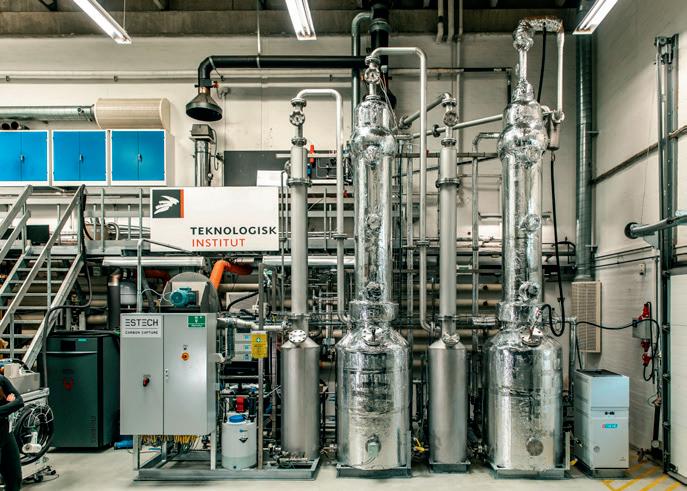
In November 2023, the Danish Technological Institute (DTI) opened the Carbon Capture Lab. The lab is Denmark’s first dedicated test facility for carbon capture technologies.
It aims to optimise solvent-based carbon capture and to accelerate the development of next-generation technologies by allowing companies to test and validate their solutions under realistic industrial conditions. With Denmark on track to capture and store millions of tonnes of CO2, the Carbon Capture Lab represents an important step in turning ambition into practice.
The facility is built with flexible modules, delivered by the Danish company ESTECH, which allow companies to test their technologies on a wide variety of emission sources, including power plants, industrial processes, and combustion engines.
The laboratory can process up to 150 kilograms of CO₂ per day, providing a flexible platform to test solvents, packing materials, energy optimisation measures, and process configurations under realistic settings. The focus is on advancing innovation towards safer, more energy- and cost-efficient solutions, addressing one of the key obstacles to making carbon capture commercially viable.
Companies such as Ørsted are already engaging with the laboratory to strengthen their knowledge base and optimise processes before full-scale deployment. Integrated into the European CCUS research infrastructure, ECCSEL, the Carbon Capture Lab also opens opportunities for international collaboration, helping to position Denmark at the forefront of global CCUS development.
CONTRIBUTORS
Danish Technological Institute
LOCATION
Aarhus, Central Denmark
Photo credit: DTI
C-ASH project: Turning CO₂ into limestone
In western Limfjord, researchers and local partners are exploring how nature’s own processes can help deliver permanent CO₂ storage.
The C-ASH project (Carbon-fixing by Volcanic Ash) is a collaboration between Aarhus University, Klimafonden Skive, Energibyen, and the municipalities of Skive, Morsø, and Thisted. Together, they are investigating how captured CO₂ can be safely and permanently stored underground by transforming it into solid limestone.
The method is known as CO₂ mineralisation. Injected CO₂ reacts with volcanic ash layers in the subsurface of the Limfjord area, gradually forming stable carbonate minerals. This mimics a natural process that has occurred over millions of years, but here it is accelerated to deliver a storage solution with no risk of later re-emission.
The approach is already used commercially in Iceland, and the conditions in western Limfjord appear particularly well-suited for scaling it up. Recent test drillings have reached 300 metres below ground and confirmed the presence of the volcanic ash layers needed for the process.
Initial analyses point to the extraordinary potential of the local underground to store the equivalent of 60 years of Denmark’s total CO₂ emissions. If proven at scale, this would be a step towards reaching Denmark’s climate goals. For the local business community, it opens the door to new opportunities within the emerging CO₂ economy, complementing existing strengths in industrial symbiosis and sustainable production.
By combining advanced research with strong local partnerships, C-ASH demonstrates how innovation can transform climate challenges into drivers of regional growth.
CONTRIBUTORS
Aarhus University Climate Foundation Skive
Energibyen Skive
Skive Municipality
Morsø Municipality, Thisted Municipality
LOCATION
Aarhus, Central Denmark
Photo credit: Jens Therkelsen
Just transition: Attracting talent and new business
Attracting
skilled professionals and foreign
investment is important for establishing a thriving CCUS market. Denmark is supporting this by upskilling its workforce while also securing talent from abroad.
Technology and innovation are central to advancing the global green transition. Denmark is well-positioned to serve as a living lab for CCUS, fostering innovation and testing new solutions in real-world conditions. Securing skilled professionals and attracting global companies is crucial to filling the gaps in the existing workforce and strengthening the talent base. This not only supports economic growth but also enhances the competitiveness of Danish companies, researchers, and institutions, reinforcing Denmark’s position as a leading knowledge society.
CCUS as a driver of job creation
Analyses indicate the significant job potential of CCUS. The Danish Metalworkers Union estimates that repurposing fields in the North Sea for CO₂ storage alone could support more than 3,000 jobs. Offshore storage sites draw on the same knowledge and skills required for operating oil fields. This allows workers, whether electricians or engineers, to transition seamlessly into the new sector.
At a broader scale, think tank Kraka projects that the European market for CO₂ capture and storage could grow by EUR 60 to 134 billion, creating between 75,000 and 170,000 jobs across sectors directly and indirectly involved with capturing and storing CO2. E.g., jobs will be created in the production of new equipment such as capture systems, leakage monitoring, or transport containers. That said, these jobs largely represent a shift of labour from other industries,
meaning capturing and storing CO2 is unlikely to raise overall employment levels.
With flexible business conditions and an internationally oriented workforce, Denmark is building a nationwide CCUS ecosystem that positions the country as a hub for CO₂ storage and utilisation.
How Denmark is upskilling for a future CCUS workforce
Some of the ways Denmark is upskilling its workforce include offering specialised courses to supplement existing skills, as well as new degrees and educational programmes directly focused on CCUS. For instance, Danish universities are developing master’s courses and professional training programmes that cover CO₂ capture technologies, storage solutions, and utilisation pathways.
At the same time, vocational institutions and industry partnerships are providing short courses and certifications to equip engineers, technicians, and project managers with practical skills in operating capture facilities, handling CO₂ transport, and implementing monitoring systems.
This dual approach ensures that Denmark can strengthen the expertise of its current workforce while also cultivating a new generation of professionals with specialised knowledge in CCUS, directly supporting the country’s ambitions to scale up CO₂ storage and utilisation solutions.
CO2Vision: Building Denmark’s first CCUS hub in Northern Denmark
CO2Vision is one of eight designated business beacons in Denmark identified by the Ministry of Industry, Business, and Financial Affairs and its agencies. The initiative aims to make Northern Denmark an international frontrunner in CCUS through a broad partnership of more than 50 private companies, public organisations, educational institutions, and SMEs.
Northern Denmark is home to several heavy industries with high CO₂ emissions, including cement, combined heat and power plants, biogas, and waste incineration. CO₂Vision brings these industries together with port operators, researchers, and technology providers to develop solutions across the entire CCUS value chain, from capture and infrastructure to skills and regulation.
So far, the project has established more than 15 test and demonstration sites covering a wide range of CCUS applications, such as industrial capture and conversion into new fuels. These provide real-world data and experience. This work has resulted in a regional CCUS roadmap and laid the foundation for large-scale roll-out. Two follow-up projects (CO₂Vision 2.0 and NeXt) are expanding testing to industrial and agricultural decarbonisation.
An independent evaluation found that 80% of partners agreed CO₂Vision had significantly strengthened the regional CCUS ecosystem. This, in turn, supports job creation, particularly in the northern part of Denmark. The project is also shaping national policy and investment by providing evidence-based recommendations on infrastructure, business models, and regulatory frameworks.
With these measures coming into focus, Northern Denmark is positioned to become Denmark’s first CCUS hub, demonstrating how heavy industry can transition towards net-zero emissions.
Photo credit: INNO-CCUS
Denmark aims to pave the way for climate neutrality with CCUS
Denmark has shown that CCUS has moved from ambition to tangible development.
A key challenge is developing a completely new market that operates on market terms. This is why the Danish government is supporting with stable frameworks and large funding schemes, while closely collaborating with the industry and neighbouring countries. All in the pursuit of kick-starting the CO2 market.
The ambition is to use Denmark’s storage potential to advance the global green transition while also shifting from fossil fuels to green fuels.
Building on these achievements, scaling CCUS solutions further will require identifying investment opportunities and fostering continued collaboration between public and private actors.