AS planning ramps up for the 2026 cropping season, farmers are being reminded that two fundamentals remain critical to long-term success, smart crop sequencing and early pest control.
Mid North agronomist Craig Davis said growers who took the time to plan crop rotations and stay ahead of pests would put themselves in the best position for a productive and profitable year.
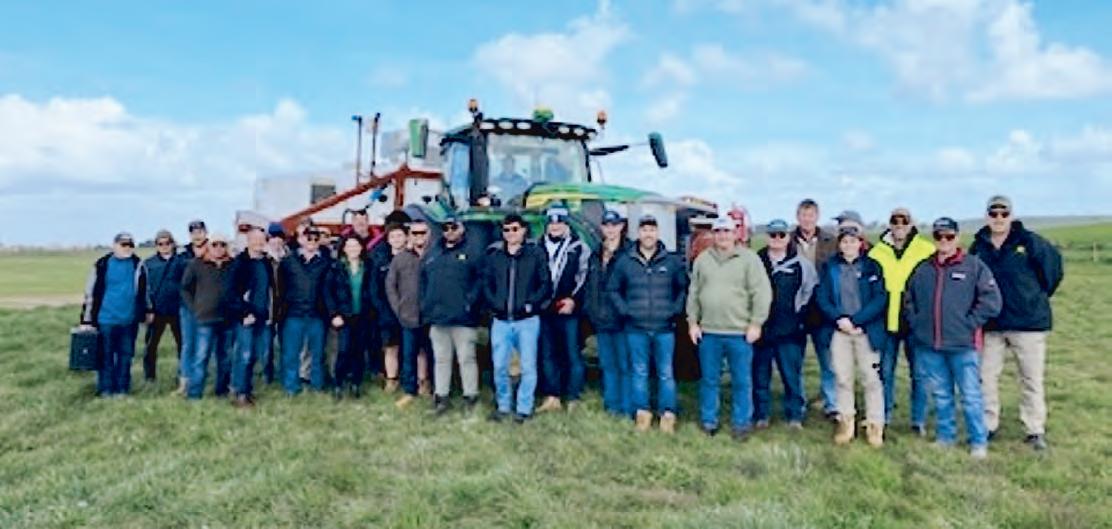
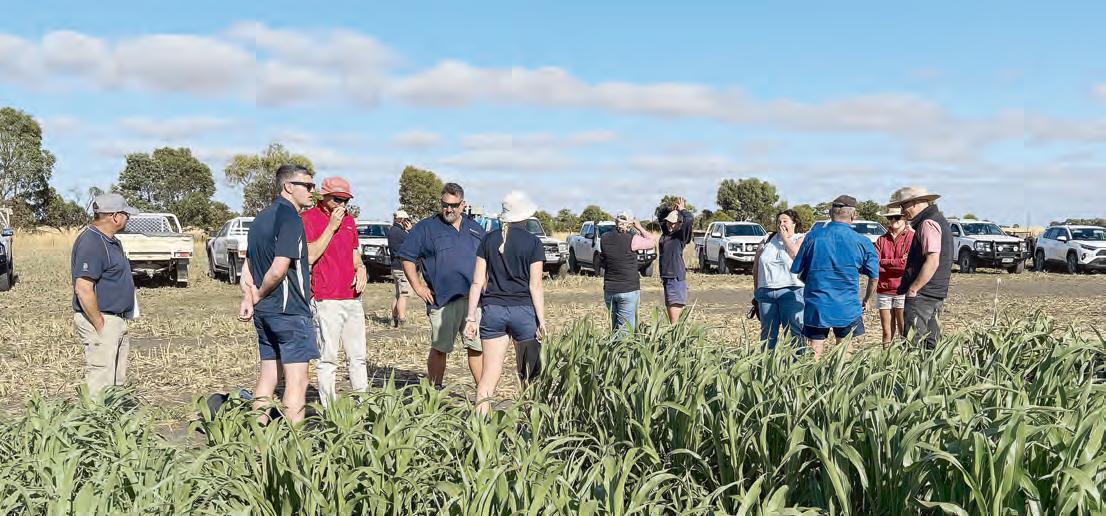
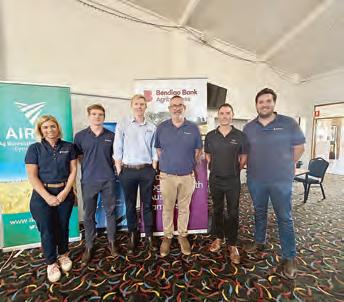
Mr Davis, who runs Crop Consulting Services, recently spoke at the annual Getting the Crop seminar hosted by Hart Field-Site Group in Clare.
The free event attracted growers and industry experts from across the region and focused on the key decisions and strategies required to successfully establish crops ahead of sowing.
The seminar provided research updates, practical industry insights and experiences from local growers, while also connecting farmers with experts in agronomy, finance and grain markets.
Held just weeks out from sowing, it offered a timely opportunity for growers to review cropping strategies and prepare paddocks for the coming season.
At the centre of Mr Davis’s presentation was the importance of crop sequencing, the planned rotation of crops across multiple seasons.
While advances in crop genetics and agronomy have improved the productivity of individual crops understanding how crops interact within a sequence remains crucial for whole-farm profitability.
“Crop rotation is one of the most powerful management tools farmers have,” he said.
“It’s not just about choosing the best crop for this season.
“It’s about understanding how each crop affects the next one and how the entire sequence performs over time.”
Crop sequencing plays a major role in improving soil health and fertility while helping to break cycles of pests and diseases that can develop in continuous monocropping systems.
Rotating crops can also improve soil structure and water use efficiency while providing valuable opportunities for weed management.
Mr Davis is involved in the $13.7 million, five year Farming Systems South project led by Dr Matthew Knowling, from the Adelaide University.
The project is jointly funded by Grains Research and Development Corporation (GRDC) and Adelaide University, and aims
to deliver new insights into the drivers of profitability and sustainability in southern cropping systems.
Established in 2023, the project includes nine field trials across South Australia and Victoria and was developed following consultation with farming systems groups, agronomists and growers.
Mr Davis said early findings from the research were already highlighting the value of diverse crop rotations.
“Ideal crop rotations depend on the individual business and the land and environment they operate in,” he said.
“The recent trial data from the project that Hart is part of has shown that while there are a number of profitable rotations, those that include a higher percentage of higher-value legumes are tending to perform strongly.”
Legume crops such as lentils, field peas and chickpeas can play an important role in farming systems by producing nitrogen in the soil, helping to reduce fertiliser requirements for following crops.
They can also help in breaking disease cycles that affect cereal crops such as wheat and barley.
However, Mr Davis said selecting the right rotation required growers to consider a range of factors beyond crop prices alone.
“You need to take into account things like weed control, stubble cover and the equip-
ment available on the farm,” he said.
“There are many reasons why farmers choose particular rotations, but what we are seeing so far is that systems incorporating higher-value legumes are often performing well.”
Alongside crop planning, Mr Davis said early pest management was another key factor growers should prioritise as they head into the new season.
While insect and mouse populations are currently relatively stable, snail numbers are becoming an increasing concern in some areas.
“Snails are becoming an issue in rotations including canola and that has been well known for a while,” he said.
“It’s important to actively manage them and consider baiting early, particularly where there has been a build-up in populations.”
Mr Davis said weeds and diseases were also continuing to emerge as challenges for many growers, and were beginning to be observed in the Hart Farming Systems trial.
“Crown rot is beginning to appear in some treatments, highlighting the importance of rotations that reduce disease pressure,” he said.
“Ryegrass hasn’t been a major issue yet, but we are starting to see more broadleaf weeds such as mustard, marshmallow
and thistles.
“These are increasing in a number of systems, particularly those dominated by legumes and canola.”
Mr Davis said thoughtful crop rotation remains one of the most effective ways to manage these pressures.
“This is why appropriate crop rotation is so important, particularly for weed management, as well as above-ground and root diseases,” he said.
“It can also play a role in reducing the impact of pests like snails.”
With soil moisture increasing in many areas following recent rainfall, growers were also being encouraged to remain vigilant for other potential threats.
Mr Davis said he would encourage farmers to start their autumn weed spraying programs now and to keep an eye out for insects and slugs as soil moisture increases.
Beyond paddock management, Mr Davis said global economic pressures were also creating uncertainty for the agricultural sector.
“Rising fertiliser costs are already placing pressure on farming systems, and geopolitical tensions could create further challenges for farmers in the future,” he said.
“There is more pressure on our farming systems at the moment for a range of reasons.
“The increase in fertiliser costs and the current situation with conflict involving the United States, Israel and Iran could potentially create further issues down the track.”
Mr Davis said such global factors highlighted the importance of resilient farming systems capable of adapting to changing conditions.
“There are concerns that farmers may eventually be pressured into systems with lower nutrient inputs depending on how global events unfold,” he said.
“That means we need to be thinking about different scenarios and preparing for situations that may be outside our control.”
While there may never be a single solution that guarantees success, Mr Davis believes growers already have a range of practical tools available to strengthen their farming systems.
“If we had a magical bullet that solved everything with crop rotations that would be ideal, but that’s unlikely,” he said.
“What we do have are a range of strategies farmers can use to improve profitability and sustainability, and crop sequencing is one of the most important.”
With sowing fast approaching, the message from agronomists is clear, careful planning and early action could make all the difference once the season begins.
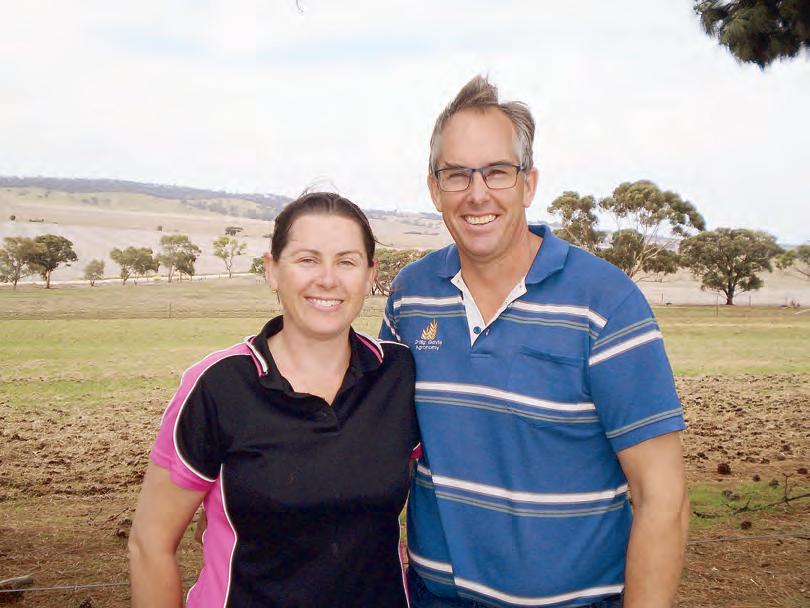
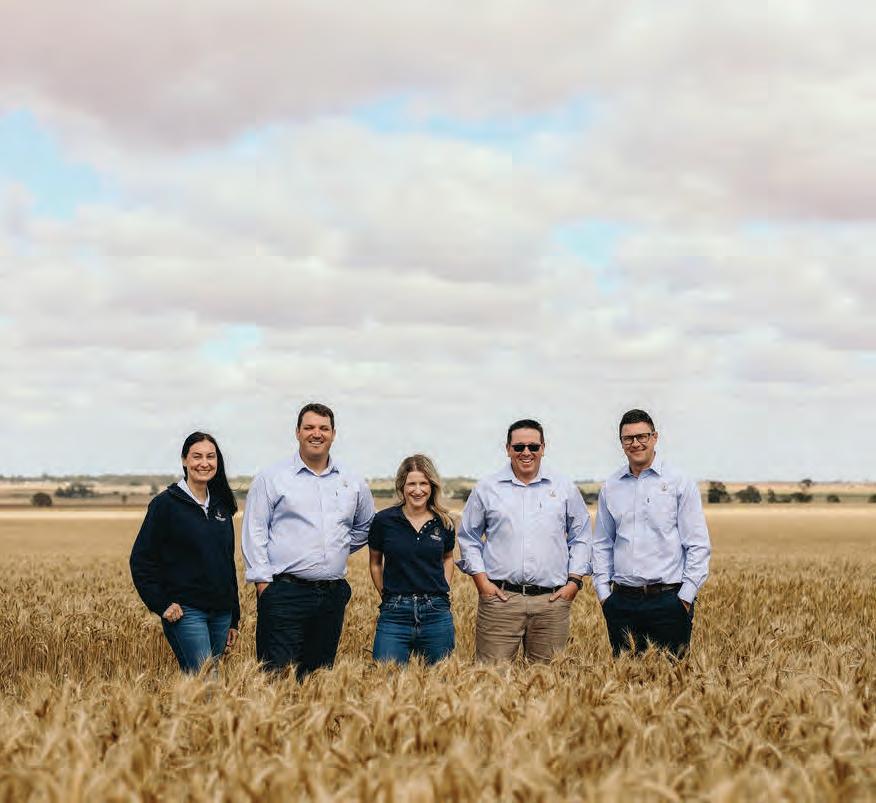
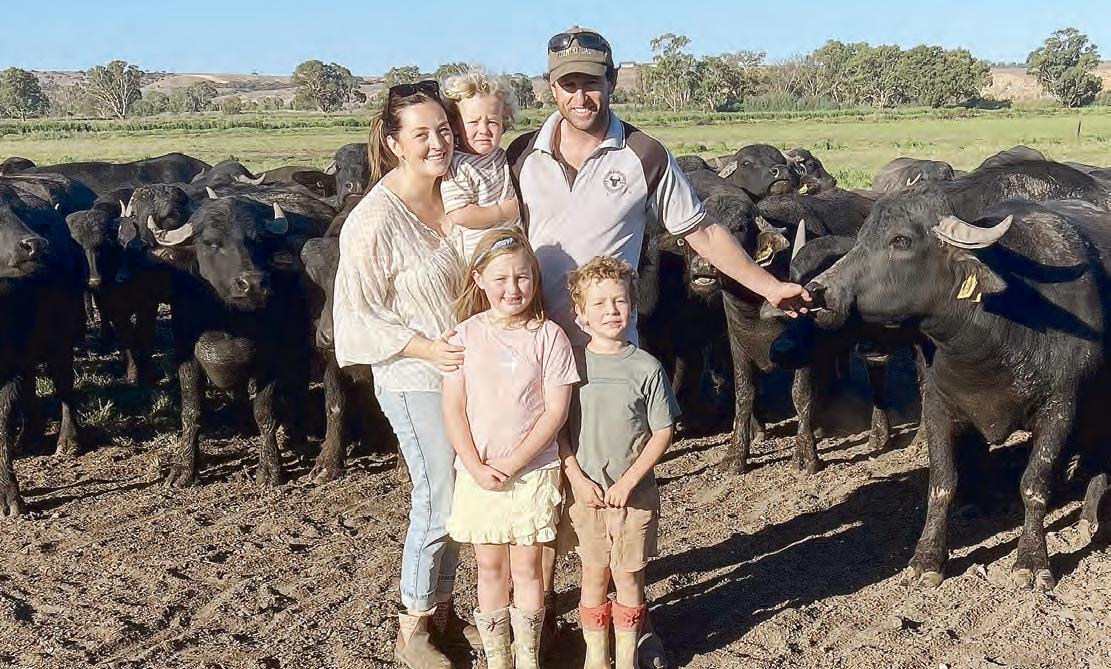
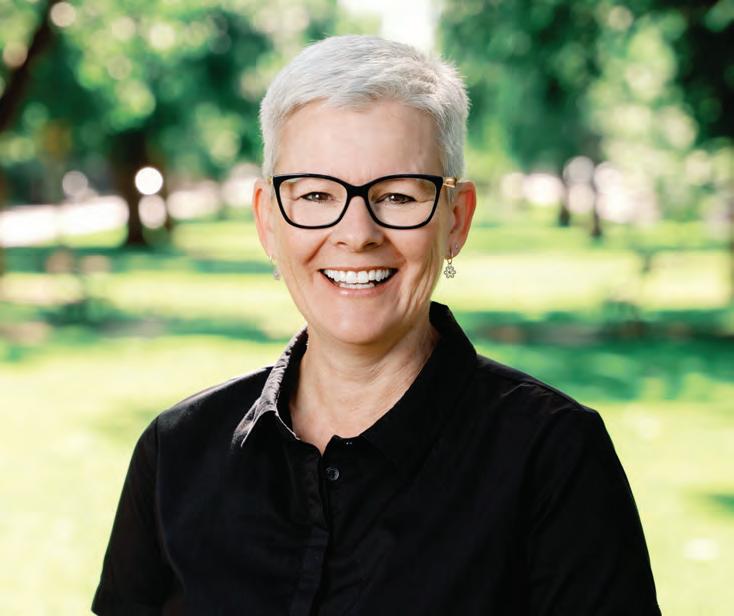
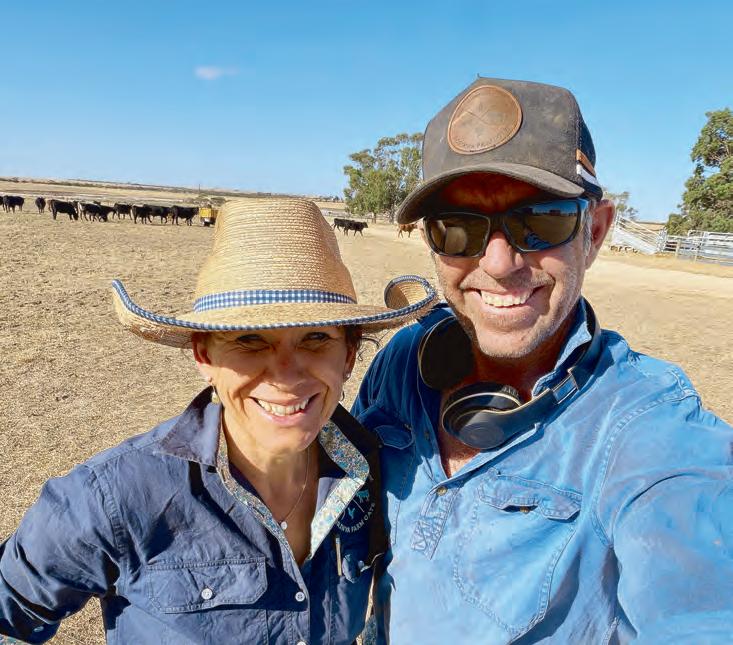
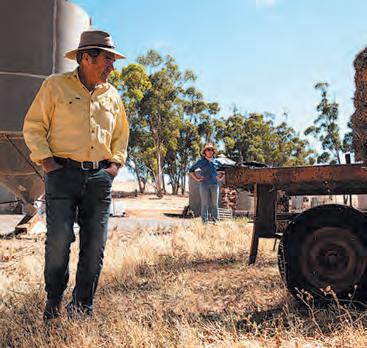
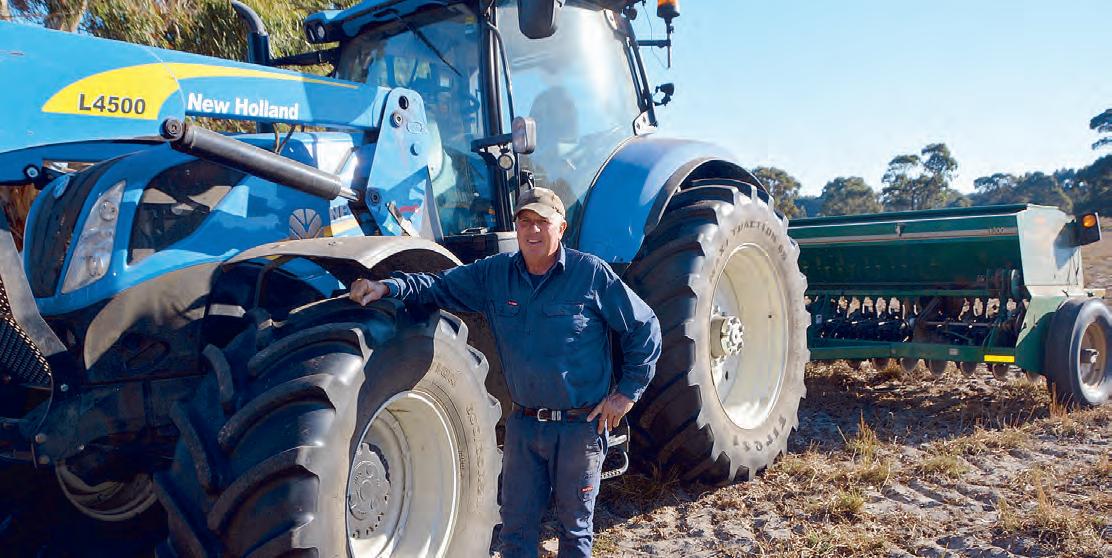
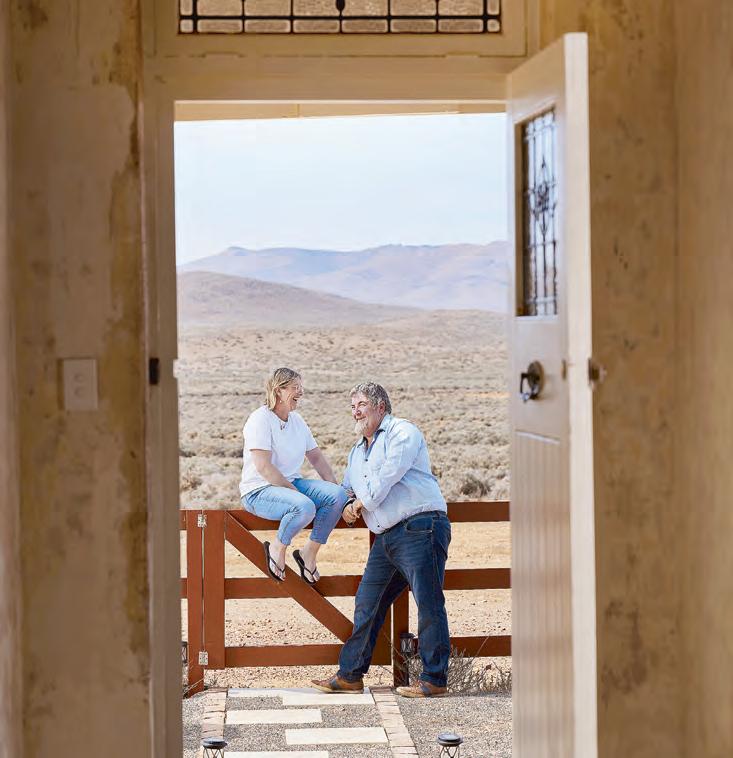
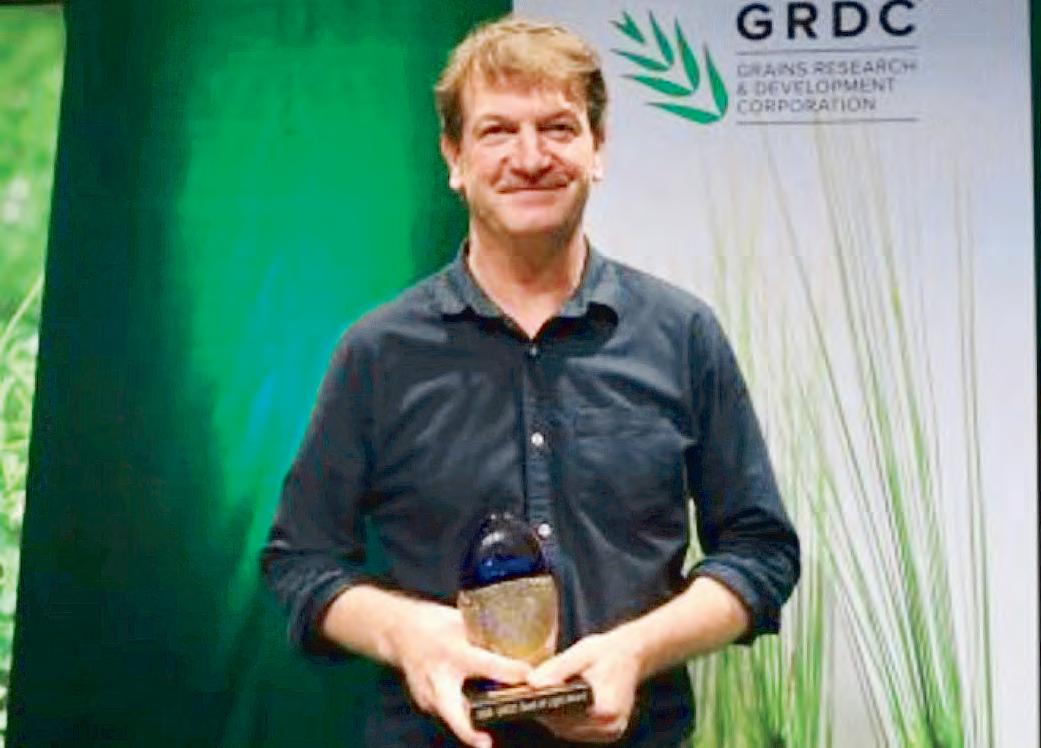
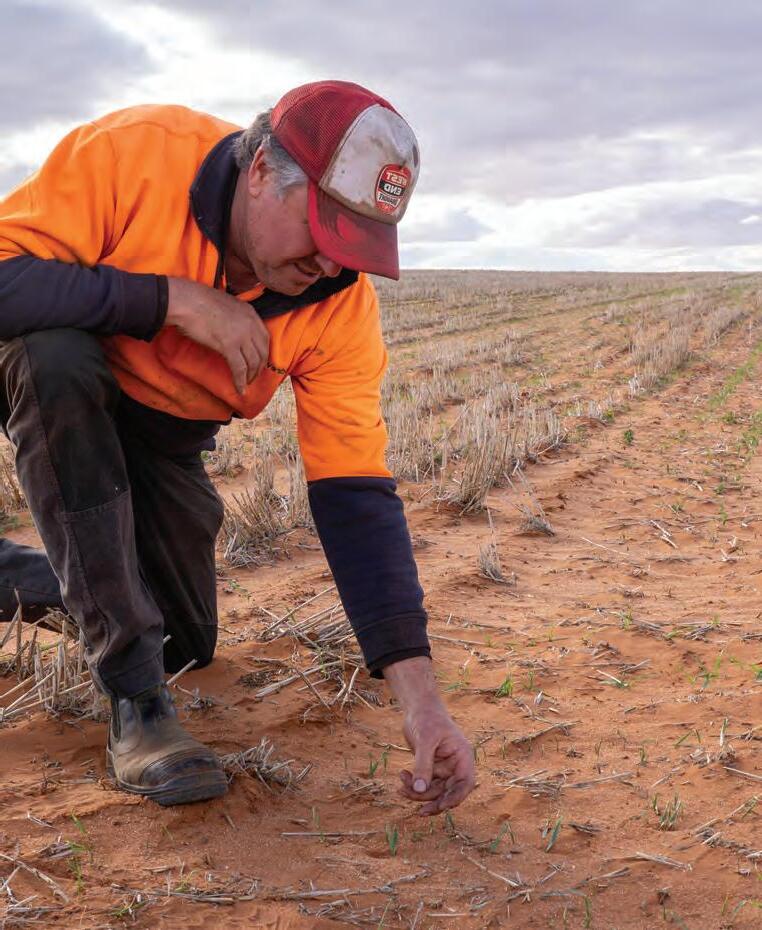
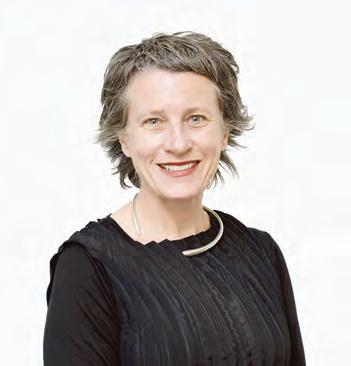
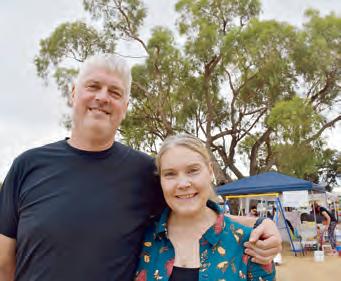
Craig David, pictured with his wife Melissa, has highlighted the importance of crop rotations leading into seeding. (File)
Working dogs, loving life
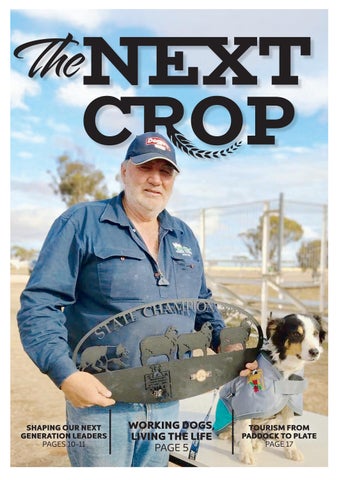
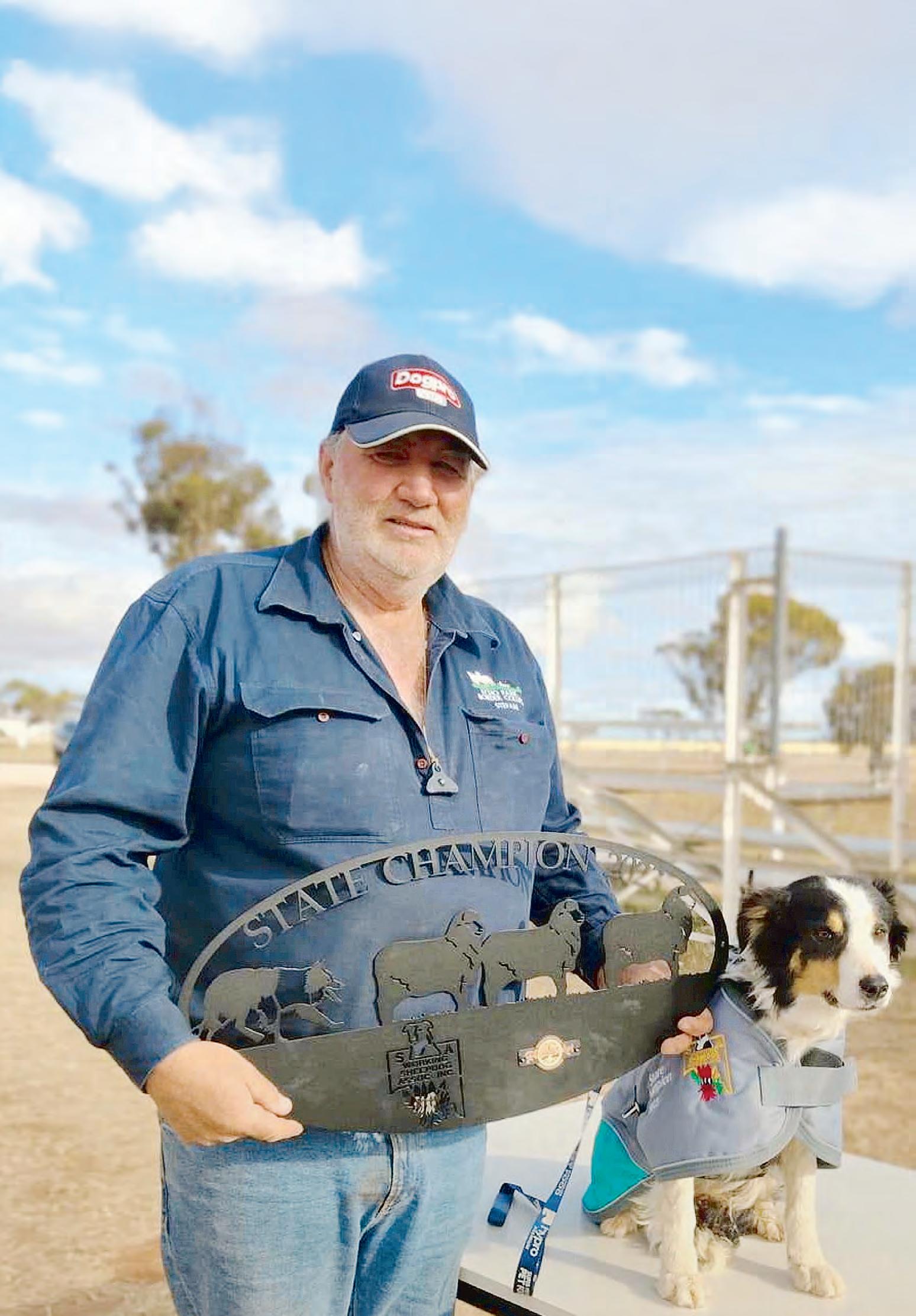
IN South Australia and nationally, there are few names which carry as much respect in sheepdog trialing circles as Strathalbyn farmer Stefan Cross, from Echo Park Stud.
Known for his incredible connection with his dogs and his calm demeanor, Mr Cross is a sheep and crop farmer who has built a reputation as one South Australia’s premier working dog handlers, earning success not just locally but on the global stage, where he’s even captained his country.
For Mr Cross, working with dogs isn’t just a profession or a sport but a way of life, and a love of dogs that he has had ever since growing up as a child on his family farm.
He has a deep passion for the craft and an unbreakable bond between handler and dog which has led to nearly 30 years in the game.
His record is quite staggering.
Eight times he has won SA Dog of the Year, represented Australia seven times and twice been captain of his country while competing in New Zealand, and represented his state on 14 occasions.
One of his most successful dogs, Border Collie bitch Echo Park Lady has won several national competitions, named state dog of the year a couple of times, was second in The Nationals and won the state champion trophy at The Nationals.
Mr Cross has trained and bred several champion dogs with Border Collies being his specialty as they were the main breed on the farm and were the best for trial work.
He currently has seven dogs on the property with a mixture of ages, with Echo Park Lady being one of the eldest and coming close to retirement while there are others that are younger and still learning.
Mr Cross said dogs had always been a big part of his life.
“We grew up on a farm and always had dogs when we were kids,” he said.
“We had sheep on the property and the dogs would round them up and they would always be Border Collies. “They were way better than any other breed when it came to being a farm dog.
“My brother got into dog trialling first and then I followed him … I started giving it a go in my late twenties.
“I got access to a bitch from trial bloodlines and started giving trialling a go with the Border Collies - it’s farm work during the week and trials on weekends for fun.
“I absolutely love it and it is good for your mental health to get away and spend time with like-minded people like shearers, farmers or jackaroos, they are all great people and especially some of the older ones.
“They have some of the best stories to tell.”
“
Dogs are amazing and what they can do is quite incredible, they can read sheep to perfection ...”
Mr Cross said breeding was another passion.
attribute,” he said.
“For example, there are some dogs that work for anyone but others like Echo Park Lady who will only work for me.
“A dog could have all the talent in the world but if they won’t take your commands and run a muck then you won’t get the best out of them.
“You need to be able to train the dogs and be firm but fair otherwise you won’t get the best out of them.
“Everyday there are challenges that you face, like a ram might be trying to get into the wrong paddock or there are sheep on the roads but we have seven border collies on the property and you couldn’t operate a farm without them.”
Mr Cross said he had a point of difference with the way that he trained his dogs.
“Most of the training of my dogs is done during farm work with trialling in mind which is different to the way others do it,” he said.
“Before the trials I spend a fair bit of time getting them tuned up and ready to compete.
Echo Park Lady finished third but Echo Park Mel won.
“I really enjoy the breeding and when you don’t have success with your dog but you see one of the dogs that you have bred win then that makes me happy,” he said.
“It is very satisfying and the nuts and bolts of breeding are interesting.
“If you don’t have success with one of your dogs but when you see a different dog that you have bred have success then that is almost just as good as winning.
“That happened recently at the Australian Championships in Victoria when my dog
“Mel was trained and worked by Mick Hudson from the television show Muster Dogs and to see one of your dogs have success is great.”
Mr Cross said one of the keys to being a successful dog handler was the relationship that people have with their dogs.
“The bond between human and dog needs to be good, and a dog’s temperament and their willingness to please and be obedient is probably better than any other physical
“It does depend on the dog and what faults they have but it works out well because I have dogs that can round up our sheep and they are getting good practice for what competition can be like as well.
“Dogs are amazing and what they can do is quite incredible, they can read sheep to perfection and their intuition is even better than humans.”
Mr Cross said that one of the hardest parts of being a handler was when the dogs get older and their body lets them down and they can’t do what is asked of them anymore, and when they pass away it is very hard as they are part of the family.
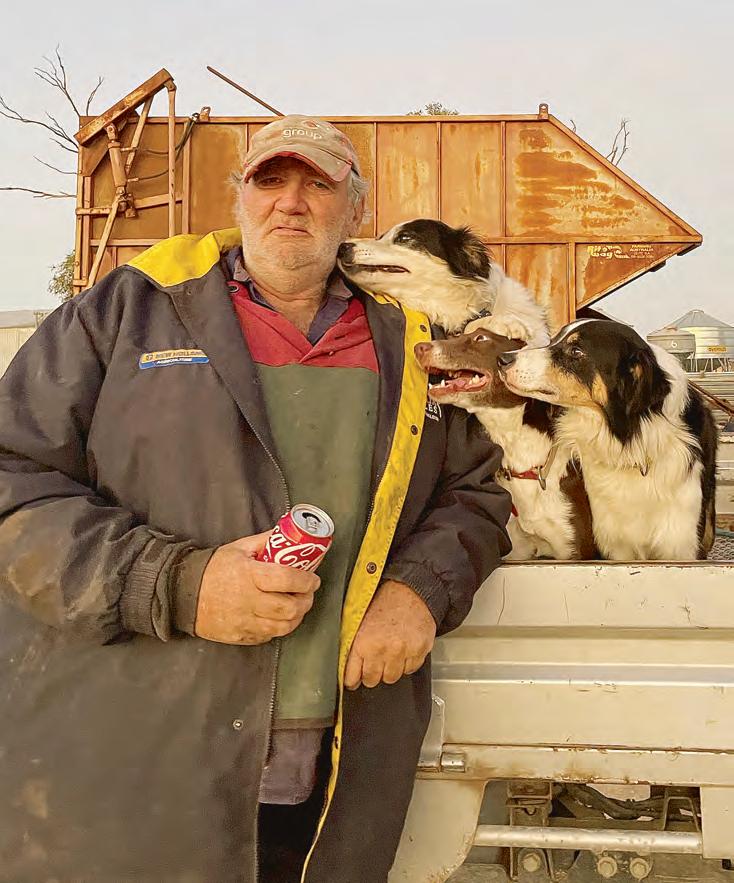
Stefan Cross with some of his dogs. (539277)
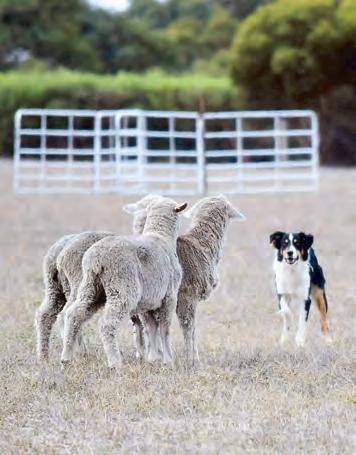
Echo Park Lady in action
Tasman trip grows vision
BY JASON IRVINE
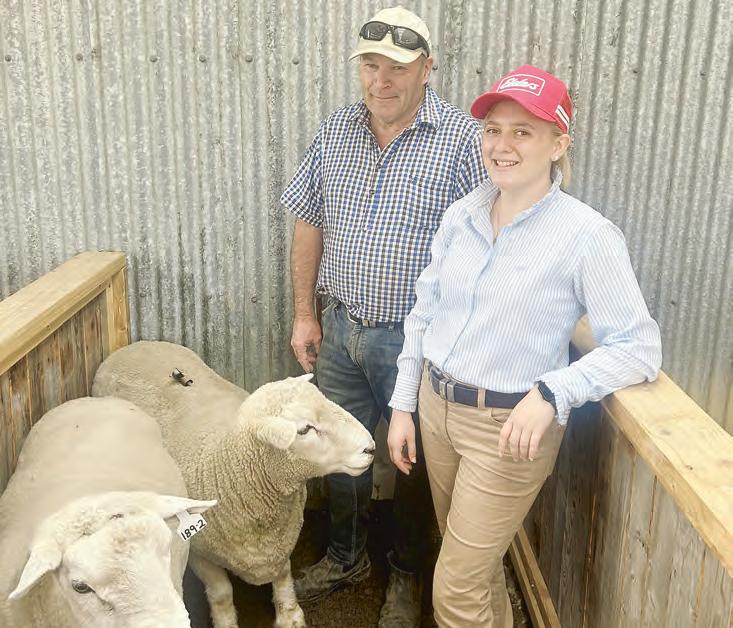
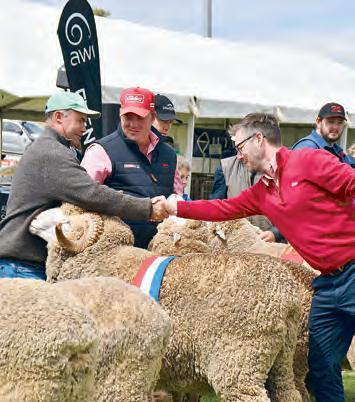
NINETEEN-YEAR-OLD sheep breeder Elsie Johnson’s two-week trip to New Zealand earlier this year has opened her eyes to a range of possibilities when it comes to the sheep industry back home.
Part of a prize for being named the highest achieving senior student and senior champion handler at the South Australian Sheep Expo, the study tour proved to be an enriching experience.
The sixth-generation farmer from Peake is determined to bring a range of fresh ideas to the farm her parents established nearly two decades ago, Carcuma North Poll Merinos.
“I had an awesome time and met some amazing people,” Ms Johnson said.
“It was a really great opportunity to see and learn more about each other, and to get a bit of a view outside of the Australian industry.”
Travelling to both the North and South islands, she visited saleyards, met local farmers, and saw how locals were interacting agriculture with tourism across the industry as a whole.
While seeing firsthand the subtle differences and similarities in the management of livestock and working to the conditions, Ms Johnson said the farmers’ mindsets left the strongest impression.
“One of my biggest takeaways was the mentality that if something’s wrong, to look at why - why is it wrong and how can you fix it?,” she said.
“To not be stuck in old ways and really think about how we can innovate and move forward so that when something goes wrong, we’re not just looking at it, taking it and moving on.
“Over there, they’re very conscious of looking at ways they can manage and meet those production performance values that they want and require.”
Back at Carcuma North, that approach fits seamlessly into the way Ms Johnson’s parents operate, and she hopes to one day carry that same energy into the business.
“I’d love to take over from Mum and Dad and continue to build on what they’ve done an awesome job at building,” she said.
“I was very much born into it and grew
“ It’s bred into me, working and being engaged in agriculture, it’s in my DNA and I can’t get rid of it.”
up with it, and it’s definitely something of a passion that I love and definitely want to continue on and help bring agriculture into the future.”
Ms Johnson said that visiting Merino breeder Simon Patterson in New Zealand sparked practical ideas that she was eager to explore at home, including the use of electronic identification (eID).
“Even though they’re not a requirement over there like they are here, Simon’s utilising eIDs for the management of their ewes and just tracking that data and information,” she said.
“I’d love to see us do more of that because we have obviously got the technology in place so I think just to build on that.
“Mum and Dad have always done a great job of thinking outside the square, but it’s definitely a perspective that I really want to carry on.
“It’s just about thinking outside of the box and not being afraid to do things in a nontraditional way because I think that’s how our industry keeps moving forward.
“That’s how we can continue to innovate, stay relevant, and provide the industry with what’s required of us so we can help support
the world with food and fibre.”
Coming to understand the balance between innovation and traditional methods when it comes to performance targets and breed integrity, Ms Johnson said it mirrors her own ambitions.
Currently, Ms Johnson is studying a Bachelor of Business, majoring in Marketing, which she hopes to use to play a role in marketing the industry in a way that connects with more people.
“I think it’s very important that we sell it in a way that is easy for people to understand what we’re doing and why we’re doing it,” she said.
“It’s something that will become really important to keep the industry ticking over, that image and awareness people have of what goes on in the industry and regional communities as well.”
With community remaining at the heart of her passion, raised through country shows and sheep competitions, Ms Johnson said building connections would be critical to agriculture’s future.
“I think at the end of the day, I love the community,” she said.
“I love the fact that we’re giving back, we’re providing something for someone to use, and we can have a positive impact on the environment and within the greater community as well.
“I love getting to develop things and watching Mum and Dad make decisions, seeing how they make those decisions and use their problem-solving skills to find a solution to any problems.
“It’s bred into me, working and being engaged in agriculture, it’s in my DNA and I can’t get rid of it.”
Ms Johnson also encouraged anyone interested in agriculture to get involved, with plenty of ways to contribute to an everchanging and evolving industry.
“So many people underestimate how many opportunities there are that aren’t just being involved directly on a farm,” she said.
“There’s a lot of opportunities for people to bring their skills and perspectives into the industry because everyone has different experiences, so bringing them together can help us develop.”
Farming is our future, not just our history
I have always believed that farming is more than just a job, it is a way of life.
However, lately, that way of life has faced immense threats.
From severe drought and spiralling costs to increasing red tape, the daily ‘cost of doing business’ is getting harder and eating alive the margins farming families rely on.
Yet I believe the future is bright, and my goal remains clear: returning Australia to its rightful place as a global agricultural superpower.
This mission is deeply personal. Between long drives and the legislative grind, I made it a priority to get back home to Bute for some of harvest 2025-26.
There is nothing like a hard day on the tools to clear the head. It reminds me exactly why I do what I do, keeping me grounded in the reality of the people I represent.
The 2025-26 harvest was a masterclass in resilience.
Despite a challenging start with low subsoil moisture and below-average annual rainfall, timely late-season rains and mild
spring temperatures rescued the 2025 agricultural season.
Total grain production reached a nearaverage 8.9 million tonnes, though mixed grain quality, November harvest delays and significantly lower market prices will constrain farm incomes to an estimated $3.1 billion farm-gate value.
The late moisture also spurred a pivot to hay production and significantly improved pasture and stubble cover, boosting livestock conditions compared to 2024, while requiring producers to carefully manage summer weeds, stocking rates and elevated fire risks.
I note that results are variable across the
state, not everyone was so lucky, and many will do it tough into 2026-27. Furthermore, lower-than-desirable global prices are impacting value.
Beyond the paddock, we need common sense in policy, which is why I voted against the government’s recent firearm changes, because responsible gun owners, and lawabiding farmers should not be penalised for the actions of extremists.
This bill is a distraction from addressing the radical Islamic ideology seen in events like Bondi.
We also need to talk about power. Families are being smashed by energy costs driven by emissions targets that do not stack up.
We must use reliable, traditional energy to lower costs and cut the bureaucratic mess slowing us down.
Agriculture is far more than a legacy of South Australia’s past; it is the engine of our future.
My goal is simple: to strip away the barriers and clear the path so our farmers can focus on what they do best, feed the world.
Tom Venning, Federal Grey MP
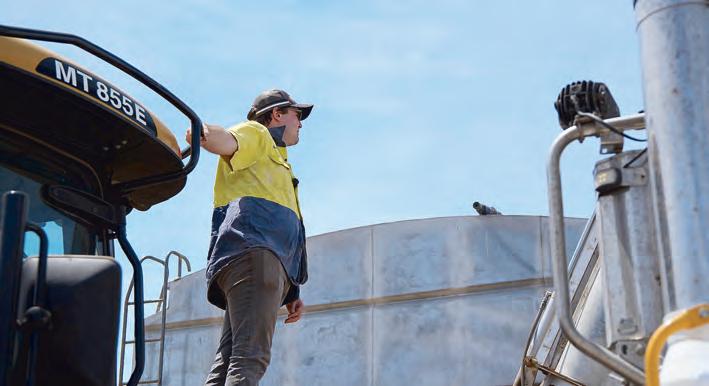
Tom Venning unloading a mother bin during harvest.
Elsie Johnson (right) was a judge at the Palmerston Show in New Zealand with John Dodd. (Supplied)
Great life of a dairy farmer
BY MICHAEL SIMMONS
YOU often hear of the doom and gloom of being a dairy farmer.
But the Hicks and Jacobs families of Mount Compass will not hear of that.
Running and milking 800, mainly Holstein, cows in their dairies and Angus cattle running on their properties, the two families are generational farmers that care for the now and the future.
In 2025, Perrin Hicks visited the United States, where the Mount Compass dairy farmer went as a nominee representing Hicks-Jacobs Dairies.
He was awarded the Oceania Eco$ at the Global Innovation Summit ST Genetics held in Texas.
The award was in recognition of the innovative dairy practices Hicks-Jacobs Dairies undertakes at Mount Compass.
“We are about sustainability - economically and environmentally,” Perrin said.
“For six years we have been genomic testing our dairy heifers and using the test results to boost efficiencies among our dairy herd.
“And we were fortunate to win the award in Texas for doing this.
“It is confirmation we are doing the right thing.”
Perrin has been farming for 30 years, and in partnership with Warren Jacobs for the past 12.
“This partnership has worked for both of us and both families are heavily involved,” Perrin said.
It is a family affair with Perrin’s wife Kelly, sons Jack and Nathan, Warren’s wife Jane and son Asher and his wife Jenny working in
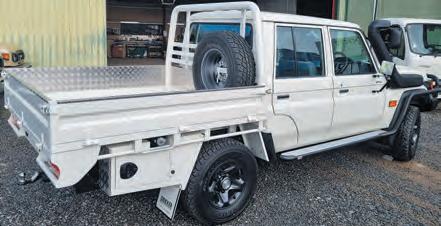
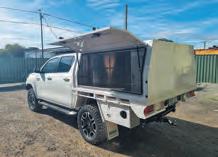
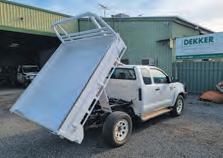
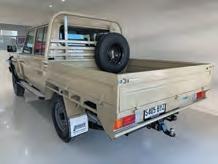
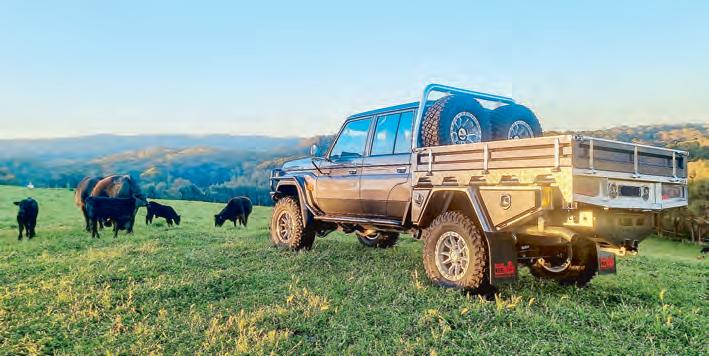
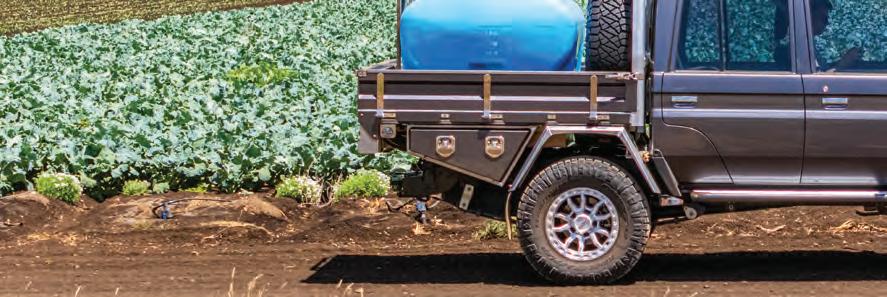
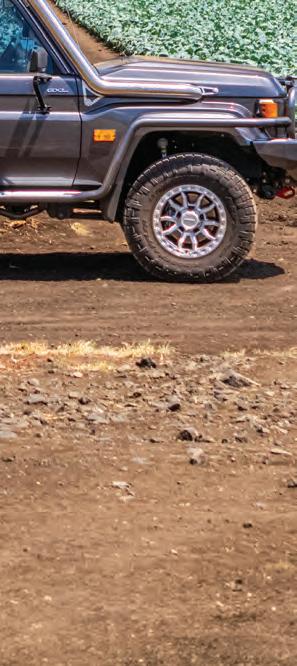
Standard Tray Features Include:
•Trays specifically built to suit individual make and model
•Checkerplate floorsweep out floor
•Large colour coded mudgaurds & mudflaps
•Heavy duty steel sides (reinforced with RHS tube on the top edge & ends)
•Heavy Duty RHS rectangular front load rack is standard, other pipe and tapered options available
•Trays are sandblasted, zinc treated & coated to your preferred finish
Proudly South Australian since 1965
Specialising in Heavy Duty All Steel Trays, Wood Floor Trays, Tipping Trays, Toolboxes, Underbody Slide Out Drawer & many more extra’s
•Sides are 260mm high (310mm from floor), made from zincanneal sheet
•Welded frame, floor and dropsides
•One spare tyre bracket (LC79 only)
•Tie rails located along sides and rear of tray
•2 x Aerial/Spot light mounts
•Bushed hinges
•Tail light protectors
•Dog tie
the business.
“The kids are part of this and it is great and rewarding,” Perrin said.
“In the dairy industry you always have to be aware of your costs of production and the more efficient you can be, the better the profit for your business.
“I never used to be too concerned about the breeding of the cows, but now after genomic testing 2000 cows and seeing the results, it has now become a passion.”
To Perrin, life could not be better and sees a bright future for the dairy industry and his patch of heaven at Mount Compass.
“It is a great place to work and with the kids involved it makes it even better,” he said.
As much as farming can produce a great lifestyle, it has its demons.
In January, 2026, the surrounds of Mount Compass at Nangkita and Tooperang were at the mercy of fires with more than 640 hectares destroyed.
Perrin said his property was impacted with more than 60 hectares of farmland burnt.
“Fortunately no stock was lost, but it destroyed fencing and parts of the property,” Perrin said.
“In times like these you see first hand the resilience of the farming community and the support you receive from emergency services.
“We were luckier than some with the fires, as one property near Mount Compass has only five acres left to farm.
“The rest was blackened.
“As farmers we bounce back, it is what we do.”
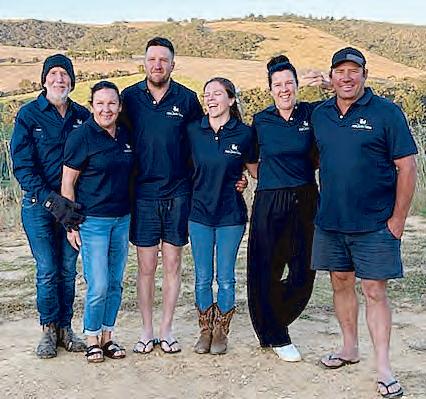
All the partners of Hicks-Jacobs Dairies, Warren and Jane Jacobs, Asher and Jenny Jacobs, Kelly and Perrin Hicks.
On-farm genetic workshops
THE Kangaroo Island Landscape Board, in partnership with Agriculture Kangaroo Island, invited sheep producers to attend a free, practical on-farm workshop focused on using genetics, breeding tools and electronic identification (eID) to improve productivity, animal performance and long-term sustainability.
The workshop, held at Ella Matta Pastoral on February 13, was tailored specifically to KI sheep production systems.
A carbon and emissions perspective was embedded throughout the day by Jim Meckiff, with Kangaroo Island Landscape Board carbon outreach officer Alex Comino also available as point of contact for primary producers on KI who are interested to learn about carbon farming.
The day combined short classroom-style sessions with hands-on demonstrations in the yards, using live animals to link genetic data with real-world performance.
Genetics specialist James Meckiff (JM Livestock) led the workshop, guiding producers through how to use Australian Sheep Breeding Values (ASBVs) and selection indexes to select rams and make better breeding decisions suited to KI conditions.
“Using ASBVs and a selection of young rams from Ella Matta, we will look at what the numbers mean and what they represent to a sheep enterprise,” Jim said.
“We’ll take a close look at the link between genetics, production, efficiency and overall carbon footprint on farm enterprises, and the tools producers have available to better understand greenhouse
gas emissions.
“This is about beginning to benchmark enterprises for genetics, production and emissions, and identifying where
refinements can be made to improve efficiency and reduce emissions on farm.”
A live animal demonstration at Ella Matta Stud would allow producers to compare
sheep with different ASBVs and indexes in the yards, linking visual assessment directly back to breeding data and enterprise goals.
The workshop also featured an eID in practice session delivered by Jonathan England and Tim Prance, as part of a PIRSA and MLA project delivered through Agriculture Kangaroo Island.
This session demonstrated how eID can be used on farm to record data, track animal performance and support better breeding and management decisions.
Ella Matta pastoral manager Jamie Heinrich said eID’s were mandatory, so farmers might as well make the most of them.
“We have been using eID in our stud for many years and I couldn’t imagine doing all the recording we do without them,” Jamie said.
“It’s only been recently that we have started using eID in our commercial sheep.
“We are still finding our way with what makes sense to get the best value for effort, while keeping it as simple and easy as possible.”
Jamie said ASBVs and performance recording have been core to his family’s stud for well over 25 years.
“It’s hard to improve something without measuring it, and ASBVs take the management/environmental influences out of all our records so we can focus in on the genetics,” he said.
“With today’s high costs and market prices, making the most out of every sheep is as important as ever, and the best benchmarked genetics is how to do that.”
The team from Ella Matta Pastoral - Jamie Heinrich with Oscar Gibson, Aphid Heinrich and Stephen Warena - shared insights at the workshop.
Field Days milestone year
BY LIAM WORMALD
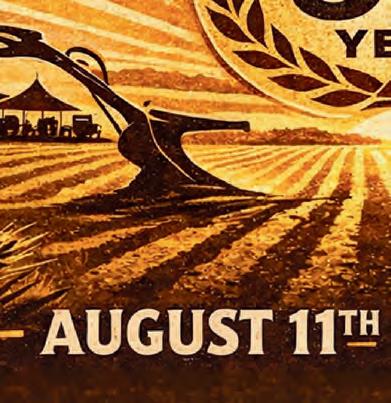
THE 2026 Eyre Peninsula Field Days in Cleve will be extra special this year as the event celebrates 50 years.
Held at the EP Field Days site, the event - running from Tuesday 11 August to Thursday 13 August - will be one to remember with lots of exhibits and activities for people of all ages to enjoy.
Field day president Phill Elleway said he was looking forward to celebrating a halfcentury of agricultural excellence.
“It’s wonderful that it’s been going this long and is still going, and bringing new technology to the farming industry in the Eyre Peninsula,” he said.
Mr Elleway said the opportunity for farmers in the region to head along to the event on Eyre Peninsula was a major positive, as they would otherwise have to travel long distances.
“It’s so hard to see things when a lot of stuff is interstate or even overseas,” he said.
“The Eyre Peninsula Field Days give people a unique opportunity to see things locally, such as new technology and farming systems.
“It also gives people the chance to talk to dealers and manufacturers and it’s really give and take, as they’re learning off us and we’re learning off them.”
With Cleve being almost six hours from Adelaide and even further from other field days events, Mr Elleway said it was great to be able to offer such an event on Eyre Peninsula.
Eyre Peninsula Field Days is put together each year by a number of community-minded volunteers.
“A lot of people have put a lot of time and effort into the event, while also balancing their other jobs,” Mr Elleway said.
Looking back on 50 years, Mr Elleway said there were challenges to keep Eyre Peninsula Field Days going, most recently in 2020 when the event was cancelled due to COVID.
“There would have been a lot of challenges over the past 50 years, my father Eddie was a past president and I grew up around the event as a kid, but I only recently became involved again at the previous field days,” he said.
“I can remember being involved in some things though like the building of the roads, putting power underground, getting water, putting toilet blocks in and that’s all happened from a clear block of land when it first started.”
Given both his parents were involved in the organising of the field days, Mr Elleway noted he had very vivid memories of going to the event as a child.
“As a kid seeing the displays and incredible new equipment was unbelievable, as it was stuff that you wouldn’t see in the district normally,” he said.
“You would see the equipment at the field days and then a year or two later you would see the equipment in people’s paddocks, which is amazing and that still happens today.
An example of just how far the technology has come since the field days started has been the driverless tractors and spraying drones.
“When I was kid that would have blown people away, but now it’s just standard practice.”
As well as allowing people to see new equipment, Mr Elleway said the Eyre Peninsula Field Days were also a great opportunity for people across the country to socialise.
“Not just for the people in South Australia but also people interstate,” he said.
“It’s a good opportunity to catch up and meet face-to-face, which is a pretty wonderful thing to do and something not a lot of people do these days.”
This year there will be a Dog Trial Championship, which is sure to entertain.
“We did have dog trials at the last field days, but it was just a demonstration and this year it will actually be a championship round,” he said.
“We are also going to have two of the tractors that were at the first field days at the grounds this year.”
Along with the Dog Trial Championship
“It’s wonderful that it’s been going this long ... and bringing new technology to the farming industry”
and vintage tractors, Mr Elleway said a new addition to the program is Made on Eyre, showcasing local produce and things made on Eyre Peninsula.
Like past years the latest and greatest equipment will also be present.
“There will be the latest farming technology and obviously it’s changing every day,”
Mr Elleway said.
“What we saw six months ago is different to what we see today and to be able to see
that has been quite amazing.
“Even the livestock industry is changing, there’s different breeds of livestock and different handling systems around now which certainly weren’t around 50 years ago and they’ll all be on display at the field days this year.”
Mr Elleway said he was excited for the 2026 Eyre Peninsula Field Days and could not wait to see people from throughout the country go along to check out the latest ag technology and eye-catching exhibits.
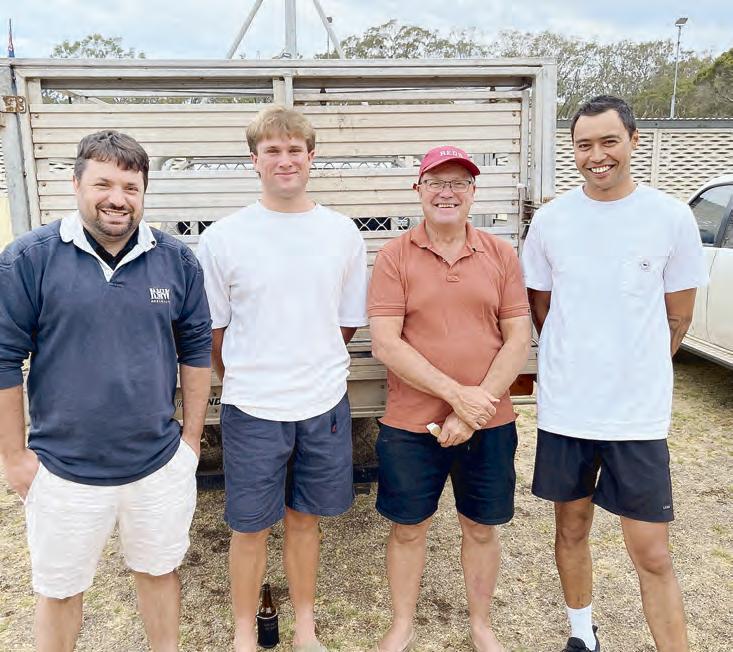
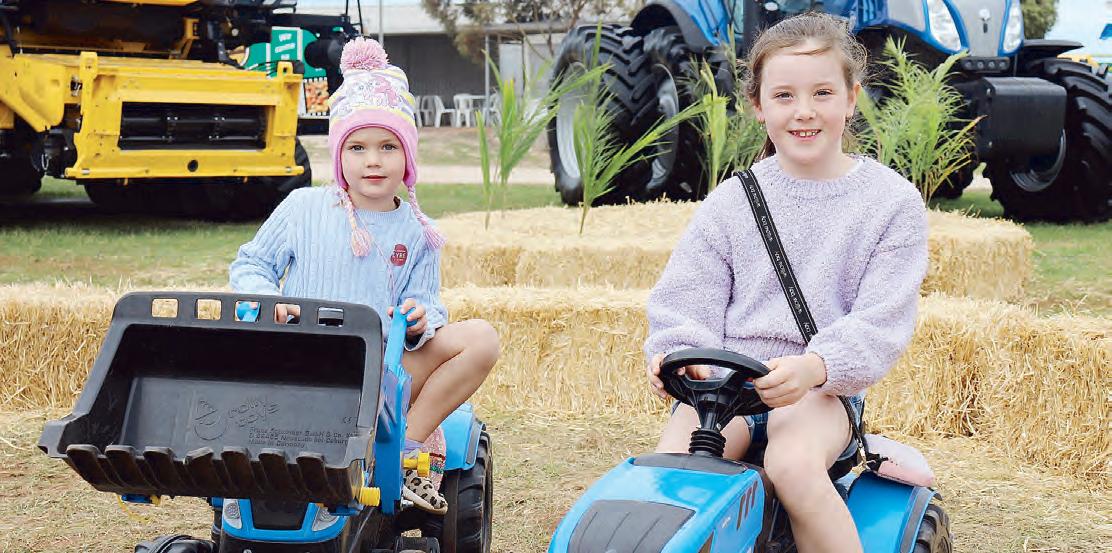
Everly and Hadley Cave of Tumby Bay at Eyre Peninsula Field Days. (File)
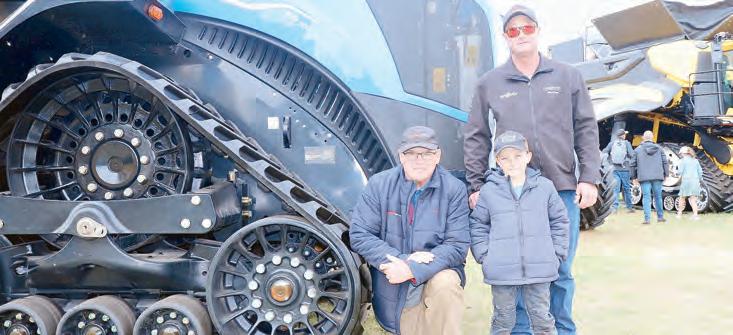
Minnipa’s Robert Kawaterski with Isaac and Joel Lynch from Poochera.
Family farm legacy grows as
BY KAITLYN GIBBONS
ON a property near Salt Creek in the state’s Coorong region, where wide open country meets the enduring realities of South Australia’s changing seasons, 28-year-old Allie Brinkworth is shaping the next chapter of her family’s farming story.
Ms Brinkworth represents the third generation of her family to work the land.
What began with modest beginnings has grown into a multi-holding enterprise - and today, she plays a central role in its future direction.
Ms Brinkworth said the family’s farming journey began with her grandfather and had continued to expand across generations.
“My Grandpa, he started with chickens and pigs and slowly grew himself up,” she said.
“He’s now passed away so my father, uncle and my aunty [inherited land] and spread that out so I’m currently working for my uncle at the moment.
“I have worked for other people as well.
“I’m a farm manager and I’m currently breeding black cattle and merino sheep and breeding the rams for my uncle’s sheep program.”
After finishing school, Ms Brinkworth worked as an outdoor education instructor, spending several years running school camps.
“I worked on school camps when I finished school, I was an outdoor-ed instructor for a few years,” she said.
“I worked for Prince Alfred College and
“ That’s what leadership really is, being the best version of yourself that you possibly can be and then being able to help others as well ”
Westminster School in Adelaide for a while and then I came home for some family health.
SHEDS THAT WORK AS HARD AS YOU DO
At ShedEx Fleurieu, we design and construct custom steel sheds for South Australian primary producers. From machinery and header storage to grain, livestock, and workshops, every shed is engineered for real farm use. We handle design, approvals, engineering, and construction using Australian BlueScope and COLORBOND steel.
Just sheds built once, built right.
farm, Ms Brinkworth has actively sought opportunities to strengthen her leadership capacity.
“A few years ago Australia Wool Innovation, AWI, did a breeding leadership program which is just a one week quick program and they do it in Clare and I had a sheep classer nominate me for that,” she said.
“He said ‘you should apply for it’ and I got a lot from it and since then I’ve been looking for something more in depth so I found WoTL.”
Ms Brinkworth said she was first introduced to Women Together Learning (WoTL) through a course in the region.
“They did a ‘Tools for a Tough Season’ course in Keith and I really liked that, it was all about mental health because we’ve been in drought for three years and that’s how I learned about WoTL,” she said.
“My Dad farms lucerne and I didn’t quite like the tractor work so I thought I’ll have a go at the livestock side of things.”
From there, she built experience across multiple roles within the industry.
“I worked for Thomas Foods at Tintinara in the feedlot and I’ve worked for a few other farm outfits from station hand to overseer,” she said.
“Then I saw that there was a position available with my uncle and I thought that’d be a good step up for me.
“It’s progressed from a small holding to I’m now looking after three holdings and managing the ram breeding program for him as well.”
Alongside expanding responsibilities on-
“I did a little bit of Facebook stalking and found their program and there’s a few ladies in the district who’ve seen it as well.
“Just through a few conversations, I thought I’ll apply for it and I was not expecting to get it at all.
“I’m very thrilled that I’m in it … we’ve done a two day workshop so far and I’m loving it.
“I am feeling good, obviously it’s only early days so I’ve got lots to look forward to.”
Ms Brinkworth is one of 18 women from across regional South Australia selected for the 2026 Stepping into Leadership Program, sponsored by the Department of Primary Industries and Regions (PIRSA) and delivered by WoTL.
CONTINUED PAGE 11
Varroa mite cases continue to spread
SOUTH Australian beekeepers have been on high alert after varroa mite detections were confirmed across several regions of the state over the past few months.
The first detection occurred in September 2025 at Pooginook in the Riverland, with all impacted hives subsequently moved interstate by their owner in line with permit conditions.
On 20 November last year, new detections emerged in the Limestone Coast near Salt Creek and further detections were confirmed on 26 November at Taratap on the Limestone Coast and Sellicks Hill in the upper Fleurieu Peninsula.
Additional confirmed detections have included Aldinga, Aldinga Beach, Sellicks Hill, and Waitpinga on the Fleurieu Peninsula; Birdwood, Paechtown, and Woodside in the Adelaide Hills; and Coombe, Hundred of Lewis, near Tintinara, Salt Creek, and Taratap in the Limestone Coast.
There is also surveillance at numerous sites across South Australia, including Baroota, Port Davis, Murtho, Alldendale and Birdwood.
Department of Primary Industries and
Regions (PIRSA) continues to work closely with affected beekeepers to undertake surveillance at linked sites, with additional sampling and tracing to determine the full extent of the incursion.
PIRSA urges all beekeepers who have had hives within 25km of detection sites since mid-August, or plan to place hives in the area, to shorten their monitoring intervals to every three to four weeks.
PIRSA also provides monthly update and information webinars for South Australian beekeepers and has biosecurity resources such as the Australian Honey Bee Industry Biosecurity Code of Practice and the Bee Biosecurity Manual, all of which are available on its website.
The National Varroa Mite Management Program (NVMMP) is supporting the response, focusing on maintaining business continuity for pollination-dependent industries, training beekeepers, and providing guidance on monitoring and reporting requirements.
Beekeepers who suspect varroa mite should contact the PIRSA Biosecurity Apiary Unit or phone the Exotic Plant Pest Hotline on 1800 084 881.
(Sarah Damen on Unsplash: 534597)
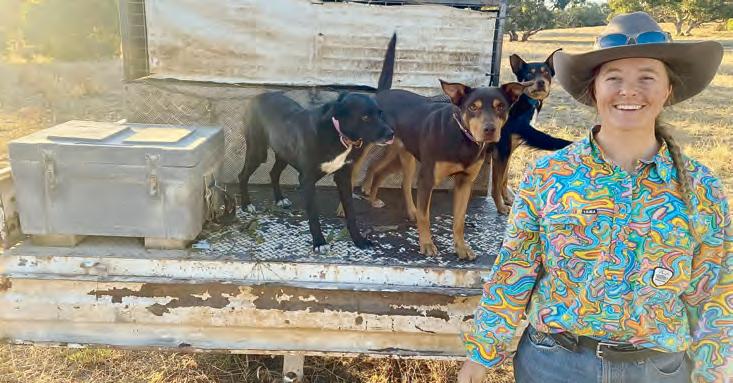
Allie Brinkworth on her family’s Salt Creek property with her dogs. (Supplied)
next generation takes lead
From page 10
The eight-month program includes faceto-face professional development, individual coaching, mentoring and webinars.
Since its inception more than a decade ago, more than 170 women have stepped into leadership roles across agriculture and regional communities.
Through WoTL, Ms Brinkworth hopes to build the confidence to step beyond the farm gate.
“WoTL does a personalised mentorship program and I think it makes it really individual to you and what you’re doing, the type of job you have and your role,” she said.
“There’s been past participants that have been in roles of state and national boards and committees and then it gives you the confidence to be a part of your community boards and step up in your farming businesses so that you’re not just a silent help.
“I think that’s how it will help regional communities in Australia.”
Ms Brinkworth said being a leader was different for everyone.
“Leadership is very personalised, everyone’s different in how they communicate with people so I’m hoping to learn a bit more about myself and how I can lead staff and create a positive work environment,” she said.
“I like to teach new skills, giving the younger generation an opportunity or somewhere to start.
“There is a staff shortage and it’s harder and harder for people to want to leave cities and come out into a rural environment.
“I want to be able to encourage people to want to be in the ag industry.”
Ms Brinkworth said her motivation was shaped by lived experience, particularly through challenging seasons.
“I’m in a very much more fortunate position than I have been during the last two years,” she said.
“We definitely had two really, really bad recent years but this year I’m not feeding out currently, I’m lucky enough to have a little bit of feed.
“For me this year, all my management practices that I put into play last year have helped me get where I am here.
“I know that a lot of people around the state are not in the same boat.”
Ms Brinkworth said her advice to others considering leadership opportunities was simple.
“Give it a go, what are you going to lose?,” she said.
“I think if you go and have a positive outlook on it, there’s always something to learn and you always want to be your better self.
“That’s what leadership really is, being the best version of yourself that you possibly can be and then being able to help others as well.”
Ms Brinkworth joins fellow 2026 Stepping
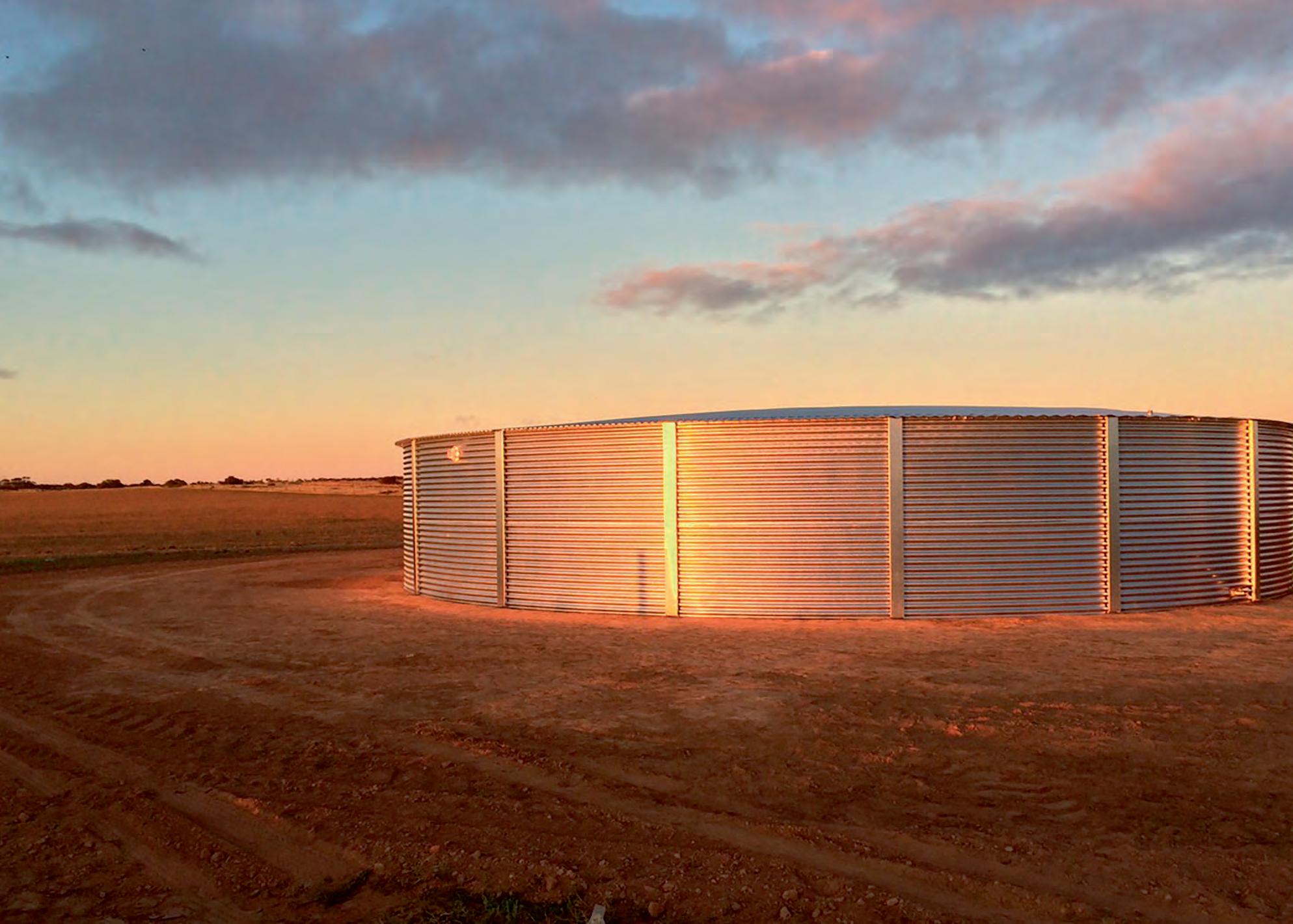
Tried and tested range of large rural built onsite Elix Liner Tanks
into Leadership participants Alex Stratford from the Lower Eyre Peninsula; Arabella Hinge, Sarah Novy and Heidi Boyd from the Limestone Coast; Kylie Matthewson and Ella Lindner from the Murraylands; Shannon Logan, Krystal Oates and Charlotte Poker from Adelaide; Bianca Agenbag from the Barossa Valley; Bonnie Armour from the Adelaide Hills; Bryony Tucker from Barossa and Light; Cathy Paterson from the Upper Eyre Peninsula; Demi Taylor from the Riverland; Jessica Henderson from the Mid North; and Rachel Trengove from Clare Valley.
The cohort will graduate in September 2026.
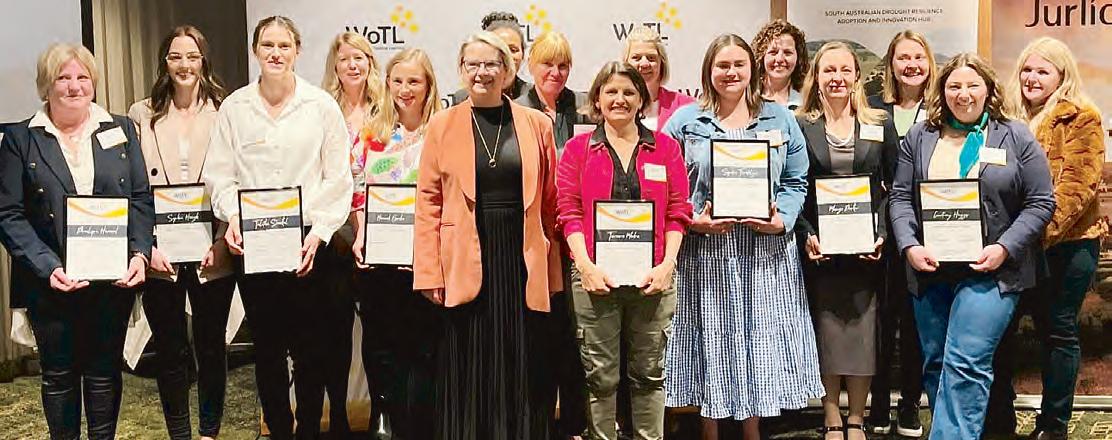
Minister for Primary Industries and Regional Development Clare Scriven with previous Stepping Into Leadership participants.
Eco feed wins global prize
CH4 Global has claimed two major international honours in the United States, cementing its place among the world’s leading sustainability innovators for its work slashing livestock methane emissions.
The recognition shines a spotlight on the company’s operations on the Eyre Peninsula, where it is cultivating seaweed to tackle one of agriculture’s biggest climate challenges.
The company’s proprietary Methane Tamer feed supplement, which can cut methane emissions from cows by up to 90 per cent, was recognised at the Sustainability, Environmental Achievement and Leadership (SEAL) Awards.
The awards celebrate the most sustainable companies globally, the most impactful environmental initiatives and innovative products, while also funding research and environmental impact campaigns.
CH4 Global secured the SEAL Environmental Initiative Award for its role in reducing global methane emissions as well as the SEAL Sustainable Product Award for Methane Tamer.
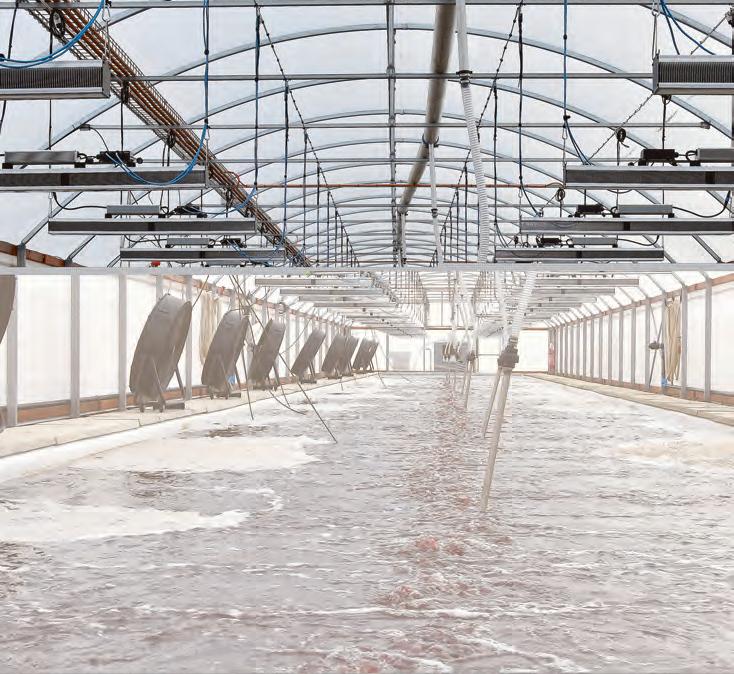
The environmental award recognised the company’s efforts in establishing the world’s first EcoPark on the Eyre Peninsula, where it cultivates Asparagopsis seaweed at scale.
Once dried and formulated into Methane Tamer and fed to cattle, the seaweed significantly reduces methane produced during digestion.
When included at just 0.5 per cent of a cow’s daily feed mix, the additive can re-
The 50 metre ponds of Asparagopsis at Louth Bay which are harvested to create an award-winning product. (474561)
duce enteric methane emissions by up to 90 per cent.
The Sustainable Product Award high-
livestock emissions.
Other companies honoured at the 2026 SEAL Awards included British Airways, General Motors, Lenovo, Hitachi Energy and Wolters Kluwer.
CH4 Global founder Steve Meller said the recognition reflected years of work building a new seaweed industry in South Australia aimed at addressing greenhouse gas emissions worldwide.
“It’s rewarding to be recognised for our efforts to bend the climate curve, alongside other major international organisations taking steps to change, whether it be embedding circular economy principles into their activities, recycling plastics, reducing carbon footprints or building living sea walls,” Mr Meller said.
“By growing and drying Asparagopsis, which is native to southern Australian waters, we’re providing farmers with an opportunity to feed their cows a natural seaweed which has an impact on their emissions.
“Farmers are feeling better about reducing methane emissions, their cows are thriving, and they’ve been able to create a new market for consumers wanting to purchase and consume methane-reduced beef.”
lights innovative products designed for a sustainable future, with Methane Tamer acknowledged as “purpose built” to tackle
Beef from cattle fed the supplement is already available through some South Australian butchers and restaurants, with a supermarket chain set to follow.
Family farm reawakening
AT the heart of South Australia’s lush Murray River plains there is a story of grit, determination and innovation centred around a third-generation dairy farmer.
The farmer is Corey Jones, the founder and driving force behind the South Australian Buffalo Company which he and his wife established in 2014 on the family’s property in Mypolonga, the town where he grew up.
Mr Jones’ grandfather purchased the property in the early 1950s and established a dairy farm, his parents took over the farm in the early 1980s and Corey’s childhood was spent riding quadbikes and milking cows with his two sisters.
He always had a fascination for cows and was in the dairy before and after school - he thought he would spend his entire life on the dairy.
Tragically in the 2000’s drought hit the Jones family hard and his parents decided to cease milking and sell the cattle.
Corey, who was 13 at the time, thought he would never see the river full again as they could not irrigate the pastures.
They were some dark times.
Despite the setback Corey still had the passion for working with dairy cattle and worked for other local dairies and a goat farmer, Anders Oksbjerg, who he would connect with again later in life.
At the age of 17, he decided to move to Adelaide to chase his dream of playing AFL.
He played football for Sturt Football Club in the SANFL and played a handful of league games.
During that time, he began an apprenticeship as a carpenter.
It was there where he met the love of his life, Mollie, who was a city girl.
While he enjoyed his role as a carpenter, he said the lure of going home to the country was strong.
“I actually gave up on the dream of being a farmer but country was calling and Dad, to his credit, never sold the land or pulled a thing out of the dairy and he didn’t sell his water license,” he said.
“I enjoyed living in Adelaide and it was where I met my wife Mollie which was definitely a bonus, but I got bored pretty quickly with building houses.
“I remember living in Adelaide, and working in Victor Harbor and driving past a few dairies on my way, and it made me think, ‘why can’t I make a living off the land here?’ like Papa and Dad did.
“Even though Mollie was a city girl I managed to get her to come back home which was very lucky.”
Corey contacted David Altmann, a dairy farmer from the Murraylands and managed to get a job working in a dairy again.
At the time, milk prices were low and industry conditions were difficult so he questioned whether it was a good idea.
He got talking to his old boss and found himself switching from milking cows to milking goats at Anders Oksbjerg’s farm.
When he was delivering goat milk to a cheesemaker when the idea of milking buffalo came up.
“I was pursuing the idea of milking goats but there wasn’t enough demand,” he said.
“I was delivering goat milk and I would regularly speak to Kris Lloyd, at Woodside Cheese Wrights, and she said there was not a lot of demand for more goat milk.
“The idea of milking buffalo and sheep came up as an alternative and I said there was no way that I was going to milk sheep so I did a bit of research about milking buffalo and that really took my interest.
“In 2014, I took my first delivery of 28 buffalos from a retired farmer in Victoria and I milked the buffalos once a day while working at the goat farm full-time.”
Mr Jones said while the 28 buffalos were hard work at first, things started to turn for the better.
“It was tough in the first 18 months, they weren’t easy to milk and I was milking them once a day, delivering my milk in buckets to
Woodside Cheese Wrights,” he said.
“Mollie and I were talking and we both agreed that it was going to be a struggle if we did not make it work better, but we kept at it and eventually I was approached by a cheesemaker in Melbourne who wanted buffalo milk.
“I realised that the Northern Territory Government had the Beatrice Hill Research Farm at Humpty Doo in Darwin and they were breeding an Italian Riverine breed of buffalo.
“I brought three truckloads down over a few years and this proved to be a master stroke.
Corey now supplies seven cheesemakers around the country, with one of those still being Woodside Cheese Wrights, as well as La Vera.
In the dairy he now milks 150 to 200 buffalo twice a day.
He said buffalo milk was pure white in colour and there was not a huge difference with the taste between cow and buffalo other than the fact that buffalo milk is higher in fat and protein, but lower in lactose, making it more easily digestible.
There have been some challenges along the way for the business, the floods in 2022 and 2023 were very challenging.
“The farm was virtually submerged by water during the Murray River floods and we were forced to move the herd to another dairy farm in Wall Flat,” Corey said.
“Luckily, we had done our planning and I met with Les and Daniel Martin at Wall Flat who had a disused dairy that was on high enough land to be safe from the flood.
“It worked out to be okay but I underestimated how hard it would be and while the animals were happy to be transported in the truck and happy to to be feedlotted rather than pasture fed when it came to getting them into the new dairy they did not want to do it.
“Thankfully they calmed down a bit and started eating their grain and we were able to milk them again.
“We were there for about nine months and it was the hardest thing I have ever done, they can be stubborn animals but we got there in the end.”
Mrs Jones now works off farm professionally while also raising three children.
Farm and family life is a juggle for them but they love raising their children on the land and they said they would not change a thing.
Corey and Mollie Jones and their children have taken dairying to a new level. (540155)
Carbon farming webinars
SOUTH Australia’s landscape boards are offering a free, state-wide series of carbon farming webinars to help primary producers, land managers, and First Nations groups understand how carbon farming could benefit their land and business.
Running from February until the start of May, the webinars build on the Introduction to Carbon Farming workshops delivered over the past 18 months.
Each session takes a deeper dive into specific carbon farming topics, exploring practical emissions reduction and carbon sequestration opportunities.
Recordings are being made available for people who are unable to attend the live event.
Carbon farming refers to land management practices that reduce greenhouse gas emissions and increase carbon storage in vegetation and soils.
Applied correctly, it can improve soil health and productivity, increase resilience to climate variability, reduce emissions of main greenhouse gases, and create opportunities to engage with emerging carbon and environmental markets.
The webinars are designed to help land managers understand what carbon farming is, how it works, and how it may fit best within their existing farming system.
The series covers a range of topics, including banks, finance and supply-chain
perspectives, fertiliser efficiencies and lowemissions options, animal genetics and productivity, soil organic carbon, enteric methane management, revegetation opportunities and environmental markets.
Two sessions are tailored specifically for First Nations audiences in partnership with Aboriginal organisations, reflecting community interests and needs.
Each webinar is free and focuses on practical considerations, opportunities, and limitations to help participants navigate the carbon space with clarity and confidence.
The program is suitable for primary producers, land managers, First Nations Prescribed Bodies Corporate (PBCs), agricultural advisors, and other industry stakeholders.
Registrations are managed through Microsoft Teams webinars, and participants can attend individual sessions or multiple webinars across the series.
The free webinars are delivered with support from the Commonwealth of Australia through the Department of Climate Change, Energy, the Environment and Water under the Carbon Farming Outreach Program.
For newcomers, the Northern and Yorke Landscape Board podcast, What You Need to Know Now, offers three bite-sized episodes introducing carbon farming, carbon markets, and the Nature Repair Market.
Guiding farms from harvest to horizon
ADVERTORIAL
PATTERSON Conveyancing knows that across South Australia, a ripening crop represents more than just a season - it represents a legacy.
As headers roll across the state and the peak of harvest takes hold, the focus naturally begins to bridge the gap between the immediate intensity of the paddocks and the long-term horizon of the farm.
While the days are long and the work is demanding, this is often the moment when the future of the land comes into clearest focus.
When landowners look beyond the final load toward the opportunities of next yearwhether that involves refining a succession plan, exploring a subdivision, or preparing for a vital property transfer - Patterson Conveyancing is ready to assist.
A stockman’s daughter; director of Patterson Conveyancing Renee Patterson
knows that she and her team are the ones to turn to if you want to be treated with integrity and respect, while dealing with your property matters.
“At harvest time it can be really hard for people to come in and see their conveyancers or their agents, so we’ll go to them if they need us too,” she said.
“It’s great that we can also do electronic signing for documents, but we will go out when our assistance is needed - that’s what we are here for, to support our local community.”
A farm is never just a title deed; it is a life’s work that requires the same level of care in the office as it does in the field.
As a family-owned business with more than 35 years of experience, Patterson Conveyancing provides the expert legal groundwork required to protect your assets.
The team brings clarity to the complexi-
ties of land divisions, private contracts, mortgages and leases, ensuring every stage of your property journey is met with confidence and professional precision.
With offices in Port Lincoln and Whyalla - and a team that regularly travels the state to meet clients exactly where they are - Patterson Conveyancing remains accessible to rural and regional South Australians.
As accredited members of the Australian Institute of Conveyancers South Australia (AICSA), the team’s advice is grounded in qualified expertise and a genuine commitment to regional resilience.
Renee is proud to share that she was also recently appointed to the AICSA board.
From the first call to the final settlement, you can trust Patterson Conveyancing as the name built on clarity, care and a shared dedication to the growth of our regional communities.
Renee Patterson is the director of Patterson Conveyancing, a board member of the Australian Institute of Conveyancers South Australia, and provides expert conveyancing services with her team. (File)
Photo by Chris Montgomery on Unsplash (534625)
Sustainable, economic value
BY MAHALA GAINER
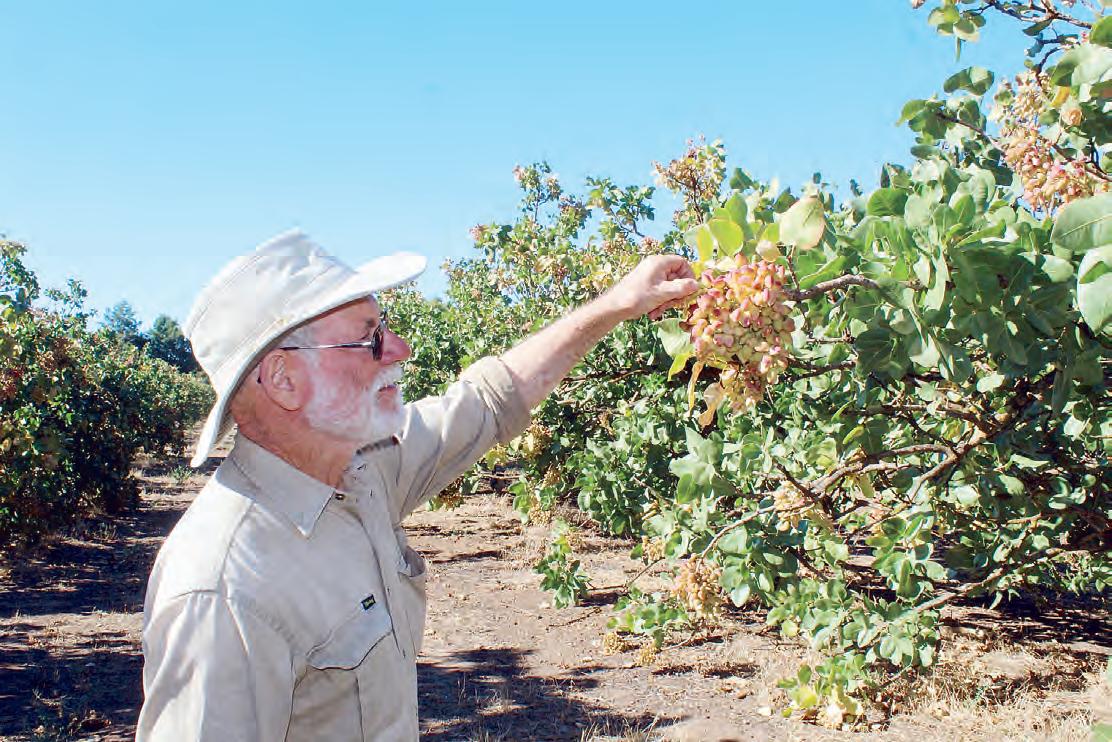
AS March turned the leaves along the Gawler River shades of red and gold, workers at The Food Forest struck pistachio branches with bamboo poles onto mats waiting below.
Each autumn, The Food Forest owners Annemarie and Graham Brookman, along with passionate locals and globetrotting backpackers, harvest about 12 tonnes of organic pistachios from trees that have stood over Hillier for decades.
Nestled north of Adelaide, just outside of Gawler, the mixed permaculture farm, The Food Forest, has grown into Australia’s largest producer of organic certified pistachios.
Mr and Ms Brookman started their journey as pistachio growers in the 1980s, following the purchase of a block of land in 1983.
The Food Forest was born from the couple, both of whom studied agriculture, striving for food security.
“Having had a fair bit to do with agriculture, this concept of climate change and the potential for food security to be compromised was in our minds,” he said.
The property now grows more than 160 varieties of fruits, vegetables, nuts, grains and timber, and even produces its own wine.
Pistachios were one of the early crops to take root on the property, with 1000 trees grafted on-site.
“We looked at crops that would be resilient in a climate change situation, and the pistachio sounded like a really great option,” he said.
Although it took approximately seven years for the trees to become profitable, Mr Brookman said the soil conditions were ideal for the trees.
With root systems able to grow up to 20 metres into the ground, the trees are there to stay for up to 300 years.
“We firmly believe that a biodiverse community of insects and all sorts of creatures gives you a much better chance of stable agriculture,” he said.
Mr Brookman said although they still do some pest management, the choice to go organic has also assisted in this.
“It means we’ve got thousands and thousands of beneficial insects operating all the time on this block and they haven’t been killed accidentally by toxic sprays,” he said.
A common pest for farmers growing cabbage and broccoli is the white butterfly larvae, green grubs that are often found in the crops.
But at The Food Forest, Mr Brookman said they have insects that deal with the pests for them.
“We have thousands and thousands of
“We looked at crops that would be resilient in a climate change situation, and the pistachio sounded like a really great option
mud wasps that live along the river, and they harvest these things [white butterfly larvae] like fast food,” he said.
“We end up with this massive population of insects working for us.”
The pistachios are sent across the country, including to Byron Bay NSW, Western Australia and are stocked in shops across South Australia.
On Sunday mornings at the Adelaide Farmers’ Market in Wayville, The Food Forest can sometimes be found selling the nuts along with more than 160 varieties of flora from the permaculture farm.
Packed with antioxidants, high protein and vitamins including zinc, Mr Brookman said pistachios were a winner.
“It is just absolutely unbeatable as a food,”
Wood Vinegar
Cut down on your chemical costs with
A new, cost effective, versatile ag input, Pyro Ag® contains around 300 constituents, from acetic acid, methanol, phenol, ester, aminos, acetals, ketone, formic acid, growth hormones such as gibberelins, auxins, betaines, cytokinins and plant nutrients. All these elements work synergistically, for greater crop production. A
he said.
Mr Brookman said this year’s crop of pistachios was looking very promising, with a large yield expected.
Educating people on how organic, sustainable farming can have economic value is a key goal of The Food Forest.
“If we here can demonstrate that you’re able to grow really, really good food and economic quantities using zero industrial chemicals and industrial fertilizer, then that at least shows that it is possible,” he said.
The couple work with the universities across South Australia and often take school groups through to educate them on what they are doing on the farm.
“We present to everyone from grade threes to 100-year-old geriatrics,” he said.
With outer norther Adelaide identified as one of the largest growth fronts in the state, according to the Greater Adelaide Regional Plan, the Brookmans are hoping that sustainability and their practices can be woven into the development.
Plans to turn about 1000 hectares surrounding Gawler into the Northern Parklands, including a sports hub, accommodation and open green space, was a particular point of interest for Mr Brookman.
“We are very interested in influencing the new northern parklands, to sort of build a parkland that has within it some really good agricultural enterprises,” he said.
“So I will see that there will be some beautiful little properties with specialist kind of agricultural produce within and just outside the actual park.”
The Food Forest owner Graham Brookman showed off his decades old pistachio trees. (Mahala Gainer: 538921)
Support program expands
A program building the skills and confidence of agricultural teachers in schools across South Australia is entering its fourth year in 2026.
The SA Lead Agriculture Teacher program (LAT), delivered by AgCommunicators, has been funded for a fourth year thanks to cofunding from the South Australian Grain Industry Trust (SAGIT) and South Australian Sheep Industry Fund (SIF).
Lead Ag Teacher Sue Pratt has made a profound impact on the educational landscape, directly supporting 192 teachers and visiting 81 different schools in regional and metropolitan SA, with new teachers strongly encouraged to utilise the service in 2026.
SAGIT Chair Professor Andrew Barr said SAGIT was pleased to again support the LAT position due to demand and impact.
“Feedback suggests teachers are seeking ongoing support in revitalising their curriculum, accessing new industry insights and building their school programs,” he said.
“With the teaching workforce continually changing and new teachers moving into ag teaching, plus new schools integrating ag into their curriculum, demand for the program is as strong as ever.”
The LAT program delivers professional development workshops specific to teachers’ needs, in-school one-on-one support, the development of new resources and programs helping schools integrate modern food and fibre content into their curriculum.
Livestock SA chair Gillian Fennell said the livestock industry was pleased to support the program through SIF, recognising that Sue’s efforts have been pivotal in enhancing the
delivery of food and fibre education in SA.
“When Sue commenced the program, there were only approximately 74 schools out of about 700 in SA teaching agricultural subjects,” she said.
“Through Sue’s leadership and support, 28 additional schools now include food and fibre at their site.
“This is a significant step forward for primary industries education in SA and no other agricultural education program has achieved this impact.
“In a recent survey, 100 per cent of respondents reported that utilising the LAT
program increased their confidence in delivering food and fibre programs, and with many of these teachers being new to teaching agriculture, confidence is key to success.”
In addition to direct teacher support, Mrs Pratt has delivered 24 professional development events reaching more than 700 teachers from all sectors, developed 44 new curriculum resources that enrich classroom learning, and issues regular updates to keep the teaching community up-to-date on industry news and activities, creating a strong network.
The LAT program is also supported by the Agricultural Teachers Association of SA (ATASA).
ATASA president Larissa Tallent said Mrs Pratt’s approach has improved confidence in educators, fostered important school and industry linkages and improved results across the student body.
“The partnership between Sue and ATASA has helped develop a strong sense of connection within the educators that has seen agricultural education expand and develop with clear awareness of what is required for success,” she said.
“ATASA is pleased the role will continue and fully endorse this position because of the impact it is having for teachers, students and the broader community”.
Mrs Pratt is a registered teacher with extensive experience with food and fibre curriculum development and delivery at school, departmental and South Australian Certificate of Education levels.
Teachers are invited to register for LAT events on the ATASA website.
Boost your off-farm income and investment returns with a tailored investment portfolio. From portfolio reviews to customised superannuation, SMSF and retirement plans, Ord Minnett is an Australian-owned advice with clients to build wealth for generations. Start a conversation Contact local advisers Brenton
Lead agriculture teacher Sue Pratt. (539274)
Paddock to plate produce
BY MITCHELL PATERSON
LOCATED near Cummins on Eyre Peninsula, Korinya Farm Gate has grown from a simple family vision into a thriving, hands-on agritourism and direct-to-market business built on connection, education and good food.
Run by Scott and Mary-anne Mickan and their family, Korinya Farm Gate began in 2018, sparked by curiosity from others about the way the family was living and producing food.
“We started out of the passion of growing and processing a lot of our own food, and people began asking more about what we were doing,” Mary-anne said.
Rather than keep that knowledge to themselves, the Mickans decided to open the farm gates.
As a family, they sat down and imagined what they would want to experience if they visited a farm.
“We had a big dream together and asked, ‘if we visited a farm, what would we want it to look like?’ That’s how the vision came about,” she said.
In the early days, Korinya Farm Gate was centred on practical workshops.
“It was literally just cheese-making, sausage-making and nourishing cooking skills, along with butchering our own beef, pork and lamb,” Mary-anne said.
The family secured raw-accreditation for its on-farm butcher shop through PIRSA, along with local council approval to host events, workshops and camping.
From there, the offering steadily diversified.
School tours quickly became a cornerstone of the business and remain one of its greatest passions.
“Korinya Farm Gate is all about encouraging and empowering people to know where their food comes from,” Mary-anne said.
Students are not simply shown around the property - they milk cows, see pigs being fed, collect eggs, harvest produce from the garden, and in many cases, cook a meal using ingredients sourced directly from the farm.
“That educational side is very, very dear to our hearts,” she said.
The Mickans use the visits to talk about grazing systems, soil health and mineral density in food.
“We show children how we graze animals in the paddock, and we talk about mineraldense food, because Australian soils are so deficient in minerals,” Mary-anne said.
The farm has adopted regenerative principles, focusing on re-mineralising soils
“
One of the most special things for us is seeing people connect with each other over an experience on the farm”
through trace elements and animal nutrition.
“We’re very focused on soil health, plant health and animal health, because healthy soil and healthy animals create amazing nutrient-dense food for people,” she said.
The journey towards regenerative farming began with a sick dairy cow.
“One of our milk cows became unwell, and the vet told us she was severely mineral deficient, and that really sent us down the path of understanding the link between mineral deficiencies and health,” she said.
Today, that philosophy underpins every aspect of the business, from pasture management to the beef sold through the onfarm shop.
Grass-fed and finished beef is a major part of Korinya Farm Gate, with the family supplying customers across Eyre Peninsula through direct delivery and distribution to
Fleet solutions
Over the past year, family cheese-making workshops have also become popular.
“People can make cheese from the milk they’ve just helped collect - it’s that real paddock-to-plate connection,” she said.
While the business experimented with online workshops during COVID, the Mickans said the heart of Korinya Farm Gate was face-to-face engagement.
“One of the most special things for us is seeing people connect with each other over an experience on the farm.”
Mary-anne believed the appeal lies in participation.
“It’s not just watching - people are doing.”
In cheese-making classes, she often hears the same response.
“People say, ‘I didn’t know it was this easy’ , and I think sometimes we build things up in our minds as being harder than they really are.”
She believes there was a missing generation of practical homesteading skills.
“When people come here and make cheese or sausages themselves, it empowers them,” she said.
That empowerment is the ultimate goal.
“Recently, a travelling family told me that we had inspired them to go home and grow more of their own food - for us, that’s the epitome of what we want to see,” Mary-anne said.
“We want to see more people growing their own food because that connection brings joy, good health and strengthens family life.”
The farm’s name reflects its atmosphere; Korinya, meaning “peaceful place”, was named by Scott’s father.
Adelaide via a depot model.
“We’ve chosen to stay direct-to-market because we want to keep our food affordable and accessible,” Mary-anne said.
The only outlet beyond the farm gate itself is a select beef range stocked at the Bulk Food Shack in Port Lincoln.
Beyond food production, Korinya Farm Gate has evolved into a destination experience.
Families can camp on site and join ‘Mornings on Korinya’ , taking part in daily farm routines.
“Our biggest passion is growing food for our own family, and we love inviting others into that,” Mary-anne said.
Visitors milk cows and goats, feed pigs and chickens, collect eggs and then return to the farm shop for coffee or a farmhouse breakfast.
“It’s very fitting because so many visitors tell us how peaceful it feels here,” Mary-anne said.
Support from the local community has also been central to the farm’s growth.
“We’ve been so blessed by the support of the Eyre Peninsula community and travelling families - most of our business has grown through word of mouth.”
At its core, Korinya Farm Gate remains a family enterprise built on transparency, accessibility and connection.
Customers know the farm, can visit the property, follow along on social media or simply pick up the phone.
For Scott and Mary-anne Mickan, the farm is not just a business.
It is a platform for rebuilding the connection between soil, animals, food and people - one immersive experience at a time.
Scott and Mary-anne Mickan run Korinya Farm Gate with the help of their family. (Supplied)
Unsung heroes during fires
BY DANI BROWN
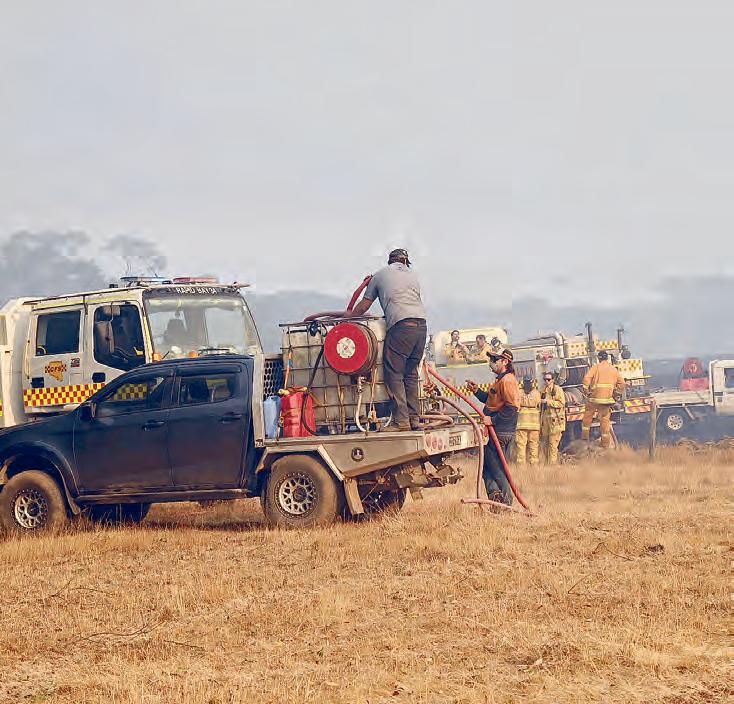
THE role of farm fire units (FFUs) in bushfire responses cannot be understated, and that has been evident at the Deep Creek and Tooperang bushfires this year.
At Deep Creek, more than 4500 hectares of steep, inaccessible scrub and farmland had been burnt in 11 days after it began on February 1.
Where fire trucks could not go, FFUs could; the brave operators manoeuvred their vehicles and water containers through hills, gullies, burning trees, and rough terrain to extinguish flames and do what they could to fight the fires.
Ash Edwards, whose Deep Creek property was one of many scorched by the bushfire, was full of praise for those on farm fire units who helped him battle the blaze as it neared his house.
“If you don’t have one, get one - they’re saving properties, they’re saving lives,” he said.
“We had farm fire units there, and they did an amazing job; it was apocalyptic, and they stayed, which is just unreal.
“Those guys are working their asses off, and a lot of them are CFS (Country Fire Service) guys ... they’d just done their 12-hour shift, and they jumped on a farm unit.
“They’re absolute heroes.”
At Tooperang, 685 hectares were burnt from January 18 to 25, with difficult terrain and extreme heat adding to the challenging conditions.
A total of 80 farm fire units worked on the fire, complementing the efforts of 820 firefighting personnel aboard 245 trucks and the 166 drops made by aircraft.
the Tooperang bushfire broke out.
“We did some direct firefighting at times, but we also helped fill up the tanks of people with bigger water tanks, so we did more water transfer,” he said.
He said the work done by the large number of farm fire units who responded so quickly to the fire was enormous.
“Very few CFS crews were able to get up there, but we had about 20 farm fire units and most had two people in them,” he said.
“That group did a fantastic job of stopping the fire from coming out of the first bit of scrub.
“Without them, the fire would’ve got to the next bit of scrub where there were multiple homes.”
Steve Salamon, who has worked as the CFS deputy incident controller for the Deep Creek fire, said FFUs were invaluable in the event of a bushfire.
He said the FFU operators work closely with CFS crews on the fireground, to the benefit of everyone.
“Their local knowledge helps support personnel deployed to our incidents from across the state and interstate,” Mr Salamon said.
“In Deep Creek, they were involved from the initial response and maintained a presence throughout the incident.
“It’s been invaluable having them as part of the team and during the Deep Creek fire response.
“The work they do, both as CFS volunteers and as farm fire unit operators, is greatly appreciated.”
Member for Finniss David Basham helped operate a farm firefighting unit with Mount Compass farmer Perrin Hicks when
The role of farm fire units (FFUs) in bushfire responses cannot be understated. (CFS Promotions Unit)
Salute for Barossa winemaker
BY IMOGEN EVANS
WINEMAKING has taken The Cutting’s Belinda van Eyssen on a lifelong journey through food, wine and culture, and has now landed her with the title of 2026 Winemaker of the Year by the prestigious Barons of Barossa.
The announcement, made at the Declaration of Vintage ceremony in Tanunda, celebrated Ms van Eyssen’s outstanding contribution to the Barossa wine community through excellence in winemaking, dedication to the region and her generous sharing of knowledge.
But Ms van Eyssen’s story did not begin on the winning vintage stage, but rather in a study room in Cape Town, where she studied food technology before transitioning to winemaking in post-apartheid South Africa, making her one of the only Indigenous female winemakers in her home country.
She officially began her career at the same winery her grandmother had worked at as a labourer, with her journey eventually taking her to the Western Cape to Sonoma, Bordeaux, the Douro Valley and Marlborough.
After relocating to Australia in 2010 and working across various wine regions, Ms van Eyssen began making wine from Rod and Jude McDonald’s Stone Well vineyard in 2014, before founding The Cutting with her husband in 2018.
Since then, The Cutting has earned critical acclaim, collecting win after win for it shiraz, grenache, cinsault and Chenin blanc.
The winery’s name, The Cutting, nods to a distinct feature on Stonewall Road, a visible cut from its construction, exposing layers of soil where vine roots seek water in the Barossa’s arid climate.
Known mostly across the state for their shiraz, The Cutting team said each wine has its own perfumed complexity and rich textures.
Its success is also built on the strong foundation of family bonds and a shared respect for land, with the team aiming to create a supportive environment that instils a strong sense of purpose and community.
The vintner can now add the title of 2026 Winemaker of the Year to her list, one which she said she is forever grateful.
“This recognition is deeply meaningful to me,” she said.
“Making wine on Ngadjuri Country in the Barossa, a region I once benchmarked from the other side of the world, is a privilege I don’t take lightly.
“This award reflects not just my story, but the support of this incredible community, my family, my husband Daniel and our two young sons, Thomas and Luca.
“
This award honours every woman in my family who worked vineyards but never got recognised for it”
“My grandmother picked grapes for others. My mother, too.
“Today, I make wine as a named winemaker in the Barossa Valley.
“This award honours every woman in my family who worked vineyards but never got recognised for it.
“It reminds me why breaking down barriers in this industry matters.”
The winery is also committed to sustainable practices and respectful stewardship of the land.
Ms van Eyssen’s commitment to the Barossa community includes five years of service on the Marananga Wine Show committee, three years on the Barossa Wine Show
committee, and her recent appointment as an associate judge at the Barossa Wine Show.
She is also an active member of the Seppeltsfield Road Business Alliance, a graduate of the Wine Australia Future Leaders program and a passionate advocate for diversity within the wine industry.
Last month, Ms van Eyssen was celebrated for her commitment to the region at the vintage event, with the Barons of Barossa awarding her the day’s highlight award.
Founded in 1975, the Barons of Barossa are independent custodians of the region’s wine heritage, dedicated to protecting and promoting Barossa as one of the world’s great wine regions.
Made up of grape growers, winemakers industry and community leaders, they support the region’s future through education, scholarships and viticultural initiatives, host the annual Declaration of Vintage and oversee The Barossa Cellar, Australia’s only regional wine museum, preserving rare wines and Barossa’s history for generations to come.
Looking forward, Ms van Eyssen said she is excited about an evolution of styles unfolding in the Barossa, where alternative varieties and expressions co-exist beautifully alongside the region’s iconic shiraz.
The Cutting is located at 439 Stonewell Road Tanunda, South Australia.
2026 Winemaker of the Year Belinda van Eyssen at the Declaration of Vintage ceremony in Tanunda. (Mark Willoughby: 534763)
Declaration of Vintage ceremony in Tanunda took place earlier in the year. (534763)
Belinda van Eyssen said she does not take the new title of Winemaker of the Year lightly. (534763)
EDUCATION & BOARDING
Agriculture in the classroom
VICTOR Harbor–based Anglican school Investigator College (ELC–Year 12) has built a strong reputation as a leading place to learn for students involved in or interested in agriculture and farming.
For the second consecutive year, a Year 12 student completing the College’s Stage 2 Agricultural Systems subject has earned a SACE Merit.
In 2025, that achievement went to William Marshall, who received the top result in the state.
Agricultural learning at Investigator College begins early.
Students of all ages — from as young as three — engage in hands-on learning through the College’s dedicated agricultural centre.
Learning culminates in optional Stage 1 Agriculture and Stage 2 Agricultural Systems subjects, which combine theory with extensive practical experience.
Key learning experiences include excursions to local farms, plant and poultry experiments, aquaponics and student-designed agricultural infrastructure projects that form part of assessment while enhancing facilities for future learners.
Animal handling is a hallmark of the program, particularly the College’s lamb-marking excursion.
Students separate lambs from ewes and undertake procedures including tagging, vaccination and tail-docking.
Last year, students successfully processed 325 lambs, protecting them from fly-strike, tetanus and other common health issues.
Additional excursions include visits to a robotic dairy to explore agricultural technology and biosecurity, as well as visual sheep assessments.
Learning is reinforced through studentled experiments, with recent trials examining the effects of music on chicken weight gain, fertilisers and rooting hormones on plant growth and dry versus fermented feed on egg production.
In 2025, the College will also welcome two miniature Herefords, Oakli and Otto, to its growing animal family.
Help available for regional school leavers
REGIONAL students preparing to leave home for further study may be eligible for financial assistance, with several payments available to help with the cost of relocating to the city.
Students can lodge Youth Allowance claims immediately after completing Year 12 exams, which may allow payments to begin over the summer break.
A number of supports apply specifically to regional and remote school leavers.
The Tertiary Access Payment offers up to $5000 as a one-off contribution towards the cost of moving away from home to begin a full-time, approved higher education course.
Students must have completed Year 12 (or equivalent) and be relocating from a regional or remote area.
The payment does not need to be repaid and may be available even to people who are not eligible for Youth Allowance.
Students receiving Youth Allowance or ABSTUDY may also qualify for the Relocation Scholarship if they move more than 90 minutes from their family home.
First-year students can receive up to $5500.
A Student Start-up Loan is also available, providing $1321 up to twice a year, though this must be repaid with indexation.
Students who receive a payment and live away from home may be eligible for Fares Allowance to help cover travel between their permanent home and their place of study.
Rent assistance may also apply, with single students able to receive up to $212 per fortnight depending on their circumstances.
Students may be required to submit a rent certificate or tenancy agreement.
More information is available at servicesaustralia.gov.au/leavingschool.
Key learning experiences at the College include excursions to local farms, plant and poultry. experiments,
Investigator College students separate lambs from ewes and undertake procedures including tagging, vaccination and tail-docking.
Thrive at St Mark’s College
ST Mark’s College is more than a place to stay while you study in Adelaide.
It’s a place to live, learn, and thrive.
Nestled in a pocket of North Adelaide near the River Torrens, St Mark’s College is a world-class university residential college that provides students with a complete university experience in a safe, inclusive environment.
Since its foundation in 1925, St Mark’s has supported successive generations of talented and motivated students to success in their studies and careers, and has promoted the values of integrity and respect for others, academic excellence, and community service.
At St Mark’s, students enjoy many opportunities to lead, be part of a team, contribute actively to the college and university life, and do well in their studies.
Lucas Cockshell, from Loxton, was elected the 2026 College Club president, and shares that having lived at St Mark’s College for the past two years he can “confidently say that these have been the best years of my life. It’s a life changing community to be apart of, and that’s why I’m so excited and honored to be the president of the College Club Committee this year”
This year, Lucas aims to help others enjoy their university journey just as much as he has.
Along with the College Club Committee, St Mark’s has academic and wellbeing support teams, to ensure students are supported during important life transitions – including from school to university, throughout university study, and from study to work or further academic opportunities.
We are thrilled to announce that applications for 2027 residency are now open and invite students who are planning to study an undergraduate or postgraduate degree at Flinders or Adelaide University to apply.
For more information, please visit: www. stmarkscollege.com.au
Peace of mind with cost-efficient housing
THERE is a distinct blend of excitement and trepidation that can accompany the process of readying a Year 12 student for tertiary study.
One may experience feelings of relief, elation and anticipation when their child begins to take steps to pursue a university degree.
However, given the current costof-living pressures, figuring out accommodation options whilst studying in the city can become a cause of apprehension.
Some parents may also have concerns about sending their rural-based children to their capital city, or interstate, without any additional support.
Founded in 1939, St Ann’s College is a co-ed university residential college which is home to nearly 200 students.
It provides a place of living and learning for students whose home is a long way away from their place of study.
Residential colleges offer parents the peace of mind of knowing students will receive guidance, care and academic support.
At St Ann’s College in North Adelaide, our principal Wendy Fleming resides on site, and a team of 12 residential advisors undergo extensive first aid and crisis training to provide pastoral care
throughout the academic year.
Included in college fees each student receives a heated/cooled individual bedroom, three meals each day, weekly room cleaning service, high speed internet and utilities – all for around $650 per week.
On top of living essentials and emotional support, St Ann’s College offers unlimited academic tutoring for students, fee inclusive.
Our principal, dean and director of learning conduct two academic check-in appointments each year to assess each student’s university trajectory.
Academic mentors provide guidance within their chosen field of study, and a host of past students (Collegians) can be called upon to give expert advice and career guidance.
Students also find their friends for life.
Social events are held regularly to encourage a fun and inclusive community, and regular sporting competitions bring the community together.
Colleges provide so much more than just a place to live.
St Ann’s College gives regional students the tools to thrive, both academically and personally.
St Mark’s student leaders ready to greet new students on move-in day. (Supplied)
EDUCATION & BOARDING
Growing skills where we work
SOUTH Australia’s future depends on the strength of its regional industries and the people who keep them growing.
That’s why SA owned and operated ARO College is taking a refreshingly practical approach to training: delivering nationally recognised qualifications designed for South Australian businesses and conditions, right where the work happens.
ARO College doesn’t ask workers to down tools and travel long distances to learn. Instead, their trainers come directly to farms, properties and worksites.
Training and assessment happen on location, allowing staff to learn while they work.
The result is less downtime, less disruption and far more meaningful, hands-on learning that lifts productivity rather than interrupting it.
Flexibility is another hallmark of ARO College’s model.
There are no rigid intake dates or semesters.
Students can start at any time, and training visits are scheduled in consultation with employers, carefully avoiding peak periods
like harvest.
It’s a system that respects the realities of regional South Australian business.
Importantly, ARO College qualifications are subsidised by Skills SA, with full transparency around participant fees listed on their website.
And for regional South Australians, there’s a clear message: quality training should not depend on postcode.
ARO College does not charge extra to visit regional students, because equal access matters.
The trust placed in ARO College by regional businesses and councils speaks volumes.
As one Monash-based farm supervisor put it, “the training delivers far more than a certificate, it motivates staff, builds confidence and keeps learning relevant to the job at hand”
For South Australian employers looking to invest in their people, ARO College offers a simple proposition: practical, flexible, subsidised training that helps businesses, and individuals, grow their potential.
Finding the right path
SELECTING the right school is one of the most significant decisions a parent or caregiver can make.
With a wide variety of educational options available, from public and private schools to specialised programs and alternative learning models, the process can feel overwhelming.
Making the right choice requires careful consideration of a child’s needs, interests, and learning style.
The first step is identifying what matters most in a school.
Factors such as teaching approaches, class sizes, curriculum emphasis, extracurricular programs, and support for individual learning differences are critical in determining whether a school is a good fit.
For some children, smaller class sizes and close teacher-student relationships may foster confidence and engagement.
Others may thrive in larger schools offering a broad range of extracurricular activities and social opportunities.
Visiting schools and observing classrooms in action provides valuable insight.
Seeing how students interact, how lessons are conducted, and how teachers manage the classroom can reveal much about the learning environment.
Understanding a school’s approach to student wellbeing, discipline, and parental involvement is also essential.
Policies that support emotional and social development are often just as important as academic offerings.
Research is another important part of the process.
Reviewing academic performance indicators, program offerings, and publicly available reports can help parents assess a school’s strengths and weaknesses.
Speaking with families who have expe-
rience with a school can offer additional perspectives and practical considerations.
However, while data and rankings are useful, they should be considered alongside the individual needs and personality of the child.
Choosing a school is not about finding the one with the highest academic ranking or the most prestigious reputation.
The most suitable school is one that allows a child to feel safe, supported, and inspired to learn.
It should encourage curiosity, foster confidence, and provide opportunities for both personal and academic growth.
Balancing practical considerations with an understanding of a child’s unique needs ensures that parents make a wellinformed decision.
Taking the time to research, visit, and reflect on potential schools can result in a choice that supports a child’s development, encourages a love of learning, and lays a foundation for future success.
Ultimately, selecting the right school is about finding an environment where a child can flourish academically, socially, and emotionally, setting the stage for a positive and rewarding educational journey.
We deliver ‘Open Spaces’ qualifications, subsidised by Skills SA, across all of SA. (Supplied)
(StartupStockPhotos from Pixabay: 514932)
EDUCATION & BOARDING
Traineeship program grows
IRONWOOD Institute, an award-winning horticulture and agribusiness college, is expanding its presence across regional South Australia through on-the-job traineeships.
This growth aligns closely with the State Government’s commitment to strengthening regional communities through sustainable land management, environmental stewardship, and improved food security.
Established in 2009 and operating from its Adelaide and Virginia campuses, Ironwood delivers qualifications in horticulture and agribusiness spanning Certificate III through to Graduate Diploma level, with structured academic pathways to Australian university study.
Ironwood’s leadership in horticulture and agribusiness education has been formally recognised through the Premier’s Industry Leaders Award (2022), recognition as Allied Service Provider of the Year (2025) by Nursery & Garden Industry South Australia (NGISA) and being named South Australian Small Training Provider of the Year (2025) by the SA Skills Commission — the first horticulture/ agribusiness college to receive these honours.
These accolades acknowledge not only academic excellence, but also strong industry engagement, innovation, and measurable student outcomes.
The Institute’s standing is further underscored by student’s achievements. NGISA recognised our students as Horticulture Student of the Year over four consecutive years (2022-25), as Emerging Leader of the Year (2025) and as Trainee of the Year (2025).
In addition, three students were named Global Footprints Scholars (2023–2025), undertaking international horticulture study experiences that broadened their technical expertise and global perspective.
These accomplishments reflect a college that consistently develops graduates recognised at the highest levels of the industry.
With established success in the Murraylands and the South East, Ironwood is now partnering with local councils and horticulture and agribusiness enterprises to deliver government-funded traineeship programs tailored to regional workforce needs.
For employers, traineeships offer flexible, on-the-job training that improves retention, and supports succession planning.
For employees, they offer the opportunity to earn while gaining nationally recognised qualifications and practical, on-the-job expertise.
Ironwood’s expansion into regional South Australia represents more than growth — it signals a sustained commitment to advancing sustainable regional development and cultivating the skilled workforce needed to secure the State’s environmental and food future.
SA Skills commissioner Cameron Baker with Navtej Bal of Ironwood Institute. (Supplied)
Get the best of both worlds
ST Joseph’s School Boarding House is perfectly small, providing a family environment for boarders.
The school offers something rare - access to high quality education without asking students to leave their community behind.
Its ‘boutique’ boarding house offers a personal, welcoming environment where every student is seen and truly known and every family relationship valued.
St Joseph’s boarders are recognised not only for their academic progress, but for who they are.
The school understands each student’s aspirations and challenges, and develops strong relationships, daily routines and genuine connection which sets students up for success.
Older students guide younger ones.
Friendships grow through shared study sessions, meals, out-of-school activities and everyday moments of encouragement.
The school’s care is consistent and individual.
What sets St Joseph’s School apart is its closeness to home - most students live within driving distance, returning to their homes on weekends to represent local sporting teams and maintain part-time employment.
Boarders remain active in their home communities while accessing broader educational opportunities that St Joseph’s and Port Lincoln can offer.
Boarding at the school is not about distance; it is about growth.
During the week, students develop independence within a structured, supportive setting.
They build time management skills, responsibility, resilience and confidence.
They learn to balance study, co-curricular involvement and personal commitments,
preparing for life beyond school while knowing support is always close at hand.
St Joseph’s strong boarding tradition across Eyre Peninsula has been trusted for generations by regional families.
That legacy has shaped a culture grounded in belonging, opportunity and continuity.
Families can feel confident their children are supported academically, personally and socially in a safe and friendly environment.
At St Joseph’s School Boarding House, students step confidently into their future, never stepping away from where they belong.
St Joseph’s School has a strong boarding tradition. (Supplied)
A home for all Hearts.
As a co-educational secondary college for girls and boys
EDUCATION & BOARDING
Make the most of a fresh start
RELOCATING can be a major adjustment for any family, but for children and teenagers, changing schools can be one of the most challenging aspects.
New routines, classmates and teachers can feel daunting, making it vital for parents to play an active role in helping their child settle into their new environment.
The first step after moving is to connect with the new school community.
Meeting with the principal, teachers or year coordinator early helps establish clear communication and ensures that staff understand your child’s needs.
Setting up a short review meeting within the first week or two can also provide insight into how your child is coping both academically and socially.
Preparation can make a big difference in helping a student feel more confident.
Ensuring your child has the right uniform, stationery and sports gear allows them to blend in and feel part of the group from day one.
Having a copy of their weekly timetable helps the entire family stay organised and ensures that everyone knows what’s needed each day, from homework to special activities.
Understanding the school’s policies and facilities can ease the transition further.
Learning about homework expectations, canteen options, library services and sporting areas can help children feel more at home.
Encouraging your child to explore extra-
(Norma Mortenson/httpswww.pexels.com: 515016)
curricular activities such as music, art, or sport can also help them build friendships and find interests that connect them to their new community.
Parents play a vital role in helping children settle by fostering relationships with
teachers and other families. Taking part in school activities, attending events and volunteering when possible all demonstrate support and involvement.
These interactions also help parents gain valuable insights into the school’s culture,
while showing children that their education and wellbeing are priorities.
Maintaining familiar routines outside of school provides additional stability.
Regular meal times, homework schedules and after-school activities can help children feel secure during the adjustment period.
Open conversations at home about their experiences, worries or small victories also encourage emotional resilience and confidence.
Patience is essential, as settling into a new school takes time.
Some children adapt quickly, while others need weeks or months to feel comfortable.
Consistent encouragement, reassurance and communication with teachers can help identify any areas where extra support might be needed.
Ultimately, helping children and teenagers adjust after changing schools involves preparation, engagement and understanding.
When families take the time to connect with staff, support friendships and maintain structure at home, it builds a strong foundation for learning and personal growth.
With guidance and care, students can move beyond the uncertainty of change and develop a positive outlook toward their new school life.
• For more information visit https://raisingchildren.net.au/school-age/school-learning/school-choosing-starting-moving/ moving-schools
Ag bureau backs community
BY THEO DIMOU
IN South Australia, there are multiple agricultural bureaus which play a crucial part in supporting primary producers and the Nelshaby Ag Bureau in the state’s Mid North is no exception.
Nelshaby Ag Bureau president Nathan Crouch said its purpose was to provide support to local farmers through information, connection and collective representation.
“The Nelshaby Ag Bureau supports local farmers in a lot of different ways,” Mr Crouch said.
“We provide a relevant extension of information through guest speakers, local field trials, bus trips to other farming regions and just as importantly, a strong social network.
“The Nelshaby Ag Bureau provides a lot of things, but one of the main things it provides is a place for farmers and like minded people to gather, catch up and talk, which is very important, especially in tougher years.”
One of the things the bureau prides itself on is the consistent spread and sharing of the latest information, which is done through monthly meetings - typically with guest speakers who address issues related to the industry.
These meetings are held throughout most of the year, outside of seeding, harvest and Christmas.
“These speakers can cover a wide range of topics,” Mr Crouch said.
“We’ve had people come in to talk about succession planning, agronomy, transport, heavy vehicle regulations, compliance and off-farm topics as well.
“It means everyone is getting the same, current information about new rules and regulations, what’s available to farmers and what’s not.
“That helps people make better decisions for their businesses.”
Field trials and field days run by the Nelshaby Ag Bureau provide members the opportunity to witness research and innovation applied in real-world scenarios, allowing farmers to test ideas and learn from each other.
Another important aspect within the bureau is advocacy, which gives farmers a collective voice.
Mr Crouch said by collaborating with each other, members were able to address concerns, discuss challenges and move forward together with these issues.
“Being an agricultural bureau gives us a collective voice, which is really important when an issue needs addressing,” he said.
“That might be political, production-related or profit-focused.
“As a group, we have more leverage than
“Being an agricultural bureau gives us a collective voice, which is really important when an issue needs addressing ”
we would as individuals.
“It means we can get together, talk about issues locally and then take them to politicians or whoever we need to, to try and sort local issues out.”
Like many farming communities, the Nelshaby Ag Bureau is too familiar with drought and constant shifts in seasons.
Mr Crouch said the bureau played a significant role in assisting farmers to prepare for tough conditions, encouraging long-term planning and how talking about issues such as rising input costs and biosecurity risks help members remain informed and responsive.
“When we have meetings, we bring in speakers who can talk about drought funding, assistance programs and ways to be better prepared for drier times,” he said.
“That might include things like confinement feeding, livestock management strategies or setting your business up better for dry periods.”
Mr Crouch said the Nelshay Ag Bureau also allowed farmers to connect and remain social with each other by hosting meetings and events, which were also open to the pub-
lic to strengthen the bond between farmers and the community.
“Being connected locally provides a really important social place for farmers,” he said.
“It gives us a chance to come together and tackle local issues, but also just to connect with each other.
“Everything’s open ... you don’t have to be a member to come to our meetings.”
However, Mr Crouch said farms were in need of more support from youth, as it was becoming a challenging task for older farmers to keep up with the expanding industry.
“We get a few younger farmers joining, but there are also fewer farmers overall,” he said.
“Farmers are getting older and farms are getting bigger.
“What might have been four or five farmers years ago is now often one.
“Just come to our meetings, contact me, or come along to any of our events that we advertise on Facebook or social media.”
The Nelshaby Ag Bureau also has a close relationship with Upper North Farming Systems, which has provided the bureau with
administrative and financial support.
“They help with a lot of the organising and administration, which makes it easier for us to access funding and grants,” Mr Crouch said.
It has helped the bureau run annual field days, local trial inspections and bus trips either regional or interstate.
The Nelshaby Ag Bureau has recently visited Kangaroo Island, the Mallee, Eyre Peninsula and Yorke Peninsula to bring farmers together and ensure a strength of knowledge.
Members of the Nelshaby Ag Bureau on a trip last year (Supplied)
Nelshaby Ag Bureau president Nathan Crouch (Theo Dimou: 537441)
Unlocking sorghum yields
NEW trials are testing the potential of different varieties of sorghum to improve summer fodder options for growers in southeast South Australia.
The replicated trial at Struan, south of Naracoorte, is designed to assess different sowing dates, the merits of three different sorghum varieties and the impacts of nitrogen applications.
The Grassland Society of Southern Australia (GSSA) Limestone Coast branch research project is titled `Improving the sustainability and irrigation use efficiency of summer fodder through improved management decisions’
The project is funded by a Grassroots grant from Limestone Coast Landscape Board and supported by Barenbrug Australia.
GSSA Limestone Coast branch member and agronomist Adam Hancock said there hadn’t been sorghum trials in the region for more than a decade.
“We’re trying to see the yield potential from the new varieties of sorghum,” Mr Hancock said. “It’s not a crop that we’ve had a lot of work done on for a long time. There are a few things that have changed over the decade, including the new varieties, we’re also sowing a lot earlier with the soil temperature at 13 or 14 degrees instead of 16. For southern parts, this could be a really big deal if we could get the crop in the ground three or four weeks earlier.”
The trial site was sown twice 28 days apart to capture information about what earlier sowing could be worth to growers in southeast South Australia.
Variable nitrogen applications are also be-
ing tested. “Because the yield potential is so much higher, we’re testing how much fertiliser you need to apply to capture your maximum yield potential. It could be anywhere between 18 and 30 so we need to understand the ideal number,” Mr Hancock said.
The site has been zoned, with one area being cut once and another twice. A South Australian Research and Development Institute (SARDI) soil agronomy team is running the site and conducting the research.
The GSSA Limestone Coast branch hosted a field day on the site in February to raise awareness of the project. A further event is planned to outline the findings of the oneyear project.
People interested in joining the GSSA can visit https://www.grasslands.org.au. Students can become members for free. GSSA has successfully promoted the business of grass, science and farming since 1959 and has branches in Victoria, South Australia and southern NSW.
Clear farm hurdles
ADVERTORIAL
Every farmer knows the story of plowing around the stump.
It seems easier to steer around an obstacle in the paddock than to stop and deal with it.
Yet over time, that stump becomes a permanent hindrance.
The same principle applies to the business side of your farm.
From conversations with its farming clients, RSM has identified some common pain points that you might be tempted to ‘plow around’.
Single Touch Payroll: Ensure you have the right accounting or payroll software.
Payday Super: From 1 July 2026, employers must pay superannuation contributions at the time of each pay cycle.
• Wage compliance: Farm operators must understand awards applicable to their employees.
• Independent contractor versus employee: Ensure you are correctly distinguishing between employees working in the business vs contractors providing services to your business.
• Business structure: Regularly evaluate asset ownership and structures to pro-
tect wealth and maintain flexibility. Superannuation: Plan ahead to minimise the impact of the new Division 296 tax commencing 1 July 2026.
• Farm Household Allowance: Often considered only in the event of drought or extreme conditions, this government support package is available to eligible farmers and their partners who are experiencing financial hardship with income fluctuating to low levels.
• Family succession planning: Make sure you have a documented succession plan that has been clearly communicated to all relevant parties to ensure a smooth transition and protect family harmony.
• Insurance and asset protection: Invest in comprehensive insurance and legal safeguards to protect your farm and assets.
The stereotypical farmer is very accomplished at being a ‘jack of all trades’ when it comes to problem solving in their business.
RSM’s role as farm advisers is to help remove the stumps.
For more information, contact Jed Carson or Michael Tarin on (08) 8682 2077.
The sorghum varieties in the trial.
Inspecting the replicated trial at Struan, south of Naracoorte.
Farming set to go low carbon
BY MICHAEL SIMMONS
RESEARCH into lowering greenhouse gas emissions from agricultural practices has been spearheaded by South Australia through an $8.4 million commitment alongside partnerships between state and federal governments and industry.
Led by the South Australian Research and Development Institute (SARDI), the research will be essential to help the state reach its Net Zero by 2050 target.
In South Australia, the agricultural sector was estimated to account for 37 per cent of greenhouse gas emissions in 2022, with a number of sources of greenhouse gas emissions generated in the agricultural sector and on farms in South Australia.
Key sources of emissions include fertiliser production and use by grain farmers, producers and growers, followed by methane released by livestock.
This methane is produced by cows, sheep and goats in their stomach, which is then released into the atmosphere, mostly when burping or through flatulence.
Minister for Primary Industries and Regional Development Clare Scriven said the South Australian Government was committed to reduce greenhouse gas emissions by at least 60 per cent by 2030 from 2005 levels and to achieve net zero greenhouse gas emissions by 2050.
The State Government committed $8.4 million over five years in 2024 and leveraged the Commonwealth and industry contributions of $16 million over five years to a total of $24.4 million.
“This will establish the essential industry partnerships and collaborations necessary to reduce the states greenhouse gas emissions,” Ms Scriven said.
“South Australia’s $18.5 billion agriculture sector will benefit from this next generation research and development that will build on the active initiatives in emissions reduction and sustainability that SARDI is undertaking, including; Methane mitigation: Testing existing products or identifying novel bioactive molecules for livestock that result in less methane production while not impacting reproduction success, the quality of wool, milk, and meat products for producers.”
Plant breeding and trials to determine new feed base options which roaming livestock could eat, which naturally decrease the amount of methane produced is being investigated.
ADVERTORIAL
ACROSS South Australia’s farming regions, reliability isn’t optional, it’s a necessity.
From the Adelaide Hills through to the broader agricultural districts, farm vehicles are expected to carry heavy bulky materials, secure livestock, tow and handle changing conditions season after season.
And while most conversations focus on the vehicle itself, the ute tray on the back needs just as much consideration.
For many buyers - as it has been for generations - the final decision often comes down to one key question: aluminium or steel?
Steel has long been popular in rural settings, valued for its toughness.
But the added weight can affect payload and overall performance, and it’s also more susceptible to rust over time.
Aluminium on the other hand offers a lighter alternative, provided it’s engineered properly to handle the demands of farm life.
ness.
This is a key consideration required to address methane produced from pasturebased ruminant systems in South Australia.
“There will be research aimed at improving soils to increase the opportunity for atmospheric carbon storage, or the expansion of legume crop production to reduce synthetic nitrogen use,” Ms Scriven said.
“We will be supporting SA producers to ensure they have access to the emission reduction solutions they need, as well as the new information and technology as quickly as possible as it is developed.
“Much of this research will be undertaken at SARDI innovation farms, or in partnership with farming systems groups and growers, located across a range of the key rainfall and climate zones throughout South Australia, where new innovations will be trialled as they become available and new research will be conducted to investigate new solutions.
“This will ensure that farmers have early access to new solutions which are designed to reduce the emission of greenhouse gases from our unique SA farming systems and regions.
“The global agricultural market is demanding that producers demonstrate their commitment to reducing emissions and using sustainable agricultural practices to maintain market access and competitive-
“This pressure will only increase in the years to come.
“To reach net zero by 2050 we really need to act now across all sectors and this commitment is the first step towards our agriculture sector – which employs so many South Australians across our regions – to reach this target.
South Australian Dairyfarmer’s Association president Robert Brokenshire said the initiative was not properly understood by most farmers.
“There his limited appreciation from bureaucracies about what famers are putting into the ground now,” Mr Brokenshire said.
“Farmers are constantly focusing on sustainable practices.
“I am still trying to get my head around what the government are asking farmers to do.
“This is one of many imposts and red tape processes that is causing stress and uncertainty to many farmers.”
The State Opposition is calling on the Labor Government to consider exemptions for farmers from onerous mandatory carbon emissions reporting.
Shadow Minister for Primary Industries Dr Nicola Centofanti said the federal govern-
the lifetime warranty on all workmanship,” he said.
ment’s carbon emissions reporting scheme was set to have an estimated $2.3 billion compliance burden across the national economy.
“Imposing additional carbon reporting requirements only adds another burden that threatens the ability of farmers to continue delivering the food and fibre production which is fundamental to the state,” Ms Centofanti said.
“South Australia’s $18.5 billion agriculture industry should be recognised as a special case under ambitious greenhouse emissions schemes because food and fibre production is fundamental to the state.
“I appreciate that some farmers may wish to choose to report emissions for market access and that is their choice, but to legislate for and mandate reporting that goes well beyond the requirements in other countries places additional burdens on production and creates an uneven playing field for our producers.
“What these onerous carbon reporting mechanisms will do is simply place more red and green tape on our farmers, which will ultimately translate into an increase in the cost of food production and what that means for the mums and dads and families our there at the supermarket checkout is that they’ll have more expensive groceries.”
“The size of the tray mounts was actually what sold me - knowing that the tray was constructed genuinely to take the weight that it was rated to,” he said.
Proudly Australian Made, Norweld trays are built using precision laser-cut components and a fully welded aluminium construction, finished with a high-tensile 4mm one-piece aluminium plate floor.
Alastair says reliability is “absolutely paramount” , followed by functionality, “having a product that just works, day in, day out”
“Another feature that really stands out to me are the rubber seals around the keyholes and the double seals on the toolboxes. Both have been excellent at stopping dust and water,” he said.
For farmers weighing up their next investment, his advice is simple: “110 per cent worthwhile.”
“I decided ultimately to try my first Norweld because I liked the look of the product. I appreciated the craftsmanship and
But for Alastair, the final decision came down to strength and confidence in the build.
To learn more about Norweld’s Australian Made aluminium ute trays and canopies visit norweld.com.au.
Adelaide Hills cattle producer Alastair Coles has run both.
Cattle producer Alastair Coles’ Toyota Landcruiser with a Norweld Deluxe Plus Tray. (Supplied)
South Australian Dairyfarmer’s Association president Robert Brokenshire believes farmers do not need more red tape to run their properties. (Michael Simmons).
Vintage optimism remains
BY HARRY MEAD
RECENT rain has not dampened spirits in the vineyards across the Clare Valley as the wine vintage marches on with local industry figures optimistic about potential outcomes.
Heavy rain was not the most welcome sight in the Clare Valley, however warmer conditions were, as local wineries continue to harvest fruit for what should produce batches of high quality wines.
Paulett Wines senior winemaker Jarrad Steele said the first weekend’s rain did more good than harm.
“We started harvesting white and rose varieties before the big rain of last weekend, which did cause splitting in most varieties and sent the sugar levels back quite a bit,” he said.
“The forecast warm days are helping increase sugar and flavour and we have recommenced harvesting today [March 5] completing approximately 25 per cent of our harvest.
“However, we will have to monitor fruit quality closely as disease pressure is now high.”
Mr Steele said it has been a tough year given the seasonal conditions.
“We had frost damage early on, dry and hot weather conditions, and now heavy rain just on optimal ripeness,” he said.
“Cabernet sauvignon has held up well in the rain, and any riesling that came off before the big rain should be of high quality.
“We are running around three to four weeks later than last year, and yield for us is slightly above last year, but still below average.”
Jim Barry Wines director Tom Barry said optimism was still high at the winery despite the timing of the recent rain.
“We and a lot of others got a few sprays on and are managing the vineyards well,” he said.
“The baume readings have dropped back a bit, but any disease floating around has perished due to the weather, this post-rain heat
is fantastic.
“I think riesling is still really good, a good amount of canopies got through the rain and weren’t too stressed, getting through the conditions really well.
Mr Barry said the yield would be smaller compared to previous years, given the dry conditions.
“We’ve had to be very strategic heading into drier seasons, such as this one and the last, managing our water efficiently and holding smaller canopies,” he said.
“Riesling yields are down a little this year, but after picking a few more vineyards following those rain events, we’re down only 10 per cent on our average yield which is really positive.”
Mr Barry said he was expecting the vintage to wrap-up around late March.
Taylors Wines chairman Mitchell Taylor said he was expecting vintage to finish around mid to late April, though there was still much to play out.
“It’s hard to say when the crushing will be done, but some of our early fruit is in the tank already, which looks great, but I think wineries will be busy for quite some time,” he said.
“There have been a few curveballs this season, but all vintages have mother nature playing some sort of part.
“We’re very excited about the quality of the Riesling, and on some of the early reds, there’s some exceptional colours out there.
“Our team is very proactive and has many structures and plans in place to ensure we can adapt to these events, such as the rain.”
Mr Taylor said the prevalent issue of oversupply in the industry was certainly a big challenge, and at a local glance, water security was another.
“We’re definitely advocating for improved water infrastructure, we’ve been speaking to sources and exploring all options, we definitely need water security for long-term sustainability in the region,” he said.
Paulett Wines senior winemaker Jarrad Steele with the 2026 fruit. (539147)
Place where farming gets
BY LACHLAN SMITH
FOR the Rowe family, life on the 30,000acre Almerta Station in the Flinders Ranges is a careful balance between preserving a century-old pastoral tradition and welcoming visitors from across Australia and the world.
The station has been in Paddy Rowe’s family since 1902.
Paddy and his wife Shane have operated it as a tourism destination for the past 16 years.
Paddy grew up on the property, moving away briefly before returning almost 20 years ago.
Together with Shane, he began implementing tourism operations from 2010 while continuing the station’s traditional sheep farming.
“We’ve mated 2,000 ewes to merinos and 850 ewes to crossbreeds,” Mr Rowe said.
“We sell all the crossbred lambs when they are at a reasonable weight.
“We will sell the wether lambs off the merinos and keep the ewe lambs so we have got a self-replacing flock and sell some of the old ewes as well.”
The couple run about 3,000 adult sheep on the property and hope to increase the flock to nearly 6,000 by lambing season.
Their schedule includes shearing in March, lambing in June and July, and selling lambs and older sheep in October and November.
To accommodate the schedule, Almerta closes off its shearers’ quarters, allowing contracted workers to stay on-site while ensuring
sheep work is conducted outside the tourism season to avoid disrupting guests.
Tourism at Almerta Station has grown alongside traditional operations.
The property offers 13 private bush campsites and an off-grid two-bedroom cottage, Hender’s House, which was rebuilt and refurnished two years ago.
Hender’s House won a 2025 South Australian Tourism Award for Hosted Accommodation and the People’s Choice for Accommodation SA.
The rebuilt shearers’ quarters now sleep 28 people and include a kitchen, dining room, and showers.
“It looks like we will have another positive year for tourism, which is good,” Mr Rowe said.
Despite occasional dry seasons, the Rowes have found a balance between tourism and agriculture that sustains the station.
“Across the past 20 years we have been through three or four droughts, and we have adjusted our systems to ensure we are more sustainable when that happens,” Ms Rowe said.
“We have put a desal plant over 18 years ago on the property so we have got water all year round.”
Visitors to Almerta can stay for varying lengths, with the Rowes helping them plan activities and nearby excursions.
Outside of managing Almerta, Ms Rowe serves as chairperson of Station Stays, a network of 25 properties offering tourism experiences. Contiunued page 35
Paddy and Shane Rowe, of Almerta Station, run sheep on their property and welcome visitors with various forms of accommodation on site. (Supplied)
to make holiday memories
From page 34
“We all work together to share our people and our knowledge … we work well collectively as the Station Stays SA Flinders Ranges and Outback group as well as helping all the farmers,” she said.
Station Stays also encourages members to promote and preserve the history of their properties.
“We run Station Stays as a membership organisation and we sit there and we work out what our marketing is going to be within the next 12 months.”
The Flinders Ranges were named one of the top four global places to visit in 2026 by Lonely Planet, providing Almerta with the opportunity to attract more international visitors.
“We should be leveraging off of that as well as being the World Heritage bid … we are waiting to be accepted,” Ms Rowe said.
“We are expecting international exposure… the announcement will get a big push overseas,” Mr Rowe said.
The couple acknowledges the trailblazing work of other stations, including Tony and Julie Smith, from Rawnsley Park, who have offered tourism experiences since the 1960s.
“You want people to become more in tune with nature – at Almerta Station our motto is, ‘It’s a place where kids can be kids and adults can reconnect,’” Ms Rowe said.
The property features creeks, waterholes, walking and biking tracks, and 4WD routes for visitors to explore. “Some of our tracks
are water-run tracks… people can drive on them and drive around the property and take the 4WD tracks as well,” Mr Rowe said.
The Rowes emphasize the personal connections made through tourism.
“We want people to experience our life in a different way,” Ms Rowe said.
“We get to speak and meet so many different people from all over Australia and the world.”
The station is also available for private events, including parties and weddings.
“We are just out there, we have a go and it is worth it,” Ms Rowe said.
Over the years, Almerta Station has evolved into a model for combining traditional farming with tourism, preserving heritage while adapting to changing times.
With awards, international recognition, and a steady flow of guests, the couple are confident the property will continue to thrive.
“It’s about maintaining that balance so the land, the sheep, and our visitors all benefit,” Mr Rowe said.
From sheep shearing to award-winning accommodation, Almerta Station exemplifies how history, family, and innovation can coexist on the rugged beauty of the Flinders Ranges.
Almerta Station owners’ children Eliza, Courtney with her two-year-old son Alfie, and Jack have grown up on farm. (Supplied)
Hay network grows
ADVERTORIAL
IN an industry defined by climate cycles, stability is the most valuable crop of all.
This year, Balco Australia has strengthened this stability by acquiring the Al Dahra facility in Western Australia.
This milestone expands Balco’s network to four major processing hubs spanning Victoria, South Australia, and Western Australia.
With WA’s unique climate offering abundant fodder resources, Balco believes the new northern facility perfectly complements its existing southern operations.
The strategic “North-South” synergy mitigates the impact of extreme weather, smoothing out regional supply fluctuations to guarantee consistent delivery.
This expansion is more than just a business milestone; it is a declaration of confidence in the future of Australian agriculture.
With more than 30 years of export experience and four advanced plants, Balco has built a national footprint designed to withstand local and global challenges.
For partner growers, this implies a relationship going far beyond the harvest.
Balco actively promotes the superiority of Australian oaten hay on the world stage, securing premium markets across China, Korea, Japan, the Middle East, and Southeast Asia.
The expansive global reach translates into financial security, providing growers the confidence needed to plan for the long term.
High-quality fodder is the lifeline of Australia’s livestock industry, a lifeline recently tested by South Australia’s droughts and Victoria’s bushfires.
In these critical moments, Balco stands firm with local farmers.
By leveraging a robust national network and donating feed where it is needed most, the company ensures support is always within reach to protect the herds that form the backbone of the rural economy.
Balco remains deeply rooted in local communities, actively supporting their development and providing employment opportunities.
The company firmly believe driving the prosperity and stability of communities, while securing the lifeline of the agricultural sector, forms the very foundation of Balco’s growth and success.
Balco Australia has expanded its facilities, acquiring a facility in Western Australia to go with its existing facilities, such as at Bowmans near Balaklava (pictured). (Balco Australia)
New testing cuts calf losses
BY FIONA GOWERS
AUSTRALIAN Wagyu producers now have access to a world-first genetic test designed to improve fertility, calving rates and profitability, following the commercial release of testing for the Annexin A10 mutation linked to embryonic mortality in Wagyu cattle.
Weatherbys Scientific is the first commercial genomic testing provider to offer the test to Australian Wagyu Association (AWA) members, with the test available to producers now.
The development follows AWA-supported research in which DNA samples from approximately 230 Wagyu calves were provided to Professor Jon Beever at the University of Tennessee Genomics Centre for the Advancement of Agriculture to identify genetic defects causing calf loss.
Professor Beever identified the occurrence of a known mutation in Annexin A10 (Sasaki et al., 2016) in a cohort of samples and established a validation panel of positive and negative samples to allow DNA testing laboratories to prove their testing conditions for the AWA.
AWA chief executive officer Dr Matt McDonagh said the mutation, which has no impact on economically important carcase traits, has been detected in 6 per cent of the recorded Wagyu population.
“This test is really about increasing productivity and profitability by significantly improving the calving rate, particularly for high-value embryo programs,” Dr McDonagh said.
“We are pleased we can now offer this to our members as a standalone test, or as an add-on to other genotyping, and allow them
to screen for the mutation prior to critical breeding decisions.
“Given the dominant maternal effect of this mutation, we recommend breeders test their youngest and highest-value females, particularly those intended for use in embryo programs where multiple progeny are expected.
“All bulls being used should also be screened so they don’t pass on the mutation to female progeny.”
Weatherbys Scientific head of research and development Paul Flynn said the com-
pany was proud to support the global Wagyu industry as the first provider to offer testing for the Annexin A10 mutation.
“We congratulate AWA for their proactive research and investment in bringing this test to market for Wagyu producers,” Mr Flynn said.
“It concords with internal development that we have been conducting and meant we could quickly validate a test for AWA members.
“We are pleased to support them and remain committed to continuing our invest-
Ready to support agribusiness
ADVERTORIAL
THE team at Bendigo Bank Agribusiness knows that strong regional communities are built on strong local businesses and on Eyre Peninsula, agriculture is at the heart of it all.
Bendigo’s dedicated agribusiness relationship managers - Chris Miller, Alex Powell and Max Treloar - are proud to support the farming families and agricultural enterprises that drive the region forward.
With a genuine understanding of local conditions, seasonal challenges and the opportunities unique to the EP landscape,
they work alongside clients to provide tailored financial solutions that suit every stage of the agribusiness journey.
Whether you are planning ahead for the next season, investing in new equipment, expanding your operation or simply wanting to have a conversation about your longterm goals, Chris, Alex and Max are here to help.
Backed by the strength of Bendigo Bank and grounded in local knowledge, they are committed to building lasting relationships that support sustainable growth.
Through Community Bank Cummins
District, that commitment extends beyond banking.
Over the past 25 years, more than $7.5 million has been invested back into Cummins and surrounding districts - supporting local projects, community groups, sporting clubs and initiatives that help Eyre Peninsula thrive.
When you bank locally, your business helps grow our community.
If you would like to connect with the agribusiness team, contact the Cummins branch on 8676 2997 and start the conversation today.
ment in R&D to develop solutions that will ensure the Australian Wagyu Association and its members continue to be one of the global beef industry’s success stories.”
Stone Axe Pastoral chief operating officer and breeding specialist Matias Saurez said the test gives Wagyu producers a practical, preventative tool to reduce embryonic losses before they occur.
Mr Saurez, who previously worked with Australian Wagyu and was involved in developing the test, said the mutation is a maternal influence defect that affects the uterus of carrier females.
He explained the test allows producers to identify dams likely to lose embryos during gestation and make informed breeding decisions before losses occur, particularly in intensive embryo and large-scale breeding programs.
While calf loss in Wagyu is influenced by many factors — including nutrition, disease, parasites and other genetic defects — Mr Saurez said the Annexin A10 test addresses one important contributor within a complex syndrome.
He noted embryonic and pregnancy losses are a significant issue in Wagyu compared with some other breeds and that certain bloodlines are more likely to carry the mutation than others.
As a result, testing intensity may vary between herds depending on bloodline risk.
The test is easy for producers to access, requiring only a tissue or hair sample submitted through the AWA.
Mr Saurez said widespread adoption of the test would allow the industry to progressively reduce the number of carrier animals and, over time, lower embryonic mortality rates across Wagyu breeding programs.
at Bendigo Bank Agribusiness Alison Edmonds-Wilson, Max Treloar, Sean Hickey, Chris Miller, Braden Gale and Alex Powell are here to help. (Supplied)
Weatherby’s scientific head of research and development, Paul Flynn. (Supplied)
Seed of Light for scientist
CSIRO scientist Dr Rick Llewellyn has been recognised for his extraordinary impact on the grains industry, receiving the 2026 Grains Research and Development Corporation (GRDC) Seed of Light – South award.
The accolade honours individuals who excel at translating research into practical insights for grain growers, bridging the gap between science and the paddock.
Dr Llewellyn’s work has left an indelible mark on Australian agriculture, helping growers adopt innovations that improve productivity, sustainability, and risk management.
From developing tools that predict the uptake of new farming practices to leading national initiatives that guide better on-farm decision-making, his influence extends across the southern grains region and beyond.
The award was presented at the recent GRDC Grains Research Update in Adelaide by GRDC Southern Panel chair and Victorian grain grower Andrew Russell.
“Dr Llewellyn is one of those people whose name is synonymous with agricultural research and the movers and shakers of the southern region,” Mr Russell said.
“The best researchers know how to communicate with growers – and that is Rick.
“He knows how to do the science, and he knows how to get a message across to growers without diluting the information.
“Whether you know him or not, you know his name – his legacy is huge – and he still has so much to give.”
At CSIRO, Dr Llewellyn is the senior principal research scientist in agricultural systems.
His research covers farming systems, weed and herbicide resistance management, technology adoption strategies, and agricultural economics, helping growers improve cropping and mixed farming systems.
He has led multiple GRDC-funded projects, including the ADOPT model, a webbased tool that helps researchers evaluate and predict the adoption of agricultural innovations, boosting their uptake by growers.
Currently, Dr Llewellyn co-leads GRDC’s national RiskWi$e initiative with Dr Lindsay Bell.
Using a participatory action research approach, RiskWi$e supports better on-farm decision-making and improved risk and return outcomes, coordinating dozens of partners nationwide.
Dr Llewellyn holds a Bachelor of Agricultural Science from the University of Adelaide and completed a PhD in agricultural economics at the University of Western Australia. Early in his career, he worked as a Landcare Officer in Cummins, supporting the Focus Fields grower-driven program that delivered research directly to growers.
He continues to contribute as a scientific advisor, committee member, and international collaborator in projects across the Philippines, Thailand, and India through the Australian Centre for International Agricultural Research.
“ He knows how to do the science, and he knows how to get a message across to growers without diluting the information.”
CSIRO scientist Dr Rick Llewellyn has received the 2026 GRDC Seed of Light – South award for his contributions to the Australian grains industry. Photo: GRDC. (539276)
Have a say on livestock funds
SOUTH Australian sheep and cattle producers are being encouraged to have their say as part of a statutory review of the Sheep Industry Fund (SIF) and Cattle Industry Fund (CIF) regulations.
The review, required under the Primary Industry Funding Schemes Act 1998, must be completed before 1 September 2026 and will determine future contribution settings and funding arrangements for industry-good activities across both sectors.
Livestock SA has hosted a series of regional and online consultation sessions to explain the review process, outline current
funding challenges and detail proposed changes ahead of an online vote in April 2026.
The SIF and CIF support animal health and biosecurity, predator control, traceability, market access protection, workforce and skills development, advocacy and regulation, and broader industry development.
Contribution rates for both funds have remained unchanged since 2016–17.
The Dog Fence contribution of $0.12 ended in June 2025, removing an additional revenue stream from the Sheep Industry Fund.
Funding demand is now reported to exceed revenue by two to three times, while costs for compliance, animal health, predator control and market access programs continue to rise.
Proposed changes include a staged increase to the Sheep Industry Fund contribution to $0.75 per head by 2028, up from $0.55 per head, and lifting the trigger price for collection from $5 to $10 per head.
For the Cattle Industry Fund, a shift from a tag-based levy to a transaction-based levy is proposed, with the rate to remain at $1.50 and reviewed in 2028.
Dolly’s Dream new support line
A new bullying support service 13 DOLLY has been launched as polls show Aussie teens are turning to AI for emotional help.
The national anti-bullying organisation Dolly’s Dream is behind the service, which offers a confidential support line and web chat.
“If your child is being bullied, or you’re a young person experiencing bullying, you don’t have to deal with it alone,“ a spokesperson said.
The service connects kids, teens and parents directly to a qualified Kids Helpline or ParentLine counsellor.
Polling released to accompany the launch suggests some young Aussies are seeking emotional support from unqualified sources like AI chatbots.
A Dolly’s Dream Instagram poll of 374 Australian parents conducted this
month revealed:
• 65 per cent said their child uses AI tools
Of the young AI users, 92 per cent were aged 13-20, while 3 per cent were under 9 years old
26 per cent confirmed their child used AI for help when feeling sad.
A TikTok poll conducted last week asked: ‘If you were reaching out to an organisation for support, how would you rather do it?’ The results from 96 respondents found:
76 per cent prefer to chat online
• 24 per cent would rather speak on the phone.
The head of the Dolly’s Dream charity, Sally Sweeney, said the organisation was proud to be launching their Bullying Support Line, considering the number of young people currently using AI in Australia.
“We know that kids and teens are turning to AI for help, and while it will always give a response, AI can’t offer the safety or qualified guidance of a human counsellor,“ she said.
“13 DOLLY provides that vital, real connection and that’s why we’ve created a web chat service alongside our phone line, so kids and teens can contact us anytime, in the way many are currently turning to AI. But the big difference is that when they use 13 DOLLY, they’ll actually be chatting with a qualified counsellor, who is ready to listen and trained to help.“
“Our message to kids is clear. If you’re getting bullied, please turn to a human at 13 DOLLY, not an algorithm.“ How to access support:
CALL 13 DOLLY (13 36 559) or search “13 DOLLY” or visit the Dolly’s Dream website dollysdream.org.au
Consultation sessions will continue throughout March, with further opportunities available on demand.
A session will be held online on Friday, 27 March at 5pm, with registrations available via the provided link.
Online voting on the proposed changes will take place in April 2026, with further details to be provided.
Producers can register for the online consultation sessions at: https://events.teams. microsoft.com/event/acfc43d9-2e86-43b784fd-40fc4c137e6b@0d7298f5-5500-4c47b0c2-5a86714e4233
If your child is being bullied, or you’re a young person experiencing bullying, you don’t have to deal with it alone. The national anti-bullying organisation Dolly’s Dream today launches 13 DOLLY - a confidential support line and web chat.
Aussie-made breakthrough for stock water
ADVERTORIAL
ACROSS Australia’s farming regions, poorquality water and compacted soils continue to hold back productivity.
From saline bores to scale-filled pipelines and irrigation that barely penetrates the topsoil, growers and livestock producers know too well the hidden cost of water that simply doesn’t perform.
Hydrosmart - an Australian-made, chemical-free water conditioning system - is emerging as a practical solution for both stock water and cropping operations.
Using resonance frequencies to influence mineral behaviour in water, it helps reduce scale, improves water flow and infiltration,
and enhances how soil and plants absorb moisture.
For livestock, farmers often report cleaner troughs and improved water palatability.
For croppers, better infiltration means deeper roots, healthier soils, and more efficient use of every megalitre.
Victorian farmer Daniel Thomas recently demonstrated how transformative this technology can be.
Irrigating 250 acres with high-EC river water, his paddocks had long suffered from a hardpan just below the surface—restricting roots, trapping water, and leaving soils soupy for days.
After installing Hydrosmart, the change was immediate. Within three waterings, the
ASK US ABOUT CENTRE PIVOT APPLICATIONS
hardpan effectively disappeared.
Moisture began reaching 250–400 mm depths, and wheat and barley roots followed.
What was once waterlogged topsoil became firm, friable ground with consistent moisture throughout the profile.
For Thomas, the results were clear: stronger crops, deeper root systems, better soil structure, and water finally doing the job it was meant to do.
As Australian farmers face rising input costs, harsher seasons, and increasing pressure on water resources, Hydrosmart offers a low-maintenance, proven tool to get more from existing water supplies - without chemicals, filters, or ongoing consumables.
STOCK SOLUTIONS
• Increase weight gain & health
• Improve hard / saline water simply • Unblock pipes & fittings
• Greater appeal/response to stock, even in bad water sources
• No more valves sticking open & water wastage
• Lower algae in troughs/droppers
AGRICULTURE SOLUTIONS
• Grow healthy plants in saline water • Unblock drippers, sprays and pipes • Turn scale into beneficial nutrients • Reduce dependence on chemicals
Lower fertiliser costs
Healthy livestock on bore water
Paul Pearce, Matt Steele and Jai Pearce of Hydrosmart. (Supplied)
Regional water needs focus
BY PROFESSOR SIMON MADDOCKS, PPSA CHAIR
AS SA looks to the year ahead, few issues loom as large for regional communities as water security.
Across the state, water allocation plans (WAPs) are being reviewed, amended or implemented against a backdrop of declining rainfall, reduced recharge and intensifying climate variability.
For primary producers, these plans are shaping daily operational decisions, longterm investment confidence and the resilience of entire regional economies.
At the heart of Primary Producers SA’s mandate is protecting the viability of our industries while ensuring the responsible management of the natural resources that sustain them.
Nowhere is this balance more critical than in water policy.
Secure, transparent and consistent water planning underpins the confidence producers need to invest, innovate and adapt in increasingly uncertain conditions.
Where certainty erodes, so too does business resilience.
On the Eyre Peninsula, groundwater resources in the Southern Basins and Musgrave Prescribed Wells Areas are fundamental to agriculture and communities alike.
While irrigation licences are limited, vast numbers of producers rely on groundwater through stock and domestic rights, alongside the SA Water public supply network that
supports farming enterprises and regional towns.
Groundwater is not simply a resource; it is a foundational asset for the EP’s agricultural economy.
The revised Eyre Peninsula Water Allocation Plan has been developed in response to clear and concerning trends: declining rainfall, reduced recharge, rising salinity risks and falling groundwater storage.
PPSA recognises the complexity of balancing environmental, community, industry and cultural needs under these pressures, but this should not come at the expense of
transparency or trust.
Producers must have confidence in how allocation decisions are made.
Sustainable extraction limits, adaptive management triggers and salinity thresholds must be science-based, underpinned by robust monitoring and communicated clearly to all water users.
Plain-language explanations, early warning indicators and genuine engagement are essential so businesses can plan ahead rather than react after the fact.
Water insecurity is a present pressure.
Strategic investment in alternative water supplies will be critical to relieving stress on groundwater systems.
The delivery of SA Water’s Eyre Peninsula Water Security Response Plan, particularly the Port Lincoln Desalination Plant, is a vital step forward.
However, the transition must be carefully managed to ensure agricultural water security is not compromised during changeover.
Salinity also remains a growing concern. Rising salinity affects animal health, crop management, soil condition and domestic use.
Proactive monitoring, clear communication and investment in mitigation technologies and research will be essential to protect long-term agricultural viability.
Farm dams and roof runoff are practical, on-farm resilience measures that should be supported through efficiency improvements and innovation, not burdened with additional red tape.
Finally, as multiple WAPs progress across the state, SA needs policy consistency.
While regional differences matter, a coherent statewide framework grounded in fairness, evidence and resilience is essential to maintain confidence and encourage longterm investment.
The year ahead will test South Australia’s water governance.
Getting it right will require genuine partnership between industry and government and a clear recognition that water security is inseparable from the future of our regional communities.
Different approach to harvest
ADVERTORIAL
FOR decades, the axial-flow combine has dominated Australian harvest paddocks.
In South Australia in particular, many growers have built their systems around that platform and know it well.
But as soil health, fuel efficiency and grain quality continue to come under sharper focus, farmers are considering equipment that fits their unique farming needs.
This means it may be time to take a look at alternatives, like the Gleaner T Series.
At its core, the T Series is built on a different engineering philosophy. Its transverse Natural Flow rotor keeps crop moving in a straight line through the machine, rather than forcing material through a 90-degree turn.
That design choice is more than technical detail; it directly affects how engine power is used. WSB Jamestown branch manager Nigel Hillam believes that distinction is often underestimated.
“Once growers understand how the transverse rotor works, they start to see where the efficiencies come from,” he said.
“It’s not about chasing more horsepower.
“It’s about putting the power into threshing and separating grain, not just shifting crop around inside the machine.”
In practical terms, that can translate to lower fuel consumption and consistent grain quality, both significant considerations in high-value lentils, chickpeas and malting barley.
Weight is another factor that carries relevance for many farmers in South Australia.
the sands of the Mallee and Eyre Peninsula to the slopes of the Mid North and Southern Flinders, soil structure can
be compromised quickly under heavy harvest traffic.
The T Series carries a weight advantage of
roughly 4.5 tonnes compared to some competitors.
“On our country, compaction isn’t something you can ignore,” Hillam said.
“The lighter footprint helps protect soil structure, especially in softer finishes or after late rain.
“That’s a long-term benefit, not just a harvest benefit.”
Side-hill performance is also a critical issue in many parts of the state.
The T Series’ accelerator roller system drives grain downward at high speed before it reaches the cleaning shoe, removing a large proportion of material early and helping maintain even grain distribution across the sieves.
“In rolling country around Jamestown and through the Flinders, side-hill losses can really add up,” Hillam said.
“The accelerator rollers help keep grain in the tank, where it should be.”
Modern hydrostatic drive, wet disc braking and solid traction support round out a package that is purpose-built rather than adapted.
Combined with precision technology and dealer backing, the machine presents a considered alternative in a market that can sometimes favour familiarity over function.
The debate over combine design may never be fully settled. But where soils are fragile, margins are tight and performance on hills matters the Gleaner T Series deserves to be part of the conversation.
From
A recent demonstration and training about the Gleaner T Series in Australia by AGCO. (Supplied)
Growing active Fat Farmers
TWO of Australia’s leading rural health organisations, the Fat Farmers Rural Health Initiative and Active Farmers, have announced a strategic partnership aimed at improving the wellbeing of regional communities nationwide.
For more than a decade, both organisations have supported rural Australians through physical activity, connection, and proactive health programs.
By combining resources, networks, and expertise, the partnership promises to increase reach, reduce duplication, and deliver stronger outcomes for the communities they serve.
Active Farmers founder Ginny Stevens said the collaboration provides stronger foundations.
“When two organisations share the same purpose - to improve the health and wellbeing of rural communities - joining forces just makes sense,” Ms Stevens said.
“This is a positive step forward that will allow us to expand, evolve, and continue to strengthen the health and resilience of rural Australia.”
Fat Farmers Rural Health Initiative chief executive Richard Sheppy said the coming together of the two entities would provide better support for all.
“This partnership is about amplifying what’s already working,” Mr Sheppy said.
“Together we can build on each other’s strengths to reach even more people and continue fostering health, connection, and resilience in farming and rural communities across Australia.”
The integration will see Active Farmers maintain its local identity, ensuring the 42 groups which are already operating nationwide continue their trusted community
“
Our mission is to inspire and encourage rural communities to improve their health and wellbeing through physical activity.
programs while Fat Farmers’ 40 groups will also benefit from shared resources.
The dream is to reach more than 150 groups combined by December 2026.
Under guidance, Fat Farmers has grown from a grassroots movement into a national force promoting physical activity, social
Real help starts with just one call
ADVERTORIAL
AT Rural Business Support (RBS), we know that reaching out for help isn’t always easy, particularly in rural and regional communities where asking for help can feel difficult.
That’s why we focus on making the first conversation simple, respectful and supportive.
The intake process
When you call our FREECALL 1800 836 211 number, you are not put through to a call centre.
Your call is answered by one of our local, dedicated programs support officers, who will listen to your concerns and, take the time to understand your situation; they will assist our team in determining what support may be best for you.
The initial conversation is about understanding what’s going on. You don’t need to know what to ask for or have any paperwork prepared.
Our team will ask a few guiding questions about your business and what is impacting your finances.
They will explain your available options, and work through your eligibility for the most appropriate support program.
If we don’t have a program that suits your situation, our programs support officers will provide you with alternative contacts or other appropriate support. Connecting people with the right support
Where ongoing support is appropriate, we organise a referral and connect clients with
a rural or business financial counsellor who understands your region and industry. Confidentiality and discretion is important to us, including giving you the option to work with a financial counsellor outside of your local area or via remote support. Your financial counsellor will then make direct contact to introduce themselves and arrange one-on-one support in a way that works best for you, whether on farm, over the phone, via video, at your kitchen table, or a combination of approaches. Clear, free and confidential
All RBS financial counselling services are free, independent and confidential.
There are no hidden costs and no obligation to continue. If phone lines are busy, you can leave a message or send an enquiry via our website, and we will respond within 48 hours (often sooner).
At its core, the RBS intake process is designed to reduce barriers, build trust and ensure people feel supported from the very first conversation.
No long forms. No pressure. Just a clear path to practical support.
If you, your family or your business are feeling the pressure, don’t wait until things become overwhelming.
A simple conversation can often bring clarity and direction.
Call Rural Business Support on FREECALL 1800 836 211 to start the conversation today, or visit our website www.ruralbusinesssupport.org.au to learn more about our services.
ties and the gap between services available to those in metropolitan areas continue to grow,” Mr Sheppy said.
“Our mission is to inspire and encourage rural communities to improve their health and wellbeing through physical activity.
“Our vision is to break down the barriers, overcome stigma and facilitate access to health screening and education through collaboration.
“A strong grassroots community will be the foundation on which we build.”
Fat Farmers began in a small gym in the town of Maitland, on the Yorke Peninsula, in 2012, after three producers decided they needed to get back into shape after giving up football.
By 2015 the word had spread and other Fat Farmer groups began to spring up across South Australia.
The first interstate group began in June 2022, and three years later there were 30 cohorts on the books.
Now there are 40 groups across SA, WA, NSW, QLD and VIC and the number continues to grow.
More than 18 months ago The Hospital Research Foundation Group became a major health partner for at least two years, enabling the organisation to expand its reach even more.
connection, and better health outcomes for rural Australians.
While there are physical benefits for participants there are many other areas, including mental health, reducing stress and overall wellbeing that comes with joining a group.
“The challenges facing rural communi-
In 2026 a mobile health hub is ready to take to the road to field days, community events and conferences to deliver health initiatives such as skin cancer checks, diabetes and heart health screening, GP consulting, health education and more.
Along the way Fat Farmers has collaborated with many like-minded organisations to help deliver new and support for rural and regional communities.
Water solutions for ag
ADVERTORIAL
FOR more than 33 years, Australian company DELTAwater solutions has underpinned the success of large-scale irrigation and food producers through its customised, chemicalfree water treatment systems.
Alex and Dianne Panov founded the business in Newcastle in 1993 and distribute their products across Australia and overseas to countries including Africa, China, Egypt, the UK, Italy, Canada and New Zealand.
DELTAwater conditioners are power, maintenance and chemical free and treat unlimited volumes of water.
They overcome problems associated with salinity, scale build-up caused by calcium and magnesium, water hardness, iron, and corrosion.
South Australian irrigator Mark Pridham turned to DELTAwater solutions in 2009 to tackle bore water quality issues including calcium-scale, salinity and iron.
Mark grows potatoes, clover seed and lucerne.
His confidence in the DELTAwater magnetic treatment system over the past 17 years has led to him installing more units, with almost 100 per cent of his land now irrigated with DELTA-treated bore water.
Mark farms in the mid-South East. His bore water has high levels of calcium carbonate, iron and sodium chloride.
While crop rotations and added organic matter and clay helped counteract soil problems, Mark turned to DELTAwater solutions as another way to boost his crops.
“Straight away the infiltration improved, the water was soaking in a lot better on our undulating country with less run-off and rutting in the wheel tracks,” he said.
Despite summer temperatures of up to 45 degrees and low rainfall seasons, Mark’s clover and potato crops watered by DELTA-
treated water continue to return solid yields.
“With the DELTA units, I’ve grown spuds on marginal land with yields average to above average and really good quality,” he said.
“The water conditioners have also helped reduce the scale build-up in pipes and friction loss.”
Steven McCracken, who farms a 5000-hectare property on South Australia’s Eyre Peninsula, says his DELTAwater conditioner rapidly cleared a “frustrating” buildup of minerals that blocked his main stockirrigation pipe.
“I had sheep and cattle drinking on the line and I was not getting enough water through the system,” he said.
“I put my DELTA unit on and it unblocked the pipe within days. It was a great relief.”
Echuca irrigator Sam Palma collects his customised Grade 50 DELTAwater solutions magnetic water conditioner directors Alex and Dianne Panov at the company’s Newcastle manufacturing plant. (Supplied)
Fat Farmers co-founder Ben Wundersitz, The Hospital Research Foundation Group chief executive Paul Flynn, Fat Farmers chair Richard Sheppy. (Supplied)
Gawler show tops awards
THE Gawler Show has been awarded South Australia’s Community Event of the Year, recognising the event’s outstanding contribution to community engagement, regional pride, and volunteer spirit.
The prestigious award celebrates the dedication of Gawler Agricultural, Horticultural and Floricultural Society volunteers, exhibitors, sponsors and the wider community who continue to support and grow one of the region’s most loved annual events.
The 2025 edition was considered a smashing success, increasing attendance from the previous year up to 25,175.
President Braden Turner said the recognition belongs to the entire community.
“This award is a testament to the incredible volunteers, partners and community groups who pour their time and energy into making the Gawler Show such a special event each year,” he said.
“The show has always been about bringing people together – celebrating local talent, agriculture, entertainment and community spirit.
“To be recognised as Community Event of the Year is both humbling and inspiring.”
Mr Turner said the accolade reinforces the importance of regional events in strengthening community connection.
“Events like the Gawler Show don’t just happen – they’re built on passion, commitment and collaboration,” he said.
“This recognition motivates us to continue evolving and delivering an experience the whole community can be proud of.
“We share this award with every mem-
ber, sponsor, exhibitor, volunteer and visitor who walks through our gates.
“It truly belongs to all of them.”
With this recognition now under his belt, Mr Turner may now have some more luck with his request for earlier access to the Gawler Showgrounds during the week of the event.
In the wash-up from the 2025 event, Mr Turner made a plea to decision-makers to reconsider the current agreement.
“Many people don’t realise that the society is only handed access to the showgrounds precinct at 9am on the Wednesday prior to the show, giving us just three days to build and prepare an event of this size and scale,” he said.
“Achieving this in such a limited timeframe places immense pressure on our volunteers, the committee, and our two dedicated event staff, who often work long hours into the night and the wee hours of the morning to ensure everything is ready and safe for the public.
“For the safety and well-being of everyone involved – and to continue delivering an event our whole community can be proud of – we will be seeking discussions with the Town of Gawler CEO, the newly appointed mayor and councillors.
“We believe this is a reasonable and necessary step to protect our volunteers, maintain safety standards, and support the continued growth of this much-loved community event.”
Wine sector lead
SUSTAINABLE Winegrowing Australia has appointed Siobhan Toohill as its new independent chair, marking a key step in the evolution of the national sustainability program for the grape and wine sector.
The appointment forms part of governance reforms announced in December 2025, which include the transition to an independent chair, the introduction of a skills-based board and the recruitment of a dedicated executive officer to strengthen oversight and long-term strategic direction.
FOR PROVEN RESULTS, CONTACT YOUR LOCAL HANNAFORD SEED PROTECTION SPECIALIST IN SOUTH AUSTRALIA:
Streaky Bay, Ceduna, Port Kenny & PoocheraDaven Tomney 0477 002 366
Port Lincoln, Cummins, Cleve & Kimba Gilbert & Brian Turner0447 069 335
Ms Toohill brings extensive executive leadership experience in sustainability strategy and risk management, as well as involvement in developing industry frameworks across climate, nature and social impact.
In her role as chair, Ms Toohill will help guide Sustainable Winegrowing Australia through its next phase of development.
This will include oversight of board and executive officer appointments, establishment of governance structures and development of the program’s strategic plan.
Ms Toohill said she was looking forward to working with industry to strengthen the program.
“I’m delighted to take on the role of chair for Sustainable Winegrowing Australia,” she said.
“The program plays a critical role in supporting the sector’s sustainability ambitions, and I look forward to working with industry to strengthen its impact, accessibility and global credibility.”
Australian Grape and Wine chief executive Lee McLean said the appointment marked an important milestone for the program.
“Siobhan’s appointment as independent chair represents a significant step forward for Sustainable Winegrowing Australia,” he said.
“Her expertise in sustainability leader-
ship and system transformation will be invaluable as the program enters this next phase of governance maturity and strategic impact.”
Sustainable Winegrowing Australia is a national collaboration between Australian Grape and Wine, Wine Australia and the Australian Wine Research Institute.
The program provides a framework for continuous improvement, benchmarking and certification across environmental, social and governance practices within the wine sector.
The move to an independent chair and refreshed governance model reflects the industry’s aim to strengthen sustainability performance while responding to changing market, climate and regulatory expectations.
The appointment comes as participation in the program continues to grow nationally, with work under way to establish the advisory board and recruit a dedicated executive officer.
Town of Gawler chief executive Chris Cowley (left), Gawler Agricultural, Horticultural and Floricultural Society (GAHFS) employees Tanya Veldkamp and Sondra Taylor, GAHFS vice president Andrew Mann, GAHFS president Braden Turner, Town of Gawler Mayor Nathan Shanks, GAHFS committee member Ainslee Allen and former GAHFS president Isaiah Tesselaar celebrating the Gawler Show’s award win. (Supplied)
Sustainable Winegrowing Australia has appointed Siobhan Toohill as its new independent chair. (Supplied)
Top Merinos shine at Expo
BY HARRY MEAD
MERINO moguls from across the country descended upon the Mid North for a twoday event that has become a mainstay on the Merino calendar.
On March 11 and 12 producers, breeders, and consultants made the trek to the Mid North Merino stud region for the Elders SA Stud Merino Expo where the best of Merino genetics were on display.
The expo kicked off with on-property displays at eight participating studs spread across the Mid North before the Australian Wool Innovation Dinner was held in the evening.
A commercial fleece competition was held at the dinner alongside a fashion parade presented by local fashion brand Iris and Wool.
Burra Oval would be the site for the following day of the Expo, where 11 studs showcased the best of what they had to offer.
The second day culminated in the Elders SA Stud Merino Ram of the Year and Ram and Ewe Pair competitions.
Pocketing $6000 prizemoney and claiming the Ram of the Year honour was Old Ashrose, breaking a five-year Collinsville streak.
Judge Ben Wilson said he had judged a lot of sheep, but that was easily the hardest class of sheep to judge he had come across.
“We were splitting hairs for the top five sheep, but there were some terrific sheep right through the line,” he said.
“The Old Ashrose ram, it didn’t matter when, every time we looked down the line, he was standing proudly with great neck extension, presenting himself really well.
“It’s a nice white, bright, well-nourished wool. It was really hard to ignore.”
Greenfields took out the Ram and Ewe Pairs competition, beating out Collinsville in second and Mulloorie in third.
Mr Wilson congratulated all the exhibitors in the pairs competition, in what was again a strong lineup.
“At the end of the day, I think standing here and looking at the line, the Greenfields just have so much presence,” he said.
“That ewe was rather special and it takes a thumping ram to be able to put beside her, and he’s a cracker.”
Event organiser Michelle Cousins said coming off the back of a few bad years, it was really positive to have had the rain and an increase in wool prices, and optimism was building in the industry.
“There’s been a really nice sentiment and feel to the last few days, it has been really positive for the industry,” she said.
“I think that’s been demonstrated by the
good numbers that we’ve had attending the event.
“It’s just really nice to actually have an industry with such a positive vibe at the moment.”
Ms Cousins said the expo provided an important opportunity for those in the industry to engage and connect, given its optimal tim-
ing in an already jam-packed calendar for producers.
“It’s a little bit quieter this time of year for interstate visitors to come over, so we normally have a contingent of Western Australians, as well as some from Victoria and New South Wales, so it’s a great time for them,” she said.
“It’s also a good time for the producers onfarm given it’s held before the seeding period.
“They’ve got some time to actually come and have a look at what’s out there, engage with the studs and have a look at what genetics are on display, what their breeding programs are like, and they can start planning purchases for the season coming ahead.”
Tony Brooks from Elders, Nick and Kate Wadlow from Old Ashrose, Alistair Keller from Elders, and judges Ben Wilson and Ryan Philp with the 2026 Ram of the Year.(Harry Mead: 540546)
Josh Reichstein from Elders congratulates Greenfields’ Rob Sullivan for his win in the Ram and Ewe pairs.
Ryan Philp inspects a Mulloorie ram.The lineup of rams in the single competition.
There was plenty of fun to be had at the Angaston Show on February 2, with sideshow rides, displays and entertainment.
Showtime fun in Angaston
Angaston Scouts BBQ team Daniel, Rachel, Clancy, Angus, Phillip, Toby and Tully. (537794)
Elsie Szalnowski and Tahlia Graetz feeding a couple of goats. (537794)
Maddison Wissell on Damara VWNZ at the Angaston Show. (537794) Kaitlyn Viergever, Member for Schubert Ashton Hurn, Carla Wiese-Smith and Kwabena Ansah. (537794)
Kylie and Paige Van Alphen. (537794)
Inge Fiegert and Zoe Gransbury. (537794)
Richard McGrath, David Mackinnon, Andrea Milanese and Steven Jones with a live BBBfm 89.1 radio broadcast at the Angaston Show. (Michael Slattery: 537794)
Connor and Evie Braithwaite with Trudy Vaughan. (537794)
Brice Pohl and John Richardson with a pump and motor from the Barossa Valley Machinery Preservation Society. (537794)
Tadhg Cronin strapped in for this ride at the Angaston Show. (537794)
A large crowd filled the showgrounds on Saturday, March 1 to celebrate the 102nd Mannum Show.
Day of festivities at Mannum
Chloe, Lilah, Kodee, Daniel and Logan having a family day at the Mannum Show. (Kaitlyn Gibbons: 462887)
Roger and Eleanor Waldhuter having a nice morning at the Mannum Show on Saturday, March 1. (462887)
Mother-son duo Kayla and Zachary from Murray Bridge having a family day out. (462887)
Jacob and Hope from Mannum spending their Saturday at the Mannum Show. (462887)
Lisa and Rip from Holbury enjoying some time together at the Mannum Show. (462887)
Travis and Sarah from Adelaide, ready to play some music for patrons of the Mannum Show. (462887)
Bruce and Denise Richardson from Strathalbyn made the trip up to support the Mannum Show. (462887)
Nataleah Staker from Murray Bridge showing off her car at the Mannum Show. (462887)
Sonya and Brian from the Adelaide Hills having fun at the Mannum Show. (462887)
Doona, Brad and Demon the dog from Murray Bridge showing off Doona’s car at the Mannum Show. (462887)
JUST JOKING
Q: Why did the farmer bury his money?
A: To make his soil rich.
Q: How do you fix a broken tomato?
A: With tomato paste.
Q: How do farmers count their cows?
A: With a cowculator.
Q: What do you call a pig that does karate?
A: A pork chop
Q: Why did the chicken cross the playground?
A: To get to the other slide.
WORD PUZZLE
How many words can you make? It’s not as easy as you think!
Australian Pork can be used in so many wonderful ways, as an easy family meal to a delicious dinner party you can’t go wrong. For more great recipes visit pork.com.au.
Moroccan barbecued pork cutlets
Prep time: 12 mins
Cook time: 12 mins
SERVES 4 INGREDIENTS
• 4 x 225g each (2.5cm thick) trimmed pork cutlets, rind off
• 1/3 cup olive oil
3 teaspoon Moroccan spice
• 1 teaspoon sea salt flakes
• 2 lemons, halved 200g tub beetroot hummus
• Baby spinach & rocket salad, to serve METHOD
1. Combine ¼ cup oil, Moroccan spice and salt in a shallow dish. Stir until well combined.
2. Pat pork dry with paper towels.
3. Add pork to the spice mixture and turn to coat.
4. Cover and leave to marinate, turning once, in your fridge for 30 minutes (or longer if time permits).
5. Preheat a greased gas BBQ with a hood on medium-high heat.
Barbecued hoisin pork skewers
Cook Time: 15 minutes
SERVES: 4
INGREDIENTS
• 800g pork scotch fillet, trimmed and cut into 3-4cm pieces
• ¼ cup hoisin sauce
• 2 Tablespoon oyster sauce
• 2 Tablespoon honey
• 3 Teaspoon sesame oil
• 2 Teaspoon garlic powder
• 1 red capsicum, trimmed, cut into 3cm pieces
Crispy chilli oil, barbecued bok choy, steamed jasmine rice and thinly sliced green onions, to serve METHOD
1. Combine hoisin, oyster sauce, honey, sesame oil and garlic powder in a large bowl.
2. Add pork. Stir until pork is well coated with hoisin mixture.
3. Cover and leave to marinate in the fridge for 45 minutes (or longer if time permits).
4. Thread pork and capsicum onto 8 long metal skewers (see tips).
5. Preheat a greased gas BBQ with hood (see tips) on medium heat.
6. Barbecue pork, hood down, for 1215 minutes, turning occasionally, for just cooked through or cook to your liking.
7. Transfer skewers to a rack over a tray and rest for 3 minutes.
8. Serve pork with crispy chilli oil (if using), barbecued bok choy, rice and green onions. TIPS
Using a BBQ with a hood ensures even cooking and air circulation. If preferred, you can use a char-grill pan however the cooking time may need to be slightly increased.
• If you don’t have metal skewers, use 30cm bamboo skewers soaked in cold water for 30 minutes.
6. Remove pork from the spice mixture and drain off excess.
7. Barbecue, hood down, for 4 minutes, then turn and cook for 4 minutes on the other side.
8. Using long-handled tongs, sear the edges of the cutlets (see tips) until cooked through to your liking.
9. While pork is cooking, barbecue the lemons, cut side down, for 1-2 minutes until lightly charred.
10. Transfer pork and lemons to a rack over a tray and rest for 3 minutes.
11. Serve pork with barbecued lemons, beetroot hummus and a baby spinach and rocket salad.
TIPS
• Using a BBQ with a hood ensures even cooking and air circulation. If preferred, you can use a char-grill pan however the cooking time may need to be slightly increased.
To sear the edges of the pork, using long-handled tongs hold multiple cutlets and press onto the BBQ turning to sear all edges.
Bree’s weeknight sticky pork stir fry
SERVES: 4
INGREDIENTS
• 500g-600g Australian Pork Scotch Fillets
2 Tablespoons Olive oil
• 1 Red Capsicum, diced
• 1 Green Capsicum, diced
1 Brown Onion, diced
1 Teaspoon garlic, ginger, chilli paste
• ½ cup Pineapple Pieces, in juice
• 2 Spring Onions, chopped
SAUCE
1/3 Cup Pineapple Juice
• 1/3 Cup Water
• 4 Tablespoon Tomato Ketchup
• 1 Tablespoon Oyster Sauce
¼ cup White Vinegar
• 1 Tablespoon Brown Sugar
• 1 Tablespoon Cornflour METHOD
1. Dice your onions and capsicums and slice your Australian Pork Scotch Fillets into strips.
2. Make your sweet and sour sauce by combining all ingredients in a bowl and mix together.
3. Heat a non-stick pan on medium-high, add olive oil and Australian Pork Scotch Fillets and saute until it is golden.
4. Add garlic, ginger and chilli.
5. Add onions, capsicums and sweet and sour sauce.
6. Mix until thick and well mixed together.
7. Add pineapple pieces and spring onions and serve with rice and sesame seeds.
Upgrade to the Morris Quantum Air Drill before seeding
Built for high-output seeding in big Australian conditions, the Morris Quantum Air Drill is available at run-out pricing — ready for your 2026 seeding program.
With a range of working widths and air carts to match, we can tailor a Morris seeding package to suit your operation that will see you in paddock this season.
Once they’re gone, they’re gone. Talk to Ramsey Bros today.