2024
JONÁŠ STANÍČEK PORTFOLIO
Family house, Vojice
Reconstruction
Under construction
Sauna/Bar, Prague
CTU in Prague, Realization
STUDIO Císler (with Matěj Příman)
Three Charites, Prague
CTU in Prague
Studio ZKN
Cohousing Vall d’Hebron, Barcelona
UPC ETSAB
Taller Pau Bajet (with Michaela Irová)
Re-Thinking Sío, Catalonia
UPC ETSAB
Taller Javier Rocamonde (with Michaela Irová)
Cooperative housing and dorms, Milan
CTU in Prague
Studio Císler - Pazdera
Vltava philharmonic, Prague
Student competition; 2nd Place
Jonáš Staníček, Matouš Pluhař, Ondřej Pecháček, Martin Holman
Municipal office Hlásná Třebáň
Competition
Jonáš Staníček, Adam Kučera, Michal Svoboda
Marina Ústí nad Labem
Student Competition
Martin Holman, (Jonáš Staníček, Michal Svoboda)
Primary school Pod Vsí
Competition
Jonáš Staníček, Klára Hrdličková, Karolína Hustá
BUS Terminal, Dvůr Králové nad Labem
Competition
Jonáš Staníček, Adam Kučera, Michal Svoboda, Martin Holman
Traffic: Tomáš Váňa, Tadeáš Bartoš
Jonáš Staníček
email: jonas.stanicek@email.cz
tel.: +420 777 033 619
Family house, Vojice
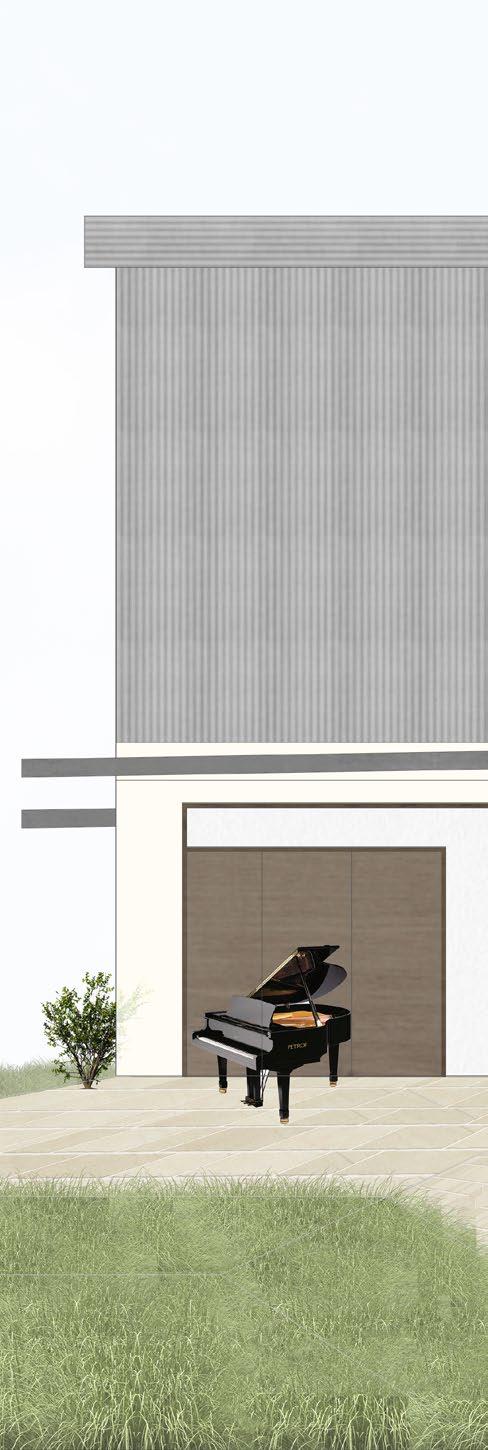
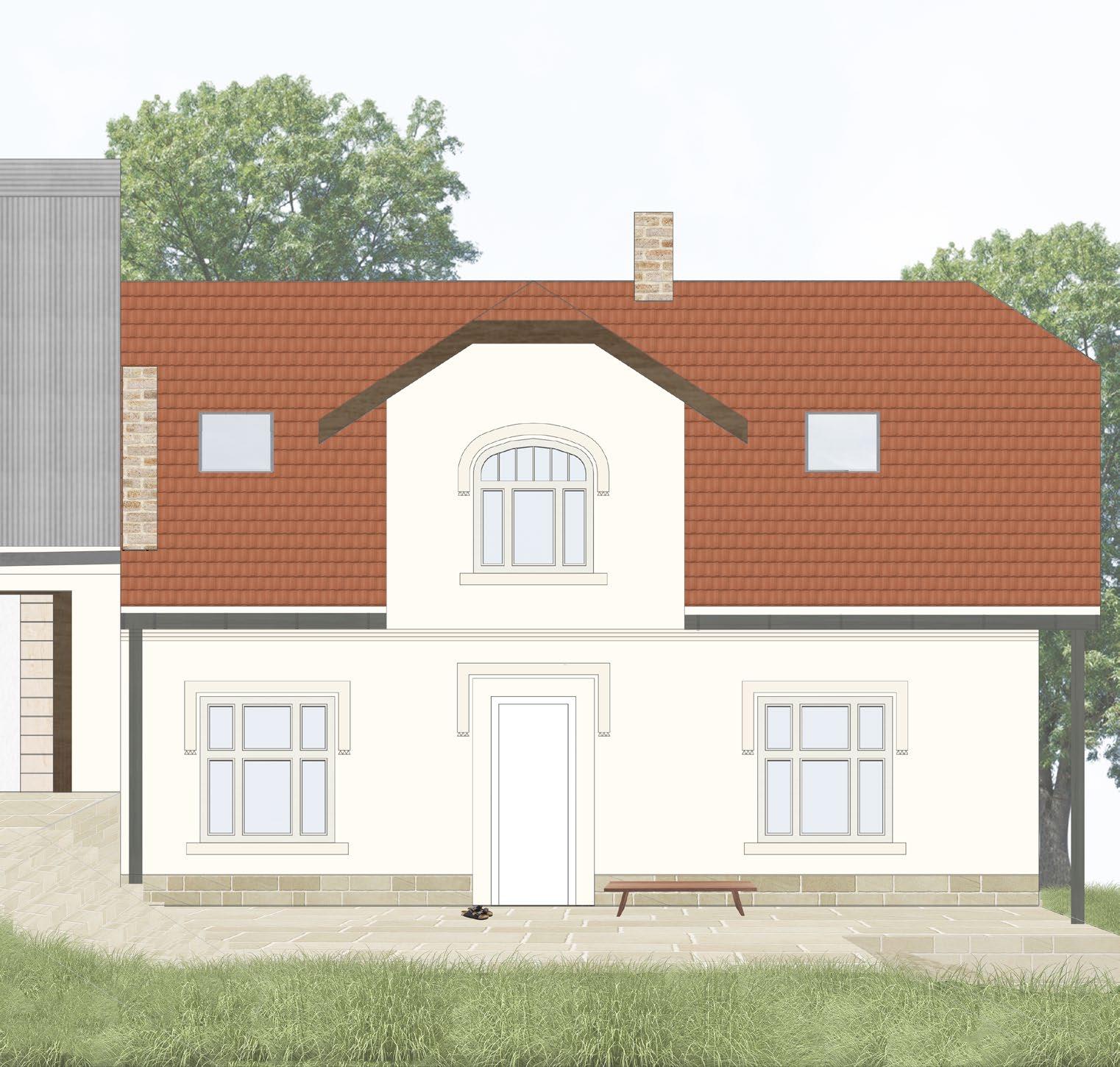
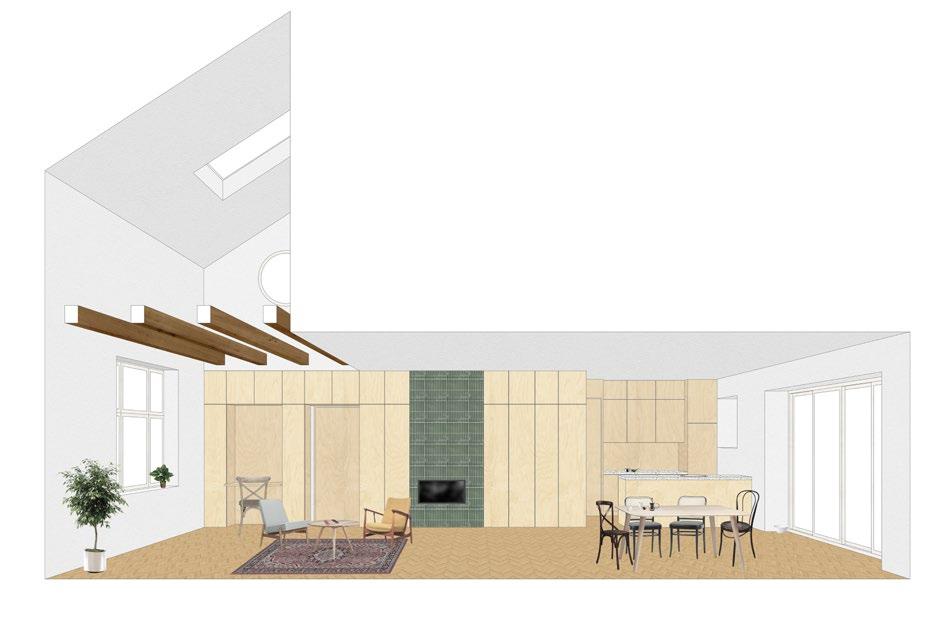
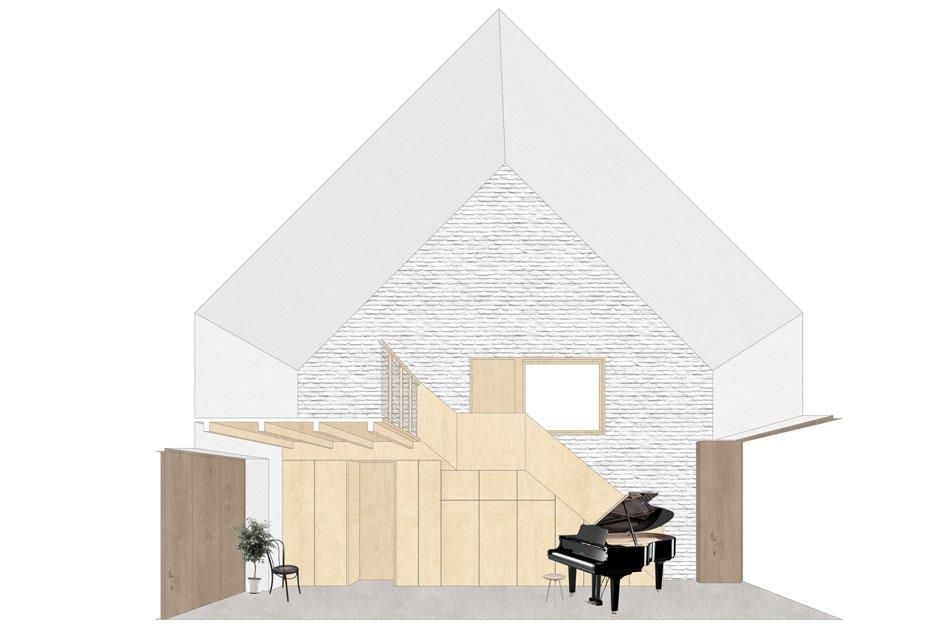
The family house is located in eastern Bohemia in the village of Vojice and Podhorní Újezd. The building is situated on a steep plot and is located on its northern side. Below it there is a large garden. The house itself was built in 1913 and still retains its original appearance. The building is complemented by a barn built of sandstone. The barn is raised 1,5 m above the floor level of the house. The client’s requirement was to design a conversion of the ground floor, which is now complemented by later alterations. To occupy the second floor under the roof of the house, which is currently used as loft space and to convert the barn adjacent to the house into a hall for the piano exhibition. The project makes minimum of interventions to the exterior in order to preserve the house’s historically valuable character. Only the newly installed skylights and the insulation of the eastern side are changed on the form of the exterior. The barn, whose roof has to be removed, will be transformed more significantly. A new corrugated metal roof is added and a door located in the original doorway opening. The door can be folded to one side to open the interior for audience sitting in front of a barn. The layout of the ground floor of the house emphasizes spatial purity, hierarchy and efficiency of spaces. The living room on the south side is cleared of partition and a linear space is created, containing the dining room and prolonged to the exterior terrace by a french window. The kitchen is placed into the space adjacent to the built-in cabinets, creating a partially enclosed secondary space. Ambient lighting of a living room is created by breaking through the ceiling. The master bedroom is located across the hallway. A utility room with bathroom and staircase to the first floor is located in the rear of the building. The mezzanine of the staircase connects to the floor of a barn, creating a link between the two spaces. The barn of the house is a cleared space where concerts will take place. A wooden structure is embedded to the hall. It serves as a storage area and a secondary staircase to the hall gallery and recording studio upstairs. A window is located on the north side of the sandstone wall to bring in indirect daylight. On the second floor there are two bedrooms, a studio, a bathroom and a study with an opening to the living room. The key feature is the entrance hall, which serves as a relaxation area with a library. The material design helps to recognize what is original and what is new. The existing structures are left in white plaster. On the other hand, the new structures are constructed in wood, including the viewing surfaces.
GSEducationalVersion Řez R1 - Řez podélný Jonáš Staníček ±0,000 +2,710 +3,310 +3,460 +4,360 +5,840 +5,990 +2,800 +3,550 +8,075 +9,571 +1,295 +1,495 +3,895 +4,400 +4,550 ±0,000 +9,767 6 000 1 140 880 6 000 320 800 680 Concrete wreath th. 150 mm for new brickwork Hole bricked up brickwork th. 150 mm Hole bricked up brickwork th. 150 mm Sandstone wal h 600 mm Brickwork HELUZ h 380 mm Brickwork th 450 mm Concrete wreath h 150 mm Concrete linte th 150 Roofing Roofing concrete wreath Betonový věnec tl. 150 mm pro nové zděn LEGEND Brickwork HELUZ th. 380 mm Concrete wreath / concrete lintel Brickwork embossed brick th. 450 mm Sandstone wal th 600 mm GROUNDFLOOR
LONGITUDINAL SECTION DETAIL OF CONNECTING WALL
1ST FLOOR
0 1 5 m 2 Řez R4 - Řez podélný schodištěm Řezy M 1:100 Vojice - Řezy +2,845 +3,085 ±0,000 +4,585 +7,639 +9,767 480 2 995 480 500 2 495 Brick wall h 450 mm Brick wall h 150 mm Repointed th. 380 mm Demolished chimney 150 mm concrete wreath ±0,000 +2,710 +3,310 +3,460 +1,495 25 70 380 15 Brickwork Heluz h 380 mm Sandstone wal th. 600 mm Acoustic Insulation Heraklith th 25 mm Embossed brick 290x140x65 h 450 mm Concrete wreath deposited on the existing wall th.380 mm Undercutting of a house hidden behind a plasterboard partition Demolished constructions Adjacing construction 2 0 m 0,5 2,5 1 Connecting wall - Elevation SOUTH NAME OF A DRAWING DRAWING No PROJECT PHASE EDITION DATE 01.06.2024 D.3.5.7.2 DBP IDENTIFICATION INFORMATION PROJECT NAME Family house Vojice SCALE 1:50 AUTHOR Jonáš Staníček ±0,000 +318 m.n.m. FORMATE 2xA4
Sauna/bar, Prague
First idea was to create a place - a sauna that works thanks to the community around it. A place that works on the activity of its visitors. The proposal has changed after the cooperation with the Scout Institute in Rybárna. The program was enriched by a kiosk that operates in the summer months. The resulting structure changes to a bar or sauna depending on the season. The construction of the building is based on the principle of exoskeleton. The outer structure supports the inner, wall structure. The supporting structure is composed of 5 modular frames. The frames are connected by plywood walls, which provide spatial rigidity of the structure. The spatial rigidity is ensured by threaded rods between the frames and the prisms placed longitudinally inside the sauna. The frame consists of two wooden columns which hold the bottom, ceiling and roof beams. The ceiling beams are pre-set in front of the structure and carry a hinged shutter. Corrugated sheeting is used for the roof covering, which lightens the structure. The walls are fixed to the columns and interconnected by metal angles. The side wall with the entrance is movable. This allows a functional transformation of the house. Structure’s interior is based on functional variability. When the function changes, the sliding wall, moves 1 module inwards (sauna) or outwards (bar). The fixed elements are designed to adjust for the use when the function changes. Elements that need to be replaced during conversion are designed according to the space between the columns. The fixed bench is foldable in the summer to create more space for movement within the bar. In the folded position, on the other hand, the loose part is attached to the wall with a rope. In turn, the higher shelves can be freed and serve as a backrest. Variable elements are the sink table, the bar and the sauna bench. The sink table is designed in such a way that when the function is changed, the sink top can be taken and used as a sauna shower tray. The bar table and sauna bench are built with a structure that holds the elements together with removable pegs. This makes them easy to disassemble when changing use.
GSEducationalVersio
SECTION BAR
interiér baru
interiér sauny
SECTION BAR
obě funkce. pevně ukotvené na lanko. prostor lednice je i baru a stůl umyvadla jsou vyjmutelná
na spoje konstrukce jsou použity kolíky, které umožňují jednoduché demontování. po rozložení jsou dílce uloženy na záda stavby.
konstrukce stolu s umyvadlem
na spoje konstrukce jsou použity kolíky, které umožňují jednoduché demontování. po rozložení jsou dílce uloženy na záda stavby.
konstrukce baru konstrukce lavice sauny které umožňují jednoduché demontování. po stavby.
GSEducationalVersio GSEducationalVersio GSEducationalVersio GSEducationalVersio
využitím pro
FLOORPLAN SAUNA
FLOORPLAN BAR
150 40 40 20 160 40 40 20 270 40 40 40 60 720 720 720 60 80
40 20 640 40 760 120 60 60 500 60 60 40 40 20 420 40
okenice jsou zvedány lanky, která jsou uchycená karabinami ve dvou polohách otevřeno/zavřeno.
konstrukce rám je konstruován spoji ze závitových tyčí pro možnost rychlé demontáže konstrukce. prostorově je rám ztužen stěnami a ztužením závitovými tyčemi v a dolních pásnicích.
při přestavbě baru na saunu jsou okenní tvory zaklopeny polykarbonátovými okny tak, aby se i během zimního užití dostalo do sauny světlo a zároveň neunikalo teplo.
kompozice čelní stěny
stěna je poskládána z odřezků, které vznikly z desek pro zbytek konstrukce.
F6 H4 H7 H3 G14
řešení okenice
výplně otvorů G13 G12 H2 G7 G8 G10 B1 B2 A1 G6 G11 G9
G4 E4 E3 E1 E5 E2
Three Charites, Prague
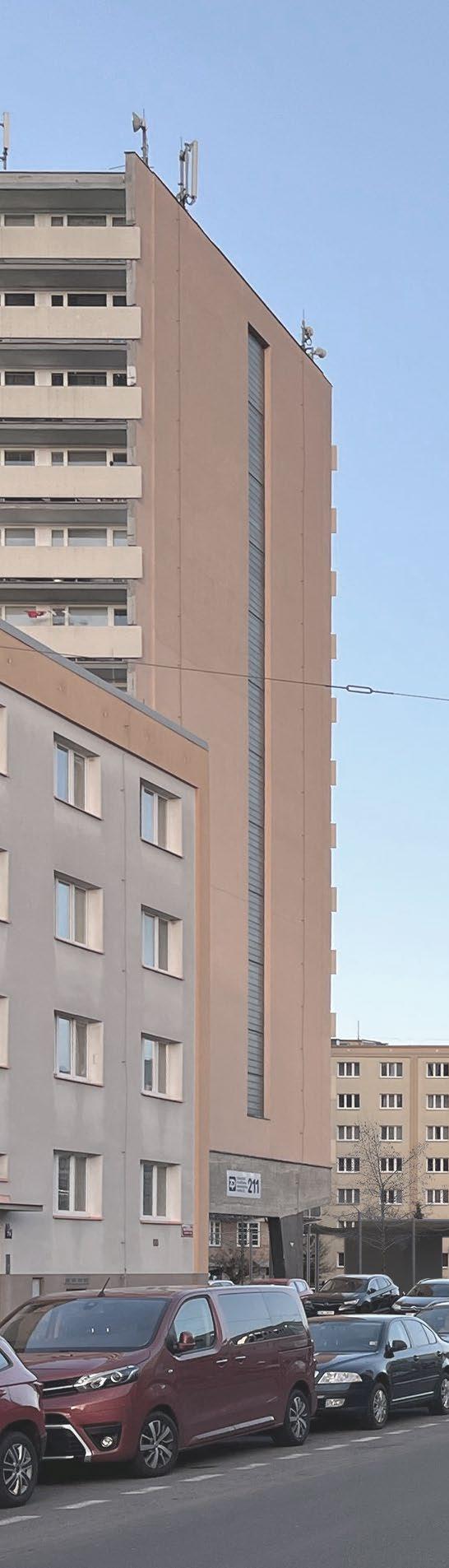
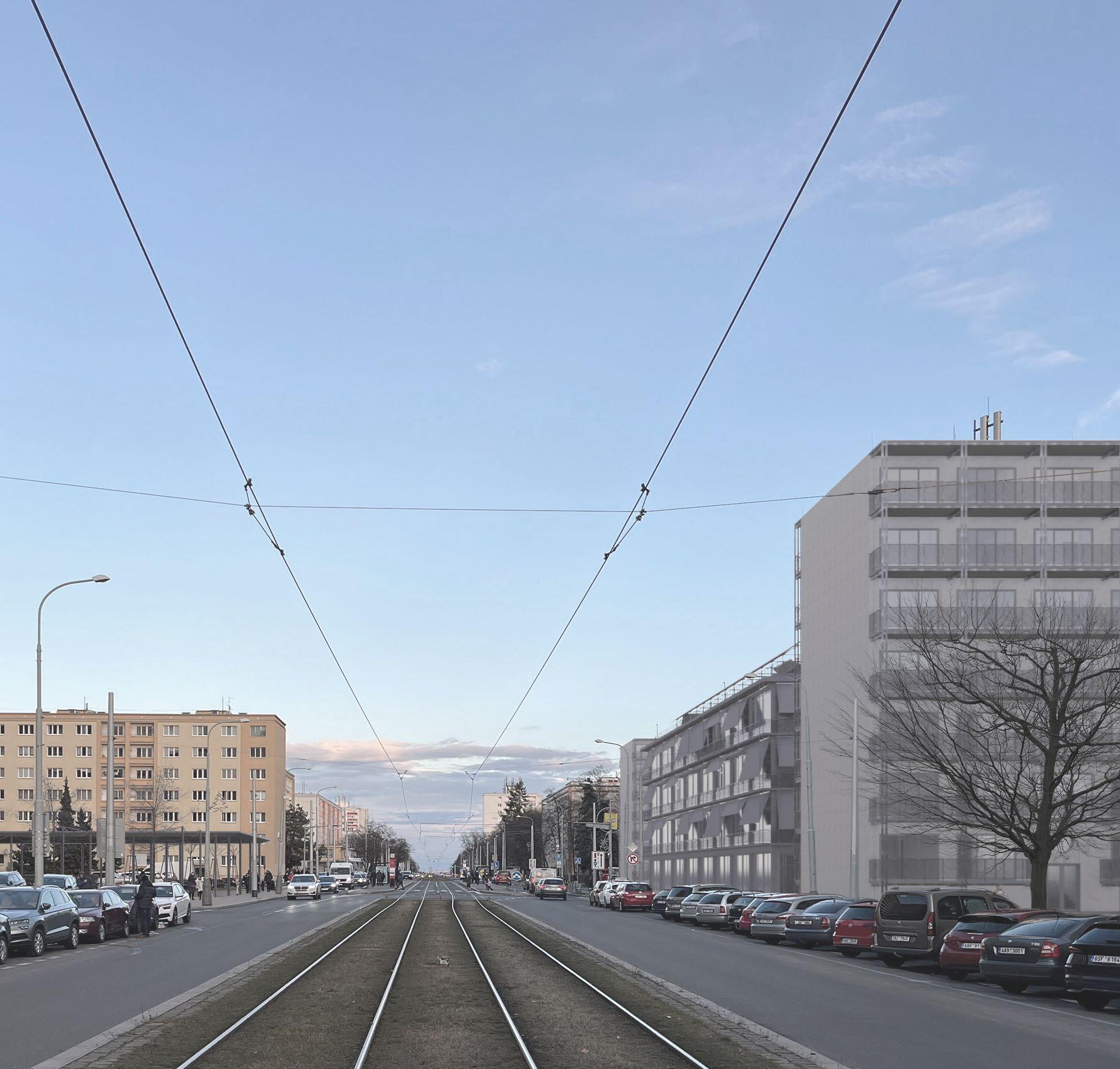
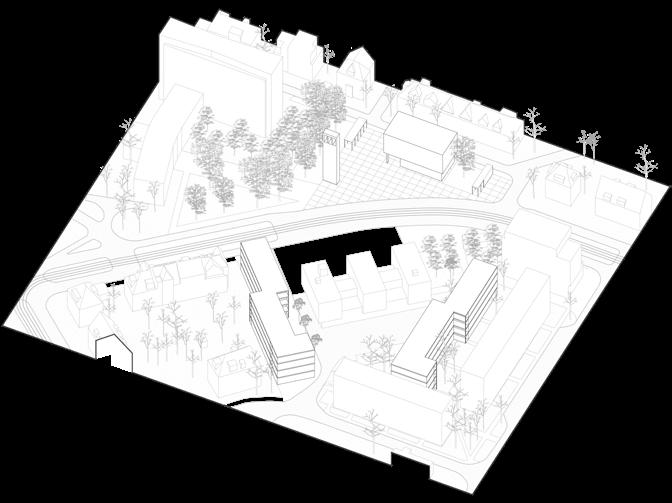
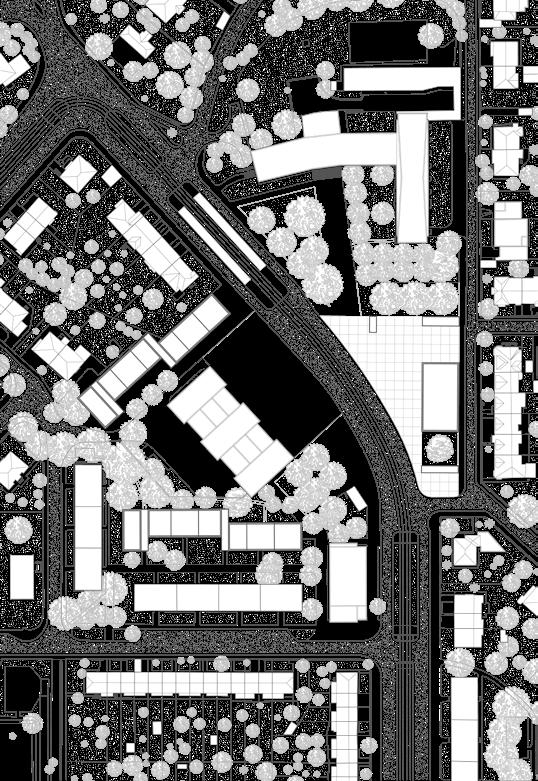
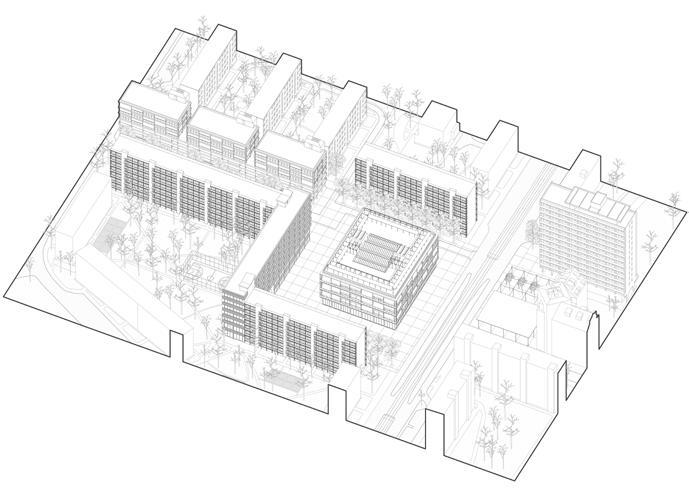
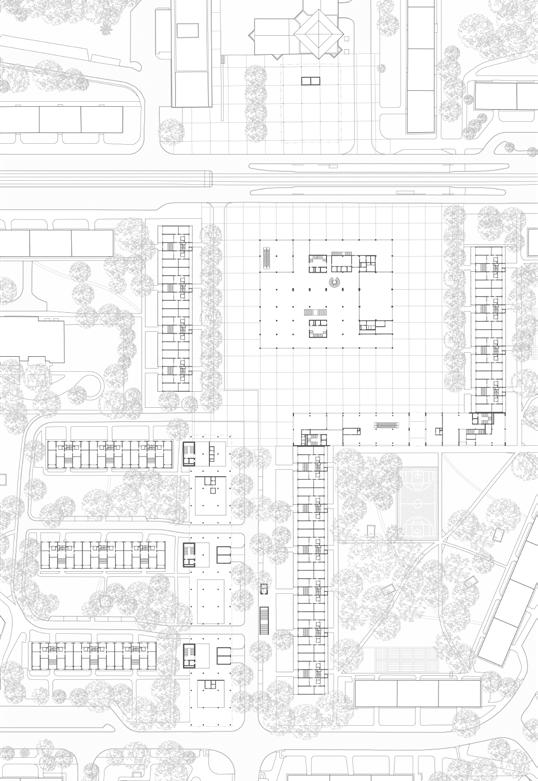
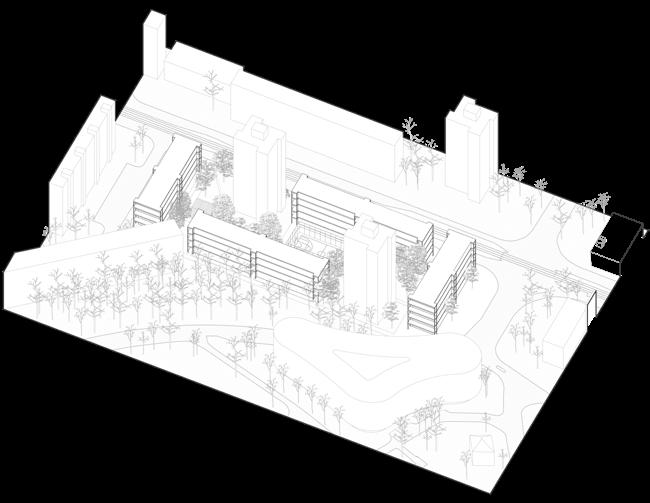
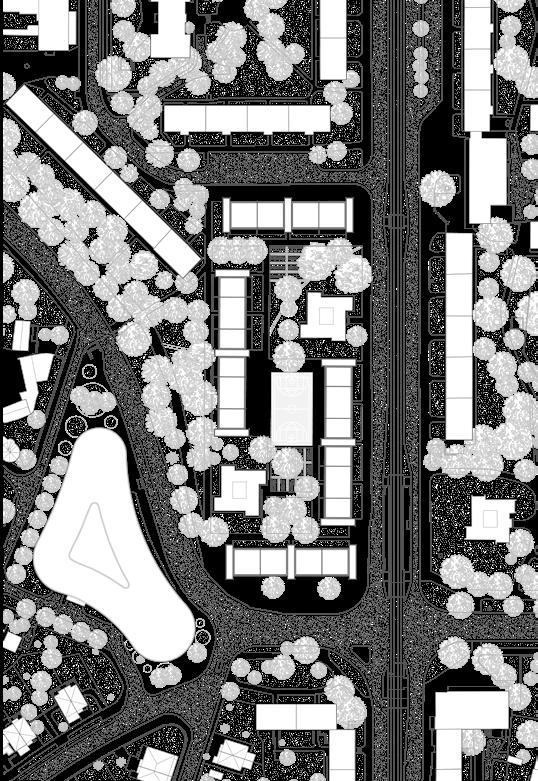
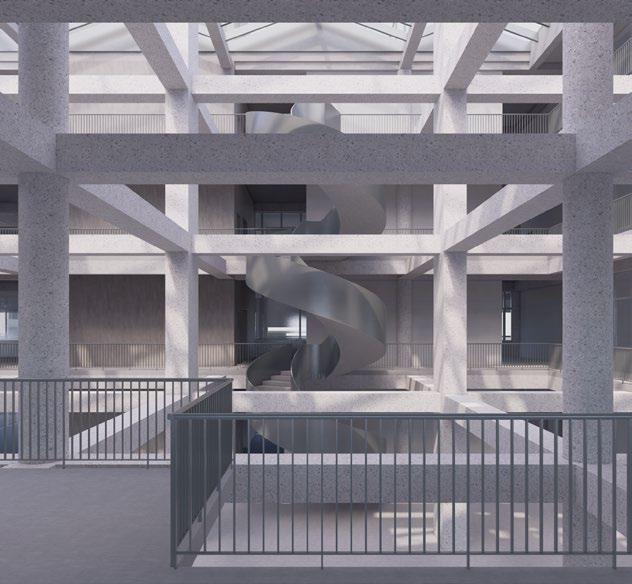
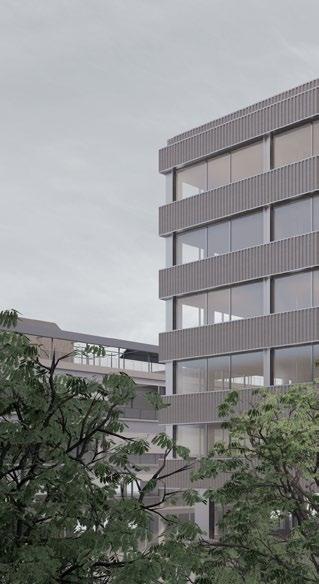
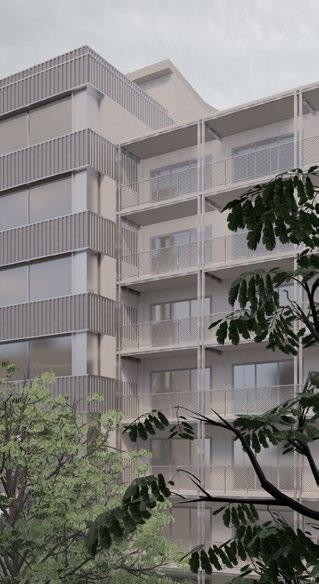
Petřiny. A housing estate from the 1960s. Though well planned, it currently does not provide sufficient facilities for its inhabitants. Work and community life is suppressed in a housing space. New interventions reinforce the strengths of the estate and provide new solutions. Three nodes are created along the boulevard that reinforce the identity and character of the place. Makrola. The area around the Academy of Sciences and the fire station is also the tram terminus. The line is extended and a square is created in the place of the terminus. To the two landmarks, third, a church is added. The spiritual level of the district has been missing so far. The church strengthens and completes the square. The urban design is reinforced by the new apartment buildings located behind the fire station. Centre. The centre of the housing estate is around the metro station. The design places buildings creating cultural and work opportunities. The new square is framed by two office buildings with parking, shops and a nursery on the ground floor. The adjacent prefabricated buildings are extended with balconies. In the middle of the whole area, the Petřiny cultural centre is being created by converting a mall. A market construction, across the street, completes the square. The towers. A node at the very end of the housing estate. There are tower houses that indicate the entrance to the district. The towers are complemented by 4 and 5-storey apartment buildings. The houses form an open courtyard with the towers, while respecting the character of the modernist estate, while also forming a base for the existing buildings. The houses are complemented by an active parterre. The internal space of the block offers activities to strengthen the local community. Culturehouse. House-Square, that’s how building, operating on the principle of adaptive reuse, serves the people. The project uses and expands the current mall. It also absorbs the adjacent subway exit. The arrangement of functions is divided by floor. The lower two floors are open to the surrounding space. They accommodate a hall, restaurant, exhibition areas and an internal open space illuminated by an atrium. The remaining two floors accommodate rooms that can be used freely and modified spatially. The building graduates with a sloping green roof. The shop and subway entrance are moved underground. Parkhouse. Inverted prefab. The building is positioned to the blind gables of the prefabs and closes Bruncvík Street. The ground floor opens onto the street. The footprint of a building is reduced to communication cores. The main cores are located outside the building and free up the layout of the building. The second and third floors serve as a parking house accessible by car lifts. The building is divided into three separate three-story masses with offices. Officehouse. The building closes the main Petřiny square. The ground floor is divided into two functional masses. They are separated by a passage allowing access to the courtyard. In the eastern part there is a kindergarten. The western one serves as a store. Above these are office spaces accessible from cores located at the blind façades of the prefabs.
GSEducationalVersion MASTERPLAN MAKROLA
CENTRE TOWERS
CULTUREHOUSE OFFICEHOUSE
GSEducationalVersio GSEducationalVersio GSEducationalVersion GSEducationalVersio
GSEducationalVersio nGSEducationalVersio OFFICEHOUSE GSEducationalVersio GSEducationalVersio GSEducationalVersio GSEducationalVersio
PARKHOUSE
Cohousing, Vall d’Hebron, Barcelona
The project of co-housing is intended for employees or for relatives of long-term sick people placed in the Vall d’Hebron hospital. Site of the project is located in the hilly northern part of Barcelona. This part of the city transforms from densely urbanised to less densely occupied area. The plot is situated on very steep part of the hill with elevation 26 m between the southern and northern part. Objective of the task is to create housing with 60% residential and 40% community space. The housing is composed of 7 units 3 bedroom and 7 units of 2 bedroom apartments.
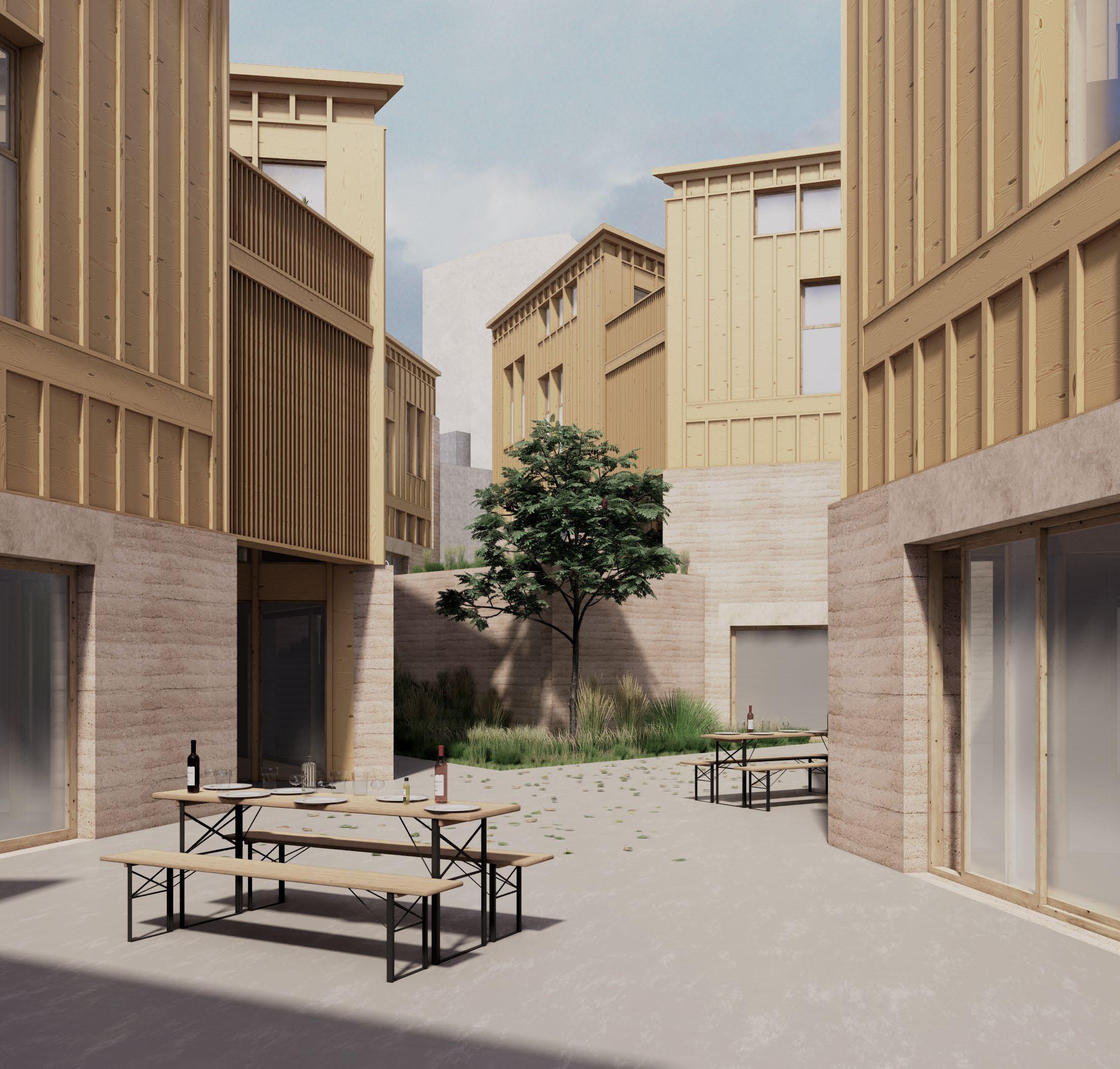
The proposal divides living units into 7 buildings. The houses are grouped into 2 clusters of 4 and 3 buildings. Terraced community garden is placed between them. The masses of the buildings are shaped into irregular pentagons which shape unique public space within the cluster. Buildings have common parterre which satisfies needs of inhabitants of each cluster. Common kitchen, library, laundry room, game room, working space or gym with sauna are part of these functions.
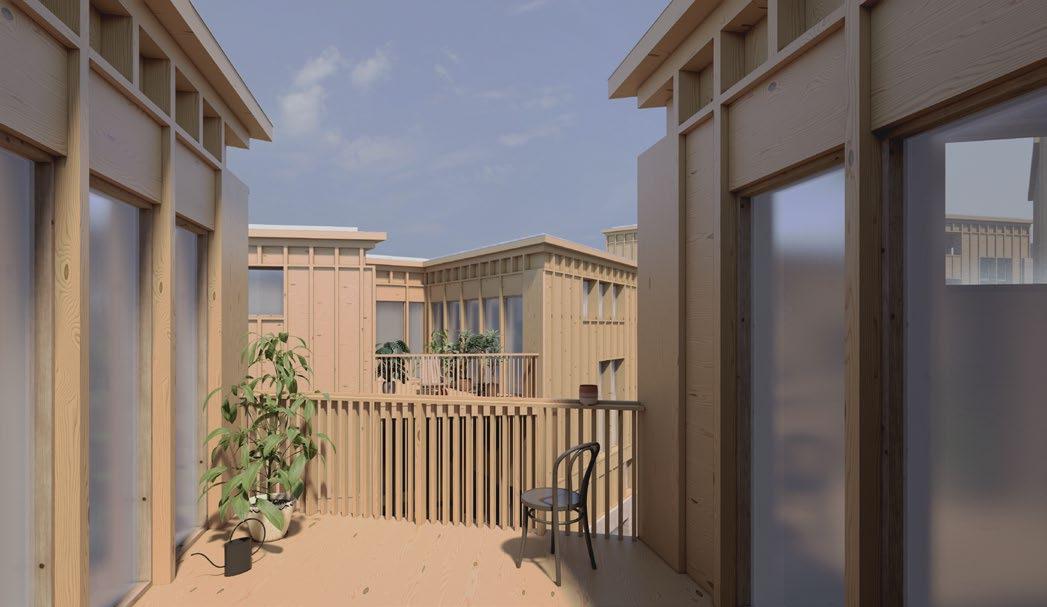
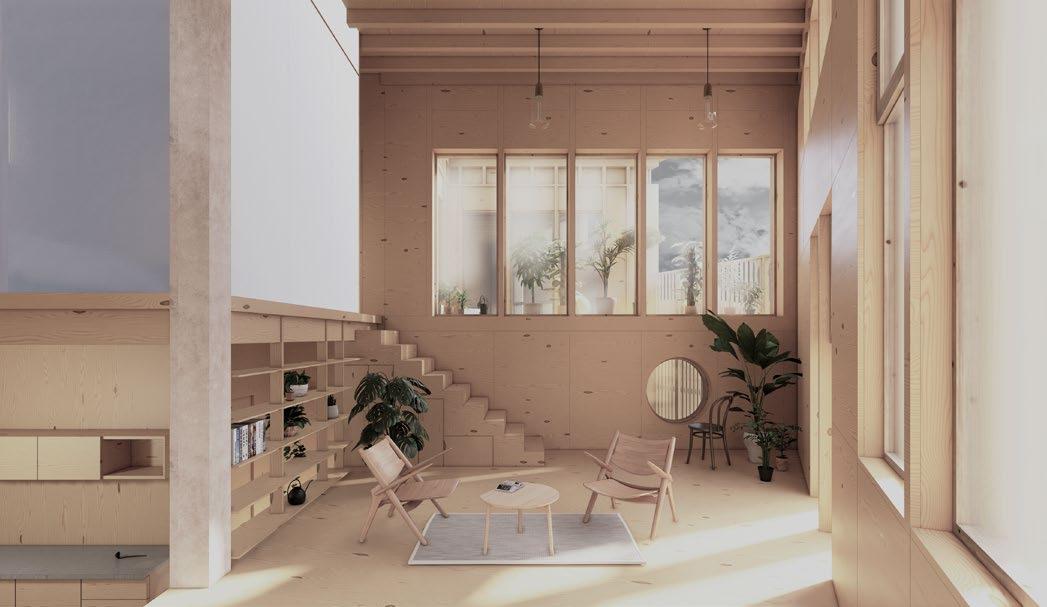
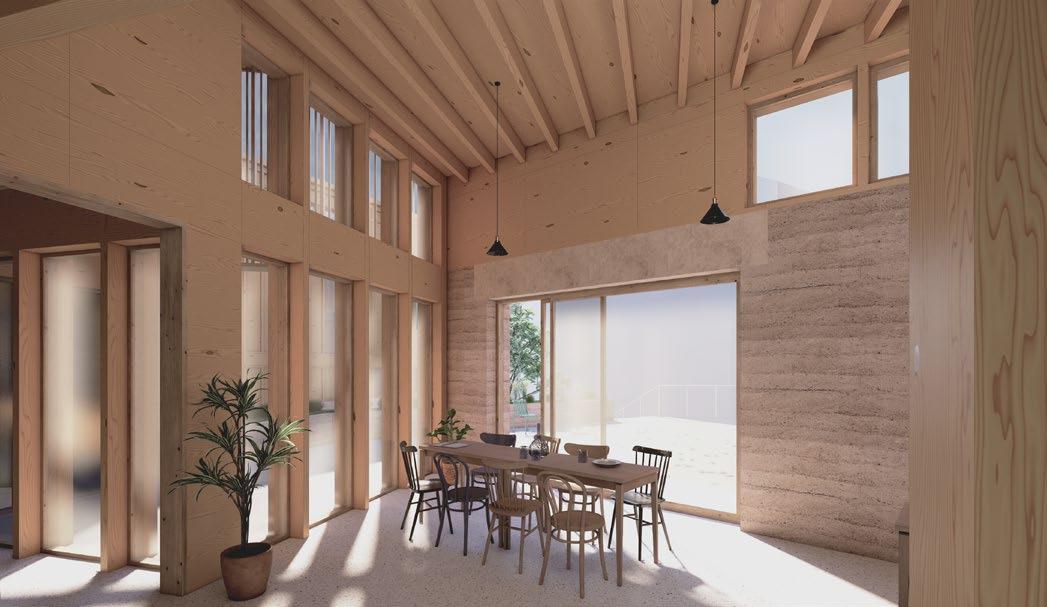
Two housing units are placed above these shared spaces. Layout of these apartments is created in both vertical and horizontal plane. The kitchen and bathroom are located in an entrance level. The floor of the living room is elevated 1,4 m, in order to emphasize the hierarchy of the spaces and to create headroom of the shared space. The bedroom is elevated another 1,6 m from the living room and is placed above the bathroom and partly above the kitchen. Second bedroom and roof terrace are accessible from this level. The bedroom isn’t attached to either flat. That allows fluctuation of the space between both units as needed.
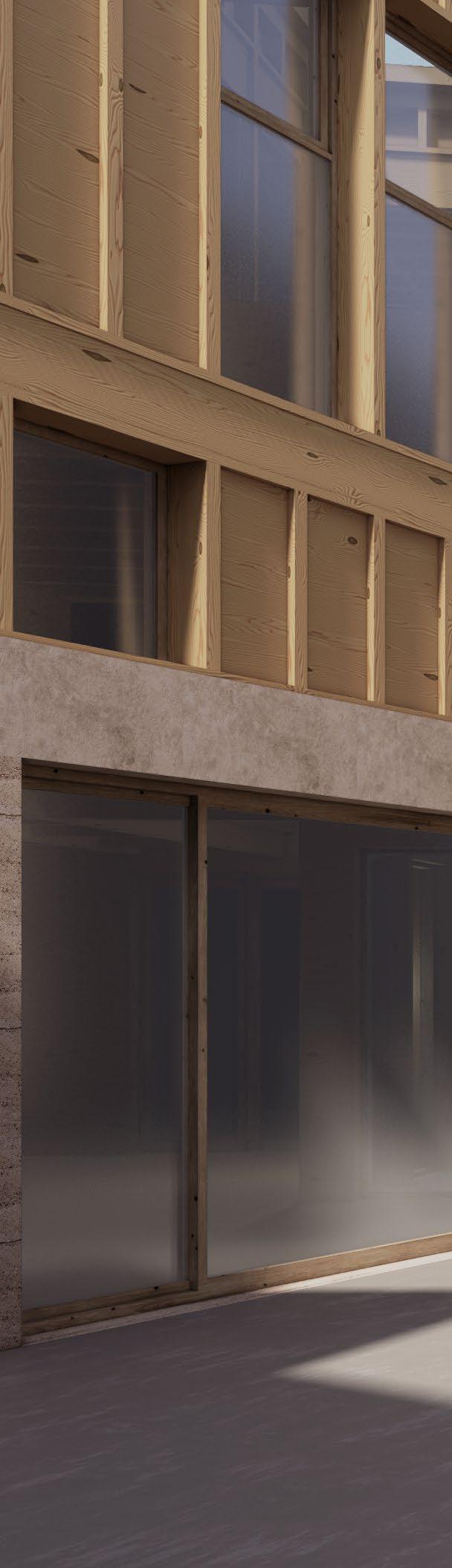
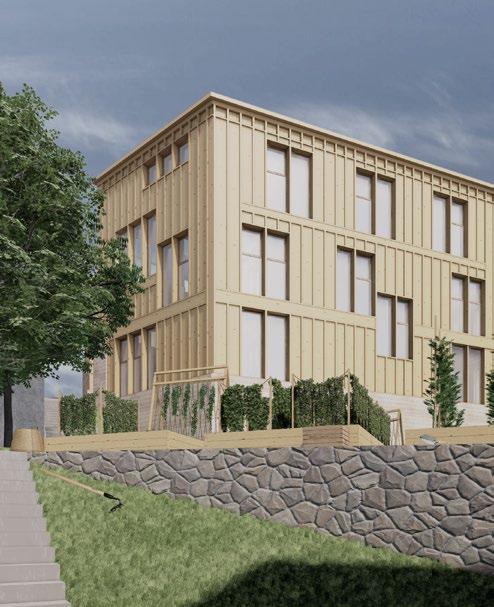
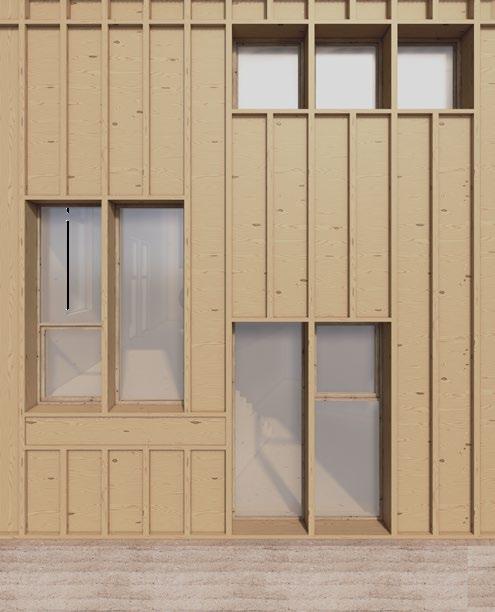
The mass of the building is materially divided into two parts. The ground, common part, is built using rammed earth and materially relating to the surrounding terrain. The upper, living part, is from timber. The façade of the building corresponds to the structural system and individual changes of the system are shown on it.
GROUND FLOOR
2nd FLOOR
GSEducationalVersion
3rd FLOOR
Re-Thinking Sío, Catalonia
The urban project deals with the Sío river, which flows through the central Catalonia, and the municipalities that have grown up around it. The settlements in this area are unique for their morphology and relationship with the surrounding landscape. They are always based on a hill for two reasons. Firstly, they acted as protective fortresses, and secondly, their positioning prevented the villages from flooding. These aspects thus form a unique urban structure with a clearly defined boundary between the urban area and the rural zone. The area around Sío river is currently facing several major problems. The area is mainly focused on agriculture. This, together with the lack of amenities and poor infrastructure, is causing the ageing and declining population in the area’s villages. Homogeneous land use causes drought and low water retention capability in the area.
The main objective of the proposal is the restoration and creation of a sustainable rural environment. Achieving sustainability through 5 themes: ecological, social and economic themes, improvement of mobility and restoration of historical heritage. The ecological aspects focus on green infrastructure: liberation of the Sío river through the creation of a green belt, diversification of land use and green areas, and the creation of an ecological model for the re-use of grey and rainwater. The social aspect works on the principle of Clusters consisting of several villages. Each village in the cluster will have a community centre with co-working spaces and a venue space for themed events with different use. The synergy thus created between the villages will create circulation within the cluster and strengthen social interactions between the locals.
The restoration of the historic heritage is based on the preservation of the historic urban character with its walled origins and its unique composition with the Sío river. The implementation of new features improves the resilience of the existing urban fabric. The economic model serves to attract new residents who will return to the now abandoned buildings. It is based on two principles. The first is to offer existing housing rent-free in exchange for renovation of the building by tenants. The second is to sell houses below market cost to maximise housing potential and activate the rural area. Mobility works on two levels - public transport and cycleways. The public transport components consist of regional buses that connect all the Clusters in the area with the local regional centres. These are supplemented by secondary buses, called “bus de barrio,” which connect villages within a Cluster. The cycle paths are also divided into two levels. The main one, running along the river inside the green belt through the whole area, and the secondary ones, which improve the connection between the villages.
GSEducationalVersio
STRATEGY OF NATURAL INTERVENTIONS
GREEN BELT FILLING UP NEANDERS
EXTENSION OF BELT EXTENSION TOWARDS CITY
SIGHTSEEING SPOTS GREY WATER MANAGEMENT
CROSSING OF THE RIVER
BICYCLE LANE ALONG THE RIVER
BICYCLE LANE IN THE FIELDS
OSSO D’SÍO STRATEGIC
NODES


GSEducationalVersion
mobilidad estructura urbana infraestructura verde azul activación socialeconómica entorno rural masías alojamiento espacio público (plataforma pública) regional bus stop (vía primaria) green belt rutas de bici community garden huertas parque urbano rutas de bici secundarias bus de barrio espacios sinérgicos de eventos community center reconstrucción de casas vacías ESTRATEGÍA PRINCIPAL ESTRATEGÍA SECUDNARIA ESCALA TERRITORIAL ESCALA INTERMEDIA ESCALA LOCAL MOBILIDAD HABITAGE SERVICIOS ESPACIO PÚBLICO ACTIVIDADES ECONOÓMICAS PATRIMONIO
BELLVER
STRATEGY OF INTRAVILLAGE
D’OSSO CONTINUITY INSIDE CLUSTER
INTERVERVENTIONS
MONT-ROIG
PRINCIPLES OF REUSE
FOR CIVIC AMENITIES
Renewal of agricultural buildings for event spaces
Renewal of city ruins for civic amenities
FOR RESIDENTS
Renewal of family houses
GSEducationalVersion
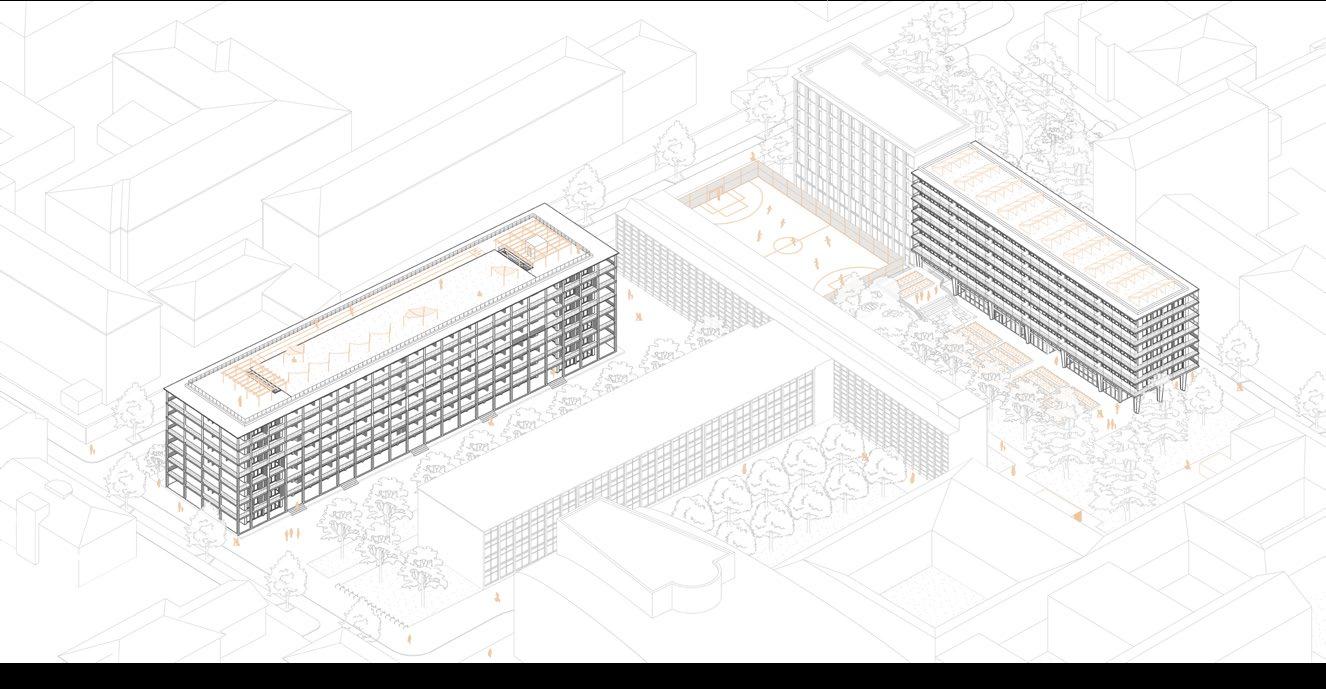
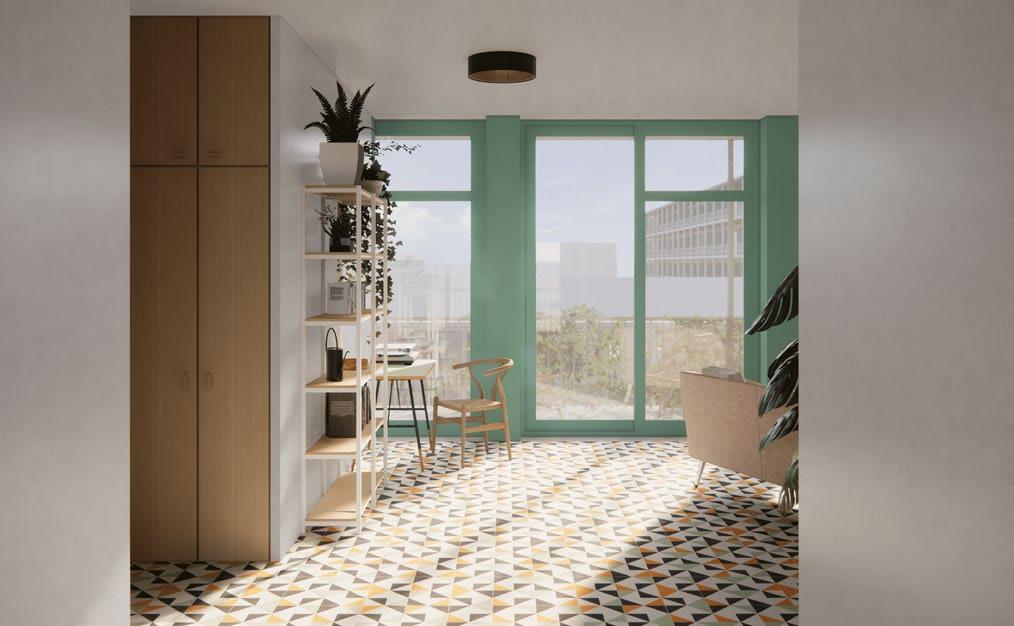
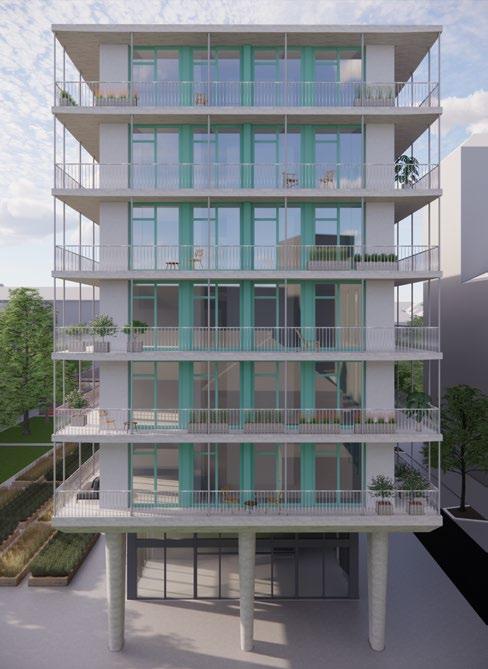
Housing cooperative and dorms, Milan
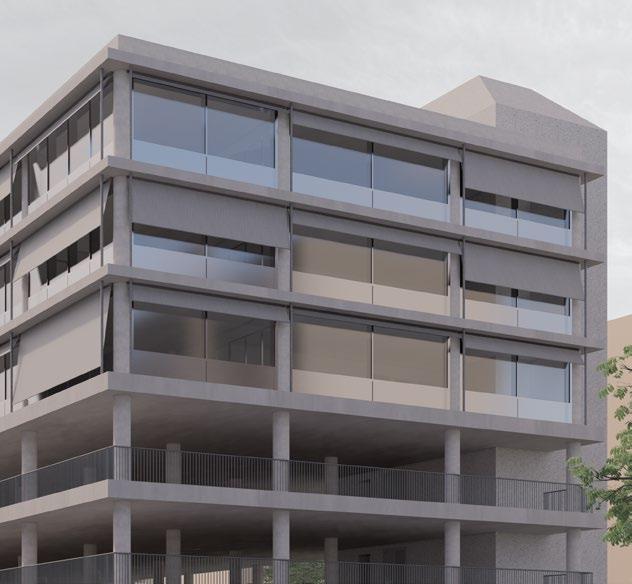
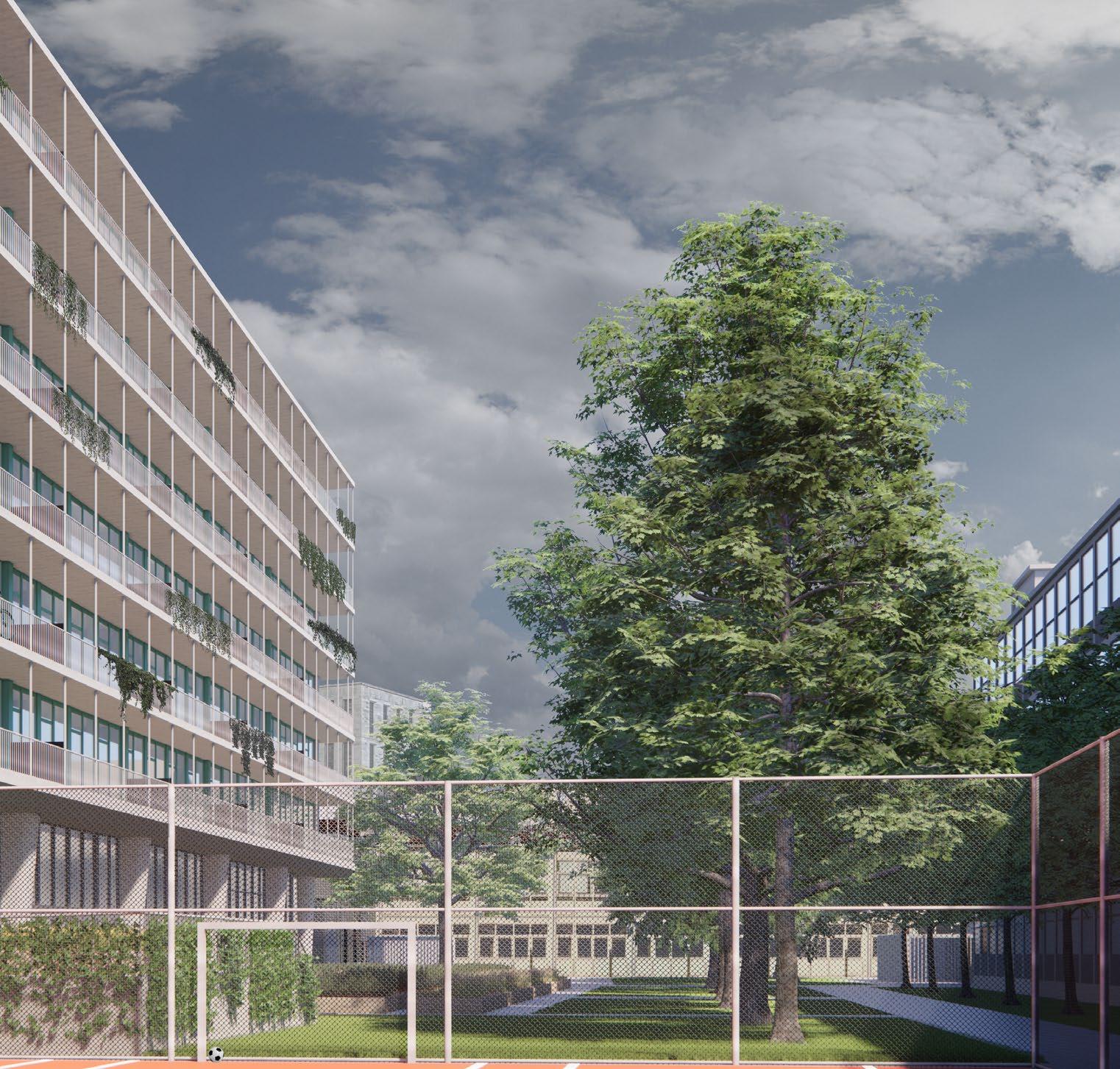
Milan offers a large number of compositions of various historical buildings with post-war architecture. Same thing goes with the block between Via S. Barnabam, Via Pace, Via Manfredo Fanti and Via Francesco Daverio. Historically, this is where the remains of a convent, modernist office and school buildings from the 1950s and the newly built Milan Courthouse meet. The proposal foresees the creation of new spaces, the opening of new paths and the reinforcement of local connections for both new residents and people passing by. Simultaneously, two buildings are being constructed. The new spaces of the block are supported by the construction of dorms and an eightstory residential building in the southern part of the block. The dormitory building is being built on the site of an abandoned office building and re-uses its structural system instead of demolishing it. Several additional bays are added to the building’s skeletal system and three additional floors are added. The new construction of the residential building is located at Piazza Uminatorio and replaces the entrance to the underground garage, which is subsequently redesigned as part of the construction. Height of the building is related to its neighbour and its mass encloses the piazza.
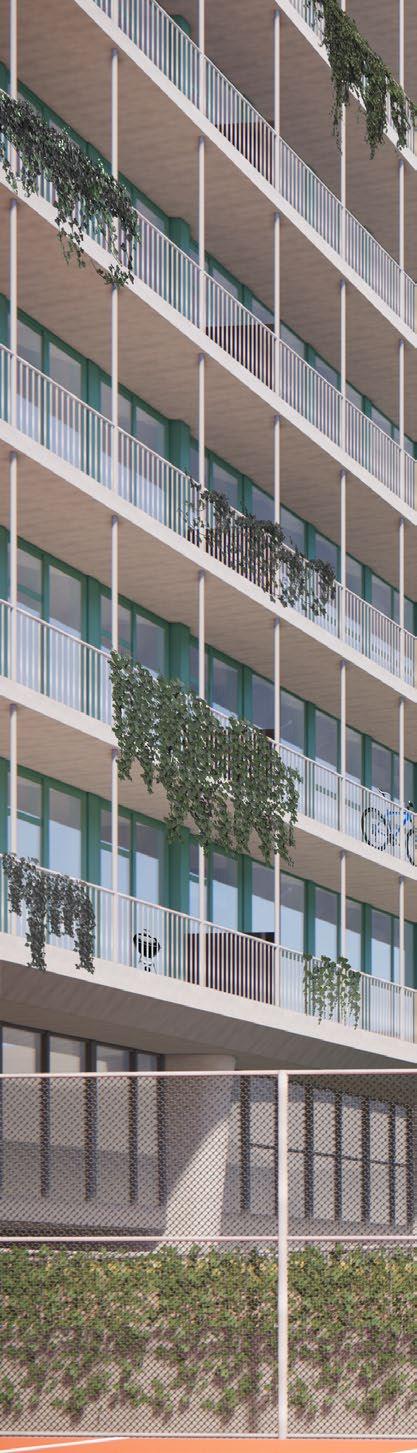
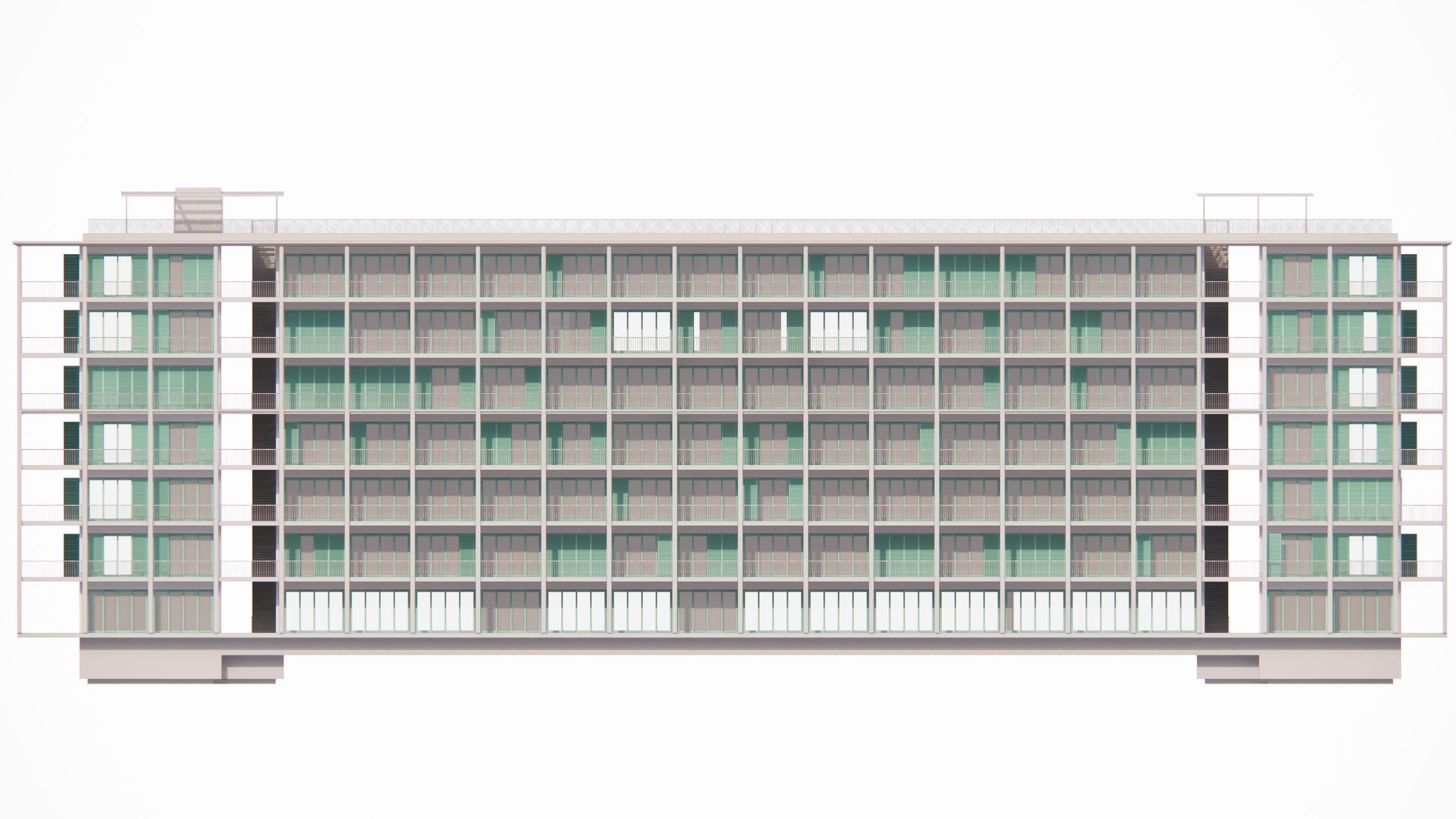
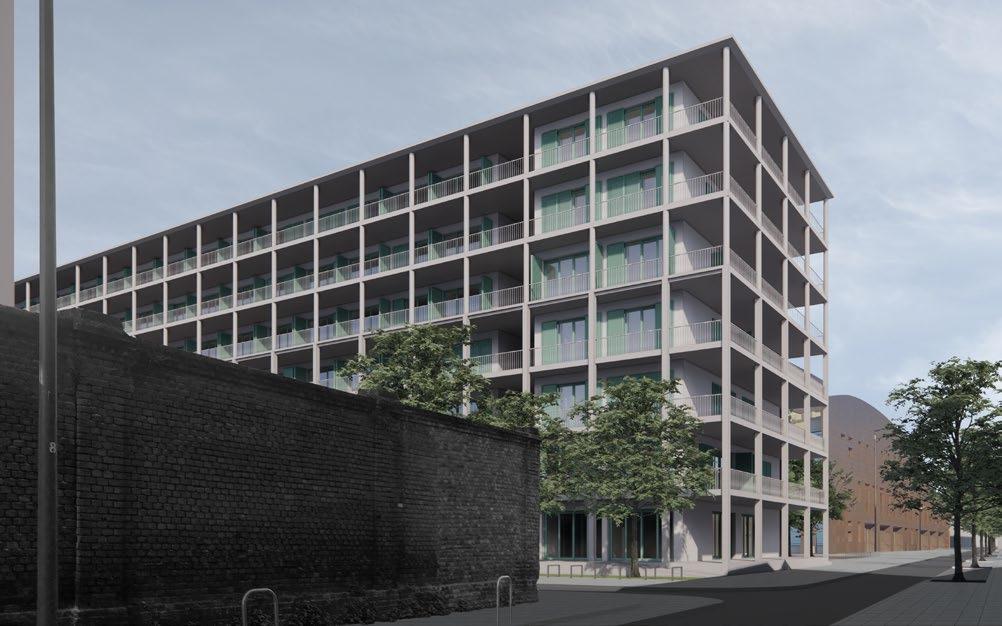
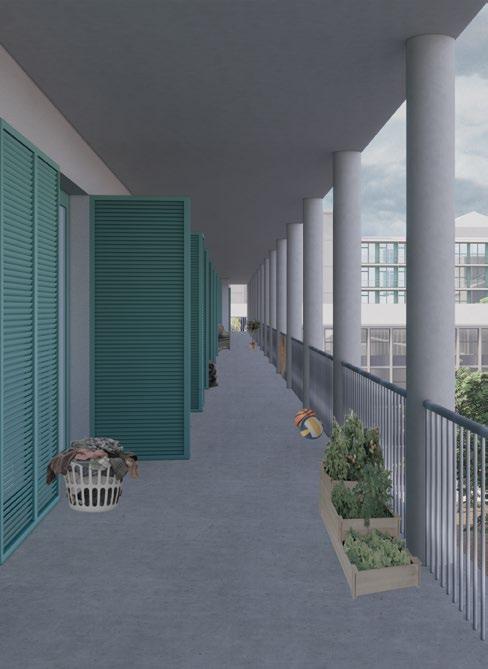
A deep gallery runs along the perimeter of the dorms, from which habitants enter to the individual rooms, with their cores pushed together. The gallery also serves as common areas for students. In addition, each room is equipped with shutters that can be shaped in different ways. At opposite ends of the linear building are located both the communication cores and the common areas. Vertical communications lead to the roof terrace or down to the ground floor with study spaces. The form of the dorms follows the grid of the older building and is significant for its strict columnar order. This is softened by the shutters of the individual rooms, which create a secondary scenery on the façade with their different setting. The perimeter of the housing cooperative is lined with a gallery, which serves as a balcony for the residents. There are two communication cores in the building. Three flats are accessed from them. The side apartments have access directly from the galleries to their balconies. There are two 3+kitchen apartments and one 2+kitchen apartment on the typical floor of the southern part. The apartments have a central common area and zoned room areas. On the northern part of the building there is a 3+kitchen apartment identical to the previous ones, a 1+kitchen apartment with a sleeping niche and a 4+kitchen apartment with a central core and rooms located on the façade. The lower two floors house the social, and technical facilities of the cooperative, which are complemented by an active parterre and office space. The form of the new cooperative housing paraphrases the Milanese apartment buildings. The lower two floors of the building, used for amenities, are overlapped by a heavy concrete skeleton supporting the building above. The linearity of the building is emphasised by the walkways surrounding the building on the upper floors.
GROUNDFLOOR
2nd FLOOR
6th FLOOR
TYPICAL FLOOR
GROUNDFLOOR
2nd FLOOR
Vltava filharmonic Prague
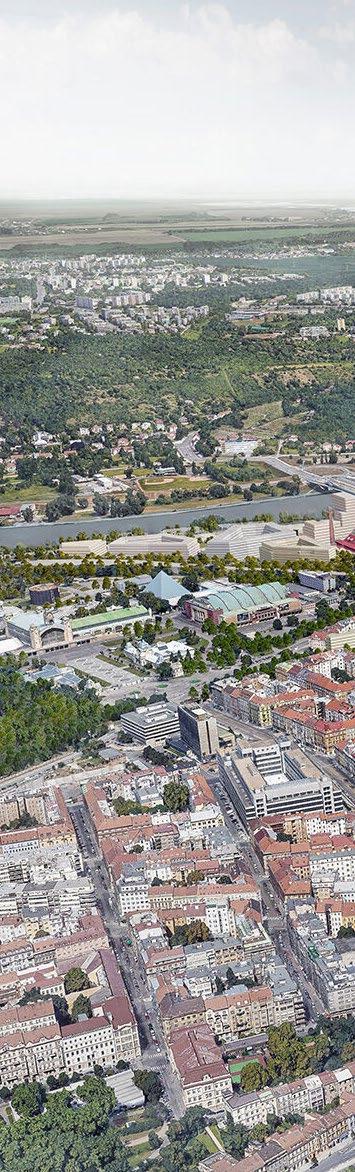
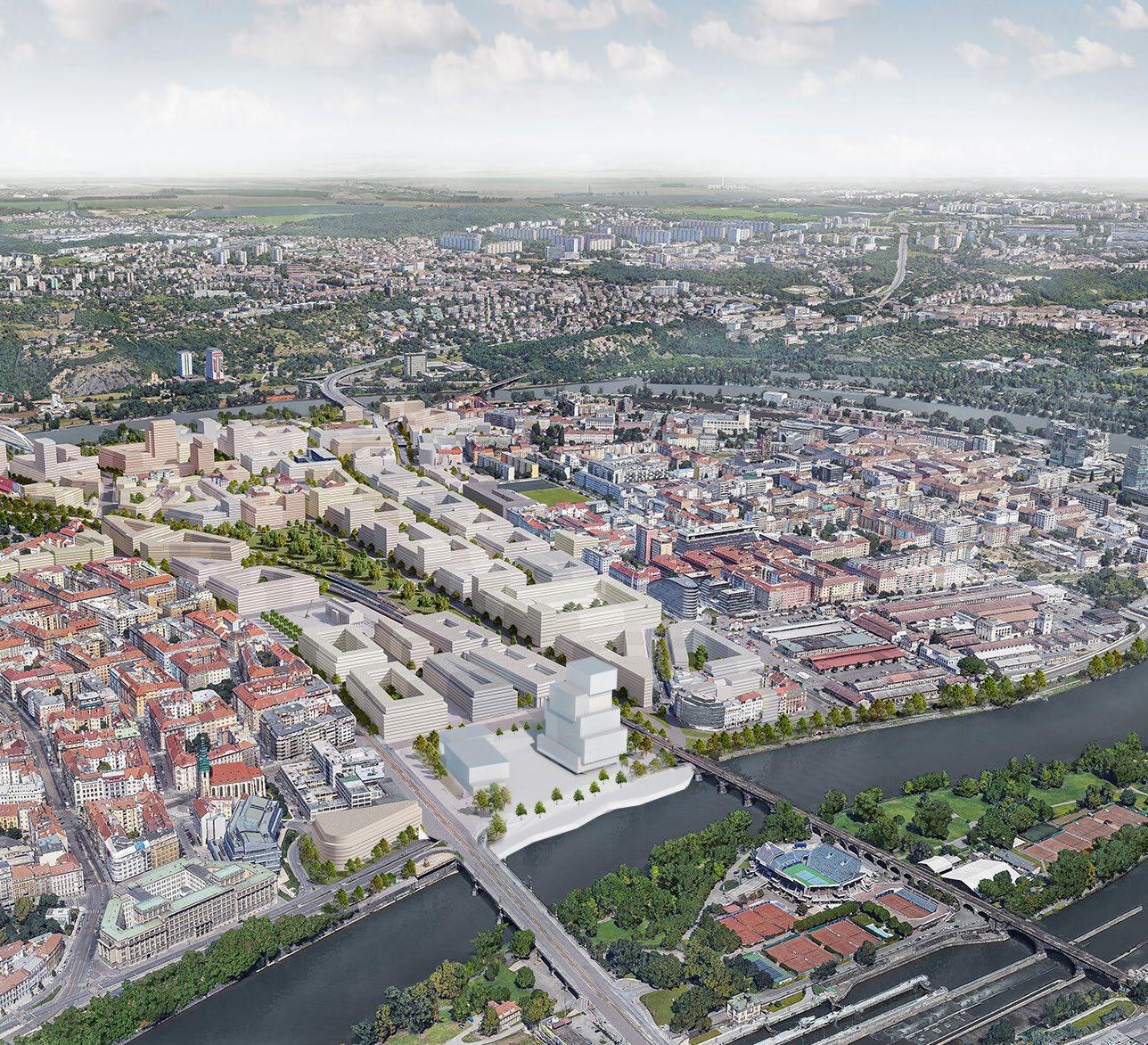
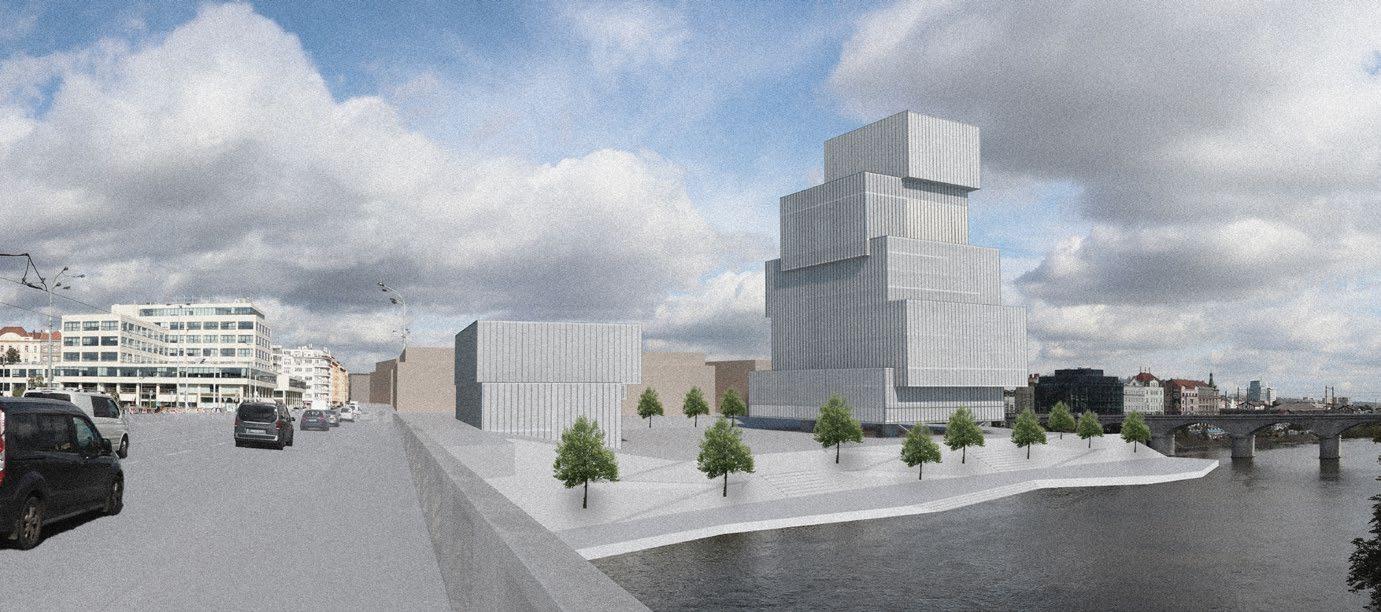
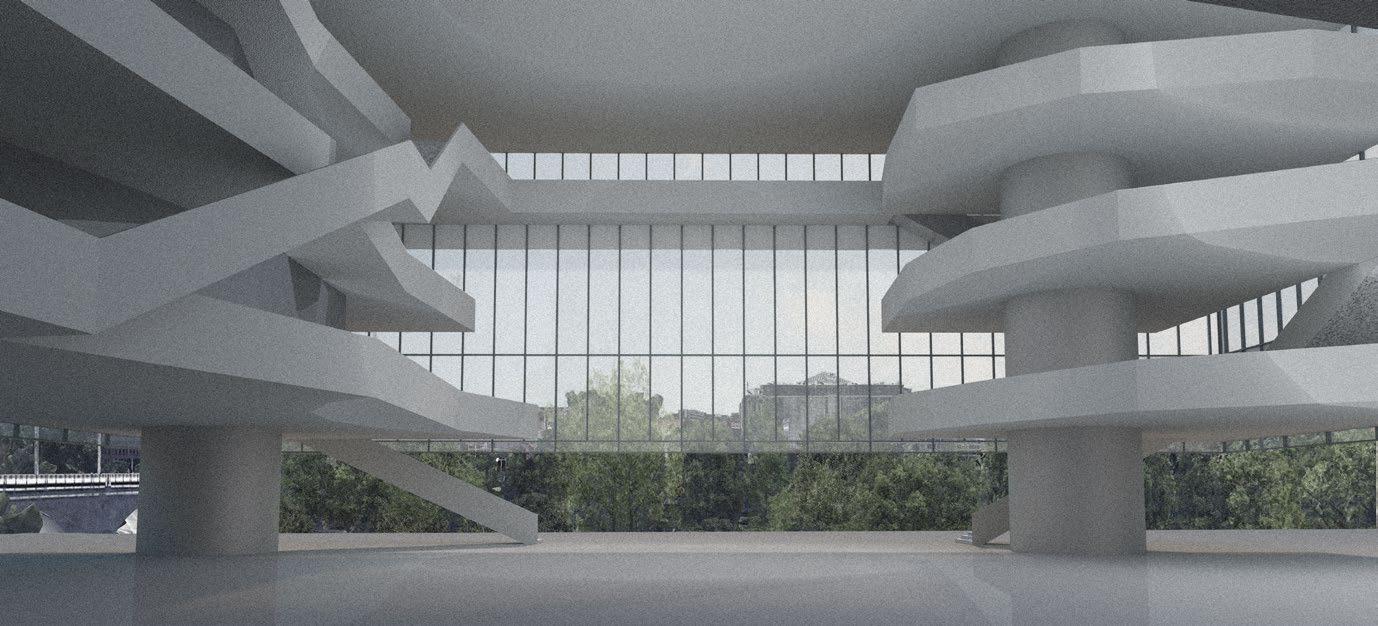
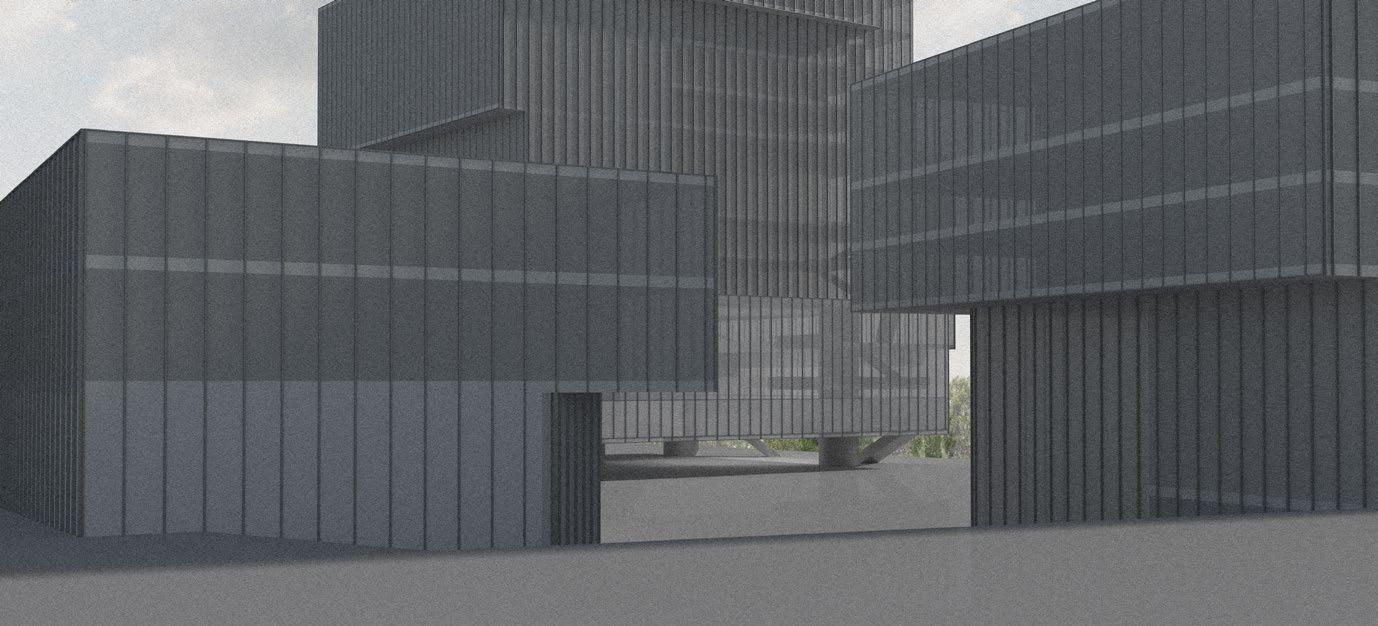
We see the philharmonic of the 21st century as a building which is a natural part of the public space. It’s open, passing-through, multifunctional part of social life even besides the time of plays. Functions divided into three buildings create urban spaces with human ratio that refer to the Prague’s squares. At the same time, buildings are working as barriers against noisy main streets and railway. Moving all enclosed functions of the building to the floors above the street allows total openness of the ground floor. This element is highlighted by telescopic walls, which are at the same time breaking down borders of opened and enclosed and emphasise orientation to human.
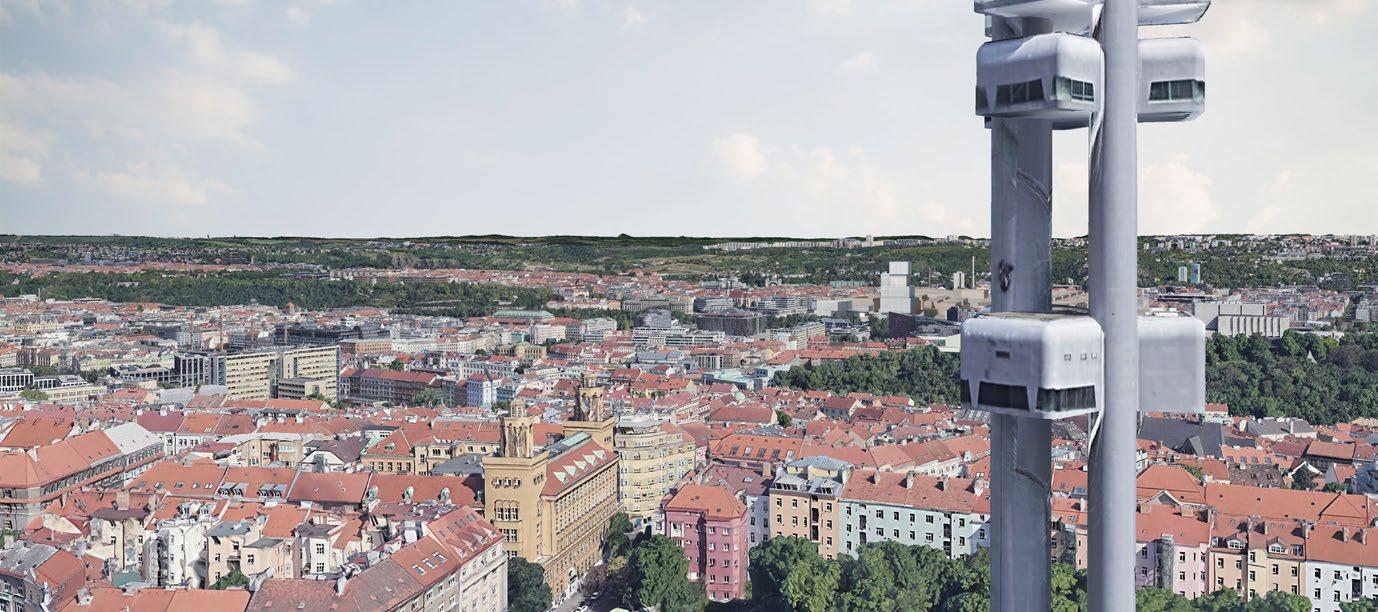
The new Vltava Philharmonic is located on frontier between upper and lower Holešovice districts. It is therefore desired that it becomes the core and the icon of the locality. The philharmonic can be easily reached by far inhabitants thanks to the accessibility by tram, metro, car or train and the adjacent parts of the city benefit from it. The main building, thanks to its vertical solution, becomes a part of the “hundredspired city” panorama and starts a dialog with it by searching for the new continuation of Prague’s panorama. The key element of the project is a connection between the river and the space of buildings. A large staircase leads all the way down to the riverbank from the philharmonic area. This solution is possible by putting the current highway underground. Whole area is solved as barrier-free.
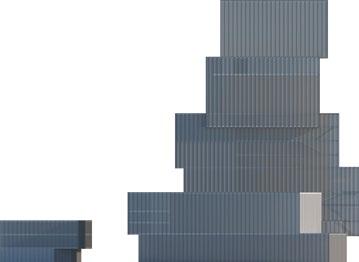
Division into three buildings also means division of its program. The main hall designed as a vinery type for 1800 people together with a hall for 700 people, a restaurant with a view and a museum of the Czech music is located in the highest tower. The second tower is composed of a hall for 500 and 200 people and a hotel. An art school and a coworking facility are located in the third building closest to the city. Underground level serves as a parking lot and a background of the philharmonic. Metro station Vltavská is accessed straight from the main philharmonic building.
The buildings are covered by self-supporting glass façade as a hold to the Czech glassmaking and the New Scene Building by Karel Prager. The golden cladding of philharmonic halls shines through the façade and refers itself to the building of the National Theatre by Josef Zítek.
GSEducationalVersion ±0 000 +0 000 +5 000 +5 000 +0 000 -7 000 GSEducationalVersion GSEducationalVersion
DIAGRAM OF HALL
DIAGRAM OF PUBLIC SPACES
DIAGRAM OF VERT. COMMUNI.
GROUND FLOOR
DIAGRAM OF MASSES
ELEVATION WEST
LONGITUDINAL SECTION
P –MIMMM HRIMMM HRIMMM HMMMM JTIMMM
FIRST UNDERGROUND FLOOR
Foyer 20 Střecha 98 Restaurace 91 Muzeum hudby 83 Malý sál 58 Vyhlídka 78 Hlavní sál 3 2 Multifunkční sál 15 8 Střecha 30
space
Background Restaurant Museum of music Hotel Art school
Public
Foyer
Municipal office Hlásná Třebáň
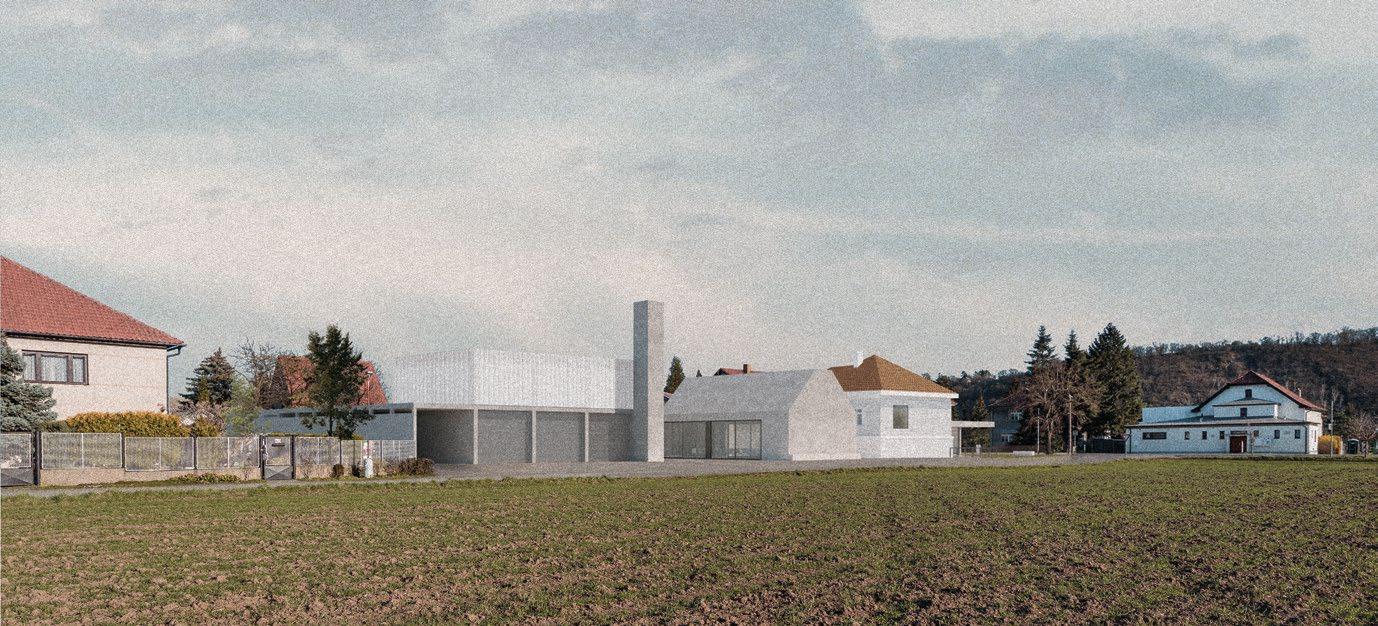
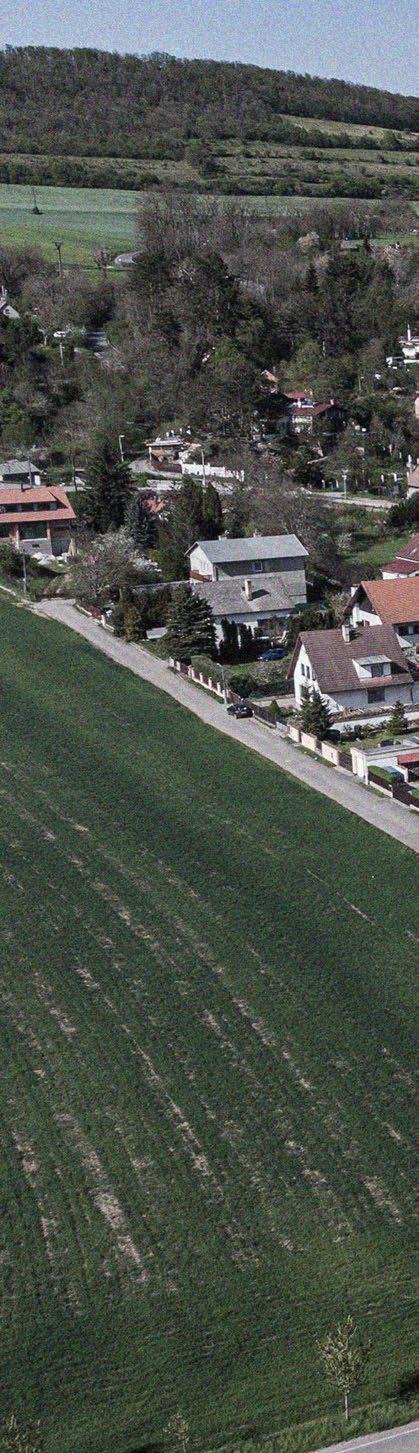
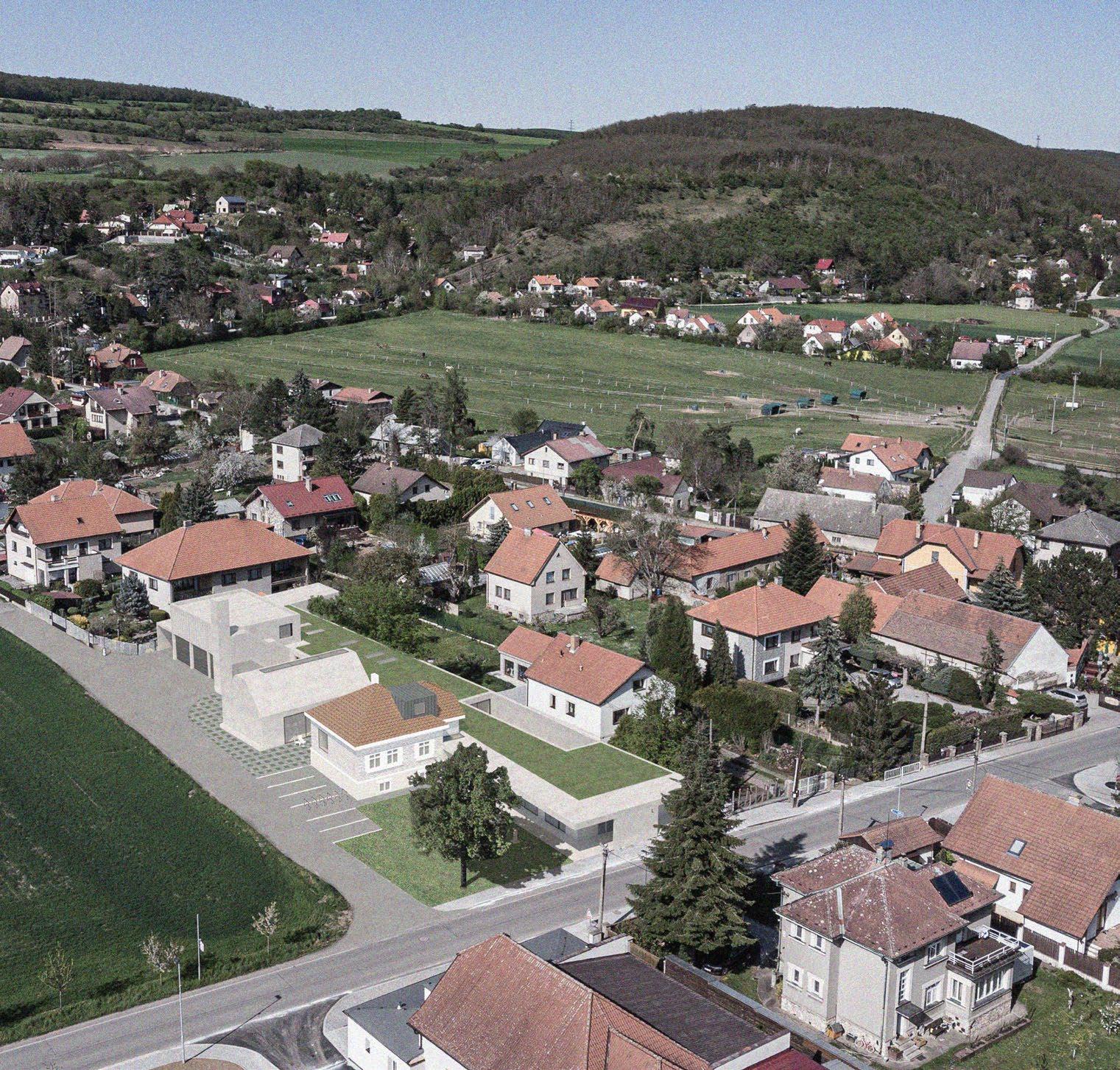
The assignment of the contest for the new municipality house in Hlásná Třebáň requested to design a new municipality hall and a fire station and to revitalize or to design a new municipal office. It was also requested to connect the programs of the house functions as much as possible.
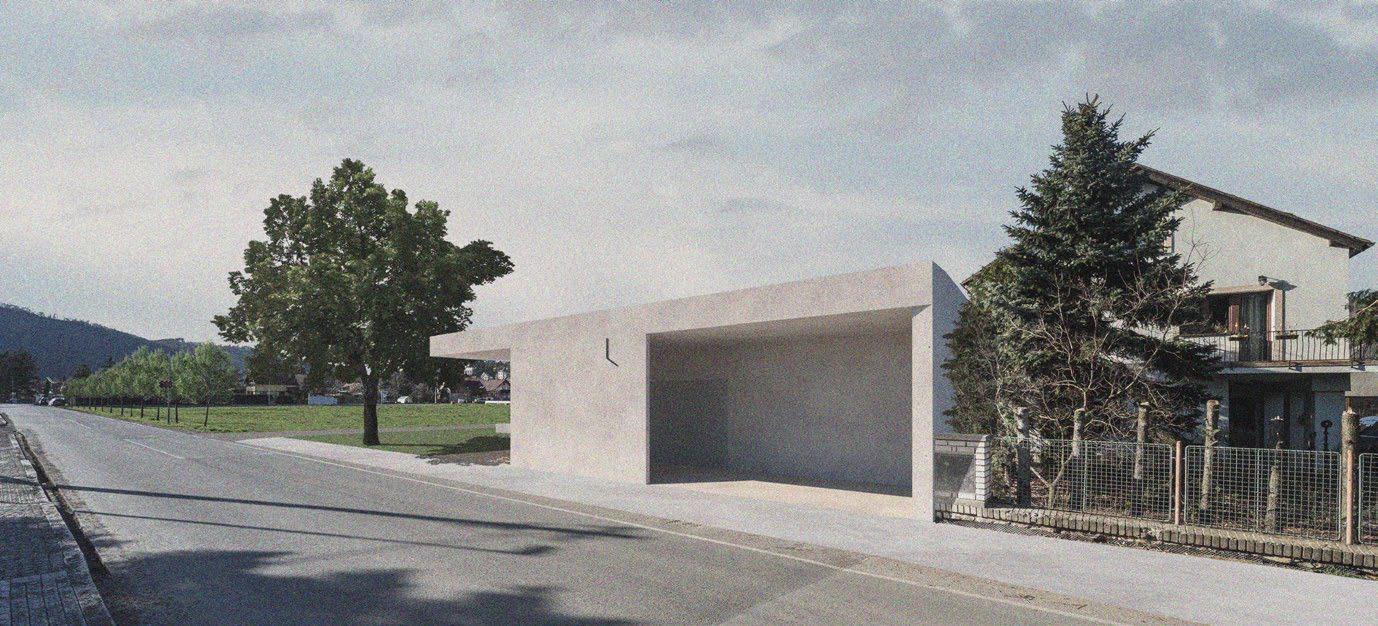
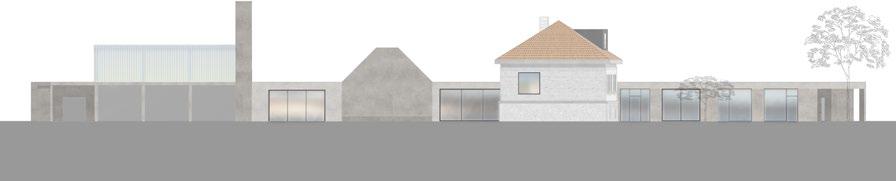
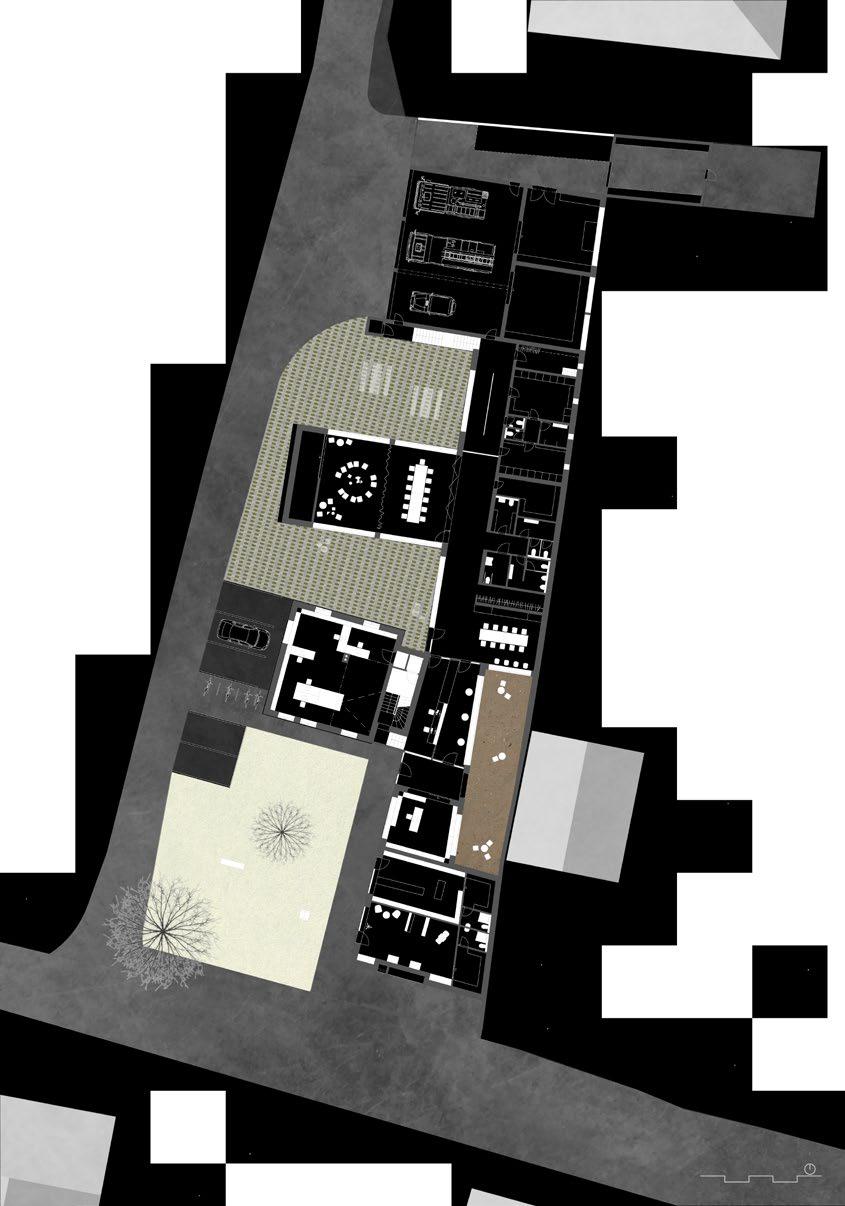
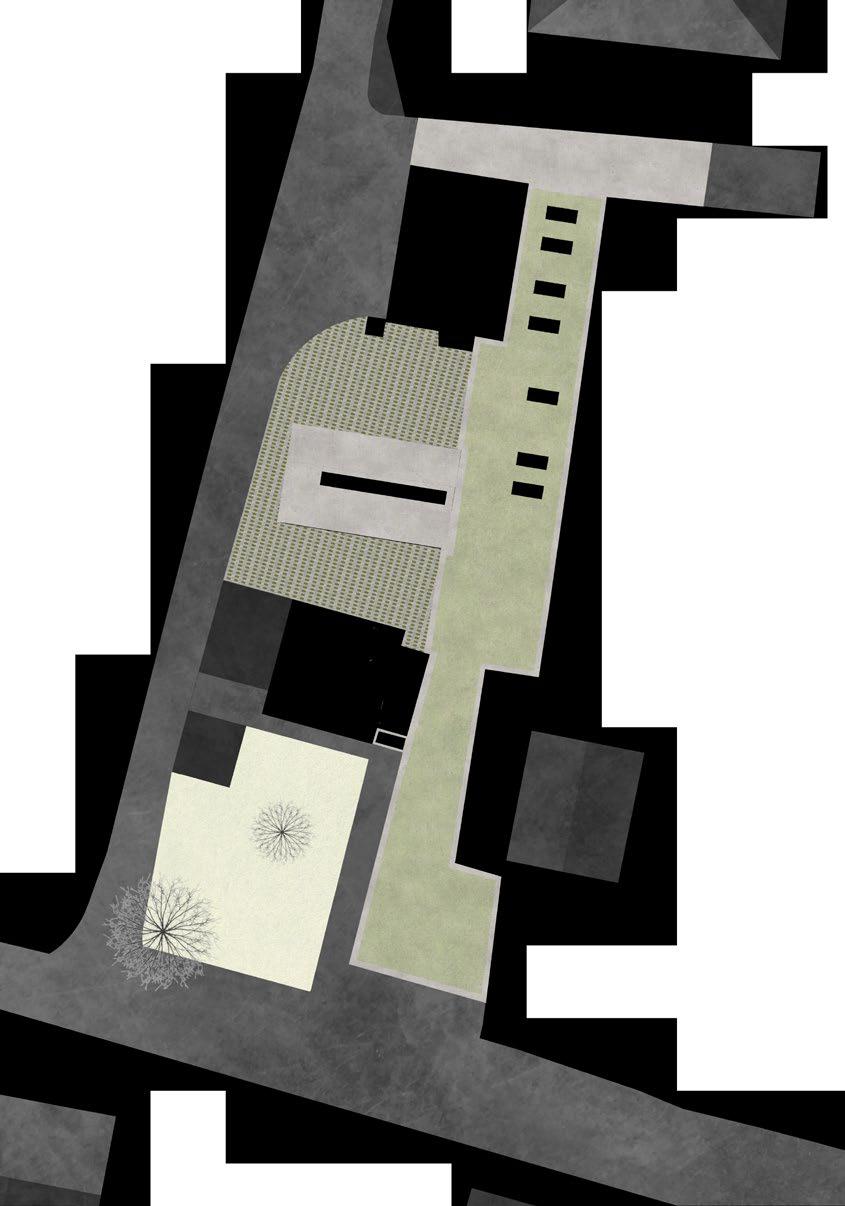
Our proposal chose to preserve the old building. New buildings are situated in such a way that keeps the space in front of the office building empty. The other two buildings, the municipality hall and the fire station, create subsequent small courtyards which are initiating different civic events. The courtyard in front of the fire station is especially accentuated considering their overall civic activity. These three masses are connected by a wing which is located on the easter part of the site. The wing is extended to the corner of the site, to the main street. It is simultaneously pushed to the line of the neighbouring plot to renew density of the locality and to strengthen the position of the office in space.
Shapes of the masses result from their function. The fire station is higher and more rational in such a way that accommodates every functional request. The municipal house is opened as much as possible including skylight and emphasize an openness for the public. The connecting wing is by horizontally oriented and simultaneously is trying, in its from part, to induce almost city like feeling of arcade. The new masses are designed from a white exposed concrete. The fire station is cladded by a copilit panels on its second floor to bring a more natural light into the garage. The roof of the wing is green. Except for chambranles, the original plaster is torn down and exposed tiles are painted white.
The disposition of the office emerges from the composition of the masses. Frontal part of the wing contains commercial spaces. It is followed by the library with a front office and an inner atrium. The enclosed part of the municipal office is accessible through the front-office. The corridor then continues to the kitchen followed by the municipal hall. The public part of the corridor is closed behind the municipal hall. The ultimate part serves as a background for the firefighters, and it is enclosed to the public.
GSEducationalVersio
1st FLOOR 2nd FLOOR