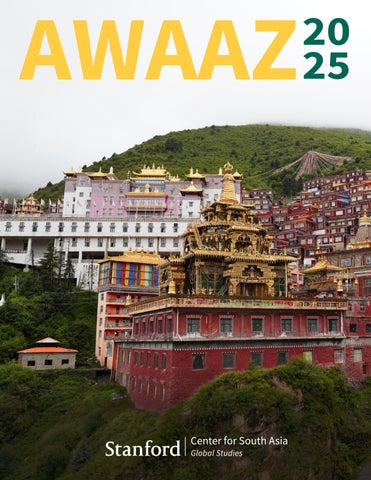
AWAAZ 20 25
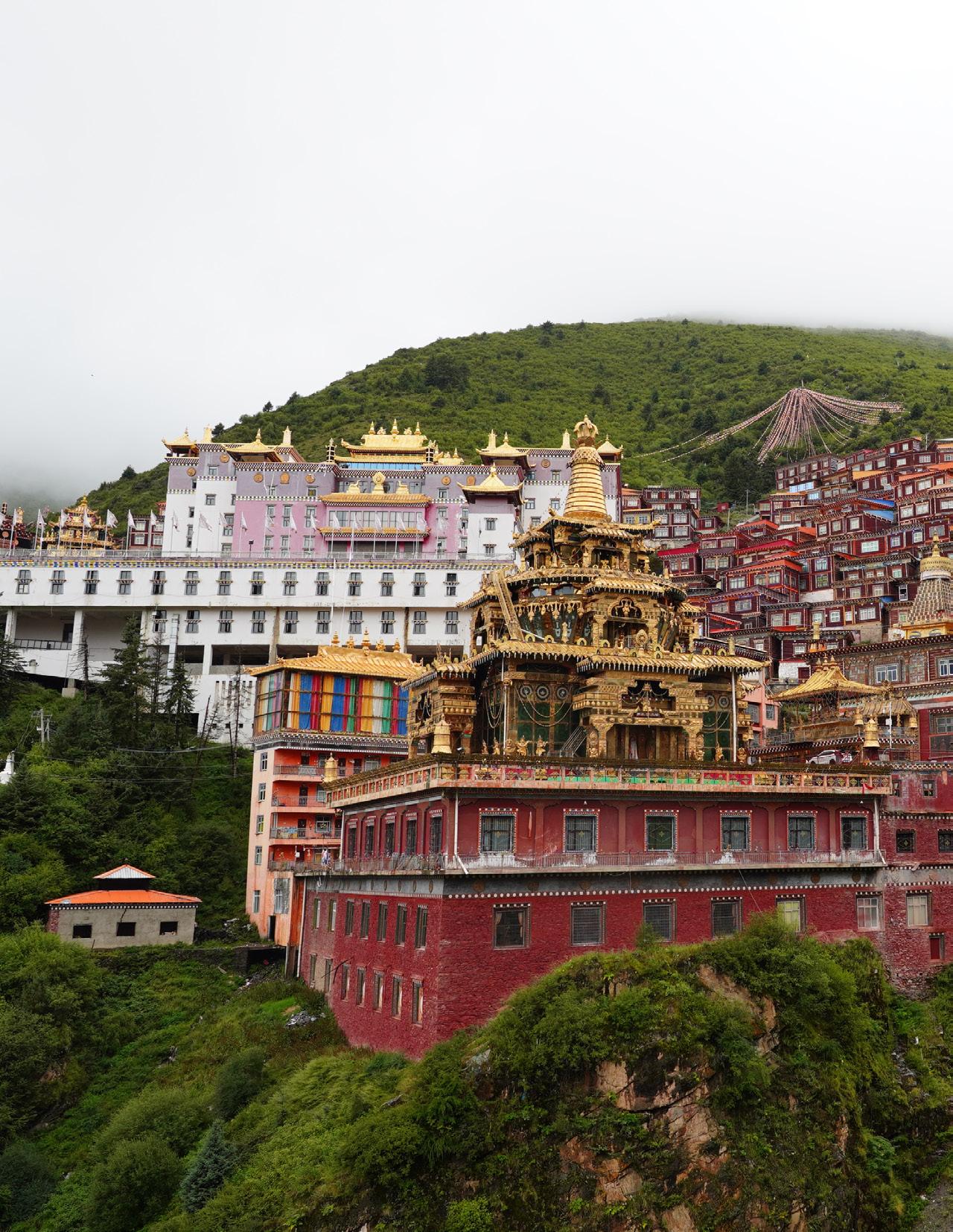
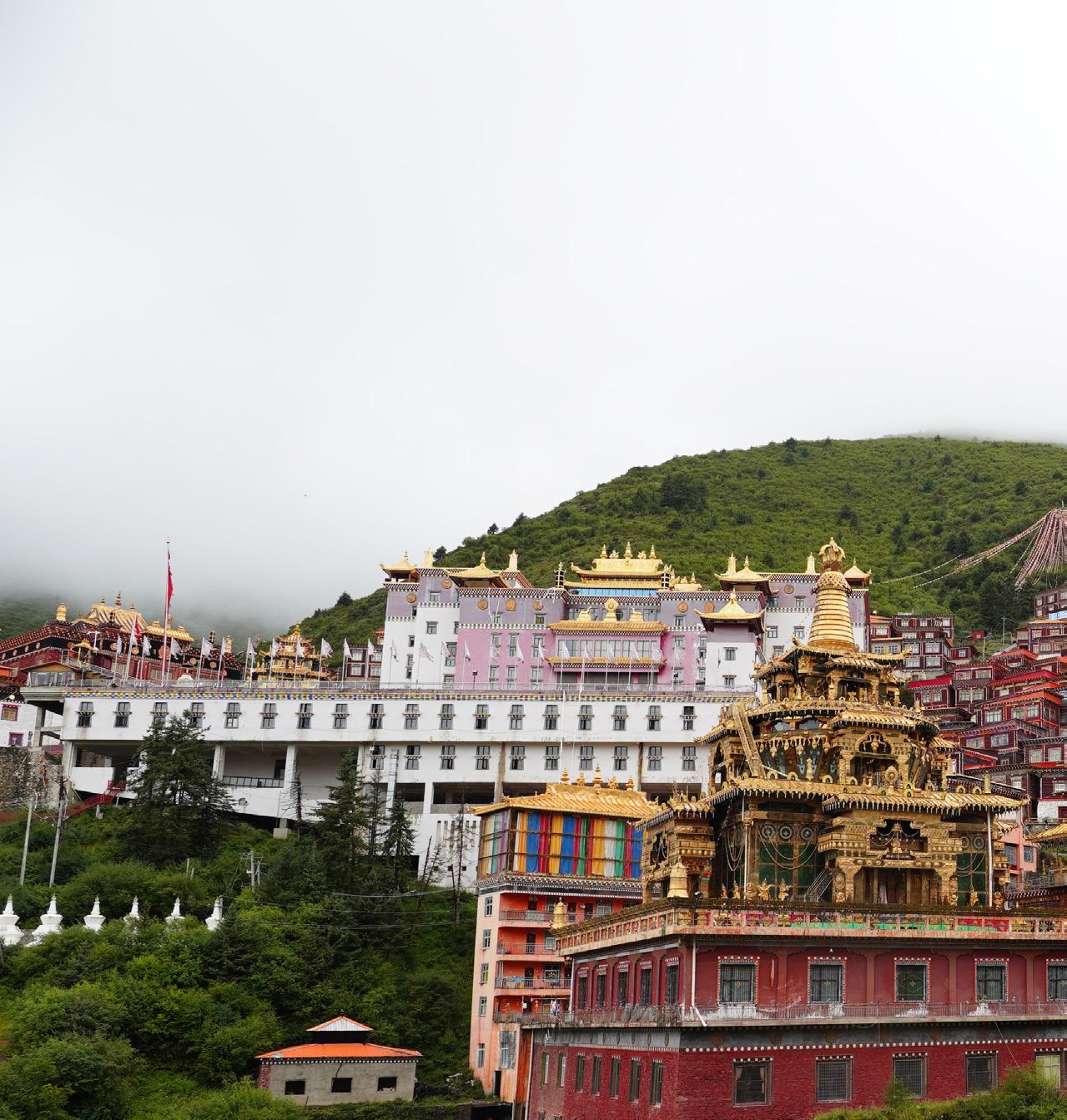
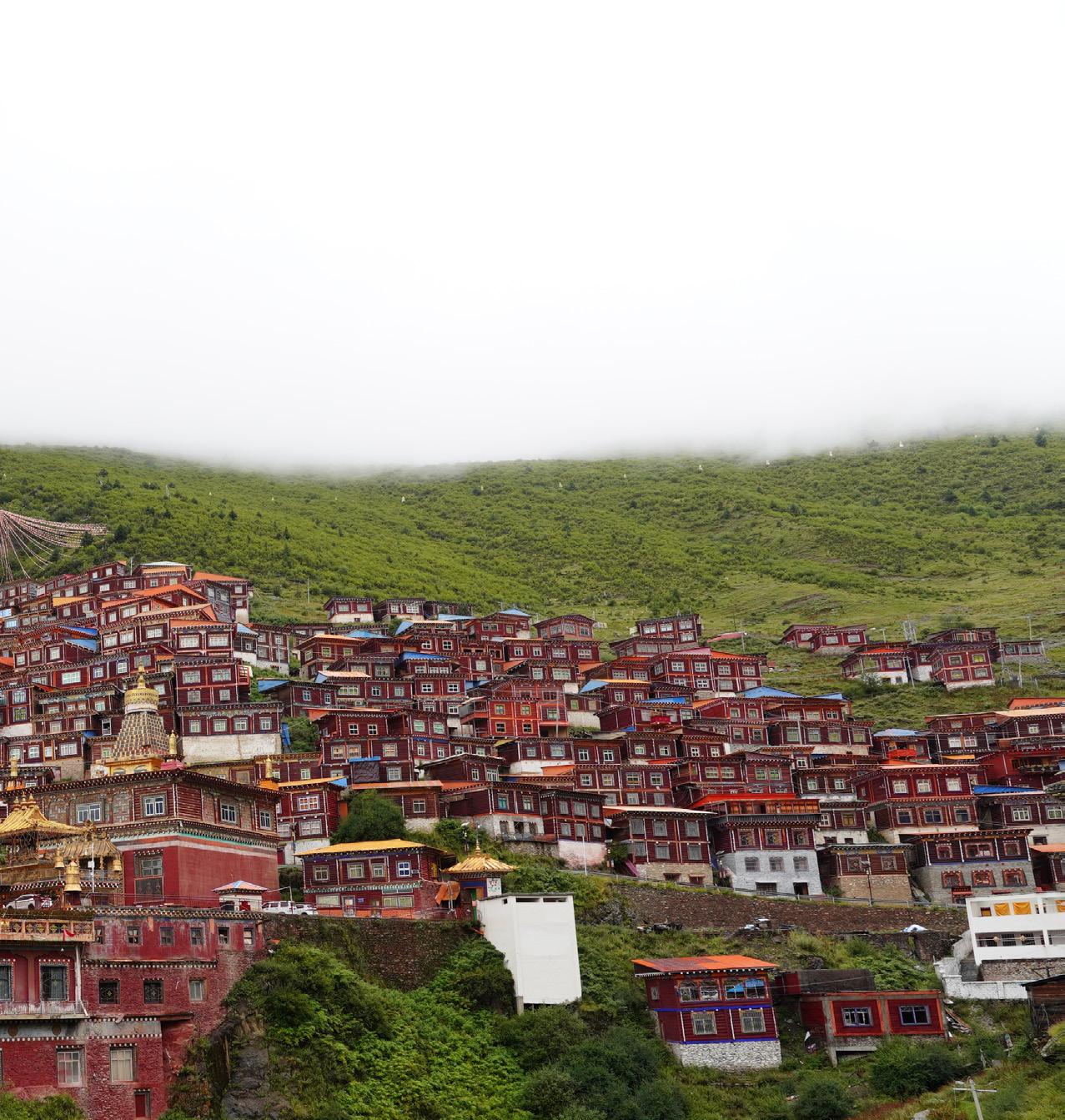
Cover image by Oriane Lavolé, 2025, Ph.D. candidate in Religious Studies, Center for South Asia Graduate Research Fellowship Recipient. Kathok Monastery in Derge, present day Sichuan, known as the oldest monastery of the Nyingma school of Tibetan Buddhism. See the full photo on page 24.
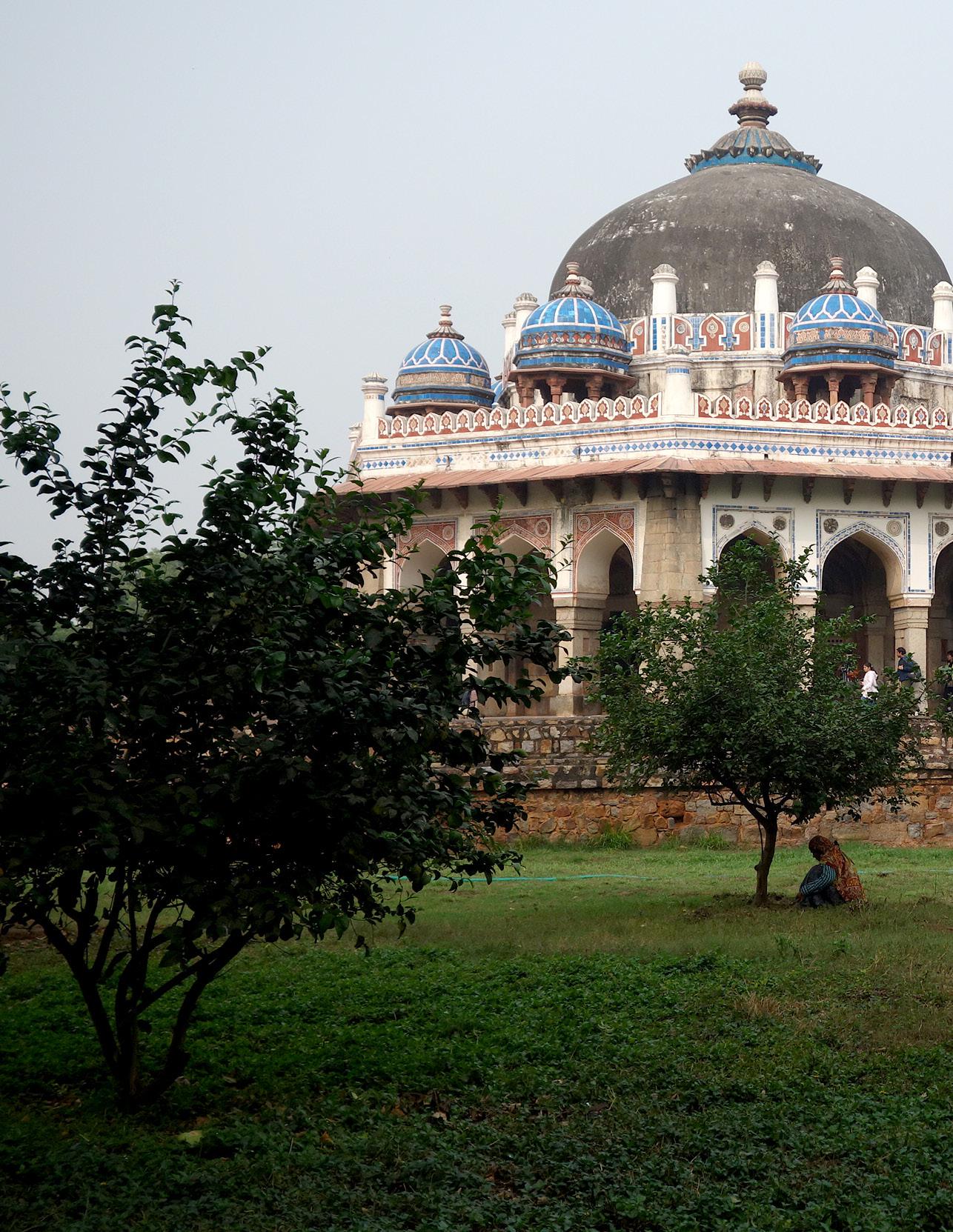
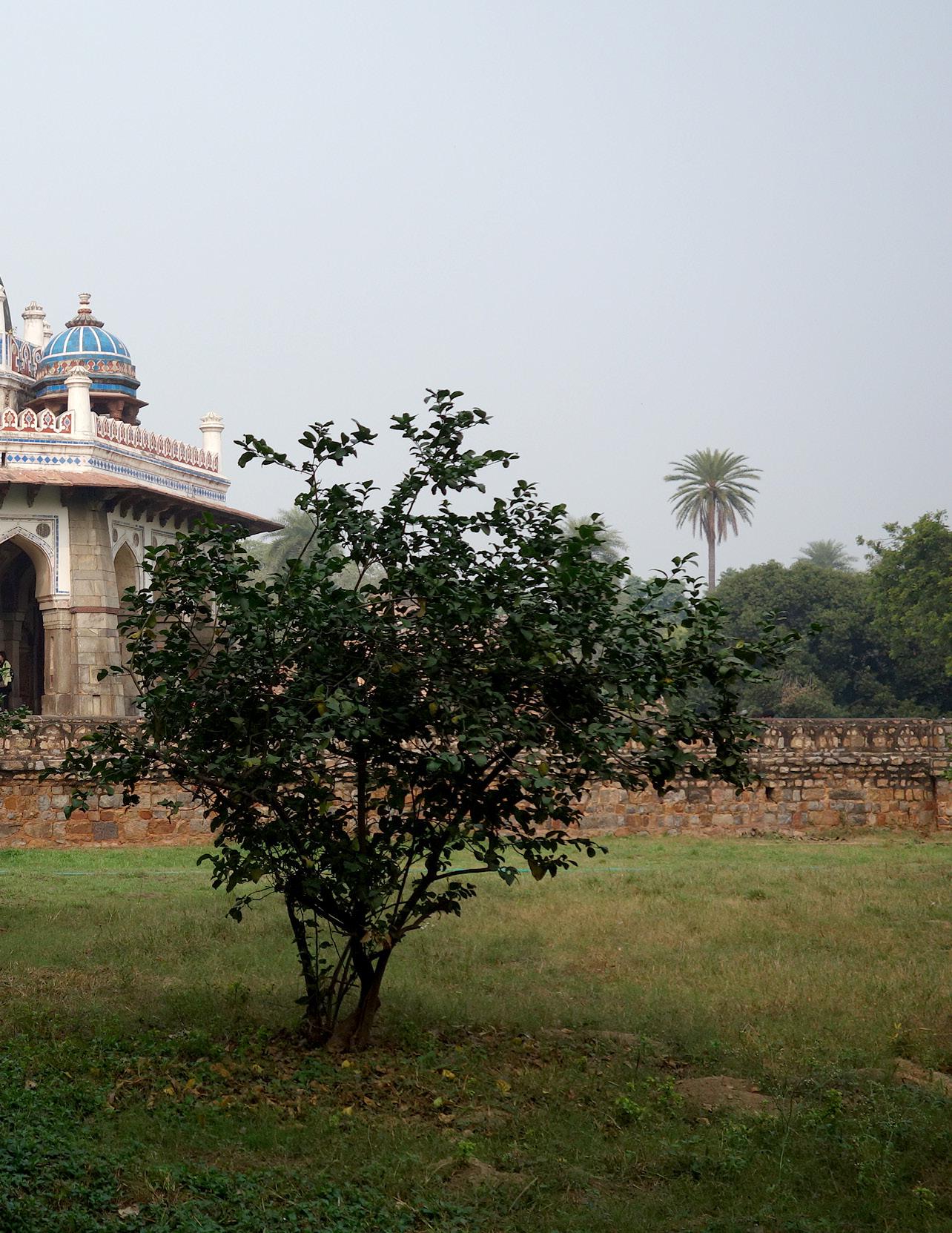
This page: Photo by Manasi Garg, Symbolic Systems, Minor in Global Studies, with concentration in South Asian Studies ’26. “Eclipse,” Humayun’s Tomb, New Delhi, India.
“I titled the piece Eclipse because that is what it feels like to be in Delhi — eclipsed by the literal size and metaphorical weight of the history and architecture around you, and also by the sheer numbers of people and all the other debris which makes up modern life.”
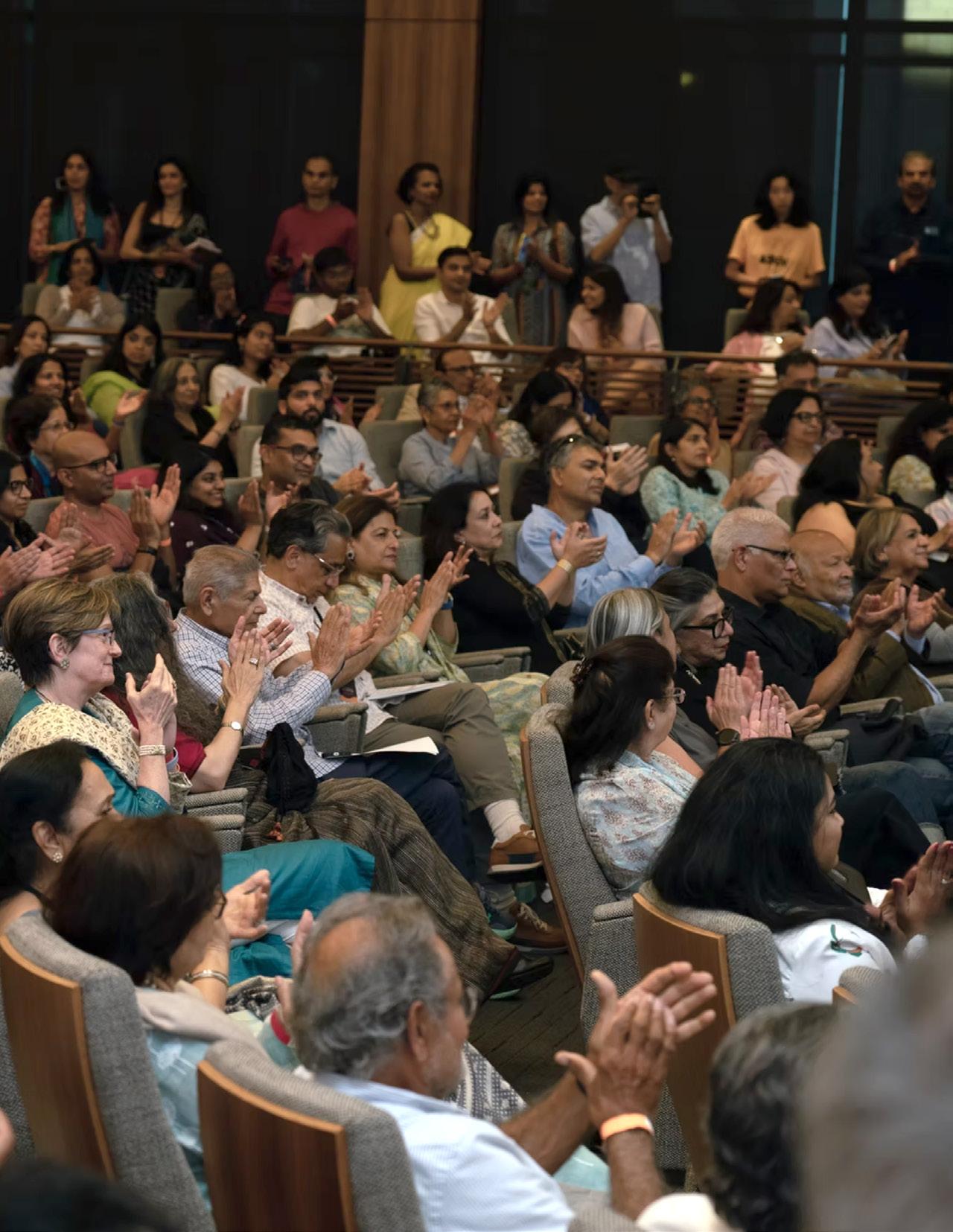
CSA launched the academic year 2024-25 with a bang as we hosted on campus the South Asian Literature and Art Festival. This two-day event brought hundreds of attendees from on and off campus to participate in a dynamic range of panels and forums to hear from luminaries ranging from the artist Salima Hashmi, filmmaker Imtiaz Ali, and novelist Shehan Karunatilaka. With panels on humor, mental health, culinary arts, and much more, the festival was further enlivened by performances from Stanford Bhangra and Ragapella. We especially appreciated working with our partners at ArtForum SF (Ambika, Mayu, and Kiran) who organize the event annually.
Our ongoing attention to caste continued throughout the year as we welcomed anthropologist Lucinda Ramberg, comedian Manjeet Sarkar, artist Siddesh Gautam, and political scientist Jusmeet Singh Sihra. This programming showcases the important work being done in a host of different fields that amplify the experience of Dalit, Bahujan, and Adivasi communities. A visit from the prominent human rights activist Akum Longchari from Nagaland was organized in coordination with the UC Santa Cruz Center for South Asian Studies and brought our attention to powerful solidarity work being done by indigenous communities around the globe.
Highlights from the rest of the year included our annual lecture by Sonal Khullar (Art History, University of Pennsylvania) on art and war, “After the Public Library” (see page 9 for more details). I also especially enjoyed the fantastic workshop on Desire organized by graduate students Alisha Cherian and Saad Lakhani.
Director’s note
The event brought a number of students from other universities to campus for an intense weekend of conversation about their research projects with an exemplary and generous respondent – Darshana Mini (Department of Communications, UW Madison). After reading and commenting on every student’s paper, Mini’s keynote lecture “Rated A: Soft-Porn Cinema Mediations of Desire in India” was a wonderfully rich and textured exploration of the production and circulation of this genre. I also enjoyed hosting (with the support of the Karuna charitable fund) heritage conservationist Ratish Nanda, who led the restoration of Humayan’s Tomb and the building of the museum and Sunder Nursery park complex. I was extremely fortunate to visit there in April. Ali Altaf Mian (University of Florida, Religious Studies) spoke about “Prophetic Humor: Jokes and the Practice of Tradition in Muslim South Asia,” which was a much needed opportunity to gather community in challenging times.
This is a bittersweet moment as I complete four years as faculty director of the Center for South Asia. I have loved working with our extraordinary team – Associate Director Lalita du Perron and Program Coordinator Manar Fleifel-Keniar. I am even more aware of the remarkable and groundbreaking work on South Asia that our wide network of faculty, staff, and students are doing. It has been an honor and a privilege to serve in this role.
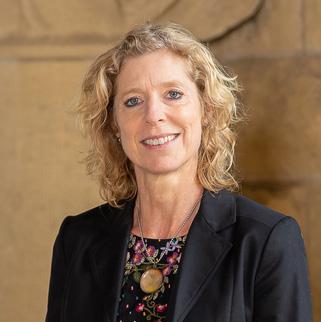
Anna Bigelow, Faculty Director
Associate
Professor, Religious Studies Learn More About Our Director
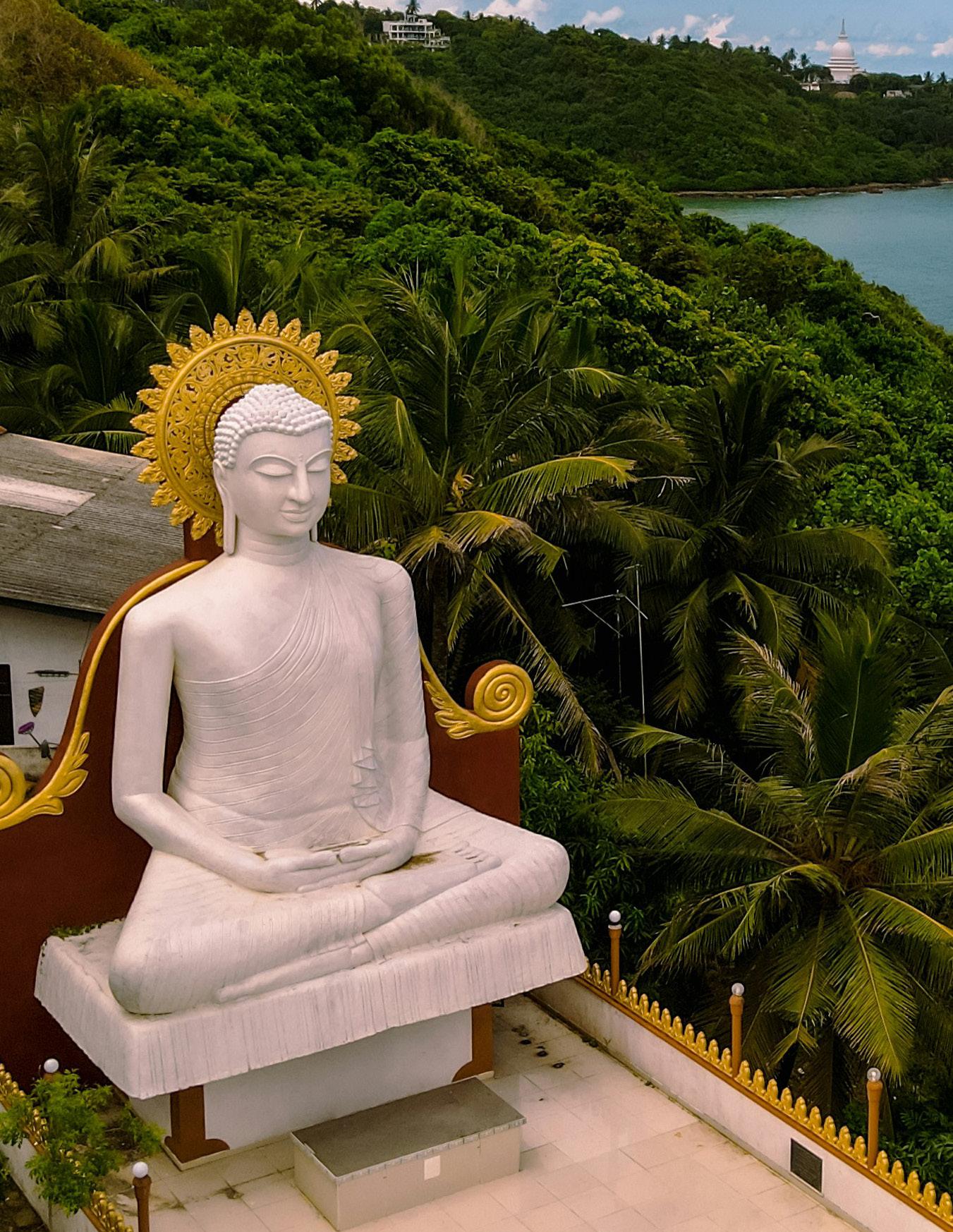
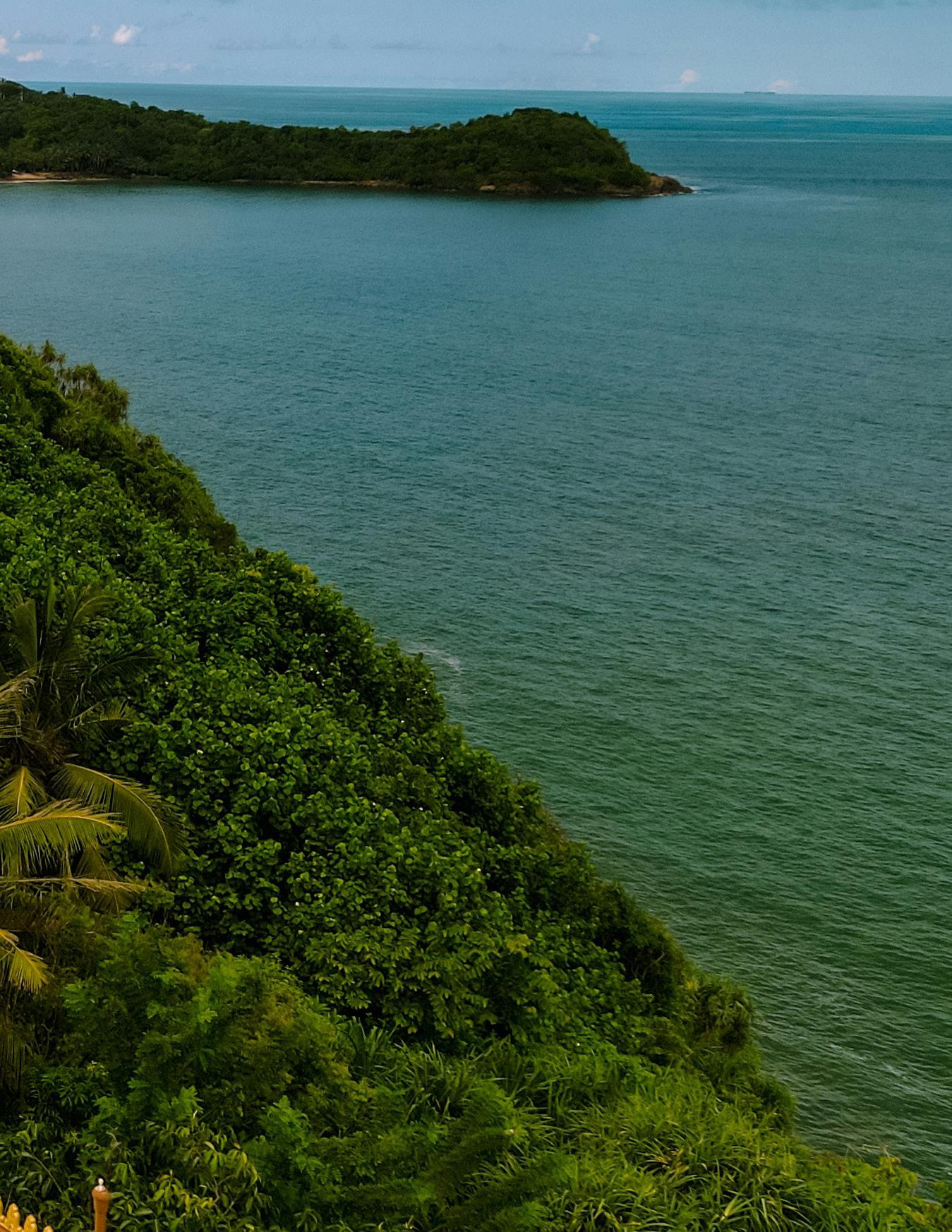
Photo by Siarhei Palishchuk on Unsplash, Sri Lanka.
The Team
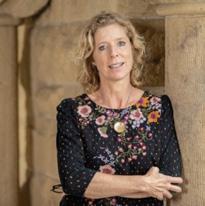
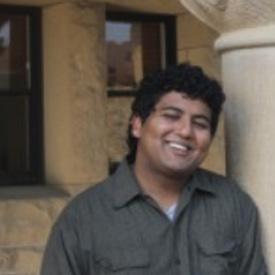
Anna Bigelow
Faculty Director
Photo Credit: Andrew Brodhead
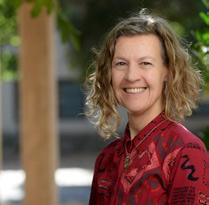
Lalita du Perron
Associate Director
Photo Credit: Rod Searcey, 2023
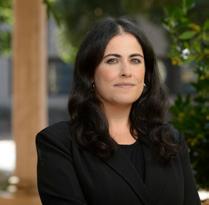
Manar Fleifel-Keniar
Program Coordinator
Photo Credit: Rod Searcey, 2023
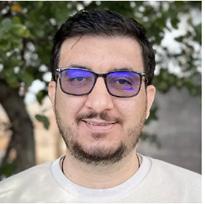
Nasiruddin Nezaami 2022-2023
Visiting Scholar
Zarif Ahsan
CSA-Markaz Fellow Humberto Gonzalez-Zaragoza
Program Coordinator (November 2024 –March 2025)
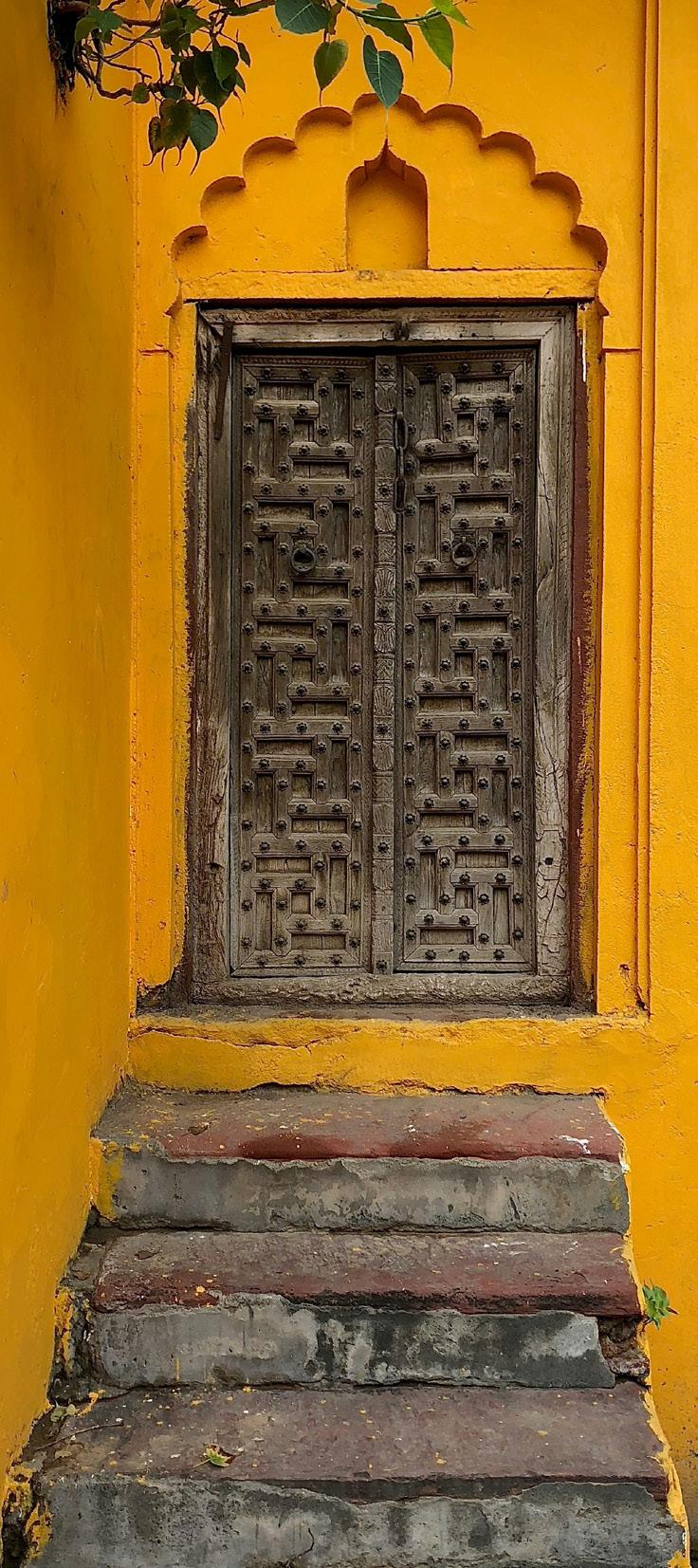
Photo by Charu Chaturvedi on Unsplash, Mathura, India.

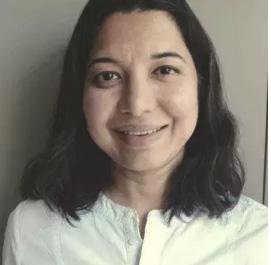
Yuthika Sharma
Yuthika Sharma is assistant professor in art history at Northwestern University. She works on the visual culture of South Asia in the early modern and colonial period. Her research spans a range of topics on colonialism, culture, gender, and labor relations. During AY 2024-25, Sharma was hosted by CSA director Anna Bigelow and Lalita Du Perron. Sharma worked from an office in Encina Commons allowing for proximity to the Green Library, the Stanford Humanities Center, and active participation in the rich programming of talks and events at the Center. Sharma chaired a talk by Ratish Nanda, a leading conservation architect and Projects Director of the Aga Khan Program Trust for Culture, India. She also organized a museum visit and an object study session for CAS affiliates at the Cantor Arts Center. While in residence, Sharma worked on her book manuscript on the critical reformulation of Mughal art and artistic revival in colonial India, while teaching two related courses in the Department of Art and Art History as visiting faculty. In January 2025, Sharma delivered a talk entitled, Empire in a City: Art, History and the Mughal non-Modern in India’s Long 18th Century, which was co-sponsored CAS and the Department of Art and Art History. Sharma also delivered talks at UC Berkeley’s Institute for South Asia Studies and at UC Davis’ Department of Art History.
Visiting Scholars
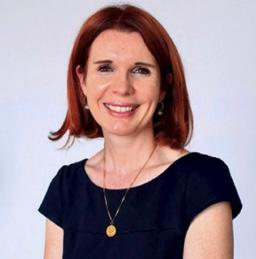
Victoria Fontan
Dr. Victoria Fontan is the Rector of the American University of MaIta. Until June 2025, she served as Provost and Vice President of Academic Affairs at the American University of Afghanistan, where she led the university’s academic operations through extraordinary periods of institutional displacement and transformation. Her leadership focuses on ensuring academic continuity in crisis, designing cross-border programs, and building resilient systems aligned with international accreditation standards.
Dr. Fontan is also the co-founder and co-chair of the Alliance for the Education of Women in Afghanistan (AEWA), a global coalition of 115 organizations working to safeguard and expand educational opportunities for Afghan women and girls. Stanford’s Halima Kazem and Lalita du Perron both serve as steering committee members of AEWA. In June 2025, CSA convened a two-day hybrid conference, bringing together AEWA members to discuss accreditation standards and the challenges of the online environment (see page 10).
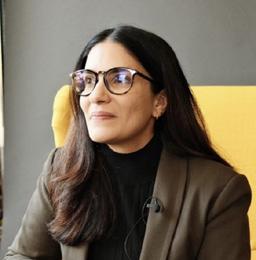
Amrit Deol
Amrit Deol is an Assistant Professor in the Department of Anthropology and the Asian American Studies Program at Fresno State. Dr Deol was at Stanford to research her current book project, Waves of Revolution: Interrogations of Sikh Political and Spiritual Subjectivities in Punjab and the American West, 1900-1928, which explores the intellectual history of non-secular traditions in the anticolonial Ghadar Party. More broadly, she is interested in race, religion, and empire in relation to anticolonial movements in Punjab and its diaspora. Listen to Amrit Deol on the SASSpod here.
Our audience stretched across the world, including the United States, India, United Kingdom, Sweden, Pakistan, Germany, Canada, Australia, Bangladesh, Indonesia, United Arab Emirates, Nepal, Sri Lanka, Netherlands, Turkey, and Singapore.
SASSTUBE: 700 subscribers
Social media: 7000 subscribers and followers
SASSPOD: 2100 unique listeners 3300 downloads
South Asian Literature and Art Festival 2024 (SALA)
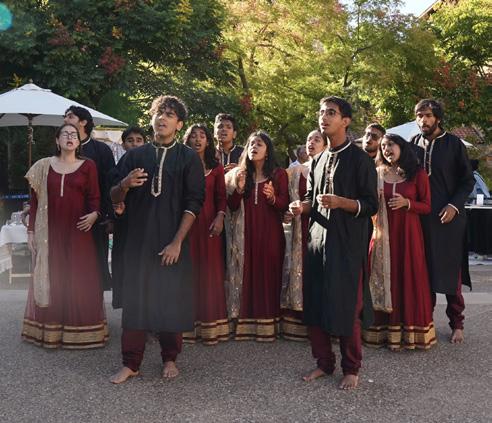
Stanford Ragapella Group at SALA 2024, Stanford University. Photo Credit: Artforum SF
This Bay Area festival features highly acclaimed contemporary South Asian Art collections, as well as panel discussions that include Art, Literature, Poetry, and Cinema. Authors and artists across the globe represent their experiences through keynotes, panels, and live presentations.
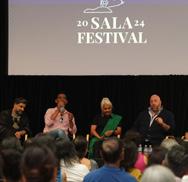
SALA (named for its tongue-in-cheek reference to a Hindi expletive) was hosted at the Center for South Asia in 2024. The theme was ‘Plurality in community’, in which ArtForum SF was able to explore caste, class, gender, and borders to understand how individuality and collectivity can coexist and collide. The Bechtel Courtyard was the center of all attention, with snacks provided by Chai Ho Jai, vendors displaying their clothes, jewellery, and artefacts, and student groups performing a capella. For more information about the event, visit the SALA website.
CSA Annual Lecture: After the Public Library
by Anna Bigelow
Sonal Khullar delivered CSA’s Annual Lecture in 2025, “After the Public Library.” Khullar is the W. Norman Brown Professor of South Asian Studies in the Department of the History of Art at the University of Pennsylvania. She is the author of the prize-winning Worldly affiliations: artistic practice, national identity, and modernism in India, 1930-1990 (UC, 2015) which won the Joseph Elder prize from the AAS and another prize from the CAA. It was her recent edited volume Old Stacks, New Leaves: The Arts of the Book in South Asia (UW, 2023) that brought her work to my attention as her essay on bookstores and book practices wove personal reflections with art, artists, and theories in an invitational and delightful way. Following up after perusing that work, I came to know that she was engaged in a larger book project on art and conflict and this seemed not only timely but necessary. Conflict defines our contemporary
moment in all its many forms from administrative dystopias to toxic environments to ongoing genocides. Art, in its own many forms, is always co-present with conflict, both exemplifying and documenting strategies of survival, refusal, promotion, inhibition, reaction, instigation, critique, and resistance. Khullar’s talk explored artistic collaborations across genres and media as artists grapple with their times, sometimes seeking as Amrita Sher Gil put it “forgotten forms of the future” in the past and sometimes taking up space in the present as Naiza H. Khan put it “our strategies of survival in the city are like guerilla tactics.” [Both quotations cited in Khullar’s other writings]. “After the Public Library,” explored visual art produced during and after the Sri Lankan civil war by the artist T. Shanaathanan (b. 1969), whose work responds to post-war history, memory, absence, violence, ephemerality, and futurity.
Special event in honor of Ustad Farida Mahwash
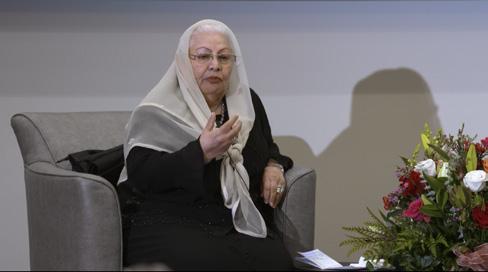
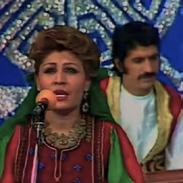
On January 18, 2025, Stanford Libraries held an event to celebrate the inauguration of Ustad Farida Mahwash’s Archive. Born in Afghanistan in 1947 into a conservative family, Ustad Mahwash overcame tremendous obstacles in the pursuit of her artistic path. Her career began in the 1960s on Radio Afghanistan and by the late 1970s she had become a household name throughout Afghanistan. She was the first Afghan woman to have been given the honorary title Ustād (“master”) and she went on to become a cultural icon and one of Afghanistan’s
most important musical ambassadors. In 1991 she was forced to flee Afghanistan for Pakistan, but after facing assassination threats she sought and found political asylum in the United States, settling in the East Bay. In the intervening decades she has continued to perform around the world, receiving many awards and numerous Grammy nominations.
Stanford Libraries is excited to help preserve and make the archive and legacy of one of Afghanistan’s greatest female vocalists available to scholars, students, and a broader public. The archive contains photographs, documents, recordings, and memorabilia that showcase an unparalleled artistic life in the face of political conflict, the suppression of women’s voices, and exile. A big thank you to recent Stanford Ph.D. graduate, Mejgan Massoumi (see also page 17), who made this collaboration possible, and to Ustad Mahwash for entrusting Stanford Libraries with her archive.
Highlights Symposium on Confronting Gender Apartheid in Afghanistan
The Stanford Program in Feminist, Gender, and Sexuality Studies and the Campaign to End Gender Apartheid, with support from the Malala Fund, co-hosted a two-day symposium (April 21–22, 2025)
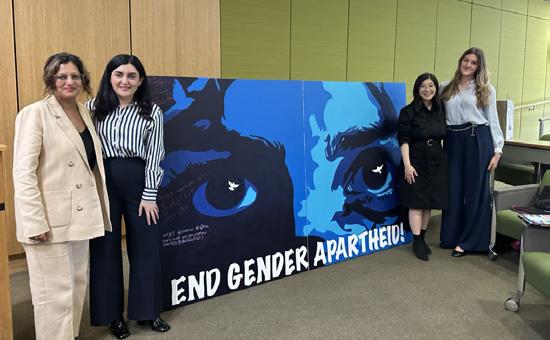
on recognizing gender apartheid in Afghanistan. Aligned with FGSS Associate Director Halima Kazem’s research, the event convened Afghan scholars, feminist activists, and international legal experts to examine the Taliban’s systemic oppression of women and girls and the push to codify gender apartheid under international law. Panels addressed intersectionality, religious and cultural frames, humanitarian and economic impacts, and accountability, and featured a keynote by Dr. Beth Van Schaack, U.S. Ambassador-at-Large for Global Criminal Justice. Students engaged directly with an urgent South Asia–focused feminist crisis. The Stanford Center for South co-sponsored the symposium.
Alliance for the Education of Women in Afghanistan
On June 9-10, 2025, the Center for South Asia hosted a closed conference for members of the Alliance for the Education of Women in Afghanistan (AEWA or “the alliance), to discuss strategies to provide ongoing support to female learners in Afghanistan. The 2-day event (timed in the early morning to include regional
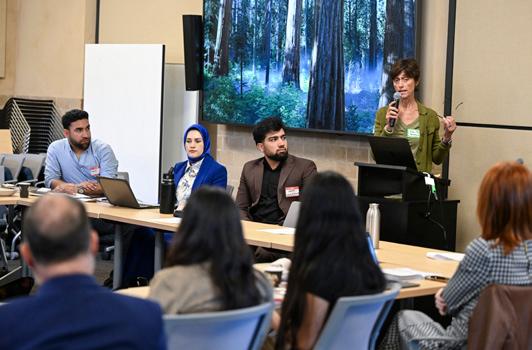
participants via zoom) included presentations from educators, infrastructure specialists, and donors. Top of the list of deliverables was accreditation methods, to ensure that all learners would have access to a safe, standardized, and accredited education.
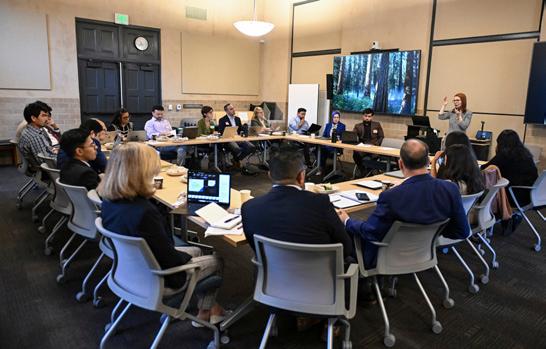
Photo credit: Rod Searcey
Graduate student conferences
Aspirations
On March 14, 2025, the Center for South Asia co-sponsored a workshop organized by graduate affiliates Alexa Russo and Isabel Salovaara to explore new contexts and subjects of aspiration in contemporary Indian society. Over the course of the day, participants examined how aspirations are entwined with caste and class identities, rural and urban geographies, and forms of both labor and leisure. Papers ranged from analyses of agrarian risk-taking and rural desires for autonomy, to the reconfiguration of educational ideals among marginalized communities, to experiments with heritage pedagogy in design schools, to shifting class identities in India’s call center industry. Collectively, the studies emphasized that aspiration is not only about achieving a distant future but also about how people navigate uncertainty and create meaning in the present.
The final discussion emphasized that aspiration is lived as much in the day-to-day—through the labor of exampreparation, farming, schooling, or crafting a livelihood—as in imagined futures. Participants reflected on aspiration as a way people orient themselves in difficult
Desire
On April 25, 2025, the Center for South Asia hosted a graduate student workshop with a day-long gathering on “Desire” at the Clayman Institute for Gender Research. Co-organized by Ph.D. candidates Alisha Cherian and Saad Lakhani, the workshop paired eight dissertation chapters across four interdisciplinary panels. Conversations ranged from grain markets and family havelis to anti-blasphemy protests and microcredit cooperatives, from pornographic video parlors and racialized sensoriums to long-distance intimacies and claims to heritage from Assam to Rajasthan—treating desire as a social force shaped by caste, class, gender, and race, yet capable of exceeding constraint to
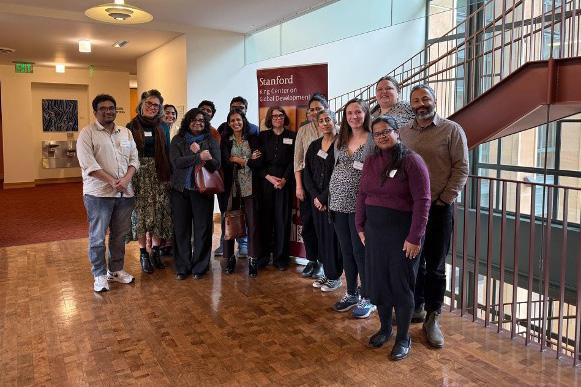
times, finding dignity and possibility amid inequality and crisis.
The hybrid workshop brought together scholars from a range of institutions, including Stanford University, UC Berkeley, the London School of Economics, Binghamton University, Rice University, William & Mary, New York University, the University of Wisconsin - Madison, the Geneva Graduate Institute, the Indian Institute of Technology - Hyderabad, and independent research collectives.
shape aspirations for dignity, mobility, and belonging. Professor Darshana Mini Sreedhar (University of Wisconsin–Madison) delivered the public lecture on Kerala’s 1990s Malayalam soft-porn cinema—its pulp/ exploitation roots, gendered trust-based labor, and Gulf-diaspora circulation as “South Asian” pornography—and served as faculty discussant throughout, offering incisive feedback that threaded the panels and energized cross-disciplinary exchange. The event provided a supportive forum for in-progress work and reinvigorated the CSA tradition of supporting graduate scholarship and community.
Student Awards
Stanford’s Center for South Asia provides funding opportunities for Stanford students
Global Internships
Skyler Jacobs
Political Science with a Minor in Education
Magic Bus, Mumbai, India

Interested in supporting students studying language and conducting research in South Asia? Or global internships that encourage engagement with South Asia at Stanford? Please contact Lalita du Perron, lalita@stanford.edu, to find the best fit for your support. Your contribution could mean that one more student will have the opportunity to conduct critical research, study a South Asian language, or take part in a life-changing internship.
Raghad Asiri
Bio-engineering LAICO, Aravind Eye Hospital, Coimbatore, India
“This experience has taught me how to cope with the uncertainty of being in a new environment all alone which I think is an invaluable skill. I plan to keep in touch with my mentor and continue to work on my device at Stanford.” — Raghad Asiri
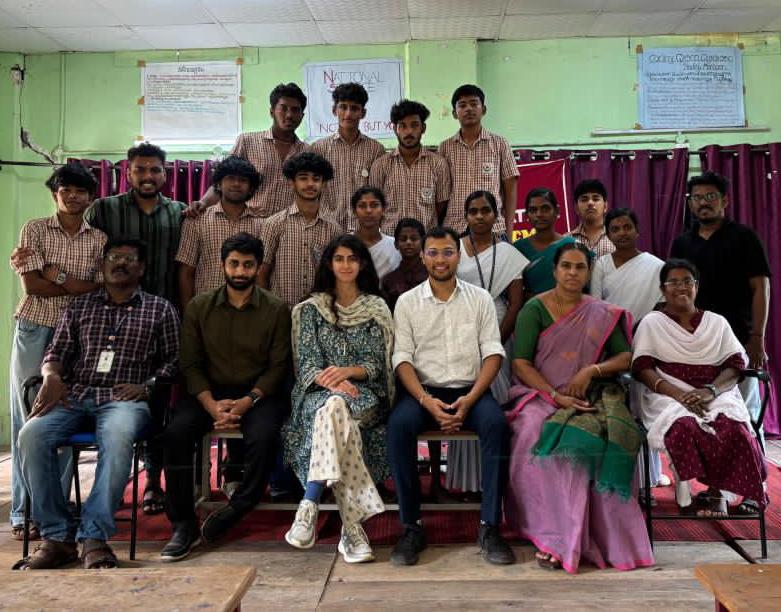
Intereseted in global internships? Contact Grace Munene, gmunene@stanford.edu
The Steven and Debi Wisch Fellowship for Graduate Research in South Asian Studies 2024-2025 Recipients
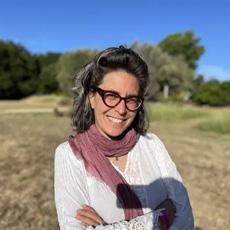
Alexa Russo
Alexa’s research focuses on the role of collectives and sustainable agriculture in envisioning and creating alternative futures amidst agrarian crisis in India. Alexa is interested in India’s many agrarian imaginaries, on-the-ground practices that comprise economic and ecological alternatives, and the roles of gender, temporality, and representational politics within visions and formations of economic futures.
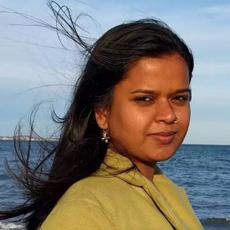
Shikha Nehra Department of Anthropology
Shikha Nehra is a Ph.D. Candidate in the Department of Anthropology at Stanford University. Her research focuses on concerns of political belonging, citizenship, state and sovereignty, identity-formation, and ethno-nationalism. Before coming to Stanford, she earned her second M.A. in Anthropology from Brandeis University. She has conducted research on the digitalization of bureaucratic processes and its impact on the implementation of welfare provisions, people’s experience of citizenship, and documentation practices of the state in Jharkhand, India.
Her doctoral dissertation research focuses on the interplay of linguistic and religious ethno-nationalism in Assam, India. She examines how language—as an object of state policy, basis of ethnic and religious identity, and mode of communication—mediates politics by determining who belongs to the nation-state.
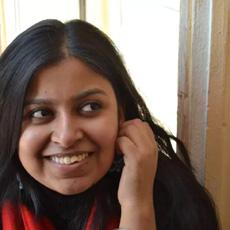
Ankita Deb
Department of Art and Art History
Ankita Deb is a Ph.D. candidate in Film and Media Studies at the Department of Art and Art History at Stanford University. Her dissertation titled, “Cinema, Sexology, and Soft Porn: The Enduring Ecologies of Sex Education in India” traces the centrality of media technologies in sexual pedagogy, and argues that these media apparatuses not only function as significant sites of sexual imagination, but are complex systems of knowledge unto themselves, that demonstrate how sex is learned, unlearned, taught, consumed, and imagined primarily through low genres.
Her research has been supported by the Mellon Foundation Dissertation Fellowship and the Steven and Debi Wisch Fellowship for Graduate Research in South Asian Studies. In 2023, she received the Vice Provost for Graduate Education Teaching and Research Award from the Stanford Asian American Activities Center. And in 2022, she was honored with the Graduate Student Award from the Asian and Pacific Islander Caucus at the Society for Cinema and Media Studies.
Student Awards
Language and Research Fellowships Summer 2025
Click on the picture of the student to view more information about their projects.
Graduate Research Fellowship Recipients
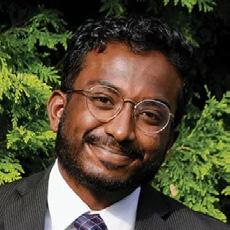
Mahishan Gnanaseharan Department of History
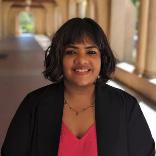
Aatika Singh Department of Art and Art History
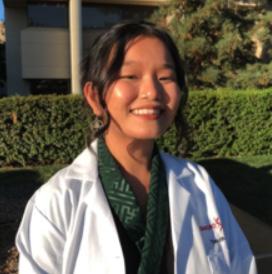
Tenzin Norzin Biology Department
Language Fellowship Recipients

Maciej Piotr Karasinski-Sroka
Department of Religious Studies
Language: Tibetan
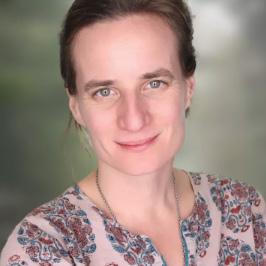
Oriane Lavolé Department of Religious Studies
Namrata Verghese Modern Thought and Literature/Law
Anup Hiwrale Department of Religious Studies
Language: Sanskrit

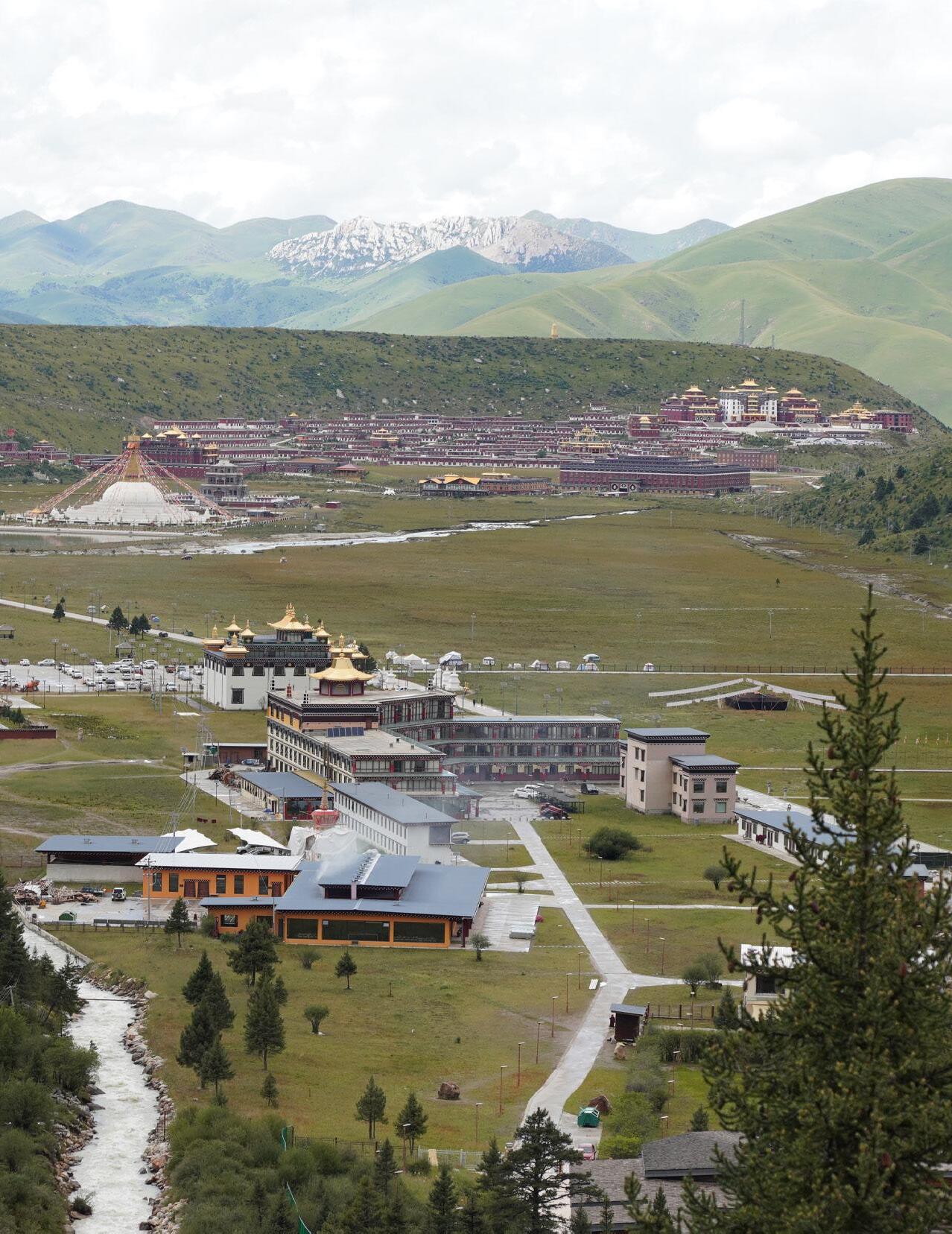
Photo by Oriane Lavolé.
The SASS at CSA
The South Asian Studies at Stanford (SASS) at the Center for South Asia includes our minor, podcast, and event recordings.
The South Asian Studies Minor
The Minor in Global Studies with a specialization in South Asian Studies presents undergraduates with a significant opportunity to scaffold their interest in and knowledge of South Asia. This track allows them to focus on South Asia while locating their work within larger global conversations. Any Stanford undergraduate student can enroll for the Minor at any point prior to graduation. As a first step, reach out to Lalita du Perron at lalita@stanford.edu.
More about our Minor.
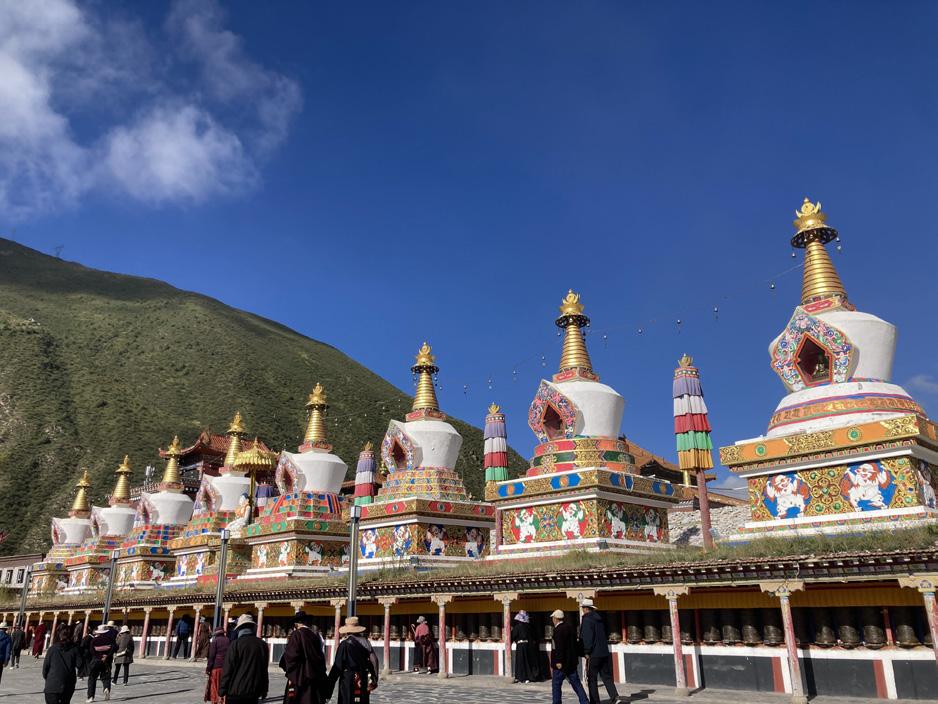
Course highlight: Global 111: South Asia at Stanford
Photo by Oriane Lavolé.
Lalita du Perron convened the course Global 111: South Asia at Stanford for the second time in the 24-25 academic year. This course is a survey class for one credit, featuring a different guest speaker each week. Various professors who work in and on South Asia come and talk about their research and teaching, to give students a “tasting menu” of the breadth of classes on South Asia available to them at Stanford. Evidence suggests many students do indeed go on to take multiple classes in South Asian studies. Reviews have included statements such as “Take this course! It’s a great overview on South Asian Studies at Stanford, and you will learn from some amazing lecturers about so many fields you never even knew existed.”
SASS Graduate Spotlight SASS Alumni Spotlight
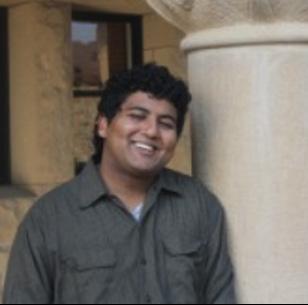
Zarif Ahsan BS, Math
Zarif Ahsan was the Center for South AsiaMarkaz Fellow for the 2024-25 school year. He is graduating with a degree in mathematics. “The Center for South Asia gave me a space to critically view my own identity in connection to broader histories in South Asia, and my job gave me the ability to open up spaces and conversations that I have found powerful in my life.”
More about Zarif’s experience at Stanford.
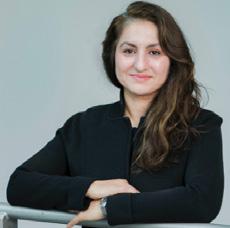
Mejgan Massoumi
Ph.D., History, 2021
I wrote my Ph.D. on Modern Afghan history and received strong training in South Asian history and culture at Stanford. I am now in a tenure-track position at Carnegie Mellon University in Pittsburgh, PA, where I teach Introduction to South Asian History and Middle Eastern History, with Afghanistan as the interlocutor.
While I was at Stanford, CSA was such an important part of my personal and professional growth. The Ph.D. experience can be isolating and I was looking for community outside of my department. Opportunities such as fellowships and engagement with faculty outside of one’s department are so important, and CSA offers the ability to build community.
One of the highlights of my time at CSA was organizing the grad student workshop with Anubha Anushree on Imperialism in 2019. It was an incredible experience. I couldn’t believe so many people showed up on a Saturday morning!
My word for the Center: Dosti (friendship)
The SASStube
The SASS Tube features our event recordings accessible to the public. Our YouTube channel has over 700 subscribers. The majority of our viewers are from India, Pakistan, and the United States.

Visit and subscribe to the SASSTUBE.
Watch Kunal Purohit’s overview of H-Pop in India, in a talk moderated by Professor Thomas Blom Hansen.

Watch Lamya H. talk about their memoir, Hijab Butch Blues, in conversation with our CSA Markaz Fellow Zarif Ahsan.
The SASS at CSA
The SASSpod
Lalita du Perron hosts a wide variety of guests on the podcast who have a Stanford connection: alumni, faculty, staff, researchers, students, and affiliates. With over 11,000 listeners in 116 countries, the SASSpod captivates a global audience, who are interested in learning more about South Asia at Stanford. Topics covered in 202425 include: history and student protests in Bangladesh, journalism, AI and big tech in India, mental health in the South Asian community, anti-blasphemy movement in Pakistan, the politics of heritage in Rawalpindi, designing your own life, gender apartheid in Afghanistan, liberal arts in Pakistan, society and cultural heritage in India, South Asian literature, arts, dance, spirituality, and more!
SASSPOD: Your gateway to South Asia at Stanford. Click the photo to listen to the episode!

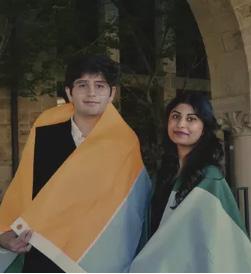
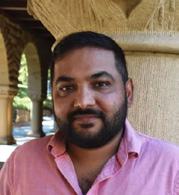
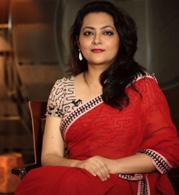
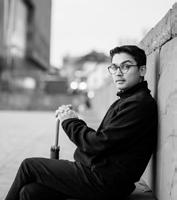
Mayuranki
Almaula and Kiran Malhotra, Curators, South Asian Literature and Art Festival
Luv Jawahrani and Aimen Ejaz, Indo Pak Dosti Forum @ Stanford
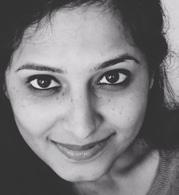
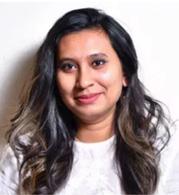
Abbasi-Markaz fellow Arwa Faruk and CSA-Markaz fellow Zarif Ahsan

Saad Lakhani
Ph.D. candidate in Cultural and Social Anthropology
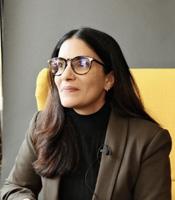
Arfa Khanum Sherwani, JSK Journalism Fellow

Vidyani
Suryadevara, Affiliate, Genetics, Stanford School of Medicine
Deepak Ramola, Wisdom historian and award-winning educator
(Podcasts in Part I and Part II)
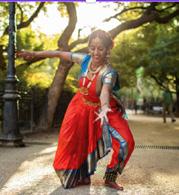
Preethi
Ramaprasad, scholar and dancer
Shandana Waheed, Doctoral Student, Department of Anthropology and the Archaeology Center at Stanford
Apurva Bhatt, M.D. Psychiatrist and Clinical Assistant Professor, Stanford University School of Medicine
Amrit Deol, Assistant Professor of Asian American Studies at California State University, Fresno
Kalpana Desai, President, Society for Art and Cultural Heritage of India
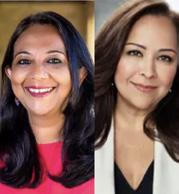
Anuradha Bhasin, Journalist and Managing Editor of the Kashmir Times, and Halima Kazem, Associate Director, Feminist, Gender, and Sexuality Studies
South Asia Working Group (SAWG)
The South Asia Working Group at Stanford is a space for dialogue, community, and reflection for students and scholars engaging with South Asia. Co-sponsored by the Stanford Center for South Asia, this forum features a variety of events such as paper presentations, lectures, and film screenings.
All South Asianist students are welcome to attend, participate in this forum, and contribute to building it as a student-led forum for intellectual deliberation for South Asian Studies.
Please join the South Asia Working Group Mailing List and follow the group on Instagram to stay updated about the events directly and to receive current announcements!
SAWG Event Highlight
Writing South Asia in the Global Academy
Partha Pratham Shil (Department of History
Sharika Thiranagama (Department of Anthropology)
2024-25 Fellows
Click on the picture of the student to learn more.
Sunidhi Pacharne
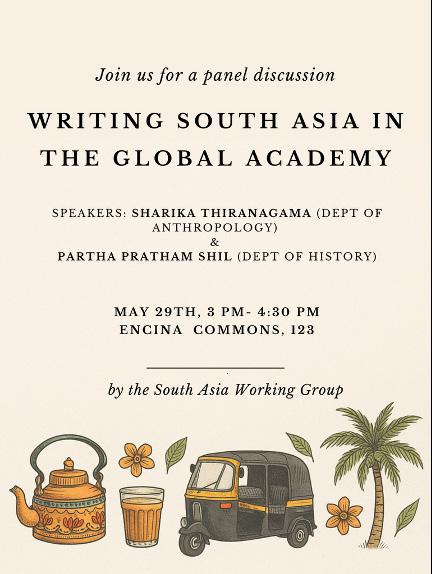
The South Asia Working Group (SAWG) hosted a panel discussion, “Writing South Asia in the Global Academy,” with Stanford Faculty members, Sharika Thiranagama (Anthropology) and Partha Pratham Shil (History). The discussion and Q&A were held in person on Thursday, May 29 at Encina Commons 123. The panel catered to graduate students and discussed how to convey the complexity and richness of South Asia to a global audience at different stages of their scholarly journey from graduate student to job market and pre-tenure candidates.
Learn more about SAWG events on the main SAWG page.
Shikha Nehra
Events
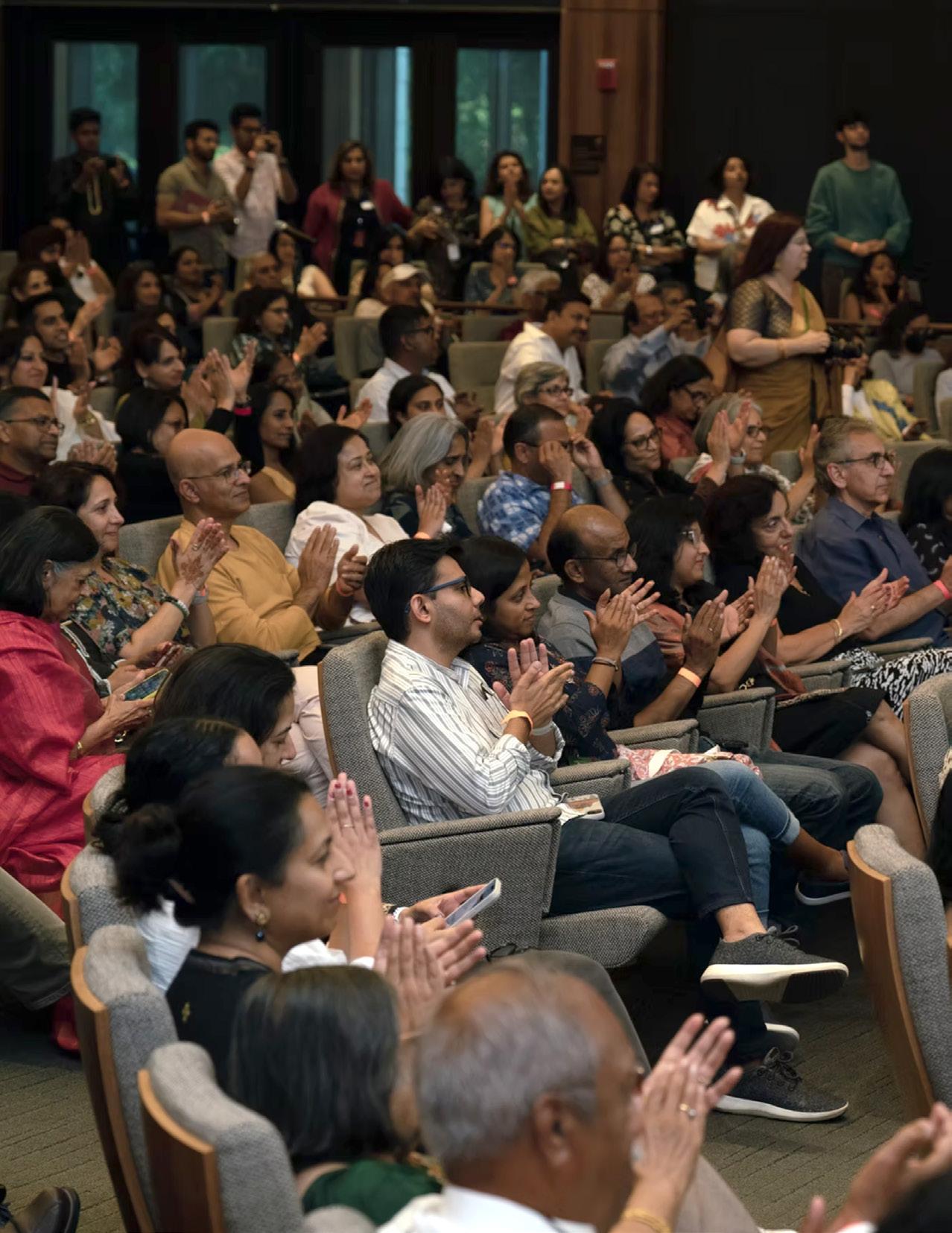
In the 2024-2025 year, over 2700 people attended our 43 sponsored events.
Photo: Shashi Tharoor at SALA 2024.Photo credit: Artforum SF website.
Lecture Series
The 24-25 Center for South Asia lecture series included speakers on a wide variety of topics, in addition to our vibrant and ongoing programming around caste. Many thanks to our Stanford faculty, staff, and students who moderated these events:
Faculty and Visiting Scholars
Anna Bigelow
Halima Kazem
Lalita du Perron
Madihah Akhter
Mejgan Massoumi
Partha Pratim Shil
Nasiruddin Nezaami
Sharika Thiranagama
Thomas Blom Hansen
Rohit Chopra
Ryan C. Perkins
Usha Iyer
Stanford Students
Aatika Singh
Alexa Russo
Isabel Salovara
Saad Lakhani
Shikha Nehra
Sunidhi Pacharne
Zarif Ahsan
Thank You to Our Co-sponsors
Abbasi Program in Islamic Studies
Alliance for the Education of Women in Afghanistan (AEWA)
Afghan Female Student Outreach (AFSO)
Clayman Institute for Gender Research
Center for African Studies
Center for Latin American Studies
Department of Art and Art History
Department of Anthropology
Department of Religious Studies
Foundation Source
Department of Feminist Studies, UC Santa Cruz
Hamid and Christina Moghadam Program in Iranian Studies
SACHI
Art Forum SF
History Department
Stanford Global Studies Division
Stanford University Libraries
Stanford Humanities Center
Ho Center for Buddhist Studies
School of Leadership Afghanistan (SOLA)
South Asian Studies Department, UC Santa Cruz
Lecture Series Events
Click on the picture of the speaker to view he event information.
Rana Safvi in conversation with Ryan Perkins September 4, 2024
The South Asian Literature and Art Festival 2024 Sept. 28-29, 2024
Oceanic Imaginaries Series: Artist Talk with Renluka Maharaj September 30, 2024
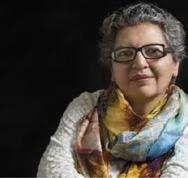
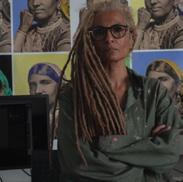
Documentary Film Screening| Campus Rising (2017) with Yousuf Saeed October 6, 2024
Documentary Film Screening| Khayal Darpan (2006) with Yousuf Saeed October 8, 2024
Gabrielle Hosein, Indian Indentured Women’s Labour and Liberation: Decolonising Photographic Representation Through an Imaginative Visual Archive October 11, 2024
Laurence Gautier, Between Nation and Community: Muslim Universities and Indian Politics after Partition (1947-1990s) October 14, 2024

Ratish Nanda, Preserving India’s Monuments - A 25-year journey October 23, 2024
Qaum, Mulk, Sultanat: Citizenship and National Belonging in Pakistan: Amna Qayyum in conversation with Ali Qasmi October 25, 2024
Sanjeev Routray, Who is a Construction Worker? Bureaucratic Arbitrariness, Entrepreneurial Unions, and Performances of Eligibility in Delhi November 7, 2024.
Halima Kazem in Conversation with Victoria Fontan November 11, 2024
Wave: an event with Sonali Deraniyagala November 20, 2024.
Yuthika Sharma, Empire in a City: Art and the Mughal Non-Modern in India’s Long 18th Century January 16, 2025
Rob Rakove, Days of Opportunity: The United States and Afghanistan Before the Soviet Invasion January 17, 2025
Celebrating the Inauguration of Ustad Farida Mahwash’s Archive at Stanford University Libraries
January 18, 2025
Afsar Mohammad, Telugu Fest!
January 30, 2025
Nishtha Jain, Film Screening: Farming the Revolution
February 24, 2025
Remaking History: 1948 Police Action and the Muslims of Hyderabad | Book Talk with Afsar Mohammad
January 30, 2025
Dhaneswar Bhoi and Hugo Gorringe, Book Talk: Caste in Everyday Life: Experience and Affect in Indian Society February 3, 2025
Resisting the Taliban’s Ban on Female Education in Afghanistan
February 3, 2025
Janaki Bakhle, Savarkar and the Making of Hindutva
February 12, 2025
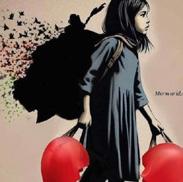
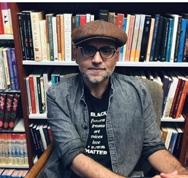


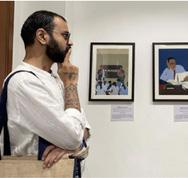
Ali Mian, Prophetic Humor: Jokes and the Practice of Tradition in Muslim South Asia
March 13, 2025
Disability in South Asia: History, Politics, and Rights
April 3, 2025
Film screening: Buhay Khulay Rakhi (Keep the doors open), a film by Ali Usman Qasmi and Nida Mehboob
March 21, 2025
Siddhesh Gautam, Art Side of the Moon: Aesthetics of The Ambedkarite Movement
April 10, 2025
Sonal Khullar, CSA Annual Lecture: After the Public Library, March 6 2025
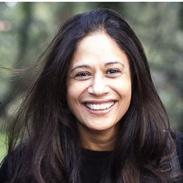
Symposium on Confronting Gender
Apartheid in Afghanistan
April 22, 2025
Darshana Mini Sreedhar, Rated A: Soft-Porn Cinema and Mediations of Desire in India
April 24, 2025
“Desire”: Center for South Asia
Graduate Student Workshop
April 25, 2025
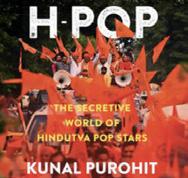
Kunal Purohit, H-Pop: The Secretive World of Hindutva Pop Stars
May 2, 2025
Events
Jairaj Jai Galagali, The Accidental Archivist: a Journey through India’s Forgotten Cricket Footage
May 7, 2025
Sergio Missana, Hope and Resilience: Lessons from the Climate Parliament for Latin America, Africa and South Asia, May 9, 2025
Lucinda Ramberg: ‘We Were Always Buddhist’: Dalit Historiography and the Temporality of Caste
May 9, 2025
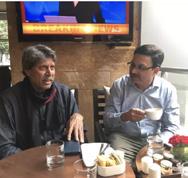
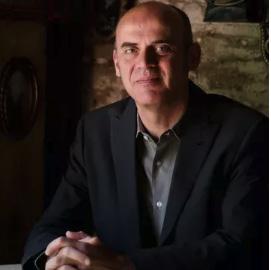

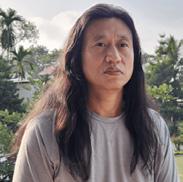

Aküm Longchari, Sharing Indigenous Experiences, Building Critical Solidarity
May 12, 2025
Manjeet Sarkar, Untouchable: Laughing Out Caste
May 9, 2025
Lamya H., Hijab Butch Blues: A Book Talk with Lamya H
May 19, 2025
Jusmeet S. Sihra, Organization of Segregation: Reproducing Caste Inequalities in Urban India
May 28, 2025
Future Programming (subject to change)
• Wednesday, November 5, 2025 | Nidhi Mahajan
• Thursday, November 13, 2025 | Shahzia Sikander: Collective Behavior Convening
• Friday, November 14, 2025 | Santhosh Sadanadan
• Thursday, November 20, 2025 | Bishnupriya Ghosh
• Wednesday, January 14, 2026 | Trishna Senapaty
Learn more about our upcoming events.
• Thursday, February 12, 2026 | Dolly Kikon
• Tuesday, February 17, 2026 | Anand Patwardhan
• Wednesday, March 4, 2026 | Rahul Rao
• Wednesday, April 15, 2026 | Gabrielle Hosein
• Thursday, April 23, 2026 | Elora Shehabuddin
• Thursday, May 7, 2026 | Rohit De
If you know anyone who may be interested in signing up for our weekly newsletter and staying updated on our upcoming events, please ask them to subscribe to our mailing list.
Community Perspective
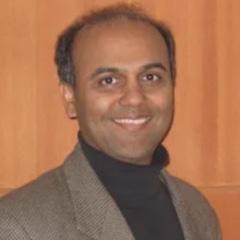
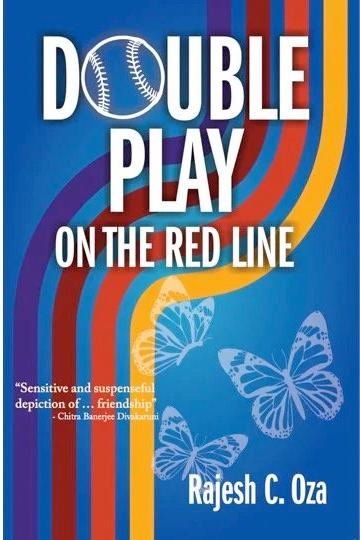
Dr. Rajesh C. Oza, author of Double Play on the Red Line. He can be reached at satyalogue.com.
What do you like best about the Center for South Asia?
I like the public community events with a diverse array of independent, established and mainstream South Asian scholars and artists that the Center regularly brings to Stanford. The Center is a gateway to meeting and learning from a rich assortment of experts, including journalists, activists, scholars and artists. The CSA ensures community knowledge and access to free public events featuring such an impressive array, and sometimes also through virtual attendance. This is a highly useful resource especially for those of us who draw greatly from ideas and knowledge exchanged at these events – for strengthening activism and organizing, analyses, and for the greater good of public education.
Which recent event stood out to you and why?
Over the past decades of attending in-person and online events at Stanford, Mangla and I have gratefully experienced the Center’s embrace of social justice, alliance, voice, immigration, tradition, and modernity. On February 23, 2025, we joined the Zoom dialogue centered around Dhaneswar Bhoi and Hugo Gorringe’s Caste in Everyday Life: Experience and Affect in Indian Society. The book talk was marvelously moderated by Parth Shil of the History Department. While the discussion was rooted in sound academic conceptualization, the theory was made memorable by the speakers’ heartfelt emotions around privilege and marginalization.
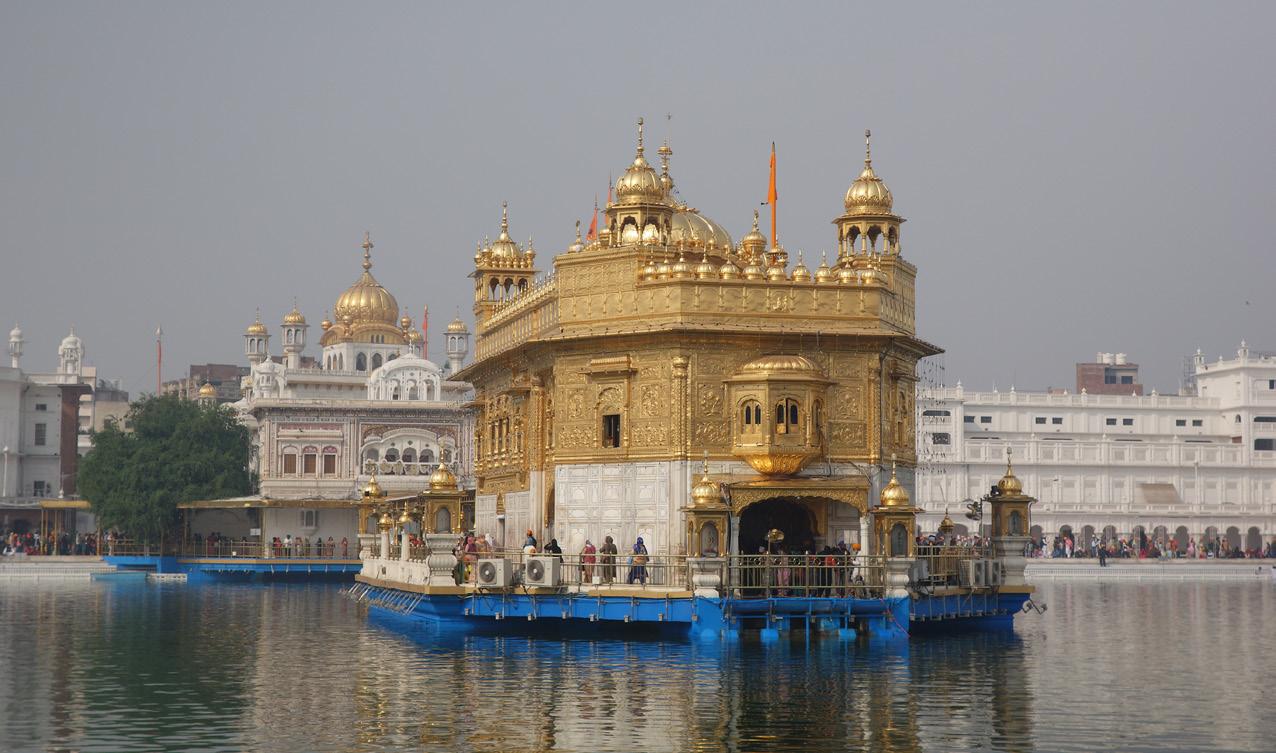
Photo by Manasi Garg, “The Golden Temple,” Amritsar, Punjab, India.
What are the benefits of engaging with the Center to the larger South Asian community?
Connectedness. While E. M. Forster wrote “Only connect!” as an epigraph to Howards End and not to A Passage to India, his belief in human connection conveys the benefit of the Center; it’s a forum enabling cross-disciplinary connection that explores what it means to be South Asian. As evident by the Center’s guests who share their variegated expertise, South Asians are artists and architects, environment professors and electrical engineers, dancers and doctors, filmmakers and farmers, rappers and writers. And so much more. By engaging with the Center, we can connect with the fullness of the South Asian experience.
Do you have a word to best describe the Center?
Satyalogue. This portmanteau of Satya (Sanskrit for truth) and Logos (Greek for discourse) is in the title of my book Satyalogue // Truthtalk. Just as this book discusses today’s dilemmas through Gandhian thought, the Center exemplifies Satyalogue by being in truth talk through an expansive South Asian lens.
“By engaging with the Center, we can connect with the fullness of the South Asian experience.”
How to Give
The Center for South Asia extends sincere appreciation to our contributing alumni, parents, students, and friends for their generous support. Your support helps strengthen our existing programs and also create new ones to enhance our collaboration with Stanford faculty, students, and other university units. For more information about working with us to support the study of South Asia at Stanford, please contact Lalita du Perron, Associate Director at lalita@stanford.edu.
Make a Gift
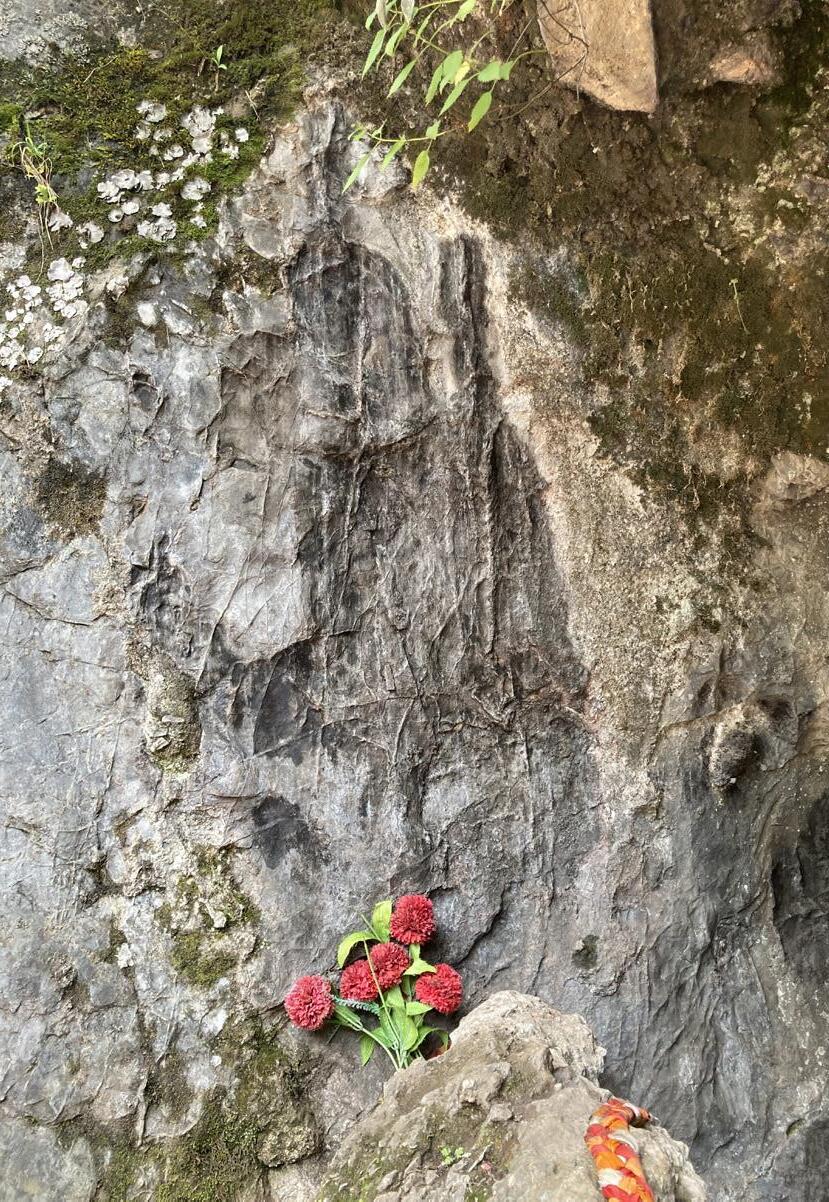
Photo credit: Oriane Lavolé, 2025, Ph.D. candidate in Religious Studies. Naturally formed image of the 8th century Indic tantric master Padmasambhava, also known as Guru Rinpoche, on the cliff wall of the Tibetan Yangleshö (current day Sichuan), a place regarded as equivalent to the sacred site by the same name in Pharphing, Nepal.