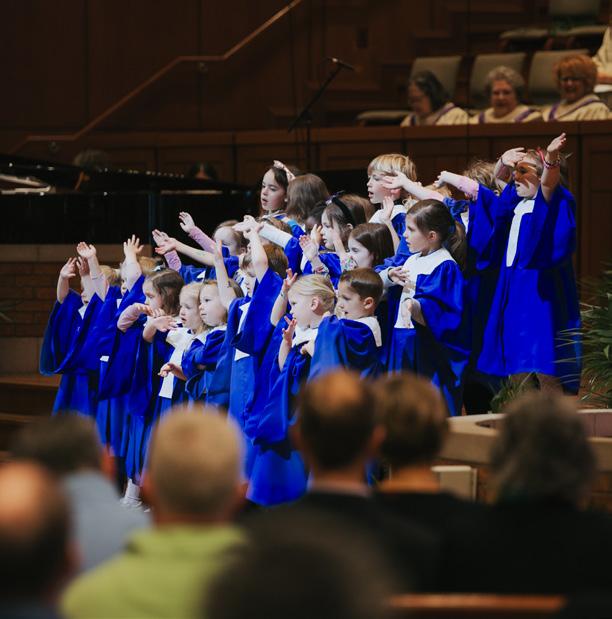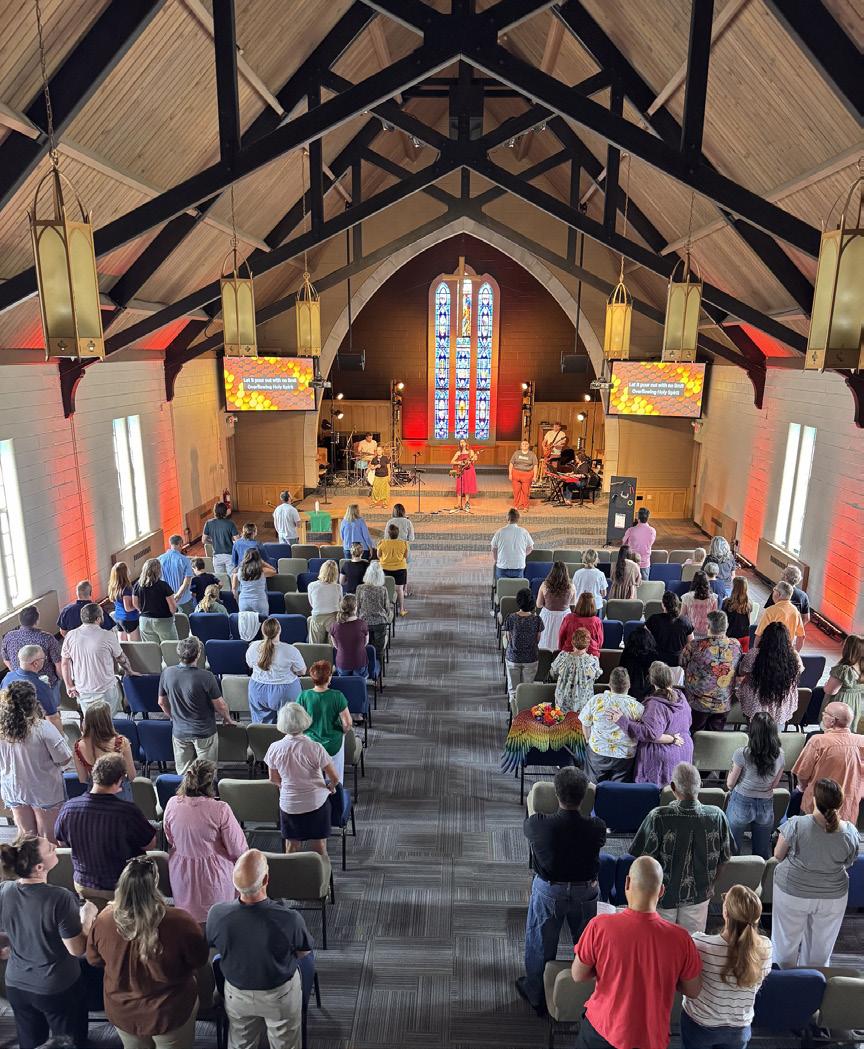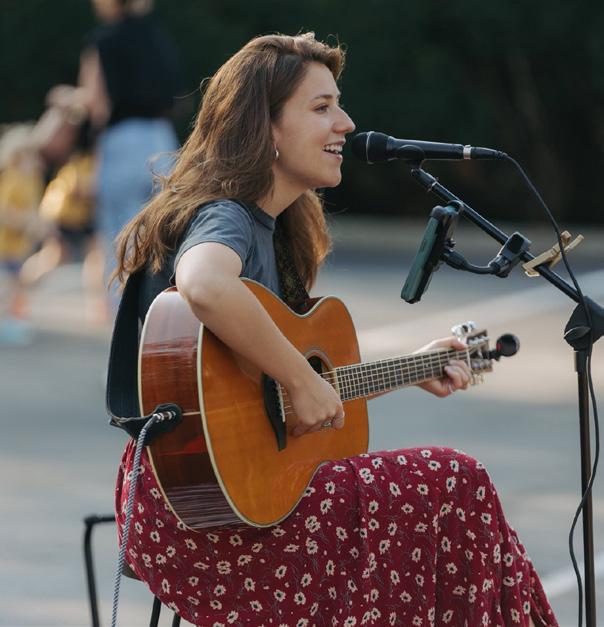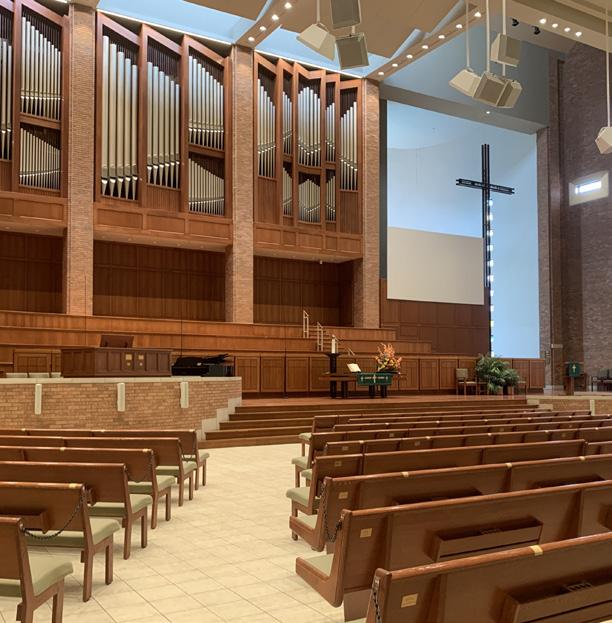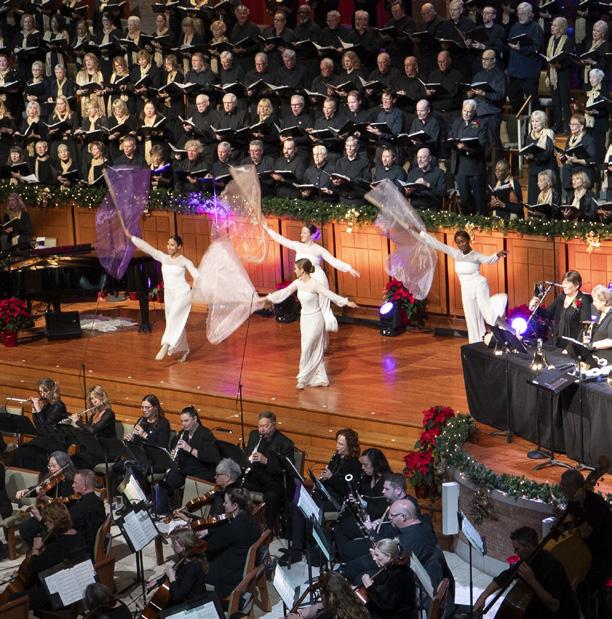
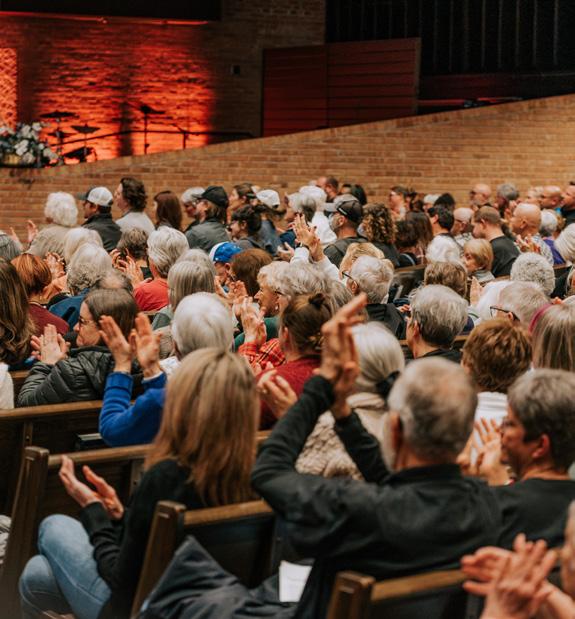
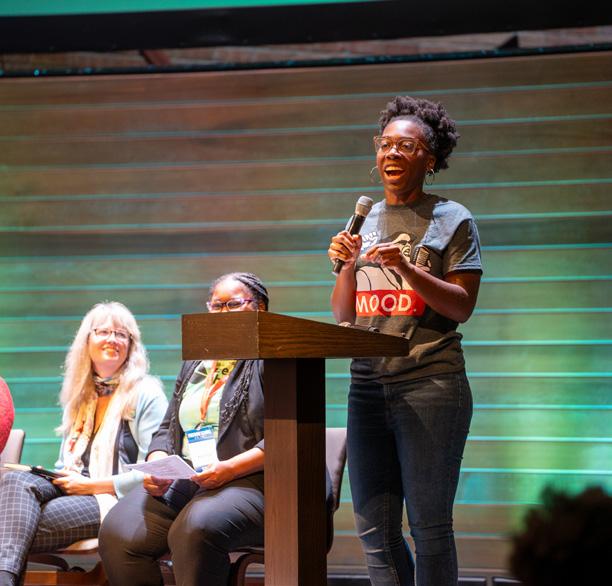

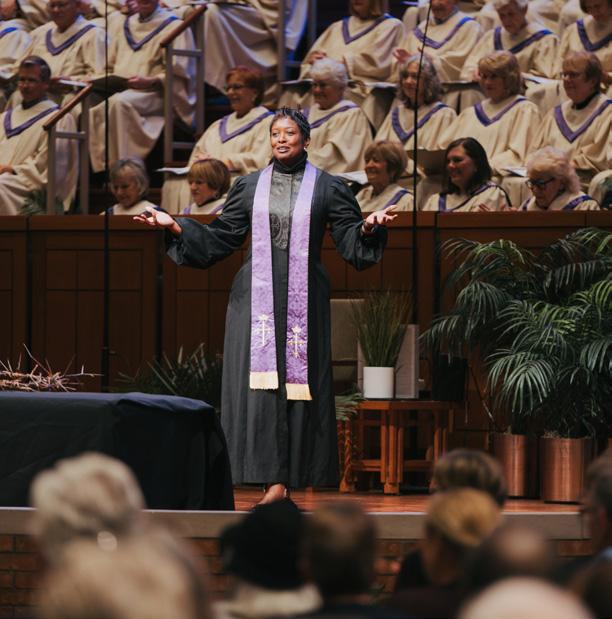

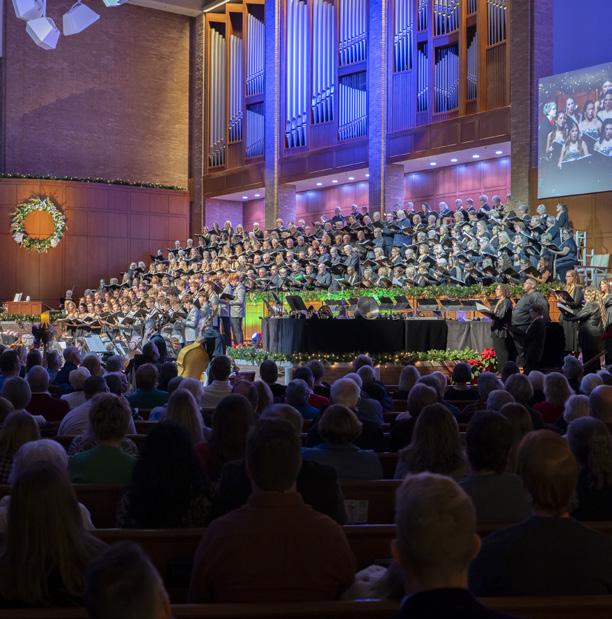

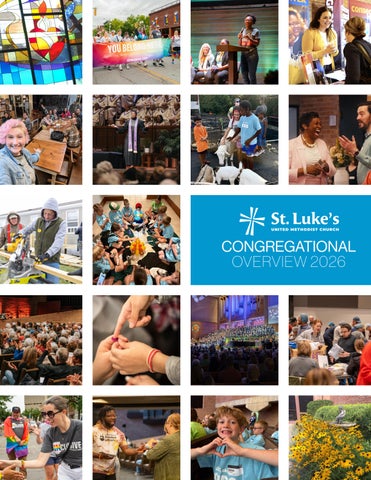
St. Luke’s United Methodist Church in Indianapolis lives on three campuses: North Indy, Midtown, and Online. We offer a traditional worship service at North Indy with an 80-member choir each week and a 40-member orchestra each month. We offer two contemporary services at North Indy and two contemporary services at Midtown, with topnotch praise bands at both campuses. All worship services at North Indy are live- streamed and recorded for playback during the week. Many of our 100+ weekly classes and small groups offer hybrid in-person/online participation. Check us out at stlukesumc.com
We have 5,300 members on the rolls, with an average of 2,500 worshipers across all campuses, a terrific staff of 50+, and a budget of nearly $7M. Beyond our Sunday morning worship experience, our ministries include discipleship groups, kids and youth groups, recovery groups, grief/ trauma groups, contemplative ministries, large community events, and many other ways our people can be the hands and feet of Jesus. Our 1,600 highly active volunteers serve tens of thousands in the community annually:
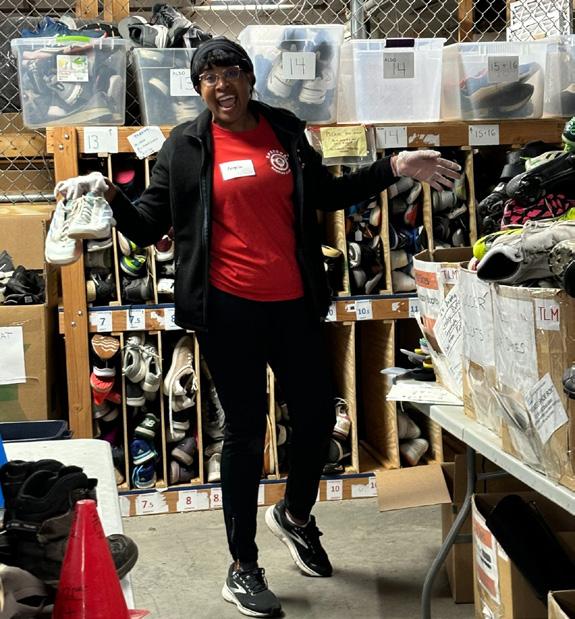
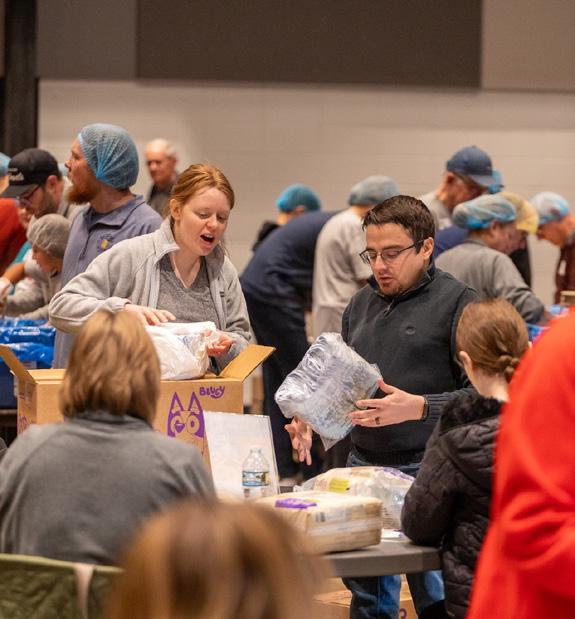
• 60,000+ visits to Crooked Creek Food Pantry (12,000 unique families)
• 700+ sack lunches delivered each week to unhoused people in Fletcher Place neighborhood
• 1,400 Thanksgiving meals served or delivered
• 6,000+ students received school supplies, and 624 students attended the Back-to-School Bash
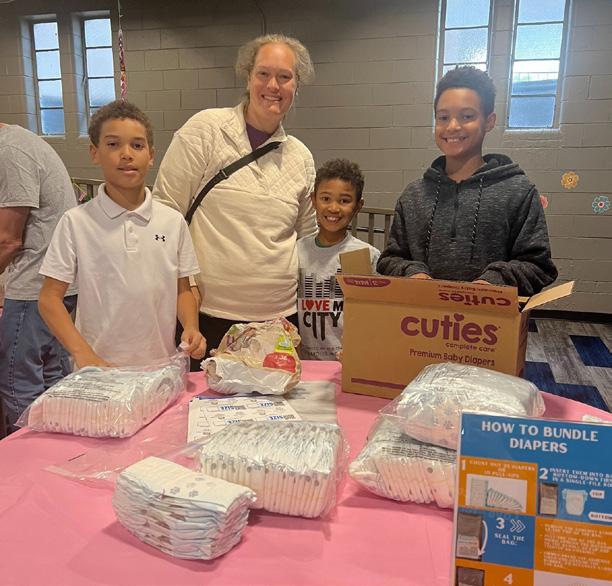
• 200 families served each month through the diaper pantry
• 300+ families served through Angel Tree
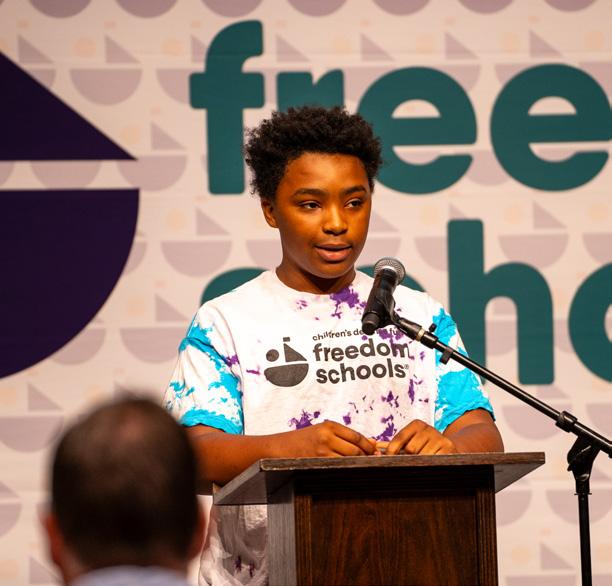
• 150 families engaged in Luke’s Leaders and Freedom School
• 42 families assisted with housing support (funds provided by in-house Connections Books & Gifts shop)
• 12+ families at Washington Township Early Childhood Center supported weekly with groceries
• 25 immigrants participating in a citizenship class
• 70 children supported at Angel House in Tanzania
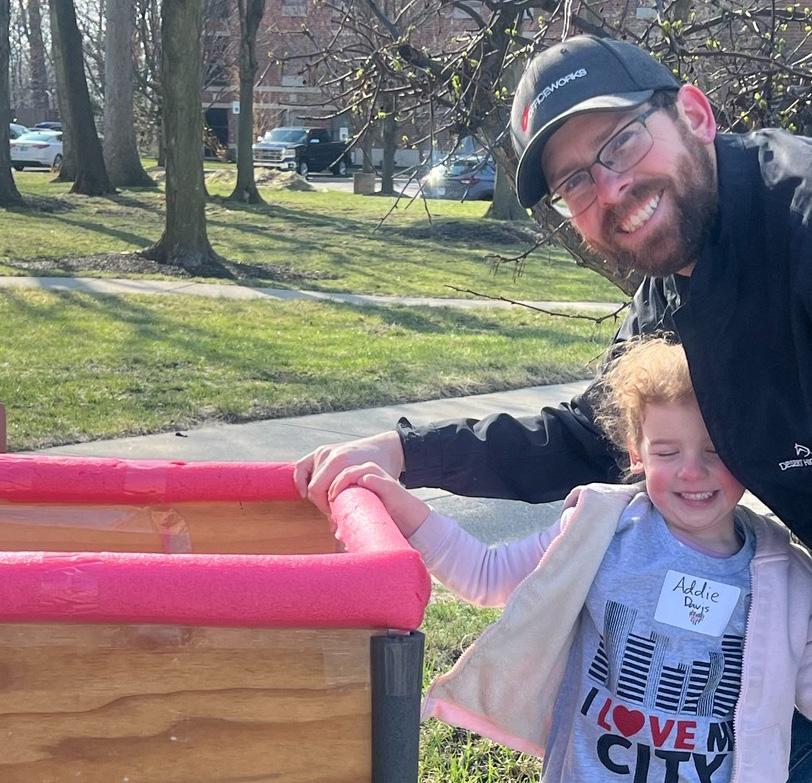
• 12 local partners supported through I Love My City
St. Luke’s is well known throughout the metropolitan area as a wide-open community that literally welcomes everyone regardless of who they are.
We’re a safe harbor for those who have suffered church hurt, and a church home for those who grew up without faith or have outgrown their faith. We commit to welcoming all with unconditional love, exactly how Jesus does. Our website highlights our Open Statement and our Becoming AntiRacist Statement, which in brief say that we are committed to welcome everybody regardless of gender, race, ethnicity, sexual orientation, gender identity, nationality, disability, or socioeconomic background. We strive to see the “Living Christ” in the marginalized, applying ancient scripture to modern ethical situations. We have internalized outreach and inclusion as theological convictions, not branding.
We proclaim our beliefs publicly on our website – stlukesumc. com/who-we-are. We firmly align with the UMC mission to make disciples of Jesus Christ for the transformation of the world. We are Christ-centered. We celebrate the sacrament of communion each month, usually say the Lord’s Prayer together each week, and always acknowledge the Holy Trinity. Our traditional worship services typically incorporate the Korean Creed as our statement of faith.
Since our beginning in 1953, St. Luke’s has been blessed with five highly gifted, long-tenured preachers who have been the draw to bring in new people to the church. They have always based their preaching, teaching, and writing on the Bible, enabling it to come alive for personal faith development, for practical application to everyday life, and for grappling with critical issues of the day. They have focused on Jesus, especially in the ways he models how to live. They have been vitally in touch with God in their prayer life. And they have endeavored to lead our whole community – leaders, staff, and congregants – to connect with God the same way. Our congregation prizes preaching with spiritual depth, preaching that makes us think, and preaching that calls us to action.
Thank you Bishop Tracey S. Malone! For empowering us to help search for our next Senior Pastor. We are praying that God will help us find a visionary who will lead us into the future where God is calling us. A preacher who doesn’t just preach the Gospel but lives it out in the streets of Indianapolis and inspires the congregation to do the same. A uniter and unifier who will put the focus not on what divides us, but on what unites us – devotion to the Living Christ.
At the end of 1952, members of a Methodist congregation in central Indianapolis noticed a steady movement of families heading north of the city. They began to wonder where those newcomers would find a church home and felt called to help create one.
Without a detailed plan, they trusted one thing: God’s call.
So, they planted a church.
They gathered in the early months of 1953 in an American Legion Hall. They arrived each Sunday morning, as the story goes, to sweep aside poker chips, ashes, and glasses before setting up the room for worship. In the simple act of making space, a community was formed. That is how St. Luke’s United Methodist Church began, and that spirit of faithful risk became part of our DNA.
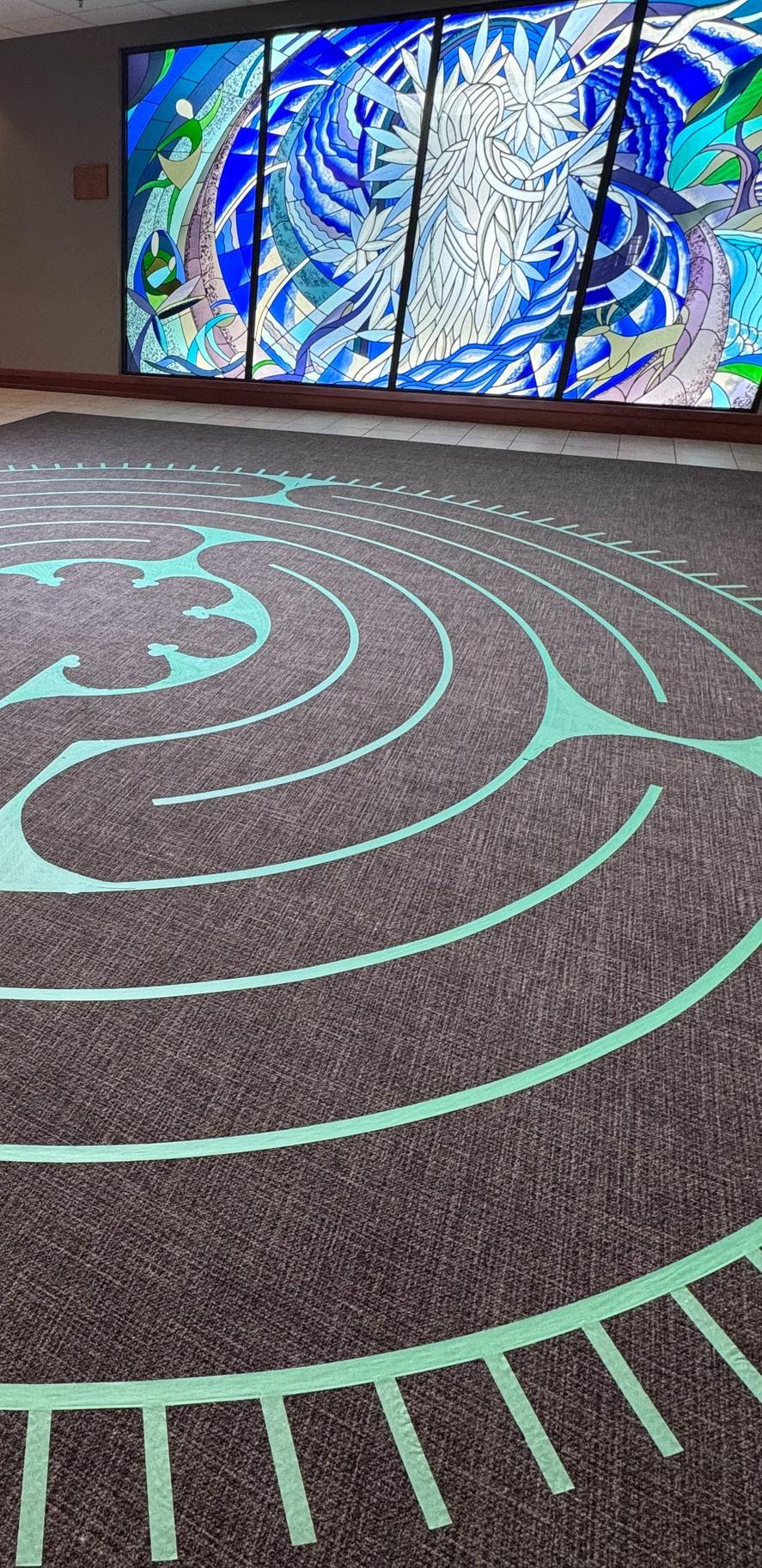
That DNA still shapes us. From the beginning, St. Luke’s has seen little separation between sacred and secular life. Faith is lived in sanctuaries and in soil, in prayer, and in service. On any given Saturday, Master Gardeners may be training while others walk the labyrinth in quiet reflection. Both are holy. Both are expressions of discipleship woven into the fabric of who we are.
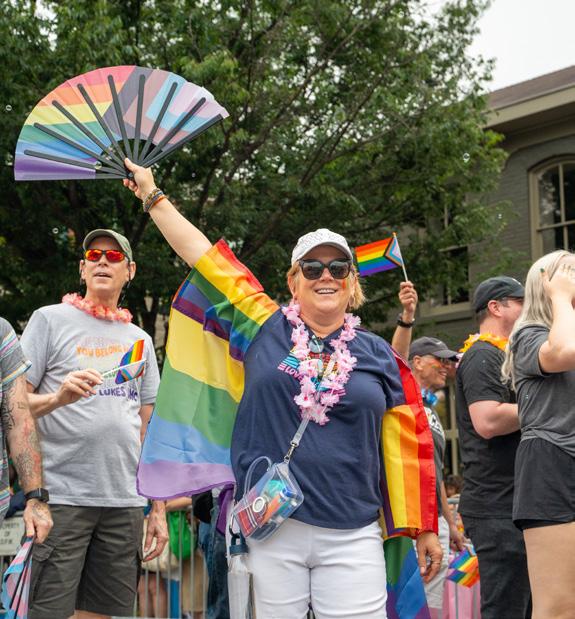
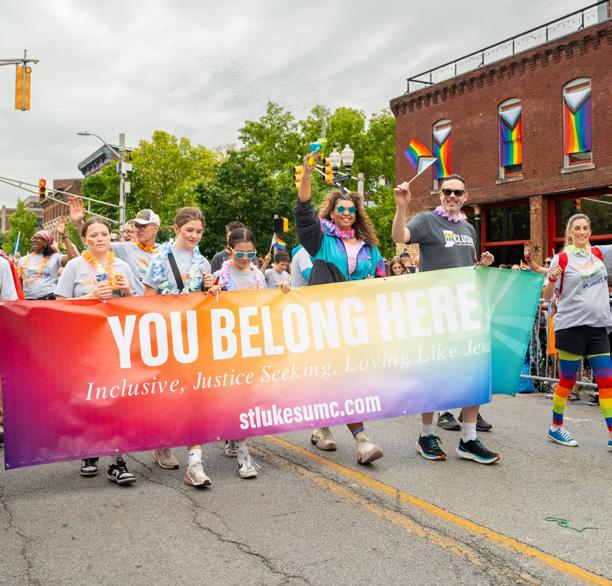
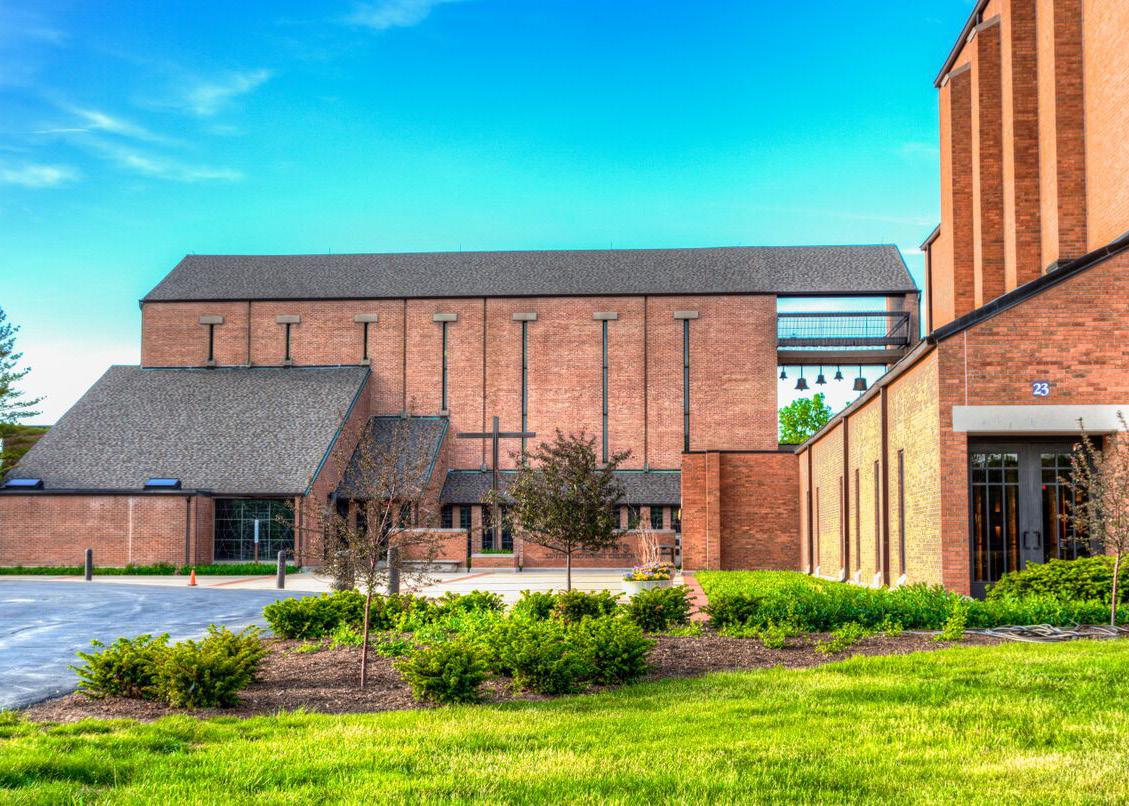
We continue to take risks in response to God’s call. In 2023, we launched our Midtown campus to reach new neighbors. We expanded our presence at the citywide Pride celebration as a visible witness of Christ-centered inclusion. We became an organizing partner of Streets to Home Indy, helping unite government, business, and nonprofit leaders in the shared work of ending chronic homelessness. This outward-facing courage is not new; it is embedded in our DNA.

We listen for God’s voice not only in our actions but in our aspirations.
After the murder of George Floyd, we committed to the ongoing journey of becoming an anti-racist community. We also seek to participate in God’s Shalom within our city, strengthening partnerships with schools, families, and marginalized neighbors while seeing measurable impact.
As we prepare to welcome a new Senior Pastor, we are deepening our practice of discernment. This leader will step into an inclusive, big-tent congregation that values both personal and communal relationship with God and seeks to live prophetically in society through a clear focus on Jesus Christ.
With a history spanning 73 years, St. Luke’s includes approximately 5,300 members on the rolls, 2,500 average worshipers across two campuses and online, an estimated 32,000+ community members served annually, and an estimated 1,600 volunteers living as disciples in love of their neighbors. Vitality is re-emerging, after the lingering effects of the pandemic and other declines over the past decade. Worship attendance this year has already outpaced the last two years. Participation in New Member and Confirmation courses is nearing pre-pandemic levels. Increasing numbers of young families are visiting. Community engagement and partnerships continue to expand.
We remain a trusted and catalytic force in the healing of our community and continue to be the largest church in the North Central United Methodist Jurisdiction. We have been described as a clarion voice of Christ-centered inclusivity within the United Methodist denomination. The next Senior Pastor will be only the sixth in our history and will play a mission-critical role in our congregation and in our connection with the people called United Methodist.
We understand our call clearly: to make disciples of Jesus Christ for the transformation of the world. Contextualized, we express our mission this way: “An open community of Christians helping people find and give hope through Jesus Christ.” In the pages that follow, we share more about who we are, where we are, and the kind of pastor we believe God is calling to lead us. That pastor is deeply spiritual, culturally competent, egalitarian, energetic, and multi-generational in approach. The following information will help our next Senior Pastor connect to the heart and needs of the community called St. Luke’s United Methodist Church in Indianapolis.
Our identity begins with what we believe and how those beliefs shape the culture of our life together. It is reflected in the way we relate to one another, how we make decisions, and the structures that support our leadership and shared commitments. What follows, expresses the aspirations we continue to pursue as we grow into the community we believe God is calling us to be.
We proclaim our beliefs publicly on our website stlukesumc.com/who-we-are. We firmly align with the UMC mission to make disciples of Jesus Christ for the transformation of the world. We are Christ-centered. We celebrate the sacrament of communion each month, usually say the Lord’s Prayer together weekly, and always acknowledge the Holy Trinity. Our traditional worship services typically incorporate the Korean Creed as our statement of faith.
A relationship with God that is both personal and communal.
A prophetic participation in society that leads to overcoming systemic evil, with justice for all.
A focus on Jesus to show us, and all people, what God is like, and to model for us, and all people, how to live.
We value strong Bible-based preaching on the “practical divinity” of putting faith and love into action, preaching with spiritual depth, and preaching that makes us think. At Lent and in the fall, we form new small groups to discuss the sermons together. Often these ad hoc small groups bond and opt to stay together to become longer term study groups. We host over 100 study small groups throughout the year covering many topics, but it’s Disciple Bible Study that we encourage the most. It has been the genesis of many long-term small groups, and many of our key leaders are graduates of the Disciple courses.
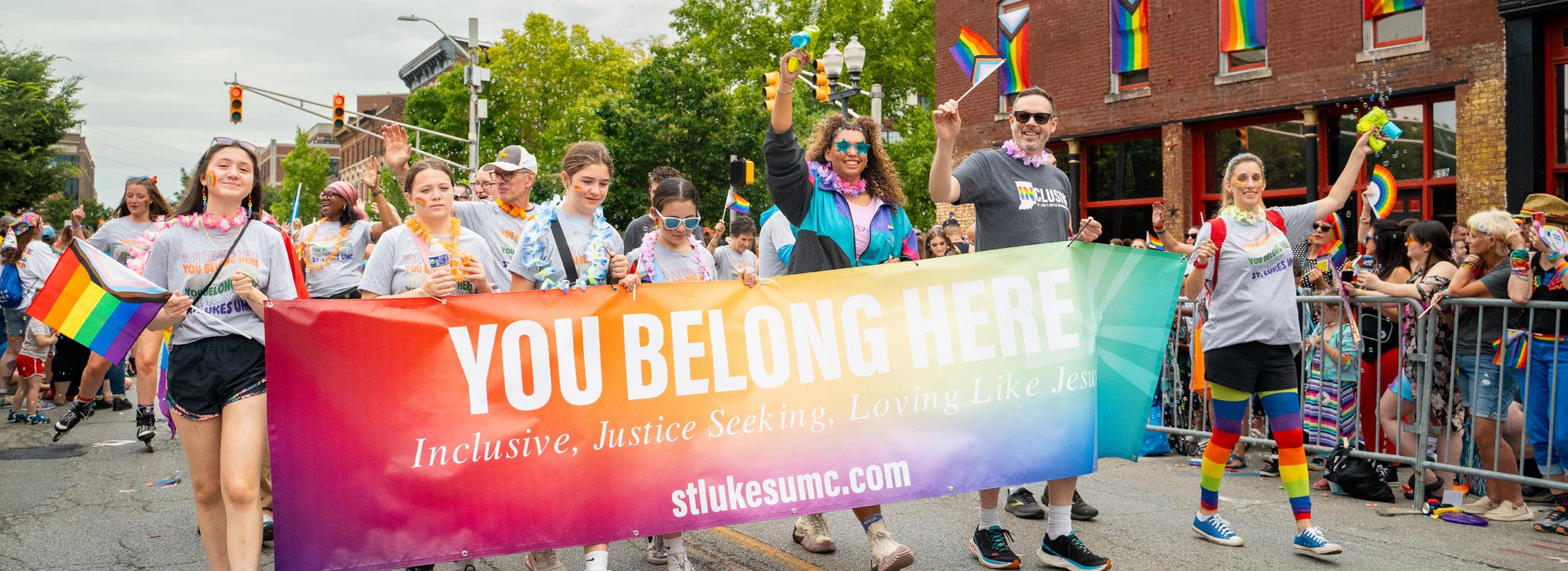
We commit to welcoming all with unconditional love, exactly how Jesus does.
Our website highlights our Open Statement and our Becoming Anti-Racist Statement, which in brief say that we are committed to welcome everybody regardless of gender, race, ethnicity, sexual orientation, gender identity, nationality, disability, or socioeconomic background.
We strive to see the “Living Christ” in the marginalized, applying ancient scripture to modern ethical situations. We have internalized outreach and inclusion as theological convictions, not branding.
We estimate that our impact is exceeding 32,000 people each year within areas of relief, education, and biblical justice. Later in this document, you’ll see a snapshot that provides more details.
We’re a big tent, drawing diverse people from across the city of Indianapolis, well beyond our immediate neighborhood, many of whom have experienced church hurt or have simply outgrown the faith in which they grew up. Therefore, our congregation includes people from a wide range of church backgrounds and political stances.
We stand on our principles and try our best to stay out of the culture wars. We continue to learn about our own blind spots as we learn to love everyone, even those who are different from us.
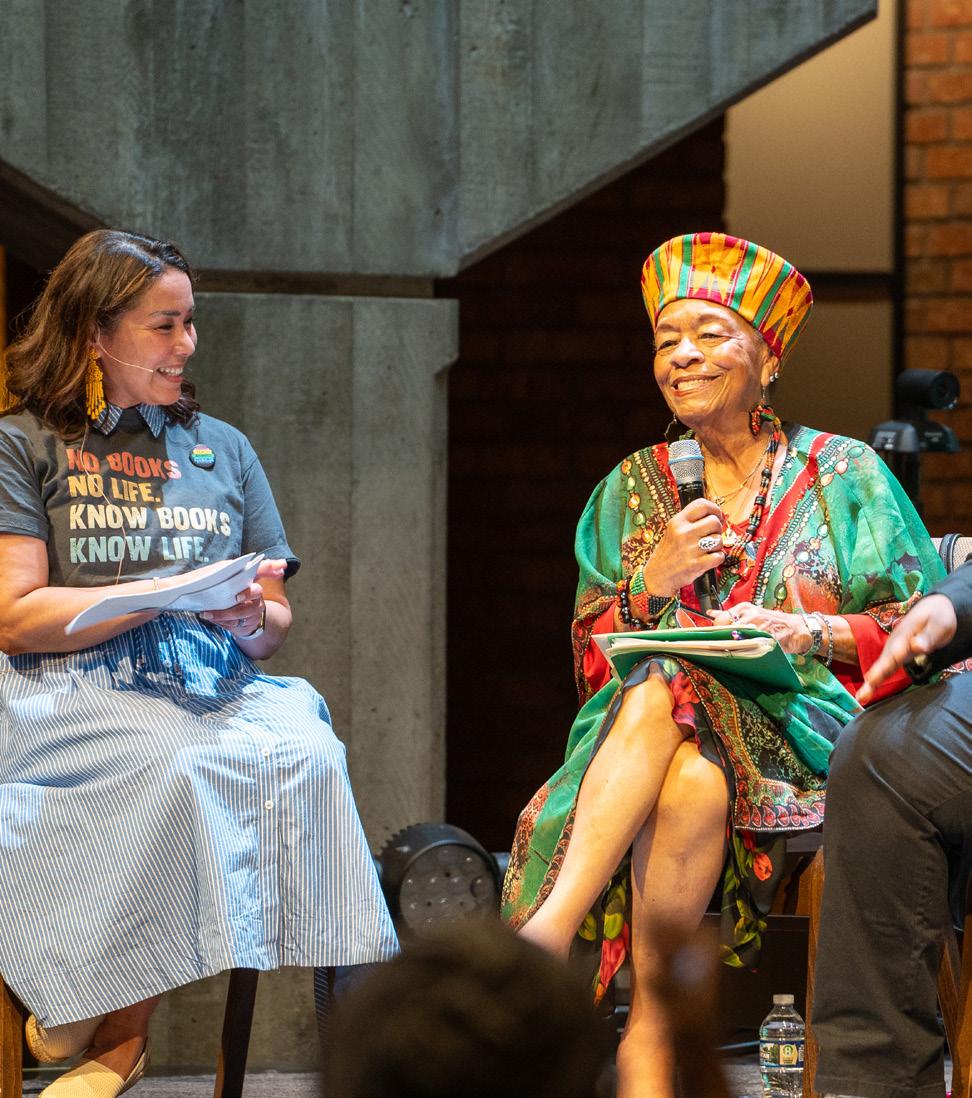
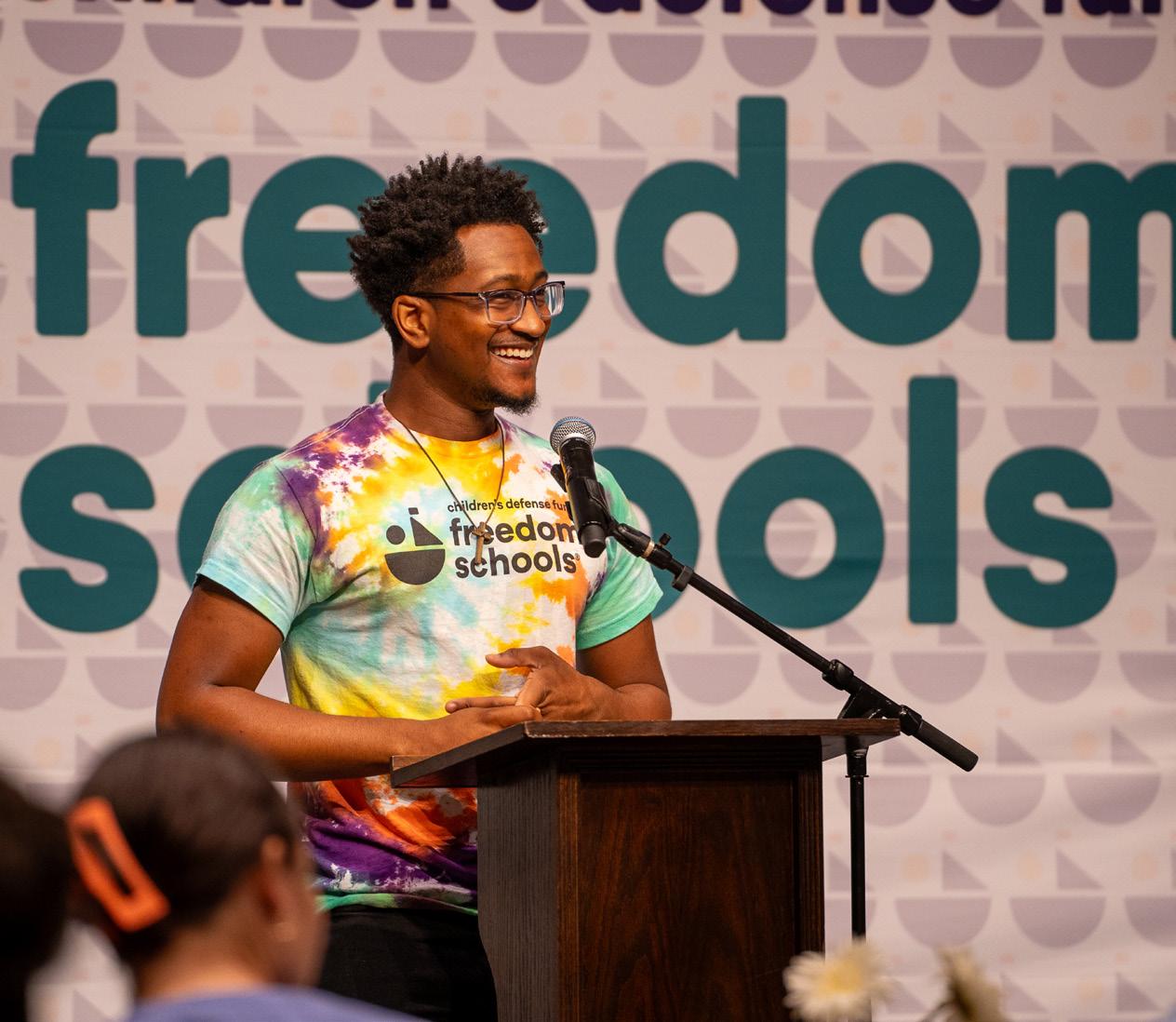
The lay leadership of St. Luke’s is, in many ways, an embarrassment of riches—gracious, faithful, committed, and abundantly gifted. From the very beginning, lay leaders responded to God’s call and established the community now known as St. Luke’s. Over the years, they have continued to share “dreams and visions” that stretch the church to live more fully into its calling. It is through their time, talents, generosity, service, and witness that Christ’s hope is made present in the here and now. Lay leaders do not simply support the church; they live as the church.
As the congregation grew, so did the need for structure. Staffing expanded, bringing clearly defined responsibility for leading ministries and guiding decisions. Over the past thirty years, this has naturally evolved into what might be described as a staffdriven model of decision making. While this approach provided clarity and efficiency in a large and complex organization, we have come to recognize that it can also limit ministry growth and does not fully reflect our theological convictions.
Our belief in the priesthood of all believers calls us to shared leadership and mutual discernment. In response, we are intentionally cultivating a more collaborative model, one that honors the essential role of staff while actively empowering lay leaders to initiate, shape, and lead ministry.
This shift is both structural and cultural. Advisory committees now support every major ministry area. The responsibilities and authority of each administrative committee have been clarified, and annual training reinforces those expectations. Significant decisions move thoughtfully through appropriate channels of discernment and approval, rather than being developed in isolation. More importantly, lay leaders are encouraged not to simply approve or implement plans, but to help envision and guide them. Personal invitations to serve, especially to busy professionals balancing full schedules, are often met with gratitude and enthusiasm. Such responses affirm our belief that leadership is a shared ministry and a faithful response to our baptismal calling.

In practice, our decision making is consensus oriented. Significant matters invite broad input and careful listening, and unilateral decisions are rare. We recognize that shared leadership requires both patience and clarity, yet it also strengthens trust. As participation deepens, so does ownership of our common life.
Adaptability remains essential to our continued health. As our history reflects, we have navigated theological and sociological differences with resilience. In a congregation of our size, disagreement or discouragement can sometimes lead to quiet disengagement. Historically, concerns have often been addressed through direct conversation with the senior pastor. While this pastoral pathway remains important, we are intentionally expanding opportunities for courageous, community-wide dialogue that fosters transparency and shared discernment.
We now offer training to equip members to engage in differences with love and respect, particularly when political tensions surface within families or communities. Regular preaching and teaching reinforce the importance of honest, grace-filled conversation. Recently adopted staff values further articulate our commitment to this culture, even as we acknowledge that embodying these practices consistently is ongoing work for both staff and congregation.
At the heart of our leadership and adaptability is a simple, yet demanding measure of faithfulness rooted in our Wesleyan heritage: to do good, to do no harm, and to stay in love with God. These simple rules shape not only our personal discipleship but also our shared governance. Our aim is not merely to refine processes or adjust structures, but to nurture a culture of participation, discernment, and responsiveness grounded in trust and rooted in our baptismal covenant.
We understand this to be ongoing work. Like the founding lay leaders who first stepped forward in faith, we seek to remain attentive to the Spirit’s leading, ready to grow, to adapt, and to become more fully the community God is calling us to be.

St. Luke’s uses the traditional structure of governance outlined in the Book of Discipline. We have five full committees including Governing Board, Staff Parish Relationships Committee, Finance, Trustees, and Lay Leadership. Finance has some sub-committees including Endowment, Stewardship, etc. These committees function as guided by the Book of Discipline.
While another section describes the staffing in more detail along with an accompanying organizational chart, the following describes the current staff leadership structures.
• Comprised of the Senior Pastor, Executive Pastor, and Executive Director of Operations.
• Meets twice a month for one hour.
• Focuses on key staffing, budgeting, stewardship, and facility matters. Collaborates with administrative committees and oversees policies that mobilize the overall effectiveness of church ministry.
• Comprised of the Executive Team, most pastors, and the Directors of Discipleship, Outreach, and Communications.
• Meets twice a month for 75 minutes.
• Primarily responsible for strategic decisions with some tactical oversight. Owns the strategic planning and alignment process, prioritizes initiatives that advance the mission, and broadly defines methods, timelines, and responsible leaders. Reviews monthly metrics, identifies strategic opportunities, and facilitates multi-ministry initiatives (e.g., Winter Summit).
• Comprised of Directors and Associate Directors who supervise staff or large volunteer teams across all ministry areas.
• Meets once a month for 75 minutes.
• Primarily responsible for tactical and operational decisions. Mobilizes key initiatives from the Leadership Team, empowers execution of shared policies and procedures, monitors implementation, addresses barriers, shares resources, coordinates ministry efforts, and celebrates ministry impact.
• Comprised of members within each department, structured according to departmental roles and goals.
• Most departments meet weekly or twice monthly for 60 minutes or more.
• Address strategic, tactical, and operational decisions aligned with the broader church vision and annual goals set in coordination with the Executive Team. Departments also respond to community needs and input from lay leaders, working collaboratively to expand ministry impact and share the good news of Christ.
ONE-TO-ONE MEETINGS
• Weekly or biweekly supervisory meetings within each department.
• Focused on goal achievement, problem-solving, coaching, resourcing, and celebrating staff as they serve, lead, and care for others in ministry.
• The weekly all-staff gathering (60 minutes).
• Includes worship, devotions, training, celebrations, fun, fellowship, and prayer.
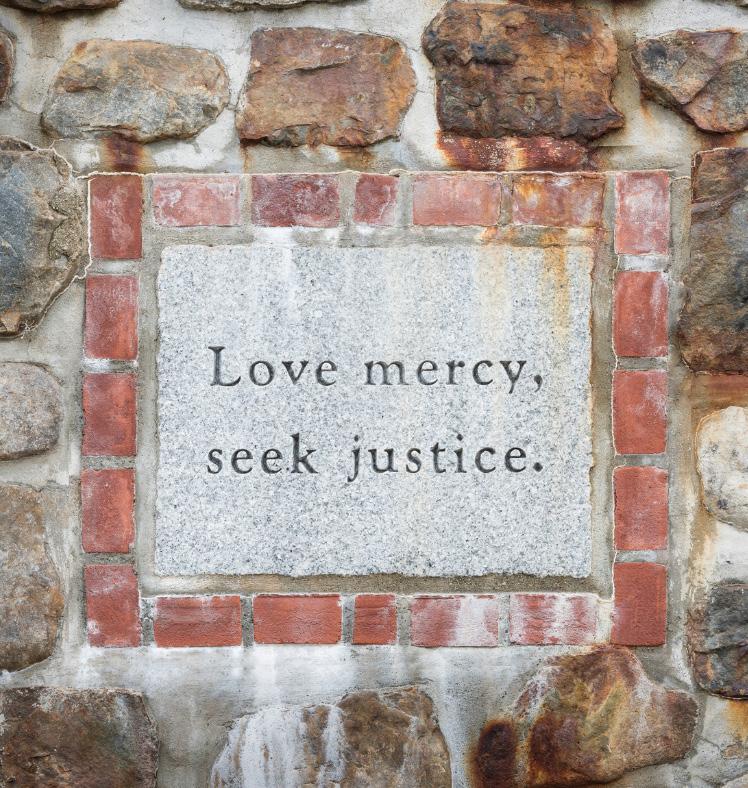
Our story is one of courage, vision, and faithful engagement, shaped over decades by devoted leaders, committed members, and the community around it. Like any living congregation, its identity has been formed at the intersection of memory, challenge, and context.
The sections that follow, explore that formation. They refer to our origins and the defining eras that have shaped its character, while also reflecting the pivotal seasons that tested, stretched, and refined it. They consider not only what has happened within the walls of St. Luke’s, but also the changing city and region in which it ministers and the wider United Methodist connection of which it is a part. Together, these perspectives offer a fuller understanding of who St. Luke’s has been, who it is becoming, and how it is perceived in the broader community.
With this wider lens in view, we begin where every faithful story begins—with the roots from which it has grown.
In 1952, a small group of faithful visionaries made a bold decision: they would begin a new congregation. There was no appointed pastor, no permanent facility, and no guarantee of institutional support. Yet in January 1953, St. Luke’s was launched. By that spring, 100 people were gathering for worship. By June, the first clergy, Rev. Bill Imler, was appointed. In January 1954, land was purchased, and in August 1955, the cornerstone was laid.
Those who recount these early years often describe them with a single word: miracle. “It’s a miracle this congregation came into being,” one long-time member reflected. From its inception, St. Luke’s was not defined by what it possessed, but by what it believed. It began with courage, and growth followed conviction.
By 1959, when Dick Hamilton began his tenure as senior pastor, the young church was already expanding. Under his leadership from 1959 to 1967, membership grew to nearly 900 people. But numerical growth tells only part of the story.
In August 1963, Hamilton boarded a bus in downtown Indianapolis and traveled to Washington, D.C., to participate in the March on Washington for Jobs and Freedom. Some members were unsettled by his decision. The Civil Rights Movement was reshaping the nation, and churches were not immune to the strain. We did not retreat from that moment. Conversations were held. Fears were addressed. Understanding eventually emerged.
That decision established a defining pattern: We would not avoid the moral struggles of our time. We would engage them faithfully, even when doing so required courage.
The Glory Years of Belonging and Growth
1967 - 1993
When Carver McGriff became senior pastor in 1967, the congregation entered what many still call its glory days. Between 1967 and 1993, membership grew from 900 to more than 4,500. Yet when members describe that era, they rarely begin with numbers. They begin with preaching.
“Even today, I remember the very first sermon I heard.”
“Sermons were captivating — stories that tied it all together.”
“He would tell a story and leave room for you to draw your own conclusion.”
McGriff had a gift for weaving humor, personal warmth, and practical wisdom into biblical teaching. His preaching resonated with business leaders, young families, and seekers alike. Faith felt relevant, accessible, and alive.
Under his lead, we became more than a place of worship; we became a place of belonging. The singles ministry grew so large that its ripple effects are still visible in marriages and families today. Choirs and musical productions became hallmarks of excellence. Madrigal dinners, square dancing, picnics, and shared meals fostered deep community life. Young couples in their thirties and forties led ministries with energy and ownership. “If you had an idea… you did it,” a member recalled.
Long before denominational clarity made it common or comfortable, LGBTQIA couples found private blessing and pastoral care within the church. National crises, including the Vietnam War and the pastor’s opposition to it as a veteran, were addressed with nuance and courage. It was a season marked by rapid growth, deep relationships, and a widening sense of grace.
1993 - 2011
In 1993, Kent Millard began his 18-year tenure as senior pastor. If the previous era was remembered for belonging, these years would be remembered for expansive vision.
“He was an energizer bunny.”
“So warm and outgoing — you felt cared for.”
His sermons connected faith to daily experience with clarity and heart. During these years, millions of dollars were raised to expand and renovate the campus. Major building projects and infrastructure improvements ensured that the church’s physical space reflected its growing ministry. Each expansion was not merely about square footage, but about creating room — room for worship, for children, for hospitality, and for outreach.
It was also during this season that we launched our first satellite campus in the Beef and Boards dinner theater called The Garden. Designed for those disenfranchised by faith or uncertainty about church, it became a place to explore, ask questions, and grow in faith without formalities — a home for seekers and skeptics alike.
Millard was vocal in his commitment to racial reconciliation and LGBTQIA inclusion, building foundations laid in earlier decades. Community ministry deepened. Interfaith relationships flourished. By 2002, average worship attendance exceeded 3,300, with nearly 5,000 members connected across campuses.
The church was no longer simply growing; it was broadening its reach and deepening its impact.

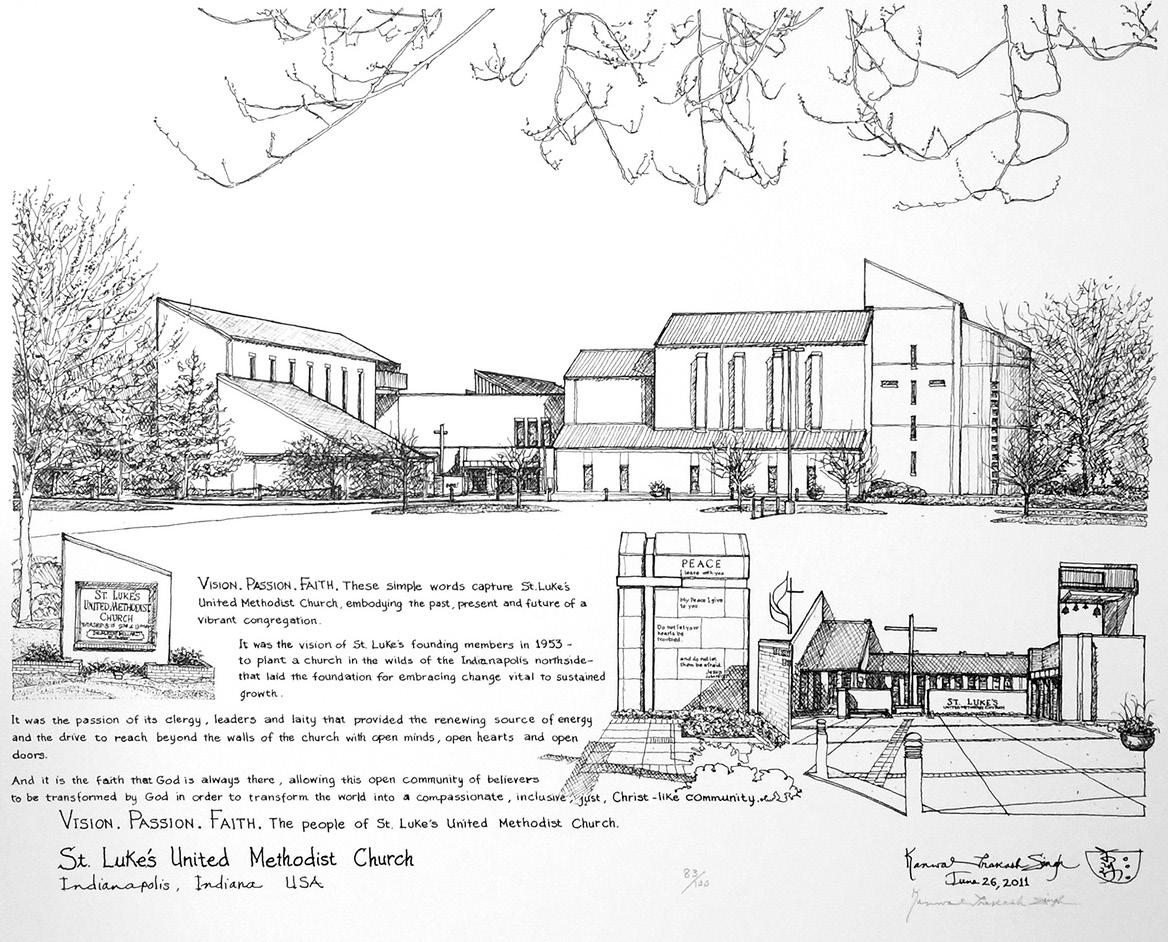
When Rob Fuquay became senior pastor in 2011, he inherited a congregation with a strong legacy and a rapidly shifting cultural landscape. His preaching brought scholarly depth and explicit Christ-centered focus.
“He puts a tremendous amount of work into every sermon.”
“There are sentences he says that you carry with you forever.”
“His preaching leads me to follow Jesus.”
Biblical engagement deepened. Small groups were multiplied. Discipleship expanded in both scale and intentionality. This era also required clarity amid cultural tension. The launch of contemporary worship brought both excitement and strong resistance, yet leadership remained steady.
Following the murder of George Floyd in 2020, St. Luke’s took a clear anti-racism stance which held great controversy for some members. Full affirmation of LGBTQIA weddings and leadership was embraced, even before denominational shifts were ratified. Once again, the congregation chose conviction over comfort.
We also expanded our footprint again. The congregation supported The Garden, previously hosted in a rented site, into becoming its own thriving community apart from St. Luke’s. The Garden now shares a building with another congregation, and together they share a broad, progressive faith within our city. A few years later, the INUMC Conference approached us about revitalizing Broad Ripple UMC that was nearing its close. St. Luke’s worked in collaboration with our District Superintendent, a launch team, and lasting members of Broad Ripple UMC to launch a second campus in the same part of Indianapolis where St. Luke’s was born, the church’s original neighborhood. So successful was this effort that a second service was added by early 2026, just three years after it began.
Outward mission flourished alongside growth with initiatives such as Freedom School, the Hub for Hope to support families and infant mortality, a growing back-to-school partnership program, and a food pantry launch extending the church’s presence directly into the community. “Going out to help people where we are has exploded,” one participant observed. Campus improvements continued as well, including children’s ministry renovations, upgraded technology, and expanded hospitality spaces. Each generation of St. Luke’s has built to serve the next.
Looking back across more than seven decades, a consistent pattern emerges.
From its miraculous founding in 1953, through civil rights engagement in 1963, rapid growth in the 1970s and 1980s, expansive vision in the 1990s and early 2000s, and courageous clarity in the present era. St. Luke’s has grown when it has combined bold leadership, compelling preaching, radical inclusion, and a deeply relational spirit.
“That’s what sets St. Luke’s apart.”
What began as a small gathering without a pastor or permanent home, has become a congregation defined by courage and conviction. Its story is not merely one of expansion. It is a story of engagement, of stepping into the challenges of each era with faith that God is not yet finished.
And just as in 1953, the future will be shaped by the same question that launched this miracle in motion:
Where is God leading us now?
The key turning points outlined below reveal recurring themes woven throughout our history. Rather than focusing on singular moments in time, the following turning points highlight the patterns that emerge as St. Luke’s moves into each new era, shaped by changing leadership, shifting global and community events, and the evolving call to live faithfully into its mission. These highlights show that even through periods of challenge and uncertainty, we have ultimately emerged resilient, strengthened, and steadfast in its purpose.
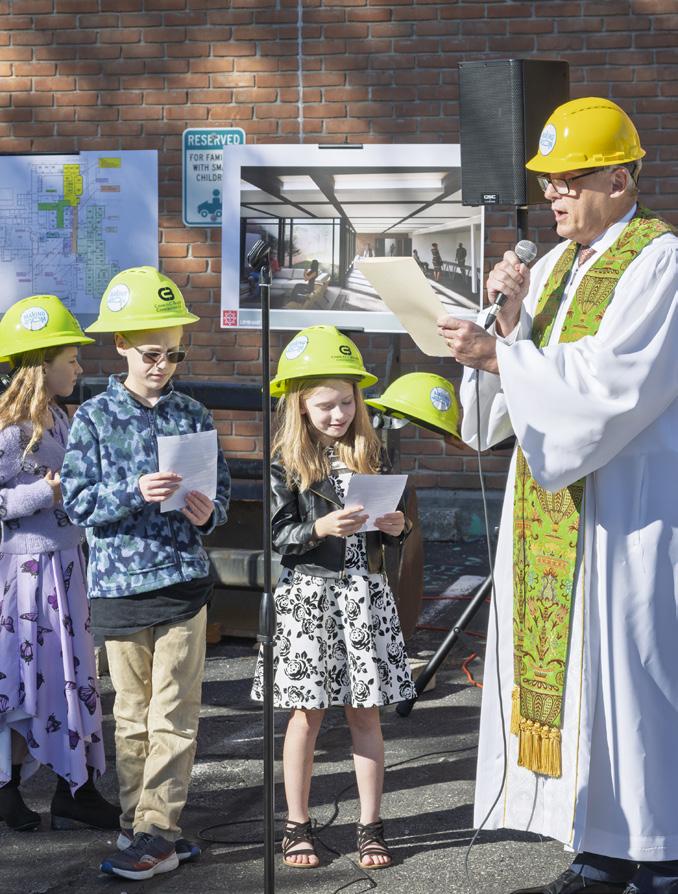

At St. Luke’s, vision and ministry have always been expressed through the spaces we create. From the groundbreaking of our first sanctuary in 1954 to the addition of three more sanctuaries over the decades, our campus has grown alongside the congregation. The current sanctuary supported a peak worship attendance in 2003, welcoming over 3,300 people. Over time, we’ve added dedicated areas for children, a youth lodge, and versatile multi-use spaces that foster learning, fellowship, and community life in one place.
Today, through the Making Room capital campaign, we are expanding hospitality areas, creating secure spaces for our most vulnerable, and establishing more permanent facilities for outreach, education, and fellowship, all integrated with modern virtual capabilities. These developments reflect our commitment to belonging and inclusivity, exemplified in ministries like our neurodiversity programming. Each building tells a story of response: a response to God’s call, to the needs of our congregation, and to the growing reach of our mission. With every brick laid and every space opened, St. Luke’s continues to make room for what comes next.
Our community takes pride in St. Luke’s and its enduring traditions. At times, changes that challenge our perceived identity have sparked resistance. During Rev. Dr. Carver McGriff’s leadership, when the congregation was growing rapidly, members really urged him to pause membership classes, fearing the church might lose its close-knit feel.
The launch of the Garden as our first satellite campus raised concerns that it might fragment a church known for its unity. Similarly, the introduction of a contemporary service faced strong pushback from those who saw St. Luke’s as a traditional church. Later, as focus on Jesus-centered discipleship evolved, some challenged that these changes conflict with the church’s identity as a big tent and inclusive community.
Through it all, St. Luke’s has navigated these tensions with care, balancing tradition with transformation and embracing growth while staying true to its core values.
In its history, St. Luke’s has been led by only five senior pastors, whose average tenure will be just over fourteen years. This reflects a legacy of stable, successful leadership transitions. Each new leader brings unique gifts and perspectives that open new possibilities for the congregation.
Naturally, transitions bring periods of adjustment. Staff may cling to familiar ways, and congregants often compare new leadership to past norms while discerning alignment with the church’s evolving vision.
Over time, these periods of friction give way to equilibrium. Relationships are strengthened, visions are clarified, and mission priorities are aligned. Each transition ultimately deepens the congregation’s capacity to embrace leadership, collaborate, and move together toward shared goals.
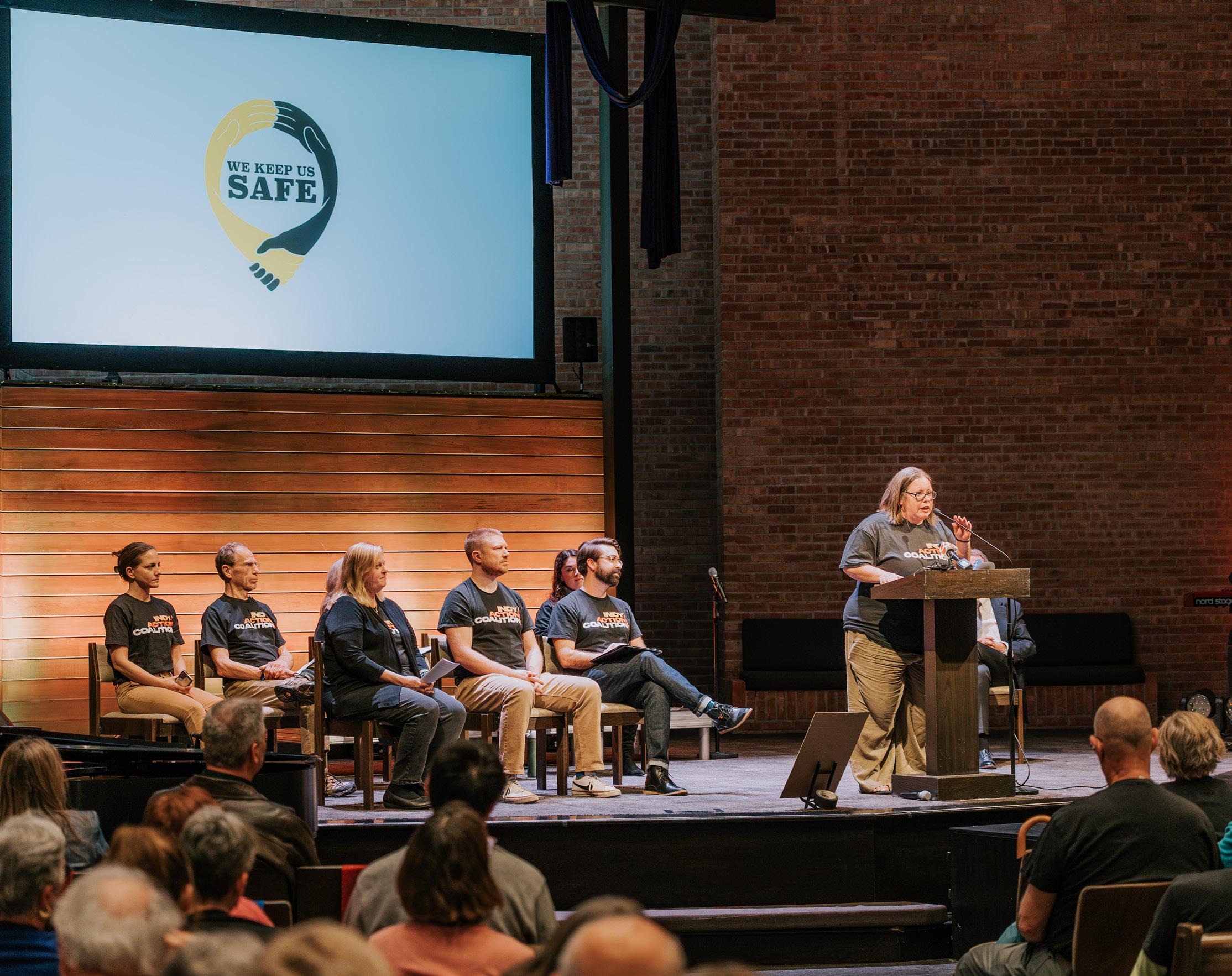
St. Luke’s has always sought to live out a faith that engages the world. Defining moments in history have often tested our congregation, shaping how we respond to life’s challenges through practical, actionable faith. Our prophetic voice, addressing war, injustice, racism, and the pursuit of inclusion, has defined our character. These stances occasionally generate tension as St. Luke’s remains a big-tent community encompassing diverse perspectives.
Throughout the years, the church has expressed its faith in tangible ways: launching global missions, jail ministries, school partnerships, food pantries, the Hub for Hope community program, court advocacy, and initiatives addressing homelessness and family stability. These acts of service and justice have become defining markers of our identity, often the first thing newcomers state as the reason for their attendance. Alongside this commitment to action, our culture of inclusiveness is a close second when describing their draw to St. Luke’s. These hallmarks of the community work to help create a congregation where faith is both lived and shared.
We have three campuses:
LUKE’S
100 W. 86th Street Indianapolis, IN 46260
• 9:30 Sunday Traditional Service
• 9:30 Sunday Contemporary Service
• 11:00 Contemporary Service
• 9:00 Sunday Contemporary Service
• 11:00 Sunday Contemporary Service
ST. LUKE’S ONLINE stlukesumc.com/online
• 9:30 Sunday Traditional Service
• 9:30 Sunday Contemporary Service
• 11:00 Contemporary Service
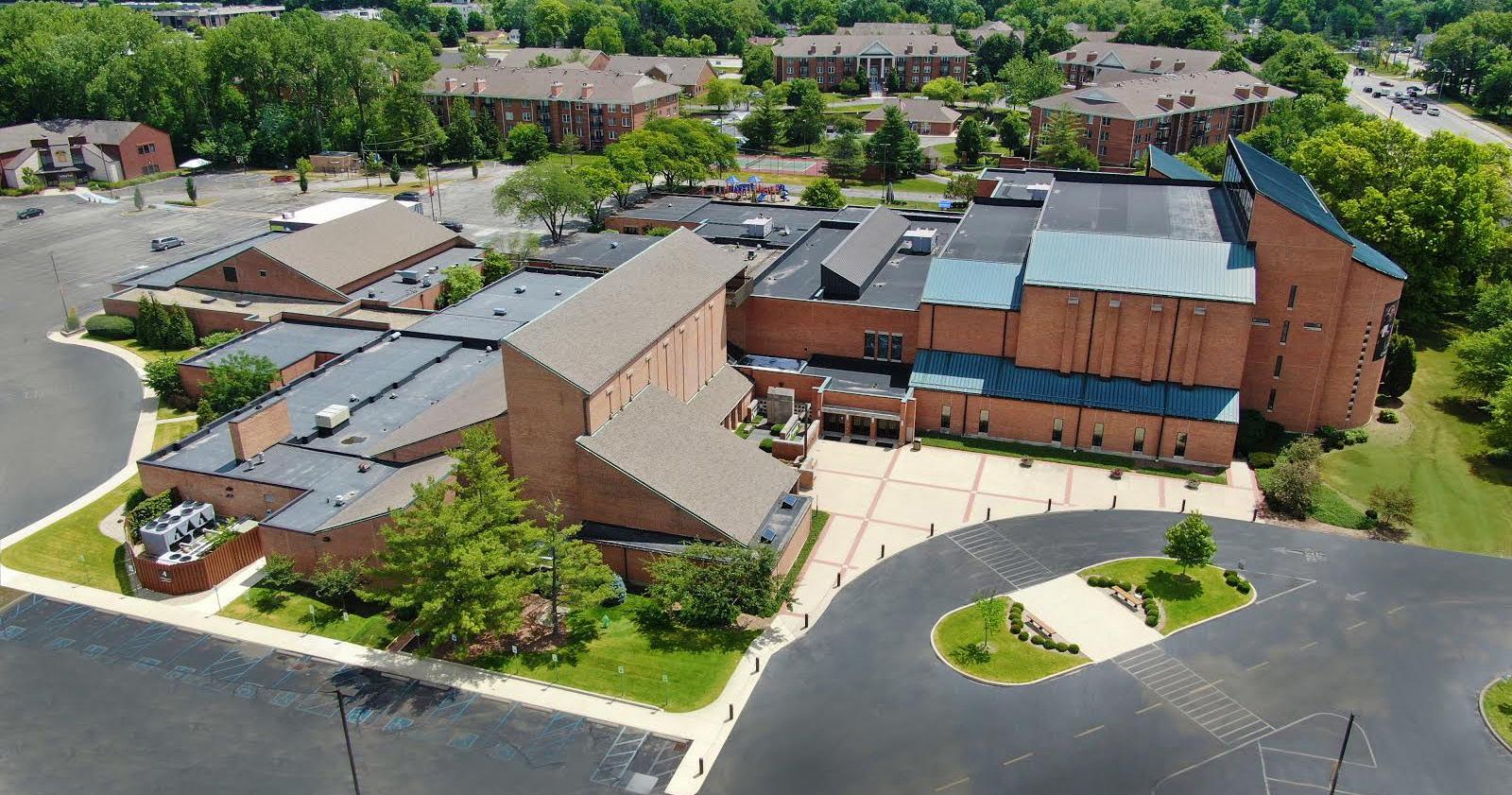
The North Indy Campus is in Washington Township and has been since the cornerstone was laid in 1955. The township and broader Indianapolis community have high trust in St. Luke’s. Consistent feedback in township or city gatherings is, “You guys do so much for the community.” The landscape of Washington Township is changing. Our Outreach and Justice ministries are aligned in their shifts. However, the church is not growing as rapidly in alignment as we would like in worship and programming. Many of North Indy’s newcomers visit from the northern suburbs in Hamilton County. Here is a description to provide context:
On the surface, Washington Township is a community of broad prosperity, with higher median incomes, educational attainment, and homeownership rates. However, when you dig beneath the surface, you can see that hyper-segregated neighborhoods and hyper-concentrated poverty exist. Within this community, neighbors living just blocks apart are experiencing very different realities.
In one specific census tract on the west side of the township, per capita income is one-third of that of the township. Sixty percent of children in this neighborhood are living below the poverty line.
Washington Township School District (MSDWT) has more diversity and more poverty than the township as a whole, signaling the future direction of the community.
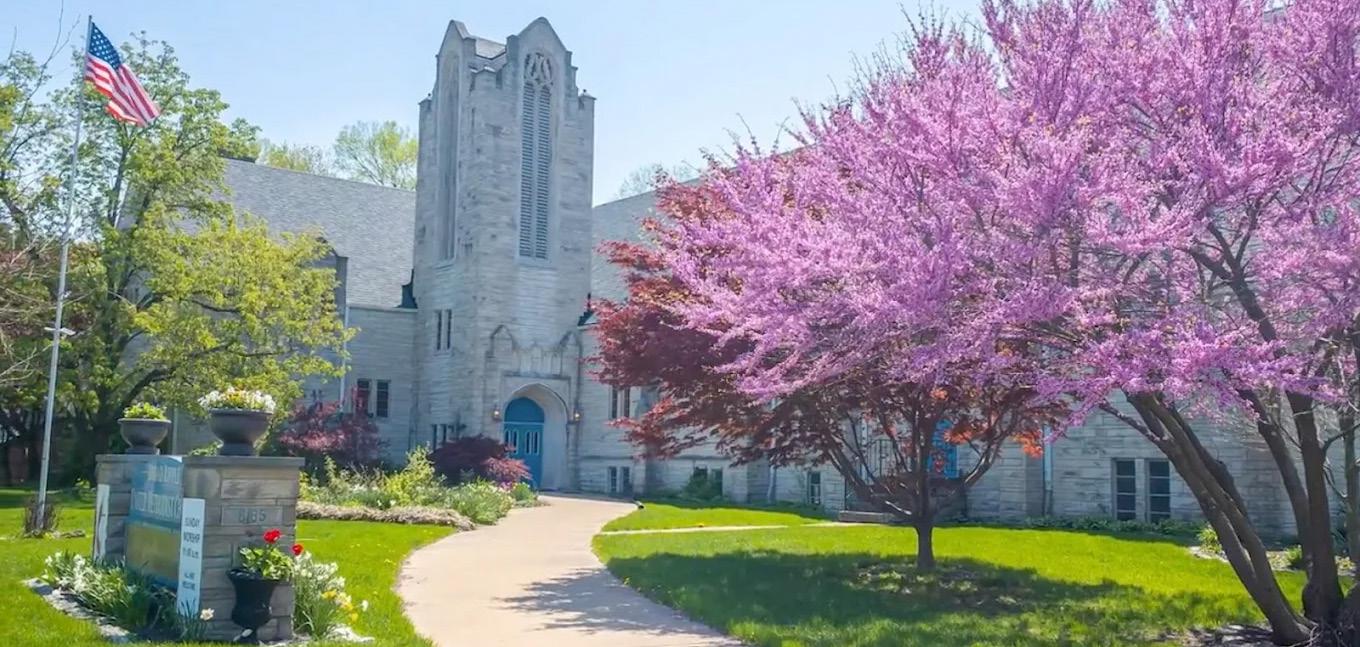
The St. Luke’s Midtown Campus is in Broad Ripple. The church building of our Midtown Campus was formerly Broad Ripple United Methodist Church. This church, though in decline for decades, was a pillar in the community for many years. St. Luke’s Midtown is in its third year and just launched its second service, both with live preaching from our campus pastor, Mindie Moore. The congregation is, on average, much younger than St. Luke’s North Indy and largely draws from the Broad Ripple or nearby area. St. Luke’s Midtown as a new church site is still growing in recognition and trust in the community but has made quick strides in its short life thus far. Below you’ll see a description of the area to provide context.
On the surface, the Broad Ripple area, located about six miles north of downtown Indianapolis, appears prosperous. The neighborhood is known for its restaurants, trails, and historic homes. Median household incomes, in parts of the area, exceed the city’s average, educational attainment is high, and property values have steadily increased. The average age is approximately 34–36 years old, reflecting a younger population of professionals and long-term residents.
However, beneath that prosperity are stark contrasts. In apartment-heavy sections along the eastern edge of the neighborhood near major commercial corridors, per capita income is significantly lower than in the single-family home areas closer to the White River. In some nearby census tracts, more than one-third of children live below the poverty line, a sharp contrast to lower-poverty blocks just a short distance away. Residents living within walking distance of each other often face very different economic realities.
Schools serving the area through Indianapolis Public Schools enroll a substantially higher percentage of low-income students than overall neighborhood income averages suggest. Districtwide, a majority of students qualify for free or reduced-price meals, indicating that the school-age population is more economically diverse, and more economically vulnerable, than the neighborhood’s surface image implies.
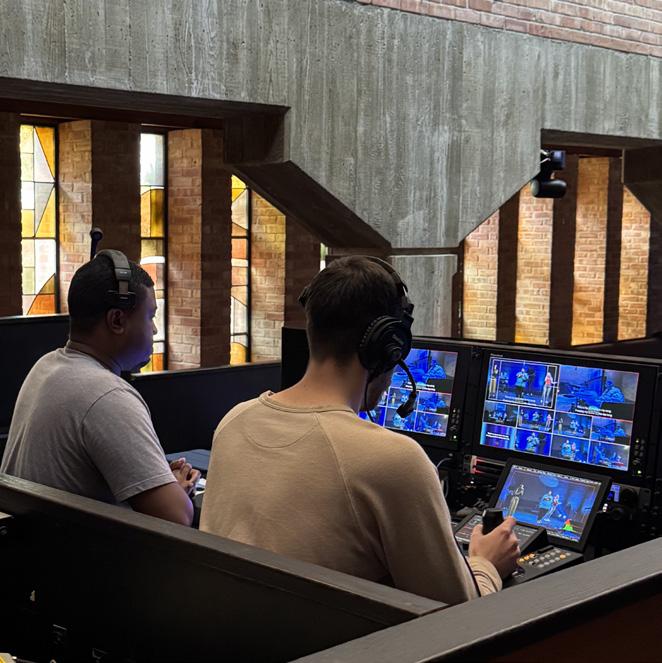
This virtual campus includes people who connect solely online and those who connect to both in-person and virtual ministry opportunities. Our online community spans the United States and the world. We have regular attenders joining us from England and Nigeria, as well as from 13 different U.S. states. Ten countries are represented in our Online Community Group.
While our reach is global, clusters of attendees can be found in cities such as Naples, Florida, and Chicago, Illinois. As expected, the largest number of participants live in Indiana.
Throughout the year, our online community is served through virtual Care, Outreach, and Discipleship opportunities that help people stay connected and grow in faith. The groundwork for this campus has already been laid, including beta testing of connection strategies, content, and ministry approaches.
We are now prepared to hire a campus leader or pastor who will further develop and shepherd this growing campus.
St. Luke’s has strengthened its connection to the denomination and remains firmly committed to the United Methodist Church amid recent divisions. As the largest church in our jurisdiction and one of the largest in the denomination, we seek to live in full connection within our conference and across the global church.
In recent years, we have deepened our engagement by participating in denominational events, supporting United Methodist agency initiatives, and aligning with key resources and positions.
Our senior pastor has served as a delegate to General Conference, and our pastors have contributed as authors, speakers, and mentors with their writings and sermons cited within and beyond the denomination.
Our partnership with the annual conference continues to grow. We host Clergy Day Apart and the Annual Conference, and our pastors and staff serve on committees including Residency Mentorship and conference planning.
Members of St. Luke’s also serve on the Board of Ordained Ministry and on committees focused on community engagement and justice.
A key element of our multi-site strategic plan prioritizes pastoral leadership development in collaboration with the conference, strengthening relationships with clergy and congregations while sharing resources and expertise.
Although we have occasionally been perceived as self-focused, we are intentionally broadening our engagement through collaboration, shared resources, and active partnership, especially with United Methodist congregations and pastors in our county.
While work remains, St. Luke’s has become a more engaged and trusted partner within the Annual Conference.
Over the past decade, the numerical and narrative trends at St. Luke’s tell a story of resilience, generosity, and transition. Worship attendance has remained largely stable overall, with pandemic disruption followed by sustained online engagement and multi-site growth. Membership has steadily increased, while baptisms declined during COVID and are now rebounding. Financial giving has grown across the decade, though recent years show flatter patterns and increased reliance on a small number of major donors. Engagement data reveals strong new record creation and improved activation rates, yet movement into deeper discipleship and long-term formation remains an opportunity. At the same time, qualitative feedback highlights both strength and strain. Outreach and justice ministries are widely seen as impactful and missionally strong. Worship and preaching are consistently named as core strengths. There is deep congregational generosity, palpable grace across theological diversity, and meaningful volunteer commitment. Yet challenges persist: an aging membership, volunteer fatigue, staff turnover during leadership transitions, the need for clearer discipleship pathways, succession planning for key roles, and the complexity of systems and communication. Together, these trends offer an honest snapshot of a church with strong foundations, significant community impact, and important strategic work ahead.
Notes: These are the numbers we report on the GCFA Year End Statistical Report. Online tracking started in 2017. We updated how we calculate online in 2020. Starting in 2023, Midtown is included in the count. Avg. Att. is a total and includes in-person, online, kids, and youth. Membership numbers include active and inactive. Baptisms include all ages.
One way to measure engagement is through new record creation in ROCK, which is our church management database. A new record is generated whenever someone registers for worship attendance, serving, participating in ministry opportunities, attending events, or receiving communications. These records become active when the individual attends or connects with a ministry opportunity.
We consider a person engaged as they earn a ROCK badge, which reflects sustained participation. For example, this could mean attending a class multiple times or participating in worship multiple times within a specific period.
The available badges include Grow, Serve, Give, and Attend Worship.
*Total Active Records 13,588 all ages. Records with Badges: 3885. (YTD in ROCK)
*Streamlining follow-up and engagement systems for discipleship is in process. Goal to increase conversion from active record to engaged and growing disciples.
$3,538,456
$3,946,592
$4,077,328
$4,046,865 $4,219,969
$4,434,240
$4,061,849
$4,330,787
$4,547,185
$4,793,350
Other income: This table excludes loose-plate giving, non-pledged identified contributions, outreach and departmental fundraising, and building rental fees for outside events, which have added $1.5–2 million annually in recent years to support the budget.
Giving trends: Increases in pledged giving are often offset by declines in other forms of giving, such as loose-plate contributions. Overall, total giving has remained fairly flat over the last three or more years.
Endowment growth in 2025: St. Luke’s endowment increased by $1,261,947 in investment gains, along with $252,603 in contributions.
Endowment strategy: Continued expansion through legacy and planned giving is a priority. The endowment closed 2025 at $9,643,099.
St. Luke’s has a long-standing culture of generosity. Throughout our history, giving has consistently met the moment—funding capital initiatives, supporting ministry expansion, and even exceeding our pledged commitment to the citywide housing initiative. Last fiscal year, we closed with a $500,000 operating deficit, caused by a budgeting formula that has since been corrected, as well as pledge fulfillment and giving overlap related to the “Making Room” capital campaign, which ultimately concluded with a surplus. Adjustments have been made to ensure greater accuracy and clarity in this year’s financial planning.
As many of our most significant legacy donors have passed away, we recognize the need to move from relying on historic generosity to an intentional, year-round stewardship strategy. Generosity must be nurtured as part of discipleship, not assumed. To that end, we have established a Mortar Stone account and engaged their consulting team for support. We are also forming a dedicated stewardship committee to develop a comprehensive annual plan, incorporating multiple revenue pathways, balancing higher- and lowerrisk approaches, and creating a sustainable funding model to support ongoing ministry and future multi-site growth.
Including Average Tenure, Etc.
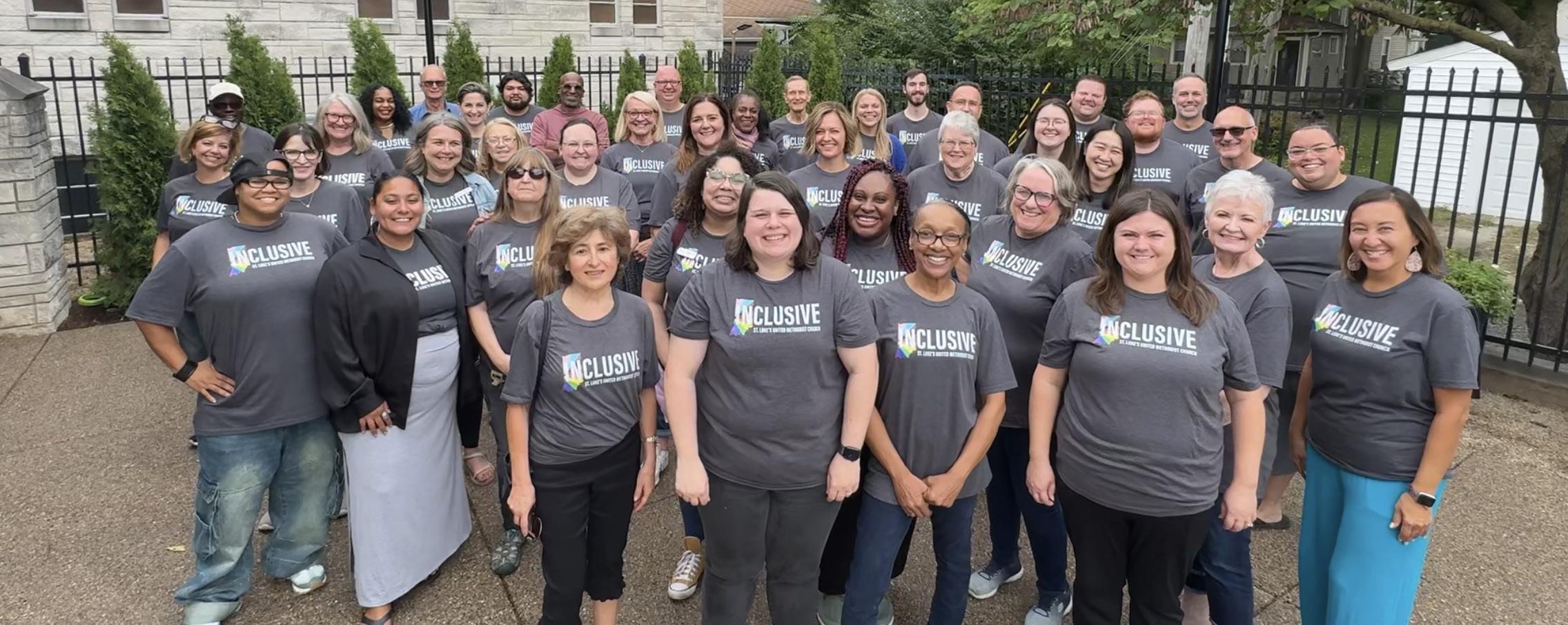
The appendices show the current organizational structure of our staff. Staff demonstrate strong pride in the ways the church loves its neighbors and high commitment to the mission. Many staff members love their roles, though not all are practicing Christians, as formal faith alignment had not been a hiring requirement.
We employ 36 full-time staff, including clergy, and 15 part-time staff. Additional contract employees support HR, Communications, as well as Worship & the Arts. The Early Childhood Program employs approximately 20 more people, not included in this report.
Key roles likely to see retirements within the next three years include Director of Finance, Director of IT, Director of New Here/Hospitality, Director of Facilities, Chef, and several part-time or administrative positions.
Staff Ages by Decade Staff Tenure in Years
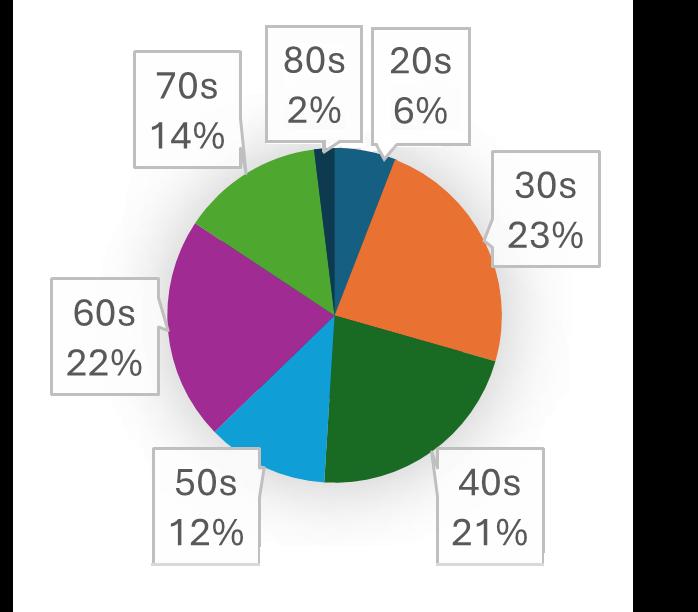
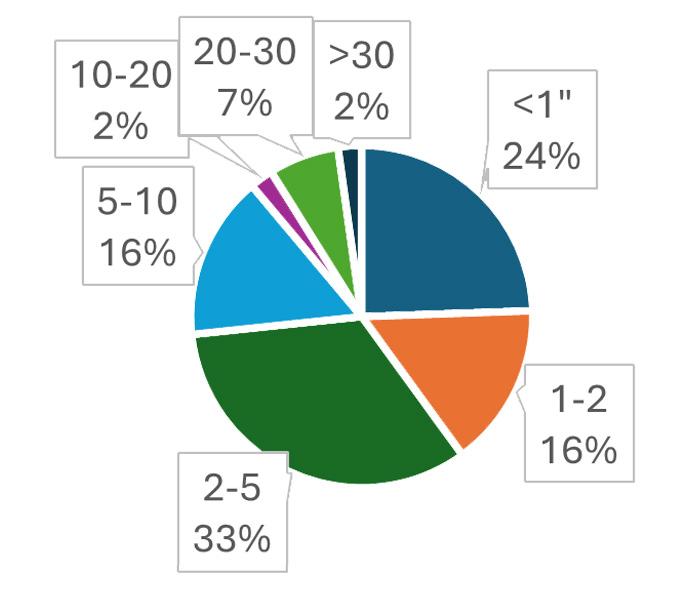
Historically, turnover has been high during each senior pastor transition and has been consistently elevated over the past six to eight years. Staff survey data indicates a long-term need for clearer timelines, stronger goal alignment, and greater trust in leadership decisions. Consultation and interventions have been engaged over these years.
We are currently implementing a process designed by 4Sight Group to build and integrate staff values. Additionally, the church is working with Beloved Community, who has assessed Diversity, Equity, and Inclusion; this assessment will guide a three-year strategic plan.
e.g., music ministry, formation, outreach, preschool
Recent congregational & staff surveys along with data analysis lead to the following reflections.
A key entry point for visitors and a recognized strength in ministry. Outreach ranges from local to global. It also ranges from relief and serving efforts like “I Love My City” (a day of service) to court advocacy and community organizing in the work of justice. There is a desire for increased communication and connection.
Growing and impactful; a second service was launched within three years, with donors covering 90–100% of ministry costs excluding staff.
Consistently reported as a strength, with recent growth reinforcing that perception.
Strong due to families’ trust in leadership and volunteers. High family contact fosters that trust. Growth has been minimal, but capacity is high.
Moderate trust and largely plateaued. Tween and Middle School engagement is higher; High School participation is low. Mission trip and church camp numbers are stable. Confirmation numbers are beginning to rebound to post-COVID numbers with a recent restructure.
An area of concern. Previous age-focused initiatives and a recent re-launch have not achieved expected outcomes.
Considered unclear, with overall engagement declining. While there are over 100 existing groups and new groups have launched, participation in cornerstone programs like Discipleship Bible, Fall Class Launch, and Lenten groups shows low persistence.
Less frequently mentioned in surveys, but consistent care continues amid staff transitions. There are 42 ministries under this ministry umbrella. It includes key programming like Griefshare, DivorceCare, Dementia Caregivers support, Taizé, Mindfulness, and more. Expanding churchwide systems of care could enhance this trusted ministry.
Seen as “low-hanging fruit” for reach and growth. Attendance spans the nation and world; many first engage with St. Luke’s online, and a significant portion of membership participates in online worship either partially or entirely.
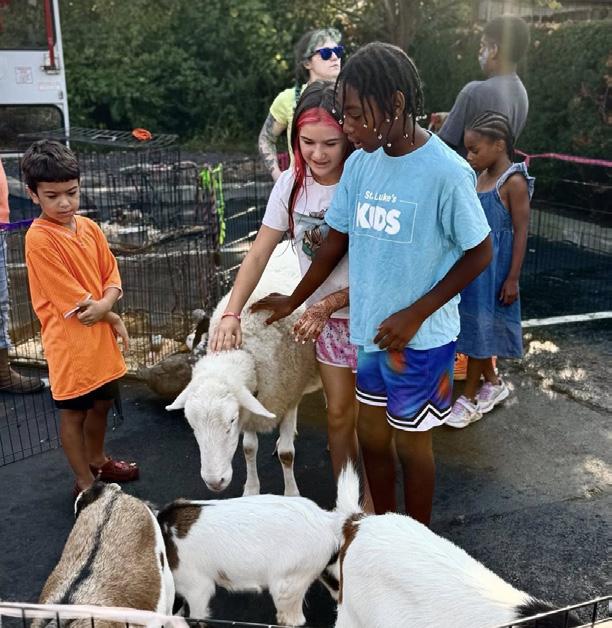
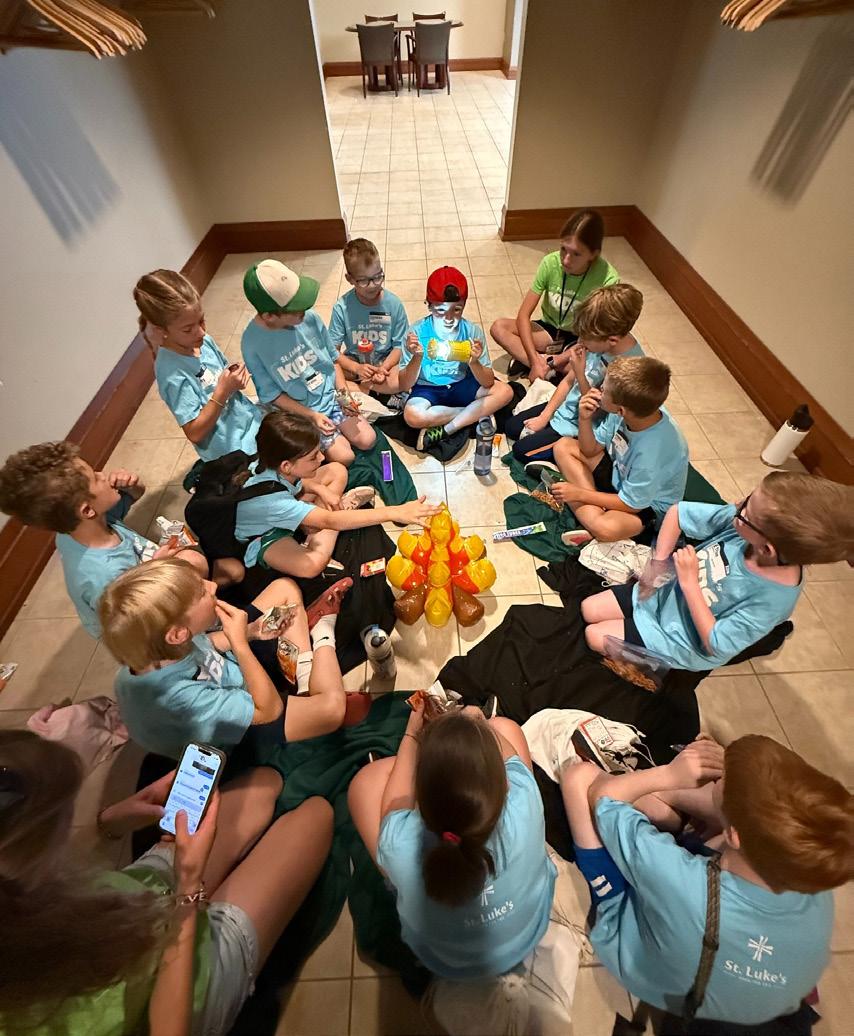
Summer programming includes a building filled with children. This includes the Children’s Defense Fund Freedom School, Vacation Bible School, Middle School Mayhem, and St. Luke’s Early Childhood Summer Fun. The goal is to increase these every summer.

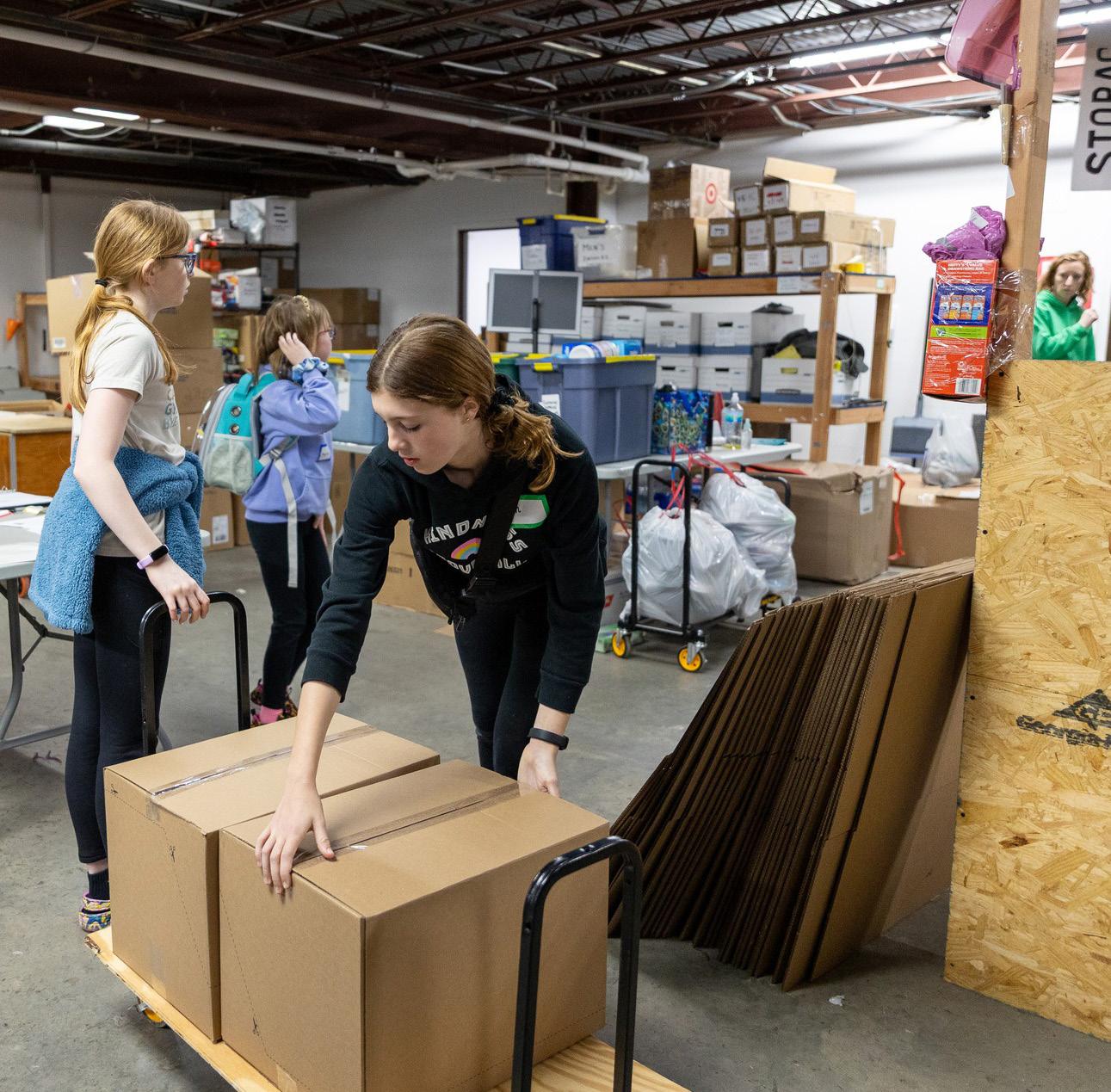
Volunteer Base: An estimated 1,600 volunteers are formally recorded in the database, with more than half serving in multiple ministries or roles. This number is likely conservative, as the church is known for members taking initiative to serve. Volunteer groups regularly form, such as those sewing dresses for children worldwide, creating art cards for homebound members, or preparing 700 sack lunches weekly for neighbors through a partner community center. These organic ministries and others greatly increase the estimated number of volunteers.
Commitment and Motivation: Volunteers are highly committed, often serving in multiple ways over time. Most report that their dedication comes from being personally invited, experiencing God at work, and a sense of faith and fulfillment.
Volunteer Development Needs: It takes a lot of volunteers to keep all our ministries running at full capacity. These opportunities provide an important way for congregants to become plugged in to the life of the church. Therefore, there is a clear need for a formal volunteer recruitment process, leadership development pathway, and institutionalized succession planning for ministry leaders.
The estimated people served in the community by our Outreach and Justice ministries is 32,000, not including the impact of other ministries, like recovery groups, grief/trauma groups, contemplative ministries, large community events like Easter Egg hunt, etc.
In other words, the impact is beyond that estimate.
• 60,000+ visits to Crooked Creek Food Pantry (12,000 unique families)
• 700+ sack lunches delivered each week to unhoused people in Fletcher Place neighborhood
• 1,400 Thanksgiving meals served or delivered
• 6,000+ students received school supplies, and 624 students attended the Back-to-School Bash
• 200 families served each month through the diaper pantry
• 300+ families served through Angel Tree
• 150 families engaged in Luke’s Leaders and Freedom School
• 42 families assisted with housing support (funds provided by in-house Connections Books & Gifts shop)
• 12+ families at Washington Township Early Childhood Center supported weekly with groceries
• 25 immigrants participating in a citizenship class
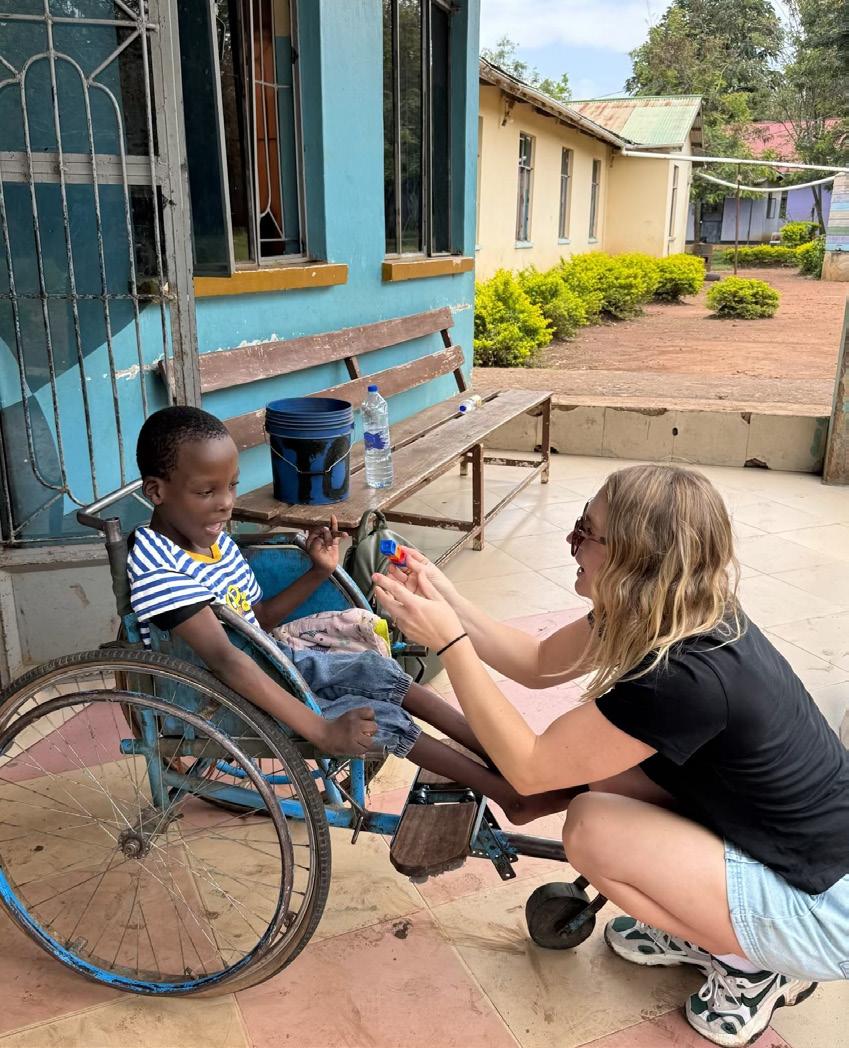
• 70 children supported at Angel House in Tanzania
• 12 local partners supported through I Love My City



We focus our efforts on four main pillars of impact:
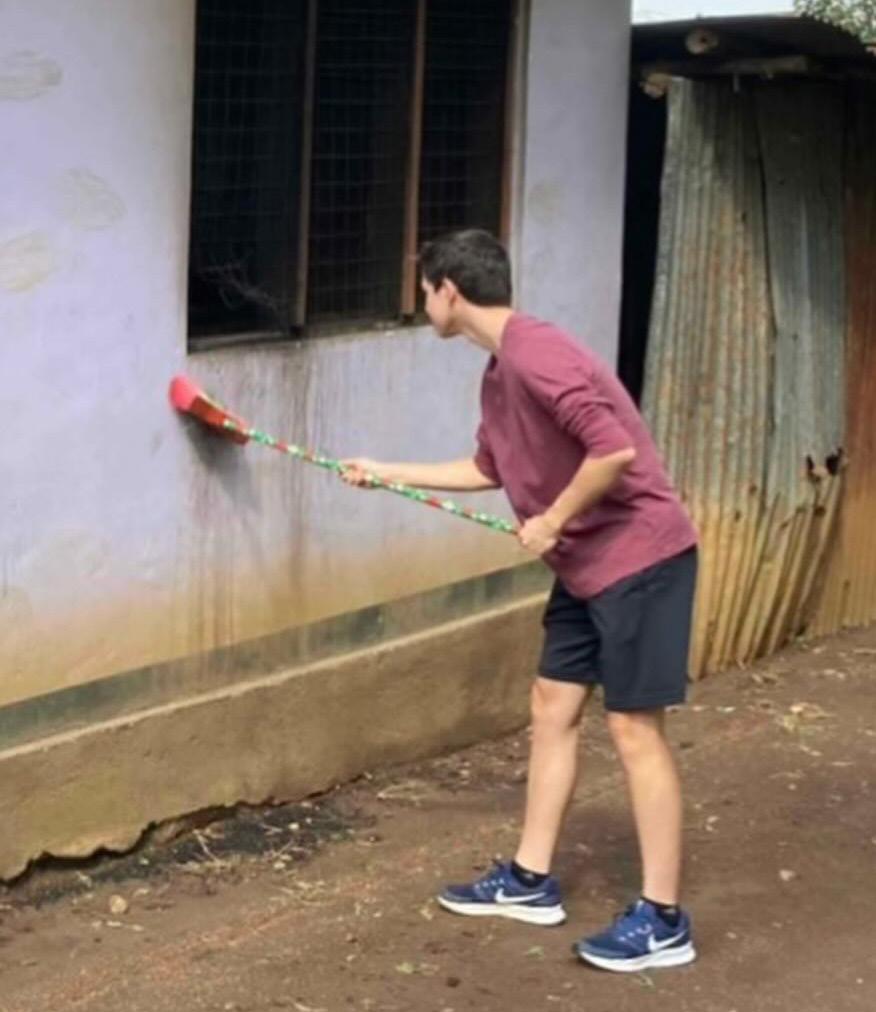
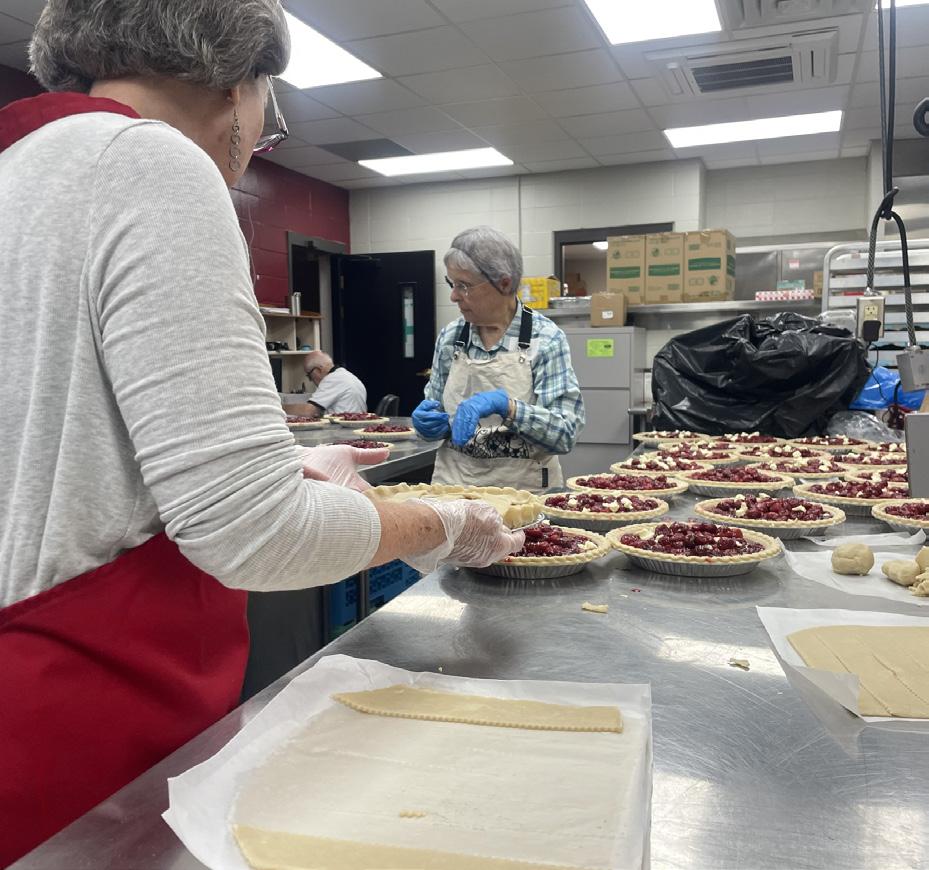
Education • Housing • Hunger
Maternal and Child Health
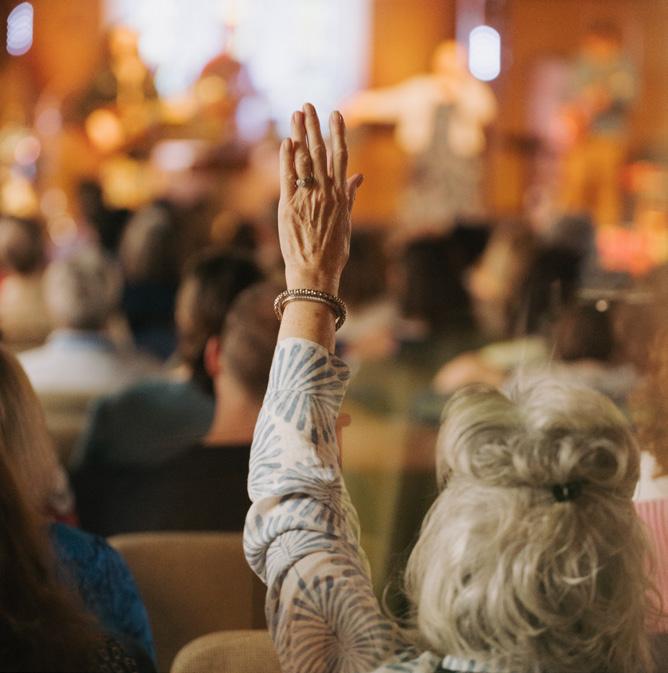
Undergirding this compassionate outreach is a robust commitment to biblical justice.
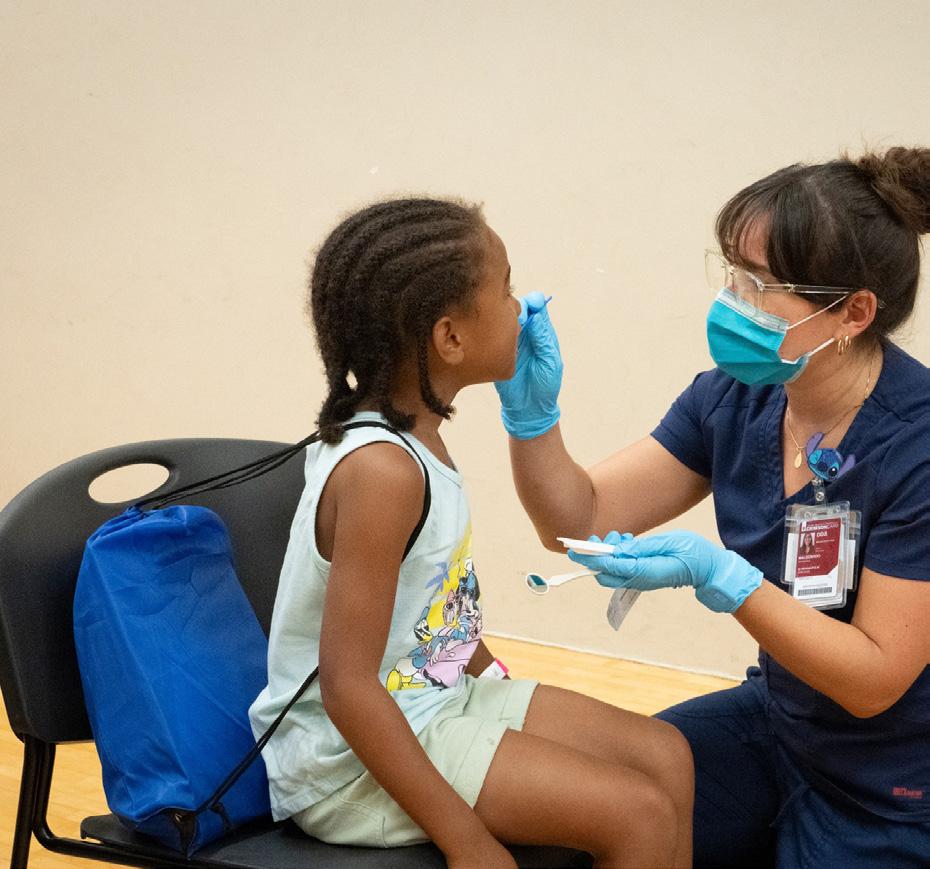
MATERNAL & CHILD HEALTH
Education
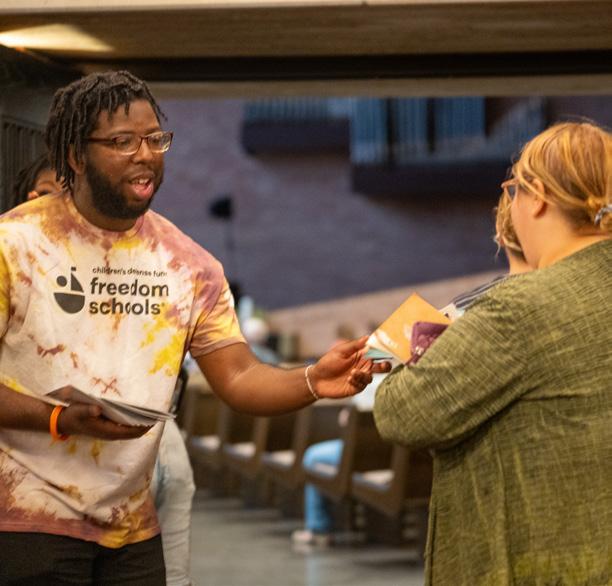
Freedom School
6-week summer literacy and social justice program, serving 80 scholars from K-8.
Luke’s Leaders
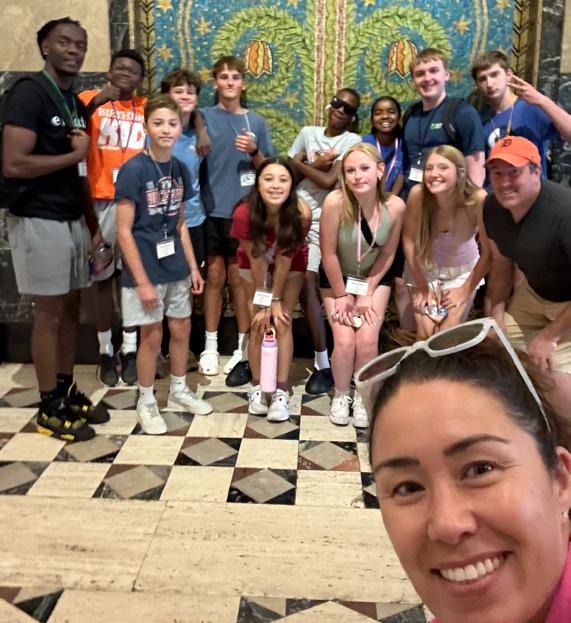
Middle school leadership development program, serving 100 middle school students.
Housing
Streets to Home
City-wide collaboration to end chronic homelessness.
Benevolence/ Housing Support
Funds provided by our in-house Connections Books & Gifts shop.
Hunger
Crooked Creek Food Pantry
Founding partner of one of the largest food pantries in the city.
Sack Lunch and Food Collections
700 sack lunches a week and groceries for 15 families a week delivered for local partners.
Maternal & Child Health
Hub for Hope Diaper Pantry
Distributed 120,000 diapers to over 200 families last year.
Support for Healthy Beginnings at Home
IU Health program for unhoused pregnant women.
Biblical Justice
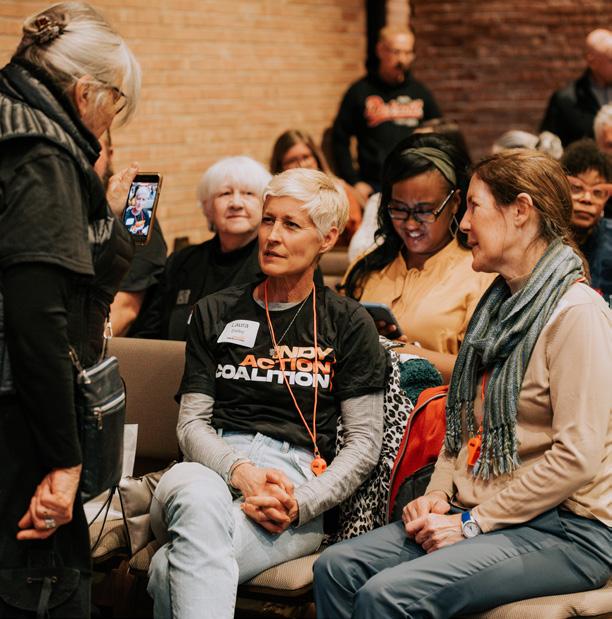
Founding partner of Indy Action Coalition
Multi-faith community organizing movement.
Creation Care Team
Middle school leadership development program, serving 100 middle school students.

The congregation is aging, which affects opportunities to share a rich legacy, impacts core leadership, stewardship, and the longterm future of the church.
Maintaining a broad theological spectrum can be challenging. Progressive members call for greater intentionality and advocacy for marginalized neighbors, while more conservative members express concern that social stances may outweigh other aspects of faith and hiring. Data does not indicate factional division, but does reflect the tension of being a big-tent church striving to remain faithful and prophetic.
Volunteer fatigue and the need for structured leadership pipeline development remain significant challenges.
Staff turnover is noted in a congregational survey as a concern. The need for stability in staffing is noted as we continue working on staff retention goals and as we prepare for multiple retirement roles.
Many key roles face impending retirements, requiring proactive succession planning. The same is true for volunteer leadership positions in a variety of ministries.
Complex systems and limitations in data management have been ongoing issues for St. Luke’s.
A palpable sense of grace defines the community, expressed in care for human struggle, support within groups, and welcome for those new to church or historically excluded.
Many attendees are former Catholics, former Church of God, former Presbyterians, etc. Many are from multi-denominational or multi-faith households, or come seeking inclusive beliefs. Wounded churchgoers often find safe haven here, and the interaction of these diverse groups fosters a deep sense of the Divine.
Some elder adults feel that the focus on young families can make their faithfulness and gifts feel overlooked at times.
The diversity and tension inherent in a big-tent church are a natural part of St. Luke’s culture, balancing a wide theological spectrum while striving to remain faithful and inclusive.
Traditional and contemporary worship styles have increasingly collaborated over the past five years, creating shared worship experiences throughout the year.
Despite having a high number of volunteers, our staff-driven culture often sets low expectations for volunteer commitment level, thus reducing the impact of lay leaders.

Based on consulting conducted in 2021–2022 by Auxano, a strategic plan for St. Luke’s was developed. After a successful initial launch phase that resulted in the start of another campus, the development of the Hub for Hope, a database cleanup and a campus remodel feasibility study, the plan was tabled for a variety of reasons. By 2024, the vision remained central to the church, and its major components were collaboratively identified as the highest priorities for achieving that vision.
The vision for St. Luke’s Indy is: “An explosive force of God’s radical, inclusive, and just love reaching hundreds of thousands, especially those who have given up on church and a God who loves them.” Its core components are multi-site expansion, inclusive growth, city impact, and discipleship.
The relaunch approach intentionally flattened the organizational chart, engaging the expertise of both the congregation and the broader community. Task teams were formed, partnering lay and community leaders with staff and administrative committee leaders. The re-ignition began with a gap analysis and an 18–20-month plan approved by the Governing Board, focusing on multi-site expansion, two arms of inclusive growth (DEI and Neurodiverse/Differently Abled initiatives), and city impact. Discipleship is the next phase.
Some initiatives have already reached completion; others have been expanded with approved next-step plans. Leadership affirms that these components are the guiding framework for achieving the vision, though much work remains in execution and further development.
Work that Further Ministry
HR and Accounting Systems: Transitions to new HR/payroll and accounting software are underway. The HR/payroll system will lower costs, meet operational needs, and formalize HR functions, including onboarding and evaluations. The accounting software will address process updates identified in annual audits, while supporting broader integration and enhanced financial analysis.
A systematic, inclusive budget planning process is being developed, engaging a broad range of stakeholders and lay leadership.
and Stewardship Guidance: Mortar Stone is being utilized for formal financial analysis and stewardship guidance with work already in progress.
Data Systems: The church has long struggled with data systems, including the transition to ROCK over six years ago. Needed data for ministry analysis has been identified. Next steps include evaluating what changes must occur for current systems to deliver this information and how to achieve full functionality, an ongoing, high-priority need.
Creating staff stability remains a key priority. This work includes strengthening retention strategies grounded in best HR practices, integrating staff values, fostering shared leadership, establishing clear communication mechanisms, and increasing clarity around goals and timelines.
Stewardship Team: An active stewardship sub-team of Finance/Endowment is being formed to develop a year-round, strategic stewardship approach. The focus is on diversifying income and cultivating generous disciples at all ages and stages of faith.
Discipleship: Clarity and full execution of the discipleship pathway have been a long-term focus. Past pastoral transitions have slowed progress. Strategic planning will now emphasize adult classes/groups, 20s and 30s ministries, and children/youth programs. Children and youth have strong programs but have historically not achieved their full growth potential; 20s and 30s ministries have experienced stops and starts since the 1990s. Adult discipleship has advanced significantly but is currently plateaued.
Assimilation Pathway: Extending the assimilation pathway will increase visitorto-engagement conversion.
Care and Contemplation Ministries: Elder Ministry is being relaunched, and large-church care systems will continue to expand in order to increase care touch points. St. Luke’s has some great support groups, but new needs are emerging like Caregivers Support group, more cancer support groups, etc.
Leadership Development: A comprehensive pipeline is needed to support volunteers, plan for retiring leaders, and launch new ministries. This work connects with the Lay Leader Committee, the multi-site strategic plan (partnering with the conference on clergy development), and ministry components such as Youth and Outreach.
Outreach has excelled in developing grassroots partnerships that advance Shalom in the township and city, while maintaining ongoing, impactful ministries. Strategic focus continues on equipping and connecting the congregation to evolving partnerships.

We are seeking the right senior pastor for St. Luke’s and trust that God will lead us in this process. We have developed a profile for such a pastor that will help us arrive at the right choice.
It is essential that our new pastor is deeply spiritual. We have a history of lead pastors who have exuded a deep trusting relationship with God, including a willingness to share the meaning of this relationship, though cautious to leave ample room for us to develop a relationship with God that grows out of our own experience.
Our pastors have based their preaching, teaching, and writing on the Bible, enabling it to come alive for personal faith development, for practical application to everyday life, and for grappling with critical issues of the day. They have focused on Jesus, especially in the ways he models how to live. They have been vitally in touch with God in their prayer life. And have endeavored to lead our whole community – leaders, staff, and congregants – to do the same.
St. Luke’s is not a “sit-in-the-pews” church. Our new pastor will lead a congregation that is vocally pro-LGBTQ+, committed to becoming anti-racist, and deeply involved in community outreach. We want them to lead by being involved themselves, and challenging everyone in the pews to get up and get involved, too.
Our people want, need, and feel called to be the hands and feet of Jesus. We want our new pastor to be a bridgebuilder who can navigate the complexities of a “purple” city like Indianapolis while remaining firm on social holiness. Rather than just taking a stand, they will manage the heat of social change, helping the congregation stay at the table when the work of justice becomes uncomfortable or requires personal sacrifice.
St. Luke’s has a long history of affirming women in leadership at every level, so the gender of our new senior pastor is less critical.
We are looking for a candidate who views gender through an egalitarian lens, recognizing that the Spirit calls souls regardless of gender identity or expression. We ask them to be ready to challenge any residual patriarchal legacy systems that may remain in our church structure, modeling a leadership style that is collaborative rather than purely hierarchical.
While the leader’s own ethnicity is less critical than their cultural intelligence, we believe God is calling someone who can lead a predominantly white congregation toward a more diverse future.
We seek someone with a proven track record of elevating voices of color and understanding the systemic issues facing our city, moving beyond mere representation to addressing the systemic DNA of our institutions, empowering voices from different backgrounds to lead, not just follow.
The numerical age is secondary to the visionary age. We need someone with the vitality to manage a sprawling, complex, multi-campus, multiservice operation, with a large staff and one of the largest congregations in the UMC.
Someone having the digital fluency to engage Gen Z and Millennials while still providing deep pastoral care to our seasoned older members. Each new leader in our history has brought fresh ideas and approaches while building on the existing platform.
We believe God is calling someone to lead the church into our next period of growth, maybe even through the loss of old ways of doing things to make room for new expressions of faith, effectively gardening the community for future growth, and do it in a caring, compassionate, pastoral way.
Exclusivism: Any theological stance that excludes individuals based on sexual orientation or gender identity is a non-starter. Being radically inclusive is in our DNA.
Stagnation: No maintenance-mode mindset; we are a growth-oriented, high-capacity church.
Top-Down Hierarchical Leadership: We have so many strong leaders among our clergy, our staff, and our laity that we need a leader who will leverage that pool of highly talented, highly willing people to magnify our ministry beyond what any single leader can do. We ask them to intentionally develop leaders across the church, within our staff and our laity, to encourage the creative impulses that are inspired by the Spirit.
Extreme Right-Leaning or Extreme Left-Leaning: To be a big tent and minister to all people, we stay away from the extremes that divide us into opposing camps. We try to be centrist and keep the focus on the gospel of love that Jesus taught.
Shy About Fundraising: Big ministries require a big budget. Our new leader should be comfortable and experienced in developing relationships and asking for money.
Lack of Focus on Young Families / Children: Our future growth will come from this area. A Senior Pastor who is not committed to this community will not help us grow.
We are praying that God will help us find a visionary who will lead us into the future for which God is calling us, a preacher who doesn’t just preach the Gospel but lives it out in the streets of Indianapolis and inspires the congregation to do the same, as well as a uniter and unifier who will put the focus not on what divides us, but on what unites us, devotion to the Living Christ.

We understand that relocating to a new city is a significant step, for an individual and for a family. We are committed to walking alongside our next Senior Pastor through that transition, offering practical support and trusted connections, including access to a real estate professional if desired. Indianapolis and its surrounding communities offer an exceptional quality of life, blending opportunity, accessibility, and a welcoming Midwestern spirit.
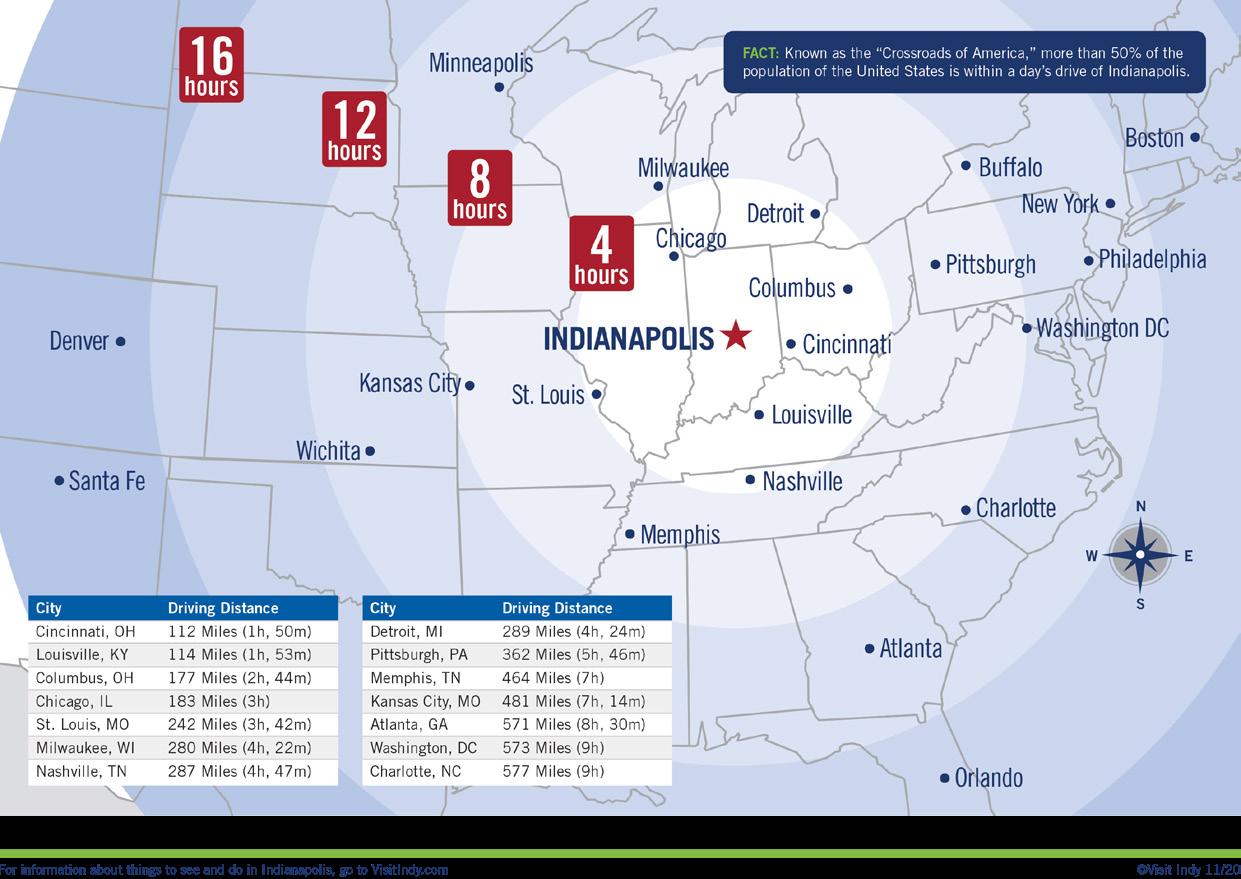
Relocating to Indianapolis means enjoying the best of both worlds: big-city amenities with everyday livability. Known as the Crossroads of America, the region is a thriving and rapidly growing Midwest hub where economic opportunity aligns with an attainable cost of living, which is approximately 10–14% below the national average.
-27.8% lower than US AVG
-6.4% lower than US AVG
-0.7% lower than US AVG
HEALTHCARE
-14.5% lower than US AVG
GOODS & SVCS
-0.7% lower than US AVG
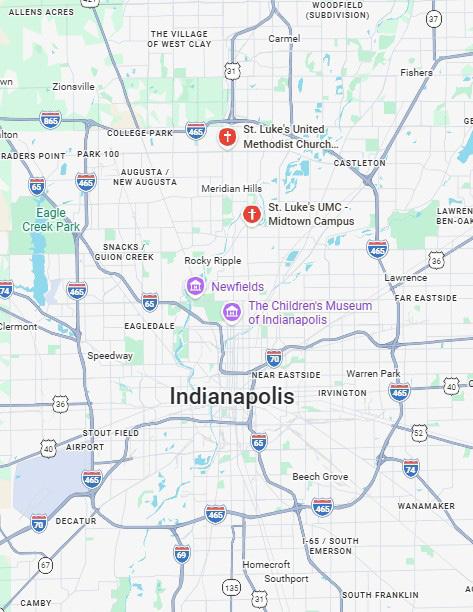
The Indianapolis metropolitan area continues to expand with a population approaching 2.14 million in 2026. While Marion County is home to just under one million residents, much of the region’s growth is occurring in the surrounding suburban “donut” counties—particularly Hamilton County, which includes many of the area’s most sought-after communities: Carmel, Westfield, Fishers, and Noblesville. The southern edge of Hamilton County sits just one mile north of St. Luke’s North Campus. Boone County, including Zionsville and Whitestown, is also nearby, approximately 20–30 minutes from the North Campus.
St. Luke’s Midtown Campus is located just 10–12 minutes from St. Luke’s North and sits in the heart of Broad Ripple, a vibrant, walkable neighborhood known for its locally owned shops, restaurants, and strong sense of community.
Indianapolis features a dynamic job market and is a nationally recognized hub for life sciences. Major employers include Eli Lilly, IU Health, Roche Diagnostics, Elevance Health (formerly Anthem), Simon Property Group, Corteva Agriscience, Allison Transmission, CNO Financial Group, FedEx, and Salesforce. With numerous colleges and universities in the region, opportunities for higher education and academic employment are plentiful.
More than 50% of the US population is within a day’s drive of Indianapolis.
Washington Township Schools, where St. Luke’s is located, is one of the top-rated school districts in Marion County and ranks as the second most diverse school district in Indiana. Its student body reflects a wide range of socioeconomic, ethnic, and cultural backgrounds. Other highly regarded school districts include Carmel-Clay, Hamilton Southeastern (Fishers), Westfield, Noblesville, and Zionsville.
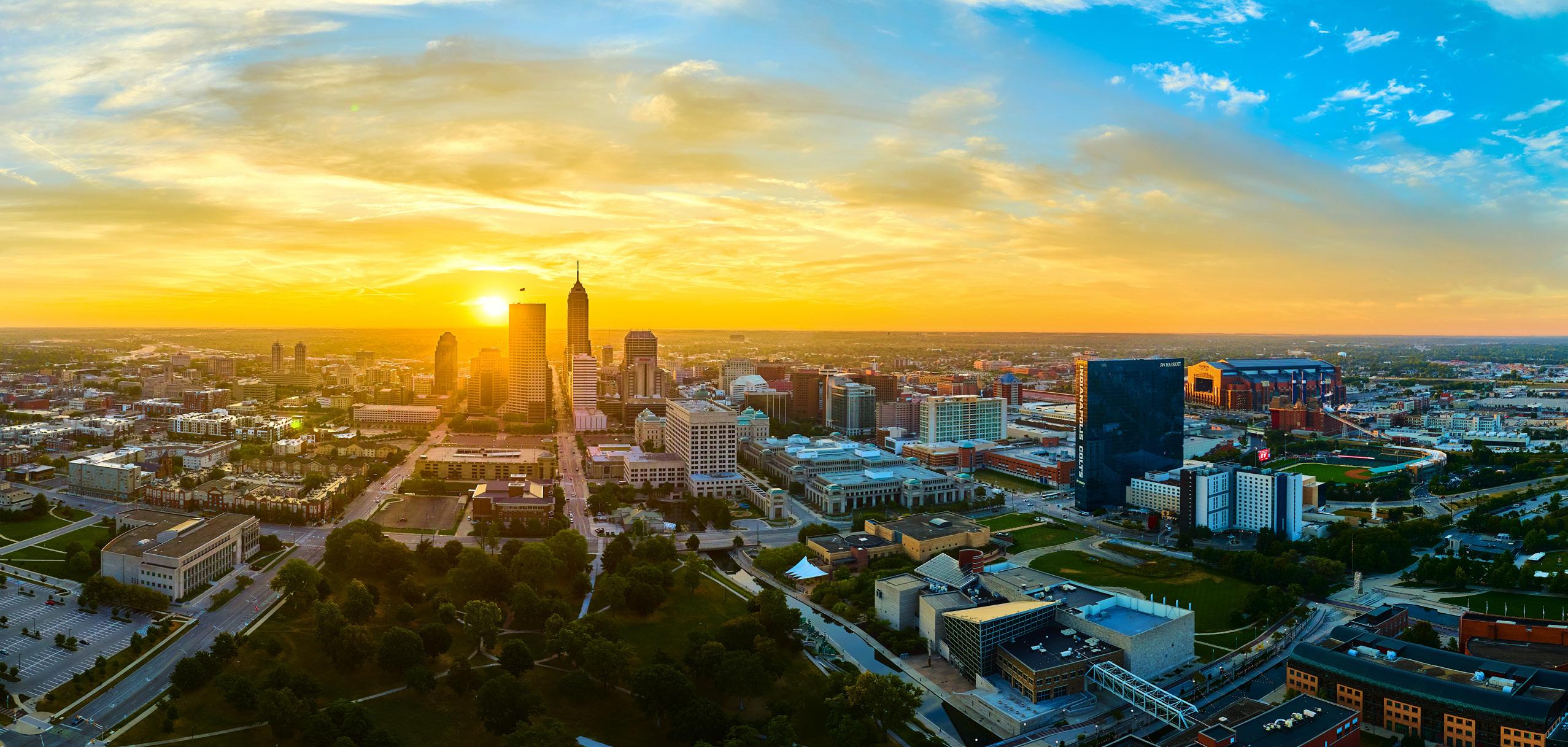
There is always something to experience in and around Indianapolis. The city is home to professional sports teams and world-class events, renowned museums, concert venues, and abundant parks and recreational opportunities. Whether visiting the Children’s Museum of Indianapolis, attending the Indianapolis 500, cheering on the Pacers or Fever, hiking at Fort Benjamin Harrison State Park, or biking the Monon Trail to discover a new favorite restaurant, residents enjoy an active and engaging lifestyle.
Like many growing urban centers, Indianapolis faces challenges, including gun violence, housing affordability, eviction rates, and infrastructure limitations in some neighborhoods. Indiana has traditionally had conservative state leadership, while Indianapolis itself has been led by a Democratic mayor for most of the 2000s, reflecting a diversity of perspectives across the region.
Overall, Indianapolis is a place of momentum and possibility, a region marked by growth, accessibility, and genuine community. It is a city where families can flourish, leaders can thrive, and ministry can have meaningful impacts. We believe it is a place where our next Senior Pastor cannot only serve faithfully but also feel truly at home.
St. Luke’s is under the jurisdiction of Bishop Tracy S. Malone, resident bishop of the Indiana Conference. Bishop Malone has designated our Staff Parish Relations Committee (SPRC) as the official body with whom she will work to find and appoint a new senior pastor. That committee consists of:
• Stephen Hoskins, Chair
• Donnis Patton, Lay Leader
• Kathy Armington
• Cheryl Pletcher
• Dee Brown
• Tyrone Ruff
• Marsha Reynolds
• Ty Smith
• Anne Clark
Bishop Malone has also allowed us to augment the SPRC with two more members:
• Willie Miller-Spaulding, Chair of St. Luke’s Governing Board
• John Baker, Member of St. Luke’s Governing Board
We are following a search and succession transition process with the help of Church Difference Makers, a consulting firm that specializes in senior pastor transitions in large United Methodist Churches. Our primary contacts are:
• Jim Ozier, Founder
• Stan Copeland
The SPRC Search Team has committed to guarding the process with utmost confidentiality. We will share with the congregation as much as we can, but we must not reveal certain parts of the process. We will especially guard the privacy of those prospects and candidates who express interest in this position, as it could be devastating to their career if their interest was made public prematurely. Each member of the team has signed a confidentiality agreement.
St. Luke’s is already excited to meet our new pastor and their family, and we want them to be just as excited to meet us! We have already started forming several teams of volunteers to plan the onboarding process. Before the family even moves to Indianapolis, we’ll send cards and greetings and welcome videos, along with information packets about neighborhoods, schools, medical facilities, parks, and area attractions. We’ll be here to help with the house hunting. We’ll introduce them to key leaders and lots of friendly faces to help them get situated in their new city.
There will be a big welcome event for the whole church because everyone in the congregation will want to meet the new family. We’ll put together a publicity package because lots of pastors and civic leaders will want to know about this new pastor moving into their city.
In those first few months, we’ll have several opportunities for the new pastor to meet with the staff, with all the administrative committees, and with key leaders. We’ll plan several listening sessions to meet with the congregation, so everyone feels like they’ve been seen and heard by our new leader. And we’ll set up meetings to meet key leaders in our community outside of St. Luke’s.
Church Difference Makers will provide coaching for the first year of the new pastor’s tenure and guide other strategic onboarding strategies to help manage the flurry of activities of that first year and to make sure they get off to a good start.
PHASE ONE - HOMEWORK: Our homework began with discernment and will continue throughout the process. We are discerning two questions – Where is God leading St. Luke’s? Who would be the right person to lead us? This phase also includes writing a spiritual profile to articulate who we are as a people and what kind of leader we are seeking. This document is that profile.
PHASE TWO - PASTOR SEARCH PROCESS: It began with sending out 100+ letters to influential Methodist leaders and pastors, asking for recommendations. The search team will review these names and narrow the list to our top three candidates. Bishop Malone will make the final decision.
PHASE THREE - CHANGEOVER ZONE WEEKEND: This will prepare the church for the passing of the baton from Pastor Rob Fuquay to the new pastor. It will be an intensive weekend with workshops and meetings for our staff and key leaders.
PHASE FOUR - ONBOARDING & OUTBOARDING: Will our chance to onboard the new pastor and their family, welcoming them to Indianapolis and to St. Luke’s, as well as say goodbye to Pastor Rob and his family.
Q4
• Pastor Rob decides to retire
• Informs Bishop
• Shares with SPRC
• Begins timeline discussions
• Contracts with Ozier and Church Difference Makers
Q1
• Announces retirement
• Winter Summit
• Site visit
• Next-Step Coaching
• Pre-work
• Surveys Staff interviews
• Sets timeline
• Sonar Search
Q2
• Possible prospects identified
• Discerning God’s Plan for St. Luke’s
Q3
• Prospects
• Candidates
• Top tier Zoom interviews
2027
Q1
• Bishop makes appointment
• Start date announced
• Planning Pastor Rob’s Offboarding
Q2
• Announcements
• Introductions
• In-boarding
• Changeover Zone Workshop Q3
Q4
• Finalists on-site interviews
• Succession plan determined
• Pass baton!
• On-boarding through 2028
St. Luke’s is a warm and welcoming faith community set on the north side of Indianapolis, well-known throughout the region for our preaching, our music, and our outreach ministries. The 5,300 people who call St. Luke’s home are committed to our mission of making disciples of Jesus Christ for the transformation of the world. Five gifted pastors have led us through these 70 years, and now we seek our sixth leader. We pray that God will lead us to discern who is called to the task in our time.
A. Administrative Committees
B. Staff Organization Chart & Staff Values
C. Mission Insite Reports
D. Compensation – Confidential. Available upon request.
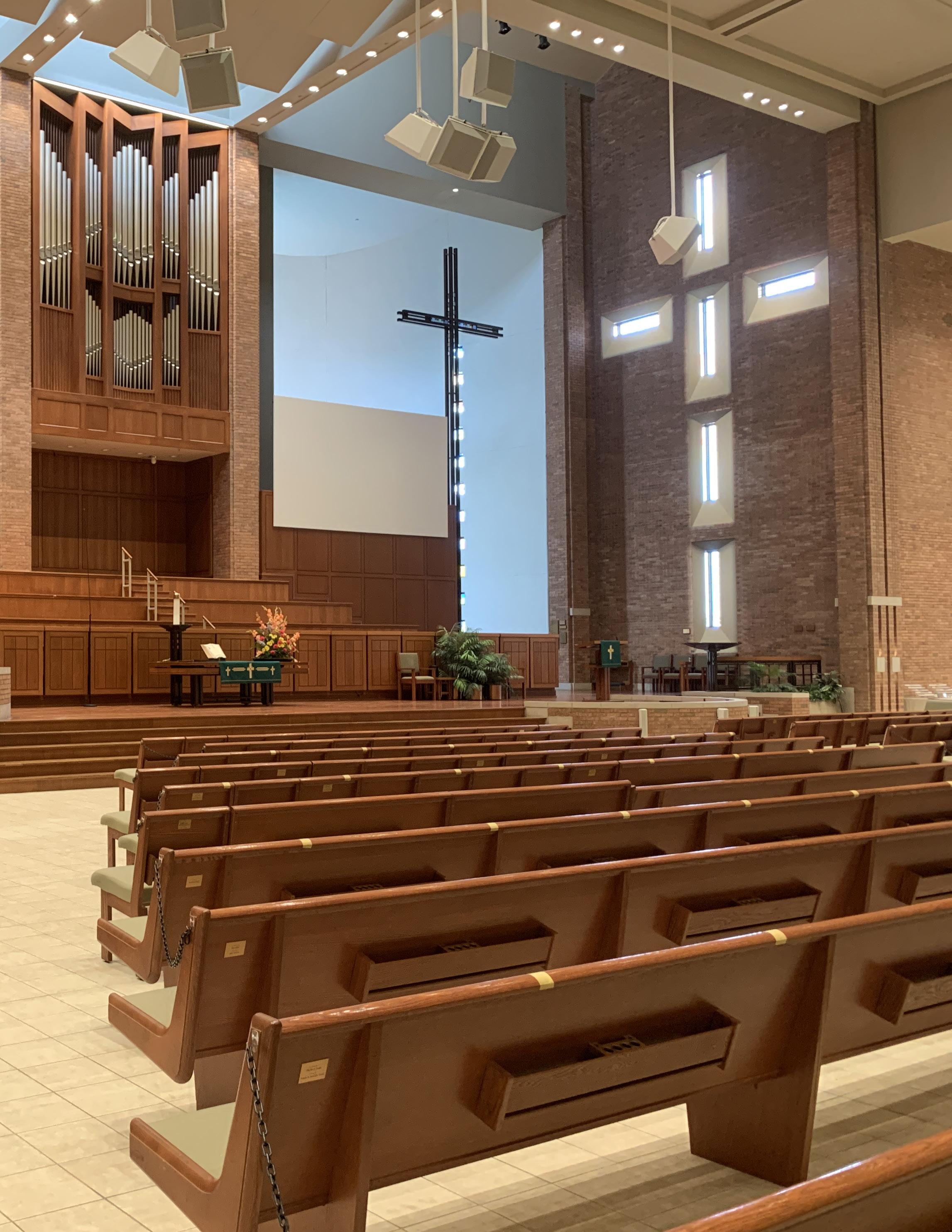
This “global” operational committee was formed in 2008 to take primary responsibility for St. Luke’s long-range strategic planning. Responsibilities include discernment and guidance of major church initiatives and vision and policy decisions, as well as working in tandem with the other administrative committees of the church. You can contact the Governing Board at governingboard@stlukesumc.com.
• Willie Miller-Spaulding (Chair)
• Donnis Patton (Lay Leader)
• Carrie Bates (Finance Chair)
• Stephen Hoskins (SPRC Chair)
• Jeff Plawecki (Trustees Chair)
• Rob Fuquay (Senior Pastor, Lay Leadership Chair)
• Jen S. Gibbs (Executive Pastor)
• Lisa Rockacy (Executive Director of Operations)
• Scott Severns
• Maria Blake
• John Baker
• Harry Danz
• Allison Bates
• Ty King
• Katie Bolduc
The Finance Committee consists of the church accountant and treasurer, the chair of stewardship, senior staff, and eight elected lay members. This committee is on a three-year rotation.
• Carrie Bates (Chair)
• Faina Kleyner (Church Accountant)
• Lisa Rockacy (Executive Director of Operations)
• Jeff Peek (Church Treasurer)
• David Cobb (Stewardship Chair)
• David Heetland (Pastor of Planned Giving)
• Donnis Patton (Lay Leader)
• Rob Fuquay (Senior Pastor)
• Missy Peterson
• Larry Meadows
• Brad Fuson
• Janet Crenshaw
• Terri Marquis
• Carolyn Svirsky
• Brent Beeler
The Lay Leadership Committee oversees the identification and development of leaders at St. Luke’s. The committee nominates candidates for leadership in the church to fill all openings on administrative committees, which include Trustees, Finance, Staff-Parish Relations, and Lay Leadership, as well as the lay member delegates to Annual Conference.
• Rob Fuquay (Chair, Senior Pastor)
• Donnis Patton (Lay Leader)
• Sandy Harlan
• John Nepsa
• Greg Clark
• Gustanna Moss Chaney
• Terri Coe
• Jason Rockacy
• Jody Dedon
• Jay Black
The Staff-Parish Relations Committee (SPRC) helps build strong relations between the staff and the congregation by advocating for a healthy work environment and establishing employee policies, procedures, and benefits. This committee consists of a church lay leader, senior staff, and 9 elected lay members and is on a three-year rotation.
• Stephen Hoskins (Chair)
• Donnis Patton (Lay Leader)
• Rob Fuquay (Senior Pastor)
• Jen S. Gibbs (Executive Pastor)
• Lisa Rockacy (Executive Director of Operations)
• Kathy Armington
• Cheryl Pletcher
• Dee Brown
• Tyrone Ruff
• Marsha Reynolds
• Ty Smith
• Anne Clark
The Trustees are responsible for helping the church run effectively by providing a secure environment for worship and the work of ministries. The Trustees oversee, maintain, and supervise our church building and property.
• Jeff Plawecki (Chair)
• Lisa Rockacy (Executive Director of Operations)
• Steve Lankton (Building Advisor)
• Jay Rigsby (Director of Facilities)
• John Dane
• Kim Reeves
• Jan Funk
• Dave Frische
• Alex Vaughan
• Miki Hamstra
• Tom Godby
• Carl Wodrich
“Better Together”
When we fully bring our unique selves, we unlock our team’s maximum potential.
• We bravely innovate, learn, succeed, and fail forward.
• We assume the best (positive) intention in others’ actions.

• We openly offer and invite feedback and input from different areas of ministry.
• We communicate honestly and transparently in a timely fashion.
• We view challenges as opportunities and pursue creative solutions.
“1% Better Every Day”
The healthiest teams and organizations are built upon a foundation of continuous growth and learning.
• We bring our best to our work and also look for ways to improve.
• We pursue best practices in each of our professional fields as a path to furthering the mission.
• We encourage curiosity and create pathways for professional development.
• We seek out and integrate diverse experiences and perspectives.
• We pursue the mission and vision by committing to specific goals and celebrating wins.
“Healthy Leaders, Lead Healthy”
You matter and deserve to be well.
• We prioritize work-life balance. (Leaders lead by example)
• We give time and create opportunities for each person to grow spiritually on their unique journey.
• We encourage physical and mental health and provide generous resources to support it.
• We honor reasonable boundaries that also work with unforeseen needs of ministry.
“You Belong Here” People flourish when they have a sense of safety & belonging.
• We honor each other in word and action, in each other’s presence and outside of it.
• We give and receive grace.
• We are people others can count on.
• We, as diverse and unique individuals, take time to connect with and care for each other.
• We address grievances directly and kindly and keep short lists.
“God is Able”
God is at work restoring all things
• We are a non-anxious presence in difficult times.
• We create and protect spaces of trust and respect. (Safety)
• We speak and act in ways that show “We’re going to get through this.” (Lived hope)
• We see and name where God is at work.