
CINA ANNUAL MEETING
12, 2022
Session 1 Introductions and Overview
8:30 to 9:00 a m Check-in and Registration
9:00 to 9:05 a m Welcome
Jim Jones, CINA at George Mason University
9:05 to 9:10 a m Introductory Comments from DHS S&T
Dana Saft, Department of Homeland Security
9:10 to 9:55 a m
Keynote
James Collins, Director of the Strategic Division of the United States Council on Transnational Organized Crime (USCTOC)
9:55 to 10:05 a m
The CINA Center: Overview
Jim Jones, CINA at George Mason University
10:05 to 10:30 a m CINA Research Portfolio
Kerry Riddle, CINA at George Mason University
10:30 to 10:45 a m Break
Session 2 Project Presentations
10:45 to 11:15 a m
Money Laundering in Cryptocurrency Markets: How Widespread is it and How Can it Be Detected through Big Data Analysis?

Foteini Baldimtsi, George Mason University
11:15 to 11:45 a m
Illicit Gold Trade from Peru and Colombia: Understanding the Dynamics, Routes, and U.S. Linkages
Camilo Pardo Herrera, TraCCC at George Mason University
11:45 a.m. to 12:15 p.m.
Open-Source Intelligence in Online Stolen Data Markets
David Maimon, Georgia State University
Yubao Wu, Georgia State University
WEDNESDAY, OCTOBER
cina.gmu.edu 1
CINA ANNUAL MEETING
WEDNESDAY, OCTOBER 12, 202 2
Session 3 CINA Project Showcase
12:15 to 1:45 p m Lunch (during Project Showcases)
12:15 to 2:00 p.m. CINA Project Showcase (rooms 1202, 1203)
Session 4 Project Demos (room 1201)
1:00 to 1:15 p m
Digital Forensic Tools and Techniques for Investigating Control Logic Attacks in Industrial Control Systems
Irfan Ahmed, Virginia Commonwealth University
1:15 to 1:30 p m
Graph Analytics, Location Data, and Visualization for Criminal Network Identification
Dirk Reiners, University of Central Florida
1:30 to 1:45 p m
Visualizing the membership of organized criminal syndicates: A field evaluation of the Reporting Information about Networks and Groups (RING) task
Christopher Kelly, St. Joseph's University
1:45 to 2:00 p.m.
Holographic Techniques for 3D Imaging of Finger Marks Preserved by Columnar Thin Films
Partha Banerjee, University of Dayton
Akhlesh Lakhtakia, Pennsylvania State University
Session 5 Project Presentations
2:00 to 2:30 p m
Overcoming Reluctance and Increasing Intelligence Gathering from Victims of Trafficking
Jodi Quas, University of California at Irvine
Allison Redlich, George Mason University
cina.gmu.edu 2
2:30 to 3:00 p m
CINA ANNUAL MEETING
WEDNESDAY, OCTOBER 12, 202 2
3:00 to 3:30 p m
Agent-based Learning to Utilize Local Data for Anomalous Activity Recognition
M. Hadi Amini, Florida International University Khandaker Mamun Ahmed, Florida International University
Using Modern Data Science Tools for Investigating Chat Logs from the Conti Ransomware Group Boyan Kostadinov, City University of New York
3:30 to 3:45 p.m. Break
3:45 to 4:45 p m
The Emerging Landscape and Future of Criminal Investigations and Network Analysis CINA Science Committee
4:45 to 5:00 p.m. Closing Remarks
Jim Jones, CINA
cina.gmu.edu 3
Criminal Network Analysis and Predictive Modeling
• Cross platforms Cybercrime Detection on Inter connected Heterogeneous Networks
• Exploring Graph Neural Networks for Attributed Multilayer Criminal Network Analysis
• Graph Analytics and Visualization for Criminal Network Identification

• Illicit Gold from Peru and Colombia: Understanding Trade, Routes, and U.S. Linkages
• Location Data Analytics and Visualization for Criminal Network Identification
Traditional and Digital Forensics

• Agent Based Learning to Utilize Local Surveillance Data for Activity Recognition

• A Machine Learning based Approach to Analyzing and Triaging Encrypted Data Containers in Law Enforcement Applications


• Data Science integrated Experiential Digital Forensics Training based on Real world Case Studies of Cybercrime Artifacts
• Digital Forensic Investigations Involving Cryptocurrency Wallets Installed on Mobile Devices
• Digital Forensic Tools & Techniques for Investigating Control Logic Attacks in Industrial Control Systems
• Digital Holographic Acquisition, Storage, Retrieval and Analysis of Three Dimensional Fingermarks Developed with the Nanoscale Columnar Thin Film Technique
• Evaluate Current NCFI Course Offerings and Develop Recommendations for Prerequisites and Post Curriculum Evaluations
• Identity Sciences Interdisciplinary Research
Annual Meeting 2022 Research Portfolio Overview
Analysis of Dynamic Patterns of Criminal Activity
•
Effects of Natural Disasters on Spatio temporal Patterns of Crime Types in the United States
• Innovative Spatiotemporal Pattern Detection: Examining Changes in Crime Hot Spots Across Six U.S. Cities
• The Emergence and Diffusion of Illicit Virtual Goods across the International Cybercrime Ecosystem
• Understanding the Economy and Social Organization of the Underground Market for Cybercrime as a Service
•
Improving Criminal Investigative Processes
• An Architectural Model for Web Based Technologies to Enhance Text Image Capabilities in Detecting Sex Trafficking Cases

• Detecting Criminal Disruption of Supply Chains Study
• Detection of Illicit Massage Businesses through Spatial and Socio Demographic Data Enrichment
• Is There Money Laundering in Cryptocurrency Markets?
• Overcoming Reluctance and Increasing Intelligence Gathering from Victims of Trafficking
• The Next Battlefield: Illicit Markets Hosted on Encrypted Communication Platforms
• Time Series Analysis of Anonymized Communication Channels
• Training on Intelligence and Evidence Gathering in Darknet Environments

• Visualizing the Membership of Organized Criminal syndicates: A Field Evaluation of the Reporting Information about Networks & Groups (RING) Task
cina.gmu.edu 4
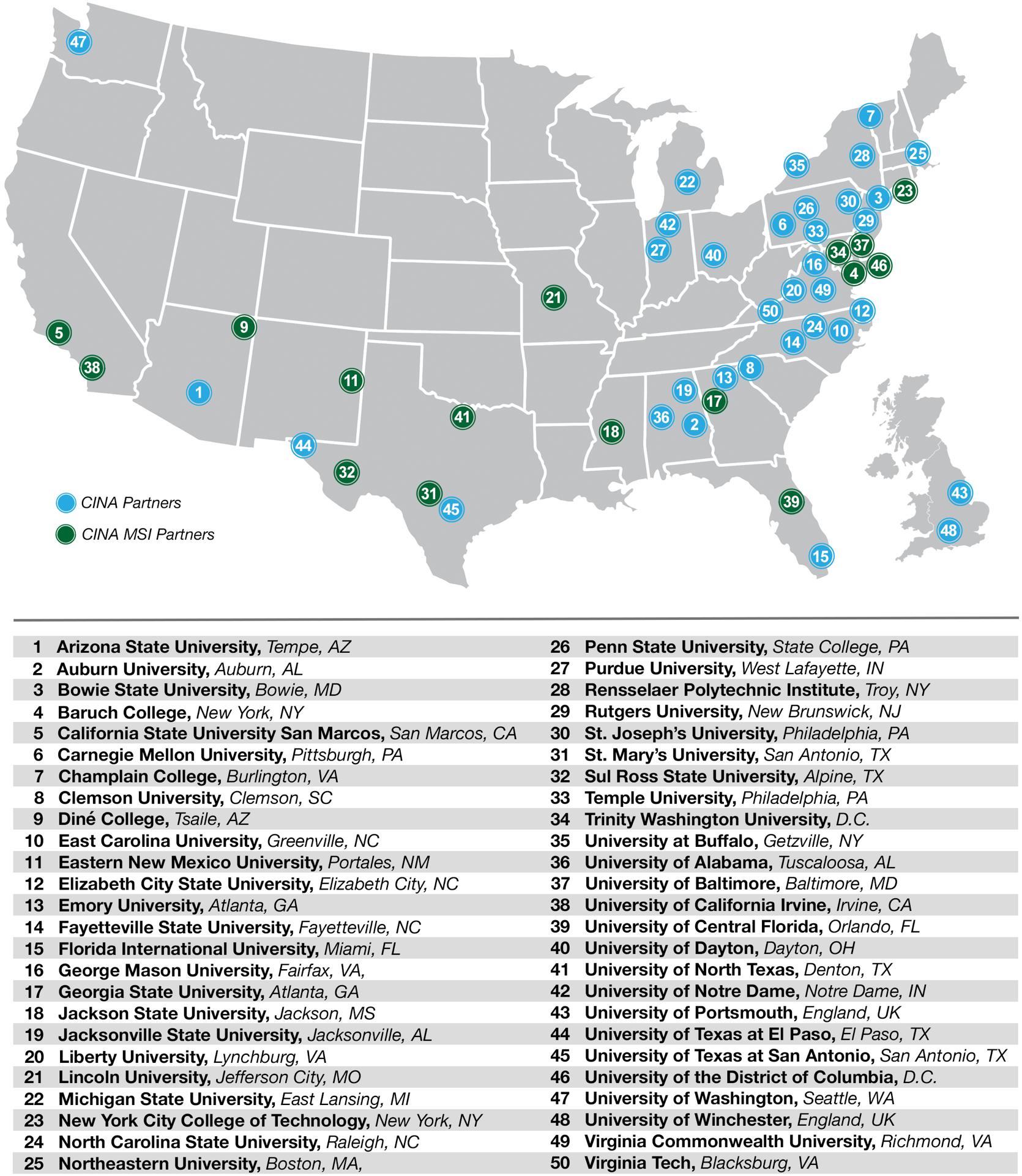
Annual Meeting 2022 CINA Research Network Contact CINA@gmu.edu to explore potential partnerships cina.gmu.edu 5
Room 1202
Criminal Investigative Processes and Dynamic Patterns of Criminal Activity
Table 1: Training on Intelligence and Evidence Gathering in Darknet Environments
The internet has accelerated the development of complex illicit supply chain structures which support the flow of illegal goods and services within the underground economy. Investigators need training in cost effective intelligence and evidence gathering from darknet environments to be able to evaluate threats generated by malicious online actors and collect extensive evidence regarding their operations on darknet platforms. The training provided by this project addresses these gaps by teaching law enforcement agents how to collect and analyze darknet data in a way which could guide the exploration of future policing approaches to a wide range of online crime.
Table 1: The Next Battlefield: Illicit Markets Hosted on Encrypted Communication Platforms
As law enforcement agencies (LEAs) have gained traction in shutting down darknet markets and arresting operators, criminals are moving more of their operations to Encrypted Communications Platforms (ECP), which are not only easy for bad actors to create and use, but they are much more difficult for investigators to detect and shut down. LEAs require knowledge about the criminals who use ECPs, including their social networks and supply chains, and an evidence base in what works to thwart them. This project enhances law enforcement's ability to investigate and stop criminal activity by developing strategies for gathering intelligence from ECPs more effectively and efficiently.
Table 1: The Emergence and Diffusion of Illicit Virtual Goods across the International Ecosystem
Multiple threats to the economic and physical well being of the U.S. may originate from cyberspace, making securing cyberspace and critical infrastructure one of the key strategic goals set by DHS. The HSE requires real time knowledge of such threats and an in depth understanding of managing potential disruption strategies in order to effectively execute this critical mission. The results of this project will help inform DHS strategies to respond to cyberthreats in real time and to curb and disrupt the flow of illicit online goods on various darknet market platforms.
Table 2: Time Series Analysis of Anonymized Communication Channels
Collaborating groups of highly sophisticated transnational criminals use anonymous communication networks to coordinate their activities, and investigators need tools to uncover such activity. This project leverages recent advances in time series data mining to analyze anonymized and encrypted network traffic and unmask coordinated criminal actions, ultimately providing investigators with a set of methodologies, algorithms, and software tools that can be used to classify, correlate, and thereby discover and understand the operation and structure of such groups.
Table 3: Detecting Criminal Disruption of Supply Chains Study
Deliberate disruption of a licit supply chain remains a threat to our global economy and national security. This project models both supply chains and criminal organizations to simulate multiple attack scenarios for the purposes of identifying supply chain vulnerabilities, discovering likely attack scenarios and the necessary criminal organization capabilities, and developing mitigations as well as indicators and warnings.
Table 4: Detection of Illicit Massage Businesses through Spatial and Socio-Demographic Data Enrichment
Illicit massage businesses, which are often associated with human trafficking activities, can be difficult to detect because they use the same online platforms as legitimate massage businesses, such as advertisement services, job recruitment ads, and review boards. Investigators need better tools to help identify illicit massage businesses to combat human trafficking and public health risks. This project will use common online review sites to develop data analysis techniques that enable automatic detection of illicit massage businesses, and the tools and techniques developed in this project may subsequently be applied to other illicit business detection as well.
Table 5: An Architectural Model for Web Based Technologies to Enhance Text Image Capabilities in Detecting Sex Trafficking Cases
While humans are naturally able to make connections across modalities (e.g., text and imagery), this remains a hard problem for machines. This project is developing algorithms, computational methods, and prototype code to enable such cross modality reasoning for AI/ML tools, specifically applied to the problem of detecting sex trafficking cases but applicable to a wide range of domains and problems.
Annual Meeting 2022 Project Showcase Summaries
cina.gmu.edu 6
Room 1202
Criminal Investigative Processes and Dynamic Patterns of Criminal Activity
Table 6: Is There Money Laundering in Cryptocurrency Markets?
The explosive growth in the number of circulating cryptocurrencies has formed one of the largest unregulated markets in the world. Investigators need tools to not only overcome the challenge of calculating the actual volume of illicit activities in the cryptocurrency space, but to detect and disrupt illicit transactions and/or the underlying criminal activities. This project will apply a novel algorithm to transaction data, resulting in a probabilistic machine learning tool for law enforcement to decide on how to best target resources to seek and dismantle money laundering operations in cryptocurrency markets, enhancing law enforcement efforts in the face of new technologies.
Table 7: Overcoming Reluctance and Increasing Intelligence Gathering from Victims of Trafficking
Millions of people worldwide are victims of commercial sexual exploitation or sex trafficking, with about 25% of these victims under 18; unfortunately, the majority of these cases go undetected and unprosecuted. Law enforcement needs details from victims to successfully prosecute both individual traffickers and the larger crime networks that are often involved, and victims are often reluctant to disclose information. This project will produce evidence based training and guidelines for effective intelligence gathering from victims to support successful prosecutions, and highlight areas where additional law enforcement training may be needed.
Table 8: Visualizing the membership of organized criminal syndicates: A field evaluation of the Reporting Information about Networks and Groups (RING) task
An essential element to criminal and homeland security investigations, in particular that of criminal and terrorist networks, is the collection of accurate, timely, and actionable intelligence from human sources (HUMINT). Informants often have detailed and rich understandings of social groups they observe or are part of, but eliciting a clear picture of these complex relationships and interactions in the course of a de briefing or interview can present a challenge. The Reporting Information about Networks and Groups (RING) technique was developed to improve recall and reporting of information about people involved in groups and networks and in doing so provide investigators and interviewers with a useful technique for eliciting this kind of information.
Table 9: Innovative Spatiotemporal Pattern
Detection: Examining Changes in Crime Hot Spots Across Six U.S. Cities
Government officials and community leaders need to look beyond criminal justice system intervention as the sole means for creating safer communities. This project explores potential interaction effects to inform how to leverage small scale investment for greater returns in crime reduction. This fills critical information gaps at an important moment when development and investment opportunities are being renewed in underserved communities, igniting information exchange and dialogue with government partners and private investors on community and economic development activity and crime prevention.
Table 10: Effects of Natural Disasters on Spatio-Temporal Patterns of Crime Types in the United States
The relationship between disasters and crime patterns is not well understood, making it difficult to confirm under what circumstances crime rates increase, decrease, or remain unchanged following a disaster event. State and local law enforcement need a better understanding of this relationship to fulfill their duties during and after a disaster, when public safety resources are the most strained. This project studies spatiotemporal changes across multiple crime types/crime rates following disaster events with variable intensity, leading to increased predictive analysis capabilities for public safety departments and agencies.
Table 11: Understanding the Economy and Social Organization of the Underground Market for Cybercrime as a Service
Technology enabled crime is a huge challenge for investigators because it moves rapidly and can adapt to various shifts in platforms and enforcement efforts. A large comparative analysis of digital and physical goods markets operating on both the Open and Dark Web is needed to show historical data and trends in market products, payment systems, market structure, and vendor and seller interactions. This data analysis supports the operational needs of DHS by providing information related to trends and behavior sets within illicit online markets, and the formation and disintegration of TCOs across both Open and Dark Web markets.
Annual Meeting 2022 Project Showcase Summaries
cina.gmu.edu 7
Room 1203
Criminal Network Analysis, Digital Forensics, and Traditional Forensics
Table 12: Digital Forensic Tools and Techniques for Investigating Control Logic Attacks in Industrial Control Systems
While digital forensic capabilities continue to advance, industrial control systems (ICS) environments are notoriously heterogenous and proprietary and techniques for investigating them remain underdeveloped. Tool and knowledge gaps exist regarding how anti forensic attacks can be realized on ICS devices, which limits forensic analysis. Analysts require tools and techniques to investigate cyber attacks on industrial control systems in their mission to protect critical infrastructure. This project will enhance the capabilities of ICS owners and operators by providing better understanding of anti forensic aided control logic modification attacks and equipping them to investigate control logic attacks.
Table 12: Data Science-Integrated Experiential Digital Forensics Training Based on Real-World Case Studies of Cybercrime Artifacts
Performing manual evidence/data analysis, triage, and correlation is an incredibly time consuming task for investigators, and law enforcement agencies are experiencing huge backlogs in digital forensics cases. Modern data science tools and techniques are increasingly being used to automate forensic data analysis tasks during an investigation, an effective strategy to both improve productivity and to increase the quality of the analysis. This training development project will help create a new generation of highly skilled forensic investigators that employ data science tools and techniques to reduce their manual work and address the data science skill gap in the current and future law enforcement workforce.
Table 13: Evaluate Current NCFI Course Offerings and Develop Recommendations for Prerequisites and Post Curriculum Evaluation
Training provided to an existing workforce inherently is provided to students with varied backgrounds and preparation. This project is developing a pre and post training assessment to measure the knowledge and skills a student brings into the classroom, as well as the knowledge and skills they acquire during the training. This project is being developed specifically for the National Computer Forensics Institute (NCFI) and includes a CyberRange for safely training students on the handling and analysis of dangerous software.
Table 14: A Machine Learning-based Approach to Analyzing and Triaging Encrypted Data Containers in Law Enforcement Applications
Online sexual exploitation and abuse of children is a problem growing exponentially in the U.S. DHS requires improved digital forensic and investigative capabilities in cases that involve child exploitation and abuse materials. This project will provide a machine learning model for detecting, analyzing, and triaging encrypted data containers, without the need to first decrypt the content, allowing law enforcement agencies to build probable cause for a court order, facilitating investigation of CSAM.
Table 15: Agent-based Learning to Utilize Local Data for Activity Recognition
In the mission to protect the nation from ever evolving threats, DHS requires an automated way to detect anomalous activity in large amounts of video data, and share this information securely across organizational boundaries without compromising privacy. This project's proposed approach will generate a cumulative, agent based machine learning model to detect suspicious activity and improve detection accuracy across video sources, without the need for sensitive video data to be shared between sites. The system and user friendly interface developed in this project can be integrated into existing systems of stakeholders such as USSS, USCIS, USCG, CBP, TSA and ICE, allowing local video to be processed onsite and prioritized for review by a human analyst more efficiently and effectively.
Table 16: Digital Holographic Acquisition, Storage, Retrieval and Analysis of Three-Dimensional Fingermarks Developed with the Nanoscale
Columnar Thin Film Technique
Latent fingermarks, or those that are not visible to the naked eye, are the most common type of fingermarks but also the most difficult to recover for forensic investigations. Investigators need a way to retrieve fingermarks that will provide the maximum amount of information possible for subject identification. This project works with 3 dimensional digital holography to provide fingermark images with much higher resolution than traditional techniques, build a portable database with information on 3D recognition of fingermarks, and develop a user friendly interface for fingermark reading from holograms. These tools and techniques can be used to support the detection, analysis, monitoring, and dismantling of criminal activities.
Annual Meeting 2022 Project Showcase Summaries
cina.gmu.edu 8
Project Showcase
Room 1203
Criminal Network Analysis, Digital Forensics, and Traditional Forensics
Table 17: Exploring Graph Neural Networks for Attributed Multilayer Criminal Network Analysis
Networked criminal activities, such as narcotics trafficking, fraud, armed robbery, and terrorism, pose serious threats to the homeland. Criminal networks have also evolved from simple to complex, which challenges existing methods for criminal network analysis. DHS requires advanced tools to proactively identify, investigate, and disrupt such networks. This project will extend the state of the art in criminal network analysis and investigate attributed multilayer criminal networks with graph neural networks to facilitate link prediction, community detection, and node classification; explore network disruption; and transfer learning between criminal networks.
Table 18: Graph Analytics and Visualization for Criminal Network Identification
Investigators have an enormous amount of data and information sources to explore and integrate in order to uncover and understand complex criminal networks, and they need a visual representation of the connections between people and events to perform their work. This project will develop new methods for graph display and layouts targeted at the kind of data typically encountered by investigators and analysts, allowing them to focus on identifying criminal activity and networks rather than data processing.
Table 18: Location Data Analytics and Visualization for Criminal Network Identification
Existing data analysis tools do not provide the visualization capabilities forensic analysts and investigators need to handle the huge amount of digital trace information generated by mobile devices and associated location data. Analysts need visualization tools that quickly help them get as much usable information as possible out of the available location data. This project will result in a set of layout algorithms and software packages that display location data in a way that allows investigators to identify potentially unusual and criminal activities.
Table 19: Cross platforms Cybercrime Detection on Inter-connected Heterogeneous Networks
Cybercrime can be particularly diffuse, incorporating multiple entities and platforms over time, which makes detection of complex cybercrime difficult. This project aims to develop methods and tools for processing and connecting digital evidence across multiple platforms so that dispersed cybercrimes can be reliably detected.
Table 20: Illicit Gold from Peru and Colombia: Understanding the Trade, Routes, and U.S. Linkages
The value of illegal gold exports from Peru and Colombia has overtaken the value of their cocaine exports. Investigators need a better understanding of the illegal gold trade and illicit pathway targeting information to disrupt illegal activity across borders and identifying linkages to the U.S. market. This project will provide information about legal, illicit and illegal gold mining in the two countries, the trafficking of this gold to the U.S., and the mining companies, criminal groups, brokerages, and exporters who are associated with the trafficking.
Table 21: Identity Sciences Interdisciplinary Research: Morph Attack Detection, Latent Fingerprint Recognition, Presentation Attack Detection
While biometric identifiers can be used both as security measures and valuable pieces of evidence to investigators, significant challenges are faced when adversaries are able to modify biometric identifiers to thwart detection. New tools and techniques are needed to address these challenges with biometric systems. This research will provide tools and actionable recommendations to inform and improve DHS biometric operational capabilities, enabling analysts and investigators to overcome challenges posed by current biometric identification systems.
Table 22: Digital Forensic Investigations Involving Cryptocurrency Wallets Installed on Mobile Devices
A significant gap in the digital forensic capabilities, protocols, and understanding currently exists in law enforcement agencies regarding digital currencies. Investigators need an efficient way to seize cryptocurrencies from software wallet applications and extract, preserve, and analyze related data recovered from suspects’ mobile devices. This project will create an operational database of digital forensic artifacts to provide reference materials and best practices information to law enforcement, providing benefit across criminal investigations as more crimes contain cyber or digital components.
Annual Meeting 2022
Summaries
cina.gmu.edu 9
on Intelligence and Evidence
Environments
Room 1202
Annual Meeting 2022 Project Showcase Floor Plan
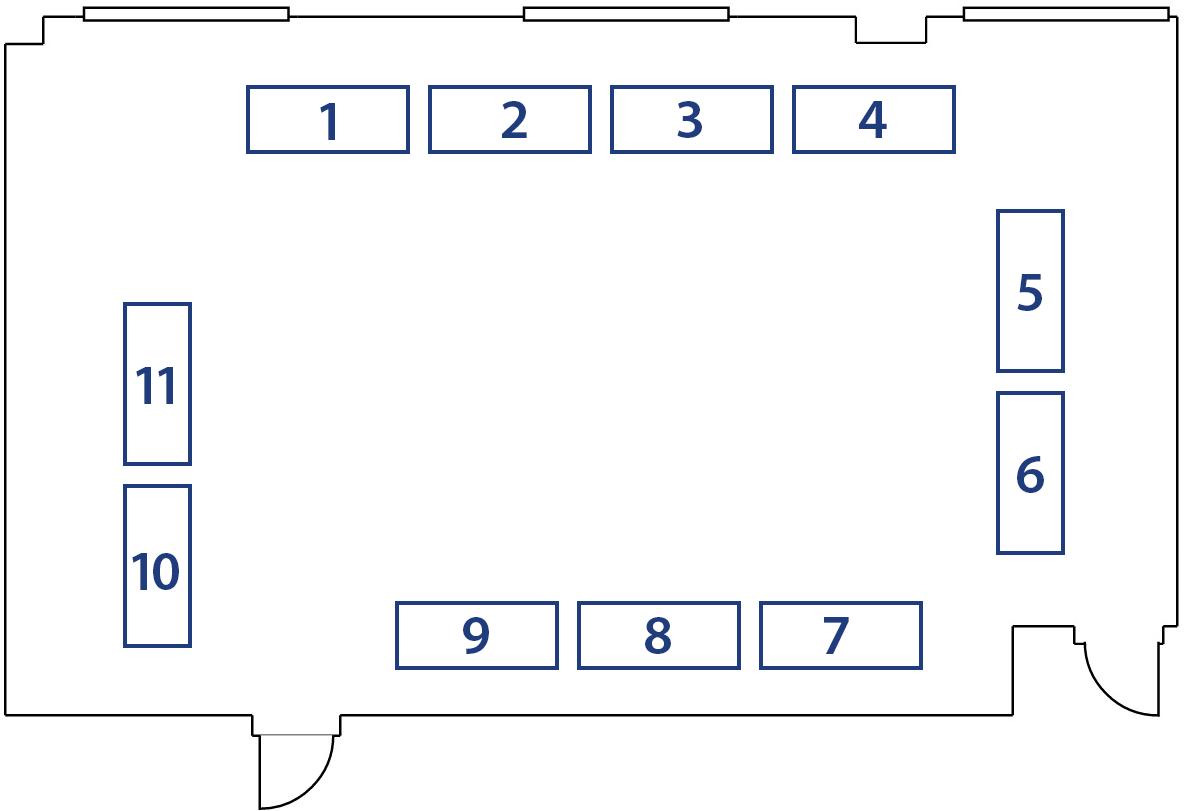
Name CINA Research Theme
Maimon
Investigative Processes
The Next Battlefield: Illicit Markets
on Encrypted Communication Platforms
Emergence and Diffusion of Illicit Virtual Goods
International Ecosystem
Time Series Analysis of Anonymized
Criminal Disruption
Maimon Criminal Investigative Processes
Yubao Wu
Patterns of Criminal Activity
Simon Criminal Investigative Processes
Carlotta Domeniconi Criminal Investigative Processes
of Illicit Massage Businesses
Spatial and Socio
Architectural Model for Web Based
Image Capabilities
There Money Laundering
Sex
Reluctance and Increasing
of Trafficking
the
the Reporting
of organized criminal
field
Groups
Maria Mayorga Criminal Investigative Processes
Shyamal
Criminal Investigative Processes
Foteini Baldimtsi Criminal Investigative Processes
Quas
Investigative Processes
Christopher Kelly Criminal Investigative Processes
Examining Changes in Crime Hot Spots Across
Spatiotemporal Pattern
U.S.
Effects of Natural Disasters on Spatio temporal Patterns of Crime Types in the United States
Understanding the Economy and Social Organization of the Underground Market for Cybercrime as
Marie Tillyer Dynamic Patterns of Criminal Activity
Petar Jevtic Dynamic Patterns of Criminal Activity
Tom Holt
Patterns of Criminal Activity
Table # Title PI
1 Training
Gathering in Darknet
David
Criminal
1
Hosted
David
1 The
across the
Dynamic
2
Communication Channels Bob
3 Detecting
of Supply Chains Study
4 Detection
through
Demographic Data Enrichment
5 An
Technologies to Enhance Text
in Detecting
Trafficking Cases
Das
6 Is
in Cryptocurrency Markets?
7 Overcoming
Intelligence Gathering from Victims
Jodi
Criminal
8 Visualizing
membership
syndicates: A
evaluation of
Information about Networks and
(RING) task
9 Innovative
Detection:
Six
Cities
10
11
a Service
Dynamic
cina.gmu.edu 10
Project Showcase Floor Plan
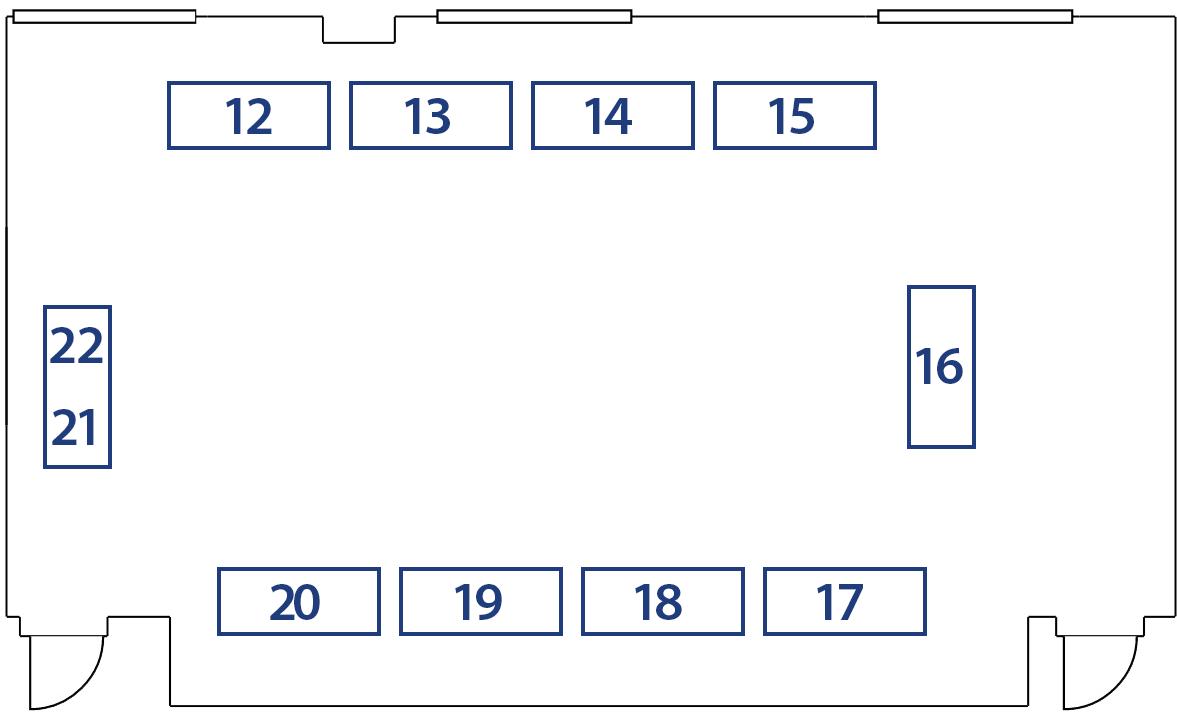
Name CINA
Forensic Tools and Techniques for
Control Logic Attacks in Industrial Control Systems
Data Science integrated Experiential Digital Forensics Training based on Real world Case Studies of Cybercrime Artifacts
Current NCFI Course Offerings and Develop
Prerequisites and Post Curriculum
machine learning based approach to analyzing and triaging
containers
enforcement
Agent based Learning to Utilize Local Data
Holographic Acquisition, Storage, Retrieval and Analysis of Three Dimensional Fingermarks Developed with the Nanoscale Columnar Thin Film
Graph Neural Networks for Attributed Multilayer Criminal Network Analysis
Graph Analytics and Visualization
Criminal Network
Location Data Analytics and Visualization
Cross platforms
Gold from Peru and Colombia:
and U.S.
Identity Sciences
Recognition, Presentation Attack
the
Attack
not present
Digital Forensic Investigations Involving Cryptocurrency Wallets Installed on Mobile Devices (PI not present at
Irfan Ahmed Digital Forensics
Irfan Ahmed Digital Forensics
Adam Goldstein Digital Forensics
Raymond Choo Digital Forensics
M. Hadi Amini Digital Forensics
Partha Banerjee Traditional Forensics
Suhang Wang Criminal Network Analysis
Dirk Reiners Criminal Network Analysis
Reiners Criminal Network Analysis
Zhao Criminal Network
Louise Shelley Criminal Network Analysis
Arun Ross Traditional Forensics
Diana Dolliver Digital Forensics
Annual Meeting 2022
Table # Title PI
Research Theme 12 Digital
Investigating
12
13 Evaluate
Recommendations for
Evaluation
14 A
encrypted data
in law
applications
15
for Activity Recognition
16 Digital
Technique
17 Exploring
18
for
Identification
18
for Criminal Network Identification Dirk
19
Cybercrime Detection on Inter connected Heterogeneous Networks Liang
Analysis 20 Illicit
Understanding
Trade, Routes,
Linkages
21
Interdisciplinary Research: Morph
Detection, Latent Fingerprint
Detection (PI
at showcase)
22
showcase)
Room 1203 cina.gmu.edu 11




Learn More About CINA Scan the QR code above to read the most recent CINA annual report CINA.GMU.EDU @CINAatMason Interested in receiving status updates on specific or overall CINA project results? To learn more about projects, DHS student internships, or to provide input to CINA’s RFP, please take our survey via the QR code below. CINA.GMU.EDU @CINAatMason https://cina.gmu.edu/survey https://cina.gmu.edu/2021annualreport cina.gmu.edu 12