ENGAGING
READERS THROUGH STORYTELLING
ENGAGING
READERS THROUGH STORYTELLING
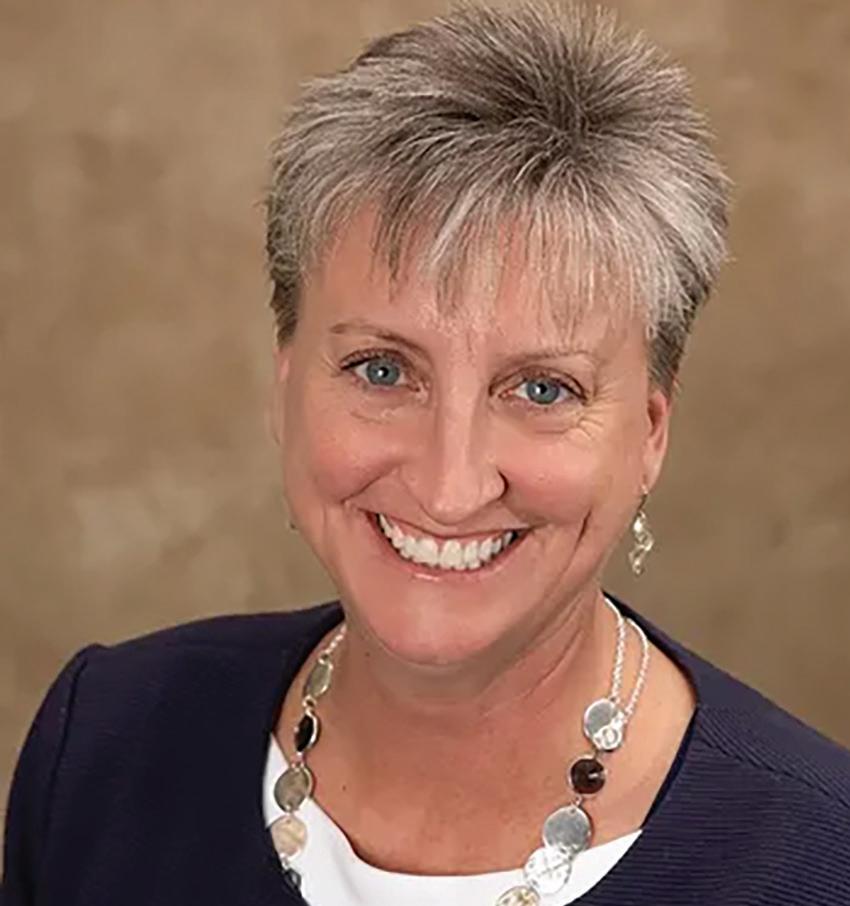
KATHERINE (KATE) HYLAND MERCER founded Ferris Wheel Finance, Inc. as an independent financial planning and investment firm based in Venice, Florida. The firm’s goal is to help clients make wise financial decisions through highly personalized service, depth and breadth of knowledge, trust, and integrity. With over 20 years in finance, engineering, real estate investing, and entrepreneurship, Kate brings a holistic perspective to the planning and educational process of investing and wealth management. Kate continually updates her knowledge in the many facets of the financial industry including securities, insurance, taxes, real estate, and other areas that affect client portfolios. Prior to starting her own firm, Kate was a financial advisor with Wells Fargo Advisors and previously with Edward Jones Investments. Earlier in her career, she successfully founded and operated two consulting companies. Kate’s engineering, software, and financial background allowed her to personally write the software code for the country’s first online banking application for BayBank Financial Institution (now FleetBank), as well as the first hypothetical program for variable annuities and mutual fund performance simulation for financial advisors to use at Putnam Investments. Kate’s unique background includes her Master’s Degree in Computer Science with a focus on Artificially Intelligent Databases which has become very relevant in today’s fast moving AI world. Kate has taught graduate level courses at Harvard University, Boston University and undergraduate courses at the University of Massachusetts. She has been proud to serve on the board of directors for multiple private companies. Ferris Wheel Finance, Inc, 871 Venetia Bay Blvd, Suite 201, Venice, FL 34285, 941-483-3600.
HOW WOULD YOU DEFINE RETIRING GRACEFULLY? KATE HYLAND MERCER Maintaining your respect and dignity in retirement is important, and there are two key ways to achieve that. First, retire to something—don’t just stop working. Second, make sure you’re financially prepared. That might sound like a big challenge, but really it’s about being prepared in every sense—intellectually, financially and in terms
of your lifestyle. What that looks like will be different for everyone
HOW DO YOU ENCOURAGE CLIENTS TO FIND PURPOSE, MEANING AFTER LEAVING FULL-TIME WORK? Most of us who have worked our whole lives get a lot of value and accolades both intellectually and socially by going to work. For many of us, our careers offer a lot more than just a paycheck—they give us intellectual stimulation,
social connection and a sense of accomplishment. When you suddenly stop working, the biggest detriment is not having any plans for your life after that. You could live 20 to 25 years in retirement. I encourage people to retire to something, whether it’s a volunteer position, substitute teaching, picking up a craft that you’ve always wanted to do, just something so you have purpose and accountability through a community.
TELL US ABOUT FERRIS WHEEL FINANCE’S GRACEFUL, PURPOSEFUL TRANSITION IN RETIREMENT PLANNING? We have what’s called a spend-down plan—it’s a patented program where we consolidate all your incomes, such as pension, Social Security, a 401(K) or IRA, and we create a budget for living. We update that budget two or three times a year for several years leading up to retirement. We modify it and
SRQ MAGAZINE BRANDED CONTENT PROGRAM | DECEMBER 2025 | INTERVIEWED AND COMPILED BY BARBIE HEIT












make sure our assumptions are correct because people can’t plan for things they can’t see. We’ve used di erent kinds of software in the past, but we found our homegrown tool is the clearest because, to be graceful and purposeful, you have to be prepared. For instance, if I have a $100,000 budget that I can spend every year and I can see that my money’s not going to run out






HOW WOULD YOU SAY THE CONCEPT OF RETIREMENT HAS EVOLVED SINCE EITHER THE FIRM’S FOUNDING OR OVER YOUR CAREER? I don’t knowif it has. I’m very purposeful, and I believe humans need purpose in their lives. I have always believed that you need to retire to something. It is possible that my thinking has changed a little bit















until I’m 95, I can be graceful about retirement in the sense of I don’t have FOMO–I’m not worried about missing out, I’m not complaining because my neighbors are buying a new golf cart or getting a new pool. I’m happy with where I am because I have a plan.

“THERE’S NO TIME LIKE THE PRESENT TO START SAVING. IN YOUR 40S, YOU ARE PROBABLY PUTTING THE KIDS THROUGH SCHOOL, YOU MAY HAVE YOUR OWN STUDENT LOAN DEBT, CREDIT CARD DEBT AND CARS THAT YOU
HAD TO BUY, SO YOU MIGHT BE HIGH IN DEBT.”
— Kate Hyland Mercer





toward maybe you don’t need to save as much, but I would much rather save too much and be facing retirement saying, “Hey, I can pull an extra $100,000 out to go on a trip to Africa.”






investments with a three-pronged approach, not just in the market. We diversified him into some real estate and some more stable, well-established companies, and then we were able to create an income for him using fi xed income bonds and Tbills in retirement that, coupled with Social Security, caused him to actually be excited to leave work. It happened because we were working with who he was and his values —not using a cookie cutter plan. We are not cookiecutter—we apply a very personalized approach.
HOW WOULD YOU SAY YOUR FIRM DIFFERENTIATES ITSELF WHEN HELPING PEOPLE RETIRE?






There are a couple of di erent ways we di erentiate ourselves in general because we’re a very high-touch boutique fi rm. First, we have an incredibly close relationship with our people. With some of the larger fi rms, if you run into your fi nancial advisor in the supermarket, they may or may not know who you are. We know all of our people by fi rst name. Second, we plan very far ahead. Some of the rules of fi nancial planning include making sure you have enough cash three years out. We fi nd that planning a little earlier or maybe a lot earlier is a real di erentiator. If you’re good at saving, you’re good at saving and you don’t need a lot of coaching, but once you’re done saving and you have to retire, the spending becomes hard because you’ve saved all these years. Having a plan of how you’re going to spend, which is why we call it a spend-down plan, is very di erent for most people.

WHAT ARE THE BASIC FINANCIAL PRINCIPLES THAT YOU WOULD RECOMMEND TO YOUR CLIENTS WHO WANT TO RETIRE WITH DIGNITY AND SECURITY?






Security comes from feeling confident that you have enough money and that it will outlast you. So the biggest principle that we really help people with is saving—save now, save early and save 15 to 20%. That number changes depending on if you were really responsible at age 20 and you saved well—then you may not need to save 20%. But if you’re like the average person and you really haven’t started saving until age 45 or 50, the number one thing to do is to save. The number two thing, and even Social Security will tell you this, is to get out of debt. Pay o your credit cards, pay o your car. The third principle is similar to getting out of debt and that’s living beneath your means. It’s like what your grandmother taught you: just because you’ve got $100 doesn’t mean you have to spend $110.
HOW DO YOU HELP CLIENTS BALANCE INCOME LONGEVITY, RISK AND LIFESTYLE GOALS IN RETIREMENT? We have a joke with our clients, and it’s that, “I’m going to plan for you to have a very long life because I don’t want you to move in with me.” So if a client says, “My family has good genes and everybody lived until 85,” I’m going to plan until 92 or 94. If somebody says, “I have terrible genes, I’m going to die at 68,” we still plan to 87. For somebody who’s trying to look at the future and wants to have enough risk to be able to keep up with inflation and pay bills, we actually plan and run scenarios. We plan a chunk of money, let’s say, four years’ worth of money that is immediately usable. If the stock market crashes tomorrow, it doesn’t matter. It’s not a ected and then the rest of the money is invested in something that’s going to earn more than inflation, stay ahead of the curve and actually grow your spending power because it’s such an unknown game. The plan almost has to be broken into two parts—the shortterm part, two to three years into the future and the long-term part, 20 years in the future, and those investments are not the same.












TO
IN THEIR 40s OR 50s WHO HASN’T DONE MUCH IN


SHARE A SUCCESS STORY OF A CLIENT WHO MADE THE TRANSITION INTO RETIREMENT SMOOTHLY. We’ve had a couple of clients transition very well into retirement. We have a gentleman who did not like being invested in the market at all; it was very stressful for him, and he was maybe six to 10 years out from retirement. He also likes to spend money and he’s very generous, so he was going to need a lot of money to be successful in retirement. He had saved a lot, but he wanted to get mostly out of the market. We had lots of conversations, lots of planning and lots of re-evaluating and modeling, making sure he was properly diversified in a way that he could sleep at night. We put him in some very conservative




There’s no time like the present to start saving. In your 40s, you are probably putting the kids through school, you may have your own student loan debt, credit card debt and cars that you had to buy, so you might be high in debt and in the middle of your career. As you get into the 50s, you have to get serious because if you retire early at 65, you have 15 years, which is plenty, but you have to buckle down and work with a professional to see how much you need to save to live the lifestyle you want to have in retirement. That number’s unique for everybody, too, because some people live on $200,000 a year in retirement, and some people live on $50,000. People project what their budget’s going to be, how much they want to spend when they turn 65 or 70. I think that’s one of the hardest parts because they don’t know what inflation is going to be, how much eggs are going to be, the cost of health insurance, etc. Medicare is great, but you also have to make choices about that. If you want to spend $100,000 a year on travel, well, you’ve got to have a lot of money saved. If you live at a lake and you don’t ever want to leave the lake, well, you might not need very much money. We would encourage them to get serious, work with a professional advisor and start saving.