
REST MOTION & TYPES SRK TUITION TUTORIAL


AGENDA

1
REST AND MOTION

2
TYPES OF MOTION
3
4
5
SPEED
DISTANCE
AND DISPLACEMENT
VELOCITY
REST





• An object that does not change its positions with time is said to be at rest. An object at rest has zero velocity .

• An object is said to be at rest if it does not change its position with respect to its surroundings with time.





• The change of position of an object with respect to time.
MOTION


• In physics, motion is the change in position of an object with respect to its surroundings in a given interval of time. The motion of an object with some mass can be described in terms of the following: Distance. Displacement.


D
I T I O N
E F I N
THE FOUR TYPES OF MOTION ARE:
• RECTILINEAR MOTION- A rectilinear motion is defined as any motion in which objects follow a straight path. Examples of rectilinear motion. The hot water that falls from a coffee vending machine into the coffee cup is in rectilinear motion.




• CIRCULAR MOTION- Circular motion is described as a movement of an object while rotating along a circular path. Circular motion can be either uniform or non-uniform. During uniform circular motion, the angular rate of rotation and speed will be constant, while during non-uniform motion the rate of rotation keeps changing.
• VIBRATORY MOTION- Vibratory motion is a type of oscillatory motion. A body is said to be in vibratory motion if the body or any part of the body moves to and fro about a fixed point called the mean position. For example; the movement of strings in musical instruments like guitar or sitar. Vibratory motion produces sound.

ROTATIONAL MOTION





“Rotational motion can be defined as the motion of an object around a circular path, in a fixed orbit.” The dynamics for rotational motion are completely analogous to linear or translational dynamics. Many of the equations for mechanics of rotating objects are similar to the motion equations for linear motion.





DISTANCE

• Distance is the total movement of an object without any regard to direction. We can define distance as to how much ground an object has covered despite its starting or ending point.

• You can use the formula distance = speed x time to calculate the distance travelled.

DISPLACEMENT
Displacement is defined as the change in position of an object. It is a vector quantity and has a direction and magnitude. It is represented as an arrow that points from the starting position to the final position. For example- If an object moves from A position to B, then the object's position changes.
FORMULA OF DISPLACEMENT
• The standard unit of displacement in the International System of Units ( SI ) is the meter (m). F O R M U L A A N D S I U N I T
• Displacement = Final position – initial position = change in position.
SPEED
• Speed is distance traveled per unit of time. It is how fast an object is moving. Speed is the scalar quantity that is the magnitude of the velocity vector. It doesn't have a direction.
• The SI unit of speed is given as the combination of the basic unit of distance and the basic unit of Time. Thus, the SI unit of speed is meter per second.The formula for Speed is given as [Speed = Distance ÷ Time].
THERE ARE FOUR TYPES OF SPEED
• Uniform speed.
• Variable speed.
• Average speed.
• Instantaneous speed.
• Meters per second , kilometers per hour , and miles per hour are the most frequently used units of speed .

UNIFORM SPEED
• When an object covers an equal (similar) distance in an equal (similar) time interval then it is referred to as uniform speed. When an object covers equal (similar) displacement in equal (similar) intervals of time then it is called uniform velocity.
•
f o r m S p e e d = D i s t a n c e T r a v e l e d T i m e T r a v
U n i
e l e d.
VARIABLE SPEED
A object is said to be in variable speed when the object covers a different distance at equal intervals of times.
For example: while driving a car or bike, the driver travels the distance but not with same speed.
AVERAGE SPEED
• The average speed is the total distance traveled by the object in a particular time interval. The average speed is a scalar quantity. It is represented by the magnitude and does not have direction.
• AVERAGE SPEED= TOTAL DISTANCE/TOTAL TIME TAKEN
INSTANTANEOUS SPEED

Instantaneous speed is a measurement of how fast an object is moving at that particular moment. Instantaneous velocity is a vector quantity that includes both the speed and the direction in which the object is moving.
E
O N
A N S W E R Q U
S T I

VELOCITY


THE FORMULA OF VELOCITY = DISPLACEMENT/TIME
VELOCITY MAY BE POSITIVE,ZERO OR NEGATIVE.
The velocity of an object is the rate of change of its position with respect to a frames of reference and is a function of time. Velocity is equivalent to a specification of its speed and direction of motion (e.g. 60 km/hr to the north).



A N S W E R

TYPES OF VELOCITY
• Uniform Velocity.
• Variable Velocity.
• Average Velocity.
A
Q
E
O N
• Instantaneous Velocity.
N S W E R
U
S T I

UNIFORM VELOCITY



A body when covers an equal distance with an equal interval of time, this condition of the velocity is known as uniform velocity. Or, we can say that when the direction and magnitude of speed of a body do not change with time, then the body is said to be at uniform velocity. Its unit is m s - 1 . For example, if a truck is moving at a uniform speed without changing its direction then the truck is said to be moving at a uniform velocity.


A N S W E R Q U E S T I O N
Q U
VARIABLE VELOCITY
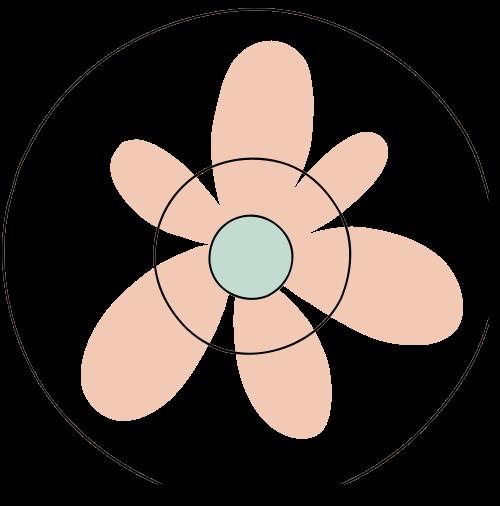
When a body covers unequal distances in equal intervals of time in a specified direction, the body is said to be moving with a variable velocity. Example: A rotating fan at a constant speed has variable velocity, because of continuous change in direction. A N S W E R
E
O N
S T I
AVERAGE VELOCITY


Average velocity is defined as the change in position or displacement (∆x) divided by the time intervals (∆t) in which the displacement occurs. The average velocity can be positive or negative depending upon the sign of the displacement. The SI unit of average velocity is meters per second (m/s or ms-1).

A N S W E R Q U E S T I O N
INSTANTANEOUS VELOCITY
Instantaneous velocity is defined as the rate of change of position for a time interval which is very small (almost zero). Measured using SI unit m/s. Instantaneous speed is the magnitude of the instantaneous velocity. It has the same value as that of instantaneous velocity but does not have any direction.
A N S W E R Q U E S T I O N
ACCELERATION
Rate at which velocity changes with time, in terms of both speed and direction. A point or an object moving in a straight line is accelerated if it speeds up or slows down. The SI unit of acceleration is m / s 2 (meter per sec square)
A
R
E S T I O N
N S W E
Q U
ACCELERATION
Acceleration (a) is the change in velocity (Δv) over the change in time (Δt), represented by the equation a = Δv/Δt. This allows you to measure how fast velocity changes in meters per second squared (m/s^2). Acceleration is also a vector quantity, so it includes both magnitude and direction.
A N S W E R Q U E S T I O N
TYPES OF ACCELERATION
Following are the different types of acceleration associated with an object, Uniform Acceleration. Non-Uniform Acceleration. Average Acceleration.
A
W E R Q
E S T I O N
N S
U
UNIFORM ACCELERATION
When an object is travelling in a straight line with an increase in velocity at equal intervals of time, then the object is said to be in uniform acceleration. Free falling of an object is an example of uniform acceleration.
A N S W E R Q U E S T I O N
UNIFORM ACCELERATION
A number of equations link the variable quantities when an object is moving with uniform acceleration. They are: v = u + at. s = ut + 1/2at.
A
Q
E S
O N
N S W E R
U
T I
NON-UNIFORM ACCELERATION
Non uniform acceleration is defined as the rate of change of velocity that does not remain constant with time. In simpler terms, the speed or velocity of an object
changes at different rates throughout its motion.
A N S
E S T I O N
W E R Q U
AVERAGE ACCELERATION
Average acceleration refers to the rate at which the velocity changes. We divide the change in velocity by an elapsed time to find out the average acceleration of anything. For instance, if the velocity of a crazy ball increases from 0 to 60 cm/s in 3 seconds, the average acceleration of the ball would be 20 cm/s/s.
A N S W E R Q U E S T I O N

THANKS FOR WATCHING