WASTEWATER-BASED EPIDEMIOLOGY (WBE) WHAT IS IT AND HOW CAN IT HELP PUBLIC HEALTH IN INDIAN COUNTRY?
WHAT is Wastewater-Based Epidemiology (WBE)? Wastewater surveillance, also known as wastewater-based epidemiology (WBE), is the monitoring of pathogens (e.g., viruses), as well as pharmaceuticals and other chemicals by testing sewage or wastewater. Wastewater includes water from a household or building (such as toilets, showers, and sinks) that can contain human feces, as well as water from non-household sources (such as rain and industrial use). CDC 2023 Public health officials can use WBE to monitor for outbreaks, track trends in the community, identify threats (e.g., antibiotic-resistant bacteria) and, in response, support the mobilization of public health resources to the affected communities. U.S. Government Accountability Office INFECTIOUS DISEASES THAT CAN BE TRACKED BY WBE (CDC):
SARS CoV-2 Influenza A & B RSV Andenovirus 40/41
Norovirus Candida auris Monkey Pox Shinga-toxin producing E. Coli
Because wastewater surveillance does not require people to seek testing from a healthcare provider and can be representative of large portions of a community, it gives public health officials a way to detect and characterize infection trends in a non-invasive, timely, and cost-effective way. Network of Water-Based Epidemiology (NWBE) WEF
7-12 Days
WBE has been shown to detect infectious diseases in the community at least 7 days before clinical testing
“Wastewater monitoring is an efficient way to empower historically underserved communities with health insights. With this data in hand, Tribal leaders, affiliated health systems and community members can better advocate for the resources needed to respond to existing and future disease threats.” - Megan Diamond, a Health Initiative Manager & WWS Lead at The Rockefeller Foundation.
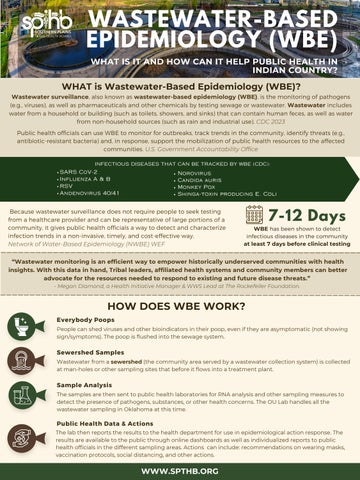
HOW DOES WBE WORK? Everybody Poops People can shed viruses and other bioindicators in their poop, even if they are asymptomatic (not showing sign/symptoms). The poop is flushed into the sewage system.
Sewershed Samples Wastewater from a sewershed (the community area served by a wastewater collection system) is collected at man-holes or other sampling sites that before it flows into a treatment plant.
Sample Analysis The samples are then sent to public health laboratories for RNA analysis and other sampling measures to detect the presence of pathogens, substances, or other health concerns. The OU Lab handles all the wastewater sampling in Oklahoma at this time.
Public Health Data & Actions The lab then reports the results to the health department for use in epidemiological action response. The results are available to the public through online dashboards as well as individualized reports to public health officials in the different sampling areas. Actions can include: recommendations on wearing masks, vaccination protocols, social distancing, and other actions.
WWW.SPTHB.ORG