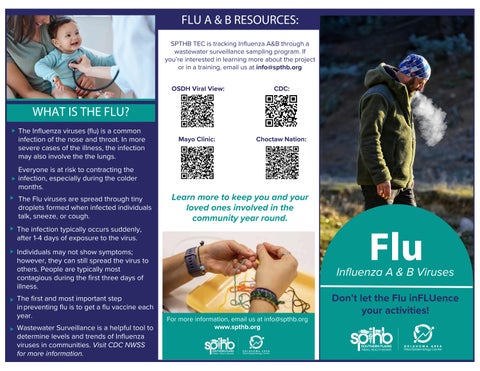
WHAT IS THE FLU?
The Influenza viruses (flu) is a common infection of the nose and throat. In more severe cases of the illness, the infection may also involve the the lungs.
Everyone is at risk to contracting the infection, especially during the colder months.
The Flu viruses are spread through tiny droplets formed when infected individuals talk, sneeze, or cough.
⊲ The infection typically occurs suddenly, after 1-4 days of exposure to the virus. Individuals may not show symptoms; however, they can still spread the virus to others. People are typically most contagious during the first three days of illness.
The first and most important step inpreventing flu is to get a flu vaccine each year. Wastewater Surveillance is a helpful tool to determine levels and trends of Influenza viruses in communities. Visit CDC NWSS for more information.
FLU A & B RESOURCES:
SPTHB TEC is tracking Influenza A&B through a wastewater surveillance sampling program. If you’re interested in learning more about the proj or in a training, email us at info@spthb.org
OSDH Viral View: CDC: Mayo Clinic: Choctaw Nation:
Learn more to keep you and your loved ones involved in the community year round.
For more information, email us at info@spthb.org www.spthb.org
Influenza A & B Viruses
Don’t let the Flu inFLUence your activities!
If you believe you are experiencing symptoms of the illness.
If you pose a higher risk to Flu-related complications.
If you having trouble recovering from the illness.
If you have interacted with an Individual showing signs of the Flu.
⊲ If you live in a shared living space or community (e.g., dormitory or nursing facility)
If you need assistance developing a treatment plan or determining what overthe-counter medications are safe.
⊲ If you need guidance regarding isolation.
WHAT ARE THE SYMPTOMS?
According to CDC’s Vital Statistics (2022):
Less than 43% of Black, Hispanic, and American Indian/Alaska Native (AI/AN) adults were vaccinated during the 2021–2022 flu season.
Compared to White adults, flu hospitalization rates are 30% higher among AI/AN adults
WHO HAS INCREASED RISK?
While everyone poses susceptibility to the Flu, the following Individuals have an increased risk:
Young children
Adults aged 65 and older
Individuals with chronic medical conditions such as asthma or Chronic Obstructive Pulmonary Disease (COPD)
Individuals with weakened immune systems
Individuals with metabolic disorders
Pregnant women
Individuals living in nursing homes and assisted living facilities
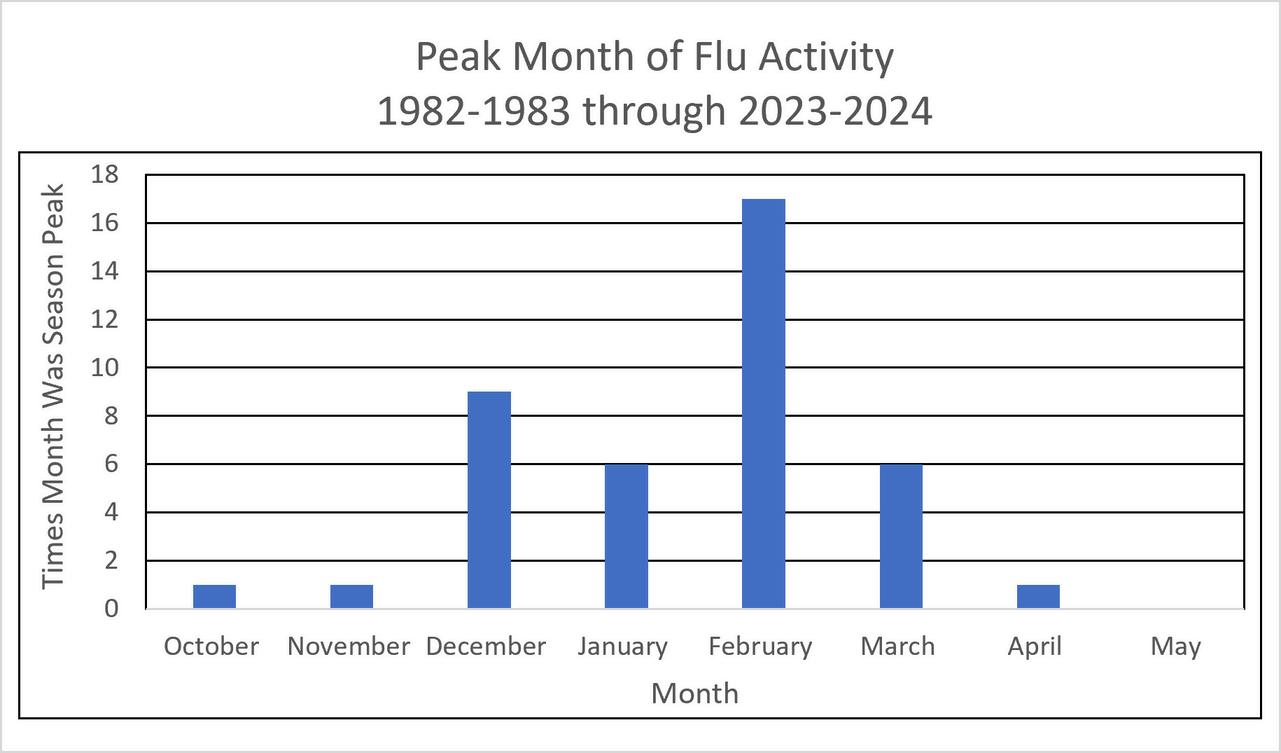
WHEN IS FLU SEASON?
FLU VACCINES
The CDC recommends that individuals six months and older get the Flu vaccine, following the advice of their medical provider. The vaccine can be especially helpful for people with a higher risk of Flurelated complications.
/
In recent years, flu vaccines have lowered the risk of laboratory-confirmed Influenza by 30% to 60% according to observational studies conducted by the CDC.